

Submitted:
28 February 2026
Posted:
18 March 2026
You are already at the latest version
Abstract
(1) Background: The non-consensual dissemination of intimate images constitutes a severe form of online gender-based violence (OGBV) that inflicts profound harm on victims' sexual privacy, psychological well-being, and social functioning. Taiwan enacted comprehensive legislative reforms in 2023—commonly referred to as the "Four Acts on Sexual Violence Prevention"—to strengthen criminal responses and expand victim protection mechanisms. However, the extent to which these reforms have translated into effective frontline practice remains insufficiently examined. (2) Methods: This qualitative study employed reflexive thematic analysis to investigate frontline professionals' experiences with enforcing intimate image offence legislation and delivering victim support services. Semi-structured, in-depth interviews were conducted with 20 practitioners—including social workers, police officers, prosecutors, and lawyers—between August and November 2024. (3) Results: Three superordinate themes emerged across macro, meso, and micro structural levels. At the macro level, limited public awareness and persistent victim-blaming attitudes undermine prevention and reporting. At the meso level, legislative fragmentation, digital evidence challenges, and inter-agency coordination gaps constrain enforcement capacity. At the micro level, procedural delays, risks of secondary victimization, and perceived inadequacies in compensation mechanisms weaken victims' trust in institutional responses. (4) Conclusions: While Taiwan's legislative reforms represent a significant institutional advancement, legal reform alone is insufficient to address digital sexual violence effectively. Comprehensive responses require integrated public education initiatives, enhanced inter-agency coordination, strengthened digital investigation capacity, and trauma-informed victim protection practices across all structural levels.
Keywords:
online gender-based violence
; intimate image offences
; technology-facilitated sexual violence
; victim support services
; reflexive thematic analysis
; Taiwan
; criminal justice
; trauma-informed practice
1. Introduction
The rapid proliferation of digital technologies has been accompanied by an increase in online gender-based violence (OGBV). Among its various forms, the non-consensual dissemination of intimate images has been widely documented as a serious infringement of personal privacy and has been associated with adverse psychological outcomes, including anxiety, depression, and trauma-related symptoms [1,2]. As smartphones and social media platforms become increasingly integrated into everyday life, the forms and reach of such abuse continue to evolve, creating complex challenges for legal systems, public health responses, and social support services across different jurisdictions [3].
OGBV is technology-facilitated abuse (TFA), which refers to a range of harmful behaviors carried out through digital means, such as the unauthorized sharing of intimate content, online harassment, cyberstalking, and sexual extortion [1]. The instantaneous and transnational characteristics of digital communication have been shown to intensify victims’ exposure to harm and to complicate recovery processes [4]. At the institutional level, these characteristics are also associated with difficulties in coordinating responses across regulatory, service, and support systems, particularly in contexts characterized by regulatory complexity, fragmented jurisdictional authority, and the dispersion of abusive content across multiple online platforms [5].
In response to the growing recognition of digital sexual violence, Taiwan implemented a set of legislative reforms in 2023 to address emerging forms of digital gender-based violence, including the non-consensual dissemination of intimate images [6,7]. Commonly referred to as the “Four Acts on Sexual Violence Prevention,” these amendments were finalized in February 2023 and came into full effect in July of the same year, encompassing revisions to the Criminal Code, the Sexual Assault Crime Prevention Act, the Child and Youth Sexual Exploitation Prevention Act, and the Crime Victim Rights Protection Act [7]. The key elements of these reforms include the introduction of a legal definition for “intimate images,” the establishment of criminal provisions related to offenses against sexual privacy, the strengthening of criminal liability for non-consensual dissemination, the clarification of mandatory takedown mechanisms for intimate images, and the expansion of judicial remedies and protective measures for victims—collectively aimed at enhancing the comprehensiveness of institutional responses [7].
While these reforms represent a significant institutional development, existing observations suggest that their implementation in practice may be uneven. Challenges related to procedural complexity, fragmented legal provisions, and cross-agency coordination have been noted as factors that may influence how frontline professionals deliver support and manage cases involving intimate image offences [3]. This gap underscores the need for further examination of the relationship between institutional design and practical implementation.
Despite increasing scholarly attention to intimate image abuse, much of the empirical literature on institutional and service responses has focused on Western contexts, with comparatively limited examination of East Asian jurisdictions, including Taiwan [7]. In addition, research integrating victimological perspectives with digital violence studies and public health frameworks—particularly those centered on the experiences of frontline practitioners—remains relatively limited.
The present study addresses these gaps by examining the implementation of Taiwan’s recent legislative reforms and exploring the effectiveness of victim support services from the perspectives of professionals directly engaged in prevention and enforcement. Employing qualitative interviews with social workers, legal professionals, prosecutors, and police officers, this study aims to provide contextually grounded insights into the persistent barriers, institutional dynamics, and potential opportunities for reform that shape responses to OGBV in a rapidly evolving digital environment.
2. Literature Review
The literature review for this study is organized into three thematic areas: (1) theories related to victimology, (2) digital technology and gender-based violence, and (3) psychological impacts and victim fear. This structure is designed to integrate core theoretical concepts, summarize recent international research trends, and provide the theoretical foundation for the study’s research motivation and analytical framework [3].
2.1. Theories Related to Victimology
Victimology provides an important analytical framework for understanding both the formation of risk and institutional responses in cases of OGBV. In this context, OGBV refers to harmful acts perpetrated through digital technologies, including the non-consensual dissemination of intimate images [2]. From this perspective, victimological theories help to explain how structural conditions, routine activities, and power relations shape patterns of victimization and inform the design of prevention and intervention strategies [8].
2.1.1. Routine Activity Theory (RAT)
Routine Activity Theory (RAT) posits that victimization is likely to occur when three elements converge in the same time and space: a motivated offender, a suitable target, and the absence of capable guardianship [8]. In digital environments, “routine activities” encompass everyday online behaviors such as social media use, instant messaging, image sharing, and participation in online communities. These activities not only shape individuals’ exposure to potential offenders but also influence the availability, replicability, and visibility of intimate images as potential targets [3,9].
In the context of intimate image offences, RAT highlights how platform design and norms of digital interaction may inadvertently increase target suitability and weaken institutional and social guardianship. Features such as the high persistence of digital data, the low cost of copying and forwarding images, insufficient default privacy settings, and limited identity verification and accountability mechanisms reduce the effort required to disseminate images without consent and enable rapid expansion of audiences once images begin to circulate [3,10]. At the same time, victimological scholarship repeatedly emphasizes that such analyses should not be used to blame individuals for their victimization. Compared with any single victim’s behavior, factors such as platform governance, legal protections, school and family support systems, and broader gendered power structures constitute more direct and critical determinants of risk and protection [3,11].
Recent extensions of victimological theory have also begun to address the dynamic overlap between victim and offender roles in image-based sexual abuse. Empirical studies on the non-consensual dissemination of sexual images (NCDSI) indicate that prior experiences of online victimization, engagement in high-risk online routine activities, and exposure to unsolicited sexual images are associated both with subsequent victimization and with perpetration, suggesting that these phenomena cannot be understood through a simple dichotomy between victims and offenders, but rather involve a potential victim–offender overlap [12,13].
Additionally, victimology provides an important lens for understanding secondary victimization, risk perception, and help-seeking in intimate image cases [14,15]. Research on fear of cybercrime shows that prior online victimization, perceived vulnerability, and broader social and environmental factors—such as low collective efficacy and disorder in online spaces—significantly shape individuals’ risk assessments and levels of fear [16,17]. In the context of intimate image misuse, victims often anticipate disbelief, blame, or minimization of the incident when approaching authorities, which suppresses disclosure and contributes to persistent underreporting [14,15].
These patterns align with victimological critiques of the uncritical use of “victim precipitation” frameworks in sexual violence research, where excessive emphasis on victims’ behavior can reinforce stigma and weaken institutional accountability [18,19]. From a public policy and practice perspective, these findings underscore the importance of establishing trauma-informed and non-blaming response procedures [20], clearly recognizing image-based sexual abuse in law [21], and strengthening specialized training for frontline professionals so that they can function as capable guardians rather than sources of secondary harm [22,23].
2.1.2. Lifestyle–Exposure Theory and Empirical Evidence from Taiwan
Lifestyle–Exposure Theory extends the perspective of Routine Activity Theory by further emphasizing how individuals’ patterns of daily activities shape their differential exposure to motivated offenders and high-risk environments [24]. In the context of OGBV, this theory is particularly useful for understanding how specific online lifestyles—such as intensive social media use, frequent image sharing, and participation in dating or instant messaging applications—structure opportunities for technology-facilitated abuse [25]. Related research indicates that online routine activities do not occur randomly; rather, they are shaped by age, gender, social roles, and broader socio-cultural norms, which in turn influence both risk and protection in cyberspace [26,27].
Although direct empirical applications of Lifestyle–Exposure Theory to OGBV research in Taiwan remain relatively limited, recent studies on online sexual risks among Taiwanese adolescents have provided important insights. For example, a study examining adolescents’ use of dating applications conceptualized such platform engagement as a high-risk online lifestyle and found that frequent use of dating apps, combined with unsafe online behaviors (e.g., sharing personal information, interacting with strangers), was significantly associated with heightened exposure to sexual solicitation and exploitation [28]. Related survey research has also shown that among Taiwanese adolescents, higher levels of online self-disclosure, longer time spent on instant messaging, and prior experiences of bullying significantly increase the likelihood of encountering unwanted online sexual solicitation (UOSS); by contrast, higher self-esteem appears to function as a protective factor [29]. These findings are consistent with the core propositions of Lifestyle–Exposure Theory, indicating that online routine activities, psychosocial vulnerabilities, and social-environmental factors jointly shape victimization risk [21,30].
Taken together, the empirical evidence from Taiwan suggests that Lifestyle–Exposure Theory can serve as an important analytical framework for understanding OGBV and intimate image offences; however, its application must be approached with caution to avoid shifting responsibility onto victims [31]. The observed associations among online routine activities, psychosocial distress, and victimization highlight the need for prevention strategies that focus on upstream interventions—namely, modifying opportunity structures for offending and strengthening institutional guardianship—rather than merely advising individuals to reduce their online engagement [25,27].
In the Taiwanese context, this includes strengthening school- and community-based digital literacy education [32], developing platform-level safeguards for image sharing [33] (Ministry of Digital Affairs, 2023), and enhancing institutional response capacities, such as establishing dedicated hotline services, constructing rapid takedown procedures, and training specialized police units capable of functioning as effective guardians in digital environments [7]. For the present study, these theoretical and empirical findings provide an important foundation for further examining how frontline professionals in Taiwan perceive and understand issues of risk, responsibility, and prevention when handling cases involving non-consensual intimate images.
2.2. Digital Technology and Gender-Based Violence
The rapid advancement of digital technology has significantly transformed both the forms in which gender-based violence occurs and the challenges associated with its handling, posing ongoing and concrete difficulties for frontline police and social work practice [1,31]. Technology-facilitated abuse (TFA) encompasses a range of behaviors, including the non-consensual dissemination of intimate images and online sexual extortion, which often occur through instantaneous and highly private digital communication channels. This places frontline professionals under considerable pressure to clarify facts and preserve evidence from the earliest stages of case handling [1,5].
In recent years, artificial intelligence (AI) has been increasingly employed in the generation and dissemination of images, particularly AI-generated child sexual abuse material (CSAM), which has further raised the technical threshold for image identification and case classification [34]. According to data from the Internet Watch Foundation (2024) [35], the number of confirmed CSAM reports that were actioned reached 291,273 webpages in 2024, representing a 6% increase compared to the previous year. These figures indicate that frontline operational units must contend with the dual pressures of rapidly increasing caseloads and highly compressed response timeframes [5,35].
At the operational level,OGBV frequently occurs within private instant messaging environments, such as Telegram, LINE, and WhatsApp [5]. Due to the widespread use of end-to-end encryption and closed-network architectures, police officers often must rely on victims to proactively provide screenshots, conversation records, or device content when collecting evidence, tracing perpetrators’ identities, and preserving digital evidence [22,36]. Social workers, similarly, must conduct crisis assessments, victim support, and referrals under conditions of considerable evidentiary uncertainty[37].
The decentralized and cross-border nature of these platforms also means that frontline professionals frequently encounter lengthy procedures, inconsistent responses, or jurisdictional limitations when requesting image takedowns or seeking platform assistance, further compromising the timeliness of victim protection [14,38]. These challenges underscore the need for clearer inter-agency protocols and more responsive platform cooperation mechanisms to support effective frontline practice.
In recent years, Taiwan has attempted to respond to crime patterns in digital contexts by amending the Criminal Code and related statutes, thereby providing clearer legal grounds for frontline practice[7,39]. However, practitioners continue to report that challenges persist across multiple dimensions, including case reporting, the application of criminal charges, inter-agency collaboration, and cross-jurisdictional requests. These challenges are often attributed to the fragmentation of legal provisions, insufficient operational guidelines, and uneven resource allocation [7,31].
For police officers, completing evidence collection and statutory procedures within limited timeframes while simultaneously ensuring victim protection constitutes a form of structural pressure in practice [40]. For social workers, assuming roles in emotional support, risk assessment, and accompaniment during the reporting process—often before legal proceedings have been clarified—significantly increases professional burden [37].
Overall, the practical challenges associated with technology-facilitated gender-based violence indicate that legislative amendments alone are insufficient to address frontline needs. Effective response strategies require the integration of cross-professional collaboration mechanisms, clear operational guidelines, responsive platform communication channels, and specialized training and support systems for both police and social work personnel. In this regard, Taiwan represents one of the earlier examples in Asia to adopt a multi-statute approach to regulating intimate image offences, which further underscores the value of examining how these reforms function in practice for international audiences. Accordingly, examining how institutional frameworks are understood, applied, and adapted in actual cases from the perspectives of frontline police and social work practice is of critical importance for evaluating Taiwan’s overall effectiveness in responding to non-consensual intimate images and OGBV.
2.3. Psychological Impacts and Victim Fear
Psychological trauma is one of the most prevalent and profound consequences of OGBV. Existing research indicates that victims commonly experience post-traumatic stress disorder (PTSD), depression, anxiety, social withdrawal, and various psychosomatic symptoms [2,41]. Compared to offline violence, the high persistence and uncontrollable dissemination of content in digital contexts often amplify psychological impacts. When victimization experiences are repeatedly reproduced, forwarded, or publicly discussed, feelings of fear, helplessness, and shame are more likely to be reinforced, thereby prolonging the psychological recovery process [42,43].
Theoretical and empirical research also indicates that online hate speech and cyberbullying share substantial overlap in both etiology and psychological consequences, with both potentially exerting long-term effects on victims’ emotional regulation and social functioning [44]. Notably, victims’ anticipation of future re-victimization—commonly referred to as “fear of crime”—often exerts psychological effects that are comparable to, or even exceed, those resulting from the actual victimization event itself [45]. Among adolescent populations, risks such as online sexual extortion, cyberstalking, and commercial exploitation have increasingly been recognized as high-priority public health concerns, necessitating intervention strategies that integrate both preventive and therapeutic approaches [46].
Given the complexity of the psychological impacts outlined above, responding to technology-facilitated abuse (TFA) is not merely a legal or technical matter; it also depends critically on support systems grounded in a trauma-informed approach. International guidelines and local practice experience consistently indicate that only through cross-professional collaboration and continuous, accessible victim support services can secondary harm be effectively reduced and victims’ psychological recovery and sense of safety be restored[47,48]. This perspective underscores that, when evaluating institutional responses to OGBV and intimate image offences, psychological impacts and victim fear should be regarded as core public health concerns rather than incidental outcomes of individual cases.
In frontline police and social work practice in Taiwan, the psychological impacts and “fear of victimization” described above also emerge repeatedly in the handling of daily cases. Observations from interviews with frontline professionals indicate that victims involved in non-consensual intimate image and OGBV cases often present with high levels of anxiety, hypervigilance, and self-blame from the initial stages of reporting or seeking assistance. They frequently express strong concerns about whether images continue to circulate and whether they may be re-identified or recognized [7,22].
Such fears do not stem solely from prior victimization experiences; rather, they are closely linked to the uncontrollable dissemination of digital content, the difficulty in tracing anonymous perpetrators, and the uncertainty inherent in case-handling processes[14,36]. During evidence collection and procedural explanation, police officers often must simultaneously address victims’ heightened concerns about potential re-victimization. Social workers, likewise, are required to provide immediate emotional support, conduct risk assessments, and accompany victims in making subsequent decisions, often before legal proceedings have been clarified [37]. These dynamics highlight the need for trauma-informed protocols and coordinated inter-professional support systems in the Taiwanese context.
Furthermore, practical experience indicates that when response processes lack a trauma-informed approach—such as excessive focus on details of the victim’s behavior, repeated requests for victims to recount their experiences, or failure to clearly explain case progress and potential risks—victims’ feelings of shame and helplessness are likely to be exacerbated, thereby affecting their willingness to continue seeking help and cooperating with authorities[14,20]. Conversely, when frontline professionals employ non-blaming language in communication, provide predictable and transparent procedural explanations, and promptly connect victims with psychological support resources and image takedown mechanisms, these practices are more conducive to reducing victims’ fear levels and promoting their psychological stabilization and restoration of a sense of safety [22,23,47].
Overall, incorporating psychological impacts and victim fear as core considerations in case handling, and implementing trauma-informed principles through cross-professional collaboration, are of critical importance for enhancing the overall institutional effectiveness of Taiwan’s response to technology-facilitated gender-based violence.
3. Research Design and Methods
This study employed a qualitative research design to examine the effectiveness of Taiwan’s recent legal reforms and victim support measures addressing OGBV, with particular attention to offences involving intimate images. The research focused on the experiential knowledge and professional assessments of frontline practitioners who directly engage in case handling, law enforcement, prosecution, legal advocacy, and victim service delivery. The study design followed internationally recognized qualitative research standards to enhance transparency, methodological rigor, and analytical clarity [49,50,51].
3.1. Participants, Data Collection, and Ethical Considerations
A purposive sampling strategy was employed to recruit 20 professionals directly involved in the enforcement of intimate image offences and the provision of victim support services in Taiwan. The participant group included six social workers, six police officers, four lawyers, and four prosecutors, representing key stakeholders within both the criminal justice and victim assistance systems. Eligibility criteria required at least three years of relevant professional experience and direct involvement in cases concerning non-consensual dissemination of intimate images or other forms of technology-facilitated gender-based violence.
Within these criteria, the researcher intentionally sought variation in professional role, institutional affiliation, years of service, gender, and case-handling experience to capture a wide range of perspectives across the organizational and legal hierarchy. Although the sample encompassed multiple institutional contexts, it was limited to selected regions in Taiwan and therefore does not represent all agencies within the national enforcement system.
Data were collected through semi-structured, in-depth interviews lasting approximately 60–90 minutes each, conducted either face-to-face or via secure online platforms depending on participant availability. An interview guide was developed to explore investigative procedures, evidentiary challenges, prosecutorial decision-making processes, interagency coordination mechanisms, legal advocacy strategies, and the accessibility and responsiveness of victim support services. With participants’ written informed consent, all interviews were audio-recorded and transcribed verbatim for subsequent qualitative content analysis.
This study was reviewed and approved by the Human Research Ethics Committee of National Chung Cheng University (Approval No. CCUREC14020701). Written informed consent was obtained from all participants prior to participation. Confidentiality was safeguarded through the use of identification codes and the removal of personally identifiable information from transcripts. All research data were securely stored and accessible only to the research team. In addition, data collection proceeded until thematic saturation was reached within each professional group; for example, no substantively new themes emerged after the interviews with the later social workers and police officers, indicating that the core patterns had been sufficiently captured across roles.
3.2. Conceptual Framework
Building on Taiwan’s recent legal reforms addressing intimate image offences and broader forms of OGBV, this study developed a conceptual framework to guide the organization and analysis of qualitative data (see Figure 1). The framework was designed to examine how interactional dynamics, technology-facilitated violence patterns, legislative responses, and prevention outcomes intersect within the criminal justice and victim support systems.
The framework consists of four interrelated analytical dimensions: (1) perpetrator–victim interaction dynamics, including power asymmetries and forms of digital coercion; (2) patterns of technology-facilitated gender-based violence, such as non-consensual dissemination of intimate images and online harassment; (3) legislative and institutional responses in Taiwan, encompassing criminalization standards, evidentiary practices, and interagency coordination mechanisms; and (4) implications for crime prevention and victim protection, including investigative effectiveness, judicial accountability, and access to protective and psychosocial support services.
Figure 1 illustrates the relationships among these dimensions and conceptualizes the effectiveness of law enforcement and victim services as emerging from the interaction between legal frameworks, institutional practices, and lived case experiences. This framework functioned as an analytic scaffold that supported systematic coding, category development, and cross-case comparison across interview data. It aligns with system-level qualitative approaches that emphasize multi-stakeholder perspectives in research on technology-facilitated and online gender-based violence [22,53,54].
3.3. Data Analysis Method: Thematic Analysis
This study employed reflexive thematic analysis as the primary method for qualitative data analysis, following the six-phase framework proposed by Braun and Clarke . The analytic process was iterative and recursive, and it remained closely grounded in the empirical data throughout[55].
- Familiarization with the data: The research team repeatedly read the verbatim interview transcripts to immerse themselves in the material and to develop a contextualized understanding of participants’ experiences and interpretations.
- Generating initial codes: Open coding was conducted to identify recurring patterns, salient phrases, and meaningful semantic units. Coding proceeded inductively, while also being sensitized by the study’s conceptual framework.
- Searching for themes: Related codes were clustered into candidate themes to construct an initial thematic structure.
- Reviewing themes: Candidate themes were systematically compared against the full data set to assess their internal coherence and external distinctiveness. Redundant, weakly supported, or overlapping themes were merged, refined, or discarded.
- Defining and naming themes: The conceptual boundaries, central organizing concepts, and analytic scope of each theme were clarified and then labeled in a precise and analytically meaningful manner.
- Producing the report: The finalized themes were synthesized into a coherent narrative, supported by representative quotations to enhance interpretive depth and transparency.
To strengthen credibility and dependability, the principal investigator and multiple research assistants independently coded an initial subset of transcripts and then compared coding decisions. Discrepancies were discussed until consensus was reached, leading to refinement of the codebook. The finalized coding framework was subsequently applied to the remaining transcripts, with emergent codes incorporated through ongoing team discussions.
To enhance confirmability, an audit trail documenting coding decisions, theme development, and subsequent revisions was maintained throughout the analytic process. During theme review, the researcher moved iteratively between coded excerpts and complete transcripts to ensure that each theme was grounded in multiple participants’ accounts rather than in isolated statements. Negative cases and deviant perspectives were actively examined to avoid overgeneralization and to preserve analytic nuance.
Finally, data collection and analysis proceeded concurrently, and thematic development continued until no substantively new themes emerged, indicating theoretical saturation. Taken together, these procedures were implemented to enhance the transparency, credibility, and analytic rigor of the qualitative findings despite the modest sample size.
3.4. Research Tools
Data were collected through in-depth semi-structured interviews. This approach was selected to explore frontline professionals’ experiences with enforcing intimate image offence legislation and delivering victim support services in Taiwan. Given the sensitive nature of OGBV, the interview design was guided by a trauma-informed research framework.
The interview protocol was developed in accordance with trauma-informed principles emphasizing safety, trustworthiness, professional respect, and reflexive awareness. Although participants were professionals rather than direct victims, discussions frequently involved secondary traumatic material and emotionally intense case narratives. The interview structure was therefore designed to minimize psychological discomfort while enabling substantive reflection.
Questions were organized progressively, beginning with general professional experiences before moving to more sensitive institutional and victim-related topics. Participants were informed that they could decline any question or pause the interview at any time. A neutral and non-judgmental stance was maintained throughout to reduce defensiveness and avoid reinforcing institutional blame.
Prior to formal data collection, the interview guide was pilot-tested with two professionals from relevant fields. Minor revisions were made to improve question clarity and sequencing based on pilot feedback.
The final interview guide addressed the following domains.
- Practical challenges in handling intimate image offence cases.
- Operational barriers related to legal fragmentation and statutory implementation.
- Digital evidence collection, content removal mechanisms, and cross-platform enforcement constraints.
- Experiences with victim protection measures, including protective orders and compensation schemes.
- Risks of secondary victimization within investigative and judicial procedures.
- Inter-agency coordination practices and structural gaps.
- Recommendations for strengthening victim-centered, trauma-informed institutional responses.
The guide combined open-ended prompts with focused probes to elicit detailed professional accounts while maintaining alignment with the study’s conceptual framework.
3.5. Researcher Reflexivity
The principal investigator (PI) holds an academic background in criminology and victimology, with prior research engagement in gender-based violence and institutional legal reform. While this positionality provided substantive familiarity with the legislative context and enforcement structures under examination, it also presented a potential source of bias regarding assumptions about institutional responsibility and system-level reform.
To mitigate interpretive bias, reflexive practices were embedded throughout the research process. During data collection, a neutral and non-evaluative stance was maintained to avoid leading questions or signaling normative expectations regarding legal adequacy. Field notes were recorded immediately following each interview to document initial impressions, emotional reactions, and emerging assumptions, thereby enhancing reflexive awareness.
To ensure analytic rigor, coding decisions and theme development underwent collaborative review with research assistants to reduce single-researcher dominance. Divergent readings of the data were actively discussed, and alternative explanations were considered. Particular attention was paid to negative cases and perspectives that challenged prevailing reform-oriented narratives. By acknowledging researcher positionality and integrating these reflexive safeguards, this study aimed to enhance confirmability, analytic transparency, and interpretive balance.
3.6. Strategies for Ensuring Trustworthiness
Given the sensitive and legally complex nature of technology-facilitated sexual violence, this study implemented multiple strategies to ensure credibility, confirmability, and interpretive transparency throughout the analytical process.
- Data and Role-Based Triangulation
Triangulation was achieved by incorporating perspectives from multiple professional groups—social workers, police officers, prosecutors, and lawyers—who occupy distinct positions within the digital sexual violence response system. This cross-role comparison enabled the examination of how legal interpretation, enforcement practices, and victim protection mechanisms vary across institutional settings. Variation in participants’ gender, years of service, and case-handling experience further enhanced data depth and systemic representation.
- 2.
- Peer Debriefing and Collaborative Coding
The principal investigator and research assistants regularly reviewed coding decisions and theme development through structured discussions. Particular attention was directed toward contested interpretations, especially those concerning institutional accountability, legal fragmentation, and secondary victimization risks. Divergent interpretations were systematically examined to prevent single-perspective dominance in the analysis.
- 3.
- Reflexive Monitoring in Sensitive Contexts
To address the potential influence of normative commitments to victim protection and legal reform, the researcher maintained reflexive field notes documenting positionality, emotional responses to traumatic case narratives, and assumptions about institutional performance. Reflexive dialogue within the research team was conducted at regular intervals to mitigate interpretive bias and to ensure that analytical claims remained grounded in data rather than advocacy positions.
- 4.
- Member Validation and Contextual Accuracy
Selected transcript excerpts were returned to participants for verification of factual and contextual accuracy. In addition, preliminary thematic summaries were shared with several participants to assess whether interpretations accurately reflected frontline realities. Minor adjustments were made to theme boundaries and wording to preserve professional nuance while maintaining analytic coherence.
- 5.
- Attention to Negative Cases and Institutional Tensions
Particular care was taken to analyze deviant cases, contradictory perspectives, and instances in which institutional actors expressed skepticism about reform effectiveness. This approach reduced the risk of over-generalization and enhanced analytic balance, particularly in areas involving digital evidence removal, compensation dissatisfaction, and protective order barriers.
Collectively, these procedures were designed to strengthen credibility, confirmability, and cross-case comparability in a research domain characterized by legal complexity, technological volatility, and trauma-sensitive institutional practice.
3.7. Research Limitations
This study employed an exploratory qualitative interview design to examine the enforcement of intimate image offence legislation and the effectiveness of victim support services in Taiwan. Several limitations should be acknowledged.
First, although the study incorporated multiple professional perspectives—including social workers, police officers, prosecutors, and lawyers—the sample size (n = 20) remains limited. While qualitative inquiry prioritizes analytical depth over statistical breadth, the findings should not be assumed to represent the full spectrum of institutional practices across Taiwan’s criminal justice and victim support systems.
Second, the sample was regionally bounded. Participants were recruited from selected jurisdictions, and institutional resources, digital investigation capacity, and inter-agency coordination mechanisms may vary considerably across counties and metropolitan areas. Accordingly, nationwide generalization should be approached with caution.
Third, qualitative analysis necessarily involves interpretive judgment. Despite the use of triangulation, peer debriefing, reflexive monitoring, and member validation to strengthen credibility, analytic interpretations may still be influenced by researcher positionality and normative commitments to victim protection and legal reform. Furthermore, participants’ accounts reflect professional perspectives rather than direct victim testimony; institutional narratives may be shaped by role-based responsibilities, legal constraints, and organizational culture.
Fourth, this study relies on cross-sectional interview data and does not capture the dynamic evolution of legal implementation, technological adaptation, or policy refinement over time. Given the rapidly changing nature of digital platforms, encryption technologies, and AI-generated content, enforcement practices and victim support mechanisms may evolve beyond the period examined in this research.
Finally, this study focuses exclusively on practitioner perspectives and does not directly include survivors’ lived experiences. While frontline professionals provide critical institutional insight, future research should integrate survivor-centered qualitative and mixed-method approaches to more comprehensively assess the accessibility, responsiveness, and trauma-informed quality of support systems.
Future studies should expand the geographic scope, include larger and more diverse samples, and incorporate longitudinal or mixed-method designs to examine how legislative reform, institutional learning, and technological change interact over time in shaping responses to online gender-based violence.
4. Results
4.1. Research Results and Analytical Overview
Prior to presenting the detailed thematic findings, Figure 2 provides an exploratory word cloud of the interview corpus generated in NVivo 14. Rather than serving as a standalone quantitative result, this visualization offers a supplementary lens to highlight frequently used terms and broad discursive contours in frontline practitioners’ narratives.
The prominence of words related to victims, online gender-based violence, and legal–institutional responses is consistent with the study’s conceptual framework and helps situate the subsequent qualitative findings. However, the word cloud is used only as a descriptive and illustrative tool; the core analysis and interpretations are derived from the reflexive thematic analysis presented in the following sections.
4.2. Structural Challenges in Taiwan’s Response to Digital Sexual Violence
4.2.1. Superordinate Themes of Enforcement and Victim Service Gaps
Through reflexive thematic analysis, interview data were organized into three superordinate themes that capture structural tensions between legislative intent, institutional implementation, and victim-centered protection outcomes. As presented in Table 1 and Table 2, these themes illustrate how enforcement and victim protection challenges emerge across macro, meso, and micro levels.
Participants consistently noted that while recent legal reforms have strengthened formal protections, significant gaps persist in public awareness, institutional coordination, and victim-centered procedural responsiveness. These challenges are interconnected and collectively shape the overall effectiveness of legal enforcement and victim protection.
4.2.2. Theme 1: Public Awareness Deficits and Cultural Normalization
The first superordinate theme highlights the persistent gap between legislative reform and public awareness. Although Taiwan has enacted significant amendments to criminalize intimate image offences, participants reported that public knowledge of these legal changes remains limited. One prosecutor noted that “not everyone is aware of the new legislative amendments, which is a significant problem. The government lacks effective means of promoting amendments and implementing new laws” (Prosecutor-002).
Participants further emphasized that deeply rooted cultural norms surrounding digital image sharing contribute to the normalization of harmful behaviors. A social worker explained that societal attitudes often shift responsibility toward victims rather than perpetrators, noting that “in the past, society criticized victims instead of addressing perpetrators or institutions” (Social Worker-005).
Additionally, normalization of digital practices and technological familiarity has reduced perceived risks associated with image sharing and dissemination. As another social worker observed, “if individuals consider secretly capturing intimate images as normal, this mindset is detrimental to the societal environment” (Social Worker-006).
These findings suggest that legal reform alone cannot effectively prevent digital sexual violence without corresponding changes in public awareness, digital literacy, and cultural attitudes. This theme corresponds to the macro-level dimension of the conceptual framework, emphasizing the influence of societal context on enforcement effectiveness.
4.2.3. Theme 2: Legal Fragmentation and Implementation Barriers
The second superordinate theme reflects structural challenges embedded within Taiwan’s legal and institutional framework. Participants consistently reported that relevant legal provisions are dispersed across multiple statutes, creating interpretive complexity and procedural inefficiencies.
A prosecutor explained that “navigating multiple interconnected laws is cumbersome and inefficient” (Prosecutor-004), while a lawyer noted that “we cannot expect everyone involved in a case to fully understand all interconnected laws” (Lawyer-008). Similarly, a social worker observed that “legal provisions are too dispersed. Navigating them is challenging even for professionals” (Social Worker-017).
In addition to legislative fragmentation, participants emphasized challenges related to digital evidence collection and preservation. Digital content can be easily altered, deleted, or redistributed, complicating investigative procedures and evidentiary verification.
Institutional coordination challenges further weaken enforcement capacity. As one police officer explained, “you might overlook relevant laws, risking failure to protect victims” (Police Officer-014). This reflects systemic limitations in inter-agency communication and procedural clarity.
4.3. Victim-Centered Protection Gaps and Procedural Challenges
4.3.1. Limitations in Victim Protection Mechanisms
The third superordinate theme centers on victim experiences within the legal and institutional response system. Participants consistently emphasized that victims prioritize rapid content removal and prevention of further harm.
A lawyer explained that “victims’ primary concern is preventing further dissemination of intimate images” (Lawyer-016), underscoring the urgency of intervention in digital contexts where harm can rapidly escalate.
Similarly, a prosecutor identified victims’ primary needs as “addressing harm, uncovering truth, and preventing further damage” (Prosecutor-010), highlighting the multidimensional nature of victim recovery and protection.
However, participants reported that existing legal procedures often fail to provide timely protection. Procedural delays, evidentiary requirements, and jurisdictional constraints limit the speed and effectiveness of institutional responses.
4.3.2. Secondary Victimization and Institutional Trust
Participants also emphasized the risk of secondary victimization within the justice process. A social worker explained that “victims may hesitate to seek assistance due to retraumatization within the judicial system” (Social Worker-019), indicating that legal procedures themselves can exacerbate psychological harm.
Similarly, participants expressed concerns regarding the adequacy of compensation mechanisms and legal penalties. A police officer noted that “legal penalties do not adequately reflect victims’ suffering” (Police Officer-014), suggesting that victims may perceive justice outcomes as insufficient.
4.3.3. Integration Across Structural Levels
Taken together, the findings demonstrate that enforcement effectiveness in digital sexual violence cases is shaped by the interaction of three structural levels:
- Macro level: societal awareness, cultural norms, and digital literacy
- Meso level: institutional design, legislative fragmentation, and enforcement capacity
- Micro level: victim-centered procedural responsiveness and protection outcomes
As illustrated in Figure 3, weaknesses at any level can undermine the overall effectiveness of the justice system’s response to digital sexual violence.
These findings reinforce the central argument of this study: legislative reform alone is insufficient to address digital sexual violence effectively. Comprehensive solutions must include public education, institutional coordination, digital enforcement capacity enhancement, and trauma-informed victim protection practices.
These findings reflect the micro-level dimension of the conceptual framework, focusing on individual victim experiences and procedural responsiveness.
As shown in Figure 3, the thematic matrix illustrates how structural, institutional, and victim-centered challenges intersect across multiple levels of Taiwan’s response to intimate image offences.
mate image offences.
5. Discussion
5.1. Structural Gaps Between Legislative Reform and Enforcement Effectiveness
This study used qualitative interviews with frontline professionals to examine Taiwan’s response to intimate image offences and revealed structural gaps between legislative reform and actual enforcement effectiveness. Although recent legal amendments have expanded criminal liability and strengthened formal victim protections, the findings show that legal reform alone is still insufficient to ensure effective implementation in practice.
Consistent with prior research on TFSV, enforcement effectiveness is constrained not only by statutory design but also by institutional capacity, technological limitations, and sociocultural context. Legislative fragmentation across multiple statutes creates interpretive complexity and procedural inefficiencies, echoing international studies highlighting the challenges of adapting traditional legal frameworks to rapidly evolving digital harms [3,56] .
Participants in this study emphasized that legal provisions are dispersed across multiple legal instruments, increasing the risk of inconsistent interpretation and uneven enforcement. These findings align with institutional theory, which suggests that legal reform must be accompanied by organizational adaptation and capacity-building to produce meaningful change.
5.2. The Role of Societal Awareness and Cultural Norms in Shaping Enforcement Outcomes
The findings highlight the critical influence of macro-level sociocultural factors on enforcement effectiveness. Despite formal criminalization of intimate image offences, limited public awareness and persistent victim-blaming attitudes continue to undermine prevention and reporting.
This reflects broader patterns identified in global research, which demonstrates that digital sexual violence is embedded within existing gender norms, power dynamics, and social perceptions of victim responsibility[11,57] . Cultural normalization of image-sharing behaviors and misconceptions regarding consent may reduce perceived harm and discourage victims from seeking legal assistance.
From a routine activity theory perspective, digital environments increase target visibility and accessibility while weakening guardianship mechanisms. Without sufficient public education and digital literacy, legal reforms may have limited deterrent effects.
These findings underscore the importance of integrating legal reform with broader social interventions, including public awareness campaigns, digital citizenship education, and victim-centered prevention strategies.
5.3. Institutional and Technological Barriers to Effective Enforcement
At the meso level, institutional and technological barriers significantly affect enforcement capacity. Participants consistently reported challenges related to digital evidence collection, platform cooperation, and cross-jurisdictional coordination.
These challenges reflect the structural asymmetry between rapidly evolving digital technologies and comparatively slow institutional adaptation. Digital evidence is inherently volatile, easily altered, and frequently distributed across multiple platforms and jurisdictions, complicating investigative and prosecutorial processes.
International research similarly identifies technological barriers as a central challenge in addressing online sexual violence [58,59]. Law enforcement agencies often lack sufficient technological tools, training, and cross-border cooperation mechanisms to effectively address digital crimes.
Institutional coordination challenges further exacerbate enforcement limitations. Fragmented responsibilities among police, prosecutors, courts, and victim service providers create procedural delays and uncertainty, reducing overall system effectiveness.
These findings highlight the importance of integrated institutional frameworks, specialized digital investigation units, and enhanced inter-agency collaboration mechanisms.
5.4. Victim-Centered Protection and Secondary Victimization Risks
At the micro level, the findings reveal persistent gaps between legal protections and victim experiences. Participants emphasized that victims prioritize rapid content removal and prevention of further harm, yet existing legal procedures often fail to provide timely intervention.
These findings align with victimological research emphasizing the importance of procedural justice, trauma-informed practice, and victim-centered legal responses [60,61] (Campbell, 2008; Herman, 2015). Delays in content removal and prolonged legal procedures may exacerbate psychological harm and reduce victim trust in the justice system.
The risk of secondary victimization within judicial processes remains a significant concern. Victims may experience retraumatization through repeated testimony, invasive questioning, and perceived institutional insensitivity.
This highlights the need for trauma-informed institutional practices, including specialized training for legal professionals, streamlined procedures, and enhanced victim support services.
5.5. Multi-Level Structural Model of Digital Sexual Violence Response
The findings support a multi-level structural model in which enforcement effectiveness is shaped by the interaction of macro-level societal factors, meso-level institutional structures, and micro-level victim experiences.
At the macro level, public awareness, cultural norms, and digital literacy influence reporting behavior and prevention effectiveness.
At the meso level, legal fragmentation, institutional coordination, and technological capacity determine enforcement effectiveness.
At the micro level, victim-centered procedural responsiveness affects victim recovery, institutional trust, and justice outcomes.
This model aligns with ecological and systems-based approaches to violence prevention, emphasizing the interdependence of social, institutional, and individual factors.
Figure 3 illustrates how structural weaknesses at any level can undermine overall system effectiveness.
5.6. Policy Implications
Building on the multi-level findings, several concrete policy actions could strengthen Taiwan’s response to digital sexual violence:
Establish a cross-ministerial task force on digital sexual violence. A permanent inter-agency working group (e.g., involving justice, interior, education, digital affairs, and social welfare authorities) could coordinate legislative refinement, data sharing, and joint protocols for handling intimate image offences across systems.
Create a national coordination hub for image takedown and platform engagement. A centralized mechanism responsible for liaising with major platforms, standardizing takedown requests, and supporting frontline agencies would help reduce delays and inconsistencies in content removal.
Develop specialized digital investigation and victim-support capacities. This includes dedicated units for technology-facilitated sexual violence, investment in digital forensics tools, and clear operational guidelines for evidence preservation and cross-jurisdictional cooperation.
Institutionalize trauma-informed, victim-centered practice. Regular in-service training modules for police, prosecutors, judges, and social workers should cover secondary victimization risks, sensitive communication, and coordinated referral pathways, alongside the expansion of accessible psychological and legal support services.
Strengthen public awareness and digital citizenship education. Long-term prevention requires sustained campaigns and school- and community-based programs that address consent, online harms, and bystander responsibilities, with particular attention to countering victim-blaming norms and improving digital literacy.
These measures would help align Taiwan’s relatively advanced multi-statute legal framework with the institutional and societal changes required for effective, victim-centered enforcement.he findings suggest several policy implications for improving Taiwan’s response to digital sexual violence:
First, legislative integration and clarification are needed to reduce legal fragmentation and improve enforcement consistency.
Second, specialized digital investigation units and enhanced technological capacity are essential for effective enforcement.
Third, improved inter-agency coordination mechanisms can reduce procedural delays and improve institutional efficiency.
Fourth, trauma-informed victim protection systems should be strengthened to minimize secondary victimization.
Finally, public awareness and digital literacy initiatives are critical for preventing digital sexual violence and supporting victims.
5.7. Contribution to the Literature
This study contributes to the growing body of literature on technology-facilitated sexual violence by providing an empirically grounded, system-level analysis of enforcement and victim protection challenges.
By integrating qualitative interview data with a multi-level conceptual framework, this study demonstrates how legal reform, institutional capacity, and sociocultural context interact to shape enforcement effectiveness.
The findings extend existing research by highlighting the importance of institutional implementation processes and victim-centered protection mechanisms in translating legal reform into meaningful protection outcomes.
6. Conclusions
This study examined Taiwan’s response to intimate image offences through qualitative interviews with frontline professionals, including social workers, police officers, prosecutors, and lawyers. By adopting a multi-level analytical framework, the findings reveal that enforcement effectiveness and victim protection outcomes are shaped not solely by legislative reform, but by the dynamic interaction of societal norms, institutional structures, and victim-centered procedural practices.
The results demonstrate that while Taiwan has made significant legislative progress in criminalizing non-consensual intimate image dissemination, structural gaps remain across three interrelated levels. At the macro level, limited public awareness and persistent victim-blaming attitudes undermine prevention efforts and discourage reporting. At the meso level, legislative fragmentation, digital evidence challenges, and inter-agency coordination gaps constrain enforcement capacity. At the micro level, delays in content removal, procedural retraumatization, and perceived inadequacies in compensation mechanisms weaken victims’ trust in institutional responses.
These findings reinforce the central conclusion that legal reform, although necessary, is insufficient on its own. Effective responses to digital sexual violence require comprehensive institutional alignment, technological capacity-building, and trauma-informed victim protection strategies. Without coordinated adaptation across macro, meso, and micro levels, statutory amendments may not fully translate into meaningful protection for victims.
The study contributes to the international literature on technology-facilitated sexual violence by providing an empirically grounded, system-level analysis of enforcement implementation. By integrating qualitative thematic analysis with a structural multi-level model, this research highlights the importance of examining how institutional practice mediates the relationship between law on the books and law in action.
Several limitations should be acknowledged. The study relies on professional perspectives and does not directly incorporate survivors’ lived experiences. Moreover, the findings primarily reflect viewpoints from the criminal justice and formal service systems and may not fully capture the experiences of grassroots NGOs or advocacy organizations. Future research should integrate survivor-centered methodologies and mixed-method approaches to further evaluate the accessibility and effectiveness of protection mechanisms. Additionally, longitudinal studies are needed to examine how evolving digital technologies, platform governance policies, and institutional reforms influence enforcement outcomes over time.
In conclusion, addressing digital sexual violence requires more than statutory criminalization. It demands sustained public education, integrated institutional coordination, technological expertise, and victim-centered justice practices. By identifying structural barriers and multi-level interaction dynamics, this study provides a foundation for policy reform and cross-sector collaboration aimed at strengthening digital justice and victim protection systems in Taiwan and beyond.
Author Contributions
Conceptualization, W.-L.H.; methodology, W.-L.H.; software, W.-L.H.; validation, W.-L.H.; formal analysis, W.-L.H.; investigation, W.-L.H.; resources, W.-L.H.; data curation, W.-L.H.; writing—original draft preparation, W.-L.H.; writing—review and editing, W.-L.H.; visualization, W.-L.H.; supervision, W.-L.H.; project administration, W.-L.H.; funding acquisition, W.-L.H. All authors have read and agreed to the published version of the manuscript.
Funding
This research received no external funding.
Institutional Review Board Statement
The study was conducted in accordance with the Declaration of Helsinki and approved by the Institutional Review Board (IRB) of National Chung Cheng University (approval number: CCUREC114020701).
Informed Consent Statement
Informed consent was obtained from all participants involved in the study.
Data Availability Statement
The data presented in this study are available upon request from the corresponding author. The data are not publicly available due to privacy and ethical considerations.
Acknowledgments
The author would like to express sincere gratitude to all participants—including social workers, police officers, prosecutors, and lawyers—who generously shared their professional experiences and insights for this study.
Ethics
This research was conducted in compliance with ethical standards and approved by the Institutional Review Board (IRB) of National Chung Cheng University (approval number: CCUREC114020701). All participants provided written informed consent prior to their participation. Confidentiality and privacy were strictly maintained throughout the research process.
Conflicts of Interest
The authors declare no conflicts of interest.
Abbreviations
| OGBV | Online Gender-Based Violence |
| TFA | Technology-Facilitated Abuse |
| TFSV | Technology-Facilitated Sexual Violence |
| NCDSI | Non-Consensual Dissemination of Sexual Images |
| RAT | Routine Activity Theory |
| CSAM | Child Sexual Abuse Material |
References
- Rogers, M.M.; Fisher, C.; Ali, P.; Allmark, P.; Fontes, L. Technology-Facilitated Abuse in Intimate Relationships: A Scoping Review. Trauma Violence Abus. 2023, 24, 2210–2226. [Google Scholar] [CrossRef]
- Schmidt, F.; Varese, F.; Larkin, A.; Bucci, S. The Mental Health and Social Implications of Nonconsensual Sharing of Intimate Images on Youth: A Systematic Review. Trauma Violence Abus. 2024, 25, 2158–2172. [Google Scholar] [CrossRef]
- Powell, A.; Henry, N. Sexual Violence in a Digital Age; Palgrave Macmillan: London, UK, 2017. [Google Scholar] [CrossRef]
- Ameen, S.; Faye, A. Role of Media – Social, Electronic, and Print Media – in Mental Health and Wellbeing. Indian J. Psychiatry 2024, 66 (Suppl 2), S403–S413. [Google Scholar] [CrossRef]
- Przeszlowski, K.; Guerette, R.T.; Sudderth, L.K. The Role and Impact of the Use of Information Technologies by Police in Response to Violence Against Women. Int. J. Environ. Res. Public Health 2023, 20, 6125. [Google Scholar] [CrossRef]
- Legislative Yuan. Legal Analysis on the Protection of Adult Victims of Sexual Image Crimes. Available online: https://www.ly.gov.tw/Pages/Detail.aspx?nodeid=6590&pid=221148 (accessed on 31 January 2026).
- Hung, W.-L. A preliminary study on the implementation of the four laws against intimate image offences and the protection of victims’ rights. In Proceedings of the 2024 Crime Prevention Academic Symposium Paper presented at the 2024 Crime Prevention Academic Symposium, Taoyuan, Taiwan, 2024. [Google Scholar]
- Cohen, L. E.; Felson, M. Social change and crime rate trends: A routine activity approach. American Sociological Review 1979, 44(4), 588–608. [Google Scholar] [CrossRef]
- Henriksen, C. A test of routine activities theory to explain nonconsensual dissemination of intimate images among youth. Master’s thesis, University of Cincinnati, 2020. [Google Scholar]
- Henry, N.; Flynn, A. Image-based sexual abuse: Online distribution channels and illicit communities of support. Violence Against Women 2019, 25(16), 1932–1955. [Google Scholar] [CrossRef]
- Henry, N.; Powell, A. Technology-facilitated sexual violence: A literature review of empirical research. Trauma, Violence, & Abuse 2018, 19(2), 195–208. [Google Scholar]
- De Kimpe, L.; Walrave, M.; Van Ouytsel, J.; Ponnet, K. Non-consensual sharing of sexts and the victim–offender overlap: The role of sexting behaviors, online disinhibition, and risk-taking. Computers in Human Behavior 139 2023, 107545. Available online: https://www.sciencedirect.com/science/article/pii/S0747563223000109.
- Walker, K.; Sleath, E. A systematic review of the current knowledge regarding revenge pornography and non-consensual sharing of sexually explicit media. Aggression and Violent Behavior 2017, 36, 9–24. [Google Scholar] [CrossRef]
- McGlynn, C.; Rackley, E.; Houghton, R. Beyond “revenge porn”: The continuum of image-based sexual abuse. Feminist Legal Studies 2017, 25(1), 25–46. [Google Scholar] [CrossRef]
- Powell, A.; Henry, N. Technology-facilitated sexual violence victimization: Results from an online survey of Australian adults. Sexualities 2019, 22(7–8), 110–131. [Google Scholar] [CrossRef]
- Karras, J.; Gouseti, I.; Jewkes, Y. Fear of cybercrime in Europe: Examining the effects of victimization and vulnerability. European Journal of Criminology 2020, 17(3), 284–302. [Google Scholar]
- Randa, R.; Reyns, B. W.; Nobles, M. R. A test of a structural model for fear of crime in social media. International Journal of Cyber Criminology 2020, 14(1), 1–20. Available online: https://vc.bridgew.edu/ijcic/vol14/iss1/1.
- Mawby, R. I.; Walklate, S. Critical victimology: International perspectives; Sage, 1994. [Google Scholar]
- Walklate, S. Imagining the victim of crime; Open University Press, 2007. [Google Scholar]
- Herman, J. L. Trauma and recovery: The aftermath of violence—From domestic abuse to political terror, Rev. ed.; Basic Books, 2015. [Google Scholar]
- McGlynn, C.; Rackley, E. Image-based sexual abuse. Oxford Journal of Legal Studies 2017, 37(3), 534–561. [Google Scholar] [CrossRef]
- Flynn, A.; Powell, A.; Hindes, S. Technology-facilitated abuse: A survey of support services stakeholders (Research report). In Australia’s National Research Organisation for Women’s Safety; 2021; Available online: https://www.anrows.org.au/publication/technology-facilitated-abuse-a-survey-of-support-services-stakeholders/.
- Wedlock, E.; Tapley, J. What works in supporting victims of crime: A rapid evidence assessment. In Victims’ Commissioner; 2016. [Google Scholar]
- Hindelang, M. J.; Gottfredson, M. R.; Garofalo, J. Victims of personal crime: An empirical foundation for a theory of personal victimization; Ballinger, 1978. [Google Scholar]
- Reyns, B. W.; Henson, B.; Fisher, B. S. Being pursued online: Applying cyberlifestyle–routine activities theory to cyberstalking victimization. Criminal Justice and Behavior 2011, 38(11), 1149–1169. [Google Scholar] [CrossRef]
- Marcum, C. D.; Higgins, G. E.; Ricketts, M. L. Potential factors of online victimization of youth: An examination of adolescent online behaviors utilizing routine activity theory. Deviant Behavior 2010, 31(5), 381–410. [Google Scholar] [CrossRef]
- Pratt, T. C.; Holtfreter, K.; Reisig, M. D. Routine online activity and internet fraud targeting: Extending the generality of routine activity theory. Journal of Research in Crime and Delinquency 2010, 47(3), 267–296. [Google Scholar] [CrossRef]
- Chang, F.-C.; Chiu, C.-H.; Chen, P.-H.; Chiang, J.-T.; Miao, N.-F.; Chuang, H.-Y.; Liu, S. Adolescent use of dating applications and the relationship to online sexual harassment and exploitation. International Journal of Environmental Research and Public Health 2023, 20(22), 7051. [Google Scholar] [CrossRef]
- Hsieh, Y.-P.; Chen, Y.-C.; Lin, Y.-L. Understanding the dynamics of unwanted online sexual solicitation among youth in Taiwan: Vulnerability and resilience factors. Archives of Sexual Behavior 2023, 52(7), 2799–2810. [Google Scholar] [CrossRef]
- Hayes, B. E.; O’Neal, E. N. A systematic review of lifestyle-routine activity theory in the study of sexual violence. Trauma, Violence, & Abuse 2024, 25(1), 3–22. [Google Scholar] [CrossRef]
- Powell, A.; Henry, N. Sexual violence in a digital age; Palgrave Macmillan, 2017. [Google Scholar] [CrossRef]
- Wang, H.-Y.; Lin, S.-S. J. Digital citizenship education in Taiwan: Policy, curriculum, and practice. Computers & Education 2022, 178, 104387. [Google Scholar]
- Executive Yuan Gender Equality Committee. Definitions, types, and connotations of digital/online gender-based violence. Executive Yuan, Taiwan. 2023. Available online: https://gec.ey.gov.tw/Page/ED8994F4EF5AD73E/2ab74b7e-0bdb-4067-b43a-4a3cfc9e2a1e.
- Europol. Internet organised crime threat assessment (IOCTA) 2024; Publications Office of the European Union, 2024; Available online: https://www.europol.europa.eu/publication-events/main-reports/internet-organised-crime-threat-assessment-iocta-2024.
- Internet Watch Foundation. Annual report 2024: Trends in online child sexual abuse material. 2024. Available online: https://www.iwf.org.uk/annual-report-2024.
- Henry, N.; Flynn, A.; Powell, A. Technology-facilitated domestic and family violence: Women’s experiences. British Journal of Criminology 2020, 60(6), 1551–1570. [Google Scholar] [CrossRef]
- Woodlock, D.; McKenzie, M.; Western, D.; Harris, B. Technology as a weapon in domestic violence: Responding to digital coercive control. Australian Social Work 2020, 73(3), 368–380. [Google Scholar] [CrossRef]
- DeKeseredy, W. S.; Schwartz, M. D. Thinking sociologically about image-based sexual abuse: The contribution of male peer support theory. Sexualization, Media, & Society 2016, 2(4), 1–8. [Google Scholar] [CrossRef]
- Legislative Yuan. Legal analysis on the protection of adult victims of sexual image crimes. 2022. Available online: https://www.ly.gov.tw/Pages/Detail.aspx?nodeid=6590&pid=221148.
- Zvi, L. Police officer perceptions of non-consensual dissemination of intimate images. Journal of Interpersonal Violence 2021, 36(15-16), 6755–6776. [Google Scholar] [CrossRef]
- Pedersen, S. H.; Skarstein, D.; Staksrud, E. Psychological distress and online sexual victimization among adolescents: A systematic review. Trauma, Violence, & Abuse 2023, 24(5), 3088–3104. [Google Scholar] [CrossRef]
- Barlińska, J.; Szuster, A.; Winiewski, M. Cyberbullying among adolescent bystanders: Role of the communication medium, form of violence, and empathy. Journal of Community & Applied Social Psychology 2013, 23(1), 37–51. [Google Scholar] [CrossRef]
- Relihan, D.; Flynn, A.; Henry, N. The harms of image-based sexual abuse: A systematic review. Aggression and Violent Behavior 2023, 68, 101798. [Google Scholar] [CrossRef]
- Kansok-Dusche, J.; Ballaschk, C.; Krause, N.; Zeißig, A.; Seemann-Herz, L.; Wachs, S.; Bilz, L. A systematic review on hate speech among children and adolescents: Definitions, prevalence, and overlap with related phenomena. Trauma, Violence, & Abuse 2023, 24(4), 2598–2615. [Google Scholar] [CrossRef]
- Dawtry, R. J.; Cozzolino, P. J.; Callan, M. J. Fear of crime and related psychological constructs: Conceptual distinctions and empirical overlap. Personality and Individual Differences 2020, 167, 110228. [Google Scholar] [CrossRef]
- Turner, H. A.; Finkelhor, D.; Colburn, D. Online sexual exploitation of youth: Prevalence, risk factors, and implications for prevention. Journal of Adolescent Health 2024, 74(2), 234–242. [Google Scholar] [CrossRef]
- Fiolet, R.; Tarzia, L.; Hameed, M.; Hegarty, K. Indigenous peoples’ help-seeking behaviors for family violence: A scoping review. Trauma, Violence, & Abuse 2023, 24(2), 953–967. [Google Scholar] [CrossRef]
- Hassan, G.; Ventevogel, P.; Jefee-Bahloul, H.; Barkil-Oteo, A.; Kirmayer, L. J. Mental health and psychosocial wellbeing of Syrians affected by armed conflict: A systematic review. Epidemiology and Psychiatric Sciences 2023, 32, e27. [Google Scholar] [CrossRef]
- Nowell, L. S.; Norris, J. M.; White, D. E.; Moules, N. J. Thematic analysis: Striving to meet the trustworthiness criteria. International Journal of Qualitative Methods 2017, 16(1), 1–13. [Google Scholar] [CrossRef]
- Lincoln, Y. S.; Guba, E. G. Naturalistic inquiry.; Sage Publications, 1985. [Google Scholar]
- Tong, A.; Sainsbury, P.; Craig, J. Consolidated criteria for reporting qualitative research (COREQ): A 32-item checklist for interviews and focus groups. International Journal for Quality in Health Care 2007, 19(6), 349–357. [Google Scholar] [CrossRef]
- Citron, D. K.; Franks, M. A. Cyber civil rights in the time of COVID-19. Fordham Law Review 2020, 89(2), 459–482. [Google Scholar]
- Executive Yuan Gender Equality Committee. Definitions, types, and connotations of digital/online gender-based violence. Executive Yuan, Taiwan. 2023. Available online: https://gec.ey.gov.tw/Page/ED8994F4EF5AD73E/2ab74b7e-0bdb-4067-b43a-4a3cfc9e2a1e.
- Powell, A.; Henry, N. Digital media, online misogyny, and gender-based violence: Research challenges and policy responses. Palgrave Communications 2019, 5(1), 1–10. [Google Scholar] [CrossRef]
- Braun, V.; Clarke, V. Using thematic analysis in psychology. Qual. Res. Psychol. 2006, 3, 77–101. [Google Scholar] [CrossRef]
- McGlynn, C.; Johnson, K.; Rackley, E.; Henry, N.; Gavey, N.; Flynn, A.; Powell, A. ‘It’s torture for the soul’: The harms of image-based sexual abuse. Social & Legal Studies 2021, 30(4), 541–562. [Google Scholar] [CrossRef]
- Citron, D. K.; Franks, M. A. Criminalizing revenge porn. Wake Forest Law Review 2014, 49(2), 345–392. [Google Scholar]
- Powell, A.; Henry, N.; Flynn, A.; Scott, A. J. Image-based sexual abuse: The extent, nature, and predictors of perpetration in a community sample of Australian residents. Computers in Human Behavior 2019, 92, 393–402. [Google Scholar] [CrossRef]
- Europol. Internet Organised Crime Threat Assessment (IOCTA) 2021. Publications Office of the European Union, 2021. Available online: https://www.europol.europa.eu/publications-events/main-reports/internet-organised-crime-threat-assessment-iocta-2021.
- Campbell, R. The psychological impact of rape victims. American Psychologist 2008, 63(8), 702–717. [Google Scholar] [CrossRef]
- Herman, J. L. Trauma and recovery: The aftermath of violence—From domestic abuse to political terror, 3rd ed.; Basic Books, 2015. [Google Scholar]
Figure 1.
Analytical dimensions of the conceptual framework. Note: Figure 1 presents the conceptual framework for technology-facilitated gender-based violence in Taiwan, showing how victim–perpetrator dynamics, patterns of digital and online violence, and legislative reforms interact, as well as their implications for criminal investigation, judicial processes, and protective measures.
Figure 1.
Analytical dimensions of the conceptual framework. Note: Figure 1 presents the conceptual framework for technology-facilitated gender-based violence in Taiwan, showing how victim–perpetrator dynamics, patterns of digital and online violence, and legislative reforms interact, as well as their implications for criminal investigation, judicial processes, and protective measures.
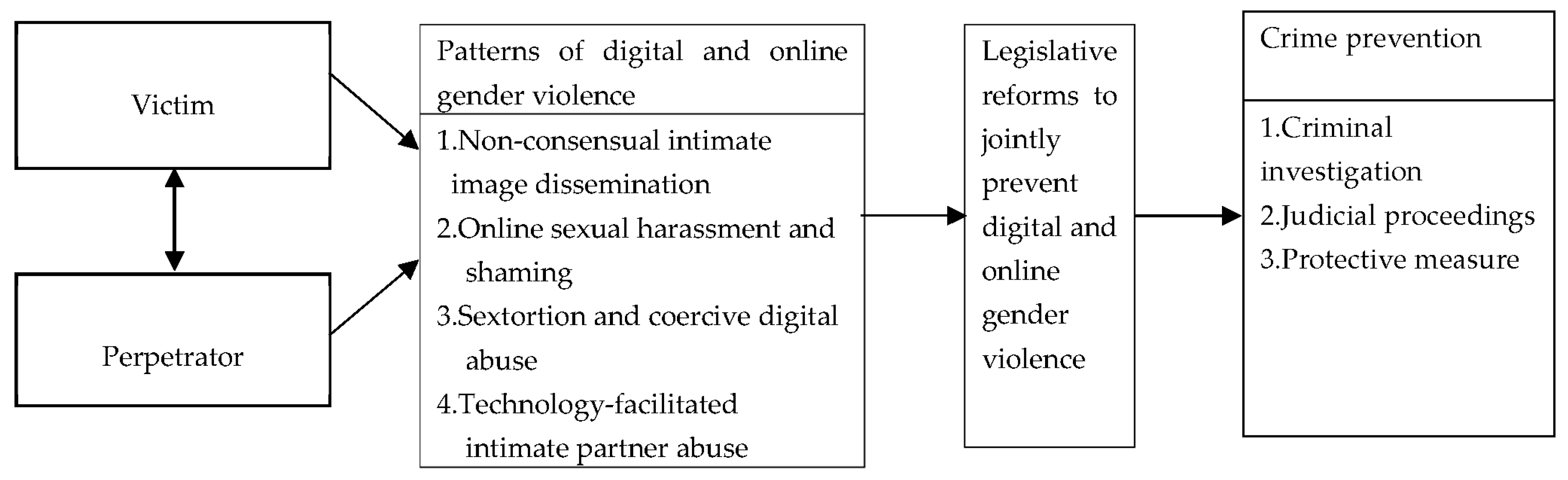
Figure 2.
Word frequency distribution of key terms in the interview data.
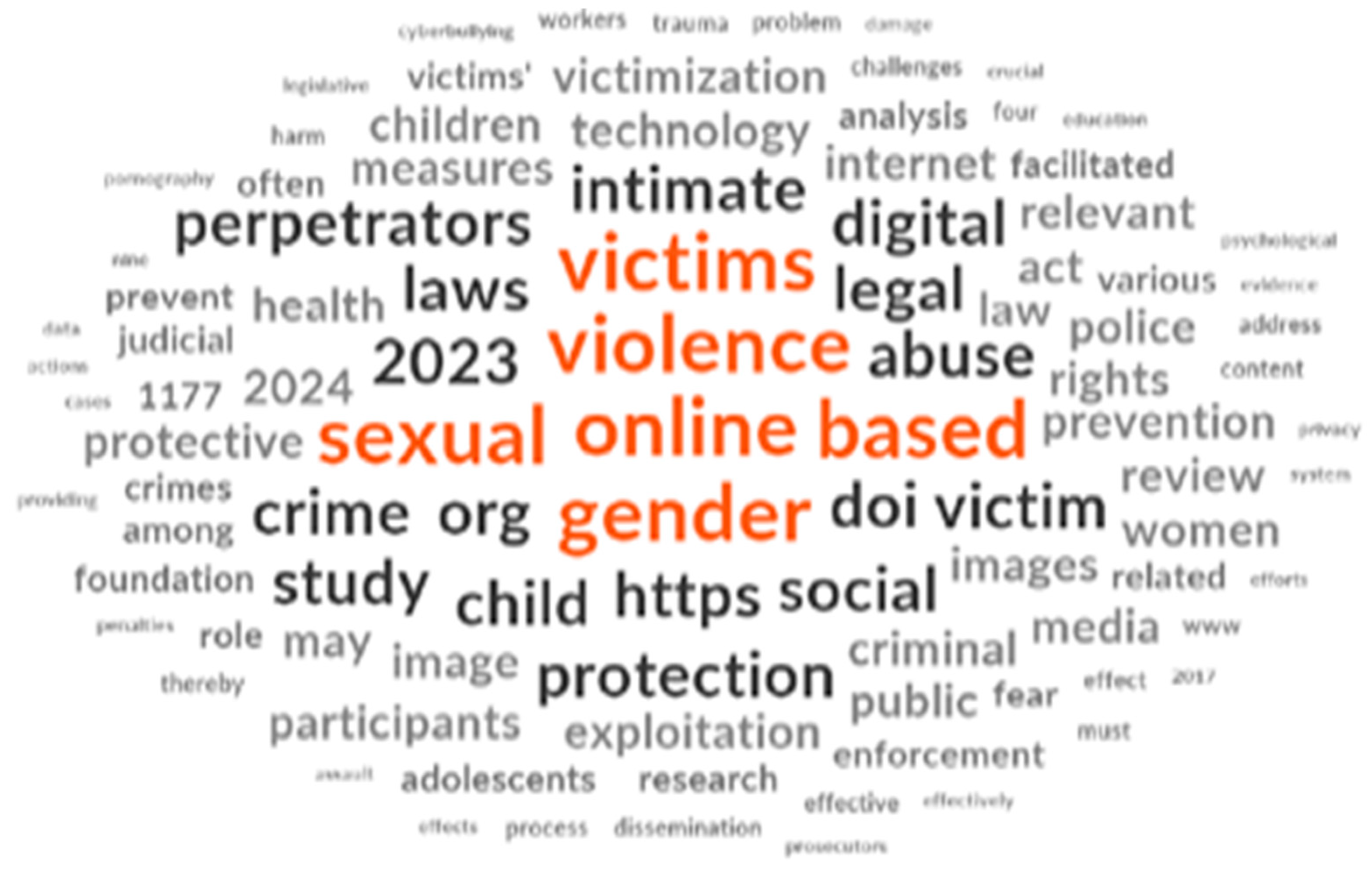
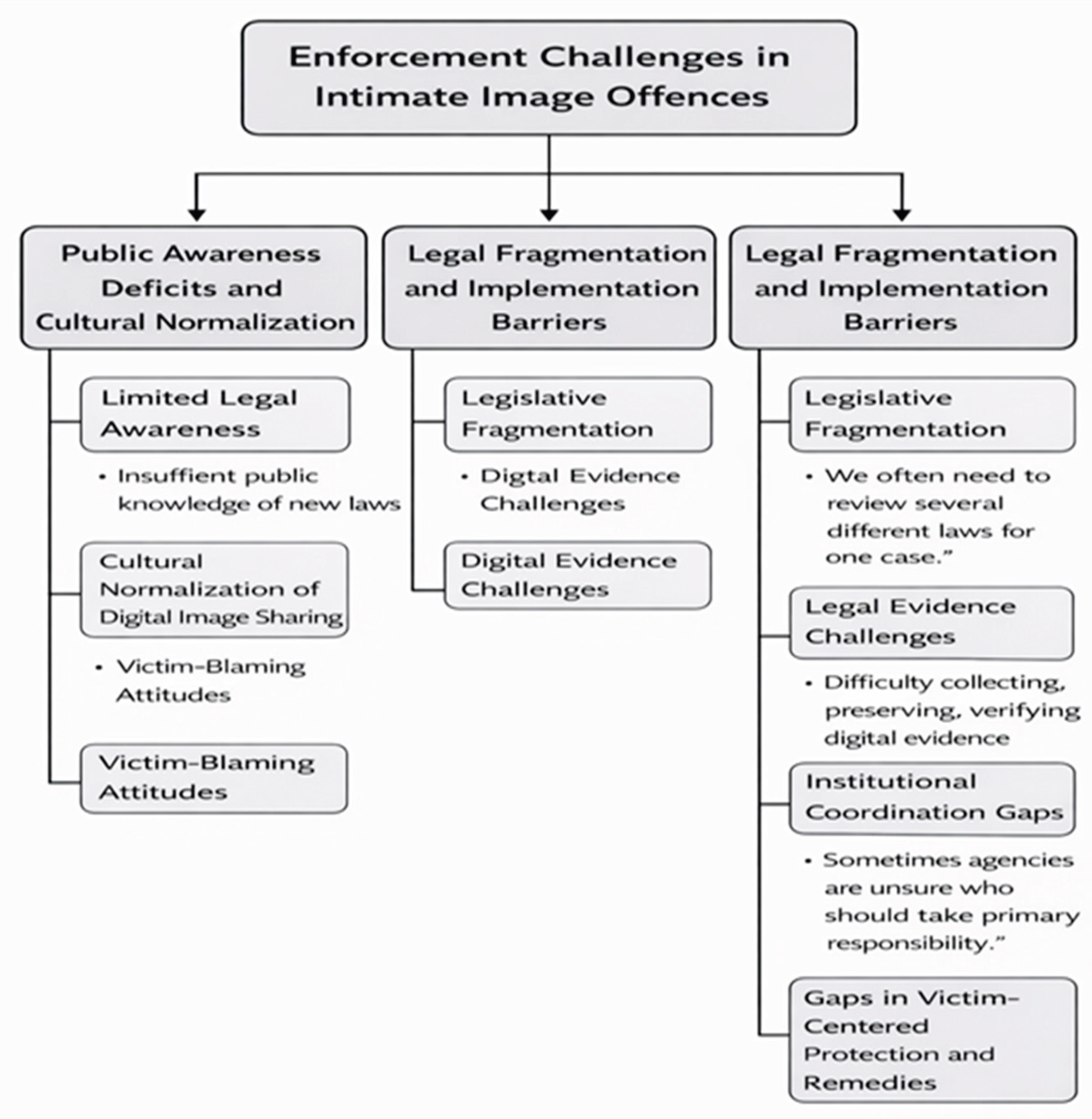

Table 1.
Superordinate themes, subthemes, and illustrative quotations on enforcement and victim protection gaps in digital sexual violence cases.
Table 1.
Superordinate themes, subthemes, and illustrative quotations on enforcement and victim protection gaps in digital sexual violence cases.
| Participant ID | Professional Role | Years of Experience | Gender | Superordinate Theme | Subtheme | Verbatim Quote |
|---|---|---|---|---|---|---|
| P03 | Police Officer | 12 | Male | Public Awareness Deficits and Cultural Normalization | Limited dissemination of new laws | “Not everyone is aware that the law has been amended. Many people still don’t understand that sharing intimate images without consent is a crime.” |
| P11 | Social Worker | 9 | Female | Public Awareness Deficits and Cultural Normalization | Persistent victim-blaming attitudes | “Some victims still face questions like why they took the photos in the first place. This reflects deeply rooted social attitudes.” |
| P07 | Prosecutor | 15 | Male | Legal Fragmentation and Implementation Barriers | Dispersion across multiple statutes | “We often need to interpret and apply several different laws for a single case, which complicates the legal process.” |
| P15 | Police Officer | 8 | Female | Legal Fragmentation and Implementation Barriers | Platform and digital investigation barriers | “Encrypted platforms and anonymous accounts make it difficult to trace perpetrators or obtain digital evidence.” |
| P12 | Social Worker | 11 | Female | Gaps in Victim-Centered Protection and Remedies | Delays in content removal | “Victims’ primary concern is to have the images removed immediately, but the legal process takes time.” |
| P18 | Lawyer | 17 | Male | Gaps in Victim-Centered Protection and Remedies | Risk of secondary victimization | “Some victims feel retraumatized when they have to repeatedly describe intimate details during legal proceedings.” |
| P04 | Prosecutor | 14 | Female | Legal Fragmentation and Implementation Barriers | Evidentiary and procedural complexity | “Digital evidence can disappear quickly, and procedural requirements sometimes delay effective intervention.” |
| P09 | Social Worker | 7 | Female | Gaps in Victim-Centered Protection and Remedies | Compensation dissatisfaction | “Many victims feel that financial compensation does not adequately reflect the emotional harm they endure and the long-term impact on their lives. “ |
Note. Participant identifiers (P01–P20) are used to ensure confidentiality. Professional roles include social workers, police officers, prosecutors, and lawyers. Quotations have been translated into English and lightly edited for clarity while preserving original meaning.
Table 2.
Full thematic matrix of enforcement and victim protection gaps.
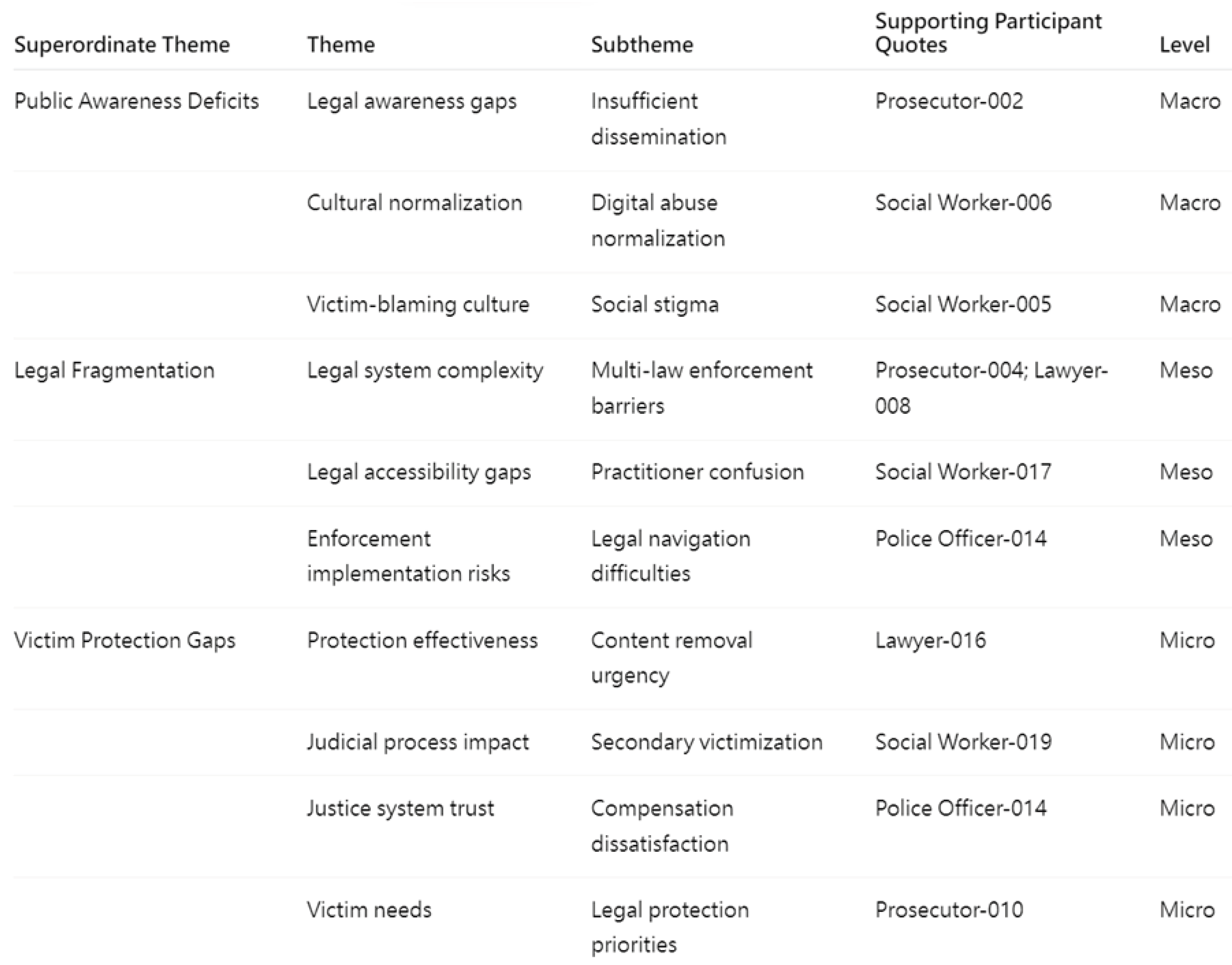 |
Note. This table presents the complete thematic matrix derived from reflexive thematic analysis of interviews with 20 frontline professionals (social workers, police officers, prosecutors, and lawyers). Themes are organized across macro- (societal), meso- (institutional), and micro-level (victim experience) structural dimensions, illustrating enforcement and victim protection challenges in Taiwan’s response to digital sexual violence. Supporting quotes exemplify key patterns within each subtheme.
Disclaimer/Publisher’s Note: The statements, opinions and data contained in all publications are solely those of the individual author(s) and contributor(s) and not of MDPI and/or the editor(s). MDPI and/or the editor(s) disclaim responsibility for any injury to people or property resulting from any ideas, methods, instructions or products referred to in the content. |
© 2026 by the authors. Licensee MDPI, Basel, Switzerland. This article is an open access article distributed under the terms and conditions of the Creative Commons Attribution (CC BY) license (http://creativecommons.org/licenses/by/4.0/).
Copyright: This open access article is published under a Creative Commons CC BY 4.0 license, which permit the free download, distribution, and reuse, provided that the author and preprint are cited in any reuse.