
Submitted:
12 March 2026
Posted:
17 March 2026
You are already at the latest version
Abstract
In China, the enormous gap between domestic soybean supply and increasing consumption necessitates large-scale soybean imports. The use of cultivated soybean (Glycine max) leaves as feed for the edible insect Clanis bilineata tsingtauica further reduces crop yields, posing a threat to national soybean production security. To address this issue, this study evaluated wild soybean (Glycine soja) as a potential alternative feed source. Comparative analyses examined the nutritional and anti-nutritional properties of G. max (cv. Qihuang34) and laboratory-preserved G. soja germplasm, together with their effects on larval growth performance, nutritional composition, and associated microbiota. G. soja leaves exhibited significantly higher crude fat (5.61% vs. 2.17%), ash (11.07% vs. 9.62%), neutral detergent fiber (23.75% vs. 21.00%), calcium (4.05 g/kg vs. 3.41 g/kg), and phosphorus (2.52 g/kg vs. 2.38 g/kg) than G. max, alongside lower trypsin inhibitor levels (P< 0.01) despite higher phytic acid content (P< 0.05). Fifth-instar larvae reared on G. soja leaves achieved a 12.9% increase in body weight (6.846 g vs. 6.066 g), higher crude protein (672.14 g/kg vs. 555.02 g/kg), total soluble sugar (21.27 mg/g vs. 8.96 mg/g), and soluble protein (26.35 mg/g vs. 24.71 mg/g), but lower crude fat (187.44 g/kg vs. 205.82 g/kg, P< 0.05). 16S rRNA sequencing revealed distinct phyllosphere microbial communities, with G. soja enriched in diverse taxa (e.g., Bacteroidota, Proteobacteria) and G. max dominated by Firmicutes. Corresponding differences were observed in larval gut microbiota, with positive correlation analyses suggesting potential microbe transfer from G. soja leaves to larval guts. Overall, G. soja represents a promising alternative feed for C. bilineata, reducing competition with soybean grain production and supporting sustainable insect farming.
Keywords:
wild soybean
; nutritional ingredient
; intestinal microflora
; phyllosphere microbiota
; edible insect
1. Introduction
Rapid population growth has intensified global demand for sustainable food sources to ensure long-term food security [1]. Edible insects have attracted increasing attention due to their short rearing cycle, efficient food conversion, and high protein content [2]. As a result, they are considered a promising alternative animal protein source capable of meeting rising global protein demand [3,4]. Consistent with this trend, the global market for edible insects continues to expand year after year [5].
Clanis bilineata tsingtauica, a member of the family Sphingidae within the order Lepidoptera, is a unique edible insect widely consumed in China [6,7]. The larvae, which feed on nutrient-rich soybean (Glycine max) leaves, are known for their high protein content, unsaturated fatty acids (UFAs), and vitamins [8], associated with brain development, protection against cellular degeneration, and endocrine regulation in humans. However, stable industrial production is compromised by challenges such as pest outbreaks, disease incidence, and photoperiod sensitivity, hindering constant supply.
Feeding behavior in phytophagous insects is strongly influenced by the nutritional composition of host plants [9]. Host nutrient profiles determine insect growth, development, and ultimately, their nutritional quality. Numerous species exhibit nutrition-driven host selection, such as the western flower thrip (Frankliniella occidentalis) shifting to nutrition-rich pollen [10] and Bradysia spp. preferring protein-rich chives (Allium tuberosum) and broad beans (Vicia faba) [11]. Nitrogen-rich plants are also favored by species such as gypsy moth (Lymantria dispar) [12,13].
Microbial communities associated with phyllosphere and insect guts are integral for understanding nutrient metabolism, immune regulation, and host-microbe interactions [14,15]. The phyllosphere harbors diverse microbial taxa that modulate plant health and nutrient composition [16,17]. Once food enters the insect body, gut-colonizing microorganisms are closely linked to nutrient assimilation and physiological processes [18]. Gut bacteria have been shown to influence insects’ host-plant preference, assisting them in identifying suitable plants for survival and reproduction [19]. Furthermore, the feeding characteristics of insects can significantly alter the structure of their gut microbiota, which in turn affects their growth and development [20]. Recent microbiological studies highlight the pivotal role of diet and environmental factors in the formation of the insect gut microbiota [21,22].
Wild soybean (Glycine soja), the progenitor of cultivated soybean (Glycine max) [23], is characterized by strong stress resistance, high adaptability, and a wide geographic distribution [24,25]. Its leaves contain higher concentrations of major free sugars, including glucose and sucrose, than those of cultivated soybean [26]. To evaluate the potential of G. soja as an alternative feed source for C. bilineata, this study compared the nutritional and anti-nutritional profiles of both soybean types and assessed their effects on C. bilineata larval performance and gut microbiota. Differences in phyllosphere microbial communities between the two soybean species were also examined, providing foundational insights for microbial regulation strategies aimed at enhancing C. bilineata production.
2. Results
2.1. Leaf Nutritional Components of G. soja and G. max
Leaf nutritional composition serves as a key indicator of forage quality. To compare wild (G. soja) and cultivated soybean (G. max), we quantified the nutritional components of their leaves. As summarized in Table 1, G. max leaves contained 2.17% crude fat, whereas G. soja leaves exhibited an approximately 2.58 times higher crude fat content than G. max (P<0.01). Ash, neutral detergent fiber, and Ca contents were also significantly higher in G. soja leaves (P<0.01). P content was also significantly higher in G. soja leaves than in G. max leaves (P<0.05). Conversely, crude fiber content was significantly higher in G. max leaves (P<0.01). No significant differences were observed in crude protein or acid detergent fiber between the two soybean types. Overall, these findings indicated that G. soja leaves possess a relatively stable and superior nutritional profile across several key indicators.
2.2. Main Anti-Nutritional Components in Leaves of G. soja and G. max
Anti-nutritional factors can interfere with nutrient digestion and absorption in plants consumed by herbivorous insects such as C. bilineata. We quantified two key anti-nutritional factors, trypsin inhibitor and phytic acid, in leaves of both soybean types. Trypsin inhibitor levels was markedly lower in G. soja than in G. max (P<0.01, Figure 1A). In contrast, phytic acid content was significantly higher in G. soja leaves (P<0.05, Figure 1B). These findings suggest a distinct anti-nutritional profiles between the two species, which may differentially influence nutrients bioavailability when consumed by C. bilineata.
2.3. Individual Weight and Nutritional Components of Fifth-Instar C.bilineata larvae
Dietary source significantly influenced the final body mass of C. bilineata larvae reared on G. soja reached a mean body mass of 6.846 g, which was significantly greater than the 6.066 g observed in larvae fed on G. max, representing a 12.9% increase (Figure 2A). The nutritional composition of the larvae was also significantly influenced by their dietary source. Larvae fed on G. soja leaves exhibited substantially higher crude protein content (672.14 g/kg) than those fed on G. max leaves (555.02 g/kg), corresponding to a 21.10% increase (P<0.01). Conversely, crude fat content was 9.81% lower in larvae fed on G. soja (187.44 g/kg) than in those fed on G. max (205.82 g/kg) (P<0.05). Total soluble sugar content was markedly higher in larvae reared on G. soja (21.27 mg/g) than in those reared on G. max (8.96 mg/g) (P<0.01). Total soluble protein was also slightly but significantly higher in the G. soja-fed group (26.35 mg/g) relative to the G. max-fed group (24.71 mg/g) (P<0.05). Furthermore, K content was significantly lower in larvae fed on G. soja (2.26 g/kg) than in those fed on G. max (2.44 g/kg) (P<0.01) (Table 2). Collectively, these results demonstrate that G. soja provides a more favorable nutritional foundation for larval development, reflected in enhanced protein assimilation and carbohydrate accumulation.
2.4. Phyllosphere and Gut Microbiota of Fifth-Instar C.bilineata larvae
Microbial community profiling was performed on leaves of both soybean types and on the excreta of fifth-instar C.bilineata larvae feeding on these hosts. Across all samples, a total of 423 OTUs were identified and classified at the genus level (Supplementary Table S1). PCA analysis demonstrated clear separation between the gut microbial communities of larvae fed on G. max versus. G. soja and among the phyllosphere microbiota of both plant types (Figure 3A), indicating distinct community structures. Heatmap analysis of the top 50 genera further revealed distinct these differences, showing pronounced divergence in microbial composition both between the two plant phyllospheres and between the corresponding larval gut microbiota(Figure 3B). These results indicate that the two host plants recruit distinct phyllosphere microbial communities, which are reflected in the differentiated the gut microbial community composition of the C. bilineata larvae feeding on each host plant. The divergence in host-associated microbial assemblages may contribute to the observed differences in larval nutritional profiles and growth performance.
2.5. Comparative Analysis of Phyllosphere Microbiota of G. soja and G. max Leaves
Linear discriminant analysis effect size (LEfSe) with an LDA threshold > 2.0 was used to identify differentially abundant phyllosphere microorganisms between G. soja and G. max leaves (Figure 4).
The analysis revealed that G. soja leaves exhibited enrichment across a broader range of microbial taxa at multiple taxonomic levels compared with G. max leaves. Specifically, G. soja leaves were enriched with 2 phyla (Bacteroidota, Proteobacteria), 2 classes (Alphaproteobacteria, Bacteroidia), 9 orders (e.g., Acetobacterales, Enterobacterales, Sphingomonadales), 10 families (e.g., Acetobacteraceae, Enterobacteriaceae, Sphingomonadaceae), 14 genera (e.g., Aureimonas, Brevundimonas, Sphingomonas), and 13 species (e.g., Chryseobacterium indologenes, Cronobacter sakazakii, Sphingomonas hankookensis).
In contrast, G. max leaves were enriched with a comparatively narrower range of taxa, including one phylum (Firmicutes), one class (Bacilli), three orders (Burkholderiales, Kineosporiales, Lactobacillales), seven families (e.g., Burkholderiaceae, Lactobacillaceae), nine genera (e.g., Bradyrhizobium, Lactobacillus, Ralstonia), and 16 species (e.g., Bacillus velezensis, Lactobacillus plantarum).
A notable enrichment of unclassified or uncultured microbial taxa was observed in the G. soja phyllosphere. At the class level, G. soja leaves harbored unclassified taxa such as c_unclassified_p_Proteobacteria, with this trend extending to 2 unclassified orders, 2 unclassified families, 5 unclassified genera, and 15 unclassified or uncultured species. Conversely, such unclassified taxa were scarce in G. max leaves, appearing only at the genus (1 taxon) and species levels (3 taxa).
2.6. Comparative Analysis of Gut Microbiota in C. bilineata Fed on G. soja and G. max Leaves
LEfSe with an LDA threshold > 2.0 was performed to identify differentially abundant intestinal microbes in C. bilineata fed G. soja versus G. max leaves (Figure 5). The gut microbiota of larvae fed G. soja leaves exhibited significant enrichment across a broader range of taxa, including 2 phyla (Bacteroidota and Firmicutes), 2 classes (Bacilli and Bacteroidia), 5 orders (Cellvibrionales, Flavobacteriales, Lactobacillales, Sphingobacteriales, and Staphylococcales), 7 families, 10 genera (including Sphingobacterium), and 8 species, several of which were also enriched in the G. soja phyllosphere. In contrast, the gut microbiota of larvae fed G. max leaves was enriched with a more limited set of taxa, including one phylum (Proteobacteria), one class (Gammaproteobacteria), one order (Peptostreptococcales-Tissierellales), 4 families (Alcaligenaceae, Burkholderiaceae, Lactobacillaceae, and Streptococcaceae), 5 genera (including Lactobacillus and Ralstonia), and 3 species (including Ralstonia solanacearum), several of which were also enriched in the G. max phyllosphere.
A notable enrichment of unclassified or uncultured taxa was observed in the gut of larval fed on G. soja, spanning all taxonomic levels, including 1 unclassified phylum (p_unclassified_d_Bacteria), 1 unclassified class, 2 unclassified orders, 3 unclassified families, 4 unclassified genera, and 10 unclassified or uncultured species. Conversely, the gut of larvae fed on G. max leaves contained substantially fewer unclassified taxa, limited to 2 genera and 3 species.
2.7. Potential Transmission and Synergistic Interactions Between Gut and Phyllosphere Microbiota of C. bilineata
Furthermore, correlation network analysis revealed distinct correlations between the gut microbiota of C. bilineata and the phyllosphere microbiota of the consumed leaves at the OTU level (Figure 6). The network comprised five modules, with Module 1 comprising 17 nodes (5 phyllosphere and 12 gut OTUs) and Module 2 containing 25 nodes (5 phyllosphere and 20 gut OTUs), while the remaining three modules each consisted of two nodes.
In contrast, negative correlations were mainly observed within Module 1 and primarily occurred between phyllosphere-phyllosphere or gut-gut OTUs, likely reflecting competitive interactions among microorganisms inhabiting same ecological niches. Overall, correlations between phyllosphere and gut microbiota were predominantly positive, indicating potential synergistic or co-enrichment effect between leaf-associated and gut-associated microbial communities (Figure 6).
3. Discussion
Plant nutrients play a crucial role in insect growth and development [36]. Among these nutrients, protein serves as a key determinant of performance in phytophagous insects, which tend to prefer host plants with higher protein content to maximize nutrient acquisition from limited food intake [37]. Consistent with this pattern, feeding on rice plants with higher nitrogen content enhances survival and shortens developmental duration in the brown planthopper (Nilaparvata lugens) [38]. In the present study, G. soja leaves contained significantly greater content of crude fat, crude fiber, ash, neutral detergent fiber, acid detergent fiber, P, and Ca than G. max leaves, whereas crude protein contents did not differ significantly between the two soybeans types (Table 1).
Proteolytic enzymes in phytophagous insects vary widely in prevalence and catalytic efficiency across taxa and feeding strategies [39]. Plant-derived trypsin inhibitors can irreversibly bind intestinal trypsin, forming inactive complexes that disrupts protein digestion, absorption, and utilization [40,41]. In addition, protease-inhibitor complexes may act as negative feedback signals that further suppress insect feeding [42]. Together, these effects impair dietary protein utilization and overall food intake, ultimately hindering insect development and leading to mortality due to protein deficiency. Phytic acid, naturally present in legumes, reduce the bioavailability of essential minerals, amino acids, and proteins through chelation and complex formation [43]. Its degradation can release phosphate that becomes available to the host or gut microbiota, while phytic acid also plays a defensive role against phytophagous insects [44]. Our results showed that G. soja leaves contained lower levels of trypsin inhibitors but higher phytic acid content than G. max leaves. Correspondingly, larvae feeding on G. soja leaves exhibited higher average body weight and elevated crude protein, total soluble sugar, and soluble protein contents, potentially reflecting the combined effects of enhanced nutrient availability and reduced protease inhibition.
Phyllosphere-associated microbial communities play critical roles in plant productivity and ecological interactions. In our study, the G. soja phyllosphere possessed a stronger capacity for microbial recruitment, sustaining a more diverse and taxonomically rich community, including a substantial proportion of rare or poorly characterized taxa. In contrast, the G. max phyllosphere was dominated by fewer, more readily identifiable microorganisms. This difference may reflect variation in leaf-derived metabolites and volatiles that shape microbial colonization niches. Bidirectional transfer of bacteria between plant phyllospheres and insects has been documented previously [45,46,47]. The plant phyllosphere bacteria ingested by insects can colonize insect guts to facilitate detoxification, nutrient acquisition, and survival [48]. In larvae fed on G. soja leaves, consistent microbial transfer from leaf to gut was observed, spanning taxonomical levels from the phylum Bacteroidota to the genus Sphingobacterium, both of which were enriched in the G. soja phyllosphere. A similar, though more limited, pattern was evident in larvae fed on G. max leaves. Our findings reflect the disparities observed in phyllosphere microbiota, indicating a parallel divergence in the gut microbiota of larvae feeding on these leaves.
Together, these findings indicate significant microbial transfer along the food chain from both G. soja and G. max leaves to the gut of C. bilineata larvae. The rich and diverse phyllospheric microbial community influences the compositional diversity of the intestinal microbiota in C. bilineata larvae, underscoring a direct dietary impact on gut microbial assembly.
4. Materials and Methods
4.1. Plant Material Preparation
The cultivated soybean (G. max) variety was Qihuang 34, while the wild soybean (G. soja) consisted of homozygous lines originally collected from Dongying and maintained in the laboratory [27]. The experiment was conducted beginning in early June 2024 at the Yellow River Delta Modern Agriculture Research Institute, Shandong Academy of Agricultural Sciences, Shandong, China. Both soybean types were grown under standard field management in plots of approximately 50 m², using 0.6 m row spacing and 0.15 m intra-row spacing. One week before releasing C. bilineata eggs, each plot was covered with insect-proof nets (Supplementary Figure S1) to prevent larval predation.
4.2. Inoculation of C. bilineata larvae
Forty days after sowing when plants had developed sufficient biomass), commercially purchased C. bilineata eggs were attached to the abaxial surface of G. max and G. soja leaves. One egg cluster (30-50 eggs) was placed per m2, allowing natural hatching (Supplementary Figure S1).
4.3. Plant Material Sampling
The developmental progression of C. bilineata larvae in each plot was monitored regularly. When approximately 70% of larvae reached the fifth instar, fully expanded upper young leaves from G. max and G. soja were collected. Field observations indicated that C. bilineata predominantly feeds on young upper leaves; therefore, these leaves were used for nutritional component analysis and phyllosphere microbial sequencing. For both G. max and G. soja plots, samples were collected from three-density larval locations. Immediately after sampling, leaves were flash-frozen in liquid nitrogen and stored at -80 °C for subsequent analyses.
4.4. C. bilineata larvae and Feces Sampling
Sampling of C. bilineata larvae and their feces began three days after leaf collection. Fifth-instar larvae were collected from high-density areas in both G. max and G. soja plots. At each of three independent sampling sites per plot, 6-10 larvae were collected. Larvae were immediately flash-frozen in liquid nitrogen and stored at -80 °C. Fresh feces were collected from the same locations, flash-frozen in liquid nitrogen and stored at -80 °C for further experiments.
4.5. Determination of Leaf and Larval Indicators
The determination of leaf nutritional components (crude fat, crude protein, crude fiber, ash, neutral detergent fiber, acid detergent fiber, phosphorus (P), and calcium (Ca) and larval nutritional indicators (crude protein, crude fat, soluble sugar, soluble protein, and potassium (K) followed the procedures described by Li et al. (2011) [28]. Phytic acid and trypsin inhibitor contents were determined following Liu et al. (2020) [29], with minor modifications. In brief, 5 g of leaf tissue was extracted with 40 mL of sodium sulfate-hydrochloric acid solution on a shaker for 4 h. The mixture was centrifuged at 8000 rpm for 5 min, and the supernatant was adjusted to 50 mL with the same solution and then filtered. For phytic acid purification, 2 mL of extract was mixed with 2 mL of 15% trichloroacetic acid (TCA) solution and incubated at 4 °C for 2 h. After centrifugation, 2 mL of the supernatant was adjusted to pH to 6.0-6.5 with 1 mol/L NaOH and diluted to 30 mL with distilled water. Standard curve preparation and quantification followed national standard procedures (GB5009.153-2016). For trypsin inhibitor activity, 1 g of leaf tissue was extracted with 50 mL of 0.01 mol/L NaOH solution, adjusted to pH to 9.5 ± 0.1 using 0.1 mol/L hydrochloric acid (HCl) solution, and incubated at 4 °C for 24 h. The extract was equilibrated at 25 °C, diluted to 100 mL with water, and analyzed using the national standard method (GB 5009.224-2016). For each analytical parameter, the measurements were performed in triplicate.
4.6. Microbial Sequencing and Related Analyses
Total microbial genomic DNA was extracted from leaf and fecal samples using EasyPure® Genomic DNA Kit (Transgen, EE101-01). The V5-V6 region of the bacterial 16S rRNA gene was amplified with primers 799F (5’-AACMGGATTAGATACCCKG -3’) and 1193R (5’-ACGTCATCCCCACCTTCC -3’) [30]. Amplified PCR products were pooled in equimolar amounts, and a DNA libraries were constructed using the SMRTbell prep kit 3.0 (Pacifc Biosciences, CA, USA). Sequencing was performed on the PacBio Sequel IIe System (Pacifc Biosciences, CA, USA) by Majorbio Bio-Pharm Technology Co. Ltd. (Shanghai, China). High-fidelity (HiFi) reads were generated using circular consensus sequencing via SMRT Link v11.0. Optimized HiFi reads were clustered into operational taxonomic units (OTUs) using UPARSE 7.1 [31,32] at a 97% sequence similarity threshold. The most abundant sequence in each OTU was selected as the representative sequence, and chloroplast sequences were removed during manual filtering. Taxonomic classification of each representative sequence was performed using the RDP Classifier version 2.2 [33] with a confidence threshold of 0.7. Metagenomic functions were predicted by PICRUSt2 [34] based on representative OTU sequences. Bioinformatic analyses of phyllosphere and gut microbiomes were carried out using the Majorbio Cloud platform (https://cloud.majorbio.com) [35].
4.7. Data Analysis
All data were subjected to one-way analysis of variance (ANOVA). Mean differences were compared using Tukey’s post hoc test, with significant set at P<0.05 and P<0.01. Statistical analyses were performed using SPSS v 17.0 (SPSS Inc., Chicago, IL, USA).
5. Conclusions
This study evaluated the effects of nutrients, anti-nutritional factors, and phyllosphere microorganisms in wild (G. soja) and cultivated (G. max) soybean plants on larval nutrition and gut microbiota composition in C. bilineata. Compared with G. max, G. soja contained higher levels of nutrients, including crude protein and crude fat, as well as lower levels of plant trypsin inhibitors. Larvae fed on G. soja leaves exhibited higher biomass, protein content, and sugar content than those fed on G. max leaves. G. soja leaves exhibited a stronger capacity for microbial recruitment, supporting greater microbial diversity and abundance. Gut microbiota analysis revealed that, consistent with the differences in phyllosphere microorganisms between G. soja and G. max, larvae fed on the two leaf types also exhibited distinct gut microbial communities. Based on these results, G. soja plants may serve, to some extent, as a substitute for G. max in C. bilineata feeding. These results provide a scientific basis for the industrialization and commercialization of C. bilineata production.
Supplementary Materials
The following supporting information can be downloaded at: Preprints.org.
Author Contributions
Conceptualization, Z.-C.X. and Y.-Q.L.; methodology and software, X.-L.L., H.-H.Y., and M.W.; investigation and writing-original draft preparation, P.Z. and C.M.; writing-review and editing, Z.-C.X., and S.W.G.; supervision and project administration, X.J., Y.B. and Y.-R.S.; funding acquisition, Z.-C.X. and L.W. All authors have read and agreed to the published version of the manuscript.
Funding
The author(s) declare financial support was received for the research and/or publication of this article. This work was supported by the Dongying Key Special Project for Scientific and Technological Innovation (2023ZDJH94), Scientific and technological Research Project of Jilin Provincial Department of Education (No. JJKH20220435KJ), Agricultural Science and Technology Innovation Program (ASTIP-TRIC06, CAAS-ZDRW202407).
Institutional Review Board Statement
Not applicable.
Informed Consent Statement
Not applicable.
Data Availability Statement
The original contributions presented in this study are included in the article/supplementary material. Further inquiries can be directed to the corresponding author(s).
Acknowledgments
Not applicable.
Conflicts of Interest
The authors declare no conflict of interest.
References
- Fan, M.; Shen, J.; Yuan, L.; Jiang, R.; Chen, X.; Davies, WJ.; Zhang, F. Improving crop productivity and resource use efficiency to ensure food security and environmental quality in China. Journal of experimental botany 2012, 63(1), 13–24. [Google Scholar] [CrossRef] [PubMed]
- Ghosh, S.; Lee, S-M.; Jung, C.; Meyer-Rochow, VB. Nutritional composition of five commercial edible insects in South Korea. Journal of Asia-Pacific Entomology 2017, 20(2), 686–694. [Google Scholar] [CrossRef]
- Brunner, TA.; Nuttavuthisit, K. A consumer-oriented segmentation study on edible insects in Switzerland and Thailand. British Food Journal 2020, 122(2), 482–488. [Google Scholar] [CrossRef]
- Ndiritu, AK.; Kinyuru, JN.; Kenji, GM.; Gichuhi, PN. Extraction technique influences the physico-chemical characteristics and functional properties of edible crickets (Acheta domesticus) protein concentrate. Journal of Food Measurement and Characterization 2017, 11(4), 2013–2021. [Google Scholar] [CrossRef]
- Dobermann, D.; Swift, J.; Field, L. Opportunities and hurdles of edible insects for food and feed. Nutrition Bulletin 2017, 42(4), 293–308. [Google Scholar] [CrossRef]
- Qian, L.; Chen, B-J.; Gui, F-R.; Qin, Y.; Deng, P.; Liao, H-J. Nutritional and Feeding Adaptability of Clanis bilineata tsingtauica Larvae to Different Cultivars of Soybean, (Glycine max). Foods 2023, 12(8), 1721. [Google Scholar] [CrossRef]
- Qian, L.; Wang, Y.; Deng, P.; Zhang, J.; Qin, Y.; Li, Z.; Liao, H.; Chen, F. Enterococcus casseliflavus regulates amino acid metabolism in edible insect Clanis bilineata tsingtauica: a functional metagenomics study. Frontiers in Microbiology 2024, 15–2024. [Google Scholar] [CrossRef]
- Su, Y.; Lu, M-X.; Jing, L-Q.; Qian, L.; Zhao, M.; Du, Y-Z.; Liao, H-J. Nutritional Properties of Larval Epidermis and Meat of the Edible Insect Clanis bilineata tsingtauica (Lepidoptera: Sphingidae). Foods 2021, 10(12), 2895. [Google Scholar] [CrossRef]
- Green Karlsson, K. The effects of host plant species and larval density on immune function in the polyphagous moth Spodoptera littoralis. Ecology and Evolution 2021, 11(15), 10090–10097. [Google Scholar] [CrossRef] [PubMed]
- Yang, K; Han, D; Wen, J; Liang, C; Zhan, C; You, Y; Fu, Y; Li, L; Ye, Z. Influence of Temperature and Host Plant on the Digestion of Frankliniella intonsa (Trybom) Revealed by Molecular Detection. Insects 2024, 15(10), 806. [Google Scholar] [CrossRef] [PubMed]
- Gou, Y.; Quandahor, P.; Zhang, Y.; Coulter, JA.; Liu, C. Host plant nutrient contents influence nutrient contents in Bradysia cellarum and Bradysia impatiens. PLoS One 2020, 15(4), e0226471. [Google Scholar] [CrossRef]
- Conrad-Rooney, E.; Barker Plotkin, A.; Pasquarella, VJ.; Elkinton, J.; Chandler, JL.; Matthes, JH. Defoliation severity is positively related to soil solution nitrogen availability and negatively related to soil nitrogen concentrations following a multi-year invasive insect irruption. AoB Plants 2020, 12(6), plaa059. [Google Scholar] [CrossRef]
- Giertych, M.; Bąkowski, M.; Karolewski, P.; Zytkowiak, R.; Grzebyta, J. Influence of mineral fertilization on food quality of oak leaves and utilization efficiency of food components by the gypsy moth. Entomologia experimentalis et applicata 2005, 117(1), 59–69. [Google Scholar] [CrossRef]
- Gomes, T.; Pereira, JA.; Moya-Laraño, J.; Poveda, J.; Lino-Neto, T.; Baptista, P. Deciphering plant health status: The link between secondary metabolites, fungal community and disease incidence in olive tree. Frontiers in Plant Science 2023, 14, 1048762. [Google Scholar] [CrossRef] [PubMed]
- Hrynkiewicz, K.; Baum, C. The potential of rhizosphere microorganisms to promote the plant growth in disturbed soils. In Environmental protection strategies for sustainable development.; Springer, 2011; pp. 35–64. [Google Scholar] [CrossRef]
- Lei, C.; Zhou, SY.; Tissue, DT.; Neilson, R.; Lie, Z.; Wu, T.; Liu, X.; Meng, C.; Li, X.; Zhu, D. Seasonal Variation of Phyllosphere Microbial Communities Under Warming. Glob Chang Biol 2025, 31(6), e70270. [Google Scholar] [CrossRef]
- Zhu, YG.; Xiong, C.; Wei, Z.; Chen, QL.; Ma, B.; Zhou, SY.; Tan, J.; Zhang, LM.; Cui, HL.; Duan, GL. Impacts of global change on the phyllosphere microbiome. New Phytol 2022, 234(6), 1977–1986. [Google Scholar] [CrossRef] [PubMed]
- Shao, Y.; Arias-Cordero, E.; Guo, H.; Bartram, S.; Boland, W. In vivo Pyro-SIP assessing active gut microbiota of the cotton leafworm, Spodoptera littoralis. PLoS One 2014, 9(1), e85948. [Google Scholar] [CrossRef]
- Zhang, Y.; Zhang, S.; Xu, L. The pivotal roles of gut microbiota in insect plant interactions for sustainable pest management. npj Biofilms and Microbiomes 2023, 9(1), 66. [Google Scholar] [CrossRef] [PubMed]
- Shen, T.; Wu, Q.; Tan, Y.; Ju, X.; Han, G. Diet-induced gut microbiota shifts in grasshoppers: ecological implications for management and adaptation under varying grazing intensities. Pest Management Science 2025, 81(10), 6128–6138. [Google Scholar] [CrossRef]
- Luo, J.; Cheng, Y.; Guo, L.; Wang, A.; Lu, M.; Xu, L. Variation of gut microbiota caused by an imbalance diet is detrimental to bugs’ survival. Science of The Total Environment 2021, 771, 144880. [Google Scholar] [CrossRef]
- Zheng, X.; Zhu, Q.; Qin, M.; Zhou, Z.; Liu, C.; Wang, L.; Shi, F. The Role of Feeding Characteristics in Shaping Gut Microbiota Composition and Function of Ensifera (Orthoptera). Insects 2022, 13(8), 719. [Google Scholar] [CrossRef]
- Wang, YH.; Zhang, XJ.; Fan, SJ. Genetic diversity of wild soybean populations in Dongying, China, by simple sequence repeat analysis. Genetics and Molecular Research 2015, 14(3), 11613–11623. [Google Scholar] [CrossRef]
- Ali, Z.; Zhang, DY.; Xu, ZL.; Xu, L.; Yi, JX.; He, XL.; Huang, YH.; Liu, XQ.; Khan, AA.; Trethowan, RM. Uncovering the salt response of soybean by unraveling its wild and cultivated functional genomes using tag sequencing. PLoS One 2012, 7(11), e48819. [Google Scholar] [CrossRef] [PubMed]
- Lee, J-D.; Shannon, JG.; Vuong, TD.; Nguyen, HT. Inheritance of salt tolerance in wild soybean (Glycine soja Sieb. and Zucc.) accession PI483463. Journal of Heredity 2009, 100(6), 798–801. [Google Scholar] [CrossRef] [PubMed]
- Yun, DY.; Kang, Y-G.; Kim, M.; Kim, D.; Kim, E-H.; Hong, Y-S. Metabotyping of different soybean genotypes and distinct metabolism in their seeds and leaves. Food Chemistry 2020, 330, 127198. [Google Scholar] [CrossRef]
- Xu, Z.; Ren, T.; Marowa, P.; You, X.; Lu, X.; Li, Y.; Zhang, C. Establishment of a Cultivation Mode of Glycine soja, the Bridge of Phytoremediation and Industrial Utilization. Agronomy 2020, 10(4), 595. [Google Scholar] [CrossRef]
- Li, M.; Zheng, L. A study on the major components and feeding value of Wuhe Glycine soja seed. Acta Prataculturae Sinica Last accessed on. 2011, 20(4), 137–142. (accessed on 16 Dec 2025). (In Chinese) [Google Scholar]
- Liu, JG.; Gao, Y-M.; Liu, P-H. Analysis of anti-nutritional factors in various parts of Eugenia caryophyllata thunb. Food Research and Development Last accessed on. 2020, 41(7), 177–181. (accessed on 16 Dec 2025). (In Chinese) [Google Scholar]
- Haro, C.; Anguita-Maeso, M.; Metsis, M.; Navas-Cortés, JA.; Landa, BB. Evaluation of Established Methods for DNA Extraction and Primer Pairs Targeting 16S rRNA Gene for Bacterial Microbiota Profiling of Olive Xylem Sap. Frontiers in Plant Science 2021, 12. [Google Scholar] [CrossRef]
- Magoč, T.; Salzberg, SL. FLASH: fast length adjustment of short reads to improve genome assemblies. Bioinformatics 2011, 27(21), 2957–2963. [Google Scholar] [CrossRef]
- Edgar, RC. UPARSE: highly accurate OTU sequences from microbial amplicon reads. Nature Methods 2013, 10(10), 996–998. [Google Scholar] [CrossRef] [PubMed]
- Stackebrandt, E.; Goebel, BM. Taxonomic Note: A Place for DNA-DNA Reassociation and 16S rRNA Sequence Analysis in the Present Species Definition in Bacteriology. International Journal of Systematic and Evolutionary Microbiology 1994, 44(4), 846–849. [Google Scholar] [CrossRef]
- Wang, Q.; Garrity, GM.; Tiedje, JM.; Cole, JR. Naïve Bayesian Classifier for Rapid Assignment of rRNA Sequences into the New Bacterial Taxonomy. Applied and Environmental Microbiology 2007, 73(16), 5261–5267. [Google Scholar] [CrossRef]
- Han, C.; Shi, C.; Liu, L.; Han, J.; Yang, Q.; Wang, Y.; Li, X.; Fu, W.; Gao, H.; Huang, H. Majorbio Cloud 2024: Update single-cell and multiomics workflows. iMeta 2024, 3(4). [Google Scholar] [CrossRef]
- Lin, SC.; Li, Y.; Hu, FY.; Wang, CL.; Kuang, YH.; Sung, CL.; Tsai, SF.; Yang, ZW.; Li, CP; Huang, SH. Effect of nitrogen fertilizer on the resistance of rice near-isogenic lines with BPH resistance genes. Botanical Studies 2022, 63(1), 16. [Google Scholar] [CrossRef]
- Deans, CA.; Behmer, ST.; Fiene, J.; Sword, GA. Spatio-temporal, genotypic, and environmental effects on plant soluble protein and digestible carbohydrate content: implications for insect herbivores with cotton as an exemplar. Journal of chemical ecology 2016, 42(11), 1151–1163. [Google Scholar] [CrossRef]
- Dai, Y.; Wang, MF; Jiang, SL.; Zhang, Y-F.; Parajulee, MN.; Chen, F-J. Host-selection behavior and physiological mechanisms of the cotton aphid, Aphis gossypii, in response to rising atmospheric carbon dioxide levels. Journal of Insect Physiology 2018, 109, 149–156. [Google Scholar] [CrossRef]
- A Jongsma, M.; Beekwilder, J. Co-evolution of insect proteases and plant protease inhibitors. Current protein and peptide Science 2011, 12(5), 437–447. [Google Scholar] [CrossRef]
- Farinon, B.; Molinari, R.; Costantini, L.; Merendino, N. The seed of industrial hemp (Cannabis sativa L.): Nutritional quality and potential functionality for human health and nutrition. Nutrients 2020, 12(7), 1935. [Google Scholar] [CrossRef]
- Wang, X.; Cheng, R.; Xu, D.; Huang, R.; Li, H.; Jin, L.; Wu, Y.; Tang, J.; Sun, C.; Peng, D. MG1 interacts with a protease inhibitor and confers resistance to rice root-knot nematode. Nature Communications 2023, 14(1), 3354. [Google Scholar] [CrossRef] [PubMed]
- Zhai, J.; Hou, B.; Hu, F.; Yu, G.; Li, Z.; Palmer-Young, EC.; Xiang, H.; Gao, L. Active defense strategies for invasive plants may alter the distribution pattern of pests in the invaded area. Frontiers in Plant Science 2024, 15–2024. [Google Scholar] [CrossRef]
- Zhang, Z.; Liu, C.; Wu, S.; Ma, T. The Non-Nutritional Factor Types, Mechanisms of Action and Passivation Methods in Food Processing of Kidney Bean (Phaseolus vulgaris L.): A Systematic Review. Foods 2023, 12(19), 3697. [Google Scholar] [CrossRef]
- Callegari, M.; Jucker, C.; Fusi, M.; Leonardi, MG.; Daffonchio, D.; Borin, S.; Savoldelli, S.; Crotti, E. Hydrolytic profile of the culturable gut bacterial community associated with Hermetia illucens. Frontiers in Microbiology 2020, 11, 1965. [Google Scholar] [CrossRef]
- Humphrey, PT.; Whiteman, NK. Insect herbivory reshapes a native leaf microbiome. Nature ecology & evolution 2020, 4(2), 221–229. [Google Scholar] [CrossRef]
- Jones, AG.; Mason, CJ.; Felton, GW.; Hoover, K. Host plant and population source drive diversity of microbial gut communities in two polyphagous insects. Scientific Reports 2019, 9(1), 2792. [Google Scholar] [CrossRef] [PubMed]
- Pirttilä, AM.; Brusila, V.; Koskimäki, JJ.; Wäli, PR.; Ruotsalainen, AL.; Mutanen, M.; Markkola, AM. Exchange of Microbiomes in Plant-Insect Herbivore Interactions. mBio 2023, 14(2). [Google Scholar] [CrossRef] [PubMed]
- Mayoral-Peña, Z.; Lázaro-Vidal, V.; Fornoni, J.; Álvarez-Martínez, R.; Garrido, E. Studying Plant–Insect Interactions through the Analyses of the Diversity, Composition, and Functional Inference of Their Bacteriomes. Microorganisms 2023, 11(1), 40. [Google Scholar] [CrossRef]
Figure 1.
The main anti-nutritional factors of cultivated soybean leaves and wild soybean leaves. A, trypsin inhibitor content; B, phytic acid content. *, P<0.05; **, P<0.01.
Figure 1.
The main anti-nutritional factors of cultivated soybean leaves and wild soybean leaves. A, trypsin inhibitor content; B, phytic acid content. *, P<0.05; **, P<0.01.
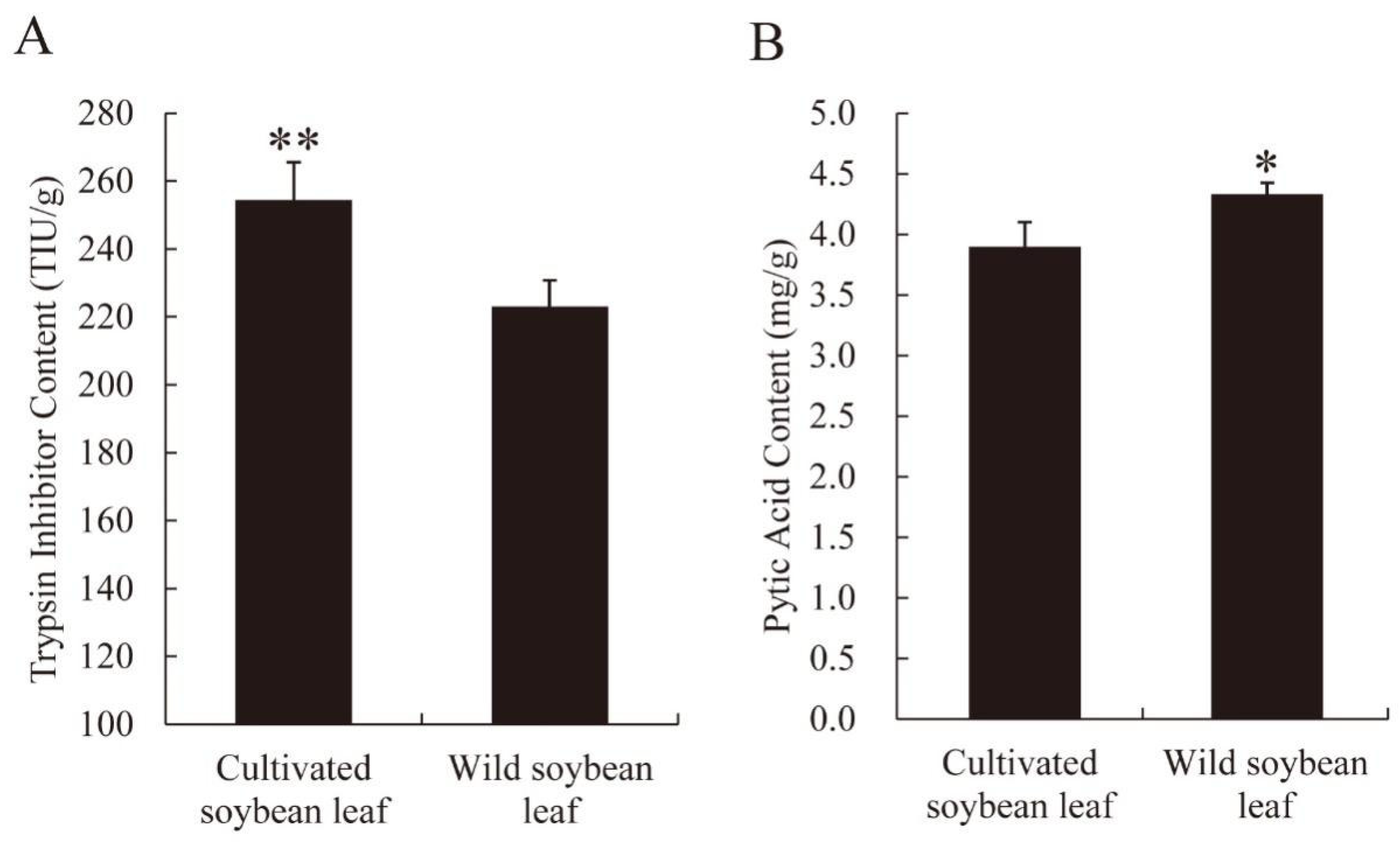
Figure 2.
The average individual weight (A) and morphological comparison (B) of C. bilineata larvae fed by cultivated soybean and wild soybean leaves. Note: *, P<0.05.
Figure 2.
The average individual weight (A) and morphological comparison (B) of C. bilineata larvae fed by cultivated soybean and wild soybean leaves. Note: *, P<0.05.
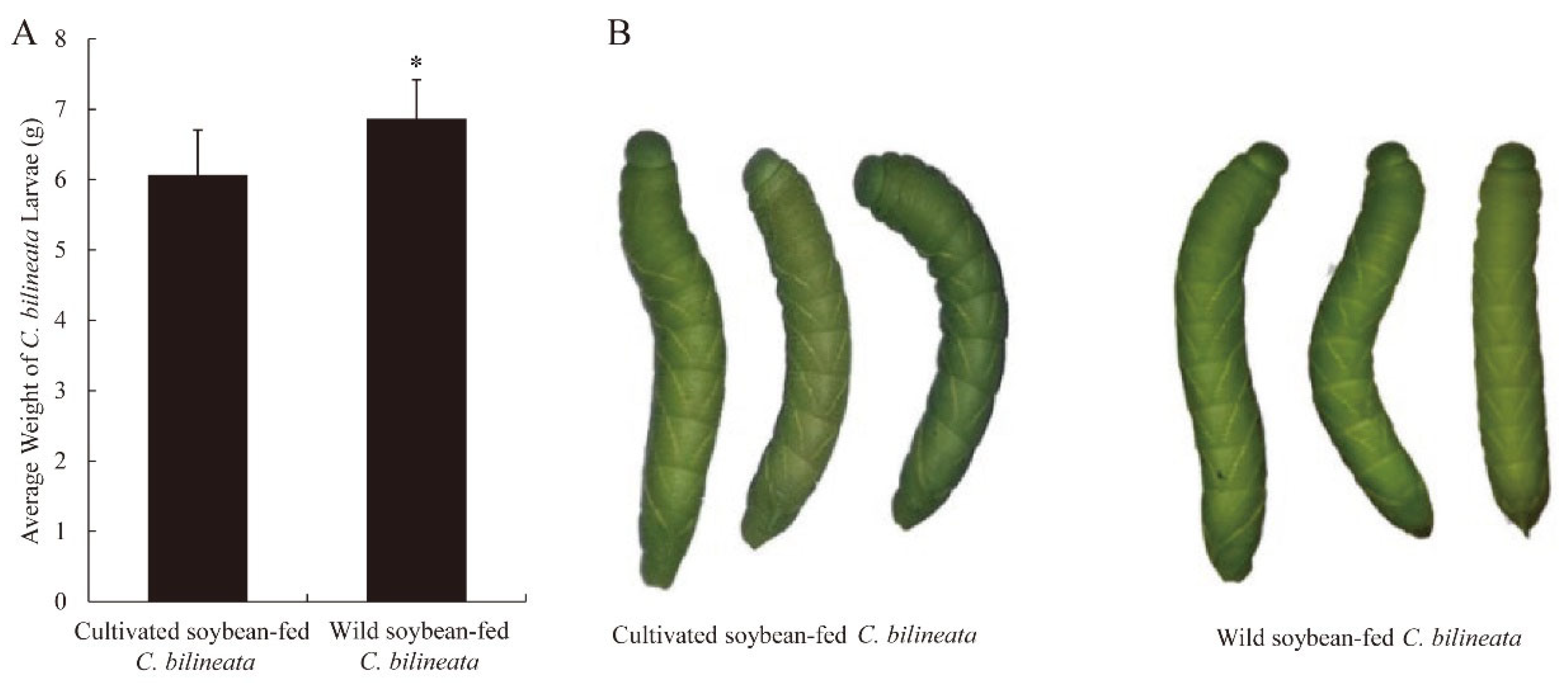
Figure 3.
PCA Analysis (A) and Clustering Heatmap Analysis (B) of Phyllosphere Microbiota from Cultivated Soybean and Wild Soybean Leaves, and Gut Microbiota from C. bilineata Larvae Fed on These Two Plant Species. Note: Gm_L denotes cultivated soybean leaves; Gs_L denotes wild soybean leaves; Gm_Gut denotes the gut microbiota of C. bilineata larvae fed on cultivated soybean leaves; Gs_Gut denotes the gut microbiota of C. bilineata larvae fed on wild soybean leaves.
Figure 3.
PCA Analysis (A) and Clustering Heatmap Analysis (B) of Phyllosphere Microbiota from Cultivated Soybean and Wild Soybean Leaves, and Gut Microbiota from C. bilineata Larvae Fed on These Two Plant Species. Note: Gm_L denotes cultivated soybean leaves; Gs_L denotes wild soybean leaves; Gm_Gut denotes the gut microbiota of C. bilineata larvae fed on cultivated soybean leaves; Gs_Gut denotes the gut microbiota of C. bilineata larvae fed on wild soybean leaves.
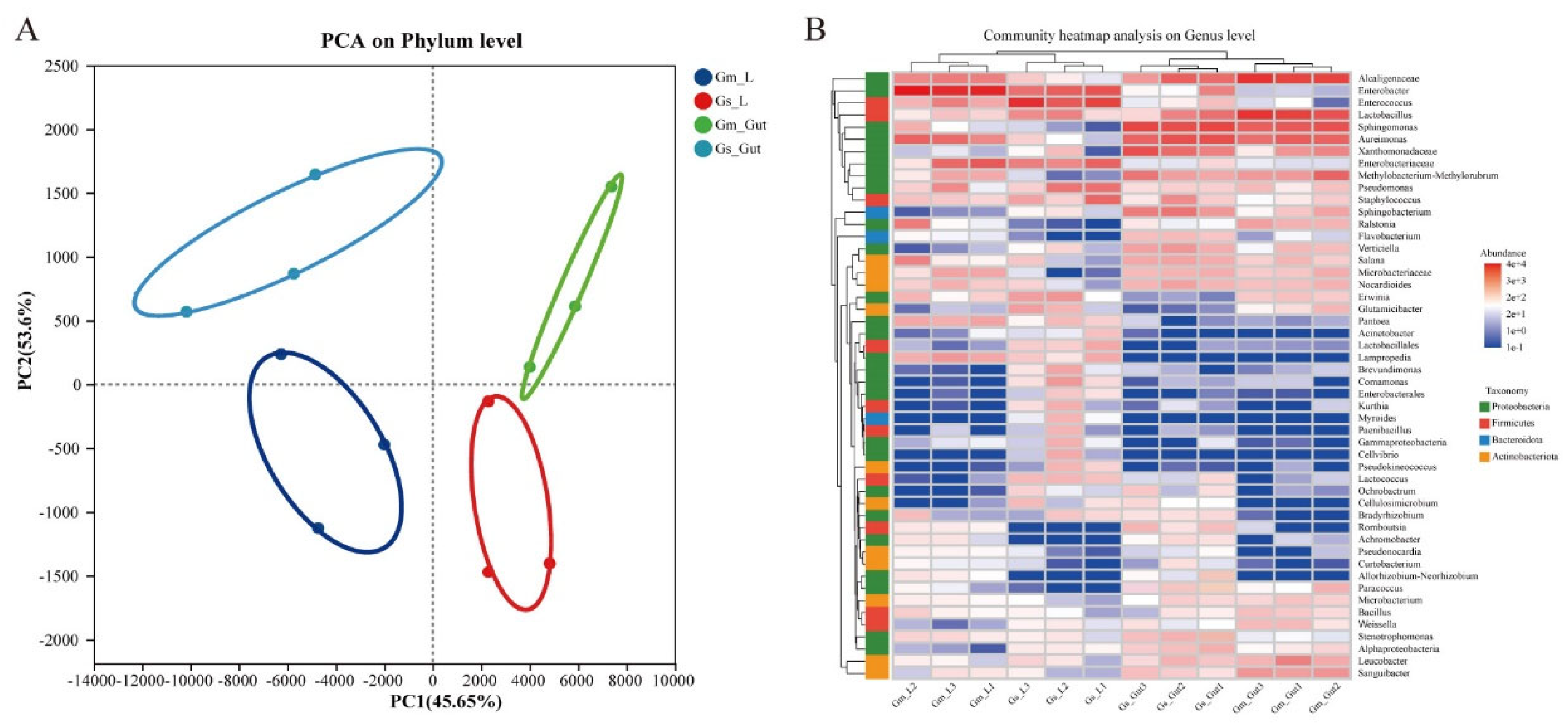
Figure 4.
Phylogenetic Tree of Phyllosphere Microbiota Differences Between cultivated soybean and wild soybean.
Figure 4.
Phylogenetic Tree of Phyllosphere Microbiota Differences Between cultivated soybean and wild soybean.
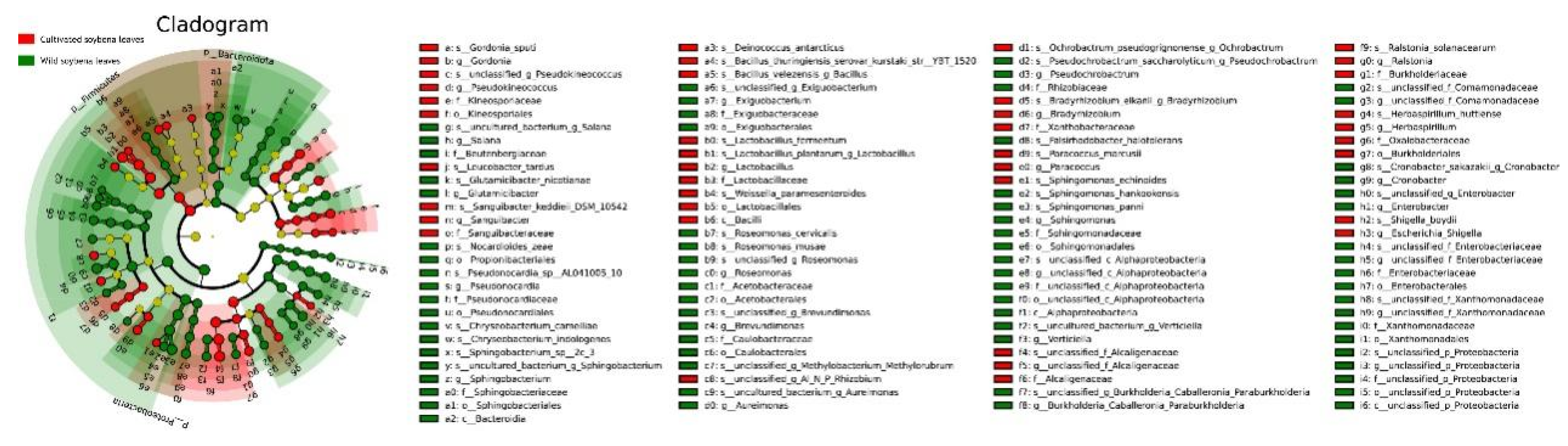
Figure 5.
Phylogenetic Tree of Gut Microbiota Differences Between C. bilineata Larvae Fed on cultivated soybean and wild soybean.
Figure 5.
Phylogenetic Tree of Gut Microbiota Differences Between C. bilineata Larvae Fed on cultivated soybean and wild soybean.
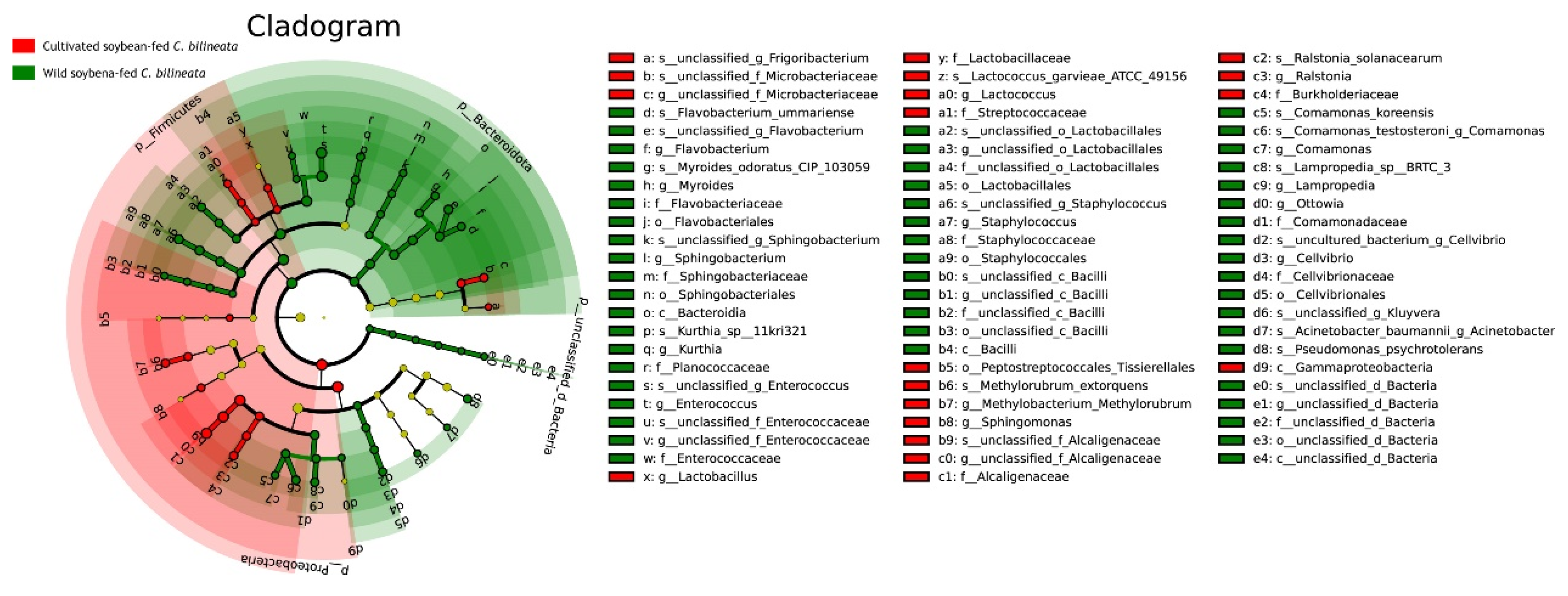
Figure 6.
Correlation Network Analysis of Phyllosphere Microbiota and Psilogramma menephron Gut Microbiota. Predominant 2. Notably, strong positive correlations between L_OTU370_o__Enterobacterales and OTU131_o__Enterobacterales, as well as between L_OTU48_s__Deinococcus_antarcticus and OTU189_s__uncultured_Deinococcales_bacterium, suggest potential transmission of bacterial taxa from the diet to the larvae gut.
Figure 6.
Correlation Network Analysis of Phyllosphere Microbiota and Psilogramma menephron Gut Microbiota. Predominant 2. Notably, strong positive correlations between L_OTU370_o__Enterobacterales and OTU131_o__Enterobacterales, as well as between L_OTU48_s__Deinococcus_antarcticus and OTU189_s__uncultured_Deinococcales_bacterium, suggest potential transmission of bacterial taxa from the diet to the larvae gut.
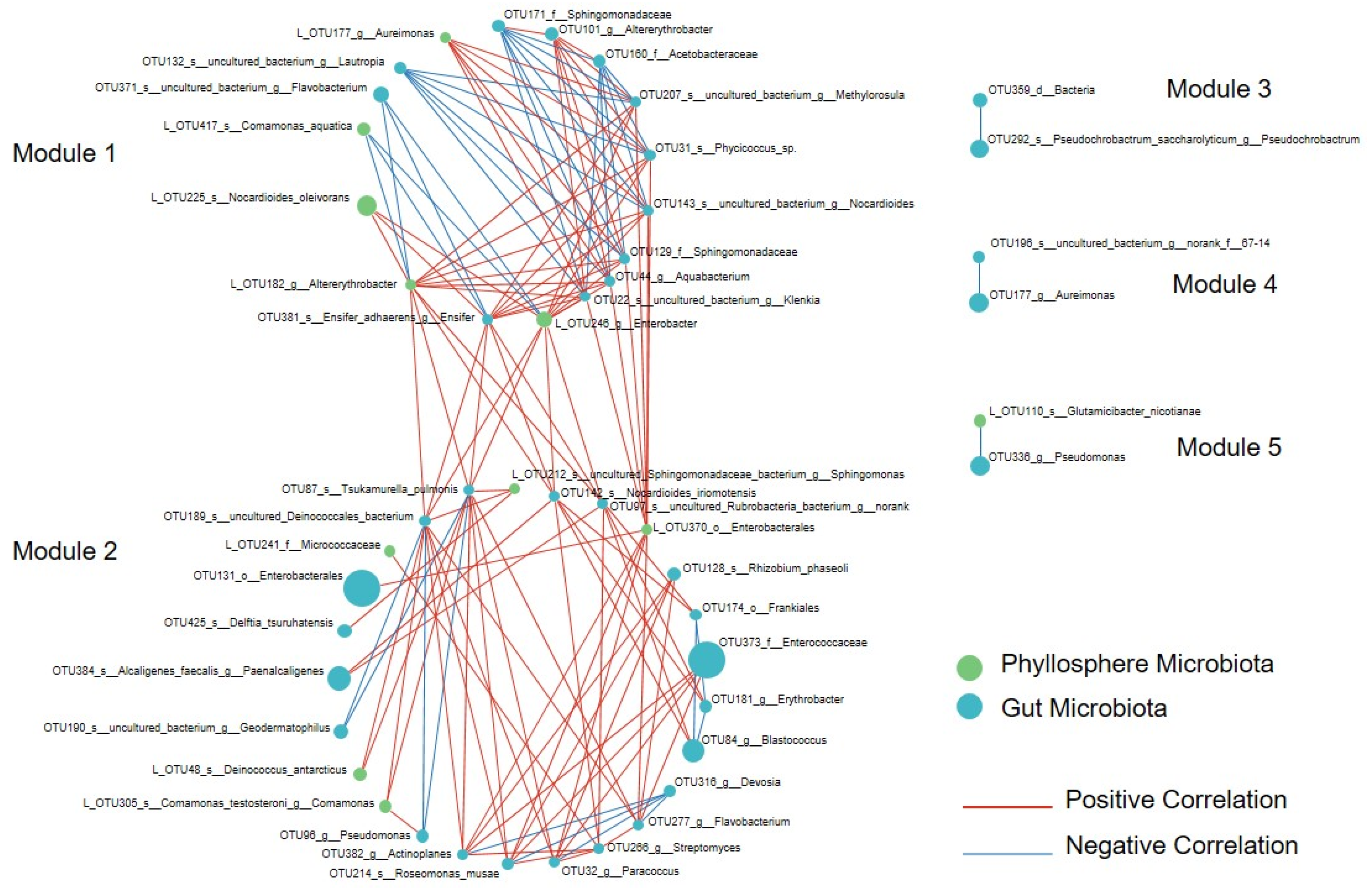

Table 1.
Nutritional components comparison of cultivated soybean and wild soybean leaves.
| Indicators | Cultivatedsoybean leaf | Wild soybeanleaf |
| Crude fat (%) | 2.17±0.19 | 5.61±0.29** |
| Crude protein (g/kg) | 242.51±0.73 | 240.73±1.35 |
| Crude fiber (%) | 9.68±0.29** | 7.30±0.27 |
| Ash content (%) | 9.62±0.07 | 11.07±0.04** |
| Neutral detergent fiber (%) | 21.00±0.38 | 23.75±0.39** |
| Acid detergent fiber (%) | 13.21±2.78 | 14.24±1.80 |
| P (g/kg) | 2.38±0.05 | 2.52±0.02* |
| Ca(g/kg) | 3.41±0.03 | 4.05±0.02** |
Note: **, P<0.01; *, P<0.05.
Table 2.
The comparison of nutritional components on the fifth-instar of C. bilineata fed by cultivated soybean and wild soybean.
Table 2.
The comparison of nutritional components on the fifth-instar of C. bilineata fed by cultivated soybean and wild soybean.
| Indicators | G. max-fed C. bilineata | G.soja-fed C. bilineata |
| Crude protein(g/kg) | 555.02±3.16 | 672.14±3.88** |
| Crude fat content(g/kg) | 205.82±4.62* | 187.44±2.75 |
| Total soluble sugar(mg/g) | 8.96±0.36 | 21.27±0.45** |
| Total soluble protein (mg/g) | 24.71±0.65 | 26.35±0.49* |
| K (g/kg) | 2.44±0.01** | 2.26±0.01 |
Note: **, P<0.01; *, P<0.05.
Disclaimer/Publisher’s Note: The statements, opinions and data contained in all publications are solely those of the individual author(s) and contributor(s) and not of MDPI and/or the editor(s). MDPI and/or the editor(s) disclaim responsibility for any injury to people or property resulting from any ideas, methods, instructions or products referred to in the content. |
© 2026 by the authors. Licensee MDPI, Basel, Switzerland. This article is an open access article distributed under the terms and conditions of the Creative Commons Attribution (CC BY) license (http://creativecommons.org/licenses/by/4.0/).
Copyright: This open access article is published under a Creative Commons CC BY 4.0 license, which permit the free download, distribution, and reuse, provided that the author and preprint are cited in any reuse.


