
Submitted:
12 March 2026
Posted:
13 March 2026
You are already at the latest version
Abstract
Cabbage is considered a healthy vegetable due to its chemical composition and high nutritional value. This is due to the presence of carbohydrates and dietary fiber as the main constituents, as well as the presence of vitamin C. The end product thus obtained (sauerkraut) is a low-calorie product with a long shelf-life. The most important role in the fermentation of cabbage is played by lactic acid bacteria whose activity is influenced by physical factors such as temperature and some chemical factors such as salt concentration or the addition of spices which, in addition to their flavoring effect, may also have an inhibitory effect on undesirable microflora. The present study investigates the effect of essential oils extracted from plants on lactic acid bacteria responsible for the fermentation of cabbage. Essential oils from thyme, dill, wild thyme, bay and basil were tested. The obtained results have shown that the essential oils that were added to the fermentation mass in concentrations of 0.015% did not inhibit the activity of lactic acid bacteria responsible for lactic fermentation.
Keywords:
Brassica
; microorganisms
; plant extract
1. Introduction
The nutritional value of Brassica vegetables, including cabbage, is well known for its content of vitamins with antioxidant properties, such as vitamin C, beta-carotene, folic acid and tocopherol, as well as mineral compounds, including calcium, selenium, potassium, magnesium and iron, as well as antioxidants such as flavonoids, phenolics and glucosinolates [1]. Cabbage has a high nutritional composition and is considered a beneficial vegetable for health. Even though some compounds are lost during fermentation, sauerkraut retains a high nutritional content and is enriched in valuable compounds that benefit health [2]. Sauerkraut is a fermented product widely consumed in Central and Eastern Europe [3]. It is traditionally obtained through the spontaneous fermentation of cabbage by the epiphytic microbiota [4]. Sauerkraut is a low-calorie food that can be preserved for an extended period without losing its nutritional and sensory qualities. [5,6]. Besides being rich in vitamins and minerals, sauerkraut also contains elevated levels of products resulting from glucosinolate hydrolysis, which have demonstrated anti-cancer effects [7]. The process is optimized and takes place under anaerobic conditions, with the addition of an adequate amount of salt [8], and the production and properties of cabbage are largely dependent on the presence of microbiota and fermentation conditions. Studies conducted on the optimal salt concentration required for sauerkraut have shown that it ranges between 1-3%. [9,10]. Premakumar K. et all. (2021) [4] demonstrated that sauerkraut with 3% NaCl, stored at room temperature after fermentation, exhibited the best nutritional characteristics. The degree of microbial development and the sensory properties of the final product depend on the addition of sodium chloride [11]. A key role is played by lactic acid bacteria, which have the ability to produce organic acids, bacteriocins, and vitamins, as well as volatile compounds that influence the flavor of fermented foods. This is determined by components derived from the raw material, which undergo changes during fermentation (consisting mainly of glucosinolates) and by compounds formed by microorganisms during lactic fermentation [6]. Inoculation with starter cultures has increasingly been used to enhance the quality of pickled cabbage. Lactic acid bacteria have been widely employed in various fermented foods to shorten the fermentation period and improve nutritional qualities, as well as to modify the organoleptic properties of the final products. Yuwono, Rahayu and Blanc (2020) [12] conducted studies on the use of lactic acid bacteria starter cultures for the fermentation of cabbage with a lower salt content. Considering the increasing diversity of vegetable fermentations, studies have been carried out on the benefits of both allochthonous and autochthonous starter cultures for the controlled fermentation of vegetables, including cabbage [13]. The principle of cabbage fermentation is based on the selection of bacteria using sodium chloride solution at different concentrations. These bacteria convert the sugars present in cabbage into lactic acid. Accumulations of lactic acid occur throughout several stages of fermentation, and when it reaches concentrations of 2% in the solution, it becomes a natural preservative that stabilizes the final product. Therefore, one of the most important conditions in directing the fermentation process is to ensure an environment that promotes the development of lactic acid bacteria. At the same time, the preserving effect of lactic acid bacteria on food is well established, extending the shelf life and increasing the nutritional value of the resulting final product [14]. As a result of fermentation, the bioavailability of all nutrients contained in raw cabbage increases [15]. Most lactic acid-producing bacteria are heterotrophic and generally require many growth factors, including nucleotides, vitamins, amino acids, peptides, and fatty acids, for cellular growth and biosynthetic capabilities. [16]. The lactic fermentation process is extremely complex, involving many types of microorganisms [17], and fermentation can be divided into four main phases: the initial aerobic phase, the intense fermentation phase, the stable phase, and the anaerobic fermentation phase [18,19,20]. Therefore, understanding the sequence of microorganisms and the correlation between microorganisms and the quality of fermentation in different fermentation phases can provide a scientific basis for modulating fermentation. Tlais et al. (2022) [21] conducted studies that provide new insight into the sequence of bacteria responsible for lactic fermentation by fermentation steps and the resulting metabolic functions, which are essential for industrial sauerkraut production. There are several methods for preserving the final product (storage at low temperatures, pasteurization, addition of preservatives, etc.). During pasteurization, the essential nutrients in cabbage are destroyed [22]. Sauerkrautis packaged in glass jars, cans, and plastic bags. Unpasteurized pickled cabbage is preserved using sodium benzoate (0.1% g/g) and potassium metabisulfite as preservatives, or it can be kept refrigerated [23]. Essential oils are volatile aromatic compounds, usually extracted through steam distillation or cold pressing, which retain the scent and therapeutic properties of the parent plant. Each species has a unique profile of the essential oils it contains. Chemically, they are mixtures of organic substances, the most common being terpenes and phenols. They are distinguished by a potent antimicrobial action, particularly their antibacterial properties. The present study followed the effect of some plant extracts (essential oils) on the lactic acid bacteria responsible for the fermentation of cabbage. Extracts from wild thyme, dill, thyme, bay leaf and basil were tested.
2. Materials and Methods
Regents
Analytical grade reagents, including sodium carbonate and methanol, were sourced from Merck (Darmstadt, Germany), alongside solvents such as n-hexane and LiChrosolv® water (Merck, Burlington, MA, USA). The Folin-Ciocalteu reagent, Trolox (6-hydroxy-2,5,7,8-tetramethylchroman-2-carboxylic acid), DPPH (2,2-diphenyl-1-picrylhydrazyl), gallic acid, and sodium acetate were obtained from Sigma-Aldrich (Germany). All other chemicals utilized in this study were of analytical purity.
Plant Material
The study material consisted of cabbage from the ‘De Buzău’ variety, which is a white cabbage cultivar valued for its productivity and disease resistance. It is a late-season variety with a long growing period, making it highly suitable for preservation through lactic acid fermentation. The cabbage was purchased from a private producer in the Oltenia region (44.18° N; 25.28° E)
The oils tested were extracted by hydro-distillation. The plants, except for the laurel, were cultivated in ecological conditions, without phytosanitary treatments. The extraction of the oils was done by a Neo Clevenger type installation. After obtaining, the oils were stored in airtight bottles, in the refrigerator.
Experimental Design
For each experimental variant, a quantity of 150 μl essential oil per 100 ml of 2.5% Na Cl solution was added to the fermentation mass. Lactic fermentation was directed at two different temperatures, respectively: 14 and 22 °C. In order to ferment, the raw material was conditioned by sorting, cleaning and dividing in the form of flakes and placed in glass jars with a capacity of 5 liters. The introduction of the raw material into the containers was carried out as compactly as possible, after which a sodium chloride solution with a concentration of 2.5% was added to it.
According to this protocol, several experimental variants have been established, namely:
M1 = cabbage fermented at a temperature of 14ºC
M2 = cabbage fermented at a temperature of 22ºC
V1.1. = cabbage with the addition of 2.5% NaCl solution, + 0.015% thyme essential oil fermented at a temperature of 14ºC
V2.1 = cabbage with added solution 2.5% NaCl + 0.015% thyme essential oil fermented at a temperature of 22ºC
V1.2. = cabbage with the addition of 2.5% NaCl solution, + 0.015% dill essential oil, fermented at a temperature of 14ºC
V2.2. = cabbage with added solution of 2.5% NaCl + 0.015% dill essential oil, fermented at a temperature of 22ºC
V1.3. = cabbage with the addition of 2.5% NaCl+ 0.015% wild thyme essential oil solution, fermented at a temperature of 14ºC
V2.3. = cabbage with 2.5% NaCl solution added, + 0.015% wild thyme essential oil, fermented at a temperature of 22ºC
V1.4. = cabbage with the addition of 2.5% NaCl + 0.015% bay essential oil, fermented at a temperature of 14ºC
V2.4. = cabbage with the addition of 2.5% NaCl solution, + 0.015% bay essential oil, fermented at a temperature of 22ºC
V1.5. = cabbage with the addition of 2.5% NaCl solution, + 0.015% basil essential oil, fermented at a temperature of 14ºC
V2.5. = cabbage with the addition of 2.5% NaCl solution, + 0.015% basil essential oil, fermented at a temperature of 22ºC
Periodically (every 3 days) aeration was performed to facilitate aerobic fermentation. The fermentation was stopped by lowering the temperature to 8 °C in order to avoid entering the fourth fermentation phase when Lactobacillus brevis and other heterofermentative species capable of metabolizing pentoses, such as arabinose and xylose, become dominant and the finished product is altered. After the lactic fermentation stopped, the fresh sauerkraut was stored by refrigeration for 180 days at a temperature of 5 °C. Both for the raw material (fresh white cabbage) and for sauerkraut immediately after the end of lactic fermentation as well as for the removal from storage, determinations were made on: pH, total number of lactic acid bacteria, soluble dry matter content (TSS%), vitamin C (mg.100 g fm.), total sugar (g/100 g fm), total phenolics (GAE mg/100 g fm) and antioxidant activity (mmol Trolox/100 g fm).
Analytical Analysis
Measuring pH
The pH was measured at an interval of three days with the help of a Hanna Instruments laboratory pH meter (Nusfalau, Germany) with pH electrode, - 2 ÷ 20 pH.
The Quantitative Determination of Lactic acid Bacteria
The number of lactic acid bacteria was determined by inoculating 1ml of each sample on MRS agar selective medium. To create the anaerobic conditions, Genbag bags were used in which a CO2 generating sachet was inserted. The bags with the seeded plates were closed with a clip and thermostated at 30ºC for 3 days.
Total Soluble Solids Content Evaluation
The total soluble solids content of the analyzed samples was determined using a digital refractometer (Euromex, Arnhem, The Netherlands) by measuring the angle of refraction of a light beam passing through the juice obtained from the sample to be analyzed, at a temperature of 20 °C and the results were expressed in percentages.
Ascorbic Acid Evaluation
The quantification of ascorbic acid was conducted via RP-HPLC, utilizing a Finnigan Surveyor Plus platform (Thermo Electron Corporation, San Jose, CA, USA) coupled with a diode array detector. Sample preparation involved the dilution of 5 g of frozen cabbage homogenate to 100 mL using 0.1 N HCl. After a 30-minute incubation period at room temperature, the mixture was centrifuged for 10 minutes at 4200 rpm. The resulting supernatant was then purified using a 0.2 μm filter. Analyte detection was set at 254 nm, with final concentrations expressed in mg/kg on a fresh weight (fw) [24].
Total Sugar Content Evaluation
The determination of the total sugar content was done using the Dubois test. The Dubois test or phenol-sulfuric acid test is a simple condensation reaction catalyzed by an acid, which is commonly used to determine the total sugar concentration. The invert sugar extracted from the sample to be analyzed by boiling with distilled water and inverting with hydrochloric acid was neutralized with sodium hydroxide n/10. It was mixed in a vial with 1 ml of 5% (w/v) aqueous phenol solution and then 5 ml concentrated sulfuric acid was carefully added. The sample was left to rest for 10 minutes shaken strongly and incubated for another 30 minutes, after which the absorption of the extract at 490 nm was read using a spectrophotometer (Varian Co., Palo Alto, CA, USA). The reaction mechanism is based on the formation of color by converting sugars into derivatives of furfurol with sulfuric acid. The sugar present was determined using a calibration curve using different lactose concentrations as standard [25]. The furfurol product is then condensed with phenol to produce stable colored compounds.
Total Phenolic Content Evaluation
In order to determine the total phenolic content and antioxidant activity in the sample to be analyzed, extractions were carried out using methanol. Three grams of cabbage or sauerkraut sample were homogenized and then extracted with 10 mL of methanol for 60 minutes using an ultrasonic bath at room temperature. They were then centrifuged at 6000 rpm for 15 minutes, and the supernatants were collected and stored at -40 °C.
The total phenolic content was evaluated using the Folin-Ciocalteu procedure [26]. A total of 100 μL of methanolic extract from the sample was mixed with 5 mL of distilled water and 500 μL of Folin-Ciocalteu reagent. Up to 1.5 mL of sodium carbonate solution (20% w/v) was added and the mixture was supplemented to 10 mL with distilled water. The mixture was shaken vigorously and incubated in the dark at 40 °C for 30 minutes. The absorbance was measured at 765 nm on a Varian Cary 50 UV spectrophotometer (Varian Co., Palo Alto, CA, USA). Beforehand, a calibration curve was performed using standard gallic acid solutions. Results were expressed in milligrams of gallic acid equivalent (GAE) per 100 fresh matter (fm).
Antioxidant Activity Evaluation
Antioxidant activity (AOA) was assessed by the procedure (free radical scavenging activity of extracts versus DPPH free radical) described by Nour et all., (2015) [24] and the results are expressed as μmol of Trolox equivalents (TE) per 100 g fresh matter (fm). A total of 50 μL of sauerkraut extract was mixed with 3 mL of 0.004% DPPH methanolic solution. The mixture, stirred vigorously, was kept in the dark for 30 minutes. The absorbance was measured at 517 nm on a Varian Cary 50 UV-VIS spectrophotometer (Varian Co., Palo Alto, CA, USA). In parallel, a blank sample was prepared by mixing methanol with DPPH solution. The results were calculated according to the formula:
DPPH (%) = [1 - sample absorbance/sample absorption/white control absorption] × 100. Trolox (6-hydroxy-2,5,7,8-tetramethylchromane-2-carboxylic acid) served as the reference standard, with 80% methanol as the blank. Results were reported as mmol Trolox per kg fresh weight (fw).
Each determination was performed in triplicate, the results presented being represented by the average of the repetitions performed.
A sensory analysis was performed on the finished product with the help of a group of 10 students from the Faculty of Horticulture. They determined the appearance, taste, smell and aroma of the sauerkraut by giving a score from 1 to 10 for each characteristic as well as for the degree of acceptability of the product.
Statistical Analysis
The statistical analysis was performed using Statgraphics Centurion XVIII software (StatPoint Technologies, VA, USA), all tests were performed in triplicate. Results were presented as mean ± standard deviation and the least significant difference (LSD) test was used to estimate multiple pair-wise comparisons between means, with significant differences tested in ANOVA (p < 0.05).
3. Results
pH Evolution
The experimental variants were analyzed for 21 days, recording the pH value at an interval of 3 days, the intensity of fermentation, the color changes. The measurement of the pH value in the experimental variants and in the control samples showed a faster decrease in this value, in the first days after the start of fermentation, in the case of the variants thermostated at 22ºC, compared to the variants thermostated at 14ºC. (Figure 1 and Figure 2). However, it is observed that at the end of fermentation the pH values were between 3.14 (V2.2.) and 4.97 (V2.1.). Thus, the lowest pH value was found in the version treated with dill essential oil fermented at a temperature of 22 °C and the highest value in the version treated with thyme oil fermented at 22 °C.
Evolution of the Number of Lactic Acid Bacteria
The total number of lactic acid bacteria was determined after 6 and 21 days after the start of fermentation. The lactic acid bacteria responsible for the fermentation of cabbage showed an increase in numbers, finding that the highest values are recorded in the control variants (Table 1), which demonstrates an influence of oils on these microorganisms. From the data entered in the table, it can be seen that both in the control and in the experimental variants there is an increase in the number of lactic acid bacteria.
Evolution of the Main Chemical Components of Cabbage
The soluble dry matter (SUS%) content of fresh cabbage was 5.5% (Table 2). Immediately after the lactic fermentation stopped, the SUS content increased to values between 6.0 and 6.8%, the highest values being recorded in the V1.2 variant. followed by V1.1. and V2.4. During the 6 months of storage of sauerkraut, the content in SUS has steadily decreased, reaching values between 4.0 (M2) and 4.8 (V1.2.).
Total Sugar Content
As regards the total sugar content of sauerkraut, the results obtained are presented in Table 3. From the data presented, it can be seen that the raw material (fresh cabbage) had an initial total sugar content of 3.34 g/100 g fm. Immediately after stopping fermentation, it is found that in the control samples a quantity of residual sugar was recorded with values between 0.12 (M2) and 0.29 (M1), while in the other experimental variants the total sugar content was zero. The data obtained show that while in the control samples the presence of sugar indicates that the fermentation was stopped too early and could continue for several days, in the experimental variants with the addition of essential oils the fermentation was stopped in time, the entire amount of sugar in the fresh cabbage being transformed into lactic acid.
Ascorbic Acid Content
The variation in vitamin C content during lactic fermentation and storage of sauerkraut is shown in Table 4.
The initial vitamin C content of fresh cabbage was 20.56 mg/100 g fm, comparatively lower than those found by Sarkar et al. (2021) [27] to various varieties of white cabbage from Bangladesh (37.23 mg/100 g fm). After 6 months of storage, the vitamin C content has decreased significantly, with some variants showing values even lower than the initial content of the raw material (V1.3., V1.2., M1, M2, V2.4. and V1.1.). However, there are significant differences between the analyzed variants in terms of the final vitamin C content when removing sauerkraut from storage. This content had values between 16.78 mg/100 g fm (V1.3.- sauerkraut treated with wild thyme oil, thermostated at 14ºC) and 29.62 mg/100 g fm (V2.2. sauerkraut treated with dill oil, thermostated at 22ºC).
Total Phenolic Content
As for the total phenolic content, it was 18.69 mg GAE/100 g fm in the raw material (fresh white cabbage), values much lower than those found by Sarkar et al. (2021) [27]. After lactic fermentation, it increased with significant differences between the analyzed variants (Table 5).
The highest phenolic content was found after fermentation was stopped at variant V 1.1. (29.62 mg GAE/100 g fm.) followed by the V1.2 variants. (27.66 mg GAE/100 g fm) and V2.3. (25.32 mg GAE/100 g fm). During refrigeration storage of sauerkraut, a slight decrease in the total phenolic content was observed, maintaining the differences between the experimental variants.
Antioxidant Activity
The same trend was observed in terms of antioxidant activity (Table 6).This increased during lactic fermentation from 0.89 mmol Trolox/100 g fm in fresh cabbage to values ranging from 0.93 mmol Trolox/100 g fm (M1) to 1.96 mmol Trolox/100 g fm (V1.1.). After 6 months of storage, a decrease in antioxidant activity was found with significant differences between the experimental variants. Thus, when pickled cabbage was removed from storage, the lowest value of AOA was found at M1 (0.77 mmol Trolox/100 g fm) and the highest at V1.1. (1.79 mmol Trolox/100 g fm).
Sensory Analysis
A sensory analysis of the sauerkraut was carried out when it was removed from storage. The appearance, aroma, taste and smell of the finished product were analyzed. The tasting was carried out by a group of 10 students of the Faculty of Horticulture. As a result of the sensory analysis, it was concluded that the most appreciated were the products of the V2.2 variant. (sauerkraut with added dill oil, thermostated at 22ºC) followed by 2.5. (sauerkraut with added basil oil thermostated at 22ºC) and 1.3. (sauerkraut with added wild thyme thermostated at 14ºC).
In the sensory evaluation the most favored product was V2.2 variant (sauerkraut with the addition of dill oil, fermented at a temperature of 22ºC). This variant stood out due to its well-balanced flavor profile and aromatic qualities, making it appealing to the taste testers. Following closely was V2.5. (sauerkraut with the addition of basil oil fermented at a temperature of 22ºC) and V1.3. (sauerkraut with the addition of wild thyme fermented at a temperature of 14ºC). V2.5 variant garnered positive feedback, likely attributed to the fresh and herbal notes of basil that complemented the acidity of the sauerkraut. In contrast,the version obtained with the addition of thyme received significant criticism due to the pronounced taste and smell of thyme. In this situation, the experiment should be resumed using lower concentrations of thyme essential oil.
4. Discussion
The pH decreased during lactic fermentation, concomitantly with the synthesis and accumulation of lactic acid in the fermentation mass as a result of the activity of lactic acid bacteria. It can be concluded that the added essential oil influenced the pH evolution during the fermentation of cabbage. From the data presented, it can be seen that regardless of the temperature applied, the pH decrease was steeper in the first phases of fermentation (3-6 days), after which it remained almost constant in the last phases of fermentation. This corresponds to the first two fermentation phases in which the largest amount of lactic acid accumulates in the fermentation mass. In the last days of fermentation, the pH evolution indicates the completion of the third stage of fermentation, which begins with another change in the lactic population; homofermentative lactobacilli become the predominant organisms, mainly due to the combined effect of anaerobiosis, low pH and high salt levels. In older literature, they are usually attributed to a single species, namely Lactobacillus plantarum (formerly called Lactobacillus cucumeris). During this stage the total acid content (calculated as lactic acid) increases to 1.5 to 2.0%. The values obtained are in line with those in the literature which state that most sauerkraut produced in Europe is pasteurised when it reaches a pH of 3.8 to 4.1, as consumers increasingly prefer light products, both in terms of acid content, and salt [2].
Thyme oil (V1.1 and V2.1) inhibits the activity of the bacteria responsible for the fermentation of cabbage in the first stage, but also in the case of these experimental variants there is an increase in the number of cells during fermentation.
The decrease in the SUS content during storage can be attributed to the migration of soluble substances from fermented cabbage to cabbage juice. The increase in SUS content immediately after stopping lactic fermentation was also reported by Thakur et al. (2020) [28] with similar values. At the end of storage, the highest SUS contents were recorded for the variants treated with essential oils, respectively V1.2. (cabbage treated with dill oil, fermented at a temperature of 14ºC) with a content of 4.8% V1.1. (cabbage treated with thyme oil, fermented at a temperature of 14ºC) with a content of 4.6%. The fermentation temperature did not significantly influence the SUS content of the final product.
The total disappearance of sugar from sauerkraut at the end of fermentation was also reported by: Thakur et al. (2020) [28]; Zubaidah et al., (2020) [29].
At the end of fermentation, sauerkraut had a significantly higher vitamin C content than fresh cabbage with values ranging from 37.6 mg/100 g f.m. (V2.2.) to 22 mg/100 g f.m. (V1.2.). The differences recorded for the same type of oil (V1.2 and V2.2 respectively) demonstrate that in this situation the temperature at which the fermentation took place significantly influenced the accumulation of vitamin C in the sauerkraut. The increase in vitamin C content of cabbage during its lactic fermentation was also reported by Thakur et al. (2020) [28]. It is thus found that lactic fermentation leads to an increase in vitamin C content by about 30-45%.
5. Conclusions
Preserving vegetables by pickling allows them to be eaten for a very long period of time and to diversify the diet. In our country, cabbage and cucumbers are most commonly pickled, while olives are most commonly preserved worldwide.
The quality of fermented (pickled) vegetables depends primarily on the quality of the raw material, but also on the physicochemical parameters during the fermentation process.
The addition of essential oils to cabbage before the onset of fermentation did not inhibit the development of lactic and acetic bacteria, which are responsible for the pickling process of cabbage and, in addition, contributed to the flavoring of the finished product. The most appreciated were the products of the V2.2 variant. (sauerkraut with the addition of dill oil, fermented at a temperature of 22ºC) followed by V2.5. (sauerkraut with the addition of basil oil fermented at a temperature of 22ºC) and V1.3. (sauerkraut with the addition of thyme fermented at a temperature of 14ºC). The version obtained with the addition of thyme was completely rejected due to the pronounced taste and smell of thyme. In this situation, the experiment should be resumed using lower concentrations of thyme essential oil.
Obtaining cabbage by acetic fermentation has proven to be a preservation method that maintains ascorbic acid in the finished product. Lactic fermentation increases the total phenolic content and antioxidant activity in the finished product.
Author Contributions
Conceptualization, F.T. F.S; methodology, M.E.I., F.T., software, M.E.I. and F.S..; validation, M.E.I., F.T.; formal analysis, M.E.I., F.T.; investigation, M.E.I., F.T.; resources, M.E.I., F.T., data curation, M.E.I., F.T.; writing—original draft preparation, F.T., M.E.I.; writing—review and editing, F.T., M.E.I.; visualization, F.T.; supervision, F.T., M.E.I.; project administration, F.T. All authors read and approved the final manuscript.
Funding
This research received no external funding.
Data Availability Statement
The authors confirm that the data supporting the findings of this study are available within the article.
Acknowledgments
The authors have reviewed and edited the output and take full responsibility for the content of this publication.
Conflicts of Interest
The authors declare no conflicts of interest.
References
- Kapusta-Duch, J., Kusznierewicz, B., Leszczyńska, T., & Borczak, B. 2017. Effect of package type on selected parameters of nutritional quality of chill-stored white sauerkraut. Polish Journal of Food and Nutrition Sciences, 67(2), 137-144.
- Siddeeg, A., Afzaal, M., Saeed, F., Ali, R., Shah, Y. A., Shehzadi, U., ... & Al-Farga, A. 2022. Recent updates and perspectives of fermented healthy super food sauerkraut: a review. International Journal of Food Properties, 25(1), 2320-2331.
- Hallmann, E., Kazimierczak, R., Marszałek, K., Drela, N., Kiernozek, E., Toomik, P., ... & Rembiałkowska, E. 2017. The nutritive value of organic and conventional white cabbage (Brassica oleracea L. var. capitata) and anti-apoptotic activity in gastric adenocarcinoma cells of sauerkraut juice produced therof. Journal of agricultural and food chemistry, 65(37), 8171-8183.
- Premakumar, K., Sahana, S., & Sabrana, M. A. S. F. 2021. Effects of salt concentration on storage ability of sauerkraut. International Journal of Research, 7(2), 11-16.
- Mennes, E.M.1994. Make your own sauerkraut. Cooperative Extension Publication. UW-Extension. B2087, pp. 1-7.
- Trail, A. C., Fleming, H. P., Young, C. T., & McFeeters, R. F. 1996. Chemical and sensory characterization of commercial sauerkraut 1. Journal of food quality, 19(1), 15-30.
- Bonnesen, C., Eggleston, I. M., & Hayes, J. D. 2001. Dietary indoles and isothiocyanates that are generated from cruciferous vegetables can both stimulate apoptosis and confer protection against DNA damage in human colon cell lines. Cancer research, 61(16), 6120-6130.
- Kristek, S., Bešlo, D., Pavlović, H., & Kristek, A. 2004. Effect of starter cultures L. mesenteroides and L. lactis ssp. Lactis on sauerkraut fermentation and quality. Czech journal of food sciences, 22(4), 125.
- Delanoe, R., & Emard, L. O. 1971. Experimental manufacture of sauerkraut in Quebec. Quebec Laitier et Alimentaire, 30, 11-14.
- Gangopadhyay, H., & Mukherjee, S. 1971. Effect of different salt concentrations on the microflora and physicochemical changes in sauerkraut fermentation. Journal of Food Science and Technology, 8(3), 127-131.
- Holzapfel, W., Schillinger, U., & Buckenhüskes, H. J. 2003. 14 Sauerkraut. Handbook of fermented functional foods, 343.
- SS, Yuwono, Rahayu AP, and Blanc PJ. 2020. Effect of Lactobacillus plantarum and Leuconostoc mesenteroides starter cultures in lower salt concentration fermentation on the sauerkraut quality. Food Research, 4(4), 1038-1044.
- In Lactic acid bacteria: biodiversity and taxonomy; Holzapfel, W. H., & Wood, B. J. (Eds.). 2014. Lactic acid bacteria: biodiversity and taxonomy. John Wiley & Sons.
- Zabat, M. A., Sano, W. H., Wurster, J. I., Cabral, D. J., & Belenky, P. 2018. Microbial community analysis of sauerkraut fermentation reveals a stable and rapidly established community. Foods, 7(5), 77.
- Orgeron II, R. P., Corbin, A., & Scott, B. 2016. Sauerkraut: A probiotic superfood. Functional Foods in Health and Disease-Online ISSN: 2160-3855; Print ISSN: 2378-7007, 6(8), 536-543.
- Oshiro, M., Tanaka, M., Zendo, T., & Nakayama, J. 2020. Impact of pH on succession of sourdough lactic acid bacteria communities and their fermentation properties. Bioscience of microbiota, food and health, 39(3), 152-159.
- Xu, D., Ding, W., Ke, W., Li, F., Zhang, P., & Guo, X. 2019. Modulation of metabolome and bacterial community in whole crop corn silage by inoculating homofermentative Lactobacillus plantarum and heterofermentative Lactobacillus buchneri. Frontiers in Microbiology, 9, 3299.
- Weinberg, Z. G., & Muck, R. E. 1996. New trends and opportunities in the development and use of inoculants for silage. FEMS Microbiology Reviews, 19(1), 53-68.
- Dunière, L., Sindou, J., Chaucheyras-Durand, F., Chevallier, I., & Thévenot-Sergentet, D. 2013. Silage processing and strategies to prevent persistence of undesirable microorganisms. Animal Feed Science and Technology, 182(1-4), 1-15.
- Ávila, C. L. S., & Carvalho, B. F. 2020. Silage fermentation—updates focusing on the performance of microorganisms. Journal of applied microbiology, 128(4), 966-984.
- Tlais, A. Z. A., Lemos Junior, W. J. F., Filannino, P., Campanaro, S., Gobbetti, M., & Di Cagno, R. 2022. How microbiome composition correlates with biochemical changes during sauerkraut fermentation: A focus on neglected bacterial players and functionalities. Microbiology spectrum, 10(4), e00168-22.
- Fleming, H.P., Kyung, K.H. and Breidt, F. 1995.Vegetable fermentation in Biotechnology, 2nd ed,Vol.9 (eds. H. J. Rehm. and G. Reed), VCH, NewYork, pp. 629-631.
- Wood, B. J. 2012. Microbiology of fermented foods. Springer Science & Business Media.
- Nour V., Ionica, M. E., Trandafir I. 2015. Bioactive compounds, antioxidant activity and color of hydroponic tomato fruits at different stages of ripening. Notulae Botanicae Horti Agrobotanici Cluj-Napoca. 43, 2, 404–412.
- Chow, P. S., & Landhäusser, S. M. 2004. A method for routine measurements of total sugar and starch content in woody plant tissues. Tree physiology, 24(10), 1129-1136.
- Singleton VL, Rossi JA. 1965. Colorimetry of total phenolics with phosphomolybdic-phosphotungstic acid reagents. American Journal of Enology and Viticulture 16:144-158.
- Sarkar, A., Rahman, S., Roy, M., Alam, M., Hossain, M. A., & Ahmed, T. 2021. Impact of blanching pretreatment on physicochemical properties, and drying characteristics of cabbage (Brassica oleracea). Food Research, 5(2), 393-400.
- Thakur, P. K., Panja, P., Kabir, J., & Dhua, R. S. 2020. Studies on shelf life of sauerkraut. Journal of Crop and Weed, 16(2), 204-209.
- Zubaidah, E., Arum, M. S., Widyaningsih, T. D., & Rahayu, A. P. 2020. Sauerkraut with the addition of Lactobacillus casei: Effects of salt and sugar concentrations on fermentation and antioxidant activity. Current Nutrition & Food Science, 16(8), 1265-1269.
- Chun, O. K., Smith, N., Sakagawa, A., & Lee, C. Y. 2004. Antioxidant properties of raw and processed cabbages. International journal of food sciences and nutrition, 55(3), 191-199.
- Özer, C., & Yıldırım, H. K. 2019. Some special properties of fermented products with cabbage origin: pickled cabbage, sauerkraut and kimchi. Turkish Journal of Agriculture-Food Science and Technology, 7(3), 490-497.
- Zhou, B., Feng, X., Huang, W., Liu, Q., Ibrahim, S. A., & Liu, Y. 2023. Effects of light intensity on the biosynthesis of glucosinolate in Chinese cabbage plantlets. Scientia Horticulturae, 316, 112036.
Figure 1.
pH evolution at a temperature of 14 °C.
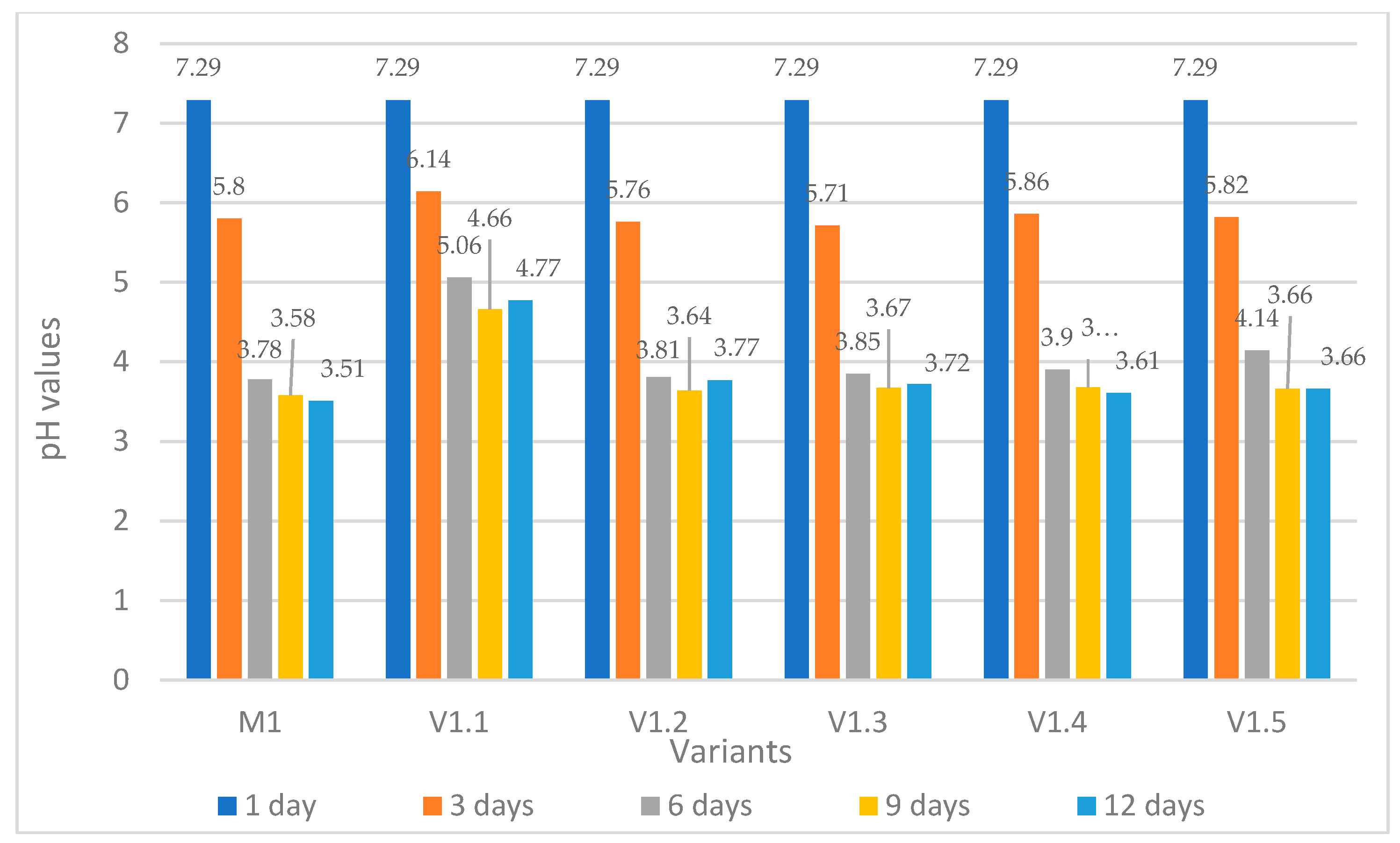
Figure 2.
pH evolution at a temperature of 22 °C.
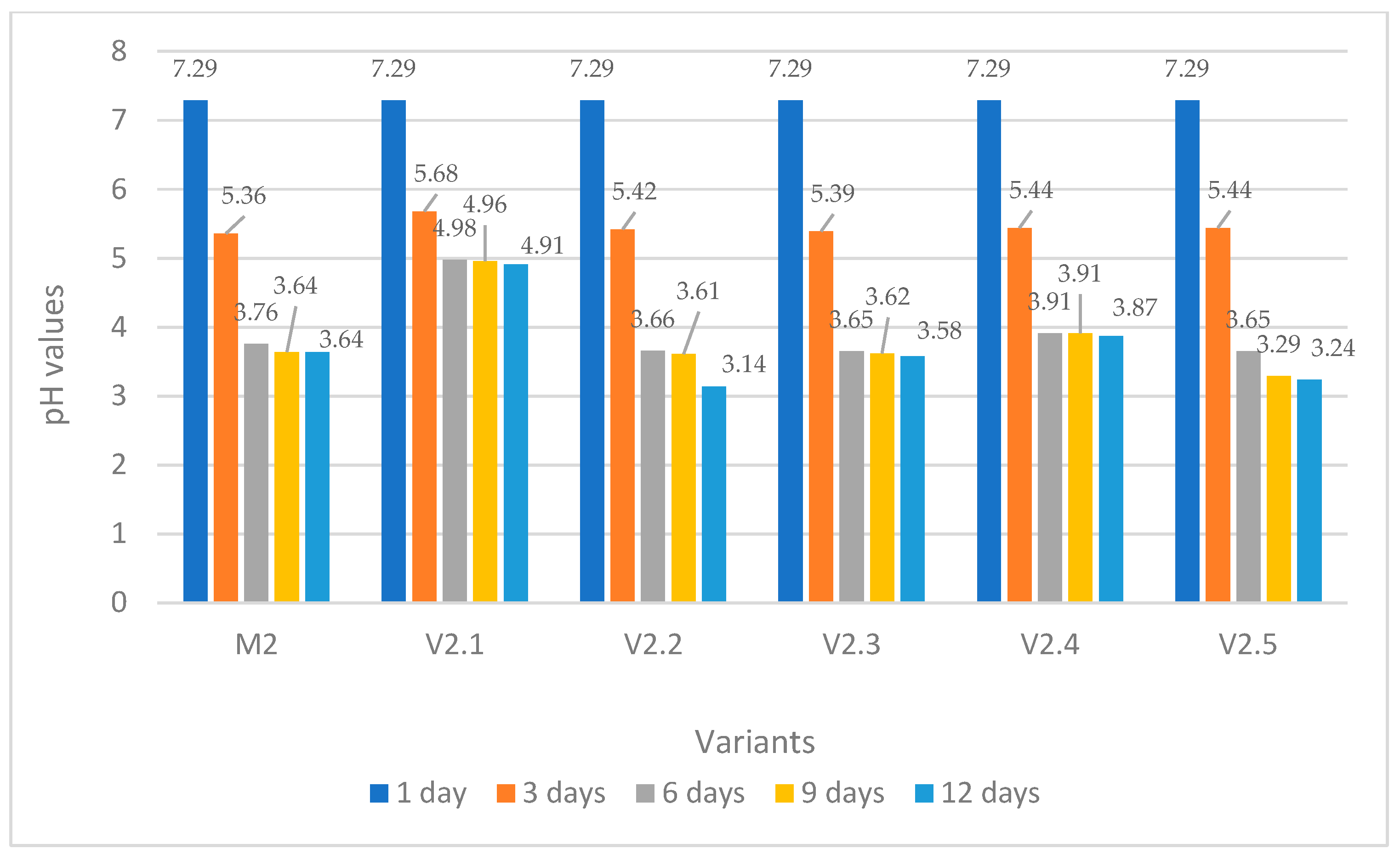
Figure 3.
Sensory analysis.
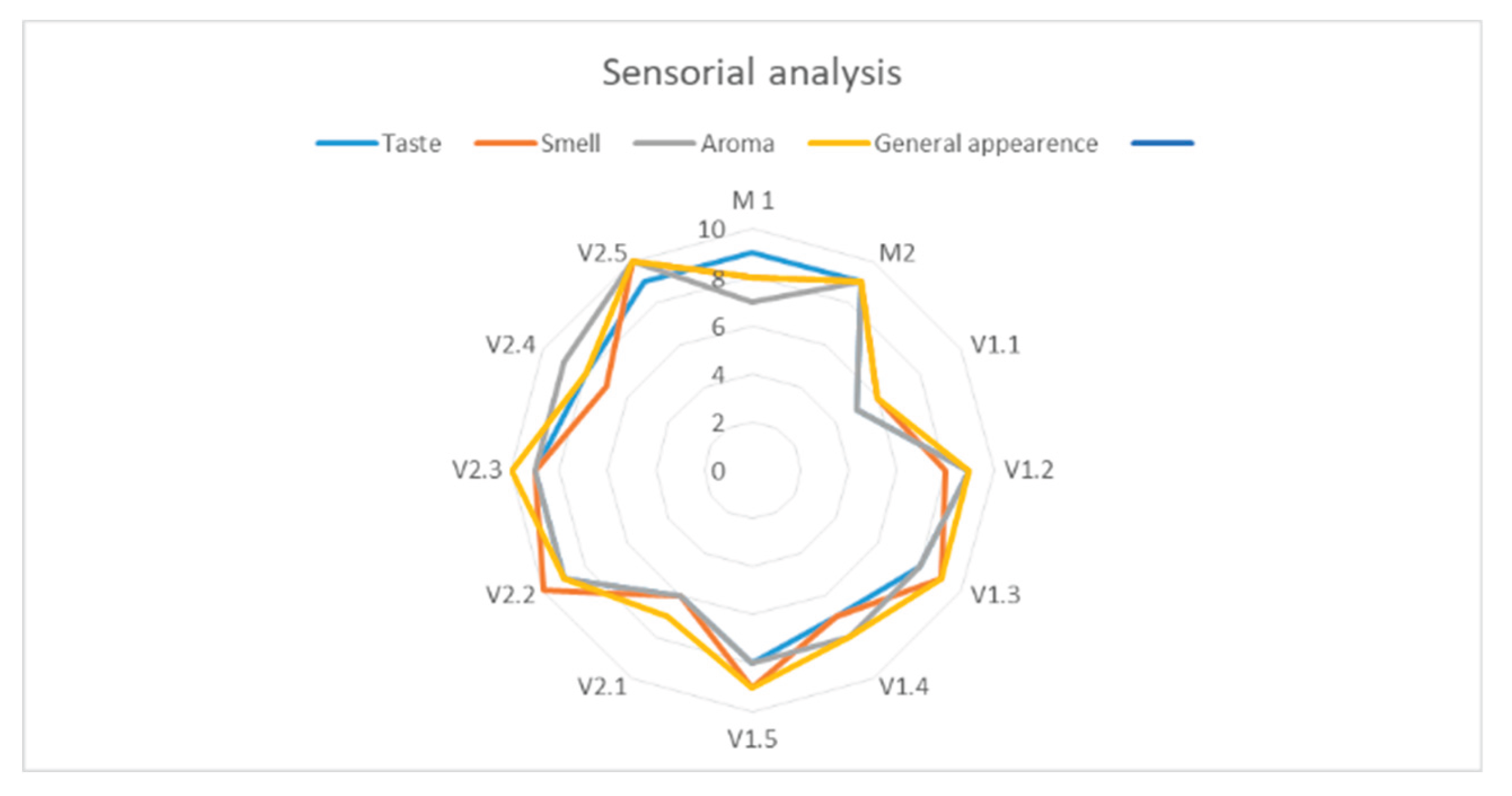

Table 1.
Total number of lactic acid bacteria during cabbage fermentation.
| Variant |
NTBL (UFC log) after 6 days from the start of fermentation |
NTBL (UFC log) 21 days after fermentation start |
| M1 | 3,60±0,16eA | 6,47±0,30eB |
| M2 | 3,04±0,13cA | 6,30±0,29deB |
| V1.1 | 1,99±0,08aA | 4,06±0,19aB |
| V1.2 | 2,54±0,11bA | 5,30±0,24bB |
| V1.3 | 3,00±0,12cA | 6,30±0,30deB |
| V1.4 | 3,36±0,15dA | 6,39±0,29eB |
| V1.5 | 3,61±0,17eA | 6,50±0,31eB |
| V2.1 | 1,98±0,07aA | 4,30±0,19aB |
| V2.2 | 3,36±0,14dA | 5,91±0,27cdB |
| V2.3 | 3,06±0,13cA | 5,60±0,25bcB |
| V2.4 | 3,30±0,14dA | 5,90±0,28cdB |
| V2.5 | 3,69±0,18eA | 5,87±0,27cdB |
*Effects of the applied treatments on Total lactic acid bacteria during cabbage fermentation. Bars that share the same treatment and are marked with distinct lowercase letters show statistically significant differences as determined by the least significant difference (LSD) test (p < 0,05). Similarly, bars that represent the same sampling time in different fermentation periods and are marked with different uppercase letters signify significant differences as determined by the LSD test (p < 0,05).
Table 2.
Variation of total soluble solids content (TSS%) in fresh, pickled cabbage and after 6 months of storage at a temperature of 5 °C.
Table 2.
Variation of total soluble solids content (TSS%) in fresh, pickled cabbage and after 6 months of storage at a temperature of 5 °C.
| Variant | Fresh cabbage | Sauerkraut immediately after fermentation |
After 6 months of storage |
||||
| M 1 | 5,5±0,23aB | 6,5±0,31abcC | 4,5±0,19bcdA | ||||
| M2 | 5,5±0,23aB | 6,0±0,29aC | 4,0±0,17aA | ||||
| V1.1 | 5,5±0,23aB | 6,6±0,35bcC | 4,6±0,24cdA | ||||
| V1.2 | 5,5±0,23aB | 6,8±0,36cC | 4,8±0,22dA | ||||
| V1.3 | 5,5±0,23aB | 6,4±0,33abcC | 4,4±0,21bcA | ||||
| V1.4 | 5,5±0,23aB | 6,4±0,31abcC | 4,4±0,23bcA | ||||
| V1.5 | 5,5±0,23aB | 6,2±0,31abC | 4,2±0,22abA | ||||
| V2.1 | 5,5±0,23aB | 6,5±0,30abcC | 4,5±0,23bcdA | ||||
| V2.2 | 5,5±0,23aB | 6,2±0,32abC | 4,2±0,20abA | ||||
| V2.3 | 5,5±0,23aB | 6,5±0,33abcC | 4,5±0,23bcdA | ||||
| V2.4 | 5,5±0,23aB | 6,5±0,31abcC | 4,5±0,22bcdA | ||||
| V2.5 | 5,5±0,23aB | 6,0±0,27aC | 4,0±0,18aA | ||||
* Variation in total soluble solids content (TSS%) of fresh cabbage, sauerkraut and after 6 months storage at 5 °C. Bars that share the same treatment and are marked with different lowercase letters indicate statistically significant differences as determined by the least significant difference (LSD) test (p < 0,05). Similarly, bars that represent the same sampling time at different fermentation and storage times and are marked with different uppercase letters signify significant differences as determined by the LSD test (p < 0,05).
Table 3.
Variation of total sugar content (g/100 g fm) in fresh, pickled cabbage and after 6 months of storage at a temperature of 5 °C.
Table 3.
Variation of total sugar content (g/100 g fm) in fresh, pickled cabbage and after 6 months of storage at a temperature of 5 °C.
| Variant | Fresh cabbage | Sauerkraut immediately after fermentation |
After 6 months of storage |
| M 1 | 3,34±0,14aB | 0,29±0,01bA | - |
| M2 | 3,34±0,14aB | 0,12±0,006aA | - |
| V1.1 | 3,34±0,14aA | - | - |
| V1.2 | 3,34±0,14a | - | - |
| V1.3 | 3,34±0,14a | - | - |
| V1.4 | 3,34±0,14a | - | - |
| V1.5 | 3,34±0,14a | - | - |
| V2.1 | 3,34±0,14a | - | - |
| V2.2 | 3,34±0,14a | - | - |
| V2.3 | 3,34±0,14a | - | - |
| V2.4 | 3,34±0,14a | - | - |
| V2.5 | 3,34±0,14a | - | - |
* Variation in total soluble solids content (TSS%) of fresh cabbage, sauerkraut and after 6 months storage at 5 °C. Bars that share the same treatment and are marked with different lowercase letters indicate statistically significant differences as determined by the least significant difference (LSD) test (p < 0,05). Similarly, bars that represent the same sampling time at different fermentation and storage times and are marked with different uppercase letters signify significant differences as determined by the LSD test (p < 0,05).
Table 4.
Variation of vitamin C content (mg/100 g fm) in fresh, pickled cabbage and after 6 months of storage at a temperature of 5 °C.
Table 4.
Variation of vitamin C content (mg/100 g fm) in fresh, pickled cabbage and after 6 months of storage at a temperature of 5 °C.
| Variant | Fresh cabbage | Sauerkraut immediately after fermentation |
After 6 months of storage |
| M 1 | 20,56±1,07aB | 28,8±1,50deC | 17, 6±0,81abA |
| M2 | 20,56±1,07aB | 28,8±1,39deC | 18,2±0,88abA |
| V1.1 | 20,56±1,07aB | 25,28±1,23bcC | 19,28±0,94bcA |
| V1.2 | 20,56±1,07aB | 22±0,98aC | 17,4±0,85aA |
| V1.3 | 20,56±1,07aB | 23,52±1,15abC | 16,78±0,80aA |
| V1.4 | 20,56±1,07aB | 34,08±1,64ghC | 25,13±1,17eA |
| V1.5 | 20,56±1,07aB | 35,84±1,72hiC | 27,43±1,31fA |
| V2.1 | 20,56±1,07aB | 25,28±1,27bcC | 20,16±0,96cA |
| V2.2 | 20,56±1,07aB | 37,6±1,84iC | 29,62±1,46gA |
| V2.3 | 20,56±1,07aB | 32,32±1,51fgC | 26,98±1,32fA |
| V2.4 | 20,56±1,07aB | 27,04±1,33cdC | 18,06±0,87abA |
| V2.5 | 20,56±1,07aB | 30,56±1,49efC | 23,71±1,11eAB |
* Variation in vitamin C (mg/100 g f.m.) content of fresh cabbage, sauerkraut and after 6 months storage at 5 °C. Bars that share the same treatment and are marked with different lowercase letters indicate statistically significant differences as determined by the least significant difference (LSD) test (p < 0,05). Similarly, bars that represent the same sampling time at different fermentation and storage times and are marked with different uppercase letters signify significant differences as determined by the LSD test (p < 0,05).
Table 5.
Table 5. Variation in total phenolic content (GAE mg/100 g fm) for fresh, pickled cabbage and after 6 months of storage at a temperature of 5 °C.
Table 5.
Table 5. Variation in total phenolic content (GAE mg/100 g fm) for fresh, pickled cabbage and after 6 months of storage at a temperature of 5 °C.
| Variant | Fresh cabbage | Sauerkraut immediately after fermentation |
After 6 months of storage |
| M 1 | 18,69±0,90aA | 22,71±1,10aB | 20,64±1,00abA |
| M2 | 18,69±0,90aA | 24,57±1,19abC | 21,19±1,03abcB |
| V1.1 | 18,69±0,90aA | 29,62±1,51bC | 25,79±1,22dB |
| V1.2 | 18,69±0,90aA | 27,66±1,36bC | 22,47±1,06cB |
| V1.3 | 18,69±0,90aA | 25,04±1,22bC | 21,52±0,97bcB |
| V1.4 | 18,69±0,90aA | 24,39±1,17abB | 20,26±0,93abA |
| V1.5 | 18,69±0,90aA | 23,83±1,15abB | 19,61±0,91aA |
| V2.1 | 18,69±0,90aA | 24,39±1,18abC | 21,37±1,01bcB |
| V2.2 | 18,69±0,90aA | 24,95±1,26bC | 21,39±1,03bcB |
| V2.3 | 18,69±0,90aA | 25,32±1,31bC | 22,51±1,16cB |
| V2.4 | 18,69±0,90aA | 24,01±1,24abC | 20,83±0,99abcB |
| V2.5 | 18,69±0,90aA | 23,64±1,15abB | 19,94±0,87abA |
* Variation in total phenolic content (TP mg GAE /100 g f.m.) content of fresh cabbage, sauerkraut and after 6 months storage at 5 °C. Bars that share the same treatment and are marked with different lowercase letters indicate statistically significant differences as determined by the least significant difference (LSD) test (p < 0,05). Similarly, bars that represent the same sampling time at different fermentation and storage times and are marked with different uppercase letters signify significant differences as determined by the LSD test (p < 0,05).
Table 6.
Table 6. Variation of antioxidant activity (mmol Trolox/100 g fm) in fresh, pickled cabbage and after 6 months of storage at a temperature of 5 °C.
Table 6.
Table 6. Variation of antioxidant activity (mmol Trolox/100 g fm) in fresh, pickled cabbage and after 6 months of storage at a temperature of 5 °C.
| Variant | Fresh cabbage | Sauerkraut immediately after fermentation |
After 6 months of storage |
| M 1 | 0,89±0,03aB | 0,93±0,04aB | 0,77±0,02aA |
| M2 | 0,89±0,03aA | 0,98±0,05aB | 0,81±0,04aA |
| V1.1 | 0,89±0,03aA | 1,64±0,07cdeC | 1,12±0,05cB |
| V1.2 | 0,89±0,03aA | 1,84±0,09fC | 1,67±0,06eB |
| V1.3 | 0,89±0,03aA | 1,80±0,09fC | 1,59±0,07eB |
| V1.4 | 0,89±0,03aA | 1,74±0,07efC | 1,23±0,05dB |
| V1.5 | 0,89±0,03aA | 1,96±0,08gC | 1,79±0,09fB |
| V2.1 | 0,89±0,03aA | 0,98±0,03aC | 0,82±0,03aB |
| V2.2 | 0,89±0,03aA | 1,66±0,06deC | 1,11±0,04cB |
| V2.3 | 0,89±0,03aA | 1,55±0,07cdC | 1,05±0,05bcB |
| V2.4 | 0,89±0,03aA | 1,32±0,05bC | 0,97±0,03bB |
| V2.5 | 0,89±0,03aA | 1,54±0,06cC | 1,09±0,05cB |
* Variation in radical scavening activity (AOA mmol Trolox/100 g fm) content of fresh cabbage, sauerkraut and after 6 months storage at 5 °C. Bars that share the same treatment and are marked with different lowercase letters indicate statistically significant differences as determined by the least significant difference (LSD) test (p < 0,05). Similarly, bars that represent the same sampling time at different fermentation and storage times and are marked with different uppercase letters signify significant differences as determined by the LSD test (p < 0,05).
Disclaimer/Publisher’s Note: The statements, opinions and data contained in all publications are solely those of the individual author(s) and contributor(s) and not of MDPI and/or the editor(s). MDPI and/or the editor(s) disclaim responsibility for any injury to people or property resulting from any ideas, methods, instructions or products referred to in the content. |
© 2026 by the authors. Licensee MDPI, Basel, Switzerland. This article is an open access article distributed under the terms and conditions of the Creative Commons Attribution (CC BY) license (http://creativecommons.org/licenses/by/4.0/).
Copyright: This open access article is published under a Creative Commons CC BY 4.0 license, which permit the free download, distribution, and reuse, provided that the author and preprint are cited in any reuse.


