
Submitted:
10 March 2026
Posted:
11 March 2026
You are already at the latest version
Abstract
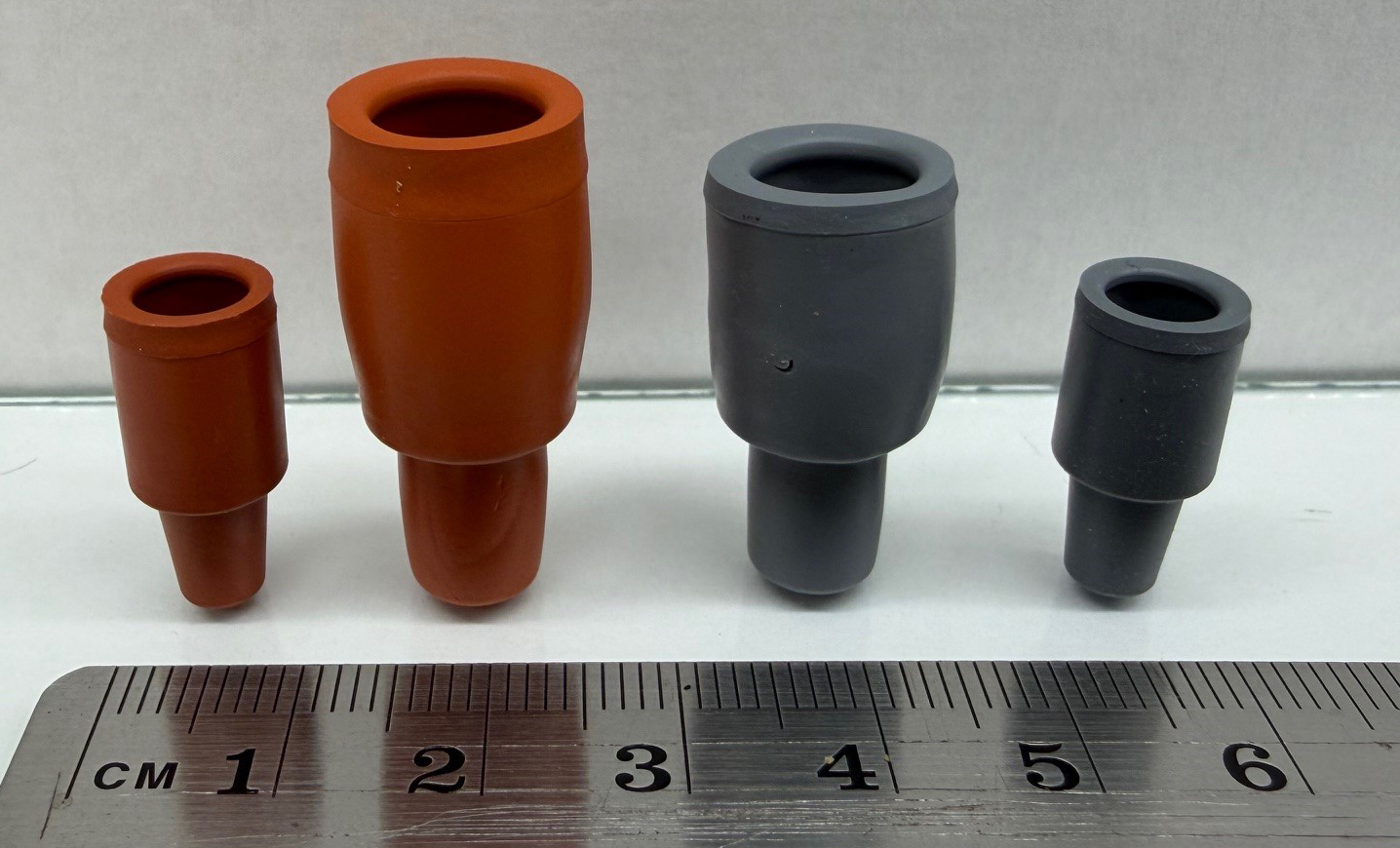
Insect attractant lures come in many formats, one of which utilizes tapered rubber sleeve stoppers, normally utilized to seal laboratory glassware openings. Their cup-shape top happens to be ideal to pipet a solution within this cavity, and, through permeation, load quantities of active ingredients. The expansion or swelling of the rubber facilitates the permeation of the active within its matrix, a role that dichloromethane performs well. Dichloromethane is also favored due to its volatility and broad chemical compatibility. However, this solvent is possibly on the verge of retirement, which would mean finding alternatives. It was found that several other common laboratory solvents could serve as replacement, and of those tested, tetrahydrofuran outperformed dichloromethane in terms of overall volume uptake and swelling. When loading the septum/sleeve with larger amounts of active, a full soaking methodology can disperse the active throughout the rubber sleeve as well as reduce labor requirement since batches can be processed compared to manually pipetting a solution to individual sleeves.
Keywords:
insect lures
; solvents
; septa
; rubber sleeve stopper
Copyright: This open access article is published under a Creative Commons CC BY 4.0 license, which permit the free download, distribution, and reuse, provided that the author and preprint are cited in any reuse.


