

Submitted:
07 March 2026
Posted:
09 March 2026
You are already at the latest version
Abstract
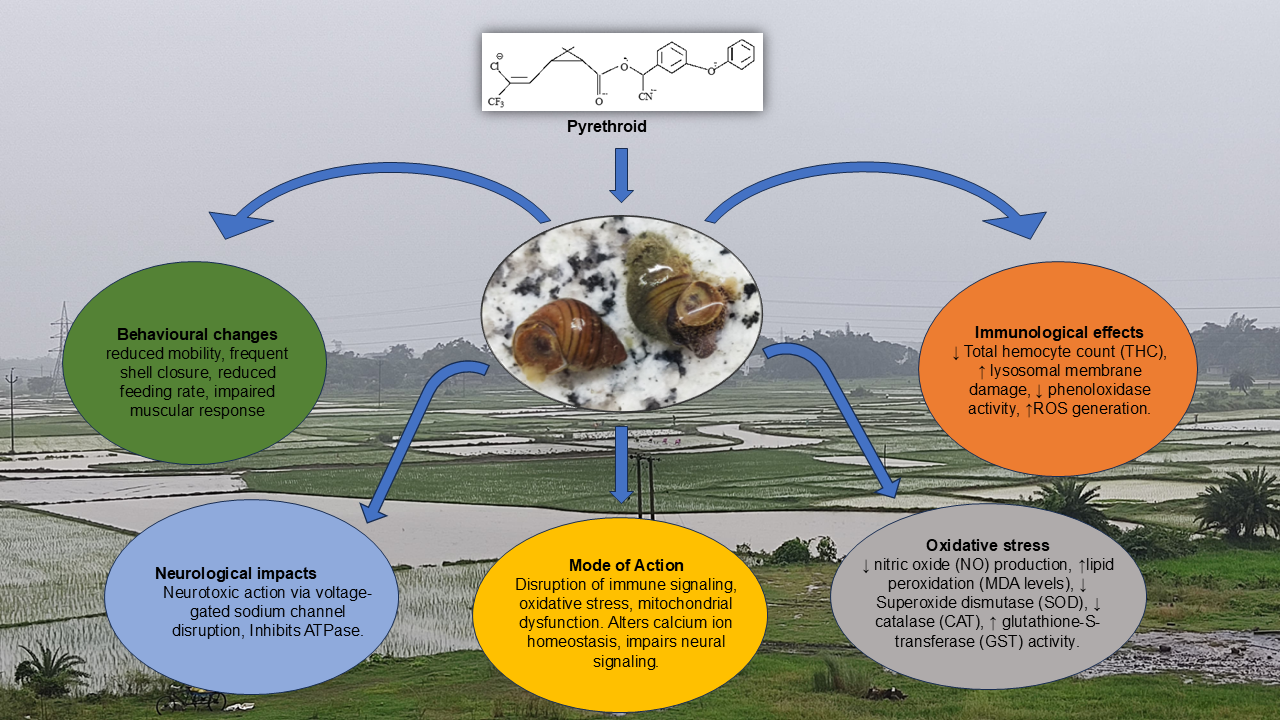
Pyrethroids, widely used insecticides, have raised concerns regarding their adverse effects on non-target organisms, particularly molluscs, which play vital roles in aquatic ecosystems. Pyrethroids disrupt immune responses in molluscs, impairing their ability to combat pathogens and environmental stressors. Behavioural changes, including altered feeding, locomotion, and mating patterns, are observed, which can affect population dynamics and ecosystem functioning. Additionally, pyrethroids influence molluscan metabolism by altering enzymatic pathways involved in detoxification, leading to potential metabolic overload and toxicity. These disruptions threaten molluscan biodiversity and ecological balance. This review summarize the impact of pyrethroid exposure on molluscan diversity, focusing on immunological, behavioural, and metabolic alterations. This review also explores potential mitigation strategies, including the use of environmentally safer alternatives, bioremediation techniques, and the development of resistance management approaches. Understanding the multifaceted impacts of pyrethroids on molluscs is crucial for safeguarding aquatic ecosystems and developing effective pest management strategies.
Keywords:
pyrethroids
; molluscan diversity
; metabolic pathways
; pest management
; bioremediation
Copyright: This open access article is published under a Creative Commons CC BY 4.0 license, which permit the free download, distribution, and reuse, provided that the author and preprint are cited in any reuse.


