

Submitted:
02 March 2026
Posted:
04 March 2026
You are already at the latest version
Abstract
This paper investigates knowledge in the field of digitalization risk management through bibliometric analysis, in order to provide a critical overview of scientific knowledge and highlight future research directions. The main goal involved bibliometric analysis of publications from 2009-2025 using VosViewer and Biblioshiny - Bibliometrix. The research was conducted following a specific methodology and protocol for the design, planning and data collection for the review process; carrying out the review and bibliometric analysis; and evaluating and presenting research findings. The inclusion of studies in the analysis was carried out in accordance with PRISMA 2020 flow diagram template for systematic reviews. The most important results of the research seem to indicate that the analyzed period was marked by an upward trend in scientific interest, with an increase of publications after 2018-2019 and as a result of the Covid-19. The most productive countries are Germany, Italy, Russia, Ukraine and China. The most prolific institutions are Seoul National University and State University of Trade and Economics. Citations tend to follow the annual publication rate. According to thematic map, risk management is one of the motor themes and, as an element of originality, future research trends in this area include themes such as transformation, systems, resilience and digital risks.
Keywords:
digitalization
; risk
; management
; knowledge
; bibliometric analysis
1. Introduction
Digitalization is a constant concern for organizations in the 21st century. Organizations around the world and in all fields digitize their activities and approach the digital transformation process as one of utmost importance in terms of competitiveness and productivity. According to the OECD, digitalization consists of the use of data and digital technologies as well as interconnection that results in new, or changes to existing, activities [1], while Frenzel et al. [2] consider that digitalization can be defined as optimizing digital technologies to achieve efficiency, flexibility and adaptability in operations and services. Buer et al. [3] show that digitalization leads to the automation of operational-level processes within organizations as a result of the use of digital technologies. Other authors [4] consider that digitalization means more than the application of digital technologies and define it as use of digital technologies to innovate a business model and provide new revenue streams opportunities in industrial ecosystems. Gartner’s IT Glossary defines the concept of digitalization as the use of digital technologies to change a business model and provide new revenue and value-producing opportunities, respectively the process of moving to a digital business [5].
The digital metamorphosis [6] of organizations involves the reorientation of business processes and the redesign of organizational systems both structurally and procedurally. The economic effects of digitalization are not limited only to the competitive position of organizations but involve major transformations, especially in terms of new business models, value creation, value delivery and value capture [4]. Digitalization has a significant positive effect on economic growth, with a stimulating effect on the development of appropriate business models [7].
The studies and research published to date are focused on the specific risks of digitalization in certain domains, relatively few include an exhaustive analysis of the literature, on a bibliometric basis. The present research work is dealing with an exhaustive investigation of the publications that have treated the issue of digitalization risks at macro and micro economic level. The research conducted aims to investigate knowledge in the field of digitalization risk management through bibliometric analysis, in order to provide a critical overview of scientific knowledge, but also to highlight the main developments, trends and knowledge gaps. Considering the results obtained in previous studies on the specific risks of digitalization of organizations, as well as the need to map knowledge in the field, we have set the following research objectives in this paper:
- -
- Identifying the most relevant publications in the field of digitalization risk management;
- -
- Analyzing the frequency of publications in the field of digitalization risk management, as well as the most important publication sources;
- -
- Identifying the most prolific authors, the most important countries, research entities, and the collaborative relationships between them regarding digitalization risk management;
- -
- Visualizing and analyzing the most important research topics and research clusters regarding digitalization risk management, as well as future research directions in the field.
Taking into account the objectives formulated for carrying out the research, through the research conducted we aim to answer the following research questions:
- -
- RQ1: What is the frequency of scientific knowledge on digitalization risk management?
- -
- RQ2: Which countries, regions, research institutions are involved in the scientific production on digitalization risk management?
- -
- RQ3: What are the main clusters and the most relevant research topics in the field of digitalization risk management?
- -
- RQ4: What future research directions are emerging regarding digitalization risk management?
The results obtained in the research highlight the structure, evolution, main trends and impact of research on digitalization risk management, as a result of investigating the scientific output, key contributions and significant directions of future research in the field.
2. General Conceptual Background
A series of previous studies have revealed that digitalization has not only economic effects but also some at the social level [8,9,10] and environmental [11,12,13,14,15]. Certain specialists [16] considered COVID-19 as “the great accelerator” regarding the adoption of new emerging technologies by companies and “catalyst” of the adoption and widespread use of digitalization within organizations. The COVID-19 pandemic has greatly amplified the role of digital industries [17]. As a result of social distancing measures, lockdowns, quarantines and border closures, the COVID-19 pandemic has fundamentally changed the way organizations operate [16] both in relation to the external environment and internally, in terms of human resource management [18]. Companies that have transformed and adapted their traditional business models into digital ones have been the ones that have been better able to mitigate the negative impact of the effects of the COVID-19 pandemic, although the approach to digitalization has been different for large companies than for small and medium-sized enterprises [19].
Digital tools and technologies mark the development of organizations in different fields from e-commerce [20,21] to energy production and distribution [22], education [23,24] and health [25]. The use of digitalization tools is characteristic not only of private sector organizations but also of those in the public sector [26].
With all its benefits, digitalization is not a risk-free process, both from an organizational, microeconomic and societal perspective. There are specialists who have defined the “digitalization paradox” according to which “although companies may invest in digitalization, they often fail to achieve the expected revenue enhancement” [27].
In the era of e-commerce, previous studies highlight risks that affect commercial operations and the ability of organizations to engage in this type of commerce. Risks affecting the supply chain are among the most relevant in this area. Ivanov, Dolgui and Sokolov investigated the ripple effect on digitalization processes for supply chain [28]. Trkman and McCormack linked the process of digitalization through e-procurement, showing what the benefits and risks are [29]. Procurement digitalization was also investigated by Harju et al. [30] based on data analytics and digital process competition shows that digitalization needs reliable information between Supply Chains (SC) partners and Supply Chain Risk Management in order to give adaptive flexible response for better Supply Chain Resilience (SCRES) [30]. Procurement digitalization speed up information-processing activities and minimize uncertainty in the Supply Chain. Another innovative concept was developed by Dolgui, Ivanov and Sokolov [31] regarding the issue of Supply Chain (SC) digitalization is called Reconfigurable Supply Chain (RSC). This is presented as an adaptive system network projected in an adaptive, flexible, responsive, sustainable and resilient presentation that allows fast structural changes in physical and information environment [31].
Wang et al. showed that digitalization generates both opportunities and challenges for risk management in banking, especially in terms of risk-taking behaviors [32]. The authors of the aforementioned study highlighted that digitalization significantly reduces on-balance sheet risk-taking and increases off-balance sheet risk exposure. Chouaibi et al. showed that, although digitalization has a positive impact on organizational performance, having certain benefits, it also involves additional risks, more relevant especially in the case of emerging economies [33].
Digitalization creates the premises for the emergence and materialization of new risks, especially those that concern cybercrime and fraud on the Internet [34,35]. The protection of organizations’ data and information, the security of IT applications, cloud storage, networks and critical IT infrastructure, and the use of artificial intelligence are all ways to respond to risks specific to digitalization [36,37,38,39].
Thus, methods have been developed for classifying digital technologies assessing risk factors and assigning situation-specific mitigation strategies for Industry 4.0 [40], models for systematic risk management [41], the relationship between cyber supply chain risk management and supply chain performance has been studied [42]. Specific communication systems for risk management have also been developed [43]. The bibliometric analyses carried out to date have either focused only on the overall phenomenon of digitalization [44,45], or on the risk management process associated with certain types of risks specific to digitalization [46,47,48].
3. Materials and Methods
There was identifed the need for knowledge mapping based on a scientometric approach in this field [49] to produce new knowledge. Within the scientometric approach, bibliometric analysis was preferred, as bibliometrics evaluates scientific production using mathematical and statistical methods [50]. To carry out bibliometric analysis, a protocol is required to provide researchers with assurance of the integrity of the study, anticipation, avoidance of potential problems and avoidance of arbitrary judgments [51]. The protocol used in the bibliometric analysis in this research represents an adaptation of previously developed protocols such as bibliometric analysis toolbox [52], bibliometric protocol [53] and research design of bibliometric analysis [54].
The protocol developed for bibliometric analysis and presented in Figure 1 involves completing three essential stages: the design, planning and data collection for the review process; carrying out the review process and bibliometric analysis; and evaluating and presenting research findings.
The first stage, intended for the design, planning and data collection for the review process, included formulating the research questions, designing the research and developing the bibliometric protocol and collecting the data necessary for the research. Web of Science database was selected because it is an extensive bibliographic reference source. The notoriety of the journals in the field of digitalization and risk management which are indexed, low rate of duplicated records, its recognition in the scientific community and seamlessness of exporting raw datasets are the main reasons for the decision of working with this database. The inclusion of studies in the analysis was carried out in accordance with PRISMA 2020 flow diagram template for systematic reviews (Figure 2).
Web of Science Database was used for keyword search: “digitalization” AND “risk management” in the topic field section of the database. The search was performed on 14th February 2025, resulting in a number of 215 documents generated initially, published between 2009 and 2025. For the identification of papers in the Web of Science database was used Prisma 2020 flow diagram, following the stages of systematic review.
The main elements of methodological framework used in bibliometric analysis are presented in Table 1.
Taking into consideration that in this study was used a single database, respectively Web of Science database, there were not encountered any duplicates in the first stage of the identification of documents. Therefore, 215 records were screened from which a number of 17 records were excluded due to filtering the document type to only article, proceeding paper and review article, excluding the other types. The excluded documents were not relevant for this research, consisting of early access, editorial material and book chapters documents. After this phase no reports were sought for retrieval, continuing with the screening of the eligible documents. The 198 documents were assessed individually, resulting in 11 records excluded due to the application of criteria of exclusion – papers not relevant to the objective of the study. This concludes into a number of 187 studies included in the review.
The second stage of the research involved carrying out the review process and bibliometric analysis through:
- a)
- descriptive statistics on annual scientific production, subject area distribution, typology of scientific production, most prolific authors; distribution of scientific production;
- b)
- performance analysis (focused on citation analysis)
- c)
- knowledge mapping which included conceptual structure (co-word analysis); intellectual structure (co-citation analysis); social structure (co-author analysis);
The third stage involved the evaluation and presentation of research findings, namely the analysis and evaluation of the results obtained, the presentation and contextualization of the results and, on this basis, the identification of future research directions regarding digitalization risk management.
4. Results
4.1. Descriptive Statistics
4.1.1. Descriptive Elements of the Dataset
The descriptive elements of the dataset are presented in Table 2. The data covers a period of 17 years, namely the period 2009-2025. 187 documents from 140 bibliographic sources were analyzed. The majority of the analyzed documents (122 out of 187) were articles, these being followed by proceedings papers and reviews.
The annual growth rate is relatively high (12.93%) and the average document age for each document (3.25) seem to indicate the novelty of the topic and the need for a detailed study of it. The vast majority of the analyzed documents are written in co-authorship (94%), those with a single author having a fairly low proportion (6%). The number of co-authors per document (almost four authors per document) shows a relatively high level of collaboration between authors to carry out research on digitalization risk management. Also, the share of documents that were published as a result of international co-authorship (37.43%), seems to indicate that the subject of digitalization risk management has attracted the attention of researchers from several countries, being a stimulating factor for the amplification of international collaborations in the field.
4.1.2. Annual Scientific Production
Anual scientific production is shown in Figure 3. The graph shows the number of articles published each year of the timeline, representing the annual scientific production. It can be observed that from the beginning until 2017 the trend is stable with low values (with around 1-2 articles), but starting with year 2018 it is registered an increased sharp trend, with its peak in 2024. The ascendent trend (2018 registering a total of 5 articles, 2019 a total of 17 articles and the peak with 38 articles) indicates a growing interest and research activity in the field. The abrupt decline in 2025 can be explained by the incomplete data registered in the current year as it is still ongoing.
From the previous figure, it can be seen that the upward trend became more pronounced during the COVID-19 pandemic, recognized as a stimulating factor for digitalization but also generating risks for most organizations. The extent of digitalization but also of the specific risks during the COVID-19 pandemic contributed to the increase in interest in the topic of digitalization risk management, with an obvious impact on the dynamics of publications in the field.
4.1.3. Research Area Distribution
Given that the topic of risk management digitalization was not addressed by authors from a single field, the analysis of publications produced in the period 2009-2025 involves a multidisciplinary approach. For the research area distribution study, we used the main Web of Science Categories, namely the way in which publications were assigned to these fields. Thus, according to the data represented in Figure 4, the WoS category best represented within the set of publications analyzed is “Management”, followed by “Business”, “Environmental sciences” and “Economics”. The WoS categories representative of the digitalization phenomenon (“Computer Science Information Systems” and “Computer Science Interdisciplinary Applications”) are present in the first part of the hierarchy but not to the same extent as those in “Management” and “Business”. This fact is explainable by the orientation of publications from different fields of activity (finance, education, energy) towards digitalization risk management as an overall process and by the focus of publications from technical fields directly related to digitalization on specific risk identification and response solutions that are more associated with their technical significance than with their managerial specification.
Three important research areas are the most representative in the digitalization risk management approach: one in the field of management and economics (with a share of almost 40% of all publications structured by WoS categories), the second in the field of computer science, technology and engineering and the third in the field of environmental sciences and adjacent WoS categories. The use of WoS categories to identify the main research areas still has its limits that come from the inclusion of a publication within several relevant WoS categories.
4.1.4. Most Productive and Relevant Sources
In Figure 5 is represented the Bradford’s Law application in order to find the core sources from the field. Core sources provide the relevant references from the research literature and they are represented in the grey rectangular above. In the left side of the graph are positioned the most productive sources, which contribute to the highest number of published articles, slowly decreasing going to the right side.
First 5 core sources in our case are the following: „Sustainability”, „Financial and Credit Activity-Problems of Theory and Practice”, „Buildings” and „IFAC Paperonline and Information”. The line from the graph suggest that there are additional sources outside the core, but the level of contribution is lower compared with the ones located inside the core sources. The visual representation can be an useful instrument to choose journals or publishers for literature review, systematic review or bibliometric review. Sources production over time, its results confirming the previous findings, respectively the most substantial cumulative growth in the field of digitalization and risk management is encountered in the following ten journals: Sustainability, Financial and Credit Activity-Problems of Theory and Practice, Buildings, IFAC Paperonline, Information, International Journal of Physical Distribution & Logistics Management, Process Safety and Environmental Protection, Risks, Technological Forecasting and Social Change, Vision 2025: Education Excellence and Management of Innovations through Sustainable Economic Competitive Advantage. The steepest line represents the first performing source, with highest number of research contribution.
4.1.5. Distribution of Scientific Knowledge
This section presents the results that answer the second research question regarding countries, regions, research institutions are involved in the scientific production on digitalization risk management. The analysis of scientific production at the country level is very important as it shows the areas in which it is concentrated. In Figure 6 it can be visualized the country scientific production, with darker blue indicating high scientific production, lighter blue moderate scientific productions and grey few or with no scientific production in the field. The highest research productivity can be encountered in Europe, north America and some parts of Asia, with Russia as top country. The absence of scientific production in the field in some countries can indicate issue related with funding for research, limited access to publication indexing or not enough research institutions. Top 5 countries will be the following: Russia (79), Germany (51), Italy (44), Ukraine (44) China (41) and Romania ranked on 15.
The most relevant affiliations taking into consideration the contributions in term of article number are Seoul National University and State University of Trade and Economics are ranked first, having an important role in the research of digitalization and risk management, followed closely by Norwegian University of Science and Technology and by University of Salerno.
4.2. Performance Analysis
Until 2017 citation is very low, starting to increase dramatically between 2018 and 2019, the trend is ascendent, even if there are variations, until 2025 when is registered the peak. This graph is correlated with Annual Scientific Production, because the increase in citations may be correlated also with the growing scientific production. The registered variations can be explained by the impact of each paper published in that period of time.
The performance analysis cannot be limited to the evolution of average citations per year during the analyzed period but must highlight which are the most cited works on the subject of digitalization risk management. A summary of the most cited documents globally on the subject of digitalization risk management is presented in Table 3.
It can be observed that scientific papers published four years ago and older have more citation compared with the newer ones. The trending research topics are sustained by the paper which are rapidly cited. Therefore Dolgui et al. [31] ranks first with 272 citation in total, but Belhadi et al. [58] has the highest total citation per year (111.00), indicating rapid citation increase. Guo and Zhang [59], Chouaibi et al. [33] and Alkaraan et al. [60] have promising total citation per year and may grow over the years. The rapid increase in citations of publications in the last years of the analyzed period confirms the increase in scientific interest in the field of digitization and risk management related to this process. The most cited works come mainly from the area of digitalization and digital transformation, with digitalization risks and risk management appearing rather as an effect of specialists’ preoccupations on the phenomena affecting these processes.
In the Figure 7 it can be seen the citation number received by country, representing the most cited countries. France and Germany are the leaders in term of citation number with 409 and 381 citations, followed closely by India (224), China (214), and Italy (213). Even if France and Germany don’t have a big country scientific production, they registered a higher impact per scientific article than the countries ranked on first positions in production overall. It is thus observed that the countries with the most relevant contribution in terms of interest generated for specialists in the field are located on the European continent and in Asia. With the exception of Australia and the United States (the only country in North America), other continents are not represented in the top of the most cited countries. The countries with lower citations number may have different research focuses in this field.
4.3. Knowledge Mapping
4.3.1. Conceptual Structure
In Figure 8 is represented the word cloud, created by the keyword with higher frequency. At its centre is positioned the keyword risk management, followed by other relevant themes such as: management, performance, impact, framework. Other trending topics include: artificial intelligence, innovation, transformation, big data, future, implementation.
The main keywords are: risk management, impact, management, performance, framework, big data and innovation. Risk management seems to be the central concern of research in the field, as one of the elements that characterize risk analysis, namely their impact. Also, elements characteristic of digitalization such as big data, information or technology are represented to a relatively high extent.
The thematic map, presented in Figure 9, realizes a categorization of research topic taking into consideration the development degree and the relevance degree. The basic themes are characterized by high centrality and low density and include themes which are fundamental for broader discussions but not as developed as motor such as the following: diagnosis, transformation, intelligence, identification, barriers, big data analysis. The emerging themes are characterized by low centrality and low density and include themes which are not very relevant, that may need further research to gain popularity or could disappearing from the focus of the researchers, such as: social media, augmented reality, safety, security, decision.
Niche themes are characterized by low centrality and high density and include themes which are highly specialized and relevant only for specific areas from the field, such as: prediction, adaptation, climate-change, industry, visualization. The motor themes are characterized by high centrality and high density and include themes which are continuously growing and very relevant for the field, such as: risk management, impact, management, framework, big data, future, information, technology, context, efficiency, accountability. It is found that the elements that are most frequently present in the three map and constitute the center of the word cloud are also those that constitute the most important motor themes. Risk management and impact constitute, in the context of digitalization, the most important themes from the perspective of the publishing concerns of specialists.
After analyzing the topic and themes related with our research field, we start analyzing the keywords, following the steps: create a map based on text data, read data from bibliographic database files, Web of Science upload files, title and abstract fields (Figure 10). A number of 5743 terms were found, therefore the minimum number of occurrences of a term was set to 10, resulting into 110 results for which was calculated the relevance score of 60%. As a result a number of 66 keywords were selected and illustrated in the above figure, grouped into 3 clusters highlighted in different colors, 1832 links and 6276 total link strength.
Blue cluster focuses on technology and systems, it has main keywords such as: risk management, challenge, application, implementation, system, decision; green cluster focuses on development and security, it has main keywords such as: development, security, digital transformation, context, effectiveness, enterprise; red cluster focuses on performance, resilience and AI, it has main keywords such as: performance, artificial intelligence, innovation, integration, pandemic, resilience, sustainability. The blue and green clusters have a strong linkage between them, illustrating its intersection and common research interest in technology development. The links between blue and green clusters, the development of digital technologies and the digital transformation as a whole process is marked by the emergence and materialization of specific risks, among which the risks related to the security of digital systems and tools are distinguished. System security is therefore one of the elements on which publications in the field of digitalization risk management focus, since the materialization of risks in this field has an impact on the digitalization infrastructure [36,37,38,39]. The red cluster has keywords highly connected, confirming that AI performance and resilience are trending in the research and incorporating key terms like pandemic and COVID-19, shows that the research related with pandemic issues is still relevant for the rehabilitation strategy. Artificial intelligence and its performance are one of the major topics of debate from both a technological and managerial perspective, as its implementation is still a process in the initiation or implementation stage in most organizations. The effects and risks that may arise as a result of its implementation are thus one of the major topics of interest, especially from the perspective of increasing the use of such tools in the future [40].
The timeline has different periods, demonstrating how focus moved from one study area to another in the research field. The popular topics in the early stage of the research, for example: system, development, security, decision keywords which demonstrate a high interest on digitalization and security systems. The popular topics in the middle of the analyzed period, for example AI, innovation, performance keywords demonstrate a high interest on artificial intelligence and innovation practices. The current emerging topics, for example: resilience, sustainability effect, demonstrated a high interest on sustainability and resilience solutions. The dominant keywords are application, system, development, application, performance, while emerging keywords are AI, sustainability, resilience, innovation, integration. Niche keywords such as safety, climate change, enterprise, uncertainty are less used, but can be important in their specialized sectors.
Through co-occurrence network, presented in Figure 11, it can be observed the link between various topics taking into consideration the frequency of appearance. In the above figure there are four clusters, each represented by a different color, the bigger nodes indicate a higher frequency and the ticker lines indicates the connection strength. Risk management is maintaining its previous position as main topic, having strong connections with framework and big data and being linked with the red and green clusters. From one perspective, big data can be used for financial risks management by elevating the response time and forecast accuracy [61], as well as for enterprise information security management [62].
The clusters focus on technology risk, performance impact, management and market, business and technology. Among the most important technological risks of digitalization are those related to the effects of increasing digital interconnectivity, technological dependence and excessive automation. The increase in digital interconnectivity exposes organizations to cyberattacks and creates the premises for an increase in network complexity [63]. Technological dependence implies dependencies on certain types of information systems and, implicitly, a weak capacity to react in the event of an attack on them. Technological dependence also reduces flexibility in the event that technology providers disappear or face problems. Excessive automation, namely the replacement of traditional approaches with exclusively digital solutions, limits human contacts and the possibility of normal processes in the absence of maintenance/upgrade of digital solutions.
4.3.2. Factorial Analysis
The factorial analysis observes the links between the topics and identifies associations between them (Figure 12). The shaded image from the graph highlights the most relevant concepts, as the keywords which are connected will have the position closer to each other. The topics at the centre are risk management, framework, big data, innovation, impact; the topics focused on technology and business can be localized on the right side and include: business, information technology, transformation; the topics focused on sustainability industry 4.0 can be localized on the left side and include: analytics, industry 4.0, sustainability, design; the topics which are in an emerging state can be localized on the top and bottom edges and include: disruptions, integration, model, market, context, efficiency.
4.3.3. Intellectual and Social Structure
The co-citation map (Figure 13) shows the frequency of cited authors together and consists of 20 items, 5 clusters, 137 links and 2234 total link strength. Ivanov D. is the most cited author, having research papers considered relevant in the field of study, with various links in all clusters, followed by Dubey R. and Baryannis G.
Authors Ivanov D., Dubey R. and Baryannis G. have the largest nodes and are frequently cited together. The nodes with fewer connections can be seen as opportunity for future research in the field, because there could be some gaps. In the country collaboration map (Figure 14) it can be visualized the international collaborations for research in the analysed field. There are extensive international partnerships between USA, Europe and Asian countries and emerging collaborations between Africa and South America. USA is the most connected country, followed closely by Germany and England. The countries that are weakly connected might present opportunities for future partnerships, for example Romania and Ukraine.
4.4. Trend Topics and Future Research Directions
In Figure 15 it is imaged the Three-Field Plot, which shows the relationships between three different indicators, respectively cited references (CR), authors (AU) and topics (DE). The first column consists of most frequently cited references, indicating main research paper from the field which are connected with journals having the topic of management, risk management and digitalization.
The middle column represent the leading authors from the field, for example the first three authors, Gunasekaran A., Gaudenzi B., Arlinghaus J.C., have multiple links, which indicates a strong impact in the field. And the last column from right side shows the topics from dominant to emerging topics. This plot is a tool for identifying main references, leading authors and main topics from the field, the strong relationships between authors and topics suggest the main research areas. The emerging topics emphasises the latest trends in the field, in our case the emerging topics are COVID-19, resilience and digital risk. Risk management topic stays at its centre, emphasizing the resilience and performance terms, but in recent years the focus is shifting towards system, transformation and technology, topics which may gain more scientific research popularity in the future.
5. Discussion
In recent years, as confirmed by the results of the research conducted, there has been an increase in scientific interest in digitalization risk management, marked by an increase in the frequency of scientific knowledge in this field, which constitutes a positive answer to the first research question. Thus, if until 2017 there was a relatively stable trend with a reduced frequency of publication, after 2018 there has been an upward trend, amplified in the years of the COVID-19 pandemic and continuing in the post-pandemic period.
The analysis of the results regarding annual scientific production seems to confirm some of the previous studies that showed the role of the COVID-19 pandemic as a catalyst for scientific interest in digitalization but also for the specific risks and their management [16,40]. The most prolific authors are Abramov Valery M. and Arlinghaus Julia from the Russian State Hydrometeorological University and from the Otto-von-Guericke University Magdeburg (Fraunhofer Institut für Fabrikbetrieb).
The most prolific countries in the field of publications on digitalization risk management are Russia (79), Germany (51), Italy (44), Ukraine (44) and China (41). Thus, it can be seen that in the top of the most productive countries, more than three quarters are occupied by European countries, with only one Asian country (China) being among the top five most prolific. It can also be seen that the countries with the most prolific authors are also the most productive from a scientific point of view, which is one of the key findings of the study we conducted (answering the second research question). The same relationship is not represented in terms of the most productive research institutions and those with the most prolific authors. The first places are occupied by Seoul National University and State University of Trade and Economics, which do not hold the first places in terms of the most prolific authors. According to the research results, there does not seem to be a connection between scientific productivity at the institutional level and that at the individual level (at least in the case of the most prolific authors).
As the performance analysis reveals, average citations per year relatively closely follows the trend of annual scientific production. The increase in interest in digitalization risk management was followed, in the analyzed period, by an increase in citations on this topic, and publications from the last four years are the most cited, supporting research trends in the field. The most cited authors Dolgui et al. [31] with 272 citations in total and Belhadi et al. [58], the highest total citation per year (111.00), only partially represent the most productive countries and institutions from a scientific point of view. The countries from which the most cited works come, France and Germany, do not occupy the first position in terms of scientific production, but Germany occupies the second.
According to the keyword analysis, three clusters were identified. The first focused on technology and systems (with the keywords risk management, challenge, application, implementation, system, decision), the second cluster focused on development and security, (it has main keywords such as development, security, digital transformation, context, effectiveness, enterprise) and the third cluster focused on performance, resilience and AI (it has main keywords such as: performance, artificial intelligence, innovation, integration, pandemic, resilience, sustainability). There is a strong connection between the first and third clusters, which means that research in the field is focused primarily on the management of technological and systemic risks, and that these are closely related to AI but also resilience and sustainability. The thematic map shows that the driving themes which are continuously growing and very relevant are risk management, impact, management, framework, big data, future, information, technology, context, efficiency, accountability. It is therefore observed that risk management and technological elements (AI, big data) are the most relevant for the studies and research conducted to date.
According to the thematic map, the emerging themes, those with potential for future growth, are those that consider social media, augmented reality, safety, security, decision, combining the concern of specialists for a particular area of risk management (safety) and technologies and tools of digitalization. Trend topic reveals that risk management remains at the center of attention, as well as research conducted on the impact of risks, but that future research directions in the field will also include topics such as transformation and systems. Future research directions, according to the three field plot, include resilience and digital risks, but also COVID-19, a sign that the study of the effects of the pandemic on digitalization is a theme with potential for growth. Therefore, a double perspective for continuing research in the field is observed: a continuation of research on the digitalization risk management process and one of expanding the general approach either by focusing on certain types of risks or by adding risks and adjacent thematic areas as was done in some previous studies.
Compared to previous studies [44,45], through the research conducted and the key results obtained, we showed who the most productive and most cited authors are in the field of digitalization risk management, we identified the most productive/influential countries and institutions as well as the collaborative relationships between authors and we foreshadowed future directions for approaching research.
6. Conclusions
The research presented in this article had as its main purpose the investigation of the state of knowledge in the field of digitalization risk management through bibliometric analysis in order to provide a critical perspective on the evolution of research in the field, which would highlight the main results, trends and knowledge gaps. Achieving the purpose of the research, but also the main objectives highlighted in the paper, it was necessary to design the research that would involve adequate answers to four research questions regarding: the frequency of scientific knowledge on digitalization risk management; countries, regions, research institutions involved in the scientific production; the main clusters and the most relevant research topics in the field; future research directions regarding digitalization risk management.
To carry out the research, a specific protocol for bibliometric analyses was followed, consisting of three phases: research design and data collection, the bibliometric analysis itself, presentation of the research results and future research directions. The inclusion of studies in the bibliometric analysis was carried out in accordance with PRISMA 2020 flow diagram template for systematic reviews, resulting in 187 publications. The bibliometric analysis was carried out using VosViewer 1.6.20 and Biblioshiny - Bibliometrix R package. According to descriptive statistics, the period 2009-2025 was marked by an upward trend in scientific interest in digitalization risk management, with an increase in the frequency of publications after 2018-2019 and especially as a result of the COVID-19 pandemic. The most prolific authors come from universities in Russia and Germany (Abramov Valery M. and Arlinghaus J.C. from the Russian State Hydrometeorological University and from the Otto-von-Guericke University Magdeburg), and the most important countries from the perspective of scientific production are Russia, Germany, Italy, Ukraine and China. The most productive research institutions are Seoul National University and State University of Trade and Economics.
Citations tend to follow the annual publication rate, with its increase being followed by an increase in citations, with a four-year lag. The most cited authors, over the entire period, is Dolgui et al. (2020) [31] with 272 citations in total, and the authors with the highest number of citations per year is Belhadi et al.(2024) [58] with 111 citations per year. The most cited countries are France and Germany, reflecting only part (in the case of Germany) of the position in the top of scientific production on the subject of digitalization risk management.
Following the keyword analysis, three clusters focused on: technology and systems; development and security; performance, resilience and AI were identified. All three clusters reflect the scientific concern for the risk management process or for its components and for the technologies and tools specific to digitalization, the intensity of the links between the first and third clusters being relevant for the specifics of publishing concerns in the field. By creating thematic maps, both motor themes and emerging ones with potential for future growth were highlighted. In the Co-occurrence network risk management is maintaining its previous position as main topic, having strong connections with framework and big data, but also with impact and performance. Factor analysis clearly highlights the central role of risk management as a research topic as well as the close links of this topic with framework, big data, innovation, impact.
The evolutionary dynamics of the approach to research topics in the field, revealed by the overlay keyword map, shows in the early stage of the research a high interest on digitalization and security systems, high interest on artificial intelligence and innovation practices in the middle stage and an amplified interest in topics such as sustainability and resilience solutions at the end of the analyzed period. The evolution of the focus of topics in the field of digitalization risk management therefore starts from a period of concentration on the risks that digitalization generates for the security of systems, then having artificial intelligence in the foreground and highlighting a final interest in topics such as risk resilience and the relationship with the sustainability of systems.
The analysis of the co-authorship patterns shows that Abramov V.M. and Golosovskaya V.A. have the most co-authorship linkages and they might lead the collaborations in the analyzed field. Country collaboration map highlights extensive international partnerships between USA, Europe and Asian countries and emerging collaborations between Africa and South America. The most important collaborations are therefore located in the northern hemisphere, but an upward trend of scientific collaborations on the topic of digitalization risk management is located in the southern hemisphere.
The research conducted also has a series of limitations that stem from the potential dynamics of publications indexed in the Web of Knowledge (some papers submitted by authors to journals in 2024-2025 are still in the review process) and from the period necessary to index articles in this database, without these limitations constituting an impediment to the validity of the research results.
The previously mentioned limitations and the emerging themes highlighted during the bibliometric analysis create the need and directions for further research. The bibliometric analysis highlights a number of emerging themes characterized by low centrality and density – elements that suggest that they are either at an early stage of development or at risk of being abandoned if not consolidated by further research. In this context, future directions of investigation should focus on delving deeper into a few topics with significant potential for the evolution of digitalization risk management.
A first area that has not been sufficiently explored is the role of social media in propagating or amplifying risks associated with digitalization. Future research can analyze how user behaviors, organizational communication, and information dynamics in social media influence risk perception, organizational resilience, or the dissemination of cyber incidents. At the same time, there is an opportunity to study social media data analysis tools as mechanisms for early risk detection.
Another promising direction is augmented reality and its impact on operational processes. As AR adoption is increasing in industries such as manufacturing, logistics, or education, it is necessary to investigate the emerging risks generated by human-technology interaction, the reliability of AR tools, and the cyber vulnerabilities associated with these systems.
Safety and security themes remain critical but underdeveloped in the literature reviewed. Future research can explore the interdependencies between physical and digital security in a world where systems are increasingly interconnected. There is also a need to deepen governance, standardization, and risk assessment mechanisms that integrate both the technical and social dimensions of digitalization.
Finally, the concept of decision requires a more rigorous approach from a digital risk perspective. It is important to investigate how artificial intelligence algorithms, predictive models and big data can be integrated into decision-making processes and what risks arise from algorithmic biases, model opacity or overreliance on automation.
Author Contributions
Conceptualization, M.M. and C-P.S.; methodology, M.M. and C-P.S.; software, M.M.; validation, C-P.S. and C.N.., M.M. and C.S.B.; formal analysis, M.M.; investigation, M.M. and C-P.S.; resources, M.M.; data curation, M.M and C.S.B.; writing—original draft preparation, M.M, C-P.S. and C.S.B; writing—review and editing, C-P.S., M.M and C.N; visualization, C.N.; supervision, C-P.S.; project administration, M.M. All authors have read and agreed to the published version of the manuscript.
Funding
This paper was co-financed by The Bucharest University of Economic Studies during the PhD program.
Data Availability Statement
Not applicable. Data are contained within the paper.
Conflicts of Interest
The authors declare no conflicts of interest.
References
- OECD, Vectors of digital transformation. Digital Economy Papers, 2019. [Online]. [CrossRef] [Accessed: 09-Sep-2024].
- Frenzel, A.; Muench, J.C.; Bruckner M.T.; Veit, D. Digitization or digitalization? - Toward an understanding of definitions, use and application in IS research. 27th Annu. Am. Conf. Inf. Syst. AMCIS 2021, June, 2021.
- Buer, S.V.; Fragapane, G.I.; Strandhagen, J.O. The Data-Driven Process Improvement Cycle: Using Digitalization for Continuous Improvement. IFAC-Pap. OnLine 2018, 51(11), 1035–1040. [Google Scholar] [CrossRef]
- Parida, V.; Sjödin, D.; Reim, W. Reviewing Literature on Digitalization, Business Model Innovation, and Sustainable Industry: Past Achievements and Future Promises. Sustainability 2019, 11, 391. [Google Scholar] [CrossRef]
- Gartner Glossary. Information Technology Glossary, Digitalization. [CrossRef] [Accessed: 11-March-2025].
- Wang, L.; Huang, Y.; Hong, Z. Digitalization as a double-edged sword: A deep learning analysis of risk management in Chinese banks. Int. Rev. Financ. Anal. 2024, 94, 103249. [Google Scholar] [CrossRef]
- Mura, P.O.; Donath, L.E. Digitalisation and Economic Growth in the European Union. Electronics 2023, 12, 1718. [Google Scholar] [CrossRef]
- Loebbecke, C.; Picot, A. Reflections on societal and business model transformation arising from digitization and big data analytics: A research agenda. J. Strateg. Inf. Syst. 2015, 24(3), 149–157. [Google Scholar] [CrossRef]
- Grybauskas, A.; Stefanini, A.; Ghobakhloo, M. Social sustainability in the age of digitalization: A systematic literature Review on the social implications of industry 4.0. Technol. Soc. 2022, 70, 101997. [Google Scholar] [CrossRef]
- Qadri, U.A.; Ghani, M.B.A.; Abbas, U.; Kashif, A.R. Digital technologies and social sustainability in the digital transformation age: a systematic analysis and research agenda. Int. J. Ethics Syst. 2025, 41(1), 142–169. [Google Scholar] [CrossRef]
- Bressanelli, G.; Adrodegari, F.; Perona, M.; Saccani, N. Exploring how usage-focused business models enable circular economy through digital technologies. Sustainability 2018, 10(3), 639. [Google Scholar] [CrossRef]
- Sjödin, D.R.; Parida, V.; Leksell, M.; Petrovic, A. Smart Factory Implementation and Process Innovation: A Preliminary Maturity Model for Leveraging Digitalization in Manufacturing Moving to smart factories presents specific challenges that can be addressed through a structured approach focused on people, processes, and technologies. Res. Technol. Manag. 2018, 61(5), 22–31. [Google Scholar]
- Martínez, J.M.G.; Puertas, R.; Martín, J.M.M.; Ribeiro-Soriano, D. Digitalization, innovation and environmental policies aimed at achieving sustainable production. Sustain. Prod. Consum. 2022, 32, 92–100. [Google Scholar] [CrossRef]
- Huong, T.T.L.; Thanh, T.T. Is digitalization a driver to enhance environmental performance? An empirical investigation of European countries. Sustain. Prod. Consum. 2022, 32, 230–247. [Google Scholar] [CrossRef]
- Yang, J.; Wang, Y.; Tang, C.; Zhang, Z. Can digitalization reduce industrial pollution? Roles of environmental investment and green innovation. Environ. Res. 2024, 240, 117442. [Google Scholar] [CrossRef]
- Amankwah-Amoah, J.; Khan, Z.; Wood, G.; Knight, G. COVID-19 and digitalization: The great acceleration. J. Bus. Res. 2021, 136, 602–611. [Google Scholar] [CrossRef]
- Zhang, J.; Zhao, W.; Cheng, B.; Li, A.; Wang, Y.; Yang, N.; Tian, Y. The Impact of Digital Economy on the Economic Growth and the Development Strategies in the post-COVID-19 Era: Evidence From Countries Along the “Belt and Road. Front.Public Health 2022, 10, 856142. [Google Scholar] [CrossRef]
- Sostero, M.; Milasi, S.; Hurley, J.; Fernandez-Macías, E.; Bisello, M. Teleworkability and the COVID-19 crisis: a new digital divide. Eurofound. JRC working papers series on labour, education and technology, 2020.
- Pira, M.; Fleet, G. Digital business transformation adoption in SMEs and large firms during COVID-19. Technol. Anal. Strateg. Manag. 2025, 37(1), 96–108. [Google Scholar] [CrossRef]
- Jaloliddin, R. Digitalization in global trade: opportunities and challenges for investment. Glob. Trade Cust. J. 2023, 18(10). [Google Scholar] [CrossRef]
- Nicolescu, L.; Tudorache, M.T. Human-computer interaction in customer service: the experience with AI chatbots—a systematic literature review. Electronics 2022, 11(10), 1579. [Google Scholar] [CrossRef]
- Simion, C.P.; Verdeș, C.A.; Mironescu, A.A.; Anghel, F.G. Digitalization in energy production, distribution, and consumption: A systematic literature review. Energies 2023, 16(4), 1960. [Google Scholar] [CrossRef]
- Dima, A.; Bugheanu, A.M.; Boghian, R.; Madsen, D.Ø. Mapping Knowledge Area Analysis in E-Learning Systems Based on Cloud Computing. Electronics 2023, 12, 62. [Google Scholar] [CrossRef]
- Makda, F. Digital education: Mapping the landscape of virtual teaching in higher education–a bibliometric review. Educ. Inf. Technol. 2025, 30(2), 2547–2575. [Google Scholar] [CrossRef]
- Rego, K.; Petzold, T. Relating digitalization and quality management in health care organizations: A systematic review. Health Care Manag. Rev. 2025, 10–1097. [Google Scholar] [CrossRef]
- Popa, I.; Ștefan, S.C.; Olariu, A.A.; Popa, Ș.C. Integrating digitalization opportunities into innovative public organizations’ management process. J. Innov. Knowl. 2024, 9(4), 100564. [Google Scholar] [CrossRef]
- Gebauer, H.; Fleisch, E.; Lamprecht, C.; Wortmann, F. Growth paths for overcoming the digitalization paradox. Bus. Horiz. 2020, 63(3), 313–323. [Google Scholar] [CrossRef]
- Ivanov, D.; Dolgui, A.; Sokolov, B. The impact of digital technology and Industry 4.0 on the ripple effect and supply chain risk analytics. Int. J. Prod. Res. 2018, 57(3), 829–846. [Google Scholar] [CrossRef]
- Trkman, P.; McCormack, K. Estimating the Benefits and Risks of Implementing E-Procurement. IEEE Trans. Eng. Manag. 2010, 57(2), 338–349. [Google Scholar] [CrossRef]
- Harju, A.; Hallikas, J.; Immonen, M.; Lintukangas, K. The impact of procurement digitalization on supply chain resilience: empirical evidence from Finland. Supply Chain Management 2023, 28(7), 62–76. [Google Scholar] [CrossRef]
- Dolgui, A.; Ivanov, D.; Sokolov, B. Reconfigurable supply chain: The X-network. Int. J. Prod. Res. 2020, 58(13), 4138–4163. [Google Scholar] [CrossRef]
- Wang, L.; Huang, Y.; Hong, Z. Digitalization as a double-edged sword: A deep learning analysis of risk management in Chinese banks. Int. Rev. Financ. Anal. 2024, 94, 103249. [Google Scholar] [CrossRef]
- Chouaibi, S.; Festa, G.; Quaglia, R.; Rossi, M. The risky impact of digital transformation on organizational performance–evidence from Tunisia. Technol. Forecast. Soc. Change 2022, 178, 121571. [Google Scholar] [CrossRef]
- Gasparian, M.S.; Kiseleva, I.A.; Titov, V.A.; Olenev, L.A. Simulation and risk management of financial activities in the digital economy era. Nexo Sci. J. 2021, 34(04), 1388–1395. [Google Scholar] [CrossRef]
- Mazare, M.; Simion, C.P.; Verdes, C.A.; Mironescu, A.A.; Kais, S. (2024, June). Digitalisation Risks and their Impact on Business Sustainability. In Proceedings of the International Conference on Economics and Social Sciences; Bucharest University of Economic Studies, Romania, June 2024, 6(1), pp. 413-422.
- Salami Pargoo, N.; Ilbeigi, M. A scoping review for cybersecurity in the construction industry. J. Manag. Eng. 2023, 39(2), 03122003. [Google Scholar] [CrossRef]
- Mantha, B.R.; García de Soto, B. Assessment of the cybersecurity vulnerability of construction networks. Eng. Constr. Archit. Manag. 2021, 28(10), 3078–3105. [Google Scholar] [CrossRef]
- Luneva, N.N.; Levina, T.M.; Evdokimova, N.G. Methodology for Assessing Information Security Risks at Oil Refining Enterprises. In Proceedings of the International Scientific and Practical Conference; Springer International Publishing, October 2020, pp. 679-690.
- Altulaihan, E.; Almaiah, M.A.; Aljughaiman, A. Cybersecurity threats, countermeasures and mitigation techniques on the IoT: Future research directions. Electronics 2022, 11(20), 3330. [Google Scholar] [CrossRef]
- Arlinghaus, J.C.; Bendik, F. Risk Assessment and Mitigation for Industry 4.0: Implementation of a Digital Risk Quick Check. In Proceedings of Advances in Production Management Systems. Artificial Intelligence for Sustainable and Resilient Production Systems: IFIP WG 5.7 International Conference, APMS 2021, Nantes, France, September 5–9, 2021, Springer International Publishing, pp. 208-217.
- Santa, R.; Popescu, S. Systematic risk management model in smart working. Acta Tech. Napocensis: Appl. Math. Mech. Eng. 2021, 64(4s). [Google Scholar]
- Fernando, Y.; Tseng, M.L.; Wahyuni-Td, I.S.; de Sousa Jabbour, A.B.L.; Chiappetta Jabbour, C.J.; Foropon, C. Cyber supply chain risk management and performance in industry 4.0 era: information system security practices in Malaysia. J. Ind. Prod. Eng. 2023, 40(2), 102–116. [Google Scholar] [CrossRef]
- Ohyama, T.; Enomoto, H.; Takei, Y.; Maeda, Y. (2009, May). Risk management communication system between a local government and residents using several network systems and terminal devices. In Proceedings of Sensors, and Command, Control, Communications, and Intelligence (C3I) Technologies for Homeland Security and Homeland Defense VIII, SPIE, May 2009, 7305, pp. 11-20.
- Lozano-Ramírez, N.E.; Sánchez, O.; Carrasco-Beltrán, D.; Vidal-Méndez, S.; Castañeda, K. Digitalization and sustainability in linear projects trends: a bibliometric analysis. Sustainability 2023, 15(22), 15962. [Google Scholar] [CrossRef]
- Chawla, R.N.; Goyal, P. Emerging trends in digital transformation: a bibliometric analysis. Benchmarking 2022, 29(4), 1069–1112. [Google Scholar] [CrossRef]
- Habibi Rad, M.; Mojtahedi, M.; Ostwald, M.J. Industry 4.0, disaster risk management and infrastructure resilience: a systematic review and bibliometric analysis. Buildings 2021, 11(9), 411. [Google Scholar] [CrossRef]
- Arroyabe, M.F.; Arranz, C.F.; de Arroyabe, J.C.F.; Fernandez, I. Digitalization and cybersecurity in SMEs: a bibliometric analysis. Procedia Comput. Sci. 2024, 237, 80–87. [Google Scholar] [CrossRef]
- Catrina, M.; Ghigiu, A.M. The Relationship between Cyber Risk Management and Digital Transformation. A Bibliometric Analysis. Rev. Int. Compar. Manag. 2024, 25(1), 5–26. [Google Scholar]
- Daradkeh, M.; Abualigah, L.; Atalla, S.; Mansoor, W. Scientometric Analysis and Classification of Research Using Convolutional Neural Networks: A Case Study in Data Science and Analytics. Electronics 2022, 11, 2066. [Google Scholar] [CrossRef]
- Dima, A.; Bugheanu, A.M.; Dinulescu, R.; Potcovaru, A.M.; Stefanescu, C.A.; Marin, I. Exploring the Research Regarding Frugal Innovation and Business Sustainability through Bibliometric Analysis. Sustainability 2022, 14, 1326. [Google Scholar] [CrossRef]
- Paul, J.; Lim, W.M.; O’Cass, A.; Hao, A.W.; Bresciani, S. Scientific procedures and rationales for systematic literature reviews (SPAR-4-SLR). Int. J. Consum. Stud. 2021, 45, 01–016. [Google Scholar] [CrossRef]
- Donthu, N.; Kumar, S.; Mukherjee, D.; Pandey, N.; Lim, W.M. How to conduct a bibliometric analysis: An overview and guidelines. J. Bus. Res. 2021, 133, 285–296. [Google Scholar] [CrossRef]
- Zhang, J.Z.; Srivastava, P.R.; Sharma, D.; Eachempati, P. Big data analytics and machine learning: A retrospective overview and bibliometric analysis. Expert. Syst. Appl. 2021, 184, 115561. [Google Scholar] [CrossRef]
- Donthu, N.; Kumar, S.; Pandey, N.; Gupta, P. Forty years of the International Journal of Information Management: A bibliometric analysis. Int. J. Inform. Manag. 2021, 57, 102307. [Google Scholar] [CrossRef]
- Page, M.J; McKenzie, J.E; Bossuyt, P.M.; Boutron, I.; Hoffmann, T.C.; Mulrow, C.D.; et al. The PRISMA 2020 statement: an up-dated guideline for reporting systematic reviews. BMJ 2021, 372, n71. [Google Scholar] [CrossRef]
- VOSviewer Manual. Manual for VOSviewer version 1 .6.20, Universiteit Leiden, CWTS, 2023.
- Aria, M.; Cuccurullo, C. A brief introduction to bibliometrix. J. Informetr. 2017, 11(4), 959–975. [Google Scholar] [CrossRef]
- Belhadi, A.; Mani, V.; Kamble, S.S.; Khan, S.A.R.; Verma, S. Artificial intelligence-driven innovation for enhancing supply chain resilience and performance under the effect of supply chain dynamism: an empirical investigation. Ann. Oper. Res. 2024, 333(2), 627–652. [Google Scholar] [CrossRef]
- Guo, K.; Zhang, L. Multi-objective optimization for improved project management: Current status and future directions. Autom. Constr. 2022, 139, 104256. [Google Scholar] [CrossRef]
- Alkaraan, F.; Elmarzouky, M.; Hussainey, K.; Venkatesh, V.G. Sustainable strategic investment decision-making practices in UK companies: The influence of governance mechanisms on synergy between industry 4.0 and circular economy. Technol. Forecast. Soc. Change 2023, 187, 122187. [Google Scholar] [CrossRef]
- Joshi, S. The synergy of generative AI and big data for financial risk: Review of recent developments. IJFMR – Int. J. Multidiscip. Res. 2025, 7(1). [Google Scholar]
- Li, P.; Zhang, L. Application of big data technology in enterprise information security management. Sci. Rep. 2025, 15(1), 1022. [Google Scholar] [CrossRef] [PubMed]
- Bürger, O.; Häckel, B.; Karnebogen, P.; Töppel, J. Estimating the impact of IT security incidents in digitized production environments. Decis. Support Syst. 2019, 127, 113144. [Google Scholar] [CrossRef]
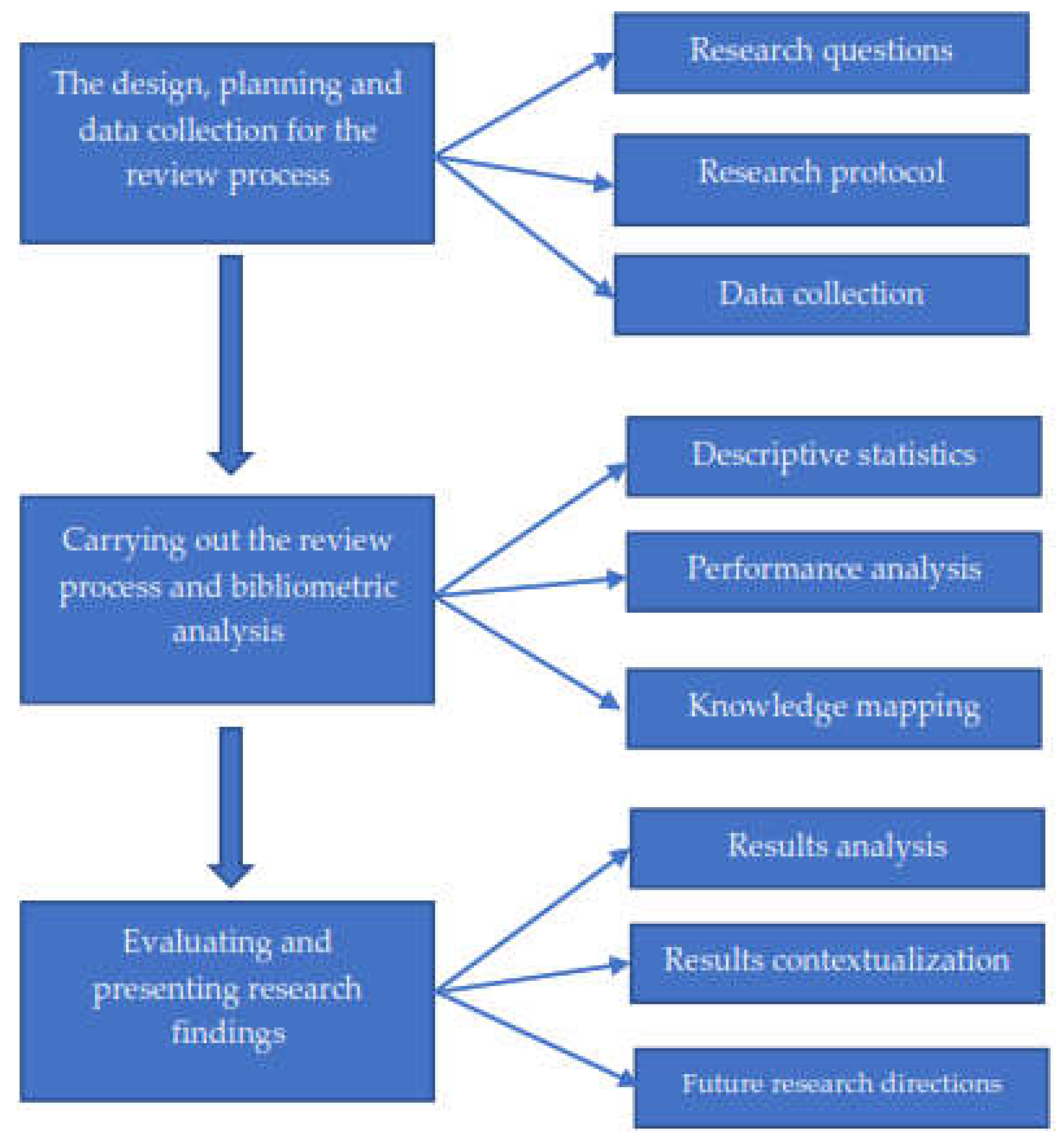
Figure 2.
Studies included in the analysis in accordance with PRISMA 2020 flow diagram template for systematic reviews (Source: Page et al.,[55]).
Figure 2.
Studies included in the analysis in accordance with PRISMA 2020 flow diagram template for systematic reviews (Source: Page et al.,[55]).
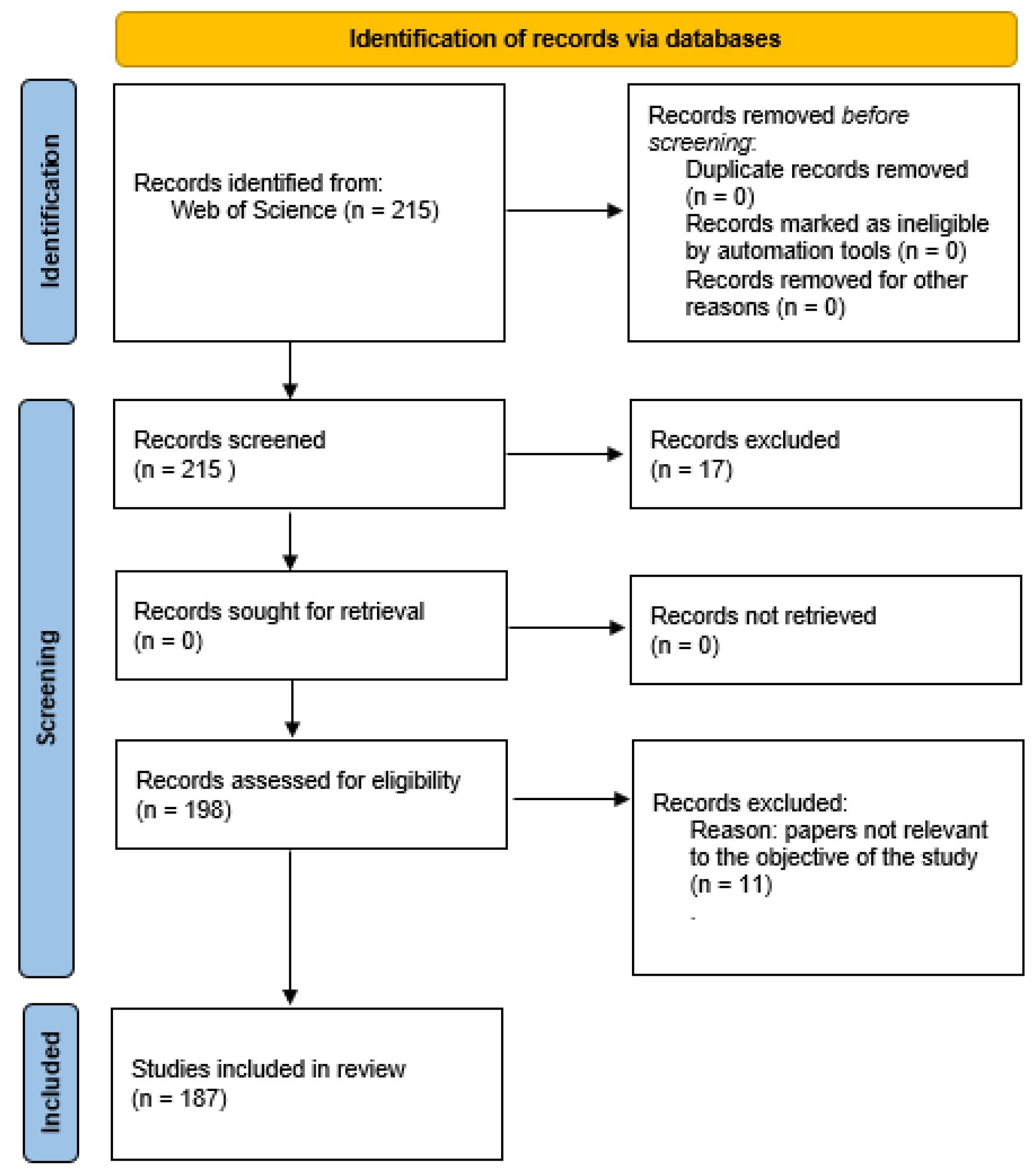
Figure 3.
Annual Scientific Production (Source: generated with Biblioshiny from Bibliometrix R package).
Figure 3.
Annual Scientific Production (Source: generated with Biblioshiny from Bibliometrix R package).
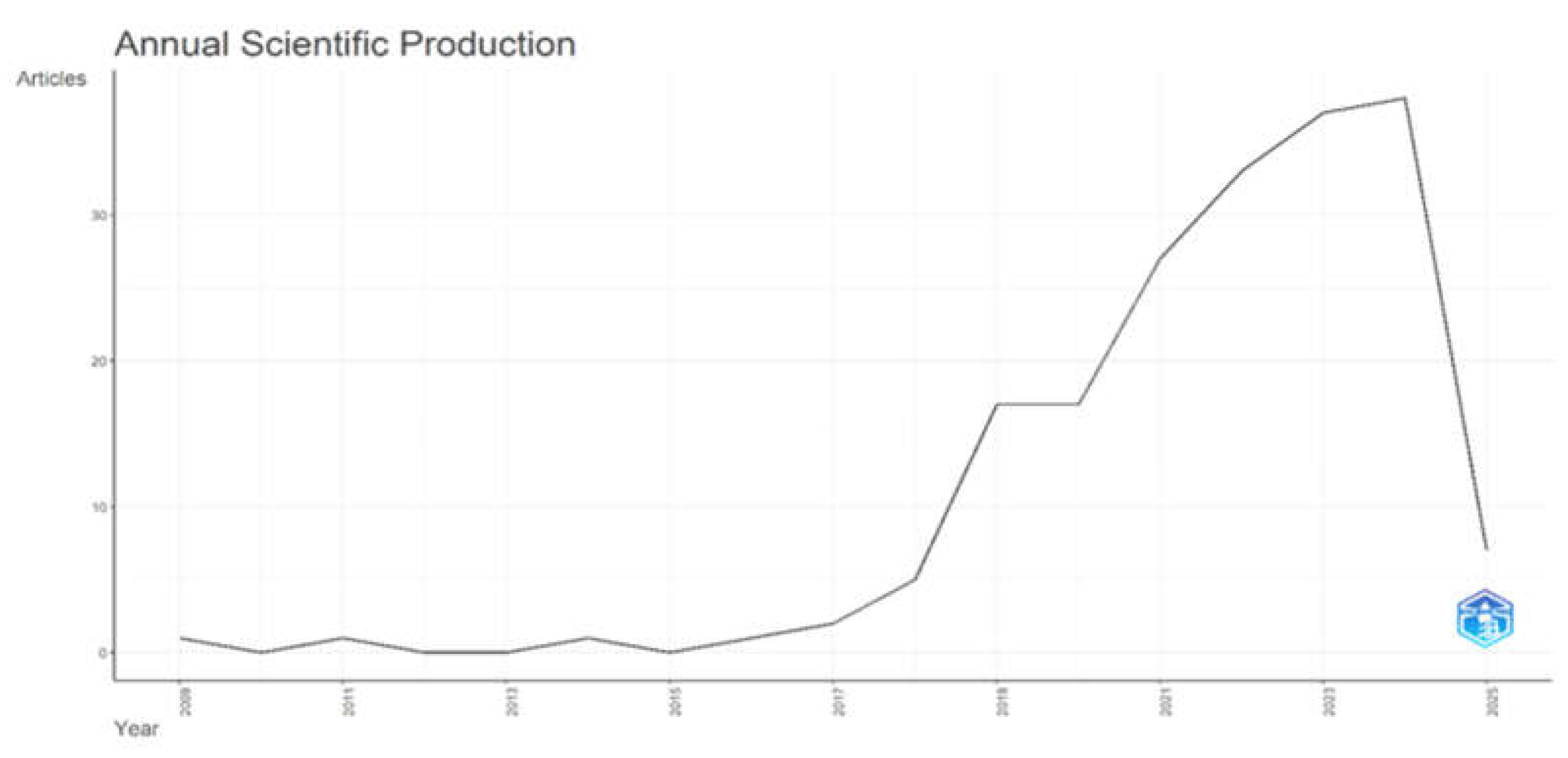
Figure 4.
Research area distribution (Source: authors, using Web of Science Database).
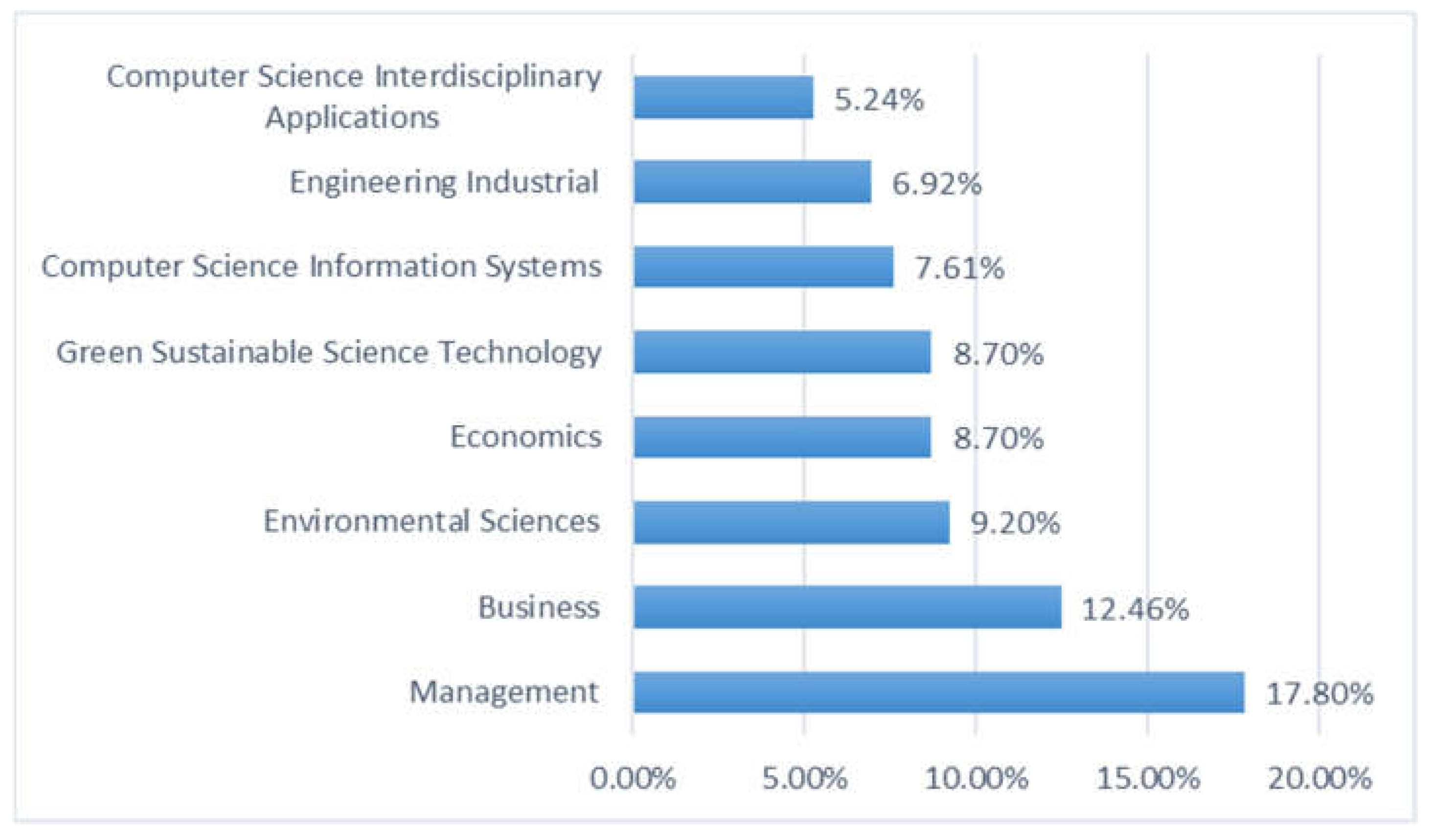
Figure 5.
Core Sources by Bradford’s Law (Source: generated with Biblioshiny from Bibliometrix R package).
Figure 5.
Core Sources by Bradford’s Law (Source: generated with Biblioshiny from Bibliometrix R package).
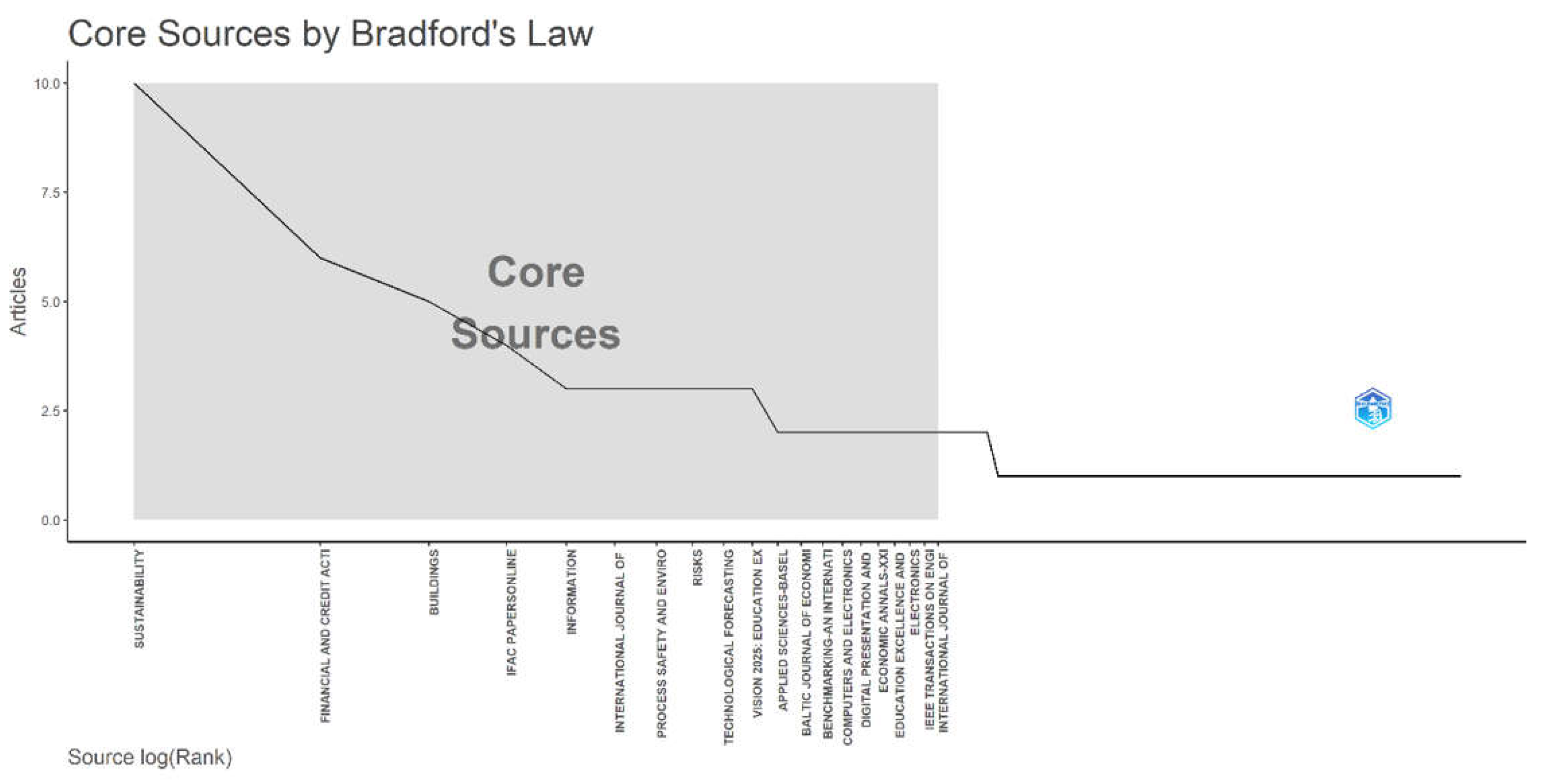
Figure 6.
Country scientific production (Source: generated with Biblioshiny from Bibliometrix R package).
Figure 6.
Country scientific production (Source: generated with Biblioshiny from Bibliometrix R package).
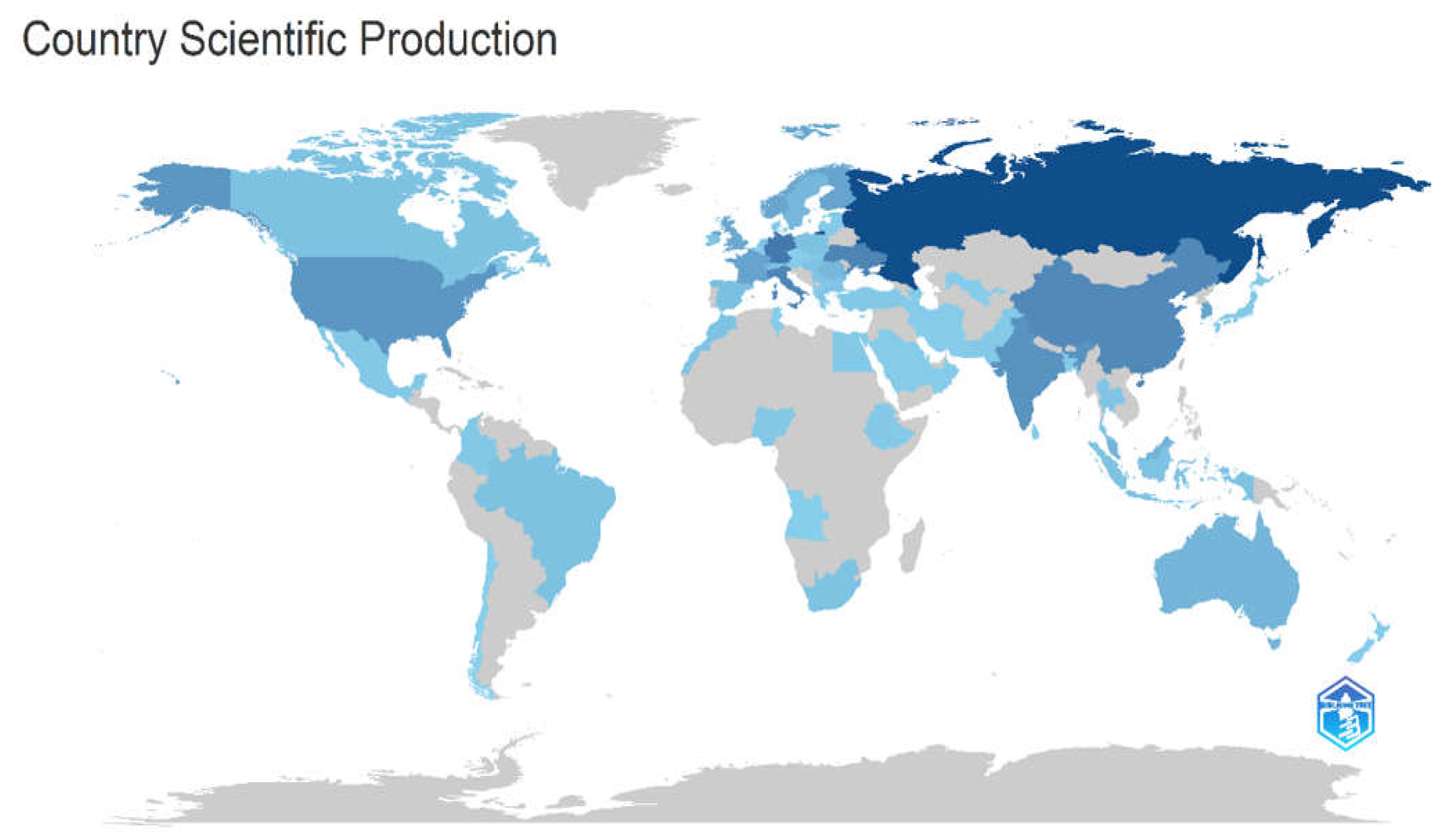
Figure 7.
Most cited countries (Source: generated with Biblioshiny from Bibliometrix R package).
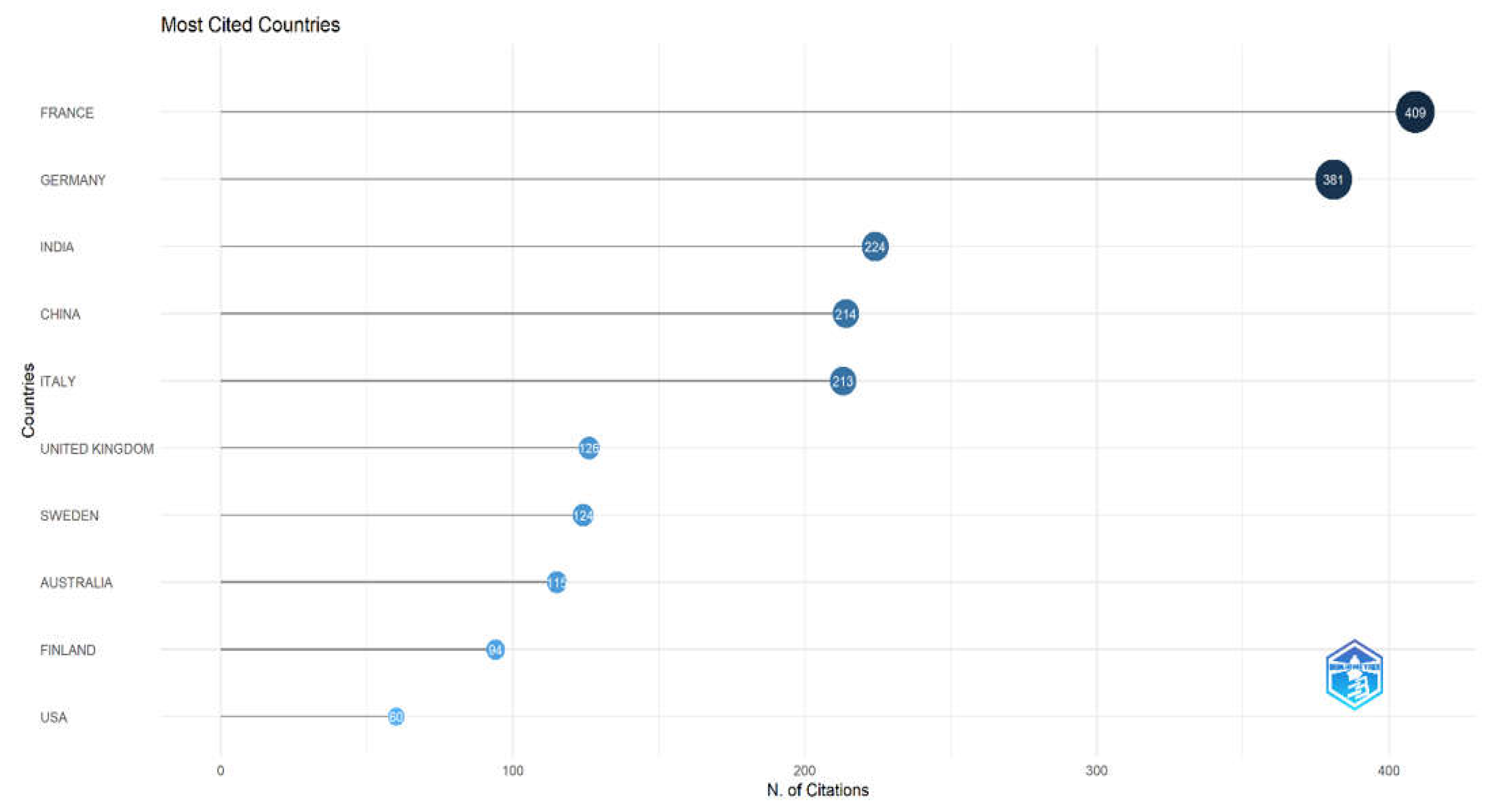
Figure 8.
Word cloud (Source: generated with Biblioshiny from Bibliometrix R package).
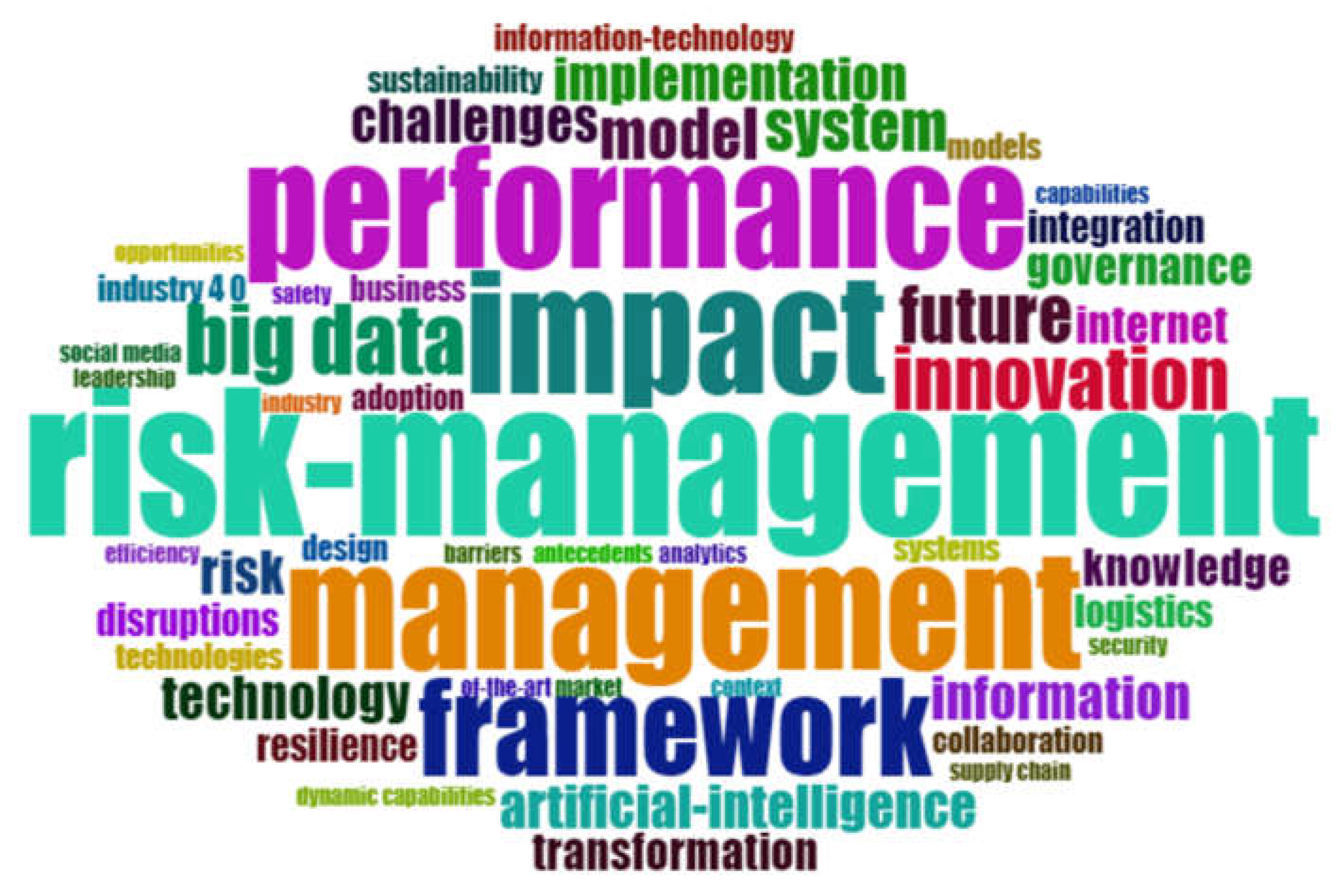
Figure 9.
Thematic map (Source: generated with Biblioshiny from Bibliometrix R package).
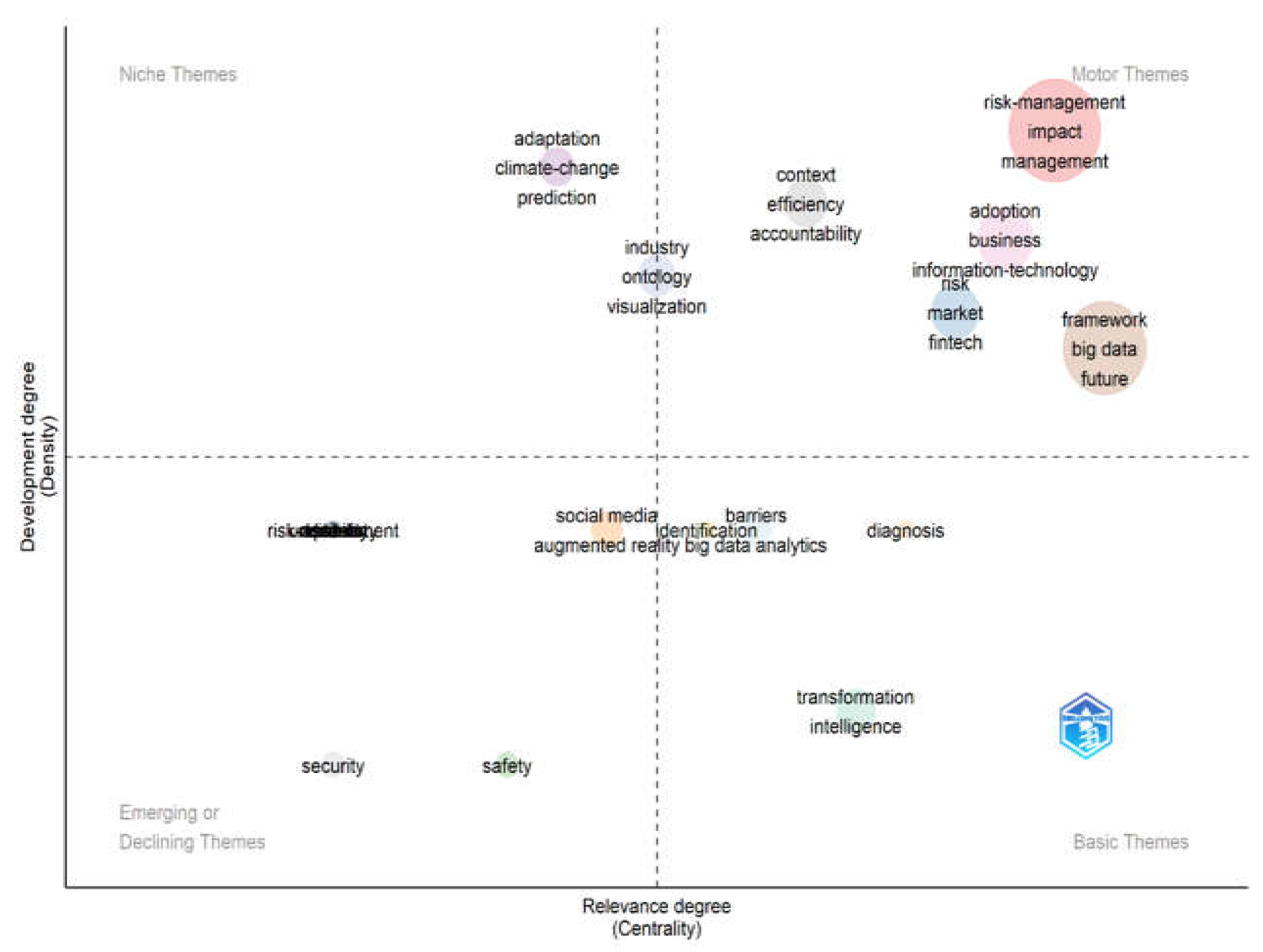
Figure 10.
Keyword map (Source: authors using Vos Viewer program [56]).
Figure 10.
Keyword map (Source: authors using Vos Viewer program [56]).
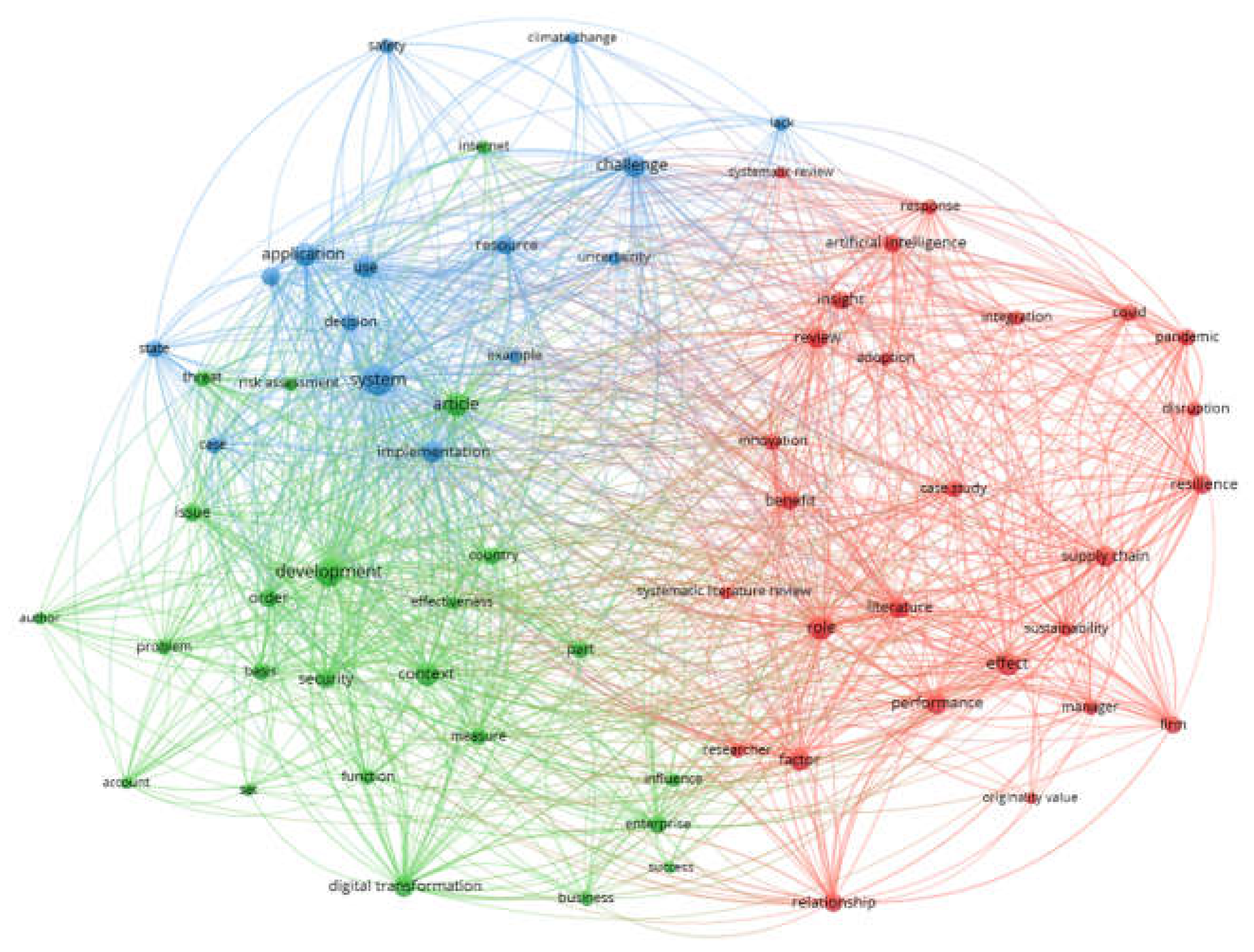
Figure 11.
Co-occurrence network (Source: generated with Biblioshiny from Bibliometrix R package).
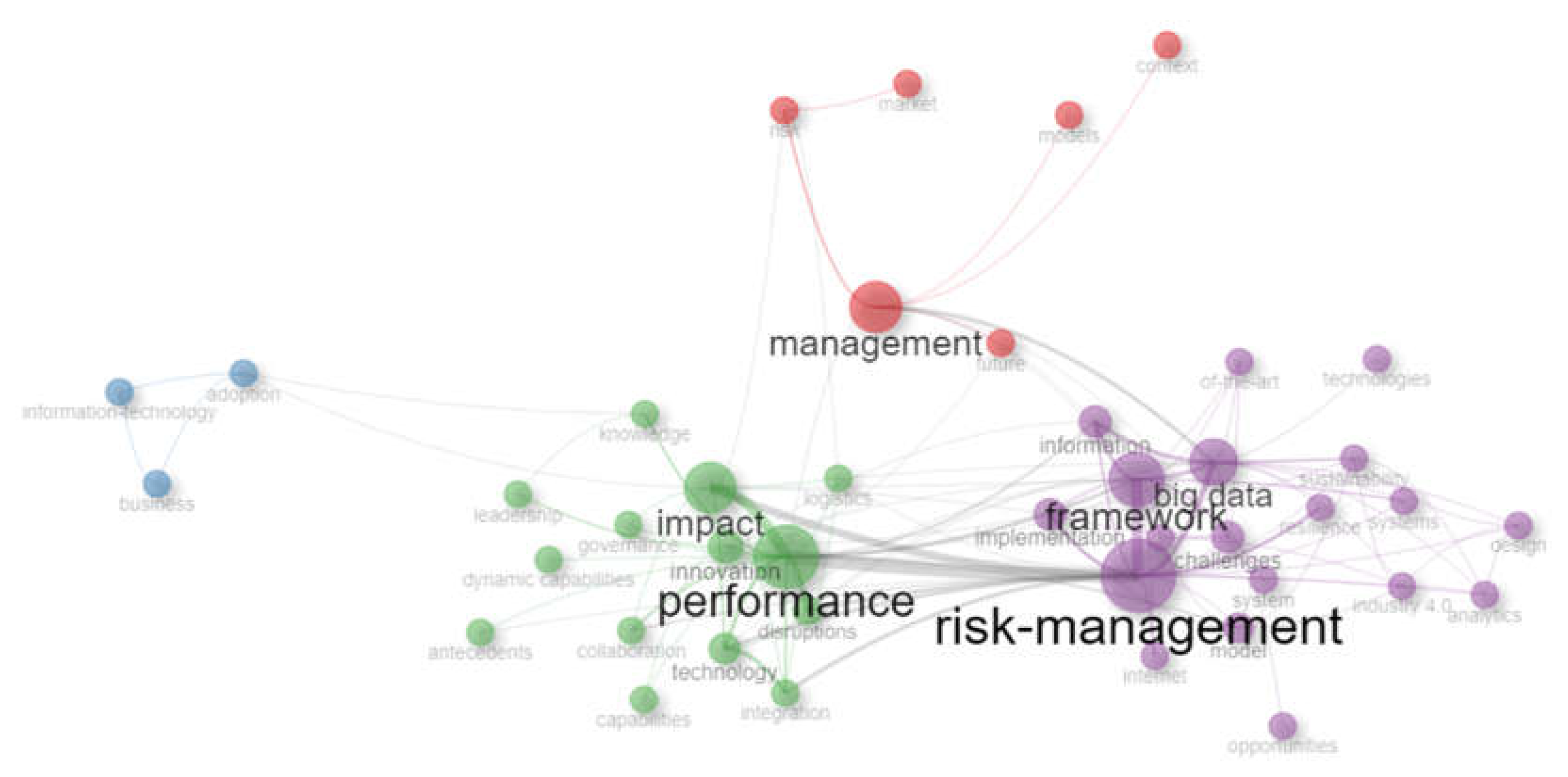
Figure 12.
Factorial analysis (Source: generated with Biblioshiny from Bibliometrix R package).
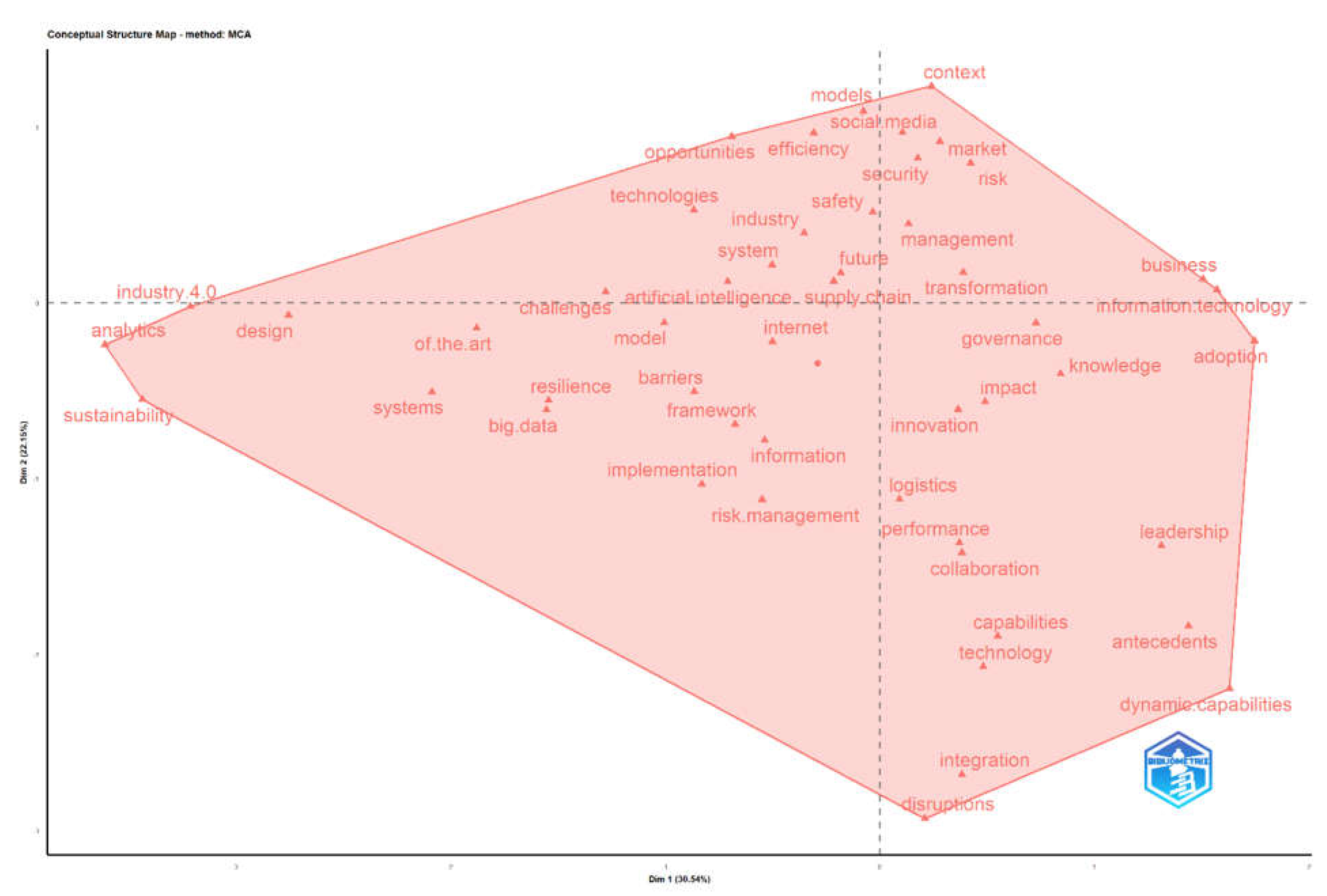
Figure 13.
Co-citation map (Source: authors using Vos Viewer program [56]).
Figure 13.
Co-citation map (Source: authors using Vos Viewer program [56]).
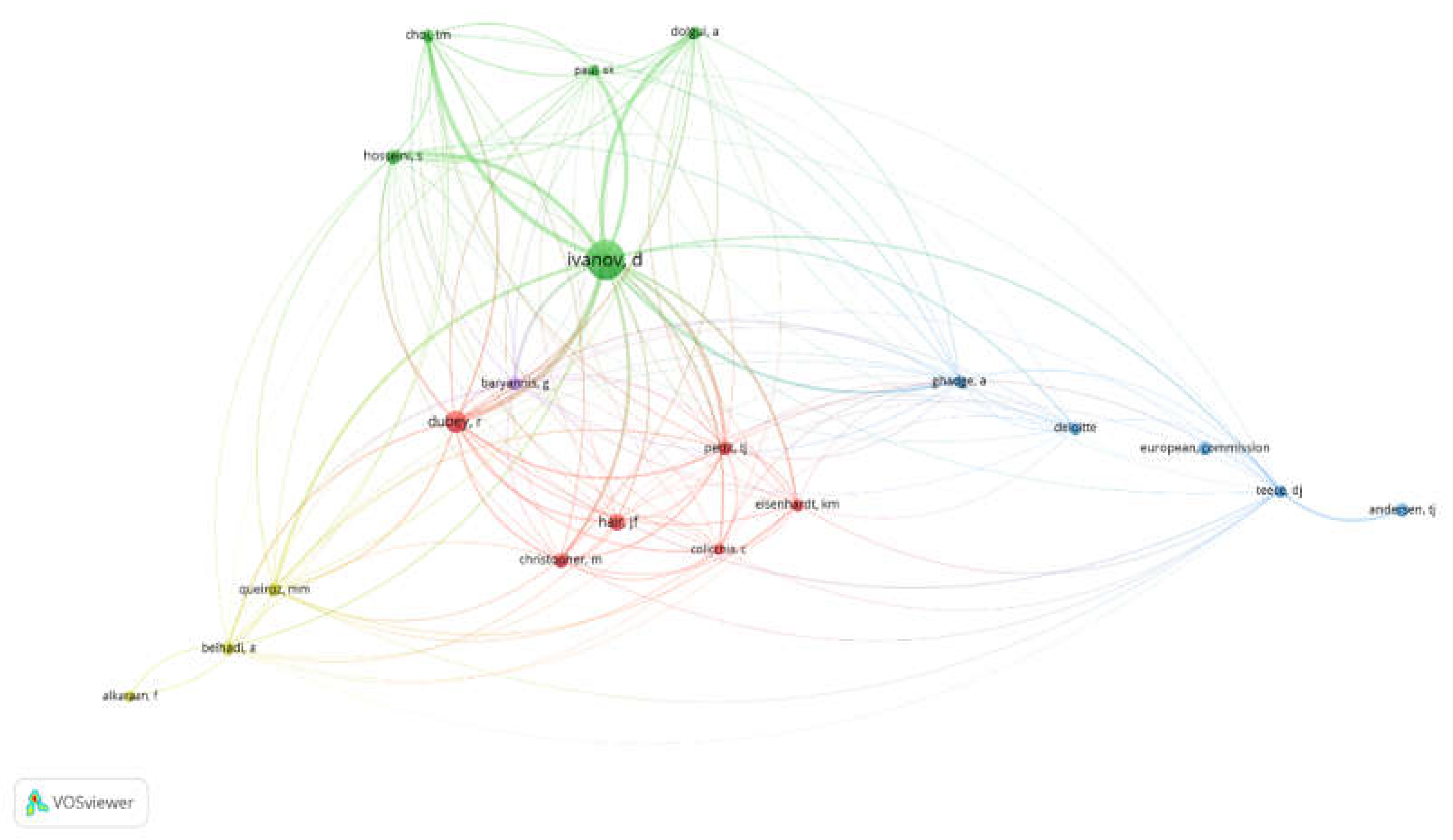
Figure 14.
Figure 14. The country collaboration map (Source: generated with Biblioshiny from Bibliometrix R package).
Figure 14.
Figure 14. The country collaboration map (Source: generated with Biblioshiny from Bibliometrix R package).
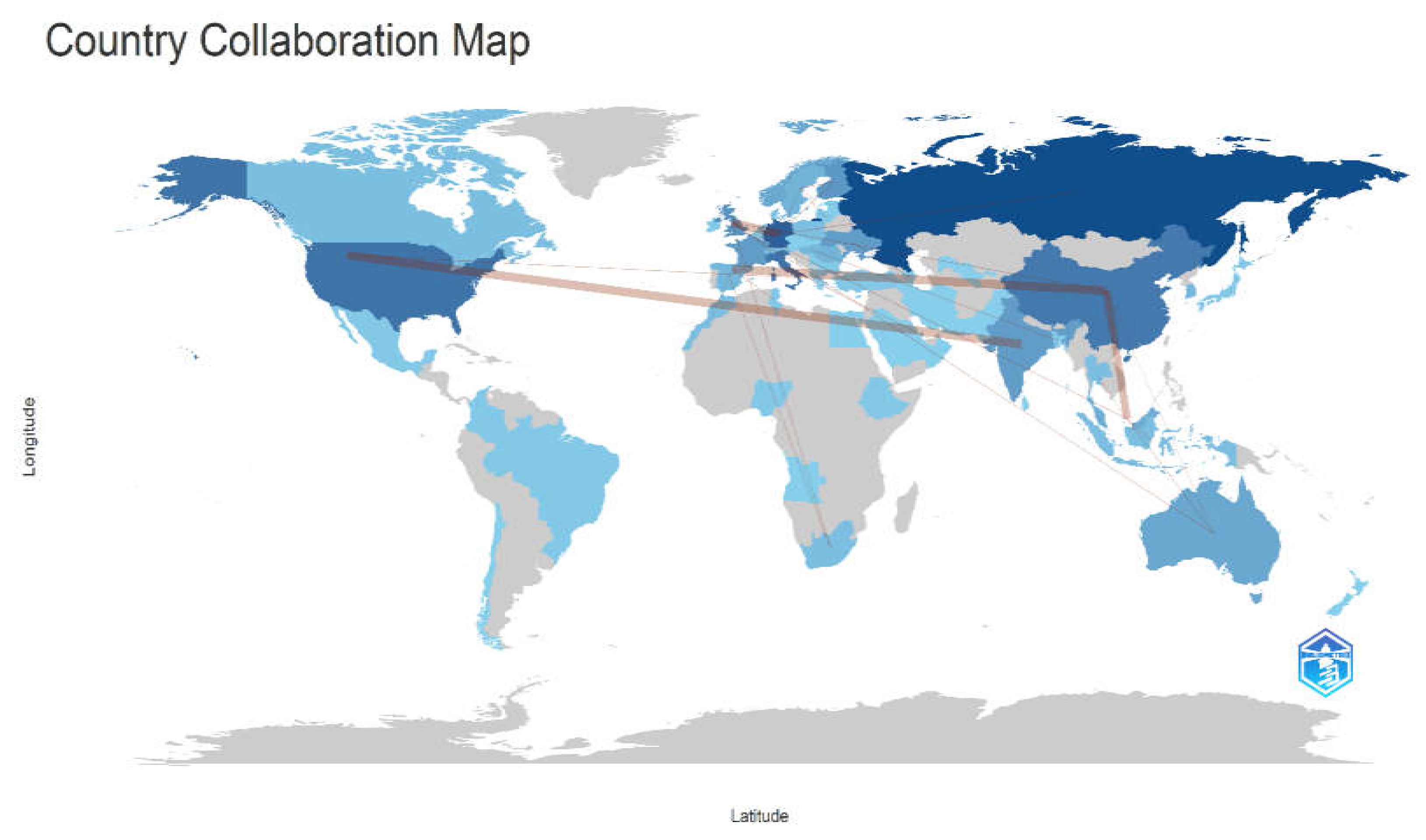
Figure 15.
Three field plot (Source: generated with Biblioshiny from Bibliometrix R package).
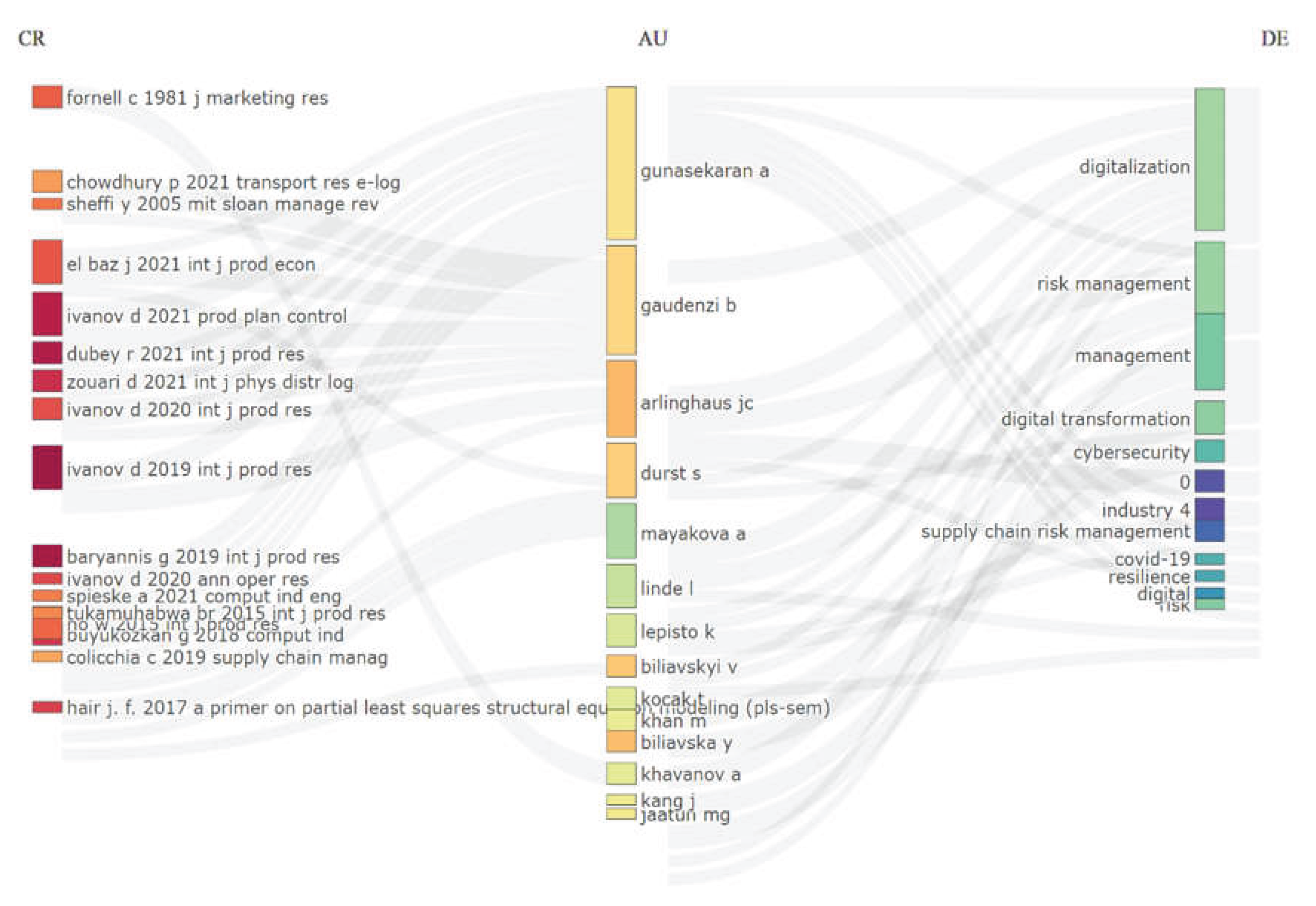

Table 1.
Methodological framework1.
| Web of Science Database | |
|---|---|
| Keywords | “digitalization” AND “risk management” |
| Search filters | topic |
| Research type | article, proceeding paper and review article |
| Period | 2009 - 2025 |
| Number of analyzed documents | 187 |
| Analysis type | bibliometric |
| Software | VosViewer 1.6.20 [56]; Biblioshiny - Bibliometrix R package [57]. |
1 own processing using Web of Science data.
Table 2.
Descriptive elements of the dataset 1.
| Indicator | Results |
|---|---|
| Timespan | 2009:2025 |
| Sources (journals, etc) | 140 |
| Documents | 187 |
| Document average age | 3,25 |
| Annual growth rate | 12,93% |
| Authors | 678 |
| Authors of single-authored documents | 11 |
| International co-authorship | 37,43% |
| Co-authors per document | 3,86 |
| Author’s keywords | 777 |
| References | 10069 |
| Average citation per document | 12,88 |
| Times cited | 2408 |
| H-index | 24 |
| Document types | |
| Article | 122 |
| Article, proceedings paper | 2 |
| Proceeding paper | 42 |
| Review | 21 |
1 Source: authors, using Web of Science Database Analyse tool and Biblioshiny from Bibliometrix R package.
Table 3.
Most global cited documents1.
| Paper | DOI | Total Citations (TC) | Total citation per year (TCY) |
|---|---|---|---|
| Dolgui et al. (2020) | 10.1080/00207543.2020.1774679 | 272 | 45.33 |
| Belhadi et al.( 2024) | 10.1007/s10479-021-03956-x | 222 | 111.00 |
| Zouari, Ruel & Viale, (2021) | 10.1108/IJPDLM-01-2020-0038 | 174 | 34.80 |
| Nayal et al. (2022) | 10.1002/bse.2921 | 127 | 31.75 |
| Lee , Cameron & Hassall (2019) | 10.1016/j.psep.2019.10.021 | 115 | 16.43 |
| Guo & Zhang. (2022) | 10.1016/j.autcon.2022.104256 | 79 | 19.75 |
| Chouaibi et al.(2022) | 10.1016/j.techfore.2022.121571 | 75 | 18.75 |
| Alkaraan et al.(2023) | 10.1016/j.techfore.2022.122187 | 66 | 22.00 |
| Linde, Frishammar & Parida (2021) | 10.1109/TEM.2021.3053386 | 48 | 16.00 |
| Joda et al.(2021) | 10.1177/0022034520978774 | 47 | 9.40 |
1 Source: generated with Biblioshiny from Bibliometrix R package.
Disclaimer/Publisher’s Note: The statements, opinions and data contained in all publications are solely those of the individual author(s) and contributor(s) and not of MDPI and/or the editor(s). MDPI and/or the editor(s) disclaim responsibility for any injury to people or property resulting from any ideas, methods, instructions or products referred to in the content. |
© 2026 by the authors. Licensee MDPI, Basel, Switzerland. This article is an open access article distributed under the terms and conditions of the Creative Commons Attribution (CC BY) license (http://creativecommons.org/licenses/by/4.0/).
Copyright: This open access article is published under a Creative Commons CC BY 4.0 license, which permit the free download, distribution, and reuse, provided that the author and preprint are cited in any reuse.


