
Submitted:
27 February 2026
Posted:
28 February 2026
You are already at the latest version
Abstract
Oral drug delivery enhances patient compliance with treatment, as it is a non-invasive method of drug administration and reduces the need for travel to healthcare facilities. One approach to developing oral medications involves researching natural compounds. Numerous of these compounds have shown promising in vitro results. However, the first-pass effect after oral delivery extensively metabolises many of them, leading to poor oral bioavailability. In this article, the author reviews numerous natural compounds and identifies several that demonstrate at least 30% oral bioavailability, with at least 2 hours of half-life (t1/2). These compounds include (1) decursinol, (2) trigonelline, (3) phenethyl isothiocyanate (PEITC), (4) theobromine, (5) pterostilbene, (6) rocaglamide, (7) sinomenine, (8) sulforaphane, (9) piperine, (10) carnosic acid, (11) niazirin, (12) falcarinol, (13) acetylcorynoline, (14) gastrodin, (15) bergapten, (16) imperatorin, (17) betaine, (18) kurarinone, (19) d-limonene, and (20) usnic acid. The pharmacokinetic profiles of the compounds are listed in this article. By examining the pharmacokinetic profiles such as concentration maximum (Cmax) and t1/2 of the shortlisted compounds, researchers can design concentration to be used in in vitro experiments and predict/establish dosing regimens for preclinical studies. The researchers can incorporate these 20 orally bioavailable compounds as a screening panel to select the most suitable compound for their study. When combining a natural compound with standard chemotherapy, it is essential for researchers to thoroughly investigate potential toxicity effects, as some natural compounds are known to act as CYP3A4 inhibitors, which may influence the metabolism and clearance of chemotherapy drugs. The author believes that even more orally bioavailable compounds remain undiscovered. This article can guide researchers in their quest for orally bioavailable natural compounds. The use of proper orally bioavailable natural compounds in biomedical research is likely to encourage pharmaceutical companies to develop these compounds into viable treatments.
Keywords:
concentration maximum (Cmax)
; drug discovery
; half-life (t1/2)
; metabolism
; natural compounds
; oral bioavailability
; pharmacokinetics
Introduction
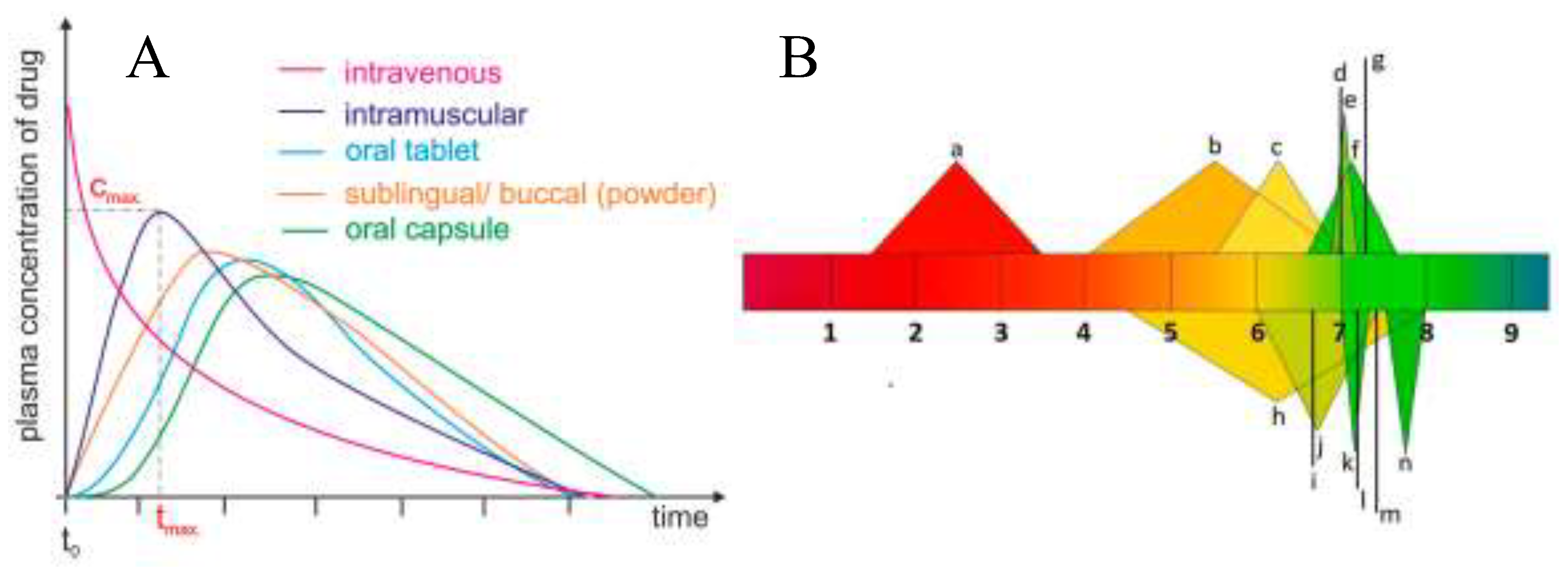
Preclinical and clinical trials are currently investigating a variety of natural compounds for their potential uses in various medical fields, including cancer treatment [1]. However, the successful therapeutic use of these natural compounds is often hindered by pharmacokinetic issues, particularly bioavailability. Bioavailability is a critical factor in assessing a compound’s therapeutic efficacy, as it determines the proportion of the administered dosage that enters the bloodstream in an active form [2]. Administering a compound or drug via the oral route offers several advantages, primarily its non-invasive nature and enhanced patient compliance, as it necessitates less supervision and monitoring by medical professionals [3,4]. Unlike intravenous drug administration, which can achieve 100% bioavailability, drug delivery through the oral route often results in significantly lower oral bioavailability (Figure 1). This is due to the challenges associated with drug absorption and elimination during the first-pass metabolism in the liver as well as the ionic state of the compound when it interacts with the surrounding pH [5]. Consequently, pharmaceutical companies frequently refrain from developing medications with an oral bioavailability of less than 30% [6].
In laboratory/biomedical drug discovery research, many natural compounds have shown promising in vitro results but did not have good oral bioavailability in vivo as shown by Gao et al. [6]. For example, curcumin, berberine, genistein, quercetin, compound K, resveratrol, epigallocatechin gallate, ellagic acid, coumarin, phenolic acid, naringenin, daidzein, rutin, caffeic acid, baicalin, rosmarinic acid, hesperetin, apigenin, alliin and many more exhibit poor oral bioavailability [6,7]. Despite this limitation, they are frequently used in biomedical drug discovery research in pure form, even though numerous publications have highlighted their limited oral bioavailability. For example, an article published in 2024 reported 10 mg/kg berberine was significantly reduced the volume of breast cancer in female nude mice [8]. The absolute bioavailability of berberine at a dosage of 100 mg/kg in rodents was found to be 0.68% and 0.36% [9,10].
Figure 1.
The plasma level time curves associated with different drug delivery methods (A), alongside the pH values of human bodily fluids (B). a) stomach; b) small intestine; c) large intestine; d) liver; e) muscle; f) uterus; g) testis; h) bladder; i) lungs; j) saliva; k) kidneys; l) brain, heart, and spleen; m) bone; n) pancreas. The ionic form of a drug, which varies with the pH of its surroundings, can influence its ability to permeate the membrane. The process of ionisation can significantly affect the absorption, distribution, metabolism, elimination, and associated toxicity of drugs in both animals and humans [5]. Drug absorption is more effective when the drug molecule is in its non-ionised form, as this form is significantly more lipophilic than its ionised counterpart [11]. The images were taken from Stielow et al. [5] which are covered by CC BY licence for unrestricted use.
Figure 1.
The plasma level time curves associated with different drug delivery methods (A), alongside the pH values of human bodily fluids (B). a) stomach; b) small intestine; c) large intestine; d) liver; e) muscle; f) uterus; g) testis; h) bladder; i) lungs; j) saliva; k) kidneys; l) brain, heart, and spleen; m) bone; n) pancreas. The ionic form of a drug, which varies with the pH of its surroundings, can influence its ability to permeate the membrane. The process of ionisation can significantly affect the absorption, distribution, metabolism, elimination, and associated toxicity of drugs in both animals and humans [5]. Drug absorption is more effective when the drug molecule is in its non-ionised form, as this form is significantly more lipophilic than its ionised counterpart [11]. The images were taken from Stielow et al. [5] which are covered by CC BY licence for unrestricted use.
The tumour size reduction was likely not associated with the pure form of berberine, but rather with the metabolites produced after the parent compound has been extensively metabolised [10]. It has been reported that 20 metabolites are produced in vivo following the metabolism of berberine in the body [12]. The author of this manuscript hypothesised that an increased dose of berberine would lead to a higher production of metabolites. If the anticancer activity is reliant on these metabolites rather than the well-studied parent compound (in vitro- 2D & 3D IC50 determination assays, migration & invasion assays, flow cytometry, western blots, testing on organoids/organ on chips, cell based ‘omics’ relates assays), it follows that a greater dose of berberine could result in more pronounced adverse effects and this is not limited to berberine alone. The safety profile of the metabolites has probably not been fully studied, although some natural compounds may perform well. Timofeeva et al. [12] noted that the precise mechanism underlying the antitumour effect of berberine remains unclear. Although the article reported numerous signalling pathways, these are primarily associated with berberine in cell culture conditions rather than its metabolites. This situation is further complicated by the presence of standard chemotherapy, as in some countries, it is not permitted to test investigational compounds alone on cancer patients when proven chemotherapy drugs are available. The interaction of these metabolites with standard chemotherapy or with the liver enzyme like CYP3A4 which is one of the major cytochromes P450s [13] may have either beneficial or detrimental effects. For example, metabolites with a CYP3A4 inhibitory effect are likely to influence the metabolism of chemotherapy drugs that rely on this enzyme [13]. In this article, the author has reviewed the literature and surveyed numerous of natural compounds, identifying several with notable oral bioavailability and favourable pharmacokinetic profiles in their pure forms. This strategy was taken because many compounds are not orally bioavailable and/or have very short half-lives, which are repeatedly used in their pure form for oral delivery in animals. The primary objective of this article is to inform the scientific community about the availability of natural compounds that exhibit an oral bioavailability of at least 30% with acceptable half-life (mainly depending on the concentration maximum-Cmax). The proposed integration of these compounds into advanced biomedical cancer research, with and/or without the inclusion of standard chemotherapy, aims to enhance the quality of research and publications while effectively utilizing public funding in a way that benefits patients. Consequently, with good study designs, this integration could possibly improve the success rate of translational research, which relies on the effects of the parent compounds. This approach could potentially encourage pharmaceutical companies to develop parent natural compounds as viable treatments for cancer patients.
In this article, two main keywords used to shortlist the natural compounds listed in Table 1 are (1) oral bioavailability in animals, with the availability of human data being an added advantage, and (2) t1/2. The oral bioavailability was set as at least 30%, and the t1/2 of at least 2h. In Table 1, twenty natural compounds are listed, which include (1) decursinol, (2) trigonelline, (3) phenethyl isothiocyanate (PEITC), (4) theobromine, (5) pterostilbene, (6) rocaglamide, (7) sinomenine, (8) sulforaphane, (9) piperine, (10) carnosic acid, (11) niazirin, (12) falcarinol, (13) acetylcorynoline, (14) gastrodin, (15) bergapten, (16) imperatorin, (17) betaine, (18) kurarinone, (19) d-limonene, and (20) usnic acid. Following the shortlisting of these compounds, pharmacokinetics-related information has been tabulated in Table 1, encompassing four main parameters: (1) Cmax; (2) half-life (t1/2); (3) bioavailability (F); and (4) volume of distribution (Vd). The Cmax represents the maximum concentration of a compound that can be achieved in the plasma following oral administration. The term t1/2 refers to the half-life, or the time required for the concentration to decrease to half of its initial value. For instance, if a compound’s Cmax is 10 μM, the duration it takes for this concentration to reduce to 5 μM is referred to as t1/2. The Vd denotes the volume of distribution, indicating how well the compound is distributed from the plasma to the tissue compartments [14,15]. The original reported Cmax values were converted to micromolar (μM) using a molarity and concentration calculators, which helps readers in interpreting the information more easily [16]. Having a high Cmax is advantageous, even though the half-life is short (approximately 3 hours), as the drug can be administered orally two, three, or four times per day. This approach also depends on the IC50 values of the cancer cell lines. For instance, if a particular cancer cell line exhibits an IC50 of 2 μM for the decursinol compound, researchers may opt to administer 20 mg/kg of decursinol four times daily (15.8 μM to 7.9 μM2h; 7.9 to 3.95 μM4h; 3.95 to 1.975 μM6h) or 37.5 mg/kg as twice daily (43.3 μM to 21.65 μM3h; 21.65 μM to 10.836h; 10.83 μM to 5.41 μM9h; 5.41 μM to 2.71 μM12h) if toxicity is not a concern. The Vd was 2.5 L/kg is considered high. The compound can be distributed from the plasma to the tissue compartments without significant issues. This scenario applies to all other compounds.
When a natural compound is intended to be administered alongside standard chemotherapy, in vivo dose optimisation is essential due to the potential for toxicity to arise. Given that the compounds listed in Table 1 undergo only minor first-pass metabolism in the liver, most of the compound will enter the circulation, allowing for in vitro studies to be designed prior to conducting in vivo experiments. The selected concentration of the compound must align with its pharmacokinetics. The availability of human pharmacokinetics is advantageous and should be leveraged, as the drug will ultimately be used in humans. For instance, the Cmax of theobromine was observed to be 122.11 μM following a daily dose of 500 mg, with a t1/2 of 13.4 hours in humans. If the IC50 of theobromine is 30 μM, in vitro studies can focus on this concentration for subsequent experiments and can be designed for once-daily dosing in vivo. In vitro, the 30 μM concentration may be combined with standard chemotherapy. For example, in the case of nasopharyngeal carcinoma, the standard chemotherapy regimen consists of cisplatin and gemcitabine. The methodology for designing the experiment is clearly outlined in Manoharan [53].
Another approach, if the IC50 value is not determined, is for researchers to utilise Cmax and t1/2 values to establish a working concentration for in vitro studies. For instance, if the researchers intend to design a dosing frequency for trigonelline to be administered twice daily, the in vitro concentration can be approximately 7 μM. This is derived from the following calculations: 89.98 μM to 44.99 μM3.6h; 44.99 μM to 22.50 μM7.2h; 22.50 μM to 11.25 μM10.8h; and 11.25 μM to 5.63 μM14.4h. This is despite the IC50 value (if determined) indicating a value greater than 7 μM, such as 30 μM. Typically, this method can be applied in combination studies alongside standard chemotherapy. Additionally, if theobromine, trigonelline or other compounds are intended for use as either a neoadjuvant or adjuvant therapy, this process is clearly outlined in Manoharan [53], as the current article serves as an extended version of Manoharan [53]. It is recommended that readers refer to Manoharan [53], which is a preprint version that has already been accepted for publication in Methods and Protocols (manuscript ID: mps-3965433). The author discusses how to design biomedical cancer research to enhance translational success. When planning to combine a natural compound with standard chemotherapy in mouse models, the study should be designed to closely resemble the treatment protocols experienced by patients in hospitals. Since the compounds listed in Table 1 are intended for oral delivery, they should be administered orally and not through alternative routes. A systematic review has revealed that several studies have administered pyrimethamine (a repurposed non-natural compound but with good oral bioavailability and safety profiles), which is designed for oral delivery, via other routes such as intraperitoneal injection [54]. If the standard chemotherapy is approved for intravenous delivery, it must be administered intravenously and not via the intraperitoneal route. Furthermore, the frequency of drug administration must align with the approved guidelines for human use. For the treatment of nasopharyngeal carcinoma, cisplatin is administered on Day 1, while gemcitabine is given on both Day 1 and Day 8 of each cycle, with each cycle lasting 21 days. The same protocol should be employed in mouse models, although differences in pharmacokinetics related to species may arise. The process of designing trials that require the harmonisation of data from different species and their pharmacokinetic profiles is quite challenging [53].
During the search for orally bioavailable compounds, the author identified fisetin as one of them; however, it was not listed in Table 1. This omission occurred despite its 31.7% oral bioavailability at a 200 mg/kg dose in ICR male mice (Cmax = 37.032 μM; t1/2 = 0.97 h) [55]. The Cmax data for orally administered unformulated fisetin at 1000 mg in humans only reached 35 nM/0.035 μM [56]. Currently, fisetin is available as a dietary formulation, tested in humans at a dosage of 20 mg/kg/day for up to two consecutive months [57], which is equivalent to 1200 mg for a 60 kg adult. Alisol B 23-acetate, another natural compound, exhibited a Cmax of 19.213 μM and 44.16% oral bioavailability when administered at a dose of 6 mg/kg, but it had a half-life (t1/2) of 0.98 h [60]. Despite a good oral bioavailability of 65% after 10 mg/kg oral administration in rats, arbutin experienced a short half-life of 0.42 h [61]. Piplartine demonstrated an oral bioavailability of 76.4% (5 mg/kg-Cmax of 2.787 μM), but its half-life was 1.42 h [66]. Single oral delivery of 10 mg/kg yohimbine in human produced mean oral bioavailability of 33% but the t1/2 was 0.58h [69]. Chebulinic acid has been reported to exhibit an oral bioavailability of 37.56% following the administration of 100 mg/kg of the compound in male SD rats [72]. However, the compound has a molecular weight of 956.680 g/mol, which is considered relatively large for drug development [73]. Biological space is limited, whereas chemical space is infinite. Given this limitation in biological space, the compound being studied is anticipated to be a small molecule with a molecular weight cut off 500 [73]. Although a cut-off of 500 is preferred, docetaxel, which is derived from a natural product and has a molecular weight of 807.89 Dalton (or in g/mol), is currently used as an intravenous chemotherapy drug for cancer patients [74]. Arnicolide C, arnicolide D, brevilin A, microhelenin C from Centipeda minima extract are predicted to have good oral bioavailability [77].
In this article, the author emphasises that when a natural compound undergoes extensive metabolism and differs from its parent compound in circulation, researchers should conduct direct testing in a small batch of preclinical models instead of relying solely on in vitro testing to derive conclusion. This recommendation stems from the likelihood that in vitro results may not accurately reflect the compound’s activity in animal models. For example, the in vitro western blot data relating to the compound indole-3-carbinol (I3C) may not represent its in vivo effects, as I3C is extensively metabolised in the acidic environment of the stomach, resulting in the production of diindolylmethane (DIM) following oral administration [70], unless a co-culture model is used. For example, if 1 μL of I3C stock is required for addition to a cell culture plate containing 2D cells with media at pH 7.4, the researcher might consider adding 1 μL of this stock to several microlitres of media adjusted to pH 2 preferably with the presence of stomach enzyme like pepsin, incubating it at 37 °C, and subsequently adding it to the cell culture plate [71]. This is just a recommendation, and optimisation is certainly necessary, particularly to determine the duration required for I3C to be metabolised and to confirm whether DIM is the actual main metabolite. Gómez-García et al. [82] have described the simulated digestion processes of the mouth, stomach, and gut, which are valuable for in vitro experiments. Natural compounds that undergo less metabolism after oral delivery can be properly evaluated through in vitro tests.
The similar scenario for in silico investigation involving natural compounds. Current molecular docking analyses focus solely on the parent compounds. For instance, if researchers utilize I3C as a ligand to inhibit BCL3, this method examines only the interaction between I3C and BCL3. However, when administered to animals or humans, I3C is metabolized to DIM. Evaluating a prodrug without considering its metabolites is inappropriate and potentially hazardous. Even if researchers can model the prodrug and its known metabolites, numerous other unknown metabolites may be overlooked in in silico experiments. It has been demonstrated that many metabolites are identified following the extensive metabolism of apigenin [83]. While it is possible to model these metabolites against BCL3 or any other targets, this approach becomes complicated, especially when considering toxicological profiles if more than one drug is present. Additionally, regulatory requirements in certain countries require that an investigational drug cannot be tested on humans if a proven chemotherapy drug is available [53]. For nasopharyngeal carcinoma, the standard chemotherapy consists of cisplatin and gemcitabine. The situation becomes even more complicated when considering the interactions of this three-drug combination and their related metabolites, which not only interact with BCL3 but may also engage with numerous other targets. This complexity makes it extremely challenging, if not impossible, to model these interactions through in silico approaches. Furthermore, it is uncertain what metabolites will be produced by less-studied or new compounds and drug combinations, which adds another layer of complexity. It is undeniable that in silico methods have contributed to drug development. For example, baricitinib, a drug for rheumatoid arthritis, was identified through an in-silico approach and later repurposed for the treatment of COVID-19. A meta-analysis revealed five phase 3 clinical trials with low risk of bias, involving a total of 3,944 participants, which demonstrated that the drug statistically significantly reduced mortality in hospitalized COVID-19 patients, with 0% heterogeneity [84]. It is important to note that in silico lead optimization typically targets binding energies between -12 and -16 kcal/mol, corresponding to a nanomolar to picomolar binding affinity range [85]. This approach aims to prevent misleading data from affecting the scientific community or general readers. Moreover, it enables the wise allocation of taxpayers’ money towards high-quality scientific research. It is recognised that not all research institutions or universities have animal facilities, especially those capable of housing immunodeficient animals. In such cases, researchers should pursue collaboration with other institutes that can support these studies.
Selecting a natural compound with a favourable pharmacokinetic profile is crucial. Researchers have the responsibility to enhance the success rate of translational studies. The current failure rate in translating preclinical results into actionable translational research is 92% [86]. Over the past 30 years, 95% of attempts to develop new cancer drugs have failed, and only 30% of the drugs that are approved extend patients’ lives by more than 2.5 months [87]. The likelihood of approval (LOA) for new cancer medications stands at only 5.1%, compared to the overall average of 9.6%. Among cancer treatments, haematology has the highest success rate at 26.1%. Additionally, hematologic cancer drug initiatives have a 50% greater chance of receiving approval than programs focused on solid tumours [88,89]. Begley and Ellis, [90] in their comment in Nature, highlighted that one significant reason for the failures observed in clinical studies is the quality of the preclinical data. Quality of preclinical data related to the quality of the preclinical study designs [91]. If cisplatin plus gemcitabine is administered intravenously in a hospital setting, the same route should be utilized in animal studies. Although administering drugs intravenously in animals poses technical challenges, this difficulty cannot justify substituting the intravenous route with the intraperitoneal route, which is rarely used in clinical practice. Intravenous and intraperitoneal routes are distinct methods of administration. This issue frequently arises in preclinical studies, ultimately compromising the quality of the overall results [53]. Many preclinical studies have not adhered to established guidelines. Adhering to these guidelines will offer clearer direction in preclinical research, particularly regarding the transparent conduct of work and the generation and reporting of results [53]. All preclinical studies must adhere to the Animal Research: Reporting of In Vivo Experiments (ARRIVE) guidelines, established in 2010. These guidelines aim to assist preclinical scientists in enhancing study designs by incorporating critical parameters such as appropriate sample sizes, randomization, blinding techniques, and transparent reporting of results from animal studies [92]. Drug testing on animals is still regarded as the gold standard, even though this method may exhibit variability in outcomes due to differences between species [93,94]. It is also noted that test findings vary even when rats of the same strain are bought from various vendors [93]. Although reproducibility in animal studies is also an issue to a certain extent where reproducibility level drops under 50% is considered as reproducibility crisis [95], it is important that, with good study designs, toxicology profiles are established in animal models before advancing to human trials. This process not only provides confidence in moving forward with clinical trials but also encourages participation from human subjects, particularly in the early phases of clinical trials, which are crucial for drug development.
The researchers can incorporate the 20 orally bioavailable compounds listed in Table 1 as a screening panel to select the most suitable compound for their respective cancer research. It is important to note that rocaglamide is expected to produce an IC50 in the nanomolar range, while the other compounds are likely to be in the micromolar range. This distinction is crucial, as rocaglamide may emerge as the most effective compound if these 20 natural compounds are used. In Table 1, the author indicates that the dose of rocaglamide used for the pharmacokinetic study in NSG mice was 5 mg/kg, whereas the maximum tolerated dose (MTD) was only 1.2 mg/kg. It is unclear why the researchers from the original article opted for a dose of 5 mg/kg, which could pose toxicity risks with repeated dosing, despite the established MTD of 1.2 mg/kg. At 5 mg/kg, rocaglamide maintained a steady concentration of 20-50 nM, which is appropriate for once-daily dosing. However, given that the MTD was 1.2 mg/kg, the author questions whether a similar concentration can be achieved in circulation. It could potentially be four times lower than reported, possibly falling into the single digit nanomolar range. Researchers should be mindful of this dosing discrepancy to inform their work. It is advisable to use single digit nanomolar concentration when conducting in vitro tests, despite the IC50 being 50 nM. For instance, when testing rocaglamide alone or in combination with standard chemotherapy, researchers may consider using rocaglamide in the range of 5 μM to 8 μM. It is advisable to establish a specific MTD value when using rocaglamide for testing in mice. This recommendation arises from the fact that, in the same study, the researchers used a 20% DMSO solution in saline for the pharmacokinetic analysis. However, for the subsequent experiments, they used the MTD value, with rocaglamide being dissolved in a 30% hydroxypropyl-β-cyclodextrin (HPβCD) solution. This indicates a lack of consistency in the study design [33]. The oral administration of a free compound (rocaglamide + DMSO + saline) and one with a specific delivery system (rocaglamide + HPβCD) could yield different results. The percentage of HPβCD will also influence the outcome [81]. The author of this manuscript has considerable experience in administering rocaglamide orally in NSG mice.
In conclusion, there are several significant orally bioavailable parent natural compounds among the thousands of natural compounds that are either non-orally bioavailable or extensively metabolised by first-pass metabolism. This article highlights several of these compounds, and the author believes that there may be many other valuable compounds concealed within the vast array of natural substances. The author invites the scientific community working on natural compounds to expand Table 1 by including additional meaningful orally bioavailable natural compounds. This expansion aims to assist more researchers in conducting more meaningful research. Unlike extensively metabolised compounds, in vitro data generated from bioactive parent natural compounds perhaps can be translated into preclinical animal studies, as these compounds are not only less metabolised but also orally bioavailable. This article has the potential to save researchers time in their quest for appreciable orally bioavailable natural compounds.
Funding
This work was funded by the Ministry of Health, Malaysia project grant (Grant no. NMRR ID-24-01431-SXW).
Ethical approval number
This article addresses secondary data and does not involve any ethical considerations.
Data Availability Statement
The secondary data referenced in this article can be accessed online.
Acknowledgments
The author would like to thank the Director General of Health Malaysia for his permission to publish this article, and the Director of the Institute for Medical Research for her support.
Conflicts of Interest
The author declares no conflicts of interest.
Artificial intelligence (AI) usage statement
The author used QuillBot Premium writing assistance primarily for grammatical corrections and to enhance the quality of the sentences. The author carefully reads and evaluates the sentences generated by the AI before incorporating them into the text. The author confirms that this work is not a product of a paper mill.
References
- Chunarkar-Patil, P.; Kaleem, M.; Mishra, R.; Ray, S.; Ahmad, A.; Verma, D.; Bhayye, S.; Dubey, R.; Singh, H.N.; Kumar, S. Anticancer Drug Discovery Based on Natural Products: From Computational Approaches to Clinical Studies. Biomedicines 2024, 12, 201. [Google Scholar] [CrossRef]
- Asano, T. Investigating the Pharmacokinetics of Natural Products: Challenges and Advances in Bioavailability. J Pharmacogn Nat Prod. 2024, 10, 326. [Google Scholar]
- Alqahtani, M.S.; Kazi, M.; Alsenaidy, M.A.; Ahmad, M.Z. Advances in Oral Drug Delivery. Front. Pharmacol. 2021, 12. [Google Scholar] [CrossRef]
- Zhang, Y; Wang, Y; Lu, Y.; et al. Advanced oral drug delivery systems for gastrointestinal targeted delivery: the design principles and foundations. J Nanobiotechnol 2025, 23, 400. [Google Scholar] [CrossRef] [PubMed]
- Stielow, M.; Witczyńska, A.; Kubryń, N.; Fijałkowski, Ł.; Nowaczyk, J.; Nowaczyk, A. The Bioavailability of Drugs—The Current State of Knowledge. Molecules 2023, 28, 8038. [Google Scholar] [CrossRef] [PubMed]
- Gao, S; Basu, S; Yang, G; Deb, A; Hu, M. Oral Bioavailability Challenges of Natural Products Used in Cancer Chemoprevention. Progress in Chemistry 2013, 25(9), 1553–1574. [Google Scholar]
- Gao, S.; Hu, M. Bioavailability Challenges Associated with Development of Anti-Cancer Phenolics. Mini-Rev. Med. Chem. 2010, 10, 550–567. [Google Scholar] [CrossRef]
- Fu, W.; Liu, L.; Tong, S. Berberine inhibits the progression of breast cancer by regulating METTL3-mediated m6A modification of FGF7 mRNA. Thorac. Cancer 2024, 15, 1357–1368. [Google Scholar] [CrossRef]
- Chen, W.; Miao, Y.-Q.; Fan, D.-J.; Yang, S.-S.; Lin, X.; Meng, L.-K.; Tang, X. Bioavailability Study of Berberine and the Enhancing Effects of TPGS on Intestinal Absorption in Rats. Aaps Pharmscitech 2011, 12, 705–711. [Google Scholar] [CrossRef]
- Liu, Y.-T.; Hao, H.-P.; Xie, H.-G.; Lai, L.; Wang, Q.; Liu, C.-X.; Wang, G.-J. Extensive Intestinal First-Pass Elimination and Predominant Hepatic Distribution of Berberine Explain Its Low Plasma Levels in Rats. Drug Metab. Dispos. 2010, 38, 1779–1784. [Google Scholar] [CrossRef]
- Hua, S. Advances in Oral Drug Delivery for Regional Targeting in the Gastrointestinal Tract - Influence of Physiological, Pathophysiological and Pharmaceutical Factors. Front. Pharmacol. 2020, 11, 524. [Google Scholar] [CrossRef]
- Timofeeva, S.V.; Zlatnik, E.Y.; Vaschenko, L.N.; Enin, Y.S.; Nepomnyashchaya, E.M. Molecular mechanisms of berberine action on tumor cells. Kazan Med J. 2025, 106, 267–276. [Google Scholar] [CrossRef]
- Orzetti, S.; Baldo, P. Toxicity Derived from Interaction between Natural Compounds and Cancer Therapeutic Drugs Metabolized by CYP3A4: Lessons Learned from Two Clinical Case Reports. Int. J. Mol. Sci. 2023, 24, 15976. [Google Scholar] [CrossRef]
- Currie, GM. Pharmacology, Part 2: Introduction to Pharmacokinetics. J Nucl Med Technol. 2018, 46(3), 221–230. [Google Scholar] [CrossRef] [PubMed]
- Yang, C.; Tavassolian, N.; Haddad, W.M.; Bailey, J.M.; Gholami, B. A Fast Parameter Identification Framework for Personalized Pharmacokinetics. Sci. Rep. 2019, 9, 1–10. [Google Scholar] [CrossRef]
- Molarity and concentration calculators. Novus Biologicals- A Biotechne brand. Available online: https://www.novusbio.com/resources/calculators (accessed on 29 December 2025).
- Song, J.S.; Chae, J.-W.; Lee, K.-R.; Lee, B.H.; Choi, E.J.; Ahn, S.H.; Kwon, K.-I.; Bae, M.A. Pharmacokinetic characterization of decursinol derived fromAngelica gigasNakai in rats. Xenobiotica 2011, 41, 895–902. [Google Scholar] [CrossRef] [PubMed]
- Li, L.; Zhang, J.; Xing, C.; Kim, S.-H.; Lü, J. Single Oral Dose Pharmacokinetics of Decursin, Decursinol Angelate, and Decursinol in Rats. Planta Medica 2013, 79, 275–280. [Google Scholar] [CrossRef]
- Cheng, ZX; Wu, JJ; Liu, ZQ; Lin, N. Development of a hydrophilic interaction chromatography-UPLC assay to determine trigonelline in rat plasma and its application in a pharmacokinetic study. Chin J Nat Med. 2013, 11(2), 164–70. [Google Scholar] [CrossRef] [PubMed]
- Wadhwa, G; Krishna, KV; Taliyan, R; et al. Preclinical pharmacokinetics of trigonelline using ultra-performance liquid chromatography–tandem mass spectrometry and pharmacological studies targeting type 2 diabetes. Sep Sci plus 2021, 4, 185–194. [Google Scholar] [CrossRef]
- Konsue, N.; Kirkpatrick, J.; Kuhnert, N.; King, L.J.; Ioannides, C. Repeated oral administration modulates the pharmacokinetic behavior of the chemopreventive agent phenethyl isothiocyanate in rats. Mol. Nutr. Food Res. 2010, 54, 426–432. [Google Scholar] [CrossRef]
- Narueporn, S; Dunyaporn, T; Aroonwan, L; Thitima, W. Pharmacokinetic, safety and tolerability studies after single and multiple oral administration of Phenethyl isothiocyanate in Nutri Jelly. Chulalongkorn Medical Journal 2015, 59(6), Article 3. [Google Scholar]
- Shively, C.A.; Tarka, S.M. Theobromine metabolism and pharmacokinetics in pregnant and nonpregnant Sprague-Dawley rats. Toxicol. Appl. Pharmacol. 1983, 67, 376–382. [Google Scholar] [CrossRef]
- Resman, B.H.; Blumenthal, H.P.; Jusko, W.J. Breast milk distribution of theobromine from chocolate. J. Pediatr. 1977, 91, 477–480. [Google Scholar] [CrossRef] [PubMed]
- Latini, R.; Bonati, M.; Gaspari, F.; Traina, G.; Jiritano, L.; Bortolotti, A.; Borzelleca, J.; Tarka, S.; Arnaud, M.; Garattini, S., II. Kinetics and metabolism of theobromine in male and female non-pregnant and pregnant rabbits. Toxicology 1984, 30, 343–354. [Google Scholar] [CrossRef] [PubMed]
- A Shively, C.; Tarka, S.M.; Arnaud, M.J.; Dvorchik, B.H.; Passananti, G.T.; Vesell, E.S. High levels of methylxanthines in chocolate do not alter theobromine disposition. Clin. Pharmacol. Ther. 1985, 37, 415–424. [Google Scholar] [CrossRef] [PubMed]
- Kim, J.-W.; Shin, K.-H.; Yi, S.; Kim, T.-E.; Oh, S.-U.; Yoon, S.H.; Cho, J.-Y.; Yu, K.-S.; Jang, I.-J.; Shin, S.-G. Safety and Pharmacokinetics of Theobromine after Multiple Adminstrations in Healthy Volunteers. J. Korean Soc. Clin. Pharmacol. Ther. 2010, 18, 15–22. [Google Scholar] [CrossRef]
- Kapetanovic, I.M.; Muzzio, M.; Huang, Z.; Thompson, T.N.; McCormick, D.L. Pharmacokinetics, oral bioavailability, and metabolic profile of resveratrol and its dimethylether analog, pterostilbene, in rats. Cancer Chemother. Pharmacol. 2011, 68, 593–601. [Google Scholar] [CrossRef]
- Deng, L.; Li, Y.; Zhang, X.; Chen, B.; Deng, Y.; Li, Y. UPLC–MS method for quantification of pterostilbene and its application to comparative study of bioavailability and tissue distribution in normal and Lewis lung carcinoma bearing mice. J. Pharm. Biomed. Anal. 2015, 114, 200–207. [Google Scholar] [CrossRef]
- Azzolini, M.; La Spina, M.; Mattarei, A.; Paradisi, C.; Zoratti, M.; Biasutto, L. Pharmacokinetics and tissue distribution of pterostilbene in the rat. Mol. Nutr. Food Res. 2014, 58, 2122–2132. [Google Scholar] [CrossRef]
- Yeo, S.C.M.; Ho, P.C.; Lin, H. Pharmacokinetics of pterostilbene inSprague-Dawley rats: The impacts of aqueous solubility, fasting, dose escalation, and dosing route on bioavailability. Mol. Nutr. Food Res. 2013, 57, 1015–1025. [Google Scholar] [CrossRef]
- Choo, Q.-Y.; Yeo, S.C.M.; Ho, P.C.; Tanaka, Y.; Lin, H.-S. Pterostilbene surpassed resveratrol for anti-inflammatory application: Potency consideration and pharmacokinetics perspective. J. Funct. Foods 2014, 11, 352–362. [Google Scholar] [CrossRef]
- Chang, L.-S.; Oblinger, J.L.; Burns, S.S.; Huang, J.; Anderson, L.W.; Hollingshead, M.G.; Shen, R.; Pan, L.; Agarwal, G.; Ren, Y.; et al. Targeting Protein Translation by Rocaglamide and Didesmethylrocaglamide to Treat MPNST and Other Sarcomas. Mol. Cancer Ther. 2020, 19, 731–741. [Google Scholar] [CrossRef]
- Liu, Z.-Q.; Chan, K.; Zhou, H.; Jiang, Z.-H.; Wong, Y.-F.; Xu, H.-X.; Liu, L. The pharmacokinetics and tissue distribution of sinomenine in rats and its protein binding ability in vitro. Life Sci. 2005, 77, 3197–3209. [Google Scholar] [CrossRef] [PubMed]
- Yan, X.H.; Li, H.D.; Peng, W.X.; Liu, F.Q.; Shao, Y.; He, Y.Q. Determination of sinomenine HCl in serum and urine by HPLC and its pharmacokinetics in normal volunteers. 1997, 32, 620–4. [Google Scholar]
- Zhang, M.-F.; Zhao, Y.; Jiang, K.-Y.; Han, L.; Lu, X.-Y.; Wang, X.; Zuo, L.; Meng, S.-N. Comparative Pharmacokinetics Study of Sinomenine in Rats after Oral Administration of Sinomenine Monomer and Sinomenium Acutum Extract. Molecules 2014, 19, 12065–12077. [Google Scholar] [CrossRef] [PubMed]
- Yan, H.; Yan, M.; Li, H.; Jiang, P.; Deng, Y.; Cai, H. Pharmacokinetics and penetration into synovial fluid of systemical and electroporation administered sinomenine to rabbits. Biomed. Chromatogr. 2014, 29, 883–889. [Google Scholar] [CrossRef]
- Huang, H.; Zhang, E.-B.; Yi, O.-Y.; Wu, H.; Deng, G.; Huang, Y.-M.; Liu, W.-L.; Yan, J.-Y.; Cai, X. Sex-related differences in safety profiles, pharmacokinetics and tissue distribution of sinomenine hydrochloride in rats. Arch. Toxicol. 2022, 96, 3245–3255. [Google Scholar] [CrossRef]
- Hanlon, N.; Coldham, N.; Gielbert, A.; Kuhnert, N.; Sauer, M.J.; King, L.J.; Ioannides, C. Absolute bioavailability and dose-dependent pharmacokinetic behaviour of dietary doses of the chemopreventive isothiocyanate sulforaphane in rat. Br. J. Nutr. 2008, 99, 559–564. [Google Scholar] [CrossRef]
- Son, E.S.; Fei, X.; Yoon, J.-H.; Seo, S.-Y.; Maeng, H.-J.; Jeong, S.H.; Kim, Y.C. Comparison of Pharmacokinetics and Anti-Pulmonary Fibrosis-Related Effects of Sulforaphane and Sulforaphane N-acetylcysteine. Pharmaceutics 2021, 13, 958. [Google Scholar] [CrossRef]
- Veeranki, O.L.; Bhattacharya, A.; Marshall, J.R.; Zhang, Y. Organ-specific exposure and response to sulforaphane, a key chemopreventive ingredient in broccoli: implications for cancer prevention. Br. J. Nutr. 2012, 109, 25–32. [Google Scholar] [CrossRef] [PubMed]
- Ren, T.; Wang, Q.; Li, C.; Yang, M.; Zuo, Z. Efficient brain uptake of piperine and its pharmacokinetics characterization after oral administration. Xenobiotica 2017, 48, 1249–1257. [Google Scholar] [CrossRef]
- Bajad, S.; A.K.; Bedi, K.L. Liquid chromatographic method for determination of piperine in rat plasma: application to pharmacokinetics. J. Chromatogr. B 2002, 776, 245–249. [Google Scholar] [CrossRef]
- Ramesh, B.; Vadaparthi, P.R.R.; Sukumar, G.; Manjula, N.; Babu, K.S.; Devi, P.S. LC–HRMS determination of piperine on rat dried blood spots: A pharmacokinetic study. J. Pharm. Anal. 2016, 6, 18–23. [Google Scholar] [CrossRef]
- Liu, J.; Bi, Y.; Luo, R.; Wu, X. Simultaneous UFLC–ESI–MS/MS determination of piperine and piperlonguminine in rat plasma after oral administration of alkaloids from Piper longum L.: Application to pharmacokinetic studies in rats. J. Chromatogr. B 2011, 879, 2885–2890. [Google Scholar] [CrossRef]
- Sahu, P.; Sharma, A.; Rayees, S.; Kour, G.; Singh, A.; Khullar, M.; Magotra, A.; Paswan, S.; Gupta, M.; Ahmed, I.; et al. Pharmacokinetic study of piperine in wistar rats after oral and intravenous administration. 2014. [Google Scholar]
- Roy, S; Gupta, A; Chopra, H; et al. Pharmacokinetic study of piperine in mice plasma after orally and intravenous administration. Int J Drug Deliv. 2012, 4(1), 107. [Google Scholar]
- Ren, T.; Zuo, Z. Role of piperine in CNS diseases: pharmacodynamics, pharmacokinetics and drug interactions. Expert Opin. Drug Metab. Toxicol. 2019, 15, 849–867. [Google Scholar] [CrossRef] [PubMed]
- Doolaege, E.H.A.; Raes, K.; De Vos, F.; Verhé, R.; De Smet, S. Absorption, Distribution and Elimination of Carnosic Acid, A Natural Antioxidant from Rosmarinus officinalis, in Rats. Plant Foods Hum. Nutr. 2011, 66, 196–202. [Google Scholar] [CrossRef]
- Yan, H.; Wang, L.; Li, X.; Yu, C.; Zhang, K.; Jiang, Y.; Wu, L.; Lu, W.; Tu, P. High-performance liquid chromatography method for determination of carnosic acid in rat plasma and its application to pharmacokinetic study. Biomed. Chromatogr. 2009, 23, 776–781. [Google Scholar] [CrossRef] [PubMed]
- Wang, F; Yang, G; ZhouY; Song, H; Xiong, L; Wang, L; et al. Pharmacokinetics of niazirin from Moringa oleifera Lam in rats by UPLC-MS/MS: Absolute bioavailability and dose proportionality. eFood 2022, 3, e39. [Google Scholar] [CrossRef]
- Wang, QL; Li, H; Li, XX; Cui, CY; Wang, R; Yu, NX; Chen, LX. Acute and 30-day oral toxicity studies of administered carnosic acid. Food Chem Toxicol. 2012, 50(12), 4348–55. [Google Scholar] [CrossRef]
- Manoharan, S. Improving Laboratory-Based Cancer Drug Discovery Study Designs for Better Research Translations. Methods Protoc. 2026, 9, 38. [Google Scholar] [CrossRef]
- Manoharan, S.; Ying, L.Y. Pyrimethamine reduced tumour growth in pre-clinical cancer models: a systematic review to identify potential pre-clinical studies for subsequent human clinical trials. Biol. Methods Protoc. 2024, 9, bpae021. [Google Scholar] [CrossRef]
- Jo, J.H.; Lee, J.-M.; Lee, S. Identification of absolute conversion to geraldol from fisetin and pharmacokinetics in mouse. J. Chromatogr. B 2016, 1038, 95–100. [Google Scholar] [CrossRef]
- Krishnakumar, I.M.; Jaja-Chimedza, A.; Joseph, A.; Balakrishnan, A.; Maliakel, B.; Swick, A. Enhanced bioavailability and pharmacokinetics of a novel hybrid-hydrogel formulation of fisetin orally administered in healthy individuals: a randomised double-blinded comparative crossover study. J. Nutr. Sci. 2022, 11, e74. [Google Scholar] [CrossRef] [PubMed]
- Sari, E.N.; Soysal, Y. Molecular and Therapeutic Effects of Fisetin Flavonoid in Diseases. J. Basic Clin. Heal. Sci. 2020, 4, 190–196. [Google Scholar] [CrossRef]
- Tashkandi, H.; Chaparala, A.; Peng, S.; Nagarkatti, M.; Nagarkatti, P.; Alexander; Chumanevich, A.A.; Hofseth, L.J. Pharmacokinetics of Panaxynol in Mice. J. Cancer Sci. Clin. Ther. 2020, 04, 133–143. [Google Scholar] [CrossRef] [PubMed]
- Xu, M.; Dong, X.; Fan, Y.; Wang, Y.; Xu, J.; Ma, J.; Yu, X. Determination and Pharmacokinetics of Acetylcorynoline in Mouse Plasma by UPLC–MS/MS. Int. J. Anal. Chem. 2025, 2025, 5319104. [Google Scholar] [CrossRef]
- Wu, Y.; Du, Y.; Wang, Z.; Wu, Y.; Li, Z.; Wang, A.; Sun, Y. Alisol B 23-acetate as a promising natural bioactive tetracyclic triterpenoid: A review of its extraction methods, pharmacokinetics, metabolism, pharmacology, and toxicity. Chem. Interactions 2026, 426, 111928. [Google Scholar] [CrossRef]
- Wang, Q.-L.; Zhang, P.-X.; Shen, R.; Xu, M.; Han, L.; Shi, X.; Zhou, Z.-R.; Yang, J.-Y.; Liu, J.-Q. Determination of arbutin in vitro and in vivo by LC-MS/MS: Pre-clinical evaluation of natural product arbutin for its early medicinal properties. J. Ethnopharmacol. 2024, 330, 118232. [Google Scholar] [CrossRef]
- Ju, X.H.; Shi, Y.; Liu, N.; Guo, D.M.; Cui, X. Determination and pharmacokinetics of gastrodin in human plasma by HPLC coupled with photodiode array detector. J. Chromatogr. B 2010, 878, 1982–1986. [Google Scholar] [CrossRef]
- Tang, C.; Wang, L.; Liu, X.; Cheng, M.; Qu, Y.; Xiao, H. Comparative pharmacokinetics of gastrodin in rats after intragastric administration of free gastrodin, parishin and Gastrodia elata extract. J. Ethnopharmacol. 2015, 176, 49–54. [Google Scholar] [CrossRef]
- Jiang, L.; Dai, J.; Huang, Z.; Du, Q.; Lin, J.; Wang, Y. Simultaneous determination of gastrodin and puerarin in rat plasma by HPLC and the application to their interaction on pharmacokinetics. J. Chromatogr. B 2013. 915-916, 8–12. [Google Scholar] [CrossRef]
- Jia, Y.; Li, X.; Xie, H.; Shen, J.; Luo, J.; Wang, J.; Wang, K.D.; Liu, Q.; Kong, L. Analysis and pharmacokinetics studies of gastrodin and p-hydroxybenzyl alcohol in dogs using ultra fast liquid chromatography–tandem mass spectrometry method. J. Pharm. Biomed. Anal. 2014, 99, 83–88. [Google Scholar] [CrossRef] [PubMed]
- Bezerra, D.P.; Pessoa, C.; de Moraes, M.O.; Saker-Neto, N.; Silveira, E.R.; Costa-Lotufo, L.V. Overview of the therapeutic potential of piplartine (piperlongumine). Eur. J. Pharm. Sci. 2013, 48, 453–463. [Google Scholar] [CrossRef]
- Yu, X.-A.; Azietaku, J.T.; Li, J.; An, M.; He, J.; Hao, J.; Cao, J.; Chang, Y.-X. The pharmacokinetics, bioavailability and excretion of bergapten after oral and intravenous administration in rats using high performance liquid chromatography with fluorescence detection. BMC Chem. 2016, 10, 1–8. [Google Scholar] [CrossRef] [PubMed]
- Zhao, G.; Peng, C.; Du, W.; Wang, S. Simultaneous determination of imperatorin and its metabolites in vitro and in vivo by a GC-MS method: application to a bioavailability and protein binding ability study in rat plasma. Biomed. Chromatogr. 2013, 28, 947–956. [Google Scholar] [CrossRef]
- Guthrie, S.K.; Hariharan, M.; Grunhaus, L.J. Yohimbine bioavailability in humans. Eur. J. Clin. Pharmacol. 1990, 39, 409–411. [Google Scholar] [CrossRef]
- Reyes-Hernández, O.D.; Figueroa-González, G.; Quintas-Granados, L.I.; Gutiérrez-Ruíz, S.C.; Hernández-Parra, H.; Romero-Montero, A.; Del Prado-Audelo, M.L.; Bernal-Chavez, S.A.; Cortés, H.; Peña-Corona, S.I.; et al. 3,3′-Diindolylmethane and indole-3-carbinol: potential therapeutic molecules for cancer chemoprevention and treatment via regulating cellular signaling pathways. Cancer Cell Int. 2023, 23, 1–21. [Google Scholar] [CrossRef]
- Gómez-García, R.; Vilas-Boas, A.A.; Machado, M.; Campos, D.A.; Aguilar, C.N.; Madureira, A.R.; Pintado, M. Impact of simulated in vitro gastrointestinal digestion on bioactive compounds, bioactivity and cytotoxicity of melon (Cucumis melo L. inodorus) peel juice powder. Food Biosci. 2022, 47. [Google Scholar] [CrossRef]
- Biswas, A.; Verma, S.K.; Kumar, S.; Mishra, T.; Kumar, M.; Choudhury, A.D.; Agrawal, S.; Sanap, S.N.; Bisen, A.C.; Mishra, A.; et al. Preclinical Pharmacokinetics and CYP Modulation Activity of Chebulinic Acid: A Potent Molecule Against Metabolic Disease. Curr. Drug Metab. 2023, 24, 587–598. [Google Scholar] [CrossRef] [PubMed]
- Ganesan, A. The impact of natural products upon modern drug discovery. Curr. Opin. Chem. Biol. 2008, 12, 306–317. [Google Scholar] [CrossRef]
- Beheshtizadeh, N.; Amiri, Z.; Tabatabaei, S.Z.; Seraji, A.A.; Gharibshahian, M.; Nadi, A.; Saeinasab, M.; Sefat, F.; Azar, H.K. Boosting antitumor efficacy using docetaxel-loaded nanoplatforms: from cancer therapy to regenerative medicine approaches. J. Transl. Med. 2024, 22, 1–34. [Google Scholar] [CrossRef]
- Schwahn, B.C.; Hafner, D.; Hohlfeld, T.; Balkenhol, N.; Laryea, M.D.; Wendel, U. Pharmacokinetics of oral betaine in healthy subjects and patients with homocystinuria. Br. J. Clin. Pharmacol. 2003, 55, 6–13. [Google Scholar] [CrossRef]
- Schwab, U.; Törrönen, A.; Meririnne, E.; Saarinen, M.; Alfthan, G.; Aro, A.; Uusitupa, M. Orally Administered Betaine Has an Acute and Dose-Dependent Effect on Serum Betaine and Plasma Homocysteine Concentrations in Healthy Humans. J. Nutr. 2006, 136, 34–38. [Google Scholar] [CrossRef]
- Kim, B.H.; Lee, M.J.; Lee, W.-Y.; Pyo, J.; Shin, M.-S.; Hwang, G.S.; Shin, D.; Kim, C.E.; Park, E.-S.; Kang, K.S. Hair Growth Stimulation Effect of Centipeda minima Extract: Identification of Active Compounds and Anagen-Activating Signaling Pathways. Biomolecules 2021, 11, 976. [Google Scholar] [CrossRef] [PubMed]
- Huang, Y.; Lin, H.; Chen, Y.; Huang, X. Pharmacokinetic and bioavailability study of kurarinone in dog plasma by UHPLC–MS/MS. Biomed. Chromatogr. 2020, 34, e4945. [Google Scholar] [CrossRef] [PubMed]
- Chen, H.; Chan, K.; Budd, T. Pharmacokinetics of d-limonene in the rat by GC–MS assay. J. Pharm. Biomed. Anal. 1998, 17, 631–640. [Google Scholar] [CrossRef]
- Croce, N.; Pitaro, M.; Gallo, V.; Antonini, G. Toxicity of Usnic Acid: A Narrative Review. J. Toxicol. 2022, 2022, 1–12. [Google Scholar] [CrossRef]
- Loftsson, T.; Moya-Ortega, M.D.; Alvarez-Lorenzo, C.; Concheiro, A. Pharmacokinetics of cyclodextrins and drugs after oral and parenteral administration of drug/cyclodextrin complexes. J. Pharm. Pharmacol. 2015, 68, 544–555. [Google Scholar] [CrossRef]
- Gómez-García, R.; Vilas-Boas, A.A.; Machado, M.; Campos, D.A.; Aguilar, C.N.; Madureira, A.R.; Pintado, M. Impact of simulated in vitro gastrointestinal digestion on bioactive compounds, bioactivity and cytotoxicity of melon (Cucumis melo L. inodorus) peel juice powder. Food Biosci. 2022, 47. [Google Scholar] [CrossRef]
- Hsu, S.-J.; Chung, H.-C.; Chang, C.-H.; Liao, Y.-C.; Liu, T.-W.; Lin, S.-M.; Lee, C.-K. Rapid evaluation of apigenin bioavailability and hypouricemic bioactivity by targeted metabolomics study in enterohepatic microenvironment mimetic cell culture model. Food Res. Int. 2025, 209, 116281. [Google Scholar] [CrossRef]
- Manoharan, S.; Ying, L.Y. Baricitinib statistically significantly reduced COVID-19-related mortality: a systematic review and meta-analysis of five phase III randomized, blinded and placebo-controlled clinical trials. Biol. Methods Protoc. 2024, 9, bpae002. [Google Scholar] [CrossRef]
- Kawasaki, Y.; Freire, E. Finding a better path to drug selectivity. Drug Discov. Today 2011, 16, 985–990. [Google Scholar] [CrossRef]
- Marshall, L.J.; Bailey, J.; Cassotta, M.; Herrmann, K.; Pistollato, F. Poor Translatability of Biomedical Research Using Animals — A Narrative Review. Altern. Lab. Anim. 2023, 51, 102–135. [Google Scholar] [CrossRef] [PubMed]
- Sun, D.; Macedonia, C.; Chen, Z.; Chandrasekaran, S.; Najarian, K.; Zhou, S.; Cernak, T.; Ellingrod, V.L.; Jagadish, H.V.; Marini, B.; et al. Can Machine Learning Overcome the 95% Failure Rate and Reality that Only 30% of Approved Cancer Drugs Meaningfully Extend Patient Survival? J. Med. Chem. 2024, 67, 16035–16055. [Google Scholar] [CrossRef] [PubMed]
- Thomas, DW; Burns, J; Audette, J; Caroll, A; Dow-Hygelund, C; Hay, M. Clinical Development Success Rates 2006-2015. Biomedtracker, BIO, Amplion. 2016. Available online: https://go.bio.org/rs/490-EHZ-999/images/Clinical%20Development%20Success%20Rates%202006-2015%20-%20BIO%2C%20Biomedtracker%2C%20Amplion%202016.pdf (accessed on 11 February 2026).
- Worldwide Clinical Trials. 6 reasons early phase oncology trials fail. Available online: https://www.worldwide.com/wp-content/uploads/2022/05/EarlyPhase-eBook-6ReasonsEPOncoTrialsFail-20200924.pdf#:~:text=Only%2015%25%20of%20oncology%20drugs%20that%20get,if%20the%20odds%20of%20success%20were%20greater (accessed on 11 February).
- Begley, CG; Ellis, LM. Drug development: Raise standards for preclinical cancer research. Nature 2012, 483, 531–533. [Google Scholar] [CrossRef] [PubMed]
- Bernard, R.; Gerlach, B.; Haas, M.; Macleod, M.; Potschka, H.; Rice, A.S.; Steckler, T.; Voikar, V.; Wever, K.E. Testing the usefulness of a quality system in preclinical research. Neurosci. Appl. 2024, 4, 105395. [Google Scholar] [CrossRef]
- Percie du Sert, N; Hurst, V; Ahluwalia, A; Alam, S; Avey, MT; Baker, M; et al. The ARRIVE guidelines 2.0: Updated guidelines for reporting animal research. PLoS Biol. 2020, 18, e3000410. [Google Scholar]
- Akhtar, A. The Flaws and Human Harms of Animal Experimentation. Camb. Q. Heal. Ethic- 2015, 24, 407–419. [Google Scholar] [CrossRef]
- Mahalmani, V.; Prakash, A.; Medhi, B. Do alternatives to animal experimentation replace preclinical research? Indian J. Pharmacol. 2023, 55, 71–75. [Google Scholar] [CrossRef] [PubMed]
- Poh, W.T.; Stanslas, J. The new paradigm in animal testing – “3Rs alternatives”. Regul. Toxicol. Pharmacol. 2024, 153, 105705. [Google Scholar] [CrossRef] [PubMed]

Table 1.
Natural compounds with acceptable oral bioavailability and their pharmacokinetic profiles.
| No | Compound | Dose (mg/kg) | Cmax** (μM) | t1/2 (h) | F(%) | Vd (L/Kg) | Animal | Ref |
| 1 | Decursinol | 5 10 20 |
5.81 18.52 15.8 |
0.74 0.87 2.07 |
45.1 66.6 81.0 |
NA |
Male SD rats | [17] |
| 37.5 | 43.3 | ~3* | NA | 2.5 | Male CD rats | [18] | ||
| 2 | Trigonelline | 10 | 89.98 | 3.6 | 57.37 | NA | Male SD rats | [19] |
| 10 | 78.59 | NA | NA | 0.778V1/ 0.851V2 |
Wistar rats | [20] | ||
| 3 | PEITC |
0.5 (single) 1.0 (single) 5.0 (single) 0.5 (repeated) 1.0 (repeated) 5.0 (repeated) |
1.95 2.37 4.71 2.47 3.96 13.10 |
2.62 2.78 3.19 2.55 1.86 1.62 |
77 61 23 83 86 43 |
1.53 1.75 2.15 1.50 1.05 0.88 |
Male Wistar rats |
[21] [21] |
| 40 mg (single) 40 mg (repeated) |
2.19 3.01 |
1.75 1.88 |
NA | 1.13 0.78 |
Humans | [22] | ||
| 4 | Theobromine | 5 10 50 100 5 10 50 100 |
44.96 84.37 404.64 929.17 41.63 73.82 444.60 941.94 |
4.96 4.83 7.51 5.88 5.27 4.38 6.00 5.98 |
NA NA |
0.716 0.735 0.749 0.598 0.685 0.694 0.632 0.589 |
Pregnant SD rats Non-pregnant SD rats |
[23] [23] |
| 4# (240 mg) | 31.64 | 7.1 | NA | 0.62 | Humans (nursing women) |
[24] | ||
| 10 100 |
6.66Day 15^ 58.45Day 15^ |
NA | NA | NA | Male rabbits | [25] | ||
| 6 solid 6 liquid |
35.69 49.23 |
9 10.17 |
80.67 100 |
0.783 0.72 |
Human (Men) |
[26] | ||
| 8.33 (500 mg) | 52.181st day 122.117th day |
13.0 13.4 |
NA | NA | Human (Men) |
[27] | ||
| 5 | Pterostilbene | 56 1 dose 56 14 doses 168 1 dose 168 14 doses |
11.00 9.95 30.75 21.69 |
1.5 1.6 1.9 1.9 |
66.9 73.2 94.2 80.8 |
NA |
Male CD rats |
[28] |
| 14 28 56 14 28 56 |
39.41 85.06 127.58 67.89 108.08 269.22 |
1.7 1.46 0.95 0.73 1.69 0.86 |
11.9 13.9 26.4 20.7 21.2 26.7 |
4.9 3.76 1.57 1.16 1.40 1.51 |
Normal C57/BL6mice C57/BL6 mice with cancer |
[29] |
||
| 22.5 | NA | NA | 35 | NA | Male Wistar rats | [30] | ||
| 15 Fasting/suspension 15 Suspension 15 Solution 30 Solution 60 Solution |
0.29 0.92 1.62 4.05 6.43 |
NA |
<5.5 15.9 59.2 105.8 115.9 |
NA |
Male SD rats |
[31] |
||
| 25 Single 25 8 doses |
2.96 2.44 |
NA | NA | NA | Male SD rats | [32] | ||
| 6 | Rocaglamide | 5+ | ~0.8 | 2.4 | 50 | NA | NSG mice | [33] |
| 7 | Sinomenine | 90 | 42.20 | 5.54 | 79.6 | 17.07 | Male SD rats | [34] |
| 1.33 (80 mg) | 0.750 | 9.4 | NA | NA | Human | [35] | ||
| 30 60 |
15.89 35.16 |
4.88 5.77 |
NA | NA | Male Wistar rats | [36] | ||
| 50 | 8.71 | 3.27 | NA | NA | Rabbits | [37] | ||
| 25 male*** 25 female |
5.98 8.91 |
1.27 1.78 |
NA | 13.90 7.6 |
Both sexes of SD rats | [38] |
||
| 8 | Sulforaphane | 0.5 1 5 |
0.262 0.474 1.19 |
62.2 50.5 27.3 |
82.4 51.8 21.0 |
95 77 42 |
Male Wistar rats | [39] |
| 0.1 0.2 0.5 |
0.203 0.367 0.807 |
0.7 3.3 5.33 |
77.8 72.4 251.4 |
NA |
Male SD rats | [40] | ||
| 26.6$ | 15.21.5h++ 5.66h++ 0.524h++ |
NA |
NA |
NA |
Male F344/NHsd rats | [41] | ||
| 9 | Piperine | 35 | 5.43 | 2.26 | NA | NA | Male SD rats | [42] |
| 20 | 9.92 | ~2.5& | NA | NA | Rats | [43] | ||
| 50 | 5.81 | 2.6 | NA | NA | Male Wistar rats | [44] | ||
| 54.1 | 15.04 | 4.1 | NA | NA | Male SD rats | [45] | ||
| 10 | 3.44 | 1.22 | NA | 4.692 | Male Wistar rats | [46] | ||
| 20 | 3.77 | 1.27 | 23.2 | 5.078 | Swiss albino mice | [47] | ||
| 20 mg 1 dose 20 mg 7 doses |
1.02 2.10 |
13.3 15.8 |
NA NA |
NA NA |
Human | [48] |
||
| 10 | Carnosic acid^^ | 64.3 | 105.29 39.1124th h |
NA | 40.1 | NA | Male SD rats | [49] |
| 90 | 127.91 27.0724th h |
16< | 65.09 | 3.23 | Male SD rats | [50] | ||
| 11 | Niazirin | 5 20 40 |
1.363 4.308 9.236 |
3.36 3.15 2.74 |
46.78 52.61 48.28 |
28.98 25.20 22.91 |
Male SD rats |
[51] |
| 12 | Falcarinol | 20 | ~6.55 | 5.89 | 50.4 | NA | CD-1 mice | [58] |
| 13 | Acetylcorynoline | 20 | 470.1 ng/ml\ | 2.7 | 58.9 | NA | mice | [59] |
| 14 | Gastrodin | 200 mg | 5.184 | 6.06 | NA | NA | Human | [62] |
| 100 | 156.63 | 1.13 | NA | NA | SD rats | [63] | ||
| 40 | 75.80 | 2.81 | 40.8 | NA | Male Wistar rats | [64] | ||
| 40 | 80.34 | 4.8 | NA | 1.57 | Dog | [65] | ||
| 15 | Bergapten | 5 10 15 |
3.975 6.462 6.046 |
6-7* 6-8* 7-9* |
80.1 94 69.5 |
NA NA NA |
Male SD rats |
[67] |
| 16 | Imperatorin | 6.25 12.5 25 |
0.137 2.124 3.922 |
1.46 6.01 7.901 |
3.85 33.51 34.76 |
6.617 10.237 16.017 |
SD rats |
[68] |
| 17 | Betaine | 50 (3 g/60kg) | 939 | 14.38 | NA | 1.324 | Human | [75] |
| 1 g 3 g 6 g |
284 599 1015 |
25.92 19.95 12.98 |
NA |
NA |
Human |
[76] |
||
| 18 | Kurarinone | 20 | 0.206 | 4.56 | 38.19 | NA | Dog | [78] |
| 19 | d-limonene | 200 | 82.948 | 5.62 | 43 | NA | Male SD rats | [79] |
| 20 | Usnic acid+^ | 20 | 94.389 | 18.9 | 77.8 | NA | Rabbit | [80] |
^=not Cmax but concentration 24h after last dose; #=manually calculated based on 60 Kg/adult; *=manually calculated to approximate value; **=calculated with molarity and concentration calculators [16]; += Maximum tolerated dose (MTD) in mice was 1.2 mg/kg but for unknown reason the researchers used 5 mg/kg which could be toxic if given for several days; ***=Sinomenine hydrochloride & LD50 value differences between male and female SD rats; ++=not Cmax but the concentration of sulforaphane at 1.5 h, 6th h and 24th h after administered with 26.6 mg/kg sulforaphane; $=Converted 150μmol/kg manually to mg/kg; &= manually calculated from the figure; <=substantial standard deviation; ^^=oral lethal dose (LD50) was 7100 mg/kg [52]; F=Oral bioavailability; \= The conversion to μM could not be performed due to the unavailability of the molecular weight; +^= could not access the original article.
Disclaimer/Publisher’s Note: The statements, opinions and data contained in all publications are solely those of the individual author(s) and contributor(s) and not of MDPI and/or the editor(s). MDPI and/or the editor(s) disclaim responsibility for any injury to people or property resulting from any ideas, methods, instructions or products referred to in the content. |
© 2026 by the authors. Licensee MDPI, Basel, Switzerland. This article is an open access article distributed under the terms and conditions of the Creative Commons Attribution (CC BY) license (http://creativecommons.org/licenses/by/4.0/).
Copyright: This open access article is published under a Creative Commons CC BY 4.0 license, which permit the free download, distribution, and reuse, provided that the author and preprint are cited in any reuse.


