

Submitted:
17 February 2026
Posted:
26 February 2026
You are already at the latest version
Abstract
The increasing complexity of contemporary ship design, driven by multidisciplinary integration, dense spatial constraints, and stringent regulatory frameworks, poses significant limitations to traditional Computer-Aided Design (CAD)-based engineering workflows. While Artificial Intelligence (AI) techniques have been applied to isolated marine optimization problems, their systematic and governance-compliant integration into regulated CAD environments remains underdeveloped. This paper proposes a governance-aware methodological framework for the integration of Cognitive AI into marine CAD systems. The framework defines a layered architecture that combines structured data management, engineering corpus modeling, hybrid reasoning mechanisms (rule-based systems, machine learning models, and multi-objective optimization), and real-time CAD interaction. A human-in-the-loop cognitive cycle is embedded to ensure traceability, regulatory compliance, decision transparency, and professional accountability. To quantitatively assess engineering impact, a normalized performance evaluation model is introduced, incorporating indicators for design cycle time reduction, iteration convergence, compliance enhancement, and rework minimization. The framework is validated through a scenario-based application to pipe routing, demonstrating its analytical consistency and integration feasibility within operational design workflows. The proposed methodology establishes a reproducible and certification-aligned foundation for AI-augmented ship design, contributing to the structured digital transformation of Shipyard 4.0 environments.
Keywords:
ship design
; CAD
; machine learning
; naval architecture
; artificial intelligence
; cognitive engineering
; CAD integration
; pipe routing
; knowledge graph
; Shipyard 4.0
; hybrid AI systems
1. Introduction
Ship design has evolved into a highly complex, multidisciplinary engineering process requiring the coordination of structural, mechanical, electrical, safety, and production constraints. Modern vessels must satisfy classification rules, owner specifications, environmental regulations, and lifecycle efficiency targets. While advanced Computer Aided Design (CAD) systems have improved geometric modeling, decision-making remains largely manual and iterative [5].
Naval architecture and shipbuilding are traditionally multidisciplinary fields combining hydrodynamics [31], structural mechanics, propulsion, materials science, and production engineering (see Figure 1). The increasing complexity of modern ships, combined with stricter environmental regulations and economic constraints, has motivated the adoption of advanced computational tools to enhance design efficiency and operational performance.
Artificial Intelligence (AI) has emerged as a transformative technology capable of addressing highly nonlinear, multi-objective, and data-intensive problems [36]. Unlike classical numerical approaches, AI techniques can learn patterns from historical and operational data, enabling predictive and adaptive decision-making [6]. In the maritime sector, AI has been progressively adopted for hull form optimization, fuel consumption prediction [15], machinery fault diagnosis, autonomous navigation, and shipyard automation.
The technologies that are being a key factor in the fourth industrial revolution are being consolidated over time. With regards to this particular situation, the marine engineering sector is forced into a slow and uncertain change process, stated as a must for its survival. The crucial point of this digital transformation is how to choose the best strategy, and how to measure your success on it.
When talking about digital transformation, several elements and exercises conform to the right strategy. To evaluate this process, it is necessary to value the correct Key Performance Indicators (KPIs), which are particular to each business or process. Of course, profit-making must be one of these KPIs for success, but good practices should follow along the transformation process to achieve this goal.
According to report from McKinsey [1], less than 30% of the businesses boarded on this novel procedure succeed. Taking into consideration expectations, there is a 45% probability to get less revenue than anticipated [2].
When talking about digital transformation on a company, not only is important to select the best technologies to introduce but how these are implanted.
The marine industry does not have an especially high margin of profit, but on the contrary, requires high investments and risks. Accordingly, investments must be carefully selected, assuring minimum risks. Having these in mind, a complete understanding of the technologies to deploy and the precise problem to solve must be achieved.
On the present paper, we will show different solutions to improve ship design, applying different technologies such as Data Analytics (DA), Machine Learning (ML) and AI. It should also be emphasised that these technologies are, according to QinetiQ, Southampton University and Lloyd’s Register, highlighted for the short term in the Maritime Industry [3].
2. State of the Art of AI
The application of AI in marine engineering and ship design has undergone a profound transformation over the past few decades, evolving from early rule-based expert systems to advanced cognitive and learning-driven approaches. Initially, AI in ship design focused on expert systems that codified heuristic knowledge for hull form optimization, layout planning, and preliminary design checks [29]. These early systems, while useful, were limited by their rigidity and inability to adapt to complex, evolving design constraints. Modern approaches, by contrast, leverage ML, Deep Learning (DL), and cognitive AI to provide adaptive, context-aware decision support CAD environments. Machine learning algorithms such as Support Vector Machines, Random Forests, and Gradient Boosting are now used to predict design parameters, assess performance, and anticipate potential conflicts in multidisciplinary ship systems [7]. Deep learning techniques, including Convolutional Neural Networks and Graph Neural Networks, allow spatial reasoning over complex 3D CAD models, supporting tasks such as collision detection, automated routing, and layout optimization [8]. Cognitive AI extends these capabilities by combining symbolic knowledge representation with learning-based reasoning. Ontologies and knowledge graphs encode ship-specific design rules, safety regulations, and domain heuristics, enabling AI systems to provide design recommendations that are both informed by domain expertise and adaptable to new design scenarios.
One of the most critical applications of AI in ship design is pipe routing [4], a task characterized by spatial complexity, regulatory constraints, and multidisciplinary dependencies. AI methods facilitate path planning for piping networks, optimizing routes while avoiding collisions, minimizing material usage, and maintaining operational constraints such as slope and pressure limits. Classical graph-based algorithms such as Dijkstra and A* have been enhanced with reinforcement learning agents capable of autonomously navigating CAD environments, exploring alternative routes, and learning from previous design instances. Constraint handling has also become more sophisticated, with AI systems integrating regulatory, safety, and manufacturability requirements through constraint satisfaction problems and hybrid optimization techniques. These capabilities allow designers to generate feasible pipe layouts efficiently while adhering to strict classification society and international safety standards. Modern commercial CAD platforms, including Designcenter NX, increasingly embed AI modules that provide real-time recommendations, interactive layout generation, and automated validation, supporting a collaborative human-AI design workflow.
Recent research trends highlight the integration of AI with digital twins [40], enabling continuous monitoring and simulation of ship systems, predictive maintenance, and adaptive design updates. Human-AI collaboration is emphasized, with cognitive systems functioning as intelligent assistants that combine algorithmic optimization with human creativity and domain expertise. Explainable AI methods have gained prominence, providing interpretable reasoning for routing choices and design decisions, thereby increasing trust and regulatory acceptance. Multi-agent and distributed AI frameworks further enhance design exploration by simulating multiple subsystems concurrently, which is particularly valuable in congested ship compartments with overlapping routing challenges. Despite these advances, several limitations remain. High-quality, high-fidelity datasets for ship interiors and piping systems are scarce, limiting the effectiveness of supervised learning approaches. Computational demands remain high due to the complexity of large-scale 3D CAD models and multi-system interactions. Regulatory compliance continues to pose challenges, as AI-generated solutions must align with stringent international standards and classification society rules. Additionally, human acceptance can be an obstacle if AI recommendations are perceived as opaque or contrary to designer expertise.
The state of the art demonstrates a clear progression from rigid, rule-based systems to cognitive, learning-driven, and collaborative AI methods. These technologies provide significant potential for optimizing ship design processes, particularly in pipe routing, by improving efficiency, compliance, and design creativity. The integration of AI promises to transform marine CAD environments into cognitive systems that support designers with adaptive reasoning, intelligent decision support, and automated optimization, though challenges in explainability, computational efficiency, and data accessibility must be carefully addressed to fully realize this potential.
In order to set the bases for the application of 4.0 technologies in the ship design sector, specifically for the use case detailed in this paper; the following section describes the state of the art of AI.
The following image, Figure 2, displays the universal understanding of diverse technologies and the relation among them:
Regardless of being originally conceived as the science of producing technologies capable of emulating human behavior, AI has evolved into a multifaceted discipline encompassing a broad spectrum of computational and mathematical methodologies. AI is no longer limited to symbolic reasoning or logic-based problem solving; it now integrates optimization, probabilistic modeling, pattern recognition, and predictive analytics. The development of AI relies heavily on mathematical foundations such as linear algebra, calculus, probability theory, and graph theory, which enable machines to process, interpret, and learn from vast quantities of data. These computational frameworks are essential for designing intelligent systems capable of autonomous decision-making, adaptive learning, and cognitive reasoning. In practical applications, AI has been employed to model human-like cognition in engineering tasks, from design automation to simulation-based decision support. Within marine CAD environments, AI facilitates the understanding of spatial constraints, regulatory requirements, and multidisciplinary interactions, providing tools that not only automate repetitive design processes but also generate optimized solutions in areas such as pipe routing, hull design, and system layout planning. By integrating AI with domain-specific knowledge, modern ship design systems can achieve a higher degree of precision, efficiency, and adaptability, bridging the gap between human expertise and computational intelligence.
DA, also commonly referred to as Data Mining, represents a field dedicated to extracting meaningful insights from raw and structured data by identifying patterns, correlations, and trends [4]. In engineering applications, DA is critical for transforming the vast volumes of information generated during the design, construction, and operational phases of ships into actionable knowledge. The process typically involves data collection, cleaning, integration, transformation, and modeling, followed by the extraction of patterns and derivation of predictive insights. Modern DA techniques include statistical analysis, clustering, classification, regression, and association analysis, each of which contributes to informed decision-making. In marine CAD environments, DA enables the evaluation of historical design data, performance simulations, and operational feedback to optimize system layouts, minimize design conflicts, and anticipate maintenance needs. By uncovering latent relationships within complex design data sets, DA forms the foundation upon which machine learning and AI algorithms can operate, ensuring that intelligent systems are both data-driven and context-aware. Moreover, DA allows engineers to quantify uncertainty, validate design hypotheses, and support risk-informed decision-making, which is particularly crucial in safety-critical domains like ship design.
ML is a subset of AI that focuses on enabling systems to learn from data, identify patterns, and make decisions or predictions without being explicitly programmed for specific tasks. ML techniques allow the extraction of knowledge from datasets, enabling the development of models that generalize beyond the observed samples. Key approaches in ML include supervised learning, where models learn from labeled datasets to make predictions; unsupervised learning, which identifies inherent structures or clusters within data; and reinforcement learning, where agents learn optimal strategies through trial-and-error interactions with their environment. Specific algorithms widely used in engineering and CAD applications include Support Vector Machines (SVMs) for classification and regression, Bayesian networks for probabilistic inference, clustering techniques for grouping similar design patterns, and association rule learning for discovering relationships among design variables. DL, an advanced branch of ML, leverages multilayered neural networks to model complex [25], high-dimensional data, making it particularly effective in tasks such as image recognition, 3D spatial reasoning, and automated feature extraction from CAD models. In the context of marine CAD environments, ML and DL provide powerful tools for predictive maintenance, layout optimization, collision detection, and automated pipe routing. By combining ML algorithms with cognitive reasoning and domain knowledge, ship designers can accelerate the design process, reduce errors, and explore alternative solutions efficiently, achieving outcomes that closely emulate expert human decision-making while maintaining computational scalability. The Figure 3 clarifies in detail most of the analysis contained inside ML.
In a simple way of explaining, ML is the evolution of ruled based systems, being able to distinguish among valid and surplus data, as well as deducing new rules not previously programmed.
During the last years, ML analyses have concentrated on DL, high-level difficulty algorithms which imitate human rational.
The application of AI techniques in naval architecture has grown in recent years, especially in tasks with large search spaces and multiple objectives and constraints (cost, weight, performance, regulations, and constructability) [19]. In parallel, publications are attempting to clarify the landscape through state-of-the-art reviews, highlighting the potential of data-driven approaches to accelerate design iterations, but also pointing out the lack of explicit methodological guidelines connecting these advances to reproducible industrial processes [28].
More recently, contributions have emerged discussing the integration of AI into marine project management and execution environments, reinforcing the idea that AI’s impact is not only algorithmic, but also organizational and methodological throughout the design and engineering lifecycle.
There is a growing body of work on what AI can do in marine design, but the leap from the algorithm to how it is repeatably integrated into CAD (including manufacturing and engineering) remains the bottleneck.
3. Regulatory AI Framework in Marine Engineering
To transform regulatory documentation into an actionable corpus for cognitive systems, the literature on regulatory compliance and automated regulatory analysis is fundamental. Approaches combining ontologies and Natural Language Processing (NLP) to analyze regulatory documents and detect inconsistencies or normative structures are observed.
Likewise, proposals are emerging that map regulatory terms and requirements to knowledge graphs [35], providing repeatable mechanisms to connect normative texts with formal structures. Contributions to legal compliance using NLP and graphs are also appearing, reinforcing the relevance of this approach for highly regulated domains (see Figure 4).
The AI Act is the first European regulatory framework specifically designed to regulate the use of AI. Its aim is not to stifle innovation, but to establish clear rules to ensure that AI systems are used safely, transparently, and in accordance with human rights.
In an industrial context, applying the EU AI Act reflects the complexities of the processes it seeks to regulate. Judging an AI system against the Act’s criteria requires knowledge of the AI in the system as well as the industrial process or asset it affects, legal knowledge and assurance expertise.
There is a Standardization Request issued by the European Commission to develop harmonized standards to support the implementation of the AI Act based on:
- Trustworthiness framework.
- Risk management.
- Quality management system.
- Bias management.
- Quality and governance of datasets.
- Cybersecurity.
- Conformity assessment.
From the regulatory scheme a risk-based approach for the governance of AI systems, classifying them into different categories, as shown in Table 1.
3.1. Machine Learning and Deep Learning
ML algorithms, including SVM, decision trees, and Artificial Neural Networks (ANN), are widely used for regression and classification problems in marine engineering.
DL particularly Convolutional Neural Networks (CNN) and Deep Neural Networks (DNN), enables high-dimensional feature extraction from complex datasets such as Computational Fluid Dynamics (CFD) results or sensor measurements.
Those techniques are embedded in the data processing step in the IA cycle (Figure 5):
In NI 692, Bureau Veritas provides comprehensive guidelines and recommendations for the assessment of machine learning systems in marine environments, structured according to the standard machine learning life cycle (Figure 6). These guidelines outline a systematic approach for evaluating the design, development, deployment, and monitoring of AI-based systems onboard ships or within ship design processes. By following the life cycle framework, the assessment covers key phases including data collection and preprocessing, model training and validation, performance evaluation, and continuous monitoring during operational use [41]. The recommendations also emphasize risk management, safety compliance, and transparency, ensuring that AI systems meet both regulatory requirements and operational reliability standards. This structured methodology allows designers and engineers to implement machine learning solutions with confidence, providing a clear path from conceptual development to practical application while maintaining adherence to international maritime safety standards [20,21].
3.2. Evolutionary and Optimization Algorithms
Evolutionary and optimization algorithms, including Genetic Algorithms (GA), Particle Swarm Optimization (PSO), and multi-objective evolutionary algorithms [38], have become standard tools in ship design optimization. These algorithms enable designers to efficiently explore large and complex design spaces, balancing multiple performance criteria such as weight, stability, hydrodynamic efficiency, and material cost. By iteratively generating and evaluating populations of design alternatives, these methods can identify near-optimal solutions that might be difficult or impossible to find through conventional trial-and-error approaches. In marine CAD environments, evolutionary algorithms are particularly effective for tasks such as hull form optimization, compartment layout planning, and pipe routing, where spatial constraints and conflicting objectives require simultaneous consideration. Multi-objective evolutionary approaches allow designers to examine trade-offs explicitly, providing a set of Pareto-optimal solutions that can be evaluated according to operational priorities or regulatory requirements.
3.3. Physics-Informed and Hybrid Models
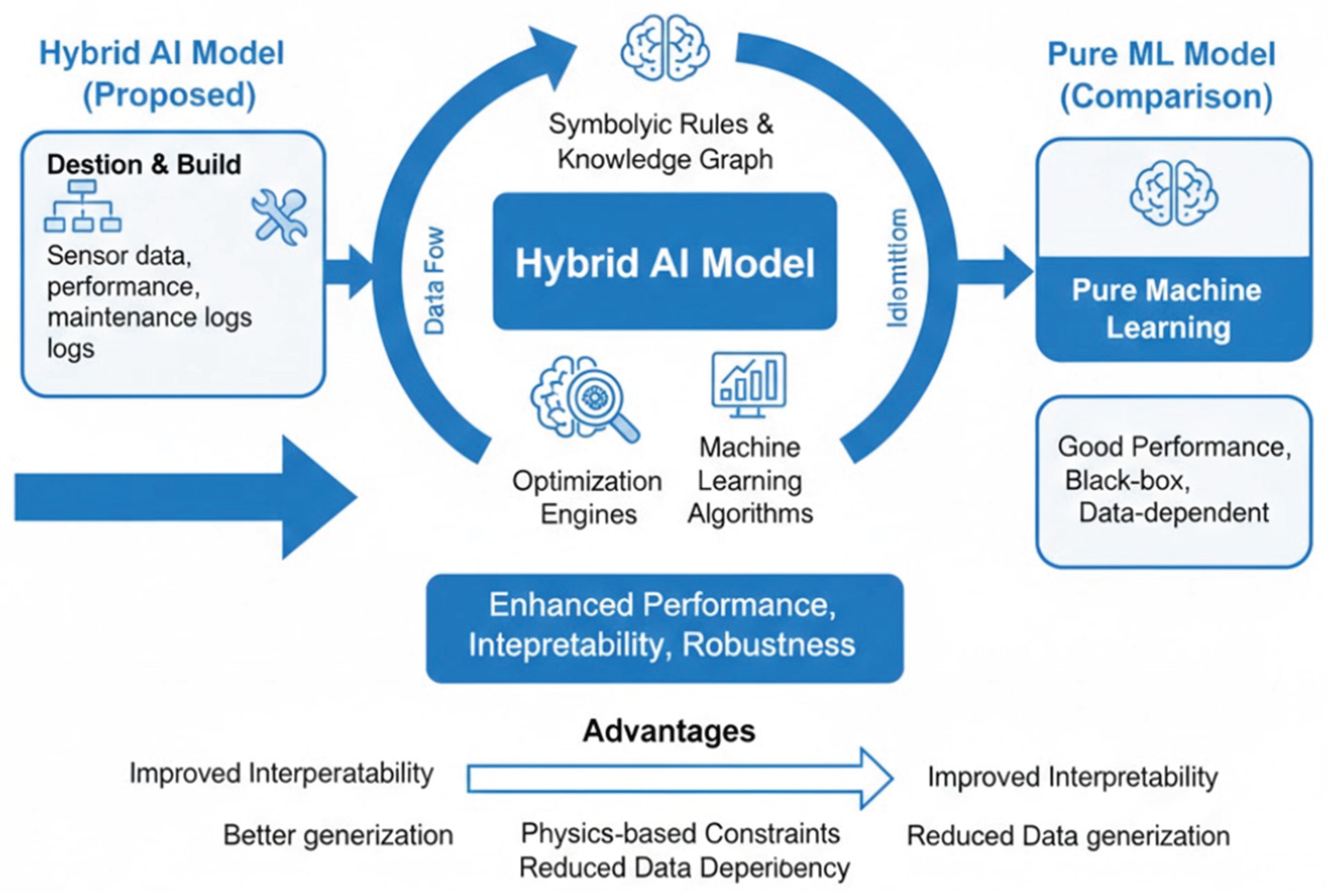
Recent research highlights the advantages of physics-informed and hybrid modeling approaches, which integrate AI methods with traditional physics-based models. Physics-Informed Neural Networks (PINNs), for example, embed governing equations and physical laws directly into the learning process, improving model generalization and interpretability while reducing the reliance on large datasets. These hybrid approaches are particularly valuable in marine engineering, where experimental or operational data may be limited or costly to obtain. By combining AI-driven learning with physics-based constraints, designers can ensure that predictions and optimizations remain physically consistent and reliable. Applications include fluid dynamics simulations, structural behavior prediction [16], and pipe flow analysis, where hybrid models support faster, more accurate decision-making. Such approaches bridge the gap between purely data-driven AI and classical engineering methods, offering a robust framework for cognitive ship design systems capable of generating innovative yet feasible solutions.
Figure 7.
Hybrid AI Model for Engineering Applications combining symbolic IA, Machine Learning and Optimization.
Figure 7.
Hybrid AI Model for Engineering Applications combining symbolic IA, Machine Learning and Optimization.
4. AI Applications in Ship Design and Operation
This research adopts a design-oriented methodology focused on system-level integration rather than isolated algorithmic innovation. The approach defines a layered architecture, structured workflow phases, and quantitative evaluation metrics. Implementation stages include problem framing, corpus structuring, constraint formalization, hybrid model development, CAD embedding, validation, and governance auditing.
Table 2 presents a comparative analysis of AI integration in ship design and broader engineering CAD environments. The table synthesizes contributions from the literature by highlighting the author and year, the application domain, the main AI technique employed, the level of integration within the CAD workflow, the degree of traceability provided, and the limitations identified in each study. This structured overview allows readers to quickly evaluate trends across different sectors, such as the marine industry and complex engineering environments like Engineering, Procurement, and Construction (EPC) projects, and to understand how AI methods, from rule-based and optimization algorithms to machine learning and cognitive AI, are applied in practice. Key insights from the table include the varying degrees of integration achieved, the challenges related to transparency and regulatory compliance, and recurring gaps that emphasize the need for a formal methodological framework for cognitive AI deployment in ship design.
Beyond the marine sector, research and industrial practice have explored integrating advanced automation into CAD, particularly in complex engineering environments such as EPC projects [42]. A trend toward using AI to enhance workflows [34] and decision-making has been observed, though many recent studies remain exploratory, highlighting the need for a formal methodological framework.
Also relevant is the evidence from other domains (automotive, aerospace) where routing and automatic layout generation have been addressed through systematic frameworks to make them adoptable by designers; this work serves as an analogy to argue that adoptability and process are as important as the quality of the algorithm.
There are clear signs of convergence toward AI-augmented CAD, but a replicable architecture and methodology that connect regulatory knowledge, historical data, and real-time feedback within CAD is still lacking.
4.1. Hull Forms Design and Optimization
Hull forms optimization is one of the most mature AI application areas in naval architecture. AI-based surrogate models significantly reduce computational cost compared to traditional CFD-based optimization (Figure 8).
Zhang and Wang demonstrated in [22] the use of deep learning models to predict hydrodynamic performance and guide hull shape optimization, achieving comparable accuracy to CFD simulations with significantly reduced computation time. Similar approaches have been reported using genetic algorithms for multi-objective trade-offs between resistance [30], stability, and seakeeping.
4.2. Structural Health Monitoring and Predictive Maintenance
AI-driven predictive maintenance has gained importance due to the increasing availability of onboard sensor data [23]. Neural networks and reinforcement learning algorithms are used to detect anomalies, predict fatigue damage, and estimate Remaining Useful Life (RUL) of structural components and machinery.
Kim and Lee applied AI-based structural health monitoring techniques to marine structures, demonstrating early damage detection capabilities superior to traditional threshold-based systems [26]. Reinforcement learning has also been employed for predictive maintenance of marine main engines (Figure 9), optimizing maintenance schedules and reducing downtime.
4.3. Autonomous Navigation and Intelligent Control Systems
Autonomous ships represent a paradigm shift in maritime transportation. AI techniques such as Bayesian networks, deep reinforcement learning, and sensor fusion are central to autonomous navigation, collision avoidance, and decision-making under uncertainty (Figure 10).
Jiang and Tian proposed Bayesian network-based navigation systems capable of handling uncertain maritime environments and complying with COLREGs [24]. These systems show promising results in simulation environments, although real-world deployment remains limited by regulatory and safety concerns.
4.4. AI in Shipbuilding and Smart Shipyards
AI applications extend beyond ship operation to shipbuilding processes. Intelligent shipyards leverage AI for production planning, quality control, robotic welding, and logistics optimization.
Blanco demonstrated in [17] the feasibility of AI-based automation systems in shipyards, improving production efficiency and reducing human error. Vision-based inspection systems using deep learning are increasingly used for weld quality assessment and surface defect detection.
4.5. AI in Ship Design
AI can be deployed in ship design in many stages. Appropriate decisions during the execution of the ship design, accessing to rules, guidelines, best practices, lessons learned, etc., can be automated in different areas of application.
In the marine and maritime sector, penetration of AI has been significantly lower compared to other sectors. In both the design, manufacturing and operation phases of ships, there has been limited exploration of the possibilities offered by AI. Thus, an opportunity arises to upgrade and transform the shipbuilding and shipping industries into modern and forward-thinking industries.
As shipbuilding projects become increasingly complex, as shown in Figure 11, so does the desirability of having effective AI tools during the design phase.
Considering that nowadays 3D CAD systems are widely used, AI capabilities will need to be integrated into them. Having FORAN® system as a reference the following benefits are considered:
- Efficiency: Efficient management of design options is achieved by consulting user manuals, design guidelines, calculation standards, etc. that the designer can have, with the help of AI, in interactive mode.
- Reliability. AI can incorporate algorithms that verify compliance with certain KPI’s and make designers’ tasks more precise.
- Experience. AI can help providing designers with comparative and historical data, insights from past projects, or lessons learned; all with the goal of helping to facilitate prototyping of new projects and identifying the best alternative.
- Optimization. Through AI, engineers can get online recommendations to adopt best practices and automate certain design tasks.
Additionally, the AI integrated into design systems can enrich the current project with data from various projects, making it a self-learning project.
Existing works typically focus on isolated algorithmic advances (e.g., routing optimization) or document-centric AI, but rarely specify how regulatory corpora, hybrid reasoning, and CAD interaction are integrated end-to-end. Figure 12 operationalizes this gap into an implementable architecture that can be reproduced across use cases and CAD platforms.
IBM Watson®, is a suite of AI and ML tools and services that can be used for a wide range of applications.
When working with CAD FORAN®, the user can launch the module FORAN Cognitive® to receive AI assistance from Watson® on the desired topic. In this case, the AI engine returns a response based on the type of query made, the historical data, the user’s profile and the Corpus (see in Figure 13) created for the FORAN Cognitive®.
Corpus is the set of information, data or rules related to a specific topic. It may be composed of, among other types of information, the rules of a classification society, rules of the national authority, rules of the shipyard or the designer’s own rules based on his experience. The data included in the Corpus come from different sources:
- Common: Data of general application for each project, such as a standard for designs (for example, regulations of classification societies or equipment information provided by suppliers). Could be composed with data from third-party companies (suppliers, standardization organizations, Classification Societies...).
- Specific: Mainly related to data belonging to the know-how of each company, which is different (in many cases even contradictory) to the same data from another company (i.e., design guidelines or manufacturing procedures). Must be created internally by the company that uses the data.
As example, Corpus rules could be composed by:
- Design and manufacturing requirements.
- Design rules.
- Classification societies and national authorities.
- Regulations.
- Best practices.
- Technical specifications.
- Provider information.
- Relevant data from previous inherited projects.
- Guidelines and User manuals.
- Learned lessons.
- Operational data.
While IBM Watson® may not directly provide tools specifically for piping design, it can potentially be used in conjunction with other engineering software and tools to enhance certain aspects of the piping design process (Figure 14).
Here are some ways in which IBM Watson® integrated into FORAN® could potentially be used in piping design:
- Data Analysis and Prediction: IBM Watson’s® machine learning capabilities can be used to analyze large amounts of data related to fluid flow, pressure, temperature, and other parameters in a piping system. By analyzing this data, Watson® can provide insights and predictions on potential issues, such as flow restrictions, pressure drops, or temperature variations, which can help in optimizing the design and performance of the piping system.
- Simulation and Optimization: IBM Watson® can potentially be used in conjunction with CFD software to simulate fluid flow and optimize the design of piping systems. Watson® can analyze the CFD results and provide recommendations for design modifications to improve the efficiency and effectiveness of the piping system.
- Collaborative Design: IBM Watson® provides collaboration tools that can be used to facilitate communication and collaboration among team members involved in piping design [32]. This can help in streamlining the design process, reducing errors, and ensuring that all stakeholders are aligned throughout the design process.
- Knowledge Management: IBM Watson’s® NLP capabilities can be used to capture and manage engineering knowledge related to piping design [33]. This can include documentation, standards, best practices, and other design guidelines. Watson® can also assist in retrieving relevant information during the design process, helping engineers make informed decisions.
- Virtual Assistance: IBM Watson’s® conversational AI capabilities can be used to create virtual assistants that can provide real-time guidance and support to engineers during the piping design process. This can include answering design-related questions, providing recommendations, and assisting with design calculations.
4.6. Methodological Workflow for Cognitive AI Integration in Marine CAD Environment
To ensure reliability and regulatory compliance [37], the proposed framework adopts a human-in-the-loop iterative cycle [39]. Rather than replacing the marine engineer, the system augments decision-making by providing contextualized recommendations derived from structured corpora and hybrid AI reasoning.
The cycle begins with the definition of engineering intent (e.g., routing a pipe segment under multi-constraint conditions). Context is assembled from the structured corpus through semantic retrieval mechanisms. Hybrid reasoning modules generate ranked alternatives, which are presented within the CAD interface together with explanatory metadata and constraint references (Figure 15).
The engineer evaluates and adjusts the proposal, triggering feedback capture those updates model parameters, rule confidence weights, or knowledge graph linkages. This iterative process ensures continuous refinement while preserving accountability and decision authority within the engineering team.
The inclusion of transparency, traceability, and compliance boundaries distinguishes the framework from autonomous AI paradigms and aligns it with regulated marine engineering environments.
5. Case Study: Automatic Pipe Routing
Piping design is a specialized engineering discipline that involves designing and configuring the layout of pipes, valves, fittings, and other components for the transportation of fluids.
Pipe (and, by extension, distributor) layout is one of the most time-consuming engineering activities and highly sensitive to physical and regulatory constraints. Historically, approaches based on the optimization of discretized networks/spaces integrated into CAD have been proposed, demonstrating that the problem can be formalized with graphs and designer preference parameters.
In recent years, advances have been observed in multi-objective models that incorporate more realistic sub-objectives (length, number of elbows, energy, air pockets, bend distance violations, etc.) and interface/diameter requirements, more closely approximating real-world design conditions. Furthermore, studies are being published focusing on optimizing layout in specific contexts (e.g., engine rooms), highlighting the implications for cost and production schedule.
One of the most complex aspects of ship’s equipment design, as well as the most time-consuming for designers, is the routing of piping on board. Because of this, pipe routing is one of the paradigmatic cases where the application of AI can help designers enhancing the efficiency and accuracy of piping design and making the design itself more robust, consistent and efficient.
There is some ways AI can be utilized in piping design:
- Automated Routing: AI algorithms can analyze various parameters such as fluid flow rates, pressure, temperature, and other design requirements to automatically route pipes in the most optimal way. The application of AI techniques would help the designer to make decisions and adopt routes that optimize and minimize the design, construction and assembly time, without affecting the efficiency of the installation itself. This can help reduce design time and minimize the risk of errors in complex piping systems.
- Clash Detection: AI can be used to minimize interferences in complex pipe designs by using advanced machine learning algorithms to identify patterns in the design that could lead to interferences. This can be done by training a model to recognize different interference patterns and then applying it to the design. Additionally, AI can be used to build models that can predict possible interferences in the design based on different parameters such as pipe size, flow rate, pressure, valves position, etc. These models can then be used to optimize the design and reduce the risk of interferences. This can prevent costly rework during the construction phase.
- Material Selection: AI can analyze different materials and their properties, considering factors such as pressure, temperature, corrosion resistance, and cost, to recommend the most suitable materials for specific piping applications. This can help optimize material selection and reduce the risk of material failures.
- Predictive Maintenance: AI can analyze sensor data from piping systems to predict and prevent potential failures, such as leaks or ruptures, by detecting anomalies in real-time. This can help improve the reliability and safety of piping systems, reducing downtime and maintenance costs.
- Optimization of Pipe Sizing: AI can analyze various factors such as flow rates, pressure drops, and pipe material properties to optimize the sizing of pipes in a piping system. This can help ensure efficient and cost-effective piping designs that meet the required performance criteria.
- Design Optimization: AI can use machine learning algorithms to analyze vast amounts of data from past piping projects, including design parameters, performance data, and feedback from operational systems, to optimize piping designs based on real-world performance. This can help improve design accuracy and efficiency over time.
- Expert System for Design Rules: AI can develop expert systems that capture the knowledge and experience of piping design experts, enabling automated decision-making based on established design rules and best practices. This can help ensure consistent and compliant designs.
The following aspects are considered suitable for optimization and automation:
- Prioritize systems.
- To select the main route areas (reservation of space).
- Select technological attributes of elements.
- Optimize routing geometrically and operationally.
- Improve the results of previous projects.
- Consider the impact on production.
- To provide feedback on new designs with data from actual ship operations.
AI based algorithms can also be used to generate virtual simulations of the complex pipe systems to further optimize the design and allowing for proactive preventative measures to be taken.
The design of a pipe system (as shown in Figure 16) to avoid interferences can be done using machine learning. Machine learning algorithms can be used to analyse the existing pipe system and identify features such as the number of pipes, the shape, the material, the size, etc.
Using these features, the machine learning algorithm can be used to identify patterns and identify areas where interferences might occur. The machine learning algorithm can then generate a design that optimizes the pipe system to avoid these interferences. This design can then be tested and adjusted as needed to ensure that the pipe system does not cause any interferences.
There are a few different ways to avoid pipe interferences in machine learning algorithms. One way is to use different algorithms for different problems. For example, it could be used a machine learning algorithm to classify objects, and another to predict how a particular object will behave in the future.
Another way to avoid pipe interferences is to use a different data representation for each problem. For example, you might use a matrix representation for machine learning problems, and a vector representation for problem of predicting how a particular object will behave in the future.
Machine learning can be used by using supervised learning algorithms such as:
- Decision Trees: Decision Trees can be used to identify the most appropriate routes for pipes to take in order to avoid interferences.
- Support Vector Machines: Support Vector Machines can be used to identify the most efficient ways to route pipes and to determine the best locations for pipe connections.
- Artificial Neural Networks: Artificial Neural Networks can be used to identify and recognize potential interferences between pipes, as well as to determine the most optimal route for pipes [11].
- Reinforcement Learning: Reinforcement Learning can be used to identify the most efficient routes for pipes and to optimize the design of the ship’s piping system.
- Genetic Algorithms: Genetic algorithms can be used to optimize designs for avoiding pipe interference by selecting the most suitable designs from a population of potential solutions based on a set of criteria [27]. First, a population of initial designs is created, each of which has different characteristics with respect to the criteria such as pipe sizes, pipe locations, and pipe shapes. Then, the fitness of each design is evaluated according to the criteria. Finally, the designs with the highest fitness values are selected and used as parents to create new designs, through crossover, mutation, and other genetic operations [12]. The new designs are then evaluated and added to the population. This process is repeated until the desired solution is found.
These algorithms can be instructed and trained to recognize blueprints in the data that specify probable interferences and can then be used to predict and avoid pipe interferences.
Additionally, unsupervised learning algorithms such as clustering and anomaly detection can be used to identify unexpected changes in the data that may can be used to detect anomalies in the design of the pipeline, such as incorrect distances between components, which could lead to interference.
Finally, reinforcement learning techniques can be used teach a system and optimize the design of the pipeline. It could be done by taking a series of actions based on the data it receives and finding the most efficient route to avoiding potential conflicts.
Software can be used to automatically detect and classify the different types of pipe interferences that can be found in a piping system.
Use of AI in piping design can greatly enhance the efficiency, accuracy, and safety of piping systems by automating repetitive tasks, optimizing designs, detecting clashes, predicting failures, and leveraging data-driven insights. However, it is important to note that AI is not a replacement for human expertise and judgment, but rather a tool that can augment the capabilities of piping designers and engineers.
6. Challenges and Future Research Directions
Despite the substantial progress achieved in applying AI to ship design and marine engineering, several challenges continue to hinder its full-scale adoption. Addressing these challenges is crucial for the development of robust, safe, and widely accepted AI systems in maritime applications.
One of the most significant obstacles is the scarcity of standardized, high-quality datasets. Ship design and operational data are often fragmented across different organizations, proprietary CAD platforms, or sensitive operational logs, limiting the ability to train generalizable AI models. In addition, data heterogeneity, arising from differences in vessel types, design standards, and sensor systems, poses additional challenges for model interoperability. Future research must focus on establishing common data standards, promoting secure data-sharing mechanisms, and creating annotated datasets that capture the diversity of marine engineering environments. The development of synthetic data generation techniques, including simulation-based datasets and physics-informed synthetic models, may also provide a viable pathway to supplement real-world data.
AI models, particularly deep learning networks and complex optimization algorithms, often operate as black boxes, providing limited insight into their internal decision-making processes. In maritime contexts, where safety and compliance are paramount, the lack of transparency can impede trust and adoption. Explainable AI methods must be further developed to ensure that model predictions and recommendations can be interpreted, audited, and validated by designers, engineers, and regulatory authorities. Techniques such as model-agnostic explanations, attention mechanisms, and hybrid symbolic-learning approaches hold promise for bridging the gap between AI autonomy and human interpretability. Research should also investigate frameworks for integrating human-in-the-loop verification to allow domain experts to oversee, correct, or refine AI-driven design decisions.
AI systems must operate in alignment with maritime regulations, including International Maritime Organization (IMO) conventions and classification society rules [44]. Currently, regulatory guidance on AI implementation in ship design [9], navigation [10], and operation is still evolving, leading to uncertainty regarding compliance and certification. Future research should focus on developing AI evaluation frameworks that embed regulatory requirements directly into the design and validation process. This includes traceability mechanisms, standardized assessment protocols, and formal verification of AI-driven decisions to ensure adherence to safety, operational, and environmental standards. Collaborative efforts between academia, industry, and regulatory bodies will be essential to define practical guidelines and accelerate regulatory acceptance.
Purely data-driven AI models are often limited by the availability of large datasets and may fail to generalize under scenarios not represented in the training data. Hybrid modeling approaches, such as PINNs and surrogate models that integrate first-principles knowledge, offer a promising pathway to bridge the gap between physics-based and data-driven methodologies. Future research should investigate how hybrid approaches can enhance predictive accuracy, reduce data dependency, and improve interpretability, particularly in applications like fluid dynamics simulations, structural integrity analysis [14], and pipe routing optimization. These methods can also facilitate uncertainty quantification, allowing designers to make risk-informed decisions with higher confidence.
To fully exploit the potential of AI in marine CAD and ship design, future research should prioritize the following areas:
- Standardized, high-quality datasets: Initiatives to create shared, annotated datasets for ship design, operational monitoring, and system performance will enable reproducible research and facilitate benchmarking of AI methods.
- Explainable and trustworthy AI: Development of interpretable models and human-in-the-loop workflows will enhance safety, regulatory compliance, and designer confidence.
- Large-scale validation and deployment: Field trials and operational validation in real shipyards and vessels are necessary to evaluate AI performance under real-world conditions and identify practical limitations.
- Integration with digital twins and cognitive CAD systems: Research should explore AI-augmented digital twins for predictive simulation, automated design iteration, and intelligent decision support.
- Multi-objective and multi-agent optimization frameworks: Advanced optimization techniques can address the complexity of competing design objectives, such as cost, efficiency, safety, and maintainability.
- Regulatory-aware AI frameworks: Embedding compliance checks and traceability mechanisms directly within AI models will facilitate adoption and certification in safety-critical maritime applications.
In summary, overcoming these challenges requires a multidisciplinary approach that combines AI expertise, naval architecture knowledge, regulatory understanding, and human-centered design principles. By addressing data limitations, improving explainability, developing hybrid modeling approaches, and validating AI in operational environments, future research can unlock the full potential of cognitive AI in ship design, enabling safer, more efficient, and innovative maritime systems.
7. Conclusions
AI has demonstrated considerable potential in naval architecture and shipbuilding, providing innovative solutions to some of the most complex engineering challenges in the maritime sector. This review highlights that AI applications are reaching a notable level of maturity in areas such as hull form optimization [18], structural analysis, and predictive maintenance [13], where machine learning, evolutionary algorithms, and physics-informed models have enabled more efficient, accurate, and data-driven design workflows. At the same time, rapidly evolving domains such as autonomous navigation [43], smart shipyards, and real-time operational decision support are pushing the boundaries of what AI can achieve, enabling greater automation, risk mitigation, and operational efficiency across the lifecycle of a vessel.
Despite these advances, several challenges remain. The integration of AI into marine CAD environments and ship operations requires high-quality, structured datasets, robust validation procedures, and strict adherence to regulatory standards, such as those defined by classification societies and international maritime organizations. Issues related to explainability, trust, and human-AI collaboration also demand careful attention, particularly in safety-critical contexts where decisions must be both reliable and interpretable. Moreover, the adoption of AI is uneven across ship design and operational domains, with some sectors still relying heavily on traditional rule-based methods due to organizational inertia or concerns about liability and compliance.
Looking forward, the full potential of AI in the maritime sector will depend on sustained collaboration between academia, industry, and regulatory bodies. Standardized frameworks for AI evaluation, lifecycle management, and traceability are essential to ensure that cognitive and autonomous systems can be deployed safely, effectively, and ethically. Hybrid approaches that combine physics-based knowledge with learning algorithms, as well as human-in-the-loop and explainable AI methods, are likely to play a central role in bridging current gaps between computational intelligence and domain expertise. Furthermore, emerging trends such as digital twins, multi-agent optimization, and intelligent decision support platforms promise to transform ship design, construction, and operations by enabling real-time feedback, predictive insights, and fully integrated workflows.
In conclusion, while AI has already proven its value in improving efficiency, reducing design iteration times, and enhancing predictive capabilities, its continued success in naval architecture will require addressing data, regulatory, and trust-related challenges. By fostering interdisciplinary research, developing robust methodological frameworks, and prioritizing safe and transparent AI deployment, the maritime sector can harness the transformative potential of AI to achieve smarter, safer, and more sustainable ship design and operation.
References
- McKinsey; Company. Unlocking success in digital transformations; McKinsey & Co, 2018; Available online: https://www.mckinsey.com/~/media/McKinsey/Business%20Functions/Organization/Our%20Insights/Unlocking%20success%20in%20digital%20transformations/Unlocking-success-in-digital-transformations.pdf.
- McKinsey; Company. Digital transformation: Improving the odds of success.; McKinsey & Co, 2019; Available online: https://www.mckinsey.com/capabilities/tech-and-ai/our-insights/digital-transformation-improving-the-odds-of-success.
- Lloyd’s Register, QinetiQ,; University of Southampton. Global marine tech trends 2030; LR QinetiQ–University of Southampton, 2015; Available online: https://www.lr.org/en/knowledge/research-reports/2015/global-marine-technology-trends-2030/.
- Muñoz, J. A.; Pérez, R. La integración de la inteligencia artificial en los procesos y metodologías de diseño naval. Ingeniería Naval 2019, (978), 74–84. Available online: https://es.slideshare.net/slideshow/integracin-de-la-inteligencia-artificial-en-los-procesos-y-metodologas-de-diseo-naval/121303916.
- Pérez, R.; Péter, E. A future foretaste: Shipbuilding industrial tendencies. International Journal of Maritime Engineering 2020 (RINA Transactions Part A4) 2020, 162, 397–420. Available online: https://www.intmaritimeengineering.org/index.php/ijme/article/view/1148. [CrossRef]
- Kirkpatrick, K. Considerations for getting started with AI . In Proceedings of the 12th Symposium on High-Performance Marine Vehicles (HIPER’20), Cortona, Italy, 12–14 October 2020; Tractica LLC (Cray Inc.), 2018; p. 92. Available online: https://zenodo.org/records/15349564/files/Hiper2020_Cortona.pdf?download=1&utm_.
- Martín, R. Open AI, la inteligencia artificial que nos daría una paliza en cualquier MOBA. Esports Unlocked. 2018. Available online: https://www.esportsunlocked.com/especiales/open-ai-la-inteligencia-artificial-que-nos-daria-una-paliza-en-cualquier-moba.
- Russell, S.; Norvig, P. Artificial intelligence: A modern approach, 4th ed.; Pearson, 2020; Available online: https://www.amazon.es/Artificial-Intelligence-Approach-StuartRussell/dp/0134610997.
- Sánchez, J.; García, M. Aplicaciones de la inteligencia artificial en ingeniería naval. 60th Congress of Naval Engineering and Marine Industry, La Coruña. Spain, 2021. [Google Scholar]
- Pérez, L.; Rodríguez, A. Sistemas inteligentes en ingeniería marítima y portuaria . 61st Congress of Naval Engineering and Marine Industry, Palma de Mallorca. Spain, 2022. [Google Scholar]
- Ray, T.; Gokarn, R. P.; Sha, 0. P. Neural network applications in naval architecture and marine engineering. 1996. Available online: https://www.sci-hub.red/10.1016/0954-1810(95)00030-5.
- Okada, T.; Neki, I. Utilization of genetic algorithm for optimizing the design of ship hull structures. Journal of The Society of Naval Architects of Japan 1992, 171, 71–83. Available online: https://trid.trb.org/View/449957.
- Nobukawa, H.; Kitamura, M.; Yang, F.; Zhou, G. Optimization of Engine Room Structure under Static and Dynamic Constraints Using Genetic Algorithms. Journal of The Society of Naval Architects of Japan 1998, 183, 315–322. [Google Scholar] [CrossRef]
- Fernández-Barrero, D. SOPRENE: Assessment of the Spanish Armada’s Predictive Maintenance Tool for Naval Assets. 2021. Available online: https://ruc.udc.es/rest/api/core/bitstreams/2081ea44-63d5-453a-8587-3c4c0c0cd830/content.
- Lim, D. H.; Kim, K. S. Development of deep learning-based detection technology for vortex-induced vibration of a ship’s propeller. Journal of Sound and Vibration 2022, vol. 520, Art.(no. 116629). [Google Scholar] [CrossRef]
- Shu, Y.; et al. Investigation of ship energy consumption based on neural network. Ocean & Coastal Management 2024, 254, 107167. [Google Scholar] [CrossRef]
- Universidade da Coruña. Astillero 4.0 / Construcción naval e Industria 4.0 [PDF]. Repositorio Institucional da Universidade da Coruña (RUC). 2021. Available online: https://ruc.udc.es/rest/api/core/bitstreams/17985c90-6f83-4ea8-b222-1f6322f4cd5b/content.
- Zhang, S. Research on the deep learning technology in the hull form optimization problem. Journal of Marine Science and Engineering 2022, 1735. [Google Scholar] [CrossRef]
- COIN; AINE. Inteligencia Artificial y Economía Azul: Tecnologías y sectores clave para España. Conclusiones sobre la conferencia de Inteligencia Artificial en el Sector Naval (programa Be Leaders). In genieros Navales; 2019; Available online: https://ingenierosnavales.com/inteligencia-artificial-y-economia-azul-tecnologias-y-sectores-clave-para-espana-conclusiones-sobre-la-conferencia-de-inteligencia-artificial-en-el-sector-naval-programa-be-leaders/.
- Fraga-Lamas, P.; et al. “Smart Pipe System for a Shipyard 4.0” (Sensors, 2016). Available online: https://www.mdpi.com/1424-8220/16/12/2186.
- Rasheed, M.; Tahir, M. Ship performance monitoring using machine-learning . 2021. Available online: https://arxiv.org/abs/2110.03594.
- Zhang, S. Research on the Deep Learning Technology in the Hull Form Optimization Problem. Journal of Marine Science and Engineering. 2022. Available online: https://www.mdpi.com/2077-1312/10/11/1735.
- Elmdoost-gashti, M.; Shafiee, M.; Bozorgi-Amiri, A. Enhancing resilience in marine propulsion systems by adopting machine learning technology for predicting mean-time between failures (MTBF). Journal of Marine Engineering & Technology. 2023. Available online: https://www.tandfonline.com/doi/full/10.1080/20464177.2023.2243748.
- Liu, Q.; Bai, X.; Luo, X.; Yang, L.; Li, Y.; Wang, K. Dynamic risk analysis of intelligent navigation process based on dynamic Bayesian network. Journal of Physics: Conference Series 2023, 2491(1), 012011. [Google Scholar] [CrossRef]
- Chen, S.; Wang, J.; Zhang, C.; et al. Marine Structural Health Monitoring with Optical Fiber Sensors: A Review. Sensors. 2023. Available online: https://www.mdpi.com/1424-8220/23/4/1877.
- Nanakorn, P.; Meesomklin, K. An adaptive function in genetic algorithms for structural design optimization. In Computers & Structures; 2001; Available online: https://www.researchgate.net/publication/223511569_An_adaptive_penalty_function_in_genetic_algorithms_for_structural_design_optimization.
- Kim, S. H. The development of a practical pipe auto-routing system in a shipbuilding CAD environment using network optimization. International Journal of Naval Architecture and Ocean Engineering 2013, 5(3), 468–480. Available online: https://www.sciencedirect.com/science/article/pii/S2092678216303284. [CrossRef]
- Ao, Y.; et al. An artificial intelligence-aided design (AIAD) of ship hull based on real-time resistance prediction. Ocean Engineering 2021, 239, 109819. Available online: https://www.sciencedirect.com/science/article/pii/S2468013321001303.
- Cepowski, T. Determination of design formulas for selected ship design parameters at the preliminary design stage using artificial neural network and regression analysis. Ocean Engineering 2021, 243, 110480. Available online: https://www.sciencedirect.com/science/article/pii/S0029801821010969.
- Cepowski, T. The prediction of ship added resistance at the preliminary design stage by the use of an artificial neural network. Ocean Engineering 2020, 195, 106647. Available online: https://www.sciencedirect.com/science/article/abs/pii/S0029801819307772. [CrossRef]
- Liu, Y.; Zhang, Q.; Wang, M. Which contract is more effective in improving product greenness under different power structures: Revenue sharing or cost sharing? Computers & Industrial Engineering 2020, 148, 106701. [Google Scholar] [CrossRef]
- Dong, Z.-R.; Bian, X.-Y.; Zhao, S. Ship pipe route design using improved multi-objective ant colony optimization. Ocean Engineering 2022, 258, 111789. [Google Scholar] [CrossRef]
- Tsai, L.-T.; Kang, S.-C.; Hsieh, S.-H.; Shih, Y.-C. AR-based automatic pipeline planning coordination for on-site conflict resolution. Automation in Construction 2022, 141, 104412. [Google Scholar] [CrossRef]
- Wang, Y.; Mao, C.; Yu, J. Detecting logical relationships in mechanical, electrical, and plumbing (MEP) systems with BIM using graph matching. Advanced Engineering Informatics 2022, 54, 101764. Available online: https://www.sciencedirect.com/science/article/abs/pii/S1474034622002282. [CrossRef]
- Chandrasekhar, A.; Suresh, K. Multi-material topology optimization using neural networks. Computer-Aided Design 2021, 136, 103017. Available online: https://www.sciencedirect.com/science/article/abs/pii/S0010448521000282?utm. [CrossRef]
- Wang, Z.; Li, X.; Song, B.; Liu, A.; Liu, Y.; Helo, P. Advancements in knowledge graphs (KGs) for engineering design. Journal of Engineering Design 2025, 36(7–9), 1065–1068. [Google Scholar] [CrossRef]
- Tang, X.; Feng, Z.; Xiao, Y.; Wang, M.; Ye, T.; Zhou, Y.; Meng, J.; Zhang, B.; Zhang, D. Construction and application of an ontology-based domain-specific knowledge graph for petroleum exploration and development. Geoscience Frontiers 2023, 14(5), 101426. [Google Scholar] [CrossRef]
- Lewis, P.; et al. Retrieval-augmented generation for knowledge-intensive tasks. arXiv. 2023. Available online: https://arxiv.org/pdf/2005.11401.
- Deb, K.; et al. Multi-objective optimization using evolutionary algorithms. 2020. Available online: https://www.wiley.com/en-us/.
- Brown, N. C. Design performance and designer preference in an interactive, data-driven conceptual building design scenario. Design Studies 2020, 68, 100952. [Google Scholar] [CrossRef]
- Ramírez-Peña, M.; Sánchez Sotano, A. J.; Pérez-Fernández, V.; Abad, F. J.; Batista, M. Achieving a sustainable shipbuilding supply chain under I4.0 perspective. Journal of Cleaner Production 2020, 244, 118789. [Google Scholar] [CrossRef]
- Pancorbo, J. Grandes retos reglamentarios: Ciberseguridad y certificación de machine learning. In Bureau Veritas; November 2025. [Google Scholar]
- IEEE OCEANS Conference Proceedings. (2020–2024). IEEE.
- International Maritime Organization. IMO guidelines for autonomous ships; IMO, 2023. [Google Scholar]
- International Organization for Standardization / International Electrotechnical Commission. (2020). ISO/IEC TR 24028:2020: Information technology – Artificial intelligence – Overview of trustworthiness in AI. ISO/IEC.
Figure 1.
Evolution of Ship Design Paradigms. From craftsmanship to Intelligent Autonomy.
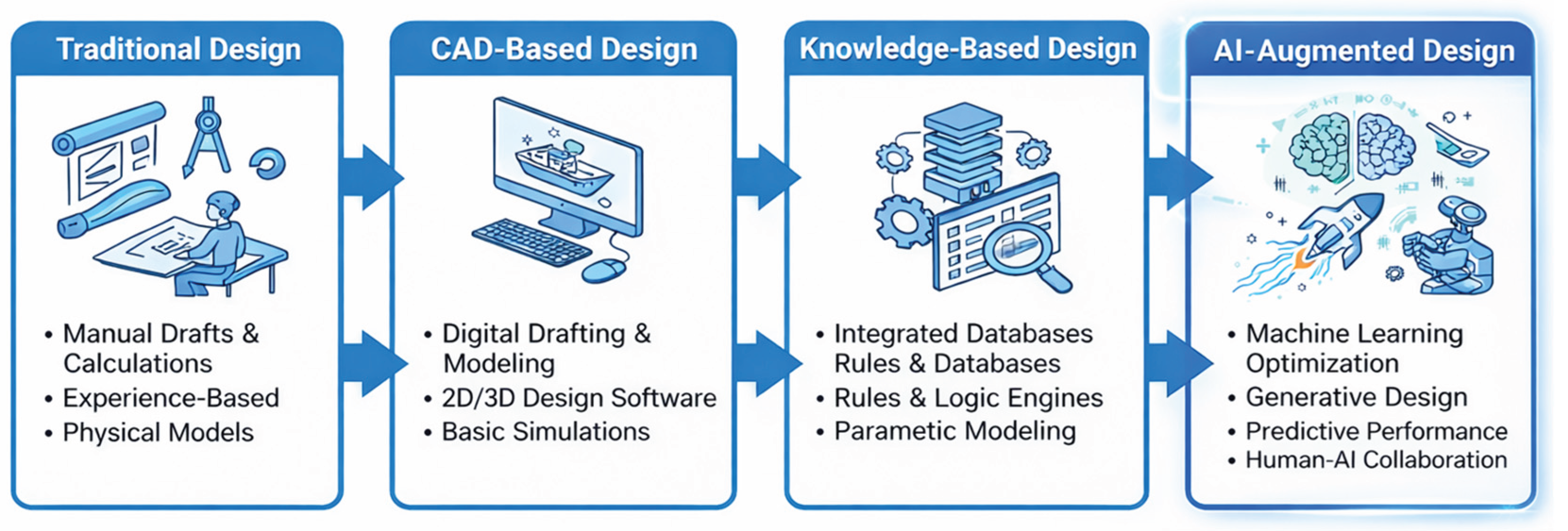
Figure 2.
Relationships among Big Data & Analytics, AI, ML and DA.
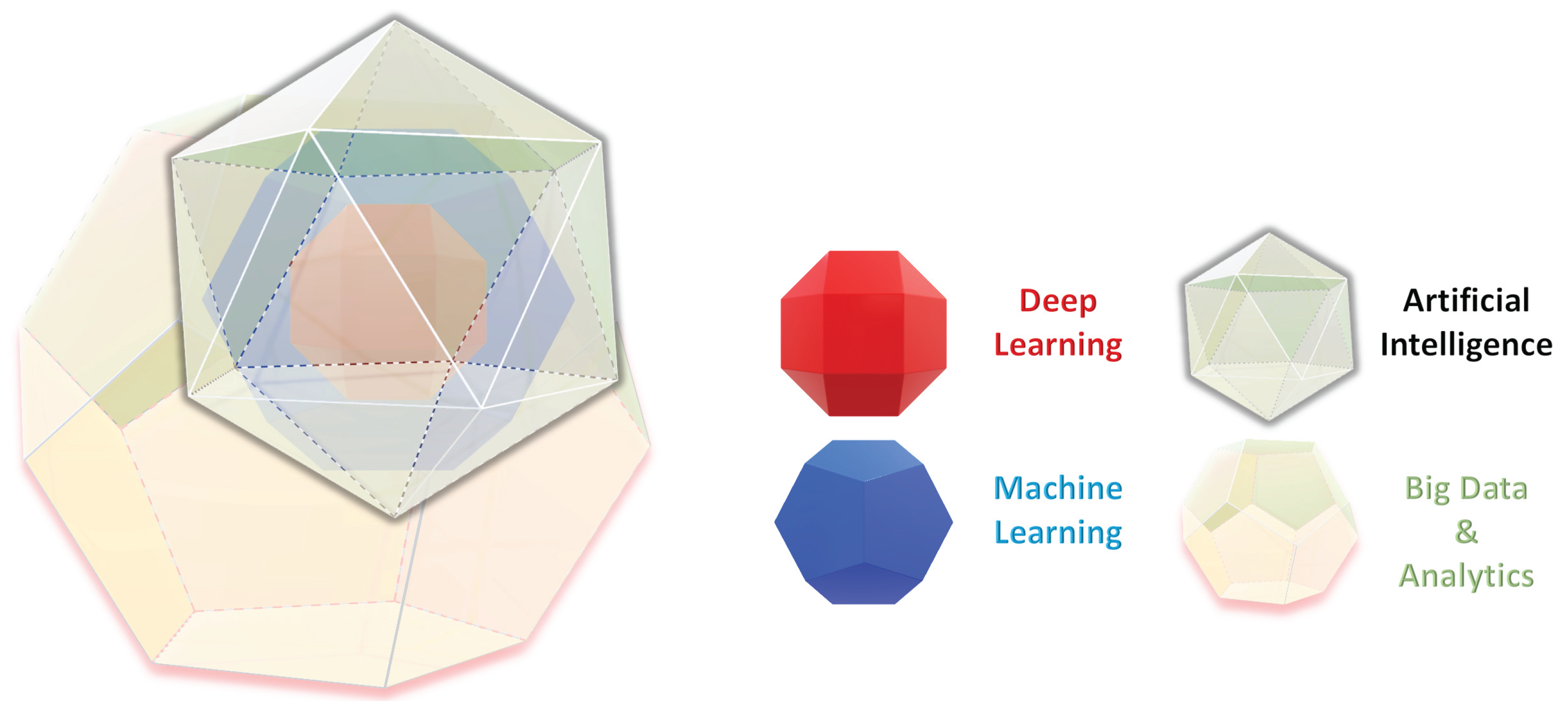
Figure 3.
Principal Machine Learning (ML) elements.
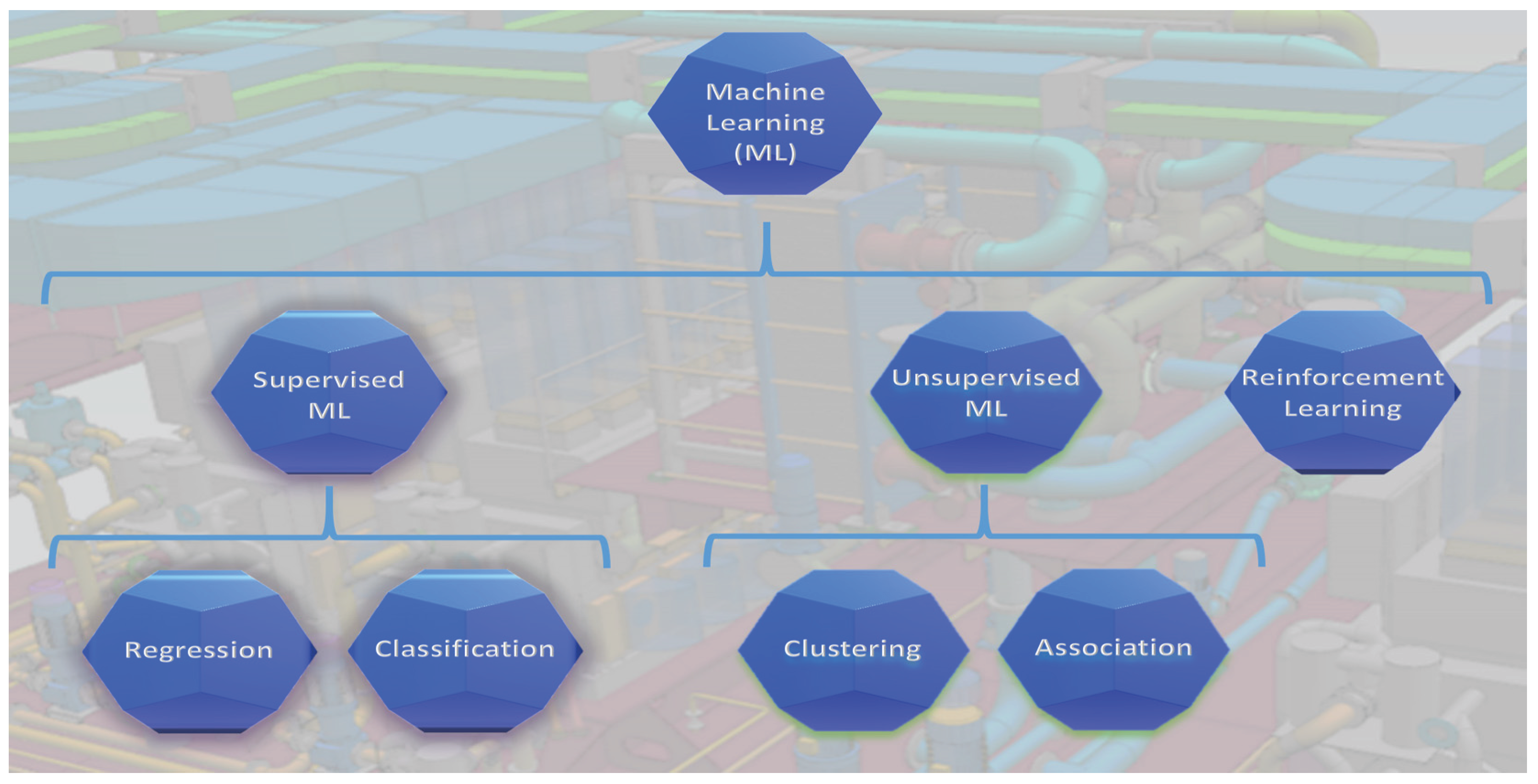
Figure 4.
Evolution of IA regulations in the marine sector.
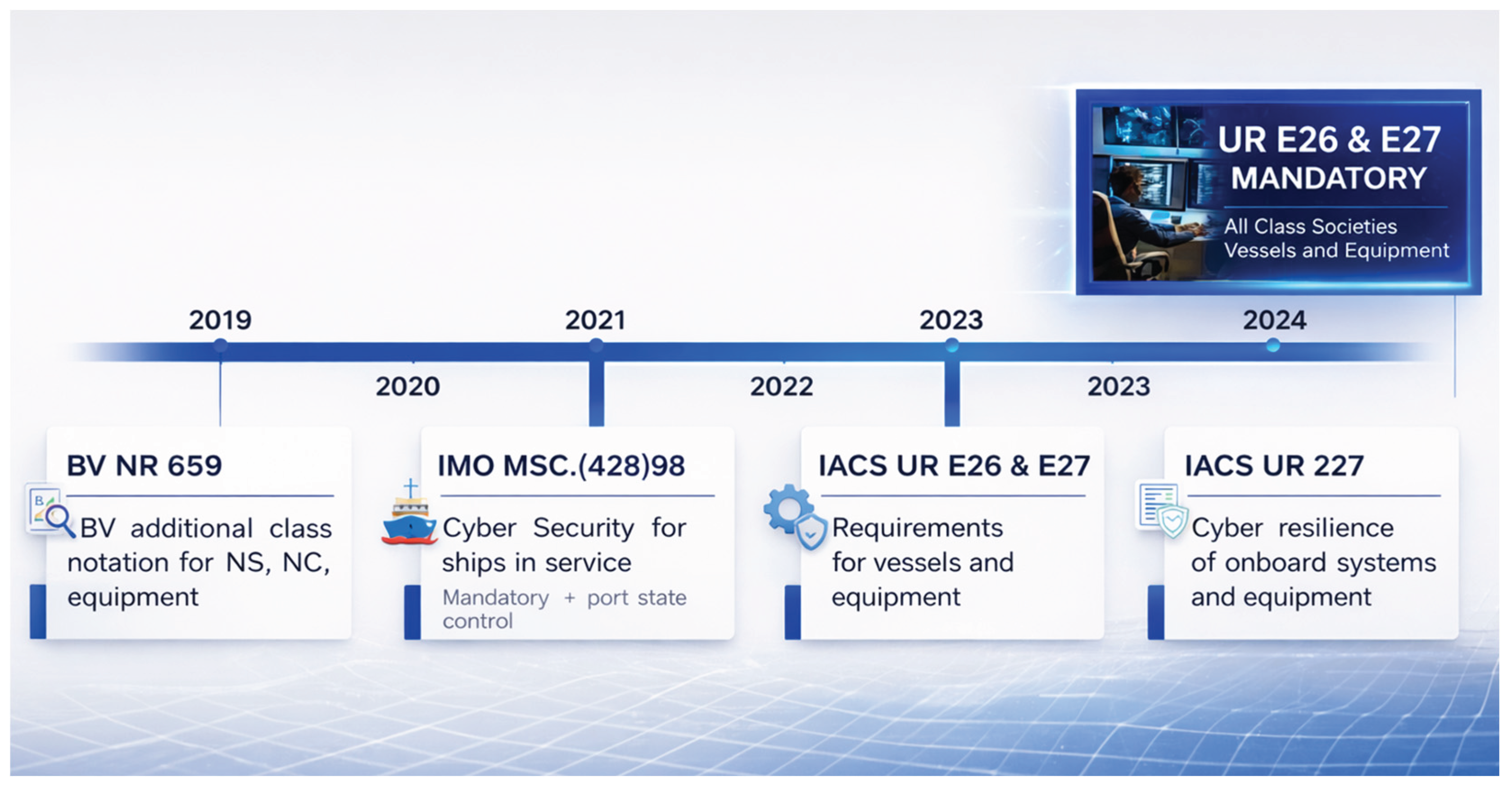
Figure 5.
The data processing step in the AI workflow involves collecting, cleaning, and transforming raw data into a structured format suitable for analysis and model training.
Figure 5.
The data processing step in the AI workflow involves collecting, cleaning, and transforming raw data into a structured format suitable for analysis and model training.
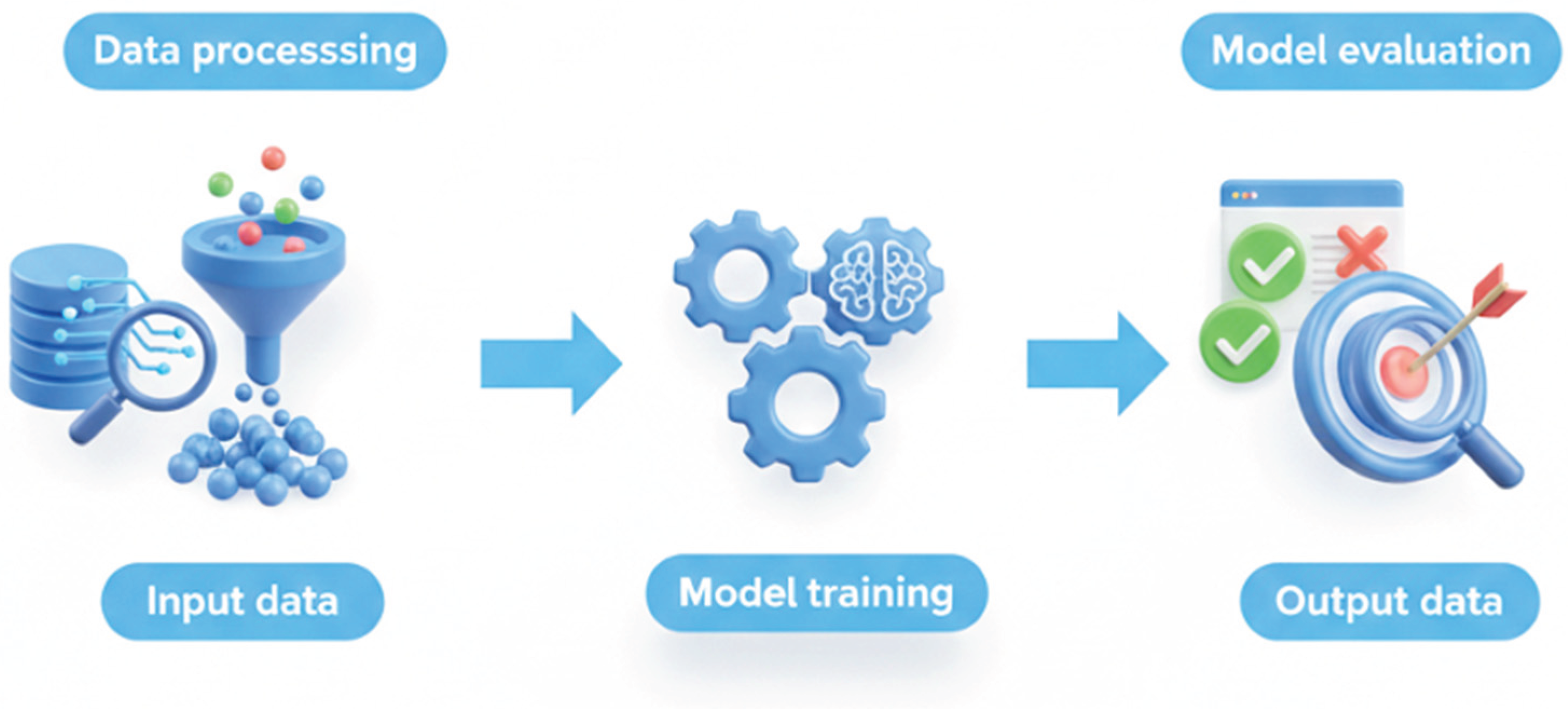
Figure 6.
Implementation of ML systems in marine environments following the standard ML life cycle.
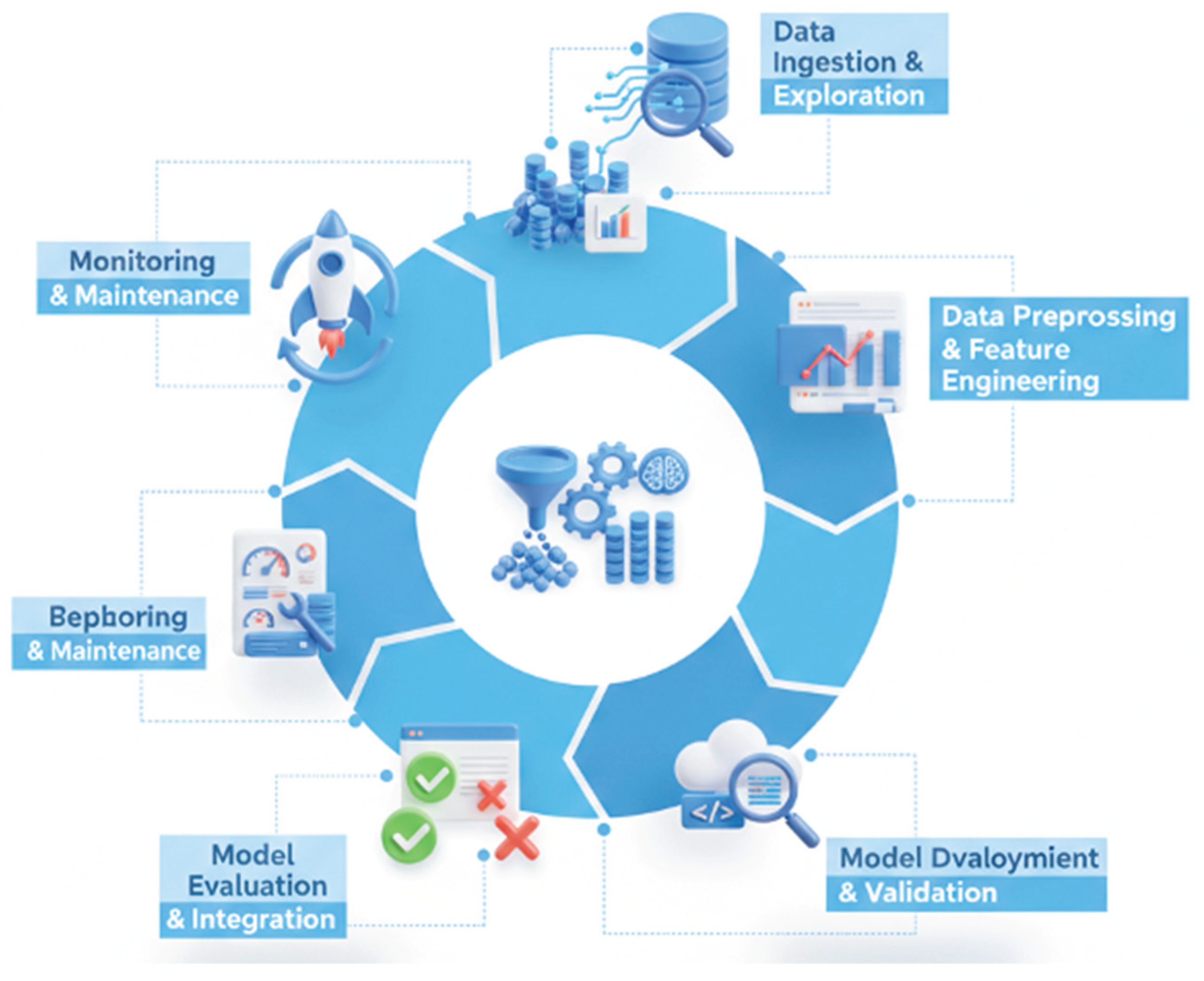
Figure 8.
Workflow of AI-assisted hull form optimization combining CFD data, surrogate models, and evolutionary algorithms.
Figure 8.
Workflow of AI-assisted hull form optimization combining CFD data, surrogate models, and evolutionary algorithms.
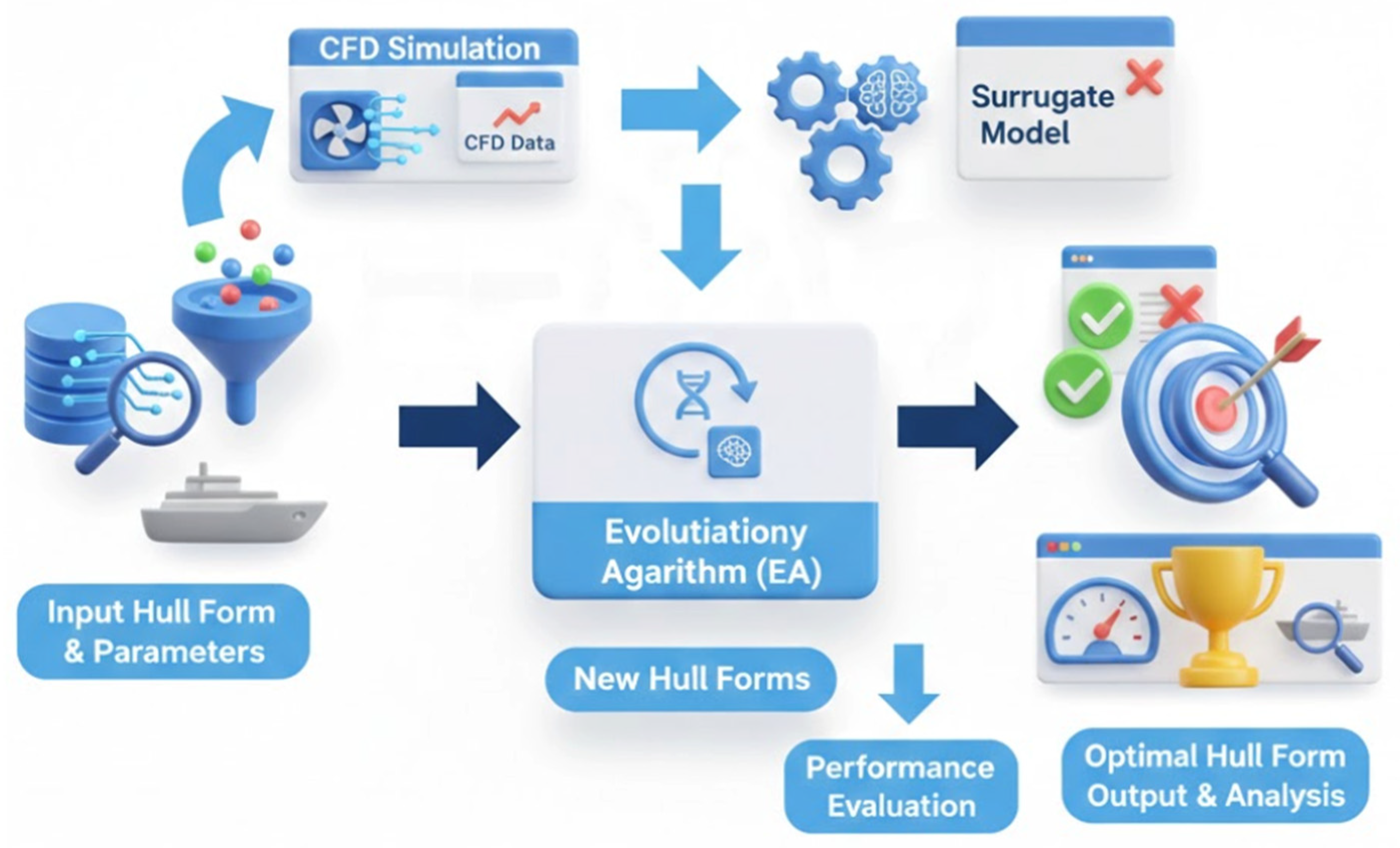
Figure 9.
AI-based predictive maintenance architecture for marine environments.
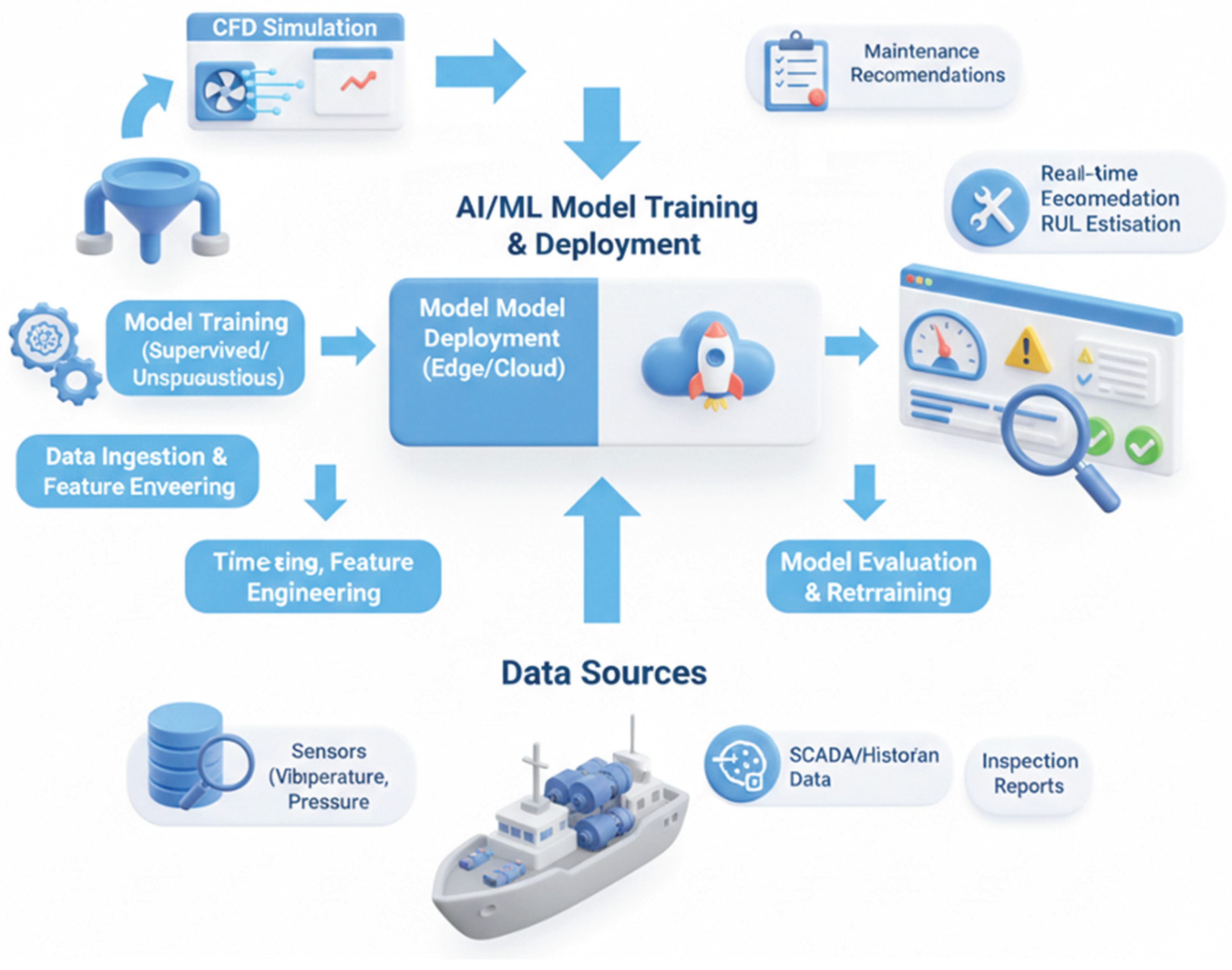
Figure 10.
Autonomous ship navigation framework integrating perception, decision-making, and control layers.
Figure 10.
Autonomous ship navigation framework integrating perception, decision-making, and control layers.
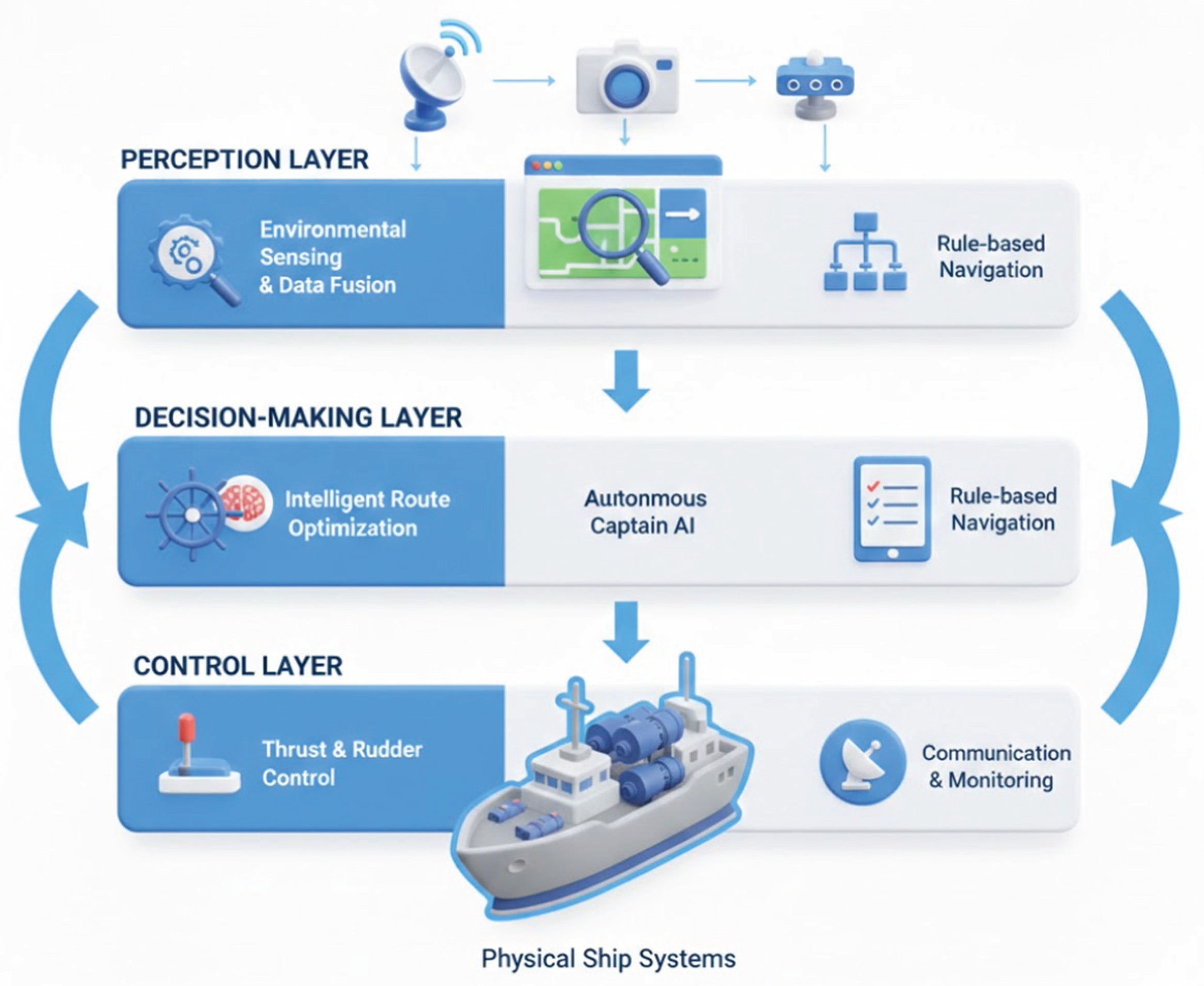
Figure 11.
Complexity Model in Modern Ship Design. Multi- constrain network diagram.
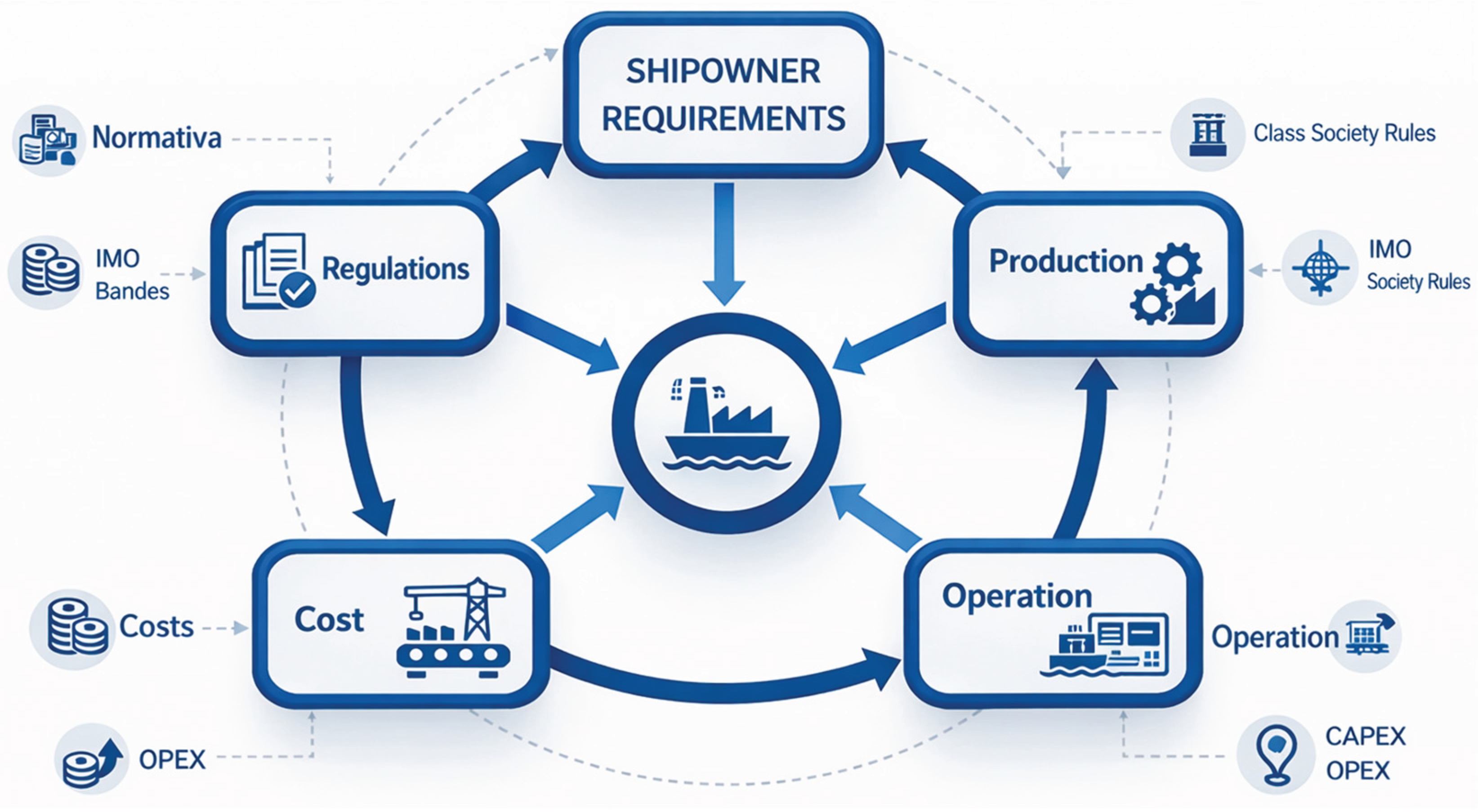
Figure 12.
Proposed layered architecture. From raw data to intelligent design decisions.
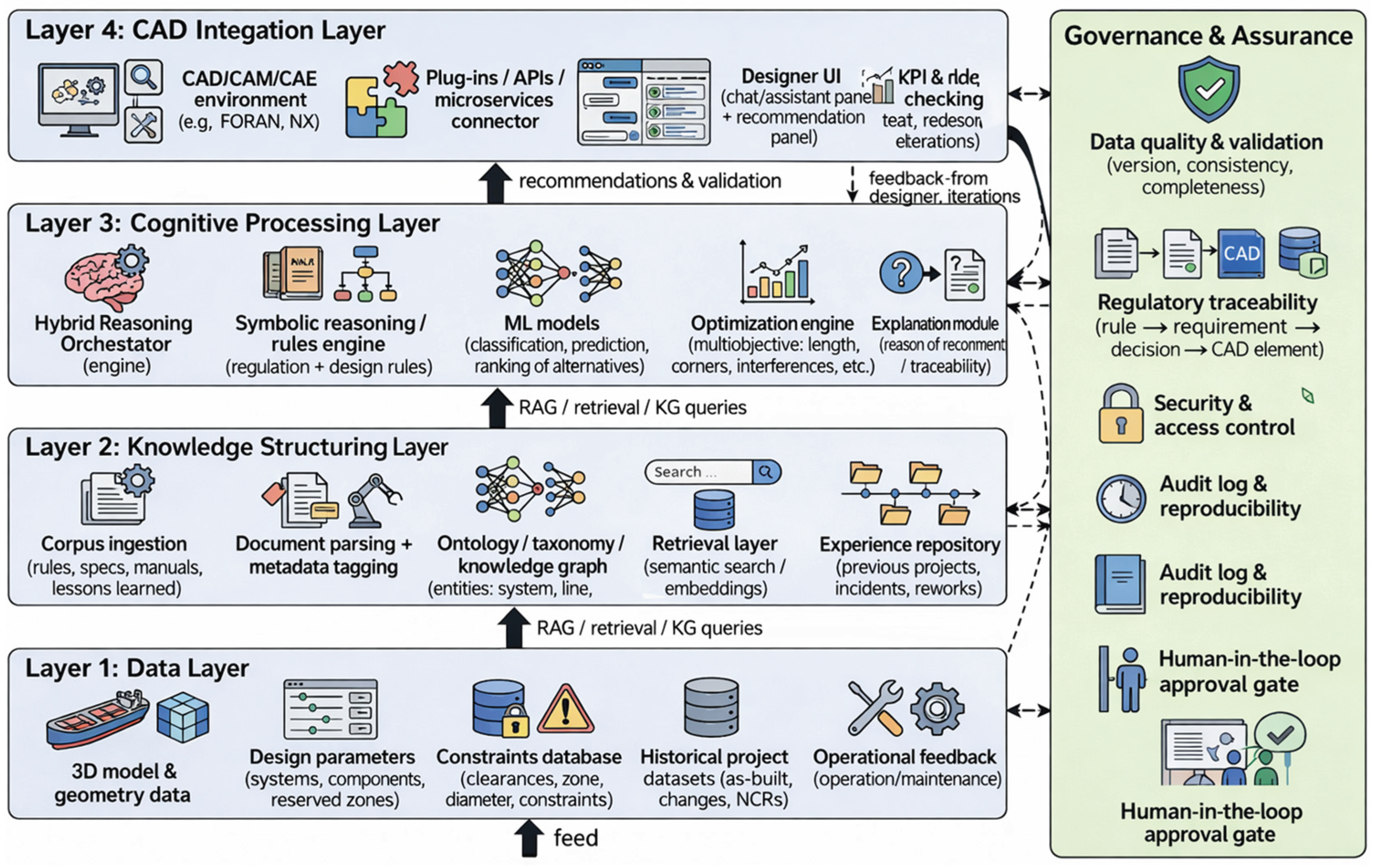
Figure 13.
Engineering Corpus Structured Model. Transforming unstructured data into actionable knowledge.
Figure 13.
Engineering Corpus Structured Model. Transforming unstructured data into actionable knowledge.

Figure 14.
Human in the loop validation process. Iterative refining & collaborative decision making.
Figure 14.
Human in the loop validation process. Iterative refining & collaborative decision making.
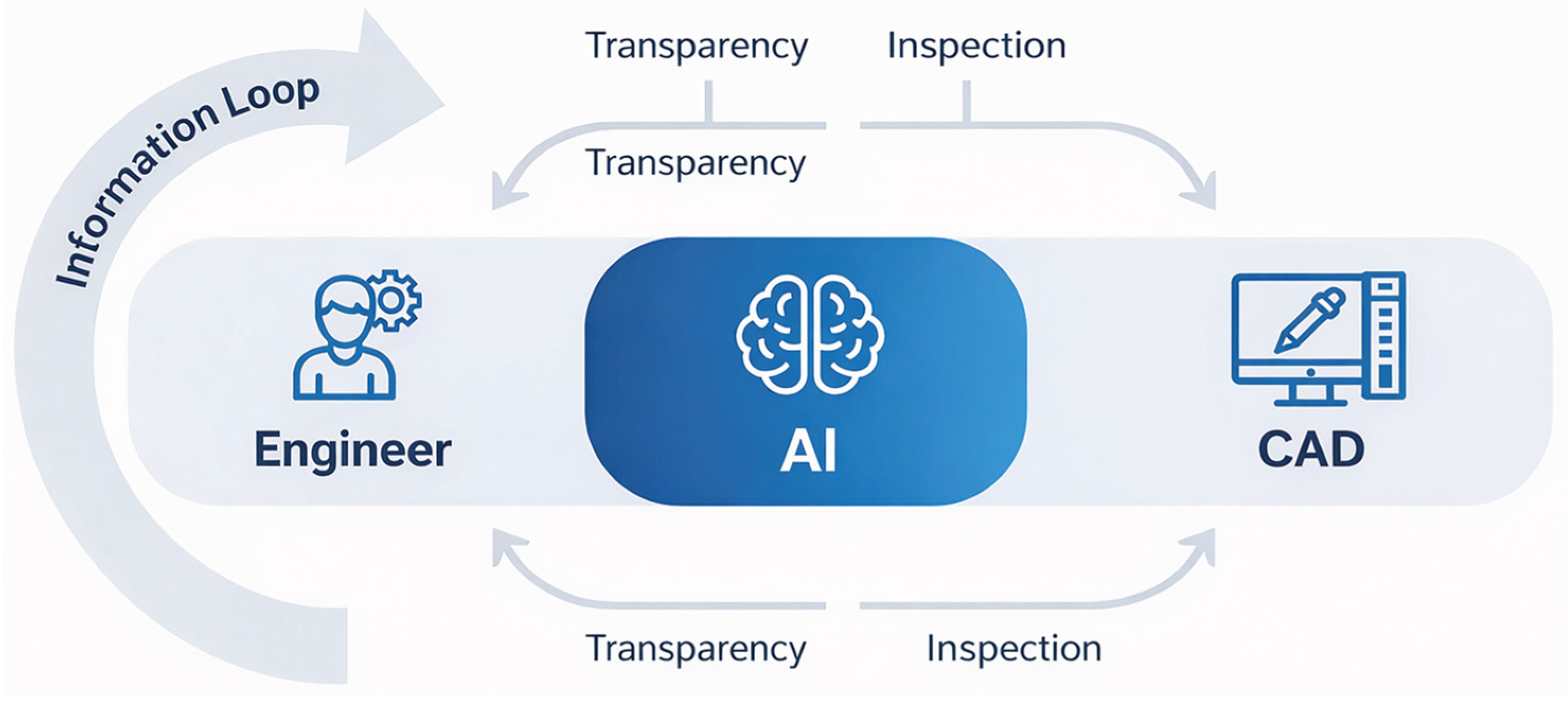
Figure 15.
Methodological Workflow for Cognitive AI Integration in Marine CAD Environments.
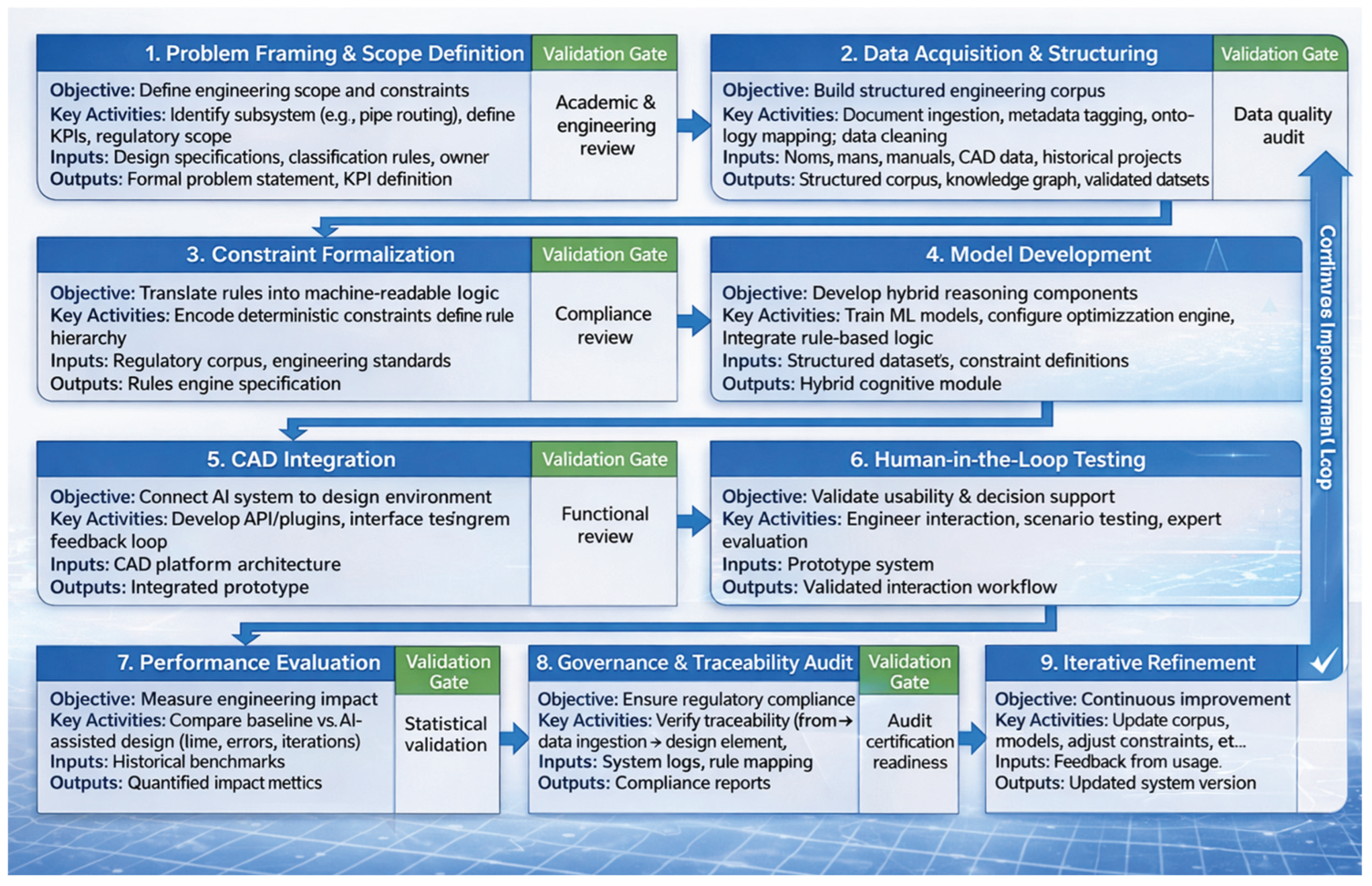
Figure 16.
Application to pipe routing. Conceptual flow. Automatic pipe network design from requirements to performance metrics.
Figure 16.
Application to pipe routing. Conceptual flow. Automatic pipe network design from requirements to performance metrics.
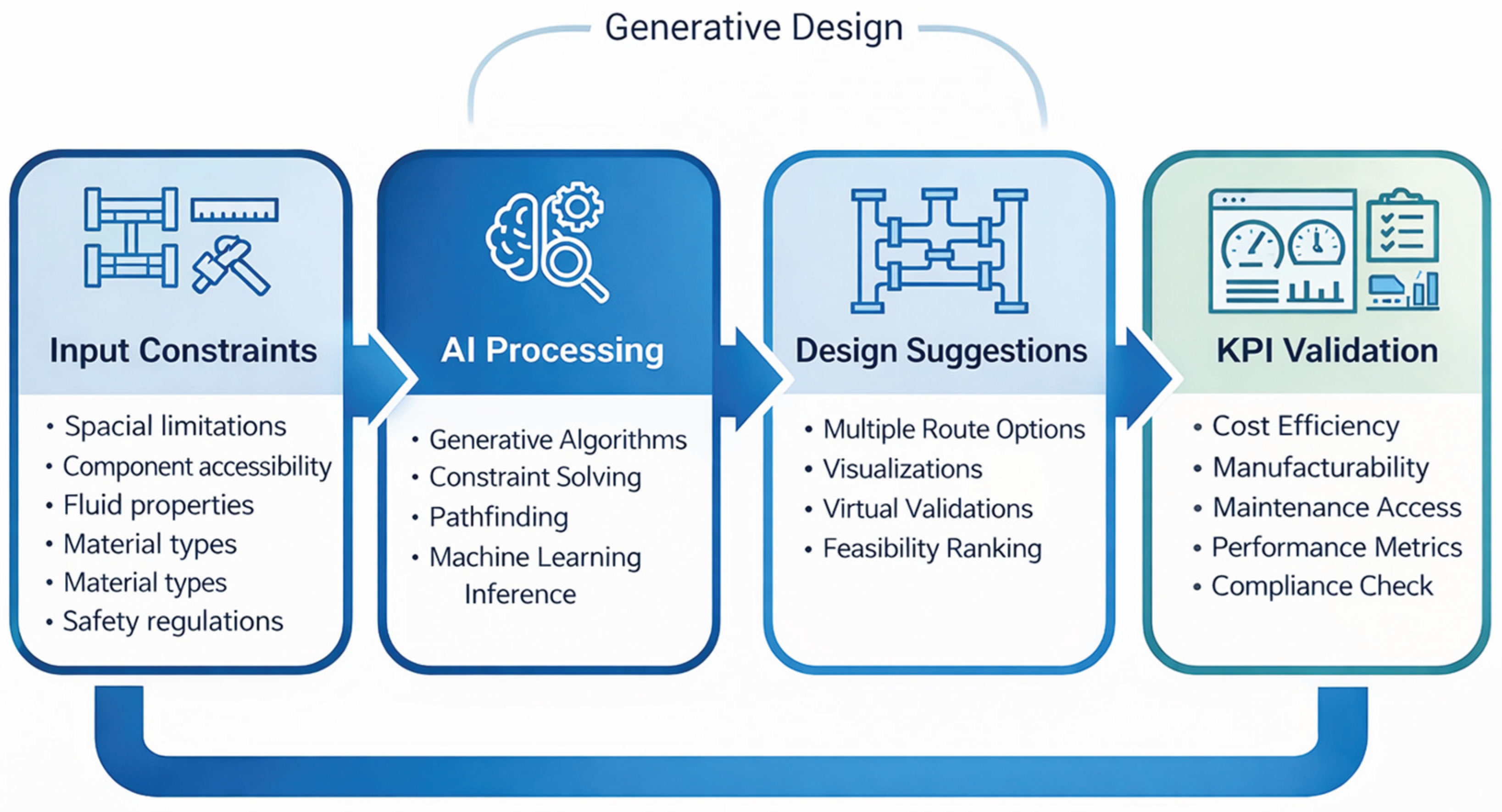

Table 1.
The governance of AI systems through a risk-based framework, which categorizes them according to their potential impact and associated risks.
Table 1.
The governance of AI systems through a risk-based framework, which categorizes them according to their potential impact and associated risks.
| Minimal risk (e.g., spam filtering) | No measures necessary |
| Limited risk (e.g., chatbots) | Transparency measures |
| High risk (e.g., AI-based collision avoidance systems) | Strict risk management, transparency, documentation, data governance, and human oversight measures |
| Unacceptable risk (e.g., social scoring) | Prohibited under European law |
Table 2.
Comparative Analysis of AI Integration in Ship Design and Engineering CAD.
| # | Author / Year | Domain | Main Technique | Integration Level | Traceability | Identified Limitation |
| 1 | Abramowicz (2013) | Marine | ANN optimization | Low | No | Early-stage only, no integration framework |
| 2 | Kim et al. (2013) | Marine | Network optimization | Medium | No | Pipe routing isolated case |
| 3 | Parsons (2009) | Marine | Optimization | Low | No | Conceptual optimization focus |
| 4 | Gougoulidis (2008) | Marine | ANN applications | Low | No | Technology-centric |
| 5 | Chou & Benjamin (2009) | Marine | Decision Support System | Medium | Partial | Not integrated in CAD workflow |
| 6 | Ang et al. (2016) | Marine | Evolutionary algorithms | Medium | No | Smart design concept only |
| 7 | Stanic et al. (2018) | Marine | Industry 4.0 framework | Low | No | No AI integration architecture |
| 8 | Zhong et al. (2017) | Industrial | Intelligent manufacturing | Low | No | Manufacturing-oriented |
| 9 | Gorecky et al. (2014) | Industrial | HMI systems | Low | No | No CAD linkage |
| 10 | Ray et al. (1996) | Marine | Neural networks | Low | No | Pre-CAD integration era |
| 11 | Ocean Eng. (2024) | Marine | Multi-objective routing | Medium | No | Algorithmic focus only |
| 12 | JMSE (2024) | Marine | Pipe routing optimization | Medium | No | No governance model |
| 13 | RINA (2020) | Marine | Practical AI use cases | Medium | Partial | Descriptive, not methodological |
| 14 | Aalto Thesis (2025) | Industrial CAD | AI integration study | Medium | No | Exploratory |
| 15 | JCDE (2021) | Industrial | CAD automation | Medium | No | Lacks cognitive layer |
| 16 | RAG Review (2023) | AI General | RAG | None | Partial | Not engineering-specific |
| 17 | RAG Engineering (2024) | Engineering | LLM + Retrieval | Low | Partial | No CAD workflow integration |
| 18 | AIAA Preprint (2025) | Aerospace | LLM in design | Medium | Partial | Aerospace domain only |
| 19 | Frontiers (2025) | Regulation | NLP + Ontologies | None | Yes | Not linked to engineering CAD |
| 20 | Springer (2025) | Knowledge Graphs | Regulatory mapping | None | Yes | No AI-CAD implementation |
| 21 | ResearchGate (2025) | Legal compliance | NLP + KG | None | Yes | Compliance focus only |
| 22 | MDPI (2024) | Marine | Routing optimization | Medium | No | No structured corpus |
| 23 | Compit (2019) | Marine | CAD AI applications | Medium | No | Tool-centric |
| 24 | Deep Learning Survey (2022) | AI General | DL models | None | No | Not domain-integrated |
| 25 | Rivera & Ruíz (2024) | Marine | Digital transformation | Low | No | Strategic-level only |
Disclaimer/Publisher’s Note: The statements, opinions and data contained in all publications are solely those of the individual author(s) and contributor(s) and not of MDPI and/or the editor(s). MDPI and/or the editor(s) disclaim responsibility for any injury to people or property resulting from any ideas, methods, instructions or products referred to in the content. |
© 2026 by the authors. Licensee MDPI, Basel, Switzerland. This article is an open access article distributed under the terms and conditions of the Creative Commons Attribution (CC BY) license (http://creativecommons.org/licenses/by/4.0/).
Copyright: This open access article is published under a Creative Commons CC BY 4.0 license, which permit the free download, distribution, and reuse, provided that the author and preprint are cited in any reuse.


