

Submitted:
11 February 2026
Posted:
12 February 2026
You are already at the latest version
Abstract
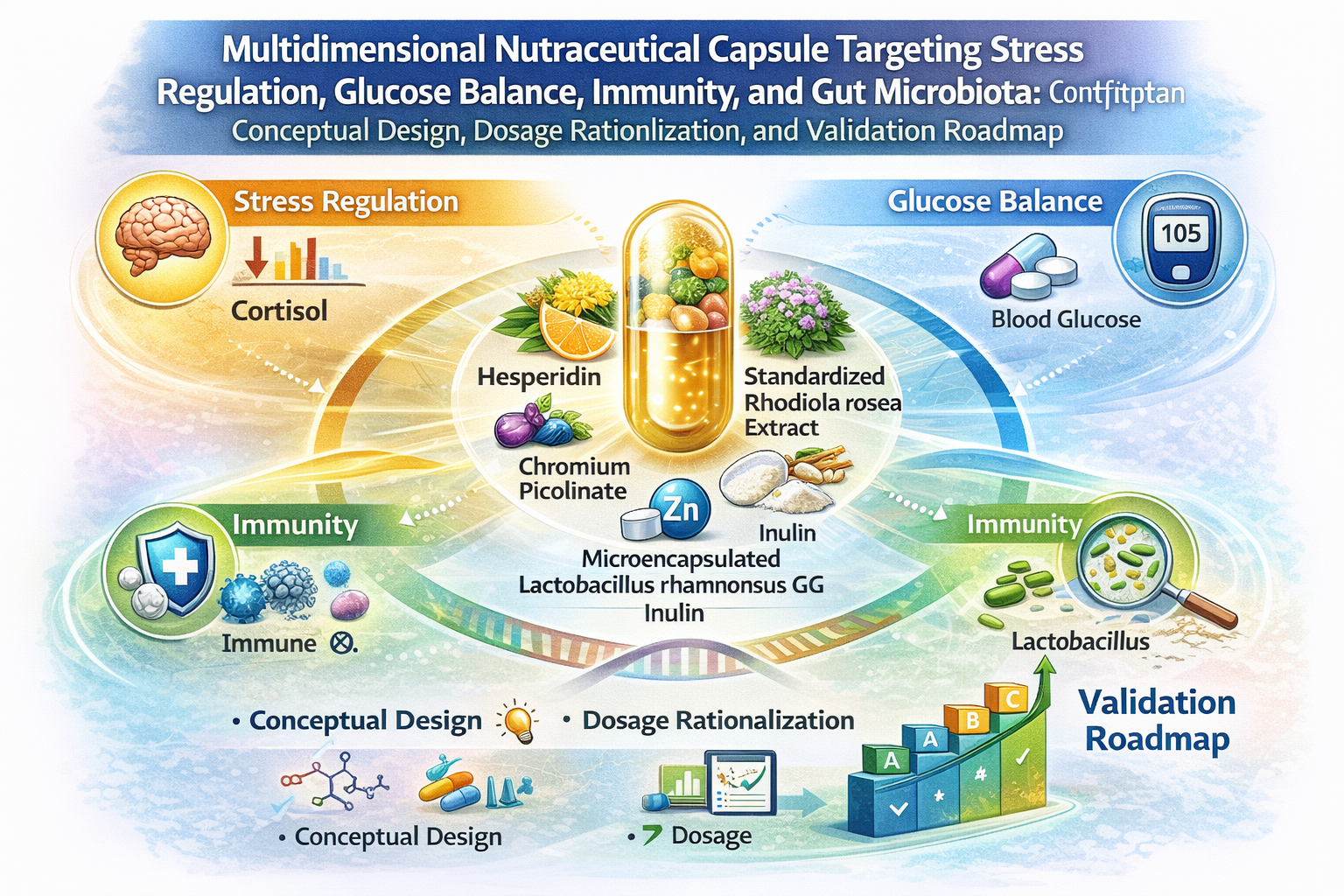
This study presents the conceptual rationale and development plan for a multi-component nutraceutical approach designed in capsule form, which addresses the bidirectional interaction between the stress response, glycemic regulation, immune response, and gut microbiota through multiple axes rather than a single target. The proposed composition consists of hesperidin, standardized Rhodiola rosea extract, chromium picolinate, zinc bisglycinate, microencapsulated Lactobacillus rhamnosus GG, and inulin. Component selection was guided by the principles of (i) biological plausibility with target axes, (ii) safety and tolerability, (iii) potential complementarity/synergy, and (iv) technical feasibility within a size 0 capsule volume. Doses were determined by jointly evaluating the usage ranges reported in clinical and preclinical literature, safety thresholds, and formulation constraints, resulting in an initial design that does not claim clinical efficacy and is suitable for further validation studies.
Keywords:
nutraceutical
; stress adaptation
; glycemic control
; immune modulation
; gut microbiota
; probiotic
1. Introduction
Chronic stress is not merely a psychological condition; it is a systemic biophysiological process that affects metabolic regulation, immune response, and gastrointestinal function through the sustained activation of the hypothalamic–pituitary–adrenal (HPA) axis. Prolonged cortisol exposure is associated with impaired glucose homeostasis, low-grade inflammation, and weakened intestinal barrier integrity. This picture suggests a dynamic network of interactions involving reciprocal feedback loops between stress, metabolism, immunity, and microbiota. Supplementation practices in the field often focus on a single component of this network (e.g., adaptogens alone, probiotics alone, or glycemic regulators alone). However, it is clear that physiological regulation requires “fine-tuning” multiple levers simultaneously, rather than simply turning down a single one. The fundamental assumption of this study is that modulating stress through its metabolic, immune, and microbial feedback mechanisms may be a more sustainable regulatory approach than attempting to directly suppress the stress response. In this context, a composition in capsule form targeting four axes simultaneously (“multi-axis”) has been proposed; component selection, dose rationalization, delivery system, and validation plan have been designed holistically.
The aim of the study is not to prove clinical efficacy. The aim is to clearly demonstrate the scientific rationale for a multi-axial nutraceutical design, define its technical feasibility, and provide a testable roadmap for advanced stability and clinical/semi-clinical evaluations.
2. Materials and Methods
Conceptual Framework and Design Principles
The formulation development process is based on the following four fundamental principles;
- Biological Plausibility: Each component must have a relationship with the target axis as defined in the literature.
- Safety and Tolerability: Selected doses must be within safe ranges and potential side effects must be anticipated.
- Synergy and Interaction: Components must not antagonize each other; where possible, they should have complementary effect potential.
- Technical Feasibility: Components must be stable when combined and fit into a size 0 capsule.
Within this framework, stress adaptation, glycemic regulation, immune modulation, and microbiota support have been identified as target axes.
Component Selection and Functional Roles
Hesperidin
Hesperidin is a bioflavonoid abundant in citrus fruits and possesses a broad biological profile capable of affecting numerous cellular targets through its potent antioxidant/anti-inflammatory effects [1,2]. Of particular note in the immune and gut axis is its ability to modulate gut-associated lymphoid tissue (GALT) and IgA, the “frontline” element of mucosal defense. In animals given oral hesperidin, the total number of bacteria and the amount of bacteria coated with IgA increased, the Lactobacillus ratio rose, and the IgA content in the small intestine increased; this was accompanied by a decrease in interferon-γ and monocyte chemotactic protein-1 (MCP-1) [3].
On the stress front, in the chronic unpredictable stress (CUMS) model, hesperidin reduced depression-like behavioral symptoms, increased 5-HT and BDNF, strengthened the barrier by reducing inflammatory infiltration in the colon and restoring goblet cell/crypt structure, and shifted the microbiota toward a more balanced composition by increasing its diversity; thus appearing to be an agent that alleviates stress load in the “brain-gut axis” in a multifaceted manner [4]. It is particularly emphasized that there are inconsistencies in human studies regarding both stress and other clinical outcomes; a significant portion of this may be related to differences in microbiota composition and associated bioavailability [5]. It highlights the mechanistic/experimental evidence suggesting that hesperidin may support insulin sensitivity and glucose homeostasis at different levels in terms of glycemic balance. Findings such as decreased GLUT2 in the liver and increased GLUT4 in the periphery in diabetic models [6] increased hepatic glucokinase activity and glycogen; and suppression of gluconeogenesis enzymes with naringin strengthen the possibility of an effect that “targets the source” of hyperglycemia [7,8]. Furthermore, in cells made insulin-resistant with palmitate, citrus flavonoids reduce lipid accumulation and increase glucose uptake by activating the AMPK axis; improving parameters such as HOMA-IR and glucose/insulin tolerance in animals supports hesperidin’s balancing role under metabolic stress [9]. For glucosyl hesperidin (GH), a picture emerges of reducing inflammation signals (macrophage infiltration, MCP-1) in the short term and improving glucose intolerance and insulin resistance in the long term [10]. However, in the “real-life” aspect of the work, it is noted that in human studies, meaningful differences are not always observed in outcomes such as glucose homeostasis, and the response can vary significantly from person to person; here it is emphasized that factors such as gut microbiota (especially α-rhamnoseidase activity), low solubility, and food matrix (e.g., orange juice–yogurt combination, fiber matrix) can indirectly shape both glycemic and immune/stress responses by determining absorption/bioavailability [11,12,13,14,15,16]. In this formulation, hesperidin is positioned as a complementary support component aimed at reducing oxidative/inflammatory load.
Rhodiola rosea
Adaptogens are defined as “stress-response modulators” that support homeostasis by re-regulating the organism’s response to stressors at the neuroendocrine and immunological levels. The evidence accumulated for Rhodiola rosea (R. rosea) in this context suggests that the regulation of the stress response via the HPA axis and the rebalancing of the inflammatory response via cytokines and T-cell subpopulations can be considered together. Indeed, R. rosea administration in the EAE model has been associated with a reduction in clinical and histopathological severity; decreases in serum and spleen cell supernatants levels of IL-6, sIL-6R, IFN-γ, and IL-17A, and an increase in IL-4 levels have been reported. In the same model, the suppression of Th1 and Th17 responses, the recovery of the Treg population, and the normalization of Th17/Th1, Th17/Th2, and Th17/Treg ratios indicate that the adaptogenic activity of R. rosea may manifest through immune response polarization [17]. In the context of stress physiology, it has also been reported that R. rosea significantly reduced stress-induced CRH and peripheral corticosterone increases in an intense physical and psychological stress protocol; it supported the modulation of HPA axis reactivity along with a decrease in the hypothalamic c-Fos response [18].
Clinical and narrative reviews provide a consistent basis for the potential of Rhodiola rosea preparations to improve physiological dysfunction in the context of “non-specific stress damage”; they emphasize that the possible biological activity may be related to major components such as salidroside [19,20]. Rhodiola’s potential effects on the microbiota and glycemic balance can be interpreted holistically within the stress–inflammation–barrier integrity–metabolic endotoxemia axis. In the db/db mouse model of type 2 diabetes, R. rosea root extract improved fasting blood glucose; altered the response to exogenous insulin; and reduced circulating lipopolysaccharide levels and hepatic C-reactive protein transcript levels. The study suggested that these findings may be partially related to reduced systemic circulation of inflammatory biomolecules through microbiota modulation and improved intestinal barrier integrity [21].
In terms of glycemic regulation, Rhodiola species have also been shown to inhibit α-amylase/α-glucosidase; specifically, α-glucosidase inhibition may be related to phenolic content and phenolic profile; comparative evaluations with marker compounds such as tyrosol support this biological activity [22]. Preclinical data more directly supporting the microbiota-barrier axis indicate that Rhodiola crenulata extract reduces colonic damage in the DSS-colitis model; preserves epithelial barrier function by upregulating tight junction proteins such as ZO-1 and occludin; and reverses dysbiosis by reducing the abundance of Proteobacteria and opportunistic pathogens while increasing beneficial taxa such as Lactobacillus and Bifidobacterium [23]. When this literature is evaluated collectively, it can be concluded that Rhodiola forms a multi-mechanistic network capable of influencing metabolic endotoxemia and glycemic control through its stress response-suppressing/balancing effects (HPA axis), re-polarization of the immune response (Th17/Th1 suppression and Treg restoration), and barrier-microbiota regulation; however, to validate this inference in the clinical setting, testing the causal chain with standardized preparations and well-designed RCTs remains necessary [24,25,26,27,28]. In this formulation, Rhodiola rosea has been evaluated as an adaptogenic component for stress adaptation and balancing HPA axis-related responses.
Chromium Picolinate
Chromium (Cr) is a well-known trace element with important oxidizing states such as Cr (III) and Cr (VI). Compared to Cr (III), Cr (VI) passes through cell membranes more easily due to ion carriers. This property makes Cr (VI) more toxic [29,30]. In contrast, Cr (III) is considered an important mineral involved in biochemical reactions in human metabolic pathways [31,32] and is evaluated as a candidate trace element for improving metabolic disorders associated with insulin resistance, impaired glucose metabolism, and homeostasis. Dietary chromium (Cr) is naturally found in barley, fruits, vegetables, meat, fish, and especially brewer’s yeast [33,34].
The recommended daily chromium intake for all adults is 30 micrograms. However, high chromium intake has been associated with potential adverse effects such as developmental problems, damage to the skin, respiratory, reproductive, and digestive systems, and cancer. Therefore, the lack of a defined tolerable upper intake level for chromium, combined with limited data in the literature, indicates a situation that requires a cautious approach [35]. Oxidative stress arises from the disruption of the balance between the accumulation/production of reactive oxygen species (ROS) and antioxidant capacity [36,37].
It is emphasized that low ROS levels are necessary for processes such as cellular signaling, proliferation, and host defense; however, excessive ROS can play a role in the pathophysiology of cancer, cardiovascular diseases, metabolic syndrome, inflammatory and neurodegenerative diseases through protein, lipid, and DNA damage. Therefore, the effectiveness of endogenous antioxidant defense and factors that can affect the oxidant/antioxidant balance, such as environmental factors, genetics, radiation, toxic exposure, diet, and nutrition, are important [38]. In this context, it has been reported that chromium intake may reduce oxidative stress markers by inhibiting epinephrine through its insulinotropic effect and activating enzymes such as glutathione reductase, which detoxify free radicals/ROS [39,40].
Clinical and observational findings suggest that individuals with impaired glucose tolerance (IGT), diabetes, and certain lipid disorders may have a relative chromium deficiency; chromium supplementation in these populations may have a beneficial effect on insulin resistance and related disorders [41]. However, effects on antioxidant enzymes and total antioxidant capacity (TAC) in human studies are not always consistent: While Cr (III) supplementation has been reported to yield positive results in markers such as GSH, GSHPx, TBAR, MDA, and TAC in type 2 diabetes and polycystic ovary syndrome [42,43], some studies have failed to detect a significant effect [44,45]. Therefore, the claim of “improving glycemic balance” should be interpreted considering the context (initial deficiency, dose, form, duration, metabolic phenotype). Evidence that chromium (especially Cr3+) supplementation may modulate the inflammatory response is growing, but results are heterogeneous. To reduce this uncertainty, systematic reviews and meta-analyses have been reported that aim to more accurately predict the effectiveness of chromium supplementation on mediators such as TNF-α, hs-CRP, and IL-6 [46].
Preclinical model data also support this line of reasoning. In diabetic obese rats, 7 weeks of Cr niacinate supplementation (400 μg/kg) reduced TNF-α, IL-6, CRP, and oxidative stress biomarkers by preventing NF-kB activation. Similarly, in a study comparing Cr-niacin (Cr-N) and Cr-picolinate (Cr-P) in diabetic rats, Cr-N produced a greater reduction in TNF-α, IL-6, glucose, HbA1, cholesterol, TG, and lipid peroxidation, Cr-N caused a greater reduction in TNF-α, IL-6, CRP, LP, HbA1, TG, and cholesterol, while Cr-P showed a decrease in TNF-α, IL-6, and LP [47]. Furthermore, the increase in serum SOD and TAC levels observed after 400 μg/kg Cr intake in growing pigs suggests an indirect immune/inflammatory effect via antioxidant defense systems [48]. Within the general mechanistic framework, the beneficial effects of chromium supplementation have been associated with the activation of glutathione reductase and other enzymes, the improvement of insulin resistance, and the prevention of protein glycosylation [49].
Chromium picolinate (CrPic) stands out as a form that can exhibit both antidepressant and antidiabetic properties. In a controlled design conducted in diabetic rats, CrPic administration (80 μg/day; based on body weight) increased brain chromium levels in the high-fat diet/STZ model and improved measurements of carbohydrate metabolism and serotonergic properties (P < 0.001). Parallel to this improvement, serum and brain insulin, tryptophan, and serotonin levels increased (P < 0.001), while serum cortisol levels decreased (P < 0.01). The absence of significant changes in general parameters other than chromium levels in the control group and the lack of reported side effects indicate that CrPic may be functional at the intersection of “stress response–glycemic balance,” particularly in the context of metabolic stress/diabetes. The critical point here is that CrPic’s “stress-reducing” effect has been demonstrated in a metabolic disease model not directly through psychosocial stress, but through cortisol and serotonergic system indicators [50]. Therefore, the claim must be properly contextualized. CrPic is associated with measurable changes in the neuroendocrine-metabolic axis, at least under certain conditions. It is becoming increasingly clear that micronutrients can influence hormone effects and host metabolism, and that dietary components, microbes, and the host’s immune-endocrine-metabolic responses interact in the gut. Minerals and trace elements can affect the composition of the microbiota, intestinal barrier function, segmented metabolic inflammation, and endocrine control of glucose metabolism (including insulin and thyroid hormones). This perspective suggests that the potential effects of supplemental forms such as Cr (III) and especially CrPic on glycemic balance and inflammation may extend beyond “blood parameters” to the gut-host axis. However, since this text does not provide specific evidence demonstrating CrPic’s direct effect on the microbiota, the most accurate approach here is to formulate a hypothesis and clearly indicate the need for research. CrPic’s relationship with glycemic control, oxidative stress, and inflammatory mediators may be a “potential node” in the microbiota-immune-metabolic network; but targeted preclinical/clinical studies are needed to clarify which bacterial profiles, which barrier markers, and which immune responses this node interacts with [51].
The collected findings indicate that the toxicity and bioavailability profile changes depending on the form of chromium; Cr (III) and especially CrPic carry potential effects on glycemic balance, oxidative stress, and inflammation indicators, but there is a consistency issue in human data [52,53,54,55,56,57,58,59,60,61,62]. Specifically in the diabetic model, improvements in serotonergic system indicators and stress-related biomarker changes such as decreased cortisol, along with improved carbohydrate metabolism, provide a strong biological rationale within the “stress–glycemic balance” axis [63]. It is logical to place chromium within the framework of micro-nutrient – microbiota – immune – metabolic interactions in terms of microbiota and immunity. However, since CrPic requires direct evidence of microbiota effects, this topic should be positioned as a “research agenda” rather than an “established finding” at this stage [64]. In this formulation, chromium picolinate is considered a supportive component for managing glycemic fluctuations.
Zinc
Glycine is a neurotransmitter that plays a role in regulating physiological inhibitory processes in the central nervous system (CNS) with GABA and can exert this effect by increasing transmembrane conductance in specific pentameric ligand-gated ion channels. Zinc ions can enhance receptor affinity for glycine, thereby strengthening channel opening and supporting inhibitory processes in the CNS. Therefore, addressing glycine and zinc deficiencies is considered a beneficial approach in conditions such as post-stress CNS dysfunction and difficulty falling asleep [65]. Diabetes is associated with depression, anxiety, and cognitive decline, and in mental disorders, it increases stress, reduces self-care, and negatively affects glucose metabolism. For this reason, it can contribute to the development of diabetes. Therefore, comorbidity is common. Nutrition is a determining factor in both conditions, and deficiencies in omega-3 fatty acids, vitamin D, B vitamins, zinc, chromium, magnesium, and selenium have been reported to be associated with pathogenesis. Personalized dietary interventions and targeted nutritional supplementation have been shown to have the potential to improve both metabolic and mental health outcomes in individuals with type 2 diabetes [66].
Zinc is an essential trace element necessary for growth and development and contributes to the function of numerous enzymes. It plays a role in immunity, endocrine functions, gene expression, and antioxidant defense. It has been reported that different forms of zinc supplements have advantages and limitations, and new formulations are being discussed in this context [67]. Bioavailability is closely related to the dietary matrix; phytates can reduce absorption, while proteins, peptides, and amino acids can increase it. Organic zinc forms (e.g., amino acid complexes) are more readily absorbed than some inorganic forms, and zinc–amino acid combinations can utilize amino acid transporters for absorption [68]. It is noted that zinc supplementation at appropriate levels is considered safe and has reported potential benefits in various clinical conditions [69].
A bidirectional relationship exists between zinc status and Type 2 diabetes; both deficiency and excess may be associated with metabolic consequences. Zinc deficiency may negatively affect insulin synthesis/signaling, increase oxidative stress and inflammation, while excessive intake may lead to metabolic disorders. Diabetes itself can also lower zinc levels through changes in absorption and excretion. Therefore, rather than routine supplementation, an approach of screening to identify and correct deficiency on an individual basis is considered more reasonable [70].
Zinc can also interact with the gut microbiota, affecting the course of gastrointestinal diseases. Effects related to immune modulation, inflammation control, and certain infectious/allergic conditions have been reported [71]. In parallel, it is noted that heavy/toxic metals can alter the composition of the microbiota and that findings may be heterogeneous depending on variables such as exposure pattern and duration [72]. In this formulation, zinc is positioned as a fundamental micronutrient support due to its role as a cofactor in immune functions and neuroendocrine/metabolic processes.
Lactobacillus rhamnosus GG
The gut microbiota has emerged as a critical modulator in metabolic diseases, and there is significant evidence supporting its role in alleviating diabetes-related nephropathy. In this context, the study evaluated how the probiotic Lactobacillus rhamnosus GG (LGG) protects the kidneys from diabetes-induced damage by targeting the gut-kidney axis. In a study involving six experimental groups of rats, including healthy controls and diabetic models treated with probiotic and antibiotic combinations, probiotic supplementation initiated four weeks prior to diabetes induction significantly improved gut microbiome composition, metabolic parameters, and kidney health in diabetic rats. The findings included normalized microbial diversity, improved glucose control, reduced inflammation and oxidative stress, and preserved renal tissue structure; microscopic examination revealed preserved glomerular architecture and podocyte integrity, while DNA analysis showed reduced renal cell damage. Six experimental cohorts (control, probiotic-supplemented control, diabetic, diabetic receiving probiotic therapy, diabetic receiving antibiotic therapy, and diabetic receiving both antibiotic and probiotic therapy) were established using validated protocols, involving intraperitoneal streptozotocin (50 mg/kg) administration after overnight fasting; probiotic treatment (3 × 10⁹ CFU/kg, twice daily) was initiated one month prior to diabetes induction and continued throughout the study; Blood glucose indices were monitored at two-week intervals, inflammatory biomarkers, renal function indices, and urinary albumin excretion were evaluated, the metabolic profile was examined using HOMA-IR and metabolic syndrome scores, and microbiome characterization was performed using 16S rRNA gene sequencing and metagenomic shotgun sequencing. L. rhamnosus GG supplementation increased microbiome richness and evenness metrics, principal component analysis showed distinct clustering between treatment groups, and the Prevotella/Bacteroides ratio, a novel marker of metabolic dysfunction, returned to normal after probiotic intervention; it also slowed diabetic progression and reduced glycated hemoglobin by 32%, while proinflammatory cytokines (IL-6, TNF-α) decreased and anti-inflammatory mediators (IL-10, TGF-β) increased; Renal morphometric analysis confirmed preserved glomerular architecture and reduced interstitial fibrosis, while transmission electron microscopy confirmed preserved podocyte foot process integrity; Consequently, it was emphasized that LGG exhibits a multifaceted nephroprotective effect through microbiome reconstitution, metabolic improvement, and inflammation modulation, and could form the basis for combined probiotic-pharmacological approaches [73].
In terms of glycemic balance, in the context of obesity where lipotoxic damage disrupts GLP-1 secretion, LGG supernatant in NCI-H716 cells treated with palmitic acid (PA) restored the PA-induced decrease in PC1, intracellular proglucagon (GCG) accumulation, and L cell apoptosis by primarily inhibiting endoplasmic reticulum stress and suppressing the ATF3/Chop pathway; overexpression of Chop or ATF3 partially reversed this protective effect; in a diet-induced obese mouse model, LGG improved body weight, insulin resistance, and glucose tolerance in a diet-induced obese mouse model and restores GLP-1 secretion, which may be related to the inhibition of the ATF3/Chop pathway, regulation of gut microbiota composition, and increased short-chain fatty acid production [74]. Similarly, in a 90-day placebo-controlled, double-blind, randomized clinical trial in healthy middle-aged and elderly adults, ANCOVA with baseline values controlled showed group differences in follow-up HbA1c values [F (1,90) = 8.44, p = 0.005]; HbA1c increased in the placebo group but remained stable in the probiotic group, suggesting that LGG may provide protection against changes in glycemic control if repeated. Furthermore, within the framework that restoration of impaired microbiota may be effective on type 2 diabetes, Lactobacillus rhamnosus NCDC 17 and L. rhamnosus GG were administered for six weeks with a high-fat diet (HFD) to rats with type 2 diabetes induced by a high-fat diet and low-dose streptozotocin. NCDC 17 improved biochemical parameters such as OGTT, fasting blood glucose, plasma insulin, glycated hemoglobin, free fatty acids, triglycerides, total cholesterol, LDL/HDL cholesterol, and oxidative stress (thiobarbituric acid reactive substances and catalase, superoxide dismutase, glutathione peroxidase activities in blood and liver), bifidobacteria and lactobacilli in the cecum, GLP-1 gene expression, and adiponectin in epididymal fat. It has been reported to reduce propionate levels (%) in the cecum and TNF-α and IL-6 expression in epididymal fat [75].
In elderly subjects, an 8-week Lactobacillus rhamnosus intervention (10 × 10⁹ CFU daily) was evaluated for its effects on glycemic index, lipid profile, and microbiome; Gaussian regression analysis showed a significant improvement in LDL cholesterol in the probiotic group (p = 0.045), and microbiome analysis reported numerical changes at the phylum and genus/species levels (e.g., Proteobacteria RF 14.79 ± 5.58 to 23.46 ± 8.02, p = 0.100; a significant decrease in Butyricimonas; an increase in Bacteroides vulgatus, p = 0.021), subtle changes in alpha and beta diversity composition were observed, and limitations (small sample size, short duration, single strain, lack of long-term follow-up) were highlighted [76]. In terms of stress and immunity, within the framework of the effects of chronic stress on the central nervous system (CNS) extending to depression and anxiety, the administration of Lactobacillus rhamnosus GG (ATCC 53103) (LGG) (15 × 10⁸ cfu/ml/day) reduced depression-like behaviors in Wistar Albino rats; increased BDNF, 5-HT1A, DRD1, ADRA-2A, GABA-A α1, CNR1 expression levels in the hippocampus and NOD1 receptor expression in the small intestine (p < 0.05); neurodegeneration, glial cell activity, and intestinal permeability in Wistar Albino rats; it was also found to be more effective than bupropion and venlafaxine, suggesting that LGG may be a potential psychobiotic [77].
Evidence is increasing regarding the antidepressant and related GABAergic effects of probiotics developed from Lactobacillus rhamnosus strains in the gut microbiota–gut–brain axis; depressive states in addiction withdrawal are associated with HPA axis hyperactivity and weakened GABA signaling; therefore, it has been discussed that probiotic administration may offer potential therapeutic pathways aimed at restoring central GABAergic activity responsible for reducing HPA axis hyperactivity [78]. In terms of immunomodulation, oral LGG supplementation is generally considered safe, exhibits immunomodulatory and antimicrobial effects, and can colonize the gut and other parts of the body thanks to its pili expression; It has been evaluated in twenty-two disease areas, but strong evidence is limited in many areas due to small sample sizes, diverse probiotics, and adjuvant treatments. However, benefits have been reported in areas such as improving immune responses after vaccinations and managing antibiotic/cancer-related diarrhea [79]. In this formulation, LGG is designed as a probiotic component that can contribute to multi-axial regulation through the intestinal barrier and immune tolerance.
Inulin
The gastrointestinal system plays a critical role in protecting human health through processes such as nutrient absorption, forming a barrier against pathogens, and two-way communication with the brain. It has been reported that microbial density in the colon can reach 10¹² colony-forming units per gram of lumen content, and that microbial diversity is closely related to metabolic capacity, such as fiber fermentation, vitamin, and amino acid synthesis. The gut microbiota also supports immune system activity and is decisive in modulating host physiology and metabolism. However, the gut microbiota and gut functions change throughout life. Age-related physiological decline involves changes in immune reactivity and microbiota composition, while the total bacterial load often remains relatively stable. Firmicutes, Bacteroidetes, Actinobacteria, Proteobacteria, Verrucomicrobia, and Fusobacteria are the major phyla frequently reported in the human gut microbiota. In older individuals, some studies have reported a decrease in bifidobacteria, while others have reported a decline in Bacteroides, Clostridia, and Lactobacilli populations. Progressive decline in mucosal immune response may be observed with age; markers such as fecal calprotectin and β-defensin2, as well as indicators such as salivary IgA and total antioxidant capacity (TAC), can be used to monitor these processes. In this context, enriching the population of bacteria that can ferment dietary fiber may be beneficial; interest in selected probiotics, prebiotics, and synbiotic formulations is increasing. Inulin and fructo-oligosaccharides (FOS), resistant starch (RS), galacto-oligosaccharides (GOS), and xylo-oligosaccharides (XOS) are among the most studied prebiotics. It is emphasized that fibers can effectively modulate the microbiota, particularly dominant species, and that a diverse microbiota can benefit the host. In this context, synbiotics, which combine probiotic strains with selectively usable fibers, are considered an approach that can improve both barrier function and immune response. In a double-blind, randomized, placebo-controlled clinical trial conducted in elderly individuals, two Lactobacillus strains (L. plantarum PBS067 and L. acidophilus PBS066), one Bifidobacterium strain (B. animalis spp. lactis BL050), and two types of fructose (fructo-oligosaccharides with a degree of polymerization of 3–5 and inulin-type fructans with a DP of 10) were administered for 28 days, followed by a 28-day follow-up period. During this process, indicators such as gut microbial composition, fecal β-defensin2 and calprotectin, salivary IgA, salivary TAC, and the incidence of common infectious diseases were evaluated; the design also allowed for comparison of the efficacy of the synbiotic treatment with the group receiving only prebiotics and with placebo [80]. In stress models, long-term preventive supplementation with Jerusalem artichoke powder and chicory root inulin has been reported to reduce anxiety/depressive behaviors, preserve cognitive function, increase neurogenesis, and alleviate dysbiosis in mice exposed to CUMS [81].
In an STZ-induced mouse model of type 1 diabetes, inulin may be associated with a protective phenotype against the disease, along with increased mucus production, butyrate levels, and enrichment of specific microbial taxa (e.g., Bifidobacterium, Clostridium cluster IV, Akkermansia muciniphila). and that the CCL17-CCR4 axis may play a role in regulating T cell migration in this mechanism [82]. Dietary fiber (DF) is defined as carbohydrate polymers that resist digestion by endogenous enzymes in the small intestine and contain ≥ 10 monomeric units. DF includes edible carbohydrate polymers naturally occurring in foods and carbohydrate polymers synthesized by physical, chemical, or enzymatic methods. DF can be classified as “soluble DF” (SDF) and “insoluble DF” (IDF) based on solubility, and as “partially fermentable fiber” and “fully fermentable fiber” based on fermentability. Microfibrils formed by intermolecular and intramolecular hydrogen bonds prevent the breakdown and utilization of partially fermentable fiber, thereby preventing its fermentation in the intestine. The health benefits of DF mainly arise from altering the composition of the gut microbiota and microbial metabolites. Inulin is a type of PFA. It is a type of fructose obtained mainly from plants such as chicory, ginger, garlic, onion, and asparagus. “Inulin” is a general term covering all β-(2,1) linear fructoses, and inulin-type fructoses must have β-(2,1) bonds that give inulin its unique structural and physiological properties and make it resistant to enzymatic hydrolysis by human saliva and small intestine digestive enzymes. Most inulin-type fructoses have an average degree of polymerization of 10-12 and a chain length of 2-60 molecular weight units. Oligofructose can be hydrolyzed from inulin by the inulinase enzyme into chains ranging from 2 to 10 units in length. Therefore, the sugar chain of inulin is longer compared to oligofructose, which results in slower fermentation and gas production. Inulin is widely used in the development of prebiotics, fat substitutes, sugar substitutes, texture modifiers, and functional foods. The U.S. Department of Agriculture recommends a daily fiber intake of 25-36 grams (or 14 grams per 1000 calories per day). In 2003, the U.S. Food and Drug Administration (FDA) classified inulin as a “generally recognized as safe” substance. The effective daily intake is 5 grams, and the recommended maximum daily intake is 15-20 grams. The most common side effects of inulin intake are nausea, bloating, and gas. In healthy adults, consuming less than 40 grams of inulin per day is safe. However, inulin can cause serious side effects in patients with inflammatory bowel disease (IBD) or allergies. The gut is at the forefront of the body’s defense system and is exposed to many pathogens and bacteria. The gut immune system, the body’s largest immune organ (also known as the mucosal immune system), consists primarily of intestinal epithelial cells (IECs), lamina propria lymphocytes, intraepithelial lymphocytes, and Peyer’s patches. A diet rich in inulin has been reported to improve the function of the intestinal barrier and modulate the immune system. Inulin’s unique β-configuration at the C2 monomeric isomer of fructose prevents the hydrolysis of inulin-type fructose by digestive enzymes (including α-glucosidase, maltosidase, and sucrase). As a result of fermentation by gut bacteria, inulin produces short-chain fatty acids (SCFAs), including lactate and acetate, butyrate, and propionate, as well as gases that are expelled from the body. In particular, lactate does not typically accumulate in a healthy gut because microbes can convert it into propionate, butyrate, or acetate. The degree of fermentation of dietary fiber is closely related to its composition. Short-chain dietary fibers (SDFs) such as inulin are generally more fermentable than inducible dietary fibers (IDFs) and produce more gas and SCFAs. Additionally, the fermentation properties of inulin are related to the length of the sugar chain; short-chain inulin is more soluble in water than long-chain inulin. Muthyala and colleagues reported changes in fecal SCFA levels in mice of different ages after inulin intake. They found that the main metabolite in middle-aged mice was butyric acid, while the fecal level of propionic acid decreased with age. These findings indicate that age is an important factor affecting inulin metabolism by the gut microbiota [83].
It is also emphasized that the metabolic effects of inulin may vary depending on its degree of polymerization. In a study comparing inulin (DP3-60) and FOS (DP3-10) in a T2DM mouse model, it was reported that both compounds increased microbiota diversity and reduced the Firmicutes/Bacteroidetes ratio, but showed different advantages in specific metabolic outputs [84]. In healthy adults, β2-1 fructan supplementation was reported to increase fecal SCFA and bifidobacteria content, affect certain immune parameters, but increase the frequency of self-reported gastrointestinal symptoms [85]. In diabetic rats, inulin treatment has been reported to improve fasting glucose and lipid panel, increase GLP-1, reduce inflammatory markers, and bring the microbiota composition closer to a “normal” profile [86].
In a model of gestational diabetes, it has been reported that inulin-type fructose can exert a beneficial effect on glucose-lipid metabolism and microbiota composition, particularly associated with changes such as increased presence of Verrucomicrobia, Bifidobacterium, and Akkermansia [87]. Within the context of the gut-brain axis, the potential role of inulin in mitigating stress-related illnesses is discussed. The framework suggesting that inulin can influence neurochemical and behavioral outcomes via the gut microbiota is addressed through the components of the gut-brain axis and possible biological pathways [88]. From a chronological nutritional perspective, it has been suggested that the timing of inulin administration may alter the effects; evening administration may be more pronounced in inhibiting the inflammatory response and improving certain metabolic pathways, supported by metabolomic differences [89]. Confirmations via fecal microbiota transplantation also suggest that timing is reflected in behavioral outcomes via the microbiota-gut-brain axis [90].
In the context of generalized anxiety disorder, it has been reported that inulin intake may show a negative correlation with anxiety symptoms; however, there are also findings indicating that high doses may have adverse effects [91]. Recent reviews consider inulin not only as a “prebiotic fiber” but also as a multifunctional component with applications in microbiota, SCFA production, barrier integrity, immunomodulation, glucose-lipid regulation, and even food/pharmaceutical technology [91,92,93,94,95,96,97,98]. The long history of consumption of the inulin-FOS group has been discussed since early times through its bifidogenic effect and its “less physical effects than typical fibers”; the advantage of prebiotics in promoting the selective growth of endogenous bacteria is emphasized [99]. However, it is also noted that gastrointestinal symptoms and, in some cases, adverse effects have been reported in association with inulin consumption; therefore, it is necessary to clarify the tolerable doses and possible inulin-drug interactions, especially when using supplements [100]. There are also comprehensive reviews that address inulin’s role in microbiome protection through different model organisms and human data [101]. Furthermore, it is emphasized that inter-individual microbiota differences, dosage, dietary context, and synergistic nutrient interactions can significantly shape the effect of inulin; personalized use approaches will be more critical in the future [102,103]. In this formulation, inulin was added at a low dose to support a synbiotic approach and was evaluated based on formulation compatibility and targeted co-use rather than a claim of prebiotic effect at the clinical level.
Dosage Rationalization
Target Dose Ranges
The dosage ranges of the components in the formulation were determined by considering the effective usage ranges reported in the current clinical and preclinical literature, as well as the safe intake levels and upper limits for nutrients defined by the European Food Safety Authority (EFSA). Accordingly, the target dosage ranges per capsule were defined as follows: 100–300 mg for hesperidin, 100–300 mg for standardized Rhodiola rosea extract, 100–400 µg for chromium picolinate (approximately 12–50 µg elemental chromium), 5–15 mg for elemental zinc, and 10⁸–10¹⁰ CFU for Lactobacillus rhamnosus GG. Inulin, as a prebiotic fiber, was designed in the range of 20–100 mg. The EFSA’s tolerable upper intake level (UL) for zinc is 25 mg/day, and the zinc intake in the recommended daily use (1–2 capsules per day) in this study falls below this limit. The adequate intake (AI) value for chromium as defined by EFSA is approximately 40 µg/day, and the recommended daily intake is close to this range and does not pose a safety risk. While EFSA has not defined a specific upper limit for plant flavonoids (e.g., hesperidin) and adaptogenic plant extracts, the safe usage ranges reported in the literature have been used as a basis. Similarly, there is no upper limit set by EFSA for probiotics, and the recommended CFU levels are within the ranges considered safe in clinical studies. Within these ranges, an example capsule contains: 150 mg hesperidin, 120 mg Rhodiola rosea extract, 200 µg chromium picolinate, 10 mg elemental zinc (in bisglycinate form), 1 x 10⁹ CFU microencapsulated Lactobacillus rhamnosus GG, and 40 mg inulin. This approach reflects a design strategy that favors moderate doses to support physiological regulation within the EFSA safety framework, rather than pharmacological loading.
Delivery System Design, Probiotic Viability, and Rationale for Targeted Release
The formulation is designed within the No. 0 capsule system. The No. 0 two-piece hard capsule is a mid-volume option in the capsule sizing system between 00–5; the manufacturer’s technical tables report the volume of No. 0 as approximately 0.68 mL, the locked length as approximately 21.7 mm, and the outer diameter as approximately 7.65 mm [104,105]. Capsule size selection is made by considering the target filling mass (mg) together with the tapped density of the powder mixture (g/mL); in practice, the required filling volume is calculated using the relationship [Required volume (mL) = Filling mass (g) / tapped density (g/mL)] and matched with the manufacturer’s volume tables [106]. In this study, the size 0 capsule was preferred because it allows the unit dose of the formulation to be encapsulated without exceeding the volume limit of 0.68 mL and offers a more convenient swallowability profile compared to larger capsule sizes. The US Food and Drug Administration (FDA) recommends that tablets should not exceed 22 mm in maximum size and capsules should not exceed the standard size 00 for swallowability and patient acceptance [107]. The fact that the locked length of the size 0 capsule is below this limit [108] and that swallowing difficulties with solid oral dosage forms are significantly common in the population [109] supports a rational choice in terms of patient compliance. Indeed, it has been shown that individuals reporting swallowing difficulties have lower confidence in swallowing larger capsules such as 000 and 00 [110]. Evidence that tablet size and shape affect swallowability also underscores the importance of patient-centered size selection [111].
Production and Application Techniques
Technical feasibility was considered critical in the product development process, particularly in terms of capsule volume constraints, component compatibility, and delivery system. The composition can be presented in HPMC or gelatin capsules. To support probiotic viability, the capsule can be selected to be acid-resistant (enteric); thus, partial protection of the components from stomach acid and dissolution/release in the intestine are targeted. In the production flow, the components are weighed, a premix is prepared, and mixed until a homogeneous mixture is obtained. The resulting mixture is filled into size 0 capsules. It is recommended that production be carried out in a low-humidity environment; attention should be paid to the heat/humidity sensitivity of probiotic and herbal components. The composition is designed considering a usage scenario of 1 capsule per day for adults; and up to 2 capsules per day if needed.
Proposed Formulation And Design Outputs
This study is a design and rationale study not aimed at generating clinical results. Therefore, this section summarizes the components of the proposed formulation, the target doses per capsule, and the quality characteristics that will form the basis for further validation steps.

Table 1.
Target Components and Representative Doses Per Capsule.
| Component | Amount of Use |
|---|---|
| Hesperidin | 150 mg |
| Rhodiola rosea extract | 120 mg |
| Chromium picolinate | 200 µg |
| Zinc | 10 mg |
| L. rhamnosus GG | 1×10⁹ CFU |
| Inulin | 40 mg |
| Orange Flavor | 10 mg |
3. Results
This article proposes a framework for how the interaction between stress response, metabolic regulation, immune function, and gut microbiota can be translated into product design, considering this system as a multiple and interactive system. The strength of the proposed approach lies in its aim to support physiological regulation through “complementary micro-effects” on different axes, rather than maximizing a single component. From a mechanistic perspective, increased cortisol via the HPA axis can fuel glycemic fluctuations and inflammatory responses; disruption of barrier integrity and translocation of microbial products can sustain low-grade inflammation. In this context, Rhodiola rosea is a candidate component to support stress adaptation; hesperidin to reduce oxidative/inflammatory load; chromium picolinate to support glycemic regulation, and zinc to contribute to regulation through its cofactor role in immune and neurometabolic processes.
4. Discussion
The combination of LGG and inulin, on the other hand, can intervene in the microbiota-immune tolerance-neuroimmune signaling pathway via a symbiotic approach. The combined use of these components establishes a multi-axis regulation hypothesis without claiming to produce strong pharmacological effects individually. The practical aspect of the design is the enteric delivery approach aimed at staying within the size 0 capsule volume and maintaining probiotic viability. However, capsule volume may limit interventions at the gram level, especially for prebiotic components; therefore, the claim language should be carefully limited in the use of low-dose prebiotics. Similarly, inter-individual response differences and the possibility of inter-component interactions should be considered in multi-component designs. At this point, the next scientific step is to demonstrate the quality characteristics and delivery performance of the formulation with data. Content validation, stability, dissolution profile, and probiotic viability measurements; followed by tolerability and pilot evaluation with selected biomarkers will form the publishable evidence backbone of this design. Assessments regarding active ingredients and drug interactions are as follows;
- Zinc can complex with quinolones and tetracyclines in the gastrointestinal system, reducing the absorption of both zinc and antibiotics. To minimize this interaction, it is recommended to take the antibiotic at least 2 hours before or 4–6 hours after zinc, and since zinc can reduce the absorption/effect of penicillamine, it is recommended to take them at least 1 hour apart [112].
- Chromium can increase insulin sensitivity; concomitant use with insulin may increase the risk of hypoglycemia. Similarly, additive effects and the risk of hypoglycemia have been noted with metformin and other antidiabetic drugs. It has been reported that taking chromium picolinate concomitantly with levothyroxine reduces levothyroxine absorption within a 6-hour window [112].
- There are meta-analyses showing that LGG can reduce the risk of AAD, but the quality of evidence varies depending on the study, and the emphasis on “strain-specific effect” is important [113].
- Although probiotics are considered “generally safe” in most populations, the literature describes theoretical and rare risks such as systemic infection (fungemia/bacteremia). The AHRQ report also states that “the current literature is not very suitable for answering with high confidence regarding safety.” The same review also notes “one episode” of invasive disease associated with LGG in the immunocompromised group [114].
- It is summarized that GI symptoms such as gas, bloating, and abdominal pain can occur with inulin consumption, and exacerbations have been reported in some IBD models; it is also specifically stated that the issue of “inulin-drug interactions” needs to be clarified [115].
Effects of Active Ingredients Based on Literature
- Hesperidin (150 mg): As previously mentioned, the absorption of hesperidin can be significantly altered by the gut microbiota and food matrix; examples include fibrous matrix/orange juice/yogurt. Hesperetin, the aglycone of hesperidin, has been shown to inhibit CYP2C9-mediated drug metabolism in vitro [116].
- This does not mean it will always “happen” in clinical practice; however, it is a point of theoretical consideration in CYP2C9 substrates with a narrow therapeutic range. Hesperetin has been reported to inhibit rabbit platelet aggregation in a concentration-dependent manner and to affect the COX-1 pathway [117].
This data alone does not mean “definite risk with anticoagulants,” but a warning should be given to those using antiplatelet/anticoagulant drugs to consult a physician.
- A case of mania/hypomania associated with Rhodiola use has been reported [118].
- Therefore, it is reasonable to approach this with more caution, especially in individuals with bipolar spectrum disorder, a predisposition to agitation/insomnia, or those using psychotropic medications [118].
As previously mentioned, the formula is designed so that antagonism between its components is not expected. Findings suggest that inulin is added in low doses not for a “probiotic claim,” but to support a synbiotic approach.
5. Conclusions
This study presents the conceptual rationale, component selection, and technical design approach for a multi-component nutraceutical capsule targeting the stress regulation – glycemic balance – immune function – gut microbiota axes together. The presentation of the proposed composition in an enteric capsule was evaluated as a rational delivery strategy, particularly in terms of probiotic viability and targeted intestinal release. However, this text does not make claims of clinical efficacy; the essential element that will determine the scientific value of the design is the data to be obtained from planned quality validations and pilot evaluations.
Clinical Validation Requirement
The main limitation of this study is that clinical efficacy has not been directly evaluated. The next-stage plan includes the following steps:
- Stability studies (humidity, temperature, shelf life).
- Probiotic viability verification tests (CFU) and monitoring throughout shelf life.
- Safety and tolerability assessments.
- Pilot clinical or quasi-clinical studies (stress scales, glycemic parameters, gastrointestinal tolerance).
- In-vitro dissolution tests (SGF→SIF) for delivery system performance and, where appropriate, standardized digestion simulation (e.g., INFOGEST).
- A short-term bioavailability (PK-lite) or user compliance/tolerability-focused pilot evaluation between enteric capsule and control capsule under appropriate conditions.
A multi-layered validation approach has been planned to evaluate the interaction between components and the optimization of bioavailability. In the first stage, intra-formulation compatibility and stability will be monitored throughout the shelf life using marker analyses for hesperidin and Rhodiola rosea, zinc/chromium quantification, moisture/water activity measurements, and Lactobacillus rhamnosus GG viability counts (CFU). In the second stage, the performance of the delivery system will be evaluated using in-vitro dissolution tests (SGF→SIF) mimicking gastrointestinal conditions and, where appropriate, standardized digestion simulation (e.g., INFOGEST). This will comparatively examine both the release/bioavailability profile of plant components and the level of protection of probiotic viability in an acidic environment.
In the third phase, to verify bioavailability, a short-term pilot bioavailability (PK-lite) approach between the enteric capsule and the control capsule, or alternatively, a user compliance/tolerability-focused pilot evaluation, will be designed, where feasible. This phased approach aims to systematically evaluate both the technical feasibility (stability, viability, release) and biological applicability (bioavailability and potential synergy/antagonism signals) of the formulation.
6. Patents
A patent application has been filed regarding the formulation described in this article. Patent application number: 2025/021949.
Author Contributions
Conceptualization: A.K.; Methodology: A.K.; Literature Review: A.K.; Writing—Original Draft: A.K.; Writing—Review and Editing: A.K.
Funding
This research received no external funding.
Conflicts of Interest
The author is the inventor of the formulation described in this article and may receive licensing/royalty income if it is commercialized. There is no other conflict of interest to declare.
References
- Pyrzynska, K. Hesperidin: A Review on Extraction Methods, Stability and Biological Activities. Nutrients 2022, 14 (12), 2387.
- Aggarwal, M.; Tuli, H. S.; Thakral, F.; Singhal, P.; Srivastava, S.; Sethi, G. Molecular mechanisms of action of hesperidin in cancer: Recent trends and advancements. Experimental Biology and Medicine 2020, 245(5), 486-497.
- Estruel-Amades, S.; Massot-Cladera, M.; Pérez-Cano, F.J.; Franch, À.; Castell, M.; Camps-Bossacoma, M. Hesperidin Effects on Gut Microbiota and Gut-Associated Lymphoid Tissue in Healthy Rats. Nutrients 2019, 11(2), 324.
- Liang, H. O.; Chen, S. D.; Wang, Y. J.; Zheng, X. T.; Liu, Y. Y.; Guo, Z. Y.; Gu, X. H. Effect of hesperidin on chronic unpredictable mild stress-related depression in rats through gut-brain axis pathway. Chinese Journal of Integrative Medicine 2025, 31(10), 908-917.
- Mas-Capdevila, A.; Teichenne, J.; Domenech-Coca, C.; Caimari, A.; Del Bas, J. M.; Escoté, X; Crescenti, A. Effect of Hesperidin on Cardiovascular Disease Risk Factors: The Role of Intestinal Microbiota on Hesperidin Bioavailability. Nutrients 2020, 12(5), 1488.
- Jung, U. J.; Lee, M.K.; Park, Y. B.; Kang, M. A.; Choi, M. S. Effect of citrus flavonoids on lipid metabolism and glucose-regulating enzyme mRNA levels in type-2 diabetic mice. Int J Biochem Cell Biol 2006; 38(7):1134-45.
- Jung, U. J.; Lee, M. K.; Jeong, K. S.; Choi, M. S. The hypoglycemic effects of hesperidin and naringin are partly mediated by hepatic glucose-regulating enzymes in C57BL/KsJ-db/db mice. The Journal of Nutrition 2004, 134(10), 2499–2503.
- Cazarolli, L. H.; Zanatta, L.; Alberton, E. H.; Reis Bonorino Figueiredo, M. S.; Folador, P; Damazio, R. G.; Mena Barreto Silva, F. R. Flavonoids: cellular and molecular mechanism of action in glucose homeostasis. Mini Reviews in Medicinal Chemistry 2008, 8 (10), 1032-1038.
- Priyanka, R. Anti-diabetic and Anti-obesity effects of flavonoids in Premature citrus extract. Doctoral Thesis. 2022.
- Yoshida, H.; Tsuhako, R.; Sugita, C.; Kurokawa, M. Glucosyl hesperidin has an anti-diabetic effect in high-fat diet-induced obese mice. Biological and Pharmaceutical Bulletin 2021, 44(3), 422-430.
- Ahmad, A.; Afzaal, M.; Saeed, F.; Ali, S. W.; Imran, A.; Zaidi, S. Y. R.; Al Jbawi, E. A comprehensive review of the therapeutic potential of citrus bioflavonoid hesperidin against lifestyle-related disorders. Cogent Food & Agriculture 2023, 9(1).
- Aschoff, J. K.; Riedl, K. M.; Cooperstone, J. L.; Högel, J.; Bosy-Westphal, A.; Schwartz, S. J.; Carle, R.; Schweiggert, R. M. Urinary excretion of citrus flavanones and their major catabolites after consumption of fresh oranges and pasteurized orange juice: A randomized cross-over study. Molecular Nutrition & Food Research 2016, 60(12), 2602–2610.
- Aschoff, J. K.; Kaufmann, S.; Kalkan, O.; Neidhart, S.; Carle, R.; Schweiggert, R. M. In vitro bioaccessibility of carotenoids, flavonoids, and vitamin C from differently processed oranges and orange juices [Citrus sinensis (L.) Osbeck]. Journal of Agricultural and Food Chemistry 2015, 63(2), 578–587.
- Majumdar, S.; Srirangam, R. Solubility, stability, physicochemical characteristics and in vitro ocular tissue permeability of hesperidin: A natural bioflavonoid. Pharmaceutical Research 2009, 26(5), 1217–1225.
- Brett, G. M.; Hollands, W.; Needs, P. W.; Teucher, B.; Dainty, J. R.; Davis, B. D.; Brodbelt, J. S.; Kroon, P. A. Absorption, metabolism and excretion of flavanones from single portions of orange fruit and juice and effects of anthropometric variables and contraceptive pill use on flavanone excretion. British Journal of Nutrition 2008, 101(5), 664–675.
- Mullen, W.; Archeveque, M.-A.; Edwards, C. A.; Matsumoto, H.; Crozier, A. Bioavailability and metabolism of orange juice flavanones in humans: Impact of a full-fat yogurt. Journal of Agricultural and Food Chemistry 2008, 56(23), 11157–11164.
- Lin, X.; Liu, Y.; Ma, L.; Ma, X.; Chen, Z.; Chen, H.; Chen, X. Amelioration of experimental autoimmune encephalomyelitis by Rhodiola rosea, a natural adaptogen. Biomedicine & Pharmacotherapy 2020, 125, 109960.
- Xia, N.; Li, J.; Wang, H.; Wang, J.; Wang, Y; Schisandra chinensis and Rhodiola rosea exert an anti-stress effect on the HPA axis and reduce hypothalamic c-Fos expression in rats subjected to repeated stress. Experimental and Therapeutic Medicine 2016, 11, 353-359.
- Ivanova Stojcheva, E.; Quintela, J. C. The Effectiveness of Rhodiola rosea L. Preparations in Alleviating Various Aspects of Life-Stress Symptoms and Stress-Induced Conditions—Encouraging Clinical Evidence. Molecules 2022, 27(12), 3902.
- Recio, M.C.; Giner, R.M.; Máñez, S. Immunomodulatory and Antiproliferative Properties of Rhodiola Species. Planta Med 2016; 82(11/12): 952-960.
- Jafari, M.; Juanson Arabit, J. G.; Courville, R.; Kiani, D.; Chaston, J. M.; Nguyen, C. D; Van Etten, R. A. The impact of Rhodiola rosea on biomarkers of diabetes, inflammation, and microbiota in a leptin receptor-knockout mouse model. Scientific Reports 2022, 12(1), 10581.
- Kwon, Y. I.; Jang, H. D. Evaluation of Rhodiola crenulata and Rhodiola rosea for management of type II diabetes and hypertension. Asia Pacific Journal of Clinical Nutrition 2006, 15(3).
- Wang, X.; Lv, X.; Qi, Y.; Wang, S.; Yang, M.; Wang, B.; Cao, H.; Zhang, J.; Xu, X. Lactobacillus rhamnosus GG Supernatant Improves GLP-1 Secretion Through Attenuating L Cell Lipotoxicity and Modulating Gut Microbiota in Obesity. Probiotics and Antimicrobial Proteins 2025, Advance Online Publication.
- Lin, X.; Liu, Y.; Ma, L.; Ma, X.; Chen, Z.; Chen, H.; Chen, X. Amelioration of experimental autoimmune encephalomyelitis by Rhodiola rosea, a natural adaptogen. Biomedicine & Pharmacotherapy 2020, 125, 109960.
- Xia, N.; Li, J.; Wang, H.; Wang, J.; Wang, Y; Schisandra chinensis and Rhodiola rosea exert an anti-stress effect on the HPA axis and reduce hypothalamic c-Fos expression in rats subjected to repeated stress. Experimental and Therapeutic Medicine 2016, 11, 353-359.
- Jafari, M.; Juanson Arabit, J. G.; Courville, R.; Kiani, D.; Chaston, J. M.; Nguyen, C. D; Van Etten, R. A. The impact of Rhodiola rosea on biomarkers of diabetes, inflammation, and microbiota in a leptin receptor-knockout mouse model. Scientific Reports 2022, 12(1), 10581.
- Kwon, Y. I.; Jang, H. D. Evaluation of Rhodiola crenulata and Rhodiola rosea for management of type II diabetes and hypertension. Asia Pacific Journal of Clinical Nutrition 2006, 15(3).
- Wang, Y.; Tao, H.; Huang, H.; Xiao, Y.; Wu, X.; Li, M.; Wu, X. The dietary supplement Rhodiola crenulata extract alleviates dextran sulfate sodium-induced colitis in mice through anti-inflammation, mediating gut barrier integrity and reshaping the gut microbiome. Food & Function 2021, 12(7), 3142-3158.
- Xueting, L.; Rehman, M. U.; Mehmood, K.; Huang, S.; Tian, X.; Wu, X.; Zhou, D. Ameliorative effects of nano-elemental selenium against hexavalent chromium-induced apoptosis in broiler liver. Environmental Science and Pollution Research 2018, 25(16), 15609-15615.
- Luo, L.; Xie, Y.; Wang, A.; Liu, X.; Xiao, F.; Zhong, X.; Zhong, C. Desipramine ameliorates Cr (VI)-induced hepatocellular apoptosis via the inhibition of ceramide channel formation and mitochondrial PTP opening. Cellular Physiology and Biochemistry 2014, 34(6), 2128-2136.
- Vincent, J. B. Chromium: celebrating 50 years as an essential element? Dalton Trans. 2010;39(16):3787–94.
- Cefalu, W. T.; Hu, F. B. (2004). Role of chromium in human health and in diabetes. Diabetes Care 2004;27(11):2741–51.
- Zayed, A. M.; Terry, N. Chromium in the environment: factors affecting biological remediation. Plant and Soil 2003, 249(1), 139-156.
- Mahdi, G. S. Barley as high-chromium food. Journal of the American Dietetic Association 1995, 95(7), 749.
- Trumbo, P.; Yates, A. A.; Schlicker, S.; Poos, M. Dietary Reference Intakes. Journal of the American Dietetic Association 2001, 101(3), 294-294.
- Tangvarasittichai, O.; Tangvarasittichai, S. Oxidative stress, ocular disease and diabetes retinopathy. Current Pharmaceutical Design 2018, 24(40), 4726-4741.
- Zhang, Y.; Xiao, F.; Liu, X.; Liu, K.; Zhou, X.; Zhong, C. Cr (VI) induces cytotoxicity in vitro through activation of ROS-mediated endoplasmic reticulum stress and mitochondrial dysfunction via the PI3K/Akt signaling pathway. Toxicology in Vitro 2017, 41, 232-244.
- Morvaridzadeh, M.; Estevao, M. D.; Qorbani, M.; Heydari, H.; Sadat Hosseini, A.; Fazelian, S.; Heshmati, J. The effect of chromium intake on oxidative stress parameters: A systematic review and meta-analysis. Journal of Trace Elements in Medicine and Biology 2022, 69, 126879.
- Jain, S. K.; Patel, P.; Rogier, K.; Jain, S. K. Trivalent chromium inhibits protein glycosylation and lipid peroxidation in high glucose-treated erythrocytes. Antioxidants & Redox Signaling 2006, 8(1-2), 238-241.
- Jain, S. K.; Kannan, K. Chromium chloride inhibits oxidative stress and TNF-α secretion caused by exposure to high glucose in cultured U937 monocytes. Biochemical and Biophysical Research Communications 2001, 289(3), 687-691.
- Wallach, S. Clinical and biochemical aspects of chromium deficiency. Journal of the American College of Nutrition 1985, 4(1), 107-120.
- Saiyed, Z. M.; Lugo, J. P. Impact of chromium dinicocysteinate supplementation on inflammation, oxidative stress, and insulin resistance in type 2 diabetic subjects: an exploratory analysis of a randomized, double-blind, placebo-controlled study. Food & Nutrition Research 2016, 60(1), 31762.
- Anderson, R. A.; Roussel, A. M.; Zouari, N.; Mahjoub, S.; Matheau, J. M; Kerkeni, A. Potential antioxidant effects of zinc and chromium supplementation in people with type 2 diabetes mellitus. Journal of the American College of Nutrition 2001, 20(3), 212-218.
- Amiri Siavashani, M.; Zadeh Modarres, S.; Mirhosseini, N.; Aghadavod, E.; Salehpour, S.; Asemi, Z. The effects of chromium supplementation on gene expression of insulin, lipid, and inflammatory markers in infertile women with polycystic ovary syndrome candidate for in vitro fertilization: a randomized, double-blinded, placebo-controlled trial. Frontiers in Endocrinology 2018, 9, 726.
- Jamilian, M.; Bahmani, F.; Siavashani, M. A.; Mazloomi, M.; Asemi, Z.; Esmaillzadeh, A. The effects of chromium supplementation on endocrine profiles, biomarkers of inflammation, and oxidative stress in women with polycystic ovary syndrome: a randomized, double-blind, placebo-controlled trial. Biological Trace Element Research 2016, 172(1), 72-78.
- Sheikhhossein, F.; Amini, M. R.; Shahinfar, H.; Djafari, F.; Safabakhsh, M.; Shab-Bidar, S. Effects of chromium supplementation on inflammatory biomarkers: A systematic review and dose-response meta-analysis of randomized controlled trials. European Journal of Integrative Medicine 2020, 37, 101147.
- Jain, S. K.; Rains, J. L.; Croad, J. L. (2007). Effect of chromium niacinate and chromium picolinate supplementation on lipid peroxidation, TNF-α, IL-6, CRP, glycated hemoglobin, triglycerides, and cholesterol levels in blood of streptozotocin-treated diabetic rats. Free Radical Biology and Medicine 2007, 43(8), 1124-1131.
- Tian, Y. Y.; Zhang, L. Y.; Dong, B.; Cao, J.; Xue, J. X.; Gong, L. M. Effects of chromium methionine supplementation on growth performance, serum metabolites, endocrine parameters, antioxidant status, and immune traits in growing pigs. Biological Trace Element Research 2014, 162(1), 134-141.
- Jain, S. K.; Patel, P.; Rogier, K.; Jain, S. K. Trivalent chromium inhibits protein glycosylation and lipid peroxidation in high glucose-treated erythrocytes. Antioxidants & Redox Signaling 2006, 8(1-2), 238-241.
- Komorowski, J. R.; Tuzcu, M.; Sahin, N.; Juturu, V.; Orhan, C.; Ulaş, M.; Şahin, K. Chromium picolinate modulates serotonergic properties and carbohydrate metabolism in a rat model of diabetes. Biological Trace Element Research 2012, 149(1), 50-56.
- Barra, N. G.; Anhê, F. F.; Cavallari, J. F.; Singh, A. M.; Chan, D. Y.; Schertzer, J. D. Micronutrients impact the gut microbiota and blood glucose. Journal of Endocrinology 2021, 250(2), R1-R21.
- Xueting, L.; Rehman, M. U.; Mehmood, K.; Huang, S.; Tian, X.; Wu, X.; Zhou, D. Ameliorative effects of nano-elemental selenium against hexavalent chromium-induced apoptosis in broiler liver. Environmental Science and Pollution Research 2018, 25(16), 15609-15615.
- Luo, L.; Xie, Y.; Wang, A.; Liu, X.; Xiao, F.; Zhong, X.; Zhong, C. Desipramine ameliorates Cr (VI)-induced hepatocellular apoptosis via the inhibition of ceramide channel formation and mitochondrial PTP opening. Cellular Physiology and Biochemistry 2024, 34(6), 2128-2136.
- Vincent, J. B. (2010). Chromium: celebrating 50 years as an essential element? Dalton Trans. 2010;39(16):3787–94.
- Cefalu, W. T.; Hu, F. B. (2004). Role of chromium in human health and in diabetes. Diabetes Care 2004;27(11):2741–51.
- Jain, S. K.; Patel, P.; Rogier, K.; Jain, S. K. Trivalent chromium inhibits protein glycosylation and lipid peroxidation in high glucose-treated erythrocytes. Antioxidants & Redox Signaling 2006, 8(1-2), 238-241.
- Saiyed, Z. M.; Lugo, J. P. Impact of chromium dinicocysteinate supplementation on inflammation, oxidative stress, and insulin resistance in type 2 diabetic subjects: an exploratory analysis of a randomized, double-blind, placebo-controlled study. Food & Nutrition Research 2016, 60(1), 31762.
- Anderson, R. A.; Roussel, A. M.; Zouari, N.; Mahjoub, S.; Matheau, J. M; Kerkeni, A. Potential antioxidant effects of zinc and chromium supplementation in people with type 2 diabetes mellitus. Journal of the American College of Nutrition 2001, 20(3), 212-218.
- Amiri Siavashani, M.; Zadeh Modarres, S.; Mirhosseini, N.; Aghadavod, E.; Salehpour, S.; Asemi, Z. The effects of chromium supplementation on gene expression of insulin, lipid, and inflammatory markers in infertile women with polycystic ovary syndrome candidate for in vitro fertilization: a randomized, double-blinded, placebo-controlled trial. Frontiers in Endocrinology 2018, 9, 726.
- Jamilian, M.; Bahmani, F.; Siavashani, M. A.; Mazloomi, M.; Asemi, Z.; Esmaillzadeh, A. The effects of chromium supplementation on endocrine profiles, biomarkers of inflammation, and oxidative stress in women with polycystic ovary syndrome: a randomized, double-blind, placebo-controlled trial. Biological Trace Element Research 2016, 172(1), 72-78.
- Sheikhhossein, F.; Amini, M. R.; Shahinfar, H.; Djafari, F.; Safabakhsh, M.; Shab-Bidar, S. Effects of chromium supplementation on inflammatory biomarkers: A systematic review and dose-response meta-analysis of randomized controlled trials. European Journal of Integrative Medicine 2020, 37, 101147.
- Morvaridzadeh, M.; Estevao, M. D.; Qorbani, M.; Heydari, H.; Sadat Hosseini, A.; Fazelian, S.; Heshmati, J. The effect of chromium intake on oxidative stress parameters: A systematic review and meta-analysis. Journal of Trace Elements in Medicine and Biology 2022, 69, 126879.
- Komorowski, J. R.; Tuzcu, M.; Sahin, N.; Juturu, V.; Orhan, C.; Ulaş, M.; Şahin, K. Chromium picolinate modulates serotonergic properties and carbohydrate metabolism in a rat model of diabetes. Biological Trace Element Research 2012, 149(1), 50-56.
- Barra, N. G.; Anhê, F. F.; Cavallari, J. F.; Singh, A. M.; Chan, D. Y.; Schertzer, J. D. Micronutrients impact the gut microbiota and blood glucose. Journal of Endocrinology 2021, 250(2), R1-R21.
- Shiskova V.N.; Nartcissov Y.R.; Titova V.Y.; Sheshegova E.V. Molecular mechanisms defining application of glycine and zinc combination in correction of stress and anxiety main manifestations / Pharmacy & Pharmacology. - 2022. - Vol. 10. - N. 5. - P. 404-415.
- Basiri, R.; Seidu, B.; Cheskin, L. J. Key Nutrients for Optimal Blood Glucose Control and Mental Health in Individuals with Diabetes: A Review of the Evidence. Nutrients 2023, 15(18), 3929.
- Shi, Y.; Hao, R.; Ji, H.; Gao, L.; Yang, J. Dietary zinc supplements: beneficial health effects and application in food, medicine and animals. J Sci Food Agric. 2024 Aug 15;104(10):5660-5674.
- Tokarczyk, J.; Koch, W. Dietary Zn—Recent Advances in Studies on Its Bioaccessibility and Bioavailability. Molecules 2025, 30(13), 2742.
- Elgar, K. Nutritional medicine reviews: Zinc: A review of clinical use and efficacy. Journal of the Australasian College of Nutritional and Environmental Medicine 2023, 42(4), 28–48.
- Klein, E.; Velina, D.; Mutallibzoda, S.; Tefikova, S.; Orlovtseva, O.; Kosenkov, A. N.; Kulikov, D.; Nikitin, I. Zinc and Type 2 Diabetes: A Systematic Review with a Narrative Synthesis of Their Bidirectional Relationship and Clinical Perspectives for Personalized Nutritional Support. Diseases 2025, 13(12), 396.
- Scarpellini E.; Balsiger, L.M.; Maurizi, V.; Rinninella, E.; Gasbarrini, A.; Giostra, N.; Santori, P.; Abenavoli, L.; Rasetti, C. Zinc and gut microbiota in health and gastrointestinal disease under the COVID-19 suggestion. Biofactors 2022 Mar;48(2):294-306.
- Giambò, F.; Italia, S.; Teodoro, M.; Briguglio, G.; Furnari, N.; Catanoso, R.; Fenga, C. Influence of toxic metal exposure on the gut microbiota (Review). World Academy of Sciences Journal 2021, 3, 19.
- Qumsani, A. T. Gut Microbiome Engineering for Diabetic Kidney Disease Prevention: A Lactobacillus rhamnosus GG Intervention Study. Biology 2025, 14(6), 723.
- Wang, X.; Lv, X.; Qi, Y.; Wang, S.; Yang, M.; Wang, B.; Cao, H.; Zhang, J.; Xu, X. Lactobacillus rhamnosus GG Supernatant Improves GLP-1 Secretion Through Attenuating L Cell Lipotoxicity and Modulating Gut Microbiota in Obesity. Probiotics and Antimicrobial Proteins 2025, Advance Online Publication.
- Singh, S.; Sharma, R. K.; Malhotra, S.; Pothuraju, R.; Shandilya, U. K. Lactobacillus rhamnosus NCDC17 ameliorates type-2 diabetes by improving gut function, oxidative stress and inflammation in high-fat-diet fed and streptozotocintreated rats. Beneficial Microbes 2017, 8(2), 243–255.
- Chaiyasut, C.; Sivamaruthi, B. S.; Thangaleela, S.; Sisubalan, N.; Bharathi, M.; Khongtan, S.; Kesika, P.; Sirilun, S.; Choeisoongnern, T.; Peerajan, S.; Fukngoen, P.; Sittiprapaporn, P.; Rungseevijitprapa, W. Influence of Lactobacillus rhamnosus Supplementation on the Glycaemic Index, Lipid Profile, and Microbiome of Healthy Elderly Subjects: A Preliminary Randomized Clinical Trial. Foods 2024, 13(9), 1293.
- Işık, M.; Köse, F.; Özbayer, C.; Budak, Ö.; Kaya, R. K.; Erdoğan, D. G.; Demirci, M. A.; Doğanay, S.; Bağcı, C. Promising Antidepressant Potential: The Role of Lactobacillus rhamnosus GG in Mental Health and Stress Response. Probiotics and Antimicrobial Proteins 2025, 17(6), 5235–5265.
- Tette, F.-M.; Kwofie, S. K.; Wilson, M. D. Therapeutic Anti-Depressant Potential of Microbial GABA Produced by Lactobacillus rhamnosus Strains for GABAergic Signaling Restoration and Inhibition of Addiction-Induced HPA Axis Hyperactivity. Current Issues in Molecular Biology 2022, 44(4), 1434-1451.
- Steele, C. Lactobacillus rhamnosus GG: a review of clinical use and efficacy. Nutr. Med. J. 2022, 1 (3), 1-47.
- De Giani, A.; Sandionigi, A.; Zampolli, J.; Michelotti, A.; Tursi, F.; Labra, M.; Di Gennaro, P. Effects of Inulin-Based Prebiotics Alone or in Combination with Probiotics on Human Gut Microbiota and Markers of Immune System: A Randomized, Double-Blind, Placebo-Controlled Study in Healthy Subjects. Microorganisms 2022, 10(6), 1256.
- Szala-Rycaj, J.; Szewczyk, A.; Zagaja, M.; Kaczmarczyk-Ziemba, A.; Maj, M.; Andres-Mach, M. The Influence of Topinambur and Inulin Preventive Supplementation on Microbiota, Anxious Behavior, Cognitive Functions and Neurogenesis in Mice Exposed to the Chronic Unpredictable Mild Stress. Nutrients 2023, 15(9), 2041.
- Guimarães, J. B., Rodrigues, V. F., Gabriel Martins da Costa Manso, Jefferson Elias-Oliveira, Jefferson Antônio Leite, Mariana Camila Gonçalves Miranda Waldetario, Sarah de Oliveira, Arilson Bernardo dos Santos Pereira Gomes, Ana Maria Caetano Faria, Simone Gusmão Ramos, Vânia L D Bonato, João Santana Silva, Marco Aurélio Ramirez Vinolo, Ulliana Marques Sampaio, Maria Teresa Pedrosa Silva Clerici, Daniela Carlos, Inulin prebiotic ameliorates type 1 diabetes dictating regulatory T cell homing via CCR4 to pancreatic islets and butyrogenic gut microbiota in murine model, Journal of Leukocyte Biology 2024, 115, 3, 483–496.
- Sheng, W.; Ji, G.; Zhang, L. Immunomodulatory effects of inulin and its intestinal metabolites. Frontiers in Immunology 2023, 14, 1224092.
- Ding, X.; Chen, Y.; Du, L.; Li, J.; Meng, X.; Lv, H.; Tong, B.; Niu, G.; Jian, T.; Chen, J. Benefits of inulin and fructo-oligosaccharides on high fat diet-induced type 2 diabetes mellitus by regulating the gut microbiota in mice. The Journal of Nutritional Biochemistry 2025, 141, 109908.
- Clarke, S. T.; Green-Johnson, J. M.; Brooks, S. P. J.; Ramdath, D. D.; Bercik, P.; Avila, C.; Kalmokoff, M. β2-1 Fructan supplementation alters host immune responses in a manner consistent with increased exposure to microbial components: results from a double-blinded, randomized, cross-over study in healthy adults. British Journal of Nutrition 2016, 115(10), 1748–1759.
- Zhang, Q.; Yu, H.; Xiao, X.; Hu, L.; Xin, F.; Yu, X. Inulin-type fructan improves diabetic phenotype and gut microbiota profiles in rats. PeerJ 2018, 6, e4446.
- Miao, M.; Wang, Q.; Wang, X.; Fan, C.; Luan, T.; Yan, L.; Zhang, Y.; Zeng, X.; Dai, Y.; Li, P. The Protective Effects of Inulin-Type Fructans Against High-Fat/Sucrose Diet-Induced Gestational Diabetes Mice in Association With Gut Microbiota Regulation. Frontiers in Microbiology 2022, 13, 832151.
- Alonso-Allende, J.; Milagro, F. I.; Aranaz, P. Health Effects and Mechanisms of Inulin Action in Human Metabolism. Nutrients 2024, 16(17), 2935.
- Chen, P.; Chen, F.; Hou, T.; Hu, X.; Xia, C.; Zhang, J.; Shen, S.; Li, C.; Li, K. Evening Inulin Treatment Alleviates Anxiety and Depression via Gut-Brain Axis: A Crucial Role for Microbiota and Amino Acids Metabolism, 2024.
- Chen, P.; Chen, F.; Hou, T.; Hu, X.; Xia, C.; Zhang, J.; Shen, S.; Li, C.; Li, K. Administration time modify the anxiolytic and antidepressant effects of inulin via gut-brain axis. International Journal of Biological Macromolecules 2025, 288, 138698.
- Qin, Y. Q.; Wang, L. Y.; Yang, X. Y.; Xu, Y. J.; Fan, G.; Fan, Y. G.; Ren, J. N.; An, Q.; Li, X. Inulin: properties and health benefits. Food & Function 2023, 14(7), 2948–2968.
- Tiwari, R.; Sethi, P.; Rudrangi, S. R. S.; Padarthi, P. K.; Kumar, V.; Rudrangi, S.; Vaghela, K. Inulin: a multifaceted ingredient in pharmaceutical sciences. Journal of biomaterials science. Polymer Edition 2024, 35(16), 2570–2595.
- Kolla, H.; Kandimalla, G.; Reddy, P.; Pallaval, V. (2024). Inulin as a Prebiotic Agent in Human Nutrition and Healthcare.
- Sachin, J.; Priya, J.; Kaushal, A.; Nitin, S.; Charanjeet, S.; Preeti, P.; Balak, K. (2025). The potential of inulin to revolutionize pharmaceutical and nutraceutical industries.
- Bhatnagar, A.; Bhadouriya, K.; Haider, T.; Akram, W.; Pathan, H.; Mishra, N. (2025). Introduction to Inulin.
- Lunawat, A.K.; Vishwakarma, N.; Raikwar, S. (2025). Future Prospects in Inulin Research. In: Akram, W., Mishra, N., Haider, T. (eds) Inulin for Pharmaceutical Applications. Springer, Singapore.
- Guglani, A.; Shukla, S.; Tripathi, R. (2025). Therapeutic Role of Inulin in Disease Management.
- Karimi, I.; Ghowsi, M.; Mohammed, L. J.; Haidari, Z.; Nazari, K.; Schiöth, H. B. Inulin as a Biopolymer; Chemical Structure, Anticancer Effects, Nutraceutical Potential and Industrial Applications: A Comprehensive Review. Polymers 2025, 17(3), 412.
- Boeckner, L. S.; Schnepf, M. I.; Tungland, B. C. (2001). Inulin: a review of nutritional and health implications. Advances in Food and Nutrition Research 2001, 43, 1–63.
- Mahmoud, M. T.; Hualing, X.; Chao, Z.; Ping S.; Mohamed, A. F. Inulin fructans in diet: Role in gut homeostasis, immunity, health outcomes and potential therapeutics, International Journal of Biological Macromolecules 2022, 948-961.
- Bhanja, A.; Sutar, P. P.; Mishra, M. Inulin-A polysaccharide: Review on its functional and prebiotic efficacy. Journal of Food Biochemistry 2022, 46(12), e14386.
- Amit, A.; Manjula, S.; Fuloria, N.; Sharma, H.; Kenganora, M. (2025). Inulin as a Prebiotic and Its Effect on Gut Microbiota.
- Patel, N.; Mishra, R.; Kilshrestha, R.; Haider, T. Chapter 6 - Inulin as prebiotic: biochemical pathways, metabolism, and effects on gut microbiota and factors influencing its effect, Editor(s): Wasim Akram, Navneet Garud, Tanmay Sarkar, Comprehensive Guide to Inulin, Academic Press, 2026, 147-168.
- Torpac Inc. (2000). Capsule size chart: Empty hard gelatin capsule physical specifications [PDF].
- Qualicaps Co., Ltd. (n.d.). Gelatin capsules — QUALI-G™.
- Siew, A. (2017). Key considerations in capsule filling. Pharmaceutical Technology.
- Food and Drug Administration. (2022). Size, shape, and other physical attributes of generic tablets and capsules: Guidance for industry (Revision 1). BASE. Department of Health and Human Services.
- Torpac Inc. (2000). Capsule size chart: Empty hard gelatin capsule physical specifications [PDF].
- Schiele, J. T.; Quinzler, R.; Klimm, H.-D.; Pruszydlo, M. G.; Haefeli, W. E. Difficulties swallowing solid oral dosage forms in a general practice population: Prevalence, causes, and relationship to dosage forms. European Journal of Clinical Pharmacology 2013, 69(4), 937–948.
- Radhakrishnan, C.; Sefidani Forough, A.; Cichero, J. A. Y.; Smyth, H. E.; Raidhan, A.; Nissen, L. M.; Steadman, K. J. A difficult pill to swallow: An investigation of the factors associated with medication swallowing difficulties. Patient Preference and Adherence 2021, 15, 29–40.
- Hummler, H.; Stillhart, C.; Meilicke, L.; Grimm, M.; Krause, E.; Mannaa, M.; Gollasch, M.; Weitschies, W; Page, S. Impact of tablet size and shape on the swallowability in older adults. Pharmaceutics 2023, 15(4), 1042.
- National Institutes of Health, Office of Dietary Supplements. (2022, June 2). Chromium: Fact sheet for health professionals. https://ods.od.nih.gov/factsheets/Chromium-HealthProfessional/.
- Szajewska, H.; Kołodziej, M. Systematic review with meta-analysis: Lactobacillus rhamnosus GG in the prevention of antibiotic-associated diarrhea in children and adults. Alimentary Pharmacology & Therapeutics 2015, 42(10), 1149–1157.
- Doron, S.; Snydman, D. R. Risk and safety of probiotics. Clinical Infectious Diseases 2015, 60(Suppl 2), S129–S134.
- Tawfick, M. M..; Magdi, A.; Hassan, A. M. Adverse effects of inulin: A systematic review. Frontiers in Nutrition 2022, 9, 902068.
- Quintieri, L.; Bortolozzo, S.; Stragliotto, S.; Moro, S.; Pavanetto, M.; Nassi, A.; Palatini, P.; Floreani, M. Flavonoids diosmetin and hesperetin are potent inhibitors of cytochrome P450 2C9-mediated drug metabolism in vitro. Drug Metabolism and pharmacokinetics 2010, 25(5), 466–476.
- Jin, Y.-R.; Han, X.-H.; Zhang, Y.-H.; Lee, J.-J.; Lim, Y.; Chung, J.-H.; Yun, Y.-P. Antiplatelet activity of hesperetin, a bioflavonoid, is mainly mediated by inhibition of PLC-gamma2 phosphorylation and cyclooxygenase-1 activity. Atherosclerosis 2007, 194(1), 144–152.
- Whig, R.; Leo, R. A case report of Rhodiola rosea in a patient with bipolar disorder. Primary Care Companion for CNS Disorders 2022, 24(5), 21cr03111.
Disclaimer/Publisher’s Note: The statements, opinions and data contained in all publications are solely those of the individual author(s) and contributor(s) and not of MDPI and/or the editor(s). MDPI and/or the editor(s) disclaim responsibility for any injury to people or property resulting from any ideas, methods, instructions or products referred to in the content. |
© 2026 by the authors. Licensee MDPI, Basel, Switzerland. This article is an open access article distributed under the terms and conditions of the Creative Commons Attribution (CC BY) license (http://creativecommons.org/licenses/by/4.0/).
Copyright: This open access article is published under a Creative Commons CC BY 4.0 license, which permit the free download, distribution, and reuse, provided that the author and preprint are cited in any reuse.