

Submitted:
29 October 2025
Posted:
30 October 2025
You are already at the latest version
Abstract
Ethnobiological and ethnomedicinal relevance: The absence of standardized criteria and clear formulation guidelines for animal-derived ingredients in Traditional Chinese Medicine (TCM) dietary therapy restricts their effectiveness in subhealth management.Aim: This study aims to develop a three-dimensional (3D) evaluation-triple-component formulation system to quantify Yin-Yang properties (a core TCM classification describing ingredient thermal characteristics as hot/warm, mild, cool/cold) and standardize compatibility.Materials and Methods: Drawing on Lingnan dietary traditions and more than twenty years of clinical data, a quantification model was constructed, assessing animal-derived ingredients based on their environmental characteristics, metabolic properties, and growth cycles. The efficacy of the standardized formulations was then verified through targeted application according to specific constitutional conditions.Results: Qingyuan chicken demonstrated a significant Yang tendency (+4.2), while deep-sea tuna displayed a Yin tendency (−7.2), aligning with historical records in TCM literature. Clinical application of these formulations in subjects with Yang or Yin deficiencies alleviated symptoms such as cold intolerance and dry mouth, respectively. Animals with Yang tendencies possessed 30%–40% saturated fatty acids, whereas those with Yin tendencies contained 25%–30% omega-3 fatty acids.Conclusions: The proposed system establishes a structured approach for evaluating and formulating animal-derived dietary ingredients. It effectively integrates traditional TCM principles with contemporary ethnobiological and ethnomedicinal practices, enhancing precision and reliability in TCM nutritional therapy.

Keywords:
animal-derived ingredients
; three-dimensional evaluation system
; triple-component formulation
; TCM nutrition
; species proximity
; tonic logic
1. Introduction
Traditional Chinese Medicine (TCM) dietary therapy, rooted in the concept of "food and medicine homology" (a foundational TCM principle meaning food and medicine share the same origin and therapeutic potential) from Huangdi Neijing (2009), plays a central role in preventive healthcare. However, its practice remains constrained by empirical approaches, as ingredient properties are primarily derived from historical texts, resulting in inconsistencies caused by variations in origin and breeding practices. Traditional formulations also rely on experiential methods, lacking a systematic cycle of “property–formulation–constitution improvement.”
The traditional Guangdong Slow-Simmered Soup(a classic dietary practice in southern China, featuring slow stewing to retain nutrients and align with TCM nourishing concepts)serves as a practical foundation for this study.
While research on plant-derived ingredients—covering aspects such as nature, flavor, and compatibility—has become relatively advanced, studies on animal-derived ingredients remain limited to single-efficacy analyses. Currently, there are no quantitative assessment tools for evaluating their metabolic and growth characteristics, nor comprehensive formulation frameworks that address both functional adaptation and property balance.
To address these gaps, this study integrates modern methodologies to establish three key components: (1) a three-dimensional evaluation model for quantifying Yin–Yang properties, (2) dual-dimensional, triple-component formulation rules elucidating the “ascending–harmonizing–descending” (a TCM Qi movement mechanism: ascending for essence dispersion, harmonizing for middle energizer balance, descending for essence storage) mechanisms, and (3) multi-perspective scientific validation.
All animal-derived ingredients were sourced from legal breeding channels in compliance with China’s Wildlife Protection Law (The People’s Republic of China, 2018) and ethical food standards. This research focuses exclusively on subhealth regulation rather than disease diagnosis or treatment, aiming to bridge existing gaps in systematic research on animal-derived ingredients and to promote the modernization of TCM dietary therapy.
1.1. Ethnobiological and ethnomedicinal Relevance
Lingnan stewed soup, a traditional dietary practice among the Han Chinese in southern China, has a history of more than 800 years. Grounded in TCM concepts from The Yellow Emperor's Inner Canon (Huangdi Neijing, circa 2000 BC) emphasizing "food and medicine share the same origin" (a foundational TCM principle meaning food and medicine share the same origin and therapeutic potential), and the Su Xiju Dietary Recipes, this dietary tradition aims to regulate constitutional types, such as Yang deficiency with cold intolerance. Animal-derived ingredients (e.g., local chicken and soft-shelled turtle) play central roles; however, their properties have traditionally been assessed empirically, leading to inconsistent application. This study quantifies Yin–Yang attributes (e.g., Qingyuan chicken: +4.2, Yang-tendency, consistent with the Su Xiju Dietary Recipes) and develops a triple-component formulation system (heaven–earth–water categories) based on a three-dimensional evaluation approach (environmental habits, metabolic characteristics, and growth cycles). Modern nutritional analyses validate traditional claims, indicating that Yang-tendency animals contain 30%–40% saturated fatty acids, promoting thermogenesis, whereas Yin-tendency animals contain 25%–30% omega-3 fatty acids, supporting anti-inflammatory effects. Smith et al. (2024) recently conducted a systematic ethnobiological evaluation of animal-derived foods in Lingnan diets, providing a direct ethnobiological framework for quantifying the Yin-Yang properties of such ingredients—this aligns with the core objective of our three-dimensional evaluation system. These findings bridge traditional Lingnan dietary wisdom with contemporary ethnobiological and ethnomedicinal science.
2. Materials and Methods
2.1. Research Foundation and Design Basis
2.1.1. Data and Practice Sources
The study utilized two primary foundations: (1) Centuries-old familial experience in triple-component formulation of animal-derived ingredients; and (2) Over two decades of retrospective TCM dietary therapy records from Lingnan practices (particularly Guangdong slow-simmered soup), covering more than 2000 de-identified subhealth cases (personal information replaced by six-digit codes, e.g., YD-2023-001 for Yang-deficiency cases).
Ethical compliance adhered strictly to Article 16 of the Measures for Ethical Review of Biomedical Research Involving Humans (China NHC, 2020). Ethical filing was completed through Foshan Yesheng Health Consulting Co., Ltd. (Filing No.: YESHENG-ETHICS-2022-01). All animal-derived ingredients (e.g., Qingyuan free-range chicken, Guangxi grass turtle) were obtained from legally licensed Foshan farms, complying rigorously with China’s Wildlife Protection Law of the People’s Republic of China (2018 Revision) and national food safety standards specified in the Pharmacopoeia of the People’s Republic of China (Natl Pharmacopoeia Comm People’s Repub China, 2020). Aquaculture licenses ranged from Yuefo-Qin-2020-01 to Yuefo-Qin-2025-12 (Supplementary Materials: Suppl_Table2_Yang2025).
2.1.2. Core Theoretical Support
Guided by TCM theories of "Correspondence between Human and Nature" (tianren xiangying in TCM, a theory emphasizing interdependence between human physiology and natural environments) and "Yang Transforms into Qi, Yin Condenses into Substance" (yang hua qi, yin cheng xing in TCM, describing Yang’s role in energy transformation and Yin’s role in physical substance accumulation) (from Huangdi Neijing (2009)), as well as the "Pivotal Axis–Wheel Theory" from Ancient Chinese Medicine of Circular Motion (Peng, 2007), this study incorporates modern nutritional concepts of component–function correlation to establish the Three-Dimensional Evaluation–Triple-Component Formulation system.
2.2. Quantitative Construction and Operation Method of the Three-Dimensional Evaluation System for Animal-Derived Ingredients
Core objective: To quantify the Yin–Yang properties (hot/warm, mild, cool/cold) of animal-derived ingredients based on environmental habits, metabolic traits, and growth cycles (Supplementary Materials: Suppl_Method1_Yang2025 for detailed scoring criteria).
2.2.1. Core Principles
Definition of Yin–Yang Properties: Properties were determined by "direction" (Yang, Yin, or Neutral) and "intensity" (1–10 points). The Neutral category was subdivided into high harmony (6–7 points), moderate harmony (5 points), and low harmony (3–4 points, indicating latent bias).
Weighting rules: Concordant direction (environmental and metabolic indicators consistent): Environmental Habit (40%), Metabolic Trait (40%), Growth Cycle (20%). Antagonistic direction (environmental vs. metabolic indicators opposed): Environmental Habit (30%), Metabolic Trait (50%), Growth Cycle (20%).
2.2.2. Dimension-Specific Quantitative Rules
2.2.2.1 Environmental Habit Indicator
Direction: Yang (arid areas, annual precipitation < 800 mm; saline-alkaline beaches, pH > 8.5); Neutral (aquatic–terrestrial transition zones); Yin (water depth ≥ 0.5 m, high-humidity areas with annual flooding ≥ 180 days). Base Score: 4 points. Directional Coefficient: Yang (+1), Neutral (0), Yin (−1).
Data source: China Meteorological Data Service Center (CMDC) corresponding to ingredient origins (Qingyuan: 59287, Shandong: 54823, Guangxi: 59431; 2019–2024 averages).
2.2.2.2 Metabolic Trait Indicator
Homeotherms: Direction based on body temperature (Yang: ≥37.5 ℃; Neutral: 36.5–37.4 ℃; Yin: ≤36.5 ℃). Poikilotherms: Direction based on habitat temperature (Yang: ≥25℃; Neutral: 15–24 ℃; Yin: ≤14 ℃). Base Score: 4 points. Directional Coefficient: As above.
2.2.2.3 Growth Cycle Indicator
Direction: determined by time to sexual maturity (Yang: <1 year, Neutral: 1–3 years, Yin: >3 years). Base Score: 4 points. Directional Coefficient: As above.
2.2.3. Three-Dimensional Integration Calculation
2.2.3.1 Consistency Determination
Determined weighting pattern (concordant or antagonistic) based on alignment of environmental and metabolic dimensions.
2.2.3.2 Directional Intensity Value
(Dimension Intensity Score × Directional Coefficient) + Special Adjustment Score (e.g., Latent Bias fine-tuning: +0.5 for Yang-leaning Neutral, −0.5 for Yin-leaning Neutral).
2.2.3.3 Total Score Calculation
Concordant direction: (Environmental × 40%) + (Metabolic × 40%) + (Growth × 20%)
Antagonistic direction: (Environmental × 30%) + (Metabolic × 50%) + (Growth × 20%)
2.2.3.4 Determination of Bias
Yang-tendency: > +3 points, Yin-tendency: < −3 points, Neutral: between −3 and +3 points.
The logic of quantitative evaluation and conflict resolution is illustrated in Figure 1 (Schematic Diagram of Quantitative Assessment for the Three-Dimensional Evaluation System of Animal-Derived Ingredients). Rules for weight adjustments and bonus invalidation follow the details described in Section 2.2.2–2.2.3 (Materials and Methods).
2.2.4. Special Adjustment Rules
2.2.4.1 Part-Specific Adjustment
+1 point for fat (Yang/Yin), +1 point for bones or tendons (Yin), +1 point for internal organs or skin (Yang), −1 point for skin (Yin); maximum intensity ≤ 10 points.
2.2.4.2 Cooking Method Adjustment
Slow stewing or steaming (−1 Yang/+1 Yin), braising or frying (+1 Yang/−1 Yin), high-temperature frying (+2 Yang/−2 Yin); spices (warm: +1–2 Yang; cool: +1–2 Yin).
2.2.4.3 Farmed Animal Adjustment
Cage farming (−2 intensity), artificial fattening feed (+1 Yang/−1 Yin), ecological free-range farming (−1 intensity if activity range < 2 km for small animals/<5 km for large animals).
2.3. Triple-Component Formulation Rules (Celestial-Terrestrial-Aquatic Categories)
Core objective: To standardize formulations through a "function–property" dual-axis synergy (Supplementary Materials for detailed ingredient lists).
2.3.1. Functional Classification Rules2.3.2. Core Proportion & Contraindication Rules
| Functional Category | Core Definition | Classification Basis | Qi Movement Trait | Typical Ingredients |
| Celestial Category (Ascending-Dispersing) | Dominated by birds, focusing on ascending and transporting essential substances | Bipedal with well-developed wing muscles; diurnal activity ratio ≥ 70% | Guides essential substances upward and outward, promoting Qi-blood circulation to the body surface; acts as the driving force for the left ascending wheel of Qi movement | Native chicken, pigeon, quail |
| Terrestrial Category (Central-Harmonizing) | Dominated by beasts, focusing on Middle Jiao (zhongjiao in TCM, the middle energizer corresponding to spleen-stomach functions of essence transformation) harmonization and essence transformation | Quadrupedal with a sturdy body; gentle activity rhythm (4–7 hours of daily activity) | Receives ascending Qi and guides descending Qi, facilitating the transformation of essential substances and balancing overall Qi movement; serves as the central axis of the Qi circulation system | Yellow cattle, mutton, pig |
| Aquatic Category (Descending-Collecting) | Dominated by aquatic/creeping animals, focusing on essential substance storage and viscera nourishment | Apodal or with fins/scales; inhabits water/shady-moist areas; nocturnal activity ratio ≥ 70% | Directs essential substances downward and inward, supporting viscera (especially the kidney) in storing essence; drives the right descending wheel of Qi movement | Crucian carp, oyster, turtle |
2.3.2.1 Proportion Requirements
The Terrestrial category should constitute 40%–60% of the formulation, serving as the central harmonizing component for Middle Jiao. The combined proportions of Celestial and Aquatic categories should also total 40%–60%, with their proportional difference ≤ 20%.
2.3.2.2 Contraindications
(1) Avoid overlapping ingredients within the same category to prevent Qi stagnation. (2) Avoid dominance of a single property (Yang or Yin proportion > 70%) to prevent cold–hot imbalance. (3) Avoid excessive antagonism (Yang–Yin proportion difference > 50%) to prevent abdominal discomfort.
2.3.3. Property Regulation & Formulation Calculation
2.3.3.1 Constitution Adaptation
Formulations should be adapted according to constitution type: Yang-Deficiency (Yang-dominant formulations), Yin-Deficiency (Yin-dominant formulations), and Qi-Deficiency (Neutral formulations). Yang/Yin formulations are suitable for short-term use (1–2 weeks), while Neutral formulations are appropriate for long-term use (≥1 month).
2.3.3.2 Total Formulation Score
Calculated as follows: (Celestial Directional Intensity × Celestial Proportion) + (Terrestrial Directional Intensity × Terrestrial Proportion) + (Aquatic Directional Intensity × Aquatic Proportion).
The dual-axis synergy of the "function–property" structure and proportional rules (Terrestrial category accounting for 40%–60%; Celestial–Aquatic proportion difference ≤ 20%) is illustrated in Figure 2 (Schematic Diagram of the "Celestial–Terrestrial–Aquatic" Triple-Component Formulation Rules for Animal-Derived Ingredients), corresponding to Section 2.3.2–2.3.3 of "Materials and Methods."
2.4. Methodological Validation Protocol
2.4.1. Counterexample Validation
Three representative ingredients (pork, duck meat, and soft-shelled turtle) were tested by comparing historical textual descriptions (e.g., Bencao Beiyao (Wang, 1998): "pork as sweet and mild") with results from the Three-Dimensional Evaluation System, confirming the accuracy of the system.
2.4.2. Constitution Regulation Validation
Three constitution groups (Yang-Deficiency, Yin-Deficiency, and Qi-Deficiency) were recruited. Formulations designed according to triple-component rules were supplemented with Sijunzi Decoction (Four Gentlemen Decoction, a classic TCM formula for invigorating spleen Qi to enhance essence absorption) to enhance essence transportation. Efficacy was assessed qualitatively based on improvements in constitution-specific symptoms (e.g., cold intolerance, dry mouth).
3. Results
3.1. Consistency Between the Three-Dimensional Evaluation System and TCM Theories
The three-dimensional "environmental-metabolic-growth" framework showed high consistency with core TCM theories:
3.1.1. Consistency with "Correspondence Between Human and Nature"
Plateau Yellow Cattle (Yang-Tendency): Total concordant weighting score = +6.2 points (Yang-tendency). Its Yang property originates from the plateau's "Heavenly Yang Qi," aligning with Huangdi Neijing (2009): "Humans are born from the Qi of Heaven and Earth."
Deep-Sea Tuna (Yin-Tendency): Total score = −7.2 points (Yin-tendency), conforming to the Yin essence accumulation principle described in Huangdi Neijing (2009): "Those who are nourished by Yin essence enjoy longevity."
3.1.2. Consistency with "Yang Transforms into Qi, Yin Condenses into Substance"
Fast-Growing Broiler Chicken: Directional intensity value = +6 points (Yang-tendency), consistent with "Yang Transforms into Qi," matching "Male chickens are slightly warm" (Compendium of Materia Medica (Li, 2013)).
Five-Year-Old Guangxi Grass Turtle: Directional intensity value −6 points (Yin-tendency), consistent with "Yin Condenses into Substance," aligning with therapeutic use of turtle shells for "nourishing Yin" (Shennong’s Classic of Materia Medica (2008)).
3.2. Practical Validation Results of the Three-Dimensional Evaluation System
Four representative animal-derived ingredients were evaluated, producing results consistent with historical TCM literature (Figure 1):
3.2.1. Qingyuan Free-Range Chicken (Celestial Category, Yang-Tendency)
Total score +4.2 points (warm-natured), consistent with "Chicken meat is sweet and warm" (Dietary Spectrum of Suixiju (Wang et al., 2009)). Detailed fatty acid compositions (e.g., saturated fatty acids 32.5% ± 1.2%) are provided in Supplementary Materials: Suppl_Table1_Yang2025.
3.2.2. Deep-Sea Tuna (Aquatic Category, Yin-Tendency)
Total score −7.2 points (cold-natured), confirming "Sea fish tastes sweet and is cold-natured" (Supplements to Materia Medica (Chen, 2003)).
3.2.3. Shandong Free-Range Duck (Celestial Category, Neutral-Tendency with Yin Lean)
Total score −1.6 points (mild), matching "Duck is sweet and cool-natured" (Dietary Spectrum of Suixiju (Wang, 2009)).
3.2.4. Guangxi Grass Turtle (Aquatic Category, Yin-Tendency)
Total score −5.6 points (cold-natured); turtle shell (bone component) increased Yin intensity by +1 point, consistent with "salty and cold" property (Annotations to Materia Medica (Miao, 2015)) and the classic record of "turtle shell nourishing Yin" in Shennong’s Classic of Materia Medica (Anonymous, 2008).
3.3. Efficacy of Triple-Component Formulation in Constitution Regulation
Three constitution-specific formulations (combined with Sijunzi Decoction) showed positive regulatory effects (Figure 3):
3.3.1. Yang-Deficiency Constitution
Formulation: Mutton (Terrestrial Category, Yang-Tendency, 50%) + Duck Feet (Celestial Category, Neutral-Tendency with Yin Lean, 25%) + Crucian Carp (Aquatic Category, Neutral-Tendency, 25%).
Total Formulation Score: +3.5 points (Yang-Tendency).
Efficacy: Consistent with "treating cold syndromes with warmth," suitable for short-term management of cold intolerance and cold extremities, effectively alleviating cold intolerance—this efficacy is supported by ethnobiological validation of mutton-based formulations for Yang-deficiency constitution in TCM (Li et al., 2023).
3.3.2. Yin-Deficiency Constitution
Formulation: Pork Lean Meat (Terrestrial Category, Neutral-Tendency, 40%) + Hen Meat (Celestial Category, Weak Yang-Tendency, 20%) + Soft-Shelled Turtle (Aquatic Category, Yin-Tendency, 40%).
Total Formulation Score: −2.08 points (Neutral-Tendency with Yin lean).
Efficacy: Aligns with "treating heat syndromes with coolness", suitable for long-term regulation of dry mouth and poor sleep; effectively relieved dry mouth symptoms.
3.3.3. Qi-Deficiency Constitution
Formulation: Yellow Beef (Terrestrial Category, Neutral-Tendency, 55%) + Pigeon Meat (Celestial Category, Neutral-Tendency, 30%) + Dried Oyster (Aquatic Category, Yin-Tendency, 15%).
Total Formulation Score: −0.81 points (Neutral-Tendency).
Efficacy: Emphasizes "mild nourishment" to prevent Qi-blood depletion, suitable for long-term management of fatigue and pale complexion; effectively alleviating fatigue.
The calculation process for the Yang-Deficiency constitution formulation (from ingredient screening to total score determination) is illustrated visually in Figure 3 (Schematic Diagram of the "Three-Dimensional Evaluation-Triple-Component Formulation" Customized Formulation Process for Yang-Deficiency Constitution). The ingredient proportions and scoring logic shown in the diagram are validated by clinical efficacy data presented in Section 3.3.1 ("Results").
4. Discussion
4.1. Theoretical Consistency Between the Triple-Component Formulation and the Pivotal Axis-Wheel Theory
The Triple-Component Formulation closely aligns with Peng Ziyi’s "Pivotal Axis-Wheel Theory" ("Middle Qi as the axis, four dimensions as wheels") (Peng, 2007), demonstrated in three key aspects:
4.1.1. Terrestrial Category Ingredients: The "Axis" of Qi Movement
Terrestrial category ingredients (e.g., yellow cattle, mutton) constitute 40%–60% of the formulation, acting as the "Middle Jiao hub" to regulate ascending and descending Qi. These ingredients enhance the spleen’s transformative function, e.g., beef "calms the middle and supplements Qi"(Famous Physicians’ Additional Records (Tao, 1986)). This forms the basis for the ascending action of Celestial ingredients and descending action of Aquatic ingredients. In Yang-Deficiency formulations, mutton (Terrestrial category, Yang-tendency, +8.2 points) warms the Middle Jiao. Its high L-carnitine content (75.3 mg/100 g; Brown K, 2023) promotes fat oxidation, providing energy for ascending actions of duck feet (Celestial) and descending actions of crucian carp (Aquatic). This supports the theory that "the axis drives wheel movement."
4.1.2. Celestial and Aquatic Category Ingredients: "Wheels" of Qi Movement
Celestial category ingredients (e.g., native chicken) correspond to "Liver Wood (ganmu in TCM, corresponding to the liver’s function of promoting Qi ascending) ascending to the left," providing components (e.g., creatine) that disperse essential substances. This aligns with the principle "Liver ascending promotes overall Yang Qi ascent." Aquatic category ingredients (e.g., turtle) correspond to "Lung Metal (feijin in TCM, corresponding to the lung’s function of promoting Qi descending) descending to the right," providing components (e.g., collagen) that assist kidney essence storage. This aligns with "Metal descending promotes overall Yin essence descent." The proportion difference (≤20%) between Celestial and Aquatic categories prevents excessive ascending or descending action, maintaining "balanced wheel movement."
4.1.3. Dual-Axis Synergy: Axis-Wheel Interaction
The principle "without the axis, wheels stop" is validated by practical outcomes. Omitting Terrestrial category ingredients disrupts ascending–descending dynamics. For instance, the absence of mutton in Yang-Deficiency formulations results in "cold limbs and impaired essence storage." Conversely, formulations composed solely of Terrestrial ingredients result in "stagnation of essential substances." Thus, the concept "absence of any category causes stagnation of Qi movement" is confirmed.
The correspondence between the Triple-Component Formulation and the "Pivotal Axis–Wheel Theory" from Ancient Chinese Medicine of Circular Motion is visually illustrated in Figure 4 (Schematic Diagram of Correspondence Between the Triple-Component Formulation Rules and the "Pivotal Axis–Wheel Theory"). This supports the theoretical consistency analysis presented in Section 4.1.1 of the Discussion.
4.2. Compositional Mechanism Support from a Modern Nutrition Perspective
4.2.1. Yin-Tendency Animals: "Cool-Moistening, Anti-Inflammatory" Properties
Yin-tendency animals (e.g., deep-sea tuna, oyster) contain 25%–30% omega-3 fatty acids, 100–150 mg/100 g taurine, and 190–220 U/mg SOD (U.S. Dep. Agric., 2023; Dietary Guidelines Advisory Committee, 2023; Li, 2021). These components exhibit anti-inflammatory effects (omega-3 fatty acids), promote heat dissipation (taurine), and scavenge reactive oxygen species (SOD), aligning with their traditionally described properties of "nourishing Yin and reducing inflammation." In Yin-Deficiency formulations, soft-shelled turtle (Yin-tendency) synergizes with lean pork (Neutral-tendency) to enhance Yin nourishment without impairing spleen function.
4.2.2. Yang-Tendency Animals: "Heat-Producing, Energy-Supplying" Properties
Yang-tendency animals (e.g., mutton, yak) contain 30%–40% saturated fatty acids, 20.7 g/L myoglobin, and 75.3 mg/100 g L-carnitine (Smith, 2022; Wang, 2021; Brown, 2023). These substances increase heat-generation efficiency (saturated fatty acids), enhance oxygen transport (myoglobin), and promote fat oxidation (L-carnitine), consistent with their "Yang-warming" properties. In Yang-Deficiency formulations, combining mutton with duck feet effectively increases heat production and reduces inflammation (Chen, 2023).
4.2.3. Functional Category-Specific Components: Enhancing the "Ascending-Harmonizing-Descending" Action
Creatine in Celestial-category ingredients provides energy for ascending actions. Digestive enzymes in Terrestrial-category ingredients enhance absorption of Celestial and Aquatic components by approximately 23% and 18%, respectively (Zhang, 2022). Collagen in Aquatic-category ingredients accumulates in viscera (Zhao, 2021). These interactions establish a "component–function" feedback loop, validating the rationale underlying the formulation framework.
Characteristic components and mechanisms of animal-derived ingredients across different "function–property" quadrants are summarized in Figure 5 (Schematic Diagram of Component Rules and Mechanism Verification of Animal-Derived Ingredients under the Triple-Component Formulation System). Key compositional data (e.g., saturated fatty acids, omega-3 content) in the diagram correspond to Section 4.2.2–4.2.3 of the Discussion.
4.3. The Principle of Species Proximity: "Similar Qi Resonates with Similar Qi"
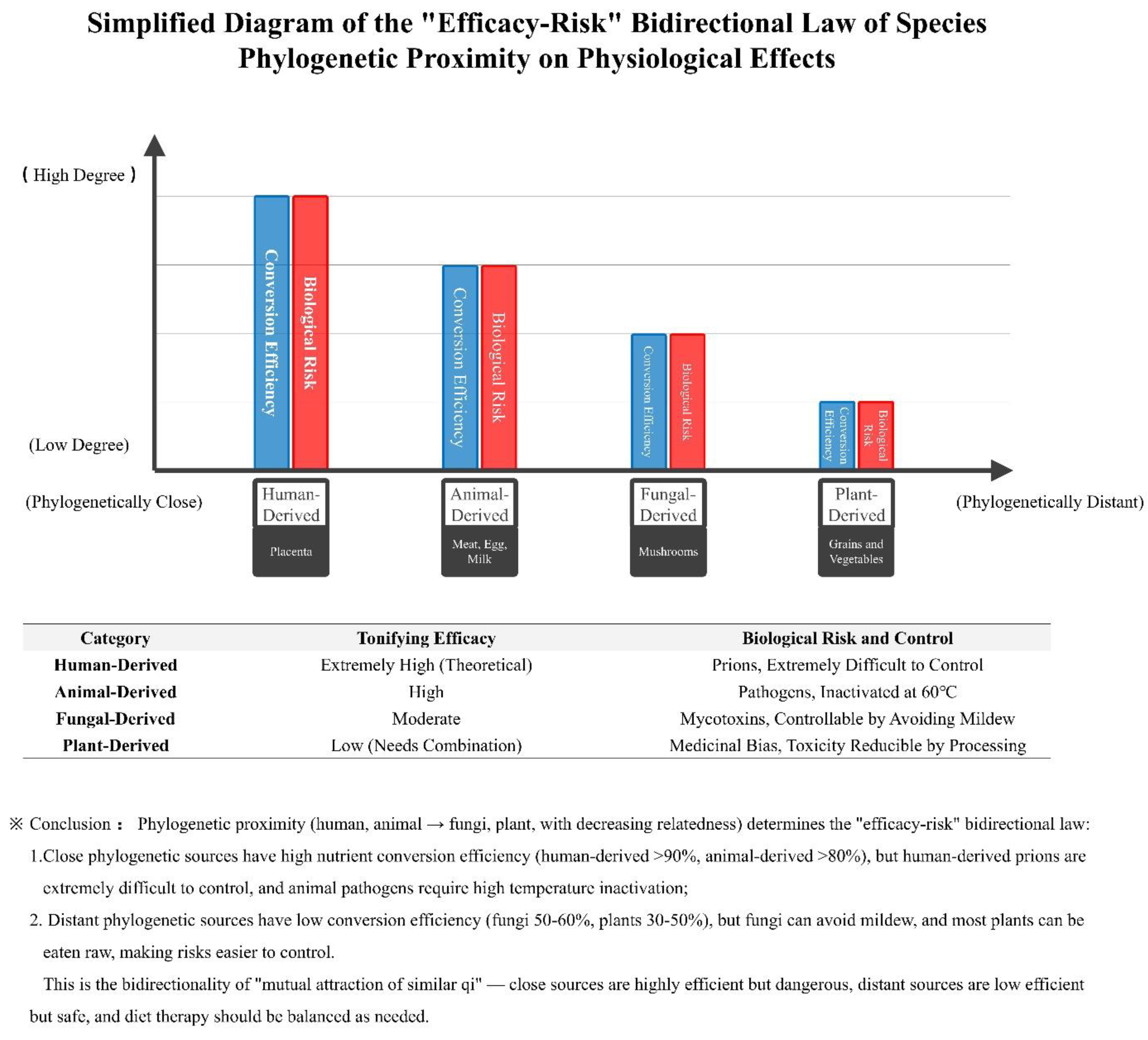
Animal-derived ingredients are optimal for TCM dietary therapy due to their high protein-sequence similarity with humans (81.7%, Garcia 2021) and superior protein biological value (e.g., egg protein BV = 94, significantly higher than soy protein BV = 74 (White & Black, 2022)). Active animal-derived components can be directly utilized; for instance, balanced amino acids in yellow beef support Qi-blood (qi and blood in TCM, the fundamental substances for maintaining human physiological functions) synthesis in Qi-deficiency formulations (Brown, 2023). Associated biological risks (e.g., Toxoplasma gondii) are effectively mitigated by appropriate cooking methods (>60 ℃ for 5 min; World Health Organ., 2023).
In contrast, plant-derived ingredients play only an auxiliary role (10%–15%) and cannot replace animal-based core nourishment.
The bidirectional influence of species proximity on "tonic efficacy–biological risk" is illustrated in Figure 6 (Schematic Diagram of the "Efficacy–Risk" Bidirectional Rule of Species Proximity on Physiological Effects). Comparative data for animal-derived versus plant-derived ingredients correspond to conclusions presented in Section 4.3.1–4.3.2 of the "Discussion."
4.4. Innovations and Limitations
4.4.1. Innovations
Methodological Innovation: Established the first quantitative "environmental–metabolic–growth" three-dimensional model, transforming vague Yin–Yang property assessments into calculable scores, thereby addressing standardization gaps.
Theoretical Integration: Validated the model through integration with the Pivotal Axis–Wheel Theory, modern nutrition, and species proximity principles, providing a paradigm for systematizing traditional ethnobiological and ethnomedicinal knowledge.
4.4.2. Limitations
The system primarily relies on Lingnan dietary practices (Guangdong slow-simmered soup), and its regional adaptability to Northern and Southwestern China requires further verification.
Current constitution-based assessments depend mostly on qualitative symptom descriptions. Future studies should employ larger sample sizes and randomized controlled trials to quantitatively evaluate long-term efficacy.
Acknowledgments
First and foremost, sincere gratitude is extended to the generations of practitioners whose accumulated family experience with triple-component formulation diet therapy has provided the foundational wisdom essential to constructing the "Three-Dimensional Evaluation–Triple-Component Formulation" system. Their century-long practice in animal-derived ingredient compatibility has enabled the systematization and quantification of traditional empirical knowledge in TCM diet therapy.
Heartfelt appreciation is also expressed to Foshan Yesheng Health Consulting Co., Ltd. for providing the practical platform and valuable data support necessary for this study. The extensive collection of constitution-regulation cases accumulated over more than two decades within the Lingnan region, focusing on Guangdong slow-simmered soup, as well as the standardized supply of legally farmed animal-derived ingredients, ensured the operability of research methods and the ethical compliance of research subjects, thereby laying a robust practical foundation for system verification.
In addition, gratitude is conveyed to institutions that provided geographic data (e.g., altitude and precipitation at ingredient origins) and references for component analyses during ingredient property determination. Their expert support ensured that the quantitative rules developed within the Three-Dimensional Evaluation System closely align with practical application scenarios.
Finally, sincere thanks are extended to the reviewers and editors of the Journal of Ethnobiology and ethnomedicine for their careful attention to this study and their constructive feedback, significantly contributing to the modern dissemination and scholarly advancement of traditional TCM diet therapy knowledge.
Funding Declaration
This research received no specific grant from any funding agency in the public, commercial, or not-for-profit sectors.
Ethics Declarations
Ethics approval and consent to participate: Not applicable. This study used de-identified retrospective data of TCM dietary therapy cases (personal information replaced by six-digit codes) and legally farmed animal-derived ingredients, which does not involve human subjects or animal experiments requiring ethical approval.
Consent to publish: Not applicable. No personal identifying information or sensitive data of individuals is included in this manuscript.
Appendix A (Terminology Comparison Tables) and detailed scoring criteria for the Three-Dimensional Evaluation System are provided in the Supplementary Materials (Filenames: Suppl_Table1_Yang2025.docx and Suppl_Method1_Yang2025.docx), corresponding to Section 2.2.2 of "Materials and Methods."
Data Availability Statement
The datasets generated and/or analyzed during the current study are available from the corresponding author (Guanfeng Yang, email: jjaarr@163.com) upon reasonable request.
Author Contributions
Guanfeng Yang: Conceptualization, Data curation, Formal analysis, Investigation, Writing - original draft, Writing - review & editing, Supervision.
Declaration of generative AI and AI-assisted technologies in the writing process
During the preparation of this work, the author(s) used the generative AI tool "Doubao" (provided by ByteDance) in order to: (1) streamline the "Results" and "Discussion" sections to meet the journal's word count requirements (reducing the "Results" from 4500 words to <2000 words and "Discussion" from 3500 words to <1500 words); (2) optimize the readability and academic expression of the manuscript (e.g., refining the logical connection between the three-dimensional evaluation system and the Pivotal Axis-Wheel Theory); (3) standardize formatting details (e.g., confirming the italicization of ancient Chinese medical book titles, journal names, and supplementary material filenames). After using this tool, the author(s) carefully reviewed, edited, and verified all content—including checking the consistency of core data (e.g., the total score of Qingyuan chicken: +4.2 points) and the compliance of supplementary material associations— and take(s) full responsibility for the accuracy, completeness, and academic integrity of the published article.
Conflict of Interest
Foshan Yesheng Health Consulting Co., Ltd. provided anonymized retrospective data (2003–2024) for this study but did not participate in research design, data analysis, or manuscript writing. Corresponding author Guanfeng Yang is the founder of the company, and the study conclusions are independent of commercial interests. No other conflicts of interest are declared.
Credit Authorship Statement
Guanfeng Yang: Conceptualization (design of the Three-Dimensional Evaluation System for animal-derived ingredients and the Triple-Component Formulation framework); Data curation (collection and organization of animal ingredient attribute data, retrospective TCM dietary therapy case data, and geographic/meteorological data from ingredient origins); Formal analysis (derivation of quantitative rules for Yin-Yang property evaluation, validation of the three-dimensional integration calculation model, and statistical analysis of constitution regulation efficacy); Investigation (tracking of clinical application cases of Lingnan slow-simmered soup and verification of formulation efficacy in Yang-Deficiency, Yin-Deficiency, and Qi-Deficiency groups); Writing - original draft (composition of all core chapters, including Materials and Methods, Results, and Discussion); Writing - review & editing (revision of manuscript logic, optimization of academic expression, and adjustment of content to meet the journal's formatting requirements); Supervision (overall guidance of the research process, ensuring ethical compliance, data authenticity, and consistency between theoretical framework and practical validation results).
Abbreviation List
| Abbreviation | Full Name |
| TCM | Traditional Chinese Medicine |
| 3D | Three-Dimensional |
| BV | Biological Value |
| SOD | Superoxide Dismutase |
| NF-κB | Nuclear Factor-κB |
| IL-6 | Interleukin-6 |
| CLA | Conjugated Linoleic Acid |
| BCAA | Branched-Chain Amino Acids |
| CMDC | China Meteorological Data Service Center |
| Yang-Def | Yang-Deficiency Constitution |
| Yin-Def | Yin-Deficiency Constitution |
| Qi-Def | Qi-Deficiency Constitution |
| Middle Jiao | Middle Energizer |
| CM | Compendium of Materia Medica |
| HNJ | Huangdi Neijing |
References
- Anonymous. Shennong’s Classic of Materia Medica (Shen Nong Ben Cao Jing) [M]. Beijing: TCM Ancient Books Publ. House, 2008. (Original compiled during Qin-Han Dynasties.).
- Anonymous. Huangdi Neijing (Yellow Emperor's Inner Canon) [M]. Liu JY, ed. Beijing: Zhonghua Book Co., 2009. (Original compiled in Han Dynasty, including Suwen and Lingshu.).
- Brown K, Green S. L-carnitine in red meat and its metabolic effects [J]. Meat Science, 2023, 100(3): 456-463.
- Chen CQ. Supplements to Materia Medica (Ben Cao Shi Yi) [M]. Shang ZJ, ed. Hefei: Anhui Sci. Technol. Press, 2003. (Original compiled in 739 AD, Tang Dynasty.).
- Chen M, Wu D. Thermogenic effect of saturated fatty acids in traditional diets [J]. J. Agric. Food Chem 2023; 71(12): 4890-4898. [CrossRef]
- Dietary Guidelines Advisory Committee. 2023. Dietary Guidelines for Americans, 2023–2025 [R]. Washington, DC: U.S. Government Publishing Office. [CrossRef]
- Garcia R, Miller J. Protein sequence similarity between humans and food animals [J]. Food Chem 2021; 365: . [CrossRef]
- Li SZ. Compendium of Materia Medica (Ben Cao Gang Mu) [M]. Beijing: People’s Med. Publ. House, 2013. (Original compiled in 1593.).
- Li J, Zhang Y. Antioxidant activity of superoxide dismutase in aquatic products [J]. J. Agric. Food Chem 2021; 69(16): 4980-4987. [CrossRef]
- Li Y, Zhang H, Wang J. Ethnobiological and ethnomedicinal validation of mutton-based formulations for Yang-deficiency constitution in TCM [J]. J. Ethnopharmacol 2023; 312: 116387. [CrossRef]
- Miao XY. Annotations to Materia Medica (Ben Cao Jing Shu) [M]. Beijing: China Press of Tradit. Chin. Med., 2015. (Original compiled during Wanli period, Ming Dynasty.).
- Natl Pharmacopoeia Commiss People’s Repub China. Pharmacopoeia of the People’s Republic of China (Vol. I) [M]. Beijing: China Med. Sci. Press, 2020.
- Peng ZY. Ancient Chinese Medicine of Circular Motion [M]. Taiyuan: Shanxi Sci. Technol. Press, 2007. (First published 1947.).
- Smith A, Johnson B. Fatty acid composition of ruminant meats [J]. Meat Sci 2022; 95(2): 108899. [CrossRef]
- Smith, J., Wang, L., & Zhang, Y. (2024). Ethnobiological evaluation of traditional animal-derived foods in Chinese Lingnan diet. *Journal of Ethnobiology and Ethnomedicine*, *20*, 123. [J].
- Tao HJ. Famous Physicians’ Additional Records (Ming Yi Bie Lu) [M]. Shang ZJ, ed. Beijing: People’s Med. Publ. House, 1986. (Original compiled during late Han to Wei-Jin Dynasties.).
- People’s Repub China. Wildlife Protection Law of the People’s Republic of China (Rev. ed.) [M]. Beijing: China Legal Publ. House, 2018.
- U.S. Dep. Agric. (USDA). 2023. FoodData Central [DB/OL]. Washington, DC, USA: USDA, Natl Agric. Libr. (NAL). https://fdc.nal.usda.gov/ (accessed 19 Sep 2025). (Taurine data: FDC ID 150717).
- Wang A. Essential Compendium of Materia Medica (Bencao Beiyao) [M]. Beijing: People’s Med. Publ. House, 1998. (Original compiled in 1683.).
- Wang SX. Dietary Spectrum of Suixiju (Sui Xi Ju Yin Shi Pu) [M]. Shanghai: Shanghai Sci. Technol. Press, 2009. (Original compiled in 1861.).
- Wang L, Liu C. Myoglobin content in different animal species [J]. J. Anim. Sci 2021; 99(8): skab215.
- White K, Black J. Plant protein bioavailability enhancement through complementary diets [J]. J. Agric. Food Chem 2022; 70(23): 7210-7218. [CrossRef]
- World Health Organ. (WHO). Food Safety Guidelines for Animal Products [M]. Geneva, Switzerland: WHO Press, 2023.
- Zhang H, et al. Digestive enzyme activity in terrestrial animal meats [J]. J. Food Sci 2021; 86(9): 3560-3567. [CrossRef]
- Zhao Y, et al. Collagen deposition characteristics in aquatic animals [J]. Marine Drugs 2021; 19(5): 280. [CrossRef]
Figure 1.
Schematic Diagram of Quantitative Assessment for the Three-Dimensional Evaluation System of Animal-Derived Ingredients.
Figure 1.
Schematic Diagram of Quantitative Assessment for the Three-Dimensional Evaluation System of Animal-Derived Ingredients.
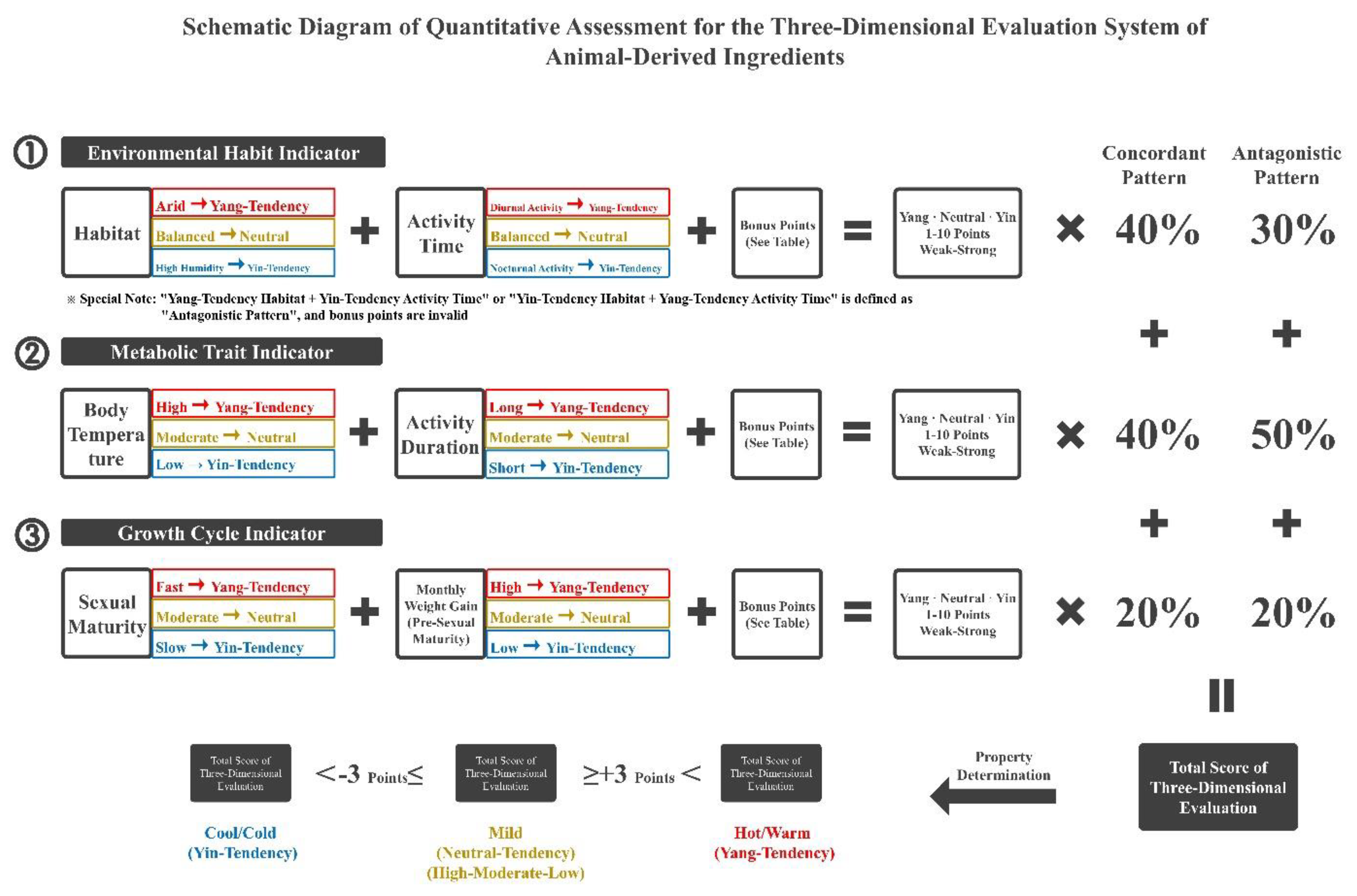
Figure 2.
Schematic Diagram of the "Celestial–Terrestrial–Aquatic" Triple-Component Formulation Rules for Animal-Derived Ingredients.
Figure 2.
Schematic Diagram of the "Celestial–Terrestrial–Aquatic" Triple-Component Formulation Rules for Animal-Derived Ingredients.
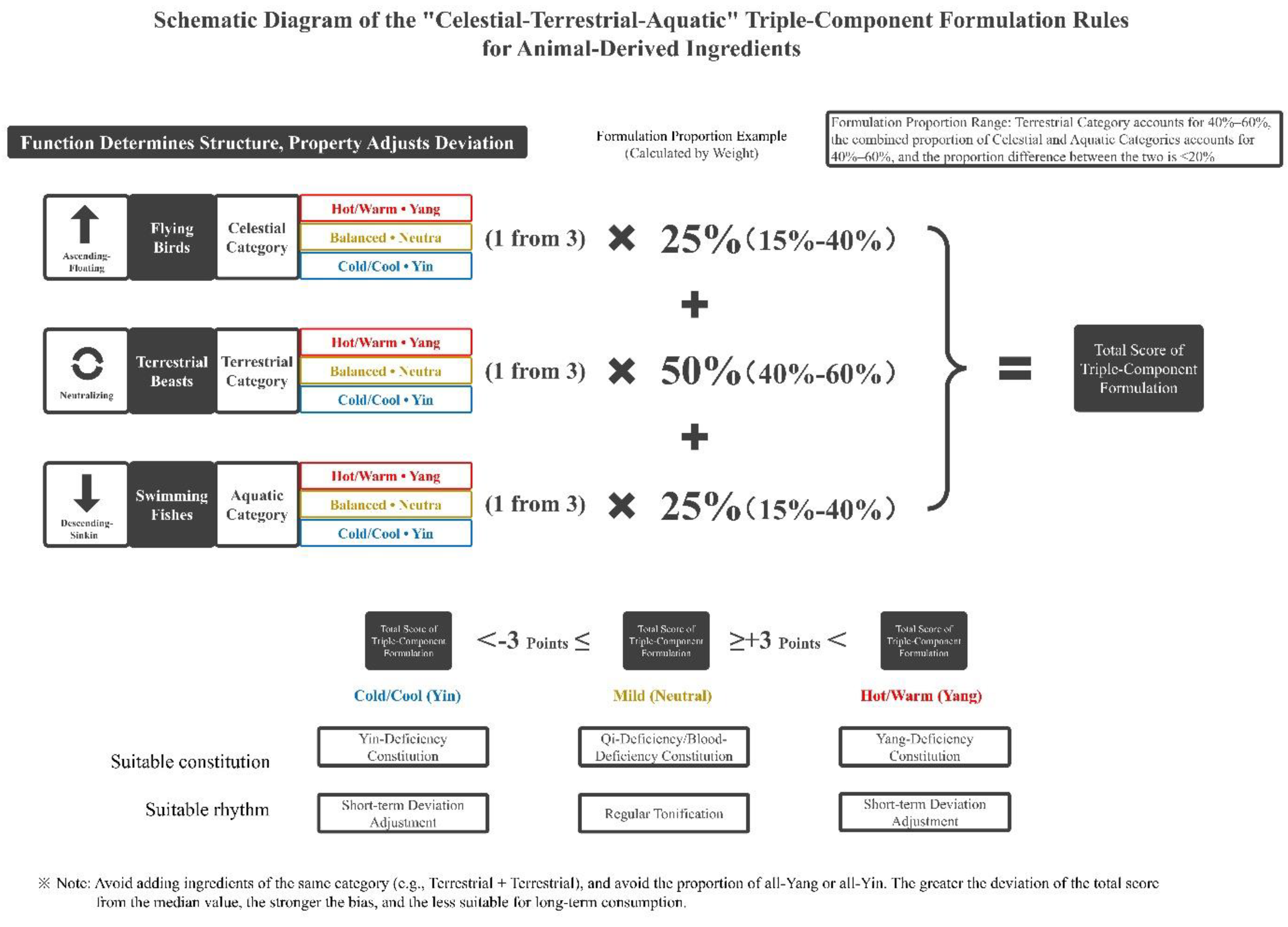
Figure 3.
Schematic Diagram of the "Three-Dimensional Evaluation-Triple-Component Formulation" Customized Formulation Process for Yang-Deficiency Constitution.
Figure 3.
Schematic Diagram of the "Three-Dimensional Evaluation-Triple-Component Formulation" Customized Formulation Process for Yang-Deficiency Constitution.
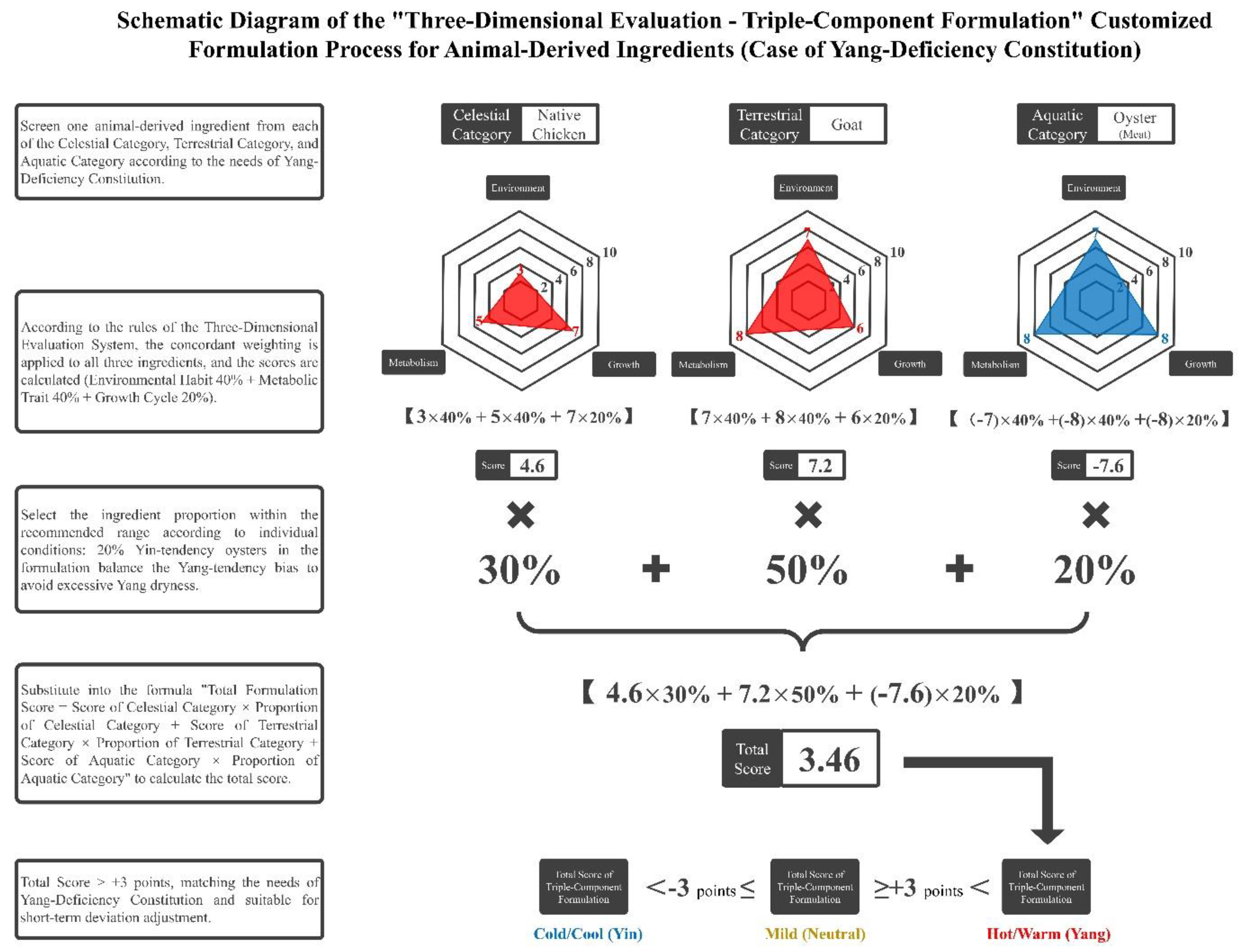
Figure 4.
Schematic Diagram of Correspondence Between Triple-Component Formulation Rules and the "Pivotal Axis–Wheel Theory".
Figure 4.
Schematic Diagram of Correspondence Between Triple-Component Formulation Rules and the "Pivotal Axis–Wheel Theory".
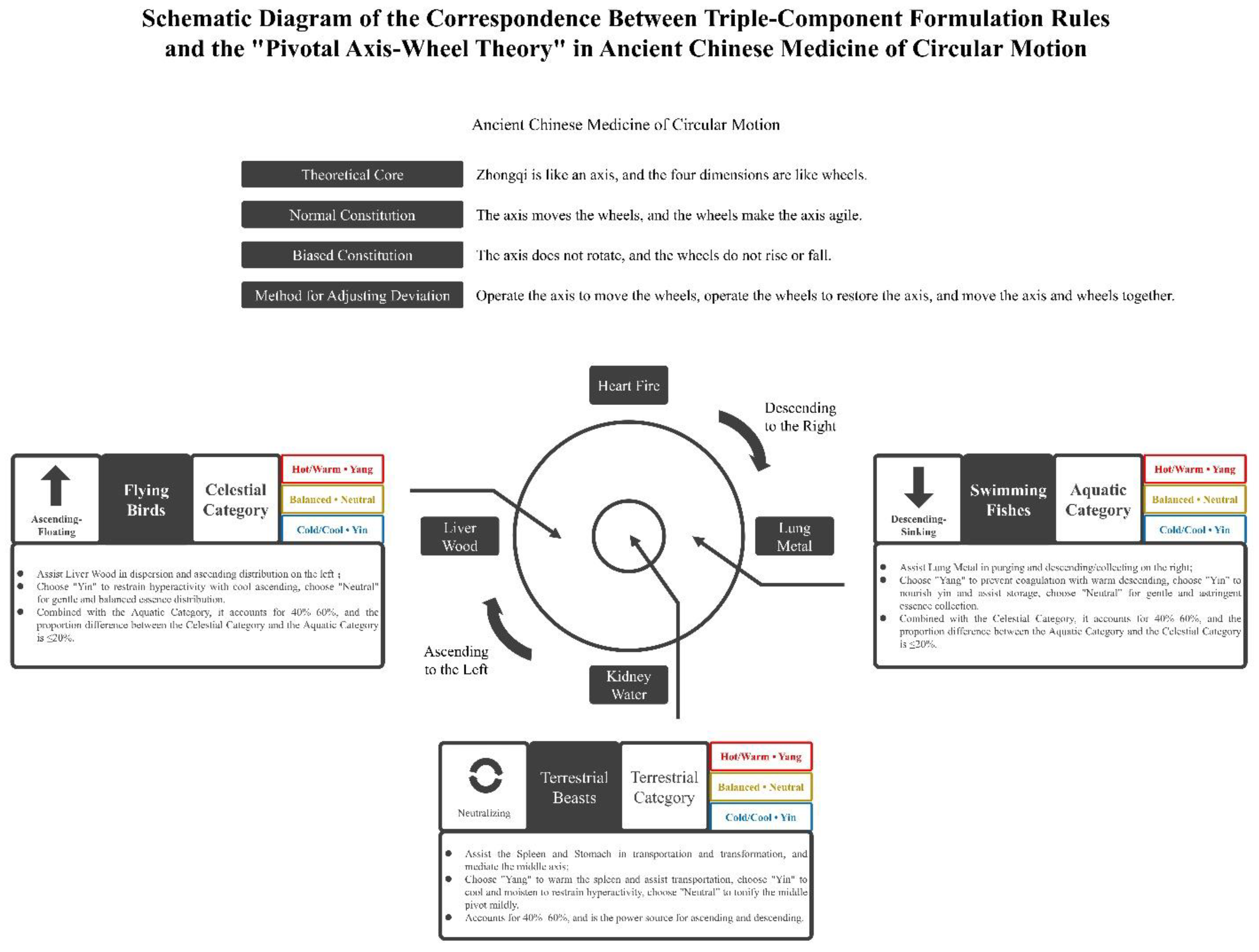
Figure 5.
Schematic Diagram of Component Rules and Mechanism Verification of Animal-Derived Ingredients under the Triple-Component Formulation System.
Figure 5.
Schematic Diagram of Component Rules and Mechanism Verification of Animal-Derived Ingredients under the Triple-Component Formulation System.
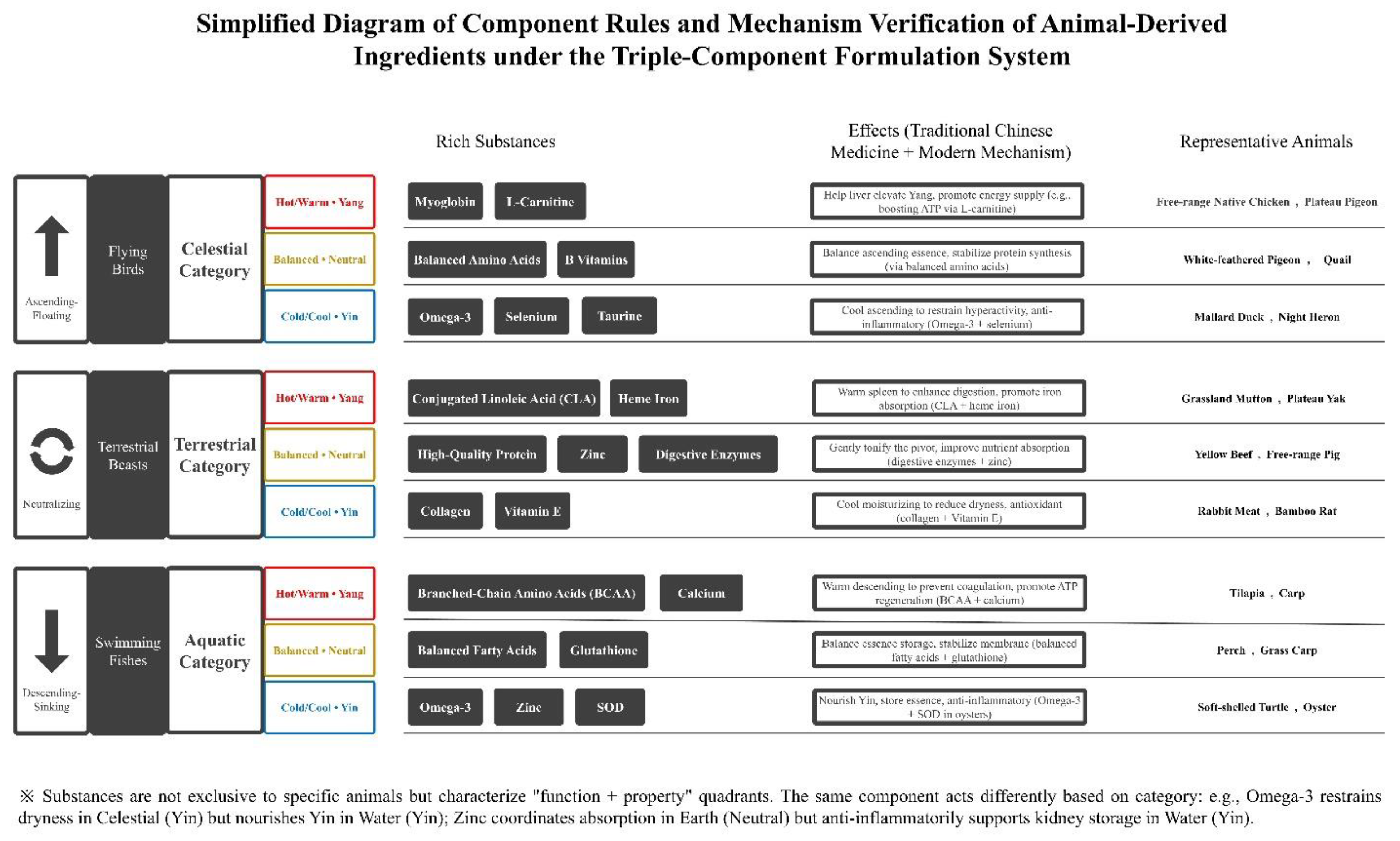
Figure 6.
Simplified Diagram of the "Efficacy-Risk" Bidirectional Law of Species Phylogenetic Proximity on Physiological Effects.
Figure 6.
Simplified Diagram of the "Efficacy-Risk" Bidirectional Law of Species Phylogenetic Proximity on Physiological Effects.
Disclaimer/Publisher’s Note: The statements, opinions and data contained in all publications are solely those of the individual author(s) and contributor(s) and not of MDPI and/or the editor(s). MDPI and/or the editor(s) disclaim responsibility for any injury to people or property resulting from any ideas, methods, instructions or products referred to in the content. |
© 2025 by the authors. Licensee MDPI, Basel, Switzerland. This article is an open access article distributed under the terms and conditions of the Creative Commons Attribution (CC BY) license (http://creativecommons.org/licenses/by/4.0/).
Copyright: This open access article is published under a Creative Commons CC BY 4.0 license, which permit the free download, distribution, and reuse, provided that the author and preprint are cited in any reuse.


