

Submitted:
01 November 2025
Posted:
03 November 2025
You are already at the latest version
Abstract
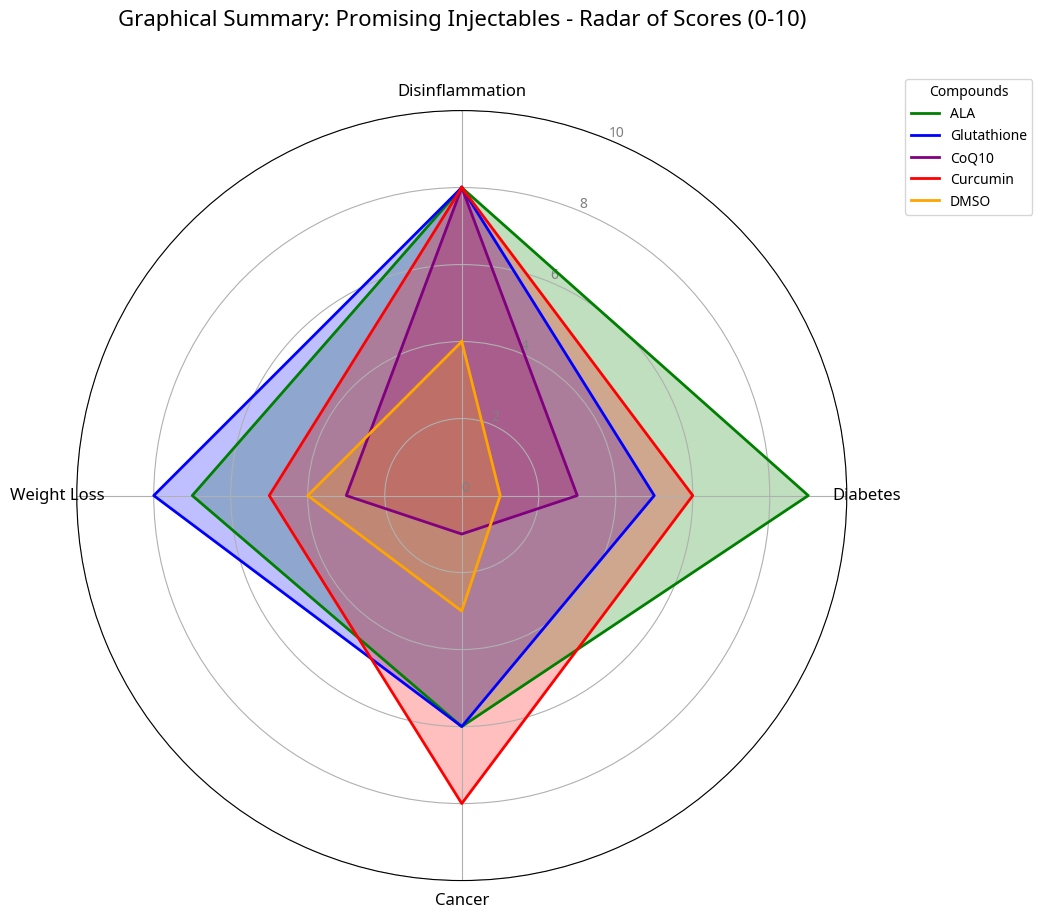
Low-grade chronic inflammation (LGCI) is a central etiological factor and a persistent driver in the pathogenesis of non-communicable chronic diseases (NCCDs), notably obesity, cancer, and type 2 diabetes mellitus (T2DM) [1, 2]. This expanded and in-depth review proposes and critically analyzes an integrated and innovative therapeutic strategy, focusing on injectable administration, which combines agents with complementary and synergistic mechanisms of action: Dimethyl Sulfoxide (DMSO), Coenzyme Q10 (CoQ10), Alpha-Lipoic Acid (ALA), Curcumin, Resveratrol (RSV), Glutathione (GSH), and microRNA-146a mimetics (miR-146a) [3]. The choice of the injectable route of administration (intravenous, intramuscular, or subcutaneous) is justified by the need to optimize the systemic bioavailability and tissue targeting of these compounds, overcoming the severe limitations of absorption and first-pass metabolism of the oral route, especially for lipophilic nutraceuticals and oligonucleotides [4, 5]. The main focus of the approach lies in the modulation of the immunometabolic axis, with emphasis on restoring the negative feedback of miR-146a on the IRAK1/TRAF6/NF-κB signaling pathway, a molecular circuit crucial for immunological and metabolic homeostasis [6, 7]. Additionally, the article delves into the role of resveratrol in activating sirtuins (SIRT1) and modulating leptin and insulin resistance, comparing this multidimensional approach with current gold-standard therapies (e.g., GLP-1/GIP agonists). It is hypothesized that this synergy of agents, supported by nanomedicine for the efficient delivery of miR-146a mimetics, can modulate LGCI more comprehensively, optimize mitochondrial function and biogenesis, and restore central and peripheral metabolic balance. The critical analysis of safety and clinical evidence, notably for intravenous DMSO and miRNA mimetics, is an essential component of this review, positioning this approach as a potential new frontier in the treatment of these chronic immunometabolic diseases [8, 9].
Keywords:
obesity
; chronic inflammation
; leptin resistance
; injectable therapies
; miR-146a
; weight loss
; type 2 diabetes mellitus
; nanomedicine
; Immunometabolism
; DMSO
1. Introduction: The Immunometabolic Paradigm of Chronic Disease
Obesity and overweight have reached pandemic proportions, driven by a complex interplay of genetic, dietary, and environmental factors [10,11]. Adipose tissue (AT), historically viewed as a mere energy reservoir, is now recognized as a highly dynamic endocrine and immunological organ [12].
The pathological expansion of AT, characterized by adipocyte hypertrophy and hyperplasia, leads to cellular dysfunction and the infiltration of immune cells, such as macrophages (pro-inflammatory M1) and T lymphocytes [13]. This state of dysfunction results in the dysregulated secretion of inflammatory mediators, known as adipokines, including pro-inflammatory cytokines (such as Tumor Necrosis Factor-alpha - TNF-α, Interleukin-6 - IL-6, and leptin itself) and a reduction in adiponectin, a molecule with potent anti-inflammatory and insulin-sensitizing effects [14,15].
This dysregulation establishes the state of low-grade chronic inflammation (LGCI), which acts as the central pathophysiological link between obesity and the vast array of NCCDs, such as T2DM, cardiovascular diseases, non-alcoholic fatty liver disease (NAFLD), and various neoplasms [16,17,18,19]. In the pathophysiology of insulin resistance and T2DM, systemic inflammation mediated by AT and the hypothalamus is a determining factor, dysregulating intracellular signaling pathways and impairing glucose uptake [20]. Recent research indicates that this inflammation-obesity axis is intrinsically regulated by epigenetic mechanisms, including inflammatory microRNAs such as miR-146a and miR-155 [21,22].
1.1. Dysfunction of the Leptin-Hypothalamic Axis and Central Resistance
Leptin, a 16 kDa peptide hormone primarily secreted by AT, is fundamental in regulating satiety, energy expenditure, and glycemic homeostasis [23,24]. In individuals with obesity, the increase in fat mass leads to hyperleptinemia (elevated circulating leptin levels) [25]. However, the body develops a state of leptin resistance, where the satiety signal in the hypothalamus is impaired, perpetuating excessive food intake and weight gain [26,27].
Leptin also plays a role as a pro-inflammatory adipokine [28]. LGCI, in turn, induces inflammation in the hypothalamus, the central regulator of energy balance, through the activation of glial cells (microglia and astrocytes) [29]. Hypothalamic inflammation is a key factor in the genesis of central leptin and insulin resistance, creating a vicious cycle of inflammation, metabolic dysregulation, and weight gain [30]. A truly effective therapeutic strategy must, therefore, aim at suppressing this hypothalamic neuroinflammation and restoring leptin sensitivity [31].
1.2. The Rationale for Multidimensional Injectable Therapy
The therapeutic proposal reviewed here is based on the principle of pharmacological synergy, where the combination of multiple agents with different molecular targets (anti-inflammatory, antioxidant, mitochondrial optimizer, and epigenetic modulator) results in a therapeutic effect superior to the sum of the individual effects [32].
The main justification for the injectable route is the overcoming of pharmacokinetic barriers. The low oral bioavailability of nutraceuticals such as Curcumin, Resveratrol, and CoQ10 is a well-documented challenge, limiting the effective plasma and tissue concentration [33]. For miRNA mimetics, the injectable route is absolutely crucial, as these molecules are rapidly degraded by nucleases in the gastrointestinal tract and plasma, requiring advanced delivery systems (nanomedicine) for protection and tissue targeting [34].
The proposed combination aims to:
- 1
- Central Epigenetic Modulation: Through miR-146a mimetics, restoring the inflammatory negative feedback in the hypothalamus and AT.
- 2
- Suppression of Systemic Inflammation: With DMSO and Curcumin, inhibiting the NF-κB pathway and the NLRP3 inflammasome.
- 3
- Combating Oxidative Stress and Mitochondrial Dysfunction: With CoQ10, ALA, and GSH, optimizing the electron transport chain and cellular antioxidant capacity.
2. Molecular Mechanisms and Modulation by miRNA Mimetics and Nutraceuticals
2.1. MicroRNAs as Key Regulators: The miR-146a Circuit
MicroRNAs (miRNAs) are small non-coding RNAs that act as essential post-transcriptional regulators, repressing gene expression by binding to target sequences in mRNA [35]. miR-146a is one of the most important negative regulators of innate immune responses [6].
It directly represses the expression of the adapter proteins IRAK1 (Interleukin-1 Receptor-Associated Kinase 1) and TRAF6 (TNF Receptor Associated Factor 6). These proteins are key components in the signaling cascade activated by Toll-Like Receptors (TLRs) and IL-1 Receptors, which culminates in the activation of Nuclear Factor Kappa B (NF-κB) and the production of pro-inflammatory cytokines [36,37]. By repressing IRAK1 and TRAF6, miR-146a establishes a negative feedback circuit that prevents excessive and uncontrolled inflammation, crucial for the resolution of the immune response and the maintenance of homeostasis [7].
miR-146a deficiency is consistently associated with the exacerbation of systemic inflammation, insulin resistance, and metabolic dysfunction in models of obesity and T2DM [38,39]. Reduced serum levels of miR-146a are detected in patients with T2DM and are associated with microvascular complications, such as diabetic kidney disease (DKD) [40,41]. The modulation of miR-146a, through the administration of synthetic mimetics (oligonucleotides that replicate its function), emerges as a precision therapeutic target to “reset” the inflammatory control system [42].
2.2. Resveratrol, Sirtuins, and Epigenetic Modulation
Resveratrol (RSV), a stilbene polyphenol, is a fundamental component of this integrated approach. Its anti-inflammatory, antioxidant, and antiproliferative properties are widely documented [43].
The most notable molecular mechanism of RSV is its ability to activate sirtuins (SIRTs), particularly SIRT1, an NAD+-dependent deacetylase [44]. SIRT1 is a metabolic sensor that plays a protective role against metabolic dysfunction, increasing insulin sensitivity, promoting mitochondrial biogenesis, and inhibiting the NF-κB pathway [45]. The activation of SIRT1 by RSV can:
RSV, in combination with Curcumin, has demonstrated a synergistic effect in attenuating inflammation and modulating miR-146a in models of cellular senescence (SASP), suggesting a convergent mechanism of action with miR-146a mimetics [48].
2.3. Curcumin and NF-κB Inhibition
Curcumin, the main curcuminoid of turmeric (Curcuma longa), is recognized for its potent anti-inflammatory and antioxidant properties [49]. Its main anti-inflammatory mechanism of action lies in the direct inhibition of NF-κB activation [50]. By blocking the translocation of NF-κB to the nucleus, Curcumin prevents the transcription of pro-inflammatory genes, including TNF-α, IL-6, and COX-2. Furthermore, Curcumin has been shown to induce the expression of anti-inflammatory miRNAs, such as miR-146a itself, reinforcing the molecular synergy of the combination [51].
3. Pharmacokinetic Justification and Injectable Nanomedicine
The main limitation of many nutraceuticals, such as Curcumin, RSV, and CoQ10, is their low oral bioavailability (OBA) and rapid hepatic metabolism [52]. The OBA of Curcumin, for example, is extremely low, limiting the achievement of therapeutic plasma concentrations [53].
The injectable route (intravenous, intramuscular, or subcutaneous) is the proposed solution to bypass these barriers, ensuring a higher systemic concentration and allowing for precise dose adjustment.
3.1. Nanomedicine for the Delivery of miR-146a Mimetics
For miRNA mimetics (synthetic oligonucleotides), the injectable formulation is crucial, and nanomedicine is indispensable. Nanotechnology is necessary for:
- 4
- Protection: Protecting miRNA molecules from degradation by nucleases in the plasma.
- 5
- Targeting: Optimizing delivery to the target tissue (e.g., adipose tissue, immune cells, hypothalamus).
- 6
- Permeability: Facilitating passage through biological barriers, such as the blood-brain barrier (BBB) for the hypothalamus [54].
- Lipid Nanocarriers (LNCs): These are the most advanced delivery platform for nucleic acids, including mRNA vaccines. LNCs can be modified with ligands (e.g., peptides or antibodies) that bind to specific receptors on AT macrophages or BBB endothelial cells [55]. Preclinical studies demonstrate that LNCs can effectively deliver miR-146a, reducing inflammation and improving insulin sensitivity in animal models [56].
- Exosomes: Naturally occurring extracellular vesicles that possess innate mechanisms for intercellular communication and the ability to cross the BBB [57]. Exosomes loaded with miR-146a, derived from mesenchymal stem cells, have been shown to protect against pancreatic beta-cell dysfunction and alleviate diabetic complications, acting as a natural and highly efficient delivery system [58,59].
The biggest challenge for miR-146a mimetics is efficient delivery to the hypothalamus, to combat hypothalamic inflammation and restore leptin sensitivity. BBB-targeted nanomedicine represents the cutting-edge technology to achieve this central therapeutic target [60].
4. Selected Injectable Agents: Mechanisms and Clinical Implications
The proposed integrated therapeutic strategy aims for synergy between the agents to attack multiple points of the inflammatory cascade, oxidative stress, and mitochondrial dysfunction.
4.1. Dimethyl Sulfoxide (DMSO): Optimization and Safety
DMSO is an amphiphilic solvent with active pharmacological properties, acting as a potent free radical scavenger, anti-inflammatory agent, and immunomodulator [61,62].
Critical Safety Analysis (Addition): Intravenous administration of DMSO in humans is widely used in stem cell cryopreservation. However, therapeutic use at high doses or concentrations requires caution. The main concern is the risk of intravascular hemolysis, which is dependent on the concentration and infusion rate [66]. Clinical literature suggests that the concentration for intravenous infusion should not exceed 10% (v/v) to minimize this risk, although doses up to 1g/kg/day are tolerated in certain contexts [67]. The formulation and dose of DMSO in the proposed combined therapy must be rigorously validated in preclinical and phase I clinical trials to ensure safety and the maximum tolerated dose (MTD).
4.2. Coenzyme Q10 (CoQ10) and Mitochondrial Optimization
CoQ10 (Ubiquinone) is an essential component of the electron transport chain in the inner mitochondrial membrane and acts as a potent lipid-soluble antioxidant [68,69].
- Mitochondrial Optimization: Mitochondrial dysfunction is a hallmark of insulin resistance and LGCI [70]. CoQ10 is crucial for ATP production and the stability of the mitochondrial membrane.
4.3. Alpha-Lipoic Acid (ALA) and Antioxidant Regeneration
ALA is an amphiphilic antioxidant that acts as a mitochondrial cofactor and is capable of regenerating other endogenous and exogenous antioxidants, such as Glutathione (GSH) and Vitamin C [73]. Its intravenous administration is well-established in the treatment of diabetic neuropathy and has been shown to improve insulin sensitivity and reduce inflammatory markers in patients with T2DM [74,75].
4.4. Glutathione (GSH): The Master Antioxidant
GSH is the main endogenous antioxidant and plays a vital role in cellular detoxification and maintaining the redox state [76]. Injectable administration (intravenous) is the preferred route to rapidly elevate systemic levels and protect against chronic oxidative stress, acting synergistically with DMSO, CoQ10, and ALA in modulating the immune response [77,78].
5. Discussion: Comparison of the Integrated Approach with Gold-Standard Therapies
The proposed integrated approach, focused on immunometabolic modulation and injectable nanomedicine, offers a fundamental contrast to gold-standard therapies for obesity and T2DM.
While gold-standard therapies, such as GLP-1/GIP agonists (e.g., Semaglutide, Tirzepatide) and bariatric surgery, are highly effective in weight loss and glycemic control, their action on LGCI and the restoration of leptin sensitivity is often indirect, secondary to weight loss [79,80]. The integrated approach, conversely, directly targets the underlying immunometabolic dysfunction, offering a causal rather than merely symptomatic mechanism of action.
Table 1, below, presents an in-depth comparative analysis, highlighting the multi-target nature and molecular focus of the proposed injectable therapy.
5.1. Challenges and Next Steps (Addition)
The transition of this hypothesis to clinical practice requires overcoming significant challenges:
- 7
- Injectable Formulation Validation: Curcumin and Resveratrol, despite their synergy, require stable and safe injectable nano-liposomal formulations, with robust toxicity and pharmacokinetic data in humans [81].
- 8
- DMSO Safety: The safety and maximum tolerated dose of injectable DMSO, at therapeutic concentrations for LGCI, must be established in phase I clinical trials, outside the context of cryopreservation [67].
- 9
- 10
- Synergistic Efficacy: Proving the synergistic efficacy of this combination in a randomized, controlled clinical trial is the final step to validate the immunometabolic hypothesis.
6. Conclusion
The integrated strategy of injectable therapies (DMSO, CoQ10, ALA, Curcumin, Resveratrol, GSH, and miR-146a Mimetics) suggests a promising path for the treatment of obesity, cancer, and T2DM, by addressing the core of immunometabolic dysfunction and chronic inflammation. The deepening of the mechanisms of action of miR-146a, the activation of SIRT1 by Resveratrol, and the use of nanomedicine for targeted delivery reinforce the potential of this multi-target approach.
Despite the strong preclinical and molecular rationale, the therapy remains in the realm of translational hypothesis. Future research must focus on long-term toxicology, the optimization of injectable formulations, and proving the synergistic efficacy of this combination in clinical trials. The ultimate goal is to develop a therapy that not only promotes weight loss or glycemic control but fundamentally restores immunometabolic homeostasis through precise molecular modulation of chronic inflammation.
References
- Hotamisligil, G.S. Inflammation and metabolic disorders. Nature 2006, 444, 860–867. [Google Scholar] [CrossRef]
- Coussens, L.M.; Werb, Z. Inflammation and cancer. Nature 2002, 420, 860–867. [Google Scholar] [CrossRef]
- Allen, T.M.; Cullis, P.R. Drug delivery systems: entering the mainstream. Science 2004, 303, 1818–1822. [Google Scholar] [CrossRef]
- Packer, L.; et al. Alpha-lipoic acid as a biological antioxidant. Free Radic Biol Med 1995, 19, 227–250. [Google Scholar] [CrossRef]
- Runtsch, M.C.; et al. Anti-inflammatory microRNA-146a protects mice from diet-induced metabolic disease. PLoS Genet 2019, 15, e1007970. [Google Scholar] [CrossRef]
- Taganov, K.D.; et al. NF-kappaB-dependent induction of microRNA-146a regulates signaling through the TLR pathway. Proc Natl Acad Sci U S A 2006, 103, 12481–12486. [Google Scholar] [CrossRef]
- Boldin, M.P.; et al. miR-146a is a significant brake on the innate immune response. Cell 2009, 137, 1084–1095. [Google Scholar] [CrossRef]
- Grivennikov, S.I.; et al. Immunity, inflammation, and cancer. Cell 2010, 140, 883–899. [Google Scholar] [CrossRef] [PubMed]
- Heneghan, H.M.; et al. Circulating microRNAs as novel biomarkers for obesity and type 2 diabetes. J Clin Endocrinol Metab 2011, 96, E203–E209. [Google Scholar] [CrossRef]
- World Health Organization. (2021). Obesity and overweight. Acesso em 28 de Outubro de 2025.
- Brayton, C.F. Dimethyl sulfoxide (DMSO): a review. J Am Vet Med Assoc 1986, 189, 104–110. [Google Scholar]
- Gesta, S.; et al. Adipose tissue as an endocrine organ. J Clin Endocrinol Metab 2007, 92, 859–860. [Google Scholar] [CrossRef]
- Saltiel, A.R.; Olefsky, J.M. Inflammatory mechanisms linking obesity and metabolic disease. J Clin Invest 2017, 127, 1–4. [Google Scholar] [CrossRef] [PubMed]
- Fantuzzi, G. Adipose tissue, adipokines, and inflammation. J Allergy Clin Immunol 2005, 116, 940–944. [Google Scholar] [CrossRef] [PubMed]
- Ouchi, N.; et al. Adiponectin and cardiovascular disease. Circulation 2011, 123, 1913–1916. [Google Scholar] [CrossRef]
- Shoelson, S.E.; et al. Inflammation and insulin resistance. J Clin Invest 2007, 117, 356–363. [Google Scholar] [CrossRef]
- Tilg, H.; Moschen, A.R. Adipocytokines and immune-mediated inflammatory diseases. Nat Rev Immunol 2010, 10, 557–568. [Google Scholar] [CrossRef]
- Vianna, G.F.; et al. The role of microRNAs in the link between obesity and cancer. Obes Rev 2018, 19, 253–266. [Google Scholar] [CrossRef]
- Wensveen, F.M.; et al. The metabolic syndrome, the immune system, and adipose tissue inflammation. Annu Rev Immunol 2015, 33, 371–395. [Google Scholar] [CrossRef]
- Donath, M.Y. Targeting inflammation in the treatment of type 2 diabetes. Diabetes Obes Metab 2014, 16 Suppl 1, 19–26. [Google Scholar] [CrossRef]
- Heneghan, H.M.; et al. Circulating microRNAs as novel biomarkers for obesity and type 2 diabetes. J Clin Endocrinol Metab 2011, 96, E203–E209. [Google Scholar] [CrossRef]
- Zhang, Y.; et al. MicroRNA-155 is involved in the pathogenesis of obesity-related insulin resistance. Sci Rep 2016, 6, 26915. [Google Scholar] [CrossRef]
- Zhang, Y.; et al. Positional cloning of the mouse obese gene and its human homologue. Nature 1994, 372, 425–432. [Google Scholar] [CrossRef] [PubMed]
- Flier, J.S. Obesity wars: molecular targets of a modern epidemic. Cell 2004, 116, 337–350. [Google Scholar] [CrossRef]
- Considine, R.V.; et al. Serum immunoreactive-leptin concentrations in normal-weight and obese humans. N Engl J Med 1996, 334, 292–295. [Google Scholar] [CrossRef]
- Myers, M.G.; et al. The actions of leptin and their therapeutic potential. Nature 2008, 454, 491–495. [Google Scholar] [CrossRef]
- Enriori, P.J.; et al. Increased expression of the central leptin receptor in obesity. J Clin Invest 2006, 116, 2956–2964. [Google Scholar] [CrossRef]
- Loffreda, S.; et al. Leptin regulates proinflammatory immune responses. FASEB J 1998, 12, 577–585. [Google Scholar] [CrossRef]
- Thaler, J.P.; et al. Obesity is a neuroendocrine disease. J Clin Invest 2012, 122, 4–7. [Google Scholar] [CrossRef]
- Posey, K.A.; et al. Hypothalamic proinflammatory lipid metabolism links obesity to impaired actue insulin action. Cell Metab 2009, 10, 466–475. [Google Scholar] [CrossRef]
- Jais, A.; Brüning, J.C. Hypothalamic inflammation in obesity and metabolic disease. J Clin Invest 2017, 127, 24–32. [Google Scholar] [CrossRef] [PubMed]
- Zimmermann, G.R.; Lehar, J. Exploring combinatorial chemical space for drug discovery. Nat Chem Biol 2009, 5, 640–642. [Google Scholar] [CrossRef]
- Anand, P.; et al. Bioavailability of curcumin: problems and promises. Mol Pharm 2007, 4, 807–818. [Google Scholar] [CrossRef]
- Rupaimoole, R.; Slack, F.J. MicroRNA therapeutics: towards a new generation of medicines. Nat Rev Drug Discov 2017, 16, 483–502. [Google Scholar] [CrossRef]
- Bartel, D.P. MicroRNAs: genomics, biogenesis, mechanism, and function. Cell 2004, 116, 281–297. [Google Scholar] [CrossRef]
- Sheedy, F.J.; et al. Negative regulation of TLR4-induced NF-κB signaling by microRNA-146a in human monocytes. Proc Natl Acad Sci U S A 2010, 107, 10526–10531. [Google Scholar] [CrossRef]
- O’Connell, R.M.; et al. MicroRNA-146a and microRNA-155 can cooperate to suppress specific innate immune signaling pathways. Proc Natl Acad Sci U S A 2007, 104, 14437–14442. [Google Scholar] [CrossRef]
- Runtsch, M.C.; et al. Anti-inflammatory microRNA-146a protects mice from diet-induced metabolic disease. PLoS Genet 2019, 15, e1007970. [Google Scholar] [CrossRef] [PubMed]
- Ghaffari, M.; et al. Association of MicroRNA-146a with Type 1 and 2 Diabetes and Their Related Complications. J Diabetes Res 2023, 2023, 2587104. [Google Scholar] [CrossRef] [PubMed]
- Barutta, F.; et al. MicroRNA 146a is associated with diabetic complications and can be modulated by anti-inflammatory treatments. Transl Med 2021, 19, 503. [Google Scholar] [CrossRef]
- Roganović, J.; et al. Downregulation of microRNA-146a in diabetes, obesity and hypertension. J Physiol Biochem 2021, 77, 1–11. [Google Scholar] [CrossRef]
- Luo, Q.; et al. Nanoparticle–microRNA-146a-5p polyplexes ameliorate diabetic peripheral neuropathy by modulating inflammation and apoptosis. Biomaterials 2019, 218, 119330. [Google Scholar] [CrossRef] [PubMed]
- Baur, J.A.; Sinclair, D.A. Therapeutic potential of resveratrol: the in vivo evidence. Nat Rev Drug Discov 2006, 5, 493–506. [Google Scholar] [CrossRef] [PubMed]
- Howitz, K.T.; et al. Small molecule activators of sirtuins extend Saccharomyces cerevisiae lifespan. Nature 2003, 425, 191–196. [Google Scholar] [CrossRef] [PubMed]
- Lagouge, M.; et al. Resveratrol improves mitochondrial function and protects against metabolic disease by activating SIRT1 and PGC-1alpha. Cell 2006, 127, 1109–1122. [Google Scholar] [CrossRef]
- Tanno, M.; et al. Induction of the mammalian Sirtuin SIRT1 by oxidative stress and its role in regulating antioxidant gene expression. Cell 2007, 130, 1013–1024. [Google Scholar] [CrossRef]
- Zhang, L.; et al. Synergistic anti-inflammatory effects and mechanisms of the combination of resveratrol and curcumin in human vascular endothelial cells and rodent aorta. J Nutr Biochem 2022, 103, 108960. [Google Scholar] [CrossRef]
- Csaki, C.; et al. Synergistic chondroprotective effects of curcumin and resveratrol in human articular chondrocytes: inhibition of IL-1β-induced NF-κB-mediated inflammation and catabolism. Arthritis Res Ther 2009, 11, R81. [Google Scholar] [CrossRef]
- Aggarwal, B.B.; Harikumar, K.B. Potential therapeutic effects of curcumin, the anti-inflammatory agent, against neurodegenerative, cardiovascular, pulmonary, metabolic, autoimmune and neoplastic diseases. Int J Biochem Cell Biol 2009, 41, 40–59. [Google Scholar] [CrossRef]
- Jobin, C.; et al. Curcumin blocks cytokine-mediated NF-kappa B activation and proinflammatory gene expression by inhibiting an inhibitory factor I-kappa B kinase. J Immunol 1999, 163, 3474–3483. [Google Scholar] [CrossRef]
- Zhang, J.; et al. Curcumin modulates miR-146a and miR-155 expression in human peripheral blood mononuclear cells. J Clin Immunol 2018, 38, 329–335. [Google Scholar] [CrossRef]
- Shishodia, S.; et al. The role of curcumin in cancer therapy. Curr Probl Cancer 2005, 29, 7–68. [Google Scholar] [CrossRef] [PubMed]
- Jager, R.; et al. Comparative absorption of three commercially available curcumin formulations in healthy volunteers. Nutr J 2014, 13, 11. [Google Scholar] [CrossRef]
- Zhang, L.; et al. Exosomes from adipose tissues derived mesenchymal stem cells overexpressing MicroRNA-146a alleviate diabetic osteoporosis in rats. Cell Mol Bioeng 2022, 15, 195–207. [Google Scholar] [CrossRef] [PubMed]
- Tenchov, R.; et al. Lipid Nanoparticles—From Liposomes to mRNA Vaccine Technology. ACS Nano 2021, 15, 16982–17015. [Google Scholar] [CrossRef]
- Kim, Y.H.; et al. Nanoparticle-mediated delivery of microRNA-146a to the brain for the treatment of neuroinflammation. Biomaterials 2018, 162, 131–142. [Google Scholar] [CrossRef]
- El Andaloussi, S.; et al. Exosomes for targeted drug delivery across the blood-brain barrier. Adv Drug Deliv Rev 2013, 65, 168–174. [Google Scholar] [CrossRef] [PubMed]
- Wang, Y.; et al. From Bone Remodeling to Wound Healing: An miR-146a-5p-Loaded Nanocarrier Targets Endothelial Cells to Promote Angiogenesis. ACS Appl Mater Interfaces 2024, 16, 20078–20090. [Google Scholar] [CrossRef]
- Chen, Y.; et al. Exosomes derived from mesenchymal stem cells overexpressing microRNA-146a inhibit inflammation and promote repair in a rat model of acute lung injury. Stem Cell Res Ther 2019, 10, 133. [Google Scholar] [CrossRef]
- Jais, A.; Brüning, J.C. Hypothalamic inflammation in obesity and metabolic disease. J Clin Invest 2017, 127, 24–32. [Google Scholar] [CrossRef]
- Santos, N.C.; et al. Dimethyl sulfoxide: an exceptional solvent and a versatile biological and pharmacological tool. Life Sci 2003, 74, 699–710. [Google Scholar] [CrossRef]
- Brayton, C.F. Dimethyl sulfoxide (DMSO): a review. J Am Vet Med Assoc 1986, 189, 104–110. [Google Scholar]
- Zhang, W.; et al. Dimethyl sulfoxide (DMSO) inhibits NLRP3 inflammasome activation in murine macrophages. Inflammation 2019, 42, 1801–1809. [Google Scholar] [CrossRef]
- Latz, E.; et al. NLRP3 inflammasome activation. Nat Rev Immunol 2013, 13, 397–411. [Google Scholar] [CrossRef]
- Thaler, J.P.; et al. Obesity is a neuroendocrine disease. J Clin Invest 2012, 122, 4–7. [Google Scholar] [CrossRef]
- Thackaberry, E.A.; et al. Tolerability and recommended solvent dose limits for common pharmaceutical vehicles in preclinical toxicity studies. Crit Rev Toxicol 2014, 44, 701–720. [Google Scholar] [CrossRef]
- Madsen, B.K.; et al. Adverse reactions of dimethyl sulfoxide in humans: a systematic review. Clin Toxicol (Phila) 2019, 57, 856–864. [Google Scholar] [CrossRef]
- Ernster, L.; Dallner, G. Biochemical, physiological and medical aspects of ubiquinone function. Biochim Biophys Acta 1995, 1271, 195–204. [Google Scholar] [CrossRef]
- Littarru, G.P.; Tiano, L. Bioenergetic and antioxidant properties of coenzyme Q10: new developments and therapeutic perspectives. Arch Biochem Biophys 2007, 463, 166–177. [Google Scholar] [CrossRef]
- Lowell, B.B.; Shulman, G.I. Mitochondrial dysfunction and type 2 diabetes. Science 2017, 357, 1087–1088. [Google Scholar] [CrossRef]
- Saini, R. Coenzyme Q10: The essential nutrient. J Pharm Bioallied Sci 2011, 3, 466–467. [Google Scholar] [CrossRef] [PubMed]
- Fan, L.; et al. Effects of coenzyme Q10 supplementation on inflammatory markers: A systematic review and meta-analysis of randomized controlled trials. Pharmacol Res 2017, 119, 128–136. [Google Scholar] [CrossRef]
- Ghibu, S.; et al. Alpha-lipoic acid: a new therapeutic option for metabolic syndrome and related diseases. J Med Life 2009, 2, 382–387. [Google Scholar]
- Ziegler, D.; et al. Efficacy and safety of intravenous high-dose alpha-lipoic acid in the treatment of symptomatic diabetic polyneuropathy. Diabetes Care 2011, 34, 2268–2273. [Google Scholar] [CrossRef]
- Hahm, J.R.; et al. Alpha-lipoic acid improves endothelial function and reduces inflammatory markers in patients with type 2 diabetes. Metabolism 2008, 57, 1547–1553. [Google Scholar] [CrossRef]
- Wu, G.; et al. Glutathione metabolism and its implications for health. J Nutr 2004, 134, 489–492. [Google Scholar] [CrossRef]
- Witschi, A.; et al. The systemic availability of oral glutathione (GSH) is poor. J Clin Pharmacol 1992, 32, 1014–1018. [Google Scholar] [CrossRef]
- Dröge, W.; Breitkreutz, R. Glutathione and immune function. Proc Nutr Soc 2000, 59, 595–600. [Google Scholar] [CrossRef]
- Wilding, J.P.H.; et al. Once-Weekly Semaglutide in Adults with Overweight or Obesity. N Engl J Med 2021, 384, 989–1002. [Google Scholar] [CrossRef]
- Jastreboff, A.M.; et al. Tirzepatide Once Weekly for the Treatment of Obesity. N Engl J Med 2022, 387, 205–216. [Google Scholar] [CrossRef]
- Mohseni, R.; et al. Resveratrol-loaded solid lipid nanoparticle improves insulin resistance through targeting expression of SNARE proteins in adipose and muscle tissue in rats with type 2 diabetes. Nanoscale Res Lett 2019, 14, 329. [Google Scholar] [CrossRef] [PubMed]
- Madsen, B.K.; et al. Adverse reactions of dimethyl sulfoxide in humans: a systematic review. Clin Toxicol (Phila) 2019, 57, 856–864. [Google Scholar] [CrossRef]
- Zhang, W.; et al. Dimethyl sulfoxide (DMSO) inhibits NLRP3 inflammasome activation in murine macrophages. Inflammation 2019, 42, 1801–1809. [Google Scholar] [CrossRef]
- Tenchov, R.; et al. Lipid Nanoparticles—From Liposomes to mRNA Vaccine Technology. ACS Nano 2021, 15, 16982–17015. [Google Scholar] [CrossRef] [PubMed]

Table 1.
Comparative Analysis of Therapeutic Strategies for Obesity and T2DM.
| Feature | Proposed Integrated Approach (Injectables) | GLP-1/GIP Agonists (e.g., Semaglutide) | Bariatric Surgery |
|---|---|---|---|
| Main Mechanism of Action | Direct modulation of LGCI (via miR-146a, DMSO, Curcumin, Resveratrol), combating oxidative stress, and mitochondrial optimization. | Increased insulin secretion (glucose-dependent), delayed gastric emptying, appetite suppression (incretin action). | Gastric restriction and/or malabsorption; intestinal hormonal modulation (e.g., increased GLP-1, PYY). |
| Weight Loss Efficacy | Hypothetical. Efficacy is expected by restoring leptin sensitivity and reducing hypothalamic inflammation, addressing the root cause of central dysfunction. | High. Significant weight loss (up to 20-25% of body weight with new generations of dual agonists). | Very High. Sustained weight loss of 25-35%. |
| Action on Chronic Inflammation | Direct and Multi-target. Main focus on suppressing the NF-κB pathway, NLRP3 inflammasome, and restoring miR-146a. | Indirect. Reduction of inflammation secondary to weight loss and metabolic improvement. | Indirect. Reduction of inflammation secondary to weight loss and beneficial alteration of the gut microbiota. |
| Restoration of Leptin Sensitivity | Direct. Inclusion of agents (DMSO, miR-146a, Resveratrol) targeting hypothalamic neuroinflammation and central signaling. | Indirect. Improvement secondary to weight loss, with no direct molecular target on hypothalamic inflammation. | Indirect. Improvement secondary to weight loss. |
| Clinical Status | Hypothetical/Translational Proposal. Requires rigorous validation in preclinical and phase I/II clinical trials. | Gold-Standard. Approved and widely used for the treatment of obesity and T2DM. | Gold-Standard. Established treatment for severe obesity and refractory T2DM. |
Disclaimer/Publisher’s Note: The statements, opinions and data contained in all publications are solely those of the individual author(s) and contributor(s) and not of MDPI and/or the editor(s). MDPI and/or the editor(s) disclaim responsibility for any injury to people or property resulting from any ideas, methods, instructions or products referred to in the content. |
© 2025 by the authors. Licensee MDPI, Basel, Switzerland. This article is an open access article distributed under the terms and conditions of the Creative Commons Attribution (CC BY) license (http://creativecommons.org/licenses/by/4.0/).
Copyright: This open access article is published under a Creative Commons CC BY 4.0 license, which permit the free download, distribution, and reuse, provided that the author and preprint are cited in any reuse.


