

Submitted:
04 February 2026
Posted:
05 February 2026
You are already at the latest version
Abstract
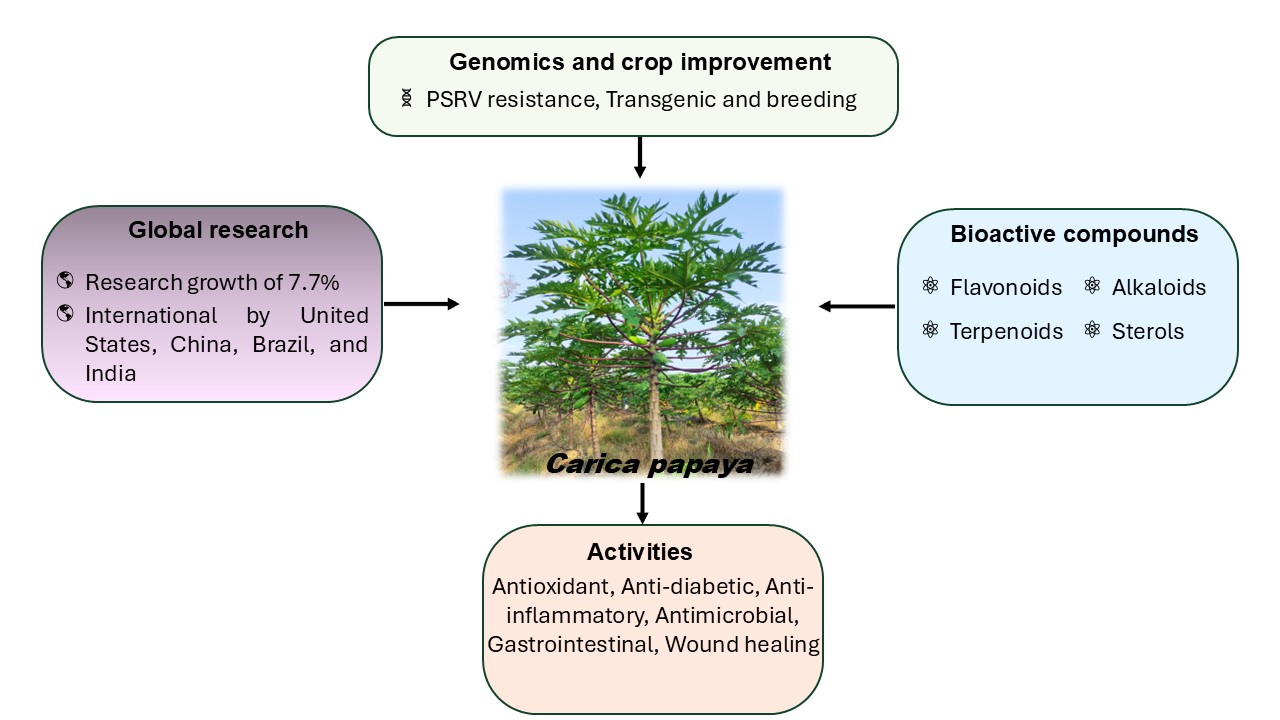
Studies on Carica papaya have focused on solving challenges related to its cultivation, postharvest management, and medicinal properties. Given the extensive volume of information produced, a quantitative analysis is required to delineate the intellectual framework and development of C. papaya research. This study presents the first comprehensive bibliometric analysis of 45 years of scientific research on C. papaya. Our analysis examined 6,544 documents from 1,737 journals, consisting of 6,076 articles, 379 reviews, and 91 conference papers. The United States, India, Brazil, and China lead scientific production, maintaining robust international partnerships. The main research domains were applied sciences (40.9%), analytical studies (36.6%), and experimental research (16.9%), with topics including postharvest quality, disease resistance, genomic sequencing, and the biological activities of secondary metabolites. A co-occurrence analysis revealed an association between polar leaf extracts and phenolic and flavonoid compounds, which are linked to antioxidant, anticancer, and antimicrobial properties. Furthermore, antioxidant activity was the most frequent finding (945 articles). In conclusion, scientific knowledge of C. papaya primarily comprises studies on the plant genome, crop diseases, and bioactive compounds. Research highlights the plant as a valuable resource for sustainable agriculture and, specifically, its leaves as a source of novel phytopharmaceuticals.
Keywords:
Carica papaya
; bibliometric analysis
; plant
; bioactive compounds
1. Introduction
Carica papaya is a tropical plant of great agronomic, commercial, and nutritional importance. It is cultivated in warm regions due to favorable conditions and global demand [1]. However, its productivity, ripening, and the commercial quality of C. papaya are threatened by various diseases and environmental challenges. Particularly, papaya ringspot virus (PRSV) is a viral disease that poses a significant threat, being the most devastating to the global papaya industry [2]. Furthermore, during ripening, spatial changes occur in the fruit composition and nutrient content, influencing its quality and commercial value [3]. All these problems have led to the growth of several scientific fields aimed at characterizing the species and developing solutions for it. In this respect, genomic studies have used molecular methods to examine how plants respond to viral infections [4]. Likewise, the use of plant biotechnology has enabled the evaluation of micropropagation and grafting techniques for the development of improved cultivars [5].
The value of C. papaya is enhanced by its traditional applications in the treatment of various diseases, supported by scientific evidence of phytochemical compounds present. Existing evidence suggests that alkaloids, glycosides, saponins, tannins, flavonoids, isothiocyanates, and lycopene exhibit anticancer, antidiabetic, antimicrobial, antioxidant, and anti-inflammatory properties. [6]. Additionally, papaya leaf extracts may increase platelet counts in patients with dengue infection [7]. Other recent applications highlight the use of leaf extracts in the synthesis of metallic nanoparticles with water decontamination capabilities [8]. In agriculture, poultry farmers use leaf extracts to prevent parasites and promote growth [9].
The diversity of research approaches produces an extensive knowledge of the scientific advancements related to this plant species. Therefore, our study employs bibliometric analysis, a methodology that summarizes the intellectual structure of a field of study, traces its evolution, and quantifies the scholarly impact of publications, authors, institutions, and countries [10]. In contrast to other types of reviews, bibliometric analysis offers a structured, visualizable, and concise representation of extensive research data [11]. Furthermore, text mining was incorporated to investigate the metabolites and biological activities of papaya leaves, a natural language processing tool that extracts hidden data and relationships from large volumes of text [12]. The present research employed a bibliometric methodology to document the scientific landscape and summarize research advances on C. papaya. The analysis considered citation metrics, authorship patterns, sources, collaborations, and thematic trends, in addition to a co-occurrence analysis designed to identify associations between secondary metabolites and bioactivities in the leaves. The findings clarify the research trajectory of this plant, providing a reference framework for future studies. Specifically, they summarize the knowledge on leaf metabolites, establishing the groundwork for upcoming therapeutic applications and the development of phytomedicines.
2. Materials and Methods
2.1. Data Collection
The bibliometric analysis of the literature on C. papaya was conducted using information from the Web of Science (WoS) Core Collection in March 2025, with the terms “Carica papaya” and “papaya” searched in the title, abstract, and keyword fields. The research included articles, reviews, and conference papers published up to December 2024. A total of 6,544 documents were exported in plain text (.txt) format and analyzed using the Bibliometrix R package (version 4.0.0) and its Biblioshiny interface [13].
2.2. Bibliometric Measurement
The research impact of authors and journals was evaluated using the h-index, calculated through the number of publications and citations; the g-index, obtained from highly cited articles, is calculated when the cumulative citations exceed the square of the ranking; and the m-index, defined as the h-index divided by the number of years since the first publication. In addition, the relevance of articles was assessed through Local Citations (LC), Global Citations (GC), and the LC/GC ratio [14].
Collaborative networks were constructed from co-authorship data to identify the most influential authors. Betweenness Centrality (BC) and PageRank (PR) were used to determine the key nodes that connect disparate groups [15].
Keyword analysis was used to identify the research areas and thematic priorities focused on C. papaya. In this regard, a thematic map was created using words with a frequency of at least 30; these words were then grouped using the Walktrap algorithm [16]. The groups were represented in bubbles on a map divided into four themes (motor, niche, emerging or declining, and basic) [17].
2.3. Text Mining for Content Analysis
The title, abstract, and keywords of articles were combined into a single text field in R to create a classification system. These articles were categorized as analytical, applied, experimental, or review studies. Similarly, the biological activities investigated in C. papaya were identified as antimicrobial, antioxidant, anti-inflammatory, anticancer, neuroprotective, cardioprotective, antidiabetic, hepatoprotective, immunomodulatory, antiviral, wound-healing, analgesic, and other relevant properties. A compendium of English terms, their terminological variants, and synonyms was utilized to maximize the detection of specific relationships within the scientific literature in both cases.
A subsequent analysis was conducted to explore terms related specifically to the phytochemical and pharmacological properties of C. papaya leaves. A new set of search patterns was designed to address categories of biological activities, extract types, and metabolite classes. The co-occurrences of terms in the articles were cross-tabulated to calculate the association frequencies, which were represented in a bubble plot.
3. Results
This bibliometric analysis examined 45 years of research on C. papaya (1980–2024). A total of 6,546 documents were retrieved from 1,737 journals. Of these documents, 6,076 were articles (37 of which were in early access), 379 were reviews, and 91 were conference presentations. The documents had an average age of 12.8 years, received 193,525 citations (23.81 per document on average), and had 21,363 authors (4.9 per document on average). The research area experienced an annual growth rate of 7.77%.
3.1. Growth and Citation Trends in the Research of C. papaya over Time
The annual production of articles on C. papaya increased from 17 in 1980 to 457 in 2024 (Figure 1). A significant increase was observed in the number of annual documents, from 96 articles in 2003 to 184 in 2010. Subsequently, between 2019 and 2023, the publications increased, from 359 to 449 articles per year. Furthermore, the citation analysis showed that studies published before 2000 had an average of less than one citation per document (Figure 1). Notably, the average number of citations per article was 3.58 in 2001, reaching a peak of 3.65 in 2017.
3.2. Journals in Scientific Research on C. papaya
Productivity and citation metrics identified the highest-impact journals. Among them, Food Chemistry led in production (103 articles) with the greatest scientific impact, demonstrating the highest h-index (41) and g-index (78), suggesting that it is consistently cited (Table 1). Postharvest Biology and Technology published 78 articles and achieved the highest m-index (1.26), demonstrating the most impactful recent production. The Journal of Agricultural and Food Chemistry had a similar number of articles, but its bibliometric indices were comparatively lower (h-index: 35; m-index: 0.80). Remarkably, the journal LWT – Food Science has a strong recent impact, with a high m-index of 1.21, with only 37 articles.
3.3. Global Scientific Production and Collaborations in C. papaya
According to Figure 2, the global distribution of C. papaya scientific productivity is principally concentrated in four countries: the United States (2,048 articles), India (1,970), Brazil (1,953), and China (1,671). Other prolific countries were Mexico (818 publications), Malaysia (689), Nigeria (533), Australia (426), and Japan (395). International collaborations also contributed to this scientific productivity; the United States, China, Brazil, and India are leading collaborative countries (Figure 4). Notable partnerships include the United States and China (99 joint publications), China and Pakistan (25), Brazil and Spain (21), and India and China (15).
3.4. Leading Organizations in C. papaya Research
The most productive organizations in C. papaya research include the United States Department of Agriculture with 298 articles, the Indian Council of Agricultural Research with 291, Putra University Malaysia with 207, University of Hawaii System with 205, and University of São Paulo with 154 (Figure 3).
3.5. Author Impact Metrics and Collaborative Networks
Our analysis identified Ming R. as the most cited and productive author in C. papaya research, with 65 publications and 3,707 cumulative citations, along with the highest h (29) and g (60) values, complemented by a strong m-index (1.16) reflecting his contemporary contribution (Table 2). Yeh S.D.M. published an equal number of articles, but they obtained fewer citations (1,823), resulting in lower indices (h-index of 27, g-index of 41, and m-index of 0.64). On the other hand, Gonsalves D., with a total of 40 publications, had a higher citation count (3,276) compared to Yeh S.D., resulting in an h-index of 26. Also, Chen W.X. had a significant recent research trajectory, with the highest m-index (1.19), compared to the other authors.
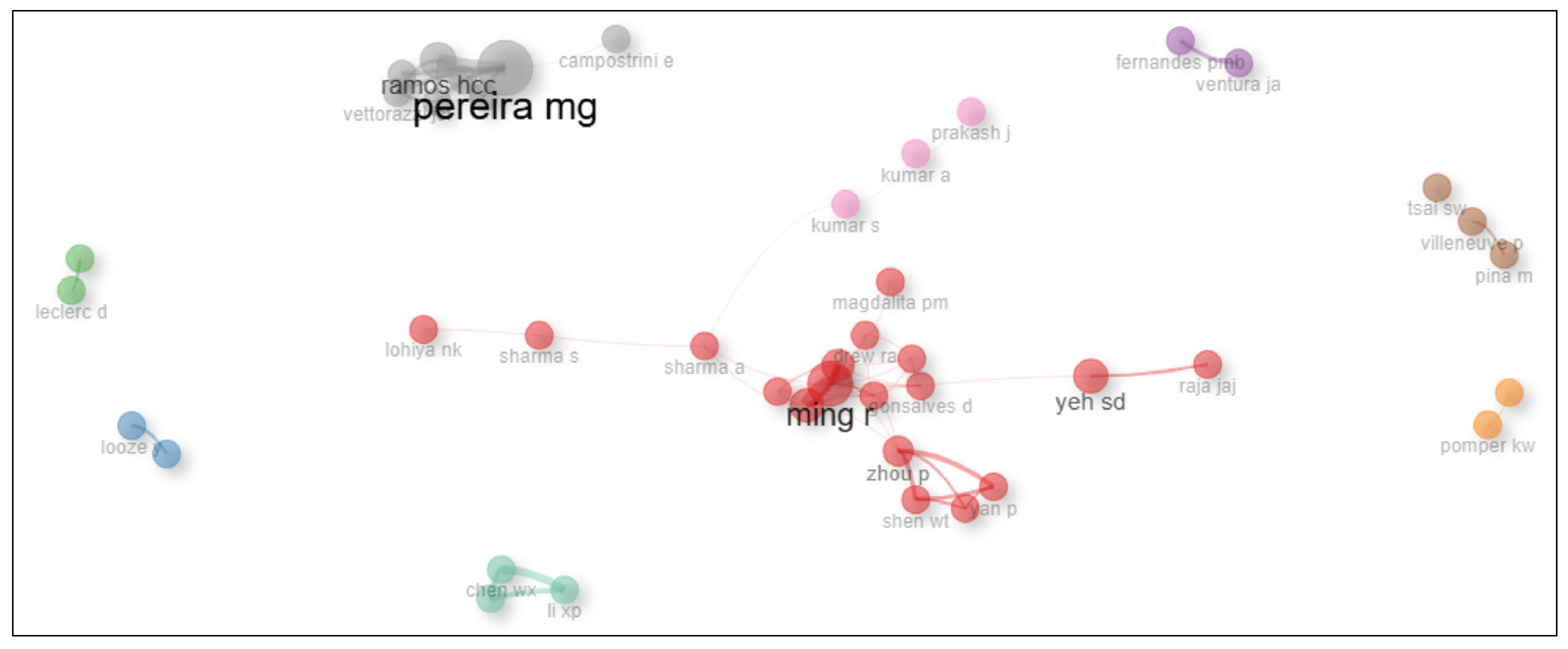
In the author cooperation networks (Figure 4), Ming R. was the center figure, with a BC of 82.24 and a PR of 0.06, representing the largest cluster (red). This principal cluster also included other authors mentioned in Table 2, such as Yeh S.D., Gonsalves D., Paull R.E., Moore P.H., and Yu Q.Y. In addition, a small cluster, consisting solely of Kumar S., Kumar A., and Prakash J. (with a BC of 36.0 and PR of 0.022), was connected to this main group. Another notable, though less central, collaboration group (gray cluster) was represented by Pereira, M.G., who had a BC of 6.00 and a PR of 0.05. The remaining six clusters were smaller and less central.
Figure 4.
Author collaboration networks in C. papaya research.
3.6. Most Influential and Specialized Articles
The most influential articles in C. papaya research were listed in order of LC (Table 3) [18,19,20,21,22,23,24,25,26,27]. The first was “The draft genome of the transgenic tropical fruit tree papaya (Carica papaya Linnaeus)” by Ming et al. (2008), with 203 LC and 775 GC. Next is the work by Gonsalves et al. (1998), “Control of papaya ringspot virus in papaya: A Case Study,” which received 154 LC and 362 GC. The article by Otsuki et al. (2010), titled “Aqueous extract of Carica papaya leaves exhibits anti-tumor activity and immunomodulatory effects,” received 133 LC and 204 GC. Also, in terms of the LC/GC ratio, the work by De Oliveira et al. (2011), titled “Papaya: Nutritional and Pharmacological Characterization,” was the highest at 86.27%, making it the most specialized in the field. The second highest was “Complete Nucleotide Sequence and Genetic Organization of Papaya Ringspot Virus RNA No Access” by Yeh et al. (1992), at 67.69%.
3.7. Key Research Themes and Term Frequency Analysis
The word cloud analysis shows an emphasis on research in plant biology, harvesting, and molecular analysis (Figure 5). The most frequently occurring terms were C. papaya (384 occurrences), identification (285), quality (280), growth (278), fruit (257), expression (239), and resistance (175).
Additionally, we identified five clusters of research themes for C. papaya, which are represented in a thematic map (Figure 6). The “Quality” cluster (light pink) represents a central and developed theme, with an emphasis on postharvest science and food chemistry. It is primarily comprised of the terms “fruit,” “acid,” “in vitro,” and “in vivo.” Another cluster, labeled “Identification” (light blue), encompasses terms such as “growth,” “gene expression,” and “resistance,” and is a well-established theme that specializes in plant biology, genetics, and disease resistance. Furthermore, the “Sequence” cluster (light green) contains terms such as “gene,” “diversity,” “DNA,” “molecular,” and “protein,” and thus acts as a connecting theme primarily encompassing virology and genomic studies. On the other hand, the “Carica papaya” cluster (lavender) emphasizes the biological activities of papaya compounds, characterized by terms that include “purification,” “latex,” “proteins,” and “enzymatic activity.” Finally, the “Adsorption” group (light orange) forms a narrow but specialized line of research focused on environmental applications, as evidenced by the term “removal.”
3.8. Types of Studies and Biological Activities Investigated in C. papaya
Our analysis of C. papaya publications revealed that applied sciences constituted the majority of research (40.9%; Table 4), followed by analytical studies (36.6%), experimental research (16.9%), and review articles (5.6%). Within the applied sciences category, the focus is on plant pathology (16.8% of total articles) and agricultural applications (12.9%). Analytical studies consist of general analyses (13.2%) and genomic/proteomic research (12.6%). Experimental research includes in vitro studies (6.2%), animal models (5.3%), and clinical research (3.1%). Finally, review articles are primarily narrative (5.1%).
Table 5 summarizes the analysis of the most studied biological activities, ranked by the number of publications. The antioxidant properties lead with 945 publications, followed by metabolic regulation (747), anti-infective activity (427), anticancer activity (224), wound healing (62), anti-inflammatory (45), cardiovascular (12), neurological (13), and hepatoprotective activities (10).
3.9. Extracts, Metabolites, and Bioactivities of C. papaya Leaves
Aqueous and ethanolic extracts from C. papaya leaves have been found to have a greater diversity and quantity of metabolites (Figure 7). These polar extracts are associated with phenolic compounds, flavonoids, and alkaloids, which were linked to antioxidant, anti-inflammatory, anticancer, and antimicrobial activities. In contrast, nonpolar extracts (hexane and chloroform) were less common and more specific. They are primarily associated with terpenoids and sterols in antimicrobial activity. On the other hand, terpenes and sulfur compounds associated with essential oils were correlated with antiviral and hepatoprotective properties. Furthermore, saponins and sulfur compounds are involved in antidiabetic and anticancer effects.
4. Discussion
Research on C. papaya has undergone significant diversification in recent decades, with contributions from many areas, including agronomy, botany, genomics, phytochemistry, and pharmacology. To the best of our knowledge, this bibliometric analysis is the first to provide an overview of the global scientific landscape of this plant, exploring publication trends, leading authors, research topics, and a detailed examination of biological activities and metabolites.
The annual increase of 7.77% in publications regarding the plant indicates an expanding engagement from the scientific community. Advancements in agricultural practices, contemporary medicinal applications, nutritional attributes, phytochemical analysis, disease etiology, post-harvest techniques, genomics, biotechnological approaches, and the development of value-added papaya products for food and health security have been influenced by progress [28]. Moreover, the average citations per document showed an upward trend, reaching a peak in 2017. The observed limitation on citation growth may result from the period required for articles to accumulate citations, suggesting that the number may continue to rise. Comparable results have been observed in plant species, including watermelon [29].
The distribution of the papaya crop in tropical regions agrees with the highly productive countries in papaya research, including India, Brazil, China, and Mexico [1]. This is represented by institutions such as the Indian Council of Agricultural Research and the University of São Paulo (Figure 3). Remarkably, the United States is the most prolific contributor to the scientific literature, with the United States Department of Agriculture being the most representative institution, with 298 articles. In addition, it is the nation with the most international collaborations, despite not being a significant agricultural producer of the species. In this sense, international collaboration has been described as a mutually beneficial global scientific trend in which countries with high confidence and reciprocity develop strong relationships to conduct research [30]. This indicates that natural resources enhance research in productive nations, and the United States, by establishing international partnerships, has emerged as a leader in research.
We observed a focus on food science and technology due to the predominance of journals such as Postharvest Biology and Technology and LWT—Food Science and Technology. Primarily, these journals publish papers that investigate the integrity of plant components and postharvest processes [31]. By means of phytopathological investigation, this contributes to the development of strategies that address diseases affecting agricultural productivity. His research has been published in journals such as Plant Disease and Phytopathology [2]. Additionally, the journal Food Chemistry demonstrates the interest of pharmacology in exploring the therapeutic applications of plant-derived bioactive metabolites [32].
The integration of author collaboration networks and publication impact reveals that knowledge regarding this plant is distributed among specialized research groups. The most prominent cluster is represented by Ming R. (Figure 2), who published “The draft genome of the transgenic tropical fruit tree papaya”, a work that defines the research line focused on genomics for crop improvement. Integrated into this line is the research of Gonsalves and Yeh on the control and characterization of PRSV. This collaboration demonstrates that genomics and phytopathology have converged to address the most devastating problem for this crop worldwide, as commercial varieties lack natural resistance to PRSV. This result shows that experiments produced transgenic varieties that exhibited resistance to virus coat proteins [33]. Occupying a more isolated position within the collaboration network, a cluster led by Pereira M.G. is focused on conventional plant breeding and cultivar development [34]. Therefore, both research groups are attempting to solve the problem of plant infections and, in turn, produce healthy papaya.
Research on C. papaya has also explored its pharmaceutical properties. Some of the literature is based on experimental studies, such as in vitro studies, animal models, and clinical trials (Table 4). As part of their metabolism, plants generate chemical substances that interact with the environment and may have therapeutic uses. Many of these substances are found in various plant organs at largely unknown concentrations [35]. Consistent with this, the “Carica papaya” cluster on the thematic map and Table 3 shows interest in the biological activities of papaya compounds and efforts to isolate and characterize the active principles responsible. This has been supported by the finding of several bioactive compounds in various plant components, including leaves, fruit, roots, seeds, and latex [36].
The leaves of C. papaya are of interest due to diverse bioactive metabolites. Our analysis revealed that antioxidant activity had the highest number of publications (Table 5), and text mining indicated that phenolic compounds and antioxidant activity have been associated (Figure 8). This aligns with the existing literature, which identifies phenolic compounds, particularly flavonoids, as the main contributors to the antioxidant capacity of C. papaya leaves. These compounds act as potent free-radical scavengers and metal chelators, neutralizing reactive oxygen species and reducing oxidative stress [37].
The existing literature suggests that the efficiency of phytochemical extraction is highly influenced by solvent polarity [1]. Our analysis revealed a greater frequency of bioactive metabolites and associated activities in the polar extracts. The extracts have been found to contain flavonoids, such as quercetin and kaempferol, as well as phenolic acids, including chlorogenic and caffeic acids. The association of these compounds with antioxidants and anti-inflammatory properties has been documented [38], which we identified as co-occurring in our study. Additionally, the polar extracts contained carpaine, which has shown different biological effects (antiplasmodial, antidengue, anticancer, anthelmintic, and thrombocytopenic) [39]. Furthermore, the antidiabetic effects are attributed to the phenolic glycosides present in the extracts, which inhibit carbohydrate-digesting enzymes [37]. Conversely, less polar extracts were less numerous in our analysis and were mostly associated with metabolites, such as terpenes. According to the literature, these compounds found in leaves exhibit various biological activities. In particular, sterols (β-sitosterol and phytosterols) exhibit antimicrobial, hepatoprotective, and anti-inflammatory properties. Besides, triterpenoids and sterols (stigmasterols, betulinic, and oleanolic acid) demonstrate antiviral properties [40]. The metabolites are correlated with biological properties, which contribute to the scientific development of plant-based pharmaceutical and nutraceutical products.
This article presents limitations in the categorization system used to process a large volume of literature (6,546 articles): text mining analyses of biological activity, extract type, and metabolite class required articles to include key terms in their titles, abstracts, or keywords, 2–3% difference across several categories when performing manual checks. Consequently, studies that did not report these terms adequately in these areas were excluded from the analysis.
5. Conclusions
This bibliometric analysis reveals the growing exploration of the bioactive metabolites of C. papaya, as well as the progression from agricultural and food research to strategic scientific collaborations that have successfully addressed critical crop diseases. This approach has enabled us to map the entire research landscape, showing that C. papaya has transcended its role as a tropical fruit to become a key model for genomics and a promising source of pharmacological compounds. Our study suggests that C. papaya is a fundamental subject at the intersection of agriculture, genomics, and applied medicine. These contributions require further research to understand the various properties of C. papaya leaves that could be used as an alternative in nutrition and disease treatment.
Author Contributions
Conceptualization, J.D.C.-C., T.B.G.-C., and I.E.J.-R.; methodology, J.D.C.-C., T.B.G.-C., G.A.N.-R., and D.R.-R.; software, G.A.N.-R. and D.R.-R.; validation, G.I.J.-D.l.C., A.M.Z.-E., and D.M.D.-G.; formal analysis, G.A.N.-R., D.R.-R., and C.G.G.-P.; investigation, J.D.C.-C., V.O.-H., J.L.B.-C., and M.G.-C.; resources, I.E.J.-R. and M.G.-C.; data curation, G.A.N.-R. and D.R.-R.; writing—original draft preparation, J.D.C.-C. and T.B.G.-C.; writing—review and editing, all authors; visualization, G.A.N.-R. and D.R.-R.; supervision, I.E.J.-R. and M.G.-C.; project administration, I.E.J.-R.; funding acquisition, I.E.J.-R. and M.G.-C. All authors have read and agreed to the published version of the manuscript.
Funding
This research received no external funding.
Data Availability Statement
The full analyses presented in this study are included in the article/Supplementary Materials. For more information, please contact the corresponding author.
Conflicts of Interest
The authors declare no conflicts of interest.
Abbreviations
The following abbreviations are used in this manuscript:
| PRSV | Papaya ringspot virus |
| WoS | Web of Science |
| LC | Local citations |
| GC | Global citations |
| BC | Betweenness centrality |
| PR | PageRank |
References
- Srivastava, R.; Jaiswal, N.; Kharkwal, H.; Dubey, N. K.; Srivastava, R. Phytomedical Properties of Carica papaya for Boosting Human Immunity Against Viral Infections. Viruses. 2025, 17, 271.
- Quito-Avila, D. F.; Reyes-Proaño, E.; Cañada, G.; Cornejo-Franco, J. F.; Alvarez-Quinto, R.; Moreira, L.; Grinstead, S.; Mollov, D.; Karasev, A. V. Papaya Sticky Disease Caused by Virus “Couples”: A Challenge for Disease Detection and Management. Plant Dis. 2023, 107, 1649–1663. [CrossRef]
- Chung, S. W.; Jang, Y. J.; Kim, S.; Kim, S. C. Spatial and Compositional Variations in Fruit Characteristics of Papaya (Carica papaya cv. Tainung No. 2) during Ripening. Plants 2023, 12, 1465. [CrossRef]
- Patil, B. L.; Tripathi, S. Differential expression of microRNAs in response to papaya ringspot virus infection in differentially responding genotypes of papaya (Carica papaya L.) and its wild relative. Front. Plant Sci. 2024, 15, 1398437. [CrossRef]
- Salinas, I.; Hueso, J. J.; Força Baroni, D.; Cuevas, J. Plant Growth, Yield, and Fruit Size Improvements in ‘Alicia’ Papaya Multiplied by Grafting. Plants 2023, 12, 1189. [CrossRef]
- Patel, S.; Rana, K.; Arya, P.; Nelson, J.; Hernandez, V.; Minakova, V. Anticancer Activity of Phytochemicals of the Papaya Plant Assessed: A Narrative Review. J. Cancer Prev. 2024, 29, 58–68. [CrossRef]
- Haward, R.; Konjeti, S.; Chacko, J.; Nadella, J. S.; Roja, S. L.; Rayapudi, J. J. Papaya Leaf Extract Elevates Platelet Levels in Individuals With Dengue Fever. Cureus 2024, 16, e61090. [CrossRef]
- Aswini, R.; Jothimani, K.; Kannan, K.; Pothu, R.; Shanmugam, P.; Boddula, R.; Radwan, A. B.; Periyasami, G.; Karthikeyan, P.; Al-Qahtani, N. Carica Papaya Leaf-Infused Metal Oxide Nanocomposite: A Green Approach Towards Water Treatment and Antibacterial Applications. Environ. Geochem. Health 2024, 46, 334. [CrossRef]
- Malatji, D. P.; Ramantswana, T. M.; Ledwaba, M. B. The Control of Gastrointestinal Parasites of Village Chickens in Africa Using Ethnoveterinary Intervention: A Systematic Review. Vet. Sci. 2025, 12, 407. [CrossRef]
- Manoj Kumar, L.; George, R. J.; P, S. A. Bibliometric Analysis for Medical Research. Indian J. Psychol. Med. 2023, 45, 277–282. [CrossRef]
- Ullah, R.; Asghar, I.; Griffiths, M. G. An Integrated Methodology for Bibliometric Analysis: A Case Study of Internet of Things in Healthcare Applications. Sensors 2023, 23, 67. [CrossRef]
- Hartmann, J.; Van Keuren, L. Text mining for clinical support. J. Med. Libr. Assoc. 2019, 107, 603–605. [CrossRef]
- Aria, M.; Cuccurullo, C. Bibliometrix: An R-tool for comprehensive science mapping analysis. J. Informetr. 2017, 11, 959–975. [CrossRef]
- Garg, K.; Ranjan, M.; Krishna, V.; Singh, M.; Rezai, A. A scientometric analysis of the 100 most cited articles on magnetic resonance guided focused ultrasound. Front. Hum. Neurosci. 2022, 16 , 981571. [CrossRef]
- Perez, C.; Germon, R. Graph Creation and Analysis for Linking Actors: Application to Social Data. In Automating Open Source Intelligence; Layton, R., Watters, P. A., Eds.; Syngress: Boston, MA, USA, 2016; pp. 103–129.
- Brusco, M.; Steinley, D.; Watts, A. L. Improving the Walktrap Algorithm Using K-Means Clustering. Multivariate Behav. Res. 2024, 59, 266–288. [CrossRef]
- Alkhammash, R. Bibliometric, network, and thematic mapping analyses of metaphor and discourse in COVID-19 publications from 2020 to 2022. Front. Psychol. 2023, 13, 1062943. [CrossRef]
- Ming, R.; Hou, S.; Feng, Y.; Yu, Q.; Dionne-Laporte, A.; Saw, J. H.; Senin, P.; Wang, W.; Ly, B. V.; Lewis, K. L.; et al. The draft genome of the transgenic tropical fruit tree papaya (Carica papaya Linnaeus). Nature 2008, 452, 991–996. [CrossRef]
- Gonsalves, D. Control of papaya ringspot virus in papaya: a case study. Annu. Rev. Phytopathol. 1998, 36, 415–437. [CrossRef]
- Otsuki, N.; Dang, N. H.; Kumagai, E.; Kondo, A.; Iwata, S.; Morimoto, C. Aqueous extract of Carica papaya leaves exhibits anti-tumor activity and immunomodulatory effects. J. Ethnopharmacol. 2010, 127 , 760–767. [CrossRef]
- Fitch, M. M. M.; Manshardt, R. M.; Gonsalves, D.; Slightom, J. L.; Sanford, J. C. Virus Resistant Papaya Plants Derived from Tissues Bombarded with the Coat Protein Gene of Papaya Ringspot Virus. Bio/Technology 1992, 10, 1466–1472. [CrossRef]
- Yeh, S. D.; Jan, F. J.; Chiang, C. H.; Doong, T. J.; Chen, M. C.; Chung, P. H.; Bau, H. J. Complete nucleotide sequence and genetic organization of papaya ringspot virus RNA. J. Gen. Virol. 1992, 73, 2531–2541. [CrossRef]
- de Oliveira, J. G.; Vitória, A. P. Papaya: Nutritional and pharmacological characterization, and quality loss due to physiological disorders. An overview. Food Res. Int. 2011, 44, 1306–1313. [CrossRef]
- Liu, Z.; Moore, P. H.; Ma, H.; Ackerman, C. M.; Ragiba, M.; Yu, Q.; Pearl, H. M.; Kim, M. S.; Charlton, J. W.; Stiles, J. I.; Zee, F. T.; Paterson, A. H.; Ming, R. A primitive Y chromosome in papaya marks incipient sex chromosome evolution. Nature 2004, 427, 348–352. [CrossRef]
- Canini, A.; Alesiani, D.; D’Arcangelo, G.; Tagliatesta, P. Gas chromatography–mass spectrometry analysis of phenolic compounds from Carica papaya L. leaf. J. Food Compos. Anal. 2007, 20, 584–590. [CrossRef]
- El Moussaoui, A.; Nijs, M.; Paul, C.; Wintjens, R.; Vincentelli, J.; Azarkan, M.; Looze, Y. Revisiting the enzymes stored in the laticifers of Carica papaya in the context of their possible participation in the plant defence mechanism. Cell. Mol. Life Sci. 2001, 58, 556–570. [CrossRef]
- Azarkan, M.; El Moussaoui, A.; van Wuytswinkel, D.; Dehon, G.; Looze, Y. Fractionation and purification of the enzymes stored in the latex of Carica papaya. J. Chromatogr. B 2003, 790, 229–238. [CrossRef]
- Koul, B.; Pudhuvai, B.; Sharma, C.; Kumar, A.; Sharma, V.; Yadav, D.; Jin, J.-O. Carica papaya L.: A Tropical Fruit with Benefits Beyond the Tropics. Diversity 2022, 14, 683. [CrossRef]
- Zheng, Y. P. Global characteristics and trends of researches on watermelon: based on bibliometric and visualized analysis. Heliyon 2024, 10, e26824. [CrossRef]
- Liu, J.; Guo, X.; Xu, S.; Zhang, Y. Quantifying the impact of strong ties in international scientific research collaboration. PLoS One 2023, 18, e0280521. [CrossRef]
- Rosa, D. P.; Evangelista, R. R.; Borges Machado, A. L.; Sanches, M. A. R.; Telis-Romero, J. Water sorption properties of papaya seeds (Carica papaya L.) formosa variety: an assessment under storage and drying conditions. LWT 2021, 138, 110458. [CrossRef]
- Cansino-Jácome, F.; Méndez-Campos, G. K.; Hidalgo-Morales, M.; García-Alvarado, M. A.; Rodríguez-Jimenes, G. C. Extraction of bioactive compounds from papaya leaves (Carica papaya L.) by multistage countercurrent extraction as function of solvent polarity and temperature. Food Chem. 2025, 488, 144824. [CrossRef]
- Premchand, U.; Mesta, R. K.; Devappa, V.; Basavarajappa, M. P.; Venkataravanappa, V.; Narasimha Reddy, L. R. C.; Shankarappa, K. S. Survey, Detection, Characterization of Papaya Ringspot Virus from Southern India and Management of Papaya Ringspot Disease. Pathogens 2023, 12, 824. [CrossRef]
- Pereira, M. G.; Santa-Catarina, R. Recurrent selection in papaya: An effective strategy for the continuous development of new cultivars. Crop Breed. Appl. Biotechnol. 2021, 21, e385221S20. [CrossRef]
- Davis, C. C.; Choisy, P. Medicinal Plants Meet Modern Biodiversity Science. Curr. Biol. 2024, 34, R158–R173. [CrossRef]
- Munir, S.; Liu, Z. W.; Tariq, T.; Rabail, R.; Kowalczewski, P.; Lewandowicz, J.; Blecharczyk, A.; Abid, M.; Inam-Ur-Raheem, M.; Aadil, R. M. Delving into the Therapeutic Potential of Carica papaya Leaf Against Thrombocytopenia. Molecules 2022, 27, 2760. [CrossRef]
- Chaijan, S.; Chaijan, M.; Uawisetwathana, U.; Panya, A.; Phonsatta, N.; Shetty, K.; Panpipat, W. Phenolic and Metabolic Profiles, Antioxidant Activities, Glycemic Control, and Anti-Inflammatory Activity of Three Thai Papaya Cultivar Leaves. Foods 2024, 13, 1692. [CrossRef]
- Sharma, A.; Sharma, R.; Sharma, M.; Kumar, M.; Barbhai, M. D.; Lorenzo, J. M.; Sharma, S.; Samota, M. K.; Atanassova, M.; Caruso, G.; Naushad, M.; Radha; Chandran, D.; Prakash, P.; Hasan, M.; Rais, N.; Dey, A.; Mahato, D. K.; Dhumal, S.; Singh, S.; Senapathy, M.; Rajalingam, S.; Visvanathan, M.; Saleena, L. A. K.; Mekhemar, M. Carica papaya L. Leaves: Deciphering Its Antioxidant Bioactives, Biological Activities, Innovative Products, and Safety Aspects. Oxid. Med. Cell. Longev. 2022, 2022, 2451733. [CrossRef]
- Shrivastava, N.; Alagarasu, K.; Cherian, S.; Parashar, D. Antiviral & platelet-protective properties of Carica papaya in dengue. Indian J. Med. Res. 2022, 156, 459–463. [CrossRef]
- Adel, A.; Elnaggar, M. S.; Albohy, A.; Elrashedy, A. A.; Mostafa, A.; Kutkat, O.; Abdelmohsen, U. R.; Al-Sayed, E.; Rabeh, M. A. Evaluation of Antiviral Activity of Carica papaya Leaves Against SARS-CoV-2 Assisted by Metabolomic Profiling. RSC Adv. 2022, 12, 32844–32852. [CrossRef]
Figure 1.
Annual scientific production and citation trends in C. papaya research.
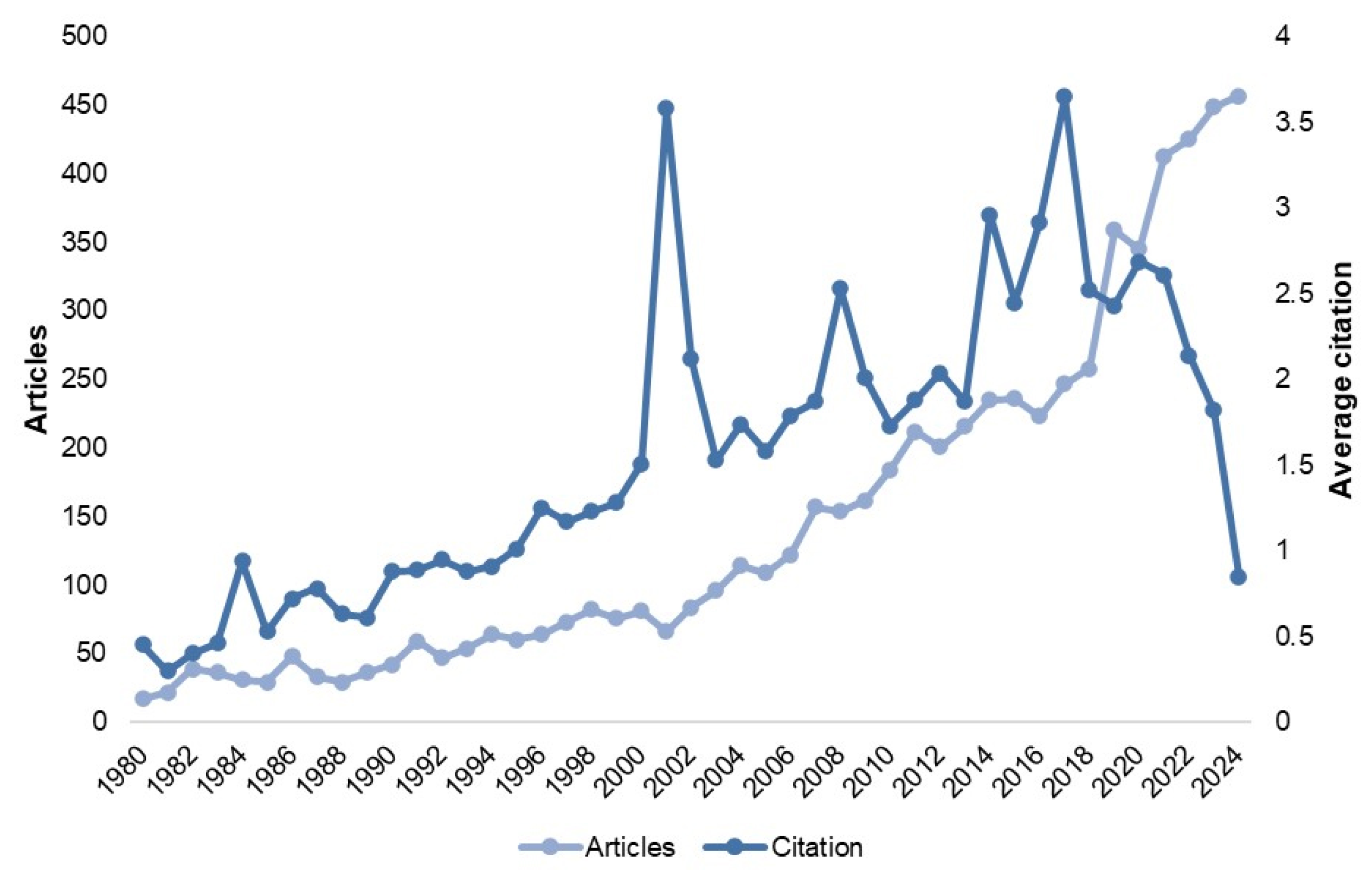
Figure 2.
Global scientific production and collaboration network of C. papaya research.
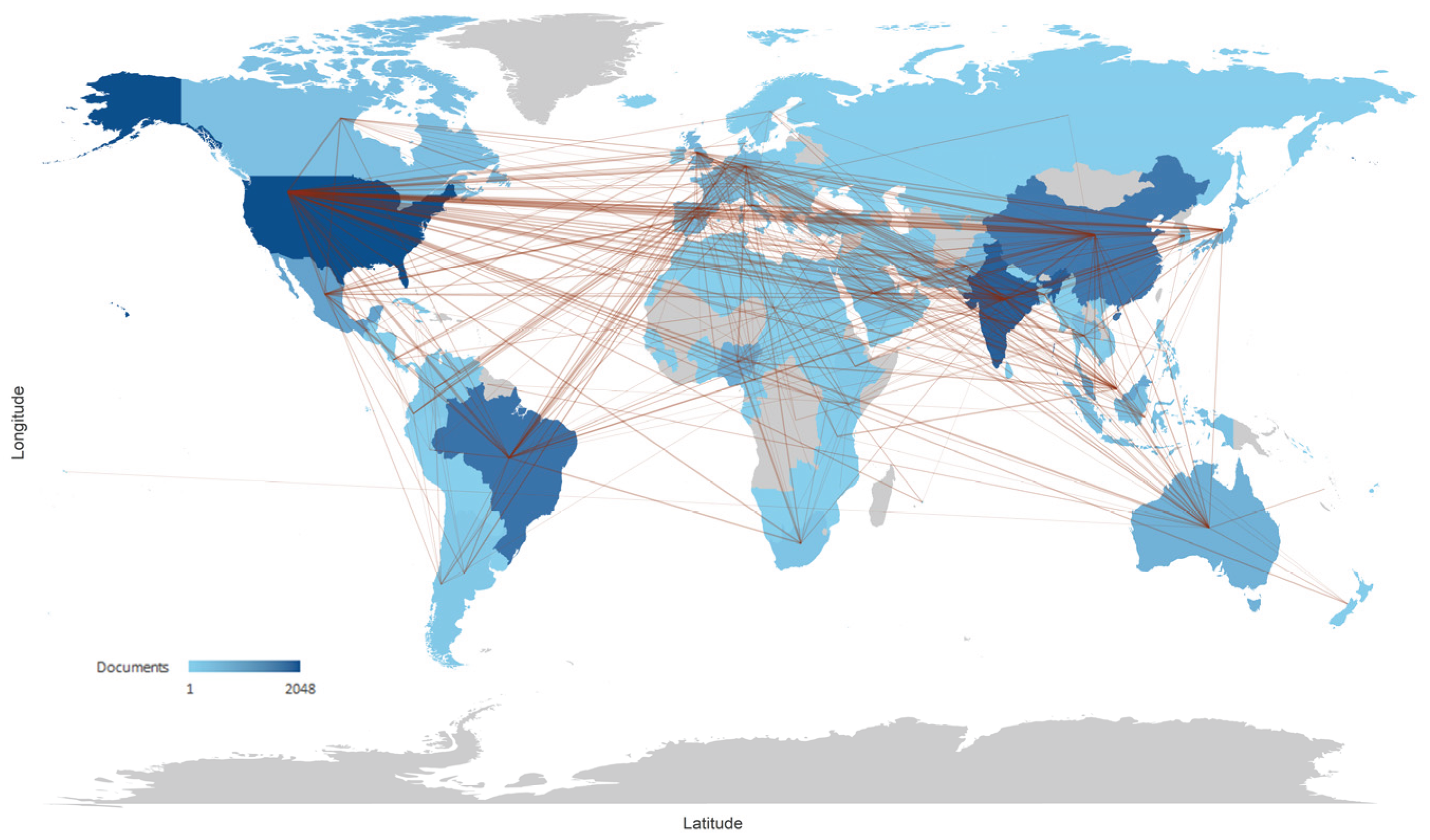
Figure 3.
Ranking of institutions with the highest scientific production in C. papaya.
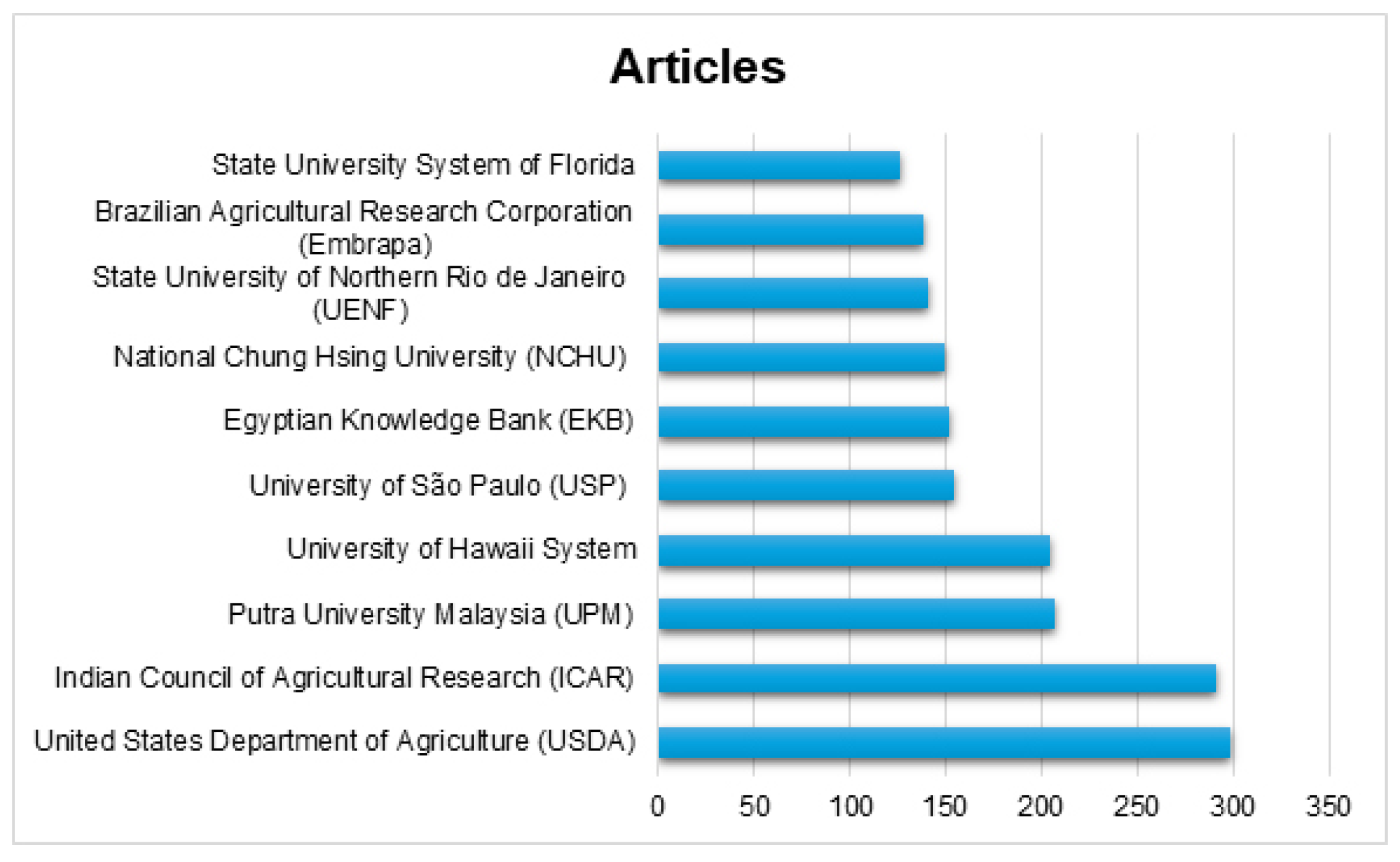
Figure 5.
The 50 most frequently used research keywords.
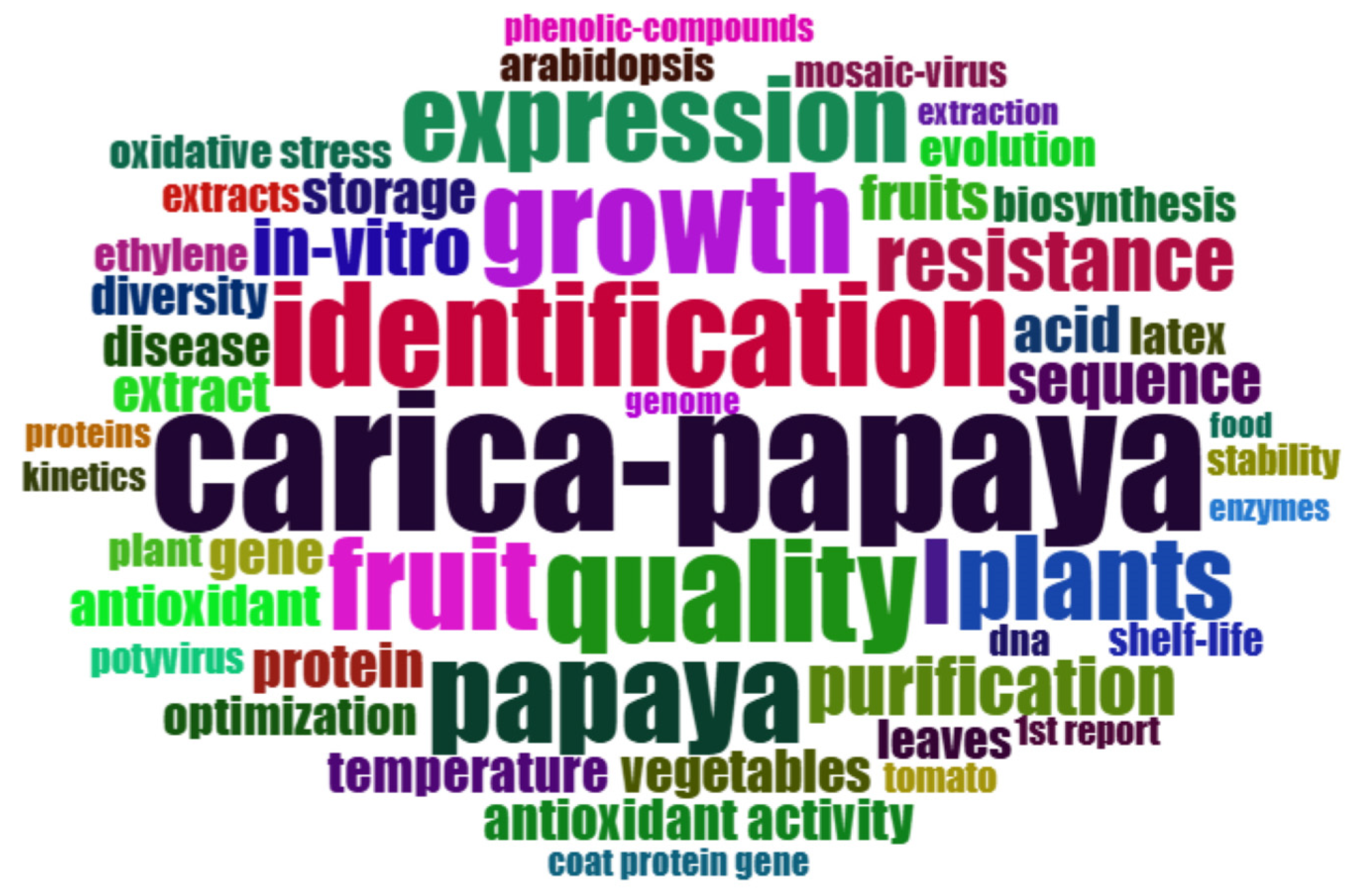
Figure 6.
Thematic map for keywords in C. papaya research.
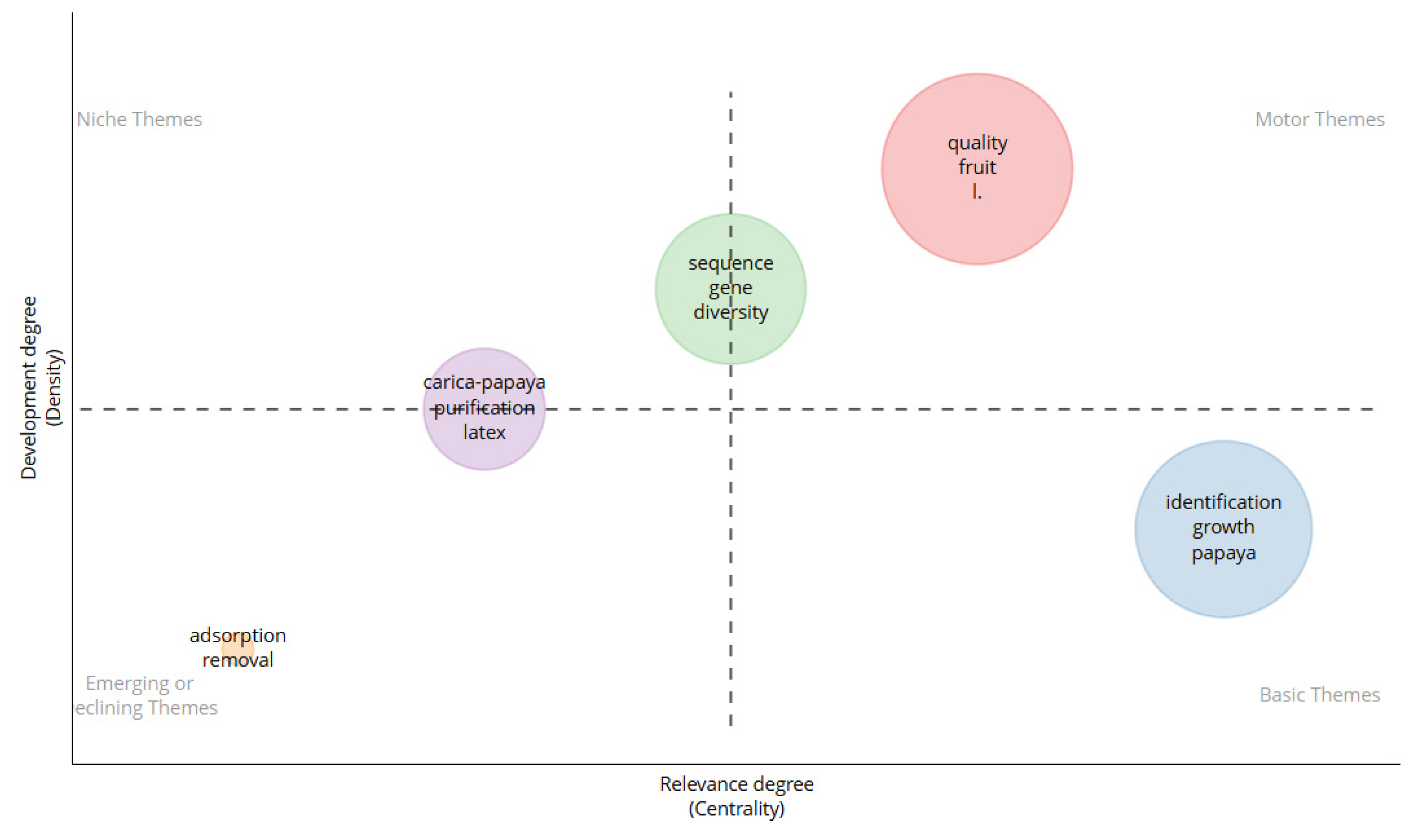
Figure 7.
Co-occurrence of metabolites according to biological activity and extract type in C. papaya leaves.
Figure 7.
Co-occurrence of metabolites according to biological activity and extract type in C. papaya leaves.
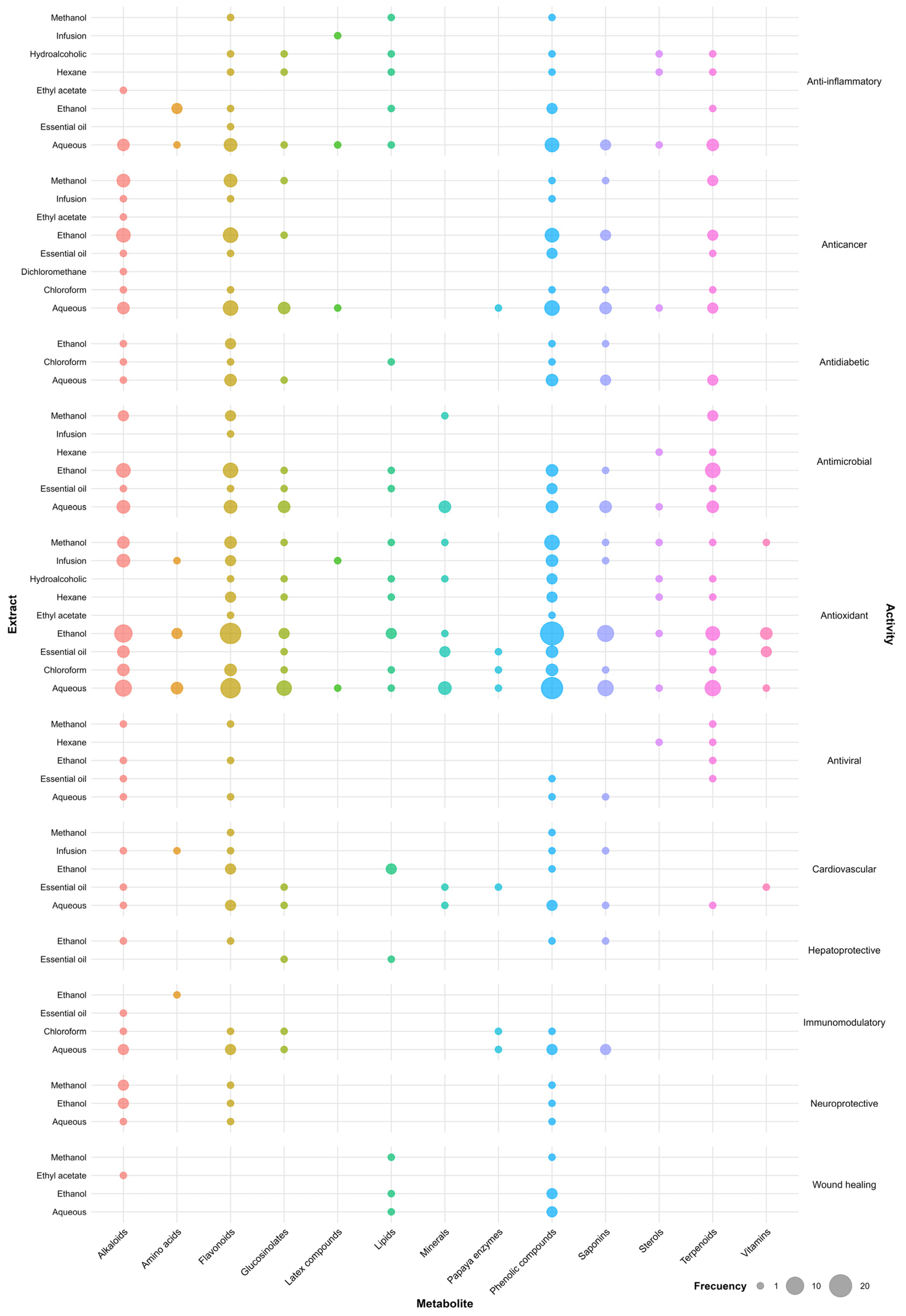

Table 1.
Bibliometric indices of leading journals in C. papaya research.
| Journals | H-index | G-index | M-index | Citations | Number of publications | Publication year start |
|---|---|---|---|---|---|---|
| Food Chemistry | 41 | 78 | 0.89 | 6268 | 103 | 1980 |
| Postharvest Biology And Technology | 39 | 64 | 1.26 | 4213 | 78 | 1995 |
| Journal Of Agricultural And Food Chemistry | 35 | 67 | 0.80 | 4612 | 80 | 1982 |
| Journal Of Ethnopharmacology | 29 | 46 | 0.94 | 2690 | 46 | 1995 |
| Plant Disease | 29 | 42 | 0.63 | 2297 | 91 | 1980 |
| Phytopathology | 26 | 45 | 0.57 | 2119 | 57 | 1980 |
| Journal Of The American Society For Horticultural Science | 24 | 35 | 0.52 | 1337 | 44 | 1980 |
| Journal Of Economic Entomology | 23 | 32 | 0.52 | 1190 | 57 | 1982 |
| Journal Of The Science Of Food And Agriculture | 23 | 39 | 0.50 | 1630 | 49 | 1980 |
| Lwt-Food Science And Technology | 23 | 37 | 1.21 | 1464 | 37 | 2007 |
Table 2.
Bibliometric indices of leading researchers in C. papaya studies.
| Author | H-index | G-index | M-index | Citations | Number of publications | Publication year start |
|---|---|---|---|---|---|---|
| Ming, R. | 29 | 60 | 1.16 | 3707 | 65 | 2001 |
| Yeh, S. D. | 27 | 41 | 0.64 | 1823 | 65 | 1984 |
| Gonsalves, D. | 26 | 40 | 0.57 | 3276 | 40 | 1980 |
| Paull, R. E. | 26 | 39 | 0.60 | 2722 | 39 | 1983 |
| Moore, P. H. | 25 | 36 | 1.00 | 2747 | 36 | 2001 |
| Yu, Q. Y. | 23 | 37 | 1.05 | 2587 | 37 | 2004 |
| Ali, A. | 19 | 30 | 0.86 | 1602 | 30 | 2004 |
| Chen, W. X. | 19 | 31 | 1.19 | 1264 | 31 | 2010 |
| Drew, R. A. | 19 | 28 | 0.48 | 808 | 30 | 1986 |
| Leclerc, D. | 19 | 32 | 0.95 | 1120 | 32 | 2006 |
Table 3.
Ranking of publications by number of local citations.
| Authors/Years | Title | Journal | Local Citations | Global Citations | LC/GC Ratio (%) |
|---|---|---|---|---|---|
| Ming et al. (2008)[18] | The draft genome of the transgenic tropical fruit tree papaya (Carica papaya Linnaeus) | Nature | 203 | 775 | 26.19 |
| Gonsalves et al. (1998) [19] | Control of papaya ringspot virus in papaya: A Case Study | Annu Rev Phytopathol | 154 | 362 | 42.54 |
| Otsuki et al. (2010) [20] | Aqueous extract of Carica papaya leaves exhibits anti-tumor activity and immunomodulatory effects | J Ethnopharmacol | 133 | 204 | 65.2 |
| Fitch et al. (1992) [21] | Virus Resistant Papaya Plants Derived from Tissues Bombarded with the Coat Protein Gene of Papaya Ringspot Virus | Bio-Technol | 111 | 226 | 49.12 |
| Yeh et al. (1992) [22] | Complete Nucleotide Sequence and Genetic Organization of Papaya Ringspot Virus RNA No Access | J Gen Virol | 88 | 130 | 67.69 |
| De Oliveira et al. (2011) [23] | Papaya: Nutritional and pharmacological characterization, and quality loss due to physiological disorders. An overview | Food Res Int | 88 | 102 | 86.27 |
| Liu et al. (2004) [24] | A primitive Y chromosome in papaya marks incipient sex chromosome evolution | Nature | 85 | 298 | 28.52 |
| Canini et al. (2007) [25] | Gas chromatography–mass spectrometry analysis of phenolic compounds from Carica papaya L. leaf | J Food Compos Anal | 82 | 159 | 51.57 |
| El Moussaoui et al. (2001) [26] | Revisiting the enzymes stored in the laticifers of Carica papaya in the context of their possible participation in the plant defence mechanism | Cell Mol Life Sci | 79 | 127 | 62.2 |
| Azarkan et al. (2003)[27] | Fractionation and purification of the enzymes stored in the latex of Carica papaya | J Chromatogr B | 79 | 128 | 61.72 |
Table 4.
Distribution and frequency of study types.
| Category | Type of study | n | Total (%) | Category (%) |
|---|---|---|---|---|
| Analytical | General analysis | 862 | 13.2 | 36 |
| Genomics/Proteomics | 826 | 12.6 | 34.5 | |
| Characterization | 173 | 2.6 | 7.2 | |
| Biochemical analysis | 164 | 2.5 | 6.9 | |
| Chemical analysis | 157 | 2.4 | 6.6 | |
| Phytochemical analysis | 139 | 2.1 | 5.8 | |
| Optimization | 48 | 0.7 | 2 | |
| Materials analysis | 24 | 0.4 | 1 | |
| Applied | Phytopathology | 1097 | 16.8 | 40.9 |
| Agricultural | 846 | 12.9 | 31.6 | |
| Postharvest | 632 | 9.7 | 23.6 | |
| Ecological | 105 | 1.6 | 3.9 | |
| Experimental | In vitro | 409 | 6.2 | 37 |
| Animal models | 348 | 5.3 | 31.5 | |
| Clinical | 202 | 3.1 | 18.3 | |
| In silico | 78 | 1.2 | 7.1 | |
| Other | 67 | 1 | 6.1 | |
| Review | Narrative | 333 | 5.1 | 90.2 |
| Systematic | 36 | 0.5 | 9.8 |
Table 5.
Biological activities reported for C. papaya.
| Classification | Studies (n) | Key Activities/Mechanisms |
|---|---|---|
| Antioxidant | 945 | Free radical scavenging and ROS inhibition. |
| Metabolic regulation | 747 | Anti-obesity and antidiabetic. |
| Antimicrobial | 427 | Antibacterial, antifungal, antiviral, and antiparasitic. |
| Anticancer | 224 | Cytotoxic, antiproliferative, chemopreventive, and antitumor. |
| Wound healing | 62 | Wound healing and tissue regeneration. |
| Gastrointestinal | 47 | Digestive enzyme stimulation, antiulcer, and gastroprotective. |
| Anti-inflammatory | 45 | Anti-inflammatory, analgesic, and antinociceptive. |
| Immunomodulation | 40 | Immunomodulatory. |
| Renal protection | 14 | Nephroprotective and diuretic. |
| Neurological | 13 | Neuroprotective. |
| Cardiovascular | 12 | Cardioprotective and vasodilation. |
| Hepatoprotective | 10 | Hepatoprotective. |
Disclaimer/Publisher’s Note: The statements, opinions and data contained in all publications are solely those of the individual author(s) and contributor(s) and not of MDPI and/or the editor(s). MDPI and/or the editor(s) disclaim responsibility for any injury to people or property resulting from any ideas, methods, instructions or products referred to in the content. |
© 2026 by the authors. Licensee MDPI, Basel, Switzerland. This article is an open access article distributed under the terms and conditions of the Creative Commons Attribution (CC BY) license.
Copyright: This open access article is published under a Creative Commons CC BY 4.0 license, which permit the free download, distribution, and reuse, provided that the author and preprint are cited in any reuse.


