

Submitted:
04 February 2026
Posted:
06 February 2026
You are already at the latest version
Abstract
The construction industry in Ghana plays a critical role in national development but continues to face significant challenges related to material waste, operational inconsistencies, and uncontrolled project costs. In response to growing sustainability needs, Artificial Intelligence (AI) has emerged as a viable tool for improving resource utilization and reducing waste across construction processes. This study examines the relationship between AI-driven resource optimization and waste reduction in Ghana’s construction industry, with particular emphasis on the mediating role of process efficiency.Adopting a quantitative cross-sectional survey design, data were collected from 450 construction professionals across six construction subsectors in Ghana. The data were analysed using SPSS, incorporating descriptive statistics, correlation analysis, and mediation analysis through Hayes’ Process Macro Model 4. The results indicate that AI resource optimization exerts a positive and statistically significant effect on waste reduction. Additionally, process efficiency partially mediates this relationship, strengthening the influence of AI-driven resource optimization on waste reduction outcomes.The study provides empirical evidence from a developing economy context, demonstrating that the effectiveness of AI adoption in construction is enhanced when supported by efficient operational processes. The findings offer practical insights for construction firms, industry stakeholders, and policymakers seeking to advance sustainable construction practices, minimize material waste, and support national development objectives aligned with the United Nations Sustainable Development Goals.
Keywords:
artificial intelligence
; resource optimization
; waste reduction
; sustainability
; construction industry
; SDG 12
1. Introduction
Sustainability has emerged as a primary concern in the worldwide construction sector, a significant contributor to environmental deterioration, accounting for roughly 40% of global carbon emissions, as noted by Ahmed Ali et al. (2020). The substantial environmental impact has led to heightened demands for the construction industry to implement more sustainable practices, especially considering the pressing necessity to diminish carbon footprints and preserve natural resources. The sector under increasing pressure from legislators, environmental organizations, and the public to develop and implement methods that both reduce environmental damage and improve resource efficiency. Consequently, there has been an increasing focus on methods that minimize waste, enhance energy efficiency, and foster the circular economy. These tendencies correspond with the global framework established by the United Nations’ Sustainable Development Goal (SDG) 12, which promotes “sustainable consumption and production patterns—achieving more with less and minimizing waste” (17GlobalGoals, 2020). SDG 12 urges the construction sector to reevaluate conventional development patterns, promoting technologies and practices that reduce waste while enhancing the value obtained from materials, labor, and energy. This transition to sustainability entails adopting innovative strategies, including AI-driven resource optimization, minimizing carbon emissions via efficient construction methods, and the responsible disposal and reuse of materials, all of which collectively enhance a sustainable construction ecosystem. By emphasizing sustainability, the industry may significantly contribute to alleviating climate change while fostering economic development and social welfare.
The construction industry in Ghana is pivotal in advancing the country’s infrastructure development and employment. Between 20213 and 2021, the industry contributed 7.2% of Ghana’s GPD (Trading Economics, 2024), highlighting its significance to the economy. Ghana’s construction market was valued at $9.9 billion with Annual Average Growth Rate projections of over 5% from 2025 to 2028 (GlobalData, 2024). Furthermore, the industry is also expected to have an increment of 3.2% in real terms in 2024, due to public and private investments aimed at infrastructure development (GlobalData, 2024). However, in March 2024, the Construction Producer Price Index (C-PPI) indicated a significant annual inflation of 56.5%, suggesting rising construction costs in Ghana (Ghana Statistical Service, 2024). This presents a significant challenge for Ghanaian construction projects which generates a lot of material wastage.
The wastage in Ghana’s construction industry reduces project efficiency, contributes to environmental degradation and reduced project profitability (Agyekum et al., 2022; Botchway et al., 2023). The industry is marked by significant waste creation with studies demonstrating that construction activities produce substantial material waste, especially concrete, which is frequently the most wasted on-site material (Safo & Bamfo-Agyei, 2024). According to Tutu et al. (2022), this is caused by factors such as poor site management, inadequate planning and a lack of skilled labour, further causing increased costs for contractors. Furthermore, the lack of recycling and reuse practices within the industry has resulted in valuable material disposal instead of being repurposed. Addressing these challenges is essential for improving sustainability in Ghana’s construction industry. With Ghana’s ongoing urbanisation and infrastructure development, reducing wastage calls for more sustainable construction practices, further promoting construction profitability. Studies have noted that the integration of Artificial Intelligence (AI) technologies in resource optimisation in construction projects provide a viable solution to address this challenge (Abioye et al., 2021; N. L. Rane et al., 2024).
AI resource optimisation has been proven to minimise waste by refining decision-making processes. In construction, AI tools like Building Information Modelling (BIM), predictive analytics and machine learning have emerged, assisting in resource allocation and construction project management (N. Rane, 2023a). This allows construction firms to analyse historical data to accurately forecast material requirements, reducing excess procurement and thereby wastage. Furthermore, construction firms leverage AI technologies in detecting inefficiencies in workflows, monitor real-time project progress, enabling construction teams make informed adjustments that reduce waste generation on-site (N. Rane, 2023a). Additionally, AI can enhance communication and coordination among project stakeholders, ensuring resource optimization throughout the construction process. The use of AI resource optimisation not only reduces waste but also supports the overarching goal of sustainable development within Ghana’s construction industry.
The transformative potential of AI in the construction industry, especially regarding waste reduction, is markedly amplified when integrated with efficient processes that optimize workflows, minimize redundancies, and promote coordination. Process efficiency is essential for translating insights from AI technologies into meaningful outputs, hence reducing waste generation in building projects. AI may mitigate resource misallocation through enhanced scheduling, predictive analytics, and real-time data monitoring; but, its full potential is only achieved when these AI-driven solutions are integrated into well-organized and efficient processes. In Ghana, where resource constraint and significant building waste are widespread (Kukah et al., 2022), improving process efficiency is paramount. By refining procedures, construction companies can enhance the utilization of AI technologies, thereby increasing the efficacy of AI-driven resource optimization. The integration of AI with process efficiency enhances waste reduction and supports sustainable practices, hence enhancing total industry productivity. As AI technologies progress, their effective integration in construction will increasingly rely on the alignment with efficient process management techniques, hence propelling the industry towards more sustainable and resource-efficient practices.
The Resource-Based View (RBV) suggests that process efficiency can be used to optimise AI resources for waste reduction in the Ghanaian construction industry (Khan et al., 2024). This approach emphasises the importance of leveraging internal resources to gain competitive advantage. By integrating process efficiency, Ghanaian construction firms can use AI technological breakthroughs into their current workflows, thereby optimising resource allocations and reducing waste. Artificial intelligence technology including machine learning and predictive analytics, can detect inefficiencies, and mitigate excessive material and operational expenses. This strategy aids construction firms in optimizing their processes while simultaneously aligning with the Resource-Based View by leveraging both technical and organisational capabilities to enhance internal resources. By integrating AI and enhancing process efficiency, construction firms in Ghana may establish a synergy that fosters sustainability, enhances operational effectiveness and secure a sustainable competitive edge.
Although Fang et al. (2023) and Lopes et al. (2024) provided systematic reviews on AI’s application in waste management in smart cities and construction respectively, the reviews lacked exploration of unique waste generation in Ghana’s construction industry. Tan and Abd Rahim (2024) discussed the potential of AI in reducing waste at the construction site, however, the study failed to account for how this is can be improved through process efficiency. Moreover, Kristian et al. (2024) study explored the role of AI in improving energy and resource management efficiency without contextualising the construction industry. These studies highlight a dearth of studies focusing on Ghana’s construction industry, hence providing recommendations which may not be directly applicable to Ghanaian contexts. This study therefore aims to explore the mediating role of process efficiency in the relationship between AI resource optimization and waste reduction in construction industry of Ghana.
The following section of this study provides a thorough literature assessment, succeeded by the development of hypotheses and the conceptual framework that supports the research. This establishes the theoretical basis and framework for examining the interplay between AI resource optimization, waste minimization, and process efficiency within the Ghanaian construction industry. The subsequent part delineates the study methodology, encompassing the study design and setting, while also specifying the population, sampling methodologies, and sample size employed to guarantee rigorous data collecting. The document encompasses a delineation of the data collection methodologies, the analytical techniques utilized to extract insights from the data, and the ethical principles that informed the research process, thereby assuring compliance with responsible research standards. The study results are presented in accordance with the methodology, followed by a comprehensive discussion that analyzes the findings in connection to the theoretical framework and available literature. The report finishes with a synthesis of the principal discoveries, limits faced throughout the research, and recommendations for future investigations that could further examine and enhance the findings to guide subsequent breakthroughs in AI-driven sustainability within the construction sector.
2. Literature Review
Resource Based View (RBV)
The Resource Based View (RBV) emphasizes an firm’s internal resources as key drivers of competitive advantage and performance (Barney 1991; Wernerfelt 1984). RBV posits that valuable, rare, inimitable and non-substitutable (VRIN) resources enhance firms to sustain a competitive edge. Resources can take the form of physical assets, or intangible such as knowledge, capabilities and organisational processes (Osobajo & Bjeirmi, 2021).
This study utilizes the Resource-Based View (RBV) framework to examine how construction firms in Ghana exploit AI as a strategic asset. The Resource-Based View posits that a firm's internal capabilities, when well-managed, can yield a lasting competitive advantage. In this perspective, AI is regarded as a valuable, rare, inimitable, and non-substitutable (VRIN) resource that, when correctly integrated, enables Ghanaian construction enterprises to improve resource utilization and minimize waste. The study highlights the strategic significance of AI systems in fulfilling the VRIN requirements through the use of the Resource-Based View, particularly with their capacity to improve operational efficiency and reduce waste in construction projects. The research emphasizes that AI is not merely a technological instrument but a strategic asset that, when integrated with process efficiency, may revolutionize the operations of construction enterprises, hence promoting sustainability in the industry.
From this perspective, AI functions not merely as a technological breakthrough but also as a facilitator of operational excellence, transforming technology advancements into concrete enhancements in construction methodologies. The RBV framework emphasizes the necessity of integrating AI-driven capabilities into the firm's operations, enabling optimal resource allocation, less waste, and enhanced overall performance. This strategy provides Ghanaian construction firms with a means to improve their sustainability and competitive edge by employing AI as a fundamental strategic asset that fosters long-term success.
Waste Reduction
Construction project waste originates from multiple sources and manifests in many forms such as material, time and energy waste (Soni et al., 2022; Sweis et al., 2021). Material waste such as surplus concrete, blocks, defective supplies, often arise from inadequate procurement planning, storage issues or design errors. Time wate results from delays, miscommunication ad inefficiencies in scheduling and resource allocation. Energy waste is also linked to inefficient machinery or poor on-site energy use. Such waste not only reduce project profitability but also exacerbates environmental deterioration, making waste reduction a critical focus in construction management.
Kabirifar et al. (2020) emphasize the critical role of sustainable construction practices in achieving waste reduction through strategies that prioritize effective material utilization, recycling, and the repurposing of construction debris. These approaches are integral to addressing the environmental and economic challenges associated with waste generation in the construction sector. For instance, technologies such as Building Information Modeling (BIM) have revolutionized the industry by enabling precise planning and decision-making. BIM facilitates detailed visualization and accurate resource forecasting, thereby minimizing overordering of materials and reducing errors in design that often lead to waste (N. Rane, 2023). Additionally, adopting modular construction methods represents a significant advancement in sustainability. By producing building components in controlled environments, modular construction not only ensures high-quality output but also reduces material wastage and inefficiencies commonly encountered on traditional construction sites.
In the Ghanaian context, sustainable construction practices are gradually gaining recognition as indispensable for achieving environmentally and economically responsible building outcomes (Kineber et al., 2022). Although these practices are still in the developmental stage, they are being increasingly adopted as a response to the growing awareness of sustainability in the industry. The integration of such methods, including material recycling and modular construction, aligns with the broader objectives of resource conservation and environmental stewardship (Johansson & Winge, 2023). As the construction sector in Ghana continues to evolve, leveraging these sustainable practices presents an opportunity to address pressing issues such as resource scarcity and excessive waste generation while promoting innovation and efficiency. This progressive shift towards sustainability not only benefits the environment but also enhances the economic viability and competitive positioning of construction firms operating in the region.
AI Resource Optimisation
AI technologies are swiftly revolutionising the construction industry by optimising resource distribution and improving overall project (Abioye et al., 2021; N. Rane, 2023a). Prominent AI applications like machine learning algorithms scrutinize extensive datasets to discern trends, anticipate risks and enhance construction processes. These algorithms can optimise project timelines, enhance design precision, and improve safety protocols by forecasting potential risks. Furthermore, predictive analytics and simulation processes are essential for anticipating deadlines, budgets and resource requirements. By employing these modern technologies, construction firms can optimise processes, minimise waste and eventually get more economical project outcomes.
The benefits of AI in resource optimization in the construction sector are revolutionary, yielding substantial enhancements in efficiency and production. Artificial intelligence improves forecasting and planning abilities, allowing project managers to precisely anticipate resource requirements. This accuracy facilitates enhanced scheduling, reduction of delays, and optimized resource allocation (Regona et al., 2022). AI-driven solutions enhance decision-making capabilities by assessing historical data in conjunction with real-time inputs to maximize the use of personnel, resources, and equipment (Pan & Zhang, 2021). These developments result in better informed tactics that minimize inefficiencies and guarantee effective resource allocation.
Furthermore, AI's capacity to anticipate possible obstacles, such as labor shortages or equipment failures, allows construction companies to mitigate these concerns prior to their effect on project schedules. Challoumis (2024) emphasizes that this proactive strategy not only increases production but also markedly decreases reconstruction expenses and downtime, hence promoting a more efficient construction process. Utilizing AI's predictive and analytical skills, construction firms may foresee and alleviate interruptions, so ensuring more efficient operations and improved project results (N. Rane, 2023b). This highlights AI's potential as a strategic asset for enhancing construction methods, fostering operational efficiencies and long-term sustainability. Hence, this study proposes the hypothesis that
H1 :
AI resource optimisation positively influences waste reduction.
Process Efficiency
Process efficiency in the construction industry refers to the capacity of a project to get desired results while reducing the necessary inputs, including time, labour and resources (Newman et al., 2021). It includes all facets of the construction process, from planning and design to execution and project management. Abbas et al. (2024) asserts that process efficiency is crucial for construction firms to optimize workflows and reduce waste, leading to increased profitability and customer satisfaction. It allows for better resource allocation, reduce idle time, streamline communication and enhance collaboration (Raitviir & Lill, 2024).
Process efficiency is crucial in linking AI resource optimization to waste reduction, enabling the smooth incorporation of AI technology into construction workflows (Khan et al., 2024). Utilizing AI-driven solutions, companies can examine large datasets to detect operational inefficiencies, facilitating precise enhancements in resource allocation. This proactive strategy guarantees more effective resource utilization, reducing waste and improving overall efficiency. The incorporation of AI facilitates an efficient workflow, providing real-time insights that guide essential decisions, minimize redundancies, and match operational plans with sustainability objectives (Khakifirooz et al., 2024).
The improved process efficiency resulting from AI implementation leads to concrete advantages, notably a substantial decrease in waste produced during construction activities (Mohammed et al., 2022). This result highlights the synergistic connection between AI technologies and process efficiency, with the latter serving as a medium for the practical implementation of AI's capabilities. In the Ghanaian construction sector, where sustainability is increasingly prioritized, this mediating impact underscores the potential of AI-driven process improvements to foster environmentally responsible behaviours. This study posits that process efficiency acts as a vital mediator, enhancing the influence of AI resource optimization on waste reduction and promoting sustainable practices in the sector.
This study therefore hypothesizes that
H2 :
Process efficiency positively mediates the relationship between AI resource optimisation and waste reduction.
Conceptual Framework
The study’s conceptual model is shown in Figure 1.
3. Methodology
Study Design and Setting
This study adopted a quantitative cross-sectional survey design, ideal for obtaining a snapshot of data at a certain moment. This methodology allowed the researchers to collect extensive and organized data from a varied participant sample, guaranteeing a wide representation of viewpoints within the construction sector.
The study was conducted within Ghana's construction industry, which is progressively adopting technology innovations to mitigate resource inefficiencies and environmental issues. The research focused on construction companies that are now utilizing or investigating AI-driven solutions, hence confirming the findings' validity and applicability to modern practices. The study examined construction firms at various phases of AI adoption, providing a detailed insight of how AI technologies are employed to maximize resources, enhance process efficiency, and foster sustainable practices in Ghana. This environment facilitated the examination of the convergence of innovation, sustainability, and operational efficiency within a swiftly changing industry.
Study Participants
The study population comprised of persons in key positions, including project managers, site engineers, architects, designers and construction managers within construction firms operating in Ghana.
Sampling Technique and Size
This study employed the stratified and purposive sampling techniques. The construction industry of Ghana is divided into six key sectors: Commercial Construction, Industrial Construction, Infrastructure Construction, Energy and Utilities Construction, Institutional Construction and Residential Construction (GlobalData, 2024). This study adopted the stratified sampling to select 15 construction firms from each of the six key sectors. The purposive sampling selected 5 respondents in key positions in each of the firms.
The sample size was calculated using the formula:
𝑛0 = 𝑛𝑢𝑚𝑏𝑒𝑟 𝑜𝑓 𝑠𝑒𝑐𝑡𝑜𝑟𝑠 × 𝑛𝑢𝑚𝑏𝑒𝑟 𝑜𝑓 𝑓𝑖𝑟𝑚𝑠 × 𝑛𝑢𝑚𝑏𝑒𝑟 𝑜𝑓 𝑠𝑒𝑙𝑒𝑐𝑡𝑒𝑑 𝑟𝑒𝑠𝑝𝑜𝑛𝑑𝑒𝑛𝑡𝑠
𝑛0 = 6 × 15 × 5
𝑛0 = 450
Therefore, a sample size of 450 participants were selected. Research indicates that a sample size of 300 respondents is justified in quantitative research for generalization and detection of significant effects (Creswell & Creswell, 2017; Fowler Jr, 2013).
Data Collection and Procedure
Data was collected using self-administered structured questionnaires distributed through email and in-person. The questionnaire was designed in 2 sections. The first section enquired participants’ demographics while the second section contained 36 close-ended items measuring AI resource optimization, wastage reduction and process efficiency using a 5-point Likert scale (1 – strongly agree; 5 – strongly agree). Five academics and practitioners pretested the survey instrument to ensure its content validity.
Statistical Analysis
The collected data was entered, coded and cleaned using Statistical Product and Service Solutions (SPSS) version 29. The study employed SPSS v29 for descriptive analysis of the questionnaire, providing means and standard deviation. Bivariate correlations were used to investigate the relationship among the main study variables. Furthermore, the Cronbach’s alpha was used to test the reliability of the main study variables, setting a minimum threshold of 0.70 (Shrestha, 2021). This study further employed the Process Macro Model 4 to estimate the mediating effect of process efficiency on the relationship between AI resource optimization and wastage reduction (Hayes, 2013).
Ethical Consideration
To mitigate the risk of coercion, the researcher provided a comprehensive explanation of the study's objective and granted participants the freedom to voice their concerns or withdraw from the study at any given moment. The researcher ensured the confidentiality of participants' personal information in accordance with guidelines for voluntary participation and informed consent.
4. Results
Study Demographics
According to the study demographics, site engineer (21.1%) made up the largest number of the sample, followed by architect (20.4%) while subcontractor was the least represented (19.1%). Majority of participants had 6-10 years of experience (26.0%) while the least number of participants had 11-15 years of experience. Participants’ firm size vary, with the largest number of participants having a firm size of more than 200 employees (27.8%), followed by 101-200 employees (24.4%), 51-100 employees (24.2%), and 1-50 employees (23.6%). The details are in Table 1 below.
Descriptives, Normality and Reliability
The results in Table 2 indicate that the variables had average scores between 3.05 and 3.23 with moderate variability in responses. Process Efficiency had the highest average score followed by Waste Reduction and AI Resource Optimization. The skewness and kurtosis values for all three variables fall with the acceptable limits suggested by George and Mallery (2010). The variables also indicated strong reliability with values above the 0.70 threshold (Sürücü & Maslakci, 2020).
The findings indicate substantial positive connections among the examined variables. AI Resource Optimization exhibits a positive correlation with Waste Reduction (r = 0.260, p < 0.001), signifying that an increase in AI resource optimization corresponds with a decrease in waste within construction processes. This substantiates the notion that proficient AI deployment can enhance resource allocation and reduce waste. Furthermore, Process Efficacy exhibits a moderate positive connection with both AI Resource Optimization (r = 0.139, p < 0.001) and Waste Reduction (r = 0.206, p < 0.001). The findings indicate that increased process efficiency improves AI's effectiveness in resource optimization and further diminishes waste, hence reinforcing the relationship between AI and waste reduction. The findings underscore that AI resource optimization directly impacts waste reduction and may also indirectly enhance process efficiency.

Table 3.
Correlation matrix.
| 1 | 2 | 3 | |
|---|---|---|---|
|
1 | ||
|
.260*** | 1 | |
|
.139*** | .206*** | 1 |
Mediation Analysis
The mediation analysis indicated that the direct relationship between AI resource optimisation and wastage reduction is positive and significant (β = 0.239, p < 0.001, 95%CI [0.148, 0.329]). This showed that Ghanaian construction firms effectively optimise their AI to directly reduce the amount of wastage in their operations, supporting the study’s hypothesis, H1.
Additionally, the results showed that the impact of AI resource optimization on wastage reduction is partially explained by the mediation of process efficiency. This indirect effect is statistically significant and positive (β = 0.024, p < 0.001, 95%CI [0.004, 0.054]), highlighting the role of process efficiency as a critical link between AI resource optimisation and reduced wastage. This suggests that the AI resource optimization of Ghanaian construction firms can further reduce wastage reduction through process efficiency.
A combination of direct and indirect effects show that AI resource optimisation has increased positive effect β = 0.263, p < 0.001, 95%CI [0.172, 0.354]). This emphasises that AI’s benefits are not limited to a single pathway but work through multiple ways to create meaningful reductions in wastage in Ghanaian construction industry.
Table 4.
Results of mediation analysis.
| Model | Path | β | se | CR | LLCI | ULCI | Decision |
|---|---|---|---|---|---|---|---|
| AI→WR | Direct effect | .239*** | .046 | 5.196 | .148 | .329 | H1:Accepted |
| AI→PE→WR | Indirect effect | .024*** | 013 | 2.000 | .004 | .054 | H2:Accepted |
| Total effect | .263*** | .046 | 5.717 | .172 | .354 |
*p<0.05, **p<0.01, ***p<0.001. Note: AI – AI Resource Optimization, PE – Process Efficiency, WR – Wastage Reduction.
5. Discussion
The study findings highlight the pivotal importance of AI resource optimisation in minimizing waste in Ghanaian construction industry. The findings correspond with the Resource-based View theory, which posits that a firm’s competitive advantage is founded on its capacity to obtain and proficiently use strategic resources that are values, scarce, inimitable and non-substitutable. In this context AI functions as a strategic instrument by improving forecasting, planning and decision-making abilities, hence minimising inefficiencies and waste. Regona et al. (2022) assert that AI allows project managers to forecast resource requirements more accurately, hence enhancing timelines and reducing delays, which are the common challenges in the construction industry.
The findings also highlight the significance of process efficiency as a mediating variable, connecting AI resource optimization and waste reduction. Process efficiency guarantees the seamless and effective integration of AI into construction workflows. This corresponds with the research of Khan et al. (2024), who contend that AI-driven solutions enable firms to proactively detect inefficiencies, enhance resource allocation and refine processes. The facilitation of process efficiency is especially pertinent in a resource-intensive industry like construction, where waste management has traditionally posed difficulties. By improving process efficiency, AI directly reduces waste and allows Ghanaian construction forms to use more sustainable practices, indicating a transition towards environmentally responsible and economically viable operations.
The findings offer enhanced depth and clarity in comparison to current empirical studies. Pan and Zhang (2021) emphasized AI’s capacity to analyze historical and real-time data to enhance the use of labour, resources and equipment, directly targeting inefficiencies that result in waste. Moreover, Challoumis (2024) demonstrates how AI’s predictive abilities assist in alleviating anticipated disruptions, such as equipment malfunctions, prior to their effect on schedules or resource allocation. These empirical insights corroborate this study’s findings by demonstrating how AI revolutionises conventional building procedures, allowing Ghanaian construction firms to function more efficiently and sustainably.
Furthermore, the findings demonstrate how Ghanaian construction industry may utilise AI to establish various avenues for waste reduction. Thie interplay of direct and mediated effects demonstrates that the advantages of AI are diverse. Mohammed et al. (2022) assert that incorporating AI into process workflows enables a proactive strategy for waste control, ensuring constructions firms verify inefficiencies early in project cycles. This proactive strategy is consistent with the ideas of Resource-Based View by guaranteeing that enterprises extract optimal value from their strategic resources.
6. Conclusions
This study examined the relationship between AI resource optimization, process efficiency and wate reduction in the Ghanaian construction industry, highlighting the significance of AI as a transformative tool. The results indicate that AI resource optimization directly decreases waste, a relationship further amplified by the mediating influence of process efficiency. This dual approach emphasised the importance of incorporating AI technologies into construction processes to attain both short-term and long-term operational savings. Based on the Resource- Based View paradigm, this study demonstrates that AI functions as aa strategic tool, allowing Ghanaian construction firms to utilise their resources more efficiently and sustainably. This study highlights the significance of process efficiency, offering a detailed understanding of how AI- driven innovation may enhance sustainability and competitiveness with Ghana’s construction industry.
This study recommends that given the mediating role of process efficiency, Ghanaian construction firms should streamline workflows by integrating AI technologies into daily operations. This could involve the implementation of AI-driven monitoring systems to detect the automation of repetitive process to improve overall efficiency. Moreover, to fully harness the advantages of AI, Ghanaian construction firms must provide staff with the necessary skills to utilize AI products proficiently. This involves consistent training and seminars on AI application in construction to enable staff adopt new technology and improve process efficiency.
7. Limitation and Future Research
The limitations of this study are linked to its concentration on the construction industry of Ghana, which may not adequately represent other industries or regions. The contextual considerations of Ghanaian construction enterprises, including local resource availability, legislation, and market dynamics, may not be universally applicable. The study utilizes cross- sectional data, limiting the capacity to establish conclusive causal links among AI resource optimization, process efficiency, and waste reduction. Moreover, the study fails to consider external moderating variables, including economic conditions, government regulations, or corporate culture, which could substantially impact the efficacy of AI implementation.
Subsequent study may build upon these findings by investigating the implementation of AI resource optimization in other sectors, such as manufacturing or agriculture, and in diverse geographical settings. Comparing results across regions would assist in validating the generalizability of the study's conclusions. Furthermore, examining the influence of external elements such as regulatory modifications, market variations, and the general technology preparedness of businesses would yield a more refined comprehension of AI's effect on process efficiency and waste minimization. Longitudinal research would provide insight into the enduring implications of AI adoption. By overcoming these restrictions and exploring these potential study directions, researchers can enhance the knowledge of AI's role in promoting sustainable behaviours across various industries.
Questionnaire
Demographics
- Position: a. Project Manager [ ] b. Site Engineer [ ] c. Architect [ ] d. Subcontractor [ ] e. Design Engineer
- Years of experience in construction industry: a. 3-5 years [ ] b. 6-10 years [ ] c. 11-15 years [ ] d. 15+ years [ ]
- Firm size: a. 1-50 employees [ ] b. 51-100 employees [ ] c. 101-200 employees [ ] d. 201+ employees [ ]
AI resource optimization
| Items | Strongly Disagree | Strongly Agree | ||||
| AI1 | My construction firm uses AI-driven scheduling for efficient resource allocation. | 1 ☐ | 2 ☐ | 3 ☐ | 4 ☐ | 5 ☐ |
| AI2 | My construction firm uses automated tracking of inventory levels |
1 ☐ | 2 ☐ | 3 ☐ | 4 ☐ | 5 ☐ |
| AI3 | My construction firm uses AI-based monitoring to reduce equipment downtime | 1 ☐ | 2 ☐ | 3 ☐ | 4 ☐ | 5 ☐ |
| AI4 | My construction firm uses automated material flow analysis for logistic efficiency | 1 ☐ | 2 ☐ | 3 ☐ | 4 ☐ | 5 ☐ |
| AI5 | My construction firm uses AI planning tools for resource conflict detection | 1 ☐ | 2 ☐ | 3 ☐ | 4 ☐ | 5 ☐ |
| AI6 | My construction firm uses smart procurement systems for cost-effective purchasing | 1 ☐ | 2 ☐ | 3 ☐ | 4 ☐ | 5 ☐ |
| AI7 | My construction firm uses automated cost estimation to streamline budgeting |
1 ☐ | 2 ☐ | 3 ☐ | 4 ☐ | 5 ☐ |
| AI8 | My construction firm uses AI-enhanced BIM for precision in resource planning | 1 ☐ | 2 ☐ | 3 ☐ | 4 ☐ | 5 ☐ |
| AI9 | My construction firm uses computer vision to monitor and optimise site operations | 1 ☐ | 2 ☐ | 3 ☐ | 4 ☐ | 5 ☐ |
| AI10 | My construction firm uses machine learning models for demand prediction | 1 ☐ | 2 ☐ | 3 ☐ | 4 ☐ | 5 ☐ |
| AI11 | My construction firm uses AI-based quality control to minimize rework | 1 ☐ | 2 ☐ | 3 ☐ | 4 ☐ | 5 ☐ |
| AI12 | My construction firm optimises labour deployment through AI algorithms |
1 ☐ | 2 ☐ | 3 ☐ | 4 ☐ | 5 ☐ |
Waste reduction
| Items | Strongly Disagree | Strongly Agree | ||||
| WR1 | My construction firm recycles construction debris like concrete and steel | 1 ☐ | 2 ☐ | 3 ☐ | 4 ☐ | 5 ☐ |
| WR2 | My construction firm repurposes surplus materials from one project to another | 1 ☐ | 2 ☐ | 3 ☐ | 4 ☐ | 5 ☐ |
| WR3 | My construction firm sorts and segregates waste on-site for better recycling |
1 ☐ | 2 ☐ | 3 ☐ | 4 ☐ | 5 ☐ |
| WR4 | My construction firm conducts regular audits to track and minimize waste generation | 1 ☐ | 2 ☐ | 3 ☐ | 4 ☐ | 5 ☐ |
| WR5 | My construction firm uses AI for accurate forecasting and procurement | 1 ☐ | 2 ☐ | 3 ☐ | 4 ☐ | 5 ☐ |
| WR6 | My construction firm uses off-site manufacturing to reduce site waste | 1 ☐ | 2 ☐ | 3 ☐ | 4 ☐ | 5 ☐ |
| WR7 | My construction firm employs waste-tracking software to monitor waste output | 1 ☐ | 2 ☐ | 3 ☐ | 4 ☐ | 5 ☐ |
| WR8 | My construction firm uses prefabricated components to minimize waste | 1 ☐ | 2 ☐ | 3 ☐ | 4 ☐ | 5 ☐ |
| WR9 | My construction firm educates employees on proper material handling techniques |
1 ☐ | 2 ☐ | 3 ☐ | 4 ☐ | 5 ☐ |
| WR10 | My construction firm partners with recycling companies for waste management | 1 ☐ | 2 ☐ | 3 ☐ | 4 ☐ | 5 ☐ |
| WR11 | My construction firm uses onsite- wate compaction systems to manage debris efficiently | 1 ☐ | 2 ☐ | 3 ☐ | 4 ☐ | 5 ☐ |
| WR12 | My construction firm sources locally available materials to reduce transport waste | 1 ☐ | 2 ☐ | 3 ☐ | 4 ☐ | 5 ☐ |
Process Efficiency
| Items | Strongly Disagree | Strongly Agree | ||||
| PE1 | My construction firm streamlines communication channels among project stakeholders | 1 ☐ | 2 ☐ | 3 ☐ | 4 ☐ | 5 ☐ |
| PE2 | My construction firm automates repetitive tasks to save time and reduce errors |
1 ☐ | 2 ☐ | 3 ☐ | 4 ☐ | 5 ☐ |
| PE3 | My construction firm establishes clear roles and responsibilities for team members | 1 ☐ | 2 ☐ | 3 ☐ | 4 ☐ | 5 ☐ |
| PE4 | My construction firm integrates Building Information modeling (BIM) for coordinated planning |
1 ☐ |
2 ☐ |
3 ☐ |
4 ☐ |
5 ☐ |
| PE5 | My construction firm monitors progress with performance metrics and benchmarks | 1 ☐ | 2 ☐ | 3 ☐ | 4 ☐ | 5 ☐ |
| PE6 | My construction firm uses schedules regular maintenance for equipment to prevent breakdowns |
1 ☐ |
2 ☐ |
3 ☐ |
4 ☐ |
5 ☐ |
| PE7 | My construction firm optimises labour allocation to avoid underutilization or delays | 1 ☐ | 2 ☐ | 3 ☐ | 4 ☐ | 5 ☐ |
| PE8 | My construction firm encourages feedback loops for process improvements | 1 ☐ | 2 ☐ | 3 ☐ | 4 ☐ | 5 ☐ |
| PE9 | My construction firm prioritizes safety protocols to minimize work disruptions |
1 ☐ | 2 ☐ | 3 ☐ | 4 ☐ | 5 ☐ |
| PE10 | My construction firm reduces approval timelines through digital documentation workflows | 1 ☐ | 2 ☐ | 3 ☐ | 4 ☐ | 5 ☐ |
| PE11 | My construction firm employs standardized equipment and machinery for consistency. | 1 ☐ | 2 ☐ | 3 ☐ | 4 ☐ | 5 ☐ |
| PE12 | My construction firm conducts regular process audits to identify and address inefficiencies | 1 ☐ | 2 ☐ | 3 ☐ | 4 ☐ | 5 ☐ |
References
- Abbas, H. M. Q., Chaudhry, I. G., & Shahzad, M. F. (2024). Decreasing Costs Over Time in Construction Projects: Effective Cost Management. Research Journal of Social Sciences and Economics Review, 5(2), 32–37.
- Abioye, S. O., Oyedele, L. O., Akanbi, L., Ajayi, A., Delgado, J. M. D., Bilal, M., Akinade, O. O., & Ahmed, A. (2021). Artificial intelligence in the construction industry: A review of present status, opportunities and future challenges. Journal of Building Engineering, 44, 103299.
- Agyekum, K., Goodier, C., & Oppon, J. A. (2022). Key drivers for green building project financing in Ghana. Engineering, Construction and Architectural Management, 29(8), 3023–3050.
- Barney, J. (1991). Firm Resources and Sustained Competitive Advantage. Journal of Management, 17(1), 99–120. [CrossRef]
- Botchway, E. A., Asare, S. S., Agyekum, K., Salgin, B., Pittri, H., Kumah, V. M. A., & Dompey.
- A. M. A. (2023). Competencies driving waste minimization during the construction phase of buildings. Buildings, 13(4), 971.
- Creswell, J. W., & Creswell, J. D. (2017). Research design: Qualitative, quantitative, and mixed methods approaches. Sage publications.
- Fang, B., Yu, J., Chen, Z., Osman, A. I., Farghali, M., Ihara, I., Hamza, E. H., Rooney, D. W., & Yap, P.-S. (2023). Artificial intelligence for waste management in smart cities: A review. Environmental Chemistry Letters, 21(4), 1959–1989. [CrossRef]
- Fowler Jr, F. J. (2013). Survey research methods. Sage publications.
- George, D., & Mallery, M. (2010). SPSS for Windows Step by Step: A Simple Guide and reference, 17.0 update (10th edn). Pearson.
- Ghana Statistical Service. (2024). The Construction Producer Price Index [Monthly Press Releases]. Ghana Statistical Service. Available online: https://statsghana.gov.gh/gssmain/fileUpload/Industry/March_PPI_Construction.pdf.
- GlobalData. (2024). Ghana Construction Market Size, Trends and Forecasts by Sector— Commercial, Industrial, Infrastructure, Energy and Utilities, 2022-2026 (H2 2024). Available online: https://www.globaldata.com/store/report/ghana-construction-market-analysis/.
- Hayes, A. F. (2013). Introduction to mediation, moderation, and conditional process analysis. Journal of Educational Measurement, 51(3), 335–337.
- Johansson, E., & Winge, E. (2023). Barriers and Motivational Drivers for Sustainable Building in a Developing Country: The Case of Ghana. Available online: https://www.diva- portal.org/smash/record.jsf?pid=diva2:1777877.
- Khakifirooz, M., Fathi, M., & Dolgui, A. (2024). Theory of AI-driven scheduling (TAIS): A service-oriented scheduling framework by integrating theory of constraints and AI. International Journal of Production Research, 1–35. [CrossRef]
- Khan, A. N.; Mehmood, K.; Ali, A. (2024). Maximizing CSR impact: Leveraging artificial intelligence and process optimization for sustainability performance management. [CrossRef]
- Corporate Social Responsibility and Environmental Management, 31(5), 4849–4861. [CrossRef]
- Kineber, A. F., Kissi, E., & Hamed, M. M. (2022). Identifying and assessing sustainability implementation barriers for residential building project: A case of Ghana. Sustainability, 14(23), 15606.
- Kristian, A., Goh, T. S., Ramadan, A., Erica, A., & Sihotang, S. V. (2024). Application of AI in Optimizing Energy and Resource Management: Effectiveness of Deep Learning Models. International Transactions on Artificial Intelligence, 2(2), Article 2. [CrossRef]
- Lopes, C. de M. N., Cury, A. A., & Mendes, J. C. (2024). Construction and Demolition Waste Management and Artificial Intelligence–A Systematic Review. Revista de Gestão Social e Ambiental, 18(10), e08810–e08810.
- Newman, C., Edwards, D., Martek, I., Lai, J., Thwala, W. D., & Rillie, I. (2021). Industry 4.0 deployment in the construction industry: A bibliometric literature review and UK-based case study. Smart and Sustainable Built Environment, 10(4), 557–580.
- Osobajo, O. A., & Bjeirmi, B. (2021). Aligning tacit knowledge and competitive advantage: A resource-based view. International Journal of Knowledge Management Studies, 12(3).
- 203. [CrossRef]
- Raitviir, C.-R., & Lill, I. (2024). Conceptual Framework of Information Flow Synchronization throughout the Building Lifecycle. Buildings, 14(7), 2207.
- Rane, N. (2023a). Integrating Building Information Modelling (BIM) and Artificial Intelligence (AI) for Smart Construction Schedule, Cost, Quality, and Safety Management: Challenges and Opportunities. Cost, Quality, and Safety Management: Challenges and Opportunities (September 16, 2023). Available online: https://papers.ssrn.com/sol3/papers.cfm?abstract_id=4616055.
- Rane, N. (2023b). Role of ChatGPT and similar generative artificial intelligence (AI) in construction industry. Available at SSRN 4598258. Available online: https://papers.ssrn.com/sol3/papers.cfm?abstract_id=4598258.
- Rane, N. L., Desai, P., & Rane, J. (2024). Acceptance and integration of Artificial intelligence and machine learning in the construction industry: Factors, current trends, and challenges. Trustworthy Artificial Intelligence in Industry and Society, 134–155.
- Safo, E., & Bamfo-Agyei, E. (2024). Strategies for Circular Economy on Construction Sites Ghana. In C. Aigbavboa, W. Thwala, J. N. Mojekwu, L. Atepor, E. Adinyira, G. Nani, &.
- E. Bamfo-Agyei (Eds.), Sustainable Education and Development—Green Buildings (pp. 143–160). Springer Nature Switzerland. https://doi.org/10.1007/978-3-031-65369-8_10 Shrestha, N. (2021). Factor analysis as a tool for survey analysis. American Journal of Applied Mathematics and Statistics, 9(1), 4–11. [CrossRef]
- Soni, A., Das, P. K., Hashmi, A. W., Yusuf, M., Kamyab, H., & Chelliapan, S. (2022). Challenges and opportunities of utilizing municipal solid waste as alternative building materials for sustainable development goals: A review. Sustainable Chemistry and Pharmacy, 27, 100706.
- Sürücü, L., & Maslakci, A. (2020). Validity and reliability in quantitative research. Business & Management Studies: An International Journal, 8(3), 2694–2726.
- Sweis, G. J., Hiari, A., Thneibat, M., Hiyassat, M., Abu-Khader, W. S., & Sweis, R. J. (2021).
- Understanding the Causes of Material Wastage in the Construction Industry. Jordan Journal of Civil Engineering, 15(2). Available online: https://www.researchgate.net/profile/Mujahed- Thneibat/publication/350605048_Understanding_the_Causes_of_Material_Wastage_in_t.
- he_Construction_Industry/links/6068572d458515614d2eef00/Understanding-the-Causes- of-Material-Wastage-in-the-Construction-Industry.pdf.
- Tan, W. Y., & Abd Rahim, M. H. I. (2024). Potential of Implementing Artificial Intelligence (AI) for Reducing Waste at Construction Site. Research in Management of Technology and Business, 5(1), 1559–1575.
- Trading Economics. (2024). Ghana GDP From Construction. Trading Economics. Available online: https://tradingeconomics.com/ghana/gdp-from-construction.
- Tutu, K. A., Odei, D. A., Baniba, P., & Owusu, M. (2022). Concrete quality issues in multistory building construction in Ghana: Cases from Kumasi metropolis. Case Studies in Construction Materials, 17, e01425.
Figure 1.
Conceptual model.
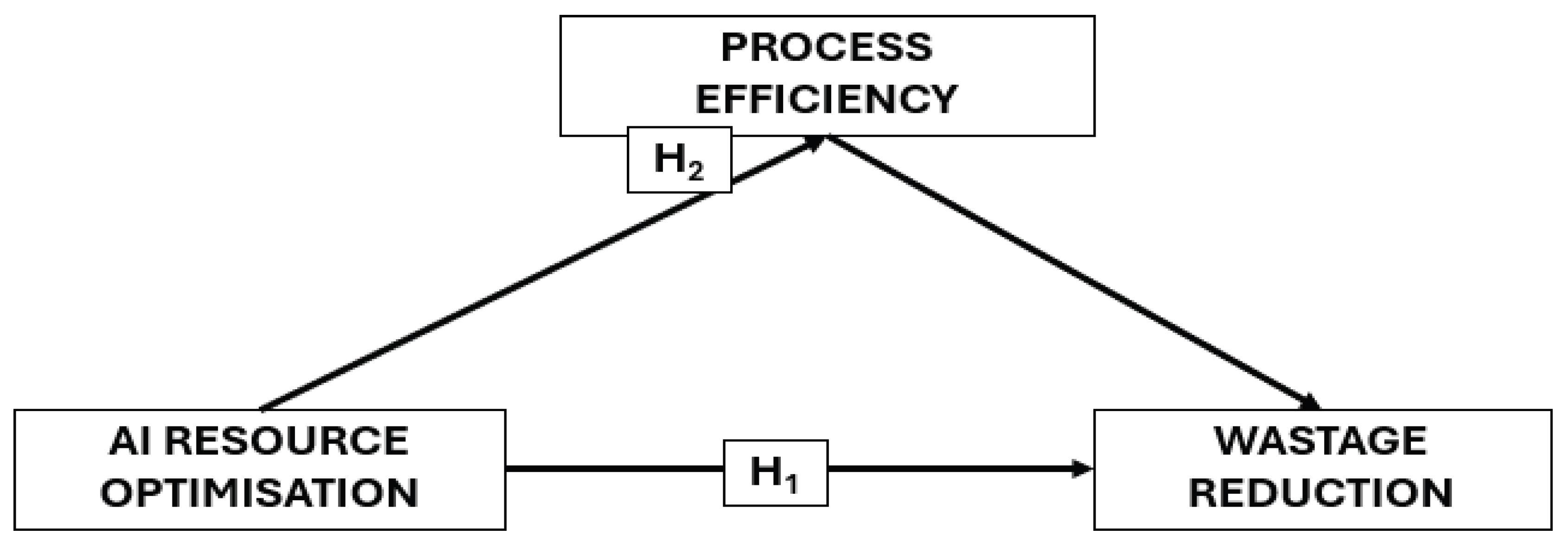
Table 1.
Study demographics.
| Frequency | Percent(%) | ||
|---|---|---|---|
| Position | Project Manager | 88 | 19.6% |
| Site Engineer | 95 | 21.1% | |
| Architect | 92 | 20.4% | |
| Subcontractor | 86 | 19.1% | |
| Design Engineer | 89 | 19.8% | |
| Years of | 3-5 years | 112 | 24.9% |
| experience | 6-10 years | 117 | 26.0% |
| 11-15 years | 107 | 23.8% | |
| 15+ years | 114 | 25.3% | |
| Firm Size | 1-50 employees | 106 | 23.6% |
| 51-100 employees | 109 | 24.2% | |
| 101-200 employees |
110 | 24.4% | |
| 201+ employees | 125 | 27.8% | |
Table 2.
Results of descriptives, normality and reliability.
| N | Number of items | Mean | SD | Skewness | Kurtosis | Cronbach’s α | |
|---|---|---|---|---|---|---|---|
| AI Resource | 450 | 12 | 3.09 | 0.81 | .239 | 1.151 | .775 |
| Optimization Waste Reduction |
450 |
12 |
3.05 |
0.82 |
.128 |
1.036 |
.785 |
| Process Efficacy | 450 | 12 | 3.23 | 0.83 | .218 | .554 | .797 |
| Correlation |
Disclaimer/Publisher’s Note: The statements, opinions and data contained in all publications are solely those of the individual author(s) and contributor(s) and not of MDPI and/or the editor(s). MDPI and/or the editor(s) disclaim responsibility for any injury to people or property resulting from any ideas, methods, instructions or products referred to in the content. |
© 2026 by the authors. Licensee MDPI, Basel, Switzerland. This article is an open access article distributed under the terms and conditions of the Creative Commons Attribution (CC BY) license (http://creativecommons.org/licenses/by/4.0/).
Copyright: This open access article is published under a Creative Commons CC BY 4.0 license, which permit the free download, distribution, and reuse, provided that the author and preprint are cited in any reuse.


