

Submitted:
03 February 2026
Posted:
04 February 2026
You are already at the latest version
Abstract
The adoption of AI technologies in rehabilitation is transforming physiotherapy, enabling more accurate, streamlined, and personalized treatment strategies. While virtual reality (VR) and robotics have already brought significant advancements to the field, AI elevates rehabilitation by offering data-driven insights, real-time patient monitoring, and adaptive treatment plans. Our study explores the role of AI in managing medical rehabilitation programs, presenting a comprehensive review of the latest empirical studies. The findings reveal that AI-based technologies, such as machine learning algorithms, computer vision, and predictive analytics, not only improve treatment outcomes but also increase patient engagement and accessibility. Furthermore, AI-driven systems enable continuous progress tracking, early detection of complications, and tailored therapy adjustments, fostering a more responsive and effective rehabilitation process. This article underscores that integrating AI into medical rehabilitation programs marks a transformative shift in patient care, promising more dynamic, individualized, and impactful recovery.
Keywords:
artificial intelligence
; machine learning
; rehabilitation
; recovery program management
1. Introduction
Rehabilitation is a vital pillar of healthcare systems worldwide, working alongside treatment, prevention, palliative care, and health promotion to support comprehensive well-being. Its primary aim is to empower individuals—regardless of age—to regain or enhance their independence and fully engage in everyday life, including work, education, leisure, and social participation. In parallel, rapid advancements in artificial intelligence (AI) have begun to significantly influence rehabilitation practices, offering new tools and approaches that enhance both delivery and effectiveness of care. [1,2,3].
This review offers an in-depth overview of recent empirical research, emphasizing AI-driven technologies that support and enhance the rehabilitation process. We classify these technological innovations into seven key domains, each accompanied by real-world examples that demonstrate their practical use.
While the application of AI in rehabilitation remains an emerging field, it continues to unlock promising advancements and opportunities. The paper concludes by addressing current challenges and outlining future research directions aimed at strengthening the role of AI within rehabilitation programs. [4].
Physiotherapists are assisted using AI in rehabilitation by offering assessments, predicting patient performance, and establishing diagnoses. Artificial intelligence can be employed in medical and rehabilitation practices to enhance problem-solving, improve x-ray diagnostics, and establish best practice protocols [5].
Accurately predicting a patient's potential for functional improvement during rehabilitation is essential for developing precision medicine approaches, designing patient-centered rehabilitation plans, and optimizing resource allocation within healthcare settings [6].
2. Methods
The study focuses on critical aspects of rehabilitation that stand to gain from AI, including personalized rehabilitation applications, assistive rehabilitation, neurological and developmental disorder rehabilitation, virtual reality rehabilitation, neurodegenerative disease rehabilitation, and cardiovascular telerehabilitation.
The review used PubMed, Scopus, Web of Science, and Google Scholar. The search utilized a combination of keywords and Boolean operators, including: "Artificial Intelligence" OR "AI" OR "Machine Learning" OR "Deep Learning" AND "Medical Rehabilitation" OR "Physical Therapy" OR "Rehabilitation Programs" OR "Neurorehabilitation" AND "Management" OR "Planning" OR "Monitoring". The search focused on articles published between [insert years, e.g., 2010–2025] to cover recent AI advancements in medical rehabilitation.
Inclusion Criteria:
- Studies published in peer-reviewed journals.
- Articles discussing AI applications specifically for the management, planning, monitoring, or evaluation of medical rehabilitation programs.
- Research articles, review articles, and meta-analyses.
- Studies available in English.
Exclusion Criteria:
- Conference abstracts, editorials, and opinion pieces.
- Studies focused solely on AI technologies without application to medical rehabilitation.
- Articles not accessible in full text.
The selection process involved three stages:
- Title and Abstract Screening: Two independent reviewers screened titles and abstracts based on the inclusion and exclusion criteria.
Data from qualifying studies were collected using a standardized form, recording the following information:
- ✓ Author(s) and publication year
- ✓ AI technique used (e.g., machine learning models, neural networks)
- ✓ Type of rehabilitation program (e.g., stroke rehabilitation, orthopedic rehabilitation)
- ✓ AI application (e.g., patient monitoring, treatment planning, outcome prediction)
- ✓ Key findings and conclusions
Out of seventy-eight articles, forty-eight were qualitatively synthesized. These articles, categorized by their role in medical rehabilitation management, were included in the final study.
2.1. Personalized Rehabilitation Applications
Personalized rehabilitation marks a paradigm shift in the management of medical rehabilitation programs, utilizing AI and advanced technologies to adapt treatments to the unique needs of each patient. This individualized approach has demonstrated considerable potential in enhancing patient outcomes by delivering tailored, adaptive, and accessible rehabilitation solutions. A randomized controlled trial published in Digital Medicine in 2023 demonstrated that AI physical therapy application delivers clinical outcomes equivalent to traditional in-person care, with engagement rates more than double conventional therapy [7].
Researchers at Carnegie Mellon University developed adaptive control algorithms for soft exoskeletons. A study published in science in 2017 demonstrated a 30% improvement in walking efficiency for users with spinal cord injuries, highlighting the potential of wearable sensors in personalized rehabilitation [8].
Wearable sensors and mobile health applications play a critical role in advancing personalized rehabilitation. By offering continuous monitoring and real-time feedback on patient activity, these tools support more accurate assessments and allow for timely adjustments to therapy protocols. Collecting detailed movement data in real-world settings enhances the detection of specific motor impairments and contributes to more precise and effective treatment planning [9].
2.2. Rehabilitation Robots
Rehabilitation robots are instrumental in delivering personalized therapy, particularly in telerehabilitation contexts. A study conducted by the Rehabilitation Institute of Chicago (now the Shirley Ryan Ability Lab) investigated the use of soft exoskeletons equipped with inertial measurement units (IMUs) to assist stroke survivors with gait deficits. The exoskeletons provided real-time gait analysis, leading to significant improvements in walking stability and reduced instances of freezing of gait, thereby enhancing the quality of life for Parkinson's patients [10].
A collaborative research effort led to the development of a hand rehabilitation system combining an exoskeleton with fingertip haptic stimulation. This system aimed to improve engagement and motor function recovery in stroke patients. The study demonstrated that adding cutaneous haptic stimulation enhanced user training involvement, highlighting the potential of such systems in personalized rehabilitation. randomized single-blind clinical trial assessed the training effects of the Ekso GT® exoskeleton in patients with Parkinson's disease. The study found that the exoskeleton provided real-time gait analysis, leading to improvements in walking stability and a reduction in freezing of gait episodes, thereby enhancing the quality of life for Parkinson's patients [11].
Robotic systems offer essential physical support and data-informed feedback for patients with severe impairments. Despite their benefits, challenges remain—particularly in accurately detecting voluntary motor effort and effectively stimulating neuroplasticity. Ongoing research aims to improve both the efficacy and user-friendliness of home-based robotic rehabilitation technologies [9,10].
The integration of robotics and artificial intelligence is reshaping the field of rehabilitation. Technologies such as cable-driven robots and exoskeletons have demonstrated notable benefits, particularly in post-stroke recovery and rehabilitation for individuals with spinal cord injuries. These systems enable highly controlled, repetitive movements—an essential component for promoting neural re-education and functional recovery [12].
2.3. Neurological and Developmental Disorder Rehabilitation
Between 2020 and 2024, significant progress has been made in applying AI to the rehabilitation of neurological and developmental disorders. AI-driven tools are being employed to enhance diagnostic accuracy, tailor therapeutic interventions, and improve overall rehabilitation outcomes for patients with complex neurological conditions.
2.3.1. Neurological Disorder Rehabilitation:
Artificial intelligence, particularly machine learning and deep learning algorithms, has been increasingly utilized to interpret neuroimaging data. These technologies assist in the early and precise diagnosis of neurological disorders such as stroke, brain tumors, and spinal cord injuries by identifying subtle patterns often undetectable to clinicians through conventional analysis [13].
AI is changing the perspective of diagnosis and rehabilitation in neurological disorders, especially in the case of stroke, SCI, and PD. They can provide early and accurate diagnoses. They enable personalized treatment strategies that could significantly improve the lives of patients. AI processes large volumes of data and can provide valuable information for doctors to personalize the rehabilitation process. Robotic systems, brain-computer interfaces and virtual reality build a common integrated environment in the case of neurological pathologies that improves neuroplasticity and promotes effective rehabilitation with precision [14].
Artificial intelligence (AI) enables the development of highly personalized rehabilitation programs by analyzing individual patient data. By processing large volumes of clinical information, AI systems can customize therapeutic exercises, continuously monitor patient progress, and optimize rehabilitation outcomes—ultimately shortening recovery times. Additionally, AI has proven valuable in predicting disease progression and treatment responses. This predictive capability is especially useful for managing chronic neurological conditions, allowing clinicians to make real-time adjustments to treatment plans based on data-driven models [12].
2.3.2. Developmental Disorder Rehabilitation
AI-powered digital platforms have shown significant promise in the early detection and management of developmental disorders. For instance, tools like MuLiMi are designed to identify developmental language disorders in children by administering and evaluating language tasks automatically, making the screening process both efficient and precise [15,16].
The COVID-19 pandemic further accelerated the adoption of telehealth, particularly in pediatric rehabilitation. AI-enabled tele-assessment tools such as TeleFE have been utilized to assess executive function in children remotely, ensuring continuity of care without requiring in-person appointments [17].
In children with autism spectrum disorder (ASD), AI-based emotion recognition software is used to interpret facial expressions and non-verbal behaviors. These technologies support therapists in better understanding and enhancing the emotional and social competencies of children with ASD [18].
Furthermore, AI contributes to the creation of interactive educational applications tailored to the cognitive development of children with various developmental challenges. These applications dynamically adjust to a child’s learning pace, offering engaging and adaptive methods to build essential cognitive and behavioral skills [19].
Overall, the use of AI in the rehabilitation of neurological and developmental disorders is transforming patient care by enabling more accurate diagnoses, individualized treatment strategies, and innovative therapeutic tools.
2.4. Virtual Reality Rehabilitation
Virtual reality (VR) and extended reality (XR) technologies are revolutionizing rehabilitation by immersing patients in interactive environments that promote therapeutic engagement. These systems not only boost patient motivation but also enhance motor control through multisensory feedback. When integrated with AI, XR environments can adapt therapy tasks in real time, ensuring exercises remain appropriately challenging and personalized to the patient's capabilities [20].
Upper Limb Rehabilitation in Stroke Patients
VR-based interventions have shown success in stroke rehabilitation, especially for upper limb recovery. A recent systematic review and meta-analysis demonstrated that VR significantly improves motor function, independence, and quality of life compared to traditional therapies. VR systems range from non-immersive platforms to fully immersive setups, offering interactive feedback that plays a crucial role in patient engagement and functional recovery [21].
Cognitive Rehabilitation for Neurological Conditions
VR is also effectively used in the cognitive rehabilitation of patients with acquired brain injuries (ABI). These interventions often involve "serious games" that train cognitive skills in a stimulating and immersive environment. A study involving 20 ABI patients reported high feasibility and usability of VR-based therapies, suggesting strong potential for clinical integration [22].
Multiplayer Immersive Systems
Multiplayer VR platforms enable social interaction and collaborative therapeutic activities among patients. These shared environments are particularly valuable in social cognitive therapy, aiding individuals with conditions such as autism and stroke in developing interpersonal skills within a supportive virtual setting.
AI-Enhanced VR Innovations
Recent developments have merged AI with VR to deliver more dynamic and patient-specific rehabilitation experiences. AI enriches VR environments by generating synthetic data, adapting to therapeutic challenges in real time, and providing detailed analytics on user performance. These AI-enhanced VR systems offer a more targeted and effective approach to rehabilitation, ensuring that interventions evolve with the patient’s progress [19].
VR-based rehabilitation tools are feasible, as demonstrated by trials that show positive user experiences and few adverse effects. Studies report elevated levels of patient satisfaction, ease of use, and substantial interest in incorporating VR into regular rehabilitation routines, reinforcing the technology's potential to transform traditional rehabilitation practices [23].
The integration of AI in VR rehabilitation offers clear advancements in the management of various conditions, particularly in enhancing the efficacy of therapeutic interventions [24].
2.5. Neurodegenerative Disease Rehabilitation
Alzheimer's disease and Parkinson's disease are neurodegenerative disorders that are difficult to diagnose and manage. The implementation of artificial intelligence in the rehabilitation of these categories of pathologies has shown promising results.
Machine learning models improve early diagnosis through predictive analysis applied to vast amounts of data, including genetic information and imaging data. At this point, the onset can be predicted, and a prognosis can be made in the evolution of neurodegenerative diseases. For example, Wang et al. developed a risk prediction model for Alzheimer's disease using demographic and clinical data [25]. Similarly, Zhao et al. demonstrated the use of AI in the analysis of structural MRI images for the early detection of Alzheimer's disease [26].
Fabrizio et al. discussed how AI can help create personalized treatment regimens for Alzheimer's patients by analyzing neuropsychological measures and other patient-specific data [27].
AI cognitive training programs help patients maintain cognitive function. These programs use adaptive algorithms to tailor exercises to a patient’s cognitive abilities, adjusting difficulty based on performance. Battista et al. (2020) highlighted the effectiveness of AI in enhancing cognitive rehabilitation through neuropsychological measures [28].
Tele-rehabilitation platforms powered by AI are enabling continuous monitoring and support for patients remotely. These platforms use AI to analyze patient data in real-time, providing feedback and adjusting rehabilitation exercises accordingly. This approach is particularly beneficial for patients with limited access to in-person care [29].
AI applications in speech and motor rehabilitation involve using machine learning algorithms to improve speech recognition and motor function. AI systems can provide real-time feedback and adjust therapy exercises to improve patient outcomes. Studies have shown that AI can significantly enhance the rehabilitation process by providing precise and timely interventions [30].
Although there have been encouraging advancements, obstacles persist. These include the need for large datasets to train AI models, ensuring patient data privacy, and integrating AI technologies into existing healthcare systems. Future research should focus on addressing these challenges, improving AI algorithms, and validating AI applications through extensive clinical trials.
2.6. Cardiovascular Telerehabilitation
Cardiovascular telerehabilitation (CTR) leverages AI technologies to extend the benefits of cardiac rehabilitation beyond traditional in-person settings, offering personalized and remote care.
AI enhances the personalization of rehabilitation programs by analyzing patient data to tailor exercise regimens and monitor progress. Patients engage in supervised, home-based aerobic and resistance training, which can help them overcome physical limitations and reduce exercise-related anxiety. AI-driven applications provide real-time feedback and support, enabling continuous adjustment of exercise intensity and ensuring safety and efficacy [31].
Recent studies have demonstrated that CTR can lead to significant improvements in clinical outcomes, such as reduced resting heart rate, enhanced physical activity levels, improved muscle strength, and better nutritional status. These programs also offer high patient satisfaction due to their convenience, safety (particularly during the COVID-19 pandemic), and the individualized nature of the care provided [32].
Maintaining long-term adherence to physical activity is a common challenge in cardiovascular rehabilitation. AI-driven CTR programs show promise in sustaining exercise capacity and physical activity levels over extended periods. For instance, blended interventions combining online applications with human support have shown modest improvements in cardiovascular risk profiles, although the optimal form and duration of CTR are still under investigation.
AI technologies facilitate various aspects of cardiovascular care, including digital biomarkers for disease risk assessment, AI-augmented clinical encounters, and AI-enabled high-quality community care. These technologies aim to democratize cardiovascular care by overcoming barriers related to geographic location and accessibility, thus ensuring that more patients can benefit from comprehensive rehabilitation services [33].
Despite the promising results, there are challenges that need addressing, such as selection bias in study participants, lack of long-term follow-up data, and the heterogeneity of interventions. Future research should aim to standardize CTR interventions and develop reliable outcome measures to facilitate the translation of AI applications into clinical practice.
These advancements underscore the potential of AI to revolutionize cardiovascular rehabilitation by providing accessible, personalized, and efficient care. AI-driven CTR is enhancing the quality of life for cardiovascular disease patients as research progresses.
3. Results
The integration of Artificial Intelligence (AI) in the planning and management of medical rehabilitation programs is revolutionizing the field, providing enhanced outcomes across various conditions, including neurological, developmental, neurodegenerative diseases, cardiovascular rehabilitation, and more.
AI enables the customization of rehabilitation programs tailored to individual patient needs. Through machine learning algorithms and data analysis, AI can develop personalized treatment plans that adjust in real-time based on patient progress and responses. This approach has shown significant benefits in areas such as stroke rehabilitation, where AI-driven robotic systems and adaptive therapies facilitate precise and repetitive movements crucial for neural recovery.
Figure 1.
AI architectures in rehabilitation.

AI architectures in rehabilitation (see Figure 1), typically encompass machine learning models, neural networks, and intelligent control systems. For instance, soft exoskeletons utilize intelligent control algorithms based on AI and machine learning to adapt to a user's gait, posture, and terrain, providing a seamless and natural walking experience for individuals with mobility impairments [10].
AI technologies offer superior diagnostic tools and predictive analytics, particularly in neurodegenerative and cardiovascular rehabilitation. For instance, AI models can analyze vast datasets, including imaging and genetic data, to predict disease onset and progression, enabling early intervention and better management of conditions like Alzheimer's and Parkinson's diseases.
In cardiovascular telerehabilitation, AI assists in monitoring patient data remotely, predicting adverse events, and adjusting rehabilitation plans to optimize outcomes.
The combination of AI and VR creates immersive rehabilitation environments that enhance patient engagement and motivation. VR systems, driven by AI, offer interactive and adaptive therapeutic exercises that improve motor and cognitive functions in patients with neurological and developmental disorders. These technologies provide real-time feedback and adjust to the patient's needs, making rehabilitation more effective and enjoyable.
AI-powered tele-rehabilitation platforms are crucial in extending care to patients who cannot access in-person therapy. These platforms use AI to deliver personalized rehabilitation exercises, monitor patient progress remotely, and provide timely feedback. The utility and efficiency of artificial intelligence in tele-rehabilitation were emphasized during the COVID-19 pandemic, facilitating uninterrupted care despite physical limitations.
Challenges hinder the seamless integration of AI into rehabilitation programs. First is regarding data privacy and security. Ensuring compliance with data protection regulations, such as GDPR, is crucial. Developers must collect minimal necessary data to maintain confidentiality and security. Also creating AI tools that are user-friendly, simple, and inclusive is essential to accommodate diverse populations and encourage widespread adoption. Demonstrating the efficacy of AI-driven rehabilitation tools through rigorous clinical trials is vital to gain acceptance from healthcare providers and patients.
AI in medical rehabilitation is nascent, but research reveals emerging opportunities. Future directions include refining AI algorithms, enhancing data integration, and addressing challenges such as data privacy and standardization of AI interventions. Continued collaboration between technology developers and healthcare professionals is essential to maximize the potential of AI in rehabilitation.
In summary, AI is transforming the landscape of medical rehabilitation by providing personalized, efficient, and effective therapeutic interventions. Its ability to analyze complex data, predict outcomes, and adapt treatments in real-time makes it an invaluable tool in improving patient care and recovery outcomes across various medical conditions. AI-driven rehabilitation programs are going to become more advanced and accessible, making them a vital part of modern healthcare.
4. Discussion
An AI-generated recovery program for medical rehabilitation would be comprehensive, incorporating various exercises and medical equipment tailored to individual patient needs (see Figure 2).
Exercises
Motor Skill Rehabilitation:
- -
- -
- Functional Electrical Stimulation (FES): AI systems control electrical impulses to stimulate muscle contractions, aiding in the recovery of motor functions [36].
- -
- VR-Based Motor Training: AI-driven VR systems create immersive environments where patients can perform repetitive, targeted movements. These systems provide real-time feedback and adapt difficulty levels based on patient performance like NEUROFORMA’s virtual software of Titanis’ technologies part of scientific project on “Research of the Movement System using the Augmented and Virtual Reality” [37].
Cognitive Rehabilitation:
- -
- Serious Games: AI-powered cognitive games designed to improve memory, attention, and executive functions. Twenty-two unique games were used for attention rehabilitation. Lumosity (20%), Brain Age (Dr. Kawashima's Brain Training) (10%), and MoHRS (6.66%) were the most common games among the studies. There were (57%) casual, (23%) action, (10%) simulation, and (10%) multiple genres. These games adapt in real-time to the patient's cognitive abilities, ensuring optimal challenge and engagement [38].
- -
- Virtual Reality Cognitive Training: AI integrates with VR to simulate real-life scenarios for cognitive practice, helping patients with conditions like stroke or traumatic brain injury [39].
Cardiovascular Rehabilitation:
- -
- Tele-rehabilitation Exercises: AI-driven platforms monitor cardiovascular metrics during home-based exercises, adjusting intensity and type based on real-time data. REHAB + is a mobile cardiac telerehabilitation program cocreated with patients and rehabilitation centers, aiming to future-proof cardiac rehabilitation and improve accessibility [40].
- -
- Adaptive Aerobic and Resistance Training: AI customizes exercise regimens to improve cardiovascular health, continuously updating the program based on patient feedback and performance metrics. For example, L.AI.C APP can recommend specific aerobic exercises each week [41].
Medical Equipment
Wearable Sensors:
- -
- Motion Sensors: Devices like accelerometers and gyroscopes track movement patterns. Wearable sensors present an exciting opportunity both in the prevention and treatment of running-related injuries by affording the ability to provide real-time feedback to the individual. AI analyzes this data to assess progress and identify areas needing improvement [42].
- -
- Heart Rate Monitors: AI algorithms use data from these monitors to ensure exercises remain within safe cardiovascular limits.
Robotic Devices:
- -
- Exoskeletons: AI-controlled exoskeletons for lower limb rehabilitation help patients practice walking, providing varying levels of assistance based on real-time assessments.
- -
- Robotic Arm Trainers: Devices like the InMotion ARM use AI to facilitate repetitive arm movements for stroke recovery [43].
Virtual Reality (VR) Equipment:
- -
- Head-Mounted Displays (HMDs): Used in VR rehabilitation to immerse patients in therapeutic environments. HMD–VR is used for assessment and intervention for patients with a range of disorders, including stroke, multiple sclerosis, spinal cord injury, and Parkinson’s disease. AI adjusts the complexity and nature of tasks based on patient responses [44].
- -
- Interactive VR Gloves: These gloves provide haptic feedback and track hand movements, allowing patients to interact with virtual objects and perform rehabilitative exercises [45].
Tele-rehabilitation Platforms:
- -
- Remote Monitoring Devices: AI-powered systems collect data from home-based sensors and devices, allowing therapists to monitor progress and adjust treatment plans remotely [46].
- -
- Smartphone Applications: AI-driven apps guide patients through exercises, providing real-time feedback and tracking progress over time.
An AI-generated recovery program involves an initial evaluation using AI tools to assess the patient's physical and cognitive status (see Figure 3). AI algorithms then create a personalized rehabilitation plan, selecting suitable exercises and equipment. Continuous monitoring and dynamic adjustment of the program, along with regular feedback and progress reports to patients and healthcare providers, ensure optimal rehabilitation outcomes.
Evaluating the performance of integrating Artificial Intelligence (AI) into medical rehabilitation programs involves a multifaceted approach that encompasses both quantitative and qualitative metrics. Key evaluation strategies include:
1. Clinical Outcome Measures: Assessing improvements in patients' functional abilities is paramount. Standardized tools, such as the Automated Neuropsychological Assessment Metrics (ANAM), evaluate cognitive functions including attention, memory, and processing speed. ANAM was used in clinical settings to monitor cognitive changes over time [47].
2. User Engagement and Adherence: Monitoring patient interaction with AI-driven rehabilitation tools provides insights into their usability and effectiveness. For example, Sword Health's digital therapy programs have demonstrated higher engagement rates compared to traditional therapy methods, indicating increased patient adherence and satisfaction [48].
3. Comparative Effectiveness Research: Conducting randomized controlled trials (RCTs) to compare AI-integrated rehabilitation programs with conventional therapies is essential. Studies have shown that virtual reality therapy, an AI application, achieves over 90% effectiveness in treating conditions like acrophobia, highlighting its potential benefits [49,50].
4. Safety and Risk Assessment: Evaluating the safety of AI applications in rehabilitation is critical. Socially assistive robots (SARs) provide support to users through social interactions. The effectiveness of these methods was assessed by monitoring the user's progress and accomplishments, ensuring that the integration of artificial intelligence poses no risks to patients [51,52].
5. Cost-Effectiveness Analysis: Analyzing the economic impact of AI integration involves comparing costs relative to health outcomes. This includes considering factors like reduced hospitalization rates and decreased need for in-person therapy sessions, which can offset the initial investment in AI technologies.
Figure 4.
AI integration evaluation in rehabilitation programs.
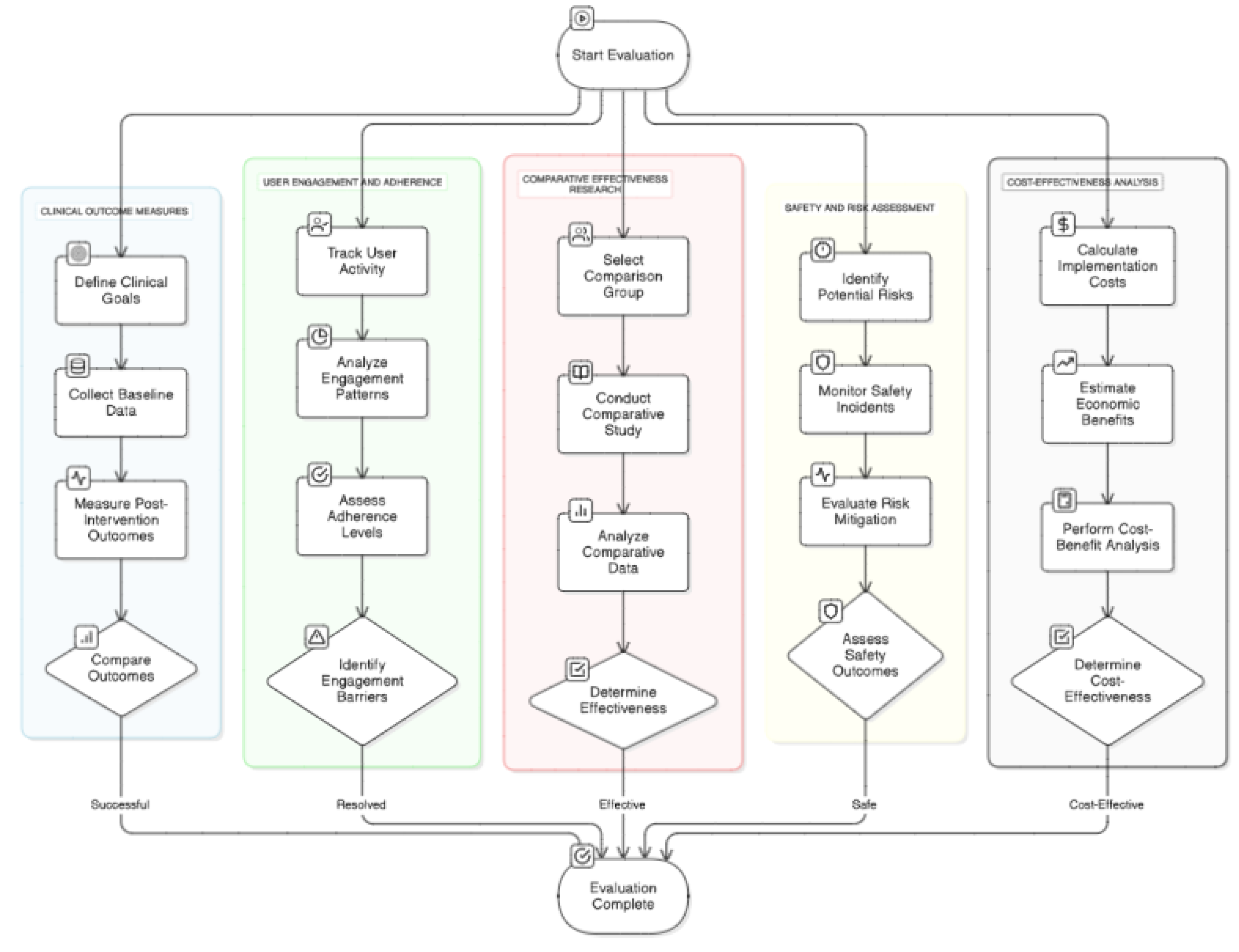
By systematically applying these evaluation methods, stakeholders can comprehensively assess the efficacy, safety, and value of AI integration in medical rehabilitation programs, thereby informing clinical practices and guiding future technological developments.
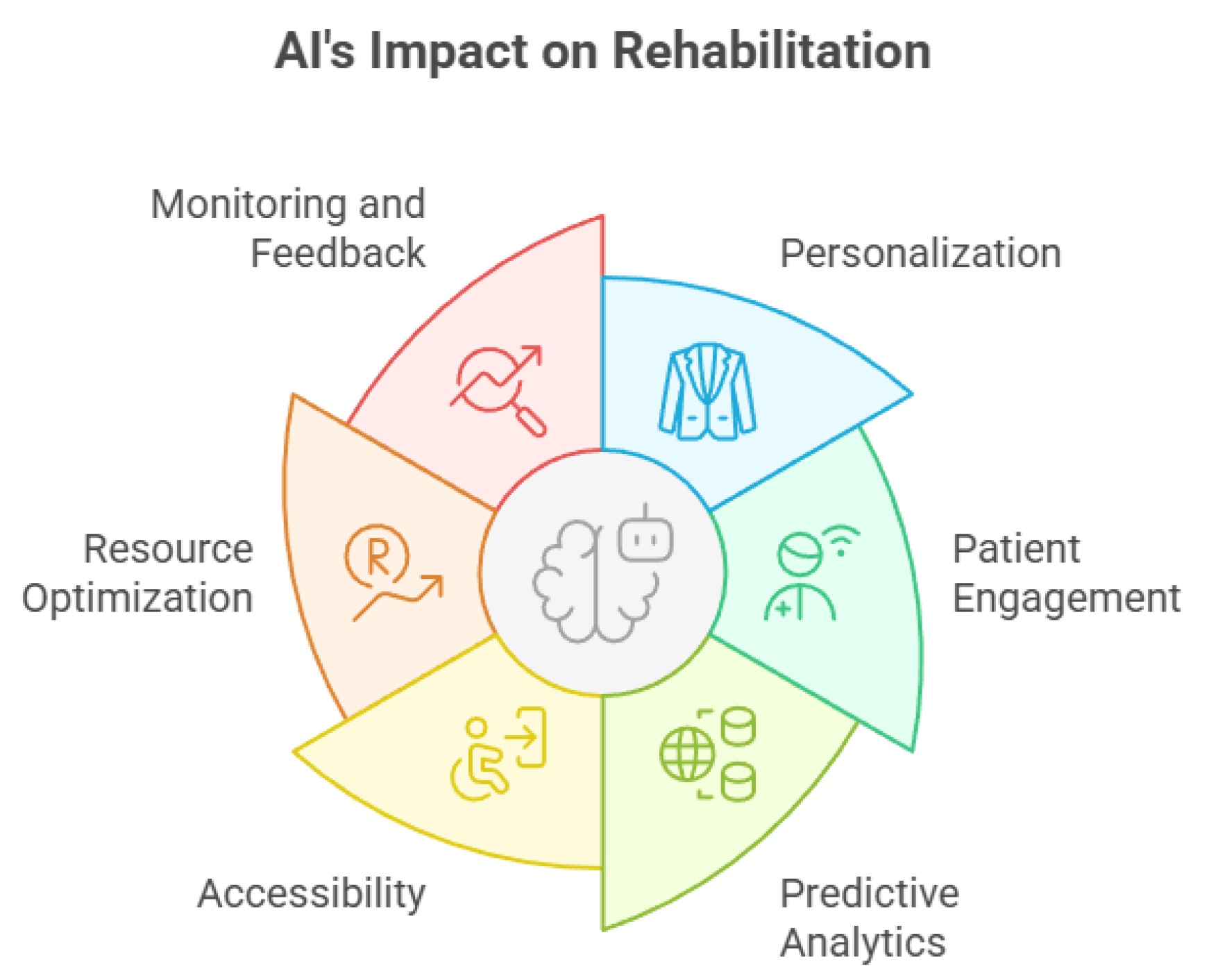
Considering the articles studied and those presented previously, we can mention reasons to use AI in Generating Rehabilitation Programs.
AI customizes rehabilitation programs to the unique needs of each patient by analyzing individual data points and adjusting the treatment plans accordingly. This ensures that each patient receives the most effective and appropriate therapy, which can lead to faster and more efficient recovery.
AI can offer continuous monitoring and real-time feedback, enabling immediate adjustments in rehabilitation programs. This dynamic adaptability ensures that patients are always performing exercises at the optimal intensity and correctness, reducing the risk of injury, and improving outcomes.
AI can predict complications and adjust rehabilitation plans. By analyzing historical and real-time data, AI algorithms can identify patterns and foresee issues, enabling early interventions that can prevent setbacks in recovery.
AI-powered tele-rehabilitation platforms make high-quality rehabilitation accessible to patients regardless of their geographic location. This is particularly beneficial for individuals who cannot regularly visit rehabilitation centers due to distance, mobility issues, or other constraints.
AI can optimize resource allocation by identifying the most effective treatments and interventions. This approach reduces both the time and costs associated with rehabilitation. This efficiency benefits healthcare providers and patients alike, making rehabilitation more sustainable and accessible.
Through AI-integrated VR systems and serious games, rehabilitation exercises become more engaging and enjoyable for patients. This increased engagement is crucial for adherence to rehabilitation programs, leading to better long-term outcomes.
Figure 5.
Summarizing the main benefits obtained after planning a rehabilitation program with the help of AI.
Figure 5.
Summarizing the main benefits obtained after planning a rehabilitation program with the help of AI.
5. Conclusions
The use of Artificial Intelligence (AI) in the management of medical rehabilitation programs has demonstrated substantial potential to revolutionize patient care by enhancing the precision, personalization, and efficiency of rehabilitation treatments. AI technologies are integrated into various aspects of rehabilitation, including the planning, implementation, and monitoring of therapeutic interventions.
AI's ability to analyze vast amounts of data and generate insights allows for the development of highly personalized rehabilitation plans tailored to individual patient needs. For example, in stroke rehabilitation, AI-powered robotic systems provide precise, repetitive motion exercises crucial for neural recovery.
At this moment we can say that an AI platform specially for managing a rehabilitation program for a certain pathology integrating all the AI systems existing and described in this article would be a real help for the future of patient rehabilitation.
One major concern is the risk of biased algorithms, which could lead to disparities in treatment outcomes if the AI is trained on non-representative datasets. Additionally, data privacy and security remain critical issues, as AI systems rely on large volumes of sensitive patient information that must be protected from breaches or unauthorized access. Another limitation is the need for continuous human oversight, as AI may not always accurately interpret complex patient conditions or adapt to unforeseen complications. Moreover, the integration of AI into rehabilitation programs requires significant financial investment and staff training, which can pose barriers to widespread adoption. Finally, ethical concerns, such as maintaining human empathy in patient care and ensuring accountability for AI-driven decisions, must be considered. Addressing these challenges will be crucial for maximizing the benefits of AI while minimizing potential risks in medical rehabilitation.
In conclusion, the integration of AI in medical rehabilitation programs offers a transformative approach to patient care, providing personalized, dynamic, and data-driven solutions that enhance the efficiency and effectiveness of rehabilitation outcomes if the presented risks will be taken into consideration.
Author Contributions
Conceptualization, C.L., C.C. and R.F.; methodology, C.C. and C.L.; formal analysis, D.M., C.C. and S.D..; investigation, I.O., S.D., D.M.; resources, R.F., I.O., S.D., C.L. and C.C.; data curation, C.L., C.C. and D.M.; writing—original draft preparation, R.F., C.L. and C.C.; writing—review and editing, C.L. All authors have read and agreed to the published version of the manuscript.
Funding
This research received no external funding.
Institutional Review Board Statement
Not applicable.
Informed Consent Statement
Not applicable.
Data Availability Statement
This study did not involve the creation or analysis of any new data. Data sharing is not applicable to this article.
Conflicts of Interest
The authors declare no conflicts of interest.
References
- Khalid, U.B.; Naeem, M.; Stasolla, F.; Syed, M.; Abbas, M. Impact of AI-Powered Solutions in Rehabilitation Process: Recent Improvements and Future Trends. International Journal of General Medicine 2024, 943–969. [Google Scholar] [CrossRef]
- Francesco Lanotte, M.K. O’Brien, Arun Jayaraman. AI in Rehabilitation Medicine: Opportunities and Challenges. Ann Rehabil Med 2023, 47((6) eISSN), 444-458 2234-0653. [CrossRef]
- Korteling, J.E.H.; van de Boer-Visschedijk, G.C.; Blankendaal, R.A.M.; Boonekamp, R.C.; Eikelboom, A.R. Human- versus Artificial Intelligence. Front Artif Intell 2021, 4, 622364. [Google Scholar] [CrossRef] [PubMed]
- French, M.A.; Roemmich, R.T.; Daley, K.; Beier, M.; Penttinen, S.; Raghavan, P.; et al. Precision rehabilitation: Optimizing function, adding value to health care. Arch Phys Med Rehabil 2022, 103, 1233–9. [Google Scholar] [CrossRef] [PubMed]
- Alsobhi, M.; Khan, F.; Chevidikunnan, M.F.; Basuodan, R.; Shawli, L.; Neamatallah, Z. Physical Therapists’ Knowledge, and Attitudes Regarding Artificial Intelligence Applications in Health Care and Rehabilitation: Cross-sectional Study. J Med Internet Res. 2022, 24((10)), E39565. [Google Scholar] [CrossRef]
- Santilli, V.; Mangone, M.; Diko, A.; Alviti, F.; Bernetti, A.; et al. The Use of Machine Learning for Inferencing the Effectiveness of a Rehabilitation Program for Orthopedic and Neurological Patients. Int. J. Environ. Res. Public Health 2023, 20, 5575. [Google Scholar] [CrossRef] [PubMed]
- Cui, D.; Janela, D.; Costa, F.; et al. Randomized-controlled trial assessing a digital care program versus conventional physiotherapy for chronic low back pain. npj Digit. Med. 2023, 6, 121. [Google Scholar] [CrossRef]
- Zhang, J.; et al. Human-in-the-loop optimization of exoskeleton assistance during walking. Science 2017, 356, 1280–1284. [Google Scholar] [CrossRef]
- Archer, K.R.; Ellis, T.D. Advances in Rehabilitation Technology to Transform Health. Physical Therapy 2024, 104, 2. [Google Scholar] [CrossRef]
- de la Tejera, J.A.; Bustamante-Bello, R.; Ramirez-Mendoza, R.A.; Izquierdo-Reyes, J. Systematic Review of Exoskeletons towards a General Categorization Model Proposal. Appl. Sci. 2021, 11, 76. [Google Scholar] [CrossRef]
- Xiong, J.; Chen, J.; Lee, P.S. Functional Fibers and Fabrics for Soft Robotics, Wearables, and Human–Robot Interface. Advanced Materials 2021, 33(19), e2002640. [Google Scholar] [CrossRef] [PubMed]
- Huang, Y.; Yang, B.; Wong, T.W.-L.; Ng, S.S.M.; Hu, X. Personalized robots for long-term telerehabilitation after stroke: A perspective on technological readiness and clinical translation. Front. Rehabil. Sci. 2024, 4, 1329927. [Google Scholar] [CrossRef] [PubMed]
- Carbone, G.; Gonçalves. Robot-assisted rehabilitation for neurological disorders. Front. Robot. AI 2022, 9, 1014681. [Google Scholar] [CrossRef] [PubMed]
- Calderone, A.; Latella, D.; Bonanno, M.; Quartarone, A.; Mojdehdehbaher, S.; Celesti, A.; Calabrò, R.S. Towards Transforming Neurorehabilitation: The Impact of Artificial Intel-ligence on Diagnosis and Treatment of Neurological Disorders. Biomedicines 2024, 12(10), 2415. [Google Scholar] [CrossRef] [PubMed] [PubMed Central]
- Nguyen, T.N.Q.; García-Rudolph, A.; Saurí, J.; Kelleher, J.D. Multi-task learning for predicting quality-of-life and independence in activities of daily living after stroke: A proof-of-concept study. Front. Neurol. 2024, 15, 1449234. [Google Scholar] [CrossRef] [PubMed]
- Available online: https://osf.io/qvk74 (accessed on 30 September 2024).
- Borasio, F.; Mascheretti, S.; Lorusso, M.L. New Digital Technologies for Diagnosis and Rehabilitation of Neurodevelopmental Disorders. Appl. Sci. 2023, 13, 12165. [Google Scholar] [CrossRef]
- Rivella, C.; Ruffini, C.; Bombonato, C.; Capodieci, A.; Frascari, A.; Marzocchi, G.M.; Mingozzi, A.; Pecini, C.; Traverso, L.; Usai, M.C.; et al. TeleFE: A New Tool for the Tele-Assessment of Executive Functions in Children. Appl. Sci. 2023, 13, 1728. [Google Scholar] [CrossRef]
- Landowska, A.; Karpus, A.; Zawadzka, T.; Robins, B.; Erol Barkana, D.; Kose, H.; Zorcec, T.; Cummins, N. Automatic Emotion Recognition in Children with Autism: A Systematic Literature Review. Sensors (Basel) 2022, 22(4), 1649. [Google Scholar] [CrossRef] [PubMed] [PubMed Central]
- Ugalde, L.; Santiago-Garabieta, M.; Villarejo-Carballido, B.; Puigvert, L. Impact of Interactive Learning Environments on Learning and Cognitive Development of Children with Special Educational Needs: A Literature Review. Front Psychol. 2021, 12, 674033. [Google Scholar] [CrossRef] [PubMed] [PubMed Central]
- Akbar, K.; Passaro, A.; Di Gioia, M.; Martini, E.; Dragone, M.; Zullo, A.; Stasolla, F. Reviewing the Horizon: The Future of Extended Reality and Artificial Intelligence in Neurorehabilitation for Brain Injury Recovery. Information 2024, 15, 501. [Google Scholar] [CrossRef]
- Soleimani, M.; Ghazisaeedi, M.; Heydari, S. The efficacy of virtual reality for upper limb rehabilitation in stroke patients: A systematic review and meta-analysis. BMC Med Inform Decis Mak 2024, 24, 135. [Google Scholar] [CrossRef] [PubMed]
- Prats-Bisbe, A.; López-Carballo, J.; García-Molina, A.; Leno-Colorado, D.; García-Rudolph, A.; Opisso, E.; Jané, R. Virtual Reality–Based Neurorehabilitation Support Tool for People with Cognitive Impairments Resulting from an Acquired Brain Injury: Usability and Feasibility Study. JMIR Neurotech 2024, 3, e50538. [Google Scholar] [CrossRef]
- Quan, W.; Liu, S.; Cao, M.; Zhao, J. A Comprehensive Review of Virtual Reality Technology for Cognitive Rehabilitation in Patients with Neurological Conditions. Appl. Sci. 2024, 14, 6285. [Google Scholar] [CrossRef]
- Wang, L.; Li, P.; Hou, M.; Zhang, X.; Cao, X.; Li, H. Construction of a risk prediction model for Alzheimer’s disease in the elderly population. BMC Neurology 2021, 21, 271. [Google Scholar] [CrossRef]
- Zhao, X.; Ang, C.K.E.; Acharya, U.R.; Cheong, K.H. Application of Artificial Intelligence techniques for the detection of Alzheimer’s disease using structural MRI images. Biocybernetics and Biomedical Engineering 2021, 41(2), 456–473. [Google Scholar] [CrossRef]
- Fabrizio, C.; Termine, A.; Caltagirone, C.; Sancesario, G. Artificial intelligence for Alzheimer’s disease: Promise or challenge? Diagnostics 2021, 11(8), 1473. [Google Scholar] [CrossRef]
- Battista, P.; Salvatore, C.; Berlingeri, M.; Cerasa, A.; Castiglioni, I. Artificial intelligence and neuropsychological measures: The case of Alzheimer’s disease. Neuroscience & Biobehavioral Reviews 2020, 114, 211–228. [Google Scholar] [CrossRef]
- Kopalli, S.R.; et al. Artificial intelligence in stroke rehabilitation: From acute care to long-term recovery. Neuroscience 2025, 572, 214–231. [Google Scholar] [CrossRef] [PubMed]
- Rajaraman, S. Artificial Intelligence in Neuro Degenerative Diseases: Opportunities and Challenges. In AI and Neuro-Degenerative Diseases. Studies in Computational Intelligence; Gaur, L., Abraham, A., Ajith, R., Eds.; Springer: Cham, 2024; Volume 1131. [Google Scholar] [CrossRef]
- Brouwers, R.W.M.; Scherrenberg, M.; Kemps, H.M.C.; et al. Cardiac telerehabilitation: Status and future perspectives. Neth Heart J 2024, 32, 31–37. [Google Scholar] [CrossRef] [PubMed]
- Bryant, M.S.; Fedson, S.E.; Schutz, A.; et al. Telerehabilitation: Future of Phase II Cardiac Rehabilitation: Review of Preliminary Outcomes. J Med Syst 2022, 46, 94. [Google Scholar] [CrossRef]
- The Potential of AI in Cardiovascular Care. American College of Cardiology. 2024. Available online: https://www.acc.org/latest-in-cardiology/articles/2024/06/24/16/51/the-potential-of-ai-in-cardiovascular-care-focus-of-review (accessed on 1 February 2025).
- Available online: https://www.hocoma.com/us/solutions/lokomat/intended-use-indications/ (accessed on 1 February 2025).
- Available online: https://www.hocoma.com/us/solutions/armeo-power/ (accessed on 1 February 2025).
- Khan, M.A.; Fares, H.; Ghayvat, H.; Brunner, I.C.; Puthusserypady, S.; Razavi, B.; Lansberg, M.; Poon, A.; Meador, K.J. A systematic review on functional electrical stimulation-based rehabilitation systems for upper limb post-stroke recovery. Front Neurol. 2023, 14, 1272992. [Google Scholar] [CrossRef] [PubMed] [PubMed Central]
- Sokołowska, B. Impact of Virtual Reality Cognitive and Motor Exercises on Brain Health. Int J Environ Res Public Health 2023, 20(5), 4150. [Google Scholar] [CrossRef] [PubMed] [PubMed Central]
- Shahmoradi, L.; Mohammadian, F.; Rahmani Katigari, M. A Systematic Review on Serious Games in Attention Rehabilitation and Their Effects. Behav Neurol. 2022, 2022, 2017975. [Google Scholar] [CrossRef] [PubMed] [PubMed Central]
- Georgiev, D.D.; Georgieva, I.; Gong, Z.; Nanjappan, V.; Georgiev, G.V. Virtual Reality for Neurorehabilitation and Cognitive Enhancement. Brain Sci. 2021, 11(2), 221. [Google Scholar] [CrossRef] [PubMed] [PubMed Central]
- van Mierlo, R.F.R.; Houben, V.J.G.; Rikken, S.A.O.F.; Gómez-Doblas, J.J.; Lozano-Torres, J.; van 't Hof, A.W.J. Cardiac (tele)rehabilitation in routine clinical practice for patients with coronary artery disease: Protocol of the REHAB + trial. Front Cardiovasc Med. 2024, 11, 1387148. [Google Scholar] [CrossRef] [PubMed] [PubMed Central]
- Available online: https://experiencelife.lifetime.life/article/meet-laic-life-times-health-and-wellness-companion/ (accessed on 12 January 2025).
- Porciuncula, F.; Roto, A.V.; Kumar, D.; Davis, I.; Roy, S.; Walsh, C.J.; Awad, L.N. Wearable Movement Sensors for Rehabilitation: A Focused Review of Technological and Clinical Advances. PM R. Erratum in: PM R. 2018 Dec;10(12):1437. DOI:10.1016/j.pmrj.2018.12.002. PMID: 30269807; PMCID: PMC6700726.. 2018, 10((9) Suppl 2, S220–S232. [Google Scholar] [CrossRef] [PubMed]
- Available online: https://bioniklabs.com/published-research/ (accessed on 20 January 2025).
- Saldana, D.; Neureither, M.; Schmiesing, A.; Jahng, E.; Kysh, L.; Roll, S.C.; Liew, S.L. Applications of Head-Mounted Displays for Virtual Reality in Adult Physical Rehabilitation: A Scoping Review. I am J Occup Ther. 2020, 74(5), 7405205060p1–7405205060p15. [Google Scholar] [CrossRef] [PubMed] [PubMed Central]
- Tokgöz, P.; Stampa, S.; Wähnert, D.; Vordemvenne, T.; Dockweiler, C. Virtual Reality in the Rehabilitation of Patients with Injuries and Diseases of Upper Extremities. Healthcare (Basel). 2022, 10(6), 1124. [Google Scholar] [CrossRef] [PubMed] [PubMed Central]
- Available online: https://www.neorehab.com/ (accessed on 4 January 2025).
- Bryan, C.; Hernandez, A.M. Magnitudes of decline on Automated Neuropsychological Assessment Metrics subtest scores relative to predeployment baseline performance among service members evaluated for traumatic brain injury in Iraq. J Head Trauma Rehabil 2012, 27(1), 45–54. [Google Scholar] [CrossRef] [PubMed]
- Lopez, J. Sword Health Raises $30 Million, Value Skyrockets to $3 Billion; Introduces AI-Powered Virtual Physical Therapy Platform. Tech Times 2024. [Google Scholar]
- Bermo, M.S.; Patterson, D.; Sharar, S.R.; Hoffman, H.; Lewis, D.H. Virtual Reality to Relieve Pain in Burn Patients Undergoing Imaging and Treatment. Topics in Magnetic Resonance Imaging 2020, 29(4), 203–208. [Google Scholar] [CrossRef] [PubMed] [PubMed Central]
- Kaplan, J.S. Exposure Therapy for Anxiety Disorders. Psychiatric Times. Psychiatric Times Archived from the original on. 2020, 28(9). [Google Scholar]
- Scassellati, B.; Vázquez, M. The potential of socially assistive robots during infectious disease outbreaks. Science Robotics 2020, 5(44), 33022606. [Google Scholar] [CrossRef] [PubMed] [PubMed Central]
- Fan, J.; Mion, L.C.; Beuscher, L.; Ullal, A.; Newhouse, P.A.; Sarkar, N. SAR-Connect: A Socially Assistive Robotic System to Support Activity and Social Engagement of Older Adult. IEEE Transactions on Robotics 2022, 38(2), 1250–1269. [Google Scholar] [CrossRef] [PubMed]
Figure 2.
The structure of a recovery program generated by AI considering the reports studied in the specialized literature.
Figure 2.
The structure of a recovery program generated by AI considering the reports studied in the specialized literature.
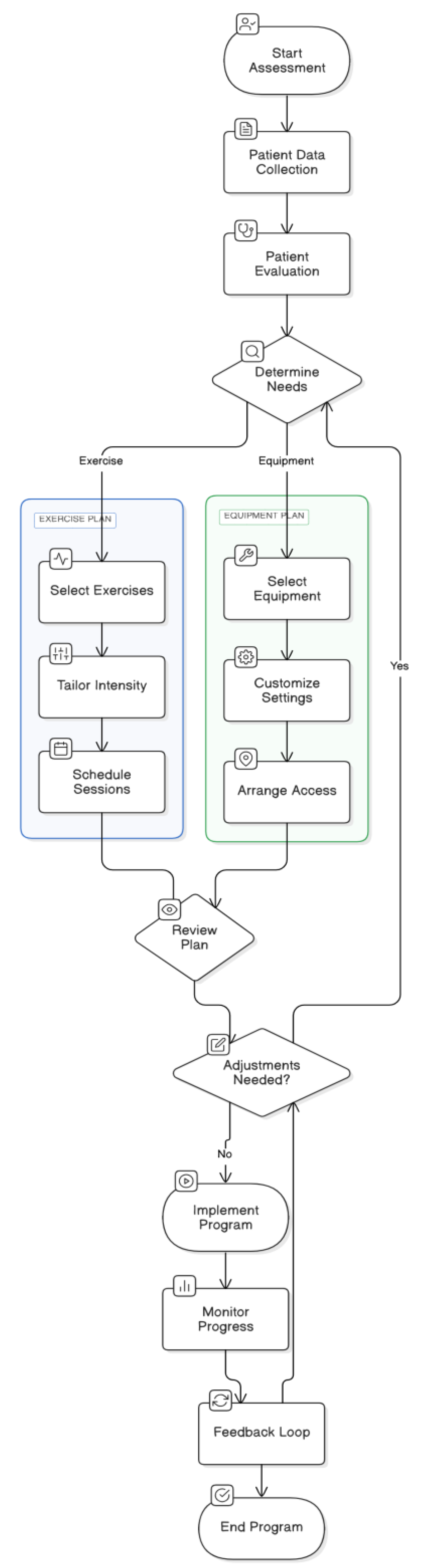
Figure 3.
The steps that an AI generated recovery program would include and what are the types of data that we need for the recovery program generation.
Figure 3.
The steps that an AI generated recovery program would include and what are the types of data that we need for the recovery program generation.

Disclaimer/Publisher’s Note: The statements, opinions and data contained in all publications are solely those of the individual author(s) and contributor(s) and not of MDPI and/or the editor(s). MDPI and/or the editor(s) disclaim responsibility for any injury to people or property resulting from any ideas, methods, instructions or products referred to in the content. |
© 2026 by the authors. Licensee MDPI, Basel, Switzerland. This article is an open access article distributed under the terms and conditions of the Creative Commons Attribution (CC BY) license.
Copyright: This open access article is published under a Creative Commons CC BY 4.0 license, which permit the free download, distribution, and reuse, provided that the author and preprint are cited in any reuse.