

Submitted:
13 November 2023
Posted:
14 November 2023
You are already at the latest version
Abstract
Telemonitoring and telerehabilitation have shown promise in delivering individualized healthcare remotely. We introduce STASISM, a Sensor-Based Telerehabilitation and Telemonitoring System, in this work. This platform has been created to facilitate individualized telerehabilitation and telemonitoring for those who need rehabilitation or ongoing monitoring. To gather and analyze pertinent and validated physiological, kinematic, and environmental data, the system combines a variety of sensors and data analytic methodologies. The platform facilitates customized rehabilitation activities based on individual needs, allows for remote monitoring of patients' progress, and offers real-time feedback. To protect the security of patient data and to safeguard patient privacy, STASISM also provides secure data transmission and storage. The platform has the potential to significantly improve the accessibility and efficacy of telerehabilitation and telemonitoring programs, enhancing patients' quality of life and allowing healthcare professionals to provide individualized care outside of traditional clinical settings/
Keywords:
Multiple sensors
; Telerehabilitation
; Assessment
; Personalized Treatment
; Rehabilomics
1. Introduction
With the increasing need for rehabilitation services worldwide, there is a growing demand to address the challenges associated with traditional rehabilitation approaches [1]. Factors such as a lack of motivation, limited access to healthcare professionals, and the disruption caused by the COVID-19 pandemic have further highlighted the importance of innovative solutions in the field of rehabilitation [2,3,4]. Telerehabilitation, enabled by advancements in technology, has emerged as a promising approach to bridge the gap between patients and healthcare providers, offering convenience, accessibility, and personalized care [5,6].
Traditional rehabilitation programs often face obstacles related to patient motivation and the availability of healthcare professionals. Many patients struggle to maintain consistent motivation throughout their rehabilitation journey, leading to suboptimal out-comes [7,8]. Additionally, the shortage of qualified rehabilitation professionals in certain regions restricts access to specialized care, further exacerbating the challenges faced by patients seeking rehabilitation services [9,10,11]. Furthermore, the COVID-19 pandemic has significantly disrupted the provision of in-person healthcare services, including rehabilitation programs. Lockdown measures, travel restrictions, and concerns about virus transmission have limited patients' ability to attend regular rehabilitation sessions [4]. All these points highlighted the need to develop innovative solutions to increase the quality and the quantity of rehabilitation exercises patients can do, either in a supervised way (with clinicians) or unsupervised (e.g., telerehabilitation [12]).
In recent years, commercial games and gamified applications have gained popularity as tools for rehabilitation and therapy [13,14]. These interactive platforms offer engaging and enjoyable experiences for patients, motivating them to actively participate in their rehabilitation programs. By incorporating elements of gamification, telerehabilitation platforms can enhance patient engagement and adherence to prescribed exercises, leading to improved outcomes [15,16]. Serious games can address cultural and contextual factors by offering localized content and incorporating culturally relevant narratives and characters [17]. Cultural sensitivity is crucial in healthcare, and serious games can be designed to resonate with the values, beliefs, and practices of the target communities [18].
However, the success of telerehabilitation programs relies heavily on appropriate configuration and the inclusion of specific exercises tailored to individual patient needs. Personalization plays a pivotal role in optimizing rehabilitation outcomes, considering patients' unique conditions, abilities, and goals [19]. A comprehensive understanding of patient characteristics and ongoing progress is essential for designing effective rehabilitation interventions [20].
The evolution of technology in the field of rehabilitation, in this case telerehabilitation, is not a recent phenomenon. Nevertheless, in recent decades, technology has undergone significant advancements, unveiling exciting prospects for patient management and assessment. Rehabilitation now benefits from an array of existing technologies, including robotics, muscle and brain stimulation, sensor-based exergames, and virtual reality applications [21,22]. The appeal of technology-supported rehabilitation lies in its ability to provide objective, automated, and, if necessary, blinded assessments, resulting in time savings. It enables the quantifiable evaluation of motor function by considering patient-specific characteristics, including kinematics, activity level, intensity, muscle activity, co-contraction, posture, smoothness of motion during rehabilitation exercises, heart rate, stress levels, and more [23].
Rehabilomics, a holistic approach combining rehabilitation and omics technologies (such as genomics, proteomics, and metabolomics), offers valuable insights into person-alized rehabilitation strategies [24,25]. By integrating clinical data, patient profiles, and molecular information, rehabilomics can guide the selection of specific exercises and interventions tailored to individual patients, maximizing their rehabilitation potential.
In this paper, we present a versatile multi-sensor platform designed to address the challenges associated with traditional rehabilitation methods. STASISM combines the benefits of tele-rehabilitation, gamification, personalized configuration, and rehabilomics to deliver effective and engaging rehabilitation programs. Through the integration of advanced sensor technologies and data analysis techniques, STASISM aims to enhance patient motivation, accessibility to healthcare professionals, and overall rehabilitation outcomes.
The subsequent sections of this paper will delve into the architecture, sensor technologies, data analysis methods, telerehabilitation and telemonitoring applications, security and privacy considerations, as well as case studies and future directions of STASISM. By leveraging the power of technology and personalized approaches, STASISM strives to revolutionize the field of rehabilitation and improve the quality of life for individuals in need of rehabilitative care.
2. Development and validation of the platform
The STASISM platform is the results of co-creation process, where a diverse consortium of experts came together during EU research projects to design an innovative tool for children with motor disabilities. Here we will briefly describe the collaborative efforts of therapists, medical doctors, software engineers, and data analysis specialists in the platform's development and its subsequent refinement through real-world user feedback.
2.1. A Multidisciplinary Consortium
The development of the platform commenced with the convergence of talents from various disciplines. The collaboration of therapists, medical doctors, software engineers, and data analysis specialists formed the foundation for a rich co-creation process. The platform exemplifies the transformative potential of collaborative co-creation. By uniting experts from different domains and valuing user feedback, the platform's design and functionality have evolved to benefit those it serves. Embracing the spirit of co-creation, the platform stands as an inspiring model for future interdisciplinary projects seeking to make a positive impact on society.
2.2. Piloting Across Diverse Contexts
The testing and piloting of the platform involved seven pilot centers situated in different regions across Spain, Ireland, and Ukraine. This strategic selection of diverse locations offered an invaluable array of cultural and economic backgrounds, which played a significant role in the development and refinement of the platform. This approach was instrumental in ensuring the adaptability and inclusivity of the platform to cater to a wide range of needs.
2.2.1. Cultural diversity
The testing procedure was made more representative of a wider range of cultural backgrounds by the selection of pilot locations located throughout these three countries. The concepts of healthcare, rehabilitation, and technology are all interpreted in a variety of ways by various cultures. The platform was able to develop its user interfaces, content, and engagement techniques by running trials in a variety of cultural settings. This allowed the platform to better align itself with the preferences and expectations of users who come from a variety of cultural backgrounds. It is essential to have this level of cultural sensitivity in order to make telerehabilitation useful and available to people all around the world.
2.2.2. Economic diversity
Testing the system in regions with varying economic backgrounds allowed the development team to assess the platform's feasibility across a spectrum of financial constraints. This experience helped shape pricing models, reimbursement strategies, and resource allocation plans for the platform. It also ensured that the benefits of telerehabilitation could be extended to individuals with lower incomes. Economic factors play a significant role in healthcare accessibility and preferences.
2.2.3. Adaptability and Inclusivity
The integration of varied cultural and economic situations throughout the piloting phase underscored the platform's ability to adjust and accommodate different circumstances, thus promoting inclusiveness. The aforementioned example demonstrated the platform's capacity to adapt and satisfy a wide range of requirements, preferences, and limitations. The success of the platform in many contexts serves as evidence of its ability to provide a positive influence on a global level by effectively tackling the distinct obstacles encountered by diverse communities.
2.3. Listening to User Feedback
The active participation of both physicians, patients and families in the co-creation process of the platform was crucial, and user feedback played a fundamental role in shaping its development. The platform's usability, clinical effectiveness, and adherence to stringent healthcare standards were significantly influenced by the useful ideas supplied by clinicians who had extensive expertise in rehabilitation methods. Concurrently, the inclusion of families in the feedback process recognizes their substantial contribution in providing support and encouragement to patients throughout their recovery process. The viewpoints provided by the participants provided a thorough understanding of the ways in which the platform influenced the everyday lives of patients and contributed to the development of features that could improve the overall rehabilitation process. The establishment of a continuous feedback loop throughout this process functioned as a catalyst for enhancing the system. This enabled timely modifications and updates to be made in response to the changing requirements and preferences of healthcare professionals and patients. Consequently, STASISM was able to effectively adapt to the ever-changing landscape of healthcare and rehabilitation.
2.4. Ongoing System Enhancement:
The user feedback collected during the grant project played a pivotal role in enhancing the platform's capabilities. Through a process of ongoing refinement, the platform became increasingly responsive to the needs of its users. As the platform continues to evolve, careful consideration is given to the feasibility of all new features and system updates. Clinicians and patients actively participate in testing, ensuring that the platform remains efficient and user-centric.
2.5. Realizing Impact in Ukraine: bridging the healthcare gap
The implementation of the system at two rehabilitation institutions in Ukraine not only demonstrates its efficacy, but also highlights its potential as a viable solution for addressing the scarcity of healthcare experts in different regions. Ukraine, similar to numerous other regions, encounters the predicament of restricted availability of proficient healthcare professionals owing to a range of circumstances, encompassing geographical limitations, paucity of resources, and economic considerations. The use of the newly developed product in several domains holds the potential to yield substantial impact through the provision of essential rehabilitative assistance, even in situations where a whole cadre of healthcare experts is not available. This exemplifies the platform's adaptability in addressing crucial healthcare deficiencies, rendering it an essential instrument in guaranteeing that patients residing in disadvantaged areas have the necessary rehabilitative therapy. The effective implementation of STASISM in Ukraine not only underscores its effectiveness but also its capacity to tackle a significant worldwide healthcare issue, namely the shortage of healthcare workers.
3. The platform: STASISM
3.1. Hardware
The platform is intentionally designed to operate with readily accessible and affordable equipment, ensuring widespread availability. Users are required to have (i) a PC or laptop running Windows 10 or a later version, and, contingent upon the objectives of their rehabilitation program, (ii) an off-the-shelf web camera, and (iii) a balance board. This hardware configuration not only fosters accessibility but also contributes to the platform's cost-effectiveness.
However, a salient feature of this platform is its adaptability in a landscape characterized by the rapid evolution of technology. It encapsulates an extensive array of motion and balance input control systems that are in a state of refinement and advancement. These encompass various innovative technologies such as wearable sensors, smart textiles, 3D cameras, and more. Each of these control systems has undergone meticulous engineering to ensure the delivery of highly precise therapeutic outcomes.
At the core of the platform's functionality is its comprehensive approach, surpassing traditional evaluation methodologies and predefined exercise regimens. This approach includes unstructured free play sessions, during which the software conducts an exhaustive assessment of a user's performance. This in-depth analysis reveals nuanced areas of concern and potential for improvement. Subsequently, the platform furnishes users with precise and personalized recommendations tailored to their specific therapeutic goals.
The current system leverages cutting-edge sensor technology and harnesses the power of advanced machine learning algorithms for effective data acquisition, analysis, and interpretation related to an individual's movement and balance. Utilizing this data, the platform employs evidence-based techniques to discern subtle deficits and identify areas with the potential for improvement in an individual's physical and cognitive capabilities. This technologically-driven approach not only elevates the quality of care but also paves the way for a paradigm shift in the field of rehabilitation, offering tailored, data-driven therapeutic interventions.
3.2. Architecture of the data collection
The platform currently uses two principal hardware to capture user motion data, so ensuring a full evaluation of their physical ability. The aforementioned techniques encompass:
The balance-board device functions as an instrument for measuring the user's center of pressure and monitoring their movement along two fundamental axes - the antero-posterior and medio-lateral directions.
For motion analysis, the system uses advanced machine learning models to convert webcam video images into accurate 3D positional data. This model is capable of detecting and identifying up to 182 unique landmarks within the camera frame. This methodology enables a comprehensive comprehension of the user's locomotion within a 3D environment, hence enabling the evaluation of complicated motion patterns and bodily orientations [26].
In order to guarantee the highest level of precision, the system employs a sampling frequency of 20 Hz to collect data. The method of collecting high-frequency data creates a comprehensive and finely-detailed depiction of the user's mobility over a period of time.
After acquiring the unprocessed motion data, the data is translated into program controls, encompassing various operations like as character movement, item selection within a user interface, and the triggering of special effects. Following this, the data that has been understood is sent to the appropriate application server for additional analysis and secure storage (see Figure 1).
A comprehensive examination is conducted within the application servers. The data undergoes thorough examination within the particular context of the application and its operational control mechanisms. This examination produces a set of standardized scores that maintain comparability across various application scenarios. The unprocessed motion data, along with the derived scores, is thereafter sent to the central API-Server for additional detailed analysis and secure long-term storage.
The API-Server does a comprehensive analysis of the data it receives, calculating a diverse range of outcomes, which may include but are not limited to: ranges of motion (RoM), smoothness, symmetry, angular velocity and acceleration
The computed variables provide significant insights into the user's physical performance and identify potential areas for improvement.
Additionally, the API-Server has exceptional proficiency in doing longitudinal analysis through the examination of user application sessions and the observation of data trends over an extended period. This functionality facilitates the recognition of advancements and, if needed, the indication of domains that might necessitate attention or therapeutic action.
The results of these thorough studies are not only made available for user examination, but also serve as the basis for delivering individualized recommendations. The system uses the extensive dataset available to assist users in making informed decisions regarding the selection of applications, control schemes, and difficulty levels that are most suited to their therapeutic requirements. The implementation of this comprehensive strategy guarantees that the platform maintains a leading position in scientific and technical progress aimed at improving physical health and maximizing human capabilities.
3.3. Therapeutic programs
The rehabilitation platform has a wide range of applications, making it suitable for diverse environments such as clinical facilities, community centers, and private residences. Patients have the option to interact with the system based on the instruction provided by a clinician or choose to independently engage with the Virtual Personal Therapist, which is a feature driven by artificial intelligence (AI). The AI component possesses the capability to autonomously propose rehabilitation exercises or serious games, taking into account the patient's continuous advancement, thereby customizing the experience to suit their individual requirements and skills.
The primary aim of the Virtual Personal Therapist is to function as a supportive companion, regardless of the patients’ previous exercise background. This program guides individuals through a progression from a beginner level to an advanced stage, with a primary emphasis on enhancing exercise technique and optimizing performance while maintaining high level of motivation. The platform uses ongoing assessment to track the patient's advancement and adaptively modifies different exercise-specific parameters when the patient demonstrates readiness for more advanced tasks. This process guarantees that the rehabilitation process of each patient is carefully configured and personalized, thereby improving the effectiveness of the platform and facilitating a smooth progression from fundamental exercises to more complex and demanding ones.
3.4. (Tele)Rehabilitation exercises
The platform provides a wide array of rehabilitation exercises that are specifically tailored to cater to individuals with diverse motor abilities and specific therapeutic goals. In order to facilitate patients' prompt comprehension of exercise expectations, the first phase entails the presentation of video demonstrations for each individual activity. This visual depiction provides patients with a concise and easily comprehensible overview, thereby enhancing their comprehension of essential topics and exercise recommendations.
The system takes an additional stride by including a visual indicator functionality that effectively accentuates the particular anatomical regions focused on throughout each exercise. The platform uses overlays to deliver clear and unambiguous indications, effectively directing attention towards the specific regions of emphasis during the activity. This novel methodology streamlines the process of identifying the specific body areas that necessitate focused attention, hence augmenting patients' comprehension of correct technique and active involvement.
During physical activities, it provides immediate support to individuals, enabling them to rapidly correct any mistakes. The system actively monitors the patient's motions and technique during the session, interrupting and providing quick instruction in the event of faults or deviations. The implementation of this proactive strategy guarantees that patients adhere to correct form and complete the exercises with precision.
Recognizing the inherent difficulty of inundating novice individuals with an abundance of knowledge, the platform employs a progressive methodology to effectively tackle this issue. As the patient advances through each exercise, the platform systematically incorporates supplementary aspects for the patient to concentrate on, thereby maintaining a consistent and feasible rate of learning.
A prevalent obstacle encountered by individuals during rehabilitation exercises is to the difficulties of discerning progress across successive sessions. Nevertheless, the system tackles this matter by employing a self-competitive methodology, which allows individuals to observe and experience noticeable improvements in their capabilities as time progresses. STASISM confers patients with a distinct perception of their progress, furnishing concrete proof that functions as a catalyst for motivation, strengthening commitment, and fostering continued engagement in physical treatment.
As an example, to illustrate the whole process, we will use of a specific exercise known as the "4-point standing." In this task, participants are instructed to sustain a weight-bearing position on their hands and knees for a period of 10 seconds, using a web-camera controller. Progress can be assessed by quantifying the accuracy of the exercise, which is determined by measuring the angle between joints, as well as the duration required to execute the activity. Patients are provided with feedback through the process of comparing their current outcomes with their previous performances. As a result, physical therapists have the ability to evaluate the advancement of their patients by employing a quantifiable metric, so facilitating accurate monitoring and rehabilitation focused on achieving specific objectives.
3.5. Serious games
The platform includes several games controlled by body, hand, and mouth movements. Each game includes settings to adjust according to the player’s abilities and preferences, including level complexity, image intensity, and features of the game scenario. Games automatically adjust to the player by their physical abilities and skill level. Some games suit children, while others can benefit and interest adult patients. Participation is crucial for people with motor disabilities, and there are multi- and cooperation player modes that allow playing with peers worldwide.
The description of the games, with their main therapeutical exercises are presented in Table 1.
3.6. Third-Party Games
One specificity of this platform is to provide a large number of third-party games that are fully integrated in the platform and can be used for rehabilitation and assessment purposes (see here below). The following games can be played in the platform: Aim Lab, Angry Birds 2, Angry Birds Friends, Beach Buggy Racing 2, Bubble With 3 Saga, Call of Duty: Vanguard, Call of Duty: Modern Warfare II, Candy Crush Saga, Capcom Fighting Collection, Coloring Book & Painting, Cooking Diary, Darkwood, Diablo IV, Doom 64, Draw & Color for Kids, Drawtopia, Filament, Heart Box, Hearthstone, Hill Climb Racing, Katana Fruit, Magic Jigsaw Puzzles, Microsoft Jigsaw, Microsoft Mahjong, Microsoft Solitaire Collection, Microsoft Ultimate Word Games, Minecraft, Moonstuck, Overcooked 1 and 2, Pinball Arcade, Pool Billiard Championship, Roblox, Sky Force Reloaded, Superflight, The Chess Lv.100.
3.7. Assessment tools
Using validated assessment tools is of the utmost importance in the context of rehabilitation platforms. The accuracy and reliability of these methods are crucial for obtaining meaningful data and ensuring proper evaluation of patients' progress [27]. By integrating validated assessment tools within the same platform used for rehabilitation, significant time savings can be achieved. This combination streamlines the process, allowing clinicians and therapists to seamlessly switch between rehabilitation exercises and assessments without the need to access separate systems. The synergy between rehabilitation and assessment on a single platform not only enhances efficiency but also fosters a comprehensive approach to patient care, facilitating a deeper understanding of individual needs and tailoring interventions accordingly [28]. This integration empowers healthcare professionals to make well-informed decisions, optimize treatment plans, and ultimately improve patient outcomes.
3.7.1. Static Balance Test
Designed to assess fundamental stabilometry parameters, this tool determines the center of pressure displacement when an individual maintains a static standing position on the balance board. The tool calculates essential displacement and speed parameters in the anterior-posterior and medial-lateral directions by conducting three ten-second trials using the following methods:
CP anterior–posterior (CP AP) and mediolateral (CP ML) displacements were obtained from the four strain gauge loads located at the four corners of the WBB using Equations (1) and (2):
where PL, PR, FL, and FR are the displacement values from the posterior left, posterior right, front left, and front right WBB sensors, respectively.
Previous works have shown that the time interval between samples of WBB was inconsistent, therefore, linear interpolation of the raw signals of WBB sensors was applied to obtain a regular sample rate
From those displacements the nine studied parameters were computed using the following equations:
The total displacement of sway (DOT) using Eq.3
The area of the 95% prediction ellipse (often referred to as the 95% confidence ellipse) using Eq.4
The distance between the maximum and minimum COP displacement using Eq.5 and 6
The dispersion of COP displacement from the mean position using Eq.7 and 8
The mean AP and ML velocity of COP displacement using Eq.9 and 10
The AP and ML displacements of the total COP sway divided by the total duration of the trial using Eq.11
To ensure accuracy, the results of the Static Balance Assessment Tool were validated by comparing them with data obtained through the traditional Stabilometry methods.
3.7.2. The Dynamic Balance Test (DBT)
Serves as a diagnostic tool to assess the capacity of the person to shift weight. During the DBT, the person stands on the balance board and follows on-screen instructions to shift their center of gravity to the left or right. They are required to maintain this position within specific limits for 3 seconds. As the test progresses, the limits for holding the position become narrower, demanding more precise balancing. The patient’s balancing abilities are characterized by the number of rounds completed within the designated time frame. The displacement of COP are also recorded during all serious games rehabilitation exercises to be latter analyzed, using same parameters as for the static balance, to inform about the dynamic balance control.
To assess dynamic motor control the timed-Up and Go can also be recorded as an important indicator of lower limb functions [29].
3.7.3. Ranges of motion
In addition to the aforementioned capabilities, the platform offers a comprehensive evaluation of upper limb ranges of motion, encompassing critical metrics such as shoulder flexion-extension, shoulder abduction-adduction, shoulder rotations, elbow flexion, and elbow supination. These assessments adhere to the established standards and conventions set forth by the International Society of Biomechanics (ISB) [30], ensuring uniformity and adherence to recognized guidelines in reporting results. This approach enables precise and standardized measurement of upper limb mobility, contributing to the platform's effectiveness in facilitating rehabilitation and tracking progress with the highest degree of accuracy and reliability.
3.7.4. Rapid Measure tool
The platform provides clinicians with the capacity to create personalized assessments that are tailored to the specific requirements of their patients, thereby enabling them to enhance the quality of their outcomes. The tests described cover a comprehensive set of diagnostic tools that have been carefully devised to evaluate a number of factors, such as balancing function, range of motion, and the accuracy of manual dexterity.
In addition, the platform maintains archive of historical data, which includes detailed records of full-body movement and other relevant information for each assessment outcome. The data available serves as a useful asset for clinicians, providing them with a comprehensive historical background that assists in the development of personalized rehabilitation and the monitoring of patient advancements.
3.8. Advance analytics
All movement data collected during exercises, assessments, and games seamlessly integrates into the patient's comprehensive data profile within the platform.
Complete 3D analysis of the upper limb motion performed during the rehabilitation exercises can be performed and later analyzed. The methodology has been presented elsewhere [31].
This compilation of movement data serves as a valuable resource for therapists, enabling them to conduct thorough reviews and analyses. By accessing the platform, therapists gain a holistic view of the patient's overall state and progress, enhancing their ability to make informed decisions and optimize treatment plans.
STATISM offers therapists a robust analysis capability, providing detailed examinations of each exercise. The platform presents exercise-specific calculations and relevant data, facilitating in-depth analysis. This empowers therapists to delve into the information available through the platform, making evidence-based decisions to tailor interventions effectively.
Leveraging exercise-specific calculations and data, therapists gain comprehensive insights into the patient's performance and progress. They can examine variables such as range of motion, angular velocity, acceleration, rate of change of acceleration, repetitions, duration, and other relevant metrics specific to each exercise. This detailed analysis aids therapists in identifying trends, tracking improvements, and assessing the effectiveness of prescribed interventions.
4. Discussion
With many benefits over conventional in-person care, telerehabilitation has emerged as a paradigm-shifting strategy in the field of rehabilitation [32]. Patients can get rehabilitation services remotely by using telecommunications technologies, overcoming obstacles like geographic distance and a shortage of medical experts [33]. The presented flexible and multi-sensor platform, advances telerehabilitation by using a variety of sensors and data processing methods to deliver tailored and efficient telerehabilitation programs.
A key element of telerehabilitation is telemonitoring, which permits ongoing tracking of patients' development for both patients and clinicians, give feedback to the patients assuring htem that they have been perforemd the exercises the ay they are supposed to do them and makes prompt treatments possible. With the help of STASISM's integrated telemonitoring features, healthcare professionals may remotely monitor patients' progress during rehabilitation, gauge how well they are following instructions, and make required adjustments in real-time. The ability to provide ongoing assistance and direction is given to healthcare personnel by this constant follow-up, which improves the efficacy of rehabilitation programs [34]. This system can be couple with other available technologies such as mHealth to perform highly multidimensional telemonitoring and surveillance [35].
Big data analytics have completely changed the healthcare sector [36], while – currently- rehabilitation seems to be a little behind in this area [37]. In this optic, the presented platform, uses massive amounts of validated sensor data from numerous sources to collect and have therefore the ability to both collect and analyze big data. Deeper understanding of patient development, rehabilitation trends, and therapy effectiveness are made possible by this multiple sources and type of data. STASISM enables evidence-based decision-making by utilizing big data analytics, resulting in more individualized and effective rehabilitation solutions [38,39,40].
The success of rehabilitation results is significantly influenced by personalization. By creating patient profiles that include physiological, kinematic, and environmental data through thorough data gathering and analysis, the platform adjusts rehabilitation plans to fit the needs and peculiarities of each patient. The platform select and prescribe particular exercises and interventions that are in line with patients' abilities, preferences, and goals thanks to this tailored approach, which encourages improved involvement and better rehabilitation results [41].
Healthcare professionals can adopt this new paradigm as a useful tool within their current care frameworks thanks to seamless integration. Healthcare providers can acquire a comprehensive understanding of patients' rehabilitation status and make well-informed decisions about their care by incorporating the results from this platfom into electronic health records (EHR) systems and securely sharing pertinent patient data [42]. Through this integration, rehabilitation specialists made sure to play a significant role throughout the patient's whole healthcare experience, promoting continuity of care and boosting therapeutic results [43].
The adaptability of the system, which combines a variety of sensor technologies and offers a thorough picture of patients' recovery process, is one of its benefits. The platform's gamified strategy addresses the issue of lack of motivation frequently connected with conventional rehabilitation approaches by improving patient motivation and adherence to recommended exercises [44]. Additionally, by incorporating rehabilomics principles, rehabilitation programs can be personalized to improve results for specific individuals, while offering new possibilities for continuous patient telemonitoring and follow-up [45].
The platform has, however, some restrictions and limitations. First off, considerations like internet connectivity and patient technical competence may limit the platform's accessibility. It is important to make efforts to keep the platform open to users from a variety of backgrounds. To retain patient trust and compliance, issues about data security and privacy must be effectively addressed.
For this platform to be widely used, existing healthcare systems must be integrated with it. Collaboration with healthcare providers and seamless interaction with EHR systems provide effective data sharing, faster processes, and increased care coordination [6]. Incorporating STASISM into broader telehealth projects is also made possible by this integration, guaranteeing its compatibility with current medical infrastructure.
There are many potential future improvements and extensions for this system. Emerging sensor technologies, such as wearables and smart home sensors, can be added to the platform to further enhance it and collect more thorough data for an overall picture of patients' rehabilitation progress. Data analysis capabilities can be improved by further integrating AI and machine learning algorithms, offering real-time insights and predictive analytics. Further increasing patient participation is the incorporation of virtual reality and augmented reality technologies, which may produce immersive and interactive rehabilitation experiences.
5. Conclusions
In summary, this study examines the urgent want for inventive interventions within rehabilitation, taking into account the obstacles presented by conventional methodologies and the heightened requirement for such services following the advent of the COVID-19 pandemic. The utilization telerehabilitation has emerged as a potentially effective method to address the disconnect between patients and healthcare practitioners. This approach offers various benefits, including increased convenience, improved accessibility, and the ability to deliver tailored care. The typical rehabilitation paradigm has challenges pertaining to patient motivation and the presence of adequately skilled healthcare practitioners, which are further exacerbated by the limited availability of such specialists in specific areas and the interruptions caused by the epidemic. This underscores the imperative for the implementation of inventive interventions, whether under the guidance of healthcare professionals or independently, such as the utilization of telerehabilitation.
The field of traditional rehabilitation frequently encounters challenges pertaining to patient motivation and the scarcity of adequately trained healthcare practitioners, particularly in certain geographical areas. The integration of telerehabilitation, gamification, and personalisation offers a potentially effective approach to address these aforementioned issues. The platform, which is a versatile multi-sensor system, exemplifies this unique approach.
The feedback provided by users has played a crucial role in the ongoing improvement of the platform. The introduction of the platform in Ukraine serves as a noteworthy example that underscores its ability to address healthcare disparities in regions characterized by a scarcity of healthcare professionals.
The framework has been developed with the intention of being easily accessible, economically efficient, and capable of accommodating advancements in technology. The combination of advanced sensor technologies and machine learning within the platform significantly improves its capacity to deliver evidence-based treatment interventions.
In essence, the platform presents a noteworthy advancement in the field of rehabilitation by providing technology-based, individualized, and inclusive interventions that hold promise in mitigating healthcare inequalities and improving the well-being of those requiring rehabilitative treatment.
Author Contributions
Conceptualization, B.B. and A.K.; methodology, B.B.; data curation, A.K. and B.B.; writing—original draft preparation, B.B. and A.K.; writing—review and editing, B.B., A.K., O.K.; visualization, A.K.; supervision, B.B. and O.K.; project administration, B.B. All authors have read and agreed to the published version of the manuscript.
Funding
The platform and the different serious games have been developed during two European Research projects (Gable and AbleGames)
Institutional Review Board Statement
Not applicable.
Informed Consent Statement
Not applicable.
Data Availability Statement
Not applicable.
Conflicts of Interest
Anna Kushnir is a clinical expert of the Stasism project.
References
- Cieza, A.; Causey, K.; Kamenov, K.; Hanson, S.W.; Chatterji, S.; Vos, T. Global Estimates of the Need for Rehabilitation Based on the Global Burden of Disease Study 2019: A Systematic Analysis for the Global Burden of Disease Study 2019. Lancet 2021, 396, 2006–2017. [Google Scholar] [CrossRef]
- Stinear, C.M.; Lang, C.E.; Zeiler, S.; Byblow, W.D. Advances and Challenges in Stroke Rehabilitation. Lancet Neurol 2020, 19, 348–360. [Google Scholar] [CrossRef] [PubMed]
- Wade, D.T. What Is Rehabilitation? An Empirical Investigation Leading to an Evidence-Based Description. Clin Rehabil 2020, 34, 571–583. [Google Scholar] [CrossRef] [PubMed]
- Barker-Davies, R.M.; O’Sullivan, O.; Senaratne, K.P.P.; Baker, P.; Cranley, M.; Dharm-Datta, S.; Ellis, H.; Goodall, D.; Gough, M.; Lewis, S.; et al. The Stanford Hall Consensus Statement for Post-COVID-19 Rehabilitation. Br J Sports Med 2020, 54, 949–959. [Google Scholar] [CrossRef] [PubMed]
- Alonazi, A. Effectiveness and Acceptability of Telerehabilitation in Physical Therapy during COVID-19 in Children: Findings of a Systematic Review. Children (Basel) 2021, 8, 1101. [Google Scholar] [CrossRef] [PubMed]
- Ackerley, S.; Wilson, N.; Boland, P.; Read, J.; Connell, L. Implementation of Neurological Group-Based Telerehabilitation within Existing Healthcare during the COVID-19 Pandemic: A Mixed Methods Evaluation. BMC Health Serv Res 2023, 23, 671. [Google Scholar] [CrossRef] [PubMed]
- Bickenbach, J.; Sabariego, C.; Stucki, G. Beneficiaries of Rehabilitation. Arch Phys Med Rehabil 2021, 102, 543–548. [Google Scholar] [CrossRef] [PubMed]
- Angeli, J.M.; Schwab, S.M.; Huijs, L.; Sheehan, A.; Harpster, K. ICF-Inspired Goal-Setting in Developmental Rehabilitation: An Innovative Framework for Pediatric Therapists. Physiother Theory Pract 2019, 1–10. [Google Scholar] [CrossRef] [PubMed]
- Bright, T.; Wallace, S.; Kuper, H. A Systematic Review of Access to Rehabilitation for People with Disabilities in Low- and Middle-Income Countries. Int J Environ Res Public Health 2018, 15, E2165. [Google Scholar] [CrossRef] [PubMed]
- Bernhardt, J.; Urimubenshi, G.; Gandhi, D.B.C.; Eng, J.J. Stroke Rehabilitation in Low-Income and Middle-Income Countries: A Call to Action. Lancet 2020, 396, 1452–1462. [Google Scholar] [CrossRef]
- Boma, P.M.; Panda, J.; Ngoy Mande, J.P.; Bonnechère, B. Rehabilitation: A Key Service, yet Highly Underused, in the Management of Young Patients with Sickle Cell Disease after Stroke in DR of Congo. Front Neurol 2023, 14, 1104101. [Google Scholar] [CrossRef] [PubMed]
- Bravi, M.; Longo, U.G.; Laurito, A.; Greco, A.; Marino, M.; Maselli, M.; Sterzi, S.; Santacaterina, F. Supervised versus Unsupervised Rehabilitation Following Total Knee Arthroplasty: A Systematic Review and Meta-Analysis. Knee 2023, 40, 71–89. [Google Scholar] [CrossRef]
- Berton, A.; Longo, U.G.; Candela, V.; Fioravanti, S.; Giannone, L.; Arcangeli, V.; Alciati, V.; Berton, C.; Facchinetti, G.; Marchetti, A.; et al. Virtual Reality, Augmented Reality, Gamification, and Telerehabilitation: Psychological Impact on Orthopedic Patients’ Rehabilitation. J Clin Med 2020, 9, E2567. [Google Scholar] [CrossRef] [PubMed]
- Chanpimol, S.; Benson, K.; Maloni, H.; Conroy, S.; Wallin, M. Acceptability and Outcomes of an Individualized Exergaming telePT Program for Veterans with Multiple Sclerosis: A Pilot Study. Arch Physiother 2020, 10, 18. [Google Scholar] [CrossRef] [PubMed]
- Alfieri, F.M.; da Silva Dias, C.; de Oliveira, N.C.; Battistella, L.R. Gamification in Musculoskeletal Rehabilitation. Curr Rev Musculoskelet Med 2022. [Google Scholar] [CrossRef] [PubMed]
- Pimentel-Ponce, M.; Romero-Galisteo, R.P.; Palomo-Carrión, R.; Pinero-Pinto, E.; Merchán-Baeza, J.A.; Ruiz-Muñoz, M.; Oliver-Pece, J.; González-Sánchez, M. Gamification and Neurological Motor Rehabilitation in Children and Adolescents: A Systematic Review. Neurologia (Engl Ed), 0213. [Google Scholar] [CrossRef]
- Fendt-Newlin, M.; Jagannathan, A.; Webber, M. Cultural Adaptation Framework of Social Interventions in Mental Health: Evidence-Based Case Studies from Low- and Middle-Income Countries. Int J Soc Psychiatry 2020, 66, 41–48. [Google Scholar] [CrossRef] [PubMed]
- Winskell, K.; Sabben, G.; Akelo, V.; Ondeng’e, K.; Obong’o, C.; Stephenson, R.; Warhol, D.; Mudhune, V. A Smartphone Game-Based Intervention (Tumaini) to Prevent HIV Among Young Africans: Pilot Randomized Controlled Trial. JMIR Mhealth Uhealth 2018, 6, e10482. [Google Scholar] [CrossRef] [PubMed]
- Suso-Martí, L.; La Touche, R.; Herranz-Gómez, A.; Angulo-Díaz-Parreño, S.; Paris-Alemany, A.; Cuenca-Martínez, F. Effectiveness of Telerehabilitation in Physical Therapist Practice: An Umbrella and Mapping Review With Meta-Meta-Analysis. Phys Ther 2021, 101, pzab075. [Google Scholar] [CrossRef] [PubMed]
- Nonnekes, J.; Nieuwboer, A. Towards Personalized Rehabilitation for Gait Impairments in Parkinson’s Disease. J Parkinsons Dis 2018, 8, S101–S106. [Google Scholar] [CrossRef]
- Chen, T.; Or, C.K.; Chen, J. Effects of Technology-Supported Exercise Programs on the Knee Pain, Physical Function, and Quality of Life of Individuals with Knee Osteoarthritis and/or Chronic Knee Pain: A Systematic Review and Meta-Analysis of Randomized Controlled Trials. J Am Med Inform Assoc 2021, 28, 414–423. [Google Scholar] [CrossRef]
- Lumsden, J.; Edwards, E.A.; Lawrence, N.S.; Coyle, D.; Munafò, M.R. Gamification of Cognitive Assessment and Cognitive Training: A Systematic Review of Applications and Efficacy. JMIR Serious Games 2016, 4, e11. [Google Scholar] [CrossRef]
- Van Sint Jan, S.; Wermenbol, V.; Van Bogaert, P.; Desloovere, K.; Degelaen, M.; Dan, B.; Salvia, P.; Ortibus, E.; Bonnechère, B.; Le Borgne, Y.-A.; et al. A technological platform for cerebral palsy - The ICT4Rehab project. Medecine/Sciences 2013, 29, 529–536. [Google Scholar] [CrossRef]
- Wagner, A.K. A Rehabilomics Framework for Personalized and Translational Rehabilitation Research and Care for Individuals with Disabilities: Perspectives and Considerations for Spinal Cord Injury. J Spinal Cord Med 2014, 37, 493–502. [Google Scholar] [CrossRef]
- Garro, F.; Chiappalone, M.; Buccelli, S.; De Michieli, L.; Semprini, M. Neuromechanical Biomarkers for Robotic Neurorehabilitation. Front Neurorobot 2021, 15, 742163. [Google Scholar] [CrossRef] [PubMed]
- Lee, K. Agreement between 3D Motion Analysis and Tele-Assessment Using a Video Conferencing Application for Telerehabilitation. Healthcare (Basel) 2021, 9, 1591. [Google Scholar] [CrossRef] [PubMed]
- Bonnechère, B.; Jansen, B.; Van Sint Jan, S. Cost-Effective (Gaming) Motion and Balance Devices for Functional Assessment: Need or Hype? J Biomech 2016, 49, 2561–2565. [Google Scholar] [CrossRef]
- Kanzler, C.M.; Rinderknecht, M.D.; Schwarz, A.; Lamers, I.; Gagnon, C.; Held, J.P.O.; Feys, P.; Luft, A.R.; Gassert, R.; Lambercy, O. A Data-Driven Framework for Selecting and Validating Digital Health Metrics: Use-Case in Neurological Sensorimotor Impairments. NPJ Digit Med 2020, 3, 80. [Google Scholar] [CrossRef]
- Barry, E.; Galvin, R.; Keogh, C.; Horgan, F.; Fahey, T. Is the Timed Up and Go Test a Useful Predictor of Risk of Falls in Community Dwelling Older Adults: A Systematic Review and Meta-Analysis. BMC Geriatr 2014, 14, 14. [Google Scholar] [CrossRef]
- Cappozzo, A.; Catani, F.; Della Croce, U.; Leardini, A. Position and Orientation in Space of Bones during Movement: Anatomical Frame Definition and Determination. Clinical Biomechanics 1995, 10, 171–178. [Google Scholar] [CrossRef] [PubMed]
- Bonnechère, B.; Sholukha, V.; Omelina, L.; Van Sint Jan, S.; Jansen, B. 3D Analysis of Upper Limbs Motion during Rehabilitation Exercises Using the KinectTM Sensor: Development, Laboratory Validation and Clinical Application. Sensors (Basel) 2018, 18. [Google Scholar] [CrossRef]
- Seron, P.; Oliveros, M.-J.; Gutierrez-Arias, R.; Fuentes-Aspe, R.; Torres-Castro, R.C.; Merino-Osorio, C.; Nahuelhual, P.; Inostroza, J.; Jalil, Y.; Solano, R.; et al. Effectiveness of Telerehabilitation in Physical Therapy: A Rapid Overview. Phys Ther 2021, 101, pzab053. [Google Scholar] [CrossRef]
- WHO Fact Sheets: Rehabilitation; 2020.
- Peretti, A.; Amenta, F.; Tayebati, S.K.; Nittari, G.; Mahdi, S.S. Telerehabilitation: Review of the State-of-the-Art and Areas of Application. JMIR Rehabil Assist Technol 2017, 4, e7. [Google Scholar] [CrossRef]
- Bonnechère, B.; Van Vooren, M.; Bier, J.-C.; De Breucker, S.; Van Hove, O.; Van Sint Jan, S.; Feipel, V.; Jansen, B. The Use of Mobile Games to Assess Cognitive Function of Elderly with and without Cognitive Impairment. J. Alzheimers Dis. 2018, 64, 1285–1293. [Google Scholar] [CrossRef] [PubMed]
- Khanna, D.; Jindal, N.; Singh, H.; Rana, P.S. Applications and Challenges in Healthcare Big Data: A Strategic Review. Curr Med Imaging 2022, 19, 27–36. [Google Scholar] [CrossRef] [PubMed]
- Ottenbacher, K.J.; Graham, J.E.; Fisher, S.R. Data Science in Physical Medicine and Rehabilitation: Opportunities and Challenges. Phys Med Rehabil Clin N Am 2019, 30, 459–471. [Google Scholar] [CrossRef] [PubMed]
- Coscia, M.; Wessel, M.J.; Chaudary, U.; Millán, J.D.R.; Micera, S.; Guggisberg, A.; Vuadens, P.; Donoghue, J.; Birbaumer, N.; Hummel, F.C. Neurotechnology-Aided Interventions for Upper Limb Motor Rehabilitation in Severe Chronic Stroke. Brain 2019, 142, 2182–2197. [Google Scholar] [CrossRef]
- RELEASE Collaborators; Brady, M. C.; Ali, M.; VandenBerg, K.; Williams, L.J.; Williams, L.R.; Abo, M.; Becker, F.; Bowen, A.; Brandenburg, C.; et al. Precision Rehabilitation for Aphasia by Patient Age, Sex, Aphasia Severity, and Time since Stroke? A Prespecified, Systematic Review-Based, Individual Participant Data, Network, Subgroup Meta-Analysis. Int J Stroke 2022, 17, 1067–1077. [Google Scholar] [CrossRef]
- Parre, M.D.; Sujatha, B. Novel Human-Centered Robotics: Towards an Automated Process for Neurorehabilitation. Neurol Res Int 2021, 2021, 6690715. [Google Scholar] [CrossRef]
- Richards, L.G.; Cramer, S.C. Therapies Targeting Stroke Recovery. Stroke 2023, 54, 265–269. [Google Scholar] [CrossRef]
- Robertson, S.T.; Rosbergen, I.C.M.; Burton-Jones, A.; Grimley, R.S.; Brauer, S.G. The Effect of the Electronic Health Record on Interprofessional Practice: A Systematic Review. Appl Clin Inform 2022, 13, 541–559. [Google Scholar] [CrossRef]
- van der Merwe, A.; Barnes, R.Y.; Labuschagne, M.J. The PIER Framework for Healthcare Simulation Integration in Undergraduate Physiotherapy Education. BMC Med Educ 2022, 22, 690. [Google Scholar] [CrossRef] [PubMed]
- Bonnechère, B.; Van Vooren, M.; Jansen, B.; Van Sint, J.S.; Rahmoun, M.; Fourtassi, M. Patients’ Acceptance of the Use of Serious Games in Physical Rehabilitation in Morocco. Games Health J 2017, 6, 290–294. [Google Scholar] [CrossRef] [PubMed]
- Warmerdam, E.; Hausdorff, J.M.; Atrsaei, A.; Zhou, Y.; Mirelman, A.; Aminian, K.; Espay, A.J.; Hansen, C.; Evers, L.J.W.; Keller, A.; et al. Long-Term Unsupervised Mobility Assessment in Movement Disorders. Lancet Neurol 2020, 19, 462–470. [Google Scholar] [CrossRef] [PubMed]
Figure 1.
Architecture of the telerehabilitation platform.
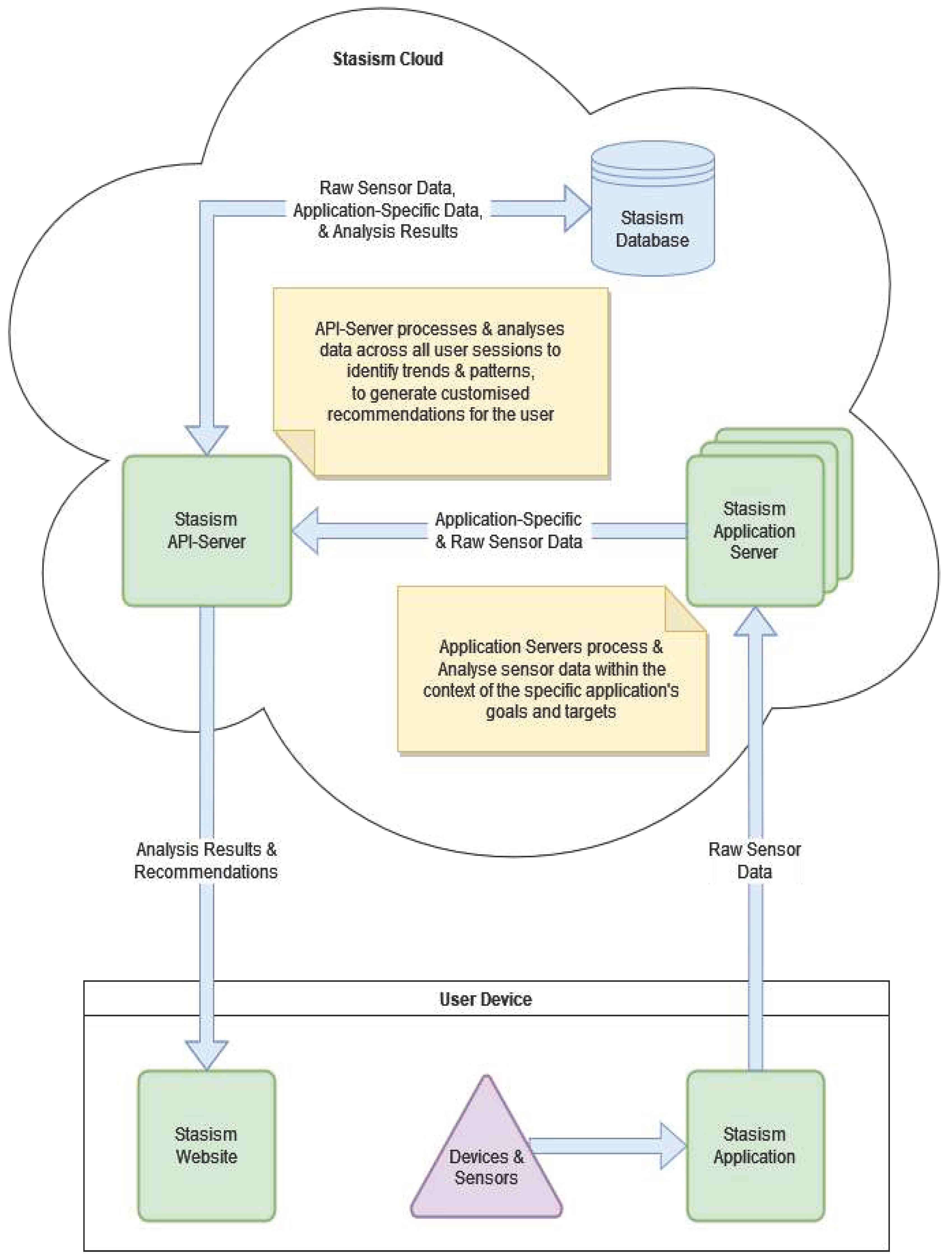

Table 1.
Description of the specific serious games with the controllers and the therapeutic targets.
Table 1.
Description of the specific serious games with the controllers and the therapeutic targets.
| Games | Description | Mode | Visual adaptation* | Game outcome | Controller | Therapeutic targets | Screenshots |
|---|---|---|---|---|---|---|---|
| Crazy Racing | Racing game where the player has a task for each level. The character catches the object, races other cars, and explores different roads. | Single | + | Time Completion Percentage (N of bonus coins) |
Balance Board: side and forward-backward sways (standing, sitting, kneeling) Camera (body sways) |
Balance function, proprioception, visual-spatial ability, navigation skills, attention | 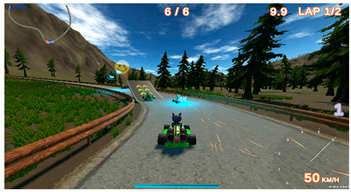 |
| Crusher | Action game that involves different movements of the body parts to crush buildings and transport with a monster character. | Single | - | Points | Camera (upper body, arms, hands, head, mouth) |
Motor coordination, proprioception, gross motor skills, fine motor skills, stress relief | 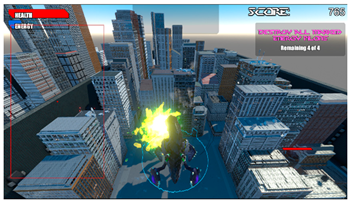 |
| Dodge Dare | Game with augmented reality: a player moves around their room and dodges the lasers | Single | - | Playing Time N of successful dodges |
Camera (3D body movement) |
Motor coordination, proprioception, visual-spatial ability, gross motor skills, attention | 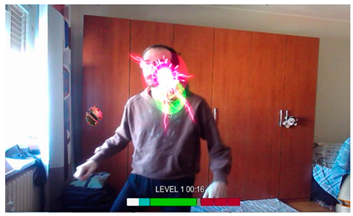 |
| Hex | Game where the player controls a witch flying on her broom with their movements. With each level, the character moves faster, explores different environments, and faces various challenges. | Single | + | Playing Time |
Camera (hand clench, mouth) |
Gross motor skills, fine motor skills, voluntary motor control, attention | 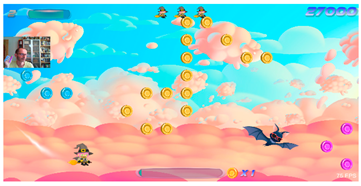 |
| Hungry Woo | Game that revolves around the task of feeding a cat. The main objective is for the player to catch food items while avoiding non-edible objects. As the game progresses, the speed increases, and the objects encountered change with each level. | Single, Cooperation, and Player-versus-Player (PvP) | + | Completion Percentage (N of caught edible objects and avoided non-edible objects) | Balance Board: side sways (standing, sitting, kneeling) |
Balance function, proprioception, visual-spatial ability, decision-making, object recognition, impulse control | 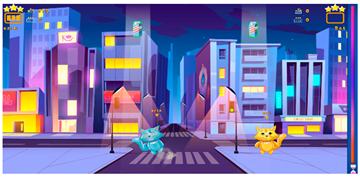 |
| Paddle Waddle | Action game, where the main goal is to keep balls in motion by rebounding them with a paddle. Along the way, players can collect stars to earn points and progress to higher levels. As the child advances, the ball speed increases and the new puzzle picture opens. In addition to striving for personal achievements, players can compete against others globally to achieve the highest score and receive rewards for surpassing the existing record. | Single | + | Points | Balance Board: side sways (standing, sitting, kneeling) Camera (body sways, shoulder flexion, shoulder abduction, shoulder rotation, elbow flexion, elbow supination, wrist flexion, hand clench, mouth) |
Balance function, proprioception, visual-spatial ability, gross motor function, fine motor skills, voluntary motor control, attention, decision-making | 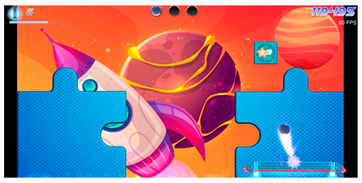 |
| Pongo Paddle | Variation of the favorite Paddle Waddle game. Action game, where the main goal is to keep balls in motion by rebounding them with a paddle. Along the way, players can collect stars to earn points and progress to higher levels. As the child advances, the ball speed increases and the new puzzle picture opens. In addition to striving for personal achievements, players can compete against others globally to achieve the highest score and receive rewards for surpassing the existing record. | Single | + | Points | Balance Board: forward-backward sways (standing, sitting, kneeling) Camera (body sways, shoulder flexion, shoulder abduction, shoulder rotation, elbow flexion, elbow supination, wrist flexion, hand clench, mouth) |
Balance function, proprioception, visual-spatial ability, gross motor function, fine motor skills, voluntary motor control, attention, decision-making | 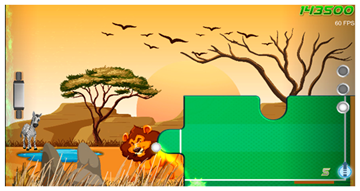 |
| Roxer | A musical game where the player should follow the rhythm to create the melody. It is possible to use the existing song or write their own. |
Single | - | Points | Balance Board: side or forward-backward sways (standing, sitting, kneeling) Camera (imitation of the guitar playing) |
Balance function, proprioception, visual-spatial ability, gross motor function, fine motor skills, attention | 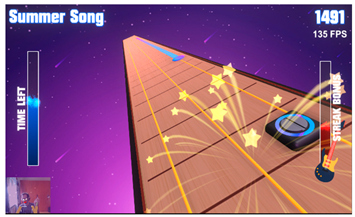 |
| Super Surfer | Super Surfer is a game in which the player gets to control their surfboard and explore new environments when collecting stars, which cumulate and help to earn more points. | Single, Cooperation, and PvP | + | Completion Percentage (N of caught stars) | Balance Board: side and forward-backward sways (standing, sitting, kneeling) Camera (body sways) |
Balance function, proprioception, visual-spatial ability, navigation skills, attention | 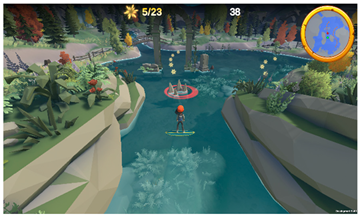 |
| Up You Go | Action game that is meant to be played with both hands and arms. The player controls a character trying to reach the top, shoving falling rocks, disabling moving enemies, and solving puzzles. | Single | - | Points | Camera (imitation of the climbing) |
Balance function, proprioception, visual-spatial ability, gross motor skills, fine motor skills, attention | 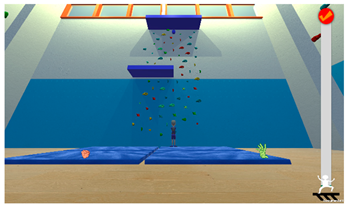 |
| Woo’s Wonderful World Adventure | Puzzle game involving matching falling blocks based on their colors while rescuing caged animals. In the game, players join Woo, a cat who embarks on a global journey in his airplane, visiting various countries. Each country in the game showcases unique artwork inspired by the local culture, creating an immersive and diverse experience. To progress, Woo must solve child-friendly puzzles specific to each country he visits. The game combines puzzle-solving with elements of exploration and cultural appreciation, making it an engaging and educational experience for players. | Single, Cooperation, and PvP | + | Points | Balance Board: side sways (standing, sitting, kneeling) |
Balance function, proprioception, visual-spatial ability, attention, decision-making, object recognition, impulse control | 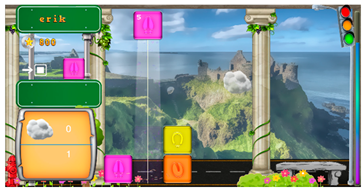 |
Disclaimer/Publisher’s Note: The statements, opinions and data contained in all publications are solely those of the individual author(s) and contributor(s) and not of MDPI and/or the editor(s). MDPI and/or the editor(s) disclaim responsibility for any injury to people or property resulting from any ideas, methods, instructions or products referred to in the content. |
© 2023 by the authors. Licensee MDPI, Basel, Switzerland. This article is an open access article distributed under the terms and conditions of the Creative Commons Attribution (CC BY) license (http://creativecommons.org/licenses/by/4.0/).
Copyright: This open access article is published under a Creative Commons CC BY 4.0 license, which permit the free download, distribution, and reuse, provided that the author and preprint are cited in any reuse.


