

Submitted:
01 February 2026
Posted:
03 February 2026
You are already at the latest version
Abstract
Why is it that, despite the abundance of land in Nigeria, conflicts primarily over land still occur in several communities? There might not be a straightforward answer to the question due to the complexities in the uneven distribution of resources, human behaviour, ethnicity, religiosity, and cultural implications. Thus, with a population of 236,952,221 competing for a landmass of 923,768 km², assuming the entire land is usable, arguably implies that every individual could utilise a landholding of 256 km². All citizens should be satisfied. This simple analogy suggests that a land crisis may not be solely a matter of scarcity but rather something more profound and complex, requiring a detailed examination. This study aimed to investigate the root causes of the persistent land crisis in Nigeria by using a case study of Mararaba-Udege in Nasarawa State. Key informants, including community heads, security personnel, and denizens, were interviewed to gather reliable data. The study dismisses the land scarcity theory as reductionist and finds that complex issues, including faulty traditional land tenure systems, inheritance customs, political interference, and socio-economic interests, fuel the crisis. The intensity of the situation has left the once-vibrant local food commercial hub in a state of desolation, prompting its inhabitants to disperse to distant locations for their safety. The results of this analysis will contribute to a growing body of knowledge and inform solutions to the numerous land crises in the area and in Nigeria as a whole.
Keywords:
denizens
; land conflicts
; Mararaba-Udege
; Nasarawa State
; Nigeria
; resource distribution
1. Introduction
The saying “the land is enough for everyone” epitomises equitable and conscionable land distribution, but the reality is far more complex. In a country like Nigeria, with a total landmass of 923,768 km² serving a population of 236,952,221 people as of Thursday, 22 May 2025, land distribution is a multifaceted issue [1]. This is because it is not just about the physical availability of land but also about trust, legislation, and the desire for control. When not managed effectively, these factors can lead to unnecessary conflicts [2,3,4].
The recent disputes between two brothers, descendants of the same man, over farmland in Ajiri (Afo) land in Mararaba-Udege exemplify this paradox. Despite the land’s apparent availability in Afoń Kasa (low-land) and Afoń Sama (rocky land), disputes continue to surge on who should farm on designated lands, leading to violence, killings, displacement, and breakdown of community cohesion. Accordingly, these conflicts highlight the complex sociocultural, socioeconomic, and sociopolitical factors that influence land dealings, challenging the notion that land scarcity is the sole driver of disputes. Thus, the analogy of equal or proportionate sharing may not answer the myriad challenges bedevilling land management.
Consequently, this study is crucial as it aims to understand the reasons for persistent disagreements among Ajiri family members in Mararaba-Udege, Nasarawa State, which has affected locals and settlers despite the apparent abundance of land. The study evaluates the underlying causes of the recent land conflict, meticulously analysing how traditional land tenure systems, inheritance customs, political interference, and economic interests contribute to the disputes. Understanding the root causes of this conflict provides a deeper understanding of the issue, thus going beyond the oversimplified view that land scarcity alone is responsible for conflicts. Given the above, holistic and sincere suggestions leading to long-term cohesion among parties within all concerned communities are ultimately the goals of undertaking this study.
2. Background to the Study
Land is fundamental to both economic theory and human existence. Earlier economists regarded land as a “gift of nature,” an essential factor in the production of other goods when combined with labour and capital. Historically, before formal land ownership rights were established, land was often used communally or informally, with local customs and traditions managing land use. In many ancient societies, land was considered a collective resource or was governed by customary laws rather than formal statutes. With the passage of time and the rise of civilisations, land tenure systems became entrenched in places such as Mesopotamia, Egypt, and Greece around 3000–1000 BCE, where the state or rulers began to codify land rights to facilitate taxation and state control [5,6].
Similarly, the Roman Empire made significant contributions to the development of land law, introducing concepts such as “dominium” (ownership) and land registration systems that laid the groundwork for modern property rights [7]. The feudal land system (roughly during the 9th to 15th centuries) was characterised by a hierarchy of landholding and rights, with land held in exchange for service. Though less standardised by modern notions, it has established formal land tenure relationships. This system ushered in contemporary and commercial land tenure systems, including (1) the fee simple, (2) leasehold, and (3) title registration. Thus, nations began to develop more systematic and formal legal systems in the 17th and 18th centuries.
Accordingly, the Enclosure Acts in England (from the 15th to 19th centuries) were significant steps toward formalised private land rights, marking the transition from common grazing lands to registered ownership [8]. Given that land registration systems were found to have the potential to curb land excesses and confer legal ownership on individuals, there was widespread acceptance of the practice, especially in Australia during the 19th and 20th centuries [9]. Notably, many countries have adopted the modern land tenure system. It is also reassuring to know that many countries in sub-Saharan Africa have adopted modern land tenure systems. The Nigerian Land Use Policy, specifically Land Use Decree No. 6 of 1978, now codified as CAP L5 LFN, 2004, was designed to unify the land tenure system, curb speculation, reduce or eliminate land crises, and enable the government to acquire land when necessary for overriding public interest.
However, Aduloju & Adedoyin [10] observed that, despite the well-thought-out Land Use Policy in Nigeria and in some sub-Saharan African countries, several glitches have led to crises arising from various factors. These causal factors were triggered by (1) family landownership, (2) poor land management, (3) government bureaucracy, (4) corruption, and (5) subjugation. Thus, even though previous studies, including Osegbue [11], Adepoju et al. [12], Ugonabo et al. [13], and Katibi et al. [14] have acknowledged the multifaceted nature of land conflicts in Nigeria, there still exist some gaps that require filling, including (1) limited knowledge of land rights and conflicts by the locals, especially in marginalized communities like the one under investigation, (2) insufficient data linking land conflicts with socioeconomic and sociocultural outcomes like poverty, productivity, and community stability, and (3) inadequate data on family feuds regarding land matters.
The location of this investigation offers a promising premise, given the current land dispute. Thus, findings from this analysis should not only provide microcosm solutions but also extrapolate to other areas within Nigeria and Africa in general.
3. Literature Review
This study raises significant questions surrounding (1) land distribution, (2) land accessibility, and (3) land utilisation. This is particularly relevant, as it provides a gateway to synthesising a critical study of densely populated regions such as Nigeria. Thus, the review hinges on understanding essential factors leading to conflicts over land, which involve (1) urban expansion, (2) changing land use patterns, and (3) socio-political dynamics.
First, urbanisation significantly shapes land demand, intensifying competition for land use. Several factors contribute to urban land expansion, with population growth in many regions as the chief driver. The study by Seto et al. [15] found that population growth was the leading cause of the conversion of agricultural land to residential, commercial, and industrial uses in several regions. The heightened changes often result in conflicts as stakeholders compete for limited resources, and urban populations seek land for housing. In contrast, rural populations fight to maintain agricultural lands vital for sustainability and food security [16].
The second factor is land-use trends, which reflect broader economic and social influences and exacerbate land conflicts. For instance, urban development increases land values and displaces agricultural uses for more profitable urban uses [17]. A study by [18] found that anthropogenic land use has heavily modified natural landscapes, underscoring the tension between economic growth and sustainable land-use practices. Consequently, this economic pressure creates a battleground where competing interests clash, manifesting as societal disputes over land ownership and appropriation. While this holds, there has been no study of two blood brothers fighting over land for agricultural purposes.
Another angle to this discourse was environmental dynamics, further complicating the situation. Climate change and the resulting shifts in agrarian practices can pressure land availability and quality. Another research by [19] identifies how increased agricultural land-use intensity responds to climate and socioeconomic changes, suggesting that future population pressures will likely heighten land-use conflicts. Moreover, environmental degradation, including land subsidence and declining soil quality, limits agricultural productivity and complicates land management strategies [20].
The historical and socio-political legacies of colonial land policies and existing land tenure systems in Nigeria contribute to systemic inequalities regarding land ownership and accessibility [21]. Many marginalised communities struggle against systemic barriers that inhibit their land rights, perpetuating socioeconomic inequalities and fueling conflict [21]. Studies like [22] advocate integrating sustainable land use with social considerations to foster equitable access and reduce conflict. This cannot be established without first investigating the root causes of a specific crisis and proffering a permanent panacea derived from local stakeholders.
The existing literature on land conflicts in Nigeria emphasises several key themes, yet significant gaps remain. Scholars note that traditional land tenure systems are often contested due to increasing demands for land driven by population growth and urbanisation [23,24]. Traditional claims clash with formal legal frameworks and emerging economic interests prioritising profit over community stability. For instance, the incompleteness and ambiguity of land laws lead to a lack of clarity regarding rights and responsibilities, contributing to disputes [24]. Furthermore, the literature indicates that many land grievances are tied to interpersonal relations within community structures, where disputes often escalate into violence [25].
As such, many land ownership systems fail to provide equitable rights, reflecting broader societal inequalities and underscoring the need for comprehensive reforms to address these discrepancies. While numerous studies examine land ownership, disparities, and conflicts within Nigerian societies, the literature largely overlooks the specific triggers of intrafamilial disputes, particularly in communal settings such as the Ajiri land. More focused research is needed to bridge these gaps and to propose actionable conflict-resolution solutions that incorporate traditional practices and modern legal frameworks. As the conflicts among the brothers in Ajiri land suggest, the assertion that “the land is enough for everyone” does not reflect reality on the ground. Instead, it presents an unattainable ideal under current land management models.
4. Theoretical Underpinnings
The study, anchored in various theoretical frameworks, elucidates the complexities of land conflicts and distribution. Accordingly, the following theoretical underpinnings are particularly relevant to the study: (1) Land Tenure Theory, (2) Human Needs Theory, (3) Political Economy of Land, (4) Ecological Economics, (5) Social Justice and Land Reform, and (6) Indigenous Rights and Community Management.
4.1. Land Tenure Theory
Land tenure is at the core of land conflicts, referring to individuals’ or groups’ relationships with land. This encompasses ownership, rights to use, and management responsibilities. This theory suggests that legal frameworks governing land tenure significantly influence conflict dynamics by determining who has access to land and under what conditions. Challenges related to land tenure differ across countries, but in Nigeria, the study by [13] emphasises a complex and inequitable land distribution due to bureaucratic hurdles. This is despite the country’s land-use policy, which abrogated freehold interests and mandated the provision of land to all and sundry.
4.2. Human Needs Theory
This theory is based on the understanding that conflicts ensue when resources are scarce and thus cannot fulfil people’s social and psychological needs. While this may not be the case in Nigeria (because of the already established analogy and argument of the land-population equation), lack of policy direction or proper implementation could trigger resource limitation, leading to disaffection among the people. A study by [26] indicates that closing land borders can create socio-political tensions as communities vie for access to essential resources necessary for survival and well-being. Therefore, by conceptualising land as a source of physical and psychological security, this theory helps explain the intensification of conflicts over land ownership and use.
4.3. Political Economy of Land
The political-economic framework examines how economic systems and power structures shape land access and ownership. Also, [27] discusses the implications of land-use changes on hydrological dynamics, recognising that economic drivers can lead to conflicts over land resource management. As a vital economic resource, this theory emphasises how land is often at the centre of power struggles, with various stakeholders vying for control.
4.4. Ecological Economics
This approach integrates ecological health into economic considerations, emphasising the need for sustainable land use practices. Author [28] demonstrates how land use, management practices, and variable rainfall impact agricultural productivity and ecological resilience. The theory of environmental economics suggests that current land conflicts can be moderated by balancing human needs with ecological sustainability.
4.5. Social Justice and Land Reform
The principles of social justice are deeply intertwined with land issues, particularly in terms of equitable access to and ownership of land. Accordingly, [29] explores the social justice implications of land ownership in Nigeria, emphasising historical injustices and the need for reforms to ensure the equitable distribution of land resources. Unlike some countries in the global south with skewed legal frameworks in favour of colonialists, Nigeria’s land injustices are self-inflicted, with affluent members of the society choosing prime locations, leaving the disadvantaged group with crumbs and less desirable locations. Therefore, this theoretical lens highlights the importance of addressing the economic and moral dimensions of land ownership.
4.6. Indigenous Rights and Community Management
The concept of indigenous rights asserts that local communities should have primary authority over land and natural resources within their territories. The research by [30] analyses the rights of indigenous peoples in Nigeria. It emphasises the need to empower local communities in land management decisions, potentially reducing conflict through participatory approaches. This theoretical perspective underscores that recognising indigenous rights can help foster peace in land-related matters.
While these theories are fundamental to this study, we consider the human needs theory particularly crucial. This is because the conflict in Mararaba-Udege may not be about the land being insufficient for all and sundry, but rather a systematic failure. Accordingly, as the theory posits, conflicts often stem from unmet basic human needs such as security, identity, and economic well-being, intricately tied to land disputes, even when ample land availability is suggested. This relationship can be explored through several lenses, highlighting the profound impact of socioeconomic and psychological needs on land use dynamics.
2. Materials and Methods
This study adopts a mixed-methods case study approach to evaluate the land conflict in Mararaba-Udege, Nasarawa State. This research design is appropriate because it enables the exploration of perceptions, social dynamics, and cultural factors that influence disputes [5,31]. Although the leading actors in the recent conflicts in the case study location are descendants of the same parents, we deliberately broadened the study population. This is to gather information from natives and non-natives to obtain an unbiased view of all that happened in the locality. Accordingly, community heads, a senior security personnel member responsible for maintaining peace and orderliness within the community, and denizens within the area were the research subjects in this study.
Mararaba-Udege is a village in the Nasarawa Local Government Area (LGA) of Nasarawa State, Nigeria. The broader Nasarawa LGA had a population of 189,835 at the 2006 census [10], projected to around 289,000 by 2022, of which Mararaba-Udege is a part of the projected population. Thus, there is no known specific population figure for the study area, making it difficult to ascertain the sample frame for the study. Accordingly, the infinite sample frame was adopted for this study. We utilised the formula advanced by Cochran [31] to arrive at a sample size of 317, with the following parameters: margin of error (E) = 0.05 (5%), Confidence Level (95%), with a Z-score of approximately 1.96 and population proportion (P) = 0.5.
Interviews were conducted with four (4) community heads and security personnel. About two hundred and nine (209) questionnaires were retrieved from the denizens and used in this analysis. Because many denizens (residents) were affected and have relocated to safer locations, only these groups were available for interviews. We employed a snowball sampling approach during questionnaire administration among both displaced and non-displaced denizens until the numbers reported above were reached. In the study, the displaced and non-displaced denizens respectively denote (1) those who relocated to safer locations, termed displaced, and (2) those who remain in the study location during and after the crisis, termed non-displaced persons.
The semi-structured interviews explored perceptions, experiences, and insights regarding the land conflict. Descriptive statistics, verbatim analyses, and thematic analyses were used to identify patterns, themes, and relationships within the data [5,31]. Ethical issues were considered to ensure participants’ anonymity, willingness to participate, and the freedom to withdraw from responding to the questions at any time. The authors have used Grammarly as a tool to improve the quality of this paper.
3. Results
This section analyses and presents the findings of this research. As earlier stated, results from the various research groups were used to form subsections in this Section. Furthermore, we aligned the results with the identified themes raised in the survey-guided questions. The first group in this analysis was the community leaders. Within the study locality, community heads were selected based on tribe, length of stay, and socio-political status. These leaders were assigned the following codes: CL001, CL002, CL003, and CL004. The second group was the security personnel, and finally, the third group was the denizens.
3.1. Subsection
The community heads/leaders were asked to provide first-hand information, among others, on (1) the causes of the land conflict, (2) land management strategies, (3) accounts and impact of the crisis on denizens, (4) roles of traditional leaders, and (5) policy mechanisms to curb the crisis. These actors were first asked to state the position they had occupied or were occupying within the Afo/Ajiri land. The positions are as follows:
- (i)
- President, Odu Elites Development Association.
- (ii)
- Member, Udege Area Administrative Area.
- (iii)
- Secretary, All Progressive Congress (APC) Elders Forum.
- (iv)
- Former Councillor (Deputy Speaker), Udege Development Area.
- (v)
- Former Administrator, Udege Development Area.
Their responses show that these actors have occupied/occupying leadership ranks that placed them at a vantage position to respond to the questions raised in this study. The Udege Development Area, under which this study is undertaken, is a district in the Nasarawa Local Government Area.
The community leaders were asked to state the nature of the land tenure system subsisting in the Afo/Ajiri land. The results show the following responses:
CL001, CL002, CL003 and CL004 states that:
- Land in Ajiri land is usually owned by individuals through inheritance/or sale, or lease. There are other parcels of land owned by communities.
Most land parcels in Nigeria are inherited, with parents bequeathing land to their children. Once the land is shared among the children, any person who wishes to sell their inheritance, either in part or in whole, can freely do so. It is through the practice of selling their inheritance that made it possible for non-natives to own land. This system, though acceptable, is considered an informal system of landholding, which the holder can make formal through the instrumentality of the force of law.
Furthermore, community leaders have divergent views on the common causes of land disputes among the Afo/Ajiri brothers in Mararaba_udege. Accordingly, CL001 states that:
- Competing claims of ownership resulting from undefined boundaries, selfish interest of some individuals/persons, and population growth led to competition and unnecessary killings.
Respondent CL002 states that:
- The rapid growth and development of Mararaba, the loss of leadership relevance among the people, and the selfish interests of politicians.
Furthermore, the leaders were asked to state the factors that fueled the recent land crisis in Mararaba-Udege. The responses were couched in the following compelling factors:
- (i)
- Political consideration
- (ii)
- Economic reasons, and
- (iii)
- Chieftancy tussle.
Specifically, CL001 and CL003 state that:
- Activities of unscrupulous politicians, the exploration and exploitation of parts of Afo/Ajiri land, and Chieftancy tussles are responsible for the land crisis.
CL002 states:
- The problem is not the land crisis per se, but elected representatives who couldn’t perform well and thus were not re-elected used miscreants to stir up a crisis in the area, alleging that the land belonged to them.
CL004 states corroborated the earlier comments of CL001 and CL002 that discovery and exploration of solid minerals and chieftaincy/headship of the Mararaba-Udege town were responsible, but added that:
- Miscreants hiding in forest areas were responsible for fueling the crisis. Additionally, population growth is overstretching the limited land within the Afo/Ajiri domain. Additionally, the disputes became escalated by the people of Odu and Ambu on who each claim to own the land of Mararaba.
CL001 and CL003 corroborated CL004’s claims regarding who owns the land between the Odu and Ambu people. CL001 and CL003 state that:
- The quest by the Ambu people to take over the leadership (Chieftancy) of the town from the Odu (Ekayi) people was responsible. Another major cause of the Odu people’s displacement from their farmlands was the Ambu people.
The result shows that, despite divergent views among the respondents, ownership of the land between the brothers (Odu and Ambu) is likely the primary cause of the dispute.
When asked about how the land crisis affected the denizens in the study location, all respondents reported that the crisis resulted in the following effects:
- (i)
- Loss of lives
- (ii)
- Several properties were destroyed
- (iii)
- Displacement of the people from their homes
- (iv)
- Loss of income and means of livelihood of the people
The other opinions shared by respondents in specific terms were that the crisis led to:
- (i)
- Hunger in the land (CL001).
- (ii)
- Stealing of stored farm produce (CL002).
- (iii)
- People live in fear and are restricted in their movement (CL003).
- (iv)
- Farmlands taken over by herders for animal grazing (CL004).
The leaders were asked to state how external influences, such as political and economic pressures, affect the land disputes. Even though previous analysis in this study has shown that political interference exacerbates the crisis, the following respondents (CL001) stated as follows:
- (i)
- Politicians exacerbate tensions leading to disputes (CL001).
- (ii)
- Economic benefits promote jealousy, hatred, competition, and rivalry (CL001).
- (iii)
- The perpetrators invited their fellow criminals to assist in causing damage to lives and property (CL002).
- (iv)
- Political elites who want to get into power use “divide and rule” politics. They are aware that if they don’t incite, they can never have access to power, so in an attempt, they incite the people to achieve their aim (CL004)
The leaders were asked what was/could be done to provide a lasting solution to the conflict, and their responses were recorded in this paragraph. All the leaders interviewed in this study recommended that governments, through the traditional rulers (institution), are best suited to assist in resolving the crisis. In particular, CL001 states that:
- Traditional rulers, government representatives and other parties selected from among the people to mediate between the leading actors (Odu and Ambu). Even though there is relative peace in the area, several people have yet to return because of fear. Therefore, the mediation should be to the satisfaction of the warring parties.
CL002 states that:
- A committee was previously set up to mediate between the two warring factions, but the two leaders refused to honor the committee’s invitation. Unfortunately, the committee’s decision was not respected by the groups. The mechanism put in place provided little respite because of the isolated cases of killings of people in farms, on roads and in surrounding bushes/forests.
CL003 states that:
- The government should be fair and just without taking sides with any of the groups. The culprits must be punished accordingly to deter others. This is what will bring about lasting peace in the area.
Moreover, CL004 states that:
- Traditional rulers tried to resolve it by calling the warring parties into a round-table discussion. Though much was not heard of the role played by the traditional stool of the paramount leader (Osu Ajiri) in the crisis. There is a need to bring the parties together again and have a holistic discussion on the way forward.
Finally, the community leaders freely expressed their views on the issues surrounding the land crisis at Mararaba-Udege. Accordingly, two respondents, namely, CL002 and CL004, state that the crisis is embedded in leadership tussles; thus, there is a need to settle the issue to the satisfaction of all and sundry. In particular, CL002 states that the crucial issues that have been neglected and must be revisited are:
- i.
- When or how long has Mararaba-Udege been in existence?
- ii.
- Who were the first settlers?
- iii.
- Who was the founder of Mararaba-Udege?
- iv.
- How many traditional chiefs and their lineage have ruled Mararaba-Udege?
- v.
- In the creation of the Udege Development Area and electoral wards by the Governor Abdullahi Adamu-led administration, where does Mararaba belong?
According to respondent CL002,
- Addressing these pertinent issues by any panel of enquiry is the first step toward resolving the land crisis in the study area.
CL004 states that:
- The burning issue now is who becomes the next “Osu Ajiri” of the Afo/Ajiri land. If we have a competent and genuine Afo/Ajiri man chosen through the proper process enshrined in the gazette, it will help bring an end to this communal crisis in Afo/Ajiri land.
The analysis from community leaders has pointed to remote causes of the land disputes, couched in a leadership tussle. Quite naturally, all crises have remote causes that differ from what people believe are the main triggers. In this study, the position of the community leader’s leadership tussle as the real driver of the land crisis in Mararaba-Udege can be framed as showing that the conflict is less about ordinary land scarcity and more about who controls authority, territory, and associated benefits. This aligns strongly with wider Nigerian and Middle Belt evidence, where chieftaincy and leadership disputes repeatedly underpin land violence that is often publicly framed as “communal” or “farmer–herder” conflict
6.2 Security personnel
Like the community leaders, the security personnel interviewed in this study corroborated that the leadership tussle was the cause of land conflict in the study area. Additionally, the security personnel suggest that:
- …the quest to harness all farmland to a particular Section of the warring faction was also responsible. The crisis began when rain fell, hindering people from cultivating their fields.
When asked about the role of security operatives in quelling the conflict, the personnel states that:
- Security cover was provided to ensure the safety of lives and property. There was a reinforcement from other divisions to assist in de-escalating the already charged environment.
The measures taken by the security operative were deemed important in quelling the crisis. The security operative states that:
- All the district chiefs of Afo/Ajiri land, both Odu (Ekyi) and Ambu, were summoned by the administrator to proffer solutions to the crisis, and the meeting yielded important conclusions needed to resolve it effectively.
Additionally, measures were put in place to assist the people displaced by the conflict. Among the measures, as stated by the security operative, were:
- There were donations from the Federal and State governments, as well as from individuals. The assistance ranges from building materials to food and agricultural supplies, which have been shared across the affected clans.
Furthermore, the security personnel were asked to state how the people perceive the role of security agents in quelling the land disputes, and whether there were external influences. The response was:
- The people were happy with the intervention of the security operatives, even though before the intervention, several damages were done to life and property. There was no evident external influence in the conflict. It was purely an inter-communal conflict.
Finally, the security operative offered the following helpful suggestions to provide a lasting solution to the land conflict in Mararaba-Udege. These are:
- All leaders of both clans should sensitize their youths to live in peace and harmony with one another. Also, the said land should be shared among the clans to avoid future conflict, and finally, the number of security personnel in the study area should be increased.
As stated earlier, these findings corroborate the view that leadership tussle among the people is the fundamental cause of the land crisis in Mararaba-Udege. Thus, it is not the vastness of land in the study area and in Nigeria, but leaders who fell out of favor, instigating crisis under a smokescreen of land matters.
6.3. Denizens
The denizens were the inhabitants of the Mararaba-Udege and were thus the most affected by the land crisis. This is because many of them have relocated to neighboring villages and towns. Therefore, questionnaires were distributed to denizens within the study area and other locations where they are found.
6.3.1. Denizens Background Information
To illustrate the age structure of people affected by the land crisis, Figure 1 presents the age distribution of respondents.
The age distribution is skewed toward economically active cohorts, with the highest concentration between 31-40 and 41-50 years. This indicates that land conflict disproportionately affects individuals in their prime productive years, directly undermining household income, agricultural output, and community economic stability. A relatively smaller proportion of elderly respondents suggest that younger adults are more exposed to displacement and land-related insecurity. Figure 2 shows the gender composition of the survey respondents.
Figure 2 reveals a clear male dominance among respondents, reflecting the gendered structure of land ownership and inheritance in rural Nigeria. While men are more visible in land disputes and decision-making, the inclusion of women highlights that land conflicts also generate indirect but severe impacts on female household members, particularly through displacement, food insecurity, and caregiving burdens. The livelihood profile of respondents is illustrated in Figure 3.
Farming is the dominant occupation, followed by civil service and business activities. The horizontal bar format emphasizes the relative weight of farming compared to other livelihoods, underscoring the community’s dependence on land-based economic activities. This occupational structure explains why land disputes rapidly escalate into livelihood crises and food insecurity.
Figure 4 illustrates the length of time respondents have lived in the study area.
Figure 4 shows that a substantial majority of respondents have lived in the community for more than three years, with a large proportion exceeding six years of residence. This highlights strong attachment and long-standing social embeddedness. Conflicts in such contexts are therefore more disruptive, as they fracture deeply rooted social networks rather than transient populations. Figure 5 presents the distribution of household sizes among respondents.
Household sizes are relatively large, with most respondents living in households of four persons or more. Larger household sizes can intensify the consequences of land conflict, as displacement affects entire family units simultaneously. This demographic characteristic amplifies vulnerability and increases dependence on secure land access for survival. Figure 6 illustrates respondents’ tenure status.
The near-equal proportions of landlords and tenants indicate that land conflict impacts both ownership and occupancy arrangements. While landlords face loss of inherited land and authority, tenants experience housing precarity and forced relocation. This dual exposure broadens the social footprint of land conflict beyond property owners alone. Figure 7 shows the dominant land-use categories in the study area.
Residential land use dominates, followed by agricultural and commercial uses. This pattern reflects the multifunctional role of land in Mararaba-Udege, serving as both shelter and a livelihood resource. The dominance of residential use explains widespread displacement during the crisis, while the significant share of agricultural land links the conflict directly to food insecurity and income loss.
6.3.2. Main Causes of the Conflict in Mararaba-Udege
To examine the perceived drivers of the land crisis in Mararaba-Udege, respondents were asked to rate a series of potential causes using a five-point Likert scale, ranging from strongly disagree (1) to strongly agree (5). The mean scores and ranked importance of these factors are presented in Table 1.
As shown in Table 1, political leadership interference and the influence of influential individuals ranked highest among perceived causes of the land crisis. Specifically, over 70% of respondents strongly agreed that elite influence creates imbalances in land distribution, while political leadership interference was ranked among the top drivers of conflict. This finding reinforces the argument that land disputes in Mararaba-Udege are not merely technical land tenure problems but are deeply embedded in power relations and leadership struggles.
Interestingly, although population growth and agricultural expansion were acknowledged as contributing factors, they ranked significantly lower than political and leadership-related variables. This suggests that demographic pressure alone does not explain the violence observed in the study area. Rather, population growth becomes conflict-inducing only when filtered through contested authority, weak governance, and exclusionary decision-making processes. This aligns with studies in Nigeria’s Middle Belt that show how land conflicts are often politicised and escalated by elites seeking to consolidate power rather than resolve resource competition (Ukase & Abraham, 2016; Olumba, 2024).
6.3.3. Effects of Land Crisis on Denizens of Mararaba-Udege
Table 2 further demonstrates the severity of the crisis in everyday life. A substantial majority of respondents reported loss of livelihood, displacement, and heightened insecurity. The high mean scores associated with displacement, economic instability, and weakened community cohesion indicate that the land conflict has transitioned from a localised dispute into a broader humanitarian and developmental crisis. The psychological effects reported by respondents, including stress and anxiety, underscore that land conflict extends beyond physical violence to long-term social trauma.
Despite these negative outcomes, half of the respondents still believed there was enough land in Mararaba-Udege for everyone, provided it was appropriately managed. This perception is critical, as it empirically supports the central argument of this study: land scarcity is not the core problem. Instead, inequitable distribution, politicisation of land governance, and leadership contestation transform land into a trigger for conflict. Moreover, the high willingness of residents (83%) to participate in dialogue and peace-building initiatives suggests strong community readiness for conflict resolution if credible and inclusive mechanisms are established.
Respondents were also asked a set of perception-based questions about procedural inclusion, land sufficiency, fairness of land distribution, and willingness to participate in conflict-resolution processes. The combined responses are presented in Figure 8.
Figure 8 provides a consolidated view of denizens’ perceptions regarding inclusion, land adequacy, fairness, and conflict resolution. The most striking pattern is the complete absence of formal notification or involvement in displacement-related discussions, with no respondents indicating prior engagement. This highlights severe procedural exclusion and weak participatory governance, which are central contributors to grievance formation in land-related conflicts.
Despite this exclusion, half of the respondents believe that there is sufficient land in Mararaba-Udege for everyone, while a substantial proportion remains uncertain. This reinforces the argument that land scarcity is not universally perceived as the core problem. Rather, uncertainty reflects ambiguity in land governance and access mechanisms rather than physical land availability.
Perceptions of fairness in land distribution are sharply divided, with responses almost evenly split across affirmative, negative, and uncertain categories. This lack of consensus suggests the contested legitimacy of land allocation processes and limited transparency in decision-making. Such conditions are conducive to mistrust, informal land occupation, and conflict escalation.
Notably, willingness to participate in community dialogue is exceptionally high, with over four-fifths of respondents expressing readiness to engage in dispute resolution efforts. This finding is particularly significant given the widespread exclusion reported earlier. It indicates strong latent potential for participatory conflict resolution and suggests that inclusive governance interventions could be both timely and effective.
Taken together, the figure demonstrates a paradoxical dynamic: profound procedural exclusion coexists with strong community willingness to engage constructively. This underscores the importance of shifting land conflict responses from coercive or top-down approaches toward inclusive, dialogue-based governance frameworks.
7. Discussion
This section set out to interrogate the paradox encapsulated in the assertion that “the land is enough for everyone” (as revealed by the results in section 6), using Mararaba-Udege as a micro-level case to examine why land conflicts persist despite apparent land abundance. The findings provide strong empirical support for the argument that land conflict in this context is not primarily a function of physical land scarcity, but rather the outcome of contested authority, inequitable governance structures, and failures in institutional and customary land management. In doing so, the study advances existing scholarship by shifting attention from demographic and environmental determinism toward the political, social, and psychological dimensions of land conflict.
7.1. Land Abundance, Perceived Sufficiency, and the Limits of Scarcity-Based Explanations
One of the most striking findings of this study is the near-universal agreement among denizens that land is, in principle, sufficient if properly managed. This perception directly challenges neo-Malthusian explanations that attribute land conflict primarily to population pressure and physical scarcity [15,16]. While respondents acknowledged population growth and agricultural expansion, their comparatively lower ranking confirms that demographic pressure alone is insufficient to explain the scale and intensity of violence experienced in Mararaba-Udege.
This finding aligns with the argument that land conflicts often emerge not from absolute scarcity, but from socially constructed access constraints [18]. In Mararaba-Udege, scarcity is effectively produced through contested claims, exclusionary decision-making, and leadership struggles. Thus, land becomes scarce not because it is physically limited, but because its control is politicised and unevenly distributed. This reinforces the argument advanced by Wehrmann [2] and Palmer et al. [4] that land conflict is best understood as a governance failure rather than a purely resource-based problem.
7.2. Leadership Tussles, Elite Capture, and the Political Economy of Land
Across all respondent groups (community leaders, security personnel, and denizens), leadership tussles and elite interference consistently emerged as the dominant drivers of conflict. The dispute between the Odu and Ambu factions over chieftaincy, territorial authority, and political relevance illustrates how land functions as both a material resource and a symbol of power. This supports the political economy of land framework, which emphasises that land conflicts are embedded in struggles over authority, legitimacy, and access to economic rents [27].
The high ranking of “influence of powerful individuals or groups” and “political leadership interference” in the denizens’ survey resonates strongly with studies from Nigeria’s Middle Belt, where communal violence is frequently catalysed by elites seeking to consolidate power under the guise of land disputes [11,33,34]. In this sense, the Mararaba-Udege conflict exemplifies how land disputes are often instrumentalised by political actors, transforming latent grievances into open violence. Significantly, this study extends the literature by demonstrating that such elite-driven dynamics can operate even within a single kinship lineage. The intrafamilial dimension of the Ajiri land dispute fills an identified gap in Nigerian land conflict scholarship, which has tended to focus on inter-ethnic or farmer-herder conflicts while overlooking family-based power struggles over land [24].
7.3. Land Tenure Ambiguity, Customary Authority, and Institutional Failure
The findings further reveal that the coexistence of informal inheritance-based landholding and weak formalisation mechanisms contributes to uncertainty and contestation. While community leaders described inheritance and informal transfers as socially legitimate, the absence of clearly demarcated boundaries and enforceable documentation creates fertile ground for overlapping claims. This corroborates earlier findings that legal ambiguity and incomplete tenure systems are major sources of land disputes in Nigeria [23,24].
Notably, the Nigerian Land Use Act, intended to harmonise tenure systems and reduce conflict, appears ineffective mainly at the community level. This supports critiques that bureaucratic bottlenecks, political interference, and weak enforcement undermine otherwise sound land policies [35]. In Mararaba-Udege, the failure of both statutory institutions and traditional authorities to provide legitimate, transparent, and enforceable land governance structures has resulted in a vacuum readily exploited by competing elites.
7.4. Human Needs, Insecurity, and the Social Consequences of Land Conflict
Beyond structural and political factors, the findings underscore the centrality of unmet human needs in sustaining and intensifying land conflict. The severe impacts reported by denizens (including loss of livelihoods, displacement, psychological distress, and erosion of social cohesion) demonstrate that land is deeply intertwined with economic security, identity, and dignity. This strongly validates the relevance of Human Needs Theory to the Mararaba-Udege context [26].
While land may be physically abundant, the inability of individuals to access it safely and legitimately generates conditions of insecurity analogous to scarcity. This aligns with the argument that perceived deprivation, rather than absolute shortage, is often the trigger for socio-political conflict [26]. The dominance of economically active age groups among the displaced further illustrates how land conflict undermines productive capacity and entrenches poverty, reinforcing a vicious cycle of grievance and instability.
7.5. Procedural Exclusion, Legitimacy, and the Paradox of Community Readiness
A significant contribution of this study lies in its identification of procedural exclusion as a core grievance. The complete absence of denizen involvement in displacement-related decisions highlights a profound democratic deficit in land governance. This finding echoes the observation that marginalised communities are often excluded from land decision-making processes, thereby eroding trust and legitimacy [21].
Yet, paradoxically, the exceptionally high willingness of respondents to participate in dialogue and peace-building initiatives suggests that the social foundations for conflict resolution remain intact. This aligns with the emphasis on community-based and participatory approaches to land governance [30]. The Mararaba-Udege case, therefore, illustrates that conflict persistence is not due to social fragmentation alone, but to the absence of credible, inclusive institutions capable of channelling community willingness into constructive outcomes.
7.6. Reframing the “Land Is Enough” Narrative
Taken together, the findings compel a rethinking of the popular notion that land sufficiency guarantees peace. In Mararaba-Udege, land abundance coexists with violence because access, authority, and legitimacy are unevenly distributed. The assertion that “the land is enough for everyone” thus emerges not as an empirical reality, but as a normative ideal rendered unattainable by flawed governance structures.
By empirically demonstrating that land conflict in Mararaba-Udege is driven by leadership contestation, elite capture, and institutional failure rather than scarcity, this study contributes to a growing body of African land scholarship that calls for governance-centred, rather than resource-centred, interventions. Sustainable resolution, therefore, requires not merely land redistribution, but the reform of decision-making processes, clarification of authority structures, and genuine inclusion of affected communities.
8. Policy and Practical Implications
The findings of this study have important implications for land governance, conflict management, and rural development in Nigeria.
First, land conflict interventions must go beyond technical land reforms and address leadership legitimacy and governance structures. Strengthening land administration without resolving contested authority is unlikely to produce sustainable peace. Government-led mediation processes should therefore explicitly address chieftaincy disputes, boundary claims, and historical narratives of settlement.
Second, traditional institutions remain critical but require formal support and accountability mechanisms. While community leaders are well-positioned to mediate disputes, their effectiveness depends on neutrality, legitimacy, and state-backed enforcement. Collaborative governance models that integrate traditional rulers, local government officials, and community representatives may help restore trust.
Third, early warning and prevention mechanisms should be prioritised. The escalation observed in Mararaba-Udege suggests that unresolved disputes can quickly transform into violent crises. Institutionalising dialogue platforms and community-based land committees could help address grievances before violence erupts.
Finally, post-conflict recovery must address livelihoods, psychological trauma, and displacement. Without targeted support for affected households, land conflicts risk reproducing cycles of poverty, resentment, and renewed violence.
9. Limitations and Future Research
While this study provides valuable insights, certain limitations should be acknowledged. The case study approach limits the generalisability of findings beyond similar socio-political contexts. Additionally, displacement constrained access to some affected denizens, potentially underrepresenting the experiences of the most vulnerable groups.
Future research could adopt comparative case studies across Nigeria’s Middle Belt region to examine whether similar leadership dynamics underpin land conflicts elsewhere. Longitudinal studies would also be valuable in assessing the long-term impacts of land conflict on livelihoods, social cohesion, and institutional trust. Further work integrating spatial analysis of land-use change with qualitative governance data could deepen understanding of how the physical and political landscapes interact to produce conflict.
10. Conclusions
Land is widely recognised as an essential element in human survival. Even though resources are unevenly distributed, the history of their use reveals that proper utilisation has given some regions enormous advantages over others. Arguably, some countries with little natural endowment have been able to harness a “gold mine” from a hitherto “barren” land through advances in technology, leading to more effective land utilisation. Nigeria is naturally endowed; however, the question of whether these resources are a curse or a blessing could spark an endless debate. Taking the last conflict that ensued between brothers (Odu and Ambu) in Mararaba-Udege, Nigeria, the objective was to unravel the leading causes of the dispute, since, from a simplistic view, land should be enough for everyone. Accordingly, to achieve the research objectives, different stakeholders were assembled, and their opinions informed the research findings.
This study demonstrates that land conflicts in Mararaba-Udege are not primarily driven by land scarcity but by contested leadership, politicised land governance, and unmet human needs. Although land is physically available, failures in authority, legitimacy, and equitable allocation transform land into a catalyst for violence. The findings challenge reductionist explanations of land conflict and highlight the need to reframe such crises as governance and political economy problems rather than purely agrarian or demographic ones. By integrating perspectives from community leaders, security personnel, and citizen denizens, the study provides a nuanced, localised understanding of how land, power, and politics intersect in rural Nigeria, causing unnecessary conflicts. Ultimately, the assertion that “the land is enough for everyone” can only hold where institutions are trusted, leadership is legitimate, and land governance systems are inclusive and just. Without these conditions, land abundance alone is insufficient to prevent conflict.
References
- Worldometer. Nigeria Population. Available online: https://www.worldometers.info/world-population/nigeria-population/ (accessed on 22 May 2025).
- Wehrmann, B. Land Conflicts: A Practical Guide to Dealing with Land Disputes; GTZ: Eschborn, Germany, 2008.
- Mann, C.; Jeanneaux, P. Two approaches of territorial governance: A matter of scale and of collective action. Sustainability 2009, 1, 1182–1213. [CrossRef]
- Palmer, D.; Fricska, S.; Wehrmann, B. Towards Improved Land Governance; FAO: Rome, Italy, 2009.
- Fisher, R.; Whittal, J. Cadastre: Principles and Practice. Authors with the assistance of SAGI. Available online: https://www.sagi.co.za/product/cadastre-principles-and-practice/ (accessed on 22 January 2026).
- Katary, S. Land tenure and governance in early civilizations. Land Hist. Rev. 2007, 12, 45–68.
- Miller, R. Foundations of Roman Property Law; Oxford University Press: Oxford, UK, 2010; pp. 101–130.
- Thompson, E.P. The Making of the English Working Class; Vintage Books: London, UK, 1999.
- Kangave, J. Land registration in Australia: Historical perspectives. Aust. J. Land Policy 2007, 5, 33–52.
- Abdullahi, A.O.; Goyilla, A.E. An analysis of the elasticity of demand for local rice in the Nasarawa Local Government Area of Nasarawa State, Nigeria. Afr. J. Soc. Behav. Sci. 2024, 14, 3.
- Osegbue, C. The Nature and Dynamics of Land-Related Communal Conflicts in Nigeria. Int. J. Humanit. Soc. Sci. 2017, 7, 74–86.
- Adepoju, O. S., Audu, H. A., & Adewoyin, I. B. (2024). Land Reforms and Resource-Based Conflicts Management: A Case Study of Lagos and Ogun States, Nigeria. International Journal of Environmental Design and Construction Management, 6, 4, . [CrossRef]
- Ugonabo, C.; Egolum, C.; Sado, R. Nigerian land policy: Issues, challenges and the way forward. Glob. J. Agric. Res. 2023, 11, 17–37. [CrossRef]
- Katibi, U. A., Mohad, A. H., Ramli, M., & Sulaiman, I. F. (2024). A Review of the Impact of Farmers-Herders Conflicts on the Socioeconomic Well-Being of Specific Local Government Areas (LGAs) in Kwara, Nigeria: Kajian Kesan Konflik Peladang-Penternak Terhadap Kesejahteraan Sosioekonomi Kawasan Kerajaan Tempatan (LGA) Terpilih di Kwara, Nigeria. Sains Insani, 9(1), 150-160.
- Seto, K.C.; Fragkias, M.; Güneralp, B.; Reilly, M. A meta-analysis of global urban land expansion. PLoS One 2011, 6, e23777. [CrossRef]
- Güneralp, B.; Reba, M.; Hales, B.; Wentz, E.; Seto, K. Trends in urban land expansion, density, and land transitions from 1970 to 2010: A global synthesis. Environ. Res. Lett. 2020, 15, 044015. [CrossRef]
- Kaneko, Y.; Nakagawa, T.; Phun, V.; Kato, H. Impacts of urban railway investment on regional economies: Evidence from Tokyo using spatial difference-in-differences analysis. Transp. Res. Rec. 2019, 2673, 129–140. [CrossRef]
- Goldewijk, K.; Beusen, A.; Doelman, J.; Stehfest, E. Anthropogenic land use estimates for the Holocene – HYDE 3.2. Earth Syst. Sci. Data 2017, 9, 927–953. [CrossRef]
- Eglington, S.; Pearce-Higgins, J. Disentangling the relative importance of changes in climate and land-use intensity in driving recent bird population trends. PLoS One 2012, 7, e30407. [CrossRef]
- Minderhoud, P.; Coumou, L.; Erban, L.; Middelkoop, H.; Stouthamer, E.; Addink, E. The relation between land use and subsidence in the Vietnamese Mekong Delta. Sci. Total Environ. 2018, 634, 715–726. [CrossRef]
- Crespín, S.; Simonetti, J. Reconciling farming and wild nature: Integrating human–wildlife coexistence into the land-sharing and land-sparing framework. Ambio 2018, 48, 131–138. [CrossRef]
- Chen, X.; Chen, F.; Cui, F.; Lei, W. Spatial heterogeneity of sustainable land use in the Guangdong–Hong Kong–Macao Greater Bay Area in the context of the carbon cycle: GIS-based big data analysis. Sustainability 2023, 15, 1715. [CrossRef]
- Owusu Ansah, B., & Chigbu, U. E. (2020). The nexus between peri-urban transformation and customary land rights disputes: Effects on peri-urban development in Trede, Ghana. Land, 9(6), 187.
- Makata, I.F., and Udobi N.A. (2024). Comparison of Land Use Act and Traditional Land Use, International Journal of Civil Engineering, Construction and Estate Management, 12(1),70-82.
- Van Leeuwen, M., & Van Der Haar, G. (2016). Theorizing the land–violent conflict nexus. World Development, 78, 94-104.
- Idoniboye-Obu, S. Public policy and border management in Nigeria: Implications of President Buhari’s 2019 policy on land border closure. J. Glob. Soc. Sci. 2022, 3, 25–45. [CrossRef]
- Achugbu, I.; Olufayo, A.; Balogun, I.; Dudhia, J.; McAllister, M.; Adefisan, E.; Naabil, E. Potential effects of land use and land cover change on streamflow over the Sokoto Rima River Basin. Heliyon 2022, 8, e09779. [CrossRef]
- Hiernaux, P.; Ayantunde, A.; Kalilou, A.; Mougin, É.; Gérard, B.; Baup, F.; Djaby, B. Trends in productivity of crops, fallow and rangelands in Southwest Niger: Impact of land use, management and variable rainfall. J. Hydrol. 2009, 375, 65–77. [CrossRef]
- Tushima, C. The Yahwenomics of land and social justice and contemporary land resource crises in Nigeria. IOSR J. Humanit. Soc. Sci. 2016, 21, 38–50. [CrossRef]
- Ibiam, A.; Faga, H. Indigenous peoples’ rights over natural resources: An analysis of host communities’ rights in Nigeria. Lampung J. Int. Law 2021, 3, 121–136. [CrossRef]
- Cochran, W.G. Sampling Techniques, 3rd ed.; John Wiley & Sons: New York, USA, 1977.
- Yakubu, Y. Household size and poverty: A study of Northwestern Nigeria. Int. J. Intellect. Discourse 2023, 6, 279–291. Available online: https://ijidjournal.org/index.php/ijid/article/view/578 (accessed on 22 January 2026).
- Ukase, P.I.; Abraham, V.O. The Political Economy of Land and Chieftaincy Disputes in Contemporary Africa: Examples from Central Nigeria. Int. J. English Lit. Soc. Sci. 2016, 1, 1–15.
- Ameh, J.U.; Williams, N.E.; Isaac, E.E. Impacts of Chieftaincy Tussle on Socio–Economic Development of Selected Communities in Benue State, Nigeria. Am. J. Political Sci. Leadersh. Stud. 2025, 2, 72–89. Available online: https://semantjournals.org/index.php/AJPSLS/article/view/3212 (accessed on 22 January 2026).
- Aduloju, A.A.; Adedoyin, T.A. Economic crisis in Sub-Saharan Africa and its (un)sustainable development implications. In Management for Sustainable Development; Apple Academic Press: New York, USA, 2024; pp. 117–136.
Figure 1.
Age distribution of respondents.
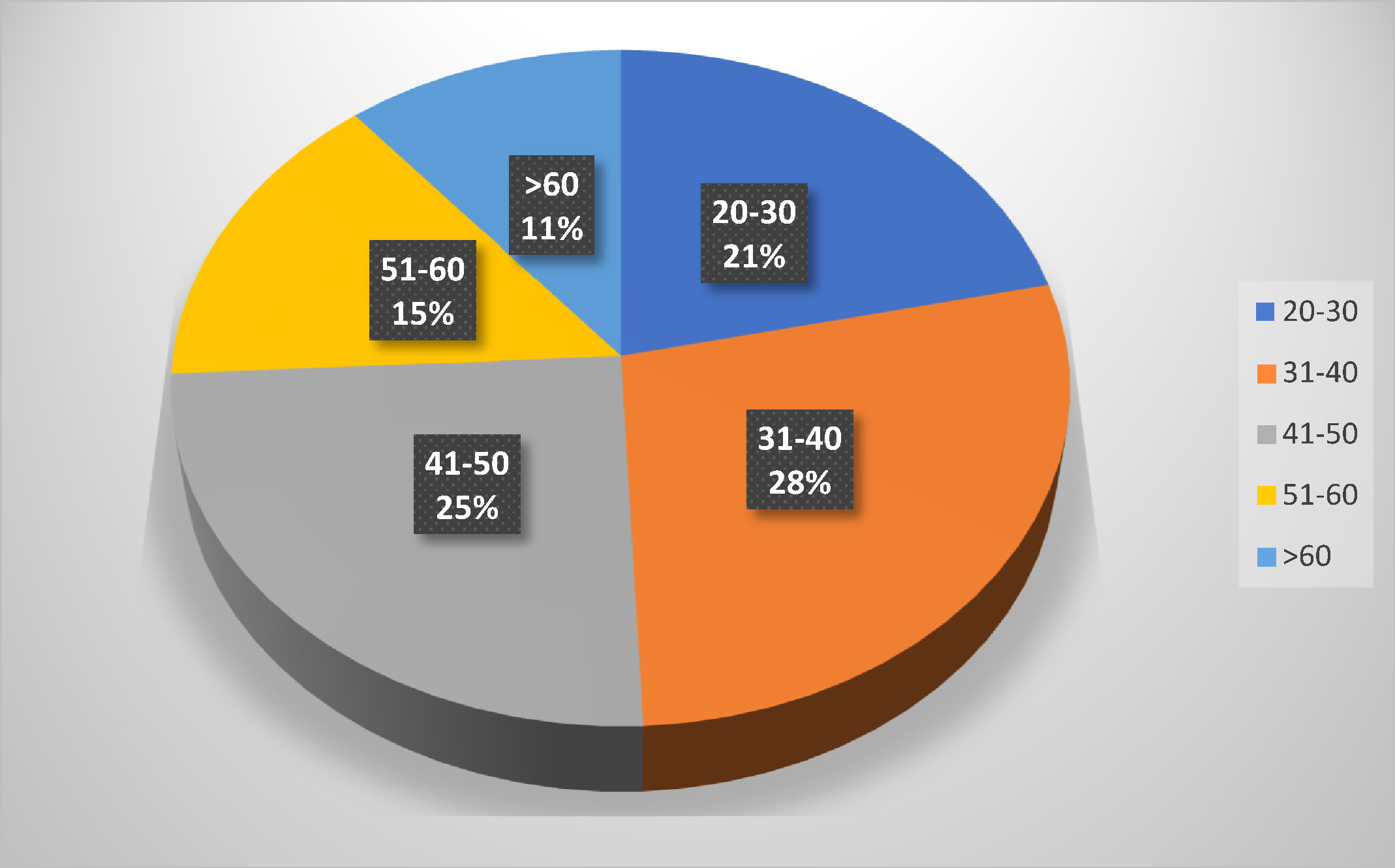
Figure 2.
Gender composition of respondents.
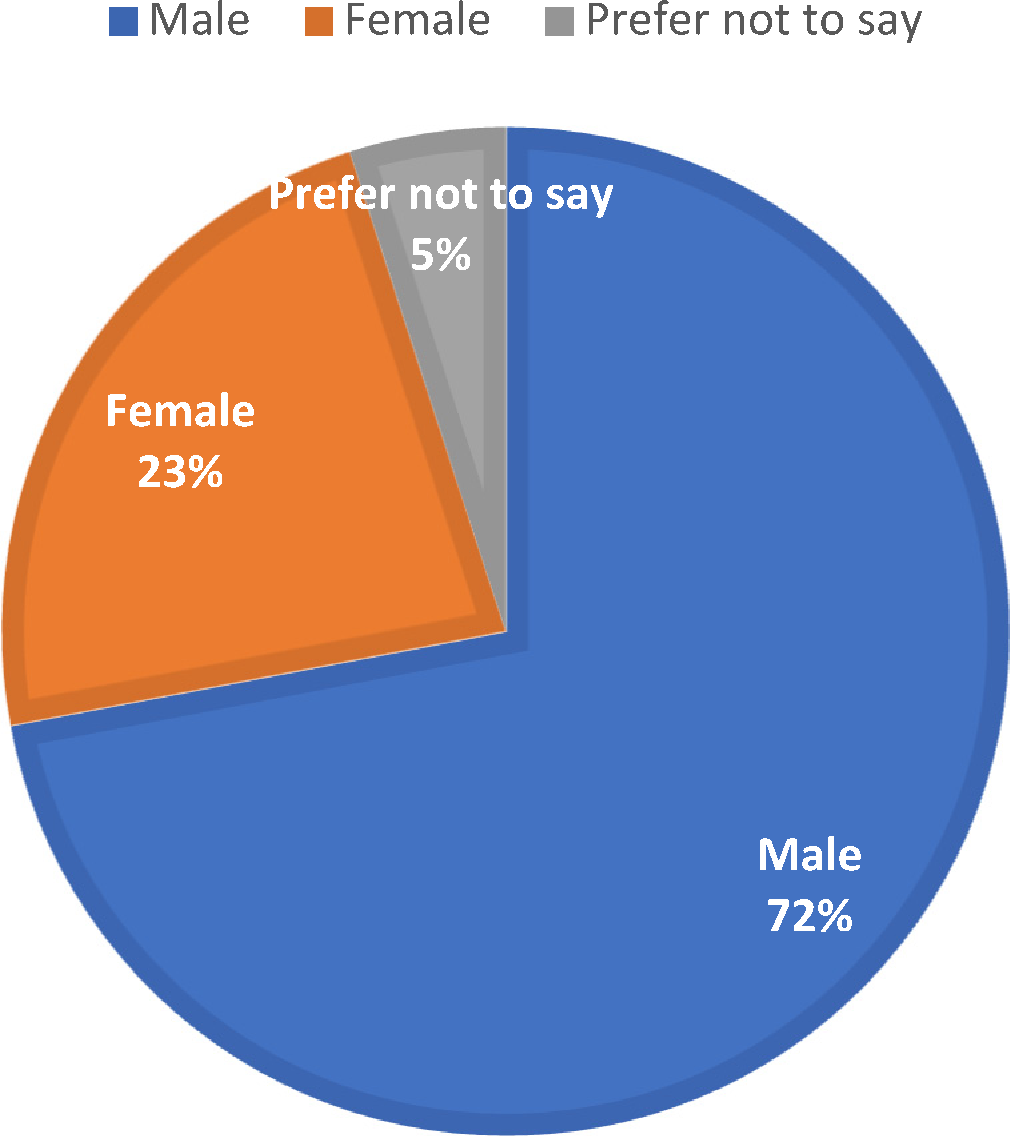
Figure 3.
Occupational structure of respondents.
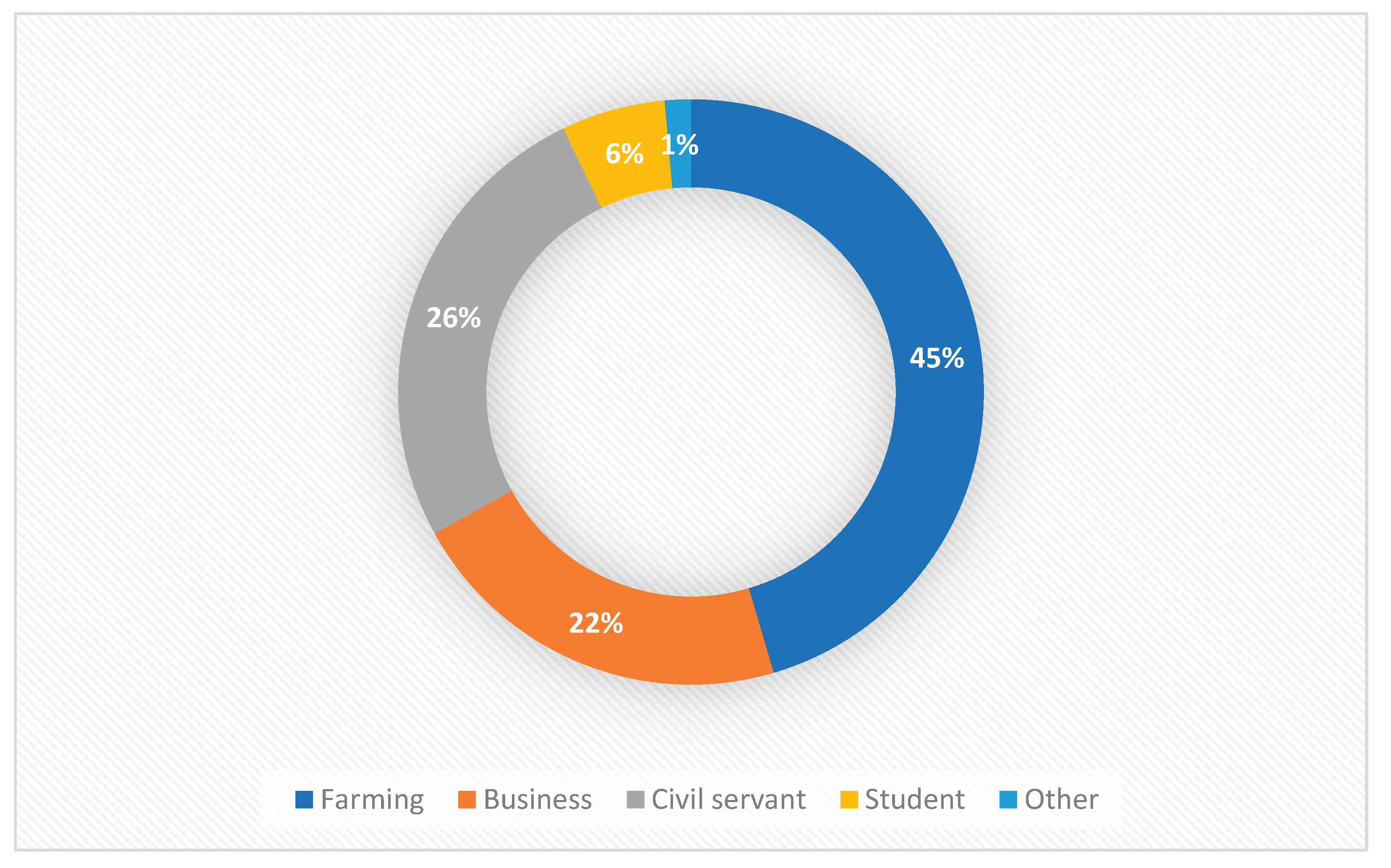
Figure 4.
Duration of residence of respondents.
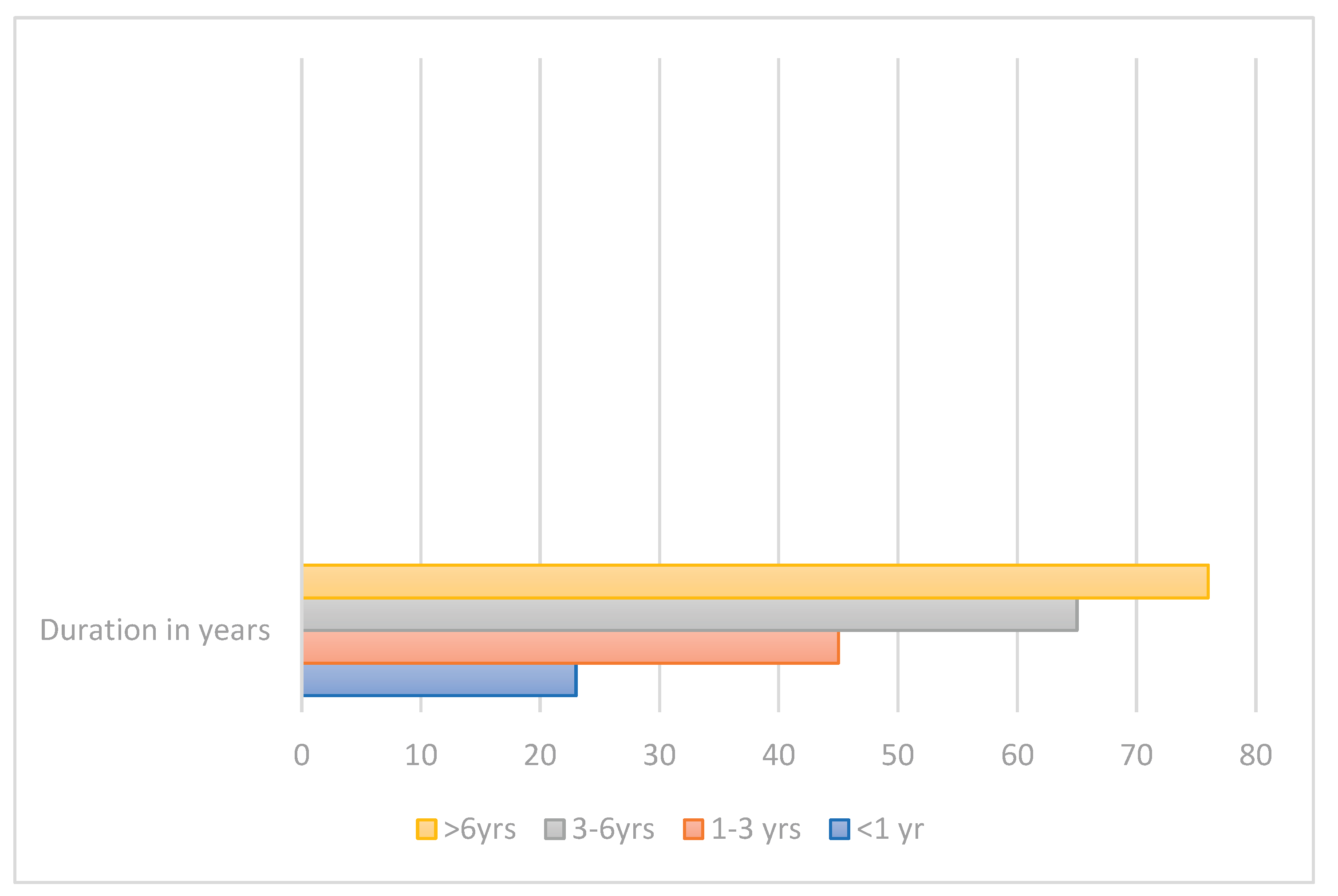
Figure 5.
Household size distribution of participants.
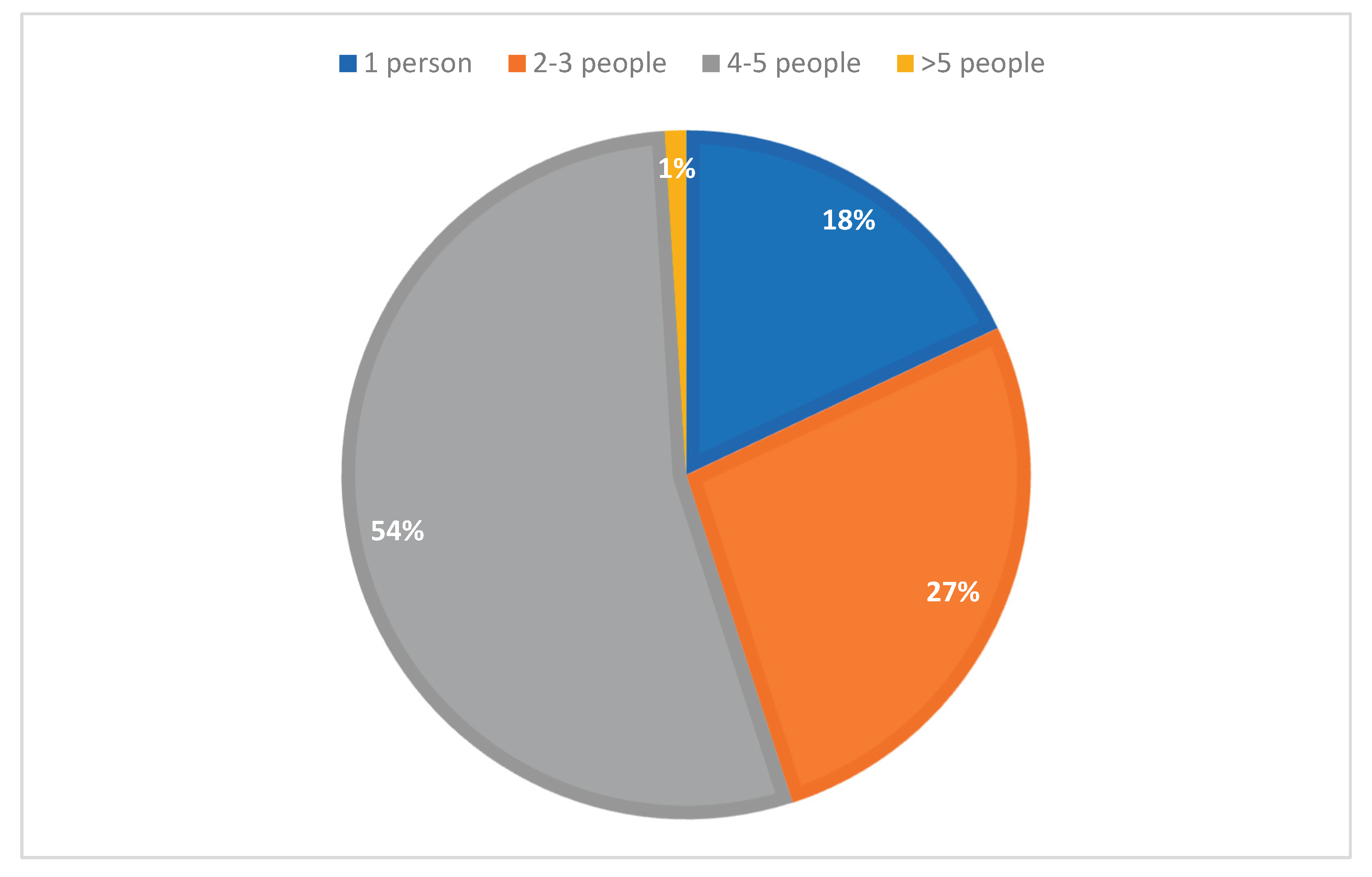
Figure 6.
Tenure status of respondents.
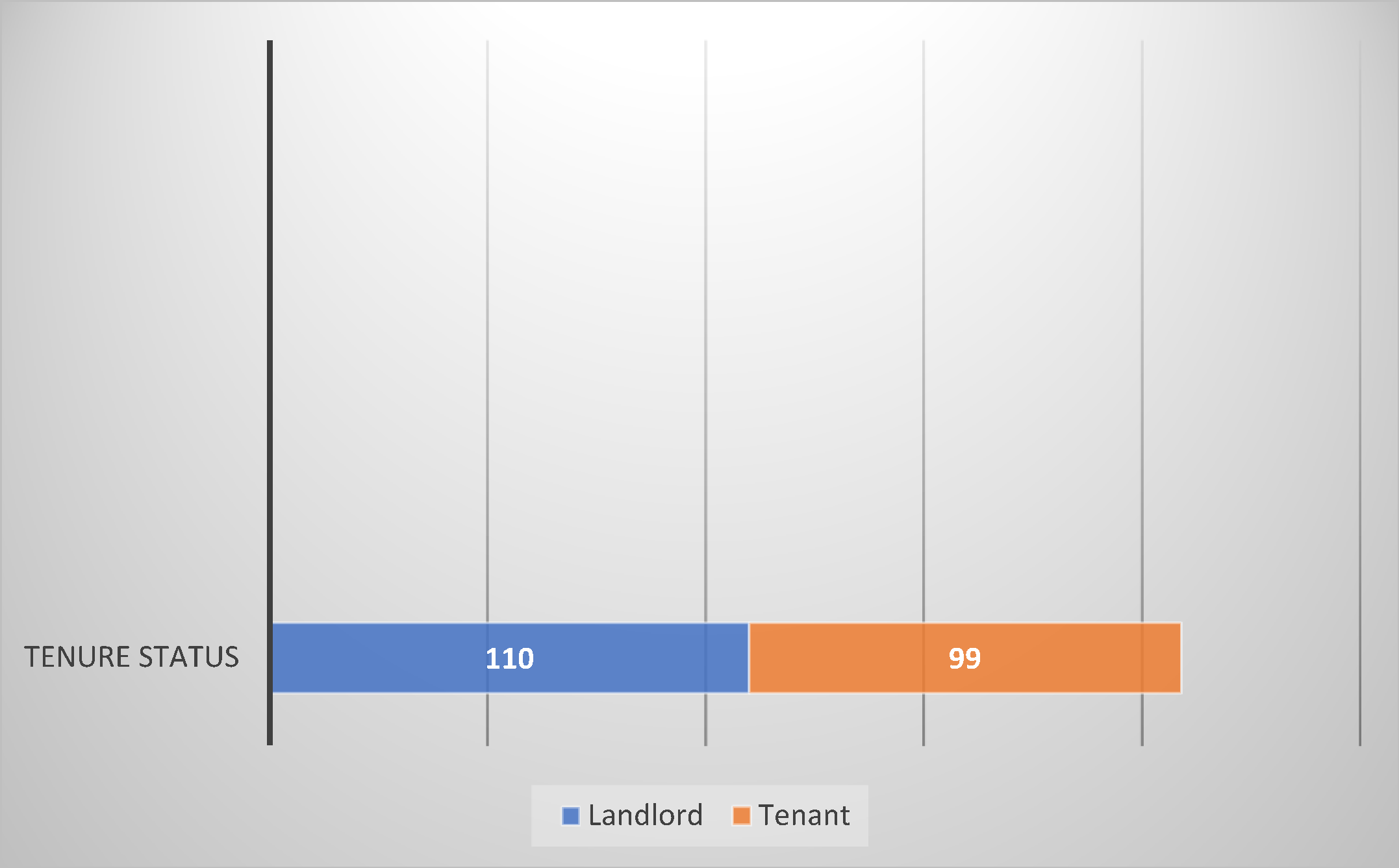
Figure 7.
Primary land use in the study area.
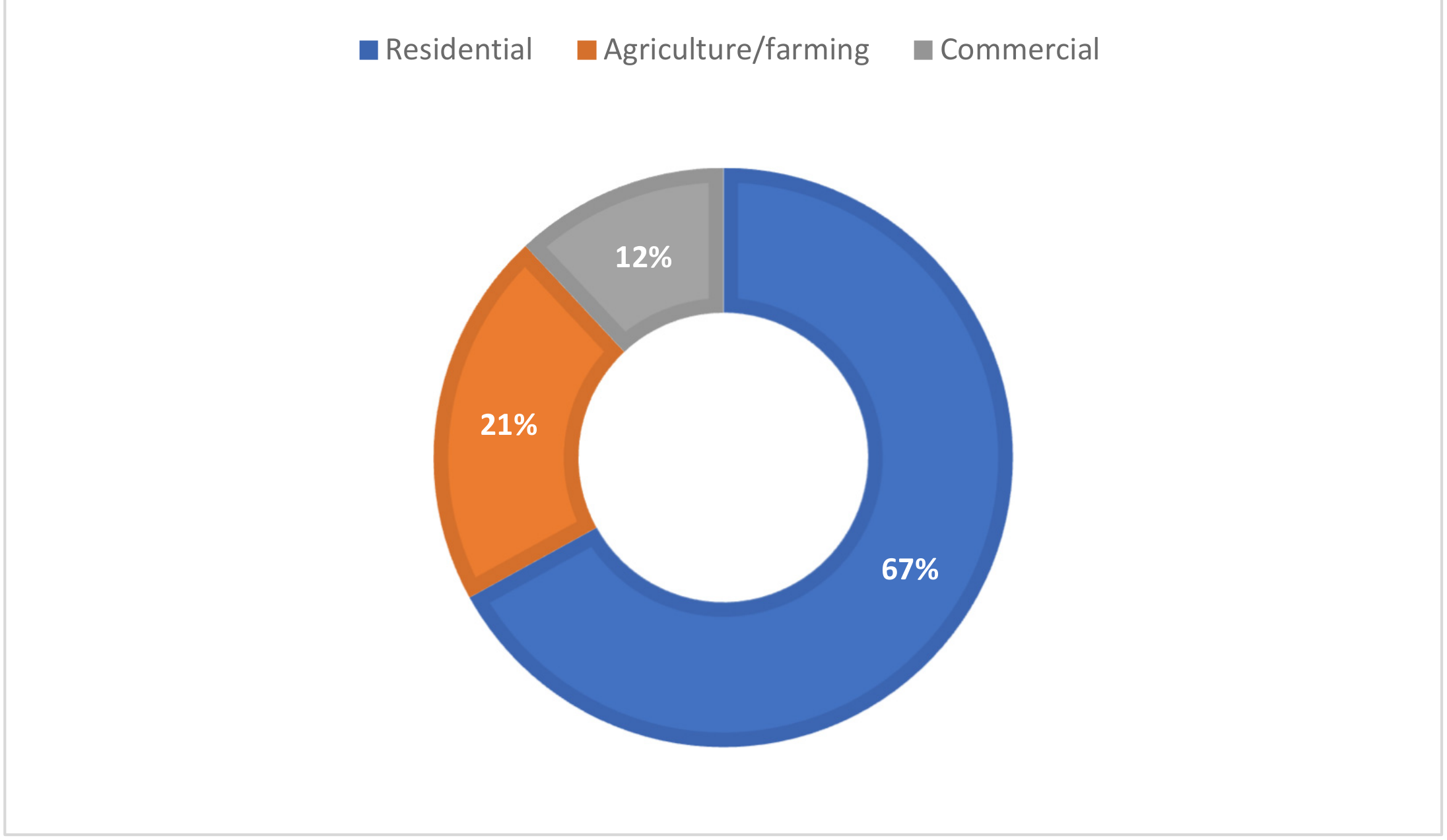
Figure 8.
Responses to perception-based questions.
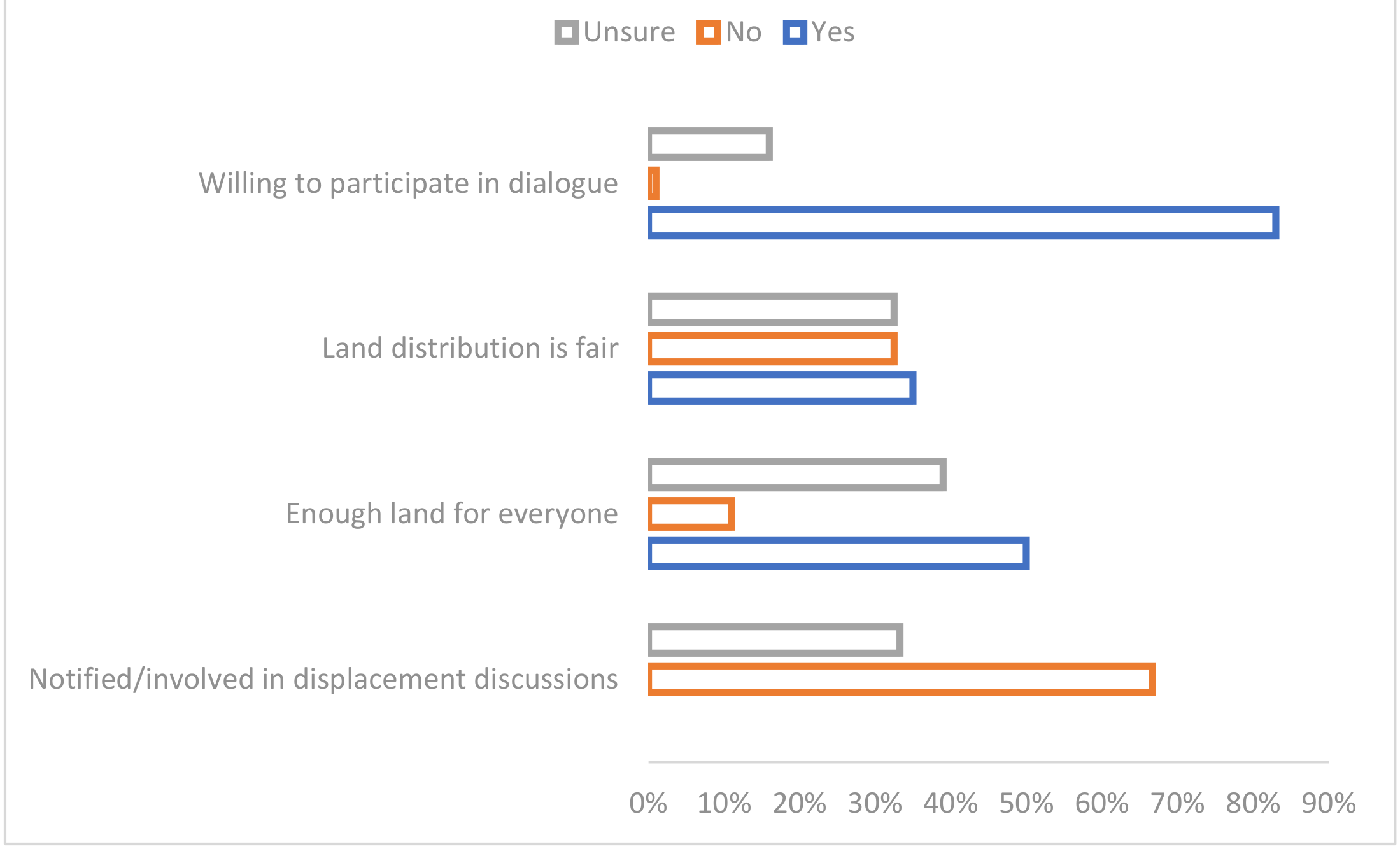

Table 1.
Denizens’ views on the causes of land crisis in Mararaba-Udege.
| # | Causes of land crisis in Mararaba-Udege | Scale and Rankings | ||||||
|---|---|---|---|---|---|---|---|---|
| 5 | 4 | 3 | 2 | 1 | Mean | Rank | ||
| 1 | The population growth in Mararaba-Udege has increased competition for land. | 78 (37) |
79 (38) |
43 (21) |
05 (02) |
04 (02) |
4.05 | 4 |
| 2 | Land tenure systems create conflicts over land ownership and use. | 45 (22) |
24 (11) |
20 (10) |
67 (32) |
53 (25) |
2.71 | 10 |
| 3 | Agricultural expansion is causing disputes among farmers and herders. | 89 (43) |
67 (32) |
22 (11) |
22 (11) |
09 (03) |
3.98 | 5 |
| 4 | Environmental degradation is limiting the availability of arable land. | 34 (16) |
56 (27) |
38 (18) |
67 (32) |
14 (07) |
3.14 | 8 |
| 5 | Economic pressures lead to the prioritization of land for commercial purposes over community needs. | 58 (28) |
45 (21) |
37 (18) |
44 (21) |
25 (12) |
3.30 | 7 |
| 6 | Insufficient government intervention is exacerbating land disputes in Mararaba. | 38 (18) |
43 (21) |
56 (27) |
33 (16) |
39 (18) |
3.03 | 9 |
| 7 | Cultural differences among communities contribute to misunderstandings and conflicts over land use. | 78 (37) |
34 (16) |
44 (21) |
28 (13) |
25 (12) |
3.54 | 6 |
| 8 | Political leadership’s interference in the community’s administration. | 114(55) | 34 (16) |
30 (14) |
23 (11) |
08 (04) |
4.07 | 3 |
| 9 | The influence of powerful individuals or groups causes imbalances in land distribution. | 150(72) | 37 (18) |
11 (05) |
09 (04) |
02 (01) |
4.55 | 2 |
| 10 | There is a general belief that there is enough land for everyone if man-aged properly. | 199(95) | 10 (05) |
00 (00) |
00 (00) |
00 (00) |
4.95 | 1 |
Table 2.
Effects of land crisis on residents of Mararaba-Udege, Nigeria.
| # | Effect of land crisis on denizens | Scale and Rankings | ||||||
|---|---|---|---|---|---|---|---|---|
| 5 | 4 | 3 | 2 | 1 | Mean | Rank | ||
| 1 | The land crisis has negatively impacted access to agricultural land. | 108 (52) |
56 (27) |
30 (14) |
11 (05) |
04 (02) |
4.21 | 9 |
| 2 | Conflicts over land have heightened tension and insecurity in the community. | 145 (69) |
48 (23) |
10 (05) |
05 (02) |
01 (0.5) |
4.58 | 3 |
| 3 | The land crisis has affected the family’s livelihood and economic stability. | 178 (85) |
21 (10) |
05 (02) |
03 (01) |
02 (01) |
4.77 | 1 |
| 4 | Access to essential resources, such as water, has been hindered by land disputes. | 138 (66) |
36 (17) |
24 (11) |
08 (04) |
03 (1.4) |
4.44 | 6 |
| 5 | The community’s sense of unity has been weakened due to land conflicts. | 147 (70) |
38 (18) |
12 (06) |
06 (03) |
06 (03) |
4.50 | 5 |
| 6 | Families experienced personal loss or displacement due to the land crisis. | 179 (86) |
15 (07) |
12 (06) |
01 (0.5) |
02 (01) |
4.76 | 2 |
| 7 | The land crisis has affected the mental well-being of residents due to stress and anxiety. | 108 (52) |
73 (35) |
19 (09) |
05 (02) |
04 (02) |
4.32 | 7 |
| 8 | Government responses to the land crisis have been inadequate in ad-dressing our needs. | 114 (55) |
56 (27) |
27 (13) |
07 (03) |
05 (02) |
4.28 | 8 |
| 9 | The uncertainty surrounding land ownership has discouraged investment in local development. | 146 (70) |
48 (23) |
08 (04) |
04 (02) |
03 (01) |
4.58 | 3 |
Disclaimer/Publisher’s Note: The statements, opinions and data contained in all publications are solely those of the individual author(s) and contributor(s) and not of MDPI and/or the editor(s). MDPI and/or the editor(s) disclaim responsibility for any injury to people or property resulting from any ideas, methods, instructions or products referred to in the content. |
© 2026 by the authors. Licensee MDPI, Basel, Switzerland. This article is an open access article distributed under the terms and conditions of the Creative Commons Attribution (CC BY) license (http://creativecommons.org/licenses/by/4.0/).
Copyright: This open access article is published under a Creative Commons CC BY 4.0 license, which permit the free download, distribution, and reuse, provided that the author and preprint are cited in any reuse.


