

Submitted:
28 January 2026
Posted:
30 January 2026
You are already at the latest version
Abstract
Paratransit system is a public transportation mode, commonly operated by private transportation enterprises. In many countries minibuses considered as paratransit systems and they often criticized for their inability to integrate with smart fare payment systems. Their revenue model is competitive, so it creates security vulnerabilities, and their sustainable service quality, which lags behind other modes of transport in terms of driving characteristics and transport system integration, is a significant disadvantage that sets minibuses apart from other modes of transport. However, given society's usage habits, minibuses emerge as an indispensable mode of mobility, especially in certain areas and for specific individuals. This situation shows that minibuses need to be made infrastructure-compatible, controllable, and sustainable. This study examines the applicability of smart fare collection systems in minibuses using a multi-criteria evaluation framework. And, it considers economic, technological, operational, and legal criteria holistically. Within the scope of the study, a pilot application evaluated, comparing the cash-based structure with the option of using a digital payment system from the operators' perspective. Thus, the system's transformation potential analytically assessed. The findings indicate that adopting an electronic fare collection infrastructure is perceived to improve sustainable service quality, strengthen control mechanisms, and support revenue transparency.
Keywords:
paratransit systems
; multi-criteria decision making
; smart card payment
; sustainable transportation
1. Introduction
According to 2024 statistics, Istanbul is a metropolitan city with a population of 15,701,602 [1], and therefore a city where a large number of trips are made every day. According to 2023 statistics, a total of 831,297,468 trips were made solely on rail transit lines [2]. According to 2024 statistics, the Istanbul Electric Tramway and Tunnel Authority (IETT) fleet of 6,786 vehicles serves 851 routes every day through 64,000 trips, covering 1.4 million kilometers and resulting in 5 million bus journeys [3]. These figures alone reveal Istanbul’s highly multimodal, intensive transportation system.
Until the mid-nineteenth century, Istanbul was a pedestrian city, and the only public transportation system consisted of registered boats departing from piers around the city and setting out only when fully occupied. In this respect, the concepts of dolmus and minibuses actually originate from maritime transportation [4,5]. As Istanbul gradually transformed into an automobile city, the 1929 Economic Crisis led to shared journeys in private vehicles, and in 1954, the municipality permitted drivers to operate as dolmus services if they wished [4,6].
With the Second World War, the urban population increased significantly, and a severe imbalance emerged between supply and demand in public transportation. The road investment policy implemented by the state in the 1950s further increased demand, while infrastructure adequacy lagged behind urban growth [5,7]. This was followed by the organization of taxi drivers, the conversion of old American automobiles to carry seven passengers, and the establishment of the Otosan company in 1960, which marked the beginning of the production of 12-passenger minibuses [4,5].
The production history of minibuses and dolmus services in Turkey can be examined in three distinct periods. The first period, between 1960 and 1975, is referred to as the establishment phase of the Turkish automotive industry and the period of benefiting from numerous brands. During this period, various vehicles of American, European, and Eastern Bloc origin were converted and put into service. Most of these vehicles were known for the disadvantages of being small-sized and low-ceilinged. The period between 1975 and 2000 represents the transition from assembly-based production to national manufacturing. During this period, redesigned models with flat and angular lines that enabled easier maintenance became popular. These designs allowed more passengers to be transported more comfortably, and spare-part availability and widespread service networks became influential parameters in brand preferences. The period that began in the 2000s represents a shift toward user-friendly designs, together with increasing awareness of environmental protection, customer satisfaction, and safety, and minibuses have continued to maintain their presence among transport modes [4,8].
In Istanbul, minibuses are frequently used, particularly for short distances, by mothers with children, elderly individuals, and people with mobility difficulties. They always remain an important option for those living away from main corridors and especially from bus–metro routes. Especially in a city like Istanbul, whose topography is not suitable for micromobility vehicles and where safety problems are occasionally experienced, minibuses are likely to continue to exist for many years in areas where the bus and metro network is not sufficiently developed. This is because individuals’ habits are shaped not only by their own rational choices but also by social and spatial dependencies, which often direct users toward the minibus option as the “lesser evil.”
The main reasons underlying this “lesser evil” definition include deficiencies in control and standards resulting from the inability of minibuses to integrate into smart fare systems, security vulnerabilities arising from the competitive nature of the revenue model, faulty driving behaviors, low service quality, and problems experienced in integration with other modes. For all these reasons, the necessity of integration into smart payment systems becomes evident. Because in systems integrated with smart payment technologies, issues related to revenue transparency, control, demand management, integration with other modes, and security are eliminated. As in Latin American cities [9], rather than completely eliminating formal and semi-formal transport systems, they need to be gradually improved through digital and data-driven solutions.
The integration of minibus systems into processes such as smart payment and digital transformation is, in fact, a large-scale problem. This is because there are technological and infrastructural requirements, such as the installation of onboard equipment, card validation infrastructure, and data integration. Moreover, from the operators’ perspective, resistance arising from additional costs, institutional governance gaps, legal problems stemming from authorization, habits based on user practices, and potential compatibility problems related to operational flow constitute some of these challenges. When all these problems are considered, the transformation process emerges as a holistic urban transport planning problem requiring simultaneous solutions.
In this study, a multi-criteria evaluation approach is adopted to analyze the applicability of transitioning Arnavutkoy minibuses to a smart payment system, incorporating economic, technological, operational, and legal/institutional criteria. In this way, the strengths and weaknesses of the transformation are identified. In this respect, the study aims to contribute to urban transport policies and decision-making processes by presenting a holistic framework that evaluates the integration of minibuses into smart payment systems not merely as a basic objective, but in light of operational and managerial realities on the ground.
2. Literature Review
Minibus-based paratransit systems are still actively used in many countries around the world. Especially for low-income and carless populations, these semi-formal modes fill a very large gap in public transport, and while they offer a significant accessibility advantage, they also bring various disadvantages in terms of traffic safety and public oversight. Due to this structure that brings both advantages and disadvantages, the general consensus is not the complete elimination of semi-formal transport; rather, it is considered necessary to develop regulation and integration approaches tailored to local conditions [10] within the framework of policy options that complement mainline services [11,12].
In recent years, studies on paratransit systems have not been limited to defining and interpreting the position of this mode within the urban system, but have also focused on measuring its performance in terms of efficiency, effectiveness, and operational contexts. Especially in developing countries, where these modes are accepted as an indispensable component of urban transport, many studies have been conducted with different focal points. A study conducted for Sub-Saharan African cities proposed a two-stage analytical approach to measure and evaluate the performance of minibuses and other paratransit modes, and revealed the factors affecting their performance by using data envelopment analysis and regression techniques. Evaluations were carried out from the perspectives of efficiency and service quality using parameters such as passenger density, speed density, vehicle capacity, stop density, capacity utilisation ratio, in-vehicle travel time, delay, and fuel consumption [13].
Another study conducted for the same regions [14] attempted to measure service reliability by examining the travel time variability of these modes. Examples from Turkey also emphasise that minibus systems have a non-negligible importance within the urban public transport network and should be taken into account when planning policies are determined. A study conducted for İzmir examined bus–minibus integration through five different scenarios and revealed that the minibus system can be transformed into an institutional, sustainable, and traceable structure, especially through smart card and vehicle tracking systems [15].
The evaluation frameworks of systems such as minibuses have shifted over time from one-dimensional approaches toward multi-dimensional analyses. In general, urban passenger transport studies have progressed along the axis of sustainable development, consisting of economic, environmental, and social criteria. The importance of multi-criteria decision-making approaches has also begun to emerge at this point [16]. The focus of sustainability and mobility studies has now adopted holistic evaluation approaches that also include paratransit systems such as minibuses [17]. Various institutional reports prepared also state that organisational structure, governance, and regulatory frameworks are among the fundamental components in the evaluation of these systems [18].
Performance measures used in minibus and similar systems have not been limited solely to operational indicators. In addition to studies emphasising the necessity of addressing social dimensions [11,12], there are also studies highlighting that passenger safety perception is an important service quality indicator in the Istanbul case [19]. One of the issues related to service quality is associated with the conveniences that smart fare collection systems bring to revenue transparency and control mechanisms within the entire public transport system. With the widespread use of smart card systems, data collection and control have been strengthened [20]. The effects of fare policies on demand have been examined through examples from European cities, and the innovations brought by digitalisation have also brought accessibility and equity discussions to the fore [21]; however, the vast majority of these studies primarily focus on formal systems [22].
Digitalisation and reform in semi-formal systems such as minibuses are generally addressed not through a radical transformation approach, but through a gradual transformation approach. It is known that policies aimed at the complete elimination of semi-formal systems are generally unsuccessful, and that the integration and reform channel is a more applicable method [9]. Reports prepared especially for Asian cities show that paratransit systems such as minibuses can be made compatible with the main modes of urban transport [23], while urban transport studies that place the climate and sustainability perspective at the centre argue that this transformation in semi-formal systems should be addressed in parallel with environmental objectives [24].
The biggest obstacle in the transformation processes of systems such as minibuses is institutional and managerial problems. In every public transport system where the management structure is problematic and institutionalisation is limited, quality and safety problems increase. Studies examining public transport systems in African cities have revealed that more fragmented institutional structures increase integration difficulties [25], and global evaluations have shown that managerial deficiencies also negatively affect system performance [26]. Operator resistance and the difficulty of financial adaptation are among the most decisive factors in reform processes in paratransit systems such as minibuses. Especially in developing countries, it is known that small-scale operators act cautiously against transformation [27]. Examples from Turkey also confirm that minibus and dolmuş operators may resist reform policies due to reasons such as distrust in income generation methods or concerns about income loss [28].
All these problems in transformation processes show that there is a serious need to reveal the reasons that affect transformation. In the fields of transport and intelligent transport systems, the Analytic Hierarchy Process (AHP) is widely used in the analysis of criteria. This is because AHP allows multi-criteria decision-making problems to be structured and expert opinions to be included in the decision-making process [29]. Its effectiveness in evaluating sustainable transport options [30] and its success in comparative studies demonstrate that it is a strong decision support tool in studies conducted in transport planning [31]. Similarly, the TOPSIS method is also frequently used in transport studies. It is known that this method, whose theoretical foundation is clearly defined [32], yields effective results in the evaluation of transport systems [33,34].
In general, when the literature is examined, it is seen that there is no multi-dimensional evaluation conducted on the transformation of payment systems in paratransit systems such as minibuses, and that analyses are generally carried out independently from each other [16]. Studies conducted in the context of Turkey also reveal that integration and fare systems should be addressed together [35]. This situation shows that paratransit systems such as minibuses should be addressed through holistic, measurable, and decision-support-based approaches, and the study has been shaped along this axis.
3. Materials and Methodology
Within the scope of the study, the study area, data, and the methodology used are addressed under separate headings.
3.1. Study Area
The study area is the route of the A15 minibus line operating between Arnavutkoy, one of Istanbul’s developing areas, and the central districts. Located in the northwestern part of Istanbul, the district of Arnavutköy was a village affiliated with a subdistrict of Çatalca until 1963; in 1963, it was connected to the Gaziosmanpasa district, and in 2008, it became a district through its merger with other towns. Hosting Istanbul Airport, which was put into service in 2018, Arnavutkoy has become a growing settlement with a steadily increasing population alongside developments in the real estate sector. According to 2024 data, the district has a population of 344,868 [36]. As metro planning studies started relatively late in parallel with this rapid population growth, minibus lines remain one of the most widely used transportation systems. According to the official municipality decision, the A15 line passes through four districts [37]. The study area is given in Figure 1.
3.2. Data
Within the scope of the study, expert surveys were conducted with 19 individual minibus operators to evaluate 18 different criteria. The distribution reflecting the operational experience of the minibus operators presented in Table 1.
The diagram illustrating the criteria and sub-criteria is shown in Figure 2. Accordingly, cost, maintenance, safety, collectivity, and legality constitute the five main criteria, and 18 sub-criteria associated with these main criteria have been identified.
The descriptions of the sub-criteria are provided in Table 2.
3.3. Analytical Methodology
Within the scope of the study, the AHP and TOPSIS methods, which are two widely used and complementary multi-criteria decision-making methods in the literature, were employed. The flowchart of the study methodology is presented in Figure 3.
In this study, the factors determining the preference of minibus operators for cash payment or smart card payment were addressed using the AHP and TOPSIS methods. AHP, one of the frequently used multi-criteria decision-making techniques in the literature, can be described as measurements made to determine priorities with the support of expert opinions on the relevant subject by making use of pairwise comparisons [39]. AHP, one of the widely used evaluation techniques worldwide, ranks among the top multi-criteria decision-making tools in terms of weighting problems [40]. In this study, a 1–7 scale was used as the evaluation criterion for AHP. According to this scaling method, if the two compared criteria have equal importance, the importance degree becomes 1, and it is located on the diagonal of the matrix. For example, for hypothetical attributes A and B being compared, if attribute A has very high importance compared to B, A’s importance degree is entered as 7. Similarly, if parameter B has very high importance compared to A, the importance degree is written as 1/7 in the comparison matrix. According to the importance degree, the criteria were mutually evaluated here using a 1–7 scaling. Accordingly, a comparison matrix was created. The individual pairwise comparison matrices obtained from 19 minibus operators were aggregated using the geometric mean to form a single group matrix, which was then used for weighting and consistency analysis. In the mathematical basis of AHP, determining the largest eigenvalue of the pairwise comparison matrix and the corresponding eigenvector takes place [41].
AHP determines the importance of each factor toward achieving the goal by examining mutual comparisons and its impact on the overall objective [42]. In other words, in short, it can be said that AHP is the process of comparing alternatives and ranking them for each criterion [43].
In this study, the AHP method was integrated in three stages [44].
(1) With AHP, a complex problem is separated into components (criteria) within a hierarchical order. And, by dividing each criterion into sub-criterion groups within itself, the problem is brought to a more controllable level.
(2) In order to establish the hierarchical ordering among the criteria in each layer, questions were asked to minibus operators so that they could make pairwise comparisons for each criterion and respond by evaluating the place of each criterion within the larger system. A matrix was created to demonstrate these pairwise comparisons. In this study, a 1–7 scale measurement system was used for pairwise analysis in the AHP structure. The general form of the evaluation matrices is as follows:
Here, indicates the comparison ratio of criteria i and j. If and , then . And the comparison matrices are in format [45].
(3) After obtaining the hierarchical ordering, consistency was measured. In order to measure the consistency of the evaluations, a consistency ratio based on the properties of a reciprocal matrix was determined. The largest eigenvalue in the reciprocal matrix, is greater than or equal to the matrix dimension [44].
If there is no inconsistency, Otherwise, approaches , it can be said that consistency increases. The numerical difference between and is used to detect inconsistency [43,46]. The consistency index () enables measuring the inconsistency in the comparisons of criterion pairs.
Inconsistencies generally arise when decision makers make random evaluations or when they attach much more importance to some criteria than they should. In the AHP method, a consistency ratio is determined. This ratio is obtained by comparing the consistency index () of the matrix obtained as a result of the questions directed to the decision makers with the random index () of a randomly generated matrix.
The consistency ratio is expressed as:
For the AHP technique to be applied correctly and validly, the CR value must take values of 0.1 or lower [47]. If this ratio is calculated above 0.1, inconsistencies must be eliminated. In summary, the value 0.1 is accepted as the upper value for CR in a reliable AHP analysis [46,48].
Finally, the process of determining the weights is started. Here, the aim is to determine the importance of the criteria, whose priorities were determined by mutual analyses in the previous steps, in terms of the overall goal. For this, each element in each column in the comparison matrix is divided by that column’s total and normalized; then, by taking the arithmetic mean of each row, the weight (priority) vector is obtained.
Producing an appropriate solution and technique for a multi-criteria decision-making problem can actually be as challenging as solving the problem itself [49]. Many techniques involving comparative evaluations can be applied to such problems. Within the scope of the study, the TOPSIS (Technique for Order Preference by Similarity to Ideal Solution) method, which works in harmony with AHP and is frequently preferred for ranking based on the obtained weights, was used. TOPSIS was first introduced in 1981 [32] and stands out as a method frequently used in such problems [50]. In the TOPSIS method, a simple logic has been established. Namely, the more successful an alternative option is, the closer this alternative is to the positive ideal solution (PIS), while it is that much farther from the negative ideal solution (NIS) [51].
Here, the attitude presented as the positive ideal solution is actually the simultaneous execution of the process of maximizing benefit-type criteria and, at the same time, minimizing cost-type criteria [52].
In general terms, the TOPSIS method is applied in six steps [53]. These steps can be explained respectively as follows [32,54,55,56]:
Step 1. Determining the weights and types of the criteria and creating the decision matrix. Here, two criterion types are considered: benefit and cost. The decision matrix is defined as:
Where denotes alternatives (smart card or cash), and denotes criteria.
Step 2. Normalizing the decision matrix. Thanks to this process, comparing the variables becomes easier and more applicable. Different equations can be used to normalize the matrix. Here, normalization is shown with the vector normalization method.
Step 3. Determining the weighted normalized decision matrix:
where indicates the weight of the corresponding criterion.
Step 4. Determining the positive and negative ideal solutions. Accordingly, the positive and negative ideal values for each criterion are defined based on benefit/cost types (benefit: maximum is ideal; cost: minimum is ideal). Separation measures are calculated using Euclidean distances. The distance of each alternative from the positive ideal solution is calculated as:
Similarly, the distances from the negative ideal solution are expressed as:
Here, denotes the weighted normalized value, denotes the positive ideal value for criterion , and denotes the negative ideal value for criterion [32,54]. In Figure 4, an example of representing alternatives with respect to distances to the positive and negative ideal solutions is presented [54].
Step 5. Calculating the relative closeness to the ideal solution. For each alternative, the relative closeness is calculated as:
Step 6. Ranking the preferences. Alternatives are ranked according to , where a higher value indicates closer proximity to the positive ideal solution and thus a better alternative.
In the study, firstly, the criterion weights were determined, and then a selection was made between smart card and cash payment types.
4. Results
The results regarding the weights and importance rankings of the criteria and sub-criteria are presented in Table 3. Sub criteria of main criteria cost are ranked at top three which are respectively, ability to ensure a certain number of passengers (passenger demand guarantee)ability, transparency of financial transactions and ability to secure a regular income.
The consistency ratios for the criteria are presented in Table 4. Since the Legality criterion consists of two sub-criteria, a consistency ratio was not calculated.
The TOPSIS decision matrix showing the min and max ideal positions in tha analysis is presented in Table 5.
The evaluation results obtained for the two alternative options using the TOPSIS method are presented in Table 6. According to the results, the smart card payment system is preferred by operators. Sᵢ⁺ and Sᵢ⁻ denote the distances to the positive and negative ideal solutions, respectively.
4. Discussion
Paratransit minibus transportation, which holds a distinct place in Istanbul’s history, has evolved over time and developed different services in light of technological advancements. Since each minibus individually represents a different enterprise, the service on a route is actually provided by a community. In minibus transportation, which continues as an element contrary to the fact that public transportation systems are generally managed by the state and from a single center, each minibus has the individual freedom of choice regarding whether or not to join a newly offered system. Therefore, the system is not considered as a part of sustainable urban mobility. In this study, the decision-making processes of individual minibus enterprises operating as a part of the transportation system, and the parameters affecting these processes, were examined specifically in relation to the new payment system still in the pilot application phase. Individual minibus operators, who were expected to choose between the smart card payment system and the cash payment system used since the beginning of minibus transportation, were asked questions about which parameters they base their preferences on regarding switching to smart card payment or continuing with cash payment, and as a result of the findings, it was determined that priority is given to cost and maintenance issues. First of all, even if its purpose is to provide a public service, the primary aim of private enterprises is to make a profit. For this reason, even if transportation is considered a service, individual minibus enterprises are also private commercial initiatives, and their primary priority is to make a profit, that is, to reduce costs and increase revenue. When we analyze the smart card system, it is seen that minibus operators, who are the users, primarily evaluate the system in terms of earnings. The cost parameter, which ranks first among the prominent parameters in the analysis result, and the maintenance factors that follow are elements of revenue and cost. Therefore, whether it is cash or smart card payment, operators actually think that they will not obtain major changes in terms of collectivity and legality. However, it was determined that there is an impression that demand will increase due to the smart card system and, indirectly, revenue will increase. When we examine the main cost factor in terms of subheadings, we see that ensuring a certain number of passengers, transparency of money movements, and being able to provide regular income are prioritized. Here, we can say that the proposal offered by the municipality to better track the revenues and expenses of minibuses, which are private enterprises, and to improve financial transparency and traceability, affects minibus operators. From the operators’ perspective, smart card integration is expected to increase the number of regular passengers by enabling better integration with the overall public transport system and by providing more predictable revenue flows, as also suggested by previous studies examining the relationship between electronic fare systems and ridership behavior [20,21]. Of course, from the passenger’s perspective, one of the most important reasons for not preferring minibuses is their inability to provide transfer opportunities. Here, in fact, with smart card integration, it becomes possible to transfer to other transportation systems after minibuses, which are accepted as an element of the city’s transport system, through transfer. This emerges as regular income and attracts minibus operators to switch to the smart card. Another issue is that in the ongoing system, the cash collected by the driver cannot be tracked and money movements are seen as the driver’s black box. In other words, it is possible to obtain an average daily income, and monetary fluctuations on different days cannot be tracked by minibus enterprise owners. However, in the smart card system, the transparency of money movements and the clarity of daily income and expenses are seen as factors that provide a positive perspective regarding participation in the system. Maintenance is seen as the second main factor affecting the decision-making process. In fact, the minibus transportation system, provided through motor vehicles, includes high-cost and frequent maintenance requirements. Even in the cash payment system, many items, such as vehicle breakdowns, regular system maintenance, replacement of worn equipment, and replacement of the vehicle due to high mileage, are included in the expense category of the system. Minibus operators, however, consider the software and hardware maintenance requirements of cameras, payment receiving systems, and other auxiliary equipment to be integrated into vehicles, in addition to the already existing maintenance costs, as heavy cost items, and they view this as an important parameter affecting the decision-making process in the transition from cash payment to smart card. The security factor, which follows the cost and maintenance parameters, reflects concerns of minibus enterprises in terms of high vehicle insurance costs and driver insurance costs, long periods of being unable to provide service in case of an accident, and the fact that lawsuits that may be filed as a result of an accident are seen as personal and commercial cases. In the smart card system, it is not possible to employ uninsured drivers. Vehicles are monitored by cameras and other equipment, and data entry into the system must be made for every individual who operates, drives, and runs the vehicle. In addition, during cash payment, the process in which the driver simultaneously performs fare collection and vehicle operation has long been associated with safety concerns in paratransit systems, as documented in previous studies on informal and semi-formal transport modes [12,19]. For this reason, the perception that, thanks to the smart card system, the driver will focus more on vehicle management, which is their primary duty, and that accident rates will decrease, has been evaluated as another output observed in the analysis as influencing the decision-making process by individual minibus owners.
When the evaluation results are examined, it is observed that, when all criteria are considered together, the system indicates that continuing with cash payment is relatively less beneficial. Despite the deep concerns regarding the taxation method that will change with the transition to the smart card system, the benefits mentioned above make the smart card system an attractive option.
In the current system, minibus operators who receive cash payments are subject to a taxation regime referred to as the “simplified taxation method,” whereas with the transition to the smart card payment system, they will be subject to the obligation to keep books. At this point, it can be stated that operators perceive the existing cash-based system as relatively more informal and weakly regulated. Similarly, concerns regarding increased taxation, formalization, and monitoring have also been reported in studies examining operator resistance to reform processes in paratransit systems, particularly in the context of developing countries [9,28].
This situation has been evaluated as one of the main barriers to the transition to the smart card system from the perspective of operators in paratransit systems. However, the most fundamental finding reached as a result of the analysis is that the smart card–integrated system can be adopted by individual minibus operators if sufficient information is provided and it is conveyed to them that a safer system is ensured through the bookkeeping method.
5. Conclusions
This study evaluates the adoption of the smart card system in minibuses, which constitute an important paratransit system in Istanbul, from the operators’ perspective. Within the scope of the study, the complementary multi-criteria decision-making methods AHP and TOPSIS were used. The findings reveal that cost and maintenance factors are the most important criteria in operators’ payment system preferences. Analysis revealed that smart card systems provide various advantages in terms of safety, transparency, and control, and these advantages are acknowledged by operators. Although the cash-based payment system is perceived as relatively more advantageous only in terms of taxation, operators express concerns related to additional maintenance requirements and regulatory compliance. The results indicate that the smart card application can be adopted through a gradual transition process; however, this process needs to be supported by clear and regulatory financial frameworks. As this study is valuable in terms of explaining the transformation process of paratransit systems, but was conducted in a pilot region, it is expected that future studies will expand the analysis by using larger samples and operator data and increase the generalizability of the findings.
Author Contributions
Conceptualization, O.S.; methodology, O.S.; software, O.S.; validation, O.S.; formal analysis, O.S.; investigation, O.S.; resources, O.S.; data curation, O.S.; writing—original draft preparation, O.S.; writing—review and editing, O.S.; visualization, O.S.; supervision, O.S.; project administration, O.S.; funding acquisition, O.S. All authors have read and agreed to the published version of the manuscript.
Funding
This research received no external funding.
Data Availability Statement
Data can be shared upon request.
Acknowledgments
The author have reviewed and edited the output and take full responsibility for the content of this publication.
Conflicts of Interest
The author declares no conflicts of interest.
References
- “tüik istatistik.” TSI. Available online: https://data.tuik.gov.tr/Bulten/Index?p=Adrese-Dayal%C4%B1-N%C3%BCfus-Kay%C4%B1t-Sistemi-Sonu%C3%A7lar%C4%B1-2024-53783&dil=1.
- Metro İstanbul İstatistik. Available online: https://www.metro.istanbul/Content/assets/uploaded/Y%C4%B1llara%20G%C3%B6re%20Toplam%20Yolcu%20Say%C4%B1lar%C4%B1-TR-2024.pdf.
- iett istatistik. Available online: https://iett.istanbul/arsiv/38316/ettnn-lklerle-dolu-2024-yl-faalyetler-bb-mecl.
- Ariman, E. Final report TUR-24240 Informal private transportation in Turkey: The minibus and dolmuş systems. IGC. Oct 2024. Available online: https://www.theigc.org/sites/default/files/2025-02/Ariman%20Final%20Report%20October%202024.pdf?utm_source.
- Tekeli, İ. Neden dolmuş?: Dolmuş kavramı İstanbul’da nasıl doğdu ve zaman içinde nasıl bir gelişme gösterdi. In in İçinden dolmuş geçen İstanbul; Sekmeç, A. C., Ed.; İstanbul Büyükşehir Belediyesi.: İstanbul, 2023; pp. 14–29. [Google Scholar]
- Tekeli, İ. Urban transportation history writings for Istanbul and Ankara. İSTANBUL VE ANKARA İÇİN KENT İÇİ ULAŞIM TARİHİ YAZILARI; Tarih Vakfı Yurt Yayınları, 2004. [Google Scholar]
- Özaydın, G. “Türkiye’de 1950-1980 Dönemi Kurumlar, Olaylar, Ölçekler: Planlama Yarışmaları,” Plan. TMMOB Şehir Plancıları Odası Derg. 2010, no. 3–4. Available online: https://www.researchgate.net/profile/Muge-Ozkan-Ozbek/publication/313240518_Turkiye’de_1950-1980_Donemi_Kurumlar_Olaylar_Olcekler_Planlama_Yarismalari/links/58936c27aca27231daf61ea0/Tuerkiyede-1950-1980-Doenemi-Kurumlar-Olaylar-Oelcekler-Planlama-Yarismalari.pdf.
- Kurtgözü, A.E. “Dünden Bugüne Türkiye’de Minibüs ve Dolmuşlar,” May 19, 2020. Available online: https://www.izdiham.com/dunden-bugune-turkiyede-minibus-dolmuslar/.
- Tun, T.H.; Welle, B.; Hidalgo, D.; Albuquerque, C.; Castellanos, S.; Sclar, R.; Escalante, D. Informal and Semiformal Services in Latin America: An Overview of Public Transportation Reforms; Felipe Herrera Library (Inter-American Development Bank): Washington, DC, USA, 2020. [Google Scholar]
- Maltaş, A.; Saran, O. Üniversite Kampüslerinde Ulaşım Tercihleri: Araç Türleri Ve Doluluklar Üzerine Bir Vaka Analizi. presented at the 5th International Conference on Trends in Advanced Research, Konya Turkey, Oct. 2025. [Google Scholar]
- Kumar; Barrett, F. “AFRICA INFRASTRUCTURE COUNTRY DIAGNOSTIC Stuck in traffic: Urban transport in Africa,” Jan. 2008. Available online: https://www.eu-africa-infrastructure-tf.net/attachments/library/aicd-background-paper-1-urban-trans-summary-en.pdf.
- Cervero, R.; Golub, A. Informal transport: A global perspective. Transp. Policy 2007, 14, 445–457. [Google Scholar] [CrossRef]
- Turay, S.S.; Adams, C.A.; Donkor, A.-A. Assessment of paratransit system performance in mixed traffic using a two-stage bootstrap-DEA and ordinary Least Square approach. Afr. Transp. Stud. 2024, 3. [Google Scholar] [CrossRef]
- Ukam, G.; Adams, C.; Adebanji, A.; Ackaah, W. “VARIABILITY OF PARATRANSIT TRAVEL TIMES: THE CASE OF KUMASI, GHANA,” Urban, Plan. Transp. Res. 2023, 11, 2261519. [Google Scholar] [CrossRef]
- Kalpakcı, A.; Ünverdi, N.K. Integration of paratransit systems with inner-city bus transport: the case of Izmir. Public Transp. 2016, 8, 405–426. [Google Scholar] [CrossRef]
- Pérez, J.C.; Carrillo, M.H.; Montoya-Torres, J.R. Multi-criteria approaches for urban passenger transport systems: a literature review. Ann. Oper. Res. 2014, 226, 69–87. [Google Scholar] [CrossRef]
- Angarita-Lozano, D.; Hidalgo-Guerrero, D.; Díaz-Márquez, S.; Morales-Puentes, M.; Mendoza-Moreno, M.A. Multidimensional Evaluation Model for Sustainable and Smart Urban Mobility in Global South Cities: A Citizen-Centred Comprehensive Framework. Sustainability 2025, 17, 4684. [Google Scholar] [CrossRef]
- Ferro, P. S. Paratransit: A key element in a dual system, CODATU. 2015. Available online: https://www.codatu.org/wp-content/uploads/2023/04/transports-collec-artisanal-v03ecran-en1-1.pdf.
- Oğuz, M. Perception of Safety within Intermediate Public Transportation Systems: The Case of Minibus in Istanbul. J. Plan. 2020, 30, 104–117. [Google Scholar] [CrossRef]
- Pelletier, M.-P.; Trépanier, M.; Morency, C. Smart card data use in public transit: A literature review. Transp. Res. Part C: Emerg. Technol. 2011, 19, 557–568. [Google Scholar] [CrossRef]
- Cats, O.; Susilo, Y.O.; Reimal, T. The prospects of fare-free public transport: evidence from Tallinn. Transportation 2017, 44, 1083–1104. [Google Scholar] [CrossRef]
- Mulley, C.; Nelson, J.; Teal, R.; Wright, S.; Daniels, R. Barriers to implementing flexible transport services: An international comparison of the experiences in Australia, Europe and USA. Res. Transp. Bus. Manag. 2012, 3, 3–11. [Google Scholar] [CrossRef]
- Clément, M. “Paratransit in Asia: Scalable Solutions to Reform, Modernise and Integrate,” Agence Française de Développement (AFD), the MobiliseYourCity Asia Project Management Unit, 2022. Available online: https://www.mobiliseyourcity.net/paratransit-asia-scalable-solutions-reform-modernise-and-integrate.
- Kustar; Abubaker, A.I.; Tun, T. H.; Welle, Benjamin. “Connecting Informal Transport to the Climate Agenda: Key Opportunities for Action,” Prepared by World Resources Institute (WRI) with support from Informal and Shared Mobility in Low- and Middle-Income Countries Research Program, Volvo Research and Educational Foundations (VREF), 2023. Available online: https://vref.se/wp-content/uploads/2023/03/Connecting-Informal-Transport-to-the-Climate-Agenda-Key-Opportunities-for-Actions_fin.pdf.
- Gwilliam, K. Bus transport: Is there a regulatory cycle? Transp. Res. Part A: Policy Pr. 2008, 42, 1183–1194. [Google Scholar] [CrossRef]
- Cervero, R. Bus Rapid Transit (BRT): An efficient and competitive mode of public transport. Working Paper. 2013, No. 2013-01. Available online: https://www.econstor.eu/bitstream/10419/92378/1/769755348.pdf.
- The Urban Transport Crisis in Emerging Economies; Springer Nature: Durham, NC, United States, 2017; ISBN 9783319438498.
- Ersöz. “KENT İÇİ ULAŞIMDA ÇALIŞMA İLİŞKİLERİ, MESLEK VE DÖNÜŞÜM: İSTANBUL’DA TAKSİ, MİNİBÜS VE TAKSİ-DOLMUŞ ÖRNEĞİ,” Doktora Tezi, Marmara Universitesi. 2020. Available online: https://www.researchgate.net/publication/351936985_Kent_Ici_Ulasimda_Calisma_Iliskileri_Meslek_ve_Donusum_Istanbul’da_Taksi_Minibus_ve_Taksi-Dolmus_Ornegi.
- Saaty, T. L. Multicriteria decision making: the analytic hierarchy process; planning, priority setting, resource allocation. In The analytic hierarchy process series, 2. ed.; McGraw-Hill: New York, 1988; Volume no. 1. [Google Scholar]
- Yedla, S.; Shrestha, R.M. Multi-criteria approach for the selection of alternative options for environmentally sustainable transport system in Delhi. Transp. Res. Part A Policy Pract. 2003, 37, 717–729. [Google Scholar] [CrossRef]
- Macharis, C.; Turcksin, L.; Lebeau, K. Multi actor multi criteria analysis (MAMCA) as a tool to support sustainable decisions: State of use. Decis. Support Syst. 2012, 54, 610–620. [Google Scholar] [CrossRef]
- Hwang, C.-L.; Yoon, K. Multiple Attribute Decision Making: A State of the Art Survey. In Lecture Notes in Economics and Mathematical Systems 186; Springer: Berlin/Heidelberg, Germany, 1981; p. 186. [Google Scholar] [CrossRef]
- Awasthi, A.; Chauhan, S.S.; Omrani, H. Application of fuzzy TOPSIS in evaluating sustainable transportation systems. Expert Syst. Appl. 2011, 38, 12270–12280. [Google Scholar] [CrossRef]
- Kabir, G.; Hasin, M. A. A. Comparative analysis of TOPSIS and Fuzzy TOPSIS for the evaluation of travel website service quality. Int. J. Qual. Res. 2012, vol. 6(no. 3). [Google Scholar]
- Özbilen. INTEGRATION OF DOLMUŞ AS A PARATRANSIT MODE TO THE EXISTING PUBLIC TRANSPORT NETWORK: ANKARA EXAMPLE; Middle East Technical University, 2016. [Google Scholar]
- Endeksa Data. 10 Jan 2026. Available online: https://www.endeksa.com/tr/analiz/turkiye/istanbul/arnavutkoy/demografi.
- Istanbul Metropolitan Municipality Application. 10 Jan 2026. Available online: https://application2.ibb.gov.tr/tulasim/MinibusumNerede.
- Maps. 10 Jan 2026. Available online: https://overpass-turbo.eu/.
- De FSM Russo, R.; Camanho, R. Criteria in AHP: A Systematic Review of Literature. Procedia Comput. Sci. 2015, 55, 1123–1132. [Google Scholar] [CrossRef]
- Vaidya, O.S.; Kumar, S. Analytic hierarchy process: An overview of applications. Eur. J. Oper. Res. 2006, 169, 1–29. [Google Scholar] [CrossRef]
- Lyu, H.-M.; Zhou, W.-H.; Shen, S.-L.; Zhou, A.-N. Inundation risk assessment of metro system using AHP and TFN-AHP in Shenzhen. Sustain. Cities Soc. 2020, 56, 102103. [Google Scholar] [CrossRef]
- Kucuker, D.M.; Giraldo, D.C. Assessment of soil erosion risk using an integrated approach of GIS and Analytic Hierarchy Process (AHP) in Erzurum, Turkiye. Ecol. Informatics 2022, 71, 101788. [Google Scholar] [CrossRef]
- Gosling, E.; Reith, E. Capturing Farmers’ Knowledge: Testing the Analytic Hierarchy Process and a Ranking and Scoring Method. Soc. Nat. Resour. 2019, 33, 700–708. [Google Scholar] [CrossRef]
- Wind, Y.; Saaty, T.L. Marketing applications of the analytic hierarchy process. Manag. Sci. 1980, 26, 641–658. [Google Scholar] [CrossRef]
- Veisi, H.; Deihimfard, R.; Shahmohammadi, A.; Hydarzadeh, Y. Application of the analytic hierarchy process (AHP) in a multi-criteria selection of agricultural irrigation systems. Agric. Water Manag. 2022, 267, 107619. [Google Scholar] [CrossRef]
- Koç, K. Development of an Integrated Multi-Agent Risk Management Platform for Flood Disaster Management. Master’s Thesis, Yıldız Technical University, İstanbul Turkey, 2018. [Google Scholar]
- Saaty, T.L. The Modern Science of Multicriteria Decision Making and Its Practical Applications: The AHP/ANP Approach. Oper. Res. 2013, 61, 1101–1118. [Google Scholar] [CrossRef]
- Hafeez, K.; Zhang, Y.; Malak, N. Determining key capabilities of a firm using analytic hierarchy process. Int. J. Prod. Econ. 2002, 76, 39–51. [Google Scholar] [CrossRef]
- El Allaki, F.; Christensen, J.; Vallières, A. A modified TOPSIS (Technique for Order of Preference by Similarity to Ideal Solution) applied to choosing appropriate selection methods in ongoing surveillance for Avian Influenza in Canada. Prev. Veter- Med. 2019, 165, 36–43. [Google Scholar] [CrossRef]
- Chakraborty, S. TOPSIS and Modified TOPSIS: A comparative analysis. Decis. Anal. J. 2022, 2, 100021. [Google Scholar] [CrossRef]
- Zhang, K.; Dai, J. A novel TOPSIS method with decision-theoretic rough fuzzy sets. Inf. Sci. 2022, 608, 1221–1244. [Google Scholar] [CrossRef]
- Aires, R.F.d.F.; Ferreira, L. A new approach to avoid rank reversal cases in the TOPSIS method. Comput. Ind. Eng. 2019, 132, 84–97. [Google Scholar] [CrossRef]
- Paradowski, B.; Więckowski, J.; Dobryakova, L. Why TOPSIS does not always give correct results? Procedia Comput. Sci. 2020, 176, 3591–3600. [Google Scholar] [CrossRef]
- Chang, C.-H.; Lin, J.-J.; Lin, J.-H.; Chiang, M.-C. Domestic open-end equity mutual fund performance evaluation using extended TOPSIS method with different distance approaches. Expert Syst. Appl. 2010, 37, 4642–4649. [Google Scholar] [CrossRef]
- Yıldırım, B. F.; Önder, E. Çok Kriterli Karar Verme Yöntemleri, 2nd edition; Dora Yayınevi: Bursa, 2014. [Google Scholar]
- Sahin, O.; Aksoy, B. A Combined AHP–TOPSIS-Based Decision Support System for Highway Pavement Type Selection. Sustainability 2025, 17, 9396. [Google Scholar] [CrossRef]
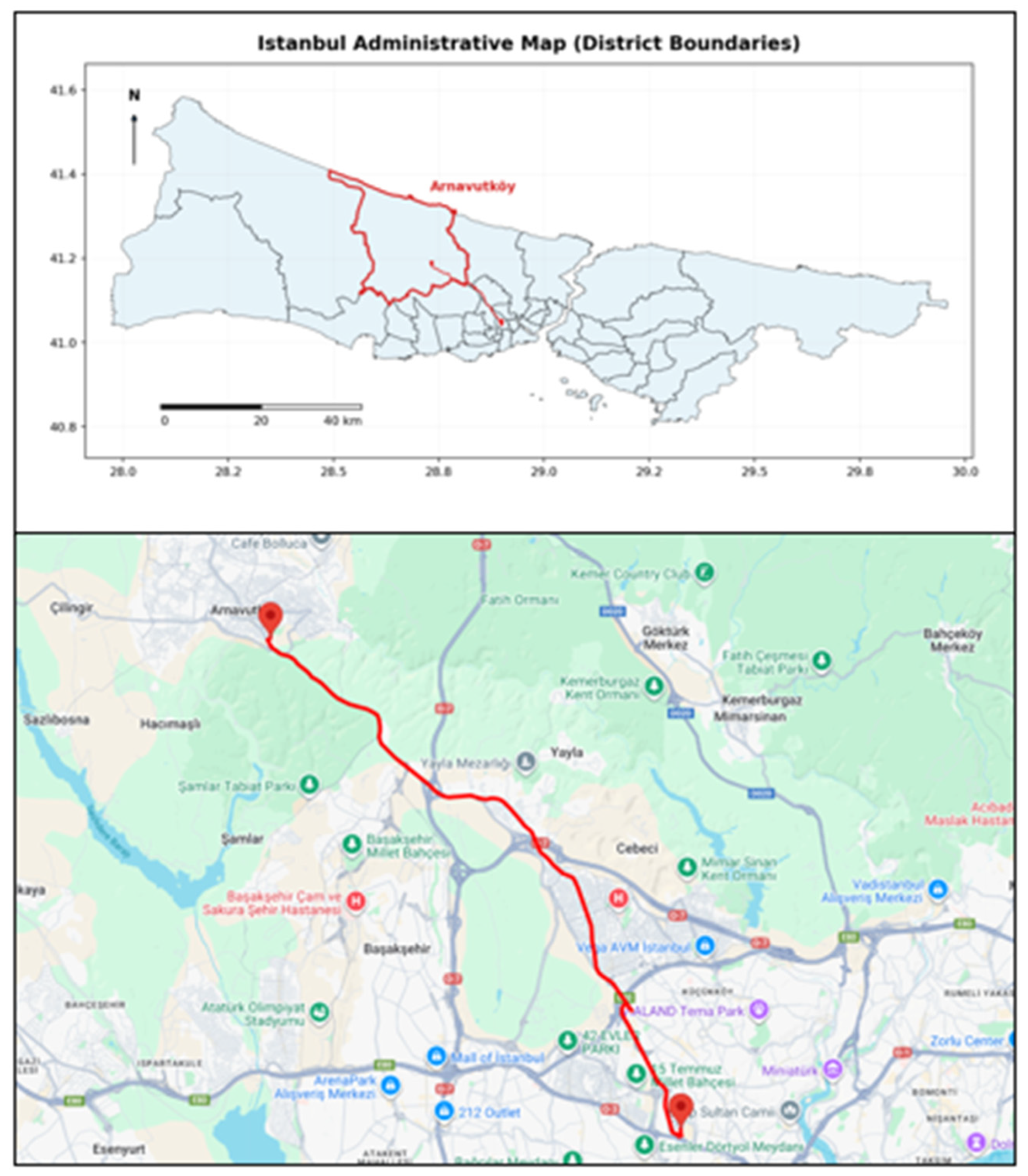
Figure 2.
Criterion and Sub Criterion Diagram.
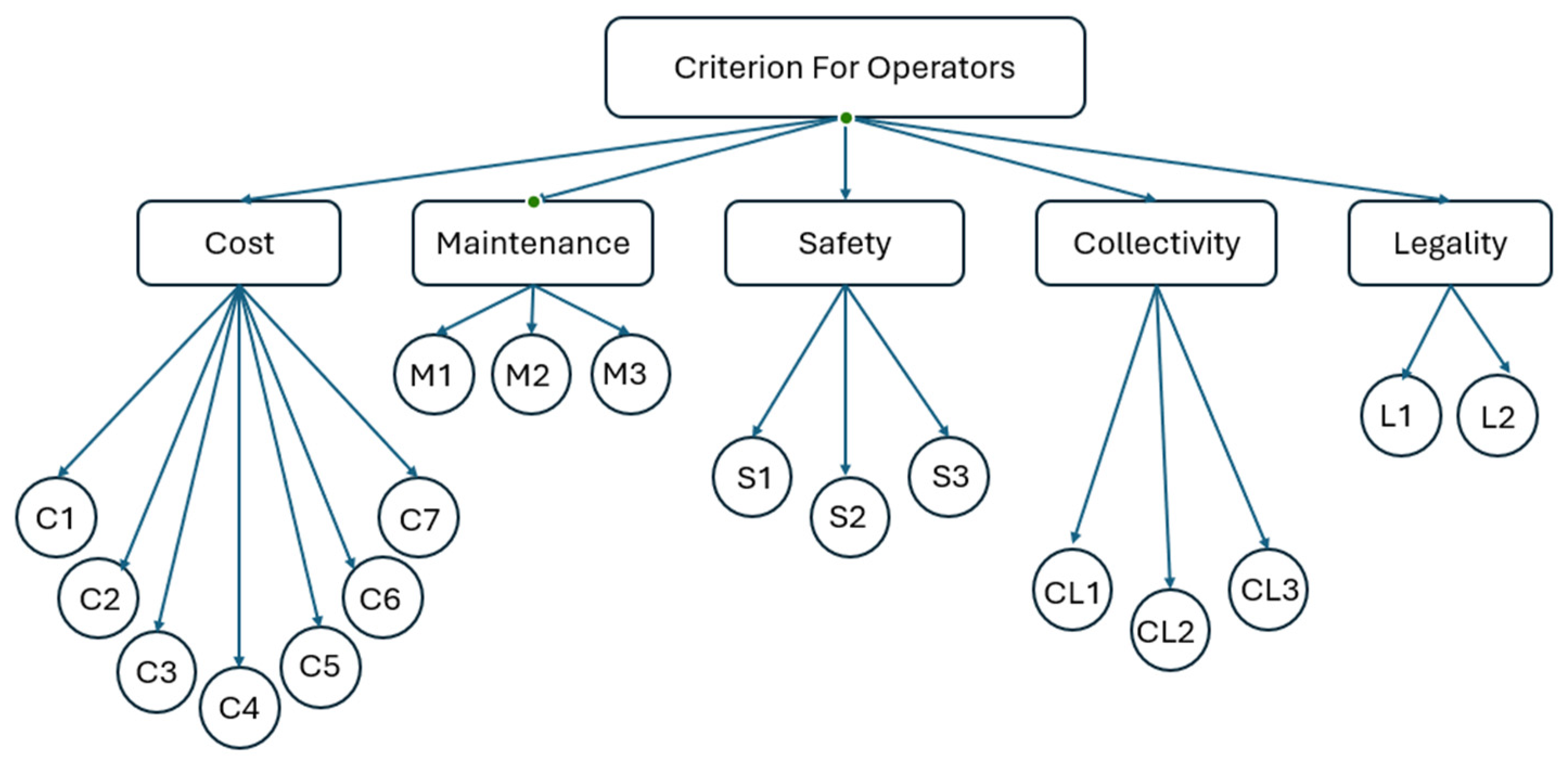
Figure 3.
Research Methodology Flowchart.
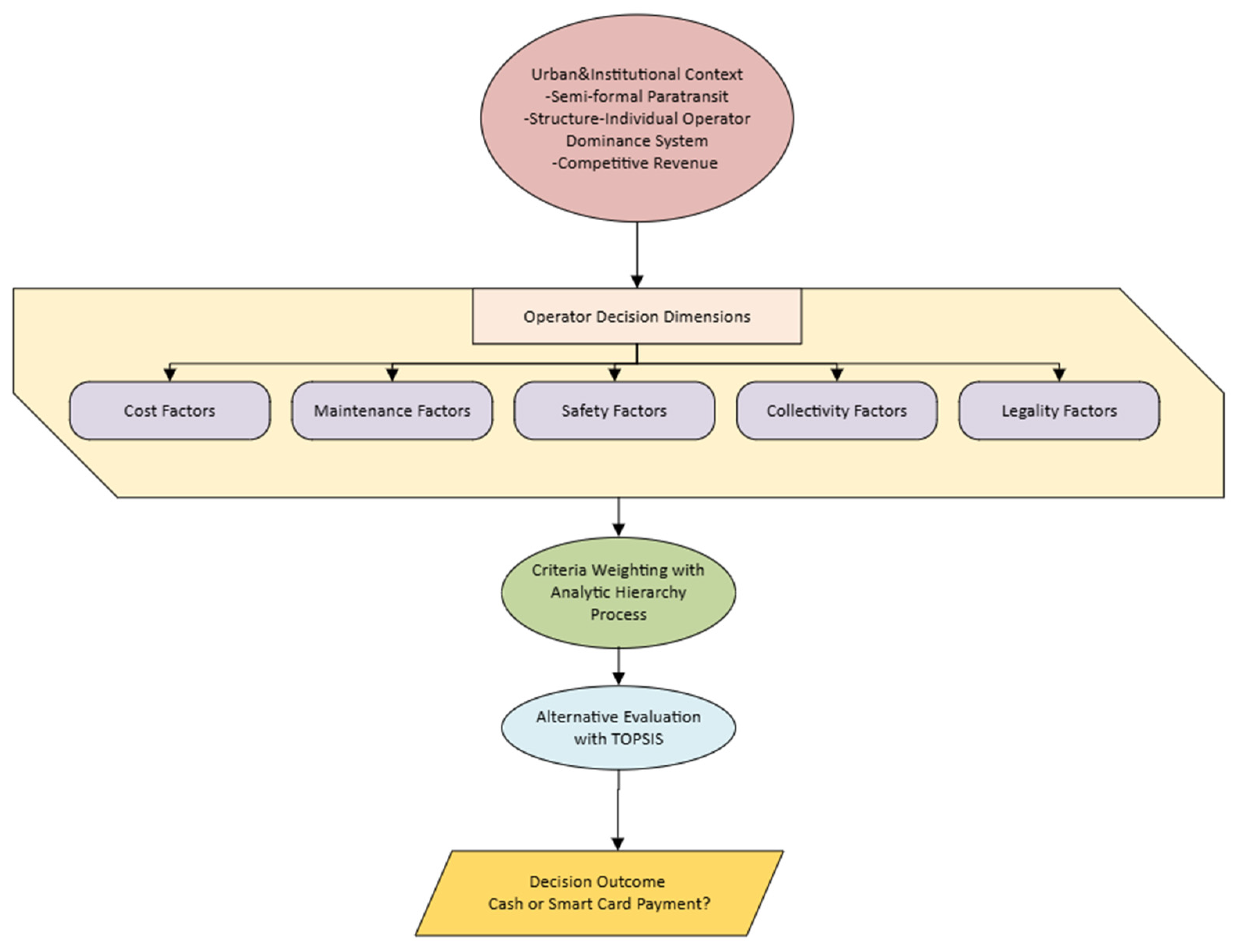
Figure 4.
Positive and Negative Ideal Solutions (Adapted From [54]).
Figure 4.
Positive and Negative Ideal Solutions (Adapted From [54]).
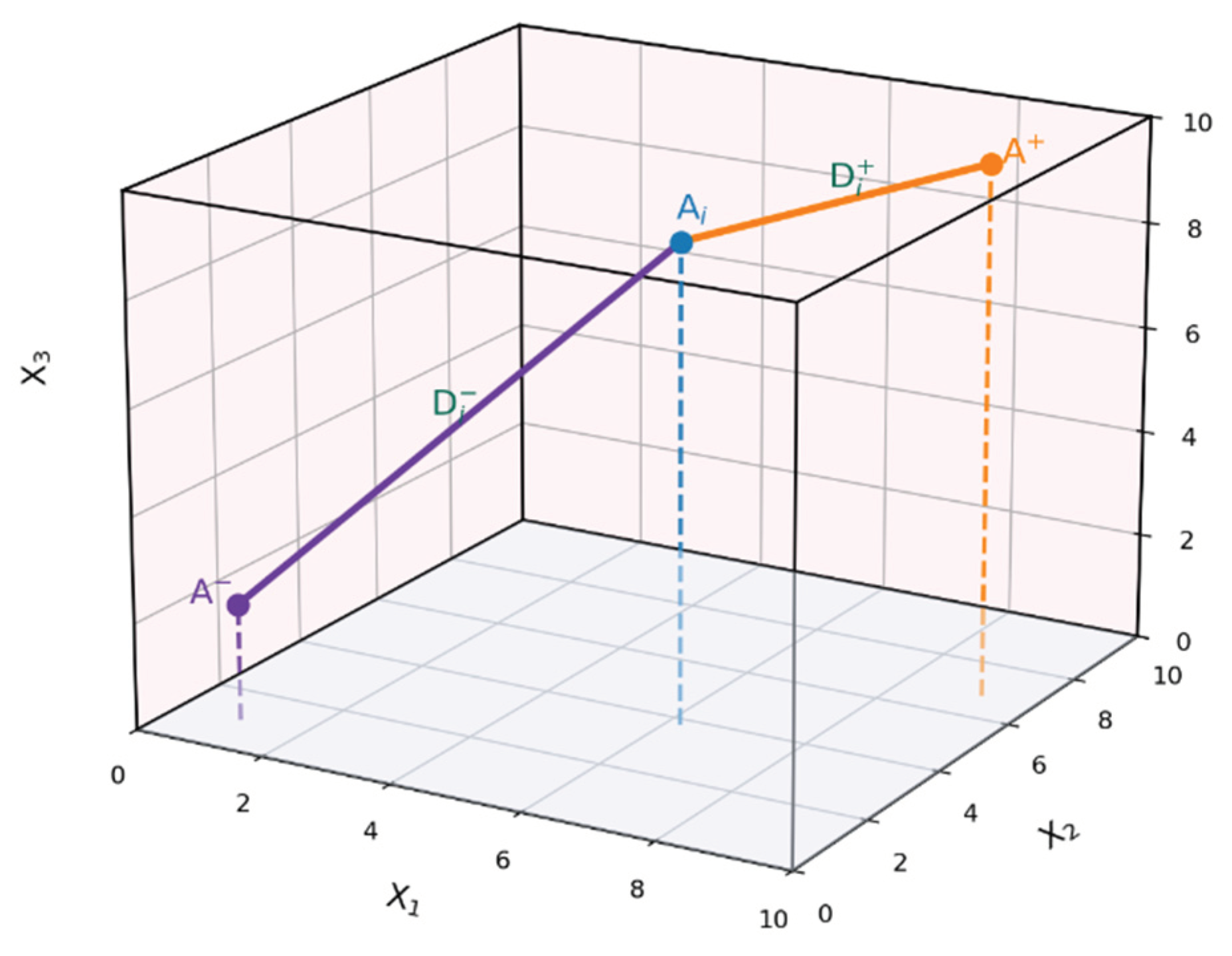

Table 1.
Distribution of Minibus Operators Experience.
| ID | Position | Experience in the Sector (Years) |
| ID1 | Minibus Operator | 14 |
| ID2 | Minibus Operator | 22 |
| ID3 | Minibus Operator | 30 |
| ID4 | Minibus Operator | 28 |
| ID5 | Minibus Operator | 12 |
| ID6 | Minibus Operator | 20 |
| ID7 | Minibus Operator | 32 |
| ID8 | Minibus Operator | 6 |
| ID9 | Minibus Operator | 25 |
| ID10 | Minibus Operator | 15 |
| ID11 | Minibus Operator | 12 |
| ID12 | Minibus Operator | 23 |
| ID13 | Minibus Operator | 18 |
| ID14 | Minibus Operator | 7 |
| ID15 | Minibus Operator | 11 |
| ID16 | Minibus Operator | 19 |
| ID17 | Minibus Operator | 8 |
| ID18 | Minibus Operator | 9 |
| ID19 | Minibus Operator | 23 |
Table 2.
Descriptions of Sub-Criterion.
| Criteria | Factors Influencing the Choice of Minibus Operating Type (Smart Card / Cash Payment) from the Operators’ Perspective |
| C1 | Frequency of payment (daily, weekly, or monthly) |
| C2 | Ability to ensure a certain number of passengers (passenger demand guarantee) |
| C3 | Transparency of financial transactions |
| C4 | Ability to secure a regular income |
| C5 | Taxation structure |
| C6 | Costs reduced by the transformation (e.g., obligation to carry a cash register and change) |
| C7 | Improved data collection (reliability of demand–supply balance) |
| M1 | Impact of maintenance on vehicle availability (to what extent equipment-related maintenance disrupts operations) |
| M2 | Frequency of maintenance |
| M3 | Frequency of seat renewal (changes in seating capacity due to license modifications) |
| S1 | Braking and maneuverability performance relative to capacity (standing passengers are now legal; passenger numbers increased while the vehicle remains the same) |
| S2 | Driver visibility and attention conditions (effects of standing passengers and the elimination of cash collection by the driver) |
| S3 | Insurance characteristics |
| CL1 | Ability to act in accordance with the characteristics of civil society organizations (individual action vs. collective/association-based action) |
| CL2 | Ability to monitor service cycle times (tracking systems/dispatcher supervision) |
| CL3 | Trust in the reliability of the operating method (are problems resolved systematically or personally?) |
| L1 | Level of compliance with regulations |
| L2 | Auditability (level of legal transparency) |
Table 3.
Criterion Weights and Ranking.
| Main criteria | Weights | Sub criteria | Sub-criteria weights | Overall Weights | Rank |
|---|---|---|---|---|---|
| Cost | 0.5069 | C1 | 0.0734 | 0.0372 | 11 |
| C2 | 0.2924 | 0.1482 | 1 | ||
| C3 | 0.2491 | 0.1263 | 2 | ||
| C4 | 0.1976 | 0.1002 | 3 | ||
| C5 | 0.0933 | 0.0473 | 9 | ||
| C6 | 0.0542 | 0.0275 | 14 | ||
| C7 | 0.0400 | 0.0203 | 15 | ||
| Maintenance | 0.2042 | M1 | 0.3446 | 0.0704 | 6 |
| M2 | 0.3667 | 0.0749 | 5 | ||
| M3 | 0.2886 | 0.0589 | 7 | ||
| Safety | 0.1481 | S1 | 0.2428 | 0.0359 | 12 |
| S2 | 0.1967 | 0.0291 | 13 | ||
| S3 | 0.5605 | 0.0830 | 4 | ||
| Collectivity | 0.0832 | CL1 | 0.2325 | 0.0193 | 16 |
| CL2 | 0.6602 | 0.0549 | 8 | ||
| CL3 | 0.1073 | 0.0089 | 18 | ||
| Legality | 0.0577 | L1 | 0.7353 | 0.0424 | 10 |
| L2 | 0.2647 | 0.0153 | 17 |
Table 4.
Criteria Consistency Ratios.
| Cluster | Consistency ratio |
| Main criteria | 0.0958 |
| Cost | 0.0606 |
| Maintenance | 0.0414 |
| Safety | 0.0931 |
| Collectivity | 0.0758 |
| Legality | N/A |
Table 5.
TOPSIS Decision Matrix.
| Sub-Criteria | Smart Card Alternative | Cash Alternative | Ideal Position in TOPSIS |
| C1 | 5.0 | 5.6 | Max |
| C2 | 5.4 | 5.5 | Max |
| C3 | 6.2 | 5.1 | Max |
| C4 | 5.2 | 5.4 | Max |
| C5 | 3.4 | 5.5 | Min |
| C6 | 2.6 | 2.5 | Max |
| C7 | 1.7 | 1.7 | Max |
| M1 | 3.5 | 4.2 | Min |
| M2 | 3.7 | 4.5 | Min |
| M3 | 5.1 | 3.7 | Min |
| S1 | 3.1 | 3.6 | Max |
| S2 | 2.8 | 2.6 | Max |
| S3 | 3.7 | 4.5 | Min |
| CL1 | 3.2 | 2.6 | Max |
| CL2 | 5.8 | 6.4 | Max |
| CL3 | 3.6 | 3.4 | Max |
| L1 | 2.3 | 2.3 | Max |
| L2 | 2.6 | 2.7 | Max |
Table 6.
TOPSIS Results.
| CC | Rank | |||
| Smart Card | 0.014302 | 0.028876 | 0.668756 | 1 |
| Cash | 0.02908 | 0.014864 | 0.338242 | 2 |
Disclaimer/Publisher’s Note: The statements, opinions and data contained in all publications are solely those of the individual author(s) and contributor(s) and not of MDPI and/or the editor(s). MDPI and/or the editor(s) disclaim responsibility for any injury to people or property resulting from any ideas, methods, instructions or products referred to in the content. |
© 2026 by the authors. Licensee MDPI, Basel, Switzerland. This article is an open access article distributed under the terms and conditions of the Creative Commons Attribution (CC BY) license (http://creativecommons.org/licenses/by/4.0/).
Copyright: This open access article is published under a Creative Commons CC BY 4.0 license, which permit the free download, distribution, and reuse, provided that the author and preprint are cited in any reuse.