

Submitted:
26 January 2026
Posted:
26 January 2026
You are already at the latest version
Abstract
Wearable devices and health applications have transformed the monitoring of exercise performance, providing metrics such as heart rate, step count, distance travelled, calories burned, and recovery time. While current algorithms primarily estimate energy expenditure, long-standing evidence suggests that exercise induces systematic depletion of electrolytes, glycogen, vitamins, and other nutrients. Integrating physiological models with wearable sensor data could enable the estimation of these metabolic parameters, effectively creating a digital metabolic twin. This opinion explores the current advances in wearable monitoring, highlights the physiological basis for nutrient depletion, and discusses the feasibility of algorithmic approximation of broader metabolic changes. Incorporating these capabilities into wearable technology offers a new avenue for precision exercise physiology, with potential applications in personalized nutrition, training optimization, and disease prevention.
Keywords:
wearable devices
; digital metabolic twin
; nutrient depletion
; exercise physiology
; glycogen and electrolytes
I. Introduction
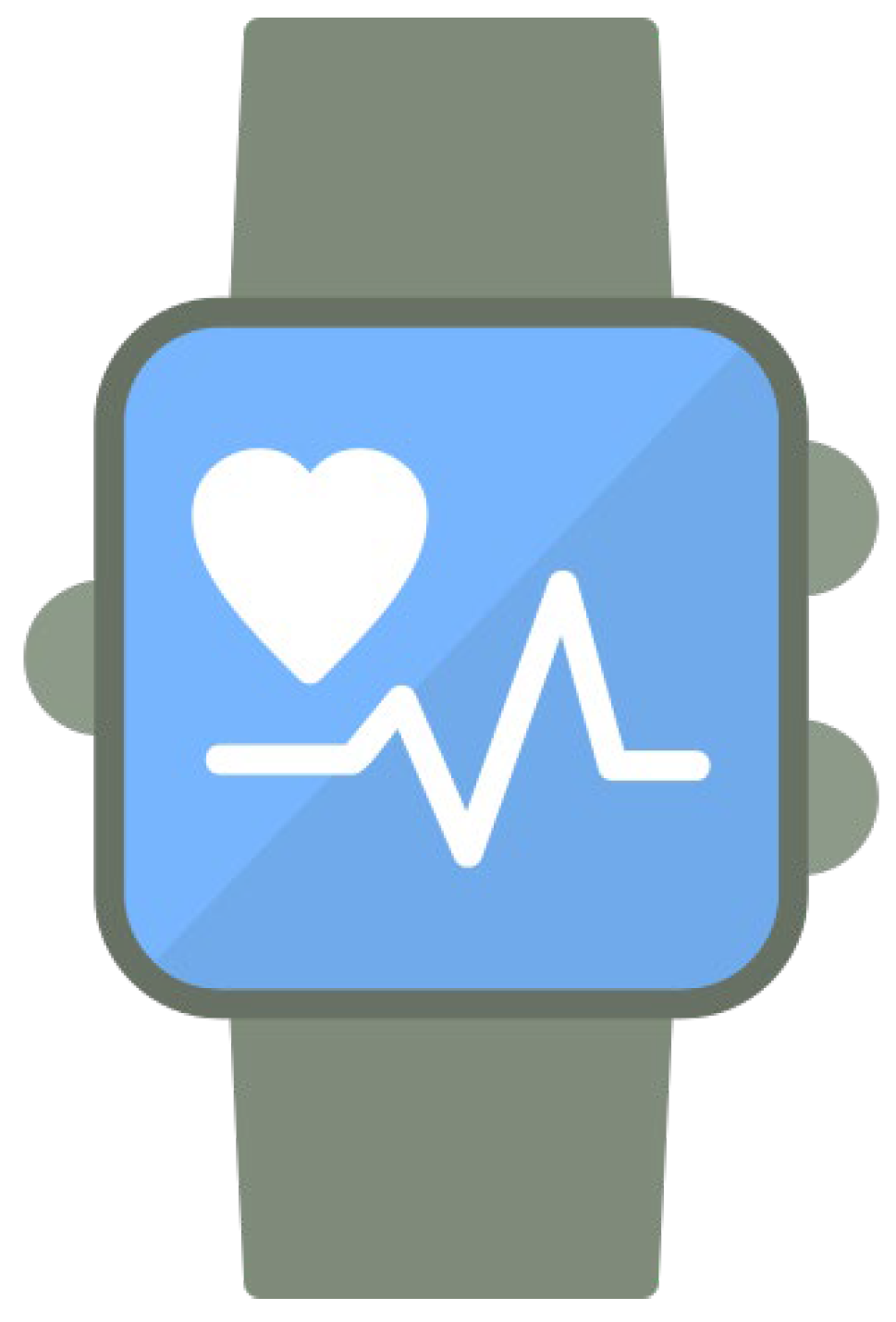
Advances in wearable technology have enabled the continuous monitoring of physiological parameters, facilitating personalized exercise medicine and recovery assessment. Smart watches (Figure 1) and fitness applications routinely quantify steps, heart rate, distance, and estimated caloric expenditure using accelerometers and photoplethysmography (PPG) sensors [4,16].
Despite these capabilities, current devices largely focus on energy metrics, neglecting the broader metabolic consequences of exercise. Physical activity induces depletion not only of macronutrient stores but also of micronutrients, including electrolytes and vitamins, and alters glycogen availability across muscle and liver stores [2,3].
A growing body of literature indicates that nutrient depletion can influence performance, recovery, and long-term health [11,12]. Sodium, potassium, magnesium, and calcium are lost through sweat at rates dependent on exercise intensity, duration, environmental conditions, and individual physiology [20]. Similarly, water-soluble vitamins, such as B-complex and vitamin C, participate in energy metabolism and oxidative stress mitigation, becoming depleted during prolonged or high-intensity activity [14,15]. Glycogen stores, critical for sustaining exercise, are depleted in a rate-dependent manner that varies by fibre type, intensity, and prior nutritional status [5,6].
Even though the physiological basis is well established, no current wearable system attempts to estimate nutrient depletion through algorithms. The concept of a digital metabolic twin—wherein a personalized model integrates physiological data to estimate energy, macronutrient, and micronutrient dynamics—represents a novel avenue in exercise science.
Wearable Technology and Energy Monitoring
Modern wearables integrate accelerometers, gyroscopes, optical heart rate sensors, and sometimes electrocardiography (ECG) to provide real-time exercise metrics. Algorithms estimate energy expenditure using heart rate, activity intensity, and biomechanical movement [10]. Caloric calculations typically rely on generalized metabolic equivalents (METs) adjusted for individual anthropometrics [1]. However, these estimations do not account for nutrient-specific depletion, nor do they consider biochemical markers such as electrolyte loss, glycogen utilization, or vitamin turnover.
Electrolyte and Vitamin Monitoring via Algorithms
Exercise-induced electrolyte depletion can be inferred indirectly from sweat rate, heart rate variability, and environmental conditions [7,20]. Sodium and potassium losses correlate with sweat volume and exercise intensity [20], whereas magnesium and calcium depletion, although smaller, influence neuromuscular function [13]. Water-soluble vitamins such as B group and vitamin C are consumed in biochemical reactions supporting ATP production and oxidative stress mitigation; their depletion rates correlate with exercise intensity and duration [14,15]. Algorithmic estimation could integrate real-time sensor data, user-specific parameters, and physiological models to provide approximate micronutrient loss during activity.
Glycogen and Metabolic Spectrum Estimation
Glycogen depletion is central to exercise fatigue, with rates influenced by exercise type, intensity, and training status [6]. Wearable proxies, including heart rate response, oxygen consumption, and activity intensity, could feed predictive algorithms to estimate muscle and liver glycogen utilization [6]. Beyond glycogen and vitamins, integrated metabolic spectrum models could predict shifts in substrate utilization, fluid balance, and oxidative stress markers, enabling comprehensive monitoring of physiological strain [17,18]. Such models could incorporate individual differences, environmental factors, and dietary intake to generate a personalized metabolic profile during exercise.
Discussion
Integrating nutrient depletion algorithms into wearable devices requires multidisciplinary collaboration across physiology, bioinformatics, and sensor engineering. Validation studies would need to compare algorithmic predictions against biochemical measures of electrolytes, vitamins, and glycogen using blood, urine, or sweat assays [7,19]. Machine learning approaches could improve prediction accuracy by leveraging large datasets of exercise physiology metrics and individual metabolic responses [4,6]. Ultimately, wearable-enabled digital metabolic twins could support individualized training plans, dietary adjustments, and early detection of deficiencies or overtraining.
The current limitations of wearable devices are focused largely on energy expenditure, which indeed represent an opportunity for innovation. Algorithmic estimation of nutrient depletion could extend the utility of wearables beyond basic exercise monitoring to comprehensive metabolic management. Such integration would advance personalized exercise physiology, optimizing performance, recovery, and long-term health outcomes. While direct biochemical measurement remains the gold standard, computational models incorporating sensor data and physiological knowledge can provide meaningful approximations in real time. By combining wearable monitoring with predictive modelling, these digital metabolic representations could provide a practical approach to this challenge.
II. Conclusion
The convergence of wearable technology, physiological modelling, and algorithmic computation presents a unique opportunity to expand exercise monitoring beyond calories to encompass electrolytes, vitamins, glycogen, and broader metabolic states. Digital metabolic twins could transform personalized training, nutrition, and health optimization, representing an avenue in digital health. Further research integrating sensor data, physiological models, and machine learning is necessary to validate and refine these approaches.
Author Contributions
TD: Conceptualization, Validation, Writing – original draft, Writing – review & editing. Article image attribution: Assia Benkerroum.
Funding
The author(s) declare that no financial support was received for the research, authorship, and/or publication of this article.
Ethics Statement
This manuscript is an opinion article based on previously published literature and publicly available data. no new experiments involving human participants or animals were conducted, and therefore formal ethical approval was not required. all sources used are properly cited.
Conflicts of Interest
The authors declare that the research was conducted in the absence of any commercial or financial relationships that could be construed as a potential conflict of interest.
References
- Ainsworth BE, Haskell WL, Herrmann SD, Meckes N, Bassett DR Jr, Tudor-Locke C, Greer JL, Vezina J, Whitt-Glover MC, Leon AS. 2011 Compendium of Physical Activities: a second update of codes and MET values. Med Sci Sports Exerc. 2011;43(8):1575–1581. [CrossRef]
- Børsheim E, Bahr R. Effect of exercise intensity, duration and mode on post-exercise oxygen consumption. Sports Med. 2003;33(14):1037–1060. [CrossRef]
- Bergström J, Hermansen L, Hultman E, Saltin B. Diet, muscle glycogen and physical performance. Acta Physiol Scand. 1967;71(2):140–150. [CrossRef]
- Bouten CVC, Koekkoek KTM, Verduin M, Kodde R, Janssen JD. A triaxial accelerometer and portable data processing unit for the assessment of daily physical activity. IEEE Trans Biomed Eng. 1997;44(3):136–147. [CrossRef]
- Cermak NM, van Loon LJC. The use of carbohydrates during exercise as an ergogenic aid. Sports Med. 2013;43(11):1139–1155. [CrossRef]
- San-Millán I, Hill JC, Calleja-González J. Indirect assessment of skeletal muscle glycogen content during exercise using non-invasive ultrasound technology. Nutrients. 2020;12(4):971. [CrossRef]
- He F, Bai Y, Zhou X, Chen H, Ma Q, Chen T, Xie Y, Tang J, Liang Z. Sweat analysis for monitoring exercise-induced physiological changes. Trends Anal Chem. 2020;123:115768. [CrossRef]
- Casa DJ, Armstrong LE, Hillman SK, Montain SJ, Reiff RV, Rich BSE, Roberts WO, Stone JA. National Athletic Trainers’ Association position statement: fluid replacement for athletes. J Athl Train. 2000;35(2):212–224. (No DOI; common for older guidelines).
- Díaz KM, Howard VJ, Hutto B, Colabianchi N, Vena JE, Sarmiento OL, Whitt-Glover MC, Hooks G, Blair SN, Hooker SP. Patterns of sedentary behavior in US middle-aged and older adults: the REGARDS study. Med Sci Sports Exerc. 2015;47(2):430–438. [CrossRef]
- Johannsen DL, Calabro MA, Stewart J, Franke W, Rood JC, Ravussin E. Accuracy of armband monitors for measuring daily energy expenditure in healthy adults. Med Sci Sports Exerc. 2010;42(11):2134–2140. [CrossRef]
- Maughan RJ, Shirreffs SM. Dehydration and rehydration in competitive sport. Scand J Med Sci Sports. 2010;20(Suppl 3):40–47. [CrossRef]
- Lukaski HC. Vitamin and mineral status: effects on physical performance. Nutrition. 2004;20(7–8):632–644. [CrossRef]
- Nielsen FH, Lukaski HC. Update on the relationship between magnesium and exercise. Magnesium Res. 2006;19(3):180–189. [CrossRef]
- Powers SK, Jackson MJ. Exercise-induced oxidative stress: cellular mechanisms and impact on muscle force production. Physiol Rev. 2008;88(4):1243–1276. [CrossRef]
- McAnulty SR, McAnulty LS, Morrow JD, Nieman DC. Exercise, free radicals, and oxidative stress. In: Lamprecht M, editor. Antioxidants in Sport Nutrition. Boca Raton, FL: CRC Press; 2013. p. 49–84. (No DOI; book chapter).
- Shcherbina A, Mattsson CM, Waggott D, Salisbury H, Christle JW, Hastie T, Wheeler MT, Ashley EA. Accuracy in wrist-worn, sensor-based measurements of heart rate and energy expenditure in a diverse cohort. J Pers Med. 2017;7(2):3. [CrossRef]
- Spriet LL. Exercise metabolism: fuels for the fire. Cold Spring Harb Perspect Med. 2014;4(8):a012800. [CrossRef]
- Thomas DT, Erdman KA, Burke LM. Position of the Academy of Nutrition and Dietetics, Dietitians of Canada, and the American College of Sports Medicine: nutrition and athletic performance. J Acad Nutr Diet. 2016;116(3):501–528. [CrossRef]
- Stachenfeld NS. Acute fluid shifts and hormonal responses to exercise: gender-specific regulation of volume. Exerc Sport Sci Rev. 2008;36(3):112–119. [CrossRef]
- Sawka MN, Burke LM, Eichner ER, Maughan RJ, Montain SJ, Stachenfeld NS. American College of Sports Medicine position stand: exercise and fluid replacement. Med Sci Sports Exerc. 2007;39(2):377–390. [CrossRef]
Figure 1.
Conceptual overview of a digital metabolic twin using wearable devices. The smart watch collects real-time physiological data, including heart rate, motion, and activity intensity. These data streams are processed through algorithmic models integrating physiological knowledge and user-specific parameters to estimate dynamic changes in energy expenditure, glycogen utilization, electrolyte, and vitamin status during exercise. The digital metabolic twin can provide personalized feedback for training optimization, recovery guidance, and nutritional adjustments. Image attribution: Assia Benkerroum, sourced from: https://www.flaticon.com/free-icon/smartwatch_8578929?term=smartwatch&page=1&position=81&origin=search&related_id=8578929, accessed on 05/10/2025).
Figure 1.
Conceptual overview of a digital metabolic twin using wearable devices. The smart watch collects real-time physiological data, including heart rate, motion, and activity intensity. These data streams are processed through algorithmic models integrating physiological knowledge and user-specific parameters to estimate dynamic changes in energy expenditure, glycogen utilization, electrolyte, and vitamin status during exercise. The digital metabolic twin can provide personalized feedback for training optimization, recovery guidance, and nutritional adjustments. Image attribution: Assia Benkerroum, sourced from: https://www.flaticon.com/free-icon/smartwatch_8578929?term=smartwatch&page=1&position=81&origin=search&related_id=8578929, accessed on 05/10/2025).
Disclaimer/Publisher’s Note: The statements, opinions and data contained in all publications are solely those of the individual author(s) and contributor(s) and not of MDPI and/or the editor(s). MDPI and/or the editor(s) disclaim responsibility for any injury to people or property resulting from any ideas, methods, instructions or products referred to in the content. |
© 2026 by the authors. Licensee MDPI, Basel, Switzerland. This article is an open access article distributed under the terms and conditions of the Creative Commons Attribution (CC BY) license (http://creativecommons.org/licenses/by/4.0/).
Copyright: This open access article is published under a Creative Commons CC BY 4.0 license, which permit the free download, distribution, and reuse, provided that the author and preprint are cited in any reuse.


