

Submitted:
19 January 2026
Posted:
20 January 2026
You are already at the latest version
Abstract
In the present research work, the corrosion behaviour of pure Al in methyl esters with different degree of unsaturation and chain length, present in biodiesel, has been investigated by using electrochemical techniques. Evaluated methyl esters included methyl acrylate (C4H6O2) and methyl linoleate (C19H34O2) which were added to methyl propionate, (C4H8O2) and methyl oleate (C19H36O2 ) respectively. Electrochemical techniques involved electrochemical impedance spectroscopy and electrochemical noise, and were supplemented by detailed studies of scanning electronic microscopy. Results have shown that the corrosion rate and the susceptibility to localized type of corrosion such as pitting increased with an increase in the number of unsaturations and in the chain length. Corrosion process was under charge transfer and was not affected neither by an increase in the number of unsaturations nor in the chain length. The charge transfer resistance value decreased by an increase in the number of unsaturations nor in the chain length.
Keywords:
Al
; corrosion
; biodiesel
; methyl esters
1. Introduction
Biodiesel has gained considerable attention as an alternative to petroleum diesel because of its renewable nature, lower toxicity, reduced exhaust emissions, and enhanced physical and chemical properties compared to conventional diesel fuels [1,2,3,4]. The rapid depletion of fossil fuel resources has led to a growing demand for biodiesel, highlighting the importance of research in this area due to the non-renewable nature of traditional fuels [5]. Despite these advantages, biodiesel is not entirely suitable for direct use in diesel engines, as it exhibits several disadvantages when compared to petroleum diesel. One of the most significant limitations is its poor oxidative stability when exposed to atmospheric conditions [6,7]. The oxidation process results in the formation of highly volatile compounds such as ketones, aldehydes, and carboxylic acids, which can adversely affect diesel engine performance depending on the extent of oxidation. A high degree of unsaturation further increases the susceptibility of biodiesel to oxidative degradation [8,9,10]. Additionally, biodiesel exhibits a great corrosive behavior due to the presence of free fatty acids and moisture content [11,12,13]. Alves et al. [14] investigated the corrosion behavior of 316 stainless steel in biodiesel produced from soybean oil via two different processes: methanolysis and ethanolysis, yielding fatty acid methyl esters and fatty acid ethyl esters respectively. The corrosion rate of stainless steel was low and comparable to that exhibited in both methyl and ethyl esters; however, the steel showed a slight susceptibility to pitting-type corrosion. In a separate study, Kugelmeier et al. [15] assessed the corrosion resistance of aluminum, copper, carbon steel, and 304 stainless steel in soybean biodiesel. Copper and carbon steel exhibited the highest corrosion rates, followed by stainless steel, whereas aluminum showed no evidence of corrosion. Kaul et al. [16] investigated the corrosion behavior of aluminum in various biodiesels derived from Jatropha curcas, Karanja, Mahua, and Salvadora. Their results showed that biodiesel produced from Jatropha curcas exhibited the highest corrosivity, while biodiesel obtained from Salvadora was the least aggressive. Likewise, different metallic materials may display distinct corrosion behaviors when exposed to the same biodiesel. For instance, in a study examining the corrosion of several metals in palm biodiesel, aluminum exhibited a lower corrosion rate compared to copper and brass [17]. In a similar study, Hu et al. [18] assessed the corrosion performance of common automotive metals, including aluminum (Al), copper (Cu), 304 stainless steel (304 SS), and 1018 carbon steel (1018 CS), in biodiesel produced from rapeseed oil and methanol. The authors reported that copper showed the highest corrosion rate, followed by 1018 CS, whereas 304 SS demonstrated the greatest resistance to corrosion. Despite its advantages over conventional diesel, biodiesel is considerably more prone to degradation, which often results in higher corrosivity than that of petroleum diesel [19,20]. Biodiesel degradation primarily occurs through auto-oxidation reactions, moisture uptake, and microbial activity during storage and use [21,22]. The extent of degradation may vary depending on the feedstock, due to differences in chemical composition, particularly in terms of the degree of unsaturation. The oxidation rate of biodiesel is influenced more strongly by the composition of its alkyl esters than by external factors such as temperature, exposure to air or light, and the presence of metals [23]. Lower oxidative stability is associated with a higher number of double bonds in the methyl esters. Furthermore, increasing the ester alkyl chain length promotes greater adsorption and aggregation on metal surfaces, thereby enhancing corrosive behavior [24]. Therefore, the objective of this study is to assess the influence of the degree of unsaturation and alkyl chain length on the corrosion behavior of pure aluminum.
2. Experimental Procedure
2.1. Testing Solution
To evaluate the influence of alkyl chain length, two methyl esters with different chain lengths were selected: methyl propionate (C₄H₈O₂) and methyl oleate (C₁₉H₃₆O₂). In addition to this, to assess the effect of the degree of unsaturation, esters with identical carbon chain lengths but higher levels of unsaturation were also examined. Specifically, methyl acrylate (C₄H₆O₂) and methyl linoleate (C₁₉H₃₄O₂) were included at different concentrations and compared with methyl propionate and methyl oleate, respectively. The chemical structures of these compounds are presented in Figure 1. Although methyl propionate and methyl acrylate contain the same number of carbon atoms, the former has a lower degree of unsaturation than the latter. Similarly, methyl oleate and methyl linoleate possess the same carbon chain length, but differ in their degree of unsaturation, with methyl linoleate exhibiting a higher number of double bonds.
2.2. Electrochemical Measurements
Electrochemical techniques, namely electrochemical noise (EN) analysis and electrochemical impedance spectroscopy (EIS), were employed in this study. EN measurements were conducted using a zero-resistance ammeter (ZRA) from ACM Instruments in a three-electrode electrochemical cell, where graphite served as the auxiliary electrode, a silver/silver chloride (Ag/AgCl) electrode was used as the reference, and aluminum (Al) bars acted as the working electrodes. The Al specimens were encapsulated in a polymeric resin, exposing a surface area of 0.32 cm². Prior to immersion in biodiesel for 850 h under static conditions at room temperature, the metal surfaces were mirror-polished. EN measurements of both potential and current were recorded weekly in blocks of 1024 data points at a sampling rate of 1 read/s. Current noise measurements were obtained using a second, nominally identical working electrode. Signal trends were removed by applying a least-squares fitting procedure. The noise resistance (Rn) was calculated as the ratio of the standard deviation of the potential noise (σv) to that of the current noise (σi). Electrochemical impedance spectroscopy (EIS) measurements were performed weekly using a Gamry PCI4-300 potentiostat/galvanostat over a frequency range of 0.05–20,000 Hz, with a perturbation amplitude of 30 mV applied around the free corrosion potential (Ecorr). After testing, the corroded specimens were examined using a low-vacuum LEO scanning electron microscope (SEM).
3. Results and Discussion
3.1. EIS Measurements
Nyquist plots for pure aluminum immersed in methyl propionate containing different concentrations of methyl acrylate are presented in Figure 2. As shown, the impedance spectra consist of a single depressed capacitive semicircle whose center lies on the real axis, indicating that the corrosion process is predominantly controlled by charge transfer across the electrochemical double layer. With increasing methyl acrylate concentration, a progressive decrease in the diameter of the semicircle is observed. The diameter of the capacitive loop corresponds to the charge transfer resistance (Rct), which is equivalent to the polarization resistance (Rp) and is inversely proportional to the corrosion current density (Icorr). Therefore, the reduction in Rct with increasing methyl acrylate content reflects an enhancement in the corrosion rate, indicating that a higher degree of unsaturation increases the corrosive nature of the medium. A similar trend is observed in the Nyquist plots for aluminum immersed in methyl oleate with varying concentrations of methyl linoleate (Figure 3), where the impedance response also exhibits capacitive semicircles centered on the real axis.
The diameter of the semicircles decreased with increasing methyl linoleate concentration, confirming that the corrosion process is governed by charge transfer. Similar behavior has been previously reported for pure aluminum exposed to palm oil biodiesel [25]. In general, the semicircle diameters obtained for aluminum immersed in methyl oleate containing varying concentrations of methyl linoleate are smaller than those observed for aluminum in methyl propionate with added methyl acrylate. This comparison indicates that a longer alkyl chain length leads to increased corrosivity.
The EIS data were interpreted using equivalent electrical circuits composed of resistive and capacitive elements, as illustrated in Figure 4. In these circuits, the solution resistance is denoted by Rs, the charge transfer resistance by Rct, and the double-layer capacitance by Cdl. The resistance and capacitance associated with any film formed on the metal surface are represented by Rf and Cf, respectively [26]. To account for surface heterogeneities and deviations from ideal capacitive behavior, a constant phase element (CPE) was introduced in place of an ideal capacitor. The impedance of the CPE is expressed as:
where Y is a proportionality constant, i is √−1, ω = 2πf is the angular frequency, f is the frequency, and n is a parameter related to surface characteristics such as roughness [26]. The fitted EIS parameters corresponding to the first and last days of exposure to biodiesel are summarized in Table 1.
ZCPE = Y-1 (iw)-n
An important observation is that, regardless of the esters chemical composition, the resistance of the corrosion products (Rf) is substantially higher than the charge transfer resistance (Rct), indicating that the protective behavior of the metal is primarily governed by the film formed by these corrosion products. The Rct values decrease with the addition of either methyl acrylate or methyl linoleate, reflecting an increase in the corrosion rate. Concurrently, the CPEf values increase with increasing concentrations of methyl acrylate or methyl linoleate. This can be explained by considering that capacitance is proportional to the product of the film dielectric constant and the vacuum permittivity, and inversely proportional to the film thickness [27]. Therefore, the increase in capacitance (or CPEf) may result from either an increase in the dielectric constant or a decrease in film thickness. At low concentrations of methyl acrylate or methyl linoleate, where the corrosion rate is minimal, the metal surface remains relatively smooth, and the CPE exponent (nf) is close to 1.0. As the concentration of these esters—and thus the corrosion rate—increases, the metal surface becomes rougher, causing nf to decrease toward a value of approximately 0.5.
3.2. EN Measurements
As an example, Figure 5 shows representative time series of current and potential noise for aluminum exposed to methyl propionate. The data reveal transients of low intensity and high frequency, combined with less frequent transients of higher intensity, which are indicative of the rupture and reformation of a protective film or metastable pitting-type corrosion [28]. When 50 mM of methyl acrylate was added (Figure 6), both the intensity and frequency of the transients increased, suggesting more frequent film rupture and a higher susceptibility of the metal to localized corrosion such as pitting. As noted above, these transients result from the cyclical rupture and reformation of protective films on the metal surface.
For aluminum immersed in pure methyl oleate (Figure 7), the time series for both potential and current exhibit predominantly low-intensity, high-frequency transients, indicative of uniform corrosion, along with occasional higher-intensity, lower-frequency transients, corresponding to localized corrosion events. However, upon the addition of 50 mM methyl linoleate (Figure 8), the time series display highly periodic transients of greater intensity, reflecting repeated rupture and reformation of the protective film. This behavior indicates that aluminum is highly susceptible to localized corrosion, such as pitting, under these conditions [28].
The variation of Rn for pure aluminum immersed in methyl propionate with different concentrations of methyl acrylate is shown in Figure 9, while the effect of adding methyl linoleate to methyl oleate is presented in Figure 10. These figures show that the addition of either methyl acrylate or methyl linoleate reduces the Rn value, and increasing their concentration leads to a further decrease, corresponding to an increase in the corrosion current density (Icorr). Additionally, the presence of a longer alkyl chain also lowers the Rn value. Overall, an increase in either the degree of unsaturation or the alkyl chain length decreases Rn, indicating an enhancement in the corrosion rate of aluminum.
3.3. Corroded Surface Analysis
SEM micrographs of aluminum specimens corroded in various methyl ester solutions are presented in Figure 11 and Figure 12. Figure 11 shows specimens exposed to methyl propionate with different concentrations of methyl acrylate. For the specimen immersed in pure methyl propionate (Figure 11a), no visible damage is observed on the metal surface, with only minor corrosion products present, consistent with the current and potential noise time series shown in Figure 5. When 10 mM of methyl acrylate was added (Figure 11b), a few small pits with diameters below 10 μm appear, along with some corrosion products. As the concentration of methyl acrylate increases (Figure 11c–d), both the number of pits and the amount of corrosion products covering the surface increase, in agreement with the trends observed in the noise time series in Figure 6, indicating enhanced corrosiveness of the solution.
For specimens corroded in pure methyl oleate or methyl oleate containing 10 mM methyl linoleate (Figure 12a–b), a few small pits are observed on the aluminum surface alongside corrosion products. However, at higher concentrations of methyl linoleate (Figure 12c–d), the number of pits increases significantly, consistent with the time series shown in Figure 8.
Figure 11.
SEM micrographs of Al immersed in methyl propionate with the addition of a) 0, b) 10, c) 50 and d) 100 mM methyl acrylate.
Figure 11.
SEM micrographs of Al immersed in methyl propionate with the addition of a) 0, b) 10, c) 50 and d) 100 mM methyl acrylate.
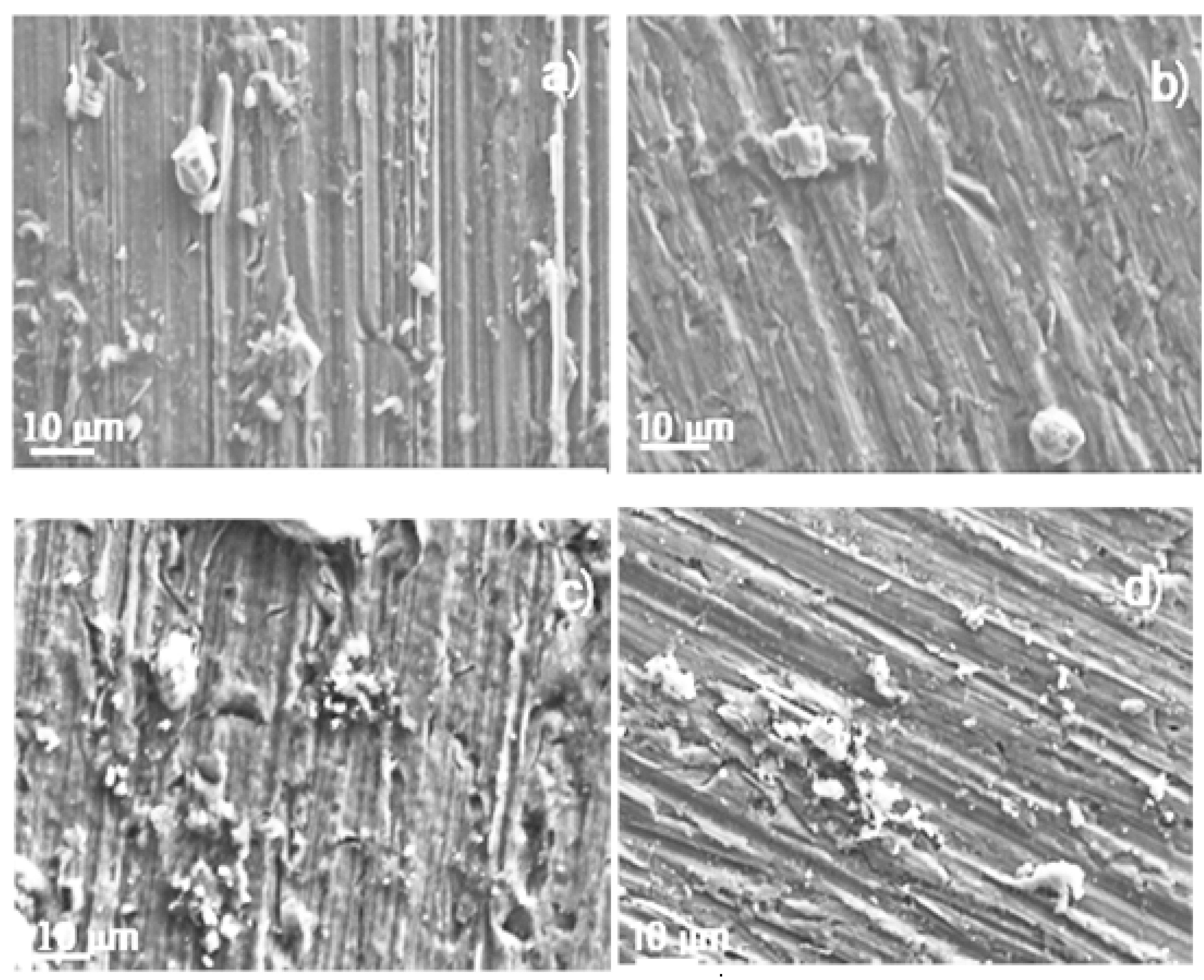
Figure 12.
SEM micrographs of Al immersed in methyl oleate with the addition of a) 0, b) 10, c) 50 and d) 100 mM methyl linoleate.
Figure 12.
SEM micrographs of Al immersed in methyl oleate with the addition of a) 0, b) 10, c) 50 and d) 100 mM methyl linoleate.
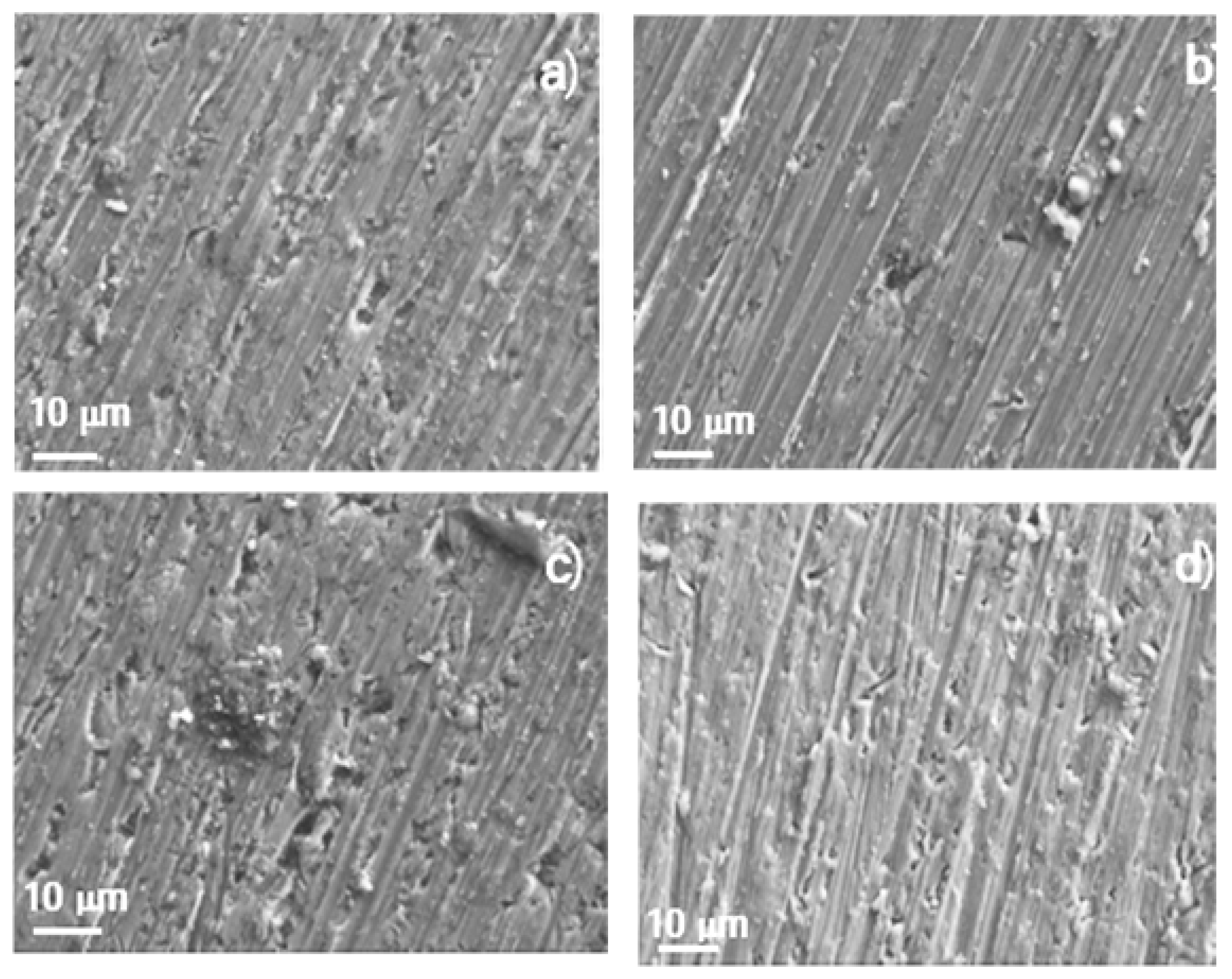
Thus, it is evident that both an increase in the degree of unsaturation and a longer alkyl chain length enhance the susceptibility of pure aluminum to localized corrosion in the presence of methyl esters.
4. Conclusions
A study was conducted to evaluate the effect of the degree of unsaturation and the alkyl chain length of methyl esters on the corrosion behavior of pure aluminum. EIS results indicated that both the charge transfer resistance and the resistance of the corrosion product film decreased with increasing unsaturation and chain length. The corrosion process remained under charge transfer control and was not directly influenced by these factors. EN measurements revealed that the susceptibility to localized corrosion, such as pitting, increased with higher unsaturation and longer chain lengths, which was further confirmed by the analysis of corroded specimens. Similarly, the noise resistance, which is equivalent to the charge transfer resistance, decreased with increasing unsaturation and chain length, reflecting an increase in the corrosion rate of aluminum.
Author Contributions
Conceptualization and methodology, O.E.C.-M and A.K.G.-L.; software and validation I.R.-C and A.M.R.-A.; formal analysis and investigation R.L.-S. and J.P.-C.; writing-original draft preparation and project administration J.G.G.-R.
Funding
This research was funded by CONAHCYT grant number 549489.
Acknowledgments
The authors would like to thank to Mr. Jose Juan Ramos-Hernandez and Dr. Maura Casales Diaz for their SEM work.
Conflicts of Interest
The authors declare to have no conflict of interest.
Data availability
The data that support the findings of this study are available within the article.
References
- Yang, G.; Yu, J. Advancements in Basic Zeolites for Biodiesel Production via Transesterification. Chemistry 2023, 5, 438–451. [Google Scholar] [CrossRef]
- Gülüm, M.; Bilgin, A. A comprehensive study on measurement and prediction of viscosity of biodiesel-diesel-alcohol ternary blends. Energy 2018, 148, 341–361. [Google Scholar] [CrossRef]
- Mosarof, M.H.; Kalam, M.A.; Masjuki, H.H.; Alabdulkarem, A.; Habibullah, M.; Arslan, A. Assessment of friction and wear characteristics of Calophyllum inophyllum and palm biodiesel. Ind. Crop Prod. 2016, 83, 470–483. [Google Scholar] [CrossRef]
- Aboelazayem, O.; El-Gendy, N.; Abdel-Rehim, A.A.; Ashour, F.; Sadek, M.A. Biodiesel production from castor oil in Egypt: process optimisation, kinetic study, diesel engine performance and exhaust emissions analysis. Energy 2018, 157, 843–852. [Google Scholar] [CrossRef]
- Xu, Y.; Hu, X.; Yuan, K.; Zhu, G.; Wang, W. Friction and wear behaviors of catalytic methylesterified bio-oil. Tribol. Int. 2014, 71, 168174. [Google Scholar] [CrossRef]
- Knothe, G.; Steidley, K.R. The effect of metals and metal oxides on biodiesel oxidative stability from promotion to inhibition. Fuel Process Technol. 2018, 177, 75–80. [Google Scholar] [CrossRef]
- Arumugam, S.; Sriram, G.; Ellappan, R. Bio-lubricant-biodiesel combination of rapeseed oil: An experimental investigation on engine oil tribology, performance, and emissions of variable compression engine. Energy 2014, 72, 618–627. [Google Scholar] [CrossRef]
- Viegas, I.M.A.; Barradas-Filho, A.O.; Marques, E.P.; Pereira, C.F.; Marques, A.L.B. Oxidative stability of biodiesel by mixture design and a four-component diagram. Fuel 2018, 219, 389398. [Google Scholar] [CrossRef]
- Fattah, I.M.R.; Masjuki, H.H.; Kalam, M.A.; Mofijur, M.; Abedin, M.J. Effect of antioxidant on the performance and emission characteristics of a diesel engine fueled with palm biodiesel blends. Energy Convers. Manag. 2014, 79, 265272. [Google Scholar] [CrossRef]
- Fazal, M.A.; Haseeb, A.S.M.A.; Masjuki, H.H. Effect of temperature on the corrosion behavior of mild steel upon exposure to palm biodiesel. Energy 2011, 36, 3328–3334. [Google Scholar] [CrossRef]
- Chew, K.V.; Haseeb, A.S.M.A.; Masjuki, H.H.; Fazal, M.A.; Gupta, M. Corrosion of magnesium and aluminum in palm biodiesel: a comparative evaluation. Energy 2013, 57, 478–483. [Google Scholar] [CrossRef]
- Hoang, A.T.; Tabatabaei, M.; Aghbashlo, M. A review of the effect of biodiesel on the corrosion behavior of metals/alloys in diesel engines. Energy Sources, Part A: Recovery, Utilization, and Environmental Effects 2020, 42, 2923–2943. [Google Scholar] [CrossRef]
- Nguyen, X.P.; Vu, H.N. Interactions between Used Cooking Oil Biodiesel Blends and Elastomer Materials in the Diesel Engine. Int. J. Ren. Energy Dev. 2019, 8, 119–132. [Google Scholar] [CrossRef]
- Alves, S.M.; Dutra-Pereira, F.K.; Bicudo, T.C. Influence of stainless steel corrosion on biodiesel oxidative stability during storage. Fuel 2019, 249 73–79. [Google Scholar] [CrossRef]
- Kugelmeier, C.L.; Monteiro, M.R.; Da Silva, R.; Kuri, S.E.; Sordi, V.L.; Della Rovere, C. A. Corrosion behavior of carbon steel, stainless steel, aluminum, and copper upon exposure to biodiesel blended with petrodiesel. Energy 2021, 226, 120344. [Google Scholar] [CrossRef]
- Kaul, S.; Saxena, R.C.; Kumar, A.; Negi, M.S.; Bhatnagar, A.K.; Goyal, H. Corrosion Behavior of Biodiesel from Seed Oils of Indian Origin on Diesel Engine Parts. Fuel Process Technol. 2007, 88, 303–309. [Google Scholar] [CrossRef]
- Fazal, M.A.; Haseeb, A.S.M.A.; Masjuki, H.H. Biodiesel degradation mechanism upon exposure of metal surfaces: A study on biodiesel sustainability. Fuel 2022, 310, 122341. [Google Scholar] [CrossRef]
- Hu, E.; Xu, Y.; Hu, X.; Pan, L.; Jiang. Corrosion behavior of metals in biodiesel from rapeseed oil and methanol. Renewable Energy 2012, 37, 371–378. [Google Scholar] [CrossRef]
- Haseeb, A.S.M.A.; Masjuki, H.H.; Ann, L.J.; Fazal, M.A. Corrosion Characteristics of Copper and Leaded Bronze in Palm Biodiesel. Fuel Process. Technol. 2010, 91, 329–337. [Google Scholar] [CrossRef]
- McCornick, R.L.; Ratcliff, M.; Moens, L.; Lawrence, T. Several factors affecting the stability of biodiesel in standard accelerated tests. Fuel Process. Technol. 2007, 88, 651–659. [Google Scholar] [CrossRef]
- Fazal, M.A.; Haseeb, A.S.M.A.; Masjuki, H.H. Comparative Corrosive Characteristics of Petroleum Diesel and Palm Biodiesel for Automotive Materials. Fuel Process. Technol. 2010, 91, 1308–1315. [Google Scholar] [CrossRef]
- Ahmmad, M.S.; Hassan, M.B.H.; Kalam, M.A. Comparative corrosion characteristics of automotive materials in Jatropha biodiesel. Int. J. Green Energy 2018, 15, 393–401. [Google Scholar] [CrossRef]
- Zuleta, E.C.; Baena, L.; Rios, L.A.; Calderon, J.A. The oxidative stability of biodiesel and its impact on the deterioration of metallic and polymeric materials: a review. J. Braz. Chem. Soc. 2012, 23, 2159–2167. [Google Scholar] [CrossRef]
- Zhang, J.; Liu, J.; Yu, W.; You, Y.; Liu, L. Molecular modeling of the inhibition mechanism of 1-(2-aminoethyl)-2-alkyl-imidazoline. Corros. Sci. 2010, 52, 2059–2065. [Google Scholar] [CrossRef]
- Díaz-Ballote, L.; López-Sansores, J.F.; Maldonado-López, L.; Garfias-Mesias, L.F. Corrosion Behavior of Aluminum Exposed to a Biodiesel. Electrochem. Commun. 2009, 11, 41–45. [Google Scholar] [CrossRef]
- Pehan, S.; Jerman, M.S.; Kegl, M.; Kegl, B. Biodiesel influence on tribology characteristics of a diesel engine. Fuel 2009, 88, 970–979. [Google Scholar] [CrossRef]
- Alves, S.M.; Mello, V.S.; Medeiros, J.S. Palm and soybean biodiesel compatibility with fuel system elastomers. Tribol. Int. 2013, 65, 74–80. [Google Scholar] [CrossRef]
- Hladky, K.; Dawson, J.L. The measurement of localized corrosion using electrochemical noise. Corros. Sci. 1982, 22, 231–242. [Google Scholar] [CrossRef]
Figure 1.
Chemical structure of a) Methyl propionate, b) methyl acrylate, c) methyl oleate and d) methyl inoleate.
Figure 1.
Chemical structure of a) Methyl propionate, b) methyl acrylate, c) methyl oleate and d) methyl inoleate.
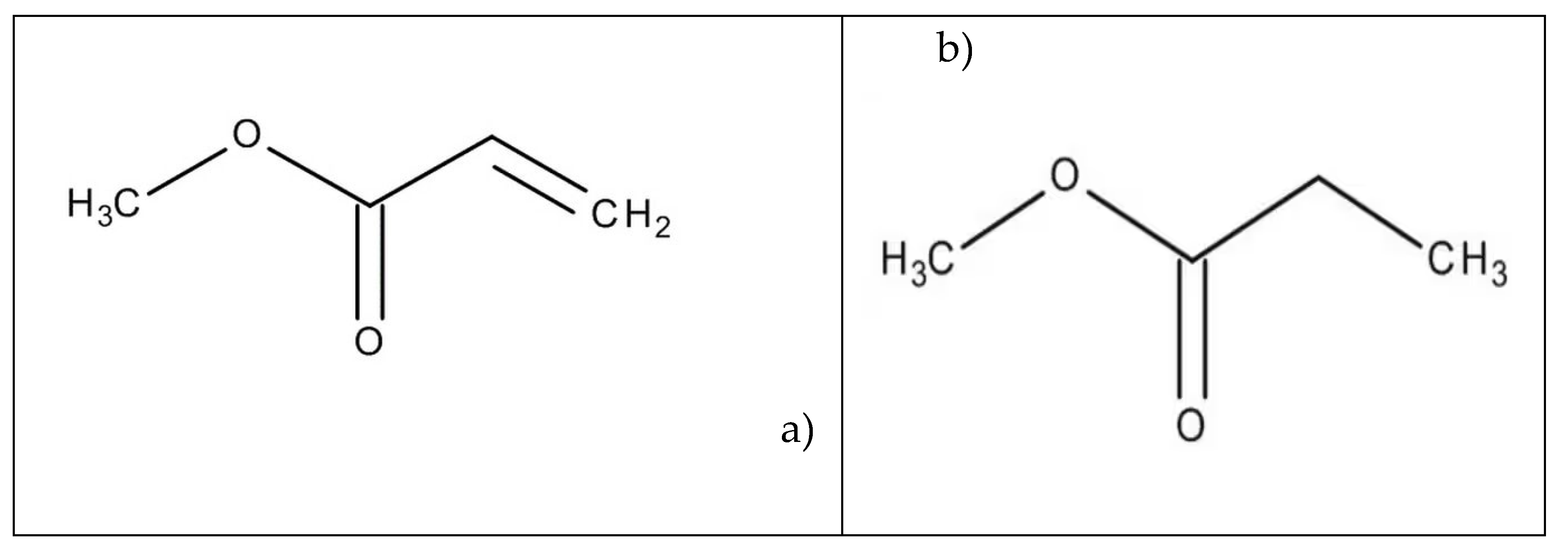
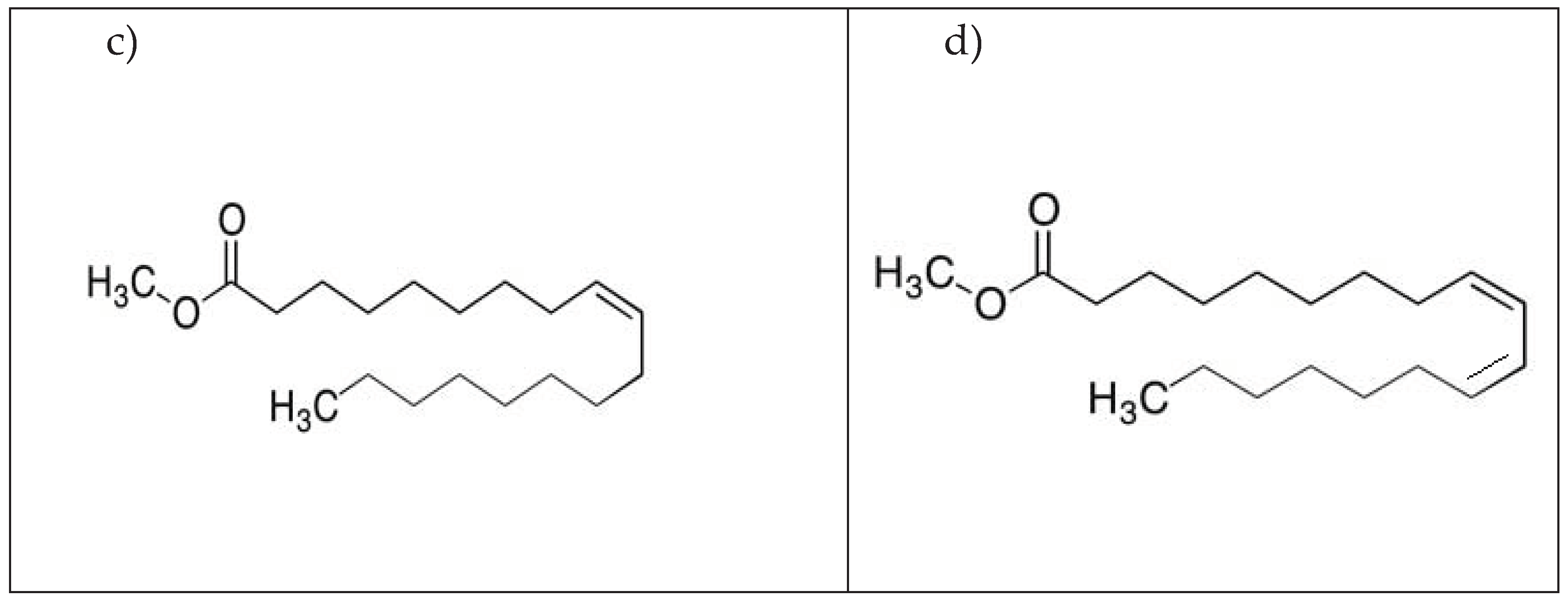
Figure 2.
Nyquist plots for Al in methyl propionate with the addition of methyl acrylate at different concentrations.
Figure 2.
Nyquist plots for Al in methyl propionate with the addition of methyl acrylate at different concentrations.
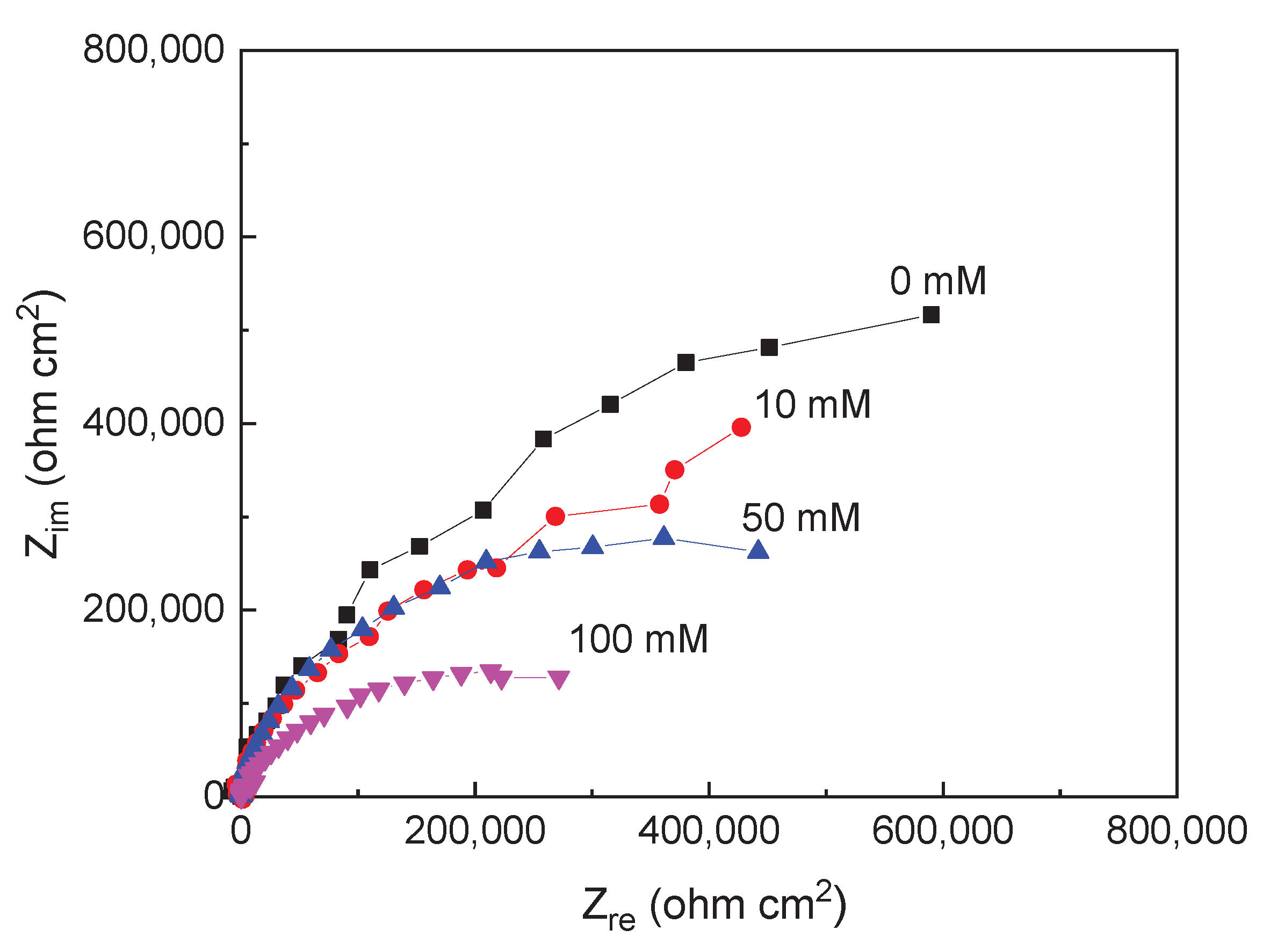
Figure 3.
Nyquist plots for Al in methyl oleate with the addition of methyl linoleate at different concentrations.
Figure 3.
Nyquist plots for Al in methyl oleate with the addition of methyl linoleate at different concentrations.
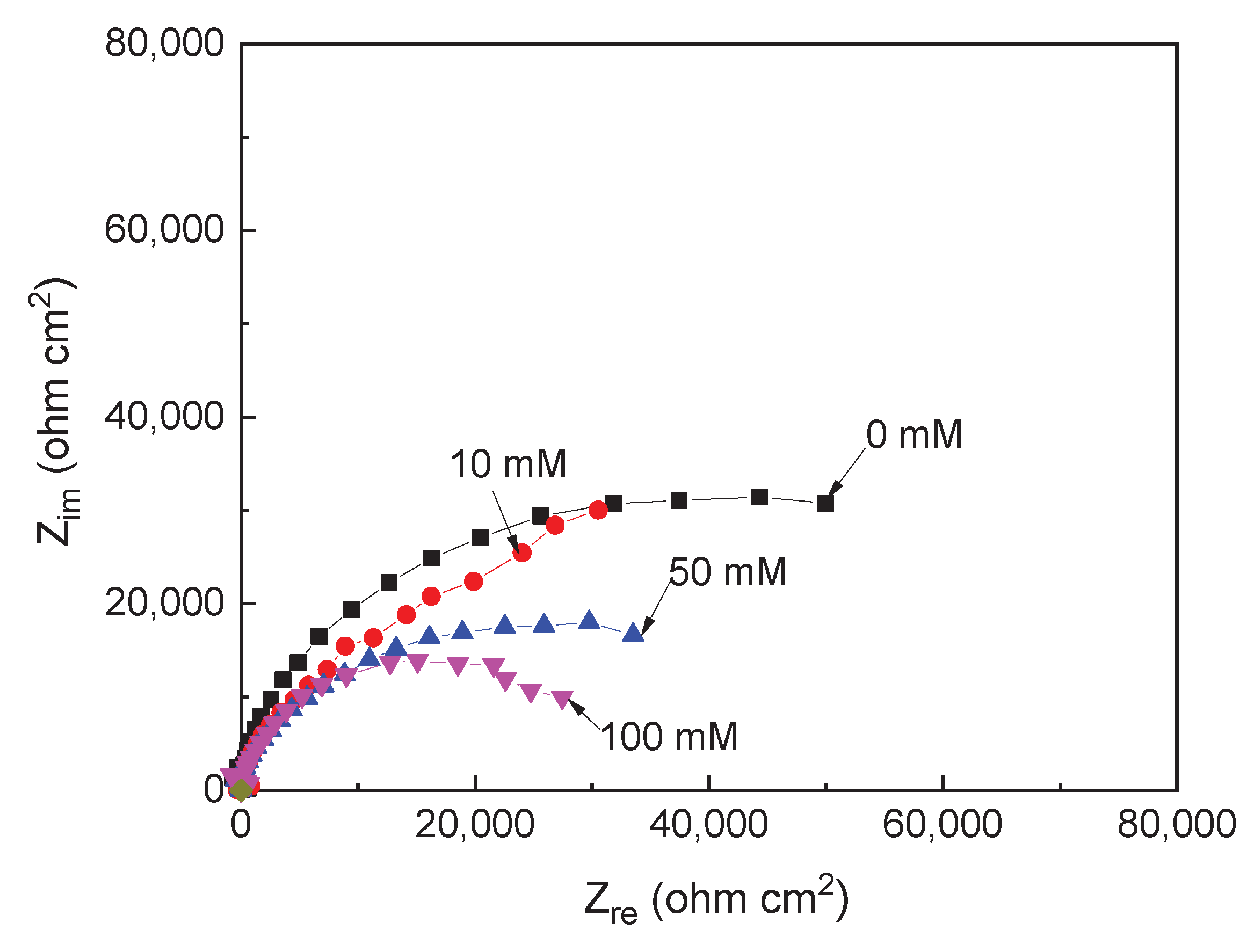
Figure 4.
Electric circuit used to fit the EIS data.
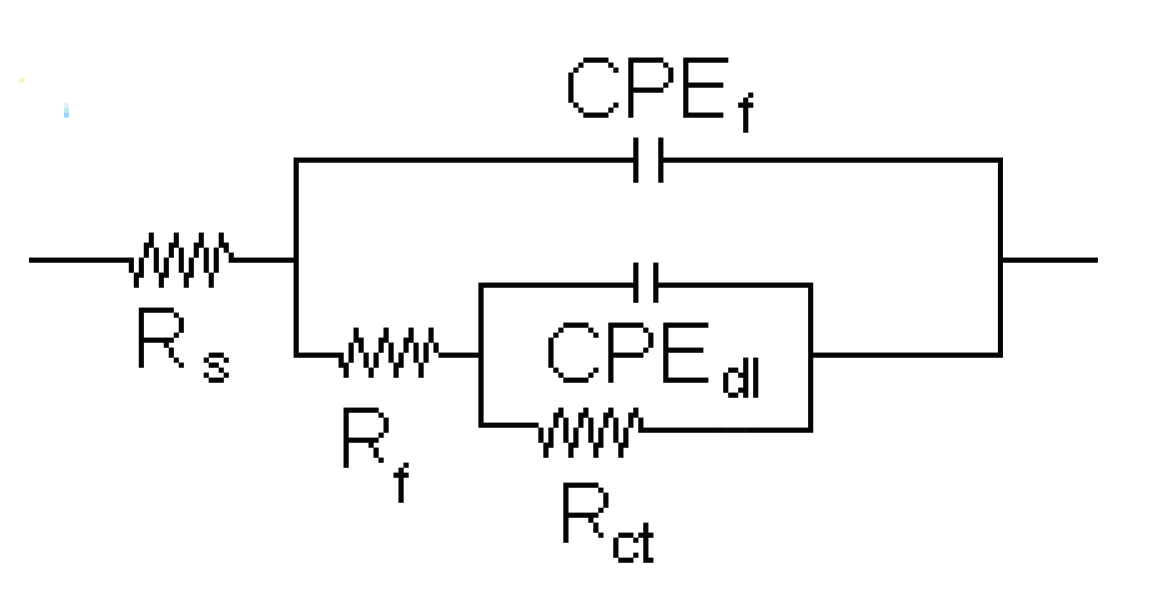
Figure 5.
Noise time series in potential and in current for Al immersed in pure methyl propionate.

Figure 6.
Noise time series in potential and in current for Al immersed in methyl propionate + 50 mM methyl acrylate.
Figure 6.
Noise time series in potential and in current for Al immersed in methyl propionate + 50 mM methyl acrylate.
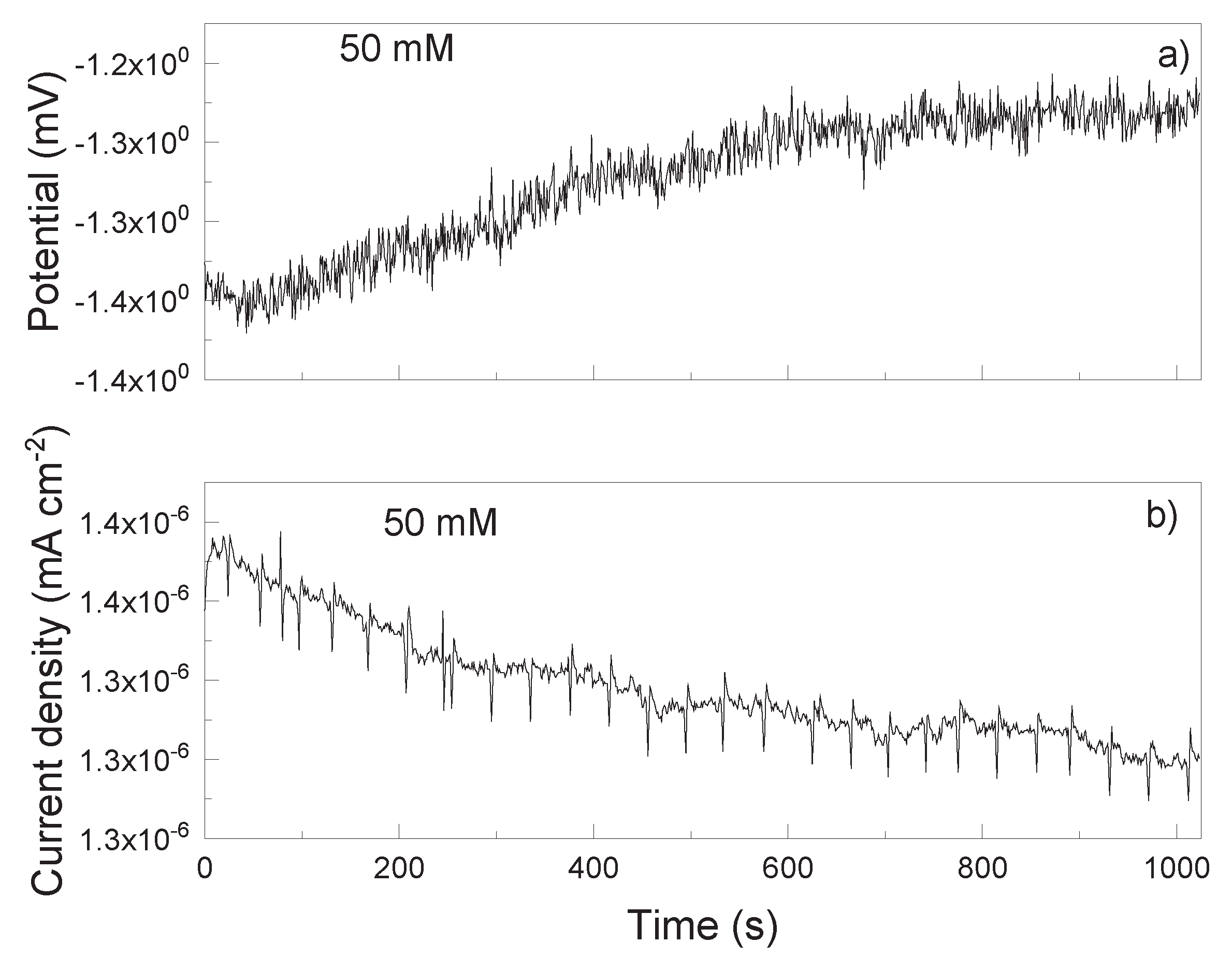
Figure 7.
Noise time series in potential and in current for Al immersed in pure methyl oleate.
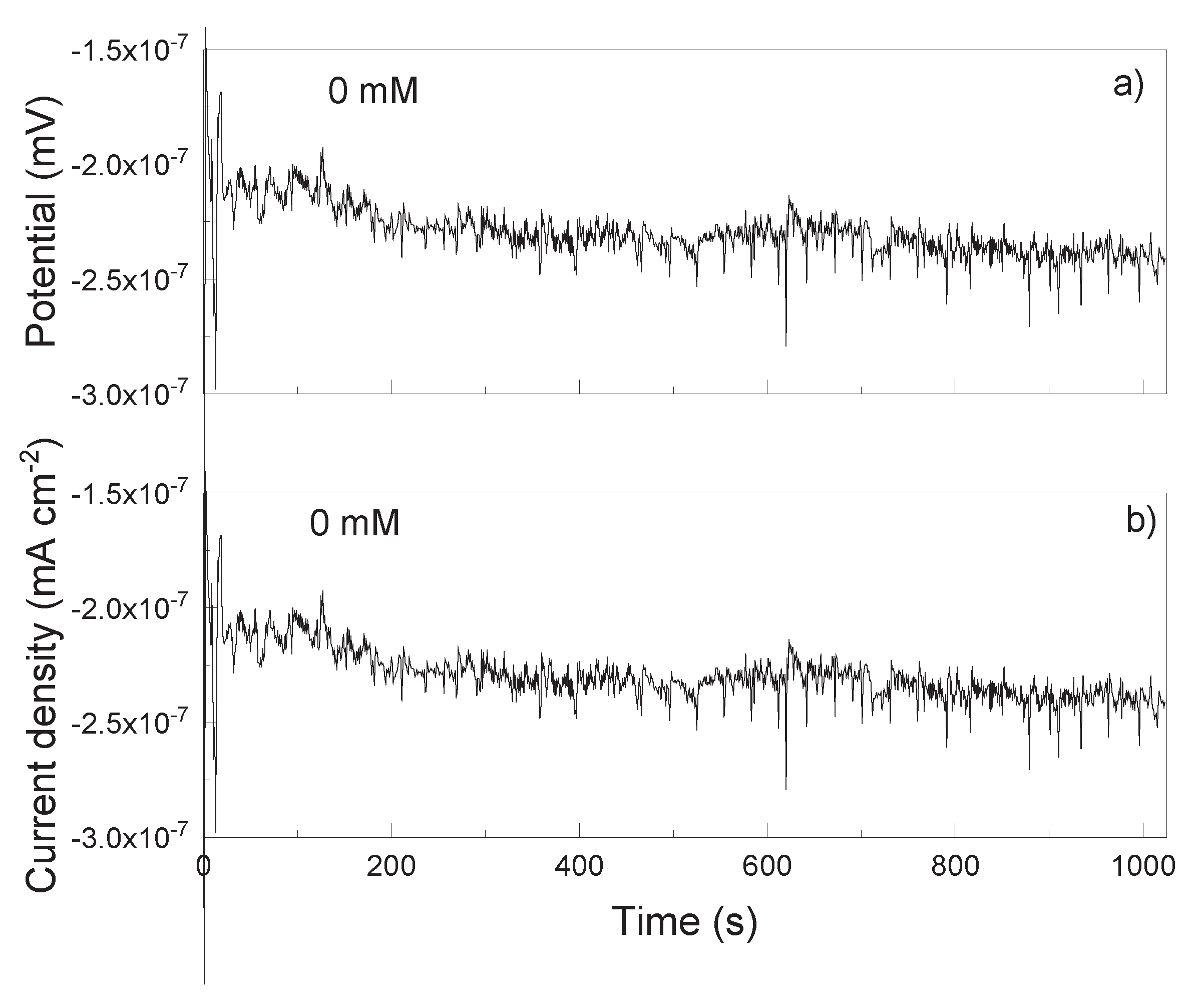
Figure 8.
Noise time series in potential and in current for Al immersed in methyl oleate + 50 mM methyl linoleate.
Figure 8.
Noise time series in potential and in current for Al immersed in methyl oleate + 50 mM methyl linoleate.
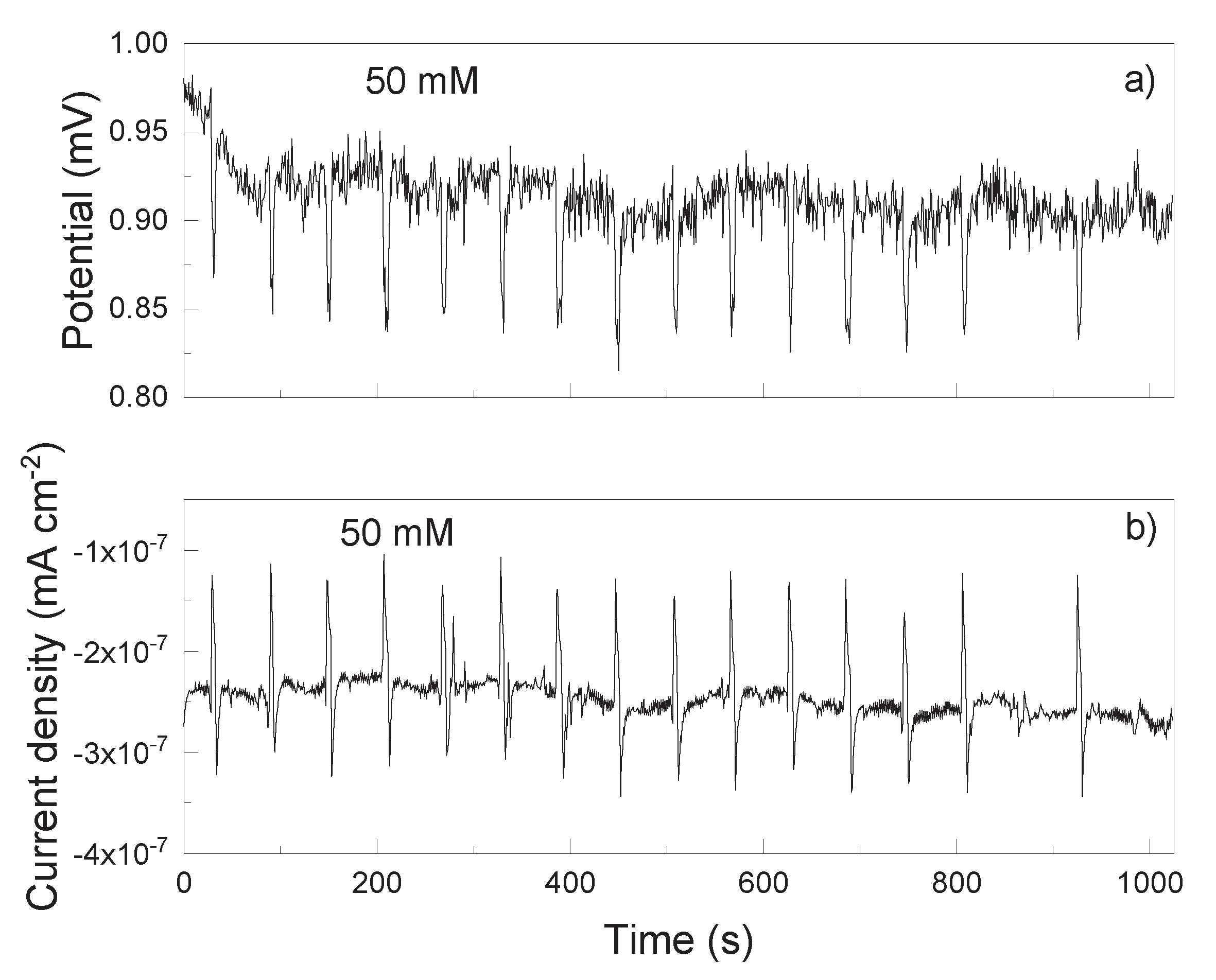
Figure 9.
Effect of the addition of methyl acrylate to methyl propionate on the variation of the Rn value with time for Al.
Figure 9.
Effect of the addition of methyl acrylate to methyl propionate on the variation of the Rn value with time for Al.
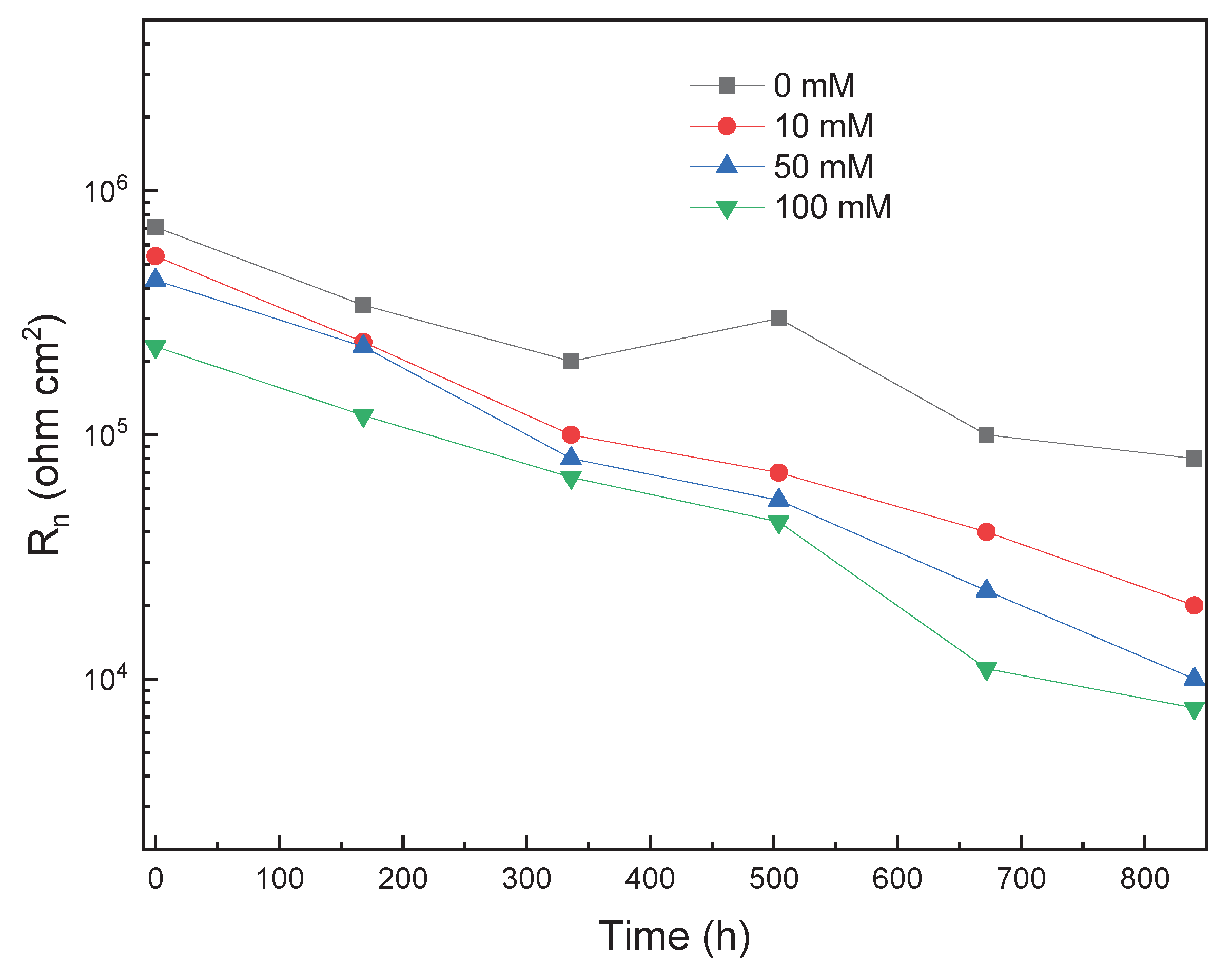
Figure 10.
Effect of the addition of methyl linoleate to methyl oleate on the variation of the Rn value with time for Al.
Figure 10.
Effect of the addition of methyl linoleate to methyl oleate on the variation of the Rn value with time for Al.
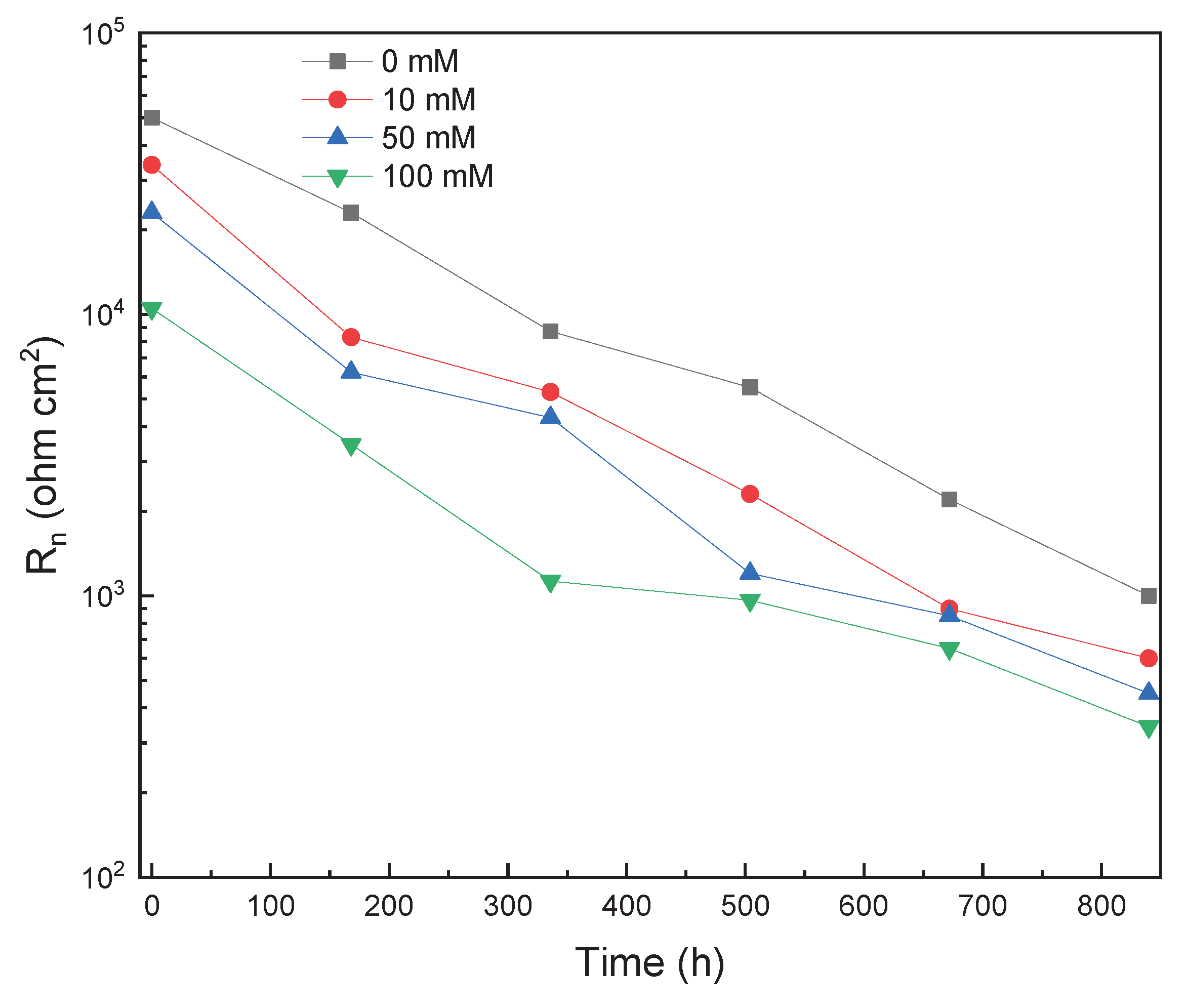

Table 1.
Electrochemical parameters use to fit the EIS data.
| Solution | Conc., mM | CPEdl F cm-2 |
ndl | Rct ohm cm2 |
CPEf F cm-2 |
nf | Rf ohm cm2 |
|---|---|---|---|---|---|---|---|
| Methyl propionate + methyl acrylate | 0 | 1.6 x 10⁻⁴ | 0.71 | 9.9 x 10⁴ | 1.3 x 10⁻⁵ | 0.98 | 6.4 x 10⁵ |
| 10 | 2.4 x 10⁻⁴ | 0.99 | 4.9 x 10⁴ | 5.2 x 10⁻⁵ | 0.49 | 5.8 x 10⁵ | |
| 50 | 8.7 x 10⁻⁴ | 0.78 | 3.3 x 10⁴ | 2.7 x 10⁻⁴ | 0.99 | 3.9 x 10⁵ | |
| 100 | 3.2 x 10⁻³ | 0.99 | 2.4 x 10⁴ | 8.4 x 10⁻⁴ | 0.35 | 1.2 x 10⁵ | |
| Methyl oleate + methyl linoleate | 0 | 8.5 x 10⁻⁴ | 0.52 | 7.4 x 10³ | 1.0x 10⁻⁴ | 0.98 | 5.0 x 10⁴ |
| 10 | 3.8 x 10⁻³ | 0.99 | 6.7 x 10³ | 2.6 x 10⁻⁴ | 0.20 | 2.8 x 10⁴ | |
| 50 | 5.1 x 10⁻³ | 0.42 | 5.5 x 10³ | 2.1 x 10⁻³ | 0.99 | 1.7 x 10⁴ | |
| 100 | 8.7 x 10⁻³ | 0.99 | 3.4 x 10³ | 5.1 x 10⁻³ | 0.25 | 8.2 x 10³ |
Disclaimer/Publisher’s Note: The statements, opinions and data contained in all publications are solely those of the individual author(s) and contributor(s) and not of MDPI and/or the editor(s). MDPI and/or the editor(s) disclaim responsibility for any injury to people or property resulting from any ideas, methods, instructions or products referred to in the content. |
© 2026 by the authors. Licensee MDPI, Basel, Switzerland. This article is an open access article distributed under the terms and conditions of the Creative Commons Attribution (CC BY) license (http://creativecommons.org/licenses/by/4.0/).
Copyright: This open access article is published under a Creative Commons CC BY 4.0 license, which permit the free download, distribution, and reuse, provided that the author and preprint are cited in any reuse.


