

Submitted:
16 January 2026
Posted:
16 January 2026
You are already at the latest version
Abstract
Living Wall Systems (LWS) are vertical vegetated building façade systems that offer environmental and social benefits; however, their adoption in South Africa, particularly within the Western Cape (WC), remains limited due to high capital and maintenance costs and the absence of regionally adapted design and cost models. This study investigates the viability and optimisation of LWS in the WC from a Quantity Surveying (QS) perspective, with the aim of developing a context-specific system utilising indigenous plant species and assessing its economic feasibility over the building life cycle. A mixed-method research approach was employed, comprising a review of relevant literature, semi-structured interviews with industry professionals, thematic analysis, cost modelling, and the preparation of a detailed Bill of Quantities (BOQ). Life cycle costing (LCC) techniques were applied to evaluate long-term cost implications. The study resulted in the development of an optimal LWS model, termed Viridis 5045, which satisfies identified environmental, technical, and contextual requirements for the WC. The BOQ, and LCC analyses provide projected capital and operational cost benchmarks for the proposed system. The findings indicate that Viridis 5045 is technically feasible and economically viable within the WC context, supporting its integration into sustainable construction practices. The study further identifies areas for future research, including the monetisation of long-term benefits, greywater integration, and the assessment of psychological impacts associated with green façades.
Keywords:
living wall systems
; quantity surveying
; life cycle costing
; sustainable construction
; green façades
; green buildings
1. Introduction
Urban areas within the Western Cape (WC), South Africa, are under increasing pressure from rapid urban densification, rising environmental stresses, and limited availability of open space. These challenges have intensified the need for innovative and space-efficient sustainability interventions within the built environment. One such intervention is the application of Living Wall Systems (LWS), defined as vertical vegetated systems integrated into building façades [1]. Internationally, LWS have been promoted as a means of enhancing urban environmental performance while responding to spatial constraints associated with continued urban expansion [2].
The relevance of LWS is particularly pronounced in regions experiencing sustained urban growth. In the WC, ongoing urbanisation and housing pressures [3], consistent with trends observed in comparable regions [4], have resulted in increased population densification and reduced access to natural environments [5]. This has contributed to declining urban ecological health, exacerbated urban heat island effects, deteriorating air quality, and reduced environmental wellbeing [6,7]. Within this context, LWS have been identified as a potential mechanism for incorporating organic, eco-friendly architecture into dense urban settings, thereby supporting environmental enhancement and reconnecting urban populations with natural elements [7].
A growing body of literature documents the environmental and social benefits associated with LWS, including carbon reduction, biodiversity enhancement, stress reduction, and improved psychological wellbeing [8,9]. However, despite these documented benefits, mainstream adoption of LWS remains limited, particularly within developing economies. High upfront capital costs, ongoing maintenance requirements, and financial uncertainty continue to present significant barriers to implementation [8,9]. These constraints are especially acute in contexts where environmental prioritisation may be secondary to immediate economic pressures.
From a Quantity Surveying (QS) perspective, these challenges are compounded by the absence of regionally optimised system designs, reliable cost benchmarks, and standardised Bills of Quantities (BOQs). LWS are typically treated as specialist façade systems, requiring detailed feasibility evaluation, cost modelling, and life-cycle consideration during design and procurement stages [10]. While Quantity Surveying techniques enable systematic cost management, technical evaluation, and value optimisation across a project life cycle [11], limited attention has been given to the application of these techniques to LWS within the WC context. Furthermore, the lack of LWS models incorporating indigenous vegetation adapted to the WC’s climatic and environmental conditions further constrains practical implementation [1].
Against this backdrop, this study investigates the viability and optimisation of Living Wall Systems in the Western Cape and ultimately South Africa from a Quantity Surveying perspective. The purpose of the research is to identify the environmental, technical, and contextual criteria required for an optimal, regionally adapted LWS, to develop a model system utilising indigenous plant species, and to support its implementation through the preparation of a detailed Bill of Quantities and life-cycle-based cost evaluation [12,13]. The study concludes that a context-specific LWS model, informed by QS-led cost planning and regional design considerations, can support the integration of LWS into sustainable construction practices within the Western Cape.
2. Materials and Methods
2.1. Research Design and Approach
This study adopted a mixed-methods research design to investigate the viability and optimisation of Living Wall Systems (LWS) in the Western Cape (WC) from a Quantity Surveying (QS) perspective. Mixed-methods research enables the integration of qualitative and quantitative approaches, allowing both subjective professional insights and objective cost data to inform the research outcomes [14]. This approach is particularly appropriate for sustainability-focused built-environment research, where technical performance, contextual conditions, and economic considerations intersect.
The research followed an explanatory sequential design, whereby qualitative findings informed the development of a regionally adapted LWS model, which was subsequently evaluated through quantitative cost modelling [15]. The WC served as the case study context for the investigation, enabling the examination of region-specific climatic, environmental, and economic conditions.
2.2. Qualitative Data Collection
Qualitative data were collected through semi-structured interviews with industry professionals possessing expertise relevant to LWS design, implementation, and cost management. Participants included Quantity Surveyors, Landscape Architects, Botanists, Horticulturalists, Architects, and representatives from green infrastructure companies. Semi-structured interviews were selected to allow flexibility while ensuring consistency across key thematic areas, including indigenous vegetation selection, system design considerations, maintenance requirements, and cost drivers.
Participants were recruited through professional bodies and industry networks based on their expertise and experience. Interviews were conducted either in person or via Microsoft Teams, recorded with participant consent, and transcribed verbatim for analysis.
2.3. Sampling Strategy
Purposive sampling was employed to identify professionals with specialist knowledge of LWS, green infrastructure, and indigenous vegetation [16]. Data source triangulation was achieved by engaging participants from multiple disciplines, enhancing the credibility and balance of the findings [17].
Thematic saturation was reached after ten interviews, as no new themes emerged during the later stages of data collection. This aligns with findings by [18], who suggest that saturation often occurs within the first twelve interviews in relatively homogenous expert groups. Consistency across responses further indicated shared understanding, supporting data adequacy in line with consensus theory [19].
2.4. Qualitative Data Analysis
Qualitative data were analysed using thematic analysis, a method suited to identifying and interpreting patterns within qualitative datasets [20]. Interview transcripts were coded systematically to identify recurring themes and relationships relevant to LWS optimisation, cost planning, and contextual suitability [21]. The resulting themes directly informed the development of the optimal LWS model and the associated cost modelling.
2.5. Development of the Optimal Living Wall System Model
Findings from the thematic analysis, supported by existing literature, informed the development of a theoretically optimal LWS model suitable for external application in the WC. Design decisions were guided by environmental, technical, and contextual criteria identified through expert input, including system typology, material selection, indigenous vegetation characteristics, and anticipated maintenance requirements. The model served as the basis for subsequent quantitative analysis.
2.6. Quantitative Data Collection and Cost Modelling
Quantitative data collection focused on empirical cost and system performance data relevant to the developed LWS model. Data included capital costs of system components, maintenance costs, life-cycle considerations, system design parameters, and Bill of Quantities (BOQ) information.
The developed LWS model was quantified, and a bespoke BOQ was prepared using WinQS software for bill production, with quantity take-offs undertaken using Dimension X and Microsoft Excel. Extensive rate build-ups were conducted using current market rates obtained from two Cape Town–based Quantity Surveying firms. These rates were applied to the BOQ to establish capital cost benchmarks.
Life cycle costing (LCC) analyses were undertaken using Microsoft Excel, following standard Quantity Surveying cost-engineering principles and the ASAQS Guide to Life Cycle Costing (2018). These analyses accounted for initial capital expenditure, routine and cyclical maintenance, and long-term operational considerations over defined analysis periods.
2.7. Reliability and Validity
Reliability and validity were central considerations throughout the study. Reliability, understood as the consistency and stability of the research process, was strengthened through the use of standardised interview guides, systematic thematic coding, and established cost-engineering procedures [22]. Quantitative analysis employed recognised software tools, verified industry data, and published literature to ensure consistency.
Validity was enhanced through purposive sampling of multidisciplinary experts, methodological triangulation, and the integration of qualitative insights with empirical cost data [22]. The combination of qualitative and quantitative methods strengthened construct validity by aligning expert perspectives with measurable cost outputs and system characteristics.
2.8. Ethical Considerations
Ethical approval for the study was obtained from the University of Cape Town Faculty of Engineering and the Built Environment (EBE) Ethics Committee prior to data collection. All participants received an information sheet outlining the study objectives, voluntary nature of participation, and their right to withdraw at any stage without consequence. Written informed consent was obtained from all participants before interviews commenced.
Participant confidentiality and anonymity were maintained through the use of coded identifiers (e.g., INT01, INT02), with all personal and organisational identifiers removed from transcripts and reporting [23]. Data were stored securely on password-protected devices accessible only to the researchers. Commercially sensitive information was aggregated and reported in non-identifiable form to protect professional confidentiality [24].
2.9. Use of Generative Artificial Intelligence
During the preparation of this manuscript, generative artificial intelligence tools were used for language refinement. No generative artificial intelligence was used in the study design, data collection, data analysis, interpretation of results, or generation of numerical outputs. All content was reviewed and approved by the authors, who take full responsibility for the integrity of the work.
3. Results
3.1. Qualitative Results: Thematic Findings
This section presents the qualitative findings derived from the thematic analysis of thirteen semi-structured interviews conducted with six Quantity Surveyors, three Living Wall System (LWS) industry stakeholders, and four botanists and horticultural specialists. The analysis identified seven recurring themes relating to cost, maintenance, technical risk, plant suitability, and value perception associated with LWS implementation in the Western Cape. These themes informed both the development of the optimal LWS model and the associated cost-planning framework.
3.1.1. High Capital and Maintenance Costs as Barriers to Adoption
A dominant theme across Quantity Surveyors was the perception of Living Wall Systems as high-cost façade elements associated with significant capital expenditure and ongoing maintenance obligations. Respondents consistently emphasised that LWS represent an additional cost layered onto conventional façade systems rather than a direct substitute. As one respondent noted, “The pure living wall is always going to be an additional cost to your existing façade anyway” (Interview 1 – QS). This view was reinforced by concerns regarding long-term cost exposure, with another participant stating that “a living wall requires consistent, ongoing maintenance, making it more expensive in the long term” (Interview 5 – QS). These perceptions contribute to reluctance among clients and project teams to adopt LWS in cost-sensitive developments.
The perception of Living Wall Systems as high-cost façade interventions identified through the qualitative analysis is strongly supported by existing literature. [1] and [25] consistently report that LWS incur substantial upfront capital costs due to specialist structural support, irrigation systems, planting media, and professional installation requirements. These costs are compounded by ongoing maintenance obligations, which further limit adoption, particularly in cost-sensitive projects. [28] and Gunawardena and Steemers (2019) note that such financial barriers often result in LWS being excluded during value engineering stages, reinforcing industry perceptions of LWS as discretionary rather than essential sustainability features.
3.1.2. Absence of Cost Benchmarks and Reliance on Specialist Input
Closely linked to cost concerns was the absence of reliable cost benchmarks and historical data. Quantity Surveyors indicated that LWS are typically treated as specialist items, requiring reliance on supplier quotations and provisional sums during cost planning. One respondent explained that “with such a specialist item there is no benchmarks or historical data to use” (Interview 1 – QS), while another noted that “we rely heavily on suppliers and design input, as there are no historical data or benchmarks” (Interview 2 – QS). This lack of standardisation increases cost uncertainty and complicates early-stage feasibility assessments.
The lack of reliable cost benchmarks highlighted by Quantity Surveyors aligns with literature identifying limited cost transparency and standardisation in LWS implementation. [1] emphasise that the bespoke nature of most LWS projects restricts the development of comparable cost data, forcing project teams to rely heavily on supplier quotations and specialist input. Terblanche (2019) further notes the absence of regionally specific lifecycle cost data within South Africa, exacerbating uncertainty during feasibility assessments. This reinforces the qualitative finding that LWS are frequently treated as provisional or specialist items within Bills of Quantities.
3.1.3. Maintenance Intensity and Risk of System Failure
Maintenance intensity emerged as a critical constraint across all participant groups. Botanists and horticultural specialists emphasised the biological sensitivity of vertical planting systems and the heightened risk of failure where maintenance regimes are inadequate. One senior botanist described LWS as “extremely high-maintenance plantings” (Interview 10 – Botanist), while another respondent observed that “anything planted in a tiny pot is going to require a lot of maintenance” (Interview 12 – Botanist). These findings highlight maintenance as both a technical and financial risk influencing long-term system performance.
The dominance of maintenance as a constraint is well established in the literature. [30] and [26] highlight that LWS require continuous irrigation management, plant replacement, pruning, and system monitoring to remain functional. [35] and [25] further demonstrate that inadequate maintenance regimes significantly increase the likelihood of plant failure and system degradation, supporting interviewee concerns that maintenance represents both a technical risk and a long-term financial burden.
3.1.4. Structural and Technical Risk Considerations
Structural and technical risks associated with LWS were also frequently cited. Respondents highlighted issues relating to structural loading, waterproofing, drainage, and long-term façade integrity. A Quantity Surveyor noted that “if the external façade is not able to carry the system, you would need a separate steel system” (Interview 1 – QS), while another emphasised that “the structural base to hold the weight is a major cost factor” (Interview 3 – QS). These considerations underscore the importance of early multidisciplinary coordination and detailed design development.
Structural and technical risks associated with LWS implementation are extensively documented. [10] identify structural loading, waterproofing failure, and moisture ingress as critical design challenges, particularly in retrofit applications. [25] further emphasise the importance of integrated detailing to mitigate façade damage and long-term maintenance costs. These findings directly support the qualitative emphasis on early-stage coordination, structural assessment, and system integration as prerequisites for successful LWS deployment.
3.1.5. Indigenous Plant Suitability and Microclimatic Sensitivity
Plant selection and climatic suitability formed another key theme. Botanists and horticultural specialists stressed that the success of LWS is highly dependent on microclimatic conditions, irrigation design, and rooting volume, particularly within the Western Cape’s diverse climatic zones. One respondent cautioned that “because the Western Cape has many microclimates, what works well in one spot might not work 500 m away” (Interview 10 – Botanist). Another highlighted that system failures are often linked to inappropriate species selection, stating that “failures are linked to species being chosen for appearance rather than suitability” (Interview 11 – Botanist).
The importance of plant selection and climatic suitability identified through the interviews is strongly corroborated by literature. [27] and [32] emphasise that plant survival and system longevity are dependent on climatic compatibility, rooting depth, and water requirements. [31] further highlight the Western Cape’s diverse microclimates, reinforcing concerns that plant species suitable in one location may fail in another. The literature consistently supports the need for indigenous, climate-adapted species to reduce maintenance intensity and improve system resilience.
3.1.6. Limited Biodiversity Contribution of Living Wall Systems
Several botanists and horticultural specialists expressed scepticism regarding the biodiversity contribution of LWS, particularly when compared to ground-based greening interventions. One respondent stated that “I don't believe they contribute much to biodiversity” (Interview 10 – Botanist), while another noted that “they can contribute modestly… but the scale is usually too small” (Interview 11 – Botanist). This perspective contrasts with more optimistic claims often found in promotional sustainability narratives.
Literature addressing the long-term financial justification of LWS presents mixed conclusions, aligning with the scepticism expressed by Quantity Surveyors. [38] and [39] identify potential long-term benefits such as energy savings, improved thermal performance, and extended façade lifespan; however, these benefits are often context-specific and rarely monetised comprehensively. [34] further note that most lifecycle assessments are conducted in developed economies, limiting transferability to developing contexts such as South Africa. This supports the study’s focus on region-specific life-cycle costing.
3.1.7. Divergence Between Economic and Social Value
Finally, respondents expressed divergent views regarding the overall value proposition of LWS. While social, environmental, and aesthetic benefits were widely acknowledged, Quantity Surveyors consistently distinguished these from economic viability. One respondent stated that “I do not think they offer long-term cost benefits, but they definitely offer environmental or social benefits” (Interview 1 – QS), while another described LWS as “more of an aesthetic or prestige choice” (Interview 5 – QS). This divergence reinforces the need for QS-led evaluation frameworks that clearly differentiate between financial performance and broader sustainability outcomes.
The distinction between economic viability and social or aesthetic value identified in the qualitative findings is well supported by existing literature. [8] and [36] document positive impacts of green infrastructure on psychological wellbeing, stress reduction, and urban liveability, while [37] highlight the difficulty of monetising such benefits within traditional financial appraisal frameworks. This reinforces the interview-based observation that LWS are often perceived as prestige or aesthetic interventions, necessitating QS-led frameworks that distinguish between financial performance and broader sustainability outcomes.
3.1.8. Linking Qualitative Themes to Model Development and Cost Planning
The qualitative themes identified through the interview analysis directly informed the development of the optimal Living Wall System model and the associated Quantity Surveying cost-planning framework. Concerns regarding high capital and maintenance costs motivated the adoption of a modular system configuration, allowing for standardisation of components, phased implementation, and improved cost transparency. This approach also enabled clearer separation between capital expenditure and ongoing maintenance allowances within the Bill of Quantities.
The absence of cost benchmarks highlighted by Quantity Surveyors informed the development of a bespoke model Bill of Quantities for the proposed system. By itemising system components, installation requirements, and maintenance activities, the BOQ provides a structured basis for future cost estimation and reduces reliance on provisional sums and supplier-led pricing.
Maintenance-related risks identified by all participant groups informed design decisions prioritising accessibility, modular replacement, and reduced biological stress on plant species. These considerations were reflected in both system detailing and the explicit inclusion of maintenance items within the cost model, supporting more realistic life-cycle cost assessments.
Structural and technical concerns guided the inclusion of independent support frameworks, drainage provisions, and waterproofing measures within the model. These elements were explicitly accounted for within the BOQ to address long-term performance risks and mitigate potential façade damage.
Insights regarding indigenous plant suitability and microclimatic sensitivity informed the selection of regionally adapted plant species and system configurations. This approach aimed to reduce plant failure rates, limit replacement frequency, and enhance long-term system resilience under Western Cape climatic conditions.
Finally, the divergence between economic and social value identified in the qualitative findings reinforced the need to frame LWS viability through life-cycle costing rather than capital cost comparison alone. This QS-led framing acknowledges the broader sustainability benefits of LWS while maintaining analytical rigour and financial transparency. Table 1 depicts the alignment of the themes with the model design.
3.2. Model Design and Specification of the Developed Living Wall System (Viridis 5045)
This section presents the developed Living Wall System (LWS) model, Viridis 5045 (see Figure 1), produced through synthesis of the literature review and the thematic analysis of interviews with Quantity Surveyors, botanists, horticultural specialists, landscape architects, and living wall industry stakeholders. The literature indicated that LWS adoption is constrained by high capital and maintenance costs, limited regional cost transparency, and practical challenges relating to irrigation, drainage, and long-term operational performance [1,25,26]. In addition, the literature base relevant to LWS models that explicitly accommodate South African indigenous plant species was limited, reinforcing the need for a regionally adapted and practically constructible model [1]. Consistent with established classifications of LWS typologies and modular system advantages, the developed model adopts a modular configuration intended to improve constructability, maintenance access, and replacement capability [27,28,29].
3.2.1. Design Criteria Informing Model Development
The design criteria for the optimal model were defined by integrating interview insights with literature on LWS system requirements, barriers to implementation, and plant suitability considerations. The resulting design criteria were as follows: (i) the model must support indigenous plant species appropriate for Western Cape climatic conditions; (ii) the system must be modular and versatile to reduce installation time and improve maintenance practicality; (iii) the system must be suitable for outdoor application, aligned with façade greening objectives; (iv) substrate volume must be maximised while avoiding excessive façade protrusion; (v) drainage must be designed to prevent uneven saturation and reduce plant stress; (vi) irrigation must be water-efficient and provide consistent distribution across planting modules; (vii) maintenance access must be incorporated to mitigate long-term operational risk; (viii) components must be durable and weather-resistant for outdoor conditions; (ix) the system should be lightweight and compatible with standard building façades; (x) the design should be scalable and adaptable; and (xi) the model should balance capital and long-term maintenance costs to improve life-cycle value [1,10,26,30,31].
3.2.2. System Overview and Modularity
Viridis 5045 is a modular, façade-mounted LWS designed for external application within the Western Cape. The model consists of a mounting structure, fibreglass planting troughs, a drip irrigation system, a distributed drainage system, layered growing substrate, and indigenous vegetation. The system functions as a repeatable modular unit that can be installed in various arrangements to form a continuous green façade. The modular approach aligns with literature indicating that modular systems facilitate ease of installation, enable targeted replacement, and improve maintainability relative to more continuous systems [27,28,29]. The model is scalable, with alternative modular unit sizes intended for different façade conditions; however, for reporting and costing purposes, the largest modular configuration was developed and specified as Viridis 5045.
3.2.3. Mounting Structure
The mounting structure comprises a perimeter frame and horizontal mounting rungs designed to provide robust support, simplified installation, and long-term durability in external environments. The perimeter mounting frame is formed using 50 × 50 × 5 mm L-section channels (3.77 kg/m), welded to create a rectangular frame of 5000 mm (length) by 4500 mm (height). The frame is holed and fixed to the external façade using M12 expansion bolts, with priming and painting applied to reduce corrosion exposure. Fourteen horizontal mounting rungs, formed from 50 × 50 × 3 mm L-section channels (2.34 kg/m), are installed at 300 mm vertical centres and fixed using M12 expansion bolts. This structure reflects the need for adequate structural support and façade integration identified as a key technical consideration in LWS feasibility [10,25,35].
3.2.4. Planting Trough Geometry and Substrate Volume Strategy
The model utilises fifteen horizontal fibreglass planting troughs designed to maximise substrate volume while maintaining a non-obtrusive façade profile. Each trough is 4985 mm long with a total height of 250 mm. The soil-bearing front face is angled forward at 56°, creating planting space while reducing excessive protrusion from the façade. The trough base width is 67 mm and the open top width is 167 mm (see Figure 2), resulting in a calculated volume of approximately 87.49 L per trough. Each trough is moulded, sealed, and waterproofed to support outdoor exposure. The emphasis on substrate volume responds to documented plant stress and failure risks in systems with insufficient rooting volume, a concern also reflected in wider LWS performance literature [25,26].
3.2.5. Irrigation System
To support plant health and reduce uneven watering, Viridis 5045 employs a drip irrigation system. A 16 mm OD HDPE feeder pipe supplies each modular unit from a controlled water source, incorporating a programmable irrigation timer with a solenoid for scheduled irrigation. At each planting trough, a tee connection branches into an elbow and a 16 mm OD drip irrigation pipe runs the trough length, terminating with a stopper. Drip-based approaches align with water-efficiency and controlled delivery needs identified for LWS performance, particularly in water-scarce environments [33,34].
3.2.6. Drainage System and Equalised Outflow Strategy
To reduce waterlogging and prevent uneven saturation across planting levels, Viridis 5045 incorporates a distributed drainage system designed to provide consistent drainage per trough. Each trough includes four drainage holes fitted with nylon compression couplers to ensure waterproof integrity and controlled outflow. A 25 mm HDPE PE100 drainage pipe connects to couplers via compression elbows and tees, forming a continuous drainage run beneath each trough. Individual trough drainage runs consolidate into a stack drainage pipe, routed to a designated discharge location. Within each trough, HDPE rigid drainage mesh squares (2 mm square apertures) are installed at drainage openings to prevent substrate loss while allowing water and fine particles to pass through. This strategy responds to concerns in practice and literature that inadequate drainage and uneven water distribution can accelerate plant stress, increase maintenance requirements, and contribute to system failure [25,26,30].
3.2.7. Layered Substrate Composition
Each planting trough incorporates a multi-layered substrate designed to balance drainage, moisture retention, and nutrient availability. The base layer comprises a 20 mm drainage layer of lightweight expanded clay aggregate (LECA), overlaid by a non-woven geotextile to prevent substrate migration into the drainage system. The primary growing medium consists of a 120 mm layer of engineered lightweight soil incorporating controlled release fertiliser granules. A 10 mm coconut husk mulch layer caps the system to support moisture retention, temperature moderation, and nutrient contribution. Layered substrate strategies align with literature highlighting the importance of balancing water retention and drainage to support LWS plant performance and reduce maintenance risk [25,40].
3.2.8. Indigenous Plant Selection Strategy and Candidate Species
The model is designed to support low-growing, creeping, and drought-tolerant indigenous species that align with the Western Cape’s climatic variability and the constraints of containerised vertical planting systems [31,32]. Interview-informed candidate species included multiple genera and species identified by botanists and horticulturalists (e.g., Crassulas, Lampranthus, and Aptenia cordifolia), alongside species identified through the literature review as suitable for the proposed criteria (e.g., Carpobrotus edulis and Bulbine frutescens) [32]. The use of drought-tolerant, low-maintenance species aligns with the need to reduce irrigation demand, minimise replacement frequency, and manage long-term operational burden in LWS applications [26,33].
3.3. Bill of Quantities and Cost Structure for Viridis 5045
Viridis 5045 was quantified and appraised using the ASAQS Standard System of Measuring Building Works (7th edition). Rates were built up using current cost data applicable to the Western Cape (WC) as of August 2025. The Viridis 5045 Bill of Quantities (BOQ) is provided in Appendix I. The BOQ format differs from that of a conventional trade-based bill. In line with the views expressed by the Quantity Surveyors consulted, Living Wall Systems are typically priced as specialist allowances within an elemental estimate and treated as provisional sum items within a bill of quantities, commonly supported by specialist subcontractor quotations rather than fully measured trade rates. Accordingly, the Viridis 5045 BOQ adopts a tailored approach that applies the ASAQS measurement framework while consolidating multiple trades and scope items into one specialist bill structure. Quantity splits are retained for clarity and auditability, and the built-up rates include manufacturing, labour, installation, and delivery. Applicable ASAQS General Preambles for Trades (2017) were included to support contractual integrity.
The Viridis 5045 BOQ is structured into the following overarching sections: galvanised steel mounting structure; bolts and fasteners; paintwork; fibreglass works; irrigation system; drainage system; substrate; vegetation; and value added tax (VAT). The galvanised steel mounting structure was quantified in tonnes and contributed R3,783.70 to the bill total. Bolts and fasteners were quantified in number and contributed R4,745.00. Paintwork was quantified in square metres and contributed R11,703.05. Fibreglass works were quantified in number and contributed R76,481.55. The fibreglass trough rate build-up (Appendix H) was calculated at R5,098.77 per trough. The irrigation system was quantified in metres and number and contributed R10,351.30, while the drainage system was quantified in metres and number and contributed R7,779.90. Substrate was quantified in square metres, cubic metres, and kilograms and contributed R7,326.50. Vegetation was quantified in number and contributed R34,255.10; vegetation calculations and rate build-ups are provided in Appendix G.
The BOQ subtotal before VAT was R156,426.10. VAT amounted to R23,463.92, resulting in a final BOQ total of R179,890.02. No escalation or contingency provisions were included. Rates include profit and are specific to Cape Town; locations outside Cape Town within the WC require a rate adjustment in accordance with the bill preambles. The Viridis 5045 BOQ total therefore represents the present-value cost of manufacturing, delivering, and installing the developed Viridis 5045 model within Cape Town under the stated pricing assumptions.
3.4. Life Cycle Cost Analysis
A Life Cycle Cost (LCC) analysis was undertaken for the Viridis 5045 Living Wall System using the developed Bill of Quantities (Appendix I). The analysis was conducted in accordance with the ASAQS Guide to Life Cycle Costing (2018) and is presented in full in the repository (link TBC). The LCC framework incorporated initial capital costs, operating and maintenance costs, replacement costs, removal costs, and residual values. Key variables applied in the modelling included discount rates, escalation rates for maintenance, replacement, removal, and residual values. To account for uncertainty and market variability, three variable scenarios were modelled: pessimistic, neutral, and optimistic.
Initial capital costs were aligned directly with the BOQ and disaggregated according to component service life. Substrate and vegetation were assigned a service life of five years, paintwork fifteen years, irrigation and drainage systems forty-five years, fibreglass planting troughs fifty years, and the mounting structure seventy-five years. Operating and maintenance costs were calculated on a monthly basis and included pruning, irrigation system inspections, drainage inspections, irrigation water consumption, and pest control. Based on current cost data, the present value of operating and maintenance costs was calculated at R2,025.00 per month, equating to R24,642.28 for the first year of operation. Detailed irrigation water demand calculations are provided in the repository (link TBC).
Replacement and removal costs were scheduled in accordance with the service lives assigned to each system component. A residual value was calculated for the mounting structure at the end of the analysis period. The LCC analysis produced a first-year life cycle cost of R204,532.30, inclusive of initial capital expenditure and first-year maintenance costs, consistent across all three variable scenarios.
Net present value (NPV) calculations were undertaken for system life spans of five, twenty-five, fifty, and one hundred years under pessimistic, neutral, and optimistic assumptions. Across all scenarios and life spans, NPVs remained negative, indicating that the Viridis 5045 system does not generate a positive financial return when assessed solely on direct monetary flows. As expected, the optimistic scenario resulted in the lowest magnitude of loss, followed by the neutral and pessimistic scenarios respectively. Shorter life spans exhibited lower absolute losses due to reduced cumulative operating, maintenance, and replacement costs.
These results indicate that Viridis 5045 cannot be justified on financial performance metrics alone. However, the persistence of negative NPVs across all scenarios reinforces the conclusion that the primary value of Living Wall Systems lies outside direct financial return, particularly in social, environmental, and urban wellbeing benefits that are not readily monetised within conventional life cycle costing frameworks. Graphical representations of life cycle cost trajectories for selected life spans are provided in the repository (link TBC).
4. Discussion
4.1. Reinterpreting Living Wall System Viability beyond Capital Cost Metrics
The Life Cycle Cost (LCC) analysis indicates that the Viridis 5045 Living Wall System is not financially viable when assessed solely through conventional metrics such as net present value (NPV). However, this outcome should not be interpreted as a failure of the system, but rather as confirmation that Living Wall Systems (LWS) operate as non-revenue-generating sustainability interventions rather than income-producing assets. Similar to other green infrastructure measures, their primary value lies outside direct financial return.
Qualitative findings support this interpretation, with Quantity Surveyors consistently describing LWS as additive façade elements that introduce additional capital and long-term maintenance costs. The LCC results substantiate this perception by demonstrating persistent negative NPVs across all variable scenarios. These findings highlight the limitations of applying narrow financial appraisal tools to sustainability-driven systems whose benefits are largely environmental and social in nature.
Accordingly, LWS viability should be understood as a multidimensional concept that extends beyond capital cost efficiency to include long-term urban, environmental, and social performance.
4.2. Translating Qualitative Insights into Evidence-Informed Model Design
The development of the Viridis 5045 model demonstrates how qualitative insights from industry professionals can be translated into concrete design decisions. The seven themes identified through thematic analysis directly informed system configuration, ensuring that the model responds to empirically grounded concerns rather than theoretical assumptions.
Key interview findings relating to cost uncertainty and lack of benchmarks informed the adoption of a modular, standardised system supported by a bespoke Bill of Quantities. Maintenance intensity, identified as a dominant risk factor, guided design-for-maintenance strategies, including modular replacement, accessible fixing systems, and explicit maintenance allowances. Structural and technical concerns influenced the inclusion of an independent mounting framework, robust drainage detailing, and waterproofing considerations.
This direct traceability between stakeholder insights and design responses strengthens the methodological rigour of the study and positions Viridis 5045 as a context-responsive and practice-informed Living Wall System.
4.3. Maintenance Intensity as the Primary Driver of Long-Term Performance
Maintenance intensity emerged as the most influential determinant of long-term system performance across both qualitative and quantitative findings. While initial capital costs represent a significant barrier to adoption, the LCC analysis shows that cumulative maintenance and replacement costs exert a greater influence on total life cycle cost.
Botanists and horticultural specialists emphasised that many LWS failures are linked to insufficient substrate volumes, uneven irrigation, and inadequate maintenance access. These risks are amplified in external applications exposed to the Western Cape’s variable microclimates. The LCC results reinforce these concerns by illustrating cost increases associated with vegetation and substrate replacement cycles.
These findings suggest that optimisation efforts should prioritise durability, plant survivability, and maintenance efficiency rather than focusing solely on reducing upfront capital expenditure.
4.4. Indigenous Plant Selection and Regional System Adaptation
A key contribution of this study is the integration of indigenous plant species into a Living Wall System designed specifically for the Western Cape and that can be utilsed in South Africa. Existing LWS models are largely based on non-indigenous species, often resulting in increased irrigation demand and higher plant mortality when applied in climatically mismatched contexts.
Interview findings and literature synthesis informed the selection of drought-tolerant, shallow-rooted indigenous species suited to vertical applications. These species improve system resilience, reduce replacement frequency, and mitigate some of the dominant cost drivers identified in the LCC analysis. While financial viability remains constrained, indigenous plant selection functions as a risk-reduction strategy that enhances long-term system performance.
The Viridis 5045 model therefore represents a shift towards context-specific, ecologically appropriate Living Wall System design.
4.5. Reframing Value: Economic Cost versus Social and Environmental Returns
The findings highlight a clear divergence between economic cost assessment and the broader social and environmental value of Living Wall Systems. While social, aesthetic, and environmental benefits were widely acknowledged by interviewees, these were rarely viewed as sufficient justification for adoption within cost-driven decision-making processes.
The persistent negative NPVs underscore the difficulty of monetising benefits such as improved wellbeing, urban greening, and microclimatic moderation. However, the absence of quantifiable financial returns does not diminish the relevance of these benefits; rather, it exposes the limitations of conventional financial appraisal tools when applied to sustainability interventions.
Life Cycle Costing provides transparency regarding long-term financial implications, but should be complemented by qualitative and performance-based assessments when evaluating the value of LWS.
4.6. Implications for Quantity Surveying Practice and Sustainable Construction
The results of this study reinforce the evolving role of the Quantity Surveyor in sustainability-led projects. Beyond cost control, Quantity Surveyors are positioned to interpret long-term cost behaviour, communicate maintenance risk, and support informed decision-making for specialist systems such as Living Wall Systems.
The bespoke Bill of Quantities developed for Viridis 5045 demonstrates how cost transparency can be improved by separating capital, maintenance, and replacement components rather than relying on provisional sums. Incorporating Life Cycle Costing into early-stage appraisal enables more realistic expectations of system performance and discourages superficial sustainability adoption.
More broadly, the findings suggest that successful implementation of LWS requires early QS involvement, interdisciplinary collaboration, and context-specific design. The Viridis 5045 model provides a structured framework for integrating ecological knowledge, technical design, and cost planning within sustainable construction practice.
5. Conclusions
This study investigated the viability and optimisation of Living Wall Systems (LWS) in the Western Cape from a Quantity Surveying perspective, addressing a gap in regionally adapted vertical greening models that utilise indigenous plant species. By integrating qualitative insights from industry professionals with quantitative cost analysis, the research developed the Viridis 5045 model as a context-specific Living Wall System designed for external application under the climatic conditions of the Western Cape.
The findings indicate that, when assessed using conventional financial metrics such as net present value, the Viridis 5045 system is not financially viable as a standalone investment. This outcome reflects the inherent nature of Living Wall Systems as non-revenue-generating sustainability interventions rather than income-producing assets. Life Cycle Cost analysis demonstrated that long-term performance is primarily influenced by maintenance intensity and replacement cycles, reinforcing the importance of durability, plant survivability, and design-for-maintenance strategies.
Qualitative findings revealed consistent concerns relating to high capital costs, maintenance demands, technical risk, and the absence of reliable cost benchmarks. These insights were directly translated into evidence-informed design decisions, resulting in a modular system configuration, improved drainage and irrigation strategies, accessible maintenance detailing, and the use of indigenous, drought-tolerant plant species. The integration of indigenous vegetation was shown to function as a risk-mitigation strategy by reducing plant stress, irrigation demand, and replacement frequency.
Importantly, while the Viridis 5045 model was developed specifically for the Western Cape, its applicability is not limited to this region. The Western Cape contains the driest major metropolitan area in South Africa, characterised by low and highly seasonal rainfall, increasing water scarcity, and significant microclimatic variability. Designing the system to perform under these constraints suggests that the model has potential applicability across other South African regions with equal or less demanding climatic conditions, subject to appropriate contextual adjustments.
From a professional practice perspective, the study highlights the critical role of Quantity Surveyors in sustainability-led construction. Transparent cost structuring, life cycle–based evaluation, and early-stage advisory input are essential for informed decision-making regarding Living Wall Systems. The bespoke Bill of Quantities developed in this study demonstrates how specialist façade systems can be appraised more rigorously than through conventional provisional sum approaches.
This study is subject to limitations. Whole Life Costing and full monetisation of social and environmental benefits were intentionally excluded to maintain methodological focus and avoid speculative valuation. Future research should explore long-term post-occupancy performance, integration with alternative water sources such as greywater, comparative performance of indigenous and non-indigenous species, and broader national-scale application of regionally adapted Living Wall Systems.
Overall, the research contributes a structured, context-responsive framework for evaluating Living Wall Systems in South Africa, positioning Viridis 5045 as a practical reference model for sustainable façade greening in water-scarce urban environments.
Supplementary Materials
The following supporting information can be downloaded at the website of this paper posted on Preprints.org: link TBC, BOQ; Viridis 5045 Design; LCC Calculations.
Author Contributions
Conceptualization, all authors; methodology, all authors.; formal analysis, all authors.; investigation, S.D. and A.P; resources, S.D and A.P.; data curation, all authors; writing—original draft preparation, all authors; writing—review and editing, R.T.; supervision, R.T.; All authors have read and agreed to the published version of the manuscript.
Funding
This research received no external funding.
Institutional Review Board Statement
The study was conducted in accordance with the Ethics in Research Committee of the Engineering and the Built Environment Faculty, and approved by the same of University of Cape Town on 23/05/2025.
Informed Consent Statement
Informed consent was obtained from all subjects involved in the study.
Data Availability Statement
All collected data and calculations are available at: link TBC.
Conflicts of Interest
The authors declare no conflicts of interest.
References
- Perini, K.; Rosasco, P. Cost–benefit analysis for green façades and living wall systems. Build. Environ. 2013, 70, 110–121. [Google Scholar] [CrossRef]
- Sheweka, S.; Magdy, A.N. The living walls as an approach for a healthy urban environment. Energy Procedia 2011, 6, 592–599. [Google Scholar] [CrossRef]
- Marutlulle, N.K. A critical analysis of housing inadequacy in South Africa and its ramifications. Afr. Public Serv. Deliv. Perform. Rev. 2021, 9, 372. [Google Scholar] [CrossRef]
- Çalıyurt, O. The mental health consequences of the global housing crisis. Alpha Psychiatry 2022, 23, 264. [Google Scholar] [CrossRef] [PubMed]
- Horn, A.; Van Eeden, A. The application of an Urban Sprawl Index: Comparing towns and cities in the Western Cape Province, South Africa. S. Afr. J. Geomatics 2018, 7, 257–267. [Google Scholar] [CrossRef]
- Keniger, L.E.; Gaston, K.J.; Irvine, K.N.; Fuller, R.A. What are the benefits of interacting with nature? Int. J. Environ. Res. Public Health 2013, 10, 913–935. [Google Scholar] [CrossRef] [PubMed]
- McDonald, R.I.; Aronson, M.F.; Beatley, T.; et al. Denser and greener cities: Green interventions to achieve both urban density and nature. People Nat. 2023, 5, 84–102. [Google Scholar] [CrossRef]
- Sharp, R.; Sable, J.; Bertram, F.; Mohan, E.; Peck, S. Introduction to Green Walls: Technology, Benefits & Design; Green Roofs for Healthy Cities: Toronto, Canada, 2008. [Google Scholar]
- Botes, K. Living walls: Upscaling their performance as green infrastructure. Acta Structilia 2024, 31, 43–83. [Google Scholar] [CrossRef]
- Besir, A.B.; Cuce, E. Green roofs and facades: A comprehensive review. Renew. Sustain. Energy Rev. 2018, 82, 915–939. [Google Scholar] [CrossRef]
- Association of South African Quantity Surveyors (ASAQS). QS 101: What Is Quantity Surveying? Available online: https://www.asaqs.co.za/page/qs101 (accessed on 10 January 2026).
- Gunjal, K.; Owusu-Manu, M.; Ramaswami, H.; Amankwah, F. A financial feasibility study. Can. Agric. Eng. 1999, 41, 247–254. [Google Scholar]
- Siahaan, F.; Rahayu, M.I.F.; Gunadi, A. Role of the Quantity Surveyor. J. Law Sustain. Dev. 2024, 12, e2485. [Google Scholar] [CrossRef]
- Byrne, J.; Humble, Á.M. An introduction to mixed method research. Atl. Res. Cent. Fam. Work Issues 2007, 1, 1–4. [Google Scholar]
- Berman, P.; Jones, J.; Udry, J. Research design. In The SAGE Handbook of Political Science; Sage: London, UK, 2020; pp. 437–455. [Google Scholar]
- Rai, N.; Thapa, B. A study on purposive sampling method in research. Kathmandu Sch. Law 2015, 5, 8–15. [Google Scholar]
- Carter, N. The use of triangulation in qualitative research. Oncol. Nurs. Forum 2014, 41, 545–547. [Google Scholar] [CrossRef] [PubMed]
- Guest, G.; Bunce, A.; Johnson, L. How many interviews are enough? Field Methods 2006, 18, 59–82. [Google Scholar] [CrossRef]
- Romney, A.K.; Weller, S.C.; Batchelder, W.H. Culture as consensus. Am. Anthropol. 1986, 88, 313–338. [Google Scholar] [CrossRef]
- Terry, G.; Hayfield, N.; Clarke, V.; Braun, V. Thematic analysis. In The SAGE Handbook of Qualitative Research in Psychology; Sage: London, UK, 2017; pp. 17–37. [Google Scholar]
- Braun, V.; Clarke, V. Successful Qualitative Research; Sage: London, UK, 2013. [Google Scholar]
- Roberts, P.; Priest, H. Reliability and validity in research. Nurs. Stand. 2006, 20, 41–46. [Google Scholar] [CrossRef]
- Bryman, A. Social Research Methods, 5th ed.; Oxford University Press: Oxford, UK, 2016. [Google Scholar]
- Pearlson, K.E.; Saunders, C.S.; Galletta, D.F. Managing and Using Information Systems; Wiley: Hoboken, NJ, USA, 2019. [Google Scholar]
- Manso, M.; Castro-Gomes, J. Green wall systems: A review. Renew. Sustain. Energy Rev. 2015, 41, 863–871. [Google Scholar] [CrossRef]
- Riley, B. The state of the art of living walls. Build. Environ. 2017, 114, 219–232. [Google Scholar] [CrossRef]
- Perini, K.; Ottelé, M.; Haas, E.; Raiteri, R. Greening the building envelope. Open J. Ecol. 2011, 1, 1–8. [Google Scholar] [CrossRef]
- Shaikh, A.F.G.; Chaple, P.K.; Patil, N.V. Review on green walls technology. Int. J. Eng. Sci. Res. Technol. 2015, 4, 315–322. [Google Scholar]
- Charoenkit, S.; Yiemwattana, S. Living walls and their contribution to improved thermal comfort. Build. Environ. 2016, 105, 82–94. [Google Scholar] [CrossRef]
- Refaat, T.; El-Halwagy, E.; El-Zoklah, M. Environmental benefits of green infrastructure techniques. WIT Trans. Ecol. Environ. 2016, 204, 387–396. [Google Scholar]
- Joubert, A.; Hewitson, B. Simulating present and future climates of southern Africa. Prog. Phys. Geogr. 1997, 21, 51–78. [Google Scholar] [CrossRef]
- Germishuizen, G.; Meyer, N. Plants of Southern Africa; National Botanical Institute: Pretoria, South Africa, 2003. [Google Scholar]
- Rosenbloom, J. Fifty shades of gray infrastructure. Wash. Law Rev. 2018, 93, 317–367. [Google Scholar]
- Pradhan, S.; Al-Ghamdi, S.G.; Mackey, H.R. Greywater recycling using living walls. Sci. Total Environ. 2019, 652, 330–344. [Google Scholar] [CrossRef] [PubMed]
- Veisten, K.; Smyrnova, Y.; Klæboe, R.; et al. Valuation of green walls as soundscape measures. Int. J. Environ. Res. Public Health 2012, 9, 3770–3788. [Google Scholar] [CrossRef]
- Derkzen, M.L.; Van Teeffelen, A.J.; Verburg, P.H. Green infrastructure and urban adaptation preferences. Landsc. Urban Plan. 2017, 157, 106–130. [Google Scholar] [CrossRef]
- Collins, R.; Schaafsma, M.; Hudson, M.D. The value of green walls to urban biodiversity. Land Use Policy 2017, 64, 114–123. [Google Scholar] [CrossRef]
- Ruiz-Valero, L.; Faxas-Guzmán, J.; Arranz, B.; et al. Living wall system for improved thermal performance. Build. Environ. 2022, 222, 109419. [Google Scholar] [CrossRef]
- Timur, Ö.; Karaca, E. Vertical gardens. In Advances in Landscape Architecture; IntechOpen: London, UK, 2013. [Google Scholar]
- Vence, L.B. Availability of water–air in plant substrates. Ciencia del Suelo 2008, 26, 105–114. [Google Scholar]
Figure 1.
Proposed LWS, ‘Viridis 5045’.
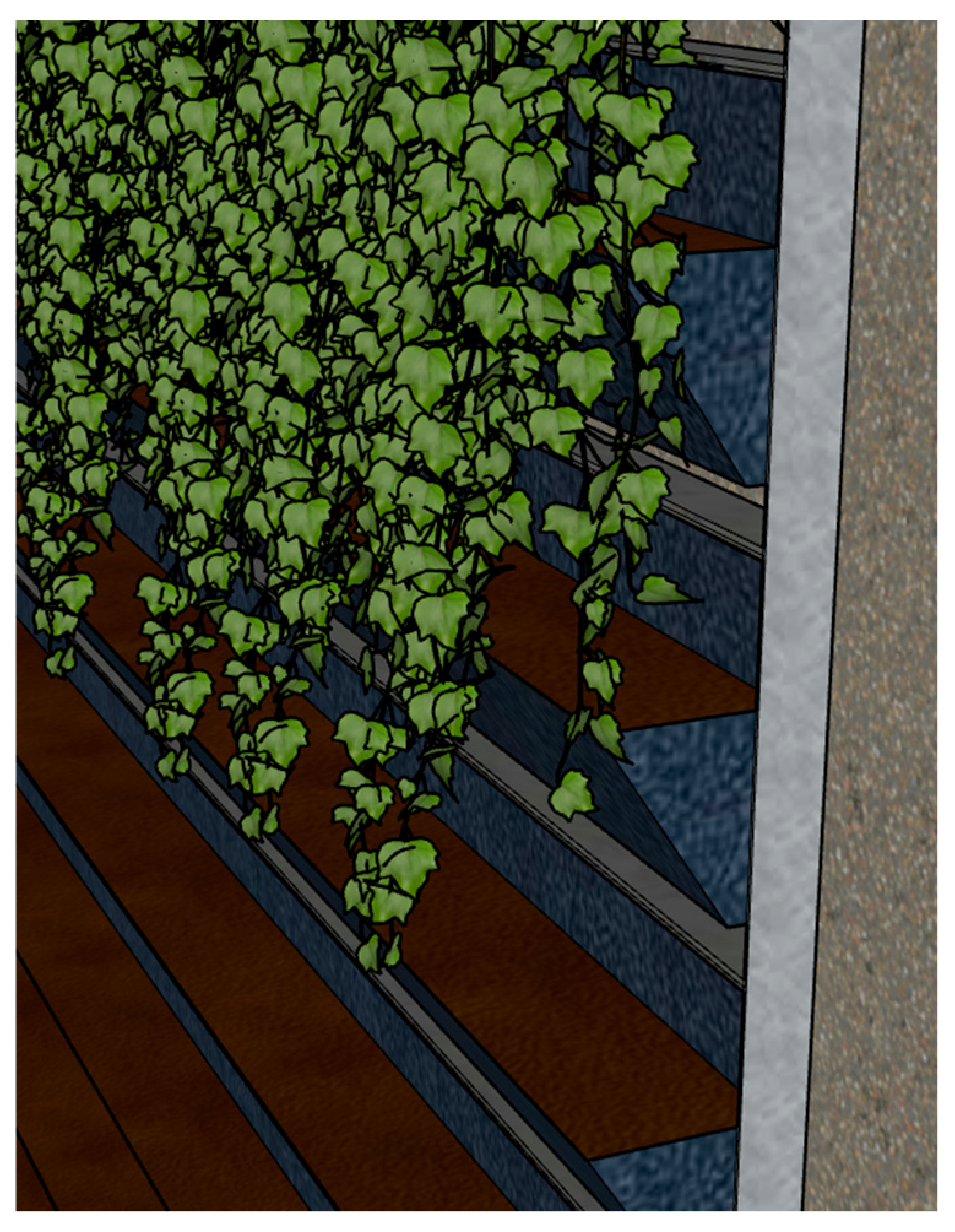
Figure 2.
Detail indicating dimensions of plating troughs ‘Viridis 5045’.
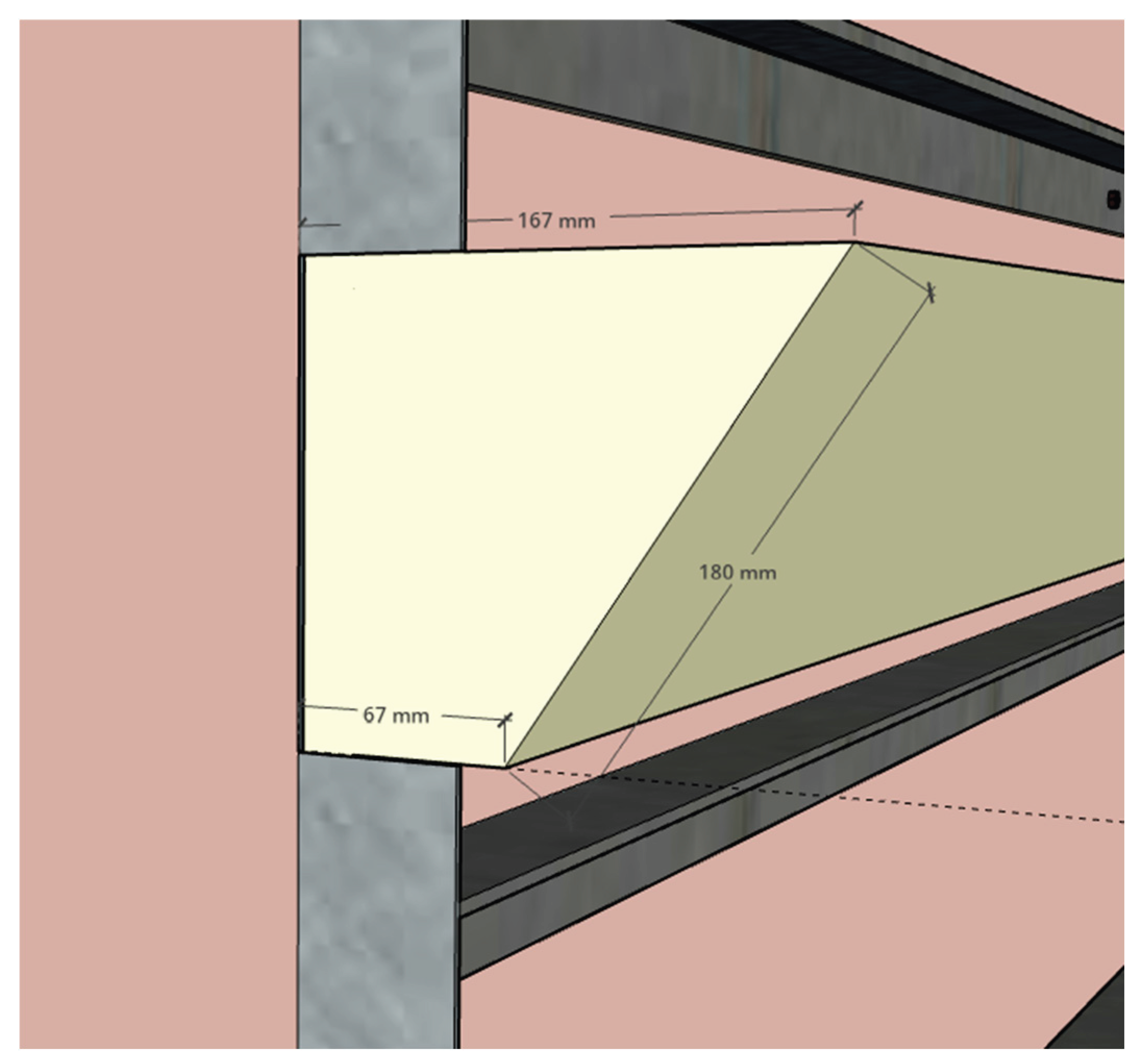

Table 1.
Alignment of Qualitative Themes with Model Design Decisions and QS Cost Considerations.
| Qualitative Theme | Key Insight from Interviews | Design / Model Response | QS & BOQ Implication |
|---|---|---|---|
| High capital and maintenance costs | LWS perceived as premium, additional façade elements | Modular system with standardised components | Transparent separation of capital vs maintenance items |
| Lack of cost benchmarks | Reliance on suppliers and provisional sums | Development of a model BOQ | Reduction of early-stage cost uncertainty |
| Maintenance intensity | High failure risk without sustained upkeep | Design for access, modular replacement | Explicit maintenance allowances in BOQ |
| Structural and technical risk | Load, drainage, waterproofing concerns | Independent support framework and detailing | Inclusion of structural support and waterproofing items |
| Indigenous plant suitability | Microclimate-sensitive plant performance | Selection of WC-adapted indigenous species | Reduced replacement frequency assumptions |
| Limited biodiversity contribution | Ecological impact often overstated | Focus on wellbeing and microclimatic benefits | Avoidance of unsubstantiated biodiversity claims |
| Economic vs social value divergence | Social benefits acknowledged; cost savings questioned | QS-led viability framing | Justification through LCC rather than capital cost |
Disclaimer/Publisher’s Note: The statements, opinions and data contained in all publications are solely those of the individual author(s) and contributor(s) and not of MDPI and/or the editor(s). MDPI and/or the editor(s) disclaim responsibility for any injury to people or property resulting from any ideas, methods, instructions or products referred to in the content. |
© 2026 by the authors. Licensee MDPI, Basel, Switzerland. This article is an open access article distributed under the terms and conditions of the Creative Commons Attribution (CC BY) license.
Copyright: This open access article is published under a Creative Commons CC BY 4.0 license, which permit the free download, distribution, and reuse, provided that the author and preprint are cited in any reuse.


