

Submitted:
28 January 2025
Posted:
29 January 2025
You are already at the latest version
Abstract
The implementation of sustainable construction practices (SCPs) has been identified as a significant approach to promoting and enhancing the sustainability performance of infrastructure projects globally. However, the adoption and implementation of SCPs in low-income countries like Malawi is still in its early stages and has faced several challenges. Therefore, this study aims to provide an empirical analysis of the challenges hindering the implementation of SCPs in building infrastructure projects in Malawi. The study employed a systematic review and a quantitative method with a questionnaire survey among 193 construction professionals within the Malawian construction industry. The data was analysed using descriptive statistics, One-Sample t-test and exploratory factor analysis. The results revealed that higher costs of sustainable building processes, lack of information on sustainable building products, and higher costs of sustainable building materials are the most critical challenges to the implementation of SCPs in Malawi. The factor analysis further revealed that institutional limitation was the most critical component, followed by inadequate technical experience, and the least critical component was financial. This study provides practical insights for policy reforms, robust regulatory frameworks, and well-equipped institutions with the necessary expertise to promote the widespread adoption and successful implementation of SCPs in the construction industry.
Keywords:
Infrastructure
; sustainable construction practices (SCPs)
; construction industry
; Malawi
1. Introduction
Sustainability has become a critical element in today’s modern construction due to the need to minimise the adverse effects of construction activities on the environment, society and the economy. Sustainability in construction entails effectively managing structures, organisations, and resources to meet current and future demands while addressing the challenges that may arise in the short and long term [1]. A key area of concern when considering infrastructure sustainability in the construction industry is sustainable construction practices. According to Ainger and Fenner [2], sustainable construction practices encompass an integrated approach applicable to infrastructure planning and delivery to achieve a sustainable goal of establishing and maintaining a balance between the built and natural environments. For instance, environmentally sustainable construction practices, such as using waste reduction technologies in design and construction and using low carbon emission equipment in buildings, minimise construction waste generation and carbon emissions from buildings [3]. Similarly, incorporating energy-efficient design strategies reduces long-term energy costs [4]. According to Goh et al. [5] implementing social sustainability practices, such as promoting social inclusiveness in the construction sector, enhances project performance by improving worker productivity and promotes positive community interactions. Establishing a conducive and encouraging work environment and actively engaging with local communities and stakeholders is vital in ensuring the timely and cost-effective delivery of projects while meeting quality standards [6].
Furthermore, several countries have developed initiatives to encourage the adoption of sustainable practices in their construction industry. In 1990, the United Kingdom developed the Building Research Establishment Environmental Assessment Method (BREEAM). Since then, BREEAM has become the most extensively utilised criteria globally for evaluating and enhancing the environmental efficiency of buildings [7]. The Leadership in Energy and Environmental Design (LEED) Green Building Rating System was developed by the US Green Building Council to assess new and major renovations of institutional buildings, high-rise commercial buildings, and residential projects [8]. However, the indicators used by all of these building evaluation frameworks primarily emphasise environmental performance, particularly during the operation of the structure.
In Malawi, the government introduced the National Construction Industry Policy 2015 to ensure a transformed, sustainable and quality-driven construction industry. The policy outlined the general guidelines for implementing sustainable practices in infrastructure projects. However, this policy has not been adequately adopted and implemented due to a lack of awareness and knowledge, which impedes the successful completion of sustainable infrastructure projects [9]. This highlights a gap between the policy regulations and the successful implementation of sustainable construction practices (SCPs) in the Malawian construction industry.
Despite all the initiatives highlighted above to encourage and promote sustainable construction practices in infrastructure development, the adoption and implementation face challenges that hinder their widespread. A study by Aghimien et al. [10] compared the challenges of sustainable construction in South Africa and Nigeria and found the most significant challenges to be the high cost of investment and resistance to change by industry professionals. Also, a study by Khan et al.[11] identified the high initial cost of sustainable construction materials and lack of policy regulations as the most significant challenges faced in implementing sustainable procurement in Malaysia. Furthermore, Alsanad [12] discovered that a lack of awareness and government support are the most significant barriers to implementing green practices in Kuwait. Several other studies identified diverse challenges to the adoption of sustainable construction. Djokoto et al. [13] highlighted the inability of stakeholders to let go of traditional construction and project management practices as obstacles to sustainable construction. Pham et al. [14] confirmed that professionals in the construction industry in many developing countries are hesitant to go beyond clients' requirements, making the sector highly complex and challenging to adopt and implement sustainable practices. Based on the findings of Iqbal et al. [15], most clients are inclined to endorse sustainable construction practices only if they align with conventional construction methods. Also, the successful implementation of sustainable construction practices is frequently hampered by clients’ and key stakeholders' resistance to new and innovative construction approaches [16].
According to Dwaikat et al.[17] sustainable construction incurs additional costs ranging from 1% to 25% higher than conventional construction because of the complexity of the architectural layout and green practices. This makes SCPs very expensive to adopt and implement. Darko et al.[18] found that using sustainable building materials increases cost by 3-4% of the contract sum. However, introducing financial incentives such as subsidies and tax exemptions by various governments would promote and encourage the use of these materials. Similarly, the bureaucratic administrative processes involved in approving the use of cutting-edge technologies in building projects affect the implementation of SCPs. Other significant challenges include lack of appropriate building regulations, lack of awareness of sustainable practices, lack of information on sustainable building products and lack of stakeholder collaboration and communication [18,19,20,21].
However, most of these studies focused on high and middle-income countries. They utilised descriptive statistics approaches to rank these barriers, which creates the need for inferential statistical analysis to provide detailed insight and a better understanding of the challenges hindering the implementation of sustainable construction practices in building infrastructure projects in low-income countries like Malawi. Therefore, this study aims to provide an empirical analysis of the challenges hindering the implementation of sustainable construction practices in building infrastructure projects in Malawi. The study seeks to achieve this aim by identifying the critical challenges of sustainable construction practices in building infrastructure and mitigating strategies to enhance widespread adoption and implementation.
This study is essential to bridge this knowledge gap, mainly because a deeper understanding of the challenges affecting the implementation of SCPs is necessary to formulate successful strategies for enhancing sustainable practices in infrastructure projects. It is particularly crucial in low-income countries such as Malawi, where there have been few studies on sustainable construction [22]. This study contributes to the knowledge of sustainable construction by expanding the literature on the key challenges hindering the adoption and implementation of sustainable construction practices.
2. Research Methods
2.1. Research Design and Approach
This study employed a systematic review and a quantitative method with a questionnaire survey to identify the most critical and significant challenges of sustainable construction practices in the construction industry. These challenges were identified through a comprehensive review of pertinent literature. The review includes several literature sources related to the subject area obtained from academic databases such as Web of Science, Scopus, Google Scholar and Science Direct, which are considered to have broad coverage of journal articles, book chapters and conference papers [23]. Several studies were obtained from the search for inclusion in the review using keywords such as sustainable practices, sustainable construction, and barriers. The titles and abstracts of these studies were screened to exclude irrelevant materials. The full text of the screened studies was further examined to ensure compliance with the aim of this study. Twenty-five challenges were shortlisted, and these variables were coded into a questionnaire. A pilot survey was then conducted among five experienced industry professionals to assess and validate the relevance, adequacy and clarity of the variables identified and provide feedback to help refine the questionnaire for onward distribution, thereby ensuring the reliability of the research instrument [24]. Suggested corrections and recommendations from the pilot were reviewed and incorporated into the identified challenges as deemed appropriate in Table 1.
2.2. Population and Sampling
The population of a study comprises all the individuals or groups included in a research capable of providing feedback or being assessed to achieve the aim of a study. The study’s population was determined to be 938, consisting of construction companies, real estate companies, consultants, and government agencies responsible for infrastructure development obtained from the National Construction Industry Council 2023 register. Using a stratified random sampling technique, the sample size was determined to be 273 across all groups within the Malawian construction industry. According to Singh et al.[52] stratified random sampling allows for the generalizability of the research findings.
2.3. Data Collection
The finalised questionnaire was administered to professionals within the Malawian construction industry through online and in-person. A total of 273 questionnaires were sent out to the respondents, and a total of 193 were retrieved, with valid responses obtained, resulting in a response rate of 71%. Liu et al. [53] opined that a response rate of approximately 30% is acceptable for academic research. Hence, a 71% response rate was considered acceptable. The questionnaire was divided into two parts. The first part asked about the characteristics of the sample. The second part requested respondents to evaluate the variables based on their knowledge and experience on the extent to which they agree with the variables as hindrances to the implementation of SCPs using a 5-point Likert scale with 5 = strongly agree, 4 = agree, 3 = undecided, 2 = disagree, and 1 = strongly disagree.
2.4. Method of Data Analysis
Using Statistical Packages for Social Sciences (SPSS) version 22 software, the data obtained was analysed using Cronbach’s alpha, descriptive statistics, a One-Sample t-test and exploratory factor analysis. The one-sample t-test was adopted to examine the relationship between the variables and assess their significance to the Malawian construction industry. In assessing the variables, a mean threshold of 3.5 was set to obtain the most critical challenges relevant to the Malawian construction industry. The test examined whether the mean ratings of the identified challenges to the implementation of SCPs differed significantly from the hypothesised population mean of 3.5. Thus, when a mean score of any of the variables is greater than the sample mean (3.5), it indicates that respondents perceived such variables to be highly relevant and require more attention. Therefore, statistically examining the significance of each challenge against the threshold value would ensure that the challenges identified in this study are specifically applicable to the Malawian construction industry and similar contexts. A study by Lekan et al.[54] used a similar threshold to identify critical areas for improvement in quality management frameworks and their importance for industry advancement.
Additionally, exploratory factor analysis was used to examine the interrelationships among the variables [55]. There are two main approaches to factor analysis: exploratory factor analysis and confirmatory factor analysis. The exploratory factor analysis is utilised to extract information concerning the interrelationships among a set of variables. In contrast, confirmatory factor analysis is employed later in the research process, involving sophisticated and complex approaches used to test specific hypotheses concerning the structural relationships of variables. Factor analysis has been utilised in several studies in the construction sector. Ogunsanya et al.[56] employed factor analysis to determine the barriers to sustainable procurement in the Nigerian construction industry. Additionally, Darko et al.[57] used factor analysis to identify the underlying group barriers to the adoption of green technologies in the Ghanaian construction market.
Similarly, this study employed exploratory factor analysis to reduce or group the critical challenges affecting the implementation of SCPs in the Malawian construction industry. This was deemed necessary so that it can be easy to devise mitigation strategies for all. There are three steps in conducting exploratory factor analysis.
Firstly, assessing the suitability of the data set. The condition for the data suitability lies in the adequacy of the sample size and the strength of correlation among the variables. According to Watkins [58] a sample size of 150 or more is deemed appropriate for factor analysis. Also, on the strength of the interrelationships of the variables, the correlation matrix coefficient should be greater than 0.3. This is confirmed by the Kaiser-Meyer-Olkin (KMO) and Bartlett’s test of sphericity. Factor analysis is deemed appropriate when the Kaiser-Meyer-Olkin (KMO), which measures the sampling adequacy, is greater than the minimum limit of 0.5 and when the significant level of Bartlett’s test of sphericity is 0.05 [59]. Additionally, Cronbach’s alpha, which measures the reliability and the internal consistency of the instrument used to evaluate the variables, should be equal to or greater than 0.70 [60].
Secondly is factor extraction. To support the reliability of the results and interpretation, the average communality of the extracted variables should be greater than 0.60. Also, the communality values in the factor analysis suggest that a significant variable must produce eigenvalues greater than 0.50 at the initial iteration [55]. Lastly is the factor rotation, which provides a clearer picture of the extracted variables. SPSS provides the factors as clusters of variables, allowing the researcher to interpret these clusters. The varimax technique was utilised in this study. The findings and discussion are presented in the subsequent sections.
3. Results and Discussion
3.1. Respondents’ Demographic Information
Results of the background information of respondents obtained from the survey are presented in Table 2. Regarding the highest qualification, more than half of the respondents (76%), obtained a minimum of a bachelor's degree, while only 4% had secondary/senior high school qualifications. Concerning the profession, most participants were architects (24%), 22 % were project managers, 20% were civil engineers, 17% were quantity surveyors, and 3% were procurement officers, which suggests that most building infrastructure projects are carried out by professionals. In terms of experience, more than half of the respondents (62%) had more than 5 years of work experience. Moreover, respondents were from different organisations, with the majority (41%) from construction companies, 28% from consulting firms,16% from real estate companies, and 15% from government agencies. This indicates that participants had significant knowledge and experience required to offer valuable information for the study.
3.2. One-Sample Test of the Challenges Affecting the Adoption and Implementation of SCPs.
The Cronbach's alpha was calculated to determine the internal consistency and reliability of the scale used to rate the various variables. The Cronbach's alpha value was 0.949, suggesting a high level of internal consistency across all the variables analysed and an excellent reliability of the scale used [61]. The one-sample test results are presented in Table 3. To obtain the most significant and critical challenges affecting the adoption and implementation of SCPs in Malawi, a test value of 3.5 was set, as used by Olanrewaju and Okorie [62] in assessing the significance of barriers to BIM implementation in Nigeria.
From Table 3, it can be inferred that the mean for all the variables under consideration was greater than 3.5, indicating a higher level of importance of all the variables as challenges hindering the adoption and implementation of SCPs to the Malawian constriction industry [63]. Higher costs of sustainable building processes was the first-ranked challenge hindering the adoption and implementation of SCPs in Malawi, with a MS value of 3.84, SD value of 0.750, t- value of 6.286, and p-value of 0.000< 0.05. According to Okoye et al. [64] sustainable construction involves higher expenses ranging from 1% to 25% compared to conventional construction due to the sophisticated architectural layouts and the implementation of green practices, which hinder the adoption of SCPs. The second-ranked challenge was the lack of information on sustainable building products (MS = 3.83, SD = 0.762, t = 6.002, p = 0.000 < 0.05). This affirms the findings of Koolwijk et al. [35] that the limited availability of sustainable building products compared to conventional materials in the local markets of developing countries makes it difficult for builders and developers to access information on these products for use. Higher costs of sustainable building materials was also ranked third (MS = 3.83, SD = 0.795, t = 5.749, p = 0.000 < 0.05). Jaffar et al.[65] consented that employing sustainable building materials during project execution is more expensive, leading to additional construction costs. This makes the use of these materials very difficult, considering the economic situation of most low-income countries like Malawi.
The fourth-ranked challenge was a lack of knowledge about sustainable technology (MS = 3.82, SD = 0.722, t = 6.233, p = 0.000 < 0.05). This alluded to Fathalizadeh et al. [66] view that many stakeholders in the construction sector, including engineers, architects, project managers and contractors, lack knowledge of the latest sustainable technologies available for use in building projects. This knowledge gap prevents them from incorporating innovative and eco-friendly solutions into their designs and construction processes. Coming fifth in rank was the inability of stakeholders to let go of traditional construction and project management practices (MS= 3.82, SD = 0.844, t = 5.247, p = 0.000 < 0.05). The reluctance of stakeholders to depart from traditional construction and project management practices poses a significant challenge to adopting and implementing SCPs in Malawi. Conventional construction practices often have deep-rooted cultural and institutional significance, making it difficult for stakeholders to embrace new construction approaches [67]. The need for special materials for sustainable projects (MS = 3.81, SD = 0.721, t = 5.937, p = 0.000 < 0.05) and lack of awareness of sustainable practices (MS = 3.81, SD = 0.814, t = 5.349, p = 0.000 < 0.05) were ranked sixth and seventh respectively. The absence of awareness may arise from multiple factors, such as limited exposure to sustainability concepts, inadequate training and education, and scarcity of easily accessible information and resources, thereby hindering SCPs adoption [19].
Furthermore, limited experience in selecting sustainable construction procedures and techniques (MS=3.80, SD = 0.752, t = 5.601, p = 0.000 < 0.05) was ranked eighth. Clients’ unwillingness to pay extra for green buildings (MS = 3.79, SD = 0.763, t = 5.332, p = 0.000 < 0.05) and lengthy bureaucratic procedures of sustainable building processes with MS = 3.77, SD=0.750, t = 5.039, p = 0.000 < 0.05 were ranked ninth and tenth respectively. According to O’Dwyer et al [68], developing sustainable buildings can be excessively challenging due to the potential use of advanced technology and complex construction methods. Moreover, the administrative processes involved in approving the use of cutting-edge technologies in construction could lengthen project duration.
Similarly, the rest of the variables were ranked chronologically following the same approach, as indicated in Table 3. The least ranked variables in Table 3 were poor communication between stakeholders (MS = 3.66, SD = 0.808, t = 2.716, p = 0.007 < 0.05), inability of contractors to budget for sustainable projects (MS = 3.66, SD = 3.63, t = 2.223, p = 0.027 < 0.05), and poor scope definition of sustainable construction requirements with MS=3.62, SD = 0.782, t = 2.163, p = 0.032 < 0.05 as twenty-third, twenty-fourth and twenty-fifth respectively. Despite being ranked least, the mean scores (3.5) showed that these challenges were still perceived to be important in hindering the successful adoption and implementation of SCPs in Malawi [63].
Additionally, the findings showed that all the challenges were statistically significant among the respondents, as evidenced by the one-sample t-test results with the mean value of all the variables greater than 3.5 and p < 0.05. These challenges hindering the adoption and implementation of SCPs are many and need to be reduced or grouped for direct focus on how to mitigate them and enhance SCPs adoption and implementation in the construction industry. Therefore, factor analysis is employed to reduce the twenty-five challenges into five categories, allowing the industry to develop strategies to mitigate the challenges.
3.3. Exploratory Factor Analysis of the Challenges Affecting the Adoption and Implementation of SCPs.
Factor analysis is a statistical technique used to reduce a large number of measured variables to small components to enhance interpretability [69]. Twenty-five variables evaluating the challenges affecting the adoption and implementation of SCPs were subjected to principal factor (PC) analysis. Before the factor analysis, the suitability of the data was assessed. From Table 4, the Kaiser-Meyer-Olkin (KMO) Measure of Sampling Adequacy was obtained to be 0.915, indicating a high confidence level. This suggests that the variables evaluated in this study have strong and significant correlations [59]. Also, Bartlett's Test of Sphericity was 3121.711 with a significant value of 0.000, confirming the adequacy of the sample used for the factor analysis.
From the results presented in Table 5, the average communality of the variables obtained after the extraction was 0.673, which is greater than 0.60, indicating that the extracted commonalities support the use of factor analysis for the variables [43]. Also, the rotated component matrix results shown in Table 6 resulted in a five-factor component solution. All the variables with factor loadings exceeding 0.300 were retained as they significantly contribute to interpreting the factor category. According to Tavakol and Wetzel [70] a factor loading greater than 0.300 or closer to 1 indicates that the variable strongly influences the component.
The five retained factors explained 67.265% of the total variance obtained, which is greater than the recommended 50% minimum value [71]. From Table 6, the first component explained 45.807% of the variance, the second component explained 6.575%, the third component was 5.675%, the fourth component was 4.705%, and the fifth component explained 4.503% of the variance. The remaining percentage (32.73%) explained the rest of the components, indicating that the five components can adequately represent the data [72]. Moreover, all the components had eigenvalues greater than 1, as shown in Figure 1.
The five components consisting of interrelated variables obtained from the factor analysis were assigned suitable aggregate names representing all the variables within each component, as shown in Table 6. Component 1 consisted of seven interconnected variables collectively named Institutional Limitations. The second component comprises six interrelated variables jointly called Inadequate Technical Experience. The third component had three variables identified collectively as Inadequate Knowledge and information. The fourth component consists of four variables named operational. The last component had five interrelated variables named financial.
Component I: Institutional Limitations
The seven challenges extracted for component 1 were lack of sustainable building codes and policies with factor loading of 0.759, poor feasibility and management of risk (0.703), inability of stakeholders to let go of traditional construction and project management practices (0.684), need for special materials for sustainable projects (0.546), inadequate project planning and coordination (0.535), fragmented guidelines for the sustainable procurement procedure(0.501), and absence of sustainability criteria in the bidding process (0.472). These challenges collectively explain the challenges associated with institutional capacity and coordination, emphasising the need for policy reforms and streamlined processes necessary for adopting and implementing sustainable construction practices in infrastructure projects. The findings agree with the findings of Adabre et al. [73], which highlighted that institutional challenges significantly affect the delivery of sustainable housing in developing countries. The findings suggest the need for the Malawian government and the National Construction Industry Council to develop clear and comprehensive sustainable building codes for the Malawian construction industry, which align with global best practices to increase SCPs adoption and implementation. Also, the government should establish a monitoring and evaluation framework and engage stakeholders in the policy-making process to increase the capacity of institutions to promote SCPs adoption and implementation in the construction industry. Oke et al.[74] opined that the adoption and implementation of SCPs depend on the efforts of the government and institutions responsible for policy regulations and coordination of construction activities. Therefore, addressing the above-mentioned institutional challenges would promote the widespread adoption and implementation of SCPs in the Malawian construction industry.
Component 2: Inadequate Technical Experience
Six challenges were extracted for this component, which includes poor scope definition of sustainable construction requirements (0.804), the inability of contractors to budget sustainable projects (0.764), incomplete sustainability specifications for projects (0.691), difficulty in complying with sustainable building codes and certifications (0.658), limited experience in selecting sustainable construction procedures and techniques (0.648) and the technicalities of the construction process (0.563). This group explains the challenges associated with inadequate technical experience in delivering sustainable projects. This confirms the findings of Ahmed & El-Sayegh [43] which highlighted that a workforce with inadequate technical experience and expertise in handling sustainable construction processes makes it difficult to adopt and implement SCPs in infrastructure project delivery. In Malawi, where the adoption and implementation of SCPs are still minimal, government and industry stakeholders need to organise periodic training sessions on sustainable construction practices for project teams to ensure these practices are integrated into project delivery [9]. Also, rating systems and certifications should be developed to provide clear criteria and guidelines for evaluating the sustainable performance of buildings [75]. Furthermore, there should be proper frameworks and well-defined sustainability guidelines for every project to enable contractors and consultants within the industry to deliver sustainable projects effectively [76].
Component 3: Inadequate Knowledge and Information
This component consists of three critical challenges, including lack of awareness of sustainable practices (0.807), lack of knowledge about sustainable technology (0.772) and lack of information on sustainable building products (0.771). This cluster emphasised the knowledge and information gaps as critical challenges to implementing SCPs. The lack of awareness of sustainable practices (0.807) emerges as the most significant barrier, followed by a lack of knowledge about sustainable technology (0.772), indicating limited stakeholders' understanding of sustainable construction practices within the Malawian construction industry[77]. This could be attributed to inadequate research and development in sustainable construction. Similarly, the lack of information on sustainable building products (0.771) highlights the absence of a comprehensive national construction database or information systems to provide accurate, accessible and reliable information on sustainable construction practices. Marchi et al. [78] proposed providing education and training for industry professionals and implementing regulatory policies and frameworks. Also, improving information systems to provide access to reliable information for construction firms and government departments can significantly advance the adoption and implementation of sustainable practices in the construction sector.
Component 4: Operational
For component 4, four challenges were extracted, which include lack of long-term performance monitoring and maintenance (0.673), lack of stakeholder collaboration (0.665), lengthy bureaucratic procedures of sustainable building processes (0.639) and poor communication between stakeholders (0.580). This collectively explains the operational challenges that hinder the smooth implementation of sustainable construction practices. This agrees with the findings of Adhi & Muslim [79] that the use of sustainable approaches during construction is often faced with a lack of cooperation among stakeholders and lack of administrative support, resulting in fragmented efforts and inefficiencies in the execution of sustainable projects. The findings suggest the need for improved operational frameworks and systems to foster stakeholder collaboration, streamline processes and enhance communication to ensure timely and effective execution of sustainable projects [80]. Furthermore, government and construction professional organisations should implement a system to monitor the sustainable performance of infrastructure projects regularly.
Component 5: Financial
This underlying component comprised five critical challenges, which are clients’ unwillingness to pay extra for green buildings (0.852), higher costs of sustainable building processes (0.841), higher costs of sustainable building materials (0.776), inadequate funding for sustainable projects (0.582), lack of incentives for contractors who incorporate sustainability practices in the project delivery (0.522). This component explained the financial challenges faced in adopting and implementing sustainable construction practices while delivering infrastructure projects. According to Malik et al. [81] the construction industry has faced several challenges, including limited access to financial resources, which affect the sustainable delivery of infrastructure projects. The cost of adopting and implementing SCPs is not only a significant challenge in Malawi but also in other developing and developed countries [72]. The findings confirm that of Ahmed and El-Sayegh [43] who opined that financial issues are the most significant barriers to sustainable construction in the United Arab Emirates. Liu et al.[82] proposed making sustainable construction materials economically viable and affordable and improving upon traditional project management practices would promote the widespread adoption of sustainable construction practices in infrastructure projects. According to [83], providing financial mechanisms and incentives to contractors would help alleviate the higher upfront costs associated with sustainable building projects.
4. Conclusions
The study provided an overview of the concept of sustainable construction practices and their implementation in developing countries. The study further provided an empirical analysis of the challenges hindering the implementation of sustainable construction practices in building infrastructure projects in Malawi. In achieving the aim of the study, 25 challenges were identified through a comprehensive review of pertinent literature.
A survey was conducted among 193 construction professionals in the Malawian construction industry to assess the criticality of the identified challenges in the context of Malawi. The data was analysed using descriptive statistics, One-Sample t-test and exploratory factor analysis.
The results after the analysis revealed that all the 25 challenges were critical and significant to the adoption and implementation of SCPs in the Malawian construction industry. The most critical challenges were higher costs of sustainable building processes, lack of information on sustainable building products and higher costs of sustainable building materials. This suggests the need for the government to prioritise providing financial mechanisms and incentives to contractors who incorporate sustainable practices during project execution to encourage the adoption and implementation of SCPs in the construction industry. Additionally, establishing a national construction database to provide access to reliable information on sustainable practices and conducting awareness campaigns would significantly enhance the adoption and implementation of SCPs in the construction industry.
Furthermore, the results from the factor analysis identified five components: Institutional limitations, Inadequate technical experience, Inadequate knowledge and information, and Operational and Financial challenges. The results also indicated that institutional limitation was the most critical and dominant of the five components, followed by inadequate technical experience, and the last component was financial. This suggests a need for policy reforms and capacity building of industry professionals to develop supportive regulatory frameworks and equip institutions with the necessary expertise to promote the adoption and successful implementation of sustainable construction practices in Malawi. Additionally, government and professional bodies should provide training programs tailored to SCPs to enhance professional skills and bridge the knowledge gap among industry professionals. This would allow policymakers and industry stakeholders to develop effective strategies to promote the widespread adoption and successful implementation of SCPs in the construction industry. Moreover, the findings of this study not only contribute to filling the knowledge gap concerning sustainable construction practices challenges in low-income countries but also provide useful information to advocates and international organisations interested in promoting SCPs in Malawi to ultimately achieve a more resilient and sustainable infrastructure development.
Despite achieving the aim of the study, the study still faced some limitations. The study focused on building infrastructure and the sample size was relatively small, which could affect the generalisability of the findings. Future studies can be done with a larger sample size and in different infrastructure projects. Moreover, future studies could analyse the difference between the SCPs implementation challenges in Malawi and many developed countries.
Author Contributions
For A.M. conceptualised and initiated the research project, conducted the literature review and data analysis and drafted the manuscript. P.B.K.M., T.M. and N.K. supervised the research project and reviewed and commented on and improved the manuscript. All authors have read and agreed to the published version of the manuscript.
Funding
This research was funded by the European Union through the Africa Sustainable Infrastructure Mobility (ASIM) scholarship program: 624204-PANAF-1-2020-1-ZA-PANAF-MOBAF.
Data Availability Statement
The data presented in this study are available from the corresponding author upon request. The data are not publicly available due to ethical and privacy reasons.
Conflicts of Interest
The authors declare no conflicts of interest, and the funders had no role in the design or undertaking of this study.
References
- M. J. Epstein, Making sustainability work: Best practices in managing and measuring corporate social, environmental and economic impacts. Routledge, 2018.
- C. Ainger and R. Fenner, Sustainable infrastructure: principles into practice. ICE publishing, 2014.
- L. Loizou, K. Barati, X. Shen, and B. Li, “Quantifying advantages of modular construction: Waste generation,” Buildings, vol. 11, no. 12, p. 622, 2021. [CrossRef]
- F. Ganda and C. C. Ngwakwe, “Role of energy efficiency on sustainable development,” Environmental Economics, vol. 5, no. 1, pp. 86–99, 2014.
- C. S. Goh, J. N. Ting, and A. Bajracharya, “Exploring social sustainability in the built environment,” Advances in Environmental and Engineering Research, vol. 4, no. 1, pp. 1–15, 2023. [CrossRef]
- P. Willbroad Sihela and D. Nkengbeza, “Factors Affecting Project Success at Katima Mulilo Town Council in the Zambezi Region of Namibia: A Study of the Build Together Project,” Global Journal of Human Resource Management, vol. 9, no. 2, pp. 1–30, 2021.
- L. B. Cole, G. Lindsay, and A. Akturk, “Green building education in the green museum: design strategies in eight case study museums,” International Journal of Science Education, Part B, vol. 10, no. 2, pp. 149–165, 2020. [CrossRef]
- Y. Zhang et al., “A survey of the status and challenges of green building development in various countries,” Sustainability, vol. 11, no. 19, p. 5385, 2019. [CrossRef]
- R. Hershey, M. Kalina, I. Kafodya, and E. Tilley, “A sustainable alternative to traditional building materials: assessing stabilised soil blocks for performance and cost in Malawi,” International Journal of Sustainable Engineering, vol. 16, no. 1, pp. 155–165, 2023. [CrossRef]
- D. O. Aghimien, C. O. Aigbavboa, and W. D. Thwala, “Microscoping the challenges of sustainable construction in developing countries,” Journal of Engineering, Design and Technology, vol. 17, no. 6, pp. 1110–1128, 2019. [CrossRef]
- M. A. Khan, S. M. Wabaidur, M. R. Siddiqui, A. A. Alqadami, and A. H. Khan, “Silico-manganese fumes waste encapsulated cryogenic alginate beads for aqueous environment de-colorization,” J Clean Prod, vol. 244, p. 118867, 2020. [CrossRef]
- S. AlSanad, “Awareness, drivers, actions, and barriers of sustainable construction in Kuwait,” Procedia Eng, vol. 118, pp. 969–983, 2015. [CrossRef]
- S. D. Djokoto, J. Dadzie, and E. Ohemeng-Ababio, “Barriers to sustainable construction in the Ghanaian construction industry: consultants perspectives,” J Sustain Dev, vol. 7, no. 1, p. 134, 2014. [CrossRef]
- H. Pham and S.-Y. Kim, “The effects of sustainable practices and managers’ leadership competences on sustainability performance of construction firms,” Sustain Prod Consum, vol. 20, pp. 1–14, 2019. [CrossRef]
- M. Iqbal, J. Ma, N. Ahmad, K. Hussain, M. S. Usmani, and M. Ahmad, “Sustainable construction through energy management practices in developing economies: an analysis of barriers in the construction sector,” Environmental Science and Pollution Research, vol. 28, pp. 34793–34823, 2021. [CrossRef]
- S. Tokbolat, F. Karaca, S. Durdyev, and R. K. Calay, “Construction professionals’ perspectives on drivers and barriers of sustainable construction,” Environ Dev Sustain, vol. 22, pp. 4361–4378, 2020. [CrossRef]
- L. Dwaikat, K. A.-E. and Buildings, and undefined 2016, “Green buildings cost premium: A review of empirical evidence,” Elsevier, vol. 110, pp. 396–403, 2016. [CrossRef]
- A. Darko, C. Zhang, and A. P. C. Chan, “Drivers for green building: A review of empirical studies,” Habitat Int, vol. 60, pp. 34–49, 2017. [CrossRef]
- J. Ayarkwa, D.-G. J. Opoku, P. Antwi-Afari, and R. Y. M. Li, “Sustainable building processes’ challenges and strategies: The relative important index approach,” Clean Eng Technol, vol. 7, p. 100455, 2022. [CrossRef]
- A. Davies, M. Dodgson, and D. Gann, “Dynamic Capabilities in Complex Projects: The Case of London Heathrow Terminal 5,” Project Management Journal, vol. 47, no. 2, pp. 26–46, Apr. 2016. [CrossRef]
- H. D. J. Mwamvani, C. Amoah, and E. Ayesu-Koranteng, “Causes of road projects’ delays: a case of Blantyre, Malawi,” Built Environment Project and Asset Management, vol. 12, no. 2, pp. 293–308, 2022.
- M. Singh and E. Schoenmakers, “Comparative Impact Analysis of Cyclone Ana in the Mozambique Channel Using Satellite Data,” Applied Sciences, vol. 13, no. 7, p. 4519, 2023. [CrossRef]
- A. Martín-Martín, M. Thelwall, E. Orduna-Malea, and E. Delgado López-Cózar, “Google Scholar, Microsoft Academic, Scopus, Dimensions, Web of Science, and OpenCitations’ COCI: a multidisciplinary comparison of coverage via citations,” Scientometrics, vol. 126, no. 1, pp. 871–906, 2021.
- X. Zhao, B.-G. Hwang, and J. Lim, “Job satisfaction of project managers in green construction projects: Constituents, barriers, and improvement strategies,” J Clean Prod, vol. 246, p. 118968, 2020.
- N. Wang, S. Yao, G. Wu, and X. Chen, “The role of project management in organisational sustainable growth of technology-based firms,” Technol Soc, vol. 51, pp. 124–132, 2017. [CrossRef]
- M. Franco, P. Pawar, X. W.-E. and buildings, and undefined 2021, “Green building policies in cities: A comparative assessment and analysis,” Elsevier, Accessed: Nov. 22, 2023. [Online]. Available: https://www.sciencedirect.com/science/article/pii/S0378778820323690.
- L. B. Robichaud and V. S. Anantatmula, “Greening project management practices for sustainable construction,” Journal of management in engineering, vol. 27, no. 1, pp. 48–57, 2011. [CrossRef]
- B.-G. Hwang and W. J. Ng, “Project management knowledge and skills for green construction: Overcoming challenges,” International journal of project management, vol. 31, no. 2, pp. 272–284, 2013. [CrossRef]
- A. Barbosa, … M. S.-I. J. of, and undefined 2021, “Configurations of project management practices to enhance the performance of open innovation R&D projects,” Elsevier, Accessed: Nov. 22, 2023. [Online]. Available: https://www.sciencedirect.com/science/article/pii/S0263786320300454.
- A. J. G. Silvius and M. de Graaf, “Exploring the project manager’s intention to address sustainability in the project board,” J Clean Prod, vol. 208, pp. 1226–1240, 2019.
- A. P. C. Chan, A. Darko, and E. E. Ameyaw, “Strategies for promoting green building technologies adoption in the construction industry—An international study,” Sustainability, vol. 9, no. 6, p. 969, 2017. [CrossRef]
- A. Opoku, J. Deng, A. Elmualim, S. Ekung, A. A. Hussien, and S. B. Abdalla, “Sustainable procurement in construction and the realisation of the sustainable development goal (SDG) 12,” J Clean Prod, vol. 376, p. 134294, 2022. [CrossRef]
- C. J. Kibert, Sustainable construction: green building design and delivery. John Wiley & Sons, 2016.
- J.-P. Schöggl, R. J. Baumgartner, and D. Hofer, “Improving sustainability performance in early phases of product design: A checklist for sustainable product development tested in the automotive industry,” J Clean Prod, vol. 140, pp. 1602–1617, 2017. [CrossRef]
- J. S. J. Koolwijk, C. J. van Oel, J. W. F. Wamelink, and R. Vrijhoef, “Collaboration and integration in project-based supply chains in the construction industry,” Journal of Management in Engineering, vol. 34, no. 3, p. 04018001, 2018. [CrossRef]
- T. Häkkinen and K. Belloni, “Barriers and drivers for sustainable building,” Building Research & Information, vol. 39, no. 3, pp. 239–255, 2011. [CrossRef]
- Y. J.-T. Zidane and B. Andersen, “The top 10 universal delay factors in construction projects,” International Journal of Managing Projects in Business, vol. 11, no. 3, pp. 650–672, 2018. [CrossRef]
- M. Alshawi and I. Faraj, “Integrated construction environments: technology and implementation,” Construction Innovation, vol. 2, no. 1, pp. 33–51, 2002.
- S. Argyroudis, S. Mitoulis, E. Chatzi, … J. B.-C. R., and undefined 2022, “Digital technologies can enhance climate resilience of critical infrastructure,” Elsevier, Accessed: Nov. 22, 2023. [Online]. Available: https://www.sciencedirect.com/science/article/pii/S2212096321001169.
- M. R. Delos Reyes, M. A. M. Gamboa, and R. R. B. Rivera, “The Philippines’ National Urban Policy for achieving sustainable, resilient, greener and smarter cities,” Developing National Urban Policies: Ways Forward to Green and Smart Cities, pp. 169–203, 2020.
- O. Akinradewo, C. Aigbavboa, D. Aghimien, A. Oke, and B. Ogunbayo, “Modular method of construction in developing countries: the underlying challenges,” International Journal of Construction Management, vol. 23, no. 8, pp. 1344–1354, 2023. [CrossRef]
- B.-G. Hwang, L. Zhu, and J. S. H. Tan, “Green business park project management: Barriers and solutions for sustainable development,” J Clean Prod, vol. 153, pp. 209–219, 2017. [CrossRef]
- S. Ahmed and S. El-Sayegh, “The challenges of sustainable construction projects delivery–evidence from the UAE,” Architectural Engineering and Design Management, vol. 18, no. 3, pp. 299–312, 2022. [CrossRef]
- M. Suprapto, H. L. M. Bakker, H. G. Mooi, and M. J. C. M. Hertogh, “How do contract types and incentives matter to project performance?,” International journal of project management, vol. 34, no. 6, pp. 1071–1087, 2016. [CrossRef]
- Y. Kang, C. Kim, H. Son, S. Lee, and C. Limsawasd, “Comparison of preproject planning for green and conventional buildings,” J Constr Eng Manag, vol. 139, no. 11, p. 04013018, 2013. [CrossRef]
- S. M. El-Sayegh, S. Manjikian, A. Ibrahim, A. Abouelyousr, and R. Jabbour, “Risk identification and assessment in sustainable construction projects in the UAE,” Taylor & FrancisSM El-Sayegh, S Manjikian, A Ibrahim, A Abouelyousr, R JabbourInternational Journal of Construction Management, 2021•Taylor & Francis, vol. 21, no. 4, pp. 327–336, 2018. [CrossRef]
- A. Al-Hajj and K. Hamani, “Material waste in the UAE construction industry: Main causes and minimization practices,” Architectural engineering and design management, vol. 7, no. 4, pp. 221–235, 2011. [CrossRef]
- A. A. E. Othman, N. A.- Organization, & technology, and undefined 2021, “A framework for achieving sustainability by overcoming the challenges of the construction supply chain during the design process,” hrcak.srce.hrA Ahmed Ezzat Othman, N AlNassarOrganization, technology & management in construction: an international, 2021•hrcak.srce.hr, vol. 13, pp. 2391–2415, 2021. [CrossRef]
- M. Tafazzoli, E. Mousavi, and S. Kermanshachi, “Opportunities and challenges of green-lean: An integrated system for sustainable construction,” Sustainability, vol. 12, no. 11, p. 4460, 2020. [CrossRef]
- A. Bohari, M. Skitmore, B. Xia, M. T.-J. of cleaner production, and undefined 2017, “Green oriented procurement for building projects: Preliminary findings from Malaysia,” Elsevier, vol. 148, pp. 690–700, 2017. [CrossRef]
- T. O. Olawumi and D. W. M. Chan, “Key drivers for smart and sustainable practices in the built environment,” Engineering, Construction and Architectural Management, vol. 27, no. 6, pp. 1257–1281, 2020. [CrossRef]
- A. S. Singh and M. B. Masuku, “Sampling techniques & determination of sample size in applied statistics research: An overview,” International Journal of economics, commerce and management, vol. 2, no. 11, pp. 1–22, 2014.
- Z. Liu, Y. Lu, T. Nath, Q. Wang, R. L. K. Tiong, and L. L. C. Peh, “Critical success factors for BIM adoption during construction phase: A Singapore case study,” Engineering, Construction and Architectural Management, vol. 29, no. 9, pp. 3267–3287, 2022. [CrossRef]
- A. Lekan, A. Clinton, E. Stella, E. Moses, and O. Biodun, “Construction 4.0 application: Industry 4.0, internet of things and lean construction tools’ application in quality management system of residential building projects,” Buildings, vol. 12, no. 10, p. 1557, 2022.
- A. S. Beavers, J. W. Lounsbury, J. K. Richards, S. W. Huck, G. J. Skolits, and S. L. Esquivel, “Practical considerations for using exploratory factor analysis in educational research,” Practical Assessment, Research, and Evaluation, vol. 18, no. 1, p. 6, 2019.
- O. A. Ogunsanya, C. O. Aigbavboa, D. W. Thwala, and D. J. Edwards, “Barriers to sustainable procurement in the Nigerian construction industry: an exploratory factor analysis,” International Journal of Construction Management, vol. 22, no. 5, pp. 861–872, 2022. [CrossRef]
- A. Darko, A. P. C. Chan, Y. Yang, M. Shan, B.-J. He, and Z. Gou, “Influences of barriers, drivers, and promotion strategies on green building technologies adoption in developing countries: The Ghanaian case,” J Clean Prod, vol. 200, pp. 687–703, 2018. [CrossRef]
- M. W. Watkins, “Exploratory factor analysis: A guide to best practice,” Journal of black psychology, vol. 44, no. 3, pp. 219–246, 2018. [CrossRef]
- M. A. Nasiru and N. H. Md Dahlan, “Exploratory factor analysis in establishing dimensions of intervention programmes among obstetric vesicovaginal fistula victims in Northern Nigeria,” Journal of Critical Reviews, vol. 7, no. 8, pp. 1554–1560, 2020.
- L. Sürücü and A. Maslakci, “Validity and reliability in quantitative research,” Business & Management Studies: An International Journal, vol. 8, no. 3, pp. 2694–2726, 2020.
- K. S. Taber, “The use of Cronbach’s alpha when developing and reporting research instruments in science education,” Res Sci Educ, vol. 48, pp. 1273–1296, 2018.
- O. I. Olanrewaju and V. N. Okorie, “Exploring the Qualities of a Good Leader Using Principal Component Analysis.,” Journal of Engineering, Project & Production Management, vol. 9, no. 2, 2019. [CrossRef]
- J. O. Toyin and M. C. Mewomo, “An investigation of barriers to the application of building information modelling in Nigeria,” Journal of Engineering, Design and Technology, vol. 21, no. 2, pp. 442–468, 2023. [CrossRef]
- P. U. Okoye, K. C. Okolie, and I. A. Odesola, “Risks of implementing sustainable construction practices in the Nigerian building industry,” Construction Economics and Building, vol. 22, no. 1, pp. 21–46, 2022. [CrossRef]
- N. Jaffar, N. I. N. Affendi, I. Mohammad Ali, N. Ishak, and A. S. Jaafar, “Barriers of green building technology adoption in Malaysia: contractors’ perspective,” International Journal of Academic Research in Business and Social Sciences, vol. 12, no. 8, pp. 1552–1560, 2022. [CrossRef]
- A. Fathalizadeh, M. R. Hosseini, S. S. Vaezzadeh, D. J. Edwards, I. Martek, and S. Shooshtarian, “Barriers to sustainable construction project management: the case of Iran,” Smart and Sustainable Built Environment, vol. 11, no. 3, pp. 717–739, 2022. [CrossRef]
- I. Ngoma, I. Kafodya, P. Kloukinas, V. Novelli, J. Macdonald, and K. Goda, “Building classification and seismic vulnerability of current housing construction in Malawi,” Malawi Journal of Science and Technology, vol. 11, no. 1, pp. 57–72, 2019.
- E. O’Dwyer, I. Pan, S. Acha, and N. Shah, “Smart energy systems for sustainable smart cities: Current developments, trends and future directions,” Appl Energy, vol. 237, pp. 581–597, 2019.
- M. Gunduz and E. A. Abdi, “Motivational factors and challenges of cooperative partnerships between contractors in the construction industry,” Journal of Management in Engineering, vol. 36, no. 4, p. 04020018, 2020. [CrossRef]
- M. Tavakol and A. Wetzel, “Factor Analysis: a means for theory and instrument development in support of construct validity,” Int J Med Educ, vol. 11, p. 245, 2020. [CrossRef]
- L. Hatcher and N. O’Rourke, A step-by-step approach to using SAS for factor analysis and structural equation modeling. Sas Institute, 2013.
- D. Willar, E. V. Y. Waney, D. D. G. Pangemanan, and R. E. G. Mait, “Sustainable construction practices in the execution of infrastructure projects: The extent of implementation,” Smart and Sustainable Built Environment, vol. 10, no. 1, pp. 106–124, 2021.
- M. A. Adabre, A. P. C. Chan, and A. Darko, “Interactive effects of institutional, economic, social and environmental barriers on sustainable housing in a developing country,” Build Environ, vol. 207, p. 108487, 2022. [CrossRef]
- A. E. Oke, A. O. Oyediran, G. Koriko, and L. M. Tang, “Carbon trading practices adoption for sustainable construction: A study of the barriers in a developing country,” Sustainable Development, vol. 32, no. 1, pp. 1120–1136, 2024. [CrossRef]
- L. Mendoza-del Villar, E. Oliva-Lopez, O. Luis-Pineda, A. Benešová, J. Tupa, and J. A. Garza-Reyes, “Fostering economic growth, social inclusion & sustainability in Industry 4.0: a systemic approach,” Procedia Manuf, vol. 51, pp. 1755–1762, 2020. [CrossRef]
- A. E. Ikudayisi, A. P. C. Chan, A. Darko, and O. B. Adegun, “Integrated design process of green building projects: a review towards assessment metrics and conceptual framework,” Journal of Building Engineering, vol. 50, p. 104180, 2022. [CrossRef]
- A. K. Agyekum, F. D. K. Fugar, K. Agyekum, I. Akomea-Frimpong, and H. Pittri, “Barriers to stakeholder engagement in sustainable procurement of public works,” Engineering, Construction and Architectural Management, vol. 30, no. 9, pp. 3840–3857, Nov. 2023. [CrossRef]
- L. Marchi, E. Antonini, and S. Politi, “Green building rating systems (GBRSs),” Encyclopedia, vol. 1, no. 4, pp. 998–1009, 2021. [CrossRef]
- S. Akbari, M. Sheikhkhoshkar, F. P. Rahimian, H. B. El Haouzi, M. Najafi, and S. Talebi, “Sustainability and building information modelling: Integration, research gaps, and future directions,” Autom Constr, vol. 163, p. 105420, 2024. [CrossRef]
- R. Martínez-Peláez et al., “Role of digital transformation for achieving sustainability: mediated role of stakeholders, key capabilities, and technology,” Sustainability, vol. 15, no. 14, p. 11221, 2023. [CrossRef]
- A. Malik, P. B. K. Mbewe, N. Kavishe, T. Mkandawire, and P. Adetoro, “Sustainable Construction Practices in Building Infrastructure Projects: The Extent of Implementation and Drivers in Malawi,” Sustainability, vol. 16, no. 24, p. 10825, 2024. [CrossRef]
- Z. Liu, L. Jiang, M. Osmani, and P. Demian, “Building information management (BIM) and blockchain (BC) for sustainable building design information management framework,” Electronics (Basel), vol. 8, no. 7, p. 724, 2019. [CrossRef]
- P. T. Quang and D. P. Thao, “Analyzing the green financing and energy efficiency relationship in ASEAN,” The Journal of Risk Finance, vol. 23, no. 4, pp. 385–402, 2022. [CrossRef]
Figure 1.
Scree plot.
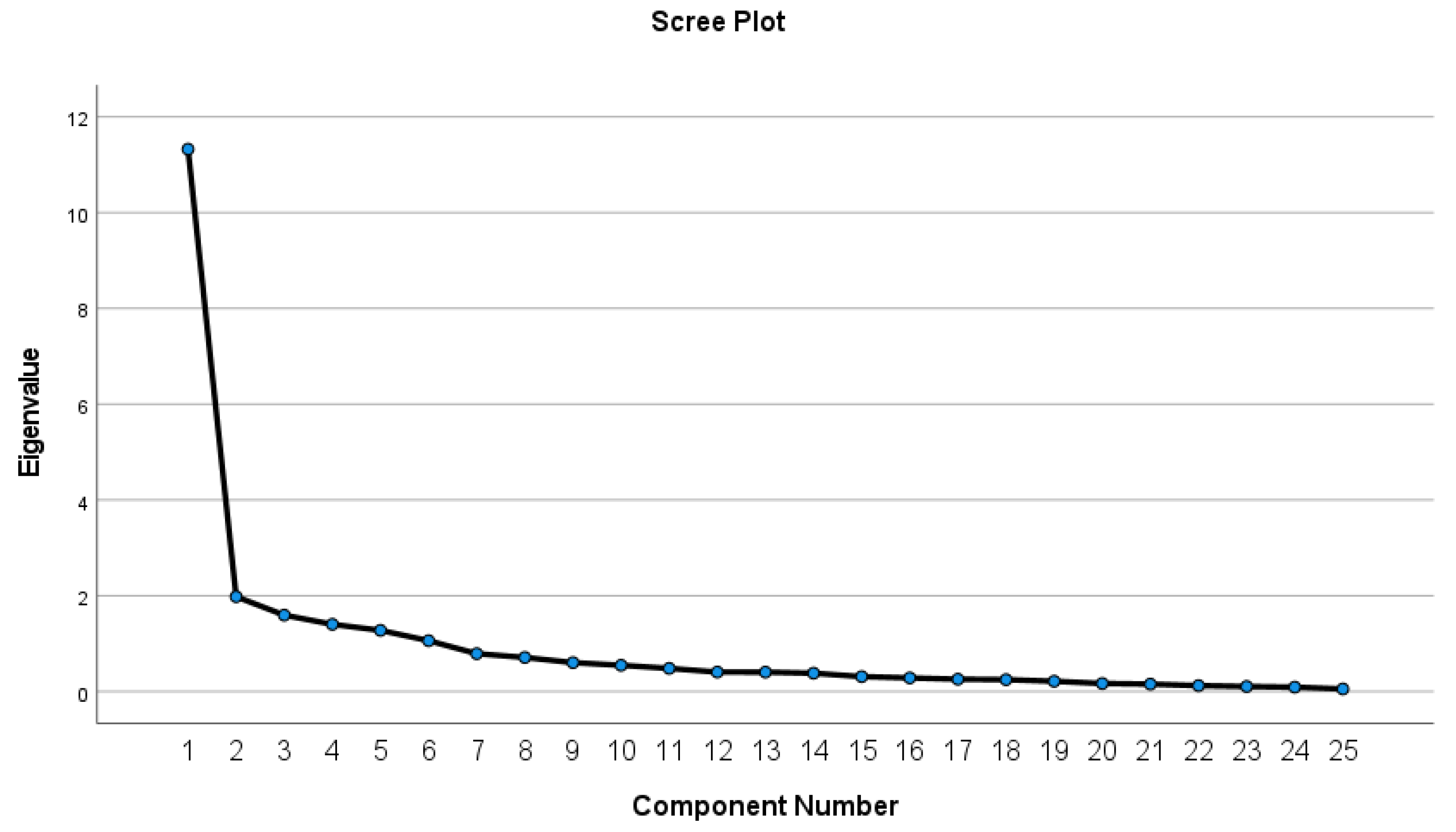

Table 1.
Summary of challenges associated with the adoption and implementation of SCPs in infrastructure projects.
Table 1.
Summary of challenges associated with the adoption and implementation of SCPs in infrastructure projects.
| Code | Critical challenges | Reference |
| CH 1 | Higher costs of sustainable building materials | [18,25] |
| CH 2 | The technicalities of the construction process | [26,27] |
| CH 3 | Lengthy bureaucratic procedures of sustainable building processes | [28] |
| CH 4 | lack of knowledge about sustainable technology | [29,30,31] |
| CH 5 | Lack of awareness of sustainable practices | [19,32,33] |
| CH 6 | lack of information on sustainable building products | [34,35,36] |
| CH 7 | Lack of stakeholder Collaboration | [37,38] |
| CH 8 | Lack of Long-Term Performance Monitoring and Maintenance | [39] |
| CH 9 | Poor communication between stakeholders | [20] |
| CH 10 | Higher costs of sustainable building processes. | [17] |
| CH 11 | Inadequate project planning and coordination | [21,40] |
| CH 12 | Inability the inability of stakeholders to let go of traditional construction and project management practices | [41] |
| CH 13 | Poor feasibility and management of risk | [42] |
| CH 14 | Lack of sustainability building codes and policies | [36] |
| CH 15 | Limited experience in selecting sustainable construction procedures and techniques | [43] |
| CH 16 | Absence of sustainability criteria in the bidding process | [43] |
| CH 17 | Inadequate funding for sustainable projects | [43] |
| CH 18 | Lack of incentives for contractors who incorporate sustainability practices in the project delivery | [44] |
| CH 19 | Inability the inability of contractors to budget sustainable projects | [27] |
| CH 20 | Poor scope definition of sustainable construction requirements | [45] |
| CH 21 | Incomplete sustainability specifications for projects | [46,47] |
| CH 22 | Difficulty in complying with sustainable building codes and certifications | [46,48] |
| CH 23 | Clients’ unwillingness to pay extra for green buildings | [13,49] |
| CH 24 | Fragmented guidelines for sustainable procurement procedure | [50] |
| CH 25 | Need for special materials for sustainable projects | [51] |
Table 2.
Demographics of respondents.
| Demographics of respondents | Responses per demographic (n=193) | Frequency (%) |
| Highest Qualification | ||
| Secondary/Senior High | 8 | 4 |
| Diploma | 46 | 24 |
| Degree | 105 | 54 |
| Master's Degree | 27 | 14 |
| PhD | 7 | 4 |
| Job Description | ||
| Architect | 46 | 24 |
| Project Manager | 43 | 22 |
| Civil Engineer | 38 | 20 |
| Quantity Surveyors | 32 | 17 |
| Specialist Engineer | 18 | 9 |
| Builder | 9 | 5 |
| Procurement officer | 7 | 3 |
| Work Experience | ||
| 1-5 years | 74 | 38 |
| 6-10 years | 68 | 35 |
| 11-15 years | 42 | 22 |
| 16-20 years | 7 | 4 |
| 21 years and above | 2 | 1 |
| Kind of Firm | ||
| Construction Company | 79 | 41 |
| Consultant | 55 | 28 |
| Real Estate Company | 31 | 16 |
| Government Agency | 28 | 15 |
Table 3.
One-Sample test of challenges affecting the adoption and implementation of sustainable construction practices.
Table 3.
One-Sample test of challenges affecting the adoption and implementation of sustainable construction practices.
| Test Value (µ = 3.5) | |||||||||
| Code | Challenges | MS | SD | t-value | Df | Sig. (2-tailed) | MD | R | Significant (P<0.05) |
| CH1 | Higher costs of sustainable building processes. | 3.84 | 0.750 | 6.286 | 192 | 0.000 | 0.339 | 1 | Yes |
| CH2 | Lack of information on sustainable building products | 3.83 | 0.762 | 6.002 | 192 | 0.000 | 0.329 | 2 | Yes |
| CH3 | Higher costs of sustainable building materials | 3.83 | 0.795 | 5.749 | 192 | 0.000 | 0.329 | 3 | Yes |
| CH4 | Lack of knowledge about sustainable technology | 3.82 | 0.722 | 6.233 | 192 | 0.000 | 0.324 | 4 | Yes |
| CH5 | Inability of stakeholders to let go of traditional construction and project management practices | 3.82 | 0.844 | 5.247 | 192 | 0.000 | 0.319 | 5 | Yes |
| CH6 | Need for special materials for sustainable projects | 3.81 | 0.721 | 5.937 | 192 | 0.000 | 0.308 | 6 | Yes |
| CH7 | Lack of awareness of sustainable practices | 3.81 | 0.814 | 5.349 | 192 | 0.000 | 0.313 | 7 | Yes |
| CH8 | Limited experience in selecting sustainable construction procedures and techniques | 3.80 | 0.752 | 5.601 | 192 | 0.000 | 0.303 | 8 | Yes |
| CH9 | Clients unwillingness to pay extra for green buildings | 3.79 | 0.763 | 5.332 | 192 | 0.000 | 0.293 | 9 | Yes |
| CH10 | Lengthy bureaucratic procedures of sustainable building processes | 3.77 | 0.750 | 5.039 | 192 | 0.000 | 0.272 | 10 | Yes |
| CH11 | Inadequate project planning and coordination | 3.77 | 0.765 | 4.843 | 192 | 0.000 | 0.267 | 11 | Yes |
| CH12 | Fragmented guidelines for the sustainable procurement procedure | 3.76 | 0.713 | 4.999 | 192 | 0.000 | 0.256 | 12 | Yes |
| CH13 | Lack of Stakeholder Collaboration | 3.76 | 0.718 | 5.061 | 192 | 0.000 | 0.262 | 13 | Yes |
| CH14 | Lack of Long-Term Performance Monitoring and Maintenance | 3.76 | 0.762 | 4.674 | 192 | 0.000 | 0.256 | 14 | Yes |
| CH15 | Inadequate Funding for sustainable projects | 3.76 | 0.675 | 5.276 | 192 | 0.000 | 0.256 | 15 | Yes |
| CH16 | Lack of sustainable building codes and policies | 3.76 | 0.828 | 4.305 | 192 | 0.000 | 0.256 | 16 | Yes |
| CH17 | Difficulty in complying with sustainable building codes and certifications | 3.74 | 0.733 | 4.569 | 192 | 0.000 | 0.241 | 17 | Yes |
| CH18 | The technicalities of the construction process | 3.74 | 0.826 | 4.051 | 192 | 0.000 | 0.241 | 18 | Yes |
| CH19 | Poor feasibility and management of risk | 3.73 | 0.797 | 4.019 | 192 | 0.000 | 0.231 | 19 |
Yes |
| CH20 | Absence of sustainability criteria in the bidding process | 3.72 | 0.739 | 4.139 | 192 | 0.000 | 0.220 | 20 | Yes |
| CH21 | Lack of incentives for contractors who incorporate sustainability practices in the project delivery | 3.72 | 0.753 | 4.062 | 192 | 0.000 | 0.220 | 21 | Yes |
| CH22 | Incomplete sustainability specifications for projects | 3.66 | 0.755 | 2.908 | 192 | 0.004 | 0.158 | 22 | Yes |
| CH23 | Poor Communication between stakeholders | 3.66 | 0.808 | 2.716 | 192 | 0.007 | 0.158 | 23 | Yes |
| CH24 | Inability of contractors to budget Sustainable projects | 3.63 | 0.826 | 2.223 | 192 | 0.027 | 0.132 | 24 | Yes |
| CH25 | Poor scope definition of sustainable construction requirements | 3.62 | 0.782 | 2.163 | 192 | 0.032 | 0.122 | 25 | Yes |
MS = mean score; SD = standard deviation; Df= Degree of freedom; MD = Mean Difference; Sig = Level of significance (95%); R = Ranking.
Table 4.
KMO, Bartlett’s Test of Sphericity and Cronbach's Alpha.
| Kaiser-Meyer-Olkin Measure of Sampling Adequacy. | 0.915 | |
| Bartlett's Test of Sphericity | Approx. Chi-Square | 3121.711 |
| Df | 300 | |
| Sig. | 0.000 | |
| Cronbach's Alpha | 0.949 | |
Table 5.
Commonalities.
| Code | Factors | Initial | Extraction |
| CH1 | Higher costs of sustainable building processes. | 1.000 | 0.552 |
| CH2 | Lack of information on sustainable building products | 1.000 | 0.817 |
| CH3 | Higher costs of sustainable building materials | 1.000 | 0.806 |
| CH4 | Lack of knowledge about sustainable technology | 1.000 | 0.771 |
| CH5 | Inability of stakeholders to let go of traditional construction and project management practices | 1.000 | 0.631 |
| CH6 | Need for special materials for sustainable projects | 1.000 | 0.643 |
| CH7 | Lack of awareness of sustainable practices | 1.000 | 0.802 |
| CH8 | Limited experience in selecting sustainable construction procedures and techniques | 1.000 | 0.629 |
| CH9 | Clients unwillingness to pay extra for green buildings | 1.000 | 0.600 |
| CH10 | Lengthy bureaucratic procedures of sustainable building processes | 1.000 | 0.490 |
| CH11 | Inadequate project planning and coordination | 1.000 | 0.647 |
| CH12 | Fragmented guidelines for the sustainable procurement procedure | 1.000 | 0.662 |
| CH13 | Lack of Stakeholder Collaboration | 1.000 | 0.687 |
| CH14 | Lack of Long-Term Performance Monitoring and Maintenance | 1.000 | 0.618 |
| CH15 | Inadequate Funding for sustainable projects | 1.000 | 0.621 |
| CH16 | Lack of sustainable building codes and policies | 1.000 | 0.743 |
| CH17 | Difficulty in complying with sustainable building codes and certifications | 1.000 | 0.666 |
| CH18 | The technicalities of the construction process | 1.000 | 0.742 |
| CH19 | Poor feasibility and management of risk | 1.000 | 0.665 |
| CH20 | Absence of sustainability criteria in the bidding process | 1.000 | 0.572 |
| CH21 | Lack of incentives for contractors who incorporate sustainability practices in the project delivery | 1.000 | 0.694 |
| CH22 | Incomplete sustainability specifications for projects | 1.000 | 0.704 |
| CH23 | Poor Communication between stakeholders | 1.000 | 0.585 |
| CH24 | Inability of contractors to budget Sustainable projects | 1.000 | 0.702 |
| CH25 | Poor scope definition of sustainable construction requirements | 1.000 | 0.767 |
| Extraction Method: Principal Component Analysis. | |||
Table 6.
Rotated Component Matrix.
| Component | % of Variance | ||||||
| 1 | 2 | 3 | 4 | 5 | |||
| Institutional Limitations | 45.807 | ||||||
| CH16 | Lack of sustainable building codes and policies | 0.759 | |||||
| CH19 | Poor feasibility and management of risk | 0.703 | |||||
| CH5 | Inability of stakeholders to let go of traditional construction and project management practices | 0.684 | |||||
| CH6 | Need for special materials for sustainable projects | 0.546 | |||||
| CH11 | Inadequate project planning and coordination | 0.535 | |||||
| CH12 | Fragmented guidelines for the sustainable procurement procedure | 0.501 | |||||
| CH20 | Absence of sustainability criteria in the bidding process | 0.472 | |||||
| Inadequate Technical Experience | 6.575 | ||||||
| CH25 | Poor scope definition of sustainable construction requirements | 0.804 | |||||
| CH24 | Inability of contractors to budget Sustainable projects | 0.764 | |||||
| CH22 | Incomplete sustainability specifications for projects | 0.691 | |||||
| CH17 | Difficulty in complying with sustainable building codes and certifications | 0.658 | |||||
| CH8 | Limited experience in selecting sustainable construction procedures and techniques | 0.648 | |||||
| CH18 | The technicalities of the construction process | 0.563 | |||||
| Inadequate Knowledge and information | 5.675 | ||||||
| CH7 | Lack of awareness of sustainable practices | 0.807 | |||||
| CH4 | Lack of knowledge about sustainable technology | 0.772 | |||||
| CH2 | Lack of information on sustainable building products | 0.771 | |||||
| Operational | 4.705 | ||||||
| CH14 | Lack of Long-Term Performance Monitoring and Maintenance | 0.673 | |||||
| CH13 | Lack of Stakeholder Collaboration | 0.665 | |||||
| CH10 | Lengthy bureaucratic procedures of sustainable building processes | 0.639 | |||||
| CH23 | Poor Communication between stakeholders | 0.580 | |||||
| Financial | 4.503 | ||||||
| CH9 | Clients’ unwillingness to pay extra for green buildings | 0.852 | |||||
| CH1 | Higher costs of sustainable building processes. | 0.841 | |||||
| CH3 | Higher costs of sustainable building materials | 0.776 | |||||
| CH15 | Inadequate Funding for sustainable projects | 0.582 | |||||
| CH21 | Lack of incentives for contractors who incorporate sustainability practices in the project delivery | 0.522 | |||||
Extraction Method: Principal Component Analysis; Rotation converged in 11 iterations.
Disclaimer/Publisher’s Note: The statements, opinions and data contained in all publications are solely those of the individual author(s) and contributor(s) and not of MDPI and/or the editor(s). MDPI and/or the editor(s) disclaim responsibility for any injury to people or property resulting from any ideas, methods, instructions or products referred to in the content. |
© 2025 by the authors. Licensee MDPI, Basel, Switzerland. This article is an open access article distributed under the terms and conditions of the Creative Commons Attribution (CC BY) license (http://creativecommons.org/licenses/by/4.0/).
Copyright: This open access article is published under a Creative Commons CC BY 4.0 license, which permit the free download, distribution, and reuse, provided that the author and preprint are cited in any reuse.


