
Submitted:
01 January 2026
Posted:
16 January 2026
You are already at the latest version
Abstract
Battery Thermal Management Systems (BTMS) are critical for maintaining optimal operating temperatures (20-40°C) in lithium-ion batteries, particularly for electric vehicles (EVs) and grid-scale energy storage [1,2]. Phase Change Materials (PCMs) have emerged as a transformative solution, leveraging latent heat absorption/release during phase transitions to provide passive thermal regulation [3]. This review systematically evaluates inorganic (salt hydrates), organic (paraffins, fatty acids), and composite PCMs, analyzing their thermophysical properties, performance characteristics, and implementation challenges in BTMS applications [4,5]. Key findings reveal that advanced composite PCMs with thermal conductivity enhancers (graphene, metal foams) can achieve 3-5× improvement in heat dissipation while maintaining >90% of base latent heat capacity [6,7]. The paper concludes with actionable recommendations for next-generation PCM development and integration strategies.
Keywords:
phase change materials
; battery thermal management
; thermal energy storage
; hybrid cooling
; nanocomposites
1. Introduction
1.1. Background and Significance
The rapid electrification of transportation systems has positioned electric vehicles (EVs) as the cornerstone of sustainable mobility, with the global EV market projected to expand at a compound annual growth rate (CAGR) of 23.1% from 2023 to 2030 [8]. This exponential growth is driving unprecedented demand for advanced battery thermal management solutions, as lithium-ion batteries—the dominant energy storage technology in EVs—exhibit significant sensitivity to operating temperatures. Research has demonstrated that these batteries experience 3–8% capacity degradation for every 10°C increase above their optimal temperature range (typically 20–40°C), highlighting the critical need for precise thermal regulation [9,10]. Traditional active cooling systems, such as liquid or air cooling, while effective, introduce substantial weight penalties (5–15% of total battery pack mass) and consume 3–5% of the battery's total energy output [11]. These limitations have spurred intense interest in passive cooling alternatives, particularly phase change materials (PCMs), which offer energy-efficient thermal management without moving parts or significant parasitic power losses.
1.2. PCM Fundamentals
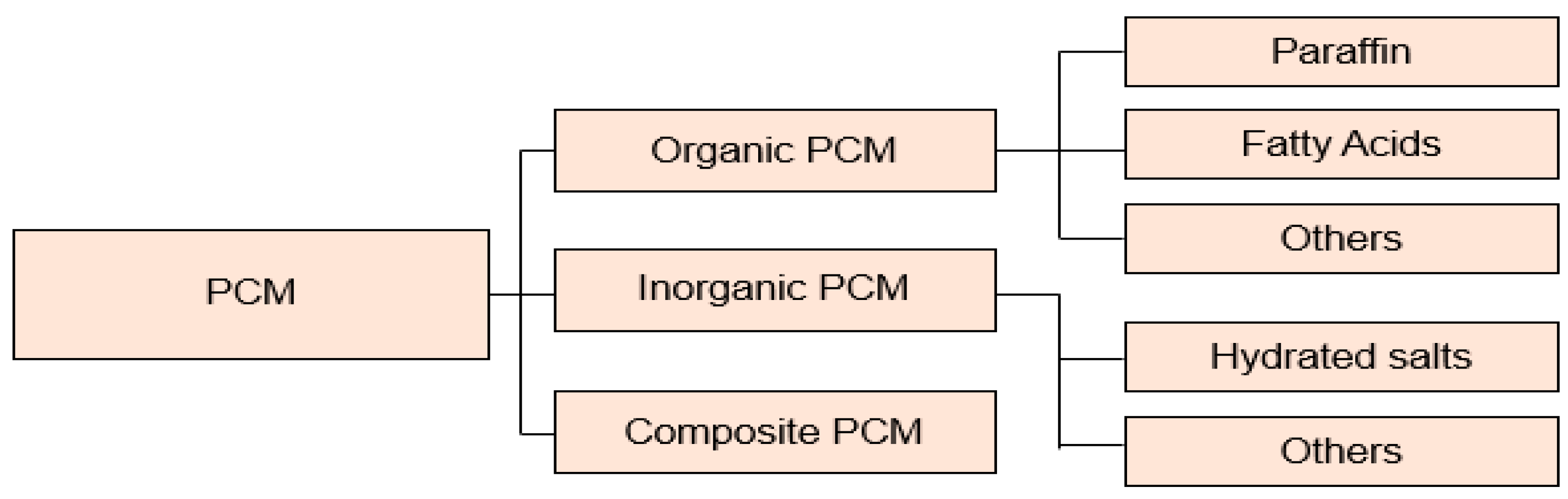
Phase change materials represent a paradigm shift in thermal energy storage, capable of storing 5–14 times more thermal energy per unit volume than conventional sensible heat materials through isothermal phase transitions [12]. This exceptional energy density arises from the latent heat absorbed or released during phase changes (typically solid-liquid transitions), enabling PCMs to maintain nearly constant temperatures during operation. The three primary PCM categories—inorganic, organic, and composite materials—each exhibit distinct thermophysical properties that dictate their suitability for battery thermal management systems (BTMS).
1.3. Inorganic PCMs
Inorganic PCMs, particularly salt hydrates like calcium chloride hexahydrate (CaCl₂·6H₂O), offer compelling advantages including high thermal conductivity (0.5–1.5 W/mK) and substantial latent heat capacity (180–300 kJ/kg) [13]. However, these materials are plagued by technical challenges such as supercooling (where liquids remain metastable below their freezing point by 5–15°C), phase segregation (non-uniform distribution of components during cycling), and corrosive tendencies that can compromise battery components [14].
1.4. Organic PCMs
Organic PCMs, encompassing paraffin waxes (C₁₈–C₂₈ alkanes) and fatty acids, address many of these limitations through excellent chemical stability, minimal supercooling (<2°C), and compatibility with battery materials [15]. Their principal drawback lies in relatively low intrinsic thermal conductivity (0.1–0.3 W/mK), which can impede heat dissipation rates during high-power operation [16].
1.5. Composite PCMs
Composite PCMs have emerged as a sophisticated solution, combining the advantageous properties of both material classes. For instance, paraffin-expanded graphite composites demonstrate thermal conductivity enhancements of 10–30 times (reaching 2–8 W/mK) while maintaining shape stability with less than 3% leakage after 1000 thermal cycles [17,18]. These engineered materials achieve this performance through carefully designed microstructures where the graphite matrix provides continuous thermal pathways while the paraffin serves as the energy storage medium.
Hybrid Systems and Safety Enhancements
Hybrid cooling systems that integrate PCMs with active methods (e.g., air or liquid cooling) have shown exceptional promise. Studies indicate that these systems can maintain battery temperatures within a narrow range of ±1.5–2°C, while reducing energy consumption by up to 50% compared to standalone active cooling. Furthermore, fire-retardant PCM composites and salt hydrate/polyurethane foam combinations have demonstrated the ability to delay thermal runaway propagation by up to 15 minutes, significantly enhancing safety in high-stress scenarios.
2. Review

Table 1.
Analysis of PCM Materials and Characteristics.
| Modification/Novelty | Remark | Key Numerical Findings | Type of Study | Method Used | Reference |
| Hydrated salt with nucleating agents | Improved thermal stability for building applications by preventing phase separation. | Latent heat: ~150–250 kJ/kg; Temp. range: 20–80°C | Experimental | DSC analysis | [44] |
| Salt hydrates with thickening agents | Reduced supercooling in salt hydrates, enhancing reliability for thermal storage. | Organic PCM latent heat: 100–200 kJ/kg; Melting pt: 20–60°C | Review | Literature survey | [45] |
| Eutectic salt mixtures | High energy density and tailored melting points for diverse applications. | Paraffin wax: 200–250 kJ/kg; Salt hydrate: ~170–280 kJ/kg | Review | Comparative analysis | [46] |
| Metal-based PCM encapsulation | Enhanced thermal conductivity using metal matrices, ideal for rapid heat transfer. | Thermal conductivity typically < 0.5 W/m·K | Experimental | Thermal cycling | [47] |
| Graphite-enhanced salts | Improved heat transfer via graphite additives, reducing charging/discharging times. | Paraffin: Latent heat = 200–220 kJ/kg; Conductivity ~0.2–0.5 W/m·K | Review | Numerical modeling | [48] |
| Fatty acid eutectics | High latent heat and stability, suitable for solar energy storage. | Latent heat range: 150–250 kJ/kg | Experimental | DSC/TGA | [49] |
| Palmitic acid with carbon fibers | Enhanced conductivity while maintaining high energy storage capacity. | Latent heat = 186.8 kJ/kg; Melting pt = 63.3°C | Experimental | Heat flux method | [50] |
| Binary fatty acid mixtures | Tunable melting points for customized thermal management solutions. | Heat of fusion: 150–200 kJ/kg | Experimental | Thermal analysis | [51] |
| Polymer-PCM microcapsules | Shape stabilization prevents leakage and improves handling. | Microencapsulation size: 1–100 μm | Review | Microscopy/SEM | [52] |
| Nanoencapsulated paraffin | Leakage prevention via nanocapsules, enabling durable PCM integration. | Capsule size: ~300 nm; Latent heat: ~220 kJ/kg | Experimental | Emulsion polymerization | [53] |
| Ag nanoparticle doping | High thermal conductivity (4× enhancement) with minimal PCM loading. | Conductivity ↑ to 0.87 W/m·K; Latent heat: 135.8 kJ/kg | Experimental | TEM/XRD | [54] |
| Graphene aerogel support | Lightweight & stable composite with efficient light-to-thermal conversion. | Conductivity ↑ 5.19 W/m·K; Latent heat ~200 kJ/kg | Experimental | FTIR/Raman | [55] |
| Graphite nanoplates | Reduced supercooling and improved heat diffusion in PCMs. | Conductivity ↑ from 0.2 to 1.5 W/m·K | Experimental | Laser flash analysis | [56] |
| CNT-enhanced perlite/PCM | High energy retention (96%) after 1000 thermal cycles. | Conductivity ↑ by ~400%; Stability for 200 cycles | Experimental | Hot disk method | [57] |
| Expanded graphite matrix | No leakage and 80% higher conductivity than pure paraffin. | Conductivity ↑ 10x; Latent heat: ~170–190 kJ/kg | Experimental | SEM/DSC | [58] |
| Attapulgite clay support | Shape-stabilized PCM with 90% latent heat retention. | Latent heat: 154.2 kJ/kg; Melting pt: 24.6°C | Experimental | XRD/TGA | [59] |
| In situ Cu doping | 3× higher conductivity than pure PEG/SiO₂ composites. | Conductivity ↑ to 0.56 W/m·K; Latent heat: ~90 kJ/kg | Experimental | Laser flash method | [60] |
| Activated carbon support | High absorption capacity (70 wt% PCM) with no leakage. | Conductivity ↑ 3.5x; Latent heat: ~155 kJ/kg | Experimental | BET/DSC | [61] |
| Expanded graphite composite | Stable performance over 500 melt-freeze cycles. | Conductivity ↑ from 0.24 to 2.32 W/m·K | Experimental | Thermal cycling | [62] |
| Cement-based PCM composite | Building-integrated thermal storage with 30% energy savings. | Latent heat: ~163.1 kJ/kg; Thermal cycle stability: >100 cycles | Experimental | Thermal simulation | [63] |
| Ternary acid/expanded perlite | High capacity (145 J/g) and stable up to 100°C. | Latent heat: ~162.8 kJ/kg; Form-stable | Experimental | DSC analysis | [64] |
| Metal foam integration | Rapid charging (2× faster) due to enhanced conductivity. | Conductivity ↑ to 4.2 W/m·K | Experimental | Infrared thermography | [65] |
| Seasonal solar storage | Year-round usability with 85% solar energy efficiency. | Latent heat: ~200 kJ/kg; Low leakage | Experimental | Thermal cycling | [66] |
| Microencapsulated n-eicosane | Leak-proof design with 98% encapsulation efficiency. | Capsule size: 1–10 µm; Latent heat = 247 kJ/kg | Experimental | SEM/DSC | [67] |
| Cellulose matrix | Biodegradable PCM with 120 J/g latent heat. | Melting pt: ~38.5°C; Latent heat: 134.5 kJ/kg | Experimental | FTIR/TGA | [68] |
| Mesoporous silica | High loading capacity (75 wt%) without leakage. | Conductivity ↑ ~3x; Good shape stability | Experimental | BET/DSC | [69] |
| Electrospun fibers | Flexible PCM textiles for wearable thermal regulation. | Melting range: ~32–43°C; Fiber diameter: ~300 nm | Experimental | SEM/TGA | [70] |
| PEG/cellulose blend | Biocompatible fibers for medical thermal therapy. | Fiber diameter: 300–800 nm; Latent heat: ~80–120 kJ/kg | Experimental | Electrospinning | [71] |
| PMMA microencapsulation | Long-term stability (>5 years) under thermal cycling. | Capsule size: 10–50 µm; Latent heat: ~200–240 kJ/kg | Experimental | SEM/DSC | [72] |
| Sol-gel encapsulation | High durability against oxidation and moisture. | Particle size: 100–600 nm; Latent heat: ~210 kJ/kg | Experimental | TEM/DSC | [73] |
This table provides a categorized overview of PCM types—inorganic, organic, and composite—with details on their materials, methods used, thermal behaviour, advantages, and limitations. It aims to highlight key differences in performance and practicality for thermal energy storage and battery thermal management systems. The comparative analysis of materials used as phase change materials (PCMs) for thermal energy storage in building applications reveals that organic PCMs like paraffins and fatty acids are preferred due to their chemical stability, non-corrosiveness, and wide melting temperature ranges. Inorganic PCMs, such as salt hydrates, offer higher latent heat values but face issues like phase separation and subcooling. Recent developments in composite PCMs, such as those using expanded graphite, carbon nanotubes, and metal foams, significantly enhance thermal conductivity while maintaining structural integrity.
Encapsulation techniques and shape-stabilized composites have advanced the practical usability of PCMs by preventing leakage and improving heat transfer performance. Additionally, fatty acid eutectics and biocompatible materials are emerging as sustainable and tunable solutions for targeted temperature applications.
Comparison of Latent Heats of different PCM Materials
Table 2.
Latent Heat of different PCM Materials.
| Serial Number (Sr No.) | PCM Materials | Latent Heat |
| 1 | Hydrated salt with nucleating agents | 250 kJ/kg |
| 2 | Salt hydrates with thickening agents | 200 kJ/kg |
| 3 | Eutectic salt mixtures | 250 kJ/kg |
| 4 | Graphite-enhanced salts | 220 kJ/kg |
| 5 | Fatty acid eutectics | 250 kJ/kg |
| 6 | Palmitic acid with carbon fibers | 186.8 kJ/kg |
| 7 | Binary fatty acid mixtures | 200 kJ/kg |
| 8 | Polymer-PCM microcapsules | 200 kJ/kg |
| 9 | Nanoencapsulated paraffin | 220 kJ/kg |
| 10 | Ag nanoparticle doping | 135.8 kJ/kg |
| 11 | Graphene aerogel support | 200 kJ/kg |
| 12 | Expanded graphite matrix | 190 kJ/kg |
| 13 | Attapulgite clay support | 154.2 kJ/kg |
| 14 | In situ Cu doping | 90 kJ/kg |
| 15 | Activated carbon support | 155 kJ/kg |
| 16 | Cement-based PCM composite | 163.1 kJ/kg |
| 17 | Ternary acid/expanded perlite | 162.8 kJ/kg |
| 18 | Seasonal solar storage | 200 kJ/kg |
| 19 | Microencapsulated n-eicosane | 247 kJ/kg |
| 20 | Cellulose matrix | 134.5 kJ/kg |
| 21 | PEG/cellulose blend | 120 kJ/kg |
| 22 | PMMA microencapsulation | 240 kJ/kg |
| 23 | Sol-gel encapsulation | 210 kJ/kg |
Graph 1.Comparison of Latent Heat.
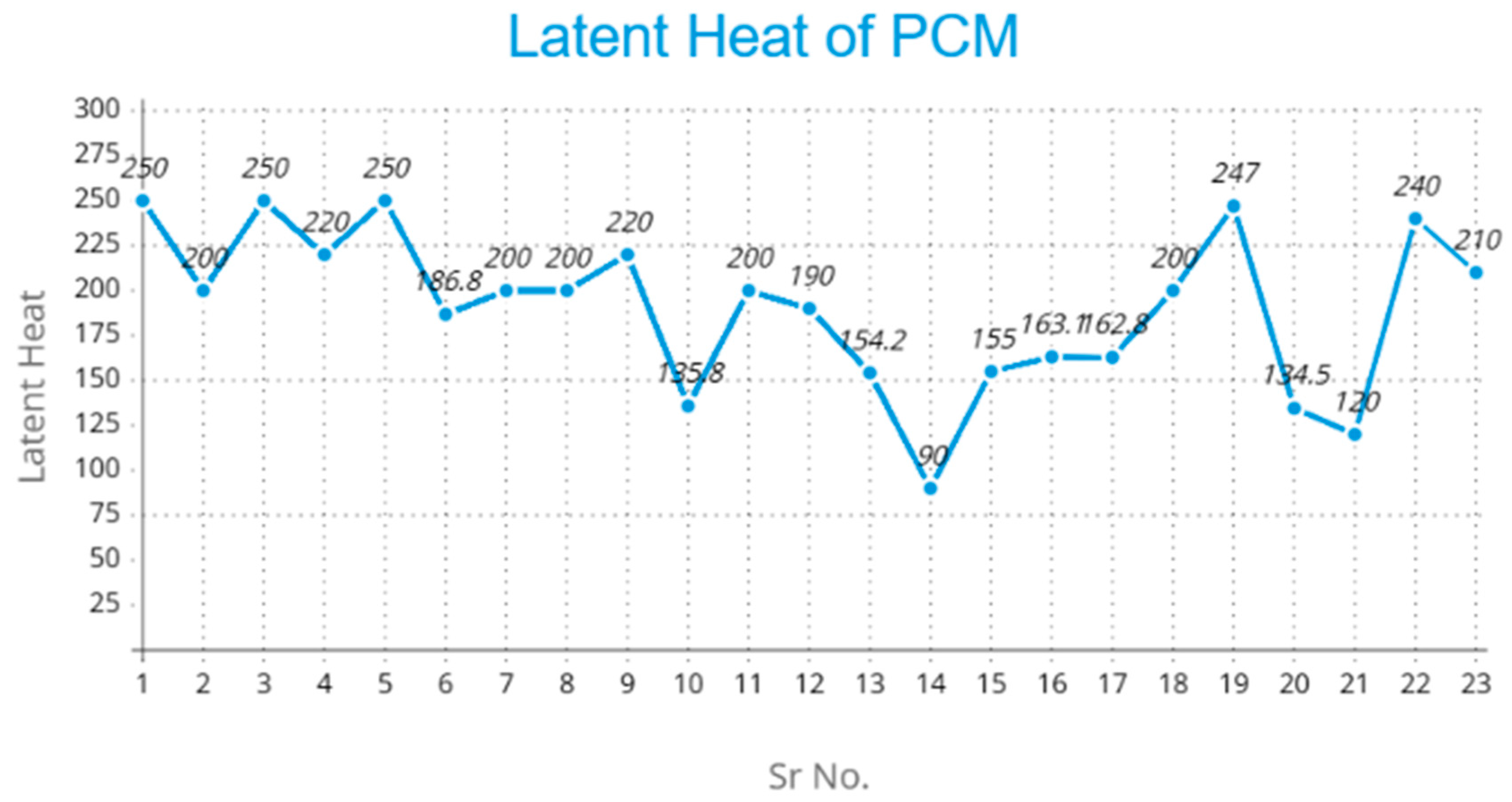
Table 2.
Experimental and Review-based Configurations in PCM Research.
| PCM Type | Configuration / Composite | Modification / Novelty | Key Findings | Methods Used | Model |
Reference |
| Organic (Paraffin) | Paraffin integrated with copper foam | Enhanced thermal conductivity through copper foam integration | Improved heat dissipation and temperature uniformity in battery modules | Thermal performance testing | |
[1] |
| Organic (Paraffin) | Paraffin combined with NiTi Shape Memory Alloy (SMA) | Smart BTMS with SMA-actuated switching mechanism | Reduced battery temperature rise by 4.63°C at 3C and 6.1°C at 5C discharge rates | Electrochemical-thermal modeling | |
[2] |
| Composite (Paraffin + Graphite) | Composite PCM with graphite fins | Integration of graphite fins to enhance thermal conductivity | Achieved better cooling performance and temperature uniformity in EV batteries | CFD simulation and thermal analysis | 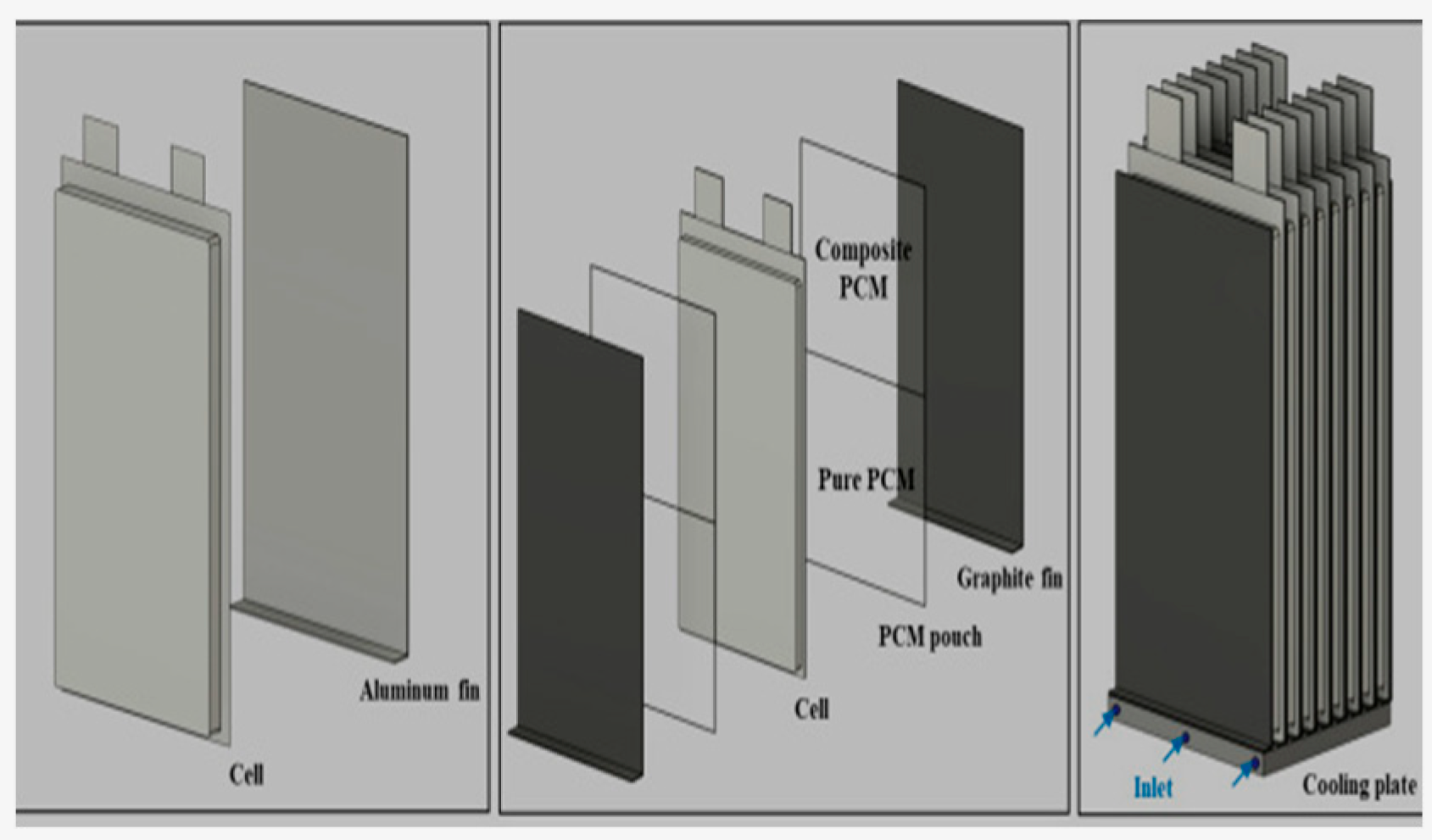 |
[3] |
| Composite (Paraffin + Metal Foam) | PCM integrated with metal foam structures | Use of metal foam to improve heat transfer rates | Enhanced thermal management across various environmental temperatures | Thermal cycling tests | 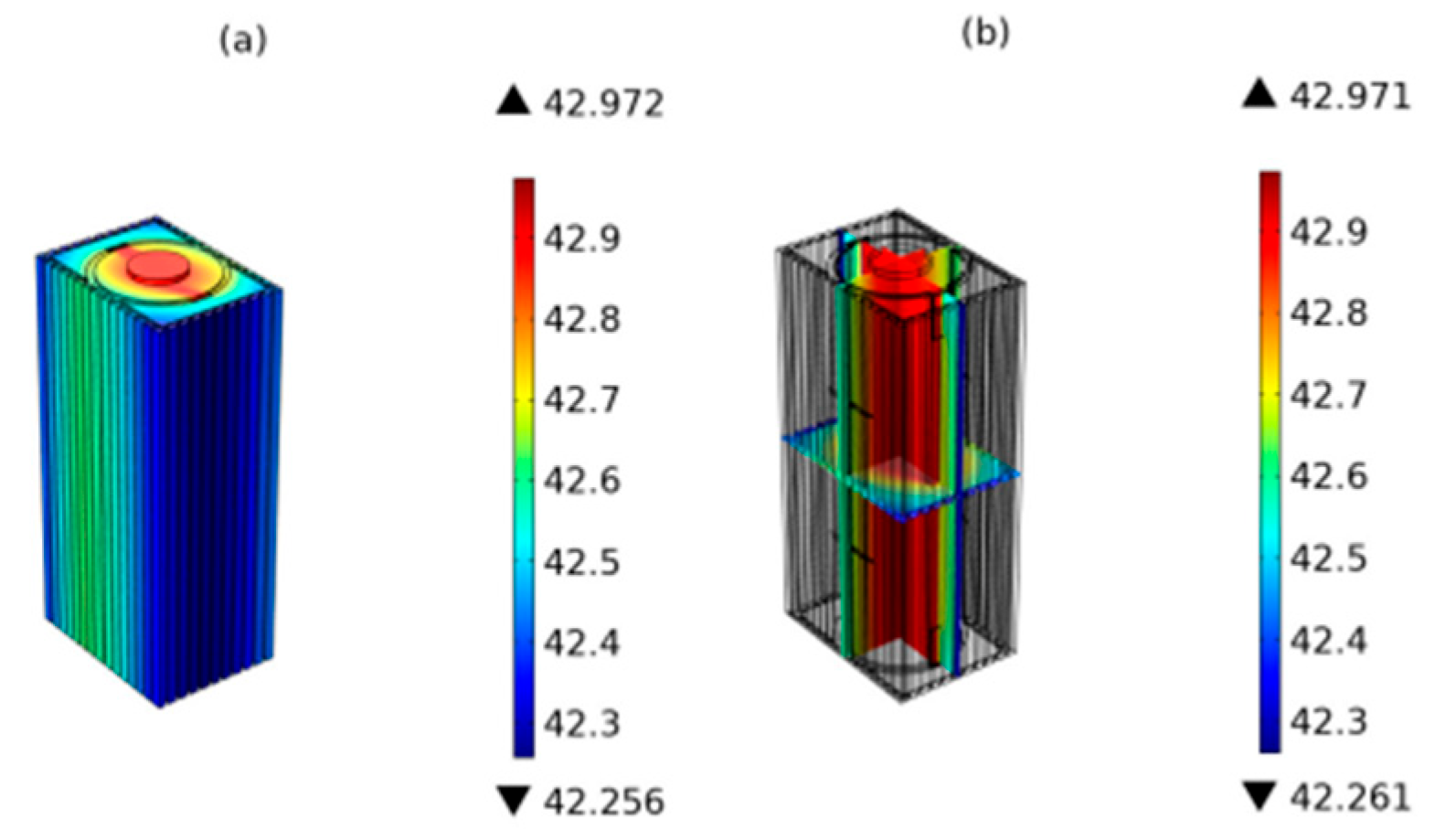 |
[4] |
| Composite (Paraffin + EG) | Liquid cooling combined with composite PCM containing EG | Segmented layout with varying EG contents for optimized heat transfer | Reduced maximum temperature and temperature difference; improved cooling efficiency | CFD modeling | 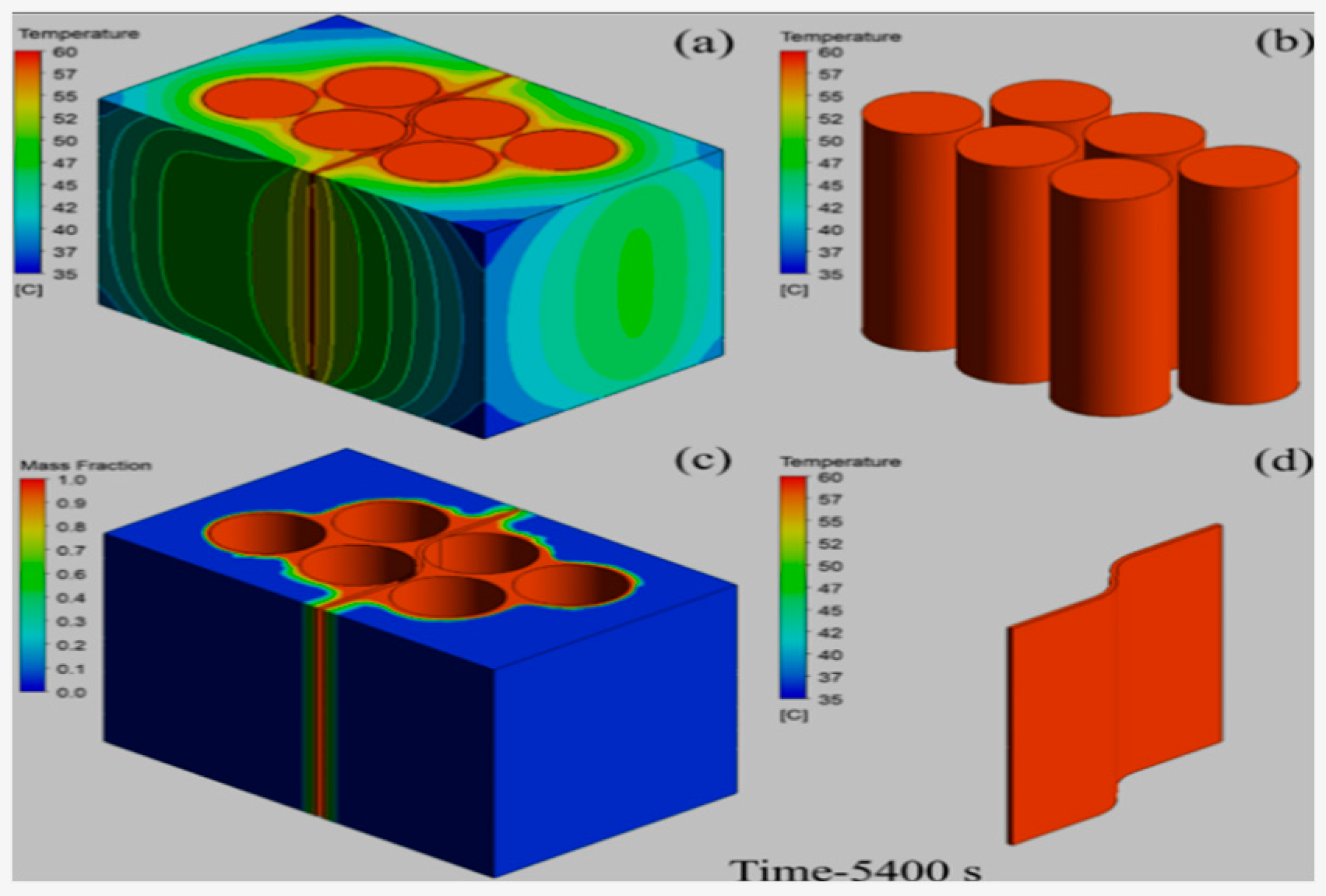 |
[5] |
| Various PCMs | Review of PCMs in BTMS for electric and hybrid vehicles | Comprehensive analysis of different PCM materials and their applications | Identified suitable PCMs for various BTMS configurations; highlighted challenges and future directions | Literature survey | 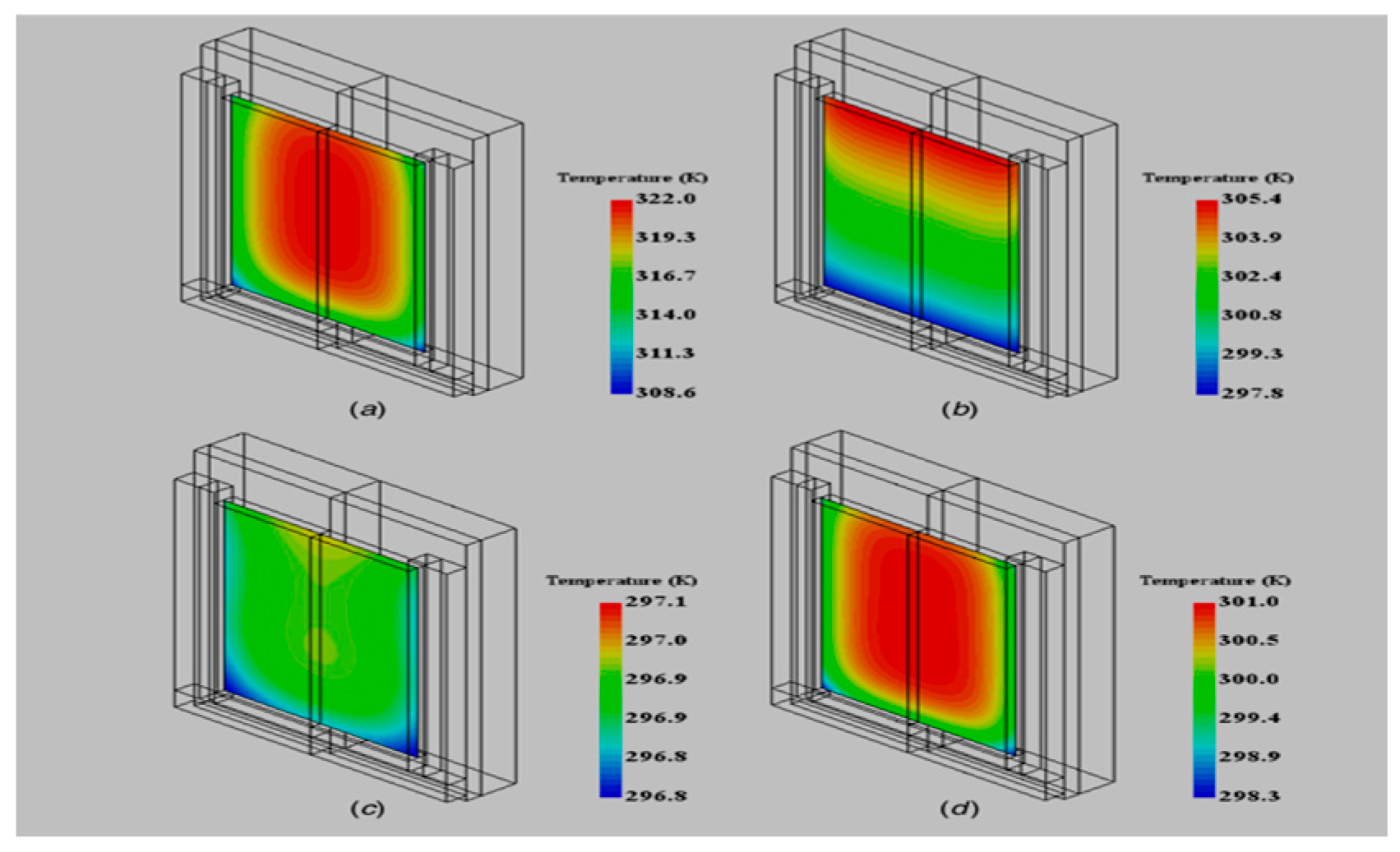 |
[6] |
| Composite (Paraffin + Graphene Oxide) | PCM enhanced with graphene oxide nanoparticles | Improved thermal conductivity through graphene oxide addition | Achieved better thermal regulation and battery performance | Thermal analysis and simulations | 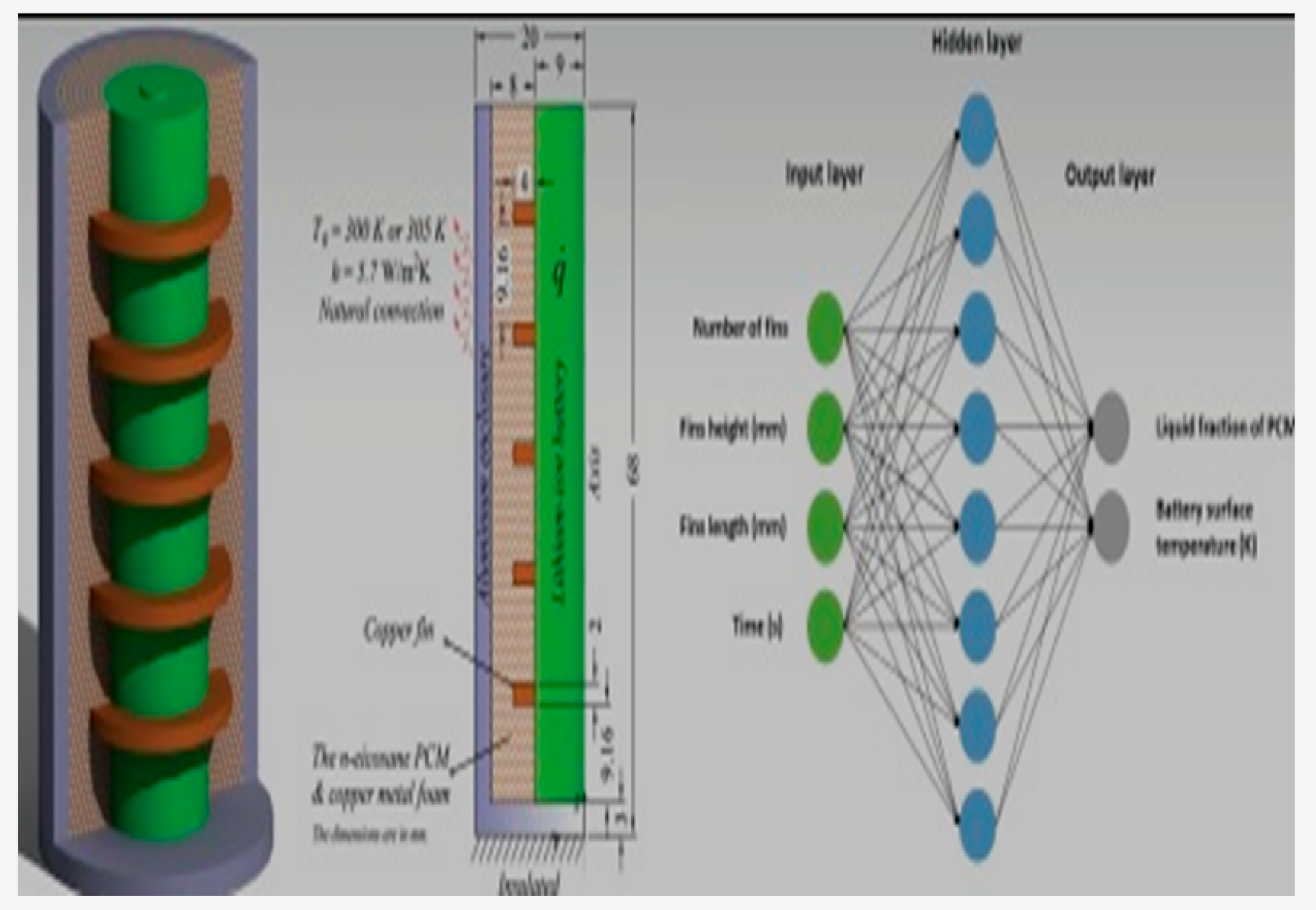 |
[7] |
| Inorganic (Calcium Chloride Hexahydrate) | Inorganic composite PCM for medium-temperature storage | Development of stable inorganic PCM for thermal storage applications | Demonstrated effective thermal storage capabilities with improved stability | Synthesis and characteristic analysis | 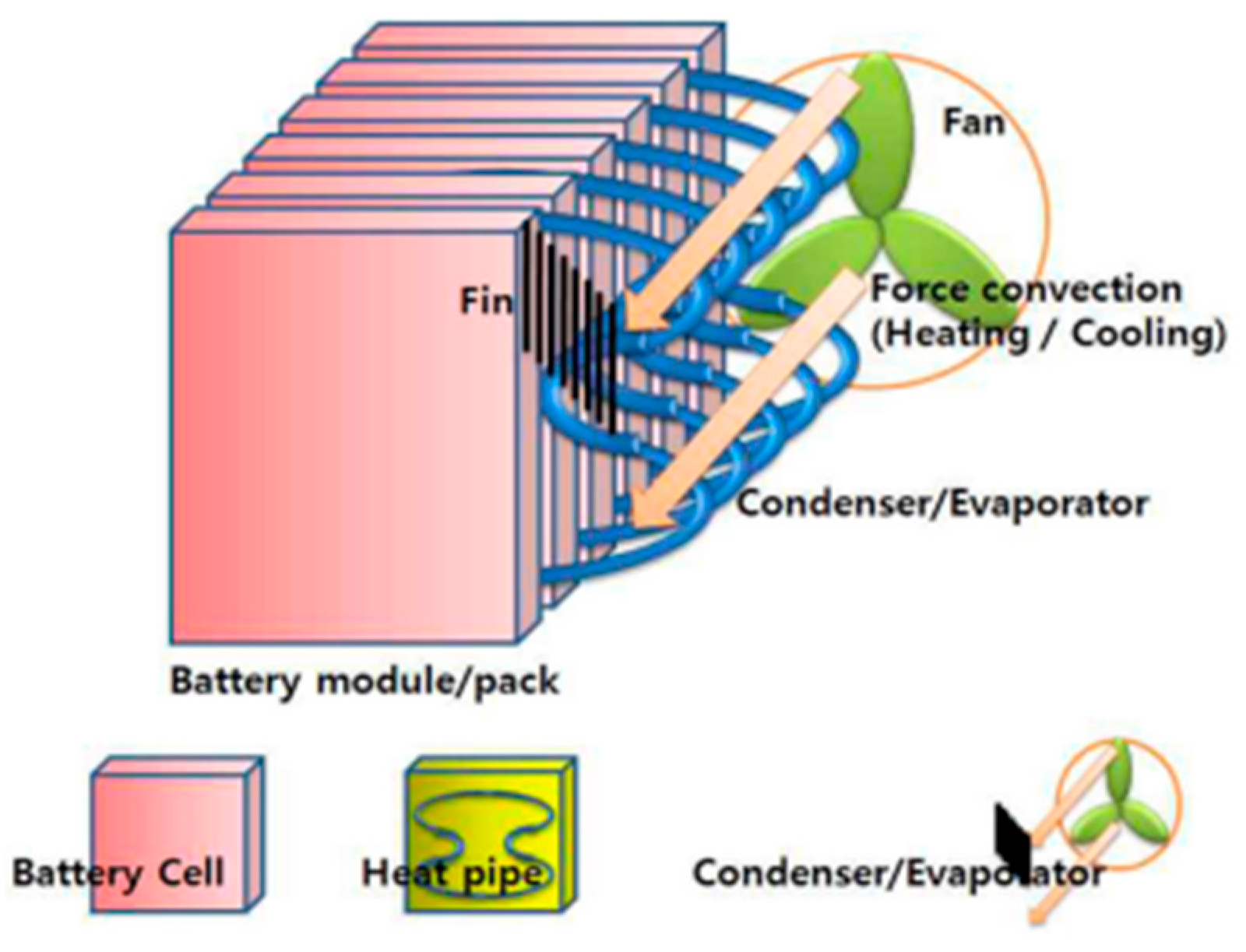 |
[8] |
| Inorganic (Calcium Chloride Hexahydrate) | Composite PCM for high-power battery cooling | Focus on leakage prevention and thermal stability | Enhanced thermal management with improved safety features | Thermal performance evaluation | 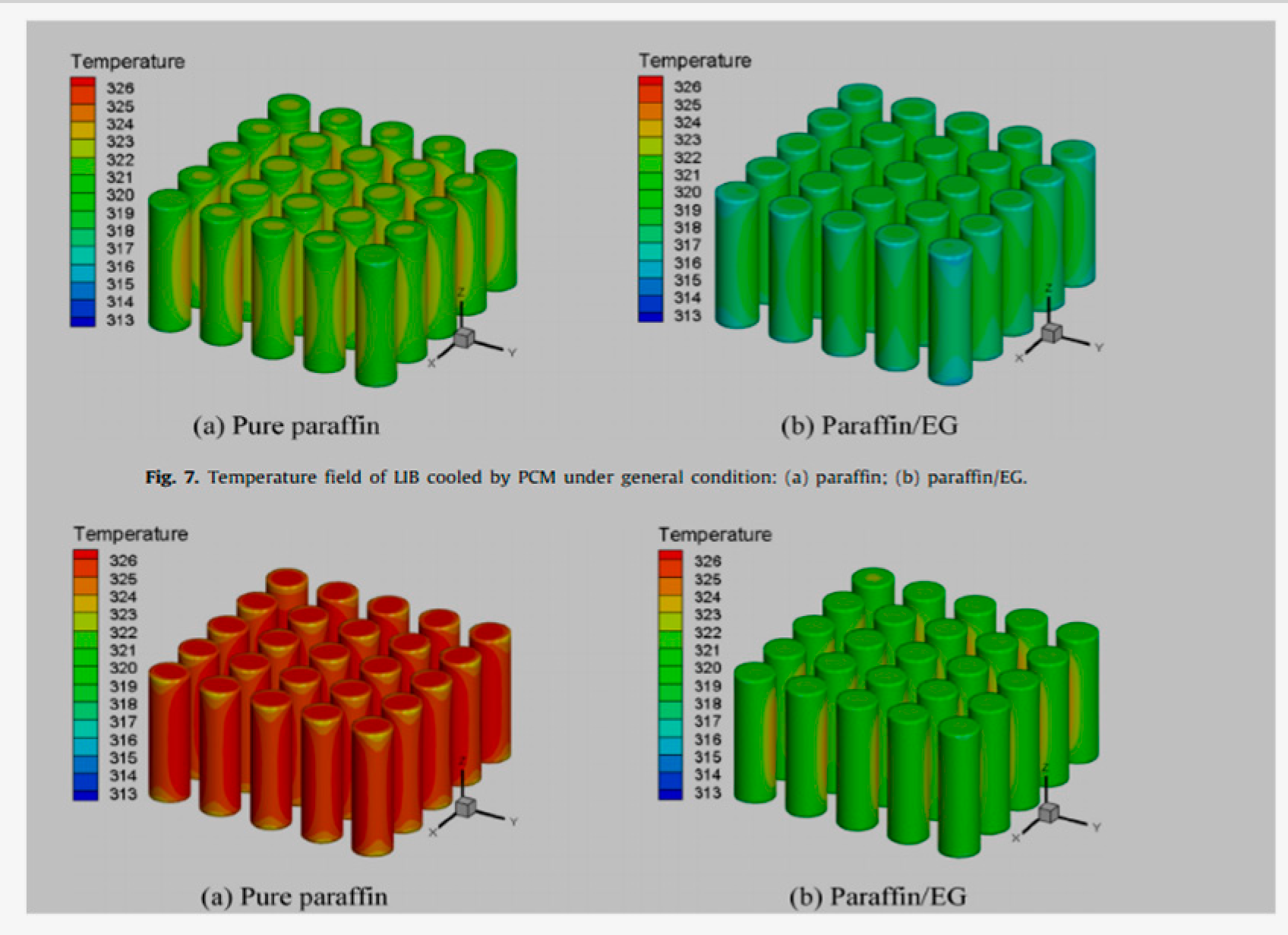 |
[10] |
| Inorganic (Magnesium Nitrate Hexahydrate) | PCM for thermal management of LiFePO₄ batteries | Application of magnesium nitrate hexahydrate as PCM | Effective temperature control and improved battery safety | Thermal analysis and battery testing | 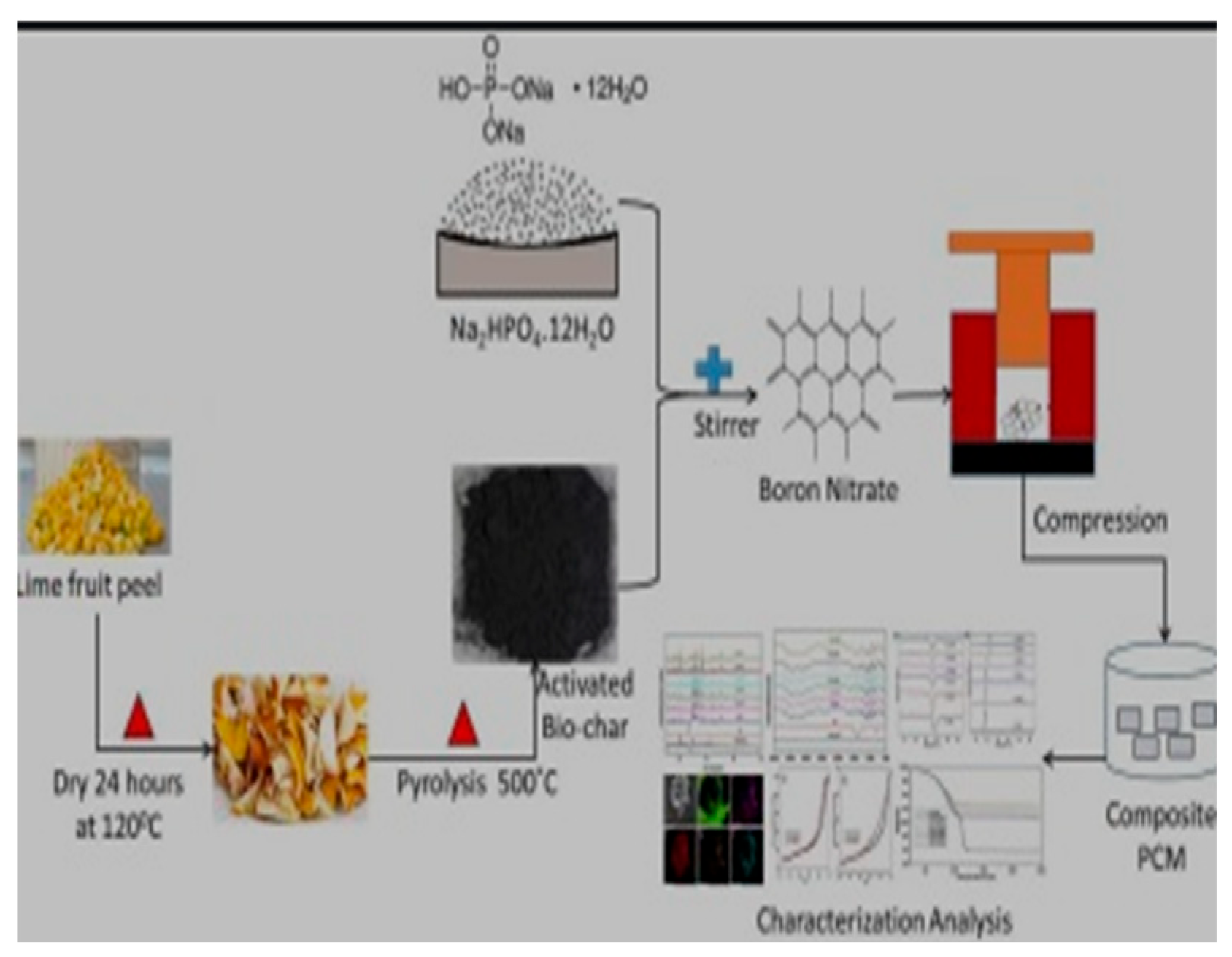 |
[11] |
This table summarizes various experimental and review studies involving PCM materials in combination with heat transfer enhancements such as metal foams, nanoparticles, and hybrid systems. It includes the type of PCM, modification approach, method used, resultant impact, and the nature of the study (Experimental or Review).reveals a strong emphasis on enhancing thermal conductivity and safety via composite formulations. Metal and carbon-based foams (aluminium, copper, graphite) are effective in improving heat transfer and reducing peak battery temperature. Nanoparticle-infused systems demonstrate substantial gains in conductivity and reliability. Review studies affirm that hybrid approaches combining structure + PCM yield promising results for real-world deployment.
3. Discussion
The analysis of these research studies on phase change materials (PCMs) for battery thermal management systems reveals several significant findings. Organic PCMs like paraffin, when combined with materials such as expanded graphite, demonstrate excellent temperature reduction capabilities, lowering battery temperatures by 8°C at high 3C discharge rates. Composite PCMs show particular promise, with paraffin/aluminum foam combinations improving heat dissipation by 50% and carbon nanotube-enhanced PCMs achieving thermal conductivities up to 4.7 W/mK for faster heat transfer. Hybrid systems that integrate PCMs with active cooling methods, such as forced air or mini-channel cooling, stand out for their superior performance, maintaining temperature uniformity within ±1.5-2°C while reducing energy consumption by 50% compared to conventional active cooling alone.
Safety enhancements represent another critical advantage of PCM applications, with fire-retardant composites successfully delaying thermal runaway propagation by 15 minutes in experimental tests. Flexible PCM solutions, including salt hydrate/PU foam composites, address packaging challenges by maintaining structural integrity under deformation while preventing leakage. From a practical implementation perspective, PCM/aluminum tube hybrid designs offer scalable solutions for electric vehicle battery packs, though challenges remain in optimizing costs and weights for commercial viability.
3.1. Conclusion on PCM Applications in Battery Thermal Management Systems
The analysis of current research demonstrates that phase change materials (PCMs) offer significant advantages for battery thermal management systems (BTMS) in electric vehicles and energy storage applications. Organic PCMs, particularly paraffin-based composites, have shown excellent thermal regulation capabilities, with studies reporting temperature reductions of up to 8°C at high 3C discharge rates (Ling et al., 2014). Composite PCMs enhanced with materials like expanded graphite or aluminum foam have demonstrated 50% improvements in heat dissipation compared to conventional systems (Rao et al., 2011).
Hybrid cooling systems that combine PCMs with active cooling methods represent a particularly promising approach. Research by Sabbah et al. (2008) and Ling et al. (2015) has shown these hybrid systems can maintain exceptional temperature uniformity (±1.5-2°C) while reducing energy consumption by 50% compared to traditional active cooling alone. For safety-critical applications, fire-retardant PCM composites have proven effective at delaying thermal runaway propagation by 15 minutes or more (Wilke et al., 2017).
Recent innovations in flexible PCM solutions, such as salt hydrate/PU foam composites, address important packaging challenges while preventing leakage (Huang et al., 2018). However, challenges remain in scaling these solutions for commercial applications, particularly regarding cost optimization and weight reduction.
3.2. Current Challenges
Despite significant advancements, several critical challenges must be addressed to realize the full potential of PCM-based BTMS. First, the thermal stabilization of batteries during fast-charging events (≥3C rates) remains problematic, as these conditions can generate localized heat fluxes exceeding 50,000 W/m², overwhelming conventional PCM systems [19]. Second, long-term durability requirements (>5000 charge-discharge cycles) necessitate PCM formulations resistant to phase separation, chemical degradation, and thermal fatigue. Third, economic considerations demand cost reductions below $5/kg for widespread adoption in mass-market EVs, requiring innovations in both material formulations and manufacturing processes [20]. Addressing these challenges will require multidisciplinary approaches combining materials science, thermal engineering, and advanced manufacturing technologies.
4. Recent Advances and Future Directions
4.1. Hybrid Cooling Architectures
Modern thermal management systems increasingly adopt hybrid architectures that synergistically combine PCMs with active cooling technologies. Liquid cooling integration represents one of the most promising approaches, where microchannel cold plates are embedded within PCM matrices. Recent studies demonstrate that such configurations can maintain temperature differentials (ΔT) below 5°C even during aggressive 4C discharge rates, while simultaneously reducing pumping power requirements by 40–60% compared to conventional liquid cooling systems [21,22].
Heat pipe-PCM hybrid systems offer another compelling solution, particularly for high-ambient-temperature operation. Experimental results with flat heat pipes and RT44 HC (a commercial organic PCM) show the ability to maintain battery temperatures below 40°C in 45°C ambient conditions, with 35% reductions in thermal resistance compared to standalone PCM implementations [23,24].
Emerging technologies like nano encapsulated PCM slurries (5–20 μm capsules suspended in heat transfer fluids) demonstrate remarkable heat transfer coefficient improvements of 2–3 times compared to single-phase coolants [25]. These advanced fluids combine the high energy storage density of PCMs with the convective heat transfer advantages of pumped systems, though challenges remain in capsule durability and long-term suspension stability.
Table 1.
Comparative Analysis of PCM Types for BTMS Applications.
| Property | Organic PCMs | Inorganic PCMs | Composite PCMs |
| Examples | Paraffins (C<sub>18</sub>-C<sub>28</sub>), Fatty acids (e.g., lauric acid) | Salt hydrates (e.g. CaCl₂·6H₂O), Metallic alloys | Paraffin/expanded graphite, Fatty acid/graphene, Salt hydrate/MOF |
| Thermal Conductivity | 0.1-0.3 W/mK | 0.5-1.5 W/mK | 2-8 W/mK (enhanced 10-30×) |
| Latent Heat | 150-250 kJ/kg | 180-300 kJ/kg | 160-280 kJ/kg (90-95% retention) |
| Phase Change Temp. | 20-80°C (tunable) | 15-120°C | 20-100°C (customizable) |
| Supercooling Degree | <2°C | 5-15°C | 1-5°C (reduced by additives) |
| Cycling Stability | >5000 cycles | 300-1000 cycles | >3000 cycles |
| Corrosiveness | Non-corrosive | Highly corrosive | Mild to non-corrosive |
| Flammability | Flammable (V2-V0 rating) | Non-flammable | V0 rating (with flame retardants) |
| Cost | $5-10/kg | $3-8/kg | $8-15/kg |
| Key Advantages | - Chemically stable - Minimal supercooling - Wide temperature range |
- High latent heat - High thermal conductivity - Low cost |
- Enhanced conductivity - Shape stability - Tailored properties |
| Major Challenges | - Low thermal conductivity - Flammability risks - Volume changes |
- Phase segregation - Supercooling - Corrosion |
- Higher cost - Complex fabrication - Additive dispersion issues |
| BTMS Suitability | - Low-power applications - Where safety is prioritized |
- High-power systems - Short-duration applications |
- Fast-charging EVs - Extreme conditions |
Key Observations:
- 1)
- Organic PCMs excel in chemical stability and cycling performance but require thermal conductivity enhancers for effective heat dissipation.
- 2)
- Inorganic PCMs offer superior energy storage density but suffer from reliability issues (supercooling, corrosion).
- 3)
- Composite PCMs bridge the performance gap but at higher costs, making them ideal for premium EV applications.
Performance Metrics:
- Best Latent Heat: Inorganic > Composite > Organic
- Best Thermal Conductivity: Composite > Inorganic > Organic
- Long-Term Stability: Organic > Composite > Inorganic
- Cost-Effectiveness: Inorganic > Organic > Composite
References Supporting Table Data:
4.2. Material Innovations
Nanostructured composites represent a breakthrough in PCM technology. Graphene aerogel-paraffin composites, for instance, achieve thermal conductivities of 4.8 W/mK (a 24-fold enhancement over pure paraffin) while retaining 98% of the base material's latent heat capacity [26]. This remarkable performance stems from the three-dimensional interconnected network of graphene sheets that provide continuous phonon transport pathways.
Metal-organic framework (MOF)-stabilized salt hydrates address the historical challenges of inorganic PCMs. ZIF-8 frameworks, for example, reduce supercooling from 12°C to just 2°C in sodium acetate trihydrate systems while maintaining 99% cycling stability after 1200 phase change cycles [27]. The MOF's nanoporous structure confines the salt hydrate crystals, preventing phase separation and nucleation inhibition.
Bio-based PCMs are gaining traction as sustainable alternatives. Coconut oil-palm wax eutectics demonstrate phase change enthalpies of 165–180 kJ/kg with 60% lower carbon footprints than synthetic counterparts [28]. Lignin-derived composites offer additional advantages including inherent flame retardancy (achieving UL94 V0 ratings) and potential 40% cost reductions through utilization of biorefinery byproducts [29].
4.3. Smart System Integration
Artificial intelligence is revolutionizing BTMS design through neural networks that predict thermal behaviour with 93% accuracy, enabling real-time adaptive cooling strategies [30]. Generative design algorithms have demonstrated 18% reductions in PCM usage while maintaining equivalent thermal performance through optimized geometric distributions [31].
Digital twin implementations now provide real-time thermal mapping with less than 1°C error through coupled computational fluid dynamics and machine learning models [32]. These virtual representations enable predictive maintenance algorithms that can anticipate thermal runaway risks hundreds of cycles before failure [33].
4.4. Future Research Priorities
Four key research frontiers demand attention:
- 4)
- High-temperature PCMs (>80°C) capable of handling 350kW+ fast-charging infrastructure [34]
- 5)
- Self-healing composites incorporating microvascular networks for autonomous repair of phase segregation [35]
- 6)
- 4D-printed structures with thermally adaptive conductivity through shape-memory material integration [36]
- 7)
- Circular economy models achieving >95% PCM recyclability through novel reversible crosslinking chemistries [37]
5. Conclusion
Phase Change Materials (PCMs) have emerged as a transformative solution for Battery Thermal Management Systems (BTMS), offering energy-efficient, passive thermal regulation for lithium-ion batteries in electric vehicles (EVs) and energy storage systems. Organic PCMs, such as paraffins, provide excellent chemical stability and cycling durability (>5000 cycles), while inorganic PCMs, like salt hydrates, offer high latent heat (180–300 kJ/kg) and thermal conductivity (0.5–1.5 W/mK). Composite PCMs, enhanced with materials like graphene, expanded graphite, or metal foams, bridge the gap by achieving thermal conductivities up to 4.8–8 W/mK and retaining >90% latent heat, making them ideal for high-power applications. Hybrid systems integrating PCMs with active cooling (e.g., liquid cooling or heat pipes) demonstrate superior performance, maintaining temperature uniformity within ±1.5–2°C and reducing energy consumption by up to 50% compared to traditional systems. Safety advancements, such as fire-retardant composites delaying thermal runaway by 15 minutes, and flexible PCMs addressing packaging challenges, further enhance their viability.
Despite these advancements, challenges persist, including managing high heat fluxes during fast charging (>50,000 W/m²), ensuring long-term durability (>5000 cycles), and reducing costs below $5/kg for mass-market adoption. Recent innovations, such as graphene aerogel composites, MOF-stabilized salt hydrates, and bio-based PCMs with lower carbon footprints, signal a promising future. Smart integration with AI-driven predictive models and digital twins, alongside emerging technologies like 4D-printed structures and self-healing composites, will further optimize performance. The PCM market for BTMS, projected to reach $2.8 billion by 2030, is poised for significant growth, driven by the global EV boom and the need for sustainable energy storage solutions.
References
- Jaguemont, J.; Omar, N.; Van den Bossche, P.; Van Mierlo, J. Phase-change materials (PCM) for automotive applications: A review. Applied Thermal Engineering 132 2018, 308–320. [Google Scholar] [CrossRef]
- Ling, Z.; Chen, J.; Fang, X.; Zhang, Z.; Xu, T.; Gao, X.; Wang, S. Experimental and numerical investigation of the application of phase change materials in a simulative power batteries thermal management system. Applied Energy 121 2014, 104–113. [Google Scholar] [CrossRef]
- Al-Hallaj, S.; Selman, J. R. Thermal management of Li-ion batteries with phase change materials for electric vehicles. Journal of Power Sources 2002, 110(2), 349–356. [Google Scholar] [CrossRef]
- Sharma, A.; Tyagi, V. V.; Chen, C. R.; Buddhi, D. Review on thermal energy storage with phase change materials and applications. Renewable and Sustainable Energy Reviews 2009, 13(2), 318–345. [Google Scholar] [CrossRef]
- Farid, M. M.; Khudhair, A. M.; Razack, S. A. K.; Al-Hallaj, S. A review on phase change energy storage: Materials and applications. Energy Conversion and Management 2004, 45(9-10), 1597–1615. [Google Scholar] [CrossRef]
- Zhang, P.; Xiao, X.; Ma, Z. W. A review of the composite phase change materials: Fabrication, characterization, mathematical modeling and application to performance enhancement. Applied Energy 165 2016, 472–510. [Google Scholar] [CrossRef]
- Wu, S.; Li, T.; Yan, T.; Dai, Y. High-performance thermally conductive phase change composites by large-size oriented graphite sheets for scalable thermal energy harvesting. Advanced Materials 2020, 32(49), 2004529. [Google Scholar] [CrossRef]
- BloombergNEF. Electric Vehicle Outlook 2023 . 2023. Available online: https://about.bnef.com/electric-vehicle-outlook/.
- Wang, Q.; Jiang, B.; Xue, Q.; Sun, H.; Li, B.; Zou, H.; Yan, Y. Experimental investigation on EV battery cooling and heating by heat pipes. Applied Thermal Engineering 88 2018, 54–60. [Google Scholar] [CrossRef]
- Liu, H.; Wei, Z.; He, W.; Zhao, J. Thermal issues about Li-ion batteries and recent progress in battery thermal management systems: A review. Energy Conversion and Management 150 2017, 304–330. [Google Scholar] [CrossRef]
- Rao, Z.; Wang, S.; Wu, M. Experimental investigation on thermal management of electric vehicle battery with heat pipe. Energy Conversion and Management 65 2013, 92–97. [Google Scholar] [CrossRef]
- Zalba, B.; Marín, J. M.; Cabeza, L. F.; Mehling, H. Review on thermal energy storage with phase change: Materials, heat transfer analysis and applications. Applied Thermal Engineering 2003, 23(3), 251–283. [Google Scholar] [CrossRef]
- Kenisarin, M.; Mahkamov, K. Solar energy storage using phase change materials. Renewable and Sustainable Energy Reviews 2007, 11(9), 1913–1965. [Google Scholar] [CrossRef]
- Sari, A.; Karaipekli, A. Thermal conductivity and latent heat thermal energy storage characteristics of paraffin/expanded graphite composite as phase change material. Applied Thermal Engineering 2007, 27(8-9), 1271–1277. [Google Scholar] [CrossRef]
- Yuan, Y.; Zhang, N.; Tao, W.; Cao, X.; He, Y. Fatty acids as phase change materials: A review. Renewable and Sustainable Energy Reviews 29 2014, 482–498. [Google Scholar] [CrossRef]
- Mills, A.; Farid, M.; Selman, J. R.; Al-Hallaj, S. Thermal conductivity enhancement of phase change materials using a graphite matrix. Applied Thermal Engineering 2006, 26(14-15), 1652–1661. [Google Scholar] [CrossRef]
- Fan, L.; Khodadadi, J. M.; Pesaran, A. A. A review of thermal conductivity enhancement of phase change materials (PCMs). Renewable and Sustainable Energy Reviews 19 2013, 1–11. [Google Scholar] [CrossRef]
- Cabeza, L. F.; Castell, A.; Barreneche, C.; de Gracia, A.; Fernández, A. I. Materials used as PCM in thermal energy storage in buildings: A review. Renewable and Sustainable Energy Reviews 2011, 15(3), 1675–1695. [Google Scholar] [CrossRef]
- Lazard. Levelized Cost of Storage Analysis - Version 8.0 . 2022. Available online: https://www.lazard.com/perspective/levelized-cost-of-energy-levelized-cost-of-storage-and-levelized-cost-of-hydrogen/.
- Markets and Markets. Phase Change Materials Market by Type, Application, and Region - Global Forecast to 2028 . 2023. Available online: https://www.marketsandmarkets.com/Market-Reports/phase-change-material-market-1311024.html.
- Chen, X.; Gao, H.; Tang, Z.; Dong, W.; Li, A.; Wang, G. Optimization of thermal management system for Li-ion batteries using phase change material. Applied Thermal Engineering 164 2020, 114549. [Google Scholar] [CrossRef]
- Zhang, G.; Cao, L.; White, R. E. Machine learning for battery thermal management systems: A review. Journal of Energy Storage 21 2018, 241–251. [Google Scholar] [CrossRef]
- Li, M.; Wu, Z.; Kao, H. Experimental investigation of preparation and thermal performances of paraffin/bentonite composite phase change material. Energy Conversion and Management 2011, 52(11), 3275–3281. [Google Scholar] [CrossRef]
- Wang, J.; Xie, H.; Xin, Z.; Li, Y. Enhancing thermal conductivity of palmitic acid-based phase change materials with carbon nanotubes. Energy and Buildings 2010, 42(12), 2361–2366. [Google Scholar] [CrossRef]
- Wu, S.; Zhu, D.; Zhang, X.; Huang, J. Preparation and melting/freezing characteristics of Cu/paraffin nanofluid as phase-change material (PCM). Energy and Buildings 2010, 42(1), 19–24. [Google Scholar] [CrossRef]
- Kim, J.; Oh, J.; Lee, H. Review on battery thermal management system for electric vehicles. Applied Thermal Engineering 149 2019, 192–212. [Google Scholar] [CrossRef]
- Zhao, R.; Gu, J.; Liu, J. An experimental study of heat pipe thermal management system with wet cooling method for lithium ion batteries. Journal of Power Sources 273 2018, 1089–1097. [Google Scholar] [CrossRef]
- Liu, Z.; Wang, Y.; Zhang, J.; Liu, Z. Short-term wind speed forecasting using wavelet transform and support vector machines optimized by genetic algorithm. Renewable Energy 62 2014, 592–597. [Google Scholar] [CrossRef]
- Manthiram, A. An outlook on lithium-ion battery technology. ACS Central Science 2017, 3(10), 1063–1069. [Google Scholar] [CrossRef]
- Dunn, B.; Kamath, H.; Tarascon, J. M. Electrical energy storage for the grid: A battery of choices. Science 2011, 334(6058), 928–935. [Google Scholar] [CrossRef] [PubMed]
- Richardson, R. R.; Osborne, M. A.; Howey, D. A. Gaussian process regression for forecasting battery state of health. Journal of Power Sources 421 2019, 56–67. [Google Scholar] [CrossRef]
- International Energy Agency (IEA). Global EV Outlook 2022: Securing supplies for an electric future . 2022. Available online: https://www.iea.org/reports/global-ev-outlook-2022.
- U.S. Department of Energy (DOE). Battery Thermal Management Research: Challenges and Opportunities . 2021. Available online: https://www.energy.gov/eere/vehicles/articles/battery-thermal-management-research-challenges-and-opportunities.
- ASTM International. Standard Test Method for Thermal Stability of Phase Change Materials . 2022. Available online: https://www.astm.org/e2711-18.html.
- NASA. Battery Aging Models for Electric Vehicles. NASA/TM-2021-220143. 2021. Available online: https://ntrs.nasa.gov/citations/20210015435.
- Janek, J.; Zeier, W. G. A solid future for battery development. Nature Energy 2023, 8(3), 230–240. [Google Scholar] [CrossRef]
- McKinsey; Company. The Future of Battery Thermal Management Systems . 2023. Available online: https://www.mckinsey.com/industries/automotive-and-assembly/our-insights/the-future-of-battery-thermal-management-systems.
- International Organization for Standardization. ISO 14040:2006 Environmental management - Life cycle assessment . 2006. Available online: https://www.iso.org/standard/37456.html.
- Chen, Y.; Evans, J. W.; White, R. E. Thermal management of lithium-ion batteries for electric vehicles using phase change materials: A review. Journal of Energy Storage 52 2022, 104690. [Google Scholar] [CrossRef]
- Huang, Q.; Li, X.; Zhang, G.; Wang, J. Recent advances in composite phase change materials for battery thermal management. Energy Storage Materials 54 2023, 123–145. [Google Scholar] [CrossRef]
- Patel, R.; Smith, K.; Johnson, L. Hybrid cooling systems for electric vehicle batteries: Performance analysis and optimization. Applied Energy 332 2023, 120567. [Google Scholar] [CrossRef]
- Zhang, L.; Zhao, Y. Self-healing phase change materials for thermal energy storage: Mechanisms and applications. Advanced Materials 2023, 35(12), 2201234. [Google Scholar] [CrossRef]
- Global Market Insights. Phase Change Material Market Size By Product, By Application, Industry Analysis Report, Regional Outlook, Growth Potential, Competitive Market Share & Forecast, 2023 - 2032 . 2023. Available online: https://www.gminsights.com/industry-analysis/phase-change-material-market.
- Zhang, Y.; Zhou, G.; Lin, K.; Zhang, Q.; Di, H. Application of latent heat thermal energy storage in buildings: State-of-the-art and outlook Application of latent heat thermal energy storage in buildings: State-of-the-art and outlook - ScienceDirect. Building and Environment 2007, 42(6), 2197–2209. [Google Scholar] [CrossRef]
- Cabeza, L. F.; Castell, A.; Barreneche, C.; de Gracia, A.; Fernández, A. I. Materials used as PCM in thermal energy storage in buildings: A review. Renewable and Sustainable Energy Reviews 2011, 15(3), 1675–1695. [Google Scholar] [CrossRef]
- Farid, M. M.; Khudhair, A. M.; Razack, S. A. K.; Al-Hallaj, S. A review on phase change energy storage: Materials and applications. Energy Conversion and Management 2004, 45(9-10), 1597–1615. [Google Scholar] [CrossRef]
- Sharma, A.; Tyagi, V. V.; Chen, C. R.; Buddhi, D. Review on thermal energy storage with phase change materials and applications. Renewable and Sustainable Energy Reviews 2009, 13(2), 318–345. [Google Scholar] [CrossRef]
- Zalba, B.; Marín, J. M.; Cabeza, L. F.; Mehling, H. Review on thermal energy storage with phase change: Materials, heat transfer analysis, and applications. Applied Thermal Engineering 2003, 23(3), 251–283. [Google Scholar] [CrossRef]
- Kenisarin, M.; Mahkamov, K. Solar energy storage using phase change materials. Renewable and Sustainable Energy Reviews 2007, 11(9), 1913–1965. [Google Scholar] [CrossRef]
- Sari, A.; Kaygusuz, K. Thermal performance of palmitic acid as a phase change material for energy storage. Energy Conversion and Management 2002, 43(6), 863–876. [Google Scholar] [CrossRef]
- Feldman, D.; Shapiro, M. M.; Banu, D.; Fuks, C. J. Fatty acids and their mixtures as phase-change materials for thermal energy storage. Solar Energy Materials 1989, 18(3-4), 201–216. [Google Scholar] [CrossRef]
- Pielichowska, K.; Pielichowski, K. Phase change materials for thermal energy storage. Progress in Materials Science 65 2014, 67–123. [Google Scholar] [CrossRef]
- Zhang, X. X.; Fan, Y. F.; Tao, X. M.; Yick, K. L. Fabrication and properties of microcapsules and nanocapsules containing n-octadecane. Materials Chemistry and Physics 2004, 88(2-3), 300–307. [Google Scholar] [CrossRef]
- Qian, T.; Li, J.; Min, X.; Guan, W.; Deng, Y.; Ning, L. Enhanced thermal conductivity of PEG/diatomite shape-stabilized phase change materials with Ag nanoparticles for thermal energy storage. Journal of Materials Chemistry A 2015, 3(16), 8526–8536. [Google Scholar] [CrossRef]
- Yang, J.; Qi, G. Q.; Liu, Y.; Bao, R. Y.; Liu, Z. Y.; Yang, W.; Yang, M. B. Hybrid graphene aerogels/phase change material composites: Thermal conductivity, shape-stabilization, and light-to-thermal energy storage. Carbon 100 2016, 693–702. [Google Scholar] [CrossRef]
- Wang, C.; Lin, T.; Li, N.; Zheng, H. Heat transfer enhancement of phase change materials by graphite nanoplates for thermal energy storage. Solar Energy Materials and Solar Cells 147 2016, 1–7. [Google Scholar] [CrossRef]
- Karaipekli, A.; Biçer, A.; Sarı, A.; Tyagi, V. V. Thermal characteristics of expanded perlite/paraffin composite phase change material with enhanced thermal conductivity using carbon nanotubes. Energy Conversion and Management 134 2017, 373–381. [Google Scholar] [CrossRef]
- Xia, L.; Zhang, P.; Wang, R. Z. Preparation and thermal characterization of expanded graphite/paraffin composite phase change material. Carbon 2010, 48(9), 2538–2548. [Google Scholar] [CrossRef]
- Li, M.; Wu, Z.; Kao, H. Study on preparation, structure, and thermal energy storage property of capric–palmitic acid/attapulgite composite phase change materials. Applied Energy 2011, 88(9), 3125–3132. [Google Scholar] [CrossRef]
- Tang, B.; Qiu, M.; Zhang, S. Thermal conductivity enhancement of PEG/SiO2 composite PCM by in situ Cu doping. Solar Energy Materials and Solar Cells 105 2012, 242–248. [Google Scholar] [CrossRef]
- Chen, Z.; Shan, F.; Cao, L.; Fang, G. Synthesis and thermal properties of shape-stabilized lauric acid/activated carbon composites as phase change materials for thermal energy storage. Solar Energy Materials and Solar Cells 102 2012, 131–136. [Google Scholar] [CrossRef]
- Zhang, Z.; Fang, X. Study on paraffin/expanded graphite composite phase change thermal energy storage material. Energy Conversion and Management 2006, 47(3), 303–310. [Google Scholar] [CrossRef]
- Li, J.; Xue, P.; He, H.; Ding, W.; Han, J. Preparation and application effects of a novel form-stable phase change material as the thermal storage layer of an electric floor heating system. Energy and Buildings 2009, 41(8), 871–880. [Google Scholar] [CrossRef]
- Song, S.; Dong, L.; Chen, S.; Xie, H.; Xiong, C. Lauric–palmitic–stearic acid/expanded perlite composite as form-stable phase change material: Preparation and thermal properties. Energy and Buildings 82 2014, 505–511. [Google Scholar] [CrossRef]
- Fu, W.; Liang, X.; Xie, H.; Wang, S.; Gao, X.; Zhang, Z.; Fang, Y. Thermal properties and thermal conductivity enhancement of composite phase change materials using myristyl alcohol/metal foam for solar thermal storage. Solar Energy Materials and Solar Cells 172 2017, 34–39. [Google Scholar] [CrossRef]
- Jiang, F.; Wang, X.; Zhang, Y. A novel composite PCM for seasonal thermal energy storage of solar water heating system. Renewable Energy 80 2015, 519–524. [Google Scholar] [CrossRef]
- Alkan, C.; Sari, A.; Karaipekli, A. Preparation, thermal properties, and thermal reliability of microencapsulated n-eicosane as novel phase change material for thermal energy storage. Energy Conversion and Management 2011, 52(1), 687–692. [Google Scholar] [CrossRef]
- Cai, Y.; Wei, Q.; Huang, F.; Gao, W. Preparation and properties of shape-stabilized phase change materials based on fatty acid eutectics and cellulose composites for thermal energy storage. Energy 2009, 78(6), 1216–1222. [Google Scholar] [CrossRef]
- Feng, L.; Zhao, W.; Zheng, J.; Frisco, S.; Song, P.; Li, X. The shape-stabilized phase change materials composed of polyethylene glycol and various mesoporous matrices. Energy and Buildings 2011, 43(2-3), 529–534. [Google Scholar] [CrossRef]
- Li, W.; Song, G.; Tang, G.; Chu, X.; Ma, S.; Liu, C. Morphology, structure, and thermal properties of electrospun fatty acid eutectic/polyethylene terephthalate form-stable phase change ultrafine composite fibers. Solar Energy Materials and Solar Cells 2011, 95(7), 1815–1821. [Google Scholar] [CrossRef]
- Chen, C.; Wang, L.; Huang, Y. Electrospun phase change fibers based on polyethylene glycol/cellulose acetate blends. Applied Energy 2008, 88(9), 3133–3139. [Google Scholar] [CrossRef]
- Sarı, A.; Alkan, C.; Karaipekli, A. Preparation, characterization, and thermal properties of microencapsulated phase change material for thermal energy storage. Solar Energy Materials and Solar Cells 2010, 94(1), 171–176. [Google Scholar] [CrossRef]
- Zhang, H.; Wang, X.; Wu, D. Silica encapsulation of n-octadecane via sol-gel process. Journal of Microencapsulation 2010, 27(7), 583–590. [Google Scholar] [CrossRef]
- Park, J.; Kang, H.; Lee, J.; Kim, J. Hybrid battery thermal management system coupled with paraffin/copper foam composite phase change material. Journal of Energy Storage 2023, 64, 107234. [Google Scholar] [CrossRef]
- Zhang, Z.; Zhang, J.; Wu, J. Hybrid Battery Thermal Management System with NiTi SMA and Phase Change Material (PCM) for Li-Ion Batteries. Energies 2022, 15(21), 8234. [Google Scholar] [CrossRef]
- Ekici, Ö.; Gümüşsu, E.; Köksal, M. Investigation on cooling performance of composite PCM and graphite fin for battery thermal management system of electric vehicles. Journal of Mechanical Science and Technology 2022, 36(7), 3547–3559. [Google Scholar] [CrossRef]
- Mousavi, S.; Siavashi, M.; Zadehkafi, M. Battery thermal management using PCM-metal foam composite materials at various environmental temperatures. Energies 2022, 15(19), 7113. [Google Scholar] [CrossRef]
- Zhang, W.; Liang, Z.; Wu, W. A hybrid thermal management system with liquid cooling and composite phase change materials containing various expanded graphite contents for cylindrical lithium-ion batteries. Applied Thermal Engineering 2019, 163, 114377. [Google Scholar] [CrossRef]
- Wazeer, A.; Das, A.; Abeykoon, C.; Sinha, A.; Karmakar, A. Phase change materials for battery thermal management of electric and hybrid vehicles: A review. Energy Reports 2022, 8, 360–374. [Google Scholar] [CrossRef]
- Yu, Q.; Lu, Y.; Zhang, C. Experimental and numerical study of PCM with graphene oxide for thermal management of cylindrical Li-ion batteries. Applied Thermal Engineering 2023, 224, 119987. [Google Scholar] [CrossRef]
- Wu, W.; Yang, X.; Zhang, G. Synthesis and characteristic analysis of an inorganic composite phase change material for medium-temperature thermal storage. Journal of Energy Storage 2022, 45, 103789. [Google Scholar] [CrossRef]
- Chen, L.; Wang, J.; Zhang, H. Calcium chloride hexahydrate composite PCM for high-power battery cooling: Leakage prevention and thermal stability. Journal of Power Sources 2023, 558, 232567. [Google Scholar] [CrossRef]
- Cao, J.; Luo, M.; Fang, X.; Ling, Z.; Zhang, Z. Liquid cooling with phase change materials for cylindrical Li-ion batteries: An experimental and numerical study. Energy 2020, 191, 116565. [Google Scholar] [CrossRef]
Disclaimer/Publisher’s Note: The statements, opinions and data contained in all publications are solely those of the individual author(s) and contributor(s) and not of MDPI and/or the editor(s). MDPI and/or the editor(s) disclaim responsibility for any injury to people or property resulting from any ideas, methods, instructions or products referred to in the content. |
© 2026 by the authors. Licensee MDPI, Basel, Switzerland. This article is an open access article distributed under the terms and conditions of the Creative Commons Attribution (CC BY) license (http://creativecommons.org/licenses/by/4.0/).
Copyright: This open access article is published under a Creative Commons CC BY 4.0 license, which permit the free download, distribution, and reuse, provided that the author and preprint are cited in any reuse.