
Submitted:
13 January 2026
Posted:
14 January 2026
You are already at the latest version
Abstract
The engine system requirements for different engine cycles significantly influence the design of the mixing head. A literature review of fuel-injection technology for hydro-gen and methane is presented. The literature review aimed to answer proposed questions specific to the liquid rocket engine fuel injector design. The current review methodology accounts for the engine system effect. Thus, a comprehensive literature review of the working principles of startup-staged combustion cycle engines based on original patents is provided. At the end of the review, the research gaps and suggestions for further work are summarised. At high mass flow rate and injection pressure in the supercritical regime (> 50 MPa), experience is limited to the staged combustion cycle developed in Russia and the US. It is necessary to consider a fluid-dynamic heat transfer coupling study for the multi-injection element design in the supercritical state. Cryogenic spray atomisation experiments need to be designed with research significance. It is still needed to study how the similarity of the spray flow field to the combustion performance affects a liquid rocket engine problem. Moreover, scaling stoichiometric mixing theory needs to be expanded to different injector types, such as tri-coaxial and pintle injectors, to validate the correlation between the nonreactive mixing length and flame length.
Keywords:
cryogenic liquid rocket engine
; staged combustion cycle
; launch vehicle guidance
; fuel injection elements design
; engine system
1. Introduction
1.1. Feedstock for Hydrogen Production
Natural gas is an important feedstock for hydrogen and methanol production. Concepts of energy carriers in brown, grey, blue, turquoise and green hydrogen are often used to prescribe how green a hydrogen production method is. Brown hydrogen refers to hydrogen produced by coal gasification. Grey hydrogen refers to hydrogen extracted from natural gas via the reforming process without capture, and blue hydrogen refers to hydrogen extracted from natural gas. Green hydrogen is hydrogen produced by the electrolysis of water. Hydrogen production via blue hydrogen is already an adopted method in the United Kingdom; more than 10 blue hydrogen facilities are planned to offtake from 2025. [1] The autothermal reforming method was developed in the 1950s. It has been integrated with a steam reforming and partial oxidation process operating at pressures of 1-80 bar and temperatures of 1173k-1773k. The chemical reaction equation for Hydrogen production via autothermal reforming is shown in Equation (1). Methane and oxygen are fed into the chamber in a gaseous state at a mixture ratio of 0.6-1.0 and preheated with water steam. Oburoh et al. conducted a lifecycle assessment of the effects of producing 144 t of hydrogen using the Acorn hydrogen facility as a case study to determine whether the facility can meet the low-carbon hydrogen standard from the perspectives of technology and economics. The results of the LCA indicated that the Acorn hydrogen plant must achieve a carbon capture rate of greater than 90% to meet the target of 2 g CO2/MJLHV. Autothermal reforming, integrated carbon capture and storage technology, is suggested as the most environmentally sustainable technology at the moment. Bjorck et al. [2] conducted a literature review on the conversion of methane to methanol through a biotechnological process using Methane monooxygenase enzymes. Their study summarised the feasibility and challenges of hindering the application. The biotechnological method is considered an alternative to partial oxidation.
About 95% of hydrogen worldwide is produced by steam methane reforming, which produces carbon dioxide as a byproduct. [3] Nnabuife et al. [4] reviewed hydrogen production methods via non-renewable and renewable sources. Their comparative analysis suggested that steam methane reforming is cost-effective but yields significant carbon emissions without carbon capture. Biomass gasification has great promise, but it has a drawback: it requires technological advancement. The hydrogen production method via electrolysis consumes more energy. Their review concluded that hydrogen production still needs improvement in the following areas. Research and development, integration of renewable energy sources, technological innovation, life-cycle evaluation, and policy encouragement.
Thus, there is still a need to improve and research a new production pathway, considering the trade-offs between economic and technological factors. Takahashi [5] provided a state-of-the-art review of turquoise hydrogen production in Japan. Turquoise hydrogen is a hydrogen production through thermal decomposition (pyrolysis) of methane in an endothermic reaction with the solid carbon byproduct formation. Carbon dioxide emissions are prevented through theoretical product formation, making it a viable hydrogen production method. However, turquoise hydrogen consumes more methane feedstock than blue hydrogen, and a stable import feedstock line is still needed in Japan. More importantly, turquoise hydrogen is recommended due to its lower cost compared to green and blue hydrogen, as shown in Figure 1. The advantages include reduced electricity and overall costs compared to green hydrogen when the plasma pyrolysis technique is selected.
The methane molecule is the most stable molecule and has a strong C-H bond with a dissociation energy of 436kJ/mole and a lack of polarity. [6] To initiate methane pyrolysis, a temperature exceeding 1346 K is required, along with nickel-, iron-, or cobalt-based catalysts. [6] Solid carbon byproducts can be reused and have diverse applications, including in nanotubes and fibres and as electrode additives for lithium-ion batteries. [7]
Diab et al. [8] conducted a life cycle assessment on hydrogen production via plasma-induced pyrolysis of methane. The life cycle assessment results indicated that carbon intensity is estimated to be 88.3%- 90.8% lower than that of grey hydrogen production. Moreover, plasma-induced production has a better environmental performance than blue and green hydrogen production methods. In the carbon intensity calculation, economic and mass-allocation methods were used to prevent bias toward any single product. Economic allocation is based on the ratio of the price of the product multiplied by its mass and the sum of the total product multiplied by its mass. Carbon intensity is defined as the ratio of the GHG emissions in kgCO2e of product i and the mass of the product.
Hermesmann et al. [9] conducted a question-driven literature review and life cycle analysis, which compared blue, turquoise and green hydrogen methods in short-term, medium-term and long-term opportunities. The review concluded that grey hydrogen has the highest climate change impact and produces significant greenhouse gas emissions. Green hydrogen production has the least impact on climate change and is carbon-free. However, high water demand and the need to upgrade infrastructure are disadvantages. Turquoise hydrogen produces lower carbon dioxide emissions than blue hydrogen. However, the low technology readiness level (3-4) for turquoise hydrogen is the main drawback compared to blue hydrogen (8-9) and green hydrogen (TRL-9).
Sanyal et al. [10] reviewed turquoise hydrogen production via catalyst methane decomposition. The study suggested a lower energy output of 74.8 kJ/mole for turquoise hydrogen compared to 206.278 kJ/mole produced by steam methane reforming. The study suggested that additional experiments and CFD analysis are needed to gain a detailed understanding of the turbulent effects within the fluidised bed reactor.
Rohani et al. [11] reviewed feasible methane pyrolysis methods. Microwave-induced and plasma methane pyrolysis are relatively new techniques for methane pyrolysis without water. The study introduced HiiROC Ltd., Levidian, a UK-based company, and Monolith Materials, a US company, both of which have already started in plasma pyrolysis development. The plasma technique developed by Monolith Material utilises high-temperature plasma to drive methane pyrolysis, claiming a 70% reduction in carbon dioxide emissions compared to the furnace-based method and yielding a controllable grade of solid carbon. HiiROC Ltd. adopted a plasma torch, and the pyrolysis operated at elevated pressure between 25 and 50 bar.
In comparison, Levidian utilises focused microwave on methane at approximately 1273 K under atmospheric pressure in a catalyst-free process. Microwave-induced methane pyrolysis is a method that uses microwave interaction with dielectric materials to induce vibration and generate heat. The catalyst inside a reactor is heated by microwave radiation, and the resulting thermal energy can break chemical covalent bonds, leading to the formation of hydrogen and solid carbon. Aurora Hydrogen, founded in 2021 in Canada, utilises microwave energy to convert natural gas into hydrogen and solid carbon without the need for a catalyst. It has been claimed that 80% less electricity is required compared with water electrolysis. The feasibility of the microwave-induced heating method has been demonstrated in the lab-scale experiment. The cumulative 500-hour experiment achieved hydrogen purity exceeding 90%, and pyrolysis was conducted in a fluidised bed capable of absorbing microwave energy at 1473 K. [12]
1.2. Hazard and Risk
Fuel hazard is defined as the chemical or physical condition that has the potential for causing damage to people and the environment. Risk analysis is the development of a quantitative estimate of risk based on engineering evaluation and mathematical techniques for combining estimates of incident consequences and frequencies. To study the causes and consequences of fuel hazards associated with the physical property. The flammability range is related to the fuel ignition probability, and the heat of combustion is related to the hazard's consequences. [13]
A wide flammability range means a greater probability of ignition. A study by Crowl has shown that hydrogen has a wider flammability range (volume% fuel in air) than gasoline, as well as methane in the gaseous phase at standard atmospheric conditions. Hydrogen's flammability range is between 4-75% volume in air, while methane's flammability range is between 5.3-15% volume of fuel in air. Gasoline has a flammability range between 1.3% and 7.1% by volume in air. [13] Flammability range is a metric of hazard analysis; a wide flammability range with a low ignition energy indicates a greater hazard probability than the other fuel. [13] The deflagration index can be determined from combustion pressure-time data obtained in a closed vessel. The deflagration index measures the explosiveness of chemical products. A high deflagration index indicates a greater explosion consequence. Hydrogen poses the highest risks and hazards due to its broader flammability range than methane. [13]
Green [14] studied the flammability limits of fuel in pure oxygen under standard atmospheric conditions. The main important physical properties and combustion characteristics are summarised in Table 1. In the chemical reaction with pure oxygen, hydrogen has the widest flammability in the limit range of 4.6-93.9, and methane has the flammability limit range of 5.4-59.2. Propane has the lowest flammability limit at 2.4%, indicating the need for safety attention regarding leakage hazards. Methane has the highest specific heat of vaporisation, 510.8 J/g, compared to hydrogen and propane, and is a natural regenerative coolant. Compared to oxygen, hydrogen, methane, and propane have a lower heat of vaporisation and have not been used as primary regenerative coolants. Liquid hydrogen has the lowest critical temperature and the lowest critical pressure (1.3 MPa) among the liquid methane and oxygen. The existing high-pressure staged combustion engines are designed with pump discharge pressures well above the fuel's critical pressure.
Estimating explosion hazards for CH4/O2 and H2/O2 can be performed through thermochemical modelling. Net explosive weight, explosive equivalent, and TNT equivalency are the main metrics used in the hazard classification terminology. Net explosive weight is defined as the total weight of explosive material or explosive equivalency contained in the item. Explosive equivalent is used to measure the explosion blast effect at a given quantity of material expressed in terms of the weight of trinitrotoluene that would produce the same air blast effects when detonated. [15] It is the ratio of the weight of TNT to the weight of the material with the same blast effect. TNT equivalency is based on the explosive compound’s comparison to the mass of TNT in percentage equivalency and independent of units. It is challenging to determine the maximum credible event for a launch vehicle failure caused by explosion versus a general chemical reaction, as these vary widely and depend on multiple factors, such as mixing, combustion, and dispersion. [15] It has been suggested that this leads to a challenge for predicting the consequences of the explosive hazard. [15] Figure 2 compares the detonable ranges of H2/O2 and CH4/O2; it shows that H2/O2 has a wider detonable range than CH4/O2. H2/O2 also showed a higher TNT equivalence ratio than CH4/O2, indicating that H2/O2 poses a higher safety risk. [15]
1.3. Liquid Rocket Engine Cooling
Commercial natural gas is a mixture of 96.62% volumetric methane, 2.32% ethane, 0.54% propane, 0.30% nitrogen, 0.10% n-butane, and 0.12% i-butane. It is necessary to understand the effect of different methane grades on cooling performance. Chin et al. [16] studied the effect of methane purity on carbon decomposition. All experiments were conducted using the electrical resistance of the tube material at elevated wall temperatures ranging from 410 K to 910 K and an inlet pressure of 1 MPa. The investigation of carbon deposition formation was quantitatively measured using the Carbon Determinator. Sixteen Chromel-made thermocouples were welded to the outer surface of the test tube. The research found that pure methane (99.97%) has a high threshold for carbon deposition formation above 775 K within 33.8 hours of heating.
Dricoll et al. [17] experimentally investigated whether pressure, temperature, and hydrocarbon constituent concentration in methane result in carbon deposit formation on the inner wall of a cooling channel. Mixture of methane + 50% ethylene, methane + C3H8, and pure methane were used as the test fluid. The experiment employed SEM and EDS techniques to analyse the chemical composition of the wall surface. The carbon spectrum was analysed using a Residual Gas Analyser. The experimental results indicated that methane purity influences thermal stability. Pure methane is more thermally stable than a methane-based mixture, and the concentration of hydrocarbon constituents can lead to carbon deposition at high temperatures. However, the corresponding threshold temperature was not quantified at high-pressure conditions.
Moore et al. [18] studied temperature dependence on carbon deposition formation for a methane/ethane mixture. The experiment was conducted at a high inlet pressure of 27.58 MPa within the temperature range of 900 K to 1073 K. The experiment found that pure methane has a higher threshold for carbon deposit formation, between 1010 K and 1060 K, while a methane/ethane mixture has a threshold of about 973 K across all studied ethane concentrations. However, the experiment also found comparable carbon deposition results between non-pure methane and pure methane within the same test temperature range. The results indicated that carbon deposition formation depends on other factors. Moore et al. [19] investigated the dependence of carbon deposition on a methane/propane mixture at high pressure up to 22.7 MPa and a stainless tube heated up to 1010 K. The experiment did not find a correlation between carbon deposits and propane concentration, and various carbon deposits were observed in both the methane mixture and pure methane.
Brady et al. [20] conducted a similar experiment to investigate the effect of methane purity on carbon deposition at high pressures ranging from 6.9 MPa to 27.5 MPa and at high temperatures up to 1035 K. Carbon deposition formation was examined using SEM. The experimental results indicated that carbon deposit concentration did not correlate with ethane or propane concentrations. Moreover, carbon deposit formation is not influenced by channel diameter and surface treatment for the tested methane/ethane mixture. [20] The experimental results provided preliminary suggestions on carbon deposition as a function of pressure; however, the data were insufficient because the experiment was limited to three pressure conditions (7 MPa, 27 MPa, 35 MPa). [20]
Haemisch et al. [21] experimentally investigated the deterioration of methane heat transfer in a subscale combustor rig within regenerative cooling channels with different aspect ratios. The study notes that the methane inlet temperature and pressure of the cooling channel are in a thermodynamic state beyond critical pressure but at a subcritical temperature. It can be described as transcritical, with hydrogen injected into the cooling channel in the supercritical state. The cooling experiment used natural gas with a 98% methane volume concentration, and the methane temperature was set to 130k. [21] An inverse measurement method was employed to assess the steady-state thermal condition, calculating the hot-gas-side wall temperature and the heat flux within the cooling channels. The results of wall heat flux were compared for aspect ratios of 1.7, 3.5, 9.2, and 30. [21] The results indicated that heat transfer deterioration occurred primarily in a low-aspect-ratio cooling channel. However, no deterioration in heat transfer was observed in a channel with a high aspect ratio of 30. Heat transfer deterioration was detected at 1.2 and 1.4 times the methane critical pressure with AR=1.7. [21]
Azuma et al. [22] investigated the influence of methane sulphur concentration on the heat transfer coefficient. SEM and EMPA were employed to study hydrogen sulfide. The maximum wall temperature reached 729K, and the experiment results showed that the heat transfer coefficient increased by 26% at this high temperature. It also found an increase in cooling channel resistance. The study did not find heat transfer deterioration directly caused by sulphur corrosion. The experiment found that the inner wall temperature and flow shear stress are more pronounced due to sulphur corrosion than to hydrogen sulfide concentration. Azuma et al. [23] studied the material compatibility of bioethanol in the presence of different sulfur concentrations. Constant inlet pressure at 7MPa and inlet temperature of 410K-800K were selected for the main experiment setup. The mass flow rate remained constant at 5 g/s. The experiment results indicated that the average temperature at 500k is an upper limit, indicating the onset of deterioration in the heat transfer coefficient. The experiment found that sulfur concentration has less influence on the heat transfer coefficient than the onset of fuel coke.
1.4. Engine Performance
In the general context of increasing the specific impulse of a liquid rocket without substantial change, and minimising cost. Katorgin et al. [24] developed a lower molecular weight dicyclobutyl (C8H14) than Syntin (C10H16) as an alternative fuel to substitute kerosene. A past pioneering study reported an increase in specific impulse at the same mixture ratio. Reducing the tank's weight, attributed to its high density across a wide range of storage temperatures (-50 degrees Celsius to 50 degrees Celsius), was claimed to be an advantage. It has been demonstrated that it is possible to improve the performance of kerosene-liquid oxygen engines at a high technology readiness level by using dicyclobutyl. Dicyclobutyle remained in a liquid state without increasing complexity, except for the characteristic improvement. The study excluded cryogenic liquid-propellant engines that use methane and hydrogen as the primary fuels to improve specific impulse. The Chinese space industry developed high-density kerosene GN-1, which has the same molecular formula as Syntin (C10H16) and JP-10. The fuel test showed overall improvements in specific impulse, heat transfer coefficient, and ignition delay. [25]
Mykhalchyshyn et al. [26] analysed the impact of using methane in a launch vehicle system on overall performance, comparing it with hydrogen. The analysis method considers the chill-down circulation effect, in which heated fuel is recirculated to pressurise the propellant in the fuel tank. The preliminary analysis results indicated that methane has an advantage over hydrogen in reducing tank volume at the same impulse. It is feasible to use an intermediate bottom tank for liquid oxygen and liquid methane. The pressurising system can be optimised as the methane gas constant is . They are more effectively used as a pressurising fluid. Using a methane-oxygen combination has a higher impulse density than the hydrogen-oxygen combination, allowing a reduction in the overall dimensions of a launch vehicle system.
Wei et al. [27] summarised existing methods and identified promising approaches to enhance the overall upper stage launch vehicle performance in terms of payload and specific impulse. Effectiveness, feasibility, economic, and reliability were selected as metrics to assess the methods, as shown in Table 2. Identified methods can serve as a case for synergising with the launch vehicle's requirements and for effective adaptation to the industrial system. The improvement in specific impulse through nozzle extension, residual propellant mass, and propellant tank manufacturing methods received the highest marks. The study introduced statistical propellant residual data for a selected example of an upper-stage launch vehicle, as shown in Table 3. In the total of 15 flight missions, the average actual residual propellant mass was 40% greater than the designed residual value. The statistical flight results indicated the importance of estimating the residual propellant margin in the preliminary design. Good estimation will overcome excess propellant residual in actual flight, resulting in high flight performance at a low structure/payload ratio.
1.5. Methane Standard and Launch Vehicle Development Cost
Three types of natural gas grades with a high percentage of methane from standard MIL-PRF-32207 are shown in Table 4. Grade B and Grade C showed a remarkable increase in the maximum acceptable sulphur limitation. A high-purity methane volume concentration of 99.9% and minimal volatile sulphur are preferred for use in a liquid rocket engine. [28]
Ragab et al. [29] introduced a cost breakdown of the whole launch vehicle system in the case of Atlas V. For a low-stage launch vehicle system, the total engines cost is approximately equal to 55%-60% of the total cost, structure is approximately 25% and followed by the valves, feedlines cost and electrical cost. The cost of propellant and gases is weighed in a small fraction, about 2%-5% of the whole cost. The second stage engine cost is weighed at about 20%. The cost of the first-stage launch vehicle can account for up to 60% of the total launch vehicle system, with a significant share of that cost attributed to the engines. The cost of avionics/electrical components (GNC) is about 25%-30%, and the structure cost accounts for approximately another 30% of the total. Valves, actuators, feedlines, and propellants have lower cost-weightings. It is suggested that the first recovery stage is less expensive than the upper stage due to its lower flight speed and the need for a de-orbit manoeuvre. ULA proposed the reuse index equation as shown in Equation (3). C(RHW) is the reused portion of the cost to recover and reuse, C(RR) is the expended portion of the cost to recover and reuse, and C(B) is the production cost of the hardware to be reused. F is a factor representing the production unit cost increase when a factor n decreases the production rate. k is the fraction of the production cost of hardware that can be reused relative to the total cost of expendable launch vehicle service. A low reuse index value indicates a flight to space with reduced cost. [29]
I=p(k [F/n+1/n(C(RHW)/c(B) ) +C(RR)/C(B) ]+(1-k))
Figure 3 shows the hydrogen cost per kilogram in the UK from 2023. Hydrogen produced by SMR has the lowest cost at 3.3 pounds per kg, while grid electrolysis has the highest cost at 4.5 pounds per kg. Blue hydrogen production with carbon capture also reduces the cost of grid electrolysis. Figure 4 shows the natural gas cost per kg across European countries. [30] Natural gas costs 2.55 Pounds per kilogram in the United Kingdom, while Spain has the lowest cost at 1.56 Pounds per kilogram. Luxembourg has the highest natural gas cost per kilogram at 4.62 euros; it has shown that natural gas has a lower average price than hydrogen. The cost of natural gas per kilogram is about 3.8 times less than the cost of hydrogen produced via grid electrolysis and 31.6% less than the cost of hydrogen produced via SMR methods. It has been indicated that the cost of the fuel fraction during the development stage of a launch vehicle can be further reduced by directly using pure methane after natural gas purification. [30] Despite the propellant cost being a substantially lower-weighted fraction of the overall launch vehicle system development. Table 5 summarises a list of rocket propellant costs in the year 2024-2025 from the US. Hypergolic propellants MMH and NTO are the most expensive propellants compared to RP-1, RP-2, and JP-10. JP-10’s priced higher than RP-1/RP-2 per gigalitre, despite having a higher density than RP-1 and RP-2. High-energy, high-density gelled propellants are also formulated and synthesised using MMH, RP-1, and JP-10 as primary feedstocks.
1.6. Advantages of Natural Gas/Methane
- Significantly important feedstock, particularly for grey and blue hydrogen production. Cooperative to the civil industrial system rather than limited to a specific field, with high fuel availability.
- Enable turquoise hydrogen production through methane pyrolysis without carbon dioxide. It is a method that enables the reuse of byproducts in various applications, such as carbon nanotubes and electrolytes. There is good potential to develop a closed-loop life cycle.
- Low cost compared to hydrogen and kerosene.
- It is feasible to adopt an intermediate common tank, as methane and liquid oxygen have similar boiling temperatures at standard atmospheric conditions. Enable a self-pressuring tank, heated methane recirculates back to the tank and can be used as pressurised fluid.
- The methane rocket has a higher density impulse than hydrogen and a higher impulse-to-weight ratio than kerosene.
- A high threshold wall temperature is compatible with a regenerative cooling engine in a high-pressure system. Compatible with partially reusable launch vehicles and expendable launch vehicles.
- Referenceable and manageable standard with relevant specification.
2. Existing Literature Review
Kang et al. [32] reviewed primary atomisation and secondary atomisation characteristics for pressure swirl injectors. The review focused on the influence of the operating environment, including ambient pressure and temperature. Zhao et al. [33] conducted a literature review study on the spray atomisation characteristics of pintle injectors. Macroscopic spray characteristics and semi-empirical equations related to the spray cone angle correlated to the momentum flux ratio and injector geometry ratio are included. The review was primarily focused on non-reacting spray. Vijay et al. [34] conducted a literature review of the pressure swirl atomiser, followed by an examination of its internal and external flow characteristics. The review study focused on the effect of injection pressure on internal flow, particularly on film-formation and breakup modes influenced by external flow characteristics. Semi-empirical equations on spray morphology, Sauter Mean diameter and spray breakup length were summarised. Zhao et al. [35] comprehensively reviewed active control approaches to mitigate the occurrence of combustion instabilities in the lean combustion system applied for land gas turbine engines. The review studied feedback, adaptive, model-based, and sliding control methods.
Gugulothu [36] conducted a systematic literature review of the state of the art in fuel-injection technology for a scramjet engine. Strut injector and mixed strut-and-plyon injection techniques were identified as critically important for fuel-air mixing. The influence of operating conditions, Mach number, stagnation pressure, Reynolds number, and equivalent ratio was suggested to be insufficiently addressed and requires focus. Ren et al. [37] conducted a literature review of fuel spray challenges in supersonic combustion technology for scramjet engines. The review focused on the liquid jet atomisation characteristic in the supersonic crossflow, with emphasis on mixing, stability, and the interaction mechanism between the shock wave and combustion.
Paolo Baiocco [38] provided a literature review of high-energy and low-energy reusable launch systems, summarising the relevant advantages and challenges. Byerk et al. [39] reviewed the state of the art of the retro propulsion system based on the influence of external aerodynamic flow characteristics. The review study indicated that generating aerodynamic and aerothermal databases remains a challenge due to the lack of flight tests and aerodynamic experiments. Sergio Roca et al. [40] reviewed the PID control methods and automatic control methods applied to liquid rocket engines. Improving the control technique used for reusable launch vehicles and extending the throttling range below 30% were suggested for consideration. Shraddha C et al. [41] provided a comprehensive review of the evolution of recovery methods used and in use for launch vehicle systems. The study provided a review of the recovery technique classification as follows. Level of energy dissipation, method of energy dissipation, landing site, extent of recovery and level of autonomy.
Fu et al. [42] reviewed the past and latest research on the pulsating dynamic spray characteristics. The review identified research gaps due to a lack of focus on pulsating spray atomization, and klystron effects have not been well investigated. Moreover, there is less work on the development of dynamic injector models at supercritical injection conditions. Table 6 summarises the previous review methodology and research limitations.
3. Guidance System for a Vertical Take-Off Launch Vehicle System
Space launch vehicles are autonomous flight vehicles and face design constraints different from those of aircraft and autonomous road vehicles. Space launch vehicles face greater environmental uncertainty due to their short residence time at low altitude, non-fixed mission routes, and inadequate database support. Environmental uncertainties are typically generated by significant differences in flight speed, aerothermodynamic challenges, and the non-fixed descent trajectory phase of a partially reusable launch vehicle system. [43]
Zian Wang et al. [44] reviewed ascent phase guidance, orbit entry phase guidance, re-entry phase guidance, terminal area energy management phase, and landing phase guidance methods. The guidance method for the first-stage launch vehicle was not fully discussed.
Guidance algorithm of a multistage launch vehicle, primarily developed for online and offline trajectory planning. Online trajectory planning involves actual flight trajectory planning and real-time calculation. It does not purely rely on a pre-planned flight trajectory but still uses offline trajectory data for algorithm initialisation. A pre-planned flight trajectory is often called the mission nominal trajectory, referring to the offline trajectory. Offline trajectory planning is based on open- and closed-loop perturbation guidance methods for the ascent phase. [45]
Past space shuttle development experience found that developing an appropriate ascent guidance scheme contributed to reducing operational costs through mission design. An open-loop guidance algorithm used offline-optimised trajectory data, treating trajectory constraints as guidance commands. The trajectory commands comprise files of altitude, time, velocity, and atmosphere associated with mission load requirements. The open-loop algorithm itself is limited by its inability to handle off-nominal trajectory conditions in real time. A closed-loop guidance algorithm is integrated on the flight computer and generates a real-time, optimised trajectory in response to in-flight external perturbations, such as wind and thrust. [46]
An open-loop algorithm has been used in early-stage launch vehicle development for the ascent-phase trajectory since the 1950s. Perturbation guidance adopted real-trajectory correction using the nominal trajectory under small deviations. [45] The nominal flight trajectory is used as a default reference in the closed-loop calculation, and PGM is limited by its inability to provide high payload injection accuracy under significant perturbations. A nominal flight trajectory, along with ground experiments and tests, is required to prepare and validate the system through telemetry flight tests. [45]
As the launch vehicle guidance law increases its requirement for adaptive fault tolerance and large perturbation tolerance, an iterative guidance method was developed based on optimal control theory. It has been widely used as a vacuum-ascent guidance system for upper-stage launch vehicles. The examples include the Saturn-V, Ariane series, Long March series, and PSLV, among others. The iterative guidance method generates guidance commands without using a complete nominal flight trajectory; however, the nominal trajectory's terminal state is still used for comparison with real-time onboard computations. [45]
For a partially reusable launch vehicle, endo-atmospheric guidance laws during ascent and descent remain a challenge due to the coupling among aerodynamic forces, propulsion, loads, and winds. [47] The role of guidance law on the cost and methodology used in the research and development of a launch vehicle propulsion system needs to be explicit. The literature review aims to answer the following questions by considering the 6 DOF. What are the design constraints that influence the conceptual/preliminary fuel injector design related to the propellant mixing and combustion? What is the current state of the art of fuel injection techniques applied to the closed-cycle engines? What are the methods used for fuel injector development in each development stage?
4. Literature Review Methodology
4.1. Methodology
Based on the background of the launch vehicle complex system, which is mainly composed of control, measurement, power, and health-monitoring systems. The assumption is made by neglecting power distribution, telemetry, and communication avionics systems, as they are not directly related to the mixing head design at the component level. After simplification, the functional system is directly related to the control system (GNC), which can assist in the conceptual and preliminary design of the launch vehicle and the synthesis of performance analysis. Control systems in the PID and H infinity method were reviewed in [40], which is not directly related to the fuel injector design. Thus, reviewing past and current guidance laws can provide insight into the engine-throttling requirements for fuel injector development, which is the scope of the first question. To address the lack of knowledge on full-scale injector requirements, this review paper will include engine system information as part of its second scope. The real-time criteria will not focus on the empirical correlations on fuel spray atomisation. The current research shall emphasise whether the existing spray experiment contributes to the full-scale injector development combustion performance as the third scope. The actual paper selection criteria and proposed questions can be found in Table 7.
The overall methodology does not require predetermined questions but still necessitates using engine system information to adjust the paper selection criteria until suitable questions are specified, as shown in Figure 5. The specified questions can cover the missing research elements from the past review paper. Thus, a literature review is needed to further the understanding of fuel injector technology for liquid rocket engines.
4.2. Contribution
The research content comprised representative studies related to space transportation. This literature review makes contributions in the following aspects.
- To provide insight into how fuel injectors for liquid rocket engines are preliminarily designed, analysed, and manufactured.
- Investigating a variety of design aspects that must be considered. For example: mission requirements, fuel properties requirements, fuel flow characteristics, engine cycle type, and engine system specifications.
- Investigating a variety of patents for the fuel injection elements and providing conceptual design and details of working processes. These contents are important for guiding the setup of a numerical study and the conduct of focused experimental research.
- Providing insight into the development state of the art and exploring a variety of working principles for closed-cycle liquid rocket engines. Encourage innovation and the development of new or modified engine cycles to reduce emissions, such as Carbon dioxide.
- Providing specified research questions by identifying the research gaps in the academic field.
5. Launch Vehicle Guidance
5.1. Guidance System for Saturn-V, Space Shuttle and SLS
Ping Lu clarified the terms and definition for the guidance and control system after interviewing 10 GNC experts from NASA and academia. Ping suggested that the academic definition of guidance is stated as follows:
“Guidance is about the determination of the maneuvering commands to steer the vehicle to fly a trajectory that satisfies the specified terminal/targeting condition as well as other pertinent constraints, and, if required, optimizes a defined performance.”
Control is the process of determining the applied forces and torques, or the actions of the control effectors, required to maintain stability and achieve the specified body attitude or flight condition of the vehicle. The guidance system provides an input command to the control system, which then sends an execution command to the actuator device. Thus, stability is not a requirement for the guidance system, but it is for the control system. [48]
The first stage of the endo-atmospheric flight phase, prior to the solid rocket booster separation, adopted an open-loop guidance algorithm calibrated to the nominal trajectory. The entire second exoatmospheric flight phase of the space shuttle (Space shuttle + tank) employed powered, explicit guidance, a type of closed-loop guidance. [49] Figure 6 shows five distinct modes of the guidance scheme for Saturn V. The pre-iterative guidance mode was used from the time period between lift-off and the end of the first stage. The iterative guidance mode was used for the second and third stages of the powered exoatmospheric flight phase. [49] Compared to the guidance algorithm used for Saturn-V, SLS uses Powered Explicit guidance (Closed loop), an evolved guidance from the Iterative guidance mode for the exo-atmospheric flight phase. [50] SLS uses open-loop guidance primarily during the first-stage flight phase (including the SRB). After the Apollo Program, Powered explicit guidance was renamed linear tangent guidance and then reverted to Powered explicit guidance in the Space Shuttle program. Linear tangent guidance is the Powered explicit guidance. [50]
5.2. Guidance System for Falcon 9
GNC development for the Falcon 9 has evolved from the Falcon 1, a fault-redundant design has been considered. Falcon 9 adopted mixed perturbation guidance and explicit guidance schemes in the powered ascent flight phase. [51] Lars introduced the challenges of the return flight phase from the exosphere to the Earth's atmosphere, based on the development of the Falcon-9. [52] Drag and high wind speeds in Earth's atmosphere have been considered a major challenge for developing a vertical landing vehicle compared to vertical landing on Mars. Moreover, a guidance system needs to be developed with fast computational time, in a fraction of a second, to find a feasible flight trajectory to prevent a failed ground landing. The flyback phase mainly encountered dispersion in the exoatmosphere coast, caused by the boost back burn phase and within a highly dense air atmosphere. [52] Thus, the guidance system needs to reduce all the return trajectory dispersion. Convex optimisation is the onboard numerical method used for powered divert guidance during the landing phase. [52]
5.3. Guidance System for Atlas/Centaur/Titan/Centaur and Delta
The Atlas launch vehicle adopted an open-loop algorithm during the atmospheric phase until reaching a separation altitude of 24km, then switched to a closed-loop guidance algorithm for Centaur. Titan/Centaur also adopted the same guidance algorithm as the Atlas/Centaur. [53] Pitch and Yaw commands have been modelled in a second-degree polynomial and expressed as a function of altitude. Hestenes' method of multipliers was proposed to resolve constrained optimisation problems and also suggested onboard computation adaptation. [53] The Delta launch vehicle uses the same guidance system as the Atlas and requires a predetermined trajectory. [54]
5.4. Guidance System for CZ-3/CZ-8/CZ-5
The perturbation guidance method is effectively used in the first stage, and the modified iterative guidance method is adopted in the second/third stage for Long March family launch vehicles. [55] The perturbation guidance method was fully implemented at all stages for the early launch vehicles CZ-2 and CZ-3. The perturbation guidance method is an open-loop guidance algorithm and is mainly divided into implicit and explicit methods. [56] Modified iterative guidance with prediction and correction capability has already been used for an upper-stage launch vehicle since CZ-7’s mission in 2016 and CZ-5. The iterative guidance method covered all the exo-atmospheric flight phases, not limited to the powered ascent phase, and also included the coast flight phase for CZ-8. [43] The active disturbance rejection control technique has been implemented on the CZ-8 rather than using a standalone PID. Whereas SLS chose PID and adaptive augmenting control as the control techniques. [57]
5.5. Guidance System for Ariane 5/Ariane 6
5.6. Guidance System for PSLV/GSLV
The overview of GNC development for PSLV has been studied by Gupta et al. [60] The guidance software for the first-stage launch vehicle was developed based on predetermined commands; thus, PSLV also uses an open-loop guidance algorithm. A closed-loop guidance algorithm was adopted for the second and third stages of a launch vehicle. It is possible to use an Explicit guidance system on upper stages. GSLV also uses the same guidance system and open-loop algorithm during the atmospheric flight phase, switching to a closed-loop algorithm in the exoatmospheric flight phase. Table 8 summarises the guidance algorithm used and in use on the launch vehicle system at each stage.
Jogn Rakoczy [64] summarised several design options for open-loop systems and briefly introduced their advantages and disadvantages as follows. The first option involves designing for the mean wind profile and setting flight-environment constraints until the winds are acceptable, similar to the second option. The third option involved a wind-bias trajectory, using a statistical daily wind and wind-load relief method. In terms of practical implementation, the main advantages of the first two options come at the cost of restricting launch vehicle availability and launch frequency under the second option, which employs a robust launch vehicle structure design with aeroelastic coupling. The wind bias trajectory is one of the methods in use, but it requires an actual wind field database and extensive testing for verification. For the fourth option, payload capability to orbit may be influenced by control steering during load relief.
3 DoF trajectory optimisation is often used for propellant reservation in the condition of constant payload weight during the offline trajectory planning. In the past 3 DoF trajectory simulation, constant steering was used. 6 DoF simulation was used to improve the results’ fidelity. Robert Luke studied the effect of implementing a 6DoF control system on the results of the angle of attack and pitch angle. The simulation was explicitly studied during the flight time sequence at the end of the load relief manoeuvre. Results from the 6 DoF simulation can be used to improve the 3 DoF model. [65]
Rao et al. [66] studied constrained 6DoF trajectory optimisation by setting the second stage propellant margin as an objective function for Titan IV, which was considered to represent guidance logic. Sequential quadratic programming was carried out using NPSOL 4.0.
5.7. Explicit Perturbation Guidance Method
Terminal-state control at engine shutdown is the fundamental working principle of the perturbation guidance method. How a pre-planned trajectory is used still needs to be determined, and a mean trajectory is generated within the acceptable deviation residual margin. That predicted mean trajectory can represent the real-time flight trajectory. As introduced in the previous open-loop guidance algorithm, complete offline trajectory information must be loaded onto the onboard computer. However, perturbation guidance is a method that does not use complete trajectory information but still uses load terminal state trajectory variables. The general form of the perturbation guidance algorithm, which uses the range deviation at engine shutdown, is shown in Equation (3). [55]
Perturbation guidance uses the real velocity state, real flight position, and real flight time as input variables, all acquired from the onboard navigation system. Minimising dispersion caused by stage separation is indispensable for a multistage expendable/partially reusable launch vehicle to meet payload injection accuracy and precision requirements. In expendable launch vehicles, the debris-retrieval point must be calculated accurately to reduce the challenges and complexity of wreckage salvage. [55] Flight-range deviation is also important for minimising landing dispersion in reusable launch vehicles. The perturbation guidance law is simplified to focus on minimising both flight-range and transverse-range deviations, while also minimising deviations in engine shutdown time. [55] Perturbation guidance uses a control launch vehicle flight state within the acceptable deviation range of the offline trajectory, rather than relying solely on tracking the offline trajectory.
Ivanov et al. [63] described the practical implementation of terminal control on the Russian launch vehicles such as the Angara, Soyuz-5 and Amur. Terminal-state control is developed using the perturbation guidance algorithm and the engine-shutdown equation. In addition to the transverse and normal equations, the propellant consumption residual is used to implement the terminal-state constraint and ensure safe engine shutdown. The fuel residual and oxidiser residual must be greater than 0, and the transient propellant consumption response to the engine control actuator must be shorter than the time required for engine shutdown. The study suggested that incorporating propellant consumption into the control loop significantly reduced the mass of unusable propellant. However, random errors in the onboard measurement system need to be minimised to obtain accurate propellant reservation results. The designed terminal control inputs are given by Equations (5) and (7) for the first and final stages, respectively.
5.8. Iterative Guidance Mode
The iterative guidance mode does not require a full loading of a pre-determined trajectory onboard. Generating a trajectory onboard during flight is a key characteristic and a type of trajectory adaptation method. IGM uses real-time, instantaneous input parameters, including velocity, position, and longitudinal acceleration relative to the final state, generated by the navigation system. Similar to the perturbation guidance method, the formulated method uses flight terminal state variables as terminal constraints. Because the IGM neglected aerodynamic effects, the method was widely adopted by upper-stage launch vehicles. The main engine cutoff condition is selected as a terminal state variable. [67]
Unlike previous perturbation guidance methods that use linearised perturbation equations as the main algorithm, the Iterative guidance method employs optimal control theory to find the optimum attitude angle for generating control commands. Optimal control equations for pitch attitude and yaw attitude angle in Equations (11) and (12) are derived from the Hamilton equation form from Equation (13). K term constants are considered as small values and optimal angles and . A controllable attitude angle is required to satisfy the terminal constraint. The method uses average gravity derived from instantaneous acceleration and cutoff point acceleration, as shown in Equation (8). The accelerometer measures F/m and is equal to Equation (10), using τ, the burning time for complete propellant consumption, and the instantaneous time t. [67] Thus, meeting the remaining flight time convergence criteria and achieving optimal control of engine thrust and attitude angles are the main requirements for the iterative guidance method.
5.9. Powered Explicit Guidance and OPGUID
PEG, a guidance algorithm, uses Hamiltonian optimisation (Equation 13) to solve for the time-orbit injection solution. The existing optimisation problem is to minimise the orbit injection time under the flat-Earth assumption, assuming uniform gravity along the maximum-thrust arc. [61] Unlike a complete numerical trajectory algorithm, Powered explicit guidance is a semi-analytical corrector that does not require tracking or pre-loaded trajectories. Furthermore, PEG requires the use of terminal state variables, pre-loaded burn time, and mass flow rate to establish the initial mass time constant in real flight. The engine shutdown condition has a feature similar to the Explicit perturbation guidance methods: velocity, position, and mass flow rate must meet the criteria for engine shutdown as =. A non-negative burning time to the final state is necessary; the velocity must reach the required value at orbit altitude. [61] Powered explicit guidance is a reliable guidance algorithm that has been used by NASA launch vehicles (Upper stages) for more than 30 years since the Space Shuttle programme.
Dukeman developed an atmosphere ascent guidance algorithm and a mathematical expression in the form of a costate differential equation, under the flat-earth assumption. The second-order Runge-Kutta method and the multiple shooting method were used to solve the differential equation during the atmospheric flight phase and the two-point boundary-value problem during the vacuum flight phase. Simulation results from the developed ascent guidance algorithm were comparable to those from the open-loop algorithm. [68] The formulated guidance algorithm is an updated version of the OPGUID algorithm and also incorporates a terminal control constraint. Examples of selectable constraint variables include the burning time to generate a real-time trajectory without using a completely predetermined path. [68]
S.K.Sinha et al. [69] developed an optimal analytical solution for the explicit guidance used during the exo-atmospheric flight phase. The minimisation of the rocket's burn time was selected as the optimisation criterion, and the results were obtained by solving the Hamiltonian equation. The optimisation solution was obtained based on the main assumption of a uniform gravitational field. The study suggested that optimal solutions could achieve high accuracy in the final stage of the launch vehicle. [69]
The trade-off study between OPGUID and PEG was conducted by Naeem and followed the evaluation of the defined performance criteria. Performance criteria were failure, programmatic risks, assumptions and limitations, flexibility,cost efficiency, algorithm inputs, robustness and objective performance. PEG had a lower percentage score than OPGUID in code efficiency and programmatic risk, but it had the same performance capability as PEG. [70] The OPGUID was developed to replace IGM and PEG, which are planned for implementation on SLS.
5.10. Closed Looop Guidance
Lu proposed a closed-loop guidance method to overcome the limitations of specific-stage launch vehicles, using PEG and IGM while accounting for aerodynamic and engine throttling. It is also a Hamiltonian optimal control-based guidance algorithm for different objective functions, designed to minimise propellant usage. Developed guidance is an onboard guidance algorithm that does not use offline trajectory data. [47] The finite difference method was used to solve two-point boundary value problems, enabling a second-order approximation with small time steps to achieve low-residual convergence. [47]
Formulate guidance is proposed as a function of time, with constraints related to dynamic pressure, as shown in Equation (15) and the constraint equation. The engine throttling parameter of η_min must be greater than zero during all powered flight phases. When the dynamic pressure is less than the maximum dynamic pressure, the throttle parameter can be computed from Equation (18), and the corresponding constraint conditions can be found from Equation (19). Equation (17) is applicable only when the thrust is throttled back to its maximum. The proposed closed-loop guidance was compared with the open-loop guidance algorithm and found to be feasible and accurate. Lu later studied the numerical assessment of the closed-loop guidance application on Ares 1 and preliminarily concluded that it is a feasible guidance method. [71]
5.11. Landing/Entry Guidance Method for Reusable Launch Vehicles
Mease et al. [72] described the atmospheric guidance method used for the entry phase of the space shuttle, based on reference-trajectory tracking. Pre-determined entry corridors were defined by structural, thermal, and controllability constraints represented in the drag velocity profile. Reference trajectory compromise of two quadratic segments, a pseudo-equilibrium glide segment, a constant drag segment and a linear energy segment. The flight range in the entry phase is defined by Equation (20), and the complete flight range depends on the velocity and drag force. Drag force and its second derivative expressed in function α, b and u are shown in Equations (23) to (25). The apparent gravity term is assumed to be constant in Equation (23). Overall, Equations (20)-(22) were used to develop the bank angle control law to track the reference trajectory.
Lu. [73] developed a unified predict-corrector entry guidance method, aiming to apply to a wide range of L/D ratio vehicles during orbital and suborbital missions. The study suggested that a predictor-correct entry guidance method can be successfully adopted for space shuttle and glide vehicle needs, which must be designed for high lift. Frederick Boelitz et al. [62] proposed a predict-and-correction guidance method applicable to partially reusable launch vehicles. Pre-determined wind map included in the system after the main engine cutoff at the re-entry phase. A feedback-forward control profile and feedback control will be applied to reduce the vehicle state error relative to the optimised trajectory. When the real terminal state is corrected using an offline terminal state constraint, the guidance system sends a landing command to the launch vehicle. If the real-time flight does not satisfy the terminal-state constraint, a new flight trajectory will be generated from the current state until it does. [73] Prediction and corrective guidance aim to minimise the use of aerodynamic control surfaces during the return flight phase by continuously correcting the programmed trajectory. For the main trajectory prediction calculation process, a 3DOF rigid model is used, and real-time data are computed onboard, except for the wind profile, to propagate the model state until the flight trajectory state reaches a terminal condition. [73]
Edorh et al. [74] introduced onboard wind prediction can be introduced by incorporating Kalman filter methods into the GNC loop, considering the background of the next European Winged glide back reusable vehicle. The overall guidance methods use optimal control theory and require solving various Hamiltonian optimisation problems for the powered and unpowered glide phases. Monte Carlo simulations were used to simulate trajectory dispersion.
Zhou et al. [75] proposed an onboard closed-loop guidance law using analytical solutions for the non-powered return flight phase. The proposed guidance law is divided into an analytical solution part and a closed-loop part. In the analytical solution section, the guidance law applies onboard Particle swarm optimisation during the long-time glide flight sequence. [75] It then uses the analytical solution based on the PSO results for the short-time flight sequence as part of the altitude range profile design. The design objectives are to develop, confirm, and optimise the altitude range profile. In the close guidance section, the position and attitude angle functions are developed to create a virtual target and calculate the angle of attack. [75] The robustness of the proposed methods has been assessed through Monte Carlo simulations. [75]
Thrust asymmetry and difficult attitude control are typical challenges for guidance during the landing phase, especially for launch vehicles with only one engine or a two-engine configuration if it lacks deep throttling capability. A thrust weight ratio of less than 2 is often used to denote a low thrust weight ratio. In conventional unthrottled engines or narrow-throttled engines, the margin generates a narrow feasible landing region. ZhengYu Song introduced a high-thrust-to-weight-ratio rocket with a thrust-to-weight ratio exceeding two during the powered landing phase. [76] A thrust weight ratio of less than 2 is often used to refer to a low thrust weight ratio. The landing guidance law proposes using thrust regulation rate constraints and acceleration variation rate constraints for nonlinear optimisation and successive convex programming problems. The adaptive collocation method and the primal-dual interior-point method were used for onboard optimisation. Lagrange polynomials approximated the continuous-time state optimal control problem. [76]
Wang et al. [77] developed powered descent guidance based on the 6 DoF model by neglecting the rotational effects. The formulated methodology aimed to solve a nonlinear dynamic problem under high-angle-of-attack conditions. The propellant optimisation problem was solved by implementing Hamiltonian optimisation. Angular velocity augmentation and the removal of singularity arcs were introduced to avoid numerical difficulties. The thrust control system was developed using bang-bang control, and the dispersion caused by aerodynamic and thrust effects was evaluated by Monte Carlo simulation.
To address the problem of the nonconvex angle of attack constraint and other constraints in the real-time landing guidance trajectory. Lei Xie et al. [78] presented a convex feasible set method by introducing a quadratic concave function to find a convex feasible subset in the original angle of attack constraint. The study formulated a convex optimisation problem with an angle-of-attack constraint to find a feasible landing trajectory. Yuan Li et al. [79] introduced an onboard ascent trajectory optimisation method. The optimisation trajectory problem has been formulated as a Hamiltonian two-point boundary-value problem. [79] Convex optimisation was used as a numerical method to resolve a two-point boundary value problem without requiring an accurate initial guess. Pseudospectra discretisation was used to transform the continuous-time optimal control problem into a series of finite-dimensional problems, thereby improving computational performance. Xie et al. [80] improved anti-disturbance landing performance by implementing convex optimisation to avoid thrust saturation by embedding a maximum thrust regulation strategy and to attenuate disturbance effects, thereby setting the initial state for each optimisation cycle. Elango et al. [81] introduced continuous-time successive convexification as a real-time solution for constrained trajectory optimisation. The study demonstrated good solution convergence and its effectiveness.
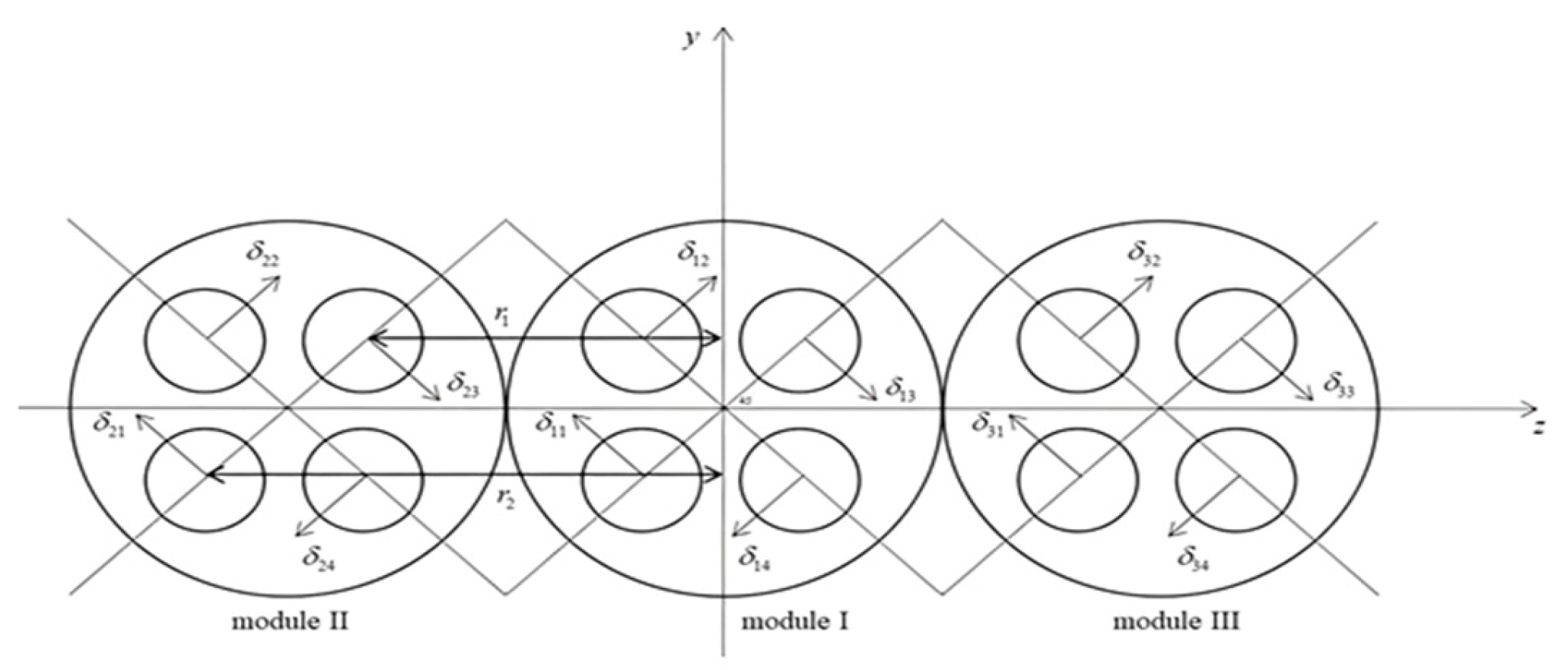
Zhen Wang et al. [82] used an optimised 6 DoF trajectory to model a small reusable launch vehicle and demonstrated the feasibility of using an optimal 6 DoF method. The rotational equation of motion was expressed in terms of the pitch, yaw, and roll angles, but it did not include the engine control force, the number of engines were neglected, and load relief was not considered. [82] Passive and active load relief are load reduction technologies. Active load relief employs real-time correction instead of pre-measurement for high-altitude steady wind speed and shear wind. Mianchao He developed an active load relief control model by adjusting the rolling channel to align the lateral surface with the direction of the most substantial wind interference. The rotation equation, including the engine, is given in Equations (26) to (28) as part of the 6 DoF. J is the rotation inertia coefficient, b is the moment coefficient, and the d terms are the aerodynamic coefficients. [83] and are the angle of side slip of the wind and the angle of attack, respectively. The control channel for each engine swing angle in a cross-engine layout is described by Equations (29)-(31) for each module stage. and are the equivalent pendulum angles of the pitching control channel, yawing control channel and rolling control channel, respectively. is the individual engine swing angle and the subscript number refers to an engine number. [83] The control techniques applied for launch vehicles designed with four engines. Practical engines include the RD-171M, two sets of RD-180, SLE-NASA, and ZQ-2, etc.
Figure 7.
Cross-layout of 4 engines of core module [83].
Figure 7.
Cross-layout of 4 engines of core module [83].
6. Liquid Rocket Engine Gimbaling
6.1. Pump Rear Swing Gimbaling
Polushin V.G et al. [84] introduced a chamber swing unit for a closed-cycle engine; Figure 8 presented a concept layout of the chamber swing, along with the damping device units and the gimbal structure; the main swing unit (3) is a flexible bellow section rather than a rigid pipe. A swing unit comprising support rings (9) and (10), the support rings are hermetically connected to the gas duct (5) and the main thrust chamber. The bellows (13) is located inside the cardan ring (14), where the cardan ring is connected through hinges (15) and forms two rotary axes. [84] Bellows (13) contain two shells (18) and (19) and are provided with protective rings (21) inserted between the corrugations (22). A tightly fitting case (23) is installed outside the protective rings (21). [84] The outer layer of the cylindrical spirals (24) is connected at the ends to the support ring units (9) and (10) of the bellows. The patent work disclosed a cooling method where an oxidiser enters the annular cavity (c) and the protective shield shells (18) and (19) before the exhaust gas enters the bellows cavity B through the consumable elements (11) and (12). [84] The coolant flows through the gap α and enters the cavity B, and it has been claimed to increase bellows strength properties in high-pressure, high-temperature environments. The engine chamber can be rotated by 10° to 12°. [84]
Mikhajlovich et al. [85] further introduced the working principle of a detachable bellows rocking unit (5) as shown in Figure 9. As in the previous work, the swing unit (5) is equipped with a two-stage cardan (6). The cardan unit, along with a flexible bellow, allows the engine chamber to be deflected within an angular cone with a half-angle of 8°, enabling control of the thrust vector along the pitch and yaw channels. The patent describes the internal structure of a flange comprising a cylindrical sealing surface (17) and an annular groove (18) for the power ring (13) of the metal gasket (9). The flange (1) has a cylindrical sealing surface (21) coaxial with the cylindrical sealing surface (17) of the flange (8). The patent claimed that a heat-resistant nickel alloy, grade EK61, has been selected for the flanges (8), (10), (24), (25) and the gaskets (9) and (26). [85]
A designed swing was found to yield a high-mass power steering drive, and patent work from [86] aimed to provide a simplified design solution for the joint between the swing unit and the main thrust chamber body. The patent research is relevant to the modernisation of RD-191, RD-180, and RD-171 swing units. [86] The cardan forks and the support rings of the swing unit bellows are made of one-piece casting VNS-25 steel, the joint of the swing unit with the combustion chamber housing shell includes a weld on the outer surface of the shells to be joined, a locking joint made on the inner surface of the shells to be joined and an annular cavity between them. The locking connection includes an annular projection on the end of the chamber body and a groove on the support ring of the bellows, with the annular projection sliding into the groove. Their patent research claimed to reduce swing mass by 50 kg for the steering drives. [86]
Katorgin et al. [87] introduced the main gimbal structure unit for the staged combustion cycle engine, which is designed with multiple chambers. However, as in the previous patent, the location of the fuel bellow compensator has not been clearly introduced. Vladimirovich et al. [88] described the extra-fuel bellows compensators (20) as shown in Figure 10, which presented a complete main rocking unit in a multi-chamber version. Fuel bellow compensators are positioned after the fuel pump and are referred to as the pump rear swing technique in the development introduction for the YF-130 in [89].
Pump rear gimbaling only swings the main thrust chamber units, which are connected to the flexible bellow section about a datum axis. The other rigid structure units, the turbopump and the rigid part of the gas exhaust line remain stationary.
6.2. Pump Front Swing Gimbaling
Cipra [90] developed a flex-joint structure for units before the pump and swing units, as shown in Figure 11. A flex joint with detail of the structure in Figure 11 (b) includes a linkage (38) connected with the exterior of the fire bellow section (34) and a second linkage (40) connected with the exterior of the second bellows section (36). The embodiment of the structure is generally applied for either a mechanical damper or a hydraulic damper (44) connected between the first and second linkages (38)/(40) of the bellows sections (34)/(36) to dissipate energy and vibrational movement of the bellows section (34)/(36). The flex joint unit can pivot about axis A2, the linear system (46) needs to be able to pivot or move with the bellows (33). The linear system (46) is made of a metal alloy and contains two generally cylindrical linear pieces.
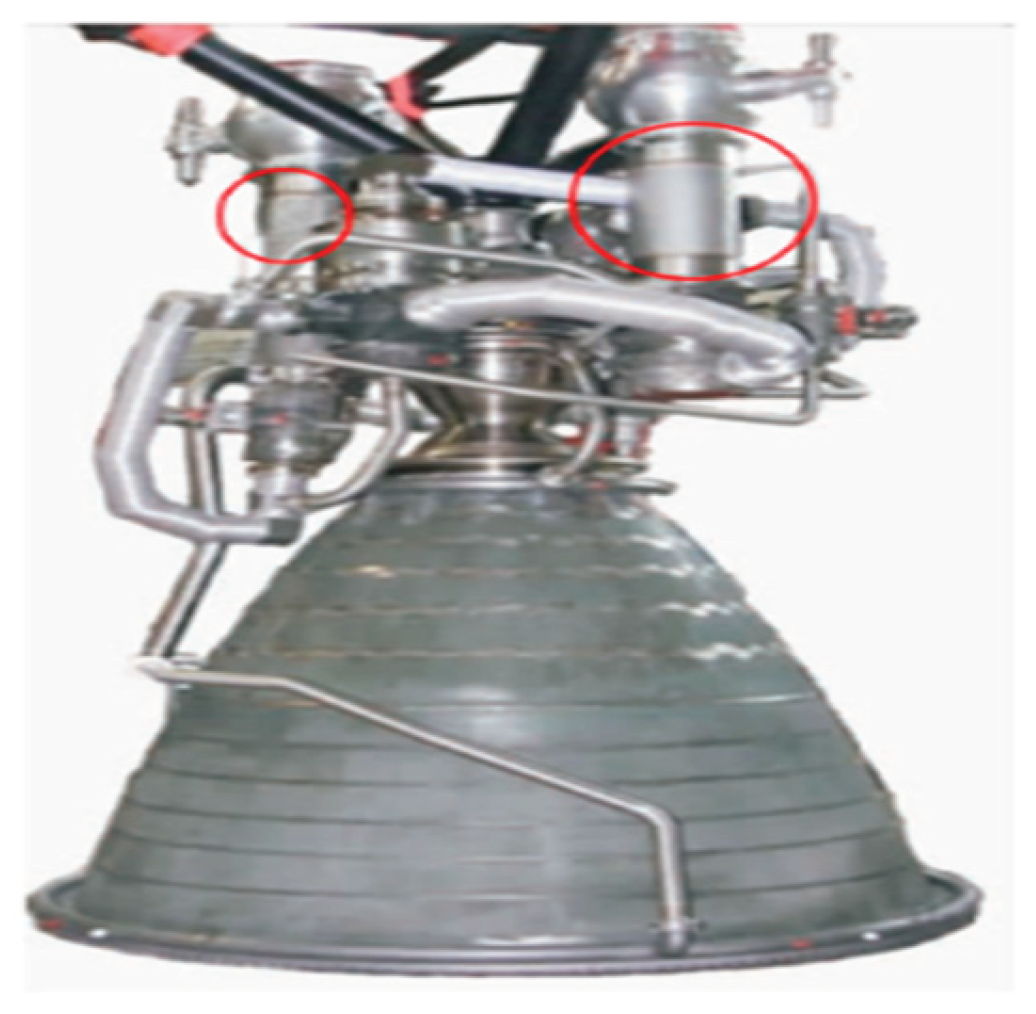
At the moment, many liquid rocket engines use pump-front swing gimbaling, which means the entire engine swings about a single axis. The current examples of staged combustion engines with thrust greater than 1100 kN are the early YF-100 model, the YF-90 shown in Figure 13 and the Raptor in Figure 12.
Figure 11.
Swing bellows units position [90].
Figure 11.
Swing bellows units position [90].
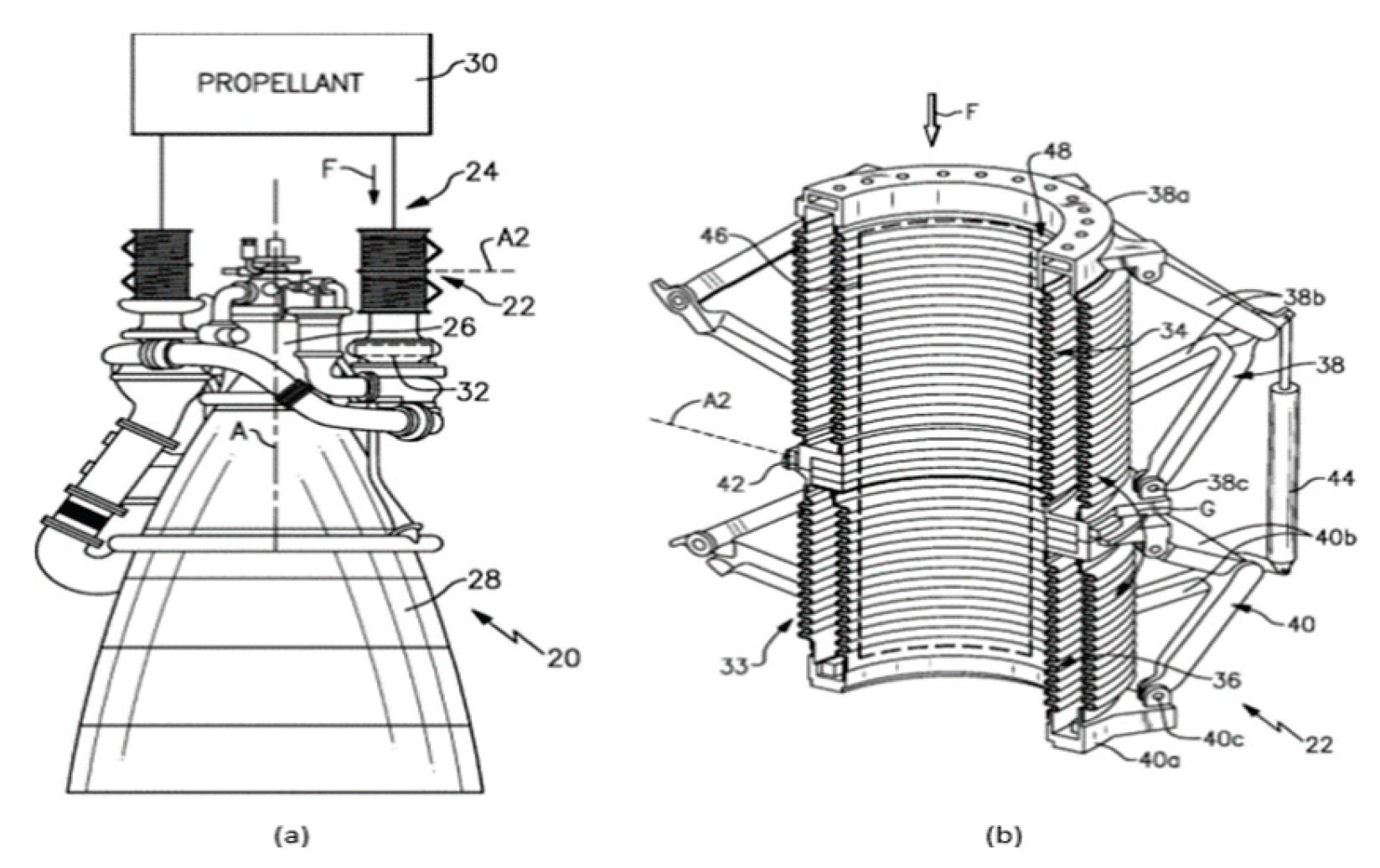
Figure 12.
Swing bellows units position (a) Raptor 2 (b) Raptor 3 [281].
Figure 12.
Swing bellows units position (a) Raptor 2 (b) Raptor 3 [281].
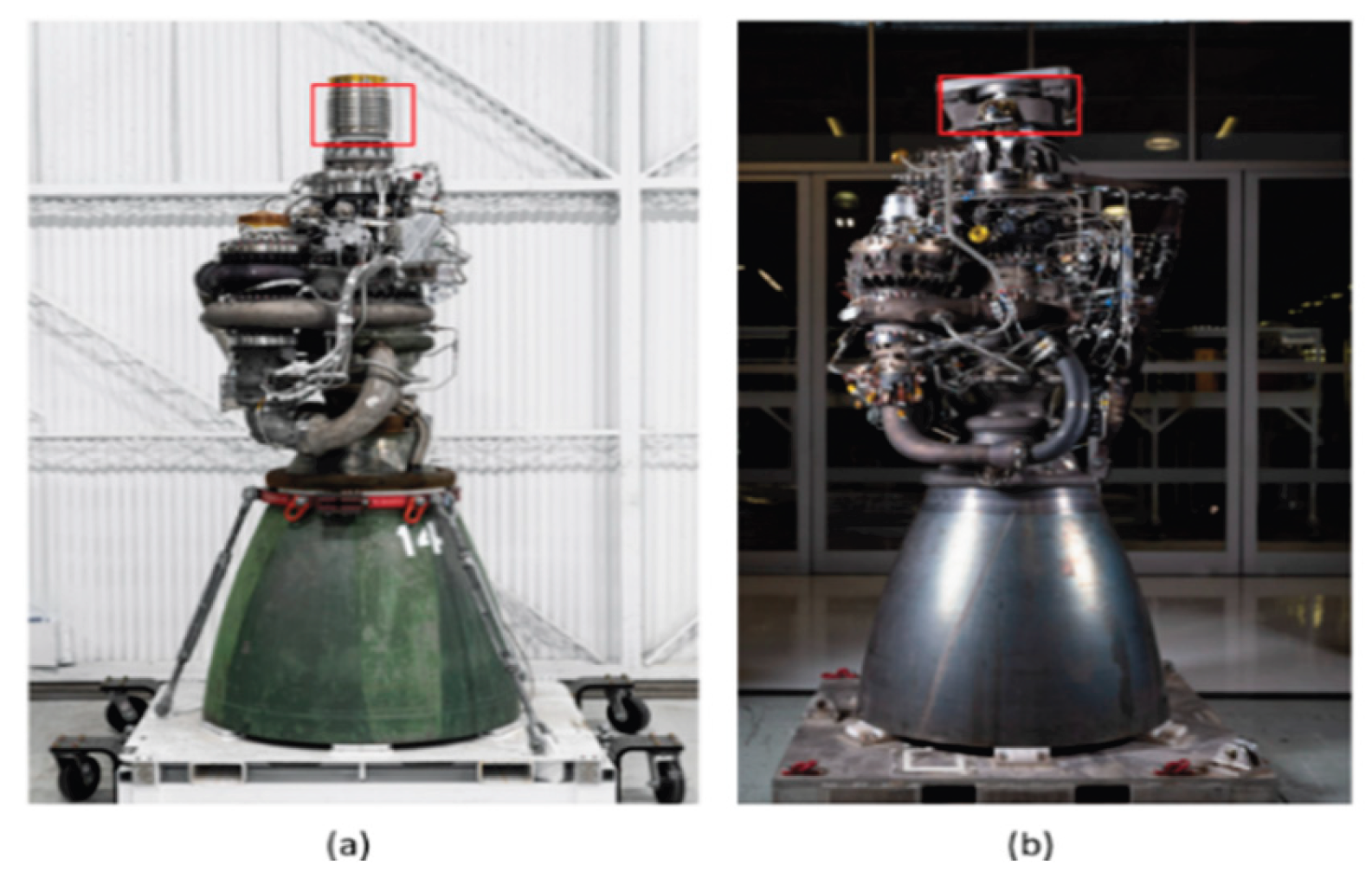
Figure 13.
Swing bellows units position for YF-90 [282].
Figure 13.
Swing bellows units position for YF-90 [282].
6.3. Thrust Throttling Method
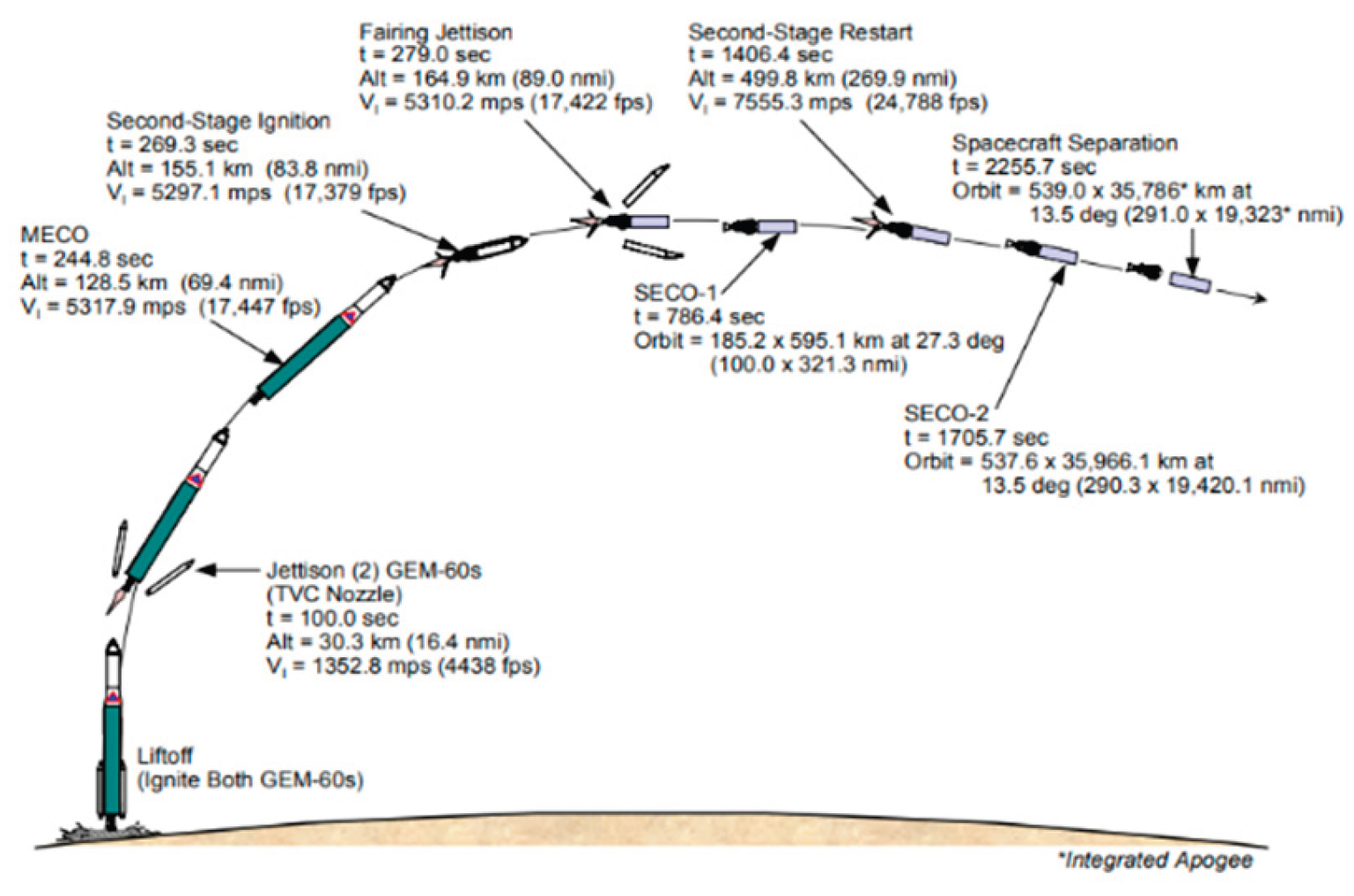
The space launch vehicle operates in coupled structural, acoustic, and shock environments and experiences maximum vehicle load during the endo-atmosphere ascent phase. [91] Lift-off, maximum dynamic pressure, engine power cutoff, and stage separation are considered critical events due to their influence on the accuracy of final payload insertion. Michael introduced a workflow for the inaugural flight-test process for the Delta IV from Boeing’s perspective. [91] A typical flight mission profile for the Delta IV is shown in Figure 15. During the first MECO, smooth engine throttling from full power to minimum is critical to mitigate vehicle load oscillation. The low-frequency response of the load also needs to be within the prediction margin to deliver the payload with acceptable accuracy. [91]
Figure 14.
RS-25 mission thrust throttling profile [95].
Figure 14.
RS-25 mission thrust throttling profile [95].
In the gas generator cycle architecture (PROMETHEUS), propellant feeding to the gas generator is mainly regulated by the methane generator valve and the oxygen generator valve, and the chamber valves control primary combustion. Full electrical valve actuation shall replace full pneumatic valve actuation used for Vulcain 2 engine. Precisely landing the reusable mission with the capability to throttle thrust from 100% to 30% is both a design requirement and a design challenge. [92]
Most gas generator cycle engines operated at a relatively low nominal combustion pressure, close to 10 MPa, which is a design point close to the optimised engine weight from the preliminary design analysis. High-pressure-drop, fixed-geometry injectors are widely used for liquid booster/core-stage and upper-stage propulsion systems on carrier vehicles. Mathew J. Casiano et al. [93] highlighted issues arising from high-pressure challenges on a liquid propellant-fed system for a fixed geometry injector in the 5% injector stiffness condition.
Figure 15.
Delta IV mission flight trajectory [91].
Figure 15.
Delta IV mission flight trajectory [91].
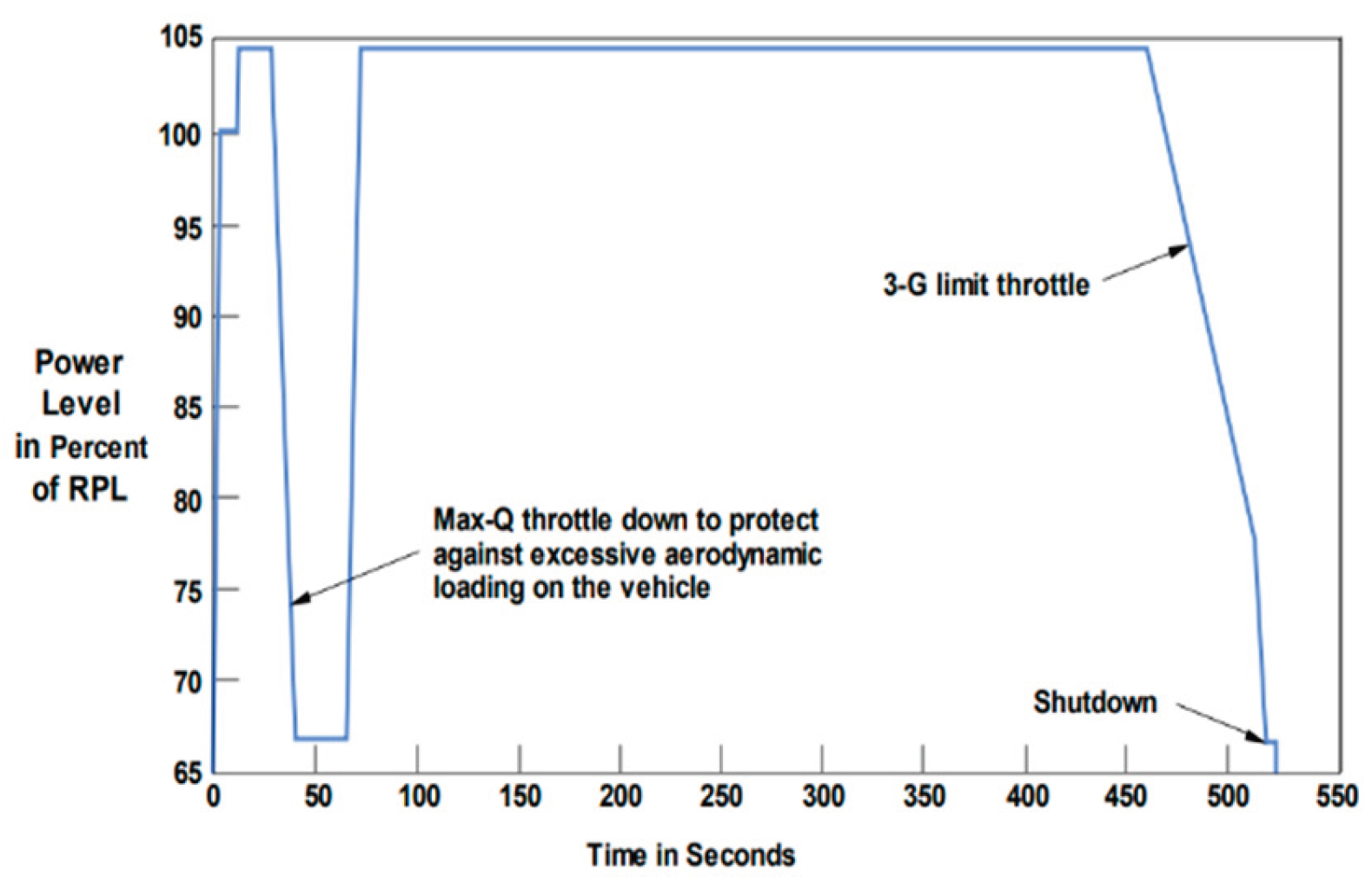
RD-180 is a case for ORSC engine use with RP-1/LOX, which had flight experience on Atlas III and Atlas V. Figure 16 shows the possible mission throttling requirements for Atlas III and Atlas V, with engine thrust transitioning to the maximum condition in a few seconds at startup. [94] The thrust must be reduced to 65% (Atlas III) just before reaching maximum dynamic pressure during transonic flight, then throttled back to 87% after exceeding that pressure. [94] To avoid exceeding the design constraint, thrust is throttled back to 47% to maintain flight acceleration within tolerance. During engine throttling, the main turbopump rotation speed decreases as the engine thrust level decreases, which also reduces the turbine outlet temperature. [94] Figure 14 shows that the RS-25 cryogenic staged combustion engine adopted the same working principle as the RD-180 in terms of the throttling requirement to reduce aerodynamic load. However, the RD-180 has a wider throttling range than the RS-25, with a minimum throttle setting of 47%. [95]
Yi Rong et al. [96] evaluated the engine thrust regulation requirements. The study concluded that the reusable mission and engine health diagnostic system needs load reduction, dynamic deceleration, and a soft landing. At engine start-up, the health monitor system must properly diagnose the engine components during the final countdown period, then generate a command for engine ignition and lift-off from the launch pad. When an engine system malfunction is detected, the engine diagnostic system will terminate the start-up command. To reduce propellant consumption during the diagnostic period, which lasts only a few seconds, a short-time diagnostic system is favourable due to the quicker transition to full thrust. Employ a 3 DoF model to simulate a planned flight ballistic trajectory, which still needs a thrust throttle constraint variable and a maximum dynamic pressure prediction corresponding to its time sequence.
J. Hulka and V. S. Anismov et al. [97] introduced a precise mixture ratio for NK-33, which was achieved by modifying electromechanical actuators. The thrust control actuator uses a 60:1 harmonic drive, and the mixture ratio actuator uses a 160:1. The thrust actuator and mixture actuator receive an externally commanded signal to change the flow area required by the actuator from the avionics equipment bay, where the GNC system is housed.
Bulk et al. [98] pioneered an integrated pre-burner combustion for a methane/liquid oxygen staged combustion cycle engine, as shown in Figure 17. The integrated combustor structure can be manufactured as a single part using additive manufacturing. The patent research used a fuel-rich generator for a full cryogenic propellant combination, with the fuel-rich exhaust gases driving the turbine. Methane is injected into the gas generator and main thrust chamber from the regenerative cooling channel (11). The fuel flow rate after the fuel pump is regulated by using valve (4). [98] The fuel flow moves upstream, and a portion of the fuel is splitted. The first portion of fuel is injected into the annular injector head (17), and the rest of the fuel flows into the injector head of the main thrust chamber (22). [98] The oxidiser flow is divided into the three streams: supply pipeline (12), supply pipeline (14), and supply pipeline (16). Oxidiser is routed from the supply pipeline (12) to the cooling manifold (13), and oxidiser within the cooling cavity is used as coolant for the gas generator (18). Oxidiser within the cooling cavity (13) will be gasified. Oxidiser is directly routed to the injector head of the main thrust chamber via the supply pipeline (16) and remains in a liquid state. [98] The gasified oxidiser flows from the cooling manifold (13) and is injected into the gas generator. Compared with the first two oxidiser streams, a small amount of oxidiser is supplied to the cooling manifold (15) near the nozzle throat. [98] These small portions of oxidiser are used as a coolant for transpiration or film cooling purposes. The engine system configuration uses a multiple-bypass regulator with adjustable fuel and oxidiser. The patent claimed that the turbine inlet temperature can be increased up to 1300K by using rich methane combustion with oxidiser regenerative cooling. [98]
Borisovich et al. [99] developed a startup method using external compressed gas for a closed-cycle engine with conjoined combustors. The pre-burner is coaxially integrated with the main thrust chamber, and both combustors are equipped with an electric ignitor, as shown in Figure 18. Electrical signals are sent from the control unit (43) to the thrust regulator (32) when the engine is started. The ground cylinder tank (40) supplies compressed gas; it enters the starting pipeline (35) to start the turbopump (2). [99] When the turbopump is started, the fuel pump, oxidiser pump and an auxiliary fuel pump unit (6) also start increasing pressure. Fuel valves (20, 25, 27) receive an opening command from the control unit (43). [99] The engine system design also adopted all liquid oxygen fed into the gas generator. A portion of the fuel enters the gas generator through a regenerative cooling conduit, while the remainder enters the main thrust chamber through the regenerative cooling channel via fuel valve (20). [99] The outlet of the fuel valve (20) is designed to connect to the fuel manifold (18), while its inlet is connected to the pipeline via the fuel pump (4). After a launch vehicle lifts off the ground, ground connection is disconnected, the check valve (38) closes, and the onboard valve (36) is opened after receiving an electrical signal. [99] Compressed air (37) is used and enters the turbine (5) through the thrust regulator (32). Thus, the main engine thrust is primarily throttled by a thrust regulator (32) to adjust turbine rotational speed. The patent research claimed the engine architecture also has a good compatibility with helium purge to minimise residual fuel after receiving the engine shut-down signal. [99]
Katorgin outlined the pioneering work of developing the method and installing the thrust throttle device on a single pre-burner staged-combustion-cycle engine, with a generic application. [100] The engine system used a pneumatic-hydraulic start circuit, also known as the self-start technique. Figure 19 illustrates the working principle of the self-starting and throttling method. The engine is started using a start tank (47). High-pressure fuel from the start tank is discharged, and hydraulic fuel pressure can rupture the ampoule membrane to release igniter fuel; triethylaluminium is used. [100] At the same time as the start, starting/cut-off valves (12, 37, 25) receive an electrical signal and switch to the open position. As the igniter fuel produces hypergolic combustion, the engine system is designed without an ignition system. [100] Both hypergolic fuels enter the gas generator and the main thrust chamber, and the turbine also starts rotating. The igniter fuel is delayed from entering the main thrust chamber after the gas generator starts generating hot gases. [100] Then, the starter tank is cut off when turbopump pressure reaches the nominal design condition. The patent research introduced an onboard heat exchanger (44) to rapidly cool down a small portion of hot gases after the engine started. [100] The cooled working fluid is used to drive the oxidiser boost turbine and is remixed into the pipeline. At the same time, the boost fuel turbine is driven by a small portion of fuel discharged from the first-stage fuel pump. [100]
Chvanov et al. [101] described the challenges of rapid and delayed start-up responses in a high-pressure staged combustion engine. A sharp pressure peak in the chamber can increase back pressure on the turbine, raising the turbopump speed. Additionally, a temperature surge may occur due to increased fuel flow in the gas generator and burnout, which affects the turbine. The delayed start-up response can reduce turbopump speed and lead to unexpected engine ignition. [101] Their patent proposed simplifying the engine's pneumatic-hydraulic circuit to ensure reliable starting while reducing costs and weight for closed-cycle engines. The patent research introduced a start-up method that uses a hydraulic turbine, which a single-preburner version of the staged-combustion cycle engines can effectively adopt. [101] The working principle of a self-startup and thrust throttle plan is depicted in Figure 20. The patent research outlined additional details on the starter tank (4). Fuel within the starter tank will be pressurised by the high-pressure gas supplied by the gas bottle (47). The additional description of the starter tank units corresponding to the control valves is provided. After engine startup, the second stage of the fuel pump (23) outlet pressure increases to the nominal, the hydraulic relay (63) is activated, and the fuel from the starting tank enters the above piston cavity (70) of the hydraulic drive (62) and the cavitating jet (69) through the line (67). [101] Then, the starting tank stops fuel supply when the oxidiser pump outlet pressure reaches a certain level, and valve (46) automatically closes. The oxidiser boost pump turbine unit (33) then switches to being driven by the oxidiser gas divided from the turbine (19). [101] The oxidiser turbine used for the boost pump operates in dual mode, transitioning from the hydraulic turbine to the gas turbine, which is the main difference from the systematic plan produced in [100]. Both systematic plans adopted the throttling method, using a throttle valve installed in the line after the first-stage pump.
To resolve these technical startup problems, a staged startup method is needed and developed for high-pressure staged combustion engines. Staged startup refers to a smooth transition to full thrust from a distinguished, controllable, pre-planned operational condition. Pre-design operating is also called the initial operation condition. The staged startup is already well established for staged-combustion cycle engines. The engine startup sequence during initial operating conditions must meet the diagnostic time requirements of the engine health monitoring system. Nominal design points are selected between 60% and 65% of the full thrust level from CASC’s perspective. Zhang et al. [102] further highlighted the significant impact of developing mathematical engine models in collaboration with artificial intelligence for engine fault-diagnostic techniques. The proposed engine monitor system can be separated into a preparation stage and a start-up stage in the engine test, as shown in Table 9. In the summary of staged combustion cycle engine control, NK-33, RD-0120 and YF-100/115/130 adopted an electromechanical control system to improve controllability and reliability. Previous RD-170, RD-180, RD-191, and RS-25 (SSME) used a hydromechanical control system. [102]
Chen et al. [103] proposed a theorem to evaluate the adaptability between the analytical model and fault factors based on available sensors. The study used a multi-factor coupling approach to define fault modes and established a two-step fault isolation method. The engine performance analytical model was developed to provide measurable variables. The two-step fault isolation method is developed based on a staged combustion operational principle. Sean McCormick et al. [104] introduced the development of an electromechanically actuated valve for the upper stage rocket engine. The study summarised past development and testing activities for the electromechanical actuator. The electromechanical actuator meets the requirements for cryogenic liquids, offering high reliability and strong system adaptability. Electrical mechanical actuators offer advantages by eliminating the need for a secondary pneumatic system, simplifying the actuator, ensuring compatibility with spacecraft electric actuation technology, and minimising the impact of changes in propulsion system requirements.
Sergeevich et al. [105] introduced the concept of two independent turbines driven by a common stream of hot gases rather than a single turbine unit, a concept that is feasible for the RD-171M. The patent research aimed to reduce the dynamic load in a single turbine unit and increase thrust. The preliminary analysis by Sergeevich indicated the adoption of a two-turbine unit separation that can increase thrust by 25% and reduce turbopump power by 25-40%. [105] The engine cycle configuration is somewhat similar to the full-flow staged combustion cycle; however, the working principle of all the oxygen fed into dual preburners remained the same as in the RD-180 and RD-191. [105] Fuel is throttled into a portion and enters the main thrust chambers through the regenerative cooling channel. It has remained a staged-combustion-cycle engine with four main thrust chambers. The throttling scheme of this conjoined engine is notated in Figure 21. A centrifugal fuel pump (8) and a centrifugal oxidiser pump (9) are coaxially mounted on a single shaft driven by the gas turbine (17). [105] The main fuel pump is designed with a two-stage configuration that comprises stage 1 (12) and stage 2 (13). The oxidiser pump (11) and the two-stage fuel pumps (12, 13) are coaxially mounted on a single shaft driven by the gas turbine (14). Initially, fuel throttling can be done by the throttle valve (23). [105] The divided portion of fuel enters the second-stage fuel pump, and the proposed regulator (29) can be used to throttle the flow rate entering the pre-burner before it reaches the start/shutdown valves (31,32). Fuel flow entering the thrust chambers is primarily regulated by the start-up/shut-off valve (25), which is a conjoined valve for multiple main thrust chambers. [105] The patent research did not introduce any oxidiser flow rate regulation devices, and oxidiser flow rate variation depends on the gas turbines (14) and (17). The stability of the mixture ratio mainly depends on the fuel throttle unit (23). [105]
Fedorovich [106] briefly introduced a throttle scheme to address the soft landing problem of a reusable launch vehicle. This scheme can also be adopted for high-pressure, staged-combustion-cycle engines. The patent research introduced two structural circuits that enable a deep throttle range of 20% to 100%. [106] A primary structure circuit and an additional structure circuit are installed in the pipelines. The main structure circuit operates during the ascent flight phase, while additional circuits connect to the combustion chamber to reduce thrust in the landing phase.
The flow regulator is installed after the outlet of the second-stage fuel pump, and the throttle valve is installed close to the inlet cooling channel of the main thrust chamber in YF-100. The schematic diagram of the flow regulator is shown in Figure 22. It primarily controls the flow rate and stabilises pulsed fuel flow before it enters the pre-burner across a wide range of inlet pressure conditions. Fuel flow rate throttling is achieved by regulating the angle of the rotating shaft. [107]
Yong Hua et al. [107] introduced several thrust throttling methods and conducted a preliminary evaluation of their application in oxidiser-rich Staged Combustion Cycle Engines. Three approaches can achieve thrust throttle: throttle the fuel flow branch to the pre-burner, throttle the oxidiser flow branch to the pre-burner, or throttle the fuel flow branch to the main thrust chamber. [107] Moreover, it is still possible to throttle the turbine inlet gases using a flow divider and to reduce thrust to 86.37% on its own. Based on the original working principle of the ORSC engine, the pre-burner has a high oxidiser flow rate and a low fuel flow rate, with a high proportion of the fuel flow directed to the main thrust chamber. [107] The regenerative cooling requirement of the main thrust chamber primarily influences the predominant portion of the fuel flow rate. Throttling by changing the fuel flow rate entering the pre-burner increases the mixture ratio, thereby deviating from its nominal condition. However, the low end of the throttling range will be limited by combustion instability triggered by excess oxygen. [107] Purely relying on simple fuel flow rate throttling cannot meet deep or wide-range throttling requirements below 50%. A low turbine inlet temperature limit for the YF-100 was found at 420K, and the engine thrust was throttled down to 49.78% using the fuel flow throttle. [107] Combustion instability occurred at a low injector pressure drop, with a limit of 0.3 MPa. Vice versa, the oxidiser throttling method leads to an increase in turbine inlet temperature and the upper temperature limit for the exhaust pipe duct. [107] The oxidiser pump will also be adjusted to its nominal condition and operated under off-design conditions, resulting in a decrease in the overall pressure of the turbopump system and increasing the risk of cavitation. It has been found that the throttle capability was limited to 89%.
Many developed in-service closed-cycle engines from China have a throttling capability range of 66-%100%. It is unable to meet the minimum deep throttling requirement, even at 20% or lower, for a landing mission of a partially reusable launch vehicle. Chun Hong et al. [108] introduced a deep thrust adjusting method for the staged combustion cycle engine, which can be implemented without substantial changes to the propulsion system, as shown in Figure 23. [108] When thrust needs to be reduced from 100% to 20% power level, a gas diverter valve (1) will be opened to divert a portion of the hot exhaust gases, while the rest are used to drive the main turbine. Propellant pump power decreases as turbine power declines. The propellant mixture ratio needs to be regulated within the margin, and large deviations are prevented by adjusting the fuel throttle valve. [108] As the thrust needs to be further reduced to 10%, the main fuel valve (5) is closed. The flow rate needs to be further reduced by adjusting the gas diverter valve, and the mixture ratio of the main thrust chamber is stabilised via the fuel throttle valve. [108] The patent research claimed that the thrust throttling scheme applies to methane-liquid oxygen and kerosene-liquid oxygen engines. [108]
Gubanov David Anatolyevich et al. [109] proposed a dual pre-burners closed-cycle engine without boost turbopump units. The patent research indicated that auger units (6) and (14) are installed for the fuel pump and oxidiser pump, respectively, as shown in Figure 24. The engine system architecture is designed with two-stage fuel pumps (5), two-stage oxidiser pumps (13), and two independent turbine units. Two independent turbines are driven by the exhaust gases generated from fuel-rich (7) and oxidiser-rich gas generators (11). [109] Heat exchangers (4) and (15) are used for heating a small portion of fuel and oxidiser for autogenous pressurisation. Autogenous pressurisation is switched on and the valve of the gas pressurisation tank (3) is closed when the engine reaches the nominal condition. [109] About 90% of the fuel is fed into dual pre-burners, and 4% of the fuel flow is discharged into the combustor at the nozzle's exit critical section (near the throat region). [109] 90% of the oxidiser is fed to the dual pre-burners at the specified flow rate. About 7-10% of the oxidiser is fed into the main thrust chamber (18), and the rest enters the heat exchanger. The patent research preliminary assessment found that the main thrust chamber can reach 30 MPa. [109]
Nanni Gong et al. [110] proposed a low-power consumption, half self-starting method for high thrust, full flow staged combustion cycle engines to address poor start quality. The fuel and oxidiser pipelines are primed, and the turbines are started using high-pressure gases from the external gas bottle. When the engine inlet pressure exceeds the critical cavitation pressure, and the turbopump operates at a positive hydraulic head, the oxygen and fuel valves of the gas generator are opened in a specific time sequence. [110] Then, the engine transitions to self-starting. The layout of separation turbine units for a full-flow staged-combustion cycle engine can reduce start-up power requirements. [110] Thus, it further reduces propellant consumption during engine start. The patent research claimed that starting each turbine requires only 5% of the nominal turbine power. The ignition sequence of the gas generators depends on the calculation and the transient characteristic of the turbopump power.
Barashkov Ivan Sergeevich et al. [111] introduced a method that uses a bypass line to regulate the mixture ratio for a staged combustion, as shown in Figure 25. The fuel and oxidiser flow rates are reduced by routing a small portion of the afterpump mass flow rate to the boost pump via a bypass line, while valves (6) and (11) are closed. To increase the oxidiser-to-fuel component ratio, valves (6) and (11) are opened to provide flow to the bypass line. The patent claims that the engine designed with this layout can meet the propellant ratio regulation requirement within ±3% to ±7
Grebnev M.Ju. et al. [112] developed a flow regulator with a movable piston (13) and an adjustable sleeve (17) based on the differential pressure drop across the internal cavity, as shown in Figure 26. The flow regulator is designed with two inlets, labelled (3) and (2), and operates in the alternative control mode. For example, fuel enters through the inlet (3); the inlet (2) is closed by a spring-loaded shutter (27) that is pressurised against the housing seat (1). Fuel enters the inlet (2), and the fuel inlet (3) is closed by the adjustable screw (25). [112] When the fuel enters the inlet (3), it flows through the openings (22),(24) and (23), then enters the internal cavity (8) and flows into the throttle holes (11). Finally, fuel is discharged from the regulator through outlet (4). [112] The throttle opening space (9) is adjusted by the movable sleeve controlled by the actuator (18). Whereas the piston (13) is spring-loaded by a spring (15) relative to the rear guide bush (10), it becomes movable as pressure drops across the regulator. [112] The regulator is functioning to provide the required outlet mass flow rate by adjusting the orifice area in response to changes in pressure drop.
Taekyu Jung designed a bellows-type flow regulator applicable to both storable and cryogenic propellants, as shown in Figure 27. [113] The flow regulator comprises the shaft, the sleeve used to adjust the flow rate in the first throttle zone, and the bellows. The 2nd throttle zone mainly comprises the bellows, spring and spool. [113] Flow rate throttle is achieved by adjusting the second throttle area, which corresponds to changes in P2 as the rotation shaft angle is adjusted. [113] When P2 increases, the spool moves to the left, increasing the 2nd throttle flow area and thereby increasing inlet pressure P1. Conversely, when P2 decreases, the spool moves to the right, reducing the 2nd throttle flow area. [113] The governing equations of the incompressible flow regulator are described in Equations (32) and (34) as functions of the volumetric flow rate, segment hydraulic resistance, and regular geometry parameter. [113] The bisection and Newton-Raphson methods were used to solve Equation (32). The incompressible flow model of the flow regulator has been validated, and the model results agree with water experiment data. [113] The empirical hydraulic resistance model for the first throttle is a function of the rotational shaft angle, as shown in Equation (34). This equation was validated within the range of rotational angles from 37.5% to 87.5%. [113] The results provided initial insights into prediction and improved model performance for the engine system model.
Taekyu Jung et al. [114] introduced the working principle of a bellows stabiliser and validated the mathematical model by comparing it with the experimental data. One of Jung's most important experimental results is shown in Figure 28, which demonstrates that the O/F ratio remained constant as the throttle valve opening ratio increased. Taekyu also conducted an experiment to validate the dynamic flow characteristic of the mixture ratio stabiliser. [115]
Shang et al. [116] studied the transient flow characteristic of a flow regulator by using CFD software Simerics MP+6.0. realisable model was selected for turbulent modelling and boundary condition setup close to the real condition at 50MPa. Liquid oxygen at 90K was used, and pressure inlets and outlets were selected for the simulation. Partly, 1D and CFD simulations of water flow were used to compare with the experimental results. The validation results showed that the 3D CFD simulation had the lowest mass flow rate error, below 3%. The study suggested that CFD can capture the flow dynamics and stabilisation characteristics of a flow regulator by applying sinusoidal and step perturbation boundary conditions at the inlet and outlet, as shown in Equations (35) and (36), respectively.
Fedorov et al. [117] introduced steady-state test regimes that map to the design and off-design points of the RD-170 engine, as shown in Figure 29. The Figure 29 test results indicated that the main thrust chamber combustion pressure is independent of the mixture ratio. The presented results demonstrate the combustion stability margin and the reliability of the cooling path; each point represents a statistical engine hot-fire test conducted more than 7 times. The data points of the enclosed regime represented design/off-design points close to the realistic engine operating condition.
Wang et al. [118] also introduced the engine performance limit boundary for a cryogenic rocket engine using hydrogen and liquid oxygen. The engine performance, as measured by combustion pressure, at different mixture ratios is shown in Figure 30. Figure 30 shows hot-fire test results that cover 89%-110% of the nominal thrust for YF-77. It also demonstrated that the mixture ratio in the flight condition is operated within . The hot-fire test range in mixture ratio covered 83%-116% of the nominal mixture ratio when a single engine was started multiple times, with a total test duration of 5,346 seconds. Figure 31 showed hot-fire test results under operating conditions during overload. Figure 31 (b) demonstrated stable oxygen pump, hydrogen pump outlet and combustion pressure results at overload conditions. Figure 31 (a) shows that the oxygen pump inlet pressure exhibits a large amplitude during propellant use. Figure 32 further demonstrated the hot-fire test results for hydrogen pump outlet pressure and oxygen pump outlet pressure at the design-point conditions, operated at 16 MPa and 13 MPa, respectively. Both cryogenic fluids have very low dynamic viscosity and significantly higher critical pressures, and their combustion pressures reach a steady state of 10.2 MPa. Kirner had introduced a similar operation limit test map for the hydrogen Vulcain thrust chamber. [119]
6.4. Summary of Injector Design Requirements from the Engine System
The first and second points directly influence the design of the fuel injector. Nominal design-point selection directly influences the total flow rate and the engine system pressure requirements. The design redundancy from the engine fault analysis can determine the upper limit of the operating condition. The current staged-combustion cycle and gas-generator cycle engines are not designed for operating conditions with a wide range of mixture ratios, which can cause significant shifts in combustion temperature. The challenges of providing adequate pressure drop across the pre-burner and main thrust chamber at low throttling conditions are significant. Moreover, due to the deep throttling requirement of a reusable launch vehicle, the minimum throttling range is even below 40% and down to 20%, which will lead to significant pressure changes in the turbopump and flow regulator. That further complicates the determination of the combustion stability boundary and injector design. The summary of the relevant research states that the development of staged-combustion cycle engines is presented in Table 10, and the influence of the engine system on the fuel injector design is summarised as follows.
- Nominal operation condition
- Upper limit operation condition
- Low limit operation condition
- Engine performance limitation requirement (Reliability tests)
7. Mass Flow Rate Characteristics
In the steady-state incompressible mass flow rate calculation, fluid density is constant, and the mass flow rate depends on the discharge coefficient, flow cross-sectional area, and the square root of the pressure drop across the injector. The pressure drop decreases as the mass flow rate decreases under the throttling condition, and the combustion pressure also decreases. Thus, a decrease in the fuel injector stiffness ratio at constant fuel temperature. In a liquid rocket engine using full cryogenic propellants with extremely low vaporisation temperatures, such as liquid oxygen, hydrogen, and methane, there is a strong tendency to induce two-phase flow. Two-phase flow also presents challenges in flow rate measurement calibration and in modelling the outflow characteristic. The mixing head design for the gas generator or main thrust chamber must meet the design requirements at the nominal operating condition by delivering the required propellant flow rate to the combustor at the specified injection pressure. Thus, offline and onboard flow measurement calibration is necessary to provide accurate feedback throughout the whole development and test process.
Rapid variations in the sinusoidal sensor signals in the two-phase flow measurement have been identified as signal-tracking errors in the fluid measurement. It can result in a large measurement error range at high gas void fraction, as shown in Figure 33, where the blue vertical bars represent a flow meter measurement without signal error calibration. [120] Ming Li et al. [120] introduced a complex bandpass algorithm coupled with a flow tube control algorithm to reduce the standard deviation in two-phase flow measurements with a water-air mixture. The experiment initially calibrated the Coriolis mass flow meter for single-phase flow measurement over a mass flow rate range of 0.5 kg/s to 4 kg/s. Figure 33 (a) and (b) show the improvement in mass flow rate and density over the gas void fraction range of 0%-85%. The calibrated results showed that 50% were at least 6 times better than the Oxbox results, and 90% showed at least a two-fold improvement.
Palacz et al. [121] also stated that errors in two-phase flow measurements yield unreliable nitrous oxide flow readings. It was considered that errors induced by two-phase flow cause damping at high void fractions. At the same time, the venturi and mechanical flow meters cannot accurately measure two-phase flow. The study employed an indirect measurement method and found that two-phase quality in the upstream region of a plain orifice injector influences the discharge coefficient. Increase the length-to-diameter ratio of an injector, increase the residence time in the orifice, and increase the pressure drop. [121] Moreover, their study suggested that an increased length-to-diameter ratio and an increased residence time enabled two-phase flow to reach thermal equilibrium.
Lubarsky et al. [122] experimentally studied the effect of fuel temperature on combustion stability characteristics by using n-heptane. Piezoelectric pressure transducers were used to measure the combustor dynamic pressure, and three-channel fibre-optic probes were installed between the swirler vanes of the LM6000 pre-mixer module. [122] Each fibre-optic probe provides a cone-shaped field of view and is optically connected to photo multiplier tubes via 430nm wavelength bandpass filters. The data recorder recorded the photo multiplier signals to synthesise dynamic pressure data. [122] The dynamic pressure data were used to correlate acoustic pressure with heat-release oscillation. The experiment observed the disappearance of the spray at a temperature approaching the supercritical state, as the scattered signal was no longer detected. [122] Hysteresis-type dynamic pressure fluctuations were observed when fuel temperature initially increased to the supercritical temperature, then decreased to 308K. High-frequency combustion instability at 400Hz was observed in both subcritical and supercritical states, after which the instability disappeared. However, low-frequency stability at 100Hz was detected. [122] The study concluded that a supercritical fuel injection system could trigger high-frequency combustion instability.
Christen L. Miser et al. [123] experimentally found a decrease in mass flow rate as the heated JP-8 temperature approached the supercritical state in a concentric heated exchanger, where the fuel was heated by waste heat produced from a Pulse detonation engine. The study quantified the change of fuel temperature from 298K to 760 K, resulting in a 60% drop in mass flow rate. The method for maintaining a constant mass flow rate was not included, as a drop in mass flow rate would have consequences.
Xuejun Fan et al. [124] developed a one-step cracking model to predict the mass flow rate variation for RP-3. The tested kerosene temperatures ranged from 750 K to 1000 K. The experiment was carried out using a heating tube, with fuel pressure between 3 MPa and 5 MPa and a fuel temperature range of 700K-920K. Fuel flow rate was controlled at 20-80g/s, and a sonic nozzle was used to measure the mass flow rate of cracked kerosene. The cracked kerosene mixture was cooled after passing through the sonic nozzle, and the gaseous and liquid products, along with carbon deposits, were collected for analysis. [124] Average density and average molecular weight were analysed using gas chromatography. Then, the mass flow rate was calibrated by dividing the total amount of liquid and gaseous species collected by the time interval. [124] The research found that the breakup bond of large molecules decreased the mass flow rate at elevated temperatures, leading to the formation of smaller molecules and a decrease in fuel density. [124] The study also found that when the kerosene temperature exceeds its cracking temperature, the kerosene mixture can be treated as an ideal gas.
Wei Gao et al. [125] investigated the transition to supercritical kerosene jet characteristics from the critical condition by using a plain orifice injector with an exit diameter of 4mm. The study compared experimental observations of the supercritical jet's structure near the nozzle region with empirical correlations and found that the ratio of the Mach disk diameter to its length is correlated with the ratio of the fuel injection pressure to the backpressure. Increasing the injection pressure ratio can increase the jet expansion angle and the diameter of the Mach disk-like jet.
GuiGui Liu et al. [126] studied the internal flow characteristic of RP-3 at subcritical, trans critical and supercritical injection conditions using a converged injector nozzle. The experiment heated the fuel temperature to 759K, and a Coriolis Flowmeter measured the fuel mass flow rate. A phase change was observed using a Shadowgraph image. The experiment found a significant density variation within the fuel injector during supercritical injection, corresponding to a decrease in mass flow rate. The study also quantified the pressure effect on mass flow rate in each tested injection condition. Under increased pressure above the critical pressure, the overall fuel flow rate was found to be higher than that in subcritical injection.
Zixuan Fang et al. [127] studied the liquid nitrogen spray atomization characteristic at elevated pressure drop conditions using six centrifugal fuel nozzles. The experiments distinguished the injection condition into subcritical injection in a subcritical environment, subcritical injection in a supercritical environment, and supercritical injection in a supercritical environment. The experiment results revealed that supercritical injection in a supercritical environment increases the spray cone angle and reduces the penetration distance under high-pressure-drop conditions. Subcritical injection in a subcritical environment increases the spray cone angle and breakup length under high-pressure-drop conditions. Increased penetration distance and decreased spray cone were observed for a subcritical injection-supercritical environment. Increasing the fuel injector's geometric parameter can decrease the spray cone angle and penetration distance as the pressure drop increases.
Xingli Wang et al. [128] experimentally studied the thermophysical properties of Chinese Rocket-graded kerosene across different thermodynamic states and developed corresponding density and mass flow rate models for the transcritical and supercritical regimes. The experimental measurement errors in the mass flow rate for transcritical and supercritical states were within . [128] The results showed a substantial drop in the mass flow rate at the transition from the subcritical to the supercritical regime. The flow rate remained relatively constant over the tested range of critical temperature ratios, as shown in Figure 34 (a). The corresponding density measurement is shown in Figure 34 (b). Several conclusions can be drawn as follows. At a given fuel injection pressure, the mass flow rate is strongly influenced by changes in the critical temperature ratio near the critical condition. [128] The drop in mass flow rate at the same critical temperature ratio depends on the variation in pressure. Supercritical-state fuel requires a higher injection pressure to achieve the same flow rate as low-pressure fuel in the subcritical state. [128]
Assume the mass flow rate of an engine is not yet determined and has a fixed geometry. The maximum steady-state combustion pressure mainly depends on changes in propellant flow rate. Combustion pressure decreases and increases as the mass flow rate increases. Under constant fuel-injection pressure, supercritical fuel has a higher injector stiffness ratio than subcritical fuel due to the higher pressure drop across the injector. Supercritical fuel shows promise of extending the low-throttling limit. Liquid hydrogen has the lowest critical temperature and critical pressure (1.3 MPa) among the liquids methane and oxygen. The existing high-pressure staged combustion engines use a high-pump-discharge-pressure system, with propellants injected beyond the critical pressure. The nominal propellant flow rate must be fed into the mixing head inlet to meet the nominal thrust design requirement. Thus, the cryogenic propellant feedline needs to be pre-cooled and should use an adiabatic pipe design to prevent engine performance losses due to a decline in mass flow rate.
Harris et al. [129] calibrated CFD outlet mass flux results by comparing them with 1D model predictions. The study modelled ECN injector 210679, using non-slip adiabatic wall boundary conditions for the injector boundary. turbulent model and Helmholtz equations were used to model turbulent fluid and real fluid characteristics. Pressure inlet conditions of 1500 bar and inlet temperatures of 370 K were used for all selected fuels, with chamber pressure varying between 100 bar and 750 bar in each simulation. Heptane, butane, propane, ethane, methane, and hydrogen were selected to test the liquid. [129] Four 1D mass flow models, from Equations (37) to (40), were used in the CFD simulation. Equations (37), (38), and (40) have the same injector discharge coefficient. Equation (37) is an incompressible flow model with constant density, while Equation (38) is the compressible flow equation used to represent an ideal gas. Equations (39) and (40) are the isentropic flow model and non-isentropic flow model, respectively. Assumptions with no friction and heat losses are used for the isentropic flow model. The model calibration results in Figure 35 indicate that the CFD mass flux data for methane and hydrogen fit well with the non-isentropic flow model when Cd = 0.91. The study suggested that Cd obtained from the liquid-flow spray experiment also showed adaptation to supercritical injection.
Belyaev et al. [130] developed a steady and transient 1D two-phase flow model to calibrate the two-phase outflow from a mixing head with multiple injection elements. The emulsified mass flow model has been applied to provide theoretical start-up analysis for RD-120, RD-170, RD-180, and RD-191. [130] Moreover, the flow model is also used for YF-100 as stated in [107]. Equation (41) is defined as the gas flow rate entering the mixing head, empirical coefficients are jet contraction coefficient of an injector and is the gas injection pressure. The liquid-filling process of the injection element cavity has been modelled using Equation (46). The two-phase mixture in the pre-injector cavity of a mixing head is calculated by integrating Equation (47). [130] The empirical Martinelli correlation in Equation (43) can be used to work out the pressure change of the mixing head when are measured in the experiment. [130] The empirical coefficient of m can be estimated by using the log Equation (48). Figure 36 shows experimental validation of the two-phase pressure drop across the mixing head over 1.5s; the model data (1-4) fit well with the experimental data (5-8). Their experiment's operating conditions included an inlet gas flow rate ranging from 0.0313 kg/s to 0.1632 kg/s and a constant liquid flow rate of 0.44 kg/s.
Ma et al. [131] studied the effect of oil emulsification on the fuel spray characteristics by adding inert gases into the fuel flow. A mixing head with multiple injection elements was used for the experiment, and a schematic diagram of the experimental apparatus and measurement location is shown in Figure 37 and Figure 38. Figure 39 (a) and (b) showed the observation of the change of flow phase prior to the injector cavity and outlet of the mixing head in the condition of increasing helium flow rate from 1.06g/s to 5.5g/s. A noticeable distribution effect on the liquid sheet and the bubble formation has been observed. [131] Their experimental results demonstrated that helium injection leads to oil emulsification and significantly alters the spray pattern. A different experimental observation of the outflow spray pattern has been found between emulsion and single-phase fluids. [131] Figure 40 shows the comparative experimental results of inert gas injection on the pressure drop across the mixing head. The experimental data show that increasing the helium/nitrogen gas flow rate while maintaining the same fuel flow rate increases the pressure drop across the mixing head. Increasing the fuel and inert gas flow rates increases the pressure drop across the mixing head. The results also found that helium injections led to a greater injection drop than nitrogen injection at the same fuel and inert gas flow rates. [131]
7.1 Mixture Ratio Distribution
Inappropriate fuel injector design can result in an uneven pressure gradient, which can influence the overall propellant flow velocity. J.L. Pieper presented two different fuel injector designs (dished-face/flat-face) for a storable liquid hypergolic (N2O4/Aerozine-50) propellant engine. Flat-faced injectors with cross-feed channels have been experimentally shown to improve the uniformity of the mixture ratio distribution and to prevent local null-mixture ratio regions. Variation in propellant velocity and momentum particularly influences mixing efficiency in liquid-liquid injection. [132]
Greene [133] applied the thermal and stream tube models to help explain the possible causes of a temperature overshoot that occurred accidentally in a high-pressure fuel turbine during a past SSME engine ground test. The model analysis focused on detecting a period of high local combustion temperature in the pre-burner, followed by the self-destruction of the high-pressure fuel turbine. The thermal model is used to analyse the overshooting temperature, which mainly depends on the material’s melting temperature limit in a turbine. When the local point on a turbine experiences a sudden temperature increase above 1611 K, the leading-edge material begins to melt. The developed thermal model results indicated a sudden increase in local temperature within a second, which could damage the turbine surface. [133] The stream tube model was applied to the fuel injection elements, and each stream tube was modelled with an individual equilibrium temperature, assuming blockage. [133] The model results from the high-temperature region were used to confirm the findings of fuel injector cavity contamination from post-test inspection.
Damage to the hot end component downstream of the gas generator, resulting from a non-uniform temperature distribution and the turbopump failure at startup, was identified as a design problem related to the LE-7 test's mixture ratio distribution. [134] The turbopump needs to start and rotate within the design envelope. Failure accelerates to the nominal speed, leading to a high pre-burner mixture ratio that further degrades overall performance. Thus, improving the distribution of the fuel injector and the accurate start-up sequence with valving time are methods to overcome challenges in mixture ratio distribution. [134]
To analyse and make velocity losses prediction due to non-uniform mixture ratio, L.M.Cohen [135] conducted an experimental test by laser-induced fluorescence techniques to obtain the later-axis hydroxyl radical concentration profile at the exhaust plume region for the engine used on Titan IV (Stage 1). The corrected experimentally measured OH* concentration data were linearised to fit the one-dimensional kinetic model, and the mixture ratio was interpreted as the logarithm of OH. The experiment demonstrated the non-uniformity of the mixture ratio and the need to consider performance losses in the engine design. [135]
An uneven mixture ratio combustion process can lead to a control problem with fuel/oxidiser consumption, such as one propellant element running out before another. Affect Onboard propellant reservation and payload injection accuracy, particularly for an upper stage launch vehicle. [136] An iterative guidance law does not require complete information about the nominal trajectory and is commonly used for upper-stage launch vehicles. A significant deviation in the mixture ratio can cause the guidance system to issue an early engine-shutdown command to the control system, potentially leading to an unsuccessful flight mission. Combining non-linear static modelling with sensitivity parameters and in-flight engine tests is necessary to address the depicted problems. Large pump head deviation and after-pump flow resistance have been identified as the main influencing factors on the mixture ratio deviation and turbopump efficiency. They also influence the mixture ratio, but it is a minor factor. [136]
7.2. Summary of the Effect of Mixture Ratio and Flow Rate Characteristics
- Propellant residence time: the single fuel injection element and the full-scale mixing head design influence propellant residence time within the mixing head cavity. The length of the post-tube also affects the rate at which turbulent flow is fully developed and the time required for propellants to reach their steady state.
- Mass flow rate calibration: Cryogenic propellant in a single-phase state must also be calibrated using a 1D model. Develop a two-phase outflow model, which is also important under startup conditions.
- Inert gas flow requirement: For liquid propellant with spray atomisation, mixing of the fuel and inert gases to form an emulsified mixture can increase disturbance and improve atomisation. Assisting inert gas injection at the low pump outlet pressure during thrust throttling will increase the pressure drop across the injectors, maintaining the combustion stability margin.
- Propellant flow rate distribution: Influence on the heat release in the local injection plane section and the temperature distribution.
7.3. Research on the Effect of Methane/Hydrogen Injection Conditions on the Liquid Rocket Engine Associated with the European Space Launch Vehicle System
Vulcain is a gas generator LH2/LOX engine developed for the Ariane V launcher. Its upgraded version, Vulcain 2.1, is in use for the first stage on Ariane 6. The hydrogen injection temperature is 38k with an injection pressure of 10.4MPa, while the liquid oxygen injection temperature is kept at 97k with an injection pressure of 9.4MPa in the nominal operating condition. The Vulcain’s gas generator was developed for a fuel-rich combustion plan to mix hydrogen and liquid oxygen at a 0.9 mixture ratio. It can reach a combustion temperature of 873 K and a pressure of 8.5 MPa, with a high combustion efficiency of 0.98. 8.25 kg/s of total propellant flow is fed into the gas generator combustion. 4.34 kg/s of hydrogen and 3.91 kg/s of liquid oxygen flow rates are expelled after driving the turbopump. The electric-spark plug ignition system was used to start the engine at a low starting combustion pressure of 1.2 MPa. [137]
Denis et al. [138] investigated combustion performance at off-design injection conditions. The tested range for the Vh2/Vo2 ratio is 8-16, and the hydrogen injection velocity range is 96-192 m/s. The liquid oxygen injection velocity is set to either 8 m/s or 12 m/s. Different types of injectors are accessed, and shear coaxial swirl injectors are finalised for use. The swirl effect on combustion temperature uniformity was also studied, but no apparent improvement in temperature distribution uniformity was observed when a swirler was inserted into the liquid oxygen injection passage. Without accounting for radiative heat transfer, the temperature increase from the mixing head is significant. Vulcan’s gas generator adopted supercritical hydrogen-liquid oxygen injection technology at the nominal operating condition. [138] Shear coaxial swirl injectors are designed with an annulus feature, known as the liquid-centred swirl injector configuration.
The main thrust chamber of Vulcain 2 includes 566 coaxial injector elements with a central igniter tube. The liquid oxygen dome is made of Inconel 718 to accommodate increased liquid oxygen flow rates. 72 coaxial swirl injection elements are manufactured for the gas generator without baffles, compared to the 60 injection elements required by Vulcain. [139] Vulcain has the same nominal main combustion pressure as Vulcain 2, but a different nominal gas generator combustion pressure: 10.3 MPa for Vulcain 2, compared to 8.7 MPa. Required gas generator mass flow rate increased by 11.2%, 6kg/s of hydrogen and 3.9kg/s of liquid oxygen. 38.9kg/s of hydrogen and 270.1kg/s of oxygen were fed into the main thrust chamber. [140]
Tricoaxial injection elements are developed to meet the cost-reduction and gas-generator performance requirements for Vulcain 2.2. Low propellant flow rates per element have been linked to high cost in the context of the EU’s liquid rocket engine development requirements. Augmented fuel injectors with high propellant flow rates are needed to achieve drastic cost reduction. [141] The total number of required injectors for the gas generator is reduced from 72 to 6, and the flow rate per element capability increases up to 2000g/s compared to 140g/s, as shown in Table 11. Table 11 presents the required mass flow per element for fuel-rich combustion in liquid rocket engines, which can be used for experiments and CFD studies. Overall flame length is proportional to the liquid oxygen post-exit diameter. A minor change in geometry, such as the exit diameter in the tricoaxial configuration, is sensitive to manufacturing tolerances throughout the rest of the flow passage specification. [141] Thrust throttling for Vulcain can be mainly done by tuning the gas generator oxygen valve, gas generator hydrogen valve and hot exhaust gas valve located on the liquid oxygen turbine feedline. Two-position pneumatic actuators were used during the flight, and the latest design of the next reusable launch vehicle engine is planned to replace them, as discussed in reference [92].
Mayer et al. [142] conducted an experimental study to observe atomisation phenomena during steady-state combustion and ignition transients. The experiment used a single-element coaxial injector, with liquid nitrogen and helium serving as simulants for liquid oxygen and gaseous hydrogen, respectively. A mixture ratio of 5 was used for the combustion test, with the injection velocities of liquid oxygen and gaseous hydrogen set at 25 m/s and 301 m/s, respectively. Mass flow rates were 0.06 kg/s and 0.3 kg/s for oxygen and hydrogen, respectively. The experiment demonstrated dense-fluid turbulent mixing at supercritical pressure and identified the critical mixing temperature for the N2/He system as 125.7 k. Based on the thermophysical properties of nitrogen, the effect of surface tension becomes negligible compared to the shear force. In the combustion test, a flame anchored near the exit of the liquid oxygen post, with no ligaments or droplet formation observed at Pc=6.3 MPa. [142] The reported experimental findings were used to validate the assumptions: spray formation does not occur, and dense gaseous-like mixing exists. Thus, the experiment quantitatively demonstrated the negligible surface-tension effect and the importance of the thermal effect on cryogenic propellant mixing behaviour at near-critical and above-critical conditions. [142] When combustion pressure increases to and beyond the critical pressure, spray atomisation ceases, and the reacting shear layers primarily determine mixing.
Branam et al. [143] quantified the appearance of the potential core, transition region, and self-similar region and measured the length scale of the cryogenic jet. The combustor chamber was filled with ambient-temperature nitrogen gas, which was used as a simulant for liquid oxygen. Nitrogen injection pressure was above the critical pressure, and injection temperature was controlled between 120k and 130k. Thus, the experiment mainly investigated trans critical/supercritical spray. The shadowgraph techniques are employed to capture the macroscopic structure of nitrogen. Density was measured by implementing the Raman Image technique for image calibration. Density was calculated from the linear relationship between intensity in axial and radial cross-section images. The study indicated that the length scale of a turbulent supercritical cryogenic jet corresponds to the Taylor microscale. [143] A dense nitrogen core was inferred from empirical relationships. The length of the dense core depends on the density field, the injector diameter, and the Reynolds number, as developed by Schetz and Chehroudi. [143]
Figure 41.
Dynamic pressure sensor and optical probe measurement position for BKD test rig [144].
Figure 41.
Dynamic pressure sensor and optical probe measurement position for BKD test rig [144].
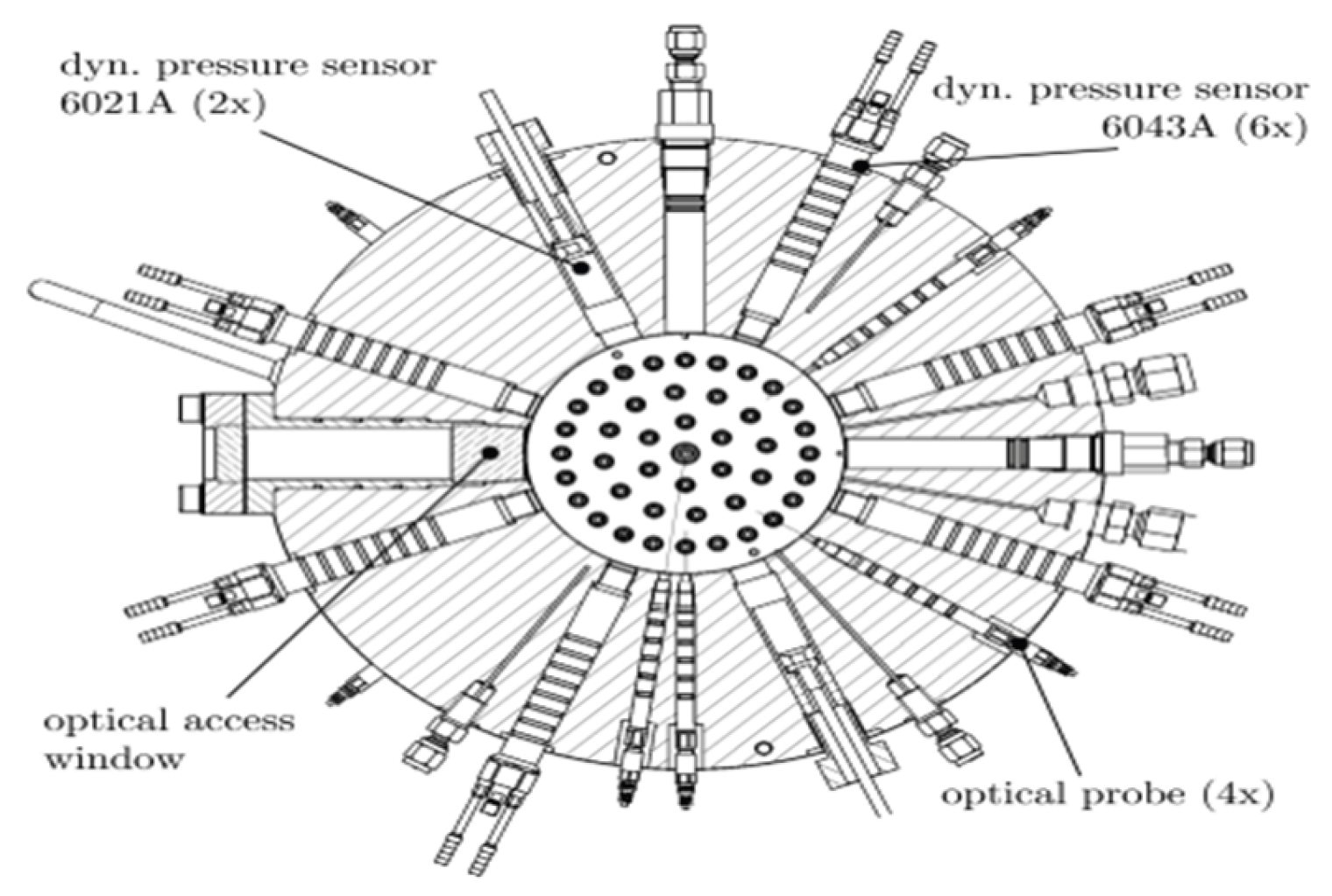
Wolfgang et al. [144] investigated longitudinal injector eigenmodes of 42 recessed coaxial injection elements with a representative liquid rocket operating condition. The BKD combustor test rig has a geometric specification with a contraction of 2.56, a characteristic length of 0.66m and a throat diameter of 50mm. The acoustic pressure sensor (Kistler type 6043A) was used, and developed fibre optical probes measured local OH* emissions. Both types of sensors used a common measurement plane and were located 5.5mm away from the injection plane. The OH* intensity signal was sampled at 100 kHz, and the cavitation number for liquid oxygen was implemented into the experiment as a function of time, corresponding to the propellant mixture ratio ramping test. All steady-state operating conditions of the experiments were conducted with a cavitation number greater than 4, and the cavitation effect did not serve as a source of acoustic excitation for the oxygen injectors. [144] The experimental study aimed to identify the main sources and causes of the liquid oxygen post-acoustic excitation. The effect of combustion dynamics on an anchored flame, a lifted flame, and an internal hydrodynamic effect was mainly investigated. The experiment results revealed that the dynamic frequency in the recess volume was not of acoustic origin and thus, an internal hydrodynamic excitation source of the liquid oxygen post was hypothesised. [144] Combustion noise and two-phase flow did not affect the acoustic excitation of the liquid oxygen post. The study concluded that the combination of conditions will lead to a first tangential mode in the combustor chamber. [144] The 1st tangential mode and the Strouhal number lead to flow-induced excitation. [144]
Wolfgang et al. [145] comparatively tested combustion stability characteristics for a liquid oxygen injection element modified with a Helmholtz resonator and a non-Helmholtz resonator, as shown in Figure 42. The experiment was conducted using a BKD combustor, and the tests demonstrated that flame and pressure oscillations can be successfully suppressed by using damped injector elements. Wolfgang et al. [146] conducted a combustion instability experiment using the BKD combustor rig, a test rig with a full-scale 42-injection elements. The maximum operating load points for the BKD combustor are 8 MPa at a mixture ratio of 6.8; the details of the experimental operating conditions are shown in Table 12. The acoustic spectra of the combustion chamber were analysed as an averaged spectral density for all eight measurement sensors. [146] The total propellant flow rate range of hydrogen and oxygen injected into the combustor was between 5.6kg and 6.7kg/s. The average power spectral density experiment data are shown in Figure 43 (a) and (b) to identify the stability and instability at the different load points. Flame dynamics were characterised using OH* measurements. The experiment results showed that the highest 1T peak occurred at the operating condition LP4, while LP2 exhibited a similar non-linear 1 T mode. [146] Based on these results, combustion instability occurred and was independent of changes in the initial mixture ratio. The study suggested that intensity and phase relationships can be investigated using 2D flame response.
Deeken et al. [147] conducted a hot fire test to find combustion stability characteristics by using porous API80-168 injectors. The hot-fire test results are based on 168 injector elements operating at combustion pressures of 5 MPa to 9 MPa, with the hydrogen injection temperature at 50k. Detected combustion instability manifested as a large-amplitude pressure fluctuation, triggering automatic shutdown. Combustion instability was determined as a significant pressure perturbation higher than 80% of the mean combustion pressure and a far greater than either 5% or 8% of the mean combustion pressure. The functions of the modified injectors, featuring a hydrogen-cooled baffle and a modified injector design, were assessed through a fire test. The experimental study did not show a significant improvement in combustion stability after using a hydrogen-cooled baffle. [147] However, high-frequency combustion instability was suppressed by altering the radial distribution of the fuel injector at a combustion pressure of 8 MPa. [147] Deeken [148] further conducted an experimental study to examine the effects of porous injector boundary conditions on combustion efficiency and chemical reaction rates. The centre of gravity of the axial pressure gradient profile was derived from the static pressure measurements and is given by Equation (52). The parameter is used to indicate how efficient a chemical reaction and heat release are, with a high value of . The small value of the chemical reaction indicate a fast chemical reaction and a steep pressure gradient. [148]
The experimental study assessed three combustors with characteristic lengths of 725.4mm, 697.8mm, and 664.7mm. The nozzle contraction ratios are 3.2,2.5, and 2.0. These values were calculated from a constant nozzle diameter to ensure comparable experimental results. Pressure sensors were placed at the same 100mm for all combustors. The results showed that the combustor with the shortest characteristic length produced the highest chamber velocity of 517 m/s at a combustion pressure of 8 MPa with a constant mixture ratio of 5. The study indicated that the hot-chamber gas velocity significantly influences combustion efficiency. [148] The rapid axial drop in chamber pressure increased the hot-chamber gas velocity. The combustion efficiency also depends on the nozzle contraction ratio, but this is attributed to an increase in hot gas velocity. The combustion test for API50-126 showed a rapid dimensional pressure drop, with the pressure drop approximately equal to that of API50-36 at the same mixture ratio and combustion pressure of 6 MPa, as shown in Figure 44. [148]
A large number of injection elements tends to have a smaller value of centre of gravity of the axial pressure gradient profile than the reduced injector elements at the same mixture ratio. The study found a decrease in as the mixture ratio increases for a large number of injection elements (API50-126), API50-126 has a faster chemical reaction than API50-36, as depicted in Figure 45. [148] API50-36 showed a reverse result; an increase in the mixture ratio can lead to a decrease in . Such results can explain why plurality injection elements are preferred for high-mixture-ratio operations and are therefore designed with a small oxygen post diameter. A large oxygen post diameter is considered for low-mixture-ratio operation combustors, such as the pre-burner. [148]
Morii et al. [149] investigated the effects of pressure and velocity fluctuations on the liquid oxygen core and conducted experiments using a BKH combustor test rig. The combustion test was conducted with a hydrogen-to-liquid oxygen mixture ratio of 6 at a combustion pressure of 6 MPa. The measured time average combustion pressure. Five injection elements were used in the LES simulation and experimental study. The results indicated that the first longitudinal mode of pressure fluctuation is weaker than the first tangential mode of velocity fluctuation. [149] The experimental results suggested that transverse velocity fluctuations have a greater influence on flame shortening. The experiment results also showed that pressure fluctuations and non-excited pressure exerted a minor influence on the liquid oxygen core, and unsteady Bernoulli’s theorem explained variations in its length. Their results also indicated that a flattened liquid oxygen core can enhance combustion by improving mixing and increasing flame surface area. [149]
Different physical phenomena of LOX/LCH4 combustion in flame structure have been experimentally observed compared to the LOX/GCH4 combustion. The methane injection temperature range was between 120k and 400k, while the oxygen injection temperature range of 90k-130k was selected for the experiment setup in the VOLGA program. The density of cryogenic propellant depends on changes in pressure. [150] A large pressure drop resulting from a significant density change in cryogenic propellant is considered a challenge for testing its injection process. The formation of the flame expansion angle for liquid methane combustion is considered more important than for gaseous methane combustion. Several characteristics of fuel-rich methane combustion have been concluded. Both gaseous and liquid methane injection states showed slight soot during steady-state and shutoff conditions. [150] Low-frequency combustion instability appeared in one of the liquid methane combustion tests. Increasing the injection velocity ratio also improves low-frequency combustion instability. Ignition reliability does not depend on the methane state, but flame blowout occurs at a high velocity ratio. During ignition, reliability depends on the injector inlet condition, and the methane state can affect the ignition sequence. [150]
G.Singla et al. [151] conducted an experimental study to investigate the effect of oxygen injection at subcritical, trans critical and supercritical states on the diffusion flame characteristics. A supercritical-state methane injection condition was maintained across all tests. Light-flame intensity was derived from the average image using Abel inversion. The diffusion flame length was short at supercritical-supercritical injection, and the flame exhibited a low expansion angle of about 10 degrees. At subcritical and near-transcritical oxygen conditions, a long diffusion flame with a large expansion angle of 20 degrees was observed. Local strain rates and surface area determine the rate of transfer from the dense flame region at trans-critical and supercritical combustion pressures, followed by the vaporisation and mixing process at subcritical combustion pressures. A high-density liquid-oxygen jet will increase the mass transfer rate across the interface layer between methane and oxygen. [151] However, when the combustion pressure exceeds the critical points of methane and oxygen, a significant drop in oxygen density occurs, slowing the mixing with supercritical methane. The short flame length at supercritical methane-supercritical oxygen injection has been explained by the high methane velocity, which increases the rate of mass transfer from the oxygen flow. [151] The flame shear layers between the oxygen and methane jets became less expanded in the transverse direction. [151]
Johannes [152] studied the effect of steady state combustion pressure on CH4/LOX flame stabilisation using a single-element shear coaxial injector in a subscale test rig that represents full-scale engine pressure. The mixture ratio was kept constant at 3.4 for all studied combustion pressures, and the propellant injection temperatures were 120 K and 275 K for oxygen and methane, respectively. [152] The study found that low-frequency combustion instability, occurring at about 40-60 Hz, was present in subcritical combustion pressure when the pressure drop across the oxygen post remained constant. [152] The low pressure drop across the methane annulus injector, which is less than 10% of the combustion pressure, also triggered combustion instability. [152] The mass flow rates of methane and liquid oxygen were regulated according to the mixture ratio at each tested combustion pressure. The effect of the Weber number was neglected at high combustion pressure. Figure 46 (a) shows the time-averaged OH emission flame image in steady state combustion pressure at supercritical state, trans critical state and subcritical state. The corresponding flame emission spectrum for each state is shown in Figure 46 (b). The emission intensity spectrum depends on the combustion pressure, and the highest OH intensity occurs at 306nm in supercritical combustion. Reduce combustion pressure to a subcritical state, resulting in a low-flame-intensity spectrum. The effect of momentum flux ratio on the diffusion flame shape in the subcritical condition and supercritical condition is shown in Figure 47 (a) and (b), respectively. The results were compared at a 60mm distance from the injector exit in the axial direction and a 12.5mm distance in the radial direction. The momentum flux ratio has been described as a factor in determining the flame shape; a high momentum flux ratio produces a lower expansion angle flame than a low one in subcritical and supercritical combustion conditions. [153]
Johanne [154] studied flame structure and combustion response of non-recessed and recessed single coaxial injector elements at three designed experiment phases corresponding to the subcritical and supercritical injection. The liquid oxygen-to-methane ratio was controlled at 3.4, and the subscale combustor operated at a pressure between 4 MPa and 6 MPa. The flame anchor characteristic near the liquid oxygen post tip was characterised using the spontaneous OH and CH chemiluminescence technique. [154]
The experimental study found that a recessed liquid-oxygen post tip increases the pressure drop across the injector and improves combustion stability in steady-state operation. The experimental relationship between combustion stability margin and pressure drop across the methane annulus passage has been quantitatively measured, as shown in Figure 48. The results showed that the combustion stability margin improved significantly for the recessed fuel injector compared to the non-recessed coaxial injector. Combustion stability is influenced by pressure drop and fuel injector geometry; combustion instability persists at low-pressure-drop conditions with a recessed injector. [154]
Degeneve et al. [155] studied the diffusion flame length of GCH4/GO2 generated by fuel centralised coaxial injectors with annular and non-annular swirlers within the flow passage. Flame length and the combustion flow field were measured using the OH* chemiluminescence technique. Their experimental work studied more than 1,000 combinations of momentum flux ratios at different annular swirl levels. A wide range of stoichiometric mixture fraction between 0.09-0.43 were studied, and the work suggested that the stoichiometric scaling relationship can also be extended to study the swirled diffusion flame length. A diffusion-swirled flame will increase understanding of flame dynamics. [155] A swirled methane/oxygen flame has been described as shorter than a non-swirled flame and wider as the swirl level increases. [155] Their experimental study also aimed to expand the database for numerical model development and validation in the same injector problem.
Usandivaras et al. [156] numerically investigated the effect of variation of recess length of the coaxial fuel injector on the flame operating at a constant mixture ratio condition. A large number of coaxial injectors with different recess lengths were studied using the LES-CFD code AVBP, and a deep learning algorithm was applied for post-processing data. [156] Experimental data from a coaxial fuel injector obtained at TUM for the selected operating condition were used as a reference for the experimental design. [156] A surrogate model was established using a fully connected neural network and can be used to study a coaxial injector model with variations in predetermined parameters. [156]
Boulal et al. [157] conducted experiment study on characterising diffusion flame(GCH4/H2) in subcritical, trans critical combustion condition. A recessed coaxial fuel injector was employed, and the geometry parameters were kept constant during the experiment, with combustion pressure ranging from 4 MPa to 5.77 MPa. Subcritical liquid oxygen and gaseous methane were injected throughout the experiment. [157] Flame characteristics were quantified using OH* chemiluminescence, and the Spectral Proper Orthogonal Decomposition technique was used to analyse backlit images and flame instability. The experiment revealed the oxygen-jet characteristic in the transition combustion chamber operating condition from trans-critical to gaseous. [157] Oxygen droplets detached from the core, transited to the supercritical state via pseudo-boiling, and then transitioned to the gaseous state. Whereas the downstream oxygen jet initially transitioned from trans-critical to subcritical, then to the gaseous state via droplet evaporation. The main experimental finding was the presence of low-frequency combustion instability, which coincided with the 1L acoustic mode eigenfrequency of the oxygen feedline. [157] The research indicated that hydrodynamic instability was responsible for amplifying the acoustic resonance in the oxygen feedline. Moreover, hydrodynamic coupling with the surrounding jet also contributed to the induction of low-frequency combustion instability. [157]
Baoe et al. [158] investigated the interaction between atomisation and flame characteristics for methane-liquid oxygen and hydrogen-liquid oxygen. The experiment was performed using a single-element low-combustion-pressure test rig at the M3 facility. The methane injection temperature is maintained at ambient temperature, and the hydrogen and liquid oxygen injection temperatures are set to 80 K. The experiment used liquid-state oxygen, gaseous-state methane and gaseous hydrogen. The experiment was designed for a low combustion pressure of 0.15 MPa, with O/F=3.4 for methane-liquid oxygen combustion and O/F=5.5 for hydrogen-liquid oxygen combustion. The effects of the Weber number and momentum flux were considered for a low-pressure spray and a low combustion pressure condition. The results found that a gaseous methane-liquid oxygen spray produces a higher global droplet number than a gaseous hydrogen-liquid oxygen spray. [158] Methane-liquid oxygen spray produced a shorter intact core length than hydrogen-liquid oxygen spray at similar Weber number and momentum flux conditions. The experimental observation has been explained by the greater density difference between hydrogen and oxygen than between methane and liquid oxygen in the spray. [158] The flame angle depends on the Weber number, the local Weber number, and the influence on atomization. The study suggested that the Weber number primarily influences secondary atomisation, and the momentum flux ratio significantly influences the liquid jet instability, thereby changing primary breakup characteristics, as reflected in changes in intact core length. [158] Methane-liquid oxygen combustion exhibits a macroscopic flame spreading angle similar to that of hydrogen-liquid oxygen combustion under comparable Weber number conditions. However, there is a difference in the liquid oxygen atomisation characteristics and the flame stability characteristics. [158] The transfer injector designed for hydrogen-liquid oxygen combustion must account for combustion transport effects when scaling it for methane-liquid oxygen combustion. [158]
N.Fdida et al. [159] introduced the liquid cryogenic spray test vessel developed at the MASCOTTE facility. A cryogenic vessel was developed to investigate the presence of a liquid oxygen spray fibre regime under real operating conditions of a liquid rocket engine. [159] Helium and nitrogen were selected as simulant liquids for oxygen and methane, respectively. The axial velocity of the simulants obtained from Phase Doppler Interferometry was then used as reference experimental data to develop and improve the numerical model. [159] The experimental study primarily investigated macroscopic cryogenic spray characteristics under a wide range of Reynolds numbers (62000-75000) and a momentum flux ratio of 8-10. Research has indicated that a high axial velocity region produces a small mean droplet size, and PDI measurements were directly proportional to D10. [159] The smallest droplets were found in the far spray field, a region about 1.4 times the distance from the central injector diameter, where they were detected. [159] The coaxial cryogenic flow induces aerodynamic effects on the central liquid jet, driving flow entrainment via the momentum flux difference in the spray field. A small droplet size was observed at the spray front, which was used to simulate fuel/oxidiser mixing and vaporisation under reactive conditions. [159]
Alexander Bee et al. [160] also conducted gaseous methane-liquid oxygen spray atomisation and combustion test in the M3 test centre. The experiment studied three swirl-coaxial fuel injectors, each with swirler vanes, to assess spray and combustion stability as part of the test objective. Swirler vanes were arranged in straight, coaxial, and counter-swirling vanes. [160] A combustion experiment was conducted to achieve combustion pressures of 2.5 bar and 3.2 bar. The low-combustion-pressure hot-fire test found that the swirler vanes had a minor or no effect on low-frequency combustion stability, and that all three swirler injectors had similar pressure drops within 10% error. [160] The experimental study found that a fuel injector configured with straight swirler vanes produced a wide spray cone angle. However, a minor influence on the change in the flame expansion angle has also been quantified experimentally. [160]
M.Theron et al. [161] investigated low combustion pressure at low methane-liquid oxygen mixture ratios between 0.24 and 0.35. The investigated propellant injection temperatures were followed in liquid-liquid injection and transcritical-transcritical injection conditions. The MASCOTTE high-pressure chamber was used for all hot-fire tests. The experimental setup primarily uses two Kulite sensors and a Kistler sensor to measure injector dynamic pressure and combustor chamber pressure; propellant temperature is measured with a PT100 probe. Intrusive thermocouples are placed downstream of the combustor to measure temperature uniformity. Flame characteristics generated by a recessed and a non-recessed injector were compared using instantaneous OH emission. [161] Their study found that the non-recessed injector produced a longer intact liquid oxygen core than the recessed injector. Visible soot deposits were observed on the optically accessible window in all extreme fuel-rich combustion tests. [161]
Jan Martin et al. [162] performed flame topology analysis to study flame opening angle, flame width and flame length produced from LOX/H2,LOX/CHG and LOX/LNG combustion. A single shear coaxial injection element test rig was used, and the experiment was operated at combustion pressures of 4.1 MPa-6.54 MPa and mixture ratios of 2.5-3.5 for gaseous/liquid natural gas combustion and 3.4-5.8 for hydrogen combustion. A threshold-based flame boundary detection algorithm was applied to a time-averaged image of the flame, and a linear fit to the detected flame's boundaries was performed over the first 6% of the flame’s optically accessible length. [162] Figure 49 showed a comparison of the opening angle, flame width, and flame length, and the momentum flux ratio was found to significantly influence all the macroscopic flame parameters. [162] Liquid natural gas combustion produced a longer flame length than hydrogen at a momentum flux ratio of about 35, but the hydrogen flame length showed less deviation after an increase greater than 80. [162]
Jan Martin et al. [163] investigated the causes and influencing factors of short-lived burst combustion instability, and an experiment was conducted using the BKN and BKD test rig. The experimental setup and operating conditions are described as follows. The hot-fire tests were conducted at the P8 cryogenic test facility using a single-element thrust chamber (BKN) and a full-scale 42-element thrust chamber (BKD). [163] In the single-element combustor test, three combustor lengths 359mm, 539mm, and 609mm were selected, and the nozzle throat diameter was kept constant at 14.5mm for all tests. Shear coaxial injection element designed with a tapered and recessed feature on the liquid oxygen post. [163] The 13 thermocouples, sampled at 100 Hz, were used to measure the axial temperature, which protruded approximately 0.1mm into the chamber. Thermocouples are distributed every 20 mm between 4.5 and 244.5mm downstream of the injection plane. [163] Unsteady pressure sensors are positioned at distances of 34.5 mm, 84.5 mm, 94.5 mm, 134.5 mm, 164.5 mm, and 234.5 mm downstream of the faceplate. Pressure and temperature sensors for the BKD test rig have the same sampling rates of 1000 Hz and 100kHz. [163] A total of 16 hot fire tests were conducted with BKN, and 8 with BKD. Mixture ratios in the range of 1.5-3.6 were selected for the test, with combustion pressure between 40 bar and 70 bar. The experiment focused on the short-lived, sustained instability that occurred in a cycle limit. Figure 50 (a) shows the damping ratios for the 865 that occurred in the short-lived instabilities, and the combustor length did not show a significant influence on the growth rate. [163] Figure 50 (b) shows that the influence of the combustor length has a significant effect on damping. The results indicated that a decrease in combustor length below 539mm can prevent short-lived burst combustion instability, and a long combustor length can result in poor damping characteristics and lead to transition to limit-cycle instabilities at high momentum flux ratios. [163] Figure 51 (a) and (b) show the effects of an injector with a recessed feature and a non-recessed feature; the power spectral analysis has demonstrated that the recessed injector tends to exhibit instability characteristics and a non-favourable influence on flame dynamics. [163]
7.4. Research on the Effect of Methane/Hydrogen Injection Conditions on the Liquid Rocket Engine Associated with China
YF-90 is a high-thrust cryogenic propellant (H2/LOX) staged-combustion engine candidate with great potential for the upper-stage propulsion system on CZ-9. The full-scale adaptation test pre-burner combustion pressure range required 7.7 MPa-13.2 MPa, with a tested mixture ratio of 0.61-1.09. Nominal total propellant flow rate requirement is 516 kg/s, and the combustion pressure is 18.3 MPa. Nominal pre-burner combustion pressure is 33 MPa, with throttling capability of 60-100%. [164] Several main engine performance requirements related to the preburner and main thrust chamber are established based on a high total flow rate of 516 kg/s. A uniform temperature distribution needs to be maintained within . [164] Overall pressure distribution in the injectors' cavity of the pre-burner must be within . [164] Mixture ratio throttling range within in the thrust throttling condition between 60%-100%. Combustion efficiency should not be below 0.99 within the thrust throttling range. Acoustic analysis of the combustor and the design of the fuel injection element's acoustic frequency offset are also required. The pre-burner adopted a combined plan using coaxial swirl and coaxial injectors. [164]
The test range of pre-burner combustion pressure should be 7.5-15.5 MPa at a fuel-rich condition for a subscale combustor rig. [165] Transient uniformity of the temperature distribution was measured by inserting six temperature sensors at different radial depths in the exhaust-gas outlet. A centre temperature sensor is placed at 0.99R, a wall temperature sensor at 0.09R, and the remaining four temperature sensors at 0.39R and 0.65R, respectively. [165] Different temperatures have been measured at the same operating condition, at the same sensor depth. A uniform temperature distribution associated with a local hot spot was also observed under different flow rate conditions throughout the test. At a low flow rate, the overall temperature is lower than at a full flow rate. The dynamic injection pressure for hydrogen and liquid oxygen exhibited a relatively large amplitude at low flow rates due to the low velocity ratio. The ignition delay time is longer than in the high-flow-rate condition. The test results suggested that the low throttling range is limited by combustion stability and also indicated the existence of a lower limit to the injector pressure drop boundary. [166]
The effect of hydrogen injection temperature at the supercritical state on combustion efficiency has been studied between 60k and 145k using a single-element test rig and a subscale combustor test rig. [167] These tests were conducted with supercritical H2/liquid oxygen injection and, after combustor ignition, pressure rapidly built to the maximum steady-state value. [167] The supercritical injection system fed propellant into a supercritical environment. The hydrogen injection pressure is controlled at 9 MPa, and the liquid oxygen injection pressure is 6.5 MPa. The pre-mixer is part of the test rig system; hydrogen temperature is controlled by regulating a dilute gaseous hydrogen mixture with low-temperature hydrogen supplied from the line connected to the liquid hydrogen tank. [167]
The experiment results showed that the hydrogen inlet temperature affects combustion efficiency and demonstrated the significance of the velocity ratio. At the nominal hydrogen injection temperature of 135k, the combustion efficiency is 0.97; it increases to 0.98 as the hydrogen temperature increases to 178k. [167] However, the maximum combustion efficiency occurs at an injection temperature of 90k. It has been explained that hydrogen has a high level of disturbance, producing a high-momentum liquid oxygen jet. The test showed that increasing the temperature beyond the nominal condition improves combustion efficiency, but not to the maximum. [167] Decrease the hydrogen injection temperature substantially from 110k to 80k in the subscale-level combustion test, and found that combustion efficiency also decreased without the onset of combustion instability. [167] When the hydrogen injection temperature further decreased to 70k, the onset of large-amplitude combustion pressure was accompanied by a rapid decrease in combustion pressure and an increase in the fuel injector pressure drop. In such a case, increasing injector stiffness does not necessarily increase the stability margin for cryogenic propellant combustion. [167] Test results for the effect of injection temperature on combustion stability obtained by Jue Wang followed the NASA LeRC empirical relation, as shown in Equation (53). [167]
TQ-12 and TQ-12A are the 658.5-720kN level thrust CH4/LOX engine used for the first stage on ZQ-2 launch vehicle developed from LandSpace. TQ-12 was designed for a throttling range of 80-105% and 50-105% for TQ-12A; the mixture ratio must be within for TQ-12A. [168] However, the mixture ratio variation must be relatively constant at the nominal operating condition due to a narrower throttling range than TQ-12A. A 2200 kN-level full-flow staged-combustion rocket engine has been under development since 2021. LandSpace has preliminarily selected the main thrust chamber combustion pressure at 26 MPa, with wide thrust throttling capability between 40-120% and a mixture ratio within . [168]
At the moment, TQ-12A is also designed with a gas generator cycle and a thrust chamber, both operating at 10 MPa; it is believed to use supercritical methane-liquid oxygen injection in both the gas generator and the thrust chamber. C4H8S additive is added to the civil standard natural gas, which contains sulfur. [168] Such an additive is prohibited from being added to methane used in liquid rocket engines. [168] The effect of methane concentration on thrust deviation and specific impulse deviation is significant, as changes in methane concentration alter its density. To ensure the rocket engine design meets performance requirements and prevents performance losses at nominal conditions, the methane concentration specified by the standard must be considered. For ZQ-2, a 98.8%-99.6% methane concentration is selected and in use now. [168]
The main thrust chamber for full-flow staged combustion uses gas-gas injection technology. Single-preburner ORSC/FRSC-staged combustion-cycle engines also use gas-gas injection for the main thrust chamber; however, FFSC has a higher hot-exhaust-gas flow rate than ORSC/FRSC and presents greater challenges for characterising gas-gas injection than liquid-liquid injection. Guo Piao Cai et al. [169] conducted a subscale-level experiment for cold gas-gas injection characteristics at BUAA’s lab. A mass spectrometer was selected to study the mixing characteristics as an alternative to the Rupe mixing efficiency. Simulated concentration distributions were compared for seven types of coaxial impingement injectors designed with impingement angles ranging from 0 to 60 degrees. Helium and argon were selected to simulate fuel-rich and oxidiser-rich gases, respectively, rather than using air in the experimental setup. The simulant must have a molecular weight of 10, and the uniformity of the mixture ratio distribution was finally determined from the concentration standard deviation. [169] The experiment demonstrated that fuel injector configuration can lead to different concentration profiles. Because the full-flow staged-combustion cycle engine requires a high propellant flow rate, the fuel injection elements must be designed to accommodate it. Xiao Wei Wang et al. [170] conducted fuel injector design by using CFD for high mass flow rate adaptation. The boundary condition setup was derived from hot-fire testing results. The study also concluded that improved mixing in a coaxial injector can be achieved by decreasing the oxidiser flow velocity and increasing the injection velocity ratio. [170]
Ping Jin et al. [171] investigate five types of coaxial injectors under hot-gas-hot-gas injection conditions. Investigated five types of injectors: shear coaxial, recessed coaxial, impinging coaxial, central body coaxial, and shear tri coaxial. An impinging coaxial injector, referred to as the outer fuel annulus passage, is designed for an angle of inclination. Experiment temperature setup for oxygen-rich gas within the range of 534K-540K and 620-623k for hydrogen-rich gases. [171] A comparative study of all injectors' combustion efficiency is conducted, accounting for variations in mass flow and impingement angle. The shear tri-coaxial injector has the highest combustion efficiency, approximated at 98%, among the other coaxial fuel injectors at the same flow rate and combustion pressure. The shear tri-coaxial injector also results in the maximum wall temperature among the other injectors. The experimental results have the potential to aid in explaining the fuel injector combination scheme for the mixing head design of the main thrust chamber, in accordance with the wall temperature requirement. [171]
Peng Jin Cao et al. [172] investigated the effect of variation in annulus width on spray morphology, macroscopic flame structure and combustion instability. A single non-recessed swirl coaxial injector was used; the investigated methane flow annular areas were 1, 1.45, and 2mm. The experiment setup had a constant methane flow rate of 59.6 g/s and a constant combustion pressure of 1.14 MPa. Laser background-light imaging was used to capture flame characteristics, and high-frequency pressure oscillations were measured using a Kulite sensor. Increasing the methane annulus flow area at the same inlet mass flow can reduce methane velocity and, hence, the momentum ratio. [172] The flame spread angle and spray cone angle increased rapidly. It will further cause the attached flame of the combustor liner. A decrease in the momentum ratio also results from poor oxygen atomisation, reducing the reaction area at the spray periphery. [172] A large methane flow annulus area is found to contribute to smooth ignition at startup, but also triggers a transition from combustion stability to instability. From the combustion stability perspective, a small annulus area is considered a favourable design. [172] Under low combustion pressure, the study indicated that the liquid oxygen manifold temperature was below its saturation temperature, and the oxygen jet in the combustor chamber was also below its saturation temperature. [172] The density of liquid oxygen was found to be sensitive to changes in the dynamic pressure drop across the liquid oxygen injector over approximately 3.7-5s. Two-phase oxygen flow would occur, leading to combustion instability due to liquid oxygen vaporising within the injector, initiating large spray oscillations and coupling with the heat-release process. [172] The research concluded that combustion oscillations depend on the outer flame oscillations rather than on the supply system. [172]
Peng Jin Cao et al. [173] studied the effect of recess length on flame shape, combustion efficiency, and spatial flame distribution. In the coaxial swirl injector, gaseous methane was injected through the annular area; liquid oxygen was initially fed into the swirl chamber through the tangential holes and flowed along the post into the combustion chamber. The recess ratio is defined as the excess length beyond the oxygen post diameter. A single-element swirl coaxial injector and recess length between 0-10 were selected for the combustion test. The volume flow rate of methane was measured with a turbine flow meter with an accuracy of 0.78 g/s, and the liquid oxygen mass flow rate was measured with a mass flow meter. The sampling rate for pressure and temperature measurements was 1kHz, and a total of 10 pressure sensors and 5 temperature sensors were positioned at the loading point of the test rig. Spontaneous radiation imaging was used for combustion diagnosis, a red background-light imaging method that captures the flame; images were processed using the Fourier transform and proper orthogonal decomposition to determine the average light-intensity distribution. [173] A total of seven fuel-rich combustion (O/F=1.39-1.52) tests were conducted at a constant gaseous methane flow rate, with the momentum flux ratio remaining fairly constant at 0.32. The research indicated a flame anchor at a recess ratio of 0.33, which appeared to be the most stable flame compared to the flame produced by a non-recessed fuel injector. The study also found that the function of recess can promote combustion by reducing the need for a large-volume combustor, leading to a shorter combustor design. [173] At a recess ratio of 0.33, the combustion efficiency was also the highest, and further increases in the recess ratio up to 0.73 can decrease combustion efficiency. The existence of a critical value for the recess ratio has been suggested. In the combustion stability results comparison, the research found that a non-recessed injector is prone to axial and transverse-coupled oscillations, but increasing the recess ratio to 0.67 can suppress transverse instability. [173] The research concluded that increasing the recess ratio can improve combustion stability by suppressing transverse oscillations; however, a critical recess ratio should be avoided due to reduced combustion efficiency. A few mm change in recess length can alter macroscopic flame morphology, affect the flame anchor position, and cause combustion instability. [173]
A different experiment investigated the effect of liquid oxygen temperature on combustion stability, also conducted in the same test rig by Peng Jin Cao. [174] The methane flow rate and momentum flux remained constant. The liquid oxygen temperature ranged from 114.7 K to 122.3 K. The study found that an increase in oxygen temperature can induce two-phase flow instability, leading to medium-frequency combustion instability. Low and medium-frequency combustion instabilities can be suppressed by decreasing the liquid oxygen temperature and increasing the combustion pressure. [174]
Wang et al. [175] conducted non-reacting and reacting experiments to characterise the diffusion of methane/oxygen flame. The non-reacting experiment was designed to use nitrogen and air as simulant working fluids to represent liquid oxygen and GCH4, respectively. High Reynolds number of turbulent airflow (greater than 7000) was selected as the fuel injection condition; the nitrogen flow rate was varied between 10 L/min and 40 L/min to maintain a control velocity ratio within the studied range of 1.1-5.7. The velocity ratio is defined as the ratio of the outer annulus flow passage exit mean velocity to the central annulus flow passage exit mean velocity. Acetone PLIF to study non-reacting mixing in the close nozzle region, time-averaged and instantaneous mixture fraction field represented by normalised intensity and study quantified approximated stoichiometric contour of methane/oxygen localised at a normalised intensity of 0.33. The study found that the stoichiometric mixing length increased with increasing velocity ratio, as shown in Figure 52. An increase in the stoichiometric mixing length is accompanied by a reduction in mixing at low velocity ratios. The stochiometric mixing length obtained from a non-reacting flow experiment is used to scale the combustion flame length in the chemical reaction experiment. OH* PLIF technique was applied in the combustion study to visualise OH radical intensity for characterisation of the coaxial dual shear jet flame, as shown in Figure 53. The study showed that the velocity ratio significantly influences the flame length: decreasing the velocity ratio increases both the flame length and the stoichiometric mixing length. The heat release zone has been qualitatively described in Figure 54. The dual-shear coaxial fuel injector displayed thermal load reduction at the same axial distance from the near injector exit plane as shown in Figure 54 (right). It has been considered to use a dual-shear coaxial injector for head-load reduction compared to a coaxial fuel injector. Zhu et al. [176] studied the effect of the momentum flux ratio (0.49-4.75) on the diffusive flame characteristics, using a coaxial gas-gas fuel injector in a numerical simulation. PIV techniques were used to measure flow speed in the combustion chamber, and combustion simulations were performed. The numerical simulation was performed in the combustion pressure range of 0.5 MPa to 1 MPa, without accounting for the high-pressure effect. [176] Increasing the methane-to-oxygen momentum ratio decreases the flame’s lifting distance and its length. Influence on the near-wall gas temperature, but did not find a significant influence on the gas temperature along the central axis when the momentum flux ratio was less than 2. [176]
7.5. Research on the Effect of Methane/Hydrogen Injection Conditions on the Liquid Rocket Engine Associated with ISRO
CE-20 is a hydrogen-liquid oxygen-based gas generator cycle engine that produces a nominal thrust of 200kN in 6MPa combustion pressure and is used as an upper stage engine for GSLV MKIII. The liquid oxygen flow scheme has been divided into three paths: 91.1% of the oxygen flow rate is diverted into the main thrust chamber, and only 1.5% is fed into the gas generator; thus, the gas generator is designed for fuel-rich combustion. The remaining 7.4% of the oxygen is recirculated back to the pump inlet. 88.7% of the hydrogen flow rate is fed into the main thrust chamber via the regenerative cooling channel. 8.8% of the hydrogen flow rate is fed into the gas generator. The ignition system is also designed for fuel-rich combustion using GH2/GO2. Liquid hydrogen is stored at 21K and 0.3MPa, and liquid oxygen is stored at 78K and 0.21MPa in the tank. Before lift-off, the propellant pipeline is purged with gaseous helium and cooled to 100 K. The corresponding closed-loop mixture ratio control system is designed to regulate the mixture ratio within . Venturi cavitating valves and regulators are used for thrust throttling over the 81-100% range. [177]
Kumar et al. [178] quantified a combustion stability regime map suitable for the injection range of methane Reynolds number within 178-765 and Oxygen Reynolds number within 1000-10000. The Reynolds number of a coaxial flow passage has been defined by . A coaxial swirl injector was selected for the experiment; methane and oxygen were injected in the gaseous phase rather than liquid oxygen, in a range of 0.6-3.4. OH* chemiluminescence was employed for flame-field characterisation and to detect flame instability. The research indicated that the oxygen Reynolds number is a critical influencing factor on combustion instability; the transition from stable combustion to unstable combustion occurred at an oxygen Reynolds number greater than 4000 across the tested range of Methane Reynolds numbers. Their results are supported by Figure 55 (a) and (b), and they can also be used to select a stable operating condition for gas-gas injector design.
7.6. Research on the Effect of Methane/Hydrogen Injection Conditions on the Liquid Rocket Engine Associated with Japan
NASDA in Japan has proposed developing a pressure-fed LCH4/LOX engine for the upper stage of the J-1 launch vehicle. About 16 full-scale engine fire tests have been completed since 1999. In 1998, subscale 3kN sea-level thrust LOX/LNG was developed to assess performance characteristics. Like, impingement fuel injectors were selected because the system is pressure-fed for liquid methane-liquid oxygen injection. The engine system's main components include an exciter-igniter system that uses GCH4/GO2 and a baffled hub to prevent transverse acoustic instability during nozzle expansion at 71. A liquid methane-liquid oxygen injection scheme was found to achieve low combustion pressure in a tested engine operating over a mixture ratio range of 2.9-4. [179]
NASDA is dedicated to developing a complete bipropellant cryogenic liquid rocket engine, with a strong focus on H2/O2 combustion. LE-7 and LE-7A are a few full-cryogenic propellant staged-combustion-cycle engines (single preburner) worldwide. LE-7A aimed to reduce the number of injector elements, remove baffles, and remove the acoustic resonator for the new pre-burner. LE-7 was designed without a throttling requirement and without restart capability. LE-7A has been designed with upgraded throttling capability between 70% and 100% of the power condition. [180] The pre-burner of the LE-7 has 237 coaxial injection elements and uses a fuel-rich mixture ratio of 0.81. Maximum pre-burner combustion temperature 971k. The fuel injector inlet pressure is 26.9 MPa, and the inlet temperature is controlled at 166 k. Liquid oxygen inlet pressure is controlled at 31.7 MPa, and the inlet temperature is controlled at 104k. The main thrust chamber has 452 coaxial injectors with baffled acoustic cavities, and the mixture ratio is controlled at 6.9. The mixing head inlet conditions for exhaust gases are 890k, the hydrogen inlet pressure is 19.3MPa, and the injector inlet temperature is 99k. Hydrogen inlet pressure for the regenerative cooling channel is 31.2 MPa, and the temperature is 52 k. [181]
LE-7 has been designed with single preburner hot gases driving separate turbopumps, increasing hydraulic head for liquid oxygen and liquid hydrogen, rather than a single-shaft configuration. [181] Hydrogen is not directly discharged into the pre-burner; it is diverted to the cooling channel upstream of the nozzle throat, where it absorbs heat after engine startup, and then heated hydrogen is fed into the pre-burner via the cooling channel. Thus, LE-7/7A is also designed for supercritical H2-liquid oxygen injection conditions in the pre-burner at the nominal condition. Supercritical H2-supercritical rich H2 gases injection for the main thrust chamber design. [181]
Empirical correlations of characteristic velocity as a function of non-dimensional equivalent chamber length for H2/LO2 staged combustion are developed based on the coaxial injection elements. [182] All injectors are assumed to be in a stream tube and to undergo uncoupled combustion, as the first basis for developing empirical correlations. Use the non-dimensional length ratio of axial distance and injector discharge orifice based on the similarity law of turbulent jet mixing characteristics as the second basis.
Equations (54) to (57) are empirical correlations developed over the tested pressure range of Pc = 3.5 MPa to 10 MPa and the hydrogen injection temperature range of 65 K to 1050 K. N is the number of injector elements, and Dc is the combustion chamber diameter. Pr is the reference combustion pressure. Ur is the ratio of the fuel velocity to the oxidiser velocity. L is the combustor chamber length measured from the injector face to the nozzle throat. The characteristic velocity correlation for H2/O2 liquid rocket engines, such as the HM-7, RL-10, J2-S, and LE-5, indicates that increasing the equivalent chamber length will improve combustion efficiency. [182]
Deduced empirical correlations also applied to the CH4/LOX staged combustion system according to the research done by H.Tamura. The CH4/LOX liquid rocket engine system was considered an alternative for the first stage of the H-II. [183] Combustion performance was investigated by comparing swirl-coaxial fuel injectors with different geometries on the fuel sleeve diameter and a few mm of liquid oxygen post-recess. The experiment concluded that different injector designs do not significantly affect the pre-burner's combustion efficiency, as shown in Figure 56. The mixing parameter was used to correlate with pre-burner temperature uniformity. The mixing parameter equation is defined in Equation (57). Figure 57 showed an inverse-proportional relationship between pre-burner temperature and mixing parameter. The test data showed that 6-injection elements have produced a high mixing parameter and improved temperature uniformity. The results demonstrated the effects of the distribution of fuel injection elements and the inlet boundary condition of injectors on the temperature distribution. [183] However, the conclusion is limited by the inability to compare combustion efficiency for two types of injectors at the same mixture ratio.
Developed correlations are also applicable to methane-liquid oxygen engine design and were demonstrated by Nobuyuki. [184] The study highlighted the different research scopes of past LOX/Methane low-thrust engine projects conducted by NASA and Korea (CHASE Engine). Methane injection velocity and temperature have a broader range than liquid oxygen, and the liquid oxygen injection temperature ranged from 85K to 101K across the subcritical and transcritical states. In contrast, the research scope for methane injection temperature spans 61K to 315K across the subcritical and supercritical states.
Hiroya Asakawa compared the effects of different fuel-injection element designs on combustion efficiency using a hot-fire test of a preburner. The nominal tested combustion pressures were 10 MPa and 12MPa. The propellant mixture ratio was controlled between 0.15 and 0.2 in a fuel-rich combustion mode. Coaxial fuel injectors, liquid oxygen swirl injectors, central body coaxial injector and tri coaxial injectors were selected for the test. To study the geometry effect on combustion efficiency, the same type of injector was used. They used eight coaxial fuel injectors with different specifications for recess length, liquid oxygen post thickness, and recess angle. The test found combustion efficiency ranging from 0.91 to 0.96 for each coaxial injector. The geometric effects of fuel injectors on combustion efficiency have been verified by single-element tests prior to multielement tests. The central body coaxial injector has the highest combustion efficiency of 0.962, higher than that of the other tested fuel injectors, and verifies the effect of fuel injector configuration. [185]
7.7. Research on the Effect of Methane/Hydrogen Injection Condition on the Liquid Rocket Engine Associated with US
John T.Lindsay et al. [186] investigated liquid oxygen internal flow separation behaviour at low back chamber pressure conditions (0-1MPa), Mil-C-7024 and Freon-22 were selected as simulants for liquid oxygen. All internal post-flow behaviours were observed using real-time neutron radiography, and the injector stiffness ratio was within ±2.6 % of the standard deviation for Mil-7024. Flow separation occurred near the orifice, and flow reattachment appeared within the injector stiffness range of 0.71-0.8. An injector stiffness ratio of 0.75 was selected to adjust the injector inlet pressure. The observed flow separation occurred mainly at subcritical back pressures up to 1 MPa. When back pressure reaches the critical point specified in Mil-C-7024 (3 MPa), flow separation will not occur. Flow separation will not appear at a back pressure greater than the liquid's vapour pressure when the fluid temperature is below its critical temperature.
Chat et al. [187] discussed using X-ray radiography to examine spray morphology in the close nozzle-exit region. The experiment was designed for LOX-GCH4 injection; water and nitrogen were selected as simulants for the oxidiser and fuel, respectively. All flow tests were conducted by using a single swirl coaxial injector. Based on X-ray radiography, a reduction in spray angle by up to 50% and an increase in liquid film thickness were observed due to annular gas flow. The study suggested that X-ray radiography is a robust, superior technique and that image processing can be replaced.
Roger et al. [188] studied the high momentum flux ratio effect on liquid oxygen core breakup length by using a non-recess shear coaxial fuel injector. The gaseous hydrogen mass flow rate is kept constant, and the momentum flux ratio is tuned by varying the liquid oxygen mass flow rate, with the mixture ratio regulated between 1.93 and 4.67. The targeted chamber pressure was 5.17MPa. The experiment is a high-momentum-flux-ratio (22-126) setup and operates in a different momentum-flux regime (10-11) than Vulcain-Ariane 5. Backlit shadowgraph techniques were selected as an imaging diagnostic technique. The study found an inverse relationship between the liquid oxygen jet breakup length and the momentum flux ratio. When the momentum flux ratio was greater than 50, droplet breakup was nearly complete within 18 times the LOX diameter. No visible droplets are observed in supercritical combustion.
Aerojet assessed methane adaptability for reaction control engines, orbital manoeuvring engines, and planetary lander engines between 1968-2006. MSFC has also been conducting a methane combustion project for a lunar lander engine. Results of a comparative assessment of the effect of fuel injector type on combustion efficiency are shown in Figure 58. The test results found that the swirl coaxial injector has good adaptability to cryogenic propellant combinations and produces a high combustion efficiency greater than 98% across the test mixture ratios. [189] XCRO conducted a methane combustion test on a small thruster called XR-3M9, designed for 220-level thrust. The characteristic velocity and chugging transient characteristic were measured using a pressure transducer. Mass flow rate is measured using the micro-motion Coriolis model D and density sensors. The measurement device was calibrated to less than 1%. The test found that methane-oxygen produces a high combustion efficiency without C* loss at the minimum chamber length. [190]
Two-phase fluid instability was identified as a design challenge after methane engine start-up. To limit the influence of two-phase flow, liquid methane-liquid oxygen injection may not be considered the preferred choice based on past development work by Aerojet. [191] D.Craig Judd et al. [192] compared specific impulse performance and flow entrainment for methane and ethanol; the test was conducted using a small-thrust engine. To obtain an approximate equivalent combustion temperature, tested equivalent ratios of 0.4-0.7 were selected for methane and 0.6-0.8 for ethanol. Both propellants are injected into the same combustor chamber and nozzle geometries. Methane-liquid oxygen combustion provides a higher specific impulse than ethanol-liquid oxygen, with excellent combustion stability. [192] Methane also exhibited higher core gas entrainment rates than ethanol when the film-cooling technique was selected. [192] Methane-liquid oxygen combustion is also found to generate a higher steady-state wall temperature than ethanol-liquid oxygen combustion, which is considered a drawback to using methane as a coolant for film cooling techniques due to its high entrainment rate and short liquid film length, as methane has a low heat of vaporisation.
Bennewitz et al. [193] investigated the effect of momentum flux ratio on mixing length of GCH4/GO2 at J=8 and 10 by implementing the x-ray fluorescence technique to prevent the quenching effect in the combustion flow field. The mixture fraction in the combustor flow field is defined as the ratio of the oxygen mass to the sum of the propellant and noble gas masses. In the specific measurement requirement, oxygen mass is substituted by the constituent species. Their experiment quantified that the stoichiometric mixing length (fs=0.8) was about 6.73 times the oxygen diameter length at J=8 and 5.48 times the oxygen diameter length at J=10, as indicated in Figure 59. Figure 59 (b) and (c) were compared at equal energy (15 keV); Figure 59 (c) showed the combined result of 3 keV and 15 keV. Mixture fraction contours obtained from the experiment at J=10 were used to validate the Large Eddy combustion simulation. The results comparison concluded that LES overpredicted the stochiometric mixing length at 7.93 and underpredicted the flame width. In the stoichiometric mixing length scaling study, the mixing length at a momentum flux ratio J=10 followed the Schumaker scaling relation; however, there was a large deviation in the CFD LES simulation and in the results at low momentum flux ratios.
Jefrey D.Moore et al. [194] studied the fuel-rich diffusion flame characteristics using a coaxial injector. The study quantitatively determines the near-blowoff flame region, covering a range of oxidiser/fuel momentum ratios from 0.48 to 3.5, and at high oxygen-flow Reynolds numbers (4000-15000). Anchored flame, detached flame, and blowoff flame have been distinguished, as shown in Figure 60. An empirical relationship correlated with the Reynolds number was developed, as shown in Equations (59) and (61) in [195]. The Reynolds number and oxidiser-to-fuel momentum ratio significantly influenced flame stability. Increasing the oxidiser flow velocity further increases the oxidiser flow speed, which is prone to flame instability. At a momentum ratio close to 0.5 and a mixture ratio between 1.3 and 1.5, it is prone to the blowoff flame region. [195]
Ryan et al. [196] studied the effect of mixture ratio, combustor length, and recess configuration on combustion efficiency by using a single shear coaxial injector. Combustion efficiency is measured by hot-fire testing using a gaseous propellant (CH4/GO2). Experimental data of combustion efficiency were calculated for L* value in the range of 130-325. Fuel and oxidiser velocity ratio kept constant at each tested mixture ratio (2.5-3). Experiment data were also compared with the nondimensional combustion-chamber correlation reported in [182]. The experimental data confirmed the correlation: increasing the chamber length increases combustion efficiency, but the combustion efficiency measured by Ryan is greater than the empirical correlation due to non-spray combustion for GCH4/GO2. Adaptation of high combustion efficiency gas-gas injection for a liquid rocket engine was recommended. The combustor chamber needs to be designed with an adequate length to increase the mixing residence time. Combustor length, combustion pressure, and the oxygen post recess length directly contribute to combustion efficiency. Increasing the combustion chamber by increasing the flow velocity and extending the recess length to 2 diameters can increase combustion efficiency by 4.5% across all tested combustor lengths. When a combustor has a short characteristic length and a short mixing residence time, increasing the propellant flow velocity and the fuel injector recess diameter are feasible methods to improve combustion efficiency. [196]
Henry et al. [197] conducted a similar GCH4/GO2 combustion experiment by using a higher characteristic length chamber between 1000in-2000in, and the mixture ratio is kept constant at 3. In the same shear coaxial injector experiment module as Ryan’s study, the effect of L* on combustion efficiency has been verified. The effect of heat losses from combustion on combustion efficiency has been considered. A combustor made of a silphen phenolic insulator can increase combustion efficiency by preventing heat transfer. LCH4/LOX spray atomisation has also been studied for a low-thrust lunar ascent engine. Chad J.Eberhart et al. [198] investigated cryogenic spray atomisation using water, as the density of liquid oxygen is comparable to that of water at ambient pressure. The viscosity effect also has not been considered.
Experimentation and testing on Liquid methane and liquid oxygen spray atomisation have been included in the past PCAD project by MSFC. Preliminary results on mixing and combustion efficiency between impingement and coaxial fuel injectors can be compared using the in-house code ROCCID, which supports user-defined droplet sizes and uses the Aerojet model. Unlike the past liquid oxygen-liquid kerosene project, cryogenic propellant atomisation is required to use a user-defined model for result prediction. [199].
Lanuzzi has also studied the characteristics of the diffusion flames of gaseous methane and gaseous oxygen. Diffusion-flame stability has been experimentally assessed using three different coaxial fuel-injector geometries. Fuel passage in the outer annulus region, with a 30-degree impinging feature, was kept constant for the tested coaxial fuel injectors. The experiment only tuned the liquid oxygen post diameter to 9.78mm, 10.54mm, and 6.55mm, respectively, as shown in Figure 61. Results of flame stability characteristic comparisons for three injectors are shown in Figure 62 and Figure 63. Detach flame behaviour was determined from the instantaneous LSD away from the injector exit plane and recorded by video cinematography. [200]
In low-oxygen Reynolds number conditions between 5000 and 10000, changing the oxygen post diameter did not affect flame stability. [200] Further increasing the oxygen Reynolds number and changing the oxygen post diameter have been found to influence flame stability. [200] At the same equivalence ratio of 1.25, for Do=9.78mm, the increase in the oxygen Reynolds number above 15000 led the anchored flame to transition to a detached flame. For Do=10.54mm, the anchored flame transitioned to a detached flame at Re>5000, and for Do=6.55mm, the anchored flame transitioned to a detached flame at Re=35000. [200] As all injectors showed an anchored-flame characteristic at low Reynolds numbers, the geometry of the fuel injector significantly influences the upper limit of flame stability. Changing the fuel injector geometry by only a few mm can result in a different flame stability range. In [200], a small oxygen post diameter showed a wide range of flame stability.
Joshua et al. [201] further studied the effect of the methane Reynolds number and the effect of coaxial injector geometry on the diffusion flame stability behaviour. Experiments were conducted at ambient temperature and pressure with the combustor exit open. The fuel injector geometry is shown in Figure 63 (a). The impingement angle and oxygen post diameter remained constant; the annulus area is the only tuning design parameter. Figure 63 (b) to (c) shows the flame stability characteristics for each tested injector. [201] The results showed that a large annular methane flow area has a minor influence on the transition to flame stability. [201] The transition in flame stability mainly depends on the methane Reynolds number. [201] Figure 64 (a) to (c) showed experimental observations of the diffusion flame, an unstable detached flame, and flame blowoff during steady-state flow injection. Combustion of gaseous methane and oxygen produced a long, stable diffusion flame; the flame length decreased as the anchored flame transitioned to a detached flame.
7.8. Summary of the Fuel Injector Design Constraints and the Type of Fuel Injectors
The design of fuel injectors needs to meet the following performance requirements.
- Fuel/oxidiser inlet temperature: Low-temperature supercritical hydrogen and liquid oxygen are fed into the combustor in the nominal condition for Vulcain 2.2, YF-90, and LE-7 engines. Fuel temperature will influence the combustion stability and combustion efficiency. It directly influences the propellant Reynolds number by substantial changes in density and dynamic viscosity across different phases. The combustion stability regime maps were developed based on an empirical relationship between the momentum flux ratio (equivalence ratio) and the injector outlet Reynolds number. Both research institutions, the Indian Institute of Space Science and Technology and Pennsylvania State University, have shown that the oxygen flow speed and oxygen post diameter influence the combustion stability of gaseous methane/gaseous oxygen. The methane flow outlet annulus area of the coaxial fuel injector has a minor influence, according to the experimental studies in [178] and [201].
- Velocity ratio of oxidiser/fuel: Decreasing the velocity difference between the oxidiser and the fuel alters the mixing parameter and, in turn, the temperature distribution factor. A low scaling relationship between the stoichiometric mixing length and the flame length has been shown in the experimental study. Flow mixing remains important for the cryogenic propellant combination and can be used to predict the flame length. A high velocity ratio produces a shorter flame length than a low velocity ratio.
- Momentum flux ratio: Similar to the velocity ratio, but uses a dimensionless form; a low momentum flux ratio produces a longer stoichiometric length than a high momentum flux ratio.
- Combustor length: A high-pressure combustor and a high propellant velocity ratio result in a short combustor, reducing the pre-burner's overall size. The full-scale experiment results from the DLR institute showed an influence on damping at short-lived burst pressure amplitudes. Combustor geometry also influences combustion stability. Optimised combustor length to increase residence time for combustion efficiency.
- Injector type: The current research focused on the coaxial-derived design. The methane/oxygen combustion test reported in [189] showed that the coaxial injector produced higher combustion efficiency than the impingement fuel injector at the same combustion pressure. Coaxial fuel injectors are the primary choice for Raptor-3,RS-25, YF-90, YF-130, YF-100, Vulcain 2.2,YF-77,LE-9, RD-171, RD-180, and RD-191,CE-20.
8. Mixing Head Design and Manufacturing Method
Open-end swirl injectors are well-suited for the pre-burner of Oxidiser-rich staged-combustion-cycle engines. The injector has been designed with a long, single, straight tube conduit without a convergence nozzle. The oxidiser enters the open swirl injector enlarged to the exit of the centre injector tube. [202] The vortex chamber of an open swirl injector can generate a liquid film at the outlet region, providing beneficial thermal protection for the injector outlet plane. An open swirl injector has the advantage of low sensitivity of atomiser liquid flow to the pulse of combustion chamber pressure. [202] The injector length influences the acoustic energy from the combustion chamber. Low atomisation efficiency at low pressures is a disadvantage, but it can be overcome with a high-pressure engine system. [202] Bazarov [202] introduced the role of the injector as follows. It has a mean feedback connection to the combustion zone, and the combustion chamber also responds to the excitations. The pressure pulsation influences propellant injectors via a feedback connection and disturbs the pulsation of output parameters such as mass flow rate and velocity. [202] Then, the mass flow pulsation will cause a feedline oscillation via a feedback loop. The pulsation of the pressure can result from pressure drop pulsation in the mass flow rate, O/F pulsation, droplet and spray angle pulsation. [202] Analytical Equations (62) to (68) describe the response function of a liquid swirl injector as the combination of the complex vortex chamber function, the response function of the tangential channels, the complex response function of the nozzle, and the response function of the closed end of the vortex chamber. The geometric effect of an injector on the dynamic characteristic can be studied using this method, assuming incompressible, inviscid flow.
Mosolov et al. [203] provided an overview of design aspects of the mixing head that should be considered for combustion stability. Flow characteristics and combustion performance of a mixing head are directly influenced by the type of injector, the number of injection elements, the injector configuration, and the geometry dimensions. [203] An increasing number of injectors can result in a finer spray, but, without considering injector layout, could decrease the combustion stability margin by centralising heat release in a particular area. [203] The injector configuration will affect combustion completeness and stability. The flow rate distribution, pressure drop, and uniformity of propellant distribution can affect combustion stability in different modes. Uniform propellant distribution can reduce sensitivity to random perturbations and increase the stability margin. [203] Large flow rate variations are pronounced and sensitive to the tangential stability mode at the periphery injectors. Changing the number of injectors or omitting injectors in the peripheral region can alter the acoustic interaction between the transverse oscillation and the combustion process. In comparison, the relative flow rate influences the longitudinal high-frequency oscillation. The tangential combustion instability margin can be improved by using a centrifugal injector that rotates in the opposite direction to the pressure wave. [203] The ratio of pressure drop to combustion pressure is suggested to be greater than 0.3 to prevent low-frequency combustion instability.
Huang [204] studied the counter-swirling flow effect on flow mixing under steady-state supercritical pressure injection conditions (20.6 MPa) by varying the inlet fuel swirling direction. The mixing concept is implemented by arranging injection elements in either the clockwise or counterclockwise direction within each circumferential row. The conceptual layout is shown in Figure 65. The study introduced the concept of energy-release efficiency and suggested that an alternative reverse-swirl layout enhances stream-tube mixing and reduces the residence time between mixing events. [204] The preliminary analysis suggested that, alternatively, reverse-swirl injectors will lead to a change in flow shear interaction.
Cavitt et al. [205] accessed the usefulness of the application of the subscale to study a full-scale problem by using a single injection element model designed for RD-170. To conduct a subscale experiment, it is also necessary to know the boundary conditions in the full-scale and the scaling effect on the dimensionless number. The full-scale boundary conditions include the pressure drop across the injector, the discharge velocity, the speed of sound, the average mass flow rate, the combustion pressure, and the propellant temperature. [205] The study evaluated the limitations of the subscale experiment due to differences in boundary conditions between the subscale test and the full-scale boundary condition of RD-170. PI criteria in Equation (75) can be well scaled and have been used to characterise stability, depending on the injector area ratio. [205] The Reynolds number was poorly scaled due to the low mass flow rate, characteristic of a low propellant flow speed. The Mach number can be tuned by changing the propellant injection temperature, and fluid compressibility can be matched to the full scale, but turbulent flow is not well scaled. The Euler number can be used to indicate the effect of pressure drop across the fuel and oxidiser injectors, but its practical application is limited. [205] The flame temperature has been found not to match the full-scale condition and has therefore influenced the hot gases' Mach number. [205] When the speed of sound of hot gases for the full scale and the average speed of sound at subscale are given, the subscale combustor diameter can be estimated by using Equation (76). The average speed of sound at the subscale level is estimated using a parametric study.
Cha et al. [206] studied the effect of a swirl coaxial injector geometry on the combustion instability by using an analytical model and experiment. Water was used as the test liquid for the acoustic damping experiment. The study modelled a swirl coaxial injector as a quarter-wave resonator using Equation (77). The sum of length is defined as the effective injector length, is the injector length, and delta L is the mass correction to the . [206] Both experimental and analytical results indicated that increasing the injector length will decrease the resonance frequency. The cavity damping rate pressure fluctuation is modelled by Equation (78). The study investigated chamber resonance frequencies in different acoustic modes—first longitudinal, first tangential, and a combination of longitudinal and tangential modes—at a cold-gas condition, in addition to the estimated hot-gas frequency. [206] Then, the frequency response of the chamber at particular tuned injector acoustic modes was further analysed and compared between flow and non-liquid flow conditions. Their experimental results indicated that the variation in injector length significantly influences the damping rate. [206]
Watanabe et al. [207] demonstrated that the combustion instability phenomena can be improved by changing fuel injector path geometry, and the results were verified during the development of LE-9. The results from Figure 66 show that pressure fluctuations are more pronounced with the oxidiser injector than with the hydrogen injector, and also suggest that the initial design of LE-9 tends to be unstable compared to LE-7’s design. Results from Figure 67 showed the acoustic coupling between the injector and combustor. The results shown in Figure 67(a) were mapped from Figure 67(b). The white dot line represents the injector's acoustic mode, and the white lines show the time-dependent changes in acoustic mode within the combustion chamber. [207] The intensity contour represents pressure fluctuation. The results suggested that when the peak acoustic mode of the injector approached the combustion chamber acoustic mode at a large magnitude, the pressure fluctuations increased, and instability was attributed to the coupling of the oxygen acoustic mode within the injection element and within the combustor. [207] Their study also suggested that eliminating coupling phenomena remains a challenge, but changing the fuel injector path geometry can decrease the peak acoustic admittance frequency, as indicated in Figure 68. [207]
Rubinskii et al. [208] studied the coaxial injector by using CFD. The CFD simulation used model, gaseous oxygen, and methane inlet temperatures of 550K and 250K, respectively. The combustion chamber pressure is 9 MPa; the numerical simulation setup indicated that changes in the coaxial injector geometry can result in different momentum flux ratios. In their study, the product of density and injection velocity was kept between 1.1 and 0.88. The study also reproduced operating conditions from numerical simulation in the coaxial injector experiment; the experimental results indicated that the characteristic velocity is correlated with and confirmed the influence of momentum flux. [208]
QingFei Fu et al. [209] conducted a water spray experiment to study an open swirl injector characteristic. The experiment was carried out at a pressure drop across the injector between 0.1 and 0.5MPa. Fu studied the geometric effect of varying the diameter of tangential holes on spray cone angle, discharge coefficient, liquid film thickness, and liquid sheet breakup length. [209] Variation of the diameter of tangential holes can cause variation of the geometric constant parameter. The experiment results indicated that the spray cone angle increases as the geometric constant parameter and pressure drop increase. The breakup length of the liquid sheet is inversely proportional to the geometric characteristic. [209] Moreover, an increase in the geometric constant parameter will decrease discharge coefficients and, hence, decrease the mass flow rate. The study developed an empirical equation to predict discharge coefficients and validated it against the Bazarov equation. The empirical equation developed by Rizk, Lefebvre, and Hong did not fit the experimental data. [209]
Qing Fei Fu et al. [210] investigated the effect of injector geometry on the internal flow dynamic characteristics of an open-end swirl injector by using experimental method and Bazarov’s analytical model. The study used water as the main working fluid and employed the electrical conductivity method to measure liquid film thickness. The model and experiment used a water-injection pressure range of 0.1 MPa to 1.5 MPa. Geometric parameter A was varied from 20 to 9.6 while Rn and Rs were kept constant. [210] The results indicated that the liquid film thickness increases with increasing geometric parameter A. At a given pulsation frequency, an increase in pressure drop will lead to a decrease in the phase contrast.
Qing Fei Fu et al. [211] developed a linear dynamic model for a gas-liquid shear coaxial injector designed with a recess length. The gaseous injector was assumed to be steady, and the pressure drop across the recessed injector was investigated as a function of fluctuations in the liquid injector mass flow. The developed model followed Bazarov's derivation of the transfer function. Their analytical model results indicated that increasing the liquid flow pulsation frequency increases the amplitude of the pressure drop pulsation when liquid velocity is not considered. The amplitude of the pressure drop oscillation increases at the boundary of the recessed chamber as the liquid velocity oscillation frequency increases. [211] Eberhart et al. [212] applied a modified formulation to model surface waves within a swirl injector, accounting for disturbances originating at a specific location. Modified classical injector dynamic theory was then applied to study the parametric effects of a pressure-swirl injector using water as the working fluid. The study found qualitative agreement between the modified linear dynamic injector response and the experimental results.
Kumar et al. [213] studied a swirl coaxial injector designed with six tangential holes and includes a convergent section. The swirl injector was designed with a liquid oxygen core swirl number of 2.1 and a methane swirl number of 12. The main analytical method was also employed Bazarov’s analytical model, to understand the geometry effect of an injector. Their analytical results indicated that the optimal convergent angle was 45 degrees. Increasing the vortex chamber length reduces the dynamic response and shifts the resonance peak to a lower frequency. The vortex chamber length becomes more important at a low tangential inlet radius.
Fang et al. [214] experimentally studied the nitrogen spray characteristics using a centrifugal injector with a convergent section. The experiment was carried out to discharge a nitrogen jet into subcritical and supercritical environments, and the relationships between breakup length, spray cone angle, and the pressure drop across the fuel injector were quantitatively described. The experiment investigated the injector pressure drop range of 0.3 MPa to 1.2 MPa. The results of the experiment indicated that nitrogen injection into a supercritical environment increased the spray cone angle and decreased the penetration distance. [214] The study found that using different geometric parameters of the injector can result in variations in the penetration distance.
Wang et al. [215] conducted an experimental study to investigate the effect of curved baffle and planar baffle on the atomization characteristics produced by using a gas-centred swirl injector. The experiment investigated macroscopic characteristics under water flow rates ranging from 106.7 g/s to 126.7 g/s and gas flow rates ranging from 2.63 g/s to 4.63 g/s. The experiment designed several baffles, and the results indicated that changes in the baffle elements alter the flow flux distribution. Fuel injector spray results obtained with the baffle indicate that it causes liquid film formation on its surface and can lead to the worst spray uniformity and atomisation when using a planar curved baffle. [215]
Polidar et al. [216] developed a triplex injector by additive manufacturing and assessed the discharge coefficient and spray cone angle primarily through cold-flow tests. A nickel-based alloy was selected as the injector material due to its compatibility with hot, oxidiser-rich conditions. Several design objectives are as follows: designed tangential orifices to achieve good discharge characteristics; flame anchoring at the post tip; fast mixing and sustained combustion in the recess region; and stable combustion. Fuel injector design parameters, such as geometric constants and orifice diameter, were determined based on the maximum flow theory. The injector design concept was derived from the injection element used for the pre-burner of RD-170. The study also suggested that single elements were arranged in a triplex configuration for RD-170’s preburner, as shown in Figure 69. An external structure for the oxidiser flow passage (22) has been developed; however, many studies have considered only the injector (14) and the open swirl section (16).
Kalmykov et al. [217] summarised the past CFD combustion simulation based on the combustor model in Mascotte. In addition to the injector length, the oxygen nozzle thickness also influences flow development before entering the combustor. The structure's thickness also needs to be accounted for in the numerical simulation. Cai et al. [218] conducted a GH2/GO2 combustion CFD modelling study for coaxial injector design with different recess lengths in the range of 0-6mm. The single-element fuel injector concept was derived from the SSME engine. The numerical simulation results indicated that the recess length does not affect the completeness of combustion, whereas the pressure drop ratio across the injector and the velocity ratio do. [218] Increasing the propellant velocity ratio improves combustion completeness and, hence, reduces the combustor length. [218] Increasing the injector stiffness ratio from 4% to 13% will increase the combustor length to ensure complete combustion. This study suggested that increased injector stiffness could improve combustion stability, but cannot directly reduce combustor length. [218] The study demonstrated how to use combustion modelling to optimise the fuel injector feature over a wide mass flow rate range of 113 g/s to 226 g/s at a combustion pressure of 3 MPa. Cai et al. [219] numerically compared combustion performance generated by the fuel-centred Tri coaxial fuel injector and coaxial fuel injector in the propellant mass flow rate within the range of 0.226 kg/s to 1.256 kg/s. model and Eddy dissipation concept model were selected for turbulent flow and combustion modelling. Fuel oxidiser ratios between 3 and 9 were mainly studied through numerical simulation and experiments. The numerical study indicated that a tricoaxial fuel injector provides better combustion completeness than a coaxial injector, but it also increases the wall heat load. [219]
Xu et al. [220] studied methane-oxygen combustion performance produced from 12 shear coaxial injection elements with a coupled heat transfer model. The numerical simulation accounts for the variation in the liquid oxygen post thickness, ranging from 0.25 mm to 1 mm. The methane injection temperature range of 148k-234k was chosen as a boundary condition. A liquid oxygen injection temperature of 98 K was used as a boundary condition, and the O/F ratio was kept at 3.6. The study validated the simulation results from case 1 (liquid oxygen post thickness = 0.25mm) by comparing them with previous experimental results. The pressure results error has been stated within 3% and showed a similar correlation to the experiment data. However, the simulation results showed an overprediction of heat flux. The CFD results also showed that increasing the liquid oxygen post thickness can reduce the heat flux, but further increases improve combustion efficiency. [220] Xu et al. [221] further studied the effects of the methane/liquid oxygen momentum ratio and the Weber number on combustion performance using CFD with the same model as in the previous paper. Momentum ratios between 1.26 and 4.41 and Weber numbers between 278.9 and 544.7 were used as reference values to set up boundary conditions. [221] The numerical simulation results indicated that increasing the momentum flux ratio can increase heat flux and reduce droplet size.
Zhang et al. [222] numerically studied GO2/GCH4 combustion performance by using a pintle injector. The study selected model and non pre non-premixed steady diffusion flamelet model in Fluent to model turbulent flow and combustion reaction. The inlet boundary condition for methane gas was set to 300 K and a mass flow rate of 0.15 kg/s. The temperature at 150 k and the flow rate at 0.76 kg/s were used for the oxygen inlet boundary condition. [222] The numerical results indicated that increasing the hole diameter (0.15mm-0.3mm) and the needle valve diameter (10 mm-15 mm) can improve combustion performance; however, the study used a methane-centred pintle injector, and the combustion cooling effect may not be directly representative of a liquid rocket engine.
Liu et al. [223] investigated the flash boiling of nitrogen during the filling process of the mixing head. The mixing head, as shown in Figure 70, is scaled according to the pre-burner specification. The nitrogen supply lines were pre-cooled before opening the valve and entering the mixing head cavity. [223] The two-phase flow transition from gaseous (mist flow) to bubbly flow was observed using a visualisation tube. Their study used the VOF model with the Euler method to model transient two-phase flow transition and validated cavity pressure results from simulation against experimental data. [223] The upstream pressure range was between 0.28 MPa and 0.45 MPa, and the nitrogen temperature was set to 86K-87K. The nitrogen mass flow rate was kept between 5.4 kg/s and 6.9 kg/s. The initial cavity pressure and structure temperature were set to 0.1 MPa and 293.15K, respectively. As shown in Figure 71, the numerical simulation results agreed well with the experimental measurements within the error range. The simulation results from Figure 71 (a) and (b) were used to explain the increase in pressure in the first step due to flash boiling, and the pressure becomes steady-state in the second step due to the increase in the liquid nitrogen content inside the cavity. The results also indicated the need to attenuate the influence of flash boiling by decreasing the nitrogen temperature to attain a steady-state pressure. The mapping results between the simulation and experiment in Figure 71 (c) showed the pressure variation at the cavity outlet during the transition from mist flow to bubbly flow at an inlet nitrogen temperature of 85K.
Liu et al. [224] employed a simulation technique combining 1D and 3D CFD simulations to model the gaseous oxygen supply system and the gaseous filling process for 126 injectors, respectively. Amesim was used to carry out 1D simulations, and the VOF and LEE models were used to study fluid-solid heat transfer. [224] Each pressure swirl type injector element is designed with a tangential hole diameter of 1.6 mm, a swirl chamber internal diameter of 6.2 mm, and an outlet inner diameter of 4mm. [224] The study neglected the hydrogen filling phase and focused only on the transient oxygen filling phase. The pressure sensor measurement point was set up as shown in Figure 72. The wall temperature of the solid injector structure was 293.15 K, and the initial pressure was 0.101 MPa. The inlet oxygen temperature of 100 K and the injection pressure of 0.3953 MPa were used as the inlet boundary conditions. [224] The main simulation investigated the volume fraction of gaseous oxygen at the outlet of the fuel injectors over 3.16s. Based on the results from Figure 73, which showed the presence of gaseous oxygen distribution and indicated a non-uniform distribution. Decreasing the oxygen temperature and shifting the phase transition are effective ways to prevent uneven flow distribution. [224]
Figure 74.
Temperature distribution at the exit cross-section of the combustion chamber [225].
Figure 74.
Temperature distribution at the exit cross-section of the combustion chamber [225].
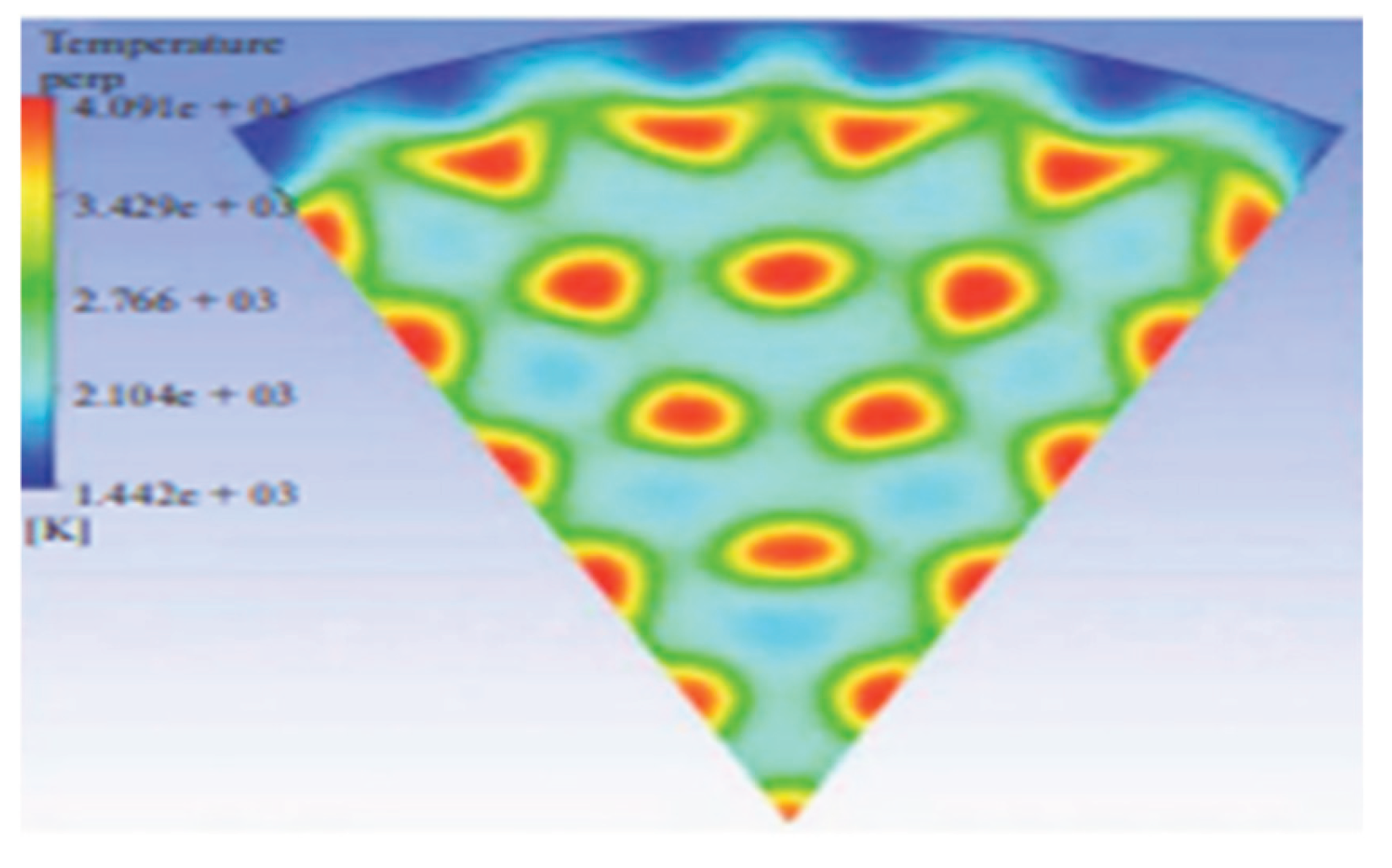
Mukambetov et al. [225] performed a CFD combustion modelling study for a main thrust chamber configured with a full number of coaxial injection elements. A shear stress transport model was used for turbulence modelling, combining the advantages of the k-epsilon and k-omega models at the wall. The eddy dissipation model was used for modelling methane oxygen combustion. The total methane flow rate of 244 kg/s and the oxygen flow rate of 625 kg/s were given and represent the full-scale mixing head. The numerical simulation setup accounted for regenerative methane consumption at 18.144 kg/s. The methane inlet temperature, oxygen inlet temperature, and fuel injection pressure were set to 1000 k, 700 k, and 32 MPa, respectively. The CFD results indicated that peripheral fuel injection elements can create a low-temperature boundary layer at 1442 K, which is necessary to consider in the engine’s design during the early design process.
Wang et al. [226] studied the effect of injector spacing, varied from 15mm to 45mm, on combustion stability and external flow patterns numerically and experimentally under low injection pressure and low mass flow rate conditions. The methane flow rate was kept constant at 0.04 g/s for oxidiser-rich combustion and 0.11 g/s for fuel-rich combustion. The oxidiser flow rate varied from 0.6 g/s to 1.14 g/s for the experiment setup in both fuel-rich and oxidiser-rich combustion. The detached eddy simulation model and a steady diffusion flamelet with non-premixed combustion were used to model turbulent and chemical reactions. Combustion instability is evaluated using signal processing and spectral analysis via the Fast Fourier Transform. The study indicated that injector spacing variation caused different stability in the oxidiser-rich operating condition. For ratios less than 0.5, it has been suggested that increasing injector spacing will improve stability margin, and decreasing injector spacing can improve combustion stability for ratios greater than 0.5.
Urbano et al. [227] accessed employing large eddy simulation to study the trigger of the combustion instability by using a full-scale BKD combustor model with 42 coaxial injectors. The propellant combination was H2/O2, and the simulation was studied for two O/F ratios: 4 and 6. The simulation aimed to determine the combustion pressure at 70 bar and 80 bar. The study used real-gas flow to solve AVBP-RG, a CFD code that uses the finite-volume method, jointly developed by EM2C and CERFACS. The LES-WALE model was used to close the sub grid stress tensor. A chemical reaction was assumed to be infinitely fast, and tabulated 4-species chemical equilibrium conditions were used. Acoustic eigenmodes of the BKD were computed using a Helmholtz solver in AVSP, and the frequency of the pressure fluctuations was analysed using power spectral density analysis. [227] The simulation results indicated that the combination of one transverse and one radial mode in the combustion chamber is the main cause of the acoustic, and it also tends to couple with the oxidiser injectors. [227]
Schmitt et al. [228] studied the effect of hydrogen injection temperature on combustion instability; a LES simulation was used to model a full-scale BKE combustor with 42 coaxial fuel injectors. The liquid oxygen temperature was kept constant at 107.6 k, and the hydrogen inlet temperatures were varied to 57.6 k and 131.7 k. The injector solid boundaries were modelled as adiabatic slip walls, and an isothermal wall temperature of 500 K was used for the combustor chamber walls to account for water cooling. The simulation predicted that increasing hydrogen temperature can shift stable combustion to unstable combustion, but it did not fully agree with experimental measurements. [228]
Xiong et al. [229] studied unsteady combustion instability for a combustor configured with 10 and 19 coaxial injectors by considering the injector scaling effect. The methane and oxygen injection temperature boundary condition was 400 K, and the mass flow rate was 80 kg/s. The ideal gas equation was used to model the thermodynamics of hot gases. The CFD solver OpenFOAM and the k-omega shear stress transport-based detached eddy model were chosen as the turbulent model. The Wesbrook Dryer one-step global reaction with laminar reaction was used for the chemical reaction. Two different combustor diameters, 28cm and 43cm, were studied with 10 and 19 injection elements, respectively. They found that mass flux pulsing triggered tangential and longitudinal instability modes in a 19-element combustor with a 43cm diameter, and the streamwise vortex also affected heat release. [229]
Liu et al. [230] studied the effect of oxidiser injection temperature on the combustion instability characteristic. They used the CFD solver OpenFOAM with a compressible detached eddy model, and a two-step methane/oxygen chemical reaction kinetic mechanism. A methane inlet boundary condition with a constant temperature of 300 K and a mass flow rate of 0.027 kg/s for each injector was used. The oxidiser mass flow rate was kept constant at 0.32 kg/s and varied with injection temperature over 400 K to 1400 K. An ideal gas model was used to model the gas mixture. A total of five coaxial injection elements were selected for the CFD simulation. The combustor has a diameter of 114mm and a length of 381mm, and each oxidiser has a length of 150mm and a diameter of 20.5mm. [230] The methane post is 40mm long and 23mm in diameter. The annular seam has a diameter of 22mm to 30mm. A no-slip, adiabatic wall boundary condition was used at the injector interface. [230] Their simulation results showed that a continuous increase in the oxidiser injection temperature shifts the system's limit cycle state back to the combustion noise state. [230] The study indicated that frequency-spectrum results from radial velocity and temperature near the wake region between the injectors were used to explain the complex coupling mechanism.
Liu et al. [231] applied the same CFD solver and the same boundary condition setup as the previous study, but mainly studied the effect of equivalent ratio in the range of 0.5-1.7 on the intensity of combustion instability. They studied combustion-acoustic characteristics to gain an initial understanding of the relationships among different frequencies corresponding to their modes. COMSOL Multiphysics was employed to investigate the theoretical acoustic modes of a combustor, assuming a filled gas at a uniform temperature of 3000 K. [231] In the main turbulent CFD simulation with multiple injection elements, the combustion chamber was pre-filled with nitrogen gas at 2000 K and an initial ambient pressure of 1.4 MPa. [231] They found that the equivalent ratio significantly influences the combustion instability mode. At an equivalence ratio of 0.4, the 1L and 2T acoustic modes will interact with the non-acoustic mode, leading to a quasi-periodic state with three periods. [231] At a global equivalent ratio of 0.3, the system transited to the amplitude limit-cycle state, which was found to be dominated by the 2T acoustic mode. In the global equivalence ratio range of 0.5-1.7, a simple period-1 limit-cycle oscillation dominated by the 1L acoustic mode.
Sharma et al. [232] studied the effect of variation of methane injection temperature in the range of 225K-210K on the combustion stability. The oxygen injection pressure and temperature boundary conditions were 70 bar and 83K at the trans critical injection state. The computational domain was meshed based on a combustor model with seven injection elements. The simulation was carried out using LES and FGM with real-gas thermodynamic models; FFT spectral and dynamic mode decomposition analyses were employed to analyse the onset of acoustic modes. [232] The study suggested that a lower methane injection temperature can trigger combustion instability than a higher injection temperature. [232]
Kumar et al. [233] comparatively studied combustion dynamics at supercritical propellant injection conditions between an open-end swirl injector and a closed-end swirl injector. LES and a flamelet-generated manifold model with real-gas thermodynamic properties were used in the CFD simulation. Methane injection pressure was 15.6 MPa, with injection temperature at 250K. Oxygen injection pressure was 15.6 MPa, with injection temperature at 90K. The simulation results from spectral analysis revealed a distinct difference in the first longitudinal mode between the open-end swirl injector (6.02kHz, 64 bar) and the closed-end injector (5.2kHz, 32 bar). The results indicated that an open-end swirl injector is more unstable. [233] In the context of the high computational cost of accurately modelling combustion instability using LES simulation, Bhattacharya et al. [234] used a small set of large eddy simulation data obtained from a multi-element combustor to develop data-driven tools to map stable and unstable combustion regimes with less CFD simulation data. The data-driven method mainly uses recurrence network analysis, LES-reservoir computing, and multi-scale permutation entropy analysis.
Maria [235] studied the non-reactive and reactive combustion of CH4/LOX under supercritical ambient conditions, accounting for real-gas effects. Soavre Redlich Kwong and Peng Robinson equation of state already implemented into ANSYS Fluent, and the study found that both real gas models provided better results prediction in pressure distribution and density in non-reactive conditions than the results obtained from the ideal gas equation. Different results were also predicted for the potential core when a real gas model was used. [235]
Inaccurate results can result from predicting the instantaneous density gradient within the fuel injector, leading to inaccurate velocity at the injector outlet and, in turn, inaccurate flame length in the chemical reactive condition. The Redlich-Kwong model provided better validation density predictions than the NIST database for oxygen and hydrogen between T=80k-280k. Peng Robinson's equation overpredicted oxygen density by 15%, but it produced better results for hydrogen predictions. The Favre-averaged k-e model was modified in CFX, and the simulation results showed good consistency with the validation case. [236] The study showed the significance of the included fuel injector geometry. V.P.Zhukov performed a validation test specific to the extension of the eddy dissipation model in Ansys CFX by comparing data obtained from the combustion experiment (ROF=1.5-6) in the subscale level. [237]
The experiment results showed that the highest temperature occurred near the nozzle at 629K, and the wall temperature near the injector head (0-50mm) was 357K. The simulation study results demonstrated improvements in combustion pressure and the heat flux distribution profile up to 300mm within the probed region compared with those obtained from the eddy dissipation model. Results validation of the comparison of flame temperature spatial distribution was conducted against Conaire’s report. The simulation study identified a problem with ECFM neglecting heat losses, which could lead to an underestimation of gas temperature. [238]
Wu Wei conducted a large-eddy simulation study of transient nitrogen-jet injection under transcritical and supercritical conditions, accounting for real-fluid equations of state. [239] The simulation results identified a local maximum in the specific heat at constant pressure and suggested that the background physics of the pseudo-boiling line in the supercritical state explained it. [239] Mixing behaviour was found to be influenced by density gradient fluctuations in the transient study.
H.Riedmann [240] reported past assessments of CFD combustion modelling under subcritical and supercritical conditions conducted by DLR for H2/O2, and results predicting flame temperature with real-fluid effects were validated against the Mascotte A-60 and A-10 tests. In-house CFD codes DLR TAU, ANSYS-CFX, and Rocflam3 were primarily selected to assess the accuracy of the results. [240] The assessment results found an overestimation of the flame temperature at the core region compared to DLR TAU and Rocflam3. DLR TAU overpredicted flame temperature compared to CFX and Rocflam 3, and the results predicted by Rocflam 3 showed overall agreement in results prediction. [240] Won Sub Hwang numerically studied unsteady combustion flow characteristics on OpenFoam for an H2/O2 bipropellant system developed by the DLR-BKD combustor test rig. SLFMFoam_LES was used as a turbulent reacting flow solver and demonstrated the capability for modelling combustion instability. [241]
The effect of the injection recess length of a coaxial fuel injector for a methane/LOX injection study was numerically studied using direct numerical simulation with an EBI transient reactive solver. The numerical results showed that the injector recess length influences the development of Kelvin-Helmholtz instability. A coaxial fuel injector designed with a recess can improve mixing and combustion performance. [242] Rahantamialisoa et al. [243] compared the behaviour of the trans critical jet dynamics in a bipropellant system for H2/O2 at High Reynolds numbers (50000-200000) using the DNS method and the LES-SGS turbulent model with real-fluid consideration in OpenFOAM. Rahantamialisoa initially accessed the unsteady jet dynamics results obtained in the pressure-based framework. [243]
Jafari et al. [244] studied compressible flow injection (N2/GH2) for coaxial fuel injectors by using RFM thermodynamic closure in PR-EoS and SRK-EoS in the CONVERGE solver. The RFM model was tabulated using the IFPEN Carnot thermodynamic library and the robust isothermal-isobaric flash algorithm. The TPn flash algorithm is coupled to the EoS and can perform a vapour-liquid equilibrium calculation. [244] However, simulation results showed that axial and radial density profile deviations still exist for N2 and H2. Jafari et al. [245] numerically studied n-hexane jet injection at different injection temperatures into a supercritical nitrogen ambient. The same CFD solver was used as in [244], and results were compared between the k −ε model LES-SGS and the Sigma model, with phase transition jet dynamics investigated.
8.1. Tricoaxial Injector
Berque et al. [246] Introduced Tricoaxial injector application on the gas generator of Vulcain engine, which is mainly driven by the functional performance, cost, function risk and reliability. To reduce the cost, it is favourable to decrease the total number of injection elements by increasing the total propellant flow rate. The tricoaxial injection element design was studied at the subscale level in a chamber at pressures up to 24 MPa and provided a higher-scaled mass flow rate per element (700 g/s-1445 g/s) than the coaxial and swirl coaxial injection elements (450 g/s-1050 g/s). In the context of the technical problem identified in the coaxial injector design work in [247], acoustic vibration can interact strongly with the chamber’s natural vibration mode. When acoustic vibrations resonate and reach high amplitudes, they can cause irreversible damage to the injector and combustor. [246] Although baffles plates are often used as acoustic dampers, they increase weight, reduce combustor space, and add extra complexity to the design. Hence, it can increase the cost of manufacturing the combustor. Jam Philippe et al. [248] developed tri-coaxial injector concepts that were claimed to resolve the aforementioned disadvantages. Propellant E1 flows in a parallel direction around the central sleeve and the outer annular space; propellant E2 is coaxial with propellant E1. Several injector configurations with a central cavity body were developed; the central cavity body acted as an acoustic damping cavity and was designed as a Helmholtz resonator, as shown in Figure 75(a) to (c). Thus, Equation (79) is used to describe the frequency-sound speed relationship of a Helmholtz resonator. Alternatively to the Helmholtz resonator design, Figure 75 (b) shows a concept of use with a predetermined sound frequency f, which is essentially equivalent to one quarter of the wavelength. The designed cavity forms a quarter-wavelength tube that attenuates the sound wave's frequency.
The full scale of the tri-coaxial injector design is introduced in the patent research conducted by Jean Luc Le Cras. [249] Figure 76 shows a developed configuration with central propellant injection. The working principle of this type of injector is introduced as follows, with a description of its main parts. An annular distribution chamber (48) is defined between the shoulder (37) and the flat annular wall (50) of the second segment that connects to the section (45) and (46). The first propellant (oxidiser) circulates in the middle coaxial conduit (21), and the second propellant (fuel) circulates in the internal coaxial conduit (23). The distribution chamber (48) connects to the middle conduit (21). The propellant (oxidiser) enters the distribution chamber through the inlet hole (35). [249] The annular distribution chamber (57) connects with the annular coaxial conduit (24). Radial holes (61) are pierced with a large diameter and emerge from the distribution chamber (57). [249] Cavity space (65) defined between the plate (12) and (13) is a space used to supply the second propellant (fuel). In comparison, Figure 76 (b) and 76 (c) showed different configurations corresponding to changes in the central region. In Figure 76 (b), the second propellant (fuel) is injected through conduit (42) and coaxially circulated around the metal pintle (27). The remaining part of the coaxial conduit and distribution chamber applies the same working principle as Figure 76 (a).
Keller et al. [250] designed a monolithic tri-coaxial fuel injector, different from the Vulcain concept: a specific fuel plenum cavity was used instead of the swirl chamber-like part located at the upstream section of an injection element, as shown in Figure 77. The fuel injector is additively manufactured via laser powder bed fusion, and the CAD file was also verified via CFD analysis. Comparative combustion experiments were conducted between tri-coaxial and bi-coaxial injectors with the operating variables held constant. [250] For example, the gaseous oxygen, methane, and o/f ratio flow rates were kept equal. However, the momentum flux ratio was not constant due to differences in the injector geometry. The study reports J=0.38 and a velocity ratio of 0.86 for the bi-coaxial injector, and J=2.75 and a velocity ratio of 1.19-1.26 for the tri-coaxial injector. The flame length scale was characterised using OHCL, as described in the previous section. The research found that a tri-coaxial element produces shorter characteristic mixing length scales and better combustion performance than a bi-coaxial element. [250]
8.2. Profiled Coaxial Injector for Triple Propellants Rocket Engine
Vladimir Viktorovich et al. [251] developed a mixing head for a combustor that mainly uses coaxial injectors, which can be adapted for engine use with triple propellants. The mixing head comprises oxidiser flow passage (11), hydrogen flow passage (12) and kerosene flow passage (13) and firing bottom unit (14) as shown in Figure 78 a. Figure 78 c and d depict the cross-sectional design of b, Kerosene enters the unit injection element through passage (9). The entrance passage (9) is connected to the kerosene channel (10), as shown in Figure 78. [251] Hydrogen is fed into the mixing head through cavity (12) and flows through the profiled gap (5), which is between the injector tip and the sleeve (6). The design claimed that kerosene and hydrogen would improve the engine efficiency of the first-stage propulsion system. The mixing head can also operate in hydrogen-oxygen combustion mode when the kerosene supply is stopped. The injector outlet is designed as a profile tip and described as an equidistance beam outlet. The design also claimed that a beam-like injector outlet can increase the propellant component area by about 0.8 times that of a round-shaped outlet. [251] V.Gorokhov et al. [252] studied a profiled coaxial fuel injector in the subscale tests. The study introduced the concept that increasing the number of profiled beams increases the component contact perimeter by about 1.6-1.8 times that of the round-shaped outlet when a three-beam configuration is selected. [252] The primary claim of the profiled outlet design is to resolve the problem of the conventional mixing head's inability to support engine use of triple propellants and its limited effective contact surface area.
8.3. Partially Mixing Gas Generator
The main aim of this design is to increase the uniformity of the temperature distribution over a wide range of pressures and temperatures. The mixing head of the gas generator includes a mixing chamber (2), longitudinal grooves (3) located uniformly around the circumference of the oxidiser cavity (4), and the main section of the injection holes are designed as a triplet mixing element (5). [253] The working principle of the mixing head is that the fuel enters the cavity (7) formed by the bottom dome structure (6). The fuel is then evenly distributed through the passage, and the oxidiser flow enters the oxidiser cavity (4), where it divides into two portions. The main portion of the oxidiser enters longitudinal grooves (3) in the housing, as depicted in Figure 79 (c). The remaining portion of the oxidiser passes through the triplet mixing element (5) into the mixing chambers (2). The mixing chamber is used for partial mixing or pre-mixing to ensure that fuel and oxidiser are well mixed, as shown in Figure 79 (a). [253]
Yurievich [254] developed a new mixing head with the goal of extending the combustion zone of the fuel components along the longitudinal axis. The collector (5) is designed for the oxidiser entrance in the transverse direction, with the flow then entering the oxidiser cavity (4). The oxidiser is uniformly distributed through injection holes (3), then diverted into grooves (2). Fuel enters through the bottom dome cavity (7) and flows uniformly through the passages (8). [254] From the passages (8), the fuel is directed through the inclined openings (9), which form a triplet-like impingement unit (10) as depicted in Figure 80 (b). A unit of triplet impingement consists of inclined holes and radial holes at an angle of inclination. Mixing and combustion occur within the centre cavity region.
8.4. Counter Flow Combustion
Vladislav Yurisvich [255] develops a pioneering gas generator; the design is claimed to address the existing challenge of achieving high, stable combustion and good mixing at very high mixture ratios. Herein, a high mixture ratio is used, leading to an oxidiser-rich mixture that could trigger combustion instability. The goal of the pioneering work is to eliminate the disadvantages of being unable to achieve homogeneous mixing and combustion instability in a gas generator. [255] To achieve a wide range of combustion stability and improve mixing quality, the gas generator design must be optimised. A pintle-type injector (3) is installed within the mixing head (2), and fuel enters the pintle injector and oxidiser enters the manifold (6). The fuel and oxidiser are mixed and burnt in the main combustor region (1), the resulting hot combustion products are directed through a annular gap (8) formed by bushings (7) of the ballasting grid(4) into the ballasting chamber (5), where they are cooled and mixed with the oxidiser supplied through the inclined openings (10) as showed in the Figure 81 (a) and (b). Only one pintle fuel injector is needed according to the gas generator design, and a separate oxidiser injection manifold injects oxidiser in the opposite direction to the fuel injection. The high-pressure combustion gas region will rapidly decrease after flowing through the annular gas (8), thereby increasing the hot gas velocity. [252]
8.5. Partially Mixing Like Injector Design
An alternative gas generator design is used to improve homogeneous mixing and combustion stability, as reported in [256] and [257]. The fuel enters the outer dome cavity (5) and the body (3), and is evenly distributed between the two components' injectors (7). The fuel passes through passage (1) and is discharged out in the tip (9). Then the fuel is directed into the pre-chamber cavity (12). [258] The excess oxidiser enters the oxidiser manifold (4) and flows into the cavity formed by the fire bottom (6) and the body (3). The oxidiser sprayers (8) are located between two component nozzles. The oxidiser sprayers are tubes plugged at the outlet end on the cylindrical surface with radial openings (14). The pre-chamber (12) is where the fuel and oxidiser mix and burn; the oxidiser enters the pre-chamber through the tangential holes (13), as shown in Figure 82 (b). [258] Oxidiser injection through the tangential hole can create a thin film that cools the pre-chamber (12) wall. The design is claimed to reduce the dimensions and weight of the gas generator. [258] Moreover, the current design layout can also increase the homogeneity of the gas generator. The opposite design, with the switch-fuel and oxidiser supply, has been described in [259]. The manifold (4) is called the fuel collector, with fuel entering the injectors and oxidiser entering the chamber from the outer cavity of the dome (5).
8.6. Radial Radial Mixing
The oxidiser enters the cooling channel (19) of the gas generator (1) and flows into the cavity of the mixing head (2) formed by the body (3). The main proportion of oxidiser flow through longitudinal openings (1) made in transverse ribs (9) and discharged radially. [260] Another oxidiser portion enters the annular channel (11) through inclined openings (16) of mixing elements (17). [260] Fuel enters the fuel supply pipe (8), is evenly distributed through the radial openings (12) in the transverse ribs (9), and is then directed into the annular grooves (14). Fuel is also injected transversely. The fuel injection method is designed for fuel oxidiser mixing and burning to take place in the region shown in Figure 83 (c). The hot products are then cooled and mixed with the oxidiser from (18). [260]
8.7 Modified Design for mixing head elements
Past design work done by Vasin A.A et al. [259], the injector protruding part. The mixing head design is applicable to the main thrust chamber section, as seen in engines like the RD-170/180/191. A new mixing head design that can overcome the drawbacks is essential. Yurievich developed a new mixing head and introduced the main functionality detail in [261]. The developed mixing head comprises a housing structure (1), a fire bottom (2), and gas-liquid nozzles (3) and (4), as depicted in Figure 84. Liquid fuel enters the cavity formed by the dome structure (1) , then is evenly distributed between the fuel elements (3) and (4), as shown in Figure 85 (a) by the annotation. Within the highlighted fuel injection elements, fuel enters the nozzle (4) and is directed through the longitudinal grooves (8) and (9) into the annular gap (10). [261] Finally, it was discharged through inclined holes (11) as shown in Figure 85 (b). The gaseous oxidiser enters injector (3) and (4) and is directed into sleeve (6) as shown in Figure 85 (b). The oxidiser flow stream from the inner sleeve (6) is designed to be mixed with the fuel stream from the outer surface sleeve (7) and the fuel stream from the inclined holes (11). [261] The design claimed that the protruding part of fuel nozzle can be cooled by diverting fuel through the annular sleeve passage.
8.8. Coaxial Pintle Injection Technology
Muller developed a coaxial pintle injector to provide thermal protection for the pintle tip. [262] Unlike the pintle injector used on low-thrust liquid rocket engines, which utilises only primary discharge holes pioneered by TRW, primary, secondary, and impingement holes inclined at an angle were designed with a specific purpose. The pintle injector is designed with a liquid-oxygen-centred configuration, with liquid RP-1 from the regenerative channel flowing through a narrow gap. The combustor used crossflow injection and crossflow combustion, which are not used in air-kerosene combinations found in aero gas turbine engines. Liquid oxygen is divided into a main portion (about 60%-80%) and a remaining portion (about 20%) stream. [262] The main portion of the liquid oxygen stream (18) flows directly to the primary rectangular apertures (22) and is discharged as the primary radial stream (32) through the primary path (42). The second liquid oxygen stream flows into the secondary aperture chamber (24). [262] The secondary aperture chamber is designed with a smaller diameter than the primary region. Within the secondary chamber region, a portion of liquid oxygen is discharged out from the secondary radial circular holes. Approximately 5-10% of secondary chamber propellants through tertiary impingement holes (28). [262] The tertiary impingement holes served as additional coolant for the pintle surface. Use an additional path (40) for discharged fluid from the secondary chamber, which is claimed to maximise cooling effectiveness and prevent overheating of the wall temperature at the pintle tip face (30). [262]
Figure 86.
Active cooling concept for pintle injector tip [262].
Figure 86.
Active cooling concept for pintle injector tip [262].
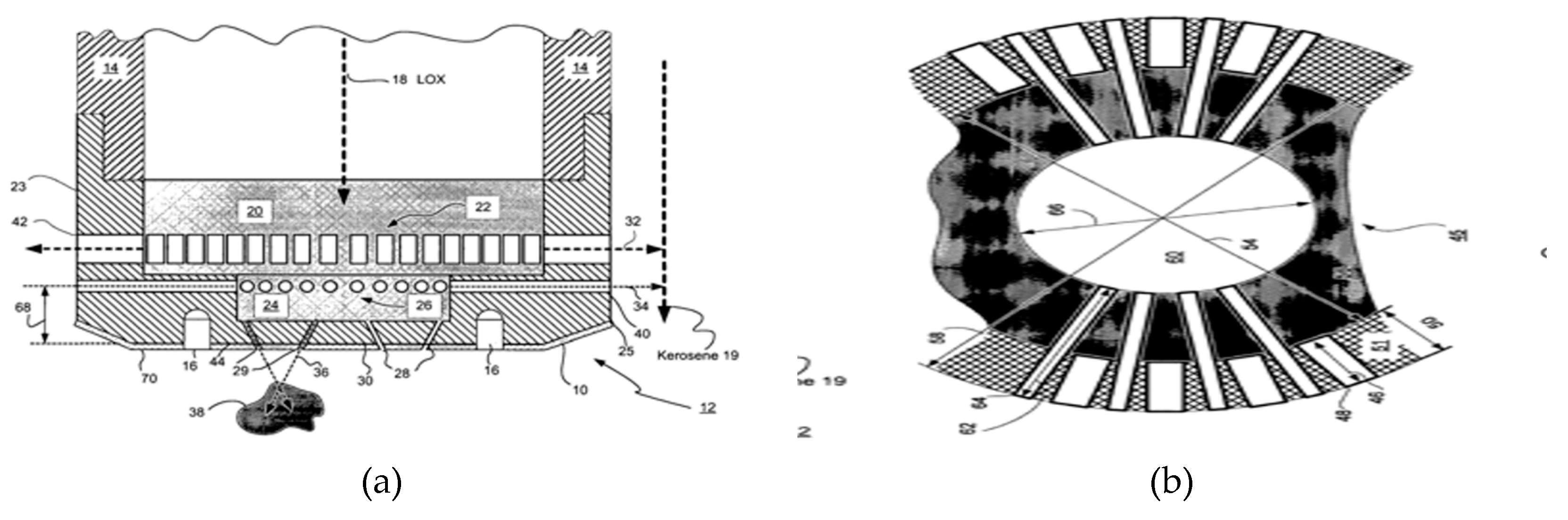
8.9. Cross Impingement Fuel Injection Technology
Markusic et al. pioneered a tap-off-cycle kerolox rocket engine, which has been named Lightning and is planned to be used as the main propulsion system for the first stage of Alpha. [263] Incomplete mixing or burning of propellant and uneven propellant flow through the combustion chamber can result in hot spots forming at the combustion chamber wall, deteriorating heat transfer, and causing catastrophic failure. Fuel injectors need to provide a homogeneous mixture after the propellant has flowed out. Fuel injectors need to maintain combustion stability under throttled conditions; this is also important in the low-pressure injection losses condition. [264] Increase payload capacity and improve thermal transfer protection by using a sinusoidal channel and cross-fuel injector impingement. First fuel and secondary fuel injection holes are introduced, located on the wall close to the injector head. Both injection holes (36) are designed at different angles. [264] Liquid oxygen injected through the polarity of orifices (70). Unlike conventional like-on-like impingement injectors and pintle injectors, impingement is achieved through cross-multiple-hole injection. [264] The cross impingement created a symmetric recirculation zone, leading to good mixing of fuel and oxidiser. The recirculation flow region (74) must be an oxygen-rich region that cools the injection surface and the combustor headend (72). [264] The recirculation zone functions as a mixer and flameholder for the mixture, which would otherwise tend to travel towards the axial flow region. The mixed flow then travels towards the axial flow region (82), a fuel-rich mixture zone designed to redistribute oxidiser-rich flow radially. The axial flow velocity profile at region (74) is reversely and directed to the headend (72), whereas the fuel-rich axial flow velocity profile at region (82) is directed to the nozzle. [264] The design claimed to create separate mixing zones within the combustion chamber with different O/F ratios, analogous to staged combustion, to manage thermal stratification. [264] The stoichiometric mixture region has been identified in zone 80, with the design purpose of improving thermal protection at the fuel injector exit plane and the headend of the combustor. Details of the flow, imaginary lines, and geometry specifications of distribution orifices are shown in Figure 87 (a) to (c).
8.10. Modified Shear Coaxial Swirl Injector
Wei Peng et al. [265] developed an offset triple coaxial injector driven by combustion stability requirements, thereby reducing the number of experimental tests and minimising development costs. Fuel injectors are designed with a variable oxidiser length, which also increases the variable oxidiser flow area (11). Using triple injection holes increases the total fuel flow area, providing uniform outflow and better mixing than a standard coaxial fuel injector. The schematic of the injector concept is shown in Figure 88 (a) and (b). The oxidiser flow passage length is arranged from the outer ring to the inner ring. The high frequency of combustion instability can be suppressed by tuning the fuel injector’s acoustic frequency to the combustion acoustic frequency. [265] The arrangement of the fuel injector angle between the central axis and the oxidiser inner dome plane (10) is between 15° and 25 °. The fuel cavity (8) inside the dome is designed with a spline feature along its outer wall. [265] The purpose of such a design is to increase the overall contact area of the fuel cavity and decrease the fuel flow speed inside the dome cavity, thereby achieving uniform outflow. The ratio of the outer dome structure radius (2) to the length of the fuel inlet (9) is kept between 1 and 1.2 to ensure a uniform flow rate by decreasing the fuel flow speed. [265] Figure 88 (d) shows a schematic of the fuel entry inlet, and the inlet flow velocity is designed to be greater than 25 m/s but less than 40 m/s. A relevant empirical Equation (80) is developed as a function of fuel flow rate, density, and entry diameter and height. Fuel injectors housed in the dome structure are integrated and designed through additive manufacturing. [265]
8.11. Mounted Injection Element on Mixing Head
Ding et al. [266] developed a mixing head with the baffle injector configuration, which is potentially used for the main thrust chamber. The elimination of high-frequency combustion instability drives the design of the mixing head. High-frequency combustion instability has great potential, caused by natural-frequency acoustic instability and coupled acoustic instability. Natural frequency acoustic instability is a type of instability that occurs when heat released from combustion is coupled with acoustic modes. [266] Coupled acoustic instability is a type of instability in which the injection acoustic instability amplitude during the injection process is coupled with the combustion acoustic amplitude. [266] Their concept design aimed to minimise the acoustic coupling between injector injection and combustion. A V-shaped layout configuration is selected by changing the oxidiser passage length from short to long and the lead injector from high frequency to low frequency. [266] It will also lead to a more dispersed heat release from the injection plane, preventing excessive local heat release. It has been claimed that design produces a different injector acoustic amplitude than the combustion acoustic amplitude. The injector elements are arranged with different mass fluxes: low-mass-flux injectors are used at the outer ring, and high-mass-flux injectors are used for the four rings around the central region. [266] The design claimed that no special oxidiser-centred injection elements were needed; the oxidiser enters the oxidiser cavity (4), is distributed through a divider plate, and then flows into each injection element. Fuel enters the fuel injection element from the regenerative cooling channel outlet, then flows upstream into the fuel cavity (6), as shown in Figure 89.
8.12. Combination of Direct Fuel Injector and Open Swirl Injector
Pan et al. [267] developed a mixing head structure combining an open-swirl injector and a direct fuel injector. This design aims to improve combustion stability and overcome the disadvantages of using a single injector type. The patent introduced examples of the advantages and disadvantages of using only coaxial swirl injectors for a pre-burner. Good mixing, reduced flame length, and uniform temperature are the advantages, but the high wall temperature makes it poor in peripheral compatibility. [267] A direct-flow injector is the simplest configuration with good wall compatibility, but it can result in poor temperature uniformity and a long flame length. Thus, their patent provided an optimised injector layout by using a direct flow injector at the periphery region, as shown in Figure 90 (b), and distributing an open swirl injector as shown in Figure 90 (a) around layers 1 to 5. The overall mixing head adopted an oxidiser centre flow; fuel enters through the distributor structure (1), which is designed with an even spacing of circular holes, as shown in Figure 90 (d). In an open-end swirl injector, the oxidiser enters the centre nozzle through the tangential holes, whereas a swirl injector is designed as a closed-end structure; the oxidiser enters the tangential holes from the cavity. [267] The direct-flow nozzle showed an inverse plain orifice centre nozzle for flowing oxidiser; the main straight conduit is designed to be longer than the feed conduit. [267] The external cap region is also designed as a direct-flow injector with an annular gap, without tangential holes.
8.13. Mixing Head Structure Designed for the Fuel Rich Pre Burner Combustion
Kong et al. [268] designed a mixing head structure that is compatible with the high pressure pre burner used for a high pressure staged combustion cycle. A fuel-rich pre burner operates at a much lower mixture ratio range than the high mixture ratio range used for an oxidiser-rich pre burner, which can easily trigger combustion instability. The patent research aims to resolve combustion instability observed in rich-fuel combustion. The gas generator used a combination of fuel injection elements, as shown in Figure 91. [268] It mainly uses the concepts of a swirl coaxial injector and an impingement injector. The oxidiser enters the mixing head from the oxidiser inlet and is uniformly distributed by the flow distribution plate (11). The oxidiser enters the injection cavity and is then discharged into the centre conduit through the tangential holes. The coaxial injection element used oxidiser centre-flow and external fuel entering the open swirl structure. [268] But the patent research introduced a three-independent-cavity concept: the first cavity (12) is the oxidiser flow cavity; the fuel cavity has been divided into separate cavities (7) and (8). An open-end swirl injector delivers fuel distributed into cavity (7), and fuel distributed into cavity (8) is discharged through the impingement discharge orifices. [268] The distribution layout of the injection elements on the injection plane is shown in the Figure 91. [268] The patent research suggested the recess distance between oxidiser outlet and fuel outlet of the open swirl injector is about 1-15 times the diameter of the center injector’s outlet. Flame stability can be achieved by using a sufficiently long recess distance; a recess distance exceeding the threshold can cause injector hot corrosion. The patent design claimed that the concept is generic and applicable to gas generator regenerative cooling, and that the front cavity used for fuel impingement also served as the cooling cavity for the fuel injection plane. [268] The mixing head can be manufactured as a single part using additive manufacturing.
8.14. Mixing Head for Main Thrust Chamber
Liu et al. [269] developed mixing head structure used for the main thrust chamber of a high pressure staged combustion cycle engine. The mixing head structure is well-suited for full cryogenic propellant combinations, such as hydrogen and liquid oxygen. Figure 92 (a) shows the overall concept, which adopts three flow cavities with four base structures (3), (4), (5), and (6). Hot exhaust gases produced by the gas generator enter the cavity and are uniformly distributed through the distributor plate, as shown in Figure 92 (c). The discharge holes are radially distributed to different sizes and act as the damping cavity. The oxidiser enters a cavity, and the flow initially enters the annular collector, which is configured with fluid guide vanes, as shown in Figure 92 (d). Oxidiser flow is introduced into the holes via the tangential conduit (14) afterwards. The fuel collector (8) is also configured the same as the oxidiser collector. The diameter of the fluid guidance vanes has been designed as H3>H2>H1 and is claimed to reduce flow speed and friction losses. [269] The main thrust chamber mixing head also comprises an ignition tube unit located in the centre; hot exhaust gases are burned again after mixing with fuel and oxidiser, without an external ignition source, for the main injection elements once ignited. [269]
8.15. Mixing Head Designed with Crossfire Conduits
Based on the problem found, the chemical igniter agent method could limit the multiple-start capability of a full cryogenic propellant engine, and the problem of solid particles as byproducts from powder ignition. Fang et al. [270] outlined a torch ignition method to start an oxidiser rich gas generator, which is considered a different method from the hypergolic propellant start. The mixing head of a gas generator uses the same type of coaxial injection elements, but the design arranges the injection zones into a centre injection zone, a transition injection zone, and a periphery injection zone. Each injection zone is designed for a different O/F ratio: the centre injection zone (8) aims to achieve a mixture ratio close to stoichiometric, the transition injection zone (6) increases the mixture ratio, and the periphery zone (5) further increases it. The mixing head comprises a crossfire conduit (7) in the front base of the fire bottom, as shown in Figure 93 (a). Figure 93(b) can be used to describe the start-up method for a methane/oxygen gas generator. [270] Spark plug turned on before methane and oxygen enter the ignition tube. Then, turn on the methane main valve (17) and the oxygen main valve (21), and let the gaseous methane and gaseous oxygen mix and ignite to produce hot, fuel-rich gases. [270] When steady-state ignition is reached, the torch spark plug will be turned off, followed by opening the main valve of liquid oxygen (15) and the main valve of liquid methane (14). The liquid methane enters the mixing head through entry (23), and liquid oxygen enters the mixing head through entry (15). The entire ignition system used an oxygen-rich mixture entering the pre-burner, followed by methane. [270] When liquid oxygen mixes with the liquid methane inside the recess zone and lighted up by the hot gases, the flame propagates from the centre injection zone to the periphery zone via a crossfire conduit. The patent research suggested that the torch spark plug will be turned off when the gas generator pressure reaches about 150% of the ignition pressure, and 0.01%-0.03% of propellant is used for ignition. The ignited hot gas temperature is in the range of 1000k-2000k. [270]
8.16. Transpiration Cooling Injection plane for the Main Thrust Chamber of FFSC Engine
Liu et al. [271] developed a mixing head for the main thrust chamber using fuel-rich exhaust gases as the coolant for transpiration cooling in a methane/liquid oxygen full-flow staged-combustion-cycle engine. Figure 94 shows a simplified diagram of the main thrust chamber to aid in the explanation of the concept. The oxidiser-rich exhaust gases enter the cavity space (1) from the upstream bent pipe, and fuel-rich hot exhaust gases flow into the cavity space (4) by entering the tangential inlet (3). [271] The oxidiser rich exhaust gases enter the centre conduit of each injection element. Strut (2) is used to direct and isolate fuel-rich and oxidiser-rich gases at the mixing head of a main thrust chamber. The main front injection plane is designed using a porous medium material. The porous medium allows a proportion of fuel-rich exhaust gases to enter the injection plane; another fraction is directed into the external annular injector. The external injector is not directly shown in Figure 94, and the remaining portion of the fuel-rich exhaust gases is discharged into the combustor through the transpiration cooling conduit (8). [271] The advantage of this design is that it does not rely on the fuel flow to the upstream section of the combustor for regenerative cooling.
8.17. Pressure Swirl Coaxial Injection Element
Maeding et al. [272] developed two versions of pressure-swirled axial injection elements: with and without an extended oxidiser sleeve. The patent research described the working process of the injection elements. Figure 95 shows injection elements designed with internal and tangential swirl chambers, respectively. The injection element (10) comprises a coaxial sleeve (40) surrounded by the sleeve portion (38) having a smaller inner diameter than the central sleeve body (32). [272] An annular space (42) is formed between the coaxial sleeve (40) and the sleeve portion (38). Inlet holes (30) are designed in the coaxial sleeve (40). The oxidiser flows into the inlet (28) and into the internal swirl chamber body (48), which includes a plurality of swirling grooves (50) distributed in the peripheral direction. Each swirling groove runs from one axial end face of the swirl body (48) to the opposite axial end face of the swirl body (48). The fuel is also swirled through the tangential holes (30). [272] A ring-shaped, slotted body (44) comprises radial slots (46) distributed in the peripheral direction. These radial slots are located in the annular space (42); the fuel will be discharged into the chamber through them. [272] An injection element with an extended oxidiser sleeve can act as a baffle and can be arranged in a different layout depending on combustion stability. The patent proposed the circumferential layout, the central-radial distributed layout, and the Y layout.
8.18. Paralleled Coaxial Mixing Head Design
Indersie et al. [273] designed an injector head to resolve uneven propellant distribution found from cross-fed injection through the periphery cavity for the most mixing head. Uneven propellant distribution is likely to occur due to the large pressure difference across the mixing head and the large variation in propellant mass flow rate. The mixing head is divided into a separation zone by the plate (10) and (20). [273] Dome cavity space (3) is defined between the dome (2) and the injection plate (10). The injection plate (10) is used to evenly distribute oxidiser. Cavity (13) is defined between the first injection plate (1) and the second injection plate (2). The cavity space is used to distribute fuel flow through the entry B. [273] Propellants discharged into the combustor cavity (23) are defined by the main injector plate (20) and the open space. Fuel is mainly distributed to the injector through the coaxial injector's circumferential holes (15). [273] The mixing head design claims that uniform oxidiser distribution is improved by the annular cavity (4) and by multiple concave-perforated distribution grids, as shown in Figure 96. The concept, developed from patent research, has broad adoption for the engines used on EU launch vehicles, such as the Ariane 6.
Soller et al. [274] outlined the additive manufacturing coaxial injector development process. Additive manufacturing offers greater shape flexibility than conventional injection moulding. The injector started with a full-scale design, then progressed to a single element, followed by subscale testing and full-scale manufacturing and testing in parallel throughout the manufacturing process. [274] Single-element flow check work is part of the development process; water and gaseous nitrogen are experimental working fluids used to substitute for cryogenic liquid propellant. Pressure drop and mass flow rate requirements are checked during the cold-flow test. [274] The fuel injector is additive-manufactured via selective laser melting. At the subscale level, 7 injector elements made of stainless steel (316L) were selected for hot-fire testing, injector pressure drop, heat release evaluation, combustion evolution, and combustion stability, which can be examined prior to increasing the test scale. [274] CFD and FEA simulations were used to optimise the injector's flow path and structural weight throughout the development process. Inconel 718 is selected for the full-scale mixing head. [274]
Andrey Vladimirovich [275] ported that injectors must be assembled within the injector block and fastened to the bottoms of the mixing head using high-temperature solder. For individual elements, welding is a commonly used manufacturing technique. The patent research indicates that high worker intensity, quality assurance, and re-soldering the injector when strength and tightness requirements are not met are the main disadvantages. [275] The objective of the patent is to use an additive manufacturing technique to minimise the drawbacks of welding and soldering. Figure 97 shows the mixing head objective to be manufactured using a direct energy additive manufacturing technique. The equipment needs to have an accurate manufacturing body (1), the fire bottom (2) and the intermediate bottom (3), fuel nozzles (4), and the formation of the cavity (5) between the body (1) and the intermediate bottom (3). The cavity (6) was also created during manufacturing. By connecting the outer surface (7) of the fuel nozzle (4) with the surfaces (8) of the fire bottom (2) and intermediate bottom (3), opposite the surface of the fire wall (9), contacting the internal cavity of the combustion chamber along conical (10) and curved surfaces (11) are made radial. [275] The merging of surfaces (10) and (11) can be achieved without the use of special supporting structures. All critical subparts of the mixing head are synthesized as one final part. [275]
In the context of employing an individual additive technique such as Powder bed fusion, wire arc additive manufacturing, directed energy deposition, direct laser melting, direct metal sintering, electron beam melting, etc., these techniques cannot meet a wide range of feature and part-size requirements. For example, the Powder bed fusion technique is used to manufacture products with very small features, but is unable to produce large-scale products. Wire arc additive manufacturing is suitable for large-scale components, but cannot reproduce small features. Wright JR et al. [276] utilised hybrid additive manufacturing methods on the liquid rocket engine. Hybrid additive manufacturing is the process by which the various process layers of a manufactured objective are divided among different additive manufacturing techniques. [276] It has been suggested that hybrid additive technology is the combination of different additive manufacturing technologies to create a single, integral part spanning a wide range of scales and dimensions. [276] Hybrid additive manufacturing can be used to produce thrust chamber assemblies, including fluid manifolds, which can be integrated with the thrust chamber to form a single-piece element. Figure 98 shows a schematic diagram of the main fluid manifold components identified from the patent research. The first fluid manifolds (502) are formed over and in conjunction with integral structural cladding layers (504). Fuel inlets (506) to the inner cooling channels (508) collect the fluid to provide fluid flow between the various regions of the regeneratively cooled liner element, the thrust skirt, and the injector assembly. [276]
Electrical discharge machining is used to form cladding layers in the region around inlet/outlet holes in the regeneratively cooled liner-cooled element. [276] The details of hybrid material selection and the combination of additive techniques employed are listed in Figure 99. The main substrate is manufactured using the powder bed fusion technique, and directed energy deposition and wire arc additive manufacturing are used in combination for manifolds, brackets, flanges, ports, etc. A wide range of materials can be used for each specific part, from Inconel 625 to C103 Niobium.
Khadri et al. [277] described and employed additive manufacturing to make a single piece of an engine rather than a specific part. The single-piece integrated engine comprises a combustion chamber, multiple injector elements, and an igniter. The nozzle is integrated into the combustion chamber, eliminating the need for flanges and mechanical interfaces. The patent research described steps for applying additive manufacturing to produce a single-piece component. [277] The first step is to generate a CAD design of an engine. The engine design file needs to be verified by analysing the internal flow channels, which can be done using 3D CFD modelling. A verified design file is converted into a standard triangle language file to generate a surface file. [277] These files display geometry as triangle meshes and slice the STL file into multiple layers. The manufacturing process started from pre-processing and powder characterisation. [277] It is necessary to align with the printer’s standard. After depositing the powder on a build platform, the laser selective melting technique is used to melt it. [277] The manufactured product is verified by CT scanning and engine heat treating after the printed product is removed from the build platform.
Hyde et al. [278] introduced an impingement injector design for hypergolic propellant (MMH/MOG) by selecting Titanium. Fuel injector design was carried out from concept selection through flow-path and structural-envelope design. In the concept selection and flow path design, CFD was used to select an optimised flow path, and FEA was used for structural optimisation. [278] Numerical optimisation is integrated into the manufacturing logic, typically to finalise and verify the CAD file. To screen the deposit product within the injector cavity, CT scans and water tests are used to assess the product's activity. [278] Abnormal pressure drop across the injector and mass flow rate can be measured during the water flow test to determine powder blockage. [278] The introduced development logic has been described as inspection followed by a water flow test after complete metal fabrication.
Paul Gradl et al. [279] introduced a Ni-Co-Cr-based alloy that has been developed by using integrated computational materials engineering techniques, which has been found practically applicable for hot end components used for aerospace applications. In particular, liquid rocket engine injectors, pre burners, and turbines made from the GRX-810 alloy can withstand temperatures up to 1373 K. GRX-810 can be manufactured via laser powder bed fusion and laser powder-directed energy deposition processes. [279] The study found that GRX-810 offers increased tensile strength, vastly superior creep properties, and superior oxidation resistance compared to Nickel-based superalloys. [279] Figure 100 compares the improvement in hot erosion on the injector plane during the hot-fire test using methane and liquid oxygen. [279] Table 13 presents the operating range of the hot-fire test for each duration. Combustion pressures in the range of 3.74 MPa to 5.72 MPa were selected, and injectors were studied for a total accumulated time of 3117s. [279] The hot-fire tests demonstrated that GRX-810 has superior hot-erosion resistance compared to Inconel 625. [279] The study concluded that GRX-810 was already in the hot-fire test stage and showed good potential for use in aerospace components. [279]

Table 13.
Operating condition of hot fire testing [279].
Table 13.
Operating condition of hot fire testing [279].
| Components | Starts | Duration (s) | Pc (MPa) | O/F |
|---|---|---|---|---|
| H2 injector | 9 | 302.8 | 4.95-5.72 | 5.33-7.02 |
| CH4 injector | 29 | 586.5 | 3.74-5.24 | 3.03-3.65 |
| CH4 injector | 84 | 2227.9 | 4.32-5.21 | 2.68-3.19 |
| Nozzle | 91 | 2309.4 | 3.74-5.21 | 2.68-3.11 |
| Nozzle | 8 | 149.1 | 4.9-5.05 | 3.00-3.19 |
Table 14.
Summary of the review on the existing patents for fuel injectors.
| Patent reference | Author/Industry Applicant | Potential field of application /Review on the existing research |
|---|---|---|
| [204] | Huang/Aerojet Rocketdyne | Open-end swirl injector circumferential layout in counter-clockwise and clockwise configurations. Patent research provides information on the preliminary CFD analysis of the external flow. Potential application field: closed-cycle liquid rocket engine. Review of the existing research: The resolution of the CFD turbulent model for eddies has not been mentioned, as the patent research focused on the external mixing field and eddy interactions between injectors. The types and existence of eddies remain undisclosed. |
| [280] | Vasin A.A. et al./NPO Energomash V. P. Glushk | The open-end swirl injector is actually in a triplex configuration, with external tubular conduits for fuel. Potential application field: generic applied to the high-pressure kerosene-staged combustion cycle engine. Review of the existing research: A significant number of non-official research works have been done on the unsteady dynamic characteristics. However, not all research correctly retrieved the geometry specification for CFD simulation and experimental study. Lack of experimental data validation studies and dynamic characteristics, with very limited official published experimental data. |
| [248], [249] |
Jean Luc Le Cras et al./SNECMA | Potential application field: Tricoaxial injection elements have been partially studied for a complete cryogenic liquid rocket engine. Detailed geometry has not been fully disclosed. Review of the existing research: Inadequate research publications related to the whole geometry of tricoaxial injection elements. Full-scale mixing head design and layout have not been introduced. |
| [251] | Vladimir Viktorovich et al. | Potential application field: The patent did not specify the engine cycle, but it has been introduced for full cryogenic use of hydrogen and methane. The design adapted triple triple-propellant engine. The mixing head has a generic application. Review on the existing research: Limited number of research paper except from Gorokhov’s introduction. Improvements in mixing and specific impulse were demonstrated in the lab-scale combustor and have been reported. No further studies have been introduced, and without further experimental demonstration of the injector's compatibility with triple propellants. |
| [253] | Klimov Vladislav Yurevich | Potential application field: Partially mixing head design for the pre burner and adopt for additive manufacturing. Review of existing research: The mixing head design did not include a centre igniter tube; it may use hypergolic fuel ignition or another method. Details are unknown |
| [254] | Klimov Vladislav Yurevich | Potential application field: Mixing head for the pre-burner. In an alternative form of the triplet impingement injection without a special flow path design, the propellant enters the impingement ring from the manifold. Review of the existing research: Non-relevant research work has been found |
| [255] | Klimov Vladislav Yurevich | Potential application field: Mixing head injection elements. Review on the existing research: Non-relevant research work for the combustion performance and injection characteristics. |
| [258] | Klimov Vladislav Yurevich | Potential application field: Pre-burner Review on the existing research: Non-relevant research work for the combustion performance and injection characteristic. |
| [260] | Klimov Vladislav Yurevich | Potential application field: Pre-burner Review on the existing research: Non-relevant research work for the combustion performance and injection characteristic. |
| [261] |
Klimov Vladislav Yurevich | Potential application field: Regenerative cooled pre-burner Review of the existing research: Non-relevant research study |
| [262] | Thomas J.Mueller/Space X | Potential application field: Pintle injector for gas generator cycle engine. Merlin-1D. Review of the existing research: Similar design research on the pintle element has been reported in the literature for low-thrust engines, compared to the thrust requirements for heavy/super-heavy launch vehicles. |
| [264] | Markusic et al./Firefly Aerospace | Potential application field: Propulsion system for the Alpha launch vehicle; tap-off-cycle engine. Review of the existing research: The Method for Cooling effectiveness verification and validation has not been well discussed. Lack of design validation and experimental research to show the mechanism of eddy interaction/existence during combustion. |
| [265] | Weipeng Kong et al. /CASC | Potential application field: Mixing head for a pre-burner in a high-pressure, staged-combustion engine. Review of the existing research: There is an insufficiently disclosed official report for full-scale injector acoustic analysis. Similar research to the single-element shear coaxial injection element used for the BKN test rig (DLR). However, the design and overall concepts still showed a variation. Full-scale injector acoustic analysis is needed. |
| [266] | Ding et al./CASC | Potential application field: Injection elements for the mixing head. Review of the existing research: A Limited study focused on the combustion performance of using a combination fuel injector design. Similar design to LE-9 ‘s injector design. |
| [267] | Pan et al./CASC | Potential application field: Fuel injector design for the pre-burner used in a staged-combustion-cycle engine. Review of the existing research: the open swirl injector is primarily a fuel injector. Fu has studied injector dynamic analysis. Insufficient published study on full-scale acoustic and structure analysis. |
| [268] | Kong et al./CASC | Potential application field: Mixing head design for the pre-burner of a staged-combustion engine. Review of the existing research: No official research has been found. Propellant holes and concept have been introduced with empirical geometry specification. |
| [269] |
Liu et al./CASC | Potential application field: Main thrust chamber of a LOX/H2-staged combustion cycle engine for a 220 tf thrust level. Engine candidate for second stage of CZ-9. Review on the existing research: Already in test and development state. Details of the geometry specification have not been fully introduced. |
|
[270] |
Fang et al./CASC | Potential application field: Integrated ignition tube within the mixing head of the pre-burner. Review of the existing research: The flame anchor position has not been well introduced. Throttling limitation capability also not being well introduced. |
| [271] | Liu et al./CASC | Potential application field: Full-flow staged-combustion cycle engine. Review of the existing research: It has not been disclosed in detail regarding the ongoing research. The porous injector and porous plane for hot exhaust gases and the measurement of cooling effectiveness shall be further investigated. |
| [272] | Maeding et al./Airbus DS GmbH | Potential application field: fuel injection element for gas generator cycle engine. Review of the existing research: A similar downstream fuel injector feature has been studied, with inadequate numerical and test data for full-scale multiple injector elements. |
|
[273] |
Indersie et al./SNECMA | Potential application field: pre-burner of gas generator cycle engine. Review for the existing research: Already used for Vulcain engines. Additive manufacturing and water-flow testing incorporated into development and manufacturing have been well studied. |
| [275] | Andrey Vladimirovich/ NPO Energomash V. P. Glushk | Potential application field: generic application for the pre-burner. kerolox engine. Pressure swirl injection elements. Single-element injection units have been covered in previous research and are discussed in the literature review. No specific details of fuel injection performance have been stated. Only introduced the additive manufacturing technique. |
| [276] | Wright JR/Relative Space,Inc | Potential application: additive manufacturing for a whole liquid rocket engine for Relative Space. Details of the introduction have been disclosed at full scale, but without specific geometry. |
| [277] | Khadri et al./Agnikul COSMOS Private limited | Potential application field: introduce manufacturing methods for single-piece, integrated 3D additive manufacturing. The patent was not focused on the specific details of injector design. |
9. Conclusions
In this paper, a literature review primarily focused on answering the specified questions are outlined, with consideration of the engine system's effect. In the swing unit section, examples of the engine thrust vector method used for the high-thrust liquid rocket are provided from [281] and [282]. The influence of the engine cycle and systematic design on the fuel injector design and the physics is outlined in points from the literature review. The turbopump power requirement determines the fuel injection pressure, and the current supercritical injection system and combustion research are well coordinated with the gas generator cycle engine development. Thus, there is limited understanding of the physics of the supercritical injection system in a staged-combustion-cycle engine. In the high mass flow rate, high injection pressure regime (> 50 MPa), experience is limited to staged combustion developed in Russia and Raptor-3 from the US. The current study reviewed the latest developments in fuel injectors through patents and introduced the research limitations of coaxial injectors. The paper also suggested improvements for future research.
9.1. Research Gaps and Future Work Suggestions
- RD-170 injector: These injectors are developed for high-pressure system engines (gas generator—greater than 50 MPa) and feature an adjustable injection range to meet throttling requirements. High-pressure staged combustion and high-pressure full flow staged combustion engines: injectors are not designed specifically for atomisation from an engine system perspective, even when using a kerosene/liquid oxygen combination. Atomisation is not the priority, aside from checking the flow characteristics. Main thrust chamber injectors and gas generator injectors can be designed with different layouts and injector types.
- Experimental studies show different OH radical emission characteristics across thermodynamic states, including subcritical, transcritical, and supercritical. However, there is an incomplete interconnection between CFD combustion modelling and experiment. Gaseous-Gaseous injection by not coupling with the heat transfer effect, and supercritical and liquid oxygen injection by neglecting the effect of liquid oxygen atomisation. Inconsistent focus on combustion technology with the test facility limitation. Not all CFD modelling data can be directly validated against experimental data. Thus, it is recommended that future research establish a high-pressure test rig to improve understanding of supercritical injection and combustion, and to generate experimental data for numerical simulation.
- Two-phase flow effect: Insufficient projects focusing on liquid methane-liquid oxygen injection or liquid methane-liquid oxygen combustion. For the Raptor 3 engine start-up condition with subcooled methane and subcooled oxygen, there is a lack of study on the effect of the two-phase mixture of liquid methane and gaseous helium on pre-burner combustion stability. The oxygen Reynolds number influences transition in the combustion stability region; few studies have examined the main thrust chamber and the high-pressure preburner. It is recommended that future work focus on high-pressure heat transfer in a converging tube rather than a straight tube. Increase the experimental demonstration of high-speed flow of methane-helium or hydrogen-helium mixtures to reflect actual operating conditions.
- Water/nitrogen spray atomisation: Safety considerations for experiments; substitute working fluids such as nitrogen and water for liquid oxygen modelling. Water has a density similar to that of oxygen at a particular pressure. However, in the fuel injection problem, there is a significant pressure drop across the injector, with the real oxygen density effect completely neglected, as water density remains constant in the experiment. Incomplete self-similarity theory in the fuel spray atomisation research between liquid oxygen and water. It is recommended to develop a relevant self-similarity experiment study in future studies.
- Stochiometric mixing length scaling: The current research on the scaling procedure was developed for a coaxial fuel injector. It is recommended that a scaling method be developed and applied to different types of fuel injectors to demonstrate further that the stoichiometric mixing length correlates with flame length. The importance of cryogenic liquid mixing also needs further study.
- Practical significance of spray atomisation: The startup method of staged-combustion cycle engines utilises hypergolic fuel and does not use an igniter. However, different liquid rocket engines have different start-up techniques; spark ignition is also well adopted for H2/O2 engines. Gaseous hydrogen and gaseous oxygen were mixed and ignited in the igniter tube cavity, producing hot exhaust gases; then, hydrogen and oxygen from the main injection elements are burned in the hypergolic mode. The experimental results from spray atomisation lack practical significance. It is recommended that the experiment be carefully designed to demonstrate the problems associated with spray atomisation and their relationship to high-pressure combustion performance.
- Mixing head design methods: Internal cavity structure design influenced by the inlet pressure, particularly for pre-burners. There is a pressure-swirl injector. The preliminary design of the mixing head depends on the engine system requirements. The current fuel injector research focuses on modelling, and there is a lack of design and reporting on how CFD simulation results align with the specific design requirements. It is recommended that future work develop or report the scaling methodology for a single-element fuel injector research, with detailed information on the research objectives. Single-element injection limited by the Reynolds number, propellant Mach number (different injection temperature), and delta P condition, but Pi criteria can be well scaled. Carry out a preliminary study of the effect of injector geometry on the combustor stability characteristics; it is possible, but limited to the injector outlet area. Thus, numerical simulations and experiments on multi-element fuel injectors should also be considered. The current research used a single-element combustor by changing the fuel injector configuration, and cannot represent the inter-injection element effect. It is crucial to understand multiple injection elements in the near-wall region to fully understand how the actual injector influences combustion temperature in this region. A fluid dynamics and heat transfer coupling simulation is recommended for the mixing head design using a thermal coupling boundary condition.
Author Contributions
Conceptualization, Zhengda Li; methodology, Zhengda Li, data curation, Zhengda Li; Formal analysis, Zhengda Li; writing—original draft preparation, Zhengda Li.; writing, Zhengda Li; supervision, Lionel Ganippa;Thanos Megaritis. All authors have read and agreed to the published version of the manuscript.
Funding
This research received no external funding.
Data Availability Statement
This is a literature review-based paper. Where no new data was created.
Acknowledgments
The first author takes full responsibility for the content of this publication.
Conflicts of Interest
The authors declare no conflicts of interest.
Nomenclatures and Abbreviations
Nomenclatures
| C(RHW) | Reused portion of the cost to recover and reuse |
| C(RR) | Expended portion of the cost to recover and reuse |
| C(B) | Production cost of the hardware to be reused |
| F | Factor representing the production unit cost |
| n | Factor of the production rate |
| k | Fraction of the production cost of hardware |
| Terminal time (s) | |
| Horizontal velocity component (m/s) | |
| Vertical velocity component (m/s) | |
| Velocity component in z direction (m/s) | |
| Vector of control inputs | |
| gravity components in E | |
| L | Flight range |
| Deviation of the flight range | |
| Oxidiser fuel ratio | |
| η_min | Engine throttling parameter (minimum) |
| Effective area of bellows (m2) | |
| Hydraulic resistance of 1st throttle (1/m4) | |
| Total hydraulic resistance of the lines and valves after flow regulator (1/m4) | |
| kb | Spring constant of bellows (N/m) |
| ks | Spring constant of spring (N/m) |
| xbo | Pre-compression length of bellows at x = 0 (m) |
| xso | Pre-compression length of spring at x = 0 (m) |
| N | Number of ports in 2nd throttle |
| h | Height of port in 2nd throttle (m) |
| θ | |
| Discharge coefficient | |
| Q | flow rate (m3/s) |
| A | |
| Jet contraction coefficient | |
| Contraction coefficient | |
| Gas injection pressure (Pa) | |
| Liquid pressure drop across mixing head (Pa) | |
| Gas pressure drop across mixing head (Pa) | |
| Temperature of the gases (K) | |
| Inlet mass flow rate (kg/s) | |
| Outlet mass flow rate (kg/s) | |
| m | Log coefficient |
| Vh2 | Hydrogen outlet velocity (m/s) |
| Vo2 | Oxygen outlet velocity (m/s) |
| Fuel outlet velocity (m/s) | |
| Oxidiser outlet velocity (m/s) | |
| Pc | Combustion pressure (Pa) |
| Reynolds number | |
| Liquid jet In the axial direction (mm) | |
| Injector diameter (mm) | |
| J | Momentum flux ratio |
| Center of gravity x axis | |
| Pressure fluctuation (Pa) | |
| fuel outlet diameter for oxygen passage (mm) | |
| Pressure drop across the mixing head (Pa) | |
| Outlet diameter of coaxial fuel injector (mm) | |
| Inner diameter of coaxial fuel injector (mm) | |
| Fluid dynamic viscosity | |
| Combustion efficiency | |
| Dynamic transfer function part | |
| A part of swirl injector nozzle filled by liquid | |
| Combination of response function | |
| Complex response function of tangential channels as an inertial element | |
| Complex response function of the vortex chamber | |
| Response function of the closed end of the vortex chamber | |
| Complex response function of the nozzle | |
| Radius of liquid film | |
| Radius of liquid vortex | |
| Strouhal number | |
| Mach number | |
| Eu | Euler number |
| Acoustic pressure amplitude at any time t | |
| Maximum acoustic pressure amplitude | |
| Fuel injector length (mm) | |
| Rn | Geometric parameter |
| 1L | 1st longitudinal acoustic mode |
| 2T | 2nd order tangential acoustic mode |
| f | Wave frequency (Hz) |
| Entrance height of the full scale of the mixing head (mm) | |
| Entrance weight of the full scale of the mixing head (mm) |
Abbreviations
| AR | Aspect ratio |
| kerolox | Propellant pair of kerosene and liquid oxygen |
| LCA | Life Cycle Analysis |
| GHG | Green house gas |
| GNC | Guidance Navigation Control |
| MMH | Monomethyl Hydrazine |
| MON-3 | Nitrogen tetroxide |
| PID | proportional integral derivative |
| SRB | Solid rocket booster |
| CZ | Long March |
| FFT | Fast Fourier Transform |
| FGM | Flame generated manifold |
| SLS | Space launch system |
| PSLV | Polar satellite launch vehicle |
| GSLV | Geosynchronous satellite launch vehicle |
| GCH4 | Methane in the gaseous state |
| LCH4 | Methane in the liquid state |
| PEG | Powered explicit guidance |
| OPGUID | Optimal guidance |
| IGM | Iterative guidance method |
| PSO | Particle swarm optimisation |
| DoF | Degree of freedom |
| ZQ | Zhu Que |
| MECO | Main engine cut off |
| ORSC | Oxidiser rich staged combustion |
| CASC | China aerospace science and technology corporation |
| SSME | Space shuttle main engine |
| ECN | Engine combustion network |
| LIF | Laser induced fluorescence |
| OH | Hydroxyl radical |
| GG | Gas generator |
| MCC | Main combustion chamber |
| FPB | Fuel pre burner |
| BKD | DLR research combustor model D |
| PSD | Power spectral density analysis |
| LNG | Liquid natural gas |
| BKN | DLR research combustor model N |
| FRSC | Fuel rich staged combustion |
| FFSC | Full flow staged combustion |
| PLIF | Planar laser induced fluorescence |
| LES | Large eddy simulation |
| PBF | Powder bed fusion |
| GRX-810 | Oxide dispersion strengtheded superalloy |
| VOF | Volume of fluid |
| ROF | Same as the O/F |
References
- Oburoh, A.; Oke, A.; Njuguna, J.; Younas, M. Blue hydrogen in the United Kingdom – A policy & environmental case study. Energy Reviews 2025, vol. 4(no. 2), 100131. [Google Scholar] [CrossRef]
- Bjorck, C.E.; Dobson, P.D.; Pandhal, J. Biotechnological conversion of methane to methanol: evaluation of progress and potential. AIMS Bioeng 2018, vol. 5(no. 1), 1–38. [Google Scholar] [CrossRef]
- Seethamraju, S.; Bandyopadhyay, S. Hydrogen economy: hope or hype? Clean Technol Environ Policy 2023, vol. 25(no. 3), 755–756. https://link.springer.com/article/10.1007/s10098-023-02500-8. [CrossRef]
- Nnabuife, S.G.; Darko, C.K.; Obiako, P.C.; Kuang, B.; Sun, X.; Jenkins, K. A Comparative Analysis of Different Hydrogen Production Methods and Their Environmental Impact. Clean Technologies 2023, vol. 5(no. 4), 1344–1380. [Google Scholar] [CrossRef]
- Takahashi, K. The potential of tuoquoise hydrogen. Mizuho Short industry Focus 2023, vol. 219. [Google Scholar]
- Pelucchi, S.; Maporti, D.; Mocellin, P.; Galli, F. Turquoise hydrogen to reduce emissions of the north American oil upstream sector. Int J Hydrogen Energy 2024, vol. 88, 1048–1059. [Google Scholar] [CrossRef]
- Damnali, S.Z.; Mazloumi, K.; Tekin, B.; Woehrle, T.; Hoffmann, A.; Hoelzle, M. Effect of carbon black properties on dry electrode processing of cathodes for lithium-ion batteries. J Power Sources 2025, vol. 646, 237243. [Google Scholar] [CrossRef]
- Diab, J.; Fulcheri, L.; Hessel, V.; Rohani, V.; Frenklach, M. Why turquoise hydrogen will Be a game changer for the energy transition. Int J Hydrogen Energy 2022, vol. 47(no. 61), 25831–25848. [Google Scholar] [CrossRef]
- Hermesmann, M.; Müller, T.E. Green, Turquoise, Blue, or Grey? Environmentally friendly Hydrogen Production in Transforming Energy Systems. Prog Energy Combust Sci 2022, vol. 90, 100996. [Google Scholar] [CrossRef]
- Sanyal, A.; Malalasekera, W.; Bandulasena, H.; Wijayantha, K.G.U. Review of the production of turquoise hydrogen from methane catalytic decomposition: Optimising reactors for Sustainable Hydrogen production. Int J Hydrogen Energy 2024, vol. 72, 694–715. [Google Scholar] [CrossRef]
- Rohani, H.; Sudiiarova, G.; Lyth, S.M.; Badakhsh, A. Recent Advances in Electrified Methane Pyrolysis Technologies for Turquoise Hydrogen Production. Energies (Basel) 2025, vol. 18(no. 9), 2393. [Google Scholar] [CrossRef]
- Dadsetan, M.; Khan, M.F.; Salakhi, M.; Bobicki, E.R.; Thomson, M.J. CO2-free hydrogen production via microwave-driven methane pyrolysis. Int J Hydrogen Energy 2023, vol. 48(no. 39), 14565–14576. [Google Scholar] [CrossRef]
- Crowl, D.A.; Jo, Y.-D. The hazards and risks of hydrogen. J Loss Prev Process Ind 2007, vol. 20(no. 2), 158–164. [Google Scholar] [CrossRef]
- Green, M.A. Hydrogen Safety Issues Compared to Safety Issues with Methane and Propane. AIP Conference Proceedings 2006, AIP, 319–326. [Google Scholar] [CrossRef]
- Sutton, A.; Sedano, N. Synopsis of LOX/Liquid Methane and Liquid Natural Gas Rocket Propellant Explosion Hazards. In AIAA Propulsion and Energy 2019 Forum; American Institute of Aeronautics and Astronautics: Reston, Virginia, Aug 2019. [Google Scholar] [CrossRef]
- Chin, D.; Hermanson, J.C.; Spadaccini, L.J. Thermal Stability and Heat Transfer Characteristics of Methane and Natural Gas Fuels. J Eng Gas Turbine Power 1995, vol. 117(no. 3), 462–467. [Google Scholar] [CrossRef]
- Driscoll, R.; Moore, T.; Brady, B.B.; Frolik, S.; Morehart, J.H. Carbon Deposit Formation in Supercritical Methane-based, Hydrocarbon Fuels Using a Cooling Channel Surrogate. In AIAA Propulsion and Energy 2019 Forum; American Institute of Aeronautics and Astronautics: Reston, Virginia, Aug 2019. [Google Scholar] [CrossRef]
- Moore, T.A.; Brady, B.B.; Winner, J.D.; Morehart, J.H. The Effect of Temperature on Carbon Deposition from High Pressure Methane/Ethane Mixtures in Stainless Steel Tubes. In ASCEND 2022; American Institute of Aeronautics and Astronautics: Reston, Virginia, Oct 2022. [Google Scholar] [CrossRef]
- Moore, T.A.; Brady, B.B.; Driscoll, R.; Morehart, J. Carbon Deposition from Methane/Propane Mixtures in Surrogate Rocket Engine Cooling Channels. In AIAA Propulsion and Energy 2020 Forum; American Institute of Aeronautics and Astronautics: Reston, Virginia, Aug 2020. [Google Scholar] [CrossRef]
- Brady, B.B.; Moore, T.A.; Driscoll, R.B.; Winner, J.; Morehart, J.H. Carbon Deposition from Methane/Propane/Ethane Mixtures in Surrogate Rocket Engine Cooling Channels. In AIAA Propulsion and Energy 2021 Forum; American Institute of Aeronautics and Astronautics: Reston, Virginia, Aug 2021. [Google Scholar] [CrossRef]
- Haemisch, J.; Suslov, D.; Oschwald, M. Experimental Study of Methane Heat Transfer Deterioration in a Subscale Combustion Chamber. J Propuls Power 2019, vol. 35(no. 4), 819–826. [Google Scholar] [CrossRef]
- Azuma, N. Compatibility of Methane Fuel with LOX/Methane Engine Combustion Chamber Cooling Channels. in 44th AIAA/ASME/SAE/ASEE Joint Propulsion Conference & Exhibit, Jul. 2008; American Institute of Aeronautics and Astronautics: Reston, Virigina. [Google Scholar] [CrossRef]
- Azuma, N.; Ogawa, D.; Iijima, A.; Higashino, K.; Hiraiwa, T.; Oguma, M. Material Compatibility of Bio-Ethanol Fuel with Rocket Engine Combustion Chamber Cooling Channels. in 52nd AIAA/SAE/ASEE Joint Propulsion Conference, Reston, Virginia, Jul. 2016; American Institute of Aeronautics and Astronautics. [Google Scholar] [CrossRef]
- Boris Ivanovich Katorgin, “Method for increasing the specific impulse in a liquid-propellant rocket engine and rocket powder unit for realising the same,” US6415596B1, Jul. 09, 2002.
- Xing, Z.; Chuan-qi, Y.; Rong-pei, J.; Yue, Y.; Hai-yun, S.; Tao, F. Performance of High Energy Synthetic Kerosene GN-1. Journal of Propulsion Technology (推进技术) 2021, vol. 42(no. 7). [Google Scholar]
- MYKHALCHYSHYN, R.V.; BREZGIN, M.S.; LOMSKOI, D.A. Methane, kerosene and hydrogen comparative as a rocket fuel for launch vehicle pneumohydraulic supply system development. Kosmìčna nauka ì tehnologìâ 2018, vol. 24(no. 2), 12–17. [Google Scholar] [CrossRef]
- Wang, W.; Zhang, Z.; Chen, Z.; Xu, Y.; Wang, Y. Research on Measures for launch capacity improvement of launch vehicles in active. Aerospace Shanghai (Chinese & English) 2020, vol. 37(no. 2), 59–64. [Google Scholar]
- PERFORMANCE SPECIFICATION PROPELLANT,METHANE. In US Departments and Agencies of the Department of Defense; 10 Oct 2006.
- Ragab, M.; Cheatwood, F.M. Launch Vehicle Recovery and Reuse. in AIAA SPACE 2015 Conference and Exposition, Reston, Virginia, Aug. 2015; American Institute of Aeronautics and Astronautics. [Google Scholar] [CrossRef]
- European Hydrogen Observatory. Available: https://observatory.clean-hydrogen.europa.eu/ (accessed on 22 October 2025).
- Aerospace Propellant Cost. 2025. Available: https://www.dla.mil/Energy/Business/Standard-Prices/ (accessed on 22 October 2025).
- Kang, Z.; Wang, Z.; Li, Q.; Cheng, P. Review on pressure swirl injector in liquid rocket engine. Acta Astronaut 2018, vol. 145, 174–198. [Google Scholar] [CrossRef]
- Zhao, F.; Zhang, H.; Zhang, H.; Bai, B.; Zhao, L. Review of atomization and mixing characteristics of pintle injectors. Acta Astronaut 2022, vol. 200, 400–419. [Google Scholar] [CrossRef]
- Vijay, G.A.; Moorthi, N.S.V.; Manivannan, A. INTERNAL AND EXTERNAL FLOW CHARACTERISTICS OF SWIRL ATOMIZERS: A REVIEW. Atomization and Sprays 2015, vol. 25(no. 2), 153–188. [Google Scholar] [CrossRef]
- Zhao, D.; Lu, Z.; Zhao, H.; Li, X.Y.; Wang, B.; Liu, P. A review of active control approaches in stabilizing combustion systems in aerospace industry. Progress in Aerospace Sciences 2018, vol. 97, 35–60. [Google Scholar] [CrossRef]
- Gugulothu, S.K. A systematic literature review based on different fuel injection strategies used in scramjet combustors. Heat Transfer—Asian Research 2019, vol. 48(no. 8), 3657–3681. [Google Scholar] [CrossRef]
- Ren, Z.; Wang, B.; Xiang, G.; Zhao, D.; Zheng, L. Supersonic spray combustion subject to scramjets: Progress and challenges. Progress in Aerospace Sciences 2019, vol. 105, 40–59. [Google Scholar] [CrossRef]
- Baiocco, P. Overview of reusable space systems with a look to technology aspects. Acta Astronaut 2021, vol. 189, 10–25. [Google Scholar] [CrossRef]
- Bykerk, T.; Karl, S.; Laureti, M.; Ertl, M.; Ecker, T. Retro-propulsion in rocket systems: Recent advancements and challenges for the prediction of aerodynamic characteristics and thermal loads. Progress in Aerospace Sciences 2024, vol. 151, 101044. [Google Scholar] [CrossRef]
- Pérez-Roca, S. A survey of automatic control methods for liquid-propellant rocket engines. Progress in Aerospace Sciences 2019, vol. 107, 63–84. [Google Scholar] [CrossRef]
- S. C., P. Priyadarshi, and D. P. Ghate, “A survey of launch vehicle recovery techniques,” Progress in Aerospace Sciences, vol. 155, p. 101092, May 2025. [CrossRef]
- Fu, Q. Review on the Dynamic Characteristics of Liquid Rocket Engine Injector. Advances in Astronautics 2025, vol. 8(no. 2), 129–169. https://link.springer.com/article/10.1007/s42423-025-00181-7. [CrossRef]
- 宋征宇, 巩庆海, 王聪, 何勇, and 施国兴, “Review and progress of the autonomous guidance method for Long March launch vehicle ascent flight,” SCIENTIA SINICA Informationis, vol. 51, no. 10, p. 1587, Oct. 2021. [CrossRef]
- Wang, Z. Review on guidance and control of aerospace vehicles: recent progress and prospect. Aerospace Systems 2024, vol. 7(no. 2), 175–192. https://link.springer.com/article/10.1007/s42401-024-00273-6. [CrossRef]
- Song, Z.; Wang, C.; He, Y. Autonomous Guidance Control for Ascent Flight. In Autonomous Trajectory Planning and Guidance Control for Launch Vehicles; Springer Nature, 2023; Volume ch. 2, pp. 33–74. https://link.springer.com/chapter/10.1007/978-981-99-0613-0_2.
- J. Hanson, M. Shrader, and C. Cruzen, “Ascent guidance comparisons,” in Guidance, Navigation, and Control Conference, Reston, Virigina: American Institute of Aeronautics and Astronautics, Aug. 1994. https://arc.aiaa.org/doi/10.2514/6.1994-3568. [CrossRef]
- Lu, P.; Sun, H.; Tsai, B. Closed-Loop Endoatmospheric Ascent Guidance. Journal of Guidance, Control, and Dynamics 2003, vol. 26(no. 2), 283–294. [Google Scholar] [CrossRef]
- Lu, P. What Is Guidance? Journal of Guidance, Control, and Dynamics 2021, vol. 44(no. 7), 1237–1238. [Google Scholar] [CrossRef]
- SCHLEICH, W. The Space Shuttle ascent guidance and control. in Guidance and Control Conference, Reston, Virigina, Aug. 1982; American Institute of Aeronautics and Astronautics. [Google Scholar] [CrossRef]
- Ahmad Naeem, Anzalone Evan J, Craig A.Scott, and Dukeman Gregory A, “Evolution and Impact of Saturn V on Space Launch System from a Guidance, Navigation, and Mission Analysis Perspective,” in International Astronautical Congress , Washington: NTRS, Oct. 2019.
- “Falcon USER’S GUIDE ,” Mar. 2025.
- Blackmore, L. Autonomous Precision Landing of Space Rockets. The Bridge 2016, vol. 4(no. 46), 15–20. [Google Scholar]
- Brusch, R.G. Trajectory optimization for the Atlas/Centaur launch vehicle. J Spacecr Rockets 1977, vol. 14(no. 9), 550–555. [Google Scholar] [CrossRef]
- Delta IV launch Services User’s Guide. Jun 2013.
- Zhang, J.; Jia, S.; Nie, T.; Shi, L.; Bao, J. Launch Vehicle Guidance Technology and its Development Trend. in 2021 33rd Chinese Control and Decision Conference (CCDC), May 2021; IEEE; pp. 5059–5063. [Google Scholar] [CrossRef]
- Lv, X.; Song, Z. Guidance Methods of Long March Launch Vehicles. Journal of Astronautics (宇航学报) (in Chinese). 2017, vol. 38(no. 9). [Google Scholar]
- Song, Z.; Pan, H.; Zhao, Y.; Yao, W.; He, Y.; Wang, C. Reviews and Challenges in Reliability Design of Long March Launcher Control Systems. AIAA Journal 2022, vol. 60(no. 2), 537–550. [Google Scholar] [CrossRef]
- Rongier, I.; Droz, J. Robustness of Ariane 5 GNC Algorithms. In Proceedings of the 4th ESA International Conference, Noordwijk, Oct. 2000; European Space Agency; p. 407. [Google Scholar]
- Ganet-Schoeller, M.; Desmariaux, J.; Combier, C. Structured Control for Future European Launchers. Design and Validation of Aerospace Control Systems 2017, no. 13. [Google Scholar]
- Gupta, S.C.; Suresh, B.N. Development of navigation guidance and control technology for Indian launch vehicles. Sadhana 1988, vol. 12(no. 3), 235–249. [Google Scholar] [CrossRef]
- der Porten Paul, V.; Naeem, A.; Matt, H.; Thomas, F. Powered Explicit Guidance Modifications and Enhancements for Space Launch System Block-1 and Block-1B Vehicles. In AAS GNC (Guidance, Navigation, and Control); NTRS: Breckenridge, Feb 2018. [Google Scholar]
- Frederick W.Boelitz and Mark O.Hilstad, “Predicting and correcting trajectories ,” US8729442B2, May 20, 2014.
- Ivanov, V.P. Terminal Control of Center of Mass Motion and Propellant Consumption in Liquid-Propellant Rocket Carriers. Automation and Remote Control 2023, vol. 84(no. 10), 1039–1046. https://link.springer.com/article/10.1134/S0005117923100041. [CrossRef]
- Rakoczy, J. Fundamentals of launch vehicle flight control. In NASA; 2012. [Google Scholar]
- LUKE, R. Approximation of 6DOF characteristics in 3DOF launch vehicle ascent simulations. in Navigation and Control Conference, Aug. 1991; American Institute of Aeronautics and Astronautics: Reston, Virigina. [Google Scholar] [CrossRef]
- Rao, P.P.; Sutter, B.M.; Hong, P.E. Six-Degree-of-Freedom Trajectory Targeting and Optimization for Titan Launch Vehicles. J Spacecr Rockets 1997, vol. 34(no. 3), 341–346. [Google Scholar] [CrossRef]
- CHANDLER, D.C.; SMITH, I.E. Development of the iterative guidance mode with its application to various vehicles and missions. J Spacecr Rockets 1967, vol. 4(no. 7), 898–903. [Google Scholar] [CrossRef]
- Dukeman, G. Atmospheric Ascent Guidance for Rocket-Powered Launch Vehicles. in AIAA Guidance, Navigation, and Control Conference and Exhibit, Aug. 2002; American Institute of Aeronautics and Astronautics: Reston, Virigina. [Google Scholar] [CrossRef]
- Sinha, S.K.; Shrivastava, S.K. Optimal explicit guidance of multistage launch vehicle along three-dimensional trajectory. Journal of Guidance, Control, and Dynamics 1990, vol. 13(no. 3), 394–403. [Google Scholar] [CrossRef]
- der Porten Paul, V.; Naeem, A.; Matt, H. Closed Loop Guidance Trade Study for Space Launch System Block-1B Vehicle. in Guidance and Control Conference, Feb. 2018; NTRS: Breckenridge. [Google Scholar]
- Lu, P.; Pan, B. Highly Constrained Optimal Launch Ascent Guidance. Journal of Guidance, Control, and Dynamics 2010, vol. 33(no. 2), 404–414. [Google Scholar] [CrossRef]
- MEASE, K.; KREMER, J.-P. Shuttle entry guidance revisited. in Astrodynamics Conference, Aug. 1992; American Institute of Aeronautics and Astronautics: Reston, Virigina. [Google Scholar] [CrossRef]
- Lu, P. Entry Guidance: A Unified Method. Journal of Guidance, Control, and Dynamics 2014, vol. 37(no. 3), 713–728. [Google Scholar] [CrossRef]
- Prince Edorh, Bruno Herisse, and Eric Bourgeois, “Glide back recovery of a winged reusable launch vehicle with wind estimate,” in 9th European Conference For Aeronautics And Space Sciences , EUCASS, 2022.
- Zhou, H.; Wang, X.; Cui, N. Glide guidance for reusable launch vehicles using analytical dynamics. Aerosp Sci Technol 2020, vol. 98, 105678. [Google Scholar] [CrossRef]
- Song, Z.; Wang, C. Powered soft landing guidance method for launchers with non-cluster configured engines. Acta Astronaut 2021, vol. 189, 379–390. [Google Scholar] [CrossRef]
- Wang, J.; Zhang, R.; Li, H. Endoatmospheric powered descent guidance. Acta Astronaut 2024, vol. 224, 112–121. [Google Scholar] [CrossRef]
- Xie, L.; Zhang, H.; Zhou, X.; Tang, G. A Convex Programming Method for Rocket Powered Landing With Angle of Attack Constraint. IEEE Access 2020, vol. 8, 100485–100496. [Google Scholar] [CrossRef]
- Li, Y.; Guan, Y.; Wei, C.; Hu, R. Optimal Control of Ascent Trajectory for Launch Vehicles: A Convex Approach. IEEE Access 2019, vol. 7, 186491–186498. [Google Scholar] [CrossRef]
- Xie, L.; Zhou, X.; Zhang, H.-B.; Tang, G.-J. An improved convex optimization-based guidance for fuel-optimal powered landing. Advances in Space Research 2024, vol. 74(no. 7), 3256–3272. [Google Scholar] [CrossRef]
- Elango, P.; Luo, D.; Kamath, A.G.; Uzun, S.; Kim, T.; Açıkmeşe, B. Continuous-time successive convexification for constrained trajectory optimization. Automatica 2025, vol. 180, 112464. [Google Scholar] [CrossRef]
- Wang, Z.; Wu, Z. Six-DOF trajectory optimization for reusable launch vehicles via Gauss pseudospectral method. Journal of Systems Engineering and Electronics 2016, vol. 27(no. 2), 434–441. [Google Scholar] [CrossRef]
- He, M.; Liu, Y.; Zhang, Z.; Sheng, Y. Rolling active load relief technology for launch vehicle bundled with common booster core in face. J Phys Conf Ser 2024, vol. 2764(no. 1), 012061. [Google Scholar] [CrossRef]
- Polushin V.G, Osokin M.I, Kolosova I.A, Sarafaslanjan Kh.B, and Postnikov I.D, “Chamber Swinging unit of reheat liquid propellant rocket engine ,” RU2159352C2, Nov. 20, 2000.
- Gromyko Boris Mikhajlovich et al., “Gas duct of liquid propellant rocket engine with after burning ,” RU2339831C2, May 20, 2005.
- “Liquid rocket engine chamber rocking assembly with generator gas afterburning ,” RU2703883C1, 2019.
- Boris Ivanovich Katorgin, Vladimir Konstantinovich Chvanov, Felix Jurievich Chelkis, Vadim Llich Semenov, Valentin Georgievich Polushin, and Nina Ivanovna Murlykina, “Liquid propellant rocket engine ,” US6170258B1, Jan. 09, 2001.
- Ivanov Andrej Vladimirovich, Pushkarev Dmitrij Sergeevich, Tvere Oleg Borisovich, and Medvedev Aleksandr Alekseevich, “Liquid propellant rocket propulsion system ,” RU2826196C1, Dec. 07, 2023.
- Li, B.; Liu, Z.; LV, F.; Gao, L.; Zhang, M. Research on key technologies of 130 ton Pump Rear Swing High Pressure Staged Combustion LOX/Kerosene Engine. Manned Spaceflight (载人航天) 2022, vol. 28(no. 4). [Google Scholar]
- Dale Cipra, “Flex joint having liner with articulated joint,” US2018/0355823A1, Dec. 13, 2018.
- Berglund, M.; Wilkins, M. Critical Events of the Inaugural Launch of the Boeing Delta IV Expendable Launch Vehicle. in AIAA Space 2003 Conference & Exposition, Sep. 2003; American Institute of Aeronautics and Astronautics: Reston, Virigina. [Google Scholar] [CrossRef]
- Iannetti, A.; Girard, N.; Ravier, N.; Edeline, E.; Tchou-Kien, D. PROMETHEUS, a low cost LOX/CH4 engine prototype. in 53rd AIAA/SAE/ASEE Joint Propulsion Conference, Reston, Virginia, Jul. 2017; American Institute of Aeronautics and Astronautics. [Google Scholar] [CrossRef]
- Casiano, M.J.; Hulka, J.R.; Yang, V. Liquid-Propellant Rocket Engine Throttling: A Comprehensive Review. J Propuls Power 2010, vol. 26(no. 5), 897–923. [Google Scholar] [CrossRef]
- Katorgin, B.; Chvanov, V.; Yu, F.; Ford, R.; Tanner, L. Atlas with RD-180 now. in 37th Joint Propulsion Conference and Exhibit, Jul. 2001; American Institute of Aeronautics and Astronautics: Reston, Virigina. [Google Scholar] [CrossRef]
- “Space shuttle main engine orientation,” Jun. 1998.
- Rong, Y.; Wang, J.; Qi, F.; Qin, X.; Li, W. Research on Optimal Design of Thrust Regulation Requirements. Missiles and Space Vehicles (导弹与航天运载技术) 2020, no. 4. [Google Scholar] [CrossRef]
- Hulka, J.; Forde, J.; Werling, R.; Anisimov, V.; Kozlov, V.; Kositsin, I. Modification and verification testing of a Russian NK-33 rocket engine for reusable and restartable applications. in 34th AIAA/ASME/SAE/ASEE Joint Propulsion Conference and Exhibit, Reston, Virigina, Jul. 1998; American Institute of Aeronautics and Astronautics. [Google Scholar] [CrossRef]
- Timothy Bulk and Christopher Hayes, “Staged Combustion Liquid Rocket Engine Cycle With The Turbopump Unit And Pre Burner Integrated Into The Structure Of The Combustion Chamber ,” US2022/0205411A1, Jun. 30, 2022.
- Bolotin Nikolaj Borisovich and Varlamov Sergej Evgen’evich, “LIQUID-PROPELLANT ROCKET ENGINE AND THE METHOD OF ITS STARTING,” RU2299345C1, May 20, 2007.
- Boris Ivanovich Katorgin, “Liquid Propellant Rocket Engine With Turbine Gas Afterburning ,” US6226980B1, May 08, 2001.
- Chvanov V.K, “Reheat Liquid Propellant Rocket Engine ,” RU2232915C2, Jul. 20, 2004.
- Zhang, X.; Gao, Y.; Ma, D.; Pu, X.; Chen, H. Staged Startup Technology of High Thrust Staged Combustion LOX/Kerosene Rocket Engine. Missile and Space Vehicles (导弹与航天运载技术) 2020, no. 4. [Google Scholar]
- Chen, Z.; Chen, H.; Zhang, X.; Zhang, H.; Zhang, Z. Fault isolation considering real mechanical coupling effects with application to liquid oxygen/kerosene staged combustion rocket engines. Measurement 2025, vol. 242, 115965. [Google Scholar] [CrossRef]
- McCormick, S.; Garrison, M.; Blasi, R.; Langel, G. EM Actuated Cryogenic Valve for Engine Control. in 42nd AIAA/ASME/SAE/ASEE Joint Propulsion Conference & Exhibit, Jul. 2006; American Institute of Aeronautics and Astronautics: Reston, Virigina. [Google Scholar] [CrossRef]
- Levochkin Petr Sergeevich, Chvanov Vladimir Konstantinovich, Semenov Vadim Il’ich, Pushkarev Dmitrij Sergeevich, and Tjurin Aleksandr Anatol’evich, “Liquid Propellant Engine With Generator Gas Staged Combustion Cycle ,” RU2520771C1, Jun. 27, 2014.
- Petrishchev Vladimir Fedorovich, “DEEPLY THROTTLED LIQUID ROCKET ENGINE,” RU2810868, Dec. 28, 2023.
- Tan, Y.H.; Du, F.; Chen, J.; Zhang, M. Study on deep variable thrust system of LOX/kerosene high pressure staged combustion engine. Journal of Propulsion Technology (推进技术) 2018, vol. 39(no. 6). [Google Scholar]
- 李春红, “一种采用富氧燃气推进实现补燃循环发动 机系统及推力深度调节方法,” CN108953003 A, Jun. 28, 2018.
- Gubanov David Anatolevich and Vostrov Nikita Vladimirovich, “METHOD OF OPERATION OF CLOSED CYCLE LIQUID ROCKET ENGINE WITH AFTERBURNING OF OXIDIZING AND REDUCING GENERATOR GASES WITHOUT COMPLETE GASIFICATION AND LIQUID ROCKET ENGINE,” RU2801019C1, Aug. 01, 2023.
- 龚南妮, “大推力液体火箭发动机及其低功耗半自身起动方法,” CN112628018A, Apr. 09, 2021.
- Barashkov Ivan Sergeevich, Ivanov Yurij Yurevich, Ivanov Mikhail Yurevich, Grigorenko Dmitrij Ivanovich, and Poleva Natalya Eduardovna, “METHOD OF CONTROLLING THE RATIO OF FUEL COMPONENTS OF A LIQUID-PROPELLANT ENGINE,” RU2836201C1, Mar. 11, 2025.
- Grebnev M.Ju, Gromyko B.M, Kartysh V.A, and Khrenov LL, “Flowmeter ,” RU2159377C1, Nov. 20, 2000.
- Jung, T. Static characteristics of a bellows-type flow regulator for the thrust control of a liquid rocket engine. Proc Inst Mech Eng C J Mech Eng Sci 2014, vol. 228(no. 11), 2036–2045. [Google Scholar] [CrossRef]
- Jung, T.; Kwon, S. Design and performance evaluation of a bellows-type mixture ratio stabilizer for a liquid bipropellant rocket engine. Proc Inst Mech Eng C J Mech Eng Sci 2009, vol. 223(no. 3), 723–731. [Google Scholar] [CrossRef]
- Jung, T.; Lee, S.; Kwon, S. Dynamic Characteristics of a Bellows-Type Mixture-Ratio Stabilizer for a Liquid Rocket Engine. J Spacecr Rockets 2010, vol. 47(no. 5), 849–856. [Google Scholar] [CrossRef]
- Shang, X.; Jin, P.; Guo, W.; Xu, J.; Cai, G. Dynamic characteristic comparison between 1D model and 3D flow coupling with moving part model of liquid rocket engine flow regulator. Energy 2025, vol. 326, 136136. [Google Scholar] [CrossRef]
- Fedorov, V.; Chvanov, V.; Chelkis, F.; Ivanov, N.; Lozinskay, I.; Buryak, A. The Chamber Cooling System of RD-170 Engine Family: Design, Parameters, and Hardware Investigation Data. in 42nd AIAA/ASME/SAE/ASEE Joint Propulsion Conference & Exhibit, Jul. 2006; American Institute of Aeronautics and Astronautics: Reston, Virigina. [Google Scholar] [CrossRef]
- Wang, W.B.; Gong, Y.B. 50吨级氢氧火箭发动机的设计与研制. Journal of Propulsion Technology (推进技术) 2021, vol. 42(no. 7), 1458–1465. [Google Scholar]
- Kirner, E.; Thelemann, D.; Wolf, D. Development status of the vulcain thrust chamber. Acta Astronaut 1993, vol. 29(no. 4), 271–282. [Google Scholar] [CrossRef]
- Li, M.; Henry, M.; Zhou, F.; Tombs, M. Two-phase flow experiments with Coriolis Mass Flow Metering using complex signal processing. Flow Measurement and Instrumentation 2019, vol. 69, 101613. [Google Scholar] [CrossRef]
- Palacz, T.; Cieślik, J. Experimental Study on the Mass Flow Rate of the Self-Pressurizing Propellants in the Rocket Injector. Aerospace 2021, vol. 8(no. 11), 317. [Google Scholar] [CrossRef]
- Lubarsky, E.; Bibik, A.; Shcherbik, D.; Zinn, B.; Scarborough, D. Onset of Severe Combustion Instabilities During Transition to Supercritical Liquid Fuel Injection in High Pressure Combustors. in 40th AIAA/ASME/SAE/ASEE Joint Propulsion Conference and Exhibit, Reston, Virigina, Jul. 2004; American Institute of Aeronautics and Astronautics. [Google Scholar] [CrossRef]
- Miser, C.; King, P.; Schauer, F. PDE Flash Vaporization System for Hydrocarbon Fuel Using Thrust Tube Waste Heat. in 41st AIAA/ASME/SAE/ASEE Joint Propulsion Conference & Exhibit, Jul. 2005; American Institute of Aeronautics and Astronautics: Reston, Virigina. [Google Scholar] [CrossRef]
- Fan, X.; Yu, G.; Li, J. Flow Rate Analyses and Calibrations of Kerosene Cracking for Supersonic Combustion. in 41st AIAA/ASME/SAE/ASEE Joint Propulsion Conference & Exhibit, Jul. 2005; American Institute of Aeronautics and Astronautics: Reston, Virigina. [Google Scholar] [CrossRef]
- Gao, W.; Lin, Y.; Hui, X.; Zhang, C.; Xu, Q. Injection characteristics of near critical and supercritical kerosene into quiescent atmospheric environment. Fuel 2019, vol. 235, 775–781. [Google Scholar] [CrossRef]
- Liu, G. Flow characteristics and phase transition of subcritical to supercritical kerosene injections in a convergent nozzle. Fuel 2023, vol. 334, 126518. [Google Scholar] [CrossRef]
- Fang, Z.; Qiao, W.; Mo, C.; Li, J.; Yang, L.; Fu, Q. Experimental study of Cryogenic jet injection using centrifugal nozzles at supercritical pressure. Acta Astronaut 2024, vol. 221, 240–254. [Google Scholar] [CrossRef]
- Wang, X.; Sun, W.; Zhang, J.; Zheng, Y. Prediction on mass flow rate of heated high-density hydrocarbon fuel for sub-/trans-/super-critical jets. IET Conference Proceedings 2024, vol. 2023(no. 43), 58–66. [Google Scholar] [CrossRef]
- Harris, Z.B.; Bittle, J.A.; Agrawal, A.K. Fuel Injector Requirements to Achieve Supercritical Flow at the Exit. J Propuls Power 2024, vol. 40(no. 2), 220–232. [Google Scholar] [CrossRef]
- Belyaev, E.N.; Chvanov, V.K.; Chervakov, V.V. The Outflow of a Two-Phase Gas-Liquid Mixture from the Mixing Head of a Gas Generator when Starting a Liquid-Propellant Rocket Engine. High Temperature 2005, vol. 43(no. 3), 446–451. [Google Scholar] [CrossRef]
- Ma, Y.; Wang, Y.; Sun, J.; Du, F.; Mao, H. Experimental Investigation on the Pressure Drop Characteristics of a Gas Generator During Gas Injection Process. Processes 2025, vol. 13(no. 9), 2868. [Google Scholar] [CrossRef]
- PlEPER, J.L.; DEAN, L.E.; VALENTINE, R.S. Mixture ratio distribution - Its impact on rocket thrust chamber performance. J Spacecr Rockets 1967, vol. 4(no. 6), 786–789. [Google Scholar] [CrossRef]
- Greene, W. SSME 0523 incident - Analysis of temperatures in the fuel preburner. in 37th Joint Propulsion Conference and Exhibit, Reston, Virigina, Jul. 2001; American Institute of Aeronautics and Astronautics. [Google Scholar] [CrossRef]
- FUKUSHIMA, Y.; LMOTO, T. Lessons Learned in the Development of the LE-5 and LE-7. in 30th Joint Propulsion Conference and Exhibit; American Institute of Aeronautics and Astronautics: Reston, Virigina, Jun 1994. [Google Scholar] [CrossRef]
- Cohen, L.; Jassowski, D.; Ito, J. Mixture ratio distribution in a Titan IV rocket engine using laser-induced fluorescence of OH. in 35th Joint Propulsion Conference and Exhibit, Jun. 1999; American Institute of Aeronautics and Astronautics: Reston, Virigina. [Google Scholar] [CrossRef]
- Han, H.; Wang, Y. Study on Influencing Factors of Liquid Rocket Engine Mixture Ratio. Missile and Space Vehicles (导弹与航天运载技术) 2022, no. 33. [Google Scholar]
- THIARD, B. Vulcain gas generator development status. in 26th Joint Propulsion Conference, Reston, Virigina, Jul. 1990; American Institute of Aeronautics and Astronautics. [Google Scholar] [CrossRef]
- DENIS, L.; GEORGES, P. An experimental study of LOX/LH2 coaxial injection elements for the Vulcain gas generator. in 23rd Joint Propulsion Conference, Jun. 1987; American Institute of Aeronautics and Astronautics: Reston, Virigina. [Google Scholar] [CrossRef]
- Caisso, P.; Brossel, P.; Excoffon, T.; Illig, M.; Margat, T. Development status of the Vulcain 2 engine. in 37th Joint Propulsion Conference and Exhibit, Aug. 2001; American Institute of Aeronautics and Astronautics: Salt Lake City. [Google Scholar] [CrossRef]
- Barton, J.; Goulpeau, C.; Jorant, P. The Vulcain Mk2 engine for Ariane 5 evolution. in 31st Joint Propulsion Conference and Exhibit, Reston, Virigina, Jul. 1995; American Institute of Aeronautics and Astronautics. [Google Scholar] [CrossRef]
- Lonchard, J.-M.; Thomas, J.-L.; Fournet, A. Technology Demonstration for Low Cost Gas Generator. in 40th AIAA/ASME/SAE/ASEE Joint Propulsion Conference and Exhibit, Jul. 2004; American Institute of Aeronautics and Astronautics: Reston, Virigina. [Google Scholar] [CrossRef]
- Mayer, W.O.H.; Ivancic, B.; Schik, A.; Hornung, U. Propellant Atomization and Ignition Phenomena in Liquid Oxygen/Gaseous Hydrogen Rocket Combustors. J Propuls Power 2001, vol. 17(no. 4), 794–799. [Google Scholar] [CrossRef]
- Mayer, W.; Telaar, J.; Branam, R.; Schneider, G.; Hussong, J. Characterization of cryogenic injection at supercritical pressure. in 37th Joint Propulsion Conference and Exhibit, Jul. 2001; American Institute of Aeronautics and Astronautics: Reston, Virigina. [Google Scholar] [CrossRef]
- Armbruster, W.; Hardi, J.; Oschwald, M. Impact of shear-coaxial injector hydrodynamics on high-frequency combustion instabilities in a representative cryogenic rocket engine. International Journal of Spray and Combustion Dynamics 2022, vol. 14(no. 1–2), 118–130. [Google Scholar] [CrossRef]
- Armbruster, W.; Hardi, J.S.; Miene, Y.; Suslov, D.; Oschwald, M. Damping device to reduce the risk of injection-coupled combustion instabilities in liquid propellant rocket engines. Acta Astronaut 2020, vol. 169, 170–179. [Google Scholar] [CrossRef]
- Armbruster, W.; Hardi, J.S.; Oschwald, M. Flame-acoustic response measurements in a high-pressure, 42-injector, cryogenic rocket thrust chamber. Proceedings of the Combustion Institute 2021, vol. 38(no. 4), 5963–5970. [Google Scholar] [CrossRef]
- Deeken, J.; Suslov, D.; Schlechtriem, S.; Haidn, O. Impact of injection distribution on cryogenic rocket engine stability. In Progress in Propulsion Physics; EDP Sciences: Les Ulis, France, Mar 2013; pp. 149–166. https://www.eucass-proceedings.eu/articles/eucass/abs/2013/01/eucass4p149/eucass4p149.html.
- Deeken, J.C.; Suslov, D.I.; Oschwald, M.; Schlechtriem, S.; Haidn, O.J. Propellant Atomization for Porous Injectors. J Propuls Power 2019, vol. 35(no. 6), 1116–1126. [Google Scholar] [CrossRef]
- Morii, Y.; Beinke, S.; Hardi, J.; Shimizu, T.; Kawashima, H.; Oschwald, M. Dense core response to forced acoustic fields in oxygen-hydrogen rocket flames. Propulsion and Power Research 2020, vol. 9(no. 3), 197–215. [Google Scholar] [CrossRef]
- Zurbach, S. LOX/Methane Studies for Fuel Rich Preburner. in 39th AIAA/ASME/SAE/ASEE Joint Propulsion Conference and Exhibit, Jul. 2003; American Institute of Aeronautics and Astronautics: Reston, Virigina. [Google Scholar] [CrossRef]
- Singla, G.; Scouflaire, P.; Rolon, C.; Candel, S. Transcritical oxygen/transcritical or supercritical methane combustion. Proceedings of the Combustion Institute 2005, vol. 30(no. 2), 2921–2928. [Google Scholar] [CrossRef]
- Lux, J.; Suslov, D.; Bechle, M.; Oschwald, M.; Haidn, O. Investigation of Sub- and Supercritical LOX/Methane Injection Using Optical Diagnostics. in 42nd AIAA/ASME/SAE/ASEE Joint Propulsion Conference & Exhibit, Jul. 2006; American Institute of Aeronautics and Astronautics: Reston, Virigina. [Google Scholar] [CrossRef]
- Lux, J.; Haidn, O. Flame Stabilization in High-Pressure Liquid Oxygen/Methane Rocket Engine Combustion. J Propuls Power 2009, vol. 25(no. 1), 15–23. [Google Scholar] [CrossRef]
- Lux, J.; Haidn, O. Effect of Recess in High-Pressure Liquid Oxygen/Methane Coaxial Injection and Combustion. J Propuls Power 2009, vol. 25(no. 1), 24–32. [Google Scholar] [CrossRef]
- Degenève, A. Scaling relations for the length of coaxial oxy-flames with and without swirl. Proceedings of the Combustion Institute 2019, vol. 37(no. 4), 4563–4570. [Google Scholar] [CrossRef]
- Jose Felix Zapata Usandivaras, Annafederica Urbano, Michael Bauerheim, and Bénédicte Cuenot, “Large Eddy Simulations and Deep Learning for the investigation of recess variation of a shear-coaxial injector,” in Space Propulsion Conference 2022, Estoril : E, May 2022.
- Boulal, S.; Fdida, N.; Matuszewski, L.; Vingert, L.; Martin-Benito, M. Flame dynamics of a subscale rocket combustor operating with gaseous methane and gaseous, subcritical or transcritical oxygen. Combust Flame 2022, vol. 242, 112179. [Google Scholar] [CrossRef]
- Yang, B.; Cuoco, F.; Oschwald, M. Atomization and Flames in LOX/H2- and LOx/CH4- Spray Combustion. J Propuls Power 2007, vol. 23(no. 4), 763–771. [Google Scholar] [CrossRef]
- Fdida, N.; Mauriot, Y.; Vingert, L.; Ristori, A.; Théron, M. Characterizing primary atomization of cryogenic LOX/Nitrogen and LOX/Helium sprays by visualizations coupled to Phase Doppler Interferometry. Acta Astronaut 2019, vol. 164, 458–465. [Google Scholar] [CrossRef]
- Alexander Bee, Michael Borner, and Justin S.Hardi, “Experimental Investigation of a LOX/Methane Liquid-Centered Swirl Coaxial Injector During Ignition, Startup and Subcritical Operation,” in Aerospace Europe Conference-10th EUCASS, Lausanne : EUCASS-CEAS, 2023.
- M.Theron, “Experimental and numerical investigation of LOX/Methane Cryogenic Combustion at low mixture ratio ,” in 8 TH EUROPEAN CONFERENCE FOR AERONAUTICS AND SPACE SCIENCES (EUCASS), EUCASS, 2019.
- J. Martin, W. Armbruster, R. Stützer, D. Suslov, J. Hardi, and M. Oschwald, “Flame dynamics of an injection element operated with LOX/H 2 , LOX/CNG and LOX/LNG in a sub- and supercritical rocket combustor with large optical access,” International Journal of Spray and Combustion Dynamics, vol. 15, no. 3, pp. 147–165, Sep. 2023. [CrossRef]
- Martin, J.; Armbruster, W.; Börner, M.; Hardi, J.; Nakaya, S.; Oschwald, M. Influence of Injector and Chamber Design on LOX/CH4 Combustion Instabilities. J Propuls Power 2025, 1–16. [Google Scholar] [CrossRef]
- Ding, Z.B.; Pan, G.; Niu, X.D.; Sun, J.G. Key Technologies for High-pressure and High-thrust Staged Combustion Cycle LOX/LH2 Engine Preburner. Missile and Space Vehicles (导弹与航天运载技术) 2020, vol. 375(no. 4). [Google Scholar]
- Ding, Z.B.; Wang, Q.; Wang, T.T.; Yang, J.D.; Sun, J.G.; Gong, J.F. Development for thrust chamber of 220t staged combustion cycle LOX/LH2 engine. Journal of Rocket Propulsion (火箭推进) 2021, vol. 47(no. 4). [Google Scholar]
- Pan, G.; Niu, X.D.; Ding, Z.B.; Sun, J.G. Research on variable flow combustion performance of large flow rate and low mixture ratio hydrogen/oxygen injector. Missiles and Space Vehicles (导弹与航天运载技术) 2020, vol. 376(no. 5). [Google Scholar]
- Wang, J.; Ding, Z.B. Influence of hydrogen injection temperature on LOX/GH2 combustion characteristics. Missiles and Space Vehicles (导弹与航天运载技术) 2021, no. 5. [Google Scholar]
- Zhang, X.; Zhou, Y.; Yan, W. Current State of LOX/Methane Engine Development. Manned Spaceflight (载人航天) 2023, vol. 29(no. 1). [Google Scholar]
- Cai, G.; Jin, P.; Yang, L.; Du, Z.; Xu, K. Experimental and Numerical Investigation of Gas-Gas Injectors for Full Flow Stage Combustion Cycle Engine. in 41st AIAA/ASME/SAE/ASEE Joint Propulsion Conference & Exhibit, Jul. 2005; American Institute of Aeronautics and Astronautics: Reston, Virigina. [Google Scholar] [CrossRef]
- Wang, X.; Cai, G.; Gao, Y.; Jin, P. Large Flow Rate Shear-Coaxial Gas-Gas Injector. in 45th AIAA/ASME/SAE/ASEE Joint Propulsion Conference & Exhibit, Aug. 2009; American Institute of Aeronautics and Astronautics: Reston, Virigina. [Google Scholar] [CrossRef]
- Jin, P.; Li, M.; Cai, G. Experimental study of hydrogen-rich/oxygen-rich gas–gas injectors. Chinese Journal of Aeronautics 2013, vol. 26(no. 5), 1164–1172. [Google Scholar] [CrossRef]
- Cao, P.; Bai, X.; Li, Q.; Cheng, P. Effect of annulus width on combustion characteristics of liquid oxygen/methane swirl coaxial injectors. Combust Flame 2025, vol. 279, 114217. [Google Scholar] [CrossRef]
- Cao, P.; Cheng, P.; Bai, X.; Li, Q.; Cui, C. Effects of recess ratio on combustion characteristics of LOX/methane swirl coaxial injectors. Fuel 2023, vol. 337, 127205. [Google Scholar] [CrossRef]
- Cao, P.; Cheng, P.; Bai, X.; Li, Q.; Li, Z.; Liao, J. Mechanism of liquid oxygen temperature on combustion stability of gas-liquid swirl coaxial injectors. Combust Flame 2025, vol. 275, 114050. [Google Scholar] [CrossRef]
- Wang, K.; Xie, D.; Zhao, D.; Tang, Y.; Shi, B. Mixing and Combustion of Methane-Oxygen Flame in a Coaxial Dual-Shear Jet Nozzle. AIAA Journal 2024, vol. 62(no. 6), 2303–2312. [Google Scholar] [CrossRef]
- Zhu, S.; Huo, Y.; Zhao, Z.; Wei, X.; Liu, B. Research on blending combustion characteristics of coaxial injector of oxygen/methane engine. Acta Astronaut 2024, vol. 215, 593–606. [Google Scholar] [CrossRef]
- Praveen, R.; Jayan, N.; Bijukumar, K.; Jayaprakash, J.; Narayanan, V.; Ayyappan, G. Development of Cryogenic Engine for GSLV MkIII: Technological Challenges. IOP Conf Ser Mater Sci Eng 2017, vol. 171, 012059. [Google Scholar] [CrossRef]
- D. K. E, “Experimental Investigation of the Dynamics of Methane-Oxygen Diffusion Flame Stabilized Over Swirl Coaxial Injector,” Combustion Science and Technology, pp. 1–26, Jan. 2025. [CrossRef]
- Torano, Y.; Arita, M.; Takahashi, H.; Higashino, K.; Ishii, M.; Ikeda, H. Current study status of the advanced technologies for the J-I upgrade launch vehicle - LOX/LNG engine. in 10th AIAA/NAL-NASDA-ISAS International Space Planes and Hypersonic Systems and Technologies Conference, Reston, Virigina, Apr. 2001; American Institute of Aeronautics and Astronautics. [Google Scholar] [CrossRef]
- Fukushima, Y. DEVELOPMENT STATUS OF LE-7A AND LE-5B ENGINES FOR H-IIA FAMILY. Acta Astronaut 2002, vol. 50(no. 5), 275–284. [Google Scholar] [CrossRef]
- Torii, Y.; Sogame, E.; Kamijo, K.; Ito, T.; Suzuki, K. Development status of LE-7. Acta Astronaut 1988, vol. 17(no. 3), 331–340. [Google Scholar] [CrossRef]
- YATSUYANAGI, N.; GOMI, H.; SAKAMOTO, H.; NARASAKI, T. An empirical expression of the characteristic velocity efficiency ofLO2/Hydrogen rocket combustor with coaxial injector. in 21st Joint Propulsion Conference, Jul. 1985; American Institute of Aeronautics and Astronautics: Reston, Virigina. [Google Scholar] [CrossRef]
- TAMURA, H.; ONO, F.; KUMAKAWA, A.; YATSUYANAGI, N. LOX/methane staged combustion rocket combustor investigation. in 23rd Joint Propulsion Conference, Jun. 1987; American Institute of Aeronautics and Astronautics: Reston, Virigina. [Google Scholar] [CrossRef]
- YATSUYANAGI, N. Comprehensive Design Method for LOX/Liquid-Methane Regenerative Cooling Combustor with Coaxial Injector. Trans Jpn Soc Aeronaut Space Sci 2009, vol. 52(no. 177), 180–187. [Google Scholar] [CrossRef]
- Asakawa, H.; Nanri, H.; Masuda, I.; Shinohara, R.; Ishikawa, Y.; Sakaguchi, H. Study on Combustion Characteristics of LOX/LNG (methane) Co-axial Type Injector under High Pressure Condition. in 52nd AIAA/SAE/ASEE Joint Propulsion Conference, Reston, Virginia, Jul. 2016; American Institute of Aeronautics and Astronautics. [Google Scholar] [CrossRef]
- LINDSAY, J.; ELAM, S.; KOBLISH, T.; LEE, P.; MCAULIFFE, D. Internal flow measurements of the SSME fuel preburner injector element using real time neutron radiography. in 26th Joint Propulsion Conference, Jul. 1990; American Institute of Aeronautics and Astronautics: Reston, Virigina. [Google Scholar] [CrossRef]
- Eberhart, C.J.; Lineberry, D.M.; Frederick, R.A.; Kastengren, A.L. Mechanistic Assessment of Swirl Coaxial Injection by Quantitative X-Ray Radiography. J Propuls Power 2014, vol. 30(no. 4), 1070–1079. [Google Scholar] [CrossRef]
- Woodward, R.; Pal, S.; Farhangi, S.; Santoro, R. LOX/GH2 Shear Coaxial Injector Atomization Studies at Large Momentum Flux Ratios. in 42nd AIAA/ASME/SAE/ASEE Joint Propulsion Conference & Exhibit, Jul. 2006; American Institute of Aeronautics and Astronautics: Reston, Virigina. [Google Scholar] [CrossRef]
- Robinson Joel, W. Liquid oxygen/liquid methane component technology development at MSFC. In Space Propulsion 2010; NTRS: San Sebastian, May 2010. [Google Scholar]
- D. DeLong, J. Greason, and K. R. McKee, “Liquid Oxygen/Liquid Methane Rocket Engine Development,” in Aerospace Technology Conference and Exposition , SAE, Sep. 2007. [CrossRef]
- Neill, T.; Judd, D.; Veith, E.; Rousar, D. Practical uses of liquid methane in rocket engine applications. Acta Astronaut 2009, vol. 65(no. 5–6), 696–705. [Google Scholar] [CrossRef]
- Judd, D.; Buccella, S.; Alkema, M.; Hewitt, R.; Veith, E. Effect of Combustion Process on Performance, Stability, and Durability of a LOX/Methane Rocket Engine. in 44th AIAA Aerospace Sciences Meeting and Exhibit, Jan. 2006; American Institute of Aeronautics and Astronautics: Reston, Virigina. [Google Scholar] [CrossRef]
- Bennewitz, J.W.; Schumaker, S.A.; Lietz, C.F.; Kastengren, A.L. Scaling of oxygen-methane reacting coaxial jets using x-ray fluorescence to measure mixture fraction. Proceedings of the Combustion Institute 2021, vol. 38(no. 4), 6365–6374. [Google Scholar] [CrossRef]
- Moore, J.; Kuo, K. Effect of Changing Methane/Oxygen Coaxial Injector Configuration on Diffusion Flame Stability. in 40th AIAA/ASME/SAE/ASEE Joint Propulsion Conference and Exhibit, Jul. 2004; American Institute of Aeronautics and Astronautics: Reston, Virigina. [Google Scholar] [CrossRef]
- Moore, J.D.; Kuo, K.K. Effect of Switching Methane/Oxygen Reactants in a Coaxial Injector on the Stability of Non-Premixed Flames. Combustion Science and Technology 2008, vol. 180(no. 3), 401–417. [Google Scholar] [CrossRef]
- Saffell, R.; Moser, M. GOX/Methane Injector Effects on Combustion Efficiency. in 44th AIAA/ASME/SAE/ASEE Joint Propulsion Conference & Exhibit, Jul. 2008; American Institute of Aeronautics and Astronautics: Reston, Virigina. [Google Scholar] [CrossRef]
- Mulkey, H.; Moser, M.; Hitt, M. GOX/Methane Combustion Efficiency of a Swirl Coaxial Injector. In 45th AIAA/ASME/SAE/ASEE Joint Propulsion Conference & Exhibit; American Institute of Aeronautics and Astronautics: Reston, Virigina, Aug 2009. [Google Scholar] [CrossRef]
- Eberhart, C.; Lineberry, D.; Moser, M. Experimental Cold Flow Characterization of a Swirl Coaxial Injector Element. in 45th AIAA/ASME/SAE/ASEE Joint Propulsion Conference & Exhibit, Aug. 2009; American Institute of Aeronautics and Astronautics: Reston, Virigina. [Google Scholar] [CrossRef]
- Hulka, J.; Jones, G. Performance and Stability Analyses of Rocket Combustion Devices Using Liquid Oxygen/Liquid Methane Propellants. in 46th AIAA/ASME/SAE/ASEE Joint Propulsion Conference & Exhibit, Jul. 2010; American Institute of Aeronautics and Astronautics: Reston, Virigina. [Google Scholar] [CrossRef]
- Ianuzzi, M.L.L.; Eckenrode, L.M.; Curfman, C.S.; Moore, J.D.; Risha, G.A. Effect of Flow Parameters and Injection Flow Area on Non-Premixed Methane/Oxygen Diffusion Flame Stability. Combustion Science and Technology 2022, vol. 194(no. 3), 539–557. [Google Scholar] [CrossRef]
- Hollingshead, J.M.; Ianuzzi, M.L.L.; Risha, A.C.; Moore, J.D.; Risha, G.A. Influence of Annular Flow Area and a 30-Degree Impingement Angle on Methane/Oxygen Diffusion Flame Stability. Methane 2025, vol. 4(no. 3), 16. [Google Scholar] [CrossRef]
- Bazarov, V. Design Of Injectors For Self-Sustaining Of Combustion Chambers Acoustic Stability. in International Symposium on Energy Conversion Fundamentals Held in Istanbul, Istanbul, 2005. [Google Scholar]
- Mosolov, S.V.; Biryukov, V.I. Hydrodynamic stabilization in the combustion chambers of liquid-propellant engines. Russian Engineering Research 2011, vol. 31(no. 12), 1175–1179. https://link.springer.com/article/10.3103/S1068798X11120197. [CrossRef]
- Alan Huang, “Injector with injector elements in circumferential rows that alternate between counter-clockwise and clockwise swirl,” WO2020091738A1, May 07, 2020.
- Cavitt, R.; Frederick, R.; Bazarov, V. Experimental Methodology for Measuring Combustion and Injection-Coupled Responses. in 42nd AIAA/ASME/SAE/ASEE Joint Propulsion Conference & Exhibit, Jul. 2006; American Institute of Aeronautics and Astronautics: Reston, Virigina. [Google Scholar] [CrossRef]
- Cha, E.; Kim, D.; Kim, B.; Yoon, Y.; Bazarov, V. Analysis of Swirl Coaxial Injecor with Backhole as an Acoustic Damper in Liquid Rocket Engines. in 41st AIAA/ASME/SAE/ASEE Joint Propulsion Conference & Exhibit, Jul. 2005; American Institute of Aeronautics and Astronautics: Reston, Virigina. [Google Scholar] [CrossRef]
- DAIKI WATANABE, TADAOKI ONGA, KAZUFUMI IKEDA, HIROYASU MANAKO, TAKASHI TAMURA, and MITSUNORI ISONO, “Combustion stability improvement of LE-9 Engine for booster stage of H3 launch vehicle ,” Mitsubishi Heavy Industries Technical Review , vol. 53, Dec. 2016.
- Rubinskii, V.R.; Khrisanfov, S.P.; Klimov, V.Y.; Kretinin, A.V. Mathematical modeling and experimental investigations of oxygen-methane fuel combustion at coaxial-jet supply into the combustion chamber of liquid-propellant rocket engine. Russian Aeronautics (Iz VUZ) 2010, vol. 53(no. 1), 81–86. https://link.springer.com/article/10.3103/S1068799810010149. [CrossRef]
- Fu, Q.-F.; Yang, L.-J.; Zhang, W.; Cui, K.-D. SPRAY CHARACTERISTICS OF AN OPEN-END SWIRL INJECTOR. Atomization and Sprays 2012, vol. 22(no. 5), 431–445. [Google Scholar] [CrossRef]
- Fu, Q.-F.; Yang, L.; Qu, Y.-Y.; Gu, B. Geometrical Effects on the Fluid Dynamics of an Open-End Swirl Injector. J Propuls Power 2011, vol. 27(no. 5), 929–936. [Google Scholar] [CrossRef]
- Fu, Q.; Yang, L. Dynamic characteristics of the recessed chamber within a gas–liquid coaxial injector. Advances in Mechanical Engineering 2016, vol. 8(no. 4). [Google Scholar] [CrossRef]
- Eberhart, C.J.; Frederick, R.A. Parametric Evaluation of Swirl Injector Dynamics in the High-Frequency Range. J Propuls Power 2017, vol. 33(no. 5), 1218–1229. [Google Scholar] [CrossRef]
- Kumar, R.; Sharma, A.; Vaidyanathan, A.; Tharakan, T.J.; Kumar, S.S. DESIGN AND DYNAMIC RESPONSE OF SWIRL COAXIAL INJECTORS FOR LOX-METHANE ROCKET ENGINE. International Journal of Fluid Mechanics Research 2025, vol. 52(no. 3), 43–63. [Google Scholar] [CrossRef]
- Fang, Z.; Qiao, W.; Mo, C.; Li, J.; Yang, L.; Fu, Q. Experimental study of Cryogenic jet injection using centrifugal nozzles at supercritical pressure. Acta Astronaut 2024, vol. 221, 240–254. [Google Scholar] [CrossRef]
- Wang, S.; Qiao, W.; Zhang, D.; Zhang, B.; Fu, Q. Study on the influence of the combustion chamber baffle on atomization characteristics of gas-centered swirl coaxial injector. Acta Astronaut 2024, vol. 215, 54–68. [Google Scholar] [CrossRef]
- Alexander Polidar, Michael Mair, David Abplanalp, Stefan Brieschenk, Sebastian Leichtfuss, and Chiara Manfletti, “Design of Open-End Liquid-Liquid Bi-swirl Coaxial Injectors for Transcritical Injection in an Oxidizer-Rich Preburner,” in Space Propulsion 2022, May 2022.
- Kalmykov, G.P.; Larionov, A.A.; Sidlerov, D.A.; Yanchilin, L.A. Numerical simulation and investigation of working process features in high-duty combustion chambers. Journal of Engineering Thermophysics 2008, vol. 17(no. 3), 196–217. https://link.springer.com/article/10.1134/S1810232808030053. [CrossRef]
- Cai, G.; Wang, X.; Jin, P.; Du, Z.; Gao, Y. Experimental and Numerical Investigation of Large Mass Flow Rate Gas-Gas Injectors. in 44th AIAA/ASME/SAE/ASEE Joint Propulsion Conference & Exhibit, Jul. 2008; American Institute of Aeronautics and Astronautics: Reston, Virigina. [Google Scholar] [CrossRef]
- Cai, G.; Li, M.; Gao, Y.; Jin, P. Simulation and Experiment Research for a Hydrogen-Rich/Oxygen-Rich Shear Tricoaxial Gas-Gas Injector. in 46th AIAA/ASME/SAE/ASEE Joint Propulsion Conference & Exhibit, Jul. 2010; American Institute of Aeronautics and Astronautics: Reston, Virigina. [Google Scholar] [CrossRef]
- Xu, J.; Jin, P.; Li, R.; Wang, J.; Cai, G. Effect of coaxial injector parameters on LOX/methane engines: A numerical analysis. Acta Astronaut 2020, vol. 171, 225–237. [Google Scholar] [CrossRef]
- Xu, J.; Jin, P.; Li, R.; Wang, J.; Cai, G. Numerical Study on Combustion and Atomization Characteristics of Coaxial Injectors for LOX/Methane Engine. International Journal of Aerospace Engineering 2021, vol. 2021, 1–16. [Google Scholar] [CrossRef]
- Zhang, G.D.; Li, G.X.; Xing, R.P.; Zhang, H.; Tang, G.H. Numerical study of combustion and cooling performance of a gaseous oxygen and gaseous methane rocket combustor with the needle-bolt injector. Appl Therm Eng 2023, vol. 221, 119806. [Google Scholar] [CrossRef]
- Liu, J.; Zhou, W.; Dou, S.; Zhang, M.; Yang, Q.; Xu, X. Two-phase flow characteristics of cryogenic propellant in filling the head cavity of liquid rocket engine. Appl Therm Eng 2024, vol. 246, 122976. [Google Scholar] [CrossRef]
- Liu, J.; Liu, G.; Zhou, W.; He, X.; Yang, Q.; Xu, X. Numerical investigation of liquid oxygen filling process in liquid rocket engine by a multi-dimensional co-simulation method. Energy 2024, vol. 308, 132861. [Google Scholar] [CrossRef]
- Mukambetov, R.Y.; Borovik, I.N. Processes in an Oxygen–Methane Combustion Chamber with Gaseous Fuel. Russian Engineering Research 2024, vol. 44(no. 3), 293–300. https://link.springer.com/article/10.3103/S1068798X24700217. [CrossRef]
- Wang, Y.; Cho, C.H.; Sohn, C.H. Effects of injector spacing and momentum flux ratio on combustion instability in a model chamber with gas-centered swirl coaxial injectors. Aerosp Sci Technol 2024, vol. 154, 109503. [Google Scholar] [CrossRef]
- Urbano, A. Exploration of combustion instability triggering using Large Eddy Simulation of a multiple injector liquid rocket engine. Combust Flame 2016, vol. 169, 129–140. [Google Scholar] [CrossRef]
- Thomas Schmitt, Gabriel Staffelbach, Sébastien Ducruix, Stefan Gröning, Justin Hardi, and Michael Oschwald, “Large-Eddy Simulations of a sub-scale liquid rocket combustor: influence of fuel injection temperature on thermo-acoustic stability,” in 7 TH EUROPEAN CONFERENCE FOR AERONAUTICS AND AEROSPACE SCIENCES (EUCASS), EUCASS, 2017.
- Xiong, J.; Morgan, H.; Krieg, J.; Liu, F.; Sirignano, W.A. Nonlinear Combustion Instability in a Multi-Injector Rocket Engine. AIAA Journal 2020, vol. 58(no. 1), 219–235. [Google Scholar] [CrossRef]
- Liu, Y.; Wang, Z.; Ao, W.; Guan, Y.; Liu, P. Detached eddy simulation of the interaction between acoustics and flame dynamics during the transition before and after longitudinal thermoacoustic instability in a multi-element liquid rocket engine. Physics of Fluids 2024, vol. 36(no. 6). [Google Scholar] [CrossRef]
- Liu, Y.; Wang, Z.; Wu, X.; Guan, Y.; Ren, Z.; Liu, P. Interaction between acoustics and flame dynamics in a multi-element liquid rocket engine: Mode switching via quasi-periodic oscillation. Physics of Fluids 2025, vol. 37(no. 2). [Google Scholar] [CrossRef]
- Sharma, A.; De, A.; Kumar, S.S. Impact of fuel injection temperature dynamics on the stability of liquid oxygen–methane supercritical combustion. Physics of Fluids 2025, vol. 37(no. 2). [Google Scholar] [CrossRef]
- Kumar, R.; Sharma, A.; De, A.; Vaidyanathan, A. Numerical investigation of open- and close-end swirl injector dynamics for LOx-CH4 supercritical combustion. Aerosp Sci Technol 2025, vol. 164, 110360. [Google Scholar] [CrossRef]
- Bhattacharya, A.; Sharma, A.; De, A. Data-driven stability analysis in a multi-element supercritical liquid oxygen–methane combustor. Physics of Fluids 2025, vol. 37(no. 4). [Google Scholar] [CrossRef]
- Maria Grazia De Giorgi and Antonio Ficarella, “REAL FLUID MODELLING OF SUPERCRITICAL REACTING FLOWS IN LIQUID ROCKET ENGINE,” in 3rd European Conference For Aerospace Sciences , EUCASS, Jul. 2009.
- Poschner, M.; Pfitzner, M. Real Gas CFD Simulation of Supercritical H2-LOX in the MASCOTTE Single Injector Combustor Using a Commercial CFD Code. in 46th AIAA Aerospace Sciences Meeting and Exhibit, Jan. 2008; American Institute of Aeronautics and Astronautics: Reston, Virigina. [Google Scholar] [CrossRef]
- Zhukov, V.P. Extended Eddy-Dissipation Model for Modeling Hydrogen Rocket Combustors. Combustion Science and Technology 2020, vol. 192(no. 3), 531–546. [Google Scholar] [CrossRef]
- Zhukov, V.P.; Suslov, D.I. Measurements and modelling of wall heat fluxes in rocket combustion chamber with porous injector head. Aerosp Sci Technol 2016, vol. 48, 67–74. [Google Scholar] [CrossRef]
- Wei, W.; Xie, M.; Jia, M. Large eddy simulation of fluid injection under transcritical and supercritical conditions. Numeri Heat Transf A Appl 2016, vol. 70(no. 8), 870–886. [Google Scholar] [CrossRef]
- Riedmann, H.; Banuti, D.; Ivancic, B.; Knab, O.; Hannemann, K. Modeling of H2/O2 single-element rocket thrust chamber combustion at sub- and supercritical pressures with different computational fluid dynamics tools. In Progress in Propulsion Physics –; EDP Sciences: Les Ulis, France, Feb 2019; Volume 11, pp. 247–272. https://www.eucass-proceedings.eu/articles/eucass/abs/2019/01/eucass2019_247/eucass2019_247.html.
- Hwang, W.-S. Real-Gas-Flamelet-Model-Based Numerical Simulation and Combustion Instability Analysis of a GH2/LOX Rocket Combustor with Multiple Injectors. Energies (Basel) 2021, vol. 14(no. 2), 419. [Google Scholar] [CrossRef]
- Martinez-Sanchis, D.; Sternin, A.; Haidn, O.; Jocher, A. Effects of injection recess in methane turbulent combustion for space propulsion. Physics of Fluids 2024, vol. 36(no. 1). [Google Scholar] [CrossRef]
- F. N. Z. Rahantamialisoa, “Assessment of an Open-Source Pressure-Based Real Fluid Model for Transcritical Jet Flows ,” International Conference on Liquid Atomization and Spray Systems (ICLASS), vol. 1, no. 1, Aug. 2021. [CrossRef]
- Jafari, S.; Gaballa, H.; Habchi, C.; de Hemptinne, J.-C. Towards Understanding the Structure of Subcritical and Transcritical Liquid–Gas Interfaces Using a Tabulated Real Fluid Modeling Approach. Energies (Basel) 2021, vol. 14(no. 18), 5621. [Google Scholar] [CrossRef]
- Jafari, S.; Gaballa, H.; Habchi, C.; De Hemptinne, J.-C.; Mougin, P. Exploring the interaction between phase separation and turbulent fluid dynamics in multi-species supercritical jets using a tabulated real-fluid model. J Supercrit Fluids 2022, vol. 184, 105557. [Google Scholar] [CrossRef]
- Berque, J.; Sion, M.; Thomas, J.-L. Tricoaxial injector technology development. in 35th Joint Propulsion Conference and Exhibit, Reston, Virigina, Jun. 1999; American Institute of Aeronautics and Astronautics. [Google Scholar] [CrossRef]
- Sion Martin, Desclos Pierre, and Raymond Dominique, “Injection system and associated tricoaxial injection elements ,” FR2712030A1, Jan. 26, 1996.
- ZHAM Filipp and KRUZ Karlos, “Injection Element ,” RU2593315C2, Aug. 10, 2016.
- Jean-Luc Le Cras, Jean-Marie Lonchard, Arnaud Fournet, Cyril Verplancke, Olivier Delahaye, and Nicolas Cucco, “Injector for mixing two propellants comprising at least one injection element with a tricoaxial structure,” US9528479B2, Dec. 27, 2016.
- Keller, A.R.; Bendana, F.A.; Phong, V.C.; Spearrin, R.M. Additively-manufactured shear tri-coaxial rocket injector mixing and combustion characteristics. Aerosp Sci Technol 2024, vol. 155, 109680. [Google Scholar] [CrossRef]
- Chernichenko Vladimir Viktorovich, Shepelenko Vitalij Borisovich, and Solzhenikin Pavel Anatol’evich, “Mixing head of liquid propellant rocket engine chamber,” RU2493408C1, Jun. 20, 2013.
- Gorokhov, V.; Lobov, S.; Rubinsky, V.; Chernichenko, V. Coaxial Injection Element with Improved Characteristic for LOX-LH2/LOX-CH4 Rocket Engines. in 41st AIAA/ASME/SAE/ASEE Joint Propulsion Conference & Exhibit, Jul. 2005; American Institute of Aeronautics and Astronautics: Reston, Virigina. [Google Scholar] [CrossRef]
- Klimov Vladislav Yurevich, “MIXING HEAD OF GAS GENERATOR,” RU2680282C1, Jun. 07, 2019.
- Klimov Vladislav Yurevich, “Mixing head of LRE combustion chamber,” RU2787433C1, Jan. 09, 2023.
- Владислав Юрьевич Климов, “Gas Generator,” RU2781730C1, Oct. 17, 2022.
- Klimov Vladislav Yurevich, “Gas Generator,” RU2827277C1, Sep. 23, 2024.
- Klimov Vladislav Yurevich, “LPE COMBUSTION CHAMBER MIXING HEAD,” RU2815983C1, Mar. 25, 2024.
- Klimov Vladislav Yurevich, “Gas Generator,” RU2829 676C1, Nov. 05, 2024.
- Vasin A.A , “Liquid-propellant thrust chamber and its casing,” RU2158841C2, Nov. 10, 2000.
- Klimov Vladislav Yurevich, “Gas Generator,” RU2827277C1, Sep. 23, 2024.
- Klimov Vladislav Yurevich, “Mixing head of LRE combustion chamber,” RU2806 937C1, Nov. 08, 2023.
- Thomas J.Mueller, “Pintle injector tip with active cooling ,” 7503511B2, Mar. 17, 2009.
- Thomas Edward Markusic and Anatoli Alimpievich Borissov, “Liquid rocket engine tap off power source ,” US11008977B1, May 18, 2021.
- Borissov, Anatoli Alimpievich; Markusic, Thomas Edward. Liquid rocket engine cross impinged propellant injection. 2022, 11333104B1. [Google Scholar]
- 孔维鹏, “injector for inhibiting high-frequency unstable combustion,” CN112746910A, May 04, 2021.
- 丁兆波, 孙纪国, 刘倩, 杨进慧, and 许晓勇, “一种组合式燃烧稳定装置,” CN110805506A, Feb. 18, 2020.
- 潘刚, “Pre-combustion chamber injector structure,” CN107939551B, Feb. 09, 2024.
- 孔维鹏, “A high-pressure and high-flow precombustion chamber structure for a secondary combustion cycle engine,” CN119288703A, Jan. 10, 2025.
- 刘倩, “一种四底三腔喷注器,” CN108915899A, Nov. 30, 2018.
- 房喜荣, “一种补燃发动机燃气发生器的点火装置及方法,” CN118997952A, Nov. 22, 2024.
- 刘旭阳, “Full-flow post-combustion thrust chamber injector structure and sweating cooling method,” CN119042040 A, Nov. 29, 2024.
- Chris Udo Maeding, Axel Preuss, and Jan Alting, “Injection apparatus for a rocket engine,” EP3252295A1, May 29, 2017.
- Dominique Jean Etienne Indersie, Julien Bachelet, and Oliver Delahaye, “Rocket motor combustion chamber injection head ,” US2013/0318943 A1, Dec. 05, 2013.
- Soller, S. Design and Testing of Liquid Propellant Injectors for Additive Manufacturing. in European Conference on Aerospace Sciences, Jul. 2017; EUCASS: Milan. [Google Scholar]
- Ivanov Andrej Vladimirovich, “METHOD OFMANUFACTURINGMIXINGHEAD OFCOMBUSTIONCHAMBER OR GAS GENERATOR OF LIQUID-PROPELLANT ENGINE (LPE) AND MIXING HEAD (EMBODIMENTS),” RU2826 040C2, Sep. 03, 2024.
- Bishop WRIGHT JR, “Additively manufactured combustion chambers, manifold structures and hybrid additive processes related thereto,” EP4382245A1, Dec. 07, 2023.
- Syed Peer Mohamed Shah Khadri and Srinath Ravichandran, “Manufacturing of a single piece rocket engine,” US12313024B2, May 27, 2025.
- Simon Hyde and Adam Okninski, “ADDITIVE MANUFACTURING DESIGN OPTIMISED BIPROPELLANT INJECTOR,” in SPACE PROPULSION 2016, Rome, May 2016.
- Gradl, P.R.; Smith, T.M.; Tinker, D.C.; Williams, B.; Kantzos, C. Extreme Temperature Additively Manufactured GRX-810 Alloy Development and Hot-fire Testing for Liquid Rocket Engines. In AIAA SCITECH 2024 Forum; American Institute of Aeronautics and Astronautics: Reston, Virginia, Jan 2024. [Google Scholar] [CrossRef]
- Alexei Pogosovich Adzhian, Vladimir Jurievich Bogushev, Valentina Dmitrievna Kolesnikova, Alexandr Mikhailovich Tjurin, and Boris Ivanovich Katorgin, “Gas generator for liquid propellant rockets,” US6244040B1, Jun. 12, 2001.
- Raptor Engine. Available: https://x.com/SpaceX/status/1819772716339339664 (accessed on 22 October 2025).
- ZhaoBo Ding, Qian Liu, Tian Tai Wang, Jidong Yang, Jiguo Sun, and JieFeng Gong, “Development for thrust chamber of 220t staged combustion cycle LOX/LH2 engine,” Journal of Rocket Propulsion (火箭推进), vol. 47, no. 4, Aug. 2021.
Figure 1.
Comparison of hydrogen costs across different pathways in Japan [5].
Figure 1.
Comparison of hydrogen costs across different pathways in Japan [5].
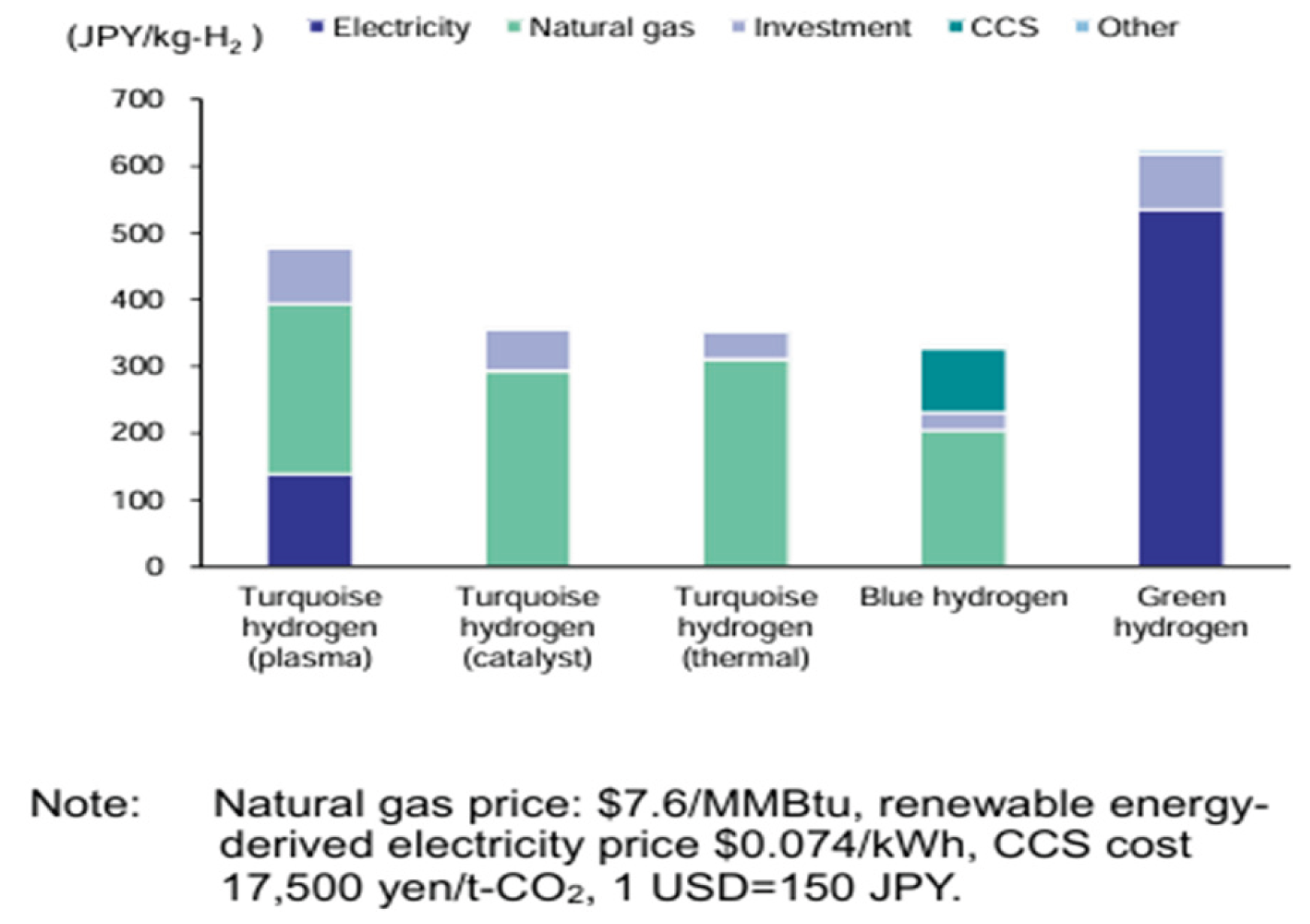
Figure 2.
Comparison of detonable range between Methane and hydrogen combustion [15].
Figure 2.
Comparison of detonable range between Methane and hydrogen combustion [15].
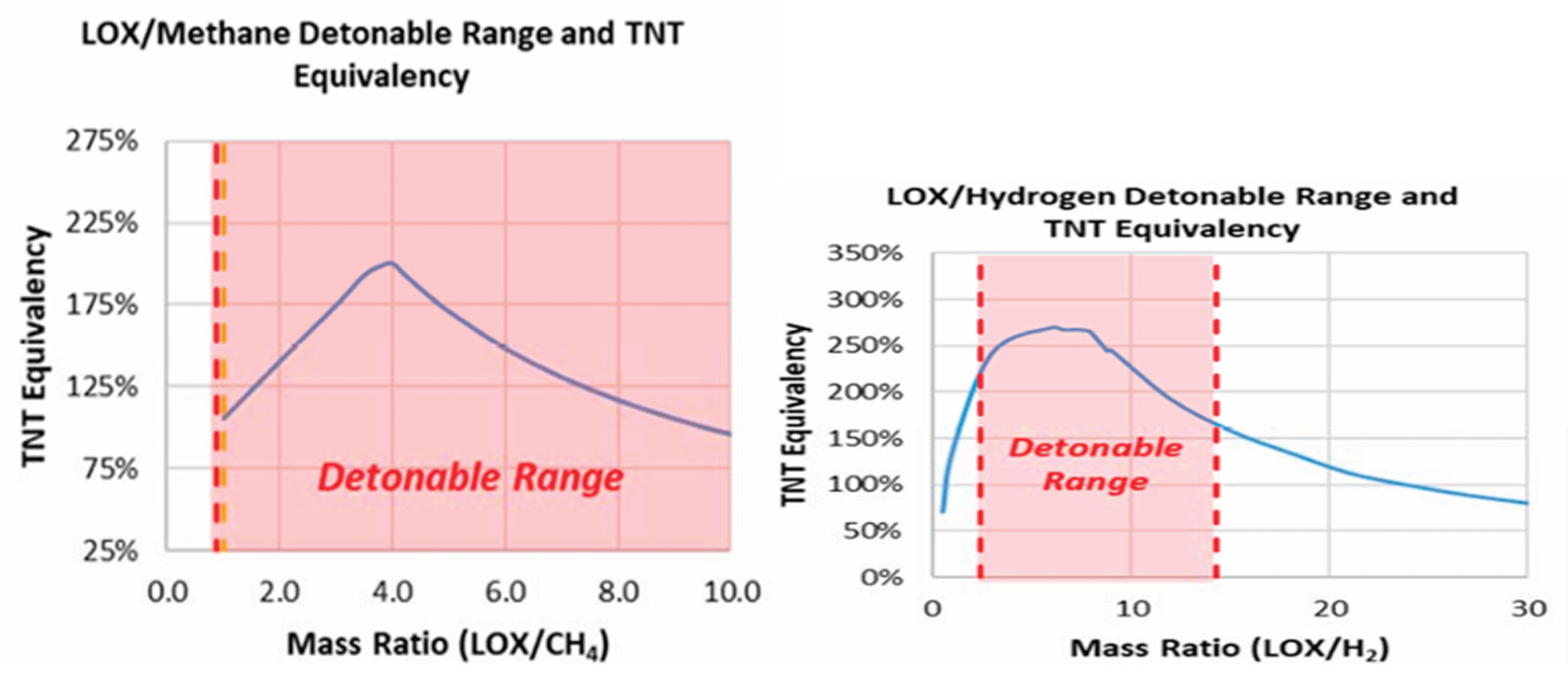
Figure 3.
Hydrogen cost per kilogram in different production pathway in UK [30].
Figure 3.
Hydrogen cost per kilogram in different production pathway in UK [30].
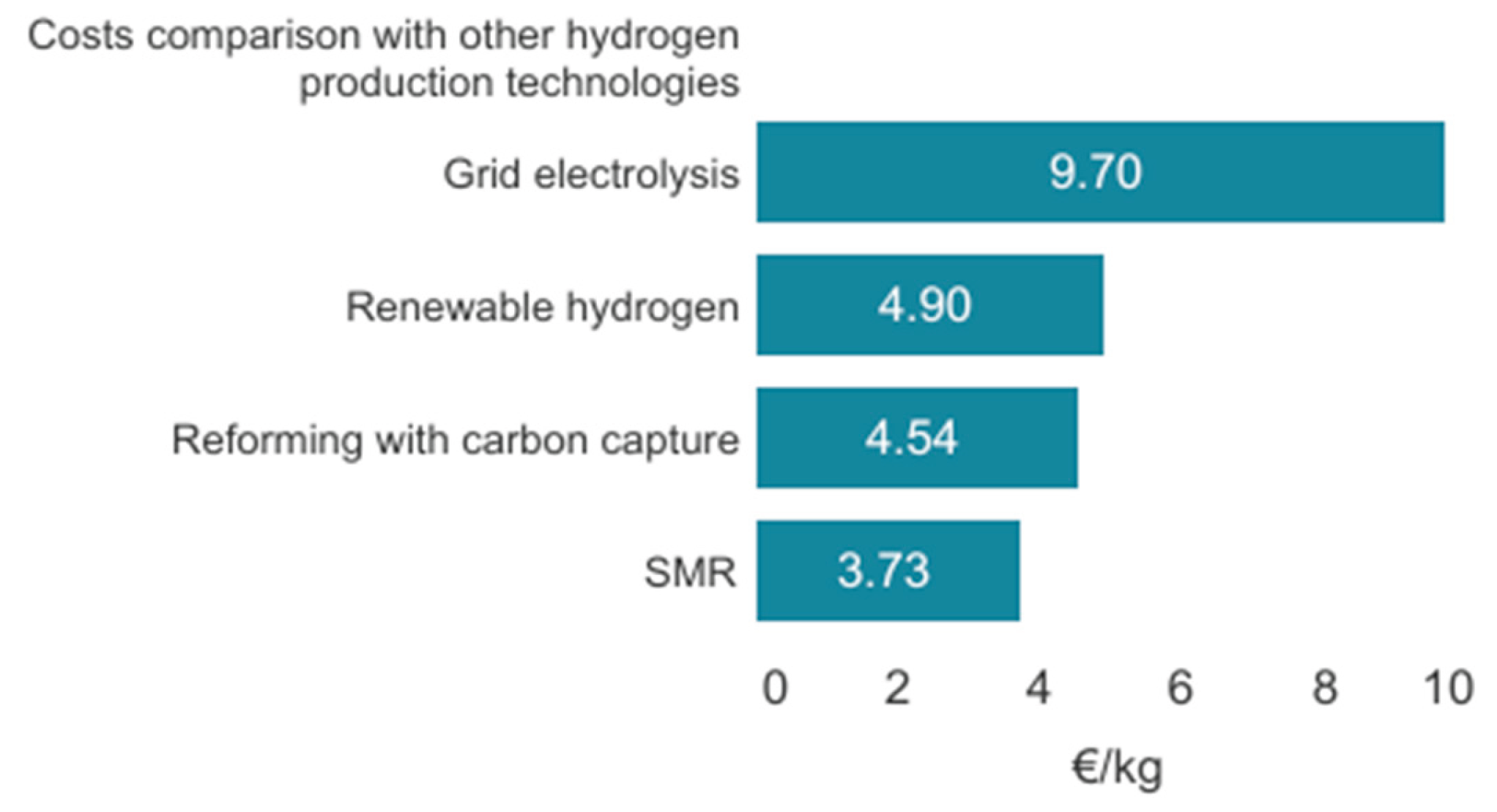
Figure 4.
Natural gas cost per kilogram in Europe [30].
Figure 4.
Natural gas cost per kilogram in Europe [30].
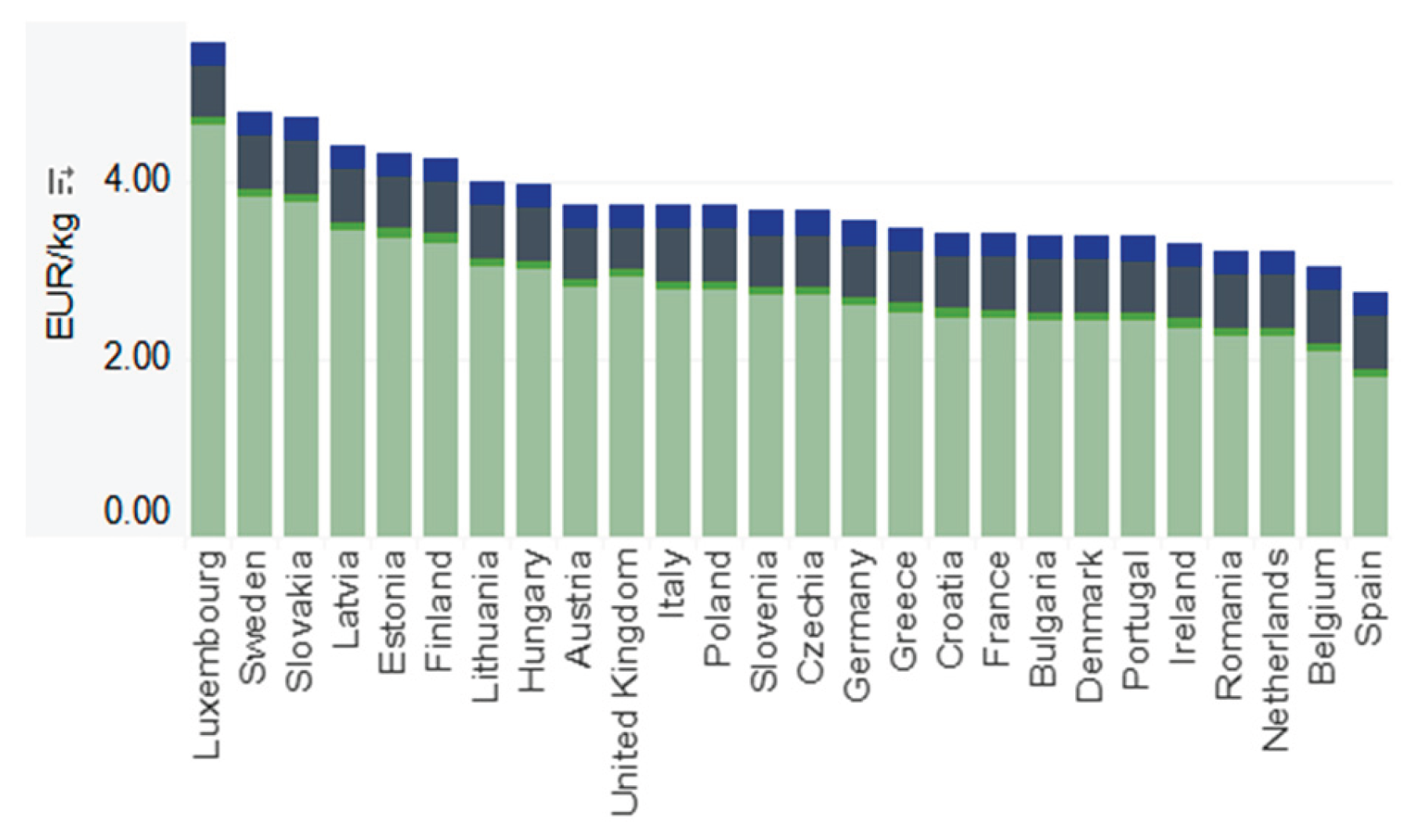
Figure 5.
Literature review methodology.
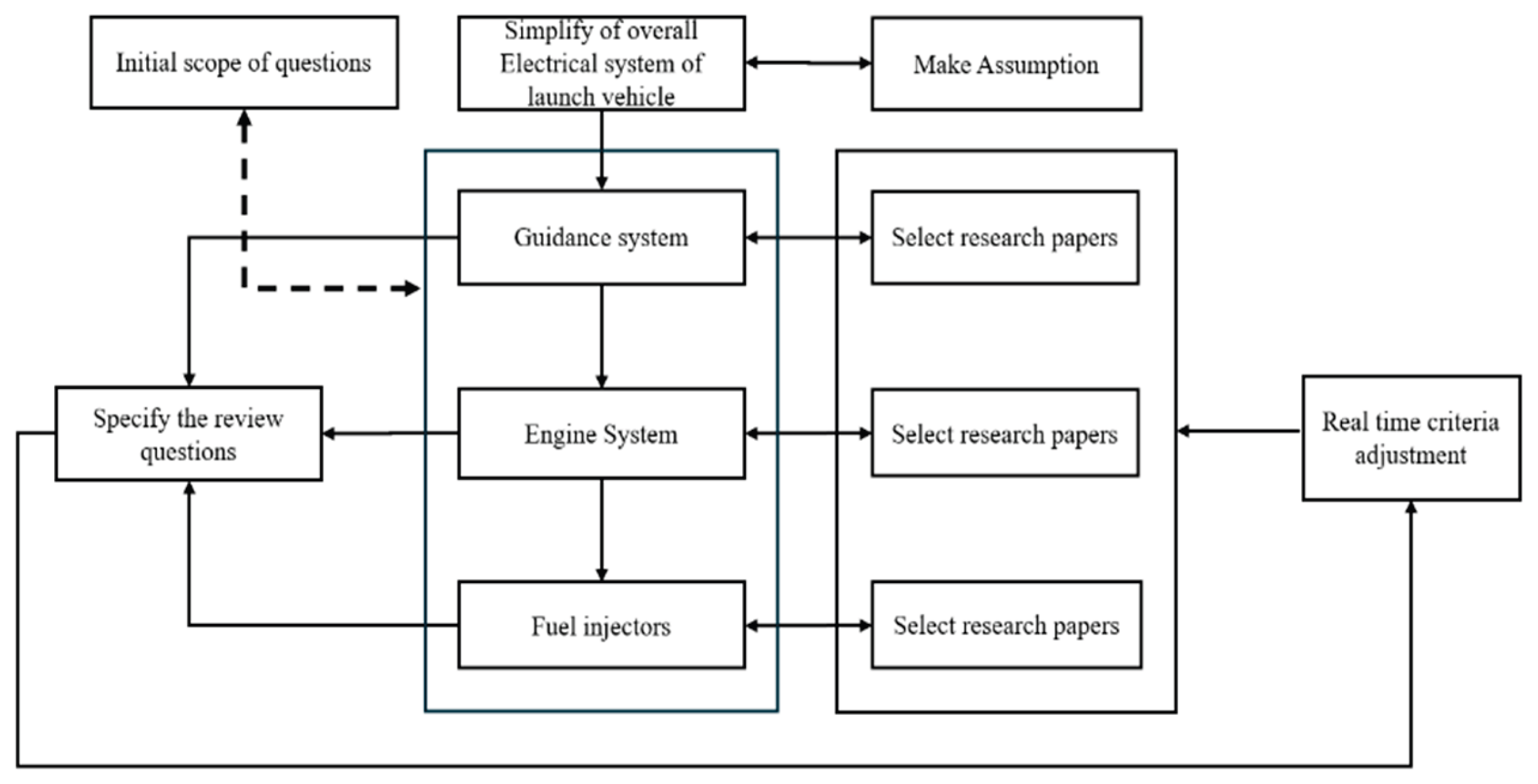
Figure 6.
Guidance system for Saturn V [50].
Figure 6.
Guidance system for Saturn V [50].
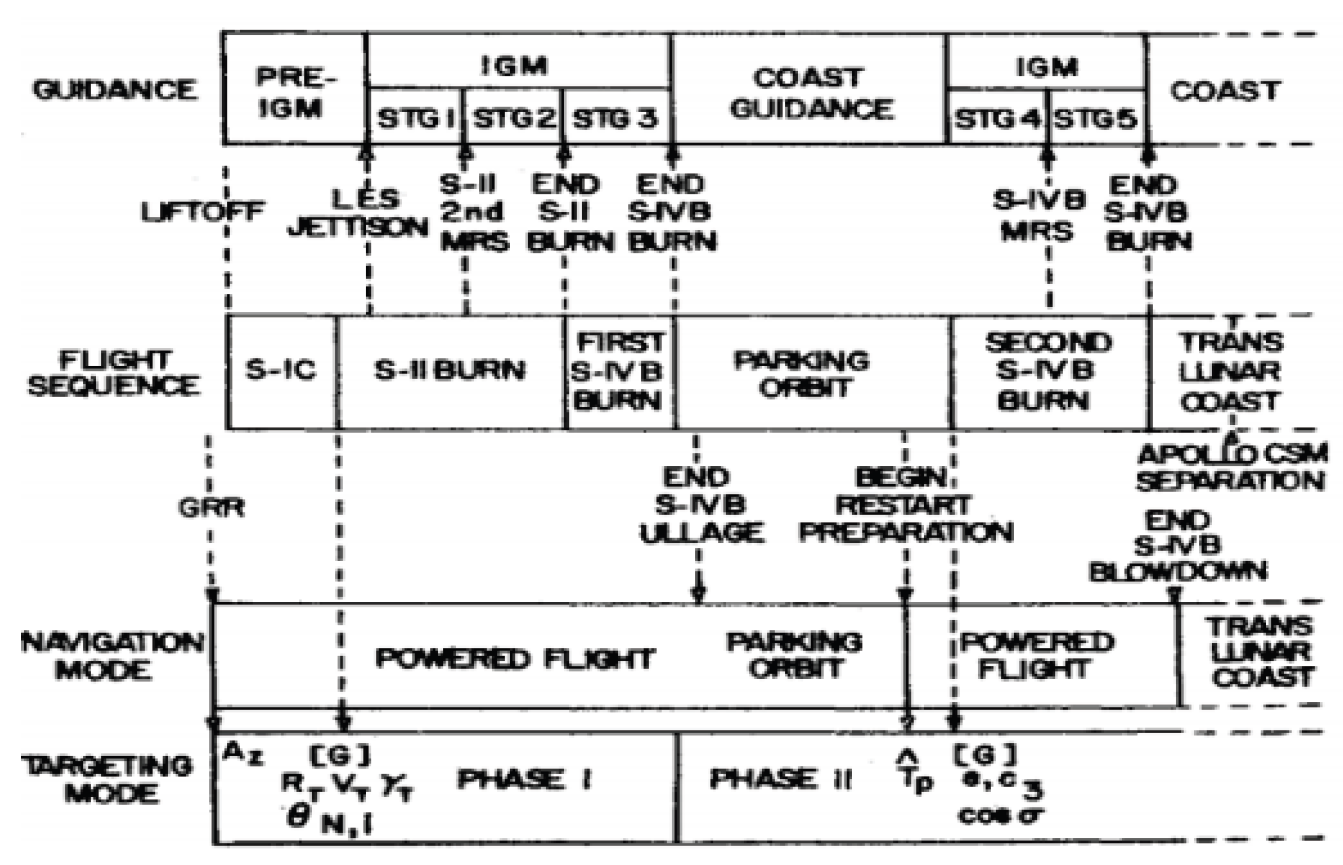
Figure 8.
Swing unit of main thrust chamber [84].
Figure 8.
Swing unit of main thrust chamber [84].
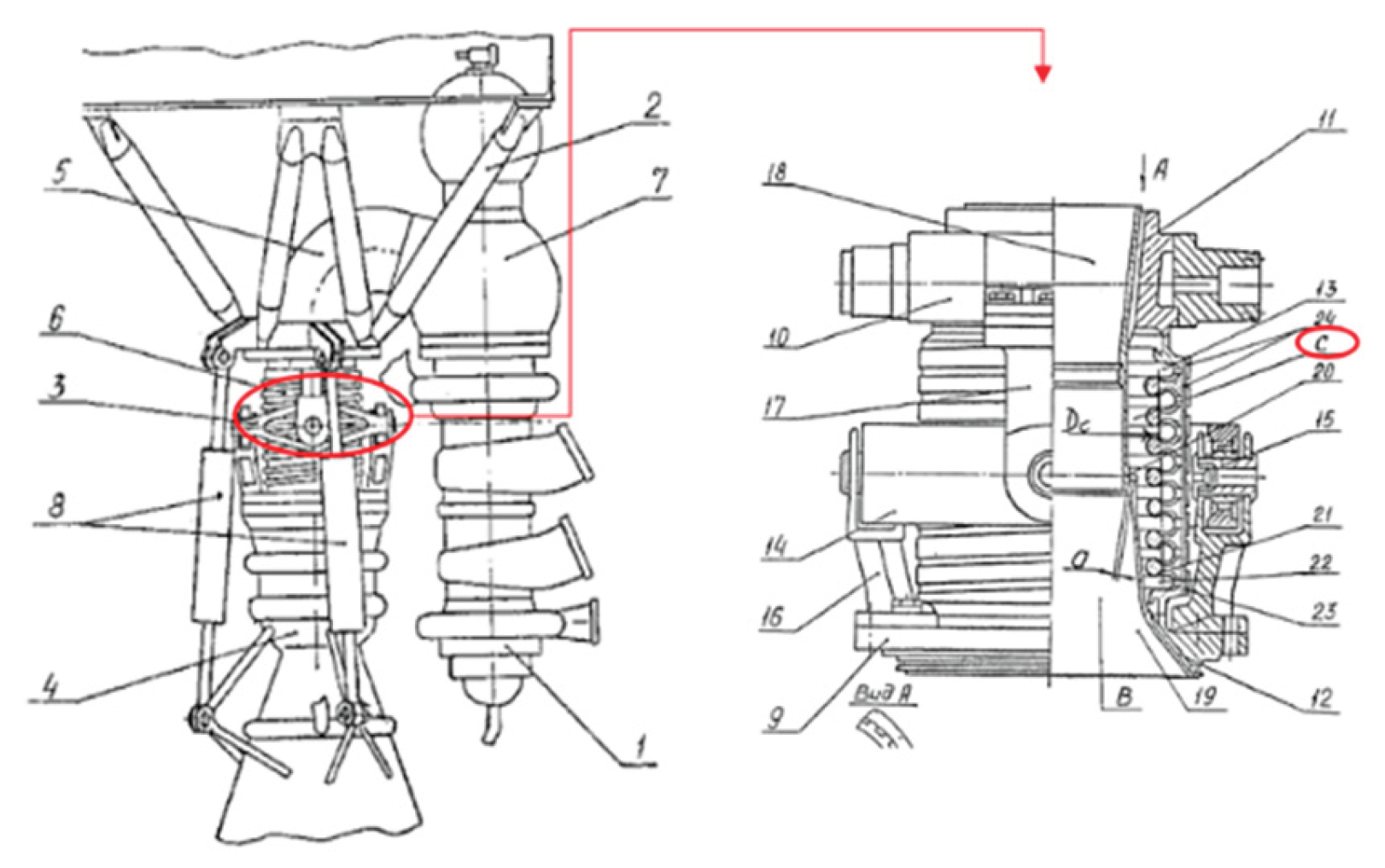
Figure 9.
Detachable bellow rocking unit for main thrust chamber [85].
Figure 9.
Detachable bellow rocking unit for main thrust chamber [85].
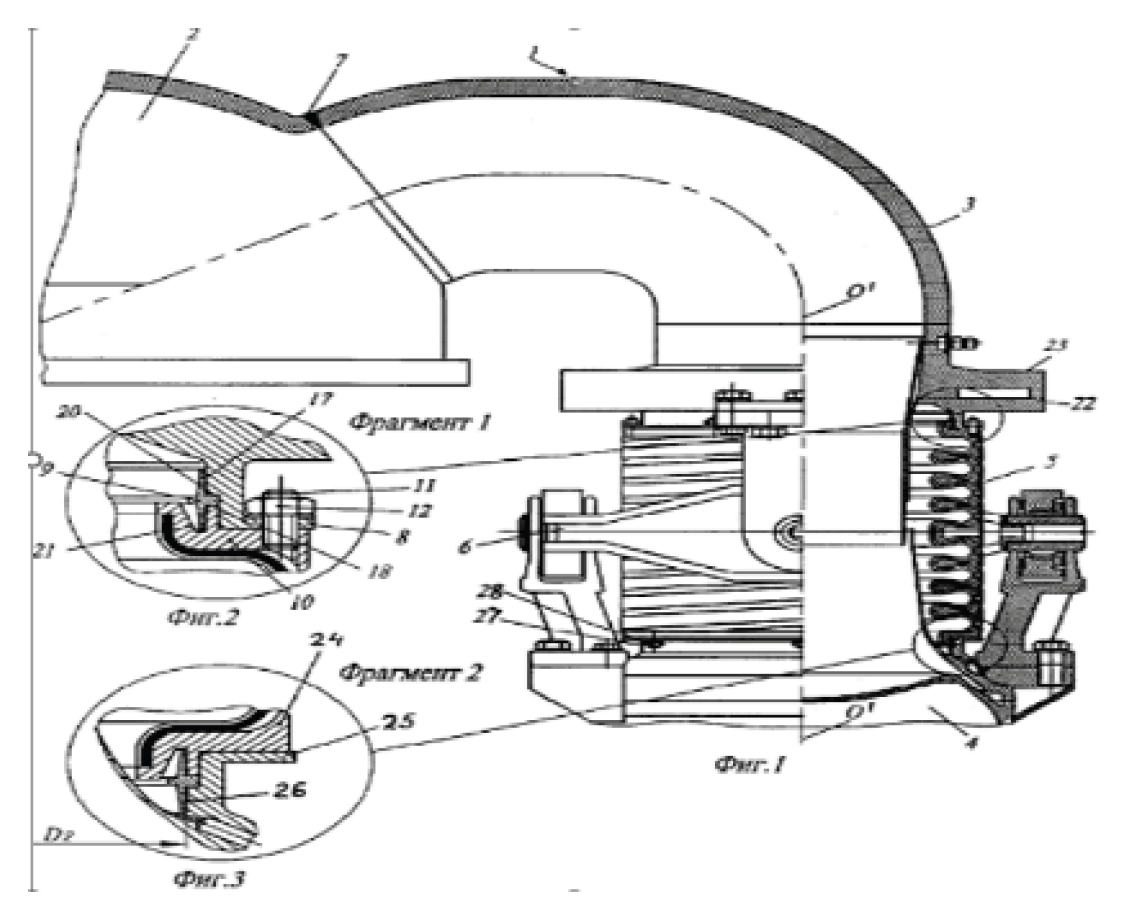
Figure 10.
Systematic diagram of staged combustion engines with dual thrust chambers [88].
Figure 10.
Systematic diagram of staged combustion engines with dual thrust chambers [88].
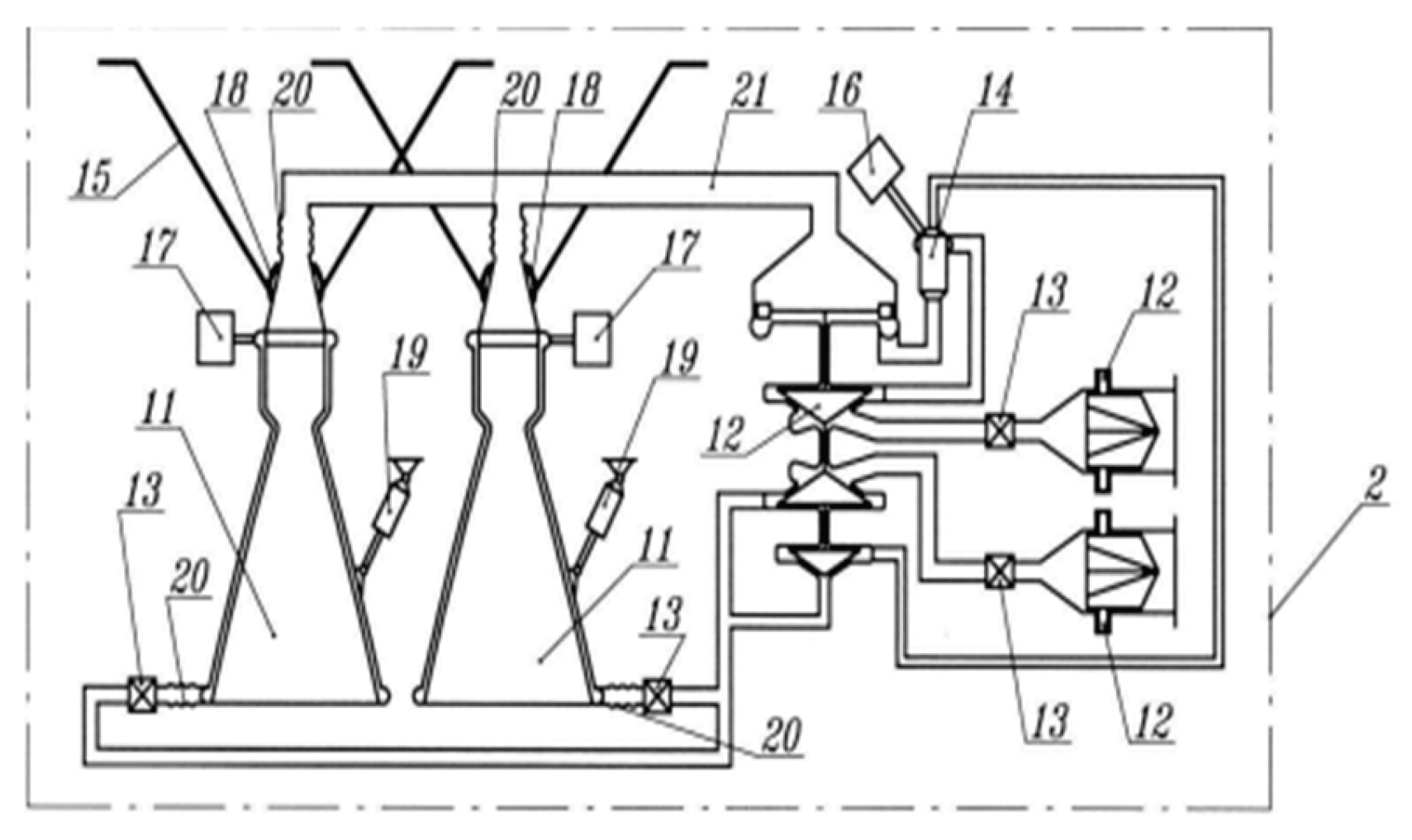
Figure 16.
Thrust throttling profile for RD-180 [94].
Figure 16.
Thrust throttling profile for RD-180 [94].
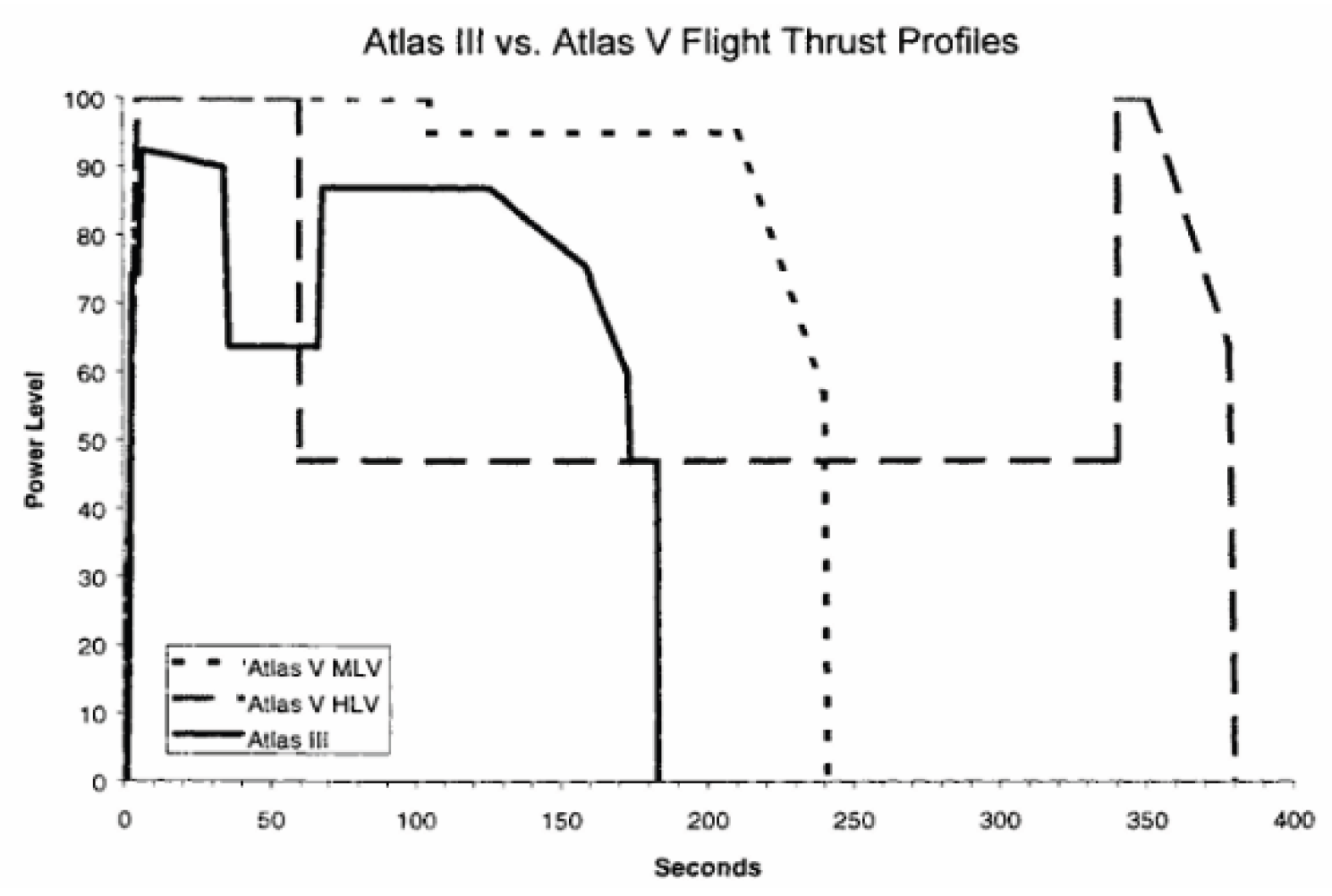
Figure 17.
Staged combustion cycle engine with the concept of integrated pre-burner [98].
Figure 17.
Staged combustion cycle engine with the concept of integrated pre-burner [98].
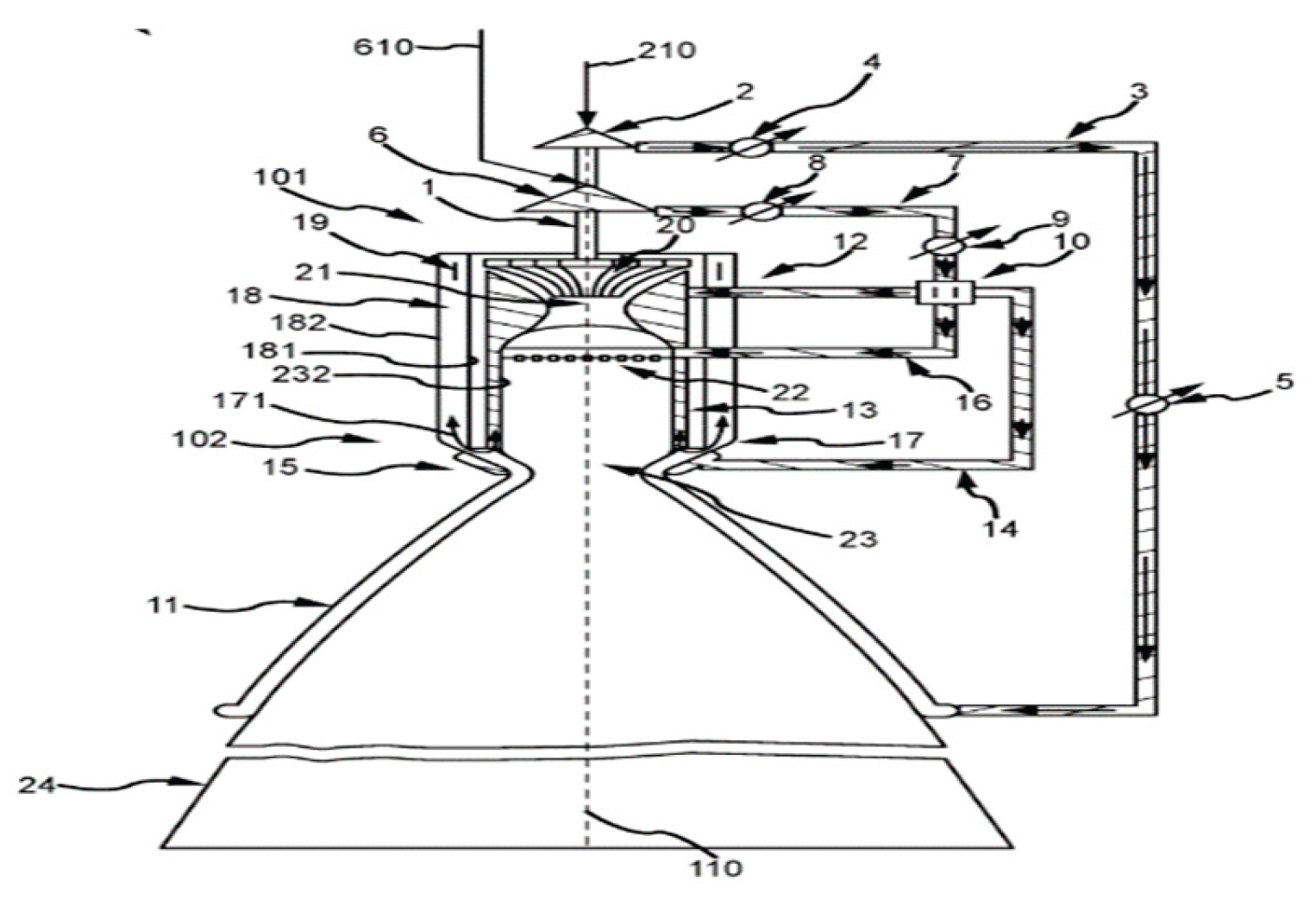
Figure 18.
Staged combustion cycle engine designed with the concept of integrated combustors and external high pressure gaseous start up [99].
Figure 18.
Staged combustion cycle engine designed with the concept of integrated combustors and external high pressure gaseous start up [99].
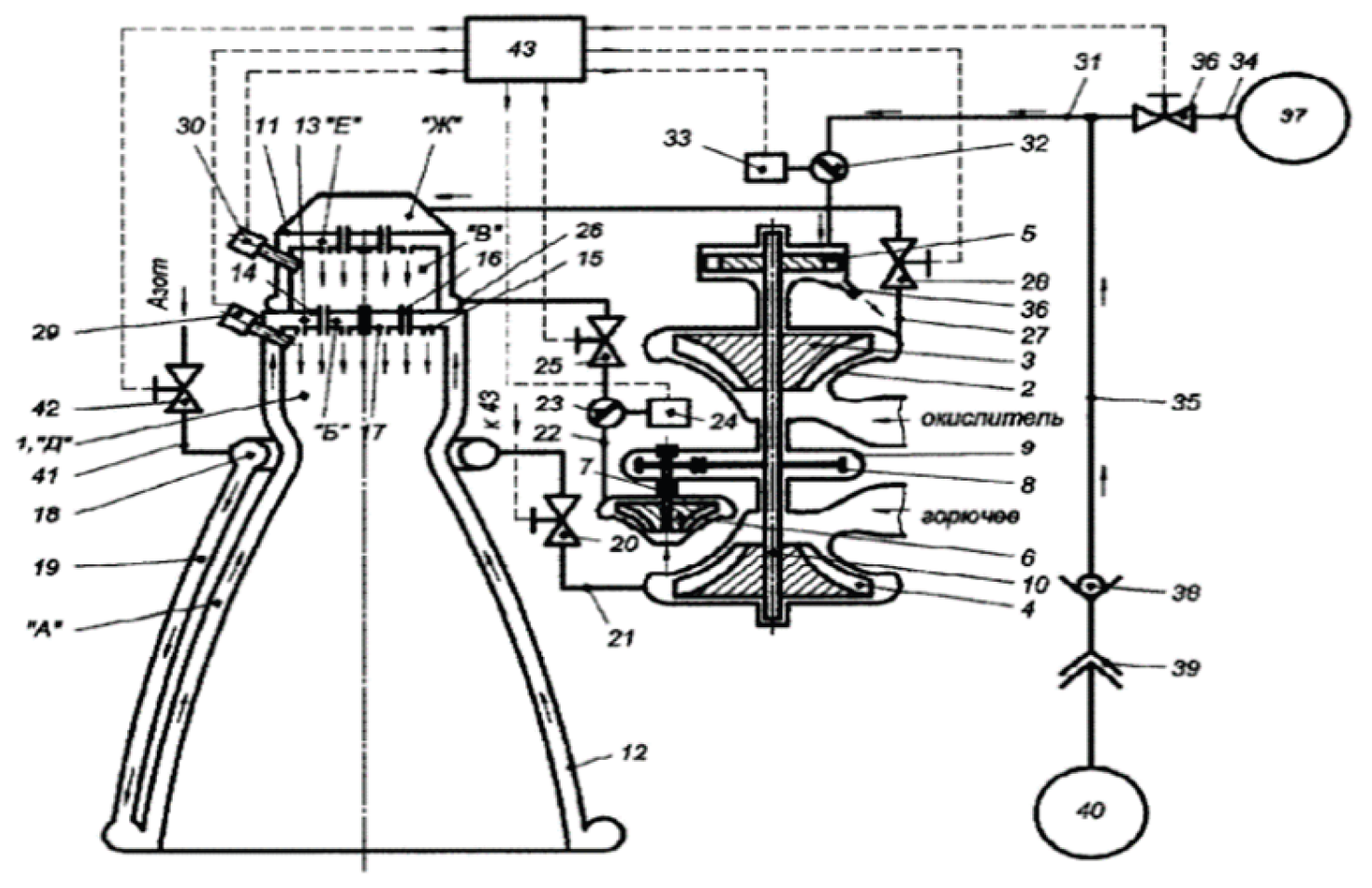
Figure 19.
Systematic diagram of a staged combustion cycle engine (One pre burner) [100].
Figure 19.
Systematic diagram of a staged combustion cycle engine (One pre burner) [100].
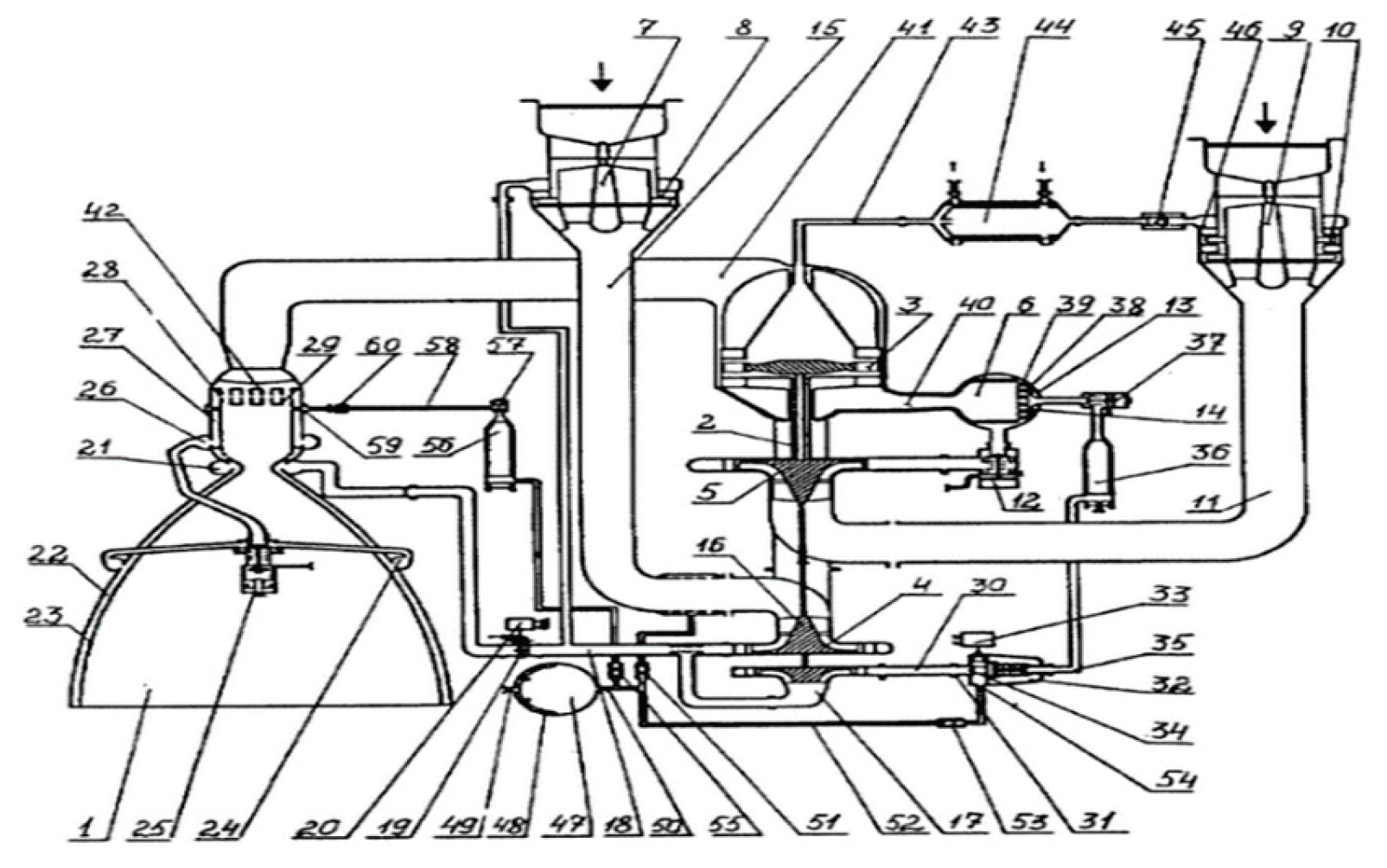
Figure 20.
Self-startup concept with pneumatic-hydraulic circuit [101].
Figure 20.
Self-startup concept with pneumatic-hydraulic circuit [101].
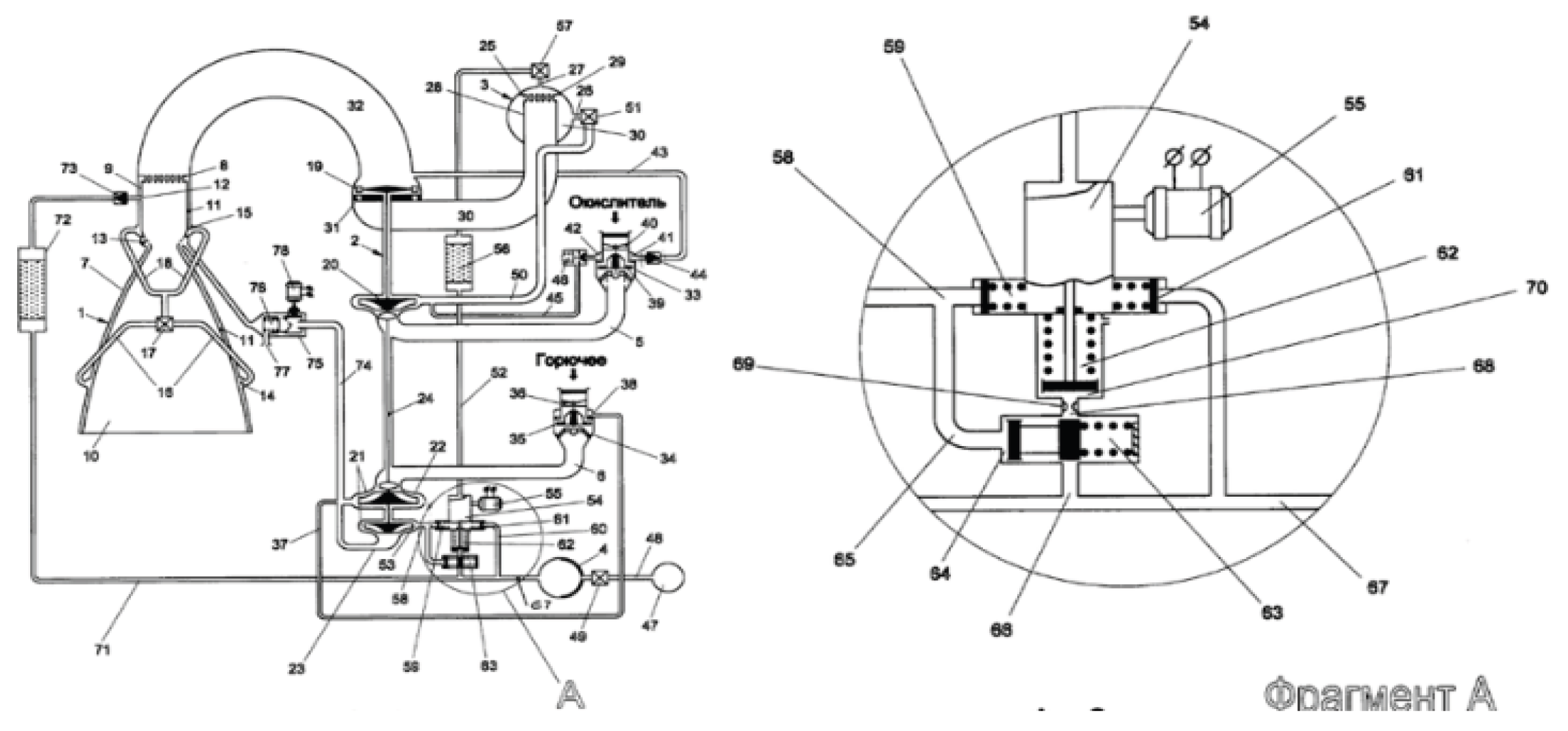
Figure 21.
Staged combustion cycle system concept for RD-171M [105].
Figure 21.
Staged combustion cycle system concept for RD-171M [105].
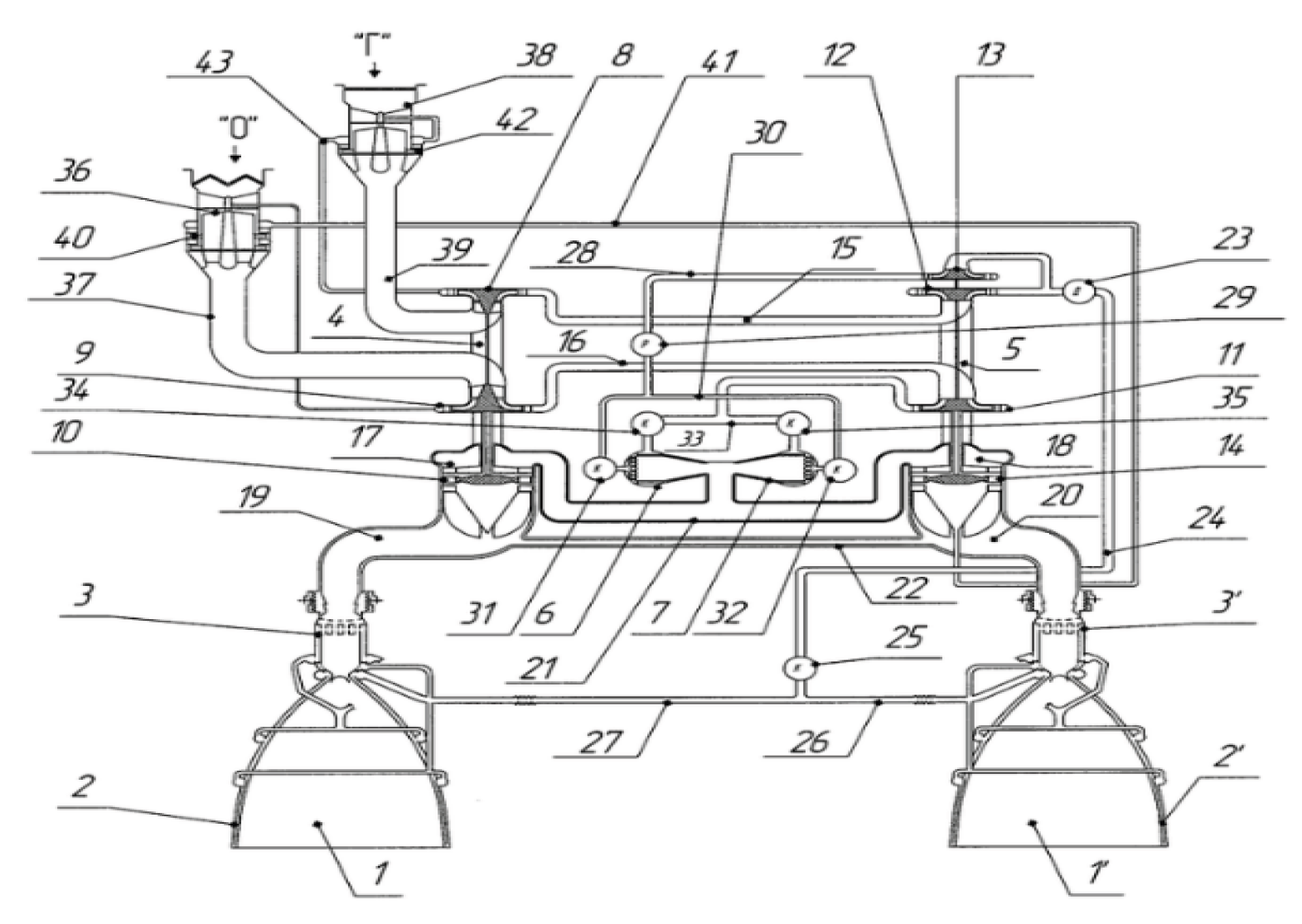
Figure 22.
Diagram of propellant regulator plan from YF-100 [107].
Figure 22.
Diagram of propellant regulator plan from YF-100 [107].
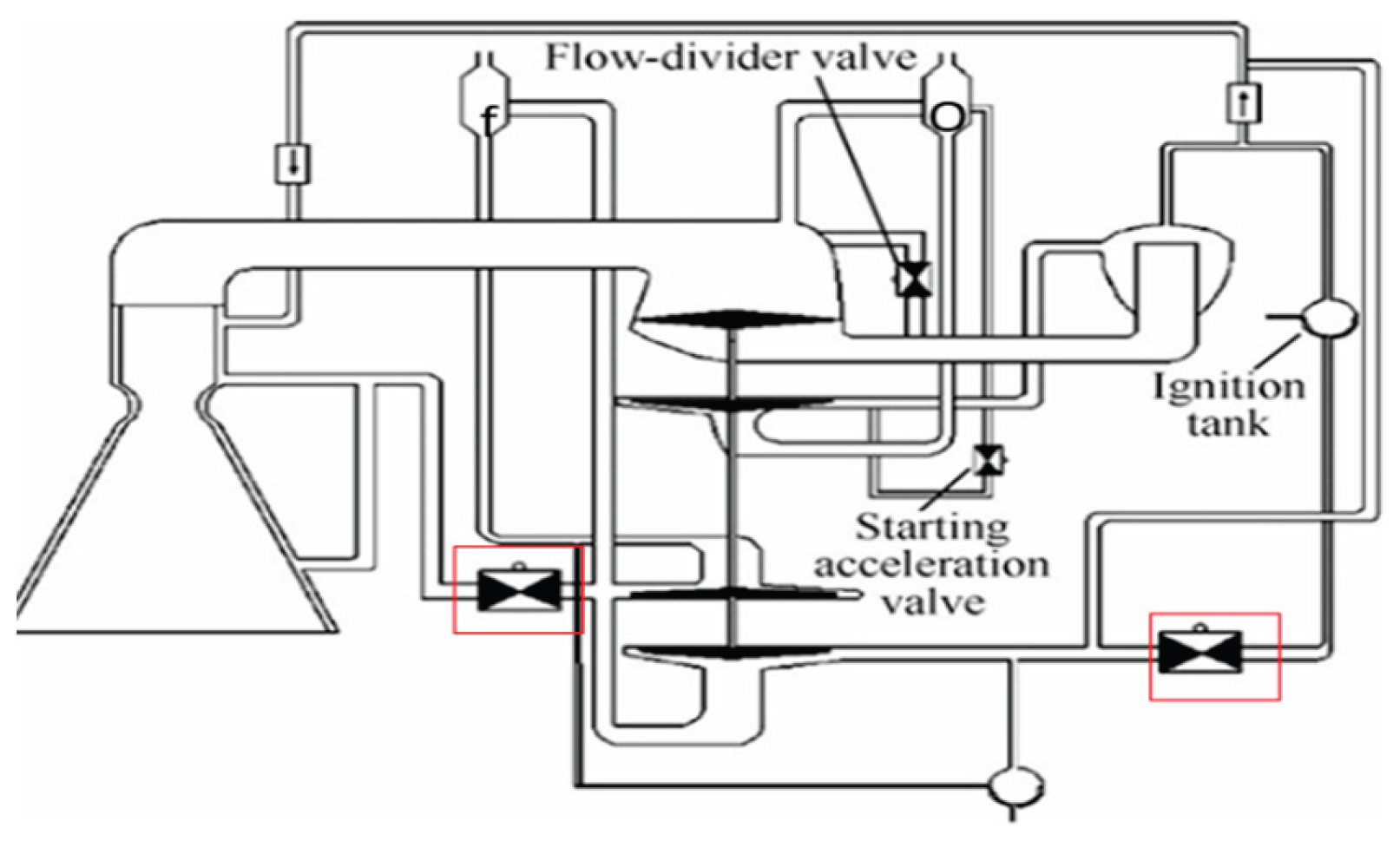
Figure 23.
Deep throttling concept for a staged combustion cycle engine [108].
Figure 23.
Deep throttling concept for a staged combustion cycle engine [108].
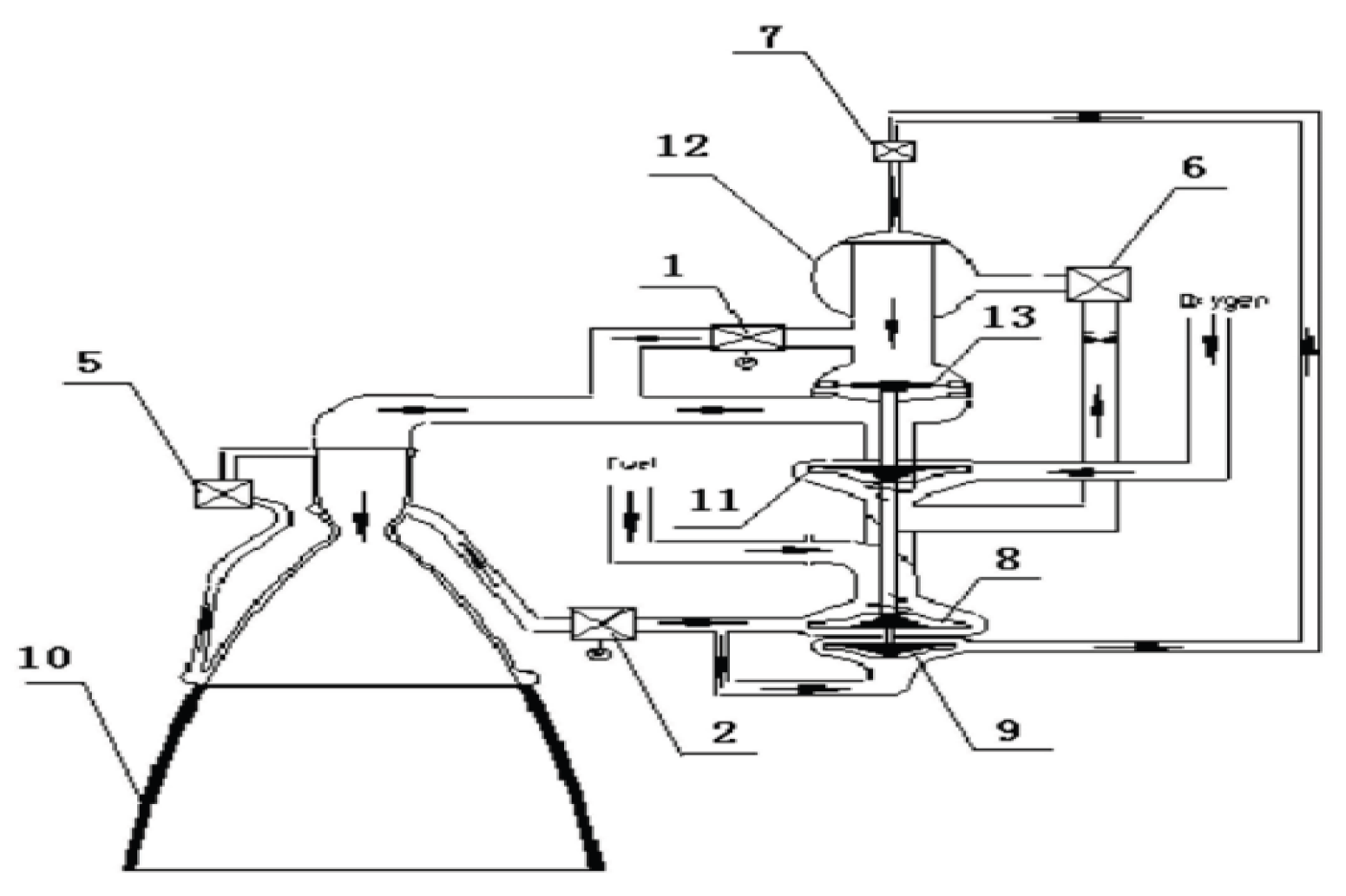
Figure 24.
Dual pre burner concept for a staged combustion cycle engine [109].
Figure 24.
Dual pre burner concept for a staged combustion cycle engine [109].
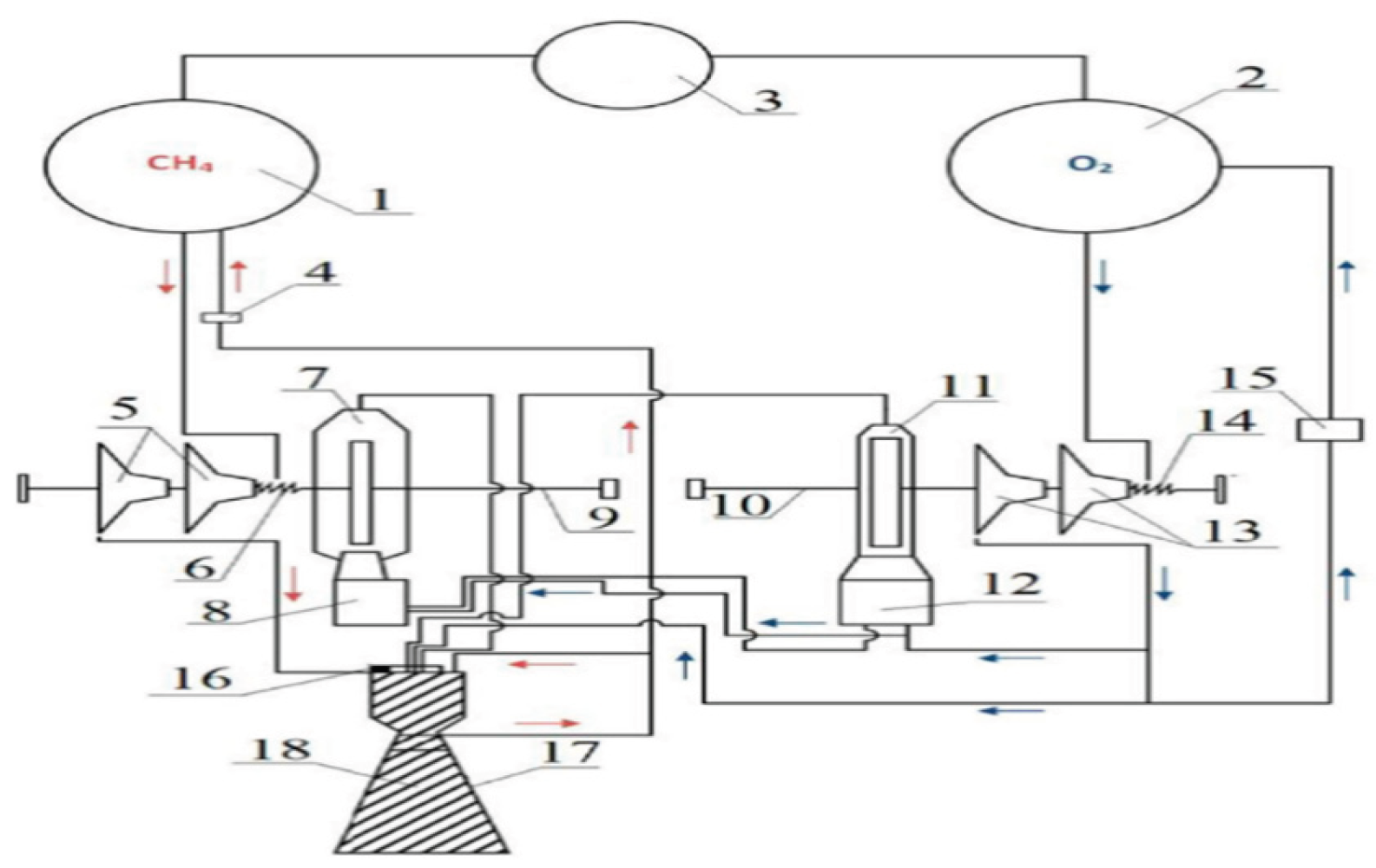
Figure 25.
Mixture ratio throttling by using bypass line [111].
Figure 25.
Mixture ratio throttling by using bypass line [111].
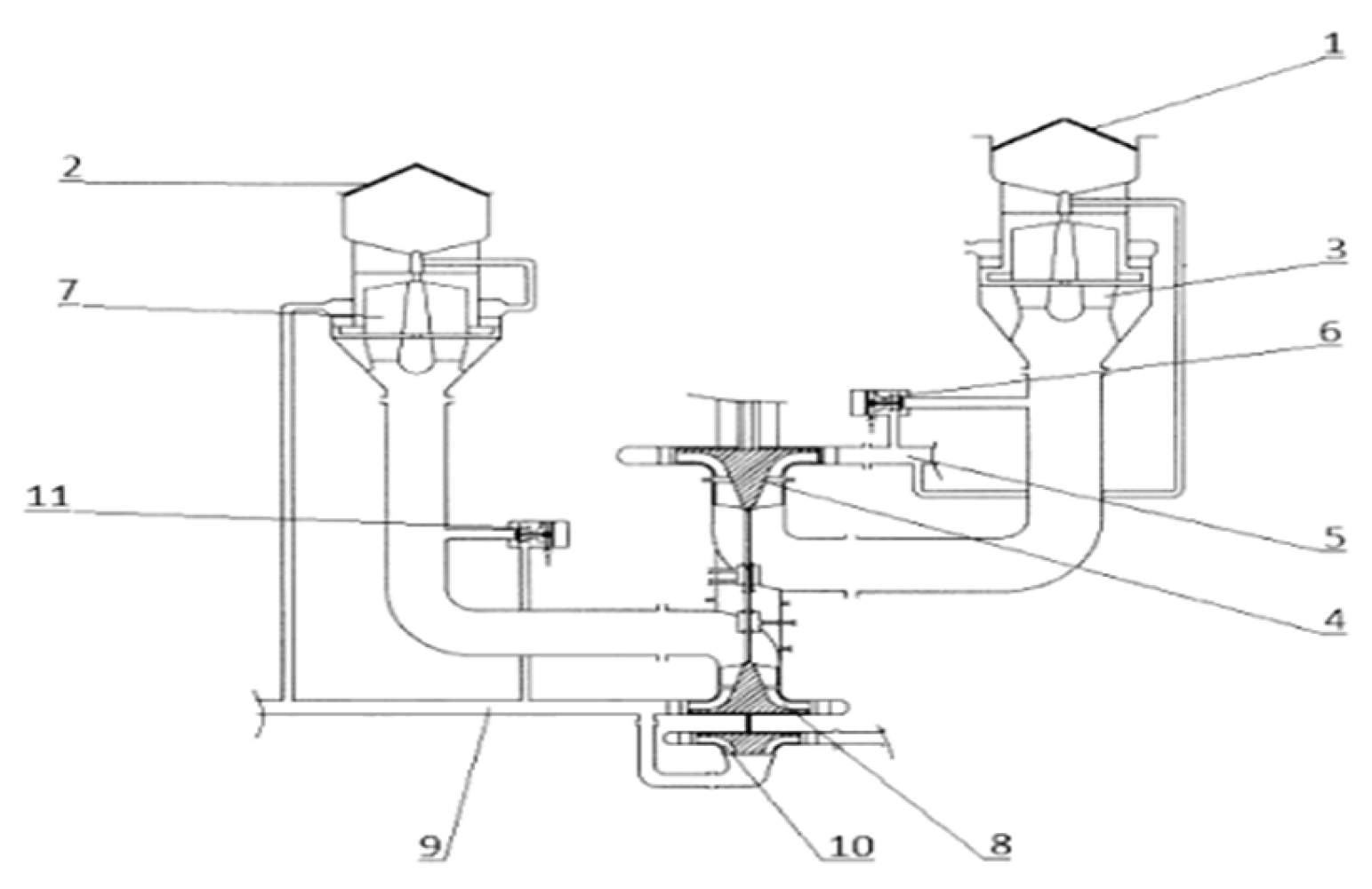
Figure 26.
Schematic diagram of flow regulator for a liquid rocket engine [112].
Figure 26.
Schematic diagram of flow regulator for a liquid rocket engine [112].
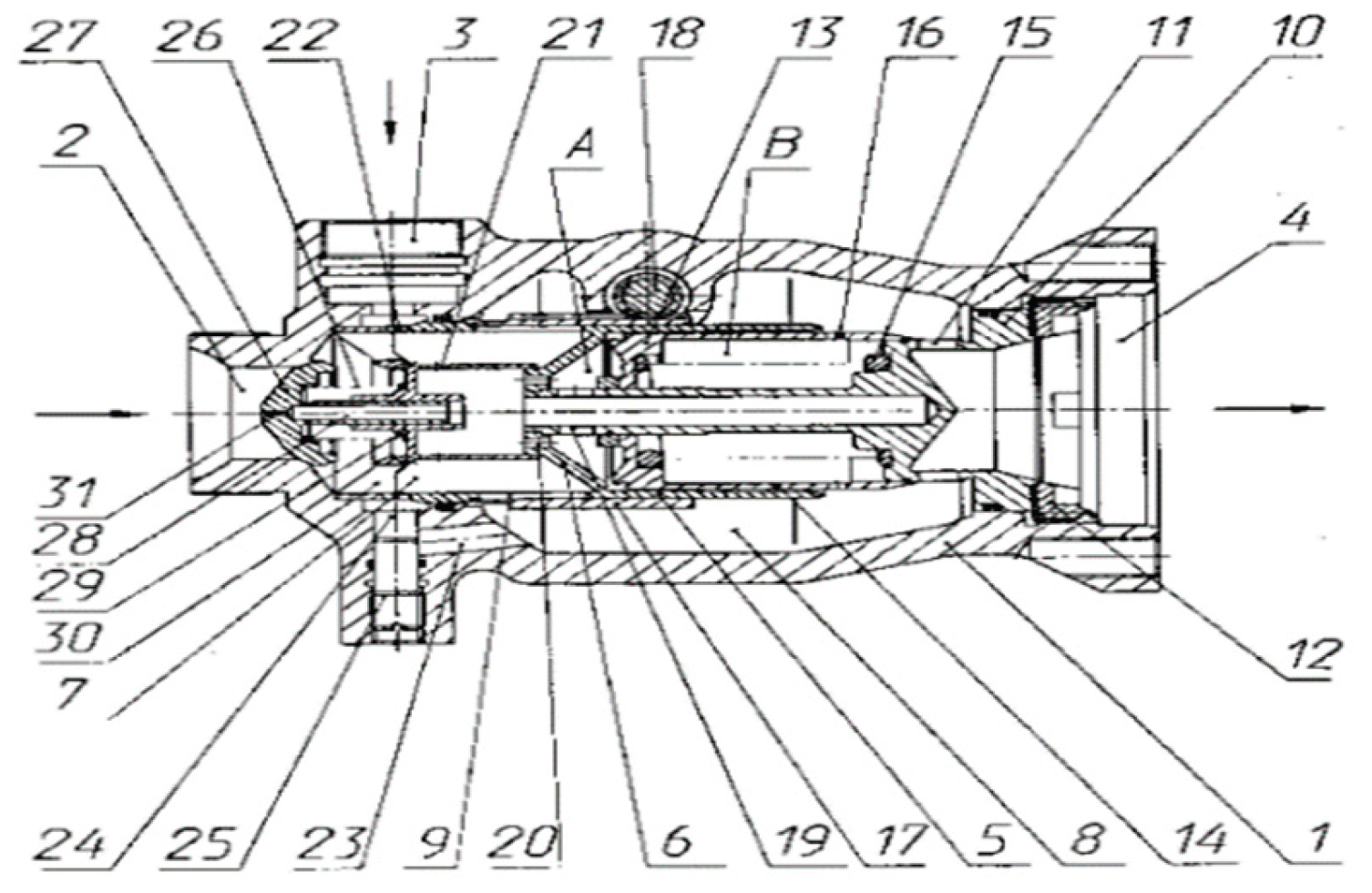
Figure 27.
Schematic diagram of bellow regulator [113].
Figure 27.
Schematic diagram of bellow regulator [113].
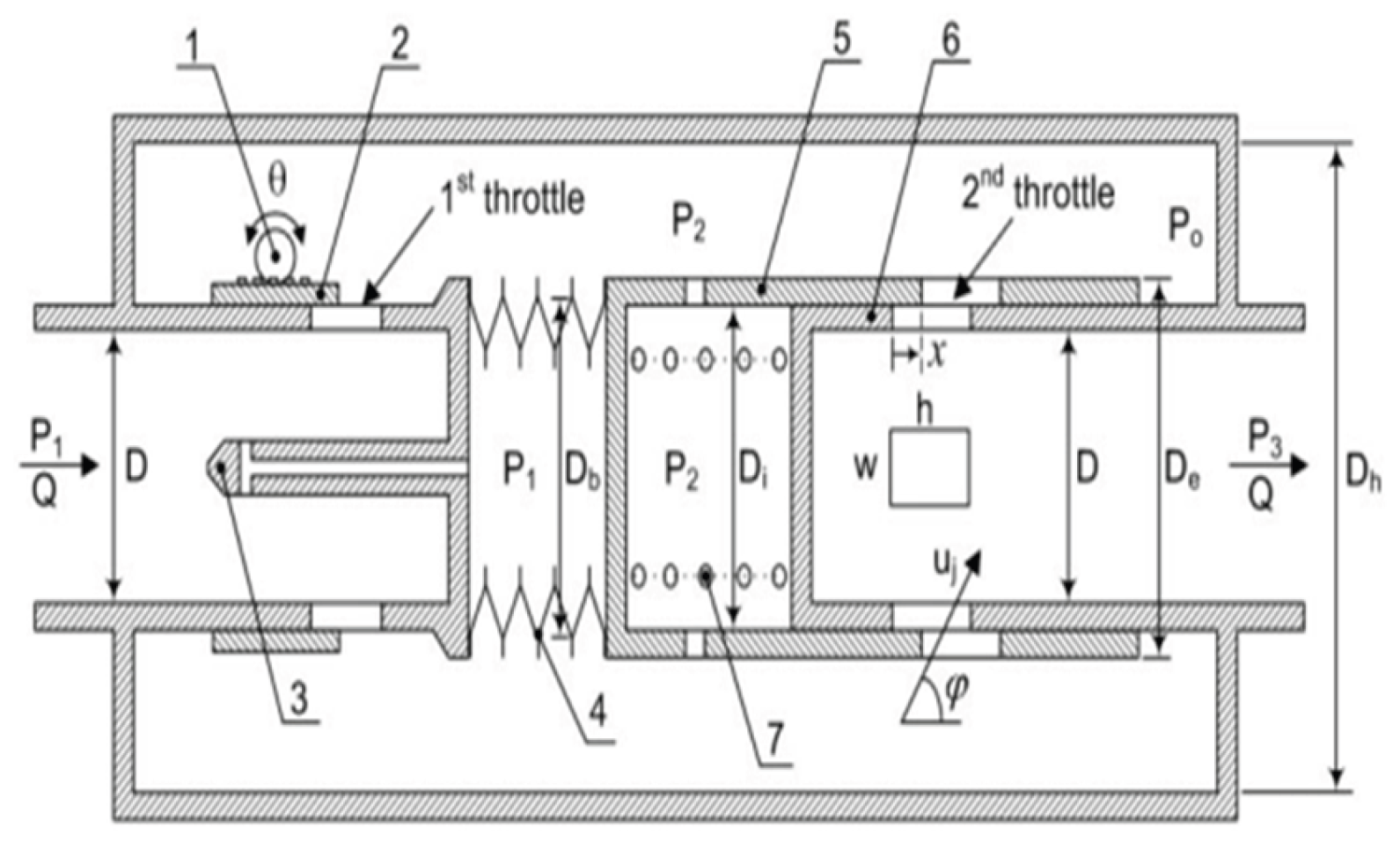
Figure 28.
Flow rate versus throttling valve opening ratio [114].
Figure 28.
Flow rate versus throttling valve opening ratio [114].
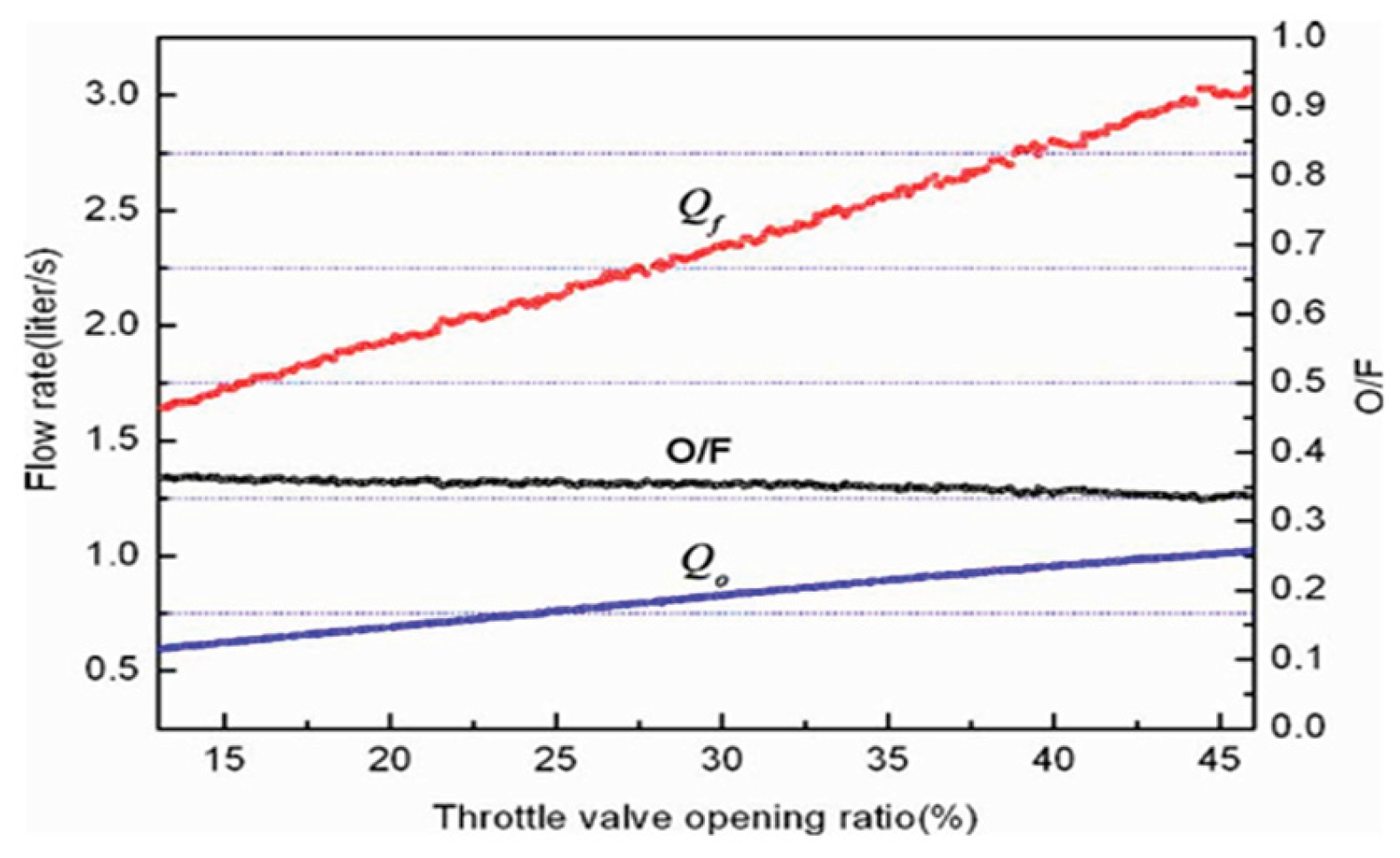
Figure 29.
Steady state testing regimes of chamber of RD-170 [117].
Figure 29.
Steady state testing regimes of chamber of RD-170 [117].
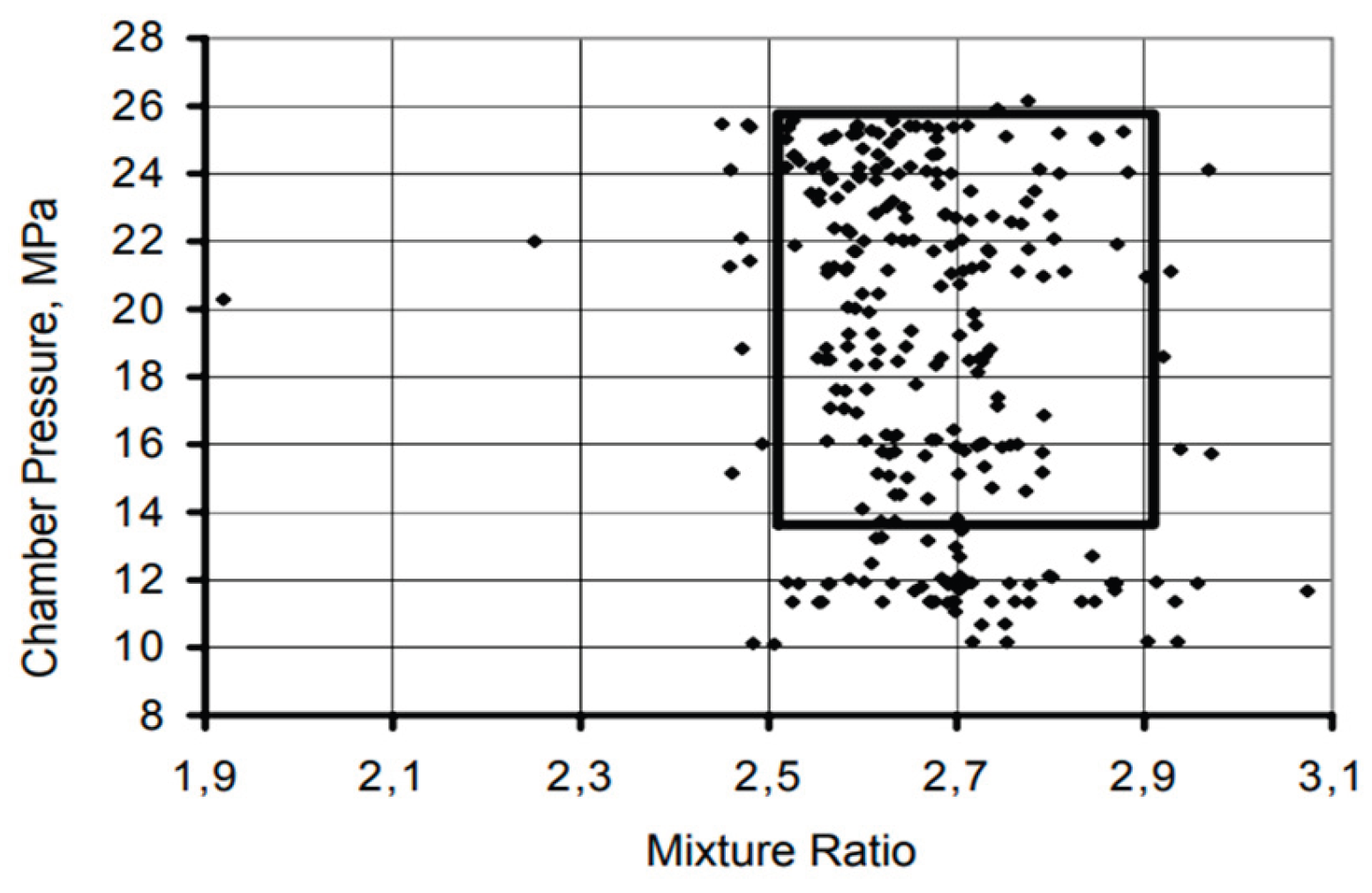
Figure 30.
Hot fire test regime map for YF-77 [118].
Figure 30.
Hot fire test regime map for YF-77 [118].
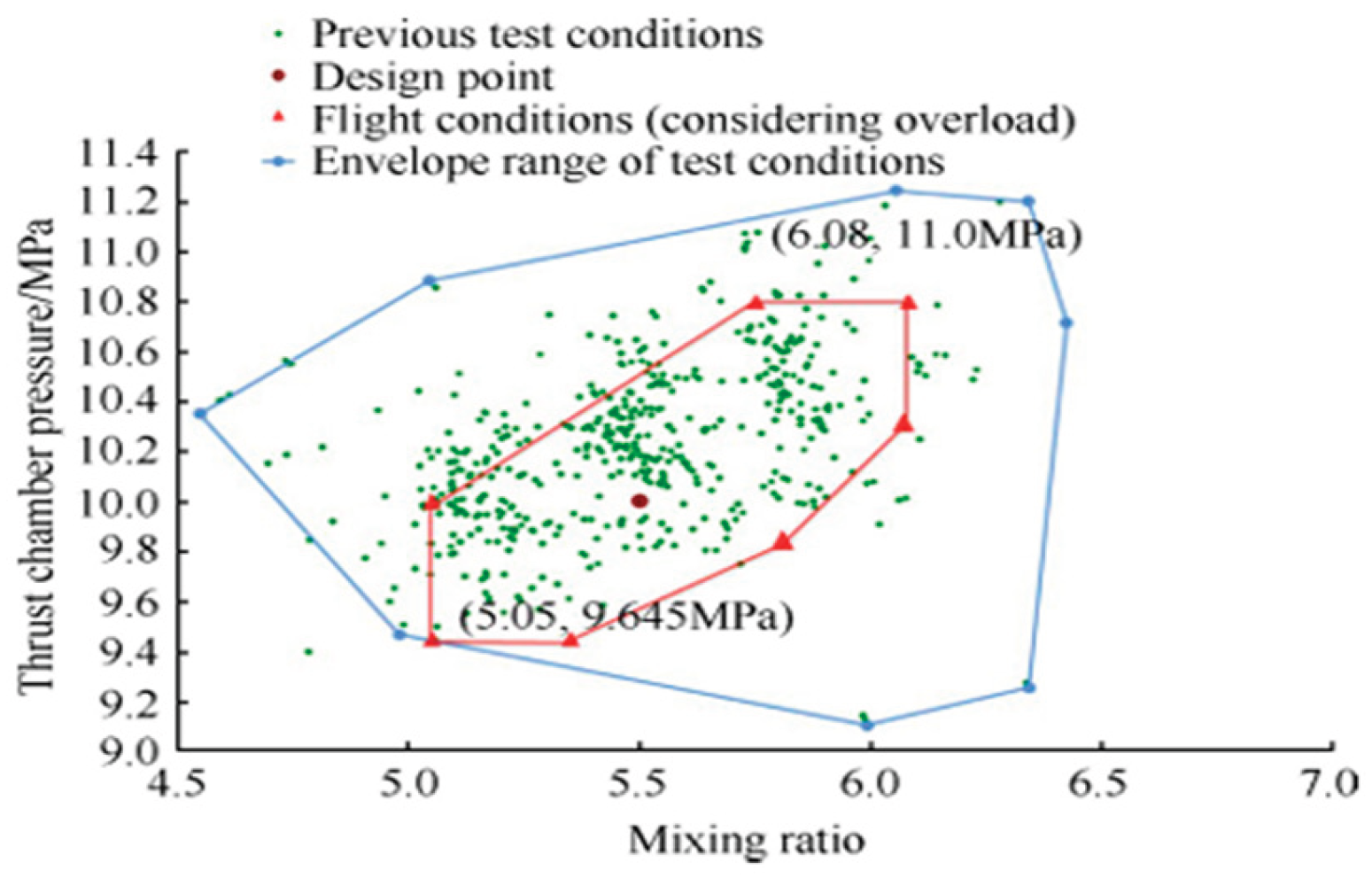
Figure 31.
YF-77 test results (a) Oxidiser pump inlet pressure fluctuation under load condition (b) propellant pump outlet pressure, combustion chamber pressure under load condition [118].
Figure 31.
YF-77 test results (a) Oxidiser pump inlet pressure fluctuation under load condition (b) propellant pump outlet pressure, combustion chamber pressure under load condition [118].
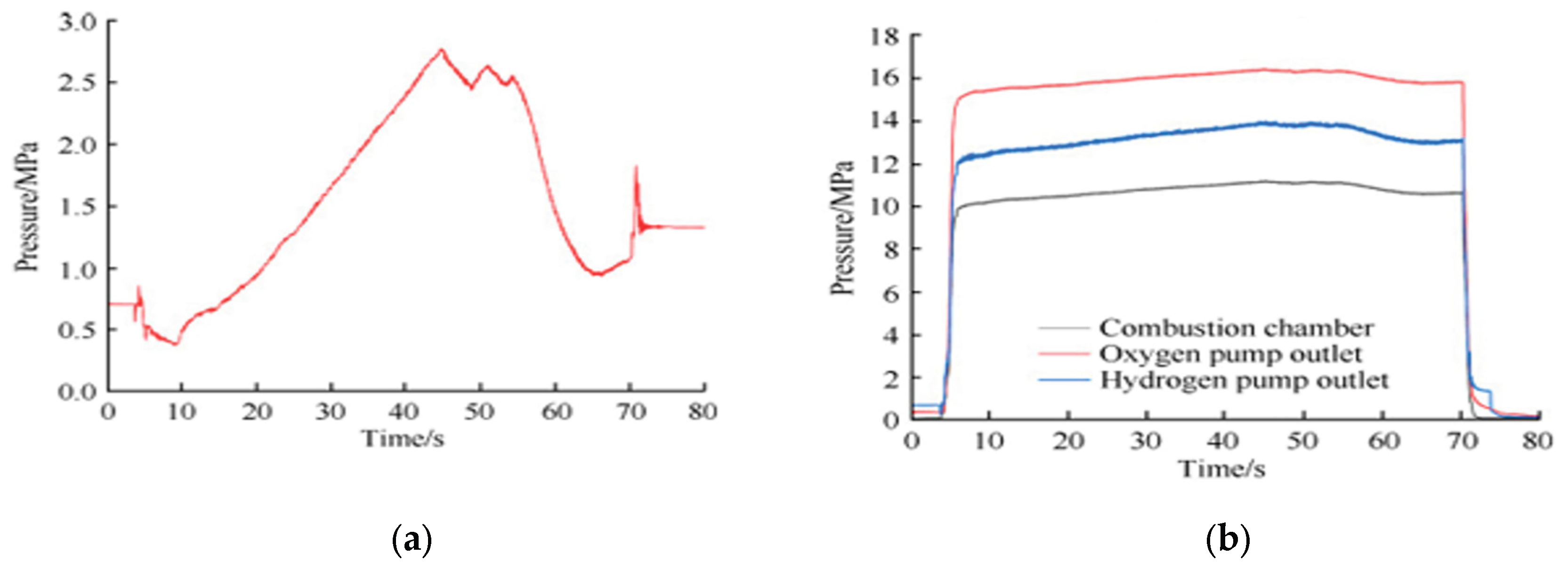
Figure 32.
Engine performance testing results for YF-77 [118].
Figure 32.
Engine performance testing results for YF-77 [118].
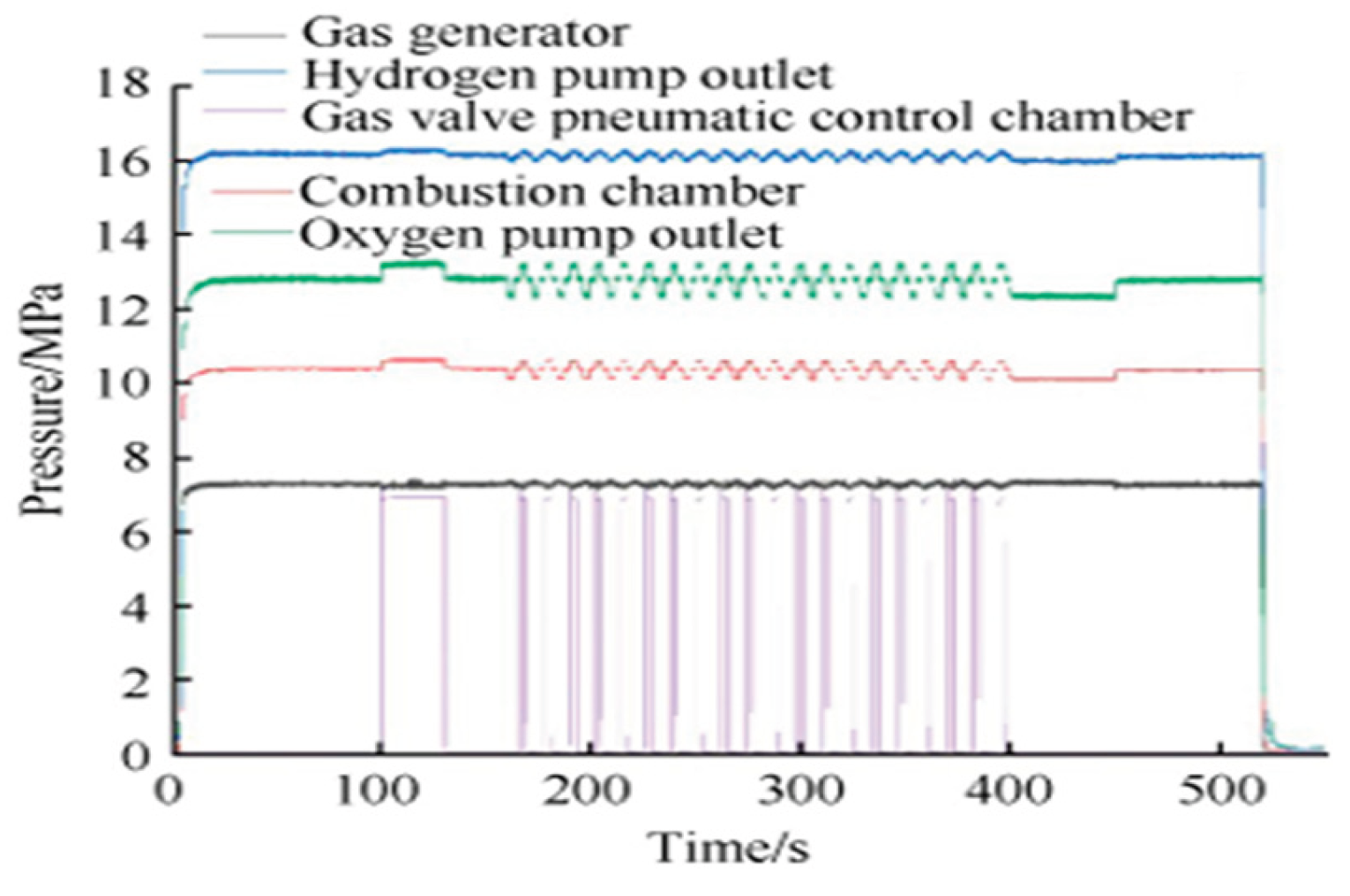
Figure 33.
(a) Signal tracking error calibration for water two phase mass flow rate measurement (b) Signal tracking error calibration for density measurement of water two phase flow. [120].
Figure 33.
(a) Signal tracking error calibration for water two phase mass flow rate measurement (b) Signal tracking error calibration for density measurement of water two phase flow. [120].
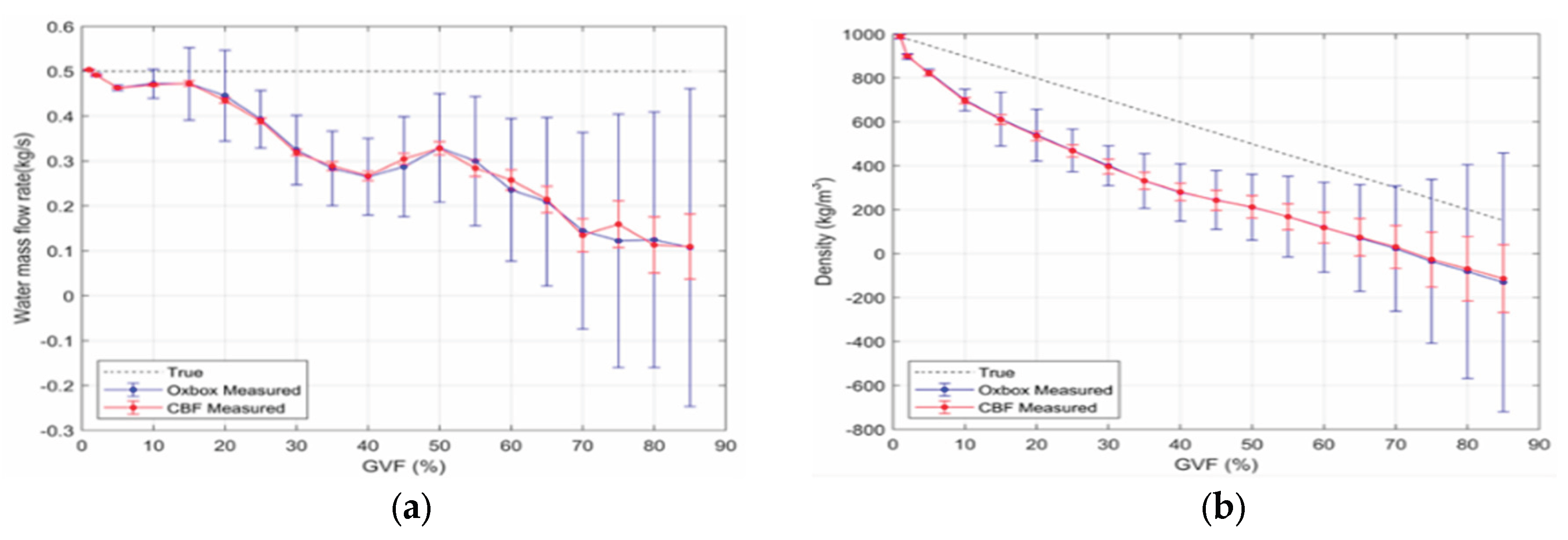
Figure 34.
(a) Temperature dependence characteristic for mass flow rate of EHF-851 (b) Temperature dependence characteristic for density of EHF-851 [128].
Figure 34.
(a) Temperature dependence characteristic for mass flow rate of EHF-851 (b) Temperature dependence characteristic for density of EHF-851 [128].
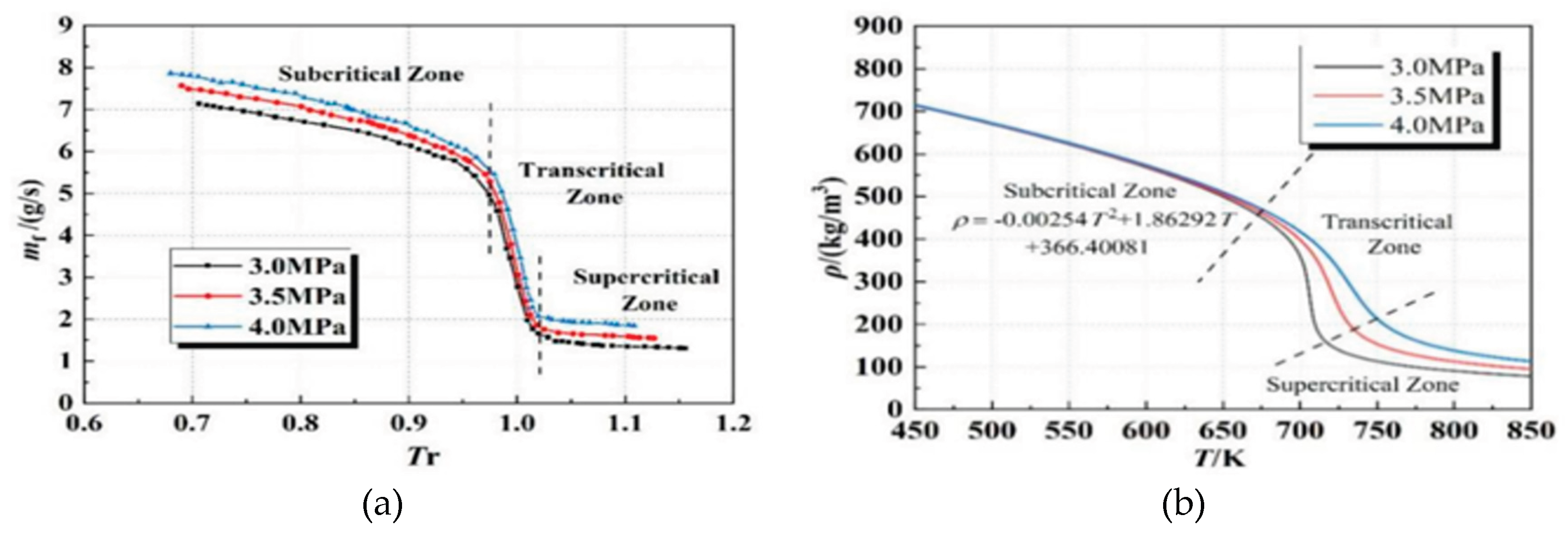
Figure 35.
(a) CFD results in methane mass flow flux calibration (b) CFD results in hydrogen mass flow flux calibration [129].
Figure 35.
(a) CFD results in methane mass flow flux calibration (b) CFD results in hydrogen mass flow flux calibration [129].
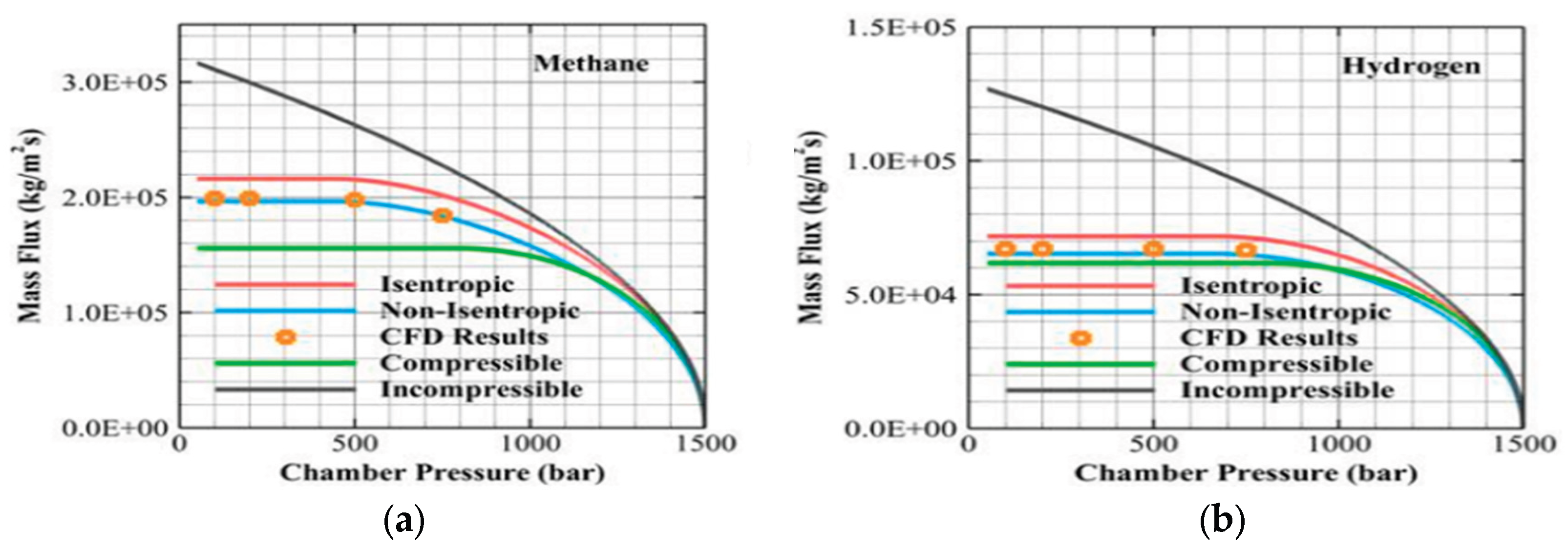
Figure 36.
Results comparison of developed 1D model and experiment data on the pressure drop of the mixing head. Experiment condition: two phase mixture: (1-4) model calculation, (5-8) experiment(1,5) [130].
Figure 36.
Results comparison of developed 1D model and experiment data on the pressure drop of the mixing head. Experiment condition: two phase mixture: (1-4) model calculation, (5-8) experiment(1,5) [130].
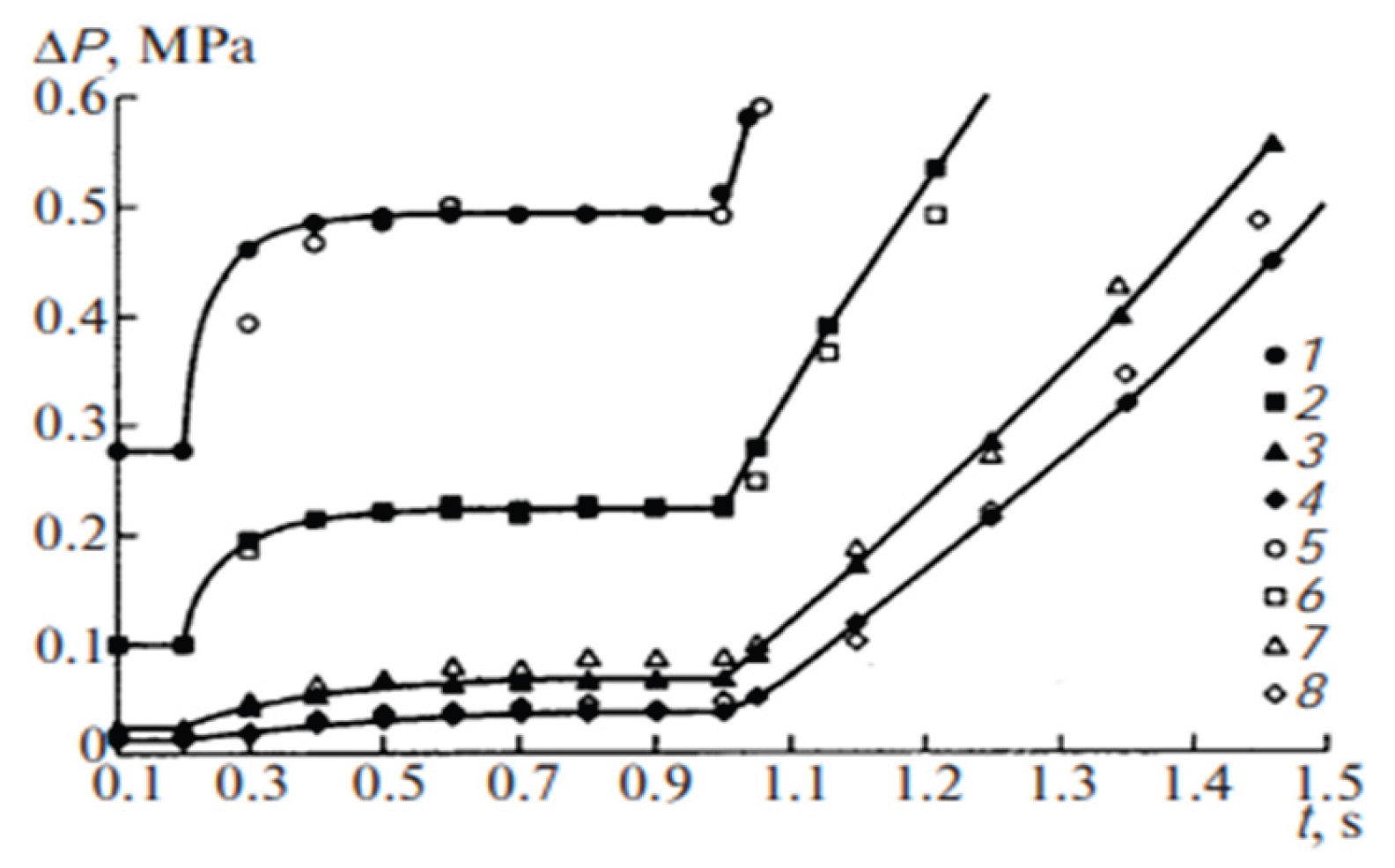
Figure 37.
Experiment set up for multiple injection elements [131].
Figure 37.
Experiment set up for multiple injection elements [131].
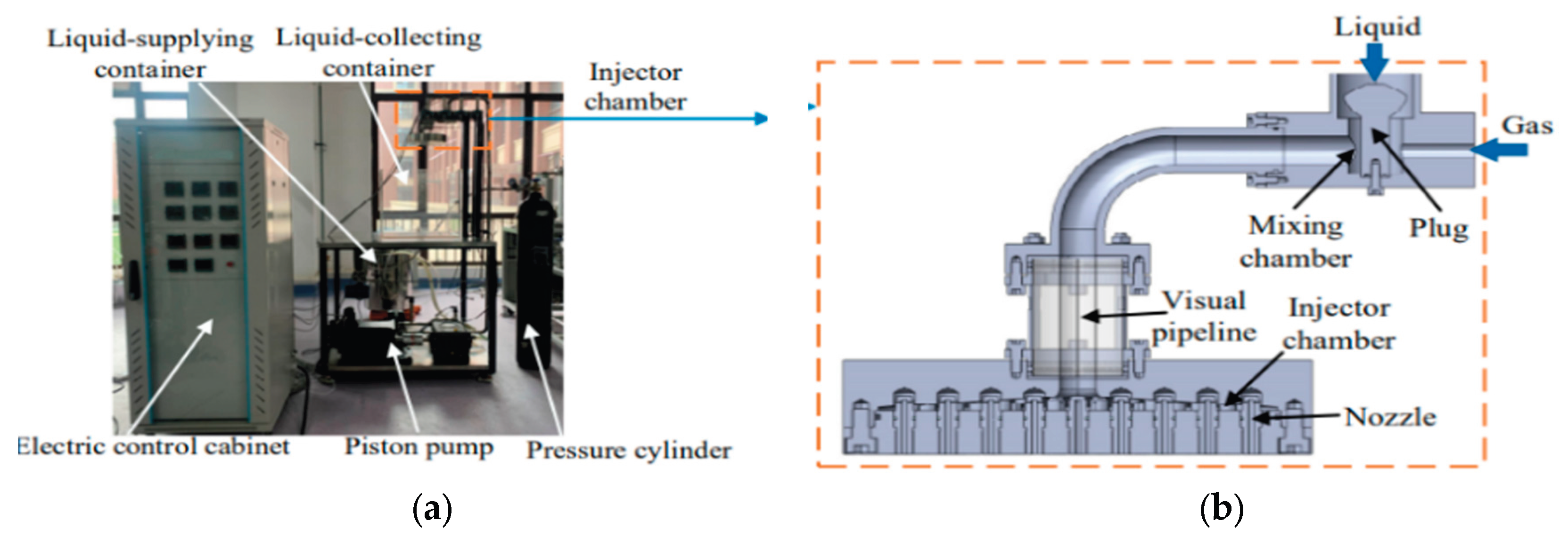
Figure 38.
Schematic diagram of overall experiment setup [131].
Figure 38.
Schematic diagram of overall experiment setup [131].
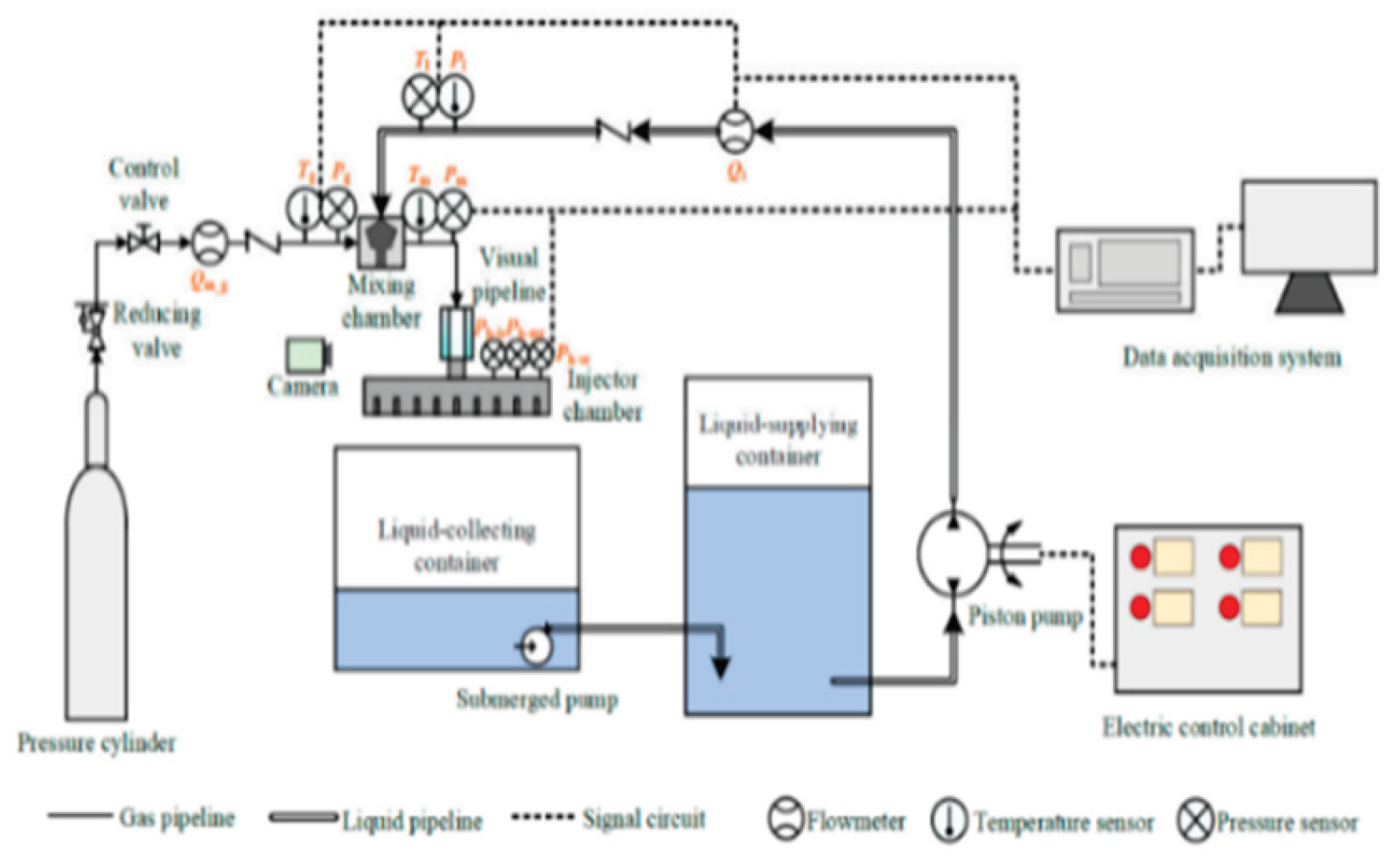
Figure 39.
(a) Experiment observation of phase state at the inlet of mixing head (b) Experiment observation of the phase state at the outlet of the mixing head [131].
Figure 39.
(a) Experiment observation of phase state at the inlet of mixing head (b) Experiment observation of the phase state at the outlet of the mixing head [131].
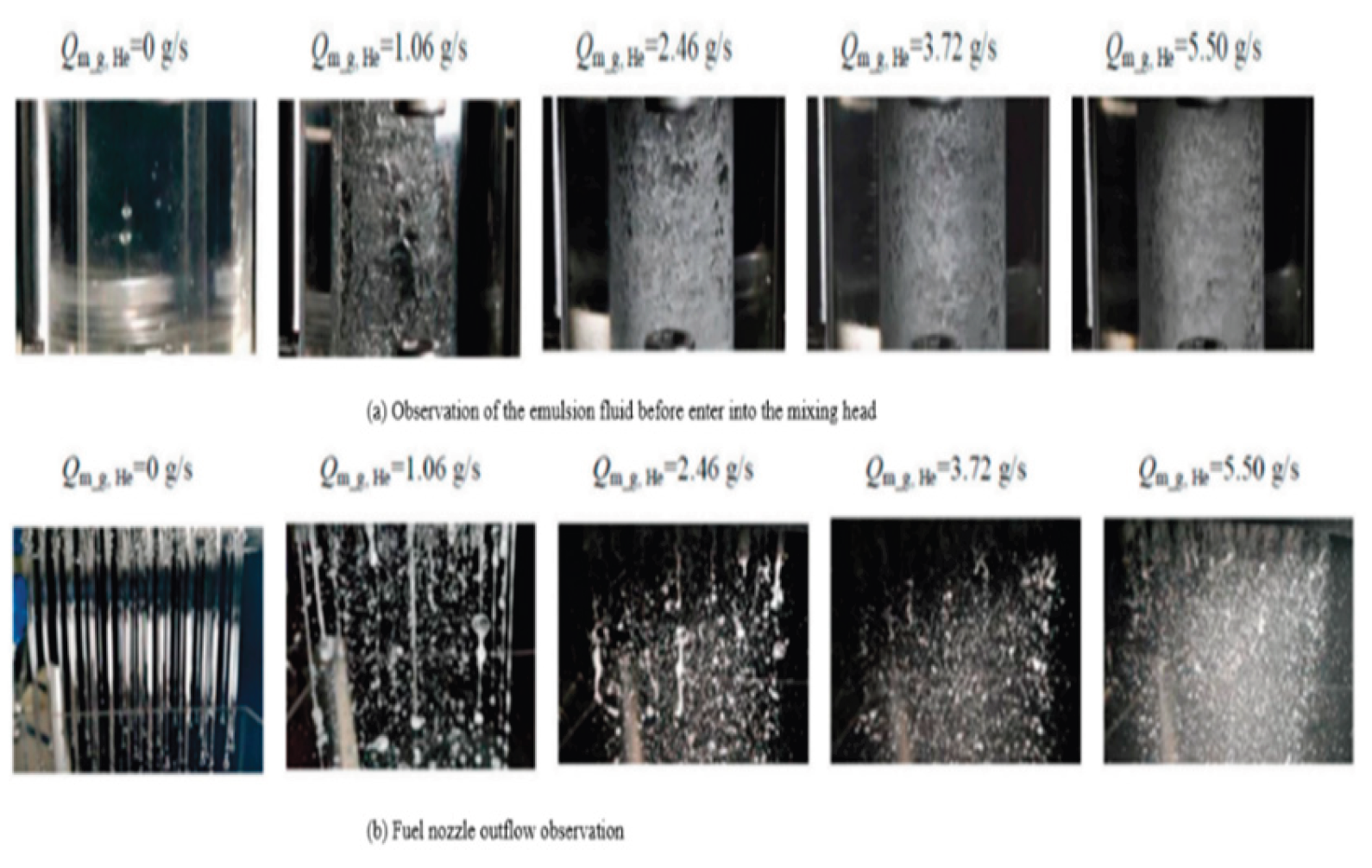
Figure 40.
Pressure drop comparison between nitrogen addition and helium addition [131].
Figure 40.
Pressure drop comparison between nitrogen addition and helium addition [131].
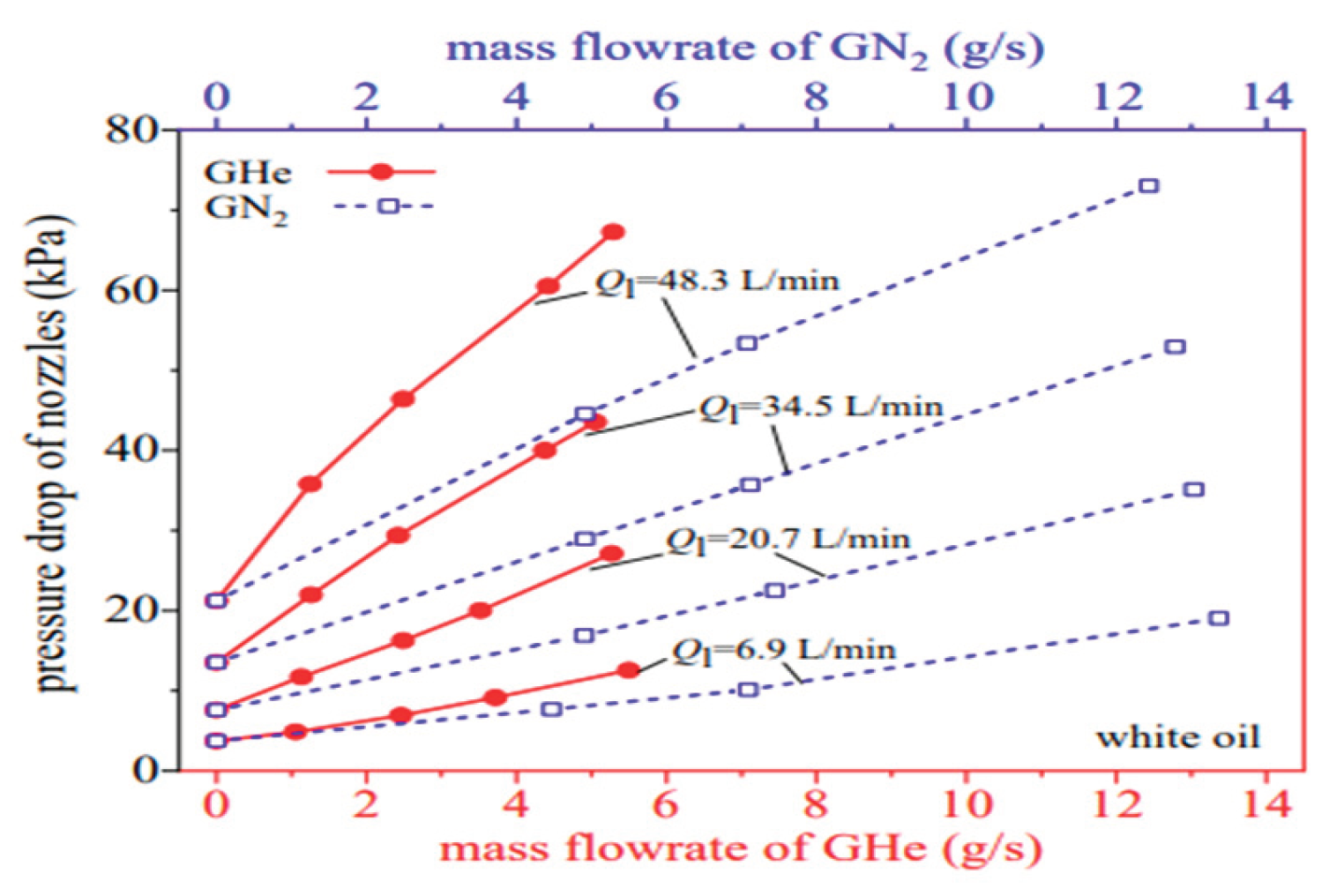
Figure 42.
Experiment injection elements configured with a Helmholtz resonator and without Helmholtz resonator [145].
Figure 42.
Experiment injection elements configured with a Helmholtz resonator and without Helmholtz resonator [145].
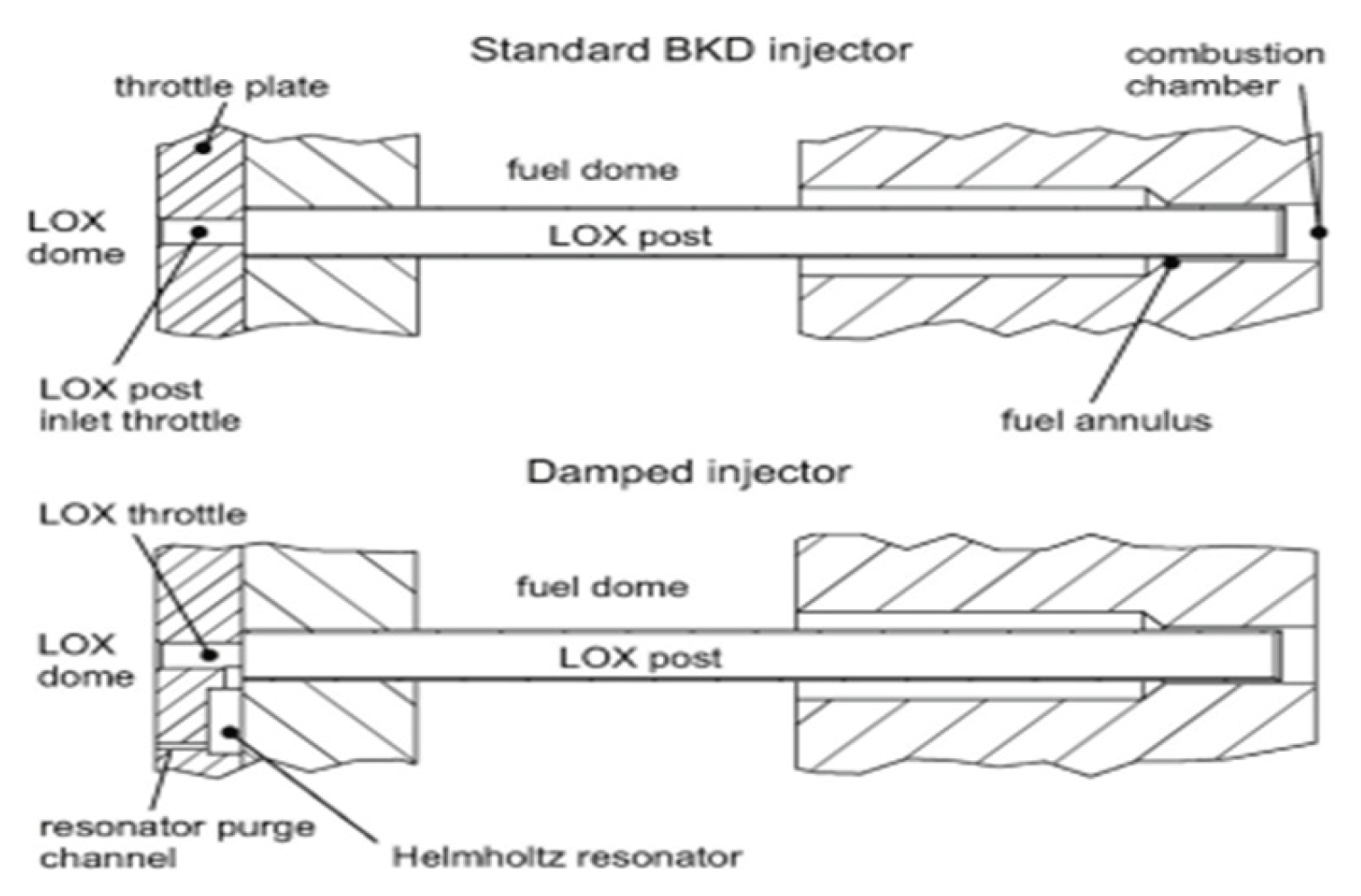
Figure 43.
(a) PSD analysis of chamber pressure oscillation for stable conditions (b) PSD analysis of chamber pressure oscillations for measurement points with an excited first tangential mode at about 10kHz [146].
Figure 43.
(a) PSD analysis of chamber pressure oscillation for stable conditions (b) PSD analysis of chamber pressure oscillations for measurement points with an excited first tangential mode at about 10kHz [146].
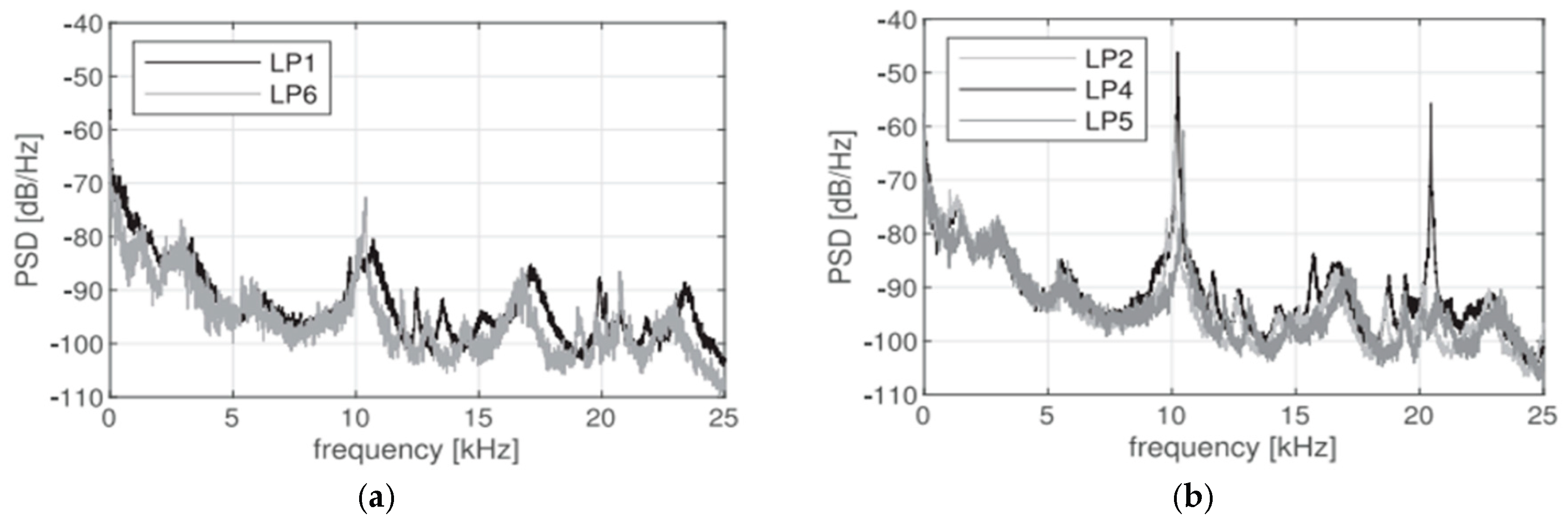
Figure 44.
Comparison of the axial pressure profile for two tested injectors at 60 bar and O/F=5 [148].
Figure 44.
Comparison of the axial pressure profile for two tested injectors at 60 bar and O/F=5 [148].
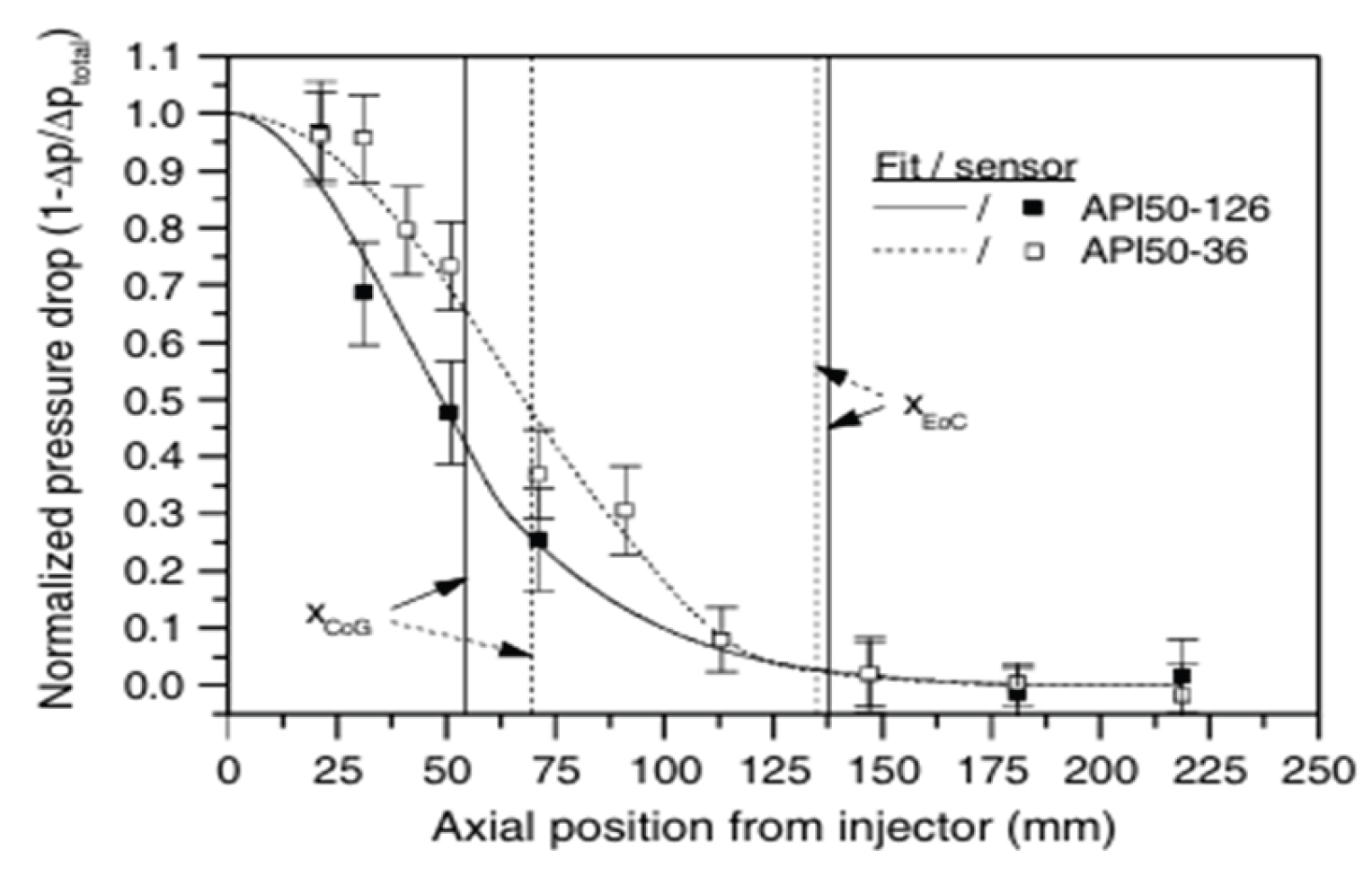
Figure 45.
Sensitivity of change in propellant mixture ratio for two different LOX post diameters [148].
Figure 45.
Sensitivity of change in propellant mixture ratio for two different LOX post diameters [148].
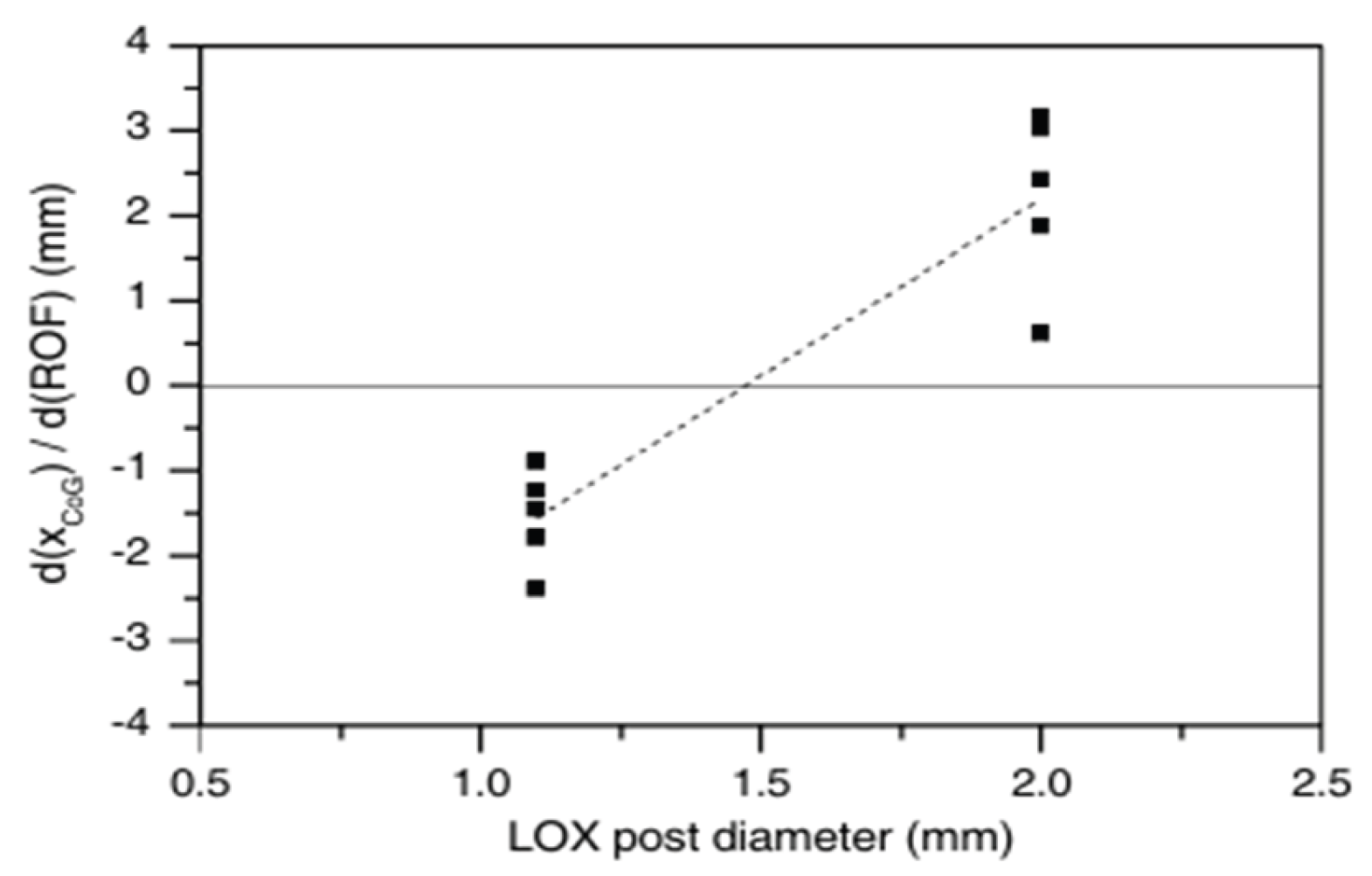
Figure 46.
(a)Time averaged OH emission, supercritical top, near critical middle, subcritical bottom (b) LOX/CH4 flame emission spectrum Phase 1: supercritical, Phase 2: near critical, Phase 3:subcritical [152].
Figure 46.
(a)Time averaged OH emission, supercritical top, near critical middle, subcritical bottom (b) LOX/CH4 flame emission spectrum Phase 1: supercritical, Phase 2: near critical, Phase 3:subcritical [152].
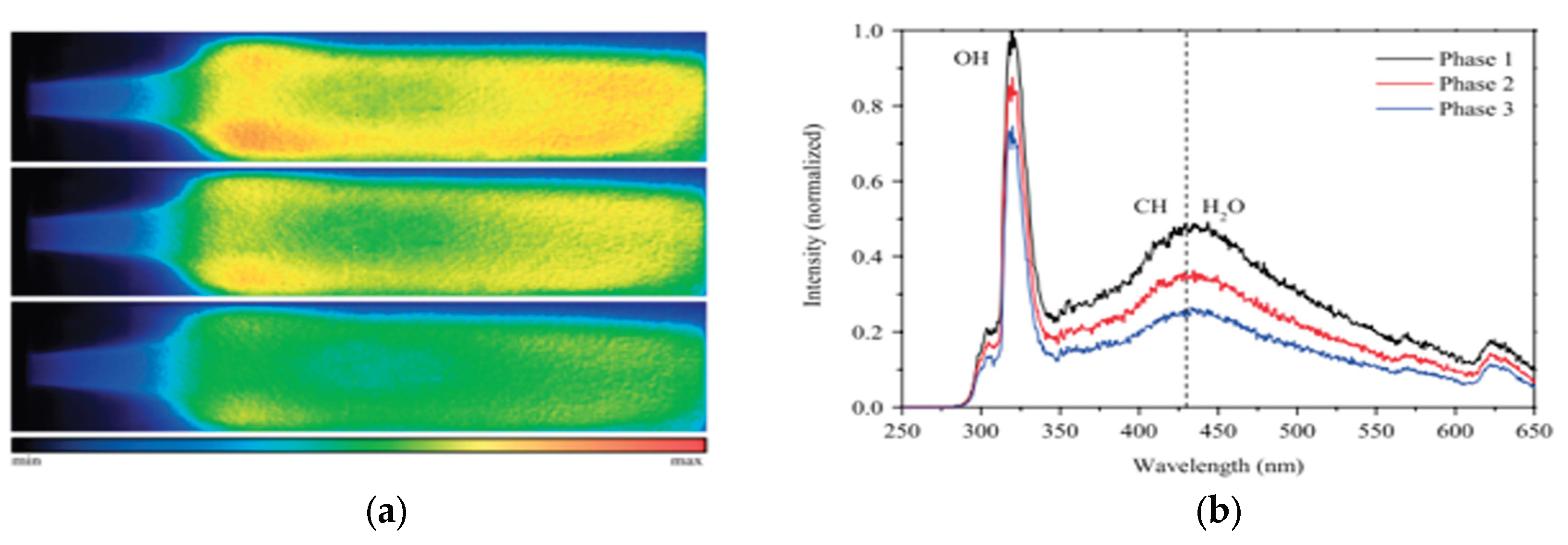
Figure 47.
(a) Subcritical condition A:J=3.95,B:J=6.94,C:J=10.16,D:J=25.04 (b) Supercritical condition A: J=2.69, B: J=4.70 C: J=6.90, D: J=16.92 [152].
Figure 47.
(a) Subcritical condition A:J=3.95,B:J=6.94,C:J=10.16,D:J=25.04 (b) Supercritical condition A: J=2.69, B: J=4.70 C: J=6.90, D: J=16.92 [152].
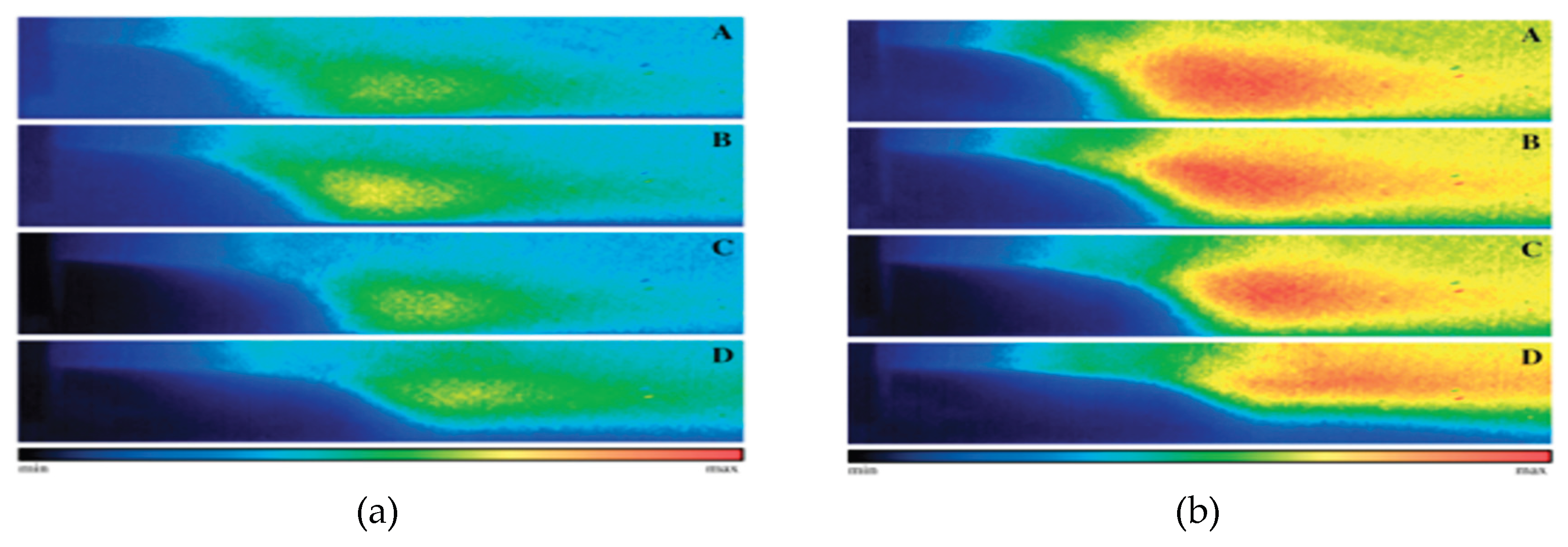
Figure 48.
Combustion roughness as a function of pressure drop across the methane nozzle (LF denotes low frequency) [154].
Figure 48.
Combustion roughness as a function of pressure drop across the methane nozzle (LF denotes low frequency) [154].
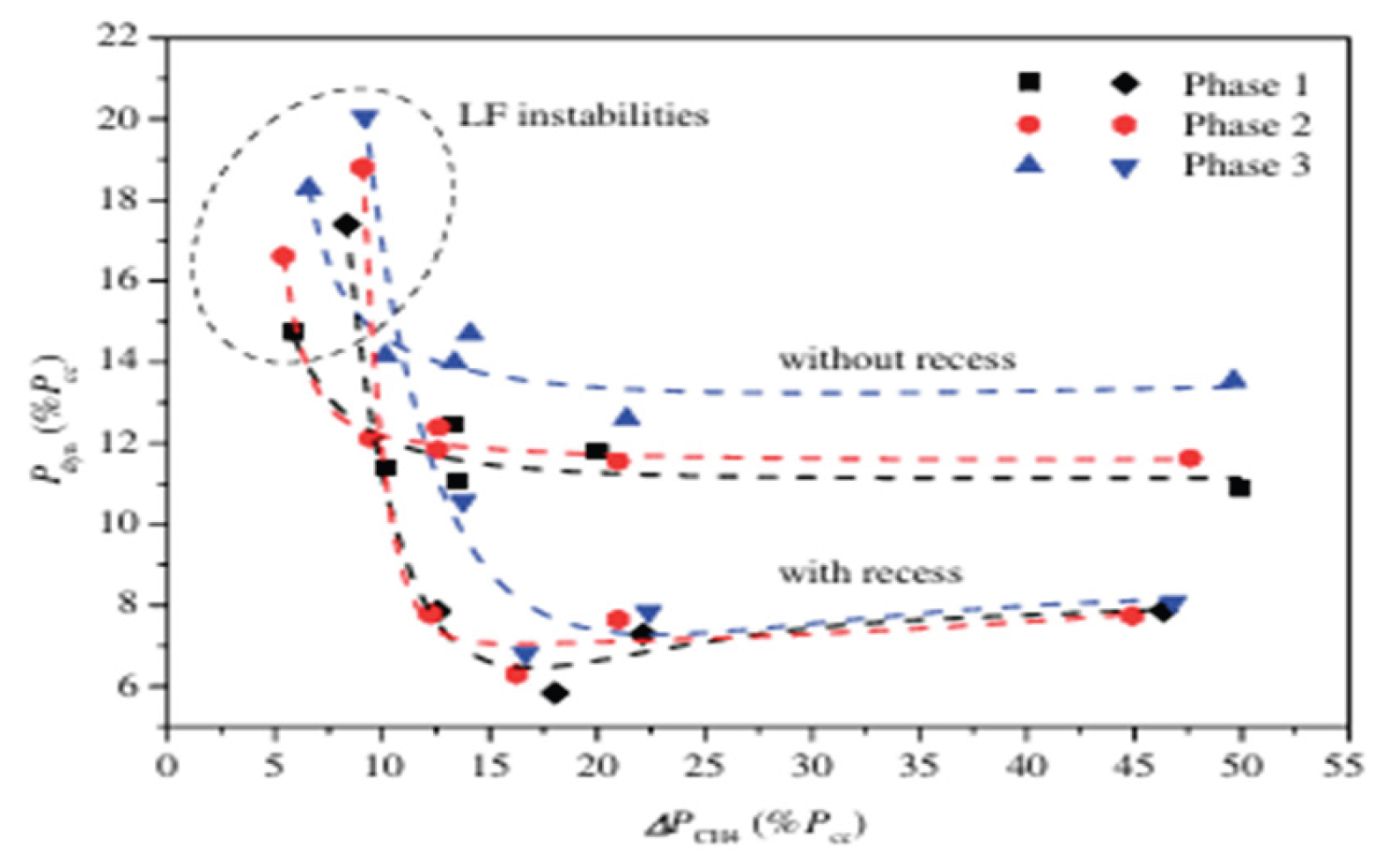
Figure 49.
(a) Comparison of flame opening angle in different momentum flux ratio (b) Comparison of flame width in different momentum flux ratio (c) Comparison of flame length in different momentum flux ratio [162].
Figure 49.
(a) Comparison of flame opening angle in different momentum flux ratio (b) Comparison of flame width in different momentum flux ratio (c) Comparison of flame length in different momentum flux ratio [162].
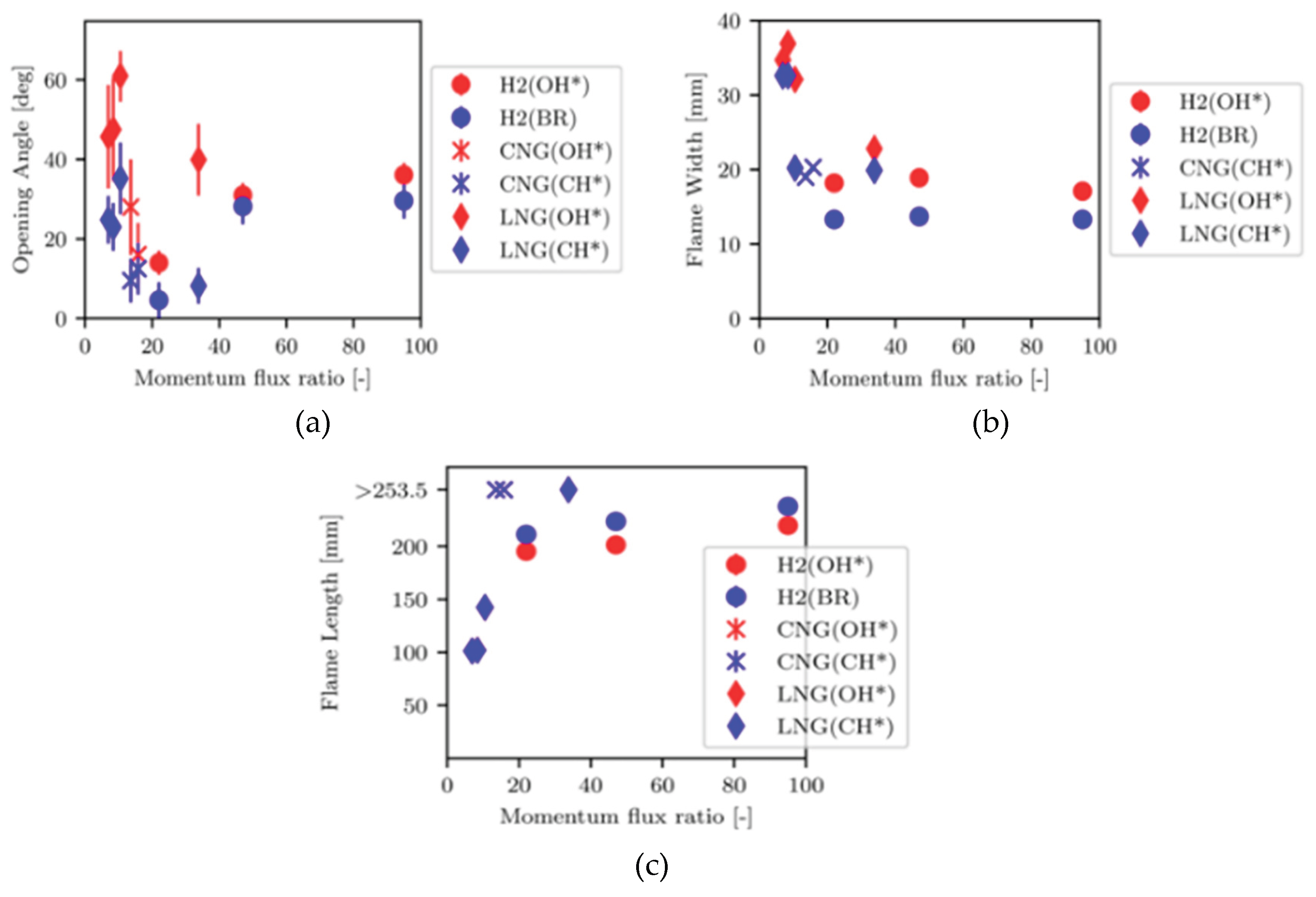
Figure 50.
Growth rate and Damping rate during increasing and decreasing amplitudes of the short-lived instabilities in the combustion chamber, independent of the momentum flux ratio and combustor chamber length in BKN (a) Growth rate (b) Decline rate [163].
Figure 50.
Growth rate and Damping rate during increasing and decreasing amplitudes of the short-lived instabilities in the combustion chamber, independent of the momentum flux ratio and combustor chamber length in BKN (a) Growth rate (b) Decline rate [163].
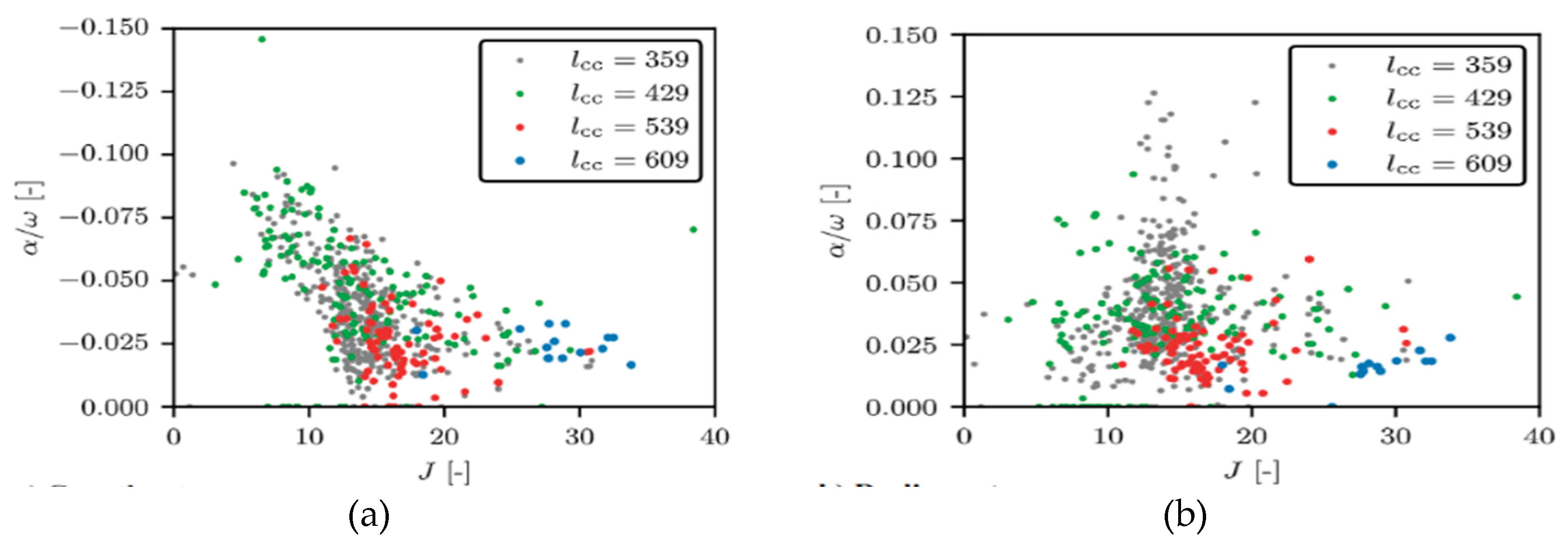
Figure 51.
(a) PSD analysis for injector with recess (BKD) (b) PSD analysis for injector without recess (BKD) [163].
Figure 51.
(a) PSD analysis for injector with recess (BKD) (b) PSD analysis for injector without recess (BKD) [163].
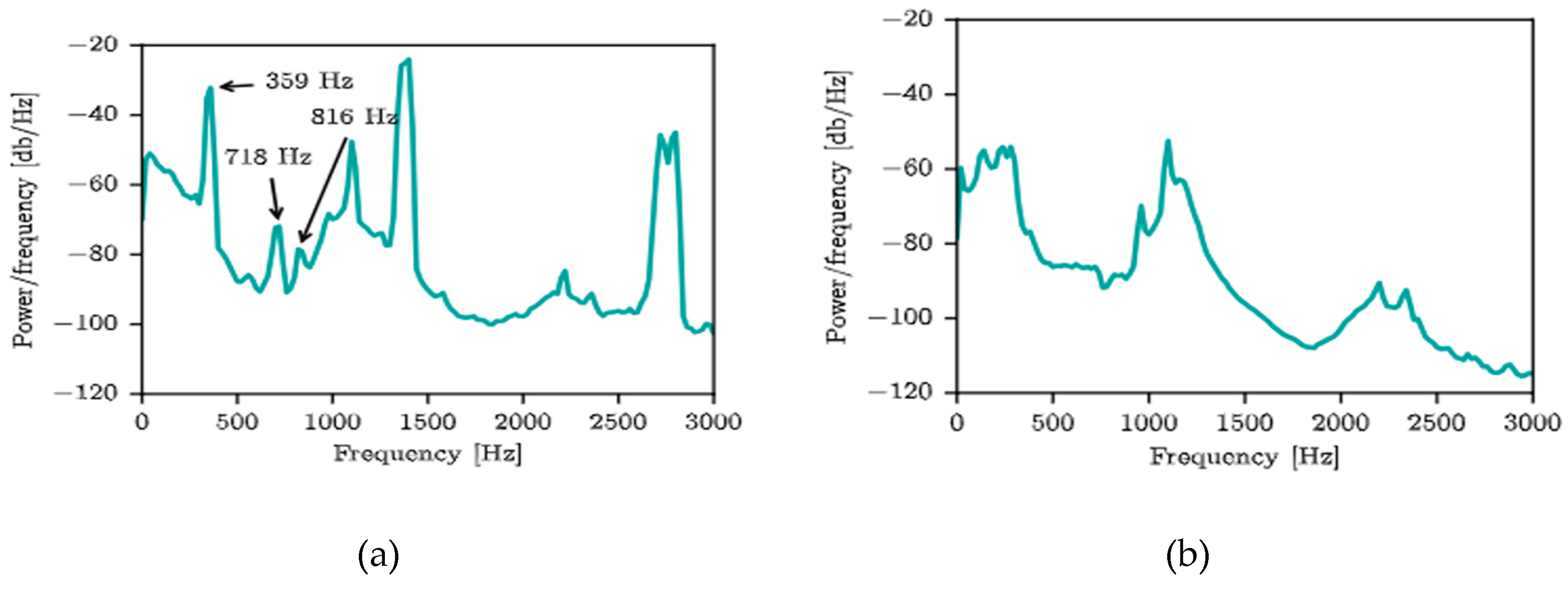
Figure 52.
Mixture fraction fields for velocity ratio 5.7,3.8,2.9,1.9,1.3,1.1 in the non reacting condition [175].
Figure 52.
Mixture fraction fields for velocity ratio 5.7,3.8,2.9,1.9,1.3,1.1 in the non reacting condition [175].
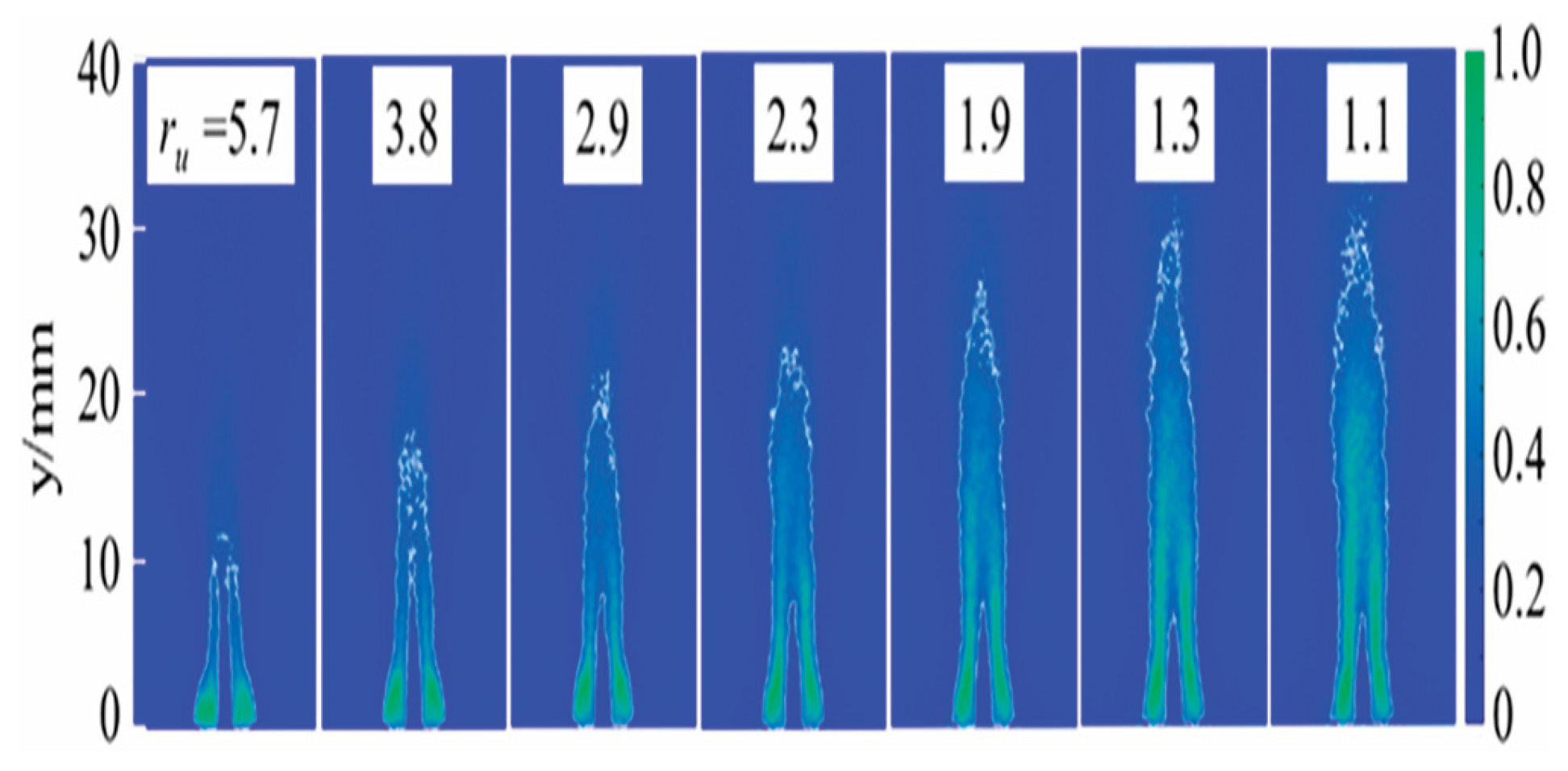
Figure 53.
Experimentally measurement OH* contour and intensity distribution of the coaxial dual shear jet flames. White curves: normalized integrated OH* intensity distribution along the axis [175].
Figure 53.
Experimentally measurement OH* contour and intensity distribution of the coaxial dual shear jet flames. White curves: normalized integrated OH* intensity distribution along the axis [175].
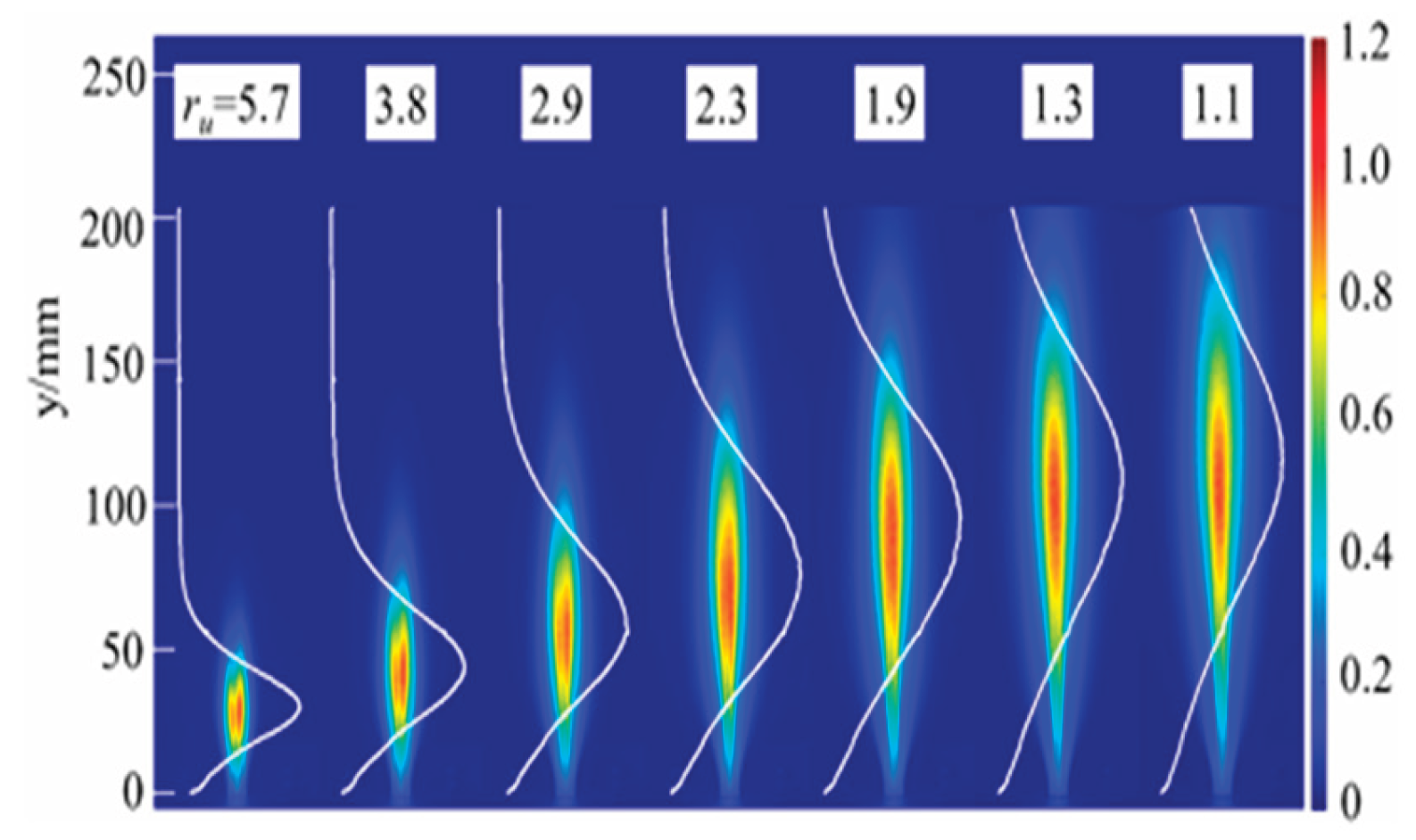
Figure 54.
(a) (b) Abel transformed OH* contour : coaxial jet flame (c) coaxial dual shear flame (Qf=35L/min,Qo=100L/min, velocity ratio=1.9 Right Comparison of the normalized OH* intensity along the axis in the coaxial dual shear jet flame (red curve) and the simple coaxial jet flame (black curve) [175].
Figure 54.
(a) (b) Abel transformed OH* contour : coaxial jet flame (c) coaxial dual shear flame (Qf=35L/min,Qo=100L/min, velocity ratio=1.9 Right Comparison of the normalized OH* intensity along the axis in the coaxial dual shear jet flame (red curve) and the simple coaxial jet flame (black curve) [175].
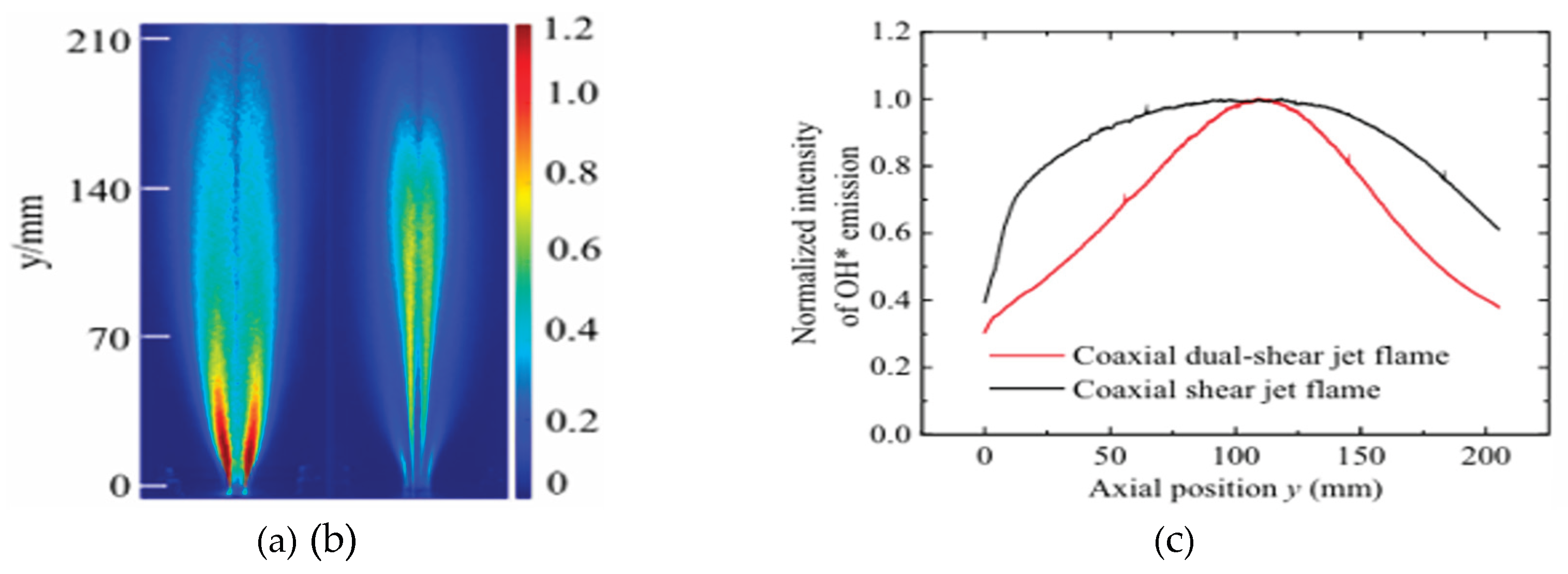
Figure 55.
(a) Stability map correlated to the relationship of the momentum ratio and oxidiser Reynolds number (b) Stability map correlated to the relationship of the equivalence ratio and Reynolds number of O2.(Acknowledgement to the experiment data provided by Deepak Kumar E et al., COMBUSTION SCIENCE AND TECHNOLOGY, and © copyright [2025].
Figure 55.
(a) Stability map correlated to the relationship of the momentum ratio and oxidiser Reynolds number (b) Stability map correlated to the relationship of the equivalence ratio and Reynolds number of O2.(Acknowledgement to the experiment data provided by Deepak Kumar E et al., COMBUSTION SCIENCE AND TECHNOLOGY, and © copyright [2025].
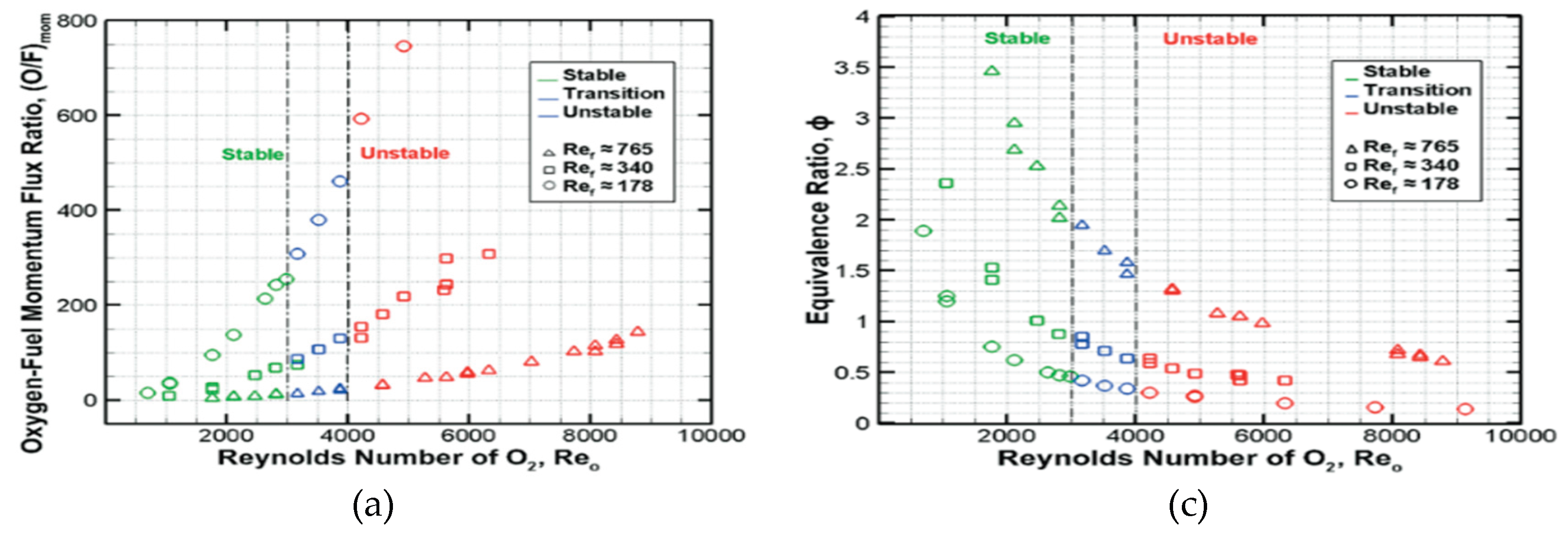
Figure 56.
Experimentally measured characteristic velocity of pre burner as a function of mixture ratio [183].
Figure 56.
Experimentally measured characteristic velocity of pre burner as a function of mixture ratio [183].
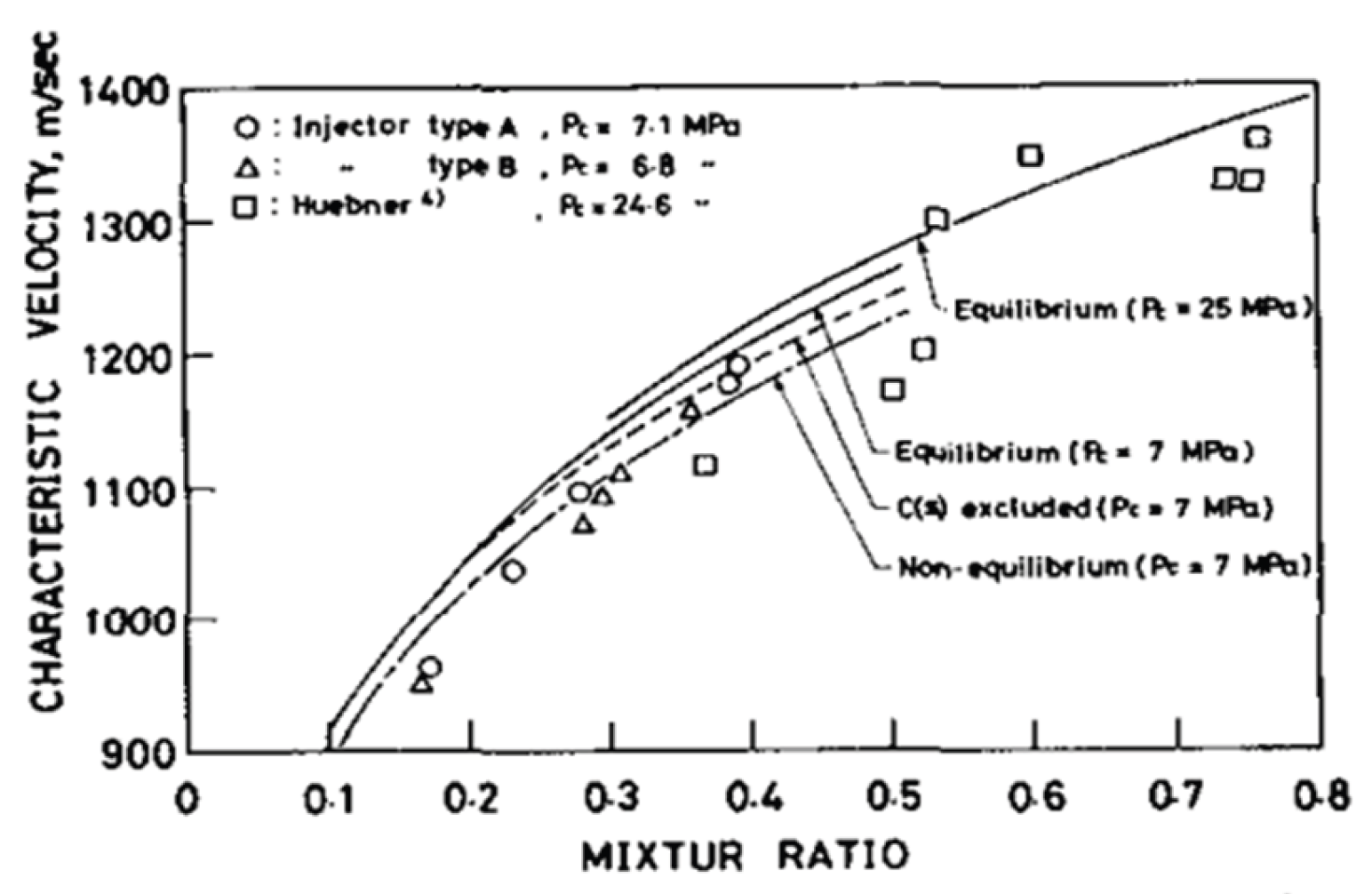
Figure 57.
Temperature uniform factor vs mixing parameter with H2/LOX combustion [183].
Figure 57.
Temperature uniform factor vs mixing parameter with H2/LOX combustion [183].
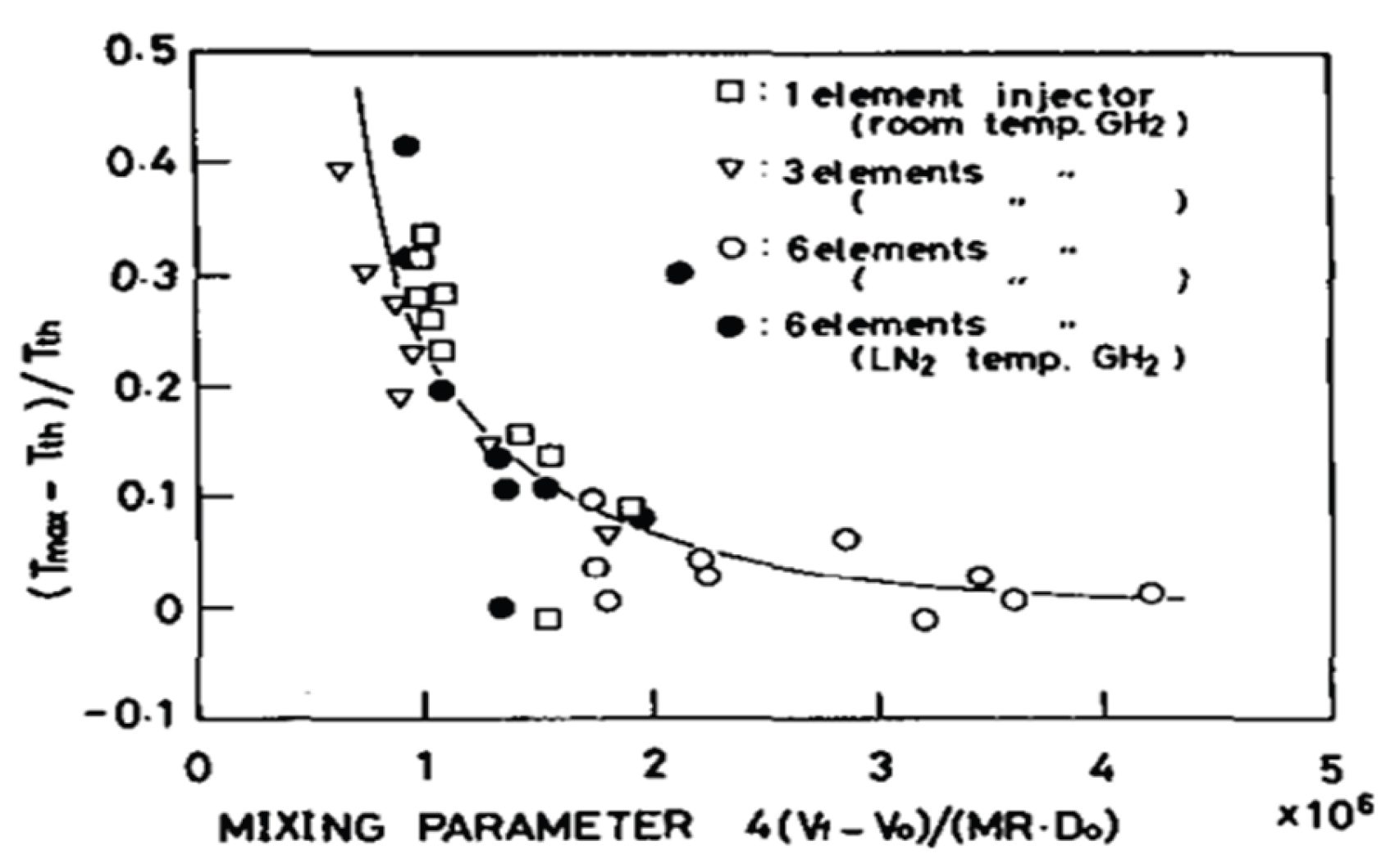
Figure 58.
Comparison of characteristic efficiency between the impinging injector and swirl coaxial injector in the combustor test [189].
Figure 58.
Comparison of characteristic efficiency between the impinging injector and swirl coaxial injector in the combustor test [189].
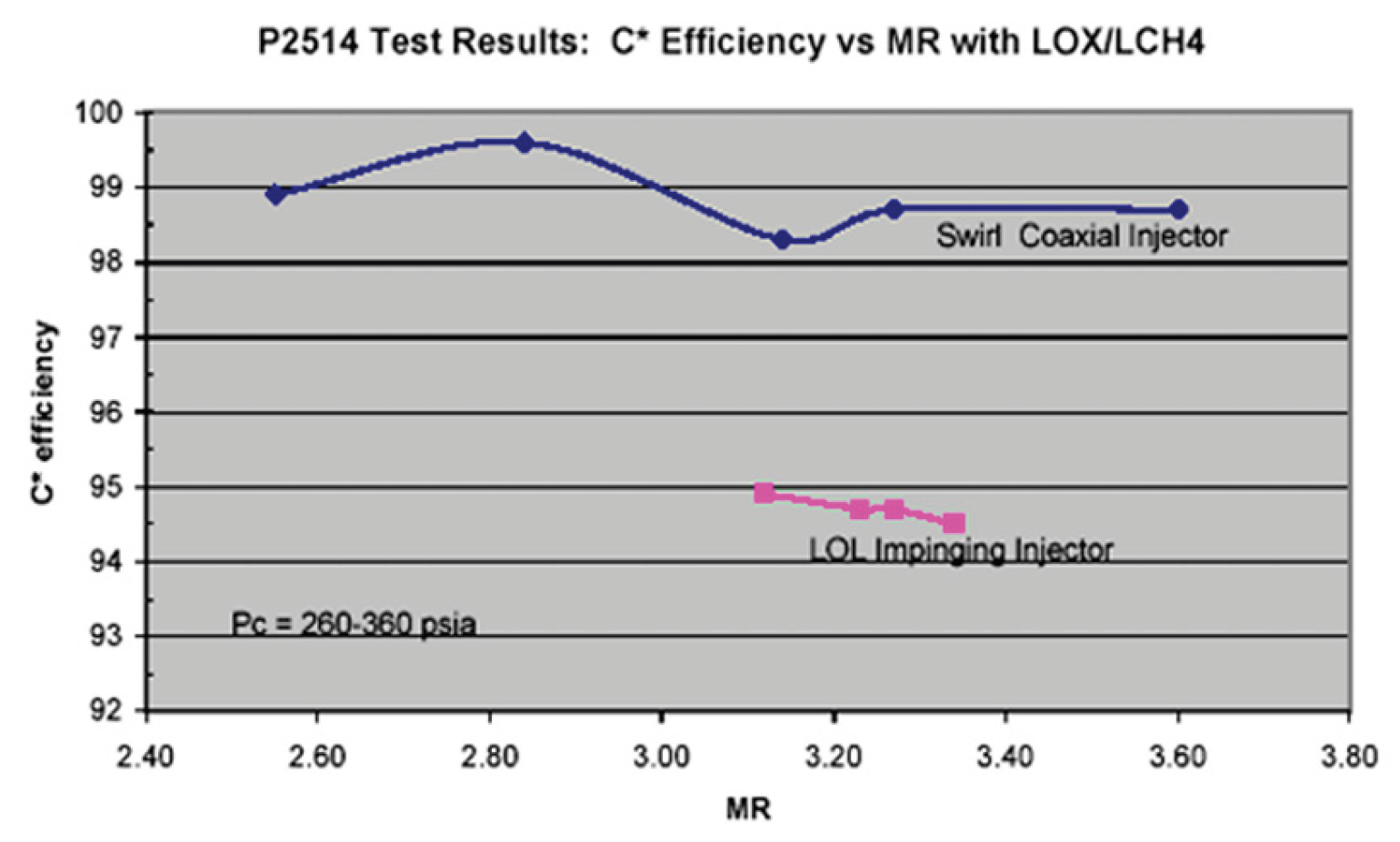
Figure 59.
Mixture fraction f fields at 15keV photon energy for the (a) J=8 (b) J=10 (c) J=10 reacting jets, as well combined 7 and 15keV [193].
Figure 59.
Mixture fraction f fields at 15keV photon energy for the (a) J=8 (b) J=10 (c) J=10 reacting jets, as well combined 7 and 15keV [193].
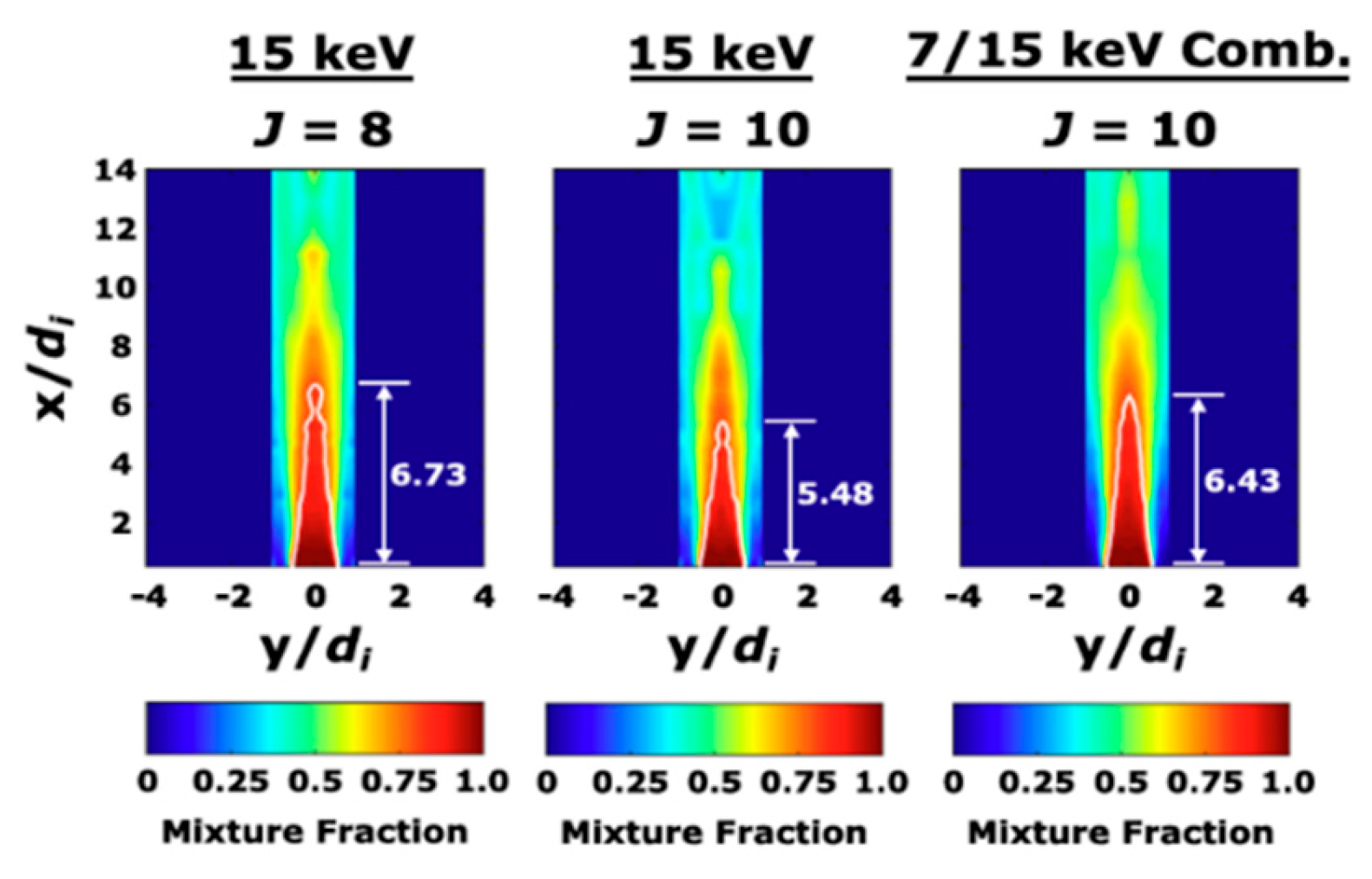
Figure 60.
Flame stability regime in the relationship of momentum flux ratio and oxygen Reynolds number [194].
Figure 60.
Flame stability regime in the relationship of momentum flux ratio and oxygen Reynolds number [194].
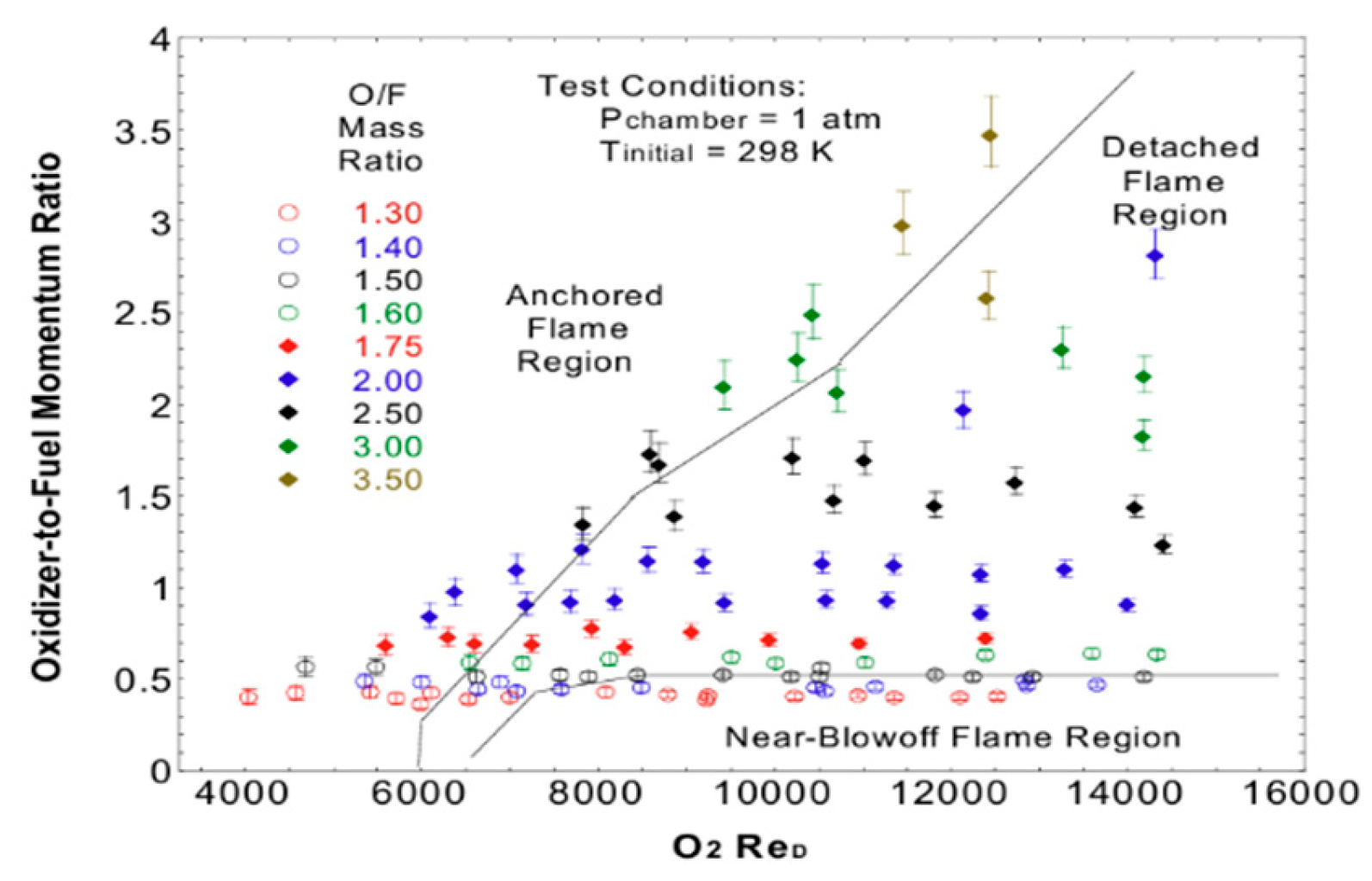
Figure 61.
Cross section of the coaxial fuel injector [200].
Figure 61.
Cross section of the coaxial fuel injector [200].
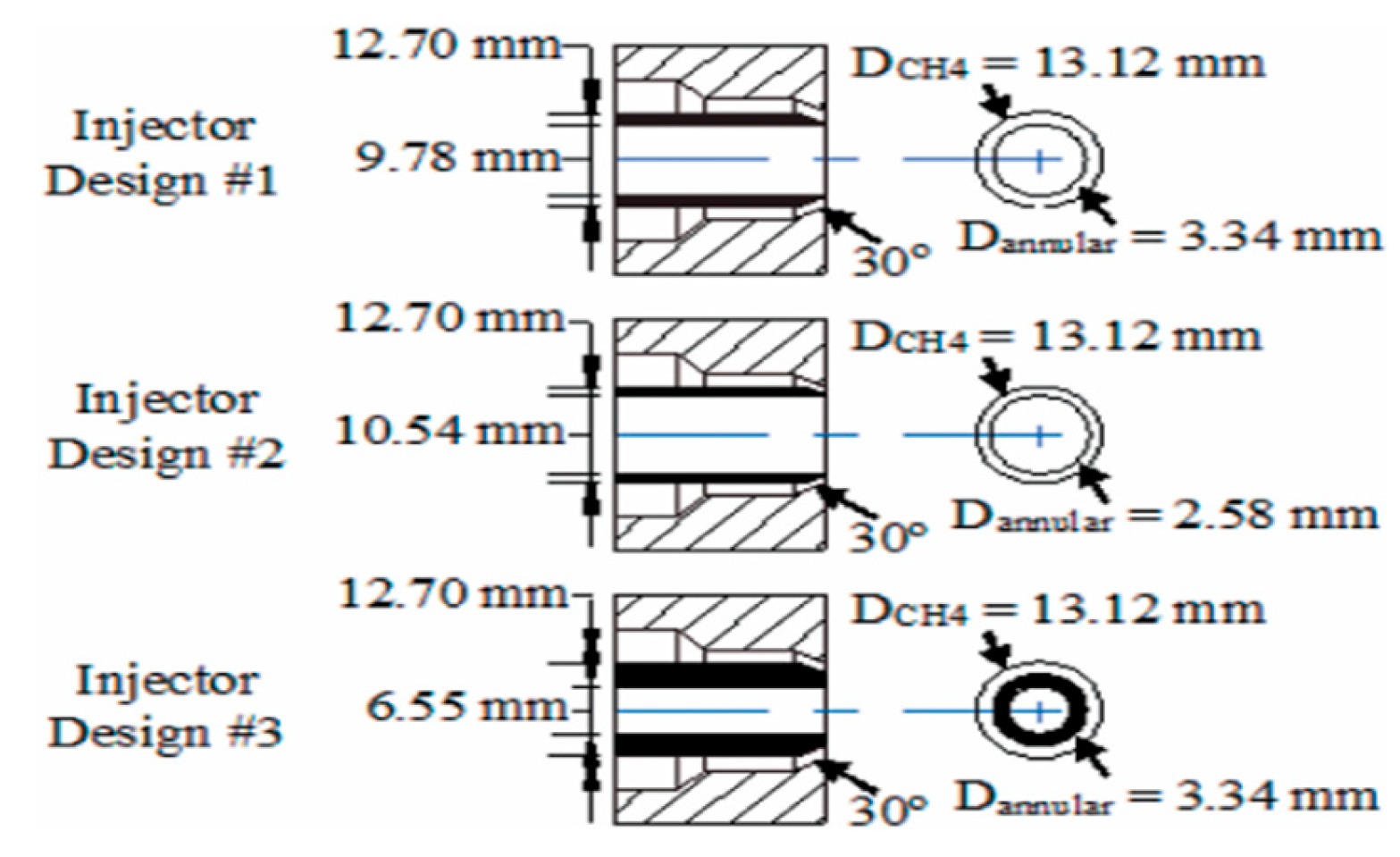
Figure 62.
(a) Results for injector 1 (b) Results for injector 2 (c) Results for injector 3 [200].
Figure 62.
(a) Results for injector 1 (b) Results for injector 2 (c) Results for injector 3 [200].
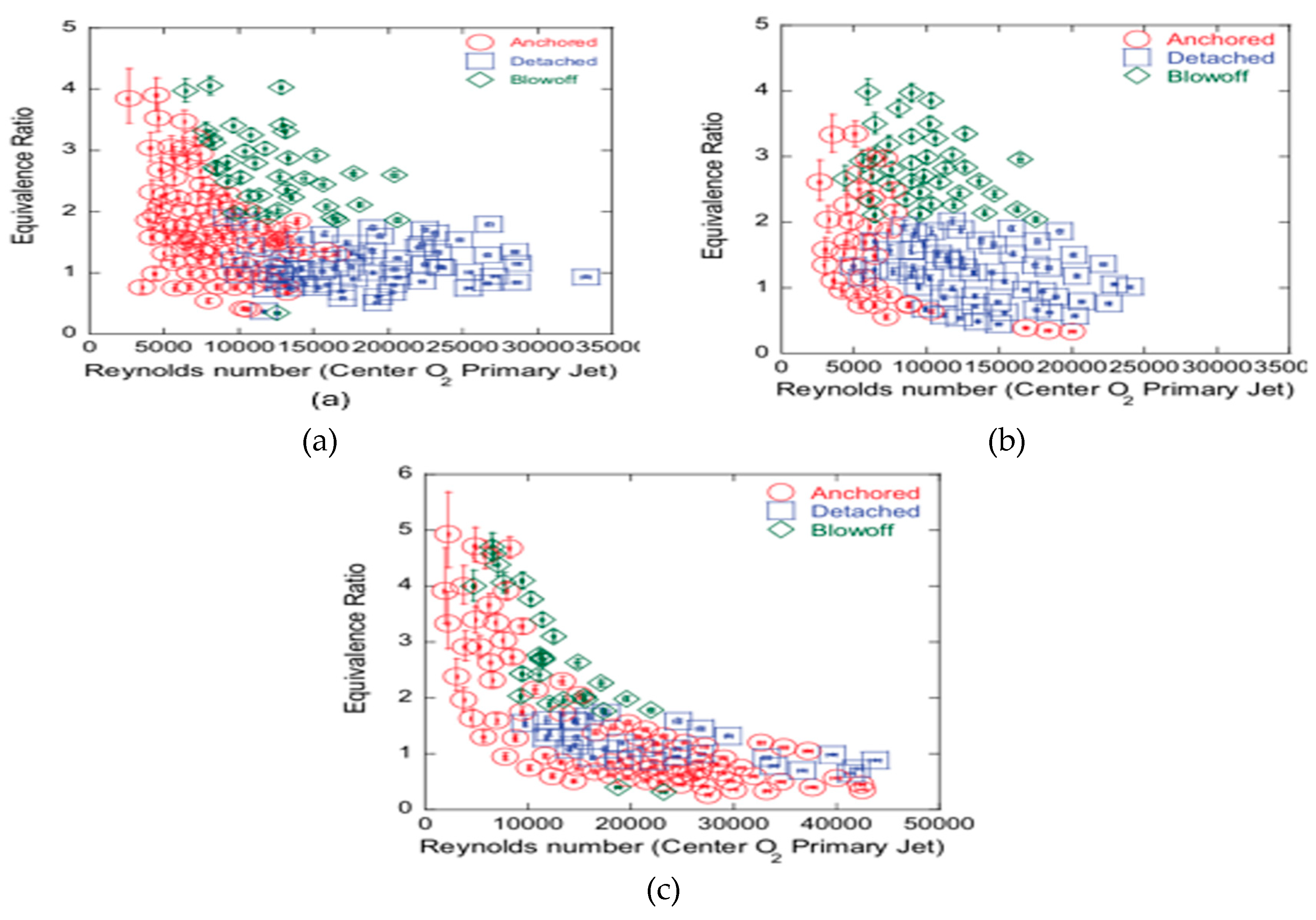
Figure 63.
(a) Cross-sectional view of coaxial fuel injector (b) Results from baseline annular methane flow area (c) Results from large annular methane flow area [201].
Figure 63.
(a) Cross-sectional view of coaxial fuel injector (b) Results from baseline annular methane flow area (c) Results from large annular methane flow area [201].
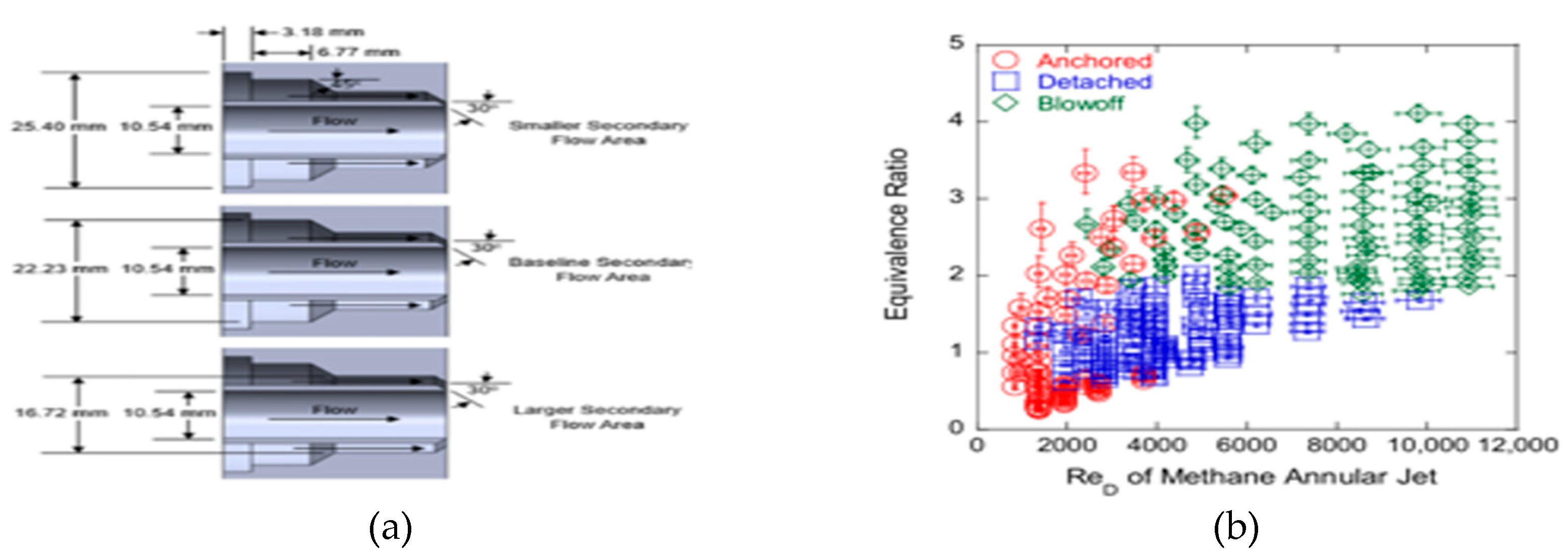
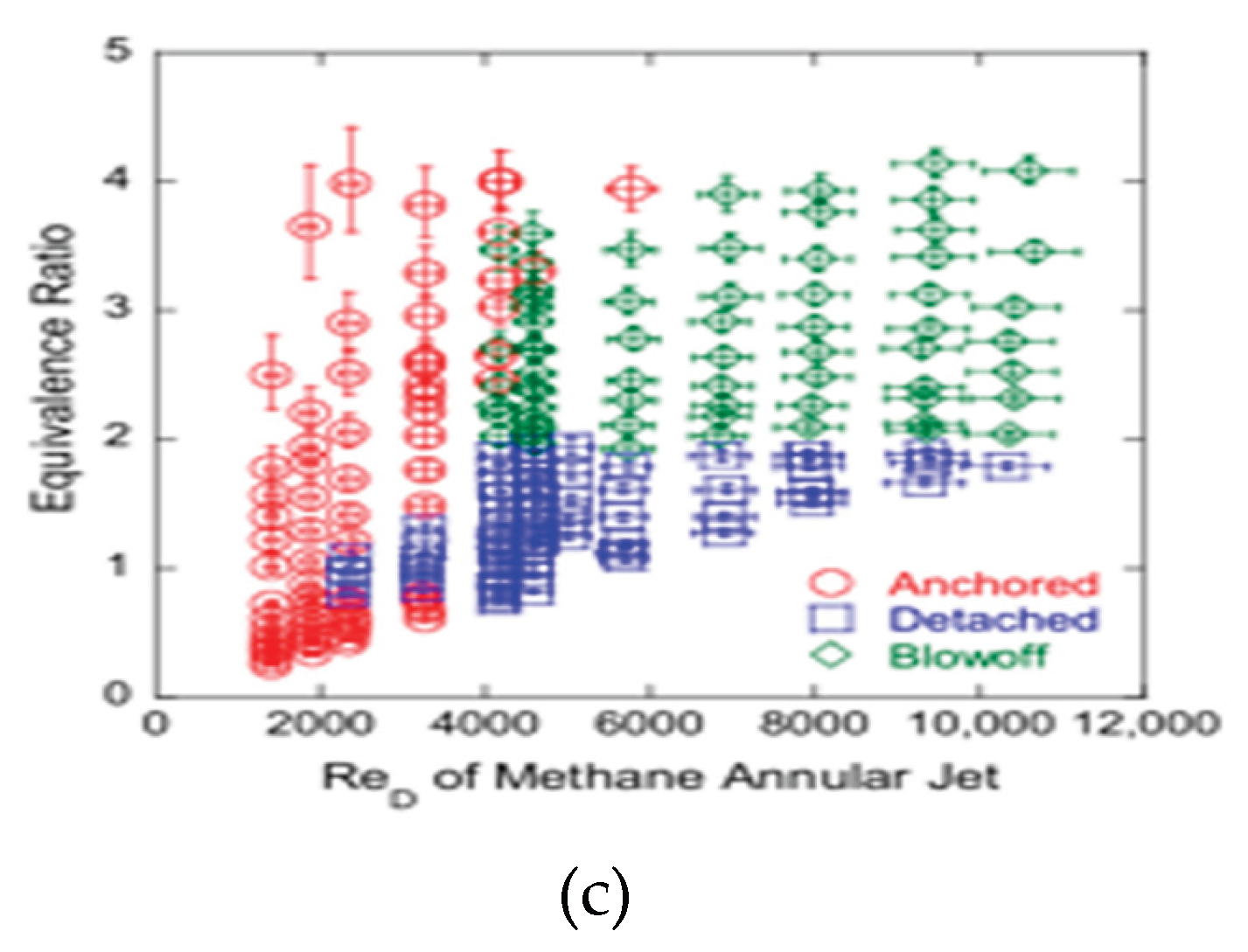
Figure 64.
(a) Stable anchored diffusion flame (b) Detached unstable diffusion flame (c) Near blowoff unstable diffusion flame [201].
Figure 64.
(a) Stable anchored diffusion flame (b) Detached unstable diffusion flame (c) Near blowoff unstable diffusion flame [201].
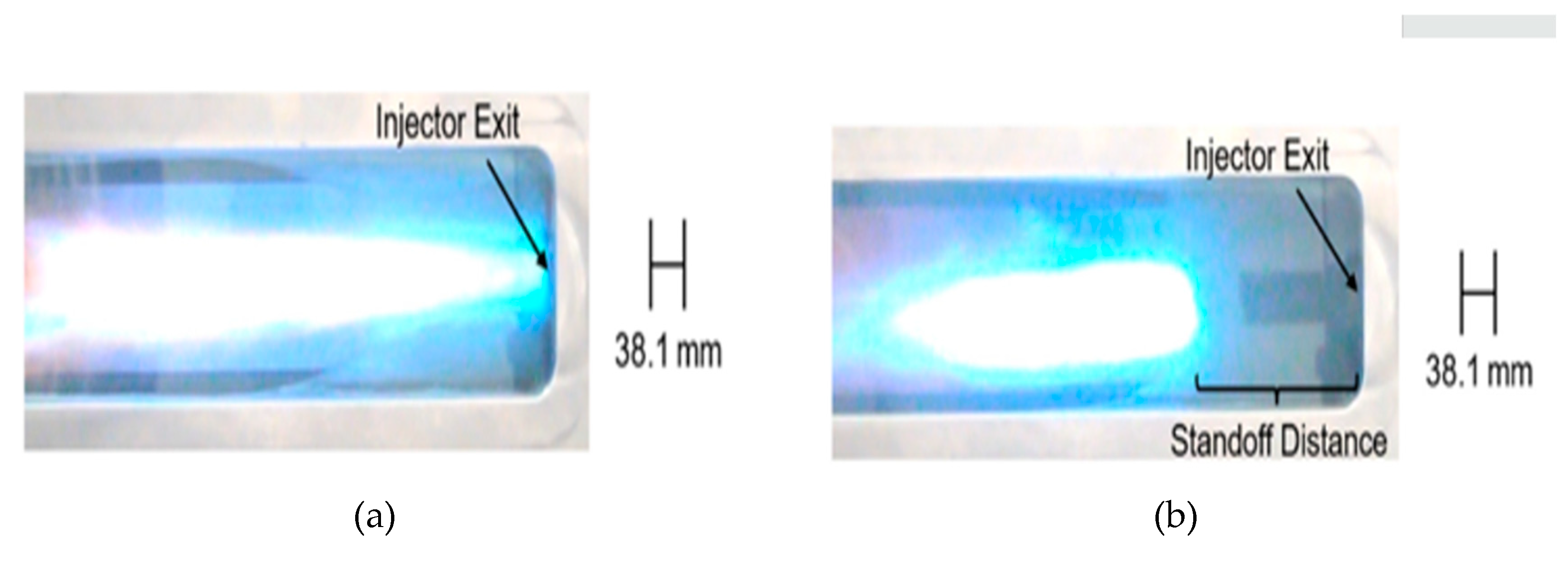
Figure 65.
Counter swirling fuel injector configuration [204].
Figure 65.
Counter swirling fuel injector configuration [204].
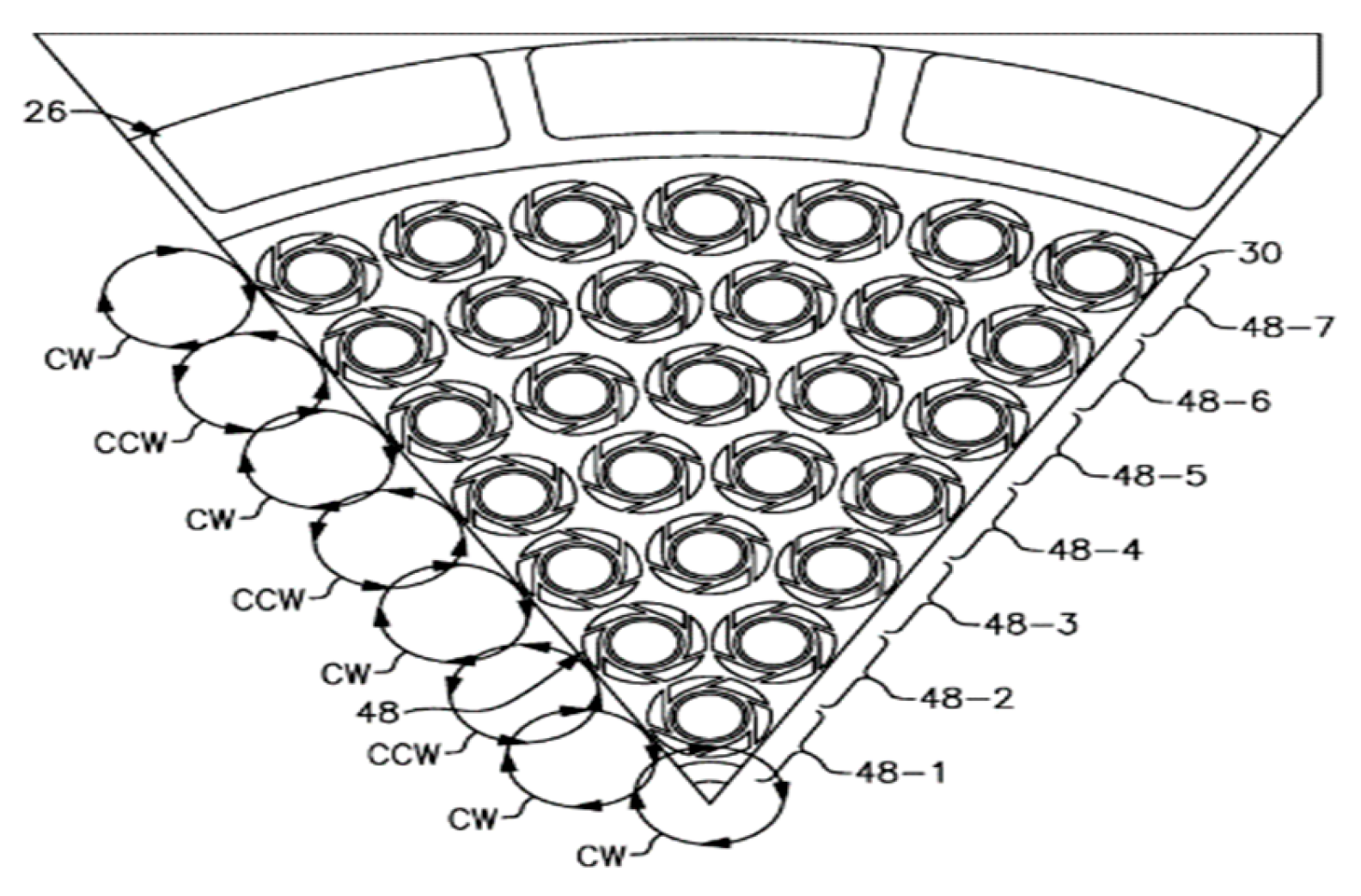
Figure 66.
Pressure fluctuation [207].
Figure 66.
Pressure fluctuation [207].
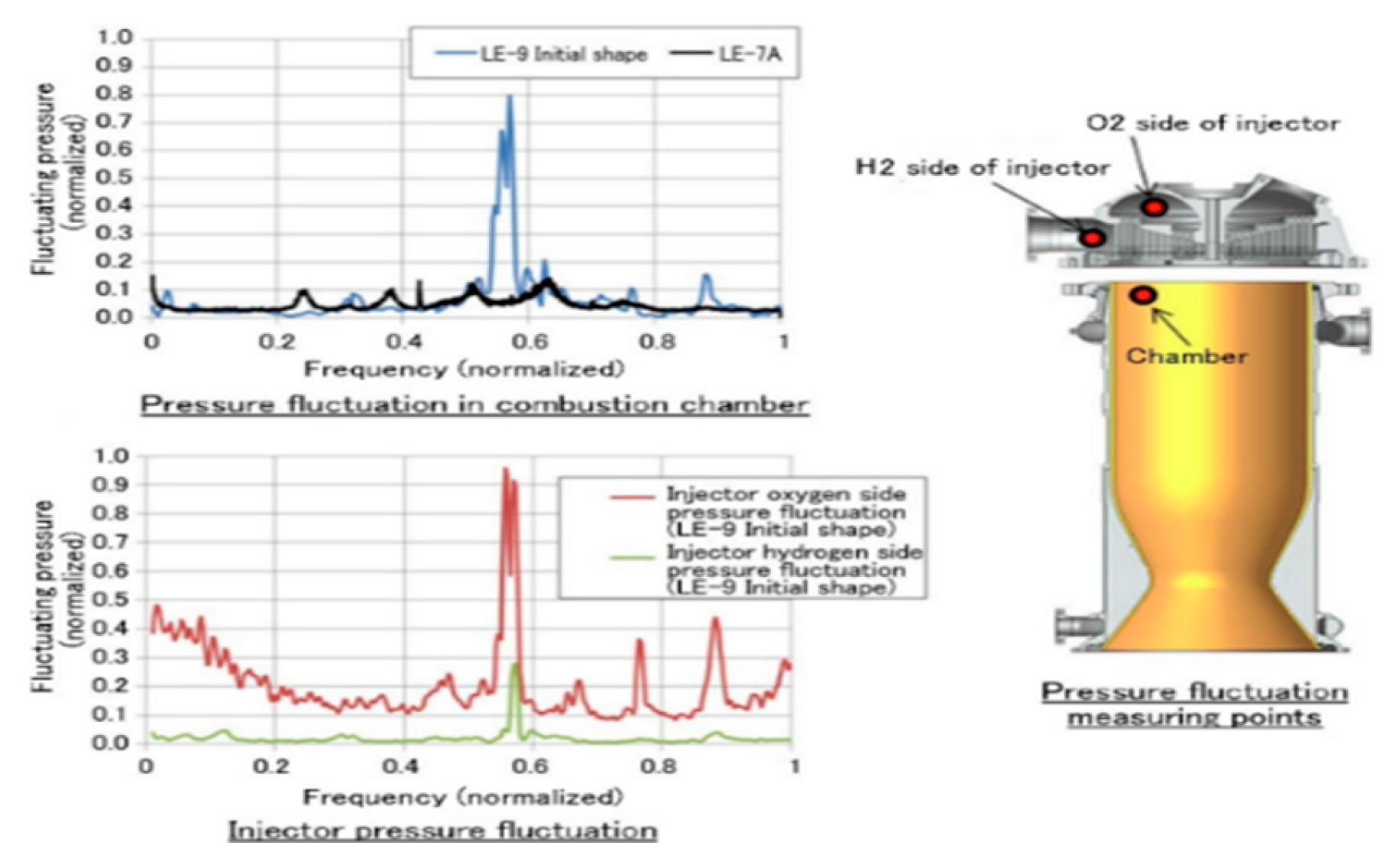
Figure 67.
Cause of unstable combustion [207].
Figure 67.
Cause of unstable combustion [207].
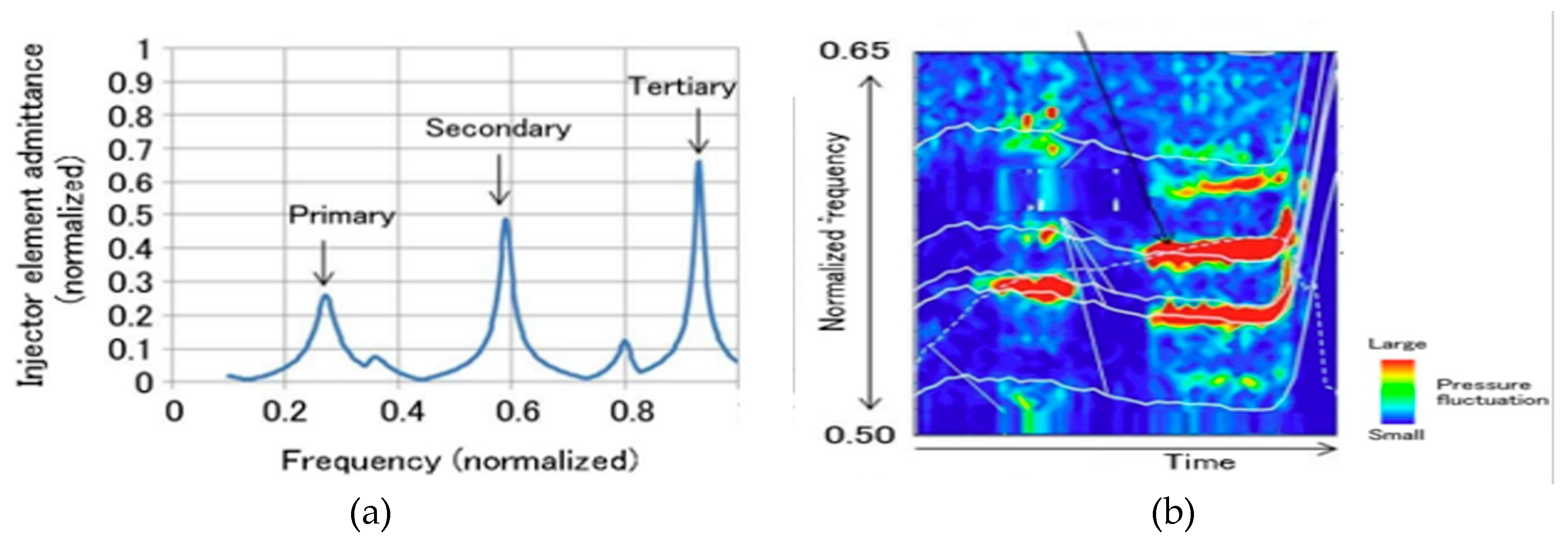
Figure 68.
Improvement in injector element acoustic admittance [207].
Figure 68.
Improvement in injector element acoustic admittance [207].
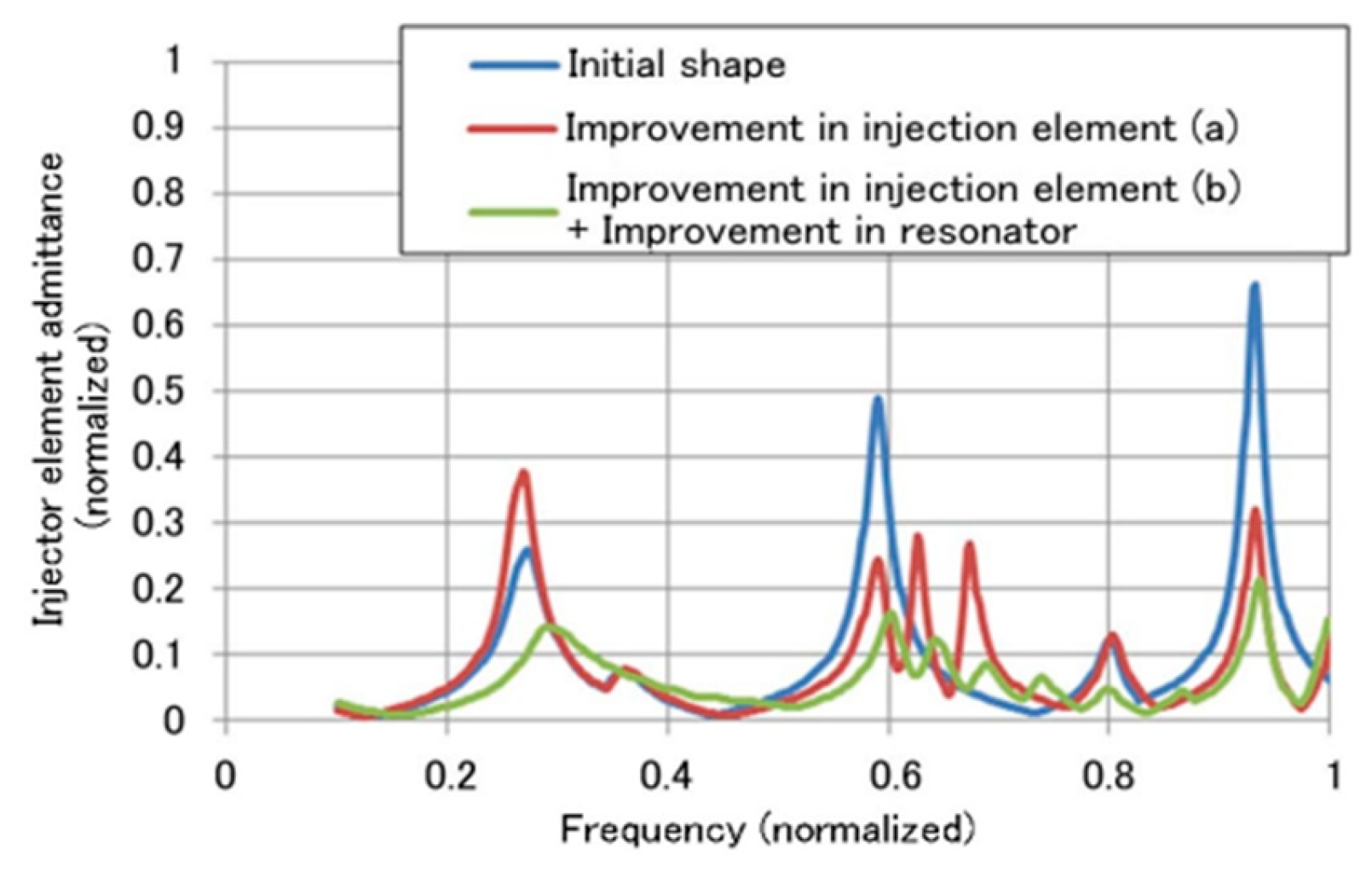
Figure 69.
The open swirl injector for a per burner [280].
Figure 69.
The open swirl injector for a per burner [280].
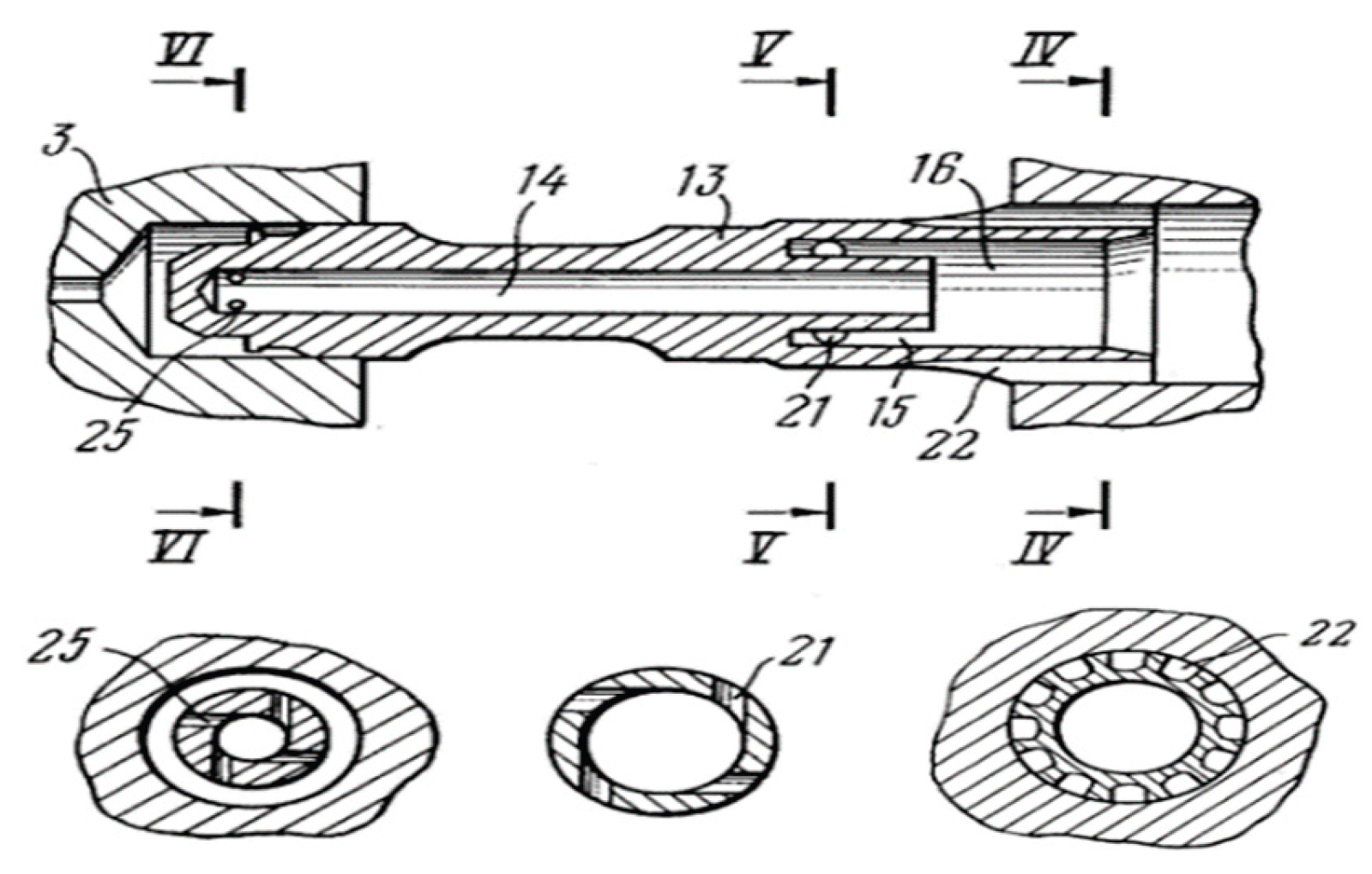
Figure 70.
Diagram of pressure and temperature sensing point [223].
Figure 70.
Diagram of pressure and temperature sensing point [223].
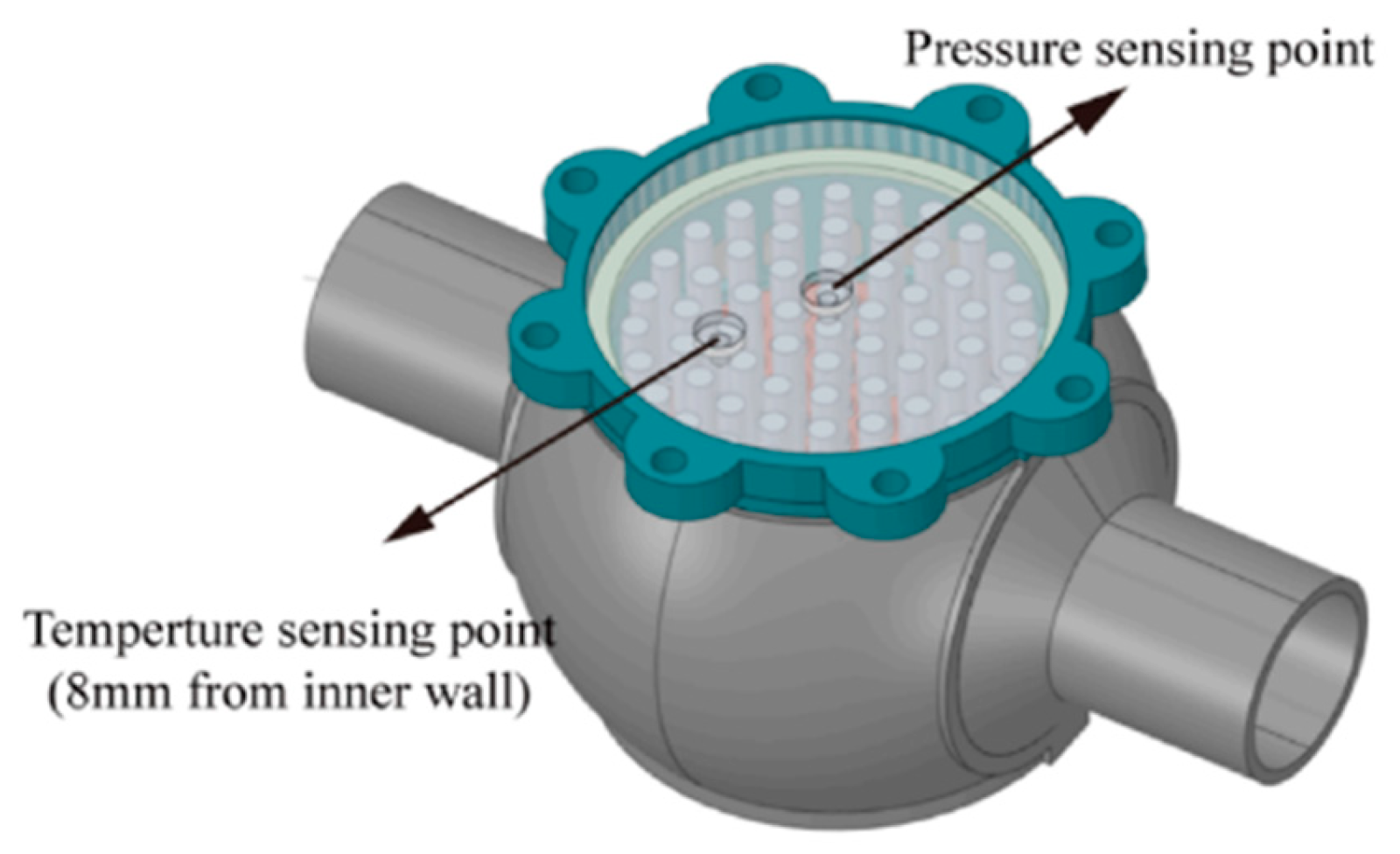
Figure 71.
(a) Cavity pressure at the sensing point (b) Pressure in the head cavity under different temperatures of liquid nitrogen (c) Pressure in the head cavity under different mass flow rate of liquid nitrogen [223].
Figure 71.
(a) Cavity pressure at the sensing point (b) Pressure in the head cavity under different temperatures of liquid nitrogen (c) Pressure in the head cavity under different mass flow rate of liquid nitrogen [223].
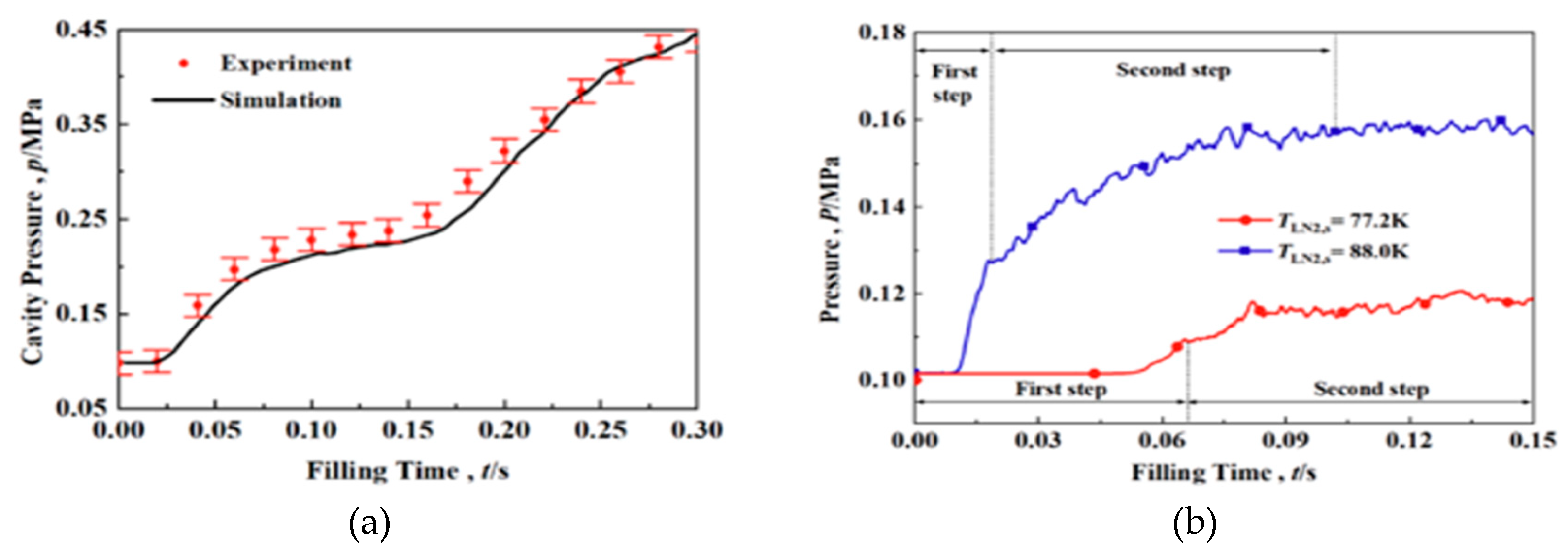
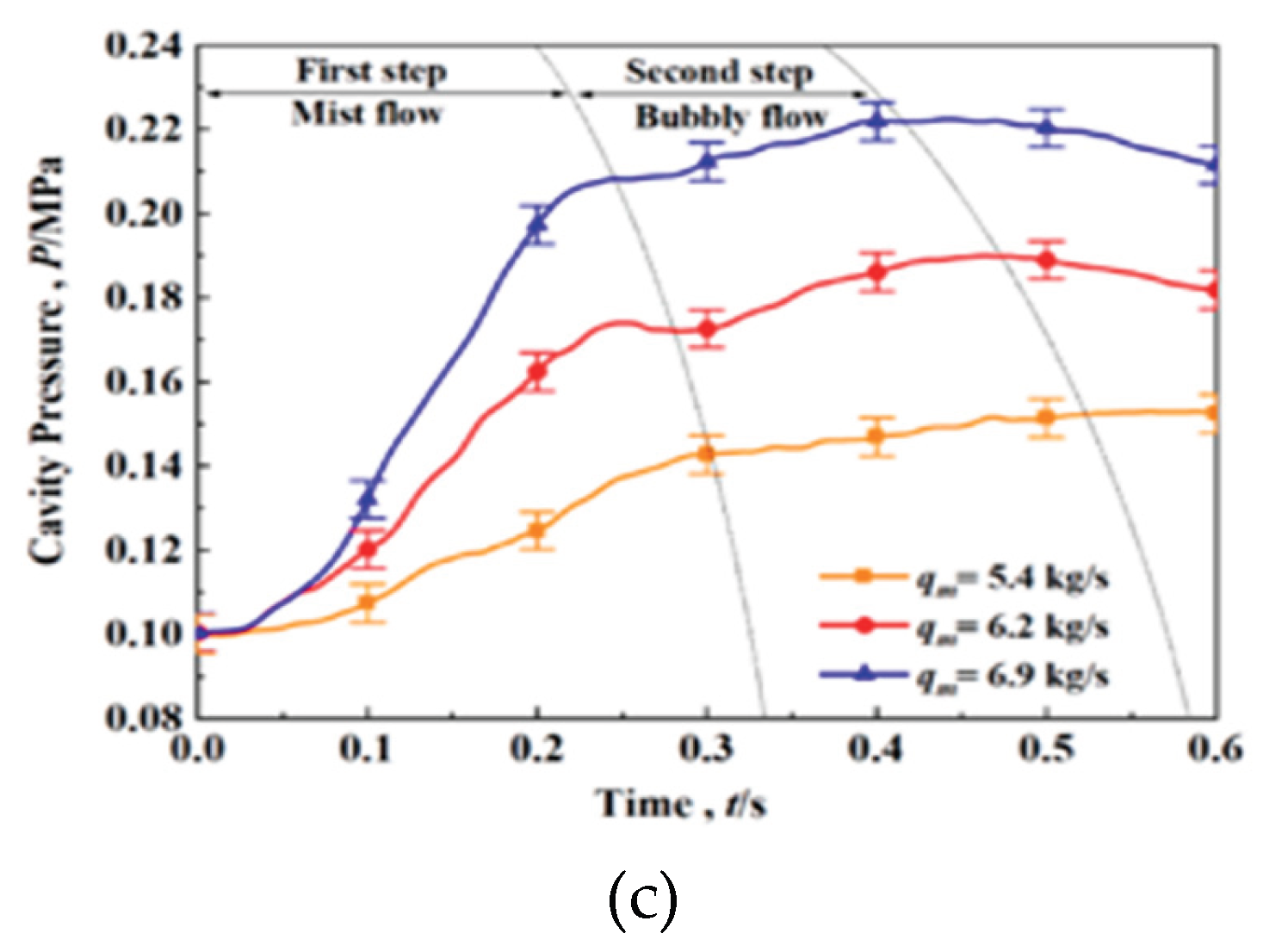
Figure 72.
Pressure sensor point position [224].
Figure 72.
Pressure sensor point position [224].
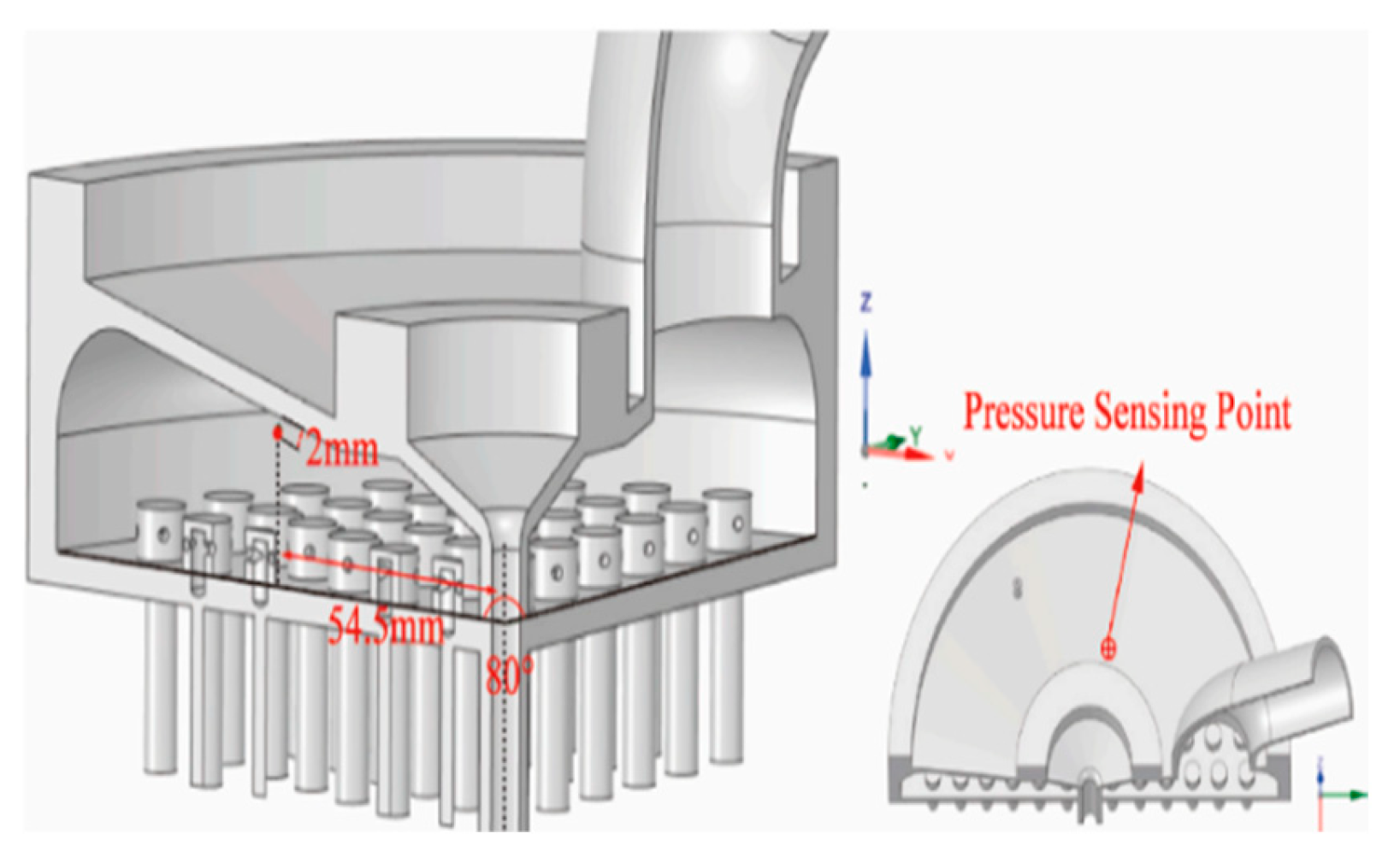
Figure 73.
Volume fraction contour of gaseous oxygen at the outlets at ignition moment (t=3.16s) [224].
Figure 73.
Volume fraction contour of gaseous oxygen at the outlets at ignition moment (t=3.16s) [224].
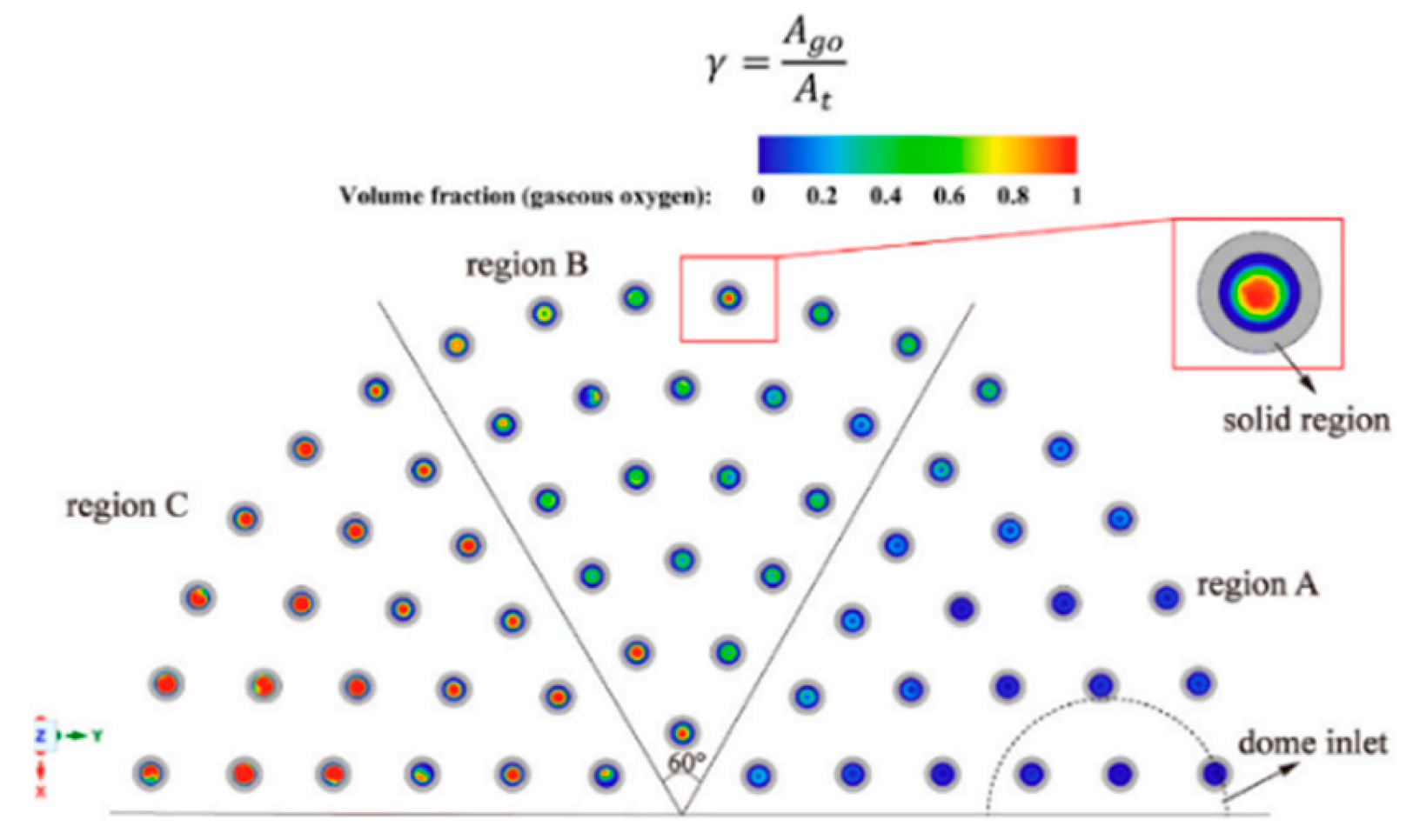
Figure 75.
Tricoaxial fuel injector with the Helmholtz resonator cavity [248].
Figure 75.
Tricoaxial fuel injector with the Helmholtz resonator cavity [248].
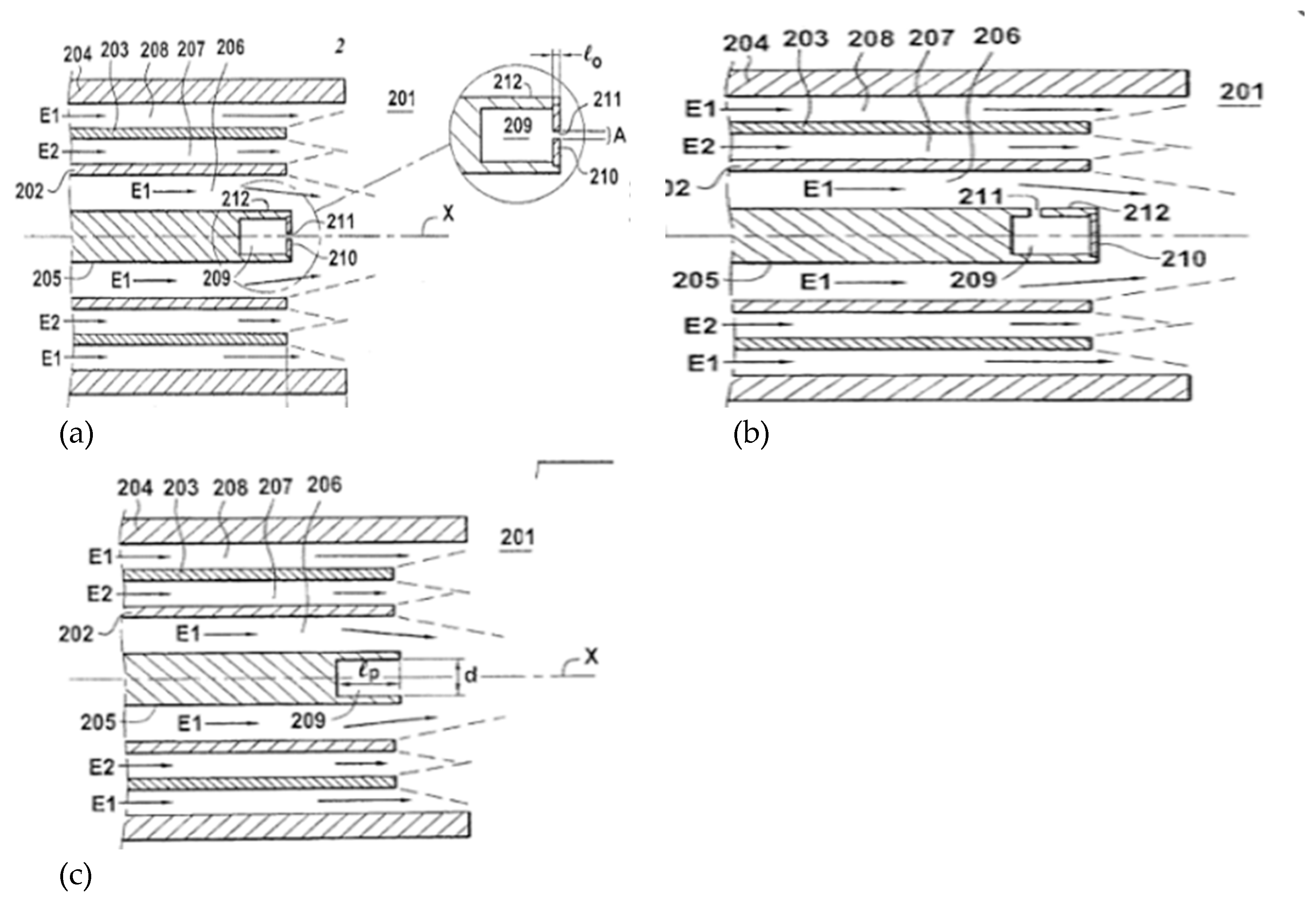
Figure 76.
Tricoaxial fuel injector designed by Ariane Group SAS [249].
Figure 76.
Tricoaxial fuel injector designed by Ariane Group SAS [249].
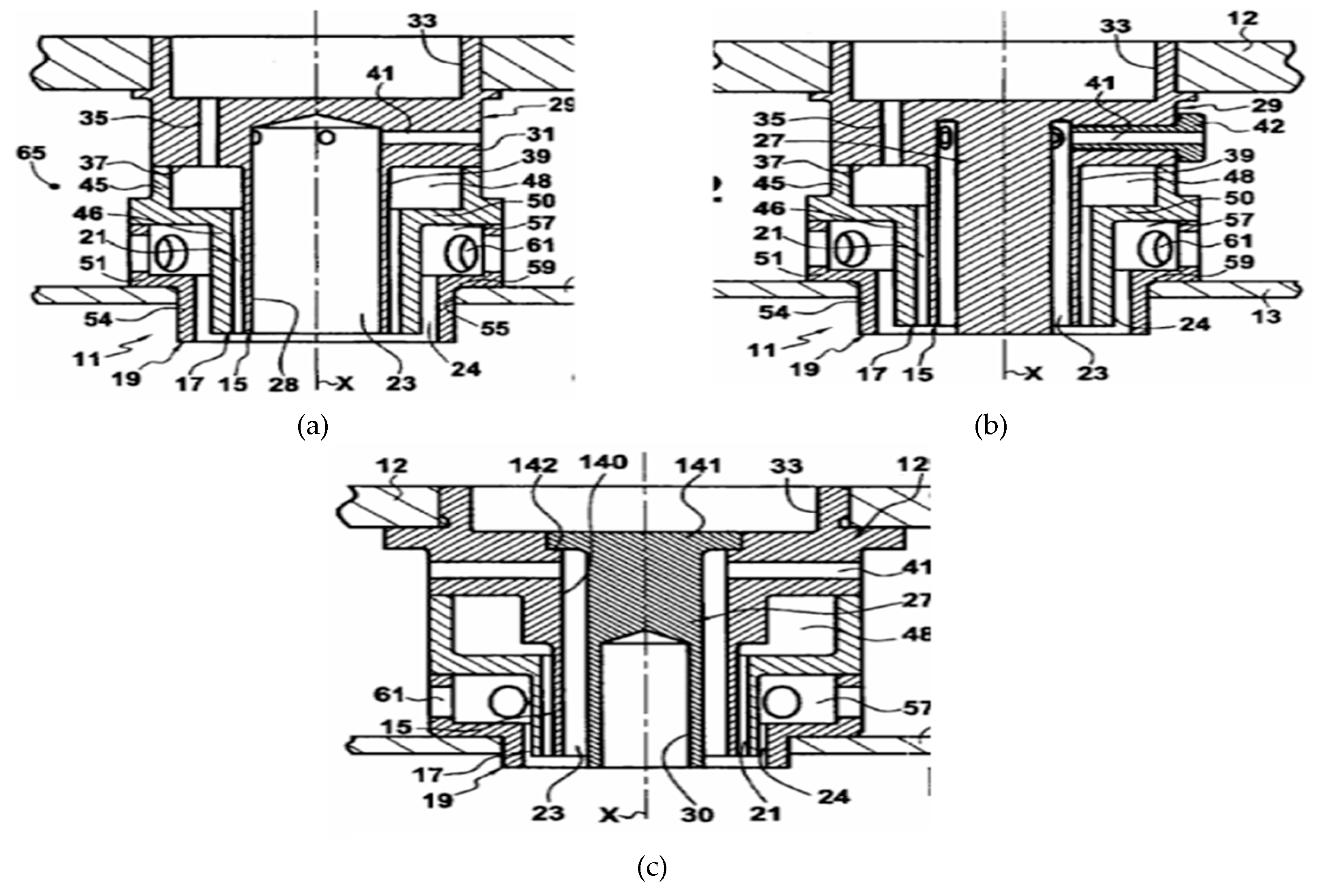
Figure 77.
Additive manufactured tricoaxial fuel injector [250].
Figure 77.
Additive manufactured tricoaxial fuel injector [250].
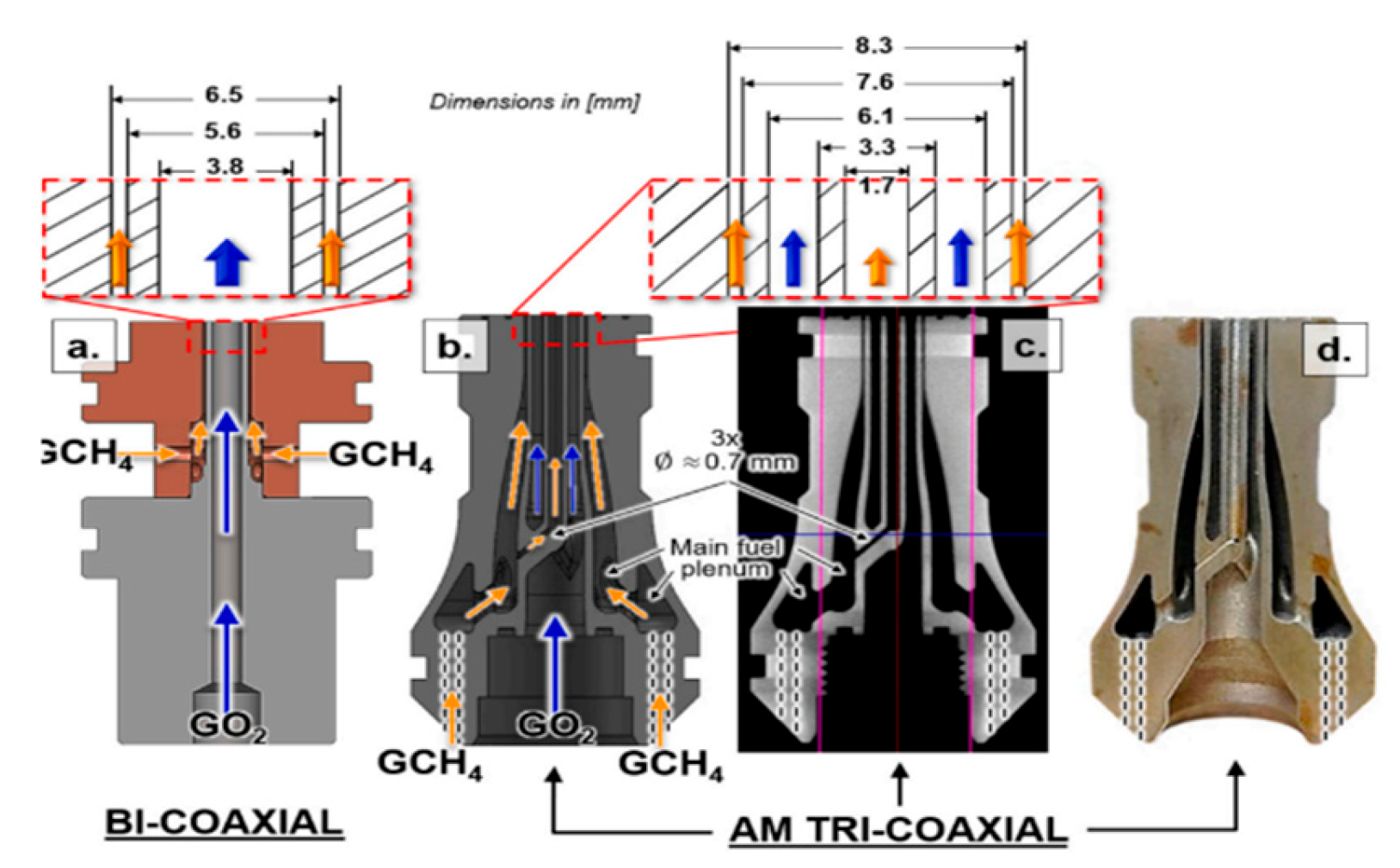
Figure 78.
Triple propellant mixing head [251].
Figure 78.
Triple propellant mixing head [251].
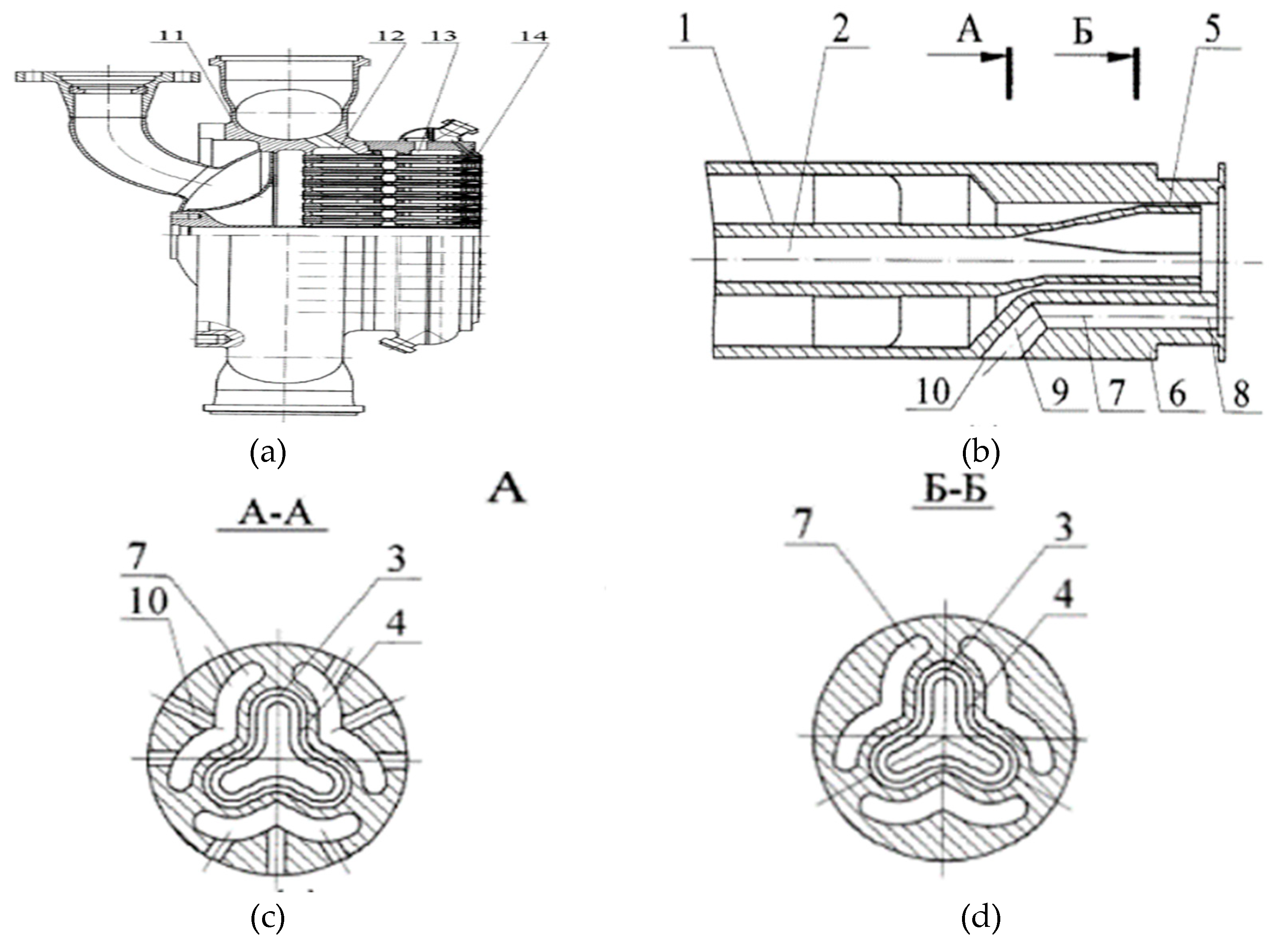
Figure 79.
Partially mixing injectors [253].
Figure 79.
Partially mixing injectors [253].
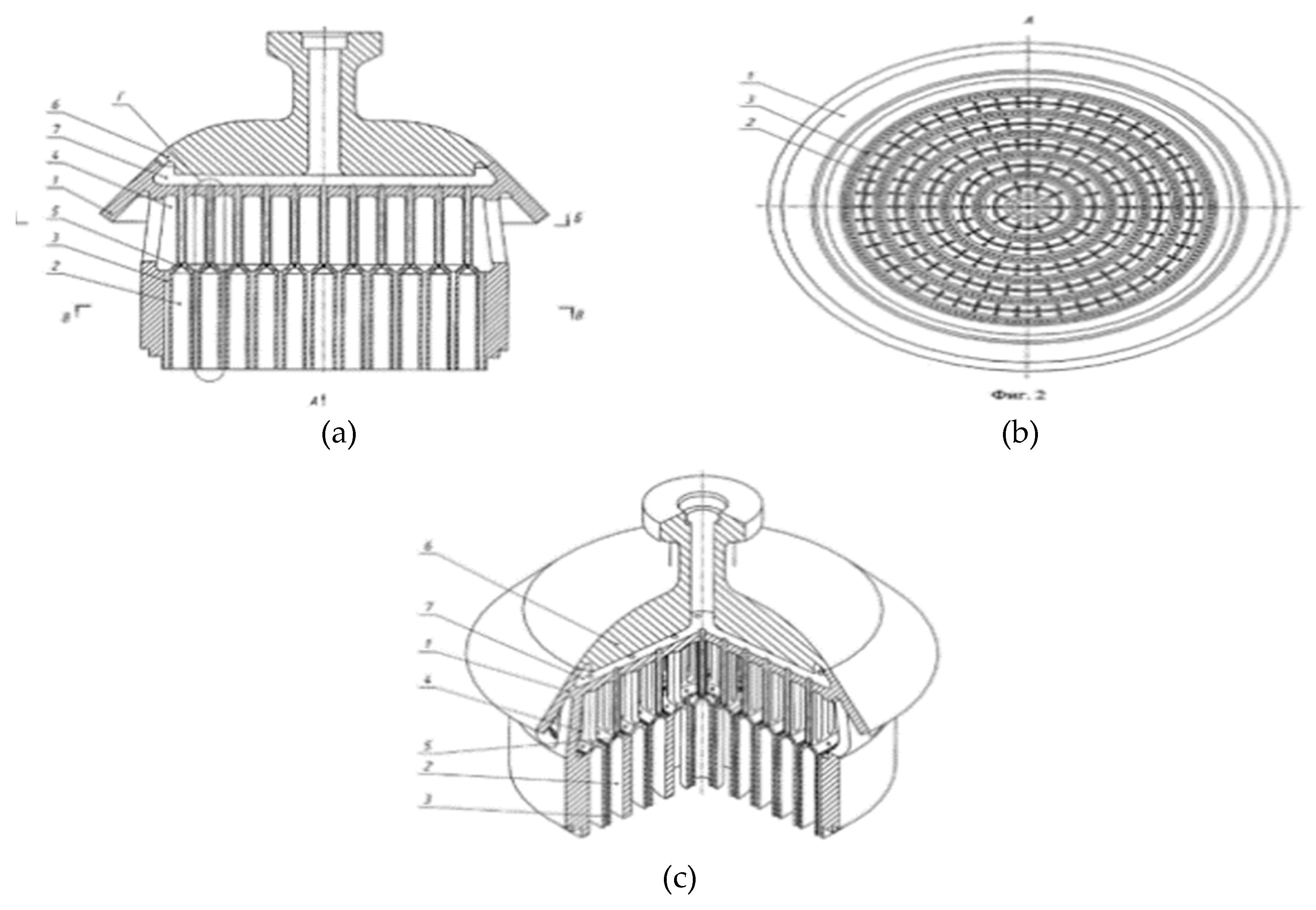
Figure 80.
Mixing head design for gas generator [254].
Figure 80.
Mixing head design for gas generator [254].
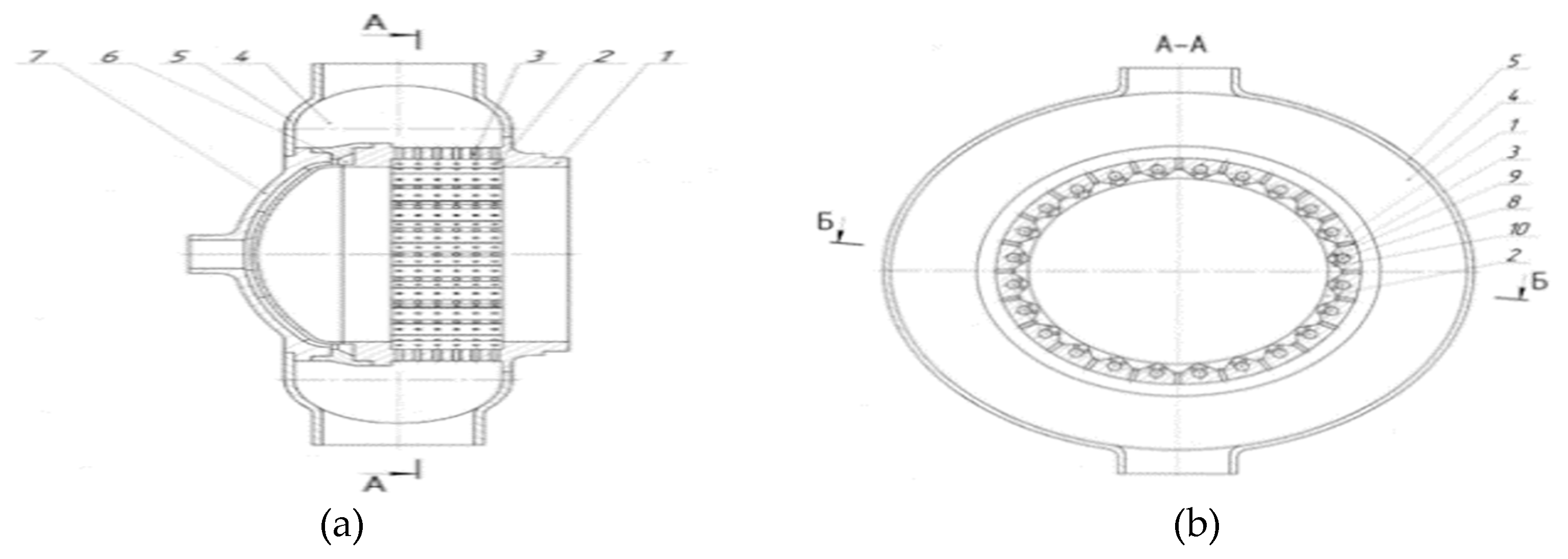
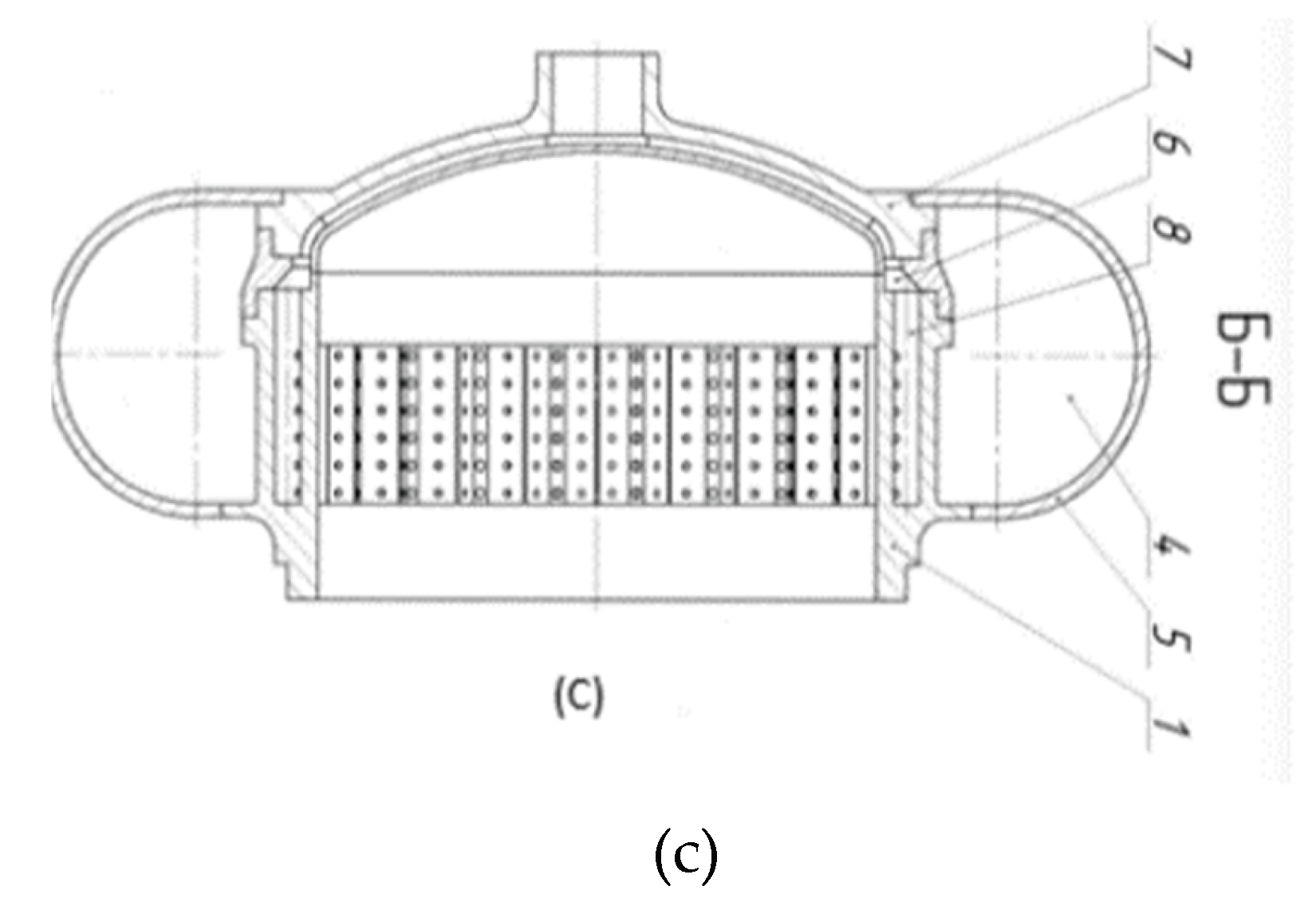
Figure 81.
Counter flow combustion concept for pre burner [255].
Figure 81.
Counter flow combustion concept for pre burner [255].
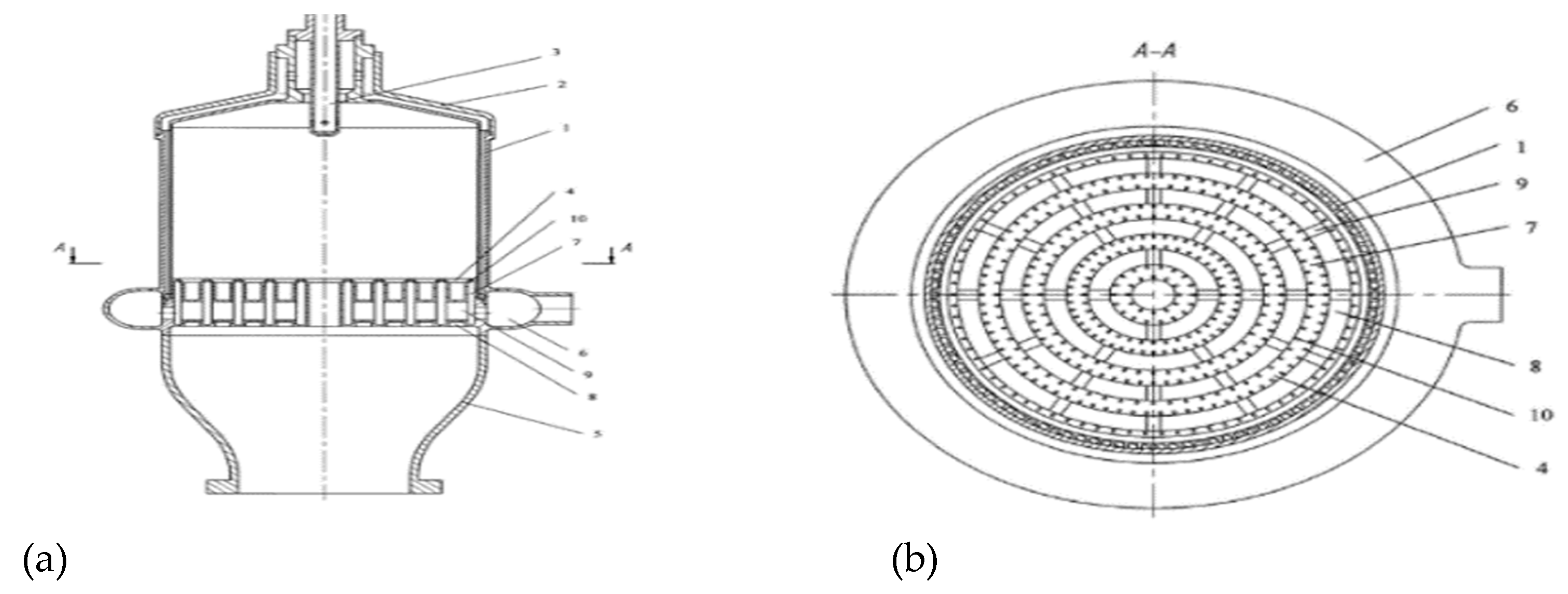
Figure 82.
Schematic diagram of the mixing head concept for a pre burner [258].
Figure 82.
Schematic diagram of the mixing head concept for a pre burner [258].
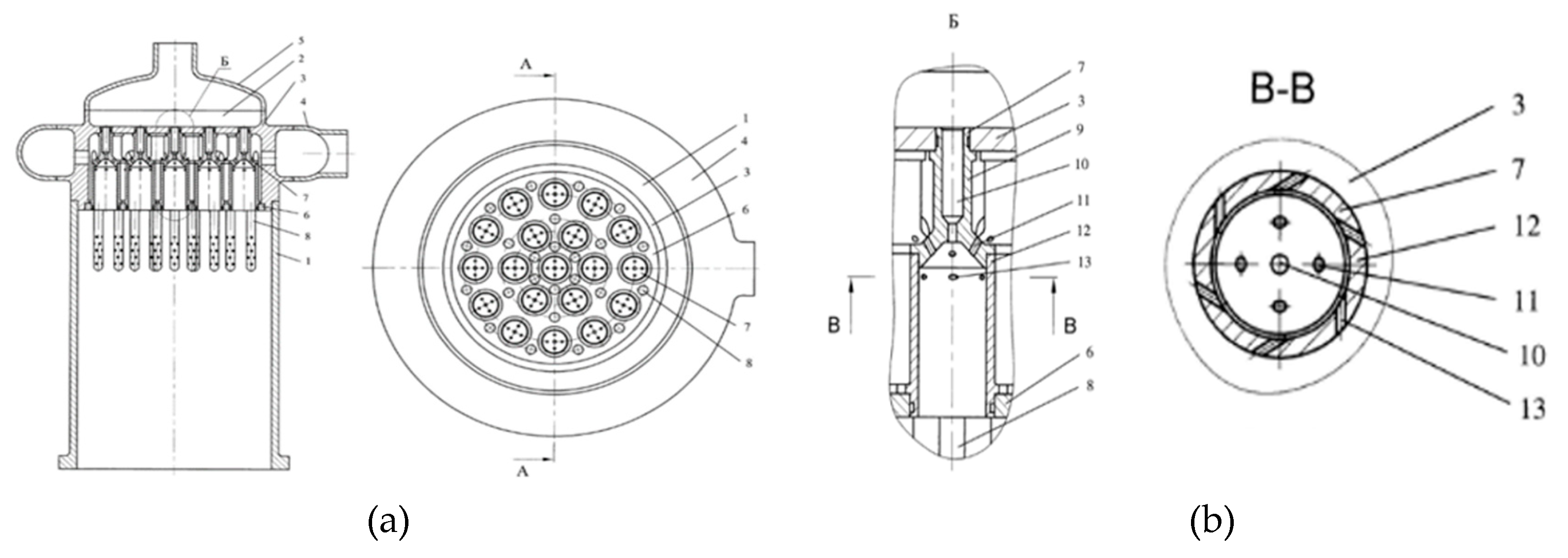
Figure 83.
Mixing head design for pre burner [260].
Figure 83.
Mixing head design for pre burner [260].
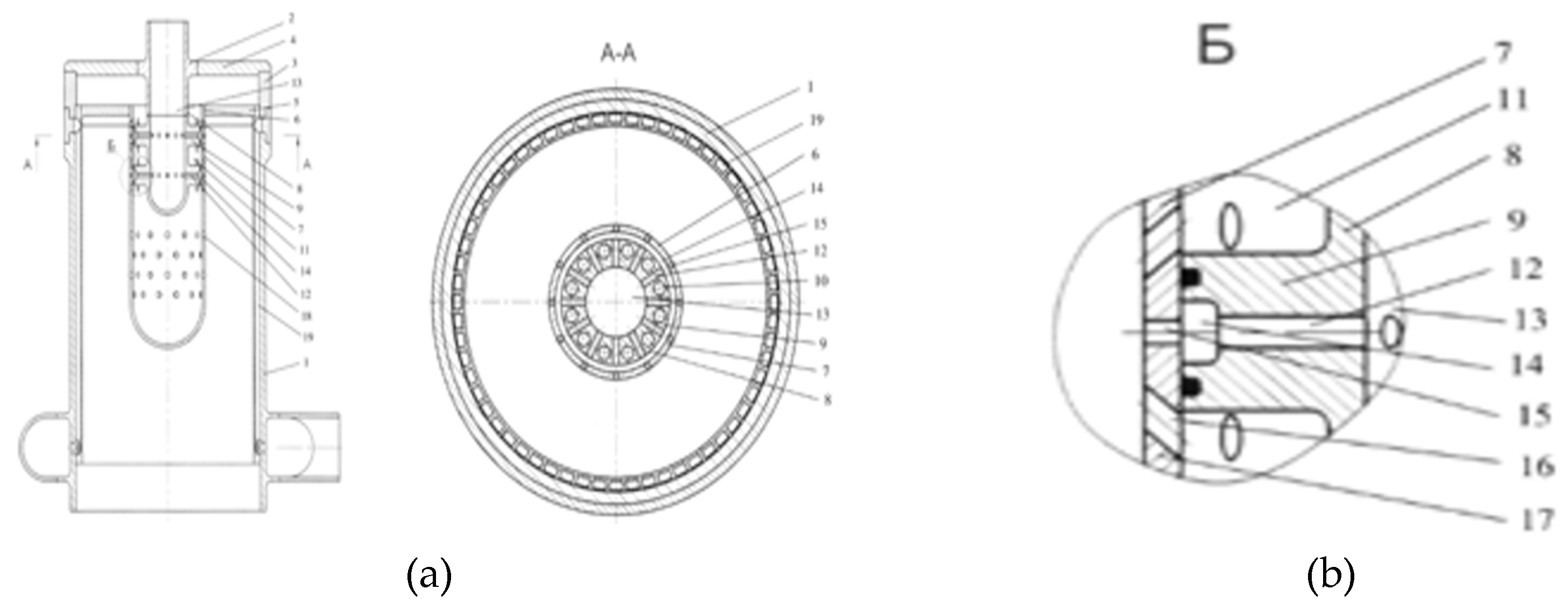
Figure 84.
Injectors layout of the per burner [261].
Figure 84.
Injectors layout of the per burner [261].
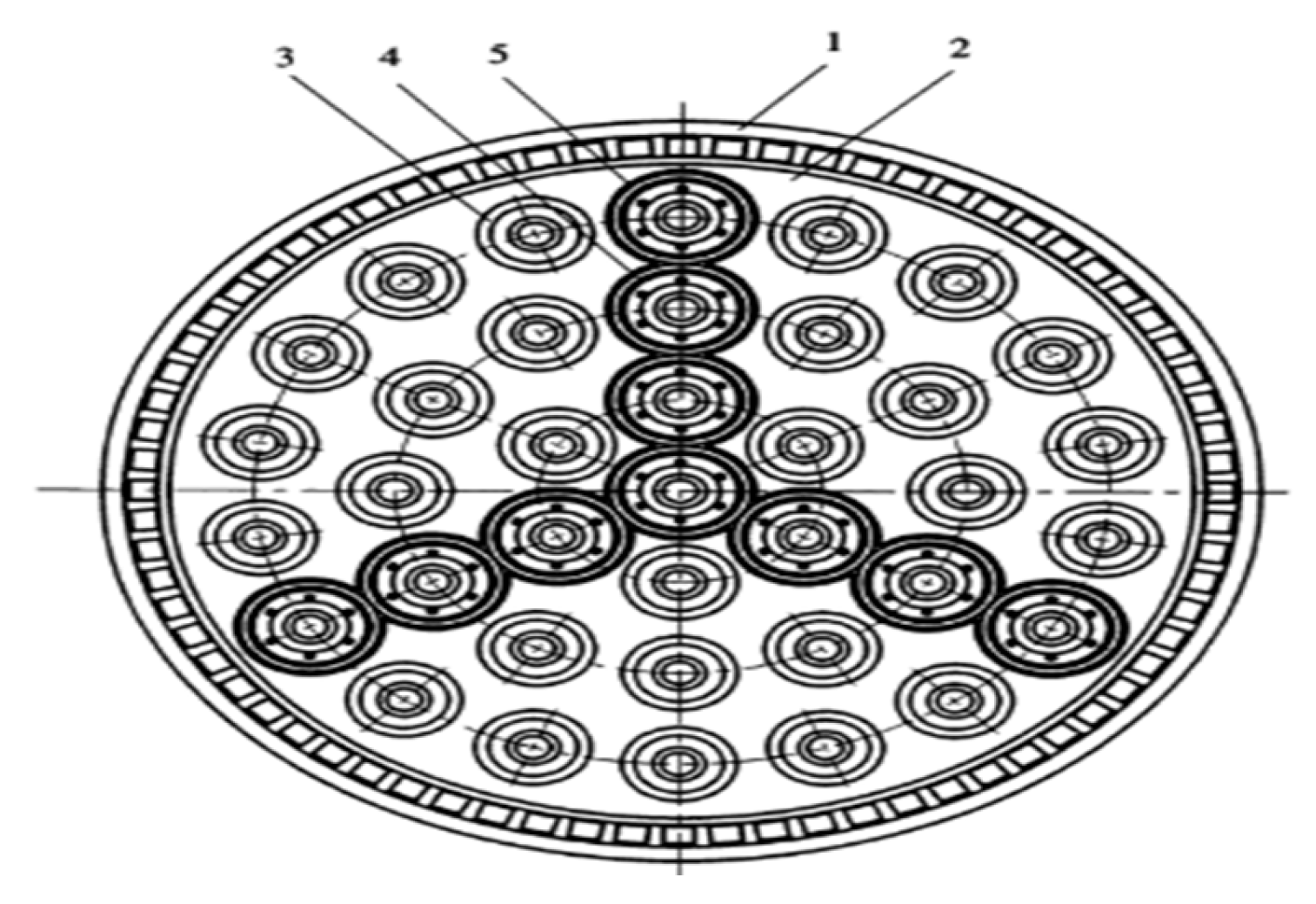
Figure 85.
Cross section view of the fuel injector [261].
Figure 85.
Cross section view of the fuel injector [261].
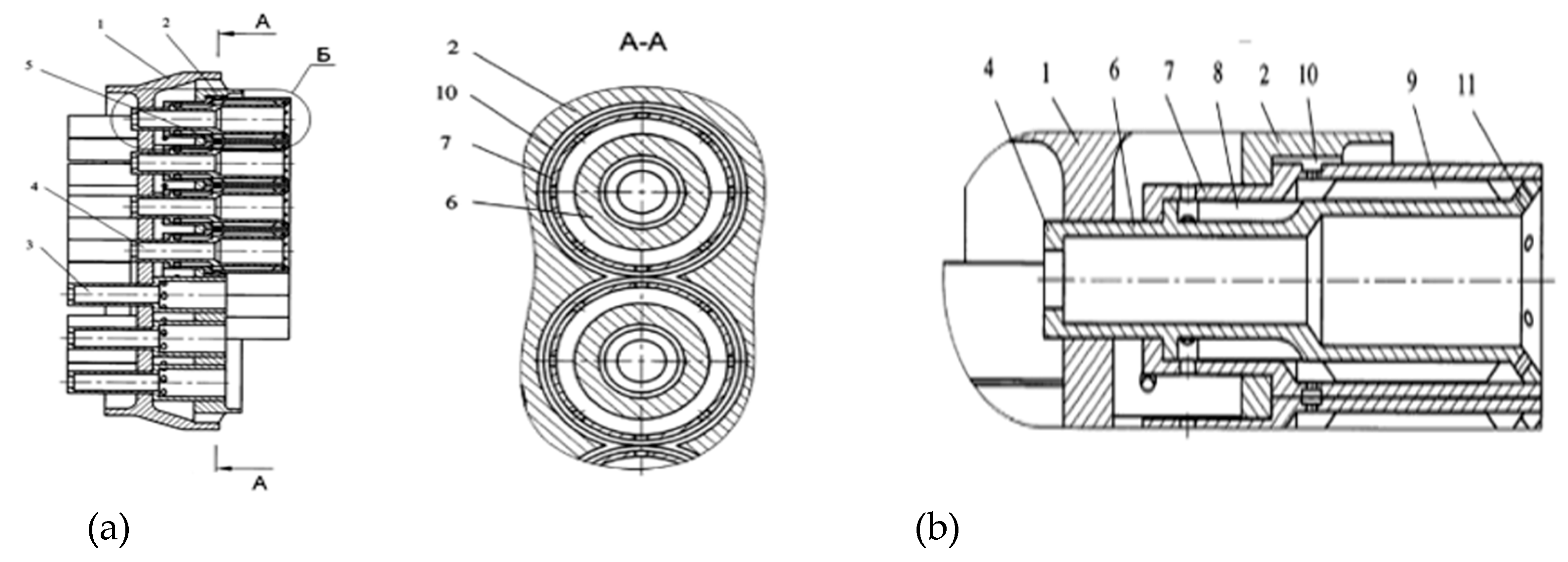
Figure 87.
Cross impingement concept of a fuel injector [264].
Figure 87.
Cross impingement concept of a fuel injector [264].
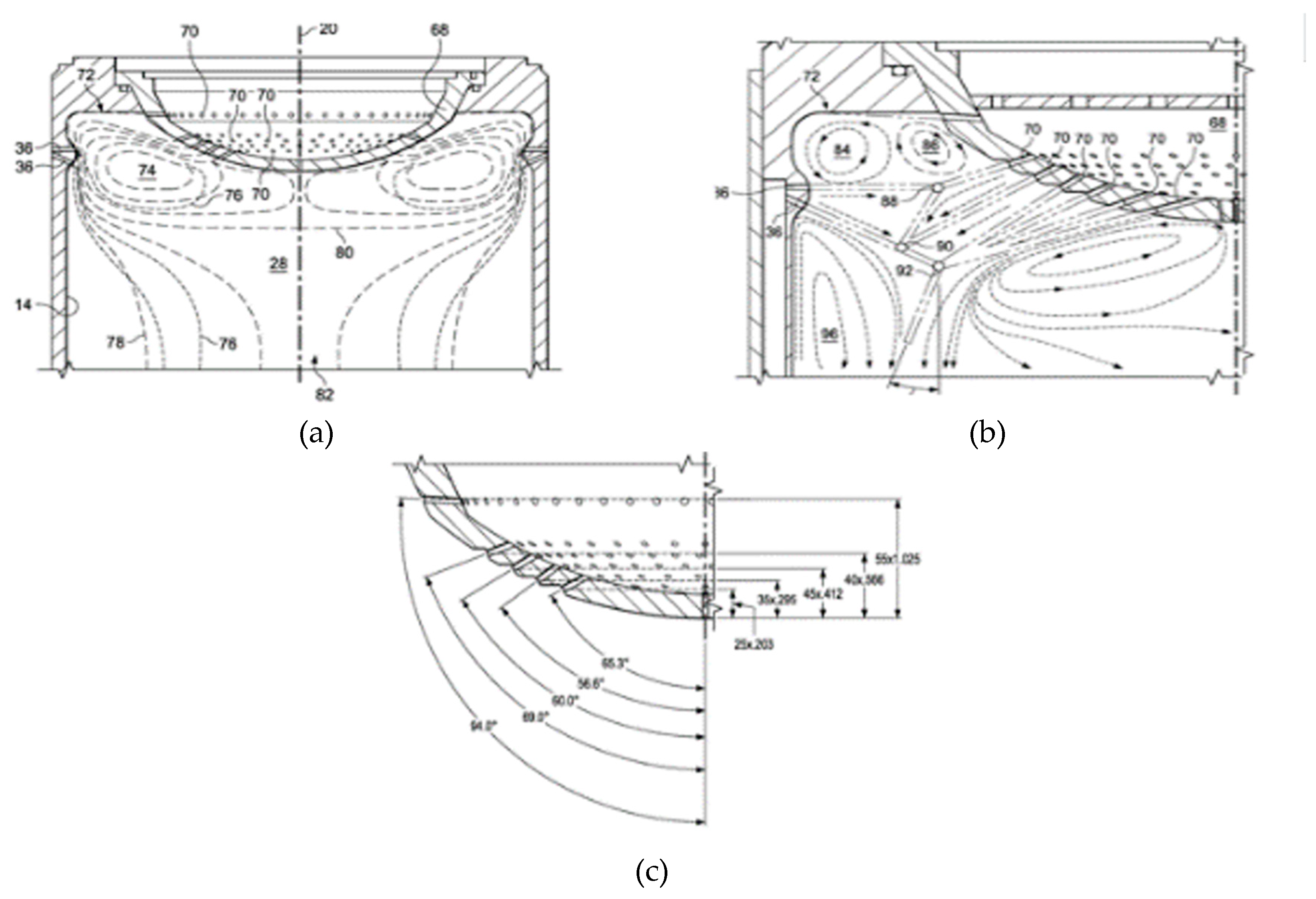
Figure 88.
Mixing head design configured with central igniter tube used for pre burner [265].
Figure 88.
Mixing head design configured with central igniter tube used for pre burner [265].
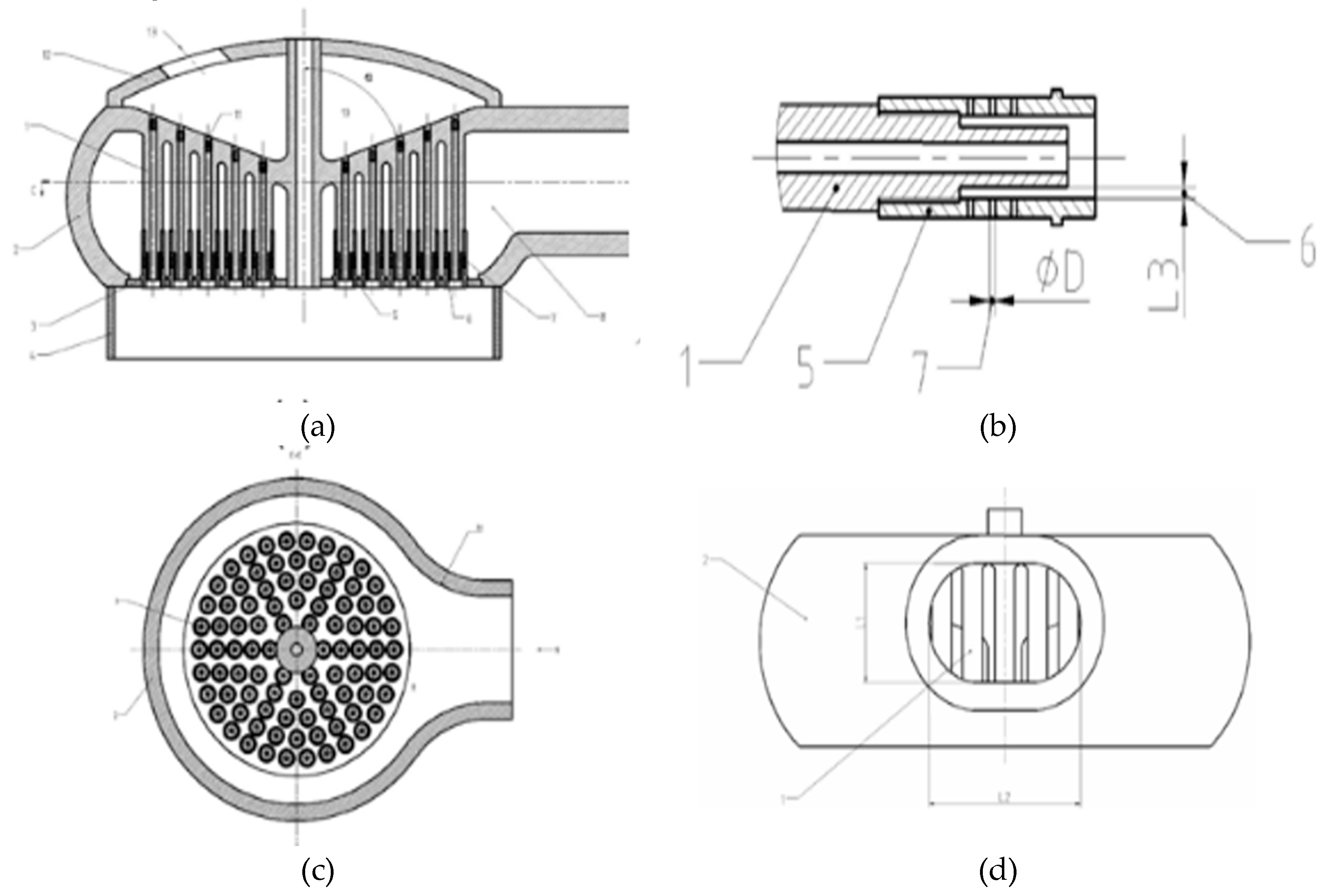
Figure 89.
Mixing head configured with V shaped injection elements [266].
Figure 89.
Mixing head configured with V shaped injection elements [266].
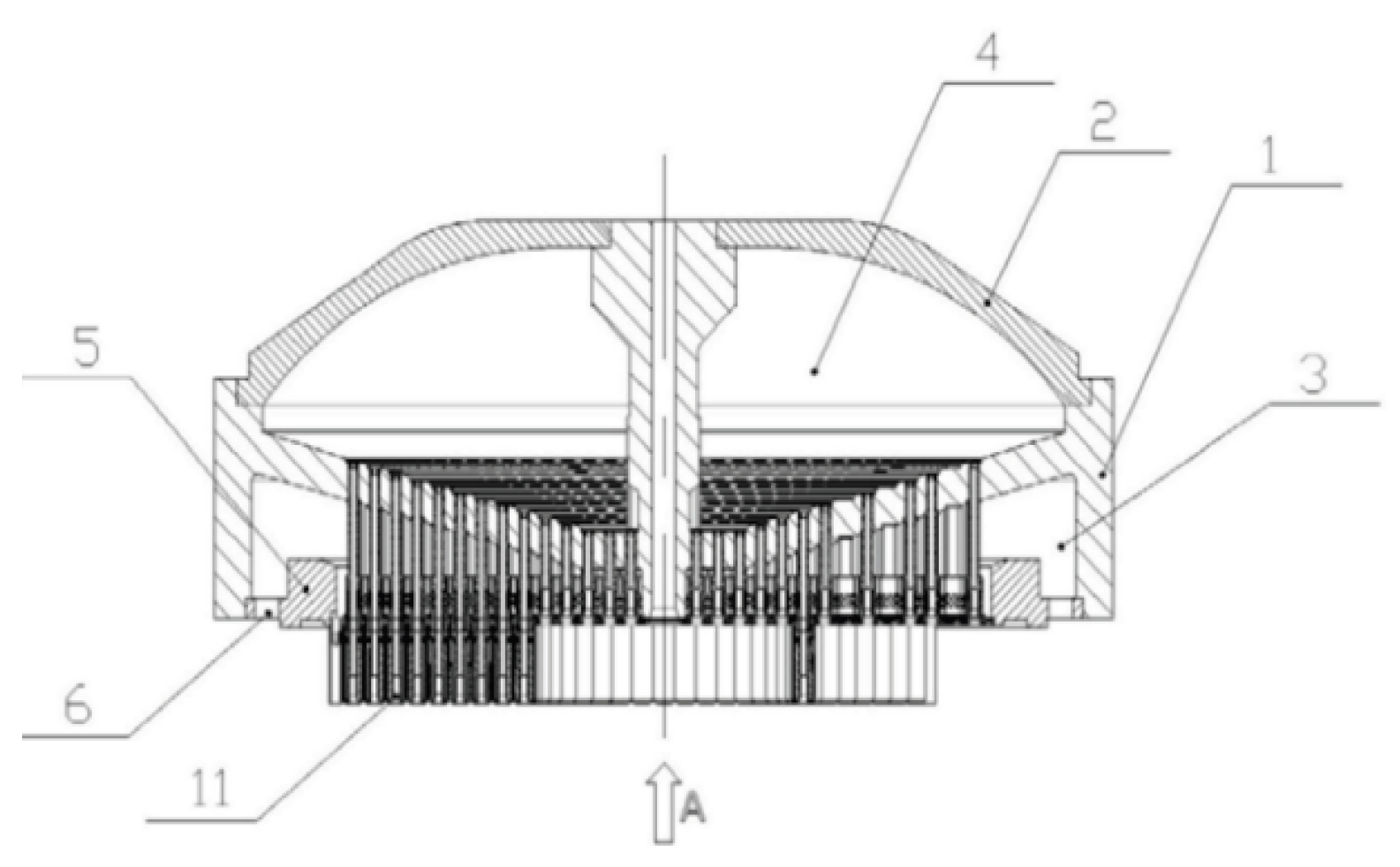
Figure 90.
Combination of mixing head design for a pre burner [267].
Figure 90.
Combination of mixing head design for a pre burner [267].
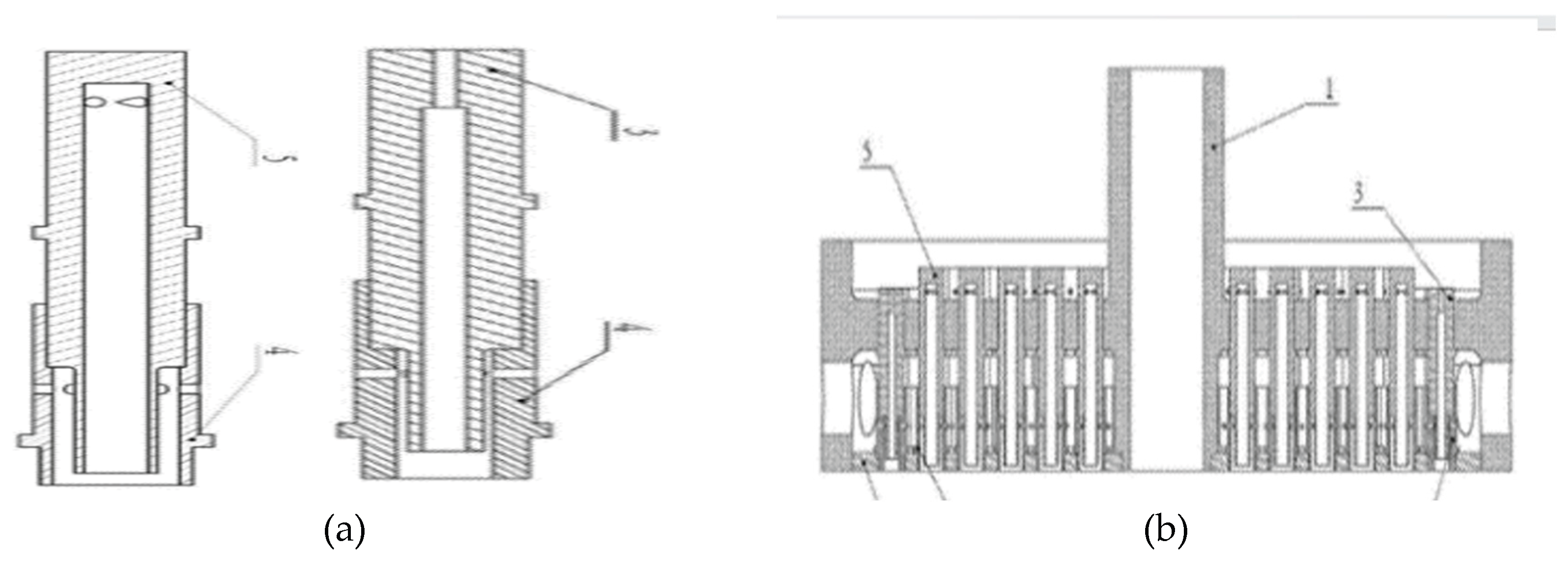
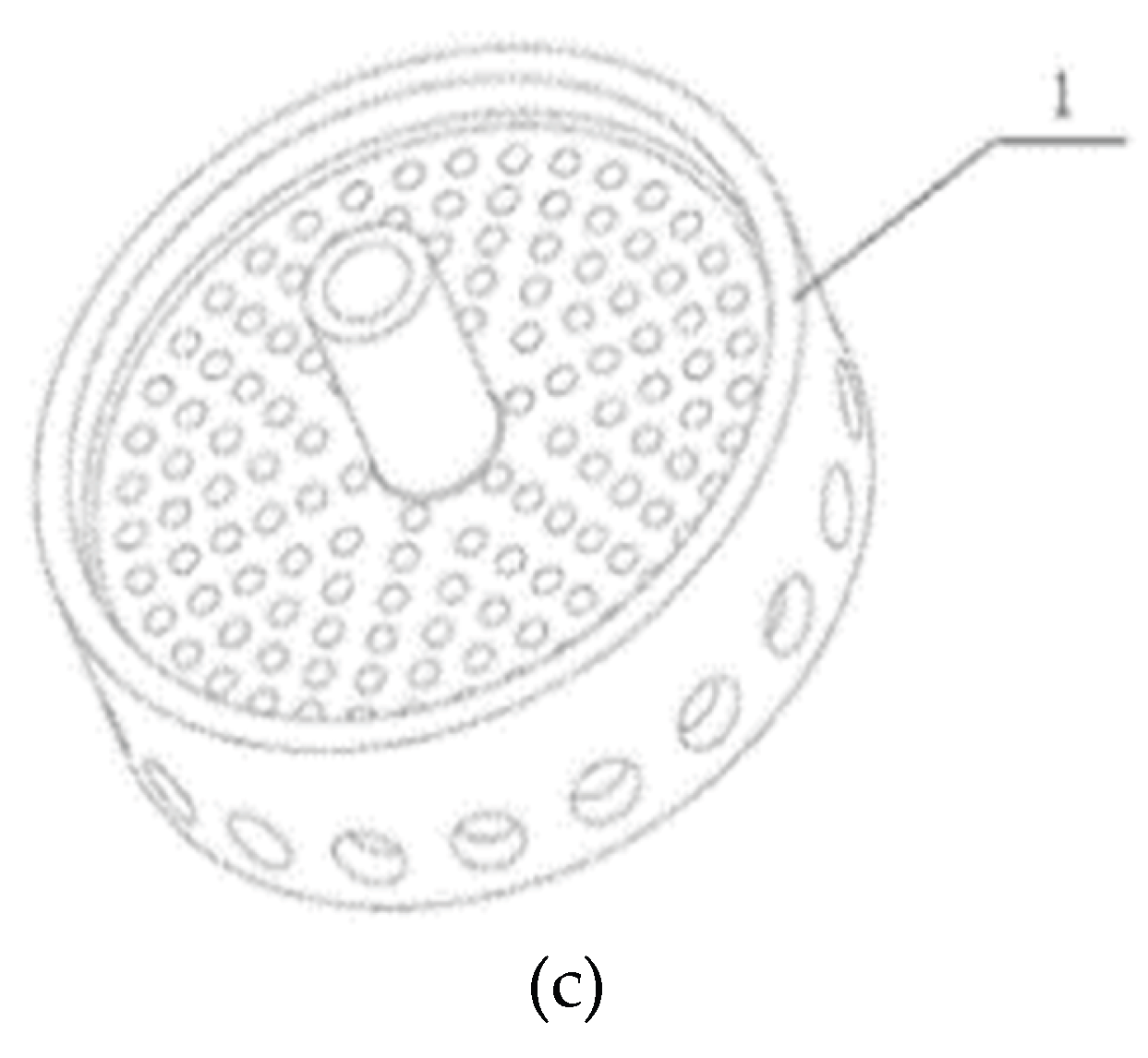
Figure 91.
Mixing head design for pre burner, integrated impingement holes [268].
Figure 91.
Mixing head design for pre burner, integrated impingement holes [268].
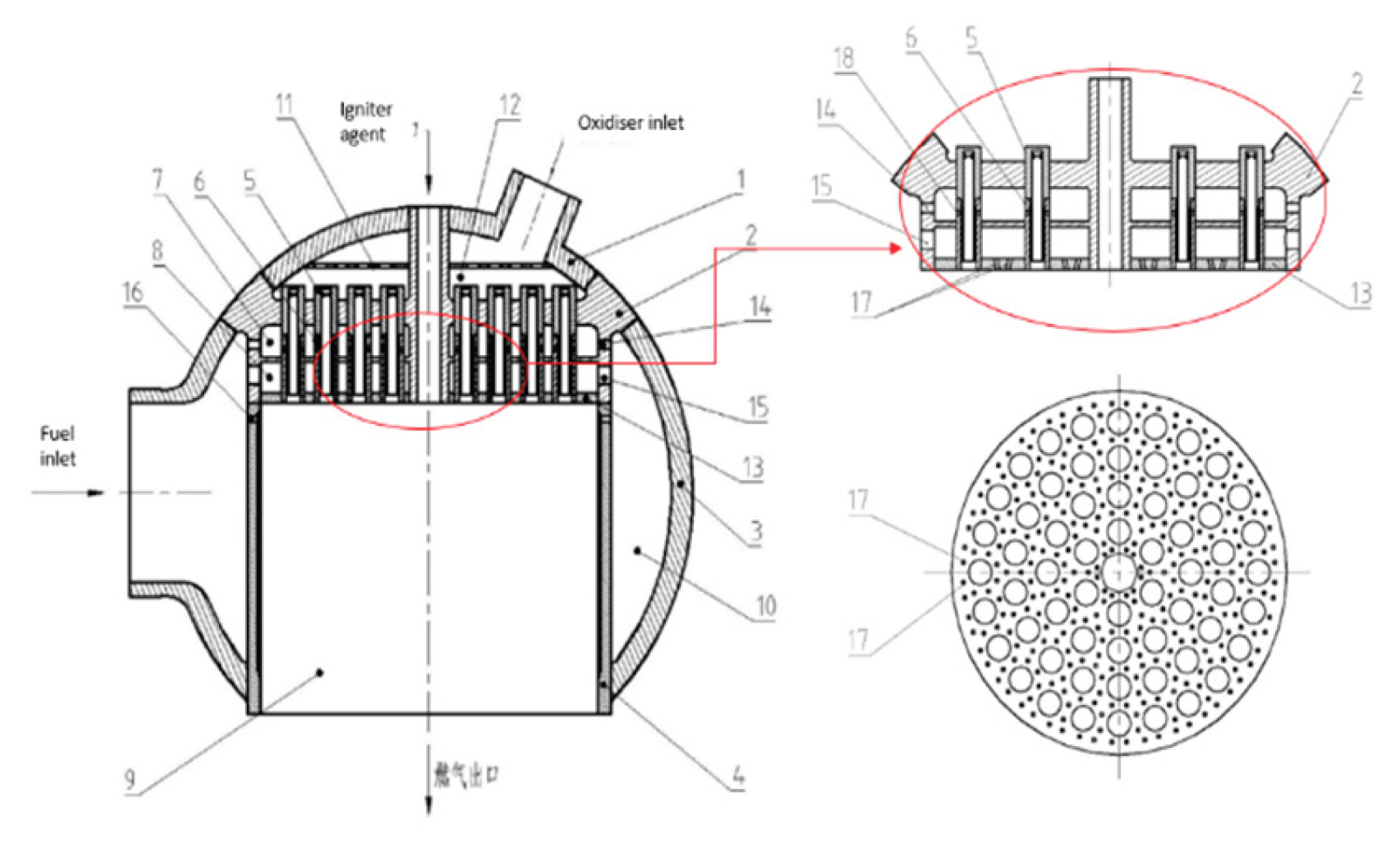
Figure 92.
Main thrust chamber mixing head for high pressure staged combustion cycle engine (YF-90) [269].
Figure 92.
Main thrust chamber mixing head for high pressure staged combustion cycle engine (YF-90) [269].
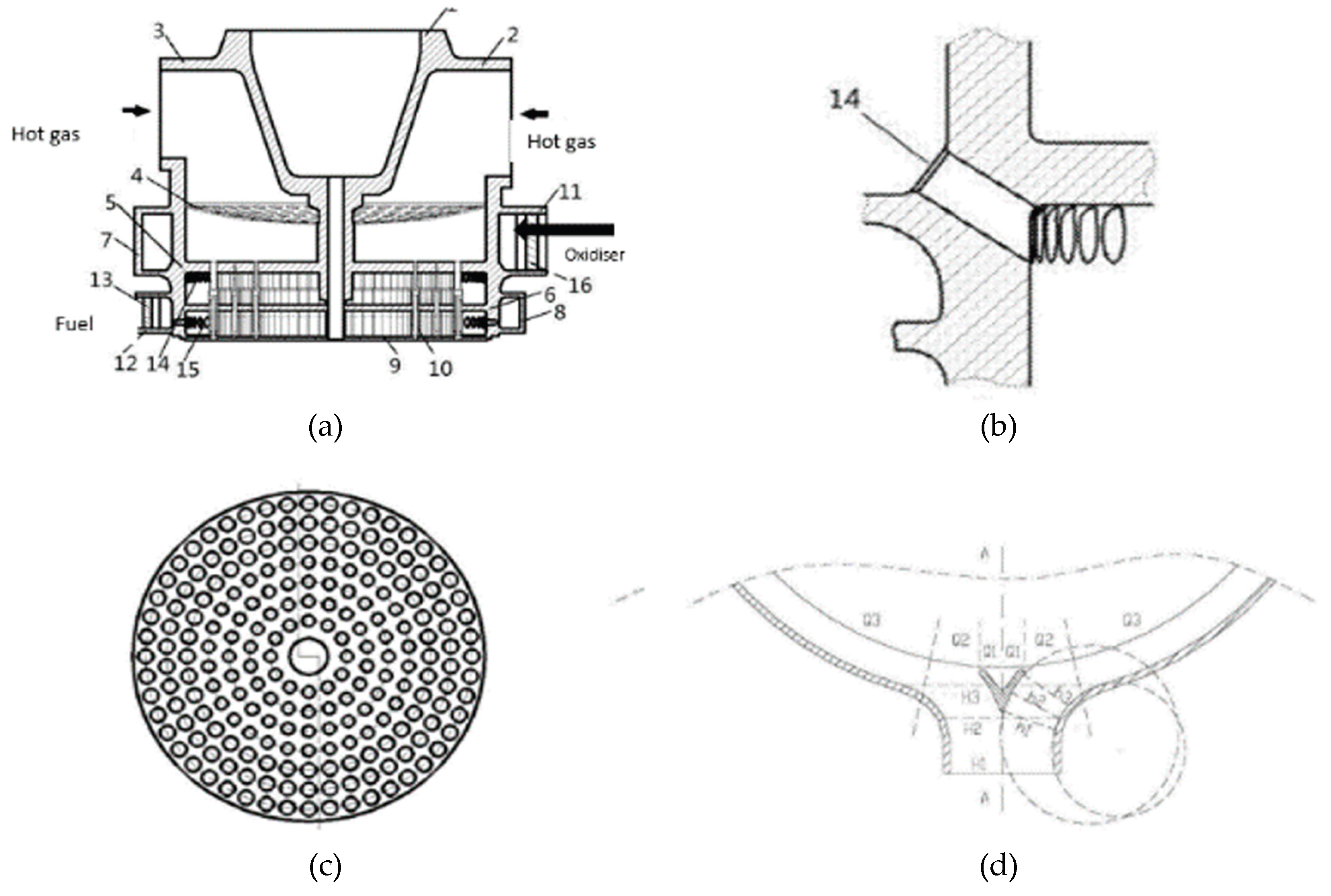
Figure 93.
Mixing head design with cross fire conduit for a pre burner of a staged combustion cycle engine [270].
Figure 93.
Mixing head design with cross fire conduit for a pre burner of a staged combustion cycle engine [270].
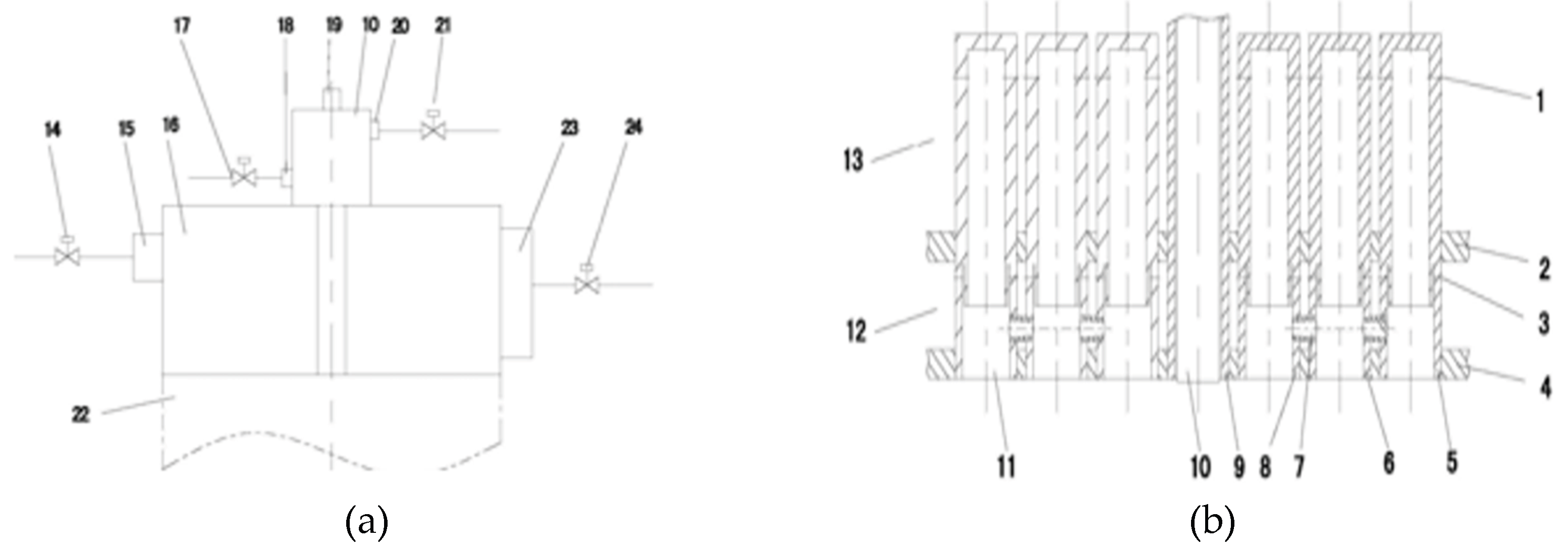
Figure 94.
Porous medium concept for main thrust chamber for full flow staged combustion cycle engine [271].
Figure 94.
Porous medium concept for main thrust chamber for full flow staged combustion cycle engine [271].
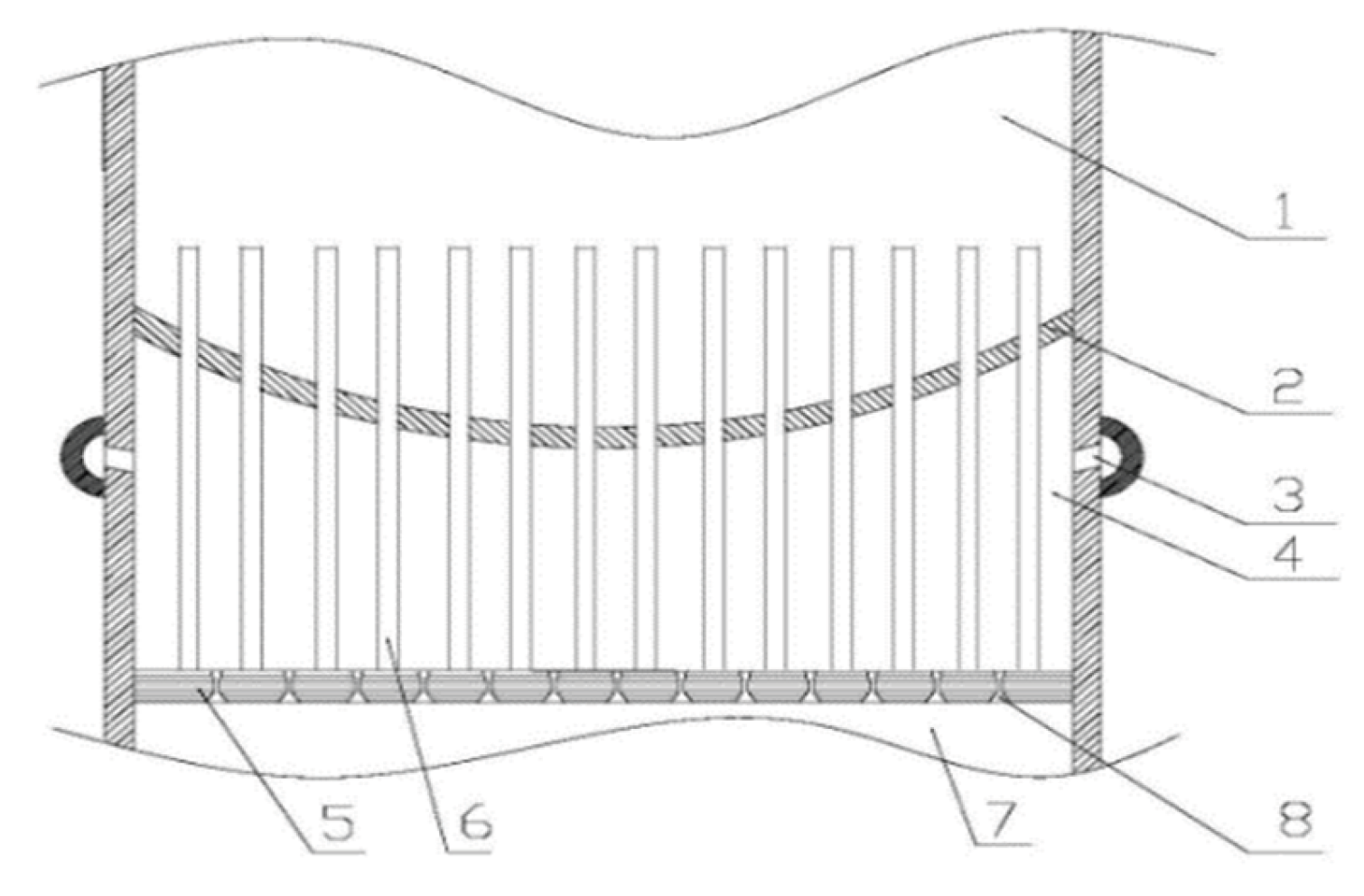
Figure 95.
Fuel injector element developed by Ariane Group GmbH [272].
Figure 95.
Fuel injector element developed by Ariane Group GmbH [272].
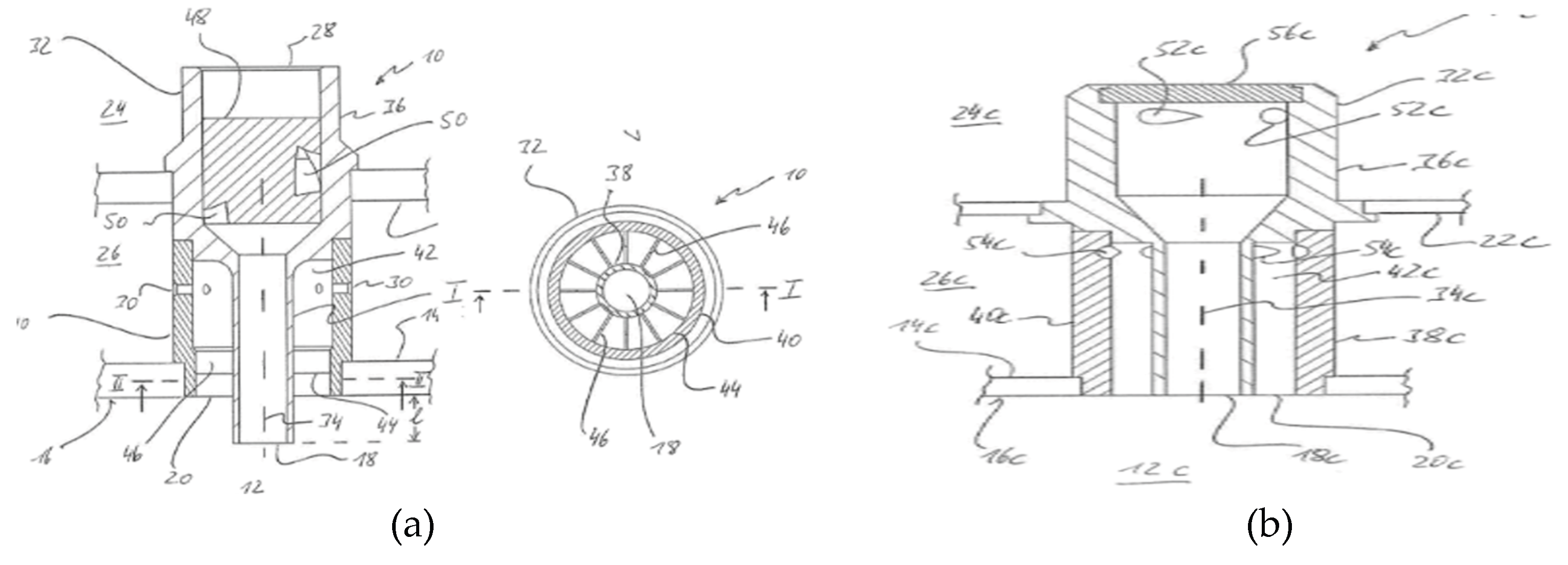
Figure 96.
Mixing head design from Araine Group SAS [273].
Figure 96.
Mixing head design from Araine Group SAS [273].
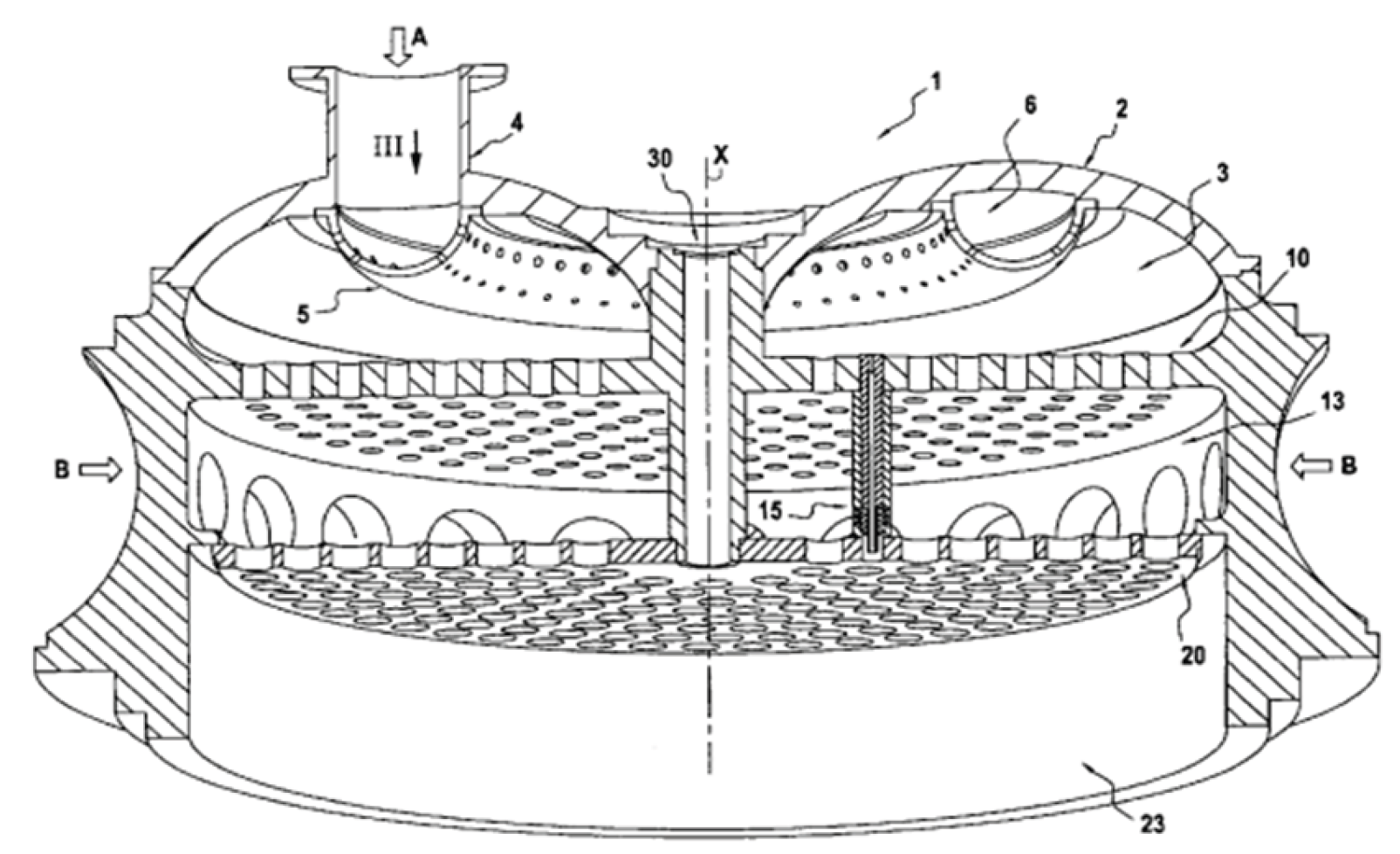
Figure 97.
Mixing head developed by additive manufacturing [275].
Figure 97.
Mixing head developed by additive manufacturing [275].
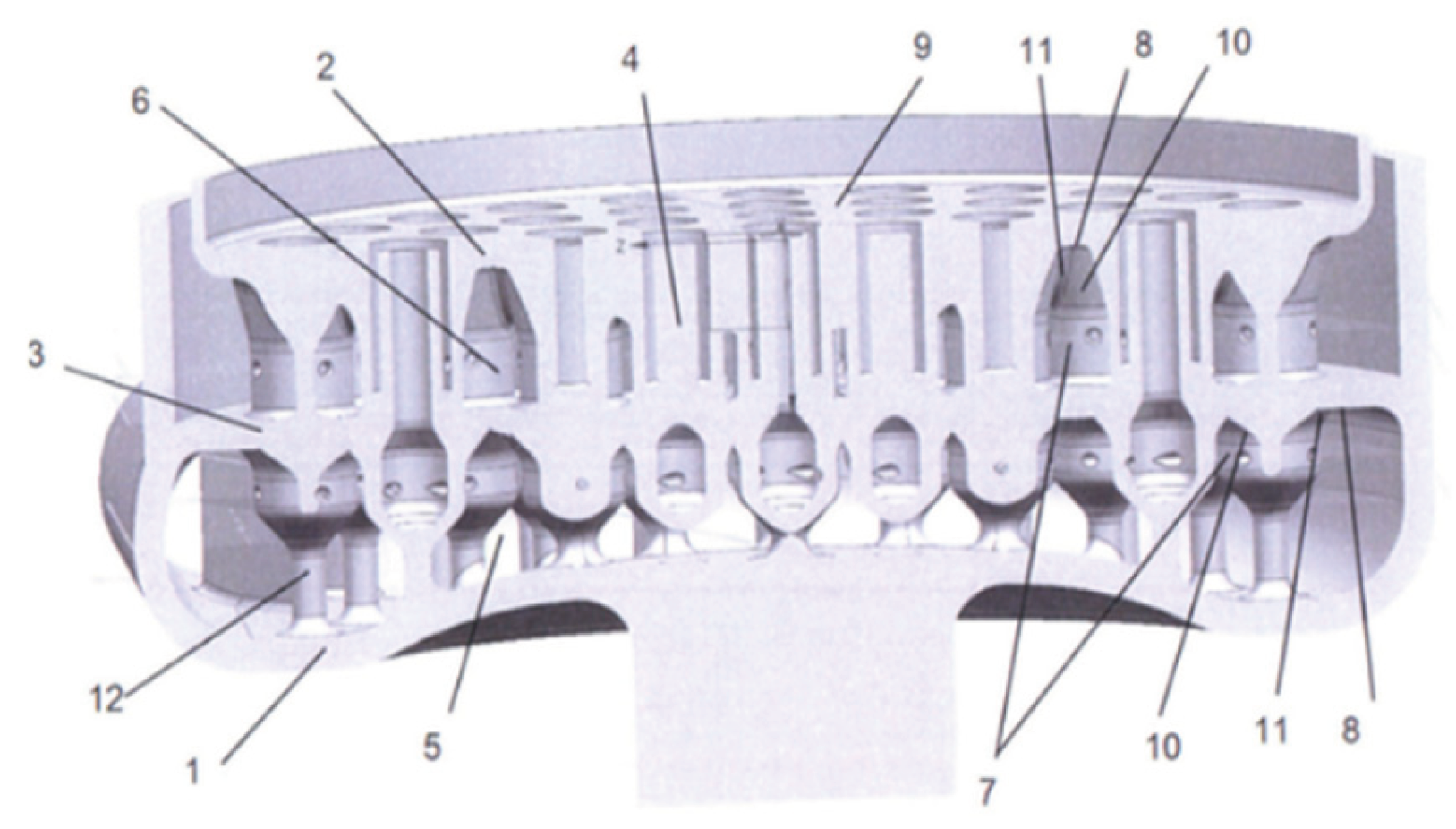
Figure 98.
Thrust chamber manufactured by hybrid additive manufacturing [276].
Figure 98.
Thrust chamber manufactured by hybrid additive manufacturing [276].
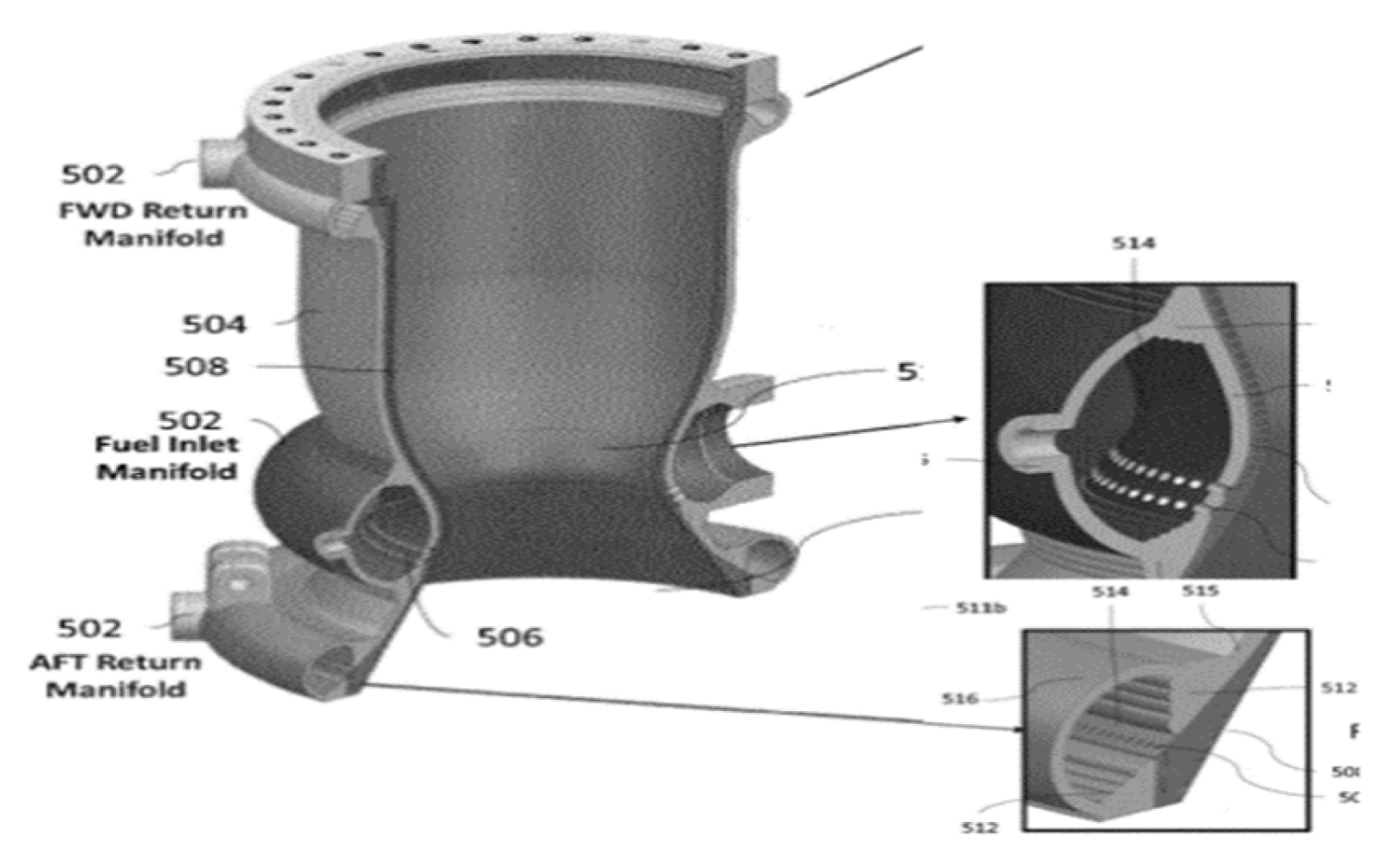
Figure 99.
Material choice for thrust chamber [276].
Figure 99.
Material choice for thrust chamber [276].
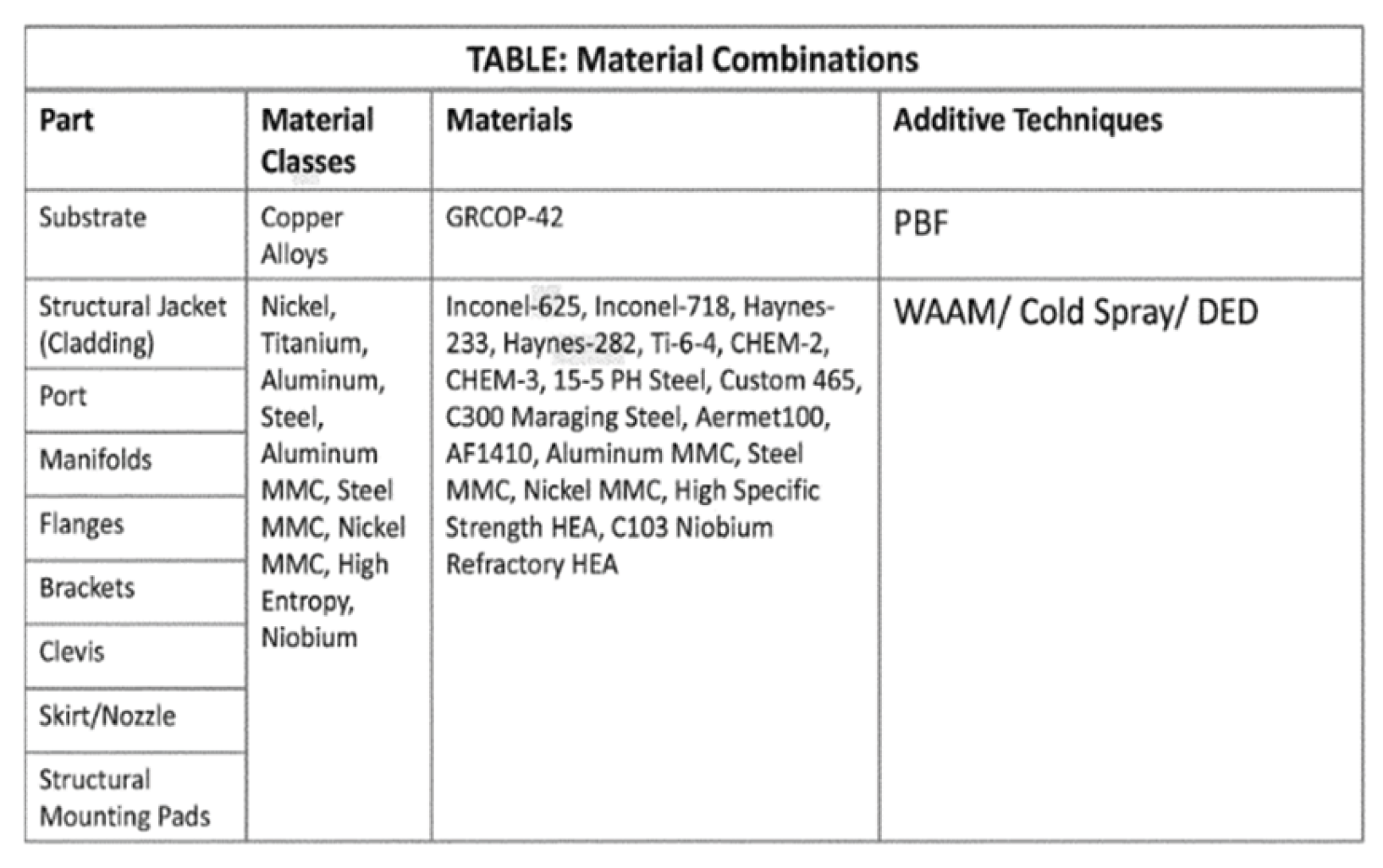
Figure 100.
Comparison through hot fire test (a) Inconel 625 injector after 10 starts (b) GRX-810,LOX/CH4-13 starts (c) GRX-810,LOX/CH4-84 starts [279].
Figure 100.
Comparison through hot fire test (a) Inconel 625 injector after 10 starts (b) GRX-810,LOX/CH4-13 starts (c) GRX-810,LOX/CH4-84 starts [279].
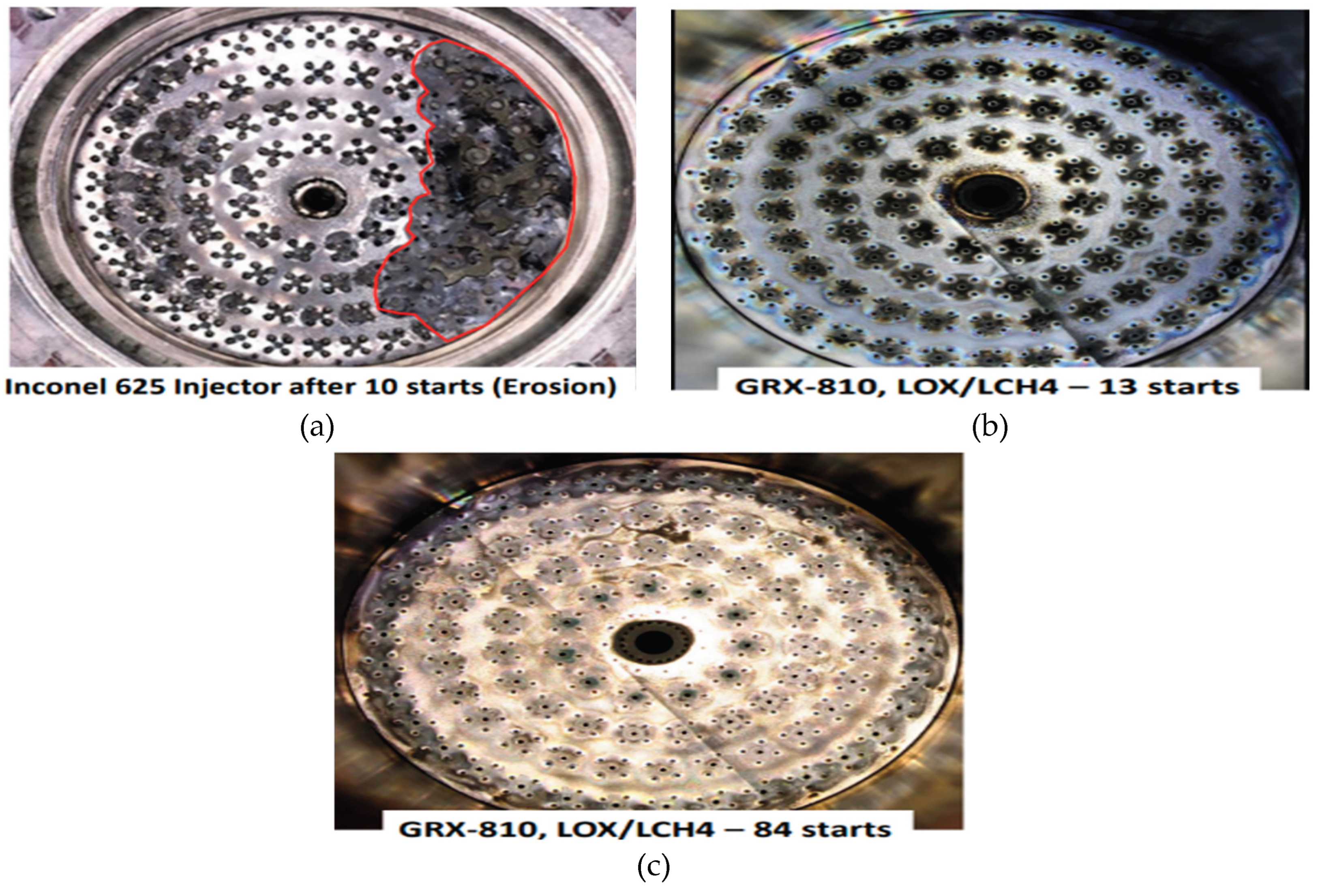
Table 1.
Comparative thermophysical properties and flammability limits for cryogenic liquids [14].
Table 1.
Comparative thermophysical properties and flammability limits for cryogenic liquids [14].
| Parameter | H2 | O2 | He | N2 | ||
|---|---|---|---|---|---|---|
| Flammability limits in air (%) | 4-74.2 | 5-15 | 2.1-9.4 | - | - | - |
| Flammability limits in pure O2(%) | 4.6-93.9 | 5.4-59.2 | 2.4-61.1 | - | - | - |
| Heat of combustion (kJ/g) | 135.4 | 52.8 | 40.3 | - | - | - |
| Liquid heat of combustion (MJ/Liter) | 9.59 | 22.29 | 23.56 | - | - | - |
| Gas heat of combustion (MJ/Liter) | 12.09 | 37.7 | 93.48 | - | - | - |
| @1bar | 70.8 | 422.4 | 585.3 | 1141 | 124.9 | 807 |
| Critical temperature (k) | 32.98 | 190.6 | 368.8 | 154.6 | 5.195 | 126.2 |
| Critical pressure (MPa) | 1.29 | 4.59 | 4.36 | 5.04 | 0.228 | 3.39 |
| 31 | 162.7 | - | 436 | 69.64 | 313 |
Table 2.
Summary of common methods applied to increase payload ratio and specific impulse [27].
Table 2.
Summary of common methods applied to increase payload ratio and specific impulse [27].
| Methods | Effectiveness | Feasibility | Economic | Reliability | Total | Evaluation decision |
|---|---|---|---|---|---|---|
| Nozzle extension | It can increase specific impulse by 3.5s. | Matured manufacturing technology, feasible | Only extend the nozzle, acceptable cost | It can be demonstrated in the high altitude flight test to verify and validate its reliability. | Feasible | |
| Mark(0-5) | 4 | 4 | 4 | 3 | 15 | - |
| Second stage propellant residual mass optimisation | Increase payload mass capability by 30kg | Feasible, it can be done by through numerical simulation, relative less experiment work | Theoretical and numerical simulation based. Saving cost compared to actual test | Reduce propellant residual through optimisation and validate with tested data. | Feasible | |
| Mark(0-5) | 5 | 4 | 4 | 2 | 15 | - |
| Optimisation slide time | Able to increase payload capability | Feasible, rely on the flight trajectory optimisation | No significant influence on the flight simulator but, engine dynamic system need modification | High reliable, it can be validated and verified through flight test | Feasible | |
| Mark(0-5) | 4 | 3 | 3 | 4 | 14 | - |
| Change milling methods for propellant tank | Reduce propellant tank by 7.526kg | Feasible | Partially increase research cost. | Reliable | Feasible | |
| Mark(0-5) | 4 | 5 | 3 | 3 | 15 | - |
| Use composite material for payload fairing | Reduce weight mass by 13% | High technology readiness level | Minor increase test cost but, it will reduce life cycle cost | High reliability can be done through material strength test | Partially implementation | |
| Mark (0-5) | 4 | 5 | 3 | 3 | 15 | - |
| Change existing main structure material | Use light weighted alloys can achieve weight reduction by 8% | Require make assessment on the light weighted material. | Extensive assessment manufacturing process could lead a high cost. Estimated about 2-3 times of the current material cost | High reliability requirement can be achieved through material strength test | Temporarily not recommend to use as primary method | |
| Mark (0-5) | 5 | 1 | 1 | 3 | 10 | - |
Table 3.
Flight test results of second stage propellant residual [27].
Table 3.
Flight test results of second stage propellant residual [27].
| Flight mission (Second stage) | Design value (kg) | Actual value after flight (kg) | Difference (kg) |
|---|---|---|---|
| 1 | 451 | 477 | 26 |
| 2 | 529 | 523 | -6 |
| 3 | 529 | 546 | 17 |
| 4 | 528 | 615 | 87 |
| 5 | 530 | 565 | 35 |
| 6 | 444 | 698 | 254 |
| 7 | 444 | 732 | 288 |
| 8 | 445 | 631 | 186 |
| 9 | 443 | 585 | 142 |
| 10 | 394 | 503 | 109 |
| 11 | 446 | 791 | 345 |
| 12 | 444 | 761 | 317 |
| 13 | 442 | 789 | 347 |
| 14 | 438 | 758 | 320 |
| 15 | 444 | 765 | 321 |
| Average | 463.4 | 649.3 | 186 |
Table 4.
Methane standard with specification MIL-PRF-32207 [28].
Table 4.
Methane standard with specification MIL-PRF-32207 [28].
| MIL-PRF-32207 | Natural gas grade | ||
|---|---|---|---|
| Property | A | B | C |
| Purity(CH4),%Vol,min | 98.7 | 99.9 | 99.97 |
| Water,ppmv,max | 1 | 0.5 | 0.5 |
| Oxygen,ppmv,max | 1 | 1 | 1 |
| Nitrogen,ppmv,max | 5000 | 100 | 100 |
| Carbon dioxide,ppmv | 125 | 50 | 50 |
| Other gaseous impurity(ie,Ar,H2,He,Ne) | 5000 | 125 | 125 |
| Ethane (C2H6),ppmV,max | 5000 | 500 | 100 |
| Propane(C3H8), ppmV,max | 3000 | 500 | 100 |
| Other volatile hydrocarbons, ppmV,max | 1 | 1 | 1 |
| Total volatile sulfur,ppmV,max | 1 | 0.1 | 0.1 |
| Non volatile residue and particulates, mg/L, max | 10 | 1 | 1 |
Table 5.
Hydrocarbon propellant cost and cryogenic propellant cost in US [31].
Table 5.
Hydrocarbon propellant cost and cryogenic propellant cost in US [31].
| Rocket fuel/inert gas | Price ($) 2025-2026 | Application |
|---|---|---|
| MMH (Monomethyl hydrazine) | 219.10/LB | Hypergolic propellant |
| Nitrogen tetroxide (MON-3) | 96.53-263.85/LB | Hypergolic propellant |
| Hydrazine | 121.54/LB | Monopropellant |
| RP-1 | 10.62/GL (Giga Litre) | Liquid rocket engine |
| RP-2 | 20.31/GL (Giga litre) | Liquid rocket engine (Extremely low sulphur standard) |
| JP-10 | 33.18/GL (Giga litre) | High energy density fuel. Missiles |
| Hydrogen | 10.66/LB ,46.40/MC | Cryogenic propellant |
| Liquid oxygen | 3.15/GL (Giga Litre) | Oxidiser |
| Helium gas | 1080.33/MC | Purge gas/tank pressurisation |
| Liquid nitrogen | 0.20/LB | Purge gas/tank pressurisation |
Table 6.
Summary of the existing literature review closely related to injector technology and aerospace flight vehicle technology relevant to rocket.
Table 6.
Summary of the existing literature review closely related to injector technology and aerospace flight vehicle technology relevant to rocket.
| Reference | Review methodology/research limitation |
|---|---|
| [32] | The review methodology was based on spray morphology and macroscopic spray characteristics observed experimentally. The report of water and diesel spray limits the literature review. |
| [33] | The review methodology was based on the external spray mixing characteristic. Primary and secondary atomisation with existing semi-empirical correlations. The review is limited by inadequate information. |
| [34] | The review methodology followed the research conducted on internal and external spray applications. The experiment limits the upper limit of the injection pressure range. |
| [35] | The review methodology was developed from the practical control techniques applied to land gas turbine engines. |
| [36] | Systematic literature review with proposed questions. |
| [37] | The review methodology was based on evaluating the supersonic mixing characteristics and the interactive mechanism between the shock wave and combustion. The literature review is limited by insufficient detail to make a classification of the exoatmospheric re-entry and Endo endoatmospheric flight environment. The experiment and test conditions, such as fuel injection pressure, can be varied to accommodate variations in the scramjet engine design and mission payload requirements. |
| [38] | Space launch vehicle systems have been divided into low-energy and high-energy systems. Low energy system: toss back unwinged, barge landing unwinged, ballistic flight and cruising back winged. High-energy system: winged/lifting body, capsules. |
| [39] | Review developed based on evaluating the aerothermal/aerodynamic flight characteristics of a partially reusable launch vehicle. Most of the research contributed to the European Space Agency's development of reusable launch vehicles. |
| [40] | The review methodology is to address problematic questions related to reusable launch vehicles. |
| [41] | The review methodology is developed based on prior knowledge of the launch vehicle system's energy characteristics. |
| [42] | The review content focused on the theoretical dynamic characteristics and the experimental method used for injector dynamic characterisation. The spray atomisation breakup correlation is unable to predict unsteady, pulsating droplets, and the klystron effect is recommended for further research. The literature review is limited to laboratory-experiment-level research, and it is unclear how representative the experimental scale is of the actual mixing head. |
Table 7.
Summary of literature questions and paper selection criteria.
| Specified Questions | Simplified system | Real time paper selection criteria |
|---|---|---|
| What are the design constraints that influence the conceptual/preliminary fuel injector design related to the propellant mixing and combustion? What is the current state of the art of fuel injection techniques applied to the closed-cycle engines? What are the methods used for fuel injector development in each development stage? | Guidance System | Past and current vertical takeoff and landing vehicle systems for each stage. Relevant to the engine throttling |
| Engine System | Primary focus on the staged combustion cycle Full cryogenic propellants (methane, hydrogen and oxygen) and reported relevant injection conditions. |
|
| Fuel injectors | Research papers specified how their spray atomisation experiment contributed to the design of the fuel injector and to combustion performance. Research papers are likely to be closely related to fuel injector design and concept development. Increase the number of recent patents related to the injector's development. Directly relating to the staged combustion cycle is preferred. Injector development related to the other engine cycle is acceptable. Advanced manufacturing is relevant to the full-scale design of a fuel injector for a liquid rocket engine. |
Table 8.
Summary of the guidance algorithm in use/used for existing launch vehicles.
| Launch vehicle | Ascent phase/Landing phase | Reference |
|---|---|---|
| SLS(Space Launch system) Block | Open loop-first stage ascent phase (Solid rocket included), Closed loop (Modified PEG)-Powered ascent phase for second stage | [61] |
| Falcon-9 (SPACE-X) | Explicit perturbation guidance-Powered ascent phase Powered divergence guidance-Powered landing phase |
[51] |
| Reusuable launch vehicle Eg,New Glenn (Blue Origin) | Predict and correction guidance-First stage return and landing | [62] |
| Atlas, Titan and Delta | Open loop-First powered ascent flight phase for SRB, Closed loop-powered ascent flight phase for core and second stage |
[53] |
| Space Shuttle+Boosters | Open loop-Powered Ascent flight phase (SRB), PEG-Space Shuttle flight phase (Exo atmosphere) | [49] |
| Angara, Soyuz-5,Amur | Explicit perturbation guidance-Powered ascent booster phase. | [63] |
| CZ-8,CZ-5 (Booster) CZ-3 (Booster | Perturbation guidance methods-First stage powered ascent phase, Iterative guidance method-second stage/third stage powered ascent phase |
[55] |
| Ariane 5/Ariane 6 | Open-loop-powered ascent flight phase for the stage of SRB, closed-loop-powered ascent flight phase for the core and second stage | [58] |
| PSLV/ GSLV | Open-loop-powered ascent flight phase for first stage, closed-loop guidance-powered ascent flight phase for second stage and third stage. | [60] |
| Saturn-V | Open-loop-powered ascent phase for the first stage, Iterative guidance method-powered ascent phase second stage | [50] |
Table 9.
Selected engine health monitor parameters [102].
Table 9.
Selected engine health monitor parameters [102].
| Selected number | Monitor parameter | Sensitive fault mode | Fault diagnostic method | Engine abort method |
| 1 | Gas bottle pressure | Pneumatic device leakage | Redline diagnostic | Terminate launch mission |
| 2 | Pump insulation temperature | Cryogenic oxidiser sealing failure | Redline diagnostic | Terminate launch mission |
| 3 | Turbine outlet temperature | Turbine sealing failure | Redline diagnostic | Terminate launch mission |
| 4 | Oxidiser chill down recirculation temperature | Failure pre chill temperature down to the required condition | Redline diagnostic | Terminate launch mission |
| 5 | Fuel system Purging | Presence of the air moistures within the system | Redline diagnostic | Terminate launch mission |
| 6 | Isolation valve | Failure valve response | Reline diagnostic | Terminate launch mission |
| Health monitor Start up stage | ||||
| Selected number | Monitor parameter | Sensitive fault mode | Fault diagnostic method | Engine abort method |
| 1 | Actuator valves position | Electromechanical control system malfunction | Redline diagnostic | Emergence engine shut down |
| 2 | Oxygen pump rotor displacement | Pump rotor malfunction | Redline diagnostic | Emergence engine shut down |
| 3 | Turbine outlet temperature | Oxidiser pump cavitation, temperature overshoot | Redline diagnostic | Emergence engine shut down |
| 4 | Turbopump rotation speed | Hot end engine components malfunction | Redline diagnostic | Emergence engine shut down |
Table 10.
Summary of the patent and relevant research state.
| Patent Reference | Inventor/industry company | Influence on the fuel injection technology | Relevant research state |
|---|---|---|---|
| [98] | Bulk et al./Special aerospace service | Methane-rich combustion for pre-burner. The pre-burner is designed as an annular combustion cavity. Fuel injector compatibility with the wall and cooling requirements | The engine developed for the staged combustion cycle, and the prototype engine, have not been disclosed. Insufficient research has been conducted on the combustion stability of the pre-burner. The engine system specification has not been discussed. Less understanding of this type of staged combustion cycle engine. |
| [99] | Bolotin Nikolaj Borisovich, Varlamov Sergej Evgen'evich | The mixing head design does not include a centre ignition tube. The outlet temperature distribution from the preburner must be well controlled to prevent damage to the mixing head of the main thrust chamber. Change the inlet velocity requirement and inlet pressure requirement for the main thrust chamber. |
External gases starting plan. Less understanding and research effort on this type of staged combustion cycle engine. Without a significant pressure drop across the pipeline, directly discharging high-pressure, hot gases into the main thrust chamber may increase its design complexity. |
| [100] | Borish Ivanovich Katorgin et al./NPO Energomash” Imeni Akademika V.P. Glushko |
Coaxial swirl injector design for high-pressure injection, with pressure greater than 50MPa for pre-burner and greater than 24MPa for the main thrust chamber. | Single-element injection elements have been selected for many CFD combustion simulations and spray atomization experiments in non-full-scale conditions. |
| [101] | Chvanov V.K et al. /NPO Energomash” Imeni Akademika V.P. Glushko |
Coaxial swirl injector design/combination fuel injection design. | Single-element injection elements have been selected for many CFD combustion simulations and spray atomization experiments in non-full-scale conditions. |
| [105] | Levochkin Petr Sergeevich et al. /NPO Ehnergomash imeni akademika V.P. Glushko |
There is a significant systematic change compared to the pre-burner design, affecting both the total mass flow rate and the pump-out pressure requirements. The modification is similar to the turbopump system in full-flow staged combustion with two independent turbines, but it retains the staged combustion process. | Relevant to the heavy/superheavy launch vehicle propulsion system RD-171M. The one pre-burner configuration, RD-170, has been studied. There is a lack of studies on the staged combustion cycle comprising multiple chambers. The engine cycle concepts for multiple chambers are not well adopted worldwide. |
| [106] | Petrishchev Vladimir Fedorovich | Deep throttle condition reduced to 20%, increasing combustion stability challenges for the pre-burner and the main thrust chamber. | No detailed engine performance specification. Insufficient fuel injector design research related to characterising combustion stability characteristics at low throttling. |
| [108] | Chunhong Li et al./Xian Aerospace Propulsion Institute (CASC) | Reducing the deep-throttle condition to 20% increases the combustion stability challenge for both the pre-burner and the main thrust chamber. | Relevant to the staged combustion engine development from CASC. The throttling scheme is not well studied in the academic field. |
| [109] | Gubanov David Anatolevich, Vostrov Nikita Vladimirovich | Fuel-rich combustion pre-burner and oxidiser-rich combustion pre-burner. | Similar engine cycle to the SSME. However, insufficient engine performance analysis for methane/oxygen. Inadequate research effort in the academic field. |
| [110] | Nanni Gong et al./ Xian Aerospace Propulsion Institute(CASC) | Challenges in combustion stability during the start-up condition at a low fuel flow rate. | Relevant to the full flow staged combustion cycle engine development from CASC. The methods are not well adopted and studied by different research institutions. |
| [111] | Barashkov Ivan Sergeevich et al. /NPO Ehnergomash imeni akademika V.P. Glushko |
Throttling method. The influence on the engine system, the turbopump, and the boost pump power requirements. | Well-suited for Russia-staged combustion-cycle engines. |
| [112] | Grebnev M.Ju. et al. /NPO Ehnergomash imeni akademika V.P. Glushko |
Throttling regulator. Influence on the engine system throttling requirement. | A relevant flow model has been developed based on the water flow test. Insufficient detail on the model development for cryogenic propellant. |
Table 11.
Comparison of mass flow per element requirement between Vulcain engine and SSME engine.
| Combustor | Number of elements | Mass flow per element |
|---|---|---|
| Vulcain (MCC) | 564 | 450g/s |
| Vulcain MK2 GG | 72 | 140g/s |
| Tricoaxial on Vulcain GG | 6 | 1500-2000g/s |
| SSME (MCC) | 660 | 600g/s |
| SSME (FPB) | 128 | 160g/s |
Table 12.
Experimental operating condition [146].
Table 12.
Experimental operating condition [146].
| Parameter | LP1 | LP2 | LP4 | LP5 | LP6 |
|---|---|---|---|---|---|
| Pcc (bar) | 70 | 69.9 | 80.7 | 81.7 | 77.8 |
| ROF | 3.9 | 5.9 | 5.9 | 4.8 | 5.2 |
| 94 | 95 | 95 | 103 | 102 | |
| 111 | 111 | 111 | 113 | 115 | |
| J | 34 | 15 | 14 | 24 | 21 |
| 2.1 | 5.3 | 15.6 | 4.5 | 2.2 |
Disclaimer/Publisher’s Note: The statements, opinions and data contained in all publications are solely those of the individual author(s) and contributor(s) and not of MDPI and/or the editor(s). MDPI and/or the editor(s) disclaim responsibility for any injury to people or property resulting from any ideas, methods, instructions or products referred to in the content. |
© 2026 by the authors. Licensee MDPI, Basel, Switzerland. This article is an open access article distributed under the terms and conditions of the Creative Commons Attribution (CC BY) license.
Copyright: This open access article is published under a Creative Commons CC BY 4.0 license, which permit the free download, distribution, and reuse, provided that the author and preprint are cited in any reuse.


