

Submitted:
11 January 2026
Posted:
12 January 2026
You are already at the latest version
Abstract
Aeropalynology the monitoring and interpretation of airborne pollen has become increasingly relevant in Latin America as allergic rhinitis and asthma rise alongside rapid urbanization, land‑use change, and climate variability. Yet the region’s capacity remains heterogeneous: long‑standing traditions in the Southern Cone coexist with emerging programs in tropical and Andean settings, and many series are not translated into standardized products useful for clinical care or public health. We conducted a structured literature review guided by PRISMA 2020 to synthesize the historical evolution, current monitoring infrastructure, dominant pollen taxa, and translational outputs reported across Latin American countries. Evidence indicates that Mexico currently represents the most mature aeropalynological ecosystem in the region, supported by multi‑site monitoring, open weekly reporting (REMA), multiple city‑level pollen calendars, and emerging computational approaches for pollen identification. Across countries, recurrent high‑impact taxa include Cupressaceae/Juniperus, Fraxinus, Platanus, Olea, Poaceae, Urticaceae, Chenopodiaceae–Amaranthaceae, Rumex, Ambrosia, and Parietaria, with local dominance shaped by biogeography and urban vegetation. Key gaps include limited long‑term continuity outside a few cities, variable methodology (sampler type, taxonomic resolution, units, thresholds), and scarce linkage of pollen exposure metrics with clinical outcomes. Future priorities include harmonized volumetric monitoring, interoperable data standards, routine publication of pollen calendars and thresholds, integration with meteorology for forecasting, and expansion of digital decision‑support tools to improve prevention and management of allergic respiratory diseases in Latin America.
Keywords:
aerobiology
; aeropalynology
; airborne pollen
; pollen calendar
; Latin America
; surveillance networks
; standardization
; allergic diseases
; climate variability
1. Introduction
Aerobiology examines the occurrence, transport, and temporal dynamics of biological particles suspended in the atmosphere, including pollen grains, fungal spores, bacteria, and viruses. In clinical and public health contexts, aeropalynology is especially important because inhaled pollen is a major trigger of seasonal allergic rhinitis, conjunctivitis, and asthma exacerbations. Latin America encompasses highly diverse climates and biomes from tropical rainforests and savannas to arid deserts and high-altitude Andean ecosystems creating strong spatial heterogeneity in airborne pollen spectra and seasonality. At the same time, urban greening, ornamental planting, invasive weeds, and climate change can reshape local pollen exposure profiles, often faster than clinical diagnostic panels or immunotherapy extracts are updated [2,3].
Despite clear clinical relevance, aeropalynology programs across Latin America have developed unevenly. Some countries have produced multi-year city series and atlas-type resources, whereas others rely on short campaigns or gravimetric “pollen rain” surveys. In 2023, the Red/Latin American Aerobiology Network (RLA/LAAN) was launched to facilitate collaboration, training, and communication between monitoring groups and clinicians [2]. In parallel, Mexico’s Red Mexicana de Aerobiología (REMA) provides routine, public-facing weekly pollen reports across multiple localities [1].
This review synthesizes the past and present state of aeropalynology in Latin America, emphasizing the dominant pollen taxa reported, the monitoring approaches used, and the degree to which data are translated into actionable products (calendars, thresholds, alerts, and decision support). We further highlight Mexico’s role as a regional reference due to its comparatively extensive datasets and the adoption of emerging computational identification tools. Finally, we propose a roadmap for harmonization and future capacity building across the region.
A schematic timeline of key aeropalynology milestones and network developments in Latin America is summarized in Figure 1.
2. Materials and Methods
This manuscript was prepared as a structured literature review, following PRISMA 2020 guidance for transparent reporting of evidence synthesis [3]. We searched PubMed/MEDLINE, Scopus, Web of Science, SciELO, Google Scholar, and LILACS for articles published up to May 2025. Search terms included combinations of “aerobiology”, “aeropalynology”, “pollen”, “airborne pollen”, “bioaerosols”, “allergic rhinitis”, and “asthma”, paired with country names in English, Spanish, and Portuguese. Reference lists of included articles were also screened to identify additional relevant sources. We additionally included publicly accessible monitoring network resources (e.g., REMA and RLA/LAAN web platforms) to characterize current station capacity and data products.
Inclusion criteria were: (i) original studies, reviews, or technical reports describing aerobiological monitoring in Latin American countries; (ii) studies reporting airborne pollen taxa and/or quantitative indices (counts, calendars, thresholds, season metrics); and/or (iii) studies linking pollen exposure with allergic or respiratory outcomes. We excluded duplicate records, publications without Latin American scope, and records lacking accessible full text or extractable aeropalynology results.
Two-stage screening was performed (title/abstract followed by full-text review). Data were extracted into structured matrices and synthesized narratively by country, emphasizing (a) historical milestones (“past state”), (b) current monitoring capacity and outputs (“present state”), (c) dominant pollen taxa with likely clinical relevance, and (d) translational elements (calendars, public reporting, clinical correlation). Because study designs, sampling methods, and reporting units differed widely, quantitative meta-analysis was not attempted; instead, findings were integrated qualitatively and summarized in tables.
3. Development by Country: Past and Present State
3.1. Argentina
Past state. Argentina hosts one of the oldest and most diverse aeropalynology traditions in Latin America, spanning early gravimetric “pollen rain” surveys and subsequent adoption of volumetric monitoring in major cities. Early multi-year pollen rain monitoring in Buenos Aires provided baseline taxonomic profiles, later complemented by daily volumetric series that enabled higher temporal resolution of atmospheric pollen dynamics [11,12,13,14].
Present state. City level series expanded coverage across climatic regions, including coastal (Mar del Plata), temperate (Bahía Blanca), and inland settings, and supported interannual comparisons of key arboreal and herbaceous pollen taxa. Monitoring has documented recurrent dominance of tree pollen in spring, with Poaceae and major weeds contributing seasonally. An allergenic pollen atlas for Buenos Aires and multi-city surveys highlight the feasibility of national scale characterization; however, harmonization of sampler types, reporting units, and taxonomic resolution remains necessary to strengthen comparability and clinical translation [14,15,16,17,18,19].
3.2. Chile
Past state. Chile’s aeropalynology evolved from early urban series to standardized volumetric monitoring that supported the development of local aeroallergen panels. Multi-year monitoring in Santiago provided one of the earliest systematic urban aeropalynology datasets in the country [20,21].
Present state. In the central southern region, Burkard/Hirst monitoring in Temuco quantified strong seasonal peaks (September–March) dominated by Poaceae and key weeds such as Rumex. In coastal Valparaíso, combined environmental counts and patient sensitization data identified Parietaria as an emerging aeroallergen, illustrating the value of integrating monitoring with clinical investigation. Continued surveillance in Santiago has documented long-term trends and threshold exceedances, highlighting the need to account for local climatic gradients and urban vegetation management [22,23,24].
3.3. Mexico
Past state. Mexico has a longstanding tradition of aerobiological and allergy research, with early adoption of volumetric Hirst-type sampling in large metropolitan areas. Multi-year monitoring in Mexico City enabled the first airborne pollen calendars and quantified relationships between pollen peaks and bioclimatic factors, typically showing winter maxima driven by arboreal taxa (Fraxinus, Cupressaceae/Juniperus, and Alnus) alongside persistent Poaceae and Urticaceae. Additional foundational datasets were generated in Monterrey and other regions, establishing the value of city-level calendars in different ecoregions [4,5,6,7,8,9,10,49,51].
Present state. Mexico now represents the most developed aeropalynological ecosystem in Latin America. REMA provides routine, public-facing weekly pollen reporting and recent updates across nine localities, supporting continuity and risk communication [1]. High-resolution city series remain active, including the 53-month Burkard/Hirst dataset from Toluca, which reported strong tree dominance (Cupressaceae 52.6%) and quantified diurnal patterns and meteorological associations [5,50]. National coverage is strengthened by additional calendars from Monterrey and arid northern regions such as the Sonoran Desert, where Ambrosia and Chenopodiaceae–Amaranthaceae assume greater prominence [7,8]. Importantly, Mexico is also adopting computational approaches for pollen recognition: PollenSense (Mexico City and Monterrey) integrates automated image analysis models with user-facing exposure reporting through the Pollen Wise app, illustrating an emerging pathway from microscopy to digital decision support [49]. Complementary metagenomic work in Mexico City further demonstrates methodological diversification beyond pollen microscopy for characterizing airborne bioaerosols, while maintaining the need for harmonized aeropalynology for comparability across sites [4,5,6,7,8,9,10,49].
3.4. Peru
Past state. Volumetric aeropalynology in Peru was established relatively recently, with Hirst-type monitoring in Lima beginning in 2012. Early series characterized the local pollen spectrum (including Oleaceae, Poaceae, Myrtaceae, and Betulaceae) and provideds the methodological foundation for subsequent studies [25,26].
Present state. Peru’s current evidence base remains concentrated in Lima, where monitoring has expanded to include both pollen and fungal spores and has been linked to clinical sensitization patterns in symptomatic patients. Studies in southern cities documented exposure to Olea europaea and grasses and reported measurable skin-test sensitization. Recent work also suggests locally important taxa such as Tipuana tipu, emphasizing the need for locally adapted diagnostic panels. Comparative studies with other Southern Hemisphere cities illustrate that seasonality can differ markedly even within the same hemisphere, reinforcing the value of local monitoring rather than extrapolation [27,28,29,30].
3.5. Ecuador
Past state. Published aeropalynology from Ecuador is limited compared with Mexico or the Southern Cone, and early clinical studies in the Andes emphasized house dust mites over grass pollen as sensitizers. Aerobiological characterization has often focused on airborne microorganisms in tropical coastal settings [31].
Present state. Recent initiatives include preliminary pollen and fungal monitoring in Samborondón, with Poaceae among the predominant pollen types, and coastal studies measuring airborne bacteria and fungi and their meteorological correlates. Sensitization profiling from Portoviejo demonstrates frequent aeroallergen sensitization in clinical populations, supporting the rationale for expanded pollen surveillance and integration with clinical endpoints [31,32,42].
3.6. Paraguay
Past state. Systematic aeropalynology in Paraguay has been sparse, with limited historical documentation relative to neighboring countries [33].
Present state. One year of volumetric Hirst monitoring in Asunción (2018) identified a diverse pollen spectrum with frequent representation of Cecropia, Poaceae, Urticaceae, Cyperaceae, and Moraceae. Although grasses are a recognized allergenic group, the clinical relevance of some abundant taxa (e.g., Cecropia) remains uncertain, highlighting the need for paired exposure–sensitization studies and multi-year continuity [33].
3.7. Uruguay
Past state. Uruguay’s earliest volumetric pollen monitoring was reported in Montevideo in the early 2000s, demonstrating the feasibility of city-level airborne pollen surveillance in a temperate coastal environment [34].
Present state. Monitoring has not yet consolidated into a continuous national program, but available series documented broad taxonomic diversity and extended seasons (late winter through autumn), with Poaceae typically representing a major contributor. Re-establishing continuous surveillance and harmonized reporting would enable trend analyses and improve clinical utility [34].
3.8. Colombia
Past state. Colombia has historically had limited aerobiology infrastructure, yet early work in Bogotá described allergenic pollens and their clinical relevance in the mid-20th century. Subsequent surveys incorporated both pollen and spores in a neotropical urban environment and motivated the development of local calendars [35,36].
Present state. Recent progress includes open biodiversity-linked datasets such as the Ibagué aeropalinological–aerobiological dataset, which can support local characterization and comparative analyses. Scaling these efforts will require routine volumetric sampling, harmonized taxonomy, and integration with clinical and meteorological datasets to translate exposure into actionable information [37,38,39].
3.9. Venezuela
Past state. Foundational aerobiology in tropical America includes studies from Venezuela describing frequency and periodicity of airborne pollen and spores under high humidity conditions [40].
Present state. These tropical datasets remain informative for interpreting year-round exposure patterns where fungal spores and certain pollen taxa may exhibit sustained presence rather than narrow seasonal peaks. However, the absence of long-term continuous series and permanent monitoring networks limits the ability to generate alerts or assess temporal trends. Establishing sustained surveillance integrated with meteorological data remains a key priority [41].
3.10. Brazil
Past state. Reports of pollinosis in Brazil date to the 1970s, particularly in the South, where grass pollen (notably Lolium multiflorum) has long been recognized as clinically relevant. In much of the country, however, aeropalynology has historically been less systematic than studies of other bioaerosols, and pollen monitoring has often appeared as a secondary component of broader environmental assessments [43].
Present state. Recent work confirms that pollen relevance is highly regional: grass pollen remains central for pollinosis in southern Brazil and cashew pollen is a distinct trigger in parts of the Northeast. Nevertheless, nationwide pollen surveillance remains fragmented and less standardized than fungal monitoring. Available series suggest shifts in Poaceae seasonality that may reflect climate variability, underscoring the need for sustained volumetric networks and linkage with clinical sensitization data [44,45,46].
3.11. Bolivia and Central America/Caribbean: Evidence Gaps
Across Bolivia and several Central American and Caribbean countries, published volumetric aeropalynology remains scarce or absent in the indexed literature. Given the high burden of allergic diseases and the likelihood of near year-round exposure in tropical climates, targeted capacity building, cross-border collaboration, and the incorporation of these settings into regional networks (RLA/LAAN) represent important priorities. Puerto Rico provides an exemplar from the Caribbean where aerobiological studies have emphasized the predominance of fungal spores, illustrating that bioaerosol burdens in humid island environments may not be pollen-dominated [2,47,48]
Current monitoring capacity reported by REMA in Mexico and by RLA/LAAN member stations elsewhere in Latin America is summarized schematically in Figure 2.
4. Cross-Cutting Aeropalynology Findings in Latin America
Across Latin America, the most consistently reported high-impact airborne pollen taxa can be grouped into: (i) urban and peri-urban trees (Cupressaceae/Juniperus, Fraxinus, Platanus, Olea, Alnus, Quercus, Pinaceae); (ii) grasses (Poaceae), often present across seasons and associated with broad sensitization; and (iii) weeds and ruderal taxa (Urticaceae, Chenopodiaceae–Amaranthaceae, Rumex, Ambrosia, Parietaria). Local dominance is strongly shaped by biogeography, altitude, and urban vegetation management, including the planting of introduced ornamentals and the spread of invasive weeds (Table 1) [1,2,5,42].
Where quantitative series exist, pollen seasons typically show pronounced peaks in temperate latitudes (spring for trees and early summer for grasses), whereas tropical and subtropical settings can display extended or multi-modal seasons, often with substantial year-round background levels. These patterns complicate the direct transfer of diagnostic panels or immunotherapy extracts between cities and emphasize the need for locally derived exposure metrics [1,2,42,51,52]..
5. Discussion
Latin American aeropalynology has expanded substantially, but development remains uneven. Countries with long-standing traditions have demonstrated that extended, multi-year series are feasible and can support interannual trend analysis. However, many datasets across the region remain short or discontinuous, limiting the ability to detect climate-driven shifts, assess the impact of changing vegetation, or design robust early-warning systems (Table 2).
Methodological heterogeneity is a central barrier to comparability. Differences in sampler types (gravimetric vs. volumetric; Rotorod vs. Hirst/Burkard), counting rules, taxonomic depth (family vs. genus/species), and reporting units impede synthesis across cities and countries. Adoption of a minimum reporting set (sampler metadata, counting protocols, standardized units, and clear threshold definitions) would enable regional benchmarking and facilitate integration with meteorological modeling.
Translation to health outcomes is another key gap. While multiple studies report dominant taxa, only a subset links exposure metrics with sensitization profiles, symptom burden, health-care utilization, or targeted immunotherapy. Mexico provides a pragmatic example of translation through REMA routine risk communication and city-level calendars, and it is now extending toward computational identification and digital decision support. Similar translational pipelines could be developed elsewhere by pairing monitoring with clinical cohorts and by co-designing outputs with clinicians and patients.
Clinical translation, morphology, and exposure “proxies” in low-station settings. While emerging computational and automated approaches are increasingly discussed, classical pollen morphology remains the indispensable foundation of aerobiology. Accurate morphological identification anchors longitudinal datasets, enables inter-regional comparison, and provides the clinical interpretability required for allergy diagnosis and immunotherapy planning. As emphasized in recent clinician-facing editorials (including the Annals of Allergy, Asthma & Immunology “10 Tips” series), surveillance data are most impactful when they inform real-world practice guiding which aeroallergens are tested, when testing is performed, and how immunotherapy extracts are selected and updated as exposure patterns evolve [53].
A practical challenge for Latin America is that many communities particularly rural, high-altitude, and underserved regions lack sustained station-based monitoring. In such contexts, “pollen proxies” can provide interim decision support: models that combine meteorology (temperature, wind, precipitation), phenology/vegetation patterns (including urban plantings and invasive weeds), land-use, and other open environmental signals to estimate relative exposure risk. Proxies should be framed transparently as estimates rather than counts, and they perform best when calibrated against high-quality morphologic counting from sentinel stations. This blended approach can extend clinical relevance beyond the footprint of existing samplers, supporting patient counseling, timing of therapy, and prioritization of where future stations would yield the greatest public-health benefit (Table 3).
Experience from the historical development of the North American National Allergy Bureau, as summarized in the Journal of Allergy and Clinical Immunology, illustrates that sustained, standardized counting combined with clinician engagement is essential for converting aerobiology from descriptive monitoring into actionable clinical infrastructure [54]..
Finally, climate change and urbanization likely modulate pollen exposure in Latin America through altered flowering phenology, longer seasons, and shifts in dominant taxa, particularly for introduced ornamentals and invasive weeds. Establishing long-term monitoring in representative ecoregions (temperate, tropical, Andean, arid) is essential to quantify these impacts and to inform adaptation strategies.
A practical translational framework from sampling to standardized products, risk communication, and decision support is summarized in Figure 3.
6. Conclusions and Future Directions
Aeropalynology in Latin America is progressing toward greater clinical relevance, but substantial gaps persist in geographic coverage, methodological harmonization, and translation of exposure data into health action. Mexico currently offers the most complete ecosystem, combining multi-site monitoring, public reporting, multiple regional calendars, and emerging computational identification approaches.
Regional priorities include: (i) stabilizing continuous volumetric monitoring in major cities and representative ecoregions; (ii) harmonizing protocols, taxonomy, and reporting metrics; (iii) publishing locally validated pollen calendars and thresholds; (iv) integrating monitoring with meteorological models for forecasting; and (v) expanding digital tools and open data practices through networks such as RLA/LAAN.
Author Contributions
Author Contributions (CRediT taxonomy): Conceptualization, G.G.F.; Methodology, G.G.F. and O.C.L.; Formal analysis, G.G.F. and A.A.V.M.; Investigation, G.G.F., A.A.V.M., D.S., M.U.P, O.C.L., and I.C.O.; Resources, O.C.L. and I.C.O.; Data curation, A.A.V.M., I.Y.S.P, DD., and G.V.S.; Writing—original draft preparation, G.G.F.; Writing—review and editing, all authors; Visualization, G.G.F. and I.Y.S.P.; Supervision, G.V.S. and I.C.O.; Project administration, G.G.F. All authors have read and agreed to the published version of the manuscript.
Funding
This research received no external funding.
Conflicts of Interest
The authors declare no conflict of interest.
References
- Red Mexicana de Aerobiología (REMA); UNAM. Semáforos semanales de concentraciones de polen (monitoreo). Available online: https://rema.atmosfera.unam.mx/rema/REMA_SEMAFORO.aspx (accessed on 4 January 2026).
- Calderón Llosa, O. Red Latinoamericana de Aerobiología (RLA/LAAN). Available online: https://www.redlatamaerobiologia.com/ (accessed on 4 January 2026).
- Page, MJ; McKenzie, JE; Bossuyt, PM; et al. The PRISMA 2020 statement: an updated guideline for reporting systematic reviews. BMJ 2021, 372, n71. [Google Scholar] [CrossRef]
- Calderón-Ezquerro, MC; Guerrero-Guerra, C; Martínez-López, B; et al. First airborne pollen calendar for Mexico City and its relationship with bioclimatic factors. Aerobiologia 2016, 32, 225–244. [Google Scholar] [CrossRef]
- Cid del Prado, M; Zarco-Cid del Prado, O; Guerrero-Parra, HA; Juárez Contreras, KE. Airborne pollen calendar of Toluca City, Mexico. Aerobiology 2023, 1(1), 54–69. [Google Scholar] [CrossRef]
- Calderón-Ezquerro, MC; Guerrero-Guerra, C; Galán, C; et al. Pollen in the atmosphere of Mexico City and its impact on the health of the pediatric population. Atmos Environ. 2018, 186, 198–208. [Google Scholar] [CrossRef]
- Rocha-Estrada, A. Polen atmosférico de importancia alergológica en el área metropolitana de Monterrey (Nuevo León, México), durante el periodo marzo 2003-febrero 2005; Polibotánica, 2009. [Google Scholar]
- Ortega-Rosas, CI; Gutiérrez-Ruacho, OG; Brito-Castillo, L; et al. Five-year airborne pollen calendar for a Sonoran Desert city and the relationships with meteorological variability. Int J Biometeorol 2023, 67(11), 1853–1868. [Google Scholar] [CrossRef]
- Calderón-Ezquerro, MC; Serrano-Silva, N; Brunner-Mendoza, C. Aerobiological study of bacterial and fungal community composition in the atmosphere of Mexico City throughout an annual cycle. Environ Pollut. 2021, 278, 116858. [Google Scholar] [CrossRef] [PubMed]
- Brunner-Mendoza, C; Calderón-Ezquerro, MC; Guerrero-Guerra, C; et al. Diversity and composition of the airborne fungal community in Mexico City with a metagenomic approach. Microorganisms 2024, 12(12), 2632. [Google Scholar] [CrossRef]
- Noetinger, M. Tres años de monitoreo de la lluvia polínica en la Ciudad de Buenos Aires. Arch Alerg Inmunol Clin. 1993, 24(2), 65–75. [Google Scholar]
- Noetinger, M; Romero, EJ. Monitoreo diario y volumétrico del polen atmosférico en la ciudad de Buenos Aires. Bol Soc Argent Bot. 1997, 32(3-4), 185–194. [Google Scholar]
- Latorre, F; Pérez, CF. One year of airborne pollen sampling in Mar del Plata (Argentina). Grana 1997, 36, 49–53. [Google Scholar] [CrossRef]
- Paul, RM; Fernández, LC; Huk, LH. Análisis de la lluvia polínica de la Ciudad de Posadas, Misiones, Argentina. Rev Cienc Tecnol. 2000, 3(3), 36–46. [Google Scholar]
- Murray, MG; Sonaglioni, MI; Villamil, CB. Annual variation of airborne pollen in the city of Bahía Blanca, Argentina. Grana 2002, 41(3), 183–189. [Google Scholar] [CrossRef]
- Gattuso, S; Gattuso, M; Lusardi, ML; et al. Polen aéreo: monitoreo diario volumétrico en la ciudad de Rosario. Parte I: árboles y arbustos. Arch Alerg Inmunol Clin. 2003, 34(1), 22–27. [Google Scholar]
- Torres, GR; Flores, FF. Reporte de polen atmosférico durante la estación primaveral de 2007 en San Salvador de Jujuy, Argentina. Rev Mus Argent Cienc Nat (n.s.) 2013, 15(2), 175–182. [Google Scholar]
- Murray, MG; Galán, C. Effect of meteorological parameters on Olea europaea L. pollen in Bahía Blanca (Argentina). Aerobiologia 2016, 32, 541–553. [Google Scholar] [CrossRef]
- Ramón, GD; Félix, M; Barrionuevo, LB; et al. Persistence of airborne tree pollen from the Cupressaceae family during the last decade in the city of Bahía Blanca. Allergol Immunopathol (Madr) 2022, 50(2), 75–77. [Google Scholar] [CrossRef]
- Rojas, G; Roure, J; Galleguillos, F; Mardones, P. Aeropalinología de Santiago. Rev Chil Enferm Respir. 1999, 15(3), 141–155. [Google Scholar]
- Mardones, P; Donoso, G; Rocha, R; Córdova, A; Grau, M. Caracterización y registro del polen atmosférico en la ciudad de Temuco. Rev Chil Enferm Respir. 2011, 27(1), 7–15. [Google Scholar] [CrossRef]
- Mardones, P; Ripoll, E; Rojas, I; et al. Parietaria pollen: a new aeroallergen in the city of Valparaíso, Chile. Aerobiologia 2013, 29(3), 449–454. [Google Scholar] [CrossRef]
- Mardones, P; Grau, M; Araya, J; et al. First annual register of allergenic pollen in Talca, Chile. Allergol Immunopathol (Madr) 2013, 41(4), 233–238. [Google Scholar] [PubMed]
- Toro, AR; Córdova, JA; Canales, M; et al. Trends and threshold exceedances analysis of airborne pollen concentrations in Metropolitan Santiago, Chile. PLoS One 2015, 10(5), e0123077. [Google Scholar] [CrossRef]
- Calderón, O; Uriarte, S; Quirce, S; Sastre, J. Aerobiological study in Lima (Peru). J Allergy Clin Immunol 2015, 135(2 Suppl), AB189. [Google Scholar] [CrossRef]
- Ramos, R; Meza, V. Occurrence of Cladosporium in the atmosphere of Plaza San Martín (Lima, Peru) and relationship to meteorological factors. Ecol Apl. 2018, 17(1). [Google Scholar] [CrossRef]
- Calderón Llosa, OM; et al. Sensitization and exposure to airborne allergenic pollen and fungal spores in southern Peruvian cities. Revista Ciencia & Desarrollo 2015, 19, 7–10. [Google Scholar]
- Calderón, O; et al. Olive pollen aerobiology in Tacna and Arica (southern Peru and Chile): implications for respiratory diseases. J Health Med Sci. 2021, 7(1), 39–44. [Google Scholar]
- Calderón, O; et al. Identification and sensitization to environmental fungi in Lima, Peru. Rev Alerg Mex. 2024, 71(1), 82. [Google Scholar] [CrossRef]
- Calderón, O; et al. Aerobiological study in Lima, Peru: Tipuana tipu pollen and fungal spores. Rev Alerg Mex. 2024, 71(1), 58. [Google Scholar] [CrossRef]
- Valdivieso, R; Acosta, M; Estupiñán, M. Dust mites but not grass pollen are important sensitizers in asthmatic children in the Ecuadorian Andes. J Investig Allergol Clin Immunol 1999. [Google Scholar]
- Calderón Llosa, O; Cevallos Levicek, D; Ramón, GD; et al. Initial study of trap and identification of environmental pollens and fungal spores in Samborondón, Ecuador. Rev Alerg Mex 2024. [Google Scholar]
- Alcaraz, P; et al. First atmospheric pollen sampling in Asunción: results of one year of monitoring. An Fac Cienc Méd (Asunción) 2025, 58(1). [Google Scholar]
- Tejera, L; Beri, A. First volumetric airborne pollen sampling in Montevideo City, Uruguay. Aerobiologia 2005, 21, 33–41. [Google Scholar] [CrossRef]
- Sánchez Medina, M; Fernández, M. Pólenes alergógenos en Bogotá, Colombia S.A. Rev Soc Colomb Endocrinol 1961, 3, 117–136. [Google Scholar]
- Sánchez Medina, M; Fernández, A. Allergenic pollens in Bogotá, Colombia, South America. J Allergy 1966, 38, 46–50. [Google Scholar]
- Hurtado, I; Leal, F; Rodríguez, A; García, E; Alson, J. A one-year survey of airborne pollen and spores in the neotropical city of Bogotá (Colombia). Allergol Immunopathol. 1989, 17, 95–104. [Google Scholar]
- Leal, F; Rodríguez, A; Hurtado, I; García, E. Establecimiento de un calendario de pólenes y esporas en la atmósfera de la ciudad de Bogotá. Rev Col Inmunoalergia 1993, 4, 2–19. [Google Scholar]
- Ramírez Cotes, DA. Aeropalynological–aerobiological study of Ibagué (dataset v1.1). 2023. Available online: https://ipt.biodiversidad.co/permisos/resource?r=2449_aeropalinologiaut_20170309&v=1.1 (accessed on December 2025).
- Hurtado, I; Riegler-Goihman, M. Air sampling studies in tropical America (Venezuela): frequency and periodicity of pollen and spores. Allergol Immunopathol. 1984, 12, 449–454. [Google Scholar]
- Hurtado, I; Alson, J. Air pollen dispersal in a tropical area. Aerobiologia 1990, 6, 122–127. [Google Scholar] [CrossRef]
- Chérrez-Ojeda, I; Calderón Llosa, O; Ramón, GD; et al. Ragweed in South America: the relevance of aerobiology stations in Latin America. Aerobiologia 2024, 40, 343–351. [Google Scholar] [CrossRef]
- Bernardes, CT; Moreira, PF; Sopelete, MC; et al. IgE cross-reactivity between Lolium multiflorum and commercial grass pollen allergen extracts in Brazilian patients with pollinosis. Braz J Med Biol Res. 2010, 43(2), 166–175. [Google Scholar]
- Camargo, J; Godoi, R; Secco, C. Seasonal changes in Poaceae pollen counts in Curitiba, south of Brazil. Arq Asma Alerg Imunol. 2022, 6(3), 354–359. [Google Scholar]
- Danella Figo, D; De Amicis, K; Neiva Santos de Aquino, D; et al. Cashew tree pollen: an unknown source of IgE-reactive molecules. Int J Mol Sci. 2019, 20(10), 2397. [Google Scholar] [CrossRef]
- Fernandes, L; Mesquita, AM. Anacardium occidentale (cashew) pollen allergy in patients with allergic bronchial asthma. J Allergy Clin Immunol. 1995, 95(2), 501–504. [Google Scholar] [CrossRef]
- Quintero, E; Rivera-Mariani, F; Bolaños-Rosero, B. Analysis of environmental factors and their effects on fungal spores in the atmosphere of a tropical urban area (San Juan, Puerto Rico). Aerobiologia 2010, 26(2), 113–124. [Google Scholar] [CrossRef]
- Rivera-Mariani, FE; Nazario-Jiménez, S; López-Malpica, F; Bolaños-Rosero, B. Sensitization to airborne ascospores, basidiospores, and fungal fragments in allergic rhinitis and asthmatic subjects in San Juan, Puerto Rico. Int Arch Allergy Immunol. 2011, 155(4), 322–331. [Google Scholar] [CrossRef]
- PollenSense. Pollen Wise App (Mexico City and Monterrey pollen reporting and model-based identification). Available online: https://pollensense.com/pollen-wise-app (accessed on 4 January 2026).
- Cid del Prado, ML; Piedras-Gutiérrez, B; Visoso-Salgado, A; Becerril-Ángeles, M. Estudio aerobiológico de pólenes anemófilos en la ciudad de Toluca, México. Revista Alergia México 2015, 62, 8–14. [Google Scholar] [CrossRef] [PubMed]
- Pavón-Romero, GF; Cruz-Pérez, J; Cabrera-González, X; et al. Perfil in vitro para alérgenos y su asociación con los volúmenes de distribución de polen en la CDMX [In vitro profile for allergens and their association with pollen distribution volumes in Mexico City]. Rev Alerg Mex. 2025, 72(3), 97. [Google Scholar] [CrossRef] [PubMed]
- Landa-Pineda, CM; Guidos-Fogelbach, G; Marchat-Marchau, L; López-Hidalgo, M; Arroyo-Becerra, A; Sandino Reyes-López, CA. Profilinas: alergenos con relevancia clínica [Profilins: allergens with clinical relevance]. Rev Alerg Mex. 2013, 60(3), 129–143. [Google Scholar]
- Dalan, D; Shum, M; Ponda, P; Filho, NR; Demain, JG. 10 ways to better understand climate change and allergic diseases in clinical settings. Ann Allergy Asthma Immunol. 2025, 135(6), 712–713. [Google Scholar] [CrossRef]
- Levetin, E; Pityn, PJ; Ramon, GD; et al. Aeroallergen Monitoring by the National Allergy Bureau: A Review of the Past and a Look Into the Future. J Allergy Clin Immunol Pract. 2023, 11(5), 1394–1400. [Google Scholar] [CrossRef]
Figure 1.
Schematic timeline of aeropalynology milestones in Latin America, including monitoring platforms and regional coordination initiatives.
Figure 1.
Schematic timeline of aeropalynology milestones in Latin America, including monitoring platforms and regional coordination initiatives.
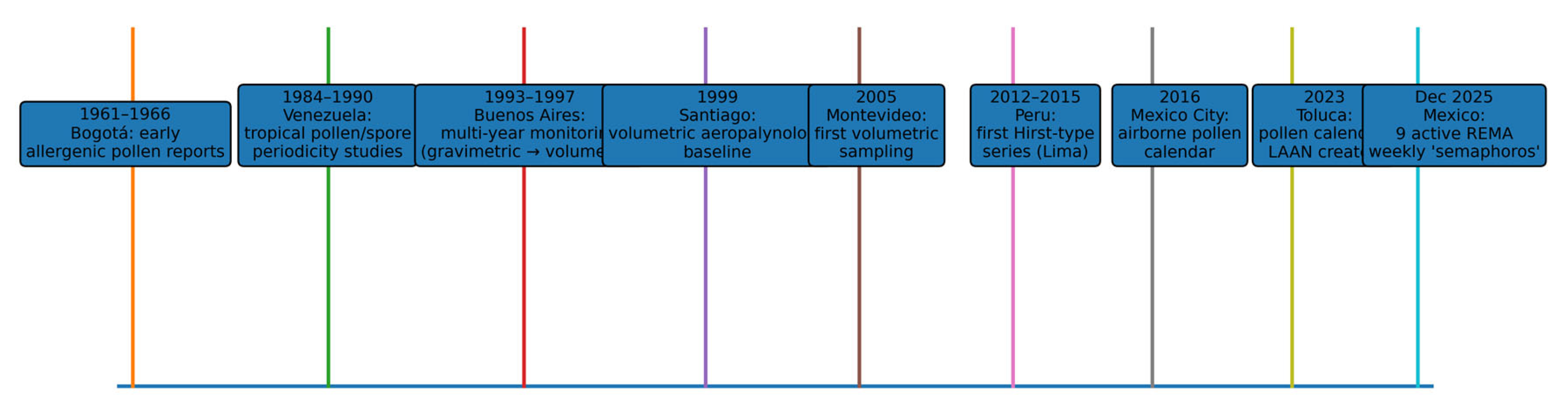
Figure 2.
Schematic overview of active aerobiology monitoring capacity in Latin America. Mexico currently reports nine localities with recent weekly REMA updates; other counts reflect RLA/LAAN-reported stations included in this review (not a geographic map).
Figure 2.
Schematic overview of active aerobiology monitoring capacity in Latin America. Mexico currently reports nine localities with recent weekly REMA updates; other counts reflect RLA/LAAN-reported stations included in this review (not a geographic map).
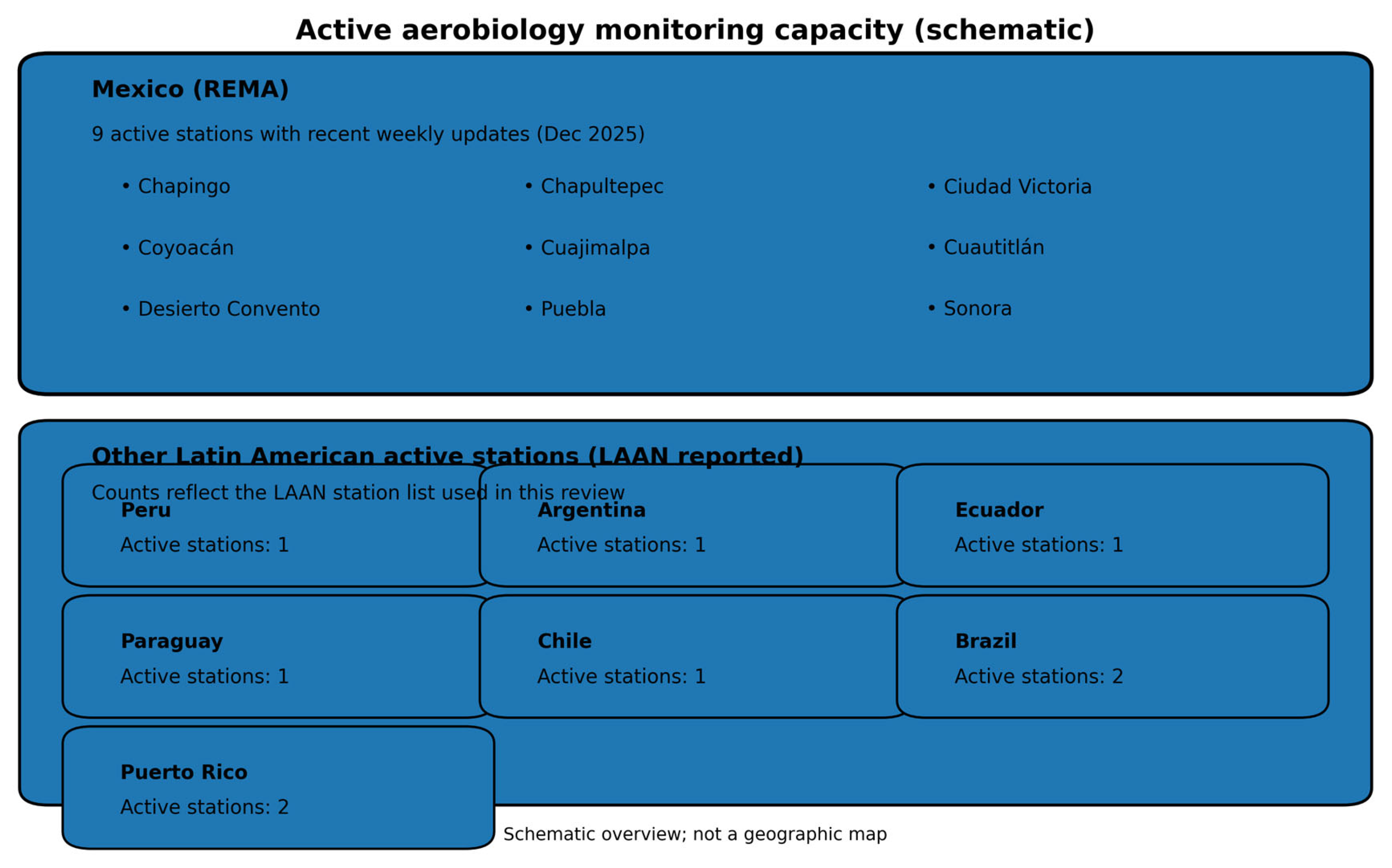
Figure 3.
Translational framework for Latin American aeropalynology, emphasizing harmonized sampling, standardized data products, communication, and emerging computational tools.
Figure 3.
Translational framework for Latin American aeropalynology, emphasizing harmonized sampling, standardized data products, communication, and emerging computational tools.
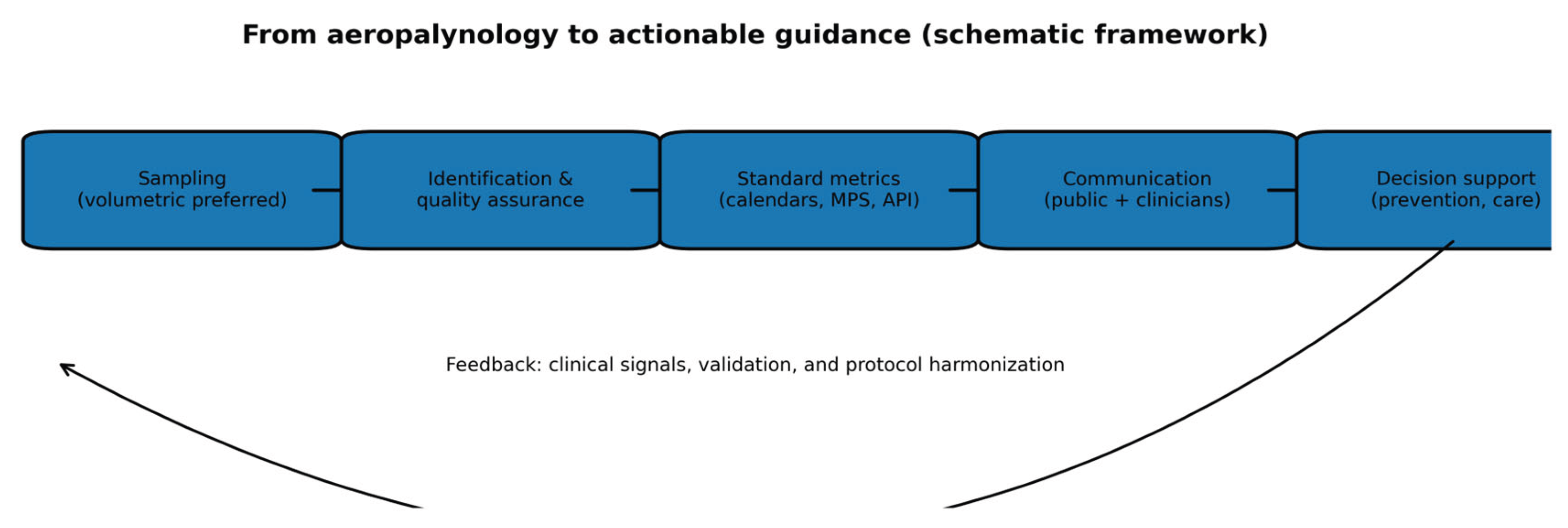

Table 1.
Summarizes country-level development, monitoring approaches, and representative high-impact pollen taxa reported in the reviewed literature [1,2,3,4,5,6,7,8,9,10,11,12,13,14,15,16,17,18,19,20,21,22,23,24,25,26,27,28,29,30,31,32,33,34,35,36,37,38,39,40,41,42,43,44,45,46,47,48,49,50]..
| Country | Past state (milestones) | Present state (capacity/outputs) | Primary sampling approaches | Representative high-impact taxa |
|---|---|---|---|---|
| Argentina | Early gravimetric and later daily volumetric monitoring in major cities. | Multi-city series; atlas resources; interannual analyses; limited standardized clinical linkage. | Gravimetric and Rotorod/Burkard/Hirst volumetric (city-dependent). | Tree pollen (Cupressaceae, Olea, Platanus), Poaceae, major weeds. |
| Brazil | Pollinosis described since 1970s (South), mainly grass-related. | Fragmented monitoring; regional pollen relevance (Lolium, cashew); limited standardized networks. | Hirst-type monitoring in selected sites; mixed approaches; many studies focus on other bioaerosols. | Poaceae (Lolium), Anacardium, urban tree pollen locally. |
| Chile | Early urban monitoring (Santiago) supporting local allergen panels. | Burkard/Hirst series in Temuco and Santiago; emerging allergens (Parietaria) identified. | Hirst/Burkard volumetric monitoring. | Poaceae, Rumex, Cupressaceae, Platanus, Parietaria. |
| Mexico | Early multi-year Hirst monitoring in major metros; first calendars and bioclimatic analyses. | REMA weekly public reporting (9 localities); multiple city calendars; computational identification tools emerging. | Hirst/Burkard volumetric; additional computational/AI-assisted workflows. | Fraxinus, Cupressaceae/Juniperus, Alnus, Poaceae, Urticaceae, Ambrosia, Chenopodiaceae–Amaranthaceae. |
| Peru | Hirst-type monitoring established in Lima (2012). | Continuous monitoring in Lima; linkage to sensitization; identification of locally relevant taxa (e.g., Tipuana). | Hirst/Burkard volumetric; Andersen impact sampling for fungi in some studies. | Poaceae, Oleaceae, Myrtaceae; Tipuana; key weeds locally. |
| Ecuador | Limited aeropalynology; clinical evidence highlights mites in Andes. | Emerging monitoring in Samborondón; coastal bioaerosol studies; need for expansion. | Early-stage monitoring; Petri dish methods for microbes; volumetric pollen monitoring emerging. | Poaceae; local trees/weeds under characterization. |
| Paraguay | Sparse historical monitoring. | First year-long Hirst monitoring in Asunción; diverse taxa reported; clinical relevance still uncertain for some taxa. | Hirst/Burkard volumetric. | Cecropia, Poaceae, Urticaceae, Cyperaceae, Moraceae. |
| Uruguay | Initial volumetric monitoring in Montevideo (early 2000s). | Intermittent activity; extended seasons reported; need for continuity and standardization. | Volumetric monitoring (reported). | Poaceae and diverse temperate taxa. |
| Colombia | Early Bogotá allergenic pollen descriptions and one-year surveys. | Recent open datasets (Ibagué); limited routine volumetric monitoring. | Mixed methods; need for volumetric standardization. | Local urban taxa; pollen vs. spores balance likely climate-driven. |
| Venezuela | Tropical America air sampling studies describing frequency/periodicity. | Limited continuous surveillance; high relevance for year-round exposure patterns. | Air sampling in tropical contexts (historical studies). | Likely sustained pollen/spore presence; taxa vary by urban vegetation. |
Table 2.
Highlights recurrent high-impact pollen taxa in Latin America and their typical contexts of dominance [1,2,3,4,5,6,7,8,9,10,11,12,13,14,15,16,17,18,19,20,21,22,23,24,25,26,27,28,29,30,31,32,33,34,35,36,37,38,39,40,41,42,43,44,45,46,47,48,49,50].
| Taxon/group | Where frequently reported | Typical seasonal pattern (general) | Clinical/translational notes |
|---|---|---|---|
| Cupressaceae/Juniperus | Mexico; Chile; Argentina; urban plantings widely. | Often winter–spring peaks in temperate settings; extended where planted. | Common urban allergen; useful for early-season alerts and panel inclusion. |
| Fraxinus | Mexico City region; other urban corridors. | Winter peak in Central Mexico. | High counts during winter; linked to symptoms and public alerts in Mexico. |
| Platanus | Chile; Argentina; other cities with ornamentals. | Spring peaks. | Urban ornamental with high exposure in some cities; often dominant in tree pollen counts. |
| Olea europaea | Argentina (Bahía Blanca); Peru (southern); Chile (some areas). | Spring peaks; interannual variability. | High sensitization in some regions; climate sensitivity reported. |
| Poaceae (grasses) | Region-wide; key in Chile, Argentina, Mexico, southern Brazil. | Late winter–summer (temperate); persistent background in some subtropical/tropical cities. | Broad sensitization; priority for calendars and thresholds. |
| Urticaceae | Mexico; Chile; Paraguay; Argentina. | Variable; can persist across seasons. | Common weed group; often included in panels; may be underestimated without taxonomic resolution. |
| Chenopodiaceae–Amaranthaceae | Arid/semi-arid Mexico; urban dry-season settings. | Often warm-season peaks; may overlap with dust/pollution episodes. | Relevant in arid regions; important for desert-city calendars. |
| Rumex | Chile; Southern Cone. | Spring–summer; can persist. | Associated with atopic sensitization in some regions. |
| Ambrosia (ragweed) | Mexico arid/northern; reported in multi-city comparisons. | Late summer–autumn in many regions; variable by latitude/biome. | High allergenicity; recommended for close monitoring and invasive spread. |
Table 3.
summarizes regional monitoring networks and emerging digital/computational tools that support translation of pollen data into decision support [1,2,49,54].
| Platform/network | Geographic scope | Primary outputs | Notes and access |
|---|---|---|---|
| REMA (Red Mexicana de Aerobiología) | Mexico (multi-locality) | Weekly ‘semaphore’ risk reporting; station-specific updates; taxon-level counts. | Public-facing platform with routine updates; accessed 4 January 2026 [1]. |
| RLA/LAAN (Red/Latin American Aerobiology Network) | Multi-country Latin America | Network coordination; station list; education/outreach. | Facilitates collaboration and capacity building; accessed 4 January 2026 [2]. |
| PollenSense/Pollen Wise App | Mexico City and Monterrey (reported) | AI-assisted pollen identification and user-facing exposure reporting. | Computational model-based pollen recognition integrated with mobile reporting; accessed 4 January 2026 [49]. |
Disclaimer/Publisher’s Note: The statements, opinions and data contained in all publications are solely those of the individual author(s) and contributor(s) and not of MDPI and/or the editor(s). MDPI and/or the editor(s) disclaim responsibility for any injury to people or property resulting from any ideas, methods, instructions or products referred to in the content. |
© 2026 by the authors. Licensee MDPI, Basel, Switzerland. This article is an open access article distributed under the terms and conditions of the Creative Commons Attribution (CC BY) license (http://creativecommons.org/licenses/by/4.0/).
Copyright: This open access article is published under a Creative Commons CC BY 4.0 license, which permit the free download, distribution, and reuse, provided that the author and preprint are cited in any reuse.


