

Submitted:
07 January 2026
Posted:
09 January 2026
You are already at the latest version
Abstract
The paper presents an example of a wearable system for caring for the elderly. It focuses on the relationships between the individual components of this system from a macro ergonomics point of view. The protection of older people has been identified as a standard of well-being that, in highly developed countries, is evolving from a passive social security model to an active, holistic paradigm. This new paradigm is aimed not only at prolonging life, but also at ensuring its highest quality, dignity and full social integration. This new standard goes far beyond pensions and basic healthcare, becoming a measure of a country's humanitarian maturity and social advancement. The design of such telecare systems should be user-oriented in accordance with the principles of universal design. Defining the relationship between humans and work elements is crucial. Its purpose is to ensure hygiene, safety and comfort at work, while maintaining high production efficiency.
Keywords:
smart textiles
; textronics
; e-textile
; health care
; application
; telemedicine
; ergonomic
1. Introduction
The market economy’s measurable response to demographic change is the so-called Silver Economy. Its development shows that caring for the well-being of older people is not only a burden on the state budget, but can also be a source of economic growth, innovation and new jobs [1]. It is a win-win model: seniors gain a better quality of life, entrepreneurs gain new markets, and the state gains more active and healthier citizens, which in the long term reduces the costs of the health and social care system [2]. In this context, older people are recognised as an important consumer group and a driver of economic growth [3]. We are seeing this economic growth in areas such as gerontechnology and related services [4]. Gerontechnology includes technological innovations that support the independence of older people, such as telecare, robotic assistants and smart homes, as well as specialist services related to these sectors in the areas of care, tourism and entertainment.
This comprehensive economic ecosystem responds to the needs of the population aged 65+, treating them not as passive beneficiaries of social care, but as active, diverse consumers, innovators and participants in the labour market [5]. The key change in thinking is to move from perceiving ageing as a cost to recognising its potential. Ageing societies with a large group of people with time, savings and specific needs are becoming a powerful engine for innovation and the creation of new industries. These are consumers who have expectations at a certain level. It is precisely in terms of meeting expectations and directly evaluating telecare systems that the author presents an attempt at evaluation and response, which is a good direction for development in the Silver Economy.
The paper presents an example of a textronic system for caring for the elderly and focuses on the individual relationships between the components of this system from the point of view of macroergonomics. Macroergonomics, according to the definition of the International Ergonomics Association (IEA) [6], concerns the study of complex systems. According to the IEA (2000), ergonomics is a scientific field concerned with explaining the interaction between people and other elements of a system and a profession that uses theories, principles, data and methods for design in order to optimise the functioning of the system as a whole and for the benefit of people. The subject of ergonomics is the relation of the human and the elements of work system. Its purpose is to ensure hygiene, safety and comfort of work, assuming high efficiency of the production process.
The ergonomic assessment of clothing is one of the stages of assessing functional comfort. The comfort of clothing can be analyzed on the basis of the classification introduced by J. Mecheels [7]. Figure 1 shows the most important factors influencing the comfort of wearing clothes.
The sensory properties of clothing are characterised by such parameters of the textile material as its elasticity, stretchability, roughness, slipperiness, smoothness and softness. The sensory properties also include the parameters of the fibre used: its type, morphological structure, length and elasticity. The characteristics of the yarn, or more precisely the nature of the fibres (cut, continuous or textured), are also important. The overall characteristics of the material resulting from the production technique used, i.e., whether the garment was woven or knitted, are also significant. Finishing processes are also important [9].
The ergonomic aspect is related to the fit of clothing to the body of the person wearing it. Its elasticity is also important, as it ensures adequate freedom of movement. The main criteria for ergonomics are increasing the range and speed of movements. Clothing that is too loose and baggy can slow down and reduce this range. Clothing materials that fit snugly to the body increase both the efficiency of the activities performed and safety, which is particularly important when practising sports [10] Other factors that characterise the comfort of clothing include antibacterial properties and the reduction of unpleasant odours, which are further features of clothing with a high level of comfort [11]. The comfort of wearing clothing can be measured quantitatively. Tests are performed on people in natural conditions or in climate chambers, with appropriately adjusted parameters that can be additionally monitored. The tests must be conducted on a large group of diverse individuals so that the clothing designed in the next stage can be used effectively by a wide range of users.
The most important parameters determining the comfort of clothing use include, above all, water vapour and air permeability, the antibacterial properties of fibres and mechanical properties. However, comfort is not only related to the appropriate mechanical and physical characteristics, the fit of the clothing or the types of fibres used, but also to psychological aspects such as fashion trends and the use of new technologies [12,13,14] and ergonomic aspects.
1.1. Textronics as Wearable System in Healthcare
A growing number of elderly people in Poland and Europe makes us look for new solutions of the continuous monitoring of their health state. This approach allows for early action in case of dangerous situations for elderly person’s life (state before a heart attack or a stroke, etc.). The system for the continuously health state monitoring also allows for quick action of first contact doctors in the case of emergency situations. In this work that system is called textronics [15].
The term textronics refers to a synergic connection of textile science and engineering, electronics and informatics with the use of knowledge of automatic and metrology. The synergy of such connection is displayed in creation of a new quality, in which the component elements enhance mutually their action [15]. This is achieved by physical integration of microelectronics with textile and clothing structures. The aim of textronics is obtaining multifunctional, intelligent products of a complex internal structure, but of uniform functional features. As a textronics system it is called measuring and control system, which includes fibrous sensors and actuators, or other elements inserted in the fibrous structures, as well as electronic micro-circuits connected with these structures or formed with the use of them.
Textronics system also allows for the remotely monitoring of elderly people in their homes by their relatives. The monitoring system is portable, comfortable to use and uses non-invasive measurement methods. That kind of clothing is a fully user-friendly product. The textronics system is a new product for monitoring selected human physiological parameters, such as: pulse, frequency of breathing, underclothing temperature, positioning inside and outside the house. Textile sensory elements and signal lines are implemented in the structure of the clothing and it is a main innovation of such kind of systems. System of a textile sensor is a part of a garment, the monitoring system is fully portable, easy for using, does not require specialized medical services. Furthermore, measurement of physiological parameters is non-invasive which means that does not interfere directly in the human body. The system is completely safe, because it is supplied by a miniature battery such as the one that are used in mobile phones. The combination of textile clothing interface with specialized software for data acquisition and generation of alarm signals provides a continuous overview of the health status of the monitored person.
The elderly are a group of people who need a special care [16]. Concerning for their safety, textronics clothing for monitoring physiological parameters was designed. This system is a new product for monitoring selected human physiological parameters, such as: pulse, frequency of breathing, underclothing temperature, positioning inside and outside the house. If one of those parameters changed, the appropriate services on line would be notified.
The combination of smart textiles and wearable electronics has given rise to a new interdisciplinary field of knowledge known as textronics. This field emerged from the combination of textiles, electronics, computer science, automation, metrology and physiology. Textronic systems, which often take the form of everyday clothing enhanced with electronics, sensors, and power systems, are designed to improve quality of life. To fulfil this purpose, the integrated electronic components must be flexible, lightweight, and highly durable – they must withstand everyday use, washing, moisture, and changing weather conditions. Thanks to miniaturisation, specialised sensors can now be incorporated into ordinary garments. These sensors can detect abnormalities in heart function or breathing to monitor health status. Furthermore, textronics enables therapy to be administered, for instance using electrical or thermal stimulation.
Textronics systems allow to create applications that contribute to improving the comfort of human life. Textronics products are usually manufactured in the form of everyday clothes containing electronic systems (power systems and sensors) and are used in therapeutic products and vital signs monitoring products. The integration of the textronic system consisted primarily of the construction of a clothing module and the appropriate planning of individual measurement modules within the clothing structure, i.e., modules for measuring pulse, respiratory rate, undergarment temperature, and the placement of textile antennas for transceiver modules, i.e., GSM and WIFI antennas, made in previous project tasks. GSM and WIFI antennas made in previous project tasks. The design of the clothing module also included special channels for placing textile signal lines connecting the textile sensors to the electronic module.
Textronics solutions for the continuous monitoring of their state health allows for early action in case of dangerous situations for elderly person life (state before heart attack or stroke, etc.) [17]. The system for continuously monitoring the health status also allows for quick action of first contact doctors in the case of emergency situations. This described system is also allow the monitoring of elderly people in their homes remotely by their relatives. The monitoring system is portable, comfortable to use and uses non-invasive measurement methods.
Figure 2.
Photo showing the base textile module with textile sensors implemented.
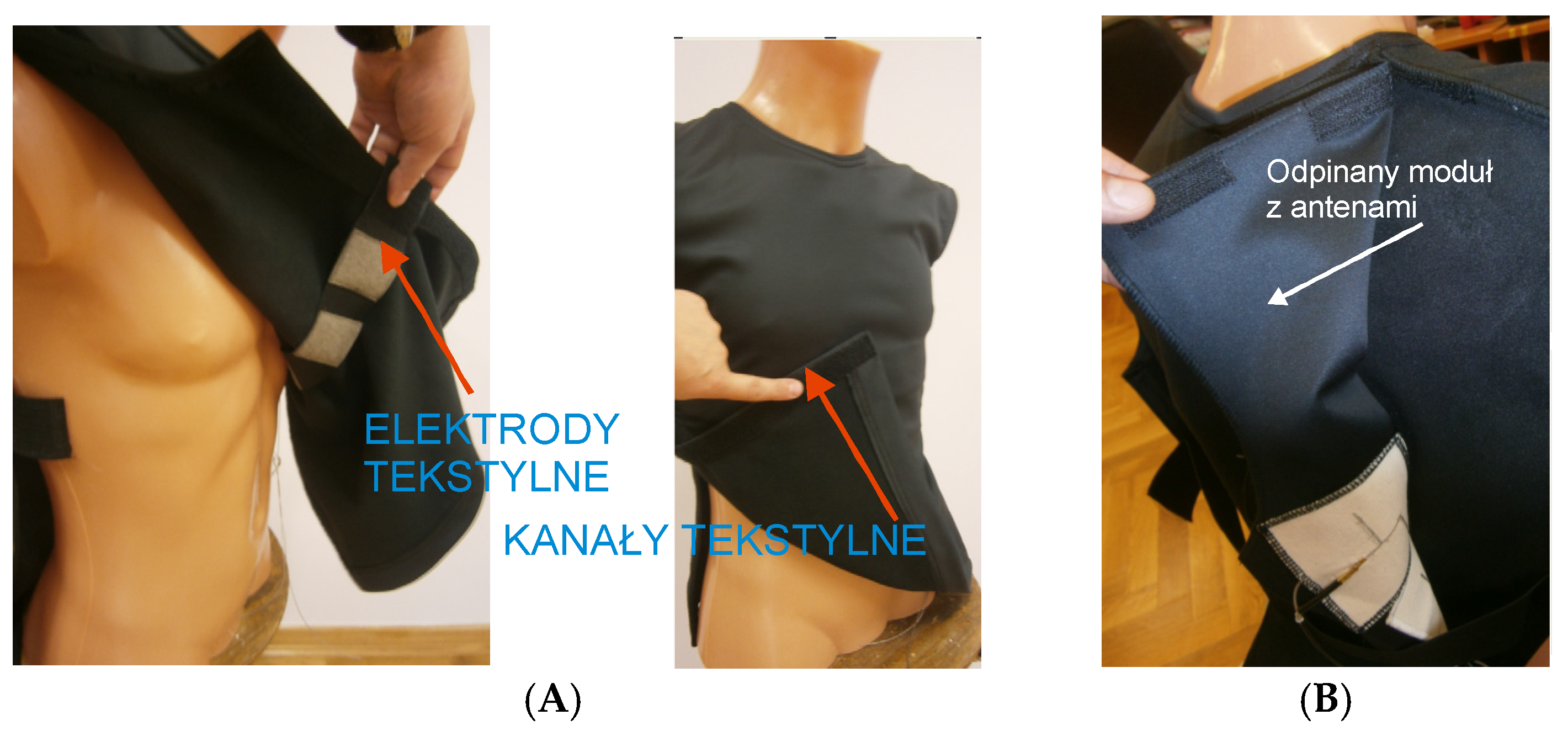
This kind of clothing is fully user-friendly product. The Textronic system is a new product for monitoring selected human physiological parameters, such as: pulse, frequency of breathing, underclothing temperature, positioning inside and outside the house, Figure 3.
Textile sensory elements and textile signal lines are implemented in the structure of the clothing and it is a main innovation of this kind of systems. System of a textile sensor is part of a garment, the monitoring system is fully portable, easy for using, does not require specialized medical services. Furthermore, measurement of physiological parameters is non-invasive which means that does not interfere directly in the human body. The system is completely safe, because it is supplied by a miniature battery such as the one that are used in mobile phones. The combination of textile clothing interface with specialized software for data acquisition and generation of alarm signals provides a continuous overview of the health status of the monitored person.
SoftShell fabric made of PES with a weight of 125 g/m2 was selected as the base material [18]. This choice was dictated by its good thermal properties (adequate thermoregulation) and adequate moisture transport from the body to the outside of the garment. The tests were conducted under the supervision of staff from the Department and Clinic of Cardiology at the Medical University of Łódź. Figure 4A–C shows an example of software pages. The first tab contains information about all patients connected to the monitoring system. Individual tabs with patient names contain information about them, which is presented in a summary table. It includes data such as a photo, the patient’s first and last name, their age, a description of their illness, and comments. In addition, it is possible to load the measurement history using the dialogue box and the “load data” button. The measurement data for a given measurement day will then be plotted on the summary graph.
After logging in, we gain access to the home page, where we have several tabs at our disposal, each of which performs specific functions. These tabs include: patients, measurements, position inside the building, position outside the building, and administrator panel.
2. Materials and Methods
2.1. Textronics System
One example of the applications described above is a textronics system for protecting older people. It comes in the form of a T-shirt and does not require specialized personnel to operate it. The system measures basic vital parameters: pulse, respiratory rate, body temperature and tracks the user’s location inside and outside buildings. It is intended for older people, especially patients in hospitals and nursing homes. If one of the mentioned parameters changes in a life-threatening way, the appropriate medical services are notified. Embedded software ensures continuous data collection and generating alarm signals in the form of reports such as SMS or e-mails for caregivers of the elderly. The system also allows elderly people to be remotely monitored in their homes by their family. Textile sensor elements and textile signal lines are implemented in the structure of the clothing and this is the main innovation of this type of systems. Moreover, the measurement of physiological parameters is non-invasive, which means that it does not directly interfere with the human body. The system is completely safe because it is powered by a battery, such as those used in mobile phones. The GPS (Global Positioning System) function allows you to determine the patient’s location. The IPS system (Intrusion Detection System) indicates the user’s position inside the building [14,19].
2.2. Makroergonomics System Analysis
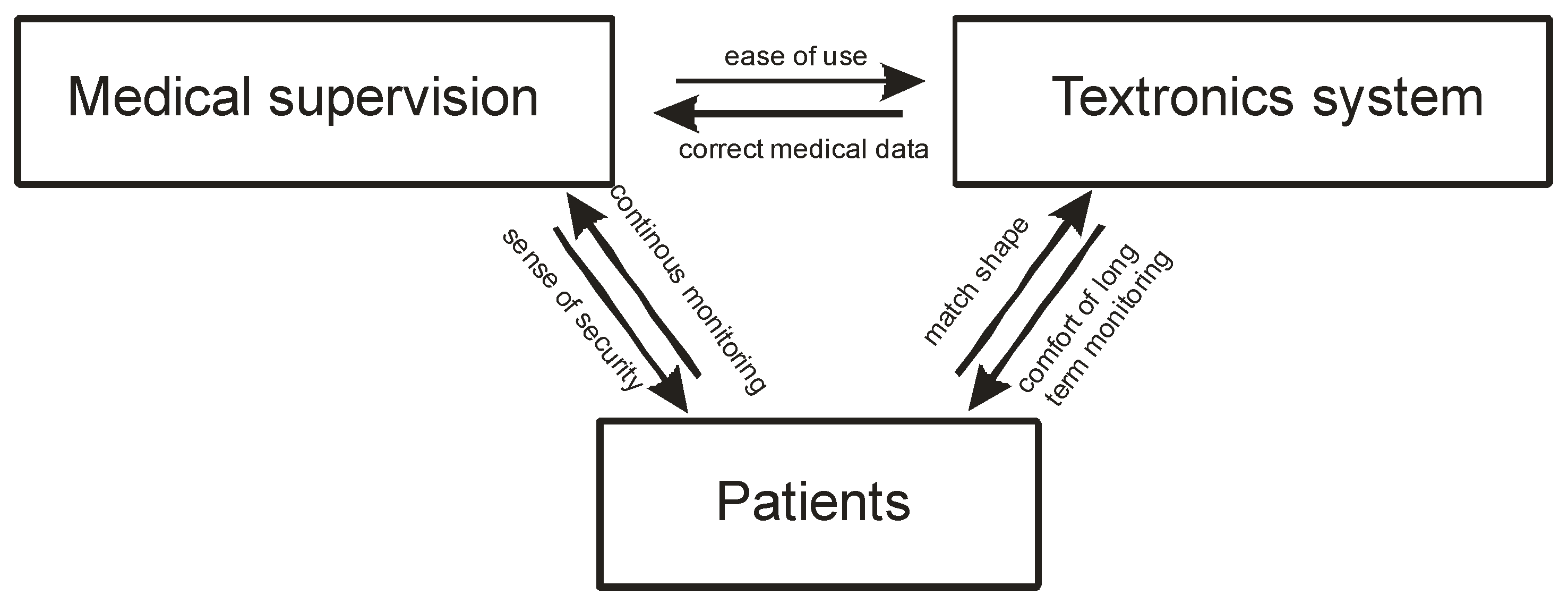
In order to consider the ergonomics of such a system, it is first necessary to analyse the relationships between its components. The basic relationships between the individual components of the Medical Supervision, Textronics System, and Patients are shown in Figure 1. This paper focuses on the technical aspects of the ergonomics of the textronic system from the perspective of nurses and patients. Subjective aspects, such as the aesthetics of the textronic system, have been omitted.
Figure 5.
Basic macroergonomic layout: Textronic system – Medical carer – Patient, including mutual dependencies.
Figure 5.
Basic macroergonomic layout: Textronic system – Medical carer – Patient, including mutual dependencies.
2.2.1. Patient Awareness and Public Approval
First, we need to answer the question of how a textronic system will improve the functioning of a nursing home and whether the residents themselves are interested in this type of solution. Patient awareness and social approval for this type of device is essential in order to consider the correctness and ergonomics of textronic systems. Therefore, the first step was to conduct a survey on the technological awareness of senior citizens. The research was conducted in the second largest city in Poland in terms of population. For this purpose, a survey was conducted at the Active and Healthy Senior Fair, which takes place in Poland. It is one of the most important exhibition events dedicated to companies and institutions offering products and services that improve the quality and comfort of life for people aged 65+ in Poland. Over 100 people aged 68 and over were surveyed, of whom 58 were women and 42 were men. The respondents were asked questions:
1) Do you know what wearable electronics/textronics are?
2) Do you know what telemedicine care is?
3) Would you like to test a solution such as textronics clothing?
4) Would you like to be examined in the future using only telemedicine systems?
5) No opinion.
Figure 6.
Analysis of respondents’ answers regarding telemedicine care using text-based solutions.
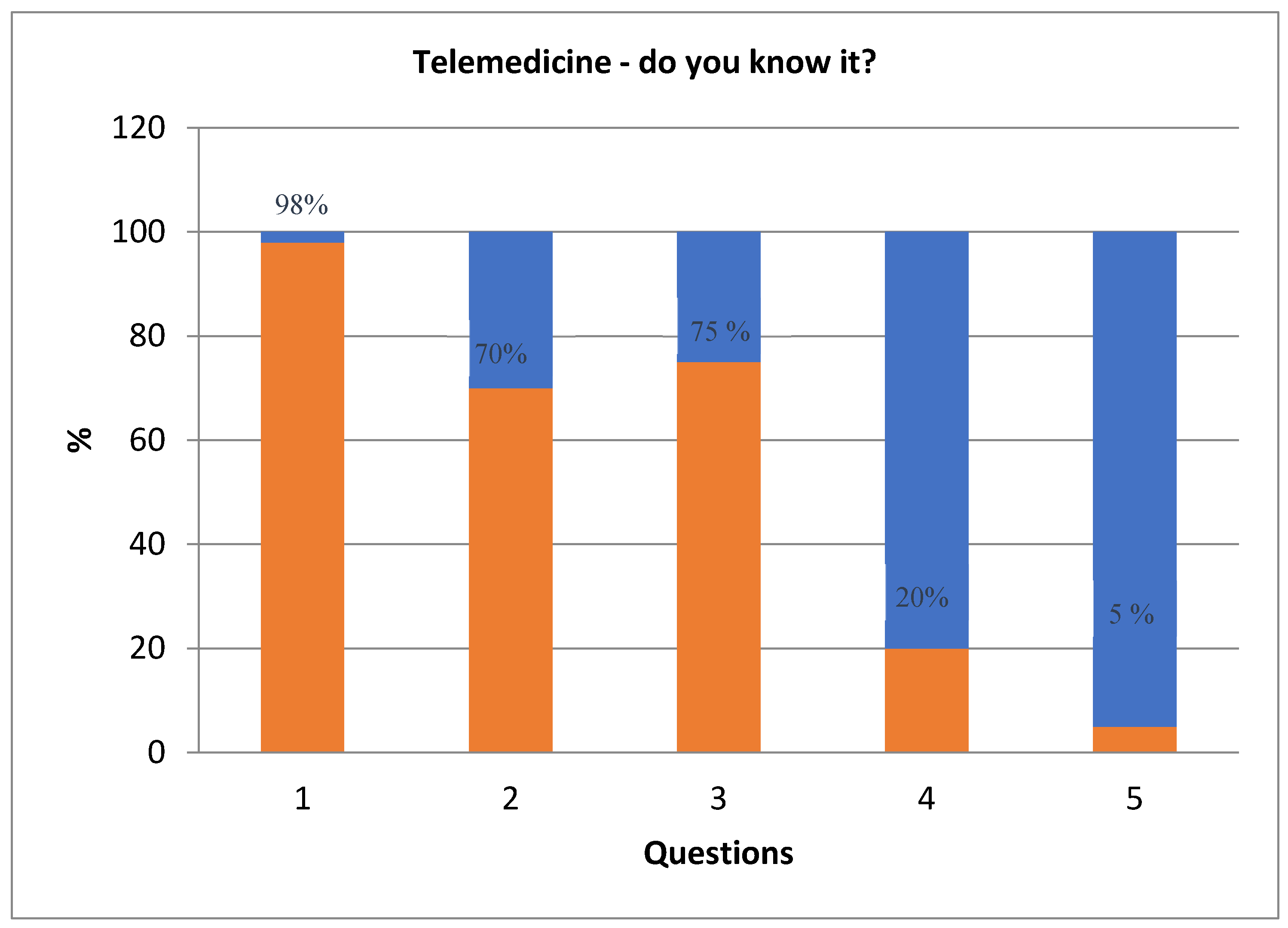
The survey shows that today’s seniors are eager to learn about new technologies. This is evidenced by the fact that the majority of respondents (approximately 98%) knew or had heard about innovations related to telemedicine (wearable electronics/textronics), and a significant majority – 75% – also declared their willingness to test such devices. At the same time, however, almost all respondents do not want telemedicine systems to be decisive in assessing their physical condition. This is due to their high level of trust in doctors and their desire to be in contact with them. Therefore, textronics systems should be treated as devices supporting the work of medical staff and nursing homes, in view of the growing number of elderly people in our society. This is intended to improve the comfort and quality of healthcare services.
3. Technical Assessment of the System: Functionality
The system was validated under the supervision of doctors at one of the provincial hospitals in the city. Bedridden patients with significantly limited motor skills were selected as the target group. The functionality assessment began with an analysis of how a nurse fitted the textronic system to a patient. The nurses participating in the experiment had over 10 years of experience in caring for bedridden patients. During their normal work, their duties include dressing or changing patients into hospital clothing and applying measuring devices such as ECG electrodes, spirometry devices and temperature measurement devices. The activities that were taken into account when comparing the functionality of traditional care methods with the textronics system are presented in Table 1.
4. Results
The functionality analysis, from the point of view of the time spent by medical staff on patient care, shows that the use of the textronic system saves 2 minutes and 30 seconds of a nurse’s working time per patient when performing basic care activities.
The automatic recording of measurement data in the textronic system on a data server has been demonstrated to facilitate communication with the attending physician, who has been shown to have direct access to the patient’s file.The patient’s physiological parameters were measured several times during the day. From the point of view of the doctor/caregiver, the ergonomic usability, i.e., the speed of operation of the textronic system, is significant, as a single application of the system to the patient was sufficient to perform continuous measurements with online recording. The flexibility of this system is expressed, among other things, by the possibility of personalisation. To this end, the design of a typical T-shirt has been modified with an integrated inner belt with sensors that wraps around the patient’s body. This method avoided wrapping the entire torso of patients, which was uncomfortable for them. The belt itself, located at chest height (under the bust in women), fits very well and does not “move” with the entire garment, resulting in good quality measurement signals. The belt is made of a material with added elastane and is fastened with Velcro.
This makes it possible to adjust the pressure of the electrodes against the skin without compromising comfort. The belt can be individually adjusted, is integrated into the shirt and prevents the textile electrodes from shifting. This means that the shirt does not have to be custom-made for the user; standard sizes such as S, M, XL, etc. are sufficient. The garment itself is sleeveless, pulled over the head and fastened at the sides with Velcro, which is very important for elderly people with limited mobility. The ergonomics of the software part of the system have been ensured by introducing information fields with measurement data for each patient separately. The software proposes the use of a feature mechanism. This allows the definition of fields for handling specific data, selected by the attending physician. In addition, the system allows the definition of alarm thresholds for individual physiological parameters for each patient, thus increasing the protection of each patient. If the selected parameters are exceeded, the doctor or nurse would be informed of this fact by an audible signal and a graphic signal.
From the point of view of ergonomic analysis of the textronic system, attention should also be paid to the risks arising in the relationship between people, technology and the environment. During testing, attention was drawn to the faster than usual (28% faster) discharge of mobile devices such as smartphones, which carers used to check on their patients during the working day. This increased use of the device was caused by the carer’s additional control over the IT system, constantly glancing at the screen and viewing the cards (bookmarks) of individual patients. This was due to the nurses’ subconscious lack of confidence in the analysis of the physiological parameters of elderly people carried out by the textronic system.
5. Discussion and Conclusions
The analysis of the ergonomics of the textronics system shows that it improves the process of monitoring elderly people. This system improves the functionality of care for people with limited mobility who require constant monitoring of their physiological parameters. A broader perspective was adopted for the preliminary analysis of the ergonomics of the telemedicine system, and the opinions and reactions of a group of patients and medical staff from one of the hospitals participating in the tests.
Analyzing the ergonomics of the textronics system in this way, it was found that it eliminates the risk of care staff failing to detect sudden changes in the health of elderly/monitored persons. The system also creates a sense of increased security – a virtual guard among patients (system users). However, at the beginning, users of this system, both nurses and patients, approached its operation with some reserve, subconsciously distrusting the complete accuracy of the textronic system’s readings.
This manifested itself, among other things, in more frequent monitoring of physiological parameters by medical staff using web-based software, and increased interest among patients in the unusual attire, the textronic measurement system. Analyses show that the textronic system ensures complementarity of actions in the patient-system-caregiver relationship. The use of the textronic system results in a sustainable state of operation in the long term, which increases patient safety while reducing the workload of medical staff (caregivers). This bodes well for the use of telemedicine systems in the care of the elderly.
References
- W. Hua, “Gerontechnology: Research, Practice, and Principles in the Field of Technology and Aging, edited by Sunkyo Kwon, New York, NY: Springer Publishing Company, 2017, 515 pp., \$90 (paperback), ISBN: 978-0826128881,” Educ Gerontol, vol. 44, no. 2–3, pp. 208–209, 2018. [CrossRef]
- J. E. Birren and J. E. Birren, Encyclopedia of Gerontology: Age, Aging, and the Aged. Place of publication not identified: Academic Press Imprint, 2006.
- K. J. E. L. I, “Postawy i zachowania konsumentów w wieku 60 + wobec żywności funkcjonalnej,” vol. 3, no. 3, pp. 219–232, 2018. [CrossRef]
- M. McQuerry, E. Easter, and A. Cao, “Disposable versus reusable medical gowns: A performance comparison,” Am J Infect Control, vol. 49, no. 5, pp. 563–570, 2021. [CrossRef]
- E. Foundations and A. Policy, “Economic Foundations for Creative Ageing Policy”.
- “https://iea.cc/.”.
- J. Mecheels, Körper - Klima - Kleidung: wie funktioniert unsere Kleidung? Schiele und Schön, 1998. [Online]. Available: https://books.google.pl/books?id=8G47qUxb_UIC.
- I. Frydrych, G. Dziworska, and M. Matusiak, “Influence of the kind of fabric finishing on selected aesthetic and utility properties,” Fibres and Textiles in Eastern Europe, vol. 11, no. 3, pp. 31–37, 2003.
- G. Rajeswari, M. Murugan, and V. R. M. Gc-ms, “J OURNAL OF PHARMACEUTICAL AND BIOMEDICAL SCIENCES the World Wide Web at : www.jpbms.info,” vol. 29, no. 17, pp. 818–824, 2013.
- W. Zhong, M. M. Q. Xing, N. Pan, and H. I. Maibach, “Textiles and human skin, microclimate, cutaneous reactions: An overview,” Cutan Ocul Toxicol, vol. 25, no. 1, pp. 23–39, 2006. [CrossRef]
- Y. Z. EDWIN KAMALHA1, 2*, 3 SALOME , JOSPHAT I MWASIAGI1, and KYATUHEIRE1, “THE COMFORT DIMENSION; A REVIEW OF PERCEPTION IN CLOTHING,” no. Anand 2003.
- J. Dominiak and I. Frydrych, “Comfort - Related properties of clothing packages with adhesive inserts,” Fibres and Textiles in Eastern Europe, vol. 97, no. 1, pp. 83–86, 2013.
- R. K. Nayak, S. K. Punj, K. N. Chatterjeé, and B. K. Behera, “Comfort properties of suiting fabrics,” Indian J Fibre Text Res, vol. 34, no. 2, pp. 122–128, 2009.
- M. Frydrysiak and Ł. Tęsiorowski, “Wearable Care System for Elderly People,” International Journal of Pharma Medicine and Biological Sciences, vol. 5, no. 3, pp. 171–177, 2016. [CrossRef]
- S. Youn et al., “Simulation-Based Contact Pressure Prediction Model to Optimize Health Monitoring Using E-Textile Integrated Garment,” IEEE Sens J, vol. 23, no. 16, pp. 18316–18324, 2023. [CrossRef]
- C. Balducci et al., “Negative impact and positive value in caregiving: validation of the COPE index in a six-country sample of carers.,” Gerontologist, vol. 48, no. 3, pp. 276–286, Jun. 2008. [CrossRef]
- S. Youn and C. Hee Park, “Development of breathable Janus superhydrophobic polyester fabrics using alkaline hydrolysis and blade coating,” Textile Research Journal, vol. 89, no. 6, pp. 959–974, 2019. [CrossRef]
- M. Frydrysiak and L. Tesiorowski, “Wearable textronic system for protecting elderly people,” in 2016 IEEE International Symposium on Medical Measurements and Applications (MeMeA), 2016, pp. 1–6. [CrossRef]
Figure 1.
The scheme of the factors that influence the level of comfort experienced when wearing clothes.
Figure 1.
The scheme of the factors that influence the level of comfort experienced when wearing clothes.
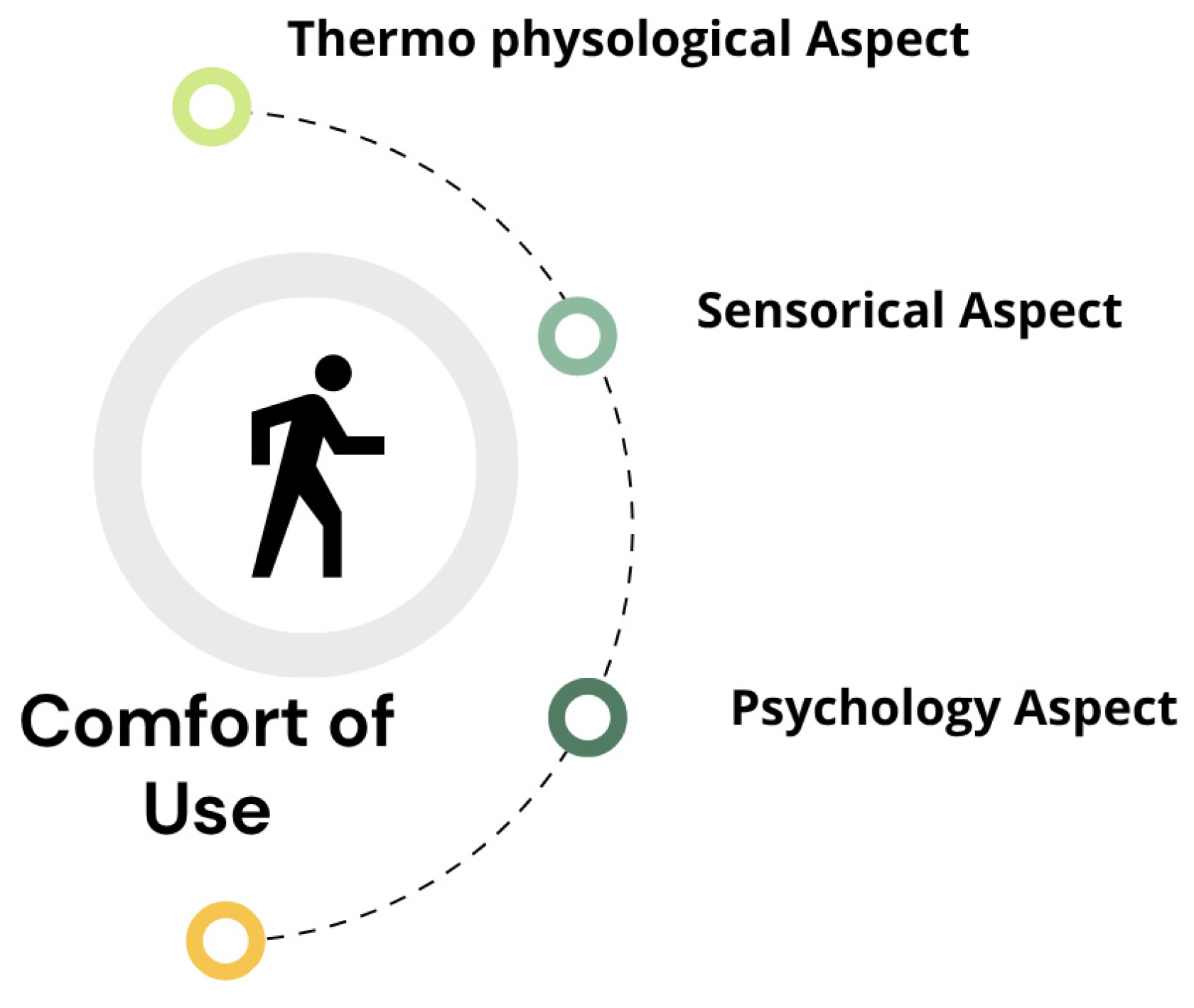
Figure 3.
Functionality of textronics clothing designed to protect elderly people.
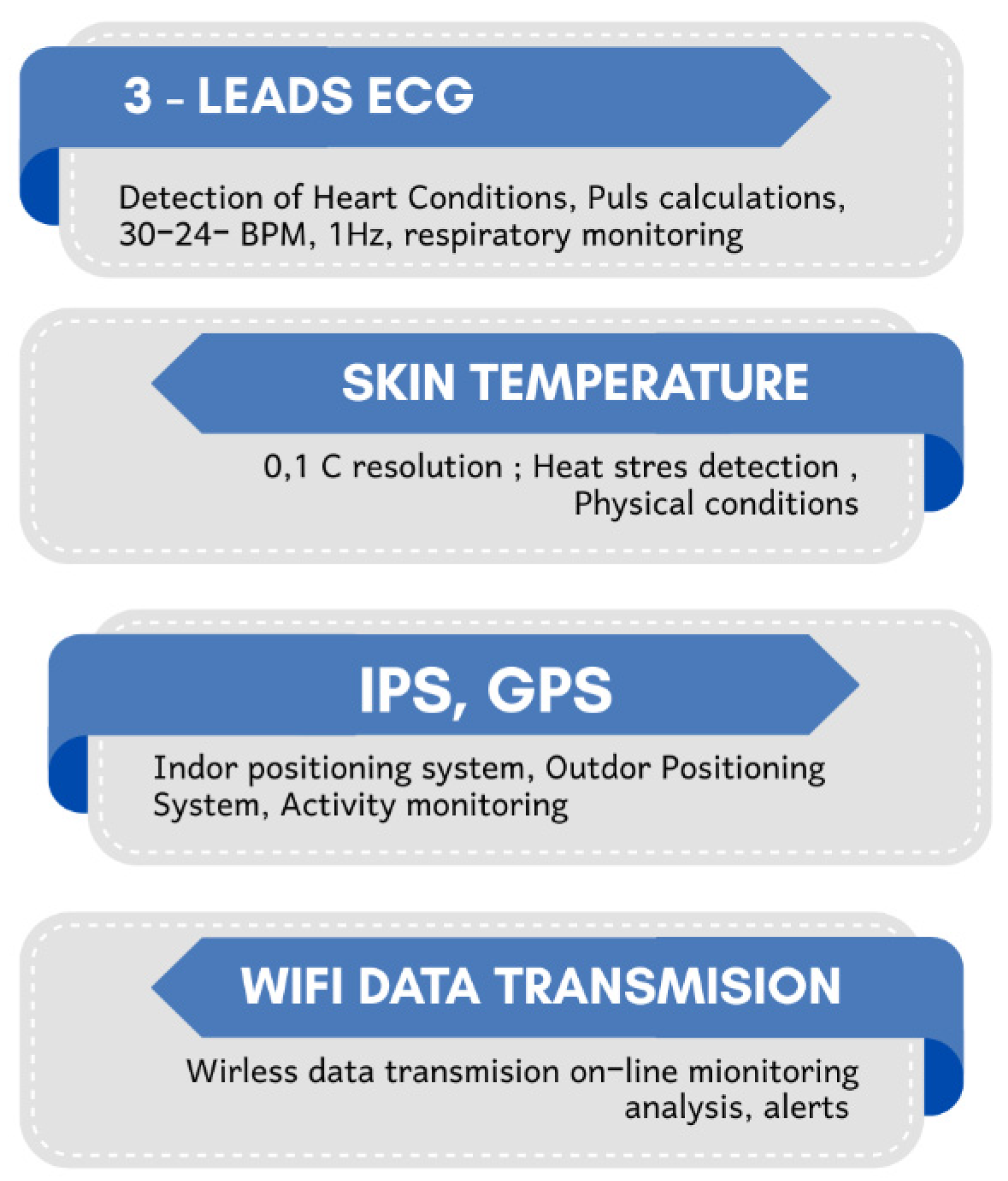
Figure 4.
Screen of Web page monitoring system:, A) medical caregiver assignment; B) patient information; C) measurement data acquisition page.
Figure 4.
Screen of Web page monitoring system:, A) medical caregiver assignment; B) patient information; C) measurement data acquisition page.
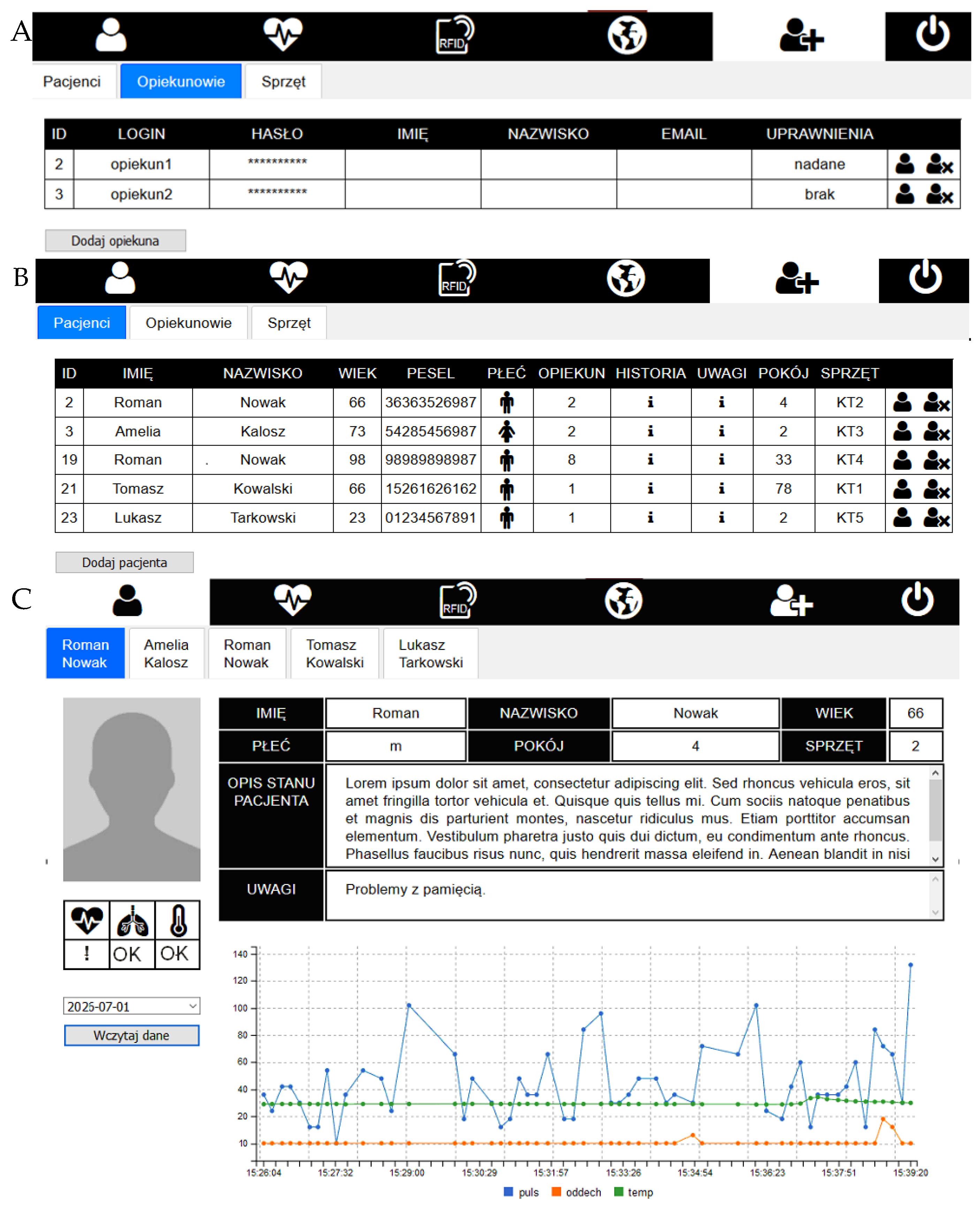

Table 1.
Analysis of patient service time by medical staff – basic and group ergonomic criteria.
| Name of activity | Lead time, min | 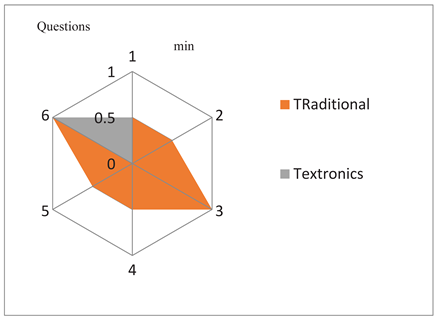 |
||
| traditional | textronics | |||
| 1 | Dressing the patient in clothing | 0,5 | 0,5 | |
| 2 | Placing ECG electrodes | 0,5 | 0 | |
| 3 | Temperature measurement | 1 | 0 | |
| 4 | Setting up the spirometry part | 0,5 | 0 | |
| 5 | Entry in the medical record | 0,5 | 0 | |
| 6 | Other support activities | 1 | 1 | |
Disclaimer/Publisher’s Note: The statements, opinions and data contained in all publications are solely those of the individual author(s) and contributor(s) and not of MDPI and/or the editor(s). MDPI and/or the editor(s) disclaim responsibility for any injury to people or property resulting from any ideas, methods, instructions or products referred to in the content. |
© 2026 by the authors. Licensee MDPI, Basel, Switzerland. This article is an open access article distributed under the terms and conditions of the Creative Commons Attribution (CC BY) license (http://creativecommons.org/licenses/by/4.0/).
Copyright: This open access article is published under a Creative Commons CC BY 4.0 license, which permit the free download, distribution, and reuse, provided that the author and preprint are cited in any reuse.


