Preprint
Article

This version is not peer-reviewed.

Effect of Reduced Water Potential on Imbibition Curve and The Triphasic Pattern of Seeds in Solanaceae Species

Submitted:

06 January 2026

Posted:

07 January 2026

You are already at the latest version

Abstract

This study aimed to analyze the effect of reduced water potential on the imbibition curve and triphasic pattern of seeds in several Solanaceae species. The experiment was conducted at the Seed Physiology and Health Laboratory and the Seed Biology and Biophysics Laboratory, Department of Agronomy and Horticulture, Faculty of Agriculture, Bogor Agricultural University, from April to September 2025. The study used seeds from three Solanaceae crops—chili (Capsicum annuum L., varieties Simpatik and Sempurna), tomato (Solanum lycopersicum L., varieties Niki and Rempai), and eggplant (Solanum melongena L., varieties Tangguh and Provita). The seeds were subjected to various levels of osmotic stress using polyethylene glycol (PEG 6000) to simulate water potentials of 0.00, –0.30, –1.90, and –4.10 MPa. Lower water potential in the growing medium reduced the seed’s ability to absorb the water. The triphasic pattern consistently appeared only in chili seeds, whereas in tomatoes and eggplants, it varied across varieties and water potential conditions. The lower water potential made the later the phase I ended, and the longer the phase II lasted. These findings confirm that the standard imbibition pattern cannot be generalized to all seeds, and therefore, the imbibition response is specific to seed type, variety, and germination environment.

Keywords: 
;  ;  ;  ;  

1. Introduction

Seed germination marks a pivotal transition in the plant life cycle, linking a quiescent, desiccated seed to an actively growing seedling capable of independent establishment. Germination success depends largely on environmental factors, particularly water availability [1]. Water not only initiates the physical swelling of the seed but also triggers a cascade of metabolic and physiological processes necessary for embryo activation and growth [2,3]. The initial uptake of water, known as imbibition, is fundamental to germination because it rehydrates cellular components and restores membrane integrity, and triggers metabolic processes essential for embryo activation and subsequent seedling development [4,5,6]. However, when the surrounding medium exhibits reduced water potential, such as under drought or osmotic stress, the rate and extent of imbibition are adversely affected, potentially delaying, reducing, or completely inhibiting germination [7,8].
According to [3], the process of seed imbibition follows a triphasic pattern. In the first (Phase I), water absorption occurs rapidly due to potential differences between the seed and the germination medium, and by low-intensity metabolic activity. The second (Phase II) is characterized by a plateau in water absorption, where the seed reaches near-hydration equilibrium. However, there is little to no change and intense metabolic activities involved in preparing the seed for germination and seedling growth. Next, the third (Phase III), subsequent growth with radicle protrusion and seed weight gain. All of which are sensitive to water availability, reduced water potential slows or blocks the imbibition process and thereby delays germination [9] In particular, prolongation of phase II under low water potential correlates with delayed radicle emergence and slower progression toward germination completion [1], while the same hydric constraint aligns with observations of slowed imbibition and germination under drought or osmotic stress across multiple species [2]. These findings collectively establish water potential as a primary modulator of the imbibition timeline and germination rate [2].
The Solanaceae family includes agriculturally important crops (Capsicum and Solanum species) that are frequently cultivated under water-limited conditions, making them relevant for studying seed germination in drought-like environments [10,11]. Seed germination under drought-like environments is a critical stage determining stand establishment and yield, making it a pertinent focal point for understanding drought tolerance in solanaceous crops [12,13]. This contextualizes, making them ideal models for studying the influence of water potential on imbibition and the triphasic pattern. Previous studies have reported that Solanaceae seeds are sensitive to reduced water potential, showing delayed radicle emergence and decreased final germination percentage as osmotic stress intensifies [14,15,16]. Furthermore, analyzing the imbibition curve under reduced water potential provides valuable information for modeling seed hydration kinetics. Parameters derived from these curves, such as the rate of water absorption and the duration of each imbibition phase, can be used to describe species-specific differences and to identify thresholds of water limitation that impede germination. Therefore, the present study aims to evaluate the effect of reduced water potential on the imbibition curve and the triphasic pattern of seeds in selected Solanaceae species. The hypothesis of this research is that reduced water potential significantly affects the seed imbibition curve and the triphasic imbibition pattern in Solanaceae species.

2. Materials and Methods

This research was conducted at Seed Physiology and Health Laboratory, Department of Agronomy and Horticulture, Faculty of Agriculture, Bogor Agricultural University from April to September 2025. The main materials used in this research include seeds from three commodities of the Solanaceae family, namely chilies (Simpatik and Sempurna varieties), tomatoes (Niki and Rempai varieties), and eggplants (Tangguh and Provita varieties). The experiment was arranged in randomized complete block design (RCBD) with a single factor, namely osmotic potential, comprising four levels [0.0 MPa (control), −0.30, −1.90, and −4.10 MPa] induced by different concentrations of polyethylene glycol 6000 (PEG 6000) solutions. Each treatment was replicated four times, and each experimental unit consisted of 100 seeds. The concentrations of PEG 6000 required to obtain these values were determined by using the equation [17]: Ψ = [–0.10 – 0.001 C + 0.026 C2 – 0.0003 C3] where Ψ = osmotic potential (MPa); C = concentration (g L-1 PEG 6000 in water). As control, a solution with osmotic potential Ψ = 0.0 MPa was used.
The research procedure began with germination of 50 seeds in each germination on a double layer of paper and towel tissue soaked in at least 10 mL of the PEG 6000 solution in plastic box (17 cm x 11.5 cm x 7.5 cm). The boxes were stored in a germination room with a temperature ranging from 25 °C ± 2 °C. Water content and radicle emergence observations were carried out for four-hour intervals, from 0 hour until no more radicles emerged. Radicle emergence was defined as the seed emergence of a radicle reaching 2 mm in length. Both parameters used a new seed sample for each imbibition event. Radicle emergence (RE) was calculated using the following formula:
Radicle   emergence   ( % )   =   Number   of   seeds   with   emerged   radicles   Total   number   of   seeds     x   100
Seed moisture content was measured using the direct method using a high-temperature oven at 130 °C for 1 hour, with each testing unit consisting of 50 seeds. The measurement results are expressed as a percentage of water content absorbed by the seeds, using the following formula [18]:
Water   content   ( % )   =   Wet   weight   Dry   weight Dry   weight   x   100
Water content patterns for each commodity and water potential during imbibition were analyzed using a regression model in Minitab 18. The equation model used is as follows:
y = a + bx + cx2 + dx3
where a, b, c, and d are constants, x is the imbibition time, and y is the seed water content (%).
The regression model was used to determine the classic imbibition curve proposed by [19], which contains three phases: phase 1: fast imbibition; phase 2: little to no imbibition, usually longer than phase 1; and phase 3: radicle protrusion and water content increases again. The transitions between the phases were visually defined. The transition between phases 1 and 2 was identified as the point at which seed water content increased very little or not at all, and between phases 2 and 3, as the point at which seed water content began to increase rapidly. Statistical analysis was performed descriptively by comparing the modeled imbibition curves with the observed seed water content values and their standard deviations for each treatment. Model validity was confirmed when the observed values fell within the standard deviation range of the fitted regression model.

3. Results

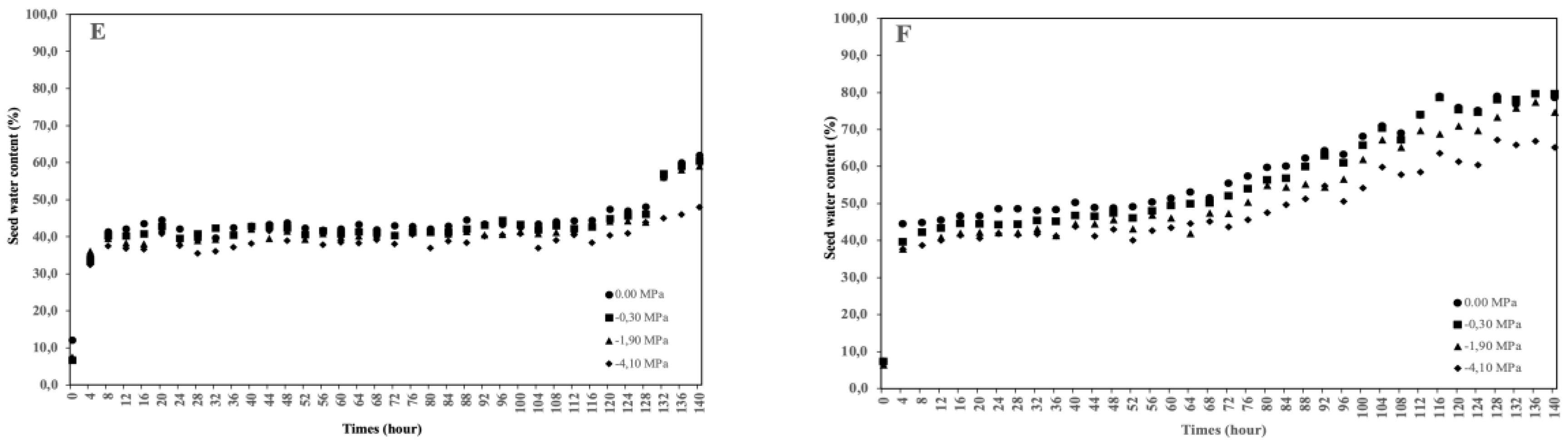
The results show that seed water content increases with imbibition time at each water potential. Lower water potential (more negative) reduces the rate of water uptake by seeds (Figure 1). Figure 1A and 1B show that the water content at 140 hours for 0.00 MPa is 61.6% and 72.5%, respectively, for the Simpatik and Sempurna varieties. Compared with -4.1 MPa, the water content at the same time shows differences of 7.6% and 14.7%. Tomato seeds of the Niki and Rempai varieties (Figure 1C and 1D) tend to have higher water content. At the end of the observation, the water content of the Niki and Rempai varieties at 0.00 MPa reached 84.3% and 86.1%, respectively, and, compared with -4.10 MPa at the same time, showed differences of 33.3% and 30.6%. This finding is interesting regarding the way seeds absorb water. The outer surface of the tomato seed coat is covered with fine, hair-like structures called trichomes. The anatomical structure of the seed coat plays a complex and species-specific role in water uptake [20]. Figure 1D and 1E on eggplant seeds of the Tangguh and Provita varieties show that the water content at the end of the observation for 0 MPa is 62.0% and 78.7%, respectively. Compared with -4.10 MPa, the water content at the same time shows differences of 14.0% and 13.5%.
The pattern and rate of water uptake vary with environmental conditions, particularly the surrounding water potential, which determines the driving force for water movement into the seed. Under osmotic stress, the rate of imbibition typically decreases, delaying subsequent physiological events. The data presented in Figure 1 serve as the basis for establishing the mathematical relationship between seed water content and imbibition time across different water potentials. The third-degree polynomial regression equations for each commodity are presented in Table 1.
For chili seed, the regression models show a strong fit, with coefficients of determination (R2) ranging from 66.69% to 79.08% for the Simpatik variety and 84.19% to 90.21% for the Sampurna variety. For tomato seed, R2 ranged from 69.31% to 89.10% for the Niki variety and from 76.31% to 92.81% for the Rempai variety. Moreover, for eggplant seed, R2 ranged from 53.13% to 89.10% for the Tangguh variety and 82.48% to 88.03% for the Provita variety. The results show that the third-degree polynomial function effectively describes the relationship between time and water content. The intercept and slope coefficients vary according to water potential, reflecting the influence of osmotic stress on the rate and extent of seed water absorption. In general, the highest R2 values were observed at 0.0 MPa and –0.30 MPa, suggesting that the model fits the data better under non-stress or mild-stress conditions. The gradual decrease in regression coefficients at lower water potentials (–1.90 MPa and –4.10 MPa) indicates reduced water uptake efficiency and a slower imbibition rate as osmotic pressure increased. Among the two varieties for each commodity, the higher R2 Sempurna, Rempai, and Provita varieties imply more consistent water absorption behavior under varying water potentials.
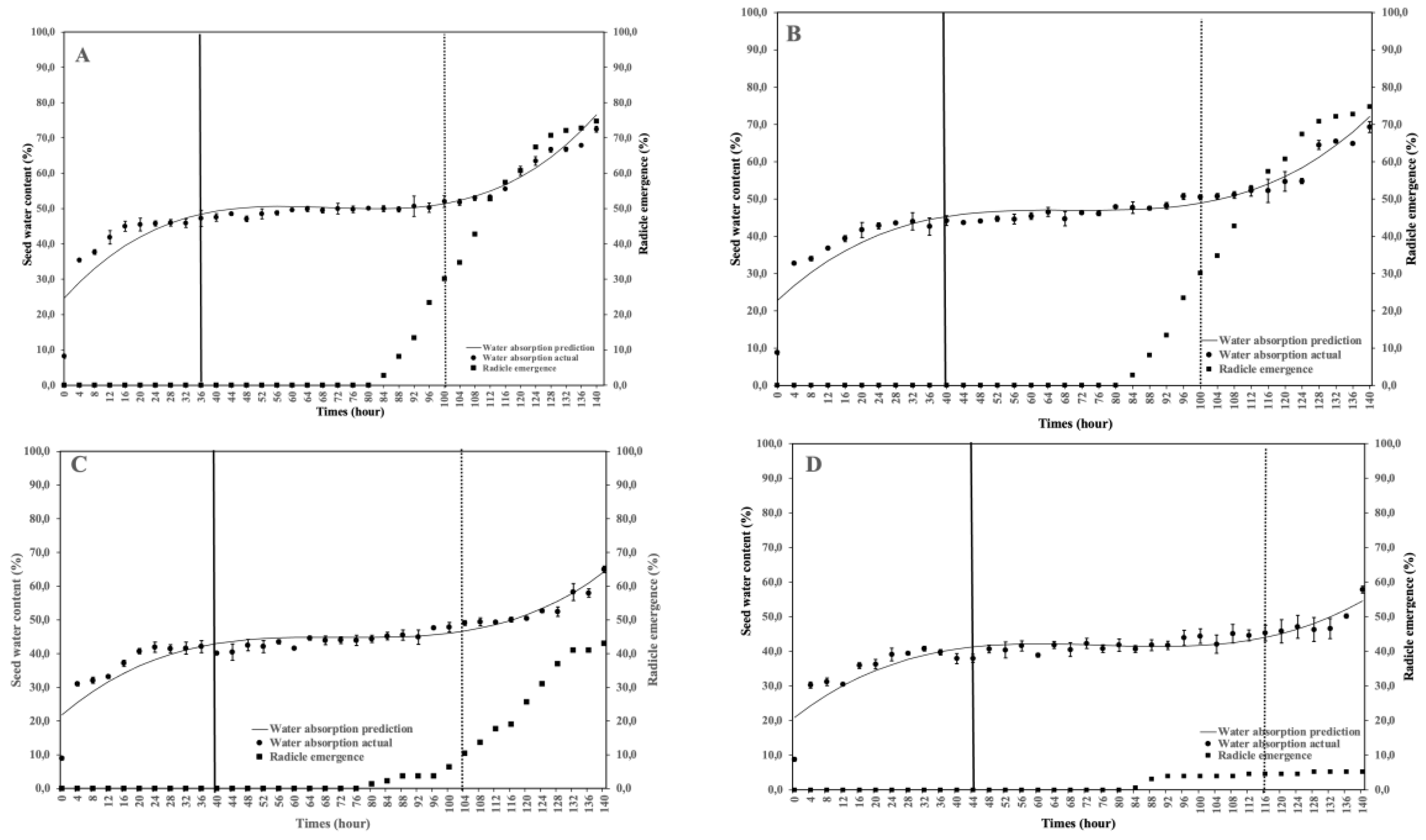
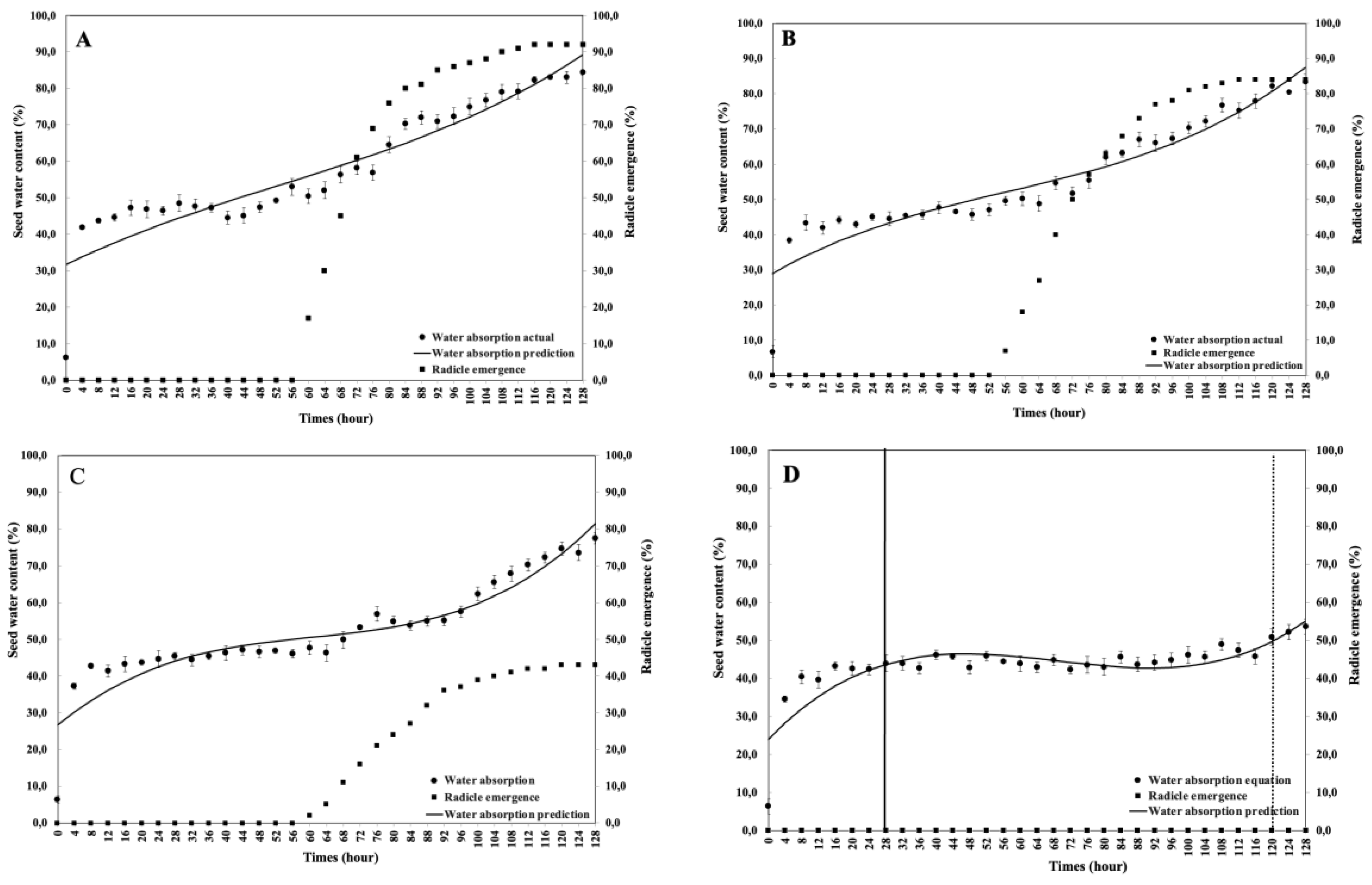
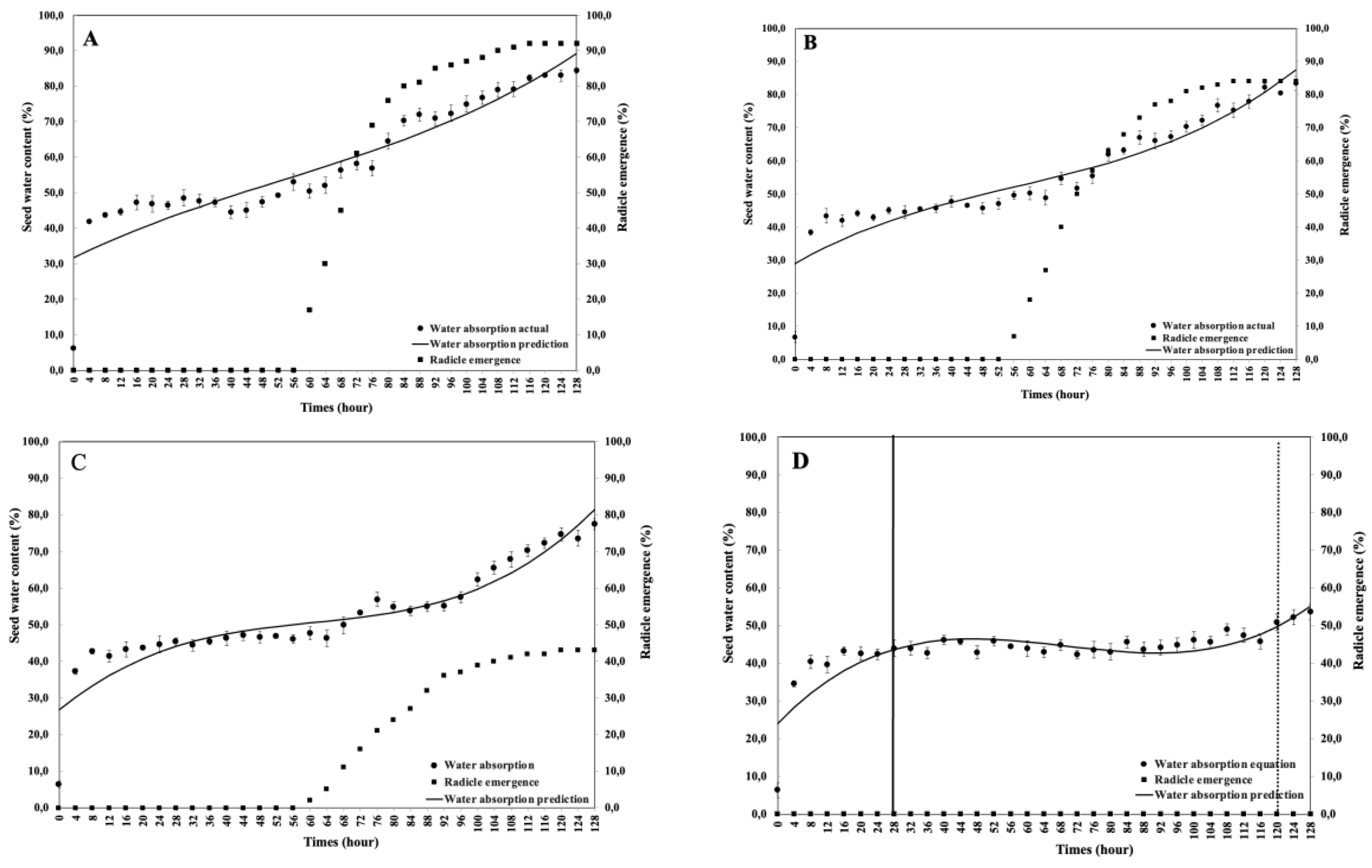
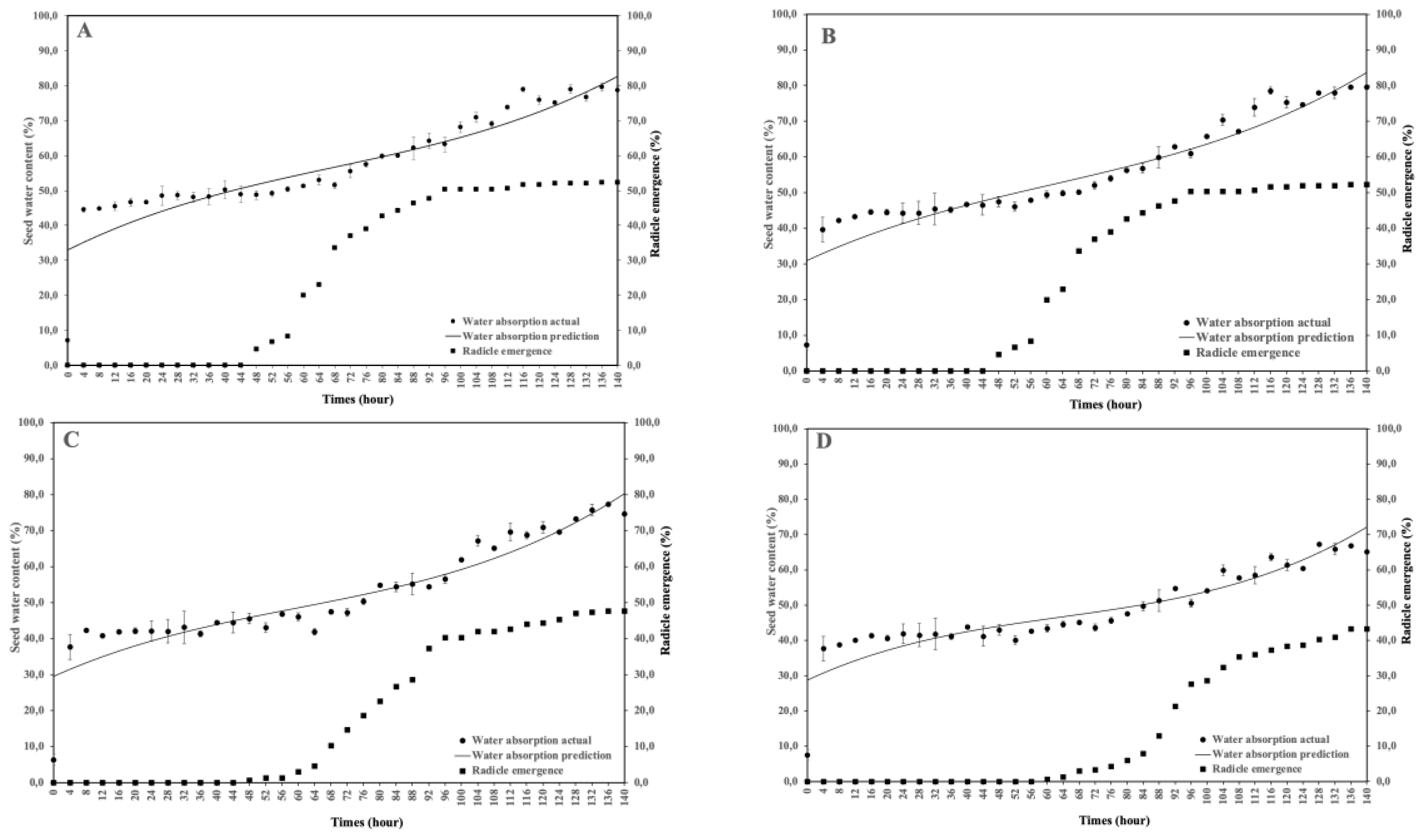
The standard triphasic imbibition pattern was not observed at any water potential level in either tomato seed variety. The triphasic pattern was only identified at -4.10 MPa for the Niki variety (Figure 3), whereas for the Rempai variety it was identified at -1.90 and -4.10 MPa (Figure 4). At a water potential of -4.10 MPa, the Niki variety reached the end of phases I and II at 28 and 104 hours, respectively. However, no germination occurred because the seeds experienced excessive stress (Figure 3D). At other water potential levels, although the triphasic pattern was not observed, Niki tomato seeds were relatively resistant to -0.30 MPa and -1.90 MPa, as evidenced by radicle emergence rates of 84% and 43%, respectively. Figure 5C shows that in the Rempai variety, the end of phases I and II occurred at 36 and 84 hours, respectively, with a phase II duration of 48 hours. The radicle protrusion at a water potential of -1.9 MPa occurred midway through phase II, at 64 hours, and continued through the end of the observation, when the RE reached 58%. At a water potential of -4.1 MPa (Figure 5D), the end of phases I and II occurred at 36 and 104 hours, respectively, with the duration of phase II being longer at 68 hours. The RE did not appear in the -4.1 MPa treatment because the seeds experienced severe stress.
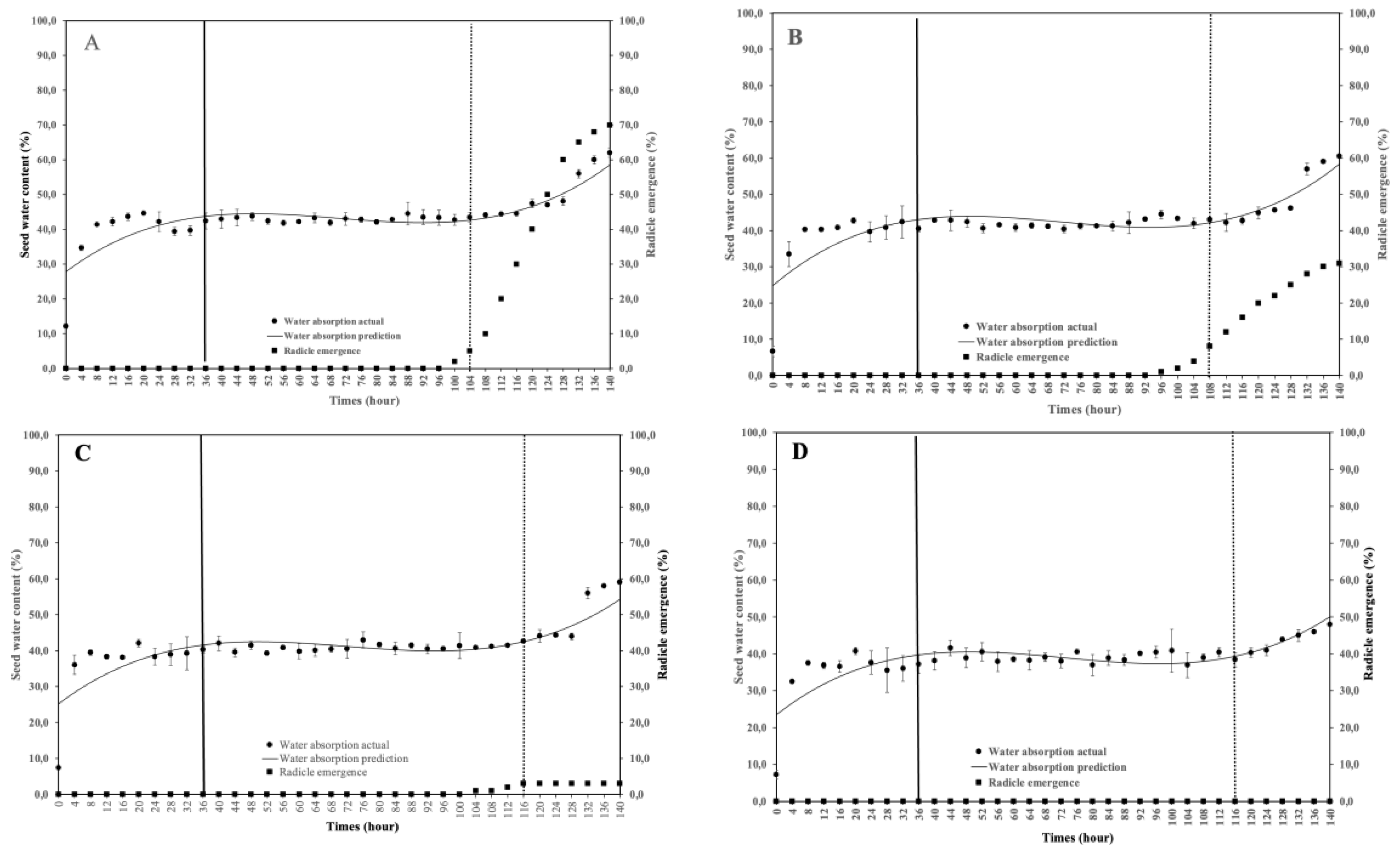
Figure 2. Imbibition and radicle emergence (RE) curves of Simpatik variety of chili seeds at a water potential of 0.0 MPa (A), -0.30 MPa (B), -1.90 MPa (C), and -4.1 MPa (D). Full vertical lines indicate the transition between imbibition phases 1 and 2, and dotted lines indicate the beginning of phase 3.
Preprints 193133 g002
Figure 3. Imbibition and radicle emergence curves of Sempurna variety of chili seeds at a water potential of 0.0 MPa (A), -0.30 MPa (B), -1.90 MPa (C), and -4.1 MPa (D). Full vertical lines indicate the transition between imbibition phases 1 and 2 and dotted lines indicate the beginning of phase 3.
Preprints 193133 g003
Figure 4. Imbibition and radicle emergence curves of Niki variety of tomato seeds at a water potential of 0.0 MPa (A),-0.30 MPa (B), -1.90 MPa (C), and -4.1 MPa (D). Full vertical lines indicate the transition between imbibition phases 1 and 2 and dotted lines indicate the beginning of phase 3.
Preprints 193133 g004
Figure 5. Imbibition and radicle emergence curves of Rempai variety of tomato seeds at a water potential of 0.0 MPa (A), -0.30 MPa (B), -1.90 MPa (C), and -4.1 MPa (D). Full vertical lines indicate the transition between imbibition phases 1 and 2 and dotted lines indicate the beginning of phase 3.
Preprints 193133 g005
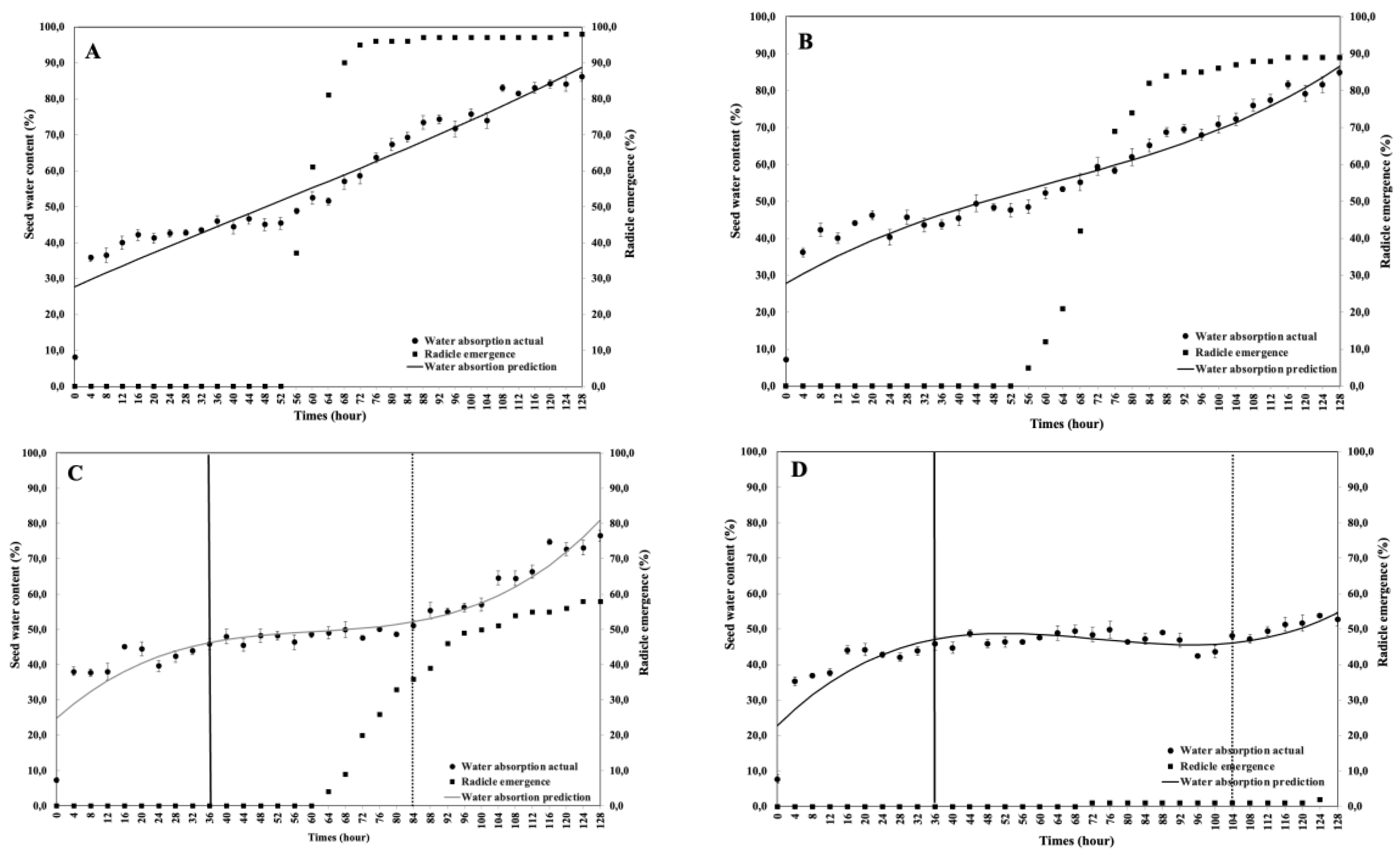
The triphasic pattern was observed at all water potential levels in eggplant seed of the Tangguh variety (Figure 6). In contrast, in the Provita variety, the pattern did not develop at all (Figure 7). In Tangguh varieties (Figure 6), the end of phase 1 was reached at the 36th hour at all water potential levels. As the water potential level decreased, the duration of phase II became progressively longer, respectively, at water potential treatments of 0.00 MPa to -4.10 MPa for 68, 72, and 80 hours. The radicle protrusion in the Tangguh variety corresponds to [3], where radicle protrusion towards the end of phase II. At 0.00 MPa, RE appears at the 100th hour, and at -0.30 MPa and -1.90 MPa, RE appears at the 100th and 112th hours, respectively. RE does not appear in the -4.10 treatment, as the seeds experience severe stress. Tangguh variety seeds used tend to have relatively low seed quality, where in the control treatment the RE percentage only reached 62.0% so that when given a lower water potential treatment the seeds experienced a sharp decrease in RE, namely to 31.0% (-0.30 MPa) and 3.0% (-1.90 MPa). The standard triphasic pattern was not formed in the Provita variety. Although the water content rose rapidly at the onset and then leveled off, the seed’s water content increased linearly throughout the entire imbibition process (Figure 7). Another finding from this eggplant variety was the moderate decrease in RE at each water potential level. The RE percentage obtained from water potentials of 0.00 MPa to -4.10 MPa ranged from 43.3 to 52.3%. This suggests that the Provita eggplant seed variety is resistant to osmotic stress.

4. Discussion

In general, for all commodities, the lower the water potential of the growing medium, the lower the seed’s ability to absorb water, as seen from the seed’s water content (Figure 1). The triphasic pattern does not always apply to every commodity, variety, and water potential level. From the results of this study, it appears that only chili varieties in the two varieties tested produced a triphasic pattern (Figure 2 and Figure 3). In tomato seeds, the pattern was formed only at lower water potentials of -4.10 MPa in the Niki variety (Figure 4) and -1.90 MPa and -4.10 MPa in the Rempai variety (Figure 5). [21] also did not find this pattern in the Cassia excelsa imbibition curve under normal conditions, but the pattern was seen when the seeds were at a water potential of -0.4 MPa. Eggplant seeds showed different results in the two varieties, where the triphasic pattern was seen in the Tanggh variety for all water potentials, while not for the Provita variety. This finding was also found in a study [22], where of 25 forest tree seeds tested, the triphasic pattern was only found in 11 seed types. The absence of this pattern has also been reported in several other species. Campomanesia adamantium, for example, showed a linear increase in weight from the beginning of imbibition until radicle emergence [23]. Other species that also did not exhibit a triphasic imbibition pattern include Melanoxylon brauna [24].
Overall, the results of the study indicate that the lower water potential, the later the end of phase I occurs and the longer the duration of phase II lasts. Phase II represents a plateau in water uptake following the rapid imbibition of phase I, during which pre-germinative metabolism proceeds while the radicle remains restrained. This stage is widely described as the critical window during which cellular repair, hydrolytic enzyme activity, and metabolite accumulation are initiated or intensified, without completing germination via radicle emergence [25,26,27]. The duration of phase II can vary by species and environmental conditions, and its proper execution is central to achieving improved seed vigor after subsequent dehydration and storage [26,28]. From a seed technology perspective, duration of Phase II is particularly important because it determines the seed’s capacity to tolerate environmental stress, respond to seed treatments such as priming, and maintain viability under suboptimal conditions [29,30,31,32]. Prolongation or shortening of Phase II directly influences seed vigor, uniformity of germination, and resilience to drought stress, making it a key parameter for evaluating seed quality and for developing technologies aimed at improving germination performance in water-limited environments. Environmental context during phase II (e.g., osmotic potential of the priming solution, temperature) influences the balance between continued metabolic activation and the risk of undesired radicle initiation. Several studies emphasize that priming must be controlled to avoid premature protrusion while enabling sufficient biochemical activation for improved germination later [27,33,34].
Furthermore, the emergence of the radicle does not always align with the imbibition pattern results according to [3], which refers to the radicle protrusion at the end of phase II. In this study, it was observed that the emergence of the radicle tended to occur earlier, namely in the middle of phase II, except in Tangguh eggplant variety (Figure 6). This result was also found in a study by [22], which found that only in four of 11 varieties with a triphasic pattern, germination coincided with the third phase of imbibition. Several empirical reports that radicle emergence may occur before the canonical end of Phase II under certain conditions or in specific genotypes. For example, [35] describe a pattern where Phase II extends up to around 50–84 h depending on cultivar, with coleoptile elongation observed thereafter; this reflects substantial intra-species variation in the timing of the Phase II–Phase III transition and radicle-related events relative to the Phase II.
Radicle emergence commonly occurs after Phase II, as per the canonical three-phase model and many priming studies; however, there is explicit evidence of genotype- and treatment-dependent variation where radicle protrusion can occur within or near the Phase II window, including mid-Phase II timing in rice and other species under certain osmotic or hormonal priming conditions [35,36]. This indicates that the standard imbibition pattern does not apply generally to every seed; the pattern tends to be specific to each commodity, variety, and germination growing media conditions.

5. Conclusions

Lower water potential in the growing medium reduced the seed’s ability to absorb water. A consistent triphasic imbibition pattern was observed only in chili seeds, whereas in tomato and eggplant seeds the occurrence of this pattern varied among varieties and across water potential conditions. Decreasing water potential delayed the completion of Phase I and prolonged the duration of Phase II. These findings demonstrate that the classical imbibition pattern cannot be universally applied to all seeds; instead, imbibition responses are highly dependent on seed type, varietal characteristics, and the germination environment.

Author Contributions

AR: writing—original draft preparation, Writing – review & editing, Funding acquisition, Formal analysis, Data curation, Conceptualization. AQ: writing—original draft preparation, Writing – review & editing. MRS: Writing – original draft, Visualization, Validation, Formal analysis, Data curation. OSI: Writing – original draft, Visualization, Validation, Formal analysis, Data curation. AT: Writing – original draft, Visualization, Validation, Formal analysis, Data curation. PMS: Writing – original draft, Visualization.

Funding

This Research was funded by Direktorat Riset dan Inovasi – Institiut Pertanian Bogor, 13120/IT3.D10/PT.01.03/P/B/2025| Institut Pertanian Bogor.

Institutional Review Board Statement

Not applicable.

Data Availability Statement

Data sharing is not applicable to this article as no new data were created or analyzed in this study.

Acknowledgments

The authors thank the Research and Innovation Directorate – IPB University for funding the research through the young lecturer scheme on behalf of Astryani Rosyad, S.P, M.Si (Contract No. 13120/IT3.D10/PT.01.03/P/B/2025). During the preparation of this manuscript, the authors used Scite_ for the purposes to analyze citation contexts and evaluate whether referenced studies support, mention, or contrast the scientific claims discussed in this study. The authors have reviewed and edited the output and take full responsibility for the content of this publication.

Conflicts of Interest

The authors declare no conflicts of interest.

References

  1. Bradford, KJ. A Water Relations Analysis of Seed Germination Rates. Plant Physiol 1990, 94, 840–849. [Google Scholar] [CrossRef]
  2. Yousefi, A.R.; Rashidi, S.; Moradi, P.; Mastinu, A. Germination and Seedling Growth Responses of Zygophyllum fabago, Salsola kali L. and Atriplex canescens to PEG-Induced Drought Stress. Environments 2020, 7, 107. [Google Scholar] [CrossRef]
  3. Bewley, J.D.; Black, M. Seeds Physiology of Development and Germination, 3rd. ed; Plenum Press: New York; 445p.
  4. Niu, J.; Xu, M.; Zong, N.; Sun, J.; Zhao, L.; Hui, W. Ascorbic acid releases dormancy and promotes germination by an integrated regulation of abscisic acid and gibberellin in Pyrus betulifolia seeds. Physiol Plant 2024, 176, e14271. [Google Scholar] [CrossRef]
  5. Kakar, H.A.; Ullah, S.; Shah, W.; Ali, B.; Satti, S.Z.; Ullah, R.; et al. Seed Priming Modulates Physiological and Agronomic Attributes of Maize (Zea mays L.) under Induced Polyethylene Glycol Osmotic Stress. ACS Omega 2023, 8, 22788–22808. [Google Scholar] [CrossRef]
  6. Tuan, P.A.; Kumar, R.; Rehal, P.K.; Toora, P.K.; Ayele, B.T. Molecular mechanisms underlying abscisic acid/gibberellin balance in the control of seed dormancy and germination in cereals. Front Plant Sci 2018, 9, 362906. [Google Scholar] [CrossRef]
  7. Pompelli, M.F.; Jarma-Orozco, A.; Rodriguez-Páez, L.A. Imbibition and Germination of Seeds with Economic and Ecological Interest: Physical and Biochemical Factors Involved. Sustainability 2023, 15, 5394. [Google Scholar] [CrossRef]
  8. Soni, P.; Abdin, M.Z. Water deficit-induced oxidative stress affects artemisinin content and expression of proline metabolic genes in Artemisia annua L. FEBS Open Bio 2017, 7, 367–381. [Google Scholar] [CrossRef]
  9. Lin, J.; Shao, S.; Wang, Y.; Qi, M.; Lin, L.; Wang, Y.; et al. Germination responses of the halophyte Chloris virgata to temperature and reduced water potential caused by salinity, alkalinity and drought stress. Grass and Forage Science 2016, 71, 507–514. [Google Scholar] [CrossRef]
  10. Khetsha, Z.; van der Watt, E.; Masowa, M.; Legodi, L.; Satshi, S.; Sadiki, L.; et al. Phytohormone-Based Biostimulants as an Alternative Mitigating Strategy for Horticultural Plants Grown Under Adverse Multi-Stress Conditions: Common South African Stress Factors. Caraka Tani: Journal of Sustainable Agriculture 2024, 39, 167–193. [Google Scholar] [CrossRef]
  11. Motti, R. The Solanaceae family: Botanical features and diversity; Springer International Publishing: Cham, 2021; pp. 1–9. [Google Scholar]
  12. Megersa, H.G. Potential Effects of Salt Stress on Selected Solanaceous Crops (Tomato (Solanum esculentum L.) and Hot Pepper (Capsicum annuum L.)) Production. Journal of Agricultural Science and Food Research 2022, 13, 1–6. [Google Scholar]
  13. Pessoa, H.P.; de Carvalho Rocha, J.R.D.A.S.; Alves, F.M.; Copati, M.G.F.; Dariva, F.D.; da Silva, L.J.; et al. Multi-trait selection of tomato introgression lines under drought-induced conditions at germination and seedling stages. Acta Sci Agron 2022, 44, e55876. [Google Scholar] [CrossRef]
  14. Barris, S.; Toumi, M.; Belkebir, A. Effect of osmotic and salt stresses on germination and phenolic compounds of Eruca vesicaria subs. sativa L. Research square 2022. [Google Scholar] [CrossRef]
  15. Lei, C.; Bagavathiannan, M.; Wang, H.; Sharpe, S.M.; Meng, W.; Yu, J. Osmopriming with Polyethylene Glycol (PEG) for Abiotic Stress Tolerance in Germinating Crop Seeds: A Review. Agronomy 2021, 11, 2194. [Google Scholar] [CrossRef]
  16. Radić, V.; Balalić, I.; Cvejić, S.; Jocić, S.; Marjanović-Jeromela, A.; Miladinović, D. Drought effect on maize seedling development. Ratarstvo i povrtarstvo 2018, 55, 135–138. [Google Scholar] [CrossRef]
  17. Mexal, J.; Fisher, J.T.; Osteryoung, J.; Reid, C.P.P. Oxygen Availability in Polyethylene Glycol Solutions and Its Implications in Plant-Water Relations. Plant Physiol 1975, 55, 20–24. [Google Scholar] [CrossRef] [PubMed]
  18. ISTA. International Rules for Seed Testing 2018. Available online: https://www.tarimorman.gov.tr/BUGEM/TTSM/Belgeler/Duyuru%20Belgeleri/ISTA%20Rules%202018.pdf.
  19. Bewley, J.D.; Bradford, K.J.; Hilhorst, H.W.M.; Nonogaki, H. Seeds: Physiology of Development, Germination and Dormancy, 3rd. ed; Springer: New York, 2008. [Google Scholar] [CrossRef]
  20. Upretee, P.; Bandara, M.S.; Tanino, K.K. The Role of Seed Characteristics on Water Uptake Preceding Germination. Seeds 2024, 3, 559–574. [Google Scholar] [CrossRef]
  21. Jeller, H.; Perez, S.C.; Raizer, J. Water uptake, priming, drying and storage effects in Cassia excelsa Schrad seeds. Braz J Biol 2003, 63(1), 61–68. [Google Scholar] [CrossRef] [PubMed]
  22. Pereira, W.V.S.; José, A.C.; Tonetti, O.A.O.; de Melo, L.A.; Faria, J.M.R. Imbibition curve in forest tree seeds and the triphasic pattern: theory versus practice. South African Journal of Botany 2022, 144, 105–114. [Google Scholar] [CrossRef]
  23. Dresch, D.M.; Quintão Scalon, S.de.P.; Elisa Masetto, T.; do Carmo Vieira, M. Germinação e vigor de sementes de gabiroba em função do tamanho do fruto e semente. Pesqui Agropecu Trop 2013, 43, 262–271. [Google Scholar] [CrossRef]
  24. Flores, A.V.; De Lima E Borges, E.E.; Guimarães, V.M.; Da Mata Ataíde, G.; Castro, R.V.O. Germinação de sementes de Melanoxylon brauna schott em diferentes temperaturas. Revista Árvore 2014, 38, 1147–1154. [Google Scholar] [CrossRef]
  25. Seethalakshmi, S.; Umarani, R.; Maduraimuthu, D. Gibberellic Acid Biosynthesis During Dehydration Phase of Priming Increases Seed Vigour of Tomato. Research square 2021. [Google Scholar] [CrossRef]
  26. Pedrini, S.; Balestrazzi, A.; Madsen, M.D.; Bhalsing, K.; Hardegree, S.P.; Dixon, K.W.; et al. Seed enhancement: getting seeds restoration-ready. Restor Ecol 2020, 28, S266–275. [Google Scholar] [CrossRef]
  27. Raj, A.B.; Raj, S.K. Seed priming: An approach towards agricultural sustainability. Journal of Applied and Natural Science 2019, 11, 227–234. [Google Scholar] [CrossRef]
  28. Lechowska, K.; Kubala, S.; Wojtyla, Ł.; Nowaczyk, G.; Quinet, M.; Lutts, S.; et al. New Insight on Water Status in Germinating Brassica napus Seeds in Relation to Priming-Improved Germination. International Journal of Molecular Sciences 2019, 20, 540. [Google Scholar] [CrossRef]
  29. Gama, G.F.V.; Brum, L.B.T.L.; Martins, M.S.; da Silva, L.J.; Dias, D.C.F. dos.S. Silicon in wheat crop under water limitation and seed tolerance to water stress during germination. Revista Ceres 2021, 68, 360–367. [Google Scholar] [CrossRef]
  30. Guo, M.; Zong, J.; Zhang, J.; Wei, L.; Wei, W.; Fan, R.; et al. Effects of temperature and drought stress on the seed germination of a peatland lily (Lilium concolor var. megalanthum). Front Plant Sci 2024, 15, 1462655. [Google Scholar] [CrossRef]
  31. Ling-Yun, W.; Jun, Y.; Zhi-Wu, H.; Yan-Hui, W.; Wei-Min, Z. Solid matrix priming improves cauliflower and broccoli seed germination and early growth under the suboptimal temperature conditions. PLoS One 2022, 17, e0275073. [Google Scholar] [CrossRef] [PubMed]
  32. Tu, K.; Cheng, Y.; Pan, T.; Wang, J.; Sun, Q. Effects of Seed Priming on Vitality and Preservation of Pepper Seeds. Agriculture 2022, 12, 603. [Google Scholar] [CrossRef]
  33. Gueridi, S.; Boucelha, L.; Abrous-Belbachir, O.; Djebbar, R. Effects of hormopriming and pretreatment with gibberellic acid on fenugreek (Trigonella foenum-graecum L.) seed germination. Acta Bot Croat 2024, 83, 135–144. [Google Scholar] [CrossRef]
  34. Manhone, P.R.; Lopes, J.C.; Alexandre, R.S.; Lima, P. A. M.; Lopes, S.O.; Mengarda, L.H.G.; et al. Plant growth regulators and mobilization of reserves in imbibition phases of yellow passion fruit. Brazilian Journal of Biology 2024, 84, e273999. [Google Scholar] [CrossRef]
  35. Cheng, J.; Wang, L.; Zeng, P.; He, Y.; Zhou, R.; Zhang, H.; et al. Identification of genes involved in rice seed priming in the early imbibition stage. Plant Biol 2017, 19, 61–69. [Google Scholar] [CrossRef] [PubMed]
  36. Adhikari, B.; Dhital, P.R.; Ranabhat, S.; Poudel, H. Effect of seed hydro-priming durations on germination and seedling growth of bitter gourd (Momordica charantia). PLoS One 2021, 16, e0255258. [Google Scholar] [CrossRef] [PubMed]
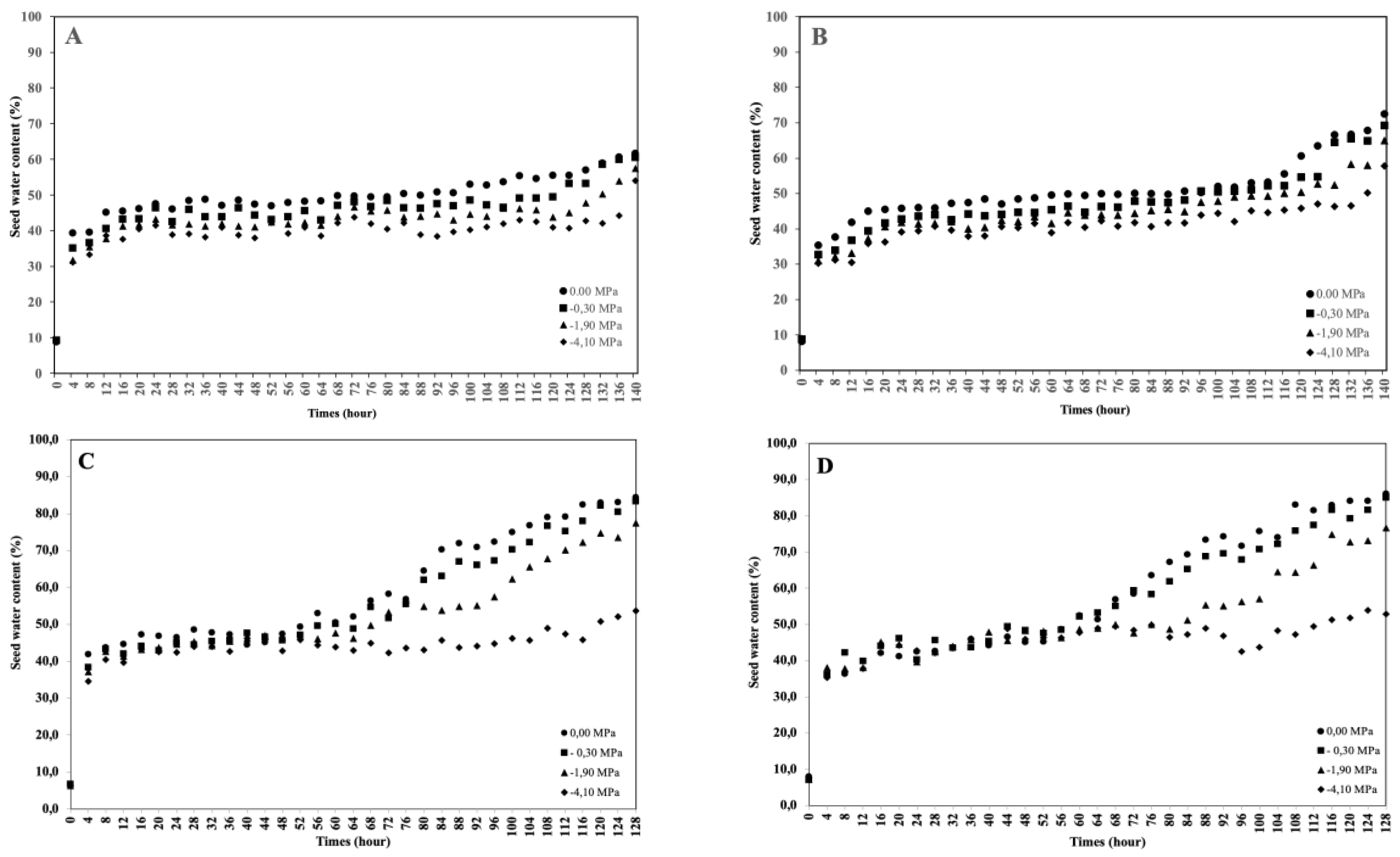
Figure 1. Seed water content pattern of chili seeds Simpatik (A) and Sempurna (B) variety; tomato seeds Niki (B) and Rempai (D) variety; eggplant seeds Tangguh (E) and Provita (F) variety on four water potential levels.
Preprints 193133 g001aPreprints 193133 g001b
Figure 6. Imbibition and radicle emergence curves of Tangguh variety of eggplant seeds at a water potential of 0.0 MPa (A), -0.30 MPa (B), -1.90 MPa (C), and -4.1 MPa (D). Full vertical lines indicate the transition between imbibition phases 1 and 2 and dotted lines indicate the beginning of phase 3.
Preprints 193133 g006
Figure 7. Imbibition and radicle emergence curves of Provita variety of eggplant seeds at a water potential of 0.0 MPa (A), -0.30 MPa (B), -1.90 MPa (C), and -4.1 MPa (D).
Preprints 193133 g007
Table 1. Third-degree polynomial regression equations describing the relationship between seed water content (y) and imbibition time (x) of chili, tomato, and eggplant seeds under different water potential levels.
Varieties Water potential (MPa) Equations R2
Capsicum annuum (chili) seeds
Simpatik 0.00 y = 28.41 + 0.9474x – 0.01308x2 + 0.000058x3 74.60%
-0.30 y = 25.40 + 1.007x – 0.01479x2 + 0.000068x3 79.08%
-1.90 y = 23.82 + 0.9517x – 0.01371x2 + 0.000061x3 75.93%
-4.10 y = 23.25 + 0.8854x- 0.01295x2 + 0.000057x3 66.69%
Sempurna 0.00 y = 24.70 + 1.183x–0.01756x2 + 0.000084x3 88.17%
-0.30 y = 22.80 + 1.056x–0.01525x2 + 0.000073x3 90.21%
-1.90 y = 21.88 + 0.9706x–0.01359x2 + 0.000063x3 88.75%
-4.10 y = 20.92 + 0.9085x–0.01261x2 + 0.000056x3 84.19%
Solanum lycopersicum (tomato) seeds
Niki 0.00 y = 31.69 + 0.5415x – 0.003663x2 + 0.000023x3 86.81%
-0.30 y = 28.96 + 0.6800x – 0.007114x2 + 0.000042x3 89.10%
-1.90 y = 26.66 + 0.9450x – 0.01364x2 + 0.000075x3 87.08%
-4.10 y = 23.92 + 1.152x – 0.01849 x2 + 0.000089x3 69.31%
Rempai 0.00 y = 27.73 + 0.4884x – 0.000857x2 + 0.000006x3 92.81%
-0.30 y = 27.70 + 0.6985x – 0.006216x2 + 0.000034x3 91.06%
-1.90 y = 24.89 + 1.064x – 0.01628x2 + 0.000089x3 88.72%
-4.10 y = 22.85 + 1.223x – 0.01824x2 + 0.000083x3 76.31%
Solanum melongena (eggplant) seeds
Tangguh 0.00 y = 27.87 + 0.8366x – 0.01323x2 + 0.000063x3 56.95%
-0.30 y = 24.77 + 0.9524x – 0.01489x2 + 0.000070x3 56.35%
-1.90 y = 25.20 + 0.8414x – 0.01293x2 + 0.000060x3 53.13%
-4.10 y = 23.46 + 0.8380x – 0.01289x2 + 0.000059x3 54.21%
Provita 0.00 y = 33.04 + 0.5616x – 0.004695x2 + 0.000023x3 84.74%
-0.30 y = 30.89 + 0.5236x – 0.004264x2 + 0.000023x3 88.03%
-1.90 y = 29.44 + 0.5111x – 0.004839x2 + 0.000027x3 86.63%
-4.10 y = 28.78 + 0.5251x – 0.005739x2 + 0.000030 x3 82.48%
Disclaimer/Publisher’s Note: The statements, opinions and data contained in all publications are solely those of the individual author(s) and contributor(s) and not of MDPI and/or the editor(s). MDPI and/or the editor(s) disclaim responsibility for any injury to people or property resulting from any ideas, methods, instructions or products referred to in the content.
Copyright: This open access article is published under a Creative Commons CC BY 4.0 license, which permit the free download, distribution, and reuse, provided that the author and preprint are cited in any reuse.
Prerpints.org logo

Preprints.org is a free preprint server supported by MDPI in Basel, Switzerland.

Subscribe

Disclaimer

Terms of Use

Privacy Policy

Privacy Settings

© 2026 MDPI (Basel, Switzerland) unless otherwise stated