Preprint
Article

This version is not peer-reviewed.

Drought Resilience of Gossypium spp.: PEG-6000 Induced Responses at Germination and Seedling Stages

Submitted:

24 February 2025

Posted:

26 February 2025

You are already at the latest version

Abstract

This laboratory experiment was conducted in the Forestry Department of Bingöl University, Vocational School of Youth, in 2023. It aimed to investigate the responses of cotton genotypes to drought stress by creating osmotic pressure stresses of 0 MPa (control), -4 MPa, -6 MPa, -8 MPa, and -10 MPa using PEG 6000 chemical on the advanced lines SC32 and SC38, as well as the varieties Aşkabat 71 and May 505. Various parameters such as Root length (RL), Root Fresh Weight (RFW), Root Dry Weight (RDW), Shoot Length (SL), Shoot Fresh Weight (SFW), Shoot Dry Weight (SDW), Relative Water Content (RWC), Germination percent (GP), Vigor Seed Index (VSI), and Number of Lateral roots (NLRs) were measured. It was observed that as the severity of drought increased, the root system expanded in parallel. However, the plant’s tolerance decreased with increasing drought severity. The genotypes SC32 and SC38, which were obtained from the breeding program for developing drought-tolerant varieties, exhibited high averages in almost all drought measurement parameters, demonstrating a high level of heterosis. As a conclusion, continuing the breeding program with these genotypes was found tolerant to contribute to the success of breeding. May 505 variety showed high tolerance to drought in terms of Relative Water Content (RWC), and it also exhibited promising results in other parameters compared to G. barbadense variety Aşkabat 71 and segregating population genotypes. May 505 variety showed a high germination rate and rapid germination, suggesting its potential use as a parent in both drought and early variety breeding programs.

Keywords: 
;  ;  ;  ;  ;  

1. Introduction

The cotton (Gossypium spp.) plant is the most important oil and natural fiber source worldwide, but during growth and development, it is subjected to some abiotic stress factors such as drought, salinity, low temperature, and high temperature [1] which are extremely dangers and collectively [2] reduce world cotton production by 73% [3]. Drought is the severe abiotic stress factor that plants are exposed to during growth and development [4]. The drought which means plants suffer from water shortage for a long time [5], occurs as a result of global warming and climate change and negatively affects cotton production seriously [3,6,7]. Cotton plants normally show higher tolerance as compared to the other crop plants, however, under long periods environmental effects, particularly, drought, negatively affects the cotton growth, yield, and quality of fiber [8,9]. Among 50 cotton species, the most cultivated is the Gossypium hirsutum L. species, which contributes to 90% of worldwide cotton production [10]. Even though the reactions of plants to drought stress vary from plant to plant and drought changes from environment to environment, the reactions of plants under drought stress, the resistance mechanisms they develop, and the losses in yield and quality are similar. Drought stress adversely affects the physiology of plants by influencing their cellular and genetic structure [11].
Drought stress decreases the Relative Water Content (RWC), photosynthetic rate and photosynthesis product, chlorophyll, cell membrane stability, and dry matter stocking [12]. Drought has a potentially harmful effect on photosynthesis and indirectly impacts the production of photosynthesis. Plants minimize transpiration, the decline in leaf expansion and leaf area [13], and ripen and shed their fruits to save water. Drought also reduces the water movement from the soil into the root and results in increased osmotic potential of plant and plant starts to show the symptoms of drought stress. Plants developed various mechanisms against abiotic stress factors and three main of them are stomatal closure to minimize the transpiration and thereby protect the internal water potential (Drought avoidance), to shorten the life cycle early blooming and early maturating (Drought escape), combating drought stress without any regulation or development features (Drought resistance) [14].
Drought also leads the plants to close stomata which reduce uptaking CO2 and make plants susceptible to photodamage [15]. Drought-tolerance species did some regulations such as carbon fixation by stomata movement to use water efficiency under water scarcity period or to open the closed stomata after the water shortage is over [16]. Plants developed some fighting mechanisms to overcome drought stress and that mechanism are divided into four categories: drought escape, drought recovery, drought tolerance, and drought avoidance [17]. The seedling stage of plants is sensitive and is an indicator to determine drought-tolerance plants. In another word, drought tolerance is available at the seedling stage of plants [18].
The germination and seedling stages are accepted as the most vulnerable periods of the plant [19], and many biotic (Pathogen, pests) and abiotic stress factors effects more clearly can be observed during this growth period [19]. Germination and seedling stages are the best plant growth cycle to screen stress factors effects. Moisture stress may decrease, delay or prevent seed germination, however, the seed has the ability to germinate under low moisture levels giving them competitive advantages and enabling them to outcompete germination and growth [20]. Seed priming techniques are cheap, fast, and reliable at the germination and seedling stages of plants and can be employed to overcome biotic and abiotic stress factors [21,22]. Recently years’ researchers focused on Polyethylene glycol (PEG) priming applications to create osmotic stress and determine the drought-tolerance genotypes of cotton.
Decreasing the negative effects and developing drought-tolerance crop plants play a key role to meet the increasing demand for crop products [23]. Development of abiotic and biotic stress-tolerance crops is restricted by the low heritability quantitative traits including yield by the deficiency of information on plant metabolical activities which represent the genetic potential to improve quality and productivity under water scarcity [24]. Drought resistance is polygenic, and it is regulated by many genes [25,26].
Polyethylene glycol (PEG) application creates osmotic stress in plants and is accepted as an artificial drought simulator [27]. Polyethylene glycol chemical is used to control water potential in seeds at the seedling and germination stage to assess the drought-tolerance level of cotton genotypes [28,29]. Sunflower Germination rate, plant height, and dry matter are decreased when PEG 6000 concentration is increased [30]. In an experiment that created artificial drought by exposure to polyethylene glycol, 6000 chemical twelve upland cotton genotypes were used to screen the drought-tolerance level, and ARB-970, GIHV218, CNH-120MB, and BS-279 cotton genotypes were determined as drought tolerance to the increased Osmotic Potential (OP) level [31]. Artificial drought was created by applying five different PEG 6000 osmotic potentials (0.0, 0.4, 0.6, 0.8, and 1 MPa to 4 cotton cultivars (G. hirsutum var. latifolium L.) with high tolerance to water stress in Brazil and the reactions of the varieties were investigated.
Drought is a global issue. While it affects some people directly, it affects the rest of the people indirectly. In addition to the efficient use of irrigation water at the point of combating drought, studies should be carried out to solve the genetic mechanism of drought in order to produce plants resistant to drought.
This study aimed to determine the Upland cotton (Gossypium hirsutum L.) genotypes’ drought-tolerance level under increased osmotic potential with Polyethylene glycol 6000 chemical and suggest the most tolerance genotype/genotypes for drought-tolerance molecular plant breeding program as parents.

2. Materials and Methods

2.1. Plant materials

All the plant materials belong to an allotetraploid cotton species G. hirsutum L. (2n=4x=52, AD genome group) [33]. This trial consisted of 4 cotton genetic materials. This genetic material is provided by GAP, International Agricultural Research, and Training Institute, East Mediterranean Agricultural Research Institute, East Mediterranean Transitional Zone Agricultural Research Institute, MAY seed company (www.may.com.tr/), Progen Inc. companies (www.progenseed.com/), SET seed company (www.settohum.com/), and BASF (www.agro.basf.com.tr) companies. Commercial’s technological properties are available in the link given, the advanced lines (F2), because the segregation continues after the experiment is complete, will be possible to give information related to the drought.

2.2. Method

This experiment was conducted in the Agricultural biotechnology laboratory at Bingol University, Genç Vocational School, in the climate chamber (Coordinates: 38 ° 442 58” N and 40 ° 32’ 11” E) on 21 December in 2022, Bingol-Turkey. The Climate chamber temperature was adjusted to between 28-38°C, and humidity between 57-67% [18,33]. For optimum photosynthesizing rate, LED lamps with 2.500 lux for 14-15 hours a day were used.
The investigation was performed as a factorial experiment with a completely randomized design (CRD) with three replications (3x6). All the cotton seeds were delinted and for the delitation, the cotton seed picked up from different fields of cotton in the 2022 cultivating season, each cultivar seed separately was put in 10 mL-1 Sulphuric acid solution (Merck, Darmstadt, Germany) for 3 minutes and transferred into a lime water mix, and then washed with clean water [34,35]. Due to the trial being conducted in the winter season, to break the dormancy, the cotton seed was put in a hot water bath at 65°C for 5 minutes and put in the 1% Sodium Hypochlorite (NaOCl) solution for 5 minutes to obtain disease and pest-free seed. For the germination stage, two layers of sterile paper napkins covering the bottom of the autoclaved Petri dish with 100x20 mm dimensions were used. In each Petri dish, 10 cotton seeds were sown. For each cultivar, 180 seeds were used in total. After sowing was completed the second sterile 2-layer paper napkin was used to cover the seed and then Petri dishes were closed and kept at room temperature. After germination from each replication one seedling was picked up and transferred into a 200 ml (CC) plastic bottle containing plant nutritious and 3 weeks after transporting the below drought indicator parameters were calculated. 21th days after the germination trial was terminated.
To screen the tolerance of highly often cultivated 4 genotypes belonging to Upland cotton species with AD genome group (MAY 505, AŞKABAT 71, SÇ-32 (F3), SÇ-38 (F3), in arid and semi-arid regions in Turkey (South-East Anatolia and Mediterranean regions) were used in chamber trial against the treatment of Polyethylene glycol 6000 (PEG 6000) artificial drought. PEG 6000 solutions were prepared with the osmotic potentials of 0 MPa, -4 MPa, -6 MPa, -8 MPa ve -10 MPa, and -1 MPa which are equivalent to PEG 6000 percent solution 0%, 10%, 15%, 20%, and 25% respectively. The Osmotic Potential (OP, bar) values using PEG 6000 chemical obtained used the formula described by Michel and Kaufmann [37].
Osmotic Potantial (OP)= (-1.18 x 10⁻²) x C-(1.18 x 10⁻⁴) x C+ (2.67 X 10⁻⁴) x CxT + (8.39 x l0-7) x C2T (bar)
where C=PEG concentration (1m L-1 PEG concentration in water, W/V%), T=Tempearture (°C). The seed germination rate was measured on the 12th and 18th days after sowing (DAS) taking into account the formula defined by Abdul-Baki and Anderson [38]. 10 ml of PEG 6000 was applied to each petri dish at three-day intervals [31]. Seedling emergence and seed germination are the most important and vulnerable cycles of growth [39]. The ridicule that emerged 2-3 mm from the seed is the criteria for germination [39]. However, due to the lack of germination at stress levels of -6, -8, and -10 MPa, the commonly used drought stress treatments during the germination period, including 0.0 MPa, -0.4 MPa, -0.6 MPa, -0.8 MPa, and -1 MPa (0%, 10%, 15%, 20%, and 25%) PEG 6000, were applied, and germination data were obtained. Cotton seedlings taken from the germination containers were transferred into pots with a soil mixture, each with a capacity of 200 cc. Once all seedlings reached the true leaf stage, drought stress solutions of 0 MPa, -4 MPa, -6 MPa, -8 MPa, and -10 MPa, prepared using the PEG 6000 chemical, were applied, and drought indicators were measured.For screening the Upland cotton (Gossypium hirsutum L.) cotton genotypes reaction after PEG 6000 treatment was applicated, the drought-related parameters such as Germination percentage (GP), Root length (RL), Root weight (RW), Shoot length (SL), Shoot fresh weight (SFW), Number of Lateral roots (NLR), Vigor Seed index (VI), and Relative Water Content (RWC) was observed at the both seedling and germination stage.
The Germination percentage (%) was calculated as follows:
T h e   G e r m i n a t i o n   p e r c e n t a g e   ( G P ) = n N × 100
Where n presents the number of germinated seeds, N is the total of seeds [40]. Root length and shoot length were obtained as a result of direct measurement of taproots and shoot with a ruler. Root weight (RW) was calculated before drying, Shoot fresh weight (SFW was measured on a scale with a precision of 0.1 mg-210 g, and shoot dry weight was measured after drying the shoots in the oven for 48 hours.
To obtain the Relative Water Content (RWC) parameter value the following formula was used [[41]]:
R e l a t i v e   W a t e r   C o n t e n t   ( R W C ) = F W D W T W D W × 100
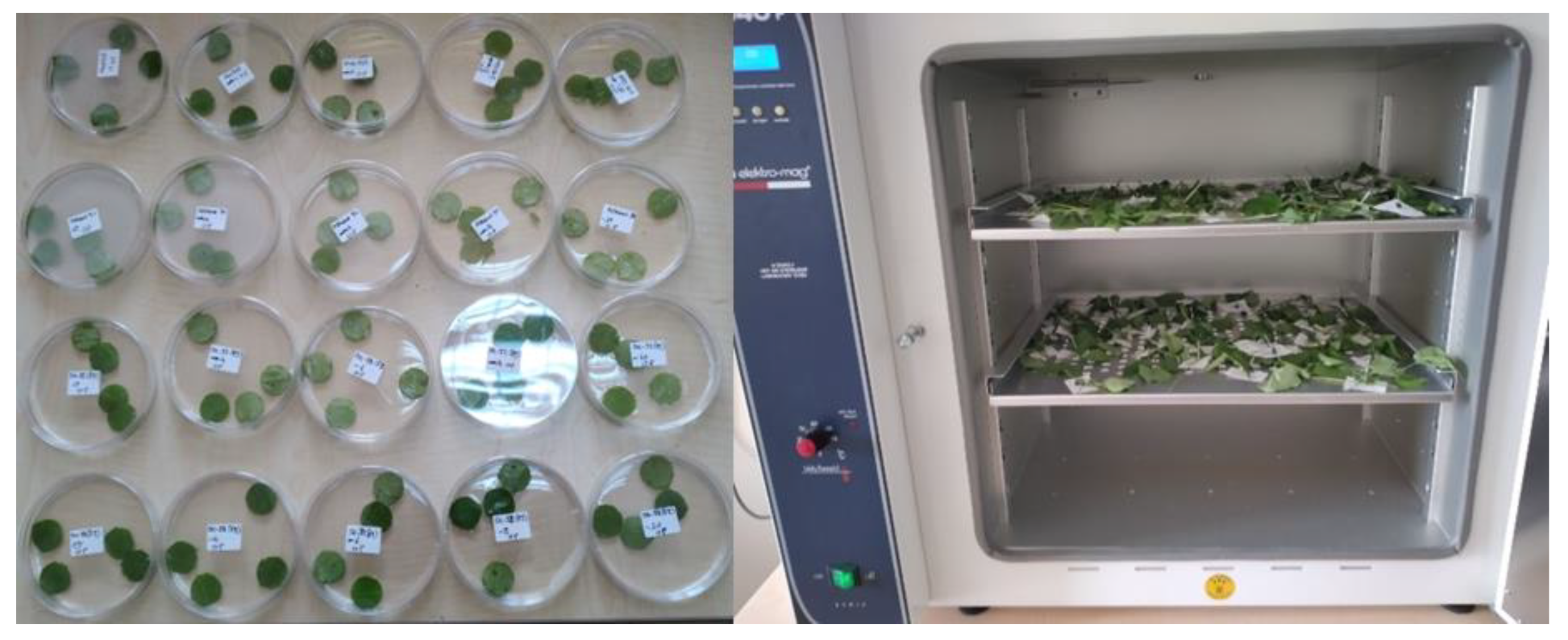
Where FW is fresh weight, DW is Dry weight and TW is turgid weight. After cotton genotypes were exposed to drought stress, from each plant’s leaf, a 0.8 cm radius disc piece was cut and weighed to obtain Turgid weight at the end of the trial. The cut pieces were put in sterile Petri dishes filled with distilled water (dH2O) and four (4) hours later Turgid weight was measured. Then, these leaf pieces were kept in a drying oven at 60 °C for 24 hours, and Dry weights were calculated. The relative water content (RWC) value was calculated using FW, DW, and TW parameters.
The vigor index parameter can be obtained with the following formula:
Vigor Seed Index (VI)=(RL+SL) × GP [37].
Where VI is the Vigor seed index, RL is root length (cm), SL is shoot length (cm), and GP is Germination percentage (%). Mean of RL, Mean of SL and Mean of GP are used to calculate Vigor seed index.

2.3. Data Analysis

One-way analysis of variance (ANOVA) was conducted using drought-related traits at the germination and seedling stage using statistical software JMP 17.0 [42]. Phylogenetic tree obtained with the morphological traits data measured in the trial with JMP 17.0. To obtain Principal component analysis (PCA) Minitab statistical analysis software [43] was used, Frequencies charts were obtained with Microsoft Office EXCEL 2016 ver. Software. The significant differences among trait means were investigated at a 5% level of probability (p≤0.05) and the Least Significant Differences of Mean (LSD) test was used to compare the mean [44].

3. Results

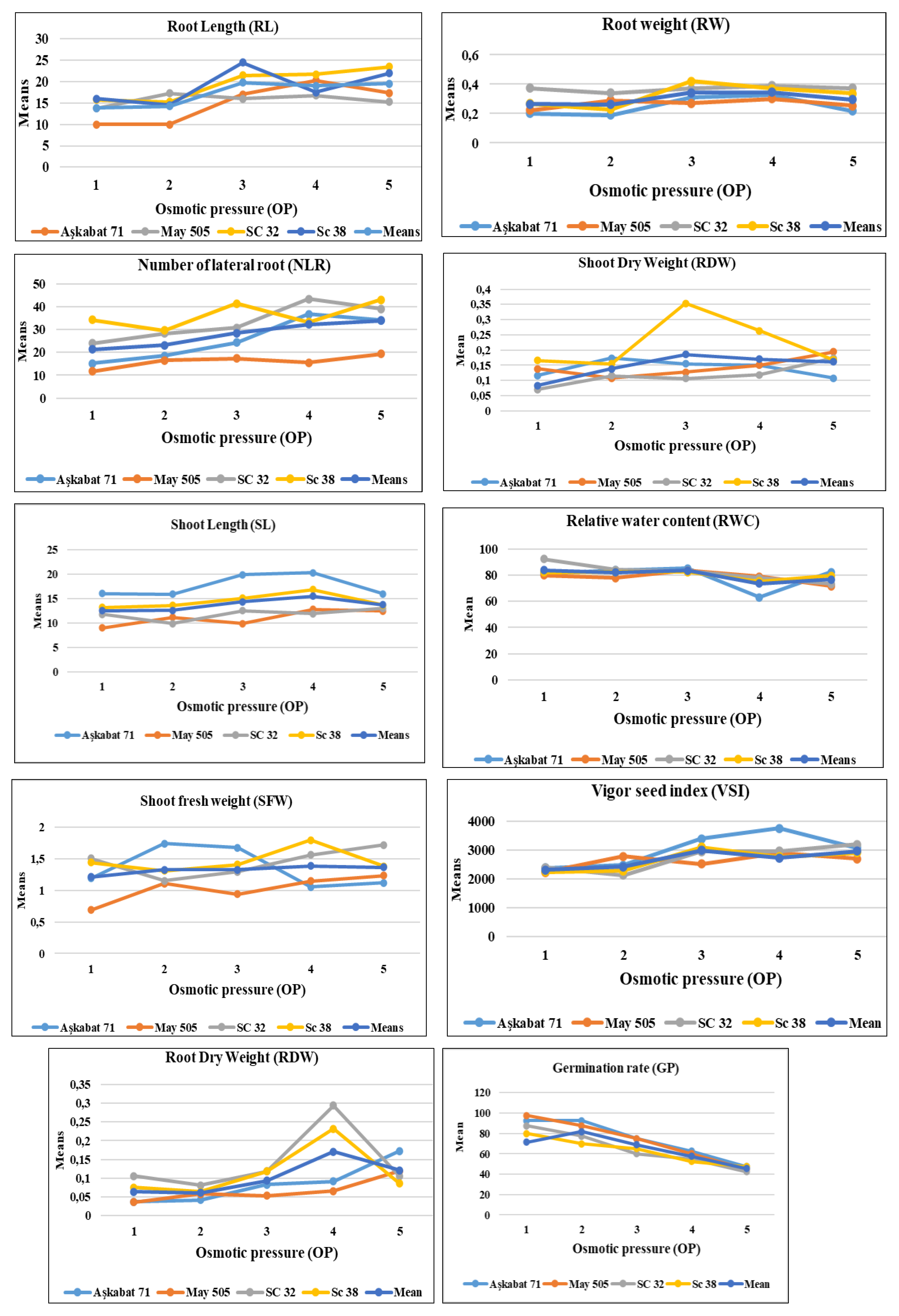
Based on the statistical analysis of RL, the genotypes Aşkabat71, May 505, SC 32, and Sc 38 had different mean values in response to varying levels of pressure (0 MPa, -4 MPa, -6 MPa, -8 MPa, and -10 MPa). The overall mean value for all genotypes was calculated for each level of pressure, and the results are as follows: At 0 MPa pressure, the genotypes had mean values ranging from 10.00a to 16.00a, with an overall mean value of 13.87a. At -4 MPa pressure, the genotypes had mean values ranging from 10.00a to 17.25a, with an overall mean value of 14.25a. At -6 MPa pressure, the genotypes had mean values ranging from 16.00a to 24.50a, with an overall mean value of 19.75a. similar results were obtained at -8 MPa pressure, the genotypes had mean values ranging from 16.75a to 21.75a, with an overall mean value of 19.06a, and at -10 MPa pressure, the genotypes had mean values ranging from 15.25b to 23.50a, with an overall mean value of 19.53ab. The letters (a and b) indicate significant differences between the means of the genotypes. Specifically, genotypes with the same letter are not significantly different from each other, while those with different letters are significantly different. Overall, the results suggest that the genotypes SC 32 and Sc 38 had better performance under pressure compared to Aşkabat71 and May 505. However, further research in the greenhouse and in the field is necessary to fully understand the implications of these findings and their potential applications in plant breeding and agriculture (Table 1, Figure 3).
For all genotypes, the average fresh root weight showed a gradual increase at 0, -4, -6, -8, and -10 MPa stress levels, and then started to decrease from the -8 MPa level onwards. The Aşkabat71 variety and SC 38 genotype remained below the overall average at the -4 MPa stress level, while the May 505 variety and SC 32 advanced cotton genotype performed above the overall average. At -6 MPa, both May 505 and Aşkabat 71 experienced a decrease, while SC 32 and SC 38 genotypes produced higher average root weights. After -6 MPa, all genotypes generally exhibited a decline, with the lowest average recorded in Aşkabat 71 and the highest average in SC 32 genotype (Table 1, Figure 3).
In terms of lateral root number (NLRs), the highest value for -4 MPa was observed in Aşkabat71 (18.50a), while the lowest value was found in May 505 (16.50a). For -6 MPa, the highest value was recorded in SC 38 (41.25a), whereas the lowest value was observed in May 505 (17.25b). Under -8 MPa osmotic pressure stress, May 505 (15.5b) exhibited the lowest value, while SC 32 (43.25a) showed the highest value. Similarly, for -10 MPa drought stress, the lowest value was observed in May 505 (19.25b), and the highest value was found in SC 38 (43.00a) genotype. The overall mean values for each genotype are as follows: Aşkabat71 (21.31ab), May 505 (23.18a), SC 32 (28.38ab), and SC 38 (32.19a). Based on the overall means, SC 38 had the highest mean, followed by SC 32, May 505, and Aşkabat71. Overall, the results indicate that the performance of the genotypes varied across different MPa values. The ranking of genotypes changed depending on the MPa value being considered. When considering the overall means, SC 38 showed the highest mean performance, indicating it may be the most favorable genotype across different MPa values. However, it’s important to note that these conclusions are based on the provided means, and further statistical analysis may be required to establish the significance of the observed differences (Table 1, Figure 3).
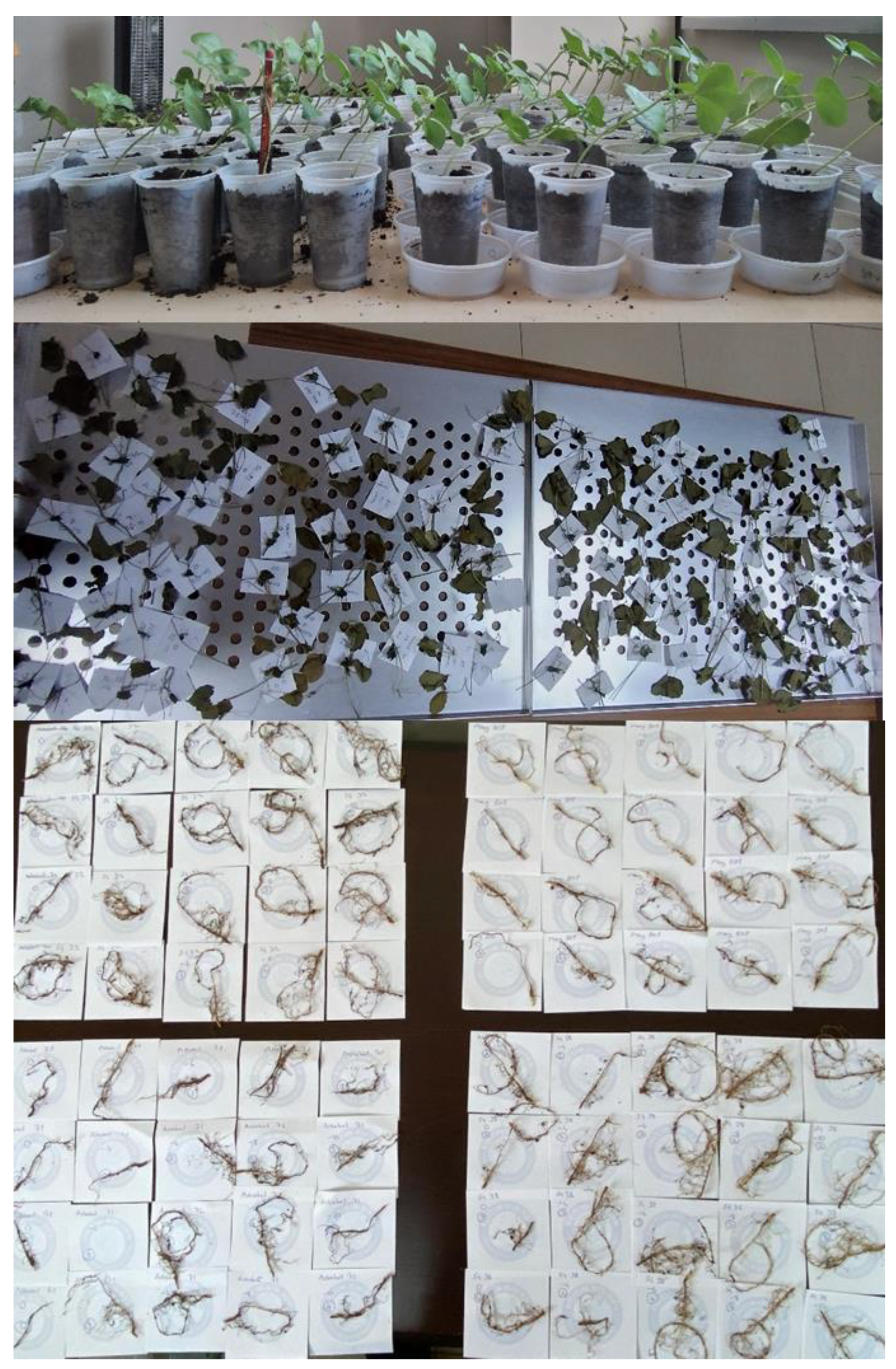
Figure 1. PEG 6000-treated cotton seedlings (A), Shoot dry weight (B), and Root dry weight (C).
Preprints 150377 g001
Shoot length (SL) values under water-deficit conditions play a key role in measuring the response of cotton plants against drought conditions. This study showed that Aşkabat 71 genotype exhibited the highest L mean (20.22a) value under the -8 MPa pressure condition. Additionally, it also showed higher mean values compared to other genotypes under the 0 MPa, -4 MPa, -6 MPa, and -10 MPa pressure conditions. While the Aşkabat71 genotype generally had the highest mean values, other genotypes performed better under specific pressure conditions. These findings emphasize the differences among genotypes and the impact of pressure conditions on plant performance. This article presents detailed results on the performance differences among genotypes under different pressure conditions. These findings can be valuable information for researchers working in the field of plant cultivation and stress tolerance.
Aşkabat 71 and SC 38 genotypes exhibited above-average Shoot Length (SL) in all drought stresses except for -10 MPa. May 505 variety, which germinated the earliest and had the highest shoot growth rate, showed the lowest responses of drought compared to a G. barbadance L. variety Aşkabat 71, and because of heterosis took place in SC 32 and SC 38 genotypes derived from the F2 segregation population of the obtained from the drought-tolerant breeding program. Therefore, the commercial cultivar May 505 performed below the overall average under -4,-6,-8, and-10MPa stress conditions (Table 1, Figure 3).
Figure 2. Turgid weight process (RWC) and oven-dried shoots.
Preprints 150377 g002
All genotypes showed a gradual increase in Shoot Fresh Weight (SFW) towards -4, -6, -8, and -10 MPa drought stress compared to the control (0 MPa). The response levels of the genotypes also increased compared to the control at the specified drought levels. The highest average was observed in Aşkabat 71 genotype at -4 and -6 MPa, while the lowest average was recorded in the May 505 variety. At the highest drought, intensities of -8 and -10 MPa, SC32 and SC38 exhibited the highest averages, while the commercial varieties Aşkabat 71 and May 505 remained below the overall average. However, the May 505 variety showed a higher average compared to the Aşkabat 71 variety, which is known for its high tolerance to biotic and abiotic stress factors (Table 1, Figure 3).
Root dry weight (RDW) responded in parallel and gradually increased its resistance mechanisms in response to the increasing severity of drought stress at all other osmotic pressure stress levels compared to the control (0 MPa). At -4 and -6 MPa levels, the genotypes’ responses were close to the overall average and each other, while at -8 MPa, the highest RDW value of 0.294 was observed in SC32, a genotype of the segregation population, followed by another individual of the same population, genotype SC38. The commercial varieties, May 505 and Aşkabat 71, remained below the overall average. At -10 MPa, the Aşkabat 71 variety activated its drought resistance mechanism and reached the highest level, followed by the commercial variety May 505, which produced an above-average yield. Generally, Aşkabat 71 and May 505 varieties showed low but consistent resistance parallel to the increasing drought stress (Table 1, Figure 1 and Figure 3). This suggests that the segregation may be approaching zero and their stable behaviors may be a result of this. The other two genotypes of the segregation population could show different responses depending on the stress levels due to being in the early stages of hybridization, leading to a high level of segregation.
Figure 3. Average response of cotton genotypes to osmotic pressure levels of 0, -4, -6, -8, and -10 MPa graph (Microsoft Excel).
Preprints 150377 g003
Almost all drought morphological markers show an increase in response mechanisms parallel to the increase in stress. However, due to excessive increase in drought stress, cotton genotypes gradually succumb to drought stress, indicating their vulnerability. As mentioned in the introduction of this study, cotton genotypes have high tolerance to drought stress, but under prolonged drought stress, it is observed that even the Sea-island cotton species begins to be negatively affected by drought.
As indicated in Table 1 and Figure 3, Shoot dry weight (SDW) (Figure 2) showed different reactions among genotypes. May 505 and SC32 genotypes exhibited a reaction below the average at -4 MPa, while Aşkabat and SC38 genotypes showed an above-average performance. At -6 MPa, except for the SC38 genotype, the others showed a reaction close to the overall average. SC38 genotype showed the highest average at -6 MPa (0.354a), but it decreased with the increasing severity of drought and again exhibited the highest value (0.263a) at -8 MPa. At -4 MPa, the Aşkabat 71 variety, which showed the highest tolerance value at the onset of drought severity, exhibited a behavior inversely proportional to the increase in drought stress and decreased. This may be due to cotton genotypes sending the glucose (C6H12O6), which is a product of photosynthesis, to the roots through the phloem and xylem vascular bundles in parallel with the increase in drought stress in order to effectively cope with drought.
The highest value of Relative Water Content (RWC) was obtained in the Aşkabat 71 variety at -6 MPa stress level (Table 1), followed by the segregating individual SC32 genotype (84.25a) and Aşkabat 71 variety (83.75a) at -4 MPa. Aşkabat 71 recorded values above the overall average at all stress levels except -8 MPa. The commercial variety May 505 had an average of 77.75a at -4 MPa, below the overall average of 82.06a, and at -10 MPa stress level, the variety average was 71.75b, below the overall average of 76.81ab. However, it showed results close to or above the average at other drought stresses (Table 1, Figure 2-3). Aşkabat 71 variety, which consistently had values above the genotype mean, experienced a significant decrease at -8 MPa stress level (Genotype mean: 63.00a). The SC32 genotype showed a consistent decrease, but it was not significant enough to lower its tolerance, and it performed below the overall average in some stress levels and above it in others. The SC38 genotype showed stability at -4 and -6 MPa, and had values above the overall average at -8 MPa, but experienced a decrease, and at the most severe drought stress, it preserved its available water (Table 1, Figure 2, Figure 3).
Germination percentage (GP) was greatly affected by the high concentration of PEG 6000 solution, and no germination occurred at -6, -8, and -10 MPa treatments. At -4 MPa, although germination occurred, the germination percentage was very low. Instead, osmotic pressure stresses of -0.4, -0.6, -0.8, and -1 MPa were applied to observe germination in the genotypes. It was then observed that the stress factors at these levels did not induce drought stress in the plants, and more severe drought stresses of -4, -6, -8, and -10 MPa were applied. Accordingly, a decrease in germination percentage was observed in all genotypes parallel to the increase in stress, compared to the control (Table 1, Figure 3). For all genotypes and stress factors, the lowest germination was recorded in the SC32 genotype (42.5a) at -1 MPa, while the highest germination was observed in Aşkabat 71 (92.5a) at -0.4 MPa. The May 505 variety had germination averages of 87.5ab, 75a, 60a, and 45a at -0.4, -0.6, -0.8, and -0.41 MPa levels, respectively. Looking at the overall genotype averages, the highest general average (81.88) was recorded at -0.4 MPa, while the lowest average (45.6) was obtained at -0.4 MPa.
According to Table 1, compared to the control (0 MPa), the highest genotype in terms of Vigor Seed Index (VSI) at -4 MPa was obtained in the commercial variety May 505 with a value of 2780a, followed by Aşkabat 71 with a value of 2473a, which was also above the average. At -6 MPa, Aşkabat 71, SC38, and SC32 genotypes followed with average values of 3381a, 3099a, and 2951a, respectively. Generally, an increase in drought stress corresponded to an increase in VSI average. In the experiment, a consistent increase was observed in Aşkabat 71 at -8 MPa, but at -10 MPa, it was observed that the tolerance of this genotype to drought also decreased. A similar pattern was observed in the SC32 genotype at all levels of drought stress. The highest VSI average of all genotypes (3082c) was recorded at -8 MPa stress level, while the lowest average (2417a) was obtained at the beginning of the drought stress at -4 MPa. This observation indicates that cotton plants exhibit a drought response that should be displayed at the beginning, middle, and end of drought stress (Table 1, Figure 3).

4. Discussion

Photosynthetic rate, proline content, chlorophyll, root length, fresh and dry biomass, plant height, and expression of genes responsive to drought are realistic indicators of drought [45]. The root system of cotton plants is an organ that supplies the plant with water lost through photosynthetic activity and transpiration from the soil [46]. Researchers have conducted various studies to optimize water uptake by roots with optimal energy from the soil [47,48].
In terms of root system architecture, lateral branching [47], branching angles [48], root hydraulic conductivity [49], and root topology [50] have been identified as important criteria for optimizing water uptake. In this study, the longest root length (24.50 cm) was observed in the SC38 genotype at -6 MPa drought level, while the shortest root length (10 cm) was found in the Aşkabat 71 variety at -4 MPa. The average drought response of the genotypes initially increased and then started to decrease as they succumbed to drought stress (Table 1, Figure 3). The highest average (19.75 cm) was measured at -6 MPa, while the lowest average (14.25 cm) was observed at -4 MPa. In terms of the average across all stress levels, the SC38 genotype had the highest average of 20.5 cm, while the lowest average of 16.15 cm was observed in the Aşkabat 71 variety belonging to the G. Barbadense cotton species (Table 1, Figure 3). Pawar and Veena [51] observed that the root length of cotton genotypes subjected to artificial drought using PEG-6000 chemical increased until the 10% PEG-6000 stress level, after which it started to decrease. Plants under water stress develop their roots to extract water from deeper layers in order to sustain photosynthesis, and as a result, the aboveground parts of the plant may become weaker due to the allocation of photosynthetic products from shoots to roots [31]. This indicates that drought stress primarily affects the shoots. Fernández et al. [52] found in their study on the effects of drought on cotton plants that shoots were affected earlier than roots under drought conditions.
The SC38 genotype exhibited the highest average root fresh weight (RFW) of 0.37 g at -6 MPa, while the lowest average of 0.19 g was obtained at -4 MPa. Due to heterosis, the SC32 genotype showed values above the overall RFW averages at all stress levels. In terms of the average across all levels, the highest average was again recorded in the SC32 genotype (0.36 g), while the lowest was observed in the Aşkabat 71 variety (0.26 g). Generally, average RFW values of 0.262, 0.342, 0.346, and 0.296 were obtained at -4, -6, -8, and -10 MPa, respectively (Table 1, Figure 3). The increasing drought stress levels indicate that cotton, which is already tolerant to drought, enhances its resistance mechanism by allocating photosynthetic products to the root system to cope with drought, but it struggles to withstand severe drought. Riaz et al. [53] reported average fresh root weights ranging from 0.39 to 0.57 g under drought stress conditions in greenhouse settings. The higher RFW values obtained in our study may be due to the absence of chemicals such as PEG6000 used to induce artificial drought stress. The density of root systems in plants enables them to survive under different environmental conditions [54,55,56,57]. Furthermore, Su et al. [58] demonstrated a positive correlation between increased root biomass and yield improvement in the Sesame plant. Iftikhar et al. [59] reported that root traits such as fresh root weight, dry root weight, and root length were more effective than shoot traits in combating drought stress.
Understanding the genetic basis of root traits is of critical importance for enhancing tolerance to abiotic stress factors and improving productivity in field crops [60,61]. In this study, for the root dry weight (RDW) parameter, the highest average (0.294 g) was obtained in the drought-tolerant breeding material SC32 under -8 MPa drought stress. The lowest average (0.041 g) was recorded in the Aşkabat 71 variety at -4 MPa. As the drought intensity increased, there was a parallel increase in the averages of 0.060 g, 0.093 g, and 0.170 g at -4, -6, and -8 MPa stress levels, respectively. However, at -10 MPa, a decrease in drought tolerance was observed with an average of 0.120 g. In cotton, the root system secretes various metabolites or specific components such as gossypol to regulate plant development [62,63]. In terms of the average across all stress levels, the highest average of 0.149 g was measured in the SC32 genotype, followed by the SC38 genotype, which is an individual from the hybrid population, with an average of 0.125 g (Table 1, Figure 3). Rauf et al. [64] conducted an experiment on wheat, where they induced artificial drought using PEG 6000, and found the root dry weight of 16 wheat genotypes to be 0.120 g at a 25% PEG drought level. In sesame plants, root dry weights ranging from 0.040 g to 0.120 g have been reported [65]. Similar results were reported by Riaz et al. [53] in cotton: The lowest dry weight among five advanced line genotypes of Gossypium hirsutum was found to be 0.06 g, the highest was 0.08 g, and the average was 0.88 g. Furthermore, the highest average root and shoot lengths were 17.34 cm and 4.35 cm, respectively, while the lowest average root dry weight was 0.399 g. Studies have shown that drought and other abiotic stress factors significantly affect root and shoot development [33,66,67]. It has also been reported that drought stress in cotton affects root development, shoot vigor, and seed index [67,68]. In line with our study, Singh et al. [67] reported that “under drought stress during the seedling stage, the root diameter was higher.
In this study, Aşkabat 71 commercial variety showed higher average shoot lengths (SL) than the overall average at all stress levels (Figure 3). The average shoot lengths across stress levels were highest in Aşkabat 71 (17.96 cm) and lowest in May 505 (11.55 cm) variety. The advanced line SC38 had the second-highest average (14.76 cm). When the experiment was conducted under field capacity irrigation, a regular shoot elongation was observed, but with the application of PEG 6000, shoot elongation decreased immediately and reached near-zero levels. Shoot length, root length, lateral root count, RWC (relative water content), stomatal density, stomatal conductance, and leaf water loss are important measurements taken during the seedling stage of cotton under drought stress, and there are positive and significant correlations among these values [69]. Rehman et al. [70] reported a decrease in shoot length ranging from 33% to 59% with increasing drought stress in cotton. The decrease in shoot length during prolonged water deficiency is believed to be due to the plant’s allocation of resources to strengthen the roots. After the 60% PEG 6000 level, shoot elongation was inhibited in all cotton plants [71]. Additionally, on the 12th day, the average shoot lengths of the genotypes varied between 0.88 and 6.13 cm [71]. Khan et al. [72] obtained root lengths ranging from 22.13 cm to 7.03 cm in okra, which belongs to the same family as cotton, under drought stress.
In this study, there appears to be a negative correlation between fresh shoot weight (SFW) and shoot length (SL) on one hand, and root length, fresh root weight, and dry root weight on the other. As the severity of drought increases, cotton plants, in an effort to develop their root system by allocating resources to the roots, experience a decrease in fresh shoot weight and shoot length. In our study, the highest SFW average was observed in the SC32 genotype at all stress levels. The gradual increase in SFW initially observed in cotton genotypes when facing drought at its onset may explain their ability to cope with drought. However, as the drought severity exceeds a certain threshold, SFW begins to decrease. The May 505 variety, for instance, showed an increase in SFW at -4 MPa, a decrease at -6 MPa, and then a gradual activation of resistance mechanisms against drought (Table 1, Figure 3). This suggests that the drought stress may have stimulated the plant’s DNA, leading to the anticipation of worsening conditions. As a response, the plant may have stored more nutrients and water from the soil, increased glucose storage through enhanced photosynthesis, and engaged in biomass accumulation.
The highest shoot dry weight (SDW) was found in the SC38 genotype at 0.235 g for all drought stress levels, while the lowest average was observed in the SC32 genotype at 0.128 g. SDW showed an increase at -4 and -6 MPa stress levels, followed by a gradual decrease at -8 and -10 MPa. The SC38 genotype had the highest SDW average of 0.354 g at -6 MPa stress level. Although the Aşkabat 71 variety initially exhibited tolerance to drought stress, its tolerance decreased with increasing drought severity, and it had the lowest average at -10 MPa. Rauf et al. [64] found varying values for shoot fresh weight (SFW) ranging from 0.329 g to shoot dry weight (SDW) ranging from 0.177 g in wheat plants treated with PEG 6000. Similar results to our study have been reported in the literature. In cotton, SFW values ranged from 1.13 to 2.12, while SDW values ranged from 0.16 to 0.26 [53]. Under 25% and 50% drought stress, the SFW average values for cotton genotypes were obtained as 0.129 g and 0.090 g, respectively [73].
In terms of relative water content (RWC), genotypes generally showed similar responses to each other and to the overall average, except at -8 MPa. However, at -4 MPa, the SC32 genotype exhibited the highest value with an average of 84.25, while the Aşkabat 71 variety recorded a low RWC value at -8 MPa with an average of 63. Regarding drought stress, the highest averages were obtained in the SC38 and SC32 genotypes with values of 79.93 and 79.62, respectively. The study observed a decrease in RWC value with increasing drought stress (Table 1, Figure 3). Raza et al. [74] stated that drought stress can significantly reduce RWC value and that a high RWC value is an indicator of drought tolerance. Similar results have been obtained in Pistachio [75], Rice [76], Barley [77], and Tomato [78]. In this study, RWC showed a linear relationship with shoot length, shoot fresh weight, root length, and root weight, while it showed a partial correlation with lateral root number. Phenotypic observations have confirmed a positive correlation between germination rate and RWC value. Researchers have shown that there is a positive correlation between root fresh weight and RWC value in leaves, stating that “combining high water-holding capacity in fresh roots with leaves enhances effective drought resistance” [53,79]. Bayoumi et al. [80] mentioned that RWC plays a role in regulating water loss in stomata and maintaining turgor pressure in plants, indicating its importance as a criterion for selecting high-yielding varieties under drought stress.
Lateral roots are derived from cambial swaps of the main root [36]. The number of lateral roots (NLRs) increased at all levels of drought stress. The highest NLRs were observed in the SC38 genotype (36.75), followed by the SC32 genotype (35.31) across all drought stress levels. The highest lateral root number for cotton genotypes, which increase in response to drought and attempt to mitigate its negative effects, was observed at -10 MPa stress with an average of 33.81, while the lowest was observed at -4 MPa. Riaz et al. [53] obtained values ranging from 14.33 to 21.33 NLRs in a 60-day drought experiment using a five-line cotton variety. Quisenberry et al. [81] reported significant differences in root length and lateral root number in a 35-day drought-stress cotton experiment conducted under greenhouse conditions. Salt stress, which is the second most important abiotic stress factor, has a greater negative impact on lateral growth in cotton compared to the formation of lateral roots [82]. In this study, it was observed that an increase in root length did not always parallel an increase in lateral root number. Some genotypes that do not exhibit taproot elongation tended to develop more lateral roots to obtain the necessary nutrients and water, and these lateral roots were longer than the normal lateral root number to compensate for the lack of a taproot (Figure 1, Table 1).
The study demonstrated that drought stress induced by the chemical PEG 6000 had a negative effect on the germination of all cotton genotypes. Kalefetoğlu et al. [83] found a 40% decrease in germination rate in chickpea with PEG 6000 application up to the-0.8 MPa level. Increasing drought stress leads to increased water deficiency, negatively affecting germination rate, germination speed, and seedling development [83,84]. PEG chemicals are non-ionic and large-molecule water polymers that are used to create artificial drought conditions and do not penetrate plant tissues [85].
Carpita et al. [86] reported that PEG molecules with a molecular weight of 6000 or greater cannot enter the plant cell wall. Grouzis and Danthu [87] stated that germination is one of the most important life stages of a plant and can be influenced not only by genotypic factors such as dormancy and seed coat thickness but also by environmental factors. In the study, the highest germination rate was observed in the varieties Aşkabat 71 and May 505. However, May 505 exhibited the highest germination speed. Our study showed a positive correlation between early germination and SL, SDW, and SFW parameters, indicating that early germination generally leads to higher shoot length, shoot fresh weight, and shoot dry weight production through increased photosynthesis. In terms of vigor seed index (VSI), the highest genotype average was observed at -8 MPa drought stress, while the lowest was observed at -4 MPa. Among the genotypes, Aşkabat 71 had the highest VSI average of 3164, followed by the SC32 genotype with an average of 2810. Aşkabat 71 consistently exhibited VSI values above the overall average at all stress levels, but at -10 MPa, SC32 showed the highest VSI value (Figure 3, Table 1). Uprety et al. [88] reported the highest VSI value as 1367 and the lowest as 947. In our study, the highest VSI value was observed in the Aşkabat 71 variety at an osmotic pressure level of -8 MPa, with a value of 3740, while the lowest value was 2134 on average in the advanced line genotype SC32. The higher values we obtained compared to the literature may be due to the longer duration of our experiment, which was approximately twice as long.

5. Conclusions

Drought is a global climatic event that directly or indirectly affects the entire population. There are various methods to combat drought, and one of the most important approaches is the development of drought-tolerant plant varieties. In order to achieve this, artificial stresses are applied to plants during the seedling and germination stages, where cotton plants are most sensitive to stress factors, and the plant’s responses are measured using drought measurement criteria. In this study, artificial osmotic pressure stresses of PEG 6000 chemical were applied to the varieties Aşkabat 71, May 505, and the advanced lines SC32 and SC38 at 0 MPa (Control), -4 MPa, -6 MPa, -8 MPa, and -10 MPa, and the responses of cotton genotypes to drought stress were measured using parameters such as RL, RFW, RDW, SL, SFW, SDW, RWC, GP, VSI, and NLRs. The results of this study demonstrated that the development of drought-tolerant varieties through breeding programs showed high heterosis in the genotypes SC32 and SC38, indicating that continuing the breeding program with these genotypes would enhance the success of the breeding program. May 505 variety exhibited high tolerance to drought in terms of RWC value, and it showed promising results compared to the G. barbadense variety Aşkabat 71 and segregating population genotypes in other parameters as well. The high germination rate and germination speed of the May 505 variety suggest that it can be used as a parent in both drought and early variety breeding programs. In this study, the Sea-island cotton variety Aşkabat demonstrated the expected performance and exhibited high tolerance to PEG 6000 drought stress. Additionally, it was observed that as the root length increased, the number of lateral roots did not increase. In fact, to compensate for this deficiency, cotton genotypes increased the number and length of lateral roots when the main root was short and thick. It is also important to note that shoot-related parameters alone cannot be used to measure the response to drought, as early germinating varieties store more nutrients through photosynthesis, and therefore, the high values of shoot-related parameters may be more associated with early germination than drought stress.

Author Contributions

All authors contributed to the study’s conception and design. Material preparation. Data collection and analysis were performed by Sadettin ÇELİK The first draft of the manuscript was written by Sadettin ÇELİK, Tahsin BEYCIOĞLU, Gülay ZÜLKADIR and all authors commented on previous versions of the manuscript. All authors read and approved the final manuscript.

Funding

The author (s) received no specific funding for this study.

Acknowledgments

I am thankful for the support of StarSeed, MAY. BASF. and Progen Inc. seed companies which provided me with cotton seed and to Bingol University. Genç Vaccaional school personnel for assistance during all processes of the experiment.

Conflicts of Interest

The authors declare that they have no conflicts of interest to report regarding the present study”.

References

  1. Zhang Y.; Fan, Y.; Rui, C.; Zhang, H.; Xu, N.; Dai, M.; Chen, X.; Lu, X.; Wang, D.; Wang, J.; Wang, J.; Wang, Q.; Wang, S.; Chen, C.; Guo, L.; Zhao, L.; Ye, W. Melatonin improves cotton salt tolerance by regulating ROS scavenging system and Ca2+ signal transduction. Front Plant Sci. 2021, 28;12: 693690. [CrossRef]
  2. Grayson, M. Agriculture and drought. Nature, 2013,501: S1.
  3. Saranga, Y.; Paterson, A.H.; Levi, A. Bridging classical and molecular genetics of abiotic stress resistance in cotton. genet. Genom. Cott. 2009, 3. 337–352. [CrossRef]
  4. Seleiman, M.F.; Al-Suhaibani, N.; Ali, N.; Akmal, M.; Alotaibi, M.; Refay, Y.; Dindaroglu, T.; Abdul-Wajid, H.H.; Battaglia, M.L. Drought stress impacts on plants and different approaches to alleviate its adverse effects. Plants (Basel). 2021, 28;10. [CrossRef]
  5. Abdelraheem, A.; Esmaeili, N.; O’Connell, M.; Zhang, J. Progress and perspective on drought and salt stress tolerance in cotton. Ind. Crops Prod. 2019, 130. 118–129. [CrossRef]
  6. Li et al., 2009 a.
  7. Li et al., 2009 b.
  8. Parida, A. K.; Dagaonkar, V. S. Phalak, M. S.; Aurangabadkar, L. P. Differential responses of the enzymes involved in proline biosynthesis and degradation in drought tolerant and sensitive cotton genotypes during drought stress and recovery. Acta Physiol. Plant, 2008, 30. 619–627. [CrossRef]
  9. Chen et al., 2007.
  10. Hu, Y.; Jiedan, C.; Lei, F.; Zhiyuan, Z.; Wei, M.; Yongchao, N.. et al. Gossypium barbadense and Gossypium hirsutum genomes provide insights into the origin and evolution of allotetraploid cotton. Nat. Genet. 2019, 51 739–748. [CrossRef]
  11. Chaves, M. M.; Maroco, J. P.; Pereira, J. S. Understanding plant responses to drought—from genes to the whole plant. Funct. Plant Biol. 2003, 30:239. [CrossRef]
  12. Gadallah, M. A. A. Effect of water stress. abscisic acid. and proline on cotton plants. J. Arid Environ. 1995, 30 315–325. [CrossRef]
  13. Wahid, A.; Rasul, E. “Photosynthesis in leaf. stem. flower. and fruit.” in Handbook of Photosynthesis. 2nd Edn. ed. Pessarakli M. (Boca Raton. FL: CRC Press;). 2005, 479–497.
  14. Iqbal, M.; Khan, M.A.; Naeem, M.; Aziz, U.; Afzal, J.; Latif, M. (2013) Inducing drought tolerance in upland cotton (Gossypium hirsutum L.). Accomplishments and future prospects. World Appl Sci J. 2013, 21:1062–1069. [CrossRef]
  15. Cornic, G.; Massacci, A. “Leaf photosynthesis under drought stress.” in Photosynthesis and the Environment. ed. Baker N. R. (Dordrecht: Springer;). 1996, 347–366. [CrossRef]
  16. Lawlor, D. W.; Cornic, G. Photosynthetic carbon assimilation and associated metabolism in relation to water deficits in higher plants. Plant Cell Environ. 2002, 25 275–294. [CrossRef]
  17. Fang, Y.; Xiong, L. General mechanisms of drought response and their application in drought resistance improvement in plants. Cell. Mol. Life Sci. 2015, 72 673–689. [CrossRef]
  18. Zahid, Z.; Khan, M.K.R.; Hameed, A.; Akhtar, M.; Ditta, A.; Hassan, H.M.; Farid, G. Dissection of drought tolerance in upland cotton through morpho-physiological and biochemical traits at seedling stage. Front Plant Sci. 2021 Mar 12; 12:627107. [CrossRef]
  19. Waterworth, W.M.; Bray, C.M.; West, C.E. The importance of safeguarding genome integrity in germination and seed longevity. J Exp Bot. 2015, 66(12):3549-58. [CrossRef]
  20. Wanda M. Waterworth. Clifford M. Bray. Christopher E. West. The importance of safeguarding genome integrity in germination and seed longevity. Journal of Experimental Botany. Volume 66. Issue 12. June 2015. Pages 3549–3558. [CrossRef]
  21. Farooq, M.; Wahid, A.; Kobayashi, N. et al. Plant drought stress: Effects. mechanisms. and management. Agron. Sustain. Dev. 2009, 29. 185–212. [CrossRef]
  22. Larcher. W. Ecofisiologia Vegetal. 3. ed. São Carlos, SP: RiMa, 2006, 531.
  23. Parry, M.A.J.; Flexas, J.; Medrano, H. Prospects for crop production under drought: Research priorities and future directions. Ann. Appl. Biol.. 2005; 147(3):211-226.
  24. Babu, A.G.; Patil, B.C.; Koti, R.V. Identification of drought-tolerant cotton (Gossypium hirsutum L.) genotypes by biophysical and physiological traits. Journal of Pharmacognosy and Phytochemistry. 2019, 8(1). 1855-1560.
  25. Guo et al, 2018.
  26. Fukao and Xiong, 2013.
  27. Ashraf, M.Y.; Naqvi, M.H.; Khan, A.H. 1996. Evaluation of four screening techniques for drought tolerance in wheat (Triticum aestivum L.). Acta Agron. Hung.. 1996, 44: 213-220.
  28. Dodd, G.L.; Donovan, L.A. Water potential and ionic effect on germination and seedling growth of two cold desert shrubs. Amer J Bot. 1999, 86:1146-1153. [CrossRef]
  29. Heikal, M.M.; Shaddad, M.A.; Ahmed, A.M. Effect of water stress and gibberellic acid on germination of flax. sesame and onion seed. Biol Plant, 1982, 24:124-129. [CrossRef]
  30. Ahmad, S.; Ahmad, R.; Ashraf, M.Y.; Ashraf, M.; Waraich, E.A. Sunflower (Helianthus annuus L.) response to drought stress at germination and seedling growth stages. Pak. J. Bot. 2009, 41(2): 647-654.
  31. Babu, A.G., Patil, B.C., Pawar, K.N. Evaluation of cotton genotypes for drought tolerance using PEG-6000 water stress by slanting glass plate technique. The Bioscan, 2014, 9(4): 1419-1424.
  32. Wendel, J.F.; Cronn, R.C. Polyploidy and the evolutionary history of cotton. Advances in Agronomy, 2003, 78: 139-186.
  33. Basal, H.; Smith, C.W.; Thaxton, P.S.; Hemphill, J.K. Seedling drought tolerance in upland cotton. Crop Science. 2005, 45(2): 766-771. [CrossRef]
  34. Medeiros Filho, S.; Silva, S.O.; Dutra, A.S.; Torres, S.B. 2006. Comparison of germination test methodologies of linted and delinted cotton seeds. Revista Caatinga, 2006, 19: 56-60.
  35. Lopes, K.P.; Bruno, R.L.A.; Costa, R.F.; Bruno, G.B.; Rocha, M.S. 2006. Effects of seed processing on physiological and sanitary qualities of seeds of herbaceous cotton. Revista Brasileira de Engenharia Agrícola e Ambiental, 10: 2006, 426-435. [CrossRef]
  36. McMichael, B.L.; Oosterhuis, D.M.; Zak, J.C. Stress response in cotton root systems. Stress Physiology in Cotton, 2011, 97.
  37. Abdual-Baki, A.; Andersen, J. Relationship between decarboxilation of glutamatic acid and vigour in soyabean seed. Crop Science. 1973, 13(2): 222-226. [CrossRef]
  38. Lamichhane, J. R.; Messéan, A.; Ricci, P. Research and innovation priorities as defined by the Ecophyto plan to address current crop protection transformation challenges in France. Advances in Agronomy. 2019, 154. 81-152. [CrossRef]
  39. Côme, D. (1982). Germination, Mazliak, P. (Ed.) Physiologie Végétale II Croissance et Développement. Hermann. Paris, 1982, 129-225.
  40. Belcher, E.W.; Miller, L. Influence of substrate moisture level on the germination of sweetgum and sand pine seed. In Proceedings, 1975.
  41. Pieczynski, M.; Marczewski, W.; Hennig, J.; Dolata, J.; Bielewicz, D.; Piontek, P.; Wyrzykowska, A.; Krusiewicz, D.; Strzelczyk-Zyta, D.; Konopka-Postupolska, D.; Krzeslowska, M. Down-regulation of CBP 80 gene expression as a strategy to engineer a drought-tolerant potato. Plant biotechnology journal. 2013, 11(4):459-69. [CrossRef]
  42. JMP®. Version <x>. SAS Institute Inc. Cary. NC. 1989–2021.Where <17> is the version of JMP being cited.
  43. Minitab, L.L.C. 2021. Minitab. Retrieved from https://www.minitab.com.
  44. Steel, R.; Torrie, J., Dicky, D. Principles and Procedures of Statistics. Multiple Comparisons. McGraw Hill Book Co; 1997, 178–198.
  45. Sperdouli, I.; Moustakas, M. Differential response of photosystem II photochemistry in young and mature leaves of Arabidopsis thaliana to the onset of drought stress. Acta Physiol Plant, 2012, 34: 1267–1276. [CrossRef]
  46. Jung, Y.; Park, K.; Jensen, K.H.; Kim, W.; Kim, H.Y. (2019). A design principle of root length distribution of plants. Journal of the Royal Society Interface, 2019, 16(161), 20190556. [CrossRef]
  47. Postma, J.A.; Dathe, A.; Lynch, J.P. The optimal lateral root branching density for maize depends on nitrogen and phosphorus availability. Plant Physiol. 2014, 166, 590-602. [CrossRef]
  48. Ho, M.D.; McCannon, B.C.; Lynch, J.P. Optimization modeling of plant root architecture for water and phosphorus acquisition. J. Theor. Biol. 2004, 226, 331-340. [CrossRef]
  49. Couvreur, V.; Faget, M.; Lobet, G.; Javaux, M.; Chaumont, F.; Draye, X. 2018 Going with the flow: Multiscale insights into the composite nature of water transport in roots. Plant Physiol. 2018, 178, 1689-1703. [CrossRef]
  50. Fitter, A.H.; Stickland, T.R.; Harvey, M.L.; Wilson, G.W. 1991 Architectural analysis of plant root systems 1. Architectural correlates of exploitation efficiency. New Phytol. 1991, 118, 375-382. [CrossRef]
  51. Pawar, K.N.; Veena, V.B. Evaluation of Cotton Genotypes for Drought Tolerance using PEG-6000 Water Stress by Slanting Glass Plate Technique. Int. J. Curr. Microbiol. App. Sci. 2020, 9(11): 3203-3212. [CrossRef]
  52. Fernández, C.J.; Cothren, J.T.; McInnes, K.J. Partitioning of biomass in water and nitrogen-stressed cotton during the pre-bloom stage. J. Plant Nutr. 1996, 19:595–617. [CrossRef]
  53. Riaz, M.; Farooq, J.; Sakhawat, G.; Mahmood, A.; Sadiq, M.A.; Yaseen, M. Genotypic variability for root/shoot parameters under water stress in some advanced lines of cotton (Gossypium hirsutum L.). Genet Mol Res. 2013, 27;12(1):552-61. [CrossRef]
  54. Lakhanpaul, S.; Singh, V.; Kumar, S.; Bhardwaj, D.; Bhat, K.V. Sesame: Overcoming the abiotic stresses in the queen of oilseed crops. Improving crop resistance to abiotic stress, 2012, 1251-1283. [CrossRef]
  55. Dossa, K.; Yehouessi, L.W.; Likeng-Li-Ngue, B.C.; Diouf, D.; Liao, B.; Zhang, X.; Cisse, N.; Bell, J.M. Comprehensive screening of some west and central African sesame genotypes for drought resistance probing by geomorphological, physiological, biochemical, and seed quality traits. Agronomy, 2017a, 7: 83. [CrossRef]
  56. Dossa, K.; You, J.; Wang, L.; Zhang, Y.; Li, D.; Zhou, R.; Yu, J.; Wei, X.; Zhu, X.; Jiang, S.; Gao, Y.; Mmadi, M.A.; Zhang, X. Transcriptomic profiling of sesame during waterlogging and recovery. Scientific Data, 2019b, 6, 204. [CrossRef]
  57. Gloaguen, R.M.; Couch, A.; Rowland, D.L.; Bennett, J.; Hochmuth, G.; Langham, D.R.; Brym, Z.T. Root life history of non-dehiscent sesame (Sesamum indicum L.) cultivars and the relationship with canopy development. Field. Crop. Res. 2019, 241, 107560. [CrossRef]
  58. Su, R.; Zhou, R.; Mmadi, M.A.; Li, D.; Qin, L.; Liu, A.; Wang, J.; Gao, Y.; Wei, M.; Shi, L.; Wu, Z.; You, J.; Zhang, X.; Dossa, K. Root diversity in sesame (Sesamum indicum L.): Insights into the morphological, anatomical and gene expression profiles. Planta 2019, 250: 1461–1474. [CrossRef]
  59. Iftikhar, M.S.; Talha, G.M.; Shahzad, R.; Jameel, S.; Aleem, M.; Iqbal, M.Z. Early response of cotton (Gossypium hirsutum L.) genotype against drought stress. International Journal of Biosciences, 2019, 14 (2): 537-544. [CrossRef]
  60. Wang et al., 2015.
  61. Liu et al., 2018.
  62. Bin, C.; Anne, M.J.; Ramsey, S.L.; Ralph, E.D.; Lowell, P.B. (R)-nicotine biosynthesis, metabolism and translocation in tobacco as determined by nicotine demethylase mutants. Phytochemistry, 2013, 95:188–196. [CrossRef]
  63. Zhao, T.; Xie, Q.; Li, C.; Li, C.; Mei, L.; Yu, J.Z.; Chen, J.; Zhu, S. Cotton roots are the major source of gossypol biosynthesis and accumulation. BMC Plant Biol. 2020; 20:88. [CrossRef]
  64. Rauf, M.; Munir, M.; ul Hassan, M.; Ahmad, M.; Afzal, M. Performance of wheat genotypes under osmotic stress at germination and early seedling growth stage. African Journal of biotechnology, 2007, 6(8).
  65. Dossa, K.; Zhou, R.; Li, D.; Liu, A.; Qin, L.; Mmadi, M. A.; Su, R.; Zhang, Y.; Wang, J.; Gao, Y.; Zhang, X.; You, J. A novel motif in the 5’-UTR of an orphan gene ‘Big Root Biomass’ modulates root biomass in sesame. Plant biotechnology journal, 2021, 19(5), 1065-1079. [CrossRef]
  66. Hamoud, H.; Soliman, Y.; Eldemery, S.; Abdellatif, K. Field performance and gene expression of drought stress tolerance in cotton (Gossypium barbadense L.). British Biotechnol J. 2016; 14:1–9. [CrossRef]
  67. Singh, B.; Norvell, E.; Wijewardana, C.; Wallace, T.; Chastain, D.; Reddy, K.R. Assessing morphological characteristics of elite cotton lines from different breeding programmes for low temperature and drought tolerance. J Agron Crop Sci. 2018; 204:467–76. [CrossRef]
  68. Wijewardana, C.; Henry, W.B.; Gao, W.; Reddy, K.R. Interactive efects on CO2, drought, and ultraviolet-B radiation on maize growth and development. J. Photochem Photobiol B Biol. 2016; 160:198–209. [CrossRef]
  69. Sekmen, A.H.; Ozgur, R.; Uzilday, B.; Turkan, I. Reactive oxygen species scavenging capacities of cotton (Gossypium hirsutum) cultivars under combined drought and heat-induced oxidative stress. Environ Exp Bot. 2014; 99: 141–9. [CrossRef]
  70. Rehman et al. (2022).
  71. Megha, B.R.; Mummigatti, U.V.; Chimmad, V.P.; Aladakatti, Y.R. Evaluation of hirsutum cotton genotypes for water stress using PEG-6000 by slanting glass plate technique. Int. J. Pure Appl. Biosci, 2017, 5, 740-750.
  72. Khan, M.F.; Shah, S.; Manzoor, T. Genotypic variability and trait association in cotton (Gossypıum hirsutum L.) seedlings under normal and drought conditions. Biological and Clinical Sciences Research Journal, 2023, (1): 266-266.
  73. Zafar, S.; Azhar, M. T. Assessment of variability for drought tolerance in Gossypium hirsutum L. at the seedling stage. Pakistan Journal of Agricultural Sciences, 2015, 52(2).
  74. Raza, S.; Saleem, M. F.; Khan, I. H.; Jamil, M.; Ijaz, M.; Khan, M. A. Evaluating the drought stress tolerance efficiency of wheat (Triticum aestivum L.) cultivars. Russian Journal of Agricultural and Socio-Economic Sciences, 2012, 12(12), 41-46. [CrossRef]
  75. Shivakrishna, P.; Reddy, K. A.; Rao, D.M. The effect of PEG-6000 imposed drought stress on RNA content, relative water content (RWC), and chlorophyll content in peanut leaves and roots. Saudi Journal of biological sciences, 2018, 25(2), 285-289. [CrossRef]
  76. Shirazi, M.; Khan, M.; Arif, M. Effects of peg-induced water stress on growth and physiological responses of rice genotypes at the seedling stage. Pak. J. Bot, 2019, 51(6), 2013-2021. [CrossRef]
  77. Yuan, S.; Liu, W.J.; Zhang, N.H.; Wang, M.B.; Liang, H.G.; Lin, H. Effects of water stress on major photosystem II gene expression and protein metabolism in barley leaves Physiol. Plant., 2005, 125(4): 464-473. [CrossRef]
  78. Zgallaï, H.; Steppe, K.; Lemeur, R. Photosynthetic, physiological and biochemical responses of tomato plants to polyethylene glycol-induced water deficit. J. Integr. Plant Biol., 2005, 47(12): 1470-1478. [CrossRef]
  79. Hurd, E.A.; Spratt, E.D. Root Pattern in Crops Related to Water and Nutrition Uptake. Physiological Aspects of Dry Land Farming (Gupta US, ed.). Oxford & IBH Publ. Co., New Delhi, 1975.
  80. Bayoumi, T.Y.; Eid, M.H.; Metwali, E.M. Application of physiological and biochemical indices as a screening technique for drought tolerance in wheat genotypes. Afr. J. Biotech., 2008, 7(14).
  81. Quisenberry, J.E.; Jordan, W.R.; Roark, B.A.; Fryrear, D.W. Exotic cottons as genetic sources for drought resistance. Crop Sci. 1981, 21: 888-959. [CrossRef]
  82. Reinhardt, D.H.; Rost, T.L. Primary and lateral root development of dark-and light-grown cotton seedlings under salinity stress. Botanica Acta, 1995, 108(5): 457-465. [CrossRef]
  83. Kalefetoğlu, T.; Turan, Ö.; Ekmekçi, Y. Effects of water deficit induced by PEG and NaCl on chickpea (Cicer arietinum L.) cultivars and lines at early seedling stages. Gazi University Journal of Science, 2009, 22(1): 5-14.
  84. Kaya, M.D.; Okçu, G.; Atak, M.; Çıkılı, Y.; Kolsarıcı, Ö. Seed treatments to overcome salt and drought stress during germination in sunflower (Helianthus annuus L.). Eur. J. Agron., 2006, 24(4): 291-295. [CrossRef]
  85. Nepomuceno, A.L.; Oosterhuis, D.M.; Stewart,J. M. Physiological responses of cotton leaves and roots to water deficit induced by polyethylene glycol. Environmental and Experimental Botany, 1998, 40(1): 29-41. [CrossRef]
  86. Carpita, N.; Sabularse, D.; Montezinos, D.; Delmer, D.P. Determination of the pore size of cell walls of living plant cells. Science, 1979, 205(4411): 1144-1147. [CrossRef]
  87. Sy, A.; Grouzis, M.; Danthu, P. Seed germination of seven Sahelian legume species. Journal of Arid Environments, 2001, 49(4), 875-882. [CrossRef]
  88. Uprety, A.; Dahal, B. R.; Shrestha, B. (2020). Germination and seed vigour of indigenous bean (Phaseolus vulgaris) genotype in Nepal. SAARC J. Agric., 2020, 18(2): 67-75. [CrossRef]

Table 1. Means of root and shoot morphological drought markers.
Root Lenght (RL)
Genotype 0 MPa -4 MPa -6 MPa -8 Pa -10 MPa
Aşkabat71 10.00a 10. 00a 17. 00a 20.25a 17.38b
May 505 13.75a 17.25a 16. 00a 16.75a 15.25b
SC 32 15.75a 15.25a 21.50a 21.75a 23.50a
Sc 38 16. 00a 14.50a 24.50a 17.50a 22. 00a
Mean 13.87 a 14.25a 19.75a 19.06a 19.53ab
Root Weight (RW)
Genotype 0 MPa -4 MPa -6 MPa -8 MPa -10 MPa
Aşkabat71 0.201b 0.190a 0.310ab 0.325a 0.219b
May 505 0.223ab 0.290a 0.270b 0.300a 0.254b
SC 32 0.374a 0.340a 0.370a 0.390a 0.374a
Sc 38 0.267ab 0.230a 0.420a 0.370a 0.337ab
Mean 0.266ab 0.262c 0.342ab 0.346a 0.296a
Number of Lateral Roots (NLRs)
Genotip 0 MPa -4 MPa -6 MPa -8 MPa -10 MPa
Aşkabat71 15.25b 18.50a 24.25ab 36.75a 34.00ab
May 505 11.75b 16.50a 17.25b 15.5b 19.25b
SC 32 24.00ab 28.25a 30.75ab 43.25a 39.00a
Sc 38 34.25a 29.50a 41.25a 33.25a 43.00a
Mean 21.31ab 23.18a 28.38ab 32.19a 33.812ab
Shoot Lenght (SL)
Genotip 0 MPa -4 MPa -6 MPa -8 MPa -10 MPa
Aşkabat71 15.98a 15.87a 19.82a 20.22a 15.95a
May 505 09.00c 11.12b 09.90c 12.80c 12.40a
SC 32 11.75bc 9.87b 12.52bc 11.92c 13.00a
Sc 38 13.20ab 13.57ab 15.05b 16.82b 13.62a
Mean 12.48bc 12.607ab 14.322bc 15.44b 13.742a
Shoot Fresh Weight (SFW)
Genotip 0 MPa -4 MPa -6 MPa -8 MPa -10 MPa
Aşkabat71 1.187a 1.740a 1.670a 1.051a 1.117a
May 505 0.687b 1.107b 0.940b 1.142a 1.230a
SC 32 1.530a 1.150b 1.290ab 1.560a 1.717a
Sc 38 1.437a 1.307ab 1.407ab 1.790a 1.380a
Mean 1.210ab 1.326ab 1.327ab 1.386a 1.361a
Root Dry Weight (RDW)
Genotip 0 MPa -4 MPa -6 MPa -8 MPa -10 MPa
Aşkabat71 0,0373a 0,0413a 0,083a 0,0919a 0,1731a
May 505 0,0364a 0,0579a 0,0534b 0,0656b 0,1192b
SC 32 0,1061b 0,0808b 0,1181c 0,294d 0,1046b
Sc 38 0,0753c 0,0634c 0,1186c 0,2323d 0,0862c
Mean 0,063775c 0,06085c 0,0932a 0,17095d 0,1207b
Shoot Dry Weight (SDW)
Genotip 0 MPa -4 MPa -6 MPa -8 MPa -10 MPa
Aşkabat71 0.116b 0.174a 0.155a 0.150b 0.108a
May 505 0.138ab 0.108a 0.128a 0.150b 0.194a
SC 32 0.070c 0.115a 0.107a 0.119b 0.174a
Sc 38 0.166a 0.155a 0.354a 0.263a 0.168a
Mean 0.122ab 0.138a 0.186a 0.171ab 0.161a
Relative Water Content (RWC)
Genotip 0 MPa -4 MPa -6 MPa -8 MPa -10 MPa
Aşkabat71 81.50b 83.75a 85.25a 63,00a 82.50a
May 505 79.75b 77.75a 83.50a 79,00a 71.75b
SC 32 92.25a 84.25a 83.25a 77.75a 73.25ab
Sc 38 82.00ab 82.50a 82.50a 75.25a 79.5ab
Mean 83.875ab 82.06a 83.63a 73.75a 76.81ab
Germination Percentage (GP)
Genotip 0 MPa -0.4 MPa -0.6 MPa -0.8 MPa -1 MPa
Aşkabat71 92.50a 92.5a 75,00a 62.50a 47.50a
May 505 97.50a 87.5ab 75,00a 60,00a 45,00a
SC 32 87.50a 77.5ab 60,00a 55,00a 42.50a
Sc 38 80,00a 70,00b 65,00a 52.50a 47.50a
Mean 71.37a 81.88ab 68.75a 57.50a 45.625a
Vigor Seed Index (VSI)
Genotip 0 MPa -4 MPa -6 MPa -8 MPa -10 MPa
Aşkabat71 2379a 2473a 3381a 3740a 3062a
May 505 2225a 2780a 2521a 2905b 2699a
SC 32 2387a 2134a 2951a 2960ab 3197a
Sc 38 2245a 2284a 3099a 2725b 2905a
Mean 2309a 2417a 2988a 3082bc 2965a
Disclaimer/Publisher’s Note: The statements, opinions and data contained in all publications are solely those of the individual author(s) and contributor(s) and not of MDPI and/or the editor(s). MDPI and/or the editor(s) disclaim responsibility for any injury to people or property resulting from any ideas, methods, instructions or products referred to in the content.
Copyright: This open access article is published under a Creative Commons CC BY 4.0 license, which permit the free download, distribution, and reuse, provided that the author and preprint are cited in any reuse.
Prerpints.org logo

Preprints.org is a free preprint server supported by MDPI in Basel, Switzerland.

Subscribe

Disclaimer

Terms of Use

Privacy Policy

Privacy Settings

© 2025 MDPI (Basel, Switzerland) unless otherwise stated