1. Introduction
Tanzania is rich in natural resources, including arable lands and forests distributed nationwide, which support abundant wildlife and diverse bee species [
1]. Approximately 13 subspecies of the western honeybee (
A. mellifera) are adapted to various African ecosystems [
2,
3]. In Tanzania, three subspecies of
A. mellifera are well-documented and utilized by indigenous beekeepers [
4]. Since 1998, the government has strengthened the sector through the introduction of the National Beekeeping Policy (NBP) [
5]. Formation of beekeepers' groups and associations, the creation of community banks, the establishment of forest reserves, and awareness campaigns have opened opportunities for women and youth to engage in beekeeping practices [
6]. These efforts were set to enhance beekeeping operations, production, and export earnings from honey and beeswax, thereby fostering socio-economic development and environmental conservation [
7].
Beekeeping contributes significantly to Tanzania's agricultural sector through enhanced pollination, generates income from the sale of bee products and related services, and supports forest and wildlife conservation, promoting environmental sustainability [
8]. Despite these contributions, information on the current status of honeybee species, products, and management practices remains limited. This review presents updated insights into the beekeeping industry and its role in supporting economic growth and conservation. It synthesizes scientific information on honeybee subspecies diversity, forage availability, habitats, beekeeping practices, and the properties and consumption of bee products. The findings offer guidance for policymakers, government institutions, and development partners in planning conservation actions, management strategies, and research priorities for beekeeping resources.
2. Governance and Economic Contribution of the Beekeeping Industry
Formal beekeeping operations in Tanzania began in 1949 with the establishment of the Beekeeping Division under the Ministry of Agriculture to enhance extension services and promote natural resource conservation through honey and beeswax production [
9]. A major shift occurred in 1998 following the introduction of the National Beekeeping Policy (NBP), which transferred sectoral oversight to the Ministry of Natural Resources and Tourism (MNRT) [
7]. This led to the creation of the Forestry and Beekeeping Division (FDB), mandated to coordinate forestry and beekeeping activities jointly [
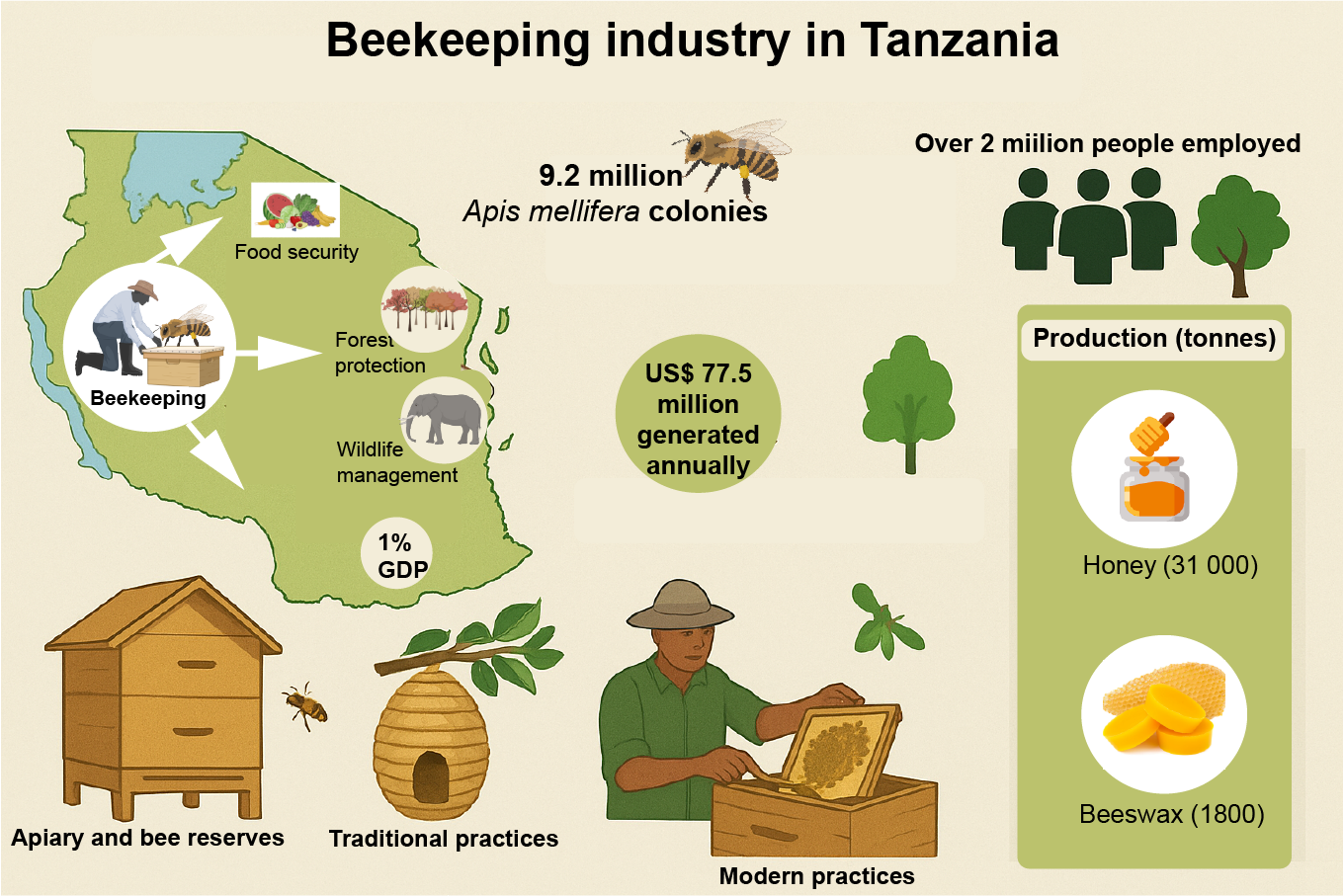
5]. Through strengthened legal, institutional, and regulatory frameworks, the sector has achieved substantial growth, contributing approximately USD 77.5 million annually, equivalent to 1% of the country's GDP [
10]. In 2021, export earnings from honey and beeswax reached about USD 12.9 million, underscoring the industry's role in national foreign currency earnings [
10,
11]. The industry employs around 2 million people across its value chain, including 1.2 million beekeepers and 800,000 individuals involved in processing, trade, and other related activities, representing about 4% of the national population [
5,
8,
12]. Enhanced coordination among stakeholders and strengthened human resource capacity are essential for the industry's long-term governance, sustainability, and economic contribution.
3. Honeybee Species, Habitat, and Forage Resources
3.1. Honeybee Species Diversity
Tanzania hosts a high diversity of wild and managed bee species [
13]. Western honeybee (
A. mellifera) in Tanzania was initially described in the 1930s as
A. m. adansonii with attitudinal variations [
9,
14,
15]. Subsequent studies using univariate and multivariate morphometric techniques [
16], and molecular identification in some areas [
3], have recognized three subspecies. These occupy diverse environments from low to high altitudes [
3,
4,
17,
18,
19], and are utilized by Tanzanian beekeepers [
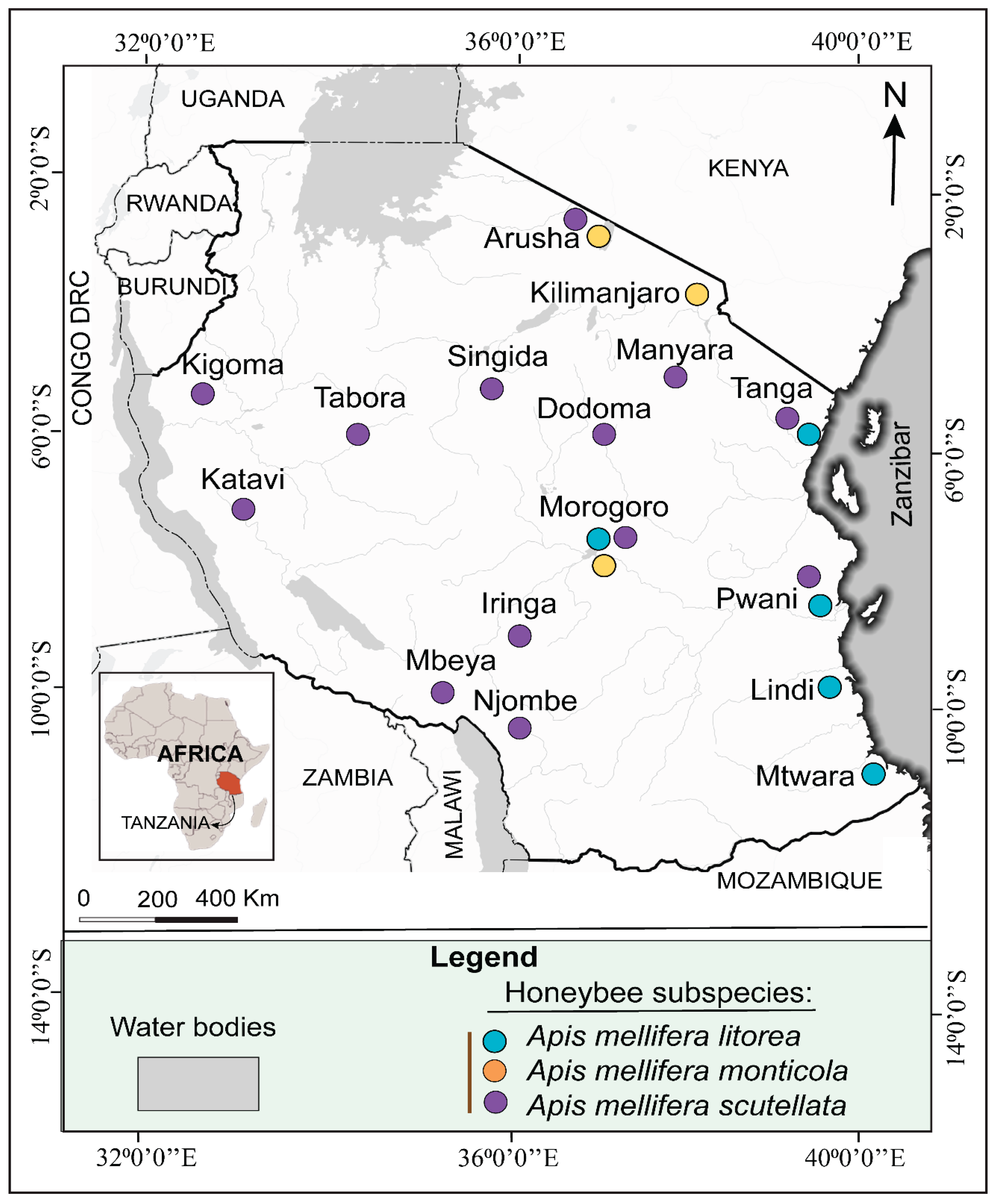
4]. Geographical distribution of these
A. mellifera subspecies is illustrated in
Figure 1.
Apis mellifera monticola is a large, dark-colored subspecies originating from cool forests on mountain slopes, found at altitudes of 1500–3000 meters on Mt. Kilimanjaro, Mt. Meru, and the Udzungwa Mountains (
Figure 1).
Apis mellifera litorea is a small, yellowish subspecies identified in coastal areas, lower altitudes of the Kilombero River basin, and lowland montane forests (
Figure 1) [
16].
Apis mellifera scutellata is common in low-altitude savanna areas such as Tabora, Kigoma, and Morogoro, and is characterized by its medium size and yellowish color [
3,
4,
17,
18,
19]. This prolific and highly productive plateau subspecies is found nationwide (
Figure 1) and is commonly utilized by indigenous beekeepers [
4,
20]. However,
A. m. scutellata is known for traits such as absconding in response to pest and predator attacks [
21]. Its seasonal migratory swarming behavior is often linked to brood synchronization difficulties during periods of food scarcity [
21,
22]. The presence of
A. m. monticola and
A. m. litorea beyond their native ranges indicates wider distribution. Expanded molecular studies on the biology and biodiversity of
A. mellifera subspecies would improve management and conservation efforts.
3.2. Honeybee Habitat and Forage Resources
Tanzania is renowned for its rich biodiversity [
23]. Its forests and woodlands extend over 48.1 million hectares, covering about 55% of the country's total land area [
24] and harboring an estimated 9.2 million honeybee colonies [
5]. Diverse wild plant species, including miombo woodlands, mangroves, and acacias, provide varied habitats and abundant forage resources for honeybees [
25]. Over 95% of beekeeping activities occur in major beekeeping zones within savanna forests, characterized by wet and dry miombo woodlands, particularly in the western zone encompassing Tabora, Katavi, and Kigoma [
26]. Optimal utilization of honeybee forage and habitat resources could enable the country to reach an estimated annual maximum production potential of 138,000 tonnes of honey and 9200 tonnes of beeswax [
5]. Since the current production levels remain far below this potential [
7]. Therefore, structured and coordinated conservation initiatives targeting honeybee forage and habitats are essential to increase national honey and beeswax production.
4. Beekeeping Practices
4.1. Traditional Practices
Honey hunting and gathering were among the earliest beekeeping practices in Tanzania [
19]. However, it is still practiced by a few hunter-gatherer ethnic groups, such as the Hadzabe, Sonjo, Ndorobo, Daatoga, and Maasai [
27,
28]. Traditional beekeeping methods emerged in the post-honey-hunting era. Increased understanding of honeybee behavior, the desire for higher yields, and growing environmental challenges have led to a decline in honey hunting [
29]. More than 75% of indigenous beekeepers in Tanzania rely on traditional practices [
24], though the extent of this reliance varies across agroecological zones [
11,
30]. For instance, approximately 60% of beekeepers in the Eastern zone, 80% in the Western zone, and 80% in Zanzibar depend on traditional methods [
26,
31,
32].
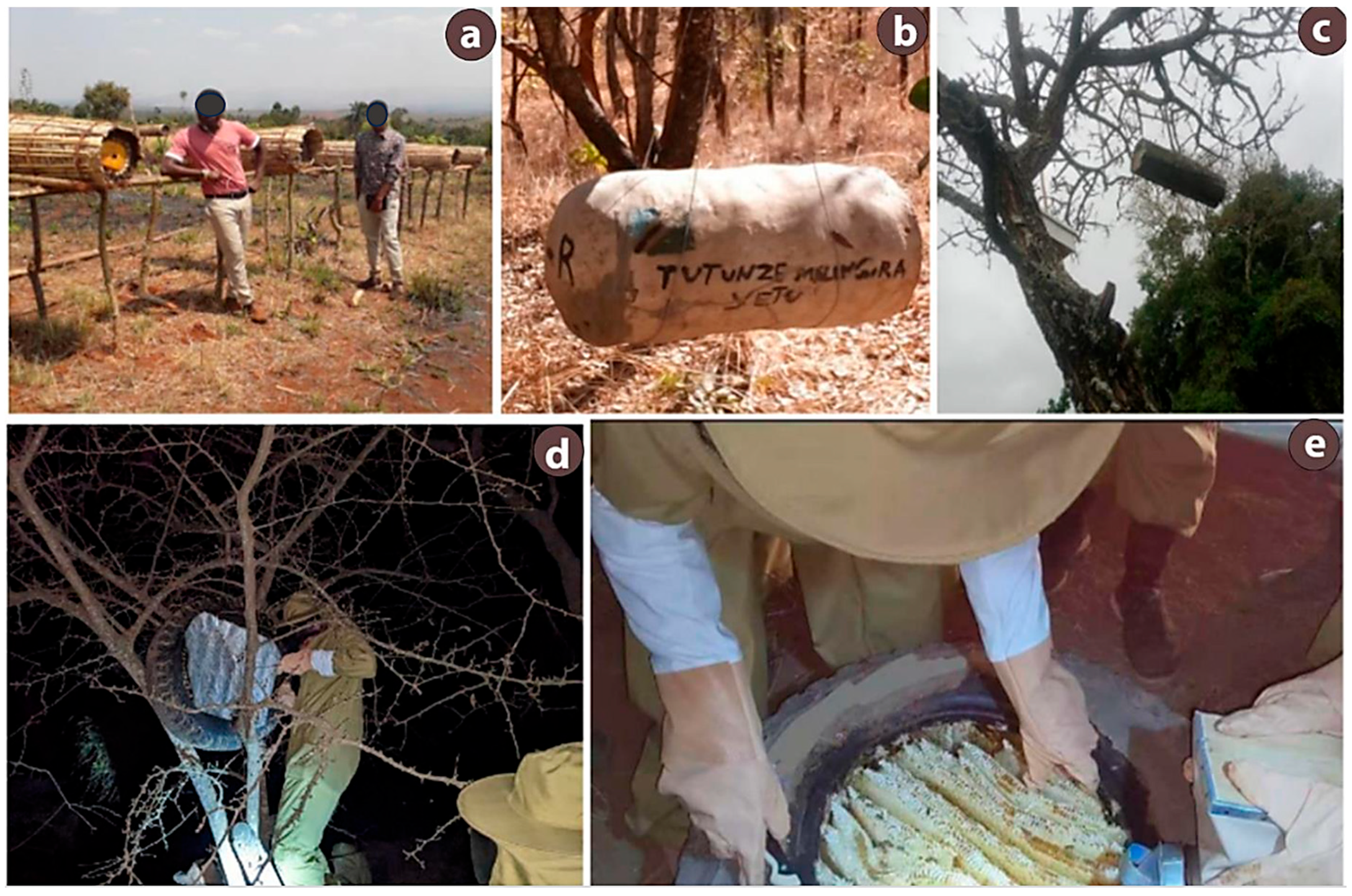
Traditional practices involve hives crafted from materials such as tree bark, logs, dry grasses, old car tires, concrete, pottery, straw, and bamboo [
9,
30,
33], as illustrated in
Figure 2. Local knowledge guides hive placement and harvest timing; for example, hives are hung on trees to trap wild colonies, and honey is often harvested at night (
Figure 2c–e) [
5,
22,
34]. Placing hives high on tree branches protects them from fire and predators [
9,
21,
30]. Although many beekeepers practice api-agroforestry by suspending hives from tree branches to deter theft and predators [
35,
36]. Traditional hives constitute about 90% of all beehives in the country [
24], with an estimated 1,506,345 traditional hives (made from logs and bark) and 23,650 improved hives (top-bar or frame hives) documented nationally [
10].
Hive stocking typically involves trapping honeybee colonies using bait materials like beeswax, cow dung, leaves, and grasses [
7]. Although traditional fixed-comb hives can lead to colony and product losses [
37]. Conserving traditional practices through semi-modern approaches is necessary to align with honeybee behavior, facilitate colony occupancy, enhance performance and security, support api-agroforestry, and accommodate natural swarming and absconding tendencies.
4.2. Commercialization and Modern Practices
Tanzania's beekeeping relies on small-scale beekeepers using traditional tools. This reflects a significant technological gap that hinders production, harvesting, quality, and access to lucrative international markets [
38]. Improved beehives used in Tanzania are either imported or locally manufactured based on dimensions suited to western honeybees [
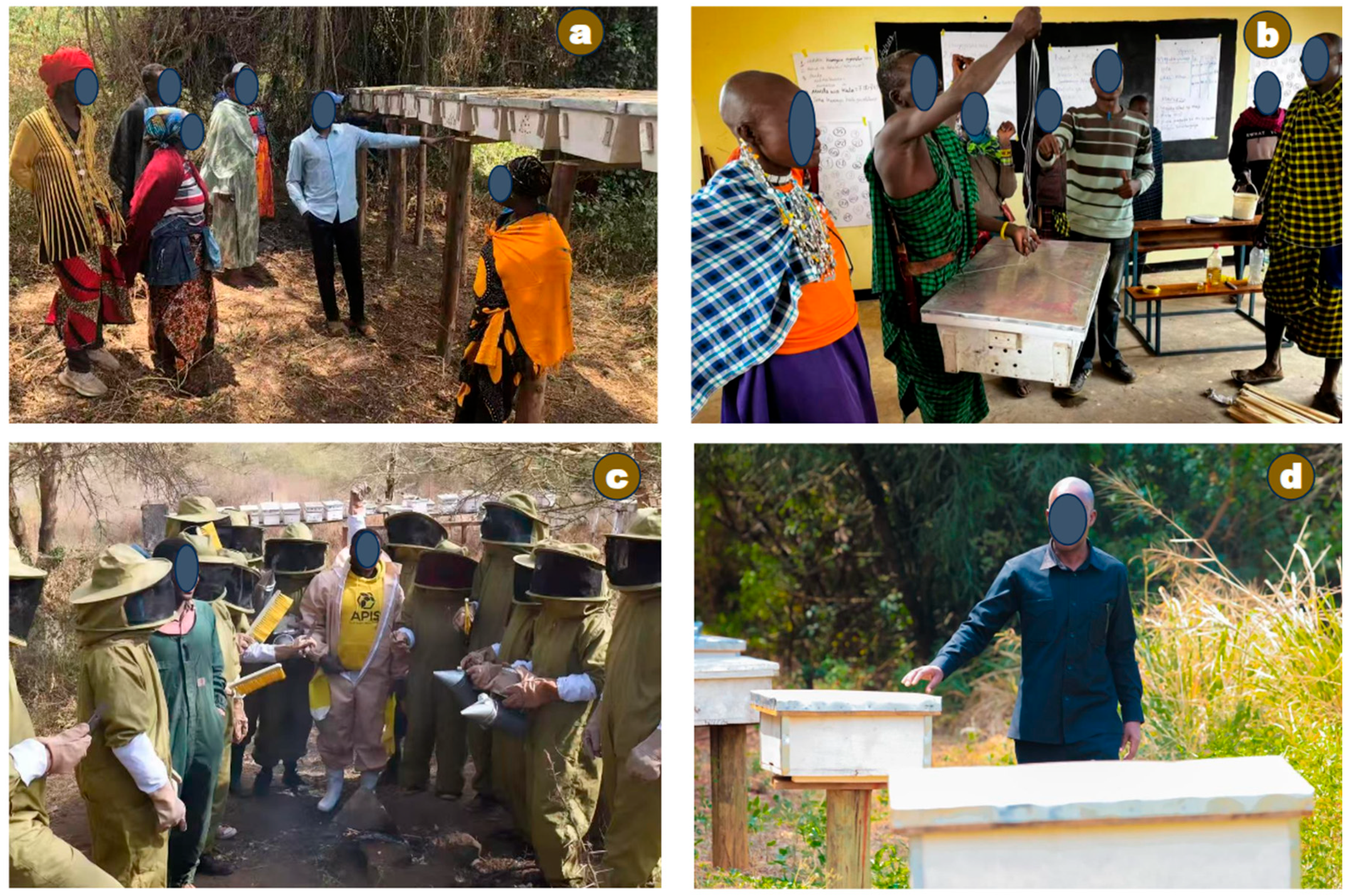
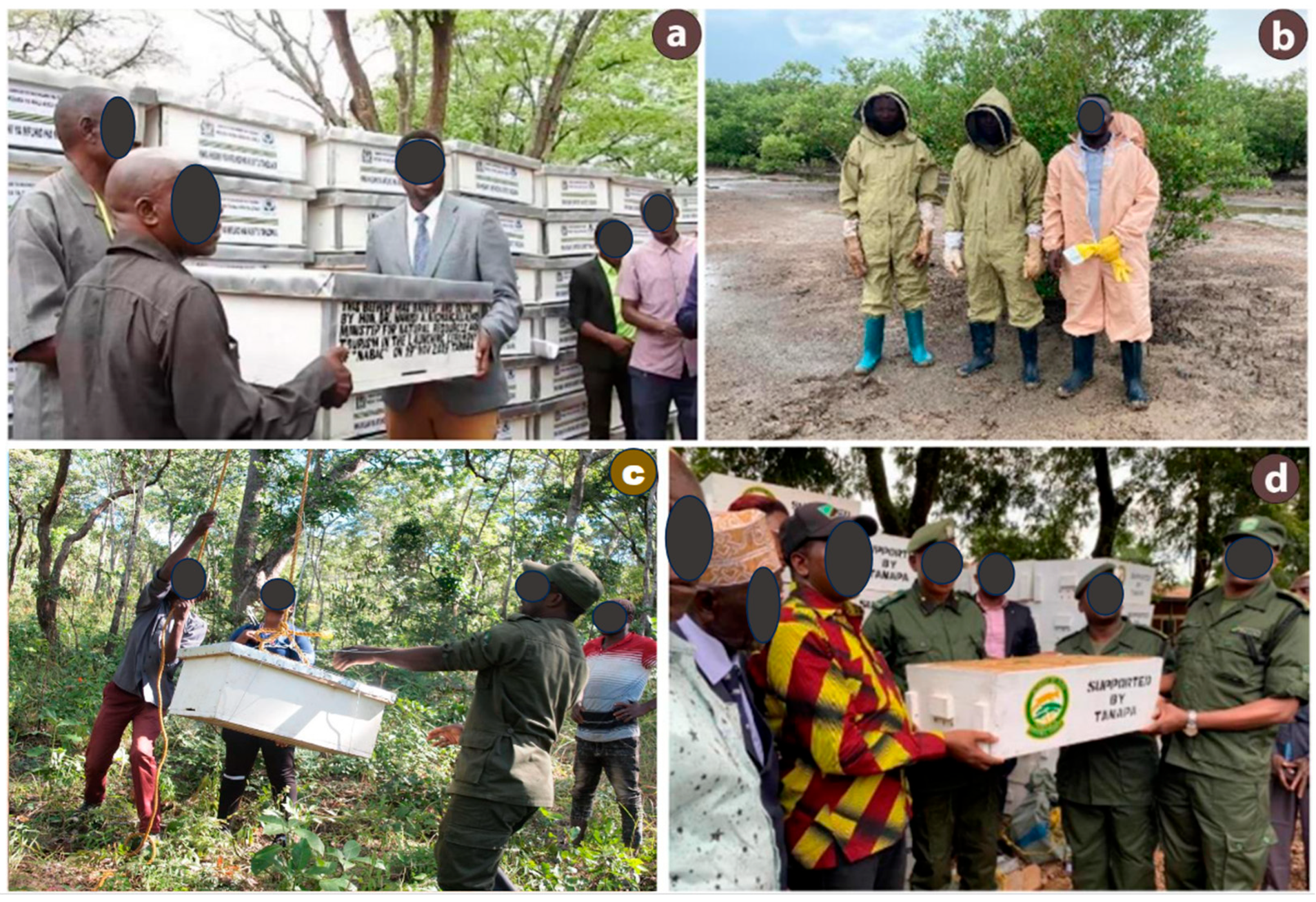
39]. Modernization efforts are driven by collaborations among government institutions, the private sector, and NGOs [
40,
41], as illustrated in
Figure 3. However, the commercialization potential of beekeeping remains largely untapped, despite initiatives such as cooperatives and contract farming that foster economic viability and investment [
8,
38]. Modern technologies and practices have demonstrated higher productivity and income generation in regions like Tabora and Katavi [
26]. Access to modern technologies, innovation, and skilled guidance is crucial for advancing beekeeping modernization. Semi-modern practices that align with local honeybee ecology and behavior, forest-based practices, security, and protection of hive resources should also be emphasized.
4.3. Apiaries and Bee Reserves
Apiaries have been established in various locations across Tanzania, including bee reserves, forest reserves, farmlands, and wildlife-protected areas [
42]. Over 1533 apiaries are managed by government agencies, private institutions, NGOs, and individual beekeepers [
43]. Bee reserves have been designated to support sustainable beekeeping in different parts of the country [
5,
41], following the National Beekeeping Act No. 15 of 2002 [
44], which mandates sufficient forest allocation for honeybee development [
43]. The Tanzania Forestry Services Agency (TFS) has designated nine official bee reserves and one privately owned reserve, covering a total area exceeding 18,472 hectares [
10]. TFS manages 205 apiaries with 14,292 beehives nationwide and has allocated approximately 1.2 million hectares of forest for apiaries and bee reserves to support sustainable resource utilization [
10]. Moreover, the Village Land Act [
45] empowers local government councils to manage communal resources, including Village bee reserves [
41,
44]. Nationwide implementation of community-based beekeeping initiatives can enhance the sustainable establishment and management of apiaries and bee reserves.
4.4. Honeybee Pests, Parasites, and Predators
Beekeepers frequently report the honey badger (
Mellivora capensis) as a significant predator that destroys hives, endangering wild beekeeping in Tanzania [
46]. Reports of honey badgers span across the southern highlands [
47], northern [
48], and western [
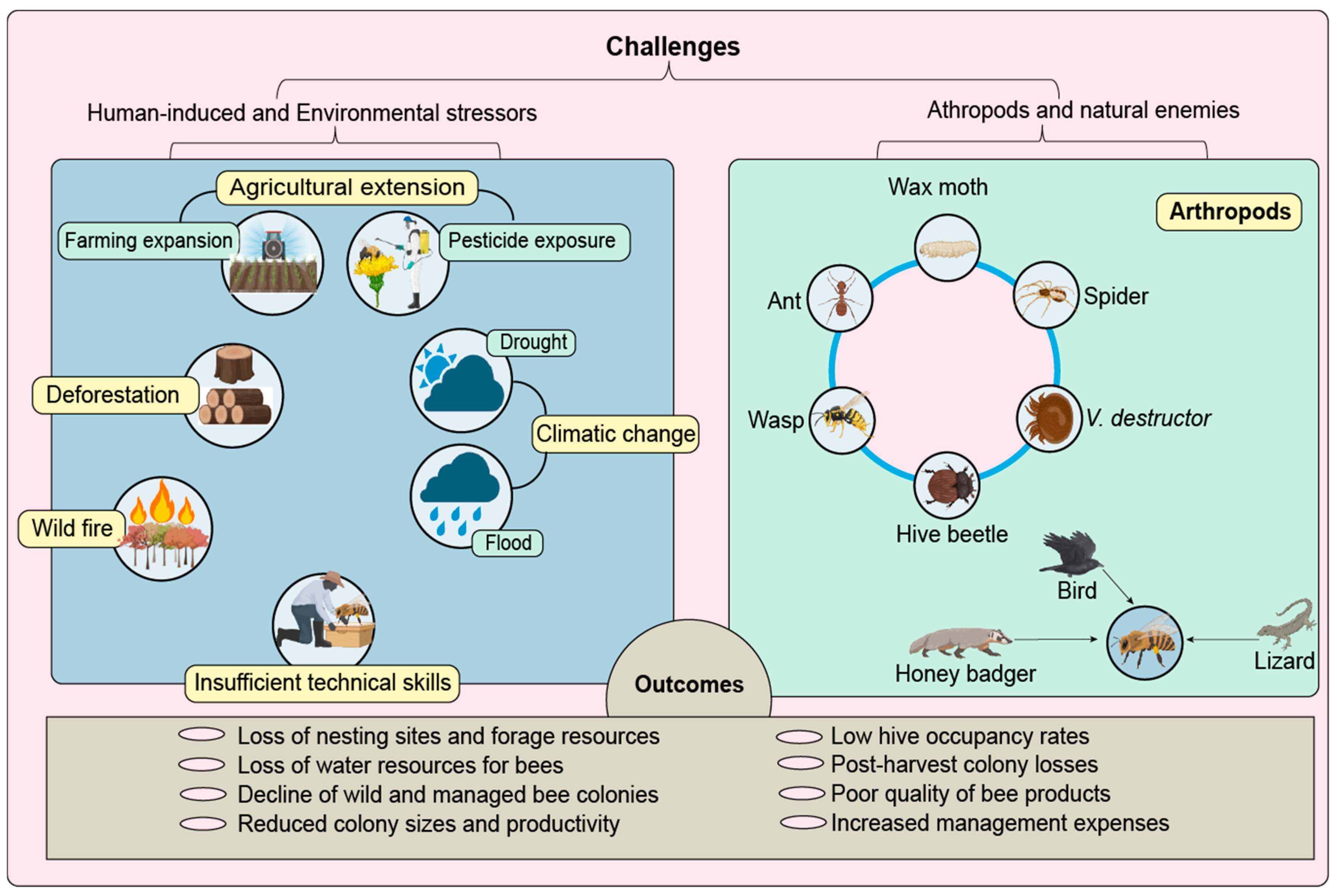
49] zones. Arthropods such as ants, bee lice, wasps, wax moths, and hive beetles are recognized as major pests [
49], while birds, spiders, lizards, and honey badgers are primary predators affecting indigenous beekeeping practices [
20,
49]. These pests, parasites, and predators are categorized as natural honeybee enemies, as shown in
Figure 4.
In recent decades, studies have confirmed the nationwide presence of
Varroa destructor (Mesostigmata: Varroidae) [
20,
50], with altitudinal variation in infestation levels [
50,
51]. Honeybee colony performance and populations in Tanzania appear largely unaffected by mite infestations, likely due to colony adaptation and an inherent capacity to coexist with the parasite [
20]. However, further research is needed to understand the full impact of pests, parasites, and predators on honeybee health and productivity rather than their existence status.
4.5. Pesticide Exposure
Tanzanian government encourages apiary establishment on agricultural land to enhance bee product yields and pollination services, supporting crop production and food security [
5]. For example, honeybee colonies have been introduced to sunflower farms in southern [
52] and and western [
53] Tanzania to improve yields, while honeybee-pollinated watermelons in the northern zone produce superior-quality fruits [
54]. Conversely, studies from central Tanzania report pesticide contamination of honeybees and hive products, including insecticides, fungicides, and herbicides commonly used in agriculture [
55].
Furthermore, agrochemical exposure can degrade the quantity and quality of floral resources (nectar and pollen), reducing honeybee species richness, diversity, and abundance in agricultural landscapes, particularly in southern Tanzania [
56]. Laboratory analyses detected 252 pesticide residues in beeswax from the Singida Region, averaging 0.03 mg/kg, with lambda-cyhalothrin as the predominant compound [
55]. In this regard, indigenous beekeepers are advised by the government to establish apiaries at least 7 kilometers from farmlands and tobacco-growing areas to reduce agrochemical exposure [
57]. The absence of comprehensive data on pesticide exposure in beekeeping underscores the need for further research on the risks of pesticide residues to honeybee health, forage resources, and products.
5. Bee Product Industry
5.1. Production and Processing of Bee Products
Tanzania is endowed with warm temperatures, adequate sunlight, and well-distributed rainfall, which create a conducive climate for bee product production [
58]. Honey and beeswax are produced in significant quantities [
12]. In 2021, approximately 31 179 tonnes of honey and 1865 tonnes of beeswax were produced, ranking Tanzania as the second-largest honey producer in Africa and the tenth-largest globally [
7,
59]. This production primarily comes from ten high-potential regions: Tabora, Katavi, Kigoma, Shinyanga, Geita, Kagera, Rukwa, Songwe, Mbeya, and Singida [
60]. The national average hive productivity is 15 kg of honey and 2 kg of beeswax per hive per year [
24,
60]. Although, beekeepers adopting modern practices, such as improved hives and apiary management, produce approximately 16 kg of honey and 7 kg of beeswax per colony in the western zone [
61]. Harvests exceed 20 kg of honey per hive in the northern zone [
62], and 15 kg in central zones [
63].
Furthermore, other products, such as bee pollen, royal jelly, bee venom, and propolis, are produced in minute quantities [
64], and remain underexploited and undocumented [
24]. In 2019, the government proactively established five modern honey processing factories in high-potential districts, including Sikonge, Mlele, Bukombe, and Kibondo [
60]. These factories are expected to enhance product quality [
10,
65]. However, majority of indigenous beekeepers still use both traditional and commercial methods for processing honey and beeswax [
66,
67]. For instance, beeswax from modern hives in northeastern and coastal regions is often processed using traditional techniques like the Tanganyika method [
22]. Tax exemptions on imported and locally manufactured beekeeping equipment and materials could enhance the quality and quantity of the country's bee products.
5.2. Bee Products Quality and Properties
Tanzania has high potential for producing safe, high-quality bee products due to predominantly wild-based, chemical-free beekeeping practices in miombo woodlands [
68].
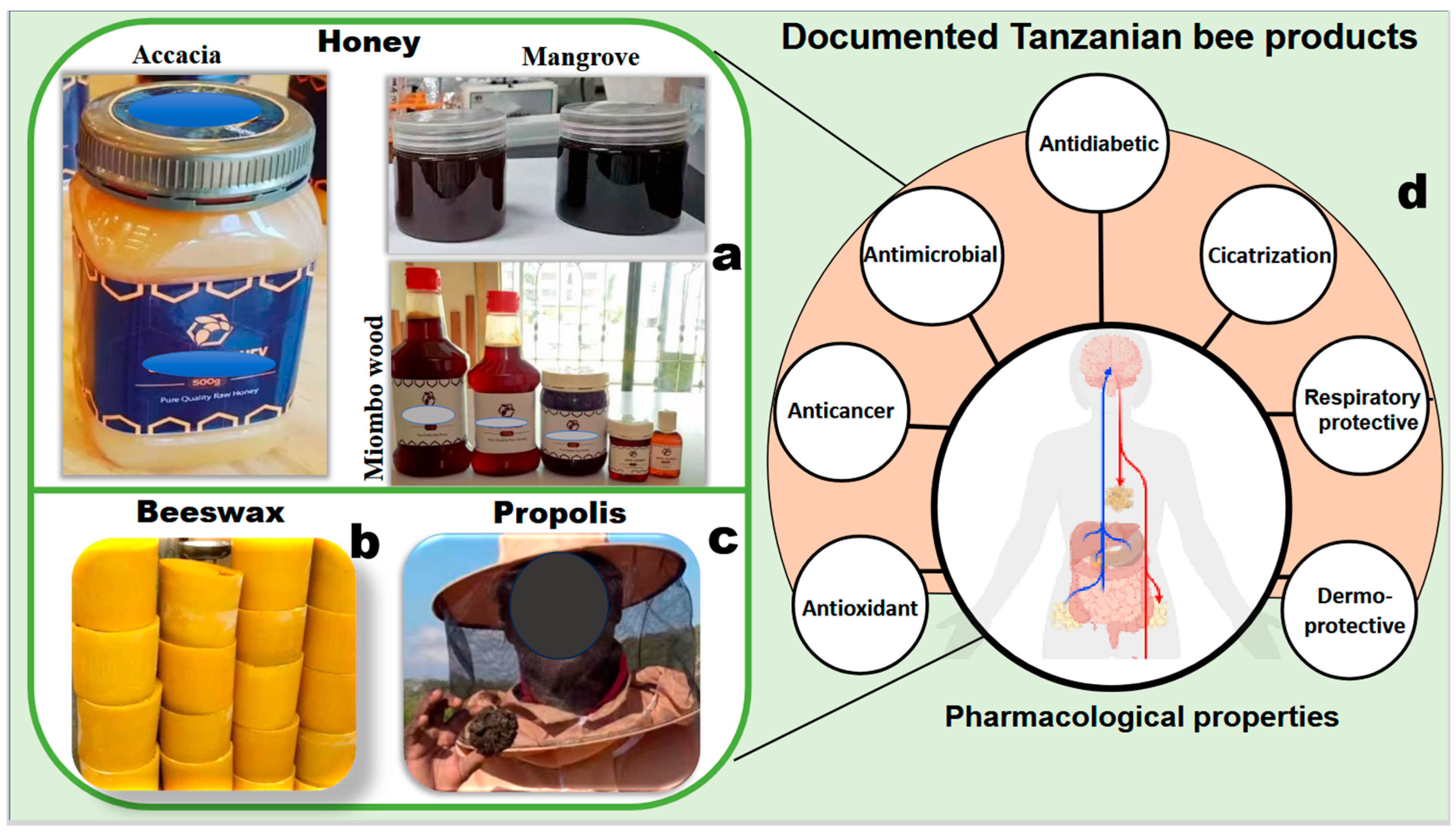
Figure 5 illustrates the visual characteristics of honey, beeswax, and propolis from various vegetation types across the country. Tanzanian honey and beeswax generally comply with local and export quality standards [
69]. This adherence is promoted through continuous training sessions and enhanced use of improved beekeeping tools [
70]. The honey typically exhibits water content below 20%, sugar levels above 65%, ash content below 0.5%, acidity below 40 meq/kg, and hydroxymethylfurfural (HMF) levels below 40 mg/kg [
69,
71,
72].
Nonetheless, high-quality beeswax is commonly produced in the widely distributed miombo woodlands (
Figure 5b) [
73]. The country’s propolis is rich in bioactive compounds, making it valuable for local pharmacological applications (
Figure 5c–d) (
Figure 5c-d) [
64,
74,
75]. Expanded scientific studies are needed to address knowledge gaps regarding the production, characteristics, qualities, and applications of bee products other than honey
5.3. Consumption of Bee Products
Tanzanian honey exhibits a distinctive phytochemical profile reflecting the country's diverse vegetation and mineral-rich environments [
69,
76]. Inductively coupled plasma-mass spectrometry analysis of multifloral honey from various agroecological zones revealed high concentrations of manganese, iron, zinc, and copper [
77]. Dark-colored miombo woodland honey (
Figure 5a) is particularly esteemed for its medicinal qualities and global demand, containing essential minerals and vitamins that enhance health benefits [
69,
71]. It demonstrates significant antimicrobial activity against pathogens such as
Staphylococcus aureus,
Escherichia coli,
Salmonella typhi, and
Candida albicans [
78,
79]. Its antioxidant capacity and phenolic content contribute to efficacy against communicable and non-communicable diseases [
80].
Nonetheless, Tanzanian propolis also exhibits antimicrobial properties against bacteria, fungi, and protozoans, shows potential antidiabetic and anticancer activity, and is used locally to treat skin diseases, wounds, and respiratory issues (
Figure 5d) [
64,
74,
75]. Expanding research into the biological activity, clinical efficacy, and pharmacological properties of honey and other bee products would encourage their increased consumption within and outside the country.
6. Beekeeping-Based Conservation Initiatives
Beekeeping supports biodiversity conservation in Tanzania by protecting forest ecosystems, sustaining wildlife, and promoting environmentally responsible resource management (
Figure 6). The Forestry and Beekeeping Division (FDB) promotes landscape restoration, ensures fodder plant availability, and encourages api-agroforestry and reforestation initiatives nationwide [
9]. Since the 1990s, communities have received financial incentives to participate in environmental protection through beekeeping integrated into forest and wildlife management projects [
81,
82].
Historically, beekeeping has contributed to preserving Tanzanian forests and biodiversity through community-based forest initiatives and the establishment of bee reserves and beekeeping zones [
12]. For instance, in the western zone, the Association for the Development of Protected Areas (ADAP) programs encouraged villages adjacent to miombo woodlands to adopt beekeeping as an alternative to environmentally destructive activities [
41]. In the northern zone, OIKOS East Africa and WWF Tanzania launched conservation projects to restore degraded land by establishing community-based forest reserves. This was achieved by promoting small to medium scale beekeeping enterprises among Village Game Scouts (VGS) and Village Cooperative Society Groups (VCS) in Maasai communities (
Figure 3a–b). In addition, beekeeper groups and TFS actively work to prevent bushfires and protect forest ecosystems through beekeeping practices across the country (
Figure 6a–b) [
35].
Nonetheless, beekeeping initiatives in areas such as Udzungwa, Ruaha, Kitulo, Serengeti, Ngorongoro, Nyerere, Gombe, Ugala, and Mkomazi have helped mitigate human–wildlife conflicts and strengthened collaboration between conservation authorities and local communities (
Figure 6c–d) [
4,
31,
42]. Beehive fences have been successfully implemented to deter large wildlife, including elephants and gorillas, reducing human–wildlife conflict around Nyerere and Gombe National Parks (
Figure 6c). Utilizing beekeeping resources as a community income venture helps safeguard forest ecosystems, wildlife, and protected areas by promoting conservation-focused livelihoods.
7. Challenges Facing Beekeeping Industry
The beekeeping industry in Tanzania faces numerous challenges from both human-induced and natural factors, as illustrated in
Figure 4. These challenges are categorized into four main groups.
(i) Loss of habitat and forage resources. Agricultural expansion and certain cultural practices drive deforestation [
83]. Forests are cleared and burned for charcoal production, agriculture, and due to cultural beliefs [
84], resulting in the loss of bee nesting sites and forage resources [
83]. Increasingly frequent and prolonged droughts in various regions further affect the availability of honeybee forage and water resources [
49].
(ii) Honeybee colony losses
. Both natural and human-induced factors contribute to the decline of wild and managed colonies. Suspicions exist regarding the potential presence of European Foulbrood (
Melissococcus plutonius), nosemosis (
Nosema apis and
N. ceranae), and honeybee viruses from neighboring countries [
85]. Although there is no definitive evidence that these pathogens have been documented in Tanzania to date [
86]. However, environmental stressors are associated with increased seasonal migration, absconding, pest attacks, predator pressure, and cross-combing, all contributing to colony losses in regions like Katavi and Tabora Regions [
49]. Declines in natural swarms, reduced colony sizes, low hive occupancy, and post-harvest colony losses are reported challenges nationwide [
7,
63].
(iii) Low skills and technological development. Limited technological advancement restricts Tanzania's ability to fully exploit its beekeeping potential [
7,
62]. Traditional hives are not conducive to systematic colony management [
87], and vary in size and shape, making them incompatible with modern extraction and processing technologies [
12]. Additionally, the industry suffers from a shortage of skilled practitioners, as most beekeepers are rural, low-income, and possess limited technical skills [
61]. Inadequate facilities and unskilled labor contribute to substandard product quality and hinder effective honeybee conservation [
11].
(iv) Governance and human resources. Persistent challenges include inadequate intellectual property rights laws and insufficient organic certifications [
88]. An absence of scientific knowledge, information, and human resources limits the standardization, value addition, and diversification of beekeeping practices [
24]. Limited awareness of supportive policies, guidelines, regulations, and development projects, coupled with weakly organized community groups and cooperatives, reduces the effectiveness of beekeeping operations [
62,
87]. Addressing these limitations requires investment in sectoral policies, legal and regulatory reforms, enhanced research and dissemination, promotion of beekeeping expertise, and better coordination among beekeeping stakeholders.
8. Future Directions
The beekeeping industry holds substantial potential to contribute to Tanzania's economy, food security, environmental sustainability, and natural resource conservation. Realizing this potential requires significant effort. Priority should be given to scientific research on honeybee health, biology, taxonomy, habitats, forage resources, species diversity, population dynamics, productivity potential, genetics, and breeding. Disseminating research findings can provide evidence-based solutions to persistent challenges such as colony swarming, absconding, habitat loss, and reliance on traditional tools. Such studies will also support honeybee health management by improving the understanding of diseases, infestations, and control strategies for pests, parasites, and predators.
Collaboration among government agencies, private sector stakeholders, and development partners is critical to empower indigenous beekeepers. This should facilitate investment in modern technologies across extension services, training, production, processing, value addition, and quality control. Efforts should modernize traditional hives and practices into semi-modern systems suited to the ecological and behavioral characteristics of honeybees in specific regions. This approach can maximize production, increase beekeepers' incomes, and optimize the use of beekeeping resources for forest conservation, wildlife management, and apitourism development.
Strengthening beekeeping training and research centers with advanced laboratories and facilities will support breeding programs and enhance the production and application of diverse bee products, including honey, beeswax, pollen, venom, propolis, and royal jelly. It will also benefit pollination services, apitherapy, and apitourism.
Establishing a national beekeeping experts association is crucial to connect experts, researchers, investors, and public officials, promoting information sharing. It will facilitate addressing operational challenges and fostering cross-sector collaboration with agriculture, forestry, wildlife, health, and manufacturing industries. International partnerships with technologically advanced countries, such as China, should emphasize research on honeybee health, ecology, productivity, biomedical applications of bee products, and the expansion of global markets.
Finally, achieving sustainable advancement will require skilled human resources, targeted financial investment, and comprehensive legal, regulatory, and administrative reforms to unlock the transformative potential of Tanzania's beekeeping industry.
Author Contributions
Conceptualization and design, I.S.M. and H.Z.; Writing & Original draft preparation, I.S.M. and S.K.M.; Writing, Review & Editing, S.Y.; Supervision, H.Z. All authors have read and agreed to the published version of the manuscript.
Funding
I.S.M. is supported by the Chinese Government Scholarship Council (CSC) through Zhejiang University, China. H.Z. is funded by the China Agriculture Research System of MOF and MARA (CARS-44).
Data Availability Statement
The original contributions presented in this study are included in the article/supplementary material. Further inquiries can be directed to the corresponding author.
Acknowledgments
The authors acknowledge Ally S. Kilima and Christopher Alphonce Mduda of the University of Dar es Salaam for their support in conceptualizing the work. They further extend appreciation to the Ministry of Natural Resources and Tourism (MNRT) and its agencies, TFS, TAFORI, TAWIRI, as well as the Beekeeping Training Institute Tabora (BTI), WWF Tanzania, and OIKOS East Africa for providing conceptual and material support.
Conflicts of Interest
The authors declare no conflicts of interest.
Abbreviations
The following abbreviations are used in this manuscript:
| ADAP |
Association for the Development of Protected Areas |
| BTI |
Beekeeping Training Institute, Tabora |
| MNRT |
Ministry of Natural Resources and Tourism |
| NBP |
National Beekeeping Policy |
| NGO |
Non-Governmental Organization |
| TAFORI |
Tanzania Forest Research Institute |
| TANAPA |
Tanzania National Parks Authority |
| TFS |
Tanzania Forest Services Agency |
| URT |
United Republic of Tanzania |
| VCS |
Village Cooperative Society |
| VGS |
Village Game Scouts |
| WWF |
World Wildlife Fund |
References
- Malimbwi, R.E. and E. Zahabu, NAFORMA process and Biophysical results, in Climate Change Impacts, Adaptation and Mitigation (CCIAM) Programme. 2015, Sokoine University of Agriculture.
- Chakuya, J., et al., A Review of Habitat and Distribution of Common Stingless Bees and Honeybee Species in African Savanna Ecosystems. Tropical Conservation Science. 2022, 15, p. 194008292210996. [CrossRef]
- Kibogo, H.G., Molecular characterization of honey bees, Apis mellifera subspecies in East Africa, in Biotechnology. 2017, Jomo Kenyatta University of Agriculture and Technology: International Centre of Insect Physiology and Ecology. p. 277.
- Njau, M., P. Mpuya, and F. Mturi, Apiculture potential in protected areas: the case of Udzungwa Mountains National Park, Tanzania. International Journal of Biodiversity Science & Management. 2009, 5, p. 95-101.
- URT, National Beekeeping Policy (NBP). 1998, Tanzania.
- Mwakatobe, A., et al., Income generation promote the participation of youth and women in beekeeping activities in Western Tanzania. Journal of Entomology and Zoology Studies. 2016. 4, 4, p. 718-721.
- Tutuba, N. and C. Kapinga, Beekeeping Productivity: Why is the Beekeeping Sector less Productive in Tanzania? International Journal of Economics, Business and Management Research. 2022, 6. [CrossRef]
- Mwakatobe, A., et al., Challenges and opportunities of beekeeping in Mvomero district, Morogoro, Tanzania. Journal of Entomology and Zoology Studies. 2021, 9, 2, p. 01-05.
- Smith, F.G., Beekeeping Observations in Tanganyika 1949–1957. Bee World. 1958, 39, 2, p. 29-36. [CrossRef]
- TFS, Beekeeping Overview. 2024, Ministry of Natural Resources and Tourism (MNRT): Tanzania.
- Said, M., K. Higini Peter, and S. J.Nyakoki, Factors Influencing Beekeeping Practices in Sikonge, Tanzania. Bee World. 2022, 99, p. 1-5. [CrossRef]
- Minja, G. and T. Nkumilwa, The Role of Beekeeping on Forest Conservation and Poverty Alleviation in Moshi Rural District, Tanzania. European Scientific Journal. 2016, 12, p. 366. [CrossRef]
- Lasway, J.V., et al., A dataset of occurrence of wild bees and their interaction with foraging plants along a livestock grazing gradient of northern Tanzania. Data in Brief. 2023, 48, p. 109181. [CrossRef]
- Irvine, F.R., Indigenous African Methods of Beekeeping. Bee World. 1957, 38, 5, p. 113-128. [CrossRef]
- Smith, F.G., Beekeeping in the Tropics. Bee World. 1953, 34, 12, p. 233-245. [CrossRef]
- Hepburn, H.R., S.E. Radloff, and S. Oghiakhe, Mountain honeybees of Africa. Apidologie. 2000, 31, 2, p. 205-221. [CrossRef]
- Smith, F.G., The Races of Honeybees in Africa. Bee World. 1961, 42, 10, p. 255-260. [CrossRef]
- Ruttner, F., Geographic Variability. In Biogeography and Taxonomy of Honeybees. 1988, Springer Berlin, Heidelberg. XII, 284.
- Crane, E., The World History of Beekeeping and Honey Hunting, ed. 1. Vol. 1. 1999, Routledge.
- Mumbi, C., et al., Parasitic mite, Varroa species (Parasitiformes: Varroidae) infesting the colonies of African honeybees, Apis mellifera scutellata (Hymenoptera: Apididae) in Tanzania. Journal of Entomology and Zoology Studies. 2014, 2, 3, p. 188-196.
- Ntenga, G., The Honeybee of Tanzania, Apis Mellifera Adansonii. Apiacta. 1969, 1, pp. 234-238.
- Gupta, R., Beekeeping for Poverty Alleviation and Livelihood Security Vol. 1 Technological Aspects of Beekeeping ( PDF Drive ) dl.otvet.gov.et was first indexed by Google in March 2021.
- Nkwabi, A., et al., An Overview of Biodiversity in Tanzania and Conservation Efforts: Selected Countries in Africa. 2018, p. 295-340.
- MNRT, National Beekeeping Research Master Plan I (NABERM I) (2020-2030). United Republic of Tanzania, (TAFORI). 2020.
- Ndungu, N., et al., Taxonomic patterns of host plants and its impact on honey properties by two sympatric Afrotropical stingless bee species in Zanzibar (Tanzania). African Journal of Ecology. 2024, 62. [CrossRef]
- Kuboja, N.M., A.C. Isinika, and F.T.M. Kilima, Adoption and impacts of improved beehive technologies in the miombo woodland of Tanzania. African Journal of Science Technology, Innovation and Development. 2021, 13, 2, p. 157-166.
- Wood, B., et al., Mutualism and manipulation in Hadza–Honeyguide interactions. Evolution and Human Behavior, 2014, 35. [CrossRef]
- Spottiswoode, C.N. and B.M. Wood, Culturally determined interspecies communication between humans and honeyguides. Science. 2023, 382(6675), p. 1155-1158. [CrossRef]
- Ellis, R., Capitalist Agriculture and the Global Bee Crisis. 1 ed. Vol. 1. 2022, London: Routledge. 174.
- Kihwele, V.N., et al., Beekeeping in Tanzania, in Ministry of Natural Resources and Tourism. 2001, p. 169.
- Katani, J. and D. Ndelolia, Beekeeping around Udzungwa Mountains National Park in Kilombero District, Tanzania. Tanzania Journal of Forestry and Nature Conservation. 2020, 89, 1, p. 1-14.
- Juma, S., et al., Assessment of Value Chain for Honey and Beeswax Initiatives in Zanzibar. European Journal of Agriculture and Food Sciences. 2022, 4, p. 1-9. [CrossRef]
- Latham, P., Plants visited by bees and other useful plants of the Southern Highlands of Tanzania. 2025.
- Mtengeti, E.J., et al., Status quo of beekeeping in dryland area of Mwanga district as an entry point towards improved beekeeping intervention. International Journal of Physical and Social Sciences. 2013, 3, 12, p. 359-377.
- Lalika, M.C.S. and J.S. Machangu, Analysis of Beekeeping Potential in Income Generation and Coastal Forest Conservation in Lindi Region, Tanzania. Asian Journal of African Studies. 2008, p. 85-107.
- Augustino, S.M.A., J.J. Kashaigili, and E.F. Nzunda, Impact of traditional beekeeping on Mgori Village Land Forest Reserve in Singida District, Tanzania. Tanzania Journal of Forestry and Nature Conservation. 2016, 86, 1, p. 1-11.
- George, W., Profitability dynamics of improved and traditional beehive models in Tanzania. Discover Agriculture. 2025, 3, 1, p. 187. [CrossRef]
- Tutuba, N., J. Msamula, and H. Tundui, Business Model Innovation for Sustainable Beekeeping in Tanzania: A Content Analysis Approach. American Journal of Management. 2019, 19, p. 74-88. [CrossRef]
- Theobald, T., R. Kidabaga, and S. Mashilingi, Natural Bee Space and Comb Cell Dimensions of Honey Bee Colonies in Mwinkantsi Village, Babati District, Tanzania. Tanzania Journal of Science. 2024, 50, p. 445-453. [CrossRef]
- Kilima, F., Adoption and impacts of improved beehive technologies in the Miombo woodland of Tanzania. African Journal of Science Technology Innovation and Development. 2020, 13.
- Hausser, Y. and P. Mpuya, Beekeeping in Tanzania: When the bees get out of the woods. An innovative cross-sectoral approach to community-based natural resource management. Game and Wildlife Science. 2004, 21, p. 291-312.
- Hausser, Y., H. Weber, and B. Meyer, Bees, farmers, tourists, and hunters: Conflict dynamics around Western Tanzania protected areas. Biodiversity and Conservation. 2009, 18, p. 2679-2703. [CrossRef]
- MNRT. Guidelines for establishment and management of Apiaries and Bee reserves. 2021.
- URT. National Beekeeping Act (NBA). United Republic of Tanzania. 2002.
- URT. National Village Land Act (NVLA). United Republic of Tanzania. 2001.
- Kingdon, J., East African mammals: an atlas of evolution in Africa, Part A: Carnivores. Vol. 3. 1988: University of Chicago Press.
- Msigwa, A.M., et al., Knowledge and attitudes of communities on small mammalian carnivores in Mbomipa wildlife management area, Iringa, Tanzania. African Journal of Science and Research. 2015, 4, 6, p. 43-46.
- van der Wal, J., et al., Do honey badgers and greater honeyguide birds cooperate to access bees' nests? Ecological evidence and honey-hunter accounts. Journal of Zoology. 2023, 321. [CrossRef]
- Kuboja, N.M. and Isinika, Absconding of Honeybee Colonies from Beehives: Underlying Factors and its Financial Implications for Beekeepers in Tanzania. IJASRT in EESs. 2020, 10, 4, p. 185-193.
- Giliba, R.A., et al., Changing climate patterns risk the spread of Varroa destructor infestation of African honey bees in Tanzania. Ecological Processes. 2020, 9, 1, p. 48. [CrossRef]
- Mumoki, F., et al., An Inventory of Documented Diseases of African Honeybees. African Entomology. 2014, 22, p. 473-487. [CrossRef]
- Nene, W.A., M.L.K. Manoko, and M.H. Muruke, Pollination potential of African honey bees, Apis mellifera (litorea): (Hymenoptera: Apidae) in sunflower, Helianthus annuus production in South-Eastern Tanzania. Journal of Apicultural Research. 2024, 63, 5, p. 868-874. [CrossRef]
- Tonola, B., A.M.S. Nyomora, and H.J. Ndangalasi, Contribution of honey bees (Apis mellifera) pollination on sunflower yield in Tabora region, Tanzania. International Journal of Tropical Insect Science. 2023, 43, 1, p. 193-201. [CrossRef]
- Sawe, T., A. Nielsen, and K. Eldegard, Crop Pollination in Small-Scale Agriculture in Tanzania: Household Dependence, Awareness and Conservation. Sustainability. 2020, 12, 6, p. 2228. [CrossRef]
- Kachinde, L., Identification of the Common Type of Pesticides Used by Bee Farmers from Selected Honey-Producing Areas in Tanzania: A Case of Kijiji Cha Nyuki Co. Ltd, Singida Region. International Journal of Food Sciences. 2023, 6, p. 1-14. [CrossRef]
- Ojija, F. and G. Bacaro, Characterization of Insect–Pollinator Biodiversity in Agrochemical-Contaminated Agricultural Habitats. Diversity. 2024, 16, 1, p. 33. [CrossRef]
- URT, National Beekeeping General Regulations (NBGR). 2005, United Republic of Tanzania.
- Kileo, G.D., C.A. Masao, and S.M. Andrew, Honey and beeswax production amidst climate variability in two contrasting agro-ecologies of Tanzania. International Journal of Biometeorology. 2025, 69, 9, p. 2369-2381. [CrossRef]
- Ismail, M., J. Tarimo, and C. Kayombo, Beekeeping Potential, Richness, and Distribution of Plant Species Foraged by Stinging Honey Bee (Apis mellifera L.) in West Kilimanjaro, Tanzania Forest Service Agency (TFS) Plantation. International Journal of Advanced Research. 2021, 3, p. 33-54. [CrossRef]
- MNRT, Establishment of Bee Products Processing and Packaging Industries in Tanzania. Assessment of Viability and Criteria for Decision-Making (MNRT). 2019, Tanzania.
- Mdendemi, T., P. Kahoya, and J.G. Safari, Adoption of Modern Beekeeping Technology among Smallholder Beekeepers in Selected villages of Mpanda District, Tanzania. IRDP. 2017, 19, 1.
- Namwata, B., K. Mdundo, and M. Malila, Potentials and Challenges of Beekeeping Industry in Balang'dalalu Ward, Hanang' District in Manyara, Tanzania. Kivukoni Journal. 2013, 1, p. 75-93.
- Godfrey, N., Anthropogenic and climatic factors affecting honey production: The case of selected villages in Manyoni District, Tanzania. Journal of Agricultural Biotechnology and Sustainable Development. 2018, 10, p. 45-57. [CrossRef]
- Ngassapa, O.D., et al., Antimicrobial activity and brine shrimp toxicity of propolis collected from various regions of Tanzania. The Journal of Phytopharmacology. 2022, 11, 4, p. 275-280. [CrossRef]
- Danieli, P.P., et al., Precision Beekeeping Systems: State of the Art, Pros and Cons, and Their Application as Tools for Advancing the Beekeeping Sector. Animals. 2024, 14, 1, p. 70. [CrossRef]
- Msolla, P.A., Honey value chain development in Ruvuma region, Tanzania, in Ecosystem. 2021, Sokoine University of Agriculture, Tanzania. p. 277.
- Tuck, M.W., Woodland commodities, global trade, and local struggles: the beeswax trade in British Tanzania. Journal of Eastern African Studies. 2009, 3, 2, p. 259-274. [CrossRef]
- Mwakalukwa, E.E., H. Meilby, and T. Treue, Floristic Composition, Structure, and Species Associations of Dry Miombo Woodland in Tanzania. International Scholarly Research Notices. 2014, 2014, 1, p. 153278.
- Muruke, M.H., Assessment of Quality of Tanzanian Honey based on Physicochemical Properties. Food Science and Quality Management. 2014, 33, p. 61-72.
- Mesele, T.L., Review on physico-chemical properties of honey in Eastern Africa. Journal of Apicultural Research. 2021, 60, 1, p. 33-45. [CrossRef]
- Gidamis, A., et al., Quality Evaluation of Honey Harvested From Selected Areas in Tanzania With Special Emphasis on Hydroxymethyl Furfural (HMF) Levels. Plant foods for human nutrition. 2004, 59, p. 129-32. [CrossRef]
- Maggid, A.D., M.E. Kimanya, and P.A. Ndakidemi, The contamination and exposure of mercury in honey from Singida Central Tanzania. American Journal of Research Communication. 2014, 2, 10, p. 127.
- Hepburn, H., R. and S. Radloff, E., Beeswax exports and rainfall in the savanna woodlands of east central Africa. Apidologie. 1996, 27, 6, p. 473-478. [CrossRef]
- Alenezi, S.S., et al., Novel flavanones with anti-trypanosomal activity isolated from Zambian and Tanzanian propolis samples. International Journal for Parasitology: Drugs and Drug Resistance. 2020, 14, p. 201-207. [CrossRef]
- Runyoro, D.K., O.D. Ngassapa, and A. Kamugisha, Antimicrobial activity of propolis from Tabora and Iringa Regions, Tanzania and synergism with gentamicin. Journal of Applied Pharmaceutical Science. 2017, 7, 1, p. 171-176. [CrossRef]
- Richard, A., et al., Influence of vegetation types on physicochemical properties and sensory characteristics of Tanzanian honey, in 3rd TAFORI International Scientific Conference. 2025, MNRT: Arusha, Tanzania.
- Squadrone, S., et al., Trace elements and rare earth elements in honeys from the Balkans, Kazakhstan, Italy, South America, and Tanzania. Environ Sci Pollut Res Int. 2020, 27, 11, p. 12646-12657. [CrossRef]
- Kilonzo, M., Assessment of antimicrobial activity, quality and phytochemical screening of honey from tobacco growing areas, Tanzania. International Journal of Engineering, Science and Technology. 2025, 17, p. 93-100. [CrossRef]
- Kakengi, A. and G. Idani, Antimicrobial activities of Tanzanian honey bees in relation to vegetation types. Journal of Apiculture. 2018, 33, 2, p. 107-115. [CrossRef]
- Luvanda, F. and M. Lyimo, Evaluation of antimicrobial and antioxidant attributes of Tanzanian honey from two agro-ecological areas. Biofarmasi Journal of Natural Product Biochemistry. 2018, 16, p. 69-82. [CrossRef]
- Pailler, S., et al., Impacts of Community-Based Natural Resource Management on Wealth, Food Security and Child Health in Tanzania. PLOS ONE. 2015, 10, 7, p. e0133252. [CrossRef]
- Albers, H.J. and E.J.Z. Robinson, The Trees and the Bees: Using Enforcement and Income Projects to Protect Forests and Rural Livelihoods Through Spatial Joint Production. Agricultural and Resource Economics Review. 2011, 40, 3, p. 424-438. [CrossRef]
- Gizachew, B., et al., Deforestation and Connectivity among Protected Areas of Tanzania. Forests. 2020, 11, 2, p. 170. [CrossRef]
- Khatun, K., E. Corbera, and S. Ball, Fire is REDD+: offsetting carbon through early burning activities in south-eastern Tanzania. Oryx. 2016, 1, p. 1-10. [CrossRef]
- Pirk, C., et al., Honeybee health in Africa: A review. Apidologie. 2015, 47. [CrossRef]
- Kashumba, F., An exploration of honeybees’ threats in Tanzania: Implications for conservation. Tanzania Journal of Forestry and Nature Conservation. 2024, 93, 1, p. 1-20.
- Mwanyoka, I., Promoting Beekeeping in the East Usambara Mountain. What are the challenges and opportunities? International Journal of Agriculture and Environmental Research. 2018, 3, 6, p. 15.
- Mwakaje, A., et al., Using geographical indications for signalling quality and reducing transaction costs of marketing Uyui honey from Tanzania. Forests, Trees and Livelihoods. 2018, 27, p. 1-21. [CrossRef]
|
Disclaimer/Publisher’s Note: The statements, opinions and data contained in all publications are solely those of the individual author(s) and contributor(s) and not of MDPI and/or the editor(s). MDPI and/or the editor(s) disclaim responsibility for any injury to people or property resulting from any ideas, methods, instructions or products referred to in the content. |
© 2026 by the authors. Licensee MDPI, Basel, Switzerland. This article is an open access article distributed under the terms and conditions of the Creative Commons Attribution (CC BY) license (http://creativecommons.org/licenses/by/4.0/).