
Submitted:
31 December 2025
Posted:
31 December 2025
You are already at the latest version
Abstract
The increased demand for food worldwide has led to the widespread use of synthetic chemical fertilizers. Since the Green Revolution, the use of such chemical fertilizers has been in high demand as a nutrient input in agriculture. The increased application of ferti-lizer to upsurge crop yields is not suitable for the long term and leads to nutrient loss, as well as severe environmental and ecological consequences. Contrasted to conventional fertilizers, nano-fertilizers, which are designed at the 1–100 nm size, provide focused nu-trient delivery, decreased leaching, and improved plant absorption. They accomplish this by greatly increasing crop yields, enhancing fertilizer usage efficiency, and facilitating sustainable farming in the face of obstacles, including resource scarcity, climate change, and a projected 10 billion people by 2050. In comparison to typical NPK fertilizers at equal nutrient rates, nano-fertilizers enhanced crop yields by an average of 20-23% across cere-als, legumes, and horticulture crops, according to studies conducted between 2015 and 2024. In particular, using nano-urea to rice increased grain yield by 28.6% with 44% less nitrogen input, and applying nano-zinc to wheat increased yields by 31.2% and improved grain Zn content by 41%. Through targeted foliar or soil application, nano fertilizers in-crease nutrient use efficiency (NUE) by frequently more than 50% as opposed to 30-50% for conventional fertilizers. Nano fertilizer is prepared based on the encapsulation of plant essential minerals and nutrients with a suitable polymer matrix as a carrier and delivered as nano-sized particles or emulsions to the plants. Natural plant openings like stomata and lenticels in plant parts facilitate the uptake and diffusion, leading to higher NUE. This review provides an overview of current knowledge on the development of advanced nano-based and smart agriculture using nano fertilizer that has improved nutritional management. Furthermore, nano-scale fertilizers and their formulation, and nano-based approaches to increase crop production, along with the different types of fertilizers that are currently available and the mechanism of action of the nano fertilizers, are discussed. Thus, it is expected that a properly designed nano fertilizer could synchronize the release of nutrients in crop plants as and when needed.
Keywords:
nano fertilizer
; nano urea plus (NUP)
; slow-release
; crop yield
; nutrient use efficiency
1. Introduction
Agriculture is the most important sector and the primary backbone of the global economy to produce and provide food for a better life [1]. Since the green revolution, synthetic chemical fertilizers have been high in demand as a nutrient input in cropping-production systems, resulting in increased environmental and ecological concerns [2]. Currently, global agriculture has been facing many challenges, including unpredictable climate change, the shrinking of cultivable land due to urbanization, deficiency of micro-macronutrients, deterioration of crop yield, insect-pest resistance, and contamination of soil and water resources with rampant usage of agrochemicals [3,4]. These problems got more attention due to excessive and indecorous use of agrochemicals and the increasing world population, which is rising at a worrying rate and is projected to reach almost 10 billion and will increase food demand by 50% by 2050 [5,6]. The current estimate of undernourished people is 0.81 billion, and by the year 2050, this figure could rise to 2 billion. It requires profound changes in the food production system on a global scale. Massive amounts of agrochemicals, including 187 million tons of fertilizers for efficient nutrient delivery, 4 million tons of pesticides to safeguard crops from insect and pest attacks, and more than 2 quadrillion BTU of energy, are required to increase global crop productivity to the tune of three billion tons [7]. Utilizing these inputs will raise agricultural production costs and worsen environmental degradation. On the other hand, industrial development causes a considerable loss of resources at an alarming rate, on which the population's livelihood depends [8]. Furthermore, depletion of nutrients in soil can hurt crop yield and soil quality, which can be dangerous for agricultural sustainability and global food security [9]. Therefore, to cope with the burdens of the rapidly growing population, there is a serious need to increase food production. More innovative technologies should be employed to overcome these issues. In recent years, enormous development has been accomplished worldwide to increase crop production and improve food security to improve human health and reduce resource costs and environmental concerns [10]. In this regard, nanotechnology has gained an intense role due to its diverse applications in numerous areas like agriculture, medicine, chemistry, energy, and materials science [11]. Nanotechnology-based strategies such as nano fertilizers have imminent potential to offer sustainable remedies to reform the resilient agricultural system while promising food security, increasing capacity to uptake plant nutrients, and subsequently higher crop yield in modern intensive agriculture [12,13]. It employs nanoscale materials (1-100 nm in size) having a higher surface-to-volume ratio, which offer better performance and effective interaction of encapsulated particles of micro-macronutrients with a suitable polymer matrix to the target site [14]. In addition, it also shows a slow and controlled release effect of nutrients, which holds the potential to fulfil nutrient requirements along with growth and development without compromising crop productivity and food quality [15].
Targeting the supply of nutrients can be accomplished through a variety of nano fertilizer delivery methods, such as soil and foliar application, aerosol dusting, seed priming, and seedling root dip [16]. Several factors, such as enhanced seed germination, germination rate, seedling growth, seedling vigor, and reserved food mobilizing enzymes in a variety of crop plants, were significantly impacted by nano fertilizer-primed seeds [17,18]. Similarly, foliar application of nano fertilizer has demonstrated increased plant growth, crop production, nutritional biofortification, and disease protection in plants [19,20,21]. Numerous types of nano fertilizers have been synthesized using different approaches to address the supply of macro- and micronutrients in a worldwide agricultural perspective [13,22]. Among them are the NPK-based nano fertilizers, followed by micronutrient-based nano fertilizers, applied as foliar applications for plant growth and crop yield. These nano fertilizers provide effective concentration and controlled release of nutrients, enhanced target activity, and less ecotoxicity with safe and easy delivery [21,22,23,24].
The premier cooperative organization in the world, Indian Farmers Fertilizer Cooperative Ltd. (IFFCO), has introduced novel products based on nanotechnologies, such as nano urea, nano urea plus, nano DAP, nano copper, and nano zinc. Nano urea and nano DAP are based mainly on primary macronutrients, including nitrogen and phosphorus, with nitrogen concentration ranging from 4 to 20%w/v and phosphorus with 16%w/v. Both nano fertilizers are currently used in crop-growing areas to meet nutrient demand at the early and mid-late growing stage. Although nano urea and nano DAP treatment rates are typically standardized, particular dosages may differ significantly based on the crop, its growth stage, and regional farming methods. Because of differences in soil nutritional conditions and climate, geographic location can also affect application requirements [25]. Likewise, government approval has been granted to nano copper and nano zinc in India to commercialize the product, which would aid in addressing micronutrient deficiency and improving crop yield and food quality [26].
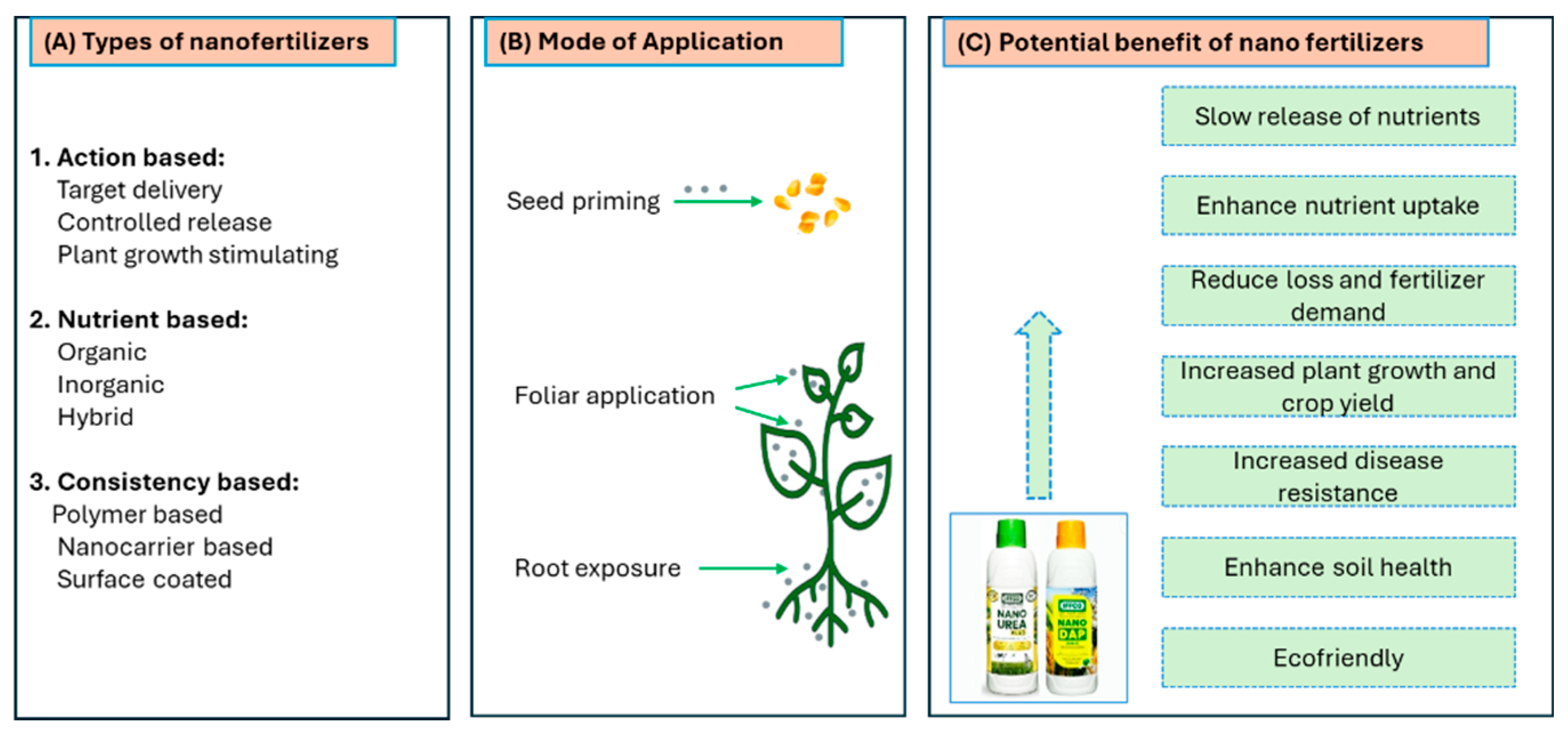
This review provides a brief overview of the critical role that nanotechnology plays in overcoming the problems faced by the current agriculture system, as well as the different kinds of nano-formulations and their applications in agriculture, their biological mechanisms of action, and various advantages offered by nano fertilizer to crop plants, leading to higher productivity over conventional fertilizers (Figure 2).
2. Challenges Associated with Chemical Fertilizers
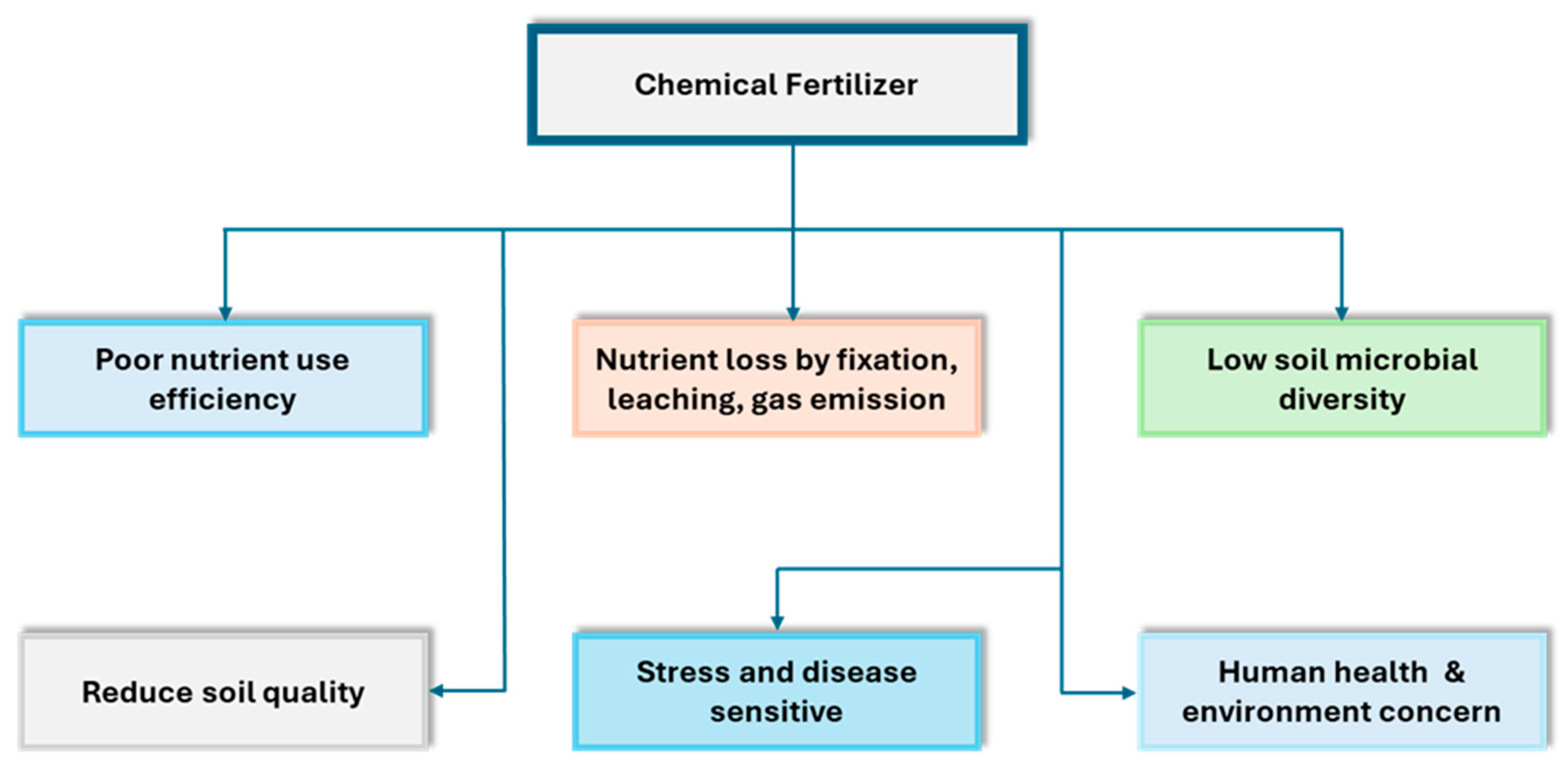
Rampant use of any type of fertilizer, organic or inorganic, can endanger the ecosystem. Nitrogen, phosphorus, and potassium are important nutrients that are supplied to plants mainly through fertilizer for their growth and development. Because of the increased surface area, granule fertilizer is known to mineralize quickly. However, their effectiveness is known to be low; roughly 40% to 70% of the N, 80% to 90% of the P, and 50% to 70% of the K applied to the soil are lost [27]. As of 2015, the demand for nitrogenous, phosphorus, and potash fertilizers added to the soil to overcome nutrient deficiencies was approximately 1, 2, and 4% worldwide [28]. Higher agricultural production has been achieved in recent years by applying more synthetic chemical fertilizers to crops. However, long-term higher fertilizer applications can decrease nutrient use efficiency and cause reduced plant growth and a negative impact on crop quality (Figure 1) [29]. Increasing the use of fertilizer to increase crop yields is not financially feasible and represents a significant burden for farmers. Surface water, subsurface water, and soil pollution are primarily caused by nitrate leaching, which is primarily caused by nitrogen losses linked to higher application rates (Figure 1) [30]. Likewise, P is immobilized in the soil due to a complex edaphic process, hindering its timely and sufficient availability for plant uptake [31]. According to Childers et al. [32], excessive application of P fertilizers has negative effects on ecosystem health, soil degradation, soil fertility, and ecosystem functioning. P is also the least mobile nutrient for plants in the soil rhizosphere, and plants deficient in P have stunted growth and lower crop yields. Consequently, a larger amount of phosphatic fertilizer has been applied in the agricultural production system [29]. Furthermore, plants grown under extreme fertilizer application are more susceptible to water lodging due to overgrowth of shoots and are more prone to pests and diseases. Also, there is a serious concern regarding global warming through nitrous oxide emission, significant acidification in croplands, and adverse effects on human health due to incomplete capture and poor conversion of fertilizer [33].
The application of synthetic nitrogen fertilizer can also affect the diversity of soil microflora directly by altering soil chemistry [34]. When applied at a higher rate, urea and ammonium fertilizers can inhibit soil microflora due to the toxicity of ammonia and upsurges in ionic strength [35]. Further, inorganic nitrogen fertilizers are supplied as NH4+ and they release H+ ions upon oxidation, reducing soil pH and subsequently reducing soil microbial diversity [36]. Thus, there is an urgent need for a novel approach to enhance agricultural production with minimum input of chemical fertilizer as a more efficient, highly reliable, cost-effective, and controlled release effect with minimal environmental footprints.
Figure 1.
Disadvantages of chemical fertilizer application in the agricultural field.
3. Nano-Scale Fertilizers and Their Formulation
In agriculture, nanotechnology can explore nano-scale materials as fertilizer carriers as new facilities to enhance nutrient use efficiency with slow and controlled release of encapsulated micro/macro-nutrients (Table 1) [37]. Further, it also has huge potential to reduce nutrient loss, improve soil fertility, increase crop productivity, minimize environmental pollution, and provide a feasible environment for microorganisms [12]. The nano-formulation of any fertilizer should possess all desired properties such as biocompatibility, biodegradability, stability, high solubility, enhanced target activity with effective concentration, controlled release over time, and less ecotoxicity with an easy and safe mode of delivery [38]. Further, nano-scale fertilizer has huge potential to deliver important nutrients to target sites in plant systems through primarily foliar application, seed priming, and soil application [16]. Usually, the loading of nanoparticles with nutrients occurs through (a) entrapment of polymeric nanoparticles, (b) encapsulation in a polymeric shell, (c) absorption on nanoparticles, (d) ligand-mediated nanoparticles attachment, and (e) synthesis of nanoparticles using the nutrient itself [39].
Encapsulation of active ingredients in polymeric shells plays a significant role in protecting the environment by reducing nutrient leaching and evaporation through controlled and slow-release mechanisms [12]. Recently, targeted smart delivery of nano fertilizer has been the most promising field in modern agriculture. Numerous nano-based delivery technologies, including hydrogel, emulsion, liposome, and polymer-based, have been developed for agricultural crop production [19]. Among these, site-specific delivery of bioactive substances such as plant growth regulators, insecticides, and macro and micro elements for crop production, plant growth, and defense against dangerous infesting pests is drawing increased attention to polymer-based nano delivery (Figure 2). [12,39]. However, a variety of factors, including surface characteristics, encapsulating material, size, and biocompatibility, influence the choice of core material [19]. Regardless of the immense potential, nano fertilizer production encounters some technical challenges, involving attaining precise control over size and shape, uniformity of controlled release and regulatory hurdles [40,41]. Thus, developing standardized procedures for the synthesis of nanomaterials risk assessment and product regulation will necessitate interdisciplinary cooperation between scientists, legislators, and industry stakeholders.
3.1. IFFCO Nano Urea
Nano-urea is a revolutionary nanotechnology-based product introduced by IFFCO, providing nitrogen to crop more effectively and efficiently in modern agriculture for the first time in the world. It was introduced to reduce and replace the use of conventional nitrogen-containing fertilizers, as they are widely used but have low use efficiency and are environmentally unsafe. Nano-urea has been tested in more than 9,000 field trials across the country on more than 90 crops, including cereals, legumes, oilseeds, and horticultural crops, and has been found to increase average yield by up to 8% [42]. Another finding showed that nano spray produced a higher okra yield (9.6%) than chemical fertilizers that added NPK. However, because there was more N available in the plant system, a higher concentration of nano spray (4%) had a major effect on the growth and yield indices [43]. It can be applied to crops as a foliar application, 30 days after sowing or the tillering phase, followed by the pre-flowering phase. In addition, the production of nano urea is resource-efficient, and its application ensures agricultural sustainability and environmental safety. In addition, it will increase farmers' income due to higher crop yields, better quality of crop produce, and lower transportation and input costs.
3.2. IFFCO Nano Urea Plus
After the success of nano urea, IFFCO launched nano urea plus, an advanced formulation with increased nitrogen content (16% w/w) to meet crop nitrogen demand at the vegetative and reproductive stages of the crop. Therefore, with increased encapsulation and slow-release effect, it will boost robust plant growth and crop yield with increased food quality while promoting soil, a sustainable environment, and human health. Studies showed that the application of nano urea plus nano fertilizer enhanced microbial diversity, reduced losses of applied nitrogen, and improved nitrogen uptake in wheat as compared to conventional fertilizers [44]. Similarly, NUP also enhances the microbial load and diversity in the phyllosphere and rhizosphere of maize plants [44]. In chickpea, 75% of the RDF (recommended dose of fertilizer) of nitrogen with one foliar spray of NUP exhibited a higher yield than 50% RDF of nitrogen with one foliar spray of NUP. Two sprays of NUP, along with 75% RDF of nitrogen, have been found most effective in terms of higher yield and cost-benefit ratio (B: C ratio) in wheat [44].
3.3. IFFCO Nano DAP
Nano DAP is a concentrated source of two essential macronutrients, i.e., nitrogen and phosphorus. Formulation of nano DAP contains 8% w/v of nitrogen and 16% w/v of phosphorus as P2O5 for correcting the deficiency of these nutrients in crops. Formulation with a higher surface-to-volume ratio makes it more efficient and effective to enter plant cells through natural plant openings. Further, it is translocated to various plant parts and assimilated in various metabolic pathways. Thus, it leads to higher chlorophyll content, photosynthetic efficiency, increased plant growth, improved nutritional quality, and higher yield of crops. In the rice crop, nano DAP-treated seedlings and foliar-applied plants exhibited higher nutrient use efficiency, plant growth, grain yield and improved B:C ratio to other treatments [45].
3.4. IFFCO Nano Copper and Nano Zinc
Nano copper and nano zinc are micronutrient-based nano fertilizer products developed by IFFCO, with 0.8% Cu and 1.0% Zn content, respectively. Study showed that growth, yield, and yield attribute traits, uptake and B:C ratio were found higher in nano Cu and Zn applied treatment of sugarcane [46]. In maize, the application of RDF (50% N + 50% Zn; 100 % PK) with 2 sprays of nano N and one spray of each nano Cu and nano Zn showed the higher growth and yield attributes traits. Moreover, the application of RDF (50% N + 50% Zn; 100 % PK) with 2 sprays of nano N and one spray of each nano Cu and nano Zn (mixture) exhibited increased grain yield and straw yield over the control [47].
4. Nanotechnology-Based Approaches to Increase Crop Production
Nano fertilizers have been proposed as novel tools to enhance nutrient use efficiency and reduce environmental burdens imposed by conventional fertilizers. These promising features make them extremely appropriate for usage in the current agricultural production system (Table 2) [38]. Recently, Sahoo et al., [45] studied the effect of nano DAP fertilizer on growth, yield, and nutrient use efficiency in rice. The result revealed that nano DAP treatment (50% of the soil test recommended doses for N and P + seedling root dipping with nano DAP at 5 mL L−1 + two foliar application nano DAP at 4 mL L−1 at 25 and 45 days after transplanting) found overall most effective in terms of plant growth, nutrient uptake, grain yield and benefit-cost ratio as compared to other treatments. Similarly, Kumar et al. [50] evaluated the effect of nano urea and nano zinc fertilizer on cereal and oilseed crops for plant growth and yield. It was observed that both nano fertilizers, along with organic farming practices, improved the average yield in wheat (5.35%), pearl millet (4.2%), sesame (24.24%), and mustard (8.4%), along with enhanced growth and yield-attributing traits as compared with conventional chemical fertilizer practice. Likewise, Kottegoda et al. [51] studied the urea-hydroxyapatite nano fertilizer for the slow release of nitrogen, and it was observed that it releases N for a long period as compared to conventional fertilizer. In another report, foliar exposure of NPK-nano fertilizer significantly increased plant growth (51%) and improved yield (56%) compared to control and conventional fertilizer in wheat crops [24]. Recently, Sarah et al. [52] demonstrated that the foliar application of NPK nano fertilizers could increase the yield and nutritional properties of soybeans. Further, these nanocomposites also cause a reduction in the incidence of disease severity and increase the availability of macronutrients in plants and soil. Similarly, maize plants treated with sulfate-supplemented Nano NPK fertilizers, yielded maximum chlorophyll content, height, number of leaves, and stem diameter as compared to control, NPK fertilizer, and NPKS fertilizer under greenhouse conditions [53]. These findings indicate that fortifying N fertilizers with nano-scale macronutrients can upsurge nutrient use efficiency.
Figure 2.
Types (A), mode of application (B) and advantages (C) of nano fertilizer application in the agricultural field.
Figure 2.
Types (A), mode of application (B) and advantages (C) of nano fertilizer application in the agricultural field.
Carboxymethyl cellulose-stabilized hydroxyapatite nanoparticles were applied to soybean plants grown in pot conditions, and results showed that the growth rate and seed yield increased by 32.6% and 20.4%, respectively, higher than regular P fertilizer. Further, this nano fertilizer also enhanced above-ground biomass (18%) and below-ground biomass (41.2%) compared to those with regular P fertilizer [54]. The application of ammonium-charged zeolite nanoparticles increased the solubility of phosphate minerals and hence displayed enhanced phosphorus accessibility and uptake by crops [55]. In peanuts, the application of nano-zeolite phosphorus showed significantly higher nutrient content, uptake, and oil content by increasing P use efficiency [56]. Madanayake et al. [57] studied the response of hydroxyapatite nanoparticles on Raphanus sativus and found that these nanoparticles could be a potential nontoxic source of P for various seedling parameters such as shoot and root elongation, dry biomass, and soluble protein and indole acetic acid content. The application of nano phosphorus fertilizer in rice showed greater physiological efficiency of shoots and roots, higher photosynthetic rate, and improved water use efficiency [58].
In a recent study, copper and zinc-based nano fertilizers were found effective in enhancing plant growth, antimicrobial activity, and crop yield along with nutrient fortification in maize [19,22]. In a similar study, Deshpande et al. [21] reported Zn chitosan nanoparticles as a nutrient carrier for agronomic bio-fortification for higher grain zinc content in wheat via foliar application. The application of nano-potassium was tested and resulted in an overall increase in plant growth, growth attributing parameters, protein content, photosynthetic content, and crop yield as compared to control and conventional chemical fertilizer in wheat under field conditions [59]. Nanoemulsion of thymol, an essential oil, showed substantial antibacterial activity for disease control of bacterial pustule in soybean up to 95.4% and increased plant growth as compared to control plants [60].

Table 2.
Application of various types of nano fertilizer in different crops.
| Crop name | Type of NFs | Crop response | References |
| Rice | Nano DAP fertilizer | Increased plant growth, grain yield, and nutrient use efficiency in rice | [45] |
| Wheat, Pearl millet, Sesame, Mustard | Nano urea and nano zinc fertilizer | Enhanced growth, yield-attributing traits and crop yield | [50] |
| Maize | Hydroxyapatite NPs | Increased plant height and yield | [61] |
| Wheat, Tomato | Cryo-milled nano DAP | Increased shoot length, fresh weight, shoot surface area, Improved biomass, pronounced Pi content and reduced anthocyanin content | [62] |
| Radish | Hydroxyapatite nanoparticles | Shoot/root elongation, enhanced dry biomass, soluble protein and indole acetic acid content | [57] |
| Maize | Sulfate-supplemented NPK nano fertilizer | Increased number of leaves, plant height, nutrient content and uptake | [53] |
| Okra | Cu, Fe, and Zn incorporated urea-hydroxyapatite NPs | Increased nutrient use efficiency and higher yields | [63] |
| Maize | Hydroxyapatite-humic acid NPs | Increased plant height, fresh and dry weights | [64] |
| Soybean | Nano-hydroxyapatite | Increased plant height and production | [65] |
| Soybean | NPK nano fertilizers | Increased yield and nutritional properties | [52] |
| Rice | Nano phosphorus fertilizer | Greater physiological efficiency of shoots and roots for P, higher photosynthetic rate and instant water use efficiency | [58] |
| Coffee | NPK-coated nano fertilizer | Increased nutrient uptake, plant growth, number of leaves, and photosynthetic plant area | [66] |
| Maize, Capsicum, Kale | NPK nano-fertilizers | Higher grain yield, fruit numbers, and increased dry matter yield | [67] |
| Maize | Zn-chitosan NPs | Increased plant growth, crop yield, and grain zinc content | [19] |
| Soybean | Thymol nano-emulsion | Enhanced plant growth and disease control | [60] |
| Peanut | Nano-zeolite-P fertilizer | Higher nutrient, oil content and increased P use efficiency | [56] |
| Lettuce | Nano hydroxyapatite | Increased dry weight and P use efficiency | [68] |
| Almond |
Nano urea modified with hydroxyapatite | Increased seed germination rate, plant height, perimeter, seed moisture status, and elongation of primary and secondary roots | [18] |
| Pea | Chitosan–PMAA–NPK nano fertilizer | Upregulation of major proteins such as convicilin, vicilin, and legumin β and induced rate of cell division | [69] |
| Maize | Cu-chitosan NPs | Increased plant growth, boosts defense response and crop yield | [22] |
| Wheat | Zinc-complexed chitosan/TPP NPs | Increased grain zinc content | [21] |
| Rice | Urea-hydroxyapatite NPs | Increased NPK content | [51] |
| Pomegranate | Nano-nitrogen | Enhanced leaf N content, fruit yield, and quality | [70] |
| Wheat | Nano chitosan NPK | Increased shoot/ root length, fresh/dry weight, water content, and leaf area | [24] |
| Potato | Nano N chelate | Increased yield and reduced nitrate leaching | [71] |
| Soybean | Apatite NPs | Increased growth rate, seed yield and biomass production | [54] |
| Wheat | N, P and NPK NPs | Enhancement of plant growth parameters such as shoot length, root length and others | [72] |
| Cowpea | Silver NPs | Microbial growth inhibition of Xanthomonas axonopodis pv. malvacearum and other harmful bacteria | [73] |
| Green pea | Zinc oxide NPs | Increased zinc uptake and photosynthetic pigment | [74] |
| Sunflower | Zinc oxide NPs | Increased Zn content and plant growth and physiological parameters like leaf area, shoot dry weight, and chlorophyll content | [75] |
| Capsicum | Zinc oxide NPs | Enhanced root/shot length, seed germination, and seedling growth | [76] |
| Maize | Zinc NPs | Increased plant growth, yield attributes and crop yield | [77] |
5. Nano Fertilizer for Crop Sustainability
Sustainable agriculture demands a reduced reliance on synthetic agrochemicals, and the development of an effective plant nutrient system is crucial to minimizing environmental risks [12]. Innovative approaches, such as nano fertilizers, controlled-release fertilizers (CRFs), bio-organic fertilizers, and microbial inoculants, all of which prioritize less environmental impact over conventional chemical fertilizers, while addressing nutrient delivery issues in unique ways [78,79,80]. Nano fertilizer plays a key role in crop production by efficient and effective nutrient utilization, lowering agrochemical use against harmful insect pests and plant disease resistance, which promotes the sustainable growth of agriculture [12,39]. The high surface-to-volume ratio of nano fertilizer enables more active sites to facilitate the metabolic process in plants to produce more photosynthates. Further, nano-sized particles make it more reactive with other compounds and have higher solubility in different solvent suspensions. Further, nano fertilizer increases crop yield by more the 20%, while minimizing more than 40% the usage of chemical fertilizer, reducing input costs and environmental pollution [81,82]. On the other hand, controlled-release fertilizers (CRFs) use coatings like hydrogels or polymers to encapsulate macronutrients and synchronize release with crop demands, increasing yields by 10–20% and reducing volatilization losses. However, because CRFs depend on abiotic variables like temperature and pH, their effectiveness may be limited in variable soils [79]. Bio-organic fertilizers combine organic matter with beneficial microbes to promote soil structure, organic carbon accumulation, and slow nutrient mineralization through decomposition. This results in increased crop productivity along with increased microbial diversity. However, because of their heterogeneous composition, their performance can vary depending on soil moisture and initial organic content [83].
Through nitrogen fixation, phosphorus solubilization, and hormone production, microbial inoculants, which include live strains such as Pseudomonas or Bacillus, promote plant growth. They provide environmentally friendly remediation of heavy metals and pathogens without direct nutrient supply, achieving higher yield gains in integrated systems. However, they face survival challenges from environmental stressors, requiring sophisticated formulations like biofilms for stability [80].
6. Genetic Engineering-Based Approaches to Increase Crop Production
To increase sustainable agriculture production, careful management of mineral nutrients is required, and one important step towards increased sustainability is to enhance NPK use efficiency in crops [84]. Uptake, transport, assimilation, and remobilization of nitrogen are governed by several complex genes involved in these processes. Remarkably, a substantial number of transgenic plants with augmented nitrogen use efficiency have been developed in major cereal crops including maize, wheat, and rice [85]. Particularly, advancement in CRISPR/Cas9, a genome editing tool combined with base editing technology, offers a great opportunity for improving nutrient use efficiency in plants [86]. It has been successfully deployed in Japonica rice for editing the N transporter gene to increase NUE by expression of NRT1.1B-indica allele [87]. Similarly, Shrawat et al. [88] developed genetically engineered rice by introducing the barley AlaAT gene with OsAnt1, a rice tissue-specific promoter, to develop N-efficient plants. This modification increases grain yield and biomass significantly in comparison with the control, as supplied with nitrogen.
Roots are the main site for the uptake of nutrients from soil, and their size and distribution affect the acquisition of soil P by plants. QTL (quantitative trait loci) associated with PUE (phosphorus use efficiency) have been examined in crop plants, and a study suggested that improvement in PUE may be achieved through direct gene identification, marker-assisted programs, and genetic engineering [89]. Overexpression of the β-expansin gene GmEXPB2 promoted root growth and leaf expansion and subsequently resulted in improved P efficiency in soybean transgenic plants. Further, these plants also showed 25 and 40% enhanced dry weight and P content, respectively [90]. Mapping of QTL at the seedling stage in wheat has been detected for root traits. It was found that 20 and 19 QTLs were identified under P-deficient and sufficient conditions, respectively, and distributed on different chromosomal regions [91]. Overexpression of a bHLH domain-containing TCP transcription factor and low K+ induced AP2/ERF transcription factor in Arabidopsis showed root hair initiation and elongation [92]. Gamuyao et al. [93] reported that the expression of the PSTOL1 gene significantly increased grain yield in rice grown in phosphorus-deficient soil. Further, it enhances the early root growth, thus allowing plants to obtain more phosphorus.
7. Nutrient-Solubilizing Microbe-Based Approaches
In cereals, plant growth-promoting bacteria (PGPB) contributes significant nitrogen that is sustainable, eco-friendly, and inexpensive. Hence, biological nitrogen fixation is a substitute for conventional nitrogen fertilizers, which are expensive and inaccessible to resource-poor growers [94]. Several researchers have reported the potential of PGPB, including Azotobacter, Bacillus, Azospirillum, and Pseudomonas spp. to promote plant growth and crop yield in different soil and environments as biofertilizers [95]. Application of Pseudomonas fluorescens and Azospirillum brasilense as biofertilizers in rice plants showed increased aerial biomass production, harvest index, and grain yield [96]. Similarly, wheat plants inoculated with Bacillus spp. Stenotrophomonas spp., Acetobacter pasteurianus, and Stenotrophomonas spp. revealed a significant increase in shoot/root length, shoot/root biomass, and nutrient content [97]. In addition, biofertilization with Azospirillum and Azotobacter spp. reduced production costs and increased productivity in wheat and maize [95,98].
Phosphate-solubilizing microbes (PSMs) are also plant-beneficial microbes ubiquitously present, and their population varies from soil to soil. For better utilization of the stored P in soils, PSMs are capable of hydrolyzing insoluble phosphate compounds to soluble P forms. The use of PSMs combined with glucose increased the availability of P from rock phosphate due to the acidification of organic acids produced by microbes [31]. Wang et al. [99] reported that biofertilizers produced by Aspergillus niger have been shown to increase P uptake and improve plant yield in Chinese cabbage. Similarly, A. niger used as a biofertilizer, significantly increased the growth of pigeon pea and wheat plants under in vitro conditions [100]. Further, the application of PSMs improved the growth, photosynthesis, and nutrient uptake efficiency in Camellia oleifera seedlings. Similarly, PSMs treatment showed a positive effect on the available N, P, and K content of the soil [101]. Sheng and He [102] reported that the inoculation of wheat roots with Bacillus spp. resulted in an upsurge of root exudates and increased K+ uptake and plant growth upon inoculation. Some other strategies, such as judicious application of fertilizer at the right time, right place, right rate, right agronomic practice, and nutrient management, are essential in modern agriculture for improving long-term sustainability, benefiting farmers and the environment [103].
8. Biological Mechanism of Action
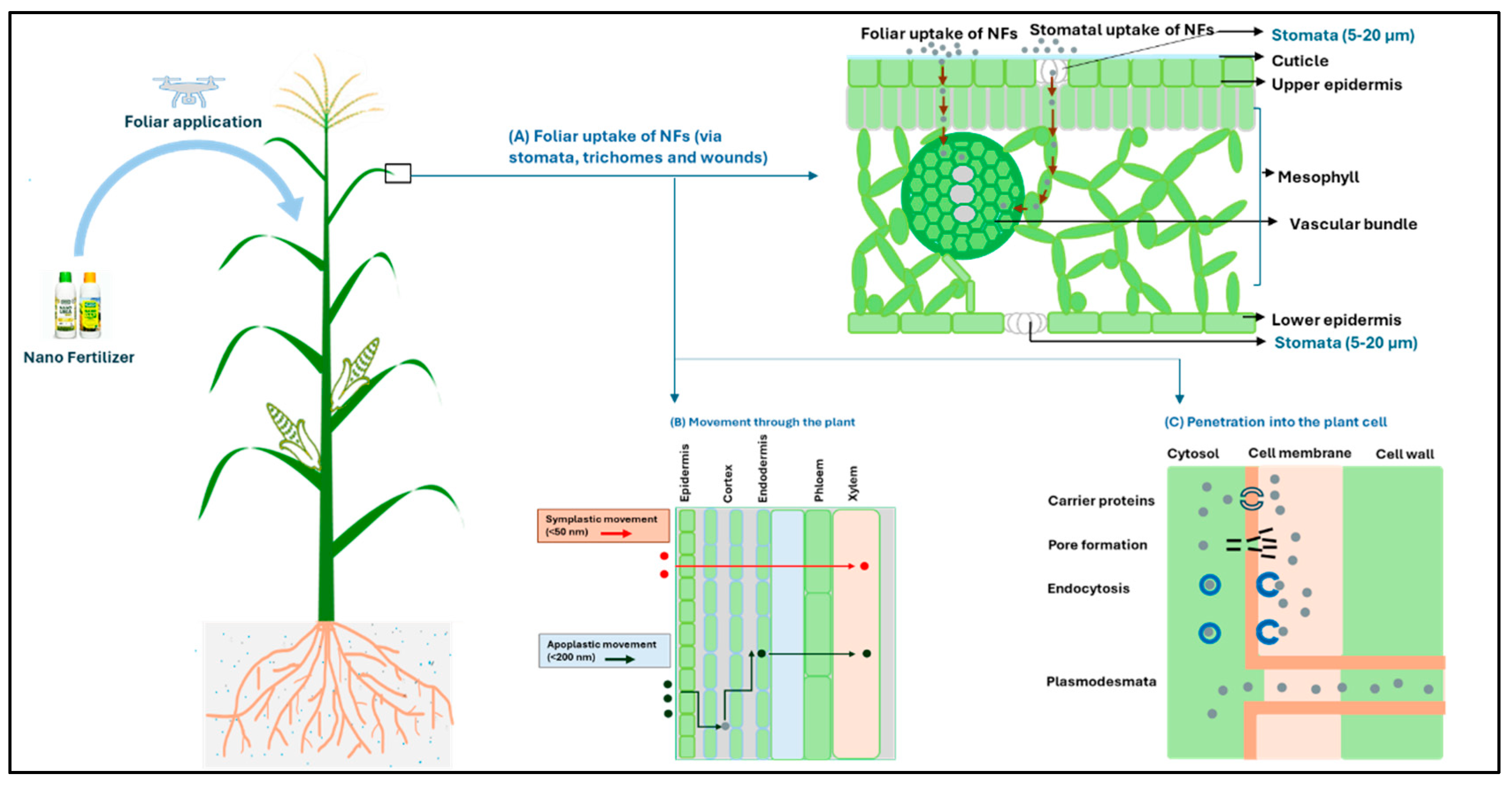
Nano fertilizers signify an innovative concept in modern agriculture, to release basic plant nutrients with exceptional efficiency, slowed release kinetics, and minimized environmental losses. The mechanism of action of nano fertilizers is comprehensive, recognizing biological, chemical, and physical relations at the nano-bio interface between the fertilizer particles and plant tissues, soil microbiota, and rhizospheric environments [104]. Significantly greater surface-to-volume ratio of NPs allows higher solubility, reactivity, and diffusion rate. For instance, zinc oxide NPs, usually used to treat zinc deficiency in wheat and maize, revealed size-dependent dissolution behavior. Upon application to the soil, nano fertilizers interact with the soil matrix. Clay minerals and organic matter absorb nanoparticles through electrostatic forces, van der Waals interactions, or ligand exchange. Plant uptake mechanisms are similarly complicated and vary depending on plant species, entry route, and nanoparticle type [105,106]. Nano-sized particles can easily enter seeds via the priming process and create nanopore formation, which favors the entry of additional NPs and subsequently emerging roots [38]. Foliar-applied nano fertilizers are shown to be effective as compared to soil exposure. It has the advantage of being more effective, faster absorption by plants, and minimally affecting soil properties. Furthermore, NPs penetrate through natural plant structures like stomata, lenticels, and trichomes. However, applied nano fertilizer should be within the stomata size exclusion limit (5-20 μm) because their subsequent transport largely depends on particle sizes. Large particles (<200 nm) are mostly transported via apoplast (through the cell wall and smaller particles (<50 nm) are mainly transported via symplast (cell-to-cell, mediated by plasmodesmata) pathways [107] (Figure 3). Further, these NPs can enter plant cells using transport channels, including aquaporin, ion-gated channels, the formation of protein carrier complexes, and endocytosis (Figure 3). When NPs are taken by plants, a biochemical reaction may occur, resulting in a change in NPs structure and morphology, leading to the release of encapsulated active ingredients. Some studies revealed that foliar applications can induce the formation of new nanopores in cell walls that also facilitate the further entry of particles into the cell [108]. Similarly, soil-applied nano fertilizers are mainly taken up by plants via a root-mediated process, which also involves both apoplastic and symplastic pathways. NPs translocate down to the roots via phloem and upwards to other aerial parts through the xylem, whereas vacuoles serve as the main accumulation site. Numerous factors, such as humidity, temperature, particle size, and physiological characteristics of plants, also affect the absorption, transport, and release of active ingredients and their accumulation [109].
9. Potential Risks and Biosafety Concerns
Although nano fertilizers have the potential to boost crop yields, their application raises safety issues. One of the main safety issues with nano fertilizers is their possible effects on the environment. The metal-based and non-degradable nano fertilizers can build up in soil and water, producing environmentally hazardous compounds that can endanger both the environment and human health [110]. Numerous studies have demonstrated that zinc oxide and titanium dioxide-based nano fertilizers are detrimental to both human cells and aquatic life. Furthermore, because nano fertilizers can be absorbed through the skin, lungs, and gastrointestinal tract, they may be toxic and pose health hazards. Likewise, repeated doses and larger concentrations of nano fertilizers may be harmful to plants when they are regularly applied, which would lower the crop yield [111]. Similarly, soil microbiological diversity and soil characteristics may be impacted by the prolonged use of greater dosages of nano fertilizer. Additionally, nano fertilizers from the soil may negatively impact aquatic life by leaking into aquatic habitats, which could result in bioaccumulation and biomagnification within the food chain. Further research is necessary to fully understand the potentially harmful effects of nano fertilizers on the environment and human health [112]. Optimization of foliar applications of nano fertilizers, standardization of the nano-formulations, and lack of size homogeneity of the nano fertilizers are all issues that need further investigation.
10. Conclusion and Future Perspective
The development of nano fertilizers offers a clever, effective, and ecologically safe substitute for conventional fertilizers, marking a revolutionary breakthrough in agricultural innovation. Nano fertilizers greatly increase nutrient usage efficiency (NUE) more than 50% as compared to the conventional method, while reducing losses from leaching, volatilization, and runoff by providing controlled, targeted nutrient delivery through nanoscale encapsulation and improved bioavailability. This reduces the ecological imprint of farming, including lower greenhouse gas emissions and water pollution, while also improving crop yields, soil health, and plant resistance to abiotic stresses like drought and salinity. Due to their improved nutrient use efficiency, controlled release, and targeted delivery, nano fertilizers may result in lower production costs and less fertilizer waste in the field. Because they need less effort, require less fertilizer per application, and have higher absorption rates than traditional fertilizers, nano fertilizers are usually far less expensive than conventional fertilizers. Additionally, because nano fertilizers can stay in the soil for longer, fewer applications and reduced costs are required. Several techniques, including nano-encapsulation and nanoparticles, are being investigated to produce nano fertilizers that deliver nutrients directly to plant cells. Despite the possible advantages, more research is required to establish scalable and economical production techniques as well as optimize the composition and release rates of nanomaterials. Furthermore, coordinated efforts are required to eliminate existing gaps so they can realize their full potential. Extensive field validations, long-term, comprehensive studies on soil microbiomes, and risks related to nanotoxicity are necessary to ensure safety and scalability. To make data-driven decisions and adjustments as technology develops, it is imperative to continuously monitor and evaluate the effects of nano fertilizers on crop yields, soil health, and the environment. This will ensure the positive effects of nano fertilizers are maximized while minimizing their negative effects. Nano fertilizers have the potential to start a "nano-bio revolution," fostering resilient agroecosystems that guarantee future generations' access to food through interdisciplinary collaboration between researchers, policymakers, and industrial players. By resolving these issues, farmers everywhere will be able to obtain and afford nano fertilizers, particularly in poor nations where sustainable agriculture and food security are major issues.
Author Contributions
Conceptualization and data curation, R.C.C., P.K.S., A.L, Y.J.P.; writing—original draft preparation, R.C.C; writing-review and editing, R.C.C., P.K.S. A.L; figure creation, R.C.C., supervision, P.K.S. A.L, Y.J.P; All authors have read and agreed to the published version of the manuscript.
Funding
This research received no external funding.
Conflicts of Interest
The authors declare no conflict of interest.
References
- Mittal D, Kaur G, Singh P, Yadav K and Ali SA (2020) Nanoparticle-Based Sustainable Agriculture and Food Science: Recent Advances and Future Outlook. Front. Nanotechnol. 2:579954. [CrossRef]
- John DA and Babu GR (2021). Lessons From the Aftermaths of Green Revolution on Food System and Health. Front. Sustain. Food Syst. 5:644559. [CrossRef]
- Jakhar AM, Aziz I, Kaleri AR, Hasnain M, Haider G, Ma J, Abideen Z. Nano-fertilizers: A sustainable technology for improving crop nutrition and food security. NanoImpact. 2022 Jul; 27:100411. Epub 2022 Jul 6. [CrossRef] [PubMed]
- Verma, K.K., Song, X.P., Joshi, A., Tian, D.D., Rajput, V.D., Singh, M., Arora, J., Minkina, T. and Li, Y.R. 2022. Recent Trends in Nano-Fertilizers for Sustainable Agriculture under Climate Change for Global Food Security. Nanomaterials, 12(1), 173. [CrossRef]
- Usman, M., Farooq, M., Wakeel, A., Nawaz, A., Cheema, S.A., Rehman, H. ur, Ashraf, I., Sanaullah, M., 2020. Nanotechnology in agriculture: current status, challenges and future opportunities. Sci. Total Environ. 721, 137778. [CrossRef]
- FAO, 2009. How to Feed the World in 2050. UN-FAO, Rome, Italy.
- Kah, M., Kookana, R.S., Gogos, A., Bucheli, T.D., 2018. A critical evaluation of nanopesticides and nanofertilizers against their conventional analogues. Nat. Nanotechnol. 13, 677–684. [CrossRef] [PubMed]
- Wang, J and Azam W. 2024. Natural resource scarcity, fossil fuel energy consumption, and total greenhouse gas emissions in top emitting countries. Geoscience Frontiers 15: 101757. [CrossRef]
- Tan, Z. X., R. Lal, and K. D. Wiebe. 2005. Global soil nutrient depletion and yield reduction. Journal of Sustainable Agriculture 26 (1):123–46. [CrossRef]
- Fróna, D.; Szenderák, J.; Harangi-Rákos, M. The Challenge of Feeding the World. Sustainability 2019, 11, 5816. [CrossRef]
- Malik S, Muhammad K, Waheed Y. Nanotechnology: A Revolution in Modern Industry. Molecules. 2023 Jan 9;28(2):661. [CrossRef] [PubMed] [PubMed Central]
- Yadav, Neelam & Garg, V.K. & Chhillar, Anil & Rana, Jogender. (2023a). Recent advances in nanotechnology for the improvement of conventional agricultural systems: A Review. Plant Nano Biology. 4. 100032. [CrossRef]
- Kumaraswamy R.V., Kumari S., Choudhary, R.C., Pal, A., Raliya, R., Biswas, P. and Saharan, V. 2018. Engineered chitosan-based nanomaterials: Bioactivities, mechanisms and perspectives in plant protection and growth. International Journal of Biological Macromolecules 113, 494–506. [CrossRef]
- Altammar KA. A review on nanoparticles: characteristics, synthesis, applications, and challenges. Front Microbiol. 2023 Apr 17;14:1155622. [CrossRef] [PubMed] [PubMed Central]
- Haydar, M.S., Ghosh, D., and Roy, S. 2024. Slow and controlled release nanofertilizers as an efficient tool for sustainable agriculture: Recent understanding and concerns, Plant Nano Biology, Volume 7: 100058. [CrossRef]
- Kalia, Anu & Kaur, Harleen. (2019). Nanofertilizers: An Innovation towards New Generation Fertilizers for Improved Nutrient-Use Efficacy and Environmental Sustainability. NanoAgroceuticals & NanoPhytoChemicals (pp.45-61), CRC Press Taylor & Francis Group, Boca Raton, FL.
- Saharan, V., Kumaraswamy, R. V., Choudhary, R. C., Kumari, S., Pal, A., Raliya, R., et al. (2016). Cu-chitosan nanoparticle mediated sustainable approach to enhance seedling growth in maize by mobilizing reserved food. J. Agricul. Food. Chem. 64, 6148–6155. [CrossRef] [PubMed]
- Badran, Antar & Savin, I.. (2018). Effect of Nano-Fertilizer on Seed Germination and First Stages of Bitter Almond Seedlings’ Growth Under Saline Conditions. BioNanoScience. 8. 1-10. [CrossRef]
- Choudhary, R.C., Kumaraswamy, R.V., Kumari, S., Sharma, S.S., Pal, A., Raliya, R., Biswas, P., Saharan, V., 2019. Zinc encapsulated chitosan nanoparticle to promote maize crop yield. Int. J. Biol. Macromol. 127, 126–135. [CrossRef]
- Elemike, E., Uzoh, I., Onwudiwe, D., Babalola, O. (2019). The Role of Nanotechnology in the Fortification of Plant Nutrients and Improvement of Crop Production. Appl. Sci. 9, 499. [CrossRef]
- Deshpande, P., Dapkekar, A., Oak, M.D., Paknikar, K.M. and Rajwade, J.M. 2017. Zinc complexed chitosan/TPP nanoparticles: a promising micronutrient nanocarrier suited for foliar application. Carbohydrate Polymer, 165, 394-401. [CrossRef] [PubMed]
- Choudhary, R.C., Kumaraswamy R.V., Kumari S., Sharma, S.S., Pal, A., Raliya, R., Biswas, P. and Saharan, V. 2017. Cu-chitosan nanoparticle boosts defense responses and plant growth in maize (Zea mays L.). Scientific Reports, 7, 9754. [CrossRef]
- Ashraf, Umair & Ghaffar, Rabia & Sher, Alam & Mahmood, Sammina & Noreen, Zahra & Maqbool, Muhammad & Saddique, Maham & Ashraf, Abrar. (2022). Impact of nano chitosan-NPK fertilizer on field crops. [CrossRef]
- Abdel-Aziz, H.M.M., Hasaneen, M.N.A. and Aya, M.O. 2018. Foliar application of nano chitosan NPK fertilizer improves the yield of wheat plants grown on two different soils. The Egyptian Journal of Experimental Biology, 14(1), 63-72.
- Nanofertilizer trial results. IFFCO (cited 2025 Nov 14). https://www.iffco.in/en/nano-fertilisers.
- ThePrint. IFFCO receives FCO approval for nano zinc liquid, nano copper liquid fertilisers (cited 2025 Nov 14). https://theprint.in/economy/iffco-receives-fco-approval-for-nano-zinc-liquid-nano-copper-liquid-fertilisers/2065630/.
- Kofoya, C.M., Esilfie, M.E., Asiedu, E.K., Osei, B., Amponsah, K., Atakora, W., KumahAmenudzi, D., Nongorh, C.O., and Nartey, G. (2025) Influence of NPK (Granule and Briquette) + Urea Fertilizers on Selected Soil Properties, Growth and Yield of Maize (Zea Mays L.). Open Access Library Journal, 12: e14168. [CrossRef]
- FAO, 2017. World fertilizer trends and outlook to 2020. UN-FAO, Rome, Italy.
- Ali, W., Nadeem, M., Ashiq, W., Zaeem, M., Gilani, S.S.M., Rajabi-Khamseh, S., Pham, T.H., Kavanagh, V., Thomas, R. and Cheema, M. 2019. The effects of organic and inorganic phosphorus amendments on the biochemical attributes and active microbial population of agriculture podzols following silage corn cultivation in boreal climate. Scientific Reports, 9, 17297. [CrossRef]
- Gheysari, M., Mirlatifi, S.M., Homaee, M., Asadi, M.E. and Hoogenboom, G. 2009. Nitrate leaching in a silage maize field under different irrigation and nitrogen fertilizer rates. Agricultural Water Management, 96, 946-954. [CrossRef]
- Bindraban, P.S., Dimkpa, C.O. and Pandey, R. 2020. Exploring phosphorus fertilizers and fertilization strategies for improved human and environmental health. Biology and Fertility of Soils, 56, 299-317. [CrossRef]
- Childers, D.L., Corman, J., Edwards, M. and Elser, J.J. 2011. Sustainability challenges of phosphorus and food: solutions from closing the human phosphorus cycle. Bioscience, 61, 117-124. [CrossRef]
- Wilkinson, P., Smith, K.R., Joffe, M. and Haines, A. 2007. A global perspective on energy: health effect sand injustices. Lancet, 370, 965-978. [CrossRef] [PubMed]
- Ren N, Wang Y, Ye Y, Zhao Y, Huang Y, Fu W, Chu X. Effects of Continuous Nitrogen Fertilizer Application on the Diversity and Composition of Rhizosphere Soil Bacteria. Front Microbiol. 2020 Aug 21;11:1948. [CrossRef] [PubMed] [PubMed Central]
- Swify, S.; Mažeika, R.; Baltrusaitis, J.; Drapanauskaite, D.; Barˇcauskaite, K. Review: Modified ˙ Urea Fertilizers and Their Effects on Improving Nitrogen Use Efficiency (NUE). Sustainability 2024, 16, 188. [CrossRef]
- Zhang, H., Liu, H., Zhao, J., Wang, L., Li, G., Huangfu, C., Wang, H., Lai, X., Li, J. and Yang, D. 2017. Elevated precipitation modifies the relationship between plant diversity and soil bacterial diversity under nitrogen deposition in Stipa baicalensis steppe. Applied Soil Ecology, 119(31), 345-353. [CrossRef]
- Prasad, R., Bhattacharyya, A. and Nguyen, Q.D. 2017. Nanotechnology in sustainable agriculture: Recent developments, challenges, and perspectives. Frontiers in Microbiology, 8, 1014. [CrossRef]
- Kashyap, P.L., Xiang, X. and Heiden. P. 2015. Chitosan nanoparticle-based delivery systems for sustainable agriculture. International Journal of Biological Macromolecules, 77, 36-51. [CrossRef]
- Shakiba, S., Astete, C. E., Paudel, S., Sabliov, C. M., Rodrigues, D. F., and Louie, S. M. (2020). Emerging investigator series: polymeric nanocarriers for agricultural applications: synthesis, characterization, and environmental and biological interactions. Environ. Sci. Nano 7, 37–67. [CrossRef]
- A. Gade, P. Ingle, U. Nimbalkar, M. Rai, R. Raut, M. Vedpathak, P. Jagtap, K.A. Abd-Elsalam. Nanofertilizers: the next generation of agrochemicals for long-term impact on sustainability in farming systems. Agrochemicals, 2 (2) (2023), pp. 257-278. [CrossRef]
- D. Garg, K. Sridhar, B. Stephen Inbaraj, P. Chawla, M. Tripathi, M. Sharma. Nano-biofertilizer formulations for agriculture: a systematic review on recent advances and prospective applications. Bioengineering, 10 (9) (2023), p. 1010. [CrossRef]
- Kumar, Y., Tiwari, K.N., Singh, T and Raliya R. (2021). Nanofertilizers and their role in sustainable agriculture. Annals of Plant and Soil Research 23(3): 238-255. [CrossRef]
- Subramani, T. & Velmurugan, A Velmurugan & Narayanasamy, Bommayasamy & T.P., Swarnam & Ramakrishna, Y. & Jaisankar, I. & Singh, Lakhan. (2023). Effect of Nano Urea on growth, yield and nutrient use efficiency of Okra under tropical island ecosystem. INTERNATIONAL JOURNAL OF AGRICULTURAL SCIENCES. 19. 134-139. [CrossRef]
- IFFCO - NETWORK PROJECT: PROGRESS REPORT: JUNE 2024. Insights & Field Validation of Nano Fertilizers in Major Crops Under Different Agro Ecosystems. India, 2024, pp 1-10.
- Sahoo BR, Dash AK, Mohapatra KK, Mohanty S, Sahu SG, Sahoo BR, Prusty M and Priyadarshini E (2024) Strategic management of nanofertilizers for sustainable rice yield, grain quality, and soil health. Front. Environ. Sci. 12:1420505. [CrossRef]
- Mane, M.S. Product testing report of ‘Response of suru Sugarcane to Nano N, Cu and Zn in Inceptisols (2020-21). MPKV, Rahuri, India, p.p 1-19.
- Jadav N.J. and Parmar, J.K. Other agency report on ‘Effect of nanofertilizers on growth and yield of maize and soil properties (2019-20 and 2020-21). AAU Anand, India, p.p 1-18.
- Yadav, A., Yadav, K., Abd-Elsalam, K.A. (2023b). Exploring the potential of nanofertilizers for a sustainable agriculture. Plant Nano Biology, 5, 100044. [CrossRef]
- Avila-Quezada, Graciela Dolores, Ingle, Avinash P., Golińska, Patrycja and Rai, Mahendra. "Strategic applications of nano-fertilizers for sustainable agriculture: Benefits and bottlenecks" Nanotechnology Reviews, vol. 11, no. 1, 2022, pp. 2123-2140. [CrossRef]
- Kumar, A., Singh, K., Verma, P., Singh, O., Panwar, A., Singh, T., Kumar, Y. and Raliya, R. 2022. Effect of nitrogen and zinc nanofertilizer with the organic farming practices on cereal and oil seed crops. Scientific Reports, 12, 6938. [CrossRef] [PubMed]
- Kottegoda, N., Sandaruwan, C., Priyadarshana, G., Siriwardhana, A., Rathnayake. U.A., Berugoda, Arachchige, D.M., Kumarasinghe, A.R., Dahanayake, D., Karunaratne, V. and Amaratunga, G.A. 2017. Urea-Hydroxyapatite Nanohybrids for Slow Release of Nitrogen. ACS Nano, 11(2), 1214-1221. [CrossRef]
- Sarah, A.E.S., Algarni, A.A. and Shaban, K.A.H. 2020. Effect of NPK Nano-fertilizers and Compost on Soil Fertility and Root Rot Severity of Soybean Plants Caused by Rhizoctonia solani. Plant Pathology Journal, 19(2), 140-150. [CrossRef]
- Dhlamini, B., Paumo, H.K., Katata-Seru, L. and Kutu, F.R. 2020. Sulphate-supplemented NPK nanofertilizer and its effect on maize growth. Materials Research Express, 7(9), 095011. [CrossRef]
- Liu. R. and Lal, R. 2014. Synthetic apatite nanoparticles as a phosphorus fertilizer for soybean (Glycine max). Scientific Reports, 4, 5686. [CrossRef] [PubMed]
- Dwivedi, S., Saquib, Q., Al-Khedhairy, A.A. and Musarrat J. 2016. Understanding the role of nanomaterials in agriculture. In: Singh D.P., Singh H.B., Prabha R., editors. Microbial Inoculants in Sustainable Agricultural Productivity. Springer; New Delhi, India.
- Hagab, R.H., Kotp, Y.S. and Eissa, D. 2018. Using nanotechnology for enhancing phosphorus fertilizer use efficiency in peanut bean grown in sandy soils. Journal of Advanced Pharmacy Education and Research, 8(3), 59-67.
- Madanayake, N.H., Adassooriya, N.M. and Salim N. 2021. The effect of hydroxyapatite nanoparticles on Raphanus sativus with respect to seedling growth and two plant metabolites. Environmental Nanotechnology, Monitoring and Management, 15, 100404. [CrossRef]
- Miranda-Villagomez, E., Trejo-Tellez, L.I., Gomez-Merino, F.C., Sandoval-Villa, M., Sanchez Garcia, P. and Aguilar-Mendez, M.A. 2019. Nanophosphorus Fertilizer Stimulates Growth and Photosynthetic Activity and Improves P Status in Rice. Journal of Nanomaterials, 11, 5368027. [CrossRef]
- Sheoran, P., Goel, S., Boora, R., Kumari, S., Yashveer, S. and Grewal, S. 2021. Biogenic synthesis of potassium nanoparticles and their evaluation as a growth promoter in wheat. Plant Gene, 27, 1-8. [CrossRef]
- Kumari, S., Kumaraswamy, R.V., Choudhary, R.C., Sharma, S.S., Pal, A., Raliya, R., Biswas, P. and Saharan, V. 2018. Thymol nanoemulsion exhibits potential antibacterial activity against bacterial pustule disease and growth promotory effect on soybean. Scientific Reports, 8, 6650. [CrossRef]
- Sajadinia, H., Ghazanfari, D., Naghavii, K., Naghavi, H. and Tahamipur, B. 2021. A comparison of microwave and ultrasound routes to prepare nano-hydroxyapatite fertilizer improving morphological and physiological properties of maize (Zea mays L.). Heliyon, 7, e06094. [CrossRef]
- Singh, N.R.R., Sarma, S.S., Rao, T.N., Pant, H., Srikanth, V.V.S.S. and Kumar, R. 2021. Cryo-milled nano-DAP for enhanced growth of monocot and dicot plants. Nanoscale Advances, 3(16), 4834-4842. [CrossRef]
- Tarafder, C., Daizy, M., Alam, M.M., Ali, M.R., Islam, M.J., Islam, R., Ahommed, M.S., Aly, M.A.S. and Khan, M.Z.H. 2020. Formulation of a Hybrid Nanofertilizer for Slow and Sustainable Release of Micronutrients. ACS Omega, 5, 23960-23966. [CrossRef]
- Yoon, H.Y., Lee, J.G., Esposti, L.D., Iafisco, M., Kim, P.J., Shin, S.G., Jeon, J.R. and Adamiano, A. 2020. Synergistic release of crop nutrients and stimulants from hydroxyapatite nanoparticles functionalized with humic substances: Toward a multifunctional nanofertilizer. ACS Omega 5, 6598-6610. [CrossRef] [PubMed]
- McKnight, M.M., Qu, Z., Copeland, J.K., Guttman, D.S. and Walker, V.K. 2020. A practical assessment of nano-phosphates on soybean (Glycine max) growth and microbiome stablishment. Scientific Reports, 10(1), 1-17. [CrossRef]
- Ha, N.M.C., Nguyen, T.H., Wang, S.L. and Nguyen, A.D. 2018. Preparation of NPK nanofertilizer based on chitosan nanoparticles and its effect on biophysical characteristics and growth of coffee in green house. Research on Chemical Intermediates, 45 (1), 51–63. [CrossRef]
- Rop, K., Karuku, G.N., Mbui, D. and Njomo, N. and Michira, I. 2019. Evaluating the effects of formulated nano-NPK slow release fertilizer composite on the performance and yield of maize, kale and capsicum. Annals of Agricultural Sciences, 64(1), 9-19. [CrossRef]
- Taskına, M.B., Sahin¸ O., Taskina, H., Atakolb, O., Inala, A. and Gunes. A. 2018. Effect of synthetic nano-hydroxyapatite as an alternative phosphorus source on growth and phosphorus nutrition of lettuce (Lactuca sativa L.) plant. Journal of Plant Nutrition, . [CrossRef]
- Khalifa, N.S. and Hasaneen, M.N. 2018. The effect of chitosan-PMAA-NPK nanofertilizer on Pisum sativum plants. 3 Biotech, 8(4), 193. [CrossRef]
- Davarpanah, S., Tehranifar, A., Davarynejad, G., Aran, M., Abadía, J. and Khorassani, R. 2017. Effects of foliar nano-nitrogen and urea fertilizers on the physical and chemical properties of pomegranate Punica granatum cv. Ardestani fruits. Horticultural Science, 52(2), 288-294. [CrossRef]
- Zareabyaneh, H. and Bayatvarkeshi, M. 2015. Effects of slow-release fertilizers on nitrate leaching, its distribution in soil profile, N-use efficiency, and yield in potato crop. Environmental Earth Sciences, 74, 3385-3393. [CrossRef]
- Al-Juthery H.W., Al-Fadhly J.T., Ali E.A.H.M., Al-Taee R.A.H.G. Role of some nanofertilizers and atonikin maximizing for production of hydroponically-grown barley fodder. Int. J. Agric. Stat. Sci. 2019;15:565–570.
- Vanti G.L., Nargund V.B., N B.K., Vanarchi R., Kurjogi M., Mulla S.I., Tubaki S., Patil R.R. Synthesis of Gossypium hirsutum-derived silver nanoparticles and their antibacterial efficacy against plant pathogens. Appl. Organomet. Chem. 2018;33:e4630. [CrossRef]
- Mukherjee A, Sun Y, Morelius E, Tamez C, Bandyopadhyay S, Niu G, White JC, Peralta-Videa JR, Gardea-Torresdey JL. Differential Toxicity of Bare and Hybrid ZnO Nanoparticles in Green Pea (Pisum sativum L.): A Life Cycle Study. Front Plant Sci. 2016 Jan 12;6:1242. [CrossRef]
- Torabian, S., Zahedi, M, & Khoshgoftar, A. H. (2016). Effects of foliar spray of two kinds of zinc oxide on the growth and ion concentration of sunflower cultivars under salt stress. Journal of Plant Nutrition, 39(2), 172e180. [CrossRef]
- Afrayeem, S. M., & Chaurasia, A. K. (2017). Effect of zinc oxide nanoparticles on seed germination and seed vigour in chilli (Capsicum annuum L.). Journal of Pharmacognosy and Phytochemistry, 6(5), 1564e1566.
- Subbaiah LV, Prasad TN, Krishna TG, Sudhakar P, Reddy BR, Pradeep T. Novel Effects of Nanoparticulate Delivery of Zinc on Growth, Productivity, and Zinc Biofortification in Maize (Zea mays L.). J Agric Food Chem. 2016 May 18;64(19):3778-88. [CrossRef] [PubMed]
- Gehlot, P., Yadav, J., Chittora, D., Meena, S., Meena, P., and Jain, T. 2024. Biofertilizers, Bionanofertilizers and Nanofertilizers: Eco-friendly alternatives for crop production. J. Mycopathol. Res. 62(2): 241-259.
- Morrow, M.; Sharma, V.; Singh, R.K.; Watson, J.A.; Maltais-Landry, G.; Hochmuth, R.C. Impact of Polymer-Coated Controlled-Release Fertilizer on Maize Growth, Production, and Soil Nitrate in Sandy Soils. Agronomy 2025, 15, 455. [CrossRef]
- Díaz-Rodríguez, A.M.; Parra Cota, F.I.; Cira Chávez, L.A.; García Ortega, L.F.; Estrada Alvarado, M.I.; Santoyo, G.; de los Santos-Villalobos, S. Microbial Inoculants in Sustainable Agriculture: Advancements, Challenges, and Future Directions. Plants 2025, 14, 191. [CrossRef]
- Seleiman MF, Almutairi KF, Alotaibi M, Shami A, Alhammad BA, Battaglia ML. Nano-Fertilization as an Emerging Fertilization Technique: Why Can Modern Agriculture Benefit from Its Use? Plants (Basel). 2020 Dec 22;10(1):2. [CrossRef] [PubMed] [PubMed Central]
- Goyal A, Chavan SS, Mohite RA, Shaikh IA, Chendake Y, Mohite DD. Emerging trends and perspectives on nano-fertilizers for sustainable agriculture. Discov Nano. 2025 Jun 20;20(1):97. [CrossRef] [PubMed] [PubMed Central]
- Syed, S.; Wang, X.; Prasad, T.N.V.K.V.; Lian, B. Bio-Organic Mineral Fertilizer for Sustainable Agriculture: Current Trends and Future Perspectives. Minerals 2021, 11, 1336. [CrossRef]
- Basavarajappa, P.N., Shruthi, Lingappa, M., Kadalli, G.G. and Mahadevappa, S.G. 2021. Nutrient requirement and use efficiency of rice (Oryza sativa L.) as influenced by graded levels of customized fertilizer. Journal of Plant Nutrition, 44(19), 2897-2911. [CrossRef]
- Li, M., Xu, J., Gao, Z., Tian, H., Gao, Y. and Kariman, K. 2020. Genetically modified crops are superior in their nitrogen use efficiency- a meta-analysis of three major cereals. Scientific Reports, 10, 8568. [CrossRef]
- Khatodia, S., Bhatotia, K., Passricha, N., Khurana, S.M. and Tuteja, N. 2016. The CRISPR/Cas genome-editing tool: application in improvement of crops. Frontiers in Plant Science, 7, 506. [CrossRef]
- Li, X., Wang, Y., Liu, Y., Yang, B., Wang, X., Wei, J., Lu, Z., Zhang, Y., Wu, J., Huang, X., Yang, L. and Chen J. 2018. Base editing with a Cpf1–cytidine deaminase fusion. Nature Biotechnology, 36, 324-327. [CrossRef]
- Shrawat, A.K., Carroll, R.T., DePauw, M., Taylor, G.J. and Good, A.G. 2008. Genetic engineering of improved nitrogen use efficiency in rice by the tissue-specific expression of alanine aminotransferase. Plant Biotechnology Journal, 6(7), 722-732. [CrossRef]
- Vance, C.P. 2010. Quantitative Trait Loci, Epigenetics, Sugars, and MicroRNAs: Quaternaries in Phosphate Acquisition and Use. Plant Physiology, 154(2), 582-588. [CrossRef]
- Zhou, J., Xie, J., Liao, H. and Wang, X. 2013. Overexpression of β-expansin gene GmEXPB2 improves phosphorus efficiency in soybean. Physiologia Plantarum, 150(2), 194-204. [CrossRef]
- Su, J., Xiao, Y., Li, M., Liu, Q., Li, B., Tong, Y., Jia, J. and Li, Z. 2006. Mapping QTLs for phosphorus-deficiency tolerance at wheat seedling stage. Plant and Soil, 281, 25-36. [CrossRef]
- Shin R. 2014. Strategies for improving potassium use efficiency in plants. Molecules and Cells, 37(8), 575-84. [CrossRef] [PubMed]
- Gamuyao, R., Chin, J.H., Pariasca-Tanaka, J., Pesaresi, P., Catausan, S., Dalid, C., Slamet-Loedin, I., Tecson-Mendoza, E.M., Wissuwa, M. and Heuer, S. 2012. The protein kinase Pstol1 from traditional rice confers tolerance of phosphorus deficiency. Nature, 488, 535-539. [CrossRef] [PubMed]
- Rosenblueth, M., Ormeno-Orrillo, E., Lopez-Lopez, A., Rogel, M.A., Reyes-Hernandez, B.J., Martinez-Romero, J.C., Reddy, P.M. and Martinez-Romero, E. 2018. Nitrogen Fixation in Cereals. Frontiers in Microbiology, 9:1794. [CrossRef]
- Amiri, A. and Rafiee, M. 2013. Effect of soil inoculation with Azospirillum and Azotobacter bacteria on nitrogen use efficiency and agronomic characteristics of corn. Annals of Biological Research, 4(2), 77-79.
- Garcia de Salamone, I.E., Funes, J.M., Di Salvo, L.P., Escobar-Ortega, J.S., D’Auria, F., Ferrando, L. and Fernandez-Scavino, A. 2012. Inoculation of paddy rice with Azospirillum brasilense and Pseudomonas fluorescens: impact of plant genotypes on rhizosphere microbial communities and field crop production. Applied Soil Ecology, 61, 196-204. [CrossRef]
- Majeed, A., Abbasi, M.K., Hameed, S., Imran, A. and Rahim, N. 2015. Isolation and characterization of Plant Growth-Promoting Rhizobacteria from wheat rhizosphere and their effect on plant growth promotion. Frontiers in Microbiology, 6, 198. [CrossRef]
- Piccinin, G.G., Dan, L.G.M., Braccini, A.L.E., Mariano, D.C., Okumura, R.S., Bazo, G.L. and Ricci, T.T. 2011. Agronomic efficiency of Azospirillum brasilense in physiological parameters and yield components in wheat crop. Journal of Agronomy, 10, 132-135. [CrossRef]
- XiaoWang, H., Liu, S., Zhal, L., Zhang, J., Ren, T., Fan, B. and Liu, H. 2015. Preparation and utilization of phosphate biofertilizers using agricultural waste. Journal of Integrative Agriculture, 14, 158-167. [CrossRef]
- Xiao, C.Q., Zhang, H.X., Fang, Y.J. and Chi, R. 2013. Evaluation for rock phosphate solubilization in fermentation and soil-plant system using a stress-tolerant phosphate-solubilizing Aspergillus niger WHAK1. Applied Microbiology and Biotechnology, 169, 123-133. [CrossRef]
- Wu, F., Li, J., Chen, Y., Zhang, L., Zhang, Y., Wang, S., Shi, X., Li, L. and Liang, J. 2019. Effects of Phosphate Solubilizing Bacteria on the Growth, Photosynthesis, and Nutrient Uptake of Camellia oleifera Abel. Forests, 10, 348. [CrossRef]
- Sheng, X.F. and He, L.Y. 2006. Solubilization of potassium bearing minerals by a wild-type strain of Bacillus edaphicus and its mutants and increased potassium uptake by wheat. Canadian Journal of Microbiology, 52, 66-72. [CrossRef]
- Nguyen, G.N. and Kant, S. 2018. Improving nitrogen use efficiency in plants: effective phenotyping in conjunction with agronomic and genetic approaches. Functional Plant Biology, 45, 606-619. [CrossRef]
- Goyal V, Rani D, Ritika, Mehrotra S, Deng C, Wang Y. Unlocking the Potential of Nano-Enabled Precision Agriculture for Efficient and Sustainable Farming. Plants (Basel). 2023 Nov 1;12(21):3744. [CrossRef]
- Saad Hanif, Rabia Javed, Mumtaz Cheema, Misbah Zeb Kiani, Snovia Farooq, Muhammad Zia. 2024. Harnessing the potential of zinc oxide nanoparticles and their derivatives as nanofertilizers: Trends and perspectives. Plant Nano Biology, Vol. 10 p. 100110. [CrossRef]
- Zhu, Jiahui & Li, Jinfeng & Liu, Shiqi & Zhan, Xinhua & White, Jason & Gardea-Torresdey, Jorge & Xing, Baoshan. (2020). Mechanism of zinc oxide nanoparticle entry into wheat seedling leaves. Environmental Science: Nano. 7. 3901-3913. [CrossRef]
- Hong, J., Wang, C., Wagner, D.C., Gardea-Torresdey, J.L., He, F. and Rico, C.M. 2021. Foliar application of nanoparticles: mechanisms of absorption, transfer, and multiple impacts. Environmental Science: Nano, 8(5), 1196-210. [CrossRef]
- Natasha, Shahid, M., Farooq, A.B.U., Rabbani, F., Khalid, S. and Dumat, C. 2020. Risk assessment and biophysiochemical responses of spinach to foliar application of lead oxide nanoparticles: A multivariate analysis. Chemosphere, 245, 125605. [CrossRef]
- Khan, I., Samrah, A., & Rizwan, M., Hassan, Z., Akram, M., Tariq, R., Brestic, M., and Xie, W. (2022). Nanoparticle’s uptake and translocation mechanisms in plants via seed priming, foliar treatment, and root exposure: a review. Environmental Science and Pollution Research. 29 (2). [CrossRef]
- S.A. Ekanayake, P.I. Godakumbura. Synthesis of a dual-functional nanofertilizer by embedding ZnO and CuO nanoparticles on an alginate-based hydrogel. ACS Omega, 6 (40) (2021), pp. 26262-26272. [CrossRef] [PubMed]
- T. Wu, M. Tang. Review of the effects of manufactured nanoparticles on mammalian target organs. J. Appl. Toxicol., 38 (1) (2018), pp. 25-40. [CrossRef] [PubMed]
- Nowack, B.; Bucheli, T.D. Occurrence, behavior and effects of nanoparticles in the environment. Environ. Pollut. 2007, 150, 5–22. [CrossRef] [PubMed]
Figure 3.
Schematic representation of nano fertilizers (NFs) uptake, absorption and translocation (A) foliar uptake of NFs via stomata, cuticle, trichomes and wounds (B) apoplastic-symplastic pathways of transport (C) several strategies anticipated for internal translocation of NFs in the plant cell.
Figure 3.
Schematic representation of nano fertilizers (NFs) uptake, absorption and translocation (A) foliar uptake of NFs via stomata, cuticle, trichomes and wounds (B) apoplastic-symplastic pathways of transport (C) several strategies anticipated for internal translocation of NFs in the plant cell.
| Name of nano fertilizer | Constituents | Name of Manufacturer | Country |
| Nano urea plus | Potential to cut the requirement of urea by 50%. Provide N with 16% w/w. | Indian Farmers Fertilizer Cooperative Ltd. | India |
| Nano DAP | Increase soil fertility, plant growth, crop yield and quality parameters of the crop. Provide N and P with 8 and 16% w/v, respectively. | Indian Farmers Fertilizer Cooperative Ltd. | India |
| Nano Copper | With 0.8% w/w copper provides both nutrition and protection to the plant. | Indian Farmers Fertilizer Cooperative Ltd. | India |
| Nano Zinc | With 1.0% w/w zinc for the preventive and curative treatments of zinc deficiency in crops and soils | Indian Farmers Fertilizer Cooperative Ltd. | India |
|
Biozar Nano-Fertilizer |
Combination of organic materials, micronutrients, and macromolecules | Fanavar Nano-Pazhoohesh Markazi Company | Iran |
| Master Nano Chitosan Organic | Water-soluble liquid chitosan, organic acid, salicylic acids, and phenolic compounds |
Pannaraj Intertrade |
Thailand |
| Green Nano | Combination of N, P, K, Ca, Mg, S, Fe, Mn, Cu, and Zn | Green Organic World Co., Ltd. | Thailand |
|
TAG NANO (NPK, PhoS, Zinc, Cal, etc.) fertilizers |
Protein–lacto–gluconate chelated with micronutrients, vitamins, probiotics, seaweed extracts, and humic acid | Tropical Agrosystem India Pvt Ltd. | India |
| Nano Max NPK Fertilizer | Multiple organic acids chelated with major nutrients, amino acids, organic carbon, organic micronutrient elements, vitamins, and probiotics |
JU Agri Sciences Pvt Ltd. |
India |
| Nano Green | Extracts of corn, grain, soybeans, potatoes, coconut, and palm |
Nano Green Sciences, Inc. |
India |
| Nano fertilizer (EcoStar) | Organic matter, N, K, C, and N Humic + Amino Acid + Fulvic Acid + Atonic + Natural Brassino + Seaweed (Plant Energizer, Flowering Stimulant, and Yield Booster) | Shan Maw Myae Trading Co., Ltd. | India |
| PPC Nano | M protein, 19.6%; Na2O, 0.3%; K2O, 2.1%; (NH4)2SO4, 1.7%; diluent, 76% |
WAI International Development Co. Ltd. |
Malaysia |
| Magic Green | Combination of Ca, Mg, Si, K, Na, P, Fe, Al, S, Ba, Mn, and Zn | AC International Network Co., Ltd. | Germany |
| Nano-Ag AnswerR | Microorganisms, sea kelp, and mineral electrolytes | Urth Agriculture | United States |
| Nano ultra-fertilizer | Organic matter, N, P, K, P, K, and Mg | SMTET Eco-technologies Co., Ltd. | Taiwan |
| Hero super nano | Combination of N, P, K, Ca, Mg, and S | World Connect Plus Myanmar Co., Ltd. | Thailand |
| Nano Capsule | N, 0.5%; P2O5, 0.7%; K2O, 3.9%; Ca, 2.0%; Mg, 0.2%; S, 0.8%; Fe, 2.0%; Mn, 0.004%; Cu, 0.007%; Zn, 0.004% |
The Best International Network Co., Ltd. |
Thailand |
| Hibong biological fulvic acid | Nano fertilizer, humic acid. Chitosan oligosaccharides ≥ 30 g/L, N ≥ 46 g/L, P2O5 ≥ 21 g/L, K2O ≥ 62 g/L, organic matter: 130 g/L | Urth Agriculture | United States |
| NanoPack® | Sulfur, copper, iron, manganese, and zinc | Aqua-Yield® | United States |
| Selenium colloid [Se] – universal antioxidant | Selenium colloid 99.9% | Land Green & Technology Co., Ltd. | Taiwan |
| Nano-GroTM | Plant growth regulator and immunity enhancer | Agro Nanotechnology Corp. | United States |
| Seaweed nano-organic carbon fertilizer | NPK: 2–3–3, seaweed extract ≥5%, organic matter: 35%, humic acid ≥5%, amino acid ≥5% | Qingdao Hibong Fertilizer Co., Ltd. | China |
Disclaimer/Publisher’s Note: The statements, opinions and data contained in all publications are solely those of the individual author(s) and contributor(s) and not of MDPI and/or the editor(s). MDPI and/or the editor(s) disclaim responsibility for any injury to people or property resulting from any ideas, methods, instructions or products referred to in the content. |
© 2025 by the authors. Licensee MDPI, Basel, Switzerland. This article is an open access article distributed under the terms and conditions of the Creative Commons Attribution (CC BY) license (http://creativecommons.org/licenses/by/4.0/).
Copyright: This open access article is published under a Creative Commons CC BY 4.0 license, which permit the free download, distribution, and reuse, provided that the author and preprint are cited in any reuse.


