

Submitted:
11 February 2025
Posted:
12 February 2025
You are already at the latest version
Abstract
The increasing global population and worsening climate change have intensified challenges in sustainable agriculture, particularly in saline-affected regions. Soil salinity, impacting approximately 20% of irrigated lands, severely reduces crop productivity by disrupting plant physiological and biochemical processes. This study evaluates the effectiveness of zinc (Zn) and silicon (Si) nanofertilizers in improving maize (Zea mays L.) growth, nutrient uptake, and yield under both saline and non-saline field conditions. ZnO and SiO₂ nanoparticles were synthesized via co-precipitation and sol-gel methods, respectively, and characterized using spectroscopic and microscopic techniques. A split-plot field experiment was conducted, applying nano and conventional Zn and Si fertilizers at recommended rates, with agronomic, chemical, and physiological parameters assessed. The results demonstrated that nano Zn and nano Si significantly enhanced, cob length, and grain yield. Nano Si exhibits the highest increase in biomass (110%) and nutrient use efficiency almost two times more than control under non-saline conditions. Under saline stress, nano Zn and Si improved nutrient uptake efficiency, reduced sodium accumulation, and increased grain yield by 66% and 106%, respectively, compared to the control. PCA analysis revealed a strong correlation between nano Zn and Si applications and improved physiological and yield attributes. These findings highlight the potential of nanotechnology-based fertilizers in mitigating salinity stress and enhancing crop productivity, offering a promising strategy for sustainable agriculture in salt-affected soils.
Keywords:
Nanofertilizers
; maize
; soil salinity
; zinc
; silicon
; nutrient uptake
1. Introduction
The rapid growth of the global population, projected to reach nearly 10 billion by 2050, has placed immense pressure on agricultural systems to ensure food security [1]. The adverse effects of climate change exacerbate environmental stresses such as soil salinity, making the challenge even more severe. Salinity, which affects approximately 20% of irrigated lands globally, significantly reduces crop productivity and threatens the livelihoods of millions dependent on agriculture. [2,3]. This issue is particularly acute in arid and semi-arid regions, which encompass over 833 million hectares or 8.7% of the world’s soils [4,5]. High salinity levels, primarily caused by the accumulation of soluble salts like sodium chloride (NaCl) which disrupt plant physiological, morphological, and biochemical functions, resulting in osmotic and oxidative stress, hormonal imbalances, and yield reductions of 31–47% in crops such as maize, rice, and safflower [4].
Salinity not only reduces crop yield but also significantly impairs the uptake and utilization of nutrients, with studies reporting up to a 40% decrease in NUE in salt-stressed crops. For instance, maize yield losses can range between 35% and 50% under severe salinity conditions [6,7]. To meet the growing demand for food in the face of increasing environmental challenges, innovative solutions are essential to enhance crop resilience and nutrient use efficiency (NUE). However, the application of nanotechnology in agriculture has shown the potential to mitigate these impacts. Nanofertilizers have demonstrated the ability to enhance NUE by as much as 20–30% and improve crop yields by up to 25% under saline conditions [8,9]. Nanotechnology, with its advanced capabilities in nutrient delivery and stress alleviation, has emerged as a promising tool for addressing these issues [10]. By integrating nanoparticles into nutrient management strategies, agriculture can effectively combat salinity stress and improve productivity, particularly in regions where conventional methods are insufficient.
In agriculture, nanotechnology has transformed traditional practices into precision farming through tools such as nanofertilizers [11,12], nanosensors [13], nano-amendments, and nano pesticides [14]. These technologies not only enhance agricultural productivity but also mitigate environmental impacts and improve crop resilience under stress [15]. Nanomaterials, including nano-selenium, silica nanoparticles, and nano-zinc, have shown great potential as anti-stress agents by reducing oxidative stress, maintaining ROS homeostasis, and alleviating ionic and osmotic imbalances in salt-stressed crops [16,17]. Among these, nanoparticles of zinc (Zn) and silicon (Si) are particularly noteworthy for their ability to promote plant growth, improve nutrient uptake efficiency, and mitigate oxidative damage in crops exposed to abiotic stresses like salinity [18,19]. Nano-Zn plays a critical role in enhancing antioxidant enzyme activity, reducing ROS accumulation, and improving seedling development under saline conditions [20,21] while nano-Si strengthens cell walls, regulates ion balance, and protects photosynthetic machinery in salt-stressed plants [22,23].
While nano Zn and Si fertilizers have demonstrated promising benefits in controlled environments [18,20,22], their effectiveness under real-world field conditions remains underexplored. Most studies have focused on greenhouse or laboratory experiments, which do not fully capture the complexities and variabilities of saline and non-saline agricultural fields. This knowledge gap hinders the practical application of nano fertilizers in sustainable farming systems.
Maize (Zea mays L.), a globally significant cereal crop and a staple for millions, is particularly vulnerable to salinity stress, which severely impacts its growth, nutrient uptake, and yield [8,24]. Addressing these challenges requires innovative strategies that go beyond traditional approaches. This study investigates the impacts of nano and conventional Zn and Si fertilizers on maize cultivated under saline and non-saline field conditions. By evaluating a comprehensive range of agronomic, physiological, and biochemical parameters, this research aims to provide actionable insights into the potential of nanotechnology-driven nutrient management to enhance crop performance and sustainability under real field conditions.
2. Results
2.1. Agronomic Parameters
The data revealed significant effects of fertilizers under both non-saline and saline conditions on agronomic parameters of maize (Table 2). Nano Zn showed the highest plant height (360 cm) under non-saline conditions, followed by nano Si and conven. Zn (around 340 cm), while saline conditions reduced heights, with nano Zn and nano Si maintaining higher values (~300 cm) compared to the control (Figure 1a). Tassel length was highest in nano Si (45 cm) under non-saline conditions, followed by nano Zn and conven. Si (~40 cm), while under saline conditions, nano Si remained superior (Figure 1b). Similarly, nano Si achieved the maximum cob length (50 cm) under non-saline conditions, followed by nano Zn (45 cm), with reductions under saline conditions (Figure 1c). Nano Zn and nano Si increased no. of cobs in both saline and non saline conditions as compared to control (Figure 1d). The control consistently recorded the lowest values across all parameters.
2.2. Chemical Parameters
Under saline conditions, the control group had the highest Na⁺ concentration in shoots at 110 mg/kg DW, while nano Zn and nano Si significantly reduced Na⁺ accumulation (Figure 2a, Table 3). For K⁺, the highest accumulation was in nano Si-treated plants under non saline conditions at 130 mg/kg DW, followed by nano Zn and conven. Zn. Salinity reduced K⁺ levels, but nano Si and nano Zn maintained higher concentrations than the control (Figure 2b). For Zn in shoots, nano Zn had the highest accumulation under non-saline conditions at 19 mg/kg, followed by nano Si at 14 mg/kg. Under salinity, Zn levels decreased, with nano Zn still highest at 12 mg/kg (Figure 2c). Si in shoots was greatest under nano Si, reaching 8 mg/g in non-saline and 6.5 mg/g in saline conditions (Figure 2d). In grains, Zn was highest under nano Zn, with 34 mg/kg in non-saline and 22 mg/kg in saline conditions. Conven. Zn and nano Si also contributed to Zn accumulation (Figure 2e). For Si, nano Si had the highest levels, with 62 mg/kg in NS and 32 mg/kg in saline conditions, followed by conven. Si (Figure 2f).
2.3. Nutrient Use Efficiency Parameters
For Zn use efficiency, nano Zn showed a 72% increase under non-saline and a 65% increase under saline conditions compared to the control. Conven. Zn resulted in a 22% increase under non-saline and 8.4% increase under saline. Nano Si led to a 110% increase under non-saline and a 105% increase under saline, while conventional Si showed 80% increase under non saline and a 45% increase under saline (Figure 3a). For Si use efficiency, nano Si exhibited a 388% increase under non-saline and a 253% increase under saline, while conven. Si showed a 144% increase under non-saline and a 50% increase under saline (Figure 3b). The harvest index for nano Zn showed a 41% increase under non-saline and 29% under saline conditions. Nano Si exhibited the highest increase in harvest index, with 77% under non-saline and 66% under saline (Figure 3c). For partial factor productivity, nano Zn demonstrated a 63% increase under non-saline and 57% under saline, while nano Si showed a 42% increase under non-saline and 40% under saline (Figure 3d).
2.4. Yield Parameters
The results demonstrated significant improvements in yield parameters for all treatments compared to the control under both non-saline and saline conditions (Table 2). Nano Si exhibited the highest enhancement in grain yield, with a 110% increase under non-saline and 106% under saline conditions, while Nano Zn showed increases of 72% and 66% as compared to control, respectively (Figure 4a). Straw yield also showed similar improvements (Figure 4b). Biological yield followed a similar trend, with nano Zn and nano Si surpassing the control by 22% and 19% under non-saline conditions, and 28% and 24% under saline conditions (Figure 4c). For 100-grain weight, nano Si achieved the most significant increase, with 47% under non-saline and 120% under saline conditions as compared to control. Nano Zn also showed a notable increase of 19% under non-saline and 65% under saline conditions, while conventional Zn and Si yielded intermediate results (Figure 4d).
2.5. Principal Component Analysis (PCA)
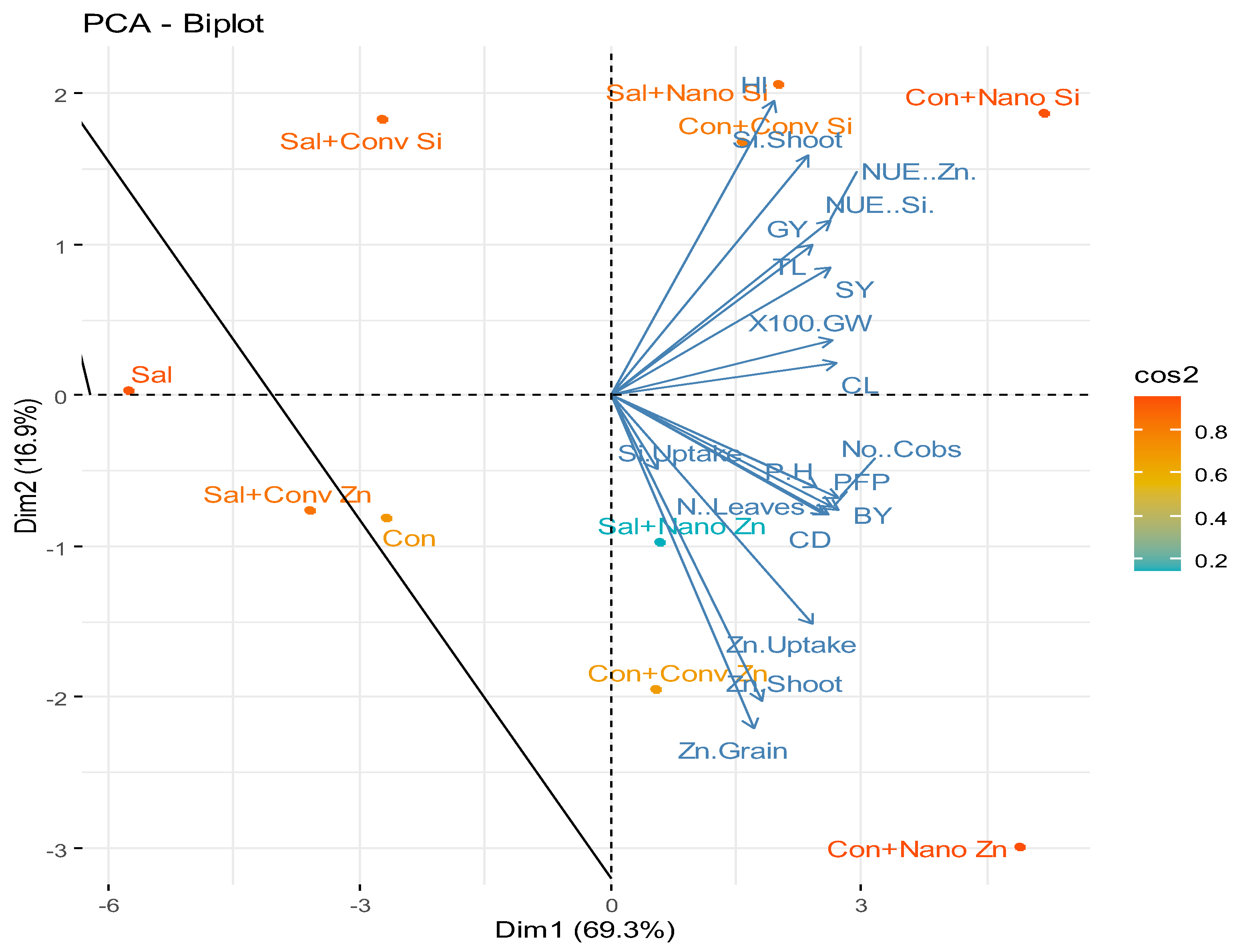
The PCA biplot provides insights into the relationships between different treatments and different parameters under saline and non-saline conditions. The first principal component (Dim 1) explains 69.3% of the total variance, while the second component (Dim 2) accounts for 17%, indicating that most of the variation in the dataset is captured along these two dimensions. The PCA plot shows a clear distinction between treatments, with nano Zn and nano Si, particularly under non-saline conditions, positioned far from the control and conventional treatments. This suggests that these treatments had a stronger influence on nutrient use efficiency (NUE), grain yield (GY), shoot yield (SY), and partial factor productivity (PFP). Among all treatments, nano Zn under non-saline conditions (Con+Nano Zn) and nano Si under non-saline conditions (Con+Nano Si) performed best, as they are positioned farthest along Dim 1, indicating a significant positive impact on plant growth and yield parameters. In contrast, the control (Con) and saline stress (Sal) treatments are clustered near the origin, reflecting their lower effectiveness in enhancing plant performance.
Figure 5.
Effect of different zinc and silicon treatments on agronomic traits under non-saline and saline conditions based on Principal Component Analysis (PCA).
Figure 5.
Effect of different zinc and silicon treatments on agronomic traits under non-saline and saline conditions based on Principal Component Analysis (PCA).
2.6. Heat Map Analysis
The heat map further illustrates the treatment-wise variations in multiple traits. The clustering pattern reveals that nano Zn and Si under non-saline conditions exhibited the highest positive influence, as indicated by the red and orange hues, which represent higher values for key parameters such as Zn uptake, cob length, and number of leaves (N leaves). Conversely, control and conventional treatments under saline conditions show predominantly blue shades, indicating lower performance in these parameters. Nano Zn (Con+Nano Zn) and nano Si (Con+Nano Si) in non-saline conditions demonstrated the most favorable responses, while saline-stressed control (Sal) and conventional treatments (Sal+Conv Zn, Sal+Conv Si) exhibited reduced performance, with lower nutrient uptake and biomass accumulation.
Figure 6.
Heat map illustrating the effect of different zinc and silicon treatments on agronomic traits under non-saline and saline conditions. The parameters include Salinity Stress (Sal), Conventional (Conv), Control (Con), Nutrient Use Efficiency (NUE), Grain Yield (GY), Tassel Length (TL), Shoot Yield (SY), 100-Grain Weight (100 GW), Cob Length (CL), Plant Height (PH), Partial Factor Productivity (PFP), Cob Diameter (CD), Number of Leaves (N Leaves), and Biological Yield (BY).
Figure 6.
Heat map illustrating the effect of different zinc and silicon treatments on agronomic traits under non-saline and saline conditions. The parameters include Salinity Stress (Sal), Conventional (Conv), Control (Con), Nutrient Use Efficiency (NUE), Grain Yield (GY), Tassel Length (TL), Shoot Yield (SY), 100-Grain Weight (100 GW), Cob Length (CL), Plant Height (PH), Partial Factor Productivity (PFP), Cob Diameter (CD), Number of Leaves (N Leaves), and Biological Yield (BY).
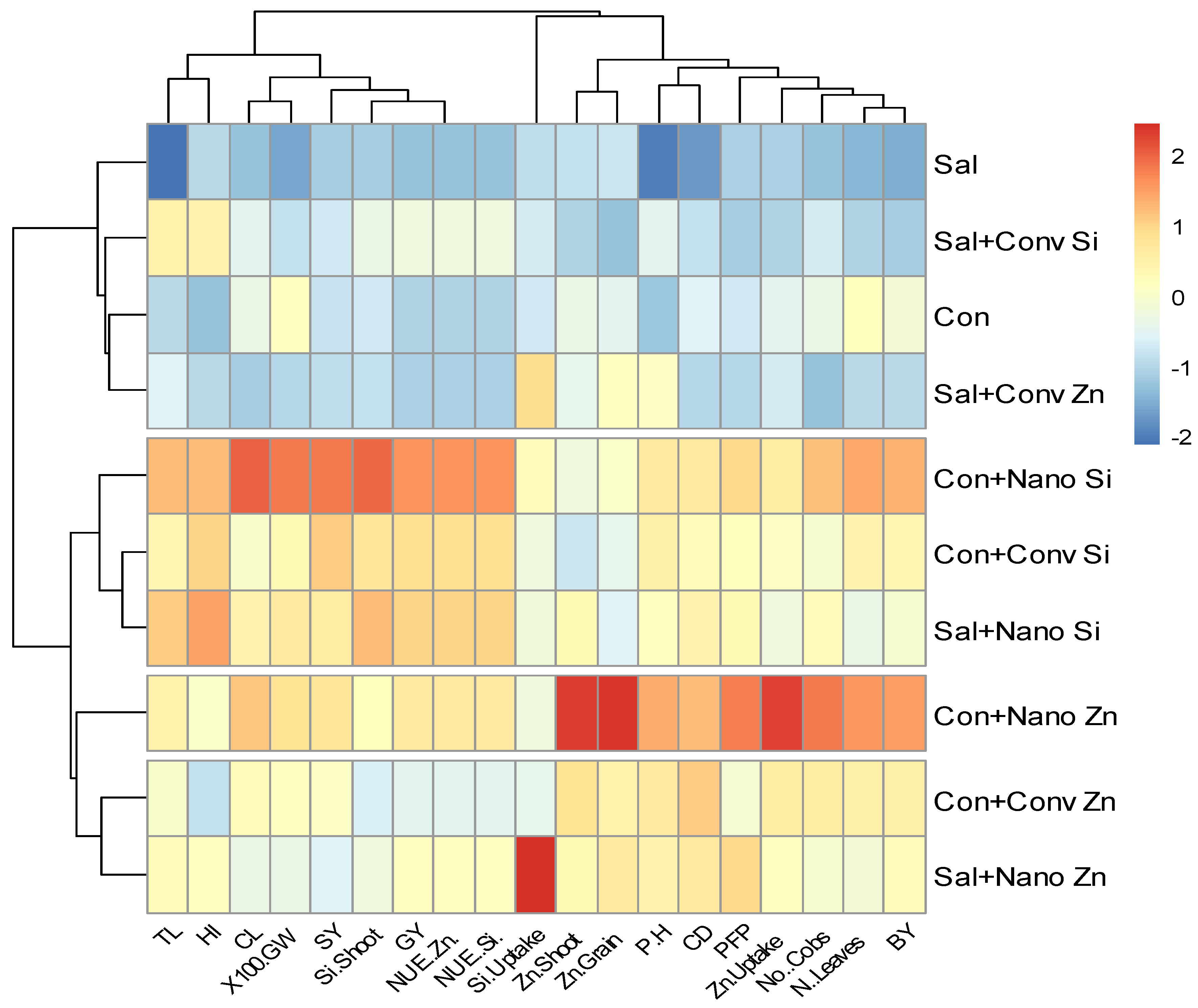

Table 1.
Effect of salinity and fertilizer treatments on agronomic and yield traits of maize (ANOVA at 0.05 Significance Level).
Table 1.
Effect of salinity and fertilizer treatments on agronomic and yield traits of maize (ANOVA at 0.05 Significance Level).
| Salinity | Treatments | Plant Height | Cob Length | Tassel length | No. of cobs |
Bio. Yield |
SY | GY | 100 GY |
| Control | T1 | 220.4 | 38.3 | 29.5 | 1.6 | 3250 | 976 | 824 | 18.13 |
| T2 | 340.3 | 47 | 39 | 4 | 3950 | 1497 | 1416 | 21.5 | |
| T3 | 305.7 | 42 | 36 | 2.6 | 3540 | 1273 | 1007 | 18.22 | |
| T4 | 307 | 52.3 | 44.3 | 3.3 | 3860 | 1850 | 1733 | 26.66 | |
| T5 | 301.6 | 40.3 | 38.3 | 2 | 3450 | 1610 | 1483 | 19 | |
| Mean | 294A | 44A | 37A | 2.73A | 3610A | 1441A | 1293A | 20.7A | |
| 10 dSm-1 | T1 | 184 | 32.66 | 21.5 | 0.66 | 2650 | 876 | 743 | 9.5 |
| T2 | 295.6 | 38.33 | 37.33 | 2 | 3400 | 1060 | 1233 | 15.7 | |
| T3 | 279.66 | 33.6 | 32 | 0.66 | 2893 | 950 | 806 | 12.42 | |
| T4 | 283 | 42.6 | 43.33 | 2.33 | 3286 | 1450 | 1533 | 20.8 | |
| T5 | 253.3 | 37.33 | 39 | 1.33 | 2810 | 1016 | 1080 | 13.2 | |
| Mean | 259B | 36B | 34B | 1.4B | 3008B | 1070B | 1079B | 14.3B | |
| Significance ANOVA | |||||||||
| Salinity Stress | * | ** | * | *** | *** | *** | *** | *** | |
| Fertilizers Treatments | *** | *** | *** | *** | *** | *** | *** | *** | |
| Interaction | NS | NS | *** | NS | NS | *** | NS | NS | |
Table 2.
Effect of salinity and fertilizer treatments on chemical and efficiency traits of maize (ANOVA at 0.05 Significance Level).
Table 2.
Effect of salinity and fertilizer treatments on chemical and efficiency traits of maize (ANOVA at 0.05 Significance Level).
| Salinity | Treatments |
Zn in shoot |
Si in shoot | Zn in grain |
Si in grain |
Na in shoot | K in shoot | ZnUE | SiUE | ||
| Control | T1 | 9.6 | 1.8 | 14.3 | 15.3 | 28.8 | 49.6 | 36.6 | 4.0 | ||
| T2 | 19.15 | 2.7 | 34 | 35 | 15.6 | 85 | 62.9 | 7.04 | |||
| T3 | 13.6 | 2.2 | 21 | 23.3 | 24.9 | 64.2 | 44.7 | 5.01 | |||
| T4 | 14 | 8.1 | 19 | 62 | 18 | 99.3 | 77.0 | 20.6 | |||
| T5 | 10 | 5.2 | 20.6 | 39.6 | 23.6 | 57.3 | 65.9 | 13 | |||
| Mean | 13.3A | 4.04A | 21.8A | 35A | 22A | 71A | 57A | 10A | |||
| 10 dSm-1 | T1 | 6.3 | 0.8 | 9.6 | 5.33 | 95.5 | 31 | 33.0 | 3.6 | ||
| T2 | 12 | 2.4 | 22 | 16.33 | 64.6 | 58.3 | 54.8 | 6.13 | |||
| T3 | 9.3 | 1.33 | 18.6 | 9 | 79.3 | 43 | 35.8 | 4.01 | |||
| T4 | 8.6 | 6.5 | 15 | 32 | 63 | 65.3 | 68.14 | 9.66 | |||
| T5 | 7.6 | 2.68 | 11.3 | 20.33 | 72 | 50.6 | 48 | 5.9 | |||
| Mean | 8.8A | 2.74B | 15.33B | 16.6B | 79B | 50B | 47B | 5.8B | |||
| Significance ANOVA | |||||||||||
| Salinity Stress | NS | * | ** | *** | ** | ** | ** | ** | |||
| Fertilizers Treatments | *** | *** | *** | *** | *** | *** | *** | *** | |||
| Interaction | NS | ** | * | NS | NS | NS | NS | NS | |||
3. Discussion
Salinity stress significantly reduces maize growth and yield by adversely affecting key physiological processes [25]. High salt concentrations in soil lead to osmotic stress and ion toxicity, disrupting nutrient uptake and water absorption [26,27]. This disruption inhibits essential functions such as photosynthesis, enzymatic activity, and protein synthesis. Sodium (Na⁺) and chloride (Cl⁻) ions accumulate in plant tissues, reducing water potential and causing ionic imbalances that hinder root elongation and shoot development [2,3,25]. Consequently, maize exposed to salinity experiences stunted growth, lower biomass, reduced cob size, and diminished grain yield, with yield losses depending on salt concentration and growth stage [28].
To mitigate the adverse effects of salinity, various strategies have been explored, including soil amendments, organic matter management, and stress-alleviating compounds [29,30]. Among these, nanofertilizers have gained significant attention due to their enhanced nutrient uptake efficiency and ability to improve stress tolerance [31]. Their nanoscale properties increase surface area and control nutrient release, making them a promising solution to salinity stress. Nano Zn and Si have shown particular effectiveness in alleviating salinity stress [32,33]. Nano Zn enhances antioxidant enzyme activity, reducing reactive oxygen species (ROS) accumulation caused by ionic toxicity, while nano Si strengthens cell walls, preventing ion leakage and maintaining cellular integrity [25]. Additionally, nano Si regulates ionic balance by reducing Na⁺ uptake while increasing potassium (K⁺) absorption, which is critical for osmotic regulation and plant metabolism stability [25,32].
Our findings demonstrated that both nano and conventional Zn and Si fertilizers significantly influenced maize growth and yield under saline and non-saline conditions (Table 2 and Table 3). The superior performance of nano Zn, particularly under non-saline conditions, can be attributed to its role in activating key enzymes and enhancing auxin hormone production, which promotes cell elongation, better nutrient absorption, and overall vegetative growth [32,34,35]. This resulted in increased plant height and tassel length, leading to improved pollination efficiency and cob development (Figure 1, Table 2). Nano Si facilitated growth by improving nutrient transport and root architecture [36]. Upon uptake through aquaporin channels, nano Si increased root surface area, enhancing water and nutrient absorption efficiency [37]. This improvement supported greater biomass production and reproductive development, even under saline conditions [Figure 1 and Figure 3]. Additionally, enhanced root development ensured stable plant height and tassel growth, positively correlating with improved pollination and cob formation (Figure 1). However, an excessive number of cobs can compete for nutrients, potentially limiting cob length and grain yield. These findings align with previous research demonstrating the efficacy of Zn fertilizers in enhancing plant height under saline conditions in maize [32,35].
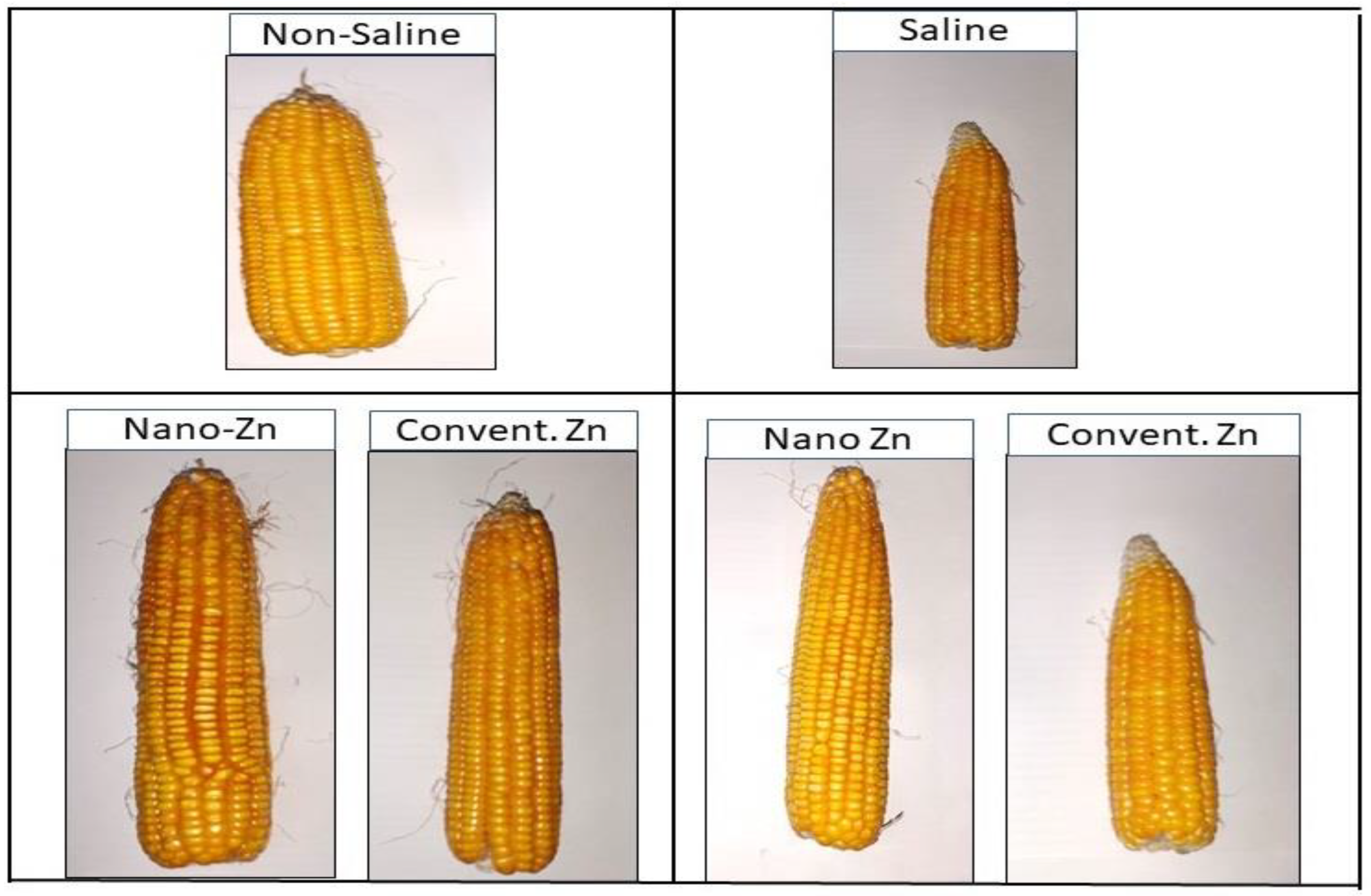
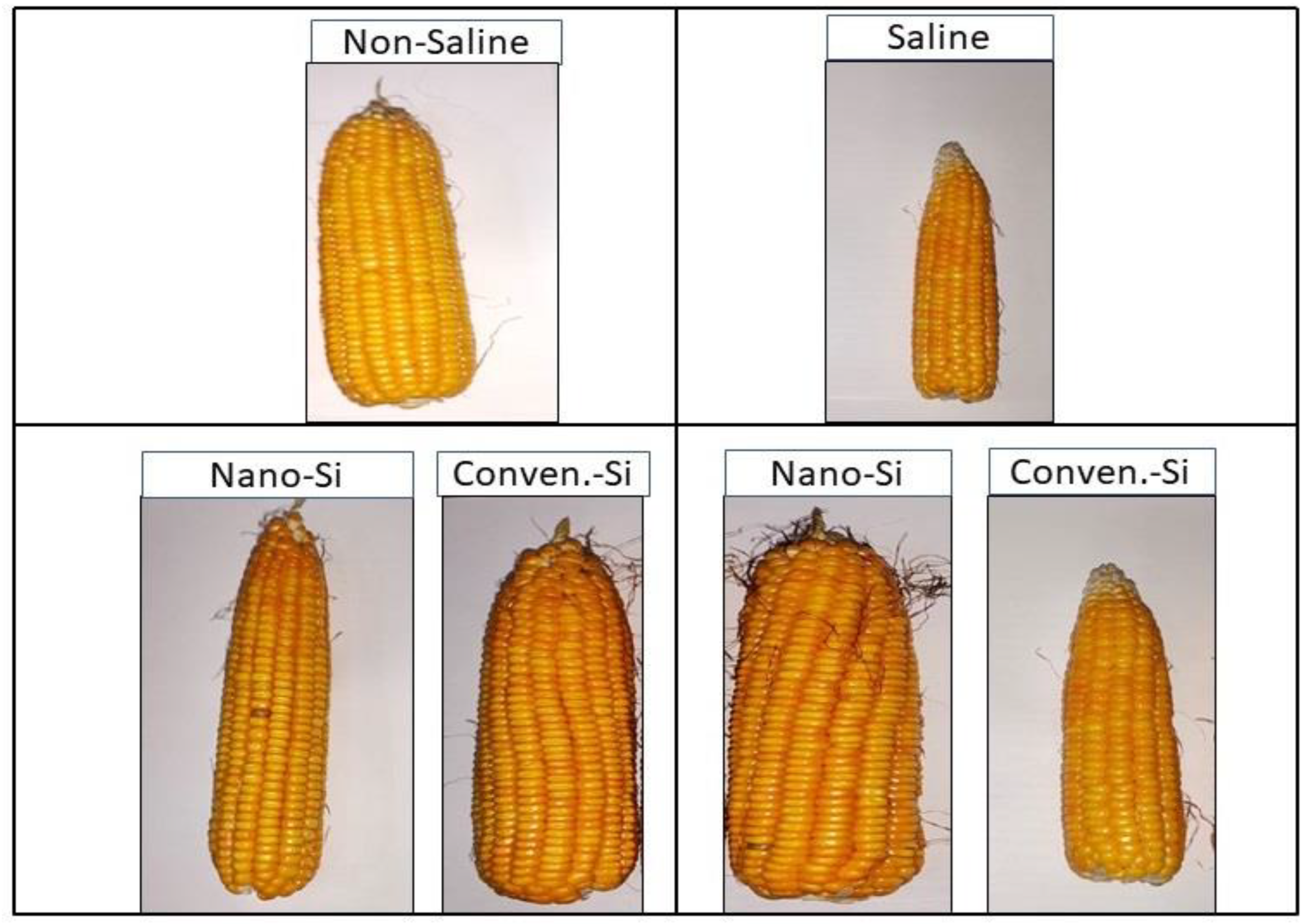
Nano Zn and nano Si significantly reduced Na⁺ accumulation in shoots (Figure 2, Table 2) by enhancing membrane stability and activating H⁺-ATPase, which drives Na⁺ exclusion through salt-overly-sensitive 1 (SOS1) antiporters [38]. Si reinforced the Casparian strip, limiting Na⁺ entry, while Zn2+ stabilized ion channels, improving selective uptake [39]. Higher K⁺ levels under nano Si (Figure 2, Table 2) suggest activation of high-affinity K⁺ transporters (e.g., HAK), maintaining K⁺/Na⁺ balance, crucial for enzyme function under stress [40,41]. Zn uptake remained higher under nano Zn supply (Figure 2) due to enhanced ZIP transporter activity, ensuring better solubility and mobility despite ionic competition [42]. Si accumulation in shoots and grains (Figure 2) indicates improved stress resistance by reinforcing cell walls and reducing oxidative stress. The increased Zn and Si in grains highlights efficient translocation, improving biofortification and stress tolerance as shown in Figure 7 [40]. Additionally, our previous study on antioxidant enzyme response in maize under saline conditions confirmed that nano Zn and nano Si significantly boosted enzymatic activity, reducing oxidative stress markers such as MDA and H₂O₂ [36].
Nano Zn and nano Si also improved nutrient use efficiency (NUE) by enhancing plant metabolic activity and ion regulation under stress (Figure 3) [31,40]. Nano Zn significantly increased Zn use efficiency in saline conditions by facilitating Zn uptake through rhizospheric pH modulation, which increased Zn solubility and reduced precipitation with carbonates [43]. Nano Zn also promoted the expression of metallothioneins, reducing Zn toxicity while maintaining optimal levels for enzymatic functions [44]. Conventional Zn, being bulkier and less soluble, exhibited lower efficiency as mentioned in Figure 3 due to limited mobility in the soil [33,34]. Nano Si exhibited the highest Si use efficiency under both saline (253%) and non-saline (388%) conditions due to its role in forming silica aggregates in cell walls, which enhanced mechanical strength and reduced transpiration loss (Figure 3) [45]. Under saline stress, nano Si also increased the expression of high-affinity K⁺ transporters (e.g., HAK/KUP), improving K⁺ uptake and reducing Na⁺ interference, thereby maintaining ionic homeostasis [46]. Nano Si also enhanced root exudation of organic acids, promoting Si solubilization and uptake via Lsi1 and Lsi2 transporters [47]. The harvest index was significantly higher with nano Si due to improved phloem loading of assimilates [48], ensuring better partitioning of carbohydrates toward reproductive structures (Figure 3). Gains in partial factor productivity in nano-fertilized plants were attributed to increased chlorophyll stability [49] and reduced oxidative damage, leading to prolonged photosynthetic efficiency (Figure 3).
The significant yield improvements with nano Zn and Si resulted from enhanced nutrient delivery, stress mitigation, and metabolic activation (Figure 4 and Table 3). Nano Si strengthened cell walls, reduced oxidative stress, and improved water use efficiency, ensuring better grain filling and weight [31,33,47]. Its role in Si transporters further enhanced nutrient translocation. Nano Zn boosted enzymatic activity and auxin biosynthesis, leading to increased biomass. It also regulated Na⁺-H⁺ antiporters, reducing sodium toxicity and maintaining ionic balance under salinity stress [45,47]. The overall rise in straw and biological yield reflects improved photosynthetic efficiency and resource allocation.
Principal Component Analysis (PCA) revealed nano Zn and nano Si as key drivers of improved NUE, yield, and biomass, explaining 69.3% and 17% of variance, respectively. Their distinct positioning highlights superior performance, while control and saline treatments showed minimal impact (Figure 5). The heat map confirmed these trends, with nano treatments significantly boosting nutrient uptake and yield traits, whereas conventional treatments under saline conditions exhibited poor performance (Figure 6). These results reinforce the potential of nano Zn and Si as effective solutions for mitigating salinity stress in maize production. This study is based on one-year data, and a second field trial is currently underway to validate the findings across different environmental conditions.
4. Materials and Methods
4.1. Nanoparticle Synthesis and Characterization
ZnO and SiO₂ nanoparticles (NPs) were synthesized via co-precipitation and sol-gel methods, respectively, following previously established protocols [50]. ZnO NPs were obtained by reacting NaOH with ZnSO₄·7H₂O at 80°C, while SiO₂ NPs were synthesized using TEOS and ethanol at room temperature. Characterization, conducted at Kiel University, Germany, involved UV-Vis Spectroscopy, XRD, SEM, and TEM-EDX. The analyses confirmed the crystalline nature and primarily spherical morphology of the NPs, with ZnO averaging 12 nm and SiO₂ around 15 nm, exhibiting some agglomeration [50].
4.2. Study Site and Pre-Experiment Soil Analysis
The experiment was conducted in two field conditions: a normal field and a saline field at the PARS Campus, University of Agriculture, Faisalabad (UAF). The GPS coordinates for the normal field were 31.43473° N, 73.06858° E, while the saline field was located at 31.43510° N, 73.07025° E. Prior to sowing, surface soil samples were collected from a depth of 0–15 cm, air-dried, and sieved through a 2-mm mesh. Soil pH was determined using a Beckman pH meter in a saturated soil paste, while electrical conductivity (EC) was measured using a digital EC meter in the saturation extract. Soil texture was classified using the hydrometer method [51]. DTPA-extractable Zn was quantified at 0.72 mg kg⁻¹ using an atomic absorption spectrophotometer [52]. The detailed soil properties are provided in Table 1.
4.3. Soil Preparation and Fertilizer Application
The field was irrigated with canal water and plowed using tractor-drawn implements. Fertilizers were applied at recommended rates: urea (175 kg N/ha), diammonium phosphate (90 kg P/ha), and sulphate of potash (125 kg K/ha). Nano Zn and Si were applied at rates of 10 ppm (22.5 kg/ha) and 90 ppm (201 kg/ha), respectively. Conventional Zn and Si were also applied at equivalent rates. Fertilizer applications were made after maize plants reached the 4-leaf stage.
4.4. Planting and Crop Management
Maize seeds were sown on ridges with a row-to-row distance of 75 cm and a plant-to-plant spacing of 30 cm. Twenty days after sowing, thinning was performed to ensure uniform plant density. Broadleaf weeds were controlled at the V4 stage using Gingvi (750–1000 ml/acre). Lufenuron was applied to control shoot fly borers before tasseling. Sucking pests (whitefly and aphids) were managed using "Polytrin C" and Virtako insecticides.
4.5. Harvesting and Agronomic Measurements
At crop maturity, plants were manually harvested. Agronomic parameters including plant height, stem diameter, cob length, and cob diameter were measured. Total fresh biomass was recorded, and plant parts (leaves, cobs, and stover) were air-dried and oven-dried to a constant weight. Grains were manually separated, and their dry weight was recorded. Biomass and grain yield were calculated on a per-hectare basis using standard formulas.
4.6. Chemical Analysis of Plant Samples
Plant samples, including grains, were oven-dried, ground, and digested for ionic analysis. Zn concentration in plant tissues and grains was measured using atomic absorption spectrophotometry following wet digestion with a diacid mixture (HNO₃:HClO₄, 3:1). Si content in both plant tissues and grains was determined using the molybdenum blue method [53]. Sodium (Na⁺) and potassium (K⁺) were quantified using a flame photometer.
4.7. Nutrient Uptake and Efficiency
Nutrient Use Efficiency (NUE) was determined to evaluate the effectiveness of nutrient utilization:
4.8. Yield and Quality Parameters
Biological yield was calculated as the total above-ground biomass per hectare. Grain yield was determined by threshing, cleaning, and weighing dry kernels from harvested plants in a representative area [54]. Yield per hectare was computed using:
100-grain weight was calculated by randomly selecting and weighing 100 grains. Straw yield was measured by drying and weighing straw from the harvested area [54]. Harvest Index (HI) was calculated using:
Partial Factor Productivity (PFP) was evaluated as crop yield per unit of fertilizer applied [54]:
4.9. Experimental Design
The experiment followed a split-plot design with three replicates and five treatments across two fields [55]. Data were analyzed using Statistics 10.1 software, while R version 4.0.5 was used for advanced statistical analyses, including Principal Component Analysis (PCA) and heatmap visualizations.
Table 3.
Attributes of soil used in field experiments.
| Sr. No. | Name | Unit | Pars Soil | UAF Soil | Reference |
| 1 | ECe | dS m-1 | 9.1 | 1.8 | [56] |
| 2 | pHs | ---- | 8.1 | 8.4 | [56] |
| 3 | (CO3-) | me L-1 | nil | nil | [57] |
| 4 | (HCO3-) | me L-1 | 4.1 | 3.8 | [57] |
| 5 | Ca2++Mg2+ | me L-1 | 16.8 | 7.5 | [58] |
| 6 | (SAR) | me L-1 | 16.89 | 2.1 | [59] |
| 7 | Saturation percentage | Percentage (%) | 37 | 35 | [60] |
| 8 | Texture | Sandy clay loam | Sandy Loam | [61] | |
| 9 | Organic matter | Percentage (%) | 0.83 | 0.9 | [62] |
| 10 | Nitrogen (N) | Percentage (%) | 0.061 | 0.05 | [63] |
| 11 | Phosphorus (P) | ppm | 9.32 | 7.8 | [64] |
| 12 | Potassium (K) | ppm | 129 | 125 | [65] |
5. Conclusion
This study demonstrates that the application of nanoscale Zn and Si significantly enhances maize (Zea mays L.) resilience to salinity stress, leading to notable improvements in agronomic, chemical, and physiological parameters. Under both saline and non-saline conditions, nano Zn and nano Si promoted plant height, tassel length, cob development, and grain yield, with nano Si exhibiting the highest yield enhancement (110% under non-saline and 106% under saline conditions) [Figure 1, Figure 4]. Chemically, these treatments improved nutrient uptake by reducing Na⁺ accumulation in shoots while increasing K⁺ content, thereby optimizing the K/Na ratio, which is critical for ionic balance and stress tolerance [Figure 2]. The significant enhancement in nutrient use efficiency, particularly Zn and Si, underscores the potential of nanofertilizers to improve resource utilization. PCA and heat map clustering further confirmed the superior performance of nano Zn and nano Si in mitigating salinity stress and maximizing productivity. These findings highlight the promising role of nanotechnology in sustainable agriculture, although further research is needed to evaluate long-term soil interactions, optimize application methods, and explore the molecular mechanisms underlying stress alleviation.
Author Contributions
Conceptualization, Abbas Shoukat, K.H. Mühling, and Zulfiqar Ahmad Saqib; Methodology and Formal Analysis, Abbas Shoukat, Britta Pitann, and Mubashar Zafar; Writing—Original Draft Preparation, Abbas Shoukat, Uswah Mariyam; Writing—Review and Editing, Britta Pitann, Allah Nawaz, Waseem Hassan, and Khalid M. Elhindi; Supervision, K.H. Mühling and Zulfiqar Ahmad Saqib.
Funding
This research was supported by The Researchers Supporting Project number (RSPD2025R952), King Saud University, Riyadh, Saudi Arabia, Higher Education Commission, Pakistan, (HEC) and the Alexander von Humboldt Foundation (AvH), Germany.
Data Availability Statement
Data will be available on request to corresponding author.
Acknowledgments
Authors greatly acknowledges the support of the Higher Education Commission (HEC), Pakistan. MSH greatly acknowledges the support of the Alexander von Humboldt Foundation (AvH), Germany.
Conflicts of Interest
The authors declare no conflicts of interest. The funders had no role in the design of the study; in the collection, analyses, or interpretation of data; in the writing of the manuscript; or in the decision to publish the results.
References
- Serraj:, R.; Krishnan, L.; Pingali, P. Agriculture and food systems to 2050: a synthesis. Agric. Food Syst. 2019, 2050, 3–45. [Google Scholar]
- Ali, A. M.; Salem, H. M. Salinity-induced desertification in oasis ecosystems: challenges and future directions. Environ. Monit. Assess. 2024, 196, 696. [Google Scholar] [CrossRef] [PubMed]
- Sanga, D. L.; Mwamahonje, A. S.; Mahinda, A. J. Soil salinization under irrigated farming: A threat to sustainable food security and environment in semi-arid tropics. Unpublished.
- Sári, D.; Ferroudj, A.; Abdalla, N.; El-Ramady, H.; Dobránszki, J.; Prokisch, J. Nano-Management approaches for Salt Tolerance in plants under field and in Vitro conditions. Agronomy 2023, 13, 2695. [Google Scholar] [CrossRef]
- Prokisch, J.; Ferroudj, A.; Labidi, S.; El-Ramady, H.; Brevik, E. C. Biological Nano-Agrochemicals for Crop Production as an Emerging Way to Address Heat and Associated Stresses. Nanomaterials 2024, 14, 1253. [Google Scholar] [CrossRef] [PubMed]
- Zörb, C.; Geilfus, C. M.; Dietz, K. J. Salinity and crop yield. Plant Biol. 2019, 21, 31–38. [Google Scholar] [CrossRef]
- Ullah, A.; Bano, A.; Khan, N. Climate change and salinity effects on crops and chemical communication between plants and plant growth-promoting microorganisms under stress. Front. Sustain. Food Syst. 2021, 5, 618092. [Google Scholar] [CrossRef]
- Islam, M.; Islam, M.; Hasan, M.; Hafeez, A. S. M. G.; Chowdhury, M.; Pramanik, M.; Iqbal, M.; Erman, M.; Barutcular, C.; Konuşkan, Ö.; Dubey, A. Salinity stress in maize: consequences, tolerance mechanisms, and management strategies. OBM Genet. 2024, 8, 2. [Google Scholar] [CrossRef]
- Saurabh, K.; Prakash, V.; Dubey, A. K.; Ghosh, S.; Kumari, A.; Sundaram, P. K.; Jeet, P.; Sarkar, B.; Upadhyaya, A.; Das, A.; Kumar, S. Enhancing sustainability in agriculture with nanofertilizers. Discov. Appl. Sci. 2024, 6, 559. [Google Scholar] [CrossRef]
- Munir, A.; Salah, M. A.; Ali, M.; Ali, B.; Saleem, M. H.; Samarasinghe, K. G. B. A.; De Silva, S. I. S.; Ercisli, S.; Iqbal, N.; Anas, M. Advancing Agriculture: Harnessing Smart Nanoparticles for Precision Fertilization. BioNanoScience 2024, 14, 3846–3863. [Google Scholar] [CrossRef]
- Saffan, M. M.; Koriem, M. A.; El-Henawy, A.; El-Mahdy, S.; El-Ramady, H.; Elbehiry, F.; Omara, A. E.-D.; Bayoumi, Y.; Badgar, K.; Prokisch, J. Sustainable Production of Tomato Plants (Solanum lycopersicum L.) under Low-Quality Irrigation Water as Affected by Bio-Nanofertilizers of Selenium and Copper. Sustainability 2022, 14, 3236. [Google Scholar]
- Shen, M.; Liu, S.; Jiang, C.; Zhang, T.; Chen, W. Recent advances in stimuli-response mechanisms of nano-enabled controlled-release fertilizers and pesticides. Eco-Environ. Health 2023, 2, 161–175. [Google Scholar] [CrossRef] [PubMed]
- Adam, T.; Gopinath, S. C. B. Nanosensors: Recent perspectives on attainments and future promise of downstream applications. Process Biochem. 2022, 117, 153–173. [Google Scholar] [CrossRef]
- Manju, K.; Ranjini, H. K.; Raj, S. N.; Nayaka, S. C.; Lavanya, S. N.; Chouhan, R. S.; Prasad, M. N. N.; Satish, S.; Ashwini, P.; Harini, B. P. Nanoagrosomes: Future prospects in the management of drug resistance for sustainable agriculture. Plant Nano Biol. 2023, 4, 100039. [Google Scholar] [CrossRef]
- Yadav, N.; Garg, V. K.; Chhillar, A. K.; Rana, J. S. Recent advances in nanotechnology for the improvement of conventional agricultural systems: A review. Plant Nano Biol. 2023, 4, 100032. [Google Scholar] [CrossRef]
- Das, I.; Gogoi, B.; Sharma, B.; Borah, D. Role of metal-nanoparticles in farming practices: An insight. 3 Biotech 2022, 12, 294. [Google Scholar] [CrossRef]
- Mansour, M. M. F. Anthocyanins: Biotechnological targets for enhancing crop tolerance to salinity stress. Sci. Hortic. 2023, 319, 112182. [Google Scholar] [CrossRef]
- Gupta, A.; Bharati, R.; Kubes, J.; Popelkova, D.; Praus, L.; Yang, X.; Severova, L.; Skalicky, M.; Brestic, M. Zinc oxide nanoparticles application alleviates salinity stress by modulating plant growth, biochemical attributes, and nutrient homeostasis in Phaseolus vulgaris L. Front. Plant Sci. 2024, 15, 1432258. [Google Scholar] [CrossRef]
- Yan, G.; Huang, Q.; Zhao, S.; Xu, Y.; He, Y.; Nikolic, M.; Zhu, Z. Silicon nanoparticles in sustainable agriculture: synthesis, absorption, and plant stress alleviation. Front. Plant Sci. 2024, 15, 1393458. [Google Scholar] [CrossRef]
- Sherpa, D.; Kumar, S.; Mishra, S. Response of Different Doses of Zinc Oxide Nanoparticles in Early Growth of Mung Bean Seedlings to Seed Priming under Salinity Stress Condition. Legume Res.-Int. J. 2024, 1, 7. [Google Scholar] [CrossRef]
- Ashwini, M. N.; Gajera, H. P.; Hirpara, D. G.; Savaliya, D. D.; Kandoliya, U. K. Comparative impact of seed priming with zinc oxide nanoparticles and zinc sulfate on biocompatibility, zinc uptake, germination, seedling vitality, and antioxidant modulation in groundnut. J. Nanopart. Res. 2024, 26, 235. [Google Scholar] [CrossRef]
- Avestan, S.; Ghasemnezhad, M.; Esfahani, M.; Byrt, C. S. Application of nano-silicon dioxide improves salt stress tolerance in strawberry plants. Agronomy 2019, 9, 246. [Google Scholar] [CrossRef]
- Zhu, Y. X.; Gong, H. J.; Yin, J. L. Role of silicon in mediating salt tolerance in plants: a review. Plants 2019, 8, 147. [Google Scholar] [CrossRef] [PubMed]
- Islam, M.; Islam, M.; Hasan, M.; Hafeez, A. S. M. G.; Chowdhury, M.; Pramanik, M.; Iqbal, M.; Erman, M.; Barutcular, C.; Konuşkan, Ö.; Dubey, A. Salinity stress in maize: consequences, tolerance mechanisms, and management strategies. OBM Genet. 2024, 8, 2. [Google Scholar] [CrossRef]
- Farooq, M.; Hussain, M.; Wakeel, A.; Siddique, K. H. Salt stress in maize: effects, resistance mechanisms, and management. A review. Agron. Sustain. Dev. 2015, 35, 461–481. [Google Scholar] [CrossRef]
- Iqbal, S.; Hussain, S.; Qayyaum, M. A.; Ashraf, M.; Saifullah, S. The response of maize physiology under salinity stress and its coping strategies. Plant Stress Physiol. 2020, 1, 1–25. [Google Scholar]
- Arif, Y.; Singh, P.; Siddiqui, H.; Bajguz, A.; Hayat, S. Salinity-induced physiological and biochemical changes in plants: An omic approach towards salt stress tolerance. Plant Physiol. Biochem. 2020, 156, 64–77. [Google Scholar] [CrossRef] [PubMed]
- Yadav, S.; Irfan, M.; Ahmad, A.; Hayat, S. Causes of salinity and plant manifestations to salt stress: a review. J. Environ. Biol. 2011, 32, 667. [Google Scholar]
- Maiti, R. K.; Singh, V. P. Physiological basis of maize growth and productivity–A review. Farm. Manag. 2017, 2, 59–88. [Google Scholar] [CrossRef]
- Alkharabsheh, H. M.; Seleiman, M. F.; Hewedy, O. A.; Battaglia, M. L.; Jalal, R. S.; Alhammad, B. A.; Schillaci, C.; Ali, N.; Al-Doss, A. Field crop responses and management strategies to mitigate soil salinity in modern agriculture: A review. Agronomy 2021, 11, 2299. [Google Scholar] [CrossRef]
- Costa, S. F.; Martins, D.; Agacka-Mołdoch, M.; Czubacka, A.; de Sousa Araújo, S. Strategies to alleviate salinity stress in plants. Salinity Responses Toler. Plants 2018, 1, 307–337. [Google Scholar]
- Singh, A.; Sharma, A.; Singh, O.; Rajput, V. D.; Movsesyan, H. S.; Minkina, T.; Alexiou, A.; Papadakis, M.; Singh, R. K.; Singh, S.; Sousa, J. R. In-depth exploration of nanoparticles for enhanced nutrient use efficiency and abiotic stresses management: present insights and future horizons. Plant Stress 2024, 100576. [Google Scholar] [CrossRef]
- Shoukat, A.; Pitann, B.; Zafar, M. M.; Farooq, M. A.; Haroon, M.; Nawaz, A.; Wahab, S. W.; Saqib, Z. A. Nanotechnology for climate change mitigation: Enhancing plant resilience under stress environments. J. Plant Nutr. Soil Sci. 2024, 187, 604–620. [Google Scholar] [CrossRef]
- Shoukat, A.; Saqib, Z. A.; Akhtar, J.; Aslam, Z.; Pitann, B.; Hossain, M. S.; Mühling, K. H. Zinc and Silicon Nano-Fertilizers Influence Ionomic and Metabolite Profiles in Maize to Overcome Salt Stress. Plants 2024, 13, 1224. [Google Scholar] [CrossRef]
- Singh, A.; Agrawal, S.; Rajput, V. D.; Ghazaryan, K.; Yesayan, A.; Minkina, T.; Zhao, Y.; Petropoulos, D.; Kriemadis, A.; Papadakis, M.; Alexiou, A. Nanoparticles in revolutionizing crop production and agriculture to address salinity stress challenges for a sustainable future. Discov. Appl. Sci. 2024, 6, 317. [Google Scholar] [CrossRef]
- Shoukat, A.; Saqib, Z. A.; Nawaz, A.; Amir, K. Z.; Ahmad, I.; Hamza, A.; Mühling, K. H. Nanofertilizers Benefited Maize to Cope Oxidative Stress under Saline Environment. Plant Nano Biol. 2025, 100141. [Google Scholar] [CrossRef]
- Mathur, P.; Roy, S. Nanosilica facilitates silica uptake, growth and stress tolerance in plants. Plant Physiol. Biochem. 2020, 157, 114–127. [Google Scholar] [CrossRef]
- Rios, J. J.; Martínez-Ballesta, M. C.; Ruiz, J. M.; Blasco, B.; Carvajal, M. Silicon-mediated improvement in plant salinity tolerance: the role of aquaporins. Front. Plant Sci. 2017, 8, 948. [Google Scholar] [CrossRef]
- Wang, Y.; Pan, C.; Chen, Q. Architecture and autoinhibitory mechanism of the plasma membrane Na+/H+ antiporter SOS1 in Arabidopsis. Nat. Commun. 2023, 14, 4487. [Google Scholar] [CrossRef]
- Maryam, S.; Gul, A. The mechanism of silicon transport in plants. In Plant Metal and Metalloid Transporters; Springer Nature Singapore, Singapore, 2022; pp. 245–273.
- Singhal, R. K.; Fahad, S.; Kumar, P.; Choyal, P.; Javed, T.; Jinger, D.; Singh, P.; Saha, D.; Bose, B.; Akash, H. Beneficial elements: New players in improving nutrient use efficiency and abiotic stress tolerance. Plant Growth Regul. 2023, 100, 237–265. [Google Scholar] [CrossRef]
- Qian, J.; Shan, R.; Shi, Y.; Li, H.; Xue, L.; Song, Y.; Jiang, M. Zinc oxide nanoparticles alleviate salt stress in cotton (Gossypium hirsutum L.) by adjusting Na+/K+ ratio and antioxidative ability. Life 2024, 14, 595. [Google Scholar] [CrossRef]
- Gui, J. Y.; Rao, S.; Huang, X.; Liu, X.; Cheng, S.; Xu, F. Interaction between selenium and essential micronutrient elements in plants: A systematic review. Sci. Total Environ. 2022, 853, 158673. [Google Scholar] [CrossRef] [PubMed]
- Yang, J.; Liu, C.; Wang, R.; Xu, J.; Huang, C.; Wang, W.; Wang, Z. Unlocking Zn biofortification: leveraging high-Zn wheat and rhizospheric microbiome interactions in high-pH soils. Biol. Fertil. Soils 2024, 60, 969–985. [Google Scholar] [CrossRef]
- Lee, J. H.; Kasote, D. M. Nano-Priming for Inducing Salinity Tolerance, Disease Resistance, Yield Attributes, and Alleviating Heavy Metal Toxicity in Plants. Plants 2024, 13, 446. [Google Scholar] [CrossRef]
- Zexer, N.; Kumar, S.; Elbaum, R. Silica deposition in plants: Scaffolding the mineralization. Ann. Bot. 2023, 131, 897–908. [Google Scholar] [CrossRef]
- El-Badri, A. M.; Batool, M.; Mohamed, I. A.; Agami, R.; Elrewainy, I. M.; Wang, B.; Zhou, G. Role of phytomelatonin in promoting ion homeostasis during salt stress. In Melatonin: Role in Plant Signaling, Growth and Stress Tolerance; Springer International Publishing, Cham, 2023; pp. 313–342.
- Rajput, V. D.; Minkina, T.; Feizi, M.; Kumari, A.; Khan, M.; Mandzhieva, S.; Sushkova, S.; El-Ramady, H.; Verma, K. K.; Singh, A.; Hullebusch, E. D. V. Effects of silicon and silicon-based nanoparticles on rhizosphere microbiome, plant stress and growth. Biology 2021, 10, 791. [Google Scholar] [CrossRef] [PubMed]
- Surendar, K. K.; Raja, R. K.; Sritharan, N.; Ravichandran, V.; Kannan, M. Impact of Nanosilica on Anatomical, Morpho-Physiological and Yield Characters of Rice (Oryza sativa L. ) For Drought Tolerance–A Review. Int. J. Bot. Hortic. Res. 2024, 2, 1–10. [Google Scholar]
- Madhoor, H. A. A.; Faisal, M. Z. Effect of the use of micro-nano fertilizers, normal micro fertilizer and gibberellic acid and their interference in some growth, chemical, medicinal characteristics and yield in fenugreek (Trigonella foenum graecum L.). Plant Arch. 2020, 20, 2. [Google Scholar]
- Shoukat, A.; Pitann, B.; Hossain, M. S.; Saqib, Z. A.; Nawaz, A.; Mühling, K. H. Zinc and silicon fertilizers in conventional and nano-forms: Mitigating salinity effects in maize (Zea mays L.). J. Plant Nutr. Soil Sci. 2024, 1, 1–12. [Google Scholar] [CrossRef]
- Gee, G. W.; Bauder, J. W. Particle-size analysis. Methods Soil Anal. Part 1 Phys. Miner. Methods 1986, 5, 383–411. [Google Scholar]
- Lindsay, W. L.; Norvell, W. Development of a DTPA soil test for zinc, iron, manganese, and copper. Soil Sci. Soc. Am. J. 1978, 42, 421–428. [Google Scholar] [CrossRef]
- Kraska, J. E.; Breitenbeck, G. A. Simple, robust method for quantifying silicon in plant tissue. Commun. Soil Sci. Plant Anal. 2010, 41, 2075–2085. [Google Scholar] [CrossRef]
- Murthy, R. K.; Nagaraju, B.; Govinda, K.; Kumar, S. N. U.; Basavaraja, P. K.; Saqeebulla, H. M.; Gangamrutha, G. V.; Srivastava, S.; Dey, P. Soil test crop response nutrient prescription equations for improving soil health and yield sustainability—a long-term study under Alfisols of southern India. Front. Plant Sci. 2024, 15, 1439523. [Google Scholar] [CrossRef]
- Steel, R. G. D.; Torrie, J. H.; Dickey, D. A. Principles and Procedures of Statistics. A Biometrical Approach, 3rd ed.; McGraw Hill: New York, USA, 1997. [Google Scholar]
- Ryan, J.; Estefan, G.; Rashid, A. Soil and Plant Analysis Laboratory Manual; ICARDA: 2001.
- Fordham, A. W. Determination of dissolved carbonate/bicarbonate in the presence of sulfide. Soil Res. 1992, 30, 583–586. [Google Scholar] [CrossRef]
- Cheng, K. L.; Bray, R. H. Determination of calcium and magnesium in soil and plant material. Soil Sci. 1951, 72, 449–458. [Google Scholar] [CrossRef]
- Harron, W. R. A.; Webster, G. R.; Cairns, R. R. Relationship between exchangeable sodium and sodium adsorption ratio in a solonetzic soil association. Can. J. Soil Sci. 1983, 63, 461–467. [Google Scholar] [CrossRef]
- Wilcox, E. C.; Trout, A. M. Analysis of thrust augmentation of turbojet engines by water injection at compressor inlet including charts for calculating compression processes with water injection. NACA-TR 1951, 1006.
- Bouyoucos, G. J. Hydrometer method improved for making particle size analyses of soils. Agron. J. 1962, 54, 464–465. [Google Scholar] [CrossRef]
- Walkley, A.; Black, I. A. An examination of the Degtjareff method for determining soil organic matter, and a proposed modification of the chromic acid titration method. Soil Sci. 1934, 37, 29–38. [Google Scholar] [CrossRef]
- Kjeldahl, J. A new method for the determination of nitrogen in organic substances. Z. Anal. Chem. 1883, 22, 366–382. [Google Scholar] [CrossRef]
- Olsen, S. R.; Cole, C. V.; Watanabe, F. S.; Dean, L. A. Estimation of available phosphorus in soils by extraction with sodium bicarbonate. USDA Circ. 1954, 939. [Google Scholar]
- Williams, C. H.; Steinbergs, A. Soil sulfur fractions as chemical indices of available sulfur in some Australian soils. Aust. J. Agric. Res. 1941, 1, 340–35. [Google Scholar]
Figure 1.
Effect of different sources of silicon and zinc on agronomic parameters under non-saline and saline conditions.
Figure 1.
Effect of different sources of silicon and zinc on agronomic parameters under non-saline and saline conditions.
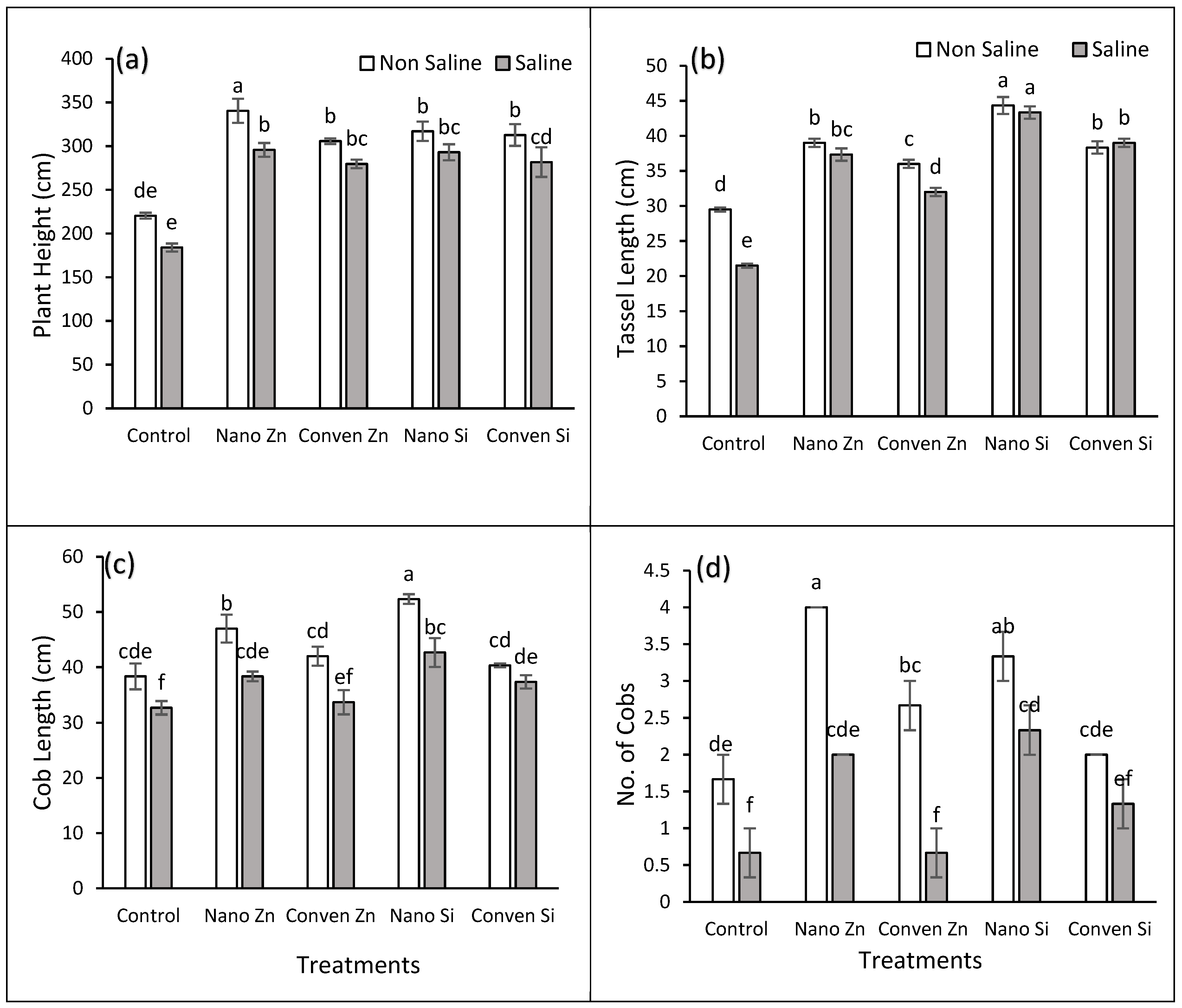
Figure 2.
Effect of different sources of silicon and zinc on chemical parameters under non-saline and saline conditions.
Figure 2.
Effect of different sources of silicon and zinc on chemical parameters under non-saline and saline conditions.
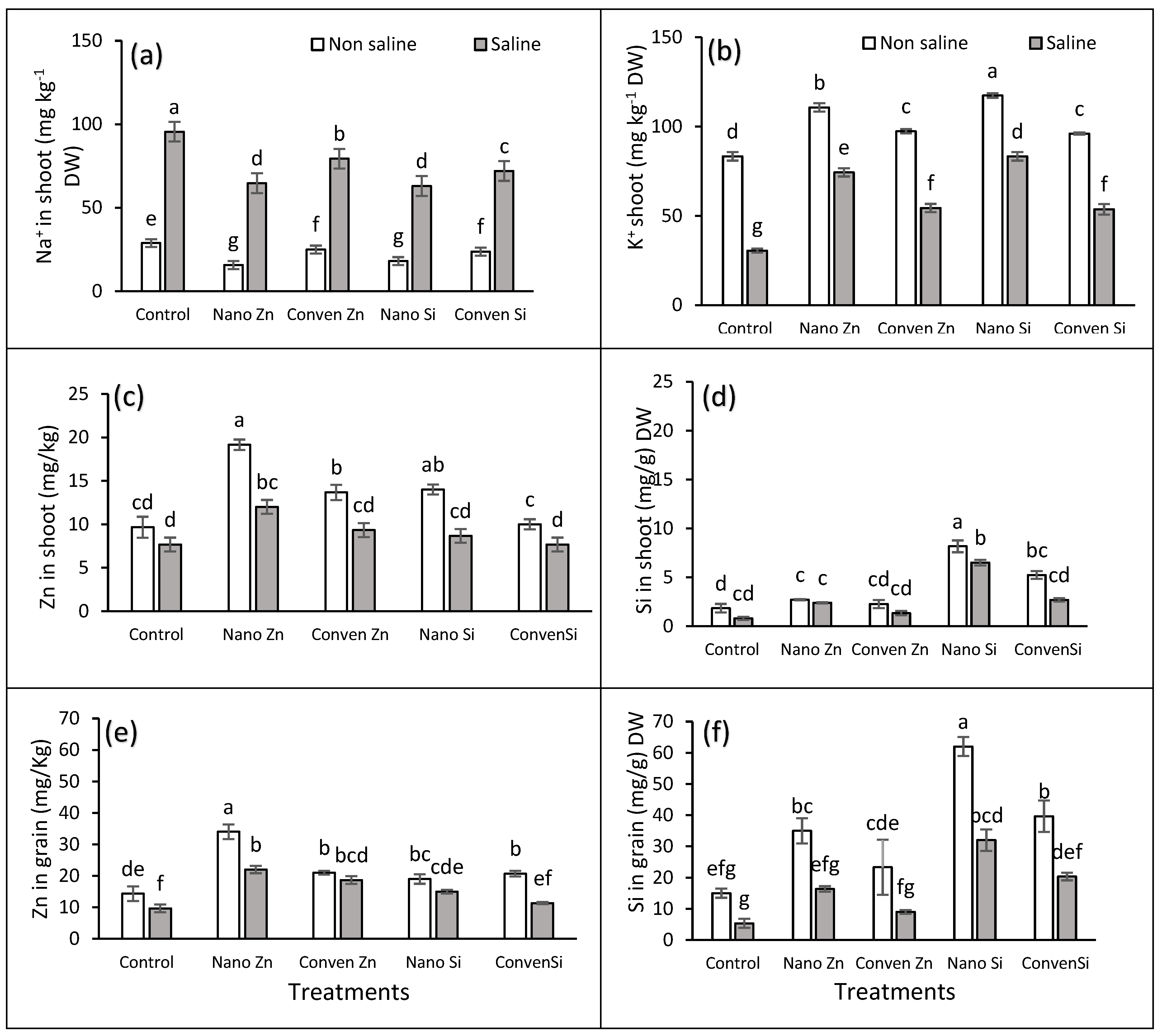
Figure 3.
Effect of different sources of silicon and zinc on nutrient use efficiency and productivity parameters under non-saline and saline conditions.
Figure 3.
Effect of different sources of silicon and zinc on nutrient use efficiency and productivity parameters under non-saline and saline conditions.
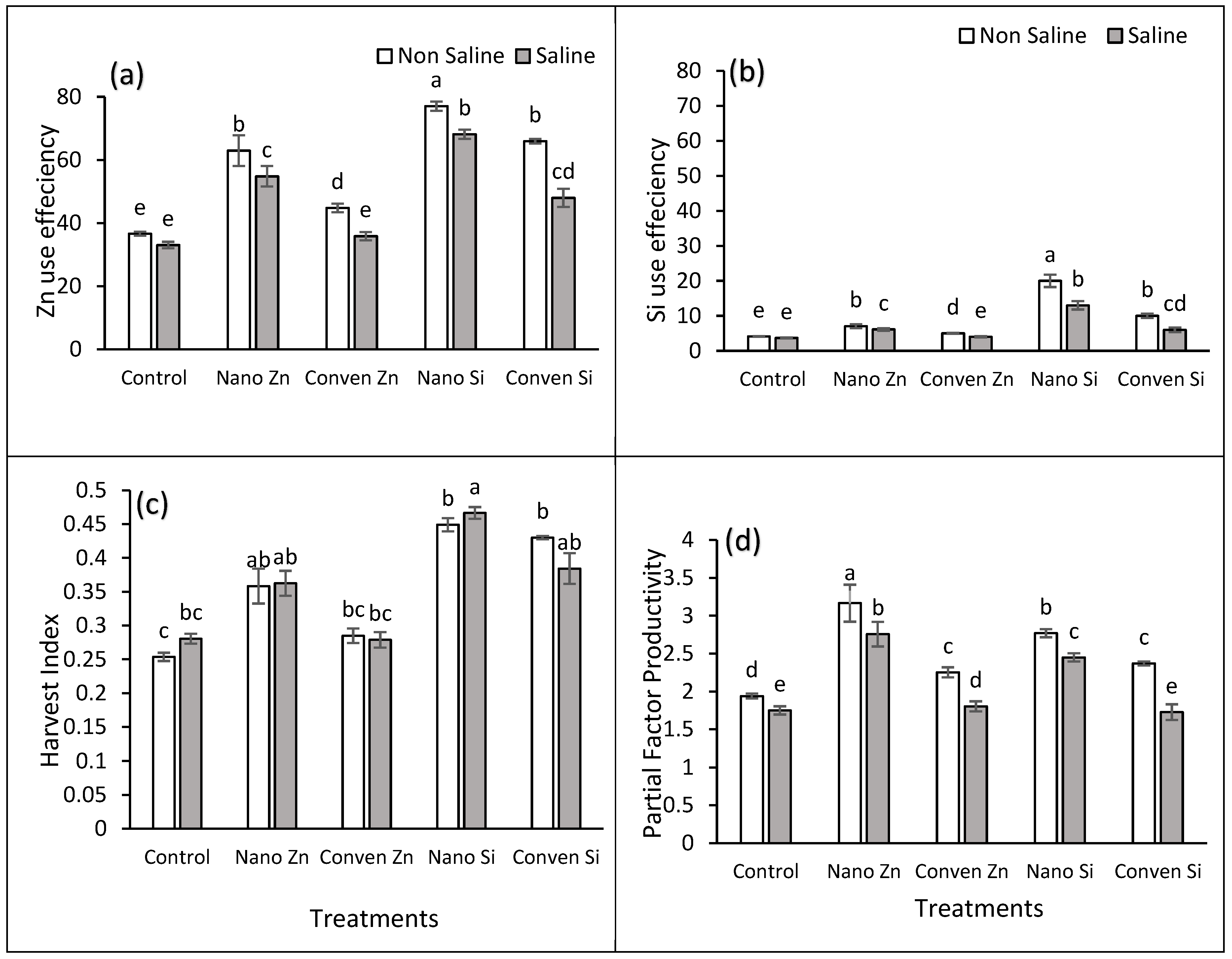
Figure 4.
Effect of different sources of silicon and zinc on yield parameters under non-saline and saline conditions.
Figure 4.
Effect of different sources of silicon and zinc on yield parameters under non-saline and saline conditions.
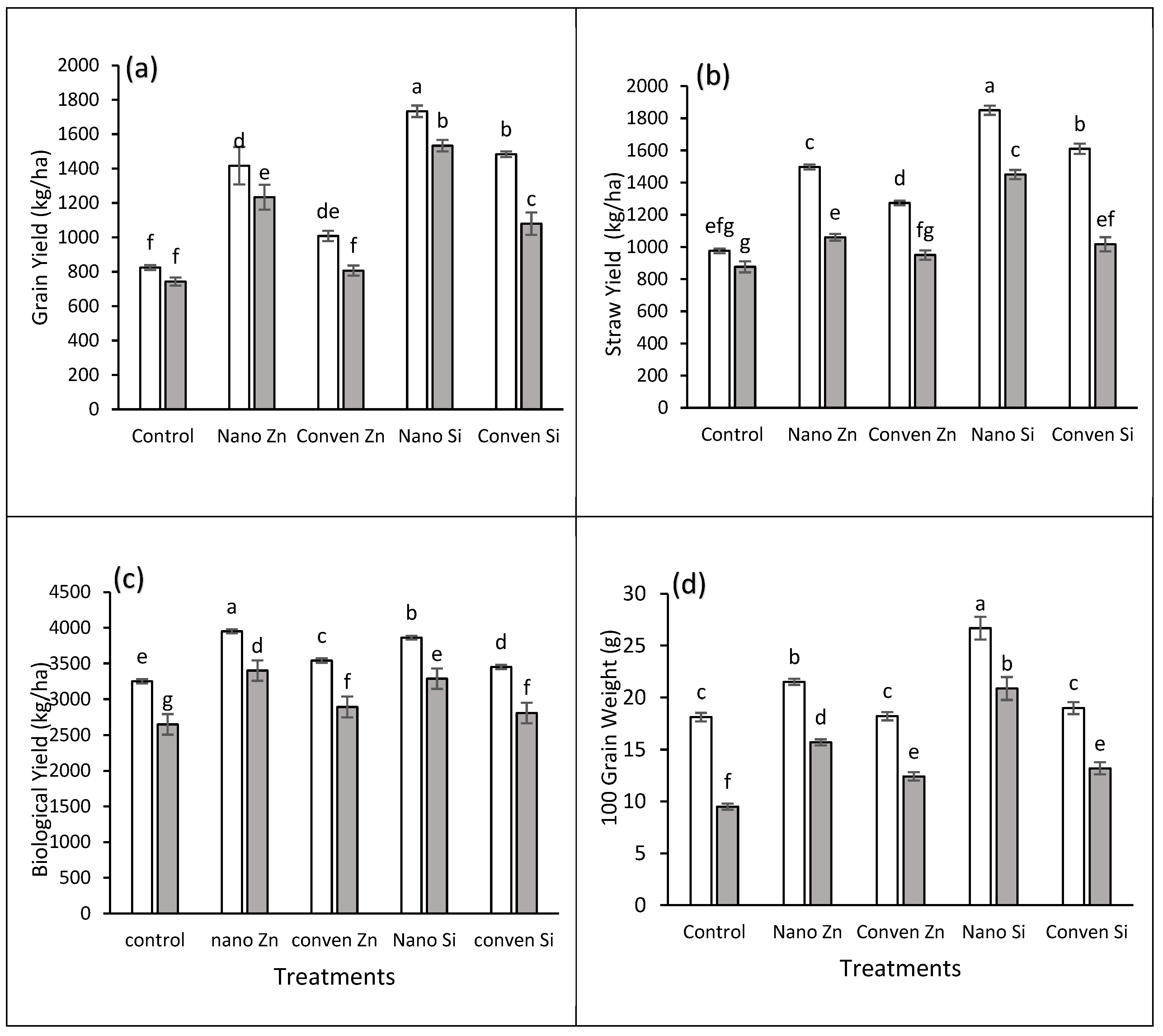
Figure 7.
Visual representation of maize cobs subjected to different salinity levels (non-saline and saline) and nano and conventional Zn and Si.
Figure 7.
Visual representation of maize cobs subjected to different salinity levels (non-saline and saline) and nano and conventional Zn and Si.
Disclaimer/Publisher’s Note: The statements, opinions and data contained in all publications are solely those of the individual author(s) and contributor(s) and not of MDPI and/or the editor(s). MDPI and/or the editor(s) disclaim responsibility for any injury to people or property resulting from any ideas, methods, instructions or products referred to in the content. |
© 2025 by the authors. Licensee MDPI, Basel, Switzerland. This article is an open access article distributed under the terms and conditions of the Creative Commons Attribution (CC BY) license (http://creativecommons.org/licenses/by/4.0/).
Copyright: This open access article is published under a Creative Commons CC BY 4.0 license, which permit the free download, distribution, and reuse, provided that the author and preprint are cited in any reuse.


