Preprint
Article

This version is not peer-reviewed.

Breeding Under Pressure: Shorebird Reproductive Success Amid Urban Disturbance Along a Mediterranean Urban Waterfront

Submitted:

29 December 2025

Posted:

31 December 2025

You are already at the latest version

Abstract

Ground-nesting shorebirds face growing pressure from recreational activities in coastal urban areas. We monitored the breeding success of Kentish Plover (Charadrius alexandrinus) and Little Ringed Plover (Charadrius dubius) over six consecutive years (2020–2025) at the Promenade of Sablettes, a heavily visited waterfront in Algiers, Algeria. We combined field surveys with multi-sensor remote sensing analysis using Sentinel-1, Sentinel-2, and Dynamic World data to quantify habitat change. A total of 105 nests were recorded across both species. Breeding success reached 70% during the COVID-19 lockdown period (2020–2021), when human visitation dropped sharply. In contrast, complete reproductive failure occurred in 2022 and 2023, coinciding with resumed tourism and unplanned construction activities. Remote sensing revealed that 80–85% of the study area experienced severe habitat degradation between 2020 and 2025, while suitable refuge zones shrank to less than 10% of the total surface. Fledged chicks consistently moved toward a less disturbed vegetated zone, highlighting its functional importance for brood survival. Our results show that human disturbance, rather than intrinsic habitat quality, is the main factor limiting breeding success at this site. When disturbance was reduced during the pandemic, the habitat proved fully functional for both species. These findings suggest that simple management measures such as seasonal access restrictions and symbolic fencing during the April–July breeding period could restore breeding conditions without major habitat engineering. This study provides one of the first integrations of long-term field breeding data with landscape-scale remote sensing to document the effects of the anthropause and subsequent recovery on urban shorebird populations.

Keywords: 
;  ;  ;  ;  

1. Introduction

Coastal ecosystems rank among the most productive and dynamic environments on Earth, supporting a rich diversity of biological communities [30]. These areas serve as critical refuges for birds, providing breeding and feeding grounds for numerous species [1,21,28,29]. Within these habitats, shorebirds play a pivotal role in maintaining ecological balance and facilitating environmental assessment. Owing to their high sensitivity to habitat alterations and contaminant exposure, shorebirds are widely recognized as bioindicators of environmental disturbances [14,34].
As coastlines worldwide undergo increasing urbanization, the interface between human activity and shorebird ecology has become increasingly complex, underscoring the need for integrated ecological and socio-environmental research [33]. Urbanization represents a global challenge with profound and often irreversible impacts on biodiversity, leading to habitat loss, fragmentation, and ecosystem homogenization [12,20]. Shorebirds are now considered one of the most threatened avian groups globally [22,23]. Between 2000 and 2020, 67% of shorebird species experienced a marked decline in habitat connectivity in coastal zones under intense anthropogenic pressure [8,39].
The Anthropocene, an era defined by profound human influence, has further exacerbated biodiversity loss and disrupted ecosystem functioning worldwide [3]. This impact is particularly pronounced in coastal ecosystems, given that over 40% of the global population resides within 100 km of the coast, a figure projected to rise in the coming decades [18]. Algeria, situated along the southern Mediterranean, exemplifies this trend, with approximately 60% of its population concentrated near the coast. In Algiers, where urban pressures are especially acute, certain coastal habitats remain vital for migratory and nesting bird species [6,7].
One such site is the Sablettes promenade in the Algiers region, an urbanized coastal zone that supports nesting populations of two small Charadriidae species: the Kentish Plover (Charadrius alexandrinus) and the Little Ringed Plover (Charadrius dubius). Both species nest directly on the ground in shallow scrapes, making their eggs and chicks highly vulnerable to trampling, predation, and disturbance. At Sablettes, these birds share their breeding habitat with growing numbers of visitors, unleashed dogs, and expanding recreational infrastructure. Previous studies conducted on Mediterranean coast have shown that proximity to recreational areas significantly reduces nest survival in plovers, with disturbance responses triggered even by routine pedestrian activity [10,11].
However, the relative contributions of habitat degradation versus direct human disturbance remain difficult to disentangle under normal conditions. The COVID-19 pandemic lockdowns of 2020–2021 created an unprecedented natural experiment by drastically reducing human visitation to coastal sites worldwide, a phenomenon termed the "anthropause." This sudden reduction in disturbance pressure offered a unique opportunity to assess whether urban coastal habitats retain intrinsic suitability for breeding shorebirds when human pressure is temporarily lifted.
In this study, we monitored the breeding success of KP and LRP over six consecutive years (2020–2025) at the Promenade of Sablettes, one of the most visited urban waterfronts in Algiers, Algeria. We combined field observations with multi-temporal remote sensing analysis to quantify habitat change across the study period. Our objectives were: (i) to document breeding success and nest density before, during, and after the COVID-19 lockdowns; (ii) to identify the main anthropogenic factors affecting nest survival; and (iii) to assess habitat degradation using satellite imagery and evaluate its spatial correspondence with breeding outcomes. We hypothesized that human disturbance, rather than intrinsic habitat quality, is the primary factor limiting breeding success at this site.

2. Materials and Methods

2.1. Study Area

Nestled within the enclosed bay of Algiers, the 4.5km promenade of Sablettes represents a typical example of a heavily engineered urban coastline. Stretching from Oued El-Harrach in the east to the seawater desalination plant near the port in the west offering panoramic views of this enclosed sea, between coordinates 36.752 N 03.076 E and 36.741 N 03.131 E (Figure 1).
This landscaped walkway covers a total surface of approximately 7.5 hectares. is a focal point of intense recreational and social activity. Its very design concentrating human visitation along a narrow coastal strip creates a powerful spatial gradient of anthropogenic pressure (Figure 1).
During our field observations, we consistently noticed a dense flow of visitors and vehicles throughout the day. This aligns with official data and further demonstrates that the Sablettes Promenade has become one of the most visited public and recreational spaces in Algiers.

2.2. Anthropogenic Pressure

The Sablettes promenade is one of the busiest recreational sites in Algiers. During our fieldwork, we observed constant pedestrian traffic and vehicle movement throughout the day. According to official data from the Algiers provincial government (Wilaya d'Alger) and the Parks, Sports and Leisure Office (OPLA), the site receives up to 200,000 visitors on summer weekends. Even in winter, daily attendance exceeds 30,000 during school holidays.
The COVID-19 pandemic temporarily altered this pattern. After several months of closure in spring–summer 2020, the promenade reopened on 16 August 2020 and immediately attracted 40,000 visitors and 2,500 vehicles in a single day. The influx of visitors forced the authorities to close the site again in June and July 2021. Once restrictions ended, visitor numbers quickly returned to pre-pandemic levels, reaching 200,000 per weekend by 2023–2024. This sharp contrast between low and high visitation periods allowed us to compare breeding success under different levels of human pressure.

2.3. Data Collection

The two plover species were closely and regularly monitored starting in February and throughout their breeding and nesting season, which extends from April to early June.
The fieldwork took place from early February to late July from 2020 to 2025. We visited the study site two to three times per week outside of the peak breeding period.
Pair counts were conducted through direct observation using binoculars (NIKON 7x40) and a camera (NIKON P1000). These observations aimed to monitor pair formation and identify individuals searching for nesting sites.
Both species KP and LRP nest directly on the ground, usually in shallow scrapes, making their nests difficult to detect.
To locate nests, we systematically walked along study site during every field visit. Any bird showing alarm behavior was carefully followed to detect a nearby nest.
After discovering the first nest, we increased the frequency of field visits to daily monitoring until all chicks had hatched.
Each nest was marked during the first visit to avoid double-counting during subsequent surveys.

2.4. Remote Sensing

2.4.1. Description Parameters

Analysis was conducted within a user-defined region of interest and focused on two seasonal windows overlapping the shorebird breeding period: Before (2020-04-01 → 2020-07-01) and After (2025-04-01 → 2025-07-01). The April–July windows were chosen to ensure comparable phenology between years and to capture interannual habitat variability.

2.4.2. Remote-Sensing Data

Sentinel-2 surface reflectance (COPERNICUS/S2_SR_HARMONIZED) provided spectral information for vegetation, water and substrate indices; Sentinel-1 GRD (COPERNICUS/S1_GRD) VV and VH polarizations provided structural/backscatter information; and Dynamic World (GOOGLE/DYNAMICWORLD/V1) supplied per-pixel built-up probability. All products were processed at ~10 m resolution.

2.4.3. Preprocessing and Composites

For each window a median composite (Sentinel-2, Dynamic World) or mean composite (Sentinel-1) was generated and clipped to the study area. sentinel-2 scenes were cloud-filtered with CLOUDY_PIXEL_PERCENTAGE < 10%. Sentinel-1 was filtered to IW mode and ascending passes to reduce acquisition heterogeneity.

2.4.4. Indices and Rationale

From Sentinel-2 we computed NDVI, NDWI, MNDWI, NDBI, BSI and AWEI to represent vegetation, wetness, built/imperviousness and bare substrate. Dynamic World’s built probability and Sentinel-1 VV/VH changes were used to detect anthropogenic conversion and structural changes that spectral indices may miss. These complementary signals were selected to capture habitat variability relevant to shorebirds (vegetation encroachment, water dynamics, substrate availability, and urban conversion).

2.4.5. Change Detection and Normalization

Change images were computed as simple deltas (after − before) for each index. To make metrics comparable, each delta was normalized to −1.1 using local percentile bounds (generally 5th–95th percentile; the final index re-normalized using 2nd–98th percentiles) computed over the study area at 10 m.

2.4.6. Composite Habitat Change index

A weighted index combined normalized signals into a single metric where positive values indicate changes favorable for shorebird habitat (e.g., increased appropriate bare substrate) and negative values indicate degradation (e.g., increased built-up area). The algebraic combination includes normalized BSI, NDVI, NDWI, MNDWI, NDBI, Dynamic World built probability and summed S1 (VV+VH) with explicit, tunable weights.

2.4.7. Outputs, Reproducibility and Caveats

The normalized Habitat Change map and an absolute-change intensity map were produced; area-based summaries (pixel counts at 10 m) quantified proportions of improving versus degrading habitat. All processing was implemented in Google Earth Engine with parameterized date windows, cloud threshold, percentile limits and index weights to allow sensitivity testing. Median compositing and percentile clipping reduce noise but smooth short-term dynamics; Dynamic World is a model product that can misclassify complex coastal landcovers. Index weights are heuristic and should be validated with field data before management use.

2.4.8. Limitations (Overall)

This approach is robust for detecting broad, seasonally consistent changes but has several important limitations. Median/mean compositing smooths noise yet can obscure short-lived or episodic events. Water and exposed-substrate signals are sensitive to tidal stage; without explicit tidal control, some changes may reflect differences in tide timing rather than true habitat change. Dynamic World and spectral indices (e.g., NDBI) can misclassify complex coastal substrates (false built-up hits), and Sentinel-1 is subject to speckle and possible orbit-direction bias when restricted to ascending passes. Index weights and percentile cutoffs are heuristic: results depend on these choices and therefore require sensitivity analysis. Finally, remote sensing infers habitat proxies rather than direct measures of bird use; field validation or high-resolution reference data is required to confirm ecological outcomes.

3. Results

3.1. Nest Density and Effort

Between 2020 and 2025, a total of 105 nests were recorded for the two targeted species (Table 1). The inter-annual variation in nesting activity was very marked, both in terms of number of nests and success rate (χ² = 31.33, df = 5, p < 0.001).
These results show a dramatic shift in nesting outcomes between years, with 70% of breeding success during COVID-19 period (2020 and 2021), to complete failure in 2022 and 2023 for both species. Breeding success was significantly higher during the COVID-19 restriction period (55/79 nests, 69.6%) (Table 1) compared to the post-COVID period (9/26 nests, 34.6%) (Fisher's exact test: OR = 4.33, p = 0.002). Nests during the COVID-19 period were 4.3 times more likely to succeed than those in subsequent years.
This pattern may reflect a peak in anthropogenic disturbance following the relaxation of COVID-19 restrictions. This is followed by high success in subsequent years, particularly for KP in 2024 (5/5, 100%). In 2025, only two nests of LRP were observed, with 100% success rate (Table 1).
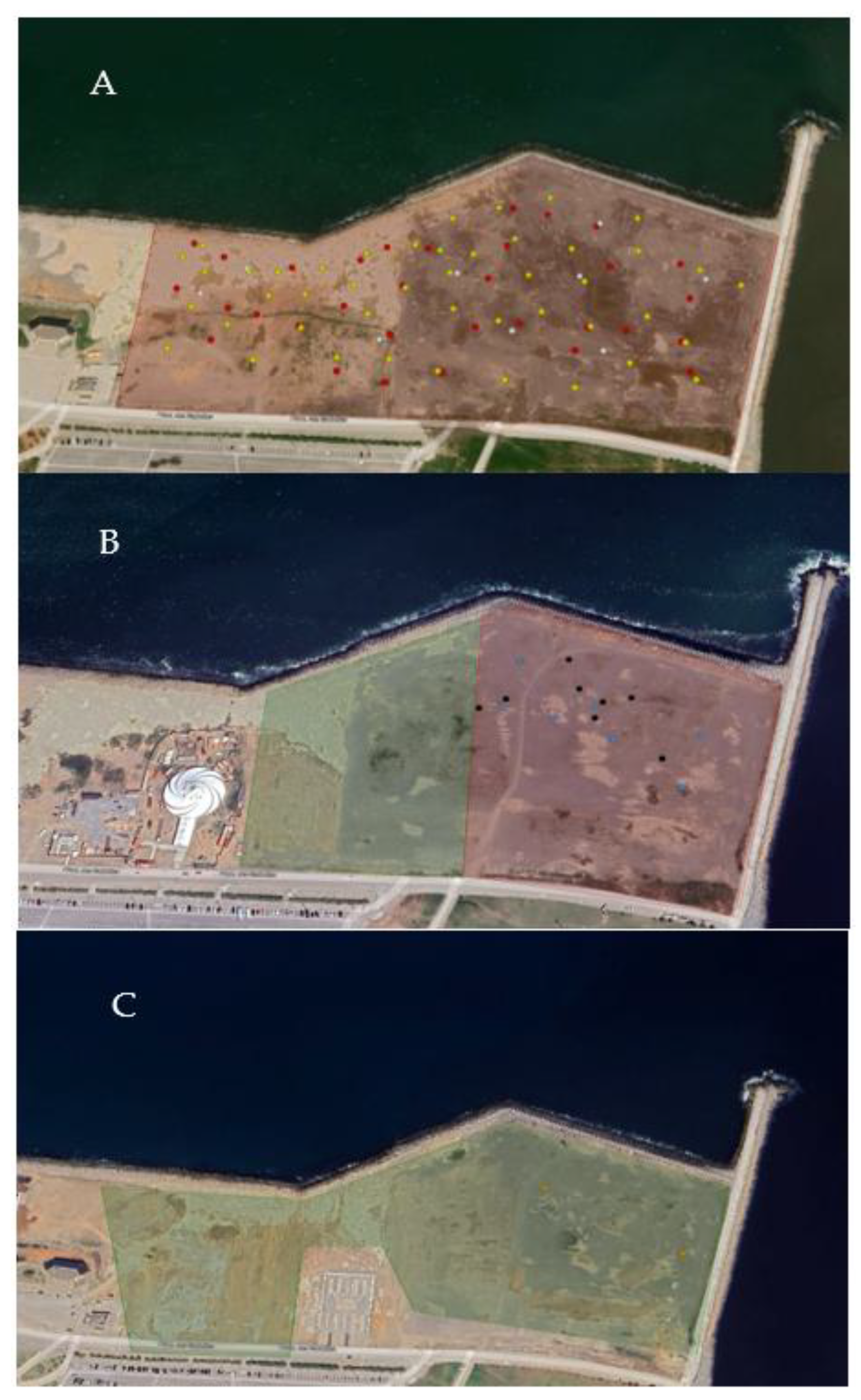
Spatial analysis of nest placement over the six breeding seasons revealed a shift in breeding area usage between years (Figure 2). The difference observed in the number of plover nests recorded during the COVID-19 pandemic, when the Promenade of Sablettes was significantly less frequented by visitors, and those observed in later periods is particularly remarkable.
Indeed, in 2020, at the study area we identified a total of 15 KP nests and 18 LRP nests (Table 1). The following year, in 2021, when human disturbance remained comparatively low, notably increased to 22 nests for the KP and 24 nests for the LRP, respectively (Table 1).
In 2020 and 2021 we recorded a breeding success rate of 70%. The nesting area used by the plovers, outlined in red, during the period from 2020 to 2022 (Figure 2A). This area served as the primary breeding habitat for both species throughout these years.
However, the situation drastically changed in 2022. Only 9 nests (Table 1), combining both species, were recorded at the same site. This decline is largely attributable to intensive "development work” disturbance in the area during the breeding season likely caused the low numbers of nest (Figure 2B). Unfortunately, these construction activities were undertaken without any prior environmental impact assessment or consideration of their potential consequences for local bird populations. As a direct result, nests were abandoned due to disturbances and habitat degradation, severely compromising the reproductive success of these sensitive shorebirds.
These observations clearly show that changes in human activities, especially visitor numbers and uncontrolled construction, strongly affect plover nesting success. During the pandemic, reduced human disturbance allowed the plovers to breed successfully, highlighting their resilience. However, subsequent intensive urban development revealed just how vulnerable these birds are to human disturbances.
In 2023, six nests of KP and one of LRP were monitored (Table 1), with none resulting in successful hatching, that were unfortunately predated by gulls or crashes by the visitors.
In 2024, five nests of KP and 3 nests of LPR were recorded (Table 1) and for the first time since 2021, breeding success was observed again, and several adults and chicks were repeatedly seen foraging in the green zone within a few days post-hatch (Figure 2B). No nests were found in the green zone during the study period, suggesting its role is primarily post-hatching (Figure 2B).
In early 2025, just before the breeding season, construction activities were observed directly within the usual nesting area of the plovers. Additionally, a new playground was built nearby, as clearly indicated in Figure 2C. These recent developments raised immediate concerns regarding potential disturbances to the birds during their critical nesting period.
We observed, this year (2025), only two nests were recorded both belonging to the LPR. These nests, designated as N1 and N2, are shown in Figure 2C. Both were successful, producing at least one hatchling each. The nests were in the eastern half of the site, similarly to previous years. However, observational data indicated that post-hatching chick movement extended beyond the nesting area, also highlights in green (Figure 2C) the area regularly used by LRP chicks during the fledging phase. This vegetated zone, situated west of the main nesting strip, appears to offer refuge from direct human activity and provides improved cover. Although no nests were detected in this green area during 2025 (Figure 2C), its consistent use by broods shortly after hatching underscores its functional importance for chick development and survival.
These spatial observations reinforce the idea that while nesting may be constrained to open substrate areas (often closer to human infrastructure), access to adjacent, less disturbed habitat is likely essential for successful rearing of chicks.

3.2. Spatial Patterns of Habitat Change (2020-2025)

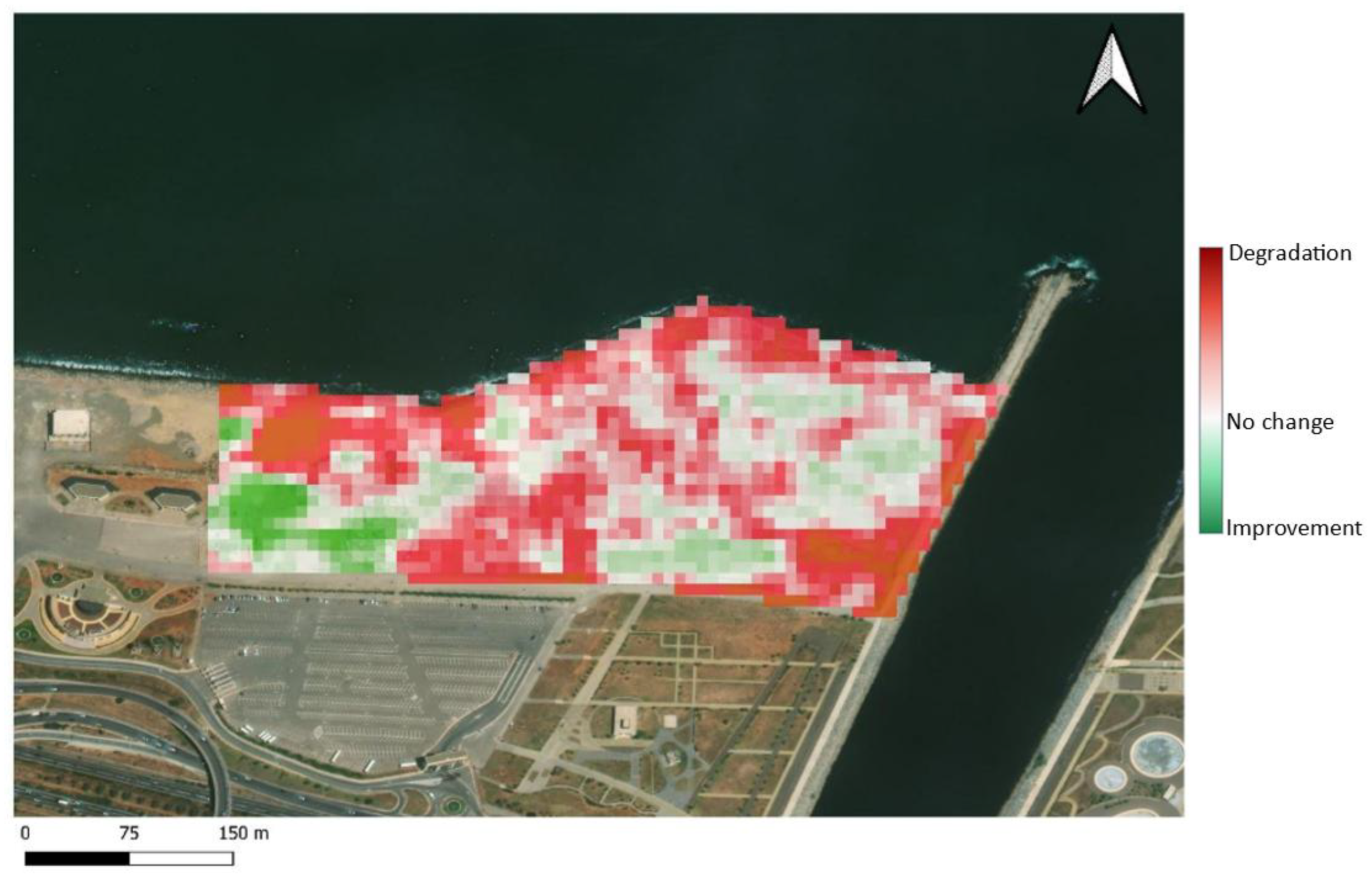
The remote-sensing baseline from April-July 2020 captures habitat conditions during this successful period, revealing that extensive areas now showing severe degradation (red zones) were functionally suitable only 3-5 years ago. This rapid degradation trajectory from successful breeding sites to completely unsuitable habitat in 2-3 years illustrates the vulnerability of coastal breeding populations to pulse disturbances and infrastructure development (Figure 3).
The multi-sensor habitat changes analysis reveals striking spatial heterogeneity across the Promenade of Sablettes study area between the 2020 and 2025 breeding seasons (Figure 3). The normalized Habitat Change index map displays three distinct zones with contrasting trajectories:
(1) Severe degradation zones (red to dark pink): These areas encompassed approximately 80–85% of the study site, concentrated primarily in the central and eastern sectors. The strong negative change values correspond to areas subjected to intensive recreational use and unregulated construction activities during 2022–2023. This widespread degradation signal indicates concurrent unfavorable changes across multiple habitat dimensions, directly overlapping with historical nesting areas used during the COVID-19 period (Figure 3).
(2) Moderate degradation zones (light pink to white): Transitional areas displaying intermediate negative values covered 10–15% of the site. The fragmented spatial distribution of these pixels suggests localized, sporadic disturbances rather than systematic habitat alteration (Figure 3).
(3) Habitat improvement zones (green): Areas showing positive change values were severely restricted, constituting only 5–10% of the total surface area and confined primarily to the western periphery. Notably, these limited refugia coincided with the post-hatch dispersal zones identified in 2024–2025, where fledglings were repeatedly observed. However, the restricted extent of improved habitat is insufficient to offset the pervasive degradation affecting the core nesting area, raising concerns about the long-term sustainability of plover populations at this site (Figure 3).

4. Discussion

Data collected over a six-year period indicate that plover populations can achieve persistence in heavily urbanized areas; their breeding success shows significant interannual variation driven by anthropogenic disturbance. The marked decline in reproductive success from functional breeding in 2020-2021 during COVID-19 when human visitation and disturbance were minimal to complete reproductive failure in 2022-2023, alongside a persistent drop in nest numbers strongly implicates the intensified anthropogenic stress on distribution and selection of nesting sites. Several studies support the observations regarding the influence of disturbance on shorebird nesting success. Recent research has shown that proximity to human activities consistently decreases nest survival. For instance, [11] documented that KP nesting success significantly decreases in areas close to recreational activities in Spain. Similar results were found by [38], highlighting the negative impacts of pedestrian traffic on plover nest survival.
The results of this study contradict the hypothesis that the more flexible LRP would adapt better to the site than the KP. The human pressure at the Promenade of Sablettes is so intense that it exceeds a tolerance threshold for both species. Under such extreme conditions, even species with high tolerance for it will be overwhelmed. Research shows that at this point commonplace activities can trigger complete nest abandonment [16].
The finding aligns with recent studies showing that many declining shorebird populations are limited primarily by disturbance rather than intrinsic habitat quality. Human activities, including pedestrians, unleashed dogs, and vehicles, represent the most frequently reported sources of recreational disturbance to breeding shorebirds globally [17], with tactile-foraging species exhibiting proportionally larger negative responses to human disturbance than other shorebird guilds [24]. Predation, particularly by mammalian predators including free-ranging dogs, remains a critical threat to nest and chick survival [9,26], emphasizing the importance of predator management strategies. This situation, where human disturbance becomes the main limiting factor regardless of a species' degree of specialization, has been documented on other highly touristic Mediterranean coastlines. For example, studies in Spain have shown that the reproductive success of the KP drops drastically with increasing human presence, to the point where nest survival becomes nearly zero in the most disturbed areas [11]. Similarly, recent research has highlighted that even for species considered more plastic, intense recreational pressure leads to cascading failures, notably through nest abandonment and increased predation. Studies on Mediterranean coast have demonstrated that dogs and human presence cause disproportionate disturbance responses, with plovers flushing 93.8% of the time when walkers are accompanied by dogs in dune areas [10]. During our observations, we found that various human activities significantly impacted the behavior of plovers, especially during incubation and chick-rearing periods. These disturbances included organized sporting events, which frequently drew large crowds, and individual leisure activities such as walking, cycling, and picnicking near nesting areas. Temporary event structures and increased human presence disturbed the birds, causing repeated stress and habitat disruption. Additionally, walkers and cyclists often inadvertently approached nests or frightened away chicks (Observed by S.C, B.B & I.R).
Consequently, reproductive success is no longer determined by species-specific traits, but rather by random factors like the accidental destruction of nests and, decisively, by access to protective micro-refuges for the chicks. This observation is corroborated by recent research highlighting the vital importance of vegetation cover and microhabitat structure for chick survival, with studies showing that access to areas with appropriate vegetation cover is crucial for brood survival in disturbed landscapes [25].
During the 2020-2021 period, during the pandemic, it offered a unique opportunity to study the impact of human activity. The drastic reduction in site visitation, a global phenomenon known as the "anthropause" [27], coincided with high reproductive success for both plover species. This result demonstrates that human disturbance is the main limiting factor for nesting success at this site. This is well established by numerous studies on shorebirds [15]. The fact that both the KP and the LRP were successful suggests that when this pressure is lifted, the habitat becomes fully functional. This indicates that the site's conditions (substrate, food resources, proximity to water) are fundamentally adequate for reproduction, but their potential is only reached in the absence of constant disturbance [19].
In 2023 and 2024, all nests were located within the eastern portion of the site, which is delineated by the red polygon in Figure 2B. This section is characterized by open sandy substrate with limited vegetative cover and high human activity due to proximity to the main walkway. Despite the concentration of nests in the red zone, fledged juveniles of both species were observed moving westward into the adjacent green zone (Figure 2B), a section of the site with denser vegetation and reduced foot traffic. This suggests that while initial nesting was restricted to the red zone, post-hatch dispersal may depend on the availability of nearby refuge areas (Figure 2B) (Observed by S.C, B.B & I.R).
Conversely, the complete reproductive failures of 2022 and 2023 illustrate the acute impacts of human activities. The failure in 2023, coinciding with peak tourist visitation, is a direct consequence of recreational disturbance, a well-documented threat for the KP [11]. On the other hand, the 2022 failure resulted from direct physical disturbance by development work, leading to habitat destruction (Figure 2 & Figure 3).
The case of the LRP presents an ecological paradox, the species is recognized for its ability to colonize artificial habitats post-disturbance such quarries [4], however this adaptability is limited the plover remain highly vulnerable to nest destruction during the active phase of work. The distinction is crucial; it shows that even species adapted to modified landscapes cannot endure intense and direct physical disturbance during their nesting cycle as demonstrated by studies showing dramatic nest abandonment when disturbance occurs during breeding [10]. Similarly, [16] documented dramatic nest abandonment by KP in South Korea following increased casual birding activity, even in the absence of deliberate harassment. Their study, comparing 2020 (undisturbed) with 2021 (increased visitor pressure), mirrors our temporal design and findings: breeding success during the anthropause demonstrated intrinsic habitat suitability, while subsequent failures revealed disturbance as the primary limiting factor.
This study integrates a remote-sensing approach that adds spatial explicitness to these behavioral studies by quantifying where and how habitat has degraded. The predominantly negative changes detected across multiple independent sensors (optical, radar, ML land-cover) indicate that degradation is multi-dimensional: not merely increased built-up area, but concurrent loss of bare substrate, vegetation encroachment, altered hydrology, and structural modifications. This multi-dimensional degradation creates a hostile landscape where species-specific adaptations become irrelevant, a finding consistent with recent theoretical work on disturbance thresholds in urban ecosystems [19].
Similar anthropause effects have been documented globally across diverse taxa and ecosystems [27], but our study is among the first to combine field breeding data with multi-temporal remote sensing to quantify both the disturbance reduction during lockdowns and the subsequent habitat degradation following return to "normal" activities. This integration of field ecology and landscape-scale monitoring provides a powerful framework for understanding mechanisms: it is not that habitat quality has declined below minimum thresholds, but rather that superimposed anthropogenic disturbance prevents birds from utilizing otherwise suitable conditions.
The fragmented spatial pattern of habitat change, characterized by sharp boundaries between degraded and improved zones, underscores the critical importance of habitat heterogeneity for breeding shorebirds in disturbed landscapes. [25], studying Piping Plover chick ecology following Hurricane Sandy, demonstrated that vegetation cover and microhabitat structure were the primary drivers of chick survival, with even small patches of appropriate habitat supporting disproportionate breeding success relative to their area.
On the promenade of Sablettes, the limited green zone (<10% of study area) (Figure 3) showing positive habitat change may represent such a micro-refuge. However, its peripheral location and small spatial extent suggest insufficient capacity to support viable populations without active expansion through restoration. Recent studies on shorebird habitat use increasingly emphasize that habitat heterogeneity, with no single patch type being ideal for the entire shorebird community, determines species success [36].

Temporal Correlation with Breeding Outcomes

The habitat change map provides critical spatial context for understanding the dramatic shift in plover breeding success between monitoring periods:
2020-2021 baseline (successful breeding): The "Before" composite (April-July 2020) represents habitat conditions during the COVID-19 anthropause. During this period, both species nested across much of the study area, including zones now showing severe degradation (red areas) (Figure 3).
2022-2023 breeding failures: Complete reproductive failure for both species was documented the spatial distribution of remotely sensed habitat degradation (red zones) (Figure 3) encompasses all successful nesting areas documented in 2020-2021. This near-perfect spatial correspondence between detected degradation and nest failure locations strongly suggests that the multi-sensor change detection successfully captured ecologically meaningful habitat transformation.
2025 projected conditions: The "After" composite (April-July 2025) extrapolates the degradation trajectory observed through 2023. If no restoration interventions occur, the extensive red zones will remain unsuitable for breeding, and the limited green zones will be insufficient to support viable populations of either species (Figure 3).
The small green zone showing habitat improvement may represent a potential refuge area, but its limited extent (<10% of study area) (Figure 3) and peripheral location suggest it is currently insufficient to support viable breeding populations without active management and expansion.
The parallel trajectories across geographically distant sites (Mediterranean, East Asia) suggest that anthropogenic pressure thresholds for ground-nesting shorebirds may be generalizable across regions, with critical implications for conservation planning, this heterogeneity implies that strategic protection of low-use areas combined with restoration of degraded high-use zones (Figure 3), could create a complementary network of suitable habitats within a single coastline system. Recent studies on stopover sites have shown that habitat loss at one stopover site is unlikely to be offset by conserving other sites, emphasizing that protecting a significant number of existing key stopover sites is crucial for the conservation of migratory birds [37].

Prospects of Conservation

The spatially explicit nature of our habitat change map provides actionable guidance for conservation interventions. Priority should focus on: (1) immediate restoration of the extensive degraded zones (>80% of study area) (Figure 3), through infrastructure removal, substrate restoration, and seasonal access restrictions during breeding periods (April-July); (2) strict protection of the limited remaining suitable habitat (green zones) (Figure 3), as core breeding areas; and (3) implementation of reproducible monitoring to trac restoration effectiveness and detect new threats before they manifest as breeding failures.
Importantly, the successful breeding documented during 2020-2021 (table 1), demonstrates that intensive habitat engineering may be unnecessary if disturbance can be controlled. Simple management interventions with symbolic fencing, seasonal closures, signage, and enforcement may rapidly restore functionality given that fundamental habitat qualities remain suitable [13,24].
Symbolic fencing has proven highly effective when combined with predator exclosures and public education. Wire cages that exclude nest predators have been regularly used for management of threatened piping plover populations, with exclosures increasing nest success by 62% over a 34-day period [32]. However, exclosure effectiveness must be carefully evaluated, as exclosed nests show higher abandonment rates, likely to indicate adult mortality [32]. A decision support tool (PiperEx) has been developed to help site managers determine whether to use nest exclosures based on site-specific nest-fate data [5]. The Atlantic Coast piping plover population has grown from approximately 957 pairs in 1989 to 2,289 pairs in 2021, demonstrating that intensive management combining habitat protection, predator control, and disturbance minimization can achieve recovery goals [35].
Regional coordination is also critical. Both KP and LRP are mobile and may shift breeding locations in response to habitat quality [31]. Conservation strategies should identify and protect alternative breeding sites within dispersal distance, creating a network of complementary habitats rather than relying on single-site protection.

5. Conclusions

This study demonstrates that in an urban ecosystem under high pressure, conservation management must focus on common threats rather than on supposed species-specific needs. Recent comprehensive studies across multiple sites have confirmed that when anthropogenic pressure exceeds certain thresholds, management must prioritize disturbance reduction over species-specific approaches [16]. The remote-sensing methodology used in this study could be scaled to regional assessments, identifying priority sites across the Mediterranean coastline for coordinated monitoring and management. Satellite remote sensing is transforming coastal science from a "data-poor" to a "data-rich" field, enabling multiscale monitoring of coast with global coverage and near-daily frequency. The long-standing archive of satellite imagery enables investigation of coastal changes at sites vulnerable and anthropogenic pressures. Advances in machine learning and computer vision are essential for fully leveraging this massive data repository to provide coastal managers with actionable information for evaluating conservation solutions [2]. The integration of remote sensing data with Geographic Information Systems (GIS) and citizen science activities has proven valuable for enhancing coastal conservation efforts and tracking habitat changes over large spatiotemporal scales [2].
Recommendations such as seasonal zoning with protective fencing and the protection of refuge habitats with appropriate vegetation cover would benefit both the KP and the LRP. By managing the main threat uncontrolled human disturbance viable conditions are created for the entire community of ground-nesting birds, allowing the sensitive specialist and the adaptable pioneer alike to successfully reproduce. The challenge at Les Sablettes is therefore not to manage a single species, but to manage the space and create landscape-scale conditions that make coexistence possible.

Author Contributions

Conceptualization, B.B. and S.C.; methodology, B.B., S.C., K.E.M.; software, S.C., K.E.M., G.E.Y.K., ; validation, B.B., S.T., A.M. and K.D.; data collection, B.B., I.D., I.E.R., B.M. and S.C.; writing—original draft preparation, B.B. and S.C.; writing—review and editing, S.C., I.D., K.E.M. and G.E.Y.K.; visualization, I.D., K.D., A,M.; supervision, B.B. S.T.; funding acquisition, B.B., I.D., I.E.R. and S.C. All authors have read and agreed to the published version of the manuscript.

Funding

This research received no external funding.

Institutional Review Board Statement

This is an observational study with no physical contact with birds, so ethical approval is not required.

Data Availability Statement

Nesting data are original, details on data availability can be obtained from the corresponding author upon reasonable request. The data used for the Spatial patterns of habitat change study are freely available and were downloaded from Copernicus.

Acknowledgments

We are grateful to all members of the International Wader Study Group (IWSG) who attended the 2024 conference in Montpellier and the 2025 conference in Groningen; their feedback and discussions greatly improved this work.

Conflicts of Interest

The authors declare no conflicts of interest.

Abbreviations

The following abbreviations are used in this manuscript:
KP Kentish Plover
LPR Little Ringed Plover

References

  1. Aarif, K.M.; Kaiser, S.A.; Nefla, A.; Almaroofi, S. Over-summering abundance, species composition, and habitat use patterns at a globally important site for migratory shorebirds. Wilson J. Ornithol. 2020, 132, 165–172. [Google Scholar] [CrossRef]
  2. Caldareri, F.; Sulli, A.; Parrino, N.; Dardanelli, G.; Todaro, S.; Maltese, A. On the shoreline monitoring via earth observation: An isoradiometric method. Remote Sens. Environ. 2024, 311, 114286. [Google Scholar] [CrossRef]
  3. Cooke, S.J.; Piczak, M.L.; Singh, N.J.; Åkesson, S.; Ford, A.T.; Chowdhury, S.; Lennox, R.J. Animal migration in the Anthropocene: threats and mitigation options. Biol. Rev. 2024, 99, 1242–1260. [Google Scholar] [CrossRef]
  4. Cramp, S.; Simmons, K.E.L.; Brooks, D.C.; Collar, N.J.; Dunn, E.; Gillmor, R.; Hollom, P.A.D.; Hudson, R.; Nicholson, E.M.; Ogilvie, M.A.; Olney, P.J.S.; Roselaar, C.S.; Voous, K.H.; Wallace, D.I.M.; Wattel, J.; Wilson, M.G. Handbook of the Birds of Europe, the Middle East and North Africa. The Birds of the Western Palearctic: 3. Waders to Gulls; Oxford University Press: Oxford, UK, 1983; p. 913p. [Google Scholar]
  5. Darrah, A.J.; Cohen, J.B.; Castelli, P.M. A decision support tool to guide the use of nest exclosures for Piping Plover conservation. Wildl. Soc. Bull. 2020, 44, 480–492. [Google Scholar] [CrossRef]
  6. Djemadi, I.; Draidi, K.; Bakhouche, B. Recent established population of tree sparrow in Algeria: palms contributed actively to increasing breeding pairs. Ornithol. Res. 2024, 32, 372–378. [Google Scholar] [CrossRef]
  7. Draidi, K.; Djemadi, I.; Bakhouche, B. A multi-year survey on aquatic avifauna consolidates the eligibility of a small significant peri-urban wetland in northeast Algeria (Boussedra marsh) to be included on the Important Bird Areas network. Wetl. Ecol. Manag. 2023, 31, 629–648. [Google Scholar] [CrossRef]
  8. Duan, H.; Yu, X. Spatial and temporal changes in shorebird habitats under different land use scenarios along the Yellow and Bohai Sea coasts in China. Sci. Total Environ. 2024, 929, 172443. [Google Scholar] [CrossRef] [PubMed]
  9. Gautschi, D.; Čulina, A.; Heinsohn, R.; Stojanovic, D.; Crates, R. Protecting wild bird nests against predators: A systematic review and meta-analysis of non-lethal methods. J. Appl. Ecol. 2024, 61, 1187–1198. [Google Scholar] [CrossRef]
  10. Gómez-Serrano, M.Á. Four-legged foes: dogs disturb nesting plovers more than people do on tourist beaches. Ibis 2021, 163, 338–352. [Google Scholar] [CrossRef]
  11. Gómez-Serrano, M.Á.; López-López, P. Deceiving predators: linking distraction behavior with nest survival in a ground-nesting bird. Behav. Ecol. 2017, 28, 260–269. [Google Scholar] [CrossRef]
  12. Grimm, N.B.; Faeth, S.H.; Golubiewski, N.E.; Redman, C.L.; Wu, J.; Bai, X.; Briggs, J.M. Global change and the ecology of cities. Science 2008, 319, 756–760. [Google Scholar] [CrossRef]
  13. Jackson, M.V.; Mott, R.; Delean, S.; Hunt, B.J.; Brookes, J.D.; Cassey, P.; Prowse, T.A. Shorebird habitat selection and foraging behaviour have important implications for management at an internationally important non-breeding wetland. Ecol. Solut. Evid. 2024, 5, e12316. [Google Scholar] [CrossRef]
  14. Kubelka, V.; Sandercock, B.K.; Székely, T.; Freckleton, R.P. Animal migration to northern latitudes: environmental changes and increasing threats. Trends Ecol. Evol. 2022, 37, 30–41. [Google Scholar] [CrossRef]
  15. Lafferty, K.D. Birds at a Southern California beach: seasonality, habitat use and disturbance by human activity. Biodivers. Conserv. 2001, 10, 1949–1962. [Google Scholar] [CrossRef]
  16. Lee, D.Y.; Lee, J.H.; Oh, S.J.; Yoon, H.N.; Park, J.Y.; Lee, W.S.; Kim, H.J. Casual birding gone wrong: A case study on the impact of human disturbance on breeding sites of the Kentish plover (Anarhynchus alexandrinus). Wetl. Ecol. Manag. 2025, 33, 68. [Google Scholar] [CrossRef]
  17. Marasinghe, S.; Simpson, G.D.; Newsome, D.; Perera, P. Scoping recreational disturbance of shorebirds to inform the agenda for research and management in Tropical Asia. Trop. Life Sci. Res. 2020, 31, 51. [Google Scholar] [CrossRef] [PubMed]
  18. Maul, G.A.; Duedall, I.W. Demography of coastal populations. In Encyclopedia of Coastal Science; Springer: Cham, Switzerland, 2019; pp. 692–700. [Google Scholar]
  19. McDonald, G.C.; Bede-Fazekas, Á.; Ivanov, A.; Crecco, L.; Székely, T.; Kosztolányi, A. Landscape and climatic predictors of Kentish Plover (Charadrius alexandrinus) distributions throughout Kazakhstan. Ibis 2022, 164, 949–967. [Google Scholar] [CrossRef]
  20. McKinney, M.L. Urbanization, biodiversity, and conservation: the impacts of urbanization on native species are poorly studied, but educating a highly urbanized human population about these impacts can greatly improve species conservation in all ecosystems. Bioscience 2002, 52, 883–890. [Google Scholar] [CrossRef]
  21. Meager, J.J.; Schlacher, T.A.; Nielsen, T. Humans alter habitat selection of birds on ocean-exposed sandy beaches. Divers. Distrib. 2012, 18, 294–306. [Google Scholar] [CrossRef]
  22. Morrison, R.G.; Gill, R.E., Jr.; Harrington, B.A.; Skagen, S.K.; Page, G.W.; Gratto-Trevor, C.L.; Haig, S.M. Estimates of shorebird populations in North America; 2001. [Google Scholar]
  23. Morrison, R.I.G.; Ross, R.K.; Niles, L.J.; Gates, H.R.; Peck, M.K.; Gratto-Trevor, C.L.; Koch, S.L.; Pashley, D.N.; Porter, R.R. Dramatic Declines of Semipalmated Sandpipers on Their Major Wintering Areas in the Guianas, Northern South America. Waterbirds 2012, 35, 120–134. Available online: http://www.jstor.org/stable/41432480. [CrossRef]
  24. Palacios, E.; Vargas, J.; Fernández, G.; Reiter, M.E. Impact of human disturbance on the abundance of non-breeding shorebirds in a subtropical wetland. Biotropica 2022, 54, 1160–1169. [Google Scholar] [CrossRef]
  25. Robinson, S.G.; Gibson, D.; Alexander, C.R.; Farmer, A.; Jannsen, J.A.M.; Catlin, D.H. Piping plover chick ecology following landscape-level disturbance. J. Wildl. Manag. 2023, 87, e22325. [Google Scholar] [CrossRef]
  26. Robinson, S.G.; Black, K.M.; Catlin, D.H.; Wails, C.N.; Karpanty, S.M.; Bellman, H.; Fraser, J.D. Red fox trap success is correlated with piping plover chick survival. J. Wildl. Manag. 2024, 88, e22538. [Google Scholar] [CrossRef]
  27. Rutz, C.; Loretto, M.C.; Bates, A.E.; Davidson, S.C.; Duarte, C.M.; Jetz, W.; Johnson, M.; Kato, A.; Kays, R.; Mueller, T.; Primack, R.B.; Ropert-Coudert, Y.; Tucker, M.A.; Wikelski, M.; Cagnacci, F. COVID-19 lockdown allows researchers to quantify the effects of human activity on wildlife. Nat. Ecol. Evol. 2020, 4, 1156–1159. [Google Scholar] [CrossRef]
  28. Schlacher, T.A.; Narayanaswamy, B.E.; Weston, M.A. Spatial Mismatch Between Tourism Hotspots and Anthropogenic Debris on Sandy Beaches in an Iconic Conservation Area. Estuaries Coasts 2025, 48, 21. [Google Scholar] [CrossRef]
  29. Schlacher, T.A.; Weston, M.A.; Orchard, S.; Kelaher, B.P.; Maslo, B.; Dugan, J.E.; Wiegand, A.N. Adverse impacts of off-road vehicles on coastal dune vegetation are widespread, substantial, and long-lasting: Evidence from a global meta-analysis of sandy beach-dune systems. Estuar. Coast. Shelf Sci. 2025, 312, 109038. [Google Scholar] [CrossRef]
  30. Schulte, S.A.; Simons, T.R. Factors affecting the reproductive success of American Oystercatchers Haematopus palliatus on the Outer Banks of North Carolina. Mar. Ornithol. 2015, 43, 37–47. [Google Scholar] [CrossRef]
  31. Smith, P.A.; Smith, A.C.; Andres, B.; Francis, C.M.; Harrington, B.; Friis, C.; Brown, S. Accelerating declines of North America's shorebirds signal the need for urgent conservation action. Ornithol. Appl. 2023, 125, duad003. [Google Scholar] [CrossRef]
  32. Stantial, M.L.; Cohen, J.B.; Darrah, A.J.; Maslo, B. Predator exclosures increase nest success but reduce adult survival and increase dispersal distance of Piping Plovers, indicating exclosures should be used with caution. Ornithol. Appl. 2024, 126, duad047. [Google Scholar] [CrossRef]
  33. Stigner, M.G.; Beyer, H.L.; Klein, C.J.; Fuller, R.A. Reconciling recreational use and conservation values in a coastal protected area. J. Appl. Ecol. 2016, 53, 1206–1214. [Google Scholar] [CrossRef]
  34. Székely, T. Why study plovers? The significance of non-model organisms in avian ecology, behaviour and evolution. J. Ornithol. 2019, 160, 923–933. [Google Scholar] [CrossRef]
  35. U.S. Fish and Wildlife Service (USFWS). Abundance and Productivity Estimates—2021 Update Atlantic Coast Piping Plover Population. Available online: https://www.fws.gov/media/abundance-and-productivity-estimates-2021-update-atlantic-coast-piping-plover-population (accessed on 23 December 2025).
  36. VanDusen, B.M.; Fegley, S.R.; Peterson, C.H. Prey Distribution, Physical Habitat Features, and Guild Traits Interact to Produce Contrasting Shorebird Assemblages among Foraging Patches. PLoS ONE 2012, 7, e52694. [Google Scholar] [CrossRef]
  37. Wang, X.; Chen, Y.; Melville, W.; Lei, F.; Lu, W.; Yin, Y.; Cheng, L. Impacts of habitat loss on migratory shorebird populations and communities at stopover sites in the Yellow Sea. Biol. Conserv. 2022, 269, 109557. [Google Scholar] [CrossRef]
  38. Weston, M.A.; Ju, Y.K.; Guay, P.J.; Naismith, C. A test of the "Leave Early and Avoid Detection" (LEAD) hypothesis for passive nest defenders. Wilson J. Ornithol. 2018, 130, 1011–1013. [Google Scholar] [CrossRef]
  39. Yang, C.; Duan, H.; Yu, X. Land use-driven shifts in shorebird habitat connectivity along the Yellow and Bohai Sea coasts: Dynamics and scenario predictions. Biol. Conserv. 2024, 300, 110462. [Google Scholar] [CrossRef]
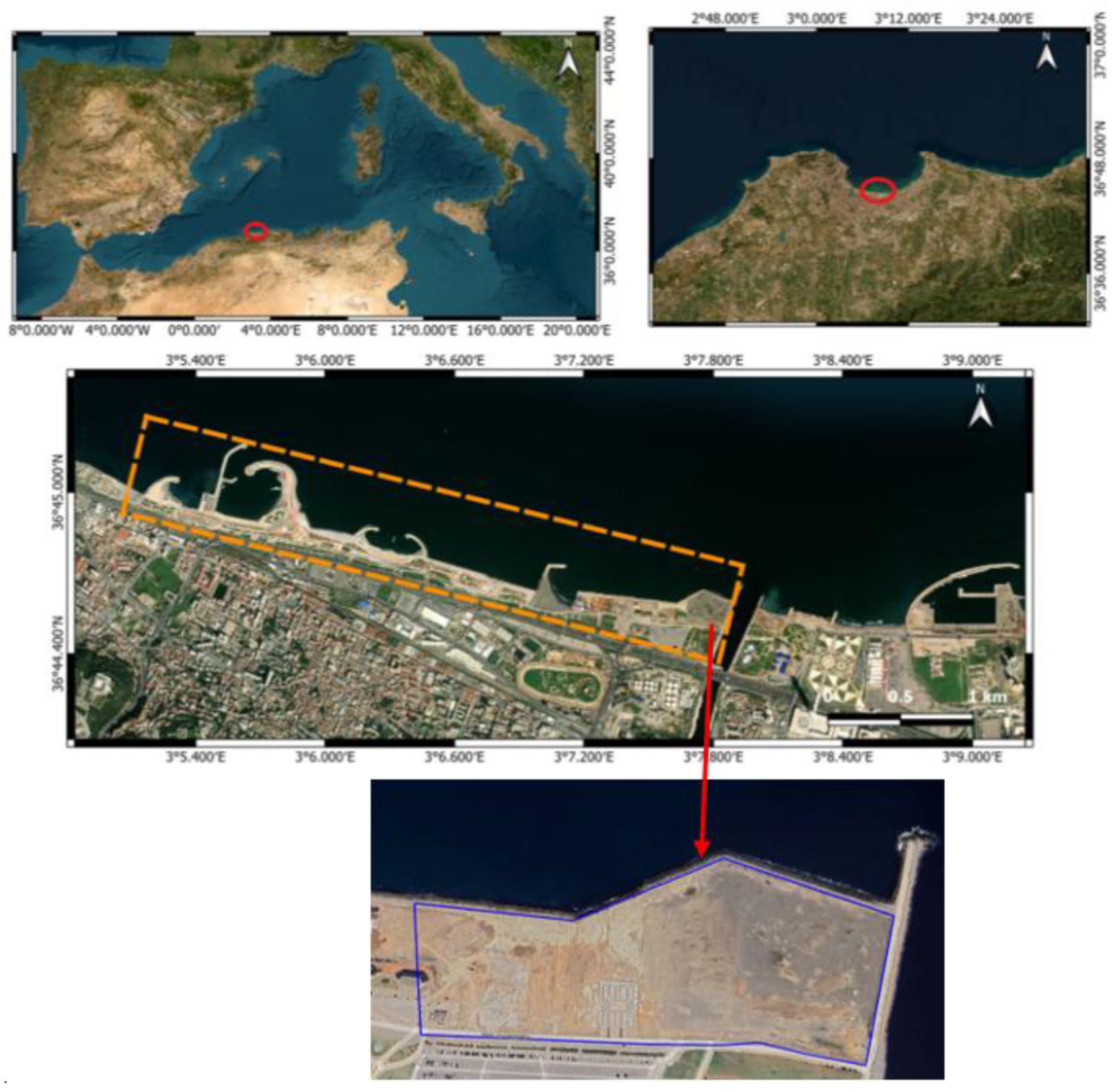
Figure 1. Location of the study site at the Sablettes Promenade, Algiers, northern Algeria. (A) Regional context showing the position of Algiers Bay along the Mediterranean coast. (B) Detailed view of the promenade: the orange line indicates the park boundaries; the blue line delineates the area actively monitored for plover nests during 2020–2025.
Preprints 191949 g001
Figure 2. Spatial distribution of plover nests and breeding habitat changes under increasing anthropogenic pressure (2020–2025). (A) Primary nesting area during 2020–2022 (outlined in red); (B) Impact of construction activities in 2022 with reduced nesting area; (C) 2025 post-hatching zone (green) used by chicks during the fledging period. Nest locations are color-coded by year: red = 2020, yellow = 2021, white = 2022, blue = 2023, black = 2024, orange = 2025.
Preprints 191949 g002
Figure 3. Spatiotemporal distribution of habitat changes at the Sablettes Promenade (2020–2025).
Preprints 191949 g003
Table 1. Comparison of the nest nembers and succes clutch between 2020 and 2025 for the two species.
Year KP nest KP Success LRP nest LRP Success
2020 15 10 18 12
2021 22 15 24 18
2022 5 0 4 0
2023 6 0 1 0
2024 5 5 3 2
2025 0 0 2 2
Disclaimer/Publisher’s Note: The statements, opinions and data contained in all publications are solely those of the individual author(s) and contributor(s) and not of MDPI and/or the editor(s). MDPI and/or the editor(s) disclaim responsibility for any injury to people or property resulting from any ideas, methods, instructions or products referred to in the content.
Copyright: This open access article is published under a Creative Commons CC BY 4.0 license, which permit the free download, distribution, and reuse, provided that the author and preprint are cited in any reuse.
Prerpints.org logo

Preprints.org is a free preprint server supported by MDPI in Basel, Switzerland.

Subscribe

Disclaimer

Terms of Use

Privacy Policy

Privacy Settings

© 2026 MDPI (Basel, Switzerland) unless otherwise stated