

Submitted:
27 December 2025
Posted:
29 December 2025
You are already at the latest version
Abstract
The house cricket Acheta domesticus is found globally. It is an agricultural pest causing economic damage to a wide variety of crops including cereal seedlings, vegetable crops, fruit plants, and stored grains. Additionally, crickets act as mechanical vectors of pathogens by harboring bacteria, fungi, viruses and toxins causing foodborne illnesses. They can contaminate stored grains, packaged foods, or animal feed due to deposition of their feces, lowering the quality of the food and creating food safety risks. Synthetic insect repellents, such as pyrethroids and carbamates, have been used previously in integrated pest management practices to control crickets. Though successful as repellents, they have been associated with health and environmental risks and concerns. The use oforganic green repellents, such as plant essential oils, may be a viable alternative in pest management practices. In this study, we tested the behavioral effects of 27 plant-based essential oils on the behavioral effects of the house crickets, Acheta domesticus in dual choice bioassays. Crickets were introduced into an open arena to allow them unrestricted movement. A transparent plastic bottle containing an essential oil treatment was placed in the arena to allow voluntary entry by crickets. Following a predetermined observation period, the number of crickets that entered the bottle was recorded, and percent entry was calculated as the proportion of individuals inside the bottle relative to the total number in the arena. Analysis of the percentage entry into the bottle allowed for a comparative assessment of repellency of the panel of essential oils that were tested. Essential oils that elicited high levels of entry into the bottle were categorized as having weak or no repellency, while those that produced reduced entry were classified as moderate or strong repellents. This ranking system enabled a clear differentiation among essential oils with respect to impact on cricket behavior. Our results indicated that house crickets responded with a strong repellent behavior to nearly half of the essential oils tested, while four essential oils and two synthetic repellents evoked no significant repellent responses. Four strong repellent essential oils were tested at different concentrations and showed a clear dose-dependent repellent effect. The results suggest that selected essential oils can be useful in the development of more natural “green” insect repellents.
Keywords:
olfaction
; repellent
; behavior
; locomotion
; essential oils
; cricket
; Orthoptera
; antenna
; green repellent
; pest
1. Introduction
Crickets are agricultural pests, disease vectors and noise nuisances in household settings. While they are not typically associated with the transmission of diseases as other arthropods such as ticks, mosquitoes, and cockroaches, they still raise significant concern with respect to food contamination and hygiene (i.e. stored grains, flour, etc.), crop, fabric and paper damage, and annoyance attributed to their nocturnal chirping [1]. In addition, cricket home infestations are often indicators of poor sanitation and/or structural inadequacies to home dwellings. More specifically, they can enter garbage cans to feed on trash due to their omnivorous feeding preference and, thereby, potentially contaminate food sources with their fecal matter. Therefore, finding safe pest management practices to control house crickets and other arthropods that carry diseases is critical. While the application of baits and sprays containing synthetic chemicals, such as pyrethroids, carbamates, neonicotinoids, isooxazolines, organophosphates, are options, these applications can pose problems and result in drawbacks, such as toxicity to adults, children, and pets, potential build-up of harmful chemical residues in the environment, and increased chance of resistance to insect populations (e.g., [2,3,4,5]). In addition, commonly used household methods to dispose of crickets have proven to be relatively ineffective. These include glue boards, baited cornmeal, diatomaceous earth, vacuum cleaner hose suction, sprays, and baits laced with synthetic chemicals [6]. Considering this, there is a chemical and ecological need to find plant-derived alternatives, i.e., natural, “green” repellents, as candidates in integrated pest management.
House crickets, like other insects, use their chemical senses (smell and taste) for orientation, food selection, and mate finding. To detect olfactory environmental cues, they possess a pair of antennae bearing antennal sensory organs or sensilla. These sensilla contain receptor neurons which encode and process olfactory stimuli. Such stimuli can trigger behaviors, such as orientation toward food and mating partners or avoidance of predators. In this study, the objective was to test a panel of essential oils on house cricket behavior.
Essential oils are lipophilic, volatile, organic, “green” (i.e., environmentally friendly) compounds representing mixtures of volatile secondary metabolites synthesized by aromatic plants [7]. Plants use these compounds to protect themselves against predators, such as insects and pathogens, and they can also serve as signaling compounds. These compounds include terpenes, terpenoids, aldehydes, phenols, etc. and can be extracted from plants using several methods (i.e., steam distillation, cold pressing, solvent extraction) [8]. In traditional medicine, they have been used as fragrances, antiseptics, and remedies. Essential oils are comprised of hundreds of compounds and variability of their content arises from both intrinsic and extrinsic factors [9]. Intrinsic factors include the plant’s genotype, whereas extrinsic factors are governed by e.g., seasonality, water availability and soil composition [10]. Other contributing factors may include temperature, humidity, light intensity, soil composition, etc. [11]. Essential oils are comprised of hydrocarbon molecules and can be classified as terpenes, alcohols, esters, aldehydes, ketones, phenols, oxygenated compounds, monoterpene alcohols, sesquiterpene alcohols, aldehydes, esters, lactones, coumarins, ethers, and oxides [7]. It is noted, however, that the most active compounds fall into two chemical groups: terpenoids (monoterpenoids and sesquiterpenoids) and phenylpropanoids [7,12].
Volatile molecules emanating from essential oils can be detected by olfactory receptor cells housed within olfactory sensory organs (or sensilla) on insect antennae [13]. Such molecules may be responsible for regulating insect behavior. In the case of essential oils, recent evidence has demonstrated that they can serve as olfactory repellents. Essential oils can disrupt the insects’ olfactory-guided locomotory behavior, making it difficult for insects to detect humans, as well as offer antimicrobial activity, as they contain active compounds like terpenes, phenols, and aldehydes which inhibit a broad range of microorganisms, including bacteria, fungi, and viruses [14,15,16,17].
Insect repellents differ from insecticides in their mode of action as they do not kill insects, they deter them approaching, landing, or establishing residence [18]. This has important relevance to cricket management, as the primary goal is to protect household materials and prevent food contamination, rather than eradication of insect populations. Due to their volatile nature, their odors do not persist on a long-term basis in the environment, thereby requiring frequent reapplication [19], in addition to exploring methods to advance the formulation to ensure stabilization and prolonged action. In practice, this may require techniques to microencapsulate, nano emulsify, and the use of polymer-based slow-release methods to optimize their efficacy [20], in addition to developing more portable applications (e.g., sprays) tailored to cricket control.
2. Materials and Methods
Adult house crickets (Timberline, Marion, IL) were housed in a controlled environment maintained at 22˚C ± 2˚C with a 16:8 light-dark cycle. Crickets were provided ad libitum access to cricket food and Easy Water (Timberline, Marion, IL) prior to experimentation. Female and male crickets were randomly selected. Each cricket was naïve to the specific odorant prior to testing and was discarded following its use to prevent any potential bias from prior exposure. Testing occurred in large plastic containers (Figure 1). The open arena (i.e., container) measured 42.9 cm x 29.2 cm x 14.9 cm (Sterilite, Townsend, MA) and was filled with 350 g of unscented paper bedding material (Kaytee Products, Inc., Chilton, WI). Plastic water bottles (500 ml) were cut in half, and the top half was inverted into the bottom half and secured with clear tape. This design prevented the crickets from escaping during testing. Filter paper disks (2.4 cm diameter circles) (Whatman/Cytiva, Marlborough, MA) served as carriers for the selected essential oils (E.O.s) (test substance) which were dissolved with pure ethyl alcohol (200 proof; Pharmco Products Inc., Brookfield, CT). For control experiments, only pure ethyl alcohol was applied to the filter paper. Experimental bioassays for control and test groups were conducted in separate locations to ensure no cross contamination of the odorant-containing bottles and control bottles. For experiments, 10 crickets were introduced into each container which maintained consistency of sample size. For each essential oil tested, the experiment was replicated at least 10 times (with some essential oils, more than 10 replicates were made) with 10 crickets per container (n = 100 crickets).
Orientation towards or away from the odorant source was assessed to determine the effects of the odorant on cricket behavior and to calculate the percentage of crickets that entered the bottle or remained in the open arena of the container. The degree of repellency associated with a particular essential oil was determined as the number of crickets entering the bottle (i.e., a lower number of crickets entering a bottle was deemed to indicate higher repellency of the essential oil). An evaluation of the strength of repellency for all the essential oils tested was carried out by assigning three ranges of percent entry: 0 - 25% (strong repellent), >25 - 50% entry (medium repellent), and >50% - <70% entry (weak repellent). Statistical analysis of data was performed using a table of cross-categorized frequency data for a Chi Square Test of Association (VassarStats Website for Statistical Computation, http://vassarstats.net/). Yates values were reported and corrected for continuity, and probability estimates were non-directional. Statistical significance was considered for p-values smaller than 0.05.
Essential oils (100% pure and organic) were purchased from Cliganic, Walnut, CA (peppermint, rosemary, tea tree, lemon grass, lavender, frankincense, orange), Anjou, Fremont, CA (sage, cinnamon, bergamot, lemon, grapefruit, patchouli, geranium, cypress, ylang ylang, palmarosa), Aromappeal, Holbrook, NY (basil, citronella, lemon eucalyptus, clove, eucalyptus), Now, Bloomingdale, IL (wintergreen), Plant Therapy, Twin Falls, ID (juniper berry), Aura Cacia, Urbana, IA (sweet fennel), Edens Garden, San Clements, CA (catnip), and Sedbuwza, Hagerstown, MD (coffee). The essential oils were pipetted onto a filter paper and placed at the bottom of each bottle. Four minutes was allowed to elapse prior to placing the bottles into the arena. The bottle (containing the test odorant or the control) was positioned at random locations in the containers to prevent bias. To compare essential oil repellency with repellent effects of known synthetic repellents, IR3535 and DEET were tested with the same bioassay design. All bioassays were run in the evening, as crickets are most active in the evenings due to their nocturnal lifestyle, for 6 hours to ensure sufficient observation time for behavioral responses. Upon completion of each experiment, all crickets and bottles used were disposed of to prevent potential cross-contamination.
3. Results
3.1. Essential Oils as Repellent Compounds
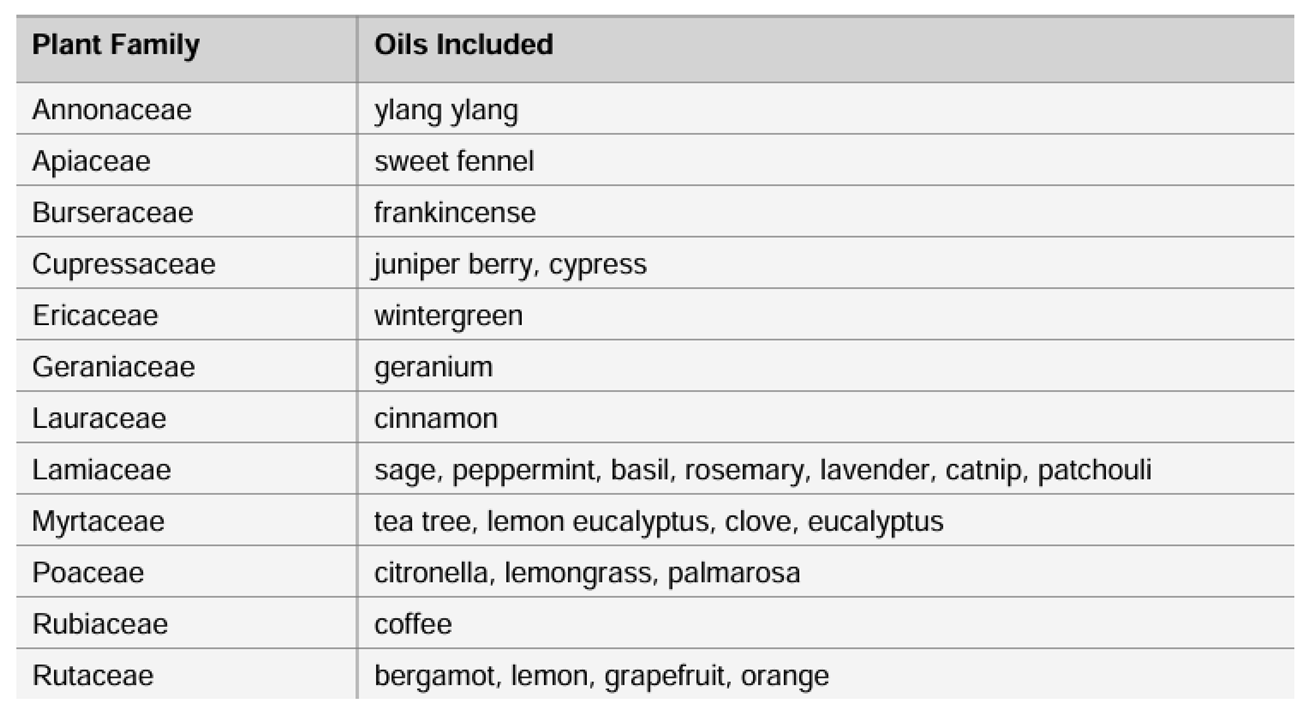
In this study, we tested the effects of 27 essential oils (i.e., ylang ylang, sweet fennel, frankincense, juniper berry, cypress, wintergreen, geranium, cinnamon, sage, peppermint, basil, rosemary, lavender, catnip, patchouli, tea tree, lemon eucalyptus, clove, eucalyptus, citronella, lemongrass, palmarosa, coffee, bergamot, lemon, grapefruit, orange). They belonged to 12 different plant families (i.e., Annonaceae, Apiaceae, Burseraceae, Cupressaceae, Ericaceae, Geraniaceae, Lauraceae, Lamiaceae, Myrtaceae, Poaceae, Rubiaceae, and Rutaceae) (Table 1) and fell within three main chemical groups: monoterpenes/monoterpenoids, sesquiterpenes/sesquiterpenoids, and diterpenes/diterpenoids (Table 2).
These essential oils served as possible repellents of house crickets, A. domesticus, using a dual choice olfactory bioassay design (Figure 1). Test data was compared with control results. During control experiments, when no essential oil was present on the filter paper, 69.8% of the crickets in the container entered the inverted bottle. This served as the baseline to assess repellency of the tested essential oils. The strength of repellency was categorized by assigning essential oils to one of three ranges of percent entry: 0 - 25% entry (strong repellent), >25 - 50% entry (medium repellent), and >50% - <70% entry (weak repellent) (Figure 2, Figure 3, Figure 4 and Figure 5). Four of the 27 essential oils tested, geranium, cypress, ylang ylang, and palmarosa, elicited no repellent effect. Yates values were reported and corrected for continuity, and probability estimates were non-directional. Statistical significance was considered for p-values smaller than 0.05 and Yates values were reported for the following essential oils: sage (Yates, 26.79, p < 0.0001), peppermint (Yates, 210.87, p < 0.0001), wintergreen (Yates, 103.06, p < 0.0001), basil (Yates, 90.49, p < 0.0001), rosemary (Yates, 148.24, p < 0.0001), cinnamon (Yates, 141.16, p < 0.0001), tea tree (Yates, 129.24, p < 0.0001), bergamot (Yates, 97,39, p < 0.0001), citronella (Yates, 94.66, p < 0.0001), juniper berry (Yates, 78.53, p < 0.0001), lemon grass (Yates, 128.79, p < 0.0001), lemon eucalyptus (Yates, 128.75, p < 0.0001), lavender (Yates, 78.04, p < 0.0001), lemon (Yates, 92.12, p < 0.0001), catnip (Yates, 99.71, p < 0.0001), clove (Yates, 46.8, p < 0.0001), grapefruit (Yates, 39.64, p < 0.0001), frankincense (Yates, 34.8, p < 0.0001), eucalyptus (Yates, 27.92, p < 0.0001), orange (Yates, 17.58, p < 0.0001), coffee (Yates, 13.06, p < 0.0003), patchouli (Yates, 7.09, p < 0.0077), sweet fennel (Yates, 6.06, p < 0.0138), geranium (Yates, 3.71, p < 0.05408), cypress (Yates, 1.11, p < 0.2921), ylang ylang (Yates, 0.28, p < 0.5967), palmarosa (Yates, 0.01, p < 0.9203). All the essential oils in Figure 2 were statistically significant from the control and elicited repellency, except for geranium, cypress, ylang ylang, and palmarosa. Percent entry values are discussed for each group of essential oils (i.e., strong, medium, weak repellency), in sections 2.2-2.4. Importantly, when known synthetic repellents, such as IR3535 and DEET were tested, they elicited no significant repellency (percent entry, 59%, Yates, 3.01, p < 0.0827 and percent entry, 68%, Yates, 0.03, p < 0.8625), respectively.
The essential oils tested in this study were comprised of terpenes with non-oxygenated hydrocarbons built from isoprene units (C5H8). They were further differentiated as monoterpenes (C10 structures bearing two isoprene units; most common and highly volatile), sesquiterpenes (C15 structures bearing three isoprene units; less volatile) and diterpenes (C20 structures bearing four isoprene units; less common, less volatile, and more resin-like). Terpenoid families included monoterpenes, sesquiterpenes, and diterpenes (bearing a hydrocarbon skeleton and oxygen-containing functional groups) which included alcohols (-OH), aldehydes (-CHO), ketones (C=O), esters (-COO-), phenols (aromatic ring with an -OH group on the benzene ring), and ethers (R-O-R). Non-terpenoid families included phenylpropanoids (C6H5-CH2-CH2-R), and coumarins (benzopyrone compounds). Functional groups, like lactones (cyclic esters) and oxides (cyclic ethers) straddled both terpenoid and non-terpenoid classifications.
3.2. Essential Oils Eliciting Strong Repellent Responses
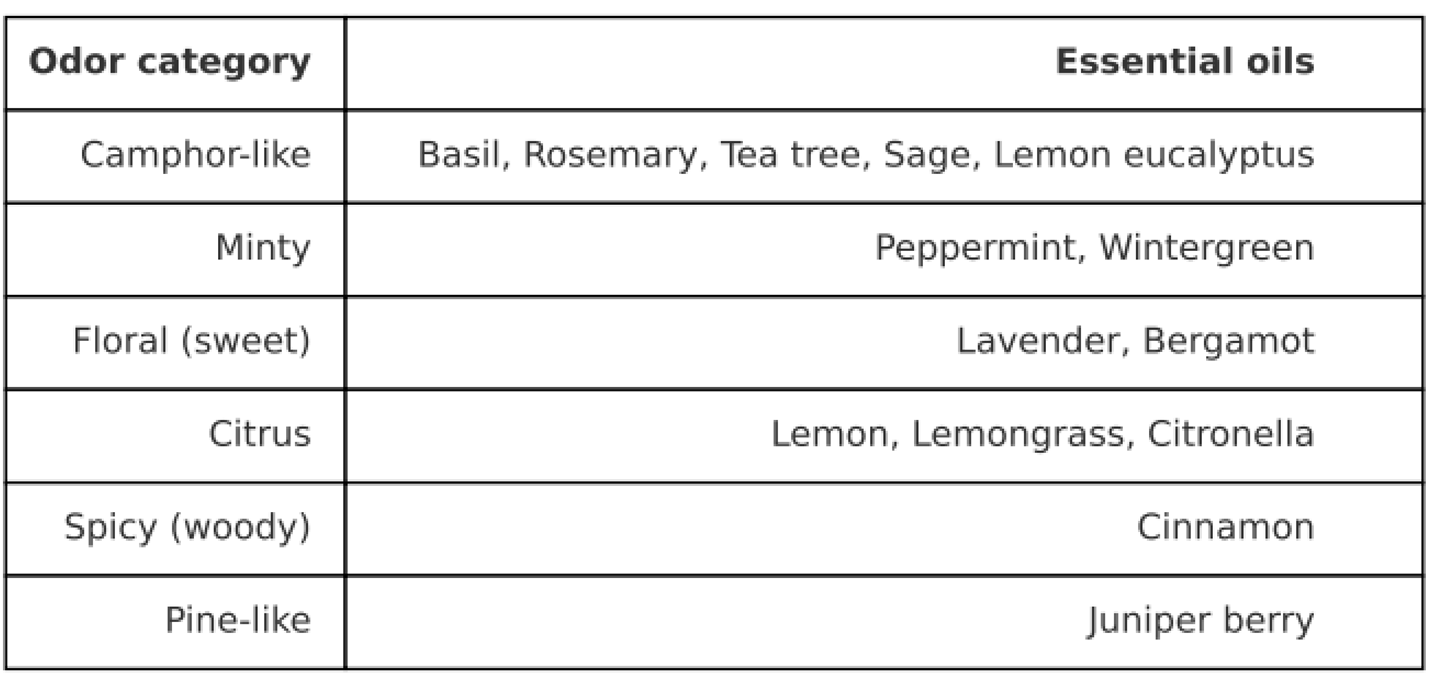
In terms of percent entry into bottles with test compounds, we found 14 essential oils that elicited between 7 and 21.1% entry. In ascending order, the strongest repellency using a 50-µg dose was found for the following essential oils (Figure 3): sage (7.00%), peppermint (8.06%), wintergreen (9.09%), basil (11.0%), rosemary (12.2%), cinnamon (12.7%), tea tree (13.5%), bergamot (13.8%), citronella (14.6%), juniper berry (15.0%), lemon grass (15.%), lemon eucalyptus (16.3%), lavender (18.3%), and lemon (21.1%) . These essential oils were categorized into five main odor groups (Table 3).
3.3. Essential Oils Eliciting Medium Repellent Responses
The essential oils that elicited medium repellency using a 50-µg dose in ascending order were: catnip (26.0%), clove (26.0%), grapefruit (31.0%), frankincense (38.8%), eucalyptus (39.2%), and orange oil (46.2.%) (Figure 4).
3.4. Essential Oils Eliciting Weak Repellent Responses
The essential oils that caused weakest repellency using a 50-µg dose in ascending order were: coffee (52.5%), patchouli 56.5%), and sweet fennel (57.5%). Geranium (60%), cypress (63%), ylang ylang (66%), and palmarosa (78%) did not elicit significant repellency (Figure 5).
3.5. Dose Response Curves
From those essential oils eliciting strong repellency, four were selected (i.e., peppermint, rosemary, cinnamon, and lemongrass) to determine their dose-response dynamics at four different concentrations (0.05 ug, 0.5 µg, 5 µg, and 50µg) (Figure 6). In all cases, we observed a decrease in the mean number of entries into the test bottle with increasing concentration. Differently shaped sigmoid curves were noted. The RT (repellency threshold) concentration (i.e., lowest concentration at which repellency was significantly different from that of the control) was determined for each of the four essential oils. In the case of both peppermint and lemongrass, the RT was 0.05 µg, whereas for rosemary and cinnamon this value was 0.5 µg. We estimated the RD50 concentration (concentration at 50% of the population of insects in the test group were repelled). As the control compound elicited 69.8% (~70%), and not 100% entry into control bottles, the concentration at which 35% (i.e., 50% of control entries) was used as the RD50 value for test compounds. Since, on average, 7 out of 10 insects entered the bottle in control experiments, the RD50 value was set to 3.5 number of entries (see y axes in Figure 6). In the case of lemon grass, peppermint, cinnamon, and rosemary, these RD50 values were found to be approximately 1.1 µg, 2.3 µg, 6.8 µg, and 10 µg, respectively.
The data presented in the four dose-response curves suggested three main findings: (a) peppermint and lemongrass were the most repellent compounds; (b) while lemongrass appeared to have a slightly lower RD50 concentration than peppermint (1.1 µg versus 2.3 µg, respectively), it was evident that more crickets were initially repelled by peppermint at the highest dose tested (i.e., 50 µg) and (c) rosemary was the least potent compound tested among the four potent repellents.
4. Discussion
Essential oils are plant-produced, bioactive secondary metabolites and thought to be less toxic to beneficial insects and environmentally friendly alternatives to synthetic repellents. They are highly concentrated, volatile, fat-soluble, biodegradable, colorless mixtures of aromatic compounds used for defense and signaling purposes (e.g., deter pests and pathogens, attract pollinators, and communicate with other organisms) [7,9]. Essential oils have been found to demonstrate antimicrobial, antioxidant, and/or insect-repellent activity [14]. Some essential oils also interfere with insect odorant receptors (i.e., “olfactory interference”) and can disrupt navigation, oviposition, and feeding, leading to avoidance of food sources and a reduction in oviposition [15,19] In this study, we determined the potential repellency of 27 essential oils using an olfactory test bioassay against A. domesticus. Effectiveness of repellency was determined by the number of crickets entering the plastic bottle containing the test compound. Repellency effectiveness was assigned to three groups those essential oils eliciting strong repellency (0 - 25% entry), medium repellency (>25 - 50% entry), and weak repellency (>50% - <70% entry). Our results demonstrated that 14 of the 27 essential oils tested elicited strong repellency, namely sage, peppermint, wintergreen, basil, rosemary, cinnamon, tea tree, bergamot, citronella, juniper berry, lemongrass, lemon eucalyptus, lavender, and lemon. Medium repellent behavior was observed with catnip, clove, grapefruit, frankincense, eucalyptus, and orange. Weak repellent behavior was observed with coffee, patchouli and sweet fennel. Geranium, cypress, ylang ylang, and palmarosa elicited no significant repellent effect. Similarly, synthetic repellents, IR3535 and DEET, elicited no significant repellency. Dose-response data from four essential oils that elicited strong repellent behavior in this study (i.e., peppermint, rosemary, cinnamon, and lemongrass) indicated that RT and RD50 values were similar for peppermint and lemongrass, as they were for rosemary and cinnamon.
The essential oils found to elicit the strongest repellency (i.e., 0 - 25% entry) were classified as monoterpenes and monoterpenoids (alcohols, esters, aldehydes, oxides, and ketones), phenylpropanoids (esters, aldehydes) and sesquiterpenes (Table 2). These essential oils fell into five main odor categories: camphor-like, minty, floral (sweet), citrus, spicy (woody) and pine-like (Table 3). Five (i.e., basil, rosemary, tea tree, sage, and lemon eucalyptus) of the 14 essential oils that elicited strongest repellency, fell into the category of camphor-smelling, two (i.e., peppermint and wintergreen) with a minty odor, two (lavender and bergamot) with a sweet floral odor, three (lemon, lemongrass, citronella) with a citrus/lemon odor, one (cinnamon) with (woody) odor, and one (juniper berry) with a pine-like odor (Table 3).
Some of the essential oils tested in this study (i.e., ylang ylang, sweet fennel, geranium, lemon eucalyptus, citronella, lemongrass, palmarosa, peppermint, basil, rosemary, lavender, catnip, patchouli, tea tree, clove, cinnamon, sage, juniper berry, cypress wintergreen, frankincense, coffee, and eucalyptus, lemon, orange, grapefruit) are known to exhibit both larvicidal, as well as repellent activity in mosquitoes, blowflies, ticks, and store-product pest species. Studies on various insect and arthropod species have shown in addition that some essential oils serve as natural repellents including citronella and lemongrass (containing citronellal and geraniol, both mosquito repellents), catnip (nepetalactone), peppermint and clove (containing menthol and eugenol), and cinnamon and basil (containing eugenol and cinnamaldehyde) [24,25,26,27,28,29,30,31,32,33,34,35,36,37,38,39,40,41,42,43,44].
The effect of essential oils on target receptors, enzymes, and channels is key to understanding insecticidal activity and biological mechanisms of action. Examples include inhibiting gamma-aminobutyric acid (GABA), octopamine, and tyramine receptors, changes in acetylcholinesterase activity, interference with glutamate-gated chloride channels, disruption of growth, and effects on cuticular permeability. These effects result in dehydration or enhanced means for transdermal drug delivery. Alpha-pinene carvacrol, limonene, menthol, menthone, and 1,8-cineole have been shown to interact with acetylcholinesterase activity, while eugenol and cinnamaldehyde have been shown to interact with octopamine and tyramine receptors. Carvacrol, pulegone, and thymol have been found to boost the inhibitory effect of GABA at its receptors without directly turning the receptor on by themselves. In addition, thymol and menthol were found to inhibit glutamate-gated chloride channels [45,46,47,48].
Essential oils exhibit measurable repellent activity across multiple insect species and assay types. While performance varies among oils and formulations, many show comparable short-term efficacy to synthetic repellents and often do so with lower ecological and toxicological risk. As resistance to conventional insecticides continues to rise and demand grows for eco-conscious solutions, essential oils represent a promising avenue for future repellent development. With further refinement of delivery systems and deeper investigation into active constituents, botanically derived repellents can become viable, sustainable alternatives to synthetic chemicals in integrated pest management strategies.
5. Conclusions
In this study, we identified strongly repellent essential oils: sage, peppermint, wintergreen, basil, rosemary, cinnamon, tea tree, bergamot, citronella, juniper berry, lemon grass, lemon eucalyptus, lavender, and lemon. These essential oils fell into five main odor categories: camphor-like, minty, floral (sweet), citrus, spicy (woody) and pine-like. The effectiveness of these essential oil repellents shows their potential as ecofriendly repellents against the house cricket suggesting their suitability for integration into pest management methods. Essential oils can provide meaningful repellent effects. With refined formulation and further study on stability and safety, essential oils could evolve into practical, environmentally conscious alternatives to synthetic repellents. Their future use in integrated pest management could help reduce reliance on synthetic chemicals while maintaining effective protection.
Author Contributions
Conceptualization, V.S. and T.H.; methodology, V.S., T.H., validation, V.S., TH., R.A., and S.R., formal analysis, V.S., T.H.; investigation, V.S., T.H., R.A., S.R.; resources, V.S. data curation, V.S., TH; writing—original draft preparation, V.S., TH.; writing—review and editing, V.S., T.H., RA., S.R.; visualization, V.S., T.H.; supervision, V.S.; project administration, V.S.; funding acquisition, V.S. All authors have read and agreed to the published version of the manuscript.:.
Funding
This research was funded by the Fisher College of Science and Mathematics (Towson University) and NIH-Bridges to Baccalaureate funding (5-R25-GM05826416) for supporting this project.
Data Availability Statement
The original contributions presented in this study are included in the article.
Acknowledgments
The authors would like to express thanks to Dr. Louise Miranda, Math Department, Towson University, for assisting with statistical analyses. The authors have reviewed and edited the output and take full responsibility for the content of this publication.
Conflicts of Interest
The authors declare no conflicts of interest.
Abbreviations
The following abbreviations are used in this manuscript:
| IR3535 | Ethyl 3-(N-butylacetamido)propionate |
| DEET | N,N-Diethyl-meta-toluamide |
| RT | Repellency threshold |
| RD50 value | Concentration at 50% of the population of insects in the test group were repelled |
| GABA | Gamma-aminobutyric acid |
References
- Ebeling, W. Urban entomology. Univ. Calif. Div. Agr. Sci. 1975, 695. [Google Scholar]
- Isman, M. B. Botanical insecticides, deterrents, and repellents in modern agriculture and an increasingly regulated world. Annual Review of Entomology 2006, 51, 45–66. [Google Scholar] [CrossRef]
- Snyder, D.E.; Meyer, J.; Zimmermann, A.G.; Qiao, M.; Gissendanner, S.J.; Cruthers, L.R.; Slone, R.L.; Young, D.R. Preliminary Studies on the Effectiveness of the Novel Pulicide, Spinosad, for the Treatment and Control of Fleas on Dogs. Vet Parasitol 2007, 897, 345–351. [Google Scholar] [CrossRef]
- Matsumura, F. Toxicology of insecticides, 2nd ed.; Springer, 2010. [Google Scholar]
- Gupta, A.; Baker, C.; Wang, H.; Targa, N.; Pfefferkorn, A.; Tielemans, E. Target Animal Safety Evaluation of a Novel Topical Combination of Esafoxolaner, Eprinomectin and Praziquantel for Cats. Parasite 2021, 28, 18. [Google Scholar] [CrossRef]
- Allen, N. How to get rid of crickets in your house. Better Homes & Gardens. 2025. Available online: https://www.bhg.com/how-to-get-rid-of-crickets-in-the-house-8610165.
- Miresmailli, S.; Isman, M.B. Botanical Insecticides Inspired by Plant–Herbivore Chemical Interactions. Trends Plant Sci 2014, 19, 29–35. [Google Scholar] [CrossRef]
- Bakkali, F.; Averbeck, S.; Averbeck, D.; Idaomar, M. Biological Effects of Essential Oils – A Review. Food and Chemical Toxicology 2008, 46, 446–475. [Google Scholar] [CrossRef] [PubMed]
- De S. O. Batista, L.C.; Cid, Y.P.; De Almeida, A.P.; Prudêncio, E.R.; Riger, C.J.; De Souza, M.A.A.; Coumendouros, K.; Chaves, D.S.A. In Vitro Efficacy of Essential Oils and Extracts of Schinus Molle L. against Ctenocephalides felis felis. Parasitology 2016, 143, 627–638. [Google Scholar] [CrossRef] [PubMed]
- dos Santos Cavalcanti, A.; de Souza Alves, M.; da Silva, L.C.P.; dos Santos Patrocínio, D.; Sanches, M.N.; de Chaves, D.S. A.; de Souza, M.A.A. Volatiles Composition and Extraction Kinetics from Schinus terebinthifolius and Schinus molle Leaves and Fruit. Revista Brasileira de Farmacognosia 2015, 25, 356–362. [Google Scholar] [CrossRef]
- Regina, H.; Lima, P.; Kaplan, M.C.; Valéria De Mello Cruz, A. Influence of Abiotic Factors on Terpenoids Production and Variability in the Plants. 2003. [Google Scholar]
- Bruneton, J. Pharmacognosy: Phytochemistry, Medicinal Plants; Editions Médicales., 2008. [Google Scholar]
- Shields, V.D.; Hildebrand, J.G. Recent advances in insect olfaction, specifically regarding the morphology and sensory physiology of antennal sensilla of the female sphinx moth Manduca sexta. Microsc Res Tech. 2001, 55, 307–29. [Google Scholar] [CrossRef] [PubMed] [PubMed Central]
- Wińska, K.; Mączka, W.; Łyczko, J.; Grabarczyk, M.; Czubaszek, A.; Szumny, A. Essential Oils as Antimicrobial Agents—Myth or Real Alternative? Molecules 2019, 24, 2130. [Google Scholar] [CrossRef]
- Kamaraj, C.; Satish Kumar, R.C.; Al-Ghanim, K.A.; Nicoletti, M.; Sathiyamoorthy, V.; Sarvesh, S.; Ragavendran, C.; Govindarajan, M. Novel Essential Oils Blend as a Repellent and Toxic Agent against Disease-Transmitting Mosquitoes. Toxics 2023, 11, 517. [Google Scholar] [CrossRef] [PubMed] [PubMed Central]
- Hazarika, H.; Krishnatreyya, H. Technological Advancements in Mosquito Repellents: Challenges and Opportunities in Plant-Based Repellents. Acta Parasitol. 2025, 70, 117. [Google Scholar] [CrossRef] [PubMed]
- Yadav; Deepak, K.; Rathee, S.; Sharma, V.; Patil, U.K. A Comprehensive Review on Insect Repellent Agents: Medicinal Plants and Synthetic Compounds. Anti-inflammatory & Anti-allergy Agents in Medicinal Chemistry 2024. [Google Scholar] [CrossRef]
- Insect Repellents: Principles, Methods, and Uses, 1st ed.; Debboun, M., Frances, S.P., Strickman, D., Eds.; CRC Press, 2006. [Google Scholar] [CrossRef]
- Nerio; Luz, S.; Olivero-Verbel, J.; Stashenko, E. Repellent activity of essential oils: a review. Bioresour Technol. 2010, 101, 372–8. [Google Scholar] [CrossRef]
- Pavela, R. History, Presence and Perspective of Using Plant Extracts as Commercial Botanical Insecticides and Farm Products for Protection against Insects - A Review. Plant Protection Science 2016, 52, 229–241. [Google Scholar] [CrossRef]
- AromaWeb 1997-2025. Available online: https://www.aromaweb.com/essential-oils/bergamot-essential-oil.php.
- Handbook of Essential Oils: Science, Technology, and Applications, 3rd ed.; Buchbauer, G., Ed.; CRC Press, 2024; ISBN 9780367504021. [Google Scholar]
- PubChem. Available online: https://pubchem.ncbi.nlm.nih.gov/.
- Chaiphongpachara, T; Laojun, S. Comparative efficacy of commercial ylang-ylang (Cananga odorata) essential oils from India and Thailand against larval Aedes aegypti (L.) (Diptera: Culicidae). J Adv Vet Anim Res. 2020, 7, 391–396. [Google Scholar] [CrossRef] [PubMed] [PubMed Central]
- Iqbal, S.; Khan, F.A.; Haris, A.; Mozūratis, R.; Binyameen, M.; Azeem, M. Essential oils of four wild plants inhibit the blood seeking behaviour of female Aedes aegytpi. Experimental Parasitology 2023, 244, 108424. [Google Scholar] [CrossRef]
- Jaenson, T.G.; Pålsson, K.; Borg-Karlson, A.K. Evaluation of extracts and oils of mosquito (Diptera: Culicidae) repellent plants from Sweden and Guinea-Bissau. J Med Entomol. 2006, 43, 113–9. [Google Scholar] [CrossRef] [PubMed]
- Haris, A.; Azeem, M.; Abbas, M.G.; Mumtaz, M.; Mozūratis, R.; Binyameen, M. Prolonged Repellent Activity of Plant Essential Oils against Dengue Vector, Aedes aegypti. Molecules 2023, 28, 1351. [Google Scholar] [CrossRef]
- Caballero-Gallardo, K.; Olivero-Verbel, J.; Stashenko, E. Repellency and toxicity of essential oils from Cymbopogon martinii, Cymbopogon flexuosus and Lippia origanoides cultivated in Colombia against Tribolium castaneum. Journal of Stored Products Research 2012, 50, 62–65. [Google Scholar] [CrossRef]
- Kumar, S.; Wahab, N.; Warikoo, R. Bioefficacy of Mentha piperita essential oil against dengue fever mosquito Aedes aegypti L. Asian Pac J Trop Biomed. 2011, 1, 85–8. [Google Scholar] [CrossRef] [PubMed] [PubMed Central]
- Sutthanont, N.; Sudsawang, M.; Phanpoowong, T.; Sriwichai, P.; Ruangsittichai, J.; Rotejanaprasert, C.; Srisawat, R. Effectiveness of Herbal Essential Oils as Single and Combined Repellents against Aedes aegypti, Anopheles dirus and Culex quinquefasciatus (Diptera: Culicidae). Insects 2022, 13, 658. [Google Scholar] [CrossRef] [PubMed] [PubMed Central]
- Bedini, S.; Guarino, S.; Echeverria, M.C.; Flamini, G.; Ascrizzi, R.; Loni, A.; Conti, B. Allium sativum, Rosmarinus officinalis, and Salvia officinalis Essential Oils: A Spiced Shield against Blowflies. Insects 2020, 11, 143. [Google Scholar] [CrossRef] [PubMed] [PubMed Central]
- Batume, C.; Mulongo, I.M.; Ludlow, R.; et al. Evaluating repellence properties of catnip essential oil against the mosquito species Aedes aegypti using a Y-tube olfactometer. Sci Rep 2024, 14, 2269. [Google Scholar] [CrossRef] [PubMed]
- Gokulakrishnan, J.; Kuppusamy, E.; Shanmugam, D.; Appavu, A.; Kaliyamoorthi, K. Pupicidal and repellent activities of Pogostemon cablin essential oil chemical compounds against medically important human vector mosquitoes. Asian Pacific Journal of Tropical Disease 2013, 3, 26–31. [Google Scholar] [CrossRef]
- Sritabutra, D.; Soonwera, M. Repellent activity of herbal essential oils against Aedes aegypti (Linn.) and Culex quinquefasciatus (Say.). Asian Pac J Trop Dis. 2013, 3, 271–6. [Google Scholar] [CrossRef] [PubMed Central]
- Luker, H.A.; Salas, K.R.; Esmaeili, D.; et al. Repellent efficacy of 20 essential oils on Aedes aegypti mosquitoes and Ixodes scapularis ticks in contact-repellency assays. Sci Rep 2023, 13, 1705. [Google Scholar] [CrossRef]
- Barbosa, L.C.A.; Filomeno, C.A.; Teixeira, R.R. Chemical variability and biological activities of Eucalyptus spp. essential oils. Molecules 2016, 21, 1671. [Google Scholar] [CrossRef]
- Carroll, J.F.; Tabanca, N.; Kramer, M.; Elejalde, N.M.; Wedge, D.E.; Bernier, U.R.; Coy, M.; Becel, J.J.; Demirci, B.; Husnu, K.; Baser, C.; Zhang, J.; Zhang, S. Essential oils of Cupressus funebris, Juniperus communis and J. chinensis (Cupressaceae) as repellents against ticks (Acari: Ixodidae) and mosquitoes (Diptera: Culicidae) and as toxicants against mosquitoes. J. Vect. Ecol. 2011, 36, 258–268. [Google Scholar] [CrossRef]
- Su, X.L.; Huang, Z.C.; Chen, L.; Chen, D.Y.; Zhao, D.X.; Zeng, Z.J. Active Components of 16 Essential Oils and Their Fumigation Effects on Galleria mellonella (Lepidoptera: Pyralidae). Insects 2024, 15, 977. [Google Scholar] [CrossRef] [PubMed] [PubMed Central]
- Metayi, M.H.; Abd El-Naby, S.S.; El-Habal, N.A.; Fahmy, H.H.; Abdou, M.S.; Ali, B.; Abdel-Rheim, K.H.; Abdel-Megeed, A. Omani Frankincense nanoemulsion formulation efficacy and its latent effects on biological aspects of the spiny bollworm Earias insulana (Boisd.). Front Physiol. 2022, 13, 1001136. [Google Scholar] [CrossRef] [PubMed] [PubMed Central]
- Aditama, W.; Sitepu, F. The effectiveness of arabica coffee (Coffea arabica L) grounds on mortality and growth of. Aedes aegypti larva 2019. [Google Scholar]
- Ahmed, H.A.; Nassrallah, A.A.; Abdel-Raheem, M.A.; Elbehery, H.H. Lemon peel essential oil and its nano-formulation to control Agrotis ipsilon (Lepidoptera: Noctuidae). Sci Rep. 2023, 13, 17922. [Google Scholar] [CrossRef] [PubMed] [PubMed Central]
- Ugwu; Ogbonna, Francis Stephen; Chime, Chidiebere Divine. Repellence of Aedes aegypti with oils from Citrus sinensis and Citrus paradisi fruit peelsi from Nsukka. Bio-Research 2023, n. pag. [Google Scholar] [CrossRef]
- Sarma, R.; Adhikari, K.; Mahanta, S.; Khanikor, B. Insecticidal activities of Citrus aurantifolia essential oil against Aedes aegypti (Diptera: Culicidae). Toxicology Reports 2019, 6, 1091–1096. [Google Scholar] [CrossRef]
- Fernando, S.S.S.T.; Jayasooriya, R.G.P.T.; Samarakoon, K.W.; Wijegunawardana, N.D.A.D.; Alahakoon, S.B. Citrus-Based Bio-Insect Repellents-A Review on Historical and Emerging Trends in Utilizing Phytochemicals of Citrus Plants. J Toxicol. 2024, 2024, 6179226. [Google Scholar] [CrossRef] [PubMed] [PubMed Central]
- Corrêa, E.J.A.; Carvalho, F.C.; de Castro Oliveira, J.A.; Bertolucci, S.K.V.; Scotti, M.T.; Silveira, C.H.; Guedes, F.C.; Melo, J.O.F.; de Melo-Minardi, R.C.; de Lima, L.H.F. Elucidating the Molecular Mechanisms of Essential Oils’ Insecticidal Action Using a Novel Cheminformatics Protocol. Sci Rep 2023, 13, 4598. [Google Scholar] [CrossRef] [PubMed]
- Jankowska, M.; Rogalska, J.; Wyszkowska, J.; Stankiewicz, M. Molecular Targets for Components of Essential Oils in the Insect 966 Nervous System—A Review. Molecules 2017, 23, 34. [Google Scholar] [CrossRef]
- Liu, X.; Cao, A.; Yan, D.; Ouyang, C.; Wang, Q.; Li, Y. Overview of Mechanisms and Uses of Biopesticides. Int J Pest Manag 2021, 67, 65–72. [Google Scholar] [CrossRef]
- Popescu, I.E.; Gostin, I.N.; Blidar, C.F. An Overview of the Mechanisms of Action and Administration Technologies of the 970 Essential Oils Used as Green Insecticides. Agri Engineering 2024, 6, 1195–1217. [Google Scholar] [CrossRef]
Figure 1.
Top-down view of the behavioral bioassay showing the inverted bottle, crickets, bedding, and plastic arena (lid removed). Ten crickets were allowed to explore freely in the arena during the experiment. The inverted bottle contained either an essential oil (test) or alcohol (control).
Figure 1.
Top-down view of the behavioral bioassay showing the inverted bottle, crickets, bedding, and plastic arena (lid removed). Ten crickets were allowed to explore freely in the arena during the experiment. The inverted bottle contained either an essential oil (test) or alcohol (control).
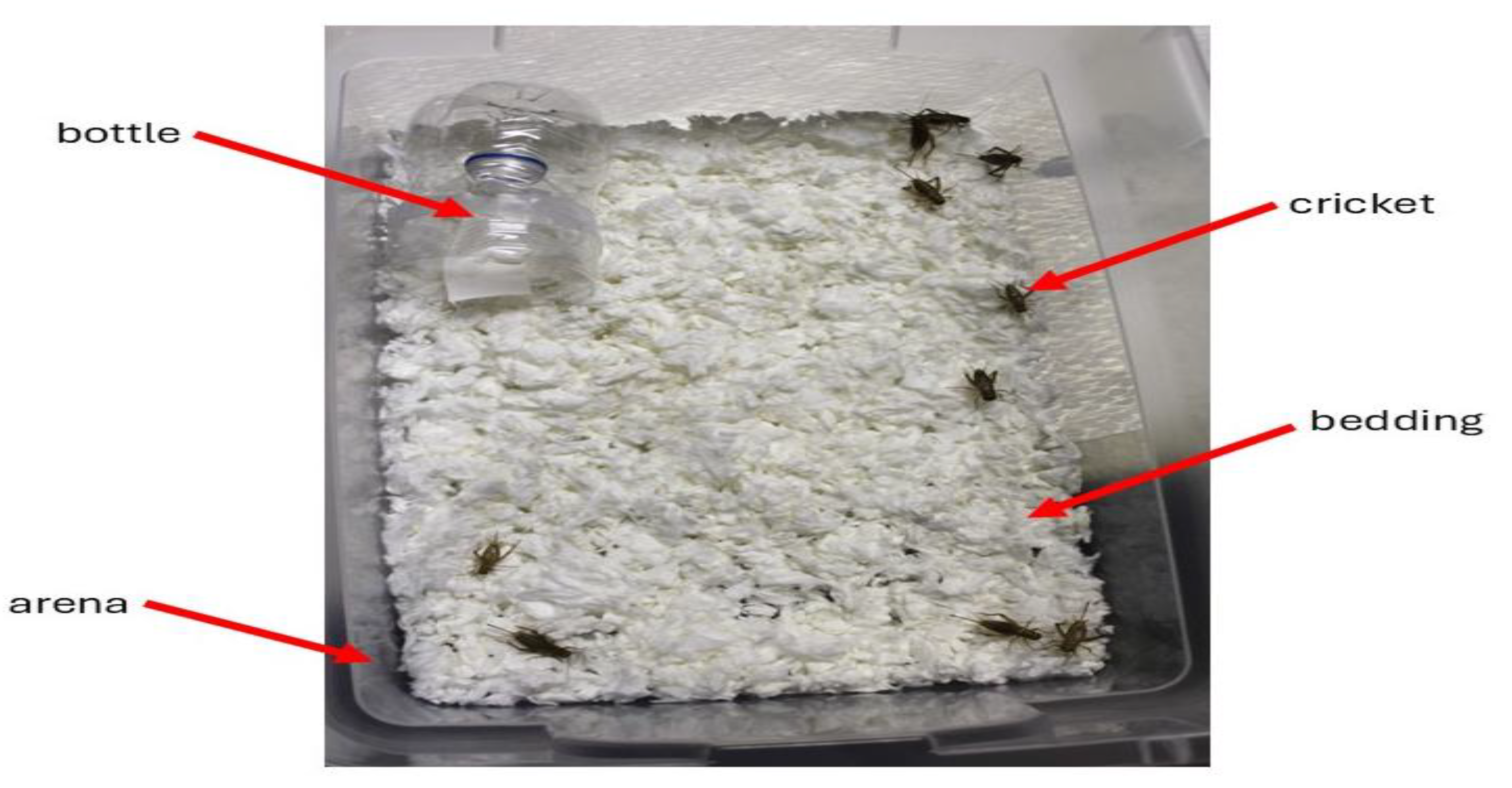
Figure 2.
Overall results showing the degree of repellency elicited by 27 essential oils. Repellency was expressed as percent entry into a plastic bottle containing a test essential oil. Ethanol was used for all control experiments. Percent entry for test compounds was compared with that for the control compound (69.8%). Asterisks indicate essential oils that did not elicit significant repellency.
Figure 2.
Overall results showing the degree of repellency elicited by 27 essential oils. Repellency was expressed as percent entry into a plastic bottle containing a test essential oil. Ethanol was used for all control experiments. Percent entry for test compounds was compared with that for the control compound (69.8%). Asterisks indicate essential oils that did not elicit significant repellency.
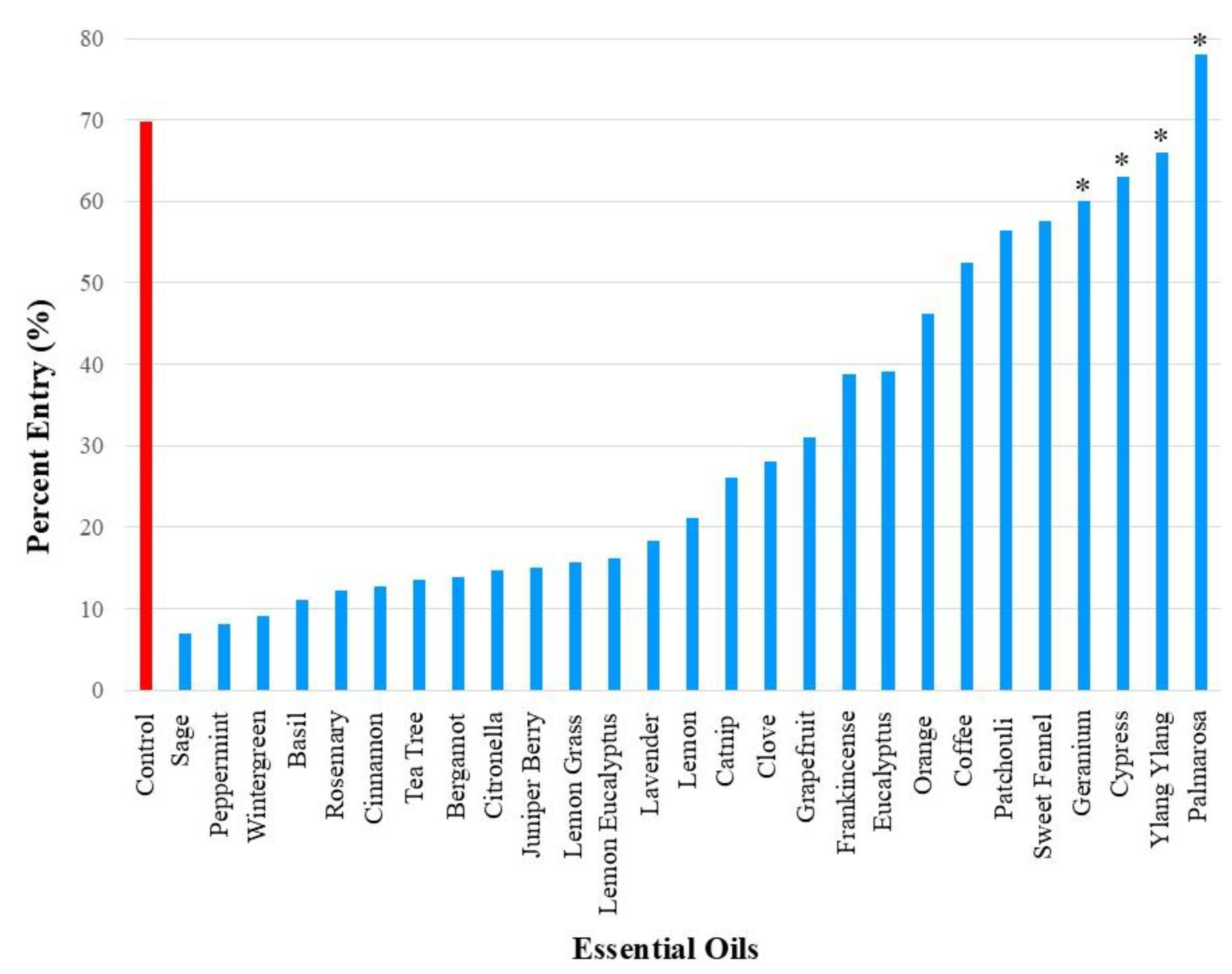
Figure 3.
Repellency results of the essential oils exhibiting the strongest repellency (i.e., percent entry range: 0 - 25%) using a 50-µg dose are shown. Repellency was expressed as percent entry into a plastic bottle containing the test compound (i.e., essential oil). Ethanol was used for all control experiments. Percent entry for test compounds was compared with that for the control compound (69.8%). All essential oils in this figure elicited significant repellency.
Figure 3.
Repellency results of the essential oils exhibiting the strongest repellency (i.e., percent entry range: 0 - 25%) using a 50-µg dose are shown. Repellency was expressed as percent entry into a plastic bottle containing the test compound (i.e., essential oil). Ethanol was used for all control experiments. Percent entry for test compounds was compared with that for the control compound (69.8%). All essential oils in this figure elicited significant repellency.
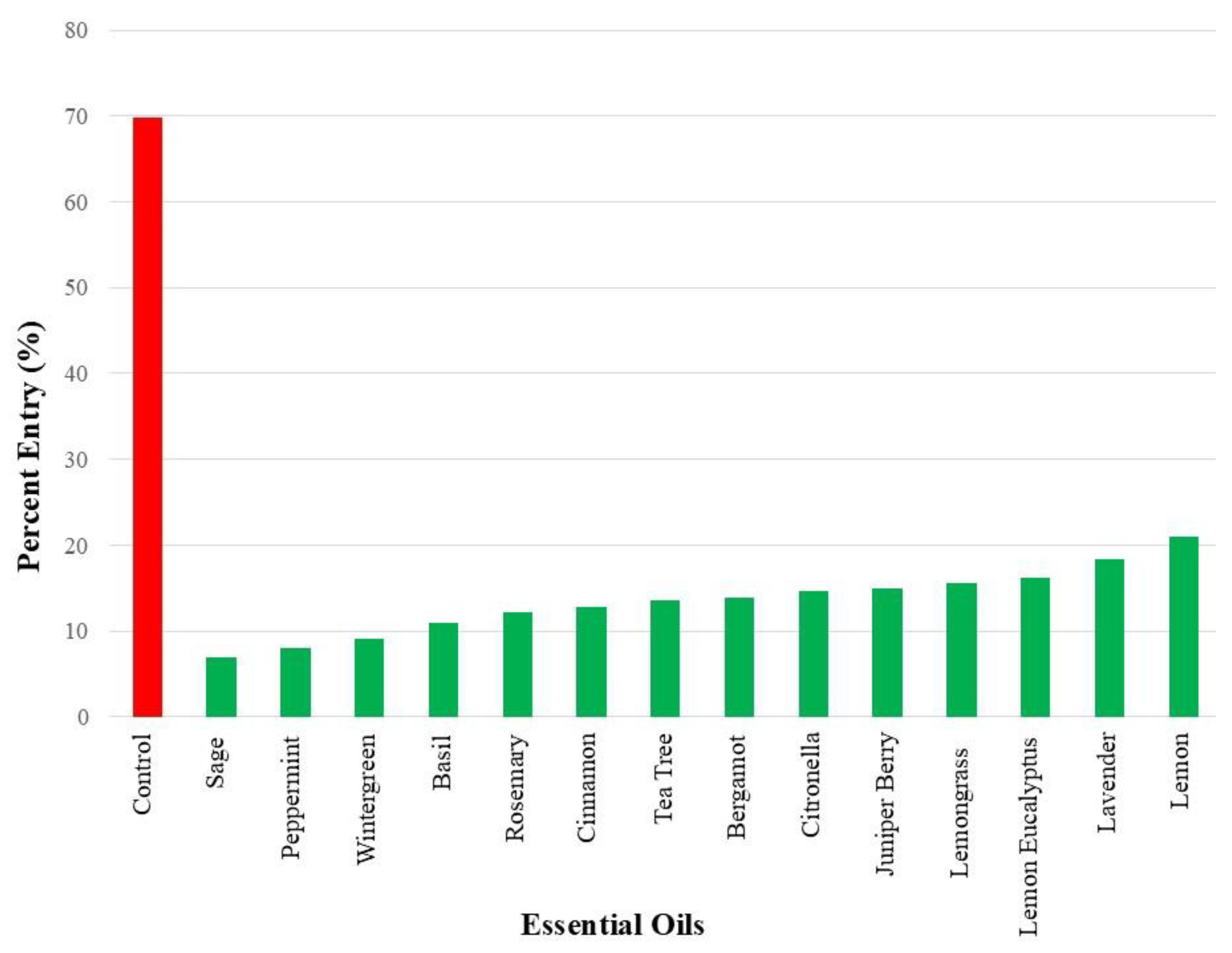
Figure 4.
Results of repellency tests showing the essential oils that exhibited medium repellency (i.e., percent entry range > 25 - 50%) using a 50-µg dose. Repellency was expressed as percent entry into a plastic bottle containing the test compound (i.e., essential oil). Ethanol was used for all control experiments. Percent entry for test compounds was compared with that for the control compound (69.8%). All essential oils in this figure elicited significant repellency.
Figure 4.
Results of repellency tests showing the essential oils that exhibited medium repellency (i.e., percent entry range > 25 - 50%) using a 50-µg dose. Repellency was expressed as percent entry into a plastic bottle containing the test compound (i.e., essential oil). Ethanol was used for all control experiments. Percent entry for test compounds was compared with that for the control compound (69.8%). All essential oils in this figure elicited significant repellency.
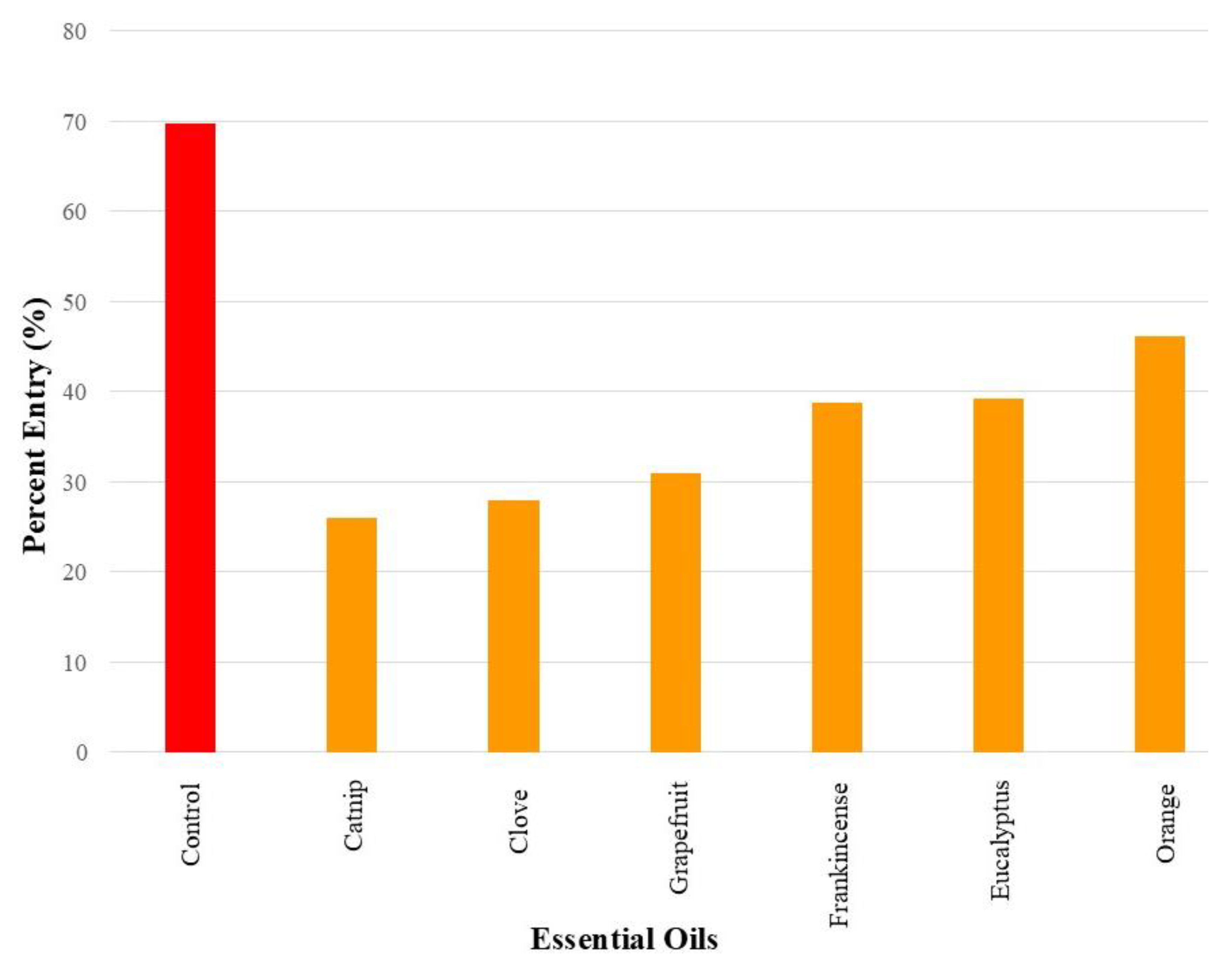
Figure 5.
Results of repellency tests showing the essential oils that exhibited weak repellency (i.e., percent entry range (>50% - <70%) using a 50-µg dose. Only coffee, patchouli, and sweet fennel elicited significant repellency. Four compounds did not elicit significant repellency, namely geranium, cypress, ylang ylang, palmarosa indicated by the asterisks. Repellency was expressed as percent entry into a plastic bottle containing the test compound (i.e., essential oil). Ethanol was used for all control experiments. Percent entry for test compounds was compared with that for the control compound (69.8%).
Figure 5.
Results of repellency tests showing the essential oils that exhibited weak repellency (i.e., percent entry range (>50% - <70%) using a 50-µg dose. Only coffee, patchouli, and sweet fennel elicited significant repellency. Four compounds did not elicit significant repellency, namely geranium, cypress, ylang ylang, palmarosa indicated by the asterisks. Repellency was expressed as percent entry into a plastic bottle containing the test compound (i.e., essential oil). Ethanol was used for all control experiments. Percent entry for test compounds was compared with that for the control compound (69.8%).
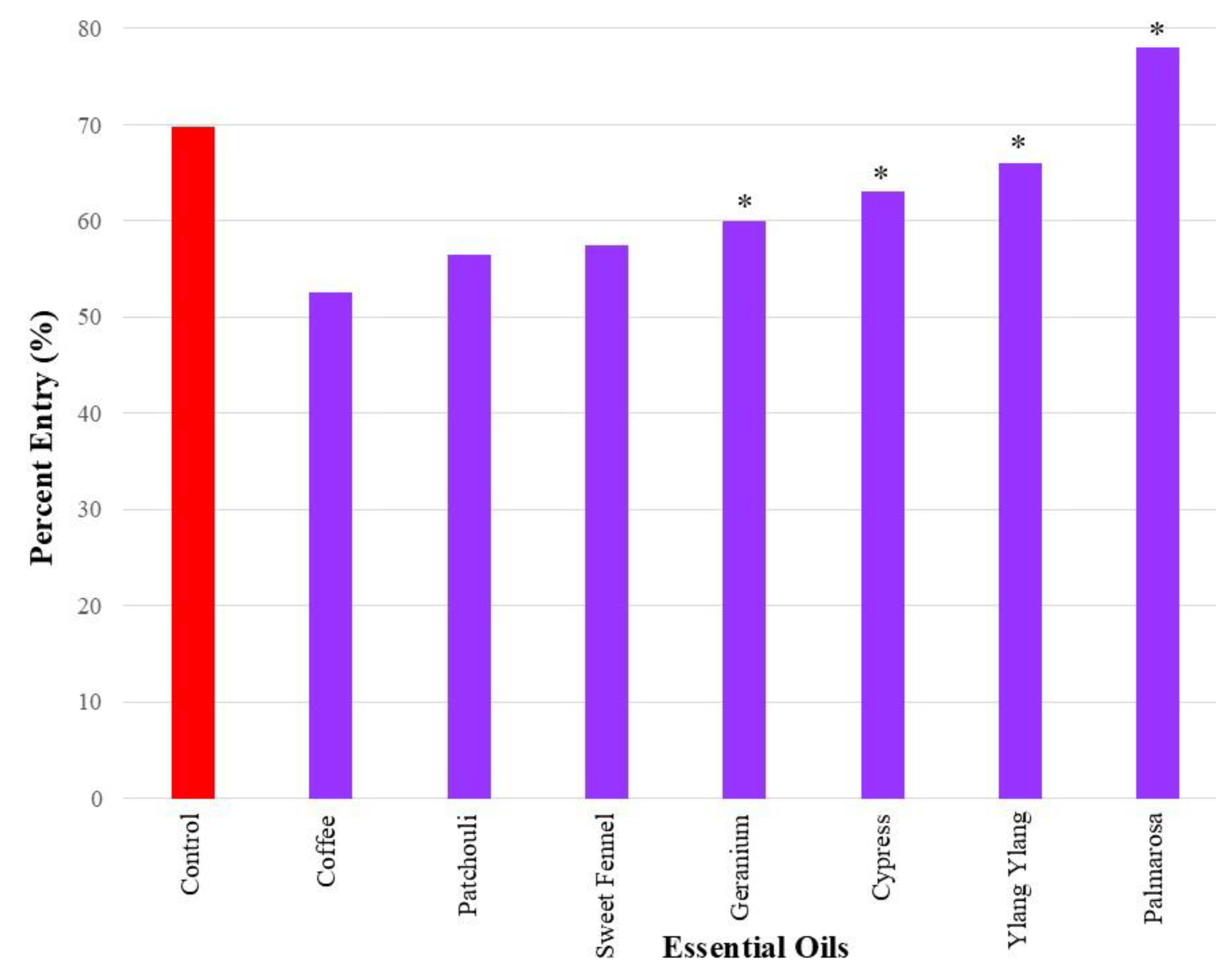
Figure 6.
Dose-response curves for four essential oils eliciting strong repellency, namely A) peppermint, B) rosemary, C) cinnamon, and D) lemongrass at 0.05µg 0.5 µg, 5 µg, and 50µg. Each test compound was applied to a filter paper disk which was then placed in an empty bottle. Control experiments were run in a similar manner by applying alcohol to a filter paper disk. The hatched line indicates the RD50 concentration (concentration which represented 50% of the insect population that was repelled). The RT (repellency threshold) concentrations represents the lowest concentrations at which repellency was significantly different from that of the control.
Figure 6.
Dose-response curves for four essential oils eliciting strong repellency, namely A) peppermint, B) rosemary, C) cinnamon, and D) lemongrass at 0.05µg 0.5 µg, 5 µg, and 50µg. Each test compound was applied to a filter paper disk which was then placed in an empty bottle. Control experiments were run in a similar manner by applying alcohol to a filter paper disk. The hatched line indicates the RD50 concentration (concentration which represented 50% of the insect population that was repelled). The RT (repellency threshold) concentrations represents the lowest concentrations at which repellency was significantly different from that of the control.
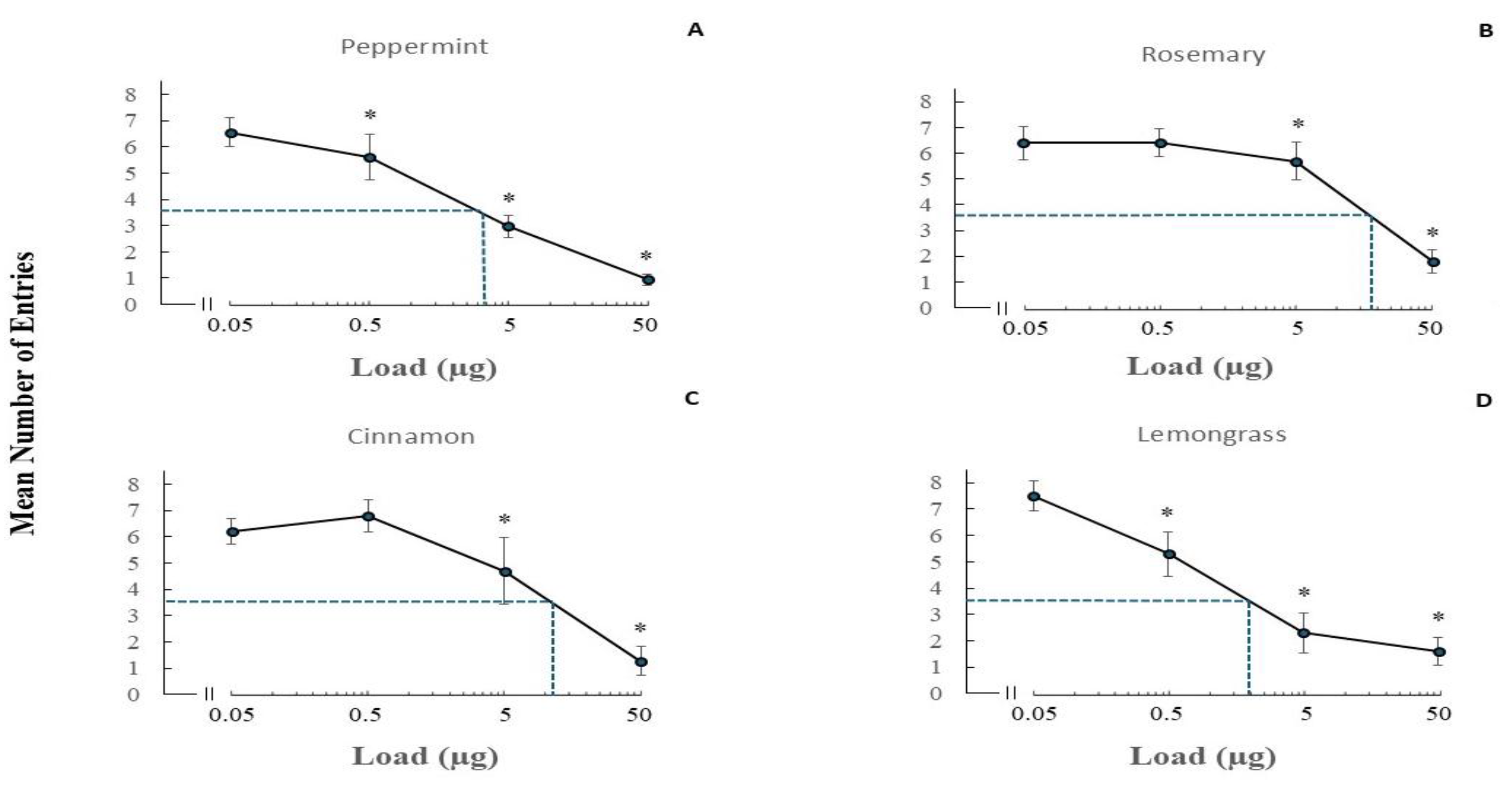

Table 1.
Essential oils tested in this study belonging to 12 plant families.
 |
Note: Resources used [21].
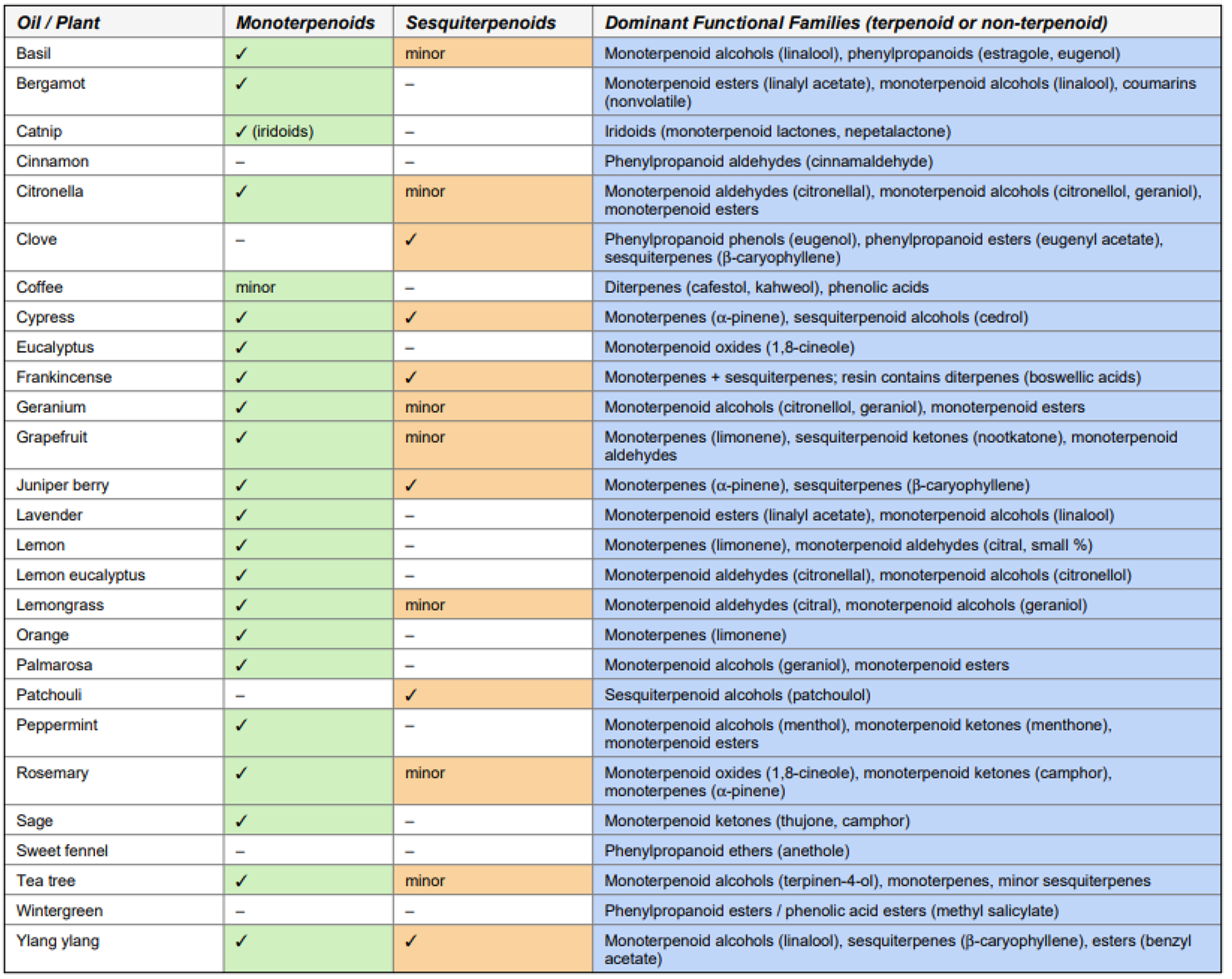
Table 3.
Categorization of 14 essential oils exhibiting the strongest repellency organized into five main odor groups.
Disclaimer/Publisher’s Note: The statements, opinions and data contained in all publications are solely those of the individual author(s) and contributor(s) and not of MDPI and/or the editor(s). MDPI and/or the editor(s) disclaim responsibility for any injury to people or property resulting from any ideas, methods, instructions or products referred to in the content. |
© 2025 by the authors. Licensee MDPI, Basel, Switzerland. This article is an open access article distributed under the terms and conditions of the Creative Commons Attribution (CC BY) license (http://creativecommons.org/licenses/by/4.0/).
Copyright: This open access article is published under a Creative Commons CC BY 4.0 license, which permit the free download, distribution, and reuse, provided that the author and preprint are cited in any reuse.


