
Submitted:
26 December 2025
Posted:
26 December 2025
You are already at the latest version
Abstract
Existing experimental results are sometimes difficult to guide the design of a water mist fire extinguishing system ascribing to many factors that affect the fire extinguishing per-formance of water mist. This paper sums up the factors and combs the logical relation-ships between them based on fire extinguishing mechanism of water mist and existing literature. Direct influence factors on fire extinguishing performance are analyzed em-phatically by the model of movement, heat transfer and mass transfer of water mist in the flame zone. The results show that the velocity and diameter of water mist entering the flame zone can be determined according to the temperature difference and the height of flame without considering the action of the flame plume. The water mist will enter the flame zone from the top and the periphery of the flame when the plume effect cannot be ignored. And the maximum heat absorption power of the water mist entering through the two ways should be obtained when determining the velocity and diameter of the water mist. This research can serve as a theoretical basis for the design of a water mist fire ex-tinguishing system.
Keywords:
water mist
; pool fire
; fire extinguishing performance
; flame cooling
; flame plume
1. Introduction
Water is one of the most common extinguishing agents. Firefighting systems with water are widely used. However, the commonly used water extinguishing systems such as hydrant fire extinguishing systems, automatic sprinkler systems have many defects. The possibility of destroying protected objects is the main drawback. And high water consumption and large residual water stains are also the disadvantages of these systems. In recent years, enhancing the efficiency and reducing the damage of water extinguishing systems has become a hot spot on the research of water extinguishing technology[1,2]. Water mist fire extinguishing technology is widely concerned due to its less water consumption, less residue, and even can extinguish the electrical fire[3,4,5,6].
The research target of water mist fire extinguishing technology is to open out the coupling relationship between fire source and water mist system and to find out the best design parameters of a water mist system. Simulation and experimentation are two main research methods. Fire Dynamics Simulator (FDS) is an important simulation tool. However, the basis of extinguishing judgment in FDS model is based on two mechanisms of surface cooling and suffocating, which leads to the underestimation of the fire extinguishing performance of water mist and the difference between the simulation results and the actual results. Experimental study is an essential method to explore the coupling relationship between fire source and water mist system. Representative research results can be divided into three categories, as shown in Table 1.
Sprinkler operating mode includes working pressure, flow rate, and injection mode in Table 1. The working pressure used in the experiment ranges from 0.3MPa to 10 MPA or higher. Although most studies[8,10,11,16] show that smaller water mist and larger initial velocity which could be produced by higher working pressure can cool the flame better, the operation of the whole water mist system will be challenged when the pressure increases. The fire extinguishing performance of water mist is also affected by flow rate. The experimental results of Arvidson[15] show that a water discharge density of at least 10mm/min is necessary to provide fire suppression for a heavy cargo vehicle fire. And the experimental results of Gupta[14] for small size indirect contact fire extinguishing show that the optimal flow rate is 210ml/min for 6.5KW fire sources. It can be observed in the research results that different researchers have different ways of describing the flow, and the magnitude of the flow is greatly affected by the fire scene. Injection mode is another important research content of sprinkler operating mode. The research includes single phase flow and multiphase flow[12,13,17], continuous spray and periodic spray[19,20], vertical spray and horizontal spray[7,9]. The sprinkler structure parameters include internal structure, the number of nozzles, aperture, spray angle and so on. The concentration of water mist in the flame zone and the fire extinguishing efficiency can be enhanced through the smaller spray angle[21,22]. Research on the sprinkler location involves the vertical height and horizontal distance between the sprinkler and the fire source. Due to the small momentum of the water mist, reducing the sprinkler height will be more conducive to extinguish the fire[23,26,27].
The choice of experimental parameters is quite different, and the experimental results cannot be compared well owing to so many factors and different priorities. The logical relationship between influencing factors and fire extinguishing performance cannot be disclosed. In this paper, the factors that affect the fire extinguishing performance of water mist are summarized based on the fire extinguishing mechanism of the oil pool and existing research literature. The model of movement, heat transfer and mass transfer of water mist in the flame zone is established to analyze the quantitative relationship between the direct influence factors and fire extinguishing performance. The results provide a theoretical basis for the design of a high efficiency water mist system.
2. Materials and Methods
2.1. Key Factors of Pool Fire Extinguishing Efficiency
The results[28,29] show that the mechanism of pool fire extinguishing by water mist includes cooling the flame, attenuation of heat radiation, dilution of fuel vapor and oxygen, and cooling fuel surface, as shown in Figure 1. In an unconfined space, it is difficult for water mist to extinguish the fire by diluting oxygen even if it is completely vaporized. In this case, the fire can only be extinguished by cooling the flame or cooling the fuel surface. It can be extinguished by surface cooling for liquids with a higher flash point (higher than normal ambient temperature, such as diesel) even if the water mist fails to extinguish the flame in the flame zone. However, for liquid fuel with a low flash point (below ambient temperature, such as alcohol, gasoline), water mist is unlikely to lower the fuel temperature below the flash point and it can only be extinguished by cooling the flame.
The heat feedback from the flame provides energy for the evaporation of liquid fuel. The combustion will not be weakened unless the flame temperature is reduced. So, flame cooling effect is the key to fire extinguishing performance for liquid fire, especially for liquid fire with lower flash point. The water mist utilization efficiency and flame cooling effect are related to the amount of vaporization because the heat absorption capacity of water vaporization increases 7.2 times at room temperature. It can be observed in Figure 1 that the vaporization of water mist in the flame zone is closely related to the characteristics of the flame and the water mist. The flame characteristics are determined by the fire source include velocity, temperature, and height. And water mist characteristics are controlled by the spray include concentration, diameter, and velocity. The factors affecting the fire extinguishing performance of water mist can be summed up in Figure 2 with Table 1 and the above analysis.
It can be seen from Figure 2 that the factors affecting the fire extinguishing performance of water mist can be divided into two categories: direct factors and indirect factors. The mechanism of indirect influencing factors on fire extinguishing performance is complex. However, existing experimental studies mainly explore the corresponding relationship between the indirect factors or the indirect factors and the direct factors, which lead to the conclusion of the experimental research can only be used in some specific fire scenarios. Finding out the relationship between the direct factors will be more helpful to clarify the relationship between the factors and make the design of a water mist system easier and more reliable.
2.2. Models
2.2.1. Movement of a Droplet
The following assumptions are made for water mist entering the flame zone:
(1) Only vertical velocity is considered when water mist enters the flame zone.
(2) Interaction between droplets was not taken into account base on the volume concentration of droplets is small.
(3) The water mist enters the flame zone from the top of the flame, and each droplet has the same initial diameter and initial velocity.
The main forces of a droplet in the flame zone are gravity, buoyancy and viscous resistance founded on the above assumptions. The equation of motion is as follows.
where, mp is the mass of a droplet, kg; up is the droplet velocity, m/s; t is the droplet’s moving time, s; F is the viscous resistance of the airflow to the droplets, N; g is the gravity acceleration, m/s2; ρp is the density of droplets, kg/m3; ρ is the density of the surrounding airflow, kg/m3.
Viscous resistance of airflow to a droplet can be expressed as[30]:
Here, us is the velocity of airflow, m/s; Ap=πdp2/4 is the cross-sectional area of the droplet, m2; dp is the diameter of the droplet, m; cd is the coefficient of motion resistance.
The mass of a droplet can be expressed as:
Resistance coefficient is a function of the local Reynolds number[31].
Reynolds number is:
Here, μs is gas dynamic viscosity coefficient, Pa⸱s.
Replace formula (2)–(5) with (1), the equation of motion is:
where, γs is the viscosity coefficient of gas motion, m2/s, it can be expressed as:
2.2.2. Heat and Mass Transfer Between Water Mist and Flame
The following assumptions are made for heat and mass exchange processes in the flame zone:
(1) The temperature of the flame zone is stable and the heat transfer between the droplet and the flame is steady.
(2) The process of water mist heating before vaporization is neglected due to the flame temperature is higher and heat transfer time is shorter.
(3) The influence of vapor flow is not considered.
Mass vaporization rate of individual droplet under the condition of forced convection can be expressed as[32]:
Here, Nu is the Nusselt number of droplets; λvis the gas thermal conductivity, w/m⸱K; cp is the specific heat at constant pressure of gas, kJ/kg⸱K; B is transfer parameter.
Here, Pr≈0.7, is the Prandtl number of airs.
Λ and cp can be determined by the characteristic temperature. The characteristic temperature can be determined by 1/3 rule, which can be expressed as[34]:
where, Tf is the flame zone temperature, K; Ts is the boiling point of water, K.
B can be approximate calculated using the following formula[35]:
where, hv is the latent heat of vaporization of water at Ts, kJ/kg.
Replace formula (5) (9) (11) with (8), the vaporization equation of a droplet can be expressed as:
2.2.3. Heat Exchange Distance of a Droplet
Droplets in flame zone will continue to vaporize, the distance before full vaporization can be calculated by the following formula.
Here, tlife is the time of complete vaporization of a droplet, s.
2.2.4. Model Calculation
The analytical solution cannot be obtained by the equations consisting of (6) (12) (13). The partial representative numerical solution is obtained by MATLAB. The parameters selected in the calculation are presented in Table 2.
3. Results
3.1. Results Without Considering Plume Velocity
3.1.1. Effect of Initial Velocity
Figure 3 shows the effect of droplet initial velocity on heat exchange distance. It can be seen that the initial velocity of the droplet and the heat exchange distance are approximately linear increments, and the slope of the fitting line is small. The slope of the fitting line with different initial diameters is approximately equal. The heat exchange distance cannot be effectively increased by increasing the initial velocity of the water mist. Therefore, the heat exchange distance cannot be increased significantly by heightening the working pressure of the nozzle. Compare with Figure 3a,b, the linear increasing relationship between droplet initial velocity and heat exchange distance does not change even the heat transfer temperature difference increases, but the heat exchange distance decreases obviously.
3.1.2. Effect of Initial Diameter
The initial diameter of a water mist is exponentially related to the heat exchange distance in Figure 4. The diameter is tied to the specific surface area, and the specific surface area determines the heat transfer rate between water mist and flame. The penetration ability of water mist to flame can be significantly increased by increasing the initial particle size, but the heat transfer capacity of water mist can also be weakened due to the reduction of the specific surface area. In addition, the heat exchange distance decreases with the increases of heat transfer temperature difference.
3.2. Results Considering Plume Velocity
3.2.1. Effect of Initial Velocity
Figure 5a shows the influence of the initial velocity of water mist on the heat exchange distance when the flame plume velocity is -2m/s and the heat transfer temperature difference is 400℃. The initial velocity of the droplet is still proportional to the distance of the heat exchange. The slope of the fitting line with different initial diameters is quite different. The larger the initial diameter, the larger the slope. Therefore, the increase of initial velocity can significantly increase the heat exchange distance of water mist with larger initial diameter. Figure 5b compares the effect of droplet initial velocity on heat exchange distance at different plume velocities. The heat exchange distance reduces significantly under the action of the plume. The penetration distance of water mist is only 0.284m even if the initial velocity is 9m/s.
3.2.2. Effect of Initial Diameter
Figure 6a demonstrates that the initial diameter of the water mist is exponentially related to the heat exchange distance. The heat exchange distance increases slowly with the increase of the initial diameter when the initial diameter is less than 400μm, but increases faster when the initial diameter is greater than 400μm. Figure 6b compares the effects of the initial diameter of water mist on the heat exchange distance at different plume velocities. The heat exchange distance of water mist decreases significantly under the action of the flame plume, and the larger the initial diameter, the larger the heat exchange distance decreases. Therefore, it is difficult to increase the flame penetration ability of water mist by increasing the initial diameter considering the effects of the plume.
3.2.3. Vaporization Efficiency
Water mist is carried out of the flame zone by flame plume without completely vaporizing due to the influence of flame plume. Figure 7a sets out the effect of initial velocity on the vaporization efficiency of water mist. The vaporization efficiency increases with the increases of the initial velocity, but the growth rate holds back. Figure 7b displays the effect of the increase of initial diameter on the vaporization efficiency of water mist. The vaporization efficiency increases with the increases of the initial diameter. The increase of initial diameter has little effect on the vaporization efficiency when the initial diameter is less than 400μm, but the vaporization efficiency increases rapidly when the initial diameter is greater than 400μm. However, it is worth noting that the vaporization efficiency can be improved by increasing the initial diameter, but the heat transfer rate decreases obviously due to the significant decrease of the quantity and specific surface area when the quality of water mist in the flame zone is fixed. The heat of the flame zone cannot be got rid of quickly for the purpose of cooling the flame to extinguish the fire.
4. Discussion
4.1. Optimum Initial Velocity and Diameter Without Considering Plume Velocity
Studies have demonstrated that it is possible to extinguish the fire through flame cooling when 30-60% [36] of the heat generated by combustion is taken away. The utilization efficiency of water mist is determined by the amount of vaporization and the speed of cooling is determined by the rate of vaporization. Therefore, it can be extinguished by cooling the flame when the water mist penetrates at least 1/3~2/3 of the height of the flame and take away all the heat in the penetrating area per unit time. Water mist should be completely vaporized in order to make the best use of it. These are the conditions that the best water mist should satisfy.
The optimum initial velocity and diameter of water mist can be determined by Figure 3 and Figure 4 when the heat transfer temperature difference and flame height are known. Some formulas can be used to estimate that if these two parameters are unknown.
For pool fire[39],
where, Tp is the average temperature of flame plume at the height of z, K; Tz is the thermodynamic temperature of ambient air at the height of z, K; Qc is the convection part of the total heat release rate Q of the fire source, KW; is the mass flow of plume at the height of z, kg/s; Q is the total heat release rate of fire source, KW; z is the height of calculated cross section, m; ΔH is the combustion heat of fuel, kJ/kg; is the mass loss rate of infinite oil tank, kg/m2⸱s; κ is the light absorption coefficient of flame; β is the correction of effective thickness of gases; D is the oil basin diameter, m; S is the oil basin area, m2.
(2) The height of the natural diffusion flame[40]:
where, zf is the average height of flame, m; C7≈0.235 is the empirical constant; Df is the diameter of fire source, m.
It should be pointed out that Figure 3 and Figure 4 are the numerical solution obtained under the condition of durable heat transfer. The values given in Figure 3 and Figure 4 do not guarantee that the water mist will always vaporize completely before reaching the fuel surface owing to the change of the flame temperature actually.
4.2. Optimum Initial Velocity and Diameter Considering Plume Velocity
The water mist will enter the flame zone from the top and around of the flame under the influence of the flame plume. The heat exchange distance of water mist from the top will grow with the increase of the initial velocity and diameter. But the amount of water mist from the around will decrease with the increase of the initial velocity and diameter. Therefore, there must be a velocity and diameter to maximize heat absorption power of water mist through two ways. The study of Shrigondekar[27] indicates the existence of this particular velocity and diameter. Figure 8 shows the results of the experiment. It shows the relationship between the distance from the nozzle to the fuel pan and the mean extinguishing time for a diesel fuel fire with a pan diameter of 0.1m. The mean extinguishing time does not increase with the increase of the distance. There are two fluctuating values at 1.5m and 2.0m which suggest that the water mist entering the flame zone is larger in these two cases. Further analysis of plume entrainment is required to determine the optimum water mist velocity and diameter.
4.3. Water Mist Mass Flow
What is analyzed here is the mass flow that actually enters the flame zone. In the actual fire extinguishing, the vaporization efficiency of water mist will be affected by the type of fire source, the way water mist enters and the characteristics of water mist. There are two kinds of limit cases. The first is that the water mist vaporize completely, and the other is that the water mist does not vaporize. The heat taken away by water mist can be expressed as:
where, Q’ is the heat taken away by water mist, KW; m is the mass flow that actually enters the flame zone, kg/s; cw is the specific heat of water, 4.19kJ/kg⸱℃; T0 is the temperature of the water mist as it enters the flame, ℃; ƞ is the vaporization ratio of water mist in the flame zone.
Q′ = mcw(Ts − T0) + ηmhv
As pointed out earlier in the article, fire can be extinguished by flame cooling when 30%~60% of the heat generated by combustion is taken away. The minimum water mist mass flow is 0.023kg/s and the maximum water mist flow is 3.14kg/s at T0=20℃ and 60% heat is taken away per unit time for 100KW fire. The difference is 137 times. The vaporization rate must be increased in order to increase the utilization efficiency of water mist.
5. Conclusions
The factors affecting the fire extinguishing efficiency of water mist are divided into two categories: direct and indirect factors. Direct influence factors include flame temperature, flame height, flame velocity, water mist concentration, water mist diameter, and water mist velocity.
The effect of droplet initial diameter on heat exchange distance is greater than that of droplet initial velocity when the flame plume is not considered. The optimum velocity and diameter of water mist entering the flame zone can be determined by heat transfer temperature difference and flame height.
The water mist will enter the flame zone from the top and the periphery of the flame due to the impact of the flame plume. The utilization efficiency and cooling ability are significantly reduced because the water mist entering from the top is carried out of the flame zone by plume without full vaporization. But some of the water mist was brought into the flame zone by the flame plume. Therefore, heat absorption power of water mist entering directly and sucking into the flame zone should be taken into account when determining the velocity and diameter of water mist so as to maximize the sum of the two.
The vaporization rate of water mist in the flame zone should be increased so as to improve the utilization efficiency of water mist and reduce water consumption.
Further analysis of plume entrainment is needed to determine the optimum water mist velocity and diameter.
Author Contributions
Conceptualization, J.L.; methodology, J.L.; software, M.H.; writing—original draft preparation, J.L.; writing—review and editing, M.H.; project administration, M.H.. All authors have read and agreed to the published version of the manuscript.
Funding
Please add: This research was funded by the Science and Technology Research Project of the Education Department of Hubei Province, grant number D20244504.
Data Availability Statement
The original contributions presented in the study are included in the article, further inquiries can be directed to the corresponding author.
Conflicts of Interest
The authors declare no conflicts of interest.
References
- Dasgotra, A., G. Rangarajan, and S.M. Tauseef, CFD-based study and analysis on the effectiveness of water mist in interacting pool fire suppression. Process Safety and Environmental Protection, 2021. 152: p. 614-629. [CrossRef]
- Zhao, X., et al., Study on the suppression of hydrogen-air explosions by ultrafine water mist containing KCl, K2CO3, or NaCl. Fire Safety Journal, 2025. 153: p. 104356. [CrossRef]
- Zhu, N., Experimental performance evaluation of water mist fire suppression system[D]. Hong Kong: Hong Kong Polytechnic University, 2009.
- Robinet, A., et al., Case study on thermal and flow analysis of a water mist on a pool fire in a ventilated engine compartment. Applied Thermal Engineering, 2025. 258: p. 124694. [CrossRef]
- He, M., et al., Assessment of a method to enhance the momentum of water mist: co-flow jet water mist system[OL]. Fire Technology, 2021: p. [CrossRef]
- Liu, L., et al., Inhibitory effects of water mist containing alkali metal salts on hydrogen–natural gas diffusion flames. International Journal of Hydrogen Energy, 2024. 51: p. 754-764. [CrossRef]
- Rasbash, D.J., Z.W. Rogowski, and G.W.V. Stark, Mechanisms of extinction of liquid fires with water sprays. Combustion and Flame, 1960. 4: p. 223-234. [CrossRef]
- Kim, M.B., Y.J. Jang, and J.K. Kim, Burning rate of a pool fire with downward-directed sprays. Fire Safety Journal, 1996. 27(1): p. 37-48. [CrossRef]
- Ndubizu, C.C., R. Ananth, and P.A. Tatem, The effects of droplet size and injection orientation on water mist suppression of low and high boiling point liquid pool fires. Combustion Science and Technology, 2000. 157(1): p. 63-86. [CrossRef]
- Liu, J.H., et al., Study of liquid pool fire suppression with water mists by cone calorimeter. Journal of Fire Sciences, 2002. 20(6): p. 465-477.
- Cong, B.H., G.X. Liao, and Z. Huang, Extinction limit of diesel pool fires suppressed by water mist. Journal of Fire Sciences, 2009. 27(1): p. 5-26.
- Huang, X., X.S. Wang, and G.X. Liao, Characterization of an effervescent atomization water mist nozzle and its fire suppression tests. Proceedings of the Combustion Institute, 2011. 33(2): p. 2573-2579. [CrossRef]
- Gupta, M., et al., Experimental evaluation of fire suppression characteristics of twin fluid water mist system. Fire Safety Journal, 2012. 54: p. 130-142. [CrossRef]
- Gupta, M., et al., An experimental study of the effects of water mist characteristics on pool fire suppression. Experimental Thermal and Fluid Science, 2013. 44: p. 768-778. [CrossRef]
- Arvidson, M., Large-scale water spray and water mist fire suppression system tests for the protection of ro–ro cargo decks on ships. Fire Technology, 2014. 50(3): p. 589-610. [CrossRef]
- Liang, T., et al., A study of the probability distribution of pool fire extinguishing times using water mist. Process Safety and Environmental Protection, 2015. 93: p. 240-248. [CrossRef]
- Yu, H.Z., R. Kasiski, and M. Daelhousen, Characterization of Twin-Fluid (Water Mist and Inert Gas) Fire Extinguishing Systems by Testing and Modeling. J Fire Technology, 2015. 51(4): p. 923-950. [CrossRef]
- Pancawardani, F., et al., Analysis of water mist fire suppression system applied on cellulose fire. Procedia Engineering, 2017. 170: p. 344-351. [CrossRef]
- Zhou, Y., et al., Assessment of a clean and efficient fire-extinguishing technique: Continuous and cycling discharge water mist system. Journal of Cleaner Production, 2018. 182: p. 682-693. [CrossRef]
- Deng, Y., et al., Numerical Simulation on Effect of Pulsed Water Mist on Temperature and Thermal Radiation in Long and Narrow Underground Space During Fire. Fire, 2025. 8(9): p. [CrossRef]
- Liu, Z., D. Carpenter, and A.K. Kim, Cooling characteristics of hot oil pool by water mist during fire suppression. Fire Safety Journal, 2008. 43(4): p. 269-281. [CrossRef]
- Liu, Y., et al., Experimental research on the water mist fire suppression performance in an enclosed space by changing the characteristics of nozzles. Experimental Thermal and Fluid Science, 2014. 52: p. 174-181. [CrossRef]
- Kim, M.B., Y.J. Jang, and M.O. Yoon, Extinction limit of a pool fire with a water mist. Fire Safety Journal, 1997. 28(4): p. 295-306. [CrossRef]
- Liao, G., et al., Experimental study on the interaction of fine water spray with liquid pool fires. Journal of Thermal Science, 2001. 10(4): p. 377. [CrossRef]
- Wang, X.S., et al., Preliminary study on the interaction of water mist with pool fires. Journal of Fire Sciences, 2001. 19(1): p. 45-61.
- Wang, X.S., et al., Experimental study on the effectiveness of the extinction of a pool fire with water mist. Journal of Fire Sciences, 2002. 20(4): p. 279-295.
- Shrigondekar, H., A. Chowdhury, and S.V. Prabhu, Characterization of a simplex water mist nozzle and its performance in extinguishing liquid pool fire. Experimental Thermal and Fluid Science, 2018. 93: p. 441-455. [CrossRef]
- Ge, X.X. and X.K. Zhang, Review on water mist fire suppression system. China Public Security, 2006. 5: p. 170-175.
- Richardson, J.R.M.J.K., A Review of Water Mist Fire Suppression Research and Development, 1996. Fire Technology, 1997. 33(1): p. 54-90. [CrossRef]
- Thomas, G.O., The quenching of laminar methane-air flames by water mists. Combustion and Flame, 2002. 130(1): p. 147-160. [CrossRef]
- Ramírez, C.A., Summary of frictional drag coefficient relationships for spheres: Evolving solution strategies applied to an old problem. Chemical Engineering Science, 2017. 168: p. 339-343. [CrossRef]
- Sazhin, S.S., Advanced models of fuel droplet heating and evaporation. Progress in Energy and Combustion Science, 2006. 32(2): p. 162-214. [CrossRef]
- Novozhilov, V., et al., A computational fluid dynamics study of wood fire extinguishment by water sprinkler. Fire Safety Journal, 1997. 29(4): p. 259-282. [CrossRef]
- Cooper, L.Y., The interaction of an isolated sprinkler spray and a two-layer compartment fire environment. International Journal of Heat and Mass Transfer, 1995. 38(4): p. 679-690. [CrossRef]
- Vaari, J., A transient one-zone computer model for total flooding water mist fire suppression in ventilated enclosures. Fire Safety Journal, 2002. 37(3): p. 229-257. [CrossRef]
- Wighus, R., Extinguishment of enclosed gas fires with water sprays. Nasa Sti/recon Technical Report N, 1991. 94: p. 997-1006. [CrossRef]
- Heskestad, G., Fire Plumes, Flame Height, and Air Entrainment, in SFPE Handbook of Fire Protection Engineering, M.J. Hurley, et al., Editors. 2016, Springer New York: New York, NY. p. 396-428.
- McCaffrey, B.J., Purely buoyant diffusion flames: some experimental results[M]. Washington, D. C.: U.S. Department of Commerce, 1979: p. 5-11.
- Ditch, B.D., et al., Pool fires – An empirical correlation. Combustion and Flame, 2013. 160(12): p. 2964-2974.
- Heskestad, G., Engineering relations for fire plumes. Fire Safety Journal, 1984. 7(1): p. 25-32. [CrossRef]
Figure 1.
Schematic diagram of the interaction between water mist and flame.
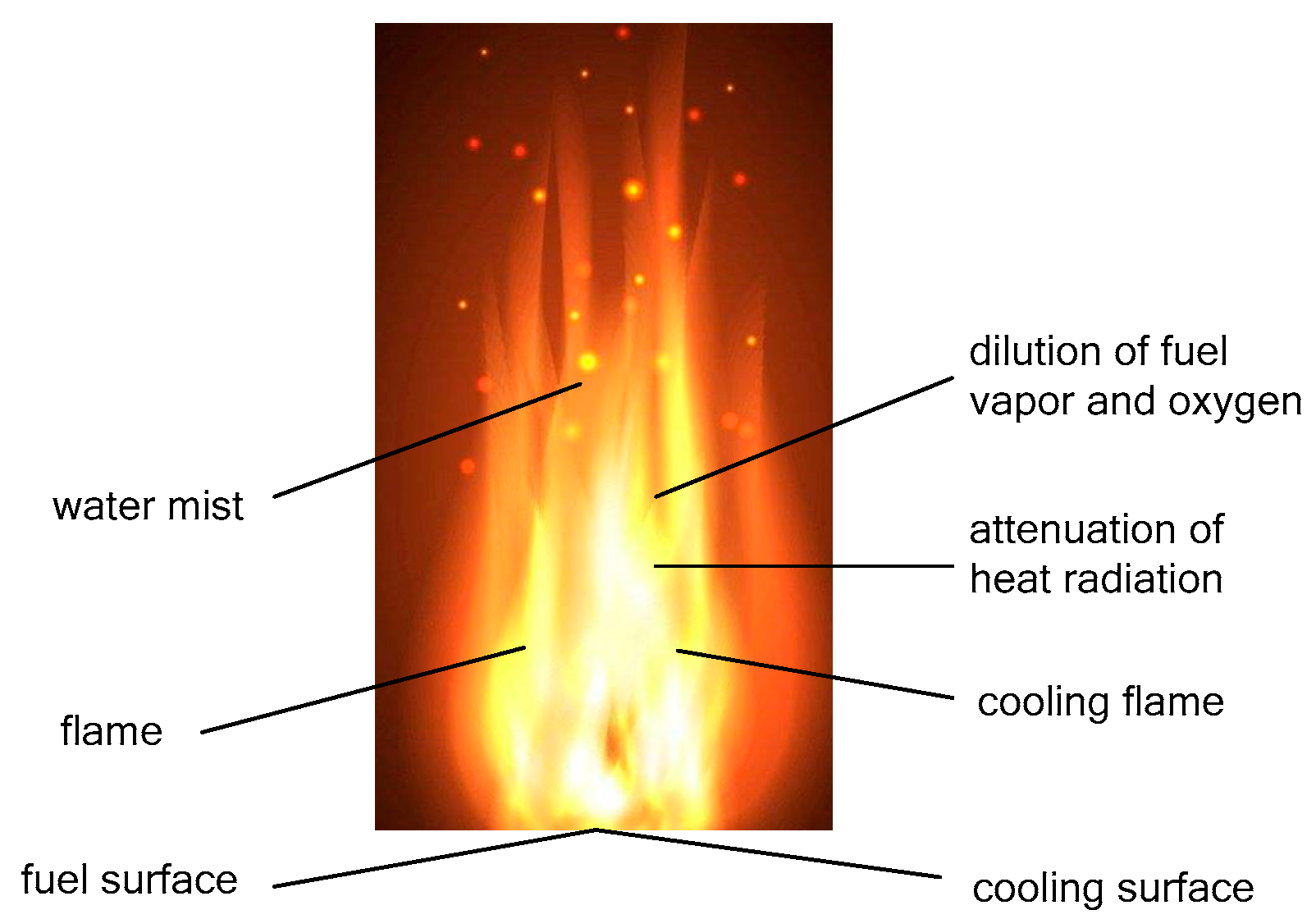
Figure 2.
Relationship of factors affecting fire extinguishing efficiency of water mist.
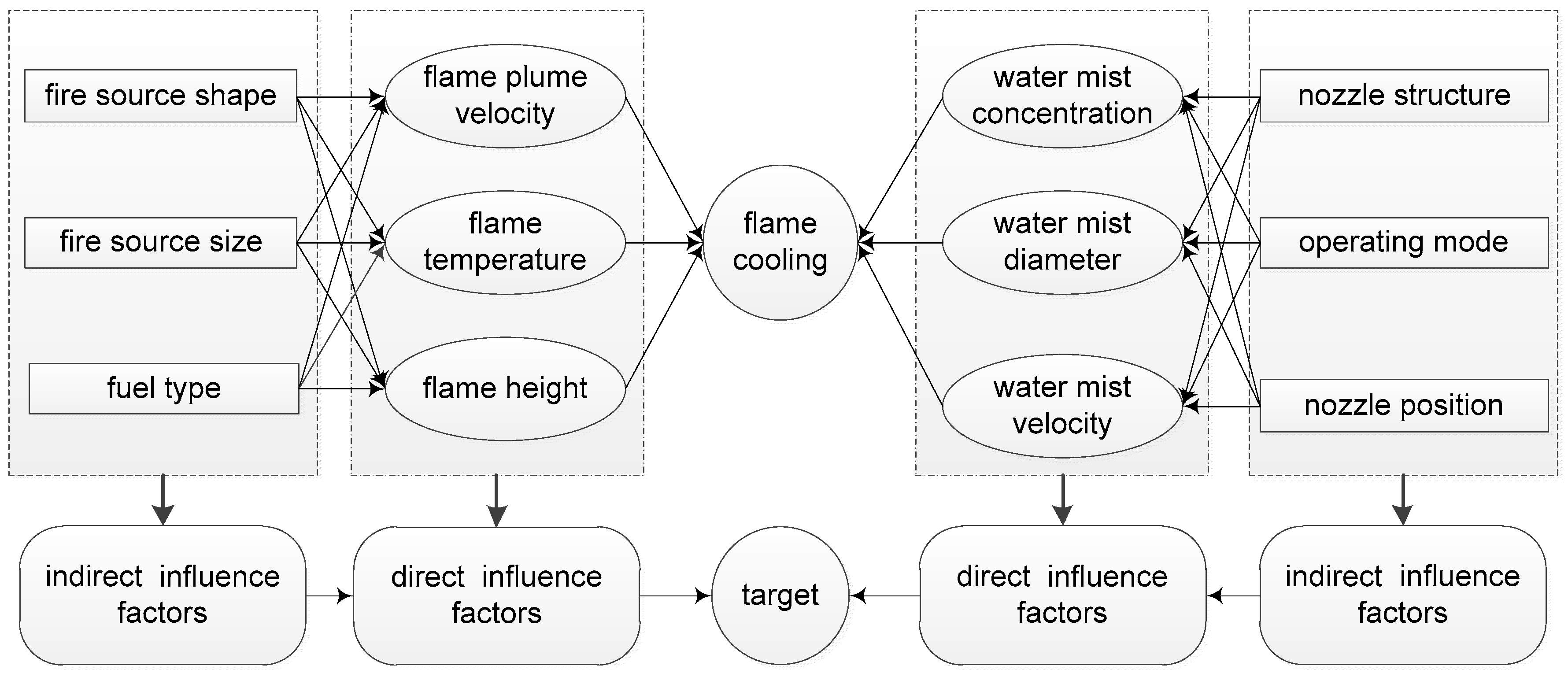
Figure 3.
Effect of initial velocity when the flame plume velocity is 0 and temperature difference is 400℃ and 600℃, respectively.
Figure 3.
Effect of initial velocity when the flame plume velocity is 0 and temperature difference is 400℃ and 600℃, respectively.
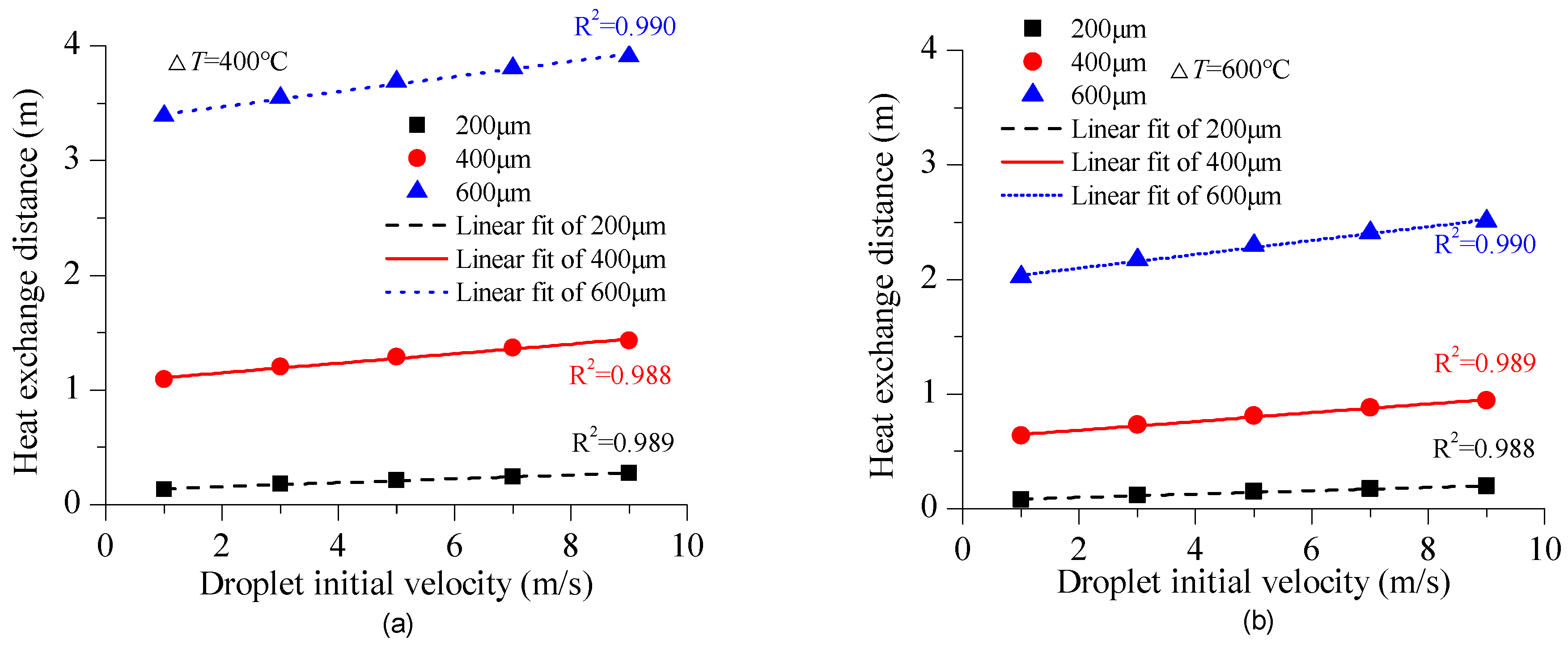
Figure 4.
Effect of initial diameter when the flame plume velocity is 0 and temperature difference is 400℃ and 600℃, respectively.
Figure 4.
Effect of initial diameter when the flame plume velocity is 0 and temperature difference is 400℃ and 600℃, respectively.
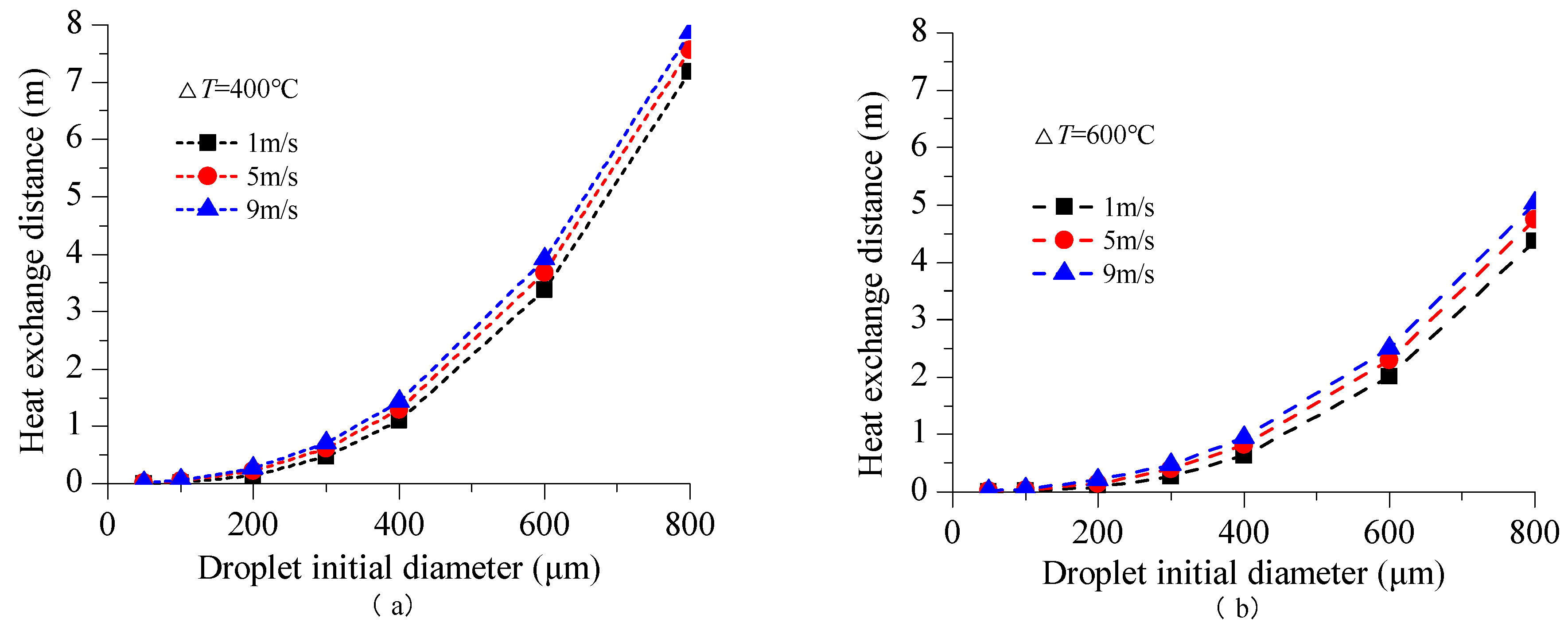
Figure 5.
(a) Effect of initial velocity when the flame plume velocity is -2m/s and the temperature difference is 400℃. (b) Effect of the flame plume velocity and initial velocity of water mist when the temperature difference is 400℃ and the initial diameter of the droplet is 400μm.
Figure 5.
(a) Effect of initial velocity when the flame plume velocity is -2m/s and the temperature difference is 400℃. (b) Effect of the flame plume velocity and initial velocity of water mist when the temperature difference is 400℃ and the initial diameter of the droplet is 400μm.
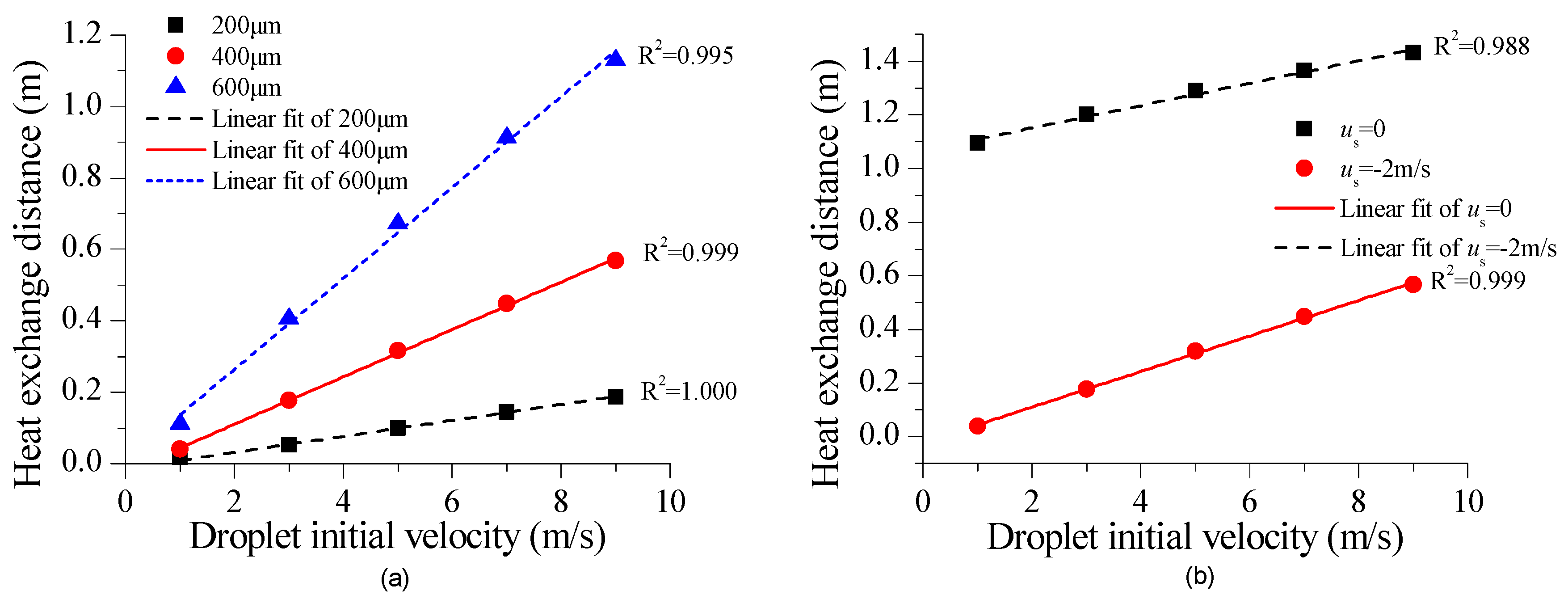
Figure 6.
(a) Effect of the initial diameter when the velocity of the flame plume is -2m/s and the temperature difference is 400 ℃. (b) Effect of the flame plume velocity and initial diameter of water mist when the temperature difference is 400℃ and the initial velocity of the droplet is 5m/s.
Figure 6.
(a) Effect of the initial diameter when the velocity of the flame plume is -2m/s and the temperature difference is 400 ℃. (b) Effect of the flame plume velocity and initial diameter of water mist when the temperature difference is 400℃ and the initial velocity of the droplet is 5m/s.
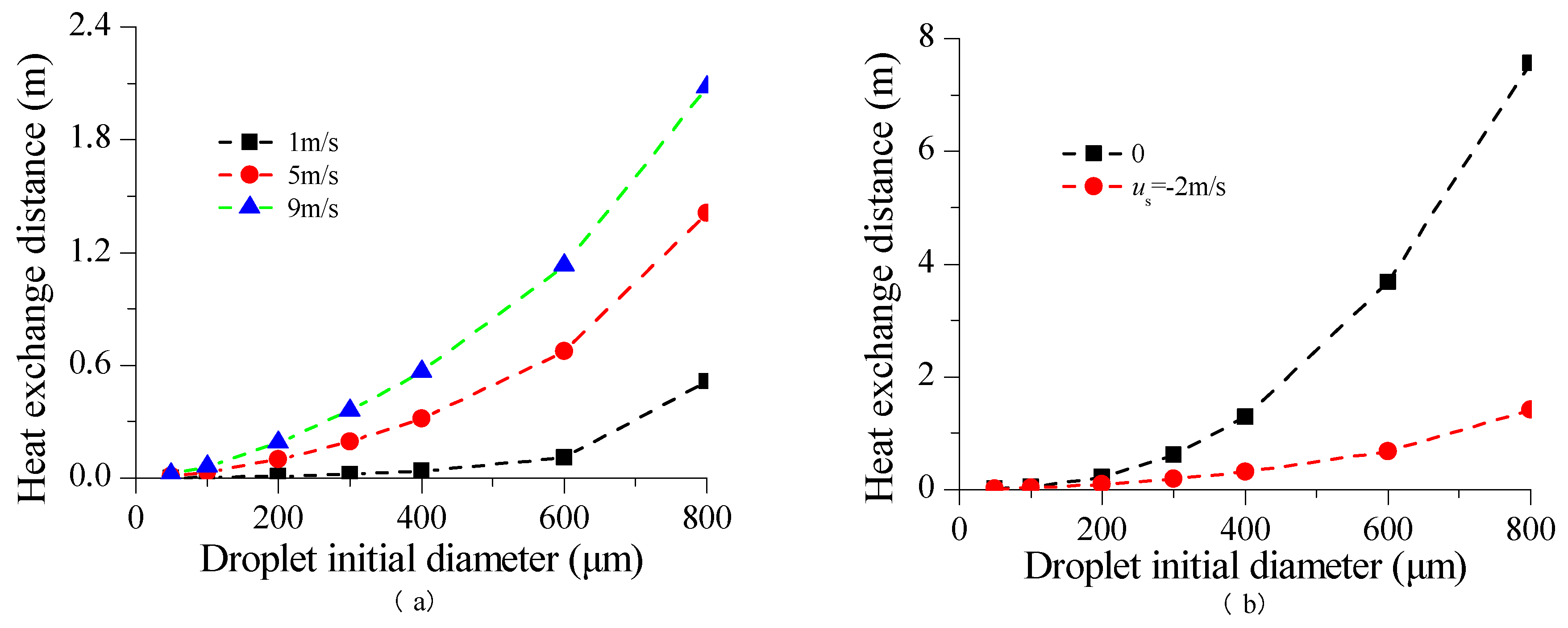
Figure 7.
(a) Effect of the initial velocity when the velocity of flame plume is -2m/s and the temperature difference is 400 ℃. (b) Effect of the initial diameter when the velocity of flame plume is -2m/s and the temperature difference is 400 ℃.
Figure 7.
(a) Effect of the initial velocity when the velocity of flame plume is -2m/s and the temperature difference is 400 ℃. (b) Effect of the initial diameter when the velocity of flame plume is -2m/s and the temperature difference is 400 ℃.
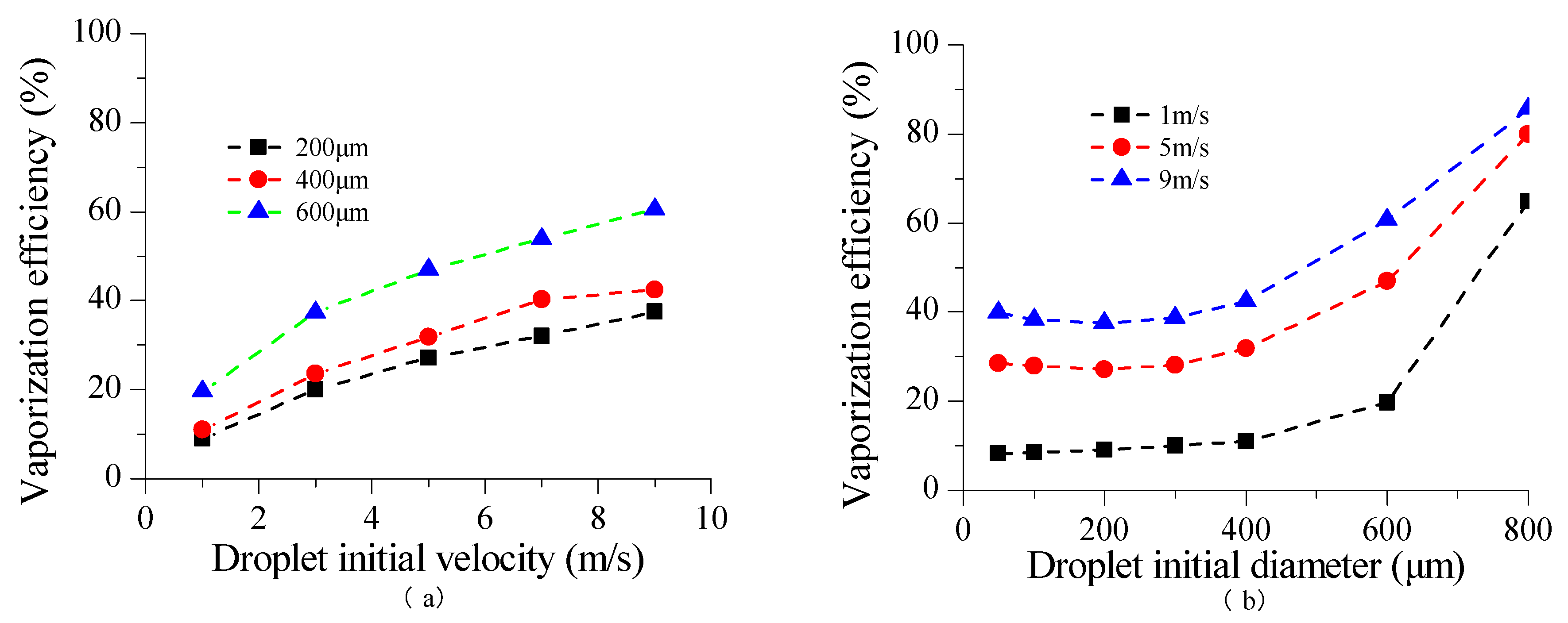
Figure 8.
Effect of nozzle height on fire extinguishing time.
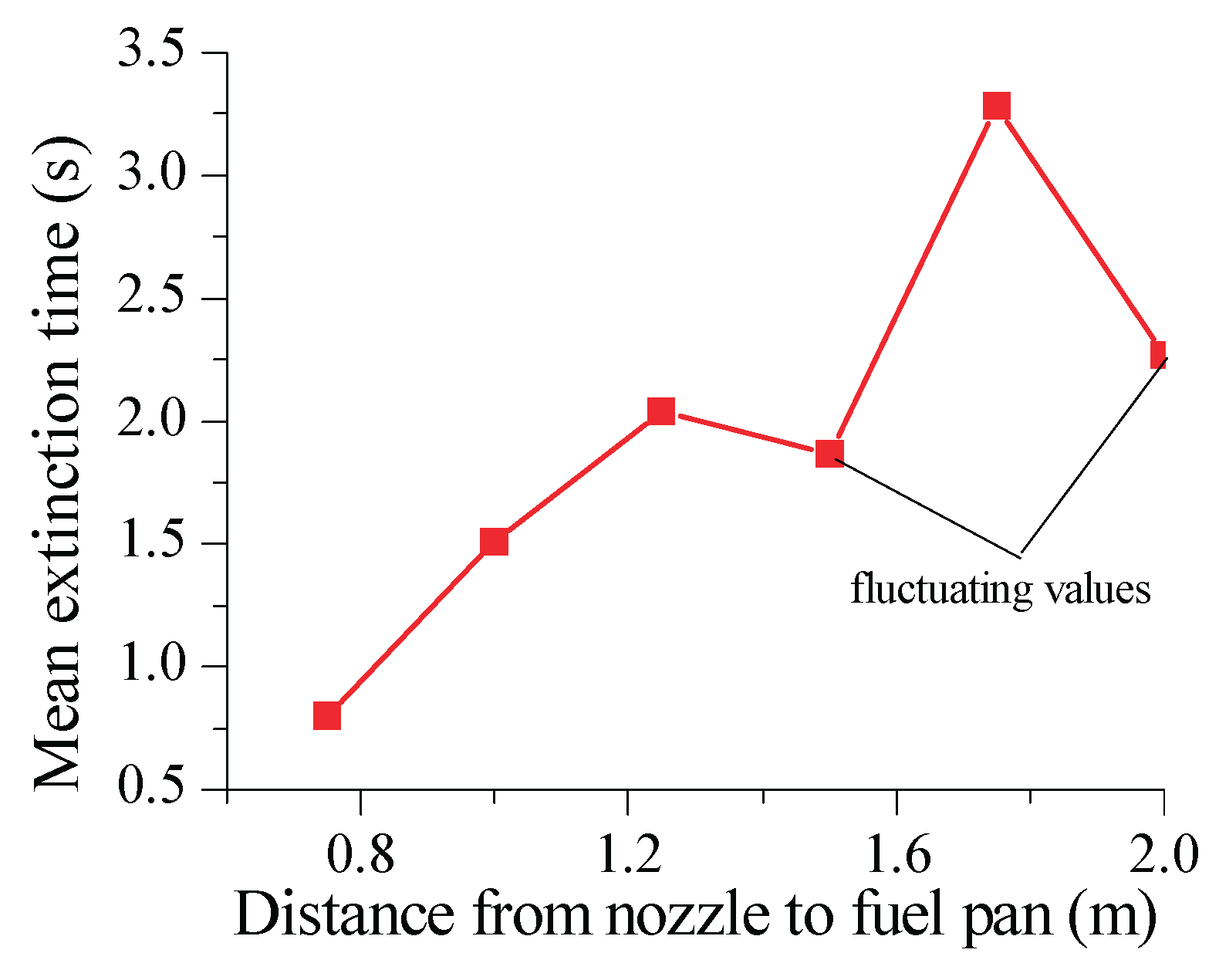

Table 1.
Categories of representative research results on the coupling relationship between fire source and water mist system.
Table 1.
Categories of representative research results on the coupling relationship between fire source and water mist system.
| Author(s) | Fuel | Fire source configuration | Spray/nozzle configuration | Experimental parameters/variables |
| Type 1 The relationship between sprinkler operating mode and fire extinguishing performance | ||||
| Rasbash[7] | Petrol, benzol, kerosene, alcohol, and gas oil | 0.3m dia. | Impinging jet spray | Nature of liquid, preburn time, properties of spray, and direction of spray |
| Kim et al.[8] | Gasoline | 0.1m dia. | 1 hollow cone and 5 solid cone nozzles | Injection pressure |
| Ndubizu et al.[9] | Heptane and JP-8 | 0.5m dia. | BeteP-series nozzles | Orientation of spray |
| Liu et al.[10] | Ethanol and kerosene |
0.05m dia. and 0.1×0.1m | Pressure nozzle | Injection pressure |
| Cong et al.[11] | Diesel | 0.15×0.15m | 7-head nozzle | Injection pressure |
| Huang et al.[12] | Diesel | 0.22m dia. | Gas-outside-liquid-inside effervescent atomizer | Gas-liquid ratio, water flow rate, injection pressure |
| Gupta et al.[13] | n-heptane | 0.1m dia., 0.15m dia.,0.15×0.15m | Multi-orifice twin fluid nozzle | Gas-liquid ratio, water flow rate, injection pressure, size of pan |
| Gupta et al.[14] | n-heptane | 0.125m dia. | Multi-orifice twin fluid nozzle | Water flow rate |
| Arvidson et al. [15] | trailer model | - | directional discharge water spray nozzles | Injection pressure |
| Liang et al.[16] | Gasoline, diesel, ethanol, and Daqing RP-3 | 0.32m dia., 0.25×0.25m | 7-head nozzle | Injection pressure |
| Yu et al.[17] | Diesel and heptane | - | Twin-fluid four-nozzle | Gas-liquid ratio |
| Pancawardani et al.[18] | Wood | 0.12×0.12×0.27m | Pressure nozzle | Injection pressure |
| Zhou et al.[19] | Gasoline, diesel | 0.3×0.3m | 7-orifices nozzle | Discharge mode |
| Deng et al.[20] | Baggage | - | Pressure nozzle | Discharge mode |
| Type 2 The relationship between sprinkler structural parameters and fire extinguishing performance | ||||
| Liu et al.[21] | Canola oil | 1.22×1.22m, 1.22×3m, 1.22×4.5m, 3×2.4m | Single nozzle and swirl type nozzles | Injection pressure, size of pan, spray/nozzle configuration |
| Liu et al.[22] | Diesel | 0.2m dia. | Pressure-swirl nozzle | Injection pressure |
| Type 3 The relationship between sprinkler location and fire extinguishing performance | ||||
| Kim et al.[23] | Gasoline | 0.15m dia. | Solid cone nozzle | Injection pressure and distance from nozzle to fuel pan |
| Liao et al.[24] | Alcohol and kerosene | 0.13m and 0.20m dia. | Multi-head 1–7 N-SS26 spray nozzle | Injection pressure, distance from nozzle to fuel pan, size of pan |
| Wang et al.[25] | Heptane, ethanol, and kerosene | 0.15m dia. | Pressure nozzle | Injection pressure, distance from nozzle to fuel pan |
| Wang et al.[26] | Alcohol and kerosene |
0.13m and 0.2m dia. | Multi-head 1–7 N-SS26 spray nozzle | Injection pressure, distance from nozzle to fuel pan, size of pan |
| Shrigondekar et al.[27] | Diesel | 0.1m dia., 0.2m dia., 0.3m dia. | Pressure swirl (simplex) nozzle | Injection pressure, distance from nozzle to fuel pan, size of pan |
Table 2.
Parametric values in the equations.
| /℃ | /kJ/K⸱kg |
/ w/m⸱K |
/ ㎡/s |
/kg/m³ | /kJ/kg | /kg/m³ | /m/s |
| 400 | 1.032 | 4.1 | 37.73 | 958.4 | 2257 | 1.18 | 0/-2 |
| 600 | 1.047 | 4.6 | 48.33 | 0 |
Disclaimer/Publisher’s Note: The statements, opinions and data contained in all publications are solely those of the individual author(s) and contributor(s) and not of MDPI and/or the editor(s). MDPI and/or the editor(s) disclaim responsibility for any injury to people or property resulting from any ideas, methods, instructions or products referred to in the content. |
© 2025 by the authors. Licensee MDPI, Basel, Switzerland. This article is an open access article distributed under the terms and conditions of the Creative Commons Attribution (CC BY) license (http://creativecommons.org/licenses/by/4.0/).
Copyright: This open access article is published under a Creative Commons CC BY 4.0 license, which permit the free download, distribution, and reuse, provided that the author and preprint are cited in any reuse.


