Preprint
Article

This version is not peer-reviewed.

Biological Peculiarities of Amblypalpis tamaricella (Lepidoptera, Gelechiidae) in South-Eastern Kazakhstan and Its Potential for Biological Control of Exotic, Invasive Saltcedars (Tamarix spp.) in the USA

Submitted:

20 December 2025

Posted:

22 December 2025

You are already at the latest version

Abstract

The narrow oligophagous gall-forming moth, Amblypalpis tamaricella Danilevsky, 1955, which causes severe damage to tamarisk in the wild, is one of the most promising biological agents for the biological control of saltcedars in the United States. The species is known from the deserts of Turkmenistan and Uzbekistan (southeastern Kyzylkum), southern and southeastern Kazakhstan, and Mongolia (Altai Gobi). The species develops in a single generation per year, with eggs overwintering. In many bushes, not only individual branches but the entire crown is affected, and by the following spring, such plants die. Studies of the biological characteristics of this species across seven moth populations in Kazakhstan have shown a high degree of conservatism in host-plant use: females typically lay their eggs on the same plant on which they hatched. The introduction of the moth into the United States should ideally occur during the pupal stage, before it emerges as an adult in late September to early October.

Keywords: 
;  ;  ;  

1. Introduction

Saltcedars, deciduous shrubs or small trees introduced into the western U.S. from Asia and the Mediterranean region in the 1820s, have become perhaps the most invasive and damaging exotic weeds in the highly valuable riparian areas in the western U.S. and northern Mexico. Saltcedars displace native plant communities, degrade wildlife and fish habitats, and increase wildfires, soil salinity, streambank erosion, channel narrowing, and flooding [1].
Of the 54 species of Tamarix known in the Old World [2], 10 have been introduced and established throughout the southern and western United States and northern Mexico; four have become serious weeds in western riparian areas [3,4,5]. The most widespread and damaging are T. ramosissima Ledebour and T. chinensis Loureiro and their hybrids (both from Asia), with T. parviflora de Candolle weedy in California, and T. canariensis Willdenow along the northwestern Gulf of Mexico coast (both from the Mediterranean area) [6,7,8]. Another species, the large, evergreen, athel, T. aphylla (L). It is sometimes used as a shade tree and windbreak in northern Mexico and the southwestern USA; it is not a target for biological control, although it is becoming invasive and damaging in some areas. All five of these Tamarix species hybridize in North America. No species of Tamarix or of the small genera Myricaria or Reaumuria (the only other genera of Tamaricaceae) are native in the Western Hemisphere [2,9].
For over 20 years (1994-2020), special research on insect pests of saltcedars was conducted in southeastern Kazakhstan as part of an international project to develop biological control measures for tamarisk in the United States. One objective of this work was to identify the most suitable biological agents for Tamarix ramosissima that would not simultaneously damage another tamarisk species, T. aphylla, which is widespread across North America. As a result of the research, several species were selected as suitable biocontrol agents. This publication examines the biology, phenology, and life cycles of one of the most effective tamarisk pests—the gall-forming moth Amblypalpis tamaricella Danilevsky, 1955. Observations in the wild were conducted at numerous monitoring sites in the southern Balkhash Lake region (South-Eastern Kazakhstan), primarily in the middle reaches of the Ile River, testing host specificity on specially imported American biotypes of both tamarisk species (T. ramosissima and T. aphylla), planted near the Institute of Zoology (Almaty, Kazakhstan) in open ground and in cages under laboratory conditions. This publication continues our previously published work on potential biocontrol agents for tamarisk in the USA [10,11,12,13].

2. Materials and Methods

The research material comprises the results of observations, collections, and testing conducted during the field seasons of 1994–2018 in the Ili River valley and in Almaty at the Institute of Zoology of the Republic of Kazakhstan. Observations and monitoring of the field ecology, biology, and behavior of A. tamaricella in nature were conducted primarily at the seven sites where A. tamaricella was found, from the floodplains and mountain valleys of Ile Alatau Ridge (Northern Tien Shan) to the south coast of Balkhash Lake (Figure 1):
(1) Kerbulak population (40 km North of Konayev City, Ile River flood-land),
(2) Buryndysu population 1 (Buryndysu village area, 30-33 km to the East of Chilik town, overflow channel in the clay desert),
(3) Zhingilsu population (Zhingilsu river valley, 35 km to the South-East from Chilik town, valley of dry river bed),
(4) Ayakkalkan population (30 km to the North-East from Chilik town, Ile River flood-land),
(5) Milyanfan population (15 km North of Chilik town, overflow channels in the clay desert).
(6) Chilik population (Masak village area, Chilik River floodland)
(7) Sarytogay population (20 km to the West of Chundzha town, riparian forest in the Charyn River floodland).
Several garden and laboratory tests were conducted at the Institute of Zoology in Almaty from 1996 through 2012 to compare the acceptability and potential damage to 10 U.S. accessions of T. ramosissima and to two accessions of athel, and to develop methods for culturing A. tamaricella if or when it is introduced into the U.S.
During the studies, classical entomological techniques were used to search for, collect, preserve, observe, and test insects for host-plant specialization [14]. To test species and assess their feeding on potential host plants, a specified number of eggs, larvae, or adult insects was placed on host plants in natural habitats. In addition, from 2008 to 2012, we developed a methodology for establishing new colonies of this species by releasing adult insects onto other saltcedar plants.

3. Results

Distribution. The species is known from Turkmenistan, Uzbekistan (South-Eastern Kyzylkum), the deserts of the South and South-East of Kazakhstan, and Mongolia (Altai Gobi) [15,16,17,18,19]. The center of the distribution area and the main population of the moth are located in the Southern part of the Balkhash Lake area and the Middle part of the Ile River valley.
Habitat. Moth inhabits Tamarix and prefers mostly moist floodland habitats. It is sometimes recorded on desert plains near mountains, although it prefers mesophilous biotopes there: overflow channels, various relief depressions, ditches near roads, and territories with proximity to subterranean waters that reach the soil surface.
Host-plants. Narrow-oligophage, the species primarily lives on T. ramosissima and T. leptostachys.

3.1. Biological and Phenological Peculiarities

3.1.1. General Life Cycle and Phenology

Species develops in one generation a year, and eggs overwinter. Caterpillars emerge and damage stems of green shoots and branches in spring, usually in mid-May, as soon as young green shoots grow on Tamarix. Sometimes they inhabit the green tops of thin last-year branches. Caterpillars of first and second instars develop inside them without apparent signs of gall formation.
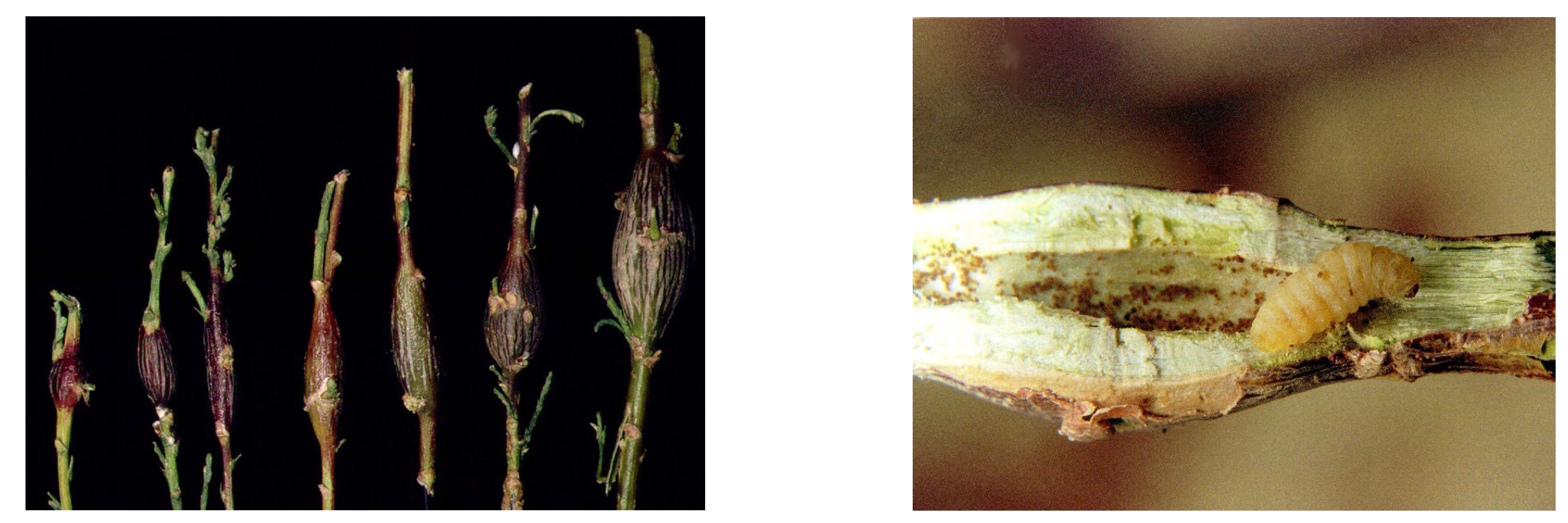
Initial signs of gall-forming and their further development are observed in late May and the first decade of June as slightly visible elongated thickening of a thin branch. At this development stage, galls divide into four main types according to the form and size of the galls (Figure 2, left):
1. Round, almost globulous;
2. Elongated—fusiform, up to 3 mm long and 0.8-0.9 mm in diameter; caterpillars of third instar (mostly of first phase) develop in them;
3. Fusiform—globulous, the largest, caterpillars of the third instar develop there before molting into the fourth instar; in the initial period, there are not many of these galls, but with time, they become dominant.
4. Separate almost mature galls, very close to globulous by their form. There are also caterpillars of the third instar that develop there before molting into the fourth instar.
In the first half of June, green galls predominate; lignified galls become dominant from late June to early July.
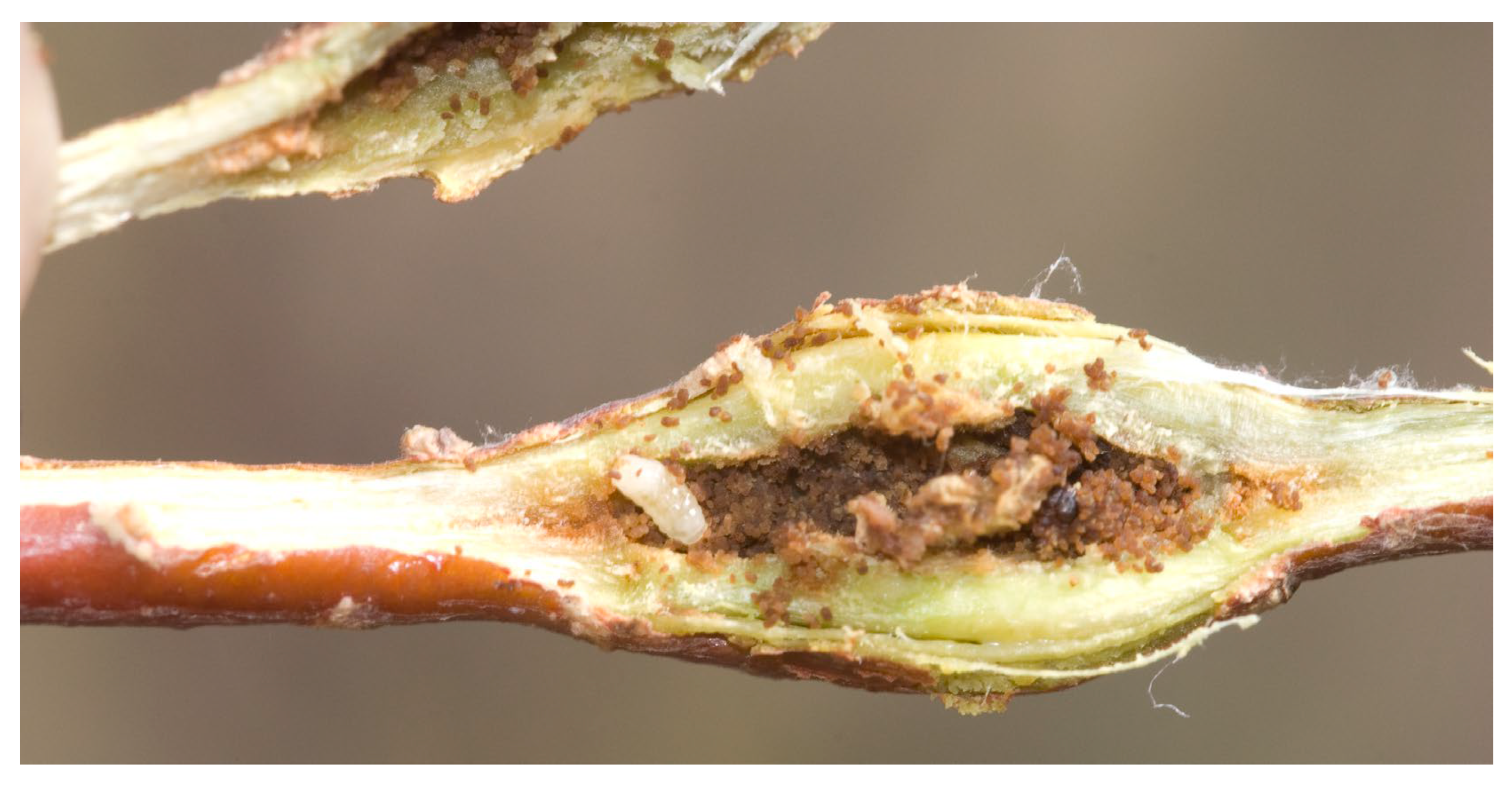
Tissues of the internal sides of developing galls, especially of early development stages, are soft, mild, very moist, juicy, and, apparently, nutritious. In the early developmental stages, the gnawing apparatus of caterpillars is not yet sufficiently developed, and these tissues are suitable for normal nutrition and development. When galls mature and the caterpillar developmental cycle ends, their internal tissues gradually lose moisture, growth decreases, and they become denser, increasing in size within the gall cavity. Nutrition of caterpillars becomes more economical, because there are few excrements—they are located in the lower part of the camera as small, almost dry granules. Caterpillars of the fifth instar (Figure 2, right) eat almost lignified internal tissues of galls before preparation of the flying hole and pupation. Molting skins of caterpillars are poorly conserved; they may be eaten by caterpillars themselves. Head capsules, especially those of the second, third, and fourth instars, are well preserved. It is easy to identify a caterpillar’s age by its stage.
Based on numerous gall dissections conducted over several years, it was established that they consistently contain four head capsules of caterpillars, with a caterpillar in the final fifth instar. This proved the five-stage development cycle of the moth. However, during analysis of dissected galls collected on August 12, 2002, in the Buryndysu village area, the fifth case of 5 head capsules in a gall containing a last-instar caterpillar was observed. If it is not an anomaly, then it can be stated that in rare cases, the development cycle of the Tamarix moth includes six instars. At the same time, these cases of a six-instar development cycle of caterpillars are sporadic and don’t go with the numerous facts that indicate a five-instar cycle, because after the caterpillar finishes its development in a gall (among excrements), a maximum of 5 head capsules were found. We often missed one of them, especially the first-instar larval capsule, which is only slightly larger than an entomological pin. It is relatively easy to find capsules of 2-5 instars. Capsules of second or third-instar individuals are often missing. Perhaps they are eaten by caterpillars along with the skins, as exuviae are sometimes missing.
In the second half of June, visible progress is observed in the development of galls and caterpillars. Galls’ length and diameter increase on average by 3 mm, and the length and diameter of caterpillars by 1.7 and 0.5 mm, respectively. Almost half of the caterpillars molted into the fourth instar, and a small part had already died of parasitoids. In some galls, flying holes were initiated or half-made. It occurred in the galls, where, for unclear reasons, the tissues in the cameras began to dry out. Early internal tissue drying and induration lead to loss of food and its quality and serve as an early signal to prepare a flying hole, because caterpillars at this instar are not yet fully prepared for pupation. But in the rest of normal galls internal tissues were loose, but not as juicy as they were 10 days ago. External gall tissues and galls themselves were hard.
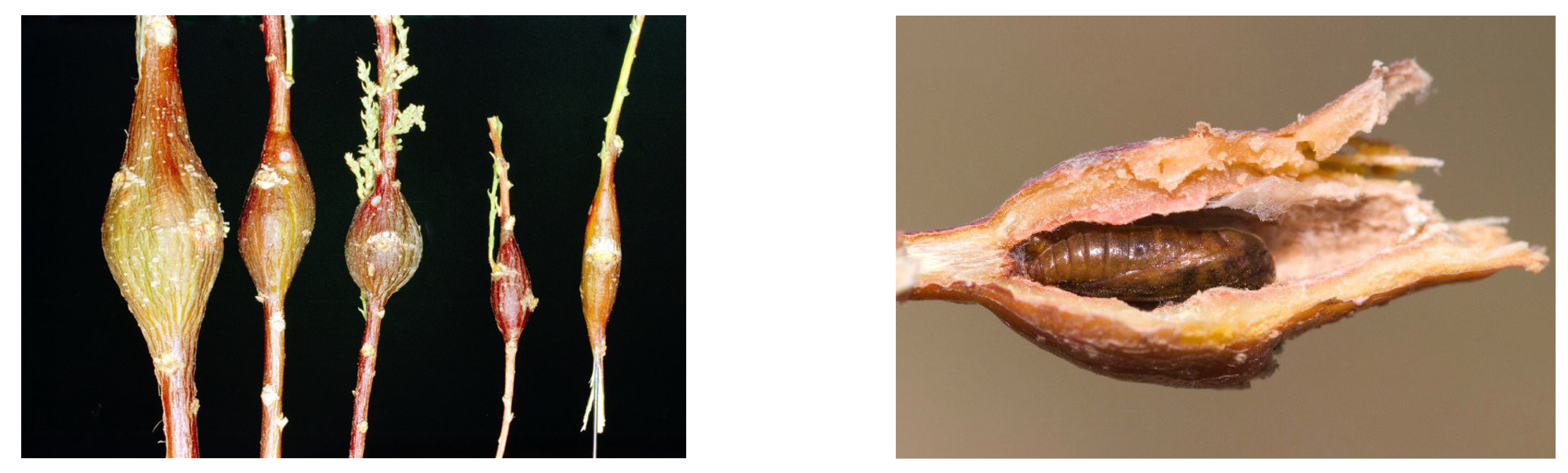
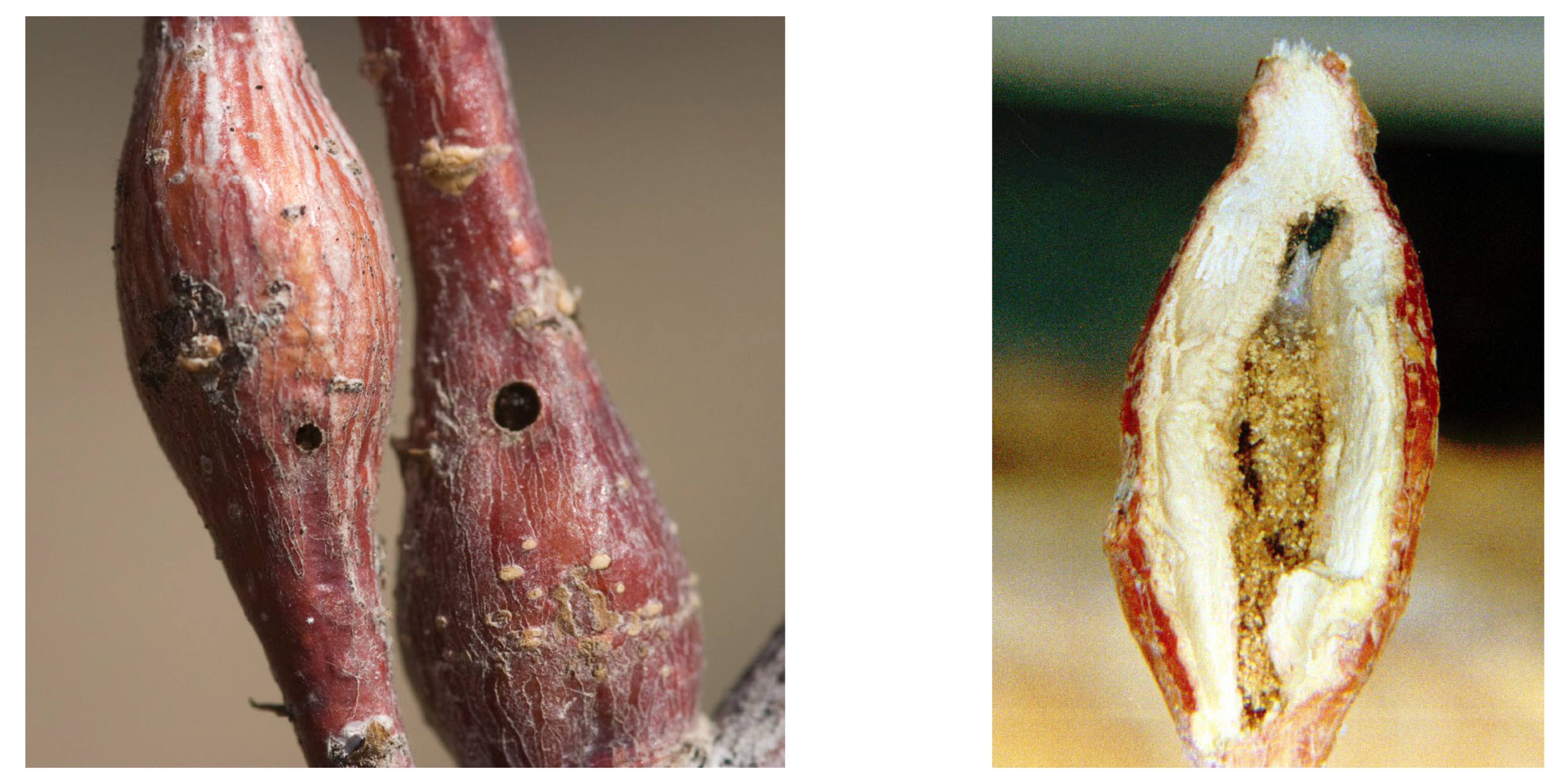
In the first half of July, galls are already mature. The average length of the gall in moth populations varies, but the average reaches 16.1–17.0 mm, and the average diameter is 6.0–7.0 mm. In some populations, elongated-fusiform galls dominate. Totally, galls have a different form and size–from small globulous (9 × 4 mm; 11 × 8 mm) to large (20 × 8 mm) and elongated—fusiform (Figure 3, left). At this time, caterpillars of 3-5 instars and pupae are found in galls. Among caterpillars, the fourth instar is dominant. Parasitoids already infect the majority of larvae; their worm-shaped larvae densely sucking on the ventral side of the caterpillar’s body in groups of 4 to 11 specimens and gradually suck it out.
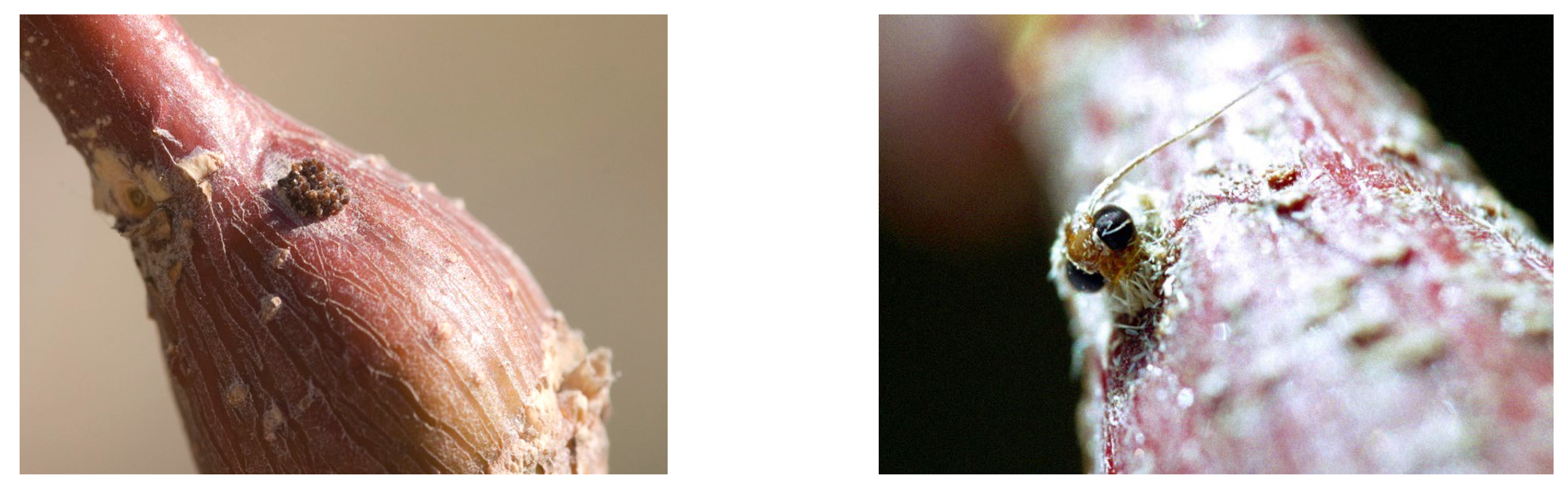
In late July—first half of August, caterpillars of fourth instar gradually disappeared, and the number of caterpillars of fifth instar and pupae increased (Figure 3, right). Caterpillars of the fifth instar, ready for pupation, are almost twice as big as caterpillars of the fourth instar. Before pupation, they completely gnaw the side of the gall in its upper side, and pave the camera and exit channel with a dense, silky web. A net covers the exit or plug made of excrement (Figure 4, left), glued together by a web so that the emerging butterfly easily pushes it out by its head when coming out of the gall.
As a whole, the pre-adult development cycle in galls includes six stages:
1st stage. Late May—first half of June. Galls are green, thin, elongated, without traces of lignification, dominated by caterpillars of second-third instars, and the absence of parasitoids.
2nd stage. Second half of June. Appearance of lignified galls, domination of green galls, domination of caterpillars of third instar, single caterpillars of the fourth age, absence of caterpillars of second instar, and parasitoids.
3rd stage. Late June—first half of July. Rapid growth; galls are formed and completely lignified; dominance of third- to fourth-instar caterpillars at a 1:1 ratio; single fifth-instar caterpillars; absence of parasitoids.
4th stage. July 5-25. Growth and formation of galls is complete, a decrease in the number of caterpillars of fourth instar, domination of caterpillars of fifth instar, preparation of flying holes, tendency to pupate, appearance and development of parasitoids.
5th stage. Late July—first half of August. Single caterpillars of fourth instar, domination of caterpillars of fifth instar, start and continuation of pupation, and increase in the number and role of parasitoids.
6th stage. Second half of August—first half of September. Gradual decrease in the number of caterpillars of the fifth instar, domination, and the end of pupation.
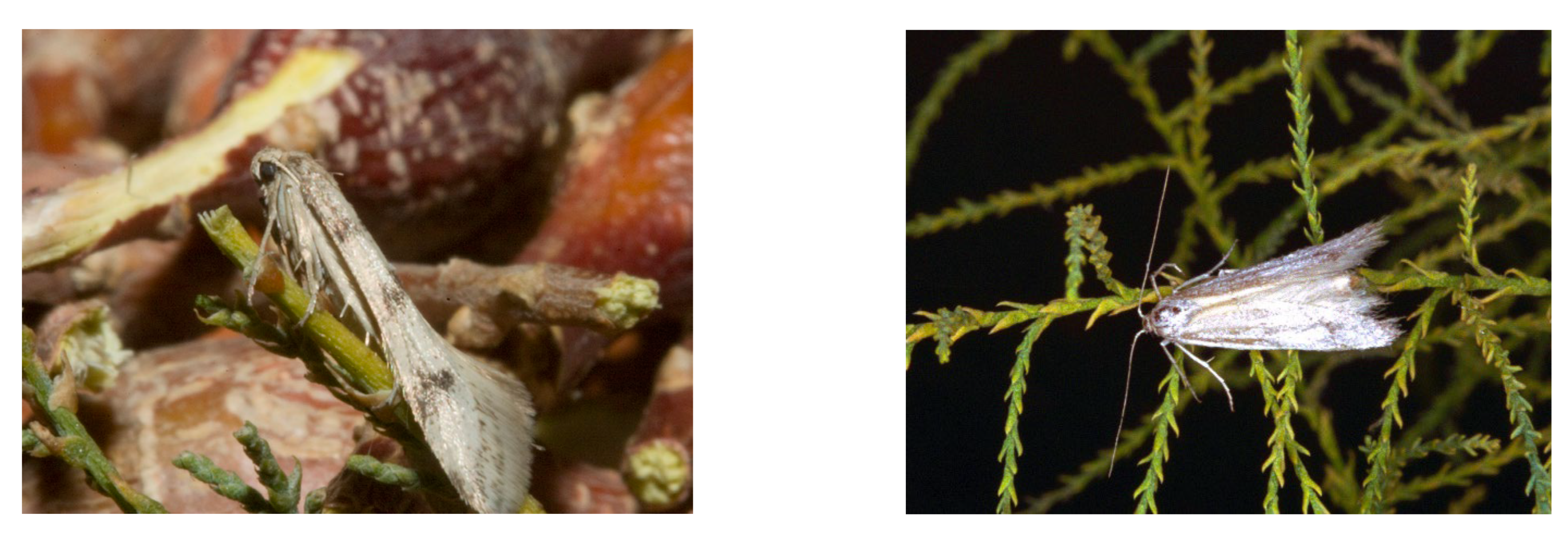
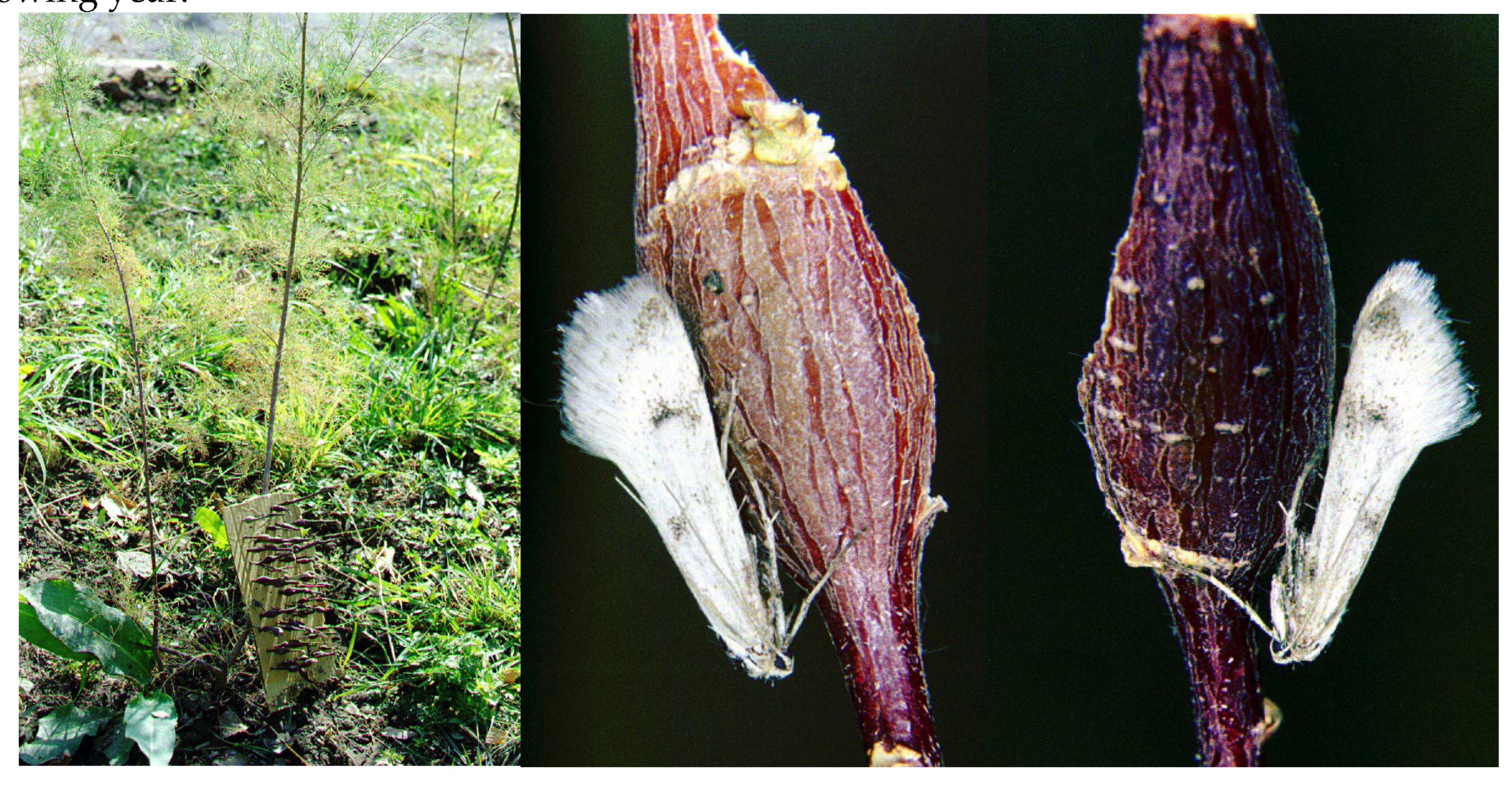
Emergence of butterflies from galls occurs mainly at night or in the early morning (Figure 4, right). After the gall is left, it contains the pupa exuvium. The butterfly dries rapidly, spreads its wings (Figure 5, left), climbs the branch, and remains at a single site for an extended period, or ascends to the top of the shrub (Figure 5, right). No additional nutrition was observed. Copulation could not be observed because of the small number of butterflies. The abdomen of females just emerged from the gall contains 139-239 mature eggs. Females usually lay 1-3 eggs at the base of wintering buds and branches.

3.1.2. Phenology

Dates for different development stages may vary considerably. For example, in the valley of the lower stream of the Ile River in 1953, pupation occurred from July 25 to August 6; butterflies began emerging on September 23; mass flight occurred on October 6–29; and the pupal stage lasted about two months [17]. In 1954, due to a strong and long fall of temperature, the dates of moth development differed a lot—Tamarix vegetation began a month later in comparison with 1953, as well as caterpillar emergence, which started a month later. Based on this, we hypothesized that all subsequent stages of moth development would be shifted, and the adult would fly out not in October, as usual, but in November. This was not proved: the development of caterpillars, as expected, was delayed by a month, and they began pupating in late August–early September; however, the pupal stage did not last 2 months (as in 1953), but only 1 month. As a result, adult emergence occurred in October, as in the previous year. Our observations of the Buryndysu population in 2000 indicated that the pupal stage lasted 52 days. And in other populations, their development took a more extended period: in the Milyanfan population, 74 days, and in the Ayakkalkan population, 76-78 days. First separate butterflies in the Buryndysu population emerged in nature and in the laboratory on September 23-24. The life expectancy of butterflies of this moth species is usually 8-10 days in laboratory conditions with nutrition, although in some cases the moth lives from 5 to 18 days. General phenological information is reflected in Table 1.

3.1.3. Population Number and Harmful Effect

The Tamarix gall-forming moth is among the most dangerous pests of Tamarix in the southern part of the Balkhash Lake area and the Middle part of the Ile River valley in southeastern Kazakhstan. Its number varies substantially over time, as in space. According to P.I. Marikovskiy [15], in 1947, the population of this species in the basin of the middle stream of the valley was very low. Still, from 1948 the number began to increase rapidly, and in 1950 its pronounced mass reproduction was recorded. Tamarix was heavily infected in such centers, and infected shrubs were entirely covered with galls. However, at the time of the population peak, the moth was heavily parasitized by multiple parasitoid species, and from 1951 onward, the species declined.
In 1953-1954, the population of this species across different parts of the Balkhash-Alakol depression was uneven but relatively low [17]. The control activity of several species of parasitoid hymenopterans primarily drives fluctuations in their population sizes. In the last decade of the 20th century, this factor was accompanied by fires in the floodlands of the desert part of the rivers in South-Eastern Kazakhstan. At present, the moth is in a state of deep depression in the southern part of the Balkhash Lake area. This was also promoted by flooding by the Kapchagai water reservoir in most of the Middle part of the Ile River valley, where the highest species diversity of all riparian entomofauna of South-Eastern Kazakhstan was concentrated.
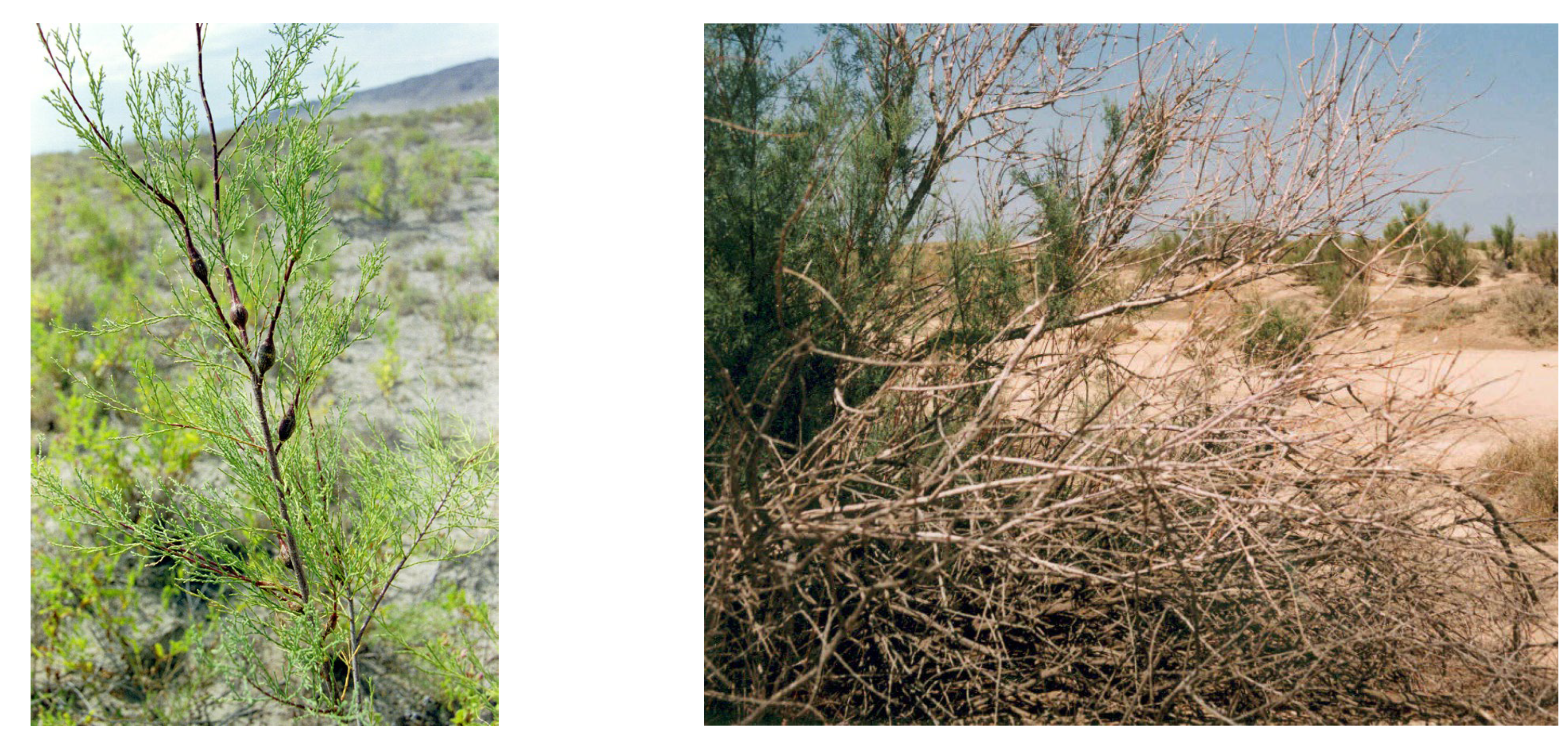
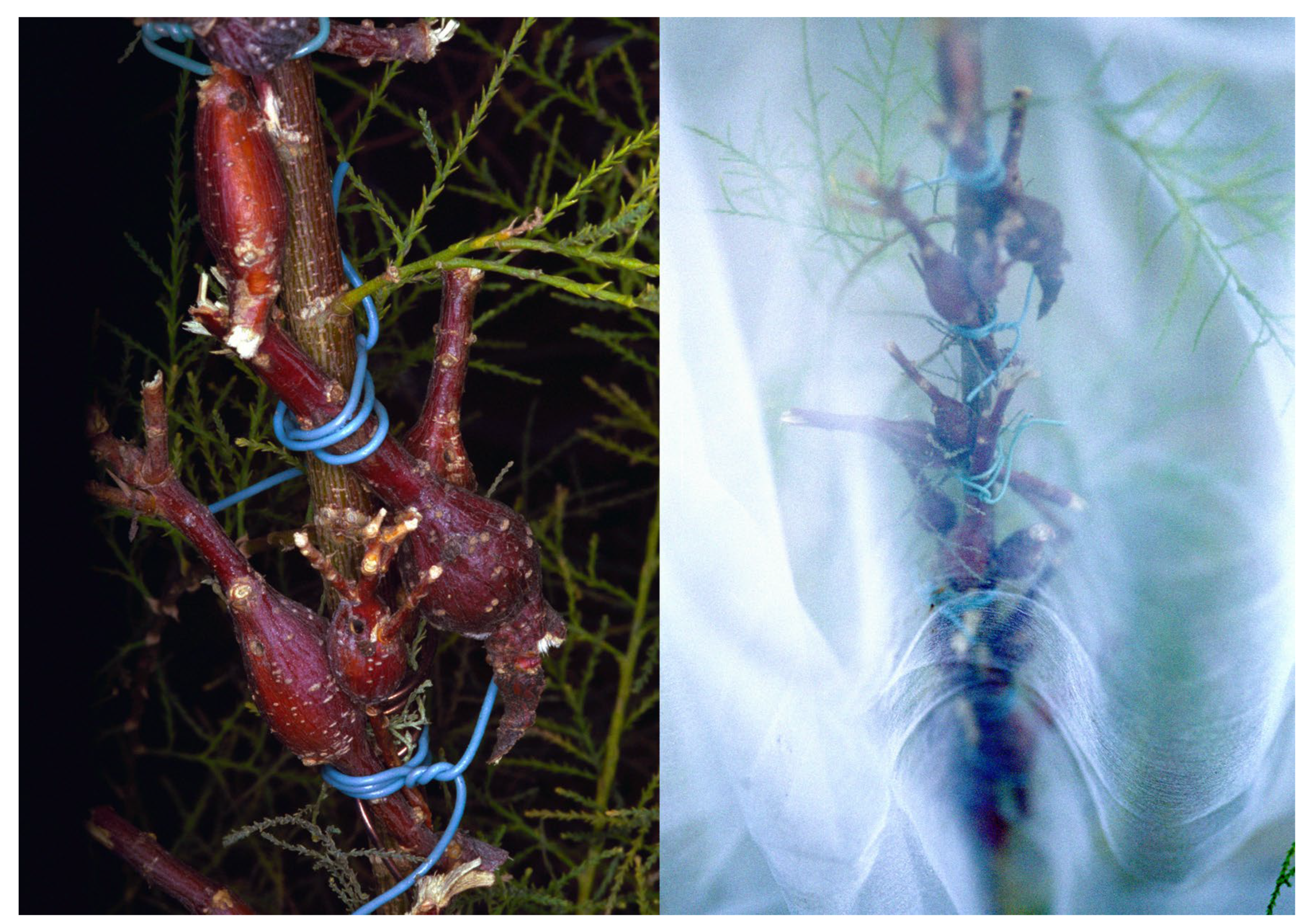
The harm caused by the moth during the years of depression is barely visible. In contrast, in years and places of mass reproduction, it significantly harms Tamarix, not only individual branches of many shrubs (Figure 6, left) but also the entire crown. These plants die until next year’s spring in dry years or in places with a low supply of subterranean water (Figure 6, right). In these cases, even young shoots do not rehabilitate. Secondary pests, including Xylogenes dilatatus, Bostrychus capucinus, and Sphenoptera spp, attack shrubs weakened by moths.
In the Ile River basin over the last decade, the Tamarix gall-forming moth has been in deep decline almost everywhere. It was largely successful, with the number of populations located at the Kerbulak monitoring site in the Ile River floodland, 29 km Northwest of Konayev town. Unfortunately, this grove has been on fire twice in the last 5 years, yet the population still manages to avoid burning shrubs. At present, it remains the most successful and relatively abundant compared with populations at other monitoring sites in the Middle part of the Ile River valley.

3.1.4. Parasites and Predators

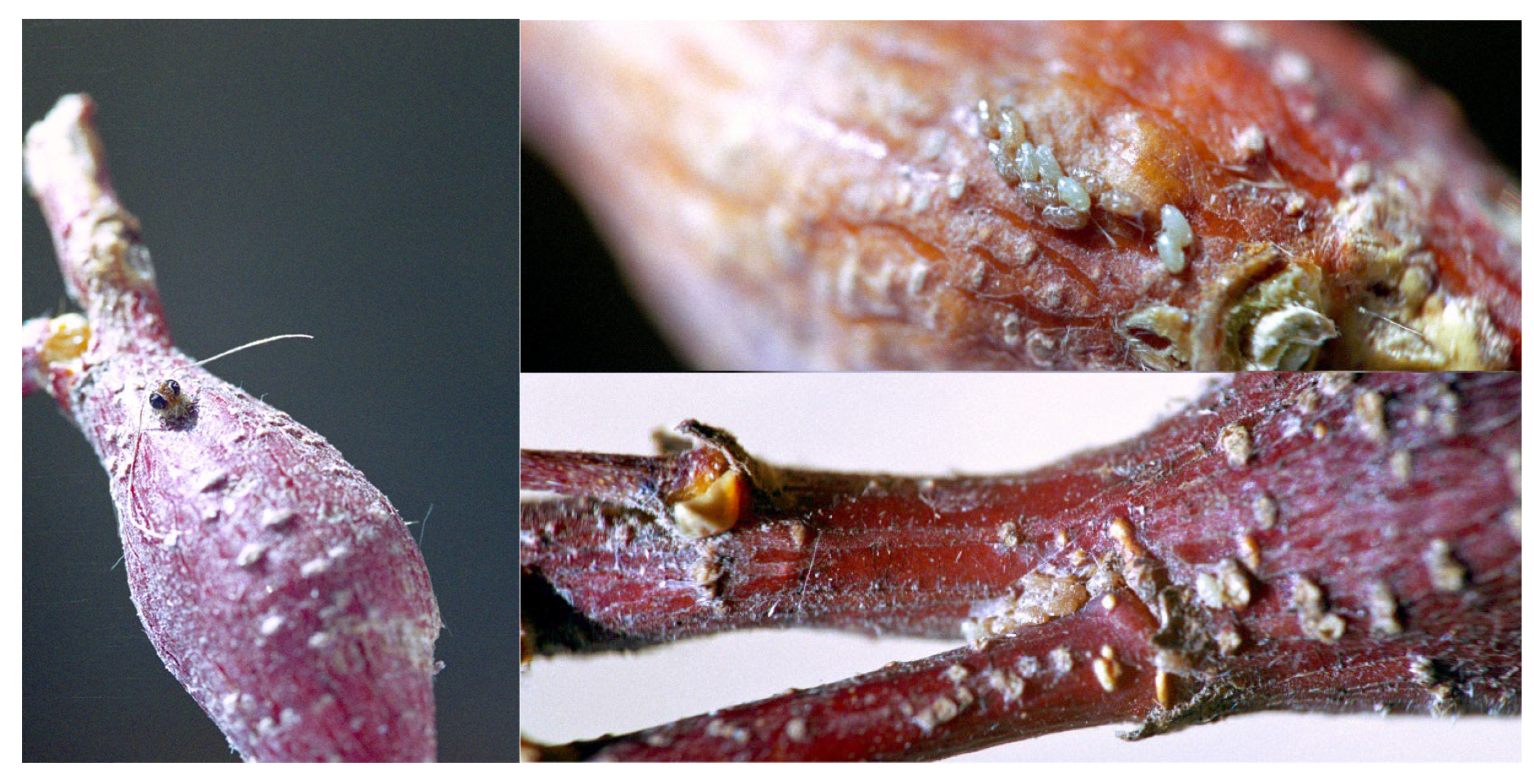
Complex of moth-harming parasitoids consists of representatives of hymenopterans from families Braconidae (Apanteles spp.) and Proctotrupidae, and superfamily Chalcidoidea. Small Chalcidoidea usually gnaw small flying holes in the upper and most of this part of the gall in the second half of summer and autumn (Figure 7, left). Many of them die in the gall’s cavity; those probably are late specimens that cannot gnaw an escape hole in the tough gall side (Figure 7, right).
Across all years of the study, the highest parasitoid infestation (90-99%) was observed only in the Kerbulak population in 2001. At the same time, in the Buryndysu population, it was 70-75%, and in other populations, 80-90%. Compared with the Kerbulak population, moth numbers across sites are much lower.
Many parasitoids winter in galls (Figure 8). This is why, in the spring of 2002, an experiment of limiting the number of parasitoids on one separate shrub was conducted in the Kerbulak population to decrease their pressure on the moth. All galls of the previous year, which contained parasitoids, were destroyed on a 4-m shrub, densely covered by last year’s galls. Unfortunately, the result of the experiment on the decrease of the infestation level of the moth was not successful—the number of infected galls of the moth didn’t decrease significantly on the experimental shrub. The infestation likely resulted from parasitoids migrating from neighboring shrubs. During this experiment, we did not destroy the galls in large numbers to avoid removing eggs of the moth that overwinter on the branches, because the galls are destroyed along with branches 10 to 40 cm long.
Statement of P.I. Marikovskiy [15] that part of the pupae in the population continues to be in an extended diapause for about a year (the rest of autumn, winter, and following summer) is not confirmed by many years of our observations and massive annual galls’ dissection. Only once, in the spring of 2005, did we find three pupae that had wintered in the gall, containing butterflies that had not escaped from the exuvium and had died. One of them was a female with an abdomen filled with live eggs; the other two were dried-out, mummified males.
As a predator, the desert ant Crematogaster sublineata, common in Southeastern Kazakhstan, was recorded. It hunts insects living on trees and shrubs and may also dissect midge galls and eat their larvae [20]. In their search for galls with caterpillars, they are probably attracted by plug-in flying holes with traces of excrement. At least we found galls with flying holes eaten by this ant from the edges, making them slightly wider.
We found a gall with a moth pupa, partially eaten by a spider, of the genus Cheirocanthium (family Clubionidae). This spider managed to go into the flying hole inside the gall and ate a pupa from the head. But he couldn’t make it out of the camera, because his abdomen had increased a lot after the food, and he couldn’t fit through the narrow flying hole. Nevertheless, he survived for more than a week in the test tube. Adult specimens of this species make their nests on grass plants in the undergrowth of Tamarix shrubs.
Empty wintering galls are often used as a refuge for predatory small acaridans, small spiders of the family Clubionidae, and for Pseudoscorpionoidea. Spiders Cheirocanthium sp. winter in the gall cavity by one. In late July–early August, females with emerged spiders may be found within galls. In late May 2004, in Buryndysu village, a female of a very small pseudoscorpion was observed with 11 elongated, sausage-shaped eggs near the flying hole. Mites often winter in rather big families and leave the gall cavity in late April—early May.

3.2. Testing of Amblypalpis Tamaricella on American and Local Biotypes of Tamarix

The first attempt to establish an experimental colony of the moth under laboratory conditions was conducted in 1995 in an open area near the Institute of Zoology (Almaty). One hundred thirty-eight galls were selected for reproduction, located on cardboard sheets and near local and American biotypes of Tamarix (Figure 9, left). Only six butterflies emerged, and they didn’t even lay eggs. In 1996, 173 galls were added to experimental plants; only five specimens emerged, and they also didn’t lay eggs. On September 20, 1997, plants, planted in the ground, were infected by 87 galls; only three butterflies emerged—1 male and two females. Unfortunately, eggs were not found.
The next attempt at moth testing on American biotypes of Tamarix was carried out at the beginning of October 1999. Out of the galls collected in the Buryndysu population, there were 15 butterflies (nine female and six male) that emerged. They were planted without a cage in a shrub of T. ramosissima (California Golo County, Cache Creek at Ramsey), growing on a ground site of the Institute of Zoology. The results of adult addition are negative—females didn’t lay eggs on this shrub or any other neighboring shrub.
Another test was conducted on September 25, 2000. This time, not adult, but galls with pupae were planted; the galls were collected in Milyanfan and Buryndysu populations:
1. T. ramosissima, Wyoming Bighorn County, Bighorn River at Lowell—6 galls;
2. T. ramosissima, New Mexico, Dona Anna County, Rio Grande at Los Cruces—6 galls;
3. T. ramosissima, California Golo County, Cache Creek at Ramsey—7 galls;
4. the same—9 galls;
5. the same—5 galls;
6. the same—5 galls.
A total of 38 galls were planted on six plants. Butterflies emerged from September 25 to October 15 (Figure 9, right). The result was negative as in the first case. No galls appeared in the spring of the following year.
The next test was conducted on October 14, 2002, using gas and glass cages. On October 11, 2002, forty galls with pupae were collected from the Kerbulak population. Nineteen galls were attached to one of the stems of Tamarix of the American biotype from California (Cache Creek at Ramsey, Golo County, California, Figure 10), growing on an open site near the Institute of Zoology. The remaining galls were kept in glass laboratory cages containing branches of Tamarix collected from infected shrubs in the Kerbulak population. The first five butterflies in glass cages emerged on October 15. In a cage at the ground experimental site of the Institute of Zoology, the first six butterflies emerged between October 17 and 20 (Figure 11, left). As at the open ground site, most butterflies emerged from October 18 to 25. Later, after the butterflies had died, all galls and twigs were examined in glass cages, and many ovipositors were found there (Figure 11, right):
1. At the base of wintering buds, by 1-4 eggs, only in one case, 15 eggs were laid separately and recorded;
2. At the surface of the galls or at the branch, in a chain or separately, by 4, 6, 8, and 12 eggs;
3. In bark cracks, by 1, 3, and 9 eggs;
4. In narrow crutches of ligneous branches of this year, by 7-9 eggs;
5. At the base of green shoots, by 1-3 eggs;
6. At the base of broken green twigs are 1-2 eggs.
After butterflies died in a cage on the ground of the experimental site, all 19 galls were taken off the T. ramosissima shrub from California and thoroughly examined. Twenty-nine laid eggs were found on nine galls:
1. On the stem, at the base of the gall—2 eggs;
2. At the top of the gall—1 egg;
3. At the crutch of the stem in longitudinal row—7 eggs, 2 of them were in pairs;
4. On the branch in a depression of a broken green twig—1 egg, at the base of a wintering bud crosswise—1 egg;
5. In gall core crack in longitudinal row—2 eggs;
6. In the base of the wintering bud (at the side)—2 separate eggs, and also on the bud lengthwise—1 egg;
7. On the stem, at the top of the gall crosswise—1 egg;
8. On the stem, at the base of the bud lengthwise—a bunch of 7 eggs;
9. In gall’s stem bark crack—2 separate eggs.
Females didn’t lay eggs on the stem of the American biotype of T. ramosissima; they prefer to lay eggs on galls and stems of only “their own” plant.
In the spring of 2003, when green twigs appeared, the eggs became crumpled or completely dried out. The failure to establish an experimental colony of moths is likely due to the absence of specific natural conditions.
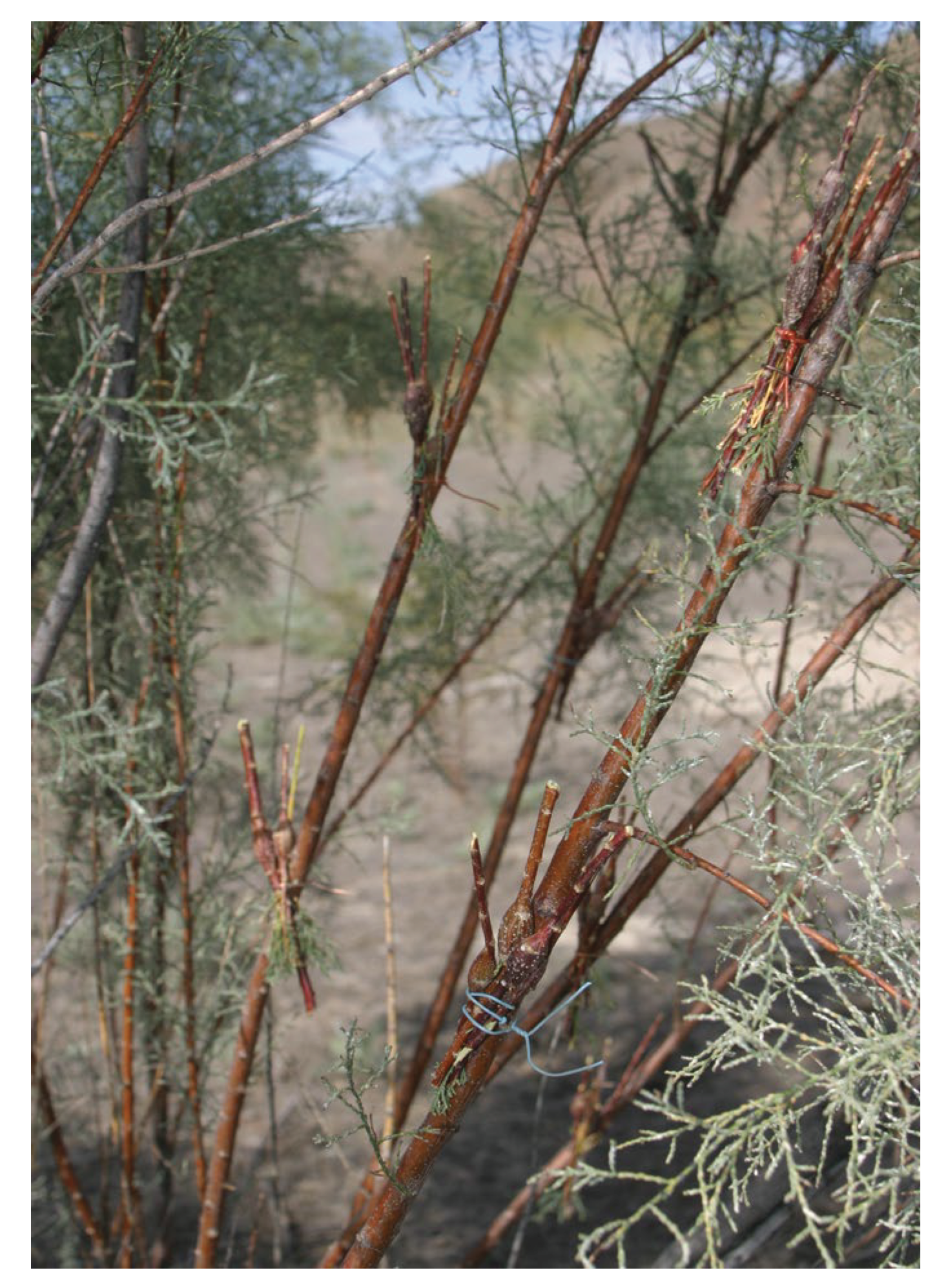
One more experiment of galls’ planting on the local Tamarix biotype before adult emergence was carried out in nature. In the middle of September 2004, in Kerbulak, 87 galls with moth pupae were tied to branches of an “alien” and previously not infected young shrub (Figure 12). The following year, on April 7, 2005, only three wintered eggs were found in the shrub stem’s core cracks. There were no eggs on young branches and shoots at the bases of buds and in the crutches.

3.3. Techniques of Transportation and Breeding of Amblypalpis tamaricella

Moth should be transported to the USA at the pupal stage before adult emergence in late September—early October. Collected galls should be sent by express mail as soon as possible in containers of thick cardboard with small holes for ventilation, and put in a larger cardboard box. It is necessary to place a piece of wet cotton wool (or another hygroscopic material) to maintain sufficient air humidity for the galls during flight, when moisture evaporates extensively inside the airplane. This is especially important for moth galls in comparison with other potential bioagents of Tamarix, because increased constant temperature and prolonged absence of natural hygrothermal regime may cause early emergence of butterflies, as well as problems when emerging through the gall’s gnawed hole. In the last case, the plug that closes the gall’s hole and consists of caterpillar’s excrements may become an insurmountable obstacle for the emerging adult, because in the case of rapid moisture evaporation (at high altitude during a transcontinental flight), the plug becomes denser, as well as the excrements, which may completely close the hole.
As the experience of sending galls to the USA in late September of 2006-2009 shows, the delay in gall’s carriage to the USA caused by bureaucratic procedures and dryness of galls’ tissues caused early emergence of the butterflies. Sent to the Laboratory of Biocontrol in Temple (Texas) at the beginning of October, galls with a delay suddenly appeared at the division of biocontrol of the National University of Montana (Bozeman) in the middle of October, and only then in the Laboratory of Biocontrol of USDA-ARS in Sidney (Montana) to our colleagues, involved in the project of Tamarix biocontrol. When the box was opened on October 16 at the University of Montana, 15 of 52 galls had already emerged; only three were alive.
To quickly transfer and effectively go through all bureaucratic procedures, introduced by the Government of the USA for the import of organisms, alien for American continent, and timely reach quarantine division of the corresponding Laboratory of Biocontrol in the USA, it is necessary to deliver insects in a travel bag with a courier with all needed permissions from Governmental organizations of Kazakhstan and the USA.
The unsuccessful breeding of the moth on American biotypes in open ground near the Institute of Zoology and in laboratory conditions was probably due to the absence of conditions typical of natural habitats. Testing of the Tamarix gall-forming moth in the deserts of the USA should be conducted in nature on 1-2 young shrubs 1.5-1.6 m high under gas tent-like cages up to 1.8 m high with a door.

4. Discussion

Gall-forming moth Amblypalpis tamaricella, which seriously harms Tamarix in nature, is one of the most promising biological agents that may be used in the biological control of Tamarix ramosissima in the USA. Our research on the biological peculiarities of this species showed a high degree of conservatism in the moth’s choice of host plant: typically, females lay eggs on the same plant from which they emerged. This biological peculiarity, on the one hand, is highly valuable for controlling T. ramosissima in the USA, but, on the other hand, there are technical difficulties in introducing this species across North America. One risk of applying the moth in biological control is the complexity of the natural parasitoid community. When establishing a new moth colony in the USA, it is essential to remove the moth’s native Asian parasitoids thoroughly. At the same time, their presence indicates a high probability of the development of their own American parasitoid complex. This is why a substantial effect of applying this species for Tamarix biocontrol would be observed in the USA during the first several years, until the development of the local parasitoid complex. After that, the agent’s effectiveness will decrease, and the period of population fluctuations, or “biological swing”, will begin, during which a rapid increase in moth population will lead to a rapid rise in moth-controlling species. A decrease in moth population will lead to a reduction of parasitoids, which would again cause a rapid increase in moth population, and so on. Introduction of this species of gall-forming moth (along with other species, such as Psectrosema noxium and Metanarsia sp.), which inhabits the North from latitude 44 North, will enable the distribution of Tamarix biological control to Northern states, where previously used Diorhabda carinulata was ineffective due to shorter photoperiods.

Author Contributions

Conceptualization and methodology, R.J. and C.J.D.; investigation, R.J. and V.I.; writing—original draft preparation, R.J. and V.I.; writing—review and editing, C.J.D. and Z.Y.; visualization, R.J. All authors have read and agreed to the published version of the manuscript.

Funding

This research was initiated through a program on the biological control of weeds and was funded by the U.S. Department of Agriculture (USDA). Funding from this program was also distributed to the Agricultural Research Service (USDA—ARS), part of which specifically covered overseas research, along with additional funding primarily provided by the U.S. Bureau of Reclamation, managed by Dr. Fred Nibling. Overseas research was directed by Dr. Lloyd Andres, USDA-ARS, Albany, CA. This research was partially funded by the Kazakhstan scientific-technical program BR21882199, “Cadastre of wild animals arid territories of Balkhash-Alakol basin with an assessment of threats for their conservation and sustainable use”, and by the Chinese Academy of Science President’s International Fellowship Initiative (PIFI) for 2023.

Data Availability Statement

Data will be made available on request.

Acknowledgments

The authors cordially thank Ivan Mitjaev (Institute of Zoology RK, Almaty), who shared his extensive entomological research experience in Central Eurasia and participated in field research on potential agents for Tamarix biocontrol in 1994–2012. Unfortunately, Mitjaev died in January 2015 and was unable to continue his collaboration with the authors of this publication. The authors also acknowledge the technical support provided by Ekaterina Roschektayeva and Sergey Kolov for laboratory observations and field collection of materials.

Conflicts of Interest

The authors declare no conflicts of interest. The funders had no role in the design of the study; in the collection, analyses, or interpretation of data; in the writing of the manuscript; or in the decision to publish the results.

References

  1. DeLoach, C.J.; Carruthers, R.I.; Lovich, J.E.; Dudley, T.L.; Smith, S.D. Ecological Interactions in the Biological Control of Saltcedar (Tamarix spp.) in the United States: Toward a New Understanding. In Proceedings of the X International Symposium on Biological Control of Weeds, Bozeman, MT. Montana State University, MT, 2000; pp. 819–873. [Google Scholar]
  2. Baum, B.R. The Genus Tamarix; Israel Academy of Sciences and Humanities: Jerusalem, Israel, 1978; pp. 1–209. [Google Scholar]
  3. Robinson, T.W. Introduction, spread, and areal extent of saltcedar (Tamarix) in the western states. USDI Geol. Surv. Professional Paper 1965, 491-A, 1–12. [Google Scholar]
  4. Baum, B.R. Introduced and naturalized tamarisks in the United States and Canada (Tamaricaceae). Baileya 1967, 15, 19–25. [Google Scholar]
  5. Crins, W.L. The Tamaricaceae in the southeastern United States. J. Arnold Arboretum 1989, 70, 403–425. [Google Scholar] [CrossRef]
  6. Gaskin, J.F.; Schaal, B.A. Hybrid Tamarix widespread in U.S. invasion and undetected in native Asian range. Proc. of the Nat. Acad. of Sci. 2002, 99, 11256–11259. [Google Scholar] [CrossRef] [PubMed]
  7. Gaskin, J.F.; Schaal, B.A. Molecular phylogenetic investigation of U.S. invasive Tamarix. Systematic Botany 2003, 28, 86–95. [Google Scholar]
  8. Gaskin, J.F.; Shafroth, P.B. Hybridization of Tamarix ramosissima and T. chinensis (saltcedars) with T. aphylla (athel) (Family Tamaricaceae) in the southwestern USA determined from DNA sequence data. Madroño 2005, 52, 1–10. [Google Scholar] [CrossRef]
  9. A dictionary of the following plants and ferns. (Eighth Edition); Willis, J.C., Shaw, H.K Airy, Eds.; Cambridge University Press: Cambridge, UK, 1993; pp. 1–1245. [Google Scholar]
  10. Mityaev, I.D.; Jashenko, R.V. Nasekomye vrediteli tamariska v Yugo-Vostochnom Kazakhstane (=Insects—pests of Saltcedar in South-East Kazakhstan); Tethys: Almaty, Kazakhstan, 2007; pp. 1–180. [Google Scholar]
  11. DeLoach, C. Jack; Carruthers, Raymond I.; Dudley, Tom L.; Eberts, Debra; Kazmer, David J.; Knutson, Allen E.; Bean, Daniel W.; Knight, Jeff; Lewis, Phil A.; Milbrath, Lindsey R.; Tracy, James L.; Tomic-Carruthers, Nada; Herr, John C.; Abbott, Gregory; Prestwich, Sam; Harruff, Glenn; Everitt, J. H.; Thompson, David C.; Mityaev, Ivan; Jashenko, Roman; Li, Baoping; Sobhian, Rouhollah; Kirk, Alan; Robbins, Thomas O.; Delfosse, Ernest S. First results for control of saltcedar (Tamarix spp.) in the open field in the western United States. In Proceedings of the XI International Symposium on Biological Control of Weeds. Canberra, Australia, CSIRO Entomology, 2004; pp. 505-513.
  12. Jashenko, R.V.; Mityaev, I.D.; DeLoach, C.J. New potential agents for tamarisk biocontrol in US. 2006 Tamarisk Research Conference: Current Status and Future Directions, Ft. Collins, Colorado, USA, 3-4 October 2006; p. 75. [Google Scholar]
  13. Jashenko, R.V.; Mityaev, I.D.; DeLoach, C.J. Tamarix biocontrol in US: new biocontrol agents from Kazakhstan. In Proceedings of the XII International Symposium on Biological Control of Weeds, Le Grand Motte, France, 22–27 April 2007; p. 253. [Google Scholar]
  14. Fasulati, K.K. Polevoe Izuchenie Nazemnykh Bespozvonochnykh; (=Field study of terrestrial invertebrates); Vyshaya shkola: Moscow, Russia, 1961; pp. 1–304. [Google Scholar]
  15. Marikovskiy, P.I. Tamariskovaya moli — Amblypalpis tamaricella Dan. i yavlenie sopryazhennoy diapausy eiyo parazita (=Tamarix gall moth Amblypalpis tamaricella Dan and phenomen of conjugated diapauses of its parasite). Zool. Zhurnal 1952, 31(5), 673–675. [Google Scholar]
  16. Danilevsky, A.S. Novye vidy nizshikh cheshuekrylykh (Lepidoptera, Microheterocera), vredyaschie drevesnym I kustarnikovym porodam v Sredney Azii (=New species of lepidopterans (Lepidoptera, Microheterocera) harming trees and bushes in Middle Asia). Entomol. Obozr. 1955, 34, 108–123. [Google Scholar]
  17. Mityaev, I.D. Obzor nasekomukh—vrediteley tamariskov Balkhash-Alakulskoy vpadiny (=Review of insects harming tamarisks of Balkhash-Alakol depression). In Trudy of Instituta Zoologii Akademii Nauk Kazakhskoy SSR; Institute of Zoology: Alma-Ata, Kazakhstan, 1958; pp. 74–97. [Google Scholar]
  18. Daricheva, M.A. K biologii nekotorykh cheshuekrylykh, vredyaschikh rastitelinosti nizoviy Murgaba (=On the biology of some lepidopteran insects that damage vegetation in the lower reaches of the Murghab River). Izv. Akad. Nauk. Turkm. SSR Ser. Biol. Nauk. 1963, 1, 59–66. [Google Scholar]
  19. Lvovskiy, A.L.; Piskunov, V.I. Gelekhiidnye moli (Lepidoptera, Gelechiidae) Altaiskogo Gobi (=Gelechiid’s moths (Lepidoptera, Gelechiidae) of Altai Gobi). Nasekomye Mongolii 1989, 10, 521–571. [Google Scholar]
  20. Marikovskiy, P.I. Muravii pustyn Semirechiya (=Ants of desert of Semirechie); Gylym: Alma-Ata, Kazakhstan, 1979; pp. 1–264. [Google Scholar]
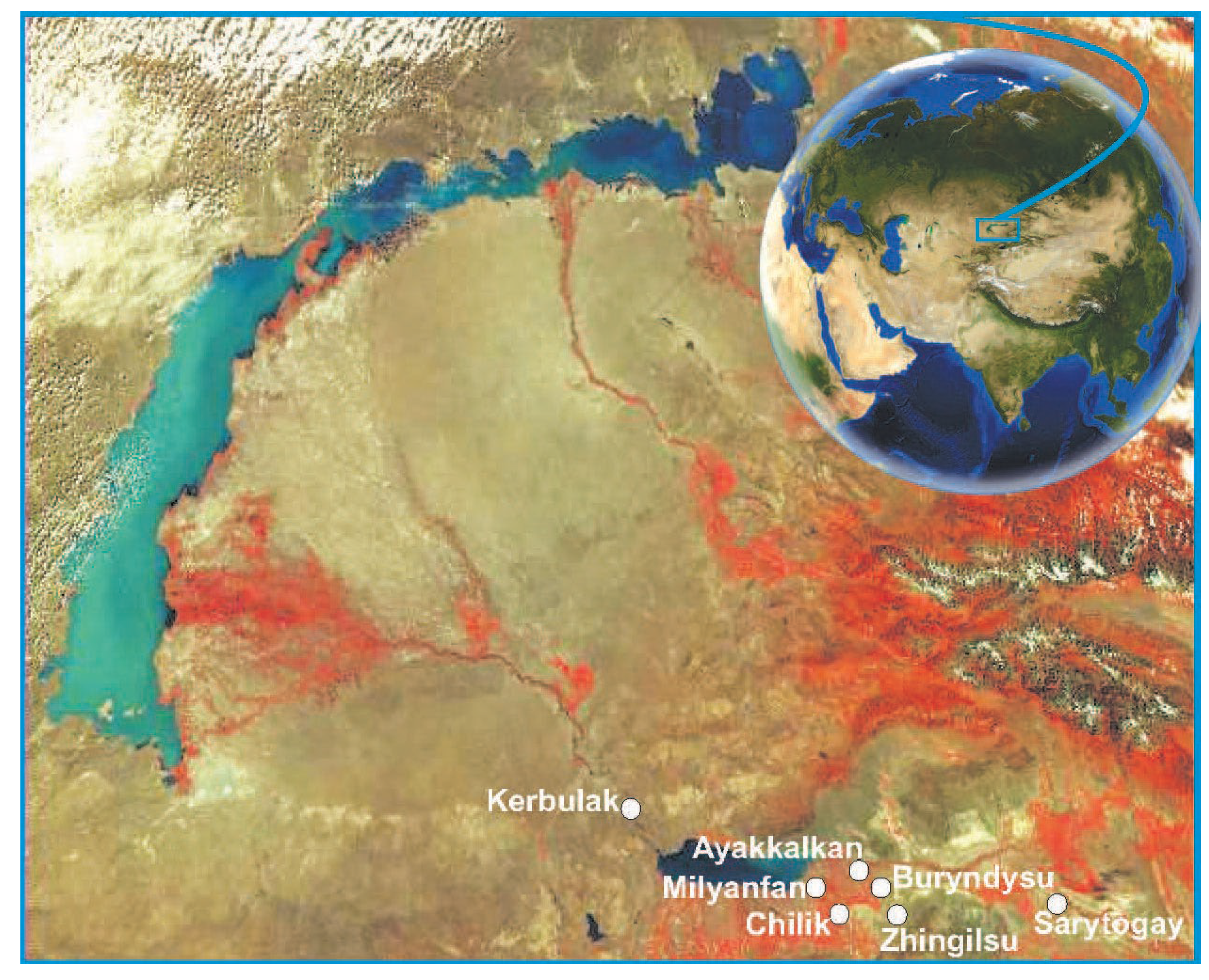
Figure 1. Map-scheme of the main monitoring populations of Amblypalpis tamaricella in South-East Kazakhstan.
Preprints 190730 g001
Figure 2. Amblypalpis tamaricella, left: first types of galls; right: 5th instar larva (photos by R. Jashenko).
Preprints 190730 g002
Figure 3. Amblypalpis tamaricella, left: developed galls; right: pupa (photos by R. Jashenko).
Preprints 190730 g003
Figure 4. Amblypalpis tamaricella, left: gall with an opening hole covered by secrets; right: adult emerging from gall (photos by R. Jashenko).
Preprints 190730 g004
Figure 5. Amblypalpis tamaricella, left: just emerged adult; right: adult moves to the top of the bush (photos by R. Jashenko).
Preprints 190730 g005
Figure 6. Amblypalpis tamaricella, left: gall infestation on T. ramosissima branch; right: damaged and almost dried tamarisk (photos by R. Jashenko).
Preprints 190730 g006
Figure 7. Amblypalpis tamaricella, left: opening holes of parasitoid (small, left) and moth (large, right); right: perished parasitoid inside the gall (photos by R. Jashenko).
Preprints 190730 g007
Figure 8. Overwintered parasitoid inside the gall of the moth Amblypalpis tamaricella (photo by R. Jashenko).
Preprints 190730 g008
Figure 9. Amblypalpis tamaricella, left: galls placed near American biotypes of tamarisk; right: just emerged moths, 25 September 2000 (photos by R. Jashenko).
Preprints 190730 g009
Figure 10. Amblypalpis tamaricella, adjusted galls on American tamarisk biotype from California (photos by R. Jashenko).
Preprints 190730 g010
Figure 11. Amblypalpis tamaricella, left: emerging moth, 17 October 2002; right: eggs on gall (up) and between branches (down) (photos by R. Jashenko).
Preprints 190730 g011
Figure 12. Galls of the moth Amblypalpis tamaricella adjusted on branches of an “alien” tamarisk bush, September 2004 (photos by R. Jashenko).
Preprints 190730 g012
Table 1. Phenogram of Amblypalpis tamaricella according to observations from 1999 to 2004 on monitoring sites of the Middle part of the Ile River valley.
April May June July August September October November
Decades
1 2 3 1 2 3 1 2 3 1 2 3 1 2 3 1 2 3 1 2 3 1 2 3
we we we e C1 C1
C2 C2
Gl Gl Gl Gl Gl Gl Gl Gl Gl Gl Gl Gl Gl Gl Gl Gl
C3 C3 C3 C3 C3
C4 C4 C4 C4 C4 C4 C4
C5 C5 C5 C5 C5 C5 C5 C5 C5
p p p p p p p
b b b b b
e e we we we
Notes: e—eggs; we—wintering eggs; C1-C5—caterpillars’ instar; Gl—gall with caterpillar and pupa; p—pupa; b—butterfly.
Disclaimer/Publisher’s Note: The statements, opinions and data contained in all publications are solely those of the individual author(s) and contributor(s) and not of MDPI and/or the editor(s). MDPI and/or the editor(s) disclaim responsibility for any injury to people or property resulting from any ideas, methods, instructions or products referred to in the content.
Copyright: This open access article is published under a Creative Commons CC BY 4.0 license, which permit the free download, distribution, and reuse, provided that the author and preprint are cited in any reuse.
Prerpints.org logo

Preprints.org is a free preprint server supported by MDPI in Basel, Switzerland.

Subscribe

Disclaimer

Terms of Use

Privacy Policy

Privacy Settings

© 2026 MDPI (Basel, Switzerland) unless otherwise stated