

Submitted:
17 December 2025
Posted:
18 December 2025
You are already at the latest version
Abstract
Currently there is no data and studies from Lake Vaya, Burgas city on the status and quantity of microplastic (MP) particles in fish. This is the first study on the abundance, morphotype, size, polymer type and color of MP in Gambusia affinis, and Liza saliens from the Lake. We also investigated the distribution of MPs in different parts of the fish. Within each morphological group of MPs, three size classes were recognized: 25-100 µm, 100-200 µm and 200-500 µm. Microplastics were found in all studied fish tissues except for caviar, but in different proportions of pellets, fibers and fragments. In our study, fibers were the most isolated, followed by irregularly shaped MPs – fragments. Two types of polymers were found - PET and PA. There are currently no studies in Lake Vaya that assess the risk of ingestion of microplastics for fish health and human health. Research shows that almost all aquatic environments worldwide are at risk of MP contamination. Laboratory and field studies highlighted that fish are particularly susceptible to MP ingestion, although freshwater species have been studied less than marine ones. The results of our study suggest that consumption of fish from Lake Vaya may expose citizens to risk.
Keywords:
freshwater
; Gambusia affinis
; Liza saliens
; pollution
; fish consumption
; ecology
; risk
1. Introduction
Global plastic production has significantly increased over the past few decades, reaching 430 million tons in 2024 [1]. Plastics are implemented in modern life, in the form of items such as wrapping products, agricultural consumables, electrical appliances, automotive vehicles, and so on [2,3]. Plastics are a preferred material used in everyday items around the world due to easy processing, water resistance, and reliability. We can even elaborate that we are living in the plastic era [4].
MPs are pervasive in almost all kinds of aquatic environments, making them readily accessible to fish [5]. Plastic polymers are classified into three main groups based on their ability to float in freshwater or saltwater and are as follows - neutrally buoyant polymers, and negatively buoyant polymers [6,7]. The vast evidence for microplastic consumption by fish is based on the analysis of gastrointestinal tract contents of different fish species. Fish that are known to be contaminated with MPs include diverse groups of species inhabiting a wide array of saltwater and freshwater basins. Microplastic particles found in these wild-caught fish possess significant variability in color, shape, and polymer type [8,9]. The most abundant shapes of MPs isolated from different fish species are fiber and fraction, which are correlated to their dominance in global water bodies [5,8]. Microplastic particles are easily ingested by fish due to their microscopic size and ability to mimic natural food items, which are included in the animal’s menu [10]. Upon consumption, MPs may adversely affect fish in three general, non-exclusive ways: (a) Through MP physical effects (such as obstruction of the gastrointestinal tract or producing distorted satiation); (b) through the breakdown and release of plasticizers, byproducts, and other toxic substances from within the MPs; and (c) through the inactivation of toxic emissions confined to the MPs [11]. As ingested MPs carrying other pollutants on their surfaces may adversely affect brain and central nervous system cells, which may have a severe effect on swimming, behavioral and survival ability for freshwater fishes [12].
Plastic pollution is not a concern only in marine ecosystems. Freshwater ecosystems also contain plastic particles, as most plastic fragments enter the oceans primarily through rivers [13]. They also have the potential to enter the food chain and cause health concerns and adverse effects [14,15]. Evidence of MPs ingestion has been reported in more than 150 freshwater and marine fish species [16]. However, microplastic quantification and toxicity in freshwater ecosystems have been underestimated in previous research, in comparison to marine ecosystems. Their abundance, impact and toxicity in freshwater biota are no less than in marine ecosystems. The interaction of MPs with freshwater fish, as well as the risk of human consumption, remains a mystery. Our knowledge of the effects of MPs on freshwater fish is still very limited.
Gambusia typically prays upon a wide range of invertebrates including zooplankton, beetles, mayflies, caddisflies, mites, and other invertebrates; mosquito larvae account for only a small portion of their diet [17]. Mosquitofish (Gambusia affinis) were introduced directly into freshwater ecosystems in many parts of the world as a means of biocontrol [18] to lower mosquito populations, which in turn had a negative effect on other species in each distinct bioregion. Mosquitofish can survive in relatively unfavourable environments and can thrive in badly oxygenated regions with relatively high salt concentrations, and temperatures up to 42°C for short periods [19]. Due to their notable adaptability to harsh conditions and their global invasion in many global waterbodies, they are regarded as the most widespread freshwater fish in the South-West [17]. Leaping mullet (Liza saliens) can inhabit both fresh and highly saline waters. It inhabits the coasts, bays, lagoons and river mouths [2][]. The species is detritivorous, which primarily feeds on algae and vegetable matter.
This study describes for the first time the status of MPs in freshwater fish from Lake Vaya in the Burgas region of Bulgaria. Recently, intensive anthropogenic activities and wastewater discharge have caused increasing pollution in Lake Vaya [21,22,23]. The presence, fate and distribution of emerging pollutants such as MPs in the lake have not been studied to date. The aim of this work is to investigate the abundance, morphotype, size, polymer type and color of MP in Gambusia affinis and Liza saliens from Lake Vaya and the distribution of MPs in different parts of the fish.
2. Materials and Methods
Sampling location and duration of the study
The sampling was conducted in Lake Vaya, Burgas. Two sampling points were selected marked as sample 1 and sample 2. The sampling points were selected due to their close proximity to urban areas affected by anthropogenic activity. Prior to fish sampling, water parameters were recorded in order to monitor the area. Mosquitofish adult specimens with net weight of 1,2 + - 0.2 g and Leaping mullet specimens with net weight of 14 +/ - 2g were collected for microplastic isolation and analysis.
Microplastic isolation and characterisation was conducted at the Department of Biology, University of Shumen, Bulgaria. Probes from different anatomical structures were sampled in G. affinis, and L. saliens captured in the region of Lake Vaya October 2024 (Figure 1). For illustrative purposes pictures were taken with a drone (DJI Mini 3 model) (Figure 2).
Collection of the samples
From the two pre-selected spots the fish were captured using passive net traps which were engaged for 24h at the selected sites. After catching, the fish were immediately transported to the laboratory at 4°C, where they were dissected. Samples were taken from the skin, musculature, gills, gastrointestinal tract and caviar and these probes were subjected to analysis. The probes were obtained from five specimens of each fish species, which were similar in size. Additionally physicochemical parameters of the sampling sites were obtained. The two fish species were selected due to their availability across the whole lake and due to the absence of Cyprinid fish at the time.
Water parameters were measured using a multiparameter (Revio XS, Italy) and Chlorophyll A was quantified spectrophotometrically according to [24]. Briefly, from each site 1L of water was collected and transported for laboratory analysis. The water was filtered through a filter with a pore size of 0.7µm. Subsequently the filters were soaked in 90% pure grade acetone for 12h in the dark to extract the chlorophyll. After extraction the chlorophyll extracts were measured on a spectrophotometer (DLab SP-V1000, China) at 664, 647 and 630nm wavelength. Chlorophyll a concentration for each sample was estimated using the following equation by Parsons & Strickland:
Chl a (µg/L) = (11.85 × A664 – 1.54 × A647 – 0.08 × A630) × Vextract / (Vsample × l)
Trophic State Index (TSI) was calculated according to [25] with modifications using the following equation:
TSI(Chl)=9.81⋅ln(Chl)+30.6
Sites were categorized according to [26] as follows:
TSI < 40 → oligotrophic (low productivity)
TSI 40–50 → mesotrophic (moderate productivity)
TSI 50–70 → eutrophic (high productivity)
TSI > 70 → hypereutrophic (very high productivity, algal blooms likely)
Tissue digestion and microscopic inspection
The microplastic extraction and quantification was done as described according to [27]. Briefly, the fish are rinsed with double-distilled water to remove adhered and associated particles. Dissection is performed and tissue is collected. The obtained sample is treated with a 10% KOH solution, with the added solution being at least three times the volume of the biological material (w/v, 3 × tissue volume; for one gram of tissue, 3 ml of 10% KOH solution is added). A control sample (blank sample without biological material) is run in parallel to monitor and correct for potential contamination during the procedure. The sample and control, tightly sealed, are placed in a thermostat at 40°C for 48 hours until complete dissolution of the organic material and formation of a clear solution. They are then vacuum-filtered through a nitrocellulose membrane filter with a pore size of 8 μm and a diameter of 47 mm (Sartorius Stedim Biotech, Göttingen, Germany). The filters are dried at room temperature and stored in clean, covered glass Petri dishes for further analysis.
To identify microplastic particles in the samples, visual examination of the filters is carried out under a stereomicroscope using reflected light at magnifications ranging from 25× to 100×. Microscopic images were taken using an OPTIKA stereomicroscope (Italy) equipped with a DinoEye camera and a 5-megapixel eyepiece.
Polymer identification
To identify the polymer, we used Fourier Transform Infrared (FTIR) spectroscopy according to [28]. All results were done in triplicate. The spectra of the isolated plastic particles were compared with standard spectra of plastic types.
Larger MPs were selected to analyze their chemical constituents using the Fourier Transform Infrared (FTIR) spectroscopy (Brucker Alpha) in attenuated total reflectance (ATR) mode. FTIR spectral analysis was performed to determine the nature of the isolated MPs. Microplastics were analyzed according to their morphology and identified visually using an Optika stereo microscope. MP particles were counted, grouped, and categorized by type according to their shape (fragment, fiber, and pellets).
QA/QC procedures
To ensure that the protocol for extraction and quantification of MP from tissue samples is compliant and non-destructive towards the integrity of the present MP in the fish samples we developed a QA/QC protocol which implemented the following: Spiked sample QC (artificial sample containing a known quantity of MP embedded in gelatin) A blank QC (a blank sample of gelatin which contains no MP) and an air contamination QC (a blank filter left in the open air). All QA/QC procedures were done according to [29] with slight modification.
The spiked QC was digested through the above MP extraction protocol to ensure that there is no MP loss during the extraction period. MPs were counted before and after the digestion of the QC aiming for MP recovery >70%. The spiked QC and analysis were done as per protocol by [30](10g gelatin matrix was spiked with 100 PET particles) FTIR analysis was also done before and after digestion to ensure that the integrity of the MP remains the same via spectral analysis. The air contamination QC was counted before and after completion of the experiment to ensure there is no MP contamination from the air. Contamination was controlled to be <5 particles per blank as per protocol of [31]. All QC/QA procedures were done in triplicates to ensure proper results.
To ensure that there is no MP introduced in the process we tested all of the reagents used in the experiment for the presence of MP particles. All reagents which were contaminated were not used further in the experiments to avoid deviation. All bottle plastic reagent bottle caps were replaced with aluminium and 100% cotton lab coats were worn during the experimental procedures according to [32].
All tools used were metal and glass and plastic equipment was excluded from the procedures. All experiments were carried out in a laminar flow hood which was tested for the presence of MP after running for 24h prior the experiment via an air contamination QC.
3. Results
Prior to sampling, the sampling sites were evaluated for anthropogenic activity (Figure 3). A total of five specimens from each species were analyzed for the presence of MP and the water physicochemical parameters of the sampling sites were measured at the time of sampling (Table 1 and Table 3). In all figures averaged results from the five samples were plotted. The presence of microplastics was detected in 100% of the studied specimens. The total amount of MP particles found in the fish is outlined in Table 3. The microplastic particles ranged from 10 to 40 particles per individual probe (Figure 4, Figure 5 and Figure 6).

Table 1.
Water parameters of the sampling sites. Salinity is higher compared to previous studies [33] due to the restoration of the canal which connects the lake to the black sea, which classifies the lake as mesohaline [34].
| Mode | Value | Temp (°C) | MTC/ATC | ||
|---|---|---|---|---|---|
| Sample 1 | Sample 2 | Sample 1 | Sample 2 | ||
| mV | -39.3 mV | -37.1 mV | 13.3 | 14.0 | ATC |
| Cond | 14.28 mS/cm | 13.99 mS/cm | 15.1 | 15.8 | ATC |
| TDS | 10.1 g/l | 9.93 g/l | 15.1 | 15.8 | ATC |
| SAL | 7.97 ppt | 7.80 ppt | 15.1 | 15.8 | ATC |
| OXY | 7.5 Mg/L | 5.5 Mg/L | 15.0 | 15.8 | ATC |
Table 2.
Estimation of Chlorophyll A in the two sampling sites and calculated TSI values. Chlorophyll values and TSI index confirmed the hypereutrophic state of the lake which correlates to existing research.
Table 2.
Estimation of Chlorophyll A in the two sampling sites and calculated TSI values. Chlorophyll values and TSI index confirmed the hypereutrophic state of the lake which correlates to existing research.
| Sample 1 | Sample 2 | |
|---|---|---|
| Chlorophyll A | 65 µg/L | 50 µg/L |
| TSI | 72 | 69 |
Table 3.
Total MP particles isolated from the two species. In our study, fiber types were the most isolated (total 336), followed by irregularly shaped (total 221) and pellets (total 217).
Table 3.
Total MP particles isolated from the two species. In our study, fiber types were the most isolated (total 336), followed by irregularly shaped (total 221) and pellets (total 217).
| pellets | fibers | irregular form | |||||||
| 25-100 µm | 100-200 µm | 200-500 µm | 25-100 µm | 100-200 µm | 200-500 µm | 25-100 µm | 100-200 µm | 200-500 µm | |
| Gambusia affinis | 165 | 52 | 0 | 168 | 118 | 0 | 172 | 45 | 4 |
| Liza saliens | 0 | 0 | 0 | 23 | 15 | 12 | 0 | 0 | 0 |
| Total | 165 | 52 | 0 | 191 | 133 | 12 | 172 | 45 | 4 |
| Grand total | 217 | 336 | 221 | ||||||
From G. affinis, all types of MPs were isolated - pellets, fibers, and irregular form. In L. saliens, only fibers from the gills, and gastrointestinal tract were isolated. In terms of color, the mainly isolated MPs in both species are transparent, but in G. affinis, some black fibers were isolated (Figure 6 B).
The data in Figure 4 revealed that in the G. affinis the pellets with sizes 25-100 µm isolated from the gastrointestinal tract of the fish were predominant, but some were also observed in the skin and meat. Fibers of the same size 25-100 µm were isolated from the gastrointestinal tract, the skin, and meat. Irregularly formed MPs were isolated from the gastrointestinal tract only. As in the skin, and the gastrointestinal tract particles with larger sizes (100-200 µm) were also found (Figure 6 A,B). MPs with sizes of 200-500 µm were isolated from the gastrointestinal tract only.
The data in Figure 5 revealed the fibers with sizes 25-100 and 100-200 µm are isolated from the gills, meat and gastrointestinal tract of the fish. MPs with sizes of 200-500 µm were isolated only from the meat.
Polymer identification of the isolated MP
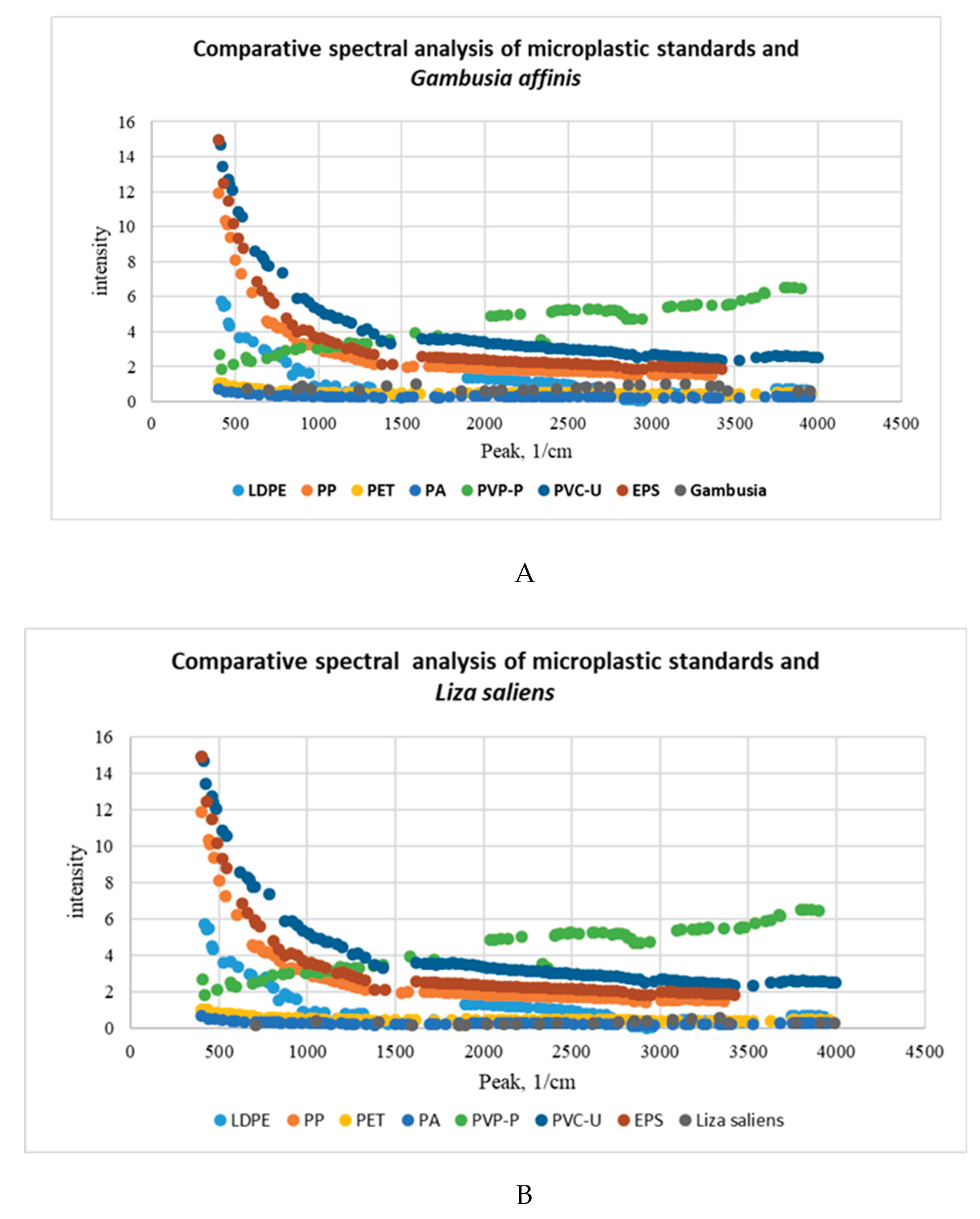
From the isolated microplastic particles, the following types were identified: PET – polyethylene terephthalate used in the production of bottles for soft drinks; PA – used in the production of fishing cord (Figure 7 A and B). The spectra of the isolated MP particles (illustrated in Figure 7 A as G. affinis and in Figure 7 B as L. saliens) were compared against the spectra of several control standards as follows – (LDPE) Low-Density Polyethylene (PP) Polypropylene (PET) Polyethylene terephthalate (PA) Polyamide (PVP-P) Polyvinylpolypyrrolidone (PVC-U) Unplasticized Polyvinyl Chloride (EPS) Expanded Polystyrene. In comparison to the above standards, our analysis has revealed that the isolated MP particles from both species are from PA and PET origin.
4. Discussion
Lake Vaya, also known as Burgas Lake, is located near the city of Burgas. The lake is separated from the Black Sea by the Kumluka sand spit and is connected to it by a narrow channel. It is this connection that plays a role in determining the salinity of the lake. On the other hand, three rivers flow into Vaya - Aytoska, Sunderdere and Chukarska, which provide freshwater inflow. This lake plays an important role in local fishing, tourism and agriculture. Although the lake plays a significant role as a natural biodiversity pool in the area, it is important to note the anthropogenic pressure which has a negative impact on the lake. There has been research in the past focusing on the concentration of different elements in the lake and indicate that the development of the lake is heading in an unfavourable direction [35,36]. The lake is situated between several agricultural fields and main city road arteries with high automotive congestion which can additionally contribute to the discharge of organic and inorganic pollutants in the water bodies and stimulate the process of eutrophication. Furthermore, several studies show the increased abundance of Cyanobacteria displacing Chlorophyta and Bacillariophyta phytoplankton populations and confirmed the production of algal toxins (microcystin and cyllindrospermopsin) [37]. In addition to the chemical pollution, in the last decade a significant amount of plastic pollution has been observed in the urban areas of the lake mainly associated with fisherman and tourist activities
This study presents an assessment of MPs contamination in two species of fish caught in Lake Vaya, Burgas. All investigated species were contaminated with MPs. We found that the concentration of MPs was higher in G. affinis compared to L. saliens – the total concentration of microplastics (in all fish from the group) is shown in Table 3. In the mosquito fish, the most abundant shape of MP identified were fibers followed by fragments with irregular form which correlated well with existing research on microplastic accumulation in the species [38,39]. In contrast to this, in the Leaping mullet we were able to isolate only fibers which are also observed in previous research [40]. Overall, in our study, fiber types were the most isolated (total 336), followed by irregularly shaped (total 221) and pellets (total 217). Plastic fibers are the most abundant type of microplastics found in global water bodies, and they are the primary product of the breakdown of big debris [41] which was also confirmed by the current research. As per literature, MP fragments constitute about 30% of all microplastics. While fibers can be more easily eliminated from the body, fragments tend to accumulate, especially when their size is bigger than the intestinal lumen, which could increase the risk of blockage or gastrointestinal wounds in fish [28]. FTIR identification of the MP revealed that the particles are from PET and PA origin as shown in Figure 7 A and B. This is no surprise due to the fact that PET is the most common thermoplastic polymer used in everyday household items such as clothing, containers and resins [42] whereas PA is utilized in the synthesis of polymers such as nylons and sodium polyaspartate. According to previous research PET has also been the main polymer isolated in both species [38,39,40]. In conclusion, contamination with these polymers could indicate that the studied sites are polluted mainly by day-to-day household items which were later confirmed by our field observations.
These are the first data on the presence of microplastic particles and contamination with MPs in fish from Lake Vaya. Regarding the contamination of this lake with heavy metals, several studies have been conducted by different groups of Bulgarian scientists. In a study conducted by Peycheva et al. [23] it was shown that the consumption of freshwater fish species from Lake Vaya and Mandra is safe for human health in terms of the presence of heavy metal contamination. The authors described that in all of the analyzed samples the levels of Cd, Cr, Cu, Mn, Ni, Pb, Fe and Zn were below the maximum permissible concentrations for safe human consumption in Bulgaria. In a study by Falah et al. [21] it was found that despite the fact that the studied area is industrialized, the lake is not heavily polluted during the four seasons of this year and its water is alkaline. In a study by [22] on the presence of pollutants in wild fish species of Prussian carp (Carassius gibelio), roach (Rutilus rutilus) and perch (Perca fluviatilis), it was found that the studied persistent organochlorine pollution in Lake Vaya was lower compared to other aquatic ecosystems. According to data by Peycheva et al. [43] on the presence of mercury in three fish species from Lake Vaya - carp, roach and perch and two species of Black Sea fish - sprat and Mediterranean horse mackerel, it was found that the amount of mercury in Black Sea fish was higher than in fish from Lake Vaya. However, despite the intensive work of other authors during the years on different pollutants there has been no research conducted regarding the distribution of microplastics in the Burgas lakes, which are of ecological and urban importance. To our best knowledge this is a pilot investigation focusing on the distribution and type of microplastics in fish species from Lake Vaya. Our research revealed that the concentration and types of microplastics varied strictly in both species, probably mainly due to differences in their physiology and ecology. Even though the size of L. saliens is much larger, the amount of MPs in this fish is significantly smaller, which is of great importance since it is used for food by humans, unlike G. affinis. Since there is no previous research conducted in the literature on the presence of MPs in Lake Vaya, it is not possible to compare our results with those of other scientists who worked on the problems of pollution of the Burgas lake. According to [44] in samples of fish species from Lake Ontario and Lake Superior a large quantity of anthropogenic microparticles were found across 8 fish species from nearshore Lake Ontario, MP were isolated across 50 fish (1 species) from Humber River, and across 119 fish (7 species) from Lake Superior. Polyethylene (24%), polyethylene terephthalate (20%), and polypropylene (18%) were the most common microplastics. The results of our study are similar, where the most common particles are polyethylene terephthalate (Figure 7 A,B). In a study by Yin et al. [45] MPs were examined in the intestines and gills of 11 different fish species from Lake Chao, China. The results revealed that the numbers of isolated MPs from fish gastrointestinal tract were similar in quantity to MP isolated from the gills. In terms of characteristic composition (shape, color, size and polymer type), the results revealed a higher frequency of fibrous, black, small (<1 mm) and polypropylene MPs. Our results were similar, with the presence of more fibrous, black and transparent MPs. In our study, polypropylene fibers were not isolated.
According to Yin et al. [45], the results revealed a selective accumulation of MP substances in fish intestines, while the accumulation of MPs in fish gills was random. Fish gills adhering MPs through non-selective water exchange may be more related to the abundance of MPs in the water in real time. In our studies, only MPs were isolated from the gills of L. saliens. To some extent, fish gills can be used as an important tool to reflect microplastic pollution in aquatic environments. Influenced by diverse feeding behaviors, such as visual cues and sensory systems, the accumulation of MPs in fish guts reflects intrinsic differences, thus making the fish intestines sensitive organs in monitoring the environmental risk of MPs on their health. Although the concentration of MPs in the water and sediments of these fish cannot be predicted, the relatively high abundance of MPs in the gastrointestinal tract of fish suggests that environmental exposure may be above the threshold concentrations for risk.
In general, much of the experimental literature on MPs in freshwater fish has focused on using different life stages of fish, especially zebrafish, as model species to test the effects of MPs exposure, most likely due to their widespread use in toxicological studies [27]. Several studies have demonstrated dose-dependent effects of microplastic exposure on freshwater fish, although these effects may only occur at a certain concentration of microplastics, suggesting thresholds for microplastic exposure, with the relationship between exposure and effect being more complex than a simple linear dose-effect relationship [46,47,48,49]. The effects of MPs can be specific to each individual developmental stage and are sometimes more harmful to larvae than to adult fish, especially when the exposure to MPs affects development [50]. Changes in morphology of the gastrointestinal tract can also alter the species and activity of symbiotic microorganisms, leading to intestinal dysbiosis and metabolic changes [51,52,53,54,55,56]. In a recent study Menezes et al. [57] showed that MPs did not cause adverse effects at the morphological (variation in intestinal size), metabolic (variation in standard metabolic rate) or ecological (growth performance) level. However, an increased frequency of micronucleated cells was observed with increasing concentration of the microplasmic protein (df = 42, t-value = 3.68, p-value < 0.001), indicating the potential genotoxicity of the microplasmic protein, which may clearly harm the health of the fish in the long term.
The results of our survey revealed a high level of MP contamination. We found MPs in the gastrointestinal tract, gills, skin, and meat of all fish individuals, with notable differences in each organ (GIT > meat > gills >skin). The data from our study serve as a starting point regarding plastic contamination in fish on Vaya in the Burgas region. The presence of MPs in the aquatic environment raises concerns about their abundance and potential hazards to aquatic organisms. Microplastics, i.e. plastic particles with a size range similar to planktonic organisms, have been found in the water columns and sediments of lakes and rivers worldwide [16]. The number and mass of plastic particles carried through the river can exceed those of living organisms such as zooplankton and fish larvae. In freshwater sediments, microplastic concentrations reach the same magnitude as in the most polluted marine sediments in the world. Such particles are derived from a unique biogeochemical cycle, which ultimately affects the productivity, biodiversity and functioning of ecosystems. In addition, MPs act as vectors of toxic substances for invertebrates, fish, herpetofauna and waterflow [16]. According to Ghosh et al. [16], the concentration of this individual particle component is an ecologically significant parameter of inland water bodies due to its ubiquity, persistence in the environment and interactions with key ecological processes. No ecological field study that has searched for microplastics has yet been able to detect their presence.
5. Conclusions
In recent decades Lake Vaya has undergone major changes under the influence of urbanization and industrialization. The water body has been affected by different anthropogenic factors which led to the shift of its water quality towards an unfavourable direction. Our data correlates with existing research on the eutrophication of the lake, furthermore we were able to detect that due to the reconstruction of the canal to the Black Sea (“Improvement of the water regime and management of successionary processes in wetlands of international importance "Ropotamo Complex", "Locality Poda" and "Lake Vaya”, European Regional Development Fund (ERDF) - see Figure 2) which was previously blocked, the salinity of the lake increased to around 8ppt due to salt water entering the lake. This change has led to the appearance of new species which were previously not detected in the lake like the Leaping mullet which we selected as a target species due to its abundance compared to typical limnetic fish like the Crussian carp (Carassius gibelio) which numbers we found to be scarce in the last years. Although there has been extensive research on different pollutants [35] there has been no research towards the presence of microplastics in biological samples from fish. Future research could reveal whether different pollutants could cause adverse effects on the natural fauna which could in return have an unfavourable effect on human health due to the extensive fishing practices carried out in the lake. Last but not least, the lake serves as an important biodiversity pool which plays a critical role for the Via Pontica migration route, as such it is important to be maintained in a good state to avoid any negative effects on migratory bird populations, including endangered species.
Standardized limnological protocols are required to compare spatiotemporal variations in microplastic concentration within and between water bodies. Data obtained from such protocols would facilitate environmental monitoring and inform plastic waste management policy. Furthermore, they would allow for more accurate modeling of the pollutant cycle and the development of a global plastics budget that identifies sources, pathways of distribution and circulation, reservoir size and retention time. MPs are recognized as emerging pollutants that may also facilitate the transport of invasive species and other pollutants. This framework should take into account the combined toxic effects of compounds related to MPs and how MPs influence the bioavailability of these compounds to better assess their ecological consequences; - policy and regulation: informing policy and regulatory frameworks based on scientific findings to effectively manage and reduce MPs pollution in aquatic environments.
Further research is needed to identify and understand the processes and pathways behind the release of microplastics into aquatic environments and to assess the ecotoxicological risks to fish health.
Author Contributions
Tsveteslava V. Ignatova-Ivanova, Kiril Valkanov and Nikolay D. Natchev- conceived and designed the study. Kiril Valkanov and Nikolay D. Natchev obtained the samples. Teodora Koynova, Kiril Valkanov, Tsveteslava V. Ignatova-Ivanova and Nikolay D. Natchev, supervised the data analysis and wrote the manuscript. Sevginar F. Ibryamova, Stephany Toschkova, Darina Ch. Bachvarova, Polina Todorova- performed the fish dissection, and performed the testing and contributed to data analyzes and summaries. All authors have read and agreed to the published version of the manuscript. The authors express genuine gratitude for the support of Marco Ivanov and Ivan Telenchev during the field examinations and drone recordings.
Acknowledgments
This study was financially supported by Shumen University, Department of Biology (Grant RD -08-113/ 05.02.2025).
Conflicts of Interest
The authors declare no conflicts of interest. The funders had no role in the design of the study; in the collection, analyses, or interpretation of data; in the writing of the manuscript; or in the decision to publish the results.
Abbreviations
The following abbreviations are used in this manuscript:
| MP / MPs | Microplastic / Microplastics |
| PET | Polyethylene terephthalate |
| PA | Polyamide |
| LDPE | Low Density Polyethylene |
| PP | Polypropylene |
| PVP-P | Polyvinylpolypyrrolidone |
| PVC-U | Unplasticized Polyvinyl Chloride |
| EPS | Expanded Polystyrene |
| GIT | Gastrointestinal Tract |
| FTIR | Fourier Transform Infrared (Spectroscopy) |
| ATR | Attenuated Total Reflectance |
| KOH | Potassium hydroxide |
| QC | Quality control |
| QA/QC | Quality assurance / Quality control combined |
| TSI | Trophic State Index |
| Chl a | Chlorophyll a |
| ERDF | European Regional Development Fund |
| ATC | Automatic Temperature Compensation |
| MTC | Manual Temperature Compensation |
References
- Plastics the Fast Facts 2025. Global and European plastics production and economic indicators 2025, October 2025 Plastics Europe AISBL.
- Brooks, A.L., Wang, S., and Jambeck, J.R., The Chinese import ban and its impact on global plastic waste trade. Science Advances, (2018), 4 (6): eaat0131. [CrossRef] [PubMed]
- Hassan, H.U., Ali, Q.M., Rahman, M.A., Kamal, M., Tanjin, S., Farooq, U., Mawa, Z., Badshah, N., Mahmood, K., Hasan, R., Gabool, K., Rima, F.A., Islam, A., Rahman, O. and Hossain, Y. Growth pattern, condition and prey-predator status of 9 fish species from the Arabian Sea (Baluchistan and Sindh), Pakistan. Egyptian Journal of Aquatic Biology & Fisheries, (2020), 24: 281-292. [CrossRef]
- Lusher, A. Microplastics in the marine environment: distribution, interactions and effects. In: M. BERGMANN, L. GUTOW and M. KLAGES, eds. Marine anthropogenic litter Cham: Springer (2015), 245-307. [CrossRef]
- Wang, W., and Yu, X. Bioavailability and toxicity of microplastics to fish species: A review. Ecotoxicology and Environmental Safety (2020) 189: 109913. [CrossRef] [PubMed]
- Karami, A. Gaps in aquatic toxicological studies of microplastics. Chemosphere, (2017), 184: 841-848. [CrossRef] [PubMed]
- Khan, M.L., and Hassan, H.U. Effects of microplastics in freshwater fishes health and the implications for human health. Braz. J. Biol. (2024), 84 • . [CrossRef]
- Siddique, M.A.M., Uddin, A., Rahman, S.M.A., Rahman, M., Islam, M.S. and Kibria, G. Microplastics in an anadromous national fish, Hilsa shad Tenualosa ilisha from the Bay of Bengal, Bangladesh. Marine Pollution Bulletin, (2022), 174: 113236. [CrossRef] [PubMed]
- Bilal, M., Ali, H., Hassan, H.U., Khan ,S.U., Ghafar, R., Akram, W., Ahmad, H., Mushtaq, S., Jafari, H., Yaqoob, H., Khan, M.M., Ullah, R. and Arai, T. Cadmium (Cd) influences calcium (Ca) levels in the skeleton of a freshwater fish Channa gachua. Brazilian Journal of Biology = Revista Brasileira de Biologia, (2024), 84: e264336. [CrossRef] [PubMed]
- Crawford, C.B. and Quinn, B. Microplastic pollutants. Kidlington: Elsevier. The biological impacts and effects of contaminated microplastics: (2017), 159-178. [CrossRef]
- Strungaru, S.A., Jijie, R., Nicoara, M., Plavan, G. and Faggio, C. Micro-(nano) plastics in freshwater ecosystems: abundance, toxicological impact and quantification methodology. Trends in Analytical Chemistry, (2019) 110: 116-128. [CrossRef]
- Khan, W., Hassan, H.U., Gabol, K., Khan, S., Gul, Y., Ahmed, A.E., Swelum, A.A., Khooharo, A.R., Ahmad, J., Shafeeq, P., and Ullah, R.Q. Biodiversity, distributions and isolation of microplastics pollution in finfish species in the Panjkora River at Lower and Upper Dir districts of Khyber Pakhtunkhwa province of Pakistan. Brazilian Journal of Biology = Revista Brasileira de Biologia, (2024), 84: e256817. [CrossRef] [PubMed]
- Yang, S., Zhou, M., Chen, X., Hu, L., Xu, Y., Fu, W., Li, C. A comparative review of microplastics in lake systems from different countries and regions. Chemosphere 286 (2022), 131806. [CrossRef]
- von Moos, N., Burkhardt-Holm, P., Kohler, A. Uptake and effects of microplastics on cells and tissue of the blue mussel Mytilus edulis L. after an experimental exposure. Environ. sci. & tech. (2012), 46, 11327–11335.
- Hurley, R.R., Woodward, J.C., Rothwell, J.J. Ingestion of microplastics by freshwater tubifex worms. Environ. sci. & tech. (2017), 51: 12844–12851.
- Ghosh, S., Dey, S., Mandal, A.H., Sadhu, A., Saha, N.С., Barcel´, D., Pastorino, P., Saha, S. Exploring the ecotoxicological impacts of microplastics on freshwater fish: A critical review, Journal of Contaminant Hydrology, Journal of Contaminant Hydrology, (2025), 269: 104514. [CrossRef]
- Lund, M.A., Davis, J.A. Seasonal dynamics of plankton communities and water chemistry in a eutrophic wetland (Lake Monger: western Australia): implications for biomanipulation. Mar. Freshw. Res., (2000), 51: 321-332. [CrossRef]
- Jourdan, J., Rüdiger, R., Sarah, C. "Off to new shores: Climate niche expansion in invasive mosquitofish (Gambusia spp.)". Ecology and Evolution. (2021), 11 (24): 18369–18400. Bibcode:2021EcoEv..1118369J. [CrossRef] [PubMed] [PubMed Central]
- Walton et al ''Gambusia affinis (Baird & Girard) and Gambusia holbrooki Girard (mosquitofish''2012, 1st edition, A Handbook of Global Freshwater Invasive Species.
- Powell, W-J., Ford, A. K., Dehm, J. Evidence of elevated microplastic accumulation in Pacific Island mangrove sediments. Marine Pollution Bulletin. (2025), (221): 118514. [CrossRef]
- Falah, A., Peeva, G., Koleva, R., Yemendzhiev, H., Nenov, V. Monitoring and Water Quality Assessment of Burgas Lake (Vaya Lake) in the Black Sea Region of Republic of Bulgaria. Int. J. Life Sci. Res., (2019), 7:30–140.
- Georgieva, S., Stancheva, M., Makedonski, L. Persistent organochlorine compounds (PCBs, DDTs, HCB & HBDE) in wild fish from the Lake Burgas and Lake Mandra, Bulgaria. J. Int. Sci. Publ., (2015), 9: 515–523.
- Peycheva, K., Makedonski, L., Georgieva, S., Stancheva, M. Assessment of mercury content in fish tissues from selected lakes in Bulgaria and Bulgarian Black Sea. J. Int. Sci. Publ., (2015), 9: 506–514.
- Aminot, A., and Rey, F. Determination of chlorophyll a by spectroscopic methods. ICES Techniques in Marine Environmental Sciences, (2020) , DK-1261, Copenhagen K, Denmark, ISSN 0903-2606.
- Najla, S. I., Hashim, S., Hidayah, S., Talib, A., * and Abustan, M.S. Spatial and Temporal Variations of Water Quality and Trophic Status in Sembrong Reservoir, Johor. International Conference on Civil & Environmental Engineering (CENVIRON 2017), (2018), (34): 7, E3S Web of Conferences 34, 02015 (2018) . [CrossRef]
- Cunha, D.G.F., Finkler, N.R., Lamparelli, M.C. et al. Characterizing Trophic State in Tropical/Subtropical Reservoirs: Deviations among Indexes in the Lower Latitudes. Environmental Management, (2021). 68: 491–504 . [CrossRef]
- Marcogliano et al ‘’Extraction and identification of microplastics from mussels: Method development and preliminary results’’ Ital J Food Saf. 2021 Mar 11;10(1):9264. [CrossRef]
- Ibryamova, S., Toschkova, S., Bachvarova, D., Lyatif, A., Stanachkova, E., Ivanov, R., Natchev, N., Ignatova-Ivanova, Ts. Assessment of the bioaccumulation of microplastics in the black sea mussel Mytilus Galloprovincialis L., 1819. Journal of IMAB - Annual Proceeding (Scientific Papers) (2022), 28 (4): 4676-4682. [CrossRef]
- Brander, S. M., Renick, V.C., Foley, M. M., Steele, C., Woo, M., Lusher, A., Carr, S., Helm, P., Box, C., Cherniak, S., Andrews, R. C., and Rochman, C .M. Sampling and Quality Assurance and Quality Control: A Guide for Scientists Investigating the Occurrence of Microplastics Across Matrices. Applied Spectroscopy, (2020), 74 (9), 1099-1125. https://opg.optica.org/as/abstract.cfm?URI=as-74-9-1099. [CrossRef]
- Hermsen, E., Mintenig, S. M., Besseling, E., Koelmans, A. A. Quality Criteria for the Analysis of Microplastic in Biota Samples: A Critical Review. Environmental Science & Technology. (2018), 52 (18), 10230–10240. [CrossRef]
- Noonan, M.J., Grechi, N., Mills, C. et al. Microplastics analytics: why we should not underestimate the importance of blank controls. Micropl.&Nanopl. (2023). 3: 17. [CrossRef]
- Lares, M., Ncibi, M. C., Sillanpää, M., Sillanpää, M. Occurrence, identification and removal of microplastic particles and fibers in conventional activated sludge process and advanced MBR technology. Water Research, (2018), 133: 236-246. [CrossRef]
- Dimitrova , R., Nenova , E., Uzunov , B., Shishiniova, M., and Stoyneva, M. PHYTOPLANKTON COMPOSITION OF VAYA LAKE (2004–2006). Bulgarian Journal of Agricultural Science, (2014) 20 (Supplement 1): 165–172.
- Vinagre, P. Setting reference conditions for mesohaline and oligohaline macroinvertebrate communities sensu WFD: Helping to define achievable scenarios in basin management plans. Ecological Indicators. (2015). [CrossRef]
- Falah, A., Peeva, G., Koleva, R., Yemendzhiev, H., Nenov, V. Monitoring and Water Quality Assessment of Burgas Lake (Vaya Lake) in the Black Sea Region of Republic of Bulgaria. International Journal of Life Sciences Research, (2019), 7 (3): 130-140.
- Dimitrova , R., Nenova , E., Uzunov , B., Shishiniova, M., and Stoyneva, M. Phytoplankton abundance and structural parameters of the critically endangered protected area Vaya Lake (Bulgaria). Biotechnology & Biotechnological Equipment, (2014), 28, (5): 871-877. [CrossRef]
- Teneva, I., Belkinova, D., Mladenov, R., Stoyanov, P., Moten, D., Basheva, D., Kazakov, S., Dzhambazov, Balik. Phytoplankton composition with an emphasis of Cyanobacteria and their toxins as an indicator for the ecological status of Lake Vaya (Bulgaria) – part of the Via Pontica migration route. Biodiversity Data Journal. (2020), 8: e57507. 10.3897/BDJ.8.e57507.
- Kurtul, I., Eryaşar, A., Mutlu, T. et al. Microplastic ingestion in invasive mosquitofish ( Gambusia holbrooki ): a nationwide survey from Türkiye. Environ Sci Eur, (2025). [CrossRef]
- Buwono, N. R., Risjani, Y., Soegiantoa, A. Oxidative stress responses of microplastic-contaminated Gambusia affinis obtained from the Brantas River in East Java, Indonesia. Chemosphere, (2022),133543. [CrossRef]
- Bagheri, T., Gholizadeh, M., Abarghouei, S., Zakeri, M., Hedayati, A., Rabaniha, M., Aghaeimoghadam,A., Hafezieh, M. Microplastics distribution, abundance and composition in sediment, fishes and benthic organisms of the Gorgan Bay, Caspian sea. Chemosphere, (2020), 257: 127201. [CrossRef]
- Wang, F., Gao, J., Zhai, W., Liu, D., Zhou, Z., Wang, P. The influence of polyethylene microplastics on pesticide residue and degradation in the aquatic environment. Journal of Hazardous Materials, (2020), 394: 122517. [CrossRef]
- James, B. D., de Vos, A., Aluwihare, L. I., Youngs, S., Wart, C.P., Nelson, R. K., W.,. Michel, A.P., Hahn, M. E., Reddy, C. M. Divergent Forms of Pyroplastic: Lessons Learned from the M/V X-Press Pearl Ship Fire. ACS Environ. (2022), 2 (5): 467–479. [CrossRef]
- Peycheva, K., Panayotova, V., Stancheva, R., Makedonski, L., Merdzhanova, A., Parrino, V., Nava, V., Cicero, N., and Fazio, F. Risk Assessment of Essential and Toxic Elements in Freshwater Fish Species from Lakes near Black Sea, Bulgaria. Toxics (2022), 10: 675. [CrossRef]
- Munno, K., Helm, P. A., Rochman, C., George, T., Jackson, D.A. Microplastic contamination in Great Lakes fish. Conservation biology. (2022), 36 (1): e13794. [CrossRef]
- Yin, X., Wu, J., Liu, Y., Chen, X., Xie, C., Liang, Y., Li, J., Jiang, Z. Accumulation of microplastics in fish guts and gills from a large natural lake: Selective or non-selective? Environmental Pollution, (2022), (309): 15, 119785. [CrossRef]
- Capone, A., Petrillo, M., Misic, C. Ingestion and Elimination of Anthropogenic Fibres and Microplastic Fragments by the EuropeanAnchovy (Engraulis Encrasicolus) of the NW Mediterranean Sea. Mar. Biol. (2020), 167, 166. [CrossRef]
- Dai, Y.J., Jia, Y.F., Chen, N.A., Bian, W.P., Li, Q.K., Ma, Y.B., Chen,Y.L, & Pei, D.S. Zebrafish as a model system to study toxicology. Environmental Toxicology and Chemistry, (2014), 33: 11–17. https:// doi.org/10.1002/etc.2406.
- Lei, L., Wu, S., Lu, S., Liu, M., Song, Y., Fu, Z., Shi, H., Raley-Susman, K.M., & He, D. Microplastic particles cause intestinal damage and other adverse effects in zebrafish Danio rerio and nematode Caenorhabditis elegans. Science of the Total Environment, (2018), 619–620:1–8. [CrossRef]
- Mazurais, D., Ernande, B., Quazuguel, P., Severe, A., Huelvan, C., Madec, L., Mouchel, O., Soudant, P., Robbens, J., Huvet, A., & Zambonino- Infante, J. Evaluation of the impact of polyethylene microbeads ingestion in European sea bass (Dicentrarchus labrax) larvae. Marine Environmental Research, (2015), 112: 78–85. [CrossRef]
- Qu, H., Ma, R., Wang, B., Yang, J., Duan, L., & Yu, G. Enantiospecific toxicity, distribution and bioaccumulation of chiral antidepressant venlafaxine and its metabolite in loach (Misgurnus anguillicaudatus) co-exposed to microplastic and the drugs. Journal of Hazardous Materials, (2019), 370: 203–211. [CrossRef]
- Zhao, Y., Bao, Z., Wan, Z., Fu, Z., & Jin, Y. Polystyrene microplastic exposure disturbs hepatic glycolipid metabolism at the physiological, biochemical, and transcriptomic levels in adult zebrafish. Science of the Total Environment, (2020), 710: 136279. [CrossRef]
- Pannetier, P., Morin ,B., Le Bihanic, F., Dubreil, L., Clérandeau, C., Chouvellon, F., Van Arkel, K., Danion, M., & Cachot, J. Environmental samples of microplastics induce significant toxic effects in fish larvae. Environment International, (2020), 134: 105047. https:// doi.org/10.1016/j.envint.2019.105047.
- Ding, J., Huang, Y., Liu, S., Zhang, S., Zou, H., Wang, Z., Zhu, W., & Geng, J. Toxicological effects of nano- and micro-polystyrene plastics on red tilapia: Are larger plastic particles more harmless? Journal of Hazardous Materials, (2020), 396: 122693. [CrossRef]
- Jabeen, K., Su, L., Li, J., Yang, D., Tong, C., Mu, J., & Shi, H. Microplastics and mesoplastics in fish from coastal and fresh waters of China. Environmental Pollution, (2017), 221: 141–149. https://doi. org/10.1016/j.envpol.2016.11.055.
- Qiao, R., Deng, Y., Zhang, S., Borri, M., Zhu, Q., Ren, H., & Zhang, Y. Accumulation of different shapes of microplastics initiates intestinal injury and gut microbiota dysbiosis in the gut of zebra fish. Chemosphere, (2019), 236: 124334. [CrossRef]
- Xia, X., Sun, M., Zhou, M., Chang, Z., & Li, L. Polyvinyl chloride microplastics induce growth inhibition and oxidative stress in Cyprinus carpio var. larvae. Science of the Total Environment, (2020), 716: 136479. [CrossRef]
- Menezes, M., Mello, F.T., Ziegler, L., Wanderley, B., Gutiérrez, J.M., Dias, J.D. Revealing the hidden threats: Genotoxic effects of microplastics on freshwater fish. Aquatic Toxicology, (2024), 276: 107089. [CrossRef]
Figure 1.
Map of the studied area and points of sampling. Red dot (Sample 1) indicated the sample site of G. affinis (42°29'36.0"N 27°26'56.5"E) whereas the green dot (Sample 2) indicated the sample site of L. saliens (42°30'40.8"N 27°25'41.0"E) Scale 1:70000. A smaller map illustrates the geographical location of the lake in Bulgaria.
Figure 1.
Map of the studied area and points of sampling. Red dot (Sample 1) indicated the sample site of G. affinis (42°29'36.0"N 27°26'56.5"E) whereas the green dot (Sample 2) indicated the sample site of L. saliens (42°30'40.8"N 27°25'41.0"E) Scale 1:70000. A smaller map illustrates the geographical location of the lake in Bulgaria.
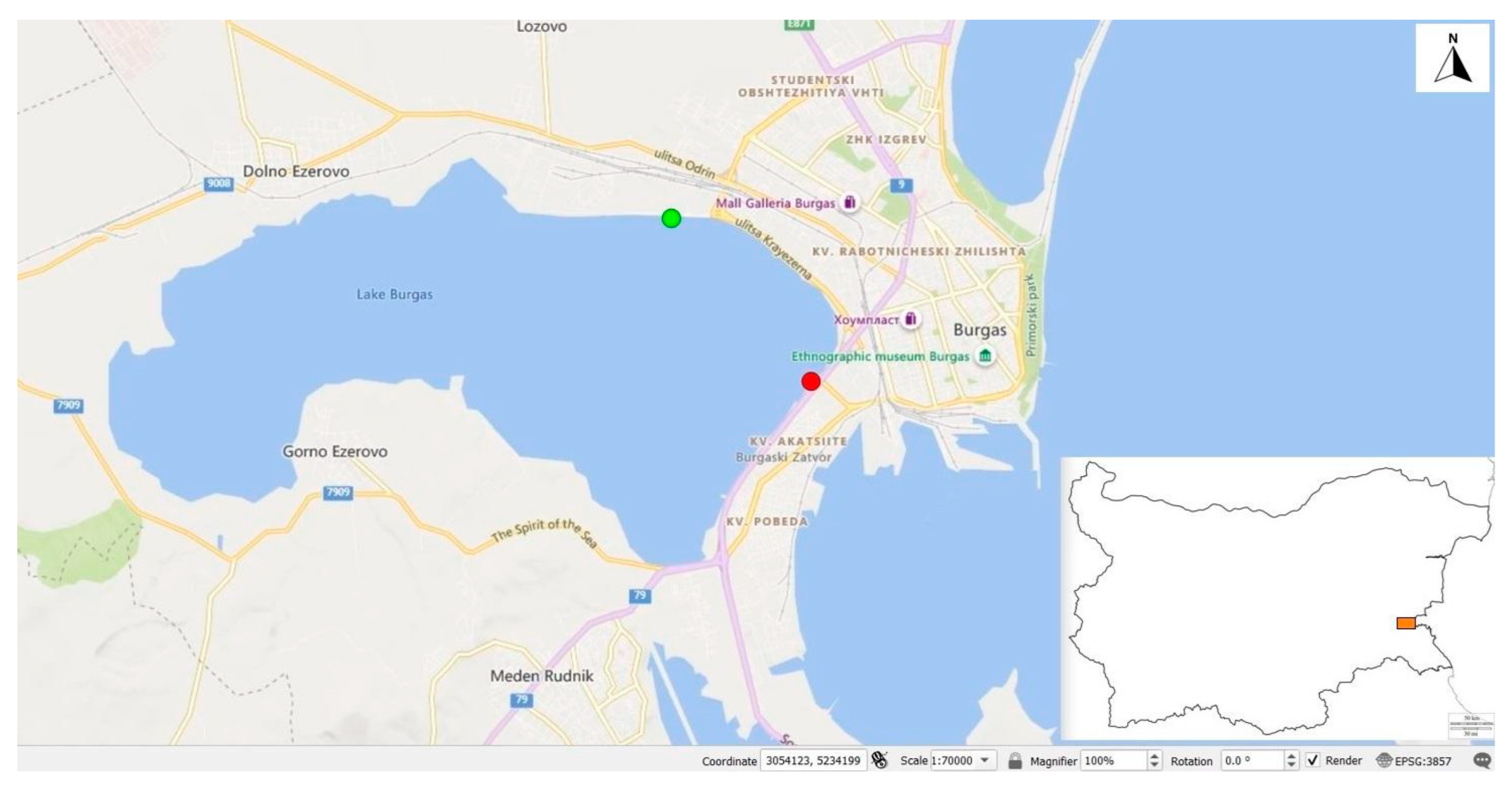
Figure 2.
Lake Vaya pictures taken with a drone. Picture A and B - the main road ‘’Bul. Todor Aleksandrov’’ which connects the city center to the biggest district in Burgas - Meden Rudnik, the white star indicates the canal which connects Lake Vaya to the Black Sea. This boulevard is the heaviest in traffic in Burgas during morning and afternoon hours.
Figure 2.
Lake Vaya pictures taken with a drone. Picture A and B - the main road ‘’Bul. Todor Aleksandrov’’ which connects the city center to the biggest district in Burgas - Meden Rudnik, the white star indicates the canal which connects Lake Vaya to the Black Sea. This boulevard is the heaviest in traffic in Burgas during morning and afternoon hours.
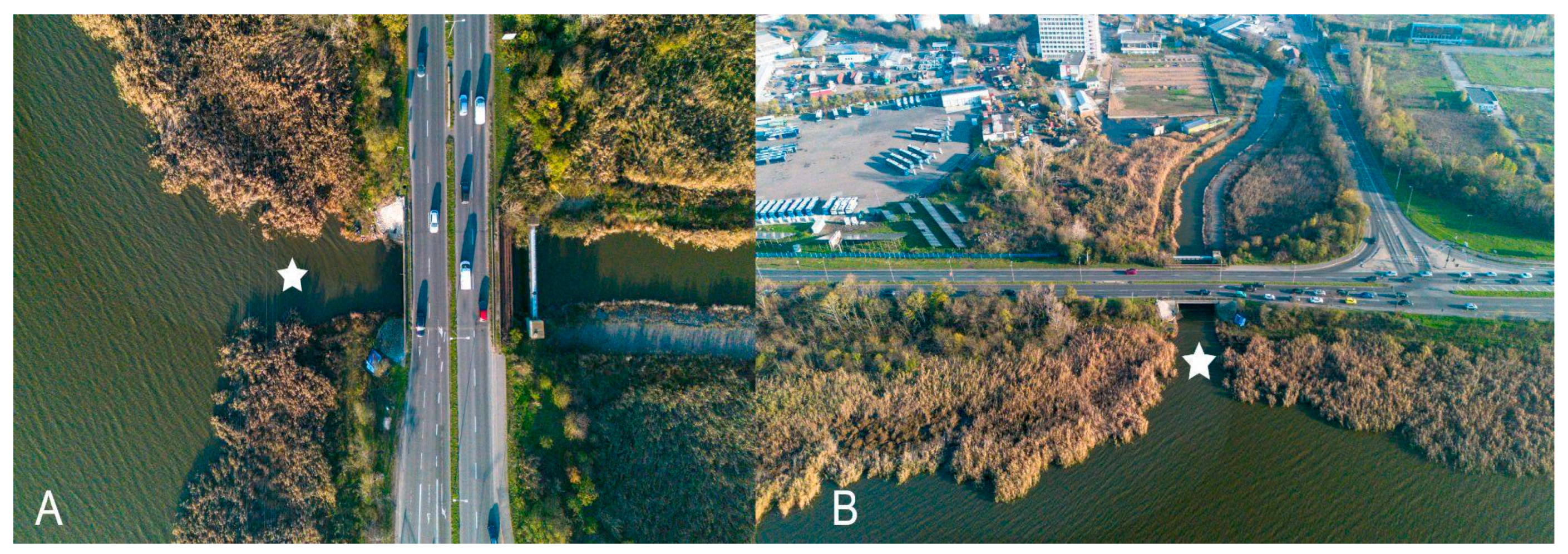
Figure 3.
Plastic pollution alongside the coasts of Lake Vaya near boulevard ‘’Todor Aleksandrov’’. Picture A illustrates plastic pollution from fishing activities - plastic bags, empty bait cans, fishing accessories etc. Picture B illustrates plastic pollution from food packaging - plastic bottles, bags from different snacks and consumables and yogurt containers. The plastic pollution is consistent along the whole length of the coast near the boulevard.
Figure 3.
Plastic pollution alongside the coasts of Lake Vaya near boulevard ‘’Todor Aleksandrov’’. Picture A illustrates plastic pollution from fishing activities - plastic bags, empty bait cans, fishing accessories etc. Picture B illustrates plastic pollution from food packaging - plastic bottles, bags from different snacks and consumables and yogurt containers. The plastic pollution is consistent along the whole length of the coast near the boulevard.
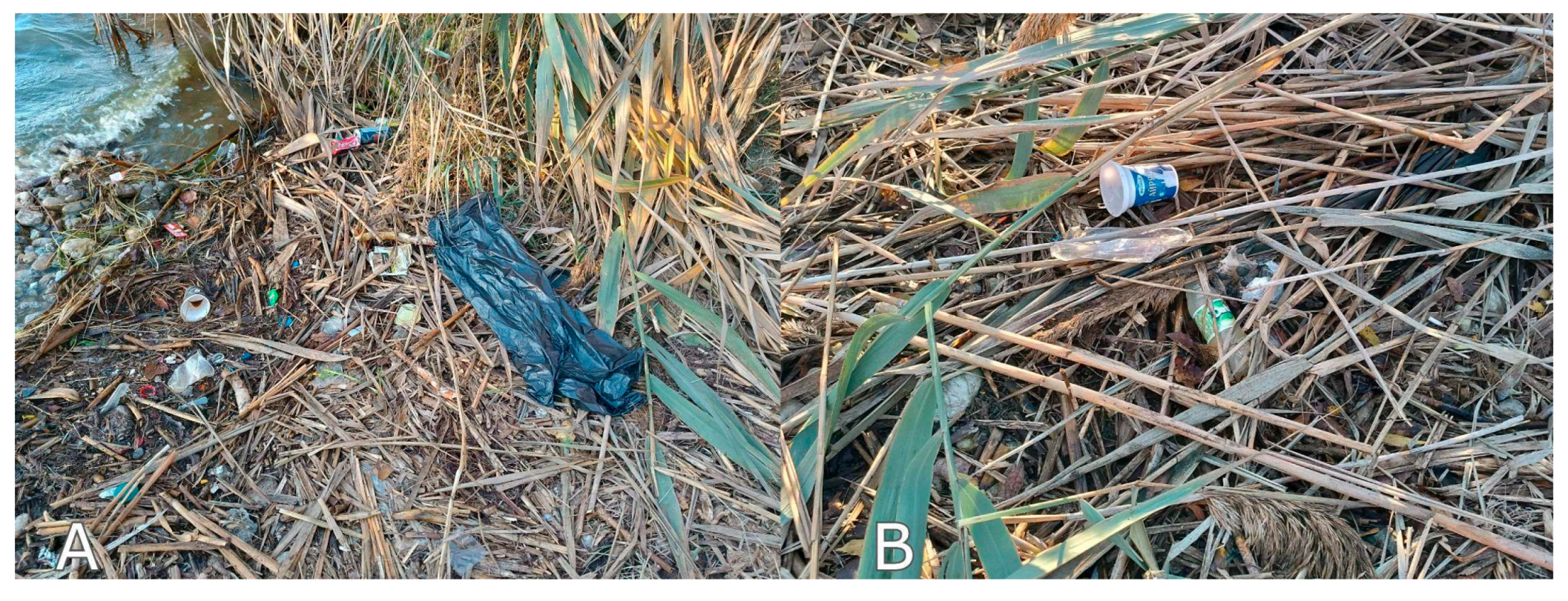
Figure 4.
Number of microplastic particles in samples from G. affinis.
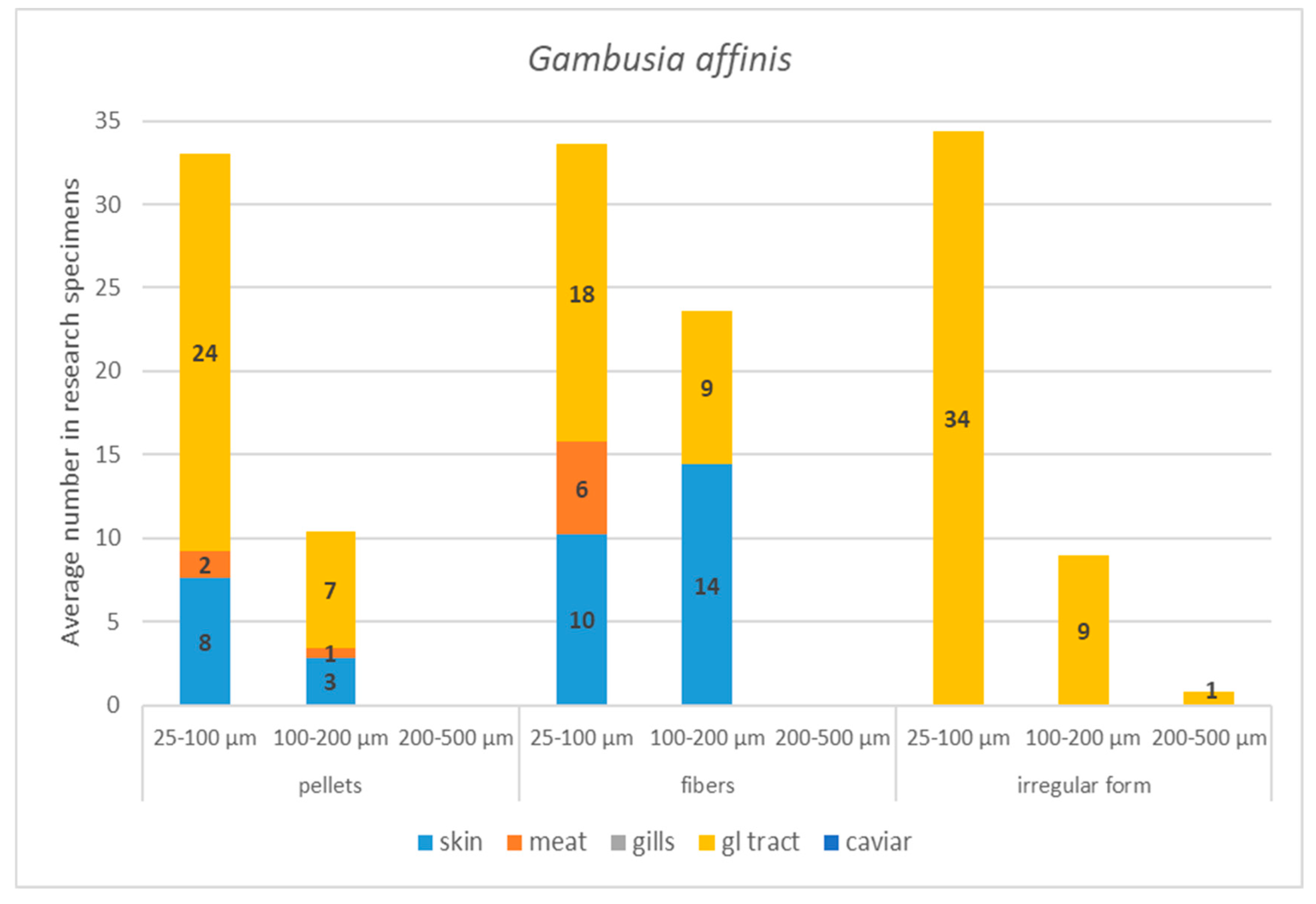
Figure 5.
Number of microplastic particles in samples from L. saliens.
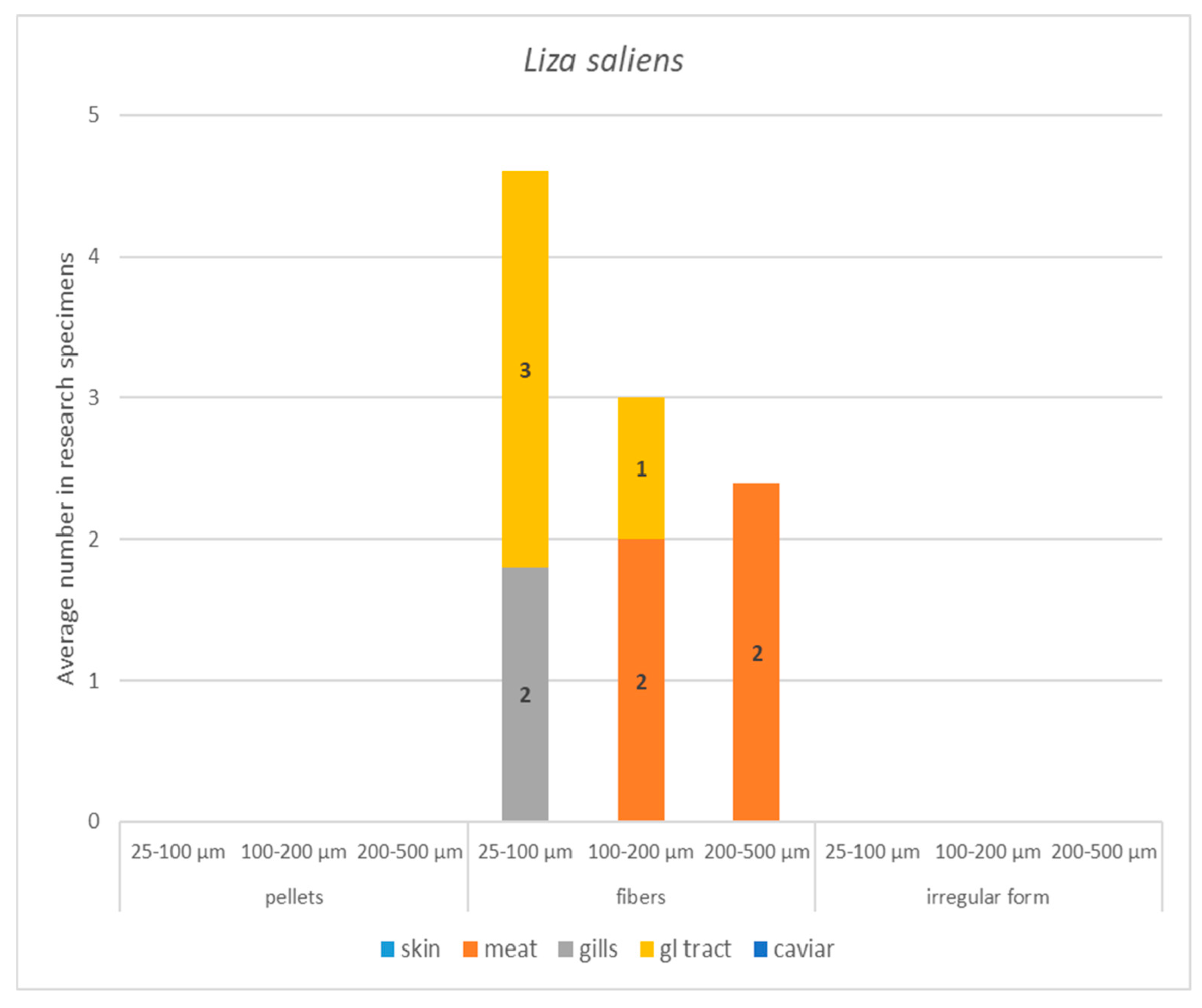
Figure 6.
Stereomicroscopic pictures of morphological types of microplastics recognized in the studied species from: A) Irregular forms of MP isolated from G. affinis; B) irregular form of MP mixed with invertebrate body parts isolated from G. affinis C, D) Fiber type MPs isolated from L. saliens. Scale bar represents 100 micrometers.
Figure 6.
Stereomicroscopic pictures of morphological types of microplastics recognized in the studied species from: A) Irregular forms of MP isolated from G. affinis; B) irregular form of MP mixed with invertebrate body parts isolated from G. affinis C, D) Fiber type MPs isolated from L. saliens. Scale bar represents 100 micrometers.
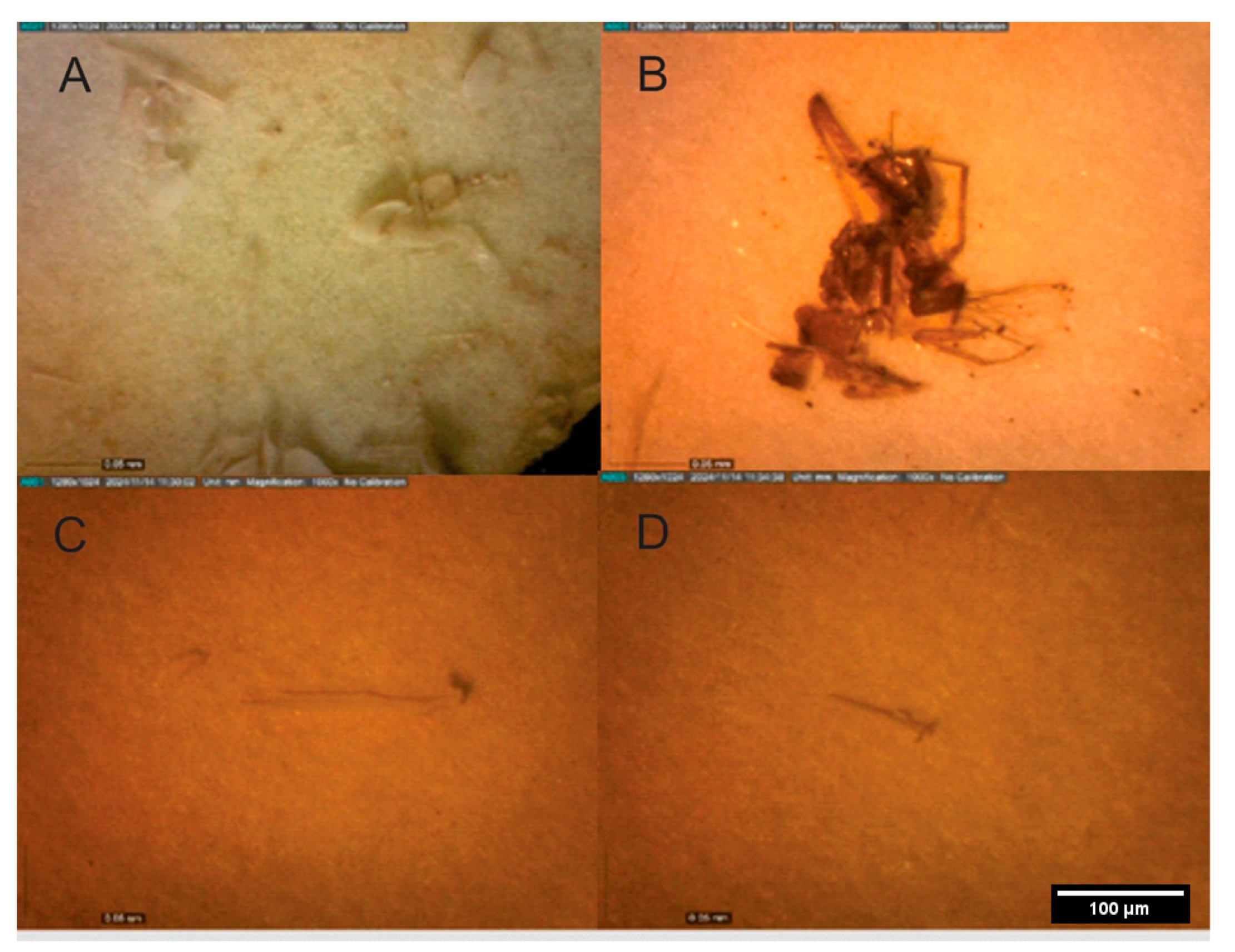
Figure 7.
Comparative characteristics of the number and type of microplastic particles: A) G. affinis B) L. saliens. It is observed that the isolated MP are composed primarily from PET and PA polymers.
Figure 7.
Comparative characteristics of the number and type of microplastic particles: A) G. affinis B) L. saliens. It is observed that the isolated MP are composed primarily from PET and PA polymers.
Disclaimer/Publisher’s Note: The statements, opinions and data contained in all publications are solely those of the individual author(s) and contributor(s) and not of MDPI and/or the editor(s). MDPI and/or the editor(s) disclaim responsibility for any injury to people or property resulting from any ideas, methods, instructions or products referred to in the content. |
© 2025 by the authors. Licensee MDPI, Basel, Switzerland. This article is an open access article distributed under the terms and conditions of the Creative Commons Attribution (CC BY) license (http://creativecommons.org/licenses/by/4.0/).
Copyright: This open access article is published under a Creative Commons CC BY 4.0 license, which permit the free download, distribution, and reuse, provided that the author and preprint are cited in any reuse.


