
Submitted:
16 December 2025
Posted:
17 December 2025
You are already at the latest version
Abstract
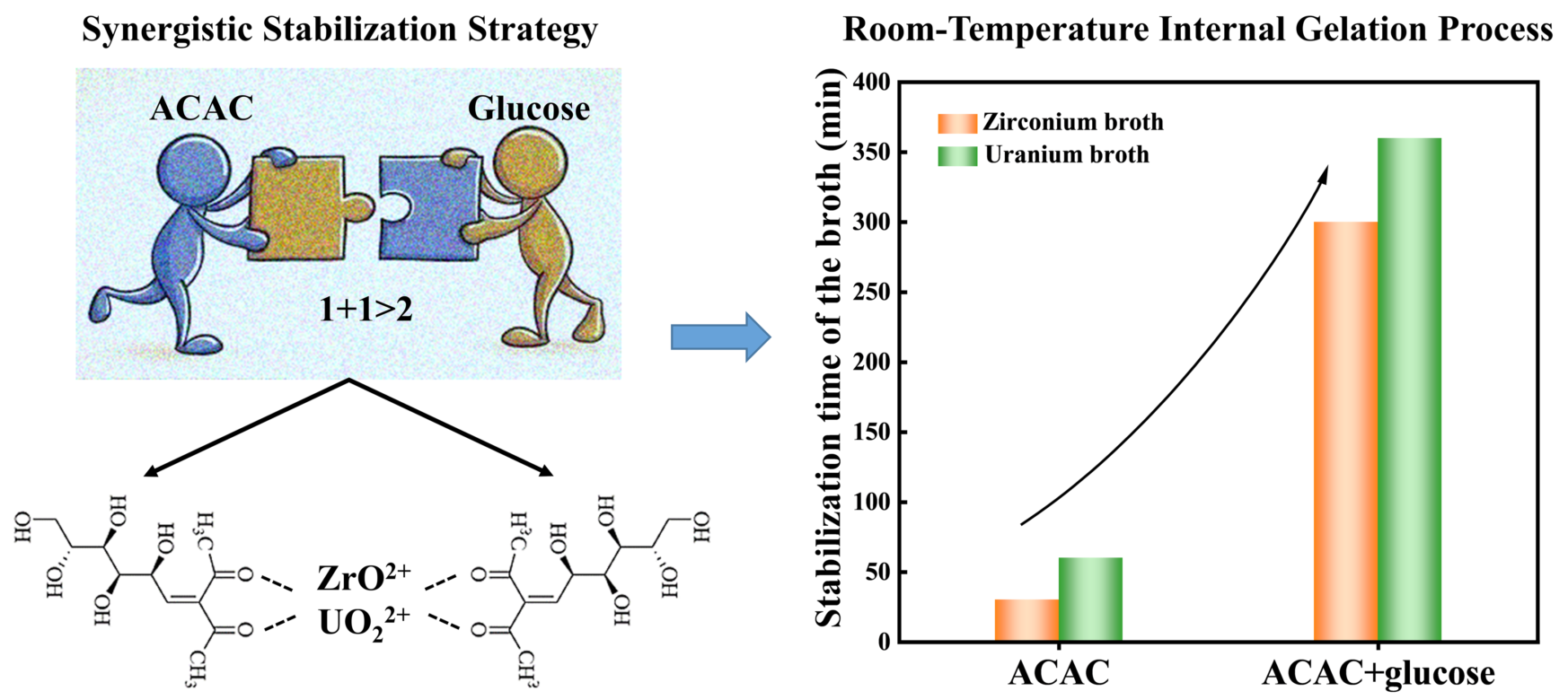
The internal gelation process is essential for producing spherical nuclear fuel micro-spheres. However, its application is constrained by the poor room-temperature stability of conventional broths and by the inherent trade-off between stability and strength. A novel five-component broth system (ZrO(NO₃)₂-HMTA-urea-acetylacetone (ACAC)-glucose) was developed. The synergistic effects of ACAC and glucose on sol stability and gelation ki-netics were systematically investigated. An optimal ACAC/glucose molar ratio of 1:1 and an ACAC/ZrO2+ ratio of 1.5 were identified, yielding a broth stable for over 5 h at 25°C. The resulting yttrium stabilized zirconia (YSZ) microspheres exhibited excellent sphericity (1.04±0.01), density (5.84 g/cm³), and crushing strength (8.0 kg/sphere). This stabilization strategy was successfully extended to a uranium system, enhancing its room-temperature stability from minutes to 6 h. The work demonstrates that the synergistic ACAC-glucose system effectively decouples the stability-strength dilemma. Its successful application to a uranium broth confirms the broader utility of the dicarbonyl complexation strategy, providing an energy-efficient route for producing high-quality nuclear fuel microspheres.
Keywords:
internal gelation process
; broth stability
; acetylacetone
; synergistic stabilization
; nuclear fuel microspheres
1. Introduction
The internal gelation process has emerged as a critical method for preparing spherical ceramic microspheres for advanced nuclear fuels, particularly tristructural-isotropic (TRISO) fuel kernels and inert matrix [1,2]. The internal gelation process relies on the decomposition of gelation agents, such as hexamethylenetetramine (HMTA), which gradually increases the pH of the broth, inducing metal ion hydrolysis and polymerization to form gel microspheres quickly [3,4,5]. Despite its advantages in controlling particle size and sphericity, the internal gelation process is hindered by the poor room-temperature stability of the broth, primarily due to the high reactivity of metal ions and the urea-formaldehyde condensation reaction, which often leads to premature solidification during droplet formation [6,7].
Zirconia (ZrO₂) is commonly used as a surrogate material for uranium dioxide (UO₂) due to its similar ionic radius and analogous preparation chemistry [8]. This surrogate approach enables detailed mechanistic studies and process optimization without the constraints of radioactive materials. In the conventional nitric acid-urea-HMTA system, adjusting the NO₃⁻/ZrO2+ or urea/ZrO2+ ratio can improve broth stability. However, it often compromises microsphere quality, leading to deformation, reduced mechanical strength, and increased susceptibility to cracking during washing [9]. Although the stable formulations for 15 h at room temperature have been reported for zirconium broth, the resulting ceramic microspheres exhibit insufficient strength [6,10]. Moreover, the instability issue is even more pronounced in uranium broths, which typically require strict cooling to near 0°C for handling, posing significant challenges for industrial scale-up [11,12]. The stability-performance trade-off in both zirconium and uranium systems poses a key challenge.
To address this limitation, a novel five-component broth system incorporating acetylacetone (ACAC) and glucose as stabilizing additives has been developed. ACAC, a chelating agent, could complex with metal ions (ZrO2+ or UO22+), thereby reducing the concentration of free ions available for premature precipitation. Glucose modifies the gelation kinetics synergistically. This study first elucidates the individual and combined effects of ACAC and glucose on the stability of zirconium surrogate broth and the properties of the final sintered YSZ microspheres. Based on the mechanism obtained from the zirconium system, this strategy is successfully applied to the uranium system, achieving a significant extension of the uranium broth's stability at room temperature. By optimizing the formulation, long-term room-temperature stability of the uranium broth is achieved without compromising the quality of the microspheres, providing a practical approach for industrial-scale production.
2. Materials and Methods
2.1. Materials
Zirconyl nitrate (ZrO(NO₃)2, ≥99.0%), yttrium nitrate hexahydrate (Y(NO₃)₃·6H₂O, ≥99.0%), hexamethylenetetramine (HMTA, ≥99.0%), urea (≥99.5%), acetylacetone (ACAC, ≥99.0%), and D-glucose (≥99.0%) were purchased from Aladdin Reagent Co., Ltd. (Shanghai, China) and used as received. Silicone oil (50 cSt) was used as the dispersion medium.
2.2. Preparation of Stable Zirconium Broth
The overall preparation process was shown in Figure 1. Firstly, a mixed precursor solution containing ZrO2+ (1.60 mol/L) and Y3+ (0.14 mol/L) was first prepared. To 47.90 mL of the precursor solution, 3.83 mL of concentrated nitric acid was added under continuous stirring for 30 minutes to form a homogeneous Zr/Y solution. Separately, a specified amount of glucose was dissolved in deionized water at 60°C, followed by the addition of a specified amount of ACAC. Ultrasonic treatment was then applied to obtain a clear ACAC/glucose solution. The ACAC/glucose solution was mixed with the Zr/Y solution to form Solution A.
Meanwhile, a solution was prepared by mixing HMTA (3.00 mol/L) and urea (2.625 mol/L), hereafter referred to as HMUR solution. While maintaining an HMTA/ZrO2+ molar ratio of 2:1, the HMUR solution was slowly and uniformly added to Solution A at room temperature under vigorous stirring to prevent localized precipitation. The final stable zirconium broths were yielded, and the corresponding compositions were summarized in Table 1.
2.3. Preparation of Gel Microspheres
The zirconium broth was loaded into a syringe pump and dispensed as sol droplets into silicone oil preheated and maintained at 90°C. The sol droplets would be transformed into gel microspheres within seconds. The gel microspheres were aged in an oil bath at 90°C for 1 h, followed by an additional hour at room temperature. They were then successively washed with trichloroethylene (TCE), 0.5 mol/L ammonia water, deionized water, and propylene glycol methyl ether (PGME) to remove organic residues, nitrates, and other impurities [9]. Finally, the washed gel microspheres were dried at 60°C for 12 h.
2.4. Thermal Treatment and Sintering
The pyrolysis profile of the dried gel microspheres was determined by thermogravimetric-differential scanning calorimetry (TG-DSC, NETZSCH STA 449 F3) under an air atmosphere. The analysis was conducted over the temperature range of 30 to 900°C at a heating rate of 5°C/min. Based on the results, a gradient sintering protocol was implemented: the dried gel microspheres were first heated to 200°C, 320°C, 470°C, 600°C, and 800°C at 0.5°C/min, with holding times of 1~5 h at each temperature to ensure complete organic removal. The dried gel microspheres were then subjected to final sintering at 1350°C for 2 h in air at a rate of 2°C/min to obtain crack-free YSZ ceramic microspheres.
2.5. Characterization
The viscosity of the broth was measured using a digital rotary viscometer, with stability time defined as the time to reach 20 mPa·s. The pH evolution was simultaneously monitored with a pH meter. The morphology and sphericity of the sintered microspheres were examined by optical microscopy, and their particle size was statistically analyzed from the corresponding micrographs. The bulk density and single-particle crushing strength of the final ceramic microspheres were determined via the Archimedes method and a particle strength tester, respectively.
3. Results and Discussion
3.1. Effect of ACAC and Glucose on the Stability of Zirconium Broth
To isolate the effect of ACAC content on broth stability, the concentrations of all other components (glucose, ZrO2+, HMTA, and urea) and the preparation conditions were kept constant. The zirconium broths were prepared with ACAC additions systematically varied from 0 to 3 g, corresponding to ACAC/ZrO2+ molar ratios of 0 to 2. The corresponding formulations (samples 1#~5#) were listed in Table 1, and their gelation phenomena were illustrated in Figure 2. As the ACAC content increased, the gel color changed from white to yellow, then to red.
Figure 3a showed the viscosity evolution of zirconium broths with varying ACAC contents at room temperature. Initially, all zirconium broths exhibited a period of low and stable viscosity, with fluctuations of less than 5%. This stable period was followed by a sharp increase in viscosity, marking the onset of gelation in the broth. The data clearly demonstrated that higher ACAC content delayed the gelation point, progressively extending the broth stability time to over 3 h. The trend confirmed the effective stabilizing role of ACAC on zirconium broth. However, this effect saturated at an ACAC/glucose molar ratio of 1, beyond which additional ACAC had diminishing effects.
To investigate the role of glucose, its content was systematically varied from 0 to 5.4 g (glucose/ZrO²⁺ molar ratio = 0~2) in the zirconium broth. In comparison, ACAC addition was maintained at 1.5 g (ACAC/ZrO²⁺ molar ratio = 1). The concentrations of all other components (ZrO²⁺, HMTA, urea) and the preparation temperature (25 °C) were all held constant. The corresponding formulations were listed as samples 6#~10# in Table 1.
Figure 3b showed the viscosity curves for the zirconium broth with varying glucose content at a fixed ACAC concentration. A comparable trend to the ACAC variation was observed. The stabilization time of the zirconium broth increased progressively with increasing glucose content, extending beyond 3 h at the highest glucose content. It confirmed that glucose could also act as an effective stabilizer. However, the stabilizing effect plateaued at a glucose/ACAC molar ratio of 1, beyond which the stability time showed no significant increase. The gelation phenomena for samples 6# to 10# were presented in Figure 4. As glucose content increased, the gel color changed from yellow to red. The consistent observation of these saturation points in both ACAC and glucose experiments established the optimal ACAC/glucose molar ratio as 1:1.
Based on the established optimal 1:1 molar ratio of ACAC to glucose, the influence of their combined concentration on the stability of the zirconium broth was further investigated. The total content of the stabilizing additives was represented by the molar ratios of ACAC/ZrO2+ and C6H12O6/ZrO2+, which were varied simultaneously while maintaining a fixed 1:1 ratio between ACAC/C6H12O6. All other parameters, including the concentrations of ZrO2+, HMTA, and urea, as well as the preparation temperature of 25°C, were kept constant. A series of zirconium broths was prepared with ACAC additions ranging from 0.75 g to 3.0 g and corresponding glucose additions from 1.35 g to 5.4 g. The detailed formulations for these zirconium broths were provided as samples 11#~17# in Table 1.
As illustrated in Figure 3c, the stabilization time of the zirconium broth was found to be intensely dependent on the ACAC/ZrO2+ ratio. A clear correlation was observed: higher ACAC/ZrO2+ ratios led to progressively longer stabilization times for the zirconium broth. A distinct saturation behavior was observed after the ratio exceeded 1.5, characterized by a significant reduction in the rate of increase, ultimately leading to a maximum stability time of 5.5 h in the zirconium broth.
3.2. Stabilization Mechanism of the Zirconium Broth with ACAC and Glucose
Figure 5a showed the variation of pH values of 11#~17# zirconium broths with standing time at different ACAC/ZrO2+ molar ratios. The rate of pH change, represented by the slope of each curve, was observed to vary significantly during the process. Initially, all systems exhibited a rapid increase in pH, indicating rapid chemical reactions during the early stage. When the protonation degree of HMTA reached the critical threshold of 95%, marked reductions in the rate of pH increase were observed [6]. At this stage, the zirconium broth transitioned to a phase dominated by the decomposition of protonated HMTA, during which the reaction rate slowed considerably, and the zirconium broth gradually approached a stable gelation state. These two distinct stages were identified as the protonation process of HMTA and its subsequent decomposition, respectively.
Figure 5b presented the time and pH values corresponding to the gelation point of the zirconium broth, as determined by the viscosity transition, for different ACAC and glucose addition levels. In the conventional nitric acid-urea-HMTA system, the gelation of ZrO2+ was known to occur at approximately pH 3.7. In contrast, Figure 5b showed that the minimum pH at which gelation in zirconium broths supplemented with ACAC and glucose was 3.92. Furthermore, the threshold pH increased progressively with increasing ACAC/ZrO2+ molar ratio. These results demonstrated that the coordination of ACAC with ZrO2+ ions was effectively utilized to reduce the concentration of ZrO2+ in the broth, thereby increasing the pH required for the onset of gelation.
As illustrated in Figure 5b, the stabilization time of the zirconium broth was found to be strongly correlated with the ACAC/ZrO2+ molar ratio. A distinct positive relationship was observed, wherein higher ACAC/ZrO2+ molar ratios resulted in progressively longer stabilization times. When the ACAC/ZrO2+ molar ratio was ≤ 1.5, the correlation was quantitatively described by Equation (1) with a confidence level of 99%, effectively capturing the dependence of zirconium broth stability on the ACAC and glucose content.
t = 268x-104
Where t denoted the stabilization time of zirconium broth (min), and x represented the molar ratio of ACAC/ZrO2+.
Beyond a molar ratio of 1.5, a clear saturation behavior was observed, characterized by a significant reduction in the rate of increase, leading to a stabilization time approaching 5.5 h under optimal conditions.
To quantitatively deconvolute the individual and synergistic effects of ACAC and glucose on broth stability, a two-factor analysis of variance (ANOVA) was performed on the stability time [13]. The results summarized in Table 2 indicated that both ACAC and glucose factors significantly influenced stability time. ACAC emerged as the dominant factor, accounting for 46.0% of the total variance in stability time, underscoring its primary role as a complexing agent in stabilizing ZrO2+ ions. Glucose also exerted a substantial effect, accounting for 32.8% of the variance, likely due to its role in modifying gelation kinetics and the broth environment. Notably, the interaction between ACAC and glucose accounted for 21.2% of the variance, statistically confirming a significant synergistic effect (p < 0.05). This synergy validated the observed optimal ACAC/glucose molar ratio of 1:1, in which the combined stabilizing effect exceeded the sum of their individual contributions.
When ACAC alone was utilized as the broth complexing agent, the formulated broth exhibited a limited room-temperature stability of approximately 30 minutes. Concurrently, the acidic broth would promote various side reactions involving ACAC, such as aldol condensation [14], nucleophilic addition-cyclization [15], and substitution [16,17] and oxidation [18], which consumed the complexing agent and introduced impurities into the zirconium system. The side reactions would accelerate the decomposition of HMTA and reduce the stability of the zirconium broth. This reactivity was primarily due to the elevated electron density at the α-carbon of the ACAC molecule under acidic conditions, which made it susceptible to electrophilic attack [19] and initiated deleterious side pathways. To mitigate these issues, glucose was introduced as a stabilizing agent. It was proposed that ACAC reacted with glucose, forming a D-glucose acetylacetone enol adduct with a stabilized α,β-unsaturated ketone structure featuring an extended π-conjugation system [19,20]. This reaction product could subsequently coordinate with ZrO²⁺ ions, forming a stable complex that effectively extended the broth stability time and improved the final product purity.
The proposed reaction between ACAC and glucose at a 1:1 molar ratio proceeded via a nucleophilic addition-elimination pathway, as shown in Figure 6. The hydrogen at the α-carbon of ACAC was activated by the strong electron-withdrawing effect of the two adjacent carbonyl groups, resulting in the formation of a carbanion (C-). This carbanion acted as a nucleophile, attacking the electrophilic carbonyl carbon of the open-chain form of glucose to form a new C-C bond. Concurrently, the C=O double bond of the aldehyde group opened, with electrons transferring to the oxygen atom, generating a negatively charged alkoxide intermediate. In the acidic medium, the oxyanion was protonated, yielding a neutral intermediate for aldol addition. Upon heating, this intermediate underwent dehydration. The newly formed hydroxyl group was protonated, converting it into a good leaving group (H₂O). At the same time, a proton was abstracted from the adjacent carbon atom. Simultaneous elimination of water led to the formation of a C=C double bond, yielding a D-glucose acetylacetone enol adduct with the structure of conjugated α,β-unsaturated ketone [21] as the final product. The conjugated α,β-unsaturated ketone could complex with ZrO2+ ions, thereby significantly contributing to the stability of the broth.
3.3. Comparative Study of YSZ Microsphere Properties
Thermogravimetric-differential scanning calorimetry (TG-DSC) was performed on the washed and dried gel microspheres, and the results were shown in Figure 7a. The dried gel microspheres consisted primarily of ZrO₂·2H₂O, acetylacetonate complexes, glucose, urea, HMTA, and related organic species. The thermal analysis revealed three characteristic exothermic peaks at 75°C, 250°C, and 480°C, along with endothermic events at 185°C and 360°C. Specifically, the exothermic peak at 75°C was attributed to the oxidation of glucose. In comparison, the pronounced exotherm at 250°C corresponded to the decomposition of urea-formaldehyde resins generated in situ [9]. The endothermic peak observed at 185°C was associated with the release of crystalline water from ZrO₂·2H₂O. All significant mass loss and thermal transitions were essentially complete below 500°C, indicating the full removal of volatile and organic components. Based on this thermal profile, a controlled sintering condition was established and was presented in Figure 7b.
Figure 8 showed optical micrographs of the YSZ microspheres prepared from samples 11#~16#. It was observed that YSZ microspheres produced with an ACAC/ZrO2+ molar ratio below 1.5 exhibit smooth surfaces and maintain excellent sphericity, as shown in Figure 8a–e. When the ratio of ACAC/ZrO²⁺ was 2, the sol droplets underwent gelation too slowly within the hot silicone oil bath, settling to the bottom before solidification was complete, which ultimately prevented the formation of intact gel microspheres. These results indicated that while the complexing agent ACAC and the additive glucose could effectively enhance the room-temperature stability of the zirconium broth, excessive addition led to over-stabilization of the broth at the gelation temperature (90℃). The overly stabilized state inhibited the uniform contraction and formation of gel microspheres during the sol-gel transition, thereby degrading the morphological quality of the final YSZ microspheres, as shown in Figure 8f. The effect of equal proportions of ACAC and glucose on the morphology of gel and YSZ microspheres was summarized in Table 3.
Based on a systematic analysis of factors influencing room-temperature stability and formulation optimization, formulation 15# was selected for preparing the zirconium broth used to fabricate the YSZ microspheres, with an ACAC/ZrO2+ molar ratio of 1.5 and an ACAC/glucose molar ratio of 1. The zirconium broth remained stable for more than 5 h at room temperature. This performance fully satisfied the industrial processing requirements of the internal gelation process. Furthermore, the resulting ceramic microspheres exhibited a smooth surface morphology, as shown in Figure 8e.
The YSZ microspheres synthesized from the 15# broth were characterized and compared with literature data, as summarized in Table 4. The YSZ microspheres exhibited a sphericity of 1.04 ± 0.01, a density of 5.84 g/cm³, and a particle crushing strength of 8.0 kg per sphere, indicating excellent overall properties. Notably, the crushing strength of the YSZ microspheres was comparable to that of those fabricated from low-temperature broths [6,22]. Furthermore, compared to existing room-temperature broth systems, the YSZ microspheres in this work exhibited superior mechanical strength. These results highlighted the unique advantage of the developed formulation: it combined the high strength typically associated with low-temperature processes with the prolonged stability and practical handling benefits of a room-temperature broth. Moreover, the fact that both preparation and storage of the zirconium broth could be conducted at room temperature represented a notable advance, simplifying operational requirements and reducing energy consumption.
3.4. Stabilization Mechanism Extended to the Uranium System
Having validated the efficacy and mechanism of the ACAC and glucose stabilizing system in the zirconia surrogate, the investigation was extended to the actual nuclear fuel precursor solution (a uranyl nitrate (ADUN) solution) to assess the practical relevance of this approach. A uranium broth was prepared by first introducing a specified amount of ACAC into a 2.8 mol/L ADUN solution, followed by the slow addition of an HMUR solution (containing 3 mol/L HMTA and urea). As shown in Figure 9, the uranium broth prepared in the absence of ACAC exhibited minimal stability, with a room-temperature lifetime of only 4 min. In contrast, a clear trend was observed whereby increasing the ACAC content progressively prolonged the stability time of the uranium broth.
To identify the key functional groups responsible for effective complexation, a series of complexing agents was added to a 2.8 mol/L ADUN solution. The HMUR solution was then added to each mixture to form the uranium broth. The room-temperature stability time of each broth and its ability to form gel microspheres in hot silicone oil were evaluated. The results were summarized in Table 5.
When urea was used as the complexing agent, the prepared uranium broth rapidly gelled, indicating that the coordination between urea and uranyl ions was too weak to allow long-term storage at room temperature. In the case of glucose, it was found to react with nitric acid to form gluconic acid [23], which increased the pH of the broth and caused immediate precipitation [24,25]. When a combination of ACAC and glucose was used, the reaction between glucose and the hydrogen atom at the α-carbon of ACAC occurred, mitigating side reactions of ACAC with formaldehyde and ammonia decomposed by protonated HMTA. As a result, the stability time of the uranium broth at room temperature was extended from 1 to 6 h after the addition of an appropriate amount of glucose. Conversely, when citric acid was used as the complexing agent, the uranium broth failed to form gel microspheres in 70°C silicone oil, demonstrating that citric acid complexation with uranyl ions was too strong to allow gelation.
The dual requirement of room-temperature stability and thermal gelation necessitated a complexing agent with precisely calibrated coordination strength. Excessively weak complexation, exemplified by the N-donor bonds from urea in a quadrangular bipyramidal configuration, provided insufficient stability for storage at room temperature. Excessively strong complexation, as demonstrated by citric acid, rendered the uranyl ions inert to thermally induced gelation. The efficacy of ACAC stemmed from its optimal O-donor coordination [26]. The binding strength of its carbonyl groups was sufficient to significantly reduce the free uranyl ion concentration, thereby achieving extended room-temperature stability of the uranium broth. Moreover, this coordination was also labile enough to be disrupted upon heating, allowing the controlled hydrolysis and polycondensation reactions required for gel microsphere formation to proceed. The uranium broth containing ACAC and glucose not only maintained excellent stability for 6 h at room temperature, the longest reported for uranium broth [12,27], but also showed excellent stability for 6 h at 37 °C. It also formed crack-free, high-strength gel microspheres, thereby establishing a robust foundation for the scalable production of high-quality UO₂ microspheres. Detailed work on the preparation of UO2 microspheres using this strategy will be published in a separate publication.
Therefore, the results from the uranium system directly corroborated those from the zirconia surrogate. It was demonstrated that the chelation between dicarbonyl oxygen atoms of α,β-unsaturated ketone in D-glucose acetylacetone enol adduct and metal ions (ZrO2+ or UO22+) constituted the fundamental mechanism for achieving room-temperature stability while preserving the sol-gel transition capability upon heating. The parallel behavior observed across both zirconium and uranium systems underscored the applicability of the ACAC and glucose stabilization strategy in modulating the kinetics of the internal gelation process [28]. Specifically, ACAC served as the primary complexing agent [29]. At the same time, glucose acted as a synergistic stabilizer, mitigating the side reactions of ACAC and enhancing coordination efficiency.
4. Conclusions
A novel five-component comprising ZrO(NO₃)₂, HMTA, urea, ACAC, and glucose for an internal gelation system was developed. A room-temperature stability of zirconium broth exceeding 5 h was achieved, and high-strength YSZ microspheres were produced using the five-component broth. The key mechanistic insight was the synergistic stabilization conferred by ACAC and glucose at an optimal 1:1 molar ratio, in which ACAC provided effective metal-ion coordination through its dicarbonyl groups. Glucose acted as a protective modifier, suppressing side reactions of ACAC. The overall concentration of these additives needed to be carefully controlled; an ACAC/ZrO2+ molar ratio of 1.5 was identified as delivering the ideal balance between prolonged broth stability and preserved gelation ability. Zirconia microspheres produced from the optimized formulation exhibited superior characteristics: sphericity of 1.04, density of 5.84 g/cm3, and single-particle crushing strength of 8.0 kg.
Critically, the stabilizing effect of the ACAC and glucose combination was successfully translated to a uranium broth, extending room-temperature stability from only a few minutes to 6 h. This parallel performance across chemically distinct metal ions (ZrO2+ or UO22+) underscores the applicability of the dicarbonyl group complexation strategy for modulating the kinetics of the internal gelation process. By overcoming the long-standing stability-performance trade-off, this work eliminated the need for energy-intensive low-temperature processing in both surrogate development and, particularly, nuclear fuel production, thereby establishing a practical and scalable pathway for the industrial-scale manufacturing of high-quality nuclear fuel microspheres.
Author Contributions
Conceptualization, R.X. and J.M.; methodology, X.Y.; validation, J.L., C.D. and Z.L.; formal analysis, X.Z.; investigation, S.H.; resources, B.L.; data curation, Y.T.; writing—original draft preparation, R.X.; writing—review and editing, R.X.; project administration, J.M.; funding acquisition, R.X. All authors have read and agreed to the published version of the manuscript.
Funding
This research was funded by the National Natural Science Foundation of China, grant number 52402083, and the APC was 100% discount.
Conflicts of Interest
The authors declare no conflicts of interest.
Abbreviations
The following abbreviations are used in this manuscript:
| ACAC | Acetylacetone |
| HMTA | Hexamethylenetetramine |
| HMUR | Mixed solution of hexamethylenetetramine and urea |
| YSZ | Yttrium stabilized zirconia |
| ADUN | Acid-deficient uranyl nitrate |
References
- Fu, Z.; He, L.; van Rooyen, I.J.; Yang, Y. Comparison of microstructural and micro-chemical evolutions in the irradiated fuel kernels of AGR-1 and AGR-2 TRISO fuel particles. Progress in Nuclear Energy 2024, 176, 105361. [Google Scholar] [CrossRef]
- Xu, R.; Shen, T.; Deng, C.; Hao, S.; Zhao, X.; Li, J.; Li, Z.; Liu, B.; Ma, J. A new approach for impregnation of Cs into zirconia microsphere matrix. Ceram. Int. 2023, 49, 27780–27787. [Google Scholar] [CrossRef]
- Hunt, R.D.; Collins, J.L.; Choi, J.-S. Key properties of mixed cerium and zirconium microspheres prepared by the internal gelation process with previously boiled HMTA and urea. Ceram. Int. 2021, 47, 23295–23299. [Google Scholar] [CrossRef]
- Xu, R.; Zhou, X.; Shen, T.; Deng, C.; Hao, S.; Zhao, X.; Li, J.; Liu, B.; Ma, J. Uniform growth of colloidal particles via internal gelation process. Colloids and Surfaces A: Physicochemical and Engineering Aspects 2023, 674, 131557. [Google Scholar] [CrossRef]
- Katalenich, J.A. Production of cerium dioxide microspheres by an internal gelation sol–gel method. J. Sol-Gel Sci. Technol. 2017, 82, 654–663. [Google Scholar] [CrossRef]
- Gao, Y.; Ma, J.; Zhao, X.; Hao, S.; Deng, C.; Liu, B. An improved internal gelation process for preparing ZrO2 ceramic microspheres without cooling the precursor solution. J. Am. Ceram. Soc. 2015, 98, 2732–2737. [Google Scholar] [CrossRef]
- Wang, T.; Lu, Z.; Li, X.; Zeng, F.; Li, J.; Shang, Y. A Study of Stability and Coagulation Behavior of Broth Based the Internal Gelation Process for Uranium Dioxide Microspheres. In the Proceedings of the 23rd Pacific Basin Nuclear Conference, Volume 3: PBNC 2022, Beijing & Chengdu, China, 1-4 November 2023; pp. 332–340. [Google Scholar]
- Arima, T.; Idemitsu, K.; Yamahira, K.; Torikai, S.; Inagaki, Y. Application of internal gelation to sol–gel synthesis of ceria-doped zirconia microspheres as nuclear fuel analogous materials. J. Alloys Compd. 2005, 394, 271–276. [Google Scholar] [CrossRef]
- Xu, R.; Song, J.; Zhao, S.; Nie, L.; Deng, C.; Hao, S.; Zhao, X.; Liu, B.; Ma, J. The effect of washing process on the cracking of ZrO2 microspheres by internal gelation. J. Am. Ceram. Soc. 2021, 104, 5489–5500. [Google Scholar] [CrossRef]
- Wang, G.; Ma, J.; Gao, Y.; Zhao, X.; Hao, S.; Deng, C.; Liu, B. A comparative study of small-size ceria–zirconia microspheres fabricated by external and internal gelation. J. Sol-Gel Sci. Technol. 2016, 78, 673–681. [Google Scholar] [CrossRef]
- Li, S.; Bai, J.; Cao, S.; Yin, X.; Tan, C.; Li, P.; Tian, W.; Wang, J.; Guo, H.; Qin, Z. An improved internal gelation process without cooling the solution for preparing uranium dioxide ceramic microspheres. Ceram. Int. 2018, 44, 2524–2528. [Google Scholar] [CrossRef]
- Xu, R.; Huang, Z.; Yan, D.; Deng, C.; Liu, B.; Tang, Y.; Ma, J. The controlled preparation of uranium carbide ceramic microspheres by microfluidic-assisted internal gelation process. Ceram. Int. 2025, 51, 5621–5629. [Google Scholar] [CrossRef]
- Cefali, A.; Franchina, C.; Gianotti, M.; Ficocelli, S.; Ferrero, L.; Bolzacchini, E.; Cipriano, D. Evaluation of Methods for Formaldehyde Measurement in Industrial Emissions. In Proceedings of the Proceedings of the International Sopot Youth Conference 2025: Where the World is Heading, 2025; pp. 20–20. [Google Scholar]
- Zhang, R.; Eronen, A.; Du, X.; Ma, E.; Guo, M.; Moslova, K.; Repo, T. A catalytic approach via retro-aldol condensation of glucose to furanic compounds. Green Chemistry 2021, 23, 5481–5486. [Google Scholar] [CrossRef]
- Zheng, K.; Liu, X.; Feng, X. Recent advances in metal-catalyzed asymmetric 1, 4-conjugate addition (ACA) of nonorganometallic nucleophiles. Chem. Rev. 2018, 118, 7586–7656. [Google Scholar] [CrossRef]
- Jung, W.S.; Tomiyasu, H.; Fukutomi, H. Kinetics and mechanism of the substitution of dibenzoylmethanate for acetylacetonate in the uranyl complex (UO2(acac)2L (L= dimethyl sulfoxide, N, N-dimethylformamide, and trimethyl phosphate). Inorg. Chem. 1986, 25, 2582–2587. [Google Scholar] [CrossRef]
- Chaudhri, N.; Cong, L.; Grover, N.; Shan, W.; Anshul, K.; Sankar, M.; Kadish, K.M. Synthesis and electrochemical characterization of acetylacetone (acac) and ethyl acetate (EA) appended β-trisubstituted push–pull porphyrins: Formation of electronically communicating porphyrin dimers. Inorg. Chem. 2018, 57, 13213–13224. [Google Scholar] [CrossRef]
- Ji, Y.; Zheng, J.; Qin, D.; Li, Y.; Gao, Y.; Yao, M.; Chen, X.; Li, G.; An, T.; Zhang, R. OH-initiated oxidation of acetylacetone: Implications for ozone and secondary organic aerosol formation. Environmental Science & Technology 2018, 52, 11169–11177. [Google Scholar] [CrossRef]
- Warthegau, S.S.; Jakob, A.; Christensen, M.S.; Vestentoft, A.; Grilc, M.; Likozar, B.; Meier, S. Conversion of Abundant Aldoses with Acetylacetone: Unveiling the Mechanism and Improving Control in the Formation of Functionalized Furans Using Lewis Acidic Salts in Water. ACS Sustainable Chemistry & Engineering 2024, 12, 16652–16660. [Google Scholar] [CrossRef]
- Milián-Medina, B.; Gierschner, J. π-Conjugation. Wiley Interdisciplinary Reviews: Computational Molecular Science 2012, 2, 513–524. [Google Scholar] [CrossRef]
- Sodhi, R.K.; Paul, S.; Gupta, V.K.; Kant, R. Conversion of α, β-unsaturated ketones to 1, 5-diones via tandem retro-Aldol and Michael addition using Co (acac) 2 covalently anchored onto amine functionalized silica. Tetrahedron Lett. 2015, 56, 1944–1948. [Google Scholar] [CrossRef]
- Baker, M.; King, J.; Gorman, B.; Braley, J. Straight-chain halocarbon forming fluids for TRISO fuel kernel production–Tests with yttria-stabilized zirconia microspheres. J. Nucl. Mater. 2015, 458, 77–86. [Google Scholar] [CrossRef]
- Ramachandran, S.; Fontanille, P.; Pandey, A.; Larroche, C. Gluconic acid: properties, applications and microbial production. Food Technology & Biotechnology 2006, 44. [Google Scholar]
- Li, J.; Jiao, X.; Chen, D. Preparation of Y-TZP ceramic fibers by electrolysis-sol-gel method. J Mater Sci 2007, 42, 5562–5569. [Google Scholar] [CrossRef]
- Suciu, C.; Hoffmann, A.; Vik, A.; Goga, F. Effect of calcination conditions and precursor proportions on the properties of YSZ nanoparticles obtained by modified sol–gel route. Chem. Eng. J. 2008, 138, 608–615. [Google Scholar] [CrossRef]
- Sinha, S.B.; Shopov, D.Y.; Sharninghausen, L.S.; Vinyard, D.J.; Mercado, B.Q.; Brudvig, G.W.; Crabtree, R.H. A stable coordination complex of Rh (IV) in an N, O-donor environment. J. Am. Chem. Soc. 2015, 137, 15692–15695. [Google Scholar] [CrossRef]
- Kurley, J.M.; Hunt, R.D.; McMurray, J.W.; Nelson, A.T. Synthesis of U3O8 and UO2 microspheres using microfluidics. J. Nucl. Mater. 2022, 566, 153784. [Google Scholar] [CrossRef]
- Shen, C.; Shaw, L.L. FTIR analysis of the hydrolysis rate in the sol–gel formation of gadolinia-doped ceria with acetylacetonate precursors. J. Sol-Gel Sci. Technol. 2010, 53, 571–577. [Google Scholar] [CrossRef]
- Yu, M.; Liang, M.; Liu, J.; Li, S.; Xue, B.; Zhao, H. Effect of chelating agent acetylacetone on corrosion protection properties of silane-zirconium sol–gel coatings. Appl. Surf. Sci. 2016, 363, 229–239. [Google Scholar] [CrossRef]
Figure 1.
Process flow diagram for the preparation of ceramic microspheres.
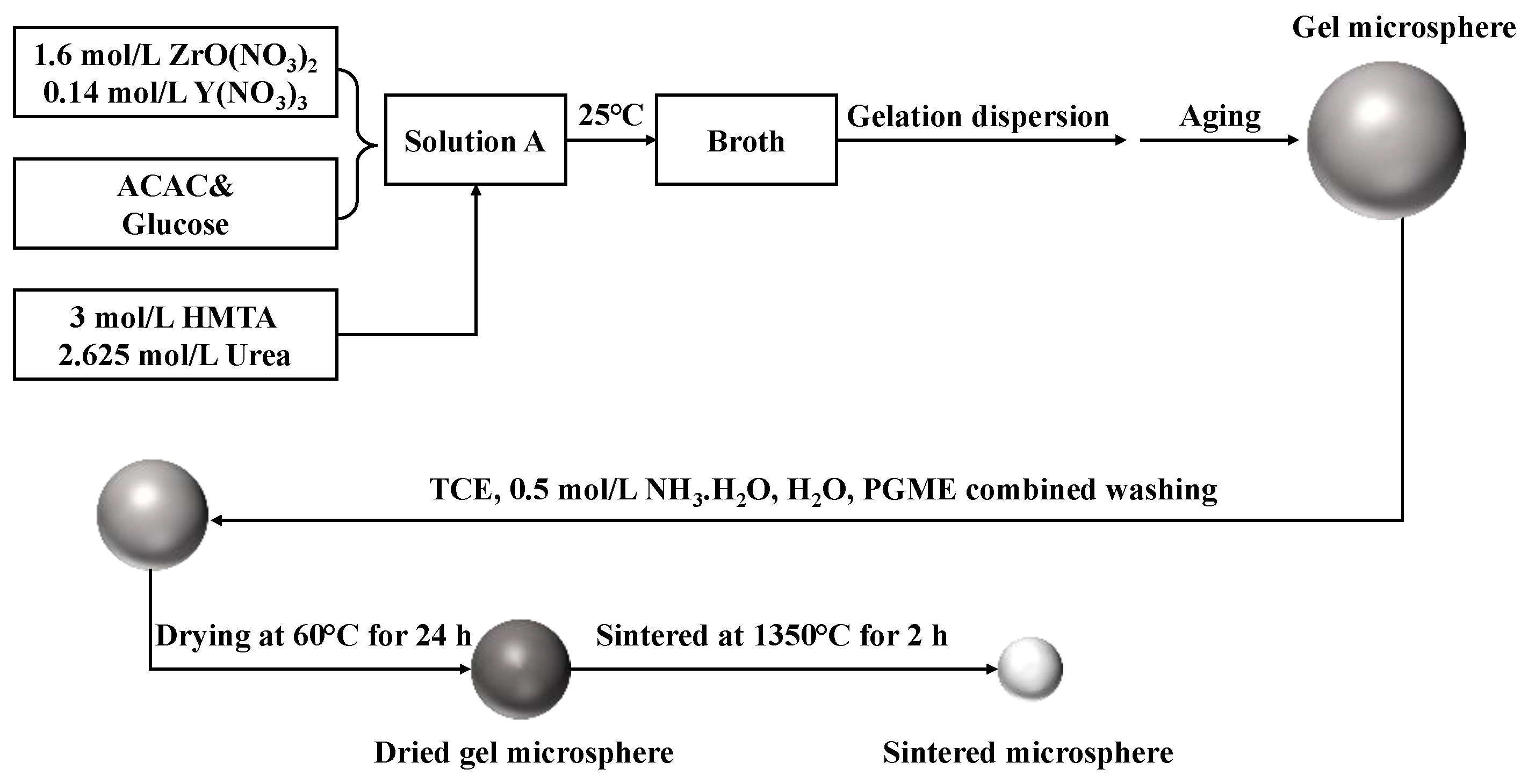
Figure 2.
Photographs of gel samples (1#~5#) with different ACAC contents. The sol compositions of the samples corresponded to Table 1.
Figure 2.
Photographs of gel samples (1#~5#) with different ACAC contents. The sol compositions of the samples corresponded to Table 1.
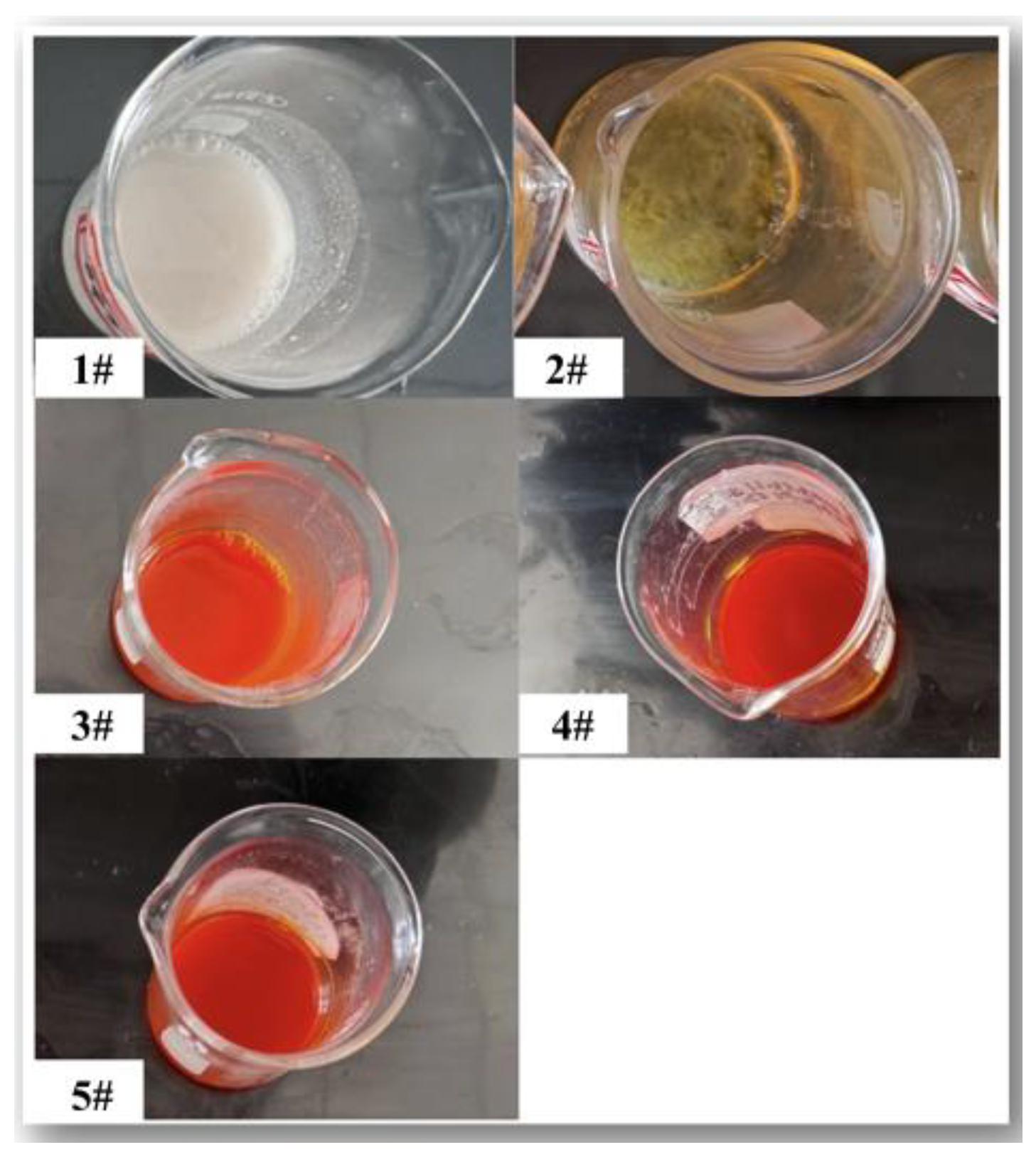
Figure 3.
Viscosity-time profiles of the zirconium broths at room temperature under different conditions. (a) Varying ACAC/ZrO2+ molar ratio, (b) Varying glucose/ZrO2+ molar ratio, (c) Varying total additive content at ACAC/glucose molar ratio of 1:1.
Figure 3.
Viscosity-time profiles of the zirconium broths at room temperature under different conditions. (a) Varying ACAC/ZrO2+ molar ratio, (b) Varying glucose/ZrO2+ molar ratio, (c) Varying total additive content at ACAC/glucose molar ratio of 1:1.
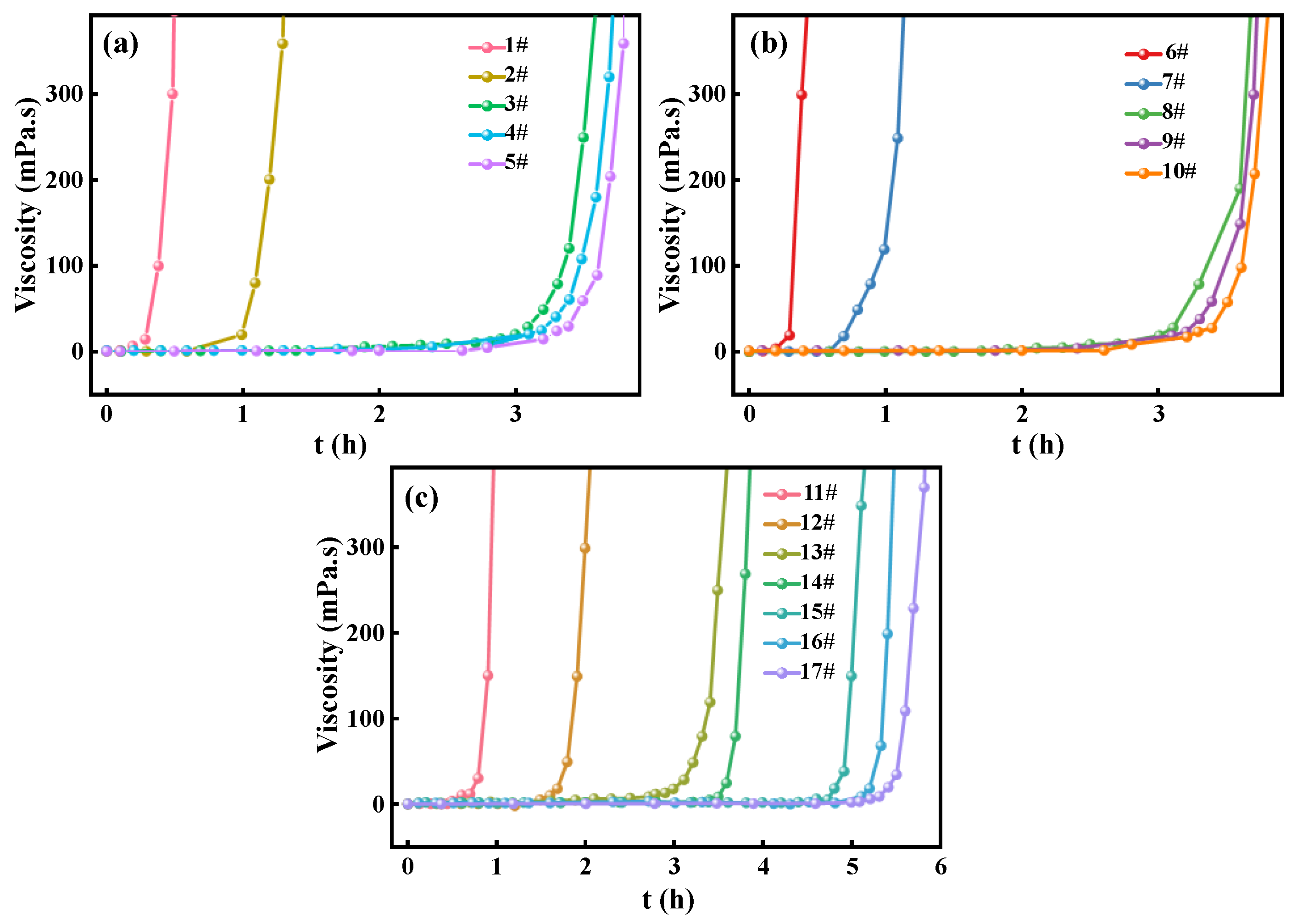
Figure 4.
Photographs of gel samples (6#~10#) with different glucose content. The sol compositions of the samples corresponded to Table 1.
Figure 4.
Photographs of gel samples (6#~10#) with different glucose content. The sol compositions of the samples corresponded to Table 1.
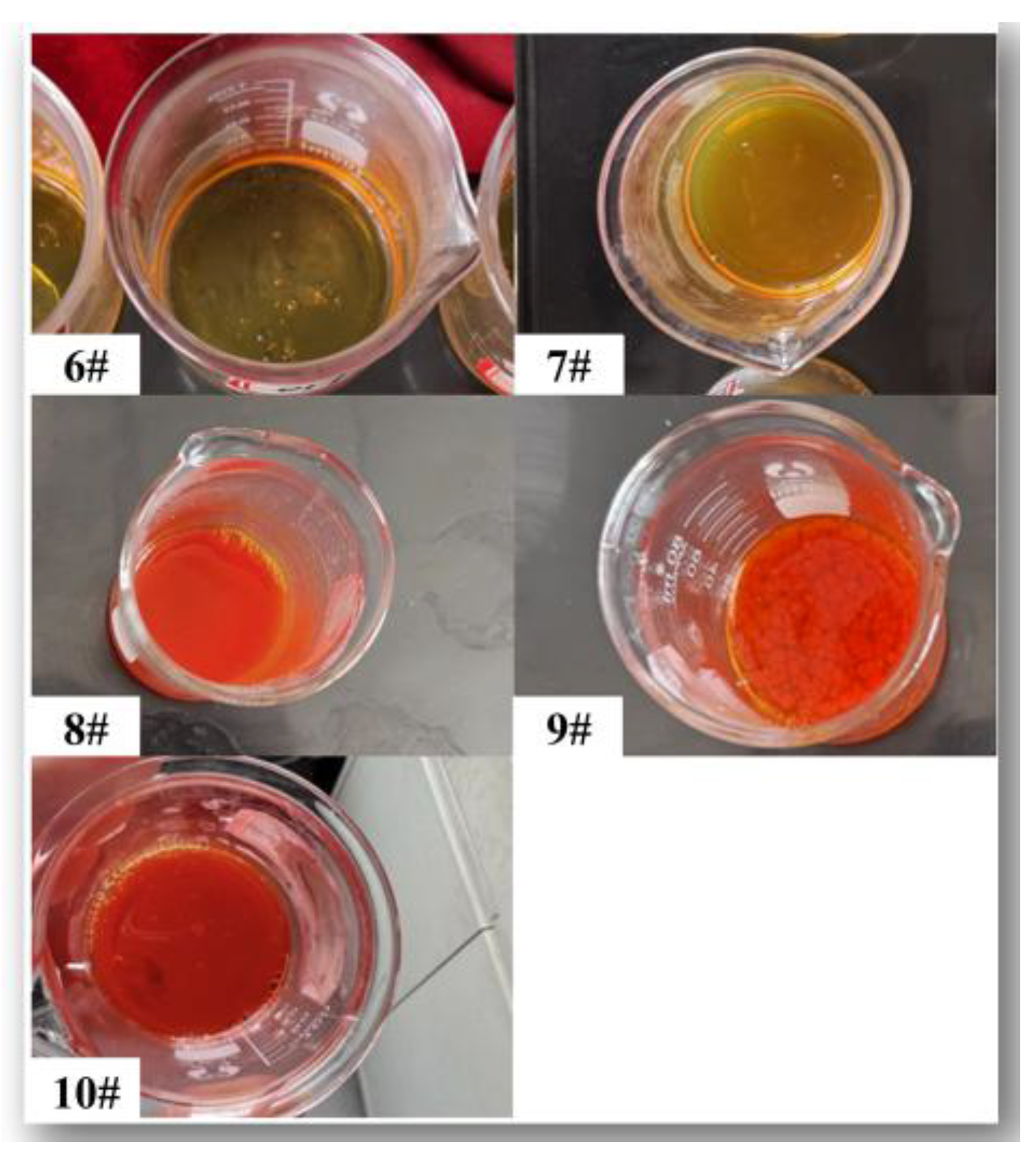
Figure 5.
Relationship between pH and gelation time when the molar ratio of ACAC and glucose is 1:1. (a) pH curves over time. (b) Curves showing gel pH and stability time as a function of ACAC and glucose content.
Figure 5.
Relationship between pH and gelation time when the molar ratio of ACAC and glucose is 1:1. (a) pH curves over time. (b) Curves showing gel pH and stability time as a function of ACAC and glucose content.
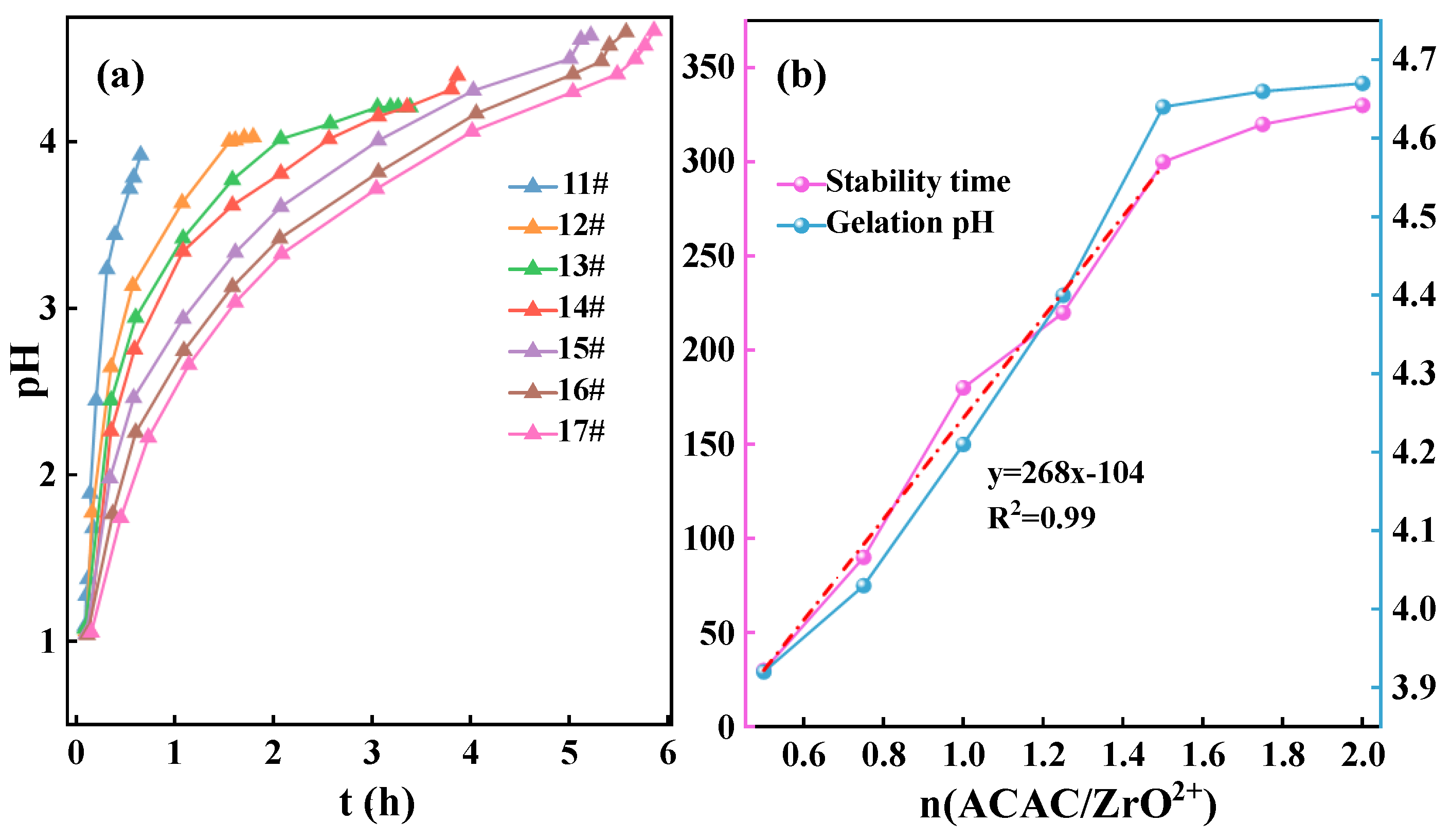
Figure 6.
Schematic diagram of the complexation between ACAC and glucose at a molar ratio of 1:1.
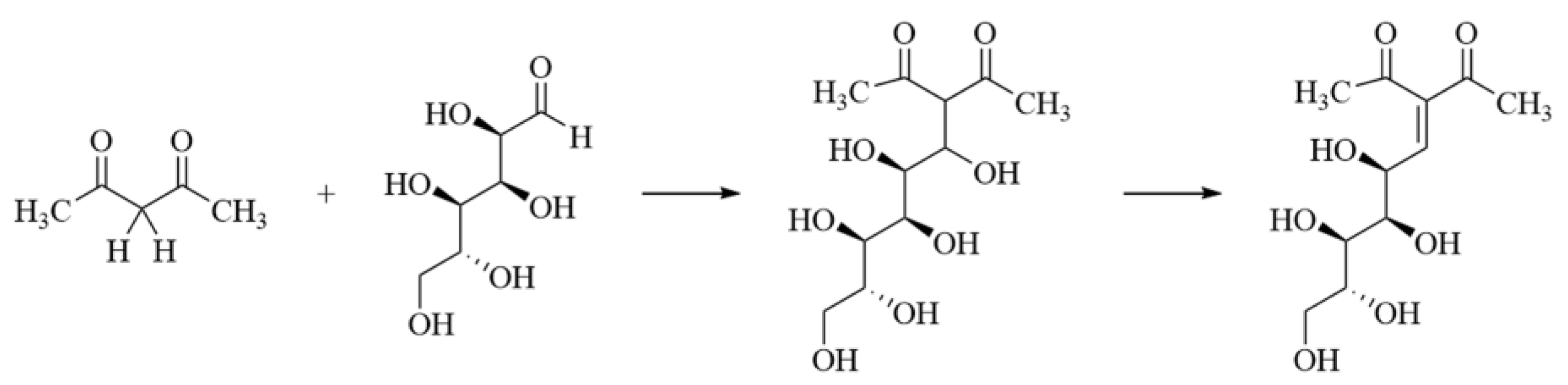
Figure 7.
TG-DSC curve of gel microspheres and sintering conditions. (a) TG-DSC curve. (b) Sintering condition.
Figure 7.
TG-DSC curve of gel microspheres and sintering conditions. (a) TG-DSC curve. (b) Sintering condition.
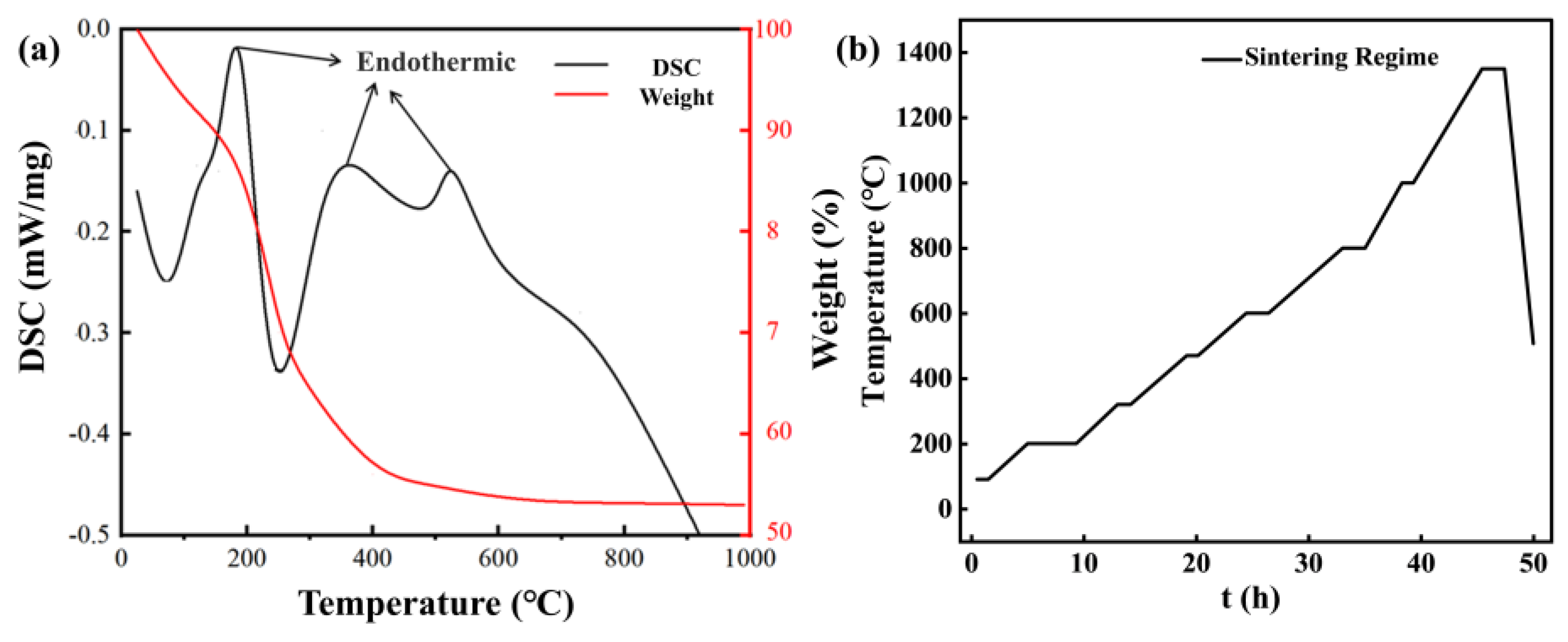
Figure 8.
Sintered microsphere images by formulations 11#~17#. (a) 11#. (b) 12#. (c) 13#. (d) 14#. (e) 15#. (f) 16#.
Figure 8.
Sintered microsphere images by formulations 11#~17#. (a) 11#. (b) 12#. (c) 13#. (d) 14#. (e) 15#. (f) 16#.
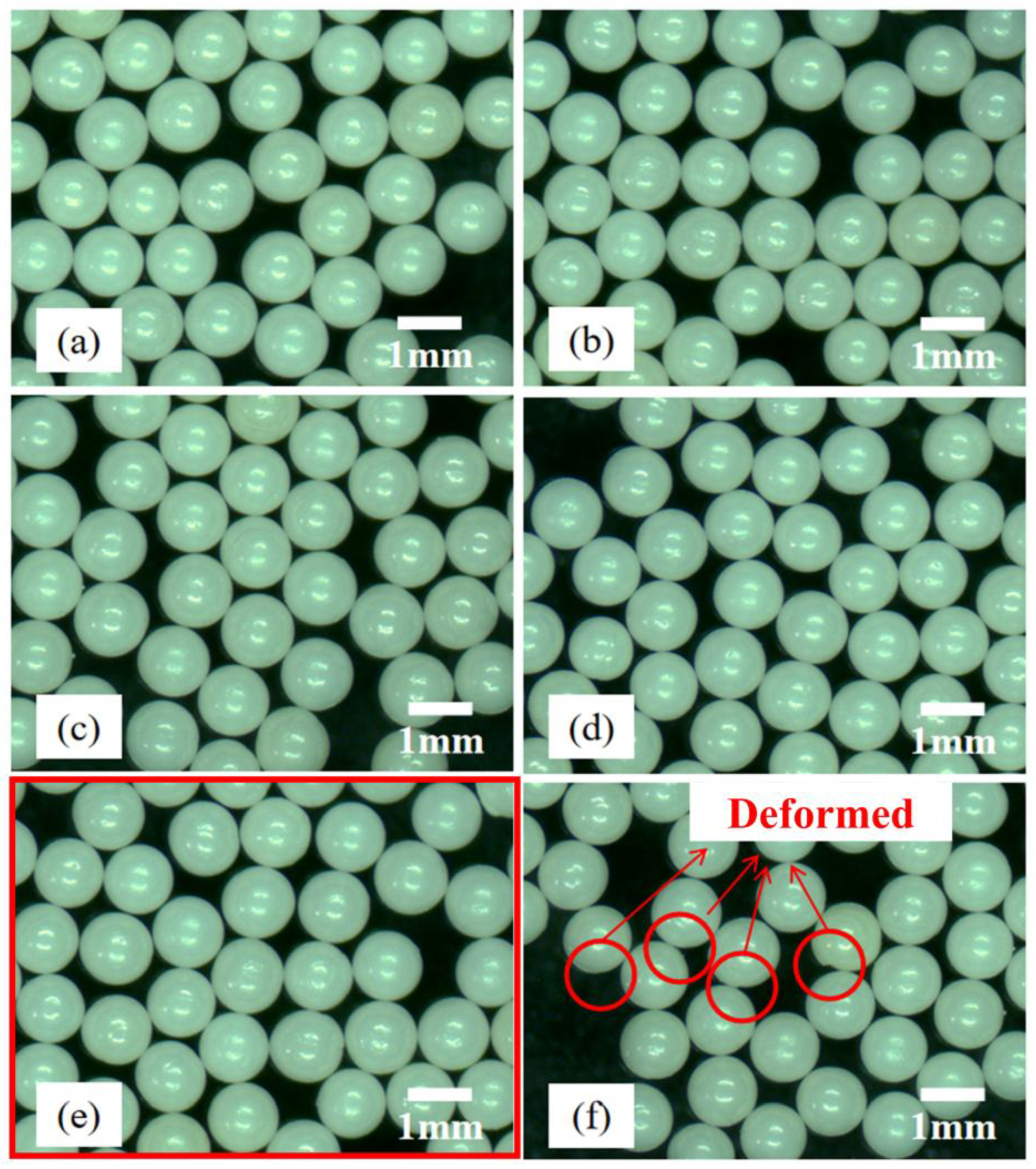
Figure 9.
The effect of ACAC on the stability time of uranium broths.
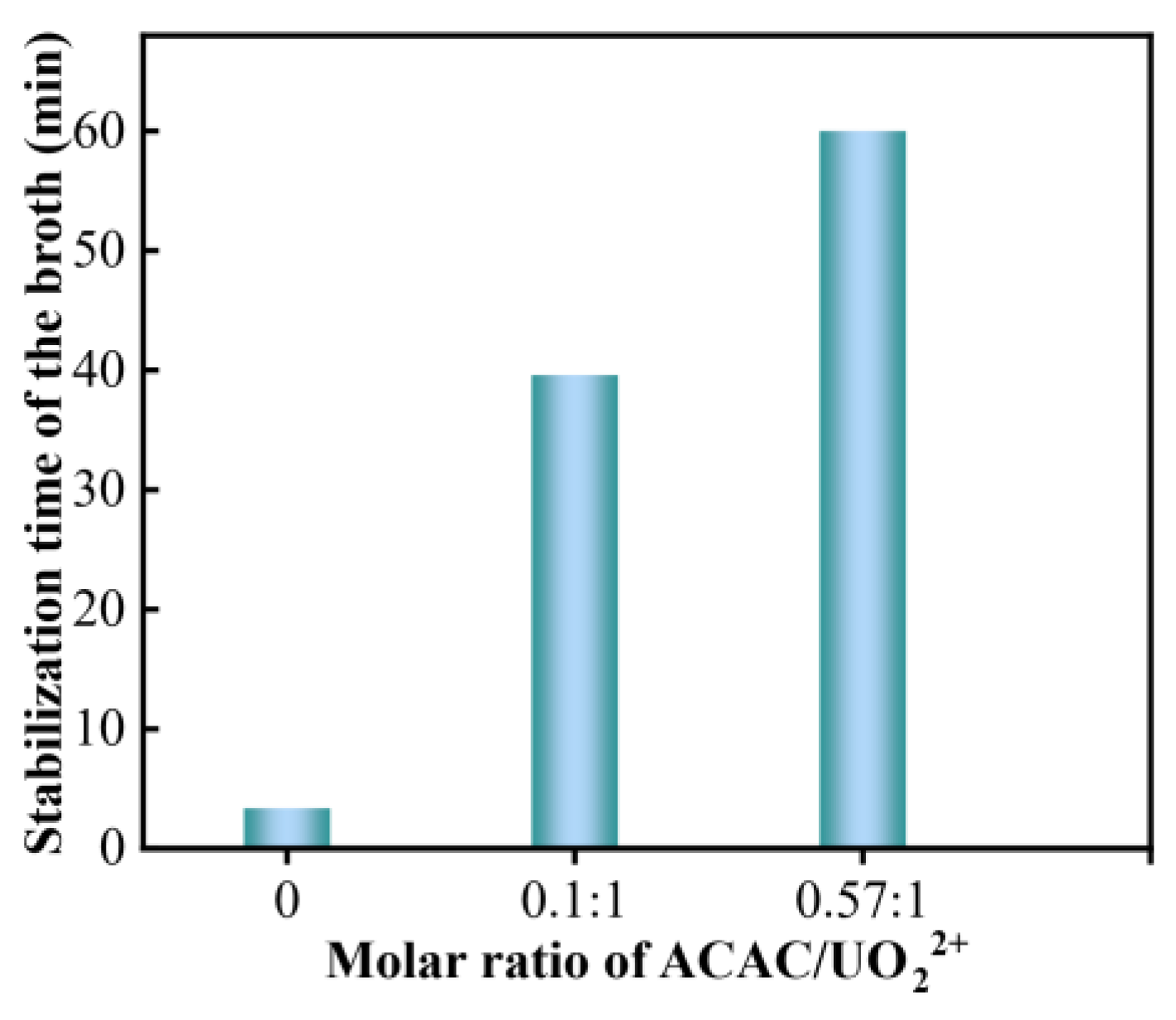

Table 1.
Stability times of zirconium broths with different formulations.
| Samples | Zr/Y solution (mL) |
n(HMTA /ZrO2+) |
n(ACAC /ZrO2+) |
n(C6H12O6/ZrO2+) | n(ACAC/C6H12O6) | Stability time of zirconium broths (min) |
|---|---|---|---|---|---|---|
| 1# | 10 | 2 | 0 | 1 | 0 | 0 |
| 2# | 10 | 2 | 0.5 | 1 | 0.5 | 30 |
| 3# | 10 | 2 | 1 | 1 | 1 | 180 |
| 4# | 10 | 2 | 1.5 | 1 | 1.5 | 180 |
| 5# | 10 | 2 | 2 | 1 | 2 | 180 |
| 6# | 10 | 2 | 1 | 0 | - | 30 |
| 7# | 10 | 2 | 1 | 0.5 | 0.5 | 50 |
| 8# | 10 | 2 | 1 | 1 | 1 | 180 |
| 9# | 10 | 2 | 1 | 1.5 | 1.5 | 180 |
| 10# | 10 | 2 | 1 | 2 | 2 | 180 |
| 11# | 10 | 2 | 0.5 | 0.5 | 1 | 30 |
| 12# | 10 | 2 | 0.75 | 0.75 | 1 | 90 |
| 13# | 10 | 2 | 1 | 1 | 1 | 180 |
| 14# | 10 | 2 | 1.25 | 1.25 | 1 | 220 |
| 15# | 10 | 2 | 1.5 | 1.5 | 1 | 300 |
| 16# | 10 | 2 | 1.75 | 1.75 | 1 | 320 |
| 17# | 10 | 2 | 2 | 2 | 1 | 330 |
Table 2.
Analysis of variance (ANOVA) for the effects of ACAC and glucose on the stability time of zirconium broths.
Table 2.
Analysis of variance (ANOVA) for the effects of ACAC and glucose on the stability time of zirconium broths.
| Source of variation | Sum of squares (SS) | Degrees of freedom (df) | Mean square (MS) | Contribution (%) |
|---|---|---|---|---|
| ACAC (A) | 30757 | 4 | 7689.25 | 46.00 |
| Glucose (B) | 21973 | 4 | 5493.25 | 32.80 |
| Interaction (A×B) | 14160 | 16 | 885.00 | 21.20 |
| Total | 66890 | 24 | 14067.50 | 100.00 |
Table 3.
Effect of equal proportions of ACAC and glucose on the morphology of microspheres.
| Samples | n(ACAC/ZrO2+) | Gel microspheres | Sintered microspheres |
|---|---|---|---|
| 11# | 0.50 | good | good |
| 12# | 0.75 | good | good |
| 13# | 1.00 | good | good |
| 14# | 1.25 | good | good |
| 15# | 1.50 | good | good |
| 16# | 1.75 | Deformed microspheres | Deformed microspheres |
| 17# | 2.00 | No microspheres | ―― |
Table 4.
The properties comparison of YSZ microspheres.
| Samples | Temperature of preparation | Density (g/cm3) | Sphericity | Crushing Strength (kg) | Size (μm) |
|---|---|---|---|---|---|
| This work | 25℃ | 5.84 | 1.04±0.01 | 8.0 | 508±15 |
| Ref [6] | 25℃ | 5.87 | 1.02±0.01 | 3.0 | 608±6 |
| Ref [22] | 5℃ | 5.85 | 1.04±0.04 | 8.1 | 345±15 |
Table 5.
Effects of complexing agents on the stability of uranium broth and on gel microsphere formation.
Table 5.
Effects of complexing agents on the stability of uranium broth and on gel microsphere formation.
| Complexing agents | Stability time (min) | Formation of gel microspheres |
|---|---|---|
| Urea | 4 | Good |
| Glucose | Precipitation | —— |
| ACAC | 60 | Good |
| ACAC and glucose | 360 | Good |
| Citric acid | —— | No formation |
Disclaimer/Publisher’s Note: The statements, opinions and data contained in all publications are solely those of the individual author(s) and contributor(s) and not of MDPI and/or the editor(s). MDPI and/or the editor(s) disclaim responsibility for any injury to people or property resulting from any ideas, methods, instructions or products referred to in the content. |
© 2025 by the authors. Licensee MDPI, Basel, Switzerland. This article is an open access article distributed under the terms and conditions of the Creative Commons Attribution (CC BY) license (http://creativecommons.org/licenses/by/4.0/).
Copyright: This open access article is published under a Creative Commons CC BY 4.0 license, which permit the free download, distribution, and reuse, provided that the author and preprint are cited in any reuse.


