1. Introduction
Traditional Chinese medicine (TCM) has long harnessed the therapeutic potential of medicinal plants, with
Paris polyphylla (commonly known as
Chonglou) standing as a cornerstone in this ancient practice[
1]. Recognized for centuries in classical texts such as
Shen Nong Ben Cao Jing, this perennial herb from the Liliaceae family is primarily distributed in regions like Yunnan, Guizhou, and Sichuan[
2]. Its dried rhizomes are valued for their bitter taste, cool nature, and affinity to the liver meridian, exhibiting efficacy in clearing heat, detoxifying, reducing swelling, alleviating pain, and calming convulsions[
3,
4]. Clinically, it has been applied to treat conditions ranging from abscesses and snake bites to traumatic injuries and febrile seizures, often in combination with other herbs like
Lonicera japonica and
Hedyotis diffusato enhance therapeutic outcomes[
5].
The medicinal properties of
Paris polyphylla are largely attributed to its rich profile of steroidal saponins, which constitute over 80% of its identified compounds[
6]. Among these, polyphyllin I (PPI) and polyphyllin II (PPII) serve as critical quality markers due to their pronounced pharmacological activities, including antitumor, hemostatic, analgesic, anti-inflammatory, and hepatoprotective effects[
7,
8]. However, the sustainable utilization of
Paris polyphylla is challenged by its status as an endangered species, exacerbated by overharvesting and habitat loss. Moreover, the variability in saponin content influenced by drying methods and extraction techniques underscores the need for efficient and standardized approaches to ensure consistent quality and efficacy.
Conventional extraction methods for plant saponins, such as heat reflux and ultrasound-assisted extraction, often suffer from limitations like prolonged duration, high energy consumption, and suboptimal yield[
9,
10]. While emerging techniques like deep eutectic solvents (DES) have gained attention as green alternatives due to their low cost, biodegradability, and tunable properties, their application to
Paris polyphylla remains underexplored[
11,
12]. The integration of ultrasonic assistance with DES (e.g., choline chloride-ethanol systems) leverages cavitation effects to enhance cell disruption and solute release, offering a promising avenue for improving extraction efficiency. Nevertheless, optimizing such processes requires systematic parameter evaluation, where orthogonal experimental designs can identify key factors like material-to-liquid ratio, extraction time, temperature, and ultrasonic power.
Accurate quantification of saponins is equally critical for quality control[
13,
14]. Although high-performance liquid chromatography (HPLC) has been widely used, it often lacks the sensitivity and speed needed for complex matrices[
15,
16]. Techniques like near-infrared spectroscopy (NIR) and ultraviolet spectroscopy (UV) face challenges in specificity and solvent consumption[
17,
18,
19]. Advances in ultra-high-performance liquid chromatography coupled with tandem mass spectrometry (UHPLC-MS/MS) provide superior resolution, sensitivity, and structural elucidation capabilities, enabling precise detection of trace compounds such as PPI and PPII. For instance, the UHPLC-MS method established by Yang et al. successfully achieved the quantitative analysis of nine species of ligustrazine components in plasma samples, providing a reliable means for in vivo pharmacokinetic studies[
20].
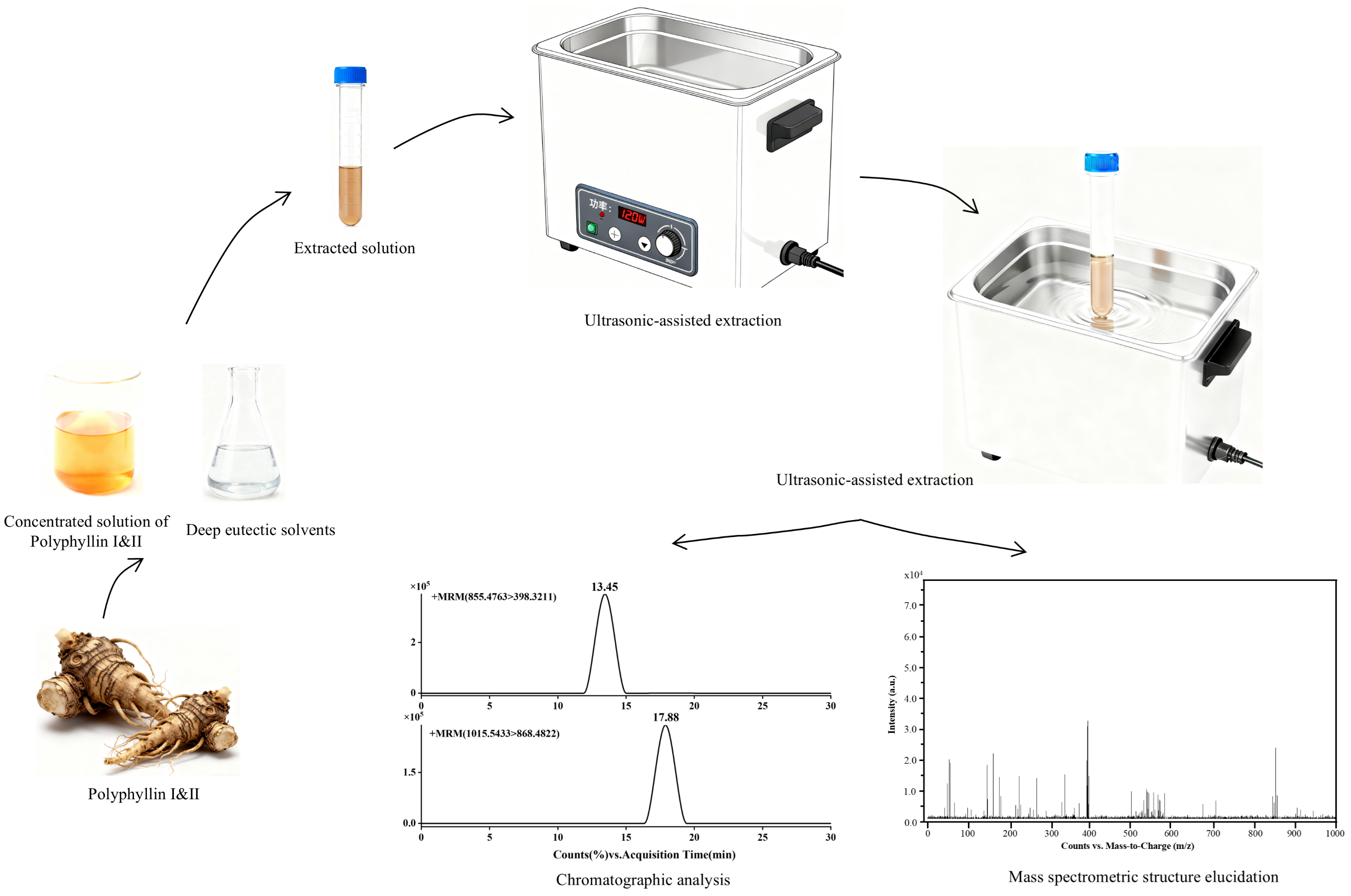
In this study, we address these gaps by developing an integrated approach combining DES-based extraction with UHPLC-MS/MS analysis for Paris polyphylla. Through orthogonal experimental design, we optimize key parameters to maximize yield while establishing a robust analytical protocol. Our work not only demonstrates the applicability of DES-intermittent pulsed ultrasound for efficient saponin recovery but also highlights the quantitative variations among seven Paris polyphylla varieties, providing a foundation for standardized quality evaluation and sustainable resource utilization. This research aligns with global trends in green chemistry and precision medicine, offering insights into the modernization of TCM through innovative technological integration.
2. Materials and methodology
2.1. Materials and Instruments
The primary instruments used in this study included: an ultra-high-performance liquid chromatography-high-resolution mass spectrometer (UHPLC-HRMS, TSQ Orbitrap, Thermo Fisher Scientific, USA), an electronic analytical balance (Model Mark 120 A, Bohlamo Berlin Precision Instruments Co., Ltd.), a digital ultrasonic cleaner (Model KQ 2200 DA, Kunshan Ultrasonic Instrument Co., Ltd.), and a high-speed refrigerated centrifuge (HITACHI, Hitachi Ltd., Japan).
The seven traditional Chinese medicinal materials used in the experiments were all purchased from the “Digital Yunyao” platform (
https://www.shuziyunyao.com):
Paris polyphylla Smith,
Typhonium giganteum,
Iphigenia indica,
Chinese Paris Rhizome,
Yunnan Paris Rhizome,
Large-leaved Paris Rhizome, and Root of
Paris polyphylla. Reference standards for PPI and PPII were obtained from Dalian Meilun Biotechnology Co., Ltd (
https://www.meilune.com). Chemical reagents such as ethanol and choline chloride were of analytical grade, while formic acid and acetonitrile were of chromatographic grade. All reagents were used directly without further purification.
2.2. Basic Information of PPI and PPII
Table 1 shows the general physical characteristics of PPI and PPII, and
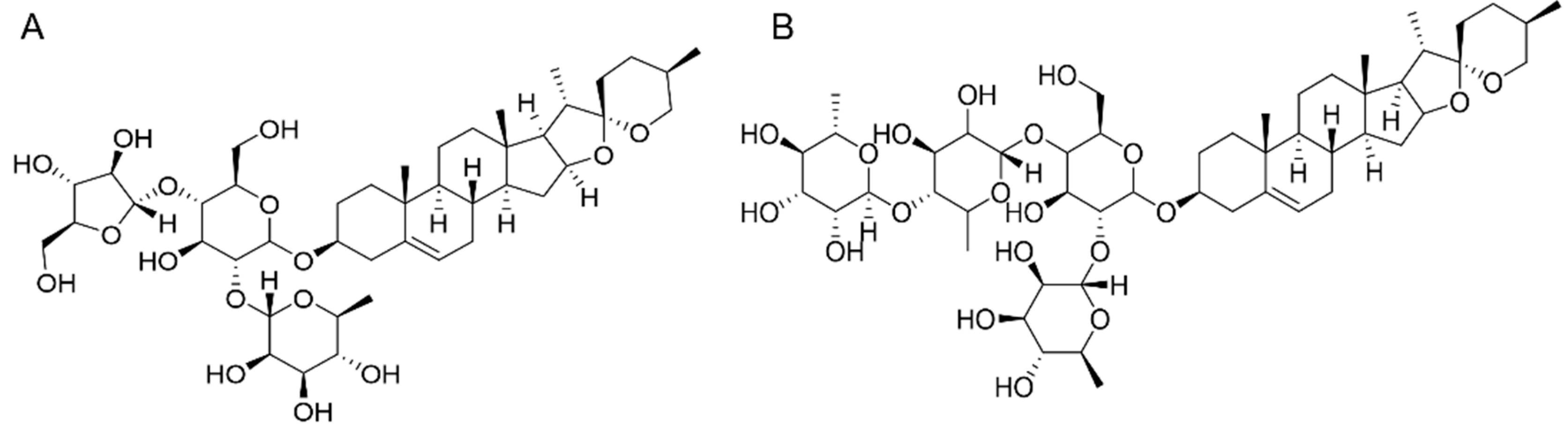
Figure 1 displays the chemical structural formulas of PPI and PPII.
2.3. Ultrasonic-Assisted Preparation of Low Eutectic Solvents
In 8.8 mL of deionized water, five different solvent pairs (ethanol/choline chloride, butanediol/choline chloride, ethylene glycol/choline chloride, ethanol/methanol, and methanol/choline chloride) were mixed according to a volume ratio of 1.0:1.8 to serve as pre-solutions of DES. The mixed systems were subjected to ultrasonic treatment in a 60 °C water bath followed by magnetic stirring to prepare the desired DES. The ratios and compositions of each extraction solvent system are detailed in
Table 2. Standard curves were established by plotting the peak areas against the concentrations of the active constituents. The content of each individual component was then calculated based on the corresponding calibrated concentration. The separation efficiency (η) is calculated as follows:
where
Ci represents the measured concentration (mg mL
-1),
V denotes the volumetric volume (mL),
F is the dilution factor,
M stands for the molar mass of the individual component (g·mol⁻¹), and
m refers to the sample mass (g).
2.4. Extraction Methods for Paris Polyphylla Medicinal Material
The purchased seven types of Paris polyphylla medicinal materials were separately pulverized using a grinder and sieved through a 10-mesh sieve. Exactly 1.0 g of each medicinal powder was weighed and placed into a 200 mL round-bottom flask, to which a pre-prepared deep eutectic solvent system (DES-a) was added. Ultrasonic extraction was performed in a 60 °C water bath for 60 min, followed by additional stirring for 30 min using a constant-temperature magnetic stirrer to promote sufficient release of the active components.
After extraction, an appropriate amount of deionized water was used to transfer the reaction mixture to a centrifuge tube, which was then centrifuged at high speed in a refrigerated centrifuge (specific parameters can be supplemented, e.g., 12,000 rpm, 10 min) to collect the supernatant. The supernatant was subsequently filtered through a 0.22 μm microporous membrane. The filtrate was concentrated to dryness using a rotary evaporator, and the residue was redissolved in 1 mL of methanol. The resulting solution was transferred to an injection vial for UHPLC-MS/MS analysis.
2.5. Optimization of Extraction Process Using Orthogonal Experimental Design
Building upon the preliminary single-factor experiments, this study employed an orthogonal experimental design to further optimize the extraction process for
Paris polyphylla. Four key factors were selected for investigation: material-to-liquid ratio, extraction time, extraction temperature, and ultrasonic power. Each factor was assigned three distinct levels. The total extraction yield of saponins from
Paris polyphylla was chosen as the evaluation index. An L
9(3
4) orthogonal array was utilized to design the experimental scheme. By comparing the influence of different factor levels on the extraction efficiency, the optimal combination of process parameters was identified. The specific experimental arrangement and the corresponding extraction results are presented in
Table 3.
2.6. Chromatographic Parameter Conditions
The specific parameter settings for HPLC chromatographic analysis are detailed in
Table 4. A gradient elution method was employed for the mobile phase, where phase A consisted of a 0.1% formic acid aqueous solution and phase B was acetonitrile containing formic acid. The chromatographic flow rate was set at 0.2 mL min
-1, and the injection volume was 5 μL. Under these conditions, satisfactory separation of PPI and PPII was achieved, providing high resolution and detection sensitivity, making the method suitable for the subsequent quantitative analysis of samples.
2.7. Mass Spectrometry Parameter Conditions
The specific parameter settings for mass spectrometric analysis are detailed in
Table 5. Detection was performed using the multiple reaction monitoring (MRM) mode under electrospray ionization positive ion (ESI+) conditions. High-purity argon was used as the collision gas to achieve effective collision-induced dissociation, while high-purity nitrogen served as both the desolvation gas and cone gas to maintain an optimal ionization environment. The capillary voltage was set at 2.5 kV, the cone voltage at 3.00 V, and the ion source temperature was maintained at 125 °C to ensure stable ion source operation and high-sensitivity mass spectrometric signals. These collectively optimized parameters guaranteed efficient ionization and specific detection of the target compounds, providing a reliable foundation for subsequent quantitative analysis.
2.8. Preparation of Standard Solutions
Polyphyllin I and polyphyllin II reference standards (1.0 mg each) were accurately weighed and separately dissolved in methanol. The solutions were quantitatively transferred to 10 mL volumetric flasks, diluted to the mark with methanol, and mixed thoroughly to obtain stock solutions at a concentration of 100 mg·L-1. A series of working standard solutions were subsequently prepared by appropriate dilution of the stock solutions. The concentration ranges of the working standards were 0.2, 0.5, 1.0, 2.0, 5.0, 10.0, 50.0, 100.0, 250.0, 500.0, 1000.0, 2000.0, 4000.0, and 5000.0 ng mL-1 for PPI, and 0.1, 0.2, 0.5, 5.0, 10.0, 50.0, 100.0, 500.0, 1000.0, 2000.0, and 3000.0 ng mL-1 for PPII. All solutions were prepared in suitable containers and mixed thoroughly before use to ensure homogeneity and accuracy for subsequent quantitative analysis and calibration curve construction.
3. Results and discussions
3.1. Optimization of Extraction Process
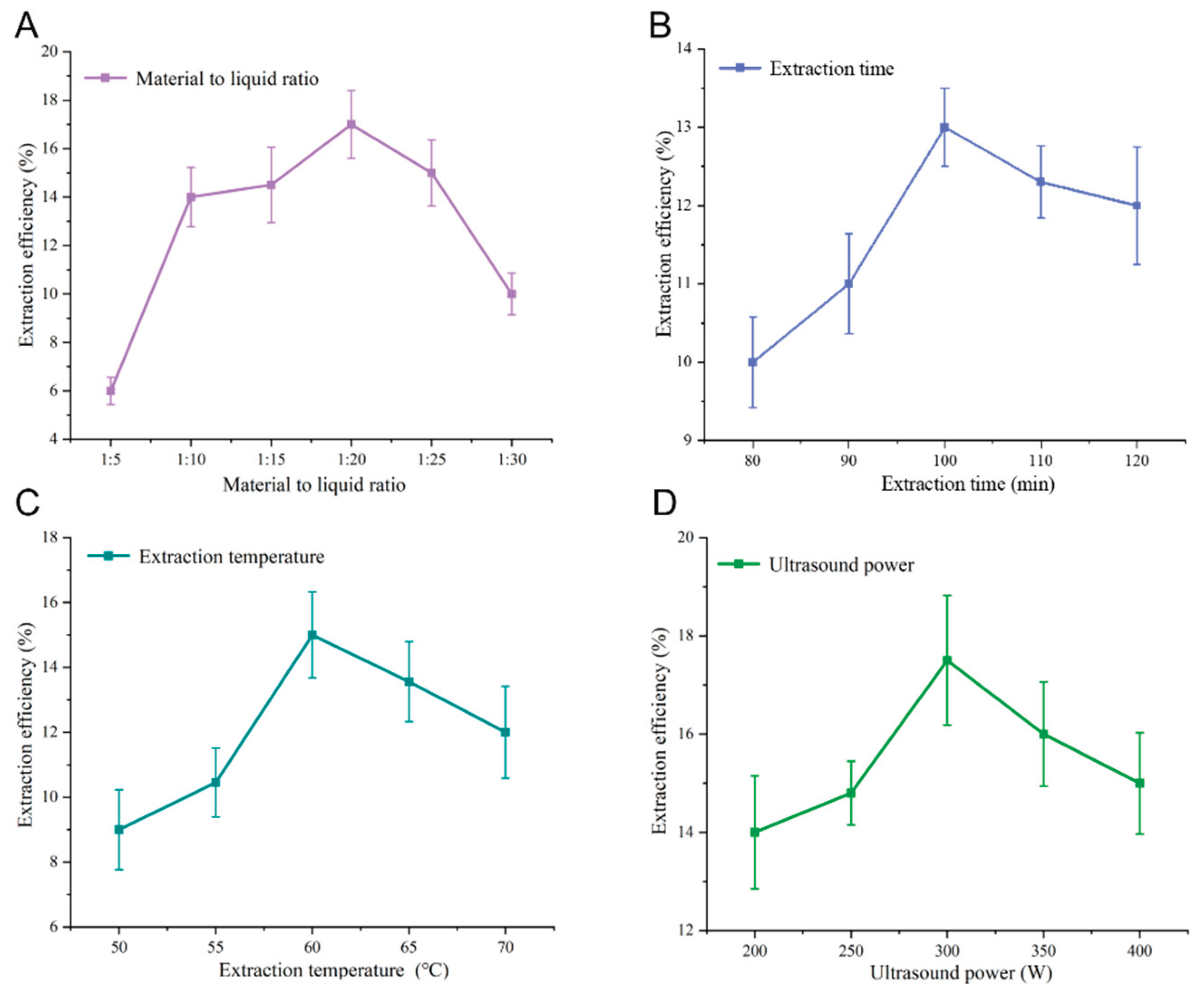
Figure 2 systematically illustrates the influence of four key extraction parameters on the yield of
Paris polyphylla saponins using a deep eutectic solvent composed of choline chloride and ethanol (1.0:1.8 molar ratio). The single-factor experiments reveal that the material-to-liquid ratio significantly affects extraction efficiency, with an optimum value of 1:20 g·mL
-1, beyond which dilution or saturation effects reduce saponin recovery (
Figure 2A). Extraction time was optimized at 100 min, indicating that sufficient duration is necessary for mass transfer equilibrium, while prolonged exposure does not enhance yields (
Figure 2B). Temperature exerted a pronounced impact, with 60 °C delivering maximal efficiency, likely due to improved solubility and diffusivity without triggering thermal degradation (
Figure 2C). Ultrasound power optimization peaked at 300 W, where cavitation effects optimally disrupt plant cell walls to facilitate saponin release; higher power levels did not yield further improvement, suggesting possible saturation of acoustic energy utilization (
Figure 2D). Collectively, these results establish a refined set of operational conditions that balance efficiency and practicality, providing a robust foundation for subsequent orthogonal experimental designs and reinforcing the utility of DES-based extraction in natural product isolation.
Based on the single-factor experimental data, an L
9(3
4) orthogonal experimental design was employed to systematically optimize the extraction process of total saponins from
Paris polyphylla, with the total extraction yield as the evaluation metric. Ultrasonic power was identified as the most influential factor affecting saponin yield, as evidenced by the range (R) values from the orthogonal test (
Table 6), which decreased in the order: ultrasonic power (R = 3.15) > material-to-liquid ratio (R = 1.25) > extraction time (R = 1.06) > temperature (R = 0.62). Subsequent analysis of variance (ANOVA,
Table 7) corroborates these findings, demonstrating that ultrasonic power is a highly significant factor (P < 0.01), while material-to-liquid ratio and extraction time are statistically significant (P < 0.05). In contrast, temperature shows no significant effect (P > 0.05), a finding that suggests the feasibility of lower extraction temperatures for developing energy-efficient and sustainable extraction protocols. The optimal extraction conditions were determined as A
2B
3C
1D
1, corresponding to a material-to-liquid ratio of 1:20 g·mL⁻¹, an extraction time of 100 min, a temperature of 60 °C, and an ultrasonic power of 300 W. These results not only establish a robust and efficient extraction strategy but also highlight the critical role of ultrasonic power in enhancing the release of saponins, providing a mechanistic insight into process intensification for bioactive compound extraction from plant matrices.
Under the optimized extraction conditions established through orthogonal experimental design, validation experiments conducted in triplicate demonstrated the robust performance and broad applicability of the DES-intermittent pulsed ultrasound coupling method across seven distinct medicinal herbs from the Parisgenus and related species. As summarized in
Table 8, the total separation efficiency of saponins varied significantly among the samples, ranging from 2.04% for
Typhonium giganteum to a markedly high yield of 16.51% for the root of
Paris polyphylla, a variation likely attributable to intrinsic differences in saponin content and matrix structure among the plant materials. Crucially, the deviation values for the extraction efficiency were consistently low (0.32–4.04), underscoring the high reproducibility and reliability of the optimized protocol. The minimal variability observed between replicates, even across botanically diverse samples, confirms that the method is not only efficient but also exceptionally robust, effectively minimizing operational inconsistencies. This successful validation underscores the potential of this tailored extraction strategy for the standardized and quality-conscious analysis of bioactive saponins in a wide spectrum of medicinal plant resources.
3.2. Optimization of Chromatography and Mass Spectrometry Parameters
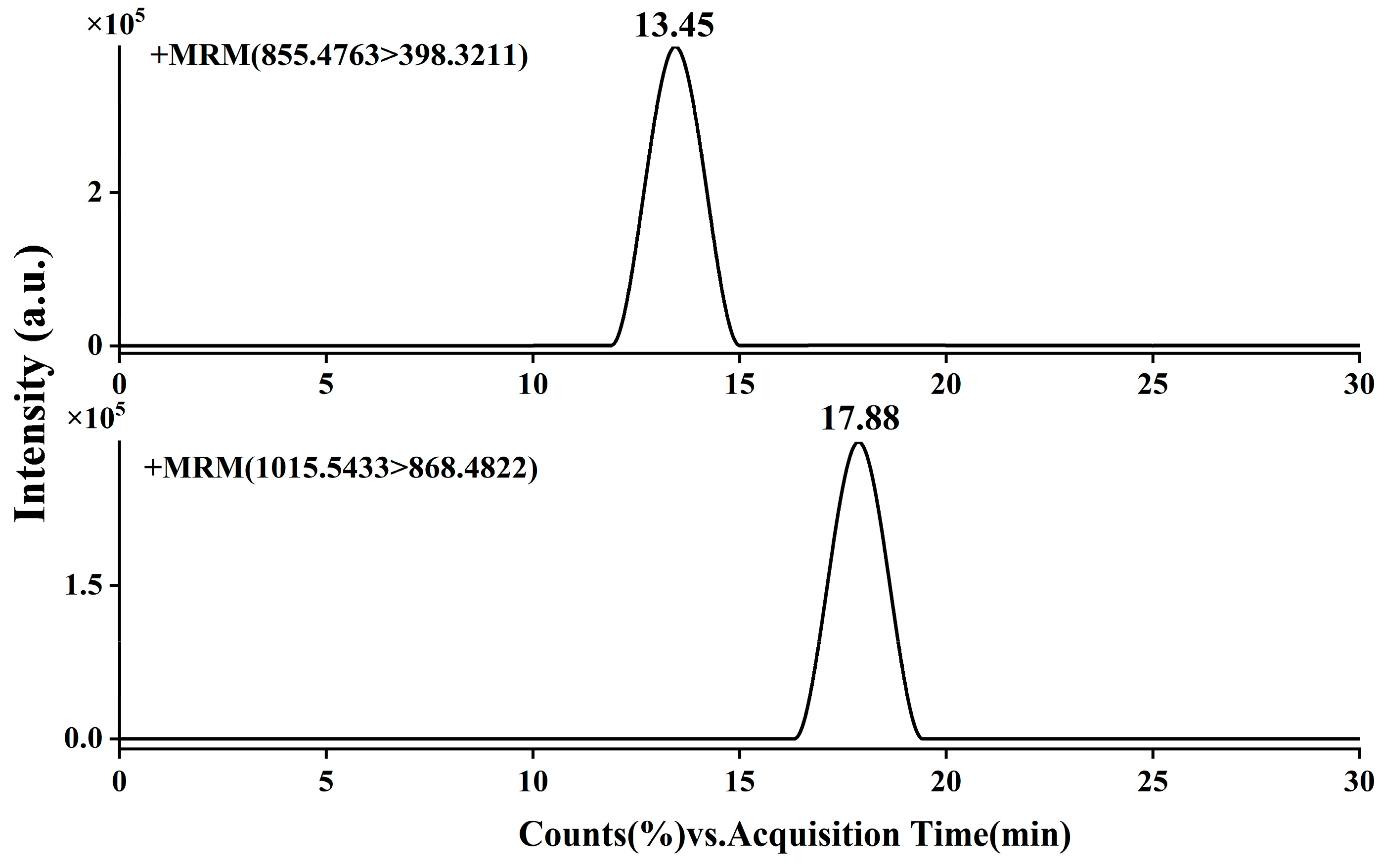
Figure 3 illustrates the chromatographic separation of the two target saponins (PPI and PPII) under the optimized UHPLC conditions. Both analytes were well-resolved, with PPI eluting at 13.45 min and PPII at 17.88 min, demonstrating excellent peak shape and baseline separation free of significant matrix interference. This high-resolution separation provided a solid foundation for subsequent mass spectrometric detection.
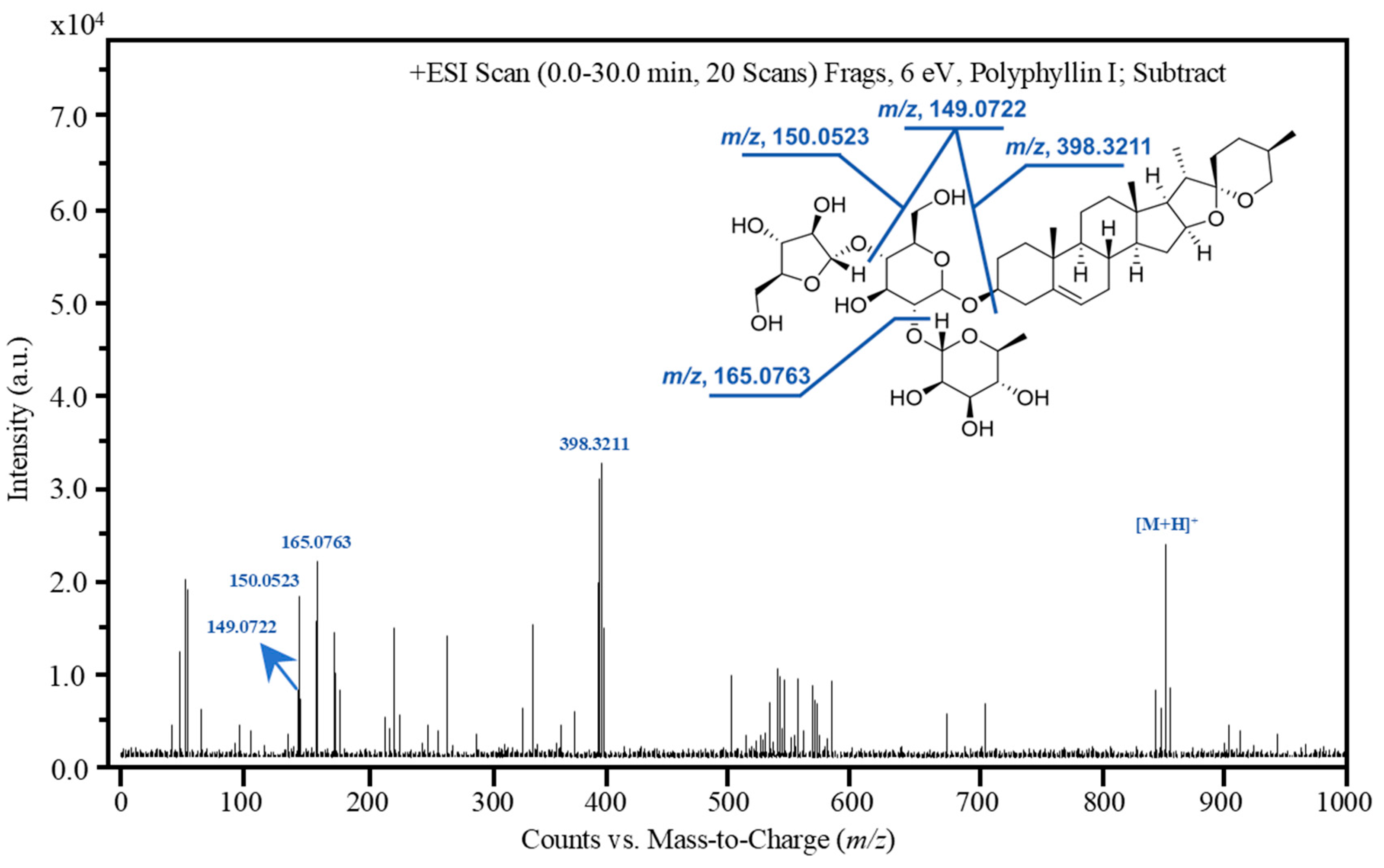
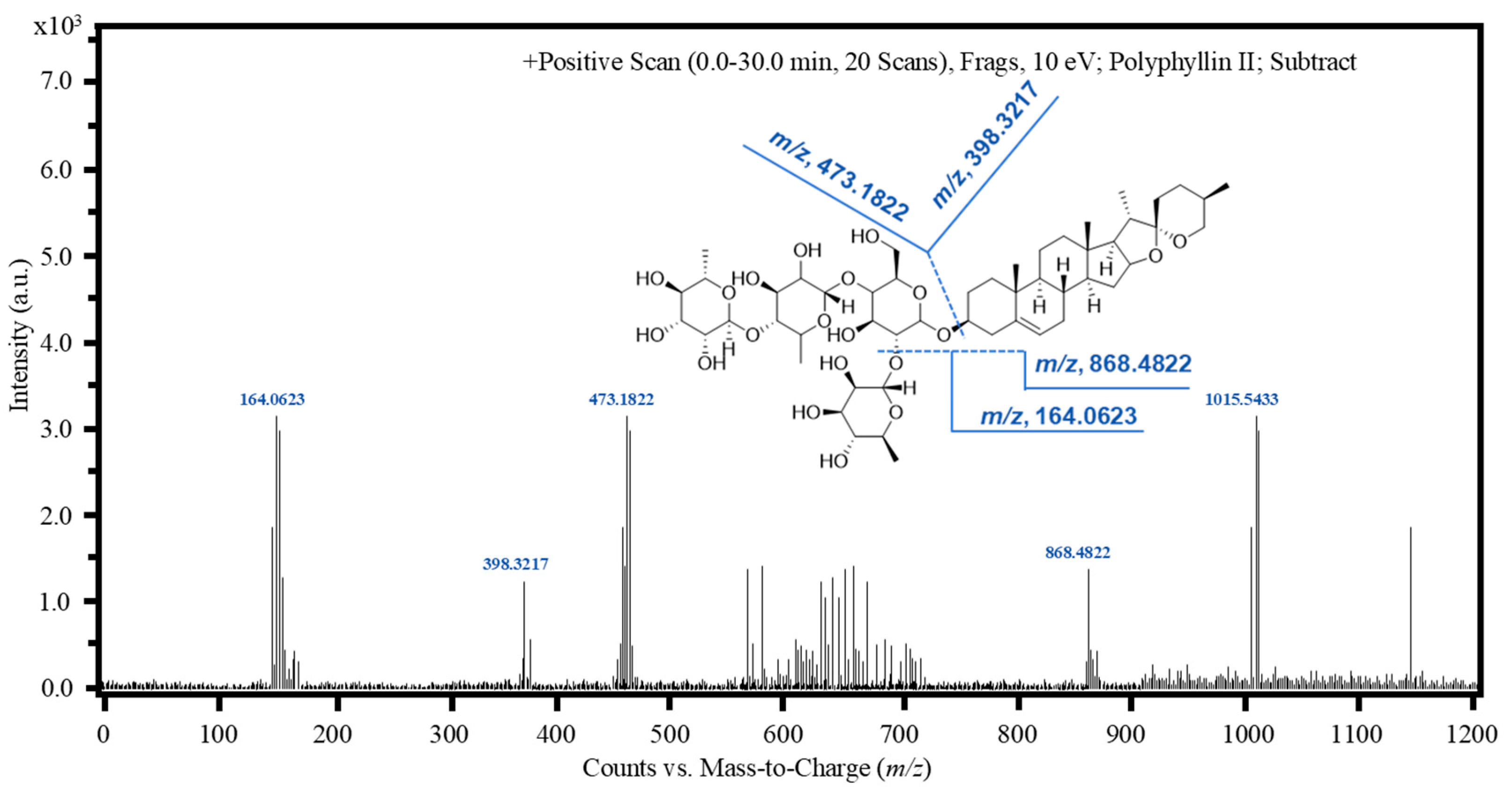
Further structural characterization was achieved through ESI-MS/MS analysis in positive ion mode, which yielded significantly higher response signals compared to the negative mode. As depicted in the product ion spectra (
Figure 4 and
Figure 5), the precursor ions [M+H]⁺ at
m/z 855.4763 for PPI and
m/z 1015.5433 for PPII were selectively fragmented to generate characteristic product ions. The most abundant fragments,
m/z 398.3211 for PPI and
m/z 473.1822 for PPII, were selected for multiple reaction monitoring (MRM). These correspond to the [C
27H
42O
2]
+ and [C
18H
32O
14+H]
+ moieties, respectively. This rigorous optimization of chromatographic and mass spectrometric parameters ensures high specificity and sensitivity, forming a robust analytical framework for the accurate quantification of these bioactive saponins in complex plant extracts.
3.3. Investigation of Methodological Verification Indicators
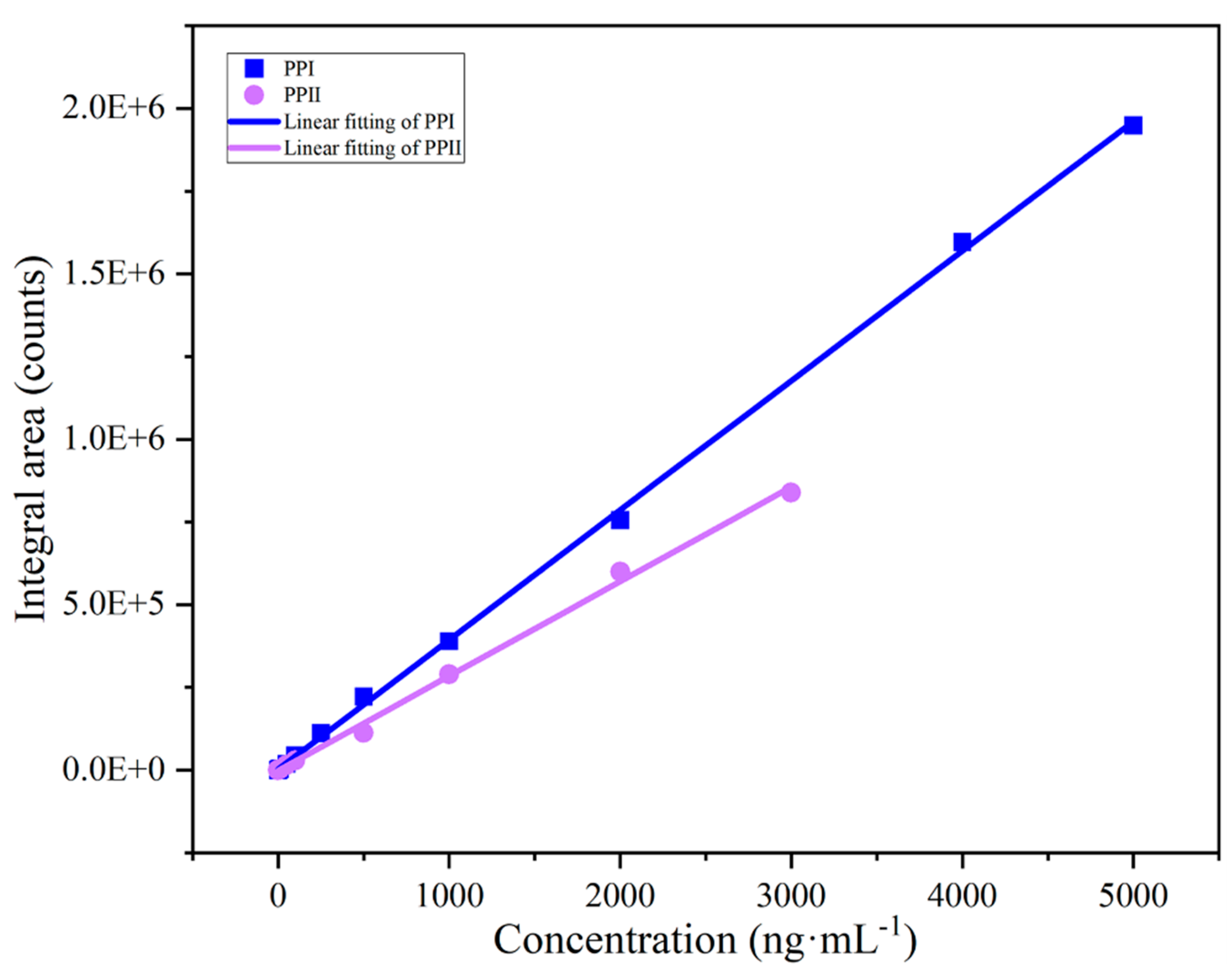
The method validation demonstrates exceptional analytical performance for the quantification of PPI and PPII. As illustrated in
Figure 6, the UHPLC-MS/MS method exhibits a wide linear dynamic range(0.5-4000.0 ng mL
-1 for PPI and 0.2-3000.0 ng mL
-1 for PPII) with correlation coefficients (R
2) exceeding 0.9976, indicating a robust linear relationship between concentration and detector response. The corresponding regression equations, detailed in
Table 9, further confirm the method’s precision, with PPII showing a slightly wider linear range at the lower end. Notably, the method achieves impressive sensitivity, as reflected by detection limits of 0.4391 ng mL
-1 for PPI and 0.1874 ng mL
-1 for PPII, and similarly low quantitation limits. These results not only validate the reliability of the analytical procedure but also underscore its capability to detect trace levels of these bioactive saponins, making it well-suited for the precise quantification of complex plant extracts.
3.4. Analysis of Actual Samples
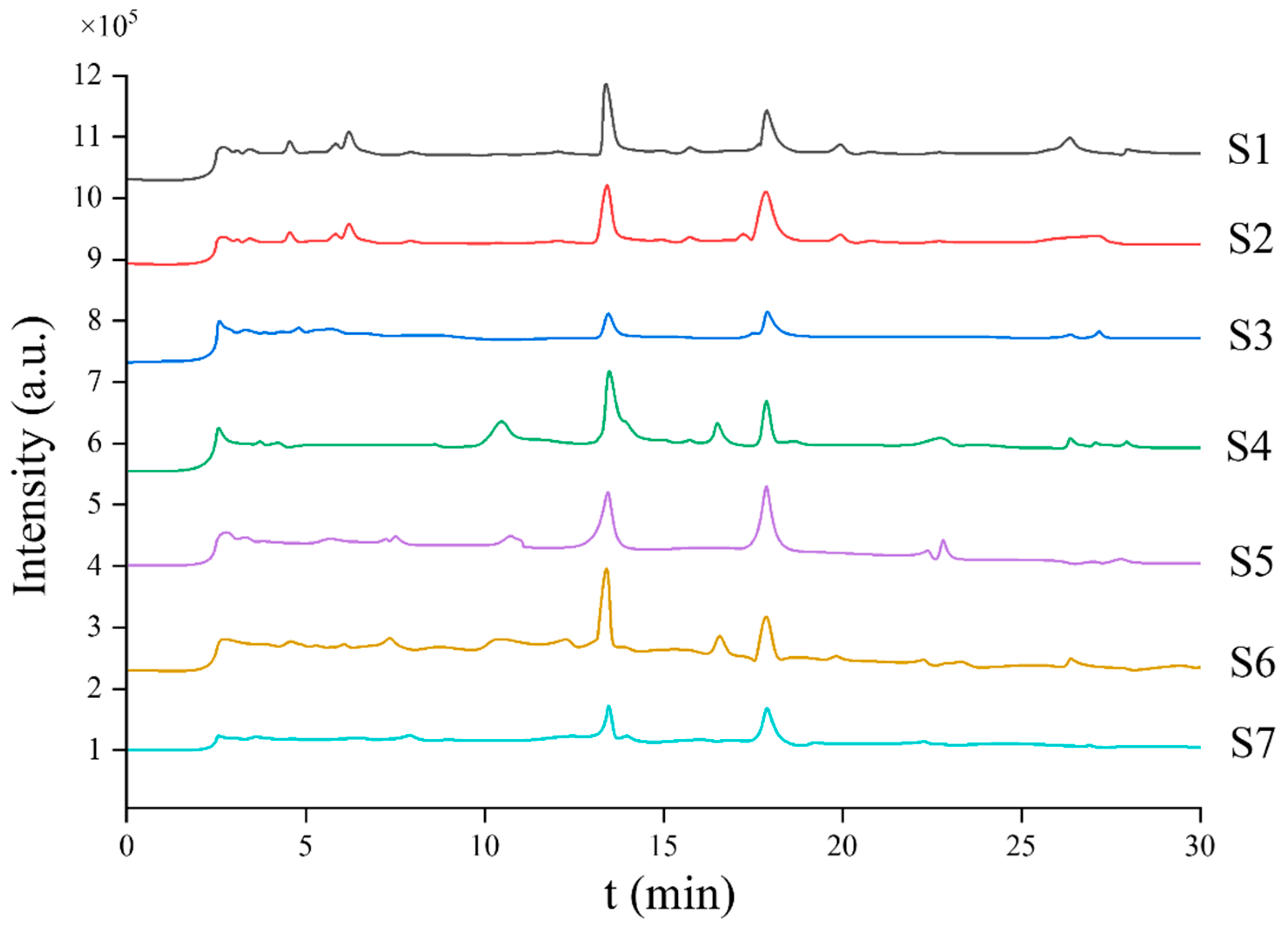
Figure 7 clearly illustrates the successful application of the optimized UHPLC-MS/MS method for the simultaneous quantification of PPI and PPII across seven distinct medicinal plant samples (S1–S7). The chromatograms reveal well-resolved peaks for both analytes in all samples, with notable variations in signal intensity directly reflecting the divergent saponin content among the different plant species and tissues. These visual observations are robustly quantified in
Table 10, which details substantial variations in PPI and PPII concentrations, with values ranging from 3.282 to 21.452 mg·g
-1 and from 4.201 to 17.975 mg·g
-1, respectively. This variability underscores the method's critical utility for chemotaxonomic differentiation and quality assessment of medicinal materials. More importantly, the method’s exceptional accuracy and precision in complex plant matrices are unequivocally demonstrated by the satisfactory spike recovery rates, which span from 88.29% to 99.18% for PPI and 83.10% to 99.10% for PPII. Coupled with consistently low intra-day and inter-day relative standard deviations (RSD), the data confirm that the analytical procedure is minimally affected by matrix effects, thereby fulfilling the stringent requirements for precise and reliable quantification of bioactive compounds in phytochemical analyses.
4. Conclusions
In summary, an efficient and sustainable methodology for the extraction and quantification of saponins from Paris polyphylla was established using a DES combined with UHPLC-MS/MS. Through orthogonal experimental design, key extraction conditions including material-to-liquid ratio (1:20 g·mL-1), extraction time (100 min), temperature (60 °C), and ultrasonic power (300 W) were systematically optimized, yielding high recovery and reproducibility across seven plant samples. The developed UHPLC-MS/MS method demonstrated excellent analytical performance, with wide linear ranges, low detection limits, and high accuracy, enabling precise quantification of polyphyllin I and II. Significant variations in saponin content were observed among different varieties, particularly with the root sample achieving the highest extraction efficiency of 16.51%, underscoring the utility of this approach for chemotaxonomic discrimination and quality control. The integration of DES with ultrasound enhances extraction efficiency while aligning with green chemistry principles, offering an eco-friendly alternative to conventional techniques. This study provides a reliable and standardized platform for quality assessment of medicinal herbs, facilitating further phytochemical and pharmacological research.
Acknowledgments
We gratefully acknowledge all contributors to this work. Also, this work was financially supported by the Baise Science and Technology Plan Project in 2025 (NO. BG252901), Joint Special Project of Guangxi Science and Technology Plan in 2025 (NO. 2025JJH140224), Baise Medical and Health High-level Talent Research Project in 2024 (NO. RZ2400001367), Guangxi University Young and Middle-Aged Teachers’ Scientific Research Basic Ability Improvement Project in 2025 (NO. 2025KY0575).
References
- Zhang, Y.; Fan, Y.C.; Zhang, Y.C.; Li, Q.; Su, Y.Y.; Xu, C.S.; Yu, H.L.; Wang, C.; Zhang, J.; Liao, Z.X. Antitumor activity and mechanistic study of steroidal saponins from the rhizomes of Paris polyphylla var. yunnanensis. Phytochemistry 2025, 235, 114455. [Google Scholar] [CrossRef] [PubMed]
- Zhou, J.; Liao, B.; Miao, J.; Chen, X. Paris spp (Liliaceae): A review of its botany, ethnopharmacology, phytochemistry, pharmacological activities, and practical applications. Front. Pharmacol. 2025, 16, 1570818. [Google Scholar] [CrossRef] [PubMed]
- Ye, X.; Yang, T.; Pu, X.; Hu, H.; Chen, J.; Tan, C.; Tan, X.; Li, S.; Liu, Y. The genus Paris: A fascinating resource for medicinal and botanical studies. Hortic. Res. 2025, 12, uhae327. [Google Scholar] [CrossRef] [PubMed]
- Sha, Y. Li, Preparation, structural characterization, bioactivities, and potential clinical applications of the polysaccharides from Paris polyphylla: A review. Front Pharmacol 2025, 16, 1539237. [Google Scholar] [CrossRef] [PubMed]
- Ma, Y.; Liu, D.; Cheng, H.; Bussmann, R.W.; He, H.; Guo, Z.; Liu, B. Ethnobotanical study of medicinal plants used by Miao people in Jijiezi, Yunnan, China. Ethnobotany Res. Appl. 2019, 18, 1–14. [Google Scholar] [CrossRef]
- Rawat, J.M.; Pandey, S.; Rawat, B.; Rai, N.; Preeti, P.; Thakur, A.; Butola, J.S.; Bachheti, R.K.; Wang, C. Traditional uses, active ingredients, and biological activities of Paris Polyphylla Smith: A comprehensive review of an important Himalayan medicinal plant. J. Chem. 2023, 2023, 1–18. [Google Scholar] [CrossRef]
- Liu, J.; Mu, Y.; Qi, K.; Li, J.; Hu, Y. Regulation of anti-tumour effects of Paris polyphylla saponins via ROS: Molecular mechanisms and therapeutic potentials. Front. Pharmacol. 2025, 16, 1611911. [Google Scholar] [CrossRef] [PubMed]
- Lin, H.; Chen, B.; Wang, H.; Pan, F. Anti-neurodegenerative potential of polyphyllin: Mechanisms involving inflammation and oxidative stress modulation. Pharmacol. Discovery 2025, 5 10. [Google Scholar] [CrossRef]
- Li, X.; Guo, J.; Xu, Y.; Li, S.; Li, N.; Liu, Q. Effects of heat reflux extraction on the content, antioxidant, and immune activity of polyphenols and flavonoids from hempseed threshing residues. PLoS One 2025, 20, 1–17. [Google Scholar] [CrossRef] [PubMed]
- Wang, H.; Deng, L.; Huang, G. Ultrasound-assisted extraction and value of active substances in Muxu, Ultrason. Sonochem 2025, 113, 107220. [Google Scholar] [CrossRef] [PubMed]
- Tian, X.; Liu, J.; Jiang, L.; Kong, W.; Fu, Y.; Qin, L.; Cui, Q. Efficient extraction and optimization procedures of polyphyllins from Paris polyphylla var chinensis by deep eutectic solvent coupled with ultrasonic-assisted extraction. Microchem. J. 2024, 196, 109692. [Google Scholar] [CrossRef]
- Vo, T.P.; Ho, T.A.T.; Truong, K.V.; Ha, N.M.H.; Nguyen, D.Q. Combining novel extraction techniques with natural deep eutectic solvent to acquire phenolic and terpenoid compounds from Paris polyphylla roots. J. Agric. Food Res. 2024, 18, 101544. [Google Scholar] [CrossRef]
- Xiao, X.; Yuan, Z.; Li, G. Separation and purification of steroidal saponins from Paris polyphylla by microwave-assisted extraction coupled with countercurrent chromatography using evaporative light scattering detection. J. Sep. Sci. 2014, 37, 635–641. [Google Scholar] [CrossRef] [PubMed]
- Wu, Z.; Zhang, J.; Xu, F.; Wang, Y.; Zhang, J. Rapid and simple determination of polyphyllin I, II, VI, and VII in different harvest times of cultivated Paris polyphylla Smith var. yunnanensis (Franch.) Hand.-Mazz by UPLC-MS/MS and FT-IR. J. Nat. Med. 2017, 71, 139–147. [Google Scholar] [CrossRef] [PubMed]
- Shi, Y.X.; Xu, L.; Wang, X.; Zhang, K.K.; Zhang, C.Y.; Liu, H.Y.; Ding, P.P.; Shi, W.; Liu, Z.Y. Paris polyphylla ethanol extract and polyphyllin I ameliorate adenomyosis by inhibiting epithelial-mesenchymal transition. Phytomedicine 2024, 127, 155461. [Google Scholar] [CrossRef] [PubMed]
- Thakur, U.; Shashni, S.; Thakur, N.; Rana, S.K.; Singh, A. A review on Paris polyphylla Smith: A vulnerable medicinal plant species of a global significance. J. Appl. Res. Med. Aromat. Plants 2023, 33. [Google Scholar] [CrossRef]
- Han, M.; Wang, Y. Mining the potential quality marker and predicting the total flavonoid content of Paris polyphylla var. Yunnanensis based on information fusion. Microchem. J. 2025, 212, 113415. [Google Scholar] [CrossRef]
- Pei, Y.; Zuo, Z.; Zhang, Q.; Wang, Y. Data fusion of Fourier transform mid-infrared (MIR) and near-infrared (NIR) spectroscopies to identify geographical origin of wild Paris polyphylla var. yunnanensis. Molecules 2019, 24, 2559. [Google Scholar] [CrossRef] [PubMed]
- Zhong, C.; Li, L.; Wang, Y. Comparative analysis of flavonoids in Paris polyphylla var. yunnanensis under different climatic zones using FT-NIR spectroscopy, UPLC-ESI-MS/MS, and chemometrics. J. Appl. Res. Med. Aromat. Plants 2025, 49, 100676. [Google Scholar] [CrossRef]
- Yang, Y.; Zhang, J.; Jin, H.; Zhang, J.; Wang, Y. Quantitative analysis in combination with fingerprint technology and chemometric analysis applied for evaluating six species of wild Paris using UHPLC-UV-MS. J. Anal. Methods Chem. 2016, 2016, 3182796. [Google Scholar] [CrossRef] [PubMed]
Figure 1.
Chemical structural formulas of (A) PPI and (B) PPII.
Figure 1.
Chemical structural formulas of (A) PPI and (B) PPII.
Figure 2.
Effects of key extraction parameters on the saponin extraction efficiency using a choline chloride-ethanol based DES: (A) material-to-liquid ratio (g mL-1), (B) extraction time (min), (C) extraction temperature (°C), and (D) ultrasound power (W). Data are presented as mean ± SD (n=3).
Figure 2.
Effects of key extraction parameters on the saponin extraction efficiency using a choline chloride-ethanol based DES: (A) material-to-liquid ratio (g mL-1), (B) extraction time (min), (C) extraction temperature (°C), and (D) ultrasound power (W). Data are presented as mean ± SD (n=3).
Figure 3.
UHPLC chromatograms of polyphyllin I and polyphyllin II standards under optimized conditions.
Figure 3.
UHPLC chromatograms of polyphyllin I and polyphyllin II standards under optimized conditions.
Figure 4.
ESI-MS/MS product ion spectrum of PPI ([M+H]+ m/z 855.4763) in positive ion mode, highlighting the characteristic fragment at m/z 398.3211 ([C27H42O2]+).
Figure 4.
ESI-MS/MS product ion spectrum of PPI ([M+H]+ m/z 855.4763) in positive ion mode, highlighting the characteristic fragment at m/z 398.3211 ([C27H42O2]+).
Figure 5.
ESI-MS/MS product ion spectrum of PPII ([M+H]+ m/z 1015.5433) in positive ion mode, featuring the dominant fragment at m/z 473.1822 ([C18H32O14+H]+).
Figure 5.
ESI-MS/MS product ion spectrum of PPII ([M+H]+ m/z 1015.5433) in positive ion mode, featuring the dominant fragment at m/z 473.1822 ([C18H32O14+H]+).
Figure 6.
UHPLC-MS/MS calibration curves for PPI and PPII standards.
Figure 6.
UHPLC-MS/MS calibration curves for PPI and PPII standards.
Figure 7.
Stacked UHPLC-MS/MS chromatograms demonstrating the quantitative variation of PPI (~13.5 min) and PPII (~17.9 min) across seven Paris polyphylla samples (S1–S7).
Figure 7.
Stacked UHPLC-MS/MS chromatograms demonstrating the quantitative variation of PPI (~13.5 min) and PPII (~17.9 min) across seven Paris polyphylla samples (S1–S7).
Table 1.
The physical property of PPI and PPII.
Table 1.
The physical property of PPI and PPII.
| Name (English) |
Molecular formula |
Molecular weight |
Specification |
Quantity |
Purity |
Storage conditions |
| Polyphyllin I |
C44H70O16
|
854.47 |
20 mg |
1 |
98% |
2-8℃,
protect from moisture, airtight, light-proof |
| Polyphyllin II |
C51H82O20
|
1014.54 |
20 mg |
1 |
98% |
2-8℃,
protect from moisture, airtight, light-proof |
Table 2.
Different kinds of deep eutectic solvents.
Table 2.
Different kinds of deep eutectic solvents.
| No. |
Abbreviation |
Solvent 1 |
Solvent 2 |
Volume Ratio |
| 1 |
DES-a |
Ethanol |
Choline Chloride |
1.0:1.8 |
| 2 |
DES-b |
Butanediol |
Choline Chloride |
| 3 |
DES-c |
Ethylene Glycol |
Choline Chloride |
| 4 |
DES-d |
Ethanol |
Methanol |
| 5 |
DES-e |
Methanol |
Choline Chloride |
Table 3.
Factors and levels for the orthogonal experimental design.
Table 3.
Factors and levels for the orthogonal experimental design.
| Level |
Material-to-liquid ratio (g mL-1) |
Extraction time (min) |
Extraction temperature (°C) |
Ultrasound power (W) |
| 1 |
1:16 |
96 |
60 |
300 |
| 2 |
1:18 |
98 |
62 |
310 |
| 3 |
1:20 |
100 |
64 |
320 |
Table 4.
Chromatographic parameters of the target analytes.
Table 4.
Chromatographic parameters of the target analytes.
| Analyte |
Polyphyllin I |
Polyphyllin II |
| Chromatographic column |
Waters Acquity UPLC BEH C18 column |
Waters Acquity UPLC BEH C18 column |
| Mobile phase |
A: 0.1% Formic acid in H2O
B: Formic acid in acetonitrile |
A: 0.1% Formic acid in H2O
B: Formic acid in acetonitrile |
| Stationary phase |
Waters Acquity HPLC BEH C18 column |
Waters Acquity HPLC BEH C18 column |
Flow rate
(mL min-1) |
0.20 |
0.20 |
| Elution gradient |
0.0-1.0 min, 20%B;
2.0-3.0 min, 20%-50%B;
3.0-5.0 min, 50%-95%B;
5.0-28.0 min, 95%B;
28.0-29.0 min, 95%-40%B;
29.0-29.5 min, 40%-5%B
29.5-30.0 min, 5%-5%B |
0.0-1.0 min, 10%B;
1.0-1.5 min, 10%-40%B;
1.5-2.0 min, 40%-80%B;
2.0-3.0 min, 80%-90%B;
3.0-29.0 min, 90%B;
29.0-29.5 min, 90%-5%B
29.5-30.0 min, 5%B |
| Injection volume (μL) |
5 |
5 |
| Column temperature (℃) |
38 |
38 |
| Detection Wavelength (nm) |
203 |
203 |
| Retention Time (min) |
13.45 |
17.88 |
Table 5.
Mass spectrometry parameter information of the target substance.
Table 5.
Mass spectrometry parameter information of the target substance.
| Analyte |
Polyphyllin I |
Polyphyllin II |
| Ionization Mode |
Positive (ESI+) |
Positive (ESI+) |
| Precursor ion (m/z) |
[M+H]⁺, m/z, 855.4763, C44H70O16
|
[M+H]⁺, m/z,1015.5433, C51H82O20
|
| Product ions |
[C27H42O2]+, m/z, 398.3211;
[C6H12O4+H]+, m/z, 149.0722;
[C5H10O5]+, m/z, 150.0523;
[C6H12O5+H]+, m/z, 165.0763; |
[M-C6H10O4]+, m/z, 868.4822;
[C6H11O5+H]+, m/z, 164.0623;
[C18H32O14+H]+, m/z, 473.1822;
[C27H42O2]+, m/z, 398.3217; |
| Collision energy (eV) |
6 |
10 |
| Instrument |
Waters ACQUITY UPLC system coupled with a quadrupole time-of-flight mass spectrometer (Waters Corporation, Milford, MA, USA) |
Waters ACQUITY UPLC system coupled with a quadrupole time-of-flight mass spectrometer (Waters Corporation, Milford, MA, USA) |
Table 6.
Range analysis of the L9(34) orthogonal array design for the extraction process optimization.
Table 6.
Range analysis of the L9(34) orthogonal array design for the extraction process optimization.
| No. |
Material-to-liquid ratio(g mL-1)
|
Extraction time (min) |
Extraction temperature (°C) |
Ultrasound power (W) |
Overall separation efficiency (%) |
| 1 |
1 |
1 |
1 |
1 |
9.16 |
| 2 |
1 |
2 |
2 |
2 |
6.15 |
| 3 |
1 |
3 |
3 |
3 |
7.02 |
| 4 |
2 |
1 |
2 |
3 |
8.85 |
| 5 |
2 |
2 |
3 |
1 |
10.12 |
| 6 |
2 |
3 |
1 |
2 |
11.26 |
| 7 |
3 |
1 |
3 |
2 |
9.76 |
| 8 |
3 |
2 |
1 |
3 |
7.85 |
| 9 |
3 |
3 |
2 |
1 |
10.53 |
| K1 |
28.45 |
29.16 |
29.98 |
27.11 |
|
| K2 |
28.16 |
31.45 |
28.64 |
31.66 |
|
| K3 |
30.15 |
29.78 |
30.36 |
31.47 |
|
| R |
1.25 |
1.06 |
0.62 |
3.15 |
|
Table 7.
Analysis of variance (ANOVA) of the factors influencing extraction yield.
Table 7.
Analysis of variance (ANOVA) of the factors influencing extraction yield.
| Source of variation |
Sum of squares |
F Value |
Significance (p-value) |
| Material-to-liquid ratio (g mL-1) |
1.5783 |
0.9435 |
<0.05 |
| Extraction time (min) |
1.3112 |
0.8624 |
<0.05 |
| Extraction temperature (°C) |
0.4645 |
0.2645 |
|
| Ultrasound power (W) |
3.0764 |
1.2305 |
<0.01 |
Table 9.
Key analytical parameters for the UHPLC-MS/MS quantification of polyphyllin I and II.
Table 9.
Key analytical parameters for the UHPLC-MS/MS quantification of polyphyllin I and II.
| Analyte |
Linear range (ng mL-1) |
R2 |
Regression equation |
LOD
(ng mL-1)
|
LOQ
(ng mL-1)
|
| polyphyllin I |
0.5~4000.0 |
0.99952 |
Y=2478.5592+391.6256x |
0.4391 |
0.4832 |
| polyphyllin II |
0.2~3000.0 |
0.99763 |
Y=-1445.2323+285.7164x |
0.1874 |
0.2143 |
Table 10.
Quantitative analysis results of actual samples.
Table 10.
Quantitative analysis results of actual samples.
| Sample |
Polyphyllin I |
Polyphyllin II |
| Content (mg·g-1) |
Avg. Recovery (%) |
Precision (RSD, %) |
Accuracy (%) |
Content (mg·g-1) |
Avg. Recovery (%) |
Precision (RSD, %) |
Accuracy (%) |
| Intra-day |
Inter-day |
Intra-day |
Inter-day |
| S1 |
7.983 |
93.28 |
1.27 |
1.33 |
97.26 |
8.921 |
97.16 |
1.09 |
1.22 |
91.99 |
| S2 |
3.282 |
98.12 |
0.47 |
0.33 |
97.36 |
4.201 |
92.17 |
0.78 |
0.66 |
93.28 |
| S3 |
7.391 |
90.18 |
1.42 |
1.22 |
97.27 |
9.721 |
83.10 |
2.07 |
1.87 |
94.27 |
| S4 |
14.298 |
88.29 |
3.91 |
3.78 |
91.03 |
11.298 |
90.17 |
1.09 |
1.21 |
92.38 |
| S5 |
9.276 |
95.28 |
2.10 |
2.07 |
94.67 |
5.292 |
96.18 |
0.99 |
1.03 |
98.71 |
| S6 |
21.452 |
99.18 |
5.01 |
4.78 |
95.27 |
17.975 |
94.78 |
4.78 |
4.97 |
91.28 |
| S7 |
17.294 |
97.91 |
4.57 |
4.23 |
96.35 |
16.392 |
99.10 |
3.89 |
3.76 |
98.13 |
Table 8.
Total separation efficiency of neutral DES intermittent pulse ultrasound coupled extraction from seven traditional Chinese medicinal materials.
Table 8.
Total separation efficiency of neutral DES intermittent pulse ultrasound coupled extraction from seven traditional Chinese medicinal materials.
| Traditional Chinese Medicine |
Total Separation Efficiency (%) |
Deviation of Efficiency (%) |
| Paris polyphylla Smith |
14.33 |
2.87 |
| Typhonium giganteum |
2.04 |
0.32 |
| Iphigenia indica |
6.98 |
1.02 |
| Chinese Paris Rhizome |
7.47 |
1.76 |
| Yunnan Paris Rhizome |
14.63 |
3.22 |
| Large-leaved Paris Rhizome |
4.92 |
0.89 |
| Root of Paris polyphylla |
16.51 |
4.04 |
|
Disclaimer/Publisher’s Note: The statements, opinions and data contained in all publications are solely those of the individual author(s) and contributor(s) and not of MDPI and/or the editor(s). MDPI and/or the editor(s) disclaim responsibility for any injury to people or property resulting from any ideas, methods, instructions or products referred to in the content. |
© 2025 by the authors. Licensee MDPI, Basel, Switzerland. This article is an open access article distributed under the terms and conditions of the Creative Commons Attribution (CC BY) license (http://creativecommons.org/licenses/by/4.0/).