
Submitted:
10 December 2025
Posted:
14 December 2025
You are already at the latest version
Abstract
Desalination is a vital solution to global water scarcity, yet its substantial energy demand persists as a major challenge. As the core energy-consuming components, pumps are fundamental to both membrane and thermal desalination processes. This review pro-vides a comprehensive analysis of renewable energy sources (RES)-driven pumping systems for desalination, focusing on the integration of solar photovoltaic and wind technologies. It examines the operational principles and efficiency of key pump types, such as high-pressure feed pumps for reverse osmosis, and underscores the critical role of energy recovery devices (ERDs) in minimizing net energy consumption. Furthermore, the paper highlights the importance of advanced control and energy management sys-tems (EMS) in overcoming the intermittency of renewable sources. It details essential control strategies, including maximum power point tracking (MPPT), motor drive con-trol, and supervisory EMS, that optimize the synergy between pumps, ERDs, and varia-ble power inputs. By synthesizing current technologies and control methodologies, this review aims to identify pathways for designing more resilient, energy-efficient, and cost-effective desalination plants, supporting a sustainable water future.
Keywords:
desalination
; pumps
; energy consumption
; high‐pressure pumping
1. Introduction
As a cornerstone of modern industry and agriculture, pumping systems are indispensable in fields ranging from oil and chemical production to sanitation and water supply. Their energy demand is significant, representing approximately 25% of global electricity consumption for water treatment [1]. With water resources becoming increasingly critical for societal and ecological stability [2], the reliance on costly diesel generators or absent grid power in rural regions makes sustainable pumping solutions essential for irrigation and community water security [3]. Predominantly powered by fossil fuels, conventional pumping systems contribute to environmental degradation and high lifecycle costs. In contrast, RES-driven pumping eliminates fuel consumption and associated emissions while offering lower operating and maintenance expenses [4]. Thus, renewable energy-powered pumps emerge as a pivotal technology for sustainable development within the water sector [5].
Photovoltaic (PV) systems, which convert solar energy directly into electricity, represent a cornerstone of this approach [6]. Given that water access is a primary determinant of agricultural productivity and community resilience, employing this green technology for water pumping is crucial for ensuring energy, water, and environmental security [7]. The operational costs and environmental impact of conventional fuel-powered pumps, marked by significant carbon dioxide and pollution emissions, provide a compelling impetus for this transition [8]. In contrast, pumps driven by photovoltaic panels are fuel-free, require less maintenance, and offer a cleaner alternative. A key driver of PV-powered pumping systems expansion has been a dramatic reduction in cost, with the price per watt peak of PV panels falling by approximately 80% since 2009 [9]. This significant cost reduction has made large utility-scale PV plants more economical and has substantially lowered the price of off-grid, direct-coupled applications like water pumping for irrigation and drinking water. These systems have consequently emerged as viable and competitive alternatives to less reliable conventional options. Previously, grid-connected pumping systems were the dominant choice due to their lower initial cost and simpler installation and operation. While the use of renewable energy dates back centuries, systematic scientific exploration began in the mid-1800s. The foundational principles for solar photovoltaic water pumps (SPWP) were established in pioneering Soviet works in the 1960s, followed by early industry-scale demonstrations in the 1970s [10,11,12]. These initial systems, though modest in capacity, laid the groundwork for modern developments.
The case for renewable-powered pumps extends beyond photovoltaics. Wind energy, utilizing turbines to convert kinetic energy into mechanical or electrical power for pumps, presents another robust solution, particularly in regions with consistent wind patterns. Together, solar and wind-driven systems are among the most significant and promising applications of distributed renewable energy in both urban and rural settings [13]. Their importance is further amplified by the global depletion of fossil fuel reserves, the unequal distribution of these resources, and rising electricity costs, a critical challenge for developing nations. Concurrently, international policies aimed at climate change mitigation are accelerating the adoption of these technologies.
A key application that highlights the synergy between renewable energy and water security is desalination. This energy-intensive process, essential for producing fresh water from saline sources, relies heavily on pumping for critical functions such as intake, high-pressure feed supply for reverse osmosis membranes, and brine recirculation in thermal plants [14]. Integrating solar or wind power directly to drive these pumps can drastically reduce the carbon footprint and operational costs of desalination facilities, making sustainable water production more viable. The advantages of renewable-driven systems, particularly PV, are notable: they contain no moving mechanical parts in the generation stage, are modular, and incur low operating costs with minimal balance-of-system maintenance. However, challenges such as the intermittent nature of solar and wind resources, relatively low solar conversion efficiency, high initial investment, and the non-linear output characteristics of PV panels must be addressed. These include their relatively low energy conversion efficiency, the nonlinear current-voltage (I-V) characteristics of PV panels, and the necessity for maximum power point tracking (MPPT) operation [15]. To manage the power generated from PV arrays and wind turbines and overcome these issues, optimal control and energy management strategies for renewable energy-fed water pumping systems are essential. Pioneering work in this area was conducted by authors in [16], who explored energy management for a hybrid (solar PV & wind) system powering water pumping and desalination. Consequently, current research focuses on enhancing performance and efficiency to lower the payback period, reducing component counts to cut costs, and developing advanced control strategies. Achieving economic competitiveness with diesel generators and grid-connected systems remains a major factor for widespread adoption, especially in remote areas [17].
This review provides a comprehensive analysis of renewable energy-driven pumping systems, with a focused application in desalination. It serves as a reference for initial equipment selection by examining the advantages, drawbacks, and latest advancements in various system configurations. The article is structured as follows: the subsequent sections detail the theoretical background, components, topology, and performance factors for both solar and wind-powered pumping systems, including their mathematical models. This is followed by an examination of simulation approaches, control strategies, and optimization aspects specifically tailored for integrating these pumps with desalination processes.
2. Photovoltaic and Wind-Driven Pumping Systems
2.1. Photovoltaic Pumping System
In a photovoltaic pumping system, solar energy is converted into electrical energy by the PV array to drive an electric motor-pump set. The system ultimately transforms solar radiation into the hydraulic energy of the pumped water for agricultural or industrial use. The primary components of such a system include the PV array, a power converter unit, a battery storage system, and the motor-pump assembly. The two most common configurations are an alternating current (AC) induction motor paired with a centrifugal pump and a direct current (DC) motor paired with a positive displacement pump [18,19,20]. The power converter unit, which interfaces these components with the PV array, must incorporate a DC/AC inverter or DC/DC converter, along with a maximum power point tracking (MPPT) controller and energy storage system. A schematic of a basic solar water pumping system is presented in Figure 1.
To meet the minimum voltage and power requirements of the electric drive, PV modules are connected in series and parallel strings. The pumping capacity of a PV water pump is defined by the key hydraulic parameters of the network it serves, namely the head (H) and flow rate (Q). A fundamental parameter is the static head (Hs), which is the vertical elevation difference between the water source’s free surface (∇ Z1) and the point of discharge (∇ Z2), calculated as follows:
The water source may be a pond, spring, river, or reservoir. A critical design requirement is that the selected pump must be compatible with the physical and chemical properties of the fluid being pumped.
Numerous semiconductor materials can generate electricity from light via the PV effect, but only a limited selection is commercially viable for solar cells. Crystalline silicon (Si) currently dominates the market. However, significant development efforts and investments are also directed toward alternative materials, including amorphous silicon (a-Si), cadmium telluride (CdTe), copper indium diselenide (CuInSe2, CIS), and gallium arsenide (GaAs) [21].
Next-generation photovoltaic technologies are poised to significantly enhance the energy yield and economic viability of solar-powered systems. Perovskite solar cells (PSCs) have emerged as a major breakthrough, achieving remarkable power conversion efficiencies exceeding 25% in laboratory settings. Their advantages for distributed applications include low-temperature fabrication, compatibility with flexible substrates, and high performance in low-light conditions, which can be particularly beneficial for consistent daily energy harvest. However, challenges with long-term stability under real-world environmental stress, such as moisture, heat, and ultraviolet (UV) exposure, remain a critical focus of ongoing research [22].
Concurrently, tandem cell architecture represents the most promising path to surpassing the fundamental efficiency limits of single-junction cells. By stacking two or more light-absorbing materials, such as a perovskite top cell on a silicon or copper indium gallium diselenide (CuInGaSe2, CIGS) bottom cell, tandem cells can capture a broader spectrum of sunlight. Recent developments have demonstrated tandem efficiencies beyond 33%, a milestone that could dramatically reduce the required array area and balance-of-system (BOS) costs for a given power output [23]. For energy-intensive applications like high-pressure pumping and desalination, where space for solar farms may be limited, these high-efficiency modules could be transformative, enabling more powerful and compact renewable energy installations.
The electrical energy generated by a photovoltaic array is a function of the incident solar irradiance at the specific geographical location, the total area of the modules, and their overall conversion efficiency. This instantaneous DC power output can be modelled using the following fundamental equation [24]:
where:
PPV – is the instantaneous DC power output of the PV array, W
G – is the plane-of-array solar irradiance, W/m2
A – is the total effective area of the PV modules, m2
ηPV – is the instantaneous overall system efficiency
The overall system efficiency ηPV aggregates several key loss factors and the core cell performance:
Here, ηmp(t) is the efficiency of the PV module at its maximum power point, and is a constant total coefficient representing combined system losses, typically including those from dirt accumulation (ηD), DC wiring (ηw), and, if applicable, power electronics converter losses (ηinv) such that:
The maximum power point efficiency ηmp of the PV module decreases with increasing cell temperature linearly as cell temperature (TC)rises above the standard test condition (STC) temperature of 25 °C. This relationship is captured by:
where:
ηmp, STC – is the module’s MPP efficiency under STC (1000 W/m2, 25 °C cell temperature),
βP – is the temperature coefficient of the power module at the maximum power point,
TC – is the instantaneous PV cell operating temperature,°C
TSTC – is the reference temperature, 25 °C
Therefore, it is always advisable to control the PV panel’s temperature and avoid its overheating. In case, when thd is the number of hours of daylight in a specific geographic location (h/day), then the daily photovoltaic cell power production PD (kWh/day) is given by the equation:
In order to achieve high voltages and current, several PV modules are connected in series and in parallel. A hybrid series-parallel connection combines the benefits of both types, such as high voltage and high current.
2.2. Wind Turbine (WT) Pumping System
While photovoltaic technology offers a direct path from sunlight to electricity, wind energy provides a complementary and often more consistent power source for pumping applications, especially in regions with favorable wind regimes. Wind-powered water pumping system (WPWPS) converts the kinetic energy of wind into mechanical or electrical energy to drive a water pump. These systems are categorized primarily by their drive train configuration: mechanical (direct-drive) and electrical (indirect-drive). In a mechanical system, the turbine’s rotor is directly coupled to a positive displacement pump, such as a piston or rotary pump, via a crankshaft or gearbox. This simple, robust design is highly efficient for low-head, high-volume applications but is limited by the need for a mechanical speed governor to prevent damage during high winds and its fixed operational speed [25]. The modern paradigm favors the electrical system, where a WT generator (typically permanent magnet synchronous or induction) produces AC power. This power is then conditioned through power electronic converters (PEC) to match the requirements of a standard electric motor-pump set. This configuration, illustrated in Figure 2, allows for variable-speed operation, easier integration with other renewable sources and storage, and deployment over longer distances between the turbine and the water source.
The core of modeling a WT pump system lies in accurately characterizing the wind resource and the turbine’s aerodynamic conversion. The fundamental equation governing the mechanical power extracted from the wind turbine is given by:
where:
PWT – is the wind turbine, W
ρ – is the air density, kg/m3
AWT – is the wind turbine rotor’s swept area with radius R, m2
V3wind – is the wind speed, m/s
CWT – is the power coefficient that represents the turbine’s aerodynamic efficiency,
ηg – is the efficiency of a generator coupled to WT’s shaft directly or through a step-up gearbox
Wind energy is effectively captured by conventional windmills. The inherent flexibility of small-scale wind energy systems further enhances their prominence in water pumping setups [26]. Wind turbine rotors are mounted on either a horizontal or a vertical axis. Horizontal-axis wind turbines (HAWTs) require a yaw mechanism, electrical or hydraulic, to orient the rotor into the wind. Globally, and particularly in Europe, HAWT designs overwhelmingly dominate the market, as vertical-axis wind turbines (VAWTs) have not made a significant commercial impact due to the superior cost-effectiveness of the horizontal configuration [27]. Nevertheless, authors in [28] showed that VAWTs present unique advantages for niche applications. This study investigates a small-scale VAWT water pumping system, a subject underrepresented in recent literature. While the tested VAWT exhibited a lower power coefficient than values often reported for HAWTs, its performance was found to be operationally viable. The system achieved a daily flow rate of 1683.6 L/min, which not only exceeds the World Health Organization’s recommended minimum of 70 L per person per day but also meets the typical daily consumption needs of small farms and residences (~500 L). Despite an intermediate cost and reduced discharge in low-wind conditions, the VAWT offers a compelling solution for remote, off-grid areas. As a reliable, standalone mechanical system with reasonable acquisition and operational costs, it provides a robust alternative where conventional electricity access is limited.
To address practical design challenges, authors in [29] conducted an experimental performance evaluation of a commercial, direct-drive wind pump system. Their study focused on the JOBER wind pump, a 3-inch diameter positive displacement pump. The primary objectives were to analyze the pump’s mechanical and hydraulic behavior under controlled test conditions. Specifically, the authors investigated the relationship between the peak forces on the pump lift rod and two critical factors: the lift rod’s elasticity and the timing delay in the piston valve closure. The pump’s performance was quantitatively assessed in terms of its volumetric and overall efficiencies. A key finding discussed in their work is the evidence of a probable correlation between piston valve closure delay and a reduction in the pump’s overall efficiency, highlighting a specific mechanical component as a target for performance optimization. This study provides valuable empirical data on the operational dynamics of a commercially available wind pump, linking mechanical design parameters directly to system efficiency.
In a comparative economic study [30], the authors evaluated the feasibility of wind pumps against solar photovoltaic pumping, diesel generators, and grid connection for irrigating greenhouses in three distinct countries: Spain, Cuba, and Pakistan. They developed a methodology that accounted for key local variables, including wind resources, distance to the electrical grid, required water storage volume, and crop planting schedules, using the levelized cost of energy (LCOE) as the primary metric. A central finding was that if a grid connection is already available, installing a wind pump is not economically viable. For off-grid scenarios, the decision is highly sensitive to local conditions: a 10% increase in average wind speed was found to be economically equivalent to a 20% reduction in the distance to the grid. The study also revealed that water elevation (Hs) exerts a much stronger influence on the economic feasibility of wind pump technology than on PV systems. The critical limiting factors differed by country: grid proximity was decisive in Spain, scarce wind resources were the primary constraint in Pakistan, while in Cuba, which often has favorable winds, the key considerations were water elevation, grid distance, and storage needs. The work underscores that the economic viability of wind-powered pumping is not universal but must be assessed through a localized analysis of these interacting technical and geographical factors.
In general, the economic viability of wind-powered pumping technology has advanced substantially, with system costs improving by a factor of three over the past decade. Concurrently, reliability is exceptional, with modern turbines available for power generation upwards of 96% of the time. This mature technology is now positioned to support large-scale, reliable implementation at a cost that is competitive with conventional power generation plants [31].
2.3. Hybrid Pumping Systems
Building upon the individual strengths and operational models of standalone solar and wind systems, hybrid PV-wind pumping systems represent a synergistic solution designed to enhance reliability, maximize energy yield, and reduce dependence on energy storage. The fundamental principle of a hybrid system leverages the complementary nature of solar and wind resources: solar irradiance typically peaks during midday hours, while wind speeds can be higher during mornings, evenings, or seasonal periods of low solar availability. This natural diversification mitigates the inherent intermittency of each source, leading to a more consistent and predictable power supply for the pump. In [32] authors proposed and analyzed an integrated energy management system (EMS) for a hybrid renewable-powered pumping application. Their system combined a photovoltaic array as the primary source with a wind turbine as a secondary source, supported by a battery storage bank, to meet the variable power demands of a motor-pump load. The central focus of their work was the optimization of energy harvest from the intermittent sources. In a study addressing the reliability of off-grid power, the authors designed and analyzed a stand-alone hybrid system for continuous energy supply, incorporating a novel backup source [33]. Their system integrated three-generation technologies: photovoltaic panels and a wind turbine as primary sources, and a proton exchange membrane fuel cell (PEMFC) as a backup, with a gel battery bank for storage. The research was motivated by the intermittency of solar and wind resources, which can fail to meet demand based on local conditions. The PEMFC was selected as an ideal, weather-independent backup, though its high cost and limited membrane lifetime posed challenges.
The primary benefit of hybridization is significantly improved system reliability and water delivery assurance. In regions where solar and wind patterns are asynchronous, a hybrid configuration can dramatically reduce the required capacity, and thus the cost of battery storage [34,35,36] or eliminate it altogether for direct-coupled systems with water storage tanks. This leads to a more stable hydraulic output, which is critical for applications like continuous irrigation or community water supply. From an economic perspective, the levelized cost of water (LCOW) can be lower for a properly sized hybrid system than for an oversized single-source system designed to meet demand during its resource-scarce periods. By optimizing the mix of PV panels and wind turbines, the combined system can achieve a higher total capacity factor, making better use of the installed capital throughout the year and across different weather conditions.
Technologically, a hybrid system integrates the components of both standalone systems, typically through a common DC bus or an AC bus architecture. The PV array and wind turbine generator feed power through their respective power electronic converters (MPPT charge controllers for PV and AC/DC or DC/DC converters for the wind turbine). These are connected to a central energy management system that orchestrates the power flow based on availability and demand. The EMS prioritizes direct powering of the motor-pump set, manages the charging and discharging of an optional battery bank, and may dump excess energy to auxiliary loads. Advanced control strategies (Section 4) are essential for seamless operation, including coordinated MPPT for both sources to maximize total energy harvest and intelligent algorithms to balance the power contributions, minimize switching losses, and protect the system from voltage or frequency fluctuations. The motor-pump set, often a variable-speed drive, can be operated more consistently near its optimal efficiency point due to the aggregated and smoothed power input from the two complementary sources. This integration not only increases operational resilience but also extends the lifespan of components by avoiding deep discharge cycles in batteries and reducing the start-stop cycles of the pump.
3. PV/Wind-Powered Pumping Systems for Desalination Applications
3.1. Overview of Desalination Technologies
Desalination, the process of producing fresh water from saline sources, is a cornerstone technology for addressing global water scarcity. The numerous desalination processes developed can be broadly categorized into two families based on their separation principle: thermal or sometimes also called distillation processes, and membrane processes. Thermal and mechanical technologies, such as Multi-Stage Flash Distillation (MSF) and Multi-Effect Distillation (MED), Mechanical Vapour Compression (MVC) utilize heat and mechanical energy to vaporize water, while membrane technologies, primarily Reverse Osmosis (RO) and Electrodialysis (ED), use pressure or electric fields to separate salts [37,38]. The selection of the optimal technology for a specific application depends on a matrix of factors, including feedwater salinity, required product quality, energy availability, and site conditions. For integration with renewable energy sources, the coupling mechanism is critical. Technologies can be grouped into those requiring co-location of the energy and desalination units, such as direct mechanical or thermal coupling and those that allow for decoupled electrical energy transfer, like wind-electricity-RO, Figure 3.
This overview will briefly detail the main commercially viable desalination technologies, with a particular focus on their operational energy profiles and inherent compatibility with intermittent RES, setting the stage for a detailed analysis of the pumping systems that serve as one of their primary energy-consuming components.
3.1.1. Mechanical Vapour Compression (MVC)
MVC is a thermally driven but electrically powered distillation process. In MVC, saline feedwater is heated, vaporized, and the produced vapor is then mechanically compressed by a high-speed centrifugal compressor. This compression raises the vapor’s temperature and pressure, allowing its latent heat to be reused for evaporating more feedwater in the same chamber, creating a highly efficient, self-sustaining thermal cycle [39]. The primary energy input is high-grade electrical or mechanical shaft power required to drive the compressor, making MVC uniquely suited for direct coupling with wind turbine’s mechanical/electrical or photovoltaic systems via variable-speed drives. MVC is typically employed for small to medium-scale applications and produces very high-purity water, but its scalability is limited by compressor size and cost.
3.1.2. Reverse Osmosis (RO)
RO is the dominant membrane desalination technology globally. It operates by applying pressure, exceeding the natural osmotic pressure, to saline feedwater, forcing water molecules through a semi-permeable membrane while rejecting dissolved salts. The process is primarily electrical, with energy consumed by high-pressure feed pumps that can account for up to 60-70% of a plant’s specific energy consumption [40]. The energy requirement is directly proportional to the feedwater salinity. RO’s modularity and its reliance on electrical energy make it exceptionally compatible with renewable energy sources, particularly PV and wind power, often through AC or DC motor drives. The integration of Energy Recovery Devices (ERDs) to reclaim pressure from the concentrated brine stream is critical for reducing the net energy demand of RO systems, making renewable-powered RO economically viable.
3.1.3. Electrodialysis (ED)
ED is an electrically driven membrane process primarily used for brackish water desalination. It employs a stack of alternating cationic and anionic exchange membranes between electrodes. When a direct current is applied, cations and anions migrate through their respective selective membranes, creating alternating compartments of concentrated brine and diluted product water. Energy consumption is directly proportional to the quantity of salt removed, making ED more economical than RO for low-salinity feedwater [41]. Its operation on DC power allows for direct coupling with PV arrays without the need for an inverter, simplifying system design. However, ED is generally not suitable for high-salinity seawater due to excessive energy costs and membrane limitations.
3.1.4. Multi-Effect Distillation (MED)
MED is a low-temperature thermal process where feedwater is evaporated in a series of chambers, also called effects, at progressively lower pressures and temperatures. Steam or hot water from an external heat source, such as solar thermal collectors, industrial waste heat, or boilers, heats the first effect. The vapor generated there becomes the heat source for the next effect, and this process repeats, significantly improving thermal efficiency compared to single-stage distillation. MED plants require both thermal energy for evaporation and electrical energy for auxiliary pumps (feed, brine, coolant). Their compatibility with renewables is strongest for solar thermal or geothermal heat sources, often in a “solar-assisted” configuration, where the thermal energy supply is decoupled from the electrical pumping needs [42].
3.1.5. Multi-Stage Flash Distillation (MSF)
MSF is a large-scale, robust thermal process. Heated brine is introduced into a series of chambers or so-called stages, maintained at progressively lower pressures. As it enters each stage, a portion of the brine “flashes” into vapor instantaneously due to the pressure drop. The vapor is condensed on heat exchanger tubes, which also serve to preheat the incoming feedwater, enhancing thermal efficiency. MSF requires a substantial and steady supply of low-grade thermal energy, typically from steam or waste heat from power plants (cogeneration), and significant electrical energy for recirculation and cooling water pumps. Its high thermal inertia and large scale make it less flexible for direct, stand-alone coupling with intermittent renewables but suitable for integration with steady thermal sources or in large hybrid grids [43].
3.2. Electrical Machines for Pump Drives
The electrical machine serves as the critical electromechanical interface in a renewable energy-powered pumping system, converting electrical energy from power converters or direct sources into the mechanical torque required to drive the pump [44]. The selection of an appropriate motor is quite important, as it directly impacts overall system efficiency, reliability, cost, and compatibility with the variable, intermittent nature of renewable sources like solar PV and wind. The choice hinges on key factors, including the available power type (DC or AC), required starting torque, speed control range, robustness, maintenance needs, and cost-effectiveness. Motors are fundamentally categorized by their power supply and operational principle into DC and AC types, each with distinct subcategories offering specific advantages for pumping applications, Figure 4.
Historically, DC motors were prevalent in early renewable-powered systems, particularly for direct coupling with photovoltaic arrays, as they offered simple speed control without complex power converters. However, DC machines present significant drawbacks for high-power applications: they become larger and more expensive due to the need for commutating poles and compensation windings. Their inherent commutator and brush assembly reduces reliability, increases maintenance costs, and poses a particular vulnerability in the humid environments typical of pumping installations. Furthermore, the concentration of losses in the rotor necessitates complex cooling systems, limiting overload capacity.
With the rapid advancement of power semiconductor technology, AC motors have consequently gained dominance in pumping applications. This shift is driven by the superior robustness, higher achievable power, and greater efficiency of AC machines, notably squirrel-cage induction motors (SCIMs). AC motors, especially when paired with modern variable frequency drives (VFDs), offer a wide operational speed range and maintain relatively high efficiency even at high speeds, partly due to reduced copper losses in field-weakening regions. The contemporary classification of motors for pump drives thus encompasses DC machines, brushed DC motors, brushless DC motors, switched reluctance motors (SRMs) for their promising performance, and AC machines, the latter further categorized into asynchronous induction machines (IM), permanent magnet synchronous machines (PMSM), and synchronous reluctance machine (SynRM) types. The final choice of motor depends on a critical evaluation of system size, cost, power input characteristics, availability, and long-term maintenance requirements, with a comparative overview of their advantages.
The IM is a prevalent choice for water pumping applications, primarily due to its low cost, rugged mechanical construction, widespread availability in local markets, minimal maintenance requirements, and inherent short-circuit protection. In [45] the authors proposed and validated a novel Quadratic V/f scalar control method to drive an IM coupled with a water pumping system without battery storage. Recognizing that conventional linear V/f control is suboptimal for the quadratic torque-speed characteristic of pumping loads, their approach aimed to better match the motor’s voltage-frequency profile to the load, thereby improving performance across the operating range, especially under low solar irradiance. The proposed system utilized a two-stage power converter interfacing the PV array directly with the motor.
Addressing the dual needs of reliable water supply and grid support, the authors in [46] proposed a grid-interactive solar photovoltaic water pumping system featuring bidirectional power flow. Their design utilized a brushless DC (BLDC) motor to drive the water pump, controlled without phase current sensors to reduce cost and complexity. A key innovation of the system is its operational flexibility: it allows the pump to run at full capacity continuously by drawing supplementary power from the grid during periods of low solar irradiance. Conversely, when pumping is not required, excess solar power is fed back into the utility grid. This bidirectional energy management is accomplished by a single-phase voltage source converter to regulate power flow between the grid and the system’s DC bus.
To enhance the cost-effectiveness and reliability of solar water pumping systems, the authors proposed a novel control scheme centered on sensor minimization [47]. Their work addresses two key areas: maximizing energy harvest from the photovoltaic (PV) array and implementing sensorless motor control. For maximum power point tracking, they developed a technique requiring only a single voltage or current sensor, in contrast to conventional methods that necessitate two. This reduces system cost and complexity.
The proposed system drives a permanent magnet synchronous motor, a high-efficiency alternative for pump loads. Recognizing that encoders are unsuitable for submersible pumps, the authors implemented a sensorless scheme to estimate the rotor’s speed and position for closed-loop control. They achieved this by estimating the stator flux from measured voltages and currents in the stationary reference frame. To overcome common issues in conventional flux estimators, such as saturation, DC drift, and distortion, they introduced a mixed multi-resonant structure for robust and accurate flux estimation. The integrated control system, combining the single-sensor MPPT and the sensorless PMSM drive, was implemented and validated using a dSPACE-1202 digital signal processor on a laboratory prototype. Testing under varying solar irradiance conditions demonstrated the system’s suitability, showing how reduced sensor dependency can lower cost while maintaining robust performance for solar-powered water pumping.
To provide an uninterrupted water supply using solar power, the authors in [48] developed and validated a grid-interfaced system powered by a photovoltaic array and driving a synchronous reluctance motor for pumping. They selected the SynRM for its high efficiency, robust design, and the absence of expensive rare-earth permanent magnets, making it an attractive, sustainable alternative for pump drives. Recognizing the limitations of solar energy, their design integrates a single-phase utility grid to ensure continuous operation. The system architecture combines a PV array (with a boost converter) and a grid connection (via a rectifier and a power factor correction boost converter) on a common DC link, facilitating unidirectional power flow from the grid to supplement solar generation.
In addition to the water pumping load driven by the SyRM via a three-phase inverter, the system incorporates a single-phase H-bridge voltage source converter to supply domestic AC loads from the same DC link. The implemented control strategies ensure unity power factor operation and reduced total harmonic distortion (THD) from the grid interface. The feasibility of the combined water pumping and domestic load supply was successfully demonstrated using a laboratory prototype, where the system’s performance was validated under simulated varying climatic conditions, confirming its reliability for continuous operation.
Some of the advantages and disadvantages of both types of electrical machines are presented in Table 1.
3.3. Centrifugal Pump Technologies
Within desalination plants, pumps are one of the key components, responsible for the critical tasks of feedwater intake, pressurization, and brine circulation. The selection of an appropriate pump is therefore fundamental to the overall efficiency and reliability of the plant, especially when powered by intermittent renewable energy sources. This section provides an overview of key centrifugal pump characteristics, which are the dominant workhorse for high-flow applications such as the high-pressure feed stage in reverse osmosis. Its operation, performance characteristics, and affinity for variable-speed control make it a central subject of analysis.
Figure 5 presents a simplified schematic of a typical centrifugal pump, illustrating the arrangement of its primary components [49,50]. The core assembly consists of a stationary casing and a rotating impeller mounted on a shaft. Fluid enters the pump axially through the suction inlet (or “eye”) of the casing, where it is captured by the impeller blades. These blades impart kinetic energy to the fluid, generating a combined radial and rotary motion. The fluid is propelled tangentially and radially outward until it reaches the volute, a gradually expanding channel at the pump’s periphery. Throughout this process, the fluid gains both velocity and pressure, exiting finally through the discharge outlet [51].
Various approaches to modelling pump performance are documented in the literature [52,53]. The majority of research employs empirical models derived from experimental data or manufacturer specifications. However, to establish a direct analytical relationship between the photovoltaic unit’s electrical output power, liquid flow rate, and pumping head, several analytical modeling frameworks have been utilized in the reviewed publications.
The fundamental hydraulic parameters defining pump performance are the head (H) and the flow rate (Q) [54,55]. In operation, the mechanical rotational energy from an electric motor is transferred to the pump and converted into the hydraulic energy of the fluid. For a centrifugal pumping system, this hydraulic performance is commonly represented by a polynomial function, expressed as follows:
where:
H – is total hydraulic head, m
H0 – is a shutoff head, m
C1, C2 – are the head friction factors,
Q – is the liquid flowrate, m3/s
The relationship between head and flow is visually represented by the pump’s performance curve. In contrast to analytical modeling, some researchers have adopted alternative methodologies. These include directly utilizing the performance characteristic curves provided in manufacturer datasheets or applying affinity laws to extrapolate pump parameters (head, flow, and power) for different operating speeds. These laws are expressed by the following equations [56]:
where:
P – is mechanical power on the shaft, W
n – rotational speed, rpm
Centrifugal pumps, a member of the rotodynamic pump family, are the predominant technology employed in solar photovoltaic and wind water pumping systems. The key performance metrics for this integrated electromechanical system are its hydraulic output power, the electrical input power drawn from the supply (solar/wind or hybrid), and its overall efficiency. The hydraulic behavior and system efficiency of a centrifugal pump can be modeled using the following equations [57]:
where:
ρ – liquid density, kg/m3
g – is acceleration due to gravity, 9.8 m/s2
ηHyd – is the pump’s hydraulic efficiency
The overall efficiency of a PV-powered pumping system can be calculated using the following equation:
where electric drive’s efficiency ηED is given by the equation:
In a study dedicated to the specialized demands of desalination, the authors examined the critical design and material considerations for centrifugal pumps used in this corrosive and demanding service [58]. They emphasized that pumping seawater, brackish water, or concentrated brine necessitates more stringent criteria than standard industrial applications, directly impacting pump longevity and reliability. The paper specifically analyzed four key pump types integral to desalination plants: vertical wet pit intake pumps, horizontal multi-stage charge pumps for reverse osmosis feed, vertical can-type brine recycle pumps, and horizontal pipeline transfer pumps. A central conclusion of their work identifies material selection as the foremost challenge for pump designers in this field. The authors discuss how advances in materials science have enabled the use of higher flow velocities while maintaining corrosion resistance. However, they also caution that these superior materials command a cost premium. Therefore, a critical part of the design process involves a careful, application-specific evaluation to balance performance and longevity with cost-effectiveness, ensuring the economic viability of the overall desalination system.
In [59] authors study optimization of centrifugal pump applications for critical infrastructure; they outlined the key requirements for their successful implementation in desalination and power plants. The paper highlights the importance of balancing initial cost with long-term operational efficiency, reliability, and lifetime expenditure. The authors argued that achieving low energy consumption and reduced maintenance costs, key objectives for plant operators, is intrinsically linked to proactive, predictive maintenance strategies and hydraulic design. The study identified several critical focus areas for future research and development to enhance pump performance. These include the refinement of individual component design, a deeper investigation into the fluid dynamic interaction between the impeller and diffuser, and improved management of axial thrust. A primary recommendation emphasized paying particular attention to internal running clearances within the pump. The authors stressed that these clearances have a pronounced and direct impact on hydraulic efficiency, energy consumption, overall reliability, and long-term maintenance costs, making their optimization a crucial step toward developing more efficient and cost-effective pumping solutions for energy-intensive industries.
In a study critical for optimizing high-pressure energy recovery in reverse osmosis systems, authors [60] conducted a detailed comparative analysis of energy loss mechanisms in a multi-stage centrifugal pump operating as both a pump and a pump-as-turbine (PAT) for energy recovery. Utilizing entropy generation theory validated by experimental data, their numerical simulations revealed that turbulent dissipation and wall friction are the dominant sources of energy loss in both operational modes, accounting for over 54% and 37% of total entropy generation, respectively.
The analysis identified key differences in loss origins between the two modes, with direct implications for RO system design. In turbine (energy recovery) mode, the primary loss stems from a mismatch between the inflow angle and the blade angle at the impeller inlet, causing impact losses. In contrast, in pump mode, losses are predominantly due to flow separation and jet-wake structures within the flow channels. Notably, the study highlighted that the front pump cavity is a major contributor to leakage loss in both modes, where pressure differentials generate vortices and backflow, significantly increasing energy dissipation. The research concluded that the turbine mode offers superior hydraulic performance, with a broader high-efficiency range and an efficiency increase of nearly 8 percentage points compared to pump mode at the best efficiency point.
3.4. Energy Recovery Devices for Reverse Osmosis
Energy recovery devices are fundamental components in modern RO desalination plants, critical for reducing the net specific energy consumption (SEC) of freshwater production, Figure 6.
In a typical seawater RO process, only 40–50% of the high-pressure feedwater is converted to permeate, leaving a pressurized brine stream. An ERD captures the hydraulic energy from this reject brine and transfers it to the incoming feedwater, significantly lowering the workload and size requirement of the main high-pressure pump. The integration of efficient ERDs is a primary reason RO has become the most energy-efficient large-scale desalination technology. This section classifies prevalent ERD technologies, describes their operational principles, and presents key performance metrics.
3.4.1. Operating Principles
ERDs are broadly classified into two categories based on their energy transfer mechanism: centrifugal (rotodynamic) and positive displacement (isobaric) devices [61].
- Centrifugal Devices: These devices function as hydraulic turbines. The high-pressure (HP) brine spins a turbine, such as a Francis or Pelton wheel, and the recovered mechanical energy is used to assist in driving the high-pressure pump via a common shaft (in a turbocharger configuration) or a generator [62]. While simple, their efficiency is highly dependent on flow rate and pressure, making them less efficient at part-load operation compared to positive displacement types.
- Positive Displacement (Isobaric) Devices: This class dominates modern large-scale RO due to higher efficiency across a wider operating range [63]. They operate on the principle of direct pressure exchange from the brine to the feed seawater with minimal fluid mixing:
- Rotary Pressure Exchanger (PX): The most prevalent technology, exemplified by the ERI PX. It consists of a ceramic rotor with multiple axial ducts spinning inside a sleeve. Brine and seawater flow into opposite ends of the ducts, and the rotating rotor alternately aligns them with high- and low-pressure ports, enabling near-isobaric transfer. Efficiency typically exceeds 94%.
- Reciprocating Work Exchanger: Such as the DWEER system. It uses hydraulic pistons or cylinders. High-pressure brine acts on one side of a piston, directly pressurizing seawater on the other side. Valves control the alternating intake and discharge cycles.
- Integrated Piston Pumps (Multi-Functional ERDs): A significant advancement for small to medium-scale systems, where the ERD, booster pump, and sometimes even the main high-pressure pump are integrated into a single device. These use multiple radial or axial pistons driven by a common crankshaft or motor. The pistons perform a dual function: some cylinders pressurize feed seawater using motor power, while others recover energy from the brine stream. This integration reduces footprint, capital cost, and complexity, offering robust, particle-tolerant operation ideal for marine or remote applications.
4. Control and Energy Management of Pumping Systems
The inherent intermittency and nonlinearity of photovoltaic and wind energy sources present significant challenges for directly powering water pumping systems. These challenges include the low energy conversion efficiency of both technologies, the nonlinear current-voltage (I-V) characteristics of PV arrays [64], and the necessity for continuous maximum power point tracking. To overcome these issues and ensure reliable, efficient operation, advanced control and energy management strategies are essential. This section provides a review of the progression and current state of such strategies for renewable energy-powered pumping, Figure 7. The aim is to evaluate how intelligent control schemes can enhance system performance by improving efficiency, reliability, dynamic response, and protection mechanisms, ultimately reducing both operational and capital costs.
4.1. Conventional and Intelligent MPPT Control
The foundation of MPPT technology is built on a set of well-established, simple-to-implement algorithms known as core conventional methods.
4.1.1. P&O
The Perturb & Observe (P&O), or “hill climbing” (HC) algorithm, is the most widely implemented MPPT technique due to its simplicity and minimal hardware requirements for the controller implementation. The schematic diagram of the MPPT controller is shown in Figure 8. The operational principle of the P&O method is based on a cyclic process of perturbation and observation. The controller adjusts the operating point of the power converter by a small, fixed step, either increasing or decreasing the duty cycle, and then measures the resulting change in the PV array or wind turbine’s output power. If the power increases, the subsequent perturbation continues in the same direction, guiding the system toward the MPP. Conversely, if the power decreases, the direction of the perturbation is reversed. This iterative logic allows the system to continuously “climb” the power-voltage curve toward its peak [65].
Despite its popularity, the standard P&O method suffers from several inherent limitations. A primary drawback is the persistent oscillation around the MPP once it is located. The system cannot settle at the exact peak and instead oscillates between points on either side, leading to steady-state power loss. Furthermore, the algorithm’s performance degrades significantly under rapidly changing atmospheric conditions. A sudden increase in irradiance or wind speed can mislead the logic, causing it to perturb in the wrong direction and lose track of the true MPP, resulting in a temporary but significant drop in efficiency. To mitigate these issues, numerous improved P&O variants have been developed, featuring adaptive perturbation step sizes or predictive elements to enhance dynamic response and reduce oscillations.
4.1.2. Incremental Conductance (IC) Method
The incremental conductance method offers a more sophisticated analytical approach to MPPT by leveraging the mathematical properties of the power-voltage curve. The algorithm is derived from the principle that the slope of the P-V curve (dP/dV) is zero at the MPP, positive to the left, and negative to the right, Figure 9. By expanding this derivative, the condition can be expressed in terms of measurable parameters: at the MPP, the instantaneous conductance (I/V) is equal and opposite to the incremental conductance (dI/dV). The IC controller continuously calculates and compares these two values to determine the precise location of the operating point relative to the MPP, enabling it to move directly toward the peak [66].
A key advantage of the IC method over P&O is its ability to determine when the exact MPP has been reached. When the condition: dI/dV=-I/V is satisfied, the algorithm holds the operating point, theoretically eliminating the steady-state oscillations inherent to P&O. This leads to higher average efficiency under stable conditions. Additionally, its decision-making is based on instantaneous computations of voltage and current derivatives, making it more adept at tracking the MPP during rapid changes in solar irradiance or wind speed. The trade-off, however, is increased computational complexity and cost, as it requires precise and faster voltage and current sensing along with a more powerful microcontroller to perform the calculations in real-time.
In [67], the authors proposed and simulated a modified IC algorithm. Their work identified a key limitation of the basic IC and P&O techniques: their inability to distinguish between a perturbation in the reference voltage and a genuine, sudden change in sunlight levels, leading to divergence from the true MPP. The developed control strategy was designed to fine-tune the duty cycle of a DC/DC boost converter to overcome this issue. The proposed improved IC technique was implemented and tested in a MATLAB/Simulink environment for a standalone PV system comprising a PV array, a boost converter, and a load. The authors reported that the improved control enhanced the system’s performance primarily in dynamic states, reducing power loss and increasing the overall energy conversion efficiency by approximately 5% compared to the traditional IC method.
4.1.3. Constant Voltage (CV)/Constant Current (CC) Methods
Simpler open-loop strategies, such as the constant voltage and constant current methods, operate on empirical approximations rather than real-time tracking. The CV method fixes the operating voltage of the PV array to a predetermined fraction (typically 0.70–0.80) of its measured open-circuit voltage (VOC) based on the observation that the MPP voltage (Vmp) maintains a nearly constant relationship with (VOC) under varying irradiance. Similarly, the CC method maintains a constant current based on a fraction of the short-circuit current (ISC). While these methods are extremely low-cost, simple to implement, and reliable in environments with stable temperatures, their accuracy is compromised by the temperature dependence of VOC and ISC, requiring periodic recalibration for optimal performance [68].
4.1.4. Fuzzy Logic Control (FLC) for MPPT
FLC represents a robust, model-free approach to MPPT that excels in handling the non-linearity and uncertainty inherent in photovoltaic and wind energy systems. Unlike conventional algorithms that rely on precise mathematical models and derivatives, FLC operates using a set of linguistic “if-then” rules based on expert knowledge or system behavior. This allows it to make effective control decisions under rapidly changing and partially shaded conditions where traditional methods like P&O often fail or oscillate excessively. The primary advantage of FLC MPPT is its superior performance in dynamic and non-ideal operating environments. It produces a smooth control action that virtually eliminates steady-state oscillations around the maximum power point. Furthermore, its rule-based nature makes it inherently robust to sensor noise and does not require an exact analytical model of the PV array or turbine, simplifying implementation for diverse system configurations. Its ability to maintain high tracking efficiency and stability under complex atmospheric conditions makes FLC a preferred advanced MPPT technique for performance-critical renewable energy applications.
In [69], the authors proposed and evaluated a novel FLC-MPPT. A key aspect of their FLC implementation was the use of a genetic algorithm to optimize the parameters of the fuzzy membership functions for both input and output variables. The proposed controllers were tested and compared against P&O and IC through simulation case studies. These included analyzing the system’s start-up behavior and its response to operational fluctuations caused by variations in feedwater temperature and salinity. The results demonstrated that FLC successfully adapted to balance dynamic and steady-state performance. Based on these comparisons, the authors compiled a table summarizing the major characteristics of all four MPPT techniques, providing practical guidance for selecting an appropriate algorithm for specific pressure retarded osmosis (PRO) applications.
4.2. Motor-Pump Drive Control
Once maximum available power is harvested from the renewable source, the second critical control layer governs its conversion into useful mechanical work. Motor-pump drive control encompasses the strategies and algorithms that command the power electronic converter to drive the electric motor, and thus the pump, with optimal efficiency, reliability, and responsiveness. The selection of an appropriate drive strategy is dictated by the motor type, the required performance, and the need to interface smoothly with the variable DC or AC power supplied by the MPPT stage.
4.2.1. Scalar Control (SC)
Scalar control, most commonly implemented as volts-per-hertz (V/f) control, is a fundamental and widely adopted method for controlling the speed of alternating current motors, particularly induction motors in pumping applications [70]. Its principle is based on maintaining a constant ratio between the stator voltage and the supply frequency to the motor. This preserves the air-gap flux at its rated value, ensuring that the motor can produce the required torque across a range of speeds without magnetic saturation or flux weakening at low frequencies. For centrifugal pump loads, which follow a quadratic torque-speed characteristic, advanced scalar strategies like Quadratic V/f control have been developed. This method modifies the voltage-frequency profile to better match the pump load, improving efficiency and starting performance compared to a linear profile, Figure 10.
Despite its simplicity, reliability, and low computational cost, scalar control has significant limitations. It is fundamentally a steady-state control method, providing no direct control over the motor’s instantaneous torque. As a consequence, its dynamic response to speed commands or load disturbances is slow and can be unstable if not carefully tuned. Furthermore, at low operating speeds, the voltage drop across the stator resistance becomes significant, reducing the effective flux and requiring voltage compensation to maintain torque capability. While newer variants incorporate simple closed-loop speed feedback using a proportional-integral-derivative (PID) controller [71]. Even though it helps to adjust the frequency reference, the core limitation of decoupled flux and torque control remains. Therefore, V/f control is best suited for applications where precise dynamic control is not critical, cost is a primary constraint, and the system operates predominantly at steady state, making it a common choice for simpler, low-cost solar water pumping systems.
Focusing on a cost-effective and efficient design for remote PV water pumping, the authors in [72] proposed and analyzed a system that minimizes power electronic complexity. Their design consists of a PV array directly coupled to a variable-frequency drive with SC, which drives an induction motor coupled to a centrifugal pump. A key innovation of this scheme is the dual role of the inverter: it serves as both the variable-frequency motor drive and the maximum power point tracker for the PV array, eliminating the need for a separate DC-DC converter.
To enhance the performance and simplicity of direct-coupled photovoltaic pumping systems, the authors in [73] proposed and analyzed a novel single-stage power conversion topology with SC based on a three-phase multilevel inverter. Their design connects the PV array directly to the DC-bus capacitors of the inverter, eliminating the need for a separate DC-DC converter stage. A key advantage of this new inverter structure is its reduced component count compared to conventional topologies, while still generating multilevel output voltages that improve waveform quality, reduce THD in motor currents, and eliminate the need for output filters.
4.2.2. Field-Oriented Control (FOC)
Field-Oriented Control (FOC), or vector control, represents a paradigm shift in AC motor control by enabling performance comparable to a separately excited DC motor. It achieves this by decoupling the control of motor flux and torque. The algorithm transforms the measured motor phase currents from the stationary (a-b-c) frame into a rotating (d-q) reference frame synchronized with the rotor flux. In this frame, the direct-axis (d-axis) current component is regulated to control the rotor flux magnitude, while the quadrature-axis (q-axis) current component controls the electromagnetic torque. This decoupling allows for independent and precise control of both variables [74].
FOC is categorized into two main implementations: Direct FOC (DFOC) and Indirect FOC (IFOC). DFOC uses a flux observer or estimator, such as one based on stator voltage integration or models to directly determine the position of the rotor flux vector for the coordinate transformation. IFOC, more commonly used, estimates the flux position by integrating the sum of the measured rotor speed and a calculated slip frequency, eliminating the need for a direct flux sensor but requiring accurate motor parameters [75]. For pumping systems driven by renewable sources, FOC offers superior dynamic performance, high efficiency across a wide speed range, and excellent low-speed torque capability. It allows the motor-pump set to rapidly and accurately follow the optimal operating point dictated by a variable MPPT reference, maximizing energy utilization from intermittent solar or wind power. However, this performance comes at the cost of high computational complexity, the need for precise current sensors, and dependence on accurate motor parameters.
4.2.3. Direct Torque Control (DTC)
Direct torque control is an alternative high-performance vector control strategy that prioritizes simplicity and extremely fast torque response. Unlike FOC, DTC operates directly in the stationary frame, eliminating the need for complex coordinate transformations and pulse-width modulation (PWM) blocks. The core of DTC is the direct control of stator flux linkage and electromagnetic torque through a pre-defined switching table for the voltage source inverter (VSI). A hysteresis controller compares the estimated flux and torque values with their reference values and selects the inverter voltage vector that forces them to remain within the prescribed hysteresis bands [76].
The primary advantages of DTC are its very fast dynamic torque response, parameter robustness (less sensitive to rotor resistance variation than IFOC), and simple control structure. This makes it suitable for applications requiring high robustness and quick acceleration. However, classic DTC suffers from high torque and flux ripple at low speeds and variable switching frequency, which can cause acoustic noise and complicate filter design. Advanced variants like DTC-Space Vector Modulation (DTC-SVM) address these issues by using a modulator to apply the voltage vector, reducing ripple, and fixing the switching frequency. Alongside DTC, specialized drives for specific motor types are critical. This includes sensorless control for brushless DC and permanent magnet synchronous motors, which estimate rotor position from back-electromotive force (back-EMF) or high-frequency signal injection, eliminating costly and fragile encoders, a major advantage for submersible pumps [77,78]. These advanced drive techniques collectively enable efficient, reliable, and maintenance-friendly operation of pumping systems under the variable power conditions imposed by renewable sources.
4.3. Energy Management System (EMS)
The intermittent and often mismatched nature of power generation and load demand in renewable energy systems necessitates a high-level supervisory layer. An energy management system serves as an intelligent controller that orchestrates power flow between the photovoltaic array, wind turbine, energy storage (typically batteries), and the motor-pump load. The primary objectives of the EMS are threefold: to ensure a continuous and reliable supply of power to meet the water demand, to protect system components, especially batteries, from deep discharge or overcharge, and to optimize the overall utilization of available energy. This top-level control is critical for standalone systems, as it balances the real-time constraints of energy availability, storage state, and load priority to maximize system autonomy and efficiency.
4.3.1. Rule-Based (RUL) Control
Rule-Based Energy Management represents the most straightforward and robust approach for supervisory control. This method operates on a set of predefined “if-then” rules and deterministic state machines. The rules are typically formulated based on measurable system states, primarily the battery’s state of charge (SOC) and the available power from the renewable sources relative to the pump’s power demand [79]. Hysteresis bands are often added to these thresholds to prevent rapid, oscillatory switching between states.
The strength of rule-based EMS lies in its simplicity, reliability, and ease of implementation on low-cost microcontrollers. It requires no complex modeling or predictions, making it highly suitable for remote, maintenance-light applications. However, its deterministic nature is also its primary limitation. The system cannot learn or adapt beyond its pre-programmed rules, and its performance is sub-optimal if operating conditions deviate significantly from the design assumptions. It operates reactively rather than predictively and cannot perform sophisticated economic optimization, such as minimizing lifecycle costs. Despite these limitations, its proven robustness makes it the most widely deployed EMS strategy for small to medium-scale renewable pumping systems [80].
4.3.2. Predictive Control
To overcome the reactive limitations of rule-based systems, predictive EMS strategies employ mathematical models and look-ahead planning. These methods use forecasts of solar irradiance, wind speed, and water demand to predict the system’s state over a future horizon, such as the next 24 hours. An optimization algorithm, such as dynamic programming (DP), model predictive control (MPC), or a metaheuristic like a genetic algorithm (GA), is then applied. The algorithm solves the optimal sequence of control actions, such as when to run the pump, when to charge/discharge the battery, that minimizes a cost function, which could represent energy waste, component stress, or the levelized cost of water.
The primary advantage of this approach is its ability to make proactive, economically optimal decisions that smooth operation and extend battery life. For instance, it can decide to run the pump at partial load during midday peak solar production to store water instead of charging a nearly full battery, thereby avoiding energy curtailment. The trade-offs, however, are substantial. These methods require accurate system models and reliable forecasts, which can be difficult to obtain in remote areas. They are also computationally intensive, demanding more powerful processors, and their performance is highly sensitive to the accuracy of the input predictions. Consequently, they are more commonly applied in research, simulation studies, or larger, grid-connected hybrid systems where the benefits of optimization can justify the added complexity.
In a study focused on advanced control for reverse osmosis desalination, the authors conducted a comparative performance analysis between conventional and predictive control strategies [81]. Their objective was to design an efficient control system for key output variables: permeate flow rate and permeate conductivity. They implemented and compared two control schemes: a set of PID controllers whose parameters were tuned using the MPC system established using the dynamic matrix control algorithm. The control performance of both designed systems was assessed using a prediction error approach and further compared against a benchmark PID controller tuned via the classical Ziegler-Nichols method from existing literature. Controllers tuned with the MPC method provided the highest overall control capability for the RO plant. This study highlights the continued effectiveness of well-tuned conventional controllers for specific multi-variable desalination process control tasks.
4.3.3. Artificial Intelligence-Based Control
The most advanced frontier in EMS design leverages Artificial Intelligence (AI) and machine learning techniques to create adaptive, self-tuning supervisors. These include artificial neural networks (ANN), adaptive neuro-fuzzy inference systems (ANFIS), and reinforcement learning (RL). ANNs and ANFIS systems can be trained on historical operational data to learn complex, non-linear relationships between inputs (weather, SOC, load) and optimal control outputs, effectively creating a model-free optimizer.
The standout feature of AI-based EMS is its adaptability. Unlike fixed rule sets, these systems can adjust their decision-making processes based on observed performance or changing system characteristics, such as battery degradation. Reinforcement Learning takes this further by allowing the controller to learn the optimal policy through continuous interaction with the system environment, rewarding actions that lead to desirable long-term outcomes like high efficiency and component preservation. While promising superior performance and robustness, these methods face challenges related to the “black box” nature of some algorithms, the need for extensive training data, and high computational requirements for training (though not necessarily for execution). Their application in field-deployed renewable pumping systems is still emerging but represents a significant direction for improving autonomy and longevity in intelligent water-energy nexus applications.
To optimize the operation of a hybrid seawater reverse osmosis plant, the authors developed and applied an ANN model for performance prediction and feedwater temperature control [82]. Their model was trained on one year of operational data from the Fujairah SWRO-MSF plant, using five input parameters: feed temperature, feed total dissolved solids (TDS), transmembrane pressure (TMP), feed flow rate, and time, to predict two key outputs: permeate TDS and permeate flow rate. The trained ANN demonstrated a high predictive accuracy, with coefficients of determination of 0.96 for permeate TDS and 0.75 for flow rate on the test dataset.
Addressing the challenge of powering a reverse osmosis RO desalination unit with intermittent hybrid renewable sources (PV/wind), the authors developed and simulated an ANN-based power management system [83]. The system integrates a photovoltaic array, a wind turbine, and a battery storage bank to supply a variable-load RO process. The primary objective of the ANN manager was to ensure a stable and intelligent power transfer from the hybrid sources to the desalination unit, balancing the variability of wind speed and solar irradiance with the specific water demand profile over a 24-hour period while respecting operational constraints. The manager successfully coordinated the subsystems, managed the state of charge of the battery bank to ensure continuity during periods of low renewable generation, and allowed the PV system’s MPPT controller to maximize power harvest even under partial shading conditions. The authors concluded that the ANN-based energy management effectively balanced the variable power inputs and the load demand, avoiding operational conflicts. They noted that future work should focus on the experimental implementation of such controllers and a techno-economic evaluation of alternative system topologies based on specific energy consumption.
An overview of the primary control strategies across the three hierarchical levels for renewable energy-powered pumping systems is presented in Table 2.
5. Discussion
Advancing the sustainability of desalination necessitates a dual transition: improving the inherent energy efficiency of the process while shifting its power supply from conventional fuels to renewable sources. This review has examined the critical nexus between these goals, focusing on the pumps and control systems that dominate energy consumption. While the integration of solar photovoltaic and wind energy offers a clear path to decarbonization, their inherent intermittency and variability introduce significant challenges for the stable, efficient operation of energy-intensive pumping systems. Addressing this mismatch is not merely a matter of component selection but requires sophisticated, hierarchical system integration and control.
A central observation from this review is the pronounced disparity between the maturity of individual technologies and the scarcity of comprehensive, system-level implementations reported in the literature. As detailed in Section 2 and Section 3, component-level research is highly advanced. Significant progress has been made in high-efficiency PV cells, robust wind turbines, reliable motor drives (from scalar V/f to advanced DTC), and highly efficient pumps and energy recovery devices for reverse osmosis. Similarly, Section 4 documented a wide array of sophisticated control algorithms, from adaptive MPPT techniques to AI-based energy management systems. However, publications that demonstrate these components operating synergistically in a fully realized, field-deployed RES-powered desalination plant, with long-term performance and economic data, remain limited. The field is thus at a critical juncture, where the priority must shift from isolated component optimization to holistic system validation, where real-world challenges of dynamic interaction, maintenance, and lifecycle economics can be fully confronted.
The operational synergy between components, when properly managed, reveals the true potential for efficiency gains. A key finding is that the value of advanced components is fully unlocked only through intelligent control. For instance, a high-efficiency multistage centrifugal pump’s performance is suboptimal if driven by a simple scalar V/f controller under wildly fluctuating PV or wind power. Conversely, as shown in the paper, a sophisticated field-oriented control or direct torque control drive can maximize hydraulic output from available electrical power, but it requires stable DC bus voltage, a condition dependent on effective source-side MPPT and supervisory EMS. The role of the energy recovery device, detailed in Section 3.4, highlights this interdependence. Its ability to reduce the net energy consumption of an RO train by over 60% is only viable if the high-pressure pump and the ERD itself are supplied with stable, controlled power. An EMS must, therefore, manage renewable generation and storage not just to meet a gross power demand, but to maintain the specific voltage and frequency quality required for the optimal operation of this integrated hydraulic train.
The control architecture itself must be hierarchical and adaptive. The three-layer framework proposed in Section 4, comprising source-side MPPT, motor-pump drive control, and supervisory EMS, provides a necessary structure for managing the timescales and objectives of a complex RES-desalination system. Simple rule-based EMS strategies may suffice for small-scale, battery-buffered PV-RO systems, ensuring basic reliability by managing state of charge. However, for larger or hybrid (PV-wind) systems without large storage, or for integrating with thermal desalination processes, more advanced strategies become essential. Predictive and AI-based EMS, as discussed in Section 4.3.2 and Section 4.3.3, can perform look-ahead optimization. They can, for example, schedule pump operation to coincide with predicted solar peaks, use water storage as a buffer, or even slightly modulate RO recovery rates to better follow renewable generation, thereby minimizing energy curtailment and battery cycling. This transforms the desalination load from a rigid demand into a partially flexible asset, a paradigm shift crucial for high renewable penetration.
Looking forward, the evolution of both desalination and energy technologies will introduce new dynamics and opportunities. Next-generation desalination, such as ultra-low energy membranes or batch-RO processes, will alter the load profile presented to the power system, potentially emphasizing dynamic control over steady-state power [84]. Similarly, the integration of complementary renewables or alternative storage, such as hydrogen via fuel cells, will expand the design space for hybrid systems [85]. In all cases, the imperative for an intelligent, communicative EMS that can perform cross-layer optimization will only grow. Future research must therefore bridge the identified gap, moving beyond simulation to deploy, monitor, and refine integrated pilot systems. The focus should be on developing robust, cost-effective control hardware and software that can seamlessly interface the disparate domains of meteorology, power electronics, fluid dynamics, and process engineering, thereby solidifying the foundation for truly sustainable and resilient water production.
6. Conclusions
This review has provided an analysis of renewable energy-driven pumping systems for desalination, synthesizing the technological, control, and integration challenges inherent to this critical nexus of water and energy. By examining the progression from component-level advancements in photovoltaics, wind turbines, motor-pump drives, and energy recovery devices to system-level hierarchical control strategies, this work maps the pathway towards more sustainable and resilient water production.
The paper underscores that while individual technologies for energy harvesting, conversion, and hydraulic work have reached a significant level of maturity, their true potential is unlocked only through intelligent integration. The intermittency of solar and wind resources necessitates a sophisticated, multi-layered control architecture. Effective systems must seamlessly combine source-side MPPT to maximize energy harvest, advanced motor-pump drive control, such as vector and direct torque control) for precise electromechanical efficiency, and EMS to effectively manage power flow among all sources, storage, and the desalination load. The review particularly highlights the role of ERDs in reverse osmosis and the transformative potential of predictive and artificial intelligence-based EMS in transforming the desalination load from a passive burden into an adaptive asset that can follow variable renewable generation.
Ultimately, the transition to renewable-powered desalination is not merely a substitution of power sources but a fundamental re-engineering of system design and operation philosophy. Future progress depends on bridging the identified gap between component-focused research and full-scale, long-term system demonstrations. By prioritizing the development and field validation of robust, cost-effective, and intelligent control systems that can harmonize the dynamics of meteorology, power electronics, and process engineering, the vision of energy-autonomous, efficient, and cost-effective desalination plants can be realized, securing a vital resource for a sustainable future.
Author Contributions
Conceptualization, L.G.; methodology, J.L.D.-G. and L.T.; investigation, L.G.; writing—review and editing, L.G., E.S. All authors have read and agreed to the published version of the manuscript.
Funding
This research was funded by the European Union, grant number 101216330. Views and opinions expressed are however those of the author(s) only and do not necessarily reflect those of the European Union or the European Research Executive Agency (REA). Neither the European Union nor the granting authority can be held responsible for them.
Data Availability Statement
No new data were created or analyzed in this study. Data sharing is not applicable to this article.
Conflicts of Interest
The authors declare no conflicts of interest.
Abbreviations
The following abbreviations are used in this manuscript:
| AC | Alternating Current |
| AI | Artificial Intelligence |
| ANFIS | Adaptive Neuro-Fuzzy Inference Systems |
| ANN | Artificial Neural Networks |
| BLDC | Brushless DC |
| BOS | Balance of System |
| CC | Constant Current |
| CV | Constant Voltage |
| DC | Direct Current |
| DFOC | Direct FOC |
| DP | Dynamic Programming |
| ED | Electrodialysis |
| EMF | Electromotive Force |
| EMI | Electromagnetic Interference |
| EMS | Energy Management System |
| ERD | Energy Recovery Devices |
| FLC | Fuzzy Logic Control |
| FOC | Field-Oriented Control |
| GA | Genetic Algorithm |
| HAWT | Horizontal Axis Wind Turbines |
| HC | Hill Climbing |
| HIL | Hardware-in-the-Loop |
| IFOC | Indirect FOC |
| IC | Incremental Conductance |
| IM | Induction Motor |
| LCOE | Levelized Cost of Energy |
| LCOW | Levelized Cost of Water |
| MED | Multi Effect Distillation |
| MPC | Model Predictive Control |
| MPPT | Maximum Power Point Tracking |
| MSF | Multi-Stage Flash Distillation |
| MVC | Mechanical Vapour Compression |
| OC | Open Circuit |
| PAT | Pump-as-Turbine |
| PEC | Power Electronic Converter |
| PEMFC | Proton Exchange Membrane Fuel Cell |
| PMSM | Permanent Magnet Synchronous Machines |
| P&O | Perturb & Observe |
| PRO | Pressure Retarded Osmosis |
| PSC | Perovskite Solar Cell |
| PV | Photovoltaic |
| PWM | Pulse-Width Modulation |
| RES | Renewable Energy Sources |
| RL | Reinforcement Learning |
| RUL | Rule-Based |
| RO | Reverse Osmosis |
| SC | Scalar Control |
| SCIM | Squirrel-Cage Induction Motors |
| SEC | Specific Energy Consumption |
| SOC | State of Charge |
| SPWM | Sinewave Pulse Width Modulation |
| SPWP | Solar Photovoltaic Water Pump |
| SRM | Switched Reluctance Motors |
| STC | Standard Test Condition |
| SVM | Space Vector Modulation |
| TDS | Total Dissolved Solids |
| THD | Total Harmonic Distortion |
| TMP | Transmembrane Pressure |
| UV | Ultraviolet |
| VAWT | Vertical Axis Wind Turbines |
| VFD | Variable Frequency Drives |
| VSC | Voltage Source Converter |
| VSI | Voltage Source Inverter |
| WPWPS | Wind Powered Water Pumping System |
| WT | Wind Turbine |
References
- Available online: https://www.energy.gov/gc/articles/overview-pump-systems-matter (accessed on 1 December 2025).
- Flörke, M.; Schneider, C.; McDonald, R.I. Water competition between cities and agriculture driven by climate change and urban growth. Nat. Sustain. 2018, 1, 51–58. [Google Scholar] [CrossRef]
- Alvarez, D.I.; Rojas Espinoza, J.; Flores-Vázquez, C.; Cárdenas, A. A Hybrid System That Integrates Renewable Energy for Groundwater Pumping with Battery Storage, Innovative in Rural Communities. Energies 2025, 18, 5976. [Google Scholar] [CrossRef]
- Hilali, A.; Mardoude, Y.; Essahlaoui, A.; Rahali, A.; El Ouanjli, N. Migration to solar water pump system: Environmental and economic benefits and their optimization using genetic algorithm Based MPPT. Energy Rep. 2022, 8, 10144–10153. [Google Scholar] [CrossRef]
- Verma, S.; Mishra, S.; Chowdhury, S.; Gaur, A.; Mohapatra, S.; Soni, A.; Verma, P. Solar PV powered water pumping system–A review. Mater. Today Proc. 2020, 46, 5601–5606. [Google Scholar] [CrossRef]
- Gevorkov, L.; Smidl, V. Simulation Model for Efficiency Estimation of Photovoltaic Water Pumping System. In Proceedings of the 19th International Symposium INFOTEH-JAHORINA (INFOTEH), East Sarajevo, Bosnia and Herzegovina, 18–20 March 2020; pp. 1–5. [Google Scholar]
- Wan, Z.; Li, H.; Liu, X.; Huo, L.; Chen, Y.; Wang, L.; Li, M. Synergistic Regulation of Water–Land–Energy–Food–Carbon Nexus in Large Agricultural Irrigation Areas. Agronomy 2025, 15, 2776. [Google Scholar] [CrossRef]
- Gevorkov, L.; Domínguez-García, J.L.; Romero, L.T. Review on Solar Photovoltaic-Powered Pumping Systems. Energies 2023, 16, 94. [Google Scholar] [CrossRef]
- Available online: https://www.iea.org/data-and-statistics/charts/evolution-of-solar-pv-module-cost-by-data-source-1970-2020 (accessed on 1 December 2025).
- Lidorenko, N.; Nabiullin, F.; Tarnizhevsky, B. Experimental solar power plant [for powering electric pump]. Geliotekhnika 1965. [Google Scholar]
- Tarnizhevsky, B.; Rodichev, B. Test results for solar energy installations with photoelectric converters [for powering electric pump]. Geliotekhnika 1966. [Google Scholar]
- Tarnizhevsky, B.; Rodichev, B. Characteristics of water lifting system powered from solar energy plants. Geliotekhnika 1968. [Google Scholar]
- Boudjerda, T.; Belaid, S.L.; Tamalouzt, S.; Belkhier, Y.; Benbouzid, M. Energy Management for an Explored Water Pumping Topology Powered by Solar and Wind Energy with Battery Storage System. Energy Convers. Manag. 2025, 28, 101324. [Google Scholar] [CrossRef]
- Gevorkov, L.; Domínguez-García, J.L.; Trilla, L. The Synergy of Renewable Energy and Desalination: An Overview of Current Practices and Future Directions. Appl. Sci. 2025, 15, 1794. [Google Scholar] [CrossRef]
- Gevorkov, L.; Kirpichnikova, I. Model of Solar Photovoltaic Water Pumping System for Domestic Application. In Proceedings of the 2021 28th International Workshop on Electric Drives: Improving Reliability of Electric Drives (IWED), Moscow, Russia, 27–29 January 2021; pp. 1–5. [Google Scholar]
- Roboam, X.; Sareni, B.; Nguyen, D.T.; Belhadj, J. Optimal System Management of a Water Pumping and Desalination Process Supplied with Intermittent Renewable Sources. In Proceedings of the 4th IFAC Conference on Sustainability in the Process Industry (Sustaining), Antwerp, Belgium, 2–4 September 2012; Volume 8, pp. 144–149. [Google Scholar] [CrossRef]
- Id Ouissaaden, F.; Kamel, H.; Dlimi, S. Simulation and Performance Evaluation of a Photovoltaic Water Pumping System with Hybrid Maximum Power Point Technique (MPPT) for Remote Rural Areas. Processes 2025, 13, 2867. [Google Scholar] [CrossRef]
- Vodovozov, V.; Gevorkov, L.; Raud, Z. Modeling and Analysis of Pumping Motor Drives in Hardware-in-the-Loop Environment. J. Power Energy Eng. 2014, 2, 624–633. [Google Scholar] [CrossRef]
- Gevorkov, L.; Domínguez-García, J.L. Experimental Hardware-in-the-Loop Centrifugal Pump Simulator for Laboratory Purposes. Processes 2023, 11, 1163. [Google Scholar] [CrossRef]
- Gevorkov, L.; Šmídl, V.; Sirový, M. Model of Hybrid Speed and Throttle Control for Centrifugal Pump System Enhancement. In Proceedings of the 2019 IEEE 28th International Symposium on Industrial Electronics (ISIE), Vancouver, BC, Canada, 12–14 June 2019; pp. 563–568. [Google Scholar]
- Ramanujam, J.; Bishop, D.M.; Todorov, T.K.; Gunawan, O.; Rath, J.; Nekovei, R.; Artegiani, E.; Romeo, A. Flexible CIGS, CdTe and a-Si:H based thin film solar cells: A review. Prog. Mater. Sci. 2020, 110, 100619. [Google Scholar]
- Gao, S.; Peng, R.; Ren, K.; Yu, L.; Jiang, Q.; Shen, Z.; Yue, S.; Wang, Z. Development of High-Efficiency Perovskite Solar Cells and Their Integration with Machine Learning. Nanomaterials 2025, 15, 1608. [Google Scholar] [CrossRef] [PubMed]
- Huang, J.; Mao, L. A Review on Perovskite/Silicon Tandem Solar Cells: Current Status and Future Challenges. Energies 2025, 18, 4327. [Google Scholar] [CrossRef]
- Villalva, M.G.; Gazoli, J.R.; Filho, E.R. Comprehensive Approach to Modeling and Simulation of Photovoltaic Arrays. IEEE Trans. Power Electron. 2009, 24, 1198–1208. [Google Scholar] [CrossRef]
- Abdelmagid, T.I.M.; Siddig, M.H. Wind-Driven Pumped Storage System Design. Wind. Eng. 2025. [Google Scholar] [CrossRef]
- Bertsiou, M.M.; Baltas, E. Power to Hydrogen and Power to Water Using Wind Energy. Wind 2022, 2, 305–324. [Google Scholar] [CrossRef]
- Fazylova, A.; Alipbayev, K.; Aden, A.; Oraz, F.; Iliev, T.; Stoyanov, I. A Comparative Review of Vertical Axis Wind Turbine Designs: Savonius Rotor vs. Darrieus Rotor. Inventions 2025, 10, 95. [Google Scholar] [CrossRef]
- Testi, A.; de Souza, T.M.; de Barros Trannin, I.C. Technical and Economic Feasibility of a Small Vertical Axis Wind Turbine in Low Wind Conditions Compared to Other Power Sources for Pumping Water. J. Clean. Prod. 2024, 470, 143328. [Google Scholar] [CrossRef]
- La Rotta, J.; Pinilla, A. Performance Evaluation of a Commercial Positive Displacement Pump for Wind-Water Pumping. Renew. Energy 2007, 32, 1790–1804. [Google Scholar] [CrossRef]
- Díaz-Méndez, R.; Rasheed, A.; Peillón, M.; Perdigones, A.; Sánchez, R.; Tarquis, A.M.; García-Fernández, J.L. Wind Pumps for Irrigating Greenhouse Crops: Comparison in Different Socio-Economical Frameworks. Biosyst. Eng. 2014, 128, 21–28. [Google Scholar] [CrossRef]
- Zha, R.; Wu, S.; Cai, C.; Liu, X.; Wang, D.; Peng, C.; Feng, X.; Chen, Q.; Zhong, X.; Li, Q. A Review on Performance Calculation and Design Methodologies for Horizontal-Axis Wind Turbine Blades. Energies 2025, 18, 435. [Google Scholar] [CrossRef]
- Serir, C.; Rekioua, D.; Mezzai, N.; Bacha, S. Supervisor Control and Optimization of Multi-Sources Pumping System with Battery Storage. Int. J. Hydrogen Energy 2016, 41, 20974–20986. [Google Scholar] [CrossRef]
- Dursun, E.; Kilic, O. Comparative Evaluation of Different Power Management Strategies of a Stand-Alone PV/Wind/PEMFC Hybrid Power System. Int. J. Electr. Power Energy Syst. 2012, 34, 81–89. [Google Scholar] [CrossRef]
- Rey, S.O.; Romero, J.A.; Romero, L.T.; Martínez, À.F.; Roger, X.S.; Qamar, M.A.; Domínguez-García, J.L.; Gevorkov, L. Powering the Future: A Comprehensive Review of Battery Energy Storage Systems. Energies 2023, 16, 6344. [Google Scholar] [CrossRef]
- Gevorkov, L.; Domínguez-García, J.L.; Romero, L.T.; Martínez, À.F. Advances on Application of Modern Energy Storage Technologies. In Proceedings of the 2023 3rd International Conference on Electrical, Computer, Communications and Mechatronics Engineering (ICECCME), Tenerife, Spain, 19–21 July 2023; pp. 1–6. [Google Scholar]
- Clemente, A.; Arias, P.; Gevorkov, L.; Trilla, L.; Obrador Rey, S.; Roger, X.S.; Domínguez-García, J.L.; Filbà Martínez, À. Optimizing Performance of Hybrid Electrochemical Energy Storage Systems through Effective Control: A Comprehensive Review. Electronics 2024, 13, 1258. [Google Scholar] [CrossRef]
- Barros, R.P.; Fajardo, A.; Lara-Borrero, J. Decentralized Renewable-Energy Desalination: Emerging Trends and Global Research Frontiers—A Comprehensive Bibliometric Review. Water 2025, 17, 2054. [Google Scholar] [CrossRef]
- Gevorkov, L.; Gonzalez, H.d.P.; Arias, P.; Domínguez-García, J.L.; Trilla, L. Enabling Reliable Freshwater Supply: A Review of Fuel Cell and Battery Hybridization for Solar- and Wind-Powered Desalination. Appl. Sci. 2025, 15, 12145. [Google Scholar] [CrossRef]
- Calleja-Cayon, P.; Molina-Garcia, A.; Vera-Garcia, F. Mechanical vapor compression and renewable energy source integration into desalination process LIFE-Desirows case example. Therm. Sci. 2024, 28, 4395–4405. [Google Scholar] [CrossRef]
- Tayeh, Y.A. A Comprehensive Review of Reverse Osmosis Desalination: Technology, Water Sources, Membrane Processes, Fouling, and Cleaning. Desalin. Water Treat. 2024, 320, 100882. [Google Scholar] [CrossRef]
- Rouane, D.B.; Errouhi, A.A.; Redouane, M. Seawater Desalination: A Review of Technologies, Environmental Impacts, and Future Perspectives. Desalin. Water Treat. 2025, 324, 101578. [Google Scholar] [CrossRef]
- Caballero-Talamantes, F.J.; Velázquez-Limón, N.; Aguilar-Jiménez, J.A.; Casares-De la Torre, C.A.; López-Zavala, R.; Ríos-Arriola, J.; Islas-Pereda, S. A Novel High Vacuum MSF/MED Hybrid Desalination System for Simultaneous Production of Water, Cooling and Electrical Power, Using Two Barometric Ejector Condensers. Processes 2024, 12, 2927. [Google Scholar] [CrossRef]
- Thabit, Q.; Nassour, A.; Nelles, M. Water Desalination Using the Once-through Multi-Stage Flash Concept: Design and Modeling. Materials 2022, 15, 6131. [Google Scholar] [CrossRef] [PubMed]
- Gevorkov, L.; Domínguez-García, J.L.; Rassõlkin, A.; Vaimann, T. Comparative Simulation Study of Pump System Efficiency Driven by Induction and Synchronous Reluctance Motors. Energies 2022, 15, 4068. [Google Scholar] [CrossRef]
- Yussif, N.; Sabry, O.H.; Abdel-Khalik, A.S.; Ahmed, S.; Mohamed, A.M. Enhanced Quadratic V/f-Based Induction Motor Control of Solar Water Pumping System. Energies 2021, 14, 104. [Google Scholar] [CrossRef]
- Kumar, R.; Singh, B. Grid Interactive Solar PV-Based Water Pumping Using BLDC Motor Drive. IEEE Trans. Ind. Appl. 2019, 55, 5153–5165. [Google Scholar] [CrossRef]
- Sonandkar, S.; Selvaraj, R.; Chelliah, T.R. PV Powered Improved Quasi-Z-Source Inverter Fed Five Phase PMSM for Marine Propulsion Systems. IEEE Trans. Transp. Electrif. 2025, *11*, 393–403. [Google Scholar] [CrossRef]
- Parveen, H.; Singh, B. Multifunctional Grid Supported Solar Water Pumping System Utilizing Synchronous Reluctance Motor. J. Inst. Eng. India Ser. B 2023, 104, 231–240. [Google Scholar] [CrossRef]
- Gevorkov, L.; Vodovozov, V. Study of the centrifugal pump efficiency at throttling and speed control. In Proceedings of the 2016 15th Biennial Baltic Electronics Conference (BEC), Tallinn, Estonia, 3–5 October 2016; pp. 199–202. [Google Scholar]
- Gevorkov, L. Simulation and Experimental Study on Energy Management of Circulating Centrifugal Pumping Plants with Variable Speed Drives. Ph.D. Thesis, Tallinn University of Technology, Tallinn, Estonia, 2017. [Google Scholar]
- Vodovozov, V.; Lehtla, T.; Bakman, I.; Raud, Z.; Gevorkov, L. Energy-efficient predictive control of centrifugal multi-pump stations. In Proceedings of the 2016 Electric Power Quality and Supply Reliability (PQ), Tallinn, Estonia, 29–31 August 2016; pp. 233–238. [Google Scholar]
- Vodovozov, V.; Raud, Z.; Gevorkov, L. PLC-Based Pressure Control in Multi-Pump Applications. Electr. Control. Commun. Eng. 2015, 9, 23–29. [Google Scholar] [CrossRef]
- Gevorkov, L.; Vodovozov, V.; Raud, Z.; Lehtla, T. PLC-Based Hardware-in-the-Loop Simulator of a Centrifugal Pump. In Proceedings of the IEEE 5th International Conference on Power Engineering, Energy and Electrical Drives (POWERENG), Latvia, Riga, 11–13 May 2015; pp. 1–6. [Google Scholar]
- Gevorkov, L.; Bakman, I.; Vodovozov, V. Hardware-in-the-Loop Simulation of Motor Drives for Pumping Applications. In Proceedings of the 2014 Electric Power Quality and Supply Reliability Conference (PQ2014), Rakvere, Estonia, 11–13 June 2014; pp. 1–6. [Google Scholar]
- Gevorkov, L.; Rassolkin, A.; Kallaste, A.; Vodovozov, V. Simulink Based Model for Flow Control of a Centrifugal Pumping System. In Proceedings of the 2018 25th International Workshop on Electric Drives: Optimization in Control of Electric Drives (IWED), Moscow, Russia, 31 January–2 February 2018; pp. 1–4. [Google Scholar]
- Bakman, I.; Gevorkov, L.; Vodovozov, V. Efficiency Control for Adjustment of Number of Working Pumps in Multi-pump System. In Proceedings of the 2015 9th International Conference on Compatibility and Power Electronics (CPE), Costa da Caparica, Portugal, 24–26 June 2015. [Google Scholar]
- Gevorkov, L.; Rassõlkin, A.; Vaimann, T.; Kallaste, A. Simulation Study of Mixed Pressure and Flow Control Systems for Optimal Operation of Centrifugal Pumping Plants. Electr. Control Commun. Eng. 2018, 14, 89–94. [Google Scholar] [CrossRef]
- Antunes, F.F.; Cornman, R.E.; Hartkopf, R.J. Centrifugal Pumps for Desalination. Desalination 1981, 38, 109–122. [Google Scholar] [CrossRef]
- Nemdili, A.; Hellmann, D.-H. The Requirements to Successful Centrifugal Pump Application for Desalination and Power Plant Processes. Desalination 1999, 126, 199–205. [Google Scholar] [CrossRef]
- Huang, T.; Wang, T.; Guo, Q.; Shu, P.; Gou, Q. Energy Loss Analysis of a Multi-Stage Centrifugal Pump Using in Pump Mode and Turbine Mode. Energy 2025, 334, 137784. [Google Scholar] [CrossRef]
- Qiu, T.; Davies, P.A. Comparison of Configurations for High-Recovery Inland Desalination Systems. Water 2012, 4, 690–706. [Google Scholar] [CrossRef]
- Syamsul Adha, R.; Nguyen, T.-T.; Lee, C.; Kim, I.S. High Recovery and Fouling Resistant Double Stage Seawater Reverse Osmosis: An Inter-Stage ERD Configuration Optimized with Internally-Staged Design (ISD). Desalination 2022, 521, 115401. [Google Scholar] [CrossRef]
- Song, D.; Zhang, Y.; Wang, H.; Jiang, L.; Wang, C.; Wang, S.; Jiang, Z.; Li, H. Demonstration of a Piston Type Integrated High Pressure Pump-Energy Recovery Device for Reverse Osmosis Desalination System. Desalination 2021, 507, 115033. [Google Scholar] [CrossRef]
- Dhoska, K.; Spaho, E.; Sinani, U. Fabrication of Black Silicon Antireflection Coatings to Enhance Light Harvesting in Photovoltaics. Eng 2024, 5, 3358–3380. [Google Scholar] [CrossRef]
- Eltawil, M.A.; Zhao, Z. MPPT Techniques for Photovoltaic Applications. Renew. Sustain. Energy Rev. 2013, 25, 793–813. [Google Scholar] [CrossRef]
- Karami, N.; Moubayed, N.; Outbib, R. General Review and Classification of Different MPPT Techniques. Renew. Sustain. Energy Rev. 2017, 68, 1–18. [Google Scholar] [CrossRef]
- Belkaid, A.; Colak, I.; Isik, O. Photovoltaic Maximum Power Point Tracking under Fast Varying of Solar Radiation. Appl. Energy 2016, 179, 523–530. [Google Scholar] [CrossRef]
- Rebei, N.; Hmidet, A.; Gammoudi, R.; Hasnaoui, O.; Salem, M. Implementation of Photovoltaic Water Pumping System with MPPT Controls. Front. Energy 2015, 9, 187–198. [Google Scholar] [CrossRef]
- He, W.; Luo, X.; Kiselychnyk, O.; Wang, J.; Shaheed, M.H. Maximum Power Point Tracking (MPPT) Control of Pressure Retarded Osmosis (PRO) Salinity Power Plant: Development and Comparison of Different Techniques. Desalination 2016, 389, 187–196. [Google Scholar] [CrossRef]
- Gevorkov, L.; Vodovozov, V. Mixed pressure control system for a centrifugal pump. In Proceedings of the 2017 11th IEEE International Conference on Compatibility, Power Electronics and Power Engineering (CPE-POWERENG), Cadiz, Spain, 4–6 April 2017; pp. 364–369. [Google Scholar]
- Gevorkov, L.; Vodovozov, V.; Lehtla, T.; Bakman, I. PLC-based flow rate control system for centrifugal pumps. In Proceedings of the 56th International Scientific Conference on Power and Electrical Engineering of Riga Technical University (RTUCON), Riga, Latvia, 14 October 2015; pp. 1–5. [Google Scholar]
- Muljadi, E. PV Water Pumping with a Peak-Power Tracker Using a Simple Six-Step Square-Wave Inverter. IEEE Trans. Ind. Appl. 1997, 33, 714–721. [Google Scholar] [CrossRef]
- Nouaiti, A.; Reddak, M.; Boutahiri, C.; Mesbahi, A.; Marhraoui Hsaini, A.; Bouazi, A. A Single Stage Photovoltaic Solar Pumping System Based on the Three Phase Multilevel Inverter. Eng. Technol. Appl. Sci. Res. 2023, 13, 12145–12150. [Google Scholar] [CrossRef]
- Mansouri, M.N.; Mimouni, M.F.; Annabi, M. Vectorial Command of an Asynchronous Motor Supplied by a Photovoltaic Generator. In Proceedings of the IEEE International Conference on Systems, Man and Cybernetics, Yasmine Hammamet, Tunisia, 6–9 October 2002; IEEE: Piscataway, NJ, USA, 2002; Volume 5, pp. 1–5. [Google Scholar] [CrossRef]
- Kumari, R.; Dahiya, R. Speed Control of Solar Water Pumping with Indirect Vector Control Technique. In Proceedings of the 2018 International Conference on Intelligent Sustainable Systems (ICISS), Palladam, India, 7–8 December 2018; pp. 1401–1406. [Google Scholar]
- Chergui, M.-I.; Bourahla, M. Application of the DTC Control in the Photovoltaic Pumping System. Energy Convers. Manag. 2013, 65, 655–662. [Google Scholar] [CrossRef]
- Hammadi, S.; Hidouri, N.; Sbita, L. A DTC-PMSG-PMSM Drive Scheme for an Isolated Wind Turbine Water Pumping System. Int. J. Res. Rev. Electr. Comput. Eng. 2011, 1, 1–6. [Google Scholar]
- Shankar, V.K.A.; Umashankar, S.; Paramasivam, S. Performance Evaluation of Fuzzy DTC Based PMSM for Pumping Applications. Indian J. Sci. Technol. 2016, 9, 1–10. [Google Scholar] [CrossRef]
- Obrador Rey, S.; Canals Casals, L.; Gevorkov, L.; Cremades Oliver, L.; Trilla, L. Critical Review on the Sustainability of Electric Vehicles: Addressing Challenges without Interfering in Market Trends. Electronics 2024, 13, 860. [Google Scholar] [CrossRef]
- Almaged, M.; Mahmood, A.; Alnema, Y.H.S. Design of an Integral Fuzzy Logic Controller for a Variable-Speed Wind Turbine Model. J. Robot. Control 2023, 4, 762–768. [Google Scholar] [CrossRef]
- Esfahani, I.J.; Ifaei, P.; Rshidi, J.; Yoo, C. Control Performance Evaluation of Reverse Osmosis Desalination System Based on Model Predictive Control and PID Controllers. Desalin. Water Treat. 2016, 57, 26692–26699. [Google Scholar] [CrossRef]
- Lee, Y.G.; Lee, Y.S.; Jeon, J.J.; Lee, S.; Yang, D.R.; Kim, I.S.; Kim, J.H. Artificial Neural Network Model for Optimizing Operation of a Seawater Reverse Osmosis Desalination Plant. Desalination 2009, 247, 180–189. [Google Scholar] [CrossRef]
- Charrouf, O.; Betka, A.; Abdeddaim, S.; Ghamri, A. Artificial Neural Network Power Manager for Hybrid PV-Wind Desalination System. Math. Comput. Simul. 2020, 167, 443–460. [Google Scholar] [CrossRef]
- Alnajdi, S.; Naderi Beni, A.; Roldan-Carvajal, M.; Aboderin, J.; Rao, A.K.; Warsinger, D.M. Salinity Gradient Energy Recovery with Batch Reverse Osmosis. Renew. Energy 2025, 246, 122801. [Google Scholar] [CrossRef]
- Miri, M.; Tolj, I.; Barbir, F. Review of Proton Exchange Membrane Fuel Cell-Powered Systems for Stationary Applications Using Renewable Energy Sources. Energies 2024, 17, 3814. [Google Scholar] [CrossRef]
Figure 1.
The general layout of the photovoltaic pumping system.
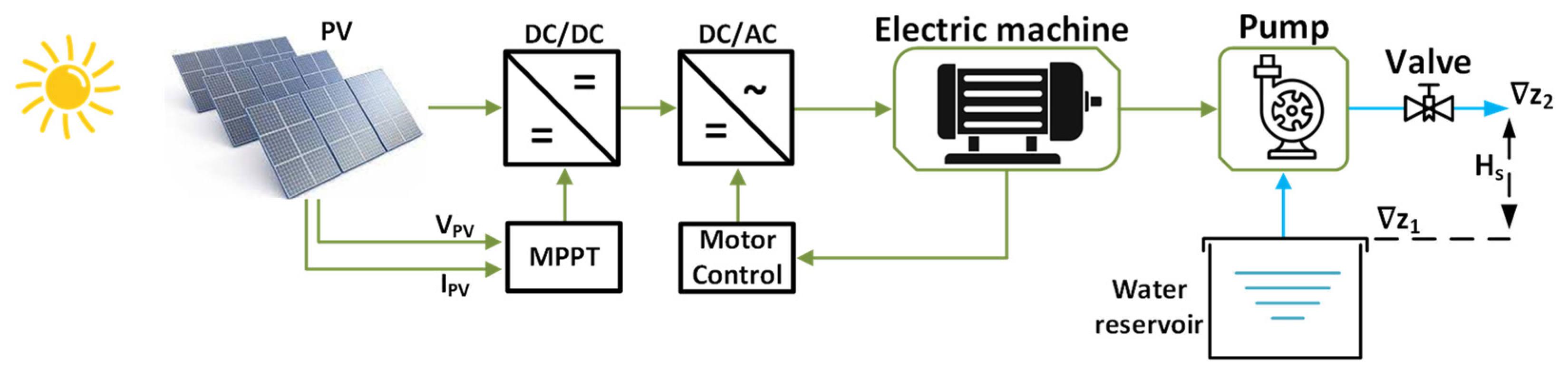
Figure 2.
The general layout of the wind turbine pumping system.
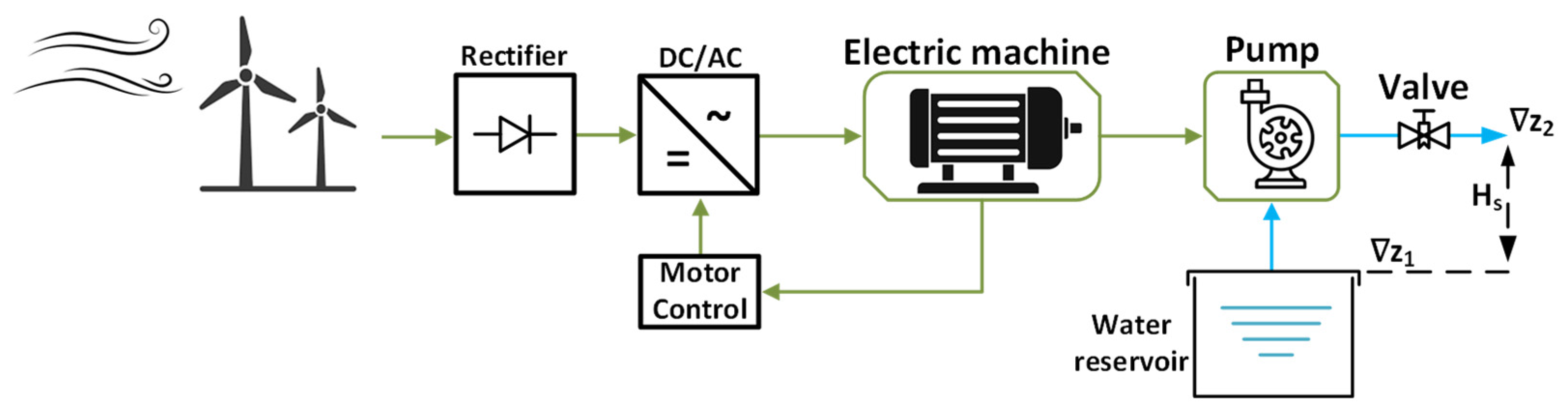
Figure 3.
Connection of various desalination technologies to RES.
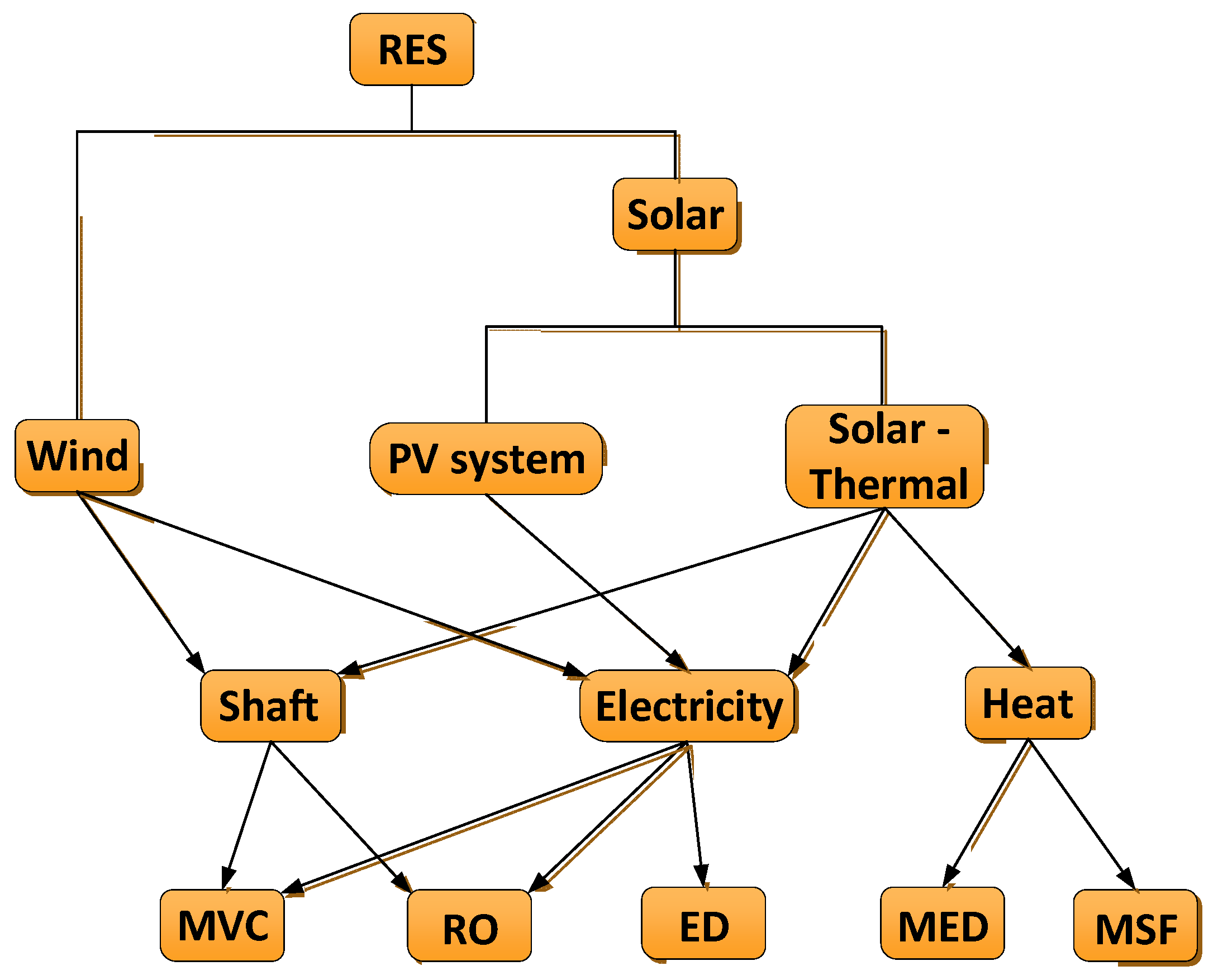
Figure 4.
Main types of electrical machines for RES-driven pumping applications.
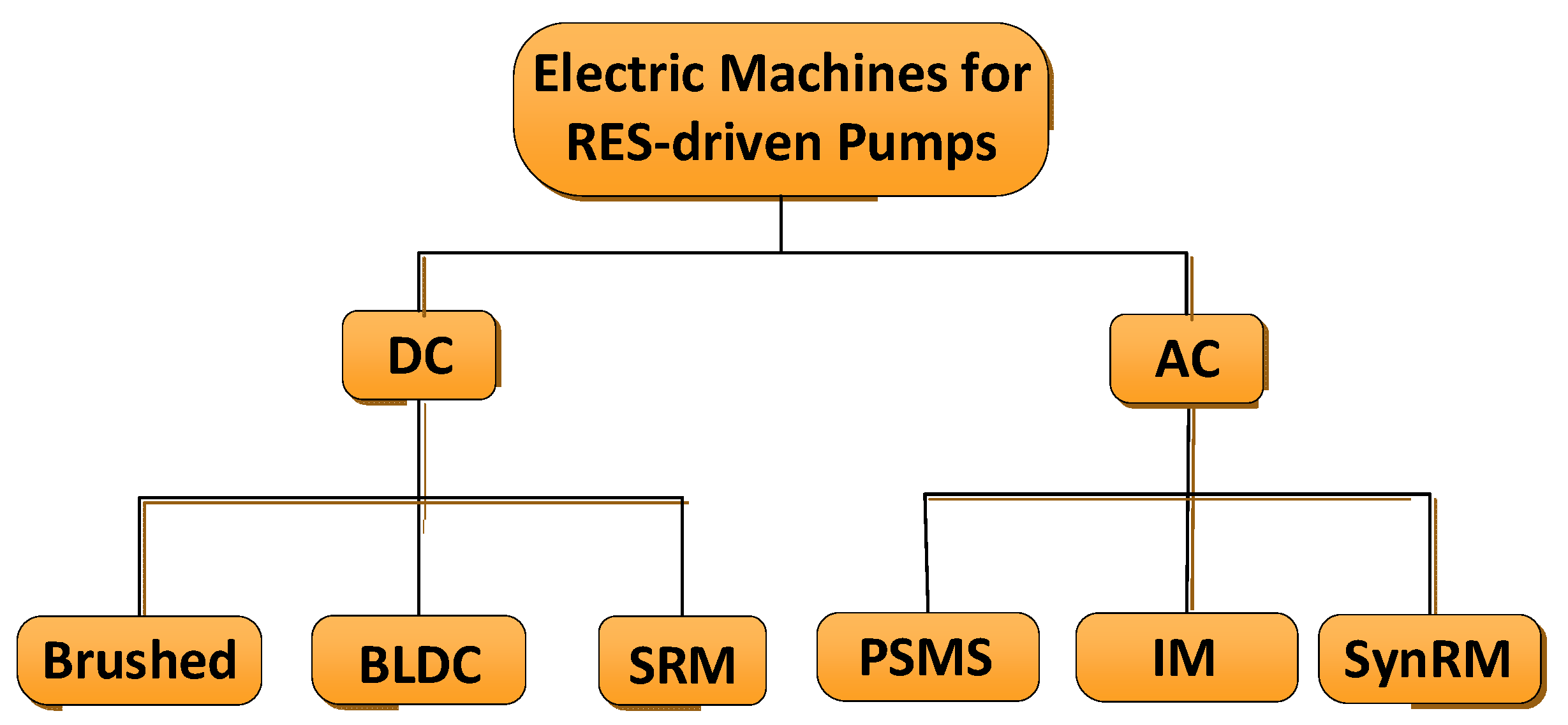
Figure 5.
Main parts of a centrifugal pump.
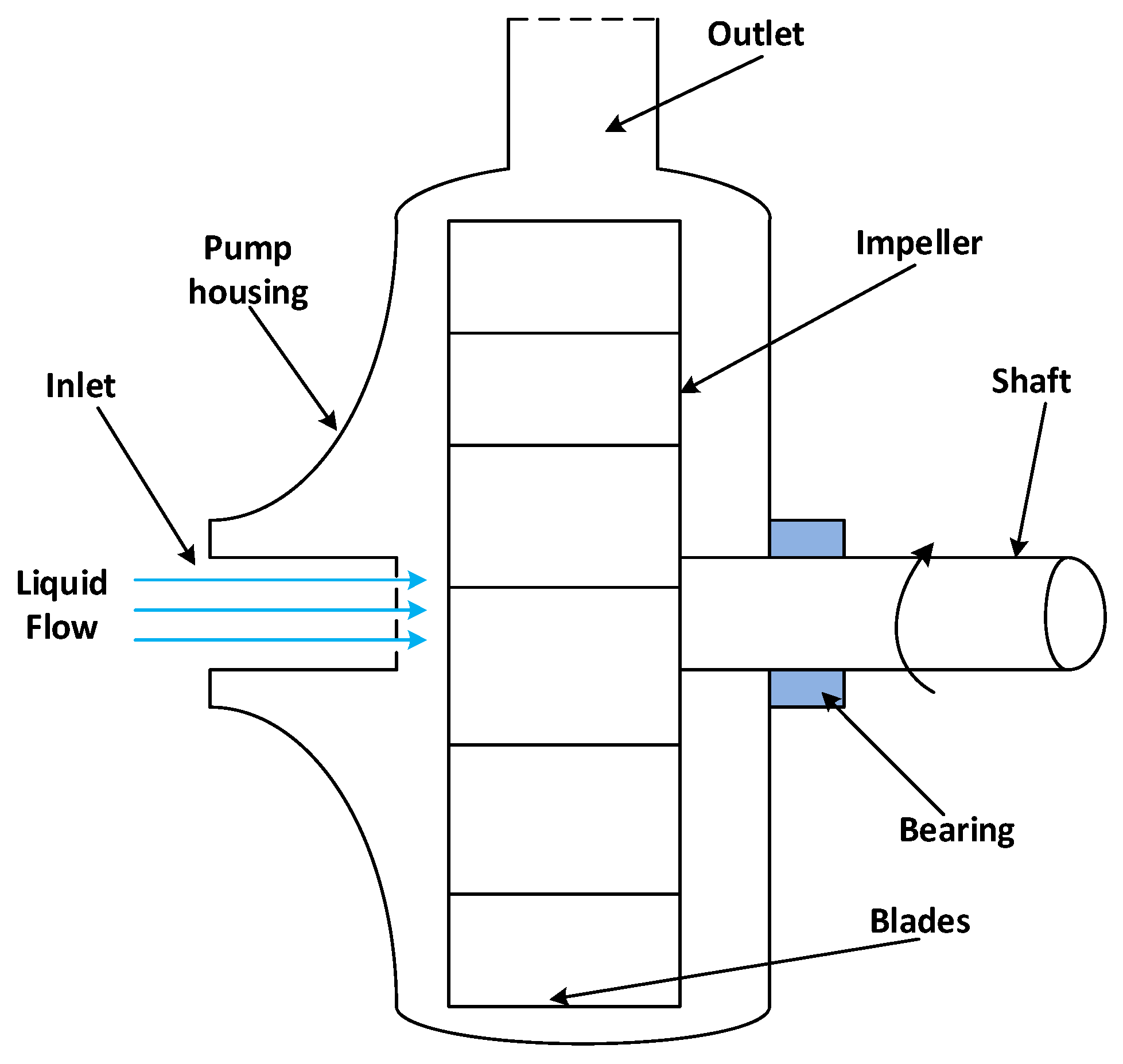
Figure 6.
Simplified layout of a RO system and coupled with an ERD.
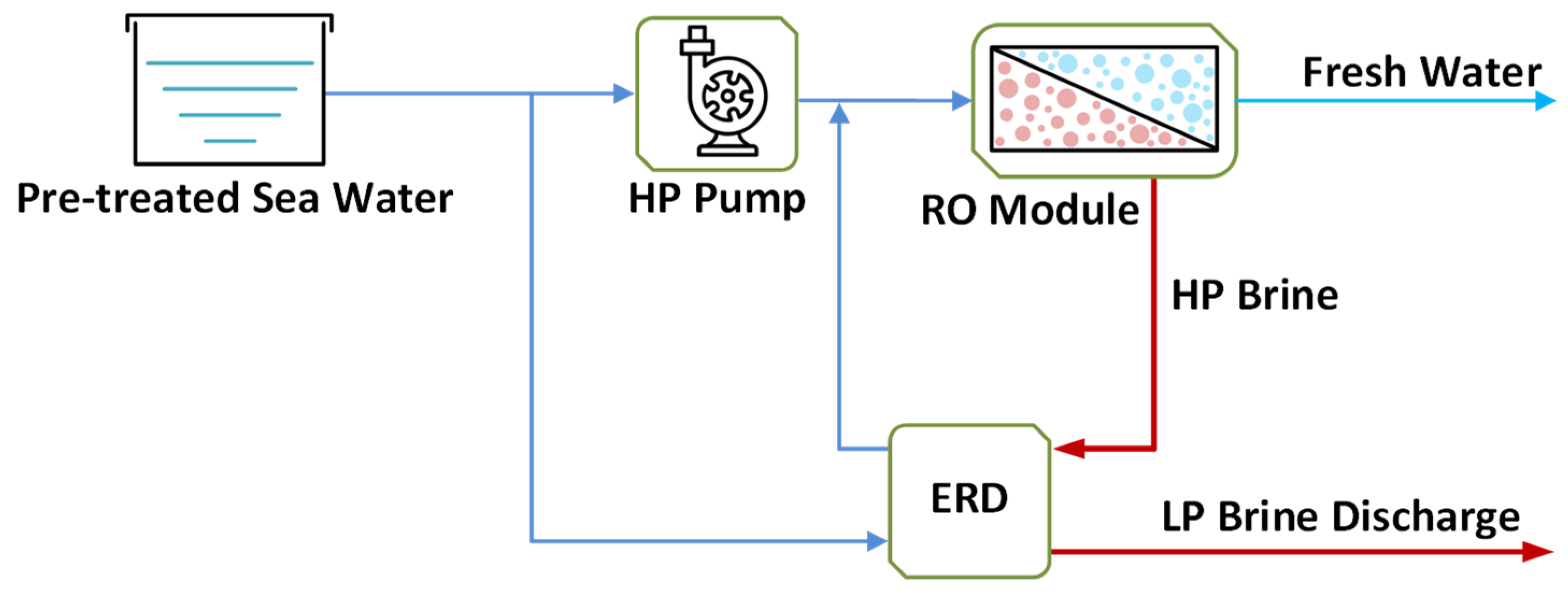
Figure 7.
Hierarchical control diagram.
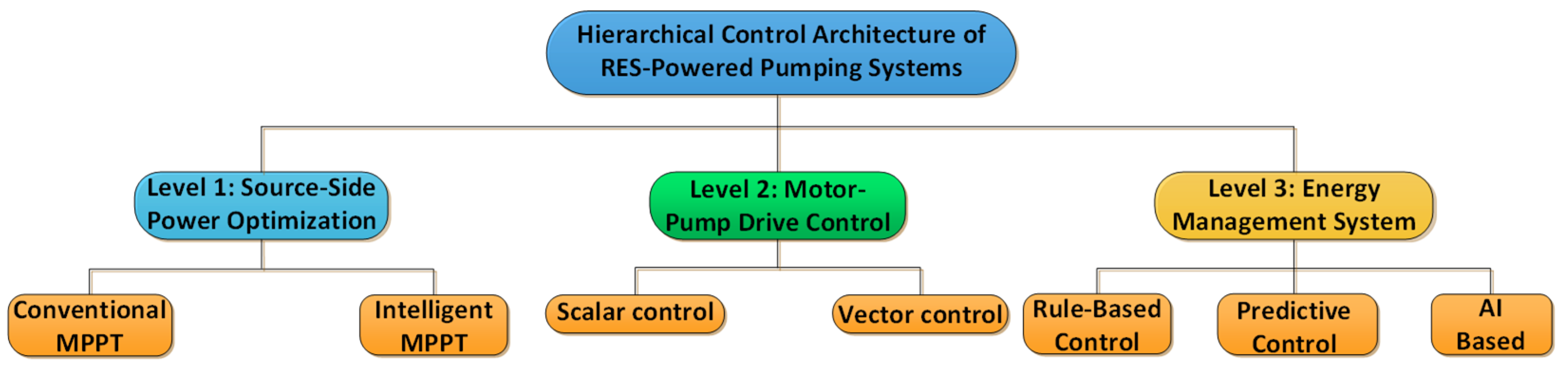
Figure 8.
MPPT controller for SPWP.
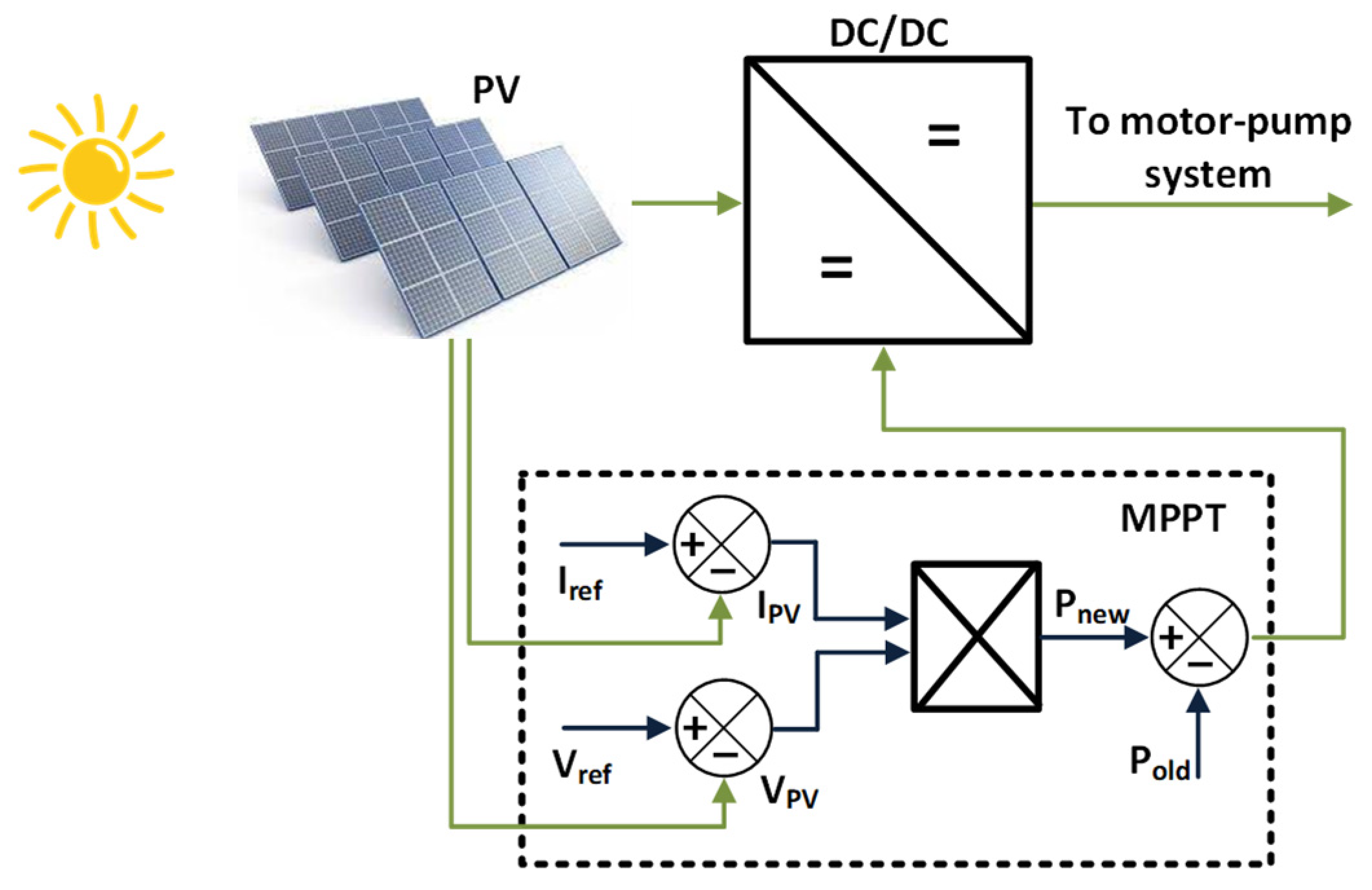
Figure 9.
PV array power curve.
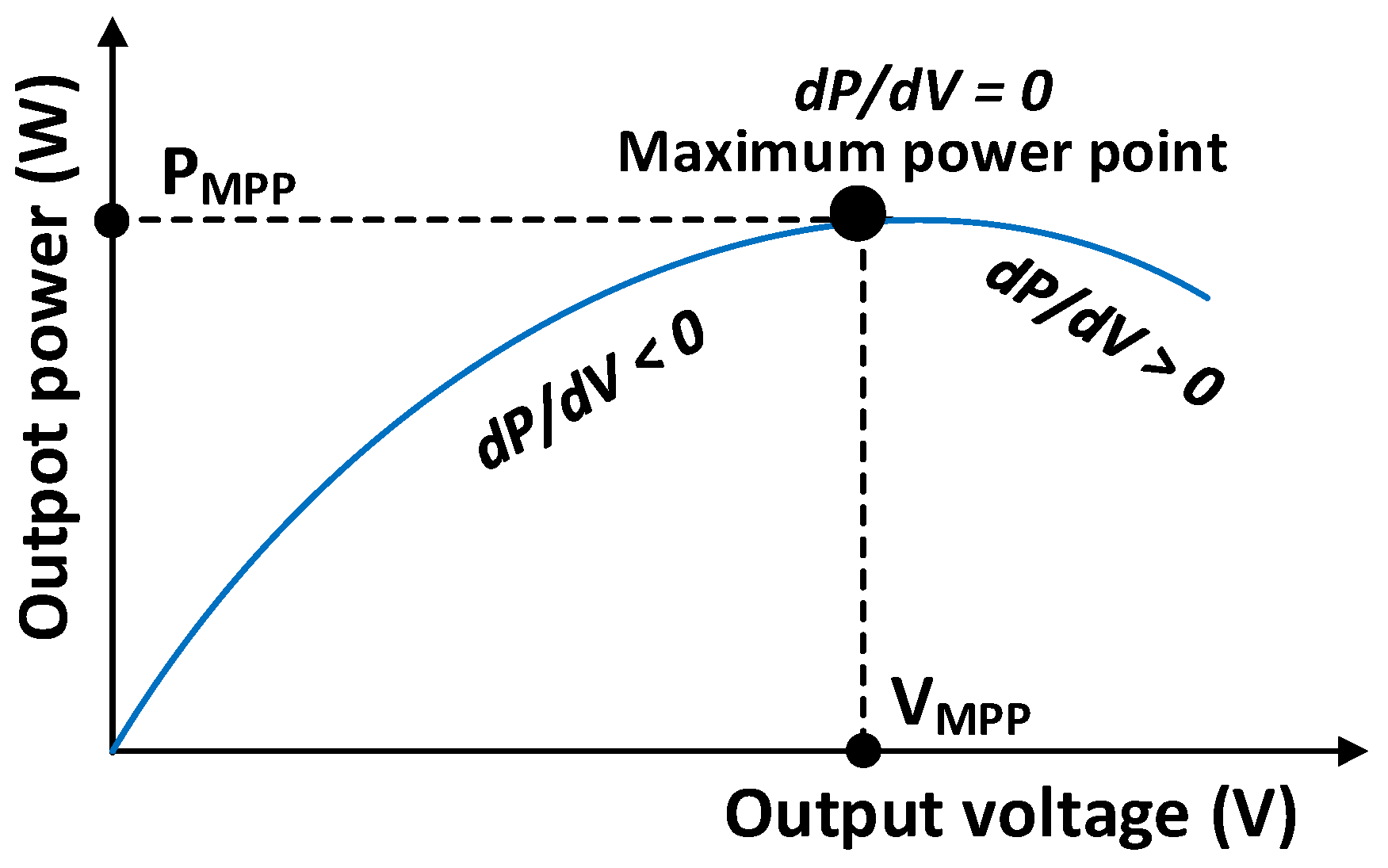
Figure 10.
SC of an induction motor.
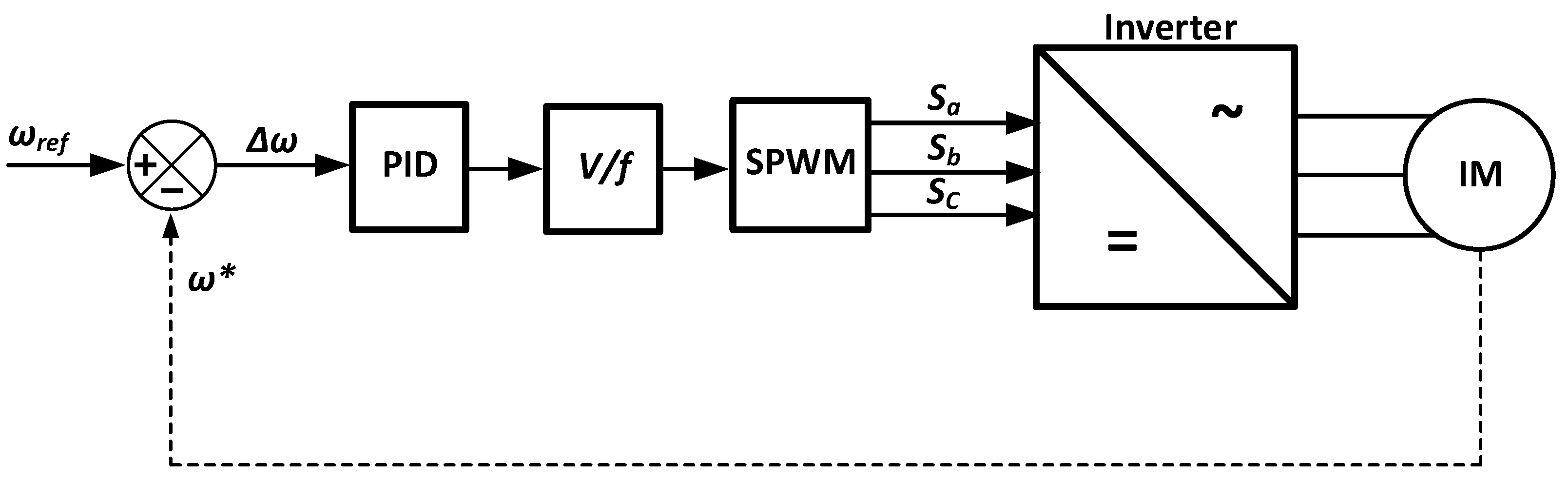

Table 1.
Advantages and disadvantages of DC/AC electrical machines.
| Feature | DC machines | AC machines |
|---|---|---|
| Control and Connection | Simple, can connect directly to DC sources, such as PV, batteries, without an inverter. | Requires a power electronic inverter for variable speed control and connection to DC sources. |
| Starting Performance | High initial starting torque, fast dynamic response to load changes. | Low starting torque relative to size, high inrush startup current. |
| Speed and Torque Profile | Excellent speed-torque characteristic for pumps, broad, linear speed control range. | Efficient over a wide speed range, but performance degrades significantly below ~30% of rated speed. |
| Construction and Maintenance | Contains brushes/commutator requiring periodic maintenance, vulnerable to failure in humid environments. | Robust, brushless construction (especially squirrel-cage IM) with minimal maintenance requirements. |
| Efficiency and Losses | Power losses and sparking at the commutator, cogging can occur at low speeds. | Generally higher full-load efficiency, copper losses dominate, efficiency drops sharply at light loads. |
| Cost and Complexity | Lower cost for simple controllers, higher cost for high-power units due to commutator complexity. | Lower motor unit cost, higher overall system cost due to the essential VFD. |
| Reliability and Environment | Risk of commutation failure, sparks can cause electromagnetic interference (EMI). | High reliability, operates well in harsh or humid environments. |
| Direct PV Compatibility | High. Naturally compatible with the DC output of PV arrays and batteries. | Low. Requires a DC-AC inverter (VFD) to interface with PV systems. |
Table 2.
Analysis of control strategies for RES-powered pumping and desalination.
| Control Strategy | Primary Objective | Key Advantages |
|---|---|---|
| P&O | Track PV/Wind MPP via hill-climbing. | Simple, low-cost, minimal hardware requirements. |
| IC | Track MPP using derivative dP/dV=0. |
No oscillation at steady-state, more accurate than P&O under changing conditions. |
| CV/CC | Maintain a fixed voltage/current ratio of VOC/ISC | Extremely simple, reliable, no control loop, very low cost. |
| FLC | Adaptively track MPP under complex conditions. | Excellent performance under partial shading and fast transients; robust. |
| SC | Maintain constant flux for speed control. | Simple, reliable, low cost, wide industry adoption. |
| FOC | Decouple and control flux & torque. | Excellent dynamic performance, high efficiency, precise speed/torque control. |
| DTC | Direct control of stator flux and torque. | Very fast torque response, parameter robustness, simple structure. |
| RUL | Ensure basic power balance and protection. | Very simple, reliable, easy to implement and debug. |
| MPC | Optimize power flow using forecasts. | Near-optimal, minimizes operational cost, can plan ahead. |
| AI-Based | Intelligent, adaptive system coordination. | Handles non-linearity and uncertainty, can learn and adapt to patterns. |
Disclaimer/Publisher’s Note: The statements, opinions and data contained in all publications are solely those of the individual author(s) and contributor(s) and not of MDPI and/or the editor(s). MDPI and/or the editor(s) disclaim responsibility for any injury to people or property resulting from any ideas, methods, instructions or products referred to in the content. |
© 2025 by the authors. Licensee MDPI, Basel, Switzerland. This article is an open access article distributed under the terms and conditions of the Creative Commons Attribution (CC BY) license (https://creativecommons.org/licenses/by/4.0/).
Copyright: This open access article is published under a Creative Commons CC BY 4.0 license, which permit the free download, distribution, and reuse, provided that the author and preprint are cited in any reuse.


