

Submitted:
04 December 2025
Posted:
09 December 2025
You are already at the latest version
Abstract
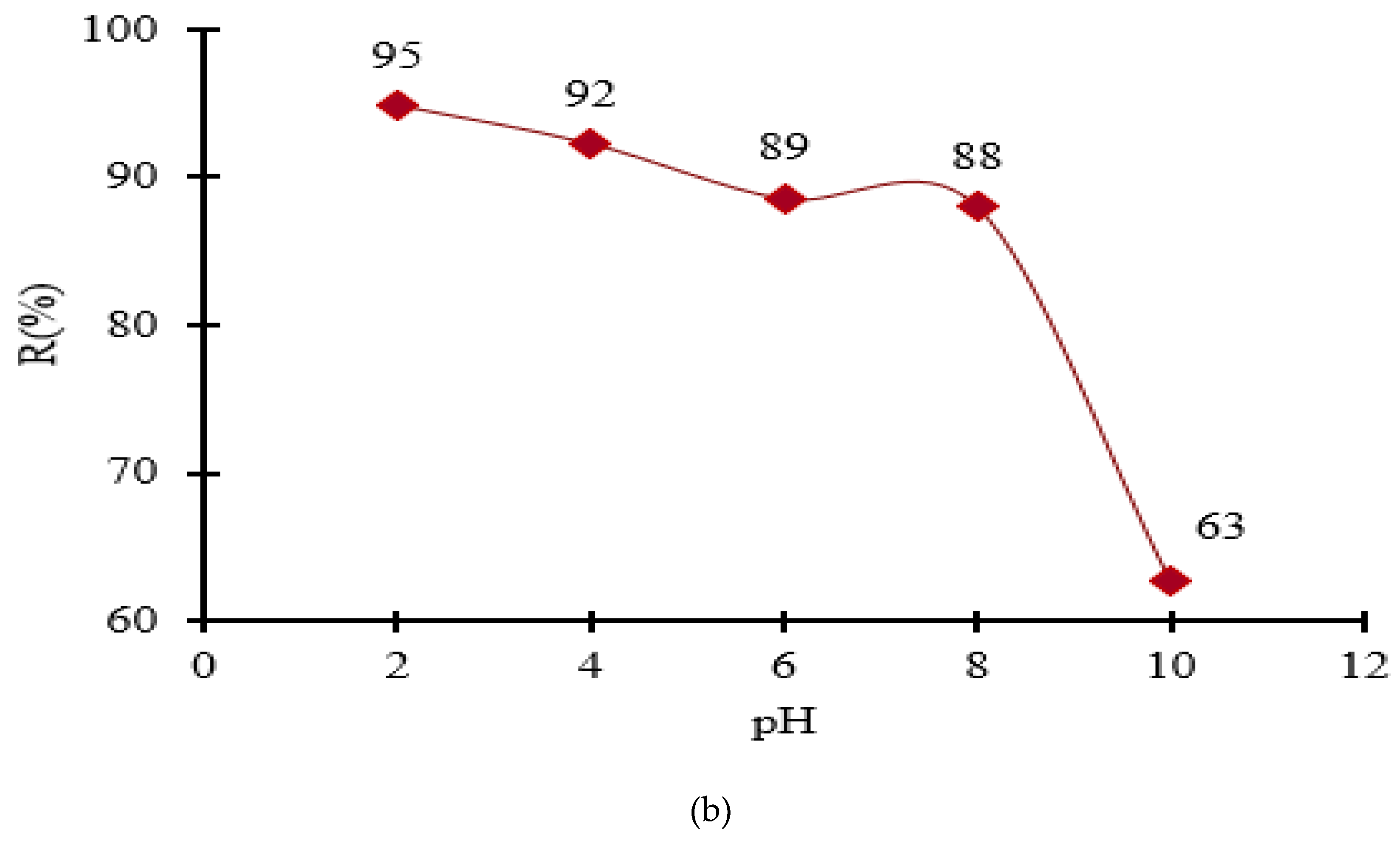
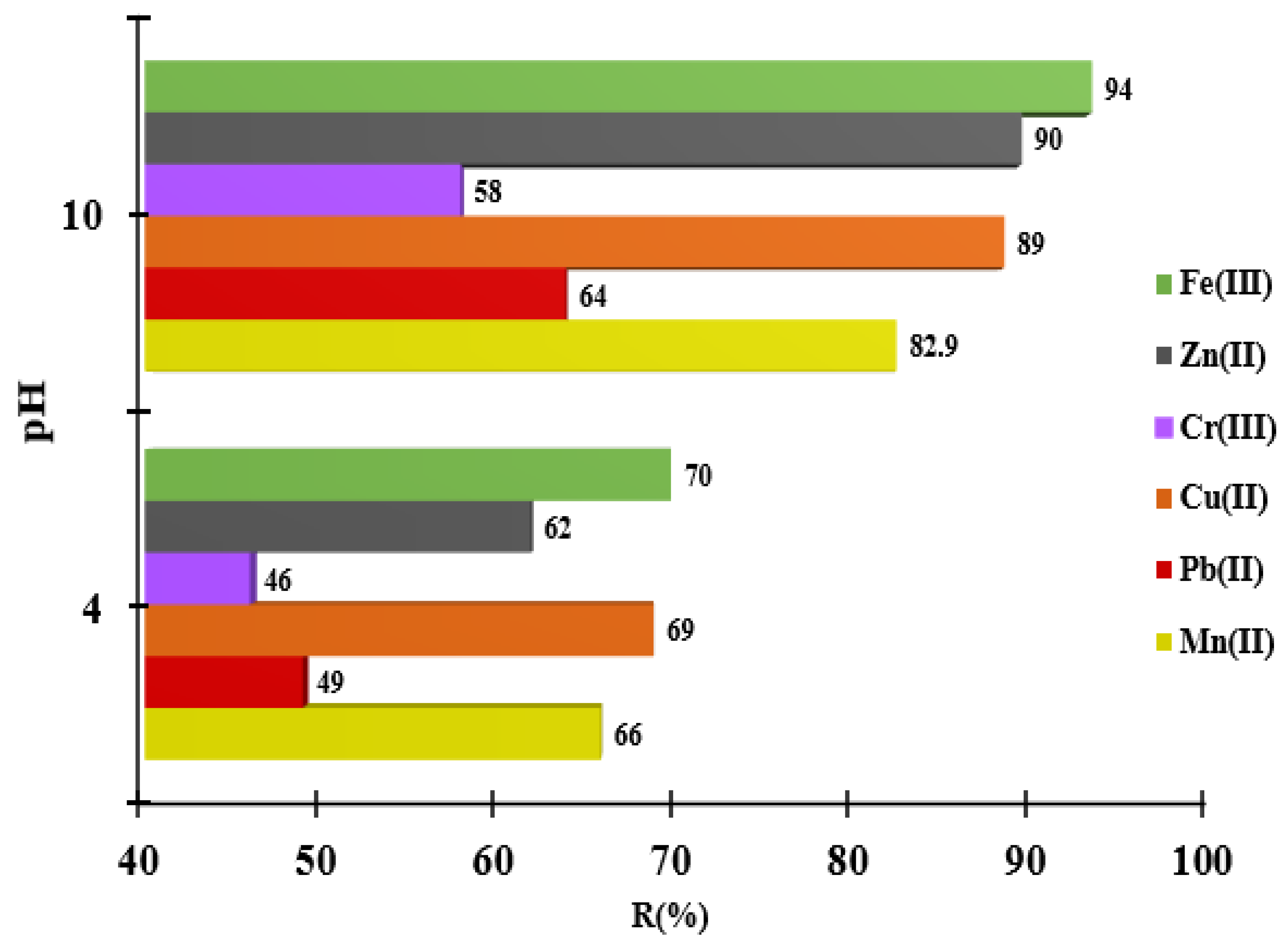
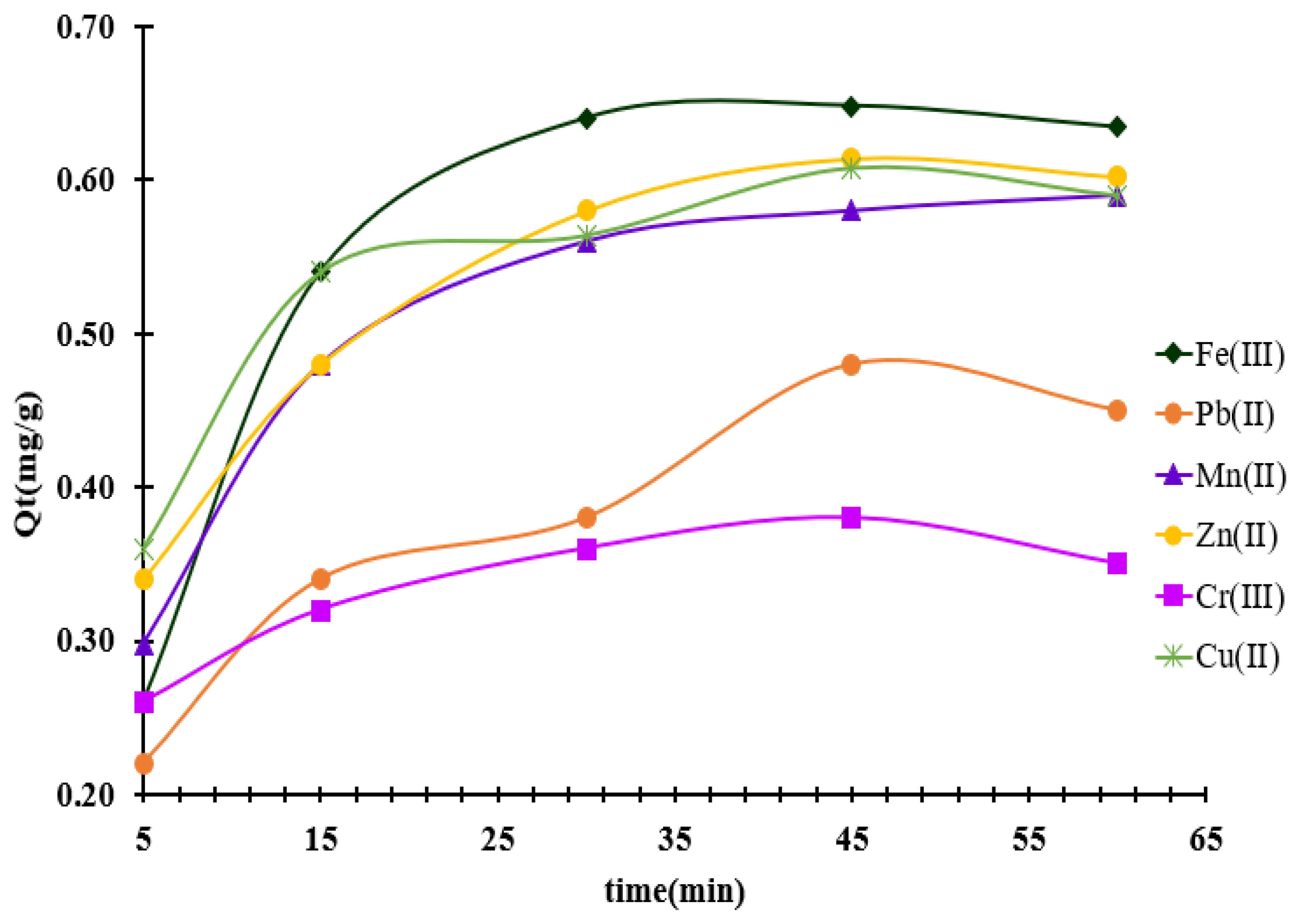
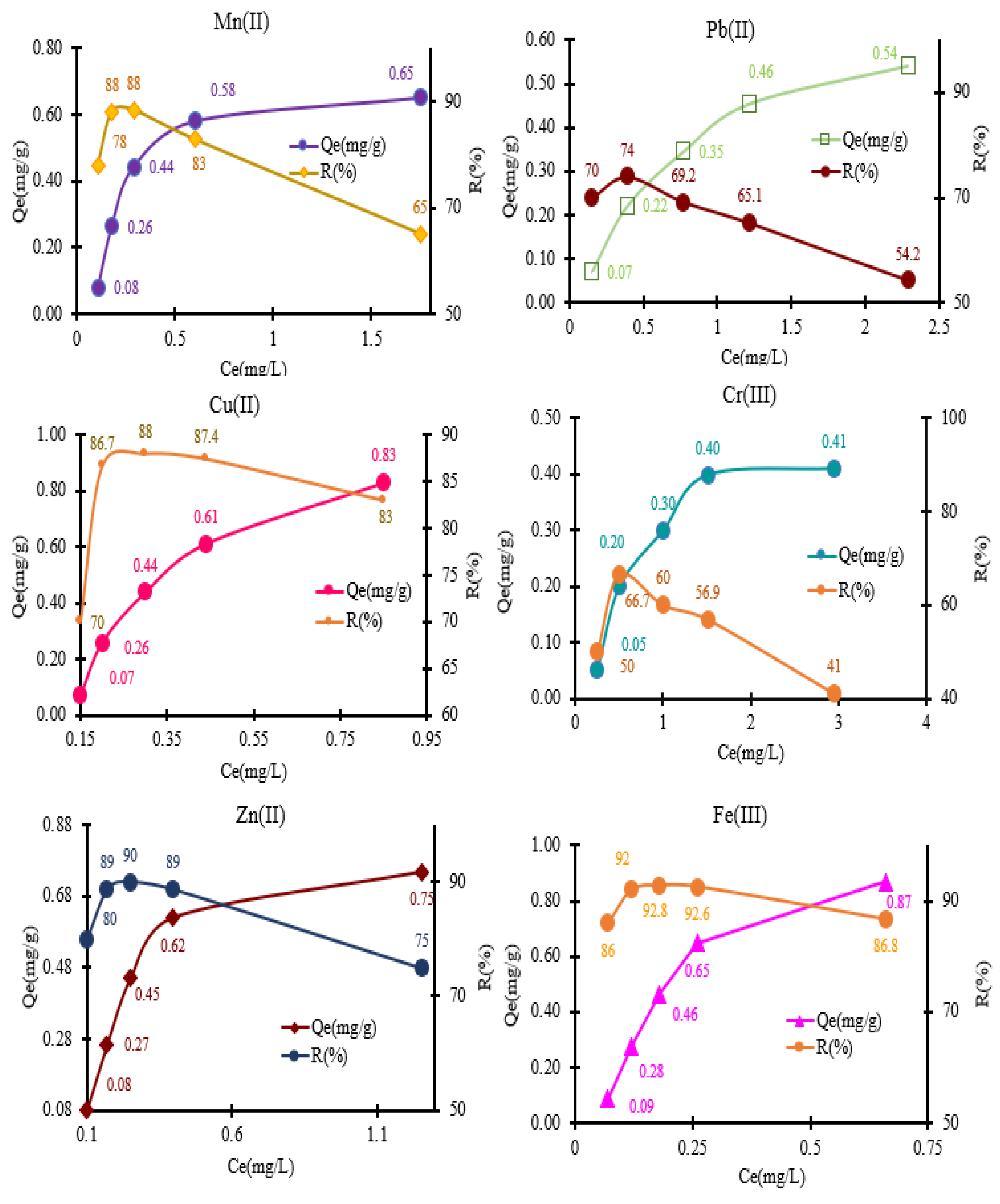
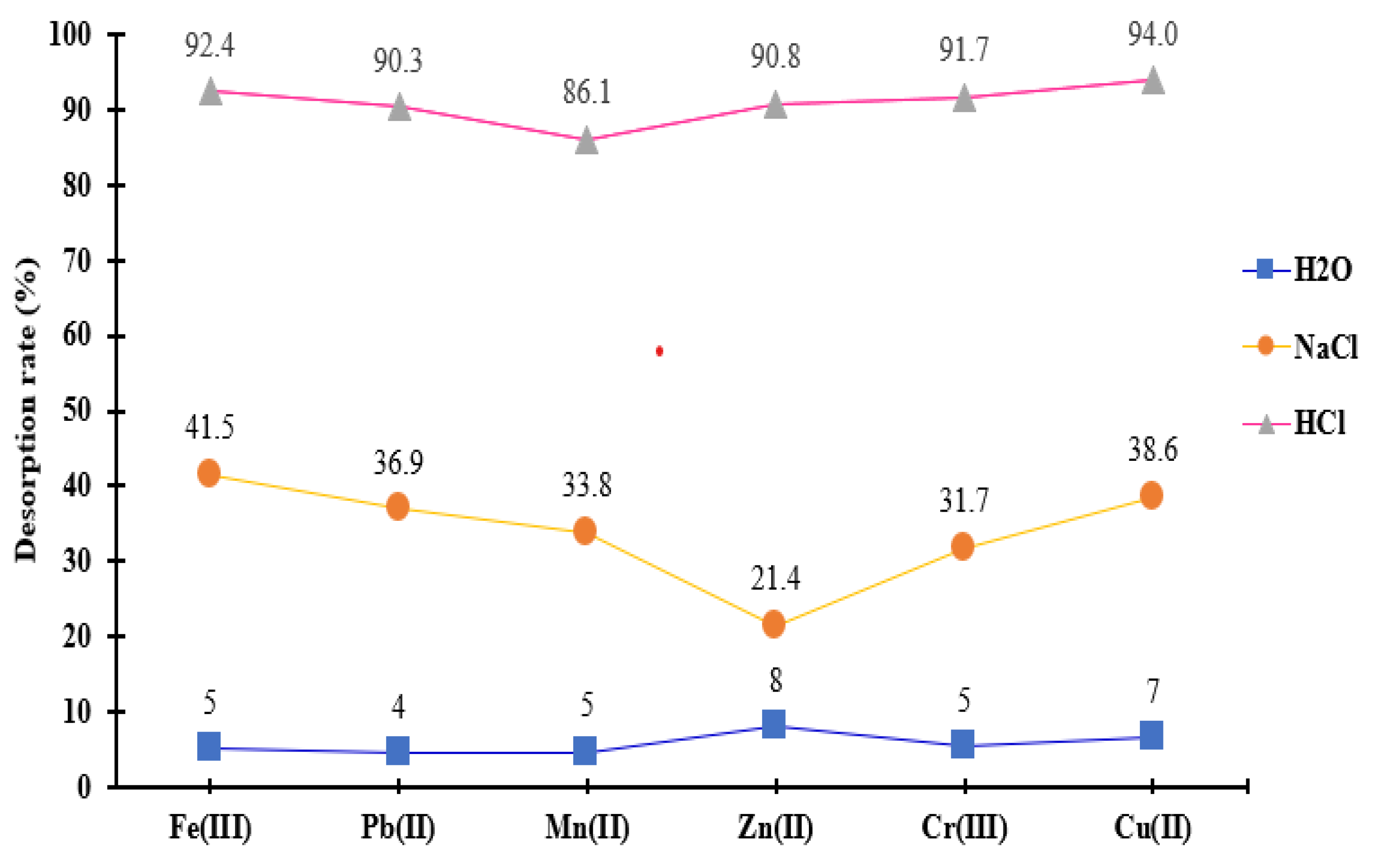
In this study, a novel material obtained from shredded maize stalk (MS) was functionalized using Alizarine Red S (ArS), a complexing agent that contains -OH and -C=O groups in its structure (MS-ArS). The obtained material MS-ArS was employed in adsorption experiments for Mn2+, Pb2+, Cu2+, Cr3+, Zn2+ and Fe3+ (Mn+) removal. Initially, complex formation between (Mn+) and ArS in buffer solution at pH 4 and 10 was investigated using UV-Vis spectrometric method. The functionalization process of MS was done at pH = 2, 4, 6, 8, and 10. The results showed that the best functionalization was obtained at pH=2. After functionalization study, Mn+ adsorption onto MS-ArS at pH 4 and 10 was tested. Mn+ adsorption proved to be pH dependent. It was observed that pH=10 was the optimum medium for Mn+ adsorption. MS-ArS has affinity for Mn+ in the following order Fe3+>Cu2+>Zn2+>Mn2+>Pb2+>Cr3+. The results demonstrate also remarkable desorption rates (D(%)) when 0.5 M HCl is used as regeneration solvent: 94% for Cu²⁺, 92.4% for Fe³⁺, 91.7% for Cr³⁺, 90.8% for Zn²⁺, 90.3% for Pb²⁺, and 86.1% for Mn²⁺. These findings highlight the potential of this sustainable material for effective adsorption and recovery of the complexing material in order to respect the principle of circular economy approach.

Keywords:
1. Introduction
2. Materials and Methods
2.1. Reagent
2.2. Analytical Methods
2.3. Experimental Methodology Used in Adsorption Study
2.4. Procedures for Testing the Complex Formation Between ArS and Mn+ in Solution at Different pH Buffer
2.5. Procedure for Functionalization of Shredded Maize Stalk with ArS at Different pH Values
2.6. Procedure for Testing the Stability of Complexing Material (MS-ArS)
2.7. Procedures Used to Evaluate the Influence of pH on Mn+ Adsorption onto MS-ArS
2.8. Procedure Regarding Adsorption of Mn2+, Pb2+, Cu2+, Cr3+, Zn2+and Fe3+ onto MS-ArS at pH=10 in Function of Contact Time
2.9. Procedure Regarding Adsorption of Mn2+, Pb2+, Cu2+, Cr3+, Zn2+and Fe3+ using MS-ArS at pH=10
2.10. Procedures for Desorption of Metal Ions Loaded onto MS-ArS
3. Results and Discussion
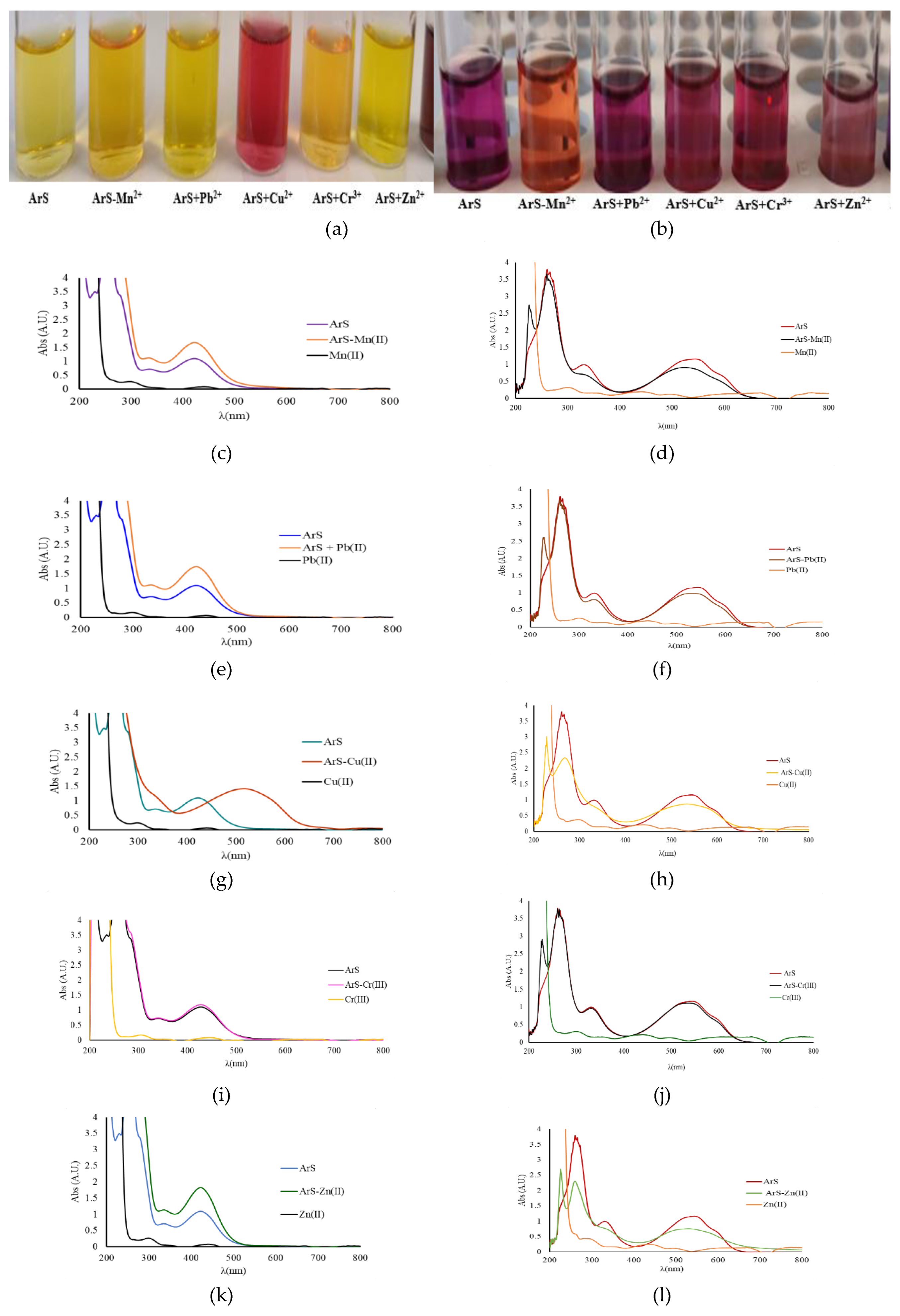
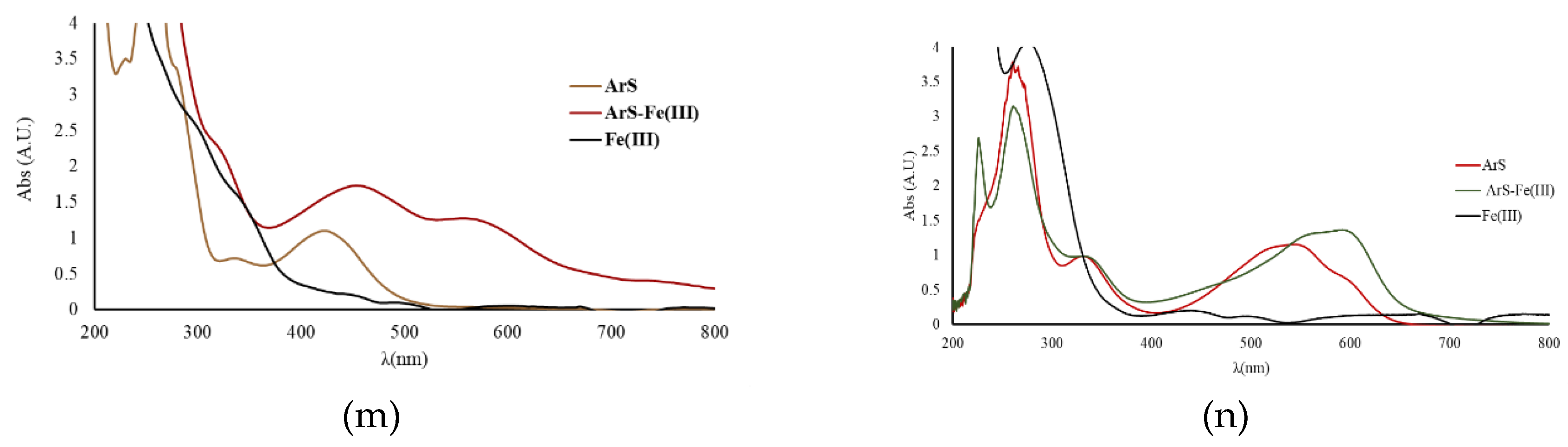
3.1. Studies on the Complex Formation (Mn+-ArS) in Buffer Solutions at pH 4 and 10
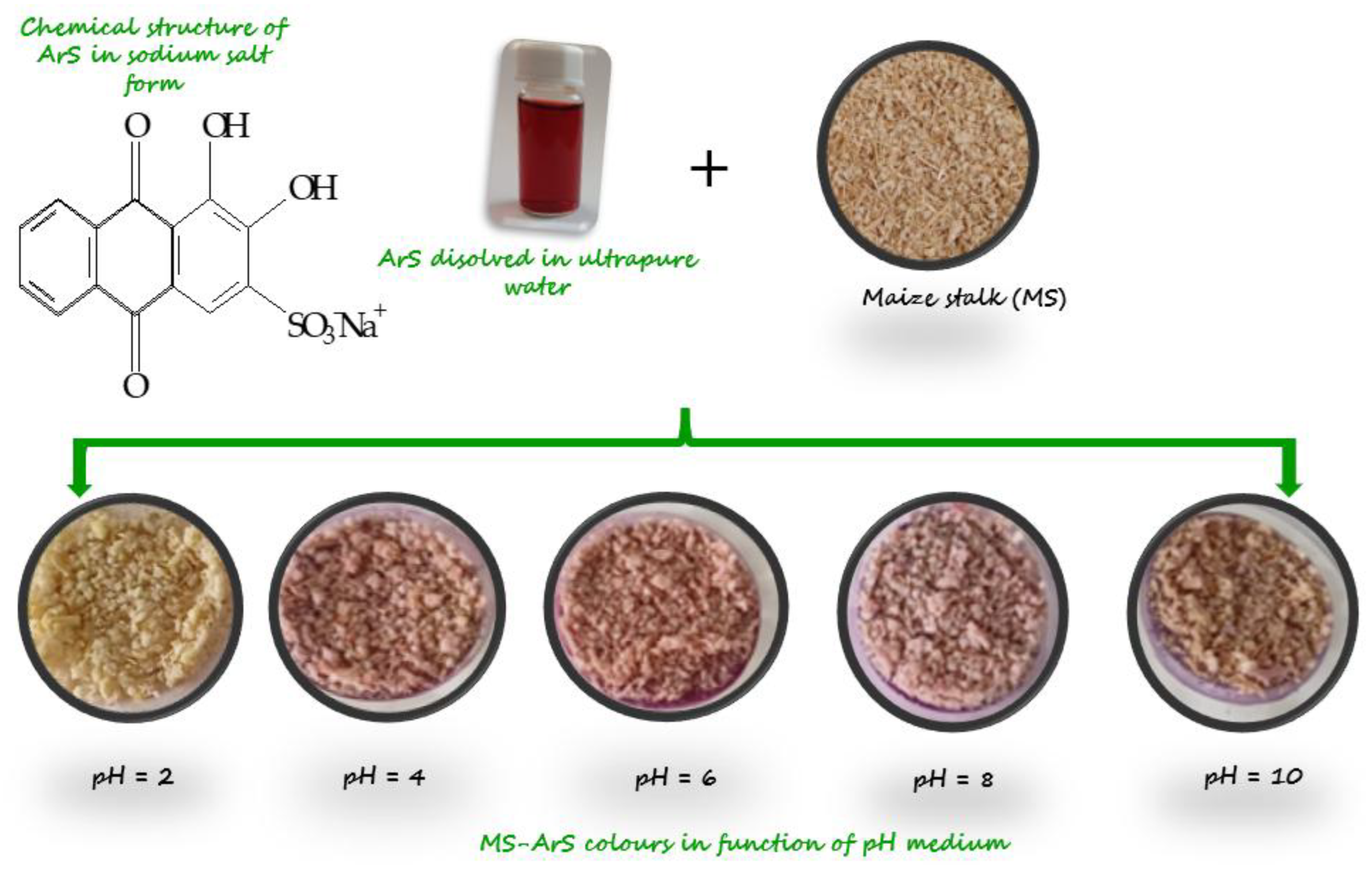
3.2. Functionalization of Shredded Maize Stalk with ArS in Function of pH Solution
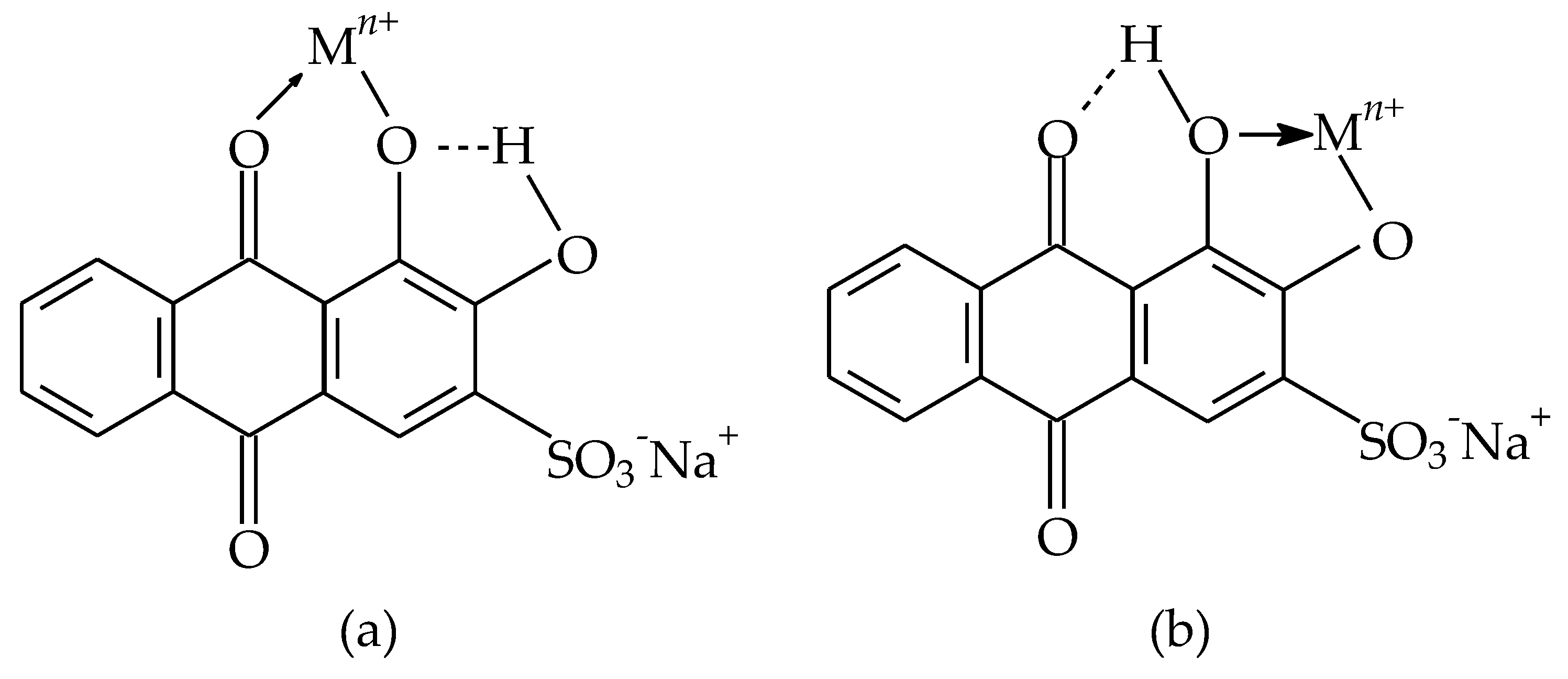
3.3. Proposal Mechanism of Metal ion Adsorption onto MS-ArS
- (i)
- the carbonyl (-C=O) and hydroxyl (HO-) groups present in the ArS structure may be responsible for the complexation of the Mn2+, Pb2+, Cu2+, Cr3+, Zn2+ and Fe3+ (Figure 4a,b);
- (ii)
- by diffusion into the porous structure of the complexing material, taking into consideration the ionic radius;
- (iii)
- by ion exchange mechanism between the -SO32- group of ArS, which is not involved in the first adsorption step with MS;
- (iv)
- Also, MS has in its structure functional groups such as carboxyl, hydroxyl, sulfhydryl, and amide, enabling them to bond with metal ions in water.
3.4. The pH Influence for the Metal Ions Adsorption onto MS-ArS
3.5. Influence of Contact Time on Metal Ion Adsorption on MS-ArS
3.6. Adsorption of Metals Ions onto MS-ArS Mass
3.7. Studies on the Regeneration of Complexing Material Loaded with Mn2+, Pb2+, Cu2+, Cr3+, Zn2+ and Fe3+
4. Conclusions
Author Contributions
Funding
Institutional Review Board Statement
Data Availability Statement
Conflicts of Interest
References
- Ling Felicia, W. X.; Rovina, K.; Supri, S.; Matanjun, P.; Mohd Amin, S. F.; Abdul Rahman, M. N., Next-generation sodium alginate hydrogels for heavy metal ion removal: properties, dynamic adsorption–desorption mechanisms, and sustainable application potential. Polymer Bulletin 2025, 1-51.
- Luo, H.; Wang, Q.; Guan, Q.; Ma, Y.; Ni, F.; Yang, E.; Zhang, J. Heavy metal pollution levels, source apportionment and risk assessment in dust storms in key cities in Northwest China. J. Hazard. Mater. 2022, 422, 126878. [CrossRef]
- Crini, G.; Lichtfouse, E. Advantages and disadvantages of techniques used for wastewater treatment. Environ. Chem. Lett. 2019, 17, 145–155. [CrossRef]
- Choudhary, A.; Mushtaq, A., From pollutant to valuable product: A novel reutilization strategy of wastewater. Int. J. Chem. Biochem. Sci 2023, 23, 31-37.
- Ahmadijokani, F.; Molavi, H.; Peyghambari, A.; Shojaei, A.; Rezakazemi, M.; Aminabhavi, T.M.; Arjmand, M. Efficient removal of heavy metal ions from aqueous media by unmodified and modified nanodiamonds. J. Environ. Manag. 2022, 316, 115214. [CrossRef]
- Oros, A. Bioaccumulation and Trophic Transfer of Heavy Metals in Marine Fish: Ecological and Ecosystem-Level Impacts. J. Xenobiotics 2025, 15, 59. [CrossRef]
- Abd-Elhalim, B.T.; Gideon, M.; Anton, K.; Boyi, M.O. Impact of dumpsite compost on heavy metal accumulation in some cultivated plants. BMC Res. Notes 2025, 18, 1–7. [CrossRef]
- Jomova, K.; Alomar, S.Y.; Nepovimova, E.; Kuca, K.; Valko, M. Heavy metals: toxicity and human health effects. Arch. Toxicol. 2024, 99, 153–209. [CrossRef]
- Meng, K.; Dong, Y.; Liu, J.; Xie, J.; Jin, Q.; Lu, Y.; Lin, H. Advances in selective heavy metal removal from water using biochar: A comprehensive review of mechanisms and modifications. J. Environ. Chem. Eng. 2025, 13. [CrossRef]
- Aziz, K.H.H.; Mustafa, F.S.; Hamarawf, R.F.; Omer, K.M. Adsorptive removal of toxic heavy metals from aquatic environment by metal organic framework (MOF): A review. J. Water Process. Eng. 2025, 70. [CrossRef]
- Elouali, S.; Ouydir, H.A.A.; Hamdan, Y.A.; Eladlani, N.; Rhazi, M. Chitosan from Periplaneta americana L.: a sustainable solution for heavy metals removal. Euro-Mediterranean J. Environ. Integr. 2024, 10, 25–36. [CrossRef]
- Yuan, F.; Yan, D.; Song, S.; Zhang, J.; Yang, Y.; Chen, Z.; Lu, J.; Wang, S.; Sun, Y. Removal of heavy metals from water by adsorption on metal organic frameworks: Research progress and mechanistic analysis in the last decade. Chem. Eng. J. 2025, 506. [CrossRef]
- Castellanos, H.G.; Aryanfar, Y.; Mohtaram, S.; Keçebaş, A.; Karaca-Dolgun, G.; Ahmad, S.; Asiri, A.N.M.; Islam, S. The efficacy of nano-cellulose-based composites in heavy metal removal from wastewater: a comprehensive review. J. Chem. Technol. Biotechnol. 2024, 100, 291–312. [CrossRef]
- Feng, J.; Yu, Y.; Huang, S.; Zhu, N.; Mojiri, A.; Ge, D. Tannic acid as a green chemical for the removal of various heavy metals: A critical review of recent developments. J. Environ. Manag. 2025, 375, 124390. [CrossRef]
- Tan, S.; Zhang, T.; Cheng, C.; Wang, Z.; Li, H.; Zhao, Y. Efficient removal and stepwise recovery of various heavy metals from water by using calcium carbonate with different activity. Sep. Purif. Technol. 2024, 354. [CrossRef]
- Macena, M.; Pereira, H.; Cruz-Lopes, L.; Grosche, L.; Esteves, B. Competitive Adsorption of Metal Ions by Lignocellulosic Materials: A Review of Applications, Mechanisms and Influencing Factors. Separations 2025, 12, 70. [CrossRef]
- Kayani, K.F.; Mohammed, S.J.; Mustafa, M.S.; Aziz, S.B. Dyes and their toxicity: removal from wastewater using carbon dots/metal oxides as hybrid materials: a review. Mater. Adv. 2025, 6, 5391–5409. [CrossRef]
- Ahmad, A. An innovative step to fabricate biomass-derived reduced graphene oxide electrodes to boost energy efficiency with metal removal using an electrochemical approach. Biomass- Convers. Biorefinery 2024, 15, 5997–6012. [CrossRef]
- Arabkhani, P.; Asfaram, A. A novel biowaste-derived magnetic adsorbent for efficient removal of cadmium, cobalt and strontium ions from industrial wastewater. Inorg. Chem. Commun. 2025, 174. [CrossRef]
- Sireesha, S.; Agarwal, A.; Sopanrao, K. S.; Sreedhar, I.; Anitha, K., Modified coal fly ash as a low-cost, efficient, green, and stable adsorbent for heavy metal removal from aqueous solution. Biomass Conversion and Biorefinery 2025, 15 (15), 21685-21708.
- Ahmadzadeh, S.; Hemmati, A. Innovative approach to Pb (II) removal using zinc-based MOFs-derived carbon: In-depth analysis of adsorption mechanisms, isotherms, thermodynamics, and kinetics. Results Eng. 2025, 25. [CrossRef]
- Ghaedi, S.; Rajabi, H.; Mosleh, M.H.; Spencer, B.F.; Sedighi, M. Assessing the efficiency and reusability of zirconium-based MOF-biochar composite for the removal of Pb (II) and Cd (II) in single and multi-ionic systems. J. Environ. Manag. 2025, 380, 125122. [CrossRef]
- Inobeme, A.; Mathew, J. T.; Devolli, A.; Adetunji, C. O.; Sharma, N.; Maliki, M.; Ajai, A.; Inobeme, J.; Mann, A.; Enoyoze, G., Metal components in industrial wastes and methods for metal ions recovery. In Metal Value Recovery from Industrial Waste Using Advanced Physicochemical Treatment Technologies, Elsevier: 2025; pp 1-15. [CrossRef]
- Zhu, Y.; Hua, J.; Yuan, J.; Yuan, Z.; Dai, Y.; Zhang, T.; Qiu, F. Conversion and utilization of waste biomass into sustainability treasure: Surface modified eggplant biomass by PEI and enhanced removal of Pb(II) from aqueous solutions. Colloids Surfaces A: Physicochem. Eng. Asp. 2024, 708. [CrossRef]
- Namdeti, R.; Rao, G.B.; Lakkimsetty, N.R.; Qatan, M.A.A.; Al-Kathiri, D.S.M.S.; Al Amri, L.A.; Qahoor, N.M.S.; Joaquin, A.A. Innovative Approaches in Water Decontamination: A Critical Analysis of Biomaterials, Nanocomposites, and Stimuli-Responsive Polymers for Effective Solutions. J. Environ. Earth Sci. 2024, 7, 92–102. [CrossRef]
- Marin, N.M.; Lazar, M.N.; Popa, M.; Galaon, T.; Pascu, L.F. Current Trends in Development and Use of Polymeric Ion-Exchange Resins in Wastewater Treatment. Materials 2024, 17, 5994. [CrossRef]
- Chen, C.; He, E.; Jiang, X.; Xia, S.; Yu, L. Efficient removal of direct dyes and heavy metal ion by sodium alginate-based hydrogel microspheres: Equilibrium isotherms, kinetics and regeneration performance study. Int. J. Biol. Macromol. 2025, 294, 139294. [CrossRef]
- Gowayed, S.M.H.; Abdel-Salam, A.H.; Nassef, E.; Morsy, A. Innovative hybrid membrane: Pioneering metal oxide framework for improved elimination of heavy metals from industrial wastewater. Polym. Eng. Sci. 2025, 65, 2093–2105. [CrossRef]
- Martins, B.d.A.; Takahashi, J.A. Overview of bioremediation as a method for metal-contaminated wastewater treatment. Environ. Sci. Pollut. Res. 2025, 1–25. [CrossRef]
- Shamshad, J.; Rehman, R.U. Innovative approaches to sustainable wastewater treatment: a comprehensive exploration of conventional and emerging technologies. Environ. Sci. Adv. 2024, 4, 189–222. [CrossRef]
- Kazakis, N.A. Green approaches to heavy metal removal from wastewater: Microalgae solutions in a circular economy framework. Soc. Impacts 2025, 5. [CrossRef]
- Kumari, A.; Kamaraj, N.; Selvaraj, R.; Nanoth, R. Emerging trends and future outlook on chromium removal in the lab, pilot scale, and industrial wastewater system: an updated review exploring 10 years of research. Environ. Monit. Assess. 2025, 197, 1–46. [CrossRef]
- Marzbali, M.H.; Hakeem, I.G.; Ngo, T.; Surapaneni, A.; Shah, K. Innovative chemical functionalisation of biosolids for removing heavy metals and enhancing ammonium recovery from wastewater. Int. J. Environ. Sci. Technol. 2024, 22, 6665–6680. [CrossRef]
- Solcova, O.; Dlaskova, M.; Kastanek, F. Innovative Sorbents for the Removal of Micropollutants from Water. Molecules 2025, 30, 1444. [CrossRef]
- Abd Aziz, M. A.; Hairunnaja, M. A.; Arifin, M. A.; Isa, K. M., Advancements in Metal Recovery from Industrial Wastes: A Comprehensive Overview. Controlling Environmental Pollution: Practical Solutions 2025, 225-245. [CrossRef]
- Zhang, Z.; Lu, Y.; Gao, S.; Wu, S. Sustainable and Efficient Wastewater Treatment Using Cellulose-Based Hydrogels: A Review of Heavy Metal, Dye, and Micropollutant Removal Applications. Separations 2025, 12, 72. [CrossRef]
- Marin, N. M., Maize stalk obtained after acid treatment and its use for simultaneous removal of Cu2+, Pb2+, Ni2+, Cd2+, Cr3+ and Fe3+. Polymers 2022, 14 (15), 3141. [CrossRef]
- Marin, N.M. A New Approach of Complexing Polymers Used for the Removal of Cu2+ Ions. Polymers 2024, 16, 920. [CrossRef]
- Marin, N.M. Green Chemistry Applications Using Complexing Materials for Water Treatment. Polymers 2025, 17, 1467. [CrossRef]
- Pasquali, E.A.; Oro, C.E.D.; Bernardi, J.L.; Venquiaruto, L.D.; Treichel, H.; Mossi, A.J.; Dallago, R.M. Adsorption of Cr(VI) by wet blue leather: Sustainable solution for leather industry effluents. J. Water Process. Eng. 2024, 69. [CrossRef]
- Rahman, L.; Shamrih, S.A.; Azlyzan, N.A.; Sarjadi, M.S.; Arsad, S.E.; Sarkar, S.M.; Kumar, S. Removal of heavy metal ions from wastewater using modified cornstalk cellulose-derived poly(amidoxime) ligand. Carbohydr. Polym. Technol. Appl. 2024, 9. [CrossRef]
- Park, S.; Kim, Y.-H.; Lee, J.W.; Jang, S.; Kim, J.E.; Kang, G.; Choi, Y.-K. Adsorptive performance of rice husk-derived biochar for nodularin cyanotoxin from aqueous solution: Isotherm, kinetic, regeneration, and column studies. J. Water Process. Eng. 2025, 70. [CrossRef]
- Feng, Z.; Li, J.; Chen, N.; Feng, C. Sulfonated corn stalk enhanced hydrogel adsorption for heavy metal from metal mine gallery effluent. Sep. Purif. Technol. 2024, 357. [CrossRef]
- Houmia, I.; Fardioui, M.; El Amri, A.; Houmia, B.; Kaibous, N.; Bazhar, K.; Hammani, O.; Arhoutane, M.R.; Guedira, T. Structural characterization and ecological evaluation of natural clay mixtures for the removal of heavy metals (Cu(II), Co(II), and Zn(II)) from aqueous solutions: experimental study combined with RSM process optimization. J. Mol. Struct. 2025, 1344. [CrossRef]
- Renu; Sithole, T. A review on regeneration of adsorbent and recovery of metals: Adsorbent disposal and regeneration mechanism. South Afr. J. Chem. Eng. 2024, 50, 39–50. [CrossRef]

| Metal | Mn2+ | Pb2+ | Cu2+ | Cr3+ | Zn2+ | Fe3+ |
| Electron Configuration | [Ar] 3d5 4s2 | [Xe] 4f14 5d10 6s2 6p2 | [Ar] 3d10 4s1 | [Ar] 3d5 4s1 | [Ar] 3d10 4s2 | [Ar] 3d6 4s2 |
| Electronegativity | 1.55 | 2.33 | 1.90 | 1.66 | 1.65 | 1.83 |
| Oxidation Number | +2 | +2 | +2 | +3 | +2 | +3 |
| Atomic radius (Å) | 1.79 | 1.9 | 1.57 | 1.85 | 1.53 | 1.72 |
| Ionic radius (Å) | 0.67 | 1.19 | 0.73 | 0.62 | 0.74 | 0.55 |
Disclaimer/Publisher’s Note: The statements, opinions and data contained in all publications are solely those of the individual author(s) and contributor(s) and not of MDPI and/or the editor(s). MDPI and/or the editor(s) disclaim responsibility for any injury to people or property resulting from any ideas, methods, instructions or products referred to in the content. |
© 2025 by the authors. Licensee MDPI, Basel, Switzerland. This article is an open access article distributed under the terms and conditions of the Creative Commons Attribution (CC BY) license (http://creativecommons.org/licenses/by/4.0/).