

Submitted:
01 December 2025
Posted:
03 December 2025
You are already at the latest version
Abstract
In this report Italian researcher and engineer Alberto Donini and Swiss researcher and journalist Tomas Hrico present several photographs of unusual artifact discoveries they made at Cerro del Toro (Hill of the Bull) near the Mexican town of Ojuelos de Jalisco. Additionally, they describe the finding circumstances and show solid evidence regarding the ancient age at least of one of the three small objects excavated – a figurine of burned clay with big almond shaped eyes and an elongated head. In the last chapter “Final words” the two authors conclude the article by asking some significant questions and invite other researchers to collaborate with them on the next phase of their project.
Keywords:
archaeology
; history
; ancient artifacts
; lost civilizations
; Ojuelos de Jalisco
; Mexico
; Alberto Donini
; Tomas Hrico
1. Introduction
Based on personal exchanges with fellow researchers around the world and an extensive online investigation, Alberto Donini and Tomas Hrico travel to Mexico in early 2025 to verify the accuracy of the information they have previously gathered. During an expedition into the nature, led by a local tour guide, they excavate three small artifacts (two made of stone and one of burned clay), which are buried around 20-50 cm under the soil. The treasure trove is well hidden among cacti and bushes and is situated close to Cerro del Toro (Hill of the Bull) which rises approximately 300 meters above the surrounding plateau. Its location: five kilometers as the crow flies southwest of the town of Ojuelos de Jalisco.
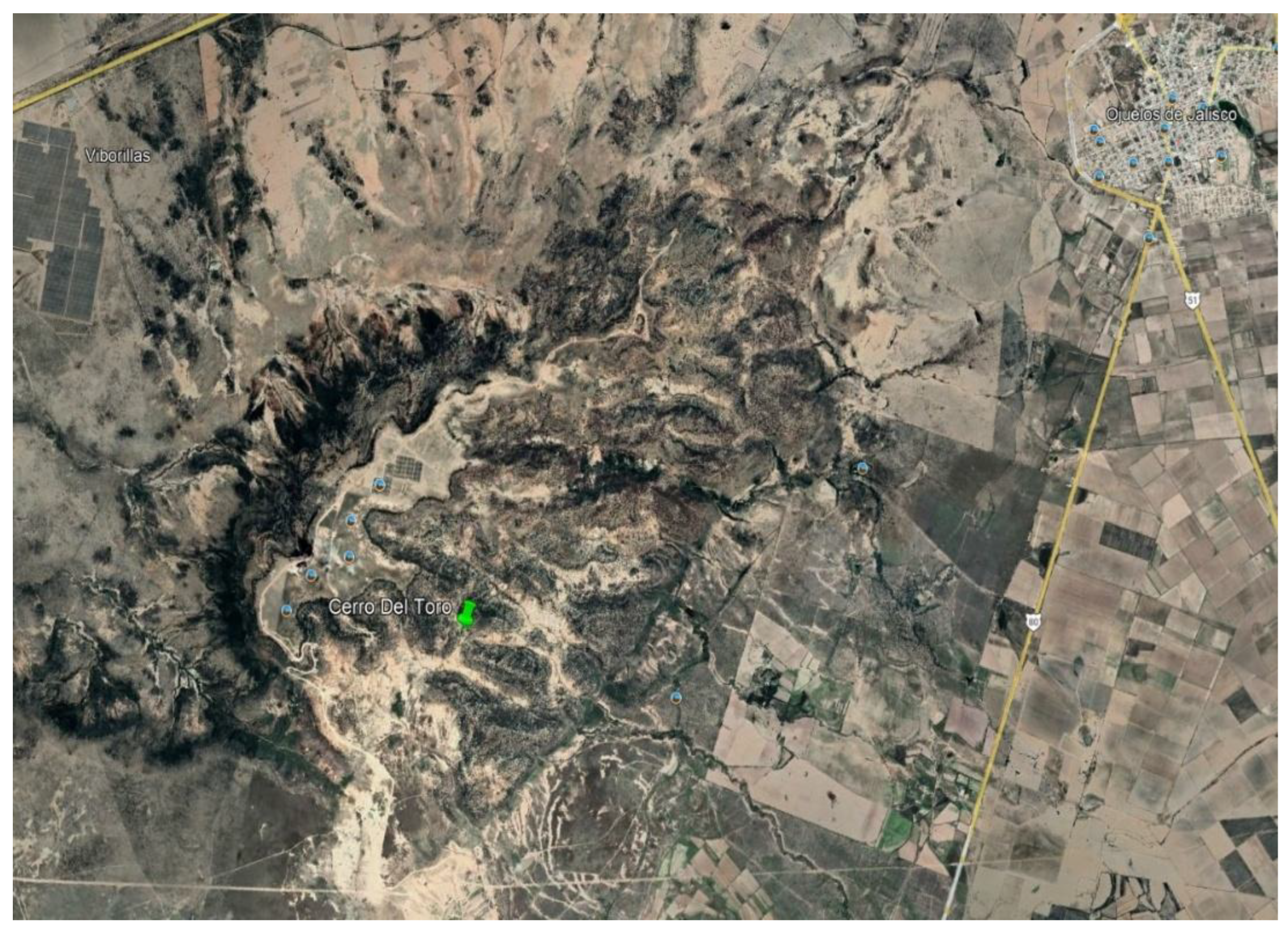
Figure 1.
Cerro del Toro with its surrounding area. In this place three impressive artifacts were discovered by the European researchers Alberto Donini and Tomas Hrico.
Figure 1.
Cerro del Toro with its surrounding area. In this place three impressive artifacts were discovered by the European researchers Alberto Donini and Tomas Hrico.
2. Extraordinary Finds During Excavations
To operate completely legally, the two researchers obtain access and excavation permission from the land owner before starting their expedition in March 02, 2025.
Deep in the field, equipped with pickaxes and a dagger, Donini and Hrico begin to excavate and spend the next four hours documenting meticulously their work with photographs and videos. During this time they realize that there are no disturbances caused by previous digs – soil, vegetation and root system are completely untouched. The first artifact made of stone appears after around three hours of digging during which several bigger stone rocks need to be removed and thick roots to be destroyed.
The next pages show photographs of the excavation respectively of the objects discovered along with accompanying descriptions.
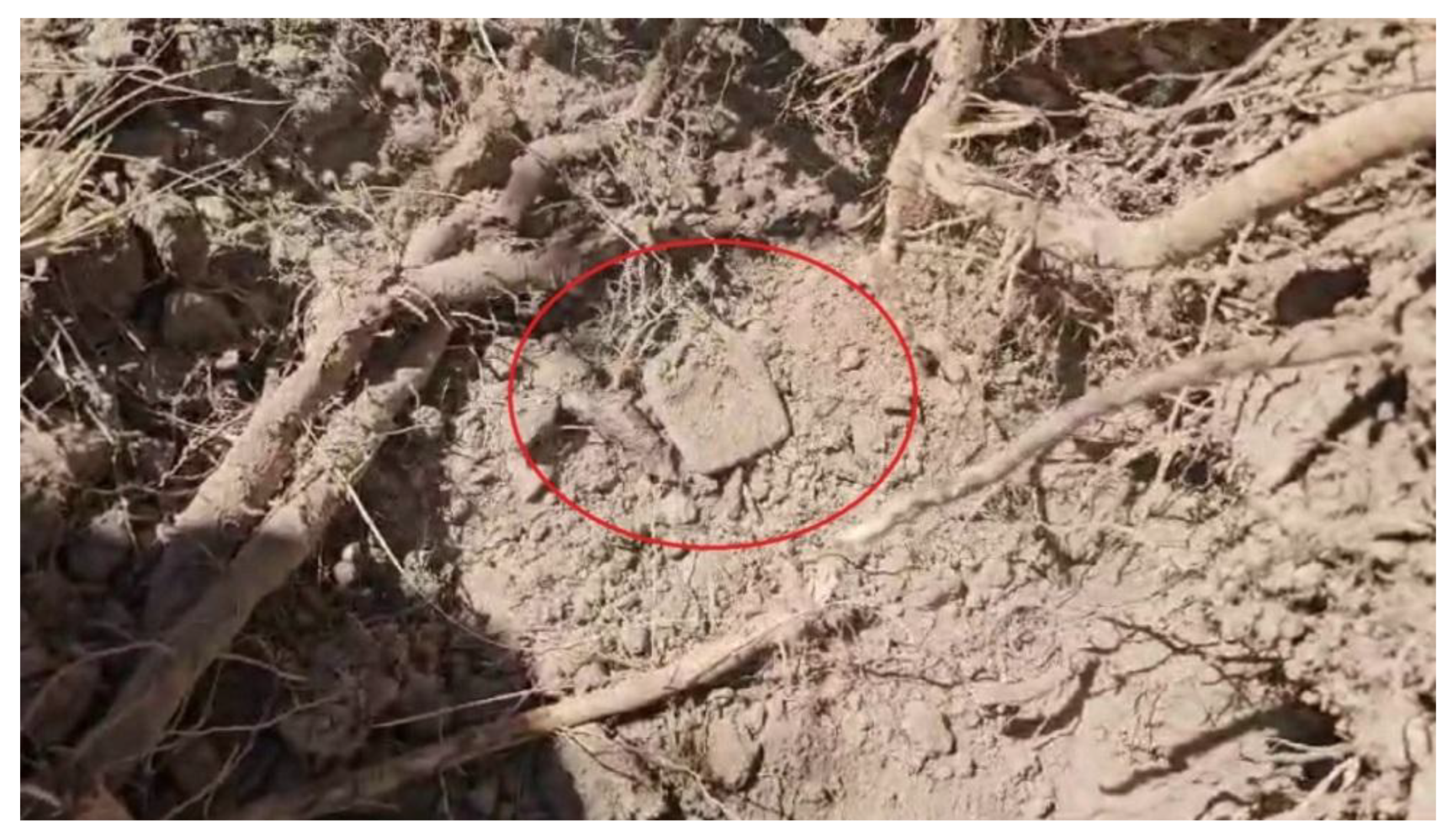
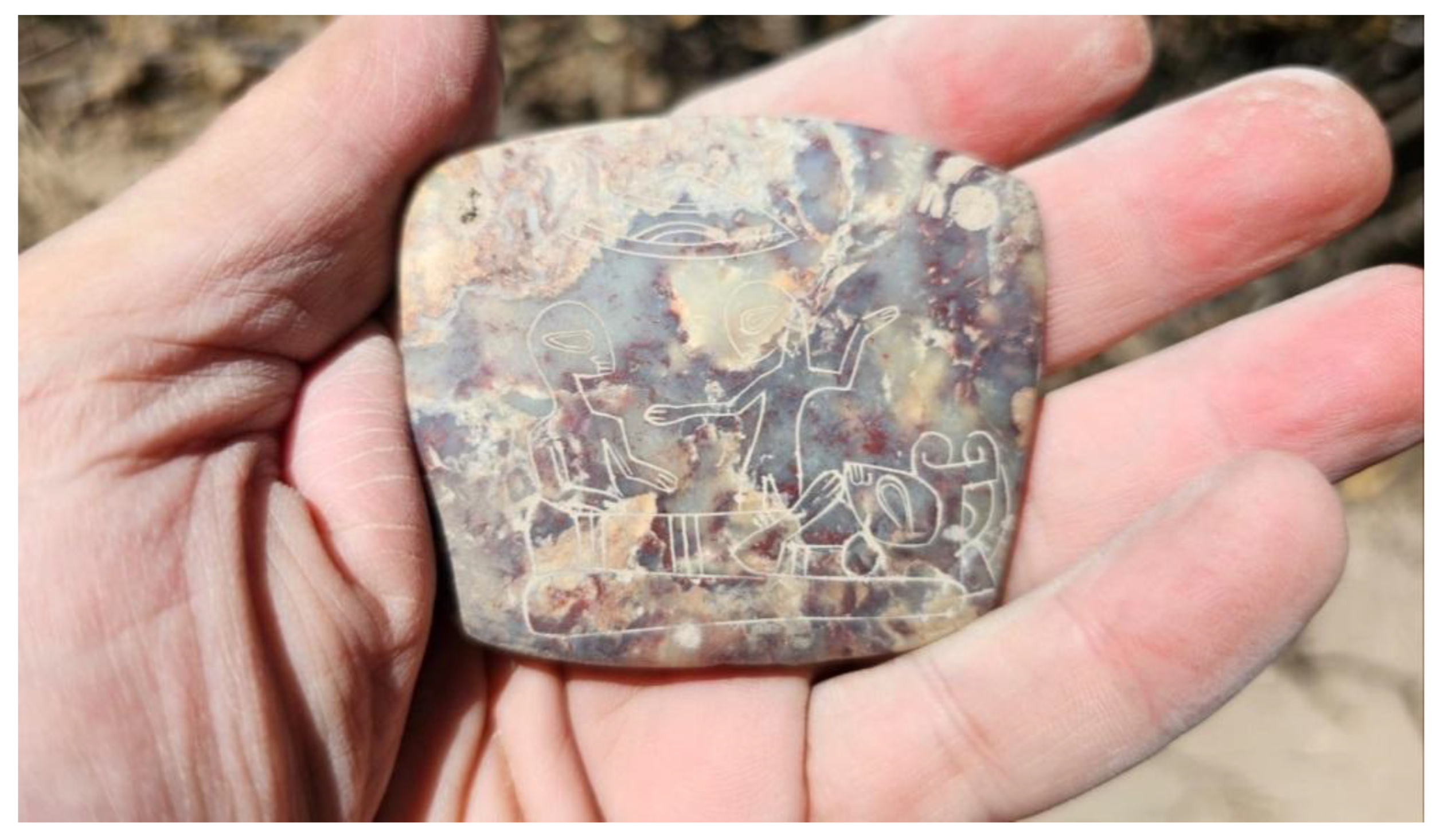
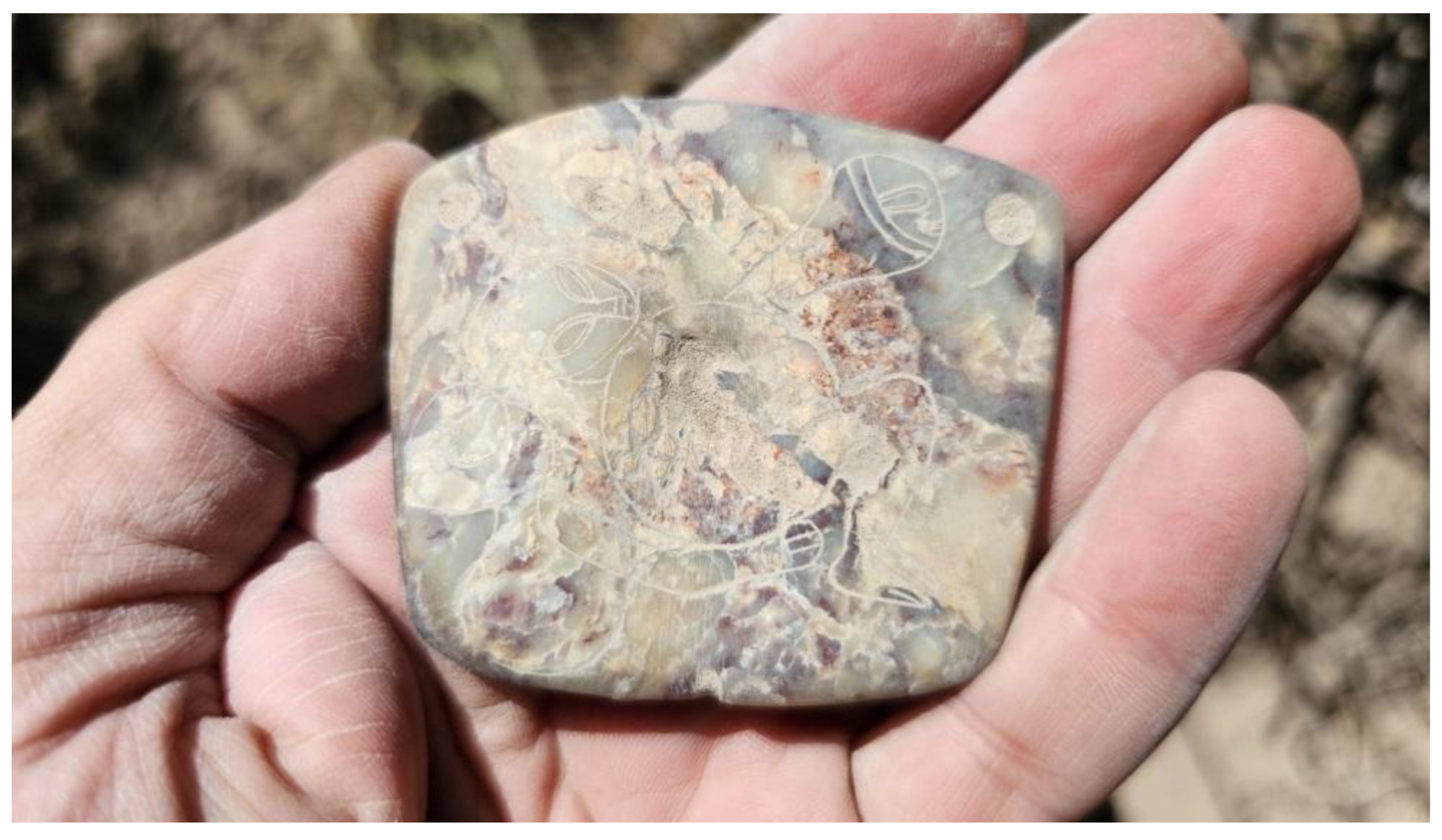
Figure 2.
First stone object just identified.
Figure 3.
Front side of the first stone object found by Alberto Donini; here shortly after removal from the earth’s layer and freed from soil. It depicts entities with long necks, big eyes and three fingers. Above them: a flying vehicle.
Figure 3.
Front side of the first stone object found by Alberto Donini; here shortly after removal from the earth’s layer and freed from soil. It depicts entities with long necks, big eyes and three fingers. Above them: a flying vehicle.
Figure 4.
Reverse side of the first stone object shows a being in a lying position holding a giant sphere from which another creature seems to emerge.
Figure 4.
Reverse side of the first stone object shows a being in a lying position holding a giant sphere from which another creature seems to emerge.
Around 20 minutes later, the end of a second object shows up, tangled in the roots of the plants and covered in soil: it is an object in the shape of a foot with four toes.
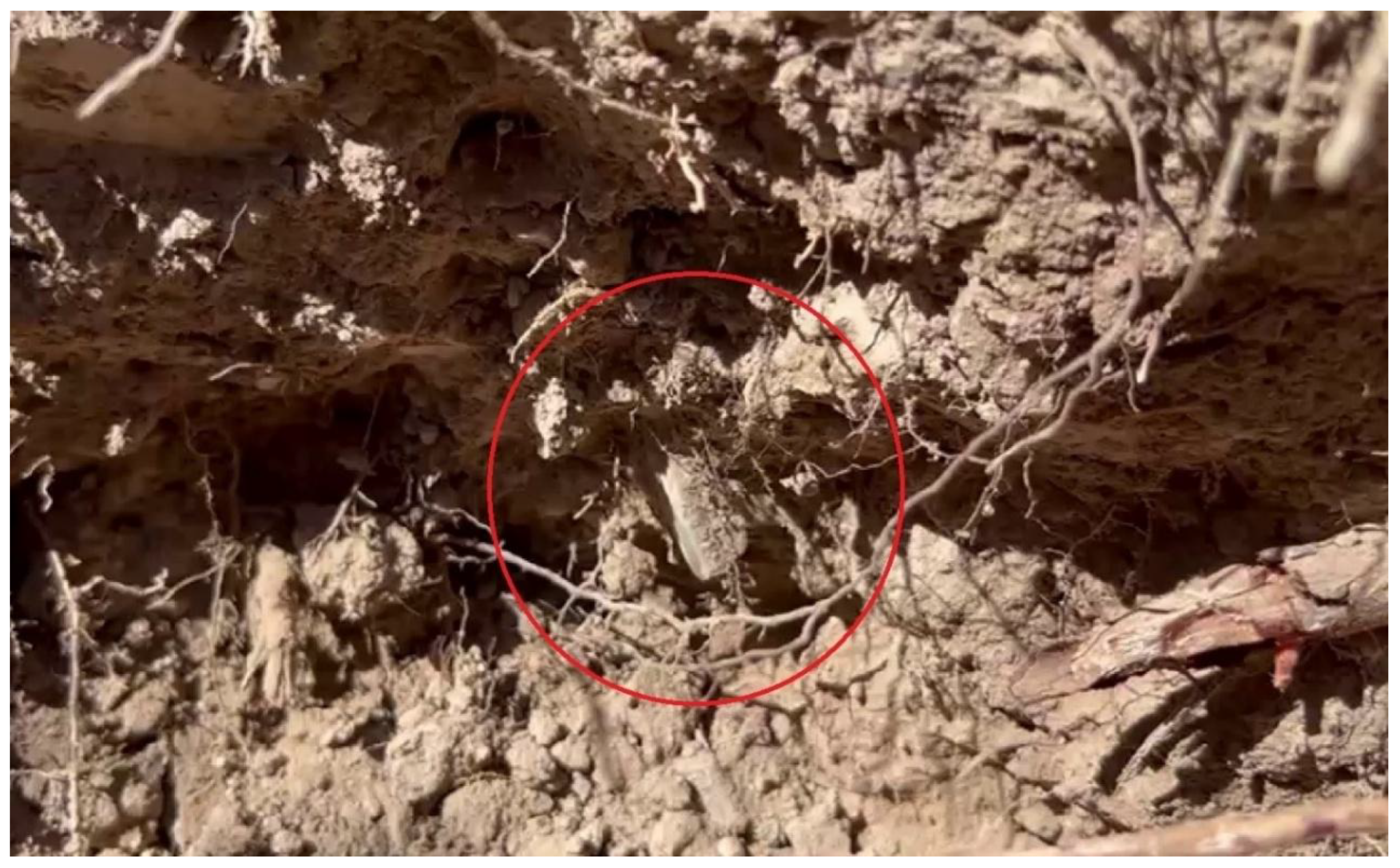
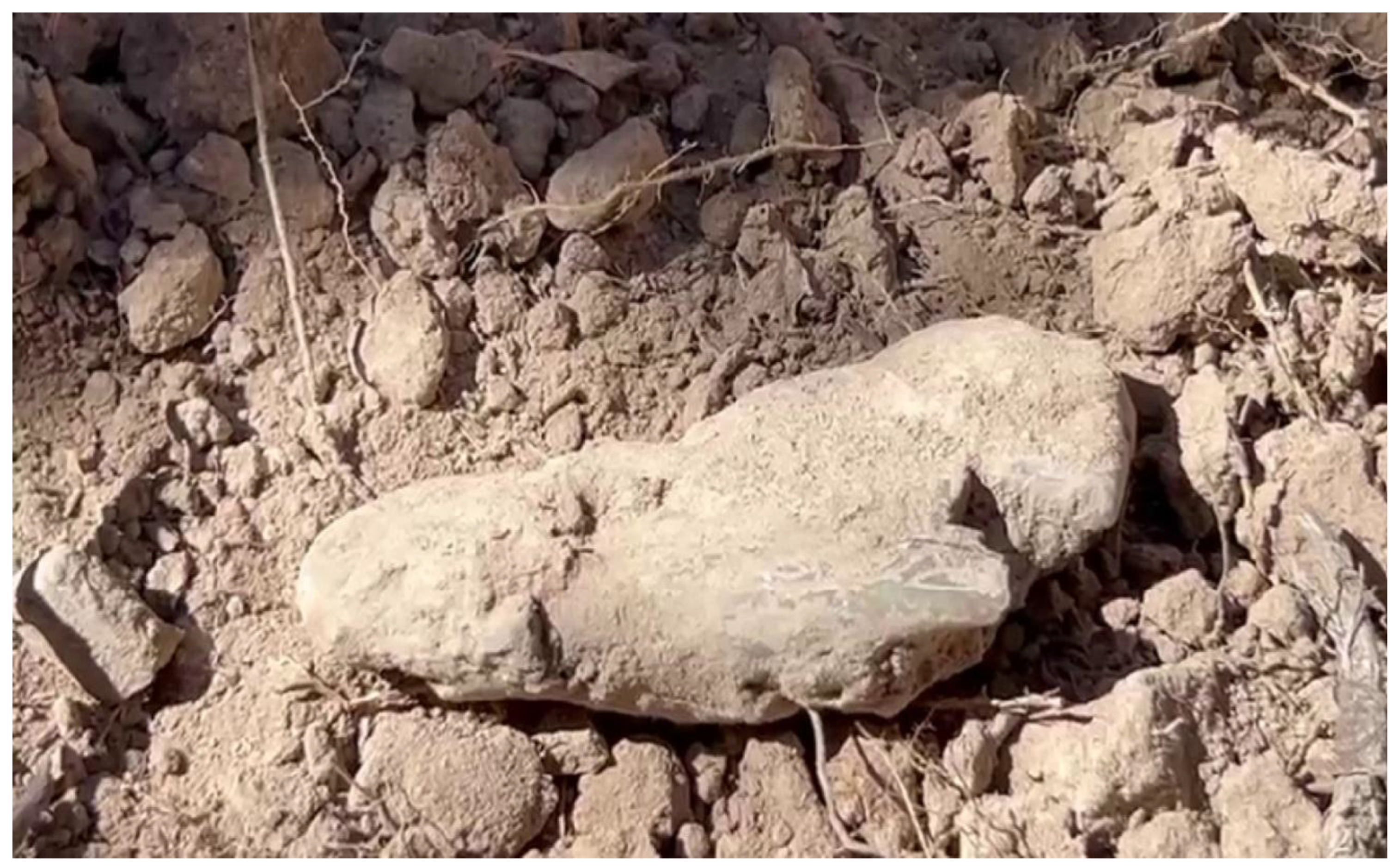
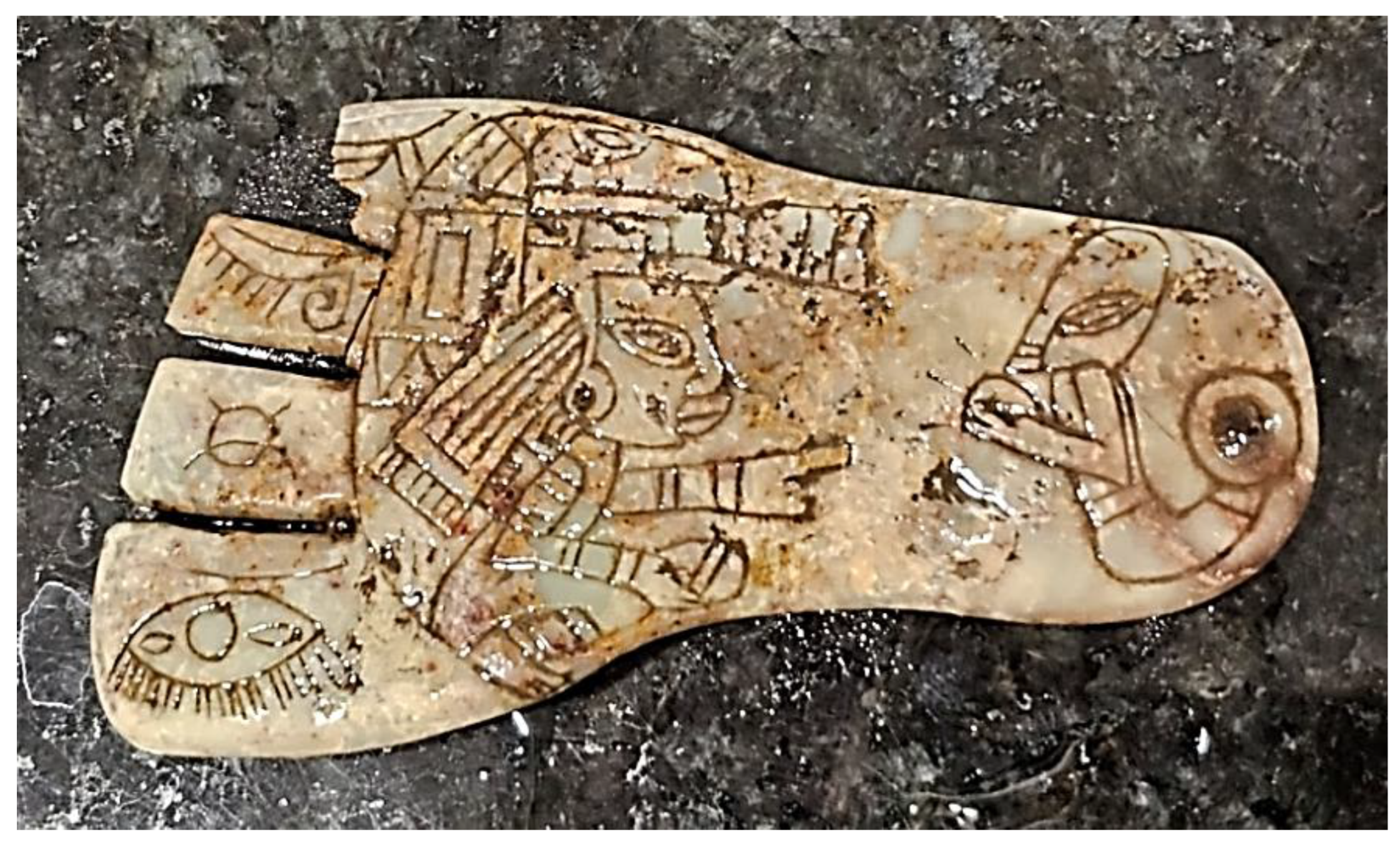
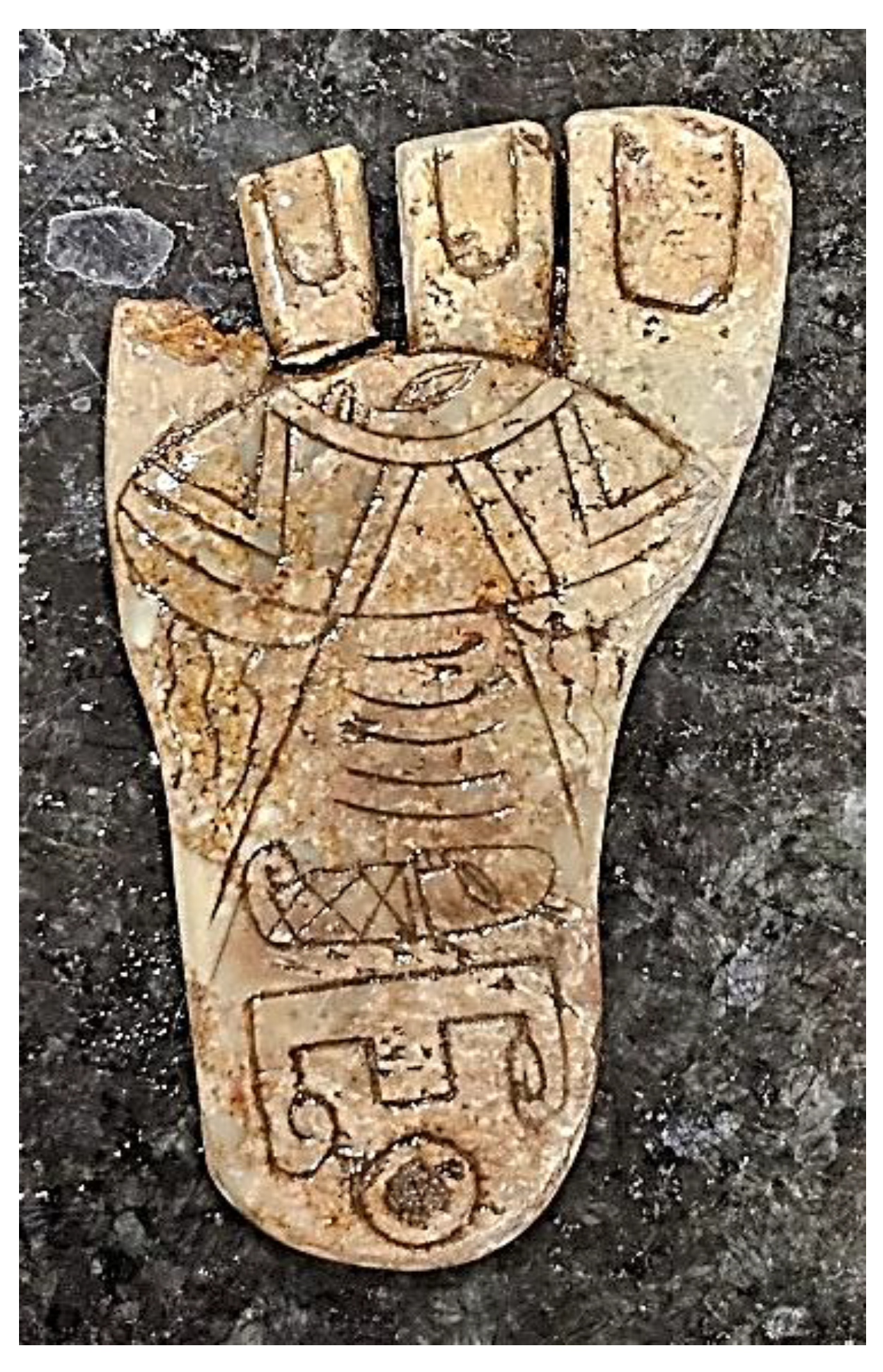
Figure 5.
The second object (still embedded in the soil and among the roots) is also made of stone.
Figure 6.
Another photo of the second object (after extraction but still covered in sticky clay soil).
Figure 6.
Another photo of the second object (after extraction but still covered in sticky clay soil).
Figure 7.
The Second object after being cleaned carefully. It shows a foot with four toes. The picture left depicts the front side of the stone artifact which shows a carving of a flying vehicle and a dead creature with almond shaped eyes. On the right: a communication between an Elder / shaman and an entity holding a shining object.
Figure 7.
The Second object after being cleaned carefully. It shows a foot with four toes. The picture left depicts the front side of the stone artifact which shows a carving of a flying vehicle and a dead creature with almond shaped eyes. On the right: a communication between an Elder / shaman and an entity holding a shining object.
Figure 8.
The Second object after being cleaned carefully. It shows a foot with four toes. The picture left depicts the front side of the stone artifact which shows a carving of a flying vehicle and a dead creature with almond shaped eyes. On the right: a communication between an Elder / shaman and an entity holding a shining object.
Figure 8.
The Second object after being cleaned carefully. It shows a foot with four toes. The picture left depicts the front side of the stone artifact which shows a carving of a flying vehicle and a dead creature with almond shaped eyes. On the right: a communication between an Elder / shaman and an entity holding a shining object.

Approximately 40 minutes later, the third object (a small figurine) is discovered: the one and only find made of burned clay (probably of terracotta) and therefore datable by using the thermoluminescence method.
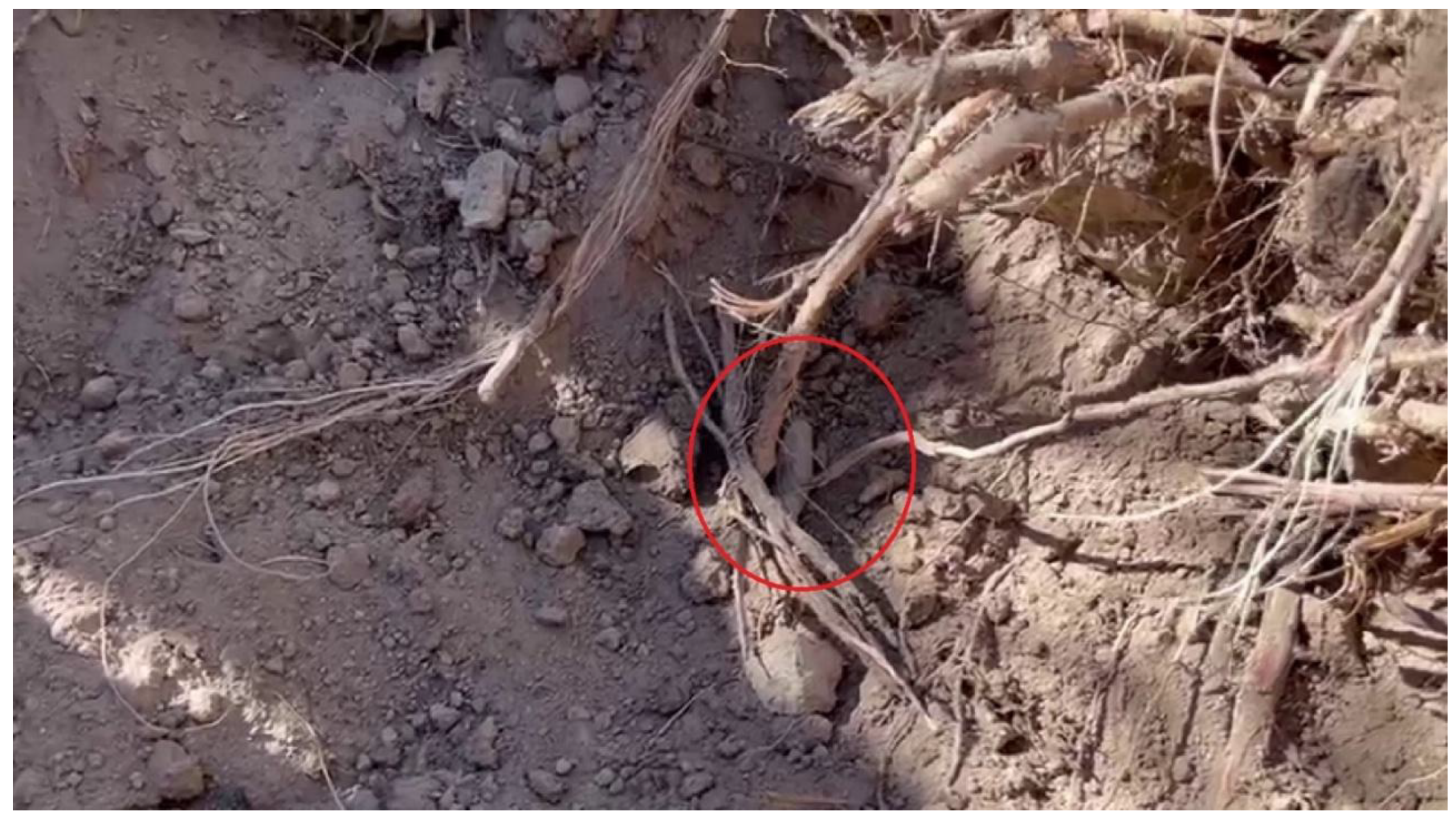
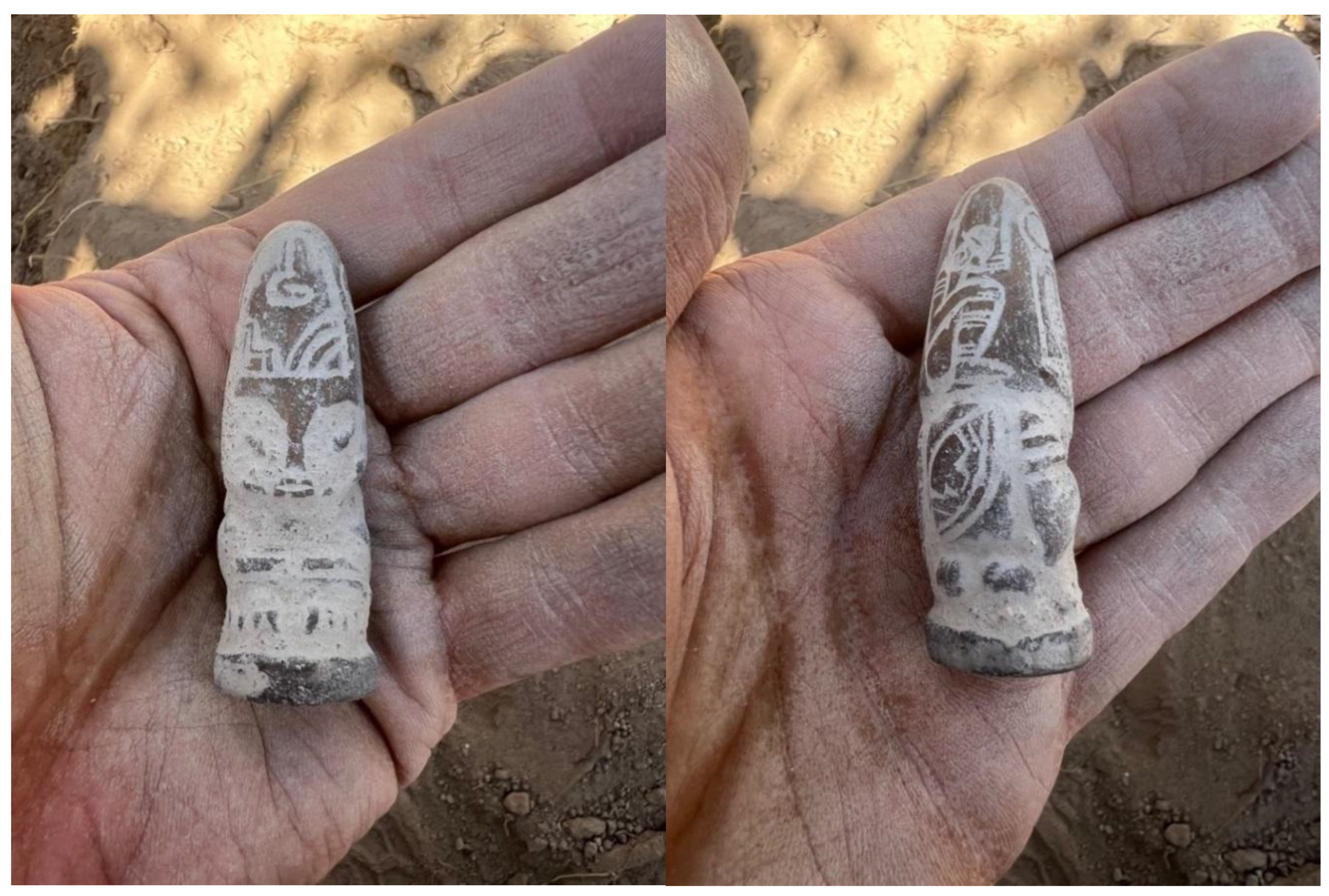
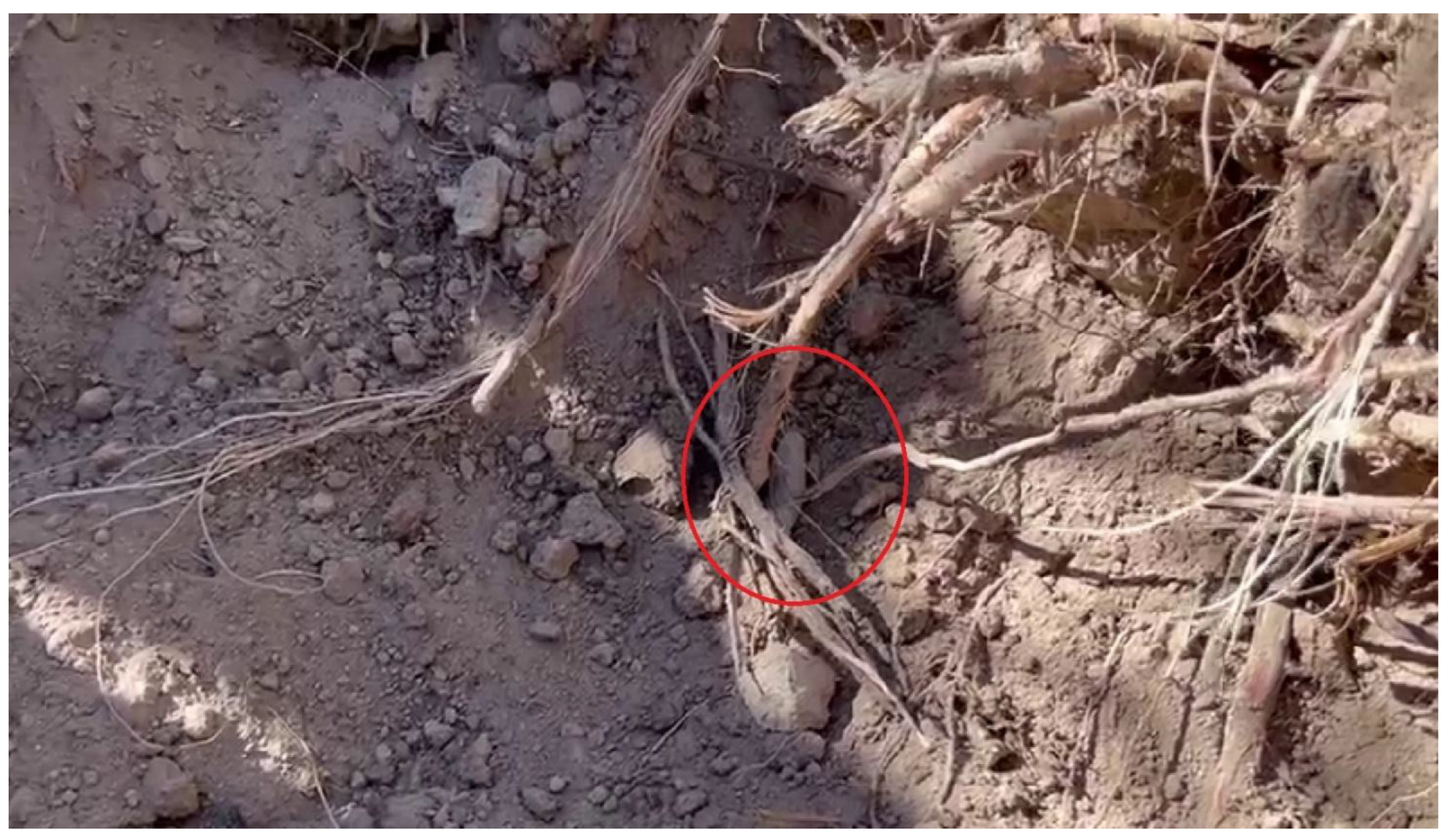
Figure 9.
The third object excavated by Tomas Hrico; here still between the roots.
Figure 10.
The third object, shortly after extraction and still covered by soil.
Figure 11.
The third object, shortly after extraction and still covered by soil.
3. Laboratory Analyzes
In fact, if the stones do not contain organic glue, they cannot be dated by C14, and the first two objects are made from a single piece, without glued parts. The terracotta, however, can be dated by thermoluminescence (short: TL)
Once back in Switzerland, Tomas Hrico visits the “Laboratory Kotalla” [1]* in Germany to have this third find to be analysed by TL. Two days later he receives the positive results showing the six-centimeters-tall figurine to be around 2130 years old! (* References on page 9)
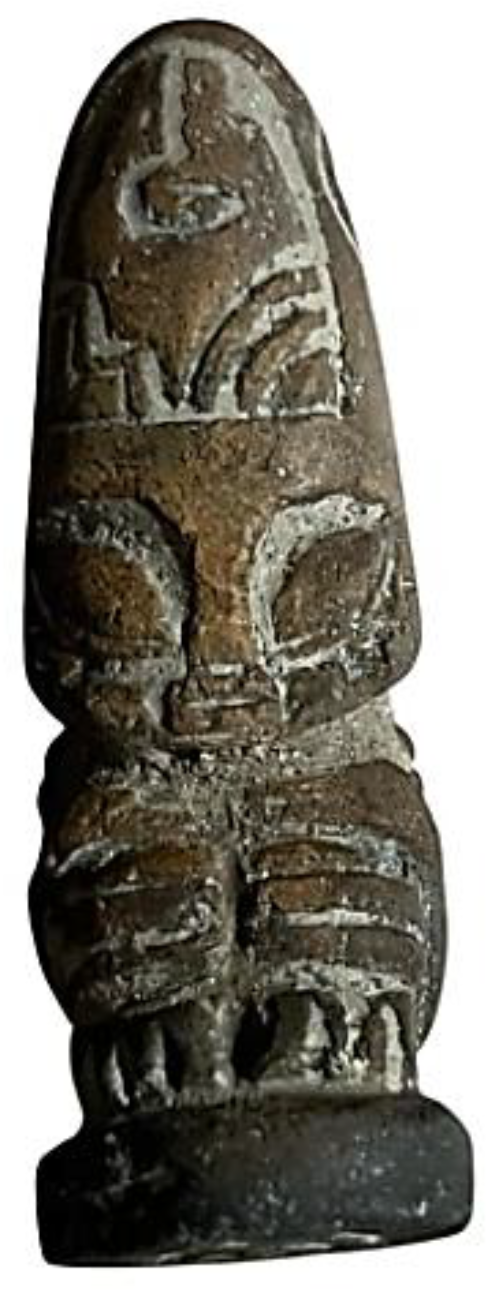
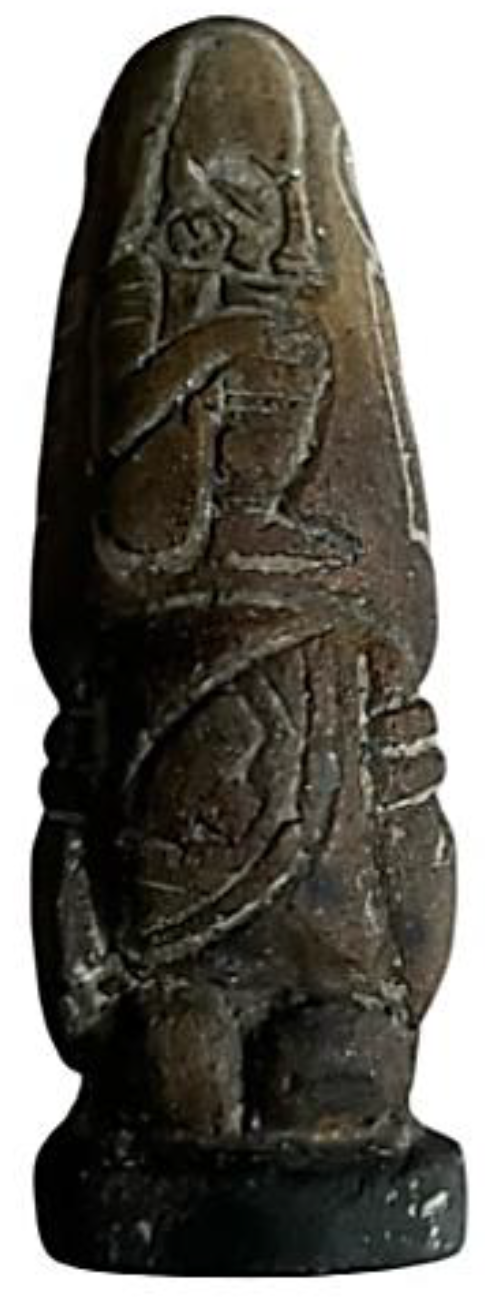
Figure 12.
The front and back side of the third find: a little figurine with big almond shaped eyes and an elongated head. It seems that this figurine depicts a deity and had a ritualistic purpose.
Figure 12.
The front and back side of the third find: a little figurine with big almond shaped eyes and an elongated head. It seems that this figurine depicts a deity and had a ritualistic purpose.
Figure 13.
The front and back side of the third find: a little figurine with big almond shaped eyes and an elongated head. It seems that this figurine depicts a deity and had a ritualistic purpose.
Figure 13.
The front and back side of the third find: a little figurine with big almond shaped eyes and an elongated head. It seems that this figurine depicts a deity and had a ritualistic purpose.

Note: In order to prevent any criticism and to additionally confirm the ancient age of the little figurine respectively the high quality of the working method used by “Laboratory Kotalla”, a second analysis was conducted by
“Oxford Authentication Ltd” – a professional facility in England. [2]
It should be mentioned that it is possible to counterfeit burned clay objects so that they appear antique upon analysis. For example, by obtaining fragments of ancient ceramic, grinding them up and gluing them together to create a new object. This is a laborious process and easily detectable by the laboratory by observing the microscopic structure of the object. Furthermore, it is possible to age a modern object through artificial irradiation, for example, by continuously exposing it to X-rays for many hours or days. However, this is an expensive procedure, so the manufacturing cost of the artificially aged object would exceed its retail price. Alternatively, the object would need to be taken to a hospital and subjected to X-rays for hours or days. Even in this case, however, artificial aging is detectable by the analysis laboratory, which explicitly ruled out this type of forgery for all the El Toro objects analysed. The laboratory found no trace of manipulation for the purpose of artificially aging them.
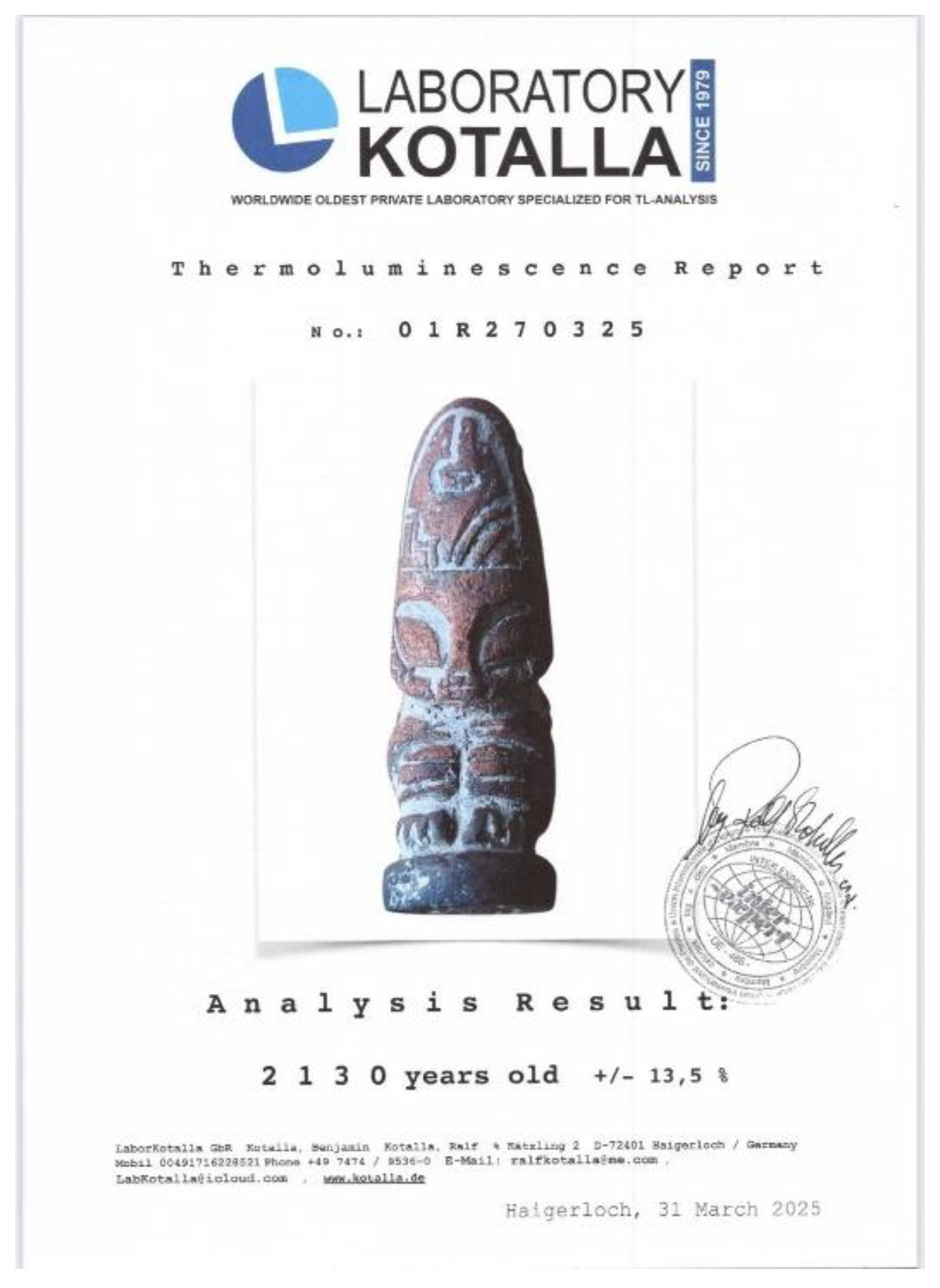
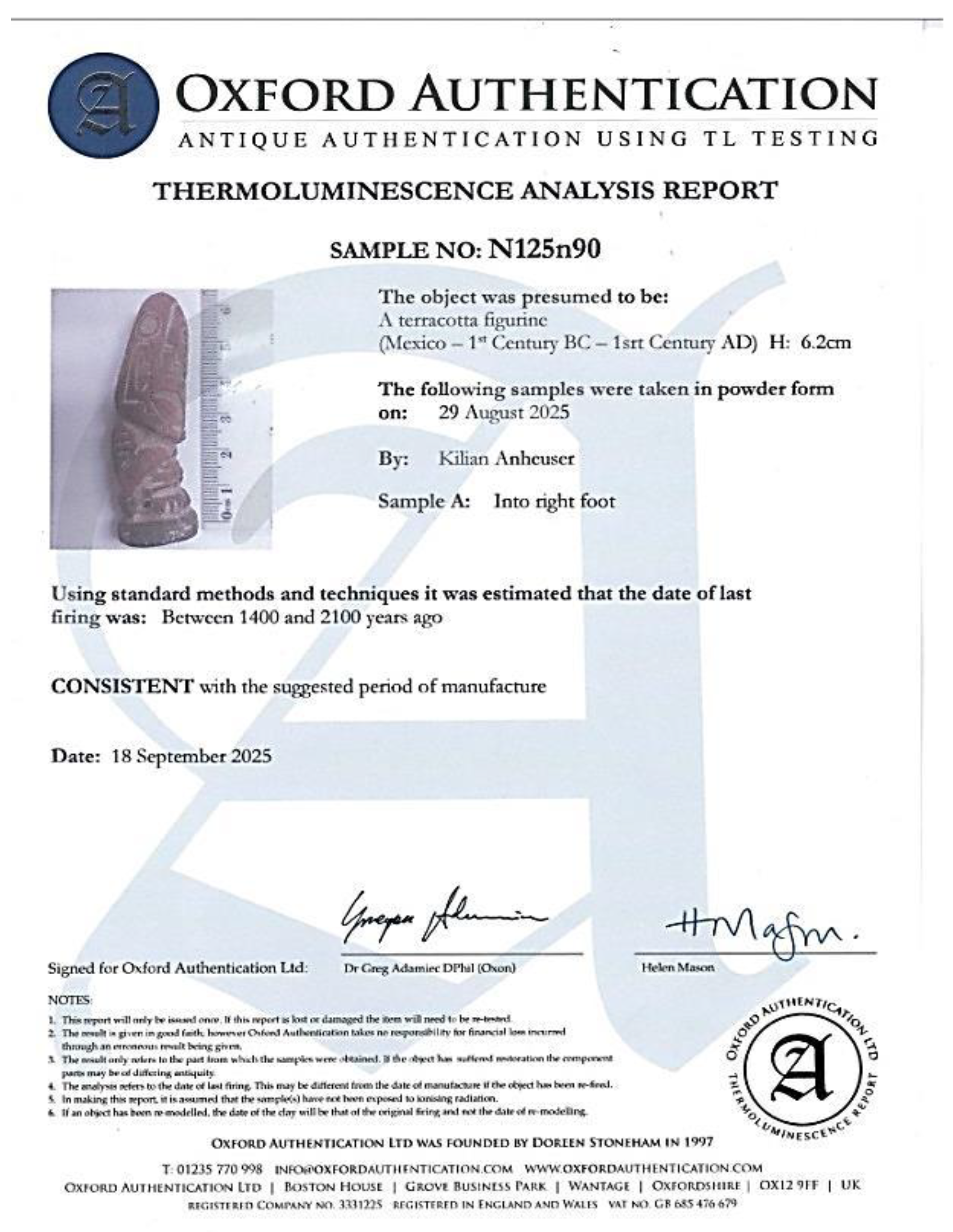
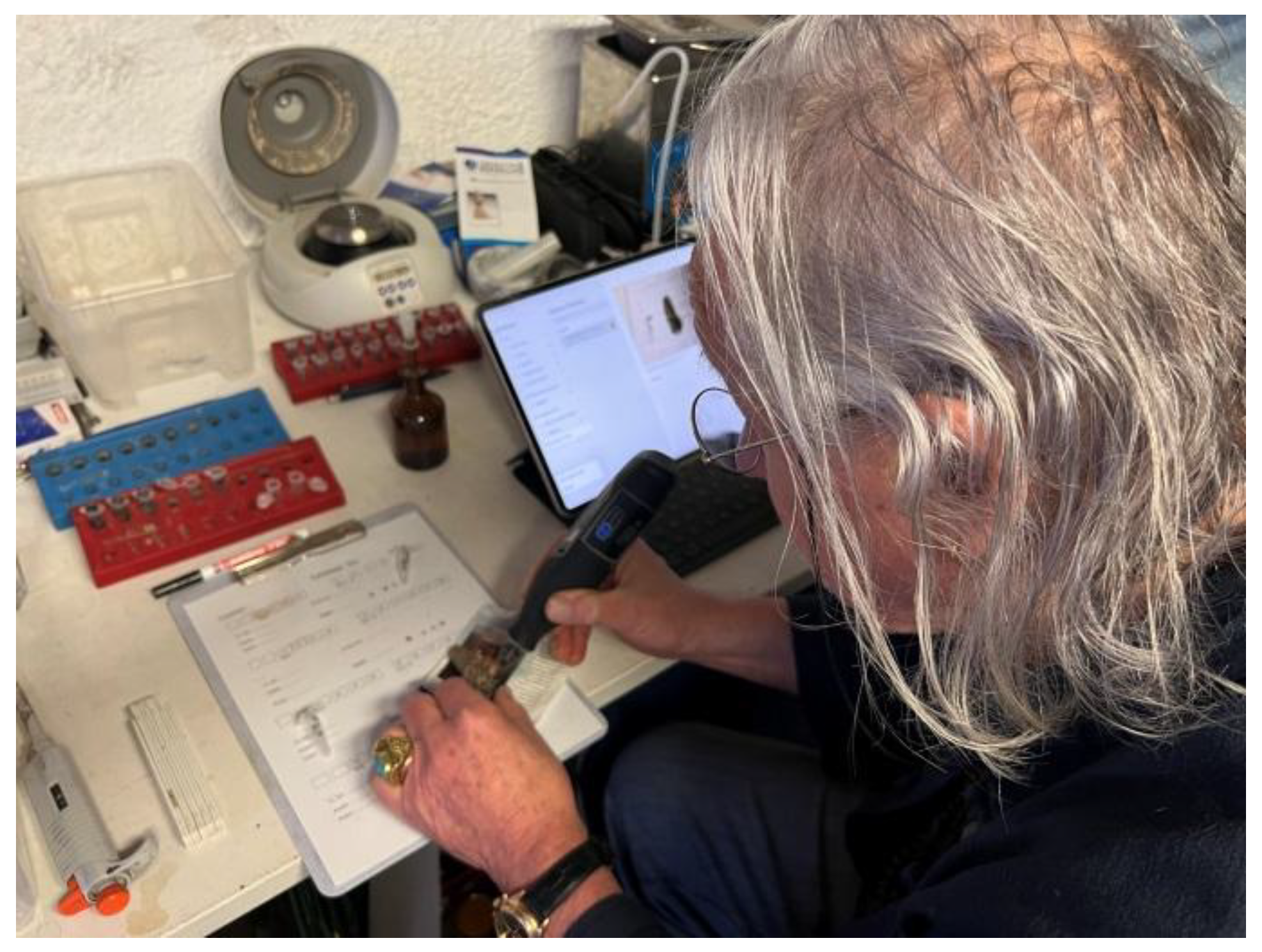
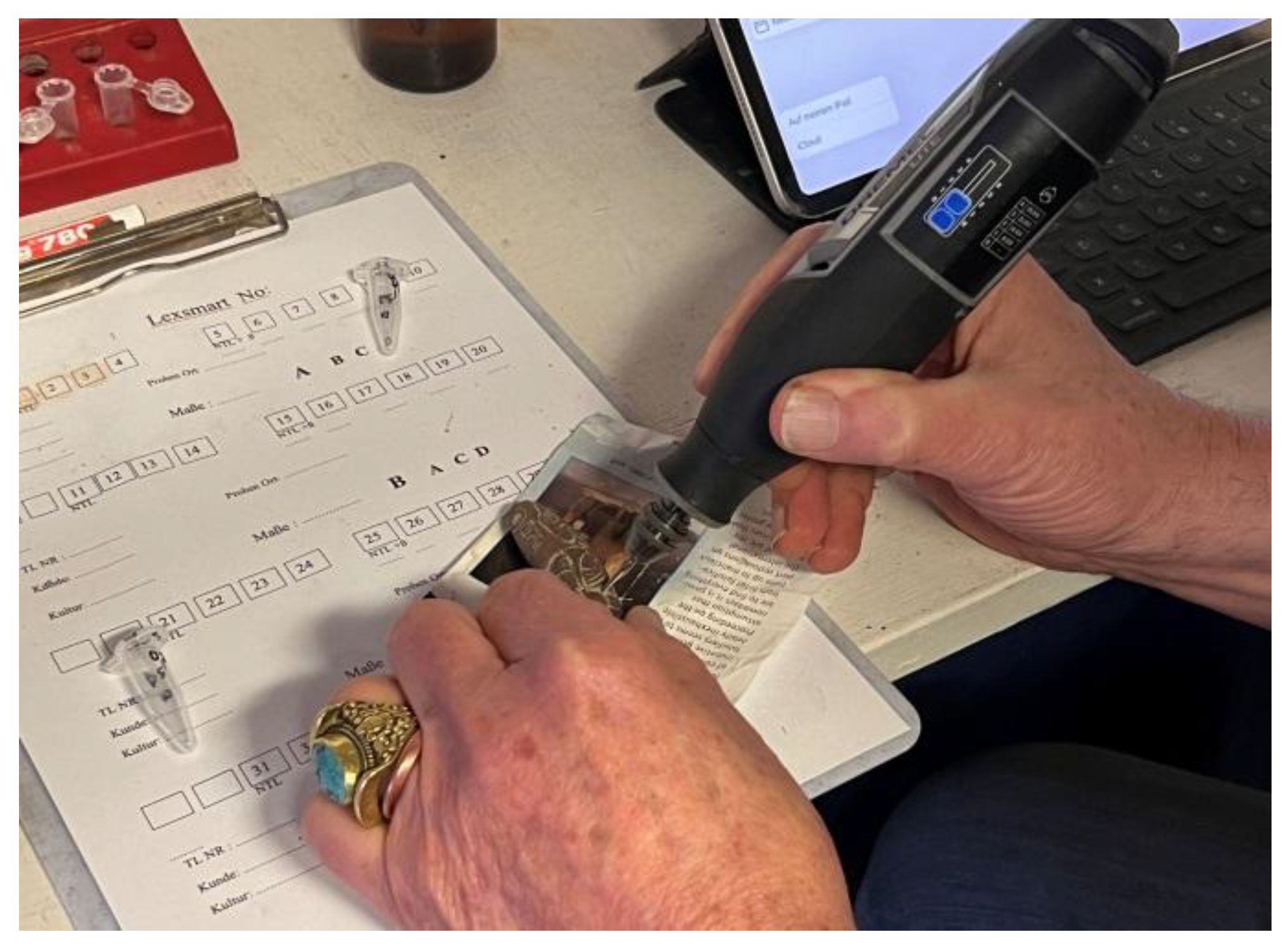
Figure 14.
The two Analysis reports clearly prove the ancient age of the little figurine made of burned clay (probably terracotta) which was found at Cerro del Toro, in the Mexican state of Jalisco, on March 02, 2025.
Figure 14.
The two Analysis reports clearly prove the ancient age of the little figurine made of burned clay (probably terracotta) which was found at Cerro del Toro, in the Mexican state of Jalisco, on March 02, 2025.
Figure 15.
The two Analysis reports clearly prove the ancient age of the little figurine made of burned clay (probably terracotta) which was found at Cerro del Toro, in the Mexican state of Jalisco, on March 02, 2025.
Figure 15.
The two Analysis reports clearly prove the ancient age of the little figurine made of burned clay (probably terracotta) which was found at Cerro del Toro, in the Mexican state of Jalisco, on March 02, 2025.
Figure 16.
Long-standing expert in dating, Ralf Kotalla, uses a special drill to take a sample from the small figurine (third find). Photos were taken by Tomas Hrico during his visit in the “Laboratory Kotalla” in March 2025.
Figure 16.
Long-standing expert in dating, Ralf Kotalla, uses a special drill to take a sample from the small figurine (third find). Photos were taken by Tomas Hrico during his visit in the “Laboratory Kotalla” in March 2025.
Figure 17.
Long-standing expert in dating, Ralf Kotalla, uses a special drill to take a sample from the small figurine (third find). Photos were taken by Tomas Hrico during his visit in the “Laboratory Kotalla” in March 2025.
Figure 17.
Long-standing expert in dating, Ralf Kotalla, uses a special drill to take a sample from the small figurine (third find). Photos were taken by Tomas Hrico during his visit in the “Laboratory Kotalla” in March 2025.
The technique used by “Laboratory Kotalla” to detect artificial irradiation is to analyze the radiation dose of grains of different sizes. In an artificially irradiated material, grains of different sizes produce uniform radiation doses, while in natural irradiation they vary depending on their size. Natural irradiation occurs primarily with alpha particles, which, with a penetration depth of approximately 25 micrometers, act primarily on the surface of the grains, so smaller ones receive a higher dose, while larger ones are only irradiated superficially. Beta particles penetrate a few millimeters, and gamma rays reach approximately 30 centimeters. By measuring the values of the grains separated by size, it is possible to determine whether the radiation is natural, resulting in different values depending on their size, or artificial, resulting in uniform values. This analysis method performed by “Laboratory Kotalla" is absolutely reliable and always reveals if falsification by artificial aging was carried out on a fired clay object or not. Furthermore, the objects examined were not reassembled from old ceramic parts of conventional archaeological objects, nor were those clay artifacts subsequently remodeled with tools. A signed confirmation from “Laboratory Kotalla” regarding this matter can be seen on page 10. (Addendum / Additional Notation)

Figure 18.
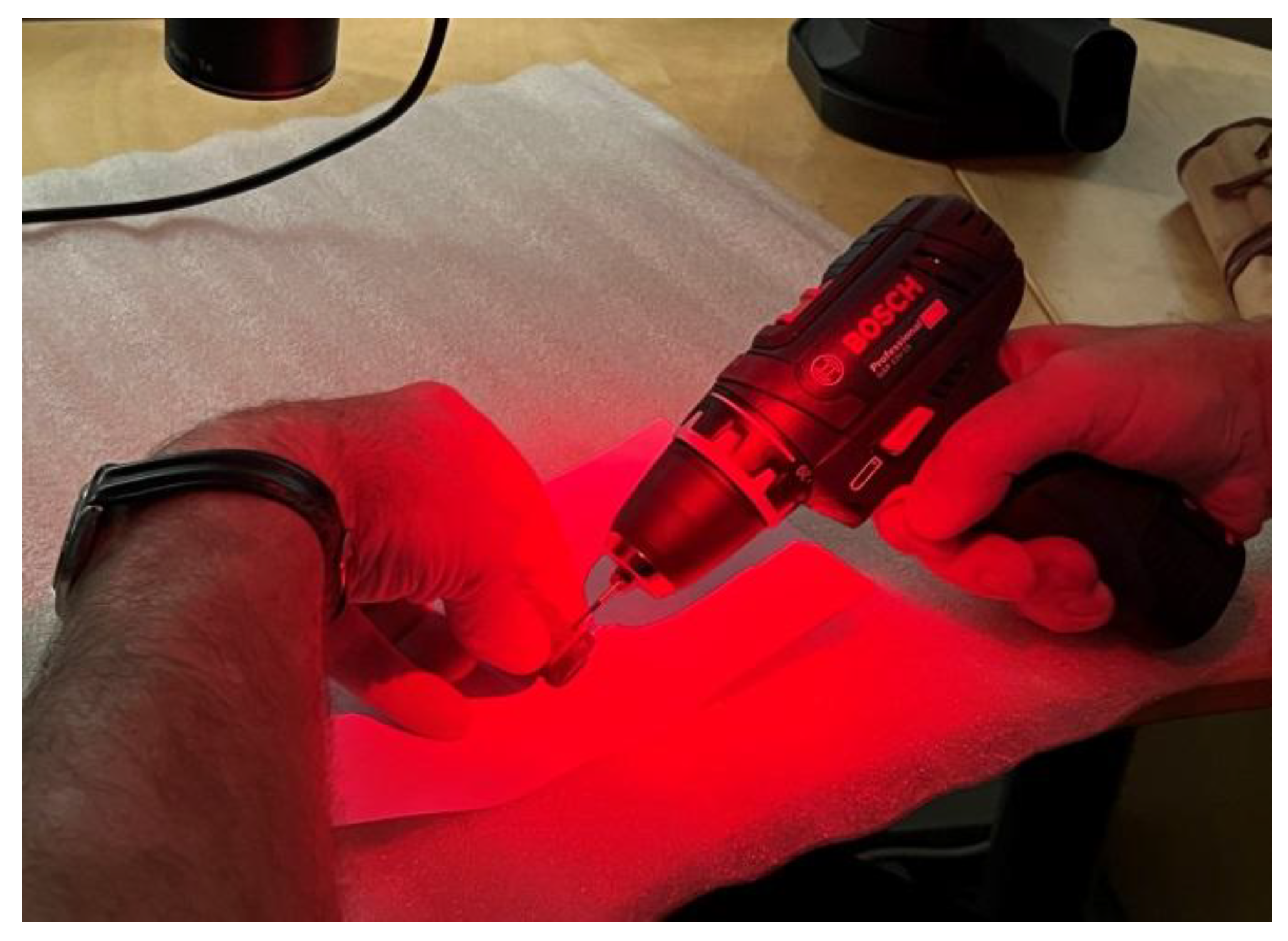
Dr. Kilian Anheuser from the Swiss laboratory „Geneva Fine Art Analysis“ while checking the little figurine under a microscope – shortly before taking a sample for a TL analysis. (Figure 19) Photos were taken by Tomas Hrico during his visit in the laboratory in August 2025.
Figure 18.
Dr. Kilian Anheuser from the Swiss laboratory „Geneva Fine Art Analysis“ while checking the little figurine under a microscope – shortly before taking a sample for a TL analysis. (Figure 19) Photos were taken by Tomas Hrico during his visit in the laboratory in August 2025.
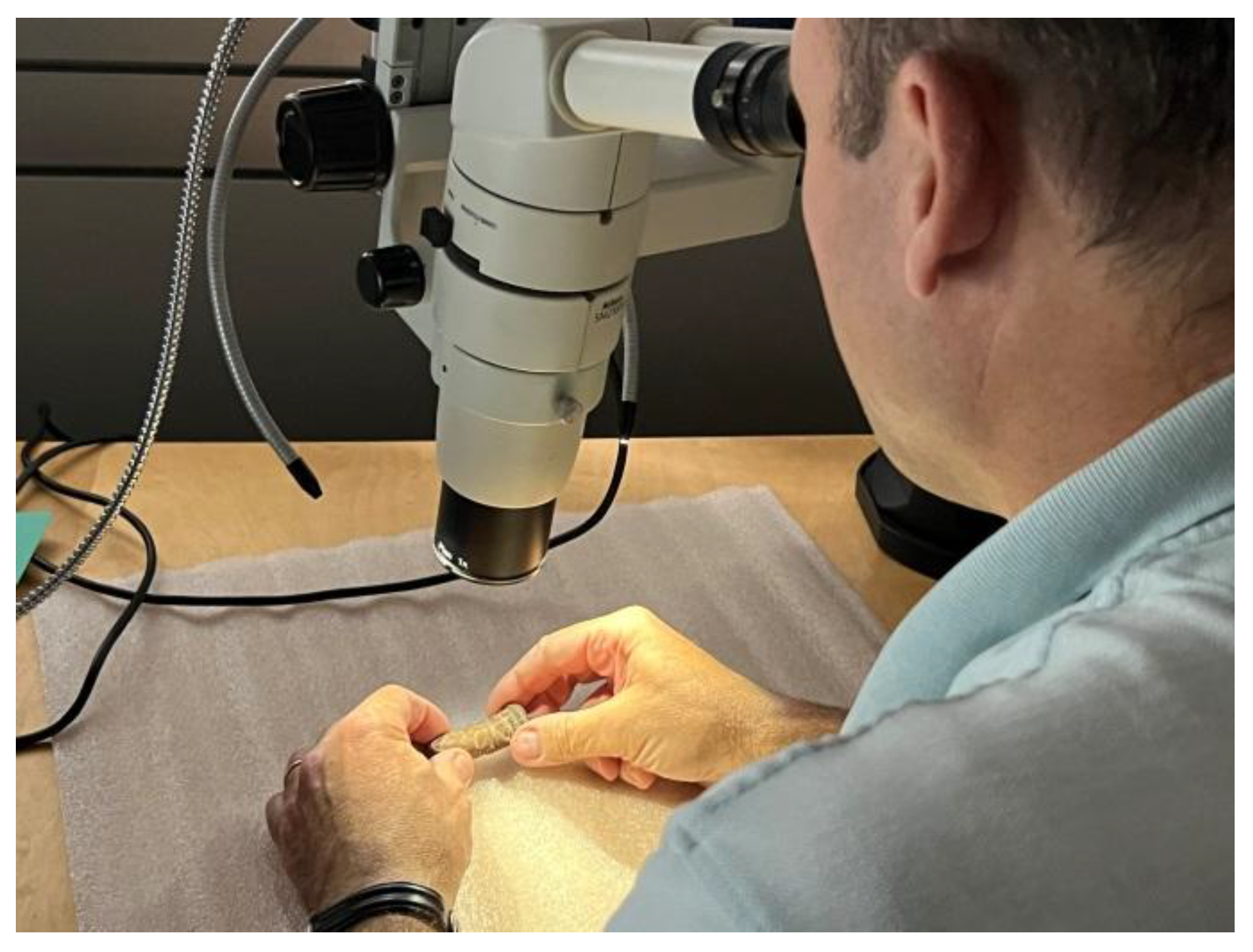
Figure 19.
Dr. Kilian Anheuser from the Swiss laboratory „Geneva Fine Art Analysis“ while checking the little figurine under a microscope – shortly before taking a sample for a TL analysis. (Figure 19) Photos were taken by Tomas Hrico during his visit in the laboratory in August 2025.
Figure 19.
Dr. Kilian Anheuser from the Swiss laboratory „Geneva Fine Art Analysis“ while checking the little figurine under a microscope – shortly before taking a sample for a TL analysis. (Figure 19) Photos were taken by Tomas Hrico during his visit in the laboratory in August 2025.
4. Final Words
With these extraordinary finds several questions arise:
- By whom and for what purpose were these objects buried? Were these offerings to the “Gods” respectively ritual objects?
- Are these objects indications to a lost ancient civilization which once existed in the area of Cerro del Toro in the Mexican state of Jalisco?
- Are the carved representations on the stone objects depictions of real events with once living creatures or just to interpret metaphorically?
- Is the little figurine made of burned clay a representation of an unknown creature which once truly lived? Or is it just a product of pure imagination?
To answer these and other questions the researchers and authors of this report, Alberto Donini and Tomas Hrico, aim to progress in their research work in Mexico and invite archaeologists worldwide to collaborate with them. The historical significance of the region at Cerro del Toro (Jalisco) is demonstrated not only by the unique findings presented in this report but also by multiple other similar artifact discoveries which were made there by other independent researchers worldwide.
Although the authenticity of the two excavated stone artifacts has not yet been confirmed by scientific analyses, it should be obvious from the circumstances of their discovery that they are genuine. After all, why would someone bury an authentic ancient object together with two modern forgeries?
Funding
The entire project was funded exclusively by the authors of this report, A. Donini and T. Hrico.
Acknowledgments
A great appreciation for supporting the authors of this report goes to:
- Juan Cardenas from Ojuelos (guide during the expedition to Cerro del Toro; Jalisco)
- Ralf Kotalla (Laboratory Kotalla, 72401 Haigerloch, Germany)
- Dr. Kilian Anheuser (Geneva Fine Art Analysis, 1227 Les Acacias, Geneva, Switzerland)
- Oxford Authentication Ltd (Boston House, Grove Business Park, Wantage, Oxon, OX12 9FF, England)
References
- Laboratory Kotalla (*) An internationally renowned private Analysis laboratory, situated in Haigerloch; Germany. Several museums, institutions, universities and auction houses inter alia, have turned to this laboratory to verify the authenticity of their objects. Details see under: https://kotalla.de/en/references.
- Oxford Authentication Ltd (www.oxfordauthentication.com, www.oxfordauthentication.com/about-us/clients-and-testimonials).
Disclaimer/Publisher’s Note: The statements, opinions and data contained in all publications are solely those of the individual author(s) and contributor(s) and not of MDPI and/or the editor(s). MDPI and/or the editor(s) disclaim responsibility for any injury to people or property resulting from any ideas, methods, instructions or products referred to in the content. |
© 2025 by the authors. Licensee MDPI, Basel, Switzerland. This article is an open access article distributed under the terms and conditions of the Creative Commons Attribution (CC BY) license (http://creativecommons.org/licenses/by/4.0/).
Copyright: This open access article is published under a Creative Commons CC BY 4.0 license, which permit the free download, distribution, and reuse, provided that the author and preprint are cited in any reuse.


