

Submitted:
01 December 2025
Posted:
03 December 2025
You are already at the latest version
Abstract
Peer action coordination in middle childhood is thought to benefit from socio-cognitive abilities such as emotion understanding and inhibitory control, but empirical evidence for their role is limited. This study replicates and extends a previous study by examining whether emotion understanding and inhibitory control correlate with children’s peer action coordination in a cooperative sensorimotor problem-solving task. To test this hypothesis, 6- to 10-year-old children (N = 108, Mage = 8 years, 8 months, 46.3% girls, 53.7% boys) completed the Test of Emotion Comprehension, and the Attention Network Task. To assess children’s performance in coordinating their actions with a peer, they were asked to complete the Labyrinth Ball Game—a sensorimotor task that they first performed individually and then together with a peer. Contrary to expectations, there was no direct association between emotion understanding or inhibitory control and children’s peer action coordination after controlling for age, gender, and individual sensorimotor skills. However, a significant interaction between age and gender revealed that older boys showed greater cooperative action coordination performance than younger boys, whereas girls’ performance remained stable across age. These findings challenge the view that individual socio-cognitive abilities straightforwardly support cooperative success, suggesting that peer action coordination in middle childhood may rely on more complex mechanisms, such as gender-specific communicative strategies or social play, rather than on emotion understanding and inhibitory control.
Keywords:
peer action coordination
; emotion understanding
; inhibitory control
; prosocial behavior
; cooperative behavior
1. Introduction
Coordinating actions with others is a core social skill that becomes increasingly important in middle childhood (Saby et al., 2014; Wolpert et al., 2003). Known as peer action coordination, or joint action, it requires synchronizing one’s sensorimotor behaviors with a partner to achieve a shared goal (Sebanz et al., 2006). Unlike individual motor coordination, which integrates sensory input and motor planning within a single person (Shumway-Cook & Woollacott, 2006), peer action coordination depends on dynamically adapting to a partner’s movements in real time, creating a shared action space greater than the sum of individual contributions (van der Wel et al., 2021; Warneken et al., 2006). This ability is supported by socio-cognitive mechanisms such as shared representations, joint attention, and intention attribution, which allow children to anticipate and align with a partner’s behaviors (della Gatta et al., 2017; Maisto et al., 2024; Maye et al., 2017; Milward et al., 2017; Strachan & Török, 2020; Tomasello et al., 2005; Tschacher et al., 2023; Van Der Wel, 2015; Vesper et al., 2010).
During middle childhood, from age 6 to 11, peer action coordination undergoes marked development as children refine their ability to integrate perceptual, cognitive, and social information. Around age seven, they begin to synchronize actions with partners more deliberately, showing faster and more predictable performance (Meyer et al., 2015; Paulus, 2016). By around eight years of age, they plateau individual accuracy development and adopt an online monitoring strategy—adjusting their actions dynamically to a partner’s movements rather than relying solely on pre-planned predictions (Satta et al., 2017; Wolpert et al., 2003). This developmental shift suggests that successful coordination increasingly depends on regulatory processes that support flexibility and adaptation in real-time social interaction.
One potentially relevant aspect of children’s early regulatory process in social interactions is their emotion understanding as it helps them to anticipate their partner’s actions more accurately based on their emotional expressions and responses (Vesper et al., 2017). Emotion understanding is defined as the ability to comprehend the nature, causes, and consequences of one’s own and others’ emotions (Harris, 2008) and its development follows a hierarchical order. Early in life, children recognize basic emotions and external causes; by middle childhood they understand that beliefs and memories can influence emotions; and from around eight years they grasp more reflective aspects, including hidden emotions, mixed feelings, and moral implications (Pons et al., 2004; Pons & Harris, 2000; Rocha et al., 2015). Emotion understanding has been associated with prosocial behaviors, peer acceptance, and broader social competence, suggesting it could also facilitate peer action coordination by helping children to anticipate and interpret a partner’s intentions (Caputi et al., 2012; Trentacosta & Fine, 2010; Voltmer & von Salisch, 2017). Supporting this, Viana and colleagues (2020) showed that Brazilian children with higher emotion understanding, assessed through the Test of Emotion Comprehension (TEC), coordinated more effectively with peers in a cooperative sensorimotor task, beyond on the effect of age, gender, and individual sensorimotor skills. However, this finding comes from a single cultural context and has not been replicated elsewhere, leaving open the question of whether emotion understanding consistently predicts coordination in middle childhood. Moreover, the methodological design in the study of Viana and colleagues (2020) did not include a measure of inhibitory control, limiting the understanding of how cognitive self-regulatory processes might contribute to cooperative performance in a sensorimotor task. The present study therefore aims not only to replicate this previous study in a different sociocultural context, but also to extend it by incorporating inhibitory control as a complementary mechanism that may interact with emotion understanding in peer action coordination.
In cooperative contexts, pausing one’s own actions to integrate feedback enhances the timing and fluidity of joint coordination (Brownell, 2011; Huyder et al., 2017). Empirical work shows that inhibitory control reduces variability and improves synchrony in interactive tasks, facilitating the transition from self-centered to collaborative strategies (Meyer et al., 2015). Although inhibitory control has been linked to cooperative behaviors in preschool and early school-age children (Ciairano et al., 2007; Giannotta et al., 2011; Huyder & Nilsen, 2012), its contribution to peer action coordination in middle childhood—and its potential interaction with emotional processes—is less explored.
Taken together, previous studies suggest that both inhibitory control and emotion understanding may support children’s ability to coordinate actions with peers. Preliminary findings from Viana and colleagues (2020) indicate that emotion understanding predicts children’s cooperative sensorimotor coordination, but these results come from a single cultural context and have not yet been replicated. The novelty of the present study is to extend this line of work by incorporating a direct measure of inhibitory control, allowing us to clarify how cognitive self-regulation may contribute—independently or interactively with emotion understanding—to peer action coordination in middle childhood.
1.1. The Present Study
The present study examines both emotional (emotion understanding) and cognitive (inhibitory control) components of peer action coordination, offering a more comprehensive view of the mechanisms underlying children’s cooperative performance. The study also aims to examine whether inhibitory control and emotion understanding contribute independently to children’s peer action coordination or whether inhibitory control moderates the link between emotion understanding and children’s ability to coordinate actions with peers.
Three hypotheses were formulated. First (H1), we expected higher emotion understanding to be associated with better peer action coordination, even after controlling for age, gender, and individual sensorimotor skills. Second (H2), we hypothesized that inhibitory control would be positively associated with peer action coordination, again controlling for age, gender and individual sensorimotor skills. Third (H3), we expected inhibitory control to moderate the association between emotion understanding and peer action coordination, such that children with both high emotion understanding and high inhibitory control would show the greatest coordination success.
By testing these hypotheses in a sample of Italian children aged 6 to 10 years, the present study aimed to replicate and extend the findings of Viana and colleagues. (2020) in a different cultural context. This design enabled us to test the generalizability of previous findings and to investigate whether inhibitory control contributes uniquely or interactively to peer action coordination. The study was pre-registered on AsPredicted prior to data collection (https://aspredicted.org/mn4mr.pdf)
2. Materials and Methods
2.1. The Participants
The final sample consisted of 108 typically developing children (46.3% girls, 53.7% boys), aged 6 years 11 months to 10 years 10 months (M = 8 years 8 months, SD = 1.1), balanced across age and gender to the best of our intent.
Children were recruited from four primary schools in Northern Italy, following ethical approval from the Norwegian Centre for Research Data (approval no.: 597777) and the local ethics committee at the Department of Psychology, University of Oslo, Norway (approval no.: 29780). Written parental consent and child verbal assent was obtained for all participants. Most children were from middle-to-high socioeconomic backgrounds, born in Italy, and spoke Italian as their first language. The original sample was 118, however, ten children were excluded to prevent floor effect and ensure matched dyads: two failed to complete the first level of the Labyrinth Ball Game individually, and eight could not be matched for age, gender, or individual performance in the Labyrinth Ball Game. A post hoc sensitivity power analysis confirmed that the final sample size provided sufficient power (.80–.95) to detect medium effect sizes (f2 = .09–.15) with α = .05.
2.2. Overall Procedure
The data collection consisted of three sessions conducted during school hours. In the first session, children were recorded while playing the Labyrinth Ball Game individually for testing their individual action coordination skills. In the second session, they completed in a randomized order the Attentional Network Task (ANT; Rueda et al., 2004) for testing their inhibitory control and the Italian version of the Test of Emotion Comprehension (TEC-I; Albanese & Molina, 2008) for testing their emotion understanding. In this second session they also provided friendship nominations which were used to pair the dyads. To minimize competitive or cooperative biases arising from social dynamics (Sommet et al., 2015), dyads were formed by pairing children of the same gender, similar age, and comparable individual scores on the sensorimotor and emotion understanding tasks. Classroom friendship nominations were used to avoid pairing best friends or disliked peers, reducing potential advantages linked to familiarity and mitigating the risk of social conflict (Kuhnert et al., 2017). Based on gender, age, friendship nominations, and individual performance, dyads were formed. In the third session, children were filmed while playing the Labyrinth Ball Game together with a peer. Each session lasted approximately 10–15 minutes.
2.3. Measures
2.3.1. Labyrinth Ball Game (Viana et al., 2020)
Children were first tested individually and then in a cooperative condition using the Labyrinth Ball Game (Viana et al.,2020). In this task, children are challenged with the task of maneuvering a steel ball through a maze without letting it fall into holes by tilting the board with two adjustable knobs (see Figure 1). The task requires fine motor coordination and problem-solving skills and is suitable for both individual and cooperative play.
In the individual condition, children used both hands—one on each knob—to maneuver the ball through the maze. In the cooperative condition, each child controlled one knob, requiring real-time coordination of their actions and perspectives with their partner. The game consisted of four levels of increasing difficulty: the first and second levels shared the same path but contained five and eight holes, respectively, while the third and fourth levels had more complex layouts with 12 and 14 holes, for a total of 39 holes. Children were allowed a maximum of five trials per level. If they failed to complete the first level within five attempts, the task was stopped to avoid frustration. Performance was measured by how far the children progressed in the maze. In both the individual and the cooperative condition, the average score obtained on each level was summed across the four levels and divided by the maximum total (39), yielding a performance ratio from 0 (no progress) to 1 (perfect completion).
2.3.2. Test of Emotion Comprehension (TEC; Pons & Harris, 2000)
Children’s emotion understanding was assessed using the Italian version of the Test of Emotion Comprehension, standardized by Albanese and Molina (2008). The TEC evaluates both emotion recognition and knowledge (Castro et al., 2016) across nine components: recognition of basic emotions, understanding of situational, desire-, belief-, and memory-based emotions, control and concealment of emotions, mixed emotions, and moral emotions. The test consists of 23 illustrated scenarios in a picture book. For basic recognition, children identify the correct emotion among four facial expressions. For the remaining stories, the protagonist’s face is left blank, and after listening to the story, the child point at the most appropriate emotional outcome, as shown in Figure 2.
Responses were scored binarily (1 = correct, 0 = incorrect), with a total score ranging from 0 to 9 components mastered. Following the Italian standardization (Molina et al., 2014), children’s scores can also be classified into three de levels of emotion understanding: the External stage (scores 1–3), reflecting understanding of observable expressions and situational causes of emotions; the Mental stage (scores 4–6), indicating the ability to link emotions to internal states such as beliefs and desires; and the Reflective stage (scores 7–9), which captures the comprehension of more complex phenomena such as mixed, moral, or self-conscious emotions. The TEC has been translated into 27 languages and demonstrates strong reliability and construct validity (Harris & Cheng, 2022).
2.3.3. Attentional Network Task (ANT; Rueda et al., 2004)
Inhibitory control was assessed using a child-adapted version of the Attentional Network Task, following the shortened procedure by Miljeteig (2016) and focusing only on measures of inhibitory control—defined as the ability to resolve conflicts between congruent and incongruent stimuli. Children were tested individually in a quiet room on a 15.6-inch laptop using Psytoolkit (Kim et al., 2019; Stoet, 2010, 2017). They were introduced to the task as a video game in which they helped a man catch animals. On each trial, five animals (fish or birds) appeared in a row; the child had to identify the direction of the central target animal by pressing the corresponding arrow key, ignoring the flanker animals that may or may not move in the same direction as the target. That is, on congruent trials, all animals faced the same direction, while on incongruent trials, the flanker animals faced the opposite direction of the target animals, requiring greater inhibitory control in order to identify the target direction to catch the animal. Each trial followed a fixed time sequence involving first a fixation cross (lasting 400–500 ms), followed by a brief cue as to the location of the stimuli on the screen (none, central, double, high, or low; lasting 100 ms), before finally the target array was presented (remaining on screen until a response was given or 3000 ms had elapsed). Correct and incorrect responses were followed by a brief positive or negative visual and auditory feedback, respectively. The task comprised two short practice blocks consisting of 12 trials each, followed by four experimental blocks of 32 trials each. The trials within each experimental block were presented in a randomized order, balanced across congruency and cue conditions (for details, see Figure 3). Accuracy and reaction times (RTs) were recorded for each condition, although only RTs were used in the present analyses. RTs outside 150–3000 ms or deviating >3 SD from the participant’s mean were excluded to account for distraction. Inhibitory control performance was calculated by subtracting RTs on congruent trials (presumably shorter) from RTs on incongruent trials (presumably longer), so that smaller difference scores indicated better inhibitory control, reflecting less interference from incongruent flankers.
3. Results
3.1. Descriptives
Children’s emotion understanding scores averaged 7.53 (SD = 1.21, range = 4–9) out of a maximum of 9 points, indicating relatively high levels of competence in recognizing and reasoning about emotions. Inhibitory control, measured as the reaction time difference between incongruent and congruent trials on the ANT, had a mean of 130.31 ms (SD = 86.90, range = –28 to 484.50 ms). For the coordination tasks, children showed an average of 56% (SD = 13%, range = 36–97%) accuracy in individual action coordination and 60% (SD = 14%, range = 30–88%) in cooperative action coordination.
3.2. Preliminary Analyses
Table 1 shows that age correlated positively with emotion understanding (r = .53, p =.000), and moderately with individual action coordination (r = .24, p = .01), That is, with increasing age, children showed higher emotion understanding and individual action coordination, as well as improved inhibitory control, reflected by smaller differences in reaction times between incongruent and congruent trials on the ANT. Individual action coordination was positively associated with emotion understanding (r = .20, p = .04) and negatively associated with inhibitory control (r = –.25, p = .01). Emotion understanding also correlated negatively with inhibitory control (r = –.22, p = .02). Cooperative action coordination was not directly correlated with any cognitive or affective measures (p = .20 with individual action coordination, p = .05 with age, p = .11 with emotion understanding, p = .55 with inhibitory control) (Table 1).
Gender analyses revealed that boys outperformed girls in both individual action coordination (boys: M = 0.60, SD = 0.14; girls: M = 0.52, SD = 0.11; t(105) = -2.94, p=.000 and cooperative action coordination (boys: M = 0.66, SD = 0.12; girls: M = 0.53, SD= 0.13; t(102) =- 5.56, p=.000).No gender effects emerged for emotion understanding (t(105) = 1.38, p = .17) or inhibitory control (t(94) = -0.57, p =57).
3.3. Model Comparisons for Predictors of Cooperative Action Coordination
To test whether we could replicate the findings of Viana and colleagues (2020), the first set of analyses including only the same variables as in the original study. Thus, as a baseline model (M0), we planned to test whether there was an effect of the control variables age, gender, and individual action coordination on the main dependent variable peer action coordination. Next, to assess H1 and whether higher emotion understanding was associated with better peer action coordination we planned to run a first model (M1) including emotion understanding to the baseline model, before comparing the two models M0 and M1.
Focusing on the main aim of the paper, and to investigate whether inhibitory control makes a unique or interactive contribution to cooperative coordination with peers, we planned to first test H2 by running a second model (M2) in which the inhibitory control variable was added to the baseline model, before comparing models M0 and M2. Next, to test H3 and whether inhibitory control moderated the association between emotion understanding and peer action coordination, we ran a third model (M3) in which both emotion understanding and inhibitory control was included, before comparing the models M1 and M3. See Table 2 for an overview of all planned models.
The baseline model (M0: Coop ~ Age + Individual + Gender) accounted for 30.3% of the variance (F(3,104) = 15.1, p < .001), with age (β = .31, p < .001) and gender (β = –.27, p = .003) as significant predictors, and individual action coordination being a non-significant predictor (β = .11, p = .19), contrary to our predictions. Adding emotion understanding (M1) did not significantly improve the model fit (ΔR2 = .02, F change (1,103) = 1.74, p = .188), contrary to H1. Likewise, adding inhibitory control (M2) yielded no additional explained variance (p > .10), contrary to H2, and the interaction between emotion understanding and inhibitory control (M3) also failed to explain variance (p = .44), contrary to H3. In contrast, including an age × gender interaction term (M4) significantly improved model fit (ΔR2 = .08, p < .001), yielding the best-fitting model based on the lowest AIC (AIC = –164.4). This final model explained 38% of the variance in cooperative performance, indicating that boys’ cooperative performance increased with age, while girls’ performance remained relatively stable within the sample’s age range as seen by the LOESS curves in Figure 4.
4. Discussion
This study investigated the unique and interactive contributions of children’s emotion understanding and inhibitory control to cooperative action coordination with peers. We hypothesized that both skills would be positively related to children’s cooperative performance and that inhibitory control would moderate the association between emotion understanding and coordination, such that children high in both would show the strongest outcomes in coordinating their actions with peers.
Contrary to our expectations, these hypotheses were not confirmed. That is, once age, gender, and individual performance were controlled for, neither emotion understanding nor inhibitory control predicted cooperative action coordination, and their interaction was also non-significant. Instead, the strongest predictors were age and its interaction with gender: boys’ coordination improved with age, whereas girls’ performance remained relatively stable across the sampled age range. This contrasts with the results from Viana and colleagues (2020), who reported emotion understanding as a reliable predictor of peer action coordination in younger children. Similarly, several studies have emphasized emotion understanding as a critical facilitator of social coordination, enabling children to anticipate partners’ intentions and synchronize their actions effectively (Curry & Chesters, 2012; Denham et al., 2003; Grueneisen et al., 2015; Roazzi et al., 2015; Trentacosta & Fine, 2010). The absence of such an effect in our study challenges the assumption that conceptual emotion knowledge automatically enhances real-time interaction (Ramani & Brownell, 2014). Yet, our findings align with theoretical accounts suggesting a dissociation between conceptual and applied socio-emotional skills (Lucena, 2018; Meins et al., 2006; Viana et al., 2022). Even when children hold sophisticated emotional representations, the dynamic demands of joint coordination—requiring fast adaptation, shared intentionality, and complementary role assignment—may hinder the straightforward deployment of emotion understanding in action (Apperly & Butterfill, 2009; Samson et al., 2010). This interpretation is consistent with Fitzpatrick et al., (2018), who showed that emotion understanding and theory-of-mind measures predicted spontaneous but not task-driven synchrony, indicating that structured motor cooperation may depend on broader communicative and executive strategies beyond emotion comprehension alone.
Inhibitory control—although central to early cooperative success (Ciairano et al., 2007; Giannotta et al., 2011; Huyder et al., 2017; Meyer et al., 2015) —did not predict joint action in this school-age cohort. This aligns with developmental evidence that the importance of executive inhibition for cooperation diminishes as children’s communicative and strategic competencies mature, allowing them to rely on more flexible, language-mediated approaches. Milward et al., (2017) also found that inhibitory control did not moderate the effect of theory of mind on joint actions in typically developing populations, reinforcing the idea that by middle childhood, the coordination outcomes in school-age children are not moderated by executive functioning but may instead reflect the influence of accumulated play experience, social conventions, and role negotiation strategies.
Instead, age and gender, and their interaction, significantly shaped cooperative outcomes. Older children displayed better joint coordination, which is consistent with well-established motor and social maturation trajectories that improve the speed, consistency, and predictability of interaction (Li et al., 2022; Paulus, 2016; Satta et al., 2017). Notably, boys outperformed girls both individually and jointly, and their coordination improved steadily with age. This gendered trajectory aligns with evidence of sensorimotor differences in joint tasks (Hands et al., 2009; Hauge et al., 2023; Kaczkurkin et al., 2019; Kuhnert et al., 2017) and with cultural research showing that boys engage more in physical, goal-oriented play that fosters motor precision, while girls tend to favor socially contingent play emphasizing relational rather than purely motor goals (Barbu et al., 2011; Pellegrini & Smith, 2003). These findings suggest that boys’ prior experience with sensorimotor-oriented play may scaffold their performance in a physically demanding coordination task, resulting in distinct developmental pathways for cooperation across gender (Crozier et al., 2019). In conclusion, our findings support a developmental shift in the mechanisms underpinning peer cooperation: while younger children may rely heavily on basic executive and emotional skills, older children increasingly leverage accumulated motor experience, strategic communication, and culturally shaped play practices. This shift may explain why, in our older sample, age and gender effects emerged as the primary predictors of cooperative success, whereas emotion understanding and inhibitory control no longer exerted a strong influence.
4.1. Limitations and Future Directions
Some methodological aspects may help explain why our findings diverged from earlier work. First, our slightly older sample compared to Viana et al. (2020)—with fewer first graders and more fifth graders—likely captured a developmental window in which emotion understanding and inhibitory control are already well consolidated (Cavioni et al., 2020; Harris & Cheng, 2022). Once children reach this stage, they rely more on refined motor and social strategies, which we did not directly assess through language or boarder social measures. Including such variables in future studies could clarify how these skills, together with emotion understanding and inhibitory control, jointly support peer action coordination. This may reduce the variability in emotion understanding and limit emotion understanding’s explanatory power for cooperative performance. This does not undermine its importance at earlier ages but suggests its influence may plateau as other strategies emerge. Second, although we matched dyads for age and individual motor skills, we did not control for within-dyad differences in inhibitory control. Prior work suggests that uneven self-regulatory abilities within a dyad can shape joint outcomes, with stronger partners sometimes compensating—or being hindered by—weaker ones (Giannotta et al., 2011). Finally, the experimental setting, while necessary for standardization, constrained the spontaneous communicative and relational strategies children naturally use during free play. Our simple categorization of peers as “friends” or “neutral” likely missed the nuances of classroom social networks that influence cooperation (Coplan & Arbeau, 2009; Ramani & Brownell, 2014).
Future research could address these points by including younger cohorts, when emotion understanding and inhibitory control still show significant developmental variability and may better predict cooperation. Designing tasks with gender-mixed dyads could also clarify whether boys and girls adopt different strategies when collaborating with same- versus opposite-gender partners, as suggested by cultural research on play preferences and motor skill development. Moreover, combining structured tasks with naturalistic observations—such as free play or classroom activities—would enhance ecological validity and reveal how children’s verbal and nonverbal communication mediate the link between conceptual socio-emotional skills and cooperative success. Qualitative studies analyzing how the interaction unfolds during cooperative coordination may also be relevant to understand how social skills might relate to the final cooperative action coordination performance.
Author Contributions
Conceptualization, Giulia Barresi, Karine M.P. Viana; methodology, Giulia Barresi, Tone K. Hermansen.; software, Giulia Barresi.; validation, Giulia Barresi, Beatrice Ragaglia and Daniela Bulgarelli; formal analysis, Giulia Barresi; investigation, Giulia Barresi, Beatrice Ragaglia.; writing—original draft preparation, Giulia Barresi.; writing—review and editing, Giulia Barresi, Tone K. Hermansen, Karine M.P. Viana, Beatrice Ragaglia; visualization, Daniela Bulgarelli.; supervision, Karine M.P. Viana, Daniela Bulgarelli; project administration, Karine M. P. Viana; All authors have read and agreed to the published version of the manuscript.
Funding
This research received no external funding.
Institutional Review Board Statement
The study was conducted in accordance with the Declaration of Helsinki and approved by the Norwegian Centre for Research Data (approval no.: 597777, 18.05.2020) and the local ethics committee at the Department of Psychology, University of Oslo, Norway (approval no.: 29780).
Informed Consent Statement
Informed consent was obtained from all subjects involved in the study.
Data Availability Statement
Material instructions, data and analysis script are available at https://doi.org/10.17605/OSF.IO/UB6DS
Acknowledgments
Special thanks to the master’s students Ilenia Lupo, Sofia Rapisarda, Luna Zanforlin, and Rosella Sepede for their contributions in the data collection. Our gratitude also extends to the participating teachers, children, and families, of the involved elementary schools.
Conflicts of Interest
The authors declare no conflicts of interest.
References
- Albanese, O., & Molina, P. (2008). Lo sviluppo della comprensione delle emozioni e la sua valutazione: La standardizzazione italiana del Test di comprensione delle emozioni, TEC. Ed. Unicopli.
- Apperly, I. A., & Butterfill, S. A. (2009). Do humans have two systems to track beliefs and belief-like states? Psychological Review, 116(4), 953–970. [CrossRef]
- Barbu, S., Cabanes, G., & Le Maner-Idrissi, G. (2011). Boys and girls on the playground: Sex differences in social development are not stable across early childhood. PloS One, 6(1), e16407. [CrossRef]
- Brownell, C. A. (2011). Early Developments in Joint Action. Review of Philosophy and Psychology, 2(2), 193–211. [CrossRef]
- Caputi, M., Lecce, S., Pagnin, A., & Banerjee, R. (2012). Longitudinal effects of theory of mind on later peer relations: The role of prosocial behavior. Developmental Psychology, 48(1), 257–270. [CrossRef]
- Carlson, S. M., & Moses, L. J. (2001). Individual Differences in Inhibitory Control and Children’s Theory of Mind. Child Development, 72(4), 1032–1053. [CrossRef]
- Castro, V. L., Cheng, Y., Halberstadt, A. G., & Grühn, D. (2016). EUReKA! A Conceptual Model of Emotion Understanding. Emotion Review, 8(3), 258–268. [CrossRef]
- Cavioni, V., Grazzani, I., Ornaghi, V., Pepe, A., & Pons, F. (2020). Assessing the Factor Structure and Measurement Invariance of the Test of Emotion Comprehension (TEC): A Large Cross-Sectional Study with Children Aged 3-10 Years. Journal of Cognition and Development, 21(3), BE. [CrossRef]
- Ciairano, S., Visu-Petra, L., & Settanni, M. (2007). Executive Inhibitory Control and Cooperative Behavior During Early School Years: A Follow-Up Study. Journal of Abnormal Child Psychology, 35(3), 335–345. [CrossRef]
- Coplan, R. J., & Arbeau, K. A. (2009). Peer interactions and play in early childhood. In Handbook of peer interactions, relationships, and groups (pp. 143–161). The Guilford Press.
- Crozier, D., Zhang, Z., Park, S.-W., & Sternad, D. (2019). Gender Differences in Throwing Revisited: Sensorimotor Coordination in a Virtual Ball Aiming Task. Frontiers in Human Neuroscience, 13. https://www.frontiersin.org/articles/10.3389/fnhum.2019.00231.
- Curry, O., & Chesters, M. J. (2012). ‘Putting Ourselves in the Other Fellow’ s Shoes’: The Role of ‘Theory of Mind’ in Solving Coordination Problems. Journal of Cognition and Culture, 12(1–2), 147–159. [CrossRef]
- della Gatta, F., Garbarini, F., Rabuffetti, M., Viganò, L., Butterfill, S. A., & Sinigaglia, C. (2017). Drawn together: When motor representations ground joint actions. Cognition, 165, 53–60. [CrossRef]
- Denham, S. A., Blair, K. A., DeMulder, E., Levitas, J., Sawyer, K., Auerbach-Major, S., & Queenan, P. (2003). Preschool Emotional Competence: Pathway to Social Competence? Child Development, 74(1), 238–256. [CrossRef]
- Diamond, A. (2013). Executive Functions. Annual Review of Psychology, 64, 135–168. [CrossRef]
- Fernández García, L., Merchán, A., Phillips-Silver, J., & Daza González, M. T. (2021). Neuropsychological Development of Cool and Hot Executive Functions Between 6 and 12 Years of Age: A Systematic Review. Frontiers in Psychology, 12, 687337. [CrossRef]
- Fitzpatrick, P., Frazier, J. A., Cochran, D., Mitchell, T., Coleman, C., & Schmidt, R. C. (2018). Relationship Between Theory of Mind, Emotion Recognition, and Social Synchrony in Adolescents With and Without Autism. Frontiers in Psychology, 9, 1337. [CrossRef]
- Giannotta, F., Burk, W. J., & Ciairano, S. (2011). The role of inhibitory control in children’s cooperative behaviors during a structured puzzle task. Journal of Experimental Child Psychology, 110(3), 287–298. [CrossRef]
- Grueneisen, S., Wyman, E., & Tomasello, M. (2015). “I Know You Don’t Know I Know…” Children Use Second-Order False-Belief Reasoning for Peer Coordination. Child Development, 86(1), 287–293. [CrossRef]
- Hands, B., Larkin, D., Parker, H., Straker, L., & Perry, M. (2009). The relationship among physical activity, motor competence and health-related fitness in 14-year-old adolescents. Scandinavian Journal of Medicine & Science in Sports, 19(5), 655–663. [CrossRef]
- Harris, P. L. (2008). Children’s understanding of emotion. In Handbook of emotions, 3rd ed. (pp. 320–331). The Guilford Press.
- Harris, P. L., & Cheng, L. (2022). Evidence for similar conceptual progress across diverse cultures in children’s understanding of emotion. International Journal of Behavioral Development, 46(3), 238–250. [CrossRef]
- Hauge, T. C., Ferris, D. P., & Seidler, R. D. (2023). Individual differences in cooperative and competitive play strategies. PLOS ONE, 18(11), e0293583. [CrossRef]
- Huyder, V., & Nilsen, E. S. (2012). A dyadic data analysis of executive functioning and children’s socially competent behaviours. Journal of Applied Developmental Psychology, 33(4), 197–208. [CrossRef]
- Huyder, V., Nilsen, E. S., & Bacso, S. A. (2017). The relationship between children’s executive functioning, theory of mind, and verbal skills with their own and others’ behaviour in a cooperative context: Changes in relations from early to middle school-age. Infant and Child Development, 26(6), e2027. [CrossRef]
- Kaczkurkin, A. N., Raznahan, A., & Satterthwaite, T. D. (2019). Sex differences in the developing brain: Insights from multimodal neuroimaging. Neuropsychopharmacology, 44(1), Article 1. [CrossRef]
- Kim, J., Gabriel, U., & Gygax, P. (2019). Testing the effectiveness of the Internet-based instrument PsyToolkit: A comparison between web-based (PsyToolkit) and lab-based (E-Prime 3.0) measurements of response choice and response time in a complex psycholinguistic task. PLOS ONE, 14(9), e0221802. [CrossRef]
- Kuhnert, R.-L., Begeer, S., Fink, E., & de Rosnay, M. (2017). Gender-differentiated effects of theory of mind, emotion understanding, and social preference on prosocial behavior development: A longitudinal study. Journal of Experimental Child Psychology, 154, 13–27. [CrossRef]
- Li, Q., Wang, Q., Xin, Z., & Gu, H. (2022). The Impact of Gross Motor Skills on the Development of Emotion Understanding in Children Aged 3–6 Years: The Mediation Role of Executive Functions. International Journal of Environmental Research and Public Health, 19(22), Article 22. [CrossRef]
- Lucena, J. M. F. D. (2018). Sociabilidade, brincadeira e compreensão social: Um estudo psicoetológico em crianças pré-escolares [Doutorado em Psicologia Experimental, Universidade de São Paulo]. [CrossRef]
- Maisto, D., Donnarumma, F., & Pezzulo, G. (2024). Interactive Inference: A Multi-Agent Model of Cooperative Joint Actions. IEEE Transactions on Systems, Man, and Cybernetics: Systems, 54(2), 704–715. IEEE Transactions on Systems, Man, and Cybernetics: Systems. [CrossRef]
- Maye, A., Isern-Mas, C., Barone, P., & Michael, J. A. (2017). Sensorimotor accounts of joint attention. Scholarpedia, 12(2), 42361. [CrossRef]
- Meins, E., Fernyhough, C., Johnson, F., & Lidstone, J. (2006). Mind-mindedness in children: Individual differences in internal-state talk in middle childhood. British Journal of Developmental Psychology, 24(1), 181–196. [CrossRef]
- Meyer, M., Bekkering, H., Haartsen, R., Stapel, J. C., & Hunnius, S. (2015). The role of action prediction and inhibitory control for joint action coordination in toddlers. Journal of Experimental Child Psychology, 139, 203–220. [CrossRef]
- Miljeteig, K. (2016). Exploring the child Attentional Network Task.
- Milward, S. J., Kita, S., & Apperly, I. A. (2017). Individual Differences in Children’s Corepresentation of Self and Other in Joint Action. Child Development, 88(3), 964–978. [CrossRef]
- Molina, P., Bulgarelli, D., Henning, A., & Aschersleben, G. (2014). Emotion understanding: A cross-cultural comparison between Italian and German preschoolers. European Journal of Developmental Psychology, 11(5), 592–607. [CrossRef]
- Paulus, M. (2016). The development of action planning in a joint action context. Developmental Psychology, 52(7), 1052–1063. [CrossRef]
- Pellegrini, A., & Smith, P. (2003). The Development of Play During Childhood: Forms and Possible Functions. Child and Adolescent Mental Health, 3, 51–57. [CrossRef]
- Pons, F., & Harris, P. (2000). Test of Emotion Comprehension: TEC. University of Oxford. https://books.google.no/books?id=6jrGPgAACAAJ.
- Pons, F., Harris, P. L., & de Rosnay, M. (2004). Emotion comprehension between 3 and 11 years: Developmental periods and hierarchical organization. European Journal of Developmental Psychology, 1(2), 127–152. [CrossRef]
- Ramani, G. B., & Brownell, C. A. (2014). Preschoolers’ cooperative problem solving: Integrating play and problem solving. Journal of Early Childhood Research, 12(1), 92–108. [CrossRef]
- Roazzi, A., Rocha, A. A., Candeias, A. A., Silva, A. L. D., Minervino, C. A., Roazzi, M. M., & Pons, F. (2015). Social competence and emotional comprehension: How are they related in children? [CrossRef]
- Rocha, A. A., Roazzi, A., Silva, A. L. D., Candeias, A. A., Minervino, C. A., Roazzi, M. M., & Pons, F. (2015). Test of Emotion Comprehension: Exploring the underlying structure through Confirmatory Factor Analysis and Similarity Structure Analysis. [CrossRef]
- Rueda, M. R., Fan, J., McCandliss, B. D., Halparin, J. D., Gruber, D. B., Lercari, L. P., & Posner, M. I. (2004). Development of attentional networks in childhood. Neuropsychologia, 42(8), 1029–1040. [CrossRef]
- Saby, J. N., Bouquet, C. A., & Marshall, P. J. (2014). Young children co-represent a partner’s task: Evidence for a joint Simon effect in five-year-olds. Cognitive Development, 32, 38–45. [CrossRef]
- Samson, D., Apperly, I. A., Braithwaite, J. J., Andrews, B. J., & Bodley Scott, S. E. (2010). Seeing it their way: Evidence for rapid and involuntary computation of what other people see. Journal of Experimental Psychology: Human Perception and Performance, 36(5), 1255–1266. [CrossRef]
- Satta, E., Ferrari-Toniolo, S., Visco-Comandini, F., Caminiti, R., & Battaglia-Mayer, A. (2017). Development of motor coordination during joint action in mid-childhood. Neuropsychologia, 105, 111–122. [CrossRef]
- Sebanz, N., Bekkering, H., & Knoblich, G. (2006). Joint action: Bodies and minds moving together. Trends in Cognitive Sciences, 10(2), 70–76. [CrossRef]
- Shumway-Cook, A., & Woollacott, M. (2006). Motor Control: Translating Research Into Clinical Practice. In Osteoporos Int (Vol. 18). [CrossRef]
- Sommet, N., Darnon, C., & Butera, F. (2015). To confirm or to conform? Performance goals as a regulator of conflict with more-competent others. Journal of Educational Psychology, 107(2), 580–598. [CrossRef]
- Stoet, G. (2010). PsyToolkit: A software package for programming psychological experiments using Linux. Behavior Research Methods, 42(4), 1096–1104. [CrossRef]
- Stoet, G. (2017). PsyToolkit: A Novel Web-Based Method for Running Online Questionnaires and Reaction-Time Experiments. Teaching of Psychology, 44(1), 24–31. [CrossRef]
- Strachan, J. W. A., & Török, G. (2020). Efficiency is prioritised over fairness when distributing joint actions. Acta Psychologica, 210, 103158. [CrossRef]
- Tomasello, M., Carpenter, M., Call, J., Behne, T., & Moll, H. (2005). Understanding and sharing intentions: The origins of cultural cognition. Behavioral and Brain Sciences, 28(5), 675–691. [CrossRef]
- Trentacosta, C. J., & Fine, S. E. (2010). Emotion Knowledge, Social Competence, and Behavior Problems in Childhood and Adolescence: A Meta-analytic Review. Social Development, 19(1), 1–29. [CrossRef]
- Tschacher, W., Greenwood, S., Ramakrishnan, S., Tröndle, M., Wald-Fuhrmann, M., Seibert, C., Weining, C., & Meier, D. (2023). Audience synchronies in live concerts illustrate the embodiment of music experience. Scientific Reports, 13(1), Article 1. [CrossRef]
- Van Der Wel, R. P. R. D. (2015). Me and we: Metacognition and performance evaluation of joint actions. Cognition, 140, 49–59. [CrossRef]
- van der Wel, R. P. R. D., Becchio, C., Curioni, A., & Wolf, T. (2021). Understanding joint action: Current theoretical and empirical approaches. Acta Psychologica, 215, 103285. [CrossRef]
- Vesper, C., Abramova, E., Bütepage, J., Ciardo, F., Crossey, B., Effenberg, A., Hristova, D., Karlinsky, A., McEllin, L., Nijssen, S. R. R., Schmitz, L., & Wahn, B. (2017). Joint Action: Mental Representations, Shared Information and General Mechanisms for Coordinating with Others. Frontiers in Psychology, 07. [CrossRef]
- Vesper, C., Butterfill, S., Knoblich, G., & Sebanz, N. (2010). A minimal architecture for joint action. Neural Networks, 23(8), 998–1003. [CrossRef]
- Viana, K. M. P., Lucena, J., Zambrana, I. M., Harris, P. L., & Pons, F. (2022). Children’s Emotion Understanding and Cooperative Problem-Solving in Educational Settings. In D. Dukes, A. C. Samson, & E. A. Walle (Eds), The Oxford Handbook of Emotional Development (pp. 565–580). Oxford University Press. [CrossRef]
- Viana, K. M. P., Zambrana, I. M., Karevold, E. B., & Pons, F. (2020). Emotions in motion: Impact of emotion understanding on children’s peer action coordination. Cognition and Emotion, 34(4), 831–838. [CrossRef]
- Voltmer, K., & von Salisch, M. (2017). Three meta-analyses of children’s emotion knowledge and their school success. Learning and Individual Differences, 59, 107–118. [CrossRef]
- Warneken, F., Chen, F., & Tomasello, M. (2006). Cooperative Activities in Young Children and Chimpanzees. Child Development, 77(3), 640–663. [CrossRef]
- Wolpert, D. M., Doya, K., & Kawato, M. (2003). A unifying computational framework for motor control and social interaction. Philosophical Transactions of the Royal Society B: Biological Sciences, 358(1431), 593–602. [CrossRef]
Figure 1.
(a) Labyrinth ball game (BRIO- 34000); (b) the four levels layout.
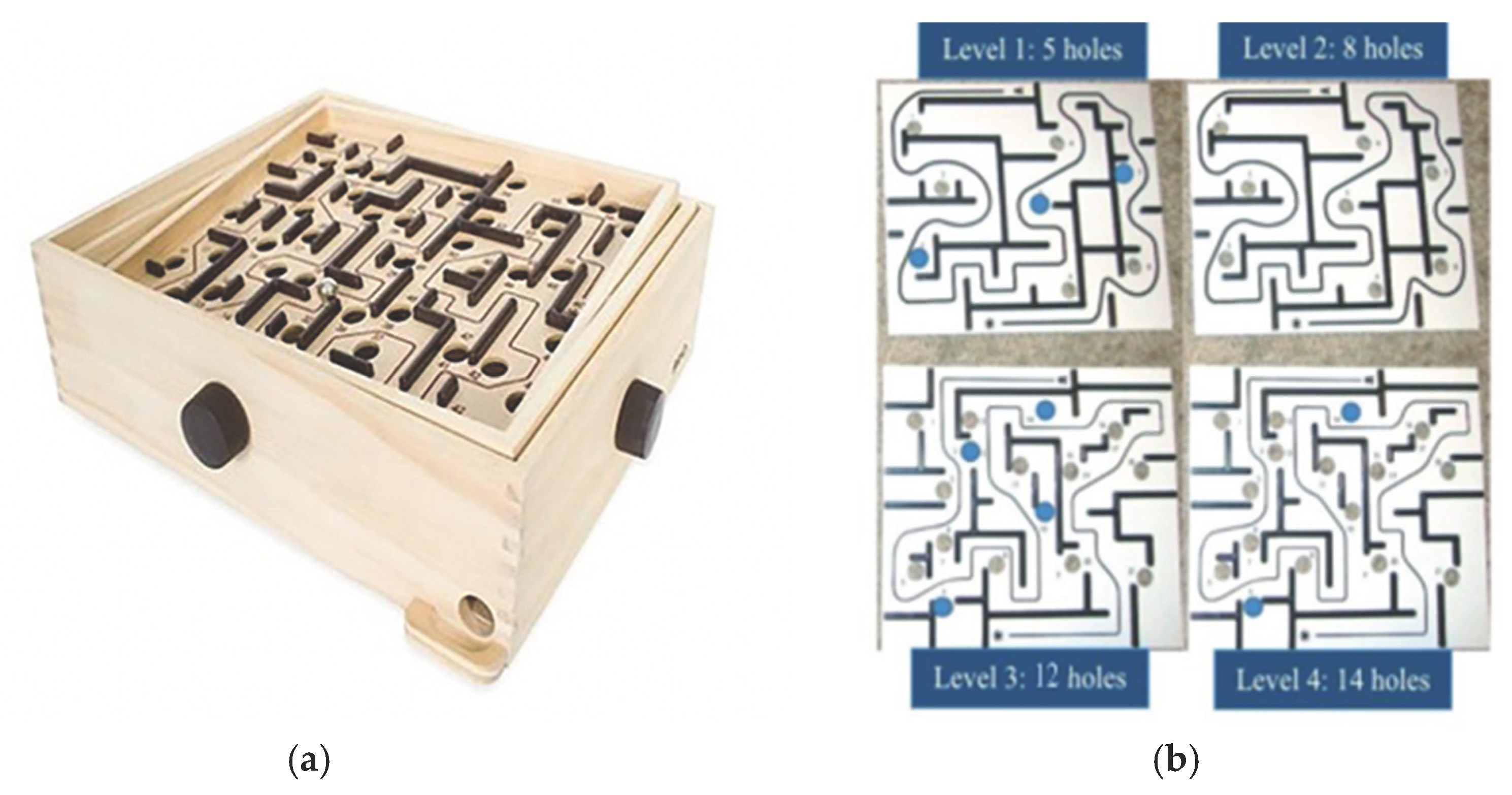
Figure 2.
Component VIII: Mixed emotions; Table 20, of TEC-I male Italian version by Albanese and Molina (2008).
Figure 2.
Component VIII: Mixed emotions; Table 20, of TEC-I male Italian version by Albanese and Molina (2008).
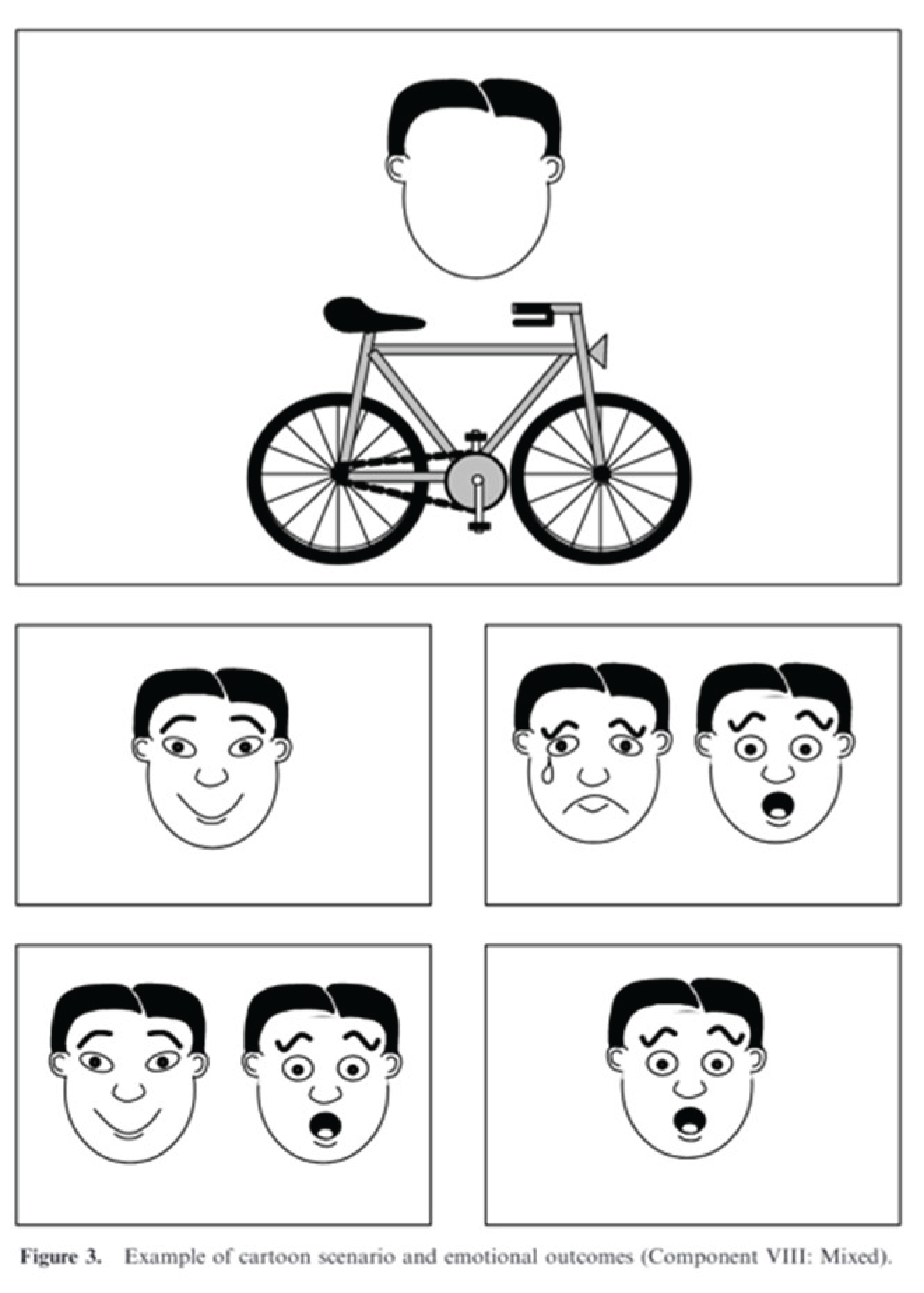
Figure 3.
Overview of an ANT experimental trial.
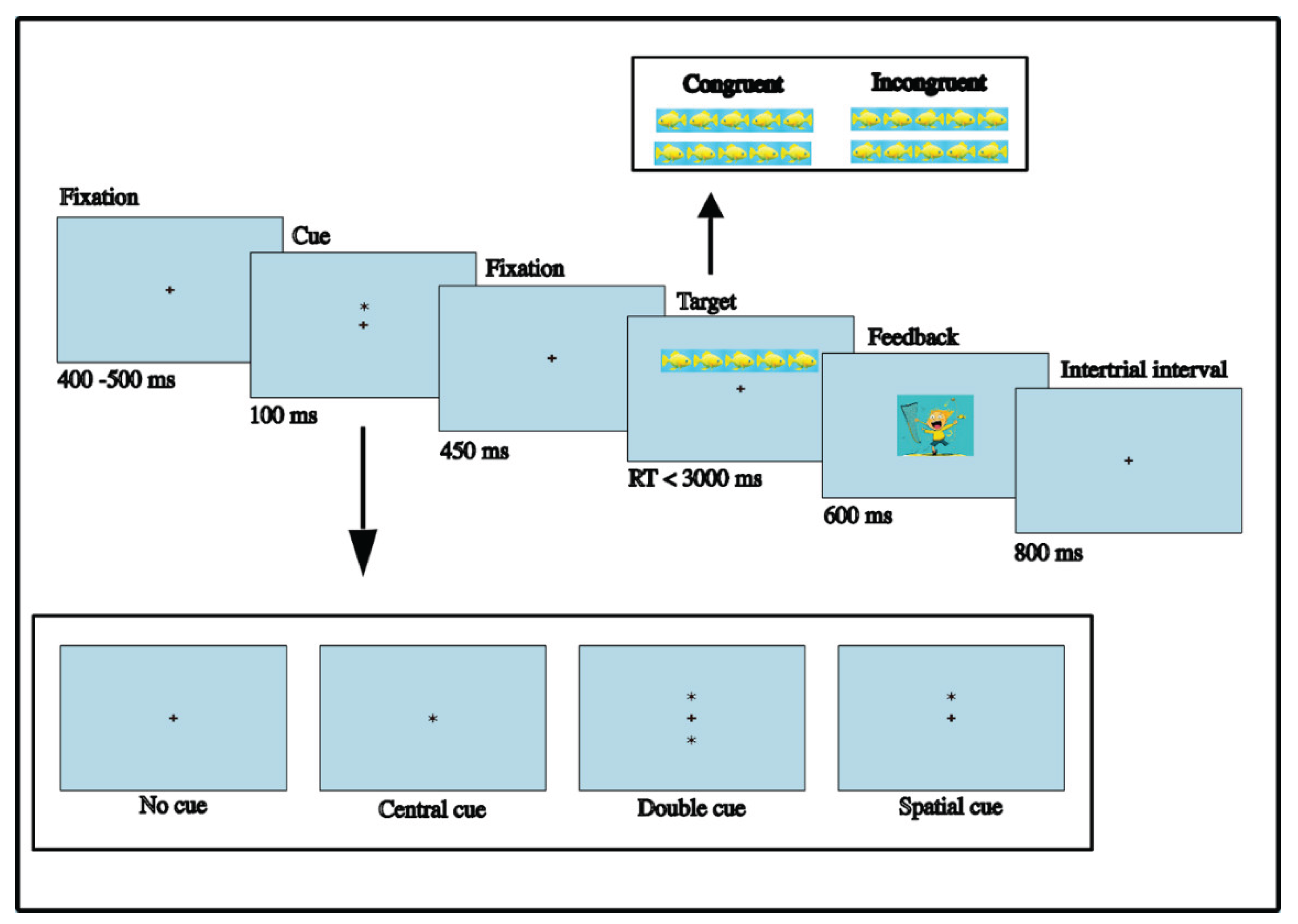
Figure 4.
Scatter plot with LOESS smoothing curves depicting the association between age (expressed in months) and cooperative action coordination performance (0-1), differentiated by gender (M=males; F=females).
Figure 4.
Scatter plot with LOESS smoothing curves depicting the association between age (expressed in months) and cooperative action coordination performance (0-1), differentiated by gender (M=males; F=females).
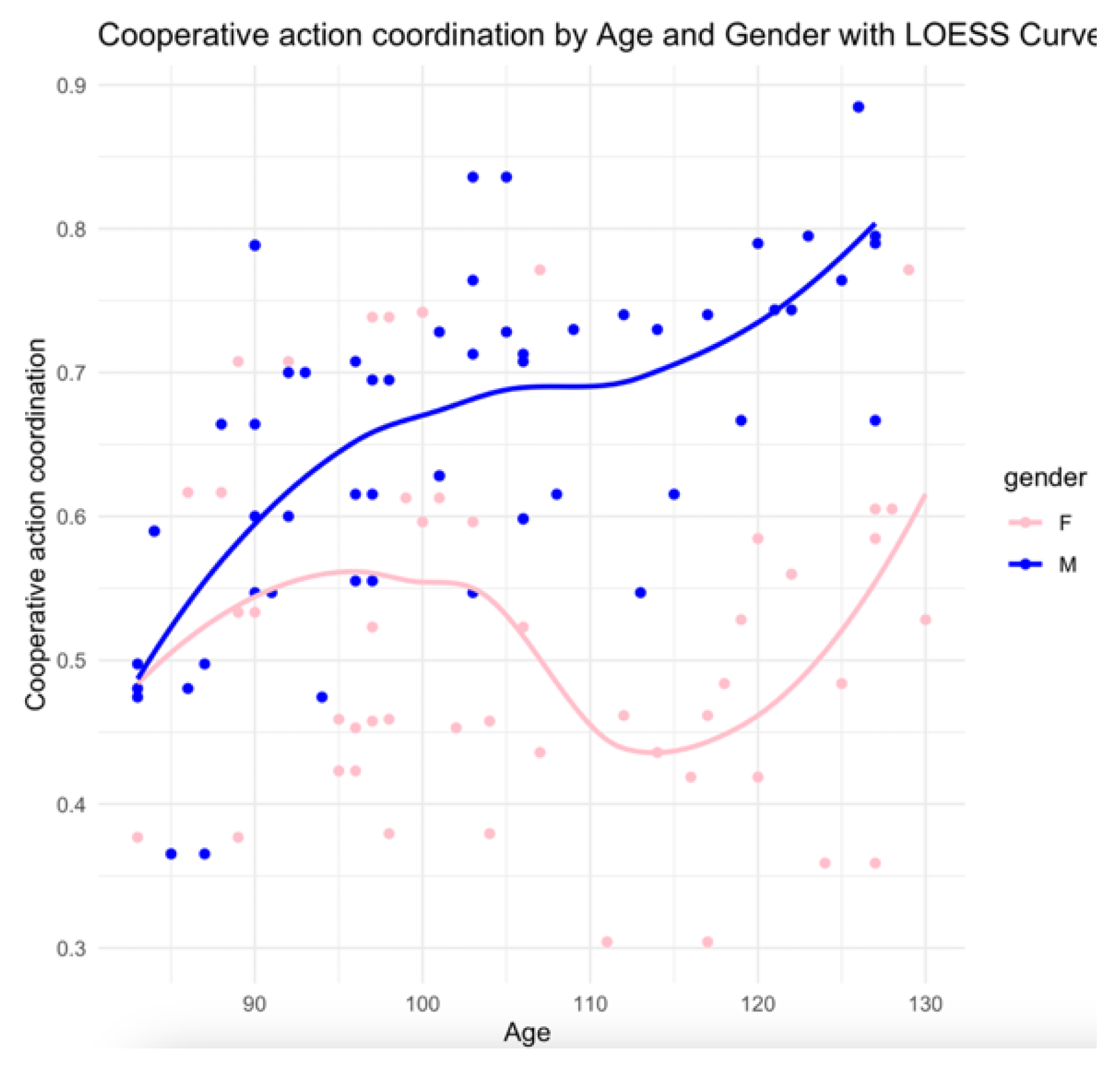

Table 1.
Correlation matrix.
| Variable | 1 | 2 | 3 | 4 | 5 |
| Cooperative action coordination | 1.00 | .12 | .19 | .16 | -.06 |
| Individual action coordination | .12 | 1.00 | .24* | .20* | -.25** |
| Age | .19 | .24* | 1.00 | .53** | -.36** |
| Emotion understanding | .16 | .20* | .53** | 1.00 | -.22* |
| Inhibitory control | -.06 | -.25** | -.36** | -.22* | 1.00 |
1 Note: *ρ<.05, **ρ <0.01.
Table 2.
Model comparison for predictors of peer action coordination in the Labyrinth Ball Game.
| Model | Factors | AIC | ΔAIC | R2 | ΔR2 |
| MBaseline | Age+Indi+Gender | -158.2 | 6.2 | .30 | − |
| M1 | Age+Indi+Gender+EU | -156.4 | 8.0 | .31 | 0.1 |
| M2 | Age+Indi+Gender+Inhib | -157.0 | 7.4 | .31 | 0.1 |
| M3 | Age+Indi+Gender+Inhib*EU | -155.1 | 9.3 | .32 | 0.2 |
| M4 | Age+Indi+Gender+Age*Gender | -164.4 | 0.0 | .38 | 0.8 |
* Age= age in months; Indi= individual sensorimotor performance at Labyrinth Ball game; Eu = TEC score as a measure of emotion understanding; Inhib= RT difference between congruent/ incongruent ANT trial as a measure of inhibitory control. ΔAIC= difference from the lowest AIC; ΔR2= increase in explained variance from the baseline model. The lowest AIC (M4) indicates the best fitting model.
Disclaimer/Publisher’s Note: The statements, opinions and data contained in all publications are solely those of the individual author(s) and contributor(s) and not of MDPI and/or the editor(s). MDPI and/or the editor(s) disclaim responsibility for any injury to people or property resulting from any ideas, methods, instructions or products referred to in the content. |
© 2025 by the authors. Licensee MDPI, Basel, Switzerland. This article is an open access article distributed under the terms and conditions of the Creative Commons Attribution (CC BY) license (http://creativecommons.org/licenses/by/4.0/).
Copyright: This open access article is published under a Creative Commons CC BY 4.0 license, which permit the free download, distribution, and reuse, provided that the author and preprint are cited in any reuse.


