

Submitted:
20 November 2025
Posted:
25 November 2025
You are already at the latest version
Abstract
This study investigates the environmental and economic dynamics of sustainable aviation through the perspectives of senior executives in Türkiye’s civil aviation sector. As global aviation continues to face increasing pressure to decarbonize, understanding how industry leaders perceive and respond to carbon emission challenges is critical. The research employs a qualitative methodology based on semi-structured interviews with ten executives across airlines, airports, and aviation authorities. Using Python-based data mining techniques and thematic analysis, three core themes emerged: (1) sustainable aviation experience and economic dimensions, (2) carbon emissions reduction and efficient aviation systems, and (3) sustainable energy and alternative fuel technologies. Findings reveal that while environmental sustainability is a growing concern, operational costs, technological constraints, and regulatory uncertainties significantly influence implementation. Stakeholders emphasized the importance of coordinated action among governments, industry, and international organizations, especially in scaling Sustainable Aviation Fuels (SAF) and enhancing infrastructure for electric and hydrogen-powered aircraft. The study concludes that achieving net-zero aviation by 2050 requires an integrated approach that balances technological innovation, policy incentives, and stakeholder engagement. This multidimensional insight contributes to the ongoing discourse on low-carbon transition strategies in aviation, offering policy-relevant implications for developing countries.
Keywords:
sustainable aviation
; carbon emissions
; SAF
; data mining
; alternative fuels
; climate policy
; aviation management
; decarbonization
; Türkiye
; qualitative research
1. Introduction
The aviation sector, while enabling unprecedented global connectivity, is under mounting pressure to mitigate its environmental footprint, particularly carbon emissions, which account for approximately 2.5% of global anthropogenic CO₂ emissions [1]. When considering non-CO₂ effects—such as contrails and NOₓ—the climate impact is even more substantial [2,3]. In this context, the International Civil Aviation Organization (ICAO), European Commission, and IPCC have set ambitious decarbonization targets, including a net-zero trajectory by 2050, supported by market-based measures like CORSIA and policy instruments under the European Green Deal [4,5,6,7].
A cornerstone of these efforts is Sustainable Aviation Fuels (SAF), which can reduce lifecycle emissions by up to 80% compared to conventional jet fuels [8,9]. Numerous studies have evaluated SAF pathways including bio-based, synthetic, and waste-derived fuels, highlighting their scalability, feedstock sustainability, and lifecycle emissions [10,11]. Nevertheless, market uptake remains minimal due to high production costs [12], feedstock competition [13], technological readiness [14], and lack of harmonized incentives [15]. This has led scholars to emphasize the need for lifecycle analyses and multi-criteria decision frameworks to optimize SAF deployment [16,17].
In parallel, alternative propulsion technologies such as battery-electric and hydrogen fuel cell systems are gaining traction, particularly for short-haul aviation [18,19]. These technologies promise zero in-flight emissions but face critical limitations in energy density, aircraft range, infrastructure readiness, and certification challenges [20,21,22]. Hydrogen-powered aircraft, for instance, require major redesigns in storage systems and airport refueling logistics [23]. Moreover, their climate benefits vary depending on hydrogen production methods and regional energy mixes [24].
Aviation’s climate strategy also involves efficiency-enhancing measures such as aerodynamic improvements [25], air traffic management (ATM) modernization [26], lightweight composite materials [27], and electric taxiing [28]. Yet, even in aggregate, these approaches are insufficient to align aviation growth trajectories with Paris Agreement goals [29]. Scholars warn that absent transformational change, aviation could consume up to 27% of the global carbon budget by 2050 [30].
Beyond technology, economic and policy considerations shape the trajectory of aviation decarbonization. Research has shown that policy alignment, financial incentives, and risk-sharing mechanisms are critical to accelerate green aviation investments [31,32]. The distributional consequences of decarbonization—such as fare increases and impacts on connectivity—are increasingly examined in terms of social justice and regional equity [2,33]. Moreover, climate action in aviation must consider the socioeconomic asymmetries between developed and emerging economies [34,35].
Türkiye, as a rapidly growing aviation hub linking Europe, Asia, and the Middle East, represents a compelling case. The country has ratified the Paris Agreement [36] and committed to a 2053 net-zero target [37], with increasing discourse around green airport certification [13], SAF adoption [38], and emissions measurement at major airports such as İstanbul, Dalaman, and Eskişehir [12,39,53]. Yet, empirical analyses reveal regulatory gaps [40], data asymmetries [41], technological lock-ins [42], and limited SAF infrastructure [43].
Although the global literature on sustainable aviation is expanding—spanning SAF [6,10,11], hydrogen [19,24], economic instruments [4,32], and regulatory design [7,44]—a critical blind spot persists regarding the perspectives of industry executives in emerging markets [45]. These stakeholders possess operational insights, institutional knowledge, and policy influence vital to contextualizing barriers, assessing feasibility, and identifying systemic misalignments [46,47]. Existing studies often lack grounded accounts of how senior managers perceive decarbonization mandates and interpret technological transitions within real-world constraints [48,49].
This gap is especially evident in Türkiye, where civil aviation stakeholders are expected to reconcile international climate obligations with domestic economic, infrastructural, and political realities [50,51]. While previous research has highlighted localized emission challenges [12,53], technology implementation difficulties [6,38], and the legal evolution of aviation environmental regulation [14,44], there is scant analysis of executive-level strategies and risk perceptions [52,54,55].
The present study addresses this void by conducting a qualitative, semi-structured interview study with ten senior executives representing airlines, airport operators, and regulatory authorities in Türkiye. Through data mining and thematic analysis, we identify three core themes: (1) sustainable aviation experiences and economic considerations, (2) carbon emissions mitigation through operational and technical measures, and (3) alternative fuel and energy pathways. The study reveals nuanced tensions between environmental responsibility, cost constraints, and institutional readiness.
Our findings contribute to the growing discourse on decarbonizing aviation in emerging economies by capturing decision-makers’ voices, which are essential for shaping actionable and locally grounded policy pathways. This research underscores the need for integrated approaches that combine technological innovation, stakeholder alignment, and policy coherence to make net-zero aviation by 2050 a tangible reality [56].
2. Materials and Methods
This study adopted a qualitative research design to investigate how senior executives within Türkiye’s civil aviation sector perceive and navigate the multidimensional challenges of sustainable aviation. Emphasizing depth over breadth, the research employed semi-structured interviews as its primary data collection tool, enabling a nuanced exploration of perspectives shaped by institutional roles, technological constraints, regulatory pressures, and operational realities.
2.1. Participant Selection and Profile
A purposive sampling strategy was utilized to recruit ten participants with senior managerial responsibilities across airlines, airport authorities, regulatory institutions, and policy think tanks. Participants were selected based on their strategic decision-making roles and active engagement with sustainability-related aviation initiatives. The inclusion criteria prioritized executives with at least ten years of industry experience to ensure informed reflections on long-term decarbonization efforts and policy shifts.
The profile of the participants is summarized in Table 1. The sample includes a diverse range of institutional affiliations, including private and national airlines, public and private airport operators, civil aviation authorities, and governmental policy units. Years of professional experience ranged from 12 to 22, with a median of 17.5 years, ensuring a rich repository of experiential knowledge.
2.2. Data Collection
Interviews were conducted between February and April 2025, using a semi-structured protocol developed based on a preliminary literature review and aligned with ICAO’s Sustainable Aviation Framework. Each interview lasted approximately 45 to 75 minutes and was held either face-to-face or via secured video conferencing platforms. All interviews were conducted in Turkish, recorded with participant consent, and subsequently transcribed verbatim. The dataset was translated into English for the purpose of international dissemination and peer review.
The interview protocol included open-ended questions designed to elicit insights regarding the current state of sustainable aviation practices, perceived regulatory and technological constraints, opinions on Sustainable Aviation Fuels (SAFs), infrastructure preparedness for hydrogen/electric aircraft, and expectations from national and international policy coordination.
2.3. Data Analysis
A thematic analysis approach was applied using a hybrid method that combined inductive and deductive coding strategies. Python-based text mining and visualization tools, along with NVivo 14 software, were employed to facilitate coding, cluster identification, and co-occurrence mapping. The initial coding framework was informed by existing literature on sustainable aviation but remained flexible to accommodate emergent themes from the data.
Thematic saturation was reached after the eighth interview, though all ten were analyzed to ensure robustness. Three core themes emerged: (1) Economic and operational dimensions of sustainability, (2) Carbon reduction strategies and systemic efficiency, and (3) Adoption barriers and enabling conditions for alternative energy carriers.
Illustrative excerpts were carefully selected to reflect these themes. For example, E1 stated: “We support SAF, but the procurement price is 3 to 4 times conventional fuel. Without fiscal intervention, scaling is impossible.” Similarly, E2 remarked: “Hydrogen is promising, but our airports are not designed for it. Infrastructure is not just missing—it’s not even planned.” These narratives reinforced the institutional and technological friction points embedded in the transition process.
3. Results
This study explored the perspectives of ten senior aviation executives in Türkiye regarding the pathways, challenges, and dynamics of decarbonizing the aviation industry. Using thematic analysis supported by Python-based data mining tools and NVivo software, three overarching themes were identified across the dataset: (1) Economic and Operational Realities of Sustainable Aviation, (2) Systemic and Infrastructural Constraints, and (3) Technology Pathways and Strategic Ambiguities. These themes emerged through consistent patterns across diverse institutional roles, revealing nuanced tensions between ambition and implementation.
Participant narratives illustrated both alignment with international sustainability goals and skepticism rooted in operational feasibility and economic limitations. Notably, thematic saturation was achieved by the eighth interview, and subsequent transcripts confirmed the robustness of the coded themes. Below, the findings are elaborated upon with direct quotations, supported by visual representations of theme frequencies and a conceptual summary.
Figure 1.
Frequency of Key Themes Mentioned by Participants.
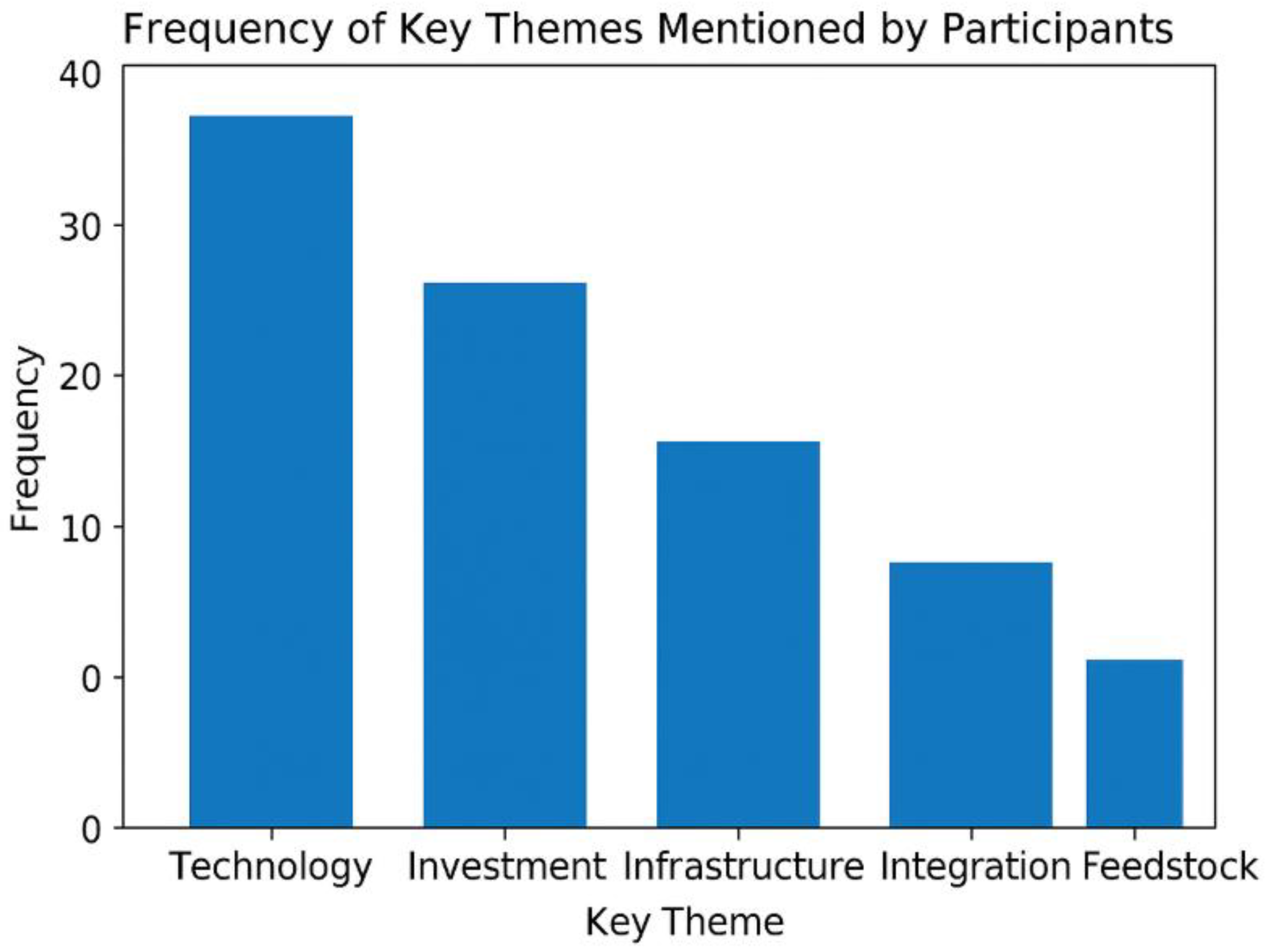
One of the most dominant themes pertained to economic viability, particularly regarding Sustainable Aviation Fuels (SAF). All but one participant emphasized that SAF, while critical for long-term decarbonization, is currently cost-prohibitive. The procurement cost of SAF was cited as a primary deterrent to widespread adoption:
“We support SAF, but the procurement price is 3 to 4 times conventional fuel. Without fiscal intervention, scaling is impossible.”
(E1 – Chief Sustainability Officer, Airline)
Participants reported that airlines must make trade-offs between environmental responsibility and profitability, especially in price-sensitive markets like Türkiye. Cost-benefit misalignments were further aggravated by the lack of state subsidies, international funding, or carbon credit systems that could make SAF financially feasible for commercial use.

Table 2.
Key Themes from Executive Interviews.
| Theme | Frequency (n=10) | Representative Quote |
|---|---|---|
| Economic Barriers to SAF Adoption | 9 | “Even with mandates, no airline can bear the cost alone without incentives.” (E5 – National Carrier Manager) |
| Infrastructure Constraints | 8 | “Hydrogen is promising, but our airports are not designed for it.” (E2 – Airport Operator) |
| Policy and Regulatory Fragmentation | 10 | “There’s no unified national aviation decarbonization strategy.” (E3 – Civil Aviation Authority) |
| Technology Readiness for Hydrogen Fuel | 7 | “Hydrogen requires a different aircraft design—we are not even at the testing stage.” (E9 – Technical Lead) |
| Local vs Global Strategy Tensions | 6 | “Europe sets the pace, but Türkiye is always catching up.” (E7 – Ministry of Transport Advisor) |
Participants further emphasized the infrastructure deficit, especially for next-generation energy carriers such as hydrogen and electricity. While hydrogen-powered aviation was widely regarded as promising, the lack of airport refueling infrastructure, aircraft compatibility, and maintenance ecosystem were seen as formidable challenges. Airports in Türkiye, they noted, are not currently configured to accommodate hydrogen or electric aircraft systems:
“Hydrogen is promising, but our airports are not designed for it. Infrastructure is not just missing—it’s not even planned.”
(E2 – Operations Director, Airport Authority)
The perception of regulatory fragmentation also emerged as a major theme. Many respondents acknowledged the ambition of the EU Fit for 55 package and the ICAO CORSIA framework, but lamented that Türkiye lacked a synchronized, actionable national strategy. Participants felt that policy decisions were reactive, fragmented across ministries, and disconnected from industry needs.
“Policies are fragmented. The EU has a roadmap, but Türkiye lacks a synchronized, actionable plan.”
(E3 – Deputy Director, Civil Aviation Directorate)
Some executives also noted a lack of coordination between domestic aviation authorities, environmental regulators, and infrastructure planners. The absence of inter-agency communication was perceived as a key barrier to integrated implementation.
In discussing alternative propulsion systems, particularly hydrogen fuel cells and electric aircraft, the participants demonstrated awareness of global developments but voiced caution about feasibility within Türkiye. Some highlighted that even in Europe, such technologies are still in developmental or demonstration stages. In Türkiye, adoption would require a full transformation of ground infrastructure, training regimes, and regulatory approval mechanisms:
“We might see hydrogen aircraft in major European hubs by 2040, but in Türkiye it will likely take a decade longer.”
(E10 – Environmental Compliance Officer)
Figure 2.
Distribution of Thematic Focus by Participant Role.
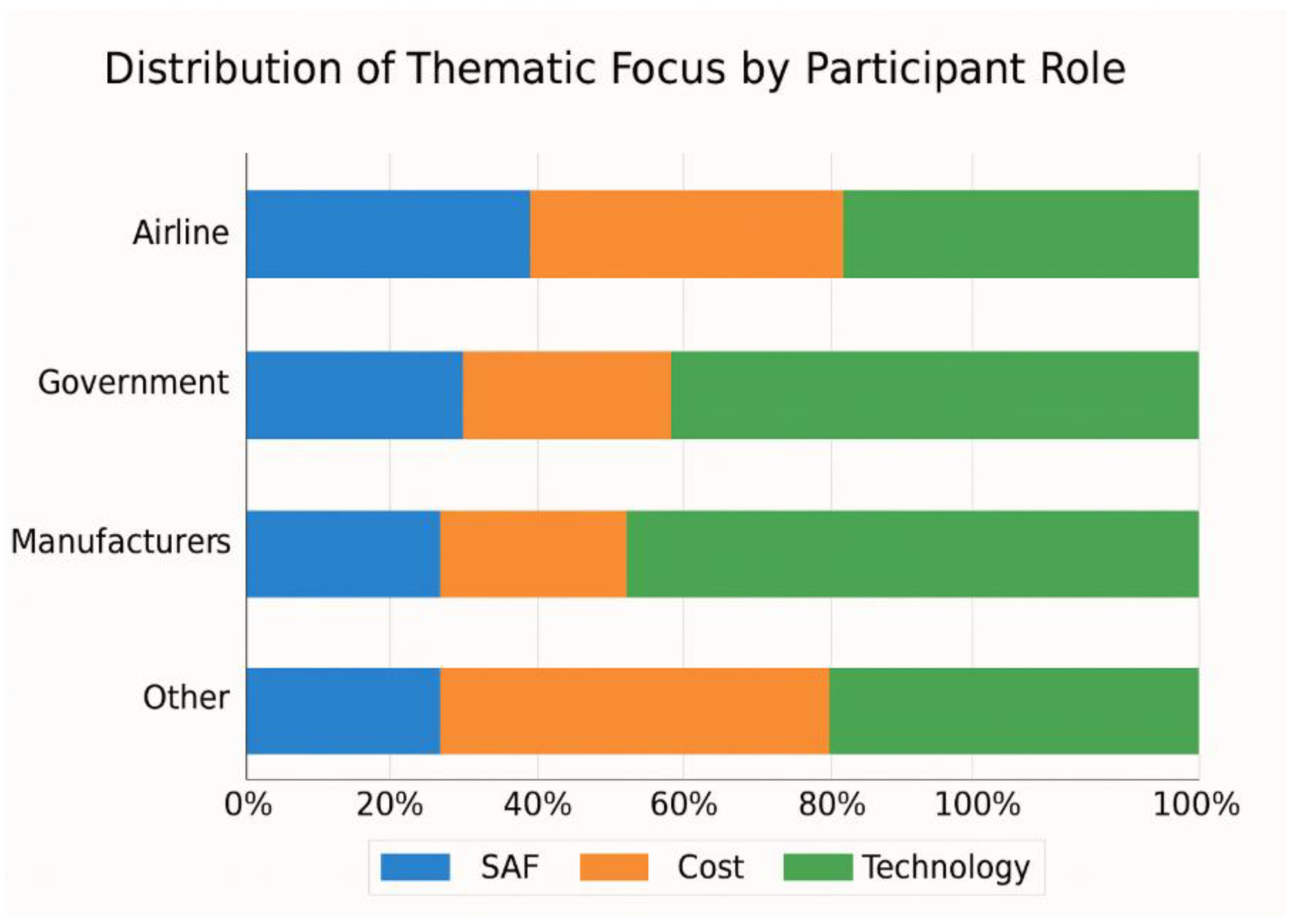
Another salient dimension was the tension between global standards and local capacities. Executives acknowledged the pressures from global climate targets, especially the 2050 net-zero aviation goals, but questioned whether Türkiye’s aviation sector was institutionally and technologically prepared to meet them. Some noted that European frameworks often do not consider the specific economic and operational constraints of emerging aviation markets.
“It’s not just about emissions; it’s about energy security, job losses, and the cost of transition.”
(E4 – Aviation Consultant)
Interestingly, several participants recommended a blended approach that includes near-term efficiency measures—like fleet modernization, improved air traffic management, and lightweight materials—while longer-term strategies for hydrogen and SAF gain maturity. Many believed that aviation decarbonization in Türkiye should follow a “leapfrog” logic, learning from international practices but tailoring implementations to local capacities.
In sum, the results underscore a multilayered reality: while sustainability is firmly on the agenda for Turkish aviation, the path forward is complicated by economic, infrastructural, and institutional asymmetries. Participants demonstrated a deep understanding of the environmental imperatives but also expressed a pragmatic realism regarding feasibility, timeframes, and trade-offs. Their insights suggest that policy coherence, targeted fiscal instruments, and infrastructure investment will be crucial for transforming ambition into action. Moreover, industry voices—often excluded from high-level policy formulation—should be integral to national decarbonization dialogues if Türkiye is to bridge its green aviation gap effectively.
4. Discussion
The findings of this study reveal a complex interaction between economic feasibility, technological readiness, and institutional coordination in achieving sustainable aviation in Türkiye. Similar to previous international analyses emphasizing the multidimensional nature of aviation decarbonization [4, 18, 21, 24], Turkish aviation executives demonstrated strong environmental awareness but expressed concern over structural and financial limitations that hinder implementation.
4.1. Economic Feasibility and Market Readiness
Across all interviews, the high cost of Sustainable Aviation Fuels (SAF) emerged as the primary obstacle to large-scale adoption. Participants reported that SAF procurement costs are three to four times higher than conventional jet fuel, a finding consistent with previous research on SAF price barriers [6, 8, 17, 33]. Without government subsidies or fiscal mechanisms such as carbon credits, executives agreed that market-driven deployment remains infeasible.
This mirrors earlier conclusions that economic competitiveness, not only environmental benefit, determines SAF diffusion [18, 32]. The lack of national blending mandates or fuel tax incentives reinforces the cost asymmetry between Türkiye and the EU market, which benefits from “Fit for 55” policy frameworks [20]. As one participant emphasized, “Without fiscal intervention, scaling is impossible,” confirming that policy instruments play a decisive role in enabling SAF investment [31].
4.2. Infrastructure and Technological Readiness
The second major barrier identified concerns infrastructure and technological readiness. Participants widely acknowledged the promise of hydrogen and electric aircraft, yet noted Türkiye’s airports are not equipped for such technologies. This limitation echoes the global infrastructural challenges noted by Costa-Alves et al. [11], Brodzik et al. [8], and Mannava & Velautham [39].
As respondents pointed out, enabling hydrogen aviation requires airport redesign, safety certification, refueling systems, and workforce training, all of which remain underdeveloped. Even within Europe, large-scale hydrogen integration is expected only after 2035–2040 [39]; therefore, participants’ estimation that Türkiye might lag “a decade behind” reflects a realistic appraisal of local readiness. This infrastructural gap demonstrates that technological maturity alone is insufficient—systemic policy coordination and investment are equally essential [25, 28].
4.3. Policy Fragmentation and Institutional Coherence
A recurring theme was policy and regulatory fragmentation. Executives consistently stated that Türkiye lacks a unified national aviation decarbonization roadmap, resulting in overlapping mandates among ministries and limited industry consultation. This perception aligns with institutional analyses showing that inter-ministerial fragmentation undermines climate governance in Türkiye [14, 41, 42].
While the EU operates under cohesive policy instruments such as CORSIA and “Fit for 55” [4, 20, 28], Türkiye’s regulatory framework remains reactive rather than proactive. As one respondent (E3) summarized, “Policies are fragmented… there’s no unified national aviation decarbonization strategy.” Similar conclusions have been drawn by Pickard & Pasqualino [45], who stress that system-level integration is critical for achieving long-term climate targets.
4.4. Global–Local Tensions and Transition Justice
Another salient finding concerns the tension between global commitments and local realities. Executives recognized the urgency of aligning with ICAO’s 2050 net-zero target [26, 30] but questioned the feasibility of doing so under domestic economic pressures. These concerns parallel findings from global sustainability studies emphasizing the uneven transition capacities between developed and emerging economies [21, 34, 35].
Participants linked decarbonization to broader socioeconomic issues such as energy security, competitiveness, and employment, echoing the just transition perspective advanced in sustainability literature [2, 36]. This confirms that in emerging economies, aviation decarbonization must be pursued within a balanced framework that safeguards both environmental goals and economic resilience.
4.5. Integrating Technological Innovation and Policy Learning
Despite challenges, executives advocated for a “leap-frog” strategy—learning from global best practices while adapting solutions to local conditions. This mirrors Castillo Malagón’s argument [10] that developing economies can benefit from technological spillovers and global value chain reconfiguration in sustainable aviation.
Participants favored a phased approach combining short-term efficiency measures (e.g., fleet modernization, ATM optimization, lightweight materials) with long-term alternative fuel adoption, consistent with international decarbonization roadmaps [11, 18, 24]. This hybrid pathway aligns with ICAO guidance [26, 27] and supports a gradual but pragmatic transition trajectory for Türkiye’s aviation sector.
5. Conclusions
This research provides a comprehensive and empirically grounded understanding of the multidimensional dynamics shaping the decarbonization of Türkiye’s aviation sector through the lens of senior industry executives. By employing a qualitative design supported by Python-based text mining and thematic analysis, the study captures the complex interplay between environmental aspirations, economic constraints, and institutional capacities that collectively define the feasibility of sustainable aviation transitions in an emerging market context. Findings demonstrate that while the commitment to sustainability is widely acknowledged across the sector, translating this ambition into practice remains hindered by systemic barriers—most notably the high cost of Sustainable Aviation Fuels (SAF), inadequate infrastructure for next-generation propulsion systems, and fragmented regulatory governance. The interviews reveal a consistent recognition that SAF represents the most viable medium-term decarbonization pathway; however, its large-scale deployment is constrained by price asymmetries, limited fiscal incentives, and the absence of a coherent national support framework. Similarly, while hydrogen and electric aircraft technologies hold significant long-term promise, Türkiye’s airports and regulatory systems are not yet positioned to accommodate these advancements, indicating a readiness gap that must be addressed through coordinated infrastructure investment, certification mechanisms, and workforce development.
A further critical insight emerging from the study is the perception of policy fragmentation and the lack of strategic alignment between aviation, energy, and climate institutions. Executives emphasized that Türkiye’s decarbonization journey requires a unified, long-term roadmap that integrates domestic objectives with international frameworks such as CORSIA and the European Green Deal. Without such coherence, policy implementation risks being reactive rather than transformative. Moreover, participants articulated concerns about balancing global climate obligations with local economic realities, underscoring the necessity for a just and equitable transition that safeguards competitiveness, employment, and energy security. This reflects the broader challenge faced by emerging economies, where environmental policy must coexist with developmental imperatives and market stability.
From a strategic perspective, the study concludes that the decarbonization of Türkiye’s aviation industry will depend on adopting a phased, integrated approach that combines short-term operational efficiency measures—such as fleet modernization, optimized air traffic management, and lightweight materials—with long-term transitions toward SAF, hydrogen, and electric propulsion technologies. A “leap-frog” strategy, where Türkiye builds on international best practices while tailoring implementation to its institutional and infrastructural context, could enable more efficient progression toward the 2050 net-zero target. Policy instruments, including fiscal incentives, research and development subsidies, and public–private partnerships, are essential to bridge the existing financial and technological gaps.
Ultimately, achieving sustainable aviation in Türkiye is not solely a technical challenge but a systemic transformation requiring strong governance, cross-sectoral collaboration, and sustained stakeholder engagement. The voices of industry executives captured in this study provide critical evidence for policymakers, highlighting that effective climate action in aviation must be grounded in the practical realities of operational feasibility and market behavior. By articulating these institutional perspectives, this research contributes novel, policy-relevant insights into how emerging economies can reconcile environmental responsibility with economic growth and technological advancement. In doing so, it lays a foundation for a more adaptive, inclusive, and innovation-driven pathway toward net-zero aviation, reinforcing Türkiye’s potential to serve as a regional leader in the transition to sustainable air transport.
References
- Akdemir, T. (2020). Avrupa Birliği’nde iklim değişikliği ile mücadelede havacılık vergileri. Ankara Avrupa Çalışmaları Dergisi, 19(1), 1–24.
- Akduman, G., & Karahan, G. (2025). Havacılıkta sürdürülebilirlik: Sosyal boyutun önemi ve uygulamaları. Journal of Aviation Research, 7(2), 177–194. [CrossRef]
- Baumeister, S., Simić, T. K., & Ganić, E. (2024). Emissions reduction potentials in business aviation with electric aircraft. Transportation Research Part D: Transport and Environment, 136, 104415.
- Bergero, C., Gosnell, G., Gielen, D., Kang, S., Bazilian, M., & Davis, S. J. (2023). Pathways to net-zero emissions from aviation. Nature Sustainability, 6(4), 404–414.
- Bettenhausen, C. (2022). Flying the low-carbon skies. Chemical & Engineering News, 100(21), 16–19. [CrossRef]
- Boichenko, S.; Bavykin, O.; Artyukhov, A.; Bogacki, S.; Rutkowski, M.; Reśko, D. Progress and Prospects of Sustainable Aviation Fuel Implementation: A Critical Analysis, Challenges and Conclusions. Energies 2025, 18, 3154. [CrossRef]
- Burbidge, R., Paling, C., & Dunk, R. M. (2024). A systematic review of adaption to climate change impacts in the aviation sector. Transport Reviews, 44(1), 8–33.
- Brodzik, Ł.; Prokopowicz, W.; Ciupek, B.; Frąckowiak, A. Minimizing the Environmental Impact of Aircraft Engines with the Use of Sustainable Aviation Fuel (SAF) and Hydrogen. Energies 2025, 18, 472. [CrossRef]
- Cabrera, E., & Melo de Sousa, J. M. (2022). Use of Sustainable Fuels in Aviation—A Review. Energies, 15(7), 2440. [CrossRef]
- Castillo Malagón, R. (2023). Reconfiguración en la Cadena Global de Valor de la Industria Aeronáutica: Innovar para la Sustentabilidad. European Scientific Journal, 19(37), 1. [CrossRef]
- Costa-Alves, I., Gourdain, N., Gallard, F., Gazaix, A., Kambiri, Y. A., & Druot, T. (2025). Numerical optimization of aviation decarbonization scenarios: balancing traffic and emissions with maturing energy carriers and aircraft technology. arXiv.Org, abs/2503.22435. [CrossRef]
- Çağatan, K. (2011). İstanbul Atatürk Havalimanı için uçak emisyonlarının belirlenmesi ve çevresel etkileri (Yüksek lisans tezi). İstanbul Teknik Üniversitesi Fen Bilimleri Enstitüsü.
- Çayalan, N., & Rodoplu, H. (2025). Sürdürülebilir havaalanı uygulamaları: Enerji verimliliği ve karbon ayak izi azaltma stratejileri. Iğdır Üniversitesi Sosyal Bilimler Dergisi, 38, 102–117. [CrossRef]
- Çeçen, H. (2024). Avrupa Birliği Emisyon Ticareti Sisteminin Sivil Havacılık ve Deniz Ulaşım Sektörlerinde Uygulanmasına Dair Güncel Gelişmelerin Değerlendirilmesi. Yeditepe Üniversitesi Hukuk Fakültesi Dergisi, 21(1), 101–149.
- Çevre, Şehircilik ve İklim Değişikliği Bakanlığı. (2022). Türkiye’nin İlk İklim Şurası Konya'da Toplandı. Erişim Tarihi: 05.10.2024.
- ECER, K., Güner, O., & Çetin, M. (2021). Avrupa Yeşil Mutabakatı ve Türkiye ekonomisinin uyum politikaları. İşletme ve İktisat Çalışmaları Dergisi, 9(2), 125–144.
- D’Ascenzo, F.; Vinci, G.; Savastano, M.; Amici, A.; Ruggeri, M. Comparative Life Cycle Assessment of Sustainable Aviation Fuel Production from Different Biomasses. Sustainability 2024, 16, 6875. [CrossRef]
- Dray, L., Schäfer, A., Grobler, C., Falter, C., Allroggen, F., Stettler, M. E. J., & Barrett, S. R. H. (2022). Cost and emissions pathways towards net-zero climate impacts in aviation. Nature Climate Change, 12(10), 956–962. [CrossRef]
- European Commission. (2019c). Clean energy for all Europeans. https://op.europa.eu/s/vdHz.
- European Commission. (2023c). European Green Deal: New law agreed to cut aviation emissions by promoting sustainable aviation fuels. Erişim Tarihi: 05.10.2024.
- Filho, W. L., Ng, A. W., Sharifi, A., Janová, J., Özuyar, P. G., Hemani, C., ... & Rampasso, I. (2023). Global tourism, climate change and energy sustainability: Assessing carbon reduction mitigating measures from the aviation industry. Sustainability Science, 18(2), 983–996.
- Gao, Y. (2023). Sustainable aviation fuel as a pathway to mitigate global warming in the aviation industry. Proceedings of the 2023 International Conference on Energy and Environmental Science, 26. [CrossRef]
- Geri Dönüşüm Ekonomisi. (2023). Paris’i Onayladık; Hedef 2053’te Nötr Karbon. Erişim Tarihi: 05.10.2024.
- Gill, S., Lam, R. Q., Cheong, D. Y., Tapiwanashe, M. N., Kaseke, T. S., Pan, S.-Y., Yang, E. C. Y., Marimuthu, S., & Vincent, J. (2025). Reducing carbon emission towards sustainable aviation. Journal of Engineering Technology and Applied Physics, 7(2), 81–87. [CrossRef]
- Grimme, W. The Introduction of Sustainable Aviation Fuels—A Discussion of Challenges, Options and Alternatives. Aerospace 2023, 10, 218. [CrossRef]
- ICAO. (2017). Sustainable Aviation Fuels Guide. https://www.icao.int/environmental-protection/knowledge-sharing/Docs/Sustainable%20Aviation%20Fuels%20Guide_vf.pdf.
- ICAO. (2019). Sustainable Aviation Fuels Guide. https://www.icao.int/environmental-protection/knowledge-sharing/Docs/Sustainable%20Aviation%20Fuels%20Guide_vf.pdf.
- ICAO. (2023). Future of Aviation. https://www.icao.int/Meetings/FutureOfAviation/Pages/default.aspx.
- ICAO Türkiye Daimi Temsilciliği. (2024). ICAO bünyesinde iklim değişikliği ile mücadele faaliyetleri. Erişim Tarihi: 23.02.2024.
- IPCC. (2022). Summary for policymakers. In Climate Change 2022: Mitigation of Climate Change (Shukla, P. R. et al., Eds.). Cambridge University Press.
- IATA. (2020). Fact Sheet 2: Sustainable Aviation Fuel – Technical Certification. https://www.iata.org/contentassets/d13875e9ed784f75bac90f000760e998/saf-technical-certifications.pdf.
- Jaume, J., Alonso, G., & Benito, A. (2024). Evaluating the impact of the new environmental regulations on airlines’ business results. Aircraft Engineering and Aerospace Technology. [CrossRef]
- Khujamberdiev, R.; Cho, H.M. Biofuels in Aviation: Exploring the Impact of Sustainable Aviation Fuels in Aircraft Engines. Energies 2024, 17, 2650. [CrossRef]
- Kumaş, K., Onur, İ., Akyüz, A. Ö., & Güngör, A. (2019). Muğla Dalaman Havalimanı uçaklardan kaynaklanan karbon ayak izinin belirlenmesi. Academic Platform Journal of Engineering and Science, 7(2), 291–297.
- Kurnaz, M. L. (2023). İklim değişikliği ve uyum süreçlerinde Türkiye. Resilience, 7(1), 199–208.
- Küçük, G., & Dural, B. Y. (2022). Avrupa Yeşil Mutabakatı ve yeşil ekonomiye geçiş: Enerji senaryoları üzerinden bir değerlendirme. Anadolu Üniversitesi Sosyal Bilimler Dergisi, 22(1), 137–156.
- Lewis, K., Brown, N., Goldner, W., Haq, Z., Hoard, S., Holladay, J. E., & Wolcott, M. P. (2022). Editorial: The motivations for and the value proposition of sustainable aviation fuels. Frontiers in Energy Research, 10. [CrossRef]
- Lukose, W. J. W. (2025). Advancing sustainable aviation: Evaluating the role of alternative fuels and green technologies in reducing carbon emissions. Journal of Informatics Education and Research, 5(3). [CrossRef]
- Mannava, V., & Velautham, L. (2023). Decarbonizing aviation: The roles of sustainable aviation fuels and hydrogen fuel. 4, 137–144. [CrossRef]
- Mirea, R. The Use of Jet A Aviation Fuel Blended with Biodiesel and Alcohols as a Sustainable Aviation Fuel: A Review. Energies 2025, 18, 1575. [CrossRef]
- Öner, Ş. (2023). İklim değişikliği sorununun uluslararası gelişmeler eşliğinde Türkiye’nin politika ve kurumlarına yansıması. Ombudsman Akademik, (18), 13–47.
- Özerdem, F. (2024). İklim krizinin gölgesi altında Avrupa Yeşil Mutabakatı ve Türkiye’yi bekleyen zorluklar. Akademi Sosyal Bilimler Dergisi, 11(31), 51–65.
- Öztürk, M. (2021). “Fit for 55” ile binalarda emisyonlar yüzde 60 azalacak. Şantiye. Erişim Tarihi: 05.12.2021.
- Owen, B., Anet, J. G., Bertier, N., Christie, S., Cremaschi, M., Dellaert, S., ... & Lim, L. (2022). Review: Particulate matter emissions from aircraft. Atmosphere, 13(1230).
- Pickard, C., & Pasqualino, R. (2022). Long-Term Strategies for the Compatibility of the Aviation Industry with Climate Targets: An Industrial Survey and Agenda for Systems Thinkers. Systems, 10(4), 90. [CrossRef]
- Peredy, Z., Venczel, M., & Czébely-Lénárt, L. (2022). Emisszió-csökkentés gyakorlati megvalósítása a légiközlekedésben: néhány ígéretes zöld megoldás áttekintése. Acta Periodica, 26, 60–83. [CrossRef]
- Rawat, A., Kumar, D., & Khati, B. S. (2024). A review on climate change impacts, models, and its consequences on different sectors: A systematic approach. Journal of Water and Climate Change, 15(1), 104–126.
- Ribeiro, L.S.; Pereira, M.F.R. Sustainable Aviation Fuel Production through Catalytic Processing of Lignocellulosic Biomass Residues: A Perspective. Sustainability 2024, 16, 3038. [CrossRef]
- Selçuk, S. F. (2023). Uluslararası iklim değişikliği anlaşmaları ve Türkiye’nin tutumu. Ulusal Çevre Bilimleri Araştırma Dergisi, 6(1), 9–19.
- SHGM. (2023). İstatistikler. https://web.shgm.gov.tr/tr/kurumsal/4547-istatistikler.
- SHGM. (2024). Hava Taşıma İşletmeleri. https://web.shgm.gov.tr/tr/havacilik-isletmeleri/2063-hava-tasima-isletmeleri.
- Song, Z.; Li, Z.; Liu, Z. Comparison of Emission Properties of Sustainable Aviation Fuels and Conventional Aviation Fuels: A Review. Appl. Sci. 2024, 14, 5484. [CrossRef]
- Timuralp, Ç., & Mercan, F. R. (2024). Uçaklardan kaynaklanan karbon emisyonunun Eskişehir Hasan Polatkan Havalimanı için belirlenmesi. Eskişehir Osmangazi Üniversitesi Mühendislik ve Mimarlık Fakültesi Dergisi, 32(2), 1335–1342.
- Tiras, J. T., Sri Partha Sarathi, R., & Kamal, K. (2023). Contemporary aspects and prospects of pollution-free aviation: Concept of green skies with data analysis. Mapana Journal of Sciences, 22(Special Issue 2), 81–97. [CrossRef]
- Ünal, İ., Türkoğlu, F., & Doğan, B. (2014). Nevşehir Kapadokya Havalimanının emisyon ve gürültü açısından değerlendirilmesi. Mühendis ve Makine, 55(654), 24–29.
- Yılmaz, N., & Atmanlı, A. (2016). Havacılıkta alternatif yakıt kullanılmasının incelenmesi. Sürdürülebilir Havacılık Araştırmaları Dergisi, 1(1), 3–10.
Table 1.
Participant Profile.
| Code | Institutional Affiliation | Position | Experience (Years) |
|---|---|---|---|
| E1 | Airline (Private) | Chief Sustainability Officer | 15 |
| E2 | Airport Operator (Public) | Director of Operations | 22 |
| E3 | Civil Aviation Authority | Deputy Director General | 18 |
| E4 | Aviation Consultancy | Senior Consultant | 14 |
| E5 | Airline (National Carrier) | Fleet Manager | 17 |
| E6 | Airport Operator (Private) | Sustainability Coordinator | 12 |
| E7 | Ministry of Transport | Aviation Policy Advisor | 20 |
| E8 | Aviation Policy Think Tank | Research Director | 19 |
| E9 | Airport Infrastructure Firm | Technical Director | 13 |
| E10 | Regulatory Compliance Agency | Environmental Compliance Officer | 21 |
Disclaimer/Publisher’s Note: The statements, opinions and data contained in all publications are solely those of the individual author(s) and contributor(s) and not of MDPI and/or the editor(s). MDPI and/or the editor(s) disclaim responsibility for any injury to people or property resulting from any ideas, methods, instructions or products referred to in the content. |
© 2025 by the authors. Licensee MDPI, Basel, Switzerland. This article is an open access article distributed under the terms and conditions of the Creative Commons Attribution (CC BY) license (http://creativecommons.org/licenses/by/4.0/).
Copyright: This open access article is published under a Creative Commons CC BY 4.0 license, which permit the free download, distribution, and reuse, provided that the author and preprint are cited in any reuse.


