

Submitted:
20 November 2025
Posted:
21 November 2025
You are already at the latest version
Abstract
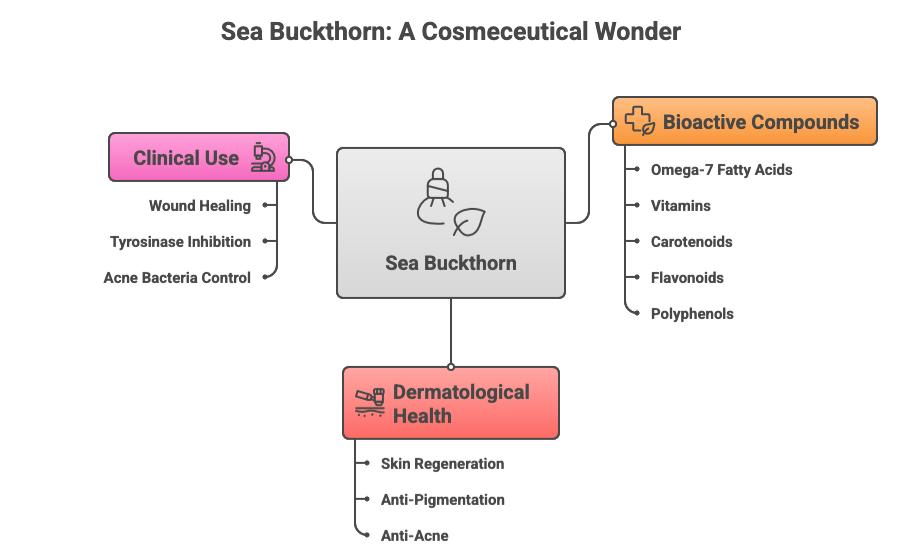
The sea buckthorn (Hippophae rhamnoides L.) fruit has gained a lot of importance as a botanical cosmetic ingredient for its nutrients and bioactive compounds in the cosmeceutical industry. This review makes a systematic investigation into the scientific basis of the uses of sea buckthorn on dermatological health, focusing particularly on skin regeneration, anti-pigmentation and anti-acne effects. Rich in more than 190 bioactive compounds, rare omega-7 fatty acids (palmitoleic acid), vitamins (A, C, E, K), carotenoids, flavonoids and polyphenols this natural wonder evens skin tone and reduces pigmentation. Available evidence indicates that sea buckthorn extracts and oils have wound healing effects (enhancing collagen synthesis), tyrosinase inhibiting activity and can act against bacteria causing acne. Human studies have confirmed increase in skin moisture, elasticity and softness after sea buckthorn consumption. The present review combines and discusses recent findings, mechanisms of action, formulation difficulties as well as prospects for improving the clinical use of sea buckthorn in the cosmeceutical field.
Keywords:
sea buckthorn
; Hippophae rhamnoides
; cosmeceuticals
; skin regeneration
; anti-pigmentation
; anti-acne
; omega-7
; palmitoleic acid
Introduction
In recent years, the cosmeceutical industry has seen a rise in popularity of botanicals that combine features of cosmetics and pharmaceuticals and exert therapeutic effects beyond simple skin care[1]. Sea buckthorn (Hippophae rhamnoides L.), a nitrogen fixating thorny deciduous plant distributed in Asia and Europe, has been widely reported for its unique phytochemical profile and numerous dermatological utilities [2,3]. Long since utilized in traditional medicine by multiple cultures for hundreds of years, sea buckthorn stands as a “superfruit” today in both dermatology and nutritional science[4].
The increasing worldwide interest to sea buckthorn is also reflected in the market value that continues to rise, and estimated for a strong growth from USD 1,153.1 millions in 2025 to USD 3,800.7 million by 2035[5]. This growth is largely attributed to growing consumer preference towards natural multitasking skincare ingredients and increasing scientific evidence of sea buckthorn’s therapeutic efficacy.
Sea buckthorn’s special qualities as a botanicals extract originate from its wealth of specific key nutrients unmatched by any other botanical. The plant consist of more than 190 bioactive compounds, which includes vitamins (A, B1, B2, B6, C, E and K), minerals (potassium, sodium magnesium calcium iron zinc and selenium) amino acids carotenoids flavonoids polyphenols as well as a unique balance of all four omega fatty acids: omega-3,-6,-7 and -9 [6,7]. Importantly, its high proportion of palmitoleic acid (omega-7) (16–54% of total fatty acids) renders sea buckthorn as one of the most abundant plant sources of this biologically active lipid[8].
The therapeutic action of sea buckthorn in dermatology has been proven through various preclinical and clinical studies that have confirmed its skin regenerating, wound healing, inflammatory skin disease, and pigmentation disorder treating properties[1,9]. A number of specific mechanisms have been identified in recent investigations, such as antioxidant effects, anti-inflammatory activities, antimicrobial effects and modulation of various cellular pathways related to skin homeostasis[10,11].
The present review attempts to critically assess the recent scientific validation of cosmeceutical applications of sea buckthorn focusing on three main areas, i.e., skin repair/wound healing, anti-pigmentation and anti-acne. The phytochemical basis of these effects are explored, clinical evidence is discussed, and mechanisms of action along with formulation challenges and future research directions are identified.
Phytochemical Composition of Sea Buckthorn
Overview of Bioactive Constituents
The medicinal potential of sea buckthorn is due to its high level and wide variety of bioactive compounds. Various plant parts (berries, seeds, leaves or twigs) contain different levels of bioactive compounds and could be used to provide the flexibility of extraction product[12].
Fatty Acids and Lipid Components
Sea buckthorn also is unique for its fatty acid composition. Unique among seed oils is its optimal 1:1 ratio of omega-3 to omega-6 fatty acids (linolenic to linoleic acid), which is one of the nearest to its ideal 1:4. Moreover, sea buckthorn is one of the highest plant sources of omega-7 fatty acids, especially palmitoleic acid at 16 to 54% of total fatty acids in fruit oil according to variety and growing circumstances[8].
Pulp oil very high in palmitoleic acid, which has the greatest biological activity amongst all sea buckthorn fatty acids[8] Other omega-7 fatty acids which occur are hexadecatrienoic acid, heptadecenoic acid and vaccenic acid[8]. It also harbours gamma-linolenic acid (GLA), an omega-6 fatty acid that is reputed to be super effective in promoting skin repair and regeneration[14].
The unsaponifiable from sea buckthorn oil are also rich in phytosterols, with β-sitosterol being the major compound[15]. These are the compounds that help oil reduce inflammation and aid in the stimulation of collagen production[14].
Vitamins and Carotenoids
Sea buckthorn is indeed one of the most vitamin-rich fruits, and may be referred to as a "vitamin tree"[16]. Vitamin C content is exceptionally high about 200-1600 mg/100g fresh weight exceeding most citrus fruits and other crops by far [7,17]. This is high ascorbic acid content, which provides substantial antioxidant activity and collagen synthesis.
Fat-soluble vitamins are also found in large quantities especially vitamin E, which consists of eight isomers as α-, β-, γ-, and δ-tocopherols and tocotrienols with α-tocopherol ranging from 43 to223 mg/kg fresh weight [8]. Vitamin E offers antioxidant protection and helps restore skin barrier function. Furthermore, sea-buckthorn includes vitamins K, A and B (B1, B2, B6), but also folic acid [7,18].
Another class of important compounds are carotenoids, and sea buckthorn is rich in β-carotene, lycopen, zeaxantin,and lutein [7,19]. Those pigments not only play a role in antioxidant activities but also exert photoprotective effects against UV-induced skin damage.
Polyphenols and Flavonoids
The polyphenolic composition of sea buckthorn is also very diverse and powerful which gives biological effects. Various phenolic acids and flavonoids have been reported in its various plant parts by HPLC analysis[20].
Flavonoids are in abundance, kaempferol and its glycosides, quercetin, isorhamnetin, rutin and myricetin are the main compounds11. Kaempferol and derivatives can be found in hydroalcoholic extracts of the sea buckthorn seed meal residues, up to around 2,796 μg/g dry weight[11]. These flavonoids have strong antioxidant, anti-inflammatory, and antimicrobial properties[21].
Sea buckthorn phenolic acids include ellagic acid, rosmarinic acid, chlorogenic acid, protocatechuic acid and α-resorcylic are among the compounds discovered[20]. Leaf extracts are generally rich in rosmarinic acid (8-fold), ellagic acid (12-fold) and chlorogenic acid (2.5 fold) as compared to twig [20].
Proanthocyanidins (PCs), a sub-group of the condensed tannins, are also found and have been shown to be particularly effective in inhibiting degradation of collagen and elastin by effectively blocking matrix metalloproteinases (MMPs)[22].
Amino Acids and Minerals
Sea buckthorn has all amino acids, and is abundant in arginine, histidine, proline, valine and phenylalanine[20]. These amino acids help to build new proteins and preservetissue.
The mineral profile consists of potassium, sodium, magnesium, calcium, iron. zinc and selenium[7]. These minerals are cofactors for a number of enzymes that take part in the skin metabolism and its antioxidant defense mechanisms.
Other Bioactive Compounds
Other bioactive compounds are organic acids (malic, citric, oxalic acid), volatile substances (ethyl dodecenate, ethyl olecanote ,ethyl octanoate; ethyl decanoate) and glycerolphospholipids[18]. There’s also a large amount of superoxide dismutase (SOD) in it, the antioxidant enzyme, along with more than 200 skin-renewing phytonutrients[14].
Skin Regeneration and Wound Healing Properties
Mechanisms of Wound Healing
Sea buckthorn is an effective agent for the regeneration of skin and the wound healing process through various mechanisms. The wound healing is a complex, overlapping process which includes hemostasis, inflammation, proliferation and remodeling. Sea buckthorn ingredients impact several step along this cascade in a beneficial way[23].
Collagen Synthesis and Extracellular Matrix Formation
One of the best characterized aspects of the mechanisms by which Sea Buckthorn promotes wound healing is its role in collagen synthesis and stability. The topical application of sea buckthorn leaf extract on rat burn wounds were found to enhance the level of hydroxyproline and hexosamine at wound site, which are used as biochemical markers for collagen content [23,24]. These experiments proved that the deposition and organization of collagen in treated wounds were improved compared to non-treated ones.
Most importantly, sea buckthorn treatment increased collagen type-III expression, an early form of collagen that offers strength to the provisional extracellular matrix (ECM)[23]. Histological staining of Masson's trichrome indicated that the collagen fibers were uniform, compact and regularly arranged in sea buckthorn-treated wounds; however, there was sparsing and irregularities in the collagen arrangement exhibited in untreated wounds[23].
The underlying case is a modulation in MMPs. SBP inhibits the MMP-1, MMP-3 and MMP-9 expression while enhancing of tissue inhibitor of metalloproteinase-1 (TIMP-1)[22]. These two functions inhibit the precocious desgradation of the newly synthesised collagen and elastin, stimulate tissue replenishment and prevent age-related skin deterioration.
Cellular Proliferation and Migration
In vitro experiments with primary dermal cultured ovine keratinocytes revealed that Omega-7 from SB oil increased cell proliferation (assessed as colony-forming rate) and migration (scratch test) in a concentration-dependent manner [25]. These effects are important for re-epithelialization, the mechanism by which keratinocytes travel across the wound bed to close and restore skin barrier function.
A palmitic acid-enriched, fully deodorized fraction of the purified fatty acids from sea buckthorn seed oil was found to be biocompatible with skin cells, nontoxic and stimulated both keratinocyte and dermal fibroblast proliferation without inducing inflammation nor synthesis of vascular endothelial growth factor (VEGF)[1]. This selective stimulation of cell growth without inflammatory activation constitutes the optimal wound healing profile.
Neovascularization and Blood Flow
Proper blood flow is vital for the process of wound healing as it supplies oxygen, nutrients and white blood cells to the injured area. Sea buckthorn Omega-7 also increasing the new blood vessels and blood flow to burn wounds beds[25]. Histomorphometric analysis showed increased number of blood vessels and a thicker epidermis in sea buckthorn treatment group in comparison to controls[23].
This neovascularization response is achieved at least partially through upregulation of MMP-2 and MMP-9 which promote angiogenesis by remodeling the ECM to allow for the formation of new blood vessels[25]. The increased blood flow speeds up the delivery of nutrients and disposal of wastes, creating a better environment for tissue regeneration.
Clinical Evidence for Wound Healing
Such mechanistic observations have been well-reflected in clinical studies providing the direct therapeutic advantage. In a randomized controlled trial with patients having second-degree burns, sea buckthorn oil reduced time to complete healing compared to treatment as usual[9]. Wound appearance and healing were also subjectively better in patients receiving sea buckthorn oil as judged by the patients themselves (as a patient satisfaction) leading to improved overall quality of life[1].
A clinical study of oral sea buckthorn oil supplementation revealed significant changes in facial skin characteristics. In the sea buckthorn capsule group, skin brightness, moisture and elasticity were significantly increased after 4 weeks of use) with most significant moisture increase found at week 8[1]. And the other improvements included skin redness decrease and texture change (less visible pore)[1].
In a study focusing on the integrity of vaginal epithelium sea buckthorn oil supplementation led to significantly better status of this tissue in postmenopausal women, suggesting that its beneficial effects for epithelial regeneration are not only limited to skin applications[1].
Anti-Inflammatory Effects Supporting Regeneration
Prolonged inflammation interferes with the process of wound healing and consequently anti-inflammatory activity is a necessary characteristic in regards to skin repair. Palmitoleic acid from sea buckthorn has a strong anti-inflammatory effect. Both topical and oral supplementation of sea buckthorn oil has been shown to have powerful anti-inflammatory capability in studies with human monocytic cells that are significant in relation to diseases like psoriasis [1].
Topical sea buckthorn oil application for atopic dermatitis-like lesions in murine models has shown marked improvements, involving reduction of lesion severity and inhibition of hypertrophy of the epidermis[1]. Oral dosing experiments also reported a dose-dependent decrease in both the severity of the lesions and skin thickness, with 10 mL/kg proving better than 5 mL/kg[1].
The anti-inflammatory effect of Ams7 is closely associated with its inhibition on MAPK signaling pathway, which reduces the expression of proinflammatory cytokines and MMPs but increases TIMP-1 expression[22]. This in turn creates an environment that is appropriate for controlled, efficient tissue repair as opposed to chronic inflammatory destruction.
Antioxidant Protection
Oxidative stress causes cell and tissue damage and interrupts the signaling pathways necessary for healing of the wound. Its extremely high antioxidant levels (vitamins C and E, carotenoids, flavonoids, polyphenols among others) offer a broad shield from ROS[10,14].
These antioxidants interact to form an antioxidant network in a synergistic way with vitamin C and carotenoids allowing for free radical scavenging at different sites within cells. Sea buckthorn superoxide dismutase can remove superoxide directly, and subsequently weaken the oxidative damage[14].
Telomerase Activity
There’s something else omega-7 in sea buckthorn can do for you Mostly recently, studies have unearthed another benefit Omega-7 from sea buckthorn promotes telomerase expression and might aid cellular rejuvenation and stimulate the reproduction of skin cells[25]. This discovery signifies not only immediate wound healing but also long-term anti-ageing and skin maintenance therapeutic use.
Anti-Pigmentation and Skin Brightening Effects
Melanogenesis and Hyperpigmentation Disorders
Skin color is due primarily to melanin pigment produced by the enzyme tyrosinase in melanocyte cells, which produce the pigmentation. Although melanin is photoprotective and an antioxidant, excessive or uneven distribution of pigmentation creates aesthetic problems such as melasma, solar lentigines (age spots), post-inflammatory hyperpigmentation and skin tone variants. Copper-containing enzyme tyrosinase is responsible for degradation of melanin, and it catalyses the rate-determining step in melanin biosynthesis, thus being an ideal target for depigmenting agents[11].
Tyrosinase Inhibition
Especially the hydroalcoholic extract from seed with retained residues (HYD-SBSR) of sea buckthorn extracts has a remarkable tyrosinase inhibitory effect. 7) Except for the B16F10 mouse melanoma cells (the most frequently used model for investigating melanogenesis), the decent suppression of tyrosinase activity by HYD-SBSR was noticed in B16F10 cells at 24, 48 and 72 h ([less than or equal to]0.01)[11]. Significant inhibition of extracellular and intracellular tyrosinase activity was observed [11].
Palmitoleic acid, the primary omega-7 fatty acid in sea buckthorn oil has also been identified as an anti-melanogenic agent. Suppression of major melanogenic enzymes, including tyrosinase, TRP-2 and MITF was demonstrated in the investigation on the effect of palmitoleic acid in B16 murine melanoma cells[26]. Therefore, palmitoleic acid is postulated to be beneficial in the management of hyperpigmentation conditions[26].
sea buckthorn flavonoids are the most potent tyrosinase inhibitors Published online(Map004)132 J. Song et al. In addition, enzyme labelling microplate quantitative assays for tyrosinase inhibition also demonstrated that the sea buckthorn crude flavonoids have distinct promising effects on melanogenesis[21]. The most active flavonoid constituents are kaempferol, and its glycosides quercetin and isorhamnetin [11,21].
Molecular Mechanisms of Melanogenesis Inhibition
The inhibitory activity on the pigmentation by sea buckthorn occurs by a variety of mechanisms. Ace expression at level suppresses melanin synthesis by down-regulating transcription of tyrosinase (TYR) and tyrosinaserelated protein-1 (TRP-1)[11]. Of note, this downregulation seems to be achieved by transcription factors distinct from MITF, thus indicating alternative or additional regulatory precursors that need to be investigated[11].
Inhibition of TRP-2, an enzyme that catalyzes the second step in melanin biosynthesis (conversion of dopachrome to DHICA) represents a possible novel control point in addition to tyrosinase inhibition[26]. This multi-inhibitor strategy may provide better efficiency than mono-inhibitors, as it would inhibit melanin biosynthesis at multipoints.
Flavonoid extracts from sea buckthorn, particularly kaempferol metabolites (at ~2,796 μg/g dry weight in the residue of seed extract), contribute considerably to such activity[11]. Flavonoids showed anti-melanogenic effects through inhibition of enzymes, chelation of metal (compete to Cu at active site of tyrosinase) and their antioxidant property by reducing oxidative activity in melagenesis pathways.
Clinical Whitening and Brightening Effects
Practical efficacy was supported by clinical use of SB extracts to improve hyperpigmentation and skin brightness. In a blinded clinical study administering oral OFA for 4 weeks, a high level of improved facial skin brightness was seen[1]. These benefits were supplemented by smoother skin texture, as test subjects presented with fewer visible pores[1].
Topical ointments containing sea buckthorn flavonoids are promising. In a trial of nano-milk preparation with sea buckthorn flavonoids associated to glycerol glucoside and hydrolyzed collagen on gel leave-on mask, the improvement of skin parameters was extremely evident[21]. For the treated subjects there was found all indicators, including a decrease in skin roughness and an increase in moisture content and significantly improved pigmentation balance[21].
The skin brightening effects were determined according to the objective measurements of homogeneity and size reduction of hyperpigmented areas. These clinical findings confirm the in vitro and preclinical in vivo evidence on the anti-pigmentation effect of sea buckthorn.
Formulation Strategies for Enhanced Efficacy
A challenge in the development of sea buckthorn for anti-pigmentation use is that water insolubility of many bioactive compounds especially flavonoids and lipids. In response to this, novel approaches to delivery have been designed. The abovementioned nano-milk formulation increases the solubility of sea buckthorn flavonoid in water, and therefore can improve skin penetration and bioavailability[21].
Gel leave-on masks The use of gel as mask extends the contact time with skin, ensuring greater exposure to active compounds. It has been suggested that the additive effects of complementary ingredients, such as glycerol glucoside (moisturizing agent) and hydrolyzed collagen (skin structure), contribute to synergy in not only whitening performance but also overall improvement in skin quality[21].
Photoprotection and Prevention of UV-Induced Hyperpigmentation
In addition to treatment of existing hyperpigmentation, sea buckthorn provides a protective effect against UV-stimulated melanogenesis. Its high carotenoid (β-carotene, lycopene, zeaxanthin) composition allows for photoprotection by the absorption of UV radiation and quenching singlet oxygen[7]. Vitamin C and E work in synergy to prevent oxidative damage induced by UV leading to compensatory melanin synthesis[8].
Sea buckthorn cannot be used in place of sunscreen, however it might offer additional photoprotection when used along side sunscreens and help to reduce the development of new pigmentation alterations after exposure to the sun.
Anti-Acne and Antimicrobial Properties
Acne Pathophysiology and Therapeutic Targets
Acne Vulgaris is a multifactorial inflammatory skin disorder which includes sebum overproduction, follicular hyperkeratinization, colonization of Cutibacterium acnes (formerly Propionibacterium) and inflammation. Successful acne therapy should work against different pathogenic factors, and multi-target botanicals like sea buckthorn are of great interest[27].
Antimicrobial Activity Against Acne-Causing Bacteria
Sea buckthorn exerts good antimicrobial activity against important bacteria responsible for acne development. In vitro plate antibacterial tests have indicated that the flavonoids of sea buckthorn are effective to suppress Propionibacterium acnes [21]. This bacterium populates sebaceous follicles and induces inflammation with the production of lipases, proteases and pro-inflammatory cytokines.
The antibacterial spectrum is not limited to the acne causes. It has been shown that palmitoleic acid has antimicrobial activity against the common skin pathogen Staphylococcus aureus which can worsen inflammatory skin conditions such as acne, rosacea and atopic dermatitis[9]. Gram-positive bacteria appear particularly susceptible, with research showing antibacterial properties against all 67 tested gram-positive bacterial strains[28].
Antibacterial action is mediated by the ability of fatty acids, particularly medium-chain fatty acids and palmitoleic acid which are found in SBT oil, to disrupt bacterial cell membranes [9]. In contrast to growing resistance levels against antibiotics worldwide, the lower selection for the development of resistance to membrane-disrupting mechanisms implies continued long-term effectiveness.
Anti-Sebum Secretion Effects
Hyperseborrhoea is an essential condition in the pathogenesis of acne, which promotes a lipid-rich environment conducive to the growth of bacteria and follicular occlusion. The anti-sebum secretion effects of sea buckthorn is even addressed in intervention studies.
Topical treatment with sea buckthorn oil-containing emulsions (water-in-oil formulations) resulted in significant decrease in facial sebum content than controls treated with a placebo [27,29]. The sebumetric assessment of patients showed a dose related decrease in the amount of lipids on skin surface, which increased after prolonged use[29].
The modulation of sebocyte activity via inflammatory pathways might be one of the causes for the decrease in sebum. The modulation of inflammatory signaling cascades by palmitoleic acid may inhibit the inflammatory stimulation of sebaceous activity and regulate sebum production without inhibiting this protective function fully.
Anti-Inflammatory Effects in Acne
The inflammation process is a key factor in the pathogenesis of acne, especially inflammatory acne lesions (papules, pustules, nodules). Sea buckthorn is powerful at reducing the inflammation associated with this key pathogenic issue.
Sea buckthorn flavonoids are good at anti-inflammatory and skincare[21]. The anti-inflammatory effects are mediated through several pathways, such as inhibition of pro-inflammatory cytokine (TNF-α, IL-1β, IL6) production involving suppression of NF-κB activation and reduction in oxidative stress by its antioxidant activity[10].
In a clinical settings of the studies, participants who were treated with sea buckthorn formulations showed a decrease in inflamed lesion counts and improved skin von Fig. The anti-inflammatory effects lead not only to the decrease in number of active acne pustules, but may help prevent post-inflammatory hyperpigmentation (PIH), which is one of the well-recognized adverse sequelae that results in a great deal of aesthetic distress to patients with acne.
Antioxidant defence against acne total oxidative stress
Recent evidence has demonstrated that oxidative stress is involved in the development and aggravation of acne. The oxidation of sebum generates comedogenic and pro-inflammatory lipid peroxides among other reactive species. Moreover, inflammation induces the production of reactive oxygen species that further exacerbate tissue injury.
Sea buckthorn’s array of antioxidants vitamin C, E, carotenoids, flavonoids, and polyphenols offer multiple lines of defense[10,14]. (2, 2-azino-bis (3-ethylbenzo-thiazoline-6-sulfonic acid) diammonium salt free radical scavenging assays revealed that flavonoids in sea buckthorn possessed strong antioxidative activities[21].
Such antioxidants, term scavengers or sinks, neutralize ROS produced during the inflammatory responses and thereby reduce oxidative injury to the surrounding normal tissues. Moreover, they may decrease the generation of comedogenic lipid peroxides resulting from follicular obstruction by lowering sebum oxidation.
Comprehensive Formulation Studies
Several reports already present full formulations based on sea buckthorn for treatment of acne. In another study, a topical skin care cream (water-in-oil emulsion) containing sea buckthorn was developed and the anti-sebum secretory effects were assessed in clinical studies[27]. The formulation showed good stability, spreadability and patient acceptability beside therapeutic efficacy.
Another research reported a nano-milk with addition of sea buckthorn flavonoids, glycerol glucoside, and hydrolyzed collagen in gel leave-on mask[21]. This composition targeted multiple parameters of acne: a statistically significant difference in increased skin roughness, increase in moisture (positive for compensatory sebum overproduction due to dehydration) and antimicrobial activity were noted[21].
That these formulations are effective in clinical practice demonstrates that the antimicrobial and anti-inflammatory abilities of sea buckthorn seen in vitro have therapeutic implications for patients with acne.
Comparison with Conventional Acne Treatments
Traditionally topical retinoids, benzoyl peroxide, antibiotics and in severe cases oral isotretinoin are used to treat acne. The treatments themselves are effective; however, they frequently have timber Matic offers browser side effect profiles of dry skin, irritation, photosensitivity and the threat of becoming resistant antibiotics.
Sea buckthorn provides an adjunctive or substitute therapy with excellent tolerability. Its omega fatty acids hydrate to offset the dryness many acne treatments can cause. Natural antimicrobial activity ensures bacterial control without promoting the antibiotic resistance. Their anti-inflammatory and antioxidant properties target root causes, while also promoting overall skin health.
Although sea buckthorn could not be a replacement for isotretinoin in the treatment of severe nodulocystic acne, it would find its value as alternative therapy for mild-to-moderate acne or complementing pharmacy care by reducing daily doses of medication and the related adverse effects.
Safety, Tolerability, and Quality Considerations
Safety Profile
Sea buckthorn has a good profile of safety and tolerability having been used traditionally for many years and well researched in modern clinical studies. The plant has a long history of human food and medicinal use with no harmful side effects[30].
Good tolerability and lack of adverse effects have been consistently demonstrated in oral supplementation, as well as topical application with sea buckthorn products across trials. Amongst the studies conducted with oral capsules of sea buckthorn oil, in the trials that evaluated compliance and its tolerability for daily supplementation over a long period (4-8 weeks), no severe side effects were observed[1]. Of the vehicles tested, topical applications proved safe with no incidence of irritation, sensitization or allergic reactions in clinical trials[1,9].
The in vitro biocompatibility of sea buckthorn compounds has been verified. Cytotoxicity of Purified SP Using cultured skin cells, fractions purified from SBHO showed no cytotoxic effect on keratinocytes and dermal fibroblasts, suggesting that they are potential candidates for topical dermatological therapeutic uses[1].
Quality Control and Standardization Challenges
Despite sea buckthorn's therapeutic promise, several quality-related challenges require attention for consistent clinical outcomes.
Source Variation: Sea buckthorn phytochemicals composition can differ enormously with subspecies, geographical locations, growing conditions, ripening period and the plant part used[12]. For instance, palmitoleic acid content may vary between 16 to 54% depending on them[8]. This variation in bioactive content requires standardization of raw materials, and validation of bioactive amounts within finished products.
Methods of Extraction: Various extraction processes (cold-pressed, solvent extracted, supercritical CO2) influence the composition and bioactivity profile of products. Hydro-alcoholic extract, for example, enriches polyphenolic contents whereas the oil extract concentrates fatty acids[11]. Extraction technologies should be tailored for specific applications and target compounds.
Oil Stability: Due to the high content of polyunsaturated fatty acids, sea buckthorn oil is quite unstable and prone to an oxidative degradation that compromises beneficial properties and may even produce harmful peroxidation products. Stability requires proper storage conditions (cool, dark, oxygen-free) and the addition of antioxidants such as vitamin E[1].
Challenges in Formulating: Several bioactive compounds present in sea buckthorn are lipophilic and poorly soluble in water making their entrapment into an aqueous cosmeceutical difficult. Novel vehicles based on nano-emulsions, liposomes or nano-milk formulation have been introduced to tackle this issue[21].
Dosage Considerations
For Oral Supreme Food studies Reportedly, the dosages used in clinical studies for sea buckthorn have been a daily does of sea buckthorn capsules (several hundred milligrams up to grams) taken over 4-8 weeks[1]. For topical administration, reduced levels of 0.08-0.025%(purified components like Omega-7) or higher amounts with whole oil formulations have proven to be effective and safe without side effects[25].
The appropriate dose of OBA is variable according to the application, target disease and formula type, bioactive components. Pharmacokinetic research is needed to develop dosing recommendations standardized by concentration of bioactive compounds, rather than amount of crude extract.
Regulatory Status
Sea buckthorn is known to be safe (GRAS) for use in foodstuff in many countries and as a dietary supplement. It is considered a cosmetic in some countries and under various cosmetic ingredient regulations. Situations where a single regulatory framework applies: Manufacturers must comply with appropriate regulations and perform risk assessments as necessary for individual formulations and anticipated use of the material.
Future Research Directions and Clinical Translation
Mechanistic Studies
While substantial evidence supports sea buckthorn's dermatological benefits, several mechanistic questions remain. Future research should focus on:
Identification of Active Compounds: Despite the fact that palmitoleic acid and kaempferol among other compounds have been identified as active, in-depth SAR studies could help to identify most potent components and an optimized extract or semi-synthetic derivatives.
Signals Transduction Pathways: The outcome is intriguing and the regulation of melanogenesis by transcriptional factors other than MITF in sea buckthorn-desrving further studies[11]. Characterization of such alternative regulatory pathways may lead to identification of new therapeutic targets.
Telomerase Activation Mechanism: The discovery that Omega-7 can boost telomerase activity is very interesting and much more investigation into this finding is warranted[25]. This mechanism of action is being applied as an anti-aging and cellular rejuvenation therapy.
Microbiome effects Since sea buckthorn is known to have antimicrobial effects, investigations into the impact on cutaneous microbiome structure and diversity by analyzing variation in the composition of human skin microflora would be interesting. The perfect antimicrobials should act as pathogens' selective killer, while not disturbing healthful commensal bacteria.
Clinical Trial Development
To further enshrine sea buckthorn in evidence-based Dermatology, larger scale and better controlled clinical trials are required:
Large-Scale RCTs: The majority of clinical studies currently available are on relatively small scale. Randomized multicenter controlled trials, powered to enroll patients, would better determine the efficacy.
Head-to-Head Comparisons: Studies comparing with the well-established treatment strategies (e.g. benzoyl peroxide for acnes, hydroquinone for pigmentation and standard wound care), would provide the relative efficacy of SB in management algorithms.
Long-Term Safety: Although short-term safety seems very good, long-term monitoring studies would demonstrate continued safety and delayed rare side effects.
Dose-Response Studies: A systematic study of different dosages and concentrations would allow the determination of optimal treatment protocols for different diseases.
Combination Therapy Investigations Sea buckthorn may lend itself to synergize with traditional treatments. Clinical trials of combination therapy might reveal ways to reduce the dose-limiting toxic effects associated with conventional drugs.
Formulation Optimization
The development of formulation science will be pivotal in order to optimize sea buckthorn's clinical relevance:
Stability Improvement: Formulating with better oxidative stability material through encapsulation, stabilizer inclusion, or chemical modification without compromises to bioactivity.
Enhanced Permeability: Designing carrier systems for better transdermal permeation of bioactive agents (NPs, liposomes or micro-needle patches).
Depot Systems: Controlled, extended delivery formulations may allow less frequent dose administration and better patient adherence.
Standardised products: The production of standardised herbal extracts with verified bioactive content and quality controlled batch to batch composition is needed to enhance reproducibility of therapeutic efficacy.
Expanding Clinical Applications
In addition to described applications, sea buckthorn appears promising for other dermatological conditions:
Atopic Dermatitis/Eczema: Initial reports has shown therapeutic efficacy in these chronic inflammatory disease states[1] with larger trials potentially establishing sea buckthorn as an adjunctive strategy for therapy.
Rosacea: Anti-inflammatory and antimicrobial activity point to the potential for treatment of rosacea.
Photoaging and Anti-Aging: The antioxidant, collagen-supporting, and possibly telomerase-activating properties deserve to be explored for purposes of photoaging prevention or treatment.
Psoriasis: Preliminary findings are promising[1]; further examination might lead to new therapeutic approaches for the difficult psoriasis.
Scar Prevention, Reduction and Management: Based on the modulation of collagen arrangement by MMP and the modulation of MMP levels, sea buckthorn could aid in preventing hypertrophic scars and keloids.
Personalized Medicine Approaches
Further studies could investigate genetic polymorphisms in melanogenesis, inflammation and lipid pathways as factors that might influence individual's response to the sea buckthorn-based treatments. These lessons might inform a more individualized approach to recommendations for best outcomes.
Sustainability and Agricultural Research
With rising demand for sea buckthorn, it will be important to include agricultural optimization in research work. Optimization of culturing practices which will increase the bioactive content of materials and reduce impact on the environment, development of high yielding cultivars and sustainable harvesting will underpin the future viability of the industry.
Conclusion
Sea buckthorn (Hippophae rhamnoides L.) is a versatile cosmeceutical ingredient with strong scientific support for its use in cutaneous regeneration, anti-pigmentation and anti-acne applications. Its unique phytochemical composition (omega-7 fatty acids, vitamins, carotenoids, flavonoids and polyphenols) offers synergistic benefits for various aspects of skin health at once.
In skin repair, CSeaB and its components facilitate the synthesis of collagen contributes to cellular proliferation and migration increase neovascularization and protect against oxidative damage. Clinical trials show faster healing of wounds and greater hydration, elasticity, and overall appearance of skin.
The anti-pigmenting effect of R. stolonifer was attributable to the inhibition of tyrosinase and reduction in melanogenic enzymes, which can provide natural candidates for replacement or addition to existing whitening agents. Clinical uses demonstrate great improvement in skin brightening and pigmentation evenness.
In acne therapy small-causing-factor for such a multi-faced condition as acne the antimicrobial activity of sea buckthorn against P. acnes, anti-sebum effects, anti-inflammatory and antioxidant protection are used. Clinical preparations are practical and provide effective agents with good tolerability.
Despite remaining obstacles such as source variation, product stability and insufficient numbers of clinical trials, the evidence to date suggests that sea buckthorn has clear therapeutic potential. With the meeting of traditional wisdom with modern scientific confirmation, sea buckthorn is an important dermatological tool.
Mechanistic explanations, product standardization, optimal delivery systems and well-constructed large-scale clinical trials should be the channel of follow-ups. As such events transpire, SBT is likely to move beyond a promising plant extract to an evidence-based cosmeceutical ingredient which can provide safe and effective natural options for various dermatological indications.
With accumulating scientific evidence and greater consumer demand for natural skin care products, it’s evident that sea buckthorn has a bright future in cosmeceutical formulations. Continued attention to the convergence of indigenous knowledge on the one hand, and modern rigorous scientific exploration on the other, will allow for full realization of sea buckthorn's therapeutic potential in dermatology, enabling new effective and well tolerated treatments for skin health and rejuvenation.
Acknowledgement
The authors would like to thank all researchers and academics who have contributed rich knowledge on herbal therapeutics and dermatology for various contributions that has lead to continue research over acne management. The reviews could not published without the availability of large amount of scientific literature, clinical studies and evidence-based materials. The authors are grateful to their colleagues, mentors and institutional authorities for the support and encouragement, guidance and academic environment that made this work possible.
References
- Rodriguez, E. (2024). Use of Sea Buckthorn Oil in the Treatment of Skin Disease. Scientific Research Publishing, Paper ID: 138110.
- Frontiers in Pharmacology. (2022). The role of sea buckthorn in skin and mucosal health. Frontiers, 3389. Available online: https://www.frontiersin.org/journals/pharmacology/articles/10.3389/fphar.2025.1643146/full.
- National Center for Biotechnology Information. (2025). Sea buckthorn bioactive metabolites and their pharmacological applications. PMC, Article PMC12500570. Available online: https://pmc.ncbi.nlm.nih.gov/articles/PMC12500570/.
- ScienceDirect. (2023). Sea buckthorn: A potential dietary supplement with multifaceted benefits. Available online: https://www.sciencedirect.com/science/article/pii/S2949866X23001296.
- Future Market Insights. (2025). Antioxidant-Rich Sea Buckthorn Market projections 2025-2035. Available online: https://www.futuremarketinsights.com/reports/antioxidant-rich-sea-buckthorn-market.
- Personal Care Magazine. (2025). Sea buckthorn ascends: a nutraceutical powerhouse poised to transform skincare. Available online: https://www.personalcaremagazine.com/story/48407/sea-buckthorn-ascends-a-nutraceutical-powerhouse-poised-to-transform-skincare.
- Food and Nutrition Journal. (2015). Hippophae rhamnoides: safety and nutrition. Available online: http://www.foodandnutritionjournal.org/volume3number2/hippophae-rhamnoides-safety-and-nutrition/.
- Chen, Y., et al. (2023). Bioactive Compounds in Sea Buckthorn and their Efficacy in Metabolic Syndrome. PMC, Article PMC10217465. Available online: https://pmc.ncbi.nlm.nih.gov/articles/PMC10217465/.
- Digital Commons Kansas City. (2024). Use of Sea Buckthorn Oil in the Treatment of Skin Disease. Available online: https://digitalcommons.kansascity.edu/cgi/viewcontent.cgi?article=1928&context=studentpub.
- IJRAR. (2024). Pharmacological Action, Medicinal Potential of Sea Buckthorn. International Journal of Research and Analytical Reviews, IJRAR24D2237. Available online: https://ijrar.org/papers/IJRAR24D2237.pdf.
- Zhang, J., et al. (2018). Understanding the role of extracts from sea buckthorn seed residues in skin whitening. Food & Function, Royal Society of Chemistry. 2018. Available online: https://pubs.rsc.org/en/content/articlelanding/2018/fo/c8fo01427b.
- Nature. (2022). Hippophae rhamnoides L. leaf and twig extracts as rich sources of bioactive compounds. Scientific Reports. Available online: https://www.nature.com/articles/s41598-022-05104-2.
- Frontiers in Endocrinology. (2023). Sea buckthorn, its bioactive constituents, and mechanism of action. Available online: https://www.frontiersin.org/journals/endocrinology/articles/10.3389/fendo.2023.1244300/epub.
- Reviva Labs. (2022). The Incredible Skin Nourishing Abilities of Himalayan Sea Buckthorn Oil. Available online: https://www.revivalabs.com/the-incredible-skin-nourishing-abilities-of-himalayan-sea-buckthorn-oil/.
- Orgprints. (2022). The content of bioactive substances in sea buckthorn and their applications. Available online: http://orgprints.org/id/eprint/54032/1/61210L14_Ioana-STANCIU_28-1-_2022_96-103 (1).pdf.
- ISNFF Journal of Functional Biology. (2023). Research progress on bioactive components and their biological functions in sea buckthorn. Available online: http://www.isnff-jfb.com/index.php/JFB/article/view/415/691.
- PDF Document. (2015). Chemical composition and remedial perspectives of Hippophae rhamnoides Linn. Available online: https://pbkom.eu/sites/default/files/CHEMICAL_COMPOSITION_AND_REMEDIAL_PERSPECTIVES_OF_HIPPOPHAE_RHAMNOIDES_LINN.pdf.
- Stanciu, I., et al. (2022). The content of bioactive substances in sea buckthorn. Orgprints, Document 54032.
- Sciencedirect. (2025). Sea buckthorn-nutritional composition, bioactivity, safety, and applications. Available online: https://www.sciencedirect.com/science/article/abs/pii/S0889157524004058.
- Nature. (2022). Hippophae rhamnoides L. leaf and twig extracts as rich sources of bioactive compounds. Scientific Reports, 41598-022-05104-2. Available online: https://www.nature.com/articles/s41598-022-05104-2.
- She, A. She, A., et al. (2025). Study on the anti-free radical, antibacterial, and whitening effects of sea buckthorn flavonoids. Journal of Dermatologic Science and Cosmetic Technology. Available online: https://www.sciencedirect.com/science/article/pii/S2950306X24000591.
- Frontiers in Nutrition. (2025). Beneficial effects of proanthocyanidins on skin aging. Available online: https://www.frontiersin.org/journals/nutrition/articles/10.3389/fnut.2025.1650328/full.
- Upadhyay, N. K., et al. (2011). Mechanism of Wound-Healing Activity of Hippophae rhamnoides L. leaf extract. BMC Complementary Medicine and Therapies, PMC3152935. Available online: https://pmc.ncbi.nlm.nih.gov/articles/PMC3152935/.
- PubMed. (2011). Mechanism of Wound-Healing Activity of Hippophae rhamnoides L. leaf extract. Available online: https://pubmed.ncbi.nlm.nih.gov/19946025/.
- Nature. (2021). Omega-7 oil increases telomerase activity and accelerates healing in ovine burn wounds. Scientific Reports. Available online: https://www.nature.com/articles/s41598-020-79597-0.
- Marsiñach, M. S., & Cuenca, A. P. (2019). The impact of sea buckthorn oil fatty acids on human health. Advances in Food and Nutrition Research, PMC6589177. Available online: https://pmc.ncbi.nlm.nih.gov/articles/PMC6589177/.
- Akhtar, N., et al. (2010). Formulation and evaluation of antisebum secretion effects of sea buckthorn. PMC, Article PMC3146084. Available online: https://pmc.ncbi.nlm.nih.gov/articles/PMC3146084/.
- IJRAR. (2024). Pharmacological Action, Medicinal Potential of Sea Buckthorn - Antimicrobial and Antiviral Activity section.
- Khan, B. A., et al. (2014). Clinical and sebumetric evaluation of topical emulsions in acne. PMC, Article PMC4171670. Available online: https://pmc.ncbi.nlm.nih.gov/articles/PMC4171670/.
- My Pahadi Dukan. (2025). Top Benefits of Sea Buckthorn Oil for Skin and Health. Available online: https://mypahadidukan.com/blogs/info/benefits-of-sea-buckthorn-oil.
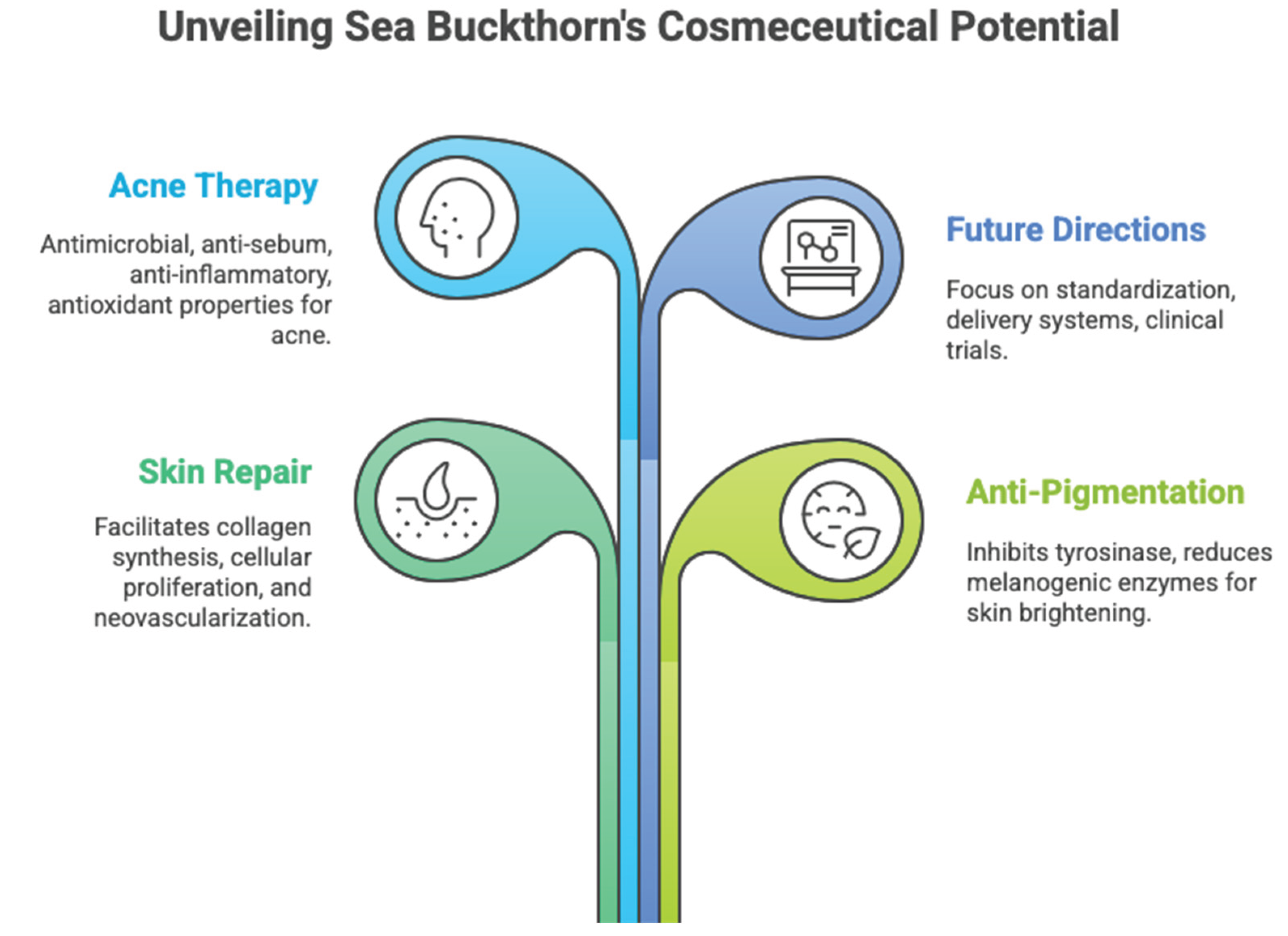
Figure 1.
Unveiling Sea Buckthorn’s Cosmeceutical Potential.
Disclaimer/Publisher’s Note: The statements, opinions and data contained in all publications are solely those of the individual author(s) and contributor(s) and not of MDPI and/or the editor(s). MDPI and/or the editor(s) disclaim responsibility for any injury to people or property resulting from any ideas, methods, instructions or products referred to in the content. |
© 2025 by the authors. Licensee MDPI, Basel, Switzerland. This article is an open access article distributed under the terms and conditions of the Creative Commons Attribution (CC BY) license (https://creativecommons.org/licenses/by/4.0/).
Copyright: This open access article is published under a Creative Commons CC BY 4.0 license, which permit the free download, distribution, and reuse, provided that the author and preprint are cited in any reuse.


