Preprint
Article

This version is not peer-reviewed.

Low-Temperature Hot-Water Treatment as a Green Strategy to Enhance the Self-cleaning and Antibacterial Performance of Sputtered TiO2 Thin Films

Submitted:

19 November 2025

Posted:

21 November 2025

You are already at the latest version

Abstract

Titanium dioxide (TiO₂) thin films were deposited by DC magnetron sputtering and subsequently treated in hot water at 50, 70 and 95 °C for 72h to investigate the influence of low-temperature on their structural optical and functional properties. XRD analysis revealed a progressive transformation from amorphous to anatase phase with increasing treatment temperature, accompanied by an increase in crystallite size from 5.2 to 15.1 nm. FT-IR spectroscopy confirmed enhanced surface hydroxylation, while contact-angle measurements showed a decrease from 77.4° to 19.7°, indicating a significant improvement in superior wettability. The transmittance spectroscopy revealed a slight narrowing of the optical band gap from 3.34 to 3.21 eV, consistent with improved visible-light absorption. Photocatalytic tests using the Resazurin indicator demonstrated that the film treated at 95 °C exhibited the highest activity, achieving a time to bleach of 245 s three times faster than treated at 50°C and twice as fast as treated at 70°C. Under low-intensity solar irradiation, the same sample achieved complete E. coli inactivation within 90 min. These improvements are attributed to increased crystallinity, surface hydroxyl density, and enhanced ROS generation. Overall, this study demonstrates that mild hot-water treatment is an effective, substrate-friendly route to enhance TiO₂ film wettability and multifunctional performance, enabling the fabrication of self-cleaning and antibacterial coatings on fragile materials such as plastics and textiles.

Keywords: 
;  ;  ;  ;  ;  

1. Introduction

TiO₂ (titanium dioxide) has received extensive interest over the last several years for environmental and antibacterial applications because of its strong oxidative ability, stability, non-toxicity, and low cost [1,2]. Its ability to generate reactive oxygen species (ROS) when illuminated makes TiO₂ an active photocatalyst for removing organic pollutants and bacterial inactivation [3,4]. Due to its photocatalytic reactivity, TiO₂ is widely used for self-cleaning, antifogging, and photocatalytic coatings for water treatment and antimicrobial surfaces [5,6]. Many physical and chemical depositions methods have been used to prepare TiO₂ films containing dip-coating, spin-coating, sol-gel, spray pyrolysis, and deposition by electrophoretic deposition [7,8,9,10]. However, these conventional solution-based methods often suffer from non-uniform surface morphology, poor adhesion, non-reproducibility, and necessitate heat treatment above 350 °C to reach crystalline anatase phase TiO₂ [11,12]. These high temperature treatments limit their application on fragile or flexible substrates such as polymers, plastics, and textiles, which are damaged by thermal heat. In contrast, compared to colloidal coating, magnetron sputtering provides a useful and low-temperature physical vapor deposition route that allowing for control film thickness, composition, and uniformity while promoting strong adhesion to the substrate[13,14]. However, sputtered TiO₂ films are often amorphous as-deposited and therefore necessitate a subsequent crystallization treatment to improve their photocatalytic performance [15,16,17]. Conventional annealing treatments such as calcination may not be appropriate for temperature sensitive substrates, motivating the examination of low-temperature crystallization strategies. An attractive alternative is hot water assisted or mild hydrothermal treatments have appeared as a promising ecofriendly alternative to high-temperature calcination as a means to promote the amorphous to anatase transition of TiO₂ nanotubes and nanopowders [18,19,20]. This aqueous treatment enables the development of hydroxylated anatase phases via dissolution-precipitation processes, leads to a significant increase in the density of surface –OH groups, and enables improved wettability and photocatalytic performance [21]. For instance, the hydrothermal treatment (≤100 °C) has been shown to improve cristallinity anatase density and hence photocatalytic activity performance under visible-light irradiation. Although sputtered TiO2 films have been extensively studied, reports addressing the role of post-deposition hot-water treatment in optimizing their performance for environmental applications remains insufficiently explored.
In the current study, TiO₂ thin films were deposited using DC magnetron sputtering, and then used hot-water treatments at different temperature as a post-treatment to investigate their microstructure, optical absorption, crystallographic properties, and photocatalytic activity. This study contributes to the knowledge of modifying sputtered TiO₂ at low temperatures, while providing a sustainable pathway for producing self-cleaning and antibacterial coatings that are applicable to fragile substrates such as plastics and textile. We consider that the current study represents an additional step toward the development of optimized smart materials based on titanium oxide use in large-scale.

2. Experimental

2.1. Preparation samples and characterization methods

The quartz slides (GVB, Germany) substrates were previously cleaned by sonication in acetone, ethanol, and deionized water (10 min for each step), and then dried in a N2 stream. The TiO2 films were sputtered on quartz slides from a Ti-target (99.999% purity, Lesker Ltd, UK) 2 inches diameter at 308 mA and applying a bias voltage of 586 V (108 W) in an atmosphere of O2 of 0.45 Pa. The target-substrate distance was fixed at 100 mm. The TiO2 films sputtered on Si-wafers were analyzed by profilometry to determine the TiO2 thickness as a function of sputtering time (Alphastep500, TENCOR), deposition times up to 5 min for TiO2 lead to the film thicknesses of 40 nm. Further details on the deposition conditions, structural and morphological analysis can be found in our previous work [22] .
During film deposition, the substrate temperature was maintained below 40 °C using a substrate holder (EpiCentre) equipped with a resistance heater and a temperature controller system, making the process suitable for temperature-sensitive substrates such as plastic. After deposition, the samples were immersed into deionized water at neutral pH. They were then either left untreated or subjected to hot water treatment at 50, 70 and 95°C for 72 hours, and designated as S0, S1, S2 and S3 respectively. This treatment is notable to promote hydroxylation, surface rearrangement, and the growth of nanostructured anatase phases [19,23].
The film morphology was studied using a Field Emission Scanning Electron Microscope (FESEM) of Ziess make Sigma 300 model with a magnification of 100.00 KX zoom. The crystallographic phase was carried out by means of an X’Pert diffractometer (Cu Kα radiation, λ = 1.5409 Å, Philips, Delft, Netherlands). The transmittance spectra were recorded using a Perkin Elmer Lambda 950 UV/VIS spectrometer to evaluate the optical properties and estimate the band gap. The Fourier transform infrared spectroscopy (FTIR) spectra were recorded on an INVENIO-R 329 spectrometer. The contact angle were measured by means of a Data Physics OCA 35 instrument following the Sessile’s method for the analysis of water droplets by this technique

2.2. Photocatalyst activity and antibacterial properties

Photocatalytic activity of the samples (S0, S1, S2 and S3) was inspected using the Resazurin (Rz) (Sigma–Aldrich) indicator ink method, as adapted from Mills et al. [24,25]. The samples were, cleaned with ethanol, coated with the ink by hand using a wire wound rod (RK Print, K-bar #3). Photocatalytic measurements were then made by UV-A illumination (λmax = 352 nm, ~2 mW·cm⁻2) using a Blak-Ray® XX-15 lamp. As the Rz layer was irradiated, it gradually changed color from blue to pink, which showed photocatalytic reduction of Resazurin to Resorufin on the TiO₂ surface. During this irradiation process, digital pictures were taken with a hand-held digital scanner. The resulting RGB (red, green, blue) values from the images were used to quantify the surface colour change and assess the photocatalytic performance.
The antibacterial properties was carried as reported previously [24]. Escherichia coli K12 ATCC23716 bacteria were obtained from the Deutsche Sammlung von Mikroorganismen and Zellkulturen GmbH (DSMZ) ATCC23716, Braunschweig, Germany. The 2 mL culture aliquots with an initial concentration of ~5 106 Colony-forming unit per milliliter (CFU mL-1) in NaCl/KCl (pH 7) were placed on the samples. The samples were irradiated in the cavity of suntest solar simulator (Atlas, Heraeus, Germany) cavity tuned at 50 mW/cm2, which was additionally equipped with a cut-off filter to block wavelengths below 310 nm. No germicidal wavelength were employed. Sampling was carried out by taking the reaction mixture prior to illumination and at 30 min intervals up to 6h. For each sampling point, E. coli survival was determined as log(CFU/CFU0), where CFU0 is the initial colony at time 0 and CFU the count at time t. Replica samples were incubated at 37 ◦C for 24 h at the end of each bacterial inactivation cycle. No bacterial re-growth was noticed. All experiments were carried out at 22 ± 2◦C.

3. Results and discussion

3.1. FE-SEM of Thermal Treated TiO2 Films

The evolution of surface topography by EF-SEM of TiO2 films was illustrated in Figure 1(a, b, c and d) and the experimental results evidently indicated that surface topography depends strongly on the thermal treatment. Figure 3a corresponding the untreated sample S0, shows the smooth surface among these films. Increasing thermal treatment of TiO2 thin film up to 95°C (sample S3) shows the particles size between 15.9 nm to 29.1 nm. On the other hand, thermal treatment at 50°C and 70°C had grown particles ranging from 5.7 nm to 9.0 nm and 9.1 nm to 13.5 nm. It was found that the particle size increases as the thermal temperature increased. The average particle size lies in the range of nm, which is slightly larger than that obtained from the XRD results.

3.2. X-Ray Diffraction Analysis

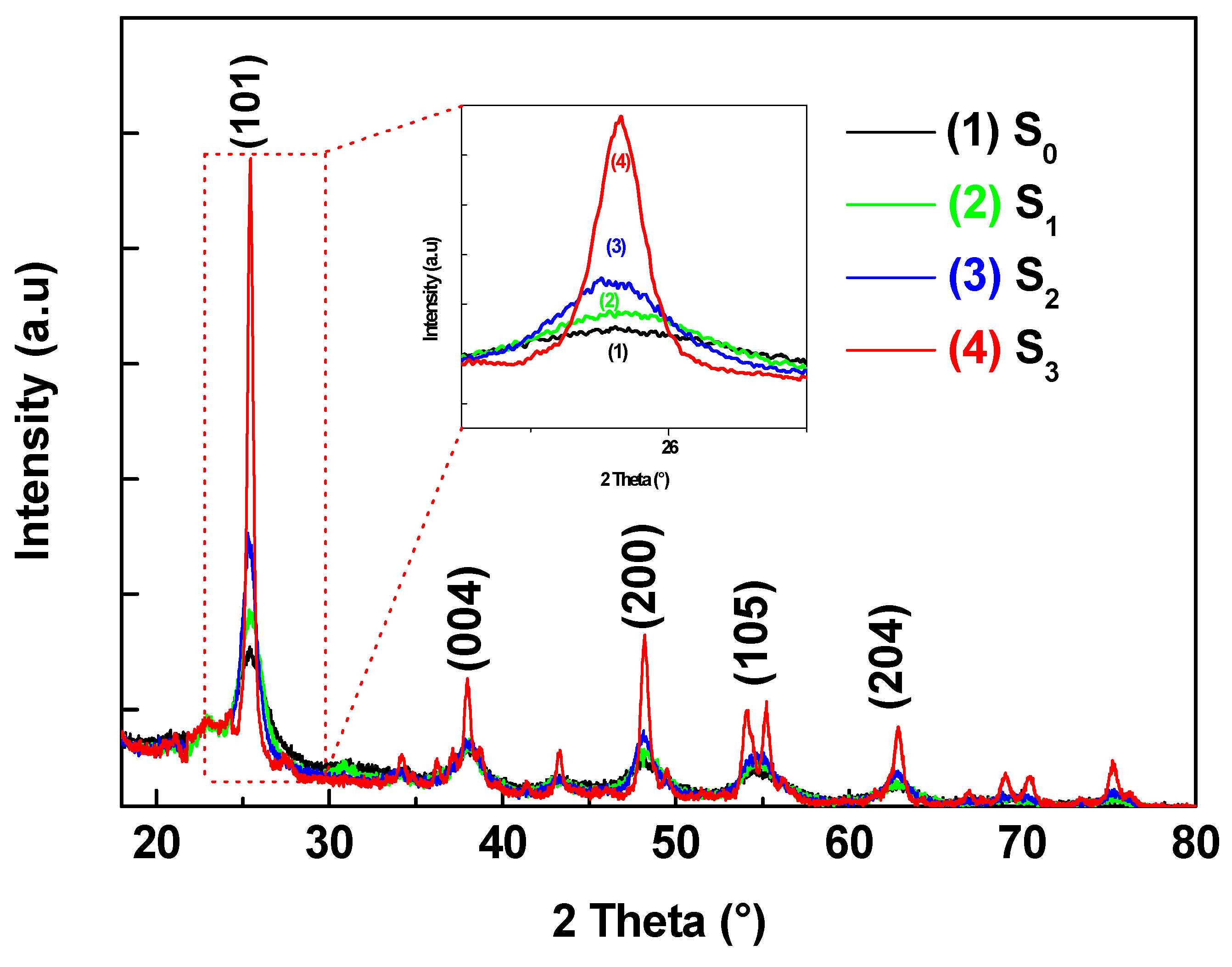
Figure 2 exhibits the X-ray diffraction pattern of untreated S0 and treated samples S1, S2 and S3 at different temperature. The XRD pattern of the untreated sample S0 exhibits low intensity and a broad shoulder around 24°–27°, indicating partial crystallization or low crystallinity. However, the crystallinity of the sputtered TiO₂ films significantly improved with increase heating up to 95 °C for 72h (sample S3), as evidenced by the sharper and more intense diffraction peaks at 2θ = 25.4°, 37.9°, 48.1°, 54.1°, and 62.7°, corresponding to the (101), (004), (200), (105), and (204) planes, respectively. These peaks are characteristic of the anatase TiO₂ phase (inset Figure 2). Exposure of the samples to hot water at 50 °C, 70 °C, and 95 °C led to the formation and growth of anatase crystallites with average crystallite sizes of 5.23 nm, 8.05 nm, and 15.1 nm, respectively. As calculated using the Scherrer equation: D = 0.89λ/(β cos θ), where λ is the X-ray wave length, β is the full width half maximum (FWHM) of the (101) peak, θ is the Bragg diffraction angle. The XRD intensity ration [ I 004 ] [ I ( 101 ) ] were also calculated and are reported in Table 1. The both D values and the rations increased by increasing exposure thermal confirming the significance of hot water treatment on the growth of anatase TiO2 crystallites. The anatase phase is mostly desirable due to its superior photoactivity in photocatalytic applications [26,27].

3.3. UV-vis Spectroscopy Analysis and Band gap Calculation
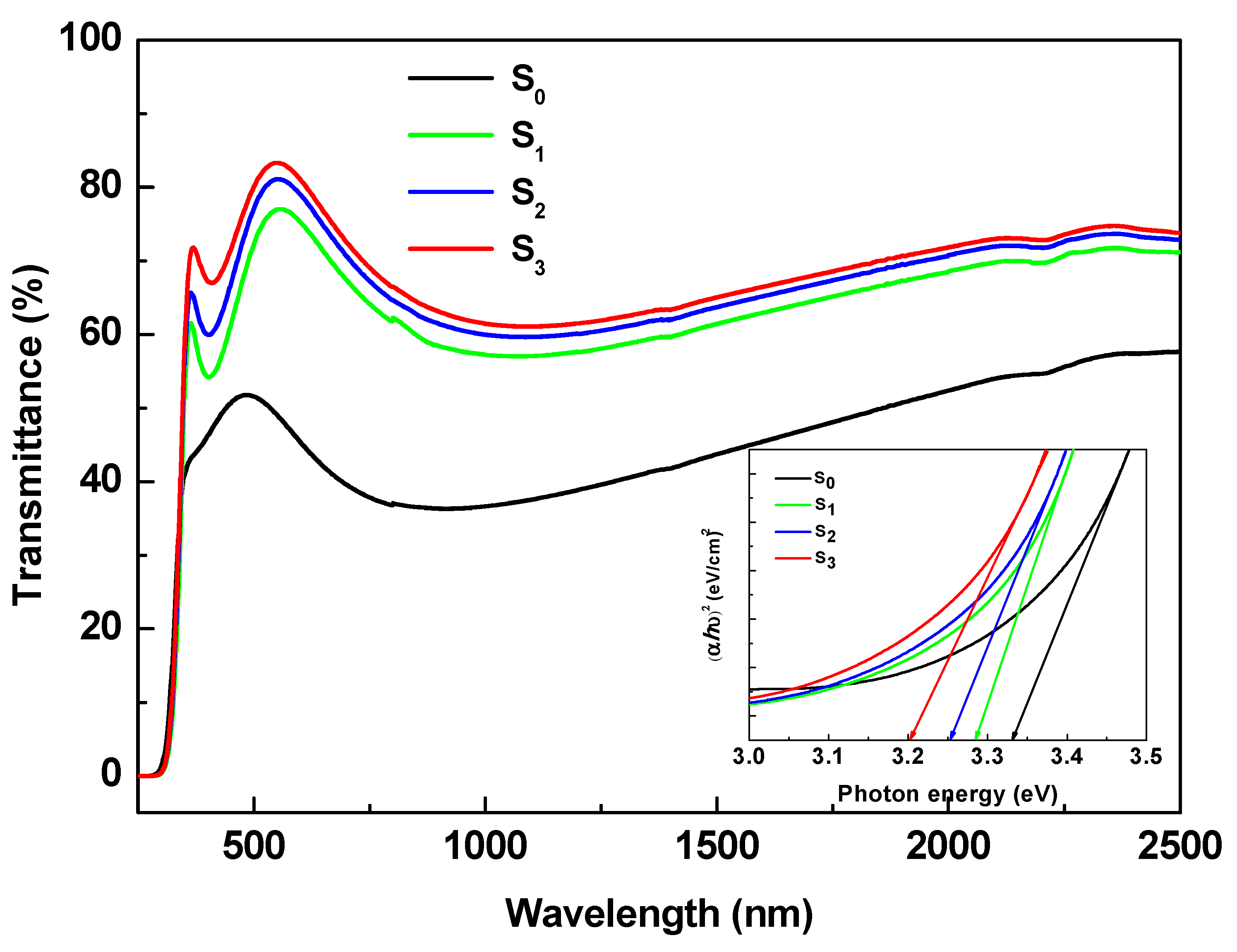
The transmittance spectra of the samples are shown in Figure 3. The UV–Vis transmission spectra of treated samples for different temperature exhibit a progressive rise in visible transmittance near 550 nm and a slight redshift of the absorption edge with increasing temperature. The untreated sample S0 exhibits lower transparency ≈49 % and a wider optical band gap 3.34 eV, whereas the samples treated S1, S2 and S3 show higher transmittance values 76.97, 81.03 and 83.3 % and narrower optical band gaps of 3.28, 3.26, and 3.21 eV respectively (inset Figure 3). These values are slightly above the bulk anatase band gap 3.20 eV but lower than the typical band gap of amorphous titania ~3.40 eV [28,29], confirming that hot-water-assisted drives a change from amorphous to anatase phase. Consequently, the hot-water-assisted enhances visible transparency simultaneously promotes photocatalytic activity under low-intensity solar-simulated illumination, as confirmed by the subsequent photocatalytic activity surface and bacterial inactivation results.
Figure 3. UV-vis transmittance spectrum of sputtered TiO2 films: untreated and treated with hot water for 72h with various degree temperature treatment.
Preprints 185904 g003
Inset: indirect band gap estimation of as-deposited films.

3.4. Fourier Transform Infrared Spectroscopy Analysis (FT-IR)

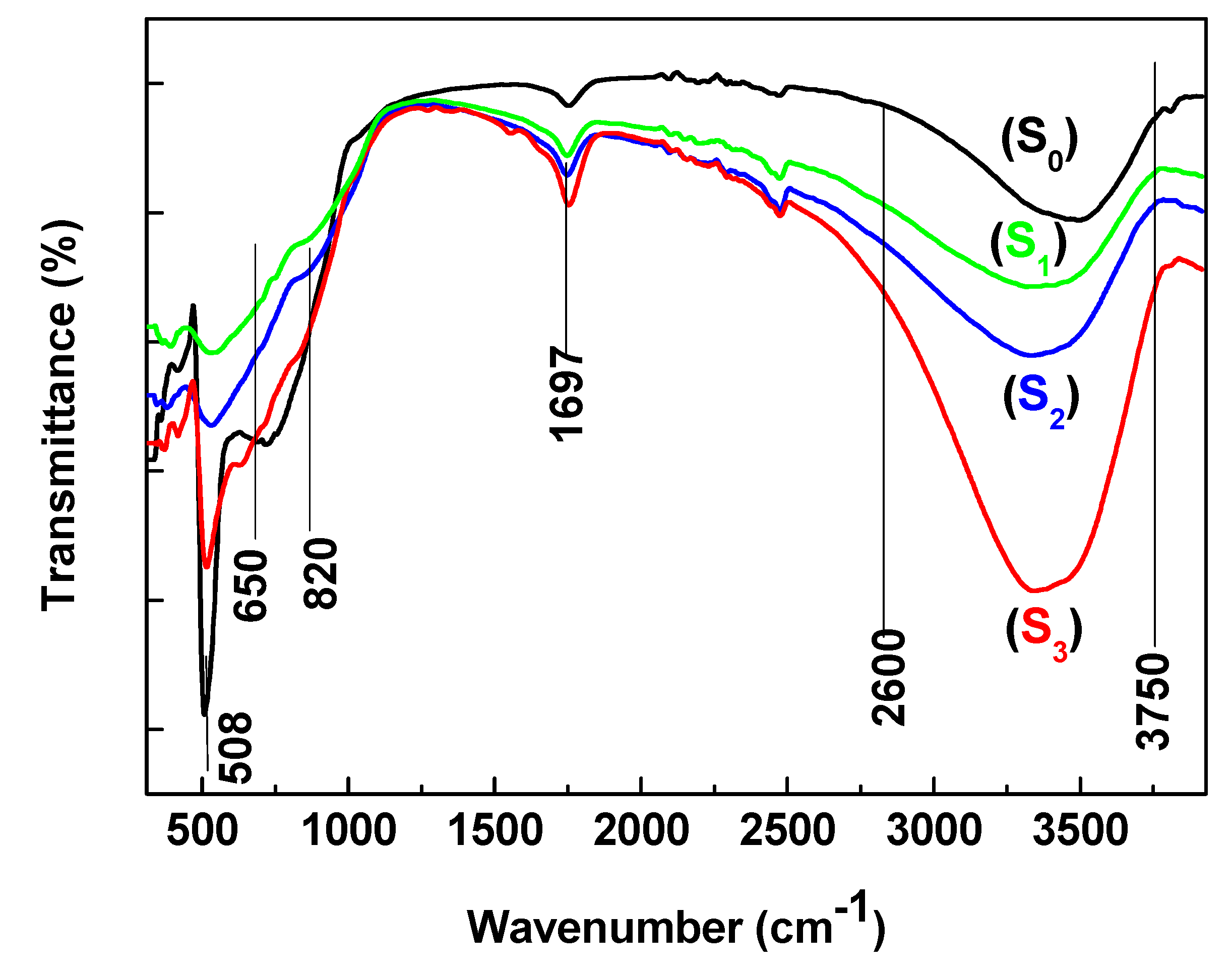
Figure 4 presents the FT-IR spectra of sputtered TiO₂ thin films at different temperature for 72h. The untreated sample S0 spectra exhibit the characteristic Ti–O stretching and Ti–O–Ti bending vibrations within the wavenumber range of 820–650 cm⁻¹ [30]. A strong absorption peak at 508 cm⁻¹ is assigned to Ti–O–Ti bond vibrations. The sharp band observed at 1697 cm⁻¹ corresponds to the stretching vibration of hydroxyl groups, while the broad absorption in the 2600–3750 cm⁻¹ region is attributed to O–H stretching of adsorbed water molecules [31]. Upon prolonged heating to 95°C, as observed for sample S3, the intensity of water absorption bands increases, while the Ti–O–Ti vibration bands become less prominent. This indicates that the thermally treatment sputtered TiO₂ film surface becomes increasingly hydroxylated and water-enriched with increase temperature treatment. The enhanced hydroxylation, reflected by stronger O–H bands in the FT-IR spectra, suggests a higher surface density of hydroxyl groups, which act as active sites for oxygen species generation, thereby enhancing the photocatalytic performance of the TiO₂ coated samples.

3.5. Contact Angle Behavior of Thermal Treated TiO₂ Films

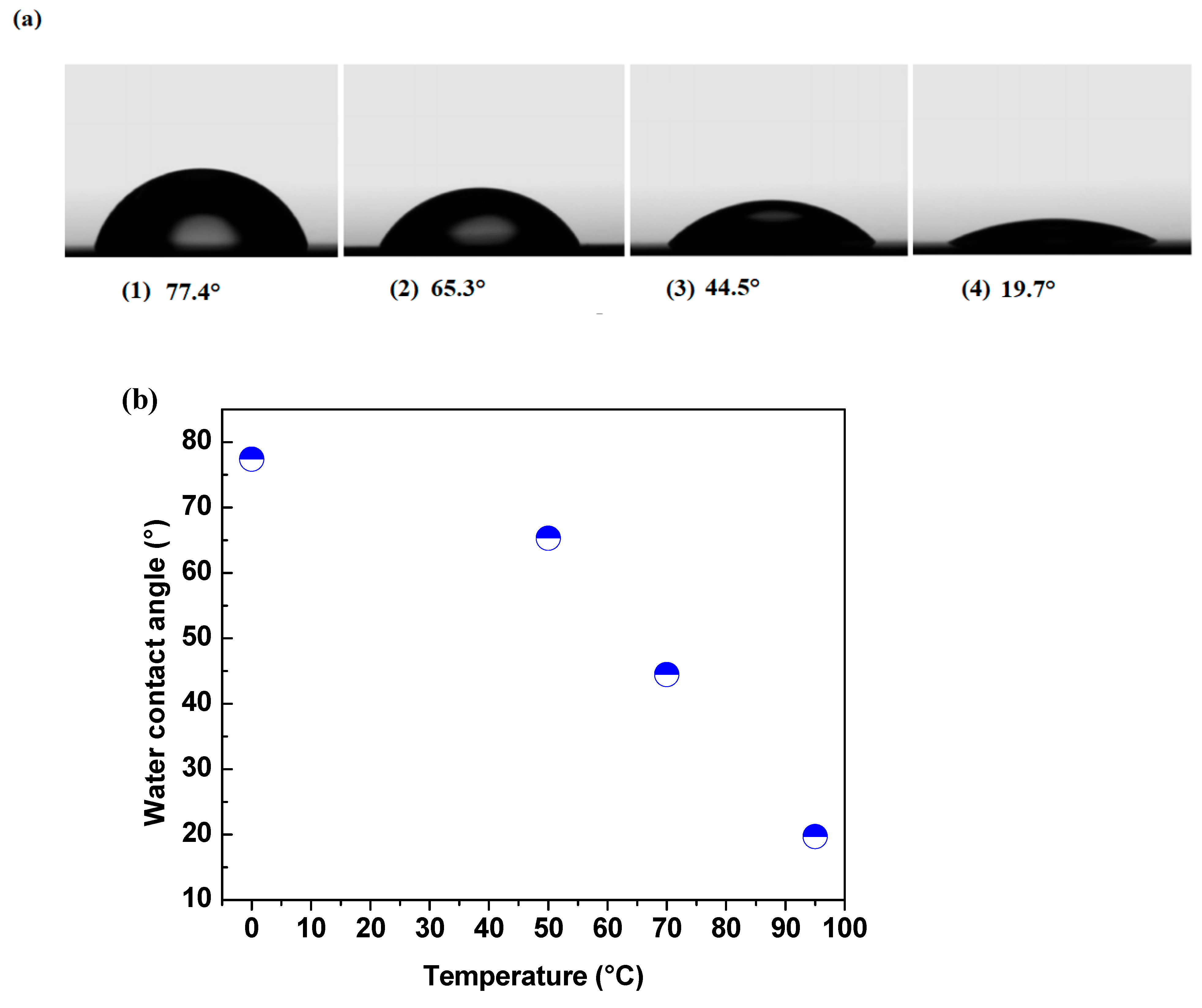
Figure 5a presents photographs of water droplets on both untreated and thermally treated samples, while Figure 5b illustrates the variation of the contact angle as a function of treatment temperature. The surface wettability was calculated by measuring the contact angle, which provides insight into the hydrophilic or hydrophobic of the surface. TiO2 is a well-known to decrease the hydrophobicity due to the formation of surface hydroxyl groups [21,32]. The values contact angles for samples S0, S1, S2, and S3 are 77.4°, 65.3°, 44.5°, and 19.7°, respectively. These results clearly exhibit that the water contact angle decreases progressively with increasing treatment temperature, indicating a gradual enhancement of surface hydrophilicity. Subsequently, the enhancement of surface hydroxyl groups, as consistent IR results, favorites the formation of hydroxyl radicals (OH) which are crucial in the photocatalytic degradation process. Therefore, the superior wettability character of S3 directly relates with its superior photocatalytic activity compared to the other samples.

3.6. Photocatalyst Activity and Bacterial Inactivation

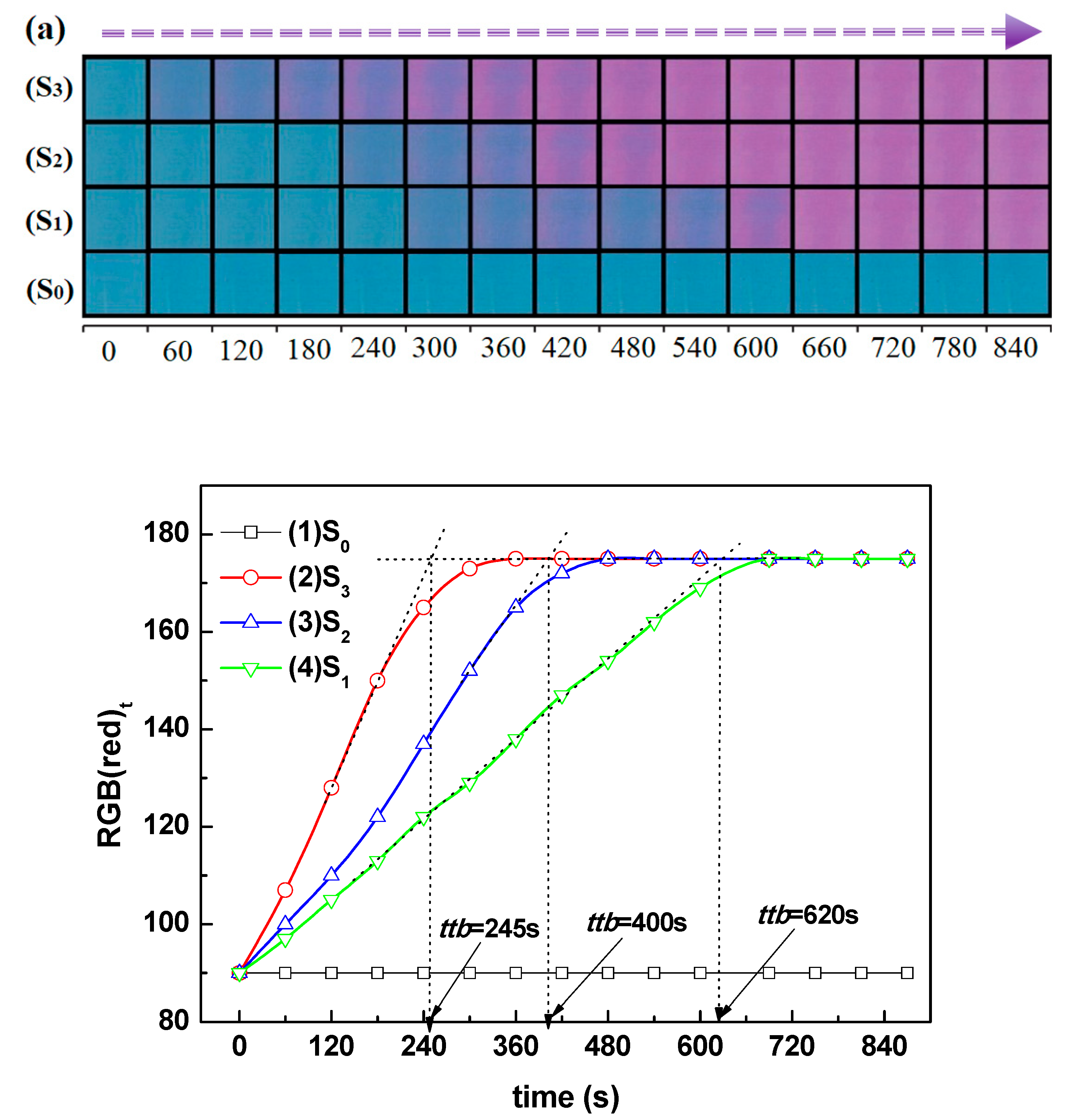
Figure 6a presents digital images of the ink-coated samples S0, S1, S2 and S3 recorded under UV-A irradiation (2 mW cm⁻2) at various exposure times ranging from 0 to 840 s, showing the progressive photodegradation behavior of the samples. A plot of variation of the RGB (red)t values extracted from the images in Figure 6a, are illustrated in Figure 6b. The values of time to bleach (ttb) for samples S1, S2 and S3 derived from Fig.6b are 620, 400 and 245s, respectively. These results clearly indicate that the sample S3 exhibited the highest photocatalytic activity among all samples. In particular, the time to bleach (ttb) of sample S3 is approximately three times shorter than that of sample S1 and twice time as fast as that of sample S2. This enhanced performance is mainly related to the formation of the anatase phase with lowest band gap which typically demonstrates superior photocatalytic properties than amorphous phase due to its enhanced charge separation and higher surface reactivity, as noted in earlier studies[27,33].
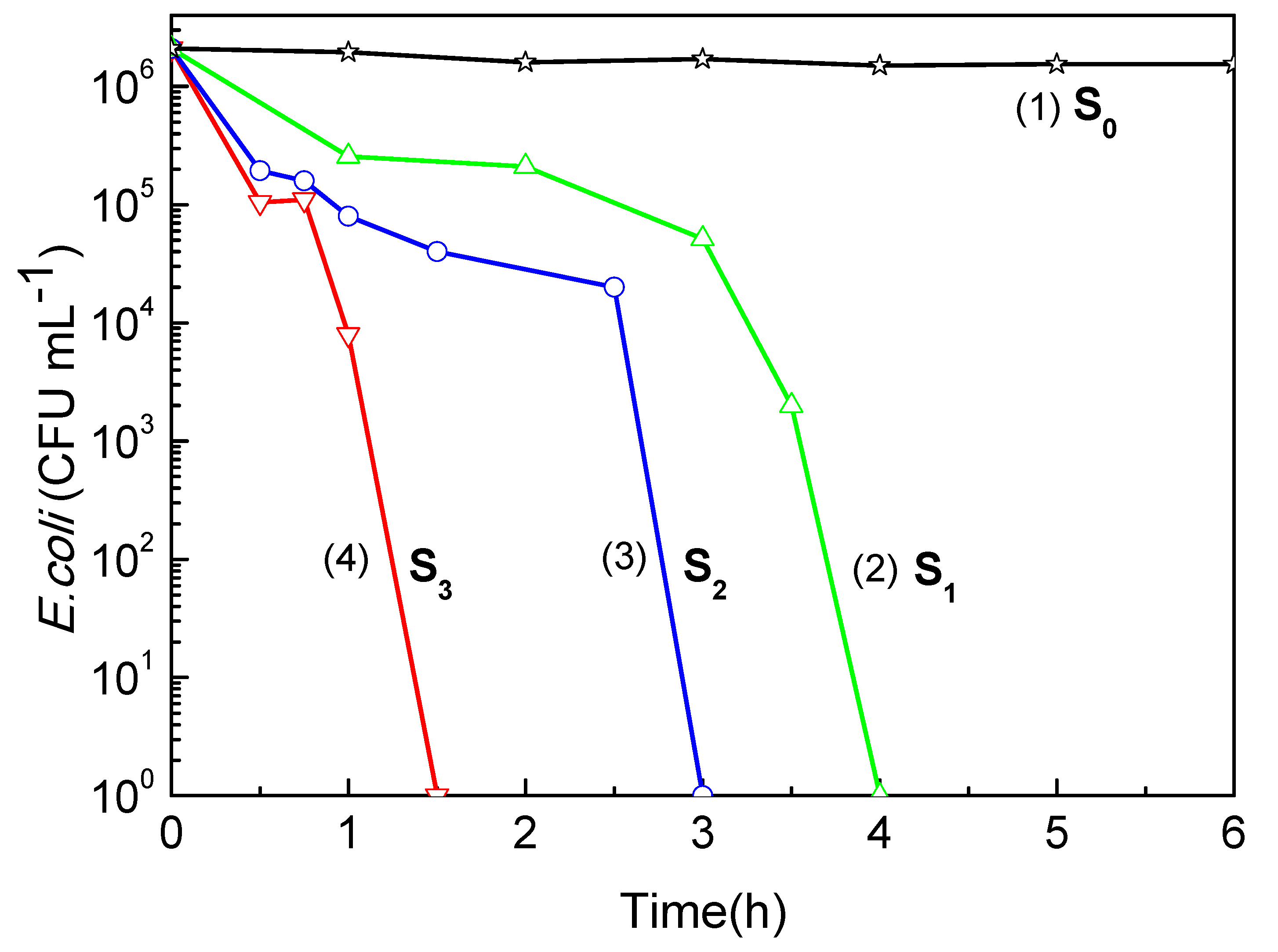
Figure 7 presents the E. coli inactivation kinetics at the interfaces of sputtered TiO2 samples prepared under different conditions. In the absence of TiO2 under Osram Lumilux lamp irradiation, no bacterial inactivation was observed (data no show). The untreated sample S0 presents the almost negligible disinfection (Fig.7. trace 1). For samples S1 and S2, the E. coli inactivation kinetics enhanced progressively leading at high temperature treatment of samples to bacterial inactivation (Figure 7. trace 2 and 3). In contrast, sample S3 shows the highest bacterial inactivation efficiency reaching complete disinfection within 90 min, demonstrating the positive effect of thermal modification on antibacterial performance (Figure 7. trace 4).
In fact, the samples (S1, S2 and S3) exhibit similar bacterial interaction behavior under low-intensity solar irradiation. For sample S3, two different phases were observed: an initial slow phase due to the gradual attack of the bacterial cell membrane by photogenerated reactive oxygen species (ROS), leading to membrane damage [34,35,36]. Then, a fast inactivation phase occurred, within approximately 45 min, corresponding to cell wall damage and coenzyme A oxidation, which disturbs respiratory leading to cell death [37,38,39]. Similar behavior was observed for samples S1 and S2 with delayed phase to 90 and 120 min, respectively. Therefore, this successive process explains why the photocatalytic activity kinetics are faster than the bacterial inactivation kinetics, as the initial oxidative attack on the cell membrane needs a longer induction time before complete cell damage occurs.
The sample S3 showed the highest photocatalytic efficiency due to several properties. As revealed previously analysis, this sample presents a high cristallinity anatase phase and wettability with lowest band gap, which could affect directly to ROS production hence the phtocatalytic performance.
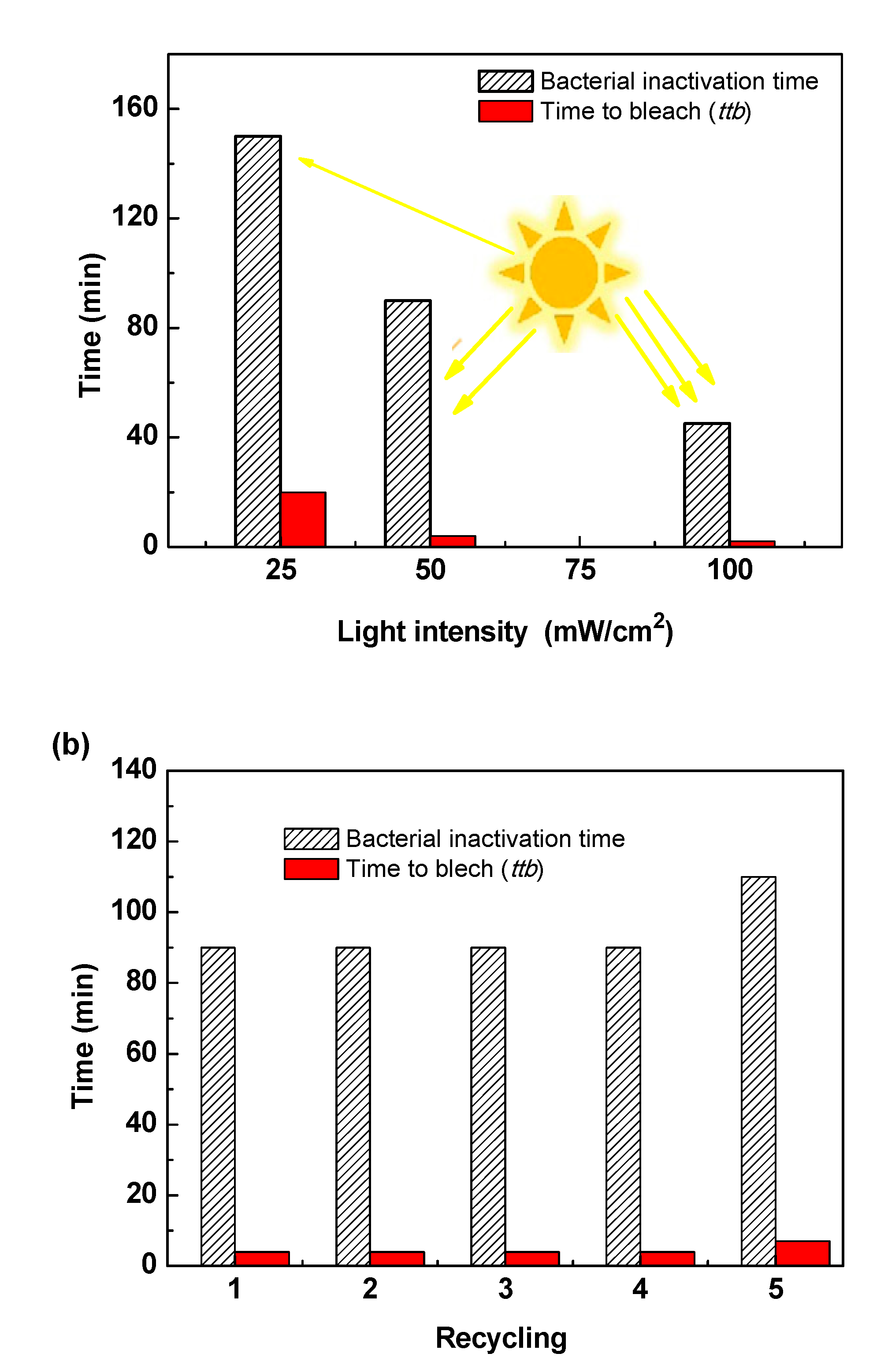
Figure 8a exhibits the time to bleach (ttb) and E.coli inactivation behavior with the sample S3 under different light intensities: 100, 50 and 25 mW/cm2. The time to bleach and bacterial inactivation were seen to shorten under 100 mW/cm2 compared to 50 and 25 mW/cm2. Figure 8b shows the recycling of the sample S3 against photocatalyst activity and bacterial inactivation over five independent cycles under solar-simulated light (50 mW/cm2). This proves the stability of the prepared material and its sustainable use over four cycles without loss of activity.

4. Conclusion

The actual study showed the significant influence of hot-water treatment on the structural, optical, and functional properties of sputtered TiO₂ thin films. Increasing the treatment temperature from 50 to 95 °C improved crystallinity, surface hydroxylation, and hydrophilicity, as confirmed by XRD, FT-IR, and contact angle analyses. The optimized film treated at 95 °C for 72h exhibited superior photocatalytic activity and bacterial inactivation, achieving a time to bleach of 245 s and complete E. coli inactivation within 90 min. This improvement is attributed to the formation of the anatase phase, a narrowing of the optical band gap hence enhanced reactive oxygen species (ROS) generation. The bacterial inactivation followed a two-phase mechanism involving an initial membrane oxidation phase and subsequent rapid cell destruction. Furthermore, the treated films displayed excellent stability and reusability over multiple cycles. Notably, the hot water treatment used in this work operates at low temperature, making it particularly suitable for TiO2 coating thermally fragile substrates such as plastics and textile without making degradation or deformation. Overall, this work highlights the efficiency of low-temperature thermal treatment in improving the multifunctional performance of sputtered TiO₂, providing great potential for self-cleaning and antibacterial surface applications on fragile and flexible substrates.

References

  1. Mao, T.; Zha, J.; Hu, Y.; Chen, Q.; Zhang, J.; Luo, X. Research Progress of TiO2 Modification and Photodegradation of Organic Pollutants. Inorganics 2024, 12, 178. [Google Scholar] [CrossRef]
  2. Dharma, H.N.C.; Jaafar, J.; Widiastuti, N.; Matsuyama, H.; Rajabsadeh, S.; Othman, M.H.D.; Rahman, M.A.; Jafri, N.N.M.; Suhaimin, N.S.; Nasir, A.M.; et al. A Review of Titanium Dioxide (TiO2)-Based Photocatalyst for Oilfield-Produced Water Treatment. Membranes 2022, 12, 345. [Google Scholar] [CrossRef] [PubMed]
  3. Rueda-Marquez, J.J.; Levchuk, I.; Fernández Ibañez, P.; Sillanpää, M. A Critical Review on Application of Photocatalysis for Toxicity Reduction of Real Wastewaters. Journal of Cleaner Production 2020, 258, 120694. [Google Scholar] [CrossRef]
  4. Abbasi Moud, A.; Abbasi Moud, A. Cellulose Nanocrystals (CNC) Liquid Crystalline State in Suspension: An Overview. Applied Biosciences 2022, 1, 244–278. [Google Scholar] [CrossRef]
  5. Pant, B.; Park, M.; Park, S.-J. Recent Advances in TiO2 Films Prepared by Sol-Gel Methods for Photocatalytic Degradation of Organic Pollutants and Antibacterial Activities. Coatings 2019, 9, 613. [Google Scholar] [CrossRef]
  6. Iqbal, N.; Pant, T.; Rohra, N.; Goyal, A.; Lawrence, M.; Dey, A.; Ganguly, P. Nanobiotechnology in Bone Tissue Engineering Applications: Recent Advances and Future Perspectives. Applied Biosciences 2023, 2, 617–638. [Google Scholar] [CrossRef]
  7. Faustini, M.; Louis, B.; Albouy, P.A.; Kuemmel, M.; Grosso, D. Preparation of Sol−Gel Films by Dip-Coating in Extreme Conditions. J. Phys. Chem. C 2010, 114, 7637–7645. [Google Scholar] [CrossRef]
  8. Sassi, S.; Bouich, A.; Hajjaji, A.; Khezami, L.; Bessais, B.; Soucase, B.M. Cu-Doped TiO2 Thin Films by Spin Coating: Investigation of Structural and Optical Properties. Inorganics 2024, 12, 188. [Google Scholar] [CrossRef]
  9. Han, Z.; Chang, V.W.C.; Zhang, L.; Tse, M.S.; Tan, O.K.; Hildemann, L.M. Preparation of TiO2-Coated Polyester Fiber Filter by Spray-Coating and Its Photocatalytic Degradation of Gaseous Formaldehyde. Aerosol Air Qual. Res. 2012, 12, 1327–1335. [Google Scholar] [CrossRef]
  10. Dhiflaoui, H.; Jaber, N.B.; Lazar, F.S.; Faure, J.; Larbi, A.B.C.; Benhayoune, H. Effect of Annealing Temperature on the Structural and Mechanical Properties of Coatings Prepared by Electrophoretic Deposition of TiO2 Nanoparticles. Thin Solid Films 2017, 638, 201–212. [Google Scholar] [CrossRef]
  11. He, L.; Zahn, D.R.T.; Madeira, T.I. Photocatalytic Performance of Sol-Gel Prepared TiO2 Thin Films Annealed at Various Temperatures. Materials 2023, 16, 5494. [Google Scholar] [CrossRef] [PubMed]
  12. Wang, Y.; Ge-Zhang, S.; Mu, P.; Wang, X.; Li, S.; Qiao, L.; Mu, H. Advances in Sol-Gel-Based Superhydrophobic Coatings for Wood: A Review. IJMS 2023, 24, 9675. [Google Scholar] [CrossRef] [PubMed]
  13. Wiatrowski, A.; Wojcieszak, D.; Mazur, M.; Kaczmarek, D.; Domaradzki, J.; Kalisz, M.; Kijaszek, W.; Pokora, P.; Mańkowska, E.; Lubanska, A.; et al. Photocatalytic Coatings Based on TiOx for Application on Flexible Glass for Photovoltaic Panels. J. of Materi Eng and Perform 2022, 31, 6998–7008. [Google Scholar] [CrossRef]
  14. Silva, D.; Monteiro, C.S.; Silva, S.O.; Frazão, O.; Pinto, J.V.; Raposo, M.; Ribeiro, P.A.; Sério, S. Sputtering Deposition of TiO2 Thin Film Coatings for Fiber Optic Sensors. Photonics 2022, 9, 342. [Google Scholar] [CrossRef]
  15. Mei, F.; Yang, Z.; Wu, L.; Zhou, Y.; Zhang, D. Influence of Annealing Temperature on Structure and Photocatalytic Activity of TiO2 Thin Films Prepared by DC Reactive Magnetron Sputtering Method. Wuhan Univ. J. Nat. Sci. 2012, 17, 309–314. [Google Scholar] [CrossRef]
  16. Asad, J.; Afzal, N.; Rafique, M.; Rizwan, M.; Yasin, M.W. Annealing Effect on DC Magnetron Sputtered TiO2 Film: Theoretical and Experimental Investigations. Arab J Sci Eng 2025, 50, 571–581. [Google Scholar] [CrossRef]
  17. Verma, R.; Kumar, V.; Kango, S.; Khilla, A.; Gupta, R. Microstructural, Wettability, and Corrosion Behaviour of TiO2 Thin Film Sputtered on Aluminium. J. Cent. South Univ. 2024, 31, 2210–2224. [Google Scholar] [CrossRef]
  18. Li, N.; Zhang, Q.; Joo, J.B.; Lu, Z.; Dahl, M.; Gan, Y.; Yin, Y. Water-Assisted Crystallization of Mesoporous Anatase TiO2 Nanospheres. Nanoscale 2016, 8, 9113–9117. [Google Scholar] [CrossRef]
  19. Assaker, K.; Carteret, C.; Lebeau, B.; Marichal, C.; Vidal, L.; Stébé, M.-J.; Blin, J.-L. Water-Catalyzed Low-Temperature Transformation from Amorphous to Semi-Crystalline Phase of Ordered Mesoporous Titania Framework. ACS Sustainable Chem. Eng. 2014, 2, 120–125. [Google Scholar] [CrossRef]
  20. Wang, X.; Zhang, D.; Xiang, Q.; Zhong, Z.; Liao, Y. Review of Water-Assisted Crystallization for TiO2 Nanotubes. Nano-Micro Lett. 2018, 10, 77. [Google Scholar] [CrossRef]
  21. Park, S.; Yoon, Y.; Lee, S.; Park, T.; Kim, K.; Hong, J. Thermoinduced and Photoinduced Sustainable Hydrophilic Surface of Sputtered-TiO2 Thin Film. Coatings 2021, 11, 1360. [Google Scholar] [CrossRef]
  22. Baghriche, O.; Rtimi, S.; Pulgarin, C.; Sanjines, R.; Kiwi, J. Effect of the Spectral Properties of TiO2, Cu, TiO2/Cu Sputtered Films on the Bacterial Inactivation under Low Intensity Actinic Light. Journal of Photochemistry and Photobiology A: Chemistry 2013, 251, 50–56. [Google Scholar] [CrossRef]
  23. Seremak, W.; Baszczuk, A.; Jasiorski, M.; Gibas, A.; Winnicki, M. Photocatalytic Activity Enhancement of Low-Pressure Cold-Sprayed TiO2 Coatings Induced by Long-Term Water Vapor Exposure. J Therm Spray Tech 2021, 30, 1827–1836. [Google Scholar] [CrossRef]
  24. Mills, A.; Hepburn, J.; Hazafy, D.; O’Rourke, C.; Krysa, J.; Baudys, M.; Zlamal, M.; Bartkova, H.; Hill, C.E.; Winn, K.R.; et al. A Simple, Inexpensive Method for the Rapid Testing of the Photocatalytic Activity of Self-Cleaning Surfaces. Journal of Photochemistry and Photobiology A: Chemistry 2013, 272, 18–20. [Google Scholar] [CrossRef]
  25. Mills, A.; Hepburn, J.; Hazafy, D.; O’Rourke, C.; Wells, N.; Krysa, J.; Baudys, M.; Zlamal, M.; Bartkova, H.; Hill, C.E.; et al. Photocatalytic Activity Indicator Inks for Probing a Wide Range of Surfaces. Journal of Photochemistry and Photobiology A: Chemistry 2014, 290, 63–71. [Google Scholar] [CrossRef]
  26. Milošević, I.; Rtimi, S.; Jayaprakash, A.; Van Driel, B.; Greenwood, B.; Aimable, A.; Senna, M.; Bowen, P. Synthesis and Characterization of Fluorinated Anatase Nanoparticles and Subsequent N-Doping for Efficient Visible Light Activated Photocatalysis. Colloids and Surfaces B: Biointerfaces 2018, 171, 445–450. [Google Scholar] [CrossRef]
  27. Stepanova, A.; Tite, T.; Ivanenko, I.; Enculescu, M.; Radu, C.; Culita, D.C.; Rostas, A.M.; Galca, A.C. TiO2 Phase Ratio’s Contribution to the Photocatalytic Activity. ACS Omega 2023, 8, 41664–41673. [Google Scholar] [CrossRef] [PubMed]
  28. Alaya, Y.; Souissi, R.; Toumi, M.; Madani, M.; El Mir, L.; Bouguila, N.; Alaya, S. Annealing Effect on the Physical Properties of TiO2 Thin Films Deposited by Spray Pyrolysis. RSC Adv. 2023, 13, 21852–21860. [Google Scholar] [CrossRef]
  29. Zeribi, F.; Attaf, A.; Derbali, A.; Saidi, H.; Benmebrouk, L.; Aida, M.S.; Dahnoun, M.; Nouadji, R.; Ezzaouia, H. Dependence of the Physical Properties of Titanium Dioxide (TiO2 ) Thin Films Grown by Sol-Gel (Spin-Coating) Process on Thickness. ECS J. Solid State Sci. Technol. 2022, 11, 023003. [Google Scholar] [CrossRef]
  30. Rahman, K.H.; Kar, A.K. Titanium-Di-Oxide (TiO2) Concentration-Dependent Optical and Morphological Properties of PAni-TiO2 Nanocomposite. Materials Science in Semiconductor Processing 2020, 105, 104745. [Google Scholar] [CrossRef]
  31. Krengvirat, W.; Sreekantan, S.; Mohd Noor, A.-F.; Negishi, N.; Kawamura, G.; Muto, H.; Matsuda, A. Low-Temperature Crystallization of TiO2 Nanotube Arrays via Hot Water Treatment and Their Photocatalytic Properties under Visible-Light Irradiation. Materials Chemistry and Physics 2013, 137, 991–998. [Google Scholar] [CrossRef]
  32. Hegyi, A.; Szilagyi, H.; Grebenișan, E.; Sandu, A.V.; Lăzărescu, A.-V.; Romila, C. Influence of TiO2 Nanoparticles Addition on the Hydrophilicity of Cementitious Composites Surfaces. Applied Sciences 2020, 10, 4501. [Google Scholar] [CrossRef]
  33. Tinoco Navarro, L.K.; Jaroslav, C. Enhancing Photocatalytic Properties of TiO2 Photocatalyst and Heterojunctions: A Comprehensive Review of the Impact of Biphasic Systems in Aerogels and Xerogels Synthesis, Methods, and Mechanisms for Environmental Applications. Gels 2023, 9, 976. [Google Scholar] [CrossRef]
  34. Juan, C.A.; Pérez De La Lastra, J.M.; Plou, F.J.; Pérez-Lebeña, E. The Chemistry of Reactive Oxygen Species (ROS) Revisited: Outlining Their Role in Biological Macromolecules (DNA, Lipids and Proteins) and Induced Pathologies. IJMS 2021, 22, 4642. [Google Scholar] [CrossRef]
  35. Matsunaga, T.; Tomoda, R.; Nakajima, T.; Wake, H. Photoelectrochemical Sterilization of Microbial Cells by Semiconductor Powders. FEMS Microbiology Letters 1985, 29, 211–214. [Google Scholar] [CrossRef]
  36. Patra, P.; Roy, S.; Sarkar, S.; Mitra, S.; Pradhan, S.; Debnath, N.; Goswami, A. Damage of Lipopolysaccharides in Outer Cell Membrane and Production of ROS-Mediated Stress within Bacteria Makes Nano Zinc Oxide a Bactericidal Agent. Appl Nanosci 2015, 5, 857–866. [Google Scholar] [CrossRef]
  37. Kubacka, A.; Diez, M.S.; Rojo, D.; Bargiela, R.; Ciordia, S.; Zapico, I.; Albar, J.P.; Barbas, C.; Martins Dos Santos, V.A.P.; Fernández-García, M.; et al. Understanding the Antimicrobial Mechanism of TiO2-Based Nanocomposite Films in a Pathogenic Bacterium. Sci Rep 2014, 4, 4134. [Google Scholar] [CrossRef] [PubMed]
  38. Foster, H.A.; Ditta, I.B.; Varghese, S.; Steele, A. Photocatalytic Disinfection Using Titanium Dioxide: Spectrum and Mechanism of Antimicrobial Activity. Appl Microbiol Biotechnol 2011, 90, 1847–1868. [Google Scholar] [CrossRef]
  39. Gao, M.; An, T.; Li, G.; Nie, X.; Yip, H.-Y.; Zhao, H.; Wong, P.-K. Genetic Studies of the Role of Fatty Acid and Coenzyme A in Photocatalytic Inactivation of Escherichia Coli. Water Research 2012, 46, 3951–3957. [Google Scholar] [CrossRef] [PubMed]
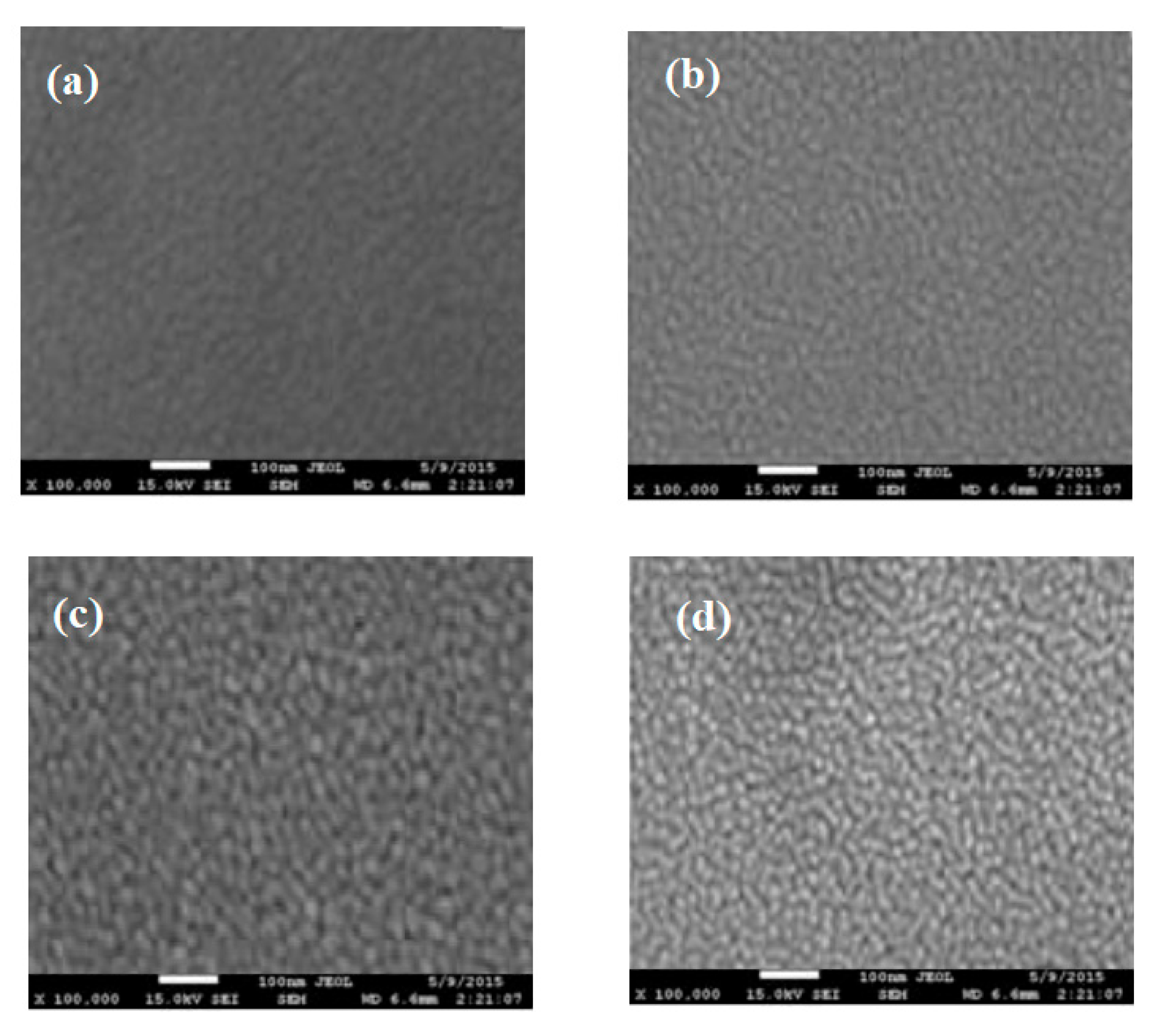
Figure 1. FE-SEM images of sputtered TiO2 thin films: (a) untreated sample S0 and hot water treated samples for 72h at: (b) S1: 50 °C, (c) S2; 70 °C and (d) S3; 95 °C.
Preprints 185904 g001
Figure 2. XRD patterns of sputtered TiO2 thin films: (1) untreated sample S0 and treated by hot water for 72h °C at: (2) S1: 50 °C, (3) S2: 70 °C; and (4) S3: 95 °C.
Preprints 185904 g002
Figure 4. FTIR spectra of sputtered TiO2 thin films: untreated and treated with hot water for 72h with various degree temperature treatment.
Preprints 185904 g004
Figure 5. (a), Photographs of water droplets on (1) untreated sample S0: 77.4°, and treated samples for 72h (2) S1: 65.3°, (3) S2: 44.5° and (4) S3: 19.7°. (b), Contact angle as a function of treatment temperature.
Preprints 185904 g005
Figure 6. (a) A series of images recorded at 60 s irradiation intervals for untreated and treated samples, (b) A plot of variation of the RGB (red) with irradiation time, a Blak-Ray® XX-15 lamp, (λmax = 352 nm, ~2 mW·cm⁻2).
Preprints 185904 g006
Figure 7. E. coli inactivation kinetics by varies sputtered TiO2 samples irradiated under Osram Lumilux lamp for different times: (1) untreated S0, (2) S1, (3) S2 and (4) S3 .
Preprints 185904 g007
Figure 8. (a) Time to bleach (ttb) and bacterial inactivation at the surface of the sample S3 under different light intensities. (b) Recycling of the sample S3 over five cycles.
Preprints 185904 g008
Table 1. Crystallite size and mesh parameters of sputtered TiO2.

Immersion temperature
(°C)

Lattice parameters (Å)

Crystallite size (nm)

[ I 004 ] [ I ( 101 ) ]
a =b      c
050
70
95
3.7291   9.8380
3.6989    9.8352
3.6985    9.8342
3.6974    9.8317
2,43
8.19
10.2
25.6
0.35
0.37
0.41
0.48
Disclaimer/Publisher’s Note: The statements, opinions and data contained in all publications are solely those of the individual author(s) and contributor(s) and not of MDPI and/or the editor(s). MDPI and/or the editor(s) disclaim responsibility for any injury to people or property resulting from any ideas, methods, instructions or products referred to in the content.
Copyright: This open access article is published under a Creative Commons CC BY 4.0 license, which permit the free download, distribution, and reuse, provided that the author and preprint are cited in any reuse.
Prerpints.org logo

Preprints.org is a free preprint server supported by MDPI in Basel, Switzerland.

Subscribe

Disclaimer

Terms of Use

Privacy Policy

Privacy Settings

© 2025 MDPI (Basel, Switzerland) unless otherwise stated