

Submitted:
13 November 2025
Posted:
19 November 2025
You are already at the latest version
Abstract
A study was conducted at “Farma Kapitanova” Ltd. using 4 boars with an average live weight of 288.5 ± 14 kg and an average age of 18.75 ± 1.75 months, belonging to a synthetic (terminal) Duroc line, over a period of 80 days. The experiment was divided into two sub-periods corresponding to the duration of one spermatogenetic cycle: a control period (40 days) – referred to in the study as Period 1, and an experimental period (40 days) – referred to as Period 2. The phytogenic supplement containing leaf extract of Turnera diffusa exerted a beneficial effect on ejaculate volume, sperm concentration, and the number of insemination doses obtained per ejaculate. The supplement significantly improved sperm survival during storage at 24, 48, and 72 hours, indicating its positive role in maintaining semen quality in boars.
Keywords:
Turnera diffusa leaves
; semen quality
; boars
1. Introduction
Fertility in female pigs has a more pronounced influence on reproductive efficiency in swine production compared to the fertility of boars [1]. However, a considerable replacement rate is also observed among boars, primarily due to the deterioration of semen quality [2]. Artificial insemination is a fundamental biotechnological method in pig reproduction [3], and its effectiveness depends largely on semen quality [4,5]. In recent years, alongside conventional additives [6,7,8], the swine industry has increasingly sought natural plant-based alternatives to enhance the reproductive performance of boars. Various plant extracts are used for this purpose, aiming to improve reproductive capacity and sperm production in animals [9,10].
Turnera diffusa, a plant commonly known as Damiana, has an ancient origin dating back to the Mayan civilization, where it was used as an aphrodisiac for treating sexual impotence and fertility problems [11,12]. Most commonly, the herb is administered as a tea, traditionally consumed by ancient Mexicans who referred to it as “shepherd’s herb” [13,14]. The plant is a shrub distributed mainly in Mexico, the Caribbean region, Central and South America. The leaves possess medicinal value and are collected during the flowering period [11].
Multiple studies indicate that Turnera diffusa (Damiana) extract exerts a positive influence on male reproductive function and semen quality. [15] describe the bioactive properties of plants from the Turnera genus. Experimental models show that the plant reduces the latency to ejaculation and shortens the post-ejaculatory interval in male rats, which is associated with increased sexual activity and improved androgenic functional balance [16]. The main active compounds—flavonoids (including apigenin and its glycosides)—exhibit vasodilatory effects on the smooth muscle of the penile corpus cavernosum through activation of nitric oxide (NO) and cyclic guanosine monophosphate (cGMP) signaling pathways [16].
Furthermore, T. diffusa extract has demonstrated protective effects on the testes against toxic damage induced by pesticides (such as fenitrothion) [17] and drugs such as amitriptyline [18]. These effects are attributed to the plant’s pronounced antioxidant potential, which neutralizes reactive oxygen species (ROS) and protects sperm cell membranes and DNA from oxidative stress.
[19] reported that in an experiment with mice exhibiting induced obesity and impotence, oral administration of an aqueous extract of Turnera diffusa Willd. led to increased libido and restoration of copulatory ability. According to [20], the α-sitosterol contained in the plant may exert an effect similar to that of testosterone, stimulating hormonal secretion, influencing metabolism, and supporting growth, reproductive processes, sexual behavior, and the development of the male gonads [11,21]. Oral administration of 50 mg/kg T. diffusa extract to rats exposed to fenitrothion and potassium dichromate resulted in the restoration of testicular structure and an increased sperm count, indicating a protective effect of T. diffusa against induced testicular toxicity [17,22].
[23] reported that the injection of lyophilized Turnera diffusa Willd. in 60-day-old male piglets at a dose of 20 mg/2 ml distilled water resulted in a statistically significant increase in testicular circumference and weight, as well as epididymal length.
Data from the scientific literature indicate that most experimental studies involving Turnera diffusa (Damiana) have been conducted on laboratory animals, primarily rats, as well as in humans, focusing on its aphrodisiac, antioxidant, and hormone-regulating properties. To date, research specifically examining the effects of Damiana leaf on reproductive function in swine is limited. This observation motivated our initiative to conduct further experiments aimed at determining the potential impact of this bioactive supplement on both the qualitative and quantitative characteristics of boar semen. On the Bulgarian market, Damiana is available in the form of dried leaf material, capsules, and tincture.
The aim of the present study was to determine the effect of including Damiana leaf (Turnera diffusa) in the compound feed for boars on semen quantity and quality, assessed through a number of reproductive parameters.
2. Materials and Methods
2.1. Animals, Experimental Design, and Feeding
A study was conducted at “Farma Kapitanova” Ltd. using 4 boars of a synthetic (terminal) Duroc line, with an average live weight of 288.5 ± 14 kg and an average age of 18.75 ± 1.75 months, over a period of 80 days. The experiment was divided into two sub-periods corresponding to the duration of one spermatogenic cycle: a control period (40 days) – referred to in the study as Period 1, and an experimental period (40 days) – referred to as Period 2. During both sub-periods, the boars were fed a compound feed with ingredient composition and energy and nutrient content presented in Table 1.
Feeds were analyzed by wet chemistry methods for DM, crude protein, crude fiber, ether extract, calcium and phosphorus as described by AOAC International (2007). Amino acid profile was analyzed by HPLC/ULPC method with derivatization.
During the experimental period, 7 g/head/day of dried Damiana leaf (herbal drug) was manually added to the daily ration. Its chemical composition includes triacontane, β-sitosterol, hexaconazole, and 5-hydroxy-7,3,4-trimethoxyflavone (0.4–0.5%) (Domínguez, 1973), as well as α- and β-pinene, p-cymene, and 1,8-cineole (0.5–0.9%), tannins (4%), resins (7%), and cyanogenic glycosides. The daily amount of compound feed per boar was (Boar No. 1 – 3.1 kg, No. 2 – 3.3 kg, No. 3 – 3.0 kg, No. 4 – 3.2 kg), with an average of 3.15 ± 0.1 kg, adjusted to the age (Boar No. 1 – 20 months; No. 2 – 18 months; No. 3 – 21 months; No. 4 – 16 months) and live weight (Boar No. 1 – 305 kg; No. 2 – 300 kg; No. 3 – 296 kg; No. 4 – 280 kg) of the animals. The addition of Damiana leaf to the ration was carried out in the morning between 8:00 and 9:00 a.m. The microclimate in the housing facility was regulated using an automated electronic environmental control system (BIG DUTCHMAN).
2.2. Semen Collection and Quantitative and Qualitative Analyses
From each boar, 5 ejaculates were collected during each of the two sub-periods, resulting in a total of 40 ejaculates. Semen collection was performed in a designated collection room using the manual “gloved-hand” technique according to Admal. The ejaculate was collected into disposable collection bags fitted with filter paper. After removal of the mucinous fraction, the filtered semen was transferred into a sterile beaker pre-warmed to 37°C and graduated for the determination of ejaculate volume. An organoleptic assessment was performed, including evaluation of color, density, and odor. The parameters sperm motility and agglutination were examined microscopically. Sperm concentration was determined using a spemodensimeter (Ibersan). Based on the reading obtained from the device, the corresponding sperm concentration (million/ml) was calculated using the conversion table provided with the equipment (Table 2).
The ejaculate was diluted using the semen extender MS Dilufert – Gold (manufacturer: MS Schippers) at a 1:1 ratio. Sperm motility and agglutination were evaluated under a PRO-Biolar 12036 microscope at 10×/25× magnification. If no changes were observed in the already 1:1 diluted semen, complete dilution of the ejaculate was performed to prepare insemination doses, using the data on volume, density, and motility. A final microscopic assessment was conducted on the semen ready for insemination. The diluted semen was stored in a dedicated refrigerated cabinet at 15–16°C. Prior to use, the semen underwent another microscopic evaluation to determine sperm motility and the presence of agglutination.
During the experiment, the following parameters were monitored:
- Color, consistency, and odor of the ejaculate;
- Ejaculate volume (ml);
- Sperm concentration (million/ml);
- Sperm motility (%);
- Sperm agglutination (%);
- Number of insemination doses per ejaculate;
- Sperm survival at 24, 48, and 72 hours;
2.3. Statistical Analysis
The number of insemination doses obtained from a single ejaculate was calculated using a formula ensuring 3.5 billion motile spermatozoa per dose, as proposed by Trevor Evans (Pig International, 1994).
N=(dxv)/Dxm/10xc/100;
N – number of insemination doses;
D – number of spermatozoa per dose;
d – sperm concentration (million/ml);
v – ejaculate volume (ml);
m – motility coefficient, expressed as a fraction of 1 (e.g., for 70% motility, m = 0.7);
c – coefficient of normal spermatozoa, expressed in the same manner as the motility coefficient.
The collected data were initially organized in a Microsoft Excel database for efficient management and subsequently subjected to detailed comparative analysis using JASP software (Version 0.95.2, stats.org). Levene’s test was applied to assess the homogeneity of the data. To evaluate the effect of the studied factor (Damiana leaf supplementation) on the measured parameters, analysis of variance (ANOVA) was performed, followed by a Post Hoc procedure using either the LSD or Dunnett T3 test, depending on the results of Levene’s test for homogeneity. To assess statistically significant differences between the experimental periods for the measured parameters, Student’s t-test was applied. For graphical representation of variations in the semen parameters across study periods, the Bar Plots module from the ANOVA analysis was used.
3. Results and Disscusion
Table 3 presents the mean values and coefficients of variation for the semen parameters of boars during the two sub-periods, corresponding to Periods 1 and 2, or before and after the inclusion of T. diffusa (Damiana leaf) in the diet.
In the present study, ejaculate volume and sperm concentration in the animals of the experimental group (Period 2) increased by 4.21% and 9.46%, respectively, indicating a positive effect of T. diffusa supplementation on reproductive parameters. Similar results were reported by [23] in stallions injected with 8 and 12 mg of lyophilized Turnera diffusa Willd extract. The results presented in Table 4 show higher sperm survival in the experimental group compared to the control group at all three evaluated time points, with differences of 7.99% at 24 hours, 6.35% at 48 hours, and 8.21% at 72 hours. These differences highlight the potential of the tested phytogenic supplement to maintain semen quality during storage.
To determine the extent of the supplement’s influence on the studied parameters, a one-way analysis of variance (ANOVA) was performed for each parameter (Table 4).
Table 4 presents the analysis of variance for the effect of the controlled factor—the study period, corresponding to Damiana leaf supplementation—on the measured semen parameters. The strongest effect of Damiana leaf supplementation was observed for 24-hour sperm survival (P < 0.001). Although the effect of the study period was lower for the other parameters, some trends were observed, particularly for sperm survival at 48 and 72 hours.
To illustrate the trends in the influence of Damiana leaf supplementation on semen parameters, Figure 1 presents ejaculate volume, sperm concentration, motility, number of insemination doses per ejaculate, and agglutination, while Figure 2 presents sperm survival at 24, 48, and 72 hours.
As shown in Figure 1, there is a clear trend of increase in some parameters like ejaculate volume, sperm concentration, and the number of insemination doses per ejaculate during the experimental period compared to the control period. A notable effect is observed in sperm concentration, with an increase of 56 × 10⁶/ml in boars during the experimental Period 2. Sperm motility remained relatively stable in both groups, regardless of the supplementation. Motility is a crucial biological factor ensuring sperm transport to the site of fertilization, and maintaining consistently high levels despite external influences is essential for successful reproduction. A difference of 2.5–3% was observed in sperm agglutination between the control and experimental periods. During the experimental period, agglutination was lower than the control, indicating the beneficial effect of the Damiana leaf supplement. With a decrease in the level of agglutination in spermatozoa, survival increased, which is reflected in Figure 2. Table 5 presents the levels of statistically significant differences in the measured semen parameters across study periods. The strongest effect was observed for 24-hour sperm survival (P < 0.001), followed by 48 hours (P < 0.005) and 72 hours (P < 0.007). It is well established that dilution and storage of boar semen induce changes similar to natural sperm aging, including membrane permeability damage due to cold shock and depletion of antioxidants, leading to DNA integrity disruption [24,25]. The results of the present study confirm that T. diffusa can mitigate these adverse processes and enhance sperm survival.
[26] reported that T. diffusa exhibits the highest content of phenolic compounds and the strongest antioxidant activity among the species studied, supporting the hypothesis of an antioxidant mechanism of action. In addition, [27] found that the combined administration of phytogenic supplements (Panax ginseng, Shilajit, Withania somnifera, Tribulus terrestris, Turnera diffusa, Ptychopetalum olacoides, and Pausinystalia yohimbe) in subfertile buffalo bulls resulted in a significant improvement in semen quality. The primary mechanism of action is likely associated with reduced lipid peroxidation and mitigation of oxidative stress, without adverse side effects.
4. Conclusions
The phytogenic supplement derived from Turnera diffusa leaf exerted a beneficial effect on ejaculate volume, sperm concentration, and the number of insemination doses obtained per ejaculate. The supplement significantly improved sperm survival during storage at 24, 48, and 72 hours, demonstrating its role in maintaining semen quality. The results of this study highlight the potential of phytotherapeutic approaches as an effective strategy for enhancing and optimizing boar semen quality during storage for use in a fresh state.
Author Contributions
Conceptualization, M.P. and G.M..; methodology, G.M. and K.E.; software, T.P.; validation, K.N. and T.P.; formal analysis, R.N.; investigation, M.P. and G.M.; resources, G.M. and K.E.; data curation, T.P.; writing—original draft preparation, M.P., G.M. K.E and R.N.; writing—review and editing, T.P. and K.N; visualization, T.P.; supervision, T.P.; project administration, K.N.; funding acquisition, K.N. and T.P. All authors have read and agreed to the published version of the manuscript.
Funding
This research was funded by the Bulgarian Ministry of Education and Science (MES) in the frames of the Bulgarian National Recovery and Resilience Plan, Component "Innovative Bulgaria," the Project № BG-RRP-2.004-0006-C02 "Development of research and innovation at Trakia University in service of health and sustainable well-being.".
Institutional Review Board Statement
Not applicable. No invasive methods were performed in the study other than routine sperm collection.
Data Availability Statement
Data Availability Statements are available in section “MDPI Research Data Policies” at https://www.mdpi.com/ethics.
Acknowledgments
The authors would like to express their gratitude to Elena Stancheva for her technical assistance.
Conflicts of Interest
The authors declare no conflicts of interest.
References
- Lin CL, Ponsuksili S, Tholen E, Jennen DG, Schellander K, Wimmers K. Candidate gene markers for sperm quality and fertility of boar. Anim Reprod Sci 2006, 92, 349–363. [CrossRef]
- Robinson JA, Buhr MM. Impact of genetic selection on management of boar replacement. Theriogenology 2005, 63, 668–678. [CrossRef]
- Waberski D, Riesenbeck A, Schulze M, Weitze KF, Johnson L. Application of preserved boar semen for artificial insemination: past, present and future challenges. Theriogenology 2019, 137, 2–7. [CrossRef]
- Bortolozzo F, Menegat M, Mellagi A, Bernardi M, Wentz I. New artificial insemination technologies for swine. Reprod Domest Anim 2015, 50, 80–84. [CrossRef]
- Knox RV. Artificial insemination in pigs today. Theriogenology 2016, 85, 83–93. [CrossRef]
- Galić I, Dragin S, Stanĉić I, Maletić M, Apić J, Kladar N, Spasojević J, Grba J, Kovaĉević Z. Effect of an antioxidant supplement combination on boar sperm. Animals 2022, 12, 1301. [CrossRef]
- Horky P, Urbankova L, Bano I, Kopec T, Nevrkla P, Pribilova M, Baholet D, Chilala P, Slama P, Skalickova S. Selenium nanoparticles as potential antioxidants to improve semen quality in boars. Animals 2023, 13, 2460. [CrossRef]
- Blagojević J, Stanimirović Z, Glavinić U, Vakanjac S, Radukić Ž, Mirilović M, Maletić M. Impact of supplemented nutrition on semen quality, epigenetic-related gene expression, and oxidative status in boars. Animals 2024, 14, 3297. [CrossRef]
- Carson CC 3rd. Erectile dysfunction: diagnosis and management with newer oral agents. Proc (Baylor Univ Med Cent) 2000, 13, 356–360. [CrossRef]
- Mundey MK, Blaylock NA, Mason R, Glick SD, Maisonneuve IM, Wilson VG. Pharmacological comparison of the effect of ibogaine and 18-methoxycoronaridine on isolated smooth muscle from the rat and guinea-pig. Br J Pharmacol 2000, 129, 1561–1568. [CrossRef]
- Martínez M. Las plantas medicinales de México, 7th ed.; Ediciones Andrés Botas: México, 2005.
- Argueta VA, Cano ML, Rodarte ME. Atlas de las Plantas de la Medicina Tradicional Mexicana I; Instituto Nacional Indigenista (INI): México, D.F., 1994.
- Lara F, Márquez AC. Plantas medicinales de México, composición, uso y actividad biológica; Universidad Nacional Autónoma de México: México, 1996.
- Zhao J, Pawar RS, Ali Z, Khan IA. Phytochemical investigation of Turnera diffusa. J Nat Prod 2007, 70, 289–292. [CrossRef]
- Parra-Naranjo A, Delgado-Montemayor C, Salazar-Aranda R, Waksman-Minsky N. Bioactivity of the genus Turnera: a review of the last 10 years. Pharmaceuticals 2023, 16, 1573. [CrossRef]
- Estrada-Reyes R, Carro-Juárez M, Martínez-Mota L. Pro-sexual effects of Turnera diffusa Wild (Turneraceae) in male rats involves the nitric oxide pathway. J Ethnopharmacol 2013, 146, 164–172. [CrossRef]
- El-Demerdash FM, Jebur AB, Nasr HM, Hamid HM. Modulatory effect of Turnera diffusa against testicular toxicity induced by fenitrothion and/or hexavalent chromium in rats. Environ Toxicol 2019, 34, 330–339. [CrossRef]
- Tousson E, Hafez E, Zaki S, Gad A, Elgharabawy RM. Evaluation of the testicular protection conferred by Damiana (Turnera diffusa Willd.) against amitriptyline-induced testicular toxicity, DNA damage and apoptosis in rats. Biomed Pharmacother 2020, 132, 110819. [CrossRef]
- Estrada-Reyes R, Ortiz-López P, Gutiérrez-Ortíz J, Martínez-Mota L. Turnera diffusa Wild (Turneraceae) recovers sexual behavior in sexually exhausted males. J Ethnopharmacol 2009, 123, 423–429. [CrossRef]
- Chevallier A. The Encyclopedia of Medicinal Plants; Dorling Kindersley: New York, 1996.
- Hafez ESE, Hafez B. Reproducción e inseminación artificial en animales, 7th ed.; McGraw-Hill Interamericana: México, 2002.
- Kumar GG, Kilari EK, Nelli G, Bin Salleh N. Oral administration of Turnera diffusa Willd. ex Schult. extract ameliorates steroidogenesis and spermatogenesis impairment in the testes of rats with type-2 diabetes mellitus. J Ethnopharmacol 2023, 314, 116638:1–116638:16. [CrossRef]
- Palacios NNM, Domínguez JAG, Flores FV, Cardoso GRP, Palacios NM, Mendoza MM. Characteristics of the ejaculate when using different doses of freeze-dried Damiana de California (Turnera diffusa Willd) in stallions. Brazilian J Health Rev 2025, 8, e79360. [CrossRef]
- Johnson LA, Weitze KF, Fiser P, Maxwell WMC. Storage of boar semen. Anim Reprod Sci 2000, 62, 143–172. [CrossRef]
- Fraser L, Strzeżek J. The use of the comet assay to assess DNA integrity of boar spermatozoa following liquid preservation at 5°C and 16°C. Folia Histochem Cytobiol 2004, 42, 49–55.
- Tsaltaki C, Katsouli M, Kekes T, Chanioti S, Tzia C. Comparison study for the recovery of bioactive compounds from Tribulus terrestris, Panax ginseng, Gingko biloba, Lepidium meyenii, Turnera diffusa and Withania somnifera by using microwave-assisted, ultrasound-assisted and conventional extraction methods. Ind Crops Prod 2019, 142, 111875:1–111875:9. [CrossRef]
- Kumar, D.; Singh, S.K.; Yadav, S.; Sharma, A.; Swain, D.K. Boar Semen Quality and Its Relationship with Fertility. Theriogenology 2018, 121, 93–101. [CrossRef]
Figure 1.
Effect of Damiana leaf supplementation, expressed by study period, on boar semen parameters: ejaculate volume (A), sperm concentration (B), motility (C), number of insemination doses per ejaculate (D), and agglutination (E).
Figure 1.
Effect of Damiana leaf supplementation, expressed by study period, on boar semen parameters: ejaculate volume (A), sperm concentration (B), motility (C), number of insemination doses per ejaculate (D), and agglutination (E).
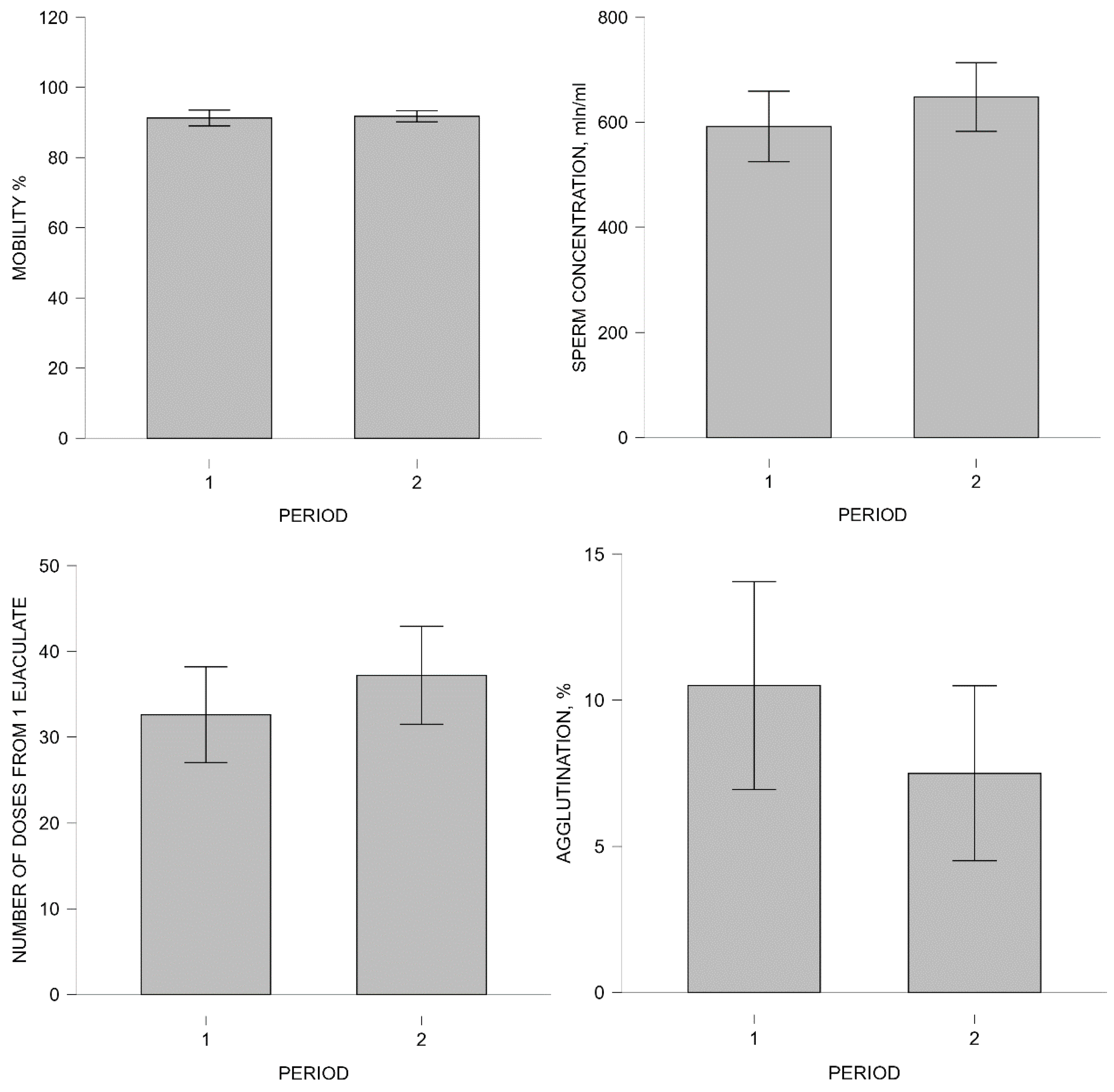
Figure 2.
Effect of Damiana leaf supplementation, expressed by study period, on sperm survival at 24 hours (A), 48 hours (B), and 72 hours (C).
Figure 2.
Effect of Damiana leaf supplementation, expressed by study period, on sperm survival at 24 hours (A), 48 hours (B), and 72 hours (C).
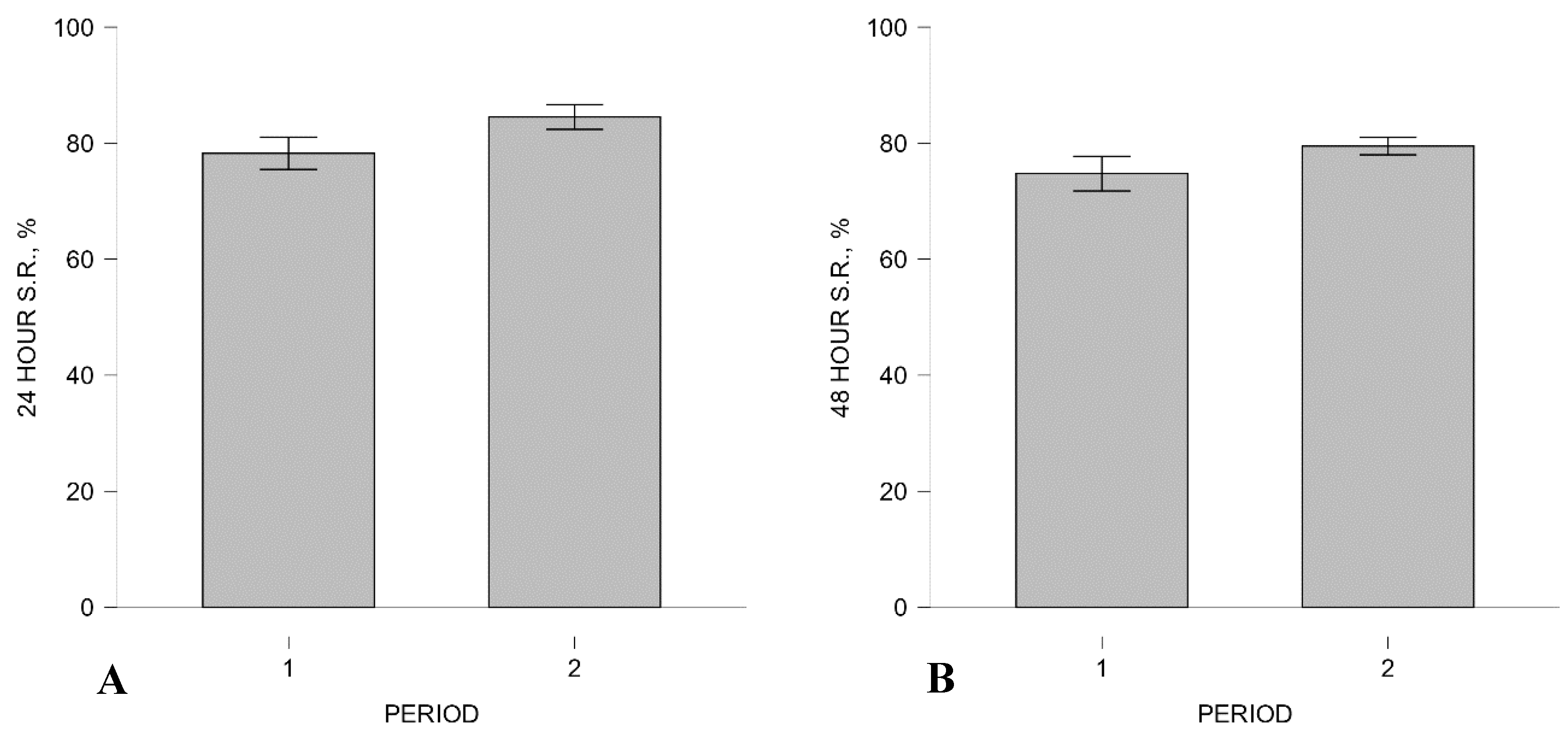
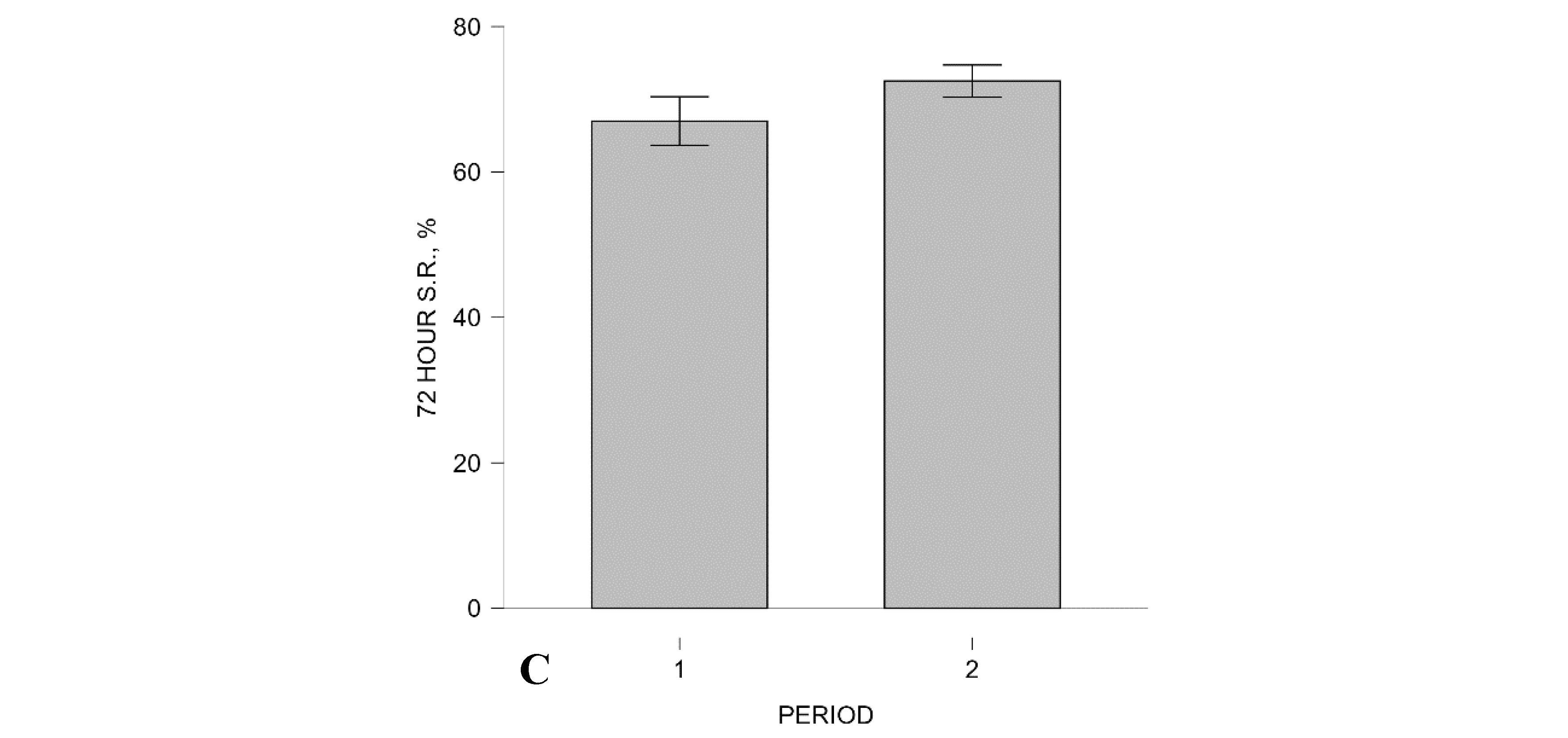

Table 1.
Ingredient and chemical composition of the diet fed in the experiment.
| Item | Diet |
|---|---|
| Ingredient, % of diet | |
| Corn | 21.0 |
| Wheat | 31.0 |
| Barley | 30.0 |
| Soybean meal | 12.0 |
| Wheat bran | 4.0 |
| Mineral–vitamin premix1 | 2.0 |
| Composition, % of DM unless otherwise noted | |
| DM,% | 88.3 |
| MEs, Mcal/kg2 | 3.07 |
| NEs, Mcal/kg2 | 2.37 |
| CP | 17.0 |
| CF | 3.63 |
| Crude fibers | 5.11 |
| Lysine | 0.78 |
| Methionine + Cystine | 0.73 |
| Threonine | 0.71 |
| Tryptophan | 0.22 |
| Calcium | 0.84 |
| Phosphorus, total | 0.76 |
| Digestible phosphorus | 0.53 |
| Vit A, IU/kg | 12000 |
| Vit D3, kg | 2000 |
| Vit E, mg/kg | 100 |
1The mineral–vitamin premix (Bulsou gesto 2%) contained (Crude protein – 10.6%; Grude fat – 0.60%; Crude fiber – 1.10%; Crude ash – 68.70%; Calcium 14.70%; Phosphorus – 4.46%; Sodium – 8.33%; Lysine – 6,54%; Methionine – 0.01%; Vitamin A - 500.000 IU/kg; Vitamin D3 - 100.000 IU/kg; Vitamin E – 2.500 mg/kg; Iron – 6.000 mg/kg; Copper - 600 mg/kg; Zinc – 4.000 mg/kg; Manganese – 2.000 mg/kg; Iodine – 100 mg/kg; Selenium – 15 mg/kg). 2Values calculated using the chemical analysis of individual feed ingredients of the diet.
Table 2.
Conversion Table (million/ml).
| Мillion/ml | Volume (in ml) | |||||||||||||||||||||
| Reading on device | Conc. | 100.00 | 120.00 | 140.00 | 160.00 | 180.00 | 200.00 | 220.00 | 240.00 | 260.00 | 280.00 | 300.00 | 320.00 | 340.00 | 360.00 | 380.00 | 400.00 | 420.00 | 440.00 | 460.00 | 480.00 | 500.00 |
| 2.370 | 2.000 | 200.00 | 240.00 | 280.00 | 320.00 | 360.00 | 400.00 | 440.00 | 480.00 | 520.00 | 560.00 | 600.00 | 640.00 | 680.00 | 720.00 | 760.00 | 800.00 | 840.00 | 880.00 | 920.00 | 960.00 | 1000.00 |
| 2.350 | 1.920 | 192.00 | 230.00 | 268.80 | 307.20 | 345.60 | 384.00 | 422.40 | 460.80 | 499.20 | 537.60 | 576.00 | 614.40 | 652.80 | 691.20 | 729.60 | 768.00 | 806.40 | 844.80 | 883.20 | 921.60 | 960.00 |
| 2.340 | 1.840 | 184.00 | 220.00 | 257.60 | 294.40 | 331.20 | 368.00 | 404.80 | 441.60 | 478.40 | 515.20 | 552.00 | 588.80 | 625.60 | 662.40 | 699.20 | 736.00 | 772.80 | 809.60 | 846.40 | 883.20 | 920.00 |
| 2.310 | 1.760 | 176.00 | 211.20 | 246.40 | 281.60 | 316.80 | 352.00 | 387.20 | 422.40 | 457.60 | 492.80 | 528.00 | 563.20 | 598.40 | 633.60 | 668.80 | 704.00 | 739.20 | 774.40 | 809.60 | 844.80 | 880.00 |
| 2.290 | 1.680 | 168.00 | 201.60 | 235.20 | 268.80 | 302.40 | 336.00 | 369.60 | 403.20 | 436.80 | 470.40 | 504.00 | 537.60 | 571.20 | 604.80 | 638.40 | 672.00 | 705.60 | 739.20 | 772.80 | 806.40 | 840.00 |
| 2.160 | 1.600 | 160.00 | 192.00 | 224.00 | 256.00 | 288.00 | 320.00 | 352.00 | 384.00 | 416.00 | 448.00 | 480.00 | 512.00 | 544.00 | 576.00 | 608.00 | 640.00 | 672.00 | 704.00 | 736.00 | 768.00 | 800.00 |
| 2.120 | 1.520 | 152.00 | 182.40 | 212.80 | 243.20 | 273.60 | 304.00 | 334.40 | 364.80 | 395.20 | 425.60 | 456.00 | 486.40 | 516.80 | 547.20 | 577.60 | 608.00 | 638.40 | 668.80 | 699.20 | 729.60 | 760.00 |
| 1.080 | 1.440 | 144.00 | 172.80 | 201.60 | 230.40 | 259.20 | 288.00 | 316.80 | 345.60 | 374.40 | 403.20 | 432.00 | 460.80 | 489.60 | 518.40 | 547.20 | 576.00 | 604.80 | 633.60 | 662.40 | 691.20 | 720.00 |
| 1.040 | 1.360 | 136.00 | 163.20 | 190.40 | 217.60 | 244.80 | 272.00 | 299.20 | 326.40 | 353.60 | 380.80 | 408.00 | 435.20 | 462.40 | 489.60 | 516.80 | 544.00 | 571.20 | 598.40 | 625.60 | 652.80 | 680.00 |
| 1.010 | 1.280 | 128.00 | 153.60 | 179.20 | 204.80 | 230.40 | 256.00 | 281.60 | 307.20 | 332.80 | 358.40 | 384.00 | 409.60 | 435.20 | 460.80 | 486.40 | 512.00 | 537.60 | 563.20 | 588.80 | 614.40 | 640.00 |
| 1.950 | 1.200 | 120.00 | 144.00 | 168.00 | 192.00 | 216.00 | 240.00 | 264.00 | 288.00 | 312.00 | 336.00 | 360.00 | 384.00 | 408.00 | 432.00 | 456.00 | 480.00 | 504.00 | 528.00 | 552.00 | 576.00 | 600.00 |
| 1.883 | 1.120 | 112.00 | 134.40 | 156.80 | 179.20 | 201.60 | 224.00 | 246.40 | 268.80 | 291.20 | 313.60 | 336.00 | 358.40 | 380.80 | 403.20 | 425.60 | 448.00 | 470.40 | 492.80 | 515.20 | 537.60 | 560.00 |
| 1.810 | 1.040 | 104.00 | 124.80 | 145.60 | 166.40 | 187.20 | 208.00 | 228.80 | 249.60 | 270.40 | 291.20 | 312.00 | 332.80 | 353.60 | 374.40 | 395.20 | 416.00 | 436.80 | 457.60 | 478.40 | 499.20 | 520.00 |
| 1.750 | 0.960 | 96.00 | 115.20 | 134.40 | 153.60 | 172.80 | 192.00 | 211.20 | 230.40 | 249.60 | 268.80 | 288.00 | 307.20 | 326.40 | 345.60 | 364.80 | 384.00 | 403.20 | 422.40 | 441.60 | 460.80 | 480.00 |
| 1.660 | 0.880 | 88.00 | 105.60 | 123.20 | 140.80 | 158.40 | 176.00 | 193.60 | 211.20 | 228.80 | 246.40 | 268.00 | 281.60 | 299.20 | 316.80 | 334.40 | 352.00 | 369.60 | 387.20 | 404.80 | 422.40 | 440.00 |
| 1.610 | 0.800 | 80.00 | 96.00 | 112.00 | 128.00 | 144.00 | 160.00 | 176.00 | 192.00 | 208.00 | 224.00 | 240.00 | 256.00 | 272.00 | 288.00 | 304.00 | 320.00 | 336.00 | 352.00 | 368.00 | 384.00 | 400.00 |
| 1.470 | 0.720 | 72.00 | 86.40 | 100.80 | 115.20 | 129.60 | 144.00 | 158.40 | 172.80 | 187.20 | 201.60 | 216.00 | 230.40 | 244.80 | 259.20 | 273.60 | 288.00 | 302.40 | 316.80 | 331.20 | 345.60 | 360.00 |
| 1.370 | 0.640 | 64.00 | 76.80 | 89.60 | 102.40 | 115.20 | 128.00 | 140.80 | 153.60 | 166.40 | 179.20 | 192.00 | 204.80 | 217.60 | 230.40 | 243.20 | 256.00 | 268.80 | 281.60 | 294.40 | 307.20 | 320.00 |
| 1.240 | 0.560 | 56.00 | 67.20 | 78.40 | 89.60 | 100.80 | 112.00 | 123.20 | 134.40 | 145.60 | 156.80 | 168.00 | 179.20 | 190.40 | 201.60 | 212.80 | 224.00 | 235.20 | 246.40 | 257.60 | 268.80 | 280.00 |
| 1.080 | 0.480 | 48.00 | 57.60 | 67.20 | 76.80 | 86.40 | 96.00 | 105.60 | 115.20 | 124.80 | 134.40 | 144.00 | 153.60 | 163.20 | 172.80 | 182.40 | 192.00 | 201.60 | 211.20 | 220.80 | 230.40 | 240.00 |
| 0.930 | 0.400 | 40.00 | 48.00 | 56.00 | 64.00 | 72.00 | 80.00 | 88.00 | 96.00 | 104.00 | 112.00 | 120.00 | 128.00 | 136.00 | 144.00 | 152.00 | 160.00 | 168.00 | 176.00 | 184.00 | 192.00 | 200.00 |
| 0.780 | 0.320 | 32.00 | 38.40 | 44.80 | 51.20 | 57.60 | 64.00 | 70.40 | 76.80 | 83.20 | 89.60 | 96.00 | 102.40 | 108.80 | 115.20 | 121.60 | 128.00 | 134.40 | 140.80 | 147.20 | 153.60 | 160.00 |
| 0.650 | 0.240 | 24.00 | 28.80 | 33.60 | 38.40 | 43.20 | 48.00 | 52.80 | 57.60 | 62.40 | 67.20 | 72.00 | 76.80 | 81.60 | 86.40 | 91.20 | 96.00 | 100.80 | 105.60 | 110.40 | 115.20 | 120.00 |
| 0.440 | 0.160 | 16.00 | 19.20 | 22.40 | 25.60 | 28.80 | 32.00 | 35.20 | 38.40 | 41.60 | 44.80 | 48.00 | 51.20 | 54.40 | 57.60 | 60.80 | 64.00 | 67.20 | 70.40 | 73.60 | 76.80 | 80.00 |
| 0.210 | 0.080 | 8.00 | 9.60 | 12.20 | 12.80 | 14.40 | 16.00 | 17.60 | 19.20 | 20.80 | 22.40 | 24.00 | 25.60 | 27.20 | 28.80 | 30.40 | 32.00 | 33.60 | 35.20 | 36.80 | 38.40 | 40.00 |
Table 3.
Mean values and coefficient of variation of boar semen parameters by period.
| Sperm indicators | Period | Mean | 95% CI for Mean Difference | |||
| Lower | Upper | SE | CV | |||
| Number of doses from 1 ejaculate | 1 | 32.60 | 27.13 | 38.07 | 2.66 | 0.366 |
| 2 | 37.20 | 31.73 | 42.67 | 2.73 | 0.328 | |
| Ejaculation volume, ml | 1 | 214.0 | 184.6 | 243.4 | 14.64 | 0.306 |
| 2 | 223.0 | 193.9 | 252.8 | 14.41 | 0.288 | |
| Ejaculation concentrate, number in ml (x 106) | 1 | 592.0 | 528.0 | 656.0 | 32.00 | 0.242 |
| 2 | 648.0 | 584.0 | 712.0 | 31.20 | 0.215 | |
| Sperm mobility, % | 1 | 91.25 | 89.37 | 93.13 | 1.08 | 0.053 |
| 2 | 91.75 | 89.87 | 93.63 | 0.75 | 0.037 | |
| Agglutination, % | 1 | 10.50 | 7.32 | 13.68 | 1.69 | 0.723 |
| 2 | 7.50 | 4.32 | 10.68 | 1.42 | 0.852 | |
| 24 Hour S.R., % | 1 | 78.25 | 75.86 | 80.64 | 1.32 | 0.076 |
| 2 | 84.50 | 82.11 | 86.89 | 1.02 | 0.054 | |
| 48 Hour S.R., % | 1 | 74.75 | 72.46 | 77.04 | 1.42 | 0.085 |
| 2 | 79.50 | 77.21 | 81.79 | 0.71 | 0.040 | |
| 72 Hour S.R., % |
1 | 67.00 | 64.26 | 69.74 | 1.59 | 0.107 |
| 2 | 72.50 | 69.76 | 75.24 | 1.05 | 0.065 | |
Table 4.
Analysis of variance for the effect of the study period (i.e., Damiana leaf supplementation) on boar ejaculate parameters.
Table 4.
Analysis of variance for the effect of the study period (i.e., Damiana leaf supplementation) on boar ejaculate parameters.
| Source of Variation | Degrees of Freedom (df) | MS | F | Р |
|---|---|---|---|---|
| Number of doses per ejaculate | 1 | 211.6 | 1.451 | 0.236 |
| Ejaculate volume, ml | 1 | 874.2 | 0.207 | 0.652 |
| Ejaculate concentration, ×10⁶/ml | 1 | 31.36 | 1.570 | 0.218 |
| Motility, % | 1 | 2.50 | 0.144 | 0.706 |
| Agglutination, % | 1 | 90.00 | 1.829 | 0.184 |
| Sperm survival, 24 h, % | 1 | 390.62 | 14.02 | 0.001 |
| Sperm survival, 48 h, % | 1 | 225.62 | 8.850 | 0.005 |
| Sperm survival, 72 h, % | 1 | 302.50 | 8.24 | 0.007 |
| Error | 38 |
Table 5.
Levels of significant differences in semen parameters by study period.
| Independent Samples T-Test | |||||||
| Indicator | T | df | p | ||||
| EJACULATION VOLUME, ml | -0.455 | 38 | .652 | ||||
| SPERM CONCENTRATION, mln/ml | -1.253 | 38 | .218 | ||||
| MOBILITY % | -0.380 | 38 | .706 | ||||
| AGGLUTINATION, % | 1.352 | 38 | .184 | ||||
| NUMBER OF DOSES FROM 1 EJACULATE | -1.205 | 38 | .236 | ||||
| 24 HOUR S.R., % | -3.744 | 38 | < .001 | ||||
| 48 HOUR S.R., % | -2.975 | 38 | .005 | ᵃ | |||
| 72 HOUR S.R., % | -2.871 | 38 | .007 | ᵃ | |||
Note. Student's t-test. ᵃ Brown-Forsythe test is significant (p < .05), suggesting a violation of the equal variance assumption.
Disclaimer/Publisher’s Note: The statements, opinions and data contained in all publications are solely those of the individual author(s) and contributor(s) and not of MDPI and/or the editor(s). MDPI and/or the editor(s) disclaim responsibility for any injury to people or property resulting from any ideas, methods, instructions or products referred to in the content. |
© 2025 by the authors. Licensee MDPI, Basel, Switzerland. This article is an open access article distributed under the terms and conditions of the Creative Commons Attribution (CC BY) license (http://creativecommons.org/licenses/by/4.0/).
Copyright: This open access article is published under a Creative Commons CC BY 4.0 license, which permit the free download, distribution, and reuse, provided that the author and preprint are cited in any reuse.


