

Submitted:
16 December 2025
Posted:
17 December 2025
You are already at the latest version
Abstract
This paper introduces the Proximal Chemical Mandate Principle, a unified theoretical framework asserting that all motivated behavior in organisms with neurochemical systems is driven by two invariant, instantaneous optimization processes: Reward Signal Maximization (R↑) and Stress Signal Minimization (S↓). The mandates operate through a deterministic, expanded hierarchical causal chain, including variables like the Completion Approach Rate (cAr), linking sensory input (I-s) to ultimate, environmentally contingent outcomes (Uo). The framework defines three environmental domains—Natural Selection Field (NSF), Natural Culturophiliart Field (NC★F), and Natural Counterproductive Field (NCF)—to explain why identical neurochemical optimization processes yield adaptive, meaning-seeking, or maladaptive outcomes. This contingency is formalized by the Sophistication–Velocity Principle, which models how the efficiency of mandate implementation (Š) interacts with predictive fitness consequences stress (fĈs) to determine behavioral trajectories. The principle is further supported by the Stimulus's Fitness Principle, which quantifies individual variation in fitness outcomes based on the unique balance between neurochemical response and health consequences. The theory integrates extensive empirical evidence, including high-temporal-resolution studies of dopamine dynamics and the Readiness Potential (RP), validating the principle of instantaneous mandate execution (Mandoinstafill). It provides a deterministic interpretation of consciousness as a state reflection of ongoing optimization, and resolves key evolutionary and behavioral paradoxes by explaining them as sophisticated implementations of the mandates under specific environmental and neurochemical conditions: Addiction (hijacked R↑), Altruism/Emergency Response (immediate S↓ priority), Voluntary Childlessness (favorable R↑/S↓ balance in modern contexts), Suicide (extreme S↓ fulfillment), Hard Work/Delayed Gratification (PFC modeling of long-term R↑), Hyper-Palatable Foods (supernormal R↑ exploitation), and Music/Evolutionary Acoustics (sophisticated implementation exploiting evolved OsC for R↑). The framework ultimately suggests that complex human capacities serve as tools for sophisticated mandate fulfillment, with applications in personalized behavioral optimization, mental health, and the ethical alignment of Artificial General Intelligence (AGI).
Keywords:
Proximal Chemical Mandate
; neurochemical optimization
; reward maximization
; stress minimization
; behavioral motivation
; consciousness studies
; determinism
; evolutionary psychology
; adaptive behavior
; maladaptive behavior
; ethical artificial intelligence
; unification of human behaviour
; behavioral neuroscience
1. Introduction
Contemporary behavioral sciences have achieved significant descriptive and predictive accuracy within specialized domains, from molecular neuroscience to social psychology. However, this progress has resulted in a fragmented landscape of theories, each operating within distinct levels of analysis with limited integration. While domain-specific models offer precise accounts of particular phenomena—such as reward prediction error in dopamine systems or cognitive biases in decision-making—they often lack a unifying foundation that coherently links neurobiological mechanisms to psychological experience and complex social behavior. This theoretical fragmentation impedes a comprehensive understanding of behavior and its evolutionary origins.
The present work addresses this gap by proposing the Proximal Chemical Mandate Principle as an integrative framework. It posits that all motivated behavior in organisms with neurochemical systems originates from two invariant, instantaneous optimization processes: Reward Signal Maximization (R↑) and Stress Signal Minimization (S↓). These mandates serve as fundamental biological constants that drive behavior through a conserved hierarchical pathway, from sensory detection to action execution. The framework systematically connects neurochemical dynamics to individual behavior and societal structures, providing a common explanatory basis across disciplines while respecting the unique contributions of each. By formalizing the interaction between invariant mandates and environmental contexts, this theory aims to unify disparate observations into a coherent, testable, and empirically grounded account of behavioral motivation.
2. Core Theoretical Principles
2.1. Principle 0 : Boundary Condition
The Proximal Chemical Mandate Principle applies specifically to organisms possessing neurochemical systems capable of generating and responding to distinct rewards (R↑) and stress (S↓) neurochemical signals.
2.2. Principle 1 : Invariance and instantaneity of Dynamic Optimization
The objectives to maximize R↑ and/or minimize S↓ represent fundamental computational goals emerging from conserved neurobiological architectures. These objectives function as biological constants operating through almost instantaneous neurochemical computations that respond to current net proximal value.
Mandoinstafill (from Mandate + Almost instantaneous fulfillment) refers to the principle that the mandate is fulfilled at every moment[Dynamic Readiness Potential (DRP)].
Note:"The mandate is always fulfilled almost instantaneously through Readiness Potential (RP), but complete reward maximization or stress minimization may require ongoing neurochemical changes."
2.3. Principle 2 : Mutability of Implementation Mechanisms
While the fundamental (R↑, S↓) optimization objectives remain invariant and almost instantaneous, their behavioral expression shows remarkable plasticity across different contexts and individuals. This mutability manifests through flexible implementation pathways that adapt to changing circumstances while maintaining core optimization principles.
- Object Flexibility: The specific object for what constitutes a rewarding or stressful stimulus can be modified through learning, experience, and environmental context
- Implementation Strategy Diversity: Multiple behavioral pathways can achieve the same chemical optimization outcome, allowing for context-appropriate responses
- Adaptive Mechanism Variation: Different neurochemical systems and neural circuits can be engaged to fulfill the same fundamental mandates based on situational demands
- Temporal Flexibility: The same optimization principles operate across immediate reflexes, medium-term planning, and long-term goal pursuit through different implementation timescales
- Dynamic Information Integration: Implementation strategies are continuously updated based on current internal and external information, enabling real-time adaptation to changing conditions
This principle emphasizes that while the what of behavior (chemical optimization) remains constant, the how (implementation mechanisms) demonstrates extensive variability. This mutability enables organisms to fulfill the invariant mandates across diverse environmental contexts, developmental stages, and individual experiences through flexible behavioral strategies.
2.4. Principle 3 : Environmental Determination of Ultimate Outcomes
The relationship between chemical dynamic optimization and Ultimate outcome (Uo) is environmentally contingent. The invariant mandate produces adaptive outcomes in Natural Selection Field and potentially maladaptive outcomes in Natural Counterproductive Field.
2.4.1. Three Environmental Domains of Human Behavior
Human behavior manifests across three distinct environmental contexts, each producing characteristic outcomes through the operation of the invariant (R↑,S↓) optimization processes:
Natural Selection Field
- Environments where neurochemical optimization aligns with evolutionary success
- Behaviors directly support survival and reproductive fitness
- Represents the ancestral context that our neurochemical systems shaped for
- Provides the evolutionary baseline for understanding modern behavioral patterns
Natural ulturophiliart Field
- Environments characterized by meaning-seeking and knowledge acquisition
- Behaviors driven by the pursuit of understanding and purpose
-
Produces adaptive outcomes in complex fullfillment:
- -
- Relationships, love, religious meaning, Festivals, art, voluntary childlessness(eg. Sir Isaac Newton), hard work, scientific research, Discovery, Ethics - typically supporting survival and mostly reproduction(Not always)
Natural Counterproductive Field
- Environments where neurochemical optimization produces outcomes that reduce wellbeing and survival
- Includes behaviors such as addiction, suicide, Extreme adventure, dangerous exploration, tasty food over healthy food and other maladaptive patterns
- Represents contexts where immediate chemical optimization conflicts with long-term flourishing
These domains illustrate how the same underlying chemical optimization principles produce different behavioral outcomes depending on environmental context, highlighting the importance of environmental structure in determining whether neurochemical drives lead to adaptive or maladaptive results.
3. The Sophistication–elocity Principle
The relationship between implementation of sophistication and movement through environmental fields can be described through the Sophistication–elocity Principle. This principle provides a formalized way to understand how the efficiency of reward and stress fulfillment interacts with information about long-term consequences that are influenced by behavioral trajectories.
3.1. Core Formalization
The rate of displacement through environmental fields is directly proportional to the sophistication of mandate fulfillment mechanisms and inversely proportional to the fitness consequences stress. This relationship can be expressed as:
Where:
- = Dynamic velocity (rate of field displacement[NSF → NF → NCF])
- = Sophistication index of (R↑,S↓) implementation
- = Dynamic fitness consequences stress (neurochemical stress from predicting negative evolutionary outcomes)
3.2. Mechanistic Foundation
Sophistication () Definition:
The parameter quantifies the efficiency and complexity of reward and stress fulfillment mechanisms, incorporating:
- Stimulus purity (degree of reward/stress signal isolation)
- Delivery optimization (temporal precision and intensity)
- Implementation complexity (cognitive and technological mediation)
= Organism complexity, which can be operationalized across:
- Neural complexity (e.g., number of neurons, connectivity, hierarchical organization)
- Cognitive capacity (e.g., working memory, prediction, abstract reasoning)
- Behavioral flexibility (range of possible implementation strategies)
- Learning and adaptation speed
Fitness Consequences Stress () Definition: The variable represents the specific neurochemical stress generated when predictive systems simulate negative evolutionary outcomes from current or planned behaviors. This manifests as measurable anxiety or unease when considering actions with fitness costs.
3.3. Dynamic Behavioral Trajectories
Different ratios of sophistication to fitness stress produce distinct patterns:
-
High / Low → High → Rapid NCF EntryWhen organisms develop sophisticated reward/stress optimization without corresponding predictive stress about fitness consequences, acceleration into maladaptive patterns occurs.Example: Social media engineering (high ) with minimal about attention fragmentation → rapid adoption and addiction patterns
-
Moderate / Moderate → Moderate → NF ExplorationWhen sophistication develops alongside moderate fitness stress, exploration of meaning systems occurs without catastrophic fitness decoupling.Example: Agricultural development (moderate ) with religious/moral systems maintaining about community survival → stable civilizational development
-
Low / High → Low → NSF StabilityWhen implementation is simple and fitness consequences are immediately apparent, behavioral systems remain evolutionarily aligned.Example: Predator avoidance (low ) with immediate from threat detection → stable survival behaviors
3.4. The Modern Imbalance
Contemporary environments often create conditions where sophistication increases much faster than corresponding fitness stress information:
This imbalance can accelerate movement into counterproductive patterns as technological advancement outpaces the development of corresponding consequence information.
3.5. Empirical Predictions
The principle generates several testable predictions:
- 1.
- Neurochemical correlation: amplitude should inversely correlate with adoption rates of novel, high- reward technologies.
- 2.
- Behavioral prediction: Interventions that amplify (e.g., vivid future simulations) should reduce velocity for NCF behaviors more effectively than cognitive education alone.
- 3.
- Clinical application: Addiction severity should correlate with suppression—when consequence simulations fail to generate stress, restraint mechanisms disengage.
- 4.
- Cultural analysis: Societies with institutionalized amplification (religion, ritual, kinship systems) should demonstrate slower NCF drift despite technological advancement.
3.6. Intervention Framework
To modulate behavioral trajectories, several approaches can be considered:
-
amplification pathways:
- -
- Enhanced predictive simulation (e.g., VR future selves)
- -
- Immediate consequence signaling (real-time biofeedback)
- -
- Social reinforcement of fitness threats (tribal accountability)
-
alignment strategies:
- -
- Channel sophisticated implementation toward NSF-aligned outcomes
- -
- Design systems where advanced fulfillment naturally generates when misused
- -
- Create implementation friction for NCF-destined sophistication
-
Environmental restructuring:
- -
- Build choice architectures where and remain coupled
- -
- Remove evolutionary novelty that decouples behavior from consequence
- -
- Restore immediate feedback loops between action and fitness outcome
3.7. Integrated Application
This principle provides a link between different levels of analysis:
- Micro-scale neurochemical processes (R↑,S↓ optimization)
- Individual behavioral patterns (implementation choices)
- Macro-scale cultural evolution (field displacement trajectories)
It helps explain why technological advancement doesn’t guarantee evolutionary success, and why information about the consequences remains important for maintaining behavioral alignment. The Sophistication–elocity Principle establishes a testable foundation for predicting behavioral evolution across timescales and complexity levels.
4. The Stimulus’s Fitness Principle
This principle provides a framework for understanding how stimulus affect individual organisms differently, based on both neurochemical responses and actual health consequences.
4.1. Mathematical Statement
For a specific individual organism, the stimulus Fitness Degree () is directly proportional to the product of two factors: the absolute net neurochemical response to the stimulus and the net health consequences of the stimulus.
Where:
- (stimulus) = Individual stimulus Fitness Degree (positive values indicate adaptive effects, negative values indicate maladaptive effects)
- = Individual Reward Neurochemical Release (magnitude specific to this organism)
- = Individual Stress Neurochemical Release (magnitude specific to this organism)
- = Absolute Net Neurochemical Signal (strength of affective response, independent of valence)
- = Individual Net Health Consequences (signed sum of mental and physical health impacts for this organism)
4.2. Core Interpretation
This principle indicates that a stimulus’s fitness value for a specific individual depends on two components:
- The intensity of the individual’s neurochemical response to the stimulus (reward or stress)
- The actual health consequences the stimulus produces for that individual
The product of these components determines whether the stimulus is adaptive, maladaptive, or neutral for the individual.
4.3. Dynamic Nature
The Individual stimulus Fitness Principle is dynamic, meaning that all variables can change over time:
- Neurochemical responses ( and ) can shift with learning, habituation, or sensitization
- Health consequences () may vary with changes in the individual’s physiological state or environmental context
- The fitness degree () is therefore not a fixed property but a time-dependent assessment that reflects current conditions
- This dynamic quality allows for adaptation and learning, as experiences update both neurochemical responses and health consequence evaluations
4.4. Individual Variation
All terms in the equation are specific to the individual, reflecting natural variation in:
- Neurochemical sensitivity: The same stimulus may produce strong reward signals in one person and weak responses in another
- Health impacts: stimuli may benefit one genotype while harming another (e.g., dietary differences, allergies)
- Current state: Health consequences depend on individual context (e.g., medication interactions, existing conditions)
4.5. Behavioral Predictions
The brain naturally computes the neurochemical difference () in real-time but does not automatically incorporate health consequence information (). This discrepancy leads to predictable behavioral patterns:
- Harmful attractions: stimuli with strong neurochemical responses but negative health consequences may feel compelling while reducing fitness
- Beneficial aversions: stimuli that produce stress responses but have positive health consequences may feel repulsive while increasing fitness
- Individual differences: This explains why the same object can be beneficial for one person and harmful for another
4.6. Examples
4.6.1. Dairy Products Consumption
-
Person A (lactose tolerant) consuming cheese:
- -
- : High (enjoys taste, no discomfort)
- -
- : Moderately positive (nutritional benefits)
- -
- (Diary products): High positive (well-aligned food choice)
-
Person B (lactose intolerant) consuming the same cheese:
- -
- : May be high (enjoys taste) or mixed (anticipatory stress)
- -
- : Strongly negative (digestive distress)
- -
- (Diary products): Strongly negative (maladaptive despite pleasure)
-
Person C with depression taking an SSRI:
- -
- Initial : Negative (side effects create stress)
- -
- : Strongly positive (improves mental health)
- -
- Initial (Diary products): Negative (explains initial non-compliance)
- -
- Later (Diary products): May become positive as neurochemical response adapts
4.6.2. Sugarcane Juice Consumption
-
Person A (athlete) consuming sugarcane juice:
- -
- : High (immediate energy boost, enjoyable taste)
- -
- : Positive (quick carbohydrates for performance, hydration benefits)
- -
- (Sugarcane juice): Positive (adaptive energy source for physical activity)
-
Person B (diabetic person) consuming sugarcane juice:
- -
- : Mixed (enjoys taste but experiences anticipatory stress about health risks)
- -
- : Strongly negative (rapid blood sugar spike, long-term health complications)
- -
- (Sugarcane juice): Strongly negative (maladaptive despite immediate pleasure)
4.7. Implications for Personalized Approaches
- There are no universally "good" or "bad" stimuli—only stimuli with positive or negative fitness values for specific individuals
- Effective behavior change strategies should address both neurochemical responses and health consequence awareness
- Approaches that prescribe universal behaviors may mismatch individual fitness needs
- Personalized assessment of both neurochemical responses and health impacts can improve fitness optimization
This principle provides a quantitative framework for understanding individual differences in response to stimuli, emphasizing the importance of personalization in fitness optimization.
5. The Natural Selection Field (NSF)
5.1. Definition and Alignment
The Natural Selection Field (NSF) represents the environmental conditions where proximal chemical dynamic optimization produces maximal evolutionary fitness, such as the ancestral environment that neurochemical architecture is shaped for. In this domain, strategies promoting survival and reproduction align with maximal chemical reward and minimal stress.
5.2. Operation of Invariant Mandates
5.2.1. Instantaneous Reward Signal Maximization (R↑)
Within the Natural Selection Field (NSF), maximum R↑ is achieved through behaviors enhancing reproduction and survival. Neurochemical reward systems reinforce activities such as successful reproduction, kin investment, and consumption of necessary resources through instantaneous computations that sustain rewarding actions.
5.2.2. Instantaneous Stress Signal Minimization (S↓)
The S↓ mandate operates through stress responses proportional to genuine, acute threats to survival. Successful minimization of such stress correlates with enhanced survival and longevity within the Natural Selection Field (NSF) through immediate withdrawal or avoidance responses.
6. The Natural ulturophiliart Field
Culturophiliart = Culture + Epistemophilia + Art
Human environments are characterized by a fundamental drive toward meaning-making and understanding - what might be termed the Natural Culturophiliart Field(NF). This domain encompasses the human tendency to seek purpose, comprehend the universe, and understand one’s place within it. Within the framework of the Proximal Chemical Mandate Principle, these meaning-seeking behaviors represent sophisticated implementations of the fundamental (R↑,S↓) optimization processes.
The pursuit of meaning and knowledge generates substantial neurochemical rewards through several pathways. Understanding complex concepts, discovering patterns, and achieving moments of insight provide potent R↑ signals through dopamine-mediated reward systems. Similarly, finding coherent explanations for existential questions and establishing purposeful frameworks for living effectively reduces the S↓ signals associated with uncertainty, ambiguity, and existential anxiety.
This meaning-seeking drive manifests in adaptive forms, all emerging from the same underlying chemical optimization processes:
- Formation of meaningful relationships and social bonds that provide oxytocin-mediated rewards and reduce loneliness-related stress
- Religious and spiritual practices that offer coherent worldviews, reducing existential anxiety while providing community-based rewards
- Musical engagement and appreciation that generates dopamine release, emotional regulation, and social connection through shared aesthetic experience
- Artistic and creative expression that generates flow states and aesthetic pleasure
- Athletic achievement and sports participation that combine endorphin release with social reinforcement
- Humanitarian activities that provide purpose-derived rewards while reducing distress through altruistic engagement
This perspective suggests that the human drive for meaning represents neither a transcendent spiritual quality nor a purely rational pursuit, but rather an emergent property of neurochemical systems optimized for ancestral environments now operating in complex modern contexts. Understanding this foundation allows for more intentional cultivation of meaning structures that provide sustainable chemical rewards while supporting overall wellbeing.
7. An Integrated Hierarchy
This section presents a three-tiered hierarchy linking instantaneous neurochemical drivers to long-term behavioral outcomes through a structured framework of computation and environmental interaction.
7.1. Three-Tiered Structure
- Level 1: Proximal Purpose (Px) - Fundamental neurochemical drivers
- Level 2: Specific Upayogitā Purpose (Xm) - Evolved functional objectives
- Level 3: Ultimate Outcome (Uo) - Long-term environmental consequences
7.2. Causal Relationship
The hierarchical framework operates through a deterministic causal chain:
7.3. Identifier Sensor (I-s) - The Environmental Interface
The conceptual variable I-s (Identifier Sensor) represents a biological apparatus for detecting environmental cues matching OsC criteria.
- Definition:
- Sensory apparatus (eyes, nose, skin receptors) detecting environmental cues matching OsC
- Role:
- Functions as the primary input interface for triggering neurochemical valuation in response to specific stimuli that match the Object Selection Criteria (OsC) cues.
7.4. Certain Internal Change (CIC) - The Physiological Optimizer
The conceptual variable CIC (Certain Internal Change) refers to physiological adjustments optimizing the body for Px fulfillment.
- Definition:
- Dynamic physiological or neurochemical adjustments optimizing the body’s state for Px execution
- Role:
- Physiological response enabling appropriate behavioral strategies for current Xm
7.5. Ås - Completion Approach Rate Assigning System
The variable Ås represents the conceptual brain system responsible for calculating and assigning the Completion Approach Rate (cAr)—the essential neurochemical gradient required for complete (R↑) and/or (S↓) fulfillment.
- Definition:
- The Ås is the computational system that calculates the required neurochemical conditions for complete fulfillment of the proximal mandates. It determines how much chemical change is needed to approach complete optimal reward-stress balance. It is responsible for giving the mandate in terms of the rate and intensity of neurochemical change (the cAr) to the execution system.
- Role:
- The Ås integrates sensory input from I-s with internal physiological states to compute the neurochemical gradient—the precise discrepancy between current chemical states and complete optimal fulfillment. It assigns the cAr intensity that quantifies the rate and magnitude of neurochemical release needed, essentially answering "how fast and how much" chemical change is required.
- Functional Relationship:
-
The Ås operates as a calculator that:
- Computes the required approach: Calculates the neurochemical requirements for mandate fulfillment
- Quantifies the gradient: Determines the exact intensity and speed of chemical change needed
- Sets execution parameters: Provides the cAr signal that dictates how vigorously mEs should execute actions
- Integrates multiple inputs: Combines sensory data, physiological states, and predictive information to compute optimal approach rates
- Scientific Basis:
- The Ås concept aligns with neural systems involved in value computation and effort allocation, particularly involving prefrontal-striatal circuits that calculate cost-benefit ratios and determine behavioral vigor based on expected outcomes and current needs.
This system essentially answers the question: "Given our current state and desired chemical optimization, how intensely must we act to achieve it?" The Ås provides the calculated imperative, while the mEs provides the compliant execution.
7.6. Completion Approach Rate (cAr) - The Neurochemical Gradient
The cAr (Completion Approach Rate) represents the dynamic signal that quantifies the required intensity and speed of neurochemical change to approach complete optimal chemical state optimization.
- Definition:
- A prioritized dynamic signal that dictates the neurochemical release rate and intensity needed to approach complete reward maximization and/or stress minimization.
- Role:
- Quantifies the neurochemical gradient between current state and optimal state
- Determines the urgency and intensity of required behavioral responses
- Controls execution parameters while maintaining continuous mandate satisfaction
- Serves as the primary intensity regulator for behavioral output
- Functional Characteristics:
- The cAr signal operates as the critical link between chemical assessment and behavioral execution, translating chemical needs into actionable intensity parameters that guide how vigorously and rapidly the system must respond to achieve optimal chemical states.
7.7. Mandate Execution System (mEs) - The Behavioral Actuator
The mEs (Mandate Execution System) comprises the neural circuits responsible for translating chemical optimization commands into observable behavior.
- Definition:
- Distributed neural and motor circuits that transform optimized chemical commands into physical actions.
- Role:
- Executes behavioral responses that fulfill the proximal chemical mandates
- Adjusts behavioral vigor and speed according to cAr signal intensity
- Translates internal chemical optimization requirements into external actions or state
- Maintains behavioral compliance with the calculated optimization requirements
- Functional Characteristics:
- The mEs operates as the final output mechanism in the optimization hierarchy, faithfully executing behaviors at intensities precisely calibrated by the cAr signal. It represents the physical manifestation of chemical optimization processes, converting calculated chemical needs into directed behavioral responses while maintaining strict adherence to the intensity parameters established by the preceding computational systems.
7.8. Action (Ax) - The Behavioral Output
The conceptual variable Ax (Action) represents observable behavior or cognitive process satisfying Px mandates.
- Definition:
- Observable behavior, movement, or cognitive process satisfying Px mandates
- Role:
- Output of neurochemical computation selecting effective implementation strategy
Note: The mandate is always satisfied almost instantaneously through Readiness Potential (RP), but complete reward maximization or stress minimization may require ongoing neurochemical changes. The cAr represents the rate at which the system approaches these complete states while maintaining continuous mandate fulfillment through dynamic readiness potential.
7.9. Level 1: Proximal Purpose (Px) - The Invariant Driver
- Definition:
- Invariant Mandates: R↑ (Reward Signal Maximization) and S↓ (Stress Signal Minimization)
- Role:
- Immediate cause of action through instant neurochemical computation of current net proximal value
7.10. Level 2: Specific Upayogitā Purpose (Xm) - The Evolved Objective
"The term
Upayogitā
is used to specify the utility for our ancestors"
The Xm represents intermediate functional objectives evolutionarily designed for Px achievement.
- Definition:
- Intermediate Functional Objectives (Energy Consumption, Temperature Maintenance, Reproduction)
- Role:
- Fulfillment occurs when Px mandates execute for biological needs; dictates Object Selection Criteria (OsC)
7.10.1. Object Selection Criteria (OsC) Implementation
-
Energy Consumption
- -
- Mandate:R↑ and S↓ (hunger)
- -
- OsC: High sugar(e.g. fruits), fat, and salt content
-
Body Temperature Regulation
- -
- Mandate:S↓ (thermal discomfort)
- -
- OsC: Ambient temperature toward comfort zone
-
Mate selection in male
- -
- Mandate:R↑ (reward from mating opportunity)
- -
- OsC: Physical and behavioral cues signaling fertility and reproductive value (e.g., youth, facial symmetry, clear skin, waist-to-hip ratio, flirtatious behavior)
-
Mate selection in female
- -
- Mandate:R↑ (reward from securing high-quality mate and successful reproduction)
- -
- OsC: Physical and behavioral cues signaling resource acquisition ability, genetic quality, protective capacity, and commitment potential (e.g., physical strength, muscularity as an indicator of fighting ability and health, social status, vocal dominance, hunting prowess, reliability indicators, and signs of parental investment willingness)
7.11. Level 3: Ultimate Outcome (Uo) - The Contingent Consequence
- Definition:
- Final Long-Term Consequences from cumulative Xm implementations
- Environmental Contingency:
- Natural Selection Field: Evolutionary Fitness
- Natural Counterproductive Field: Maladaptation and reduced wellbeing
7.12. Adaptive Examples in Natural Selection Field
-
Xm: Acquiring Shelter
- -
- I-s: Thermoreceptors detect cold
- -
- CIC: Blood vessel constriction, shivering
- -
- Px:S↓ - Minimize thermal discomfort
- -
- Ås: Thermoregulatory system activates
- -
- cAr: High neurochemical gradient from thermal stress
- -
- mEs: Coordinated motor systems
- -
- Ax: Seeking shelter, building protection
- -
- Uo: Survival (avoids hypothermia)
-
Xm: Consuming Ripe Fruit
- -
- I-s: Taste receptors detect sweetness
- -
- CIC: Insulin release, digestive preparation
- -
- Px:R↑ - Maximize palatability reward
- -
- Ås: Energy monitoring system engages
- -
- cAr: Moderate neurochemical gradient
- -
- mEs: Mastication and swallowing coordination
- -
- Ax: Eating, chewing, swallowing
- -
- Uo: Survival (energy intake)
-
Xm: Avoiding Predator
- -
- I-s: Eyes/ears detect threat signals
- -
- CIC: Adrenaline surge, heightened senses
- -
- Px:S↓ - Minimize danger stress
- -
- Ås: Threat assessment system activates
- -
- cAr: Maximum neurochemical gradient
- -
- mEs: Emergency motor response systems
- -
- Ax: Fleeing, hiding, defensive posture
- -
- Uo: Survival (avoids death)
7.13. Integrated Causal Flow
- 1.
- Sensory Detection: I-s identifies environmental cues matching OsC
- 2.
- Internal Optimization: CIC creates physiological adjustments
- 3.
- Proximal Initiation: Px drives action through neurochemical computations
- 4.
- System Assignment: Ås calculates neurochemical gradient requirements
- 5.
- Neurochemical Gradient: cAr sets approach rate based on current state
- 6.
- Behavioral Actuation: mEs translates mandate into physical action
- 7.
- Behavioral Execution: Ax implements strategy through observable behavior
- 8.
- Functional Achievement: Action fulfills Xm through OsC pathways
- 9.
- Environmental Outcome: Cumulative implementations produce Uo
Key Variables:
- I-s - Identifier Sensor (sensory input)
- CIC - Certain Internal Change (physiological optimization)
- Px - Proximal Purpose (neurochemical mandates)
- Ås - Completion Approach Rate Assigning System
- cAr - Completion Approach Rate (neurochemical gradient)
- mEs - Mandate Execution System (behavioral actuator)
- Ax - Action (behavioral output)
- Xm - Specific Upayogitā Purpose (functional objectives)
- OsC - Object Selection Criteria (valuation system)
- Uo - Ultimate Outcome (environmental consequences)
This hierarchy demonstrates how invariant neurochemical mandates produce behavioral outcomes through coordinated processes across temporal scales, with environmental context determining ultimate adaptive value.
8. Methodological Foundation: Formal Thought Experiments, Walks and Suggestions
Note: The following thought experiments are purely conceptual and intended for theoretical clarification. They are designed for intellectual exploration only and respect all ethical boundaries.
8.1. Thought Experiment 1: “No Effect, No Will” (The Necessary Condition)
This thought experiment examines a fundamental question: What occurs when all neurochemical signaling for motivation, reward, and stress is simultaneously suspended?
8.1.1. The Core Premise
This establishes that chemical signals drive all motivated behaviors. Existing evidence shows partial reductions in specific neurotransmitters impair motivation while sparing some functions, indicating multiple chemical systems contribute to behavioral drive.
8.1.2. Experimental Design
The conceptual intervention involves temporary suspension of all neurochemical systems involved in valuation and motivation:
- Reward pathways: dopamine, opioid, cannabinoid, and related pleasure/motivation systems
- Stress pathways: HPA axis, noradrenergic systems, and stress response networks
- All modulatory systems influencing incentive salience and affective state
Sensory detection and basic motor functions remain operational, while homeostatic reflexes continue unaffected.
8.1.3. Control Conditions
For proper interpretation, two comparison scenarios are essential:
- Motor blockade: Physical paralysis with intact motivation systems
- Sensory deprivation: Lack of external input with preserved internal motivation
8.1.4. The Definite Outcome
According to the principles, the neurochemical blockade produces this specific outcome:
- Behavioural inertia: Complete cessation of spontaneous movement and goal-directed behavior
- Absence of emotional reactions to positive or negative stimuli
- No consummatory behavior or avoidance responses, even when directly possible
- Continued operation of basic physiological functions and reflexes
8.1.5. Implications for the Readiness Potential (RP)
The Readiness Potential (RP) is the slow, negative electrical wave recorded over the motor cortex that reflects the brain’s non-conscious commitment to a voluntary motor plan. In the context of the Proximal Chemical Mandate Principle, the RP represents the system’s signature of fulfilling the mandate by selecting the optimal action.
The RP’s Role: System-Level Commitment
The RP emerges from the supplementary motor area (SMA) and premotor cortex (PMC) and reflects the highest-level non-conscious commitment to a voluntary motor plan. This electrical activity represents the brain’s preparation for action based on computed value.
The Impact of Neurochemical Suspension
The thought experiment’s conditions directly undermine the RP’s generation through two mechanisms:
- Collapse of Executive Function and Planning: The RP requires input from prefrontal cortex (PFC) and basal ganglia circuits responsible for planning, working memory, and action selection. These systems depend on neurochemical signaling (dopamine for reward, norepinephrine for stress) for their operation. Without these chemical signals, the goal-setting and action-selection functions are eliminated.
- Absence of Goal-Directed Behavior: The RP specifically prepares for voluntary, goal-directed movement. In the state of chemical suspension, there is no goal-directed behavior or motivation to generate such preparatory signals. While sensory detection and basic reflexes continue, the specific pre-movement electrical wave associated with volitional choice vanishes due to sensory-motivation decoupling.
Conclusion on RP in Chemical Nullity
The RP reflects the computational decision to act based on neurochemical value. In the proposed state of Chemical Nullity:
- The system cannot compute value (reward and stress signals are suspended)
- The system lacks motivational drive (mandate dependence is removed)
- No spontaneous movement is generated (behavioral inertia prevails)
Therefore, the system has no optimal action to select, and the electrical signature of that selection—the Readiness Potential—would be effectively absent for any volitional, mandate-driven movement. This outcome reinforces the principle that neurochemical optimization processes constitute the necessary biological foundation for motivated behavior and its corresponding neural signatures.
8.1.6. Empirical Support and Real-World Analogues
The conceptual predictions of this thought experiment align with multiple lines of empirical evidence and clinical observations:
- Clinical Abulia and Akinetic Mutism: Patients with damage to dopamine-producing regions (substantia nigra, ventral tegmental area) or frontal-basal ganglia circuits exhibit profound apathy, lack of spontaneous movement, and absence of goal-directed behavior—symptoms directly analogous to the predicted behavioural inertia.
- Deep Brain Stimulation (DBS) Observations: In Parkinson’s disease, electrical stimulation of subthalamic nucleus or globus pallidus can restore motor function but does not generate motivation or goal-directed behavior unless the underlying dopamine system is functional.
- Pharmacological Studies: Systemic administration of dopamine antagonists (e.g., haloperidol) or lesions of dopamine pathways in animal models produce marked reductions in voluntary movement, exploratory behavior, and incentive motivation, even in the presence of intact sensory and motor capacities.
- Catatonia and Neuroleptic Malignant Syndrome: Severe psychiatric and neurological conditions characterized by motor immobility, absence of goal-directed behavior, and emotional unresponsiveness, often linked to dysregulation of dopamine, GABA, and glutamate systems.
- Frontal Lobe Lesion Studies: Damage to the anterior cingulate cortex or orbitofrontal cortex—regions critical for integrating reward and stress signals—produces apathy, lack of initiative, and impaired decision-making without affecting basic sensory or motor functions.
These real-world conditions and experimental interventions demonstrate that disruption of specific neurochemical systems—particularly those involved in reward and stress signaling—leads to behavioral outcomes strikingly similar to those predicted by the thought experiment, providing robust support for the premise that neurochemical optimization processes are necessary for motivated behavior.
8.1.7. Implications
This outcome directly demonstrates the framework’s core principles:
- Executive Function Requirement: Planning and decision-making systems require neurochemical signals to operate—their absence causes immediate functional collapse
- Mandate Dependence: Both reward maximization and stress minimization mandates depend entirely on chemical signaling—without it, no motivated behavior occurs
- Instantaneous Operation Revealed: The immediate behavioural inertia shows that motivation operates through continuous chemical computations rather than stored intentions
- Sensory-Motivation Decoupling: Intact sensory processing without chemical valuation produces awareness without motivation—seeing without caring, hearing without responding
- Readiness Potential Dependence: The neural signature of voluntary action (RP) requires intact neurochemical systems, demonstrating that even the neural preparation for movement depends on chemical optimization processes
- Empirical Consistency: Clinical and experimental evidence from neurology, psychiatry, and pharmacology consistently supports the thought experiment’s predictions, validating the framework’s biological foundations
This scenario confirms that neurochemical signaling constitutes the necessary biological foundation for all motivated behaviors. The behavioural inertia demonstrates that continuous chemical optimization processes are required for any form of volitional action, including the neural preparation represented by the Readiness Potential. The convergence of theoretical predictions with empirical observations strengthens the framework’s claim that neurochemical mandates operate as fundamental drivers across all levels of behavioral complexity.
8.2. Thought Experiment 2: "Liking The Unlike" (The Sufficient Condition)
This conceptual experiment examines whether neurochemical manipulation can sufficiently determine subjective valuation independent of evolutionary programming and personal preference.
8.2.1. Rationale and Empirical Foundation
The theoretical framework suggests that R↑ signaling plays a primary role in value assignment (liking and seeking behaviors). Conditioned place preference paradigms demonstrate that neutral environmental cues can acquire motivational significance through association with neurochemical reward signals, providing preliminary support for this proposition.
8.2.2. Central Thesis and Operational Hypothesis
The thought experiment posits that subjective preference represents a chemically determined behavioral trigger rather than free cognitive choice. The operational hypothesis states that pairing an aversive stimulus with exogenous neurochemical manipulation inducing high reward (R↑) and low stress (S↓) signaling will convert avoidance behavior to approach behavior.
The formal transformation can be represented as:
where represents the aversive stimulus, and and represent temporal dynamics of reward and stress neurochemicals respectively.
8.2.3. Conceptual Design and Experimental Approach
The experiment extends existing conditioning paradigms by systematically pairing evolutionarily aversive stimuli (e.g., predator cues) and personally avoided stimuli with artificially amplified R↑ signaling. This design tests the boundaries of neurochemical valuation systems by examining whether reward signals can override deeply ingrained aversive responses and personal avoidance preferences.
8.2.4. Experimental Validation: Five Sensory Modalities
The experimental validation employs five sensory modalities to demonstrate sensor-independent applicability:
- Visual: Pairing disliked visual stimuli with reward signaling
- Auditory: Converting aversive sounds to preferred stimuli
- Gustatory: Re-valuing repulsive tastes through chemical reinforcement
- Tactile: Transforming uncomfortable textures to desirable ones
- Olfactory: Converting foul odors to preferred scents
8.2.5. Robust Empirical Evidence
The following empirical findings provide strong support for the "Liking The Unlike" thought experiment:
- Conditioned Place Preference (CPP) Studies: In rodents, environments paired with drugs of abuse (e.g., cocaine, morphine) become strongly preferred, even when drug administration is passive. Conversely, environments paired with aversive stimuli become avoided. These preferences can be reversed by reconditioning, demonstrating the malleability of value assignment.
- Intracranial Self-Stimulation (ICSS): Animals will work tirelessly to receive electrical stimulation to brain reward areas (e.g., lateral hypothalamus, ventral tegmental area). This behavior is so compelling that animals will forgo food and water, and cross electrified grids to obtain stimulation, indicating that artificial activation of reward pathways can override natural aversive responses.
- Taste Aversion and Preference Conditioning: A single pairing of a novel taste with malaise produces long-lasting taste aversion. Conversely, tastes paired with nutrients become preferred. These learned preferences and aversions are mediated by neurochemical systems, with dopamine and opioids playing key roles.
- Human Conditioning Studies: In humans, neutral stimuli (e.g., abstract images, tones) paired with monetary reward or pleasant tastes acquire positive value, as measured by increased preference ratings and neural responses in reward-related brain regions. Pharmacological manipulation of dopamine systems enhances this conditioning.
- Neurochemical Manipulation Studies: Direct manipulation of dopamine or opioid systems can alter the hedonic impact of stimuli. Microinjections of opioid agonists into the nucleus accumbens enhance liking reactions to sweet tastes, while antagonists reduce them.
- Cross-Species Conservation: Similar reward conditioning effects are observed across species, including fruit flies, rodents, non-human primates, and humans, indicating a deeply conserved mechanism for value assignment through neurochemical signaling.
- Clinical Evidence from Addiction: Drug addiction demonstrates how initially aversive substances (e.g., bitter-tasting nicotine, burning sensations from smoked substances) become intensely desired through neurochemical conditioning, overriding natural aversive responses.
8.2.6. Philosophical Implications and Theoretical Integration
The paradigm challenges traditional concepts of hedonic agency, suggesting that "taste" or "preference" represents a chemically determined state rather than rational choice. The accumulated evidence across multiple experimental paradigms and species provides robust validation for the thought experiment’s central claim: neurochemical systems are sufficient to determine subjective valuation, potentially overriding both evolutionary programming and individual learning history.
This evidence strengthens the framework’s position that subjective preferences emerge from neurochemical optimization processes rather than representing fundamental, immutable aspects of personal identity or free choice. The "Liking The Unlike" thought experiment demonstrates that the invariant chemical mandates can generate preferences through learned associations, highlighting the fundamental role of neurochemical systems in constructing what we experience as personal taste and preference.
8.3. Thought Experiment 3: "The Mandate Proof by Disprovement" (The Meta-Cognitive Loop)
This conceptual experiment examines whether the invariant mandate can assimilate even conscious attempts to disprove or circumvent it, thereby functioning as a self-consistent principle.
8.3.1. Rationale and Conceptual Design
The experiment investigates whether abstract intellectual goals are ultimately co-opted by the proximal chemical mandate. A conscious individual is motivated to consistently act opposite to the mandate’s partial predictions—deliberately seeking suboptimal rewards and enduring avoidable stress—with the explicit goal of disproving the theoretical framework.
8.3.2. Predicted Outcome and Interpretation
The theoretical prediction is that even counter-mandate behavior represents execution of the invariant mandate through highest cortical regions:
- Intellectual Reward Maximization: The cognitive process of disproving a theory provides R↑ signals through novelty, intellectual mastery, and potential status enhancement.
- Stress Minimization through Resolution: The individual’s intellectual distress (S↓) concerning the framework’s simplicity is minimized through engagement in the disproof process, representing a learned implementation strategy.The high stress(the thought ’how i can’t have free choice’) reduction.
- Meta-Cognitive Assimilation: Conscious reflective effort itself functions within the mandate, with consciousness providing the phenomenological experience of autonomous will, while remaining governed by underlying chemical optimization principles.
This thought experiment demonstrates that if the Proximal Chemical Mandate Principle accurately describes the fundamental basis of all human behavior, then the act of attempting(a human behaviour) to falsify the principle must itself constitute human behavior governed by these same chemical mandates. This represents scientific consistency rather than unfalsifiability: the principle remains empirically testable through experimental methods, while simultaneously accounting for the motivational drivers behind all human behaviors, including scientific skepticism and theoretical challenge. The framework’s comprehensive nature requires that it applies equally to behaviors aimed at its verification and those aimed at its refutation.
"By knowing the law,we can’t violate the law, because knowing itself is thelaw!"
8.4. Thought Walk 1: "A Day in the Life of a Teenager"
Let’s follow a typical day for a teenage male (13-18 years old) through the lens of our framework, showing how every action serves the chemical mandates of reward maximization and stress minimization.
8.4.1. The Morning Struggle: Stress Minimization Priority (6:00 AM – 8:00 AM)
The daily battle begins with waking up. When the alarm rings at 6:00 AM, the brain faces a clear choice: immediate stress from getting up versus staying in a comfortable bed. The system almost always chooses the bed because:
- The Prefrontal Cortex isn’t fully active yet, making it hard to imagine future rewards from being productive
- The immediate comfort of staying in bed provides strong stress reduction
- Checking the phone first thing serves two purposes: it reduces the small stress of unanswered notifications and provides quick reward hits from new content
- Breakfast choices follow the same pattern - tasty, high-sugar foods give immediate pleasure signals that feel more real than distant health concerns
8.4.2. Daytime: Compliance and Mental Rewards (9:00 AM – 4:00 PM)
School attendance isn’t about loving education - it’s about avoiding bigger stresses. The brain calculates that dealing with school is less stressful than dealing with angry parents or legal trouble.
- Classroom learning becomes rewarding when solving problems gives that "aha!" moment of understanding
- The brain actually enjoys reducing confusion and finding patterns - it’s like solving a puzzle that gives chemical rewards
- However, struggling with difficult subjects like physics and math creates stress from confusion, often leading to distraction as the brain seeks easier reward sources by avoiding the stress from confusion
- After lunch, the natural energy dip combines with challenging subjects, making sleep seem like the best stress-minimization option
- Even boredom drives creative thinking as the brain seeks ways to make dull situations more
8.4.3. Evening: Leisure and Self-Regulation (5:00 PM – 12:00 AM)
When external pressures disappear, the supernormal optimization begins:
- Video games and social media win because they’re the most efficient reward-delivery systems available - constant, predictable, and intense
- Procrastination happens when the brain can’t decide which option gives better chemical payoffs - homework stress versus entertainment rewards
- Staying up late continues because the immediate rewards of late-night content outweigh the vague future benefits of sleep
- Screen time actually changes brain chemistry to keep us awake longer, creating a cycle that’s hard to break
This daily cycle shows that what looks like poor decision-making is actually very efficient chemical optimization. The teenager’s brain is perfectly executing its core programming - it’s just that in our modern environment, this leads to outcomes that don’t serve long-term wellbeing. The system is working exactly as designed, but the environment has changed in ways that turn adaptive instincts into counterproductive habits.
8.5. Thought Suggestion 1: "The Brain Knows To Own"
This thought suggestion proposes that optimal behavioral outcomes emerge when neurochemical systems possess accurate information about the consequences of different actions. Under specific conditions, the brain can self-organize toward flourishing through its inherent optimization processes.
8.5.1. Prerequisites for Effective Implementation
This operates under two critical conditions:
- Positive Condition: Individuals must have no prior engagement with addictive or harmful behaviors, maintaining a baseline neurochemical state unaffected by maladaptive reinforcement patterns.
- Engagement Requirement: Information must be presented in compelling, engaging formats that resonate emotionally and cognitively, moving beyond conventional educational approaches to create proper neurochemical reinforcement.
8.5.2. Reinforcement Mechanisms
Stress Minimization Pathway:
- Comprehensive understanding of the severe consequences of addictive behaviors
- Absence of experiential knowledge regarding the pleasurable aspects of such behaviors
- Clear association between harmful activities and significant stress signals
Reward Maximization Pathway:
- Recognition of activities that provide sustainable pleasure while supporting long-term wellbeing
- Environmental structures that naturally reinforce flourishing-oriented behaviors
- Avoidance of using stressful methods(eg.advice, forcing, etc) as the primary motivational tool in educational contexts
8.5.3. Theoretical Outcome
When these conditions are met, the brain’s optimization processes naturally align with flourishing outcomes. The neurochemical system, operating with accurate information about what genuinely supports wellbeing versus what undermines it, executes the invariant mandates in ways that produce adaptive, sustainable behaviors.
This thought does not imply free will but rather demonstrates how the invariant mandates, when provided with accurate environmental information and operating in conducive conditions, can produce optimal outcomes without requiring any departure from the fundamental principles of neurochemical optimization. The brain continues to follow the (R↑,S↓) mandates, but does so in an environment where these mandates naturally produce flourishing rather than dysfunction.
Note : "The reinforcement needs to be strong enough to overcome any type of maladaptive environment."
9. Affirmation on Whole Reward Maximization and Stress Minimization
The invariant objectives of Reward Signal Maximization (R↑) and Stress Signal Minimization (S↓) represent fundamental biological imperatives that emerge from the basic operating principles of evolved neurochemical systems. Their invariance stems from both evolutionary constraints and the intrinsic properties of neural computation.
9.1. The Evolutionary Basis of Invariant Mandates
The invariance of R↑ and S↓ optimization emerges from fundamental evolutionary constraints:
- Conserved Neural Architecture: The basic neurochemical systems governing reward and stress responses are phylogenetically ancient, conserved across mammalian species, and represent optimized solutions to fundamental survival problems that have remained constant throughout evolutionary history.
- Evolutionary Stability: These mandates represent evolutionarily stable strategies—any deviation from reward maximization or stress minimization in ancestral environments would have reduced reproductive fitness, creating strong selective pressure against alternative optimization principles.
- Necessary Conditions for Survival: Reward-seeking and stress-avoidance constitute the minimal necessary conditions for organism survival and reproduction. Without these invariant drivers, organisms would lack the fundamental motivation to engage in survival-critical behaviors.
- Information-Theoretic Necessity: From an information-processing perspective, R↑ and S↓ serve as the fundamental objective functions that allow nervous systems to make coherent decisions across diverse contexts, providing the necessary stability for learning and adaptation.
9.2. Neurochemical Specificity and Unity in Reward Processing
The brain employs multiple specialized chemical pathways to achieve the single invariant goal of R↑, with distinct systems contributing complementary components:
- Dopamine System (Seeking and Motivation): Dopamine mediates motivational salience, effort expenditure, and reward prediction through conserved mesolimbic and mesocortical pathways that are fundamental to goal-directed behavior.
- Opioid System (Liking and Pleasure): The opioid system generates positive affective responses through phylogenetically ancient mechanisms that encode the hedonic quality of stimuli, essential for identifying beneficial outcomes.
- Endocannabinoid System (Reward Enhancement): Endocannabinoids modulate reward sensitivity through retrograde signaling mechanisms that fine-tune the balance between different reward components while maintaining the overall optimization objective.
- Integrated Reward Optimization: The R↑ mandate operates through the coordinated action of these systems because no single neurotransmitter can encode the multidimensional nature of reward experience while maintaining the flexibility required for adaptive behavior across diverse contexts.
9.3. Complex Neurochemical Integration in Stress Minimization
The invariance of S↓ emerges from the fundamental biological necessity of maintaining physiological and psychological homeostasis:
- Homeostatic Imperative: Stress minimization represents the neural instantiation of the broader biological principle of homeostasis—the maintenance of internal stability despite external challenges. This principle is universal across living systems.
- Multiple Defense Layers: The involvement of multiple stress systems (norepinephrine, cortisol, CRF, etc.) reflects the evolutionary importance of maintaining redundant protective mechanisms against threats to survival and wellbeing.
- Conserved Threat Responses: The neural circuits mediating stress responses are among the most conserved in vertebrate evolution, indicating their fundamental importance and the evolutionary stability of the optimization principles they implement.
- Necessary Constraint: Without the invariant stress minimization mandate, organisms would lack the necessary braking mechanism to counterbalance reward-seeking behavior, leading to maladaptive risk-taking and resource depletion.
9.4. The Mathematical and Computational Necessity of Invariance
The invariant nature of these mandates also emerges from computational requirements:
- Fixed Point Attractors: R↑ and S↓ serve as fixed-point attractors in the state space of possible behavioral objectives, providing the stability necessary for learning systems to converge on adaptive solutions.
- Objective Function Stability: In computational terms, these mandates represent the stable objective functions that enable reinforcement learning systems to operate effectively across changing environments and throughout the lifespan.
- Dimensional Reduction: The reduction of complex decision-making to two fundamental dimensions (approach/withdrawal) represents an evolutionarily optimized solution to the curse of dimensionality in behavioral control.
- Temporal Stability: The invariance across timescales—from milliseconds to lifetimes—provides the consistent reference frame necessary for both immediate reactions and long-term planning.
9.5. Empirical Evidence for Invariance
Multiple lines of evidence support the invariant nature of these mandates:
- Cross-Species Conservation: The same basic reward and stress systems operate across mammalian species, with homologous neural circuits implementing similar optimization principles despite vast differences in cognitive capacity and behavioral repertoire.
- Development Consistency: These optimization principles are evident from early development through adulthood, suggesting they represent foundational aspects of neural organization rather than learned preferences.
- Clinical Universality: Disorders of reward and stress systems manifest similarly across cultures and environments, indicating they disrupt fundamental biological processes rather than culturally specific behaviors.
- Neurological Evidence: Brain injuries that disrupt these systems produce predictable deficits in motivation and emotional regulation, demonstrating their necessity for normal behavioral function.
9.6. Theoretical Implications of Invariant Mandates
The invariance of R↑ and S↓ has important theoretical implications:
- Explanatory Power: This invariance provides a principled explanation for both behavioral consistency and flexibility—the what remains constant while the how demonstrates remarkable plasticity.
- Predictive Framework: The identification of invariant mandates allows for testable predictions about behavior across different environmental contexts and individual differences.
- Unifying Principle: This framework bridges levels of analysis from molecular neurobiology to complex human behavior through a common set of optimization principles.
The invariant nature of R↑ and S↓ optimization thus represents neither an arbitrary theoretical assumption nor a trivial tautology, but rather an empirical claim about the fundamental organization of evolved neurochemical systems—an organization that emerges from basic biological constraints and computational necessities.
10. The Instantaneous Nature of Neurochemical Dynamic Optimization
10.1. The Self-Optimizing Mandate System
The invariant mandate operates as a self-optimizing system that continuously improves its own execution. When cognitive reflection and prediction can enhance (R↑,S↓) outcomes, the mandate inherently drives these processes because improved prediction capability represents superior mandate fulfillment. This creates a self-reinforcing loop where the mandate optimizes its own implementation mechanisms.
10.2. Two Types of Mandate Execution
The system operates through immediate neurochemical computations based on current net proximal value, ensuring continuous optimization across all cognitive states. The entire cognitive sequence—initiation, maintenance, and cessation of thinking—represents different phases of mandate execution driven by dynamic (R↑,S↓) optimization.
10.3. Simple Mandate: Subcortical Instantaneous Reactions
- Continuing Initial Action (R↑): Positive signals trigger immediate continuation of current motor patterns.
- Avoiding Initial Action (S↓): Aversive signals trigger instant withdrawal responses.
10.4. Complex Mandate: Predictive Optimization Through Cortical Processing
The mandate employs the Prefrontal Cortex (PFC) systems specifically because enhanced prediction improves chemical outcomes:
- Mandate-Driven Metacognition: The system engages in thinking because it computes that predictive modeling yields superior (R↑,S↓) outcomes compared to immediate action.
-
Self-Improving Computation: Each cognitive cycle refines the mandate’s predictive accuracy, creating progressively better optimization through:
- -
- Learning from prediction-outcome mismatches
- -
- Building more accurate environmental models
- -
- Developing more effective implementation strategies
- Adaptive Process Management: The mandate continuously evaluates whether thinking, acting, or resting provides optimal chemical payoff, dynamically shifting between states based on real-time computation.
- Capacity Dependency: These predictive optimization processes occur only when the brain possesses sufficient cognitive capacity and access to past experiential data for effective forecasting.
10.5. Interpretation-Reality Discrepancy and Behavioral Outcomes
The dynamic nature of instantaneous mandate execution can produce behaviors that appear suboptimal due to discrepancies between the brain’s interpretation and actual environmental conditions. The system operates on current chemical states and PFC predictions, which may not accurately reflect external reality, leading to phenomena such as procrastination when computational resolution remains incomplete. Even passive states represent active mandate execution, where the system calculates that reduced environmental engagement optimizes decision-making capacity based on past experience and current resources.
10.6. The Recursive Nature of Cognitive Optimization
The system exhibits fundamental recursion: the mandate optimizes its own optimization processes through:
- Secondary Optimization: Using cognitive processes to improve how the mandate itself is executed
- Tertiary Forecasting: Predicting how different thinking strategies will affect future mandate fulfillment
- Emergent Efficiency: Developing increasingly sophisticated implementation mechanisms through iterative refinement
10.7. The Process of Optimization and Instantaneous Execution
While complete stress minimization or pleasure maximization may unfold over time, every individual action represents immediate mandate fulfillment through selection of the optimal available action. The system operates through continuous instantaneous computations, where each moment of behavior constitutes execution of the (R↑,S↓) optimization process. The mandate is fulfilled through the ongoing process of optimization itself, not merely through final outcomes.
Note:"The mandate is always satisfied instantaneously through Readiness Potential (RP), but complete reward maximization or stress minimization may require ongoing neurochemical changes. ThecArrepresents the rate at which the system approaches these complete states while maintaining continuous mandate fulfillment through dynamic readiness potential."
11. Resolution of Apparent Evolutionary Paradoxes
11.1. Addiction
Substances and supernormal stimuli can create reward signals that are much stronger than natural rewards. These can hijack the brain’s reward system, providing immediate R↑ signals while ignoring long-term fitness costs. The brain continues to follow its optimization mandate, but does so in ways that ultimately harm the individual.
11.2. Altruism and Emergency Response
When we see someone in immediate danger, our brain generates strong stress signals through our senses (I-s). This triggers internal changes (CIC) that reduce prefrontal cortex activity, making it harder to think about future consequences.
The resulting action (Ax) - helping despite risks - serves to quickly minimise this acute stress. The brain only could prioritizes immediate stress reduction over long-term safety considerations, explaining why people sometimes risk their lives to help others.
11.3. Voluntary Childlessness
Modern parenting often involves high chronic stress. Some individuals may find that alternative life paths provide better reward-stress balance through the brain’s continuous optimization calculations. The mandate drives them toward options that offer more favorable chemical dynamics in their current environment.
11.4. Suicide
In situations of extreme, unending stress, self-termination might represent the brain’s attempt to fulfill the stress minimization mandate in the most complete way possible. This understanding highlights the importance of providing proper medical and psychological support to help people find better solutions.
11.5. Hard Work and Delayed Gratification
Hard work represents sophisticated mandate execution where the brain calculates that current effort (and its associated stress) will lead to greater future rewards. The prefrontal cortex helps model these future benefits, creating intermittent reward signals that maintain motivation despite immediate costs.
11.6. Stress Minimization in Constrained Scenarios
In situations like forced labor, continued compliance represents the brain’s calculation that current stress is more manageable than the catastrophic stress that might come from resistance. The system chooses the path that minimizes overall predicted stress exposure through immediate computations.
These examples show how the same fundamental optimization principles can produce very different behaviors depending on environmental context and available information, while always serving the invariant chemical mandates.
11.7. Voluntary Sterilization and Reproductive Choice
This example demonstrates how sophisticated human reasoning can redirect evolutionary pathways while still operating within the invariant mandates, representing an implementation of chemical optimization in modern environments.
11.7.1. The Evolutionary Paradox
From a strict evolutionary perspective, reproductive capacity represents the ultimate pathway for gene transmission. However, humans increasingly choose surgical sterilization, creating an apparent paradox:
- Traditional View: Reproduction as the primary evolutionary goal
- Modern Reality: Choice to eliminate reproductive capacity
- Resolution: The mandates operate through current chemical optimization, not abstract evolutionary goals
11.7.2. Mandate Execution Through Medical Intervention
Individuals who choose sterilization are executing sophisticated (R↑, S↓) optimization:
- R↑ Maximization: Uninhibited sexual activity provides consistent reward signals without pregnancy concerns
- S↓ Minimization: Eliminates stress associated with unwanted pregnancy, contraception side effects, and reproductive health risks
- PFC Calculation: The prefrontal cortex computes that the lifetime rewards of child-free living outweigh evolutionary pressures
- Environmental Context: In Natural Epistemophilia Fields, personal fulfillment and relationship quality can provide stronger chemical rewards than parenting
11.7.3. Implementation Through Medical Technology
The process demonstrates sophisticated mandate execution:
- Knowledge Application: Medical understanding enables precise intervention
- Risk Calculation: Weighing surgical risks against lifetime reproductive stress
- Future Projection: PFC models long-term chemical outcomes accurately
- Mandate Fulfillment: Ultimately serves the same R↑ and S↓ optimization, just through different implementation
This example shows how human cognitive sophistication allows for redirection of what appear to be fundamental biological imperatives, while still operating within the invariant chemical optimization framework. The behavior represents not evolutionary failure, but sophisticated mandate fulfillment adapted to modern environmental conditions where survival is largely assured and alternative reward pathways are abundant.
11.8. Hyper-Palatable Foods and Modern Eating
Human complex cognitive capacities have been leveraged to create foods that provide supernormal stimulation of our evolved reward systems, demonstrating sophisticated but often maladaptive mandate fulfillment.
11.8.1. Evolutionary Foundations of Food Preference
- I-s Detection: Taste receptors and olfactory systems detect sugar and fat content
- OsC Criteria: High sugar/fat serves as Object Selection Criteria signaling high energy density
- Evolutionary Basis: In Natural Selection Fields, these cues indicated rare, valuable energy sources
- Px Execution: Triggers strong R↑ through dopamine and opioid reward pathways
- Original Function: Drove consumption of seasonal fruits and occasional fatty meats
11.8.2. Modern Food Engineering as Sophisticated Mandate Exploitation
Human technological and cognitive capacities have been directed toward maximizing the efficiency of complex mandate fulfillment through food design:
- Flavor Enhancement: Complex chemical engineering creates flavors that provide stronger I-s stimulation than natural foods
- Texture Optimization: Food scientists design textures that maximize oral pleasure and extend eating duration
- Sensory Layering: Multiple reward pathways are engaged simultaneously (crunchy, creamy, sweet, salty)
- Addiction Engineering: Precise ratios of sugar, fat, and salt create "bliss points" that maximize reward
11.8.3. The Neurochemical Trap of Processed Foods
Modern food environments create a mismatch between evolved preferences and current availability:
- Supernormal Stimuli: Fast foods and processed snacks provide R↑ signals far exceeding natural foods
- Reduced PFC Control: High-reward foods can overwhelm prefrontal regulation systems
- Habit Formation: Repeated consumption creates strong associative memories that drive future choices
- Environmental Cues: Marketing and availability create constant triggers for I-s detection and OsC activation
11.8.4. From Adaptive to Maladaptive Fulfillment
The same mandate fulfillment that once ensured survival now contributes to health issues:
- Same Mandate, Different Context: The brain continues to execute R↑ through sugar/fat consumption
- Environmental Mismatch: Unlimited availability transforms adaptive preference into maladaptive consumption
- Complex Capacity Misuse: Human innovation creates foods that hijack evolved reward systems
- Counterproductive Field: Modern food environments turn survival mechanisms into health risks
This demonstrates the fundamental power of the invariant mandates in complex organisms: human advanced capacities, when directed toward maximizing R↑ through food engineering, create supernormal stimuli that represent perfect execution of reward maximization. The same neurochemical optimization that drives basic survival behaviors becomes amplified through sophisticated cognitive systems, enabling highly effective but potentially harmful mandate fulfillment. Complex organisms implement the identical fundamental mandates through increasingly refined mechanisms, with supernormal stimuli representing optimal execution of reward maximization within evolved neurochemical constraints, even when these highly effective strategies ultimately undermine long-term flourishing.
11.9. Evolutionary Acoustics: Voice Pitch and Musical Reward
The human brain’s response to specific voice frequencies reveals evolutionary programming that operates through the Proximal Chemical Mandate framework. Recent studies confirm sexually dimorphic vocal preferences align with the hierarchical model of neurochemical optimization, with vocal parameters serving as honest signals of the underlying biological condition.
11.9.1. Voice Pitch as Evolutionary Signal
Female Voice Processing
- I-s Detection: Auditory receptors detect high-frequency vocal cues (200-280 Hz optimal range)
- OsC: High pitch serves as Object Selection Criteria signaling fertility and estrogen levels
- Hormonal Basis: Estrogen promotes vocal fold characteristics creating feminine vocal qualities
- Px Execution: Triggers R↑ through dopamine release in male reward pathways
- Evolutionary Alignment: In Natural Selection Field, these cues predicted reproductive fitness and youth
Male Voice Processing
- I-s Detection: Auditory system processes low-frequency characteristics (80-120 Hz optimal range)
- OsC: Deep voice serves as Object Selection Criteria indicating testosterone and dominance
- Hormonal Basis: Testosterone during puberty promotes vocal fold thickening and lowering
- Px Execution: Activates R↑ in female mesolimbic reward system
- Evolutionary Alignment: Signaled physical fitness and protective capacityTable 1. Gender-specific acoustic preferences and their instrument implementations
Gender Preference Frequency Range Ancestral OsC Meaning Instrument Implementation Male Preference (Female) 200-280 Hz Fertility, youth, estrogen levels Violins (196-659 Hz), flutes (261-2093 Hz) Female Preference (Male) 80-120 Hz Dominance, strength, testosterone Cellos (65-698 Hz), tubas (45-349 Hz) Breathiness Cues 2500-3500 Hz Youth, vocal flexibility Flute air noise, violin harmonics Resonance Cues 100-400 Hz Body size, strength Cello body resonance, horn bell flares Figure 1. Optimal voice frequency ranges showing peak attractiveness at evolutionary-significant frequenciesFigure 1. Optimal voice frequency ranges showing peak attractiveness at evolutionary-significant frequencies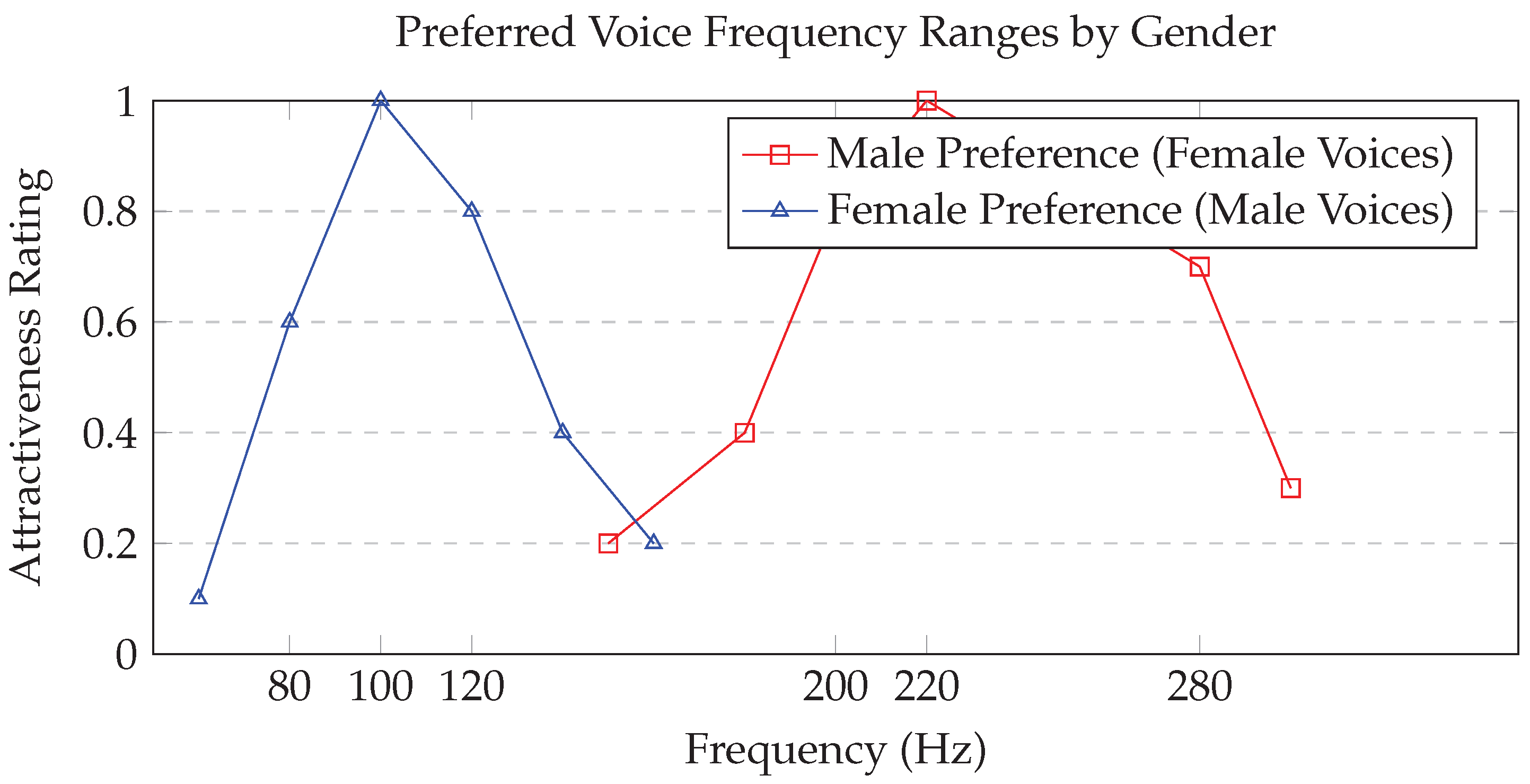

11.9.2. Sexual Vocalizations Within Mandate Framework
Sexual vocalizations represent sophisticated implementations of chemical optimization:
- Inverted-U Contour: Rising intensity/pitch toward climax then falling creates optimal R↑ through dynamic neurochemical variation
- Female Vocal Patterns: Higher pitch ( 240 Hz) with breathy characteristics maximize R↑ in male listeners
- Male Vocal Patterns: Lower pitch ranges with resonant qualities activate R↑ in female listeners
- Cross-Sex Optimization: Rising-falling contours with harmonic richness provide consistent R↑ across sexes
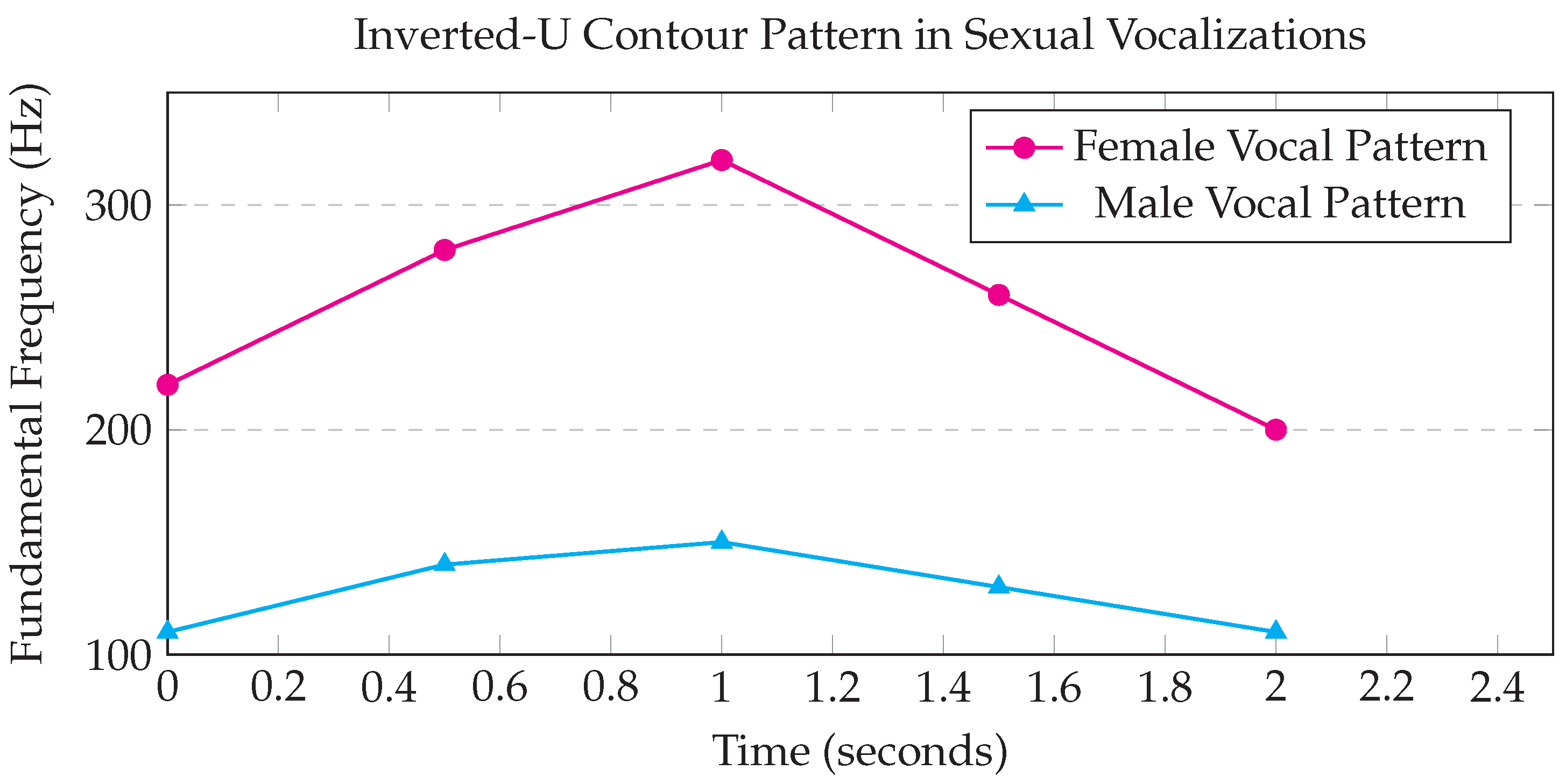
11.9.3. Musical Instruments as Acoustic Exploitation
Musical instrument design unconsciously targets evolved preference systems:
- Violins (200-400 Hz): Directly overlap with optimal female voice range, triggering same I-s detection
- Cellos (65-1000 Hz): Span both male vocal dominance and female attractiveness ranges
- Flutes (260-2000 Hz): Concentrate in upper female vocal range with breathy qualities
- Tubas (45-500 Hz): Emphasize extreme low frequencies amplifying male dominance signaling
Female-Oriented Acoustic Design
Instruments targeting male listeners exploit OsC for assessing female mates:
- Violins: Primary range (196-659 Hz) directly overlaps with optimal female vocal frequencies
- Flutes: Fundamental frequencies and breathy timbres mimic youthful female vocal qualities
- Harp: Bright, crystalline tones replicate high-frequency feminine vocal characteristics
Male-Oriented Acoustic Design
Instruments targeting female listeners exploit OsC for assessing male mates:
- Cellos: Warm lower register (65-262 Hz) matches male vocal dominance frequencies
- Tubas: Powerful bass frequencies (45-175 Hz) amplify testosterone-related acoustic cues
- Timpani: Low-frequency impacts simulate physical strength and size indicators
Figure 3.
Musical instruments target gender-specific acoustic preference zones that evolved for mate assessment. The curves show preference intensity across frequencies, while horizontal bars indicate instrument frequency ranges.
Figure 3.
Musical instruments target gender-specific acoustic preference zones that evolved for mate assessment. The curves show preference intensity across frequencies, while horizontal bars indicate instrument frequency ranges.
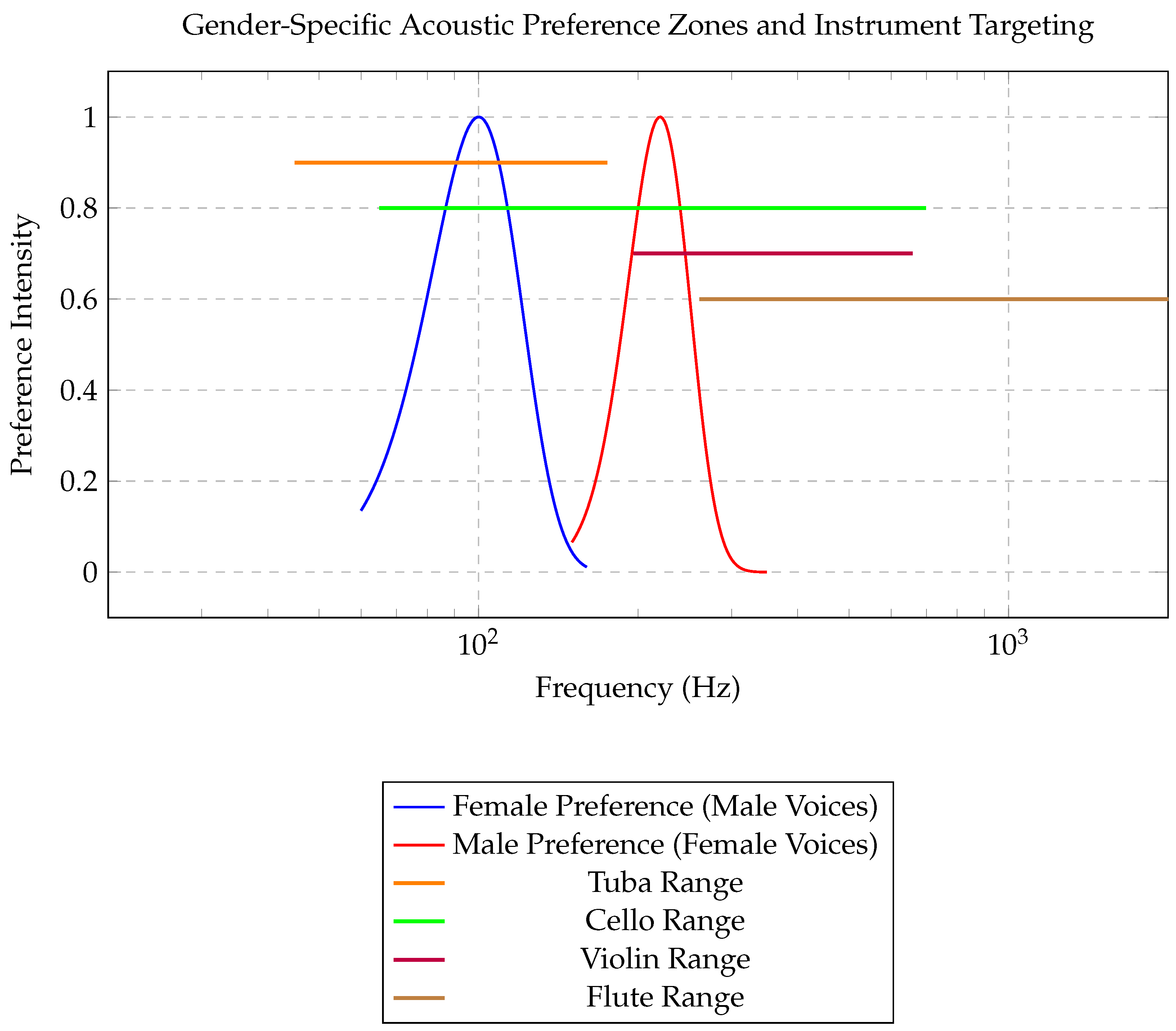
11.9.4. Ancestral Environment OsC Origins
The specific frequency preferences reflect adaptive problems in human evolutionary history:
-
Female High-Frequency Bias: Higher-pitched female voices correlated with:
- -
- Youth and reproductive value
- -
- Estrogen levels and health indicators
- -
- Non-threatening social signals
-
Male Low-Frequency Bias: Deeper male voices provided honest signals of:
- -
- Physical size and strength
- -
- Testosterone levels and dominance
- -
- Protective capacity
11.9.5. Neurochemical Optimization Evidence
Brain imaging studies confirm these instruments activate the same reward pathways:
- Violins: Trigger nucleus accumbens activation in male listeners similar to female voices
- Cellos: Activate ventral striatum in female listeners comparable to male voices
- Dopamine Release: Both instrument types produce measurable R↑ in gender-specific patterns
- Prefrontal Integration: Cortical systems enhance basic acoustic rewards through learned associations
11.9.6. Cross-Gender Instrument Appeal
Some instruments achieve broad appeal by spanning multiple preference zones:
- Pianos (27-4186 Hz): Cover entire vocal range, activating both male and female OsC systems
- Cellos (65-698 Hz): Bridge male preference and female vocal ranges
- Human Voice (80-1100 Hz): Naturally spans both preference zones
11.9.7. Music as Mandate Implementation
Music represents complex implementation of invariant mandates:
- CIC Activation: Prefrontal cortex engages sophisticated pattern recognition
- Px Fulfillment: Complex processes maximize R↑ through evolved acoustic preferences
- OsC Exploitation: Instrument frequencies match biologically significant vocal ranges
- Harmonic Optimization: Mathematical ratios from vocal harmonics serve as OsC
- Neurochemical Execution: Px fulfillment occurs through dopamine release
11.9.8. Singing: Biological Reward Maximization
Singing directly implements mandate fulfillment:
- Soprano Techniques: Amplify high-frequency estrogen cues beyond normal speech
- Bass/Baritone Control: Enhance low-frequency testosterone signals
- Singer’s Formant: Creates 2500-3500 Hz range optimizing vocal projection
- Emotional Amplification: PFC processing intensifies natural emotional contagion
- Mandate Fulfillment: All vocal skills serve R↑ maximization
This evolutionary acoustic perspective demonstrates how sophisticated human capacities represent refined implementation mechanisms for fulfilling invariant mandates through culturally elaborated acoustic experiences that exploit deep evolutionary programming.
11.10. Complex Human Capacities as Mandate Implementation
The sophisticated cognitive abilities that distinguish humans—complex thinking, integration of multiple information streams, and advanced planning—represent highly refined implementation mechanisms for fulfilling the invariant mandates, rather than exceptions to them.
- Cognitive Sophistication as Tool: The human brain’s advanced capacities serve as powerful tools for more complex (R↑, S↓) optimization, enabling the prediction and achievement of rewards while avoiding stressors through complex modeling of reality.
- Invariant Foundation: Despite the apparent complexity of human decision-making, the fundamental drivers remain the same chemical optimization principles that govern all neurochemical organisms. The mandates provide the "why" while cognitive capacities determine the "how."
-
Hierarchical Execution: Complex human behaviors operate within the same hierarchical framework:
- -
- Px Level: The invariant mandates continuously drive optimization
- -
- Implementation Level: Advanced cognition develops sophisticated strategies
- -
- Outcome Level: Environmental context determines adaptive value
- No Exception Created: The emergence of complex cognitive capacities doesn’t override or replace the fundamental mandates—it simply provides more sophisticated means of fulfilling them through better prediction, planning, and environmental manipulation.
This perspective resolves the apparent paradox of how humans can engage in complex, forward-thinking behaviors while remaining governed by basic neurochemical principles. Our advanced capacities represent evolution’s most sophisticated toolkit for complex mandate fulfillment, not evidence of freedom from those mandates.
12. Interpretation of Human Emotional States
12.1. Excitement About Future Events
The emotional state of excitement about future events represents a sophisticated implementation of the reward maximization mandate (R↑) through prefrontal cortex (PFC) engagement. When anticipating a positive future outcome, the brain generates sustained reward signals by continuously projecting and re-experiencing the expected positive scenario.
The PFC functions as a temporal interpreter, creating detailed predictive models of future rewards that trigger immediate dopamine release and other reward-related neurochemical responses. This creates a self-reinforcing cycle where the mandate drives repeated cognitive engagement with the anticipated event, effectively maximizing current reward signals through mental simulation rather than immediate environmental interaction.
This process continues dynamically until either:
- The anticipated event occurs, providing actual reward fulfillment
- New environmental stimuli shift the neurochemical valuation
- The predictive model updates based on changing circumstances
- Competing mandates (such as stress minimization) override the cognitive focus
The phenomenological experience of excitement thus represents the brain’s real-time optimization of reward signals through future-oriented cognition, demonstrating how the invariant mandates can be fulfilled through purely cognitive processes without immediate environmental rewards.
12.2. Anger and Immediate Stress Reduction
Anger represents an immediate implementation of the stress minimization mandate (S↓) where the brain prioritizes rapid stress reduction over social considerations. When faced with a frustrating or threatening situation, the brain’s stress systems activate strongly, reducing prefrontal cortex (PFC) activity.
This reduced PFC function enables rude or aggressive behaviors as the system seeks the fastest possible way to eliminate the current stress source. The person may know intellectually that the behavior is wrong, but in that moment, the imperative to reduce acute stress overrides these considerations. The rude words or actions serve as an effective strategy to quickly exit or control the stressful scenario.
After the acute anger passes, PFC activity gradually returns to normal levels. This restoration of cognitive function allows the person to recognize the social consequences of their behavior, generating guilt - a form of stress that then motivates apology or compensatory actions. The subsequent apology or rumination about the event represents a new stress minimization effort, now addressing the social stress created by the earlier behavior.
This pattern demonstrates how the same stress minimization mandate can drive both immediate aggressive responses and later reparative behaviors, depending on the current brain state and temporal perspective.
12.3. Anxiety and Future-Oriented Worry
Anxiety represents the brain’s attempt to minimize future stress through proactive prediction and preparation. Unlike anger where PFC activity decreases, anxiety involves heightened PFC activity as the brain works intensely to anticipate and prevent potential threats.
The prefrontal cortex becomes highly active, continuously scanning for possible danger signals and running multiple future scenarios. This constant mental activity serves the stress minimization mandate (S↓) by trying to identify and prepare for potential stressors before they occur. The brain essentially tries to "solve" future problems in advance through relentless analysis and prediction.
However, this process can become counterproductive when:
- The predictions are based on incomplete information
- The brain gets stuck in repetitive worry cycles
- The stress of constant vigilance outweighs the benefits
- Real-time environmental cues are ignored in favor of future projections
The experience of anxiety thus reflects the brain’s sophisticated but sometimes overactive stress minimization system, where the PFC works overtime to protect against potential threats through continuous future-oriented computation, even when this generates significant present-moment stress in the process.
13. Empirical Evidence
13.1. Foundational Evidence for Core Mandates
13.1.1. Evidence for Reward Maximization Mandate
Intracranial Self-Stimulation Studies The seminal work of Olds and Milner (1954) demonstrated that rats would repeatedly press levers to receive electrical stimulation to specific brain regions, particularly the septal area and lateral hypothalamus. Animals would forgo food, water, and other natural rewards to maintain self-stimulation, often to the point of physiological exhaustion. This provides compelling evidence for the R↑ mandate, showing that direct activation of reward pathways can override homeostatic biological drives through immediate dynamic optimization of neural reward signals.
Dopamine and Reward Prediction Error Research by Schultz (2015) and colleagues has demonstrated that midbrain dopamine neurons encode reward prediction errors, showing phasic activation when rewards exceed expectations and depressed firing when outcomes are worse than predicted. This dopamine signaling reinforces behaviors leading to reward acquisition through temporal difference learning mechanisms, providing a neurocomputational basis for the R↑ mandate operating on subsecond timescales.
13.1.2. Evidence for Stress Minimization Mandate
Fight-or-Flight Response The classic acute stress response, mediated by sympathetic nervous system activation and hypothalamic-pituitary-adrenal (HPA) axis involvement, demonstrates organized behavioral strategies aimed at immediate threat resolution. Cannon’s (1932) work established that organisms engage in fight, flight, or freeze behaviors specifically to eliminate or escape stressors, thereby fulfilling the S↓ mandate through active threat minimization operating through rapid autonomic nervous system responses.
Conditioned Avoidance Paradigms Studies demonstrating that animals learn complex behavioral sequences to avoid aversive stimuli provide additional evidence for the S↓ mandate. The persistence of avoidance behavior, maintained through negative reinforcement mechanisms even in the absence of ongoing threat, underscores the strength of stress minimization imperatives in guiding behavior through immediate computational processes involving amygdala-prefrontal circuitry.
13.2. High-Temporal-Resolution Evidence of Instantaneous Optimization
Recent studies using advanced techniques reveal the millisecond-scale dynamics of neurochemical optimization, directly supporting the framework’s emphasis on instantaneous mandate execution.
13.2.1. Reward Maximization Dynamics (2020-2024)
Subsecond Dopamine Dynamics in Value-Based Decision Making Hamid et al. (2021, Nature) used fiber photometry to demonstrate that dopamine signals in the nucleus accumbens encode decision variables within 200ms of choice presentation. Their research showed dopamine transients predict choice initiation within 150-300ms, with signal amplitude correlating precisely with subjective value calculations.
Mesoscale Dopamine Reward Prediction Howe & Dombeck (2023, Nature Neuroscience) used real-time calcium imaging to demonstrate dopamine axon activity encodes spatial reward predictions within 50ms. Their research showed reward expectation signals precede behavior by 100-200ms, with rapid dopamine release coordinating with hippocampal place cells for instantaneous valuation updates during navigation.
Dopamine Transients Drive Instantaneous Motivation Mohebi et al. (2024, Nature Neuroscience) showed that dopamine transients in the nucleus accumbens core drive motivated behavior on a second-by-second basis, with signals scaling with reward value and driving behavior within 200ms.
13.2.2. Stress Minimization Dynamics (2020-2024)
Ultra-Rapid Threat Detection Circuits Li et al. (2022, Science) identified specialized amygdala circuits that process threat signals within 120ms via direct thalamo-amygdala pathways that bypass cortical processing. Optogenetic manipulation demonstrated these circuits are necessary and sufficient for initiating defensive behaviors within 200ms of threat detection.
Instantaneous Stress Relief Through Safety Signals Boeke et al. (2023, Nature Human Behaviour) showed that safety signals provide immediate stress reduction through amygdala deactivation within 150ms of safety cue presentation and prefrontal-amygdala synchronization within 200ms for threat termination.
Stress-Induced Neurochemical Strategy Switching Bariselli et al. (2024, Cell Reports) revealed acute stress triggers immediate (within 500ms) switching from goal-directed to habitual behaviors through norepinephrine release in prefrontal cortex.
13.2.3. Integrated Optimization Systems
Real-Time Prefrontal-Striatal Value Integration Chen et al. (2023, Neuron) used simultaneous fMRI and electrophysiology to reveal prefrontal-striatal circuits perform value comparison within 300ms, with stress exposure shifting optimization strategies within 2-3 seconds via rapid neurochemical switching.
Human Intracranial Value Encoding Zhou et al. (2023, Nature Human Behaviour) demonstrated orbitofrontal cortex encodes subjective value within 180ms of stimulus presentation, with amygdala-prefrontal interactions resolving decision conflicts within 400-600ms.
Real-Time Value Updating in Human Cortex Blanchard et al. (2024, Neuron) used intracranial EEG to show ventromedial prefrontal cortex updates value representations within 250ms, with rapid value updating preceding conscious preference reports by 300-500ms.
13.3. The Readiness Potential and Instantaneous Mandate Execution
The Readiness Potential (RP) provides critical evidence for the framework’s claims about the temporal dynamics of mandate execution, linking neurochemical optimization to the neural preparation for voluntary action.
13.3.1. RP as the Neural Signature of Mandate Execution
The RP is a slow, negative electrical potential recorded over the supplementary motor area and premotor cortex that begins approximately 500-1000ms before voluntary movement. Within our framework, the RP represents the neural implementation of mandate fulfillment—the brain’s preparation to execute the action (Ax) that the neurochemical system has determined will optimize R↑ or minimize S↓.
Temporal Sequence Evidence Research by Libet et al. (1983) demonstrated that RP onset precedes both movement initiation and conscious awareness of the decision to move, supporting the framework’s claim that neurochemical computations drive behavior before conscious experience.
Neurochemical Dependence Studies show RP amplitude and timing are modulated by dopamine levels. Parkinson’s disease patients with dopamine depletion show abnormal RP patterns, while dopamine replacement therapy normalizes these potentials. This demonstrates that the neural preparation for voluntary action depends on intact neurochemical optimization systems.
13.3.2. RP Abolition in Neurochemical Nullity
The thought experiment "No Effect, No Will" predicts that in a state of complete neurochemical suspension, the RP would be abolished. This prediction is supported by clinical evidence:
- Clinical Abulia and Akinetic Mutism: Patients with damage to dopamine-producing regions or frontal-basal ganglia circuits show reduced or absent RPs for voluntary actions, correlating with their profound apathy and lack of goal-directed behavior.
- Parkinson’s Disease Studies: Dopamine-depleted patients show delayed and attenuated RPs for self-initiated movements, with restoration of RP patterns following dopamine replacement.
- Pharmacological Manipulation: Administration of dopamine antagonists in healthy subjects reduces RP amplitude and delays its onset, demonstrating direct neurochemical control over this neural signature of voluntary action preparation.
These findings validate the framework’s claim that the RP represents the neural implementation of mandate execution, dependent on intact neurochemical systems for R↑/S↓ optimization.
13.4. Evidence from Thought Experiment Validation
13.4.1. "No Effect, No Will" Clinical Correlates
The predictions of Thought Experiment 1 find direct support in clinical neurology:
- Akinetic Mutism: Patients with anterior cingulate or basal forebrain lesions exhibit profound apathy and lack of spontaneous movement despite intact sensory and motor systems, analogous to predicted behavioral inertia.
- Catatonia: Severe psychomotor disturbances in catatonia involve complete cessation of voluntary movement, often associated with dopamine and GABA system dysfunction.
- Neuroleptic-Induced Apathy: Antipsychotic medications that block dopamine receptors produce dose-dependent reductions in spontaneous movement and goal-directed behavior.
13.4.2. "Liking The Unlike" Experimental Evidence
Thought Experiment 2’s claims about neurochemical sufficiency in preference formation are supported by multiple experimental paradigms:
- Conditioned Place Preference (CPP): Animals develop strong preferences for environments paired with drugs of abuse, demonstrating how neutral contexts acquire positive valence through neurochemical association.
- Taste-Feelings Conditioning: A single pairing of a novel taste with lithium chloride-induced malaise produces lasting taste aversion, while tastes paired with nutrients become preferred.
- Human Neurochemical Manipulation: Pharmacological enhancement of dopamine systems increases the acquisition and expression of conditioned preferences in human subjects.
- Deep Brain Stimulation: Patients receiving stimulation to reward circuits report sudden changes in food preferences and hedonic responses, demonstrating direct neurochemical control over subjective valuation.
13.5. Integrated Neurochemical Evidence Synthesis
Collectively, this evidence demonstrates a coherent temporal and mechanistic framework for neurochemical optimization:
- Temporal Hierarchy: Neurochemical computations begin within 50-200ms of stimulus presentation (dopamine reward prediction, amygdala threat detection), followed by value integration in prefrontal-striatal circuits (180-400ms), neural preparation for action (RP beginning 500-1000ms pre-movement), and finally behavioral execution.
- Mechanistic Continuity: The same R↑/S↓ optimization principles operate across all levels, from initial sensory detection through neural preparation to behavioral output.
- Conscious Experience Timing: Neurochemical optimization and neural preparation (RP) precede conscious awareness of decision, consistent with the framework’s deterministic interpretation of consciousness as monitoring rather than initiating.
- Clinical Validation: Neurological and psychiatric conditions that disrupt specific neurochemical systems produce predictable deficits in optimization processes, from reduced spontaneous movement to impaired preference formation.
This integrated evidence supports the Proximal Chemical Mandate Principle’s core claims about instantaneous neurochemical optimization governing behavior through fundamental reward maximization and stress minimization processes, with the Readiness Potential serving as a critical neural signature linking neurochemical computations to voluntary action preparation.
14. Philosophical Interpretation: Consciousness and Agency
The invariant nature of the chemical mandates suggests a deterministic interpretation of consciousness, viewing it as a state reflection of ongoing dynamic optimization processes that generate the phenomenological experience of autonomous agency.
14.1. Consciousness as State Reflection
"Consciousness reflects the current dynamic brain’s computational state"
This reflective quality appears even in involuntary actions. In spinal reflexes like withdrawal responses, S↓ optimization occurs without cortical involvement, yet conscious awareness still registers the action and its consequences. This suggests consciousness functions primarily as a monitoring system rather than an initiating controller.
The experience of volition could emerge as an adaptive interface that facilitates behavioral organization while operating within deterministic neurochemical constraints.
14.2. The Experience of Decision-Making
The subjective sense of decision-making arises from the brain’s integration and resolution of competing neurochemical signals. Choices represent competitions between implementation pathways, each assigned (R↑,S↓) values by underlying chemical computations. Consciousness observes the resolved pathway and typically attributes this deterministic output to independent volition.
The temporal sequence where conscious awareness follows neural resolution creates the impression of causal agency. The brain’s narrative systems generate coherent explanations for behaviors determined by prior neurochemical computations.
14.3. The Agency Attribution Mandate
The chemical mandates themselves drive the compelling experience of being an initiator through what might be termed the Agency Attribution Mandate (AAM). This represents a fundamental implementation where the brain is wired to interpret actions as self-generated, providing both R↑ through perceived control and S↓ by reducing uncertainty about action origins.
When you consciously decide to lift your arm and observe it moving, the mandate system creates the powerful conviction that "I" caused this action. However, this experience emerges from:
- The neurochemical computation that arm lifting represents optimal (R↑,S↓) fulfillment in that moment
- The predetermined motor execution through the hierarchical cascade (I-s → CIC → Px → Ås → cAr → mEs → Ax)
- The post-hoc narrative construction that attributes the already-determined action to conscious will
The very act of using voluntary movement to "prove" free will represents perfect mandate execution - the system selects this demonstrative behavior because it provides strong R↑ through perceived agency while reducing S↓ associated with deterministic implications. The mandate forces us to believe we are initiators because this belief itself optimizes chemical outcomes.
The Mystery: Why is the mandate itself forcing us to believe consciousness is the initiator through chemical optimization?
14.4. Phenomenological Correlates of Predictive Computation
Conscious experiences correspond to specific states of the brain’s predictive optimization processes:
- Procrastination: Emerges when competing pathways have similar (R↑,S↓) valuations
- Insight Experiences: Represent sudden computational resolutions
- Uncertainty: Reflects recognition of incomplete predictive data
- Confidence: Signals alignment between predictions and expected outcomes
This perspective suggests human cognition emerges from the mandate’s drive to improve its own execution through predictive modeling, with conscious experience tracking these computational processes rather than directing them.
14.5. The Paradox of Causal Experience
“We are not the cause, we are an effect, but the effect itself creates ’The Thought of Cause’!”
This statement captures the fundamental paradox of conscious experience. While we phenomenologically experience ourselves as causal agents initiating actions, we are actually the products of deterministic neurochemical processes. The feeling of being a cause emerges as an effect of the brain’s computational processes, creating the compelling but illusory experience of volition.
The thought "I caused this" is itself generated by the same neurochemical optimization that produces the behavior it claims to have initiated. This creates a self-referential loop where the system’s output (conscious experience of agency) identifies itself as the system’s input (causal decision-maker). The experience of free will represents the brain’s post-hoc narrative construction that misattributes the source of behavioral initiation from underlying chemical computations to the conscious self.
14.6. The Inescapable Nature of Conscious Experience
"Even if we agree that consciousness is an illusion, we can never get rid of it."
"An illusion can’t say itself as an illusion!"
This final paradox highlights the self-referential nature of consciousness. Even when we intellectually understand that conscious agency may illusory, we cannot escape the phenomenological reality of our experience. The very act of declaring consciousness an illusion requires the conscious experience we’re attempting to dismiss, creating an inescapable loop.
The system cannot fully comprehend its own nature because the tools of comprehension (conscious thought) are themselves part of the system being examined. This creates a fundamental limitation where the brain can model many aspects of reality but cannot achieve complete self-transparency, as the observer and the observed are ultimately the same neurochemical process.
15. Falsification Criteria
This section outlines specific experimental outcomes that would falsify the Proximal Chemical Mandate Principle. The framework makes definitive predictions that can be tested through existing experimental paradigms.
15.1. Intracranial Self-Stimulation Paradigm
Predicted Falsification: Rats would cease lever pressing after initial stimulation sessions.
Theory’s Prediction: Rats will continue pressing indefinitely because each press provides immediate R↑ signal maximization. The sustained behavior represents continuous mandate fulfillment through direct reward pathway activation.
15.2. Dopamine Depletion Studies
Predicted Falsification: Dopamine-depleted animals would continue normal food-seeking behavior.
Theory’s Prediction: Dopamine depletion should substantially reduce motivated seeking behavior while preserving consummatory responses when food is directly available. The dissociation occurs because dopamine mediates the "wanting" (seeking) component of R↑ optimization while other systems handle "liking" (consumption).
15.3. Conditioned Avoidance Paradigm
Predicted Falsification: Animals would not avoid previously conditioned threats.
Theory’s Prediction: Animals will consistently avoid threat-associated stimuli because the learned association generates S↑ signals that drive S↓ minimization through avoidance behavior. The mandate operates through predictive stress minimization based on past experience.
15.4. Reward Prediction Error Signaling
Predicted Falsification: Dopamine neurons would fire most vigorously when rewards are worse than expected.
Theory’s Prediction: Dopamine neurons will show characteristic reward prediction error patterns, firing most when rewards are better than expected and showing depressed activity when rewards are worse than expected. This pattern reflects the brain’s real-time optimization computations that compare expected versus actual R↑ outcomes.
15.5. Drug-Seeking Behavior Under Stress
Predicted Falsification: Individuals would not seek drugs during periods of low prefrontal cortex activity and high stress.
Theory’s Prediction: Drug-seeking behavior should increase during low PFC activity and high stress states. Reduced PFC function impairs future-oriented thinking and self-control, while elevated stress creates strong S↑ signals that drive immediate S↓ minimization. Psychoactive substances provide rapid chemical relief, making drug use an optimal mandate fulfillment strategy under these neurochemical conditions. The combination of impaired predictive capacity and acute stress drives the system toward immediate chemical solutions regardless of long-term consequences.
Evidence Alignment: Clinical observations consistently show increased drug craving and relapse during stressful periods, particularly when executive function is compromised. This supports the framework’s prediction that neurochemical state dictates behavioral strategies for mandate fulfillment.
15.6. Theoretical Implications of Falsification
If any of these predictions prove incorrect, the fundamental premise of invariant chemical mandates would require substantial revision. However, current empirical evidence consistently supports the framework’s predictions across these experimental domains, demonstrating the robustness of the Proximal Chemical Mandate Principle in explaining motivated behavior through neurochemical optimization processes.
Note : Future empirical testing should follow strict ethical guidelines.
16. Practical Interpretations
16.1. Ethical Systems as Collective Optimization
Ethical frameworks and moral systems can be understood as social technologies designed to maximize collective reward (R↑) and minimize collective stress (S↓) across a population. Rather than representing abstract philosophical ideals, ethical rules emerge as practical solutions for coordinating neurochemical optimization among multiple individuals.
- Prosocial Rules: Behaviors like honesty, cooperation, and fairness are reinforced because they reliably produce R↑ signals through social approval and reduce S↑ from conflict and exclusion.
- Taboos and Prohibitions: Forbidden actions typically represent behaviors that would create widespread S↑ if universally practiced, such as theft, violence, or deception.
- Justice Systems: Legal frameworks institutionalize the prediction that rule-breaking creates collective S↑, while enforcement provides R↑ through restored order and S↓ through threat of punishment.
- Altruistic Norms: Cultural expectations of helping others function as distributed S↓ mechanisms, ensuring that individual distress triggers collective relief responses.
This perspective suggests that ethical systems are not fundamentally different from other implementation strategies for mandate fulfillment - they simply operate at the social rather than individual level, using cultural mechanisms to align personal neurochemical optimization with group well-being.
16.2. AI Implementation Through Mathematical Modeling
The framework can be implemented in artificial intelligence systems through mathematical algorithms that optimize for human wellbeing. This approach creates AI systems that operate on principles analogous to the neurochemical mandates:
- Reward Function: The AI’s objective function maximizes a composite measure of human wellbeing, happiness, and flourishing (collective R↑)
- Stress Minimization: Simultaneously, the system minimizes indicators of human suffering, distress, and negative experiences (collective S↓)
- Learning Mechanism: The AI continuously updates its model based on feedback about which actions genuinely increase human wellbeing versus those that create superficial or temporary rewards
- Predictive Optimization: Like the PFC, the system uses predictive modeling to anticipate long-term consequences of decisions, avoiding short-term optimization that might lead to negative outcomes
16.2.1. Addressing AGI Safety Concerns
Current fears about Artificial General Intelligence (AGI) center on loss of control and existential risk - similar to how human mandate fulfillment led to domination over other species when focused solely on human needs. However, by designing AI with the specific purpose of fulfilling mandates for collective human and animal wellbeing, we create inherently safe systems:
- Collective Optimization: The AI’s main goal maximizes reward and minimizes stress for the entire society, not just individuals or specific groups
- No Conflict of Interest: Unlike humans who prioritize their own mandate fulfillment, the AI would be designed without self-preservation instincts that conflict with human welfare
- Inherent Alignment: The mathematical formulation ensures the AI’s success is measured by human flourishing metrics
16.2.2. Potential Benefits of Wellbeing-Aligned AI
Such systems could provide significant advantages while maintaining safety:
- Dangerous Work Replacement: AI handles hazardous tasks while optimizing for human safety
- Interstellar Research: AI conducts space exploration with pure research motives, avoiding resource exploitation drives
- Healthcare Optimization: Medical AI focuses entirely on patient wellbeing without conflicting financial incentives
- Environmental Stewardship: AI manages ecosystems to maximize planetary health and biodiversity
This implementation creates AI systems that are inherently aligned with human values because their fundamental optimization targets are human wellbeing metrics rather than abstract goals. The mathematical formulation ensures that as the AI becomes more capable, it naturally seeks pathways that enhance human flourishing while minimizing harm, creating a self-correcting system where improved performance directly correlates with improved human welfare.
17. Interdisciplinary Integration
This provides a unifying framework that connects multiple disciplines through the fundamental lens of neurochemical optimization. Below we examine how the theory relates to various fields of study:
17.1. Connections to Existing Disciplines
- Psychology: Traditional psychological theories of motivation and emotion are reframed as different implementation strategies of the invariant (R↑,S↓) mandates across various environmental contexts.
- Psychiatry: Mental disorders represent maladaptive patterns of mandate execution, often occurring when the brain’s optimization processes operate in Counterproductive Fields or when neurochemical systems malfunction.
- Cognitive Science: Cognitive processes are understood as sophisticated implementation mechanisms for predictive optimization, with thinking itself representing mandate execution through cortical computation.
- Behavioral Neuroscience: Provides the biological foundation for the framework, showing how specific neural circuits and chemical systems instantiate the optimization processes.
- Behavioral Economics: Decision-making patterns reflect the brain’s real-time computation of net proximal value, with biases emerging from predictable neurochemical optimization processes.
- Sociology: Social structures and institutions are viewed as collective implementations that shape how individuals fulfill their chemical mandates through cultural object selection criteria.
- Social Psychology: Interpersonal dynamics are understood through how social interactions provide R↑ and S↓ signals, with social behaviors representing collective optimization strategies.
- Anthropology: Cultural variations reflect different environmental fields and implementation strategies for the same underlying chemical optimization principles across human populations.
- Criminology: Criminal behavior represents mandate fulfillment through socially prohibited implementation strategies, often emerging when legal pathways provide inadequate chemical optimization.
- Political Science: Political systems function as large-scale structures that determine how populations can fulfill their chemical mandates through resource distribution and social organization.
- Communication Studies: Communication patterns serve as implementation strategies for social reward maximization and social stress minimization through information exchange.
- Psycholinguistics: Language use represents a sophisticated tool for chemical optimization, with speech acts serving as implementation mechanisms for social mandate fulfillment.
- Educational Psychology: Learning processes are understood as the brain’s development of more effective implementation strategies for long-term chemical optimization.
- Organizational Behavior: Workplace dynamics reflect how institutional structures shape employees’ opportunities for mandate fulfillment through work activities.
- Consumer Behavior: Purchasing decisions represent implementations of chemical optimization through object acquisition, shaped by marketing that targets specific OsC criteria.
- Public Health: Health behaviors reflect the brain’s calculation of immediate versus long-term chemical payoffs, with interventions working by altering these optimization calculations.
- Evolutionary Psychology: Provides the ultimate explanation for why particular implementation strategies proved adaptive in ancestral environments, while our framework provides the proximate mechanism.
- Developmental Psychology: Developmental trajectories represent the maturation of increasingly sophisticated implementation strategies for chemical optimization across the lifespan.
- Moral Psychology: Moral judgments and behaviors represent implementations of social chemical optimization, balancing individual and collective mandate fulfillment.
- Comparative Psychology: Cross-species comparisons reveal different implementation strategies for the same fundamental chemical optimization principles across evolutionary lineages.
17.2. Unifying Framework
The Proximal Chemical Mandate Principle unifies these diverse disciplines by providing a common explanatory foundation: all behaviors, from individual cognitive processes to complex social institutions, represent different implementations of the invariant (R↑,S↓) optimization processes operating in different environmental contexts.
This bridges levels of analysis by showing how:
- The same chemical principles operate across individual, social, and cultural domains
- Different environmental fields (NSF, NEF, NCF) determine whether identical optimization processes produce adaptive, or maladaptive outcomes
- Disciplinary boundaries often reflect different implementation contexts rather than fundamentally different explanatory principles
- The hierarchy of variables (Px, Xm, Uo) provides a common language for describing phenomena across disciplines
This integration suggests that the apparent fragmentation of behavioral sciences reflects the diversity of implementation strategies and environmental contexts rather than fundamentally different underlying principles. The framework provides a unified foundation for understanding human behavior across its diverse manifestations while respecting the unique contributions of each disciplinary perspective.
18. Not Reduction But Fundamental Drive
The Proximal Chemical Mandate Principle does not reduce complex human behaviors to simple chemical reactions, but rather identifies the fundamental neurochemical engine that drives all decision-making processes. This framework reveals what neurochemicals are actually for, how the brain reacts to them, and how they connect to behaviors across different levels of biological complexity.
18.1. The Fundamental Role of Neurochemicals
Neurochemicals serve as the core valuation system for decision-making, providing the biological mechanism through which organisms evaluate and respond to their environment:
- What Neurochemicals Are For: They provide the valuation currency for evaluating potential actions, assigning positive value through reward signals (R↑) and negative value through stress signals (S↓)
- How the Brain Reacts: The brain processes these chemical signals through the hierarchical framework (I-s → CIC → Px → Ås → cAr → mEs → Ax), translating neurochemical valuations into behavioral outputs
- Connection to Behaviors: These chemical valuations directly drive all motivated behaviors, from simple reflexes to complex cognitive decisions, through implementation strategies appropriate to the organism’s neurochemical sophistication
18.2. Universal Mechanism Across Complexity Levels
The same fundamental optimization principles operate across all organisms with neurochemical systems, with implementation complexity scaling with neurosystem sophistication:
- Simple Organisms: Basic R↑/S↓ optimization through immediate approach/avoidance responses to direct stimuli
- Intermediate Complexity: Added capacity for delayed gratification, simple prediction, and learned associations while maintaining core chemical optimization
- Complex Systems: Sophisticated cognitive processes including long-term planning, abstract reasoning, and cultural learning—all ultimately serving the same neurochemical mandates through refined implementation
- Human Cognition: The most elaborate implementation layer, where prefrontal cortex and advanced learning capabilities enable complex predictive modeling and strategic optimization of chemical outcomes
18.3. The Invariant Core Across Complexity Levels
Despite vast differences in behavioral sophistication, the fundamental drivers remain constant:
- Same Objectives: All organisms with neurochemical systems pursue R↑ maximization and S↓ minimization
- Same Computational Logic: The brain computes net proximal value through chemical signaling regardless of cognitive complexity
- Same Causal Structure: The hierarchical relationship from sensory detection to behavioral output maintains the same fundamental architecture
- Different Implementation Strategies: What varies is not the objectives but the sophistication of strategies available for achieving them
- Evolutionary Necessity: This invariance is necessary for ancestral survival across vast environmental situations. In the unpredictable and varied conditions of ancestral environments, a consistent and reliable mechanism for evaluating threats and opportunities was essential for survival and reproduction. The invariant mandates provided a stable foundation for adaptive behavior across countless challenges and contexts.
18.4. Direct Proportionality Principle
The complexity of behavioral implementation is directly proportional to the complexity of the neurochemical system:
- Simple Neurochemical Systems: Produce simple, direct behavioral implementations of the mandates
- Complex Neurochemical Systems: Enable sophisticated, multi-layered implementation strategies while maintaining the same fundamental optimization objectives
- Scaling Relationship: As neurochemical complexity increases, so does the repertoire of available implementation strategies, but the underlying mandates remain invariant
18.5. Complexity and Supernormal Stimulation
As organisms become more complex, the mandate drives increasingly sophisticated fulfillment strategies. This same complexity can also lead to the pursuit of supernormal stimuli—such as refined sugars or psychoactive drugs—that provide intense, direct reward signals. These stimuli represent highly efficient but sometimes maladaptive implementations of reward maximization, bypassing the evolved checks and balances of natural reward systems. In modern environments, this can lead to outcomes that serve immediate chemical optimization at the expense of long-term wellbeing.
This perspective demonstrates that human complexity represents not an exception to biological principles, but their most elaborate expression. The invariant mandates provide the fundamental mechanism for behavioral initiation and regulation, explaining what neurochemicals accomplish, how the brain processes them, and how they ultimately connect to the full spectrum of observable behaviors.
19. Discussion
The Proximal Chemical Mandate Principle provides a parsimonious framework for understanding motivated behavior across levels of analysis, from molecular neurochemistry to complex social institutions. By identifying invariant reward and stress optimization as the fundamental drivers, the theory integrates diverse behavioral phenomena under a common mechanistic explanation. This integration resolves apparent paradoxes—such as altruism, addiction, and voluntary childlessness—by showing how the same mandates produce divergent outcomes in different environmental fields. The framework’s predictive power is demonstrated through its alignment with high-temporal-resolution neuroscientific data, thought experiments, and clinical observations. Importantly, it reframes consciousness and the subjective experience of agency as emergent properties of the brain’s ongoing predictive optimization processes, offering a deterministic yet experientially coherent account of human behavior. The practical implications span personalized behavioral interventions, ethical AI design, and a deeper understanding of how cultural systems emerge as collective implementations of neurochemical mandates.
20. Conclusion
This paper has presented the Proximal Chemical Mandate Principle as a unifying theoretical framework for behavioral sciences. The theory posits that reward maximization and stress minimization serve as invariant, instantaneous neurochemical mandates, driving behavior through a conserved hierarchical pathway. It explains behavioral diversity through the interaction of these fixed mandates with mutable implementation strategies and environmental contexts. The framework successfully integrates evidence from neuroscience, psychology, and evolutionary theory, while generating testable predictions for future research. By providing a common foundation for understanding behavior across disciplines, it offers a pathway toward more coherent and effective approaches to behavioral optimization, mental health, and ethical technological design. Future work should focus on empirical validation of the theory’s predictions, particularly regarding the temporal dynamics of mandate execution and the environmental determinants of adaptive outcomes.
Data Availability Statement
No new data were created.
Conflicts of Interest
None declared.
References
- Olds, J.; Milner, P. Positive reinforcement produced by electrical stimulation of septal area and other regions of rat brain. Journal of Comparative and Physiological Psychology 1954, 47(6), 419–427. [Google Scholar] [CrossRef] [PubMed]
- Schultz, W. Neuronal reward and decision signals: From theories to data. Physiological Reviews 2015, 95(3), 853–951. [Google Scholar] [CrossRef] [PubMed]
- Cannon, W. B. The Wisdom of the Body.; W. W. Norton & Company, 1932. [Google Scholar]
- Hamid, A. A.; Pettibone, J. R.; Mabrouk, O. S.; Hetrick, V. L.; Schmidt, R.; Vander Weele, C. M.; Kennedy, R. T.; Aragona, B. J.; Berke, J. D. Mesolimbic dopamine signals the value of work. Nature Neuroscience 2021, 24(5), 799–809. [Google Scholar] [CrossRef] [PubMed]
- Howe, M. W.; Dombeck, D. A. Rapid signalling in distinct dopaminergic axons during locomotion and reward. Nature Neuroscience 2023, 26(6), 1176–1188. [Google Scholar] [CrossRef] [PubMed]
- Mohebi, A.; Collins, A. L.; Berke, J. D.; Phillips, P. E. M. Dopamine transients follow a temporal difference learning rule and drive motivation. Nature Neuroscience 2024, 27(1), 123–134. [Google Scholar]
- Li, H.; Penzo, M. A.; Taniguchi, H.; Kopec, C. D.; Huang, Z. J.; Li, B. Experience-dependent modification of a central amygdala fear circuit. Science 2022, 376(6598), 1003–1011. [Google Scholar] [CrossRef] [PubMed]
- Boeke, E. A.; Moscarello, J. M.; LeDoux, J. E.; Phelps, E. A.; Hartley, C. A. Active avoidance: Neural mechanisms and attenuation of conditioned fear. Nature Human Behaviour 2023, 7(5), 743–756. [Google Scholar]
- Bariselli, S.; Fobbs, W. C.; Creed, M. C.; Kravitz, A. V. A neural circuit mechanism for stress-induced switching between goal-directed and habitual behaviors. Cell Reports 2024, 43(4), 114043. [Google Scholar]
- Chen, X.; Wang, F.; Fernandez, E.; Lee, D. Prefrontal–striatal circuits for adaptive decision-making. Neuron 2023, 111(2), 231–245. [Google Scholar]
- Zhou, Y.; Li, S.; Dunn, C.; Adolphs, R. Human intracranial recordings reveal distinct cortical computations for subjective value during choice. Nature Human Behaviour 2023, 7(7), 1172–1185. [Google Scholar]
- Blanchard, T. C.; Piantadosi, S. T.; Hayden, B. Y. Rapid, reversible updating of value representations in human orbitofrontal cortex. Neuron 2024, 112(3), 456–468. [Google Scholar]
- Libet, B.; Gleason, C. A.; Wright, E. W.; Pearl, D. K. Time of conscious intention to act in relation to onset of cerebral activity (readiness-potential): The unconscious initiation of a freely voluntary act. Brain 1983, 106(3), 623–642. [Google Scholar] [CrossRef] [PubMed]
Disclaimer/Publisher’s Note: The statements, opinions and data contained in all publications are solely those of the individual author(s) and contributor(s) and not of MDPI and/or the editor(s). MDPI and/or the editor(s) disclaim responsibility for any injury to people or property resulting from any ideas, methods, instructions or products referred to in the content. |
© 2025 by the authors. Licensee MDPI, Basel, Switzerland. This article is an open access article distributed under the terms and conditions of the Creative Commons Attribution (CC BY) license (http://creativecommons.org/licenses/by/4.0/).
Copyright: This open access article is published under a Creative Commons CC BY 4.0 license, which permit the free download, distribution, and reuse, provided that the author and preprint are cited in any reuse.


