
Submitted:
14 November 2025
Posted:
17 November 2025
You are already at the latest version
Abstract
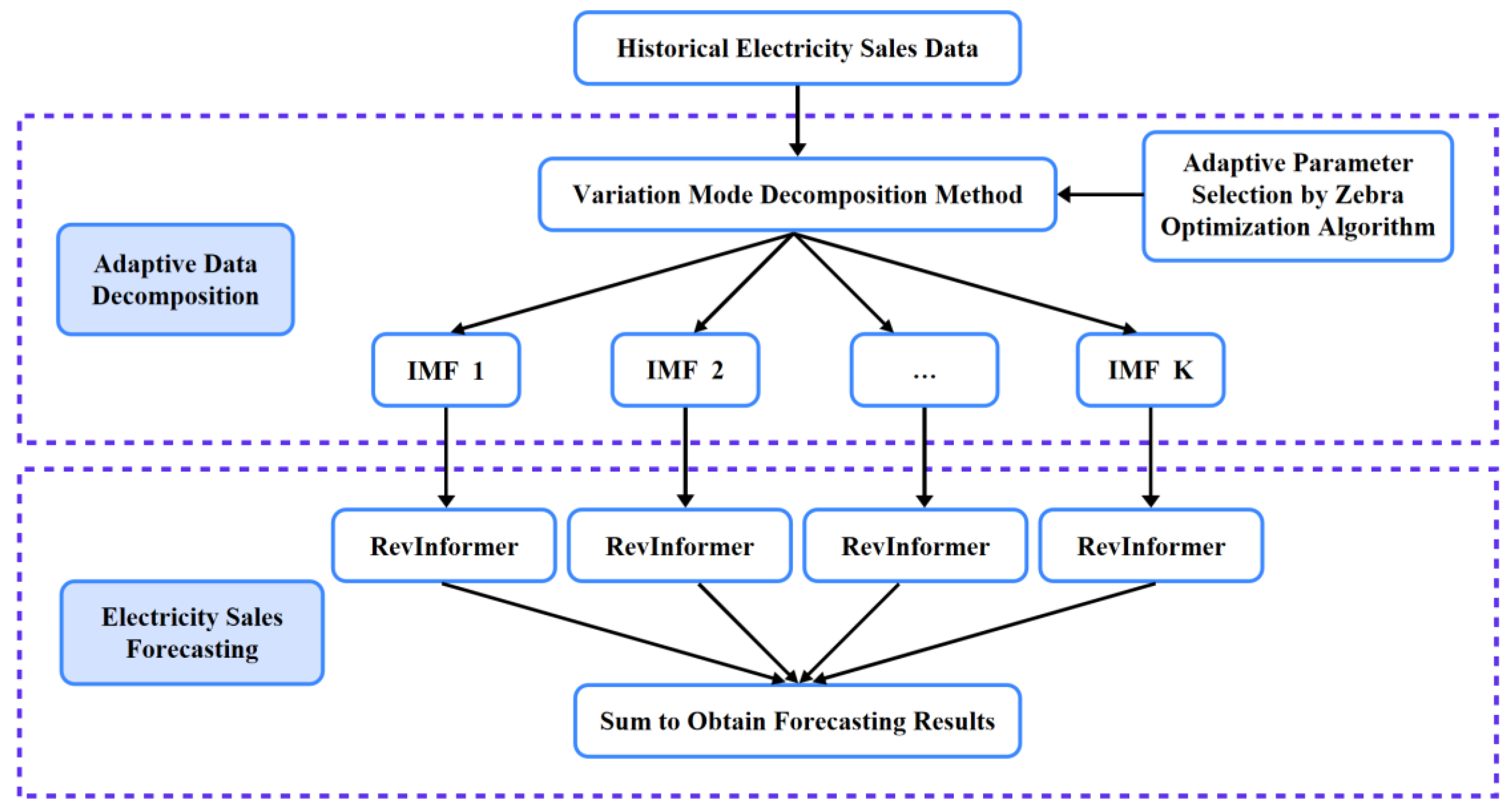
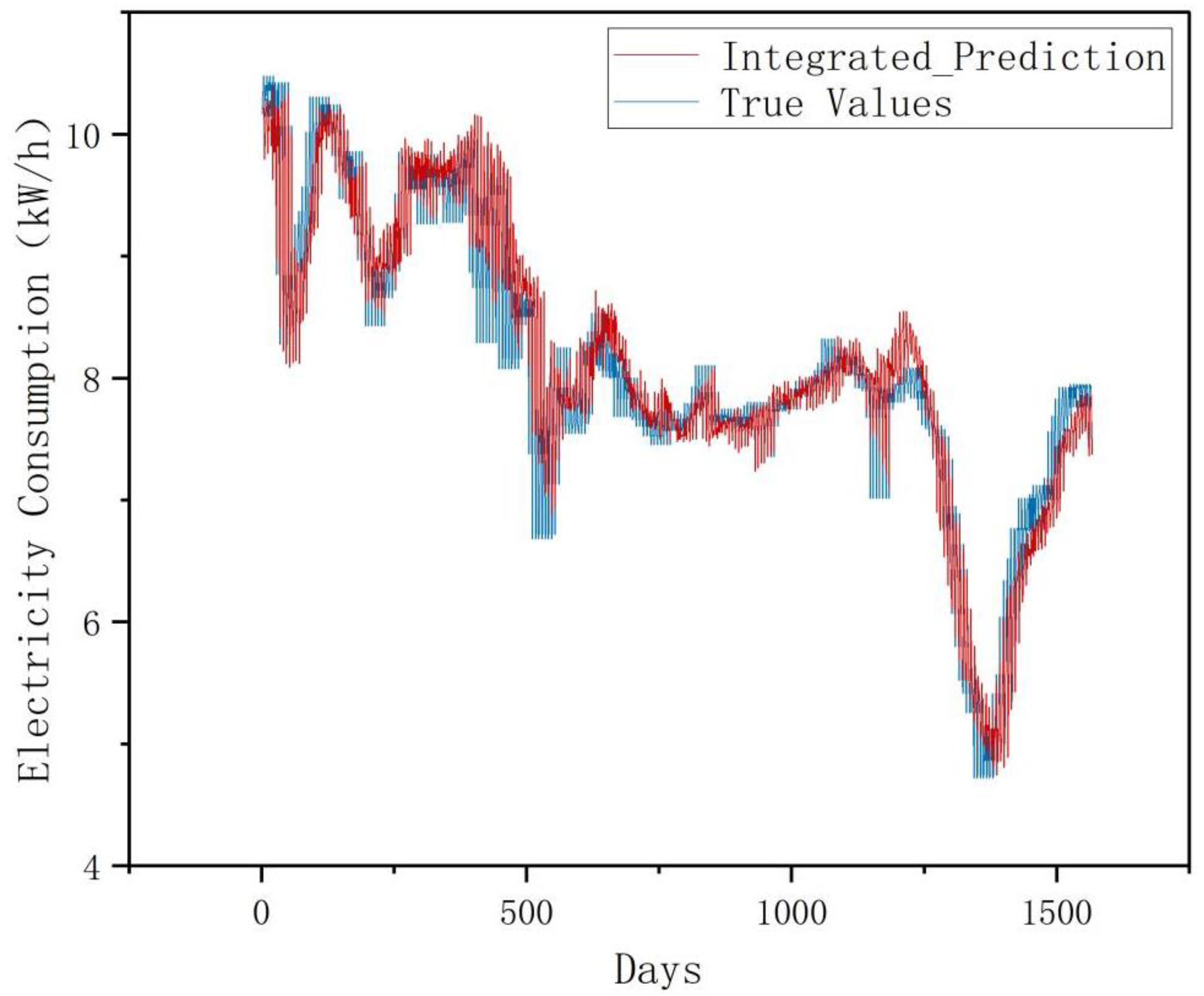
The accurate forecasting of electricity sales volumes constitutes a critical task for power system planning and operational management. Nevertheless, subject to meteorological perturbations, holiday effects, exogenous economic conditions, and endogenous grid operational metrics, sales data frequently exhibit pronounced volatility, marked nonlinearities, and intricate interdependencies. This inherent complexity compounds modeling challenges and constrains forecasting efficacy when conventional methodologies are applied to such datasets. To address these challenges, this paper proposes a novel decomposition-integration forecasting framework. The methodology first applies Variational Mode Decomposition (VMD) combined with the Zebra Optimization Algorithm (ZOA) to adaptively decompose the original data into multiple Intrinsic Mode Functions (IMFs). These IMF components, each capturing specific frequency characteristics, demonstrate enhanced stationarity and clearer structural patterns compared to the raw sequence, thus providing more representative inputs for subsequent modeling. Subsequently, an improved RevInformer model is employed to separately model and forecast each IMF component, with the final prediction obtained by aggregating all component forecasts. Empirical validation on an annual electricity sales dataset from a commercial building demonstrates the proposed method’s effectiveness and superiority, achieving Mean Absolute Error (MAE), Root Mean Squared Error (RMSE), and Mean Squared Percentage Error(MSPE)values of 0.044783, 0.211621, and 0.074951 respectively – significantly outperforming benchmark approaches.
Keywords:
1. Introduction
- 1)
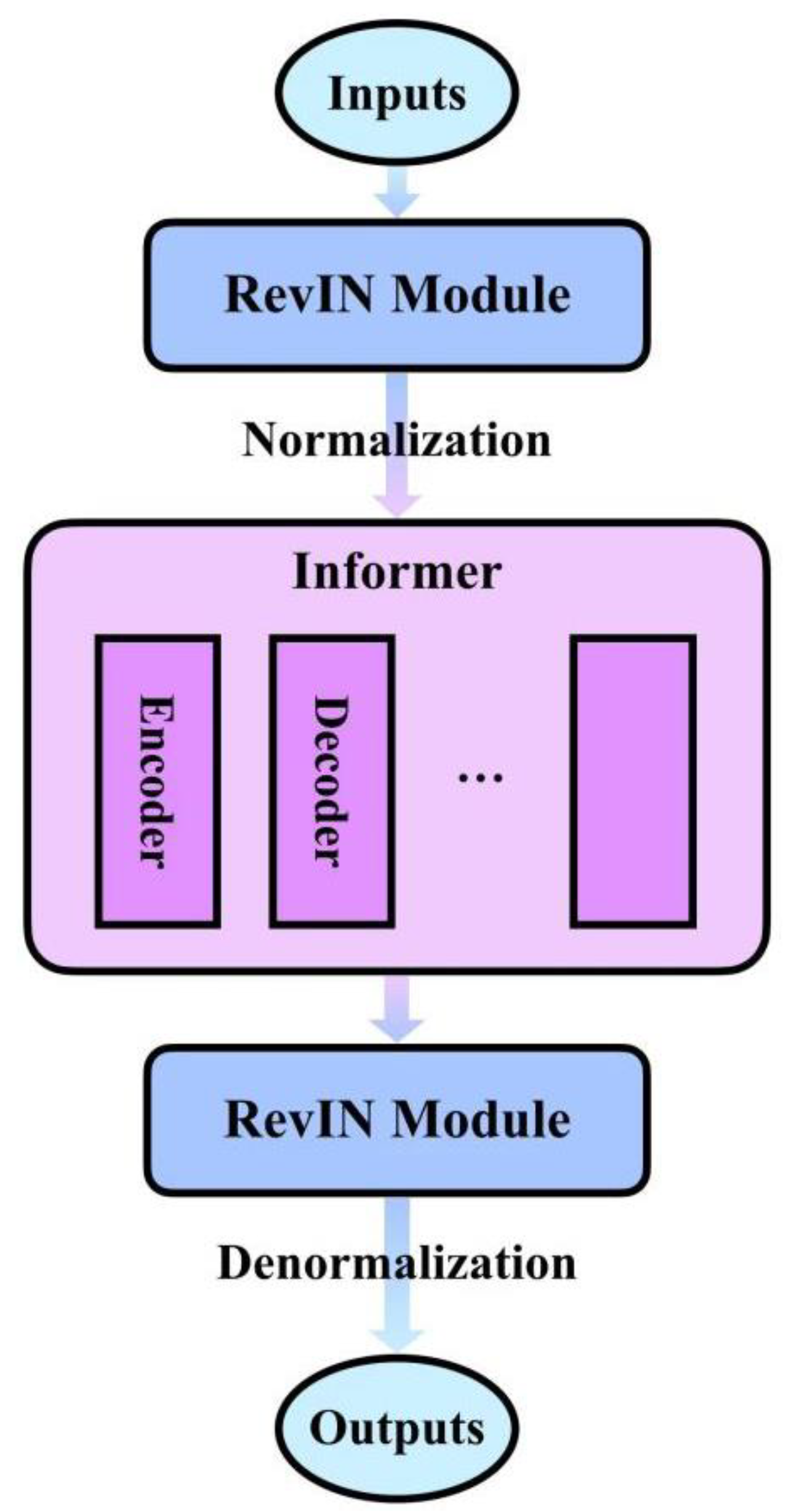
- A novel electricity sales forecasting method is proposed, employing a decomposi-tion-integration framework. This approach adaptively decomposes the original se-quence by integrating Variational Mode Decomposition (VMD) with the Zebra Opti-mization Algorithm (ZOA), thus significantly reducing modeling complexity. Subse-quently, an improved RevInformer model performs component-wise prediction on each subsequence, with final forecasts generated through aggregated integration of all component predictions.
- 2)
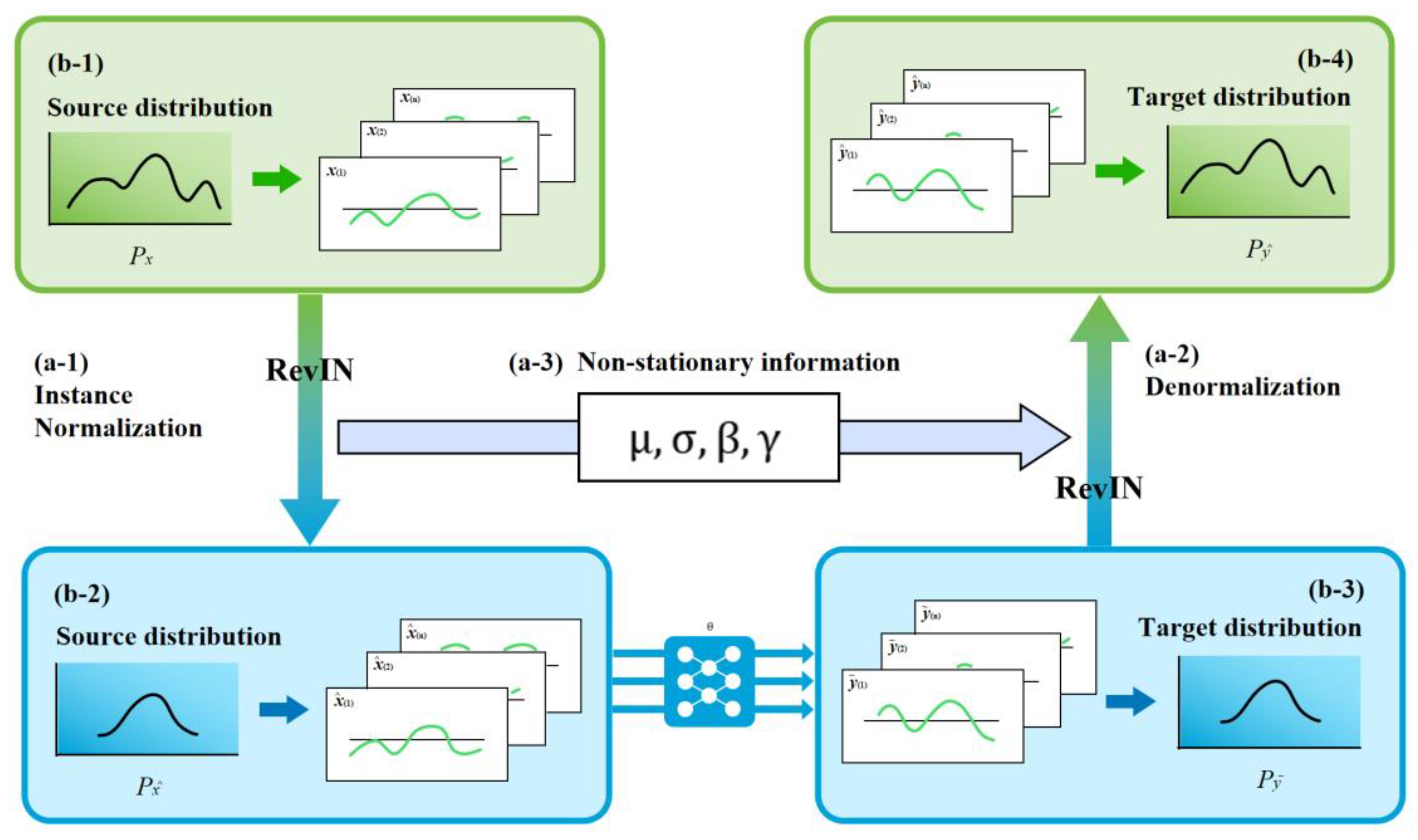
- An enhanced RevInformer model is developed by introducing Reversible Layers to the Informer architecture, strengthening deep feature propagation capabilities. Simulta-neously, a bidirectional modeling mechanism is incorporated, effectively improving modeling capacity and prediction accuracy for complex non-stationary sequences.
- 3)
- The proposed methodology was validated using an annual electricity sales dataset from a commercial building. Experimental results demonstrate that our approach achieves 60%–90% improvements across all evaluation metrics, surpassing the per-formance of existing benchmark methods.
2. Related Work
3. Methodology
3.1. The Framework for the Proposed Method
3.2. Adaptive Data Decomposition
- 4)
- Insufficient subsequence settings increase reconstruction errors.
- 5)
- Excessive settings substantially escalate computational overhead.
3.2.1. Variational Mode Decomposition
3.2.2. Self-Adaptive Parameter Selection Using Zebra Optimization Algorithm
- 1)
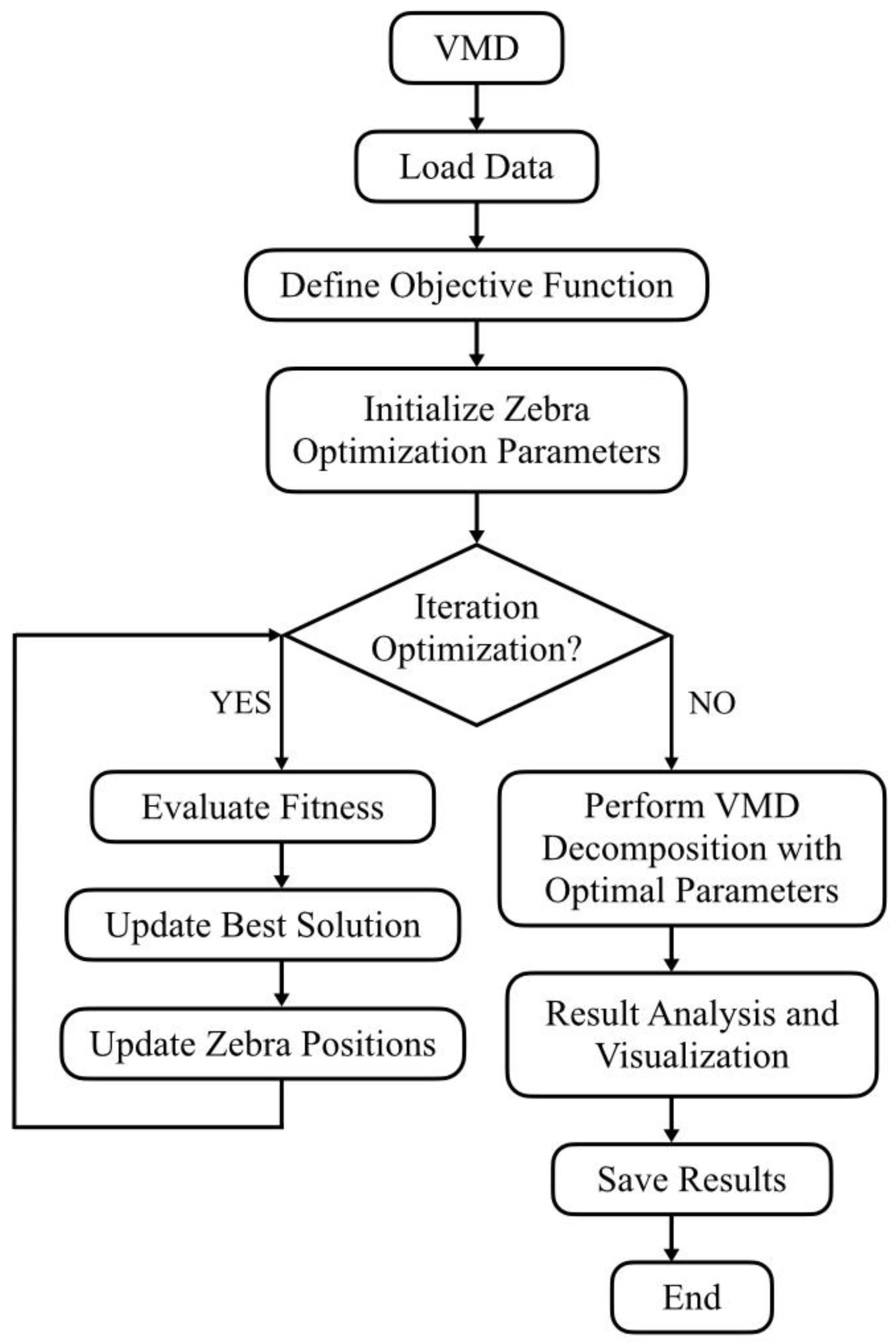
- Initialization: Randomly generate 15 parameter combinations (,) within predefined bounds.
- 2)
- Iteration: Dynamically adjust combinations toward optimal solutions.
- 3)
- Evaluation: For each combination, compute RMSE to assess performance.
- 4)
- Finalization: Deploy the optimal combination (, ) for VMD signal decomposition.
3.3. Electricity Sales Forecasting
3.3.1. RevInformer
3.3.2. RevInformer-Based Sales Forecasting
4. Experimental Verification
4.1. Dataset Introduction
4.2. Experimental Setup
4.2.1. Performance Indicators
- 1)
- Mean Absolute Error (MAE)
- 2)
- Mean Squared Error (MSE)
- 3)
- Root Mean Squared Error (RMSE)
- 4)
- Mean Absolute Percentage Error (MAPE)
- 5)
- Mean Squared Percentage Error (MSPE)
4.2.2. Parameter Settings
4.2.3. Software and Hardware Platform
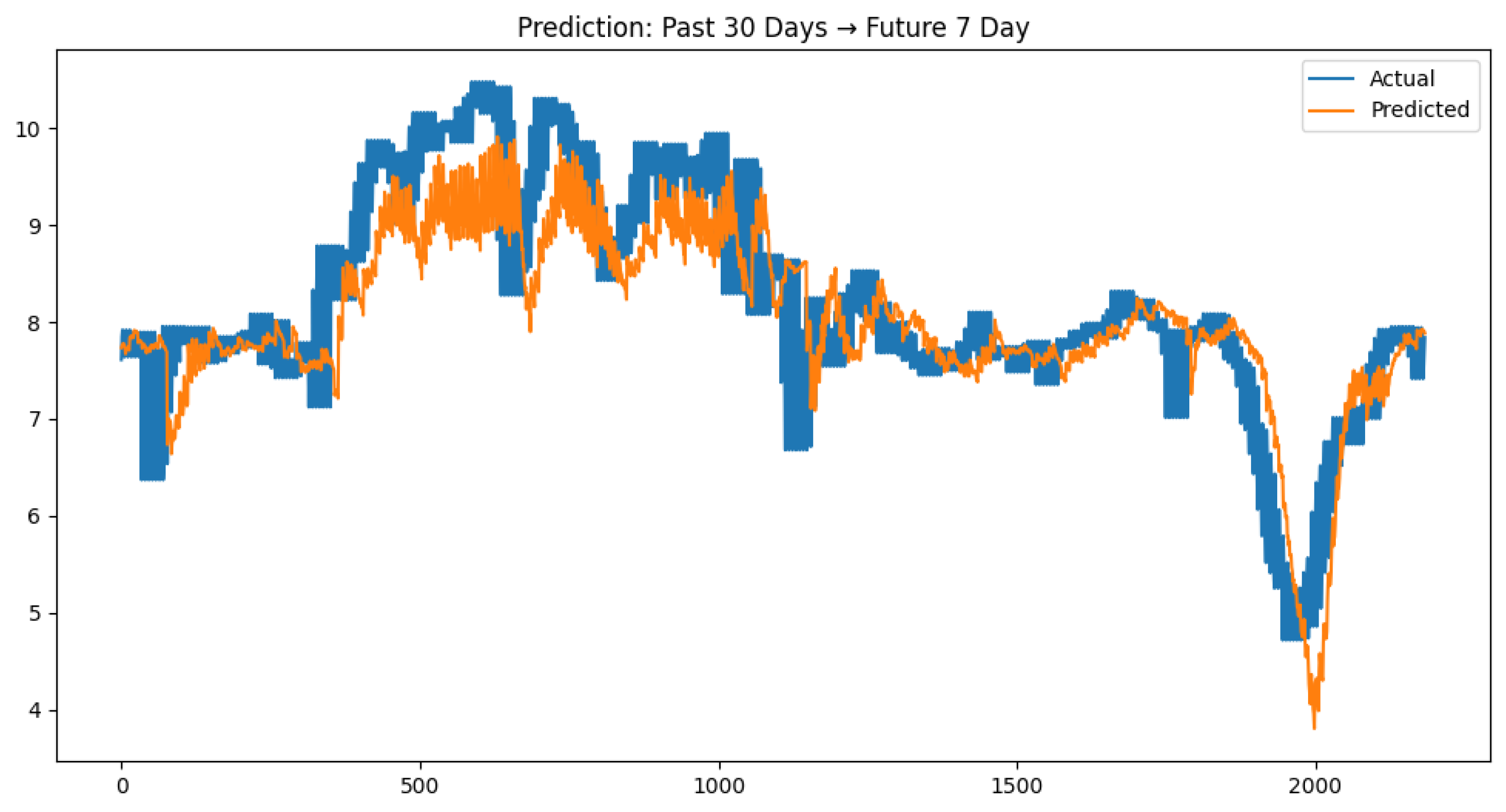
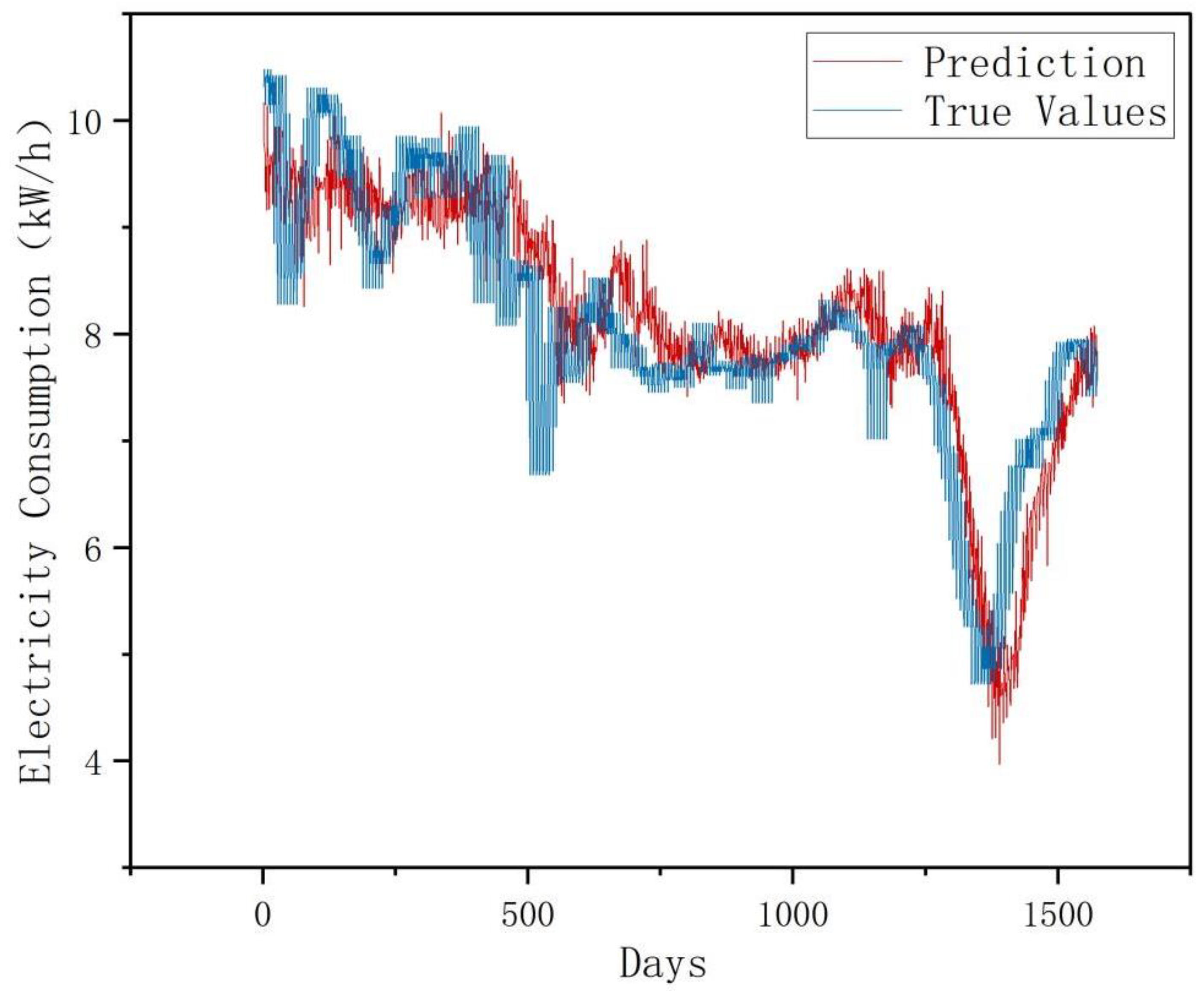
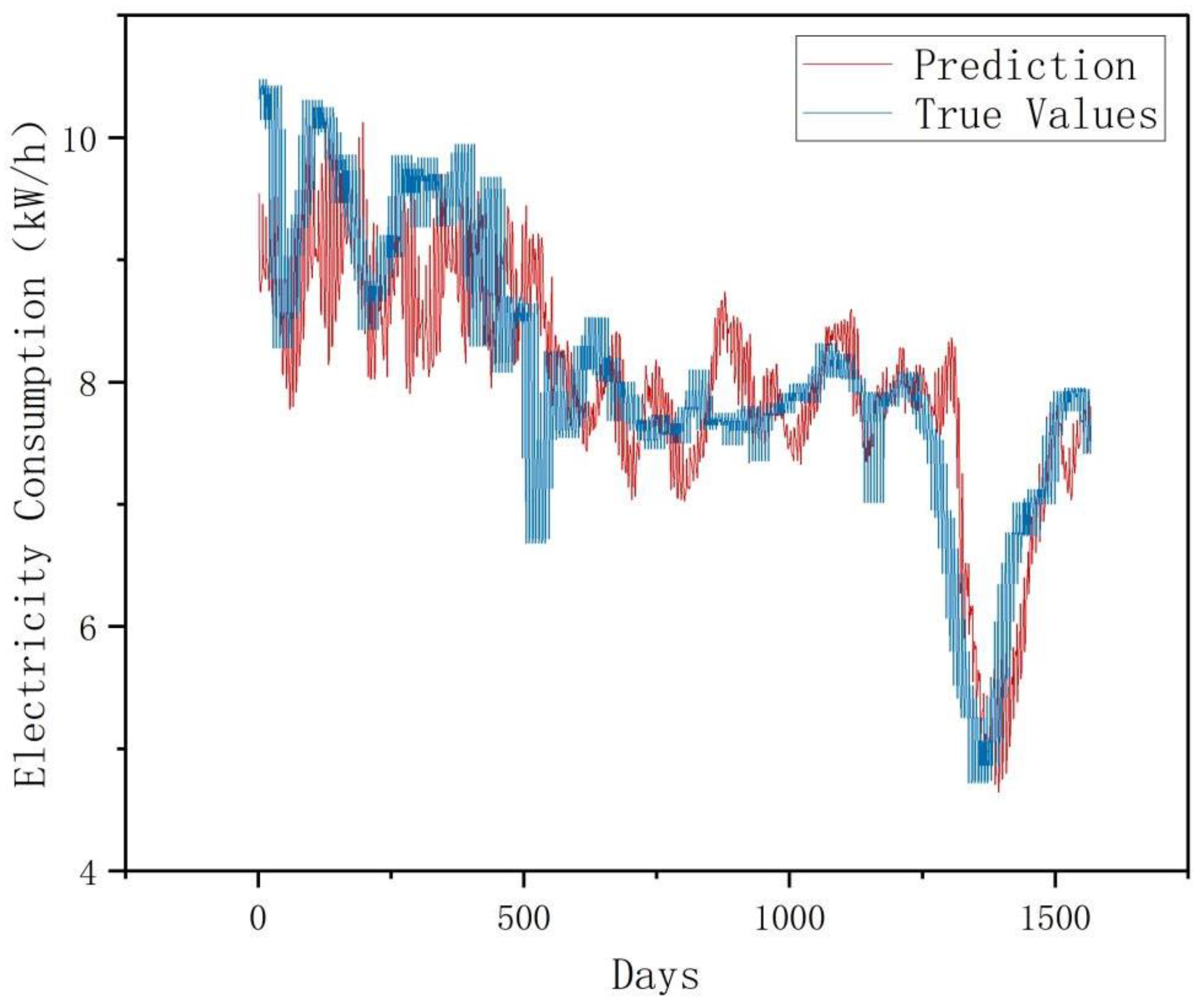
4.3. Comparative Results with Other Methods

| MSE | MAE | RMSE | MAPE(%) | MSPE(%) | |
| LSTM | 0.506737 | 0.469673 | 0.685327 | 6.416559 | 0.813309 |
| Informer | 0.457568 | 0.456091 | 0.622173 | 5.985666 | 0.721323 |
| RevInformer | 0.387774 | 0.375074 | 0.612433 | 5.594999 | 0.625999 |
| VMD-RevInformer | 0.155937 | 0.044783 | 0.211621 | 1.986559 | 0.074951 |
4.4. Contribution of Each Module
- 1)
- Baseline: Original Informer model;
- 2)
- VMD-Informer: Baseline enhanced with Variational Mode Decomposition (VMD) for data preprocessing;
- 3)
- VMD-RevInformer: VMD-Informer with its core module replaced by the proposed RevInformer.
| MSE | MAE | RMSE | MAPE(%) | MSPE (%) | |
| Informer | 0.506737 | 0.469673 | 0.685327 | 6.416559 | 0.813309 |
| VMD-Informer | 0.155937 | 0.165839 | 0.220879 | 2.066998 | 0.075588 |
| VMD-RevInformer | 0.048788 | 0.044783 | 0.211621 | 1.986559 | 0.074951 |
5. Conclusion and Future Work
- 1)
- Input data processed through VMD are decomposed into distinct Intrinsic Mode Functions (IMFs), where the shortened sequences substantially alleviate computational burden while significantly enhancing individual IMF forecasting precision. This reveals the feasibility of integrating signal decomposition with deep learning architectures, offering a novel approach to complex time series prediction;
- 2)
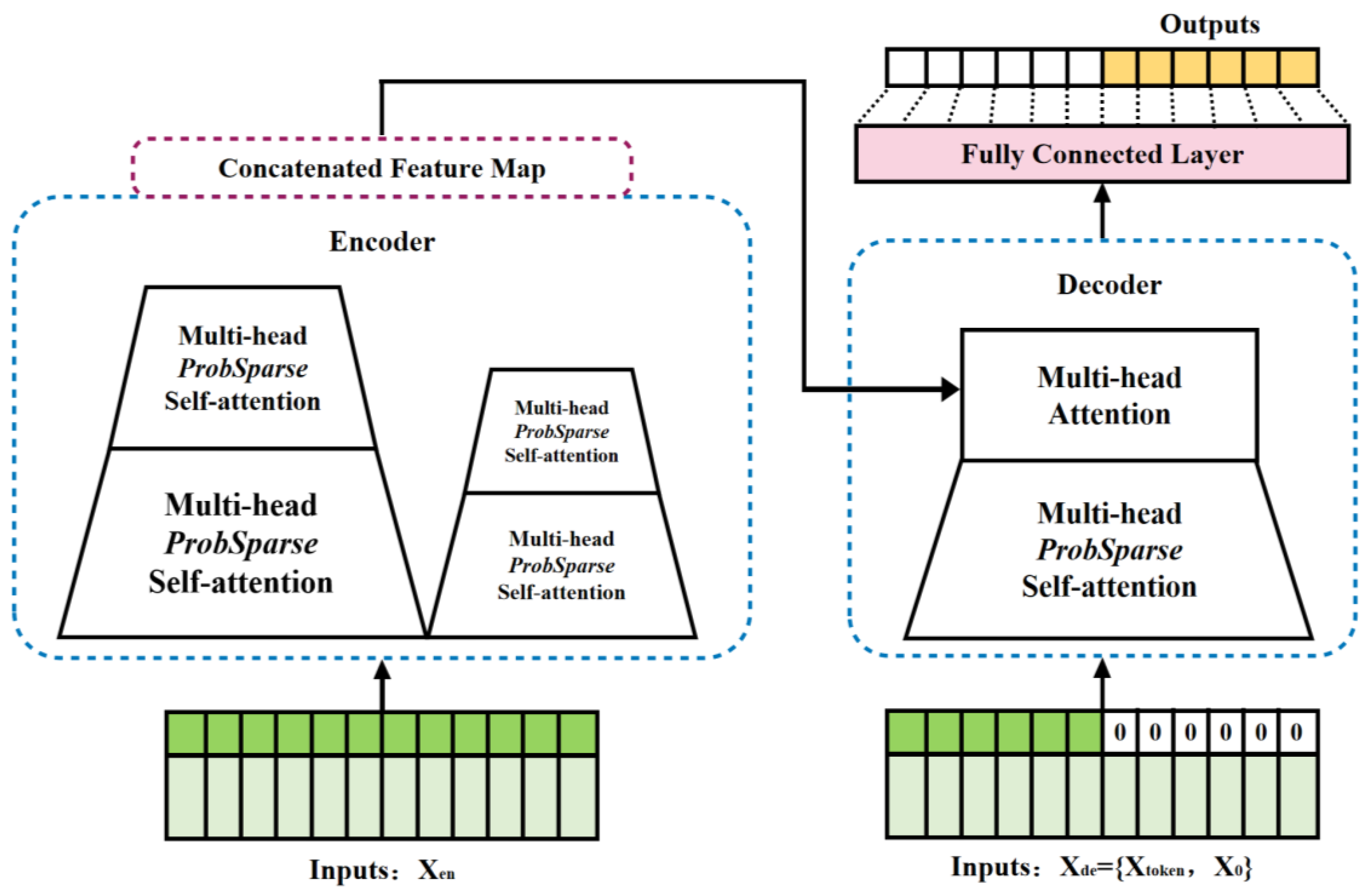
- The incorporation of reversible layers into the Informer framework effectively addresses distribution shift in temporal data, enabling bidirectional propagation with parameter sharing to reduce memory consumption. Simultaneously, the Probsparse self-attention mechanism lowers computational complexity, while the generative inference decoder permits single-step prediction sequence generation, collectively optimizing forecasting efficiency.
Author Contributions
Funding
Institutional Review Board Statement
Informed Consent Statement
Data Availability Statement
Conflicts of Interest
References
- H. Dong, J. Zhu, S. Li, Y. Miao, C. Y. Chung, and Z. Chen, “Probabilistic Residential Load Forecasting with Sequence-to-Sequence Adversarial Domain Adaptation Networks,” J. Mod. Power Syst. Clean Energy, vol. 12, no. 5, pp. 1559–1571, Sept. 2024. [CrossRef]
- R. Smith, K. Meng, Z. Dong, and R. Simpson, “Demand response: a strategy to address residential air-conditioning peak load in Australia,” J. Mod. Power Syst. Clean Energy, vol. 1, no. 3, pp. 219–226, Dec. 2013. [CrossRef]
- X. Sun et al., “Electricity Theft Detection Method Based on Ensemble Learning and Prototype Learning,” J. Mod. Power Syst. Clean Energy, vol. 12, no. 1, pp. 213–224, Jan. 2024. [CrossRef]
- H. Gong and H. Xing, “Predicting the highest and lowest stock price indices: A combined BiLSTM-SAM-TCN deep learning model based on re-decomposition,” Appl. Soft Comput., vol. 167, p. 112393, Dec. 2024. [CrossRef]
- G. Box, “Box and Jenkins: Time Series Analysis, Forecasting and Control,” in A Very British Affair, London: Palgrave Macmillan UK, 2013, pp. 161–215. [CrossRef]
- W. Zhong et al., “Accurate and efficient daily carbon emission forecasting based on improved ARIMA,” Appl. Energy, vol. 376, p. 124232, Dec. 2024. [CrossRef]
- L. Ouyang, F. Zhu, G. Xiong, H. Zhao, F. Wang, and T. Liu, “Short-term traffic flow forecasting based on wavelet transform and neural network,” in 2017 IEEE 20th International Conference on Intelligent Transportation Systems (ITSC), Oct. 2017, pp. 1–6. [CrossRef]
- D. Gordon, L. Breiman, J. H. Friedman, R. A. Olshen, and C. J. Stone, “Classification and Regression Trees.,” Biometrics, vol. 40, no. 3, p. 874, Sept. 1984. [CrossRef]
- T. K. Ho, “Random decision forests,” in Proceedings of 3rd International Conference on Document Analysis and Recognition, Aug. 1995, pp. 278–282 vol.1. [CrossRef]
- M. I. Jordan et al., “SERIAL ORDER: A PARALLEL DISTRmUTED PROCESSING APPROACH,” 2009. Accessed: Aug. 08, 2025. [Online]. Available: https://www.semanticscholar.org/paper/SERIAL-ORDER%3A-A-PARALLEL-DISTRmUTED-PROCESSING-Jordan-Conway/f8d77bb8da085ec419866e0f87e4efc2577b6141?p2df.
- J. L. Elman, “Finding structure in time,” Cogn. Sci., vol. 14, no. 2, pp. 179–211, Apr. 1990. [CrossRef]
- N.-T. Bui et al., “TSRNet: Simple Framework for Real-time ECG Anomaly Detection with Multimodal Time and Spectrogram Restoration Network,” Mar. 05, 2024, arXiv: arXiv:2312.10187. [CrossRef]
- S. Hochreiter and J. Schmidhuber, “Long short-term memory,” Neural Comput., vol. 9, no. 8, pp. 1735–1780, Nov. 1997. [CrossRef]
- F. A. Gers, J. Schmidhuber, and F. Cummins, “Learning to forget: continual prediction with LSTM,” in 1999 Ninth International Conference on Artificial Neural Networks ICANN 99. (Conf. Publ. No. 470), Sept. 1999, pp. 850–855 vol.2. [CrossRef]
- Y. Lecun, L. Bottou, Y. Bengio, and P. Haffner, “Gradient-based learning applied to document recognition,” Proc. IEEE, vol. 86, no. 11, pp. 2278–2324, Nov. 1998. [CrossRef]
- A. Vaswani et al., “Attention Is All You Need,” Aug. 02, 2023, arXiv: arXiv:1706.03762. [CrossRef]
- J. Zhu, D. Liu, H. Chen, J. Liu, and Z. Tao, “DTSFormer: Decoupled temporal-spatial diffusion transformer for enhanced long-term time series forecasting,” Knowl.-Based Syst., vol. 309, p. 112828, Jan. 2025. [CrossRef]
- T. Zhou, Z. Ma, Q. Wen, X. Wang, L. Sun, and R. Jin, “FEDformer: Frequency Enhanced Decomposed Transformer for Long-term Series Forecasting,” June 16, 2022, arXiv: arXiv:2201.12740. [CrossRef]
- H. Zhou et al., “Informer: Beyond Efficient Transformer for Long Sequence Time-Series Forecasting,” Proc. AAAI Conf. Artif. Intell., vol. 35, no. 12, Art. no. 12, May 2021. [CrossRef]
- W. Yu, Y. Dai, T. Ren, and M. Leng, “Short-time photovoltaic power forecasting based on Informer model integrating Attention Mechanism,” Appl. Soft Comput., vol. 178, p. 113345, June 2025. [CrossRef]
- J.-C. Li, L.-P. Sun, X. Wu, and C. Tao, “Enhancing financial time series forecasting with hybrid Deep Learning: CEEMDAN-Informer-LSTM model,” Appl. Soft Comput., vol. 177, p. 113241, June 2025. [CrossRef]
- Huang, T. Zhao, D. Huang, B. Cen, Q. Zhou, and W. Chen, “Artificial intelligence-based power market price prediction in smart renewable energy systems: Combining prophet and transformer models,” Heliyon, vol. 10, no. 20, p. e38227, Oct. 2024. [Google Scholar] [CrossRef]
- G. Zhang, B. Xu, H. Liu, J. Hou, and J. Zhang, “Wind Power Prediction Based on Variational Mode Decomposition and Feature Selection,” J. Mod. Power Syst. Clean Energy, vol. 9, no. 6, pp. 1520–1529, Nov. 2021. [CrossRef]
- Y. Cai, Z. Tang, and Y. Chen, “Can real-time investor sentiment help predict the high-frequency stock returns? Evidence from a mixed-frequency-rolling decomposition forecasting method,” North Am. J. Econ. Finance, vol. 72, p. 102147, May 2024. [CrossRef]
- “Signal processing for miniature mass spectrometer based on LSTM-EEMD feature digging,” Talanta, vol. 281, p. 126904, Jan. 2025. [CrossRef]
- T. Kim, J. Kim, Y. Tae, C. Park, J.-H. Choi, and J. Choo, “Reversible Instance Normalization for Accurate Time-Series Forecasting against Distribution Shift,” presented at the International Conference on Learning Representations, Oct. 2021. Accessed: Aug. 08, 2025. [Online]. Available: https://openreview.net/forum?id=cGDAkQo1C0p.
| Name | Minimum | Maximum | Optimum | Population | Maximum number of iterations |
| k | 5 | 15 | 8 | 15 | 100 |
| α | 500 | 5000 | 511 |
| Name | Numerical Value | Explain |
| Model | Informer | Use the Informer model |
| enc_in | 31 | Encoder input feature dimension (dynamic setting according to the dynamic number of data features) |
| dec_in | 31 | Decoder input characteristic dimension (consistent with the encoder) |
| c_out | 8 | Output dimension (predict the number of target columns, dynamically set by the data parser data_parser) |
| c_out | 8 | Output dimension (predict the number of target columns, dynamically set by the data parser data_parser) |
| d_model | 512 | Model hidden layer dimension |
| n_heads | 8 | The number of heads of the multi-head attention mechanism |
| e_layers | 2 | Number of encoder layers |
| d_layers | 1 | Number of decoder layers |
| d_ff | 2048 | Feedforward grid dimension |
| attn | Prob | Attention type (ProbSparse) |
| factor | 5 | Sparse attention factor |
| distil | TRUE | The encoder uses the distillation mechanism |
| mix | TRUE | The decoder uses mixed attention |
| Name | Scope | Explain |
| data | custom | Custom data set |
| root_path | \ | Data root directory path |
| data_path | \ | Data file name |
| features | S/M/MS | Prediction mode |
| target | \ | Target column name |
| seq_len | 30 | Input sequence length |
| label_len | 15 | Decoder starting mark length |
| pred_len | 7 | Predict the length of the sequence |
| freq | d | Time characteristic coding frequency |
| train_epochs | 150/200 | Total rounds of training |
| batch_size | 6 | Batch size |
| learning_rate | 0.0001 | Initial learning frequency of Adam optimizer |
| loss | mse | Loss function |
| dropout | 0.05 | Random discardment rate |
Disclaimer/Publisher’s Note: The statements, opinions and data contained in all publications are solely those of the individual author(s) and contributor(s) and not of MDPI and/or the editor(s). MDPI and/or the editor(s) disclaim responsibility for any injury to people or property resulting from any ideas, methods, instructions or products referred to in the content. |
© 2025 by the authors. Licensee MDPI, Basel, Switzerland. This article is an open access article distributed under the terms and conditions of the Creative Commons Attribution (CC BY) license (http://creativecommons.org/licenses/by/4.0/).