Preprint
Article

This version is not peer-reviewed.

Ecological and Regenerative Performance of Hippophae rhamnoides L. Cultivars and Forms Maintained at the Altai Botanical Garden

A peer-reviewed article of this preprint also exists.

Submitted:

13 November 2025

Posted:

14 November 2025

You are already at the latest version

Abstract

Hippophae rhamnoides L. (sea buckthorn) is a key multipurpose shrub of Eurasia valued for its ecological resilience, nutritional properties, and economic importance. This study examines the regenerative capacity, cold tolerance, productivity, and vegetative propagation efficiency of H. rhamnoides populations originating from East Kazakhstan and maintained at the Altai Botanical Garden (ABG). Between 1981 and 2024, five natural populations (Kendyrlyk, Kaindysu, Tersayryk, Shetlasty, and Karatal Sands) were evaluated under both natural and introduction conditions. A total of 68 clonal forms were propagated and assessed for longevity, yield stability, and morphological traits. The results demonstrated high ecological plasticity and adaptation to the sharply continental climate of East Kazakhstan, withstanding winter temperatures of -38 to -44 °C without damage. Long-lived genotypes (up to 32 years) exhibited consistent productivity, yielding 3.7–14.5 kg per plant (4.6–17.5 t/ha). Large-fruited cultivars such as ‘Yubileinaya Kotukhova’, ‘Shetlastinka’, and ‘Asem’ reached fruit masses up to 95.8 g of 100 berries. Vegetative propagation by green cuttings proved highly effective, with rooting rates up to 90% when treated with HB-101, exceeding control treatments by 14.7%. Stable thickets formed by root suckers persisted for nearly four decades, confirming strong clonal stability and adaptive capacity. These findings underscore the significant potential of H. rhamnoides germplasm from East Kazakhstan for breeding cold-hardy, high-yielding cultivars suited to continental climates. The research highlights the importance of ex situ conservation at ABG and provides a foundation for further genetic, biochemical, and breeding studies aimed at enhancing the productivity and sustainability of this ecologically and economically valuable species.

Keywords: 
;  ;  ;  ;  

1. Introduction

Hippophae rhamnoides L. (sea buckthorn) is a deciduous, dioecious shrub or small tree of the Elaeagnaceae family, typically 2.5–8 m tall with thorny branches and ovoid orange-yellow fruits 6–12 mm long. Native to cold-temperate Eurasia, it ranges from northwestern Europe to the Altai Mountains, western and northern China, and the Tibetan Plateau [1]. The species occupies diverse habitats—riverbanks, dunes, and mountain slopes—forming dense thickets that stabilize soils [2]. Subspecies correspond to geographic zones: ssp. rhamnoides in Europe, ssp. mongolica in Russia and Mongolia, ssp. sinensis in China, and ssp. turkestanica in Central Asia [3].
Ecologically, H. rhamnoides is vital for soil stabilization and habitat restoration. Its deep root system, with Frankia symbioses enabling nitrogen fixation, enhances fertility in poor or saline soils [4,5]. The species tolerates drought, frost below –40°C, salinity up to 1.5% NaCl, and wind erosion [6,7]. In the Altai Mountains, natural populations thrive from 400 to 2,500 m a.s.l., adapting to contrasting soils and moisture regimes [8,9], providing forage for wildlife and slope stabilization [10]. However, overharvesting and habitat fragmentation threaten these populations, emphasizing the importance of ex situ conservation to protect adaptive ecotypes.
Economically, H. rhamnoides is highly valued for its pharmacological, nutritional, ornamental, and ecological benefits. Fruits, leaves, pulp, and seeds are rich in vitamins [11,12], flavonoids [13], polysaccharides [14,15], carotenoids [16], and unsaturated fatty acids [17]. Fruits contain exceptionally high vitamin C (52.86–896 mg/100 g fresh weight) [18], along with vitamins E, A, and B-complex and minerals such as K, Ca, and Fe [19]. Polyphenols include quercetin and isorhamnetin derivatives [12], and seed oils contain palmitoleic and oleic acids with phytosterols like β-sitosterol [20]. These compounds exhibit antioxidant, anti-inflammatory, wound-healing, and cardioprotective properties. Phenolic fractions inhibit lipid peroxidation by 60% at 50 μg/mL, and seed oils accelerate wound healing [21]. Polysaccharides enhance immunity and improve endothelial function via AMPK/Akt signaling [22]. Beyond its medicinal value, H. rhamnoides plantations in China since 1985 have successfully mitigated desertification across millions of hectares [10].
Genetic diversity underpins the adaptability and breeding potential of H. rhamnoides. Genome sequencing of 55 Russian ssp. mongolica accessions identified ~4 million polymorphisms clustering into five groups associated with fruit traits [23]. ISSR marker analyses in the Karakoram Mountains revealed high genetic variation correlated with altitude and soil pH [24]. In the Kazakhstan Altai, populations show considerable heterogeneity, with 58–67% of progeny exhibiting high yield potential and alleles for winter hardiness and low thorniness [8]. Sex-linked SCAR markers now enable early gender identification in dioecious seedlings, improving propagation efficiency [25]. This diversity provides a strong foundation for developing cultivars adapted to regional agroclimatic conditions.
Due to dioecy, seed propagation of H. rhamnoides yields equal male–female ratios, high variability, delayed maturity, and unpredictable traits such as fruit quality [25,26,27]. Consequently, vegetative propagation is essential for maintaining elite genotypes with known sex, uniformity, and early fruiting. Common methods include softwood and hardwood cuttings [28], layering [29], root suckering [30], and micropropagation via somatic embryogenesis [31,32]. Rooting success depends strongly on genotype and season. For example, Altai cultivars such as ‘Altaiskaya’, ‘Ognivo’, ‘Gnom’, ‘Ethna’, ‘Elizaveta’, and ‘Athena’ exhibit 91–95% rhizogenesis under greenhouse conditions [33], while others root at 70–80%. Pre-chilling stock plants for six weeks and optimal seasonal timing further enhance rooting [33]. Hardwood and semi-hardwood cuttings or layering are used but generally yield lower and more variable success rates in the field [34], reflecting strong genotype × environment interactions.
Conservation of H. rhamnoides genetic resources is crucial for maintaining evolutionary potential amid climate change and habitat degradation. In the Kazakhstan Altai, high-altitude forms exhibit superior yields (up to 14.2 kg/bush), fruit weight (95.8 g/100 fruits), and low separation force—traits vital for mechanized harvesting [8,35].
The Altai Botanical Garden (ABG), established in 1932 in Ridder, East Kazakhstan, is a key center for conservation and utilization of plant genetic resources. Covering 700 ha, ABG maintains over 3,000 species, including H. rhamnoides germplasm from endemic Altai flora [36]. Since 1981, ABG has led selection programs using clonal propagation and genealogical analysis of 52 families from wild populations such as Kendyrlyk and Shetlasty [8]. These efforts produced patented varieties including ‘Jubilejnaja Kotuhova’ (yield 169.1 c/ha, fruit length 12.8 mm) and advanced lines ‘Shetlastinka’ and ‘Podarok Bajtulinu’—noted for longer stalks and greater winter hardiness [8]. Male pollinator ‘Bogatyr’ ensures reliable fruit set. DNA barcoding using ITS sequences confirms intraspecific identity, supporting genetic conservation [37]. Third-generation elites now yield 1.5–2.5 kg/bush at age seven, outperforming introduced cultivars in local conditions [33]. However, seed-based propagation fails to maintain desired phenotypes, particularly sex and early fruiting traits, underscoring the need for optimized vegetative propagation protocols suited to Altai genotypes.
Therefore, the primary aim of this study was to investigate the genetic diversity, intraspecific variation, and ecological–biological characteristics of H. rhamnoides in its natural habitats and under conditions of introduction. The work also sought to identify promising forms and implement breeding programs to develop cultivars combining resistance to biotic and abiotic stresses, high economic value, and improved vegetative propagation capacity.

2. Materials and Methods

2.1. Study Sites and Plant Material

The study was conducted on natural populations of H. rhamnoides originating from the East Kazakhstan region, where field surveys were carried out between 1981 and 1988. The examined populations were distributed across several habitats, including the Kendyrlyk population (Saur Ridge, Kendyrlyk River), the Kaindysu population (northeastern foothills of the Tarbagatai Ridge, Kaindysu River valley), the Tersayryk population (Tarbagatai Ridge, Tersayryk River valley near the villages of Saraulen and Zhanaaul), the Shetlasty population (southeastern foothills of the Tarbagatai Ridge, Shetlasty River valley), and the Karatal population (Zaisan depression, interdune depressions near the Karatal area) (Figure 1). For convenience, populations and forms were denoted by abbreviations derived from the river names: SH – Shetlasty, KE – Kendyrlyk, T – Tersayryk, KA – Kaindysu, and KS – Karatal Sands. In total, 68 selected forms were tested under both natural and cultivated conditions (two generations) at the ABG from 1981 to 2024. The first generation consisted of plants directly propagated from wild populations and maintained in the ABG collection for initial evaluation of morphological and adaptive traits, while the second generation included elite clones derived from the best-performing first-generation individuals, propagated vegetatively and assessed for yield, fruit quality, and winter hardiness under long-term cultivation.
The experimental material included 68 H. rhamnoides forms representing five natural populations (KE, KA, T, SH, and KS). For morphological and propagation experiments, healthy and uniformly developed 5–8-year-old plants from the ABG collection were selected. Vegetative cuttings were taken from the middle portions of current-year shoots of both the first and second generations. All plants were maintained under identical soil and climatic conditions to ensure comparability of results. No fertilizers were applied during the cultivation of H. rhamnoides; plants were grown under natural soil fertility conditions with no chemical treatments.

2.2. Sampling and Variability Assessment

The collection and morphological description of H. rhamnoides forms were performed according to the methodology of Kondrashov (1977) [38]. Genotypic and phenotypic variability within selected samples was studied using the clonal progeny testing method [39].
The assessment of genetic variability was aimed at determining the relative influence of heredity and environmental factors on phenotypic expression, following the approaches described by Dragavtseva (2013) [40], Filipchenko (1978) [41], and Sinskaya (1979) [42]. The degree of variability was evaluated using the standardized scale developed by Iroshnikov (1973) [43].

2.3. Green Cutting Under Introduction Conditions

For propagation, medium-sized current-year shoots 10–15 cm long and 3–4 mm in diameter were selected. The basal cut was made at a 45° angle to facilitate planting, with lower leaves removed completely and upper leaves shortened by one-third to reduce transpiration. Cuttings with apical buds were preferred, as they produced stronger and more uniform seedlings.
Prepared cuttings were treated with growth stimulants and planted in a greenhouse where the air temperature was maintained between 25–33 °C, with constant humidity regulated by fine mist irrigation. The substrate consisted of a 4–5 cm layer of medium-grained river sand over a fertile mixture of sod soil and humus. Planting was performed at 7–8 cm between rows and 4 cm within rows, with a planting depth of 3–4 cm to prevent leaf overlap. Cuttings were treated with the following growth regulators: HB-101 (0.02%), Ecogel (0.01%), and heteroauxin (0.015 %), while non-treated cuttings served as the control.

2.4. Statistical Analysis

Statistical processing of experimental data was carried out using analysis of variance (ANOVA) and t-test in R. The following parameters were calculated using MS Excel: standard error of the mean (SEM), coefficient of variation (CV), and experimental precision (P%). Biometric analysis was performed using statistical and probabilistic methods to reveal the patterns of phenotypic variability in H. rhamnoides populations.

3. Results

3.1. Regenerative Capacity and Cold Tolerance of H. rhamnoides Natural Populations

The climate conditions in the natural habitats of H. rhamnoides (KE, SH, T, and KS populations) and under cultivation at the ABG were similar. The climate is sharply continental, with critical winter temperatures reaching –38 to –42 °C and mean annual precipitation ranging from 450 to 950 mm. In natural habitats (KE, SH, T, and KS populations), plants grow on deep loamy meadow–chernozem soils, while in the KA population, it occurs on dry sandy soils. Under cultivation in the ABG, plants were grown on chernozem-like silty loam soils with a humus content of 6.4%.
The stability of natural populations of H. rhamnoides in East Kazakhstan is primarily maintained through vegetative propagation via root suckers. Across all studied populations, young individuals (1–5 years old) dominated the population structure, averaging 53.0% of the total number of plants, which indicates a high regenerative capacity and active renewal potential (Table 1).
The SH population exhibited the highest density of young plants, with 5173 individuals ha⁻¹, accounting for 79.8% of the total population. A similarly high proportion of juveniles was found in the T and KE populations – 72.6% and 65.0%, respectively – suggesting favorable conditions for vegetative regeneration in these habitats. In contrast, regeneration was considerably reduced in the KA population, where juveniles comprised only 30.7% of individuals, and in the KS population, where the proportion of young plants reached merely 22%. The decline in juvenile density in KA is likely related to anthropogenic disturbance near the Akzhar settlement, including logging and livestock grazing, while the limited regeneration in KS may reflect the harsh edaphic conditions of sandy substrates that constrain sucker establishment.
Of 120 identified H. rhamnoides forms, 68 exhibited vigorous adventitious shoot formation and were successfully separated as independent clones. These genotypes were conserved through vegetative propagation and served as donor material for breeding programs. Plants representing five natural populations (KE, KA, T, SH, and KS) were cloned and cultivated in the ABG from 1981 to 2024, producing two generations. In total, 18 forms from SH, 25 from KE, 12 from T, 8 from KA, and 5 from KS were introduced. The experimental collection has been maintained for 36 years, depending on origin and life span. Second-generation propagation (2001–2025) focused on long-lived and highly adaptive forms derived from this material. Successful acclimatization of H. rhamnoides in ABG was facilitated by its high ecological plasticity and compatibility between natural and introduced environments, except for the KS population originating from dry, sandy soils at ~650 m a.s.l. Distinct edaphic conditions of the Karatal habitat contributed to the formation of low-growing genotypes, which retained their dwarf habit under cultivation.
Two longevity groups were identified among the studied forms: short-lived (≤15 years) and long-lived (≥16 years). The majority of KE, SH, and T genotypes belonged to the second group, with a life span of 16–30 years. Notably long-lived forms included SH-9-81, T-2-82, SH-7-82, SH-19-82, KE-20-82, and KE-8-82. Approximately 40% of the accessions lived up to 15 years, while 60% persisted for 16–29 years. The maximum recorded age for first-generation plants was 32 years; second-generation plants remain viable, indicating stable adaptation under mountainous East Kazakhstan conditions.
The introduction period included multiple extreme winters (in 1989, 2000–2006, 2010–2012, 2014, 2018, 2023–2024) with minimum air temperatures of -38 to -44 °C and sudden thaws up to +2 °C. Under these conditions, no winter damage was recorded in either male or female individuals, confirming exceptional frost tolerance.

3.2. Yield, Longevity of Productivity, and Fruit Characteristics of Introduced H. rhamnoides

Adaptation of H. rhamnoides to the new growing conditions took place under a sharply continental climate characterized by cold, prolonged winters and considerable annual temperature fluctuations. The mean of absolute minimum air temperatures was -40 °C, with extremes reaching -48 to -50 °C. Snow cover persisted for approximately 150–160 days, reaching an average depth of 50–60 cm, while winter air temperature fluctuations of up to 20 °C were common. The vegetation period lasted about 130 days, including 100–120 frost-free days and approximately 120 days with temperatures exceeding +10 °C. The sum of mean daily temperatures above 10 °C reached 1850 °C. The mean monthly temperature in July ranged from +16 °C to +22 °C, and annual precipitation varied between 432 and 937 mm, typically with a summer maximum. The experimental plot was situated on the southwestern slope of Mount Belkin, where the soil was a chernozem-like silty loam containing 6.4% humus.
Reproductive maturity in cultivated plants occurred in the third to fourth year after planting. Fruit productivity remained genotype-dependent and stable over 16–23 years of assessment. The highest yields were obtained in genotypes from SH and KE, producing 5.2–14.0 kg/plant, whereas KS forms showed reduced productivity (2.5–3.8 kg/plant) (Table S1). Medium-sized shrubs from T were moderately productive (7–12 kg/plant). Annual shoot growth varied according to age and precipitation: during dry years (in 1997, 1999, 2012–2014, 2017, 2020–2021), growth decreased by 18–22%, whereas in favorable seasons (in 1987–1997, 2003, 2005, 2009, 2019, 2023–2024) shoot length reached 12–30 cm. Maximum annual increment (18.2–42.6 cm) was observed in young plants (5–12 years old), decreasing to 7–11 cm in older individuals.
The most productive period occurred between 8 and 18 years of age, with yields ranging from 3.7 to 14.5 kg/plant (equivalent to 4.6–17.5 t/ha at 1250 plants/ha) (Table S1). High-yielding cultivars and forms included KE-14-81 (14.0 kg/plant), ‘Yubileinaya Kotukhova’ (13.9 kg/plant), SH-9-81 (11.2 kg/plant), 'Shetlasty' (11.0 kg/plant), T-2-82 (11.0 kg/plant), KA-2-81 (8.5 kg/plant), SH-19-82 (8.5 kg/plant), KA-3-81 (7.5 kg/plant), KE-20-82 (7.2 kg/plant), and 'Feierverk' (6.9 kg/plant). Even in unfavorable climatic years, yield reduction did not exceed 7–9%.
The studied clonal forms exhibited stable morphological traits. Average fruit mass of 100 berries ranged from 29.0 g (SH-19-82) to 95.8 g in ‘Yubileinaya Kotukhova’, with fruit length 6.0–12.8 mm and diameter 5.8–7.5 mm (Table S1). The proportion of large-fruited forms (mass > 41 g per 100 fruits) increased from 6.7% in the first generation to 43.7% among selected cultivars. The mean fruit weight increased by 8–9 g between generations, reaching a maximum of 95.8 g in ‘Yubileinaya Kotukhova’, 68.2 g in ‘Shetlastinka’, 66.7 g in ‘Asem’, and 68.3 g in ‘Yantarnaya T-14-86’. Fruit density per 10 cm of two-year branch varied from 19.2 to 70.3 fruits, corresponding to compact, medium, or dense “spike” types. Fruit set under open pollination ranged from 55 to 76%, depending on genotype, and was highest in ‘Yubileinaya Kotukhova’, ‘Shetlastinka’, ‘Feierverk’, KA-2-81, T-2-82, and KE-20-82. Fruit color remained genetically stable under cultivation, ranging from yellow and orange to red and orange-red. Clones such as KE-14-81, KE-8-82, KE-15-82, SH-9-81, SH-17-82, and T-2-82 consistently produced red-fruited progeny. The taste spectrum included sweet, sweet–sour, and sweet–sour with pineapple or muscat notes. Fruit pedicel length varied from 4.8 to 12.5 mm, indicating high ecological stability of this trait. Since manual harvesting accounts for over 80% of labor input in H. rhamnoides cultivation, forms with low fruit detachment force (70–100 g) are of particular breeding.

3.3. Formation and Stability of Clonal Thickets in the Introduced Population of H. rhamnoides

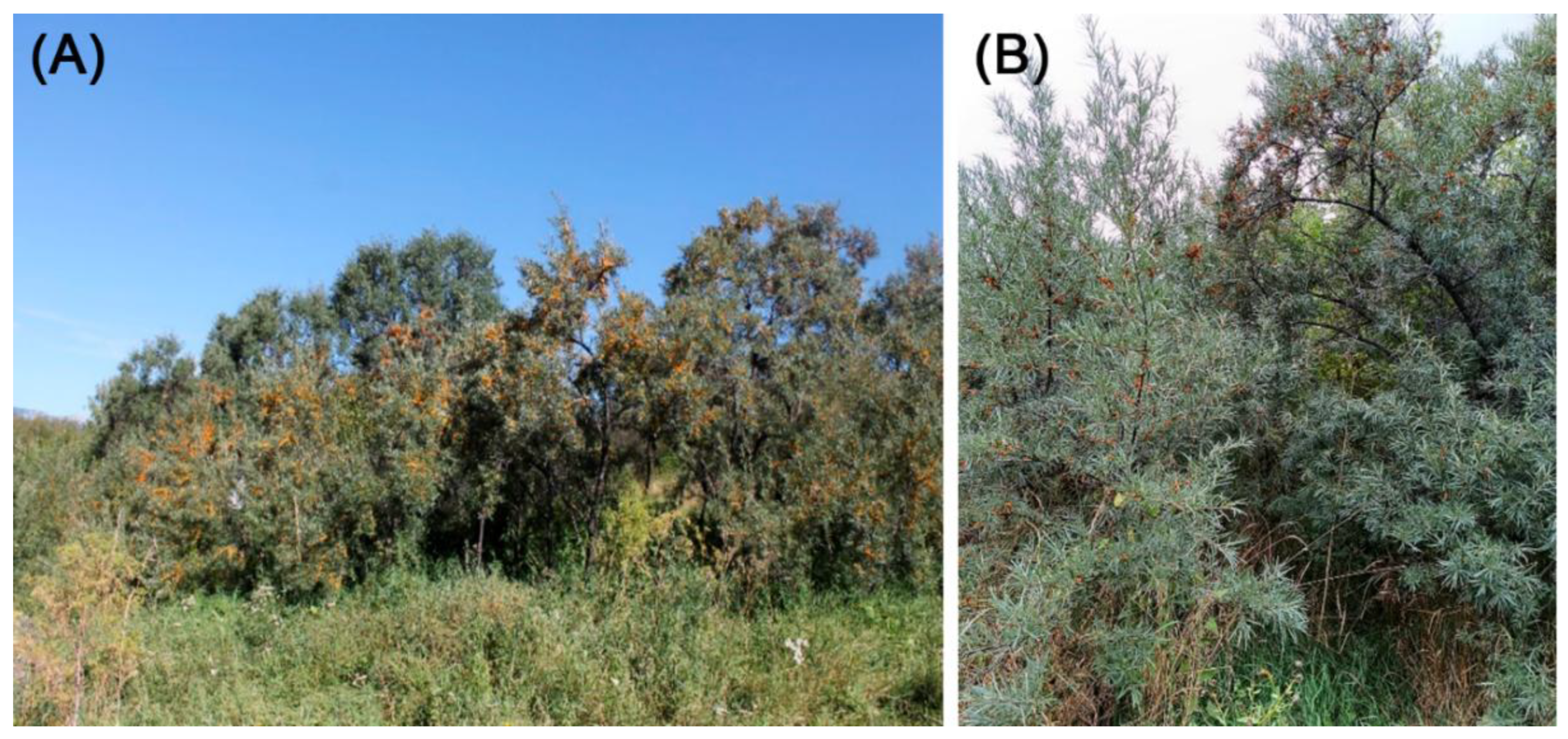
Demonstrating their adaptive potential, survival capacity, and reproductive ability, five H. rhamnoides forms introduced to the ABG during the 1980s–1990s have established three thickets covering a total area of 10,575 m2, each ranging from 335 to 580 m2. These thickets expanded through the active formation of root suckers originating from both male and female individuals, which continuously colonize the surrounding space. At present, intensive vegetative propagation is observed both within the thickets and along their peripheries. The density and size of the thickets have remained relatively stable over a 38-year period since 1986. Young plants exhibit high competitive ability, ensuring population persistence.
Around the cultivars ‘Fakel’, ‘Feierverk’, and the form Yantarnaya T-14-86 (2-1) established in the breeding plot in 2008, root suckers have actively proliferated, forming groups of plants aged 5–8 years (Figure 2). Some of these vegetatively derived individuals have reached the reproductive stage, maintaining the valuable phenotypic and genetic traits of the maternal plants. Flowering and fruiting intensity were recorded at the highest score (5 points). Plants within these thickets, constituting part of the introduced population, share an identical genotype with the parental individuals from which the root suckers originated and exhibit nearly complete morphological and physiological uniformity.

3.4. Vegetative Propagation of H. rhamnoides by Green Cutting Under Introduction Conditions

Efficient propagation of H. rhamnoides is essential for the conservation of its genetic resources and the establishment of a stable breeding base. Among the existing propagation methods, green cutting is considered the most effective for obtaining own-rooted planting material that preserves the genetic and phenotypic characteristics of the parental plants.
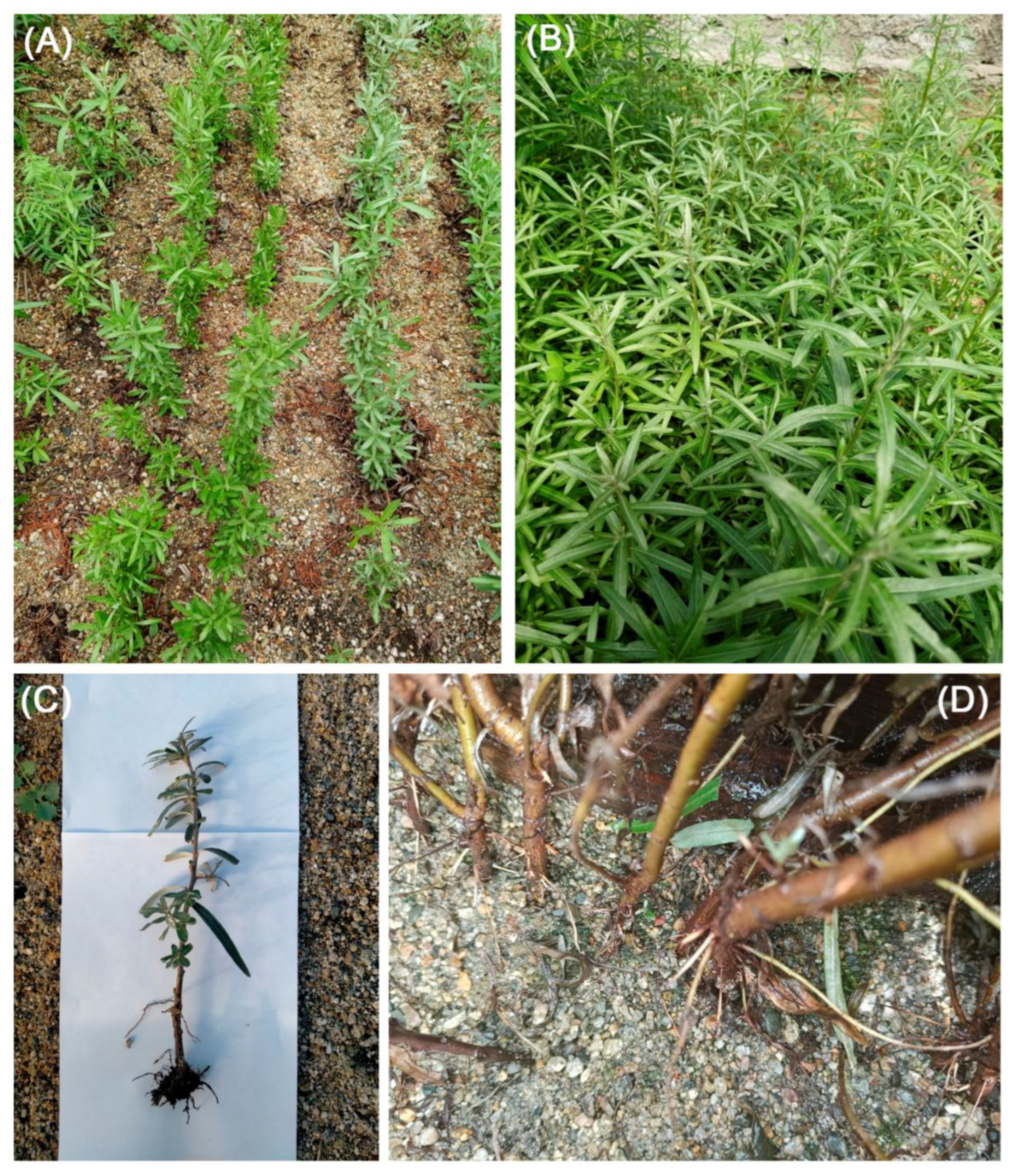
Experimental studies conducted under mountain–forest conditions of the ABG established that the optimal period for cutting preparation occurs in the third decade of June. During this period, leaves can be removed without tissue damage, and cuttings exhibit the highest rooting rate. Early cutting preparation results in decay due to excessive humidity, while late harvesting leads to weak root formation. Callus formation was observed after two weeks, and a developed root system appeared after one month, reaching a depth of 5–8 cm. The mean rooting percentage across cultivars and treatments was highest in ‘Yubileinaya Kotukhova’ (89.8%), followed by ‘Asem’ (84.1%), ‘Plakuchaya’ (83.1%), and ‘Fakel’ (78.7%) (Table 2). The control showed a mean rooting rate of 66.5%. HB-101 provided the highest mean rooting rate (81.2%), exceeding non-treated cuttings by 14.7%, heteroauxin and Ecogel by 7.7% and 4.8%, respectively.
Among individual genotypes, the best rooting results were recorded in the cultivars ‘Yubileinaya Kotukhova’, ‘Asem’, and forms Solnyshko (1-18), Bogatyr T-17-82 (1-21), and Nesravnennaya SH-9-81 (3-27), with survival rates ranging from 80.2% to 90.2%. The lowest rooting percentage was observed in the form Krasnoplodnaya KE-14-81 (4-27) at 62.7%. Differences in rooting efficiency among male forms were negligible.
The application of HB-101 not only enhanced rooting but also stimulated the growth of both aboveground and belowground organs. During further cultivation of two-year-old seedlings under high humidity (85–95%), the development of adventitious aerial roots was observed on the lower parts of shoots up to 12 cm above the substrate surface (Figure 3). Covering these root-bearing sections with soil improved root system formation and overall seedling quality, promoting more vigorous growth.

4. Discussion

The present study provides comprehensive insights into the regenerative capacity, cold tolerance, productivity, and vegetative propagation efficiency of H. rhamnoides populations introduced from East Kazakhstan into the ABG. Our findings demonstrate that H. rhamnoides exhibits strong ecological plasticity, stable adaptation, and high clonal propagation potential under mountain–forest conditions. These results are consistent with previous reports from other regions of Eurasia, confirming the species’ exceptional ability to regenerate vegetatively, tolerate extreme winter temperatures, and maintain productivity under continental climates [28,44].
The dominance of young individuals (up to 54% of populations) in natural habitats of East Kazakhstan (Table 1) indicates active vegetative renewal through root suckers, ensuring long-term population stability. Similar regeneration strategies have been reported in wild H. rhamnoides populations, where vegetative propagation plays a key role in population persistence under harsh climatic conditions [45,46]. In our study, populations from Shetlasty (SH) and Tersayryk (T) populations exhibited the highest density of young plants, corresponding to stronger natural regeneration and higher ecological resilience (Table 1). Conversely, reduced regeneration in the Kaindysu (KA) population was linked to anthropogenic disturbances, corroborating the sensitivity of H. rhamnoides to grazing and logging observed by Wang et al. (2023) [45] and Zenkova (2019) [47]. We suppose that, the observed variation in the number of young plants among populations (Table 1) is primarily associated with differences in ecological–coenotic and geographical conditions, as well as anthropogenic pressure and proximity to settlements, which influence regeneration intensity and population age structure.
Under introduction conditions, the successful long-term cultivation of 68 clonal forms derived from five natural populations (KE, KA, T, SH, KS) for more than three decades highlights the species’ adaptability. Comparable survival and adaptation rates were reported in long-term introduction experiments in Siberia [33] and Northern China [48]. In our study, no winter damage was recorded even under extreme temperatures down to -44 °C, confirming the high frost tolerance of East Kazakhstan genotypes. Similar findings were obtained by Bedareva et al. (2014) [49] and Wang et al. (2023) [45], who documented tolerance up to -45 °C, associated with efficient carbohydrate accumulation and membrane stability during cold acclimation.
The productivity of introduced forms remained stable for over two decades, with yields ranging from 3.7 to 14.5 kg/plant, corresponding to 4.6–17.5 t/ha (Table S1). These values are comparable to those reported in Siberian, Russian, and European breeding programs [50,51,52], where yields varied from 1.9 to 13.9 kg/plant. The best-performing genotypes in our study – ‘Yubileinaya Kotukhova’, ‘Shetlasty’, and ‘Feierverk’– exceeded 11 kg/plant. The stability of productivity across years with fluctuating precipitation emphasizes the drought resilience of the studied accessions, as also noted by Mamedova (2016) [53] for Central Asian genotypes.
Fruit size and mass are among the most economically important traits of H. rhamnoides. In our experiment, the mass of 100 berries varied widely from 29.0 g to 95.8 g, aligning with previous reports on large-fruited cultivars from Altai and Kaliningrad [33]. Particularly, the cultivar ‘Yubileinaya Kotukhova’ demonstrated exceptional fruit size (95.8 g/100 fruits), comparable to the best Chinese cultivars described by Wang et al. (2023) [45]. This increase in mean fruit mass (8–9 g across generations) suggests a positive selection effect under ex situ cultivation, consistent with the results of Trineeva (2020) [52] showing significant genetic gain in fruit size during multi-generational selection.
Morphological stability of traits such as fruit color, pedicel length, and spike density under cultivation further supports the idea of genotype-environment compatibility. The persistence of red- and orange-red–fruited forms (e.g., KE-14-81, SH-9-81) under ABG conditions parallels observations by Khovalyg et al. (2024) [54], who emphasized color inheritance as a stable marker in sea buckthorn breeding. Similarly, variation in pedicel length (4.8–12.5 mm) and low fruit detachment force (<100 g) in our study highlight the importance of these traits for mechanized harvesting. The low detachment force observed in Kazakhstan forms (65–110 g) is notably lower than in Canadian or Polish cultivars, indicating superior suitability for hand or mechanical harvesting [44].
The vegetative propagation experiments confirmed the high efficiency of green cuttings for clonal reproduction of elite genotypes. Rooting rates reached 89.8% in ‘Yubileinaya Kotukhova’ and 86.4% in ‘Asem’ when treated with HB-101, exceeding control values by 20–24% (Table 2). These results align closely with those of Dolkar et al. (2016) [28] and Dale and Galić (2017) [44], who reported rooting efficiencies of 80–90% under optimal hormonal and substrate conditions. Lan et al. (2015) [46] also emphasized that mid-summer cutting timing maximizes rooting success, matching our observation that the third decade of June was the most favorable period. Moreover, HB-101 stimulated the formation of aerial roots, improving plant establishment.
The persistence of introduced thickets over nearly four decades demonstrates the self-sustaining nature of vegetatively propagated H. rhamnoides populations. Root sucker expansion and uniformity of offspring confirmed clonal stability, supporting earlier conclusions that vegetative propagation ensures genetic fidelity and ecological success [28,44] The observed morphological and physiological uniformity within thickets suggests that natural selection continues to act on introduced populations, stabilizing adaptive genotypes.
Overall, the results substantiate that East Kazakhstan H. rhamnoides possesses a combination of desirable traits – frost tolerance, stable productivity, large-fruitedness, and efficient vegetative propagation – comparable or superior to varieties developed in Russia, China, and Europe. The integration of natural diversity with long-term selection under ex situ conditions has led to the development of high-value Kazakhstan cultivars such as ‘Yubileinaya Kotukhova’, ‘Asem’, and ‘Shetlastinka’. These findings contribute to the conservation of regional genetic resources and provide a foundation for future breeding aimed at improving fruit yield, harvesting efficiency, and adaptability under continental climates.

5. Conclusions

Wild Hippophae rhamnoides populations from East Kazakhstan exhibited high ecological plasticity, with plant survival rates exceeding 85% and fruit yields ranging from 5.2 to 9.8 t/ha under long-term cultivation in the Altai Botanical Garden. Vegetative propagation through green cuttings ensured 80–92% rooting efficiency, confirming the suitability of these genotypes for large-scale clonal reproduction. Over two generations (1981–2024), cultivated plants maintained high winter hardiness (damage index < 1.5) and stable productivity, demonstrating successful adaptation to continental conditions. Among the studied populations, Shetlasty (SH) and Kendyrlyk (KE) forms were the most promising, combining strong regenerative ability with high fruit set, leading to the development of cultivars ‘Yubileinaya Kotukhova’, ‘Asem’, and ‘Shetlastinka’. The practical significance of these findings lies in the use of East Kazakhstan germplasm as a source for developing frost-resistant, high-yielding, and easily propagated cultivars suitable for commercial plantations and ecological restoration in northern and mountain regions. These genotypes represent valuable breeding material for the selection of frost-resistant and high-yielding cultivars suitable for northern and mountain regions. Future work will focus on multi-environment trials and genomic characterization of elite clones to identify alleles associated with productivity, cold tolerance, and biochemical composition, supporting sustainable improvement and conservation of H. rhamnoides genetic resources.

Supplementary Materials

The following supporting information can be downloaded at the website of this paper posted on Preprints.org.

Author Contributions

Conceptualization, T.V. and A.S.; methodology, O.L. and E.I.; software, T.V.; validation, O.L., A.S. and E.I.; formal analysis, T.V. and O.L.; investigation, T.V. and E.I.; resources, O.L.; data curation, T.V.; writing—original draft preparation, T.V. and A.S.; writing—review and editing, O.L. and E.I.; visualization, E.I.; supervision, T.V.; project administration, A.S.; funding acquisition, A.S. All authors have read and agreed to the published version of the manuscript.

Funding

This research was funded by the Science Committee of the Ministry of Science and Higher Education of the Republic of Kazakhstan, scientific project AP19675059 “AP19675059, Assessment of the current state Kazakh Altai wild berries, ex-situ preservation of genetic material, comprehensive assessment, forms selection, varieties” for 2023-2025.

Institutional Review Board Statement

Not applicable

Data Availability Statement

All data generated or analyzed during this study are included in this published article and/or Supplementary Materials.

Acknowledgments

No

Conflicts of Interest

The authors declare no conflicts of interest.

Abbreviations

The following abbreviations are used in this manuscript:
AGB Altai Botanical Garden
ANOVA Analysis of variance
KA Kaindysu population
KE Kendyrlyk population
KS Karatal Sands population
SH Shetlasty population
T Tersayryk population

References

  1. Jubayer, M.F.; Mazumder, M.A.R.; Nayik, G.A.; Ansari, M.J.; Ranganathan, T.V. Hippophae rhamnoides L.: Sea buckthorn. In Immunity Boosting Medicinal Plants of the Western Himalayas; Springer Nature: Singapore, 2023; pp. 463–491.
  2. Liu, L.; Guo, Y.; Liu, X.; Yao, Y.; Qi, W. Relationship between the roots of Hippophae rhamnoides at different stump heights and the root microenvironment in feldspathic sandstone areas. PeerJ 2023, 11, e14819. [CrossRef]
  3. Yao, Y.; Tigerstedt, P.M. Geographical variation of growth rhythm, height, and hardiness, and their relations in Hippophae rhamnoides. Silva Fennica 1995, 29, 147–156. [CrossRef]
  4. Li, T.S.; Schroeder, W.R. Sea buckthorn (Hippophae rhamnoides L.): a multipurpose plant. HortTechnology 1996, 6(4), 370–380. [CrossRef]
  5. Enescu, C.M. Sea-buckthorn: a species with a variety of uses, especially in land reclamation. Dendrobiology 2014, 72, 71–76. [CrossRef]
  6. He, C.; Gao, G.; Zhang, J.; Duan, A.; Luo, H. Proteome profiling reveals insights into cold-tolerant growth in sea buckthorn. Proteome Science 2016, 14(1), 14. [CrossRef]
  7. Liu, J.; Zhang, R.; Zhang, G.; Guo, J.; Dong, Z. Effects of soil drought on photosynthetic traits and antioxidant enzyme activities in Hippophae rhamnoides seedlings. Journal of Forestry Research 2017, 28(2), 255–263. [CrossRef]
  8. Vdovina, T.A.; Isakova, E.A.; Lagus, O.A.; Sumbembayev, A.A. Selection assessment of promising forms of natural Hippophae rhamnoides (Elaeagnaceae) populations and their offspring in the Kazakhstan Altai Mountains. Biodiversitas Journal of Biological Diversity 2024, 25(4), 1–10. [CrossRef]
  9. Bruvelis, A. Sea buckthorn Hippophaë rhamnoides L.—taxonomy, distribution and introduction in Baltic States. Vegetation of Latvia 2007, 13, 33–38.
  10. Tian, L.; Wu, W.; Zhou, X.; Zhang, D.; Yu, Y.; Wang, H.; Wang, Q. The ecosystem effects of sand-binding shrub Hippophae rhamnoides in alpine semi-arid desert in the northeastern Qinghai–Tibet plateau. Land 2019, 8(12), 183. [CrossRef]
  11. Kubczak, M.; Khassenova, A.B.; Skalski, B.; Michlewska, S.; Wielanek, M.; Skłodowska, M.; Ionov, M. Hippophae rhamnoides L. leaf and twig extracts as rich sources of nutrients and bioactive compounds with antioxidant activity. Scientific Reports 2022, 12(1), 1095. [CrossRef]
  12. Vdovina, T.; Lagus, O.; Vinokurov, A.; Aimenova, Z.; Sumbembayev, A. Assessment of biochemical composition of fruits of Hippophae rhamnoides (Elaeagnaceae juss.), Viburnum opulus (Viburnaceae raf.) and Lonicera caerulea subsp. altaica (Caprifoliaceae juss.). Metabolites 2025, 15(4), 256. [CrossRef]
  13. He, N.; Wang, Q.; Huang, H.; Chen, J.; Wu, G.; Zhu, M.; Ma, Q. A comprehensive review on extraction, structure, detection, bioactivity, and metabolism of flavonoids from sea buckthorn (Hippophae rhamnoides L.). Journal of Food Biochemistry 2023, 2023(1), 4839124. [CrossRef]
  14. Wang, Z.; Zou, J.; Shi, Y.; Zhang, X.; Zhai, B.; Guo, D.; Luan, F. Extraction techniques, structural features and biological functions of Hippophae rhamnoides polysaccharides: A review. International Journal of Biological Macromolecules 2024, 263, 130206. [CrossRef]
  15. Teng, H.; He, Z.; Hong, C.; Xie, S.; Zha, X. Extraction, purification, structural characterization and pharmacological activities of polysaccharides from sea buckthorn (Hippophae rhamnoides L.): A review. Journal of Ethnopharmacology 2024, 324, 117809. [CrossRef]
  16. Ranjith, A.; Kumar, K.S.; Venugopalan, V.V.; Arumughan, C.; Sawhney, R.C.; Singh, V. Fatty acids, tocols, and carotenoids in pulp oil of three sea buckthorn species (Hippophae rhamnoides, H. salicifolia, and H. tibetana) grown in the Indian Himalayas. Journal of the American Oil Chemists' Society 2006, 83(4), 359–364. [CrossRef]
  17. Cakir, A. Essential oil and fatty acid composition of the fruits of Hippophae rhamnoides L. (Sea Buckthorn) and Myrtus communis L. from Turkey. Biochemical Systematics and Ecology 2004, 32(9), 809–816. [CrossRef]
  18. Tiitinen, K.M.; Yang, B.; Haraldsson, G.G.; Jonsdottir, S.; Kallio, H.P. Fast analysis of sugars, fruit acids, and vitamin C in sea buckthorn (Hippophae rhamnoides L.) varieties. Journal of Agricultural and Food Chemistry 2006, 54(7), 2508–2513. [CrossRef]
  19. Sabir, S.M.; Maqsood, H.; Hayat, I.; Khan, M.Q.; Khaliq, A. Elemental and nutritional analysis of sea buckthorn (Hippophae rhamnoides ssp. turkestanica) berries of Pakistani origin. Journal of Medicinal Food 2005, 8(4), 518–522. [CrossRef]
  20. Upadhyay, N.K.; Kumar, M.Y.; Gupta, A. Antioxidant, cytoprotective and antibacterial effects of sea buckthorn (Hippophae rhamnoides L.) leaves. Food and Chemical Toxicology 2010, 48(12), 3443–3448. [CrossRef]
  21. Olas, B.; Kontek, B.; Malinowska, P.; Żuchowski, J.; Stochmal, A. Hippophae rhamnoides L. fruits reduce the oxidative stress in human blood platelets and plasma. Oxidative Medicine and Cellular Longevity 2016, 2016(1), 4692486. [CrossRef]
  22. Tian, H.; Ling, N.; Guo, C.; Gao, M.; Wang, Z.; Liu, B.; Li, W. Immunostimulatory activity of sea buckthorn polysaccharides via TLR2/4-mediated MAPK and NF-κB signaling pathways in vitro and in vivo. International Journal of Biological Macromolecules 2024, 283, 137678. [CrossRef]
  23. Melnikova, N.V.; Arkhipov, A.A.; Zubarev, Y.A.; Novakovskiy, R.O.; Turba, A.A.; Pushkova, E.N.; Dmitriev, A.A. Genetic diversity of Hippophae rhamnoides varieties with different fruit characteristics based on whole-genome sequencing. Frontiers in Plant Science 2025, 16, 1542552. [CrossRef]
  24. Nawaz, M.A.; Krutovsky, K.V.; Mueller, M.; Gailing, O.; Khan, A.A.; Buerkert, A.; Wiehle, M. Morphological and genetic diversity of sea buckthorn (Hippophae rhamnoides L.) in the Karakoram mountains of northern Pakistan. Diversity 2018, 10(3), 76. [CrossRef]
  25. Zhou, W.; Wang, Y.; Zhang, G.; Luan, G.; Chen, S.; Meng, J.; Suo, Y. Molecular sex identification in dioecious Hippophae rhamnoides L. via RAPD and SCAR markers. Molecules 2018, 23(5), 1048. [CrossRef]
  26. Jhajhariya, M.; Mangla, Y.; Chandra, A.; Goel, S.; Tandon, R. Variable resource allocation pattern, biased sex-ratio, and extent of sexual dimorphism in subdioecious Hippophae rhamnoides. PLOS ONE 2024, 19(4), e0302211. [CrossRef]
  27. Nybom, H.; Ruan, C.; Rumpunen, K. The systematics, reproductive biology, biochemistry, and breeding of sea buckthorn—A review. Genes 2023, 14(12), 2120. [CrossRef]
  28. Dolkar, P.; Dolkar, D.; Angmo, S.; Srivastava, R.B.; Stobdan, T. An improved method for propagation of seabuckthorn (Hippophae rhamnoides L.) by cuttings. National Academy Science Letters 2016, 39(5), 323–326. [CrossRef]
  29. Shah, S.R.U.; Plaksina, T.; Sriskandarajah, S.; Lundquist, P.O. Shoot organogenesis from roots of seabuckthorn (Hippophaë rhamnoides L.): structure, initiation and effects of phosphorus and auxin. Trees 2015, 29(6), 1989–2001. [CrossRef]
  30. Vdovina, T.; Lagus, O.; Isakova, E. Peculiarities of the root-suckering ability of Hippophae rhamnoides L. plants (East Kazakhstan region). Fundamental and Experimental Biology 2025, 11930(3), 38–47. [CrossRef]
  31. Sriskandarajah, S.; Lundquist, P.O. High frequency shoot organogenesis and somatic embryogenesis in juvenile and adult tissues of seabuckthorn (Hippophae rhamnoides L.). Plant Cell, Tissue and Organ Culture (PCTOC) 2009, 99(3), 259–268. [CrossRef]
  32. Liu, C.Q.; Xia, X.L.; Yin, W.L.; Zhou, J.H.; Tang, H.R. Direct somatic embryogenesis from leaves, cotyledons and hypocotyls of Hippophae rhamnoides. Biologia Plantarum 2007, 51(4), 635–640. [CrossRef]
  33. Zubarev, Y.A.; Gunin, A.V.; Vorobjeva, A.V. Rooting green cuttings of Altai seabuckthorn cultivars in industrial-scale experiment. RUDN Journal of Agronomy and Animal Industries 2022, 17(2), 131–145. [CrossRef]
  34. Güneş, M.; Alkaç, O.S.; Öcalan, O.N. Propagation of some sea buckthorn (Hippophae rhamnoides) cultivars by semi-hardwood cuttings. Journal of New Results in Science 2020, 9(2), 32–38.
  35. Gunin, A.V.; Panteleeva, E.I.; Zubarev, Yu.A.; Pugach, V.A.; Vorobyeva, A.V. Evaluation of sea buckthorn varieties and hybrids by indicators affecting harvesting efficiency. Vestnik of Altai State Agrarian University 2018, 7(165), 70–76. (in Russian).
  36. Sumbembayev, A.A.; Kotukhov, Y.A.; Danilova, A.N.; Aitzhan, M. Endemic and endangered vascular flora of Kazakhstan’s Altai Mountains: A baseline for sustainable biodiversity conservation. Sustainability 2025, 17(16), 7283. [CrossRef]
  37. Almerekova, S.; Yermagambetova, M.; Sumbembayev, A.; Imanbayeva, A.; Turuspekov, Y. DNA barcoding of Hippophae rhamnoides L. collected from natural and introduced populations in Kazakhstan. Eurasian Journal of Applied Biotechnology 2024, 3, 9–19. [CrossRef]
  38. Kondrashov, V.T. Methodology for describing wild forms of sea buckthorn. Plant Resources 1977, 13(1), 140–144. (in Russian).
  39. Danusevicius, D.; Lindgren, D. Efficiency of selection based on phenotype, clone and progeny testing in long-term breeding. Silvae Genetica 2002, 51(1), 19–25.
  40. Dragavtseva, I.A.; Bandurko, I.A.; Efimova, I.L. Limiting environmental factors determining the productivity of perennial garden plantations. New Technologies 2013, 2, 110–114. (in Russian).
  41. Filipchenko, Yu.A. Variability and Methods of Its Study; Nauka: Moscow, Russia, 1978; p. 236. (in Russian).
  42. Sinskaya, E.N. The species and its structural parts at various levels of the organic world. Bulletin of VIR 1979, 91, 7–24. (in Russian).
  43. Iroshnikov, A.I. et al. Methodology for studying intraspecific variability of tree species; Nauka: Moscow, Russia, 1973; p. 31. (in Russian).
  44. Dale, A.; Galić, D. Repetitive vegetative propagation of first-year sea buckthorn (Hippophae rhamnoides L.) cuttings. Canadian Journal of Plant Science 2017, 98(3), 609–615. [CrossRef]
  45. Wang, B.L.; Zhao, Y.; Han, X.Y. Effect of different hormone treatments and matrix formulations on rooting of micro-cutting of Hippophae rhamnoides. Acta Horticulturae Sinica 2023, 50, 101–110.
  46. Lan, D.; Xing, Z.; Xing, J. Research on rooting cuttings of hard branch of Hippophae rhamnoides. Agricultural Science & Technology 2015, 16(6), 1306.
  47. Zenkova, M.; Pinchykova, J. Chemical composition of sea-buckthorn and highbush blueberry fruits grown in the Republic of Belarus. Food Science and Applied Biotechnology 2019, 2(2), 121–129. [CrossRef]
  48. Wang, H.; Liu, H.; Yang, M.; Bao, L.; Ge, J. Phylogeographic study of Chinese seabuckthorn (Hippophae rhamnoides subsp. sinensis Rousi) reveals two distinct haplotype groups and multiple microrefugia on the Qinghai-Tibet Plateau. Ecology and Evolution 2014, 4(22), 4370–4379. [CrossRef]
  49. Bedareva, O.M. et al. Conservation and rational use of populations of sea buckthorn (Hippophae rhamnoides L.) in the Kaliningrad region. Agrarian Russia 2014, 2, 39–41. (in Russian).
  50. Shkolnikova, M.N.; Rozhnov, E.D.; Chugunova, O.V. Distinctive features of the biochemical composition of fruits of Altai sea buckthorn varieties. Life of Genomes 2022, 3, 36. (in Russian).
  51. Bogomolova, N.I.; Lupin, M.V. Biological productivity potential of sea buckthorn in natural and industrial plantations of Russia. Vestnik of Agricultural Science 2021, 6(93), 62–67. (in Russian).
  52. Trineeva, O.V.; Rudaya, M.A.; Slivkin, A.I. Study of the carotenoid composition of fruits of different sea buckthorn varieties using thin-layer chromatography. Chemistry of Plant Raw Material 2020, 1, 223–228. (in Russian).
  53. Mamedova, Sh.M.; Novruzov, E.N. Content and qualitative composition of carotenoids in the fruits of some forms of sea buckthorn (Hippophae rhamnoides L.) growing in Northern Azerbaijan. Bulletin of Moscow Region State University. Series: Geographical Environment and Living Systems 2016, 3, 33–41. (in Russian).
  54. Khovalyg, N. Bioresource potential of sea buckthorn phytocenes in the conditions of Southern Siberia. In E3S Web of Conferences; EDP Sciences: Les Ulis, France, 2024; 524, 02013.
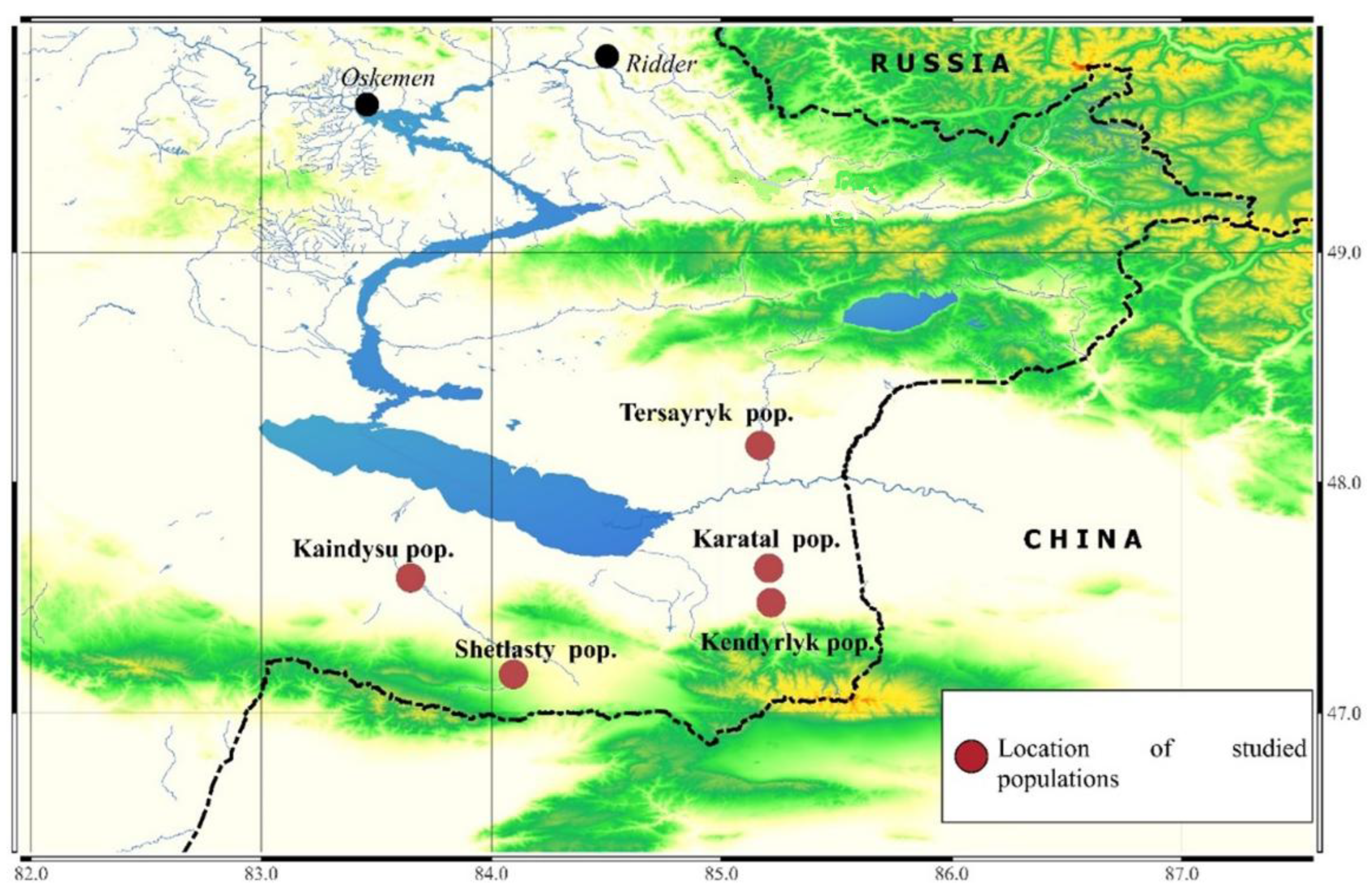
Figure 1. Geographical collection sites of H. rhamnoides populations.
Preprints 184978 g001
Figure 2. Heterogeneous-age plants of H. rhamnoides in thicket No. 2 (A) and initial formation of a thicket in the breeding plot around the form Yantarnaya (T-14-86 (2-1)) (B).
Preprints 184978 g002
Figure 3. Planting and development of green cuttings of H. rhamnoides by the end of the growing season (A, B), rooting of one-year-old cuttings by the end of the growing season (C), and formation of aerial roots on the shoots of two-year-old sea-buckthorn seedlings in the greenhouse (D).
Preprints 184978 g003
Table 1. Age structure of natural populations of H. rhamnoides in East Kazakhstan.
Population Age category Number of plants per ha (count.) % of total
Kendyrlyk (KE) Juvenile (1–5 years) 1740 65.0
Intermediate (6–10 years) 482 18.0
Pre-mature (10–15 years) 148 5.5
Mature (16–20 years) 106 4.1
Senescent (21–25 years) 197 7.4
Total 2673 100
Kaindysu (KA) Juvenile (1–5 years) 540 30.7
Intermediate (6–10 years) 415 23.6
Pre-mature (10–15 years) 605 34.4
Mature (16–20 years) 135 7.7
Senescent (21–25 years) 65 3.6
Total 1760 100
Tersayryk (T) Juvenile (1–5 years) 2360 72.6
Intermediate (6–10 years) 380 11.7
Pre-mature (10–15 years) 368 11.3
Mature (16–20 years) 86 2.6
Senescent (21–25 years) 53 1.8
Total 3247 100
Shetlasty (SH) Juvenile (1–5 years) 5173 79.8
Intermediate (6–10 years) 556 8.6
Pre-mature (10–15 years) 483 7.5
Mature (16–20 years) 123 1.9
Senescent (21–25 years) 143 2.2
Total 6478 100
Karatal Sands (KS) Juvenile (1–5 years) 81 22
Intermediate (6–10 years) 59 16
Pre-mature (10–15 years) 36 10
Mature (16–20 years) 191 52
Senescent (21–25 years) 367 100
Table 2. Rooting percentage of H. rhamnoides cultivars and forms under treatment with different growth regulators.
Form, cultivar Non-treated (control) Heteroauxin, concentration of 0.015% Ecogel, concentration of 0.01% НВ – 101, concentration of 0.02%
Rooting, %
Yubileynaya Kotukhova 69.5 78.7 87.0 90.2
Pamyati Baytulina 64.2 68.6 67.3 69.6
Shetlastinka 71.2 69.2 68.4 90.3
Plakuchaya 60.7 76.2 83.4 89.7
Fakel 67.7 75.6 78.5 82.2
Feyyerverk 65.6 73.0 72.5 80.1
Asem 62.4 81.9 84.1 86.4
Solnyshko (1-18) 70.8 80.4 79.7 83.9
Nesravnennaya (SH-9-81(3-27) 68.9 80.2 83.7 82.7
Krasnoplodnaya KE-14-81(4-27) 63.8 62.7 64.1 70.1
Gustoy tumanT-2-82 (1-24) 72.0 70.1 79.4 81.8
Krasavchik KE-8-82 (2-20) 66.3 67.1 72.3 78.3
Bogatyr T-17-82 (1-21) 61.9 72.7 71.9 71.2
Mean values 66.5±3.8 73.5±5.7 76.4±7.3 81.2±7.3
Disclaimer/Publisher’s Note: The statements, opinions and data contained in all publications are solely those of the individual author(s) and contributor(s) and not of MDPI and/or the editor(s). MDPI and/or the editor(s) disclaim responsibility for any injury to people or property resulting from any ideas, methods, instructions or products referred to in the content.
Copyright: This open access article is published under a Creative Commons CC BY 4.0 license, which permit the free download, distribution, and reuse, provided that the author and preprint are cited in any reuse.
Prerpints.org logo

Preprints.org is a free preprint server supported by MDPI in Basel, Switzerland.

Subscribe

Disclaimer

Terms of Use

Privacy Policy

Privacy Settings

© 2025 MDPI (Basel, Switzerland) unless otherwise stated