

Submitted:
03 November 2025
Posted:
04 November 2025
You are already at the latest version
Abstract
This study introduces the "Hierarchical Adaptive Renewal" framework to resolve conflicts between heritage preservation and urban innovation in saturated cities, integrating three principles: hierarchization (vertical superposition of new functional layers on existing urban structures), adaptability (dynamic problem-strategy matching for current and future needs), and renewal (technological and spatial-functional upgrades). Validated in Rome’s northwestern urban-rural interface (Q. I Flaminio, Q. II Parioli), the approach combines field surveys, data analysis, and experimental interventions to address cultural-sports facility challenges. Key findings highlight micro-level flaws in macro-planning, such as redundant functions, lack of child-friendly spaces, and fragmented connectivity. Solutions include graded interventions: minimal for historic buildings, semi-intervention for high-use structures, and full redesign of generic spaces, exemplified by vertical sports complex expansions, dedicated pedestrian networks, and undeveloped land as transitional hubs. Results show improved spatial vitality, traffic safety, and community integration. The framework’s scalability extends to industrial upgrades and population mobility through vertical mixed-use complexes and smart infrastructure, positioning cities as dynamic organisms balancing cultural continuity with technological advancement. Rome’s case emphasizes multi-stakeholder collaboration and data-driven strategies, offering a sustainable model for high-density urban resilience.
Keywords:
hierarchical urban logic and speculation
; adaptive renewal of cultural and sports public spaces
; multi-level urban hierarchy and pedestrian flow connectivity
1. Introduction
In In the contemporary context where urbanization approaches saturation, urban planning and renewal have become ensnared in a binary dilemma between conservatism and radicalism (Marcus et al., 2023, [1]).Conservatives advocate for partial adjustments respecting existing architectural characteristics to maintain original spatial patterns (Chen et al., 2025, [2]), while reformers promote urban reconstruction through an "evolutionary" approach to address industrial innovation and diversified demands (Xu et al., 2025, [3]).However, both approaches present practical contradictions: the former inhibits innovation industry implementation through technological lag (Karaman, 2020, [4]), while the latter sparks controversy due to historical context neglect and resource consumption (Goldstein, 2021, [5]).Within this framework, the concept of "Hierarchical Adaptive Renewal" emerges as a mediating path balancing preservation and innovation, offering a solution combining continuity and foresight (Pulles et al., 2023, [6]).
The "Hierarchical Adaptive Renewal" framework comprises three core dimensions:
Firstly, "hierarchization" emphasizes establishing existing urban structures as foundational layers, superimposing new functional strata to form multi-level spatial logic (Tang and Zhao, 2025, [7]).Secondly, "adaptability" focuses on dynamic problem-strategy matching mechanisms that reconcile current optimization with future anticipation (Lu et al., 2024, [8]).Thirdly, "renewal" directs technological and spatial-functional iterations (Shou et al., 2025, [9]).This concept aims to activate composite spatial efficiency while preserving historical heritage through vertical "additive" design (Zhang and Wu, 2025, [10]).
To validate its feasibility, the study employs Rome, Italy as an experimental site, focusing on the northwestern urban-rural interface (Q. I Flaminio, Q. II Parioli) (Chen and Feng, 2025, [2]).This area combines historical heritage density with modern facility diversity, yet suffers from infrastructure obsolescence and functional fragmentation, making it an ideal testbed for hierarchical strategies (Jin and Gong, 2025, [11]).The research adopts a tri-phase methodology: initial identification of adaptability issues through field surveys and data visualization (including imbalanced cultural-sports facility distribution, mixed pedestrian-vehicle traffic, and weak regional connectivity) (Lai, 2023, [12]);subsequent construction of a hierarchical design system with intervention principles (Ciolli, 2024, [13]);and final verification through experimental design strategies (Zhaoteng and Kai, 2025, [14]).
Findings reveal that cultural-sports facilities, though macroscopically rational (point-line-plane structure), manifest micro-level contradictions like functional redundancy, service deficiency, and child-unfriendliness (Maculan and Dal Moro, 2020, [15]).Corresponding interventions propose: minimal intervention for historic structures, functional superposition and three-dimensional traffic integration in new developments, and enhanced residential-facility connectivity through undeveloped land utilization (Xu et al., 2025, [3]).Practical implementations include adding children's activity nodes, establishing independent pedestrian systems, and interlinking public spaces, simultaneously mitigating traffic risks and enhancing spatial vitality (Davoudi et al., 2021, [16]).
The study demonstrates that "Hierarchical Adaptive Renewal" effectively reconciles heritage preservation with functional enhancement, offering a new paradigm for high-density urban sustainability (Duffield, 2019, [17]).Its core value lies in perceiving cities as dynamically evolving organisms through systemic thinking, rather than static heritage or tabula rasa for reconstruction (Pabst, 2021, [18]).Future applications could extend to complex issues like industrial upgrading and population mobility, promoting resilient urban growth across multiple hierarchies (Pulles et al., 2023, [6]).This exploration not only injects new ideas into Rome's renewal practices but also provides methodological references for global historical cities' transformation (Marcus et al., 2023, [1]).
2. Materials and Methods
In the contemporary social context where urbanization has approached completion, reflections on urban planning and zoning appear trapped in a disorienting closed-loop. The discourse surrounding existing urban and architectural issues perpetually oscillates between two attitudes: conservatives argue that as long-term products of urban evolution, problem-solving should be based on respecting original architectural characteristics through micro-interventions, preserving fundamental spatial patterns while improving structural and physical aspects. Reformists contend that architecture should embody an "evolutionary" consciousness under industrial innovation, demonstrating anticipatory thinking that adapts to socio-industrial transformations while meeting contemporary energy-efficient and diversified demands through urban and architectural redesign. Both schools of thought maintain adherents in contemporary urban planning practice, yet manifest practical and socio-adaptive deficiencies. While "urban micro-interventions" prove effective in prolonging architectural and urban lifespans, their failure to synchronize with technological advancement hinders innovative industrial models from establishing footholds in urban cores to directly influence urban development. Conversely, "urban redesign" confronts intrinsic contradictions with existing urban fabrics: though resolving managerial and zonal issues while adapting to technological progress, new constructions inevitably obscure historical-cultural memories, eroding urban identity against social continuity principles. Moreover, resource consumption and systemic disruption caused by redesign provoke widespread opposition.
Through comprehensive evaluation of practical and developmental factors, we recognize that both "appeasement" and "radical" urban renewal paradigms inherently generate conflicts. This necessitates a mediated approach synthesizing their strengths, viewing urban renewal through progressive temporality. Hence, we propose the "Hierarchical Adaptive Renewal" concept. Deconstructing this terminology: "hierarchization" denotes multi-layered logical transformations, specifically maintaining historical-cultural advantages through existing urban strata as foundational layers while superimposing new strata to accommodate emerging socio-functional demands; "adaptability" signifies problem-solution matching mechanisms addressing existing urban issues while anticipating future phenomena; "renewal" indicates technological and spatial-functional optimization. Synthetically, this concept constitutes a multi-layered spatial-technical logic resolving urban issues while preserving operational mechanisms.
To validate this conceptual framework's feasibility and operational efficacy, we select Rome, Italy's capital, as experimental subject, developing detailed considerations through tripartite investigation: "adaptive problem identification", "hierarchical design system establishment", and "hierarchical adaptability experimentation".
Prior to detailed exposition, we first elucidate Rome's selection rationale. As Italy's capital and a European cultural-historical nexus, Rome has perpetually concentrated religious, political, and artistic significance since antiquity. Consequently, preserving ancient urban characteristics remains architects' and planners' perpetual challenge. Legally, multiple 1930s-1960s ordinances enforce historic preservation, creating invaluable cultural heritage while paradoxically restricting infrastructural modernization and socio-functional diversity. This duality of indelible historical identity coexisting with developmental contradictions perfectly aligns with our "hierarchical" and "adaptive" prerequisites, establishing Rome as ideal testing ground.
Concurrently, we clarify methodological approaches. As outlined, the research comprises three components: 1) Adaptive problem identification employs dual methodologies - onsite zoning analysis and visualized data studies. The former involves field investigations identifying sector-specific urban issues through regional surveys; the latter constructs statistical systems and evaluation criteria translating findings into visualized diagnostics. 2) Hierarchical design system establishment defines formal principles and intervention protocols within universal urban renewal contexts. 3) Hierarchical adaptability experimentation formulates intervention strategies guided by the proposed framework. Following these methodological expositions, the article proceeds with practical experimental investigations through the tripartite structure.
3. Results
3.1. Identification of "Adaptive" Issues
Given Rome's complex urban public characteristics and the extensive heritage protection legislation governing its central historic districts, we selected the interface between old and new urban areas in northwest Rome (Q. I Flaminio, Q. II Parioli, Q. III Pinciano, Q.XV Della Vittoria, Q.XVIII Tor di Quinto) as our experimental scope to establish foundational conditions for subsequent practical investigations. This zone, as a newly planned sector of Rome's urban fabric, integrates modern and ancient architectural and infrastructural elements alongside extensive residential clusters and public activity spaces. Furthermore, its encirclement by a ring-shaped public greenbelt system positions it as an exemplary zone of urban ecological networks. Consequently, this area satisfies our experimental criteria through its rich hierarchical urban content, resonance with historical uniqueness, and feasibility for architectural interventions. Subsequent analyses will thus employ this zone as the contextual basis (as shown in Figure 1).
As mentioned above, this zoned area encompasses diverse urban attributes. To conduct targeted analysis of sector-specific issues, we implemented attribute-based zoned classification processing. Through this categorization, we identified cultural-sports public service facilities as the most prominent and abundant functional category within the area, exhibiting both problem complexity and intervention potential significantly exceeding other attribute zones. Consequently, we designated cultural-sports public service facilities as the primary research subject, structuring investigations through three methodological lenses as previously outlined: specific issue analysis of cultural-sports facilities, visualized data analysis of these facilities, and chart-based SWOT (Strengths, Weaknesses, Opportunities, Threats) analysis summary.
3.1.1. Specific Issue Analysis of Cultural-Sports Public Service Facilities
Through field investigations and cartographic analysis, we observed that public facilities in this area predominantly align with modern lifestyle patterns due to recent urban development. These facilities broadly categorize into three types: sports facilities, cultural exhibition-performance facilities, and religious facilities. Their spatial distribution manifests as: linear sports facility arrangements along river corridors, networked religious facility layouts connecting residential clusters, and punctual cultural exhibition-performance facility placements at district cores. While this "point-line-plane" configuration (Figure 2) demonstrates macro-level planning rationality, our field investigations revealed multiple micro-level urban challenges.
Following comprehensive spatial analysis of the site's public facilities, we identified two critical observations regarding the overall logical layout:
1. Northern sectors exhibit significantly higher facility density compared to southern areas, with resident-facility relationships transitioning from facilities enveloped by residential clusters in the north to residential clusters surrounded by facilities in the south. (as shown in Figure 3).
2. Cultural-sports facilities lack adjacent supporting public service amenities. Specifically, these activity hubs fail to incorporate secondary functional zones for visitor flow utilization, thereby diminishing activity richness in surrounding areas (as shown in Figure 3).
Additionally, analyzing the typological distribution and peripheral service facilities of cultural-sports public services, we identified:
1. Functional redundancy among homogeneous facilities, with clusters of same-category sports facilities (e.g., tennis courts, soccer fields) concentrated in specific zones, resulting in monotonous activity offerings and diminished land utilization efficiency (as shown in Figure 4)
2. While most cultural-sports facilities demonstrate good transportation accessibility, adjacent traffic flows exhibit chaotic mixed vehicular, non-motorized, and pedestrian circulation, posing safety risks (as shown in Figure 4).
3. High-quality landscape parklands adjacent to cultural-sports facilities remain poorly interconnected (as shown in Figure 4).
Following comprehensive spatial organization and analysis of cultural-sports activity facilities within the designated zone, we conducted field investigations based on their macro-distribution patterns and actual utilization. Our findings categorize these facilities into six service typologies: venues for large-scale public events, service facilities for public organizations like clubs, sports facilities for daily public physical exercise, cultural exhibition-performance facilities, religious facilities, and public undeveloped land (as shown in Figure 5).
Following detailed analysis of intra-site facility categorization, we derived three observations from micro-relational perspectives:
1. Five undeveloped plots within the site demonstrate strong connectivity with both cultural-sports facilities and residential clusters, presenting potential as linking zones (as shown in Figure 6).
2. Regarding sports facility typology, centralized sports complexes (accommodating multiple activities) and single-function sports facilities exhibit clustering phenomenon, creating functional overlap in potentially compatible areas (as shown in Figure 6).
3. Cultural buildings (e.g., concert halls, museums) concentrate disproportionately in southern sectors, resulting in extended travel distances for northern residents while dense sports facilities lack complementary cultural diversity (as shown in Figure 6).
Analyzing relationships between the site's external environment and existing public facilities, we identified:
1. Regarding cultural-sports facility legibility: Major public facilities demonstrate poor visual permeability and lack distinguishable urban signage differentiating general areas from cultural-sports activity hotspots, resulting in deficient spatial atmosphere(as shown in Figure 7).
2. Large-scale event venues (excluding the Olympic Stadium) lack adjacent expansive areas for crowd management and vehicle accommodation(as shown in Figure 7).
3. Proximate cultural landmarks like the Rome Auditorium and Palazzo dello Sport fail to generate regional synergy effects, remaining paradoxically concealed within urban fabric despite their public nature (as shown in Figure 7).
In summary, through urban planning analysis of the selected zone and specific examination of problematic service facilities, we conclude that while the overall planning framework and cultural-sports facility layout patterns remain rationally conceived, challenges persist regarding urban resident convenience and regional development perspectives that require resolution.
3.1.2 Visualized Data Analysis of Cultural-Sports Public Service Facilities
The preceding section systematically examined the selected zone's planning framework and detailed facilities through dual lenses of cultural-sports public service facility layout logic and typological distribution, identifying multiple issues. Synthetically, these challenges fall into three categories: inherent issues of existing cultural-sports service facilities themselves, connectivity deficiencies between these facilities and adjacent zones, and convenience shortcomings in supporting infrastructure (e.g., transportation networks, commercial areas). Subsequent analysis will conduct site-specific evaluations grounded in field investigation findings.
The evaluation methodology employs bar chart visualization scoring assessments. Within this framework, we establish distinct evaluation systems for critical parameters identified during preliminary fieldwork. Ultimately, facilities are rated under a hundred-point scale to inform subsequent SWOT analysis and hierarchical design strategies. The detailed scoring framework is illustrated in Figure 8.
The scoring framework reveals six evaluation dimensions for cultural-sports service infrastructure: quantitative distribution of facilities, facility density, architectural quality, typological diversity, connectivity with adjacent residential zones, and resident satisfaction levels. These categories align with field investigation findings, demonstrating that while the quantitative supply and architectural quality of cultural-sports facilities meet local residential demands, deficiencies in urban developmental integration and cross-sectoral connectivity create "island effects" that hinder adaptability to diverse populations and industrial needs, presenting obstacles for architectural and urban renewal processes.
In addition, we selected eight designated areas within the evaluation zone and conducted an overall assessment using the area of open traffic evacuation zones, the area of green spaces, the proportion of indoor and outdoor activity spaces, and the area of sports facilities as reference variables. The evaluation chart is shown in Figure 9.
3.1.3. Chart-based SWOT Analysis Summary
Synthesizing the above analysis, Rome's cultural-sports architecture within our selected zone presents numerous adaptive challenges and contradictions that manifest differently across domains and user groups. Nevertheless, these facilities undeniably embody Roman urban identity through their architectural quality and cultural representation. Guided by the "problem-solution matching mechanisms of adaptability" within our proposed "Hierarchical Adaptive Renewal" framework, we developed the following SWOT diagram (as shown in Figure 10).
The diagrammatic analysis reveals three primary challenges within the zone:
1. User Group Coverage: Cultural-sports infrastructure inadequately serves diverse demographics, particularly lacking child-friendly adaptations at urban scales.
2. Transportation Safety: While facility accessibility remains satisfactory, mixed pedestrian-vehicular circulation patterns create safety hazards.
3. Spatial Connectivity: Weak integration with surrounding areas, especially residential clusters, presents substantial improvement opportunities.
Conversely, the area demonstrates inherent strengths: cultural-sports facilities quantitatively and qualitatively meet urban demands, while substantial undeveloped land reserves provide premium developmental potential.
Through synthesized field investigations, data-driven evaluations, and SWOT analysis, we confirm this zone fully satisfies the "adaptive" prerequisites outlined in our theoretical framework - both in problem identification and developmental capacity. This validation enables subsequent formulation and experimentation of hierarchical design strategies as elaborated below.
3.2. Establishment of the "Hierarchical Design" System
As introduced initially, "hierarchization" denotes multi-layered logical transformations, specifically referring to an architectural-urban design logic that superimposes new strata upon existing urban layers as foundational substrates, maximizing preservation of historical-cultural assets while accommodating emerging socio-functional demands. Furthermore, our preceding "adaptive" analysis demonstrates that cultural-sports infrastructure in this zone embodies strong urban representativeness and possesses excellent developmental potential. However, to thoroughly elucidate the hierarchical system's formation process, we first further define "hierarchical design" before addressing identified urban issues.
Urban genesis and evolution stem from population migration and industrial agglomeration. Consequently, escalating demographic growth and successive industrial revolutions have driven continuous urban expansion. However, industrial technological advancement has exacerbated environmental pollution, while population increases create irreconcilable conflicts between global agricultural land preservation and urban sprawl. Under these macro-conditions, indiscriminate urban expansion faces widespread opposition and can no longer serve as primary solution. Nevertheless, as stated initially, persistent industrial evolution and emerging sectors necessitate urban transformations that simultaneously respect existing urban fabrics and generate new spatial identities. Through rational deduction of these contextual factors, we derive the "hierarchical" urban-architectural renewal strategy, elaborated through three aspects: definition, formal principles, and intervention protocols.
3.2.1. Definition of "Hierarchical" Design Strategy
The "hierarchical" design strategy refers to an architectural-urban intervention method that vertically or peripherally augments built structures and urban fabrics while ensuring structural integrity, thereby supplementing functional deficiencies and resolving urban challenges.
In simpler terms, it constitutes vertical "additive" architectural-urban design (as shown in Figure 11).
3.2.2. Fundamental Formal Principles of "Hierarchical" Design Strategy
Distinct from conventional architectural-urban design approaches, "hierarchical" design paradigms and prototypes primarily adopt roles as "supplementary elements" and "new interventions" while responding to regional cultural-material characteristics. Within architectural vocabulary, these manifest fundamentally as additions of functional structures, outdoor activity spaces, and three-dimensional transportation systems (as shown in Figure 12).
3.2.3. Architectural-Urban Intervention Principles of "Hierarchical" Design Strategy
As outlined initially, the fundamental principle of "hierarchical" design strategy involves augmenting new functions and facilities while respecting existing structures. However, this respect does not equate to "zero intervention" for all buildings. Instead, differentiated intervention mechanisms are applied based on historical significance, cultural value, and constructive conditions to resolve essential architectural-urban challenges:
1. Historically/Culturally Significant Structures: Adhere to the "non-intervention unless necessary" principle, preserving formal functionality and visual integrity.
2. High-Use Important Buildings: Implement "semi-intervention" principles requiring integration between existing sites, rooftops, and circulation systems with new additions to ensure operational coherence.
3. Generic Mass-Produced Buildings: Apply "full-intervention" principles where all functions and facilities serve the new system, enhancing systemic completeness.
Furthermore, hierarchical interventions target urban problem zones rather than entire cities. For instance, our selected Roman zone exhibits pronounced "adaptive" issues where resolution urgency outweighs preservation of unaltered urban landscapes, necessitating hierarchical system implementation (as shown in Figure 13).
3.3. Hierarchical" Adaptive Experimentation
As outlined above, the "hierarchical" design system must be grounded in identified architectural-urban challenges. Section I comprehensively analyzed cultural-sports service infrastructure across three dimensions within the selected zone, revealing multiple unresolved "adaptive" issues. Prioritizing problem-solving, we derive hierarchical resolution strategies through systematic synthesis of these findings.
3.3.1. Issue Synthesis
Following holistic investigation and evaluation of cultural-sports facilities in the zone, three core challenges emerge across demographic, infrastructural, and connectivity perspectives:
1. Demographic Coverage: Facilities demonstrate child-unfriendliness, lacking dedicated sports and cultural amenities for children.
2. Supporting Infrastructure: Chaotic mixed pedestrian-vehicular circulation patterns create safety hazards.
3. Urban Connectivity: Weak linkages between cultural-sports facilities and adjacent zones, particularly limited integration with extensive residential areas (as shown in Figure 14).
3.3.2. Design Strategy Formulation
Based on the identified issues, we propose corresponding hierarchical resolution approaches. First, addressing the deficiency in child-oriented facilities, we adopt strategies from Section 2.2 to functionally supplement or reconfigure existing cultural-sports infrastructure through the following steps.
① Selection of Supplementation/Reconfiguration Zones
Guided by the intervention principles outlined in Section 2.3, we designate newly developed sectors within the study area (as shown in Figure 15) as hierarchical system implementation zones. Rationale includes:
1. Compared to central urban cultural-sports facilities, these newer constructions possess stronger structural load-bearing capacities.
2. These zones exhibit functional redundancy (detailed in Section I), providing flexible intervention opportunities.
3. Undeveloped plots adjacent to these facilities, situated between cultural-sports clusters and residential areas, serve as optimal pedestrian distribution nodes to enhance residential connectivity.
② Key Building Selection and Intervention Feasibility Study
Following macro-scale zoning determinations, we apply the intervention hierarchy from Section 2.3 to assess intervention intensities for buildings within designated areas:
1. Western Sector:
- Stadio Olimpico, Foro Italico, and Stadio dei Marmi constitute vital activity hubs.
- Foro Italico and Stadio dei Marmi require complete preservation as historic architectural-plaza complexes.
- Stadio Olimpico, being a newer structure serving as AS Roma's home stadium with strong public significance, will undergo vertical extensions while retaining original functions.
2. Eastern Sector:
- Olympic Center Giulio Onesti and Comitato Regionale FISE Lazio, as equestrian and baseball facilities central to civic life, demonstrate renovation potential despite current utilization.
3. Remaining Structures:
All other buildings qualify for full or semi-interventions to address previously identified challenges (as shown in Figure 16).
③ Integration of Supplementary and New Functions
Guided by the "hierarchical" design typology described in Section 2.2, functional integration proceeds post-intervention feasibility confirmation. Analysis reveals that the left sectors of both selected sites contain critical non-intervenable or minimally intervenable structures. Consequently, functional distributions adopt:
- Left Sectors: Integrated public supplementation of existing buildings.
- Right Sectors: Dispersed child-oriented cultural-sports facilities.
This configuration resolves child-friendly space deficiencies while avoiding structural compromises (as shown in Figure 17).
Supplementary to child-friendly functional supplements, addressing mixed pedestrian-vehicular circulation identified in "adaptive" problem analysis, we adopt strategies from Section 2.2 to establish an independent fifth facade-based pedestrian system and outdoor activity spaces, prioritizing child safety given their non-linear movement patterns. System generation follows these steps:
① Pedestrian Pathway Planning and Outdoor Space Configuration for Semi-Intervention Zones
Within the aforementioned cultural-sports facility supplementation areas, we allocate distinct functional blocks based on existing structures' intervention capacities. Consequently, pedestrian network development adheres to spatial linkage principles, connecting all functional blocks via a serpentine pathway with activity nodes at critical junctions (as shown in Figure 18).
② Pedestrian Pathway Planning and Outdoor Space Configuration for Full-Intervention Zones
In contrast to the semi-intervention zone systems, pedestrian networks and outdoor activity spaces in full-intervention zones do not primarily rely on existing structures' fifth facades. Instead, their configurations derive from functional demands of new child-oriented cultural-sports infrastructure and zonal spatial logic, adopting a free yet rational layout approach (as shown in Figure 19).
Building upon the established functional integration approaches and pedestrian circulation systems, we executed granular design articulations aligned with existing architectural layout configurations and site-specific contextual elements. These details encompass pathway alignment patterns, morphology of outdoor activity spaces, and specific functionalities of new spaces. Additionally, where feasible, we considered relational configurations with original structures and formal tendencies (as shown in Figure 20).
As previously identified, beyond child facility deficiencies and transportation safety issues, weak connectivity with residential areas constitutes another critical "adaptive" challenge requiring hierarchical system implementation.
① Residential Zone Selection
Following the same selection criteria applied to new child-oriented cultural-sports intervention zones, residential cluster selection adheres to Section 2.3's intervention principles. We prioritize neighborhoods adjacent to undeveloped areas, enabling resident pedestrian flows to feed into these future distribution hubs, thereby achieving inter-zonal connectivity (as shown in Figure 21).
② Intervention Facility Selection
Given the core challenge of enhancing connectivity between residential clusters and new cultural-sports service infrastructure, the most direct solution involves channeling pedestrian flows into a distributed circulation pattern. Guided by the formal selections of the "hierarchical" design system from Section 2.2, and aligned with existing urban road networks and architectural layouts in residential zones, we implement three-dimensional pedestrian walkways to redirect residential flows into cultural-sports service infrastructure areas, thereby strengthening inter-facility connectivity (as shown in Figure 22).
Ultimately, guided by problem-solving principles, we refined details regarding road configuration details, fifth facade utilization, and primary-secondary pedestrian network planning through granular articulation. Specific articulations encompass hierarchical road classifications, identification of minor distribution zones, and relational configurations with undeveloped areas (as shown in Figure 23).
4. Discussion
4.1. Significance of Research Findings
The "Hierarchical Adaptive Renewal" framework, as validated through its application in the northwest urban-rural interface of Rome, successfully addresses multifaceted challenges in cultural and sports public facilities, including functional, spatial, and connectivity issues. Key outcomes include:
4.1.1. Functional Optimization: A graded intervention strategy preserved historically significant buildings while introducing new functions, particularly child-friendly spaces, to enhance the overall service capacity of facilities.
4.1.2. Enhanced Spatial Vitality: Independent pedestrian systems and three-dimensional transportation networks significantly improved accessibility and traffic safety in cultural and sports facilities.
4.1.3. Regional Integration: Undeveloped land was redefined as transitional hubs, strengthening connectivity between cultural facilities and residential areas and fostering community integration.
These results demonstrate that the "Hierarchical Adaptive Renewal" framework not only resolves specific functional issues but also enhances spatial efficiency and cultural continuity through systematic thinking.
4.2 Interpretation of Results from Previous Research and Working Assumptions
The working assumptions of this study were developed in response to the limitations of two dominant paradigms in urban renewal: conservatism (micro-interventions) and radicalism (complete reconstruction). The "Hierarchical Adaptive Renewal" framework aims to balance heritage preservation with functional modernization through dynamic equilibrium.
Interpretation of the results aligns with previous research as follows:
4.2.1 Jacobs' Theory of Urban Vitality (Jacobs, 1961) emphasizes the importance of diversity and functionality in urban spaces. This study's functional overlay and spatial integration strategies align closely with Jacobs' principles.
4.2.2 Social Logic of Space (Hillier & Hanson, 1984) highlights the critical role of connectivity and accessibility in urban vitality. The study's design of independent pedestrian systems and three-dimensional transportation networks validates the practical application of this theory.
4.2.3 Green Urbanism (Beatley, 2000) and Sustainable Urbanism (Kates & Dupuy, 2006) advocate for balancing ecological, social, and economic goals in urban renewal. The study's “vertical overlay” strategy avoids large-scale demolition, reflecting sustainable development principles.
4.3. Broader Context and Implications of the Findings
From a broader perspective, the findings reveal universal contradictions in high-density urban areas: how to balance heritage preservation with modern functional needs. The Rome case demonstrates that the "Hierarchical Adaptive Renewal" framework can serve as a universal tool for historical city renewal practices worldwide.
Key implications include:
4.3.1 Balancing Heritage and Modernization: The graded intervention mechanism provides a new solution for preserving traditional architecture while integrating modern functions, avoiding the destruction of historical identity.
4.3.2 Application of Systematic Thinking: By treating the city as a dynamic, self-renewing organism, the framework offers a systematic approach to sustainable development in high-density urban contexts.
4.3.3 Child-Friendly Urban Design: The study highlights the lack of child-friendly spaces in urban planning and proposes actionable solutions, offering practical references for creating child-friendly urban environments.
4.4. Future Research Directions and Outlook
Based on the results and discussion, future research could explore the following directions:
4.4.1 Development of Quantitative Evaluation Systems:
Future research should establish comprehensive, data-driven evaluation frameworks that integrate spatial analytics, social performance indicators, and environmental metrics to assess the thresholds and long-term impacts of hierarchical interventions. By employing GIS-based simulation, spatial syntax, and behavioral analytics, these systems could generate dynamic feedback loops between design strategies and real-world performance outcomes.
4.4.2 Optimization of Multi-Stakeholder Collaboration Mechanisms:
Future work should investigate governance models that balance regulatory rigidity with creative flexibility. Incorporating participatory digital platforms and co-design tools can enhance transparency and align heritage preservation objectives with community-driven needs, ensuring adaptive renewal strategies remain socially grounded.
4.4.3. Integration of New Technologies:
The convergence of digital twin systems, artificial intelligence, and generative design tools provides an emerging pathway for predictive and adaptive urban management. Integrating these technologies could allow real-time monitoring of spatial, structural, and social data, enabling dynamic calibration of renewal strategies in response to evolving urban and climatic conditions.
4.4.4. Cross-Cultural Applicability Studies
Comparative studies across diverse cultural and socio-economic contexts—particularly in developing countries—should test the scalability and flexibility of the “Hierarchical Adaptive Renewal” framework. Such studies could reveal how hierarchical layering principles adapt to different governance structures, resource availabilities, and cultural heritage typologies.
4.4.5. Future Outlook – Toward Resilient and Intelligent Urban Renewal
Looking ahead, the evolution of urban renewal practice will increasingly depend on synergizing digital intelligence with cultural consciousness. The “Hierarchical Adaptive Renewal” framework could evolve into a real-time adaptive system, continuously learning from user behavior, environmental feedback, and socio-economic change. This anticipatory mode of urban management may shift renewal from static planning toward continuous, intelligent co-evolution. Moreover, integrating climate resilience—through passive environmental design, renewable energy retrofits, and adaptive materials—will be essential for future-proofing heritage cities. Ultimately, the next generation of adaptive renewal will rely on cross-disciplinary collaboration, merging architecture, data science, urban sociology, and environmental technology into a cohesive and responsive urban ecosystem.
5. Conclusions
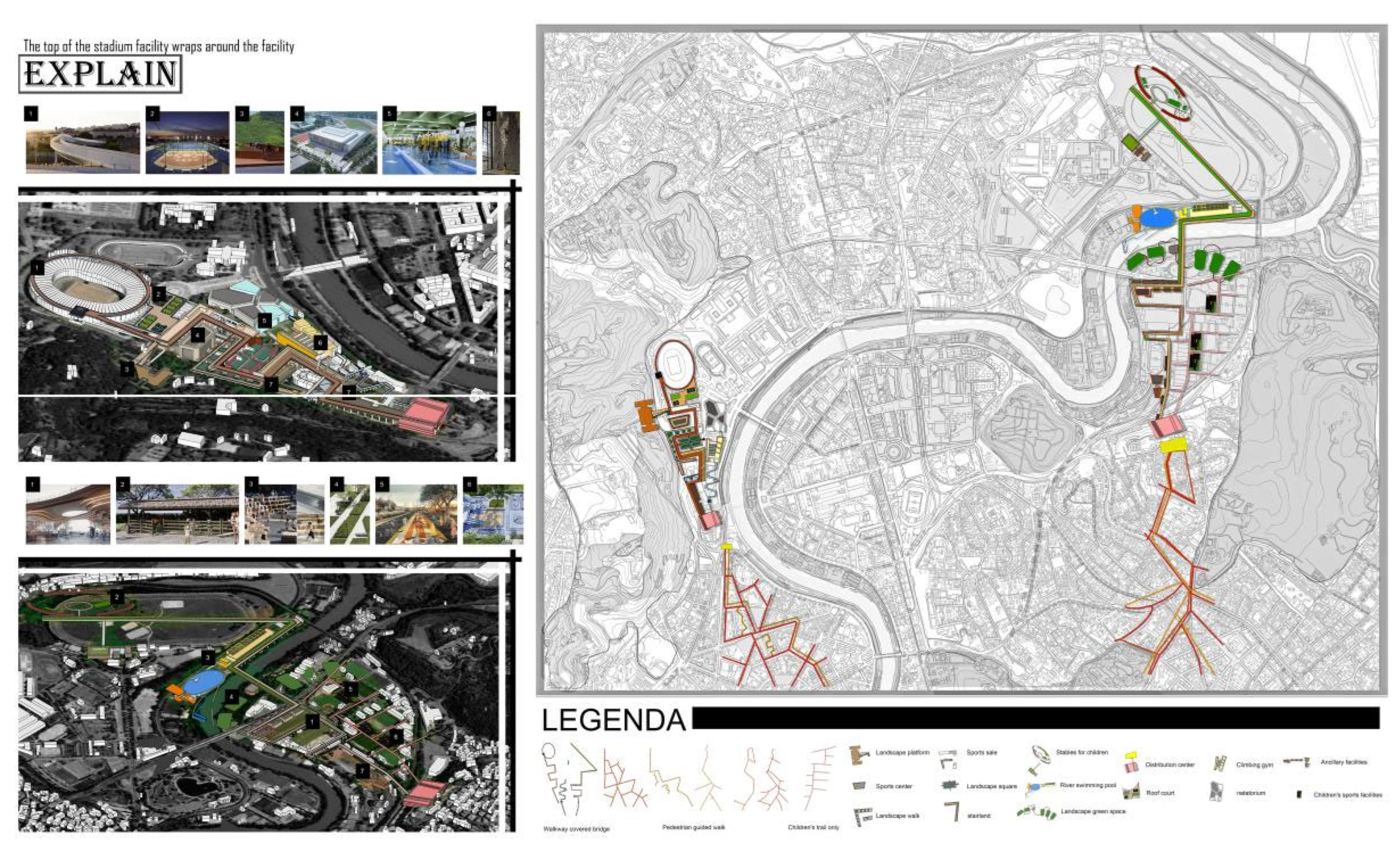
Through the urban renewal case study in Rome discussed above, the core value of the "hierarchical adaptive renewal" concept in sustainable urban development becomes evident. This philosophy rests on three fundamental principles: First, implementing "additive" design strategies in the vertical dimension achieves functional upgrades through three-dimensional superposition rather than horizontal expansion, avoiding destructive transformations in historic districts while enhancing spatial efficiency. Second, establishing dynamic equilibrium between heritage preservation and functional modernization through graded intervention principles enables symbiotic coexistence between historical continuity and contemporary needs. Third, adopting systematic dynamic thinking that perceives cities as self-renewing organisms, identifying hierarchical contradictions to formulate ordered renewal sequences. In Rome's northwestern urban-rural interface, this concept materializes through three critical strategies: functional superposition of cultural-sports facilities in new development zones addressing child-unfriendly environments; creation of independent pedestrian systems and three-dimensional transportation networks resolving traffic safety issues; and utilization of undeveloped land as transitional connectors between residential areas and cultural hubs. These strategies, systematically integrated in the comprehensive renewal scheme illustrated in Figure 24, demonstrate hierarchical renewal's unique advantages in addressing complex high-density urban challenges.
The significance of this renewal model extends beyond specific problem-solving to methodological scalability. When applied to broader urban development issues, hierarchical thinking proves equally effective in resolving contradictions between industrial innovation and spatial supply. Confronting structural conflicts between traditional industrial cities and emerging digital/green economies, hierarchical renewal offers innovative solutions: spatial reorganization and superposition create new industrial carriers while preserving urban fabric. This manifests through three-tiered exploration: architecturally, transforming existing structures into vertical data centers through stereoscopic modifications; urbanistically, developing three-dimensional industrial parks enabling traditional-emerging economic synergy; regionally, establishing resilient infrastructure networks through hierarchical superposition of smart transportation and distributed energy systems. This approach prevents cultural discontinuities from large-scale reconstruction while meeting industrial upgrade demands through precise spatial interventions, essentially constructing symbiotic ecosystems of old-new elements during urban spatial reproduction.
Extending this logic to population mobility and urban carrying capacity, hierarchical renewal demonstrates exceptional adaptability. Facing irreconcilable conflicts between population growth and land scarcity, traditional expansion becomes obsolete. Vertical functional complexes integrating residence, employment, and services within single plots not only optimize spatial efficiency but catalyze new urban lifestyles. This spatial restructuring requires precise demand stratification: minimal intervention in historic neighborhoods preserves community authenticity, moderate functional mixing enhances living convenience in ordinary residential zones, and bold exploration of vertical communities in new developments. Technological and institutional innovations must synergize, including developing stereoscopic construction technologies, establishing FAR incentive mechanisms, and formulating public-interest regulatory frameworks. When integrated with smart city technologies, dynamic population-responsive systems emerge, achieving optimal resource allocation through data-driven spatial adjustments. Rome's practice proves that scientific hierarchical classification and intervention mechanisms enable inclusive development within limited spaces, constituting crucial responses to future urban challenges.
Crucially, successful implementation requires multi-stakeholder collaboration. In Rome, rigid historic preservation policies and flexible design innovations formed effective checks and balances, providing valuable references for other cities. Future research should focus on refined evaluation systems quantifying renewal thresholds across hierarchies, ensuring intervention-intensity matches spatial value. Simultaneously, enhancing public participation mechanisms that incorporate citizen spatial experiences into assessment frameworks guarantees human-centered renewal. With advancements in digital twins and AI, intelligent decision-making systems could simulate long-term impacts of intervention strategies, transforming urban renewal into sustainable evolutionary processes.
Paying tribute to all architectural professionals.
References
- Marcus, L.; Colding, J. Placing urban renewal in the context of the resilience adaptive cycle. In Land, 13; MDPI: Basel, Switzerland, 2023. [Google Scholar]
- Chen, F.; Feng, G. Multi-Dimensional Organic Conservation of Historical Neighborhood Buildings. In MDPI Reprints; MDPI: Basel, Switzerland, 2025. [Google Scholar]
- Xu, K.; He, Y.; Chen, Y.; Zhou, M. Morphological resilience evaluation research on the conservation and renewal of historic districts. In Front. Archit. Res.; Elsevier: Amsterdam, Netherlands, 2025. [Google Scholar]
- Karaman, O. Dispossession through Urban Renewal in Istanbul. PhD Dissertation, University of Minnesota, 2020.
- Goldstein, B. School. In J. Urban Hist.; SAGE: Thousand Oaks, CA, USA, 2021. [Google Scholar]
- Pulles, K.; et al. Emerging strategies for regeneration of historic urban sites: a systematic literature review. In City, Cult. Soc., 35; Elsevier: Amsterdam, Netherlands, 2023. [Google Scholar]
- Tang, Z.; Zhao, Y. Perception and Evaluation of Cultural Heritage Value in Historic Urban Public Parks. In Buildings, 15; MDPI: Basel, Switzerland, 2025. [Google Scholar]
- Lu, W.; Qiu, B.; Wu, Y. Exploration of urban community renewal governance for adaptive improvement. In Habitat Int.; Elsevier: Amsterdam, Netherlands, 2024. [Google Scholar]
- Shou, T.; Pan, Y.; Zhao, B. Vernacular ecological construction: spatial-landscape in Huizhou courtyard dwellings. In Eng. Des. Manag.; Taylor & Francis: London, UK, 2025. [Google Scholar]
- Zhang, H.; Wu, H. On the Protection of Cultural Heritage and Living Environment. In Int. J. Hous. Sci. Appl., 49(4); HousingScience: USA, 2025. [Google Scholar]
- Jin, Z.; Gong, K. Urban-to-Rural Migration and Vernacular Village Revitalization. In Buildings, 15(17); MDPI: Basel, Switzerland, 2025. [Google Scholar]
- Lai, S. Function Orientation and Governance Mechanisms in Community Renewal. In Social Security Admin. Mgmt.; Academia.edu: 2023.
- Ciolli, M. Adaptation and Radicalization of Hayek's Thought in Argentina. In Lat. Am.ist.; Project MUSE: 2024.
- Zhaoteng, J.; Kai, G. Spatial–Lifestyle Interventions on Architecture. PhD Dissertation, ProQuest, 2025.
- Maculan, L.S.; Dal Moro, L. Strategies for inclusive urban renewal. In Sust. Cities and Communities; Springer, 2020.
- Davoudi, S.; Shaw, K.; Haider, L.J.; Quinlan, A.E. Resilience as a Useful Concept for Climate Change Adaptation. In Plan. Theory Pract.; Taylor & Francis: London, UK, 2021. [Google Scholar]
- Duffield, M. Post-humanitarianism: Governing Precarity Through Adaptive Design. In J. Hum. Aff., 1(1); Manchester Univ. Press, 2019; Article 15.
- Pabst, A. Postliberal Politics: The Coming Era of Renewal; Cambridge University Press: Cambridge, UK, 2021. [Google Scholar]
Figure 1.
Selected Study Area (Image Source: Locator map for quartieri of Rome, Italy).
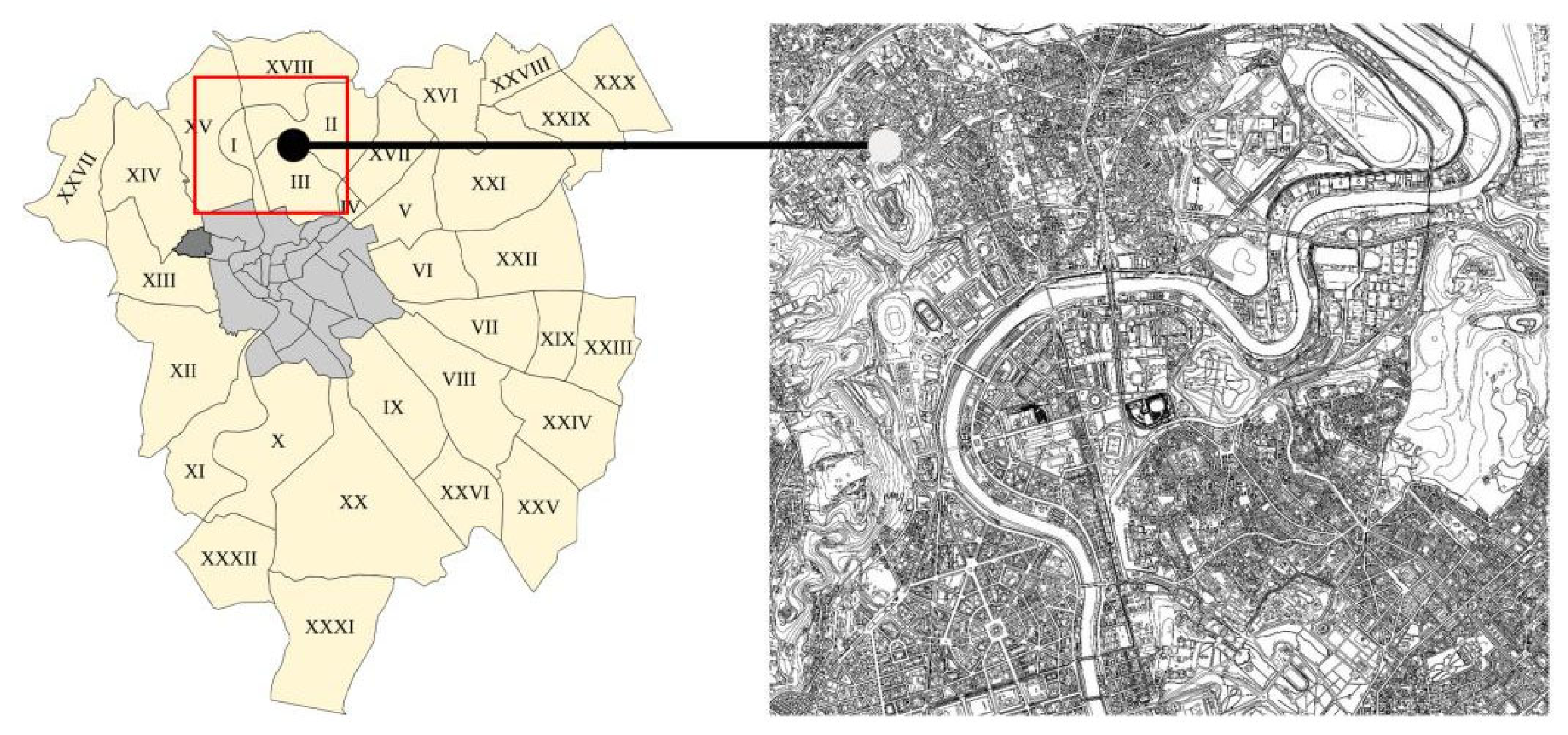
Figure 2.
"Point-Line-Plane" Public Facility Layout Configuration (Image Source: Author's original drawing).
Figure 2.
"Point-Line-Plane" Public Facility Layout Configuration (Image Source: Author's original drawing).
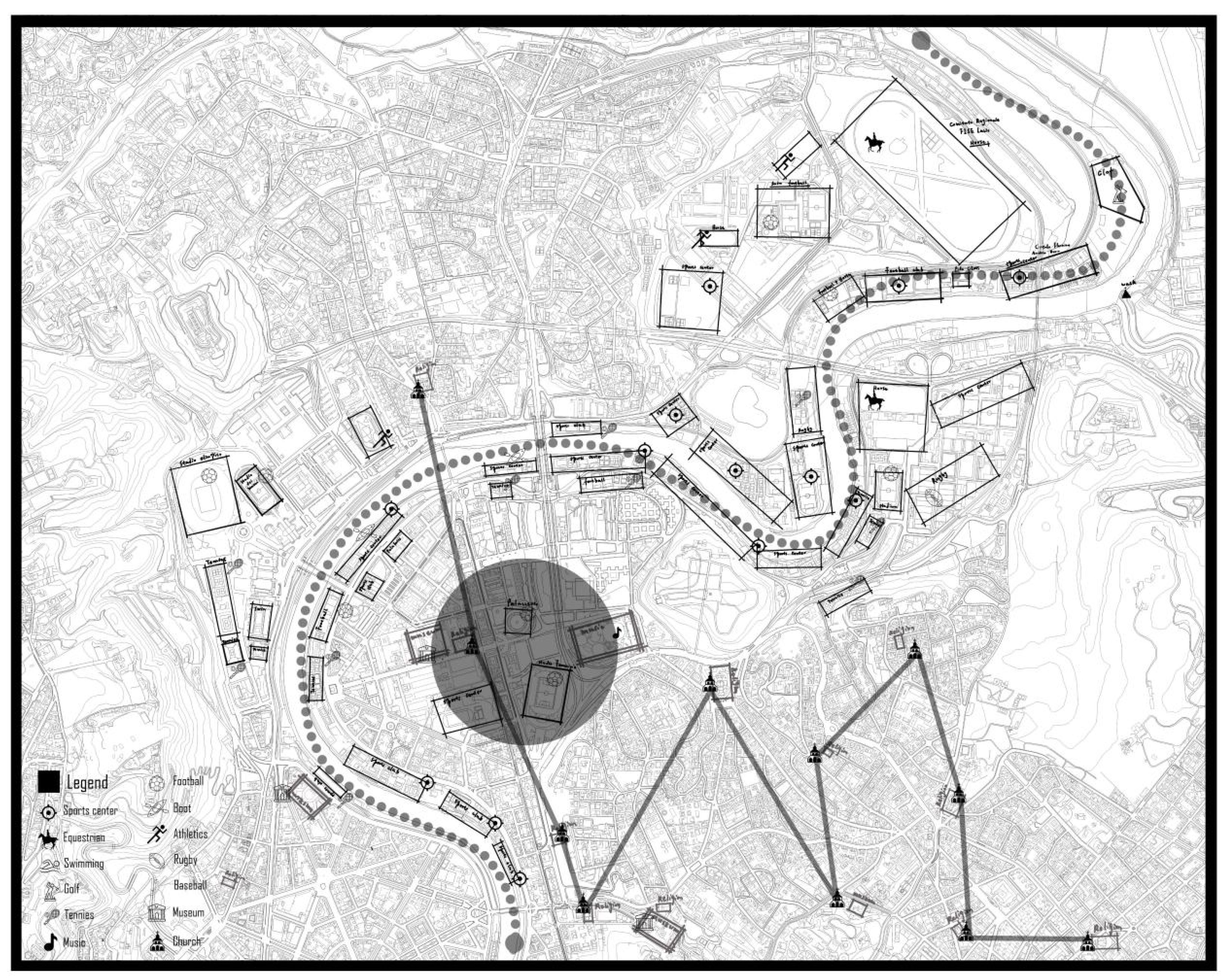
Figure 3.
Schematic Diagram 1 & 2 of Cultural-Sports Public Service Facility Layout Analysis (Image Source: Author's original drawing).
Figure 3.
Schematic Diagram 1 & 2 of Cultural-Sports Public Service Facility Layout Analysis (Image Source: Author's original drawing).
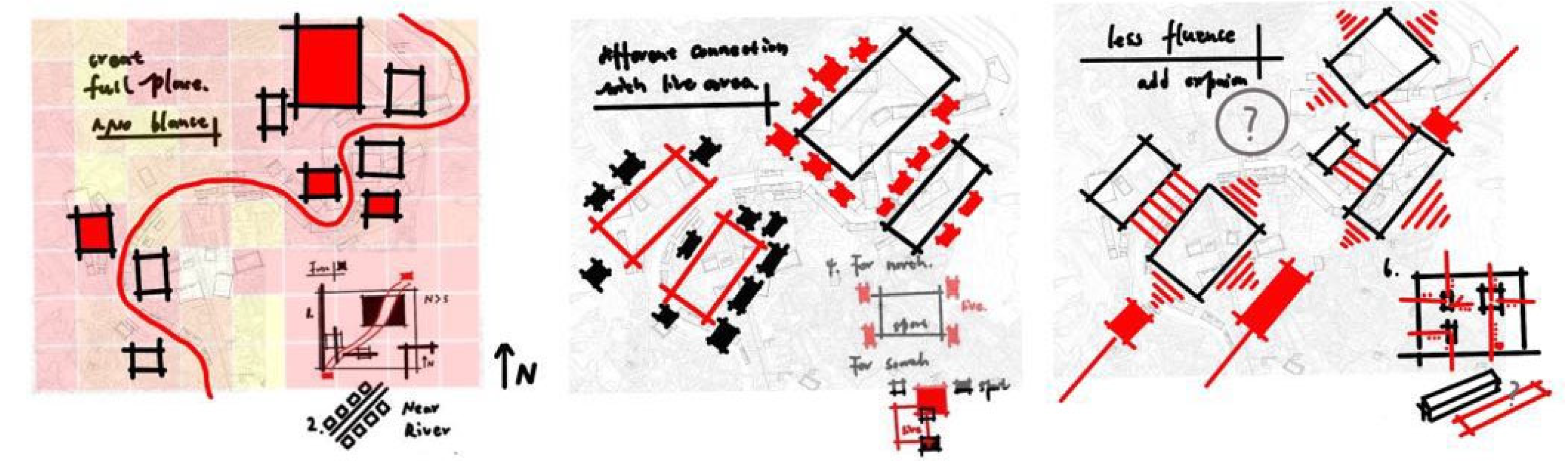
Figure 4.
Schematic Diagram 1, 2, 3 of Cultural-Sports Public Service Facility Categories and Peripheral Service Facility Treatments (Image Source: Author's original drawing).
Figure 4.
Schematic Diagram 1, 2, 3 of Cultural-Sports Public Service Facility Categories and Peripheral Service Facility Treatments (Image Source: Author's original drawing).
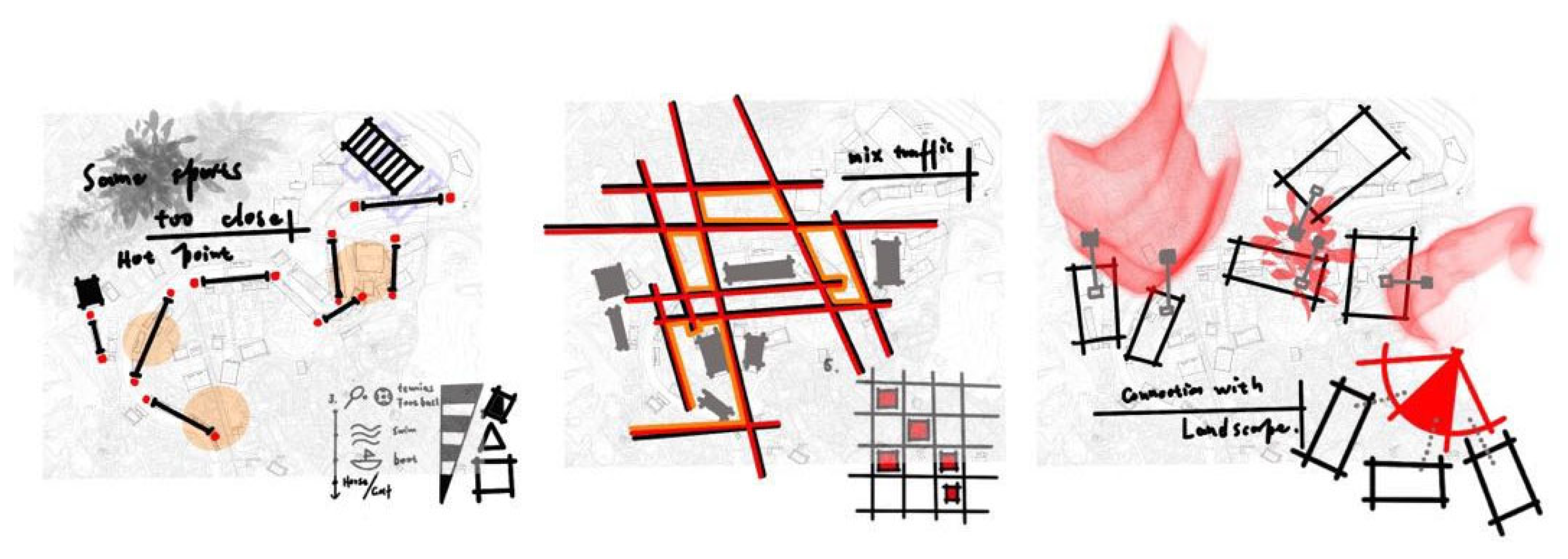
Figure 5.
Schematic Diagram of Specific Categorization (Image Source: Author's original drawing).
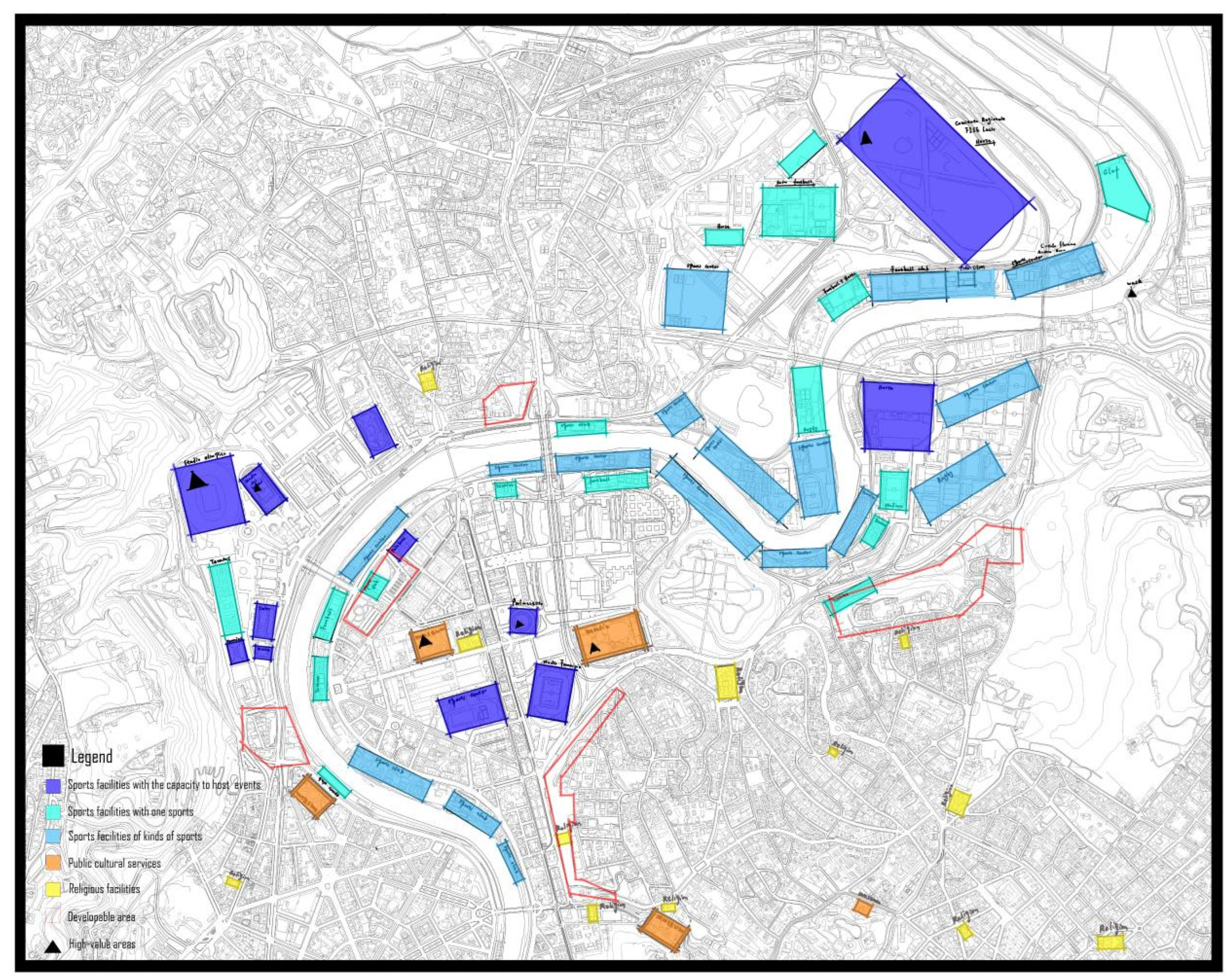
Figure 6.
Schematic Diagram 1, 2, 3 of Detailed Site Analysis (Image Source: Author's original drawing).
Figure 6.
Schematic Diagram 1, 2, 3 of Detailed Site Analysis (Image Source: Author's original drawing).
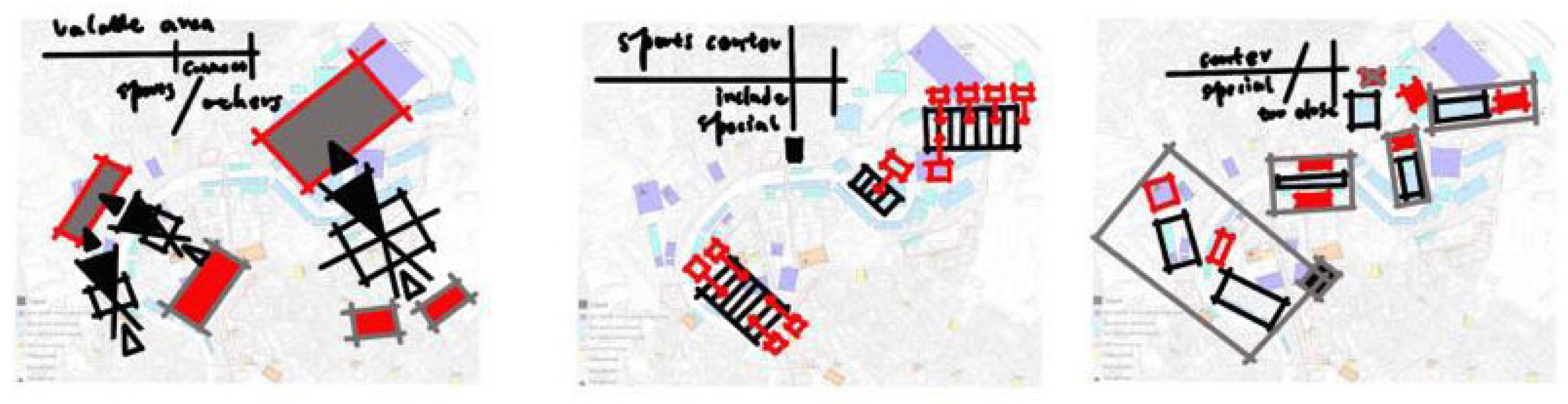
Figure 7.
Schematic Diagram 1, 2, 3 of Relationships Between Cultural-Sports Public Service Facilities and External Environment (Image Source: Author's original drawing).
Figure 7.
Schematic Diagram 1, 2, 3 of Relationships Between Cultural-Sports Public Service Facilities and External Environment (Image Source: Author's original drawing).
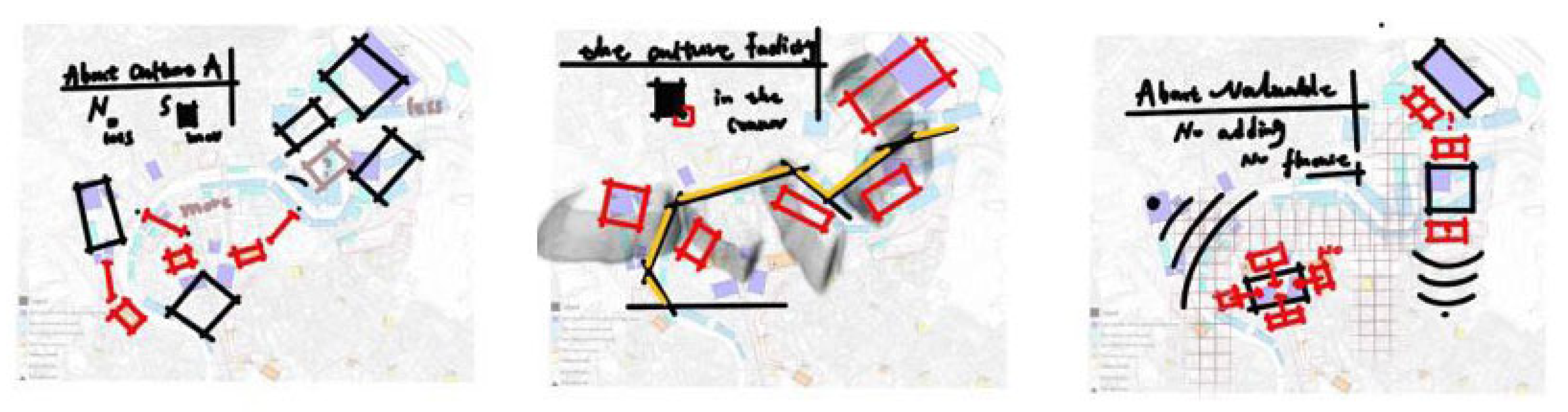
Figure 8.
Visualized Data Scoring Framework (Image Source: Author's original drawing).
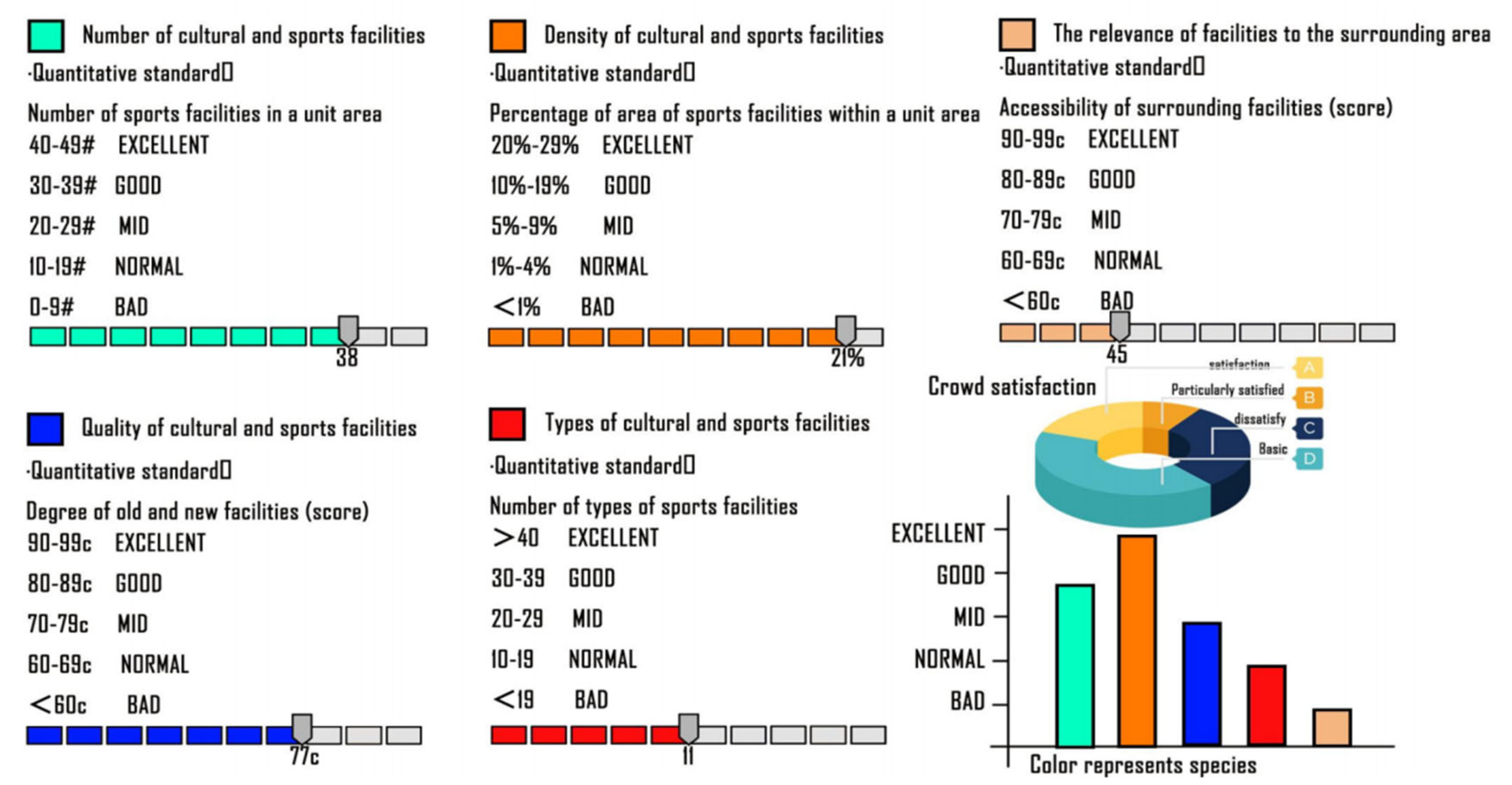
Figure 9.
Visualized Data Scoring Framework (Image Source: Author's original drawing).
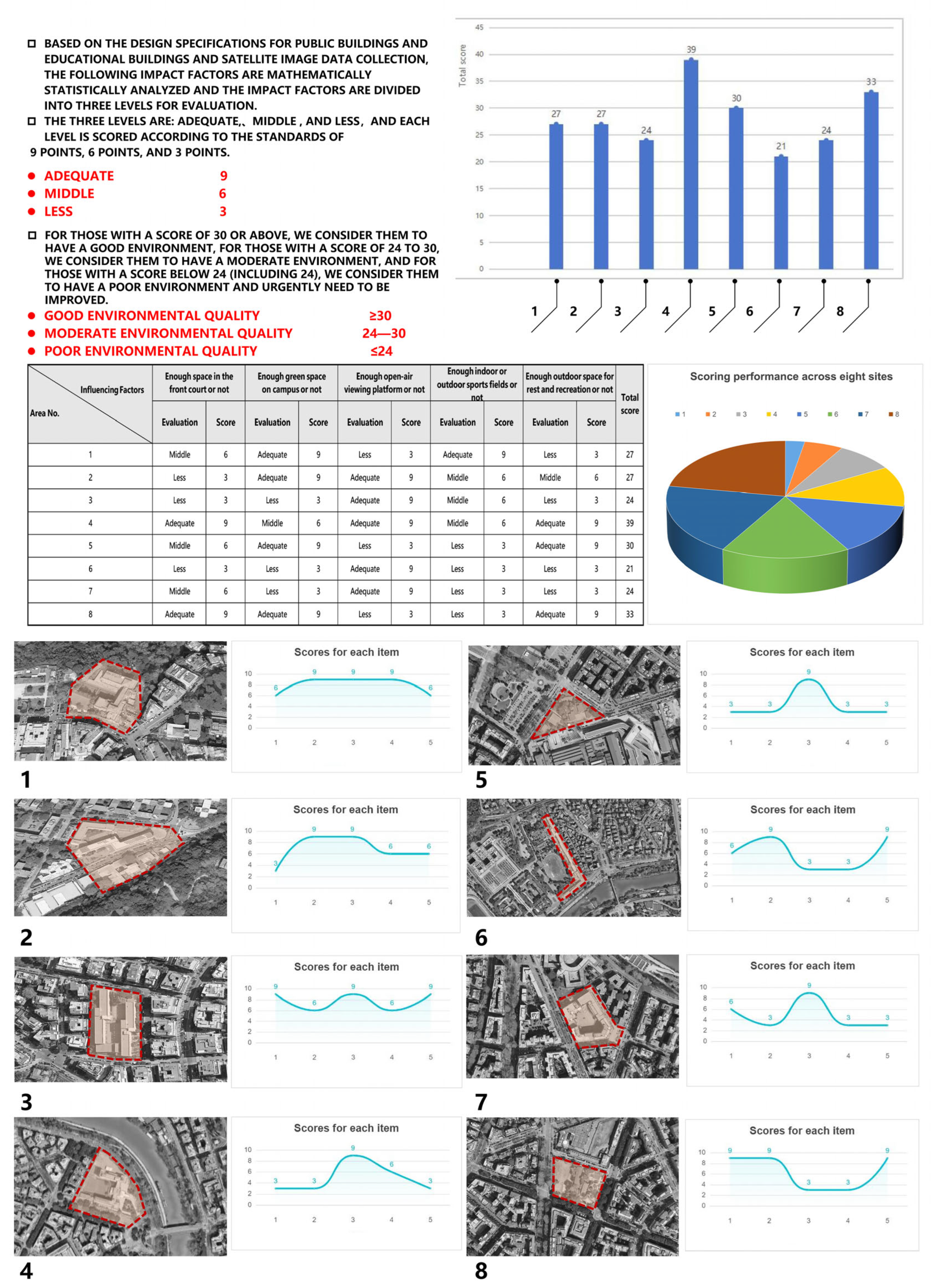
Figure 10.
SWOT Analysis Diagram (Image Source: Author's original drawing).
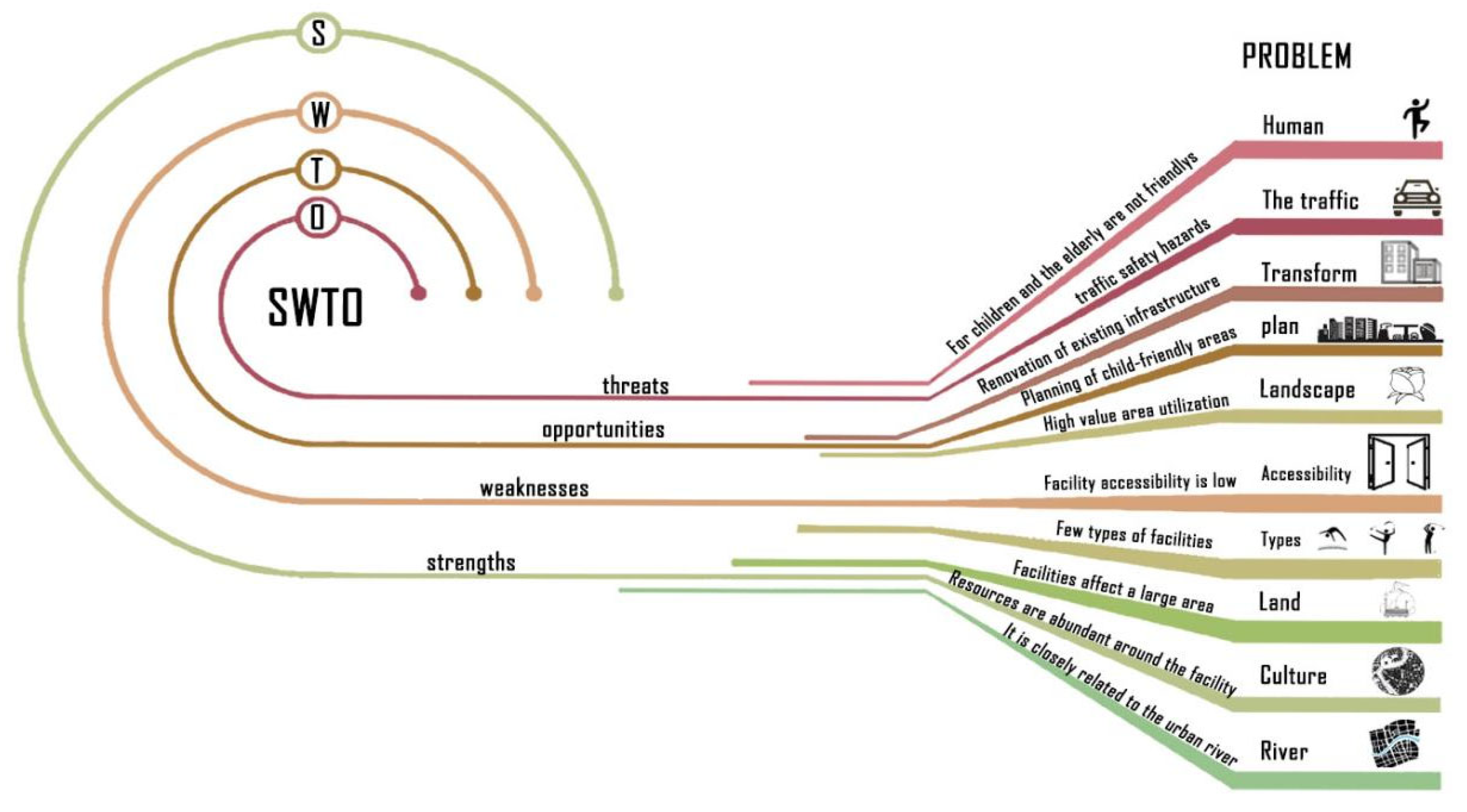
Figure 11.
Schematic Diagram of "Hierarchical" Design Strategy (Image Source: Author's original drawing).
Figure 11.
Schematic Diagram of "Hierarchical" Design Strategy (Image Source: Author's original drawing).
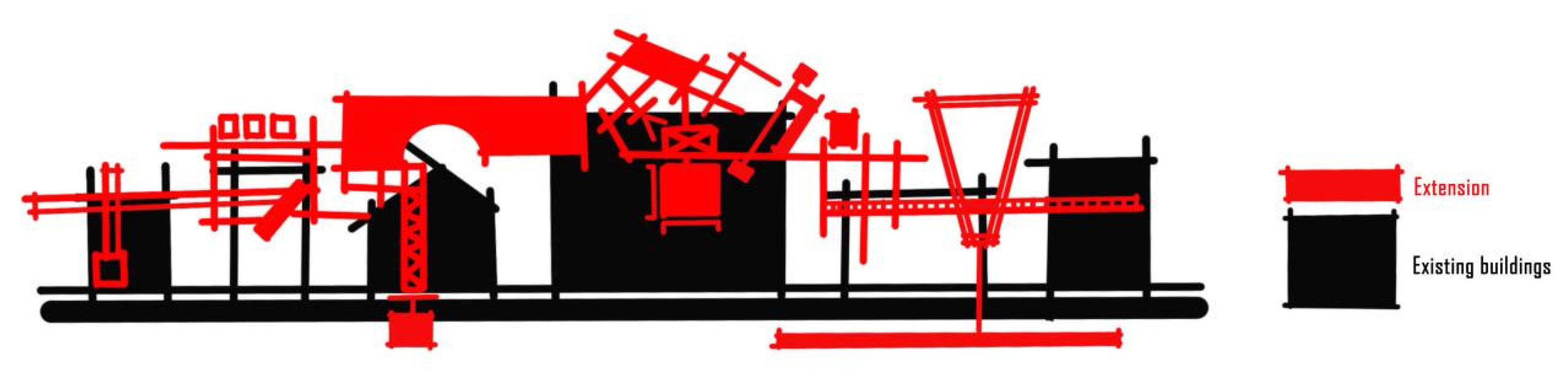
Figure 12.
Schematic Diagram of "Hierarchical" Design Typology (Image Source: Author's original drawing).
Figure 12.
Schematic Diagram of "Hierarchical" Design Typology (Image Source: Author's original drawing).
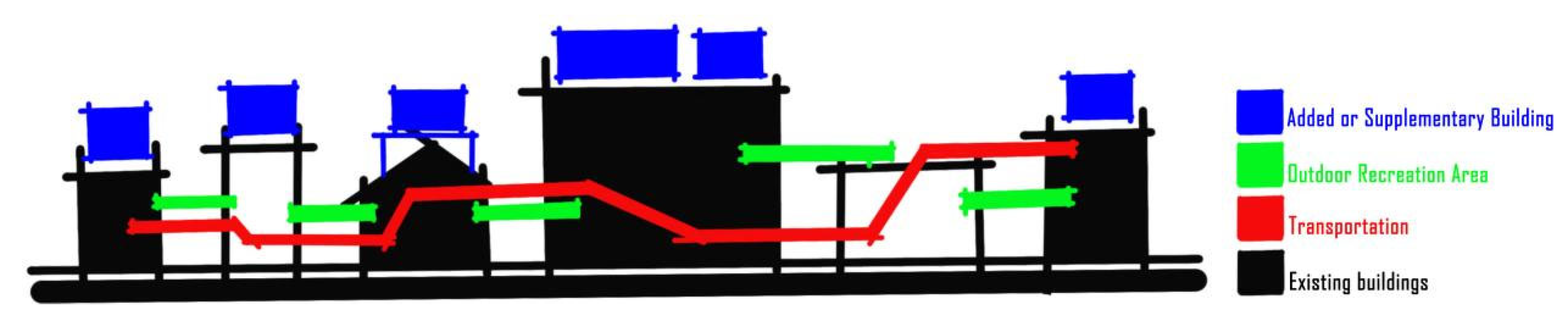
Figure 13.
Schematic Diagram of Hierarchical Intervention Principles (Image Source: Author's original drawing).
Figure 13.
Schematic Diagram of Hierarchical Intervention Principles (Image Source: Author's original drawing).
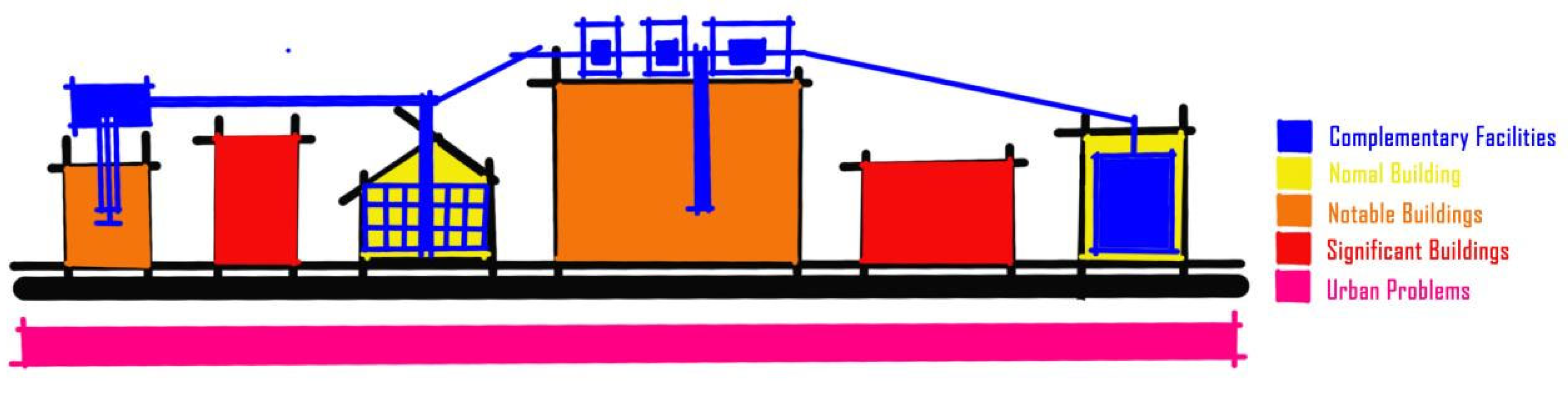
Figure 14.
Schematic Diagram of Identified Issues (Image Source: Author's original drawing).
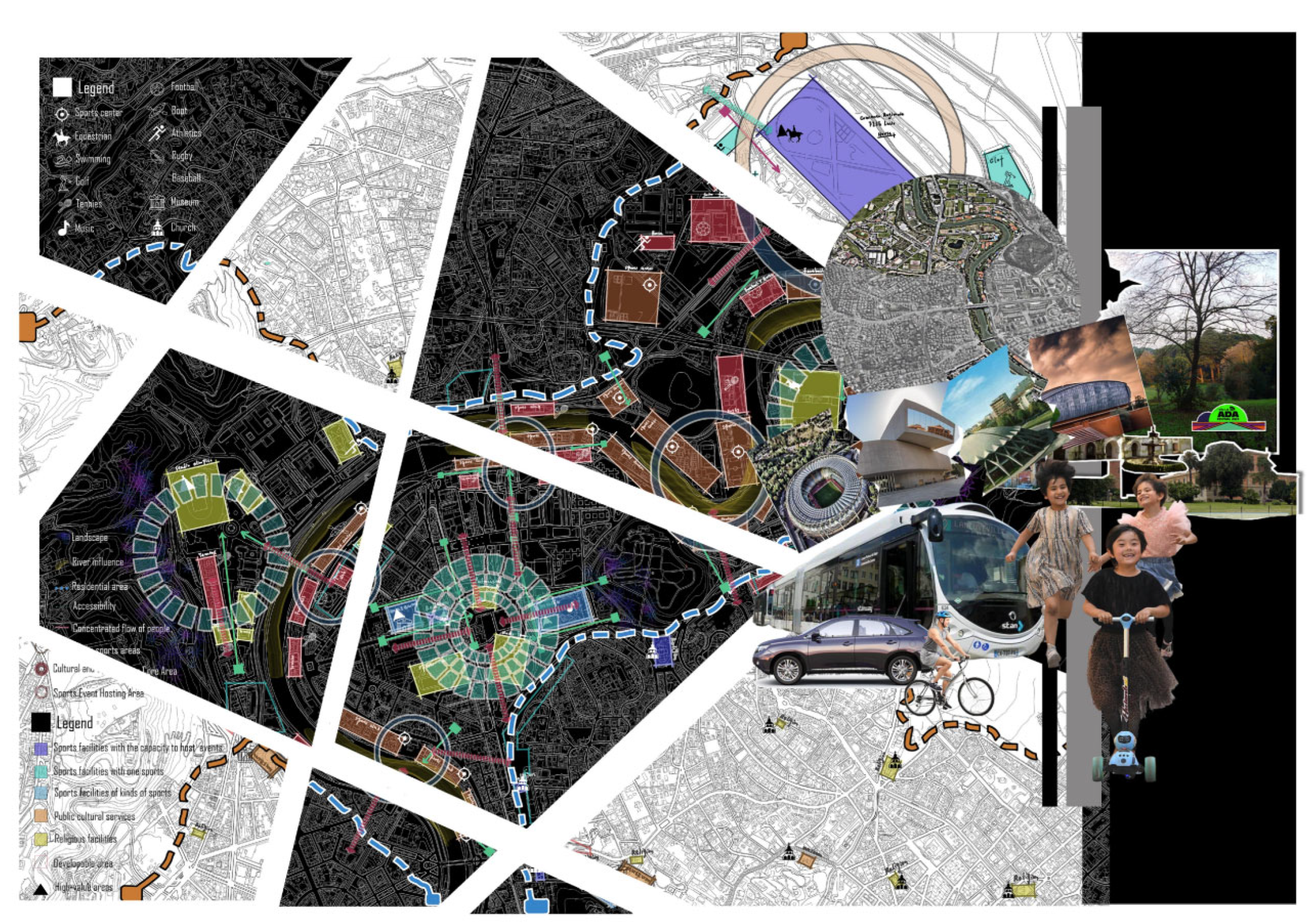
Figure 15.
Selected Zones for Hierarchical Intervention (Image Source: Author's original drawing).
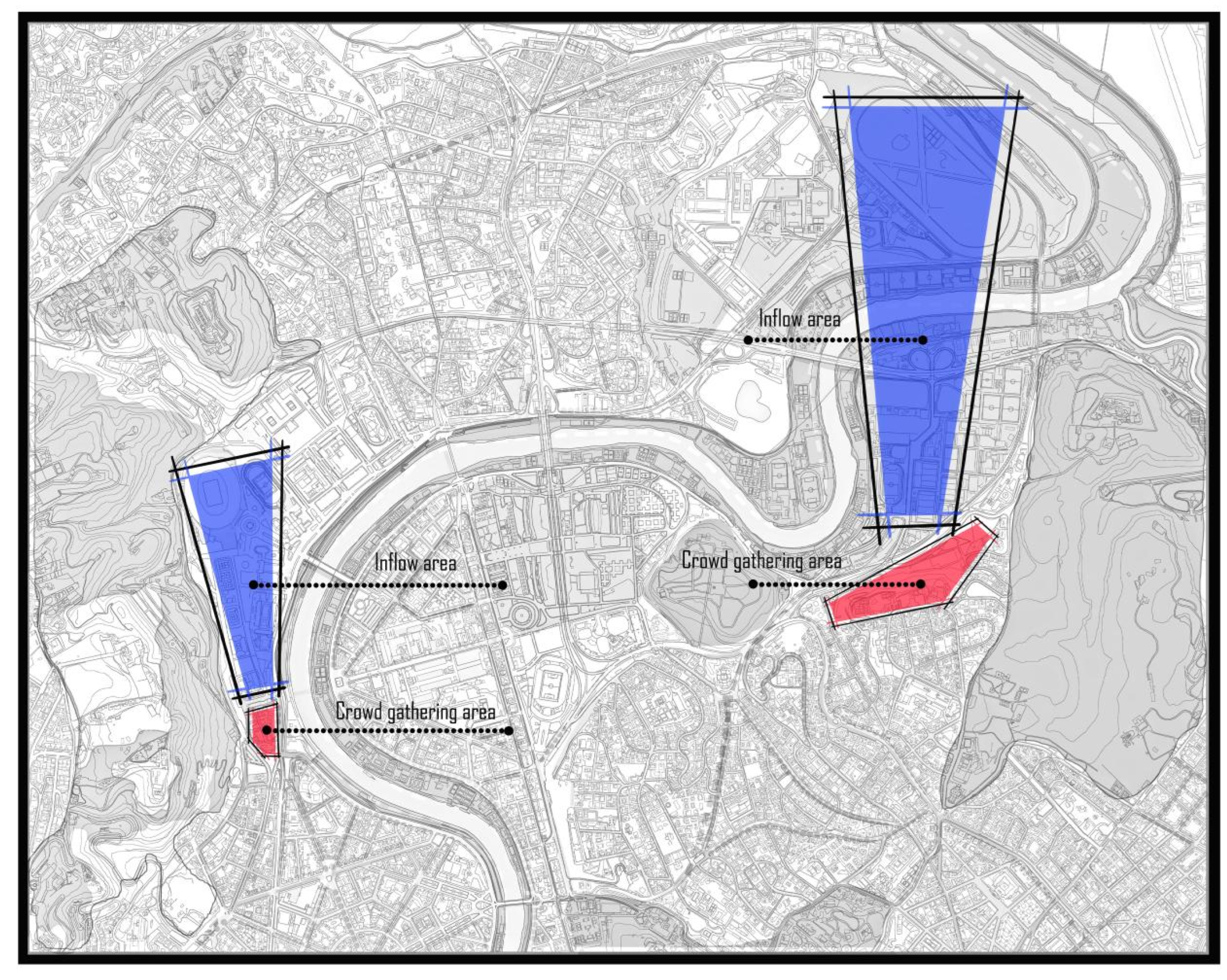
Figure 16.
Schematic Diagram of Key Building Interventions (Image Source: Author's original drawing)
Figure 16.
Schematic Diagram of Key Building Interventions (Image Source: Author's original drawing)
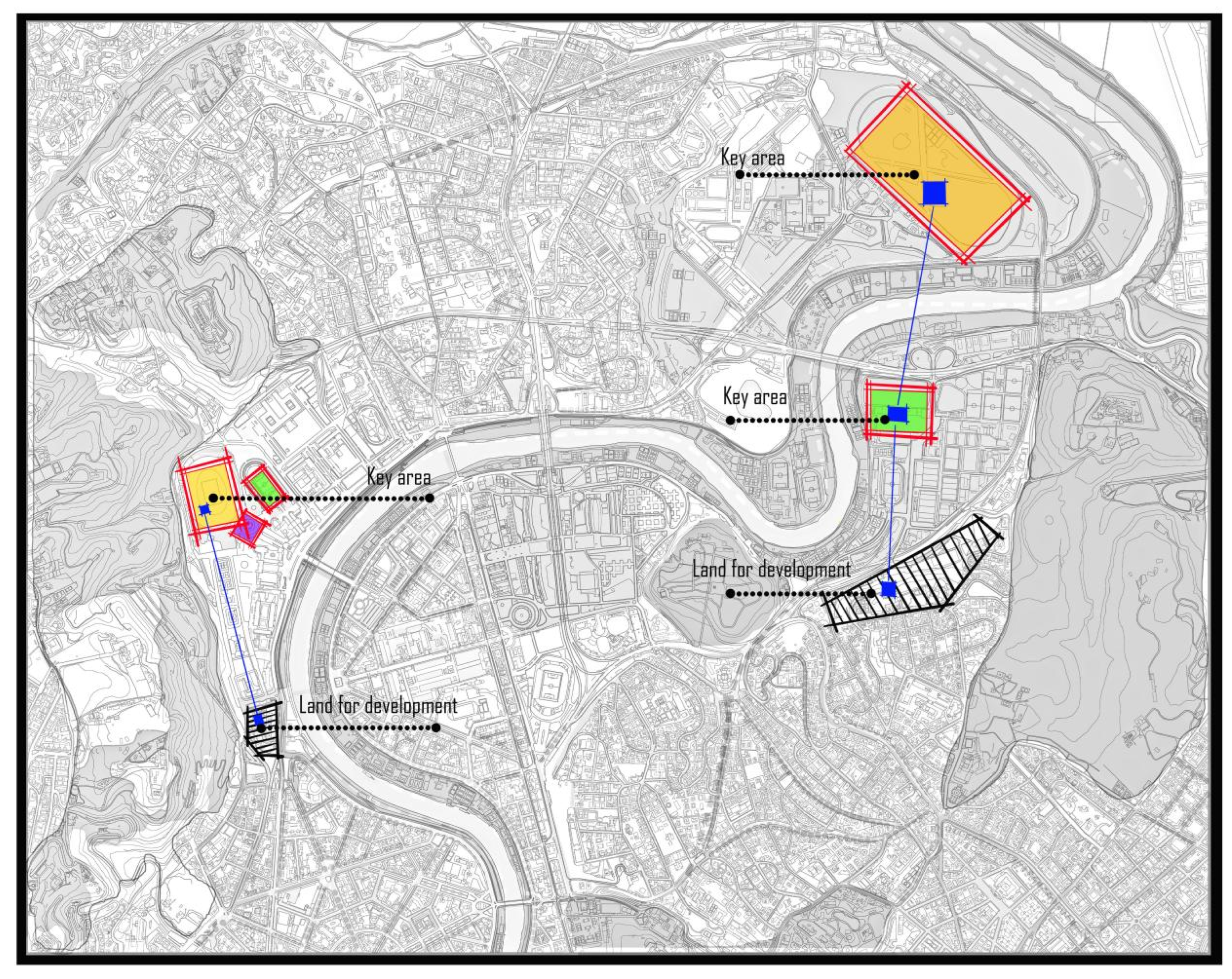
Figure 17.
Schematic Diagram of Functional Integration Strategies (Image Source: Author's original drawing).
Figure 17.
Schematic Diagram of Functional Integration Strategies (Image Source: Author's original drawing).
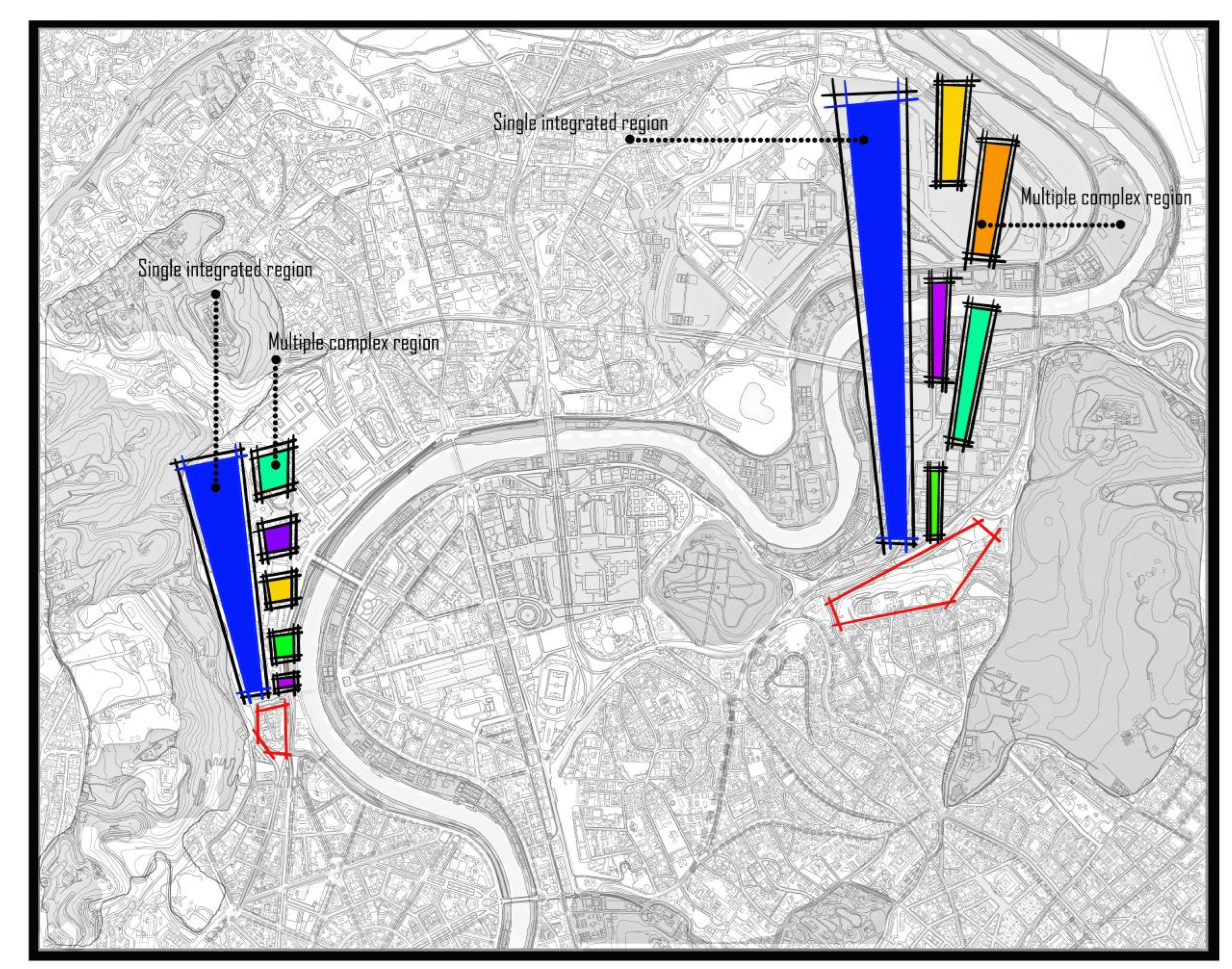
Figure 18.
Schematic Diagram of Pedestrian Pathway Planning (Image Source: Author's original drawing).
Figure 18.
Schematic Diagram of Pedestrian Pathway Planning (Image Source: Author's original drawing).
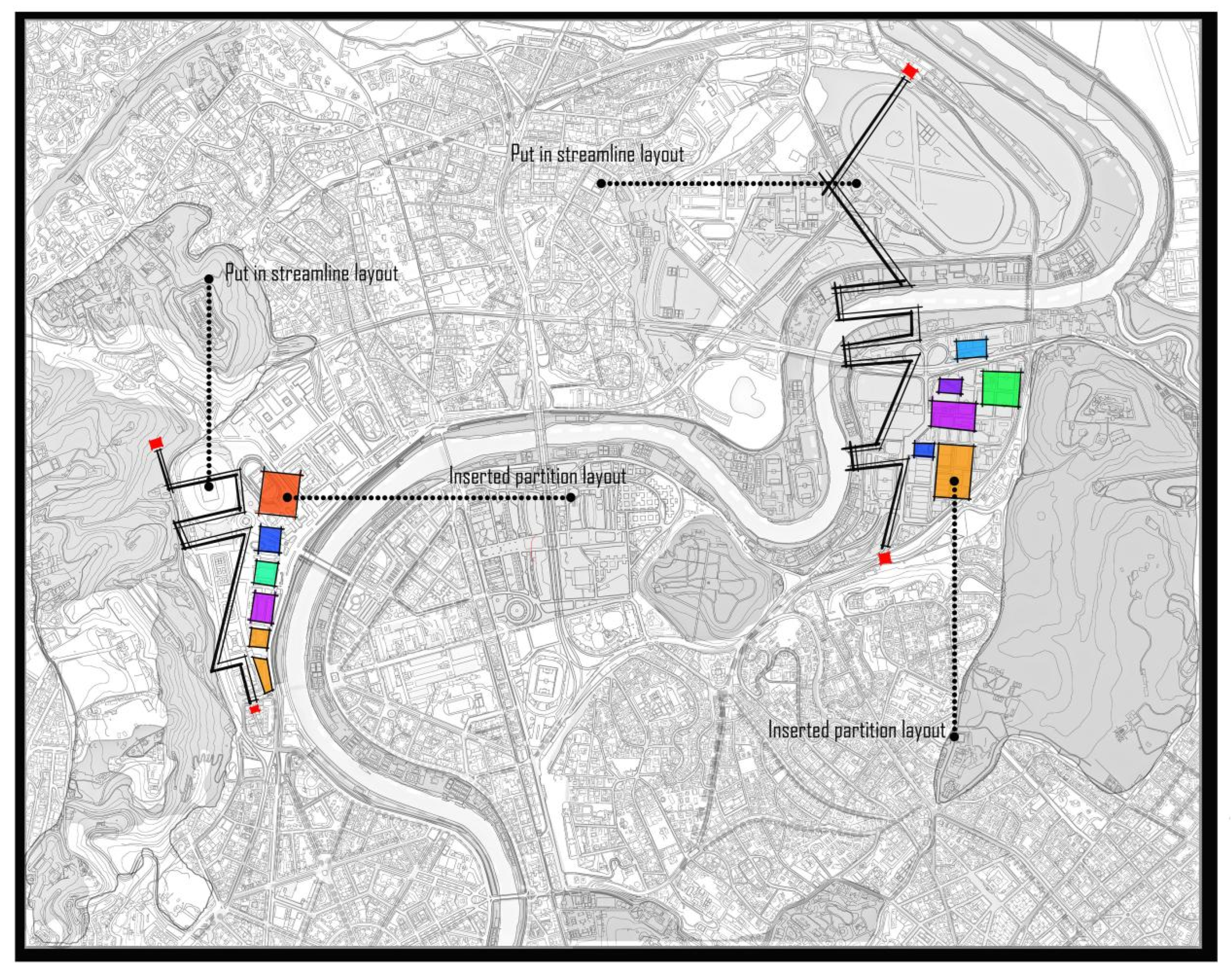
Figure 19.
Schematic Diagram of Full-Intervention Zone Planning (Image Source: Author's original drawing).
Figure 19.
Schematic Diagram of Full-Intervention Zone Planning (Image Source: Author's original drawing).
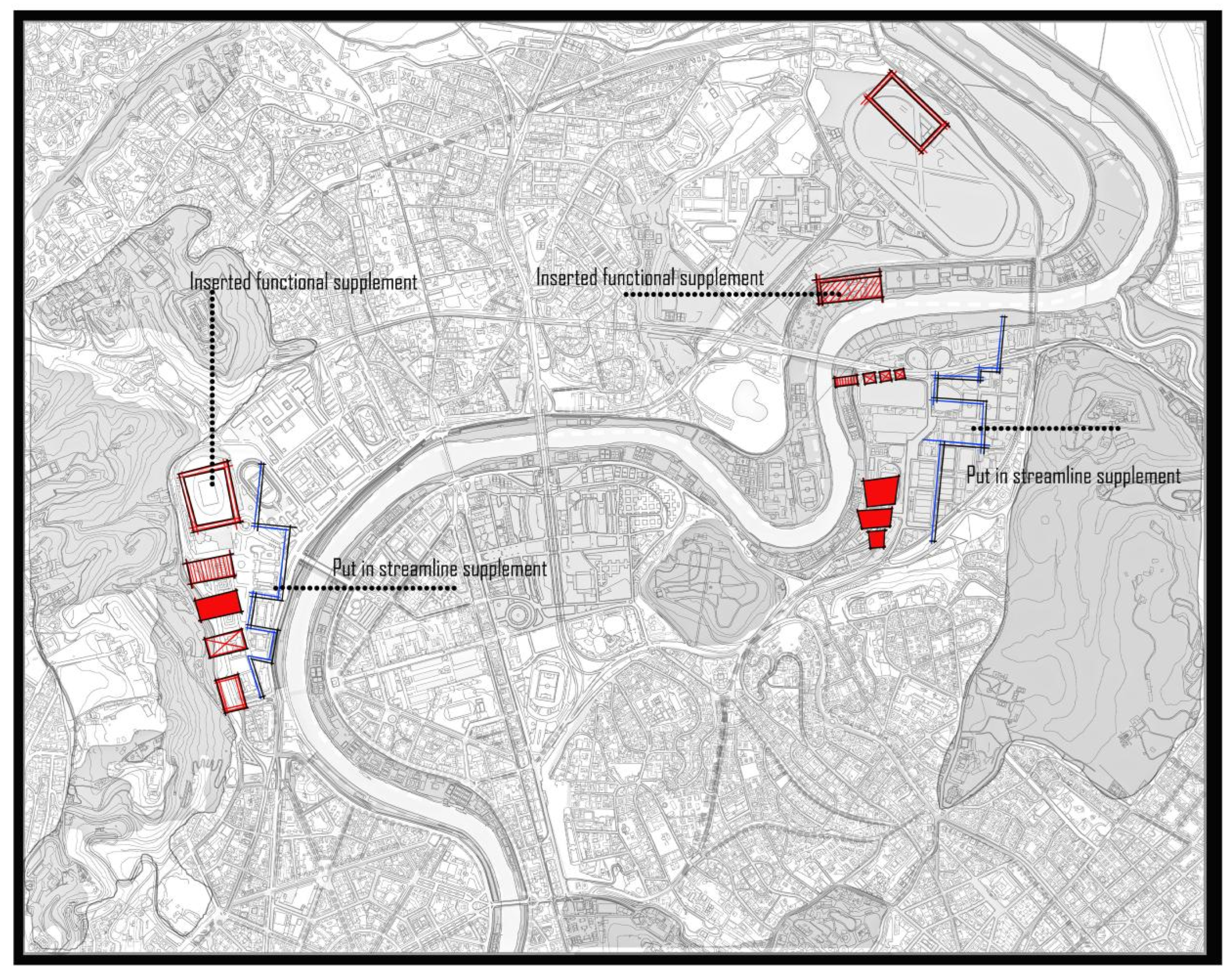
Figure 20.
Schematic Diagram of Detailed Design Articulations (Image Source: Author's original drawing).
Figure 20.
Schematic Diagram of Detailed Design Articulations (Image Source: Author's original drawing).
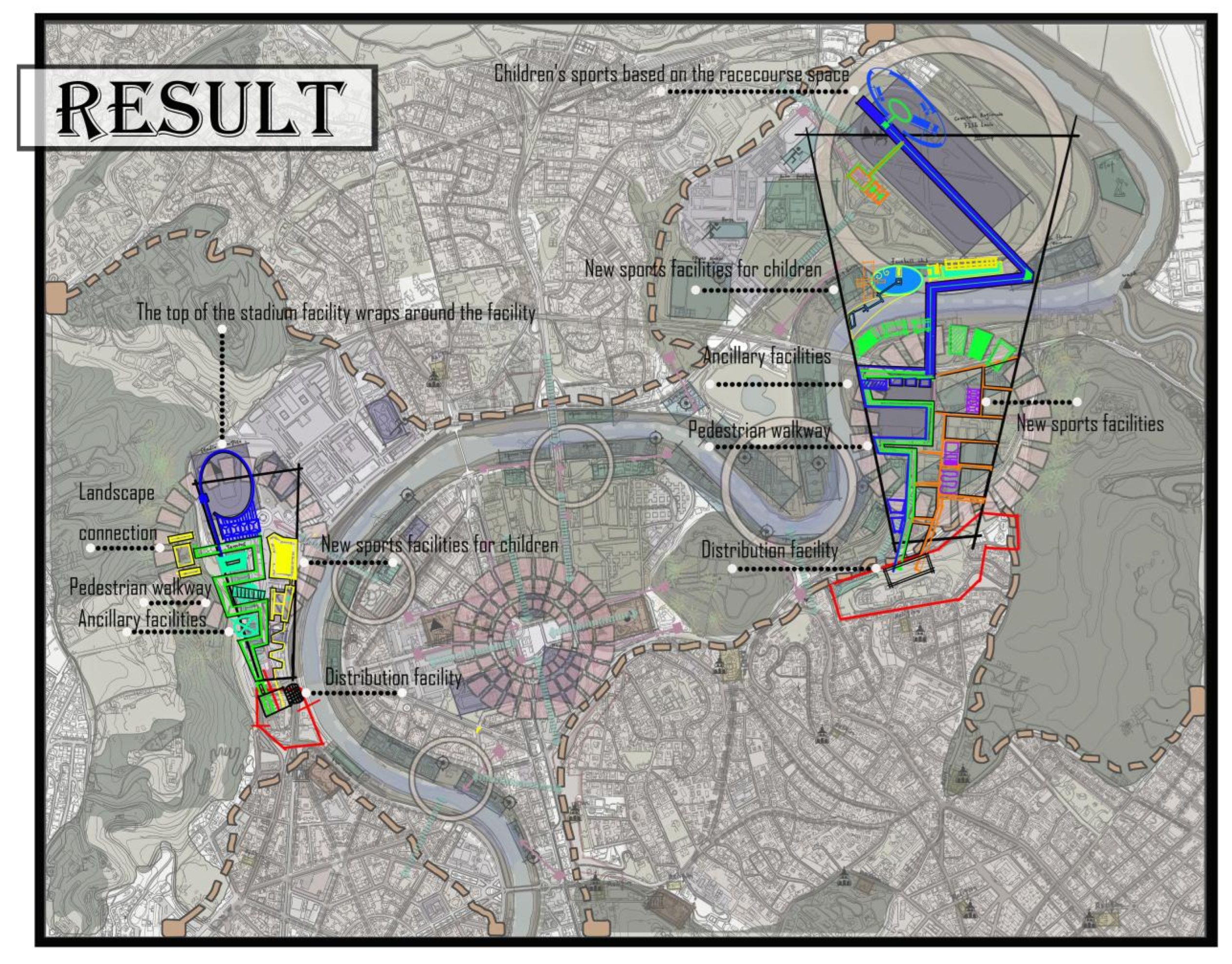
Figure 21.
Schematic Diagram of Residential Zone Selection (Image Source: Author's original drawing).
Figure 21.
Schematic Diagram of Residential Zone Selection (Image Source: Author's original drawing).
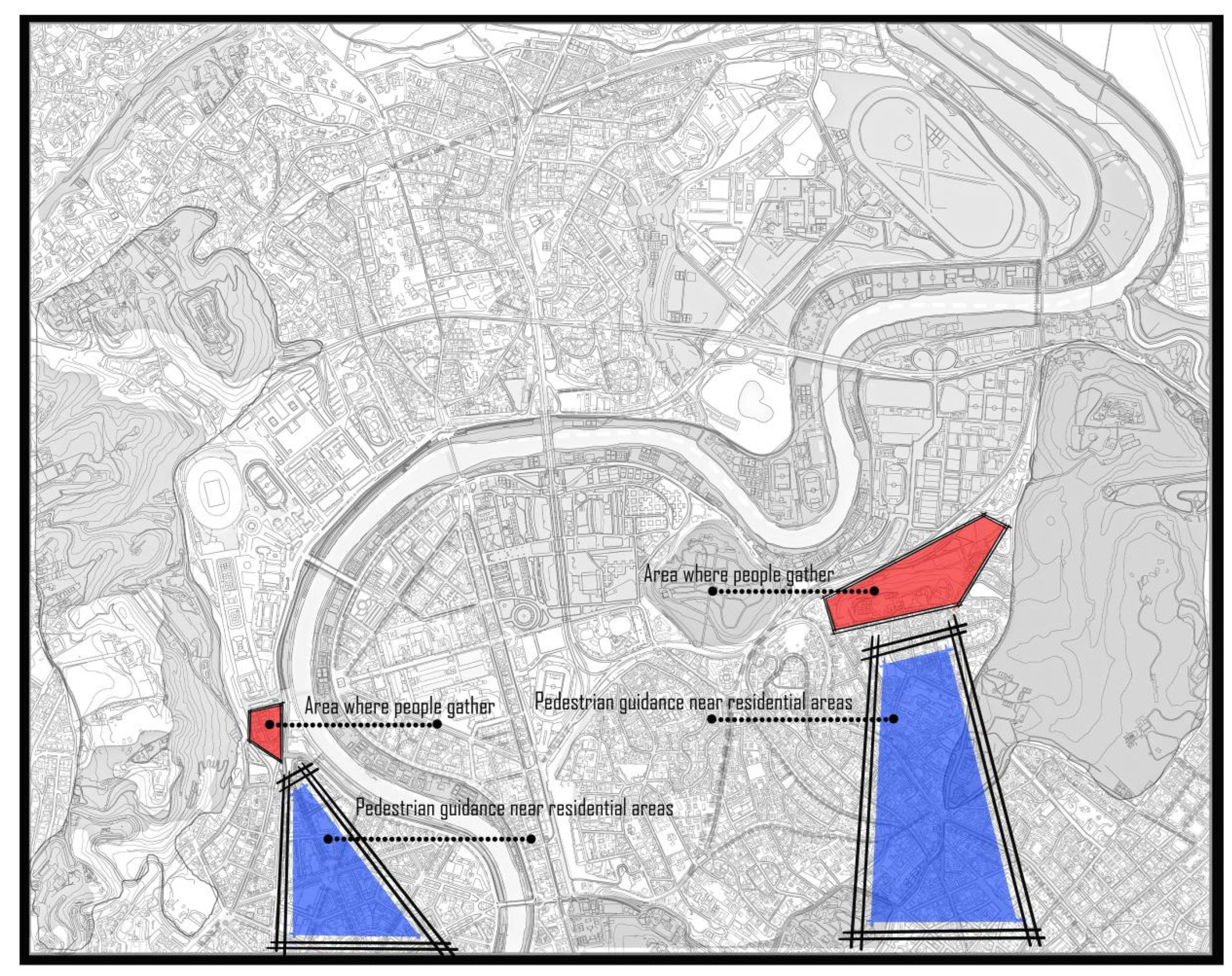
Figure 22.
Schematic Diagram of Intervention Facility Selection (Image Source: Author's original drawing).
Figure 22.
Schematic Diagram of Intervention Facility Selection (Image Source: Author's original drawing).
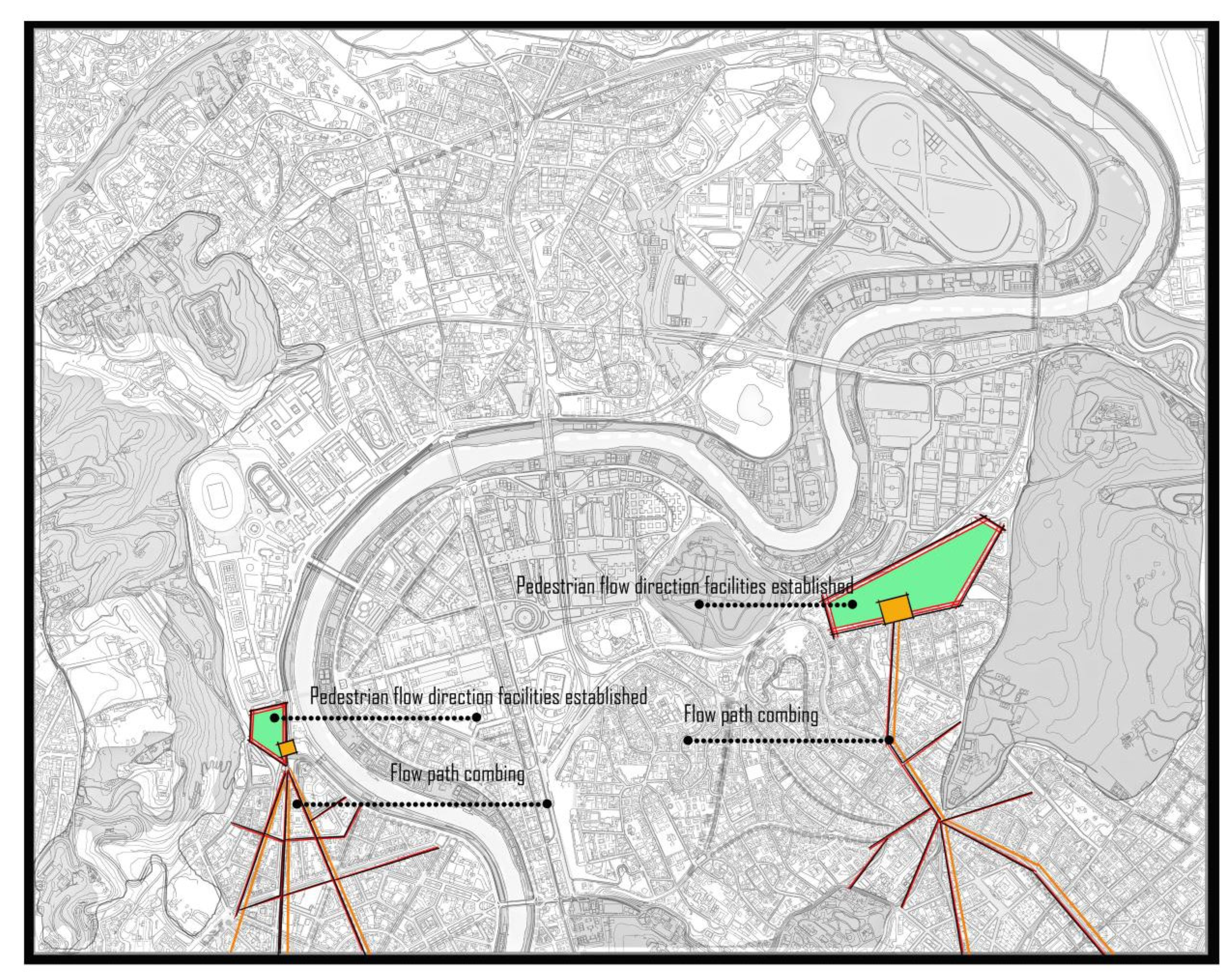
Figure 23.
Schematic Diagram of Detailed Road System Articulations (Image Source: Author's original drawing)The text continues here.
Figure 23.
Schematic Diagram of Detailed Road System Articulations (Image Source: Author's original drawing)The text continues here.
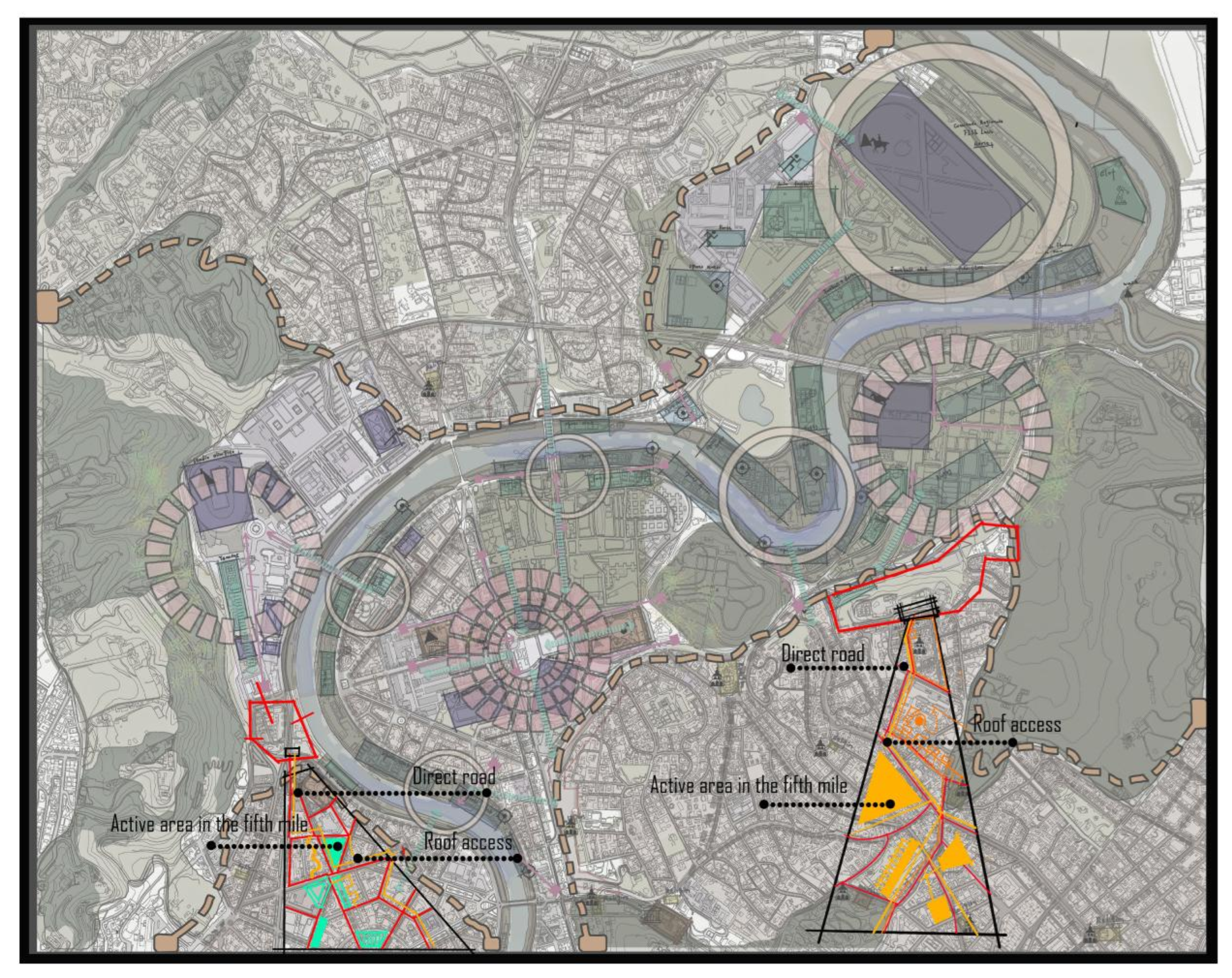
Figure 24.
"Hierarchical" Design Outcome (Image Source: Author's original drawing).
Disclaimer/Publisher’s Note: The statements, opinions and data contained in all publications are solely those of the individual author(s) and contributor(s) and not of MDPI and/or the editor(s). MDPI and/or the editor(s) disclaim responsibility for any injury to people or property resulting from any ideas, methods, instructions or products referred to in the content. |
© 2025 by the authors. Licensee MDPI, Basel, Switzerland. This article is an open access article distributed under the terms and conditions of the Creative Commons Attribution (CC BY) license (http://creativecommons.org/licenses/by/4.0/).
Copyright: This open access article is published under a Creative Commons CC BY 4.0 license, which permit the free download, distribution, and reuse, provided that the author and preprint are cited in any reuse.