

Submitted:
03 November 2025
Posted:
04 November 2025
You are already at the latest version
Abstract
This conceptual article argues for a paradigm shift in understanding nomophobia, re-framing it from an individual anxiety disorder to a structural consequence of a so-cio-technical ecosystem engineered to capture and monetize attention. This "attention economy" fosters a culture of permanent availability and hyper-connection, systemati-cally displacing essential pillars of well-being—such as restorative sleep, contact with nature, and physical activity. Consequently, effectively addressing nomophobia and related digital harms necessitates moving beyond individual-level solutions to a multi-level framework that integrates personal strategies with collective, systemic actions. To establish the foundational conditions for digital well-being, a macro-level social pact is urgently needed. This entails robust platform governance, coordinated public policies across sectors, and the organizational redesign of schools and workplaces to align insti-tutional structures with human, rather than technological, imperatives. This multilevel framework is operationalized through evidence-based strategies that target core human needs, including fostering connection with nature, promoting regular physical activity, implementing digital well-being measures, delivering educational programs for ado-lescents, and leveraging vicarious learning, all supported by sleep hygiene and struc-tured digital practices. Rather than a specific protocol, this article proposes an ecological toolkit for intervention. Central to this toolkit are psychological approaches and critical literacy—cross-cutting capacities that empower individuals and communities to self-regulate while also enabling them to challenge and reshape the very digital envi-ronments that drive nomophobia.
Keywords:
nomophobia
; ecological model
; digital well-being
; multilevel intervention
; critical digital literacy
1. Introduction
Current approaches predominantly frame nomophobia as an individual psychological problem, yet this perspective risks overlooking the structural dynamics that sustain it. To address this limitation, the present work adopts an ecological lens that integrates individual, organizational, and policy-level factors into a unified analytical framework, which allow us to capture the complexity of the phenomenon.
The core issue shifts from an emphasis on individual self-control to recognizing digital platform features—notifications, infinite scroll, and variable rewards—as elements deliberately engineered to exploit cognitive biases [1,2,3]. This architecture creates a persuasive environment intentionally optimized to maximize screen time [4,5,6].
Consequently, nomophobia should be understood not merely through a psychopathological perspective, but as a direct outcome of a business model that commodifies human attention, fostering functional dependency for commercial purposes [7,8]. This reconceptualization necessitates that effective interventions extend beyond building individual resilience to include the regulatory and ethical redesign of digital platforms, alongside transforming the social norms that sustain hyper-connectivity [9].
Elements such as notification systems, gamified interfaces, and social validation metrics form a powerful persuasive architecture. This architecture is further reinforced by organizational dynamics—in schools, universities, and corporations—that impose expectations of permanent availability, multiply communication demands, and thereby fragment our attention [10,11], impair our executive functions [12,13,14], and disrupt sleep and overall wellbeing [15,16,17,18,19]. The outcome is not a discrete clinical disorder, but rather a functional dependency born from a forced symbiosis between daily life and the mobile device.
The present study proposes an alternative framework that situates nomophobia not as an individual problem, but as a symptom of broader ecological model and its socio-technical characteristics. This reframing aims not to dismiss individual experience but to properly contextualize it within the pervasive power imbalance between users and attention-driven industries.
This study is structured around three main objectives: 1) To redirect the analytical focus from individual factors toward an ecological framework that highlights meso- and macro-level responsibility while integrating evidence-based individual interventions, informed by the latest scholarly contributions. 2) Identify the most common and accepted analytical focus in the academic framework of nomophobia, as well as gaps and controversies in the scientific literature. 3) To integrate scientifically grounded levers into the digital well-being: contact with nature, regular physical activity, specific training for adolescents, and vicarious learning. 4) To define a set of actionable measures and evaluable indicators that enable schools, universities, healthcare services, and families to educate and intervene with both realism and rigor.
2. Materials and Methods
This study presents a theoretical position articulating an integrative, multi-level framework for addressing nomophobia. Adopting a conceptual and critical-analytical approach rather than empirical hypothesis-testing, it synthesizes existing evidence, clarifies the epistemological foundations of current debates, and identifies evidence-based interventions across individual, institutional, and policies.
2.1. Analytical Scope and Purpose
The analysis positions nomophobia within the broader ecology of attention and digital behavior, emphasizing the interaction between individual vulnerability, organizational practices, and policy-level regulation. To this end, the literature review followed methodological standards for scientific content creation through the analysis of academic literature [20] grounded in peer-reviewed evidence [21]. Although inspired by systematic review protocols [22], a PRISMA flow was not required, as this article is a theoretical synthesis rather than a systematic review. The objective is not to map all existing studies but to integrate theoretical insights in a way that supports the construction of an ecological intervention framework.
2.2. Source Selection
The procedure followed to organize and interpret the theoretical corpus involved identifying recurring constructs—such as nomophobia, attention economy, self-regulation, and digital well-being—and examining their interrelations across the micro (individual), meso (institutional), and macro (policy) levels. By comparing how these concepts were defined and operationalized in different disciplines, a preliminary mapping revealed both overlapping areas and theoretical gaps within the literature. This analytical step enabled the construction of an ecological framework that integrates behavioral, cognitive, and structural dimensions of digital dependency, thereby reinforcing the internal coherence of the theoretical model.
The search was conducted in October 2025 using Web of Science (WoS) and Scopus as the main data sources, selected for their impact, coverage, and reliability within the academic community. The search strategy employed terms in both English and Spanish across both databases. Advanced search tools were applied to locate academic journal articles—excluding conference proceedings and books. No publication date limits were imposed, as the earliest indexed studies on nomophobia date back to 2014. From this corpus, the analysis prioritized theoretical and review papers offering explicit conceptual frameworks, policy implications, or evidence-based interventions, rather than purely descriptive studies.
2.3. Analytical Procedure and Indicators
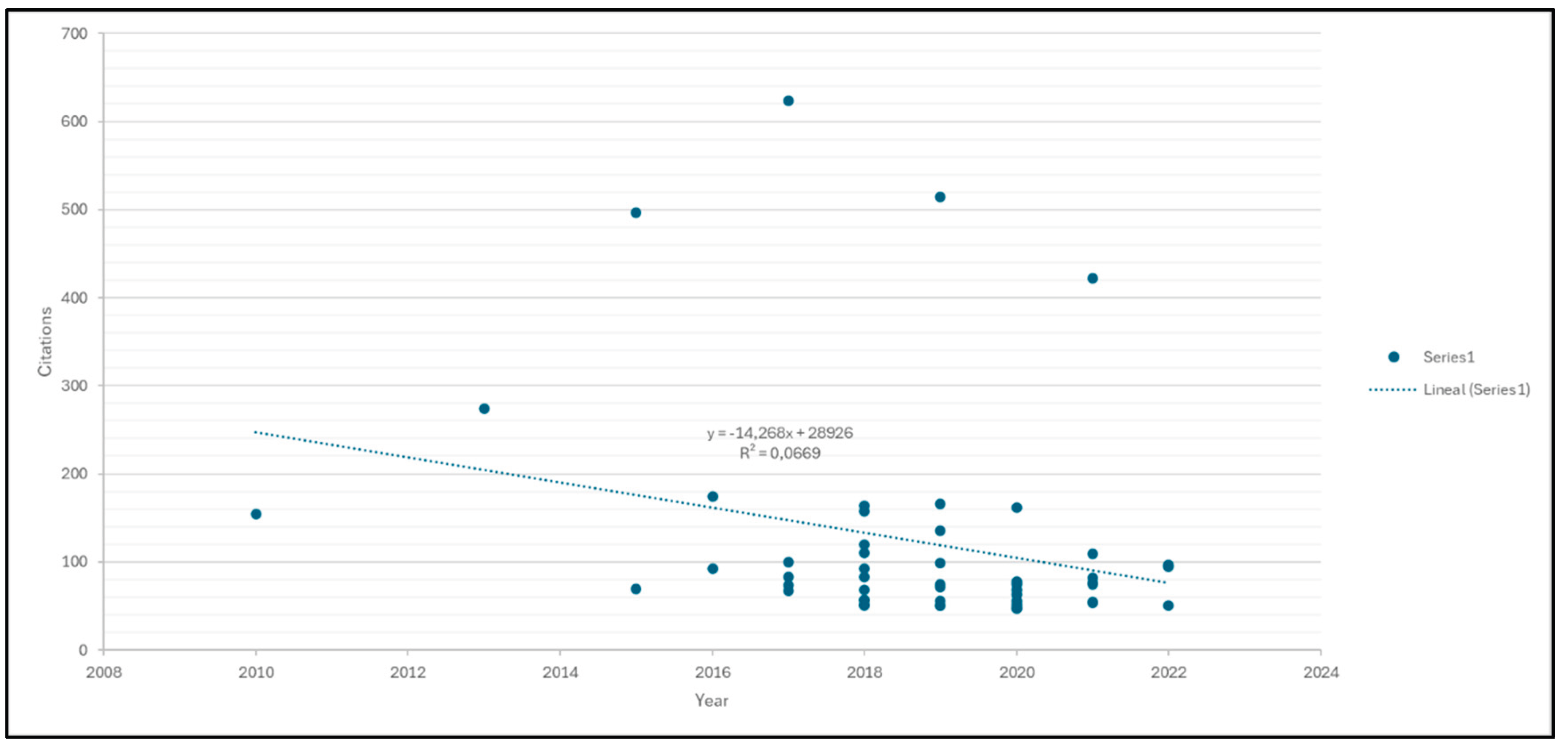
To previously evaluate the academic vitality of nomophobia as a research topic, two quantitative indicators were analyzed: 1) Annual publication count, assessing growth trends through linear regression and trend-line analysis; and 2) Citation evolution of the 50 most-cited papers in WoS, considering their publication year to identify temporal patterns of academic influence. Together, these indicators provide a reliable measure of the evolution and scientific health of nomophobia research, complementing the theoretical synthesis with a meta-analytical perspective on the field's development.
2.4. Ensuring Theoretical Rigor
Conceptual validity was reinforced by contrasting behavioral and neuropsychological research with meso- and macro-level analyses (institutional policies, platform governance, and social regulation), following a logic of vertical integration across levels of analysis.
Reflexivity was also integrated into the analytical process. The authors recognize that any theoretical construction is inevitably shaped by the researcher’s own disciplinary background and interpretive perspective. By explicitly acknowledging this positionality, the study reduces the risk of unacknowledged biases—those implicit assumptions that may influence interpretation without being made explicit—and strengthens both the transparency and internal coherence of the resulting framework. This reflective stance also enhances the credibility of the analysis, as the relationships among concepts are not presented as absolute truths but as reasoned interpretations built within a clearly defined theoretical context.
Finally, theoretical coherence was assessed through an iterative process that compared the key concepts, underlying assumptions, and derived implications to ensure their internal consistency within the proposed ecological framework. This step involved verifying that ideas drawn from different disciplines aligned logically and conceptually, and that the relationships among them remained compatible across the micro-, meso-, and macro-levels of analysis.
Rather than seeking generalization, this process aimed to achieve conceptual transferability—ensuring that the proposed framework can inform future empirical investigations, educational strategies, and policy initiatives related to digital behavior and well-being.
3. Results
3.1. Findings and Proposals Regarding Objectives 1 and 2
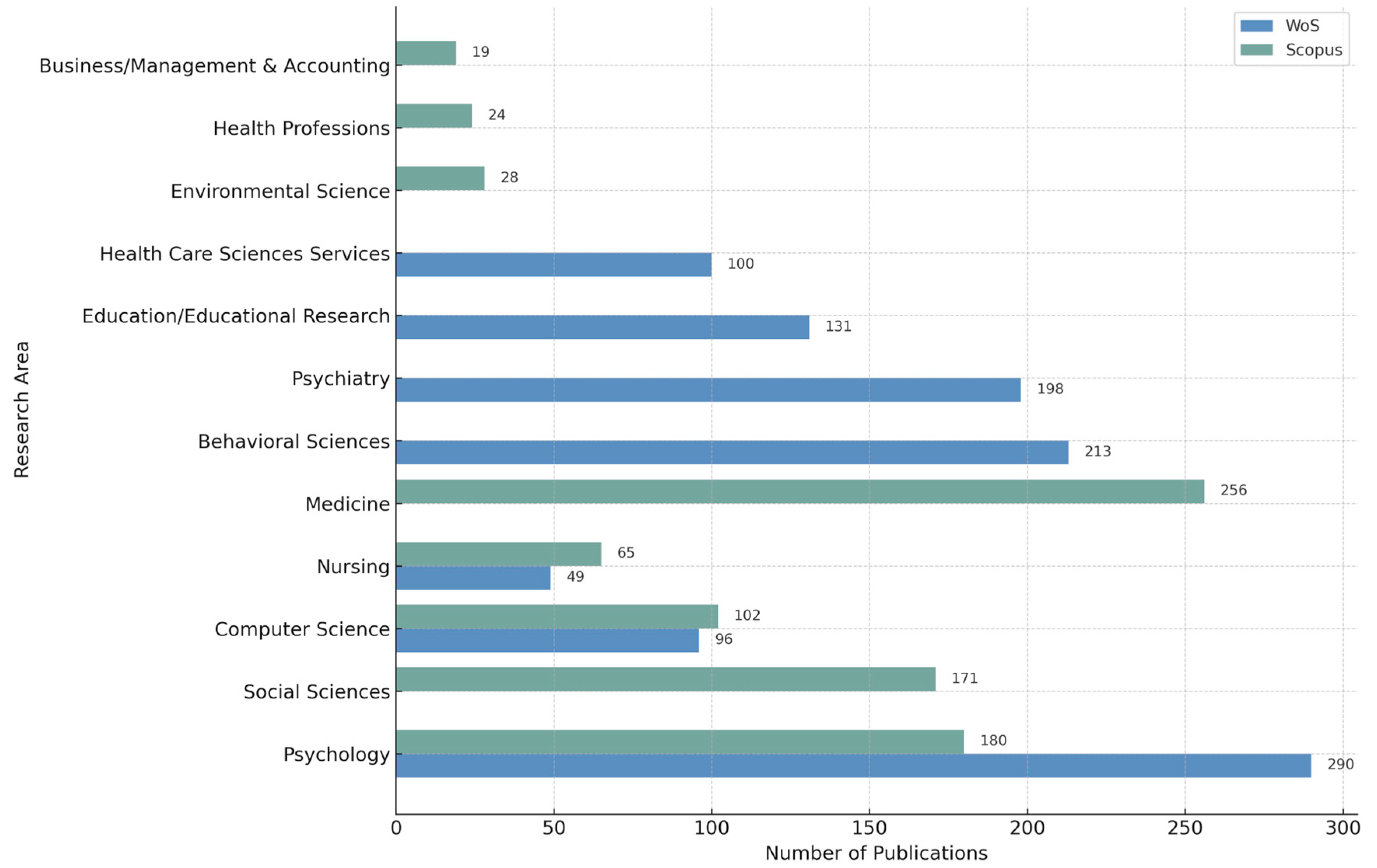
The review of nomophobia publications in WoS and Scopus reveals a strong concentration of scholarly output in fields focused on human behavior and mental health, with certain technological and health service disciplines also contributing significantly. Specifically, Psychology stands out as the most prolific field, followed by Behavioral Sciences and Psychiatry, indicating that the phenomenon is primarily studied through a lens of psychological and clinical concern, as stated above. Lower-ranking fields, such as Computer Science and Education, suggest a growing interdisciplinary interest in the impact of mobile device dependency.
Figure 1 compares WoS and Scopus, pointing to a broadly consistent thematic structure, with Psychology, Medicine, and Social Sciences emerging as the leading areas in nomophobia research. However, Scopus shows a stronger representation of health-related and multidisciplinary fields, while WoS places greater emphasis on behavioral and educational perspectives. This alignment across databases confirms the cross-disciplinary nature of the topic.
While nomophobia has not been formally classified as a distinct clinical disorder —despite calls from some researchers [23], it is widely discussed in the scientific literature as a mental health issue related to excessive or maladaptive mobile phone use [24,25,26,27,28,29,30]. Various studies associate nomophobia with stress, loneliness, and depressive and anxious symptoms, among other problems [31,32,33,34]. Furthermore, recent research has linked intensive use and nomophobia with poorer academic performance and impaired study habits [35,36,37,38].
However, the prevalence of nomophobia varies enormously depending on the measurement instruments and cut-off points used, resulting in widely disparate rates of moderate and severe cases [39]. This methodological heterogeneity does not invalidate the phenomenon but rather reveals its complex nature, as it constitutes a continuum problem influenced by factors such as age, environmental norms, platform design, and institutional habits. Studies consistently point to a higher vulnerability among adolescents and young adults [24,38,39,40,41]. Older adults are also emerging as a potential vulnerable group [42]. There is no single definitive statistic, but there is a clear population-level risk pattern.
A deeper, social understanding of the problem carries a fundamental implication, i.e., the unit of intervention cannot be reduced to the individual. The core of the phenomenon may be social and structural [43,39] as attention itself has been monetized and turned into a prized economic resource —a new arena for competition— sustained by mechanisms such as notifications, infinite feeds, social metrics, and variable reward systems [44,45,46].
When this architecture of attention capture is combined with workplace demands for constant availability and ambiguous norms in schools and universities, the result is a state of widespread functional dependency [47] and measurable alterations in neural network functioning [48,49]. Therefore, regulating addictive design and adjusting organizational policies is not a supplementary measure, but the very core of any effective solution. Initiatives such as the European Union's Digital Services Act (DSA) represent an important step in this direction, as they establish systemic safety requirements and demand accountability from platforms, aligning with the principles of the Integrated Systems Safety approach [50,51].
Concerning individual vulnerability, empirical evidence points to two major structural deficits in contemporary lifestyles—diminished contact with natural environments and lower levels of physical activity—both contributing to physiological and psychological dysregulation [52,53,54,55,56]. Both factors play an essential role in regulating stress and sustaining attentional capacity. When these resources are scarce, the mobile device emerges as a source of immediate gratification [57,58,59] that holds a competitive advantage over healthier alternatives.
This mechanism is compounded by the powerful influence of vicarious learning as proposed by Bandura [60], as children and adolescents internalize digital usage norms by observing the adult role models in their family and educational environments. A home where mobile phones are present during meals, or an employee who answers messages outside of work hours, exemplifies the imitative learning that normalizes permanent availability [61].
Framing nomophobia as a purely individual issue obscures underlying inequalities in access to green spaces, safe screen-free leisure, fair labor conditions, and parental guidance—in effect, placing the burden of responsibility on families and schools without providing them with the necessary tools. In contrast, a public health approach acknowledges the power asymmetry between users and platforms and legitimizes environmental prevention strategies alongside educational and clinical programs. The central question, therefore, may shift from "Why the self can't regulate?" to "What rules, what social compact, it is needed to protect ourselves?"
3.2. Academic Vitality, Gaps and Controversies
The field of nomophobia shows remarkable academic vitality, as illustrated in Figure 1, which clearly displays a strong and positive publication trend (R2 = 0.8724) [62]. However, academic vitality should also be assessed in terms of the impact generated by the most influential publications within the field.
The following presents the resulting scatterplot showing the number of citations (as of October 2025) for the 50 most-cited publications on nomophobia indexed in Web of Science (WoS), plotted by year of publication. It also includes the linear regression trend line derived from the data.
It should be noted that more recent publications have had less time to accumulate citations, which often results in sharply negative trend lines, even in highly active research fields. However, as illustrated in Figure 2, the majority of the 50 most-cited studies on nomophobia have been published in recent years, and the regression line shows only a slightly negative slope (R2 = 0.0669). This finding clearly indicates that nomophobia is an active and expanding research topic that continues to attract considerable scholarly attention within the current scientific landscape.
Despite a significant growth in scientific literature, substantive questions regarding nomophobia persist, requiring greater conceptual and methodological clarification. A primary debate concerns the construct's status. The central issue is determining the extent to which nomophobia is distinct from related concepts such as "behavioral addiction."
Secondly, the research suffers from significant design biases. Cross-sectional studies predominate, with a notable scarcity of longitudinal research and a lack of intervention studies. Furthermore, most empirical evidence is concentrated at the micro level (individual usage patterns), while studies evaluating the impact of public policies or organizational changes are exceedingly rare. Examples of these understudied interventions include the implementation of institutional "no phones in the bedroom" policies, the establishment of a corporate "night mode," or the redesign of notifications within Learning Management Systems (LMS).
Figure 2.
Evolution of the number of publications on nomophobia in Web of Science (WoS).
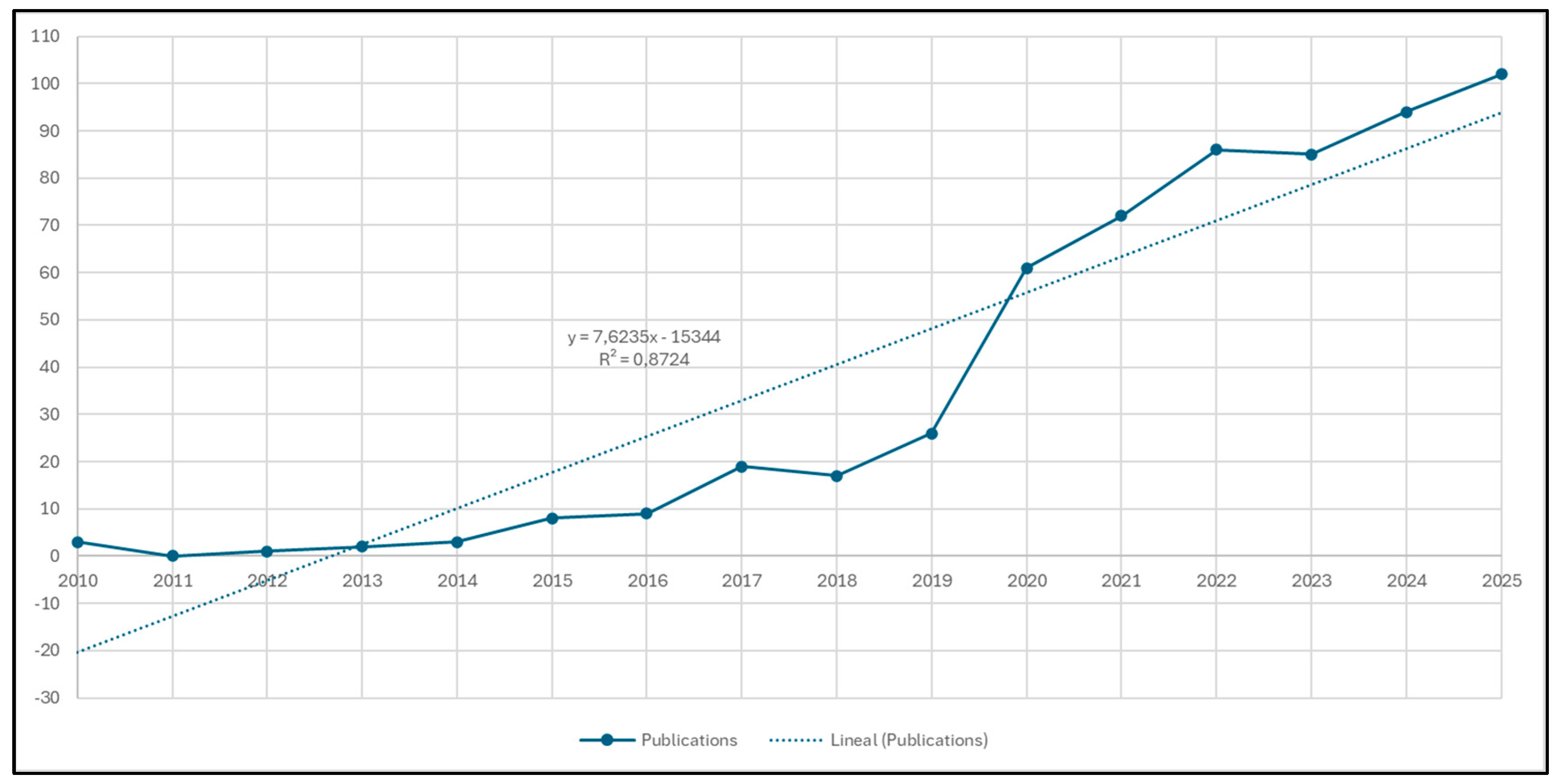
Figure 3.
Scatterplot of publications on nomophobia by year of publication and number of citations.
Thirdly, the role of vicarious learning constitutes a critical factor that has been systematically underestimated and scarcely measured. There is a notable lack of studies that record observable adult behaviors—such as the presence of mobile phones during meals or meetings—and analyze their role as mediators of risk for the underage population. Moreover, phubbing—the act of ignoring others in favor of one's phone—serves as a powerful model, teaching new generations to replicate the pattern of the mobile phone as the central protagonist of social life. This, in turn, reinforces the very social ecosystem that sustains nomophobia.
3.3. Findings and Proposals Regarding Objectives 3 and 4
Addressing nomophobia requires intervening at the level of the overall system, and not exclusively with individuals. There are four interconnected principles to sustain prevention and intervention efforts at micro, meso and macro levels. First is the reduction of environmental stimuli that capture attention. Second, the digital de-escalation must be complemented by strengthening self-regulation capacities through critical digital literacy and training in healthier attentional habits. A third pillar involves the physiological modulation of stress and reactivity by promoting contact with nature and regular physical activity. Finally, as a cross-cutting condition for efficacy, the consistency of the adult model is essential, recognizing the fundamental role of vicarious learning in normalizing digital practices.

Table 1.
Multilevel framework for addressing nomophobia within digital wellbeing.
| Level | Intervention Pillar | Main Measures |
Key Indicators |
Target (4–12 weeks) |
|
- MICRO- (Individual/ Family) |
||||
|
Circadian Regulation & Sleep Hygiene |
Implement a digital curfew and create a phone-free sleep sanctuary. | 90-min digital disconnect before sleep Phone-free bedrooms Automated "Do Not Disturb and red filters" (20:00–07:00) |
Sleep latency (min) Sleep quality (scale 1-5) Nocturnal awakenings Total sleep time (min) |
+30–45 min sleep; 0 nocturnal device use |
|
Digital Environment Redesign |
Configure device settings to minimize attention capture and compulsive use. | Activate grayscale mode Disable non-essential notifications & badges Remove autoplay features Use app limits (e.g., 15 min, 3x/day) |
Daily device checks Notifications received/day Minutes in targeted apps |
≥30% reduction in checks; improved sustained attention |
|
Nature Connection |
Integrate daily, phone-free exposure to natural environments. | 10-15 min daily "green breaks" Phone-free walks before/after digital sessions |
Weekly green time (min) Outdoor minutes/day Perceived stress (scale 1-5) |
+20% green time; reduced stress scores |
|
Physical Activity |
Incorporate regular movement and moderate-to-vigorous physical activity (MVPA). | ≥60 min/day MVPA (adolescents) 150–300 min/week MVPA (adults) Active breaks every 50–90 min |
MVPA minutes/week Daily steps Well-being score (WHO-5) |
+15% MVPA; enhanced well-being |
| Education & Training | Deliver a curriculum on the digital attention economy and self-regulation. | Module 1: The Attention Economy Module 2: Persuasive Design Module 3: Self-Regulation Strategies |
Task completion rates Sleep quality Phone separation anxiety (0-10) |
Reduced anxiety; improved sleep & task compliance |
|
Adult Modeling |
Demonstrate coherent digital behaviors aligned with established family rules. | Create shared family agreements Adults adhere to all device rules (e.g., no phones at meals) |
% of phone-free meals Adherence to "phone-out-of-bedroom" rule |
≥80% behavioral coherence |
|
- MESO - (Organizational) | ||||
| Redesign of Education & Work Practices | Restructure processes to intrinsically protect focus and reduce digital intrusions. | Implement single-task blocks (25-50 min) Establish asynchronous communication protocols Redesign LMS/tools to batch notifications |
% of scheduled focus blocks respected Avg. response time to non-urgent messages Non-essential alerts/user/week |
Improved attentional climate; reduced perceived fatigue |
|
Explicit Institutional Policies |
Establish and enforce clear digital well-being norms. | Institutional "night mode" (no comms after hours) Designated device-free zones/classrooms |
Policy adherence rate Number of phone-free spaces |
Reinforced digital norms |
| Capacity Building | Train staff to lead and sustain digital well-being initiatives. | Staff training in critical digital literacy Implementation of psychoeducation programs | Number of trained personnel Number of active programs |
Strengthened institutional culture |
|
- MACRO - (Policy/Sectoral) | ||||
| Public Policy | Integrate digital well-being standards across health and education sectors. | Develop integrated well-being standards Enact notification regulations Launch public awareness campaigns |
% of orgs with phone-free policies Inclusion in national health surveys |
Systemic alignment |
| Regulatory Oversight | Ensure platform accountability and compliance with safety standards. | Enforce DSA/equivalent regulations Conduct independent platform audits |
Compliance rates Audit outcomes |
Accountable platform ecosystem |
| Investment & Research | Fund research and develop national guidelines for digital mental health. | Allocate public funding for research Develop national guidelines |
||
Source: Own elaboration.
The assessment of intervention effectiveness requires an evaluation to monitor impact. The following evaluation plan across the micro, meso, and macro levels, identify the data source, method, and frequency that can be followed.
Table 2.
Evaluation of the multilevel framework intervention.
| Level | Dimension to Evaluate | Data Source & Method | Frequency |
| Micro (Individual/ Family) |
Changes in digital habits, sleep, stress, well-being, and knowledge. |
Pre-/Post-Questionnaires (Standardized scales) Digital Tracker Data Focus Groups with families & adolescents. |
Baseline, 3, 6, 12 months. |
| Meso (Organizational) | Implementation fidelity, changes in organizational climate, and policy adherence. |
Organizational Audits: Document review of policies and LMS notification settings. Staff/Student Surveys: On attentional climate and communication norms. Structured Interviews: with administrators and team leaders. |
Baseline, 6, 12 months. |
| Macro (Policy/Sectoral) | Policy adoption, shifts in public discourse, and research investment. |
Policy Analysis: of new regulations, public health campaigns, and educational curricula. Analysis of Public Data, e.g., Research funding databases, national health survey results. Stakeholder Interviews with policymakers and platform regulators. |
Source: Own elaboration.
3.4. Behavioral and Acceptance and Commitment Therapy Protocols
To be effective and sustainable, the proposed interventions must be necessarily grounded in a solid therapeutic framework. This framework is built on an integration of traditional Cognitive-Behavioral Therapy (CBT) and its evolution into third-wave approaches, such as Acceptance and Commitment Therapy (ACT). This combined approach complements CBT's focus on modifying dysfunctional thoughts and habits with ACT's goal of cultivating psychological flexibility. It is no longer about controlling or eliminating uncomfortable impulses but about developing the capacity to act in accordance with personal values.
Table 2.
Behavioral and Psychological Interventions.
| Intervention Technique | Therapeutic Foundation | Specific Implementation & Rationale |
| Scheduled Usage Windows |
Acceptance & Commitment Therapy (ACT) Committed Action |
Value-driven actions for focused attention and reduce mobile use. |
| Contingency Contracts | Mindfulness & Self-Monitoring |
Self-monitoring as a non-judgmental practice of mindful awareness. |
| Self Regulation Training |
Skill Building & Goal Setting |
Direct training in foundational self-regulation skills, such as specific goal-setting techniques and brief, daily mindfulness practices. |
| Boredom Tolerance Workshops |
Attentional Restoration & Self-Regulation | Structured training to build the capacity to remain in states of non-stimulation through exercises like observation, meditation, or waiting without a device. |
| In-Person Social Skills Training |
Social Development & Anxiety Management | For younger populations, direct training to counteract deficits in conversation skills, eye contact, and social anxiety management, reducing reliance on the device as a social crutch. |
Source: Own elaboration.
3.5. Psychoeducation and Critical Digital Literacy
The framework's strength lies in its recognition that lasting solutions require a dual approach: cultural change—normalizing digital boundaries—supported by the literacy to understand them, and structural change—from technology companies and goverments—driven by a literate and empowered citizenry. This integrated perspective shifts the problem's perception from an individual willpower deficit ("I am weak") to a systemic understanding of design asymmetry ("the system is designed to capture me"). It also provides the foundational "why" behind cultural change that we need and the practical "how" for structural advocacy
Hence, critical digital literacy is not a separate initiative but the essential, cross-cutting element underpinning the multilevel framework intervention proposed in Table 1. Given its paramount importance in operationalizing the ecological framework, the following table presents its core components and practical implementation.
Table 3.
Cultivating a Protective Socio-Digital Environment.
| Strategic Pillar | Core Objective | Key Actions & Implementation |
| Promotion of a "Culture of Disconnection" |
To extend the "right to disconnect" from the workplace to all spheres of life, legitimizing digital boundaries as essential for mental health and deep work. | Normalize Explicit Practices: Encourage the use of status messages (e.g., "In focus mode") and manage response-time expectations. Deactivate Guilt: Publicly affirm that not being permanently reachable is a necessity, not a failure. |
| Critical Stance Digital Literacy & Advocacy |
To move from individual awareness to collective empowerment, enabling citizens to demand and shape a more ethical digital ecosystem. | Citizen Audits: Train people to collectively identify, document, and report pernicious addictive design patterns to pressure platforms. Demand "Ethical Design": Foster informed consumer choice and actively support platforms that avoid dark patterns, offer healthy defaults, and ensure algorithmic transparency. |
True digital literacy culminates when the user ceases to be a passive subject and becomes a critical and proactive agent, capable of both managing their individual relationship with technology and of demanding and co-creating a more humane and less exploitative digital ecosystem.
4. Discussion
The widespread and socially accepted nature of permanent connection and disconnection anxiety does not render the behavior healthy. Rather, it reveals a pathological adaptation to a socio-technological environment that places a higher value on permanent connection and productivity than on well-being — an idea resonant with Erich Fromm’s notion of the pathology of normalcy [63].
Previous findings reported high correlations between nomophobia, anxiety, stress, and lower academic performance [28,29,30,32,33,35,36,37,42]. Nevertheless, the interpretation of these findings often attributes primary causality to individual psychopathology or personality traits [64,65,66,67]. Our vision, in contrast, interprets these correlations as the symptom of a systemic failure. It proposes that anxiety is not merely a precursor but also a consequence of interaction with over-optimized digital environments and social norms that normalize hyper and permanent connectivity [61,68]. This perspective aligns with an incipient yet crucial paradigm shift calling for the consideration of "commercial determinants of health" in the digital realm [69,70,71]. The attention economy generates negative mental health externalities through designs that exploit psychological vulnerabilities for commercial gain, establishing a direct causal link between business models and health outcomes.
The analyses conducted by former researchers identified protective factors such as contact with nature, physical activity, or family screen-time rules in isolation [72,73,74,75,76,77,78,79,80,81,82,83]. The novelty of our study lies in integrating this evidence into a unified ecological framework, highlighting areas of intervention. Consequently, this article does not offer a prescriptive program but rather a comprehensive blueprint; it outlines the multi-level logic required to develop effective prevention initiatives and targeted interventions for nomophobia and associated problems with screens and digital platforms.
While several studies point out the risks of addictive design within the so-called economy of attention, our work moves forward by proposing how the enforcement of regulations like the Digital Services Act (DSA, 2020) becomes the structural (macro) precondition for the effectiveness of interventions at lower levels (micro and meso). This establishes an important bridge between psychology, education, and digital law, since that "critical digital literacy" must evolve into a movement of advocacy and accountability, rather than remaining just confined to individual awareness. This enables a more robust and ecologically valid assessment, shifting the focus from "individual pathology" to the "health of the digital ecosystem” and to “digital wellbeing”."
This framework aligns conceptually with classical ecological and systemic models of human behavior, such as Bronfenbrenner’s ecological systems theory and the biopsychosocial model of health. However, it extends these paradigms into the digital era, where the boundaries between individual, organizational, and societal levels are increasingly mediated by technology. The proposed digital ecology model thus adapts the ecological perspective to the contemporary socio-technological environment, recognizing that digital design, institutional culture, and policy frameworks jointly shape behavioral patterns and mental health outcomes. By situating nomophobia within this digital ecology, the model provides an updated structure not only for rethinking its theoretical underpinnings but also for guiding concrete, systemic action.
5. Conclusions
We proposed a transition towards an ecological model that understands nomophobia not as an individual symptom, but as the result of multiple layers of influence interacting within a complex system. This implies recognizing that the intentional architecture of digital platforms—designed to capture and retain attention—coupled with organizational norms that normalize constant availability and the absence of protective public policies, constitute the true structural determinants that facilitate and perpetuate device dependency.
In the second place, it is imperative to articulate a coordinated and multilevel response. Effectiveness will not be found in isolated initiatives, but in the synergistic integration of actions that operate simultaneously on distinct planes. This study offers basic tools to help operationalize that social response. Operationally, this means consciously prioritizing vital resources that the digital economy tend to erode: restorative sleep, regular contact with nature, physical activity, and rich face-to-face interaction. Rather than mere lifestyle choices, these elements constitute a form of ecological resistance, rebalancing the individual's relationship with technology and inoculating against the anxiety of digital disconnection.
Ultimately, the central question must evolve. The central question must therefore be reframed. It is no longer solely about personal willpower, but about the structures that shape our behavior. We must collectively determine what social pact, regulations, and technological designs are necessary to make a balanced digital life the default —and healthy—choice. The answer demands a distributed co-responsibility among legislators, educational institutions, technology companies, organizations, and the citizenry. The final objective, therefore, is not a sole enemy, but the conscious and deliberate construction of a sustainable coexistence with technology, where it occupies a place of service to the human being and not the reverse.
Funding
Please add: “This research received no external funding” or “This research was funded by NAME OF FUNDER, grant number XXX” and “The APC was funded by XXX”. Check carefully that the details given are accurate and use the standard spelling of funding agency names at https://search.crossref.org/funding. Any errors may affect your future funding.
References
- Ahmed, M.D.F. Rethinking Digital Mental Health: From Nomophobia to Neurocognitive Exhaustion in LMIC Youth. Health Science Reports 2025, 8, e71278. [Google Scholar] [CrossRef]
- Alrubaia, H.; Alabdi, Z.; Alnaim, M.; Alkhteeb, N.; Almulhim, A.; Alsalem, A.; Aldarwish, R.; Algouf, I.; Almaqhawi, A. The impact of cell phone use after light out on sleep quality, headache, tiredness, and distractibility among high school students: Cross sectional study. Heliyon 2025, 11. [Google Scholar] [CrossRef]
- Asha, S.; Radhakrishnan, V. Beyond the screen: The psychological significance of ecophilia in childhood. MethodsX 2025, 14, 103263. [Google Scholar] [CrossRef]
- Atalatti, S.; Pawar, U. Addictive Interfaces: How Persuasion, Psychology Principles, and Emotions Shape Engagement. In Interactive Media with Next-Gen Technologies and Their Usability Evaluation; Chapman and Hall/CRC: 2024; pp. 47–66.
- Bandura, A.; Ross, D.; Ross, S.A. Vicarious reinforcement and imitative learning. The Journal of Abnormal and Social Psychology 1963, 67, 601. [Google Scholar] [CrossRef]
- Belk, R.W. Extended self in a digital world. Journal of Consumer Research 2013, 40. [Google Scholar] [CrossRef]
- Blum-Ross, A.; Livingstone, S. Families and screen time : Current advice and emerging research. Media Policy Brief 2016.
- Bragazzi, N. L.; Del Puente, G. A proposal for including nomophobia in the new DSM-V. Psychology Research and Behavior Management 2014, 7. [Google Scholar] [CrossRef] [PubMed]
- Buttaboni, C.; Colangelo, G.; Floridi, L. The Ethical and Legal Implications of the Digital Services Act and Digital Markets Act in the European Union Legal Framework. SSRN. https://ssrn.com/abstract=5110753.
- Chaouche, D. C.; Bessais, T. Social Networks and the Exploitation of Digital Data From the Empire of Surveillance to the Economy of Attention. Dirasat: Human and Social Sciences, 2022; 49. [Google Scholar] [CrossRef]
- D’Angelo, J. D.; Moreno, M. A. Not at the dinner table–take it to your room: adolescent reports of parental screen time rules. Communication Research Reports, 2019; 36. [Google Scholar] [CrossRef]
- de la Torre, P. G.; Pérez-Verdugo, M.; Barandiaran, X. E. Attention is all they need: Cognitive science and the (techno) political economy of attention in humans and machines. AI & SOCIETY 2025, 1–17. [Google Scholar] [CrossRef]
- García-Masip, V.; Sora, B.; Serrano-Fernandez, M. J.; Boada-Grau, J.; Lampert, B. Personality and Nomophobia: The Role of Dysfunctional Obsessive Beliefs. International Journal of Environmental Research and Public Health, 2023; 20. [Google Scholar] [CrossRef]
- Gerdes, M. E.; Aistis, L. A.; Sachs, N. A.; Williams, M.; Roberts, J. D.; Rosenberg Goldstein, R. E. Reducing Anxiety with Nature and Gardening (RANG): Evaluating the Impacts of Gardening and Outdoor Activities on Anxiety among U.S. Adults during the COVID-19 Pandemic. International Journal of Environmental Research and Public Health, 2022; 19. [Google Scholar] [CrossRef]
- Gilmore, A. B. , Fabbri, A., Baum, F., Bertscher, A., Bondy, K., Chang, H. J., Demaio, S., Erzse, A., Freudenberg, N., Friel, S., Hofman, K. J., Johns, P., Abdool Karim, S., Lacy-Nichols, J., de Carvalho, C. M. P., Marten, R., McKee, M., Petticrew, M., Robertson, L., … Thow, A. M. Defining and conceptualising the commercial determinants of health. The Lancet, 2023; 401. [Google Scholar] [CrossRef]
- Göktaş; A; Üstündağ; A The association between anxiety, activity performance and nomophobia in students. Scientific Reports 2025, 15, 34414.
- Göktaş; A; Üstündağ; A The association between anxiety, activity performance and nomophobia in students. Scientific Reports 2025, 15, 34414.
- González-Cabrera, J.; León-Mejía, A.; Pérez-Sancho, C.; Calvete, E. Adaptación al español del cuestionario Nomophobia Questionnaire (NMP-Q) en una muestra de adolescentes TT - Adaptation of the Nomophobia Questionnaire (NMP-Q) to Spanish in a sample of adolescents. Actas Españolas de Psiquiatría, 2017; 45. [Google Scholar]
- Goodyear, V. A. , Randhawa, A., Adab, P., Al-Janabi, H., Fenton, S., Jones, K., Michail, M., Morrison, B., Patterson, P., Quinlan, J. School phone policies and their association with mental wellbeing, phone use, and social media use (SMART Schools): a cross-sectional observational study. The Lancet Regional Health–Europe, 2025; 51. [Google Scholar]
- Greenwood, A.; Gatersleben, B. Let’s go outside! Environmental restoration amongst adolescents and the impact of friends and phones. Journal of Environmental Psychology 2016, 48. [Google Scholar] [CrossRef]
- Guerra Ayala, M. J. , Alegre de la Rosa, O. M., Chambi Catacora, M. A. del P., Vargas Onofre, E., Cari Checa, E., Díaz Flores, D. Nomophobia, phubbing, and deficient sleep patterns in college students. Frontiers in Education 2025, 9, 1421162. [Google Scholar] [CrossRef]
- Guimarães, C.L. C. , de Oliveira, L. B. S., Pereira, R. S., da Silva, P. G. N., Gouveia, V. V. Nomophobia and smartphone addiction: do the variables age and sex explain this relationship? Psico-USF, 2022; 27. [Google Scholar] [CrossRef]
- Guld, Á. Influencer Agencies: The Institutionalization of the Digital Attention Economy. Acta Universitatis Sapientiae, Social Analysis, 2023; 13. [Google Scholar] [CrossRef]
- Habelt, L.; Kemmler, G.; Defrancesco, M.; Spanier, B.; Henningsen, P.; Halle, M.; Sperner-Unterweger, B.; Hüfner, K. Why do we climb mountains? An exploration of features of behavioural addiction in mountaineering and the association with stress-related psychiatric disorders. European Archives of Psychiatry and Clinical Neuroscience 2023, 273. [Google Scholar] [CrossRef] [PubMed]
- Handa, S.; Jain, N. Always On, Always Trapped: Nomophobia and the Rising Tide of Stress. International Journal of Indian Psych, 2025; 13. [Google Scholar]
- Harmon, T. M. , Arnold, D. H. Mobile Technology and School Readiness: An Adverse Relationship with Executive Functioning in Low-Income Preschoolers. Journal of Child and Family Studies 2024, 33, 3338–3349. [Google Scholar] [CrossRef]
- Heitmayer, M. The second wave of attention economics. Attention as a universal symbolic currency on social media and beyond. Interacting with Computers 2025, 37, 18–29. [Google Scholar] [CrossRef]
- Helms, K.; Ferreira, P.; Brown, B.; Lampinen, A. Away and (Dis)connection: Reconsidering the use of digital technologies in light of long-term outdoor activities. Proceedings of the ACM on Human-Computer Interaction, 2019; 3. [Google Scholar] [CrossRef]
- Hessari, H.; Busch, P.; Smith, S. Tackling nomophobia: the influence of support systems and organizational practices. Psychology, Health & Medicine 2025, 30, 572–601. [Google Scholar]
- Hou, A.C. Y. , Thi, T. D. P., Hou, X. Understanding problematic TikTok use: Cognitive absorption, nomophobia, and life stress. Acta Psychologica 2025, 260, 105536. [Google Scholar] [CrossRef]
- Joseph, V.V. The impact of public health interventions in a developing nation: an overview. South Sudan Medical Journal 2022, 15. [Google Scholar] [CrossRef]
- Kear, A.; Folkes, S.L. Digital technology disorder: Justification and a proposed model of treatment. International Journal of Advanced Computer Science and Applications 2018, 9. [Google Scholar] [CrossRef]
- Kim, H. Exercise rehabilitation for smartphone addiction. Journal of Exercise Rehabilitation 2013, 9. [Google Scholar] [CrossRef] [PubMed]
- King, A.L. S. , Valença, A. M., Nardi, A. E. Nomophobia: The mobile phone in panic disorder with agoraphobia: Reducing phobias or worsening of dependence? Cognitive and Behavioral Neurology 2010, 23. [Google Scholar] [CrossRef]
- King, A.L. S. , Valença, A. M., Silva, A. C. O., Baczynski, T., Carvalho, M. R., Nardi, A. E. Nomophobia: Dependency on virtual environments or social phobia? Computers in Human Behavior 2013, 29. [Google Scholar] [CrossRef]
- King, A.L. S. , Valença, A. M., Silva, A. C., Sancassiani, F., Machado, S., Nardi, A. E. “Nomophobia”: Impact of Cell Phone Use Interfering with Symptoms and Emotions of Individuals with Panic Disorder Compared with a Control Group. Clinical Practice & Epidemiology in Mental Health, 2014; 10. [Google Scholar] [CrossRef]
- Knyzelis, M. The Philosophical Aspect of Contemporary Technology: Ellulian Technique and Infinite Scroll within Social Media. Filosofija, Sociologija, 2024; 35. [Google Scholar] [CrossRef]
- León-Mejía, A. C. , Gutiérrez-Ortega, M., Serrano-Pintado, I., González-Cabrera, J. (). A systematic review on nomophobia prevalence: Surfacing results and standard guidelines for future research. PLoS ONE, 2021; 16. [Google Scholar] [CrossRef]
- León-Mejía, A.; Calvete, E.; Patino-Alonso, C.; Machimbarrena, J. M. , González-Cabrera, J. Nomophobia questionnaire (Nmp-q): Factorial structure and cut-off points for the spanish version. Adicciones, 2021; 33. [Google Scholar] [CrossRef]
- Leung, L.; Wei, R. More than just talk on the move: Uses and gratifications of the cellular phone. Journalism & Mass Communication Quarterly 2000, 77, 308–320. [Google Scholar] [CrossRef]
- Ling, R. A brief history of individual addressability: The role of mobile communication in being permanently connected. In Permanently Online, Permanently Connected; Routledge: 2017; pp. 10–17.
- Linnenluecke, M. K. , Marrone, M., Singh, A. K. Conducting systematic literature reviews and bibliometric analyses. K. Conducting systematic literature reviews and bibliometric analyses. Australian Journal of Management 2020, 45. [Google Scholar] [CrossRef]
- Loewenstein, G.; Wojtowicz, Z. The economics of attention. Journal of Economic Literature 2025, 63, 1038–1089. [Google Scholar] [CrossRef]
- Maddock, J. E. , Frumkin, H. Physical activity in natural settings: An opportunity for lifestyle medicine. American Journal of Lifestyle Medicine 2025, 19, 73–87. [Google Scholar] [CrossRef]
- Makas, S.; Bekir, S.; Dombak, K.; Batmaz, H.; Kaya, M.; Celik, E. Loneliness and nomophobia in the context of risks to mental health: smartphone addiction. Journal of Psychiatry and Clinical Psychology 2025, 25, 123–130. [Google Scholar] [CrossRef]
- Mauro, S.; Eller, M.; Stout, R. Lifestyle medicine and behavioral health: A time for deeper integration. American Journal of Lifestyle Medicine 2025. [CrossRef] [PubMed]
- Mezei, K.; Träger, A. Risks and Resilience in the European Union’s Regulation of Online Platforms and Artificial Intelligence: Hungary in Digital Europe. The Resilience of the Hungarian Legal System since 2025, 2010, 143. [Google Scholar]
- Mialon, M. An overview of the commercial determinants of health. Globalization and Health 2020, 16. [Google Scholar] [CrossRef] [PubMed]
- Miksch, L.; Schulz, C. (2018). Disconnect to Reconnect: The Phenomenon of Digital Detox as a Reaction to Technology Overload. In LUP Student Papers.
- Mohamed, S.A.A. K. , Shaban, M. Digital Dependence in Aging: Nomophobia as the New Mental Health Threat for Older Adults. Journal of Emergency Nursing 2025, 51, 371–378. [Google Scholar] [CrossRef]
- Mughal, A. A. , Tanvir, S., Ramzan, M., Mukhtar, M., Ullah, R. EFFECT OF NOMOPHOBIA ON ACADEMIC STRESS AND ACADEMIC PERFORMANCE AMONG STUDENTS. Contemporary Journal of Social Science Review 2025, 3, 2886–2898. [Google Scholar]
- Muñoz-Rodríguez, J. M. , Torrijos Fincias, P., Serrate González, S., Murciano Hueso, A. Digital environments, connectivity and education: Time perception and management in the construction of young people’s digital identity. Revista Espanola de Pedagogia, 2020; 78. [Google Scholar] [CrossRef]
- Nowell, L. S. , Norris, J. M., White, D. E., Moules, N. J. Thematic Analysis: Striving to Meet the Trustworthiness Criteria. International Journal of Qualitative Methods, 2017; 16. [Google Scholar] [CrossRef]
- Ochoa-Brezmes, J.; Ruiz-Hernández, A.; Blanco-Ocampo, D.; García-Lara, G. M. , Garach-Gómez, A. Mobile phone use, sleep disorders and obesity in a social exclusion zone. Anales de Pediatría (English Edition) 2023, 98, 344–352. [Google Scholar] [CrossRef] [PubMed]
- Okoye, C.A.F. O. , Harry, H. O.-N., Obikwelu, V. C. Nomophobia among undergraduate: Predictive influence of personality traits. Practicum Psychologia, 2017; 7. [Google Scholar]
- Orhan, Z. Digital dependency and its consequences for human well-being. Future Digital Technologies and Artificial Intelligence 2025, 1, 1–7. [Google Scholar] [CrossRef]
- Page, M. J. , Moher, D., Bossuyt, P. M., Boutron, I., Hoffmann, T. C., Mulrow, C. D., Shamseer, L., Tetzlaff, J. M., Akl, E. A., Brennan, S. E., Chou, R., Glanville, J., Grimshaw, J. M., Hróbjartsson, A., Lalu, M. M., Li, T., Loder, E. W., Mayo-Wilson, E., Mcdonald, S., … Mckenzie, J. E. PRISMA 2020 explanation and elaboration: Updated guidance and exemplars for reporting systematic reviews. The BMJ, 2021; 372. [Google Scholar] [CrossRef]
- Panagiotidi, M.; Overton, P. Attention deficit hyperactivity symptoms predict problematic mobile phone use. Current Psychology 2022, 41, 2765–2771. [Google Scholar] [CrossRef]
- Păsărelu, C. R. , Andersson, G., Dobrean, A. Attention-deficit/hyperactivity disorder mobile apps: A systematic review. International Journal of Medical Informatics, 2020; 138. [Google Scholar] [CrossRef]
- Puspitasari, F. D. , Lee, L.-H. Review of Persuasive User Interface as strategy for technology addiction in Virtual Environments. 2022 IEEE International Symposium on Mixed and Augmented Reality Adjunct (ISMAR-Adjunct), 2022; 44–54. [Google Scholar]
- Radesky, J. S. , Kaciroti, N., Weeks, H. M., Schaller, A., Miller, A. L. Longitudinal associations between use of mobile devices for calming and emotional reactivity and executive functioning in children aged 3 to 5 years. JAMA Pediatrics 2023, 177, 62–70. [Google Scholar] [CrossRef]
- Radtke, T.; Apel, T.; Schenkel, K.; Keller, J.; von Lindern, E. Digital detox: An effective solution in the smartphone era? A systematic literature review. Mobile Media and Communication 2022, 10. [Google Scholar] [CrossRef]
- Rafique, N.; Al-Asoom, L. I. , Alsunni, A. A., Saudagar, F. N., Almulhim, L., Alkaltham, G. Effects of mobile use on subjective sleep quality. Effects of mobile use on subjective sleep quality. Nature and Science of Sleep 2020, 357–364. [Google Scholar]
- Ramos-Soler, I.; López-Sánchez, C.; Quiles-Soler, C. Nomophobia in teenagers: Digital lifestyle, social networking and smartphone abuse. Communication and Society 2021, 34. [Google Scholar] [CrossRef]
- Reiner, M.; Niermann, C.; Jekauc, D.; Woll, A. Long-term health benefits of physical activity – a systematic review of longitudinal studies. BMC Public Health 2013, 13, 813. [Google Scholar] [CrossRef]
- Ren, S.; Lu, X.; Ren, S.; Li, M.; Liu, T. Comparative network analysis of nomophobia and mental health symptoms among college and middle school students. Cyberpsychology: Journal of Psychosocial Research on Cyberspace, 2025; 19. [Google Scholar]
- Rhodes, R. E. , Janssen, I., Bredin, S. S., Warburton, D. E., Bauman, A. Physical activity: Health impact, prevalence, correlates and interventions. Psychology & Health 2017, 32, 942–975. [Google Scholar] [CrossRef]
- Rodríguez-García, A.-M.; Moreno-Guerrero, A.-J.; Lopez Belmonte, J. Nomophobia: An individual’s growing fear of being without a smartphone—a systematic literature review. International Journal of Environmental Research and Public Health 2020, 17, 580. [Google Scholar] [CrossRef] [PubMed]
- ŞAHİN; Y. L., SARSAR, F., SAPMAZ, F., HAMUTOĞLU, N. B. The Examination of Self-Regulation Abilities in High School Students within the Framework of an Integrated Model of Personality Traits, Cyberloafing and Nomophobia. Cukurova University Faculty of Education Journal, 2022; 51. [CrossRef]
- Sattar, F.; Rafique, N. Examining Relationship Between Nomophobia and Academic Performance; Moderating Role of Academic Motivation. Qlantic Journal of Social Sciences and Humanities 2025, 6, 393–406. [Google Scholar] [CrossRef]
- Skovov, R. Yu. Interdisciplinary Synthesis of Behavioral Design Theory. AlterEconomics 2022, 19. [Google Scholar] [CrossRef]
- Tung, S.E. H. , Gan, W. Y., Poon, W. C., Lee, L. J., Ruckwongpatr, K., Kukreti, S., Griffiths, M. D., Pakpour, A. H., Lin, C.-Y. The mediating effect of nomophobia in the relationship between problematic social media use/problematic smartphone use and psychological distress among university students. Psychology, Health & Medicine, 2025; 1–17. [Google Scholar]
- Uguz, G.; Bacaksiz, F.E. Relationships between personality traits and nomophobia: Research on nurses working in public hospitals. Perspectives in Psychiatric Care 2022, 58. [Google Scholar] [CrossRef]
- Warsaw, R. E. , Jones, A., Rose, A. K., Newton-Fenner, A., Alshukri, S., Gage, S. H. Mobile technology use and its association with executive functioning in healthy young adults: A systematic review. Frontiers in Psychology 2021, 12, 643542. [Google Scholar] [CrossRef] [PubMed]
- Wilmer, H. H. , Chein, J. M. Mobile technology habits: patterns of association among device usage, intertemporal preference, impulse control, and reward sensitivity. Psychonomic Bulletin & Review 2016, 23, 1607–1614. [Google Scholar] [CrossRef]
- Xiao, Y.; Zhang, S.; Ma, Y.; Wang, S.; Li, C.; Liang, Y.; Shang, H. Long-term impact of using mobile phones and playing computer games on the brain structure and the risk of neurodegenerative diseases: Large population-based study. Journal of Medical Internet Research 2025, 27, e59663. [Google Scholar] [CrossRef]
- Yanxia zhu Jun, C.; Enming, Z. Understanding and addressing smartphone addiction: A multidisciplinary perspective. Journal of Addiction Medicine and Therapeutic Science 2023, 9. [Google Scholar] [CrossRef]
- Yao, L.; Hikida, K.; Lu, Y.; Wang, L.; Dai, Q.; Aki, M.; Shibata, M.; Zakia, H.; Yang, J.; Oishi, N. Brain network alterations in mobile phone use problem severity: A multimodal neuroimaging analysis. Journal of Behavioral Addictions 2025, 14, 416–429. [Google Scholar] [CrossRef]
- Yao, W.; Zhang, X.; Gong, Q. (). The effect of exposure to the natural environment on stress reduction: A meta-analysis. Urban Forestry and Urban Greening, 2021; 57. [Google Scholar] [CrossRef]
- Yin, B.; Shen, Y. Development and validation of the compensatory belief scale for the internet instant gratification behavior. Heliyon 2024, 10. [Google Scholar] [CrossRef] [PubMed]
- Zhang, X.; Zhang, Y.; Yun, J.; Yao, W. A systematic review of the anxiety-alleviation benefits of exposure to the natural environment. Reviews on Environmental Health 2023, 38. [Google Scholar] [CrossRef] [PubMed]
Figure 1.
Comparison of Research areas related to nomophobia (2025).
Disclaimer/Publisher’s Note: The statements, opinions and data contained in all publications are solely those of the individual author(s) and contributor(s) and not of MDPI and/or the editor(s). MDPI and/or the editor(s) disclaim responsibility for any injury to people or property resulting from any ideas, methods, instructions or products referred to in the content. |
© 2025 by the authors. Licensee MDPI, Basel, Switzerland. This article is an open access article distributed under the terms and conditions of the Creative Commons Attribution (CC BY) license (http://creativecommons.org/licenses/by/4.0/).
Copyright: This open access article is published under a Creative Commons CC BY 4.0 license, which permit the free download, distribution, and reuse, provided that the author and preprint are cited in any reuse.


